The Feral Dogs of Toronto … ‘Thalweg’

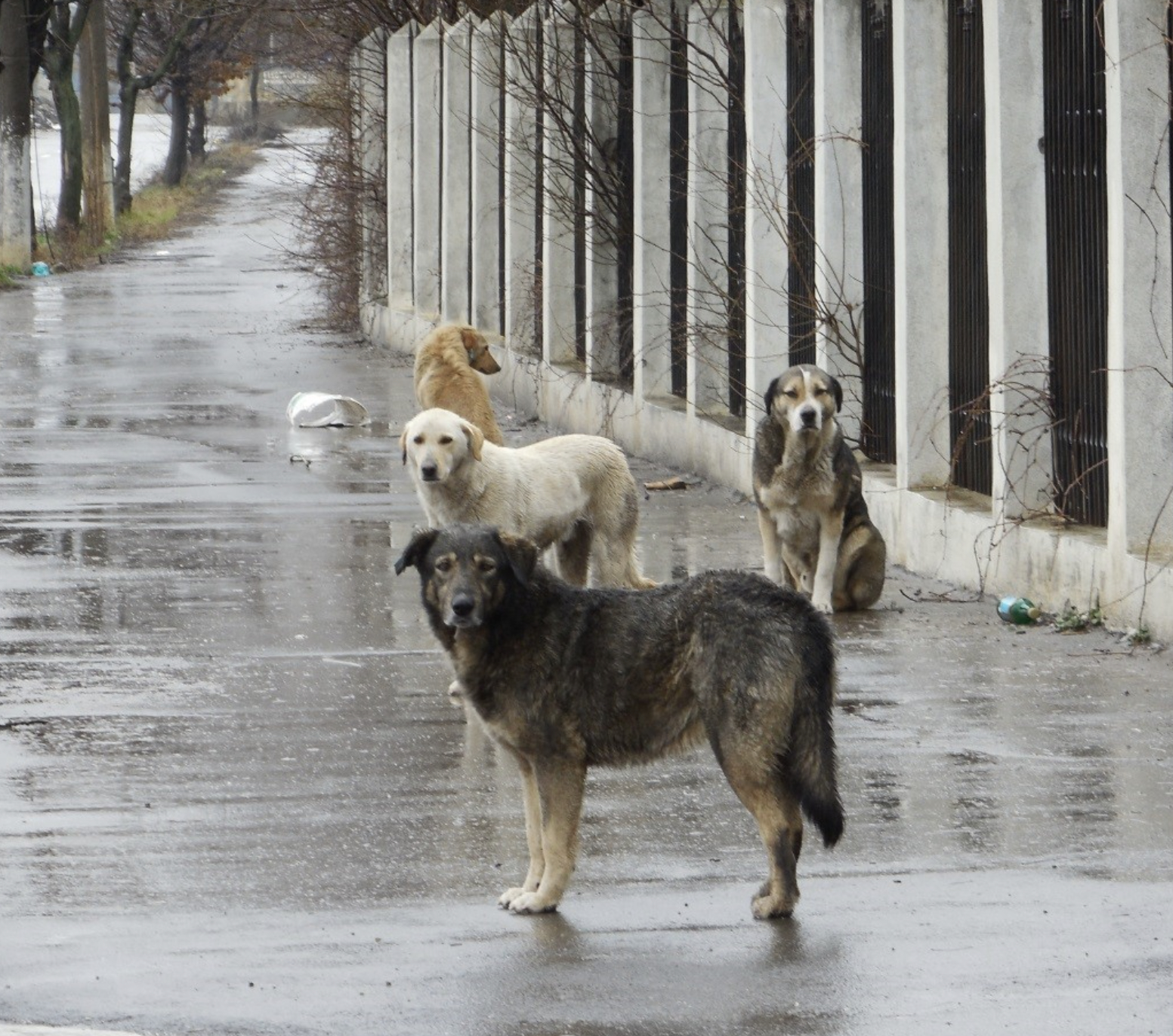
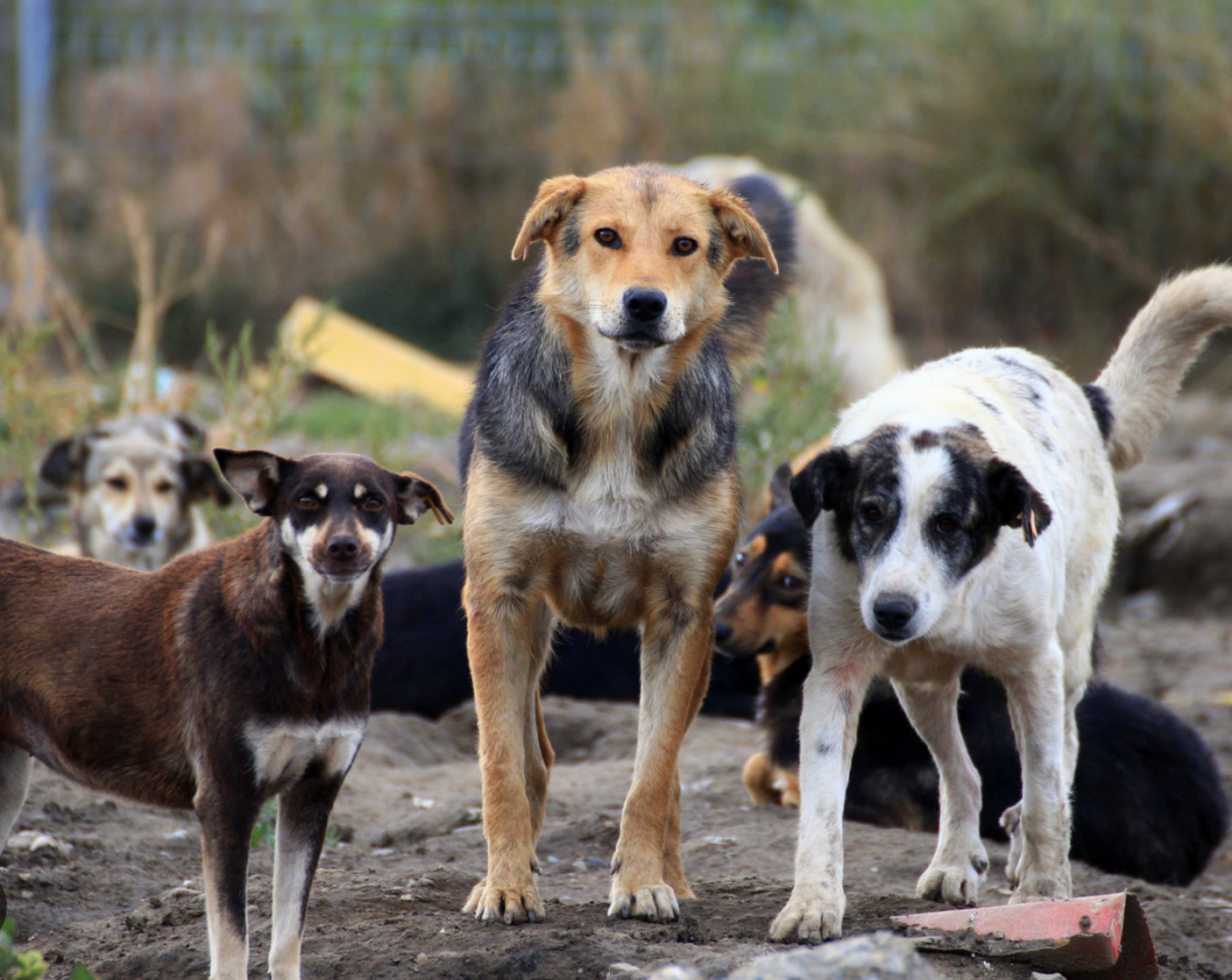
Stray dogs in Romania (image by FOUR PAWS International Animal Welfare Organization)

In my climate thriller Thalweg (scheduled for Spring 2027 release by Inanna Publications), one of the main characters is Daniel—a water technician who was fired by CanadaCorp*, Canada’s national water utility, and abandoned to the ruins of downtown Toronto in the winter.

*****

TORONTO, Ontario. Winter, 2053

The howling starts again. I figure five to seven feral dogs. Big dogs. Closer this time. I hear them snarling and growling, then a sudden yelp, like one has bitten another. Their sound vibrates garish green and violet like I’m on mescaline and I feel it crawling green in my gut; but it’s only my synesthesia kicking in. The dogs are hungry for meat. Shivering, I curl deeper into my frayed Pea coat and huddle as far as I can against the cement pillar beneath the cardboard and tarp bivouac I’ve wrapped around myself. Trying to look invisible amid the snow drifts. Knowing they can smell me in the cold.

Mini-snow tornadoes sweep across, picking up various pieces of litter and hurling them up in a violent dance of grit. The wind moans a low dirge. It’s the kind of wind that bites your face raw then rakes it numb.

I’m crouched, hugging my knees, under the decrepit westbound ramp off Lake Shore Boulevard to the old Gardiner Expressway, west of Yonge Street. I’m temporarily camped on the cobbles, surrounded by abandoned shopping carts, discarded drums and plastic jugs, broken furniture and parts of bikes. A dead car that may have housed a family once, sits gutted beneath the sloped roof of the exit ramp. It looks like someone set fire to it … more than once.

My knees burned at first in the freezing cold, then they stung under sharp needles of cold; now they’re simply numb, like my legs and feet.

I’m just trying to keep warm and safe. But there’s no such thing as warm and safe amid humanity’s detritus where wild dogs rule. They’ve taken over the downtown area, scavenging trash for food, eating local wildlife and attacking humans. Someone estimated that 50,000 strays roam the streets and vacant homes and offices of Toronto. Since the pandemics, heat waves and economic crashes, many dogs now concentrate here on the lakeshore, amid flaking buildings and garbage, abandoned to the floods. Those who could—businesses, governments, and the super-rich—have left the waterfront to a mixture of unlucky immigrants and misled hipsters looking to live cheap and dangerously. The wealthy and well-off have retreated to the suburbs, leaving the rest of us to fend for ourselves in the wilderness of downtown. There’s an ever-increasing population of rats, feral cats and other small urban wildlife. A few days ago, I saw two foxes hunting in the marshy shore of Toronto Music Garden Park by the old Tiki Taxi. 

The water taxi at the base of Spadina Avenue is gone along with the old shoreline and mostly abandoned Toronto islands and Billy Bishop Airport. Violent storms and unruly flooding are battering and eroding Toronto’s shore extension. As though Lake Ontario is taking back what we stole from it two hundred years ago to build factories, condominiums and hotels with a pricy view. As though the lake is clawing back the shore to free the creeks we buried and turned into sewage pipes.

It’s a wild and hostile urban ecosystem for the taking. And dogs are the apex predator, often forming packs around a female in heat. Most are Pitbulls and Pitbull mixes. But I heard about a swarm of Chihuahuas that attacked a woman on Parliament Street. I find it hard to believe that these vicious animals were once docile pets, abandoned by humans unable or no longer willing to keep them.

Someone on Oracle suggested that the inability to have children is why so many Torontonians chose to have a pet—and why we now have a stray dog epidemic. Back in the ‘40s, when CanadaCorp cracked down on keeping animal companions to save water as part of their new water restrictions, people chose to abandon their cats and dogs to an uncertain future in the city streets over surrendering them to the Corpers to be euthanized. Many of the animals starved and died of thirst. The rest got snarly and mean and formed killer packs. It’s possible some of these dogs aren’t former pets, but truly feral—born here as wild animals—free, unfettered and unencumbered by any allegiance to humans.

–Daniel, Thalweg

*****

Stray Dogs in Major Cities

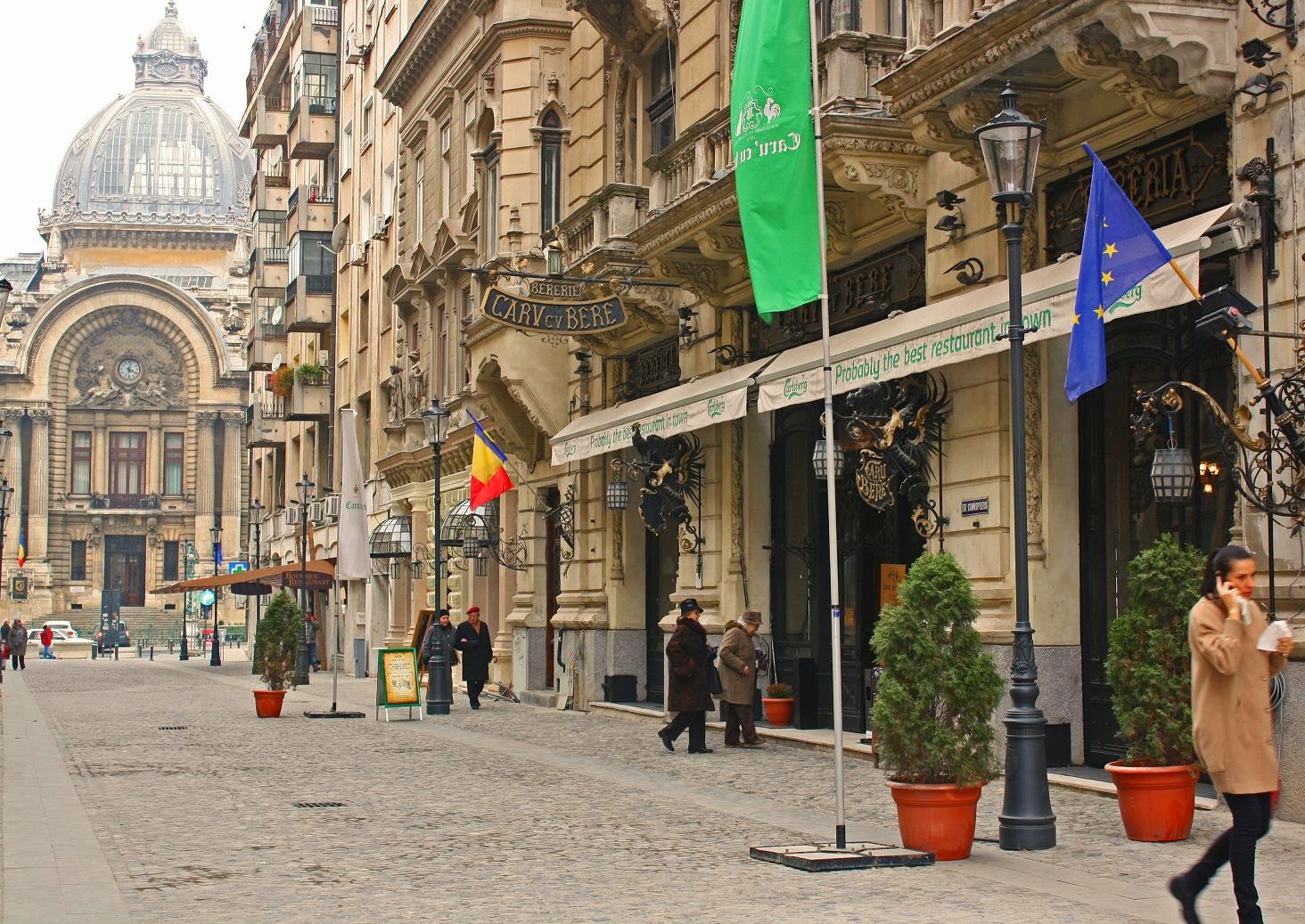
Lipscani District of Bucharest, Romania (photo by Nina Munteanu)

When I was in Bucharest, Romania, several years ago to launch the Romanian translation of my writing guidebook The Fiction Writer (Manual de Scriere Creativa: Scritorul de fictiune), I toured the heart of the city—the Lipscani District. I was astounded by the number of urban stray dogs that seemed at home on the streets, sidewalks and alleys of the old historic district. Apparently, they were largely remnants left by urbanites rehoused in the bleak towers (panouri prefabricate and Drumul Taberei) that Ceaușescu built for his proletariat during the 1970s and 1980s in his aggressive urban restructuring program called “systematization.” Pets—forbidden in the tiny high-rise apartments—were abandoned to the streets.

Stray dogs in Romania (image by EU Political Report)

An estimated 1 million free-roaming feral dogs run the streets of Delhi, India. Karachi, Pakistan support around 200,000 stray dogs and Quito, Ecuador 150,000 stays. Other major concentrations of urban stray dogs occur in Istanbul, Turkey, Mexico City, and Tangier, Morocco.

Major reasons for these populations includes: abandonment and irresponsible ownership; poverty and economic challenges; limited sterilization and vaccination; overpopulation and uncontrolled breeding; easy availability of food and garbage; and weak enforcement of animal welfare laws.

Stray dog populations can impact urban communities through: risk of rabies and other diseases; attacks on adults; children and pets; threats to wildlife and livestock; road accidents and traffic hazards; garbage spreading, noise and pollution; suffering and poor animal welfare.

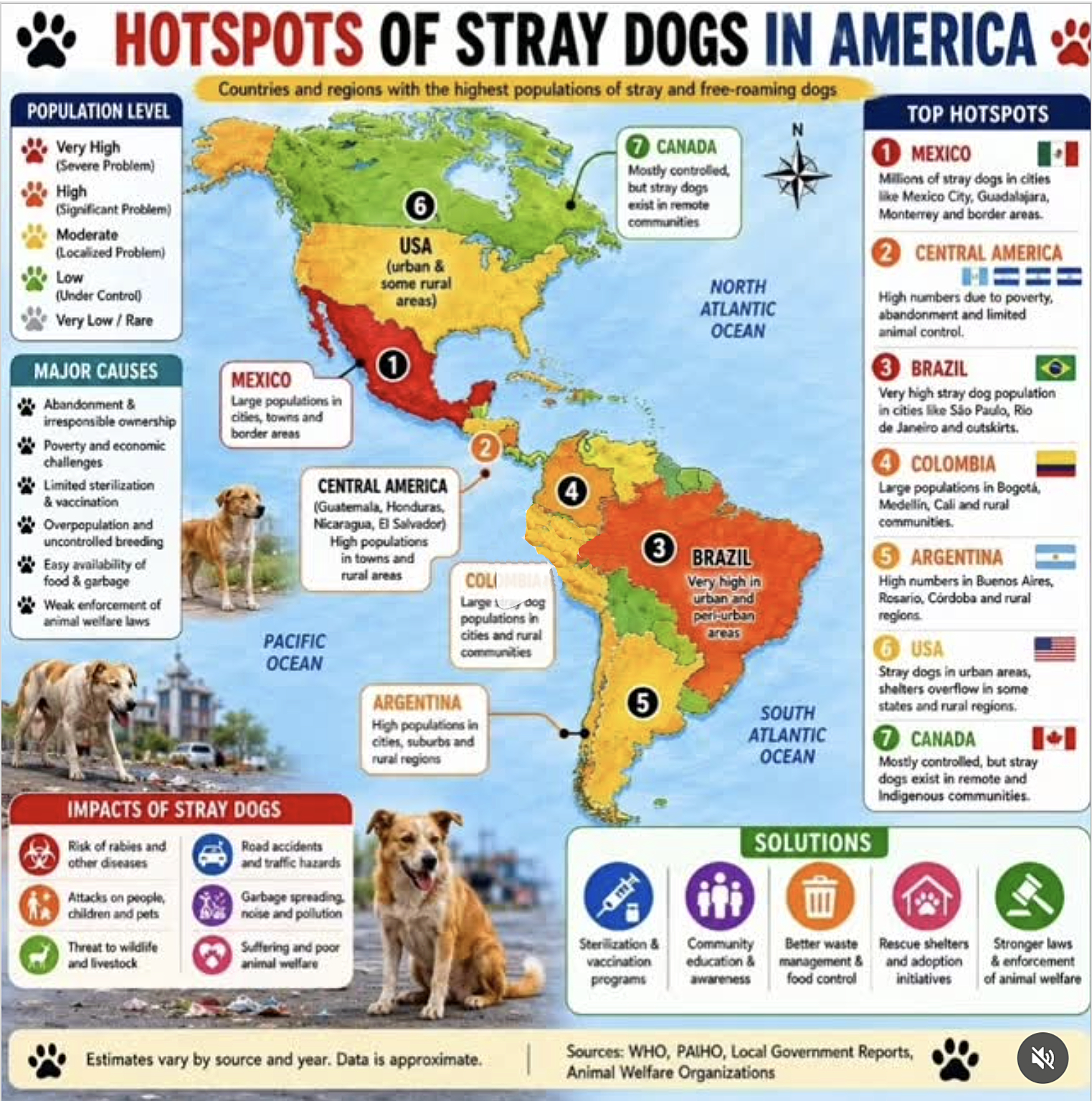
Infographic on stray dogs in the Americas

Some call it a global stray dog crisis. The infographic above shows the major hotspots for stray and free-roaming dog populations in North America, South America, and parts of the Caribbean. Red areas show the highest concentrations and green indicates low or more controlled stray populations. Mexico remains one of the largest hotspots in the Americas.

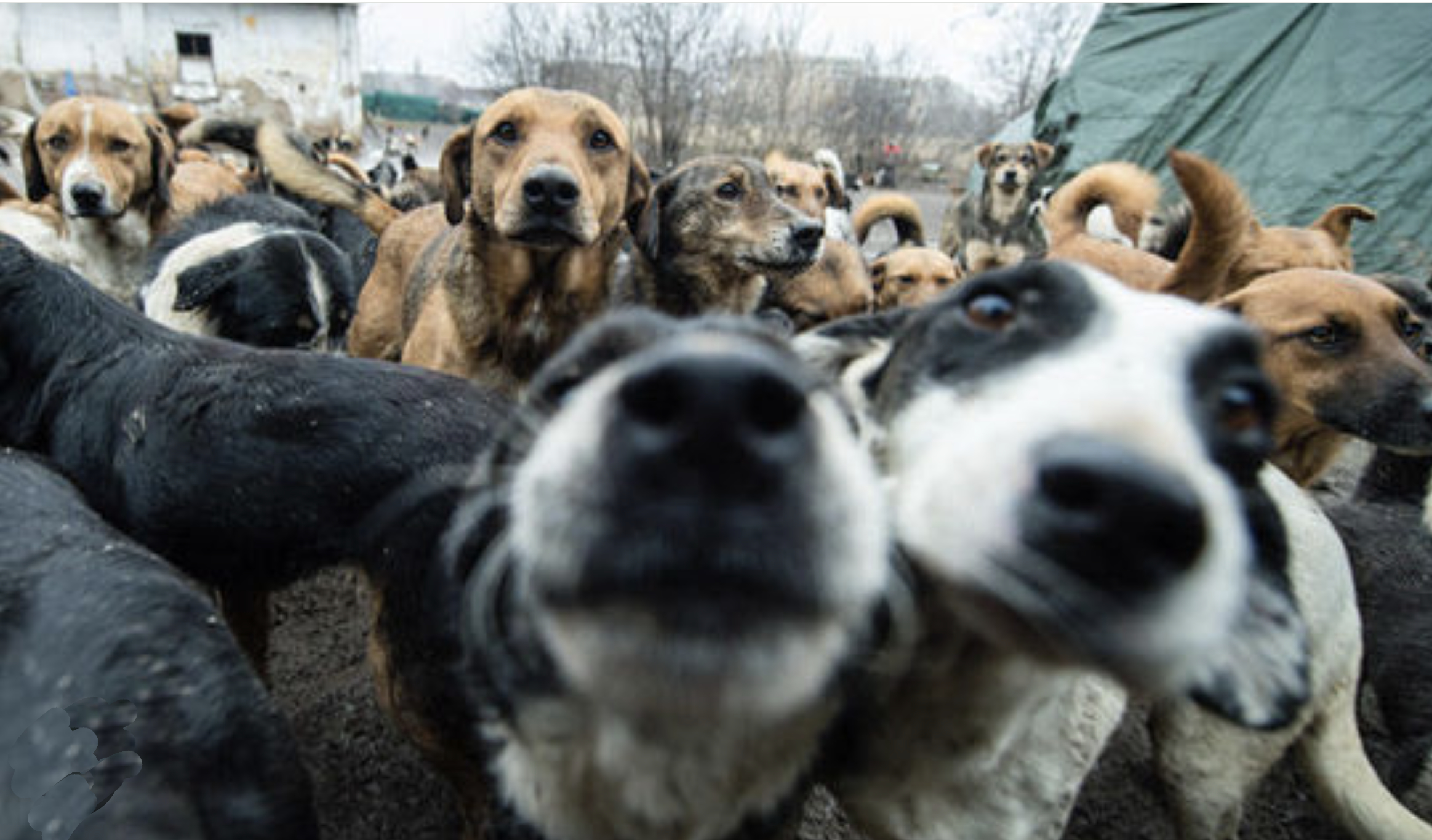
Stray dogs in Romania (image by The Dodo)

The urban non-companion dog populations include stray dogs (that tolerate humans) and feral dogs (that avoid humans). Stray and feral dogs typically feed on human refuse. Many form packs, often around one alpha female and male, and defend territories. Like wolves, these dogs treat fellow members of their group differently; conflicts are usually resolved through ritualized unharmful aggression, while nonmember dogs are attacked and killed. As with wild wolf populations, feral dog packs often form hierarchies ruled by within-group dominance and submission something.

One Reddit user reported feral cat colonies in Toronto, but no stray dogs. I have frequently seen wildlife roaming Toronto streets; these include coyotes, red fox, raccoons and skunk. Along with deer, they may make their homes in the ravines that snake through the city.

That may change in the future…

*****

The howling stops.

I’d read somewhere about the five rules you need to absolutely follow and I’m about to violate the first one: don’t run. It just makes them more eager for the chase. But they’ve spotted me and there’s no fracking way I’m just going to let them feast on me. Heart slamming, I abandon my bivouac and run. Five mangy dogs lope toward me, snarling with tongues hanging out. Two are American bulldogs. Two others are Pitbulls. The fifth is some wolf-hound hybrid. All aggressive dogs. All lean and starving. All happy to chew my leg off.

I manage to follow the second rule: find high ground. I target the dead car and scramble up the front hood, placing myself above the dogs. The top of the car is gone and the inside is charred by fire. The two bulldogs reach me first. They bounce up and nip at my feet. I fight the urge to kick out defensively, almost falling backward into the car’s charred interior. Remembering the third piece of advice—don’t show excitement or act aggressively because it will only incite more anger—I force myself calm, then apply the fourth edict—place something between you and the killer dog; I pull my backpack down and place it in between me and the bulldogs, ignoring the other three who snarl on either side of me. I can’t remember the fifth edict. But it may have been what I do next: “Go home,” I say in my best firm voice. It comes out more like a squeak and not too convincing. Besides, they don’t really have a home, I think with perverse humour. That’s the whole point. And I barely curb a hysterical laugh. The two bulldogs are obviously the alphas of the group. They bare huge sharp teeth and gnash and salivate like they’re ready to tear me apart. The other dogs have circled around, effectively corralling me. I’m done for.

In a moment one will figure out they can jump up the hood and take me down—

–Daniel, Thalweg

Thalweg releases with Inanna Publications in Spring 2027.

*CanadaCorp: Canada’s national water utility that imposes restrictive water rationing, enforced by an elite cadre (called Corpers by the population) who can use violence and indefinitely detain to achieve their goals.

References:

Munteanu, Nina. 2027 (upcoming). “Thalweg.” Inanna Publications, Toronto.

Patrick, Allan. 2016. “How to Survive a Dog Attack.” LifeHacker. September 12, 2016.

Smuts, B. 2010. “Domestic Dogs” Encyclopedia of Animal Behavior.

Nina Munteanu is a Canadian ecologist / limnologist and novelist. She is co-editor of Europa SF and currently teaches writing courses at George Brown College and the University of Toronto. For the latest on her books, visit www.ninamunteanu.ca. Nina’s bilingual “La natura dell’acqua / The Way of Water” was published by Mincione Edizioni in Rome. Her non-fiction book “Water Is…” by Pixl Press (Vancouver) was selected by Margaret Atwood in the New York Times ‘Year in Reading’ and was chosen as the 2017 Summer Read by Water Canada. Her novel “A Diary in the Age of Water” was released by Inanna Publications (Toronto) in June 2020. You can read her just released eco-fiction thriller Gaia’s Revolution by Dragon Moon Press.

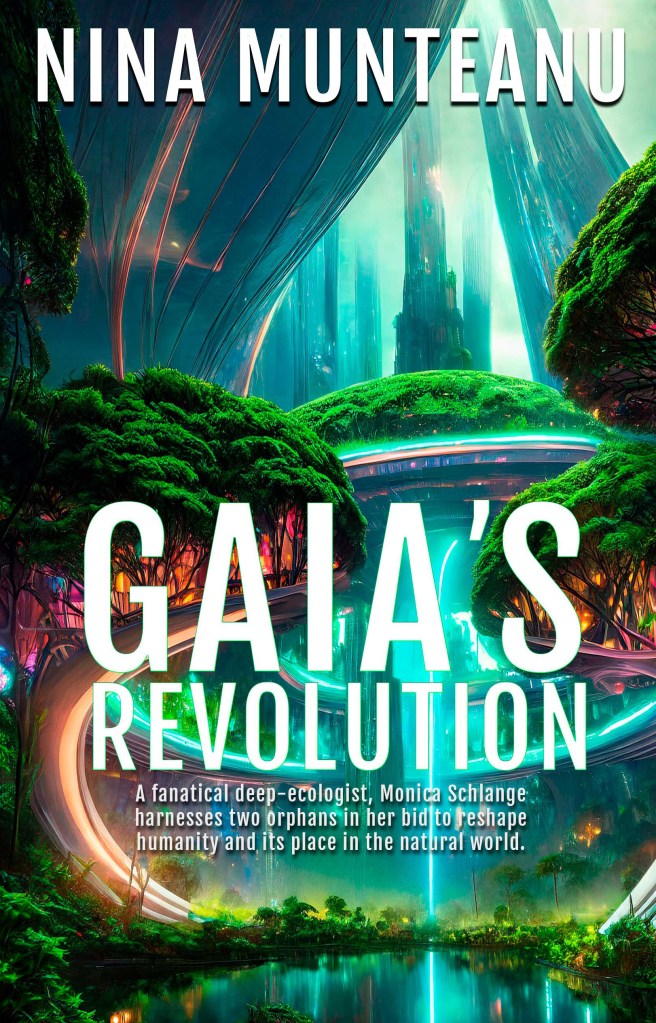
Gaia’s Revolution: Life After Capitalism—Will We Survive?

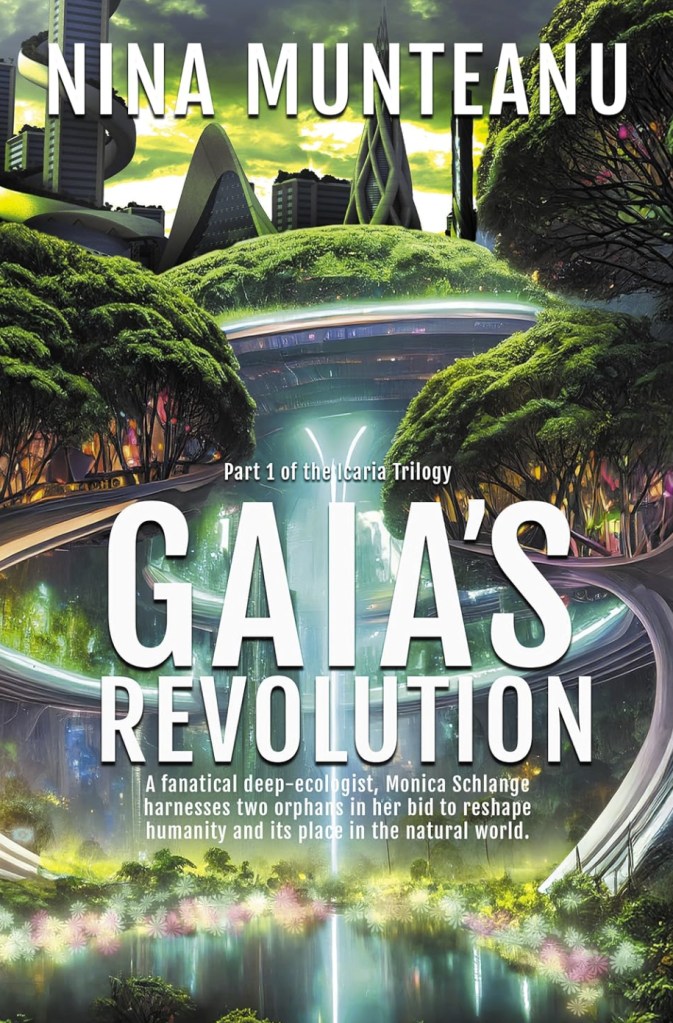
Gaia’s Revolution is Book 1 of The Icaria Trilogy, an environmental thriller released March 10, 2026 by Dragon Moon Press. This book wrote itself quickly and furiously over a few months. I wrote it in the back yard of a good friend one summer under a kind sun as I contemplated what life after capitalism would look like in Canada. I’d read Peter Frase’s book and considered his four options for the future. What I read chilled me. In some ways Gaia’s Revolution is my response.

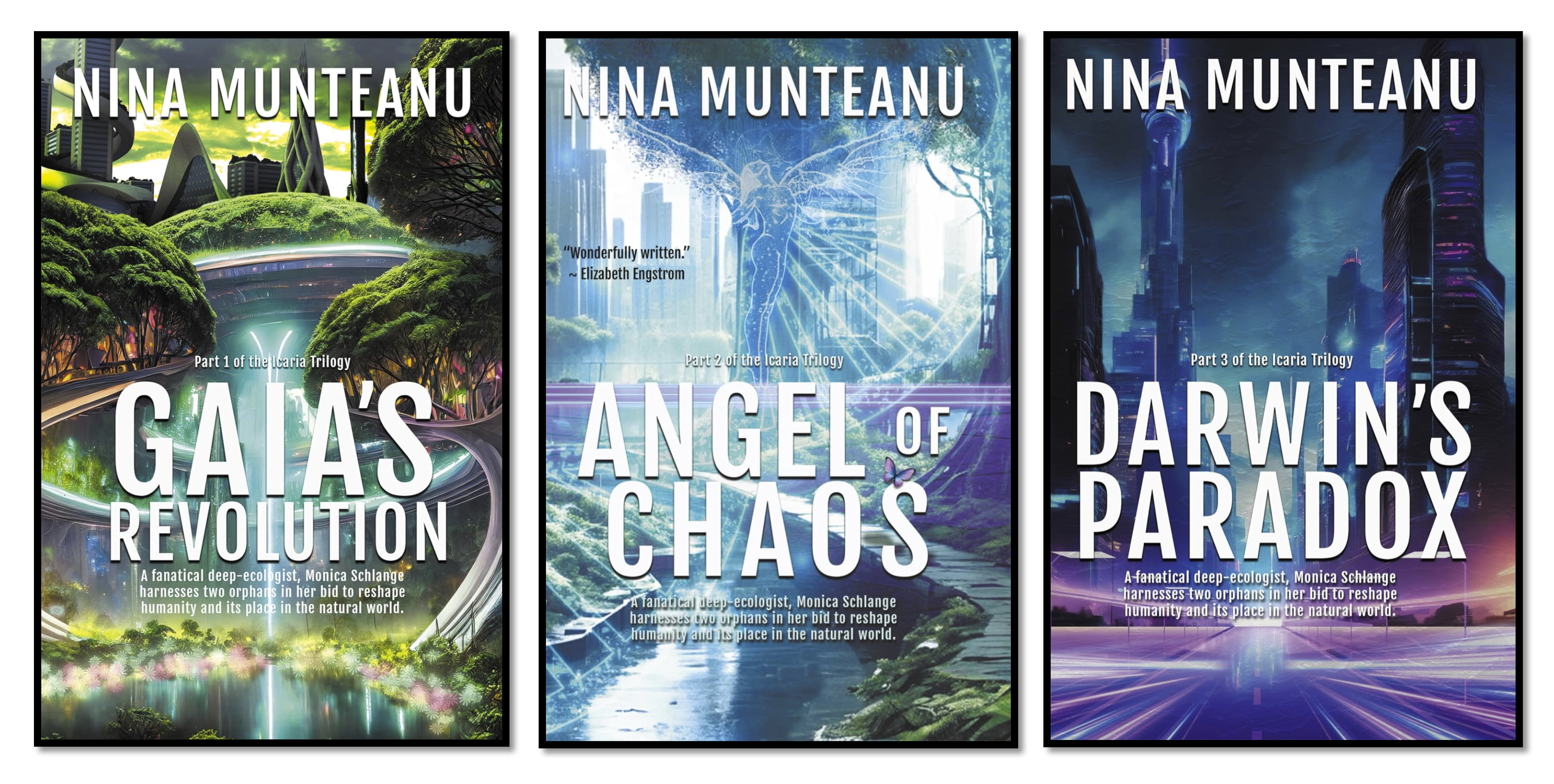
The Icaria Trilogy—A Brief Description

The Icaria Trilogy by Dragon Moon Press

Gaia’s Revolution, Book 1 of the saga, starts in Berlin in 2022 as ambitious twin brothers Eric, a gifted engineer, and Damien Vogel, a brilliant scientist, escape the growing racial violence of Berlin, to ‘peaceful’ Canada in a rivalry to control the evolution of the human race (Books 2 and 3).  

The warring brothers trigger a violent revolution that destroys the Canadian technocratic government with an eventual migration of humanity into the enclosed worlds of Icaria. While Damien is an intellectual and scholar, believing in Naess & Sessions’s eight basic principles of deep ecology, Eric uses the principles to enact merciless ‘solutions’ through brutal acts of eco-terrorism—ultimately risking humanity’s very survival. Fanatical deep ecologist Monica Schlange insinuates herself into both brother’s plans to orchestrate her own unique vision of the world. Three orphaned children, caught in the web of intrigue and violence, will ultimately determine the direction of humanity by introducing the first veemelds (people who can communicate with machines), a new environmental disease, and a new set of rules neither brother envisioned.

By 2095, after a dictatorship of deep ecologists called Gaians seize power, humanity has escaped an unruly environment by fleeing inside enclosed cities called Icarias, where they struggle with Darwin’s Disease—a mysterious neurological environmental pandemic. In truth, the deep ecologists are keeping people “inside” not to protect humanity from a toxic wasteland but to protect the environment from a toxic humanity.

Ontology of a Revolution To Survive

Drawing on the unruly global environmental disturbances and poor leadership response, The Icaria Trilogy explores a collapsing late-capitalist society in Canada through ravages of climate change and a failing technology. Capitalism hasn’t been kind to the environment. Economic pundits and sociologists insist that Capitalism is devolving. But what will replace it? Cloud capital? Technofeudalism? Something else? For The Icaria Trilogy, I came up with technocracy in Canada, a social-capitalist meritocracy of technologists and social scientists who claimed they could take humanity through the changes to come. That system was, in turn, violently replaced by a revolutionary movement of radical deep ecologists called the Gaians, empowered by the growing toxic environment that eventually forced populations inside.

A hegemony that follows the hierarchal economic system of late capitalism inevitably commodifies and ‘others’ with ruthless purpose. Once something (or someone) is commodified, they are given a finite value and purpose outside their own existence. They become an object, a symbol to use and trade. They become a resource to manipulate, exchange, and dispose of with impunity. And through this surrender to utility, they become ‘othered.’ The consumer to manipulate. The trees of the forest to cut down. Water to squander and pollute. Homo sacer to hate and fear. Each has a role to play in the late capitalist narrative of digital abundance and physical scarcity.

This world of late capitalism intensifies bilateral polarization—politically, socially, and environmentally. Wealthy vs. poor. Privileged vs. indentured. Right vs. Left. Educated vs. illiterate. And so on. By its very nature, Capitalism invites separation, segregation, and ‘othering’. This is the opposite of what we need—particularly to deal with the hyperobjects of climate change and environmental sustainability, which require a united global effort to address and overcome. Polarization tears the fabric of society apart. Polarization leads to lack of consensus, greater misunderstanding, rage and violence. And fanaticism. Borne of deep frustration and fueled by relentless passion, fanaticism sparks violent change—not always good or effective, but definitely subversive. This is what we are seeing today throughout the world: unhinged fanaticism, fed by a growing polarization and exclusion. In Germany, the far-right fascist Reichsbürgers movement violently rejects the legitimacy of the modern German state. In the USA, far-right white supremacists and Christian fundamentalists enact domestic terrorist violence fed by nativism, populism, anti-communism, and ultranationalism.

In the near-future Canada of The Icaria Trilogy, radical Gaians (deep ecology fanatics) destroy the technocratic government, take autocratic control and enclose and segregate the human population from the sacred environment, permitting it to heal.

Is Revolution Enough?

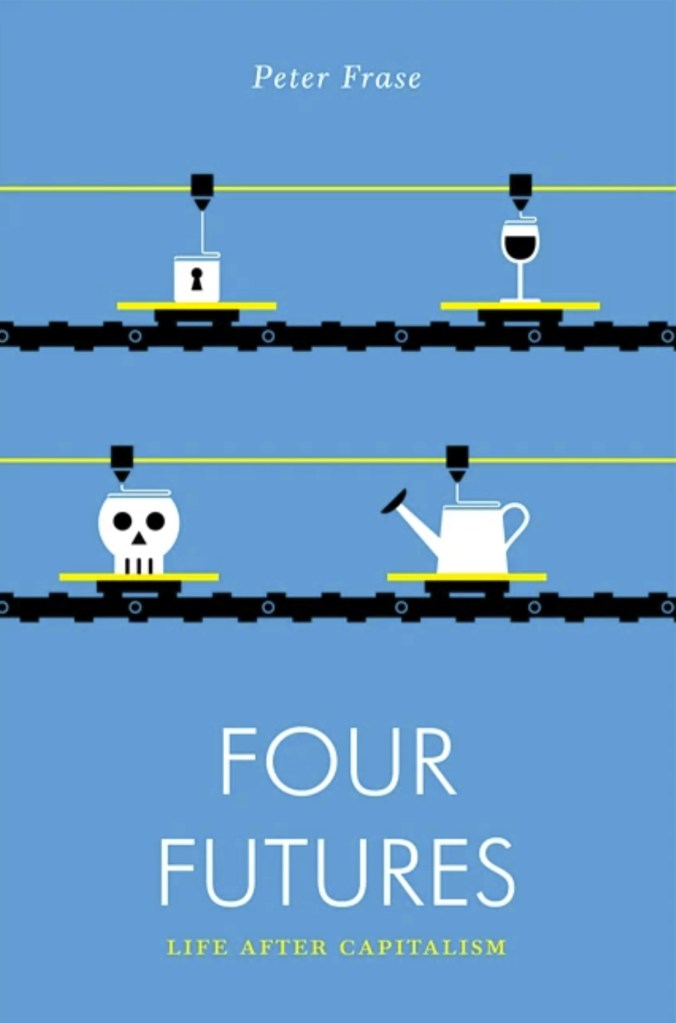
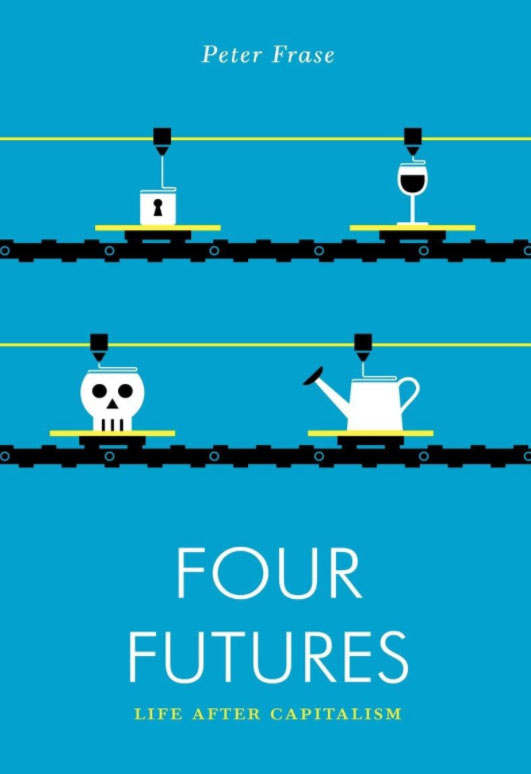
In his book Four Futures: Life After Capitalism sociologist Peter Frase considers effects of climate change and automation in possible outcomes of a post-Trump election America. Frase envisions four scenarios based on abundance and scarcity and whether a society operates by equality and inclusion (e.g., communism under abundance / socialism under scarcity) or hierarchy and exclusion (rentism under abundance/ exterminism under scarcity).

Versions of all four of these systems are or have been either already in existence of are currently developing in the world. This evokes author William Gibson’s famous statement: the future is already here; it’s just unevenly distributed. An early example of rentism began during medieval times under early English capitalism when gentry enclosed land in what has been misidentified as “The Tragedy of the Commons.” The tragedy wasn’t in the commons, but in the loss of them as land reverted from being a common right of peasant farmers to private property under the restricting control of large landowners. It was the beginning of the concept of ownership and exclusion.

Given the currently growing scarcity of resources—lack of sufficient clean freshwater and rampant habitat destruction—the following scenarios are more likely to prevail: Socialism (if a society operates by equality) or Exterminism (if a society operates by hierarchy). 

Socialism may arise within an egalitarian society if driven by altruistic notions of self-limitation. Ecologists describe such a self-limiting system as K-selected (see my discussion of K-selection and r-selection in my book Water Is…). A K-selected population operates at or near the carrying capacity of the environment and favours individuals that successfully and respectfully compete for resources and produce few young.

Exclusion within a hierarchical system lies at the heart of Exterminism. The Western World’s current hierarchical model of elitist wealth inequality (driven by greed and resource scarcity) favours its elite oligarchs by ‘othering’ and repressing its labour/worker population. Within a late capitalist model, the hierarchy of capitalist/owner and labourer/worker is based on mutual dependence; however, as automation, various technologies and AI supplant human labor needs, the mutuality crumbles. In his Exterminism scenario of hierarchy and scarcity, Frase proposes that: “When mass labor has been rendered superfluous, a final solution lurks…”

The Question of Survival …

Frase provides the final answer to my question in the title: “The real question,” writes Frase, “is not whether human civilization can survive ecological crises [such as climate change and habitat destruction] but whether all of us can survive it together, in some reasonably egalitarian way.”  

References:

Atwood, Margaret. 2004. “The Handmaid’s Tale and Oryx and Crake ‘In Context'”. PMLA. 119 (3): 513–517.

Atwood, Margaret. 2018. “Margaret Atwood on How She Came to Write The Handmaid’s Tale”. Literary Hub. April 25, 2018.

Frase, Peter. 2016. “Four Futures: Life After Capitalism.” Verso Press, London. 150pp.

Gibson, William. 1999. “The Science of Science Fiction.” Talk of the Nation, Washington, D.C.: National Public Radio, November 30, 1999.

Munteanu, Nina. 2026. “Gaia’s Revolution, Part 1 of Icaria Trilogy.” Dragon Moon Press, Calgary, AB. 369 pp.

Munteanu, Nina. 2010. “Angel of Chaos, Part 2 of Icaria Trilogy.” Dragon Moon Press, Calgary, AB. 518 pp.

Munteanu, Nina. 2007. “Darwin’s Paradox, Part 3 of Icaria Trilogy.” Dragon Moon Press, Calgary, AB. 294 pp.

Sessions, George, Bill Devall. 2000. “Deep Ecology: Living as if Nature Mattered.” Gibbs Smith. 267pp.

Thompson, E.P. 1980. “Notes on Exterminism: the Last Stage of Civilization, Exterminism, and the Cold War.” New Left Review 1(121).

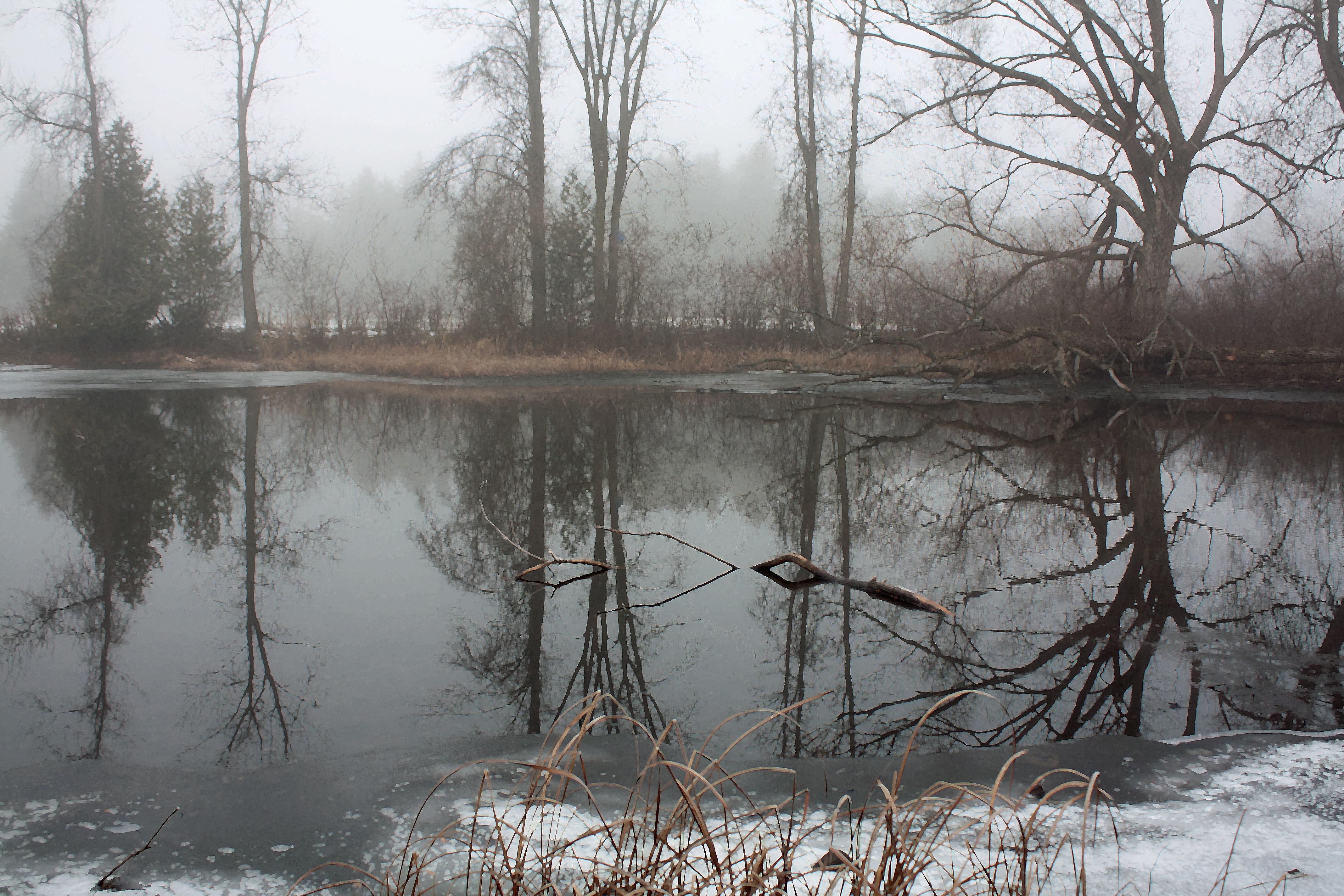
A small creek marsh reflects trees in a foggy spring morning, ON (photo and rendition by Nina Munteanu)

Nina Munteanu is a Canadian ecologist / limnologist and novelist. She is co-editor of Europa SF and currently teaches writing courses at George Brown College and the University of Toronto. Visit  www.ninamunteanu.ca for the latest on her books. Nina’s bilingual “La natura dell’acqua / The Way of Water” was published by Mincione Edizioni in Rome. Her non-fiction book “Water Is…” by Pixl Press (Vancouver) was selected by Margaret Atwood in the New York Times ‘Year in Reading’ and was chosen as the 2017 Summer Read by Water Canada. Her novel “A Diary in the Age of Water” was released by Inanna Publications (Toronto) in June 2020.

Gaia’s Revolution:  A View of a Post-Capitalist Future

My upcoming book Gaia’s Revolution (Book 1 of The Icaria Trilogy by Dragon Moon Press) explores a collapsing capitalist society in Canada through ravages of climate change and a failing technology. The story is told through the lives of ambitious twin brothers Eric and Damien Vogel, and the woman who plays them like chess pieces in her gambit to ‘rule the world.’

It is 2032 and Eric Vogel sits in the Canadian prime minister’s office, ruminating on the changes coming. He imagines what a post-capitalist world will look like and how his twin brother Damien—left behind in Germany—would disagree with his vision:

Over a hundred years ago, Spartacist Rosa Luxemburg—who was shot by the right-wing Freikorps—argued that the “Bourgeois stands at the crossroads, either transition to socialism or regress into barbarism.” Both he and Damien agree with sociologist Wolfgang Streeck who argues that the end of capitalism—of a reigning bourgeois, in love with the objects that define them—is already underway. The signs are neon loud: a ruthless downward trend in economic growth, social equality, and financial stability. All reinforced by climate change and the ongoing collapse of the planet’s sustaining environment. Any system and dialectic based on a concept of infinite resources in a finite world is bound to fail eventually. That collapse has already begun and its catastrophic end is imminent. Already, climate refugees and refugees of resource war (which amounts to the same thing) have flooded northern nations, like Canada, and caused tension and strife. Germany is just one example where left and right have torn the country apart as an influx of foreigners challenged the already tenuous German identity. When Canada granted asylum to over two million climate-refugees in ‘28, with no viable plan for the new residents during a time when unemployment was higher than it had been in decades and housing prices were skyrocketing due to environmental uncertainty, this sparked renewed tensions between ultra-right and ultra-left and opened the gap for a new party based on science and reason. The party now in power: the Technocratic Party of Canada.

But what will life after capitalism look like?

It’s no surprise that he and his brother disagree on what a post-capitalist world should look like and how to best achieve that world. Damien too easily prescribes to the old leftist shibboleth of Nature being the answer to everything and Market being evil. His deep ecology utopia would spring from an atavistic rejection of modern life, a return to ‘the ancient farm.’ But how that fantasy could be achieved without a drastic population reduction is beyond his brother’s imagination. Damien fetishizes the natural world. Just like he does their mother. The naïve fool is a blind romantic, refusing to see reality right in front of him: that Nature is ultimately cruel, cold, and preoccupied with its own survival. Just like their mother.

Brother Damien recalls an earlier argument the two brothers had in Berlin that ultimately motivated him to follow his twin to Canada. They’d been debating about the effect of climate change on the human population:

Pulled down by a truculent mood, Damien responds to Eric’s usual glib solutions by painting a dark vision of a humanity descending into some pre-technological ‘dark age’ apocalypse.

Eric just laughs. He pokes his fork into the sauerkraut as if to make a point in his argument and scoops up a pile that he shoves into his mouth. He leans forward and argues with a full mouth, “The real question is not whether humanity will survive an ecological collapse, but what part of humanity will survive. You can be sure that the stinking boujee plutocrats will find a way to survive at the expense of everyone else.” He chews down the sauerkraut followed by a gulp of beer and a loud burp. “The stinking rich are already doing it, Dame. They’re already creating their Elysium right here, right now.” Fork now swings like a conductor’s baton. “The future is already here; it’s just unevenly distributed.”

Using his fingers, Damien pulls apart some crisp skin off the pork knuckle—his favourite part—and feeds his mouth. Arguing with Eric always makes him hungry despite his surly temper. He crunches down, enjoying the tasty juices of brazed salty pork skin, and retorts, “You politicize everything and resort to cheap references in pop culture. You always do that: over-simplify the crisis and Nature’s existential power to sustain life. Trophic cascades caused by ecosystem simplification would irreparably devastate the planet and all adapted life. With the Sixth Extinction Event there won’t be any boujee plutocrats because there won’t be anything left to monetize—”

“You’re such a doom-gloom lefty, Dame!” Eric grabs the last of the pork skin—also his favourite— and shoves it into his mouth. He smacks his lips and counters, “The stinking rich will always have technology at their disposal. I’m talking about genetic engineering, nano-technology, gene modification, cybernetics, and even environmental control. For instance, look at Harvard’s RoboBee: tiny robots that mimic flying insects that can fill in as pollinators for the crashing bee populations.”

“You over-estimate technology’s ability to save the planet—and us by extension.”

Eric finishes the pork skin and wipes his mouth on his sleeve with a sniff. “I’m not talking about saving the entire planet—just enough of it. You underestimate what we’re willing to do to survive.”

That is when he brings up E.P. Thompson’s paper on stages of a neoliberal capitalist civilization and the ‘extermination endgame.’ “You’re the population ecologist, Dame, but it’s obvious that when a neoliberal capitalist society exceeds its carrying capacity— when technology makes the masses surplus—there’s no alternative in the scramble for resources and ecological support. Get rid of the surplus. That simple. Thompson tells us that under military capitalism—and you have to accept that all countries are militarizing—the ‘outcome must be the  extermination of multitudes.’”

“For God’s sake, Eric!”

“Technology will save humanity, Dame,” Eric insists. He leans back and stretches his legs under the laminate table in self-pleased satisfaction. “One way or another.”

Damien shakes his head and gulps down the last of his beer. “Whatever is left of humanity, you mean. And you accuse me of giving up on humanity. So, the greedy capitalist wins?”

“That’s why the world needs us, Dame. To keep humanity from going down the wrong road.”

And what is that for Eric, Damien wonders. Increasingly, he feels discomfort at what that might be. Eric leans forward, eyes bright with inspiration. He resembles a great bird of prey, long hawk-like nose—the iconic Vogel nose—and copious dark hair cresting back from a high forehead. It’s like looking at a more confident version of himself in the mirror, thinks Damien. And sometimes disconcerting, particularly when it reminds him of what he is not.

“You and I know that humanity won’t stop climate change,” Eric goes on animatedly. “Too many tipping points are already upon us and the direction we’re all going in now…” He swings his fork around the room to indicate this place, Germany, the world. “… isn’t promising to check that. Change is inevitable.” He points the fork at Damien. “But, if we can direct how humanity adapts to our changing environment, we can still win…” Before Damien can charge in with a rebuttal, Eric pushes his face forward, raptor eyes scintillating like sapphires on fire. “So, how do we de-thrown the ultra-rich elite—who are mostly a rabble of materialist self-serving hedonists with no vision or care for the future—and ensure a meritocracy of responsible citizens who can take humanity through the changes to come? … Like establishing a universal basic income toward an egalitarian society. Putting a full stop to fossil fuel mining and adopting clean energy. Re-wilding key ecosystems. Engaging reforestation and dedicating large areas to Nature.”

Damien shakes his head, lost for words. Where is his brother going with this? Will he suggest violent revolution to establish a dictatorship? How else would the rich give up their riches? And how is that any different from the Bolsheviks of 1917 or the Nazis of 1933 or the Stasi-run DDR? Those fascist Reichsbürgers would happily reinstate a society of surveillance, repression, and incarceration that would threaten to slide into the final solution of genocide of an unwanted ‘surplus’. A society of disposable bodies, a biopolitical world of exterminism. Damien thinks of Nietzsche’s aphorism: Beware that, when fighting monsters, you yourself do not become a monster … for when you gaze long into the abyss, the abyss gazes also into you. Violent revolution is not the answer, he decides.

Eric pulls out the worn copy of Walden Two from his jacket pocket. He slaps it on the table and pushes it toward Damien. “That’s the answer, Dame.”

Models of a Post-Capitalist Future Society

In his book Four Futures: Life After Capitalism , sociologist Peter Frase considers effects of climate change and automation in possible outcomes of a post-Trump election America. Frase envisions four scenarios based on abundance and scarcity and whether a society operates by equality (e.g., communism under abundance / socialism under scarcity) or hierarchy (rentism under abundance / exterminism under scarcity).

With scarce resources, the following scenarios are possible:

Socialism (aka Ecotopia) may arise within an egalitarian society if driven by altruistic notions of self-limitation. Ecologists describe such a self-limiting system as K-selected (see my discussion of K-selection and r-selection in “Water Is…”). A K-selected population is at or near the carrying capacity of the environment, which is usually stable and favors individuals that creatively compete, through cooperation, for resources and produce few young. The K-selected strategy runs on a successive gradient of maturity, from initially competitive to ultimately cooperative. Competition is a natural adaptive remnant of uncertainty and insecurity and forms the basis of a capitalist economy that encourages monopolization and hostile takeovers. Competition results from an initial antagonistic reaction to a perception of limited resources. It is a natural reaction based on distrust—of both the environment and of the “other”—both aspects of “self” separated from “self.” The greed for more than is sustainable reflects a fear of failure and a sense of being separate, which ultimately perpetuates actions dominated by self-interest in a phenomenon known as “the Tragedy of the Commons.” Competition naturally gives way to creative cooperation as trust in both “self” and the “other” develops and is encouraged through continued interaction.

Exterminism (aka Mad Max) may arise under a hierarchical model, driven by greed and exacerbated by uncertainty in the environment—not unlike what we are currently experiencing with the planet’s system and cyclical changes. In this scenario, in which resources are both limited and uncertain, those with access to them would guard or hide them away with desperate fervor.

“When mass labor has been rendered superfluous [through automation], a final solution* lurks: the genocidal war of the rich against the poor.”—Peter Frase

References:

Frase, Peter. 2016. “Four Futures: Life After Capitalism.” Verso Press, London. 150pp.

Luxemberg, Rosa. 1915. “The Junius Pamphlet: The Crisis in the German Democracy.” Marxists.org.

Munteanu, Nina “Gaia’s Revolution.” Book 1 of the Icaria Trilogy, Dragon Moon Press, upcoming.

Munteanu, Nina. 2016. “Water Is…The Meaning of Water.” Pixl Press, Vancouver. 586pp.

Streeck, Wolfgang. 2014. “How Will Capitalism End?” New Left Review 2 (87): 47p.

Thompson, E.P. 1980. “Notes on Exterminism: the Last Stage of Civilisation, Exterminism, and the Cold War.” New Left Review 1(121).

*the Final Solution was originally used by Nazi Germany as “the Final Solution to the Jewish Question”: the Nazi plan to exterminate the Jews during World War II, formulated in 1942 by Nazi leadership at the Wannsee Conference near Berlin, culminated in the Holocaust, which murdered 90 percent of Polish Jews.

Nina Munteanu is a Canadian ecologist / limnologist and novelist. She is co-editor of Europa SF and currently teaches writing courses at George Brown College and the University of Toronto. Visit www.ninamunteanu.ca for the latest on her books. Nina’s bilingual “La natura dell’acqua / The Way of Water” was published by Mincione Edizioni in Rome. Her non-fiction book “Water Is…” by Pixl Press (Vancouver) was selected by Margaret Atwood in the New York Times ‘Year in Reading’ and was chosen as the 2017 Summer Read by Water Canada. Her novel “A Diary in the Age of Water” was released by Inanna Publications (Toronto) in June 2020.