Nina Munteanu Talks about Writing—Passion, Process, and Publication—with Mandy Eve-Barnett

Fantasy / SF writer and interviewer Mandy Eve-Barnett recently interviewed me about my recent eco-novel “A Diary in the Age of Water” and on my writing process and evolution. When did it all begin and what choices did I make along the way? she wanted to know. Here are some of her questions and my answers (embellished here) for your reading pleasure. For the full interview go here:

Mandy: When did you first start writing?

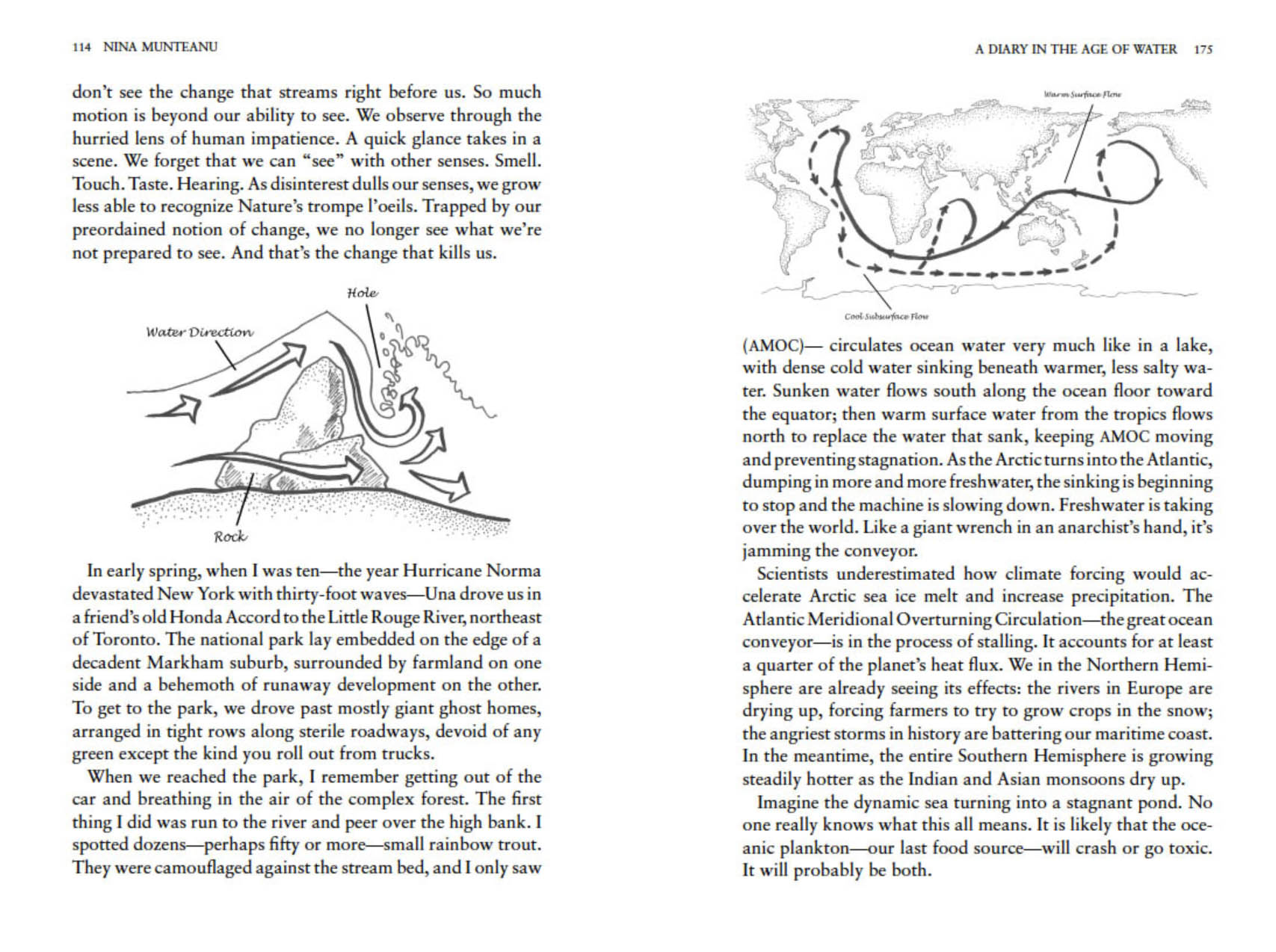
Nina: Not until I was a teenager when I wrote my first complete novel (“Caged-In World”—which later served as a very rough draft for my first and second published novels, Angel of Chaos and “Darwin’s Paradox”). My first published work was a non-fiction article “Environmental Citizenship”, which appeared in Shared Vision Magazinein 1995. I was already a young mother then with a family in Ladner, BC, and working for an environmental consulting firm in Richmond. My first fiction work was a short story entitled Arc of Time, published in a small circulation magazine Armchair Aesthete. That story was later reprinted several times throughout the world, including my short story collection Natural Selection.” Before writing stories, though, I told stories—I shared wild stories of galactic adventure with my older sister; we used to share them late into the night when we were supposed to be sleeping and our parents were snoring in their beds. I also told stories in the form of cartoons. Since I was a small child, I wanted to be a cartoonist and write graphic novels when I grew up. I created and drew several strips with crazy characters on wild adventures, blending my love for drawing with my love for storytelling. I haven’t stopped that form of storytelling and still have a yearning for that form. This is one reason why I’m so delighted with my latest book “A Diary in the Age of Water,” which features some of my limnological sketches, which stand in for the diarist’s sketches:

Pages from “A Diary in the Age of Water” by Nina Munteanu

Mandy: What made you decide on science fiction as a genre?

Nina: That goes back to my love for comics. I wasn’t much of a reader as a kid. While my older brother and sister devoured The Hardy Boys and Nancy Drew series, I secreted myself in the back corner of Williams General store and read Supergirl, Superman and Superboy, Batman, Magnus Robot Fighter and Green Lantern, among others. I was obviously enamored with the fantastic. When I earnestly started to read more than comics, I came across the SF classics: Huxley, Orwell, Heinlein, Clarke, Silverberg and Asimov to name a few. Bradbury sent me over the moon and his “Martian Chronicles” made me cry. I wanted to write like him and move readers like he’d done with me with something that mattered. 

The reason I continue to write in this genre is because of its ability to encompass the creative imagination and application of metaphor to story. Given science fiction’s wide range of possibilities in creating a believable reality of the fantastic, science fiction provides a compelling platform for metaphoric storytelling on a grand scale—the story large. Possibilities for powerful archetypes abound. Where else can you make water an actual character?

My environmental themes and eco-fiction lie in the sub-genre of ‘mundane science fiction.’ This is just another form of speculative fiction. Mundane science fiction focuses on existing technology (no ray guns, warp drives, or time travel). Its premise lies in existing circumstances and events to create a near-future realism. My recent dystopian eco-novel “A Diary in the Age of Water” by Inanna Publicationsfits this description perfectly. Examples by other writers include Margaret Atwood’s “MaddAddam” series, Paolo Bacigalupi’s “The Windup Girl” and Kim Stanley Robinson’s “The Ministry for the Future.”  

Mandy: Was the ecological aspect of your stories a gradual realization or your primary objective?

Nina: My primary objective was always to tell a compelling and meaningful story and hopefully to move readers in some way—like Ray Bradbury and other writers had with me. The ecological aspects slid in unannounced like a shadow character. It made sense: the environment and how we treat it (and ourselves by extension) has always been something important to me since I was a child. Both my parents were connected to Nature. My father took us on camping trips and picnics in the country; my mother was an amateur ecologist and botanist. From quite young I’ve been an environmental activist; chasing after people who littered, promoting recycling, participating in environmental protests. So, while I was writing science fiction, it was also eco-fiction. When the brand became more known, I realized that this was the kind of fiction I was writing most of the time. So, in some ways, I’ve come full circle with my quest as a youth: to tell impactful stories about the environment—whether this is here on Earth or on some planet in the outer systems—which make people think and feel and question. 

Mandy: Can you tell us a little about your newest book “A Diary in the Age of Water”, how you came up with the concept, and your writing process for it?

Nina: The book follows the climate-induced journey of humanity through four generations of women, each with a unique relationship with water during a time of calamitous change. The book starts and ends in the far future in the dying boreal forest with a blue water being, Kyo, who finds the diary of a limnologist, Lynna, from our near-future Toronto. The diary spans a forty-year period and contains a series of entries; each entry begins with an epigraph—quote from the textbook “Limnology” by Robert Wetzel. During the diarist’s lifetime, all things to do with water are overseen and controlled by the international giant water utility CanadaCorp—with powers to arrest and detain anyone. This is a world in which China owns America and America, in turn, owns Canada. The limnologist witnesses and suffers through severe water taxes and imposed restrictions, dark intrigue through neighbourhood betrayals, corporate spying and espionage, and repression of her scientific freedoms. Some people die. Others disappear.

Inspiration for the novel started with a short story I was invited to write by my publisher in Rome in 2015 about water and politics in Canada.  I had long been thinking of potential ironies in Canada’s water-rich heritage. The premise I wanted to explore was the irony of people in a water-rich nation experiencing water scarcity: living under a government-imposed daily water quota of 5 litres as water bottling and utility companies took it all. I named the story “The Way of Water” (“La natura dell’acqua), about a young woman (Hilda) in near-future Toronto who has run out of water credits for the public wTap; by this time houses no longer have potable water and their water taps have been cemented shut; the only way to get water is through the public wTaps—at great cost. She’s standing two metres from water—in a line of people waiting to use the tap—and dying of thirst. “The Way of Watercaptures a vision that explores the nuances of corporate and government corruption and deceit together with global resource warfare. In this near-future, Canada is mined of all its water by thirsty Chinese and US multinationals—leaving nothing for the Canadians. Rain has not fallen on Canadian soil in years due to advances in geoengineering and weather manipulation that prevent rain clouds from going anywhere north of the Canada-US border. If you’re wondering if this is possible, it’s already happening in China and surrounding countries.

I chose to use a diary in the near-future part of the story to achieve a sense of gritty realism of ‘the mundane.’ The diary-aspect of the book characterizes it as ‘mundane science fiction’ by presenting an ‘ordinary’ setting for characters to play out. The tension arises more from insidious cumulative events and circumstances that slowly grow into something incendiary.

Many of the events and circumstances that the diarist reports on are real events and based on real people. That they serve as premise for the fiction effectively blurs the fiction with non-fiction. Readers have told me that they often couldn’t distinguish the two in the book and this achieved a real urgency for the reader, who both hated and loved the book for it and couldn’t stop turning the pages as a result. 

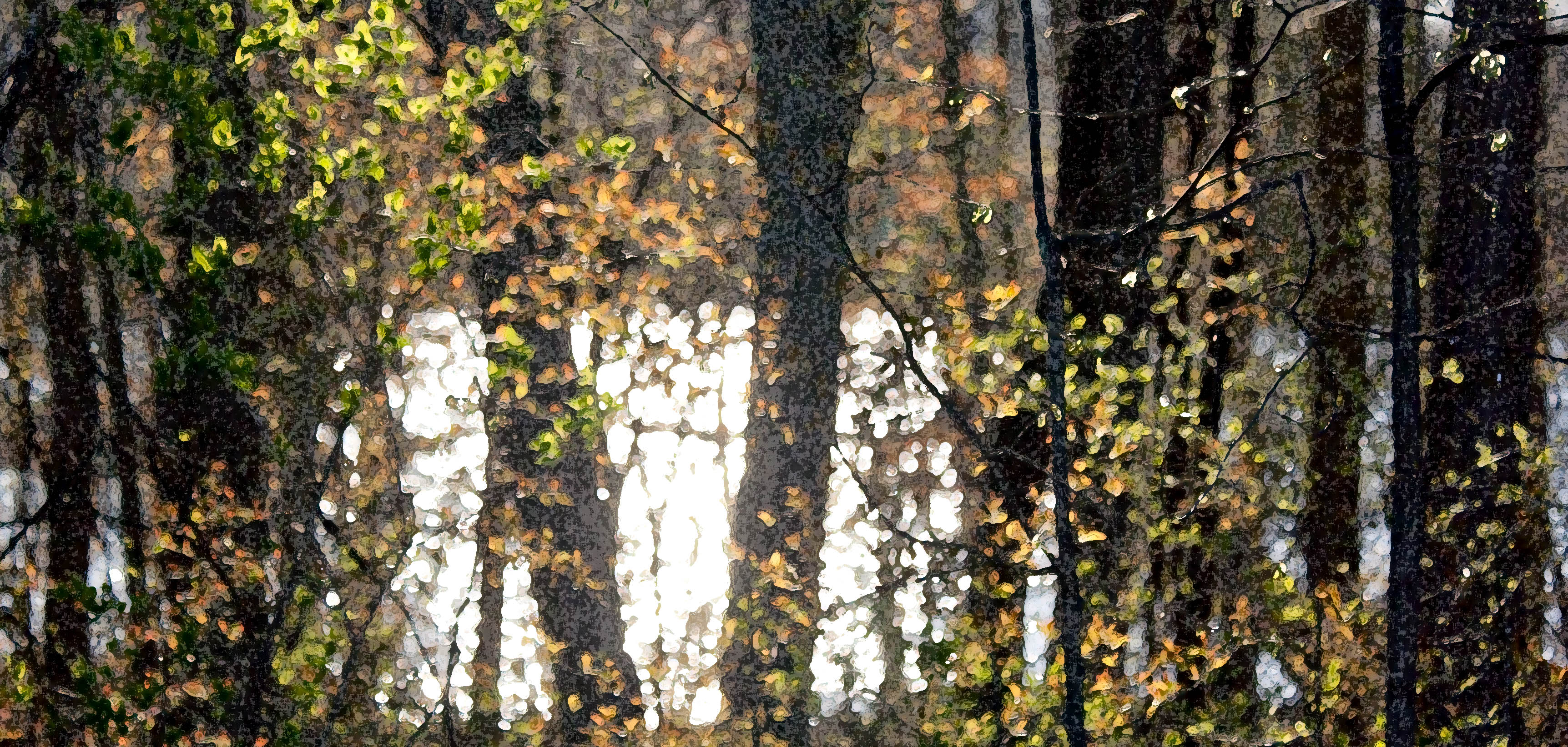
Hardwood forest backlit by sparkling Otonabee River in spring, ON (photo and rendition by Nina Munteanu)

Nina Munteanu is a Canadian ecologist / limnologist and novelist. She is co-editor of Europa SF and currently teaches writing courses at George Brown College and the University of Toronto. Visit www.ninamunteanu.ca for the latest on her books. Nina’s bilingual “La natura dell’acqua / The Way of Water” was published by Mincione Edizioni in Rome. Her non-fiction book “Water Is…” by Pixl Press(Vancouver) was selected by Margaret Atwood in the New York Times‘Year in Reading’ and was chosen as the 2017 Summer Read by Water Canada. Her novel “A Diary in the Age of Water” was released by Inanna Publications (Toronto) in June 2020.

“A Diary in the Age of Water” Reviewed in Alternatives Journal

Shanella Ramkissoon reviews my latest eco-fiction mundane science fiction novel “A Diary in the Age of Water” in Issue 46 of Alternatives Journal (Playbook for Progress):

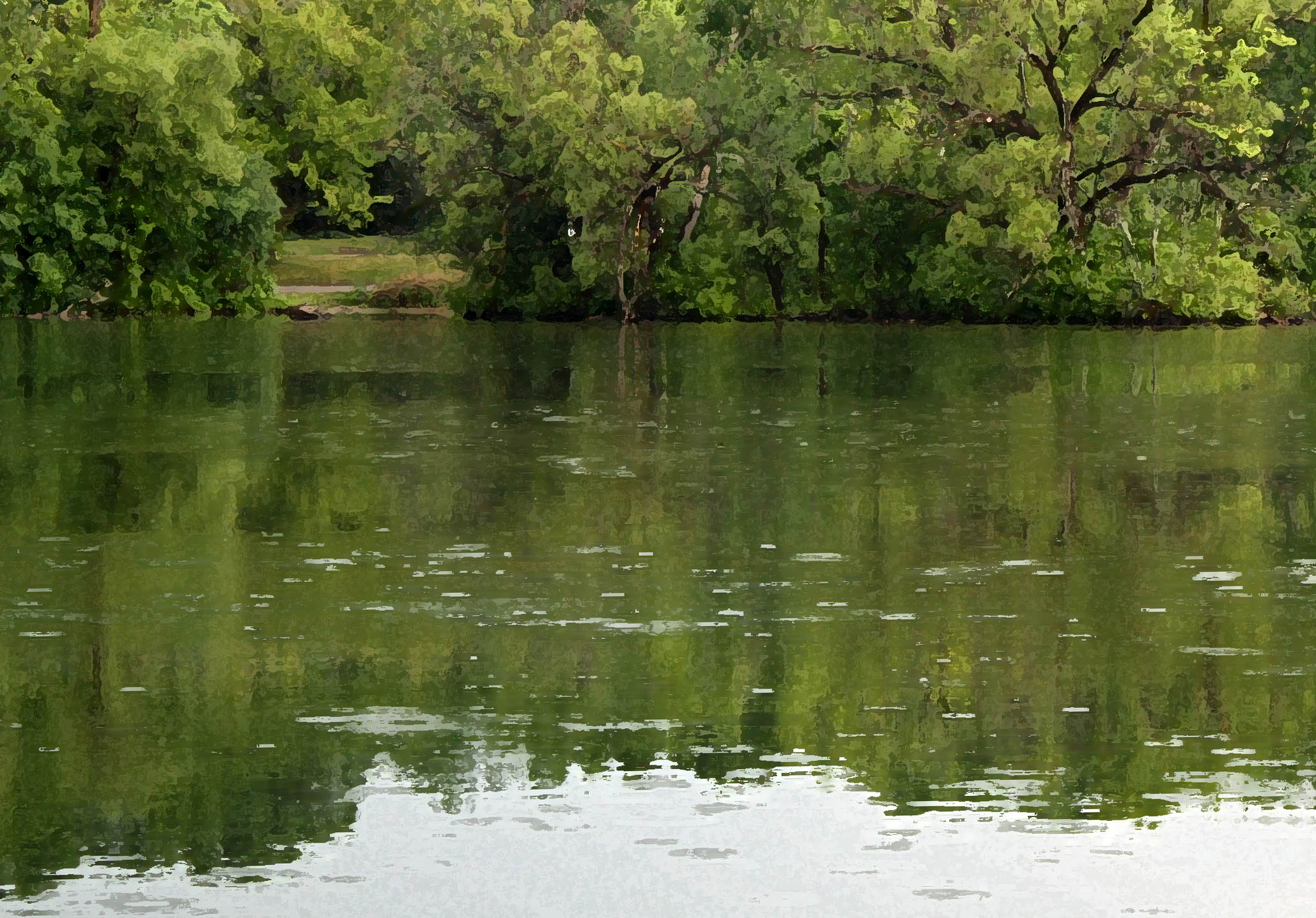
Rain falls on the Otonabee River, ON (photo and rendition by Nina Munteanu)

Nina Munteanu is a Canadian ecologist / limnologist and novelist. She is co-editor of Europa SF and currently teaches writing courses at George Brown College and the University of Toronto. Visit www.ninamunteanu.ca for the latest on her books. Nina’s bilingual “La natura dell’acqua / The Way of Water” was published by Mincione Edizioni in Rome. Her non-fiction book “Water Is…” by Pixl Press(Vancouver) was selected by Margaret Atwood in the New York Times ‘Year in Reading’ and was chosen as the 2017 Summer Read by Water Canada. Her novel “A Diary in the Age of Water” was released by Inanna Publications (Toronto) in June 2020.

Nina Munteanu Talks Books, Water and COVID on ConversationsLIVE

I recently had a wonderful discussion on Cyrus Webb’s show ConversationsLIVE on BlogTalkRadio and WYAD Radio in Mississippi.

We talked about curiosity in our world and how fiction connects us with relevance and meaning. We discussed writing eco-fiction, my latest eco-novel and work of mundane science fiction “A Diary in the Age of Water. We also discussed what was involved in combining art with science in mundane science fiction. Cyrus then asked me what it was like to get a book out during COVID. I enjoyed this interview for its refreshing questions. They made me think.

You can listen to the interview through the link below:

https://www.blogtalkradio.com/conversationslive/2021/06/22/author-nina-munteanu-talks-adiaryintheageofwater-on-conversationslive

Pond lilies in Thompson Creek marsh, ON (photo and rendition by Nina Munteanu)

Nina Munteanu Talks Water, Writing, and Weather on ‘All About Canadian Books’

I recently had the pleasure of chatting with Crystal Fletcher on “All About Canadian Books” about my recent clifi dystopian novel “A Diary in the Age of Water.” We covered a number of topics from water’s over 70 anomalous properties–virtually all of them life-giving–to how water seems to inform all aspects of my life, particularly my writing life. Crystal was particularly fascinated with the four generations of women in the book and we talked at length about how these characters were developed and the roles they played in the greater saga.

After bringing up the Toronto Star’s question of me (“What keeps you up at night about climate change”) in which I admitted that I lose sleep over the thought of how my son and his children will fair in this changing world, Crystal admitted that “Your book, Nina, is an eye opener…it freaked me out when I was reading it…and now I’m losing sleep!”

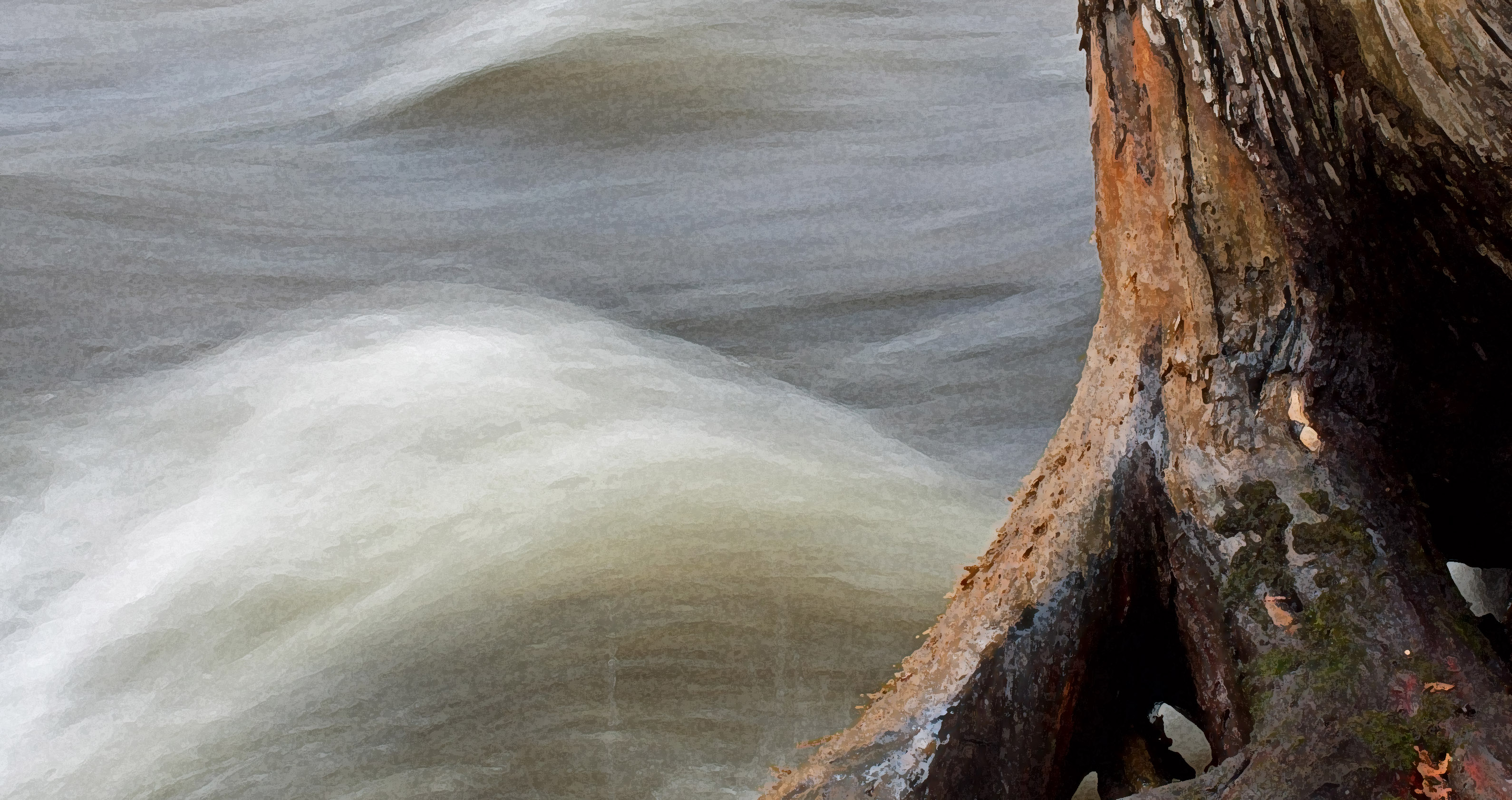
Hardwood forest back lit by glittering Otonabee River, ON (photo and rendition by Nina Munteanu)

Nina Munteanu On The Age of Water: Interview on “Mysterious Goings On Podcast”

Alex Greenwood, host of The Mysterious Goings On Podcast recently interviewed me about my latest novel and work of climate fiction, the dystopia “A Diary in the Age of Water.”

Alex and I discussed water scarcity and climate change as a water phenomenon. I also shared my thoughts on water as a character in the novel, water’s many anomalous properties–all of which promote life and wellness, and why writing a dystopian cautionary tale is an act of optimism.

Listen to the podcast on: Anchor; Spotify; Stitcher; Apple Podcasts; iHeartRadio; YouTube; Podchaser; Listennotes; Audible

Boys exploring by the Otonabee River, ON (photo and dry brush rendition by Nina Munteanu)

Nina Munteanu is a Canadian ecologist / limnologist and novelist. She is co-editor of Europa SF and currently teaches writing courses at George Brown College and the University of Toronto. Visit www.ninamunteanu.ca for the latest on her books. Nina’s bilingual “La natura dell’acqua / The Way of Water” was published by Mincione Edizioni in Rome. Her non-fiction book “Water Is…” by Pixl Press(Vancouver) was selected by Margaret Atwood in the New York Times ‘Year in Reading’ and was chosen as the 2017 Summer Read by Water Canada. Her novel “A Diary in the Age of Water” was released by Inanna Publications (Toronto) in June 2020.

Nina Talks About Being a Scientist and a Storytelling Artist on “The Authors Book Club”

Cedar beside swift water of Jackson Creek, ON (photo and rendition by Nina Munteanu)

Fiona Ross with The Authors Book Club talked with limnologist and eco-fiction author Nina Munteanu about her journey as both author and scientist and her latest book A Diary in the Age of Water (Inanna Publications). 

Advice on writing:

“Write with passion. A lot of people say ‘write what you know.’ Those two in some ways are the same thing. You can do a lot of research on things that you don’t know and bring that in [to your writing.] But to know in your soul, in your heart, the thing that’s important that you need to write about is more what I mean by ‘write what you know.’ If you’re passionate about something—a global catastrophe or a personal journey with abuse—if it comes from the heart, it will keep you on track through those rejections and to finish and complete your work. Otherwise you won’t persist and you’ll let someone tell you that it isn’t important, it’s just a hobby.”

On water:

Nina and Fiona discuss the perils of commodifying water and Canada’s role in protecting the freshwater of the world and the boreal zone of Canada.

Nina talks about how she turned her fear of water as a child into a fascination for water and a passion for its protection. “I’m a limnologist, an ecologist. I’ve have been studying it since I was a little kid who was scared of water. I triumphed over that into fascination and made that into a career.” Nina’s non-fiction book Water Is… was published in 2016 as a biography of water and was endorsed by Margaret Atwood in the New York Times ‘Year in Reading.’

Nina talks about some of water’s over 70 anomalous properties and how virtually each is life-giving. She shares how water can teach us to be stewards and protectors of water within an emerging paradigm of gratitude and humbleness.  

On being both scientist and artist:

Nina suggests that: “All great scientists are informed by art. They are creative in some way. [Scientists] bring that creativity, that original thinking and that curiosity, with them into their science. That’s what makes their science great because they are willing to look outward…We try to compartmentalize so we can better understand [art and science] but the irony is that we better understand them by bringing them together and integrating them…”

Nina Munteanu is a Canadian ecologist / limnologist and novelist. She is co-editor of Europa SF and currently teaches writing courses at George Brown College and the University of Toronto. Visit www.ninamunteanu.ca for the latest on her books. Nina’s bilingual “La natura dell’acqua / The Way of Water” was published by Mincione Edizioni in Rome. Her non-fiction book “Water Is…” by Pixl Press(Vancouver) was selected by Margaret Atwood in the New York Times‘Year in Reading’ and was chosen as the 2017 Summer Read by Water Canada. Her novel “A Diary in the Age of Water” was released by Inanna Publications (Toronto) in June 2020.

The Paradox of Pandemics & Darwin’s Paradox

On Writing My First Speculative Fiction Novel: The Darwin-Angel Duology

The first novel I wrote at the tender age of fifteen was Caged in World, a hundred-page speculative story about a world that had moved “inside” to escape the ravages of a harsh post climate-change environment. 

It was 1969, the year that humans first stepped on the moon and the first Concorde test flight was conducted in France. But I was concerned by the environment and what was happening on our planet. It was seven years since Rachel Carson had published Silent Spring, which warned of our declining bird and bee populations and impacts to human health from unregulated pesticide/herbicide use (such as carcinogens and hormone disruptors). It was just a year after Paul Erlich’s Population Bomb warned that attempts to stretch the Earth’s resources to support the ever-growing population would result in mass starvation, epidemics, and, ultimately, the breakdown of social order. 

In the 1960s it was already apparent that environmental imbalance and destruction were global concerns and we were on the brink of an environmental crisis.  Unchecked deforestation was destroying forests around the world, including the boreal and old-growth forests of my own country Canada. Brazil had already begun cutting down trees and burning forest at an alarming rate. Unregulated use of pesticides, herbicides and growth hormones created toxic contamination of our natural world and our food and water supply—despite Carson’s dire warning with Silent Spring. Our waterways were being contaminated by mining wastes and industrial effluents. Killer smog. Noxious algal blooms. Oil spills. Dead zones. The list was growing.

Bamboo Forest, Kyoto, Japan (photo by Nina Munteanu)

I joined S.T.O.P. (Society To Overcome Pollution) and marched in protests to call for responsible behaviour by governments and large corporations. I tried to raise awareness at my school about our deteriorating environment and likely consequences to human survival; my own teachers tried to silence me. I wrote my first dystopia, Caged in World.  The eco-novel was about a subway train driver and a data analyst caught in the trap of a huge lie. The story later morphed into Escape from Utopia. My dad, who was impressed with my dedication and what I’d done, became my first agent; he brokered a meeting with a Doubleday editor he’d met and impressed (my dad was a character and very charming); I did my first book pitch at age sixteen. The editor read my book and, while he didn’t pick the book for Doubleday, he told me that the story was original and imaginative and that I should keep writing.  

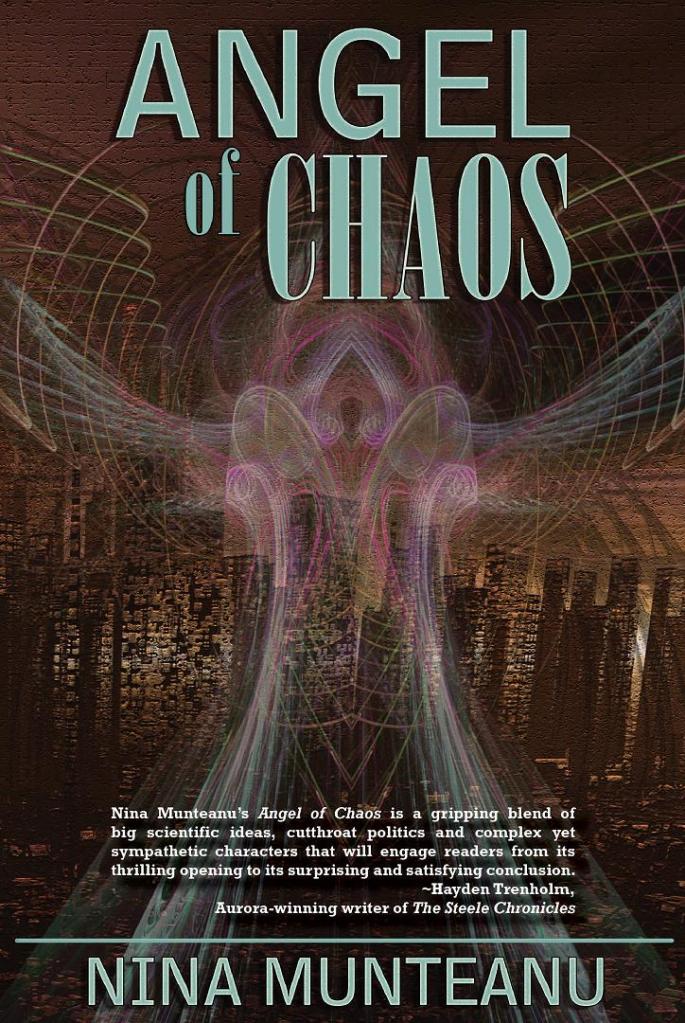
Several drafts—and years later—the novel became the eco-medical thriller Angel of Chaos, set in 2095 as humanity struggles with Darwin’s Disease—a mysterious neurological environmental pandemic. Icaria 5 is one of many enclosed cities within the slowly recoving toxic wasteland of North America, and where the protagonist Julie Crane works and lives. The city is run by technocrats, deep ecologists who call themselves Gaians, and consider themselves guardians of the planet.

The Gaians’ secret is that they are keeping humanity “inside” not to protect humanity from a toxic wasteland but to protect the environment from a toxic humanity. 

Since she was a young child, Julie has been hearing voices in her head. She’s not a schizophrenic, but a gifted veemeld (someone who can tap into machine intelligence wavebands). Feeling an inexplicable “karmic” guilt and intent on making a contribution to her society, Julie searches for a cure to Darwin Disease; instead, she makes a horrifying discovery that incriminates her in a heinous conspiracy to recast humankind.

“This is a story with great scope … As Julie finds out the truth about her father, she discovers a truth that will tear her world apart.

Bill Johnson, author of “a story is a promise”

By virtue of their gifted powers in communicating with the machine world, veemelds are considered a commodity, to be used, traded, hoarded and discarded by ruling technocrats all over North America.

I spent several years shopping the book to agents and publishing houses. Although I received many bites, all finally let go. In the meantime, I did several things: 1) I started writing short stories, some of which were cannibalized from the book, and several were published; 2) I wrote Angel’s prequel, The Great Revolution (never published, it sits in a drawer hibernating) and Angel’s sequel Darwin’s Paradox, (which was published). In fact, in 2007, Dragon Moon Press in Calgary made an offer to publish Darwin’s Paradox; the sequel became my debut novel. Dragon Moon Press later picked up Angel of Chaos and published it in 2010 as a prequel.

“Angel of Chaos is a gripping blend of big scientific ideas, cutthroat politics and complex yet sympathetic characters that will engage readers from its thrilling opening to its surprising and satisfying conclusion.”

Hayden Trenholm, Aurora-winning author of The Steele Chronicles

Darwin’s Paradox follows humanity in its cloistered indoor world as it deteriorates with the disease. Darwin’s Disease—related to indoor living—sweeps across humanity with debilitating genetic deterioration, violent death and the promise of extinction.  This is something the self-professed deep ecology Gaians are content to see in—if it means preserving the natural world. Of course, the Gaians—being self-serving humans after all—have an exit plan.

In 2012, Derek Newman-Stille of Speculating Canada wrote an essay on Darwin’s Paradox entitled Patient Zero and the Post Human; the article provides an insightful description of the eco-novel and interesting historical context and irony to our current situation with the COVID-19 pandemic:

“In Darwin’s Paradox Nina Munteanu displays her awareness of scientific discourse: focussing on areas like chaos theory, biological theories of co-evolution, symbiosis and virology, and ecological theories. Her protagonist, Julie, is patient zero in a spreading epidemic that has infected most of modern civilisation. Munteanu creates a civilisation where human society is centred around a few urban locales, leaving large parts of the world unoccupied by human beings, and allowing for ecological development uninterrupted by human interference. Technology in this future world has fused with the viral epidemic, questioning the barriers of the human and the nature of human existence. The nature of humanity has changed with this introduction of other elements into the human biosystem, creating a post-human world in which the possibilities of the future of human existence are called into question, and in which several powers are vying for control of the next stage of humanity and the future of the human race.

Munteanu’s  Darwin’s Paradox illustrates a collision of past and future as Julie is haunted by her past and ideas of home, while simultaneously representing a next stage in human evolution. The city Icaria 5 itself is a representation of past and present intersecting: buried under the city of Toronto and rising from the structures of the past. Munteanu’s plot is full of family secrets, the hidden past, and the resurfacing of guilt (particularly Julie’s guilt about being patient zero in the spreading viral apocalypse). She explores the draw of the past and home and the continual pull the past has upon one’s existence. Munteanu explores Julie’s simultaneous desire to return home and her realisation that home has forever changed – becoming a foreign place.

Munteanu explores society’s fear of epidemic and the role of medical technology as a mechanism for solving all of the world’s problems. She illustrates that medical technology has its limits and complicates the nature of technological methods of solving problems by allowing virus and technology to meld.  Simultaneously Munteanu explores the continuation of society’s obsession with beauty and perfection by creating a society where one can restore one’s beauty through instant medical treatments: Nuyu and Nuergery, using nanites to restore one’s youth and change undesirable aspects of one’s form. Political groups fearing the over-use of technology and the complications to the idea of the human that these surgeries may cause begin using scarring to assert their difference and reluctance to submit to social controls.

Media plays an important role in Munteanu’s vision of the future, illustrating the continuance of the media hegemony for defining the nature of “truth” as media messages replace facts and political leaders manipulate the media system to enforce their own controls over society and further embed their interests into the developing social system. She illustrates the danger of the current system of using the politics of fear as a mechanism for controlling voters (particularly focussing on the use of fear by political groups to shift cultural ideas, sympathies, and ultimately gain control of the developing social system).  In Munteanu’s vision of the future, it is impossible to trust anyone completely and layers within layers of plot are illustrated, leaving the reader distrusting of every message he or she receives.

Munteanu raises questions and challenges the development of society’s current systems, asking her readers to think critically about messages they are given and to question everything. She illustrates that the truth is socially constructed and that ideas of the truth serve social purposes and can be used to support hidden agendas.”—Derek Newman-Stille, Patient Zero and the Post-Human

In some ways, the Darwin duology shares a special place in my heart—not just because the duology became my first and second traditionally published novels, but because through them I found my writing voice. Since first writing Caged In World, I spent close to four decades honing my craft; I published short stories and two novellas (Collision with Paradise in 2005 andThe Cypol in 2006), and attended writing workshops and conventions, before publishing my first novel with a traditional publisher. It was a fulfilling heuristic path that taught me writing craft in all its facets.

Since publishing my first novel in 2007, I have published on average a book every year (alternating each year between fiction and non-fiction).  I now have fourteen books published with various publishing houses. Most are in keeping with an environmental theme. My latest non-fiction book Water Is… was picked by Margaret Atwood in New York Time’s ‘Year in Reading’ in 2016. My latest eco-novel A Diary in the Age of Water was published by Inanna Publications in 2020 in the midst of the COVID-19 pandemic. 

My journey as writer has been rich and varied. I’ve moved and lived from one end of Canada to the other. I raised a family and travelled the world. I worked as a field researcher and environmental consultant, investigating many water bodies in Canada and helping communities in watersheds. I taught limnology and phycology at the University of Victoria and currently teach writing at the University of Toronto. I continue my personal research in the natural world to satisfy my unending curiosity. I’ve changed. My writing has changed. But one thing will never change: my passion for the written word and the worlds of the imagination. That journey will never end (until the end, that is).

Readers have asked for a sequel to Darwin’s Paradox. I’ve also been approached by several writers to collaborate on a sequel. While many of their ideas were wonderfully original, I’ve not taken any of them on their offer. Others have said that both novels would make a great series or movie. I’m inclined to agree. If that were to come to pass, I might be persuaded to create a Darwin’s Paradox series and continue the story of Julie, Daniel, and Angel.

Bamboo Forest in Kyoto, Japan (photo by Nina Munteanu)

Nina Munteanu is a Canadian ecologist / limnologist and novelist. She is co-editor of Europa SF and currently teaches writing courses at George Brown College and the University of Toronto. Visit www.ninamunteanu.ca for the latest on her books. Nina’s bilingual “La natura dell’acqua / The Way of Water” was published by Mincione Edizioni in Rome. Her non-fiction book “Water Is…” by Pixl Press(Vancouver) was selected by Margaret Atwood in the New York Times‘Year in Reading’ and was chosen as the 2017 Summer Read by Water Canada. Her novel “A Diary in the Age of Water” was released by Inanna Publications (Toronto) in June 2020.

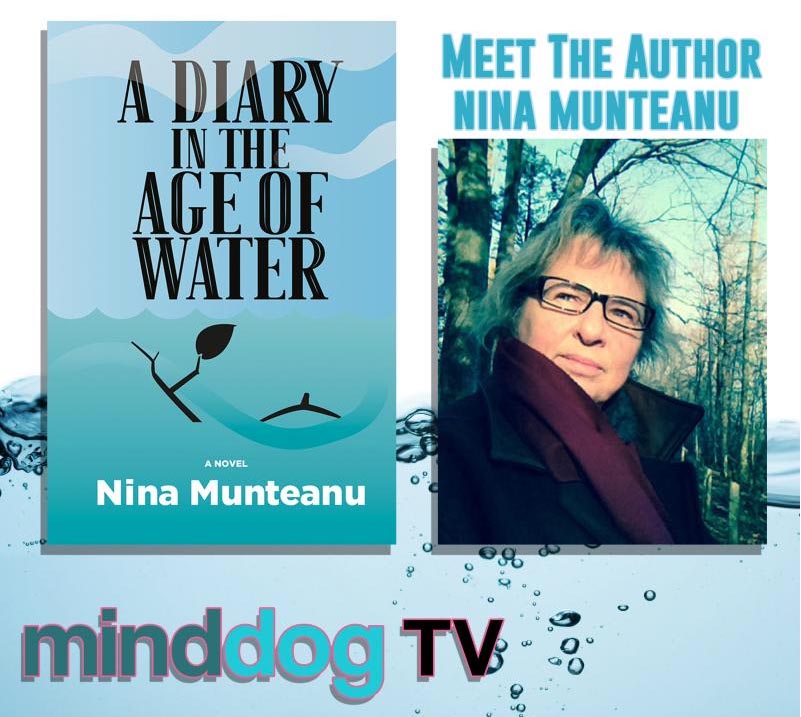
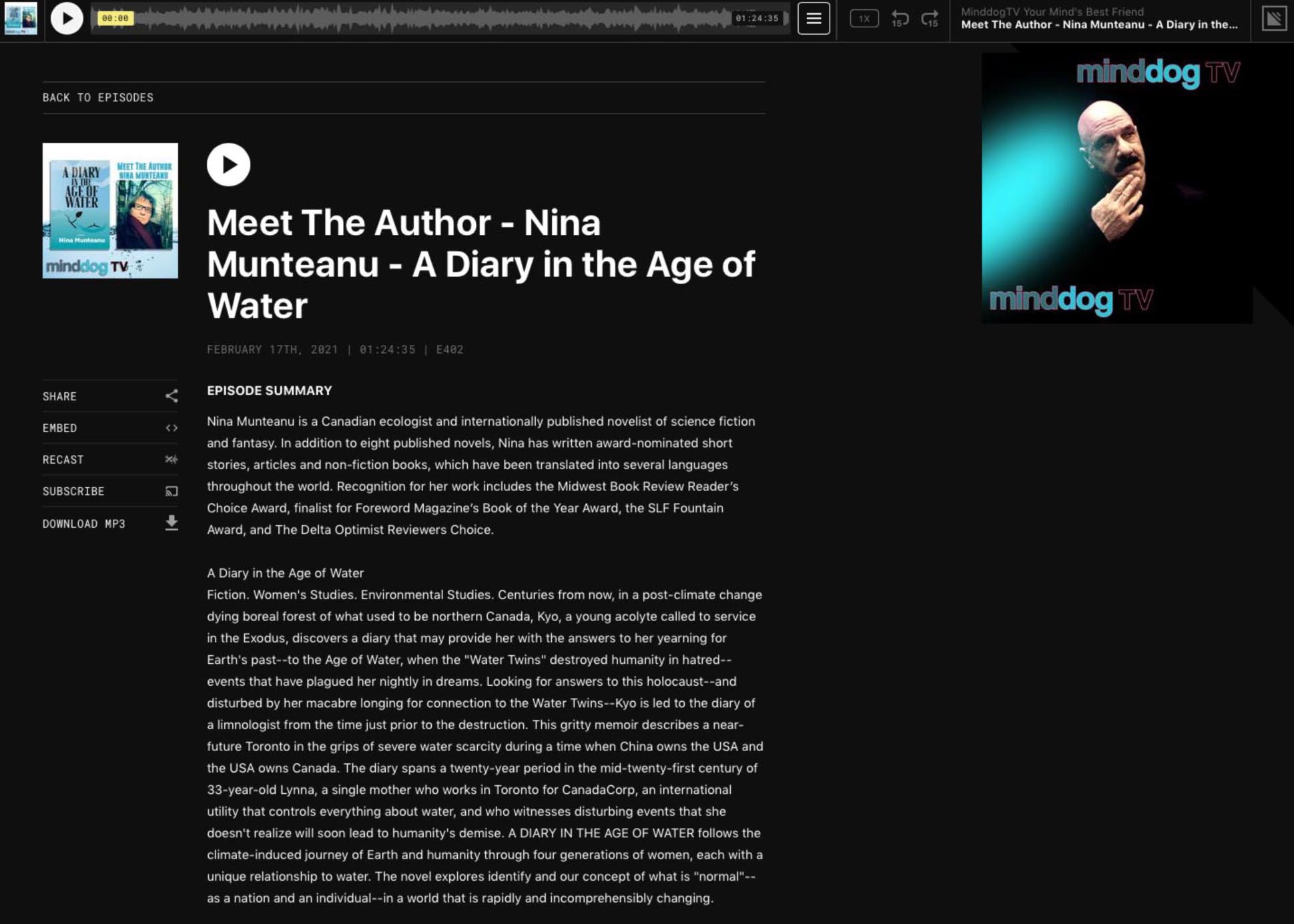
Nina Munteanu Talks Water and Writing on Minddog TV, New York

I was recently interviewed by Matt Nappo on Minddog TV in New York, where we talked about the science and magic of water, climate change and how to not become cynical, the process of writing, what scares us and what takes us through it into great storytelling.

Here’s the interview:

Matt Nappo interviews limnologist and clifi author Nina Munteanu on minddog TV
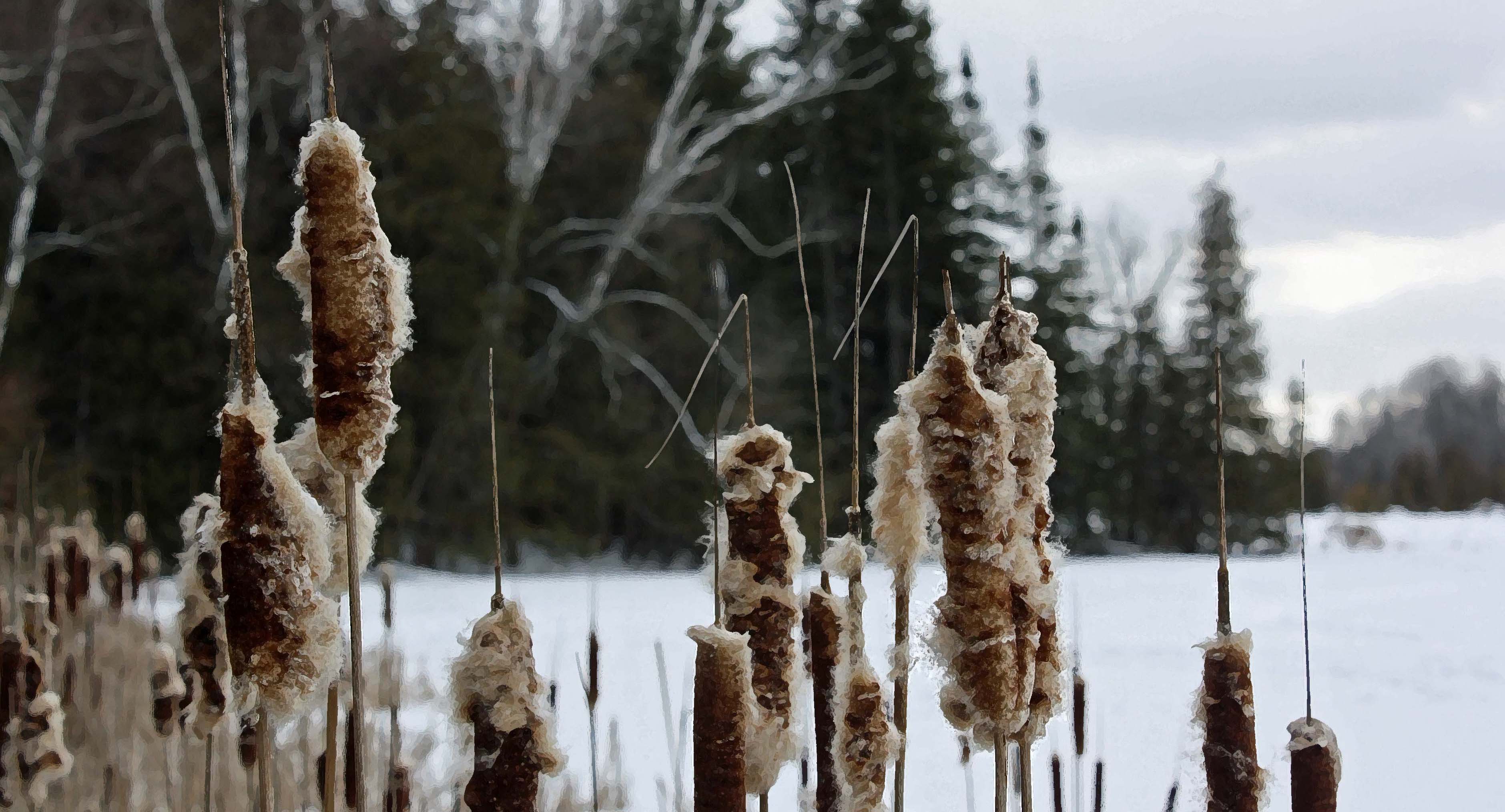
Cattails oversee the snowy plain of the iced-over Trent Canal, ON (photo and dry brush rendition by Nina Munteanu)

Nina Munteanu is a Canadian ecologist / limnologist and novelist. She is co-editor of Europa SF and currently teaches writing courses at George Brown College and the University of Toronto. Visit www.ninamunteanu.ca for the latest on her books. Nina’s bilingual “La natura dell’acqua / The Way of Water” was published by Mincione Edizioni in Rome. Her non-fiction book “Water Is…” by Pixl Press(Vancouver) was selected by Margaret Atwood in the New York Times‘Year in Reading’ and was chosen as the 2017 Summer Read by Water Canada. Her novel “A Diary in the Age of Water” was released by Inanna Publications (Toronto) in June 2020.

Twelve Books on Climate and Environment for the Holidays

Gift guide: 12 books on climate can environment for the holidays

“For this year’s holiday gift guide,” writes Dr. Michael Svoboda, “Yale Climate Connections has gathered celebrated anthologies, deep-dives into climate-related science and solutions, inspiring books from or about spiritual leaders, and visionary works of climate fiction.”

All were recently published, some within the month, writes Svoboda. These twelve books address decades of writing on climate change, reassess the challenges, offer hope and guidance for action, and envision very different climate-changed futures.

There is, for instance, the anthology The Fragile Earth: Writing from the New Yorker on Climate Change (Harper Collins),which includes Bill McKibben’s seminal essay “The End of Nature.” The anthology All We Can Save(Penguin Random House) edited by Ayana Elizabeth Johnson and Katharine K. Wilkinson is a collection of works dedicated to leadership “more characteristically feminine and more faithfully feminist, rooted in compassion, connection, creativity, and collaboration.”

Hope, guide to action and challenges are provided by Future Sea (University of Chicago Press) by Deborah Rowan Wright, The New Map (Penguin Random House) by Daniel Yergin, Solved:How the World’s Great Cities are Fixing the Climate Crisis (University of Toronto Press) by David Miller, Let Us Dream (Simon & Schuster) by Pope Francis. Tales of Two Planets (Penguin Random House) edited by John Freeman explores inequality and the impact of climate change.

Stand Up! Speak Up! (Penguin Random House) by Andrew Joyner celebrates the inspiration of youth in taking up action through hope, activism and community. Our Only Home: A Climate Appeal to the World (Hanover Square) by the Dalai Lama and Franz Alt is a manifesto that will empower us to take action and save the environment. 

The novel The 2084 Report (Simon & Schuster) by James Lawrence Powell provides an “oral history” through interviews of the devastating effects of the Great Warming, which are both fascinating and frightening. My own novel A Diary in the Age of Water (Inanna Publications) chronicles the journeys of four generations of women, each carrying a unique relationship with water over a time of catastrophic change. Told in the form of a diary by a limnologist, the story explores a Canada mined for its water by United States, which, in turn, is owned by China. The Ministry for the Future (Hachette Book Group—Orbit) a novel by Kim Stanley Robinson uses fictional eyewitness accounts to tell the story of how climate change will affect us all.

Yale Climate Connections:

Edited by veteran journalist and journalism educator Bud Ward, Yale Climate Connections provides content developed by a network of experienced independent freelance science journalists, researchers, and educators across the country.Yale Climate Connections is an initiative of the Yale Center for Environmental Communication (YCEC), directed by Dr. Anthony Leiserowitz of the Yale School of the Environment, Yale University.

Dr. Michael Svoboda, an expert on climate change, is a professor at George Washington University and frequent contributor to Yale Climate Connections.

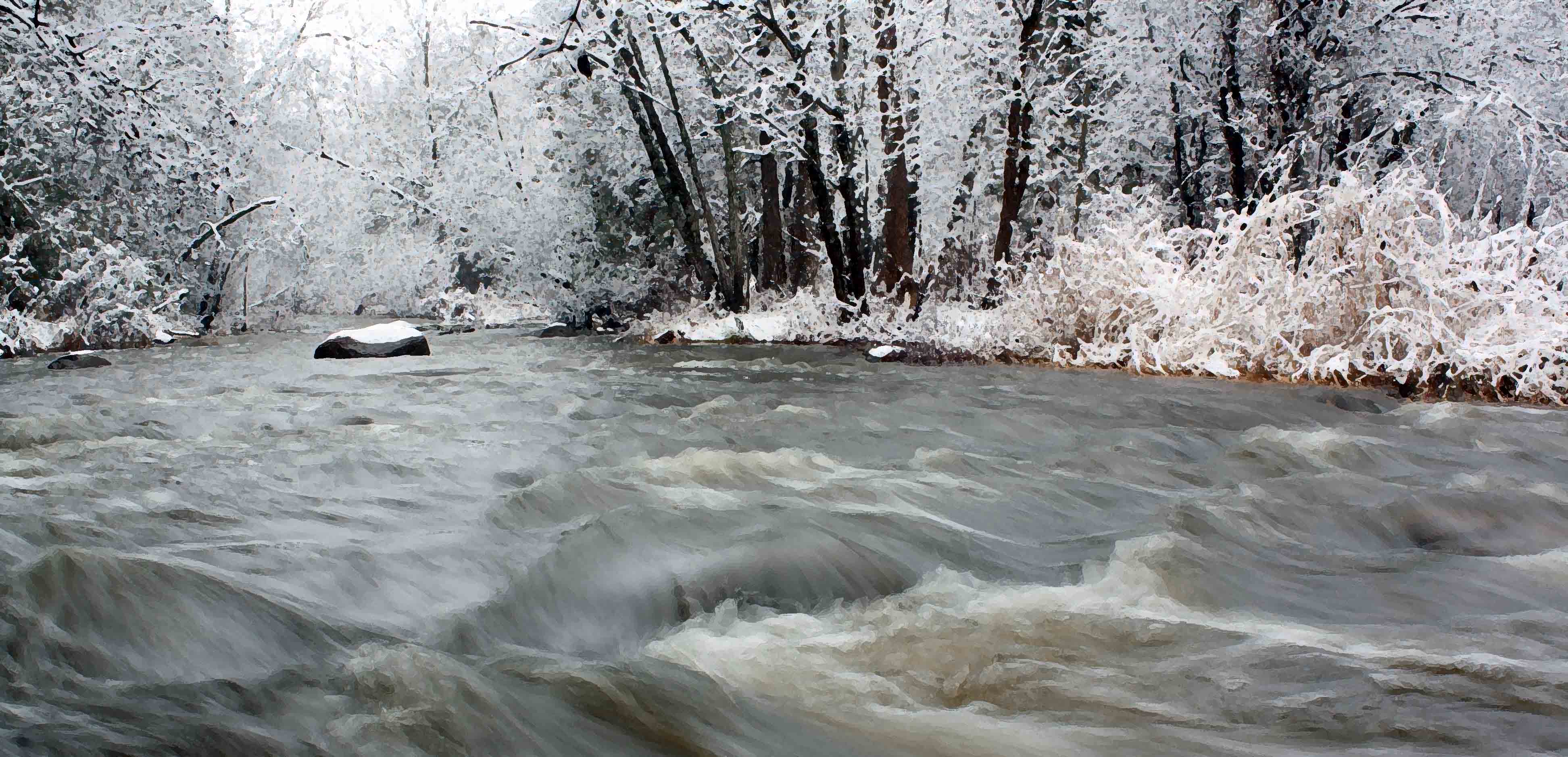
Jackson Creek in early winter, ON (photo and rendition by Nina Munteanu)

Nina Munteanu is a Canadian ecologist / limnologist and novelist. She is co-editor of Europa SF and currently teaches writing courses at George Brown College and the University of Toronto. Visit www.ninamunteanu.ca for the latest on her books. Nina’s bilingual “La natura dell’acqua / The Way of Water” was published by Mincione Edizioni in Rome. Her non-fiction book “Water Is…” by Pixl Press(Vancouver) was selected by Margaret Atwood in the New York Times ‘Year in Reading’ and was chosen as the 2017 Summer Read by Water Canada. Her novel “A Diary in the Age of Water” was released by Inanna Publications (Toronto) in June 2020.

W.O.W Interviews Nina Munteanu on “A Diary in the Age of Water”

Thompson Creek outlet, ON (photo and rendition by Nina Munteanu)

I recently chatted with Darshaun McWay on W.O.W. Podcast about my recent novel A Diary in the Age of Water.

We talked about the story, its main characters–including water as a character–and why I write about water. We also covered why the book is written partly as a diary. Margaret Atwood’s name came up a few times…

Here is the W.O.W description of the interview:

Nina Munteanu chats with Darshaun McAway of W.O.W. Podcast about her new clifi novel “A Diary in the Age of Water”: a novel about the journeys of four generations of women and their unique relationship with water during a time of great environmental change. Darshaun and Nina talk about her use of water as a character, her choice of heroines and her use of a diary format to tell the story.  Nina shares that the book–set in the near future as a limnologist’s diary and the far future with an evolved human–explores the premise of a water-scarce Canada whose water now belongs to the USA, who, in turn, is owned by China. The events about which the diarist writes are based on real historic events and people. Nina brings her considerable scientific, limnological and research skills to bear in describing a future Canada both dystopic and harrowing–yet very familiar. One real event taken as premise in the book that Nina shared with Darshaun is the American NAWAPA plan of the 1960s that went to congress and was (and still is) seriously discussed for years following: the plan was to divert massive amounts of fresh water from Canada and store by inundating the Rocky Mountain Trench and piped south to hydrate dwindling aquifers in the USA.

W.O.W Interview with Nina Munteanu and Darshaun McAway

Nina Munteanu is a Canadian ecologist / limnologist and novelist. She is co-editor of Europa SF and currently teaches writing courses at George Brown College and the University of Toronto. Visit www.ninamunteanu.ca for the latest on her books. Nina’s bilingual “La natura dell’acqua / The Way of Water” was published by Mincione Edizioni in Rome. Her non-fiction book “Water Is…” by Pixl Press(Vancouver) was selected by Margaret Atwood in the New York Times ‘Year in Reading’ and was chosen as the 2017 Summer Read by Water Canada. Her novel “A Diary in the Age of Water” was released by Inanna Publications (Toronto) in June 2020.