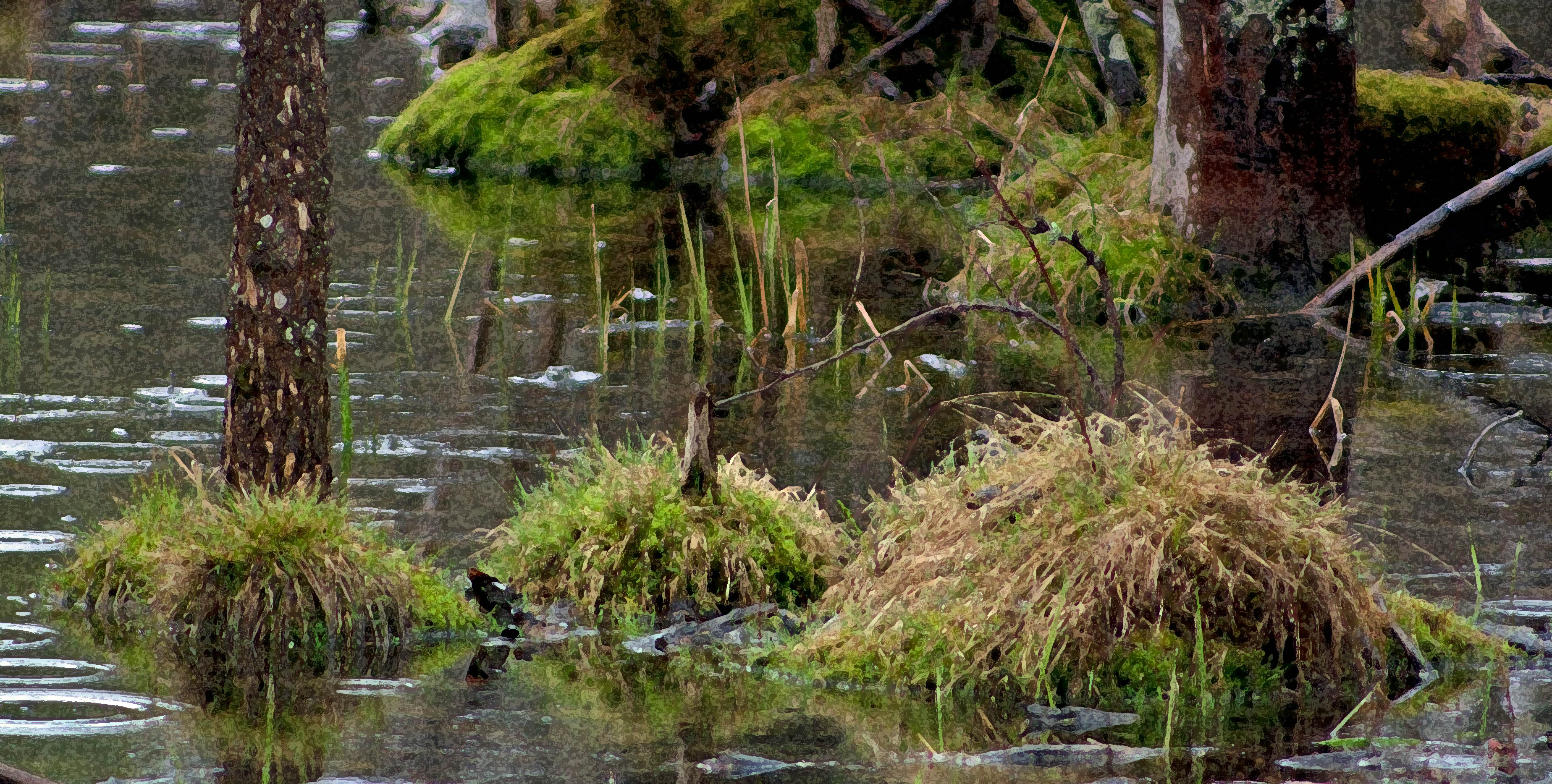
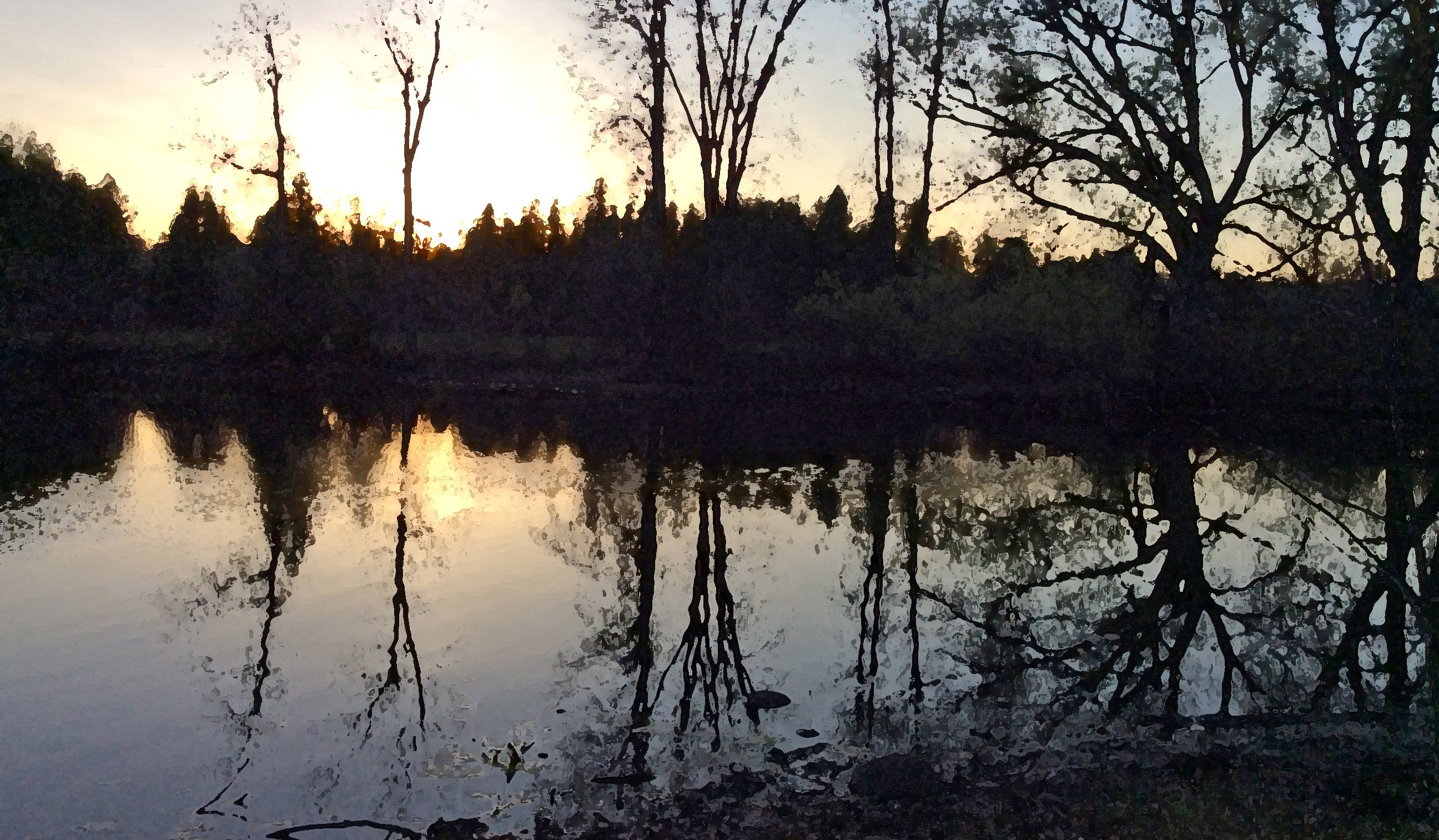
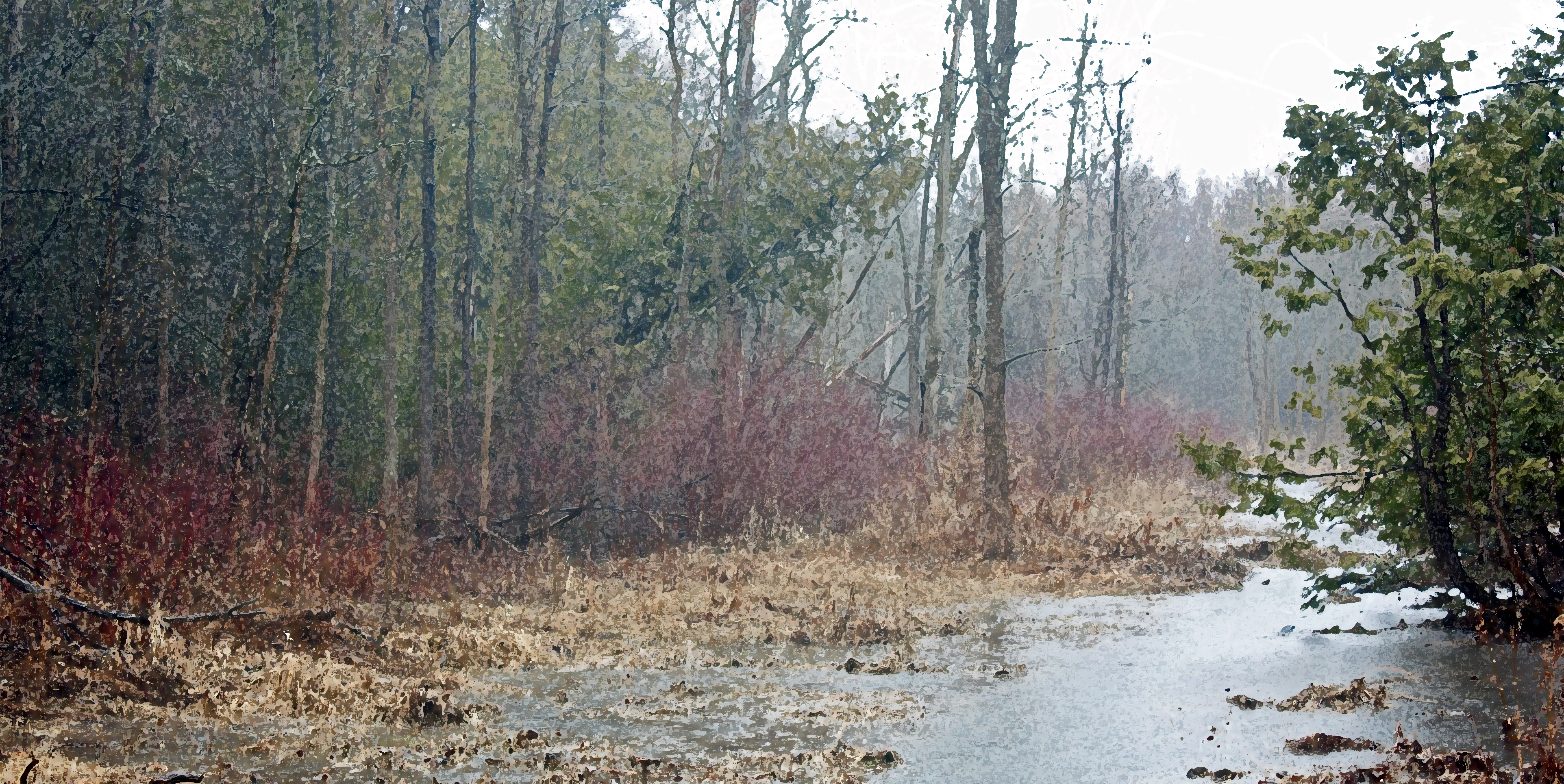
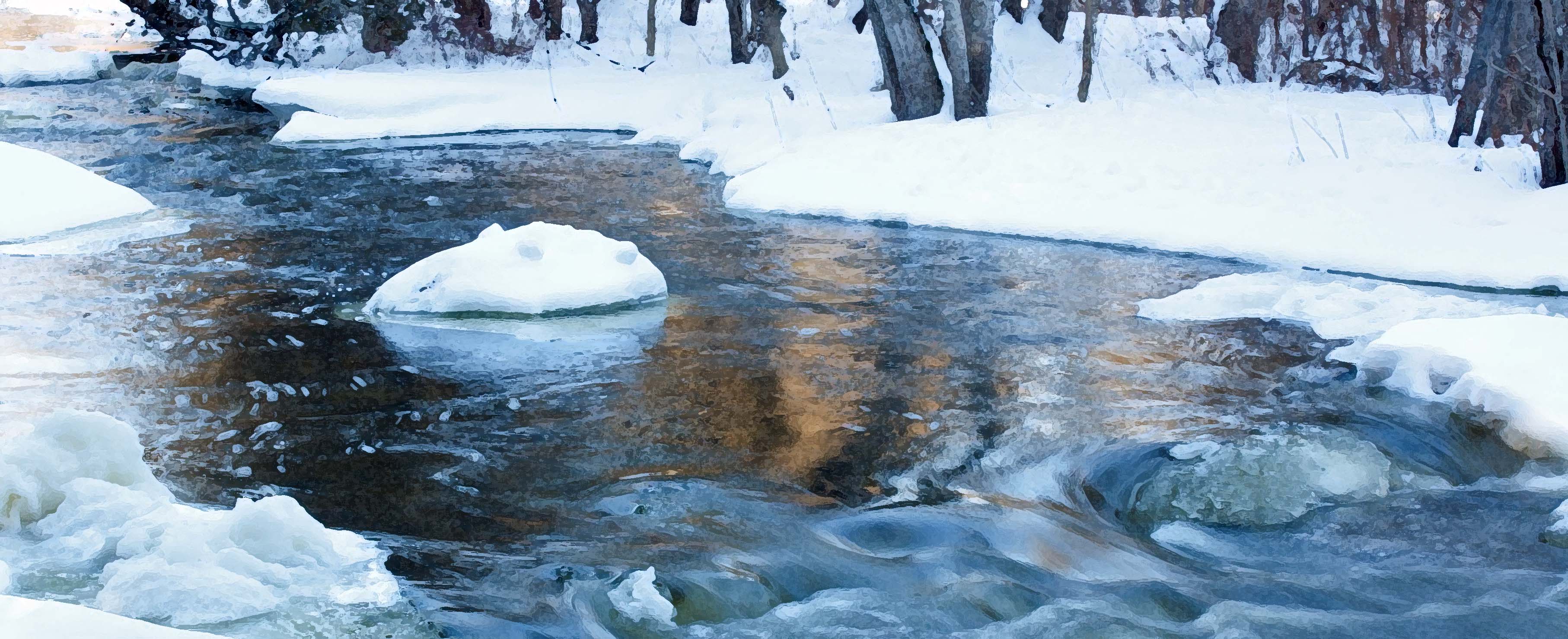
“During spring thaw or fall turnover, the thermocline erodes and the changing temperature forces a lake to mix, revealing her secrets.”
Lynna Dresden
A Diary in the Age of Water is“One of the most important books of a generation.”
REEDSY REVIEWS
“During spring thaw or fall turnover, the thermocline erodes and the changing temperature forces a lake to mix, revealing her secrets.”
Lynna Dresden
A Diary in the Age of Water is“One of the most important books of a generation.”
REEDSY REVIEWS
“As Nature tames a lake over time, one thing replaces another. As it undergoes a natural succession from oligotrophic to highly productive eutrophic, a lake’s beauty mellows and it surrenders to the complexities of destiny. Minimalism yields to a baroque richness that, in turn, heralds extinction. The lake shrinks to a swamp then buries itself under a meadow.”
Lynna Dresden
’A Diary’ is a brilliant story…Munteanu writes with fresh, stimulating style.”
CRAIG H. BOWLSBY, author of The Knights of Winter
“[My] paper on stream periphyton in Hydrobiologia could have been controversial and ultimately rejected by the scientific community; instead, it demurred to traditional science and was embraced as ground-breaking.”
Lynna Dresden

A Diary in the Age of Water is“A chilling but believable portrayal of what might happen as fresh water becomes more scarce.”
MIRAMICHI READER
“Evoking Ursula LeGuin’s unflinching humane and moral authority, Nina Munteanu takes us into the lives of four generations of women and their battles against a global giant that controls and manipulates Earth’s water. In a diary that entwines acute scientific observation with poignant personal reflection, Lynna’s story unfolds incrementally, like climate change itself. Particularly harrowing are the neighbourhood water betrayals, along with Lynna’s deliberately dehydrated appearance meant to deflect attention from her own clandestine water collection. Her estrangement from her beloved daughter, her “dark cascade” who embarks upon a deadly path of her own, is heart-wrenching. Munteanu elegantly transports us between Lynna’s exuberant youth and her tormented present, between microcosm and macrocosm, linking her story and struggles-and those of her mother, daughter, and granddaughter-to the life force manifest in water itself. In language both gritty and hauntingly poetic, Munteanu delivers an uncompromising warning of our future.”
LYNN HUTCHINSON LEE, multimedia artist, author, and playwright
“During spring thaw or fall turnover, the thermocline erodes and the changing temperature forces a lake to mix, revealing her secrets.”
Lynna Dresden
“Munteanu’s experience in bridging the worlds of biology and writing makes A Diary in the Age of Water unique in being strong and focused from both the scientific and literary perspectives.”
STRANGE HORIZONS
“Water wants to flow. It doesn’t like to be restricted. If confined in a ravine, it speeds up and cuts a channel along the thalweg, eroding the hardest material and polishing a path that uniquely suits it. Water is selfish. It is always moving, even when it isn’t.”
Lynna Dresden
A Diary in the Age of Water is “An exceptional and thought-provoking dystopian fiction.”
LITERARY TITAN
Issue #128 of Apex Magazine featured an interview that Rebecca E. Treasure did with me. We discussed the power of story, the use of dystopian narrative, and the blur between fiction and non-fiction to create meaningful eco-fiction. Below we talk about the role of stories in the climate action movement. For the complete interview go here:
AM: Your work takes complex topics that are nonetheless critical to humanity’s future and pulls stories with compelling characters out of them, making the science accessible, the warnings personal to the reader. This has always been one of the callings of science fiction. What is the role of stories in the climate action movement?
NM: Our capacity and need to tell stories is as old as our ancient beginnings. From the Paleolithic cave paintings of Lascaux to our blogs on the internet, humanity has always shared story. Story is powerful in how it helps us define who we are, what’s important to us, and where we are going. Stories compel with intrigue, stir our emotions, connect with our souls through symbols, archetypes and metaphor. Stories inspire action. We live by the stories we tell.
For too long, our stories have promoted a dominant worldview of exploitation and capitalism. We’ve been telling the patriarchal story of “othering” for too long; we need a new voice and a new worldview to replace our old stories of conquering and taming a “savage land” and “savage people.” When Copernicus proclaimed in 1543 that the sun did not revolve around the Earth, it took a long time for the world to accept and let go of its Ptolemaic Earth-centered view. But the world did come around eventually to the point now that this is common knowledge and lies embedded in our daily lives and language.
Storytelling about how the Earth takes care of us and how we can take care of Earth is urgently needed.
This means shifting our stories from an exploitive capitalist narrative of separation toward an inclusive partnership narrative. This means embracing a more eco-centric worldview; a worldview in which humanity is not central, but lies embedded within greater planetary forces and phenomena. A worldview that sees humanity only as part of a greater entity, as participant in a greater existential celebration of life and the elements. A humanity that must learn to play along, not bully and take over. A humanity that must embrace compassion, respect and kindness; a humanity directed by humility—not hubris. It is my firm belief that until our worldview embraces humility in partnership with the natural world—until we cast off our self-serving, neo-liberal, capitalist ideologies—we will remain hampered in our journey forward. When we change our stories, we change our lives and we change the world along with it.
This is already happening with the emergence of a strong eco-voice by writers through the feminine voice, the gylanic voice, the voice of the marginalized, of ecology and the environment itself. Authors such as Barbara Kingsolver, Annie Proulx, Margaret Atwood, Richard Powers, Emmi Itäranta, Jeff Vandermeer, Cherie Demaline, Christiane Vadnais, Pitchaya Sudbanthad, Chen Qiufan, Paolo Bacigalupi, Grace Dillon, Andrew Krivak, Kim Stanley Robinson, and Coleen Murphy … These all give Nature a face and voice to care about. And caring is the first step.
For the entire interview, go to Apex Magazine, December 10, 2021.

Nina Munteanu is a Canadian ecologist / limnologist and novelist. She is co-editor of Europa SF and currently teaches writing courses at George Brown College and the University of Toronto. Visit www.ninamunteanu.ca for the latest on her books. Nina’s bilingual “La natura dell’acqua / The Way of Water” was published by Mincione Edizioni in Rome. Her non-fiction book “Water Is…” by Pixl Press(Vancouver) was selected by Margaret Atwood in the New York Times‘Year in Reading’ and was chosen as the 2017 Summer Read by Water Canada. Her novel “A Diary in the Age of Water” was released by Inanna Publications (Toronto) in June 2020.
“Mankind will continue to flounder when he underestimates Nature and sees himself separate from Her. Man is having his way with Her now. But eventually She will have her way with him. When they try to hang onto water, it will slip through their fingers. That’s what water does.”
Una Dresden
“In poetic prose with sober factual basis, Munteanu transmutes a harrowing dystopia into a transcendentalist origin myth. An original cautionary tale that combines a family drama with an environmental treatise.”
KIRKUS REVIEWS
“Don’t make the mistake of thinking the bully is your friend…You can play with the bully. But don’t make him your friend. Demand his respect. Or you will become the bully.”
Una Dresden
“Lyrical and dystopian, ‘A Diary in the Age of Water’ is as much an ode to water as it is a cautionary tale about the dire implications of climate change.”
FOREWORD CLARION 5-STAR REVIEW
That day may seem like science fiction or the far future, but as William Gibson famously proclaimed, “The future is already here—it’s just not very evenly distributed.”
This is partly why I’ve been recently writing speculative (mundane) science fiction in which components of fiction blur with non-fiction. In a recent interview on the SolarPunk Magazine Podcast, I discussed with hosts Justine and Bria how my recent novel A Diary in the Age of Water blurred fiction with non-fiction. The novel achieved this through the use of a diary to create a gritty realism in a mundane narrative hard to put down. The intention was to achieve personal relevance for the reader to what was going on, particularly with climate change—a water-driven phenomenon. In The Temz Review, Marcie McCauley postulated that “[Munteanu] does not appear to view fiction and non-fiction as separate territories; or, if she does, then this book is a bridge between them.” I had to laugh when I read this; “she gets me,” I concluded.
In the near-future of A Diary in the Age of Water, Canada has privatized its water utilities after the Conservative Party comes into power, and a giant company called CanadaCorp removes municipal water connections from people’s homes and imposes strict water rations, all while selling off Canada’s precious water to US states like California that would otherwise be uninhabitable.
In her entry for July 13, 2049, Lynna the diarist writes:
“Today CanadaCorp announced that the collection of rainwater was illegal. As of today, I could be arrested for using my rain catcher and cistern. I’ve decided to continue using the cistern, and I’ve warned Hildegard not to breathe a word to anyone at school about what we’re doing with the water. Thankfully, I have time to train her in the art of subterfuge before she starts Grade Two in the fall.”
Nina Munteanu, A Diary in the Age of Water
What follows in the novel is complete commodification of water and further restrictions for citizens in the form of house tap closures and daily water quantity quotas from paying public water taps. No form of water is free or available without payment. And if you can’t pay, well…
Dizzy and shivering in the blistering heat, Hilda shuffles forward with the snaking line of people in the dusty square in front of University College where her mother used to teach. The sun beats down, crawling on her skin like an insect. She’s been standing for an hour in the queue for the public water tap… The man behind Hilda pushes her forward. She stumbles toward the tap and glances at the wCard in her blue-grey hand. Her skin resembles a dry riverbed.
Heart throbbing in her throat, Hilda fumbles with the card and finally gets it into the reader. The reader takes it. The light screams red. Her knees almost give out. She dreaded this day…
A tiny water drop hangs, trembling, from the wTap faucet mouth, as if considering which way to go: give in gravity and drop onto the dusty ground or defy it and cling to the inside of the tap. Hilda lunges forward and touches the faucet mouth with her card to capture the drop. Then she laps up the single drop with her tongue. She thinks of Hanna and her throat tightens.
The man behind her grunts. He barrels forward and violently shoves her aside. Hilda stumbles away from the long queue in a daze. The brute gruffly pulls out her useless card and tosses it to her. She misses it and the card flutters like a dead leaf to the ground at her feet. The man shoves his own card into the pay slot. Hilda watches the water gurgle into his plastic container. He is sloppy and some of the water splashes out of his container, raining on the ground. Hilda stares as the water bounces off the parched pavement before finally pooling. The ache in her throat burns like sandpaper and she wavers on her feet. The lineup tightens, as if the people fear she might cut back in. She stares at the water pooling on the ground, glistening into a million stars in the sunlight…and knows she is dying of thirst…
Nina Munteanu, The Way of Water / la natura dell’acqua

This excerpt from my bilingual short story “The Way of Water / la natura dell’acqua” (Mincione Edizioni, 2016) follows the life of Hilda Dresden, daughter of Lynna, the diarist in “A Diary in the Age of Water.”
Science fiction, you think…
Far future, you think…
Think again…
In 2010, Mike Adams of Natural News reported that collecting rainwater was now illegal in several states of the USA. Utah, Washington and Colorado had outlawed individuals from collecting rainwater on their own properties because, according to officials, that rain belonged to someone else.
In 2015, thousands of citizens in two of America’s poorest cities, Detroit and Baltimore, had their water shut off for being behind on their water bills (which had been sharply increased).
Both are inhumane examples of government-imposed oppression over what should be a public and free resource: water.
Maude Barlow, the Chairperson of the Council of Canadians, writes in Boiling Point of the water crisis in Canada—perhaps our best kept secret, considering that Canada is supposedly so water-rich. Are we giving it all away? And what of our indigenous communities, some of whom have not had potable water for decades?
So, I agree with Gibson about the future not being evenly distributed. This is because the present isn’t evenly distributed. Much of this disparity arises from an extractive and exploitive mentality and practice. One that commodifies what needs to remain free and available for all users. Capitalism ensures an uneven future by focusing on fear and stressing competition, separation, and exclusion.
In his book Designing Regenerative Cultures Daniel Christian Wahl talks about changing our evolutionary narrative from one based on fear defined by a perception of scarcity, competition, and separation to one based on love defined by a perception of abundance, a sense of belonging, collaboration and inclusion.
And moving forward we can take a lesson from Robin Wall Kimmerer, author of Braiding Sweetgrass, who talks about a gift economy—an economy of abundance—whose basis lies in recognizing the value of kindness, sharing, and gratitude in an impermanent world.
This is what she says: “Climate change is a product of this extractive economy and is forcing us to confront the inevitable outcome of our consumptive lifestyle, genuine scarcity for which the market has no remedy. Indigenous story traditions are full of these cautionary teachings. When the gift is dishonored, the outcome is always material as well as spiritual. Disrespect the water and the springs dry up. Waste the corn and the garden grows barren. Regenerative economies which cherish and reciprocate the gift are the only path forward. To replenish the possibility of mutual flourishing, for birds and berries and people, we need an economy that shares the gifts of the Earth, following the lead of our oldest teachers, the plants.”
So, “The Day We’re Not Allowed to Drink Water…”
…Let that day never come.
Make it so…
References:
Barlow, Maude. 2016. “Boiling Point: Government Neglect, Corporate Abuse, and Canada’s Water Crisis.” ECW Press, Toronto. 312pp.
Kimmerer, Robin Wall. 2020. “The Serviceberry, An Economy of Abundance.” Emergence Magazine, December 10, 2020.
Munteanu, Nina. 2016. “La natura dell’acqua / The Way of Water.” Mincione Edizioni, Roma. 114pp.
Munteanu, Nina. 2020. “A Diary in the Age of Water.” Inanna Publications, Toronto. 300pp.
Wahl, Daniel Christian. 2016. “Designing Regenerative Cultures.” Triarchy Press Ltd. 288pp.

Nina Munteanu is a Canadian ecologist / limnologist and novelist. She is co-editor of Europa SF and currently teaches writing courses at George Brown College and the University of Toronto. Visit www.ninamunteanu.ca for the latest on her books. Nina’s bilingual “La natura dell’acqua / The Way of Water” was published by Mincione Edizioni in Rome. Her non-fiction book “Water Is…” by Pixl Press(Vancouver) was selected by Margaret Atwood in the New York Times ‘Year in Reading’ and was chosen as the 2017 Summer Read by Water Canada. Her novel “A Diary in the Age of Water” was released by Inanna Publications (Toronto) in June 2020.
I was recently interviewed by Forrest Brown on his podcast Stories for Earth, a site in Georgia devoted to entertaining and informing its audience on matters to do with climate change and environment and how literature represents and influences our understanding and behaviour in the current and future issues of planet Earth. The site’s mission statement reads: “Stories for Earth seeks to foster hope and emotional resilience by discussing cultural narratives that contain parallels and takeaways to our current predicament. Cultural narratives provide stories for our past, present, and future, and Stories for Earthcritically engages with these narratives through all mediums.”
This is what Forrest says about how and why he started his podcast:
I founded Stories for Earth in the summer of 2019. As a writer and lifelong lover of stories, I never suspected my two biggest interests might have something to do with fighting climate change. That is, until one day when I came across an article about an interesting class at the University of Washington Bothell.
This class, taught by senior lecturer Dr. Jennifer W. Atkinson, sought to help students struggling with the emotional effects of climate change, specifically with the feelings of hopelessness and despair associated with climate grief. Atkinson is a professor of environmental humanities and American literature, so naturally she chose to do this by examining climate change through what she knows best: literature.
After I read this, something clicked. Of course literature can help us face climate change, I thought. Literature and stories in general have helped humanity overcome countless struggles throughout the course of our history—why can’t they help us overcome climate change too?
Stories for Earth is my personal realization of that idea. I want to read books, watch movies, and engage with stories through any other medium out there that can better prepare me to fight climate change in my own way without losing my mind. This podcast is my way of sharing what I learn with you, the listener, and I hope you’ll follow along. If anything you hear sticks or helps you in some way, consider sharing it with a friend who might also benefit from it. We must take care of each other.
Here’s the blurb on the site for our interview:
Nina Munteanu is a prolific and insightful Canadian science fiction writer who has published nine novels, including her most recent novel A Diary in the Age of Water. This novel imagines a Canada in the not-so-distant-future where water is becoming increasingly scarce, partially because water sources are drying up and partially because the US and China are buying up water from all the recently privatized Canadian utilities. As a limnologist–literally a fresh water scientist–it makes sense for Nina to be the one telling this story, and our conversation ranges from water shortages in the present day to Ray Bradbury to the need for a new paradigm for living.
We also discuss the connection between exploitive capitalism/colonialism and climate change, then move onto the new paradigm for living by looking at regenerative cultures, the gift economy used by many indigenous peoples, and the creation of an ecological civilization.
Here’s part of our interview:
I wasn’t much of a reader as a kid. While my older brother and sister devoured The Hardy Boys and Nancy Drew series, I hid myself in the back corner of Williams General store and read comics: Superman, Supergirl, Magnus Robot Fighter. I was obviously enamoured with the fantastic. When I earnestly started to read things other than comics, I came across the SF classics: Huxley, Orwell, LeGuin and Asimov to name a few. Ray Bradbury moved me and his “Martian Chronicles” made me cry. I wanted to write science fiction like him and move readers like he’d done with me. But I’d also discovered the sensual classics like Thomas Hardy. So, like most beginner writers, I started by imitating my favourites. Imagine the genre-confused chimeric stuff I was writing: Thomas Hardy crossed with Ray Bradbury? It wasn’t until I found my unique voice, which blended these with my passion for the environment, that my own voice emerged. The environment and how we treat it (and ourselves by extension) has always been something important to me since I was a kid when littering was a pet peeve—it still is… I think that the stories we tell help us define ourselves and our role on this planet. Climate fiction and eco-literature and solarpunk provide us with important narratives that both entertain and educate: from cautionary tales to constructive visualizations of a potential future.
It started with a short story I was invited to write in 2015 about water and politics in Canada. I had long been thinking of potential ironies in Canada’s water-rich heritage. The premise I wanted to explore was the irony of people in a water-rich nation experiencing water scarcity: living under a government-imposed daily water quota of 5 litres as water bottling and utility companies took it all. I named the story “The Way of Water.” It was about a young woman (Hilda) in near-future Toronto who has run out of water credits for the public wTap; by this time houses no longer have potable water and their water taps have been cemented shut; the only way to get water is through the public wTaps—at great cost. She’s standing two metres from water—in a line of people waiting to use the tap—and dying of thirst. The short story begged for more and that inspiration came when I attended a talk by Maude Barlow on her book Boiling Pointabout the water crisis in Canada. We were in a church and I noticed a young mother and her little six-year old daughter in the balcony; I wondered what kind of mother would bring her little girl to a political talk about water in Canada? The diarist character, Lynna, and her mother, Una, were born. It went from there with Lynna—the diarist—writing about not just water shortage but water related phenomena such as climate change, habitat destruction, hormone disruption and the alarming increased infertility in humans.
The short answer is yes! I hope it helps spark the much needed discussion. Rising infertility is an issue that seems to embarrass us … something we feel we must hide under the rug, so to speak. Like our misbehaving Uncle Zeek. But if we don’t talk about it, we can’t understand the underlying reasons for it, many of which are environmentally induced—things we should be addressing.
She’s right. But this isn’t just in the future; water wars are occurring right now and have for some time. Perhaps not between our two countries. Certainly in the middle east and Asia. There are tensions between Egypt, and nine upstream countries for control of water in the Nile watershed; the Sudanese and Ethiopians are building dams and Egypt plans to pump water from Lake Nassar into the Sahara. India, Pakistan, Bangladesh, and China are in conflict over control of rivers such as the Indus, Ganges, and particularly the Brahmaputra. India’s River Link Plan impacts Bangladesh. Meantime Pakistan, Kashmir and India fight over more and more water, as the Indus dries up and no longer flows into the ocean.
But let’s move closer to home, to North America and the premise of water conflicts here… Considering what you mentioned about Canada’s huge water storage of freshwater, water conflicts are inevitable. Canada and America border some significant water bodies such as the Great Lakes and various rivers like the Columbia River in the west. We’ve formed joint commissions along with treaties to manage these trans-boundary water bodies. They’ve often been highly electrified politically. The book by Eileen Delhanty Pearkes—“A River Captured”—explores the controversial history of the Columbia River Treaty and the huge dams built on that system that impacted ecosystems, indigenous peoples and local cultures in the Pacific Northwest. That didn’t go very well for Canada and particularly not for some of its indigenous peoples. Another example that my book features is from the 1960s: the NAWAPA project, a plan by Ralph Parsons Company and the Army Corps of Engineers to make the entire Rocky Mountain Trench into a giant 800-km long reservoir to hydrate the US by inundating a fifth of British Columbia’s prime habitat, several towns and indigenous communities and literally destroy a fishery. But guess what? Congress was seriously looking at it and the plan keeps resurfacing among corporate entrepreneurs, engineers and politicians.
Some people—mostly economists—would say definitely yes; we just need to be conservationist in our approach to doing business. But the very basis of capitalism is exploitation, not conservation. The driving force behind capitalism is fear and uncertainty and its main process is exploitation. From an ecologist’s perspective, this makes sense for a community during its early succession and growth stage… when it first colonizes a new area. Ecologists call this approach r-selected (for rate), based on profligate and fast growth. But as we reach a climax community and our carrying capacity—where we are now—this r-selected approach no longer works. We need an economic model that better matches this new paradigm. NOT based on continued growth! A climax global economy, one based on cooperation not competition. Elisabet Sahtouris calls this ecological economy ecosophy. In his book “Designing Regenerative Cultures” Daniel Christian Wahl talks about changing our evolutionary narrative from one based on fear defined by a perception of scarcity, competition, and separation to one based on love defined by a perception of abundance, a sense of belonging, collaboration and inclusion.
And moving forward we can take a lesson from Robin Wall Kimmerer who talks about a gift economy—an economy of abundance—whose basis lies in recognizing the value of kindness, sharing, and gratitude in an impermanent world. This is what she says: “Climate change is a product of this extractive economy and is forcing us to confront the inevitable outcome of our consumptive lifestyle, genuine scarcity for which the market has no remedy. Indigenous story traditions are full of these cautionary teachings. When the gift is dishonored, the outcome is always material as well as spiritual. Disrespect the water and the springs dry up. Waste the corn and the garden grows barren. Regenerative economies which cherish and reciprocate the gift are the only path forward. To replenish the possibility of mutual flourishing, for birds and berries and people, we need an economy that shares the gifts of the Earth, following the lead of our oldest teachers, the plants.”
I have absolutely no answer for that! LAUGH! ARGH! But seriously, how do you convince someone about an evidence-based truth when they are living by a faith-based or agenda-based truth? As a scientist who has lived most of her life doing research and learning to accept the truth of evidence, I find this belief or stance incomprehensible. So you weren’t asking me a question, were you? Well, I’ve heard some great advice on this actually and that is to appeal to a person’s compassion, their kindness, their links to family and friends and find some common ground through their humanity in the phenomenon—say a local manifestation of climate change—then work from there. Keep it local and practical and nonthreatening. In other words, take the science out of it and the belief out of it and appeal on humane grounds. You can’t convince someone to change their belief, but you might be able to persuade them to accept an aspect of something if it doesn’t threaten their belief.
You cite a great example of capitalist exploitation in the fossil fuel industry, which is occurring everywhere on the globe. As I mentioned already, Local and Traditional Ecological Knowledge lies at the heart of preserving this planet’s health and balanced climate. And Indigenous people around the world are regaining control of their territorial environments to reinvigorate food security, governance, social relations and economies. To quote Steven Nitah of the Dene First Nation, “because of their attachment to, and dependence on the land, Indigenous Peoples have been establishing their own protected areas for millennia.”
Luckily, we’re getting on board with this on a grass roots level and even government level—where it needs to be. An example of this are the Indigenous-led conservation movements like the Indigenous Guardians and the IPCAs (the Indigenous Protected and Conserved Areas) where indigenous governments have the primary role in protecting and conserving ecosystems through indigenous laws, governance and knowledge systems. This is linked to the United Nations Declaration of the Rights of Indigenous Peoples (UNDRIP)—specifically Articles 29 and 32—to govern themselves and their territories and to conserve and protect them. British Columbia in Canada sees many examples of Indigenous-led conservation leadership such with the Tla-o-qui-aht and Haida.
An example I’m following is the Heiltsuk Nation on the Great Bear Sea who have enacted an Oceans Act to protect their ocean relatives and particularly the Pacific herring—a keystone species. The Heiltsuk-herring relationship have thrived over millennia through a system of traditional ecological knowledge, gwee-ee-las, and sustainable harvesting practices. Under current legislation overseen by DFO, commercial fisheries have pretty much destroyed the herring fishery through unsustainable practices. While the Heiltsuk’s stewardship and governance of this area was recently recognized by Canada’s provincial and federal governments, DFO continued to operate separately through settler law, opening herring seine fishery in violation of Heiltsuk constitutional rights. Then they finally collaborated. We’re working it out. It’s an ongoing conversation.
Daniel is a kind of twisted hipster version of an oracle. Young. Wise. Naïve all at the same time. I brought him in as a trickster archetype, and a kind of foil to Lynna, the main character in the diary part of the book. He’s her technician and work mate and ends up being her link to the world of gossip and dark truths repressed by the corporations via the traditional internet. He finds these gems in the quagmire of the net to share with her over coffee. He’s really a very bright and astute technologist, but he also seems naïve in some ways. For instance, he’s a researcher who dabbles in conspiracy theory. He’s all about health but he smokes. So, a man of contradictions. So, even though he is Lynna’s coffee companion and amuses her, he also unsettles her. In true trickster fashion, he finds out her secret and pays for it. His character allows me to explore the best and worst of the diarist character Lynna.
On the surface, I’d say yes. Of course we are. But that is a far too simple and easy answer. It’s the easy way out. It isn’t so much that we’re human that created the climate crisis. It is that we— most of us—live and subscribe to a worldview and belief system that came from a place of great uncertainty with a perception of scarcity and an existential model based on fear and separation. Ancient peoples and most indigenous people today do not hold themselves as separate from the land; they already live in ecological civilizations. An ecological civilization is both a new and ancient idea. Buddhist, Taoist, and other traditions base their spiritual wisdom on the deep interconnectedness of all things. According to Robin Wall Kimmerer “In indigenous ways of knowing, it is understood that each living being has a particular role to play. Every being is endowed with certain gifts, its own intelligence, its own spirit, its own story…The foundation of education is to discover that gift within us and learn to use it well.” I think we’re starting to do this. Partly through listening to the Traditional Ecological Knowledge of our indigenous peoples.
I do believe that human nature is basically empathic and cooperative over selfish and competitive; I think we are born the former and taught to be the latter. That is what needs to change. How we are taught.
It certainly can polarize and spark conflict. Reproduction and the right to reproduce is an innate impulse of all life: to make more of itself. So, we’re in conflict with ourselves already. I agree with Project Drawdown. But how to enter into a rationale and productive discussion on this issue relies on the players, their rationale, perspective, and their personal feelings on the matter. We kind of know there should be fewer of us but how to achieve that is another matter. It comes down to ecological footprints and living lightly on the earth and other philosophical considerations. You and I talked earlier about infertility. It seems a macabre kind of irony going on with habitat degradation caused partially by over-population sparking infertility in humans through endocrine disrupting chemicals in our drinking water…
It isn’t our intelligence—our cleverness—that will save us; it is our kindness and compassion that will do that. We don’t need to invent some techy thing or reinvent ourselves or implant some intelligent virus into us. What we simply need to do is accept ourselves with humility, find and express joy. Give in to the beauty of our world and our own part in it. Become a participant. Embrace the feminine. Respect Nature and all that lies in it. Find something there to love, cherish it and protect it. The rest will follow.

Nina Munteanu is a Canadian ecologist / limnologist and novelist. She is co-editor of Europa SF and currently teaches writing courses at George Brown College and the University of Toronto. Visit www.ninamunteanu.ca for the latest on her books. Nina’s bilingual “La natura dell’acqua / The Way of Water” was published by Mincione Edizioni in Rome. Her non-fiction book “Water Is…” by Pixl Press(Vancouver) was selected by Margaret Atwood in the New York Times‘Year in Reading’ and was chosen as the 2017 Summer Read by Water Canada. Her novel “A Diary in the Age of Water” was released by Inanna Publications (Toronto) in June 2020.