What If the Birds All Die?


Over increasingly large areas of the United States, spring now comes unheralded by the return of the birds. The early mornings are strangely silent where once they were filled with the beauty of bird song.”—Rachel Carson, Silent Spring

Sunset 2

Sunset in Niagara on the Lake, Ontario (photo by Nina Munteanu)

I’m a science fiction writer. I’m thinking “what if” premises all the time. One that nags me is: What if the birds all die?

We might be closer to it than you think…

SONY DSC

Chickadee in Ontario (photo by Merridy Cox)

The October 2019 issue of Science magazine reported a staggering decline in North American birds. Kenneth V. Rosenberg and his team of researchers estimated that three billion birds of various species have disappeared in Canada and the US since 1970.

That’s a third of the entire bird population lost in five decades.

The focus of the study wasn’t on extinction; these are still common species—just greatly diminished in numbers. This makes sense to me. My naturalist friend and I have both noticed how even the common house sparrow have declined in our neighbourhoods. My friend noticed fewer dashes of colour in the trees provided by yellow warblers in the past few years.

SONY DSC

Northern Cardinal (photo by Merridy Cox)


The Guardian reported that two thirds of the house sparrow population have disappeared in Europe. That’s close to 150 million birds. The article blamed changes in land use (destruction of habitat), coastal management (destruction of wetlands) and weather (including climate change). In another study, car exhaust was implicated in a 60% loss of common sparrow numbers from the mid 1990s.

In North America, warbler populations dropped by 600 million. Blackbirds by 400 million. The common robins, cardinals, and blue jays had noticeably declined. Even starlings—once considered a kind of fast-breeding pest—have dwindled by 50%. The Intergovernmental Science-Policy Platform on Biodiversity and Ecosystem Services have determined that three-quarters of Earth’s terrestrial and two-thirds of the its marine environments have been severely altered by human actions.

Unchecked deforestation. Unchecked use of toxic pesticides. Turning wetlands into parking lots. Climate change. We are destroying the integrity of ecosystems throughout this planet on a massive scale. And the birds are telling us…

SONY DSC

Baby Robin rests on a porch chair in Mississauga, ON (photo by Merridy Cox)
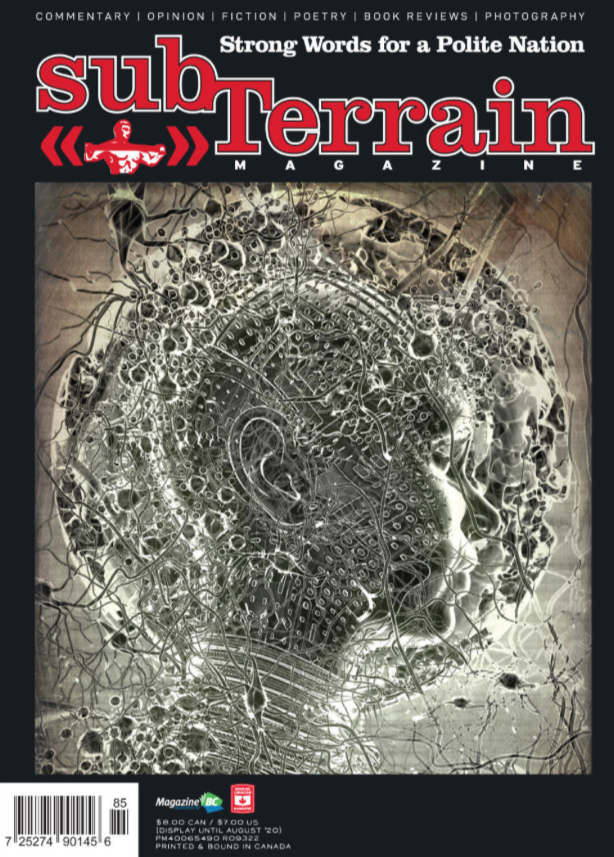
subTerrain 85 coverMy short story “Out of the Silence,” which appeared in the Spring 2020 issue of subTerrain Literary Magazine (Issue 85), tells the story of Katherine, a blind elder whose digital app failed to warn the world of the sudden global loss of birds with disastrous ecological consequences. After years of living in self-exile and getting around poorly on sight-enhancing technology, a discovery gives her new hope in rekindling her talents in the field of soundscape ecology.

I rock on the cedar swing on my veranda and hear the wind rustling through the gaunt forest. An abandoned nest, the forest sighs in low ponderous notes. It sighs of a gentler time. A time when birds filled it with song. A time when large and small creatures—unconcerned with the distant thrum and roar of diggers and logging trucks—roamed the thick second-growth forest. The discord was still too far away to bother the wildlife. But their killer lurked far closer in deadly silence. And it caught the birds in the bliss of ignorance…

RachelCarson-SilentSpring

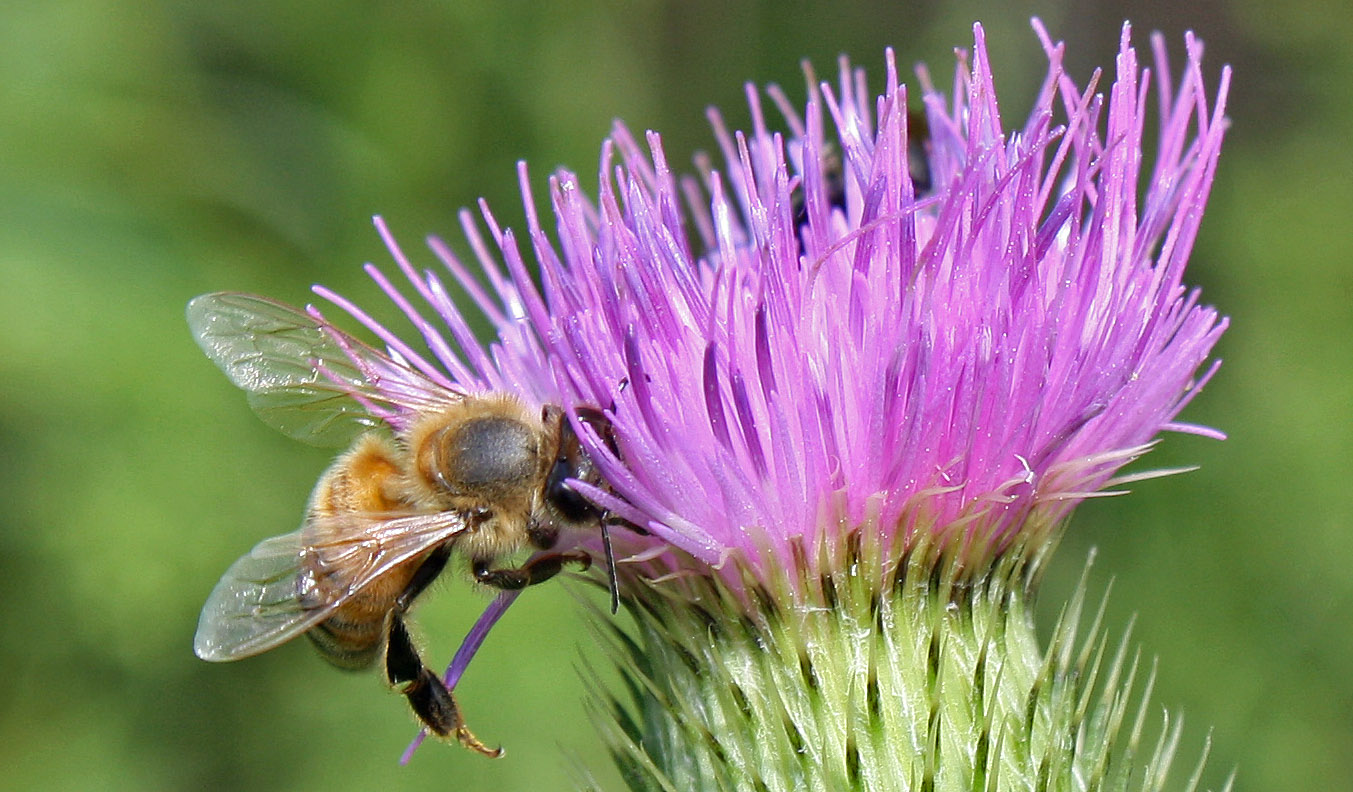
Rachel Carson was nothing short of prophetic when she published Silent Spring in 1962 (in reference to the dawn chorus most noticeable in spring during breeding). Silent Spring cautioned burgeoning ag-biotech companies (like Monsanto—now Bayer—Sygenta, Dow, and DuPont) who were carelessly and flagrantly spraying fields with pesticides and herbicides—at the time DDT was the main culprit. This would soon become a GMO world where gene-hacked plants of monocultures can withstand the onslaught of killer pesticides like neonicotinoids (currently killing bees everywhere) and Roundup.  Roundup is a carcinogenic glyphosate-based weed killer that has recently been shown to kill beneficial insects like bees) and has been linked to Alzheimer’s disease, ADHD, birth defects, autism, and several kinds of cancer in humans.

RachelCarson-LindaLearIn her 1997 biography Rachel Carson: Witness for Nature, historian and science biographer Linda Lear wrote:

Silent Spring, the product of [Carson’s] unrest, deliberately challenged the wisdom of a government that allowed toxic chemicals to be put into the environment before knowing the long-term consequences of their use. Writing in language that everyone could understand and cleverly using the public’s knowledge of atomic fallout as a reference point, Carson described how chlorinated hydrocarbons and organic phosphorus insecticides altered the cellular processes of plants, animals, and, by implication, humans. Science and technology, she charged, had become the handmaidens of the chemical industry’s rush for profits and control of markets. Rather than protecting the public from potential harm, the government not only gave its approval to these new products but did so without establishing any mechanism of accountability. Carson questioned the moral right of government to leave its citizens unprotected from substances they could neither physically avoid nor publicly question. Such callous arrogance could end only in the destruction of the living world.

Despite Carson’s warnings in 1962 and despite some action eventually taken (e.g. the ban on use of DDT in 1972—the precursor to Roundup and other neonicotinoids currently in use), the use of chemicals in big ag-industry has increased over five-fold since the 1960s. And this is destroying our bee populations, other beneficial insects, beneficial weeds, small animal populations and—of course—our bird life. And it’s making us sick too.
Thistle Bull and Honey bee close

In a 2012 article in the New York Times—exactly fifty years after Silent Spring was published on September 27, 1962—Nancy F. Koehn tells us that, “[Rachel Carson] was a slight, soft-spoken woman who preferred walking the Maine shoreline to stalking the corridors of power. And yet Rachel Carson, the author of Silent Spring, played a central role in starting the environmental movement, by forcing government and business to confront the dangers of pesticides.” Carson, writes Koehn, was an introverted scientist with a lyrical bent, who saw it as her mission to share her observations with a wider audience. Carson wrote Silent Spring while battling illness (including breast cancer) and caring for her young son. When the book was published, she faced an outburst of public reaction and strong backlash, primarily from chemical companies. Not unlike another female eco-hero (Greta Thunberg), Carson endured with dignity and deliberation the vulgar censure by opponents (virtually all men tied to corporate giants) who attacked her personally with vilifying stereotype. Men accused her of being disloyal and unscientific, and being a hysterical woman. One letter to the editor that the New Yorker saw fit to print read:

silent-spring-rachel carson“Miss Rachel Carson’s reference to the selfishness of insecticide manufacturers probably reflects her Communist sympathies, like a lot of our writers these days. We can live without birds and animals, but, as the current market slump shows, we cannot live without business. As for insects, isn’t it just like a woman to be scared to death of a few little bugs! As long as we have the H-bomb everything will be O.K.”

Former Secretary of Agriculture Ezra Taft Benson wrote privately to former President Dwight Eisenhower that Carson was “probably a communist.”

Environment & Society Portal provides a revealing synopsis of the response by established patriarchy at the time:

Allegations that Carson was just a hysterical woman appeared both in the pages of chemical and agricultural trade journals as well as in the popular press. Women were imagined to be less rational, more emotional, and more sentimental than men, who could be relied upon to study the issues dispassionately and propose rational solutions. An agricultural expert told a reporter at the Ribicoff hearings, “You’re never going to satisfy organic farmers or emotional women in garden clubs” (Graham 1970, 88). In his letter to Eisenhower, Benson wondered why a “spinster was so worried about genetics” (Lear 1997, 429).

As Carson had no institutional affiliation, she was dismissed as an amateur who did not understand the subject like a professional scientist would, or who distorted or misread the science. To her critics, Carson’s frequent use of terms like “nature,” “natural,” and “balance of nature” identified her as a mere sentimental nature lover or a pantheist like Ralph Waldo Emerson or Henry David Thoreau. Reviews in TimeU.S. News and World Report, and even Sports Illustrated took her to task. The reviewer in Time, for example, criticized her “emotion-fanning words” and characterized her argument as “unfair, one-sided, and hysterically overemphatic.” He traced her “emotional and inaccurate outburst” to her “mystical attachment to the balance of nature” (Brooks 1989, 297).

SONY DSC

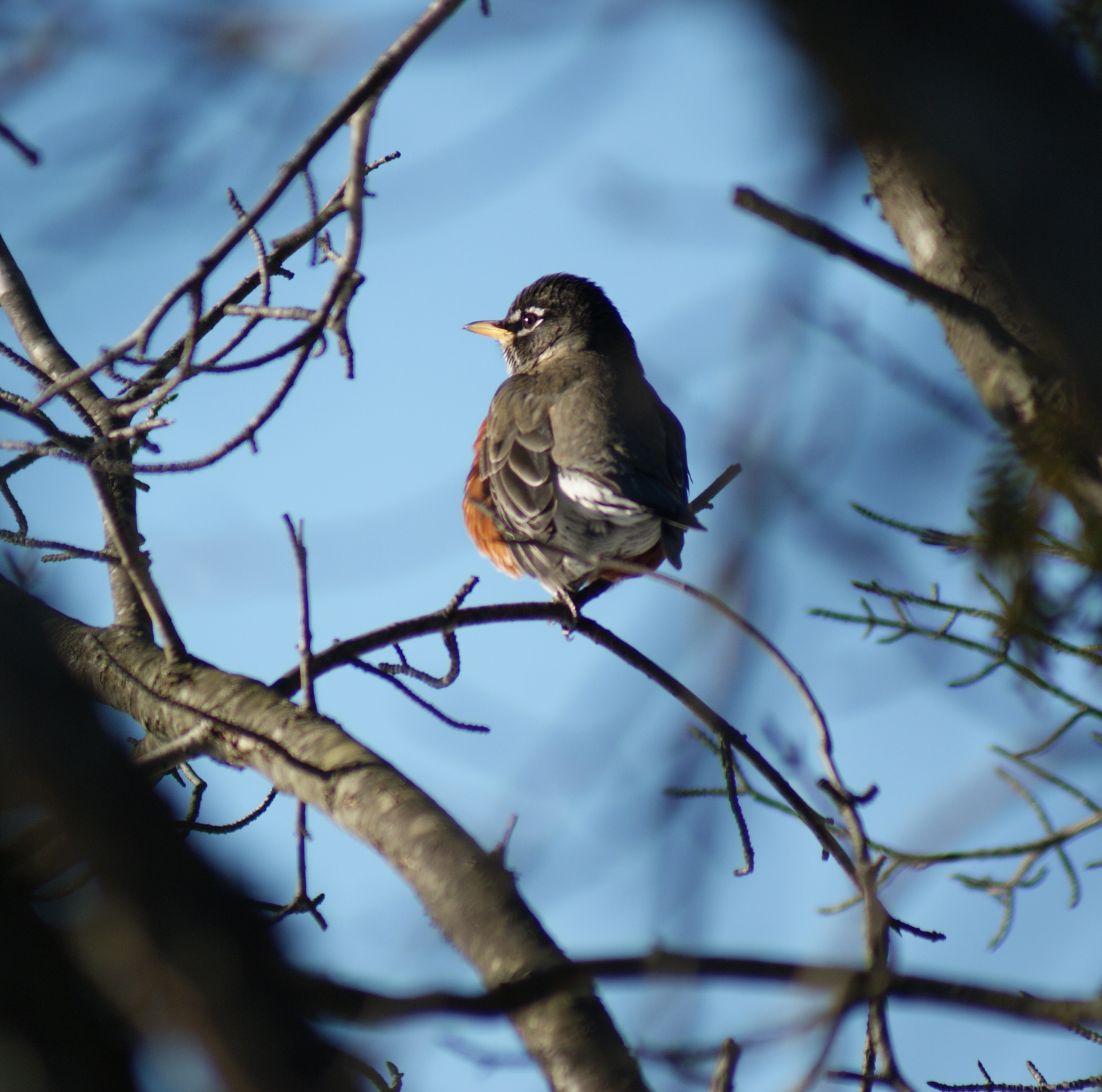
American Robin (photo by Merridy Cox)

Even inoffensive public portraits of Carson showed her in more domestic rather than scientific settings. Life magazine published a story about her accompanied by photos of her talking with children while on a nature walk or watching birds with a group of Audubon Society members. Dressed like a housewife and surrounded by children and “bird people,” Carson projected an image of a teacher or stay-at-home mother, although the picture on the first page of the article showed her at a microscope. Carson, said the story, “is unmarried but not a feminist (‘I’m not interested in things done by women or by men but in things done by people’)”
According to historian and biographer Linda Lear, “the industry spent a quarter of a million dollars to discredit her research and malign her character. In the end, the worst they could say was that she had told only one side of the story and had based her argument on unverifiable case studies.” According to Lear, “Carson was an outsider who had never been part of the scientific establishment, first because she was a woman but also because her chosen field, biology, was held in low esteem in the nuclear age. Her career path was nontraditional; she had no academic affiliation, no institutional voice. She deliberately wrote for the public rather than for a narrow scientific audience. For anyone else, such independence would have been an enormous detriment. But by the time Silent Spring was published, Carson’s outsider status had become a distinct advantage. As the science establishment would discover, it was impossible to dismiss her.”
SONY DSC

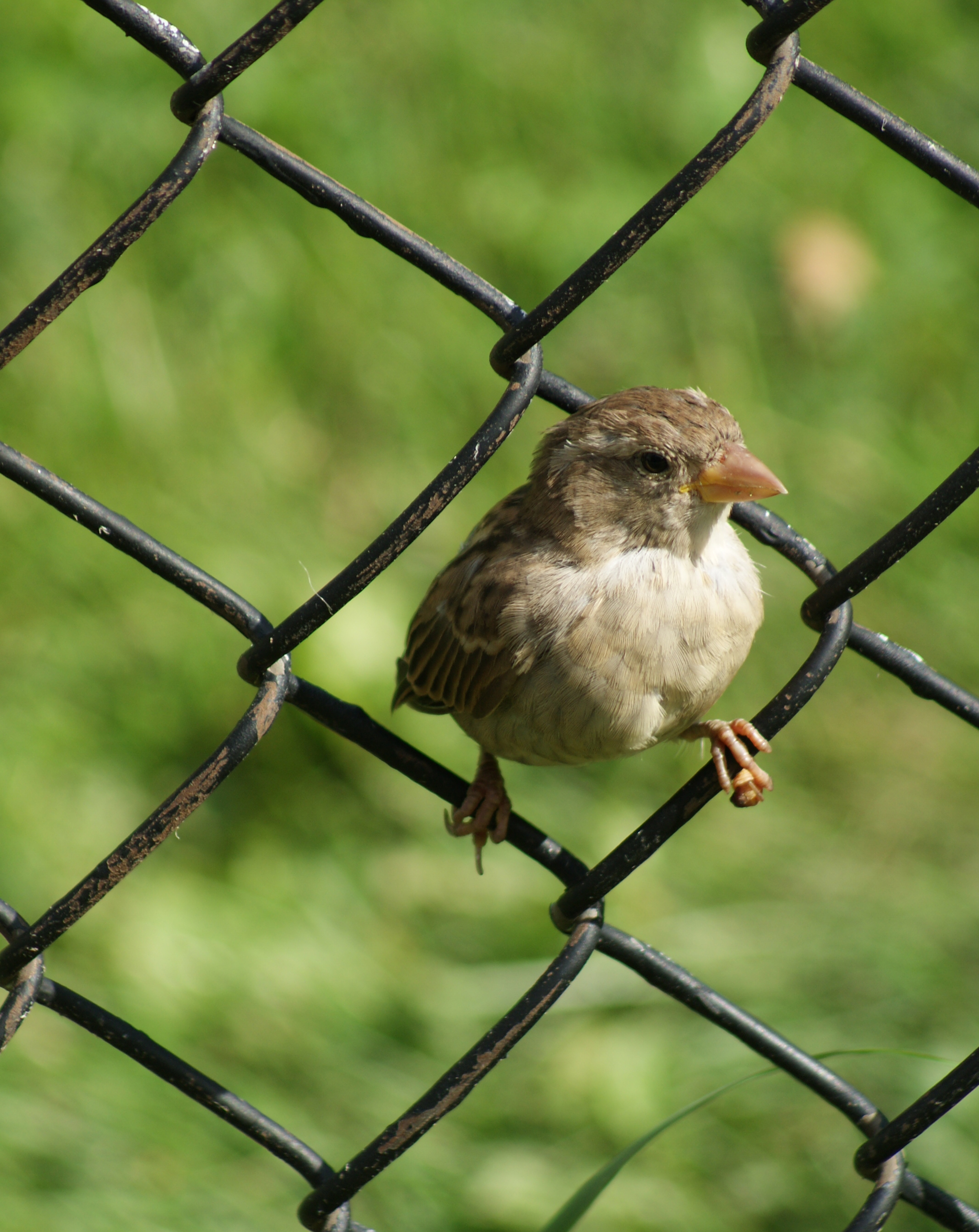
House Sparrow (photo by Merridy Cox)

Not unlike Greta, Rachel and the message in her book exerted a great impact on the environmental movement. Silent Spring became a rallying focus for a new social movement in the 1960s, which endures to the present day.

According to Lear:

“Carson’s concept of the ecology of the human body was a major departure in our thinking about the relationship between humans and the natural environment. It had enormous consequences for our understanding of human health as well as our attitudes toward environmental risk. Silent Spring proved that our bodies are not boundaries. Chemical corruption of the globe affects us from conception to death. Like the rest of nature, we are vulnerable to pesticides; we too are permeable. All forms of life are more alike than different.

“Carson believed that human health would ultimately reflect the environment’s ills. Inevitably this idea has changed our response to nature, to science, and to the technologies that devise and deliver contamination. Although the scientific community has been slow to acknowledge this aspect of Carson’s work, her concept of the ecology of the human body may well prove to be one of her most lasting contributions.”

Bernie Krause Florida

Bernie Krause

In the meantime, alarming signals suggest that Rachel Carson’s 1962 warning is currently underway. The new science of soundscape ecology can analyze the health of an ecosystem. Bernie Krause, a soundscape ecologist who has been conducting long-term recordings recently noted that in Sugarloaf Ridge State Park, not far from his home in Northern California, “the effect of global warming and resulting drought has created the first completely silent spring I’ve ever experienced.” Stuart Winter at Express reports that “many of the iconic birds whose mating calls ring out across woodlands and open fields during early May are vanishing at an alarming rate.”

“Man’s war against nature is inevitably a war against himself.”—Rachel Carson


nina-2014aaa

Nina Munteanu is a Canadian ecologist / limnologist and novelist. She is co-editor of Europa SF and currently teaches writing courses at George Brown College and the University of Toronto. Visit www.ninamunteanu.ca for the latest on her books. Nina’s bilingual “La natura dell’acqua / The Way of Water” was published by Mincione Edizioni in Rome. Her non-fiction book “Water Is…” by Pixl Press (Vancouver) was selected by Margaret Atwood in the New York Times ‘Year in Reading’ and was chosen as the 2017 Summer Read by Water Canada. Her novel “A Diary in the Age of Waterwas released by Inanna Publications (Toronto) in May 2020.


Age of Water Podcast: Interview with Emmi Itäranta

Emmi Itaranta 1

Emmi Itäranta

We are now living in the Age of Water. Water is the new “gold”, with individuals, corporations and countries positioning themselves around this precious resource. Water is changing everything. The Age of Water Podcast covers anything of interest from breaking environmental news to evergreen material. This also includes human interest stories, readings of eco-literature, discussion of film and other media productions of interest.

In this episode of Age of Water, we join award-winning Finnish author Emmi Itäranta in the UK, where she talks about her eco-fiction including The Memory of Water and how her childhood in Finland helped shape her own activism.

ListenNow button


Emmi ItarantamemoryofwaterEmmi Itäranta is an award-winning Finnish author. She holds a MA in Drama from the University of Tampere and worked as a columnist, theatre critic, script writer and press officer. She wrote her debut novel Memory of Water simultaneously in Finnish and English during a creative writing course. The English version was published by HarperCollins in 2014 in the United States, United Kingdom and Australia and was nominated for the 2014 Philip K. Dick Award, and the Golden Tentacle Award and the Arthur C. Clarke Award. The book was translated into over a dozen languages throughout the world. Her novel The City of Woven Streets (The Weaver) won the City of Tampere Literary Award. Emmi Itäranta lives in Canterbury, United Kingdom.

 

nina-2014aaa

Nina Munteanu is a Canadian ecologist / limnologist and novelist. She is co-editor of Europa SF and currently teaches writing courses at George Brown College and the University of Toronto. Visit www.ninamunteanu.ca for the latest on her books. Nina’s bilingual “La natura dell’acqua / The Way of Water” was published by Mincione Edizioni in Rome. Her non-fiction book “Water Is…” by Pixl Press (Vancouver) was selected by Margaret Atwood in the New York Times ‘Year in Reading’ and was chosen as the 2017 Summer Read by Water Canada. Her novel “A Diary in the Age of Water” will be released by Inanna Publications (Toronto) in June 2020.

Vision 2020 and Water Is…

BHNCDSB_STEM_Poster_36x24-4.pdf

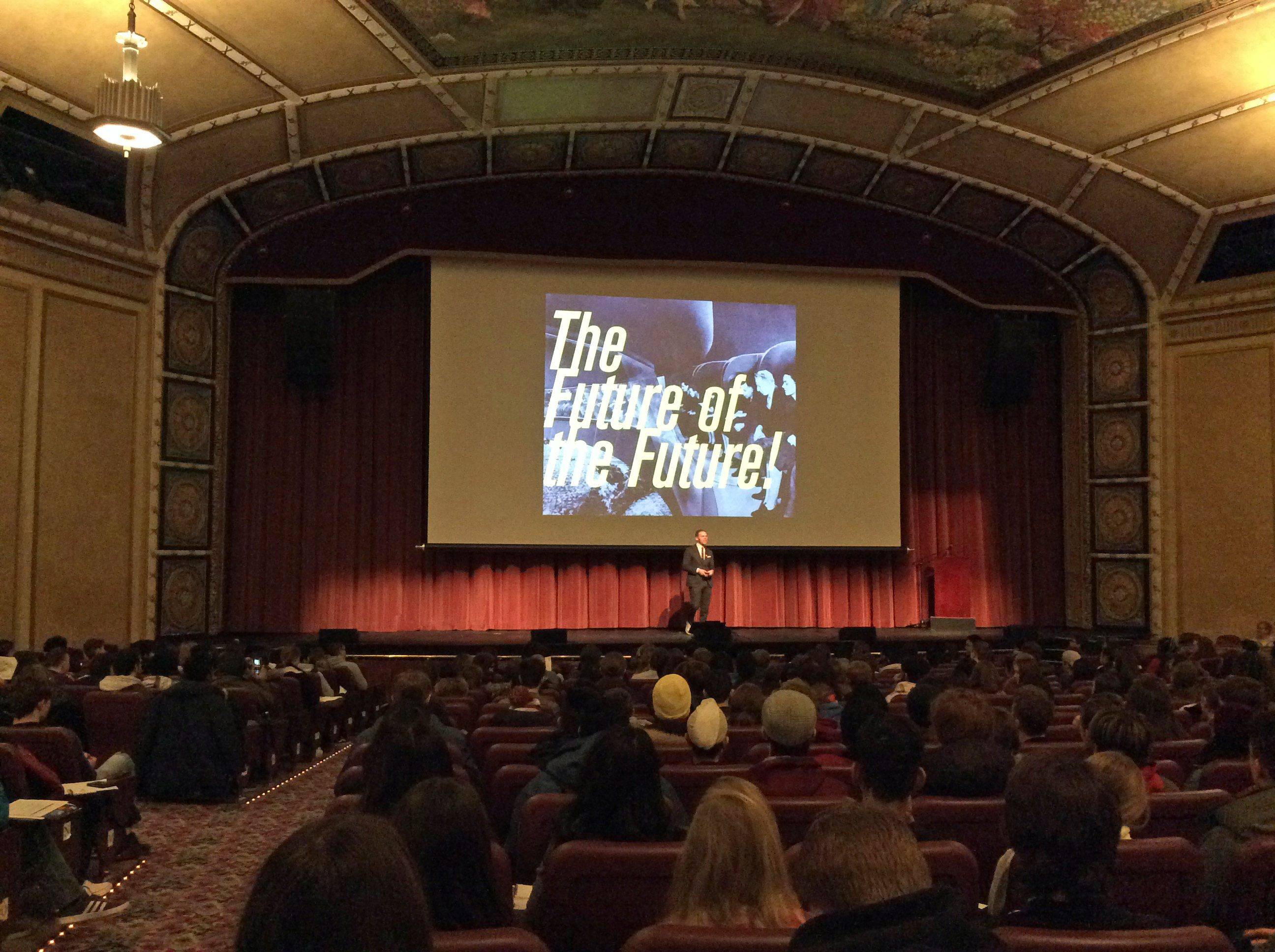
In February 2020, I was invited to speak and do workshops with over a hundred Grade 11 and 12 students about the future in the “2020 Vision into the Future” conference at Wilfrid Laurier University in Brantford, Ontario.

FutureOfFuture-GLindsay

Keynote speaker Greg Lindsay talks to students at Sanderson Centre

AerotropolisJournalist, urbanist and futurist Greg Lindsay gave a rousing keynote speech to start the conference. Greg spoke about the future of cities, technology, and mobility. He is the director of applied research at NewCities and director of strategy at its mobility offshoot CoMotion. He also co-authored the international bestseller Aerotropolis: The Way We’ll Live Next.
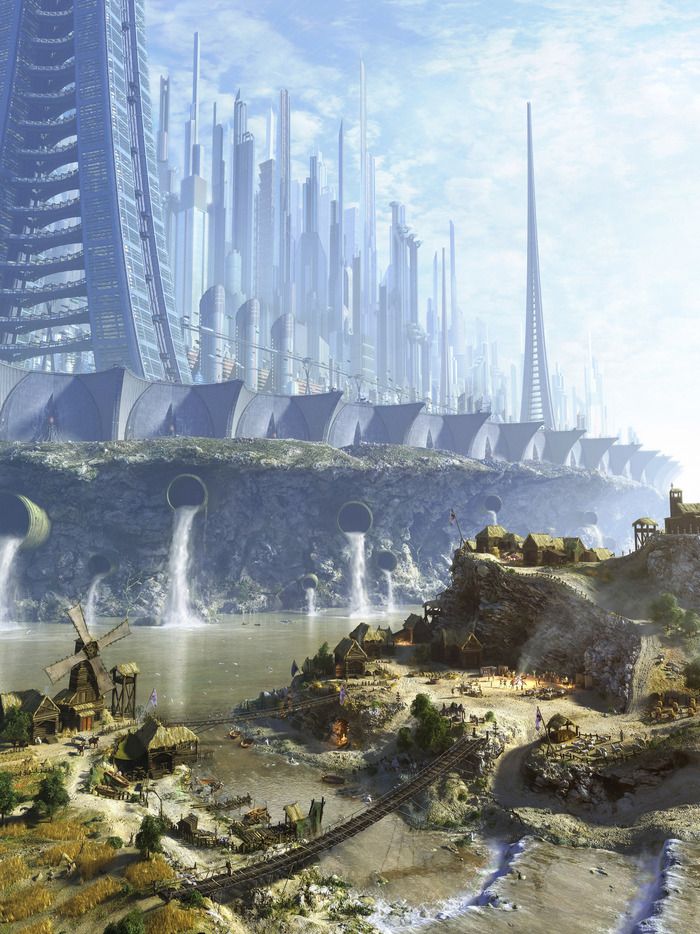
I joined a suite of technologists, visionaries and other scientists in presenting various scenarios of the future through workshops and seminars.

Workshop subjects included quantum cryptography, autonomous vehicles, flying cars, robotic surgery, zero waste, computer glasses, and my workshop “writing science fiction.”

Instructive seminars included topics such as feeding 9 billion people, mental health, AI & computers, the science and meaning of water, urban development, the future of transportation and space exploration.

How to Write Science Fiction

the-city-cgtrader copy

Top choice image prompt for storytelling

I gave two workshops on how to write science fiction. The workshop began with a brief discussion on what a story is (and is not) and a summary of the key tools of writing good story (e.g. premise, plot, theme, character, and setting) with a focus on world-building and the role of science.

Each group then set out to create the framework for a story based on a premise from an image prompt and shared what they’d put together. In one session we all worked together with me scribing on one whiteboard, creating together as a class; in another session, small groups formed and created their own story among four to five members as I went from team to team.

everyday hero-2 copy

Next popular storytelling image (cover illustration for “Ecology of Story” by Anne Moody)

Amazing stories emerged in both cases from the image prompts chosen. Students demonstrated imaginative, mature and original premises and carried through with thoughtful and imaginative plot, theme and character journeys. I was very impressed.

The Science and Meaning of Water

In this seminar I gave a summary of water’s life-giving anomalous properties on Earth and discussed the history and field of limnology (study of freshwater). I explored our history with water (including our impacts) and the implications of climate change on our future with water on the planet. Points of interest included water’s many weird properties, water’s ubiquity and its origins, the hydrological cycle, and the often strange adaptations of life with (or without) water.

Water Is-COVER-webWe then discussed future implications of water scarcity (and geopolitical conflict) and some of the things individuals and communities can do. Much of the talk drew from my recent book Water Is… The Meaning of Water.


nina-2014aaa

Nina Munteanu is a Canadian ecologist / limnologist and novelist. She is co-editor of Europa SF and currently teaches writing courses at George Brown College and the University of Toronto. Visit www.ninamunteanu.ca for the latest on her books. Nina’s bilingual “La natura dell’acqua / The Way of Water” was published by Mincione Edizioni in Rome. Her non-fiction book “Water Is…” by Pixl Press (Vancouver) was selected by Margaret Atwood in the New York Times ‘Year in Reading’ and was chosen as the 2017 Summer Read by Water Canada. Her novel “A Diary in the Age of Waterwill be released by Inanna Publications (Toronto) in June 2020.


Book Review: Craig Russell’s “Fragment” in the time of COVID-19

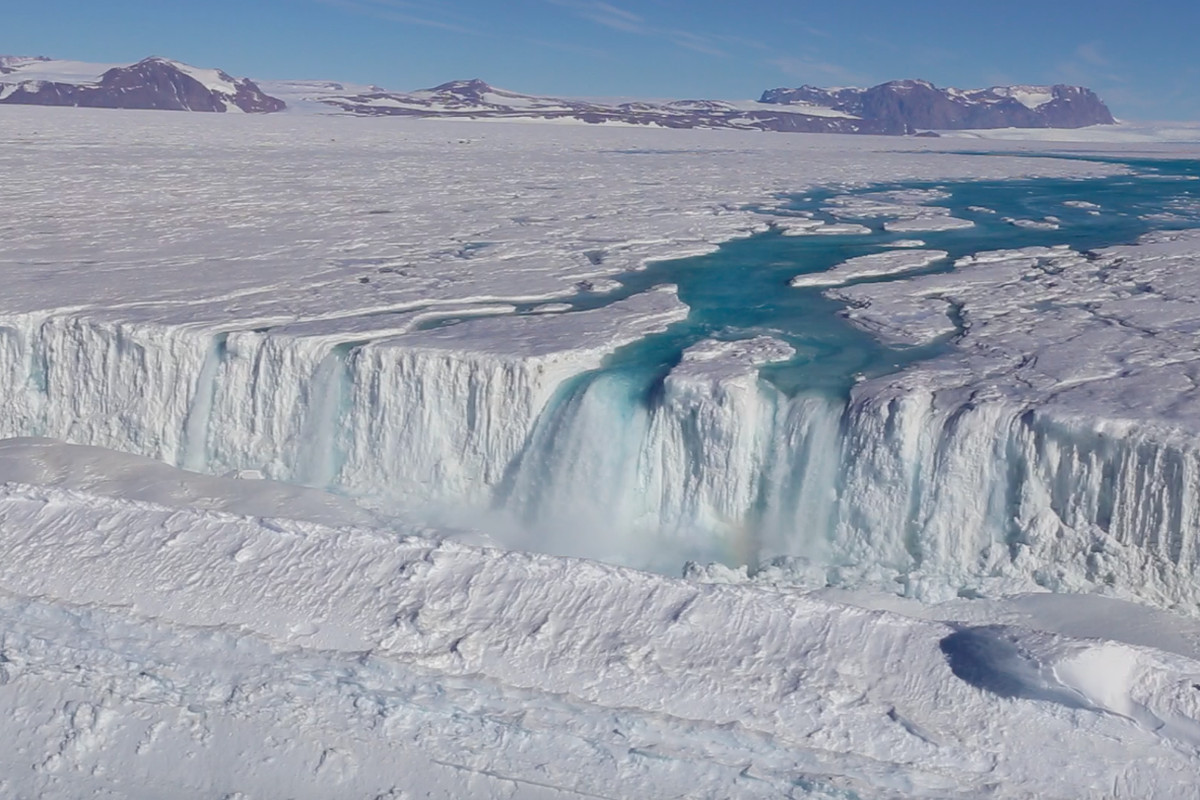
Fragment-CraigRussellCraig Russell begins his eco-thriller Fragment with a TV interview of glaciologist Kate Sexsmith in Scott Base Antarctica. The interview is interrupted by what turns out to be four runaway glaciers that have avalanched into the back of the Ross Ice Shelf and a fragment the size of Switzerland surges out into the open sea. Hence the title: Fragment.

The original slide / wave and ensuing tsunami wipes out both Scott Station and the American McMurdo Station. The TV station records the moment:

Where Kate had stood to touch the map of Antarctica moments before, something hit the wall like an artillery round. It left a ragged hole through wall and map alike, framing an eerie light-show. A sheet of jewels flickered, glinting greens and blues, until a white mountain appeared and the screen went black.

Ross Ice Shelf 4

Ross Ice Shelf, Antartica

With astute prescience, Russell reveals humanity’s behaviour in the stress of such a momentous event: from scientists who understand the global significance of this rogue fragment to those who minimize its effect such as the media and tourist industry who wish to exploit this anomaly and self-centred politicians obsessed with protecting their status.

antarctic-glaciers

Antartica


snowball in senate

Senator Inhofe and infamous snow ball

My first thought was: he’s stereotyping a little. Then COVID-19 broke out to become a global pandemic. The reactions of scientists, media and certain politicians (e.g. the Trumps of the world) have played out with COVID-19 just as Russell had predicted with Fragment. Then again, good science fiction reaches deeply into a society’s core being, our motivations, fears and strengths; this is why science fiction is so eerily good at predicting. The best way to predict possibilities of the future is to understand the present and, as Russell demonstrates, science fiction writers are in touch with the zeitgeist of the world.

Reflecting the American government’s ridiculous denial of climate change, and calling to mind Republican Senator Inhofe’s snow ball in the senate scene, Russell’s character David Rookland (Washington’s Science Advisor) uses the glacier avalanche and fragment that he (purposely) misunderstands to illustrate with equal lack of logic the same misguided myth: “these theorists claim that around the world, glaciers have been receding. Thankfully, as you can see in the second photo, dear old Mother Nature has proven them wrong again.”

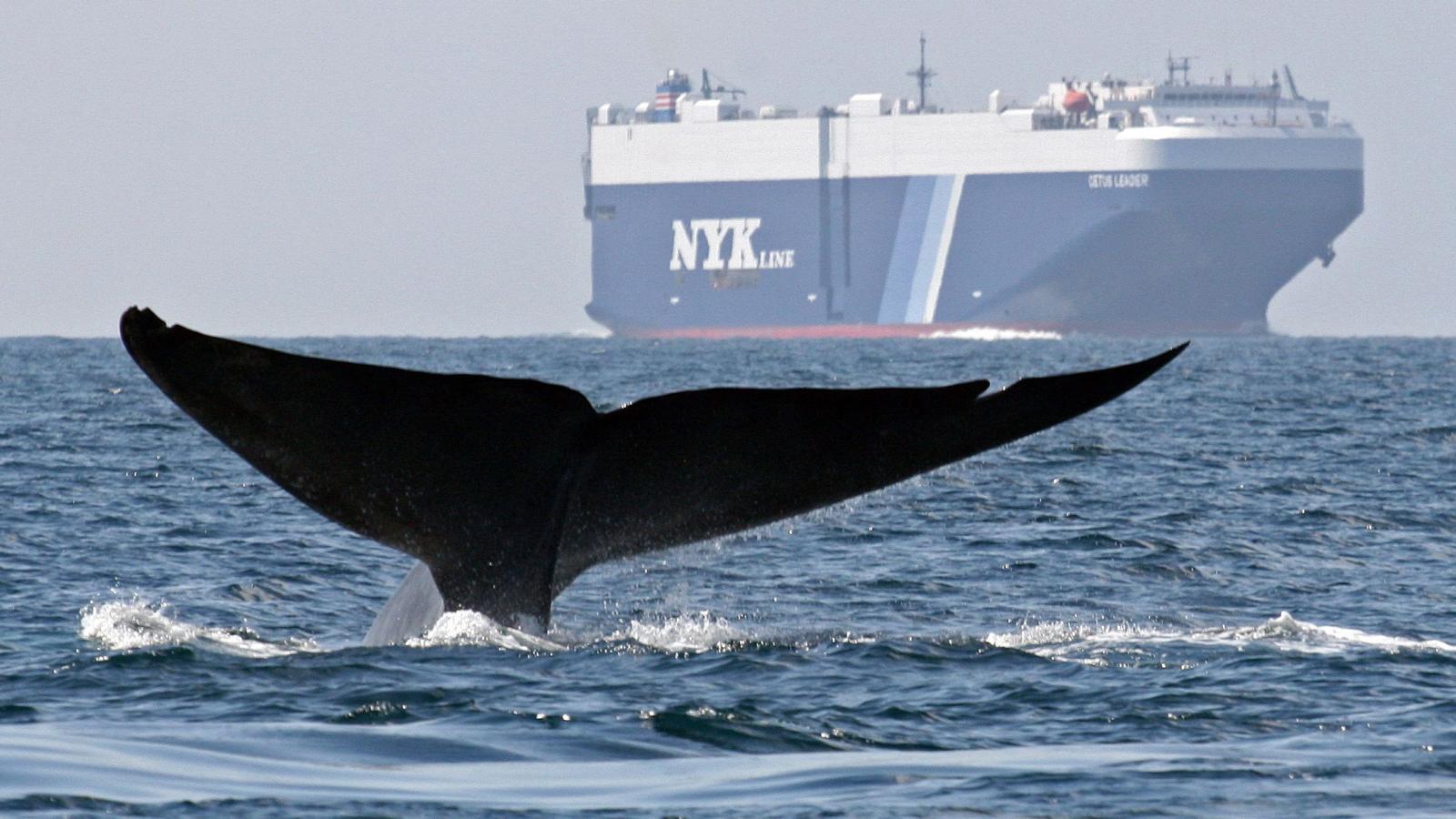
blue whale 2

Blue whale


Russell’s chapters devoted to the POV of character Ring, a young blue whale also fragmented from his pod, are particularly touching and powerful. Chased alternatively by Killer whales and human hunters, Ring must warn his kind of the danger posed by the fragment. In one chapter Ring observes that “there’s a special taste to the air here, a tang carried north from the twin Smoking Mountains, which send their steamy vapors into the sky forever.”

Russell then weaves an inspiring legend among the blues about a whale named Long-Throat and the “hard/noisy things” that came to hunt. Men slaughtered so many and scattered the pods in all directions. According to the legend of Long-Throat, the faint bitter smell of the Smoking Mountains brought the pods together again. This had been a time, thinks Ring, when the pods were not afraid to be different, or of new places and strange experiences. But no more. “The Slaughter scarred his race and young Blues are fed fear with their mother’s milk. Fear that never heals, never sleeps. Fight it though he may, that fear lives inside him too.” Ring hopes that, by facing this new fear of the fragment and its incredible power to devastate (any whale caught under its massive moving force will drown), “the old fear can be allowed to sink away.” His course is clear: he must compose a new song to warn other blues. Ring ends up doing far more than sound the warning of the moving behemoth to his people when he is discovered by an American nuclear missile submarine. What follows is what I think is the real story and its magic.

Ross Ice Shelf

Ross ice shelf, Antarctica

The book is appropriately titled Fragment because in some ways the fragment is a main character, carrying the theme. It is herald, harbinger, and misunderstood by many. Its power is greatly underestimated by others, and it is set apart from its fold to become something else. Like Ring and his people. Like humanity, even. Just as the Corona virus pandemic (currently ravaging the world as I write this article) promises to change every aspect of our world, so too does the fragment.

The fragment: “….Its northern rim is a world of chaos. Pack-ice, bulldozed by the Fragment, has been swept up into a bramble, miles deep, piled up and over itself in a frozen explosion. The corpses of countless penguins lie within, broken by the onslaught. Behind this jumble rises the Wall. A hundred metres above the water line and six hundred below, the Shelf is old, formed before Columbus stumbled his way across the Atlantic. In the Fragment’s back, imbedded like spears, are vast sections of the four glaciers. Byrd, Nimrod, Beardmore, and Shackleton. Truly ancient, each is a fortress, hard as granite, laminated layer upon layer over millennia…The creatures of the sea meet the wall in their millions. The air breathers, penguins, seals, dolphins, and so on, have no hope. They swim and die, exhausted and drowned. For many of the water breathers like fish and squid, the drop in temperature near the Fragment is too much…Some species of fish, well able to withstand the cold, succumb instead to the unfamiliar fresh water that has begun to pool around the Fragment.”–Craig Russell, Fragment

In a scene near the end of the book, which could be taken out of our current COVID-19 crisis, Russell describes how carefully considered warnings by scientists are downplayed as “alarmist” resulting in devastating inaction:

When Kate Sexsmith presents a possible scenario of the Fragment smashing into Europe, the Chairman of the European Fragment Conference counters with “in that highly unlikely event” all is under control by the world community. To this dangerous platitude, Sexsmith challenges (only to receive a mealy-mouthed double-speak reply):

“Respectfully, Mr. Chairman, [says Sexsmith] the world has faced plenty of hurricanes, tidal waves, and earthquakes. But we have no historical event to compare with the Fragment. And Europe isn’t the only place in danger. There are millions of people at risk on the Caribeean islands. Many are poorly educated and have no resources of their own. When do we mov them? How do we move them? Who is prepared to take them in? And based on Stanley [which was totally destroyed by the Fragment] who is prepared to take them in on a permanent basis?”

“We are not blind to these concerns, Doctor [says the chairman]. But we must take a balanced view. We cannot simply adopt an alarmist approach. Our scientific community’s reputation for sound council is too important to risk…”

But when great disaster strikes, all peoples (whales and humanity) come together in solidarity. With new humility, kindness and wisdom. I was astonished at the way Russell pulled things together toward a unique resolution. I give Craig Russell five stars for the courage to end his book the way he did. It was pure magic. The kind of magic we all want to see more of in this currently beleaguered, divisive and consumer-obsessed world.

Antarctica ice

Antartica

As Dutch trends forecaster Li Edelkoort said of COVID-19, the Fragment “might just turn the world around for the better [as] an amazing grace for the planet.”

Antarctica melting

Antarctica melting


Whales and Intelligence:

Scientists are still finding ways to assess “intelligence”, particularly in life that isn’t human. Whales have been shown to have emotional intelligence. They show signs of empathy, grief, joy, and playfulness. All of these learned behaviors, types of intelligence, and signs of teamwork have led scientists to think about groups of whales in new ways.

blue-whales-commercial-whaling-shipping-population-endangered-species-ocean-sea-whale-whaling-hunting-recovery

Blue whale

Most humans believe that our ability to communicate is far more complex and evolved than that of other animals, but cetaceans may be superior. According to a comparison of cetacean to primate brains from Michigan State University, “They have the distinct advantage over us in that their primary sense is the same as their primary means of communication, both are auditory. With primates, the primary sense is visual and the primary means of communication is auditory.” Communication is so great in cetaceans that there is a strong possibility they are able to literally project an “auditory image” that replicates a sonar message they may receive.  MSU describes it this way: “So a dolphin wishing to convey the image of a fish to another dolphin can literally send the image of a fish to the other animal. The equivalent of this in humans would be the ability to create instantaneous holographic pictures to convey images to other people.”

Specialized brain cells called spindle neurons are most often associated with an organism’s ability to “recognize, remember, reason, communicate, perceive, adapt to change, problem solve and understand.” Spindle neurons have been isolated in the brains of both whales and dolphins, which suggests that whales do a lot more thinking than previously thought. Dolphins, for example, have been known to recognize themselves in mirrors, solve problems, follow recipes, and associate a part of their anatomy with that of a human’s (such as when a dolphin waves it’s fin whenever a trainer waves their arm). Recent studies even indicate that dolphins are capable of creating personalized whistles that act as names for individual members of a pod. With this name, dolphins are able to communicate more efficiently while roaming the open seas.

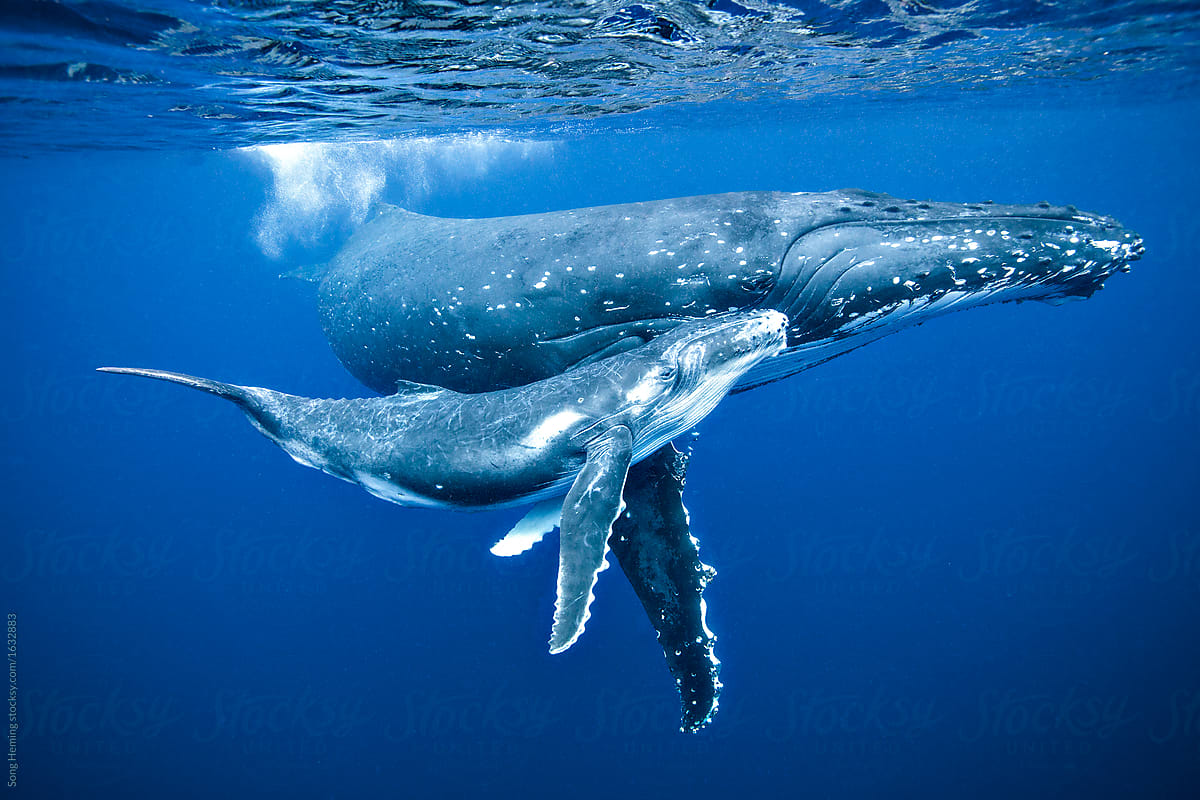
mother calf humpback whale

Mother humpback and her calf

In a Scientific American article entitled “Are Whales Smarter Then We Are?” R. Douglas Fields writes: Logically, brain function and intelligence must relate to the number of neurons. Intelligence resides in the neocortex (the thin, convuluted “rind” of the brain) rather than in other, underlying areas devoted to controlling vital housekeeping functions for the body, so Eriksen and Pakkenberg focused their investigation there. The frontal lobes of the dolphin brain are comparatively smaller than in other mammals, but the researchers found that the neocortex of the Minke whale was surprisingly thick. The whale neocortex is thicker than that of other mammals and roughly equal to that of humans (2.63 mm). However, the layered structure of the whale neocortex is known to be simpler than that of humans and most other mammals. In particular, whales lack cortical layer IV, and thus have five neocortical layers to humankind’s six. This means that the wiring of connections into and out of the neocortex is much different in whales than in other mammals. The researchers’ cellular census revealed that the total number of neocortical neurons in the Minke whale was 12.8 billion. This is 13 times that of the rhesus monkey and 500 times more than rats, but only 2/3 that of the human neocortex. What can account for the fact that whales have bigger brains — and similarly thick neocortexes — but fewer neurons? Eriksen and Pakkenberg found that there were 98.2 billion non-neuronal cells, called glia, in the Minke whale neocortex. This is the highest number of glial cells in neocortex seen in any mammal studied to date. The ratio of neocortical glial cells to neocortical neurons is 7.7 to 1 in Minke whales and only 1.4 to 1 in humans. This finding may indicate a tendency for larger glia/neuron ratios as brain mass increases to support the growing neurons. But when one considers other recent research revealing that glia play an important role in information processing (see “The Other Half of the Brain,” fromn Sci. Am. April 2004), one is left to wonder. Is the whale brain intellectually weaker than the human brain, or just different? They have fewer neurons but more glia, and in traditional views of the glia, the neurons count for much more.

In her article in One Green Planet entitled “Whales and Dolphins Might Be The Smartest Animals”, Madison Montgomery leaves us a strong message and exhortation: “While it appears that cetaceans have incredible abilities to feel emotions, understand complex problems and communicate in ways we can’t even imagine, humans don’t seem to value this. Because we assume we are so smart, we put the other creatures of the world underneath us. Knowing how dynamic cetaceans are, keeping them in glorified bathtubs and forcing them to do tricks for food is insulting and cruel. Could you imagine the pain of living in a small room your entire life and having to do flips to be fed? Sounds like a miserable existence, doesn’t it?”

As a postscript, Fragment was selected by the American National Oceanic and Atmospheric Administration (NOAA) for their “Planet Stewards” 2023-2024 Book Club.

nina-2014aaa

Nina Munteanu is a Canadian ecologist / limnologist and novelist. She is co-editor of Europa SF and currently teaches writing courses at George Brown College and the University of Toronto. Visit www.ninamunteanu.ca for the latest on her books. Nina’s bilingual “La natura dell’acqua / The Way of Water” was published by Mincione Edizioni in Rome. Her non-fiction book “Water Is…” by Pixl Press (Vancouver) was selected by Margaret Atwood in the New York Times ‘Year in Reading’ and was chosen as the 2017 Summer Read by Water Canada. Her novel “A Diary in the Age of Waterwill be released by Inanna Publications (Toronto) in June 2020.


Dreams and Perceptions…And ‘The Other’

Credit Riv path in snow

path along Credit River (photo by Nina Munteanu)

It was a while ago, as I was driving home from a friend’s place in the sultry dark of night that I noticed the change…

Perhaps it was the rain and the winding road that nudged my psyche to wander into that other realm. Or was it the surrealistic motion picture The Fountain that I’d seen the evening before? Or had it more to do with the fact that I’d been, for various reasons, without sleep for over forty hours that I glimpsed the ordinary in an extra-ordinary light?

Light had everything to do with it…Amber traffic lights at a construction site pulsed like living things. Smoky back-lit clouds billowed over an inky sky. A garish screen of trees, caught in the beams of my car lights as I turned a corner, flashed. Nature recast. A half-built apartment building loomed up like some dark tower in Lord of the Rings. I was reminded of a scene early on in The Fountain where the viewer is disoriented initially by a busy street at night because it was shot upside down. Ironically, the picture was filmed in my hometown of Montreal and I didn’t even recognize it.

Have you ever done that? Looked backward while driving through a familiar scene to gain a different perspective? And felt different for just a moment? Like you’d briefly entered a different dimension and glimpsed “the other”?

What is it like to meet “the other”?

What is it like to approach the unfamiliar? A new landscape. A stranger in town. A different culture. An “alien” encounter. How do we react? Is it with wonder? Curiosity? Fear? Hatred? A mixture of these?

The genre of science fiction vividly explores our humanity through our reactions to “the other.” It does this by looking at both perspectives. By describing “the other,” science fiction writers describe “us.” In his book Orientalism: Western Conceptions of the Orient Edward W. Said contended that for there to be an ‘us’, there has to be a ‘not-us.’ According to Patricia Kerslake of Central Queensland University, this arises from a postcolonial notion of ‘the Other’, through a mutual process of exclusion. This exclusion inspires the very idea of ‘alien’ by imposing expectation on perception. Kerslake argues that: “When one culture imposes its perceptions on another, in that it begins to see the Other not as they are but as, in Said’s words, ‘they ought to be’, then the process of representation becomes inevitable: a choice is made to see a ‘preferred’ real.”

Ursula K LeGuin

Ursula K. LeGuin

In her 1975 article “American SF and the Other,” Ursula K. LeGuin unequivocally scolded the Western SF genre for representing and promoting colonialism and androcratic motives.

One of the great early socialists said that the status of women in a society is a pretty reliable index of the degree of civilization of that society. If this is true, then the very low status of women in SF should make us ponder about whether SF is civilized at all.

The women’s movement has made most of us conscious of the fact that SF has either totally ignored women, or presented them as squeaking dolls subject to instant rape by monsters—or old-maid scientists de-sexed by hypertrophy of the intellectual organs—or, at best, loyal little wives or mistresses of accomplished heroes. Male elitism has run rampant in SF. But is it only male elitism? Isn’t the “subjection of women” in SF merely a symptom of a whole which is authoritarian, power-worshiping, and intensely parochial?

The question involved here is the question of The Other—the being who is different from yourself. This being can be different from you in its sex; or in its annual income; or in its way of speaking and dressing and doing things; or in the color of its skin, or the number of its legs and heads. In other words, there is the sexual Alien, and the social Alien, and the cultural Alien, and finally the racial Alien.

Well, how about the social Alien in SF? How about, in Marxist terms, “the proletariat”? Where are they in SF? Where are the poor, the people who work hard and go to bed hungry? Are they ever persons, in SF? No. They appear as vast anonymous masses fleeing from giant slime-globules from the Chicago sewers, or dying off by the billion from pollution or radiation, or as faceless armies being led to battle by generals and statesmen. In sword and sorcery they behave like the walk-on parts in a high school performance of The Chocolate Prince. Now and then there’s a busty lass amongst them who is honored by the attentions of the Captain of the Supreme Terran Command, or in a space-ship crew there’s a quaint old cook, with a Scots or Swedish accent, representing the Wisdom of the Common Folk.

The people, in SF, are not people. They are masses, existing for one purpose: to be led by their superiors…

…What about the cultural and the racial Other? This is the Alien everybody recognizes as alien, supposed to be the special concern of SF. Well, in the old pulp SF, it’s very simple. The only good alien is a dead alien—whether he is an Aldebaranian Mantis-Man, or a German dentist. And this tradition still flourishes: witness Larry Niven’s story “Inconstant Moon” (in All the Myriad Ways, 1941) which has a happy ending—consisting of the fact that America, including Los Angeles, was not hurt by a solar flare. Of course a few million Europeans and Asians were fried, but that doesn’t matter, it just makes the world a little safer for democracy, in fact. (It is interesting that the female character in the same story is quite brainless; her only function is to say Oh? and Ooooh! to the clever and resourceful hero.)

If you deny any affinity with another person or kind of person, if you declare it to be wholly different from yourself—as men have done to women, and class has done to class, and nation has done to nation—you may hate it, or deify it; but in either case you have denied its spiritual equality, and its human reality. You have made it into a thing, to which the only possible relationship is a power relationship. And thus you have fatally impoverished your own reality.

You have, in fact, alienated yourself.

Diary Water cover finalWritten 45 years ago, Le Guin’s scathing article may have accurately represented the North American science fiction community of writers of that time. Today, despite the remnants of a strong old guard that still promotes a patriarchal colonialist hegemony, the science fiction genre has matured and grown beyond this self-limiting view. This is partly because current authors—many who are women and many who are representatives of minority or marginalized groups—have given SF a new face and voice that promises to include equality, inclusion, and a fresh look at exploration and ‘the other.’

The genre of science fiction has matured by diversifying to embrace “mundane science fiction,” literary fiction, speculative fiction, climate fiction, cli-fi, eco-fiction, indigenous futurisms and more.

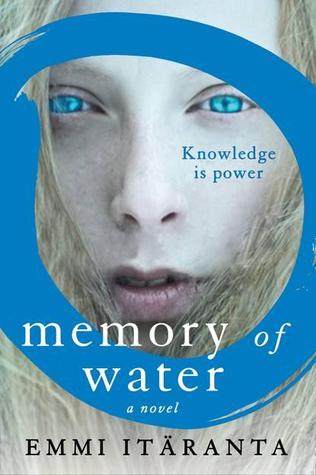
memoryofwaterScience fiction that leans toward “mundane”(everyday life) and literary fiction include the works of Paulo Bacigalupi (Windup Girl), Margaret Atwood (Year of the Flood), and Kim Stanley Robinson (New York 2140). Literary fiction overlaps with science fiction through eco-fiction and climate fiction which address oppression, jingoism and neoliberalism often through dystopian themes—and often through the voice of women writers—such as Octavia Butler’s Parable of the Sower, N.K. Jemisin’s The Broken Earth series, Emmi Itäranta’s The Memory of Water, Nina Munteanu’s A Diary in the Age of Water, Barbara Kingsolver’s Flight Behavior, Annie Proulx’s Barkskins, and Richard Power’s Overstory.

CliFi Tales of ClimateChangeIn 2017, several publications addressed different aspects of society through speculative fiction.  Laksa Media published Strangers Among Us: Tales of the Underdogs and Outcasts, which explores issues of mental health. Exile Editions published Cli-Fi: Tales of Climate Change with stories on personal experience with climate change. Reality Skimming Press published Water, for which I was editor, which explored optimism in the face of climate change.

In Ann Leckie’s 2014 Ancillary Justice, the main character is a space ship. The Gethenians in Ursula K. LeGuin’s The Left Hand of Darkness are humanoids with fluid gender, adapted to environment. In Kim Stanley Robinson’s 2312,  humans have abandoned the gender binary for an intersex existence based on proven longevity.

Borderline mishell bakerNovels and anthologies of short stories that feature disabled characters are also growing. Examples include Borderline by Mishell Baker, We Who Are About To… by Joanna Russ, Murderbot series by Martha Wells, and Uncanny: Disabled People Destroy Science Fiction (edited by Elsa Sjunneson-Henry, Dominik Parisien et al.) among many others.

Indigenous futurisms, speculative writings on issues of colonialism, identity, AI, and climate change include Trail of Lightning by Rebecca Roanhorse, Mongrels by Stephen Graham Jones, Robopocalypse by Daniel H. Wilson, Take Us to Your Chief, by Drew Hayden Taylor, The Marrow Thieves by Cherie Dimaline, Walking the Clouds Anthology edited by Grace L. Dillon, and Future Home of the Living God by Louise Erdrich.

Trail of LightningIn an introduction to seven Indigenous Futurism books, Barnes and Noble writes:

So many stories, well intentioned and not-so-well-intentioned, have fixated on the dark pasts of Indigenous people, assuming that colonization stole from them any future not involving slow decline and assimilation. Though there’s plenty of tragedy to be recounted, Indigenous history didn’t end there, and a wave of modern authors are exploring Indigenous cultures as living, vibrant, and firmly fixed in both the modern and furute worlds—sovereign nations with as much claim to an endless array of possible futures as any other culture. So much of what we call classic science fiction involves tropes that look very different to colonized peoples: the heroic space explorers who travel the stars visiting (and often conquering) alien worlds look very different to people whose histories are so strongly marked by the scars of colonization.

Of Indigenous Futurisms, the Seattle Public Library writes:

Indigenous Futurisms confront many of the norms of speculative fiction by challenging, subverting, or refusing to engage with colonial, racist, and otherwise oppressive genre tropes. Indigenous Futurism draws on the strength of Indigenous knowledge systems, worldviews, stories, languages, and traditions to reimagine the past, present, and future of this world and others. Yet it is not necessarily utopic or optimistic. Many authors writing within the Indigenous Futurisms genre engage with the realities of ongoing colonialism around the world, and the apocalyptic nature of the present for many Indigenous communities. However, characters struggle despite the circumstances for a better future.


Credit River first snow

First snow on the Credit River (photo by Nina Munteanu)

nina-2014aaa

Nina Munteanu is a Canadian ecologist / limnologist and novelist. She is co-editor of Europa SF and currently teaches writing courses at George Brown College and the University of Toronto. Visit www.ninamunteanu.ca for the latest on her books. Nina’s bilingual “La natura dell’acqua / The Way of Water” was published by Mincione Edizioni in Rome. Her non-fiction book “Water Is…” by Pixl Press (Vancouver) was selected by Margaret Atwood in the New York Times ‘Year in Reading’ and was chosen as the 2017 Summer Read by Water Canada. Her novel “A Diary in the Age of Waterwill be released by Inanna Publications (Toronto) in June 2020.

Age of Water Podcast: Interview with Candas Jane Dorsey

CandasJaneDorsey

Candas Jane Dorsey with a friend

AoW Logo-smallWe are now living in the Age of Water. Water is the new “gold”, with individuals, corporations and countries positioning themselves around this precious resource. Water is changing everything. The Age of Water Podcast covers anything of interest from breaking environmental news to evergreen material. This also includes human interest stories, readings of eco-literature, discussion of film and other media productions of interest.
Join the discussion!

In this episode of Age of Water, we join award-winning Canadian author Candas Jane Dorsey in Calgary, Alberta, where she talks about “Ice and other stories”, teaching at university, what eco-fiction means, and how writers can be “sneaky.”


CandasJaneDorsey2

Candas Jane Dorsey

CanCandas Jane Dorsey is an award-winning Canadian author of novels, short stories, and poetry. She also served as editor / publisher of several literary presses.

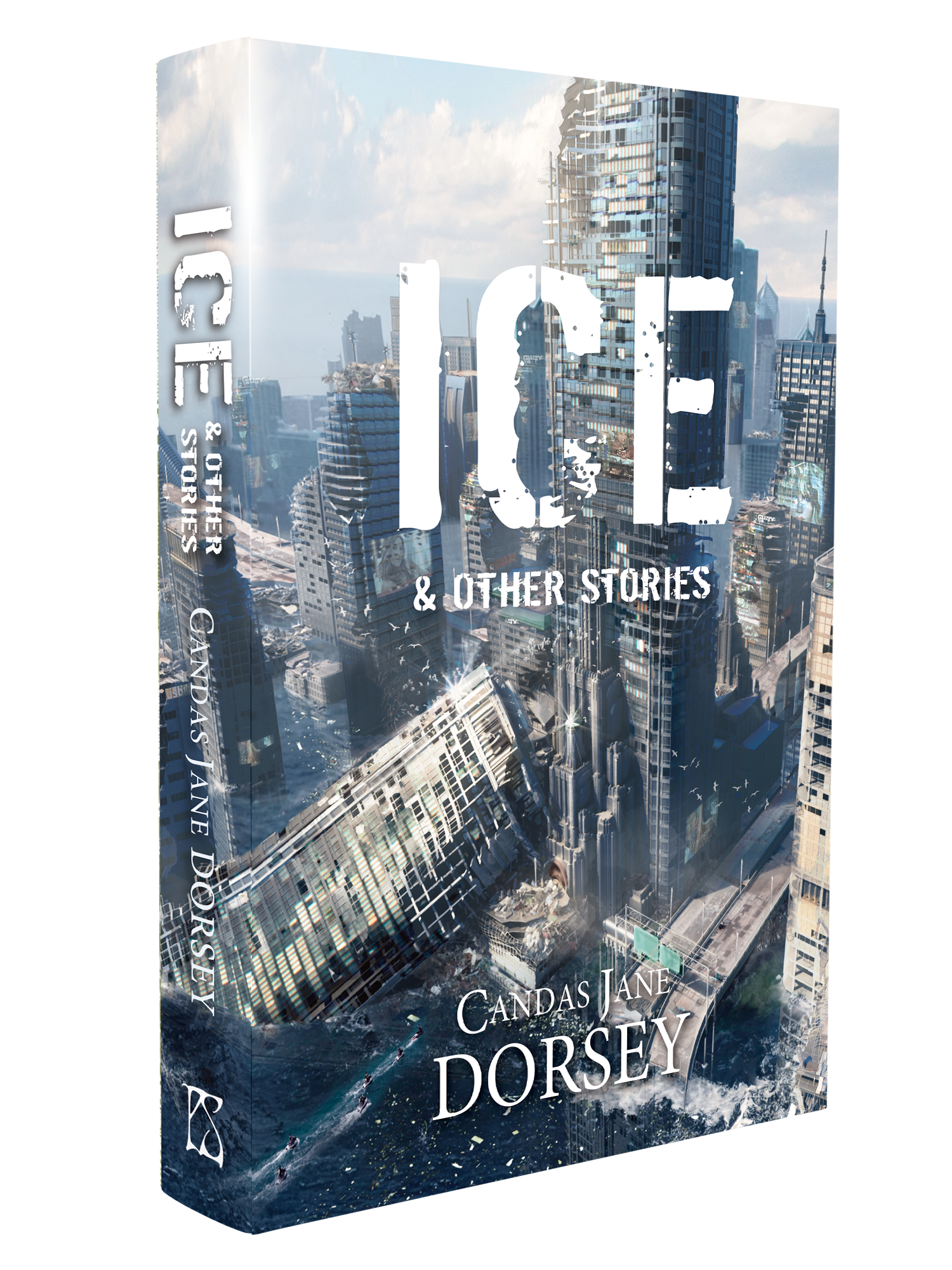
Ice by CandasJaneDorseyShe is best known for her science fiction writing including the novels Black Wine and A Paradigm of Earth, and has also published poetry and short stories, including her well-known short-story collection Machine Sex: And Other Stories. Her latest collection of short stories Ice and other Short Stories spans thirty years of writing. Candas teaches writing and communications at MacEwan University. She was founding president of SF Canada and was president of the Writers Guild of Alberta. Candas was awarded the Province of Alberta Centennial Gold Medal award for artistic achievement and community work and the WGA Golden Pen Award for Lifetime Achievement in the Literary Arts.


DS-2008-16 copy

Nina Munteanu kayaks in Desolation Sound, British Columbia (photo by H. Klassen)


nina-2014aaa

Nina Munteanu is a Canadian ecologist / limnologist and novelist. She is co-editor of Europa SF and currently teaches writing courses at George Brown College and the University of Toronto. Visit www.ninamunteanu.ca for the latest on her books. Nina’s bilingual “La natura dell’acqua / The Way of Water” was published by Mincione Edizioni in Rome. Her non-fiction book “Water Is…” by Pixl Press (Vancouver) was selected by Margaret Atwood in the New York Times ‘Year in Reading’ and was chosen as the 2017 Summer Read by Water Canada. Her novel “A Diary in the Age of Waterwill be released by Inanna Publications (Toronto) in June 2020.


Age of Water Podcast

AoW Logo-smallOn November 22, 2019, co-host Claudiu Murgan and I launched the podcast Age of Water in Toronto, Ontario.

The podcast is devoted to informing and entertaining you with topics about water and the environment. We interview scientists, journalists, writers, academia and innovators who share their knowledge and opinions about the real state of the environment and what committed individuals and groups are doing to make a difference. We talk about the problems and we talk about the solutions.

The format of our podcast is a combination of chat cast and informal interview. We cover anything of interest from breaking environmental news to evergreen material. This also includes human interest stories, readings of eco-literature, discussion of film and other media productions of interest.

AgeOfWater-HomePage

Diary Water cover finalClaudiu suggested doing the podcast during a discussion we had about what we could do to make a difference and to help bring more awareness about the environmental challenges we face in water issues and geopolitics.

We both agreed that the podcast should not only explore the issues but also present solutions and ideas in the ongoing conversation. We wanted to point to ways others could participate by talking to those who were indeed making a difference. So far, we have talked to people about positive initiatives such as 350.org, Drawdown, blue communities, Extinction Rebellion and several others. We’ve talked to homeowners and entrepreneurs with innovative ideas on what individuals can do at home and in their community.

The name of the podcast came from my upcoming book “A Diary in the Age of Water,” a novel that chronicles the lives of four generations of women and their relationship with water during a time of catastrophic change. The book will be launched by Inanna Publications in Toronto in May 2020.

Podcast CO-HOSTS

Guests have come from around the world to join us in monthly interviews on Age of Water. These have included so far: economist and educator David Zetland in Holland (aired Nov 2019); award-winning metaphysical author Rainey Highley in California (aired December 2019); Canadian award-winning author Candas Jane Dorsey in Calgary, Alberta (aired January 2020);  activist/author Kaz LeFave in Toronto (airing February 2020); Finnish award-winning author Emmi Itäranta in the UK (to air in March 2020); and Toronto film educators The Water Brothers (to air in April 2020). We interviewed environmental activist Liz Couture in Richmond Hill, Ontario (airing May 2020); Zen master Ian Prattis in Ottawa (airing June 2020), and we also talked to activist/author Merilyn Ruth Liddel in Calgary, Alberta (airing July 2020), and climate researcher / author Martin Bush in Toronto (airing August 2020). Many more are scheduled to be interviewed. For more information go to www.ageofwater.ca

Podcast MISSION

Water Is-COVER-webIn February 2020, we started a reading series on Age of Water, in which Claudiu or I read from a fiction or non-fiction work that resonated with us, followed by a discussion. The first readings is from my book “Water Is…The Meaning of Water,” a celebration of water, which was selected by Margaret Atwood as her choice reading in the New York Times ‘Year in Reading.’

Let us know if you or someone you know wishes to be interviewed on the show. If you have a work you think merits reading and discussing on the show, please let us know as well. Go to the Age of Water site, join the newsletter and email us.


DS-2008-16 copy

Nina kayaks Desolation Sound, off the coast of British Columbia (photo by H. Klassen)

nina-2014aaa

Nina Munteanu is a Canadian ecologist / limnologist and novelist. She is co-editor of Europa SF and currently teaches writing courses at George Brown College and the University of Toronto. Visit www.ninamunteanu.ca for the latest on her books. Nina’s bilingual “La natura dell’acqua / The Way of Water” was published by Mincione Edizioni in Rome. Her non-fiction book “Water Is…” by Pixl Press (Vancouver) was selected by Margaret Atwood in the New York Times ‘Year in Reading’ and was chosen as the 2017 Summer Read by Water Canada. Her novel “A Diary in the Age of Waterwill be released by Inanna Publications (Toronto) in June 2020.

Why Women Will Save the Planet

I was recently told I was fear-mongering and missing the facts by a person on Facebook when I revealed the environmental dangers of using (and abusing) single-use plastics (specifically Styrofoam); earlier that day a gentleman called me an anarchist after I promoted individual responsibility over government and corporate responsibility on the issue of bottled water in Canada.

At the time, these accusations upset me—I’m a scientist, after all, and truth is #1. Then I realised that they were part of my journey toward activism to save this planet and humanity along with it. It was, in fact, a good day for me. I did have the facts; and they were scary. And, in revealing them and expressing my opinions, I had succeeded in breaking people’s inertia and had challenged them to think outside their comfort zone.  I had created fear in them and I had created anarchy in their ordered world. This promted a strong defensive response. The more intense their defence, the more I’d upset their comfortable inertia. That is what happens when you break through a hegemony or dogma and challenge people to re-evaluate and change their actions or habits—essentially forcing them out of their complacency and bringing it back to personal responsibility.

In both cases, I’d brought it back to personal responsibility and personal action. Too many of us settle for a narrative in which others—often not clearly identified—are responsible–not us.

So, perhaps I am inciting fear. Fear in those who have become or choose to remain too complacent. Good; we are in a planetary and existential crisis. And perhaps I am rather an anarchist; disrupting a system and self-belief that is entrenched and not sustainable.

But that comes at a price.

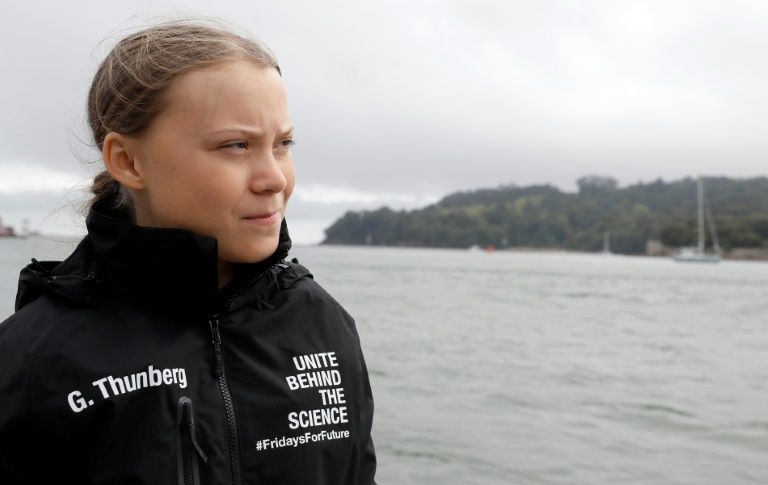
Greta Thunberg raincoat

Greta Thunberg begins a wave of climate activism

I’m thinking of young climate activist Greta Thunberg, who recently captured the attention of the world in her brave sail across the Atlantic to attend the UN’s Climate Summit and other meetings in the US in addition to her climate strike and rally march in Montreal, Canada, which drew close to half a million people (old and young).

Greta Thunberg Sails Carbon-neutral  Yacht To New York

Greta Thunberg

Earlier, at the World Economic Forum Annual Meeting in Davos, Switzerland, Greta delivered her now iconic speech:

“Adults keep saying we owe it to the young people, to give them hope,” Thunberg said, “But I don’t want your hope. I don’t want you to be hopeful. I want you to panic. I want you to feel the fear I feel every day. I want you to act. I want you to act as you would in a crisis. I want you to act as if the house is on fire, because it is.”

In a recent poll, one out of three Germans said that Thunberg has changed their views on climate change. But that, too, has come at a price.

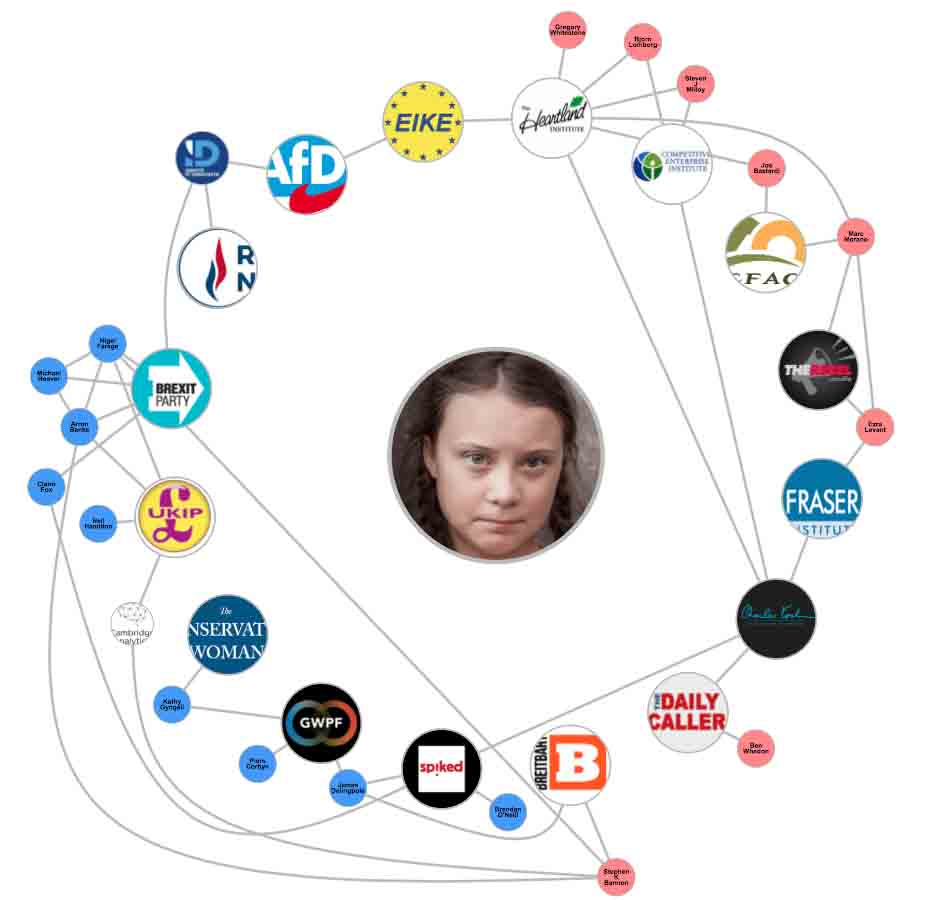
A tsunami of rage and shameless vitriol was unleashed by conservative men (many with close ties to the fossil fuel profit machine) at this young and brave girl during her 15-day trip across the Atlantic. Their attacks have grown increasingly more personal and vulgar as she has gained world attention. For example, political scientist, economist and climate “skeptic” Bjorn Lomborg (associated with the Heartland Institute and Competitive Enterprise Institute) repeatedly mocked and criticized the 16-year old activist. Using highly inappropriate and unprofessional language (the worst I won’t repeat here), he and others have accused her of being a “puppet”, “naïve”, “unrealistic”, and a “fanatic.” Others like Australian columnist Andrew Bolt have personally attacked Thunberg with reprehensible and boorish remarks about her age and mental health.

Lobbyists Against Greta

oil-profit lobbyists behind shameless vitriol against Greta Thunberg (from Desmog UK)

Andrew Mitrovica’s Opinion piece entitled “Who Is Afraid of Greta Thunberg?” provides eloquent summary: “Of course, the marauding swarm of vitriolic right-wing climate-change deniers see Thunberg—not how the prophetic Zinn envisioned her—but as a tiny, pretentious zealot who threatens the existing order. Their order. Their comforts. Their traditional ‘way of life’.”

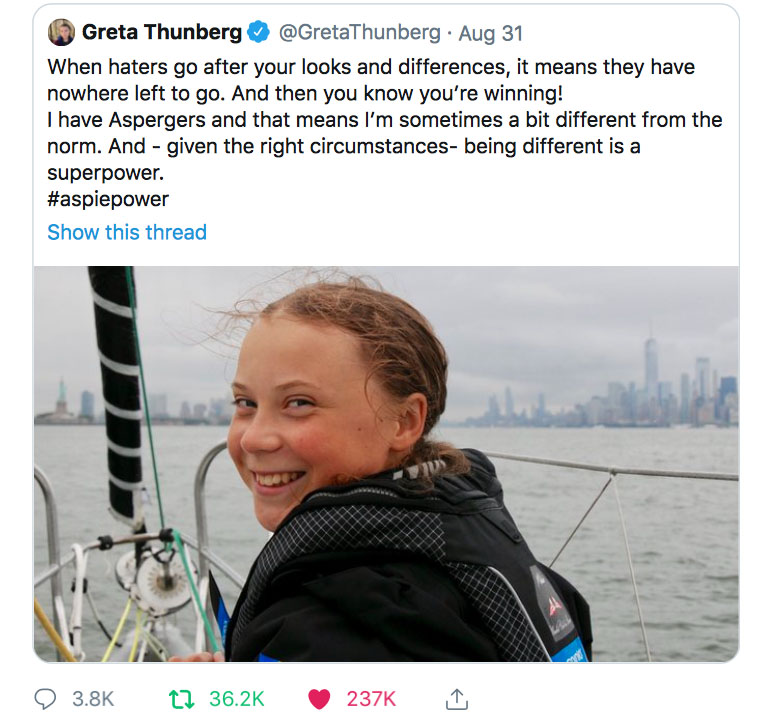
Greta—who wears a windbreaker that reads “Unite Behind the Science”— responded in a brave and wonderful tweet:

GretaThunberg-Tweet

Her tweet was followed immediately by one by Alexandria Ocasio-Cortez:


AlexandriaOcasio-Cortez Tweet

This follows a recent finding by researchers that 99% of Republicans are science illiterate and 44% believe that the scientific method can be used to produce any conclusion the researcher wants. Of course the whole point of the scientific method is to prevent this.

Soon after, Martin Gelin wrote an article entitled, “The Misogyny of Climate Deniers” in the August 2019 issue of The New Republic. The subtitle reads: “Why do right-wing men hate Greta Thunberg and Alexandria Ocasio-Cortez so much? Researchers have some troubling answers to that question.”

Greta on boat2

Greta Thunberg sailing to New York

Gelin writes, “On [Thunberg’s] first day of sailing, a multi-millionaire Brexit activist (Arron Banks) tweeted that he wished a freak accident would destroy her boat. A conservative Australian columnist (Andrew Bolt) called her a ‘deeply disturbed messiah of the global warming movement,’ while the British far-right activist David Vance attacked the ‘sheer petulance of this arrogant child.’ … Former Trump staffer Steve Milloy recently called Thunberg a ‘teenage puppet,’ and claimed that ‘the world laughs at this Greta charade,’ while a widely shared far-right meme showed Trump tipping The Statue of Liberty to crush her boat.”

Fierce and undeterred by cohorts of grown human males unable to deal with her, Greta Thunberg gave a scorching speech at the United Nations during her visit to America: “We are in the beginning of a mass extinction, and all you can talk about is money and fairy tales of eternal economic growth,” she admonished a crowd of world leaders. “How dare you.” Her equally scorching look of Donald Trump who rudely ignored her to mumble some nonsense to the press, has become a popular meme. The mashup by Fatboy Slim of Greta Thunberg’s UN speech “Right here, right now” went viral on YouTube.

Greta-trump 2

Greta Thunberg and Donald Trump at the UN climate summit

Of course, this was followed by utterly shameless and cruel vulgarisms by adult bullies that included suggestions to punish her and give her a spanking.

Disinterested in whether she’s liked and undeterred by childish name calling, the activist teenager remained resolute with her weapon: shame.  At every opportunity, Greta Thunberg steadfastly called out adults over twenty years her senior on what they have failed to do; she did it in words that are simple, precise and direct.

After Senator Tom Carper tried to placate her by telling her that young people would soon have the chance to run for office themselves, she returned: “We don’t want to become politicians; we don’t want to run for office. We want you to unite behind the science.”

Carrying herself with admirable focus and buoyed by her dedication to her cause, Greta Thunberg delivered a scintillating speech to close to half a million climate marchers in Montreal:

“Some would say we are wasting lesson time; we say we are changing the world… The people have spoken. And we will continue to speak until our leaders listen and act. We are the change and change is coming.”

greta thunberg speech in montreal

Greta Thunberg speaking in Montreal

In a recent article in the Washington Post, entitled “Greta Thunberg Weaponized Shame in an Era of Shamelessness”, Monica Hesse writes: “We live in an era that has become impervious to shame. An era defined by a president who views it as a weakness. Shame has become an antiquated emotion and a useless one. It’s advantageous, we’ve learned, to respond to charges of indecency with more indecency: attacks, misdirection, faux-victimhood.”

But real shaming—the kind that mothers do with their errant boy-bullies—is precisely what Greta is doing. This kind of shaming cuts deep, because it is the deep and recognizable truth. And it is done through the “mother archetype”—the most powerful energy on this planet.

Gelin tells us that the prominently older white men who are leading these attacks on Greta Thunberg (and by association, other prominent female climate activists such as Alexandria Ocasio-Cortez) “is consistent with a growing body of research linking gender reactionaries to climate-denialism.”

Alexandria Ocasio-Cortez

Alexandria Ocasio-Cortez

Scientists Jonas Anshelm and Martin Hultman in the journal NORMA  analyzed the language of a focus group of climate skeptics, to discover a major theme:

“for climate skeptics … it was not the environment that was threatened, it was a certain kind of modern industrial society built and dominated by their form of masculinity.”

On the heels of the #MeToo movement, climate activism—largely led by strong females—appears to threaten gender identity of conservative males. Right-wing nationalism, anti-feminism, and climate denialism appear inextricably linked. I would add that their lack of respect for and acknowledgement of indigenous peoples is by default part of the package, given that indigenous peoples are so tied to the land and the ecosystem (being destroyed). One need only look to what is currently happening in Brazil for an atrocious example of this kind of male-bully behaviour.

Climate science for skeptics becomes feminized and viewed as “oppositional to assumed entitlements of masculine primacy,” write Hultman and Paul Pule in the 2019 book “Climate Hazards, Disasters, and Gender Ramifications.” Hultman identifies a set of values and behaviours connected to a form of masculinity identified with industrial patriarchy. These males “see the world as separated between humans and nature. They believe humans are obliged to use nature and its resources to make products out of them. And they have a risk perception that nature will tolerate all types of waste. It’s a risk perception that doesn’t think of nature as vulnerable and as something that is possible to be destroyed. For them, economic growth is more important than the environment,” which they choose not to understand—just like women.

The gender gap in the United States is characterized by men who perceive climate activism as inherently feminine. This was demonstrated in a 2017 article in Scientific American entitled, “Men Resist Green Behavior as Unmanly.”  Researchers Aaron R. Brough and James E.B. Wilkie argue that “women have long surpassed men in the arena of environmental action; across age groups and countries, females tend to live a more eco-friendly lifestyle. Compared to men, women litter less, recycle more, and leave a smaller carbon footprint.” While some researchers have demonstrated that women’s prioritization of altruism may help explain this gender gap in green behaviour, the research done by Brough and Wilkie’s—involving more than 2,000 American and Chinese participants— showed that men linked eco-friendliness with femininity and a risk to their masculinity. These findings, coupled with a natural inclination for anti-feminism by older white conservative males, places them at the centre of a major reactionary backlash against climate action.

Gelin ends on a sober note: “As conservative parties become increasingly tied to nationalism, and misogynist rhetoric dominates the far-right, Hultman and his fellow researchers at Chalmers University worry that the ties between climate skeptics and misogyny will strengthen. What was once a practical problem, with general agreement on the facts, has become a matter of identity. And fear of change is powerful motivation.”

Nina-Kevin playing

Nina Munteanu hiking with her son

When fear powers motivation, we must counter with something stronger: hope through action, compassion, and community. And, again, women are in great abundance of these.

“Keep inspiring and organizing,” says Alexandria Ocasio-Cortez to young Greta. “We’re going to save the planet. All of us, together.”

We are all, after all, “the mother.” So, while the old guard of conservative immature men obsess in saving their egos and identities in this crisis, and put up walls of vitriol, name-calling, “flaming”, and “trolling,” it’s up to us, mature women, to really save the planet, the mother of us all.

So, why will women save the planet? Because “Mother Knows Best,” after all…

Time for a paradigm shift. We’re not in the fifties anymore…


nina-2014aaa

Nina Munteanu is a Canadian ecologist / limnologist and novelist. She is co-editor of Europa SF and currently teaches writing courses at George Brown College and the University of Toronto. Visit www.ninamunteanu.ca for the latest on her books. Nina’s bilingual “La natura dell’acqua / The Way of Water” was published by Mincione Edizioni in Rome. Her non-fiction book “Water Is…” by Pixl Press (Vancouver) was selected by Margaret Atwood in the New York Times ‘Year in Reading’ and was chosen as the 2017 Summer Read by Water Canada. Her novel “A Diary in the Age of Water” will be released by Inanna Publications (Toronto) in 2020.


Science Fiction On Water Justice & Climate Change

TheWaterKnife-Paolo BacigalupiThere were stories in sweat. The sweat of a woman bent double in an onion field, working fourteen hours under the hot sun, was different from the sweat of a man as he approached a checkpoint in Mexico, praying to La Santa Muerte that the federales weren’t on the payroll of the enemies he was fleeing…Sweat was a body’s history, compressed into jewels, beaded on the brow, staining shirts with salt. It told you everything about how a person had ended up in the right place at the wrong time, and whether they would survive another day.
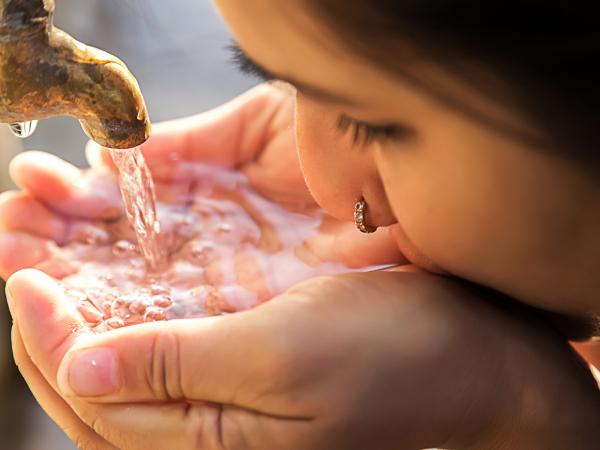
So begins Paolo Bacigalupi’s speculative thriller The Water Knife, set in the near-future in the drought-stricken American southwest. Where corrupt state-corporations have supplanted the foundering national government. Where water is the new gold—to barter, steal, and murder for. Corporations have formed militias and shut down borders to climate refugees, fomenting an ecology of poverty and tragedy. Massive resorts—arcadias—constructed across the parched landscape, flaunt their water-wealth in the face of exploited workers and gross ecological disparity. Water is controlled by corrupt gangsters and “water knives” who cleverly navigate the mercurial nature of water rights in a world where “haves” hydrate and “have nots” die of thirst.

drinking water from tap copy

Paolo Bacigalupi is just one of many authors of compelling dystopian eco-thrillers that engage readers in climate change—many with strong water themes: Margaret Atwood, Emmi Itäranta, Jeff VanderMeer, Richard Powers, Barbara Kingsolver, Upton Sinclair, Ursula Le Guin, JoeAnn Hart, Frank Herbert, John Yunker, Kim Stanley Robinson, James Bradley, Nathaniel Rich, David Mitchell, Junot Diaz, Claire Vaye Watkins, J.G. Ballard, Marcel Theroux, Thomas Wharton—just to name a few.

Diary Water cover finalMy upcoming novel by Inanna Publications—A Diary in the Age of Water coming out in 2020—explores the socio-political consequences of corruption in Canada, now owned by China and America as an indentured resource ‘reservoir’; it is a story told through four generations of women and their unique relationship with water during a time of great unheralded change. On February 17, 2046, limnologist Lynna writes in her diary about her mother Una:
Bald, alle das wasser verschwindet,” She said in her quiet voice of certainty. She always spoke in her mother tongue when it came to water. Soon, all the water will be gone. “Und so werden wir.” And so will we. “Es wird das Ende des Zeitalters des Wassers sein.” It will be the end of the Age of Water. 

Una always seemed to follow the thalweg. She seemed to always know what water was doing. Even when it braided and curled in on itself. Even when human-made obstructions got in the way; like the increased water tax, followed by the severe water-use quota. Like water, Una found a way around it.  

I wish I had that skill.

wter tap2 copy

Adobe Photoshop PDFScience fiction explores our water crisis through premises of extreme water shortage and devastating violence (floods, droughts and storms), water diversion, and hoarding. Premises explore weather manipulation, the consequences of extensive deforestation and the massive extinction of species. As with my own book A Diary in the Age of Water, Claudiu Murgan’s Water Entanglement explores water as a character, as though water has gone rogue, unruly. Perhaps even vengeful…
Today, we control water on a massive scale. Reservoirs around the world hold 10,000 cubic kilometres of water; five times the water of all the rivers on Earth. Most of these great reservoirs lie in the northern hemisphere, and the extra weight has slightly changed how the Earth spins on its axis, speeding its rotation and shortening the day by eight millionths of a second in the last forty years.

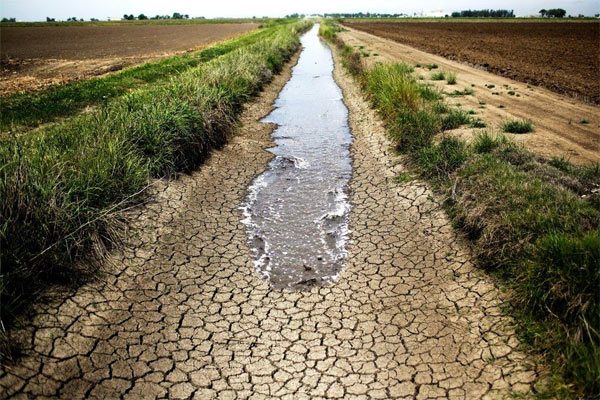
dried up river bed2 copy

Millennia ago, we adapted and lived by the rhythms of the global water cycle. We have since harnessed the power of water; we captured it and diverted it and changed it in ways to suit our own rhythms. Our unprecedented power over the planet’s water has advanced our civilizations immeasurably. But water remains our Achilles’ heel; it has the potential to limit our ambition like no other resource on Earth.

If climate change is the planet’s response to humanity’s relentless exploitation, water is its archangel.

Three Percent TVshowA tidal wave of TV shows and movies currently explore—or at least acknowledge—the devastation we are forcing on the planet. Every week Netflix puts out a new science fiction show that follows this premise of Earth’s devastation: 3%; The 100The TitanOrbiter 9; even Lost in Space.

Science fiction is suited to this role; it is the literature of consequence that explores large issues faced by humankind and can provide an important vehicle in raising environmental awareness. Literature in general has always served as a cultural reporter on themes important to humanity.  The science fiction genre—and speculative fiction particularly—explores premises based on current scientific and technological paradigms. What if we kept doing this?…What if that went on unchecked?… What if we decided to end this?… These are conveyed through the various predictive visions from cautionary tales (e.g., Atwood’s Year of the Flood) to dystopias (e.g., Itäranta’s The Memory of Water). Science fiction has always been the pre-eminent literature of metaphor and history; it has lately matured in the Anthropocene to incorporate the edgy realism of literary fiction to give us potent environmental relevance. Sub-genres now include eco-fiction, climate fiction, and cli-fi.

MemoryOfWater_Emmi ItarantaEllen Szabo, author of Saving the World One Word at a Time: Writing Cli-Fi suggests that the ability to make environmental issues less political and more personal (through story) permits more engagement by readers and a higher likelihood of action toward justice: we are more likely to take action on the things we love and know. It’s all about connection.

“Science doesn’t tell us what we should do,” Barbara Kingsolver wrote in Flight Behavior “It only tells us what is.” Stories can never be a solution in themselves, but they have the capacity to inspire action, which is perhaps why cli-fi’s appeal among young adult readers holds such promise. As the scientists and leaders of tomorrow, they may be most capable of addressing climate and water issues where previous generations have failed, writes J.K. Ullrich of The Atlantic. As Margaret Atwood wrote in MaddAddam, “People need such stories, because however dark, a darkness with voices in it is better than a silent void.”

We tend to live very much in the here and now, Bacigalupi told an audience at the University of Seattle when describing humanity’s lack of planning for the future.  But, he added, “with science fiction, I can give you a [here and now] experience far into the future,” and allow a reader to truly experience “what it’s like to be a climate refugee” or be someone with no legal access to water. An extrapolated science fiction future provides a visceral opportunity to see our future selves in a way that promotes serious consideration, says Bacigalupi. By putting us there, we have a better chance of making those extrapolations into consequence.

freighter-Toronto harbourJPG

For centuries we have hubristically and disrespectfully used, discarded and destroyed just about everything on this beautiful planet. According to the World Wildlife Federation, 10,000 species go extinct every year. That’s mostly on us. They are the casualty of our selfish actions. We’ve become estranged from our environment, lacking connection and compassion. That has translated into a lack of consideration—even for each other. In response to mass shootings of children in schools, the U.S. government does nothing to curb gun-related violence through gun-control measures; instead they suggest arming teachers. We light up our cigarettes in front of people who don’t smoke and blow cancer-causing second-hand smoke in each other’s faces. We litter our streets and we refuse to pick up after others even if it helps the environment and provides beauty for self and others. The garbage we thoughtlessly discard pollutes our oceans with plastic and junk, hurting sea creatures and the ocean ecosystem in unimaginable ways. We consume and discard without consideration.

PolarMom 2 cubs

We do not live lightly on this planet.

We tread with incredibly heavy feet. We behave like bullies and our inclination to self-interest makes us far too prone to suspicion and distrust: when we meet the unknown—the “other” so often portrayed in science fiction—we tend to respond with fear and aggression over curiosity, hope and kindness. Something we need to work on if we are going to survive.

Science fiction—the highest form of metaphoric and visionary art—is telling us something. Are we paying attention?

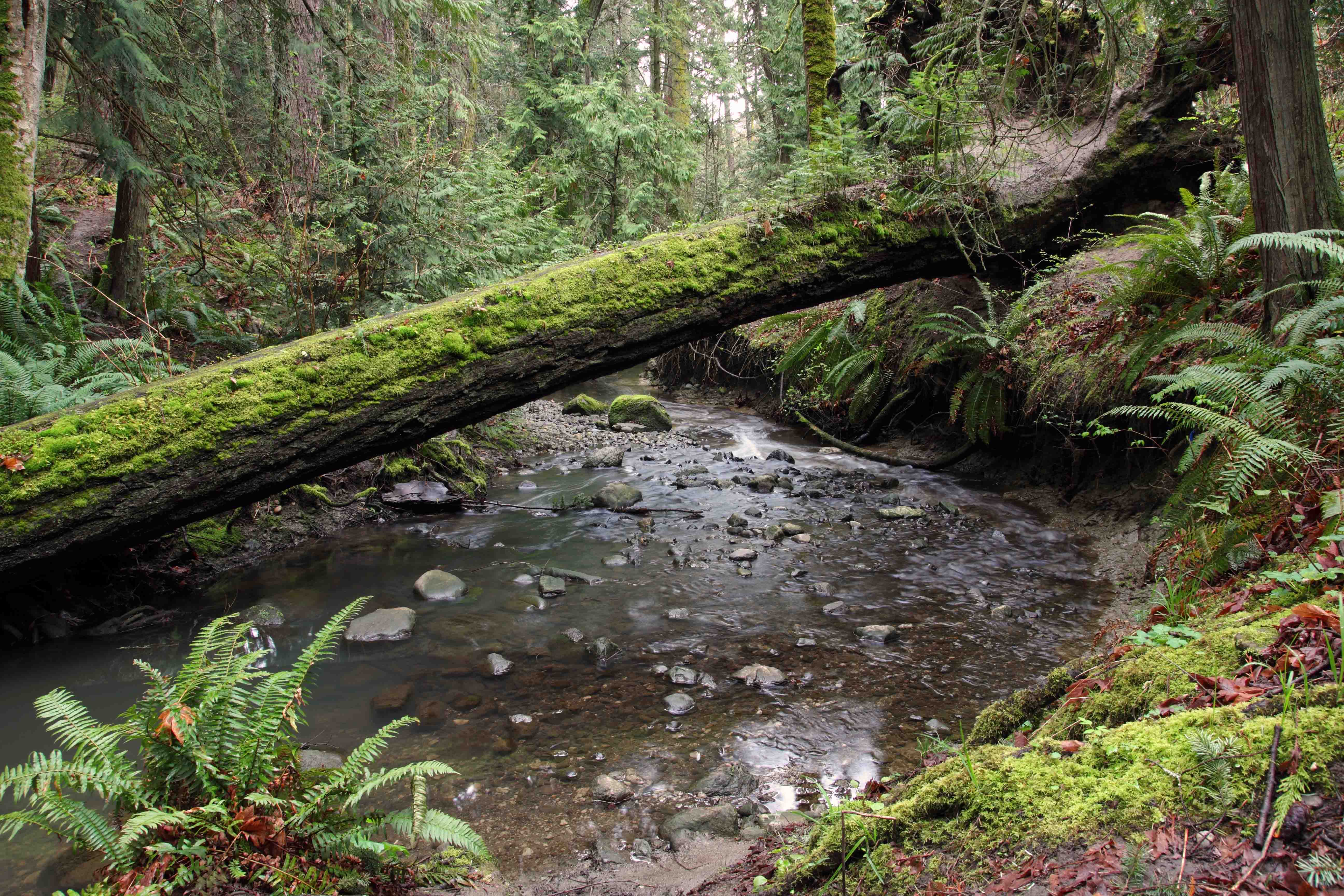
Fallen log BC-rainforest

Rainforest on southern Vancouver Island, B.C. (Photo by Kevin Klassen)


nina-2014aaa

Nina Munteanu is a Canadian ecologist / limnologist and novelist. She is co-editor of Europa SF and currently teaches writing courses at George Brown College and the University of Toronto. Visit www.ninamunteanu.ca for the latest on her books. Nina’s bilingual “La natura dell’acqua / The Way of Water” was published by Mincione Edizioni in Rome. Her non-fiction book “Water Is…” by Pixl Press (Vancouver) was selected by Margaret Atwood in the New York Times ‘Year in Reading’ and was chosen as the 2017 Summer Read by Water Canada. Her novel “A Diary in the Age of Water” will be released by Inanna Publications (Toronto) in 2020.

Climate Change: What We Can Do—Nina talks to the Toronto Star

Nina Munteanu

Nina Munteanu (photo by Richard Lautens)

The Toronto Star recently spoke to Nina Munteanu with two questions about climate change. These were included in a recent handbook published by the Star entitled “Undeniable: Canada’s Changing Climate—What We Can Do Now.” In it, The Star showed how the majority of Canadians place climate change as a top priority. In “Let’s Talk” The Star interviews computer scientist and head of UofT’s School of the Environment Steve Easterbrook. Questions involving local community action and the importance of hope.

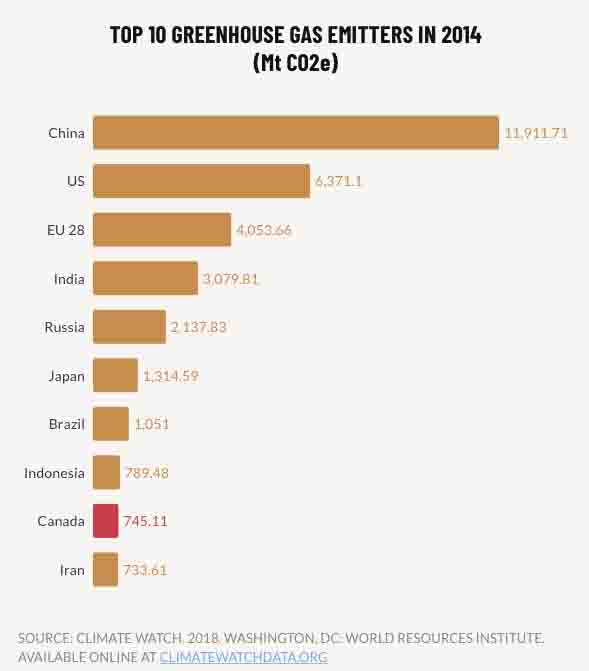
In “Your Carbon Footprint” The Star showed how China and the US together produce over half of the entire greenhouse gases emitted annually by the top ten countries that include EU 28, India, Russia, Japan, Brazil, Indonesia, Canada, and Iran. These ten countries currently emit seventy percent of the world’s greenhouse gases. China (11.912 Mt CO2) continues to lead in greenhouse gas emissions, being over twice the US, the next large emitter (6.371 Mt CO2).

Top Ten GreenhouseGas Countries

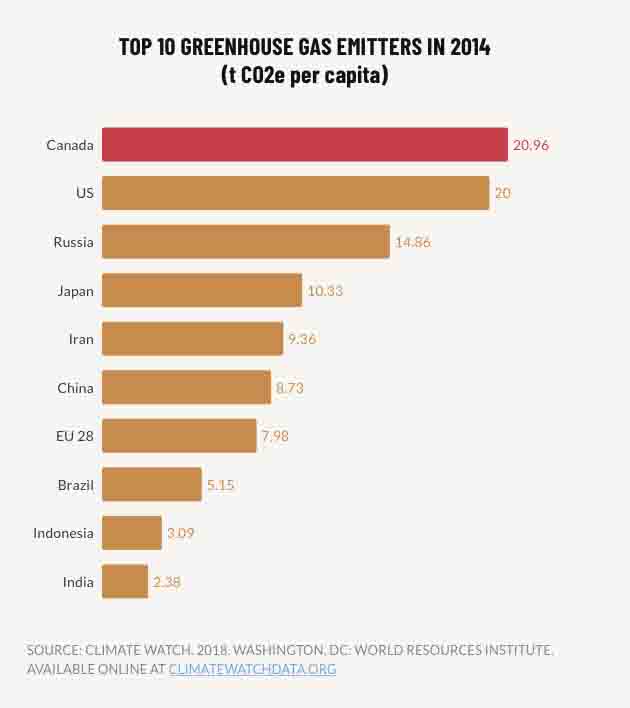
However, when The Star looked at per capita greenhouse emissions, Canada jumped to the top rank at 21 tonnes per person annually, followed by the US (20 tonnes/person). By comparison, China—ranked the highest for total emissions—measured only 8.73 tonnes per person annually. And Bangladesh measured 1.1 tonnes/person.

GreenhouseGases-PerCapita

“Most scientists agree that in the coming decades we need to limit our individual annual carbon footprint to 1-2 tons,” says The Star. This entails making personal changes to cut our carbon output. One example is driving less or converting to a hybrid or electric car. “Our behaviours, whether good or bad, are contagious,” says The Star. I agree. It is important to not only do what we can but to share with others and provide our reasons. Seth Wynes, a geographer at the University of British Columbia concurs: “It’s not just about what you do, it’s about setting an example for others.” Research suggests, for example that homeowners are more likely to install solar panels when someone else does it first in their neighbourhood. Wynes in 2017 co-authored a study that ranks the most effective lifestyle changes to curb an individual’s carbon footprint.

In “Four Things You Can Do”, The Star suggests the following key initiatives:

  1. Eat less beef
  2. Live car-free or go hybrid / electric
  3. Invest in green infrastructure
  4. Reduce air travel

Greenhouse Gases-FOOD

The Star also provided good advice on how to talk to children about our changing climate. They provide excellent examples of children empowering themselves by making a difference—instead of becoming depressed with what they are inheriting. In “Political Checkup” The Star discusses with experts how we can best interact with our political leaders to engage and ensure positive change. In “Faith and Community” The Star showcases examples of faith communities addressing our waste stream.

In “The ChangeMakers” The Star asked the same two questions of five Canadians who are making climate change a top priority. They included:

  • Franny Ladell Yakelashek: 12-year old environmental rights activist from Victoria, BC
  • Jocelyn Joe-Strack: Indigenous scientist and storyteller, Whitehorse, Yukon
  • Kathy Bardswick: director of the Institute for Clean Growth and Climate Change, Guelph, ON
  • Gordon McBean: climatologist and professor emeritus at Western University, London, ON
  • Nina Munteanu: ecologist, instructor at The University of Toronto and author of eco-fiction and climate fiction, Toronto, ON.

Q1: What is the one thing about climate change that keeps you up at night?

Nina: I worry that my son and his kids will end up experiencing one of my dystopias from one of my books. My son lives in Vancouver, and my main concern is that he and his kids won’t have the chance to live safely and enjoy a stable and beautiful planet because we have wrecked it for them.

That leads me to the second thing that keeps me up at night, which is that nobody cares. Or that they are scared to care. We’re still going about our business like nothing is happening.

That really frustrates me. I’m a scientist and we’ve been talking about this for a long time; for me it’s been decades. My frustration is that we are still debating climate change, and we should be acting on it.

Q2: What is the one thing Canadians can do to act on climate change?

Nina: I think it has to be three things. First, plant a tree; make an actual difference through action. By doing that, we get out from hiding under the bed and face the monster of climate change and show that we care and that we are not alone. And that — taking direct action — will give us courage and hope.

Second, vote for green politicians. Politicians need to hear directly from their communities, they need you to push them to act on climate change.

Third, find your tribe and create a movement. Everyone says that people have the power, but that power comes best through numbers and solidarity. Find your tribe, and you’ll find yourself more motivated.

For answers to these two questions by the other changemakers, please go to the Toronto Star’s “What You Can Do About Climate Change” site.


nina-2014aaa

Nina Munteanu is a Canadian ecologist / limnologist and novelist. She is co-editor of Europa SF and currently teaches writing courses at George Brown College and the University of Toronto. Visit www.ninamunteanu.ca for the latest on her books. Nina’s bilingual “La natura dell’acqua / The Way of Water” was published by Mincione Edizioni in Rome. Her non-fiction book “Water Is…” by Pixl Press (Vancouver) was selected by Margaret Atwood in the New York Times ‘Year in Reading’ and was chosen as the 2017 Summer Read by Water Canada. Nina’s short story collection of eco-fiction can be found in “Natural Selection” published by Pixl Press. Her novel “A Diary in the Age of Water” will be released by Inanna Publications (Toronto) in 2020.