I’m an ecologist; I study environmental relationships. Something you’d think is easy to learn and very accessible; we’re surrounded by it, after all. We live, work and play in it. While I learned about environmental relationships with my eco-minded parents, I didn’t learn it or experience it in my school growing up. With the exception of some indigenous schools (which teach respect for the spirit of wildness), most of us certainly didn’t learn about environmental relationships in our schools.
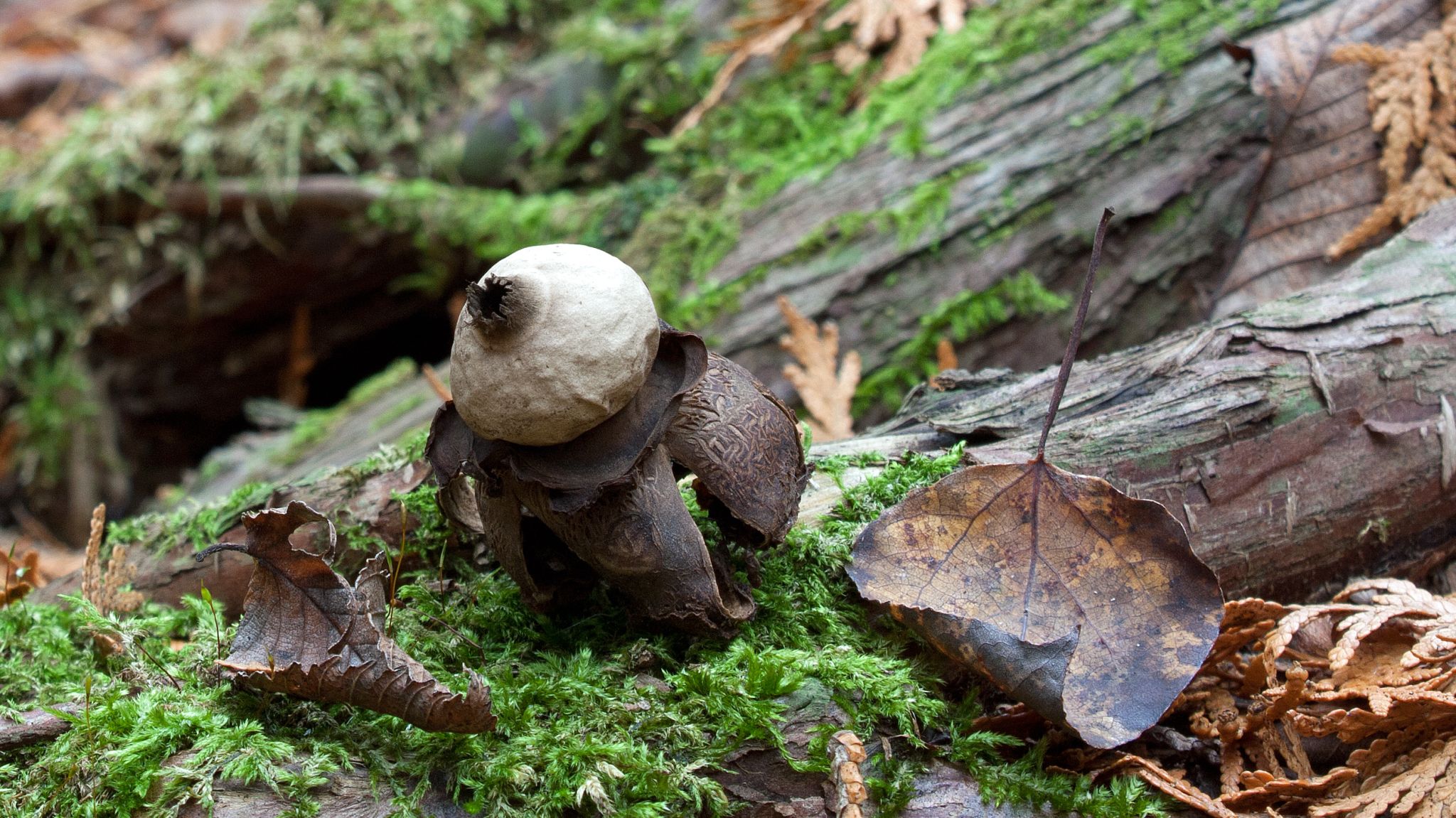
Earthstar sits on moss-covered rotting cedar log as new cedar roots take hold, ON (photo by Nina Munteanu)
Most Canadians live in a city; we don’t really understand what the natural environment is. Many of us have learned to ignore it, stop recognizing it, pocket it away as we go about our busy lives in the city. A park is a bit of greenery. A tree is a decoration that provides shade. Shrubs border a mall.
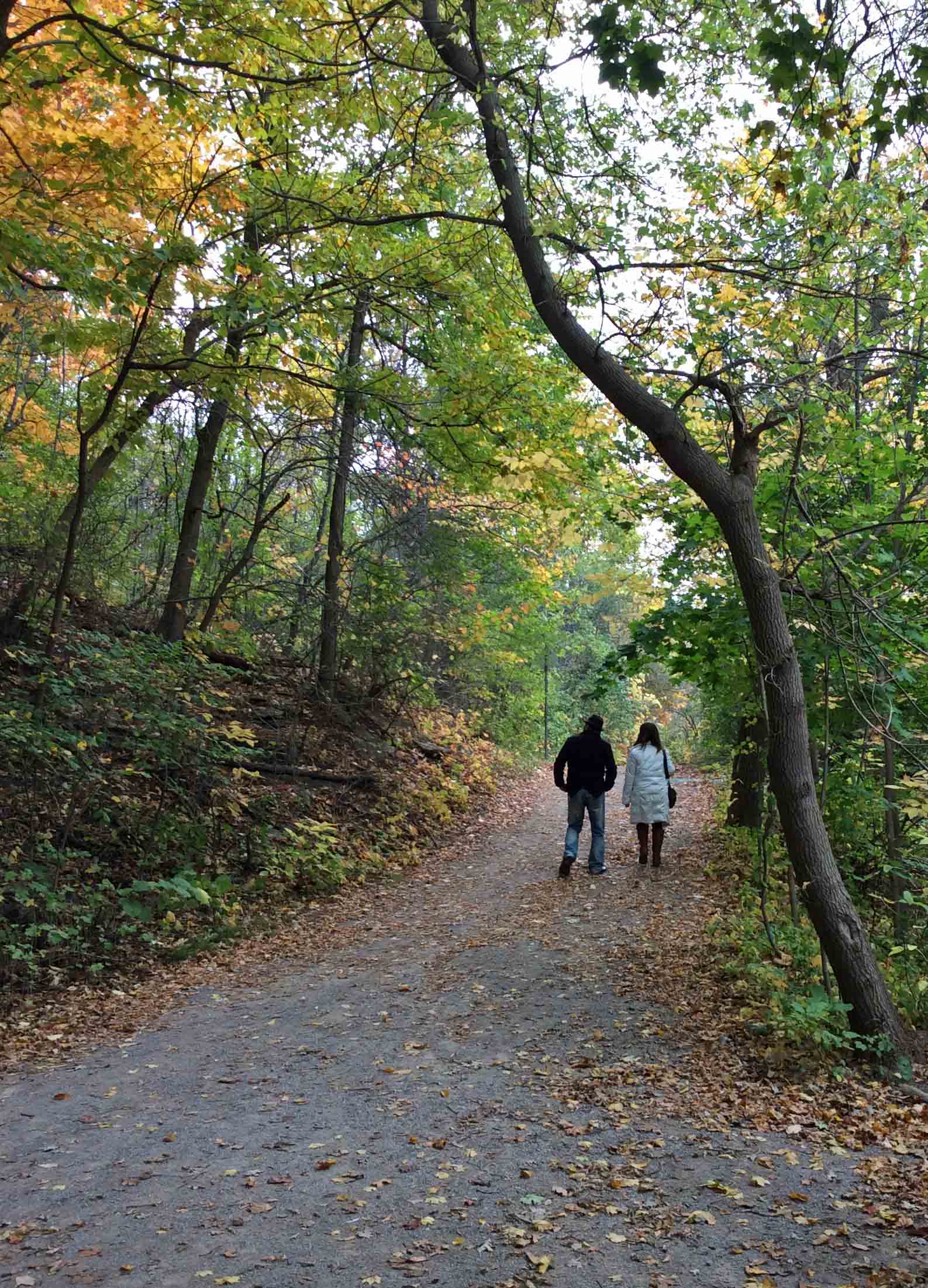
Walk through urban forest along the Credit River, ON (photo by Nina Munteanu)
But if we can’t even recognize the natural environment, how can we understand its functional role in the intricate well-being of this entire precious planet and ultimately ourselves?
It is no wonder then that most Canadians—though we may intellectually accept climate change and its effects on this planet (because we’re smarter than some)—likely do not viscerally understand or appreciate why and how it will drastically change our lives. For most of us, climate change—as with Nature—is something that is happening to someone else, somewhere else. From those far away calamities to the quiet struggles no one talks about. We hear and lament over the flooding in Bangladesh or the Maldives. Or the wildfires in northern British Columbia. Or the bomb cyclones of the eastern seaboard.
Meanwhile, the polar bear struggles quietly with disappearing sea ice in the Canadian arctic. The koala copes quietly with the disappearing eucalyptus. Coral reefs quietly disappear in an acidifying ocean. Antarctic penguins silently starve with disappearing krill due to ice retreat. And while jellyfish invade the Mediterranean, UK seas and northeast Atlantic, the humble Bramble Cay melomys slips quietly into extinction—the first mammal casualty of climate change.
Yellow Creek flows through an urban forest in the heart of Toronto, ON (photo by Nina Munteanu)
So, those of us who are enlightened speak of climate resilience and adaptation. We talk of arming our cities with words like green infrastructure, stormwater management, urban runoff control, flood mitigation. Ecological literacy. But what are these things to us? They are tools, yes. Good tools to combat and adapt to the effects of climate change. But will they create resilience? I think not.
I’m a limnologist and I’ve consulted for years as a scientist and an environmental consultant. I played a role in educating industry, in the use of mitigating tools, in changing the narrative even.
Trail through urban forest on a foggy winter day in Peterborough, ON (photo by Nina Munteanu)
But I’ve come to realize that resilience comes only from within and through a genuine connection with our environment. Tools, no matter how proficient, are only as good as how they are used based on intention from a deep understanding. It isn’t enough to achieve the HOW of things; we must embrace the WHY of things. And that comes from the heart. We must feel it in our hearts. Or it won’t work. And we quite simply won’t survive.
Various flowers and trees of Ontario (photos by Nina Munteanu)
Canadians celebrate our multi-cultural heritage. We pride ourselves in our tolerance and welcoming nature. Our national anthem speaks of our land. Our national symbols embrace nature with the maple, beaver, caribou and loon. Yet who of us knows the habitat of the loon—now at risk, by the way (climate change will impact much of its breeding grounds). Who knows what the boreal forest—which makes up over half of our country—is? How it functions to keep this entire planet healthy, and what that ecosystem needs, in turn, to keep doing it? How to help it from literally burning up?
Ecology isn’t rocket science. Ecology is mostly common sense. Ecology is about relationship and discovery. Ecology is a lifestyle choice, based on respect for all things on this planet and a willingness to understand how all things work together.
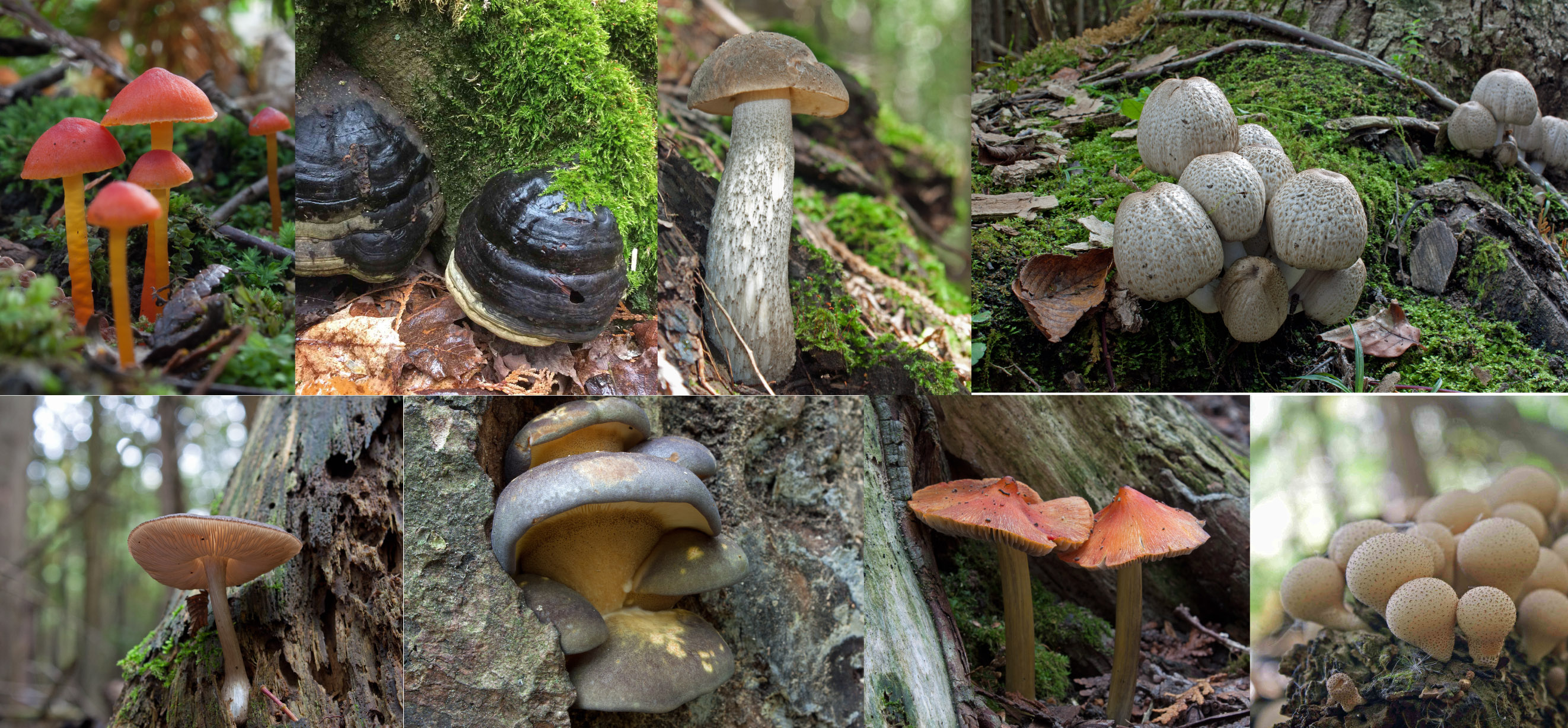
Various mushrooms in Ontario forests (photos by Nina Munteanu)
Here’s what I’ve learned to keep me caring and remain positive and not become apathetic or fall into despair:
I’ve learned to open myself to discovery. To find Nature, even if it is in the city. To connect with something natural and wild and to find and savour the wonder of it. All that matters will naturally come from that.
Become curious and find something to love.
When you do, you will find yourself. And that is where you will find resilience. What colour is it? It doesn’t need to be green…
Throughout this article I’ve shown you some of my colours…
Red fox skull emerges on a leaf-strewn icy bank of Jackson Creek, ON (photo by Nina Munteanu)
Here are the steps I taught myself toward healthy resilience (the first two steps are both the hardest and the easiest):
Step 1:Slow down, pay attention. Give yourself the time to relax and look around your local surroundings. Until you slow down to actually look, you will not really take in your surroundings. You need to be in the moment. Only then can you take the time to use all your senses to take in your environment. Try to look at it from a different perspective. Notice the light, the smells and sounds. What is different? What is the same?
Step 2:Lower your guard, open yourself to curiosity. Rely on as many senses as you can (sight, hearing, smell, texture, taste) to sample your environment and show some humility to ask questions. Whenever I go out, particularly in Nature, I make a point of coming home with three gifts, discoveries that make me smile or think and wonder. I’m hardly ever disappointed.
Step 3: Process what you’ve seen and discovered. Do some follow-up research to questions that may arise. Look at consequences. Share with others, discuss. From there it will be easy to ‘take responsibility’ for some section of nature that you really like; perhaps a particular tree in a park or a short path through an urban forest or stretch of urban stream. This can easily lead to good stewardship.
Step 4: Take responsibility for your chosen part of Nature. Get to know it well, how it works, what it needs, what’s right and what’s wrong. Do something about it and share with others.
Step 5: You’re there. You are resilient.
Barred owl hiding in plain sight in an urban forest near Peterborough, ON (photo by Nina Munteanu)
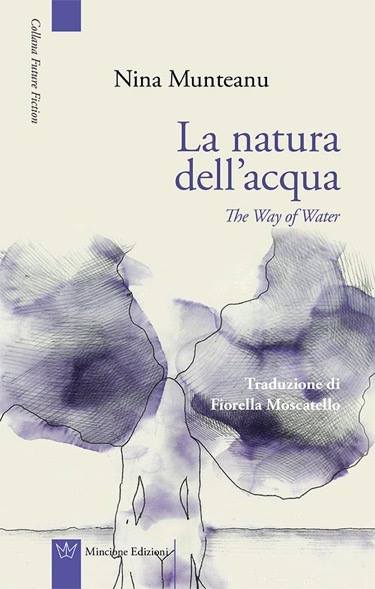
Nina Munteanu is a Canadian ecologist / limnologist and novelist. She is co-editor of Europa SF and currently teaches writing courses at George Brown College and the University of Toronto. Visit www.ninamunteanu.ca for the latest on her books. Nina’s bilingual “La natura dell’acqua / The Way of Water” was published by Mincione Edizioni in Rome. Her non-fiction book “Water Is…” by Pixl Press (Vancouver) was selected by Margaret Atwood in the New York Times ‘Year in Reading’ and was chosen as the 2017 Summer Read by Water Canada. Her novel “A Diary in the Age of Water” was released by Inanna Publications (Toronto) in June 2020.
Maude Barlow, author of Boiling Point, Chairman of the Council of Canadians
Like a car, every novel has its point of ignition: a spark that sets it in motion. This occurs when a premise or idea comes together with an incendiary moment of clarity or a thematic question. Mine—though I didn’t know it at the time—happened in a church on the Summer of 2016.
I was in a United Church on Bloor Street, in Toronto’s Annex, watching a talk given by Maude Barlow on water justice. The radical talk was based on her recent book Boiling Point, a comprehensive exploration of Canada’s water crisis—a crisis that most Canadians weren’t—and still aren’t—aware. Canada is steward to a fifth of the world’s fresh water, after all. It is a water-rich country. Of the dozen largest inland lakes in the world, Canada holds eight of them. So, why water crisis? Barlow explains. And you should read Boiling Point, particularly if you’re Canadian. It will open your eyes to the politics of water and how multinational corporations—like Nestlé—are already grabbing and funneling water away from Canadians and into the global profit machine.
I sat close to the front of the Church sanctuary to best see her. But I soon noticed that many people had elected to sit in the gallery above. I found myself focusing on a young mother and her little girl. The girl had some paper and crayons and was busy with that as the enthusiastic mother listened to Maude deliver dire facts about corporate water high-jacking and government complicity.
I saw a story there.
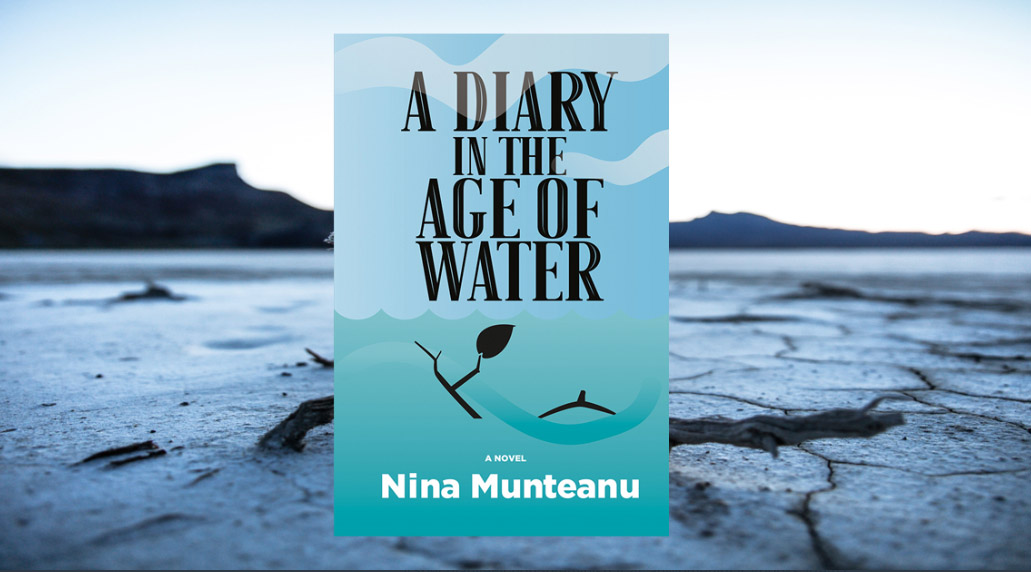
What mother would take her pre-school child to a socio-political talk on water? I would later reflect that memory of the mother and her little girl through my characters Una and her little daughter Lynna, the diarist in my novel A Diary in the Age of Water (eventually published in 2020 with Inanna Publications).
Fresh water flows down the barrel of a hand-operated water pump.
My novel really began with a short story I was invited to write in 2015 by editors of Future Fiction and Mincione Edizioni about water and politics in Canada; the premise of this story would later find it’s way into the larger novel. I had long been thinking of potential ironies in Canada’s water-rich heritage. The premise I wanted to explore was the irony of people in a water-rich nation experiencing water scarcity: living under a government-imposed daily water quota of 5 litres as water bottling and utility companies took it all. I named the story “The Way of Water.” It was about a young woman (Hilda) in near-future Toronto who has run out of water credits for the public wTap; by this time houses no longer have potable water and their water taps have been cemented shut; the only way to get water is through the public wTaps—at great cost. She is in a line of people; she’s two metres from water—and dying of thirst.
“The Way of Water” captures a vision that explores the nuances of corporate and government corruption and deceit together with global resource warfare. In this near-future, Canada is mined of all its water by thirsty Chinese and US multinationals—leaving nothing for the Canadians. Rain has not fallen on Canadian soil in years due to advances in geoengineering and weather manipulation that prevent rain clouds from going anywhere north of the Canada-US border. If you’re wondering if this is possible, it’s already happening in China and surrounding countries.
The story first appeared in 2015 in Future Fiction, edited by Francesco Verso, and in 2016 as a bilingual (English and Italian) book and essay published by Mincione Edizioni in Rome. The story has so far been reprinted seven times in magazines and anthologies, including “Cli-Fi: Canadian Tales of Climate Change Anthology” (Exile Editions, Bruce Meyer, ed), in 2017, “Future Fiction: New Dimensions in International Science Fiction” (Francesco Verso & Bill Campbell, eds; Future Fiction / Rosarium Publishing, Rome and Greenbelt, MD) in 2018; and in Little Blue Marble Magazine (Katrina Archer, ed) in January, 2019 and in their ‘Best of’ anthology. It was then published in 2022 in Metastellar Magazine and later in their ‘Best of’ anthology. “The Way of Water” received generous praise from review sites and the press worldwide.
After the success of this short story, I realized that I needed to tell the larger story—how did the world—Canada—get to where Hilda was? Her mysterious mother, the limnologist Lynna who was taken away by the RCMP in 2063, clamored for more attention. I remembered that four-year old girl and her mother in the gallery at Maude Barlow’s talk on water politics. And I thought of my characters: young Lynna and her mother Una. How does a daughter of an activist mother behave and think? How best to express her voice? I had earlier written a short story that was a mix of correspondence (emails) and third person narrative (“The Arc of Time” in Natural Selection, later reprinted in Metastellar Magazine), which I felt captured the voices of the characters well. I realized that a diary by Lynna would be an ideal way for her to express her unique worldview and cynicism—yet allow her vulnerable humanity to reveal itself through this unique relationship with her diary. The remaining characters and their narratives emerged easily from there: Una, her activist mother; Daniel, her conspiracy theorist colleague (and her conscience); Orvil, the water baron (and lover she betrayed); and Hilda, her “wayward” supposedly mind-challenged daughter—who appears in the short story that takes place later.
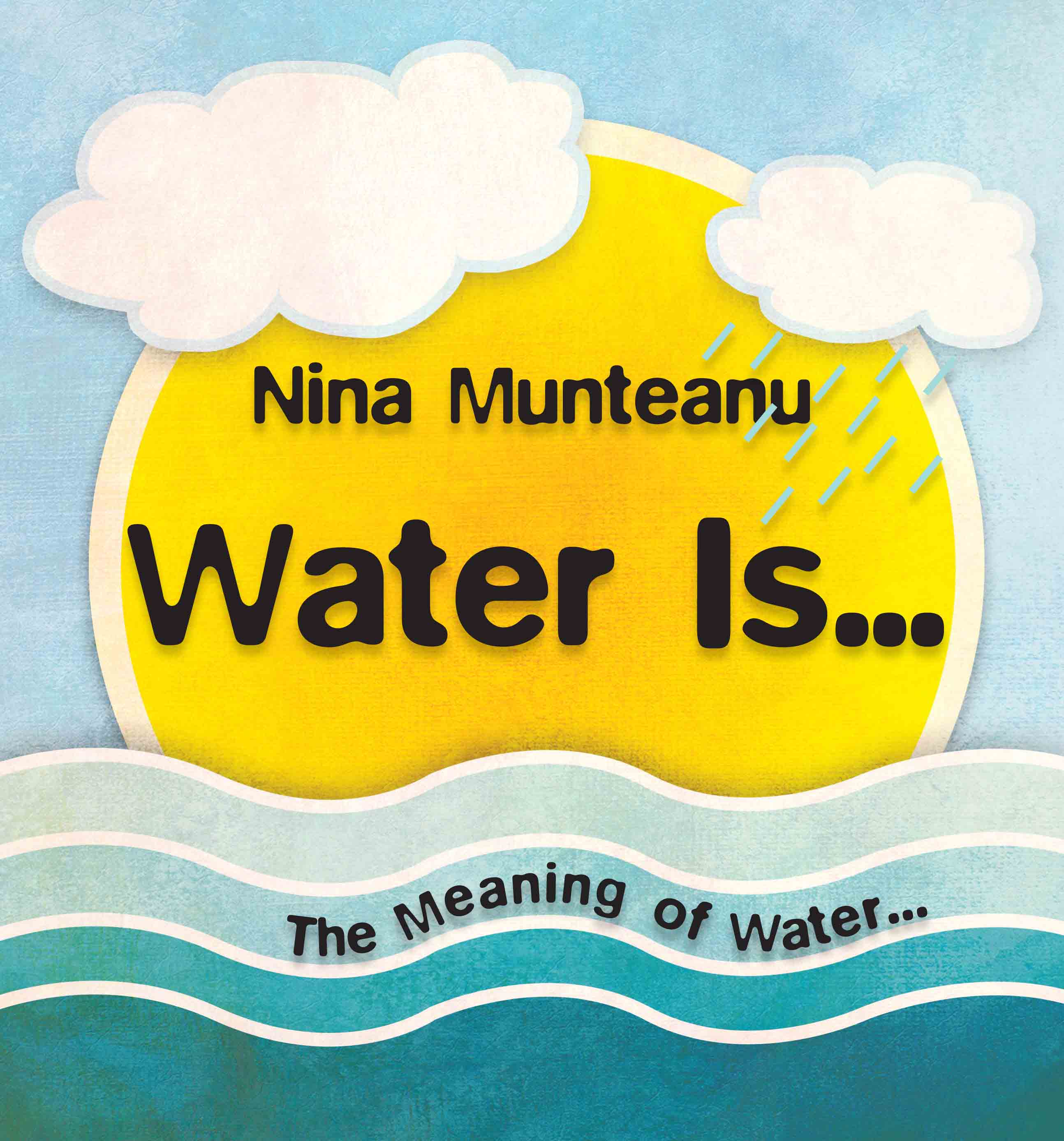
I had a lot of material; I had already been researching water issues and climate change in my activism as a science writer and reporter. In 2016, Pixl Press had published “Water Is… The Meaning of Water”,essentially a biography of water, written from the perspective of mother, environmentalist and scientist. I had practiced as a limnologist for over twenty-five years and could mine my various personal experiences in the field, lab and office with genuine realism. I chose Wetzel’s Limnology (the classic text book I used in my introductory limnology course) for quotes to each of Lynna’s entries; this added an opportunity to provide additional metaphor and irony through Lynna’s scientific voice. I placed the child Lynna (who was born in 2012) into actual events in Toronto, where I currently live. This pushed the story further into the area of documentary and blurred the lines between fiction and non-fiction to achieve a gritty and textured reality. Lynna also taught limnology at the University of Toronto, where I currently teach.
Just as Water Is… served as a watershed for all my relevant experiences as mother, environmentalist and scientist, A Diary in the Age of Water would galvanize many of my personal experiences, doubts, challenges and victories into compelling story. Although parts of the story wrote themselves, the entire book was not easy to write. There were times when I had to walk away from the book to gain some perspective—and optimism—before continuing. When I found myself drowning in Lynna’s voice, I invoked Hilda to guide me to shore. I found a balance that worked and compelled. Ultimately this opened to some of the best internal conflict and tension I have experienced in my writing.
Like water itself, A Diary in the Age of Water expresses through many vessels and in many perspectives, spanning hundreds of years—and four generations of women—with a context wider than human life. Through its characters, A Diary in the Age of Waterexplores the big question of humanity’s deadlock with planetary wellness and whether one is worth saving at the expense of the other. One of the characters asks Lynna the hard question: “If you had the chance to save the planet [stop the mass extinctions, deforestation and pollution ravaging the planet], but it was at the expense of humanity, would you do it?”
Water is, in fact, a character in the book—sometimes subtle and revealed in subtext, other times horrific and roaring with a clamorous voice. Water plays both metaphoric and literal roles in this allegorical tale of humanity’s final journey from home. The story explores identity and our concept of what is “normal”—as a nation and an individual—in a world that is rapidly and incomprehensibly changing—and in which each of us plays a vital role simply by doing or not doing.
A Diary in the Age of Water promises to leave you adjusting your frame of reference to see the world, yourself—and water—in a different way.
Illustration on Liisbeth article (photo collage by PK Mutch and Dreamstime
This is what PK Mutch of Liisbeth and Ariel Kroon (PhD graduate of English Literature at the University of Alberta and co-editor at Solarpunk Magazine) say about A Diary in the Age of Water, published by Inanna Publications in 2020:
The novel has received wonderful praise and prizes, including the Literary Titan Award, the Foreword Indies Award and finalist in the International Book Awards. I wonder if Maude Barlow has read it?… Maybe I (or someone) should get her a copy, huh?…
Maude Barlow with ‘Save our River’ sign
Maude Barlow is a Canadian activist and author of Blue Gold, Boiling Point and several other books on water justice. She chairs the board of Washington-based Food and Water Watch and Ottawa-based Blue Planet Project. Maude co-founded the Council of Canadians and chaired its board for over three decades.
Nina Munteanu is a Canadian ecologist / limnologist and novelist. She is co-editor of Europa SF and currently teaches writing courses at George Brown College and the University of Toronto. Visit www.ninamunteanu.ca for the latest on her books. Nina’s bilingual “La natura dell’acqua / The Way of Water” was published by Mincione Edizioni in Rome. Her non-fiction book “Water Is…” by Pixl Press (Vancouver) was selected by Margaret Atwood in the New York Times ‘Year in Reading’ and was chosen as the 2017 Summer Read by Water Canada. Her novel “A Diary in the Age of Water” was released by Inanna Publications (Toronto) in June 2020.
The Otonabee River under rosy haze from northeastern wildfires, ON (photo and rendition by Nina Munteanu)
It was pleasantly cool yesterday evening during my walk along the Otonabee River. Over the day, the smell of ‘campfire’ smoke from the raging northern wildfires intensified and the sun became an eerie copper disk in the peach-coloured sky. The river had gone still, as if hushed and waiting beneath the cloud of haze. Houses along the shore had become fluid watercolour paintings, colours and textures blending in a soft fabric of grey and green. As I set my gaze on a favourite cottage by the river, its reflection caught in the still waters, I thought the scene beautiful…
My heart then reminded me that this wasn’t a mist rising off the river but the yellow-brown dust descending from the corpses of millions of burnt trees, sent here by a cruel northeast wind.
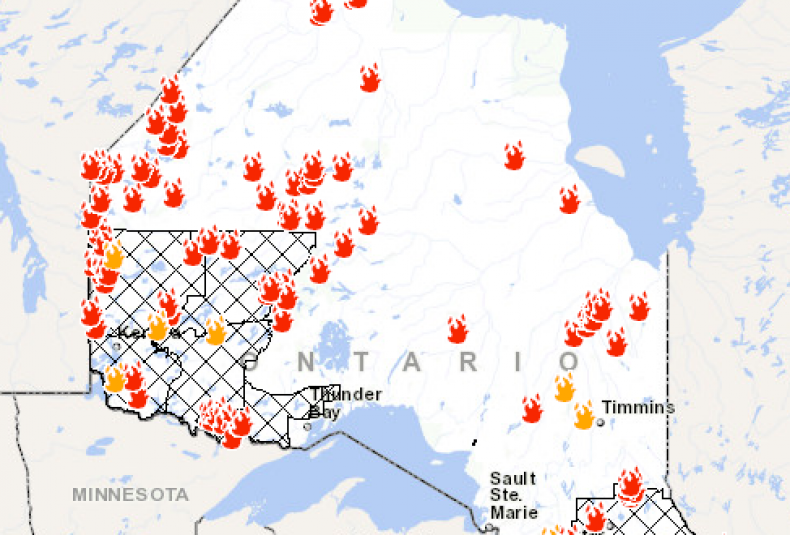
Map of Ontario wildfires June 5, 2023
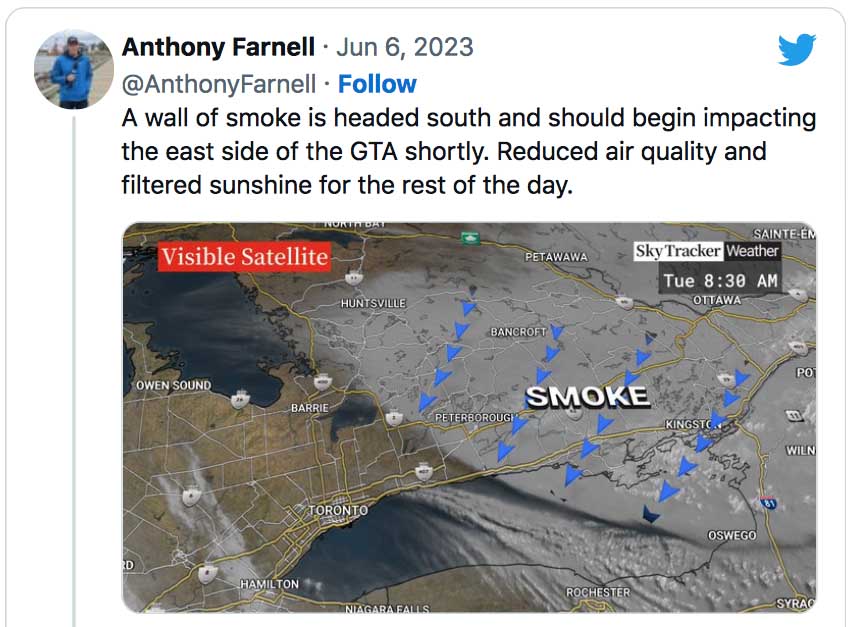
Today, the Ontario government reported heavy smoke conditions in the Northeast Region due to a large number of fires in eastern Ontario and Quebec—with fires worse than usual this year in Quebec. More than 160 fires are burning, most out of control, in Quebec. Smoke drift is travelling as far as just north of Timmins, down through Sudbury and past Parry Sound. Environment Canada issued Air quality warnings today for Peterborough, where I currently live.
Global News reported today that “relentless wildfires have devoured 3.3 million hectares of land across Canada so far this year—roughly 10 times the normal average for the season.” In the last 24 hours, 21 new fires were discovered across Ontario, amounting to 159 active fires provincially. According to Global News, “Searing hot, tinder-dry conditions, similar to what was seen in western Canada, has only worsened the situation in Ontario.” And Quebec.
Map of Quebec wildfires June 5, 2023
Sun setting over smoky Otonabee River, ON (photo by Nina Munteanu)
There is an old willow tree on the river bank by the path I walk daily. Its massive arms stretch out over the water and one arm leans low over the path so you must bend down to walk under it. The derecho last May had cracked the tree open. But the sturdy willow continues on, undaunted, as all Nature does, thrusting up suckers from its large limbs toward a future of many more willows. It’s a favourite tree of many a walker who like to sit on its generous arms and look out over the river. Each day I touch its bark and say hello.
Old willow on the path by the Otonabee River, the glow of smoke-sun on its generous arms (photo by Nina Munteanu)
New suckers burst out of the leaning willow limb (photo by Nina Munteanu)
I think of my old friend. How a fire would take it.
First its leaves would sizzle and take flight in a requiem dance. The trunk, a funnel of fire and smoke, would sway and groan then crack with a final death shout to the roaring hissing fire. Like flying kites, leaf corpses would join embers of curling bark and soar in a vortex of billowing coal black fury. The river would flow through a killing field, black stumps and burned debris flying with the vagaries of a mischievous wind. Covered in a film of thick and oily debris, the lonely river would grow dark and surly, smothering its own aquatic forest—the algae, benthic invertebrates and fish.
And I would weep…
Sun setting over hazy forest at mouth of Thompson Creek, ON (photo by Nina Munteanu)
Nina Munteanu is an ecologist and internationally published author of award-nominated speculative novels, short stories and non-fiction. She is co-editor of Europa SF and currently teaches writing courses at George Brown College and the University of Toronto. Visit www.ninamunteanu.ca for the latest on her books. Nina’s recent book is the bilingual “La natura dell’acqua / The Way of Water” (Mincione Edizioni, Rome). Her latest “Water Is…” is currently an Amazon Bestseller and NY Times ‘year in reading’ choice of Margaret Atwood.
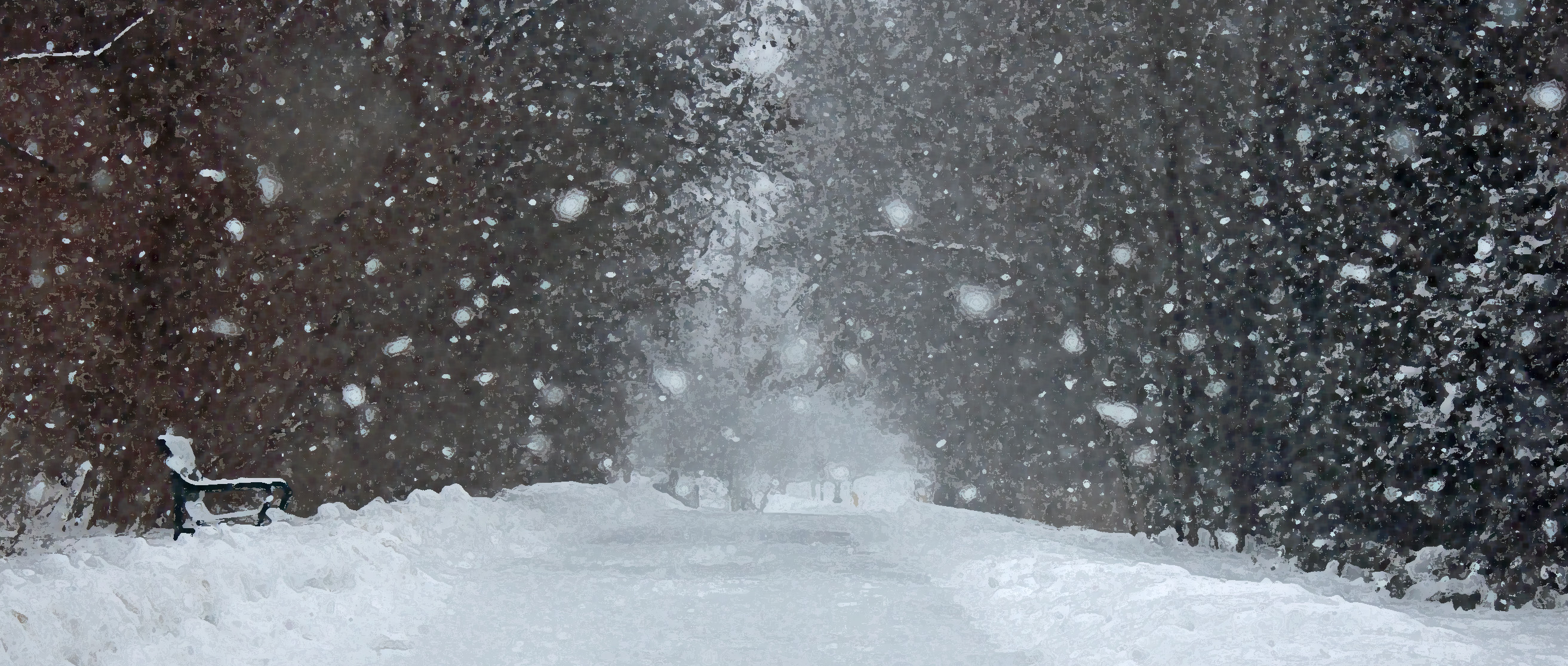
Heavy snowfall where I live in Ontario (photo by Nina Munteanu)
I currently live in Ontario, Canada, where the four seasons are still distinct and winter comes with signature cold temperature well below zero degrees Centigrade along with lots and lots of snow. I grew up in Quebec, where the snow often piled up higher than I stood tall. Temperatures often went into the minus zero teens and twenties with wind chills reaching minus thirty degrees. This called for the right equipment. Insulated coat or jacket, snow pants, wool toque and mittens and/or gloves that are also well insulated. And, of course, warm snow boots.
Nina on a walk during a snowstorm, ON (photo by Merridy Cox)
Country road in the Kawarthas, ON (photo and rendition by Nina Munteanu)
Nina’s car on ‘walkabout’ through Kawartha country after a fresh snowfall, ON (photo and rendition by Nina Munteanu)
Farm in the Kawarthas, ON (photo and rendition by Nina Munteanu)
Cows on a farm in the Kawarthas, ON (photo and rendition by Nina Munteanu)
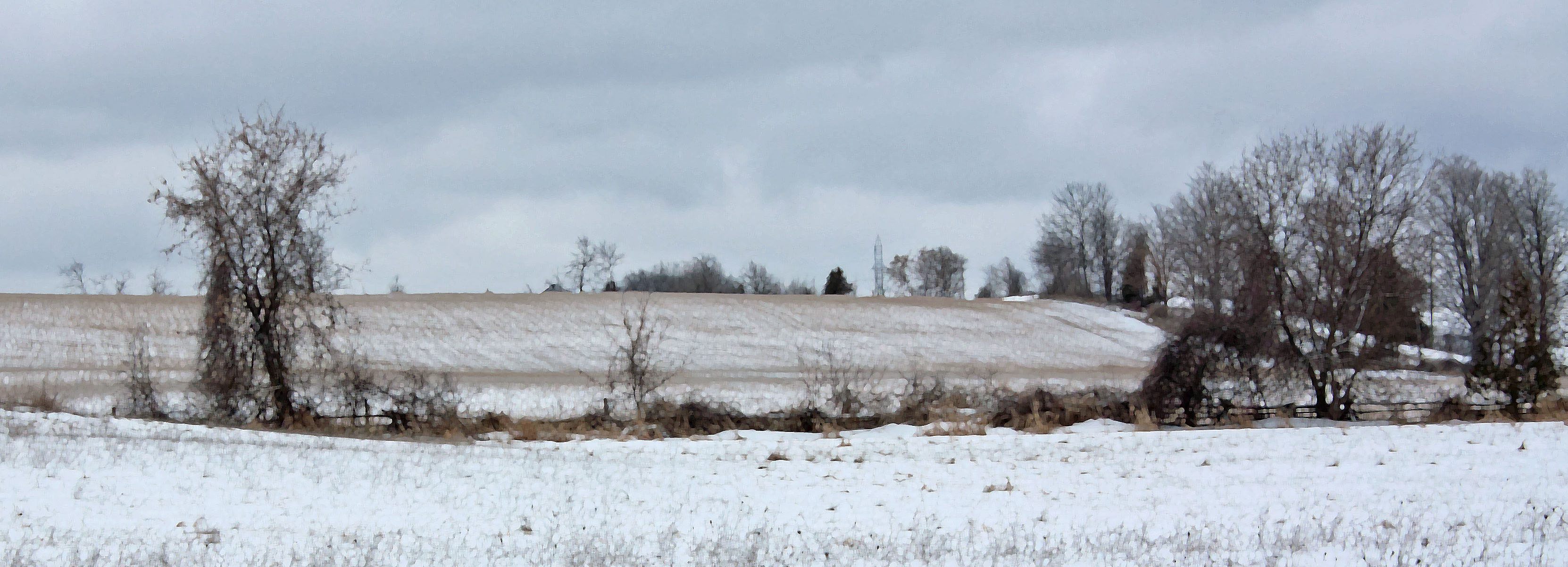
Country field in Kawarthas, ON (photo and rendition by Nina Munteanu)
School kids heading to class after a fresh snow, ON (photo by Nina Munteanu)
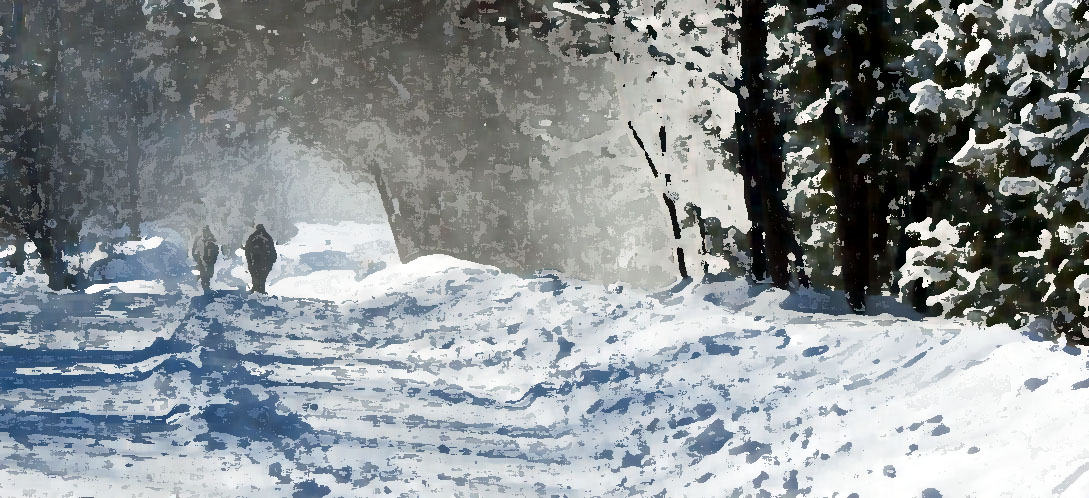
The Rotary Trail after a fresh snowfall, ON (photo and rendition by Nina Munteanu)
Heavy snow falls on a trail in the Kawarthas, ON (photo and rendition by Nina Munteanu)
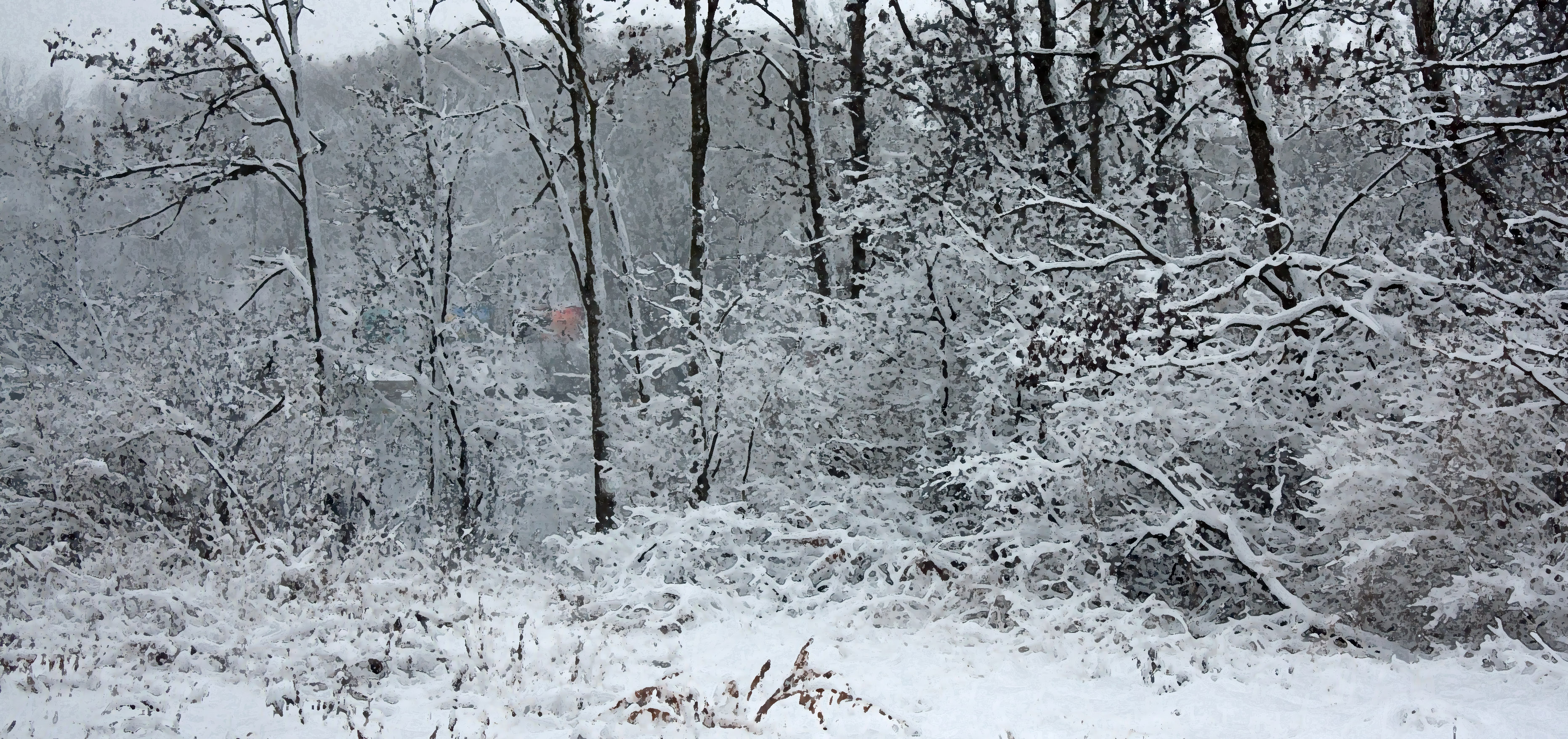
Since moving to the West Coast then back east to Ontario, I’ve come to realize that I love winters. I love how snow covers everything, how it quiets the landscape and changes it in subtle ways. I love the frigid wind, how it bites the face with invigorating energy, reminding me that I am so alive. I love the sounds of winter, of walking on snow, crunching and squeaking, of the howl of the wind and the creaking and groaning of the trees, or the cracking and booming of the ice forming and reforming on the river.
Bridge over creek in Trent Nature Sanctuary during heavy snowfall, ON (photo and rendition by Nina Munteanu)
Jackson Creek after a fresh snowfall, ON (photo and rendition by Nina Munteanu)
Woman and her dog walk through cedar swamp forest after a fresh snowfall, ON (photo and rendition by Nina Munteanu)
Riparian forest clothed in fresh snow, ON (photo and rendition by Nina Munteanu)
Riparian forest after a fresh snowfall, ON (photo and rendition by Nina Munteanu)
I am currently finishing my fiction book Thalweg, which takes place throughout Canada, but predominantly in northern British Columbia and the arctic of the Northwest Territories. My main character, a Gwich’in scientist, explores the land during a time of climate change, and much of it involves the expansive vast snowfields of northern Canada in which she describes the look, smell, feel, and sounds of snow. She thinks with great fondness of home in the Arctic where snow prominently features and, bringing in all her senses, of course, includes sound:
There are many different kinds of snow, and any native of the north can recognize them. We can not only tell something of the quality of weather from it, but also its history. Without having experienced the day or history of the place, we will know simply from walking through it. For instance, on a minus twenty-degree Centigrade day, when the cold bites your face and your breath coils out of your mouth like steam, old snow shines under a raking sun like an ice sheet. As though clear plastic was stretched over it. Sometimes, a hoar frost will form on the glassy thin layer, adding more glitter. Walking through it creates a symphony of crunch, pop and skittle sounds as each step breaks through the thin brittle layer into soft snow underneath. The scattering flat shards tingle like glass across the glistening ice-snow sheet.
Fresh snow that has fallen on a frigid night of minus fifteen degrees in a drier climate is fluffy, individual snowflakes glinting like jewels in the sun, and emits a high-pitched squeak and crunch as your boots press down on it. The colder the temperature, the higher the squeak. I just made that up. I’m not sure if it’s true. But considering the relationship of harmonics with temperature, it’s plausible.
Squeaky snow is the snow of my home up north, where it arrives in a thick passion in October with the winter darkness, and where a constant minus 16°C to minus 30°C pervades until spring, six months later. The snow resembles powdered sugar, glittering like millions of tiny mica flakes under the moonlight of an arctic winter night. It covers everything, the ground, the trees and tiniest vegetation with a white blanket of snow. And when the wind teases the trees, they rain glitter-dust. In places where the north wind freely drifts across open landscape, sastrugi form; frozen wavelets, mini-barchans and dune chains that resemble the wave ripples of a sandy white beach. In some vast open areas, the wind will sculpt a frozen sea of irregular ridges and grooves up to a metre high. Mary’s friend Jem from Igloolik calls these snowdrifts qimugruk, whose distinctive shapes become permanent features of the snowscape, with tips always pointing west-northwest. Igloolik hunters use these uqalurait to set their bearings when travelling across the expansive tundra, particularly during poor visibility from storms or darkness.
Tracks through a small path by the river, ON (photo and rendition by Nina Munteanu)
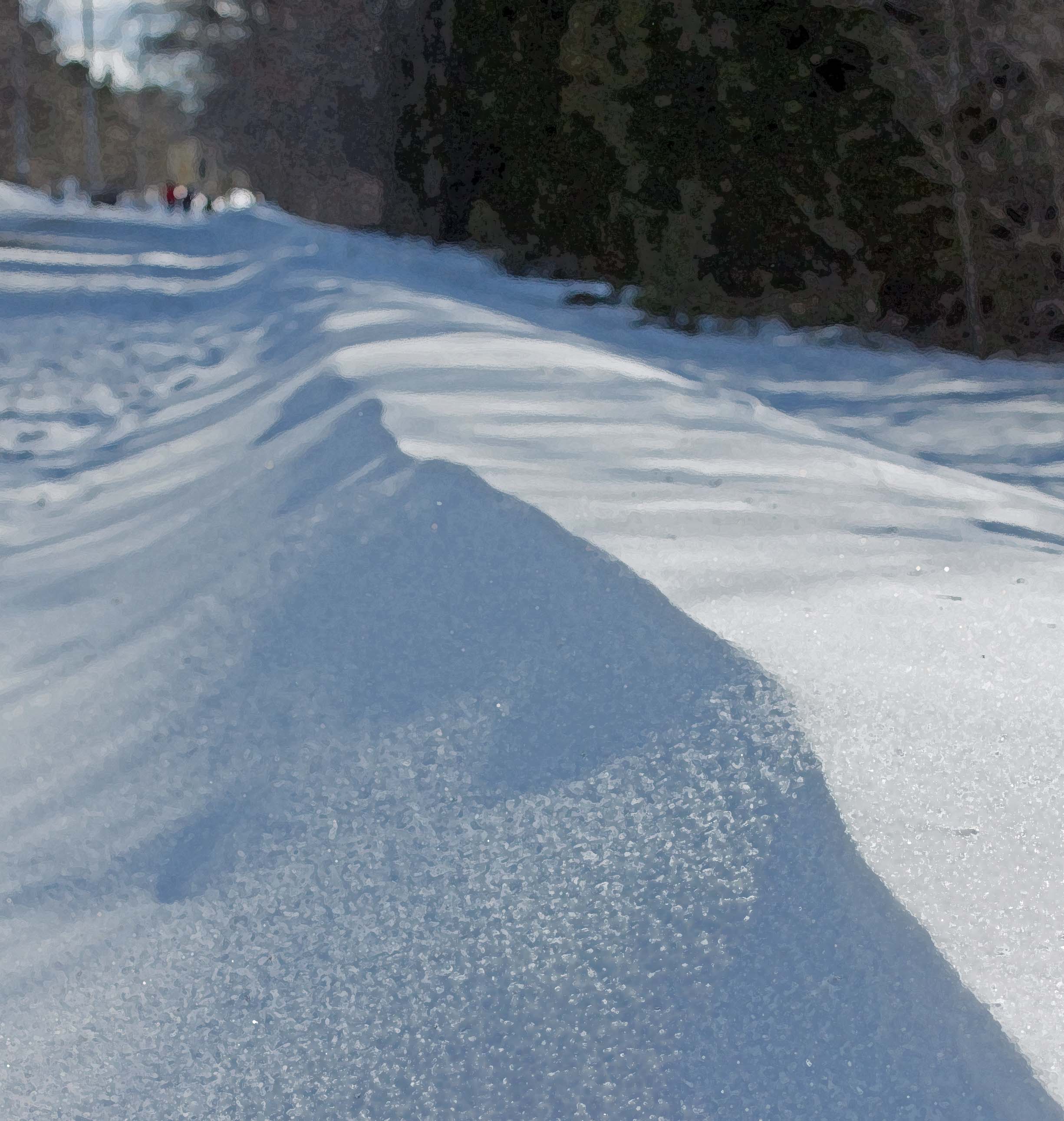
Snow drift on a trail by the river, ON (photo and rendition by Nina Munteanu)
One of the sensitivity readers for Thalweg, anthropologist and Gwich’in scholar Ingrid Kritsch, related to me an interesting account during attempts to open up to oil and gas development the Arctic National Wildlife Refuge–a critical area where the Porcupine Caribou herd calve. “To many Americans, it was just a big, white, barren expanse of unused lands,” said Ingrid. “She recalled a Senator speaking for development on these lands. The Senator held up a blank sheet of white paper and claimed ‘this is what the area looks like!’
The vast snowfields look nothing like that…
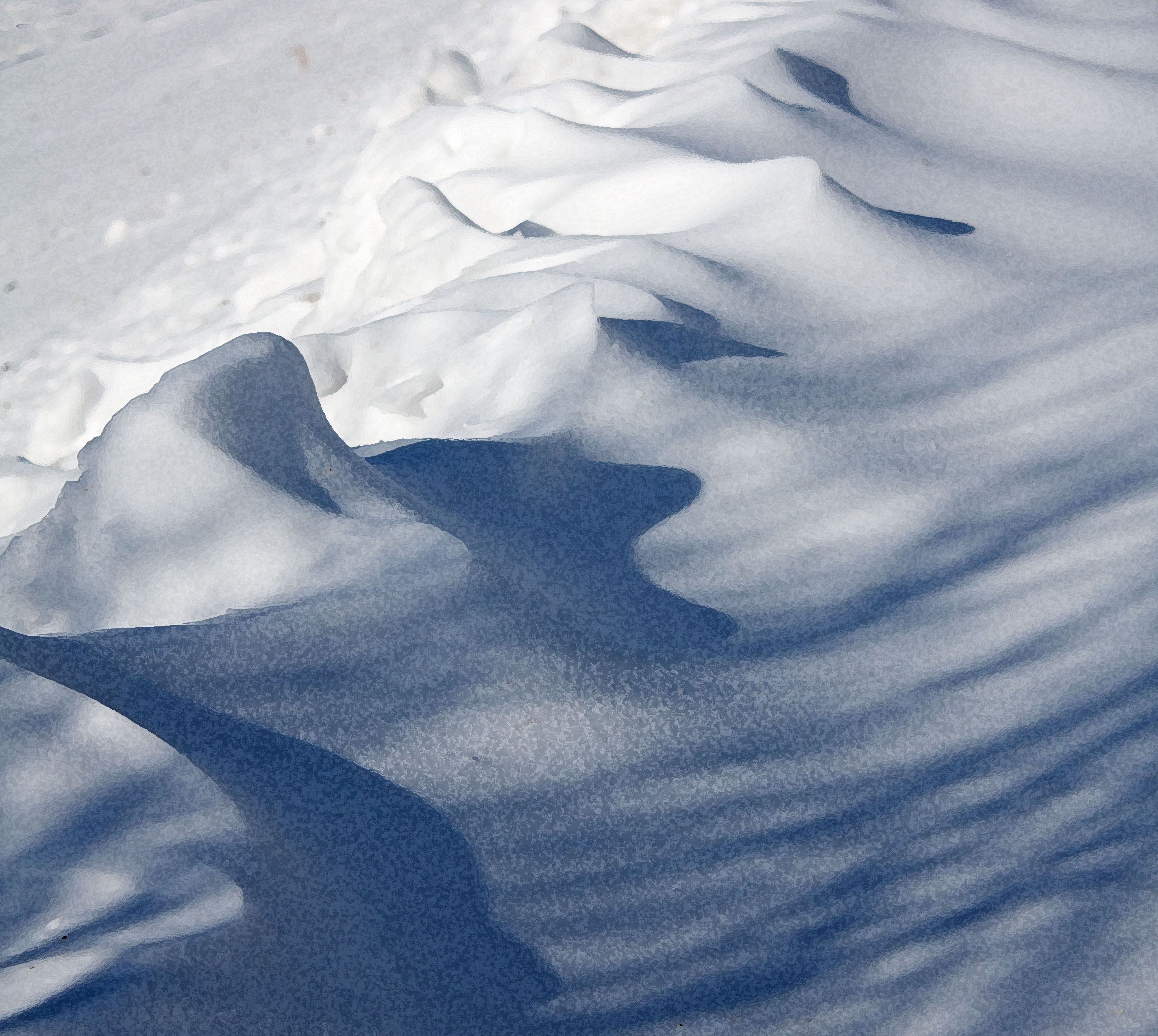
Snow drifts in Ontario (photo and rendition by Nina Munteanu)
…Now, don’t forget to play in the snow…
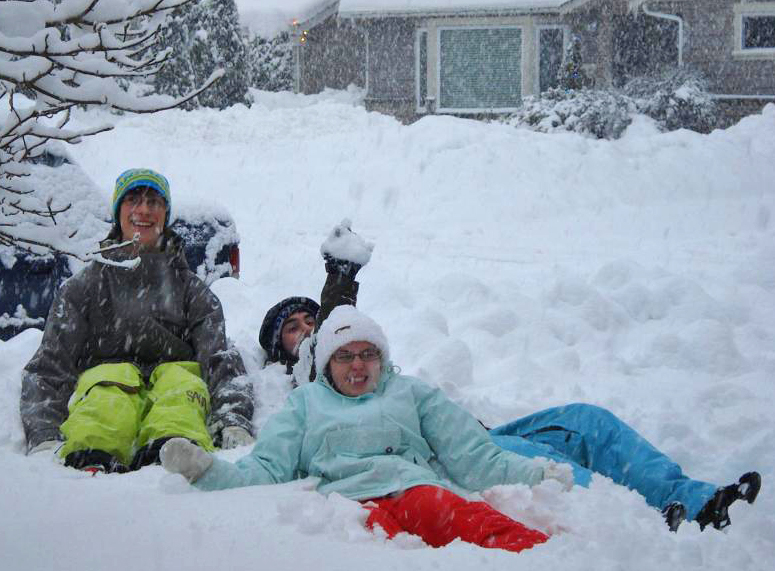
Author’s son and friends play in fresh snow on Christmas in BC (photo by Nina Munteanu)
Nina Munteanu reads a book with her cup of tea in +8 degree C, ON (photo by Merridy Cox)
Nina Munteanu is a Canadian ecologist / limnologist and novelist. She is co-editor of Europa SF and currently teaches writing courses at George Brown College and the University of Toronto. Visit www.ninamunteanu.ca for the latest on her books. Nina’s bilingual “La natura dell’acqua / The Way of Water” was published by Mincione Edizioni in Rome. Her non-fiction book “Water Is…” by Pixl Press(Vancouver) was selected by Margaret Atwood in the New York Times‘Year in Reading’ and was chosen as the 2017 Summer Read by Water Canada. Her novel “A Diary in the Age of Water” was released by Inanna Publications (Toronto) in June 2020.
Dan Manley interviews Nina Munteanu on Mid Morning on Main WMST-AM Radio
I was recently interviewed (on June 21) by Dan Manley on Kentucky’s Mid-Morning on Main show on WMST-AM Radio. I’ve visited Kentucky several times before, including the famous Bardstown Road in Louisville, but this time it was a virtual visit.
Dan and I talked about how I became a limnologist and ecologist, about my growing up in a small town and playing in the local forest with my older brother and sister and how we made ‘potions’ out of moss, soil, evening nightshade and water.
We talked about my recent eco-novel “A Diary in the Age of Water” and why I wrote it and its effect on people. We covered the difference between stereotypes and archetypes and how science informs me and my writing. We also explored how life changes us and our writing and how writing, in turn, changes us.
We covered a vast range of water-related topics from the movie “Water World” to the TV show “Bonanza.” We talked about water scarcity and water politics and what Canada was doing and what’s happening in America.
I really enjoyed this interview because Dan asked me some surprising and challenging questions that led us into interesting territory. My interview with him starts about 43 minutes into the show. Go have a listen!
Otonabee River sparkles behind a hardwood forest in spring, ON (photo and dry brush rendition by Nina Munteanu)
Nina Munteanu is a Canadian ecologist / limnologist and novelist. She is co-editor of Europa SF and currently teaches writing courses at George Brown College and the University of Toronto. Visit www.ninamunteanu.ca for the latest on her books. Nina’s bilingual “La natura dell’acqua / The Way of Water” was published by Mincione Edizioni in Rome. Her non-fiction book “Water Is…” by Pixl Press(Vancouver) was selected by Margaret Atwood in the New York Times‘Year in Reading’ and was chosen as the 2017 Summer Read by Water Canada. Her novel “A Diary in the Age of Water” was released by Inanna Publications (Toronto) in June 2020.
We talked about the story, its main characters–including water as a character–and why I write about water. We also covered why the book is written partly as a diary. Margaret Atwood’s name came up a few times…
Nina Munteanu chats with Darshaun McAway of W.O.W. Podcast about her new clifi novel “A Diary in the Age of Water”: a novel about the journeys of four generations of women and their unique relationship with water during a time of great environmental change. Darshaun and Nina talk about her use of water as a character, her choice of heroines and her use of a diary format to tell the story. Nina shares that the book–set in the near future as a limnologist’s diary and the far future with an evolved human–explores the premise of a water-scarce Canada whose water now belongs to the USA, who, in turn, is owned by China. The events about which the diarist writes are based on real historic events and people. Nina brings her considerable scientific, limnological and research skills to bear in describing a future Canada both dystopic and harrowing–yet very familiar. One real event taken as premise in the book that Nina shared with Darshaun is the American NAWAPA plan of the 1960s that went to congress and was (and still is) seriously discussed for years following: the plan was to divert massive amounts of fresh water from Canada and store by inundating the Rocky Mountain Trench and piped south to hydrate dwindling aquifers in the USA.
W.O.W Interview with Nina Munteanu and Darshaun McAway
Nina Munteanu is a Canadian ecologist / limnologist and novelist. She is co-editor of Europa SF and currently teaches writing courses at George Brown College and the University of Toronto. Visit www.ninamunteanu.ca for the latest on her books. Nina’s bilingual “La natura dell’acqua / The Way of Water” was published by Mincione Edizioni in Rome. Her non-fiction book “Water Is…” by Pixl Press(Vancouver) was selected by Margaret Atwood in the New York Times ‘Year in Reading’ and was chosen as the 2017 Summer Read by Water Canada. Her novel “A Diary in the Age of Water” was released by Inanna Publications (Toronto) in June 2020.
Willows on shore of Otonabee River, ON (photo and rendition by Nina Munteanu)
If COVID-19 has taught us anything I hope it is to live with less and rejoice in it. To be grateful for what we have. To take joy in acts of kindness to others. To live with less is to give more and live lightly and sustainably for this dear planet of ours. Our sustenance. Our friend.
NINA MUNTEANU
Why is it, then, that we have ceased to converse with Her? We no longer communicate with Nature and Gaia. We’ve isolated ourselves with hubris and greed and the pursuit of wealth and power. And what are these? Do they make us happy? Do they bring joy?
.
Poplars on a country road in fall, ON (photo and rendition by Nina Munteanu)
.
We’ve become unruly self-centred bullies who think somehow that Homo sapiens alone was ordained by God to rule this planet. But there is no ruling Her. Why do we still cling to the ancient human-centred philosophies that have created “the other”? Descartes expounded that no other life or being other than “man” had a soul. Or feelings, for that matter. This preposterous notion has carried on for over six hundred years into today’s abhorrent racism, the creation of homo sacer, creation of property, subjugation of women by men, patriarchy, androcracy, cruelty to animals, deforestation and so much more that ails us and the world.
.
Moss on log in Cedar swamp forest, ON (photo and rendition by Nina Munteanu)
.
All indigenous peoples on the planet incorporate Nature in their beliefs, philosophies and way of life. They conduct themselves with humility and the utmost respect for the natural world they are part of. They do not separate themselves from the sacredness of creation and the evolving world of matter and energy. All matter is living and has a soul, connected to the “oneness”. European settlers dismissed their wisdom as primitive and simple. How wrong the settlers were. How simple the settlers were. This is the wisdom of quantum physics.
.
White / red pine forest, ON (photo and rendition by Nina Munteanu)
.
COVID-19 is but one iteration of a conversation Nature is trying to have with us. She is talking to us in words of climate change, storms, disease and pandemic. She is telling us something and we aren’t listening. Her message is clear: live in partnership. Live in humility and joy. Live the galanic life of cooperation, respect, and kindness to ALL THINGS in a world with no “others.” If we don’t start listening, we will find ourselves more than alone…
.
Poplar forest in northern Ontario in the fall (photo and rendition by Nina Munteanu)
.
All in Nature is a gift.
In her book “Gathering Moss” Robin Wall Kimmerer shares this wisdom:
“In indigenous ways of knowing…every being is endowed with certain gifts, its own intelligence, its own spirit, its own story. Our stories tell us that the Creator gave us these stories as original instructions. The foundation of education is to discover that gift within us and learn to use it well.”
ROBIN WALL KIMMERER
Kimmerer shares that the sage “draws up water to its leaves for the rabbits, to shelter the baby quail…Mosses clothe the rocks, purify the water, and soften the nests of birds.” The tree provides a whole ecosystem that shelters, feeds and nurtures so many organisms and its environment. Every part of a tree is involved; trunk, bark and leaf to cambium, xylem and phloem. And this from when a squirrel first embeds into the ground the nut poised to germinate to a fallen tree in full decay and returning to the soil.
.
Moss-covered Eastern cedar tree grows on decaying prone cedar in swamp forest (photo and rendition by Nina Munteanu)
.
What is our gift?
Go out into Nature. Touch a tree. Tell it that it is beautiful. Thank it for its shade. Feel its corky bark. Feel the miracle of creation sing through you. Touch a leaf, feel its supple texture and filigree of intricate markings. Imagine the chloroplasts swimming inside, capturing the gift of energy from the sun in the dance of quantum life. Imagine that energy surging through tissue, cell, interstitial water. Then in a deep sigh hear it release its Great Breath of Life in the most beautiful song. Its gift to the world.
Smell the earth and breathe in the beauty of this day.
.
Ancient red cedar in Lighthouse Park, West Vancouver (photo and rendition by Nina Munteanu)
Maple swamp in Trent Nature Sanctuary, ON (photo and rendition by Nina Munteanu)
Marsh stream off a country road in fall, ON (photo and rendition by Nina Munteanu)
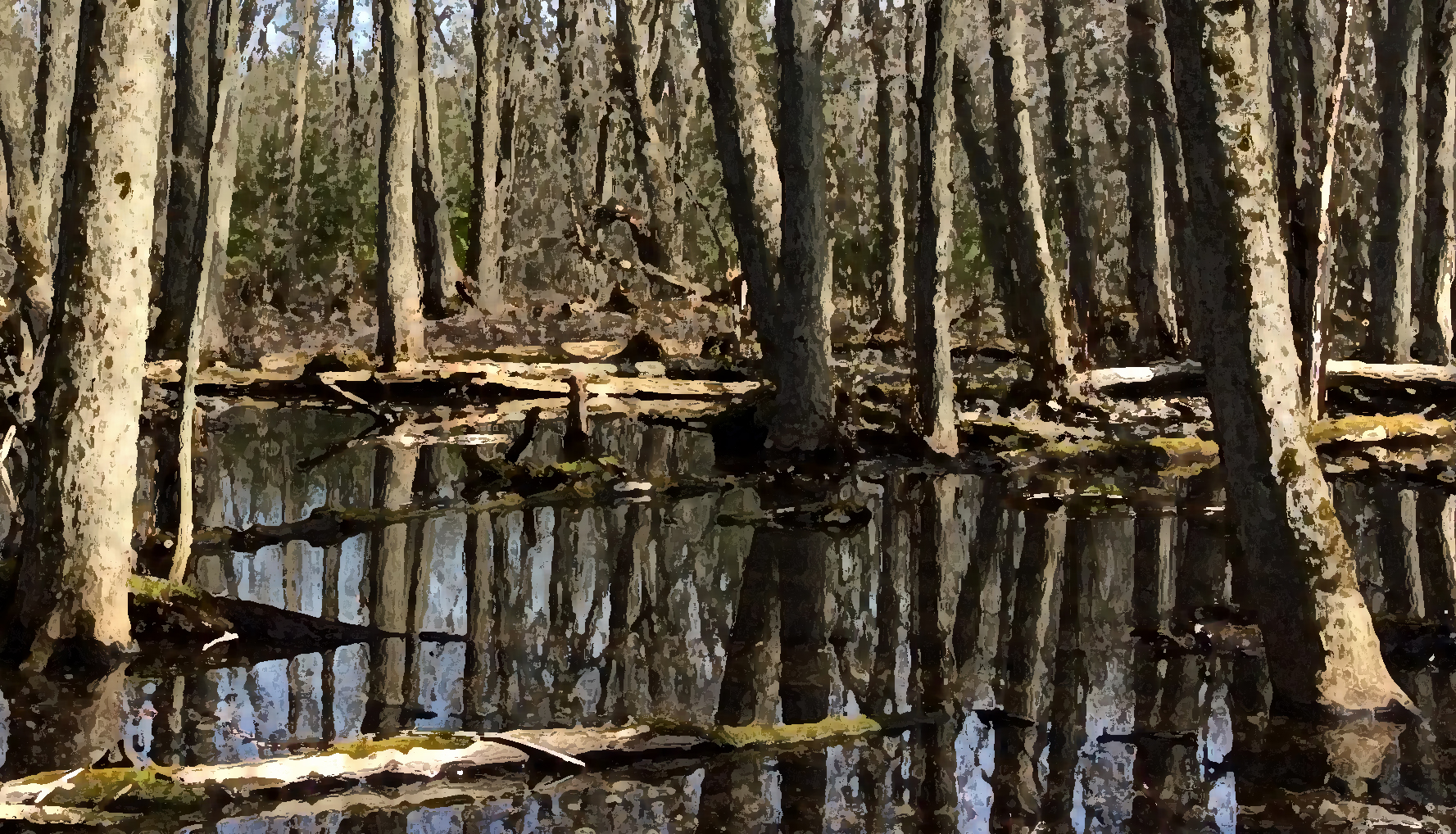
Swamp forest, Trent Nature Sanctuary, ON (photo and rendition by Nina Munteanu)
Decaying beech and ash leaves, Little Rouge River, ON (photo and rendition by Nina Munteanu)
Thompson Creek marsh, ON (photo and rendition by Nina Munteanu)
Willows at mouth of Thompson Creek, ON (photo and rendition by Nina Munteanu)
.
Reference:
Kimmerer, Robin Wall. 2003. “Gathering Moss.” Oregon State University Press, Corvalis. 168pp.
.
Nina Munteanu is a Canadian ecologist / limnologist and novelist. She is co-editor of Europa SF and currently teaches writing courses at George Brown College and the University of Toronto. Visit www.ninamunteanu.ca for the latest on her books. Nina’s bilingual “La natura dell’acqua / The Way of Water” was published by Mincione Edizioni in Rome. Her non-fiction book “Water Is…” by Pixl Press (Vancouver) was selected by Margaret Atwood in the New York Times ‘Year in Reading’ and was chosen as the 2017 Summer Read by Water Canada. Her novel “A Diary in the Age of Water” was released by Inanna Publications (Toronto) in June 2020.
In my novel “A Diary in the Age of Water” (Inanna Publications) the diarist writes about the huge 800-km reservoir complex built in the late 2020s in the Rocky Mountain Trench to rehydrate the United States. Of course, it’s science fiction, but it was based on real plans that went all the way to Congress in the 1960s.
Snaking along the length of the Rocky Mountain Trench, the reservoir promised to submerge numerous British Columbia towns such as Dunster, McBride and Valemount and pose an existential threat to northern communities of BC and Alaska.
The Trench
The Rocky Mountain Trench is a long and deep valley walled by sedimentary, volcanic and igneous rock that extends about 1,500 km from Flathead Lake and the ‘banana but’ of the Bitterroot Valley of western Montana through British Columbia to the Liard Plain just south of the Yukon Territory. Blanketed mostly by white and black spruce, subalpine fir and lodgepole pine, the northern trench stretches 3–20 km wide to accommodate the major river systems that snake along its mostly flat floor. This rich ecosystem is home to bears, caribou, moose and wolves. To the south, where the valley meanders more at lower elevation, the forest opens up and gives way to grasslands, marsh and farmland. The Trench is sometimes referred to as the “Valley of a Thousand Peaks” because of the towering mountain ranges on either side: the Rocky Mountains to the east and the Columbia, Omineca and Cassiar mountains to the west.
The Trench is a large fault—a crack in the Earth’s crust—and bordered along much of its length by smaller faults. Major structural features resulted from the shifting and thrusting of tectonic plates of the crust during the early Cenozoic Era, some 65 million years ago to form mountains. The ridges of fractured crust then pulled apart and the land in between dropped, creating the floor of the Trench.
Rocky Mountain Trench, near Golden, B.C.
Among the major rivers that flow through the trench are the Fraser, Liard, Peace and Columbia rivers. Construction of hydroelectric projects—particularly those at Peace Canyon and Mica Dam—have disrupted the seven major rivers that once flowed through the Trench. All but the Fraser and Kechika rivers now empty into reservoirs on the valley floor; these include several reservoirs along the Columbia River in the southern trench such as the Kinbasket reservoir (created by the Mica Dam in 1973 to form Canoe Reach), and Revelstoke Lake (created by the Revelstoke Dam in 1984). Williston Lake was formed by the A.C. Bennet Dam on the Peace River in 1968. I had studied the effects of pulp mill activities for the federal government’s Environmental Effects Monitoring (EEM) Program.
The Rocky Mountain Trench is topographically visible as it follows the BC-Alberta border south from Williston Lake
The Inland Sea
Like pseudopods of a hunting amoeba, the Rocky Mountain Trench reservoir system would have sent tendrils of water up river arms, and drowned swaths of ancient oroboreal rainforest. The rainforest corridor of Robson Valley—a conservation area that continues to experience existential risk due to development, resource harvest, and other disturbance—would have been one of the many casualties.
Ancient Redcedars in old-growth rainforest (photo by Nina Munteanu)
Una stopped the car and we stared out across the longest reservoir in North America. What had once been a breathtaking view of the valley floor of the Rocky Mountain Trench was now a spectacular inland sea. It ran north-south over eight hundred kilometres and stretched several kilometres across to the foothills of the Cariboo Mountain Range. Una pointed to Mount Mica, Mount Pierre Elliot Trudeau and several other snow-covered peaks. They stood above the inland sea like sentinels of another time. Una then pointed down to what used to be Jackman Flats—mostly inundated along with McLellan River and the town of Valemont to the south. Hugging the shore of what was left of Jackman Flats was a tiny village. “That’s the new Tête Jaune Cache,” my mother told me.
If villages had karma this one was fated to drown over and over until it got it right. Once a bustling trading town on the Grand Trunk Pacific railway, Tête Jaune Cache drowned in the early 1900s when the Fraser naturally flooded. The village relocated to the junction of the original Yellowhead 16 and 5 Highways. Villagers settled close to where the Fraser, Tête Creek, and the McLellan River joined, all fed by the meltwater from the glaciers and icefields of the Premiere Range of the Cariboo Mountains. The village drowned again in 2025. I imagined the pool halls, restaurants, saloons and trading posts crushed by the flood.
“This area used to be a prime Chinook spawning ground,” Una said. “They swam over 1,200 km from the Pacific Ocean to lay their eggs right there.” She pointed to the cobalt blue water below us.
Kinbasket Reservoir
The reservoir sparkled in the sun like an ocean. Steep shores rose into majestic snow-capped mountains. The village lay in a kind of cruel paradise, I thought. It was surrounded by a multi-hued forest of Lodgepole pine, Western red cedar, Douglas fir, paper birch and trembling Aspen. Directly behind the village was Mount Terry Fox and across the Robson valley mouth, to the northeast, rose Mount Goslin. Behind it, Mount Robson cut a jagged pyramid against a stunning blue sky. Wispy clouds veiled its crown. I couldn’t help thinking it was the most beautiful place I’d seen. And yet, for all its beauty, the villagers had lost their principle livelihood and food. The reservoir had destroyed the wildlife habitats and the fishery. And its people with it.
Una pointed to where the giant reservoir snaked northwest and where towns like Croydon, Dunster, and McBride lay submerged beneath a silent wall of water. Her eyes suddenly misted as she told me about Slim Creek Provincial Park, between what used to be Slim and Driscoll Creeks just northwest of what used to be the community of Urling. She told me about the Oroboreal rainforest, called an “Antique Rainforest”—ancient cedar-hemlock stands over a 1000-years old. She described how massive trunks the width of a small house once rose straight up toward a kinder sun. The Primordial Grove was once home to bears, the gray wolf, cougar, lynx, wolverine and ungulates. It was the last valley in North America where the grizzly bear once fished ocean-going salmon. Now even the salmon were no longer there, she said. Then she bent low beside me and pulled me close to her in a hug. She quietly said to me, “This is what killed Trudeau.”
I stared at her and firmly corrected, “but that was an accident.”
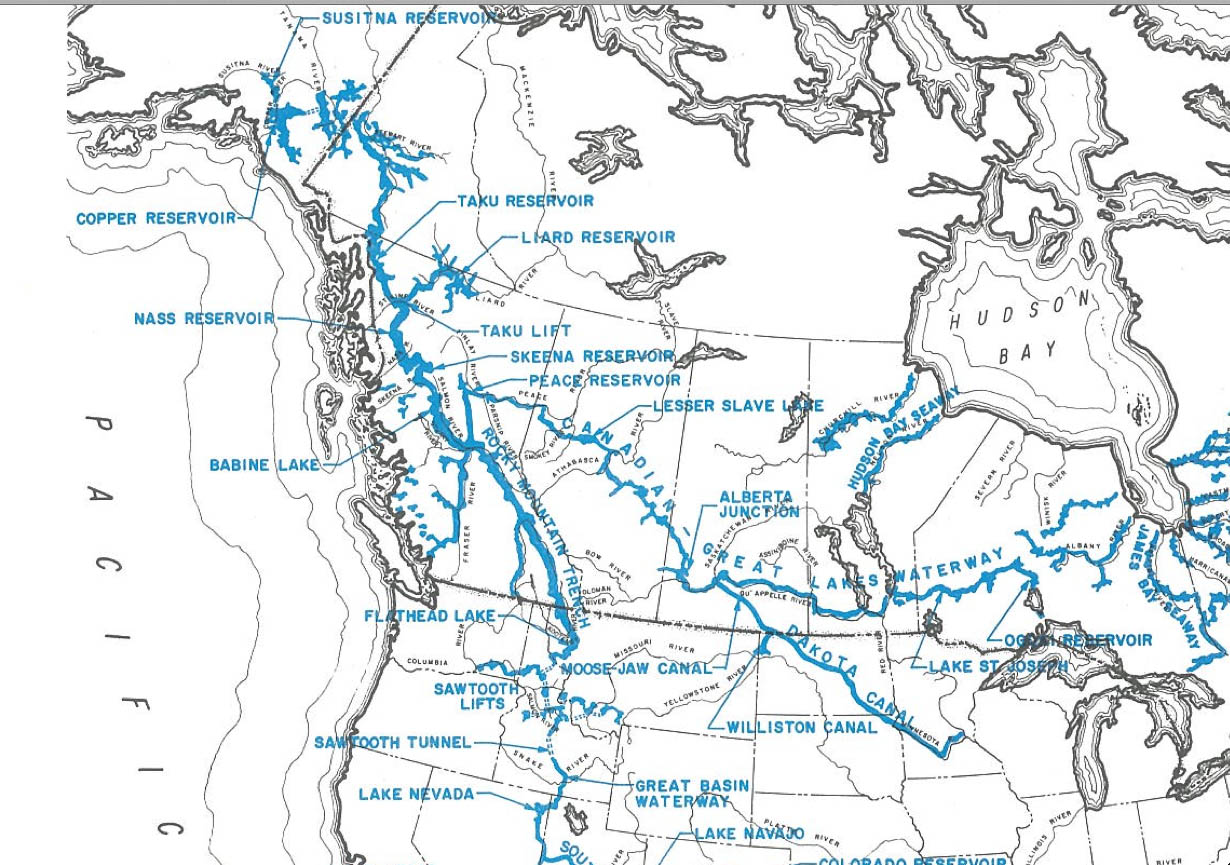
The original NAWAPA Plan was drawn up by the Pasadena-based firm of Ralph M. Parsons Co. in 1964, and had a favorable review by Congress for completion in the 1990s. The plan—thankfully never completed—was drafted by the US Army Corps of Engineers and entailed the southward diversion of a portion (if not all) of the Mackenzie and Yukon rivers in northern Canada and Alaska, now flowing into the Arctic Ocean as well as the Peace, Liard and other rivers flowing into the Pacific by creating massive dams in the north. This would cause the rivers to flow backwards into the mountains to form vast reservoirs that would flood one-tenth of British Columbia. The water would be channeled south through the 800-km Rocky Mountain Trench Reservoir into the Northern USA, and from there along various routes into the dry regions of the South, to California and reaching as far as Mexico.
NAWAPA was envisioned as the largest construction effort of all times, comprising some 369 separate projects of dams, canals, and tunnels, for water diversion. The water diversion would be accomplished through a series of connecting tunnels, canals, lakes, dams, and pump-lifts, as the trench itself is located at an elevation of 914 m (3,000 feet). To the east, a 9 m (thirty-foot) deep canal would be cut from the Peace River to Lake Superior. NAWAPA’s largest proposed dam would be 518 m (1,700 feet) tall, more than twice the height of Hoover Dam (at 221 m) and taller than any dam in the world today, including the Jinping-I Dam in China (at 305 m).
Conspiracy theorist and convicted fraudster Lyndon LaRouche was a principle proponent of the environmentally destructive NAWAPA plan. Although the plan was scrapped in the 1970s due to environmental concerns, it resurfaced in 1982 particularly by Parsons engineer Roland Kelley, who wrote a report called NAWAPA Plan Can Work. LaRouche and his movement revived interest more recently. In 2012 the LaRouche Political Action Committee released their NAWAPA XXI special report, which contained a detailed plan for the revival of an updated and expanded version of NAWAPA. The LaRouche movement continues to promote this outlandish plan today with support from various American politicians and industrialists.
In his book Cadillac Desert, environmental writer Marc Reisner described the plan as one of “brutal magnificence” and “unprecedented destructiveness.” Historian Ted Steinberg suggested that NAWAPA summed up “the sheer arrogance and imperial ambitions of the modern hydraulic West.”
Expanded NAWAPA XXI plan
Rocky Mountain Trench near Radium Hot Springs
Nina Munteanu is a Canadian ecologist / limnologist and novelist. She is co-editor of Europa SF and currently teaches writing courses at George Brown College and the University of Toronto. Visit www.ninamunteanu.ca for the latest on her books. Nina’s bilingual “La natura dell’acqua / The Way of Water” was published by Mincione Edizioni in Rome. Her non-fiction book “Water Is…” by Pixl Press (Vancouver) was selected by Margaret Atwood in the New York Times ‘Year in Reading’ and was chosen as the 2017 Summer Read by Water Canada. Her novel “A Diary in the Age of Water” will be released by Inanna Publications (Toronto) in June 2020.
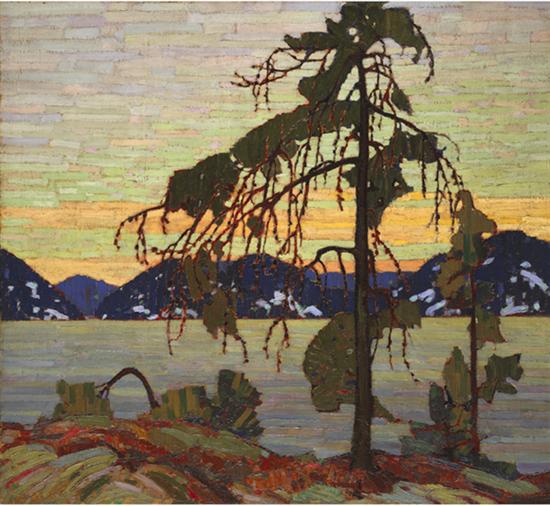
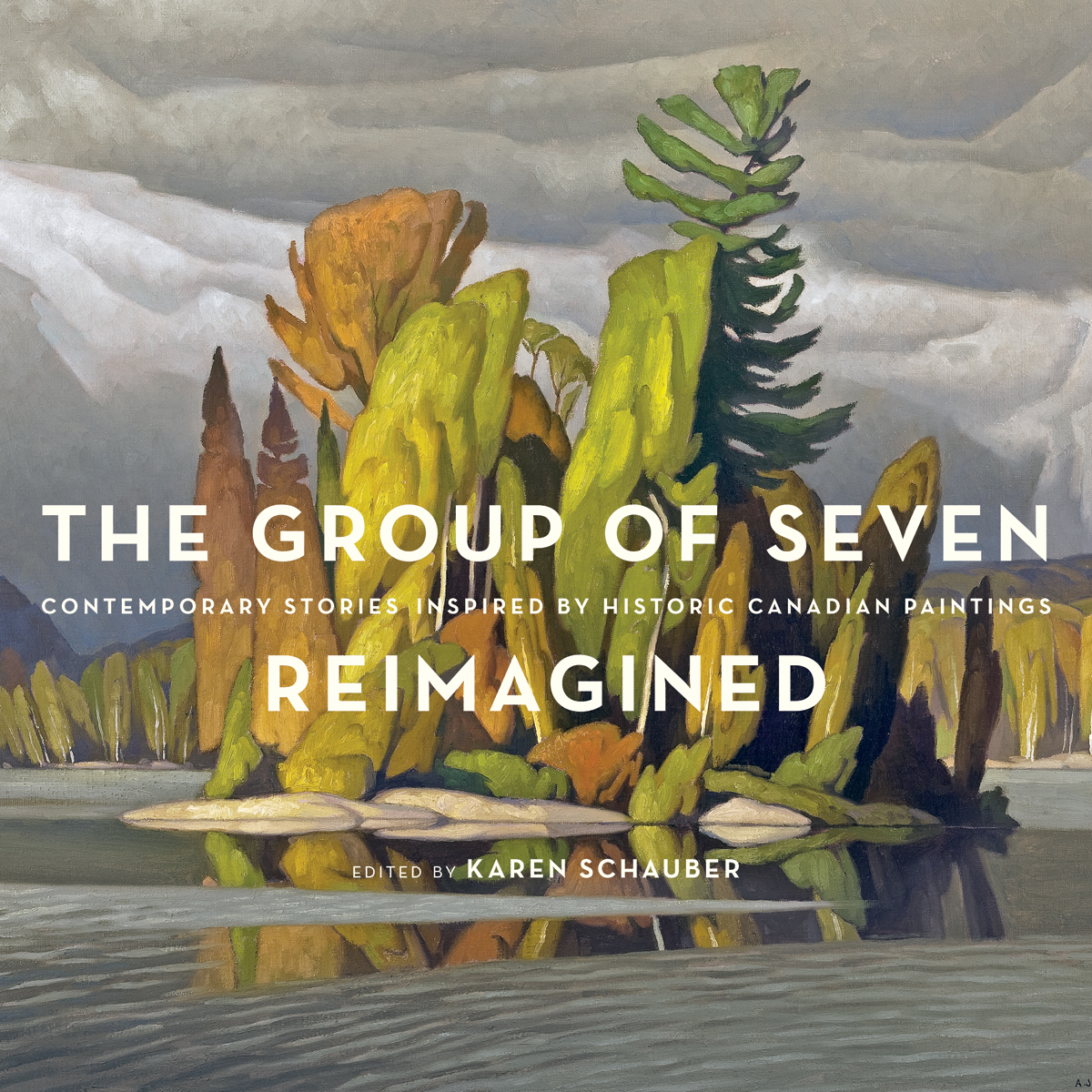
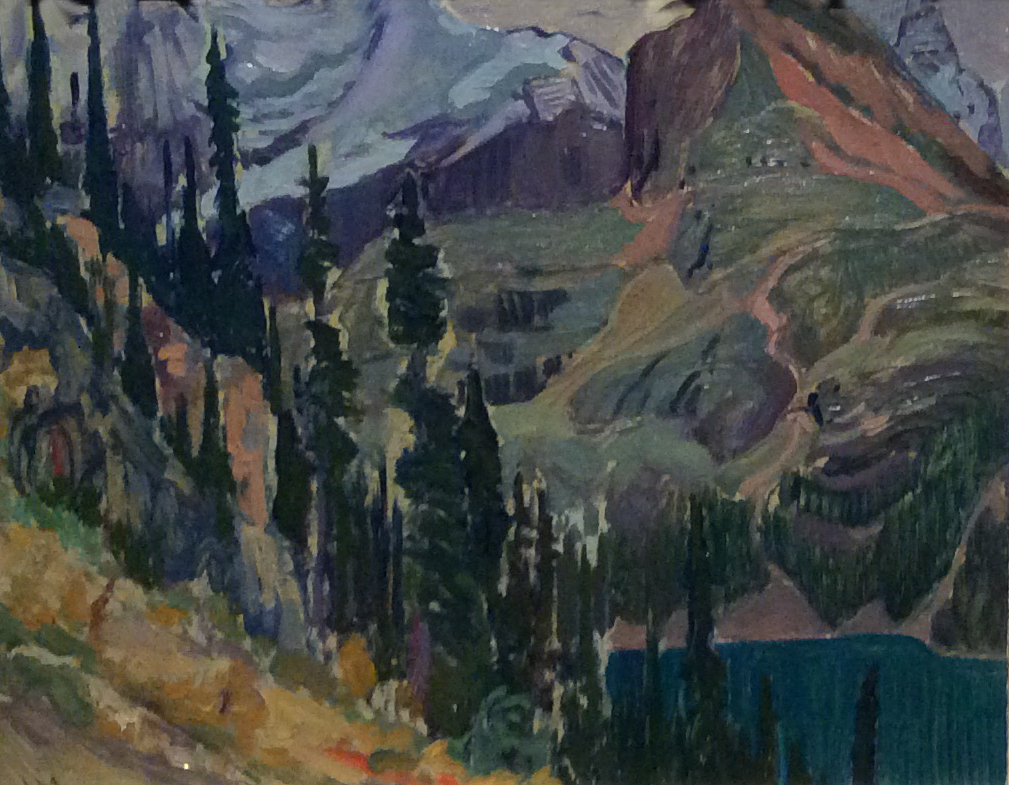
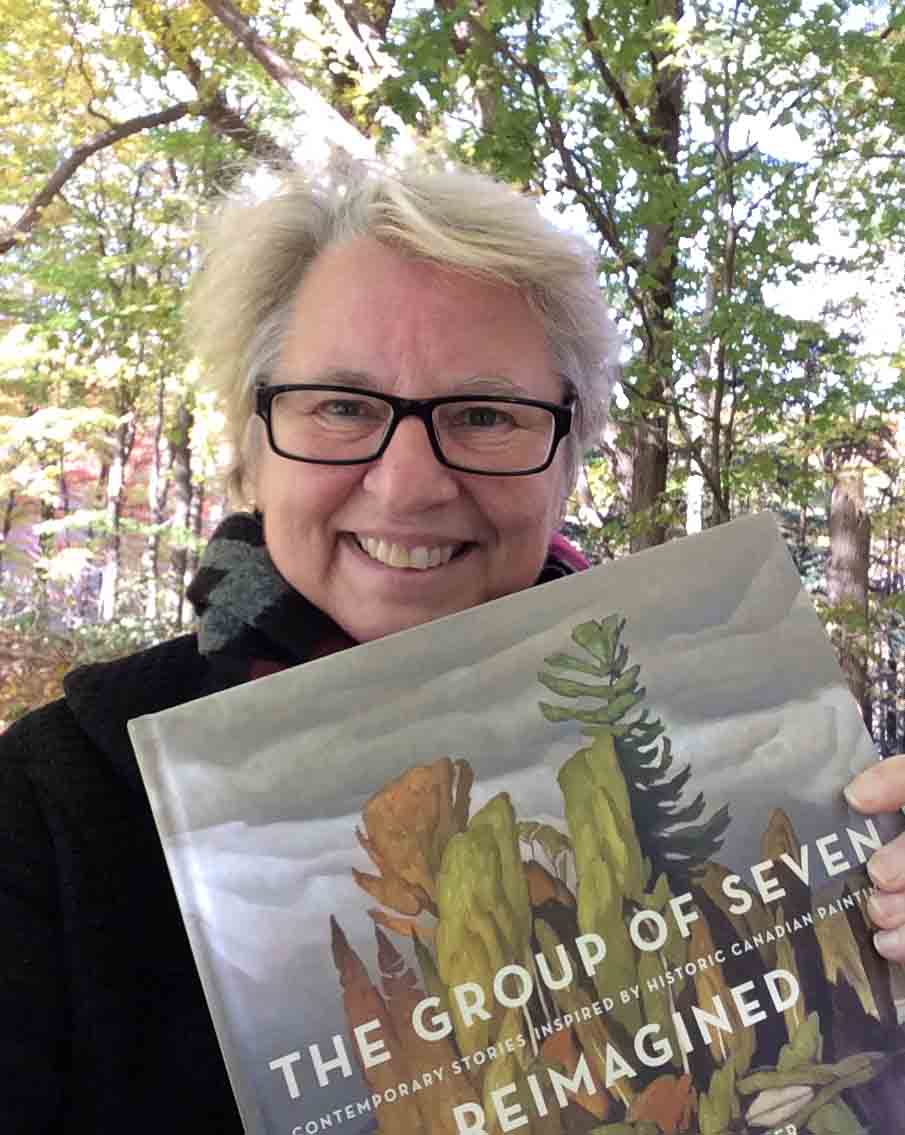
2020 marks the centenary of the formation of the Canadian iconic Group of Seven artists. The Group of Seven movement “dragged Canadian art into the modern age,” writes Christine Sismondo of The Toronto Star in her review of “The Group of Seven Reimagined,” an ekphrastic celebration of the Group of Seven by twenty-one flash fiction authors (including my own “Alien Landscape” inspired by J.E.H. MacDonald’s Lake O’Hara). Sismondo astutely identifies and encapsulates the resonant meaning of the Group of Seven, then and now:
“A hundred years ago, seven Canadian painters got together and decided to start a movement. It was born out of the horrors of war. Now, the potential horrors of climate change are giving the movement an unexpected new life and meaning.”
Jack Pine by Tom Thomson
Sismondo goes on to describe how the movement itself took form:
“At the time, people were trying to put the horrors and sacrifices of the Great War behind them and look to the future to reimagine and redefine Canada itself. It was a pivotal moment, given the role the country had recently played in international affairs and the challenges it faced in becoming an increasingly modern nation. These seven artists—friends and colleagues, many of whom worked together in a Toronto design firm—felt they could help shape this conversation with bold strokes and bright colours to bring out the beauty of the Canadian landscape.”
But in those early days—and more than thirty years after Van Gogh painted Starry Night, Canada still wasn’t ready for Impressionism, or any other art form whose roots came from that movement. Canadian critics disliked the Group of Seven. They were too modern, too experimental. The Group were dismissed as “the Hot Mush School” “a horrible bunch of junk” “the figments of a drunkard’s dream” and “daubing by immature children.”
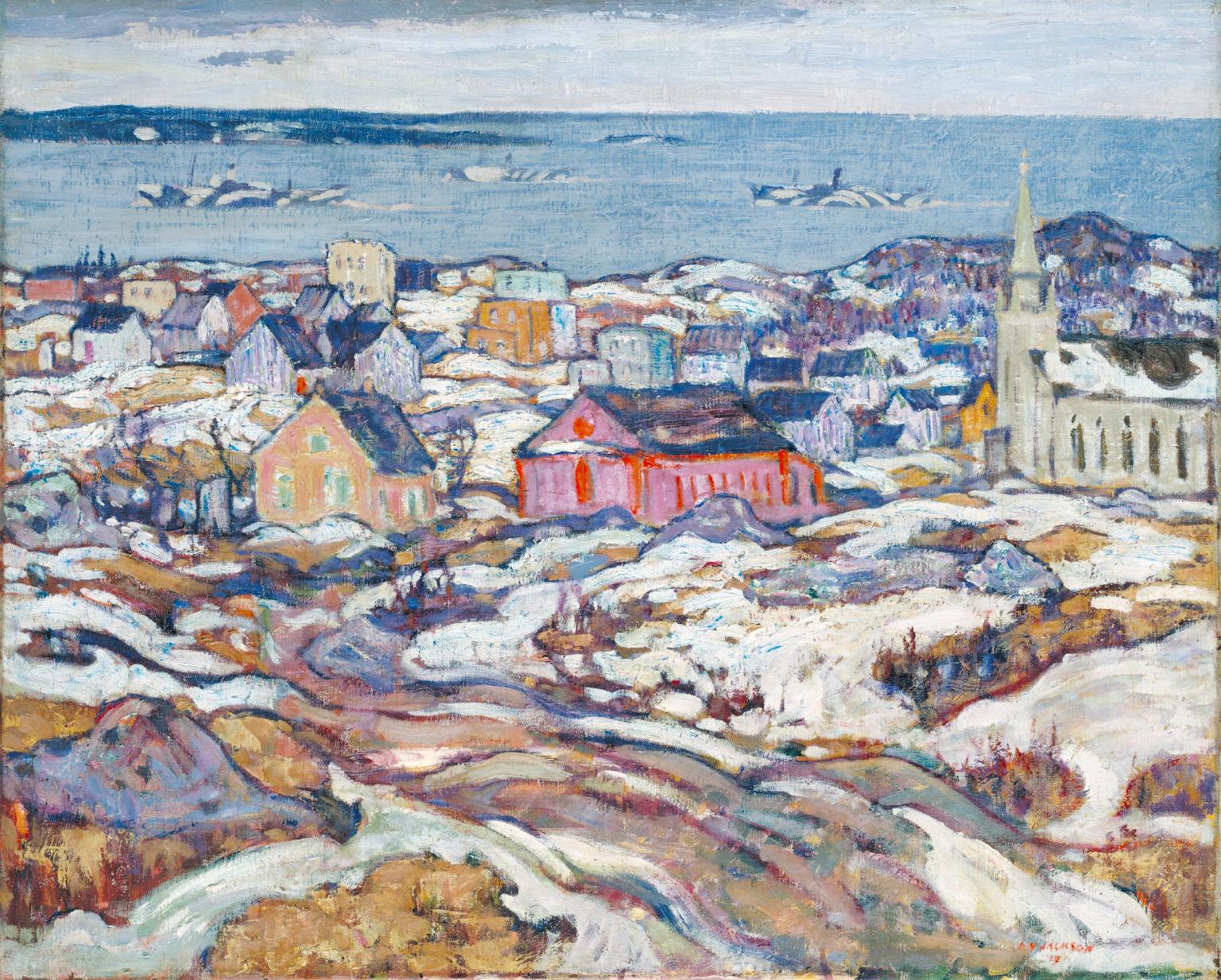
“The reviews by Canadian critics were harsh. The Toronto Daily Star compared Jackson’s work to “a spilt can of paint.” But the English critics loved it. The Morning Post called the Group of Seven “the foundation of what may become one of the greatest schools of landscape painting.” One piece of Canadian art was even sold during the British Empire Exhibition — and it was Jackson’s. Entrance To Halifax Harbour was bought by the Tate Gallery. It’s still part of their collection today.”
“And despite the poor Canadian reviews, the show in London helped to establish the Group of Seven’s reputation back home. Now that the British took the Group seriously, Canadian collectors started taking them seriously, too. The Group even used the bad press to promote their upcoming shows: they printed posters with the angry Canadian reviews side by side with the glowing English ones.”
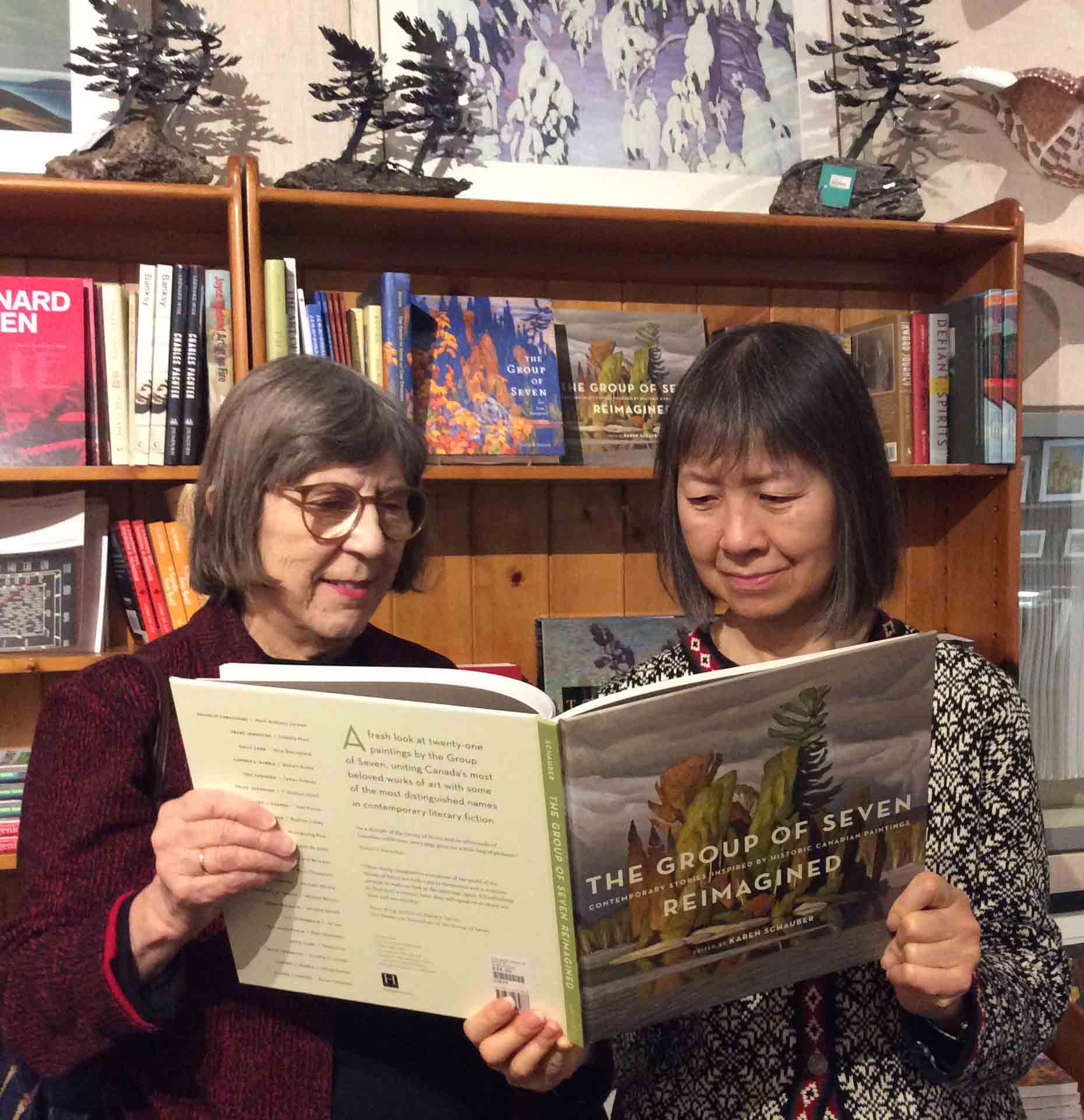
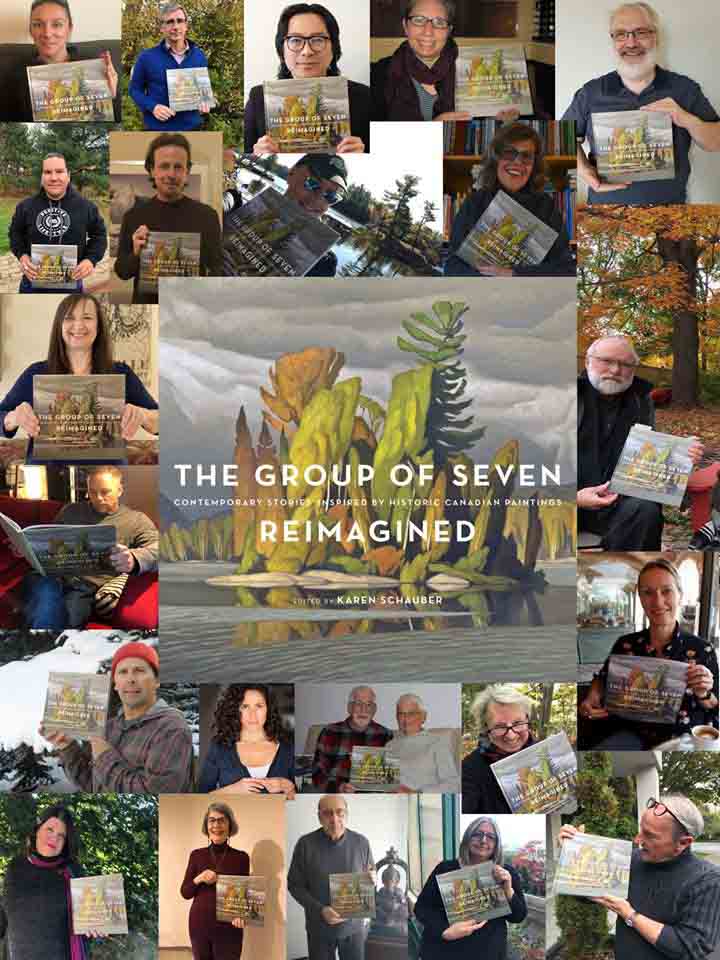
The Group of Seven Reimagined, published by Heritage House, was elegantly edited by flash fiction author Karen Schauber. Karen had invited me to contribute a piece of flash fiction (a piece of less than 500 words), inspired by a Group of Seven piece I would chose to inspire me. I took my time; this would be the first flash fiction piece I would write. It was an art form I was not familiar with, but was happy to experiment with. But I waited too long to decide and when I finally submitted my first choice for a painting, Karen informed me that it had already been selected by another writer. To my great frustration, this went on for a few pieces.
Shore Pattern by A.J. Casson
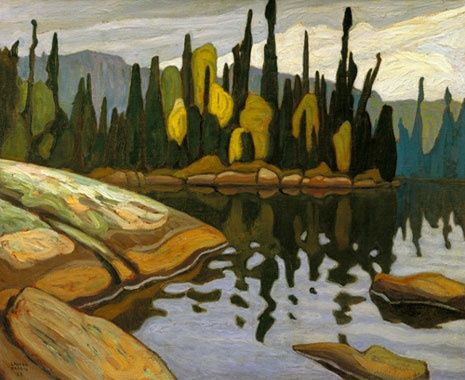
I finally took a short trip to the McMichael Gallery in Kleinburg to find my piece. In the main hall, I passed the pieces already claimed by my twenty colleagues; I sighed that I had waited so long. By chance, a large selection of artwork by J.E.H. MacDonald—one of the founders of the group—was currently on exhibit on the second floor. That was where I first saw the original oil sketch called Lake O’Hara by MacDonald. It was perfect! My story “Alien Landscape” emerged from the sketch like they had always belonged together.
Lake O’Hara by JEH MacDonald
The Star wrote: “while you might expect a lot of peaceful communing with nature on the page, a surprising number of the written pieces are actually dark tales of conflict and danger—forest fires, mining accidents, boat thieves and murderous plots in the woods. Nina Munteanu, a Canadian ecologist and science-fiction writer, takes J.E.H. MacDonald’s Lake O’Hara in a novel direction in ‘Alien Landscape’ by reimagining it as a refuge for a space heroine fleeing a world that had destroyed nature in pursuit of progress and ended in post-apocalyptic chaos.”
Gift shop at McMichael Gallery
The anthology has found itself gracing the gift shop shelves of several art galleries and museums such as the Royal BC Museum in Victoria, BC, and the McMichael Gallery in Kleinburg. It has likewise received much praise and accolades and appears on several ‘best of’ lists for ekphrastic works, art books, and more.
The anthology was long-listed for The Miramichi Reader’s “The Very Best” Book Award for 2020. The Miramichi Reader writes:
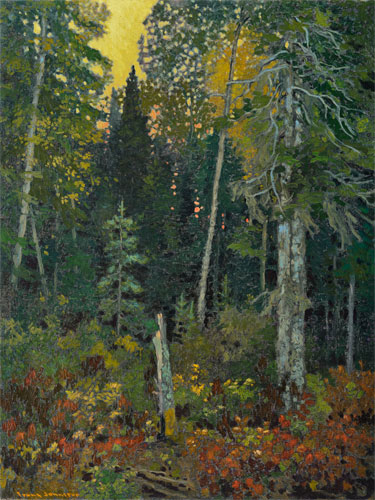
Sunset in the Bush by Frank Johnston
“There’s a very good reason that as I write this, The Group of Seven Reimagined, Contemporary Stories Inspired by Historic Canadian Paintings is sitting at, or near the top of bestseller lists in Canada (currently #3 on the Canadian Art bestseller list at Amazon.ca). The result is a most attractive book that any lover of art and literature would enjoy, even if they already have more than a passing familiarity with the iconic Group of Seven. All the stories that accompany each image are in the “flash fiction” style, just a page or two in length, a little story that the authors were inspired to write after choosing a particular G7 painting.”
Jules Torti of Cottage Life describd the book this way:
“Seeking equilibrium? This book is like a yoga session without the scheduling logistics and hustle to class. Balance is found in The Group of Seven Reimagined both as an intelligent coffee table book and tangible source of meditation.
Authors of the anthology
Twenty-five writers with notable street cred contributed “flash fiction” to colour iconic paintings by the Group of Seven (and their tagalongs). Flash fiction are stories categorized by length—they are 500 words or less which means they allow for one decent, undistracted cup of dark roast or whisky on ice. For writers or artists, the temptation to reimagine these works will be irresistible. And, what an intriguing resolution to make! Fiction and paintings both rely on interpretation and consideration. Fill in the gaps and colours with your chosen or perhaps newly discovered medium (watercolour?). As Jim and Sue Waddington suggest in the foreword, an art gallery visit becomes suspended in time. We keep returning to certain paintings that resonate and haunt and inadvertently, ‘Your mind sets off on a journey.’”
Author and reviewer Patricia Sandberg describes the anthology through metaphor: “Like a fine wine with dinner, some things cry out to be paired. In Reimagined, the nearly hundred-year-old brandy that was the Group of Seven is introduced to a fresh vibrant cuisine that is flash fiction, and both are the richer for it.”
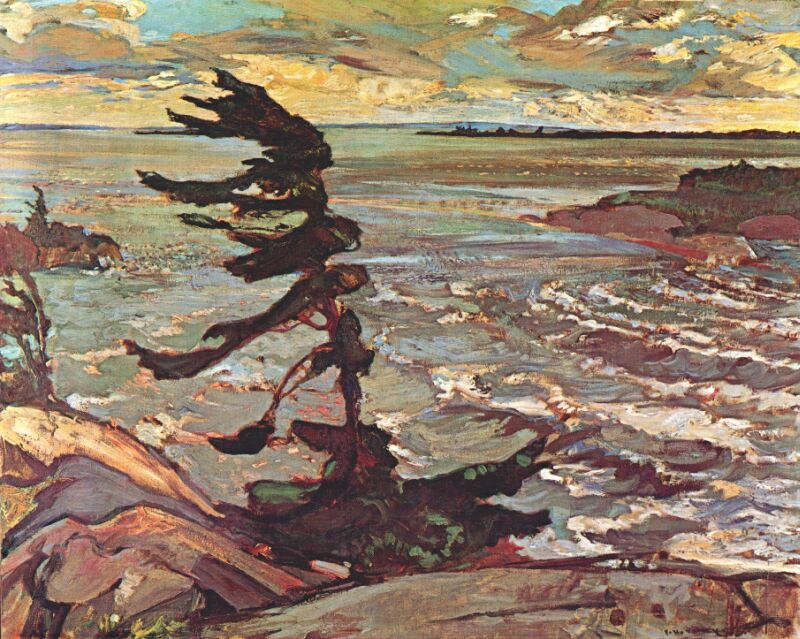
Stormy Weather by Frederick H. Varley
“As a disciple of the Group of Seven and an aficionado of Canadian wilderness, every page gives me a little leap of pleasure.”—Robert Bateman
“These sharp, imaginative evocations of the world of the Group of Seven are both a joy in themselves and a welcome prompt to make us look at the paintings again. It’s refreshing to find that, a century later, they still speak to us about our lives and our country.”—Ross King, author of Defiant Spirits: The Modernist Revolution of the Group of Seven
Nina Munteanu with the anthology
“Words, the writer’s paint, are artfully chosen and applied, not one wasted. The stories all compel the reader to dive beneath their surface and linger long after the reading is complete…In 1920 The Group of Seven introduced a new vision for the Canadian landscape. One hundred years later, twenty-one writers in the Group of Seven Reimagined offer a new lens for appreciating their art.”—Ottawa Review of Books
“From one region of Canada to another, a national identity is captured and shared with writers all over the world who, in turn, have crafted beautiful flash fiction pieces that accompany and extend the meaning of the art.”—Niles Reddick, Literary Heist
Nina Munteanu is a Canadian ecologist / limnologist and novelist. She is co-editor of Europa SF and currently teaches writing courses at George Brown College and the University of Toronto. Visit www.ninamunteanu.ca for the latest on her books. Nina’s bilingual “La natura dell’acqua / The Way of Water” was published by Mincione Edizioni in Rome. Her non-fiction book “Water Is…” by Pixl Press (Vancouver) was selected by Margaret Atwood in the New York Times ‘Year in Reading’ and was chosen as the 2017 Summer Read by Water Canada. Her novel “A Diary in the Age of Water” will be released by Inanna Publications (Toronto) in May 2020.
Nina Munteanu, limnologist, internationally published author, writing coach–called “the absolute Dame of Canadian Eco Fiction” talks with Andreea Demirgian at “Radio Encounters” about the importance of water, her writing journey and a close encounter with her readers at ToRo Fest.
























 In my novel “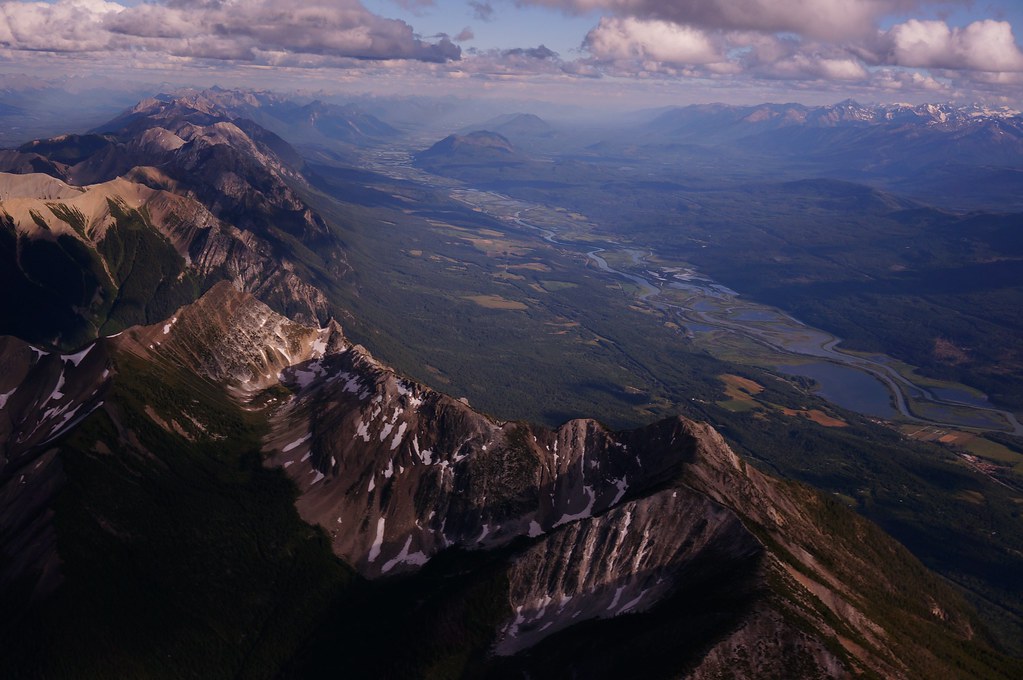






 Nina Munteanu Writing Coach