Atwood, Water & The New York Times

“Water Is…” leads Atwood’s Pick for Books of 2016

Microsoft Word - Atwoods Picks-NYTimes.docx

ny-times-theyearinreaingEvery year, near Christmas, The New York Times puts out “The Year in Reading” in which they ask notably avid readers—who also happen to be poets, musicians, diplomats, filmmakers, novelists, actors and artists—to share the books that accompanied them through that year.

For the 2016 Year In Reading, The Times asked a prestigious and diverse readership, including Junot Diaz, Paul Simon, Carl Bernstein, Kareem Abdul-Jabbar, Elizabeth Banks, Samantha Power, Philip Pullman, Ann Pratchett, Orhan Pamuk, Drew Gilpin Fause, Anne Tyler, and many others to share their books of 2016.

There was also Booker Prize-winning and celebrated Canadian author and poet Margaret Atwood.

atwood-margaretMargaret Atwood is a winner of the Arthur C. Clarke Award and the Prince of Asturias Award for Literature as well as the Booker Prize (several times) and the Governor General’s Award. Animals and the environment feature in many of her books, particularly her speculative fiction, which reflects a strong view on environmental issues.atwood-angel-catbird

Several of her latest works (e.g., Oryx and Crake, Year of the Flood, MaddAddam) are eco-fiction and may be considered climate fiction. Atwood and partner, novelist Graeme Gibson, are the joint honorary presidents of the Rare Bird Club within BirdLife International. Atwood’s highly popular graphic novel Angel Catbird reflects an environmental sensitivity to the balance between wildlife and humans and their pets in urban settings.

Atwood’s choice for 2016 books came from her active, astute and compassionate environmentalism. Suggesting that many of her ‘The Year in Reading’ co-readers would emphasize fiction, history and politics, Atwood chose her books “instead from a still-neglected sector. All hail, elemental spirits! You’re making a comeback!”

Here are the four books Atwood recommends and why:

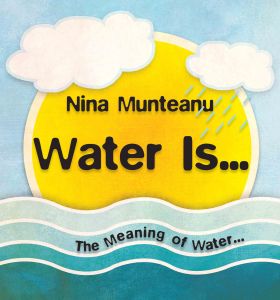
  1. water-is-cover-webWater Is…: The Meaning of Water” (Pixl Press) by Nina Munteanu. “We can’t live without it, so maybe we should start respecting it,” says Atwood. “This beautifully designed book by a limnologist looks at water from 12 different angles, from life and motion and vibration to beauty and prayer.” Water is emerging as one of the single most important resources of Planet Earth. Already scarce in some areas, it has become the new “gold” to be bought, traded, coveted, cherished, hoarded, and abused worldwide. It is currently traded on the Stock Exchange…Some see water as a commodity like everything else that can make them rich; they will claim it as their own to sell. Yet it cannot be “owned” or kept. Ultimately, water will do its job to energize you and give you life then quietly take its leave; it will move mountains particle by particle with a subtle hand; it will paint the world with beauty then return to its fold and rejoice; it will travel through the universe and transform worlds; it will transcend time and space to share and teach.
  1. hiddenlifeoftreesThe Hidden Life of Trees: What They Feel, How They Communicate—Discoveries From a Secret World” (Greystone Books) by Peter Wohlleben. In The Hidden Life of Trees, Peter Wohlleben shares his deep love of woods and forests and explains the amazing processes of life, death, and regeneration he has observed in the woodland and the amazing scientific processes behind the wonders of which we are blissfully unaware. Much like human families, tree parents live together with their children, communicate with them, and support them as they grow, sharing nutrients with those who are sick or struggling and creating an ecosystem that mitigates the impact of extremes of heat and cold for the whole group. As a result of such interactions, trees in a family or community are protected and can live to be very old. In contrast, solitary trees, like street kids, have a tough time of it and in most cases die much earlier than those in a group. Drawing on groundbreaking new discoveries, Wohlleben presents the science behind the secret and previously unknown life of trees and their communication abilities; he describes how these discoveries have informed his own practices in the forest around him. As he says, a happy forest is a healthy forest, and he believes that eco-friendly practices not only are economically sustainable but also benefit the health of our planet and the mental and physical health of all who live on Earth.
  1. weeds-mabeyWeeds: In Defense of Nature’s Most Unloved Plants” (Ecco) by Richard Mabey. “They’re better for you than you think,” says Atwood. “They hold the waste spaces of the world in place, and you can eat some of them.” Ever since the first human settlements 10,000 years ago, weeds have dogged our footsteps. They are there as the punishment of ‘thorns and thistles’ in Genesis and , two millennia later, as a symbol of Flanders Field. They are civilisations’ familiars, invading farmland and building-sites, war-zones and flower-beds across the globe. Yet living so intimately with us, they have been a blessing too. Weeds were the first crops, the first medicines. Burdock was the inspiration for Velcro. Cow parsley has become the fashionable adornment of Spring weddings. Weaving together the insights of botanists, gardeners, artists and poets with his own life-long fascination, Richard Mabey examines how we have tried to define them, explain their persistence, and draw moral lessons from them. One persons weed is another’s wild beauty.
  1. birds-and-peopleBirds and People” (Jonathan Cape) by Mark Cocker. “Vast, historical, contemporary, many-levelled,” says Atwood. “We’ve been inseparable from birds for millenniums. They’re crucial to our imaginative life and our human heritage, and part of our economic realities.” Vast in both scope and scale, the book draws upon Mark Cocker’s forty years of observing and thinking about birds. Part natural history and part cultural study, it describes and maps the entire spectrum of our engagements with birds, drawing in themes of history, literature, art, cuisine, language, lore, politics and the environment. In the end, this is a book as much about us as it is about birds.

“Time to pay attention to the nonhuman life around us, without which human life would fail,” Atwood concludes.

As we enter a new year of great uncertainty, particularly on how we and our environment will fare in a shifting political wind, these books offer diverse insight, a fresh and needed perspective and critical connection with our natural world–and each other through it.

Buy them, discuss them, share them. And save this planet.

Happy New Year!

jungfrau04

Jungfrau, Switzerland (photo by Nina Munteanu)

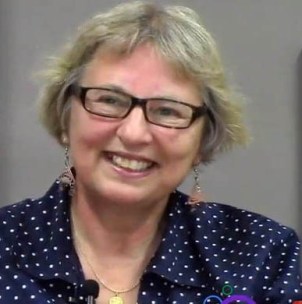
Nina Munteanu is an ecologist and internationally published author of award-nominated speculative novels, short stories and non-fiction. She is co-editor of Europa SF and currently teaches writing courses at George Brown College and the University of Toronto. Visit www.ninamunteanu.ca for the latest on her books.
Who’s Your Audience and Why Should You Care?

beach-boardwalk

The Beaches, Toronto (photo by Nina Munteanu)

The artistic process, whether painting or prose, is admittedly the child of self-expression. The long-standing image of the artist cloistered in her studio—hunched over a writing desk or standing before a canvas to create from the depths of his/her soul—is surely a truism. Artists create from the heart; we dive deep inside our often-tortured souls and closeted past to draw out the universal metaphors that speak to humanity and share—

Ay, there’s the rub. For to share is to have a dialogue and to have a meaningful dialogue is to demonstrate consideration of the other. Somewhere in that journey that began with self, others entered. It is, in fact, something of a paradox and a conundrum for many artists. One that has challenged the artistic community for centuries. It is also why many artists have relied on agents, benefactors, and advocates to effectively communicate, target — and even interpret—their often abstruse “message” to appropriate audiences.

Purists will tell you that a true artist need not consider her audience; because her self-expression naturally finds relevance with the culture and zeitgeist from which she writes through universally understood metaphor: her story is their story.

But is that enough?

I suppose it finally comes down to whether you are interested in sharing. I don’t know any published authors who don’t wish their books to sell. Every storyteller needs an audience to connect with and engage. That is ultimately what good storytelling does: engage, connect, rouse emotions and evoke empathic feelings. Make an impact.

Does identifying and targeting a specific audience result in more satisfied readers and ultimately better sales? Of course it does. The more you—and whoever is helping you market your work—know about your audience, the more likely you are going to attract them to your book, convince them to buy it and ultimately connect with them through story.

That’s the irony of art: it is a treasure that is created out of the depths of solitude but ultimately brought into the light and shared with the world. For your art to have impact, you must know and understand your world.

Knowing your audience will affect every aspect of your book project. It will help determine:

  • What your story is about and how you write it (e.g., language, “voice” or personality, narrative style, tone or mood/attitude, characters, setting and theme, even length)
  • What genre and sub-genre(s) it lies under
  • The look and tone of the cover and blurb (one that matches the story and its audience; I previously wrote about book jacket blurbs and book covers )
  • All aspects of promotion, including the language and images you use, where you direct your marketing and how (e.g., medium, timing, etc.)

For your work to succeed, it’s important to consider the following:

  • collision-with-paradise-smallWrite to the audience’s expectations (given the promise of your work): success of stories with readers will rely on the alignment of expected story structure, tone and endings. My romance SF therefore reads differently from my hard SF in so many ways.
  • darwins-paradoxWrite to the understanding level of your intended audience: how and what I write for my hard science fiction audience (with expectations on accurate and intelligent exploration and extrapolation on science) is different from the style I use for my historical fantasy. This will include “voice”, language and use of specific vocabulary, terms and concepts, sentence structure and pace.
  • Write with the knowledge of your relationship to the reader: how will you gain their empathy and buy-in to your story? This will depend on the genre of your work and expectations of its associated readership.


Understand Your Audience

Who is going to read your work? To what age group to they belong? What culture and sub-culture? What gender(s)? What education and intellectual capacity? Economic status? What regions? What political leanings? Prejudices and beliefs? What knowledge-base? For instance, you wouldn’t use a lot of multi-sylabic latinisms in an action thriller; but you might in a literary fiction or even high fantasy. If you research and create a profile of your intended reader, this will help you identify who you are writing to.  “Knowing or anticipating who will be reading what you have written is key to effective writing,” says SkillsYouNeed.com.

It isn’t enough to know who is reading, but why they are reading your writing. Ask yourself these two questions:

  1. Who do I want to read this? Who are you writing for? They are your primary audience; the ones you will truly resonate with your story; they will be your fans: who are they?
  2. Who else is likely to read this? This is your secondary audience, readers who may not necessarily read your genre but are interested in the issues or premise of your story or will appreciate how you’ve handled it in your story: who might they be? 


Writers are Solopreneurs

In his 2014 article in Forbes, Jayson DeMers shares that: “Market research was once the purview of only big companies. If you weren’t a Fortune 1000 brand, investing in any form of customer research was outside the scope of what many businesses could afford. Today, advances in market research technology have opened a whole range of services to even the smallest businesses. Small enterprises and solopreneurs routinely test ideas before they take them to market, saving tens of thousands of dollars and years of time developing products and services that fall flat with the market.”

Given the current publishing paradigm—which offers less and less to the author, writers are now more than ever required to understand their audience, given their need to be solopreneurs, succeeding on their own know-how, rather than relying on some marketing department that no longer exists.

To know your audience is to know your story better.

A previous version of this article was published in the Clarion Foundation blog and presented by Lynda Williams.


nina-2014aaNina Munteanu is an ecologist and internationally published author of award-nominated speculative novels, short stories and non-fiction. She is co-editor of Europa SF and currently teaches writing courses at George Brown College and the University of Toronto. Visit www.ninamunteanu.ca for the latest on her books.

Find Your Focus This Christmas–Reprise

christmas-ballsHow many of you are still running around preparing for the Christmas celebration or secular family festivity? Buying that last minute gift you’d forgotten or were chasing down since a bazillion days ago? Or making last minute changes to your travel plans, house-cleaning for guests, mailing of cards or parcels or meal preparations?

Well, you’re reading this blog post … That means you’re sitting down and taking a minute to relax and regroup. That’s good. Remember to breathe… while I tell you a story…

I’d just finished a three-day drive through snow and rain storms from Mahone Bay, Nova Scotia, to Toronto, Ontario, where I was staying for a few days before catching a flight to Vancouver to spend Christmas with my son and good friends on the west coast. Talk about fast living.

I move around a lot these days. It helps me to appreciate some of the most simple things in life and reminds me of what I love most about Christmas: how it focuses my heart and reconnects me. I don’t mean just with relatives and friends either, although the season certainly does that. I’m talking about my soul and the universe itself. Before I became an itinerant, Christmas bustled with my responsibilities as primary caregiver, social coordinator and hostess of major parties. After I’d said goodbye to our visiting friends and done the dishes and tidied the house; after my husband and son had gone to bed, I sat in the dark living room lit only with the Christmas Tree lights and the flickering candle, and listened to soft Christmas music, primed to write.

snow-christmas2008-sammyMy male cat, smelling fresh from outside, found his rightful place on my lap and settled there, pinning me down with love. And there, as I breathed in the scent of wax and fir and cat I found myself again.

Most of us think of Christmas as a busy time, of getting together (often dutifully) with family and friends, exchanging presents and feasting. Christmas is certainly this, but that is only a shallow view of a far deeper event; and I don’t mean only for Christians.

Whether celebrating the holy light of Hannukah or the birth of Jesus, or the winter solstice, this season provides us with the opportunity to meditate on far more than the surficial nature of the symbols we have come to associate with the season: the Christmas tree, presents, turkey dinner, Santa Claus or Saint Nicholas—most of which originate from pagan tradition, by the way.

Says Lama Christie McNally (author of The Tibetan Book of Meditation), “once you dive below the surface, you will discover a beautiful clear place—like a diamond hidden beneath the rubble. It is your own mind, uncovered … Tibetans say we have only just begun the process of awakening—that we still have quite a way to go in our evolutionary process. And it has nothing to do with building spaceships or computers. The next step in our evolution takes place within.”

snow-scene-road-to-Wolfville-barn_edited-1

Barn on the road to Wolfville, NS (photo by Nina Munteanu)

Christmas is, more than anything, a time of embracing paradox. It is an opportunity to still oneself amid the bustle; to find joy in duty; to give of one’s precious time when others have none, to embrace selflessness when surrounded by promoted selfishness, and to be genuine in a commercial and dishonest world. If one were to look beyond the rhetoric and imposed tradition, the Christmas season represents a time of focus, a time to reflect on one’s genuine nature and altruistic destiny. A time to reconnect with the harmony and balance in our lives.

A time to sit with our cat, pinned with love, and write our next novel.

Merry Christmas!


Nina Munteanu is an ecologist and internationally published author of award-nominated speculative novels, short stories and non-fiction. She is co-editor of Europa SF and currently teaches writing courses at George Brown College and the University of Toronto. Visit www.ninamunteanu.ca for the latest on her books.

Crossing into the Ecotone to Write Meaningful Eco-Fiction

If you have an apple and I have an apple and we exchange apples then you and I will still each have one apple. But if you have an idea and I have an idea and we exchange these ideas, then each of us will have two ideas.”—George Bernard Shaw


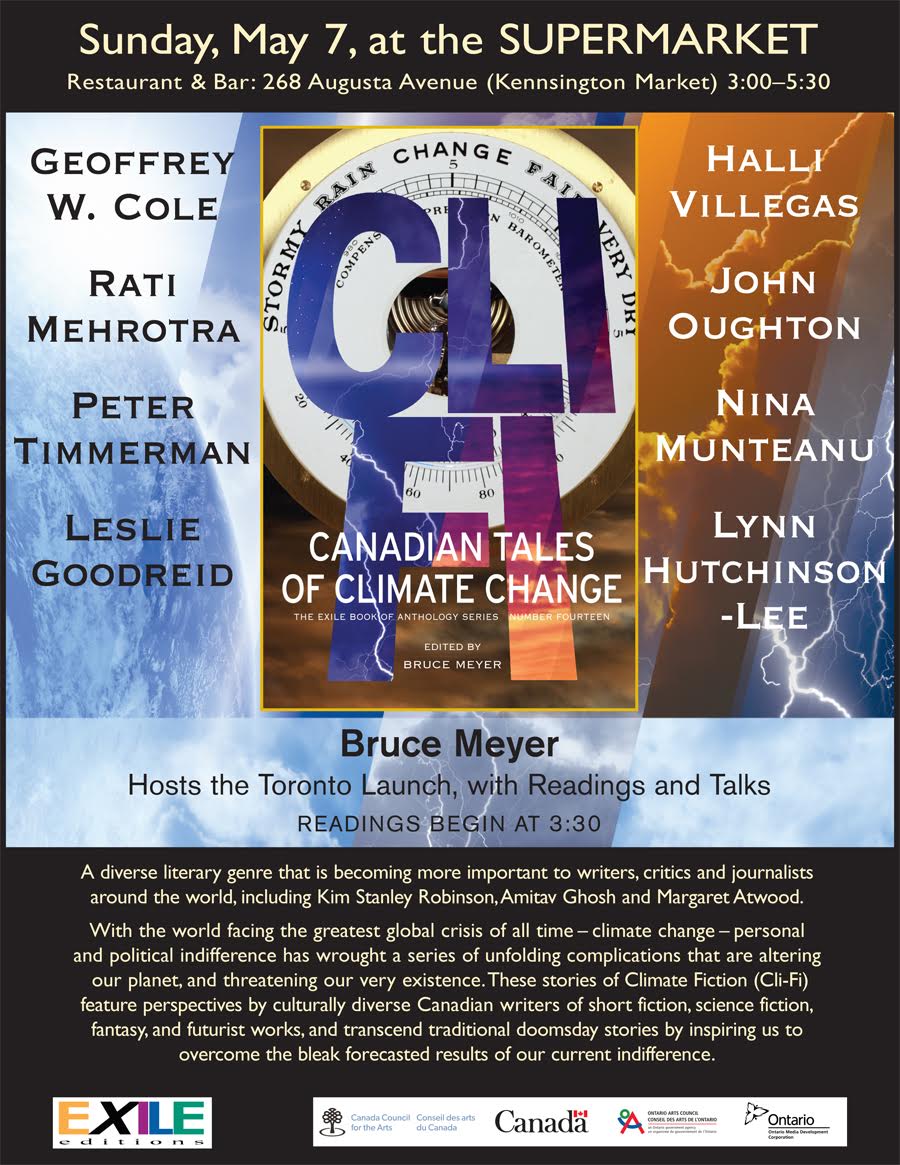
naturalselectionAt Calgary’s When Words Collide this past August, I moderated a panel on Eco-Fiction with publisher/writer Hayden Trenholm, and writers Michael J. Martineck, Sarah Kades, and Susan Forest. The panel was well attended; panelists and audience discussed and argued what eco-fiction was, its role in literature and storytelling generally, and even some of the risks of identifying a work as eco-fiction.

Someone in the audience brought up the notion that “awareness-guided perception” may suggest an increase of ecological awareness in literature when it is more that readers are just noticing what was always there. Authors agreed and pointed out that environmental fiction has been written for years and it is only now—partly with the genesis of the term eco-fiction—that the “character” and significance of environment is being acknowledged beyond its metaphor; for its actual value. It may also be that the metaphoric symbols of environment in certain classics are being “retooled” through our current awareness much in the same way that Aldous Huxley’s Brave New World or George Orwell’s Nineteen Eighty Four are being re-interpreted—and newly appreciated— in today’s world of pervasive surveillance and bio-engineering.

darwins-paradoxI submit that if we are noticing it more, we are also writing it more. Artists are cultural leaders and reporters, after all. My own experience in the science fiction classes I teach at UofT and George Brown College, is that I have noted a trend of increasing “eco-fiction” in the works in progress that students are bringing in to workshop in class. Students were not aware that they were writing eco-fiction, but they were indeed writing it.

I started branding my writing as eco-fiction a few years ago. Prior to that—even though my stories were strongly driven by an ecological premise and strong environmental setting—I described them as science fiction and many as technological thrillers. Environment’s role remained subtle and—at times—insidious. Climate change. Water shortage. Environmental disease. A city’s collapse. War. I’ve used these as backdrops to explore relationships, values (such as honour and loyalty), philosophies, moralities, ethics, and agencies of action. The stuff of storytelling.

Environment, and ecological characteristics were less “theme” than “character,” with which the protagonist and major characters related in important ways.

Snowpiercer-frenchJust as Bong Joon-Ho’s 2014 science fiction movie Snowpiercer wasn’t so much about climate change as it was about exploring class struggle, the capitalist decadence of entitlement, disrespect and prejudice through the premise of climate catastrophe. Though, one could argue that these form a closed loop of cause and effect (and responsibility).

snowpiercer-posterThe self-contained closed ecosystem of the Snowpiercer train is maintained by an ordered social system, imposed by a stony militia. Those at the front of the train enjoy privileges and luxurious living conditions, though most drown in a debauched drug stupor; those at the back live on next to nothing and must resort to savage means to survive. Revolution brews from the back, lead by Curtis Everett (Chris Evans), a man whose two intact arms suggest he hasn’t done his part to serve the community yet.

Minister Mason (Tilda Swinton), an imperious yet simpering figure who serves the ruling class without quite being part of it, reminds the lower class that:

We must all of us on this train of life remain in our allotted station. We must each of us occupy our preordained particular position. Would you wear a shoe on your head? Of course you wouldn’t wear a shoe on your head. A shoe doesn’t belong on your head. A shoe belongs on your foot. A hat belongs on your head. I am a hat. You are a shoe. I belong on the head. You belong on the foot. Yes? So it is.  snowpiercer-mason

In the beginning, order was prescribed by your ticket: First Class, Economy, and freeloaders like you…Now, as in the beginning, I belong to the front. You belong to the tail. When the foot seeks the place of the head, the sacred line is crossed. Know your place. Keep your place. Be a shoe.”

Ecotones are places where “lines are crossed,” where barriers are breached, where “words collide” and new opportunities arise. Sometimes from calamity. Sometimes from tragedy. Sometimes from serendipity.

When environment shapes a story as archetype—hero, victim, trickster, shadow or shape shifter—we get strong eco-fiction. Good eco-fiction, like any good story, explores the choices we make and the consequences of those choices. Good eco-fiction ventures into the ecotone of overlap, collision, exchange and ultimate change.

water-is-webIn my latest book Water Is… I define an ecotone as the transition zone between two overlapping systems. It is essentially where two communities exchange information and integrate. Ecotones typically support varied and rich communities, representing a boiling pot of two colliding worlds. An estuary—where fresh water meets salt water. The edge of a forest with a meadow. The shoreline of a lake or pond.

For me, this is a fitting metaphor for life, given that the big choices we must face usually involve a collision of ideas, beliefs, lifestyles or worldviews: these often prove to enrich our lives the most for having gone through them. Evolution (any significant change) doesn’t happen within a stable system; adaptation and growth occur only when stable systems come together, disturb the equilibrium, and create opportunity. Good social examples include a close friendship or a marriage in which the process of “I” and “you” becomes a dynamic “we” (the ecotone) through exchange and reciprocation. Another version of Bernard Shaw’s quote, above, by the Missouri Pacific Agriculture Development Bulletin reads: “You have an idea. I have an idea. We swap. Now, you have two ideas and so do I. Both are richer. What you gave you have. What you got I did not lose. This is cooperation.” This is ecotone.

Jungfrau-peak

Jungfrau, Switzerland (photo by Nina Munteanu)

I think we are seeing more eco-fiction out there because ecosystems, ecology and environment are becoming more integral to story: as characters in their own right. I think we are seeing more eco-fiction out there because we are ready to see it. Just as quantum physics emerged when it did and not sooner, an idea—a thought—crystalizes when we are ready for it.

Don’t stay a shoe … go find an ecotone. Then write about it.


nina-2014aaNina Munteanu is an ecologist and internationally published author of award-nominated speculative novels, short stories and non-fiction. She is co-editor of Europa SF and currently teaches writing courses at George Brown College and the University of Toronto. Visit www.ninamunteanu.ca for the latest on her books.

Where Is the Literature of the Anthropocene?

interstellar-cooper-ice-planet2Early on in the recent science fiction movie Interstellar, NASA astronaut Cooper declares that “the world’s a treasure, but it’s been telling us to leave for a while now. Mankind was born on Earth; it was never meant to die here.” After showing Cooper how their last corn crops will eventually fail like the okra and wheat before them, NASA Professor Brand answers Cooper’s question of, “So, how do you plan on saving the world?” with: “We’re not meant to save the world…We’re meant to leave it.” Cooper rejoins: “I’ve got kids.” To which Brand answers: “Then go save them.”

In a 1976 NBC interview on the significance of the Viking 1 landing on Mars, astronomer Carl Sagan likened our space program to watching a dandelion gone to seed: “I can’t help but think of this as an epochal moment in planetary exploration. If you can imagine, a sort of a very patient observer, observing the earth for its four and half billion-year lifetime: for all of that period, lots of things came onto the earth, but nothing left it. And now just in the last 10 years, things are spewing off the earth.”

NewYork-Soho01

Apartments in Soho, New York City (photo by Nina Munteanu)

The Onset of the Anthropocene & the Great Acceleration

In a Guardian article entitled “The Holocene hangover: it is time for humanity to make fundamental changes”, Fredrick Albritton Jonsson examines Amitav Ghosh’s interpretation of climate change and considers the need to acknowledge Earth’s own powerful and changing identity—particularly through the face of climate change.

Is climate change the planet’s way of telling us that we no longer belong—like Cooper was suggesting in the movie Interstellar?

That we’ve largely orchestrated these changes may be considered ironic—or is it simply inevitable? For me, as an ecologist, this is not a new concept. Ecological succession is the process of ecosystem change and development over time (usually following a disturbance) as an establishing species impacts and alters its environment to eventually make the environment less suited to it and more to another species, which will replace it. Succession only stops when a climax community—which is in equilibrium with a stable environment—establishes. This climax stage can persist indefinitely—until the next environmental disturbance, that is. Succession occurs everywhere in Nature; examples include the recolonization of Mount St. Helen following the volcanic eruption. Natural succession occurs in human society as well. A good example can be found in any city. My landscape architect son described the natural process of “gentrification” in a large city: a process of renovation and revival of deteriorated urban areas through an influx of more affluent residents, resulting in increased property values and a displacement of lower-income families and businesses. Inherent in succession is movement and flow—something Nature is very familiar with and uses well.

“Our planet is changing into a strange and unstable new environment, in a process seemingly outside technological control,” writes Jonsson, who laments in a disillusioned patriarchal voice: “The fossil fuels that once promised mastery over nature have turned out to be tools of destruction, disturbing the basic biogeochemical processes that make our world habitable [for us]. Even the recent past is no longer what we thought it was.”

Jonsson then unleashes a litany of examples where humanity has imposed global change, including: climate change; reduced biodiversity of ecosystems; acidification of marine life and oceans capacity to absorb carbon dioxide; fresh water scarcity; ozone depletion, which threatens atmospheric stability; and disruption of global nitrogen and phosphorus cycles—to mention a few. “Indeed,” says Jonsson, “the planet’s biosphere bears so many marks of anthropogenic influence that it is no longer possible to [distinguish] between the realm of wilderness and the world of human habitation.”

world-war-2-goosestep“Scientists are telling us that the whole territory of modern history, from the end of World War II to the present, forms the threshold to a new geological epoch,” adds Jonsson. This epoch succeeded the relatively stable natural variability of the Holocene Epoch that had endured for 11,700 years. Scientists Paul Crutzen and Eugene Stoermer call it the Anthropocene Epoch. Suggestions for its inception vary from the time of the Industrial Revolution in the late 1700s with the advent of the steam engine and a fossil fuel economy to the time of the Great Acceleration—the economic boom following World War II.

the-great-accelerationThe Great Acceleration describes a kind of tipping point in planetary change and succession resulting from a rising market society.

From the devices we carry to the lives we lead, everything is getting faster, faster.  The International Geosphere-Bioshpere Programme writes that “the last 60 years have without doubt seen the most profound transformation of the human relationship with the natural world in the history of humankind.” They suggest that the second half of the 20th Century is unique in the history of human existence. “Many key indicators of the functioning of the Earth system are now showing responses that are, at least in part, driven by the changing human imprint on the planet. The human imprint influences all components of the global environment – oceans, coastal zone, atmosphere, and land.”

While this notion rings hubristic, there is no question that humanity is now a major driver of planetary change: from tipping the Earth’s axis through the creation of massive water reservoirs and diverting a third of Earth’s available fresh water to increasing carbon dioxide to a levels found 800,000 years ago—changing global climate.

Geologists and historians discussed how the Anthropocene Epoch would best be identified by observers in a distant future. “Among the plausible candidates proposed are micro-plastics, metal alloys, and artificial isotopes,” writes Jonsson. “Such stratigraphic markers must be placed in their historical context. The scientific identification of the Anthropocene with the year 1945 gives us not just a plausible geological end to the Holocene, but also a watershed that fits comfortably with a great body of scholarly work about the historical consequences of World War II.”

great-acceleration-chartThe Great Acceleration encompasses the notion of “planetary boundaries,” thresholds of environmental risks beyond which we can expect nonlinear and irreversible change on a planetary level. A well known one is that of carbon emissions. Emissions above 350 ppm represent unacceptable danger to the welfare of the planet in its current state; and humanity—adapted to this current state. This threshold has already been surpassed during the postwar capitalism period decades ago.

Our Literature in the Anthropocene

greatderangement-climatechangeIn Amitav Ghosh’s diagnosis of the condition of literature and culture in the Age of the Anthropocene (The Great Derangement: Climate Change and the Unthinkable), he observes that the literary world has responded to climate change with almost complete silence. “How can we explain the fact that writers of fiction have overwhelmingly failed to grapple with the ongoing planetary crisis in their works?” continues Jonsson, who observes that, “for Ghosh, this silence is part of a broader pattern of indifference and misrepresentation. Contemporary arts and literature are characterized by ‘modes of concealment that [prevent] people from recognizing the realities of their plight.’”

“By failing to engage with climate change, artists and writers are contributing to an impoverished sense of the world, right at the moment when art and literature are most needed to galvanize a grassroots movement in favor of climate justice and carbon mitigation.”

According to Ghosh, the “great derangement” stemmed from a certain kind of rationality. Plots and characters of bourgeois novelists reflected the regularity of middle-class life and the worldview of the Victorian natural sciences, one that depended on a principle of uniformity. Change in Nature was gradual and never catastrophic. Extraordinary or bizarre happenings were left to marginal genres like the Gothic tale, romance novel, and—of course—science fiction. The strange and unlikely were externalized: hence the failure of modern novels and art to recognize anthropogenic climate change.

flight-behaviorJonsson tells us that bourgeois reason takes many forms, showing affinities with classical political economy, and—I would add—in classical physics and Cartesian philosophy. From Adam Smith’s 18th Century economic vision to the conceit of bankers who drove the 2008 American housing bubble, humanity’s men have consistently espoused the myth of a constant natural world capable of absorbing infinite abuse without oscillation. When James Lovelock and Lynn Margulis proposed the Gaia Hypothesis in the 1970s, many saw its basis in a homeostatic balance of the natural order as confirmation of Nature’s infinite resilience to abuse. They failed to recognize that we are Nature and abuse of Nature is really self-abuse.

Jonsson suggests that these Enlightenment ideas are essentially ideological manifestations of Holocene stability, remnants from 11,000 years of small variability in temperature and carbon dioxide levels, giving rise to deep-seated habits and ideas about the resilience of the natural world. “The commitment to indefinite economic growth espoused by the economics profession in the postwar era is perhaps its most triumphant [and dangerous] expression.”

memory-of-water-emmi-itarantaLouise Fabiani of Pacific Standard suggests that novels are still the best way for us to clarify planetary issues and prepare for change—even play a meaningful part in that change. In her article “The Literature of Climate Change” she points to science fiction as helping “us prepare for radical change, just when things may be getting too comfortable.” Referring to our overwhelming reliance on technology and outsourced knowledge, Fabiani suggests that “our privileged lives (particularly in consumer-based North America) are built on unconscious trust in the mostly invisible others who make this illusion of domestic independence possible—the faith that they will never stop being there for us. And we have no back-ups in place should they let us down.” Which they will—given their short-term thinking.

“To counteract this epidemic of short-term thinking,” says Fabiani, “it might be a good idea for more of us to read science fiction, specifically the post-apocalyptic sub-genre: that is, fiction dealing with the aftermath of major societal collapse, whether due to a pandemic, nuclear fallout, or climate change.”

year-of-the-flood-atwoodIn my interview with Mary Woodbury on Eco-Fiction I remind readers that “science fiction is a powerful literature of allegory and metaphor and deeply embedded in culture. By its very nature, SF is a symbolic meditation on history itself and ultimately a literature of great vision. Some of the very best of fiction falls under the category of science fiction, given the great scope of its platform. More and more literary fiction writers are embracing the science fiction genre (e.g., Margaret Atwood, Kuzuo Ishiguro, Michael Chabon, Philip Roth, Iain Banks, David Mitchell); these writers recognize its immense scope and powerful metaphoric possibilities. From science fiction to eco-fiction is a natural process. Exploring large societal and planetary issues is the purview of both.”

Let’s see more. We need it.

You can find an excellent databank of eco-fiction books on Mary Woodbury’s site Eco-Fiction. Mary Woodbury also includes “12 works of climate fiction everyone should read.” Midge Raymond of Literary Hub lists “5 important works of eco-fiction you need to read.” And then there is the Goodreads Listopia for “Best eco-fiction

naturalselectionMy own works of eco science fiction can be found on my author’s website, Nina Muneanu Writer and at a quality bookstore near you.

Why not find a work of eco-fiction and share it with someone you care about this Christmas.

nina-2014aaNina Munteanu is an ecologist and internationally published author of award-nominated speculative novels, short stories and non-fiction. She is co-editor of Europa SF and currently teaches writing courses at George Brown College and the University of Toronto. Visit www.ninamunteanu.ca for the latest on her books.

Writing a Review on Amazon or Goodreads…It’s Not So Hard To Do

NewYork-BryantPark-grill

Bryant Park, New York City (photo by Jane Raptor)

WHY Do a Review

There are several reasons to provide an online review.

As a reader, you can offer a recommendation to your fellow readers on a writer whose work you like. You are doing that writer a BIG favor by providing the review; just by adding an additional voice to that book’s virtual shelf. Any voice is better than no voice at all. This is why I generally don’t do negative reviews: just by adding a review (good or bad) you are adding to the voices associated with that book. I prefer to concentrate on adding a positive voice to the conversation. I’d rather spend my time helping and supporting writers and works that I like than bashing works I don’t care for. So, if you like a writer / book, letting other readers know right where the book is selling is a very effective way to help.

water-is-amazoncan-usa

Figure 1. Amazon Canada reviews of “Water Is…” (with added Amazon USA reviews)

Online reviews on Kobo, Barnes & Noble, and Amazon (primarily Amazon.com, but also Amazon.ca for Canada, and others throughout the world) are very useful and much appreciated by writers who you are reading and who want to keep writing for you. Goodreads (a primary book review and recommendation site) is another excellent site to place a review. It’s a free website for book lovers, who can feature their bookshelves, write reviews and rank books.

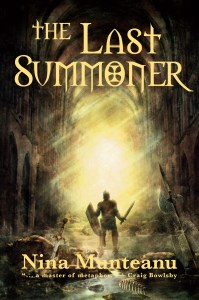
last-summoner-goodreads

Figure 2. Goodreads reviews and ranks for “The Last Summoner”

Reviews are one of the best ways to give back to the writers you wish to support. And, believe me, writers need that support! With Christmas coming around the corner, now is a prime time to get that review out that you’ve been thinking of doing to help your favorite writer or book. As a writer, if you aren’t writing reviews or making some recommendations on books and authors you like, you may wish to read my article on reciprocal altruism and the case of the vampire bat.

natural-selection-amazon

Figure 3. Amazon USA Kindle reviews for “Natural Selection”

HOW to Do a Review

I think so many of us get into thinking that we must write a “book report” like the one we hated doing in high school. But a review—particularly a good one—is not a book report. It is not the same as a critique, which may go into depth about artistic interpretation and symbolism. A review for a bookseller, like Amazon, Kobo or Barnes & Noble, is a lot simpler and serves a different purpose.

A good review provides key information on how the book resonated—or didn’t—with you. It’s really not that hard to write. Here are some tips:

  • A book review is NOT a plot outline. You don’t need to tell the potential reader all the ins and outs of the story. In fact, to get a good sense of the book, particularly if it is a non-fiction reference book, you don’t need to finish the book before you review it. What you do need to have done is read enough to have the book “speak” to you in some way.
  • Reviews are about connection and resonation. What did you like most about the book or what bothered you the most? The best reviews have a balance of both positive and negative things. But they don’t need to. Are you glad you bought it? Why? Did you learn something? Did it change your perspective? How did it touch you? Would you buy more by the same author? Would you recommend it? And if so, why. Think of your fellow readers. In fact, that’s a good way to write the review:
  • Write in a conversational tone as if you are describing the book to a friend you are recommending it to. You don’t need to get all technical or “literary” or use fancy or clever language. Write in the language that feels familiar to you. Remember, you’re writing to other readers.
  • Just be honest. What’s the first thing that comes to you? Write from the heart: “I loved this book because…” Perhaps it’s the memorable main character. Or the rich setting and history. Or the incredible world. Or the imaginative idea and twists in the story. Or the unforeseen but appropriate end. Did the book linger with you? Tell us why.
  • A book review can be short and work very well. I’ve seen a single under 10-word sentence for some reviews of my books. But those less than 10 words mean a lot, especially if they say: “Amazing wealth of information!” Or “A wonderful read.” Or “brilliantly written!” Short is direct and clean—like a poem—and distills your impressions down to an essence that will appeal to many. It will more likely be read in a sea of longer reviews. See examples in Figures 1, 2, and 5.
  • Combine this with a good title and you have a very powerful statement. I’m talking about the space that Amazon also provides for a “title” to your review (see examples in Figure 1 and 3), which appears at the top in bold and is, therefore very prominent. Be mindful of this title as readers may skim through these and use them alone to gain a sense of the reviews. Think of it as a one-line book tag, a distillation of how you felt about the book (e.g., This book changed my perspective on water; I want to be her when I grow up), or who you are, even (e.g., Limnologist Recommends…)
  • Ranking a book is useful. Most bookseller and book review sites include a place for you to rank the book, without even needing to put in a written review. These all help a reader sense the book’s popularity. You can also help by “liking” other people’s reviews, helping to give them importance.
darwins-paradox-goodreads

Figure 4. Goodreads rankings for “Darwin’s Paradox”

WHERE to Do a Review

I’ve already mentioned the main sites that either sell books online or talk about books. The major bookstore sites include: Amazon, Kobo, Barnes & Noble, and Indigo. There are many other online booksellers, but the ones I mentioned will get to the most readers; so, your review will serve its purpose more powerfully there.

Just a note here about Amazon: I’m a Canadian and my books sell on Amazon.ca as well as on Amazon.com (in the USA). My books also sell in Japan, Australia, UK, Germany, France, Spain and Italy, just to name a few countries. Each of these countries is represented by its own Amazon online store (like Amazon.ca for Canada). If you write a review on Amazon.ca, it will only show up on Amazon.ca. If you write a review on Amazon.com, it will show up on all the other Amazon sites (see Figure 1). Generally, it’s best to write your review on the site from where you bought the book; but, this isn’t a hard and fast rule. I’ve bought a book on one Amazon site and written a review on another.

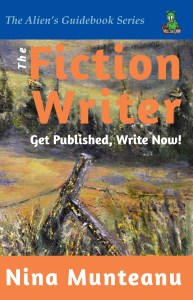
Goodreads is one of the best book review sites, given its popularity and large, diverse and active membership. Goodreads readers—and their authors—take books seriously. But even there, reviews can vary from extensive to a few sentences as shown in these reviews for my writing guide “The Fiction Writer” (Figure 5), and in Figure 2 for “The Last Summoner.”

fiction-writer-goodreads

Figure 5. Goodreads Reviews for “The Fiction Writer”

WHAT Reviews Look Like

I’ve included throughout this article examples of reviews for my various books which show you a range of style and impression—both positive and negative. Writers do want an honest review. Yes, we’d rather see all positive reviews. But the negative review has its place, the very least, to demonstrate to readers that the critique forum is objective and unbiased and embraces free expression.

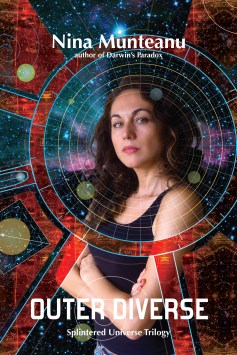
Notice that Goodreads embraces a platform that shows a combination of review and rank, which works very well (see Figure 2). Also, notice the Goodreads ranks for my first novel, “Darwin’s Paradox” in Figure 4, which represent a healthy range from 1 to five stars. Figures 6 and 7, below, demonstrate the full range of reviews a single book can get, in this case for the first book, “Outer Diverse”, of my space adventure trilogy, “Splintered Universe”.

outer-diverse-goodreads2

outer-diverse-goodreads-neg

Figure 7. Another Goodreads review of “Outer Diverse”

So, have fun writing your review; but go and write it!


nina-2014aaa

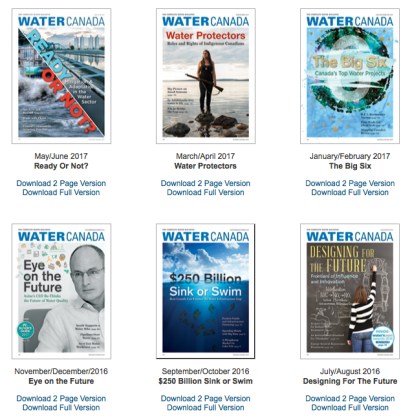
Nina Munteanu is a Canadian ecologist / limnologist and novelist. She is co-editor of Europa SF and currently teaches writing courses at George Brown College and the University of Toronto. Visit www.ninamunteanu.ca for the latest on her books. Nina’s bilingual “La natura dell’acqua / The Way of Water” was published by Mincione Edizioni in Rome. Her non-fiction book “Water Is…” by Pixl Press (Vancouver) was selected by Margaret Atwood in the New York Times ‘Year in Reading’ and was chosen as the 2017 Summer Read by Water Canada. Her novel “A Diary in the Age of Water” will be released by Inanna Publications (Toronto) in 2020.

The Way of Water (La natura dell’acqua)

la natura dell'acquaShe imagines its coolness gliding down her throat. Wet with a lingering aftertaste of fish and mud. She imagines its deep voice resonating through her in primal notes; echoes from when the dinosaurs quenched their throats in the Triassic swamps.

Water is a shape shifter.

It changes yet stays the same, shifting its face with the climate. It wanders the earth like a gypsy, stealing from where it is needed and giving whimsically where it isn’t wanted.

Dizzy and shivering in the blistering heat, Hilda shuffles forward with the snaking line of people in the dusty square in front of University College where her mother used to teach. The sun beats down, crawling on her skin like an insect. She’s been standing for an hour in the queue for the public water tap.


“La immagina scenderle fresca giù per la gola, con un persistente retrogusto umido di pesce e fango. La immagina risuonarle dentro con voce cupa, una voce primordiale; gli echi del tempo in cui i dinosauri placavano la sete nelle paludi del Triassico.

L’acqua è un mutaforma.

Cambia pur restando la stessa, muta il proprio volto insieme al clima. Vaga per il pianeta come una nomade, rubando da dove è necessaria e dandosi per capriccio dove non serve.

Frastornata e tremante nel caldo afoso, Hilda si trascina a fatica dietro al serpente di persone sul piazzale polveroso di fronte al college universitario in cui insegnava sua madre. Il sole picchia e le striscia sulla pelle come un insetto. È in fila da un’ora davanti al distributore pubblico di acqua.


“The Way of Water” is a near-future vision that explores the nuances of corporate and government corruption and deceit together with resource warfare. An ecologist and technologist, Nina Munteanu uses both fiction and non-fiction to examine our humanity in the face of climate change and our changing relationship with technology and Nature.

The bilingual print book by Mincione Edizioni showcases this short story in Italian and English along with a recounting of what inspired it: “The Story of Water” (“La storia dell’acqua”).

See reviews for “The Way of Water” (“La natura dell’acqua”) below:

Simone Casevecchia of SoloLibri.net

Net Massimo (English)

Net Massimo (Italian)

laNaturaDell'Acqua-coverAfter the release of the print book, Future Fiction released “The Way of Water” (“La natura dell’acqua”) in ebook format. The ebook contains the “Way of Water” story and another story, “Virtually Yours” (“Virtualmente tua”) alongside “The Story of Water” (non-fiction), which can be purchased in either Italian or Engish versions.

“Virtually Yours” was first published in Issue #4 of Neo-Opsis Science Fiction Magazine (Canada); it was reprinted in several languages in other countries including USA, Poland, Romania, Greece, and now Italy. It also appears as one of nine stories on human evolution in Natural Selection, a Canadian collection of short stories (Pixl Press) that examine the evolution of humanity with Nature and technology.

Nina’s short stories have received praise for their world building, depth of character, compelling plot and use of evocative metaphor:NaturalSelection-front-FB

“.a stunning example of good storytelling with an excellent setting and cast of characters.”–Tangent Online

“…Written with flare and a conscience…Munteanu shines a light on human evolution and how the choices we do or don’t make today, may impact our planet and future generations. The science is fascinating and so are these nine short stories.”—J.P. McLean, author of The Gift Legacy

“…Fascinating dramas set in a world too close to our own…the science was so interesting, combining visionary metaphysical speculation with AI corporate tech in scenarios that often seemed chillingly possible.”—Amazon review

“…Jealousy, lust, loneliness, grief and love are all drivers of these taut and fascinating narratives.”—Amazon review

“…a fantastic collection of stories by a deeply-involved writer, based in Canada.”—Amazon review

“…a well written, thought provoking collection of stories that will leave you hoping the future that Nina Munteanu projects never happens…Nina Munteanu is a gifted writer. Each story surprises and delights.”—Allan Stanleigh, author of USNA

“Actually brought to mind Niven’s Tales of Known Space…Nina’s stories tease you.”—D. Merchant, Louisianna Tech University College


The Way of Water can be purchased as:

WayofWater copy 2Ebook (Italian OR English) with additional short story “Virtually Yours” through Future Fiction (Mincione Edizioni) for €1,99  at:

Print book (Italian AND English) through Mincione Edizioni for €7,00 at:

Eramosa River 3

Eramosa River, Ontario (photo by Nina Munteanu)


Translated into Italian by Fiorella Moscatello. Print book cover by Laura Cionci. Ebook cover by Brad Sharp.

The Writer-Editor Relationship, Part 2: Five Things Writers Wish Editors Knew—and Followed

patterns-Cedar log moss2-LR

Cedar log (photo by Nina Munteanu)

In my previous article, “The Writer-Editor Relationship, Part 1: Editors Preparing Writers,” I focused on clarifying expectations between editors and writers from the editor’s point of view. Part 2, this article, focuses on this same relationship from the writer’s point of view.

Clarity of expectation, honesty, and mutual respect are key features in a productive and successful writer-editor relationship. Writers expect editors to inform them if their expectations are out of line, and writers rely on editors’ honesty and transparency to let them know if they are comfortable with the task being asked of them. This, of course, is predicated on the editor’s full understanding of what that task is; again, it is the responsibility of the editor to determine the scope of work from the author—just as a doctor will ask key questions to diagnose a patient. If an editor has reservations, caveats, or limitations with the project, these should be shared upfront. Honesty is always best, and it should start right from the beginning so that mutual respect is cemented.

Below is a list of five things that writers wish editors knew—and followed.

  1. Edit to preserve the writer’s voice through open and respectful dialogue

Losing your voice to the “hackings of an editor” is perhaps a beginner writer’s greatest fear. This makes sense, given that a novice writer’s voice is still in its infancy; it is tentative, evolving, and striving for an identity. While a professional editor is not likely to “hack,” the fear may remain well-founded.

A novice’s voice is often tangled and enmeshed in a chaos of poor narrative style, grammatical errors, and a general misunderstanding of the English language. Editors trying to improve a novice writer’s narrative flow without interfering with voice are faced with a challenge. Teasing out the nuances of creative intent amid the turbulent flow of awkward and obscure expression requires finesse—and consideration. Good editors recognize that every writer has a voice, no matter how weak or ill-formed, and that voice is the culmination of a writer’s culture, beliefs, and experiences. Editing to preserve a writer’s voice—particularly when it is weak and not fully formed—needs a “soft touch” that invites more back-and-forth than usual, uses more coaching-style language, and relies on good feedback.

An editor colleague of mine consistently accompanies her edits with the question, “Does this change preserve your meaning?” This prompt both focuses on “voice” and reminds the writer that the editor is considering it, which fosters a nurturing environment of mutual respect. Editors who are not familiar with working with writers in the early stage of their careers may wish to defer to one who is more experienced.

Editors also need to consider how the author’s narrative voice harmonizes with the standard in the author’s targeted genre and niche market. Pursuing respectful and open dialogue about how the author’s voice fits or doesn’t fit that standard is another responsibility of a good editor and one an author will come to rely on—particularly early on in their career.

  1. Understand—and embrace—the market and genre of your writer

Writers are often told to write what they know. This edict applies equally to editors: edit what you “know” and understand. Each form of writing—from literary and genre fiction to journalism, the memoir, and technical writing—encompasses an overall style, culture and vision, associated language, and even “jargon” that is important to understand to succeed with readers. Even writers who subvert the trope need to first understand what they are subverting, and so does the editor.

I write and edit science fiction and fantasy. I do it very well, because I have a passion for it and I intimately understand its world and language, including where the boundaries lie and where the risks—and sublime nuances of originality—also lie. I worked as a scientist for over 20 years and have published papers in peer-reviewed journals, so I am comfortable editing technical and scientific papers. I live that world. On the other hand, I do not read, nor do I understand or care for, the horror fiction genre. Not only would I do a lousy job editing a work of horror, but I wouldn’t provide the discerning editorial advice to best place that work in the horror market. It is in the area of market niche that one editor will shine over another based on their familiarity with, and current activity in, that industry sector. This is ultimately what writers are paying for: the multi-layered understanding of the editor that comes with a full embrace of that world.

Editors should ensure a good fit and the best chance for success by not taking on work in a genre with which they are neither familiar nor comfortable. Think of the author. Which leads me to the next point:

  1. Be honest and practice moral integrity: Don’t take on a writer’s work unless you like and believe in it

 When I was starting out as a writer with my first novel, I shopped it around to many agents, hoping for representation. While the book was eventually published with great success, many agents had rejected it. Literary agents take on clients and shop their books to publishing houses. They usually charge a percentage of the take and are not paid (if they are good agents) until the book is sold to a publishing house. Payment, therefore, is predicated on success. In many cases, an agent would respond with good things to say about my first manuscript but would not take it on, citing this common phrase: “It just didn’t excite me enough.” I was initially puzzled by this response. If they liked it, why didn’t they take it on? But “I like” isn’t the same as “I’m excited.” I soon realized the importance that excitement played in the agent’s business. They were my advocate, after all. If they weren’t eager about the book, how could they sell it to someone else? And if they couldn’t sell it to someone else, how could they get paid?

While the editor is usually paid up front and/or upon deliverable, they fulfill a similar role: that of advocate. If an editor takes on a writer’s work without enjoying it or believing in it, they are much less likely to do a good job. And both lose when that happens.

When we just do a job for the money and not for the passion of doing something well, we run the risk of losing on all fronts. We run the risk of being dishonest in our assessments and then doing a shabby job. And then losing our reputation. Be an advocate and be honest; sometimes, that means saying “no” to a project and explaining why. The writer will benefit and will thank you for it—if not right away, then eventually.

  1. Edit professionally and appropriately to promised deliverable

In my capacity as writing coach, I have met with several writers who have complained that their work had been insufficiently or inappropriately edited. This can occur for several reasons: (a) lack of time; (b) incompetence; or (c) inappropriate match-up.

  • Lack of time 

As a writer, I once experienced an insufficient copy edit by a freelance professional editor. In fact, this particular editor was a good editor and had impeccably edited a previous work of mine. When I submitted my “edited” work to a beta reader, he pointed out many places that my copy editor had missed. A few is OK, but she’d missed many. From subsequent correspondence, I deduced that my editor had been overrun with other projects and had skimmed mine a little too fast. Unfortunately, this was unacceptable, given that I’d agreed to pay her a professional rate for a specific deliverable: a copy-edited, proofed, and publication-ready manuscript.

The ultimate message here for editors is, don’t take on a writer’s work and make promises of delivering until you know what you’re getting into and know that you can do it in the time you suggested. Honesty is best here. If you are too busy to meet the specified deadline, say so and refer the writer to another respected editor if they can’t wait. And don’t worry about “losing” the client—you haven’t. But that editor I mentioned in the previous paragraph did.

  • Incompetence 

Unfortunately, most editors who are incompetent are unaware of it. One of my professional writer-editor colleagues at SF Canada invoked the Dunning-Kruger Effect (“at a certain point, people who really don’t know something don’t know that they don’t know it”) to share her story of what passes for editorial input in “an age of homonym errors.” She suggested that some self-appointed editors are convinced they have significant skills but allow a large error rate.

This is where organizations like Editors Canada become invaluable. Editors Canada certifies editors for skills in various editing fields and forms (that is, structural-, stylistic-, and copy editing and proofreading). If you are a professional editor with certification, ensure that you make this known to the writer; many writers not only don’t understand the various editing forms (for example, copy editing vs. structural editing), they also don’t necessarily recognize competence until after the job is done—when it’s too late.

  • Inappropriate match-up 

This is similar to point 2, which talks about matching writer and editor through genre and market. A good fit also includes temperament, schedules, communication style, and other considerations that will affect the editor-writer relationship and the natural progress of the project. As editor, I have encountered a few clients whose communications with me created tension and misunderstanding. We mutually agreed to terminate our arrangement early on, which saved much tension and grief. The transparency of the relationship allowed us to recognize the mismatch early on and attend to it before it became problematic and wasted both our time and efforts.

  1. Keep the relationship—and language—professional and respectful 

Without necessarily expressing this, the majority of writers—particularly beginning writers and, by default, indie/self-published writers—seek a professional editor who will treat them with respect. What this translates into is the use of professional language, tone, and behaviour. Writers aren’t looking for an editor to be their “friend.” Writers are also not looking for a professional editor to validate their work or them as people. Writers seek professional editors to give them honest and helpful advice that will help them create the very best work they can for eventual publication.

Simple. Not so simple.

As an editor who is also a writer (who gets edited a lot), I provide rationale as much as I can for the suggestions I make to writers. This helps establish and maintain a respectful and collaborative relationship between author and editor through the use of professional language, tone, and behaviour. Think of it as a doctor-patient relationship; I’ve dropped doctors like hot potatoes who are not willing to sit with me as an equal and discuss their prognoses. I want to know why, and ultimately, it’s my decision. The editor is an expert, but so is the writer.

The writer-editor relationship is foremost a professional one. As an editor, I feel it is my duty to promote integrity and respect with the writer, and this hopefully within a safe and nurturing environment for the achievement of mutual excellence.

This article was copy edited by Nicole North.


Nina MunteanuNina Munteanu is an ecologist and internationally published author of award-nominated speculative novels, short stories and non-fiction. She is co-editor of Europa SF and currently teaches writing courses at George Brown College and the University of Toronto. Visit www.ninamunteanu.ca for the latest on her books.

Nina Teaching SF Writing Course at George Brown College FALL 2015

 nina-workshop 2

I’m back at George Brown College in Toronto, teaching my 12-week long writing course on how to write science fiction. “Creating Science Fiction” is now part of George Brown’s Creative Writing Certificate.

The 12-week course starts SEPTEMBER 22 (TUESDAY)  and runs until DECEMBER 8th. See the description below:

The course “Creating Science Fiction” runs TUESDAY nights from 6:15 to 9:15 starting September 22nd through to December 8th and costs $285.
.
Meant for both beginning writers and those already published, the 12-week course is run like a workshop with student input and feedback on student’s WIPs.
.spaceship02
Munteanu explores with students the essential tools used in the SF genre (including world building, research and plot approaches). “Students will work toward a publishable original piece by learning to generate and follow through with premise, idea and theme,” says Munteanu.
.
You can register for the course here: 
George Brown College is located on 200 King Street, Toronto, Canada.
nina-2014aaNina Munteanu is an ecologist and internationally published author of award-nominated speculative novels, short stories and non-fiction. She is co-editor of Europa SF and currently teaches writing courses at George Brown College and the University of Toronto. Visit www.ninamunteanu.ca for the latest on her books.

Limestone Genre Expo—July 2015

I recently attended the inaugural festival of the Limestone Genre Expo (July 25, 2015) for writers in Kingston, Ontario. The festival gets its name from the city’s moniker, based on the many heritage buildings constructed there using local limestone.

It would have been a very long trip from my digs in Nova Scotia; but I’m currently in Toronto, teaching writing at UofT and George Brown College. I still had to get up earlier than I normally do to get to the 1-day festival that started at ten in the morning.venue

It was worth it.

Organizers Liz Strange, Barry King, Delina MacDonald and Marlene Smith nailed everything right. Being the first of hopefully many more, this writers’ festival wisely started small. But, like the good Doctor’s tardis, the venue belied its size by being dense with quality and diversity.

Alison Sinclair

Alison Sinclair

The Ongwandada Resource Centre, where the festival was held, had lots of parking with a friendly well-lit ambience inside under an atrium with tables and chairs for gathering and several rooms for panels and workshops.

The festival covered several of the major genres such as fantasy, science fiction, horror, romance and mystery, with representation by well-known authors in each. Organizers offered a triple track program from 10 am to 5 pm that included panels, informative workshops, readings, novel pitch sessions with CZP

Sandra Kasturi of CZP

Sandra Kasturi of CZP

and Bundoran Press and first page critiques with Caro Soles. Festival organizers populated their program with well-established writers from their own communities. Readers of genre fiction and writers looking to learn and network were given the opportunity to meet some of the top genre writers in the region. The venue included a book fair, box lunches and a snack stand. The only thing missing was a primo coffee bar.

Marie Bilodeau

Marie Bilodeau

The small venue provided an intimate setting for great networking. I had a chance to meet many of my old friends and to make new ones. Marie Bilodeau, an Ottawa fantasy writer, gave an exquisite reading of her new series “Nigh”. Alison Sinclair, recently moved to Ottawa, beamed as she showed me the new release of her Eyre series, “Contagion” by Bundoran Press. Aurora-winning short story author Douglas Smith gave

Doug Smith

Doug Smith

an informative workshop on how to market and sell your short stories. His excellent guidebook “Playing the Short Game” sold for a special festival price. I caught Derek Newman-Stille sitting in the lounge over a box lunch and discussed his radio show in Peterborough and traded stories with Hayden Trenholm, publisher of Bundoran Press and aurora-winning author of the Steeles Chronicles. Other writers who I had a chance to visit

Alyssa Cooper

Alyssa Cooper

with and meet included Caro Soles, Sandra Kasturi (of Chizine), Alyssa Cooper, Eve Langlais, Matt Moore, Nancy Kilpatrick, Matthew Johnson, and Violette Malan.

The organizers—themselves published genre writers (Strange writes fantasy, horror and mystery and just released her first science fiction novel, “Erased”; King writes science fiction)—started the festival in response to an observed need to showcase genre writers in the Kingston area, otherwise rich in non-genre writing festivals. “Kingston is in an interesting position because we do have so many writers and we do have the WritersFest and so on,” explained King to Peter Hendra of the Kingston Whig-Standard. King felt there was room to showcase this literature in Kingston and the surrounding area.

Derek Newman-Stille

Derek Newman-Stille

“I find that genre fiction can sometimes be seen on a lower status as ‘literary fiction’, and that stings,” Strange confided to me. “I thought [the LGE] would succeed because there are not that many festivals of this sort, and after we put feelers out to see who might be interested in attending the positive responses were overwhelming.”

Caro Soles

Caro Soles

Strange added that “nerd culture” these days is more mainstream than in the past, thanks to George R.R. Martin’s Game of Thrones and Stephanie Meyer’s Twilight series. Strange concluded that this is a good thing for writers of romance, sci-fi, horror, mystery and fantasy and observed that genres are blending a lot more (e.g., historical fantasy, paranormal romance, etc.). I personally write mostly blended genres: science fiction thrillers; SF eco-fiction; historical fantasy and romantic SF.

Violette Malan

Violette Malan

I asked Strange for her opinion on whether the festival was a success and what the organizers plan to do for next year. She gave a resounding yes; they had double the numbers they’d hoped for and didn’t lose money (a common challenge with writing festivals). With most events tending to be in spring or fall, they chose summer, which worked well and showed off Kingston.

Liz Strange, Marlene Smith, Barry King, Delina MacDonald

Liz Strange, Marlene Smith, Barry King, Delina MacDonald

Based on the feedback and success of the con, it looks like the festival next year will run two days.

Now that’s great news!

.

.

.

nina-2014aaNina Munteanu is an ecologist and internationally published author of award-nominated speculative novels, short stories and non-fiction. She is co-editor of Europa SF and currently teaches writing courses at George Brown College and the University of Toronto. Visit www.ninamunteanu.ca for the latest on her books.