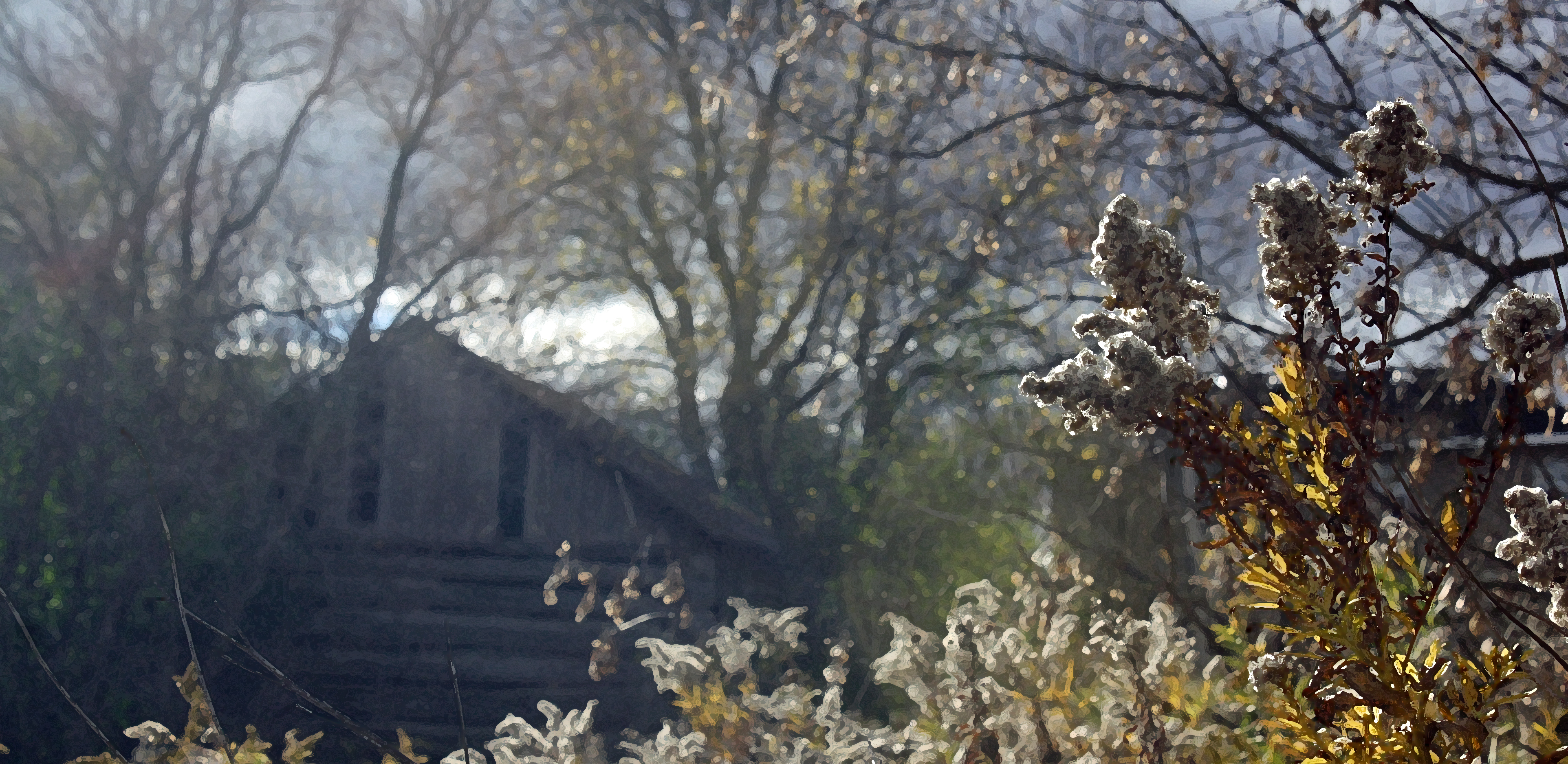
Old cabin behind seeding goldenrods, ON (photo and rendition by Nina Munteanu)
One of my favourite smells is of pipe tobacco smoke.
But here’s the thing: I’m really not a fan of smoking. Both my parents were chain smokers (who wasn’t back then?) and I quickly discovered that cigarette butts carried thousands of ugly toxins and lasted years on the ground. In the one rebellious occasion that I skipped school with two school mates to spend the day in the forest, I accidentally lit my hair on fire trying to light the cigarette. Taking the karmic connection seriously, I decided that was the end of both skipping school and smoking for me.
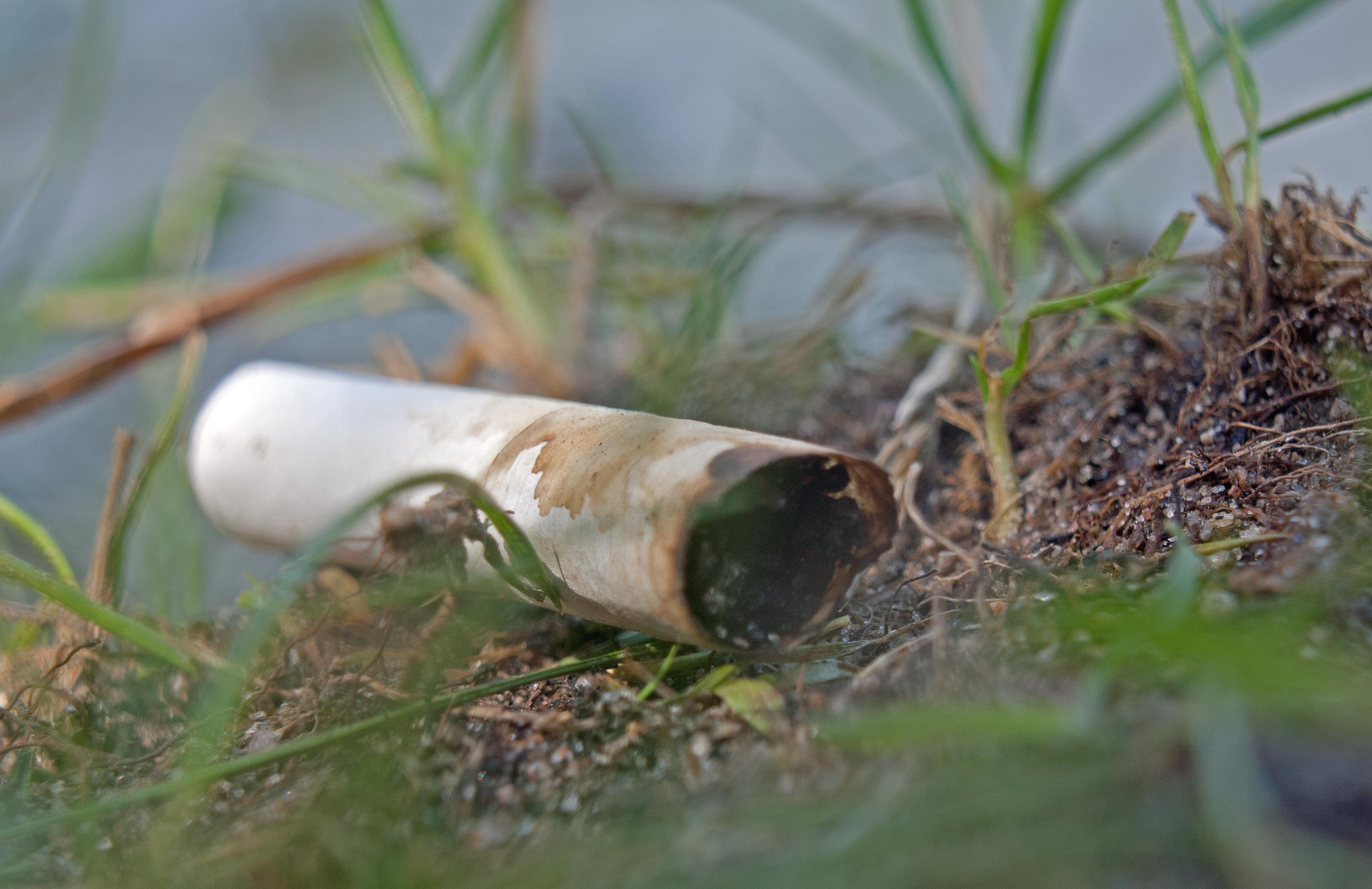
Cigarette butt found near a river in a park, ON (photo by Nina Munteanu)
So, why the allure with pipe smoke?
Well, to begin my rationalization, pipe smoke is nothing like cigarette smoke. Cigarette smoke squeals up my nose and mouth, choking my breath with an acrid burning that lodges like a smothering cancer in my throat; pipe smoke coils heavy and loose into my nostrils with lazy notes of fermenting cherry or plum.
There’s more to it, obviously . . .
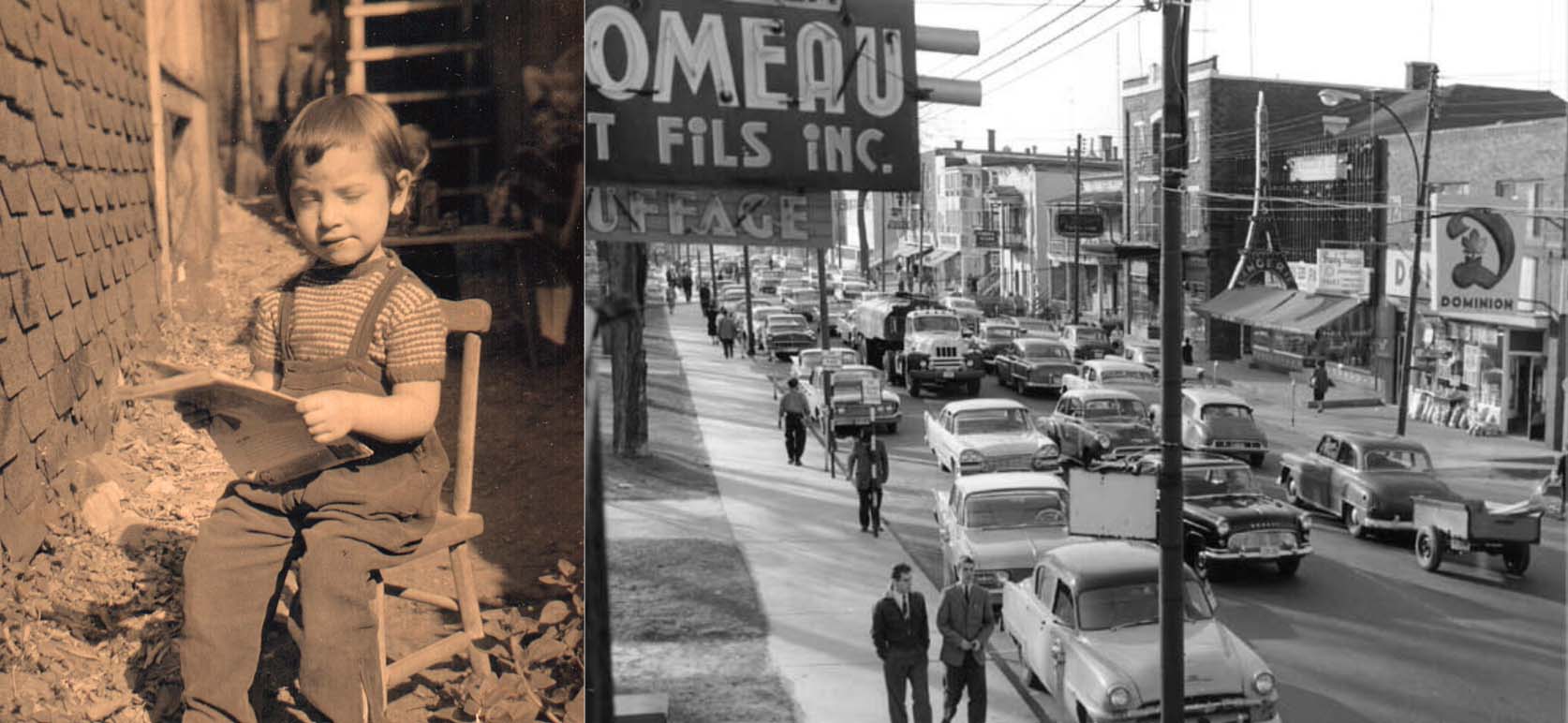
Left: Four-year old Nina Munteanu pretending to read; Right: Rue Principal in Granby, Quebec in the early 1960s
When I was little, one of my favourite things to do was hide behind the comic stand in the back corner of William’s General Store and read comic books. Superman, Supergirl, Green Lantern, Magnus Robot Fighter. So many more . . .
Mr. Williams knew I was there. I was, after all, hiding in plain sight, as kids generally do. But he was a kind man and let me stay and read for free. He recognized someone who loved story.
The store was a typical general store of that era. Long and narrow, dark wood walls covered in paraphernalia. Shelves and stands cramped full with stuff. Anything from toys and penny candy to games, puzzles, watches, newspapers, pocket books and magazines, household necessities, shoeshine kits, canned goods and preserves, pocket knives, to cigars, pipes and the tobacco and lighters to go with them. A smoky mist settled on everything in the store and the place gave off the complex scent of old polished wood with a tobacco undercurrent. Williams might have smoked a pipe himself; I don’t recall. However, my sense-mind has wonderfully coupled that evocative aroma with a sense of freedom to immerse myself in fantastical worlds of imagination. And, in turn, to imagine my own worlds.
That place and my experience in it not only gave me an abiding love for pipe smoke; it made me the storyteller I am today.
Taste and smell appear to linger most in memory and yet are often neglected by writers. According to the California Institute of Technology, smell is generally considered the sense tied most closely to human memory. Smell profoundly influences people’s ability to recall past events and experiences. “A smell from your distant past can unleash a flood of memories that are so intense and striking that they seem real,” says Dr. Karl (Kruszelnicki), author of Great Moments in Science. “This kind of memory, where an unexpected re-encounter with a scent from the distant past brings back a rush of memories, is called a ‘Proustian Memory’.”
In Remembrance of Things Past, Marcel Proust writes:
When from a long-distant past nothing subsists, after the people are dead, after the things are broken and scattered, taste and smell alone, more fragile but more enduring, more immaterial, more persistent, more faithful, remain poised a long time, like souls.
In this excerpt of The Florist’s Daughter by Patricia Hampl, fragrance permeates with meaning:
The flower shop was here and it was my father’s domain, but it was also marvelously other, this place heavy with the drowsy scent of velvet-petaled roses and Provencal freesias in the middle of winter, the damp-earth spring fragrance of just-watered azaleas and cyclamen all mixed up with the headachey smell of bitter chocolate.
In John Steinbeck’s East of Eden, his main character recalls the following memories, through several evocative smells:
I remember my childhood names for grasses and secret flowers. I remember where a toad may live and what time the birds awaken in the summer— and what trees and seasons smelled like—how people looked and walked and smelled even. The memory of odors is very rich.
Barrels of aging bourbon in Kentucky (photo by Nina Munteanu)
In Part 2 of my writing guidebook The Ecology of Story: World as Character, I discuss how the various senses—not just smell—are strong tools in storytelling and provide examples and working exercises.
Psychologist Michael McCollough argues that environment plays a key role in human behaviors, such as forgiveness and revenge. He theorizes that various social environments can cause either forgiveness or revenge to prevail. McCollough relates his theory to game theory. In a tit-for-tat strategy, cooperation and retaliation are comparable to forgiveness and revenge. The choice between the two can be beneficial or detrimental, depending on what the game partner (or organism) chooses. The brain’s limbic system processes external stimuli related to emotions, social activity, and motivation; these then propagate an instinctual behavioural response. Examples include maternal care, aggression, defense, and social hierarchy; these behaviours are influenced by sensory input, such as sight, sound, touch, and—of course—smell.
Nina Munteanu is a Canadian ecologist / limnologist and novelist. She is co-editor of Europa SF and currently teaches writing courses at George Brown College and the University of Toronto. Visit www.ninamunteanu.ca for the latest on her books. Nina’s bilingual “La natura dell’acqua / The Way of Water” was published by Mincione Edizioni in Rome. Her non-fiction book “Water Is…” by Pixl Press(Vancouver) was selected by Margaret Atwood in the New York Times‘Year in Reading’ and was chosen as the 2017 Summer Read by Water Canada. Her novel “A Diary in the Age of Water” was released by Inanna Publications (Toronto) in June 2020.
I recently appeared on Warren Lawrence’s Morning Show on WKNY am Radio Kingston, New York, where we talked about water as a life-giving substance and a force of climate change. We talked, of course, about my recent eco-fiction novel “A Diary in the Age of Water”, which Warren had totally enjoyed and recommended to his listening audience (to my delight!)
Warren asked me to share my process of writing this particular book as a diary and a work of “mundane science fiction:”
I was writing about both the far and the near future and much of it was based—like Margaret Atwood and her books—on real events and real people. I wanted personal relevance to what was going on, particularly with climate change. I also wanted to achieve a gritty realism of “the mundane” and a diary felt right. Lynna—the diarist—is a reclusive inexpressive character, so I thought a personal diary would help bring out her thoughts and feelings. There’s nothing like eves-dropping to make the mundane exciting. The diary-aspect of the book characterizes it as “mundane science fiction” by presenting an “ordinary” setting for characters to play out. The tension arises from insidious cumulative events and circumstances that slowly grow into something incendiary. The real events are the fuel that incite a slow-burn fictional drama that blurs the reader’s perception of reality and heightens its relevance.
We talked at length about the blur between real events and the fiction of this book and how the diary conspired in that felt blur for the reader. To Warren’s question of what I expected my audience to get from the book, particularly on the importance of water, I responded:
While A Diary in the Age of Water is a work of fiction, its premise and much of its story are firmly based on real events, people and phenomena. The dramatization of these through four main characters carry the reader into consequence and accountability. Water’s relationship with each character provides four different perspectives on the value of water to humanity—from the personal and practical to the spiritual and existential. For readers with an evidence-based approach to learning about water’s importance, the diarist provides interesting facts on water in each of her entries in the form of epigraphs (mostly from Robert Wetzel’s Limnology). Things like: watershed, hypolimnion, aquifer, thalweg, clapotis gaufre, and petrichor, to name a few.
Regarding whether Canadians see water, deforestation, pollution, or climate change differently than Americans, I responded:
My first response to that is no, we’re all North Americans. If there is a noticeable divergence, it is between North Americans and the rest of the world, based on our shared capitalist worldview and mixed settler and indigenous heritage. But Canadians do share some subtle differences from our southern neighbours. We are a northern people; much of our land lies in the unsettled northern boreal forest. Our population is far more sparse at five people/km2vs. close to 40 people/km2in America. With a majority of our population occupying the most southerly ten percent, Canada has large regions of pristine natural environments. I once entertained a ‘romantic’ metaphoric notion of Canadians resembling the settlers of Winterfell in the Westeros of Game of Thrones; a people more attuned to their land. Canadians profess to place environment high on our list of values and concerns. And yet we share a legacy of appalling forest management, rampant clearcutting of old-growth forest in British Columbia, insufficient federal and provincial water legislation, and environmentally-catastrophic mining practices in the oil tar sands of Alberta, the northern boreal forest of Canada and abroad.
Warren and I also talked about New York state and NYC, particularly to do with climate change, and how NYC fared in the novel (not well, I’m afraid). As example, I read a portion of the book from the diarist’s entry called “Climate Change”:
When I was growing up, we were already feeling the effects of a changing climate. The most obvious change was in the hundred-year floods calculated by engineers; they started to occur every other year. When I was five years old, Houston suffered a devastating flood and the city and surrounding area basically crashed under the wind and rain deluge of Hurricane Harvey. They lost power. Then their sewers backed up. But it didn’t get ugly until they lost their drinking water.
Five years later the Category 3 Hurricane Norma stormed though New York City with a twelve-metre-high wall of water. Manhattan drowned. Subways and car tunnels drowned. Kennedy Airport drowned. Homes drowned. People drowned.
The same storm put Providence, Rhode Island, under twenty feet of water.
A few days ago, Daniel told me that New York City water is still unfit to drink. “New York will be the new Pudong District,” he quipped with churlish humour. All of Florida south of Orlando is already there. “Like they weren’t warned,” he scoffed.
–A Diary in the Age of Water
Pond lilies in Thompson Creek marsh, ON (photo and rendition by Nina Munteanu)
Nina Munteanu is a Canadian ecologist / limnologist and novelist. She is co-editor of Europa SF and currently teaches writing courses at George Brown College and the University of Toronto. Visit www.ninamunteanu.ca for the latest on her books. Nina’s bilingual “La natura dell’acqua / The Way of Water” was published by Mincione Edizioni in Rome. Her non-fiction book “Water Is…” by Pixl Press(Vancouver) was selected by Margaret Atwood in the New York Times‘Year in Reading’ and was chosen as the 2017 Summer Read by Water Canada. Her novel “A Diary in the Age of Water” was released by Inanna Publications (Toronto) in June 2020.
Two cedar trees entangle their roots in a cedar forest in Warsaw Caves Park, ON (photo and rendition by Nina Munteanu)
.
In 1969, I completed my first novel at the tender age of fifteen. Caged in World was a hundred-page speculative story about a world that had moved “inside” to escape the ravages of a harsh post climate-change environment.
1969 was the year that humans first stepped on the moon and the first Concorde test flight was conducted in France. But I was concerned by the environment and what was happening on our planet. It was seven years since Rachel Carson had published Silent Spring, which warned of our declining bird and bee populations and impacts to human health from unregulated pesticide/herbicide use (such as carcinogens and hormone disruptors). It was just a year after Paul Erlich’s Population Bomb warned that attempts to stretch the Earth’s resources to support the ever-growing population would result in mass starvation, epidemics, and, ultimately, the breakdown of social order.
In the 1960s it was already apparent to me that environmental imbalance and destruction were global concerns and we were on the brink of an environmental crisis. Unchecked deforestation was destroying forests around the world, including the boreal and old-growth forests of my own country Canada. Brazil had already begun cutting down trees and burning forest at an alarming rate. Unregulated use of pesticides, herbicides and growth hormones created toxic contamination of our natural world and our food and water supply—despite Carson’s dire warning with Silent Spring. Our waterways were being contaminated by mining wastes and industrial effluents. Killer smog. Noxious algal blooms. Oil spills. Dead zones. The list was growing.
.
Rachel Carson and her iconic book, Silent Spring
.
I joined S.T.O.P. (Society To Overcome Pollution) and marched in protests to call for responsible behaviour by governments and large corporations. I tried to raise awareness at my school about our deteriorating environment and likely consequences to human survival; my own teachers tried to silence me! I wrote my first dystopia, Caged in World. The eco-novel was about a subway train driver and a data analyst caught in the trap of a huge lie. The story later morphed into Escape from Utopia. Several drafts—and years later—the novel became the eco-medical thriller Angel of Chaos, set in 2095 as humanity struggles with Darwin’s Disease—a mysterious neurological environmental pandemic. Icaria 5 is one of many enclosed cities within the slowly recovering toxic wasteland of North America, and where the protagonist Julie Crane works and lives. The city is run by technocrats, deep ecologists who call themselves Gaians, and consider themselves guardians of the planet. The Gaians’ secret is that they are keeping humanity “inside” not to protect humanity from a toxic wasteland but to protect the environment from a toxic humanity.
I spent several years shopping Angel of Chaos to agents and publishing houses. Although I received many bites, all finally let go. In the meantime, I did several things: 1) I started writing short stories, some of which were cannibalized from the book, and several of these were published; 2) I wrote Angel’s prequel, The Great Revolution (never published, The Great Revolution sits in a drawer hibernating) and Angel’s sequel Darwin’s Paradox, (which did get published eventually).
.
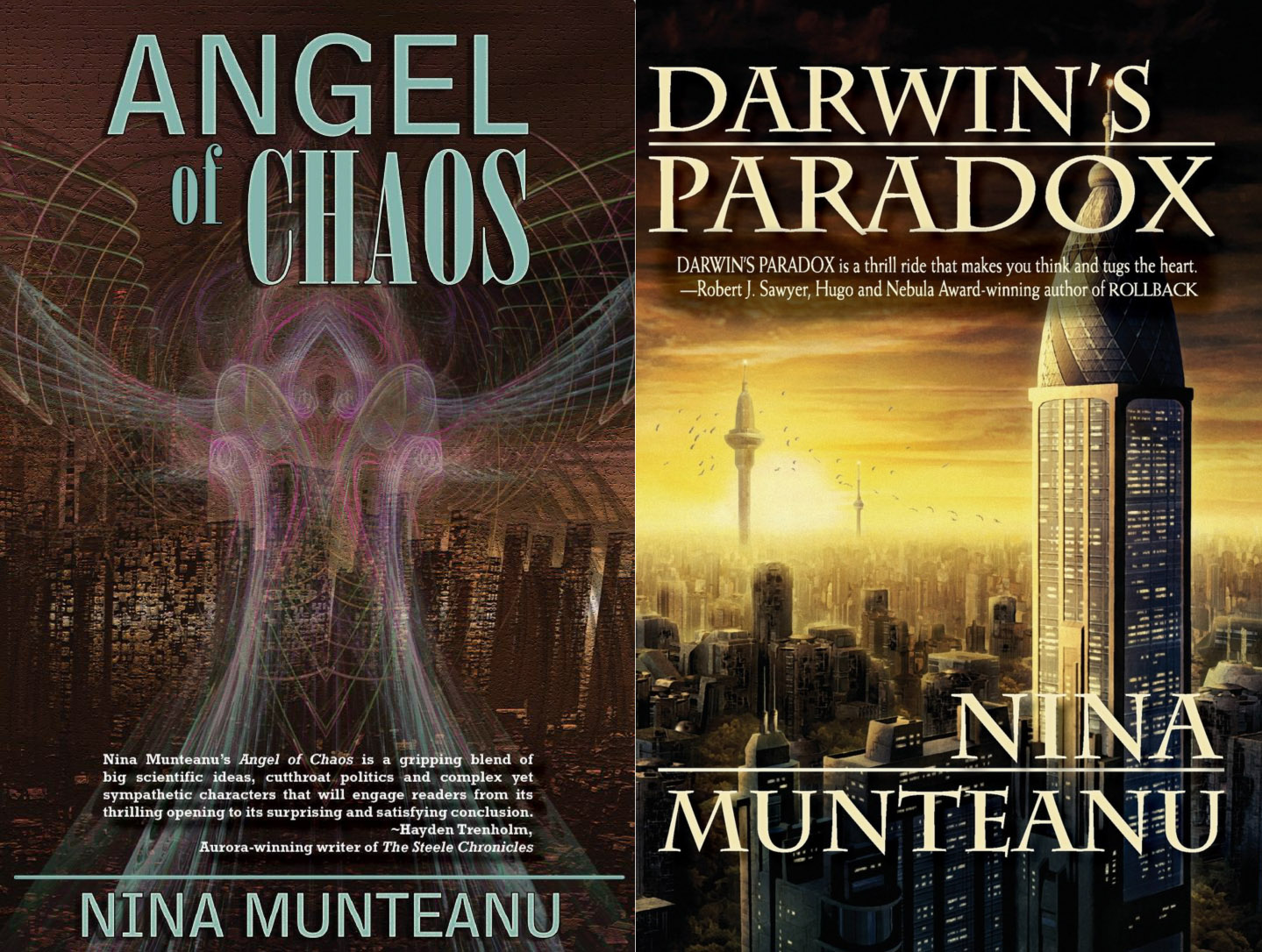
Angel of Chaos and Darwin’s Paradox Duology by Nina Munteanu
.
I thought of going into environmental law at university then decided that I didn’t have the temperament for it and instead pursued ecology and limnology. I taught limnology at the University of Victoria then found work as an environmental consultant. In 2007, Dragon Moon Press in Calgary made an offer to publish Darwin’s Paradox; the sequel became my debut novel. Dragon Moon Press later picked up Angel of Chaos and published it in 2010 as a prequel. I haven’t stopped publishing since (with a book pretty much every year).
.
A selection of eco-Fiction stories / novels Nina Munteanu wrote or edited
.
My whole career-life has been dedicated to helping the environment, doing field studies as a limnologist and ecologist, publishing papers and reports, giving talks about water and the environment. I feel strongly that stories can go much farther in bringing not only awareness but direction for people to act on behalf of the environment and the planet. The narrative we give one another is the key.
What story do we tell of ourselves and each other?
.
Nina Munteanu is a Canadian ecologist / limnologist and novelist. She is co-editor of Europa SF and currently teaches writing courses at George Brown College and the University of Toronto. Visit www.ninamunteanu.ca for the latest on her books. Nina’s bilingual “La natura dell’acqua / The Way of Water” was published by Mincione Edizioni in Rome. Her non-fiction book “Water Is…” by Pixl Press(Vancouver) was selected by Margaret Atwood in the New York Times‘Year in Reading’ and was chosen as the 2017 Summer Read by Water Canada. Her novel “A Diary in the Age of Water” was released by Inanna Publications (Toronto) in June 2020.
Fantasy / SF writer and interviewer Mandy Eve-Barnett recently interviewed me about my recent eco-novel “A Diary in the Age of Water” and on my writing process and evolution. When did it all begin and what choices did I make along the way? she wanted to know. Here are some of her questions and my answers (embellished here) for your reading pleasure. For the full interview go here:
Mandy: When did you first start writing?
Nina: Not until I was a teenager when I wrote my first complete novel (“Caged-In World”—which later served as a very rough draft for my first and second published novels, “Angel of Chaos and “Darwin’s Paradox”). My first published work was a non-fiction article “Environmental Citizenship”, which appeared in Shared Vision Magazinein 1995. I was already a young mother then with a family in Ladner, BC, and working for an environmental consulting firm in Richmond. My first fiction work was a short story entitled “Arc of Time”, published in a small circulation magazine Armchair Aesthete. That story was later reprinted several times throughout the world, including my short story collection “Natural Selection.” Before writing stories, though, I told stories—I shared wild stories of galactic adventure with my older sister; we used to share them late into the night when we were supposed to be sleeping and our parents were snoring in their beds. I also told stories in the form of cartoons. Since I was a small child, I wanted to be a cartoonist and write graphic novels when I grew up. I created and drew several strips with crazy characters on wild adventures, blending my love for drawing with my love for storytelling. I haven’t stopped that form of storytelling and still have a yearning for that form. This is one reason why I’m so delighted with my latest book “A Diary in the Age of Water,” which features some of my limnological sketches, which stand in for the diarist’s sketches:
.
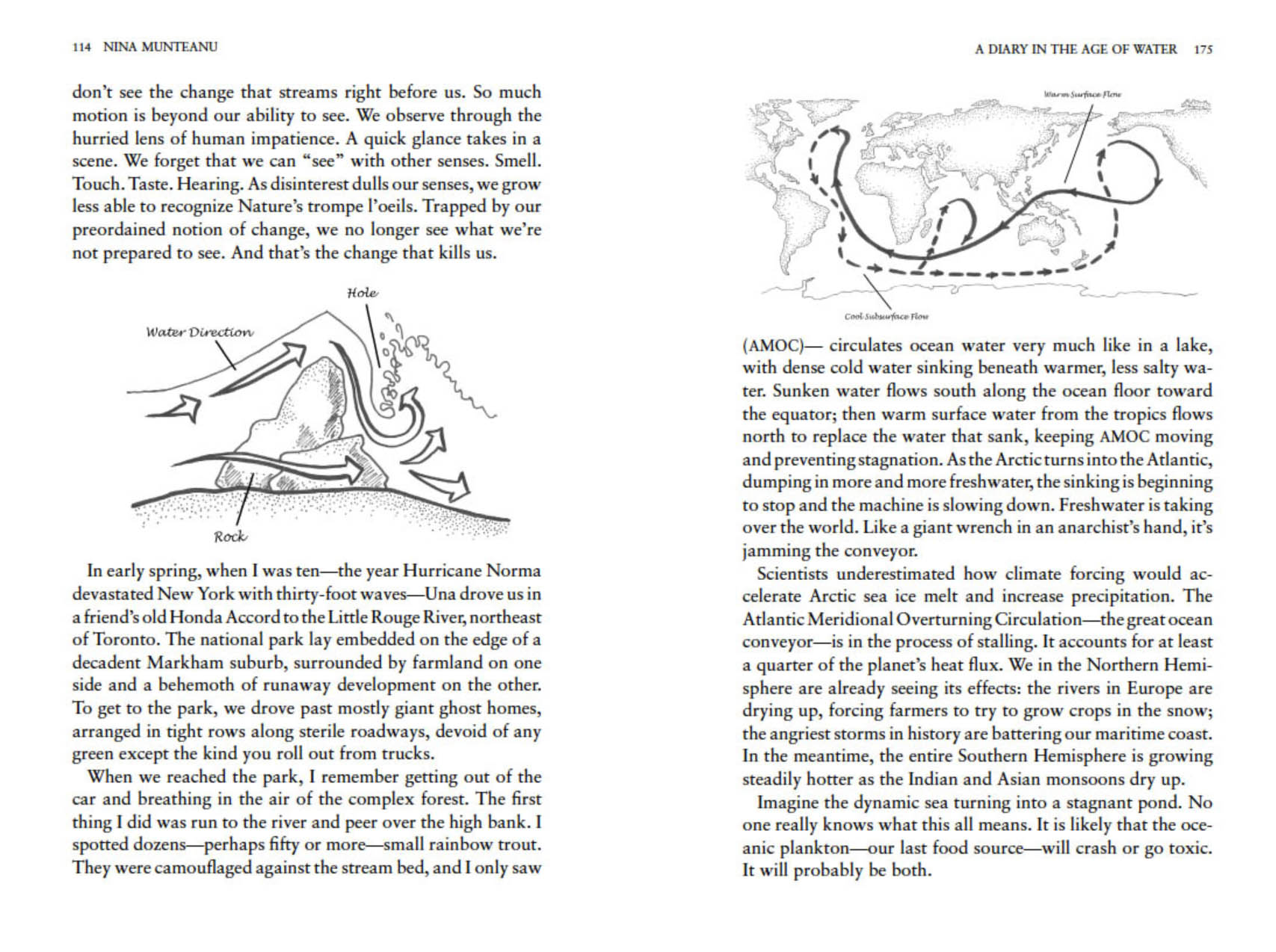
Pages from “A Diary in the Age of Water” by Nina Munteanu
.
Mandy: What made you decide on science fiction as a genre?
Nina: That goes back to my love for comics. I wasn’t much of a reader as a kid. While my older brother and sister devoured The Hardy Boys and Nancy Drew series, I secreted myself in the back corner of Williams General store and read Supergirl, Superman and Superboy, Batman, Magnus Robot Fighter and Green Lantern, among others. I was obviously enamored with the fantastic. When I earnestly started to read more than comics, I came across the SF classics: Huxley, Orwell, Heinlein, Clarke, Silverberg and Asimov to name a few. Bradbury sent me over the moon and his “Martian Chronicles” made me cry. I wanted to write like him and move readers like he’d done with me with something that mattered.
The reason I continue to write in this genre is because of its ability to encompass the creative imagination and application of metaphor to story. Given science fiction’s wide range of possibilities in creating a believable reality of the fantastic, science fiction provides a compelling platform for metaphoric storytelling on a grand scale—the story large. Possibilities for powerful archetypes abound. Where else can you make water an actual character?
My environmental themes and eco-fiction lie in the sub-genre of ‘mundane science fiction.’ This is just another form of speculative fiction. Mundane science fiction focuses on existing technology (no ray guns, warp drives, or time travel). Its premise lies in existing circumstances and events to create a near-future realism. My recent dystopian eco-novel “A Diary in the Age of Water” by Inanna Publicationsfits this description perfectly. Examples by other writers include Margaret Atwood’s “MaddAddam” series, Paolo Bacigalupi’s “The Windup Girl” and Kim Stanley Robinson’s “The Ministry for the Future.”
Mandy: Was the ecological aspect of your stories a gradual realization or your primary objective?
Nina: My primary objective was always to tell a compelling and meaningful story and hopefully to move readers in some way—like Ray Bradbury and other writers had with me. The ecological aspects slid in unannounced like a shadow character. It made sense: the environment and how we treat it (and ourselves by extension) has always been something important to me since I was a child. Both my parents were connected to Nature. My father took us on camping trips and picnics in the country; my mother was an amateur ecologist and botanist. From quite young I’ve been an environmental activist; chasing after people who littered, promoting recycling, participating in environmental protests. So, while I was writing science fiction, it was also eco-fiction. When the brand became more known, I realized that this was the kind of fiction I was writing most of the time. So, in some ways, I’ve come full circle with my quest as a youth: to tell impactful stories about the environment—whether this is here on Earth or on some planet in the outer systems—which make people think and feel and question.
.
.
Mandy: Can you tell us a little about your newest book “A Diary in the Age of Water”, how you came up with the concept, and your writing process for it?
Nina: The book follows the climate-induced journey of humanity through four generations of women, each with a unique relationship with water during a time of calamitous change. The book starts and ends in the far future in the dying boreal forest with a blue water being, Kyo, who finds the diary of a limnologist, Lynna, from our near-future Toronto. The diary spans a forty-year period and contains a series of entries; each entry begins with an epigraph—quote from the textbook “Limnology” by Robert Wetzel. During the diarist’s lifetime, all things to do with water are overseen and controlled by the international giant water utility CanadaCorp—with powers to arrest and detain anyone. This is a world in which China owns America and America, in turn, owns Canada. The limnologist witnesses and suffers through severe water taxes and imposed restrictions, dark intrigue through neighbourhood betrayals, corporate spying and espionage, and repression of her scientific freedoms. Some people die. Others disappear.
Inspiration for the novel started with a short story I was invited to write by my publisher in Rome in 2015 about water and politics in Canada. I had long been thinking of potential ironies in Canada’s water-rich heritage. The premise I wanted to explore was the irony of people in a water-rich nation experiencing water scarcity: living under a government-imposed daily water quota of 5 litres as water bottling and utility companies took it all. I named the story “The Way of Water” (“La natura dell’acqua”), about a young woman (Hilda) in near-future Toronto who has run out of water credits for the public wTap; by this time houses no longer have potable water and their water taps have been cemented shut; the only way to get water is through the public wTaps—at great cost. She’s standing two metres from water—in a line of people waiting to use the tap—and dying of thirst. “The Way of Water” captures a vision that explores the nuances of corporate and government corruption and deceit together with global resource warfare. In this near-future, Canada is mined of all its water by thirsty Chinese and US multinationals—leaving nothing for the Canadians. Rain has not fallen on Canadian soil in years due to advances in geoengineering and weather manipulation that prevent rain clouds from going anywhere north of the Canada-US border. If you’re wondering if this is possible, it’s already happening in China and surrounding countries.
I chose to use a diary in the near-future part of the story to achieve a sense of gritty realism of ‘the mundane.’ The diary-aspect of the book characterizes it as ‘mundane science fiction’ by presenting an ‘ordinary’ setting for characters to play out. The tension arises more from insidious cumulative events and circumstances that slowly grow into something incendiary.
Many of the events and circumstances that the diarist reports on are real events and based on real people. That they serve as premise for the fiction effectively blurs the fiction with non-fiction. Readers have told me that they often couldn’t distinguish the two in the book and this achieved a real urgency for the reader, who both hated and loved the book for it and couldn’t stop turning the pages as a result.
.
.
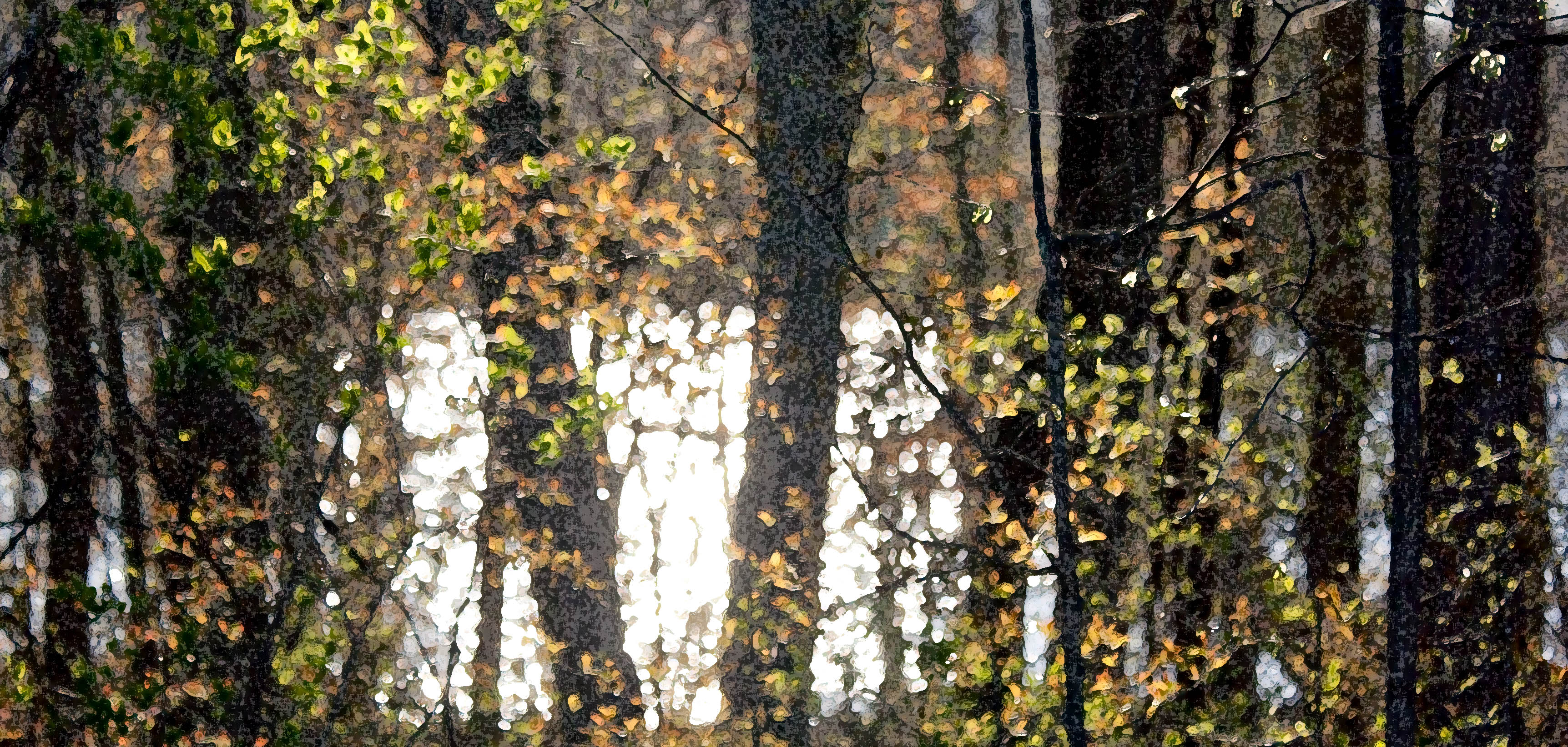
Hardwood forest backlit by sparkling Otonabee River in spring, ON (photo and rendition by Nina Munteanu)
.
Nina Munteanu is a Canadian ecologist / limnologist and novelist. She is co-editor of Europa SF and currently teaches writing courses at George Brown College and the University of Toronto. Visit www.ninamunteanu.ca for the latest on her books. Nina’s bilingual “La natura dell’acqua / The Way of Water” was published by Mincione Edizioni in Rome. Her non-fiction book “Water Is…” by Pixl Press(Vancouver) was selected by Margaret Atwood in the New York Times‘Year in Reading’ and was chosen as the 2017 Summer Read by Water Canada. Her novel “A Diary in the Age of Water” was released by Inanna Publications (Toronto) in June 2020.
A few weeks ago, I (virtually) participated in When Words Collide, one of Canada’s prime writing festivals in Calgary, Alberta. I was a featured writer, sitting on several panels and conducting presentations and lectures. One of the two presentations I did was on the role of place in story.
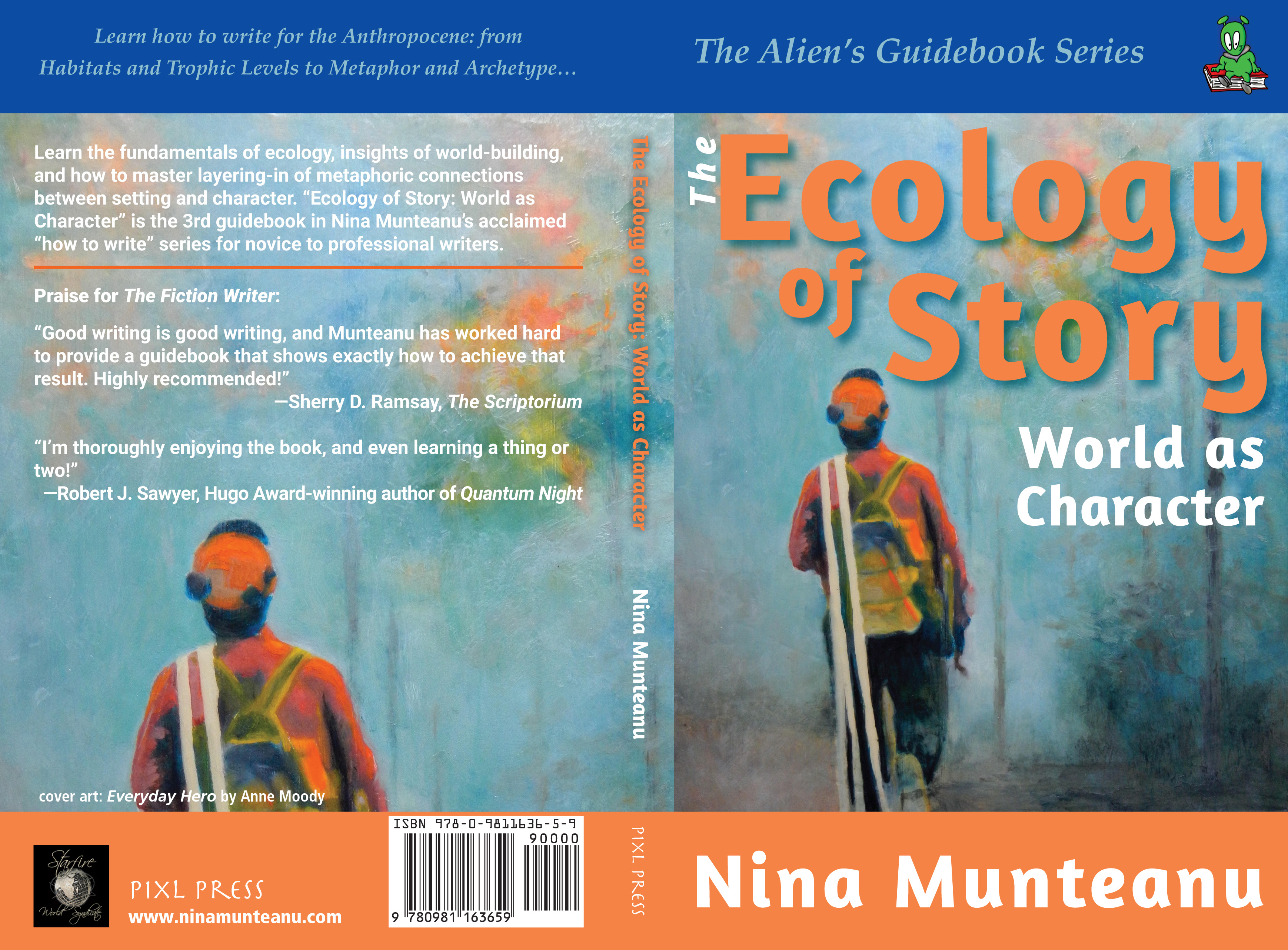
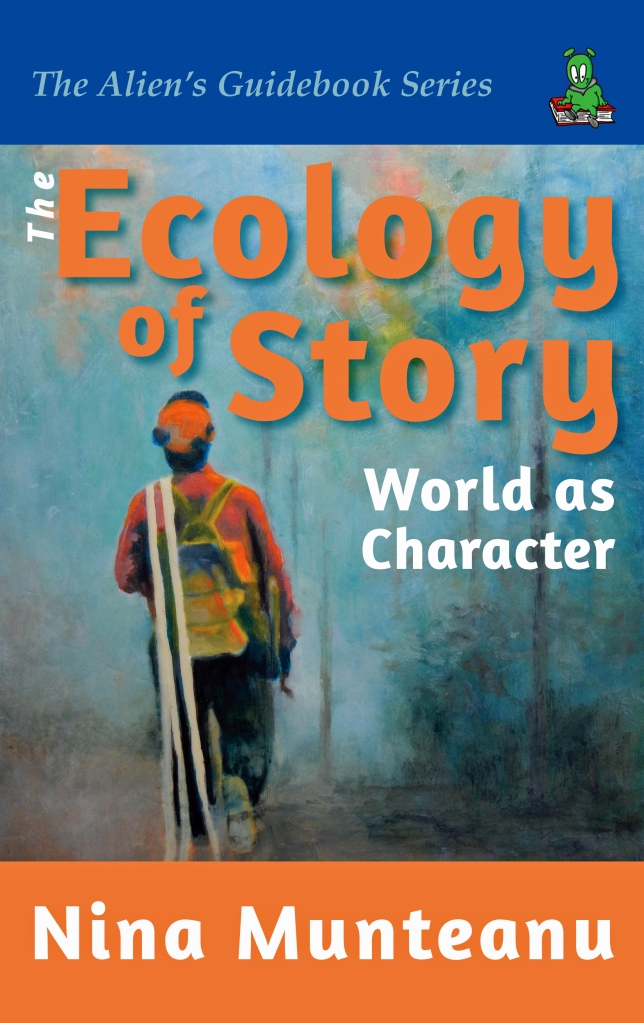
The role of place in story is a topic close to my heart and one I recently wrote an entire writing guidebook on: The Ecology of Story: World as Character. In my coaching sessions with writers and in my writing courses at George Brown College and the University of Toronto, I’ve observed in the novice writer a need for more effective integration of setting and place in story. All too often, the lack of meaningful integration translated into a lost opportunity to explore the POV character and the story’s theme. The lack of meaningful use of place in story can result in a lacklustre story, overly vague characterizations and a story that lacks metaphoric depth and relevance.
The presentation and following discussion drew from my guidebook Ecology of Story and I used many examples from a wide range of literature to overview topics covered in the book, such as:
Place as character & archetype
Place as metaphor (personification, symbols, allegory)
Place and first impressions (openings)
Place and emotion (over time and by POV)
Place through the senses
Place as environmental force (including climate change)
We also discussed how characters connect with their environment and I introduced the metaphoric connection between the Mi’kmaq and the white pine forests in Annie Proulx’s Barkskins, among others.
I concluded the presentation with a discussion on the “paradox in the details”: the more specific description is, the more universal its appeal. This is because the details can establish relevance and realism to the scene and the POV character experiencing them. Vagueness and lack of tangibility are avoided through specificity. The key, however, is to use details that resonate with the theme and tone of the book: as metaphor. Details as metaphor is what you want to achieve.
Because, as Ray Bradbury once told me, “everything in story is metaphor.”
Part 1 provides a comprehensive summary of the science of ecology, the study of relationships, and links to useful metaphor.
Part 2 discusses world and place in story. Here I discuss how the great writers have successfully integrated place with theme, character and plot to create a multi-layered story with depth and meaning. Part 2 also contains several writing exercises and detailed case studies.
Nina Munteanu is a Canadian ecologist / limnologist and novelist. She is co-editor of Europa SF and currently teaches writing courses at George Brown College and the University of Toronto. Visit www.ninamunteanu.ca for the latest on her books. Nina’s bilingual “La natura dell’acqua / The Way of Water” was published by Mincione Edizioni in Rome. Her non-fiction book “Water Is…” by Pixl Press(Vancouver) was selected by Margaret Atwood in the New York Times ‘Year in Reading’ and was chosen as the 2017 Summer Read by Water Canada. Her novel “A Diary in the Age of Water” was released by Inanna Publications (Toronto) in June 2020.
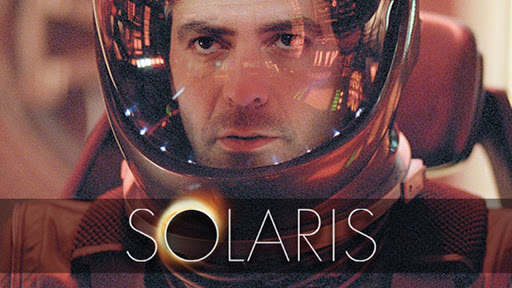
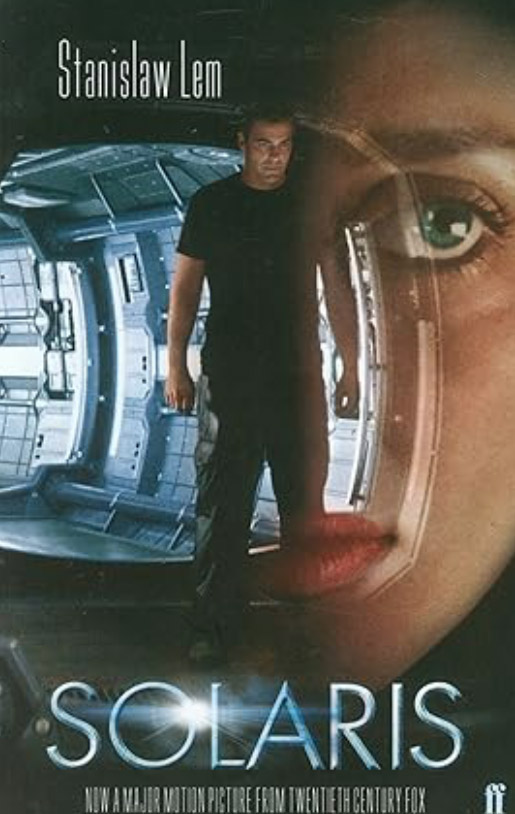
Steven Soderbergh’s stylish psychological thriller, released November 2002 in the United States by 20th Century Fox, eloquently captures the theme of Stanislaw Lem’s 1961 book. Written almost fifty years ago, Solaris is an intelligent, introspective drama of great depth and imagination that meditates on humanity’s place in the universe and the mystery of God. Soderbergh’s Solaris is a poem to Lem’s prose. Both explore the universe around us and the universe within. Not particularly palatable to North America’s multiplex crowd, eager for easily accessed answers, Solaris will appeal more to those with a more esoteric appreciation for art.
When I recently saw the 2002 20th Century Fox remake of Solaris, I was blissfully unaware of its legendary history. I say blissfully because I harbored no pre-conceived notions or expectations and therefore I was struck like a child viewing the Northern Lights for the first time. The stylish, evocative and dream-like imagery flowed to a surrealistic soundtrack by Cliff Martinez like the colors of a Salvador Dali painting. It was only later that I discovered that Russian experimental director, Andrei Tarkovsky, had previously filmed Solaris in 1972 based on Lem’s masterful 1961 book of the same name. Reprinted by Harcourt, Inc. with a new cover featuring a sensual image from the 2002 film, the original book was translated in 1970 from the French version by Joanna Kilmartin and Steve Cox for Faber and Faber Ltd.
Written almost fifty years ago, Solaris is a dark psychological drama. Soderbergh faithfully captures the intellectual yet sensual essence of Lem’s book by tempering the language and movements. Featuring a fluid and haunting soundtrack, his film flows like a choreographed ballet. There is a dream-like quality to it that is enhanced by creative use of camera angles, unusual lighting, tones and contrast, and sparse language. Solarisis not an action film (no one gets shot, at least not on stage), yet the tension surges and builds to its irrevocable conclusion from frame to frame like a slow motion Tai Chi form.
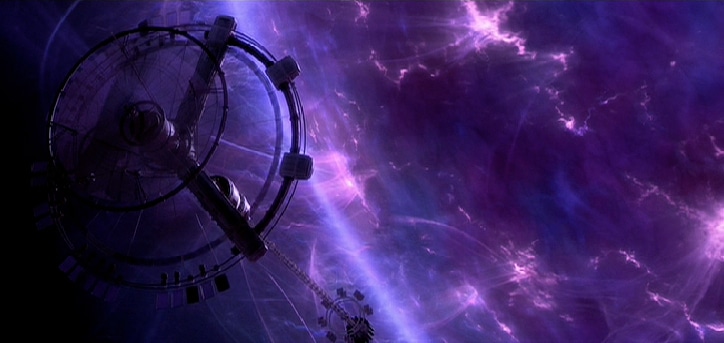
In response to his friend’s plea, a depressed psychologist with the ironic name of Kris Kelvin (played with quiet depth by George Clooney), sets out on a mission to bring home the dysfunctional crew of a research space station orbiting the distant planet, Solaris. Kelvin arrives at the space station, Prometheus, to find his friend, Gibarian, dead by suicide and a paranoid and disturbed crew obviously withholding a terrible secret from him. It is not long before he learns the secret first-hand: some unknown power (apparently the planet itself) taps into his mind and produces a solid corporeal version of his tortured longing: his beloved wife, Rheya (played sensitively by Natascha McElhone) who years ago had committed suicide herself. Faced with a solid reminder, Kelvin yearns to reconcile with his guilt in his wife’s death and struggles to understand the alien force manifested in the form of his wife. He learns that the other crew are equally influenced by Solaris and have been grappling, each in their own way, with their “demons,” psychologically trapping them there.
Ironically, our hero’s epic journey of great distance has only led him back to himself. The alien force defies Kelvin’s efforts to understand its motives; whether it is benign, hostile, or even sentient. Kelvin has no common frame of reference to judge and therefore to react. This leaves him with what he thinks he does understand: that Rheya is a product of his own mind, his memories of her, and therefore a mirror of his deepest guilt—but perhaps also an opportunity to redeem himself.
Lem packs each page of his slim 204 page book with a wealth of intellectual introspection. Through first person narrative, he intimately unveils the complicated influence of this arcane force on Kelvin. Lem explains it this way: “I wanted to create a vision of a human encounter with something that certainly exists, in a mighty manner perhaps, but cannot be reduced to human concepts, ideas or images.” (Author’s Website.) Such an incomprehensible entity would serve as a giant mirror for our own motives, yearnings and versions of reality. For me the contrast presented by such an arcane alien force emphatically—but also ironically—defines what it is to be human. It is only when faced with what we are not that we discover what we are. Later in the book, Kelvin cynically observes: “Man has gone out to explore other worlds and other civilizations without having explored his own labyrinth of dark passages and secret chambers, and without finding what lies behind doorways that he himself has sealed.” In the film Gibarian sadly proclaims of the Solaris mission: “We don’t want other worlds—we want mirrors.” In the book, Lem has Snow deliver a similar message, but neither Gibarian or Snow realize that these two desires may be one and the same.
Lem’s existentialist leaning is provided throughout the book and even alluded to in the name he chose for the space station: Prometheus. In Greek mythology, Prometheus stole fire from the gods and gave it to humankind for which Zeus chained him to a rock and sent an eagle to eat his liver (which grew back daily). It is interesting that Soderbergh chose to send Prometheus to a fiery crash and named Kelvin’s dead wife, Rheya, after the Greek goddess, mother of Zeus and all Olympian gods. In a late passage of Lem’s book, a devastated and sorrowful Kelvin formulates a personal theory of an imperfect god, “a god who has created clocks, but not the time they measure … a god whose passion is not a redemption, who saves nothing, fulfills no purpose—a god who simply is.”
Soderbergh addresses Lem’s existential vision with several brief but pivotal scenes. One occurs when Kelvin’s dead friend, Gibarian, returns to him in a dream on Prometheus and responds to Kelvin’s question, “What does Solaris want?” with: “Why do you think it has to want something?” Another scene occurs as a flashback to a dinner on Earth, when the real Rheya, prior to her suicide, argues with both Gibarian and her own husband about the existence of an all-knowing purposeful God, which both men argue is a myth made up by humankind: to Kelvin’s suggestion that “the whole idea of God was dreamed up by man,” Rheya insists that she’s “talking about a higher form of intelligence,” to which Gibarian cuts in with: “No, you’re talking about a man in a white beard again. You are ascribing human characteristics to something that isn’t.” Kelvin fuels it with: “We’re a mathematical probability,” which prompts Rheya’s challenge: “How do you explain that out of the billions of creatures on this planet we’re the only ones conscious of our immortality?” Neither man has an answer. Gibarian later commits suicide on Solaris rather than deal with the manifestation of his conscience. And I can’t help but wonder if the underlying reason for his inability to reconcile with his “demon” is because he was unequipped to, given his nihilistic beliefs.
Gibarian also tells Kelvin (and we must remember that all this is Kelvin really saying this to himself through his memory of the character): “There are no answers, only choices.” It is interesting then that the first pivotal choice in the story is made by the Doppelganger Rheya (also a manifestation of Solaris but a mirror of Kelvin’s own mind) and it is a choice made out of love: to be annihilated, rather then serve as an instrument of this unknown alien power to study the man she loves.
Some critics have called Soderbergh’s Solaris pretentious, boring and devoid of action and intimacy. I strongly disagree. It is simply that, as with Lem’s original story, Soderbergh’s Solaris does not surrender its messages easily. The viewer, as with the reader, must intuitively feel his or her way through the fluid poetry, free to interpret and ponder the questions. This is what I think good art should do. And I feel both the original book and Soderbergh’s movie do this with enthralling brilliance.
Where Soderbergh and Lem depart lies more in each artist’s personal vision and belief. Soderbergh seems to view the forces that drive our universe as the manifestation of an arcane motive more readily known through spirituality, perceived by the heart, and existing as a matter of belief. Lem, however, suggests that these forces are random and without purpose, defined by science, and perceived by the mind. Still, Lem is not proclaiming a nihilism of his own: he believes we are defined by the questions we ask and Lem asks a great deal of questions—leaving the reader to do the answering.
Reviewer Rick Kisonak asserted that Lem’s “novel is an icy meditation on man’s place in the universe and the mystery of God. It poses countless metaphysical questions and makes a point of answering none of them. In Soderbergh’s hands, however, Solaris becomes a celebration of romantic love, which culminates in the revelation of a caring, forgiving creator. At the end of his book, Lem writes [Kelvin ponders]: ‘the age-old faith of lovers and poets in the power of love, stronger than death, that finis vitae sed non amoris [life ends but not love] is a lie, useless and not even funny.’ The director ignores the author in favor of just such a poet” (Film Threat, [Online]). Kisonak is referring here to Rheya’s interest in Dylan Thomas and its reference throughout the movie. Another reviewer, Dennis Morton, goes so far as to suggest that the screenplay of Solaris is the first stanza of the poem, which ends with: “…though lovers be lost love shall not; And death shall have no dominion” (Santa Cruise Sentinel, [Archived online])
While I agree with some of Kisonak’s reasoning, I think he has missed the point of Lem’s book. If one continues to read from the passage Kisonak quoted above—as Kris Kelvin transcends from what he “thinks” in his intellect to what he feels and “knows” in his heart, to accept his (and humanity’s) destiny with humble fatalism—we learn that Lem ends his book in much the same way as Soderbergh’s movie: life ends but not love. The endings are physically different, in keeping with some radical alterations from the book in the movie’s setting (e.g., the original Solaris station is located on the planet and Lem assiduously describes Kelvin’s observations and interactions with the alien ocean; whereas Soderbergh’s crew virtually never leave orbit and the planet remains aloof in the background, reflecting Soderbergh’s focus). Yet, Kris makes the same choice in faith and love in both book and movie (although the choices play out differently). In matters of faith and love, here is what Kris has to say in the book: “Must I go on living here then, among the objects we both had touched, in the air she had breathed? … In the hope of her return? I hoped for nothing. And yet I lived in expectation … I did not know what achievements, what mockery, even what tortures still awaited me. I knew nothing, and I persisted in the faith that the time of cruel miracles was not past.” In the end of both movie and book, Kris Kelvin lets go of his fears and lets his spirit rise in wonder at what astonishing things Solaris (and the universe) will offer next.
In the final analysis, both book and movie are incredibly valuable but for different reasons. Soderbergh paints an impressionistic poem, using Kafkaesque brushstrokes on a simpler canvas, to Lem’s complex tapestry of multi-level prose. Lem challenges us far more by refusing to impose his personal views, where Soderbergh lets us glimpse his hopeful vision. I think that both, though, come to the same conclusion about the ethereal, mysterious and eternal nature of love. On the one hand, love may connect us within a fractal autopoietic network to the infinity of the inner and outer universe, uniting us with God and His purpose in a collaboration of faith. On the other hand, love may empower us to accept our place in a vast unknowable and amoral universe to form an island of hope in a purposeless sea of indifference. Whether love mends our souls to the fabric of our destiny; enslaves us on an impossible journey of desperate yearning; or seizes us in a strangling embrace of unspeakable terror at what lurks within—surely, then, love is God, in all its possible manifestations. This is unquestionably the message that unifies book and movie. And it is one worth proclaiming.
Indian River, ON (photo and dry brush rendition by Nina Munteanu)
Nina Munteanu is a Canadian ecologist / limnologist and novelist. She is co-editor of Europa SF and currently teaches writing courses at George Brown College and the University of Toronto. Visit www.ninamunteanu.ca for the latest on her books. Nina’s bilingual “La natura dell’acqua / The Way of Water” was published by Mincione Edizioni in Rome. Her non-fiction book “Water Is…” by Pixl Press(Vancouver) was selected by Margaret Atwood in the New York Times‘Year in Reading’ and was chosen as the 2017 Summer Read by Water Canada. Her novel “A Diary in the Age of Water” was released by Inanna Publications (Toronto) in June 2020.
A while ago I was approached by Robert Gooding-Townsend, Science in Society editor for Science Borealis for my opinion on a persistent idea that post-Star Trek sci-fi is more pessimistic and less technologically imaginative.
Whether this perception is true I can’t definitively say but there is a reason behind it, which I believe reflects a subtle shift in our cultural paradigm and worldview in the past decades since Star Trek. A shift involving a growing awareness of ecology and the emergence of the “feminine archetype” in storytelling.
I think two things are happening in concert: science fiction is maturing as a genre: 1) in its actual breadth; but also 2) in our perception of it.
I think this is partly: 1) a reflection of a more diverse, sophisticated and mature audience (what The Economist terms “mass intelligent”); and 2) the result of a wider acceptance of SF as literature by “non-genre” writers embracing what literary critic Ted Gioia calls “conceptual fiction” (e.g., Walker Percy’s Love in the Ruins; Thomas Pinchon’s Gravity’s Rainbow; Vladimir Nabokov’s Ada; John Barth’s Giles Goat-Boy; Margaret Atwood’s The Handmaid’s Tale, Emmi Itaranta’s The Memory of Water; David Mitchell’s Cloud Atlas, etc.).
.
.
Our shifting worldview, along with science fiction’s gradual blending with strong literary elements is reflected in a perception of higher pessimism with less focus on technological “wonders”. When asked to describe SF today, colleague Lynda Williams, author of the Okal Rel series, argued that, “SF is mainstream now … It has grown up, emotionally, from being about wish-fulfilling technologies … to embracing the social implications of change.”
Today, SF is recognized more as “real” literature rather than being dismissed as “escapism.” Williams shares that SF’s roots are as old as myth. “Like myths and bible stories, SF is an instructive literature, pointing out how things can go wrong (or right) and why. The growing up SF has done since the 1950s lies in an increasing recognition that [humanity is its] own worst enemy and a better understanding of human nature is crucial to the problems we face, not just the hard sciences.”
For the past few years I’ve been following a trend in the science fiction writing courses I teach at university: more and more students (male and female) are bringing in WIPs on ecological and global environmental issues. Many of the stories involve a premise of environmental calamity, but not in the same vain as previous environmental disasters that depict “man” against Nature. These works give the Earth, Nature or Water an actual voice (as a character). And a protagonist who learns to interact with it cooperatively. For me this represents a palpable and gestalt cultural awakening in the realm of the “feminine archetype”. One that is focused more on the sociological and ecological consequences of humanity’s evolution.
I believe that ecology—the science of relationships and consequence—best parallels the literature of science fiction, which studies the world and the consequences of our actions (advances in and impacts of science and technology) through metaphor. The literature of science fiction explores large issues faced by humankind and is foremost a literature of allegory and metaphor; one deeply embedded in culture.
Stories of doom and gloom have populated the science fiction genre since its inception. What appears to be changing is the increased sophistication of this assessment and humanity’s place—and technology’s place—in it. Editor and Publisher of On Spec Magazine, Diane Walton shares that she is seeing a lot of Post-Apocalyptic submissions, “mainly because it’s interesting to put your characters in a setting where the rules don’t apply any more. They have to try to rebuild the life and security and order they used to have, or else revert to savagery, or else adapt to a whole new set of circumstances.”
Environmental fiction has been written for years. But I believe that now—partly with new awareness of climate change and with the genesis of the term eco-fiction—the “character” and significance of environment is being acknowledged beyond its metaphor, for its actual value. It may also be that the metaphoric symbols of environment in certain classics are being “retooled” through our current awareness, much in the same way that Aldous Huxley’s Brave New World or George Orwell’s Nineteen Eighty Four are being re-interpreted—and newly appreciated—in today’s world of pervasive surveillance and bio-engineering.
.
.
The stories I’m seeing more and more—whether by established writers or by my own students—reflect an emerging worldview of participation, responsibility and accountability. It is the worldview of Jung and synchronicity; of David Bohm and “implicate order”; of Rudolf Steiner and “cosmic intelligence”, of biochemist Mae-Wan Ho and “quantum entanglement”, of Frans de Waal and “empathy”, and of Matt Ridley and “altruism”.
Whether told through cautionary tale / political dystopia (e.g., Margaret Atwood’s MaddAddam trilogy; Bong Jung-Ho’s Snowpiercer), mundane science fiction (e.g. Paolo Bacigalupi’s The Windup Girl, my own A Diary in the Age of Water), or a retooled version of “alien invasion” (e.g., Cixin Liu’s 2015 Hugo Award-winningThe Three Body Problem), these stories all reflect a shift in focus from a technological-centred & human-centred story to a more eco- or world-centred story that explores wider and deeper existential questions.
.
.
So, yes, science fiction today may appear less technologically imaginative; but it is certainly more sociologically astute, courageous, sophisticated, and relevant. As for the question of pessimism, I’d suggest that rather than being more pessimistic, current SF literature is more realistic and meaningful.
.
Swamp forest in Kawartha region, ON (photo and rendition by Nina Munteanu)
.
Nina Munteanu is a Canadian ecologist / limnologist and novelist. She is co-editor of Europa SF and currently teaches writing courses at George Brown College and the University of Toronto. Visit www.ninamunteanu.ca for the latest on her books. Nina’s bilingual “La natura dell’acqua / The Way of Water” was published by Mincione Edizioni in Rome. Her non-fiction book “Water Is…” by Pixl Press(Vancouver) was selected by Margaret Atwood in the New York Times ‘Year in Reading’ and was chosen as the 2017 Summer Read by Water Canada. Her novel “A Diary in the Age of Water” was released by Inanna Publications (Toronto) in June 2020.
Shanella Ramkissoon reviews my latest eco-fiction mundane science fiction novel “A Diary in the Age of Water” in Issue 46 of Alternatives Journal (Playbook for Progress):
Rain falls on the Otonabee River, ON (photo and rendition by Nina Munteanu)
Nina Munteanu is a Canadian ecologist / limnologist and novelist. She is co-editor of Europa SF and currently teaches writing courses at George Brown College and the University of Toronto. Visit www.ninamunteanu.ca for the latest on her books. Nina’s bilingual “La natura dell’acqua / The Way of Water” was published by Mincione Edizioni in Rome. Her non-fiction book “Water Is…” by Pixl Press(Vancouver) was selected by Margaret Atwood in the New York Times ‘Year in Reading’ and was chosen as the 2017 Summer Read by Water Canada. Her novel “A Diary in the Age of Water” was released by Inanna Publications (Toronto) in June 2020.
I recently had a wonderful discussion on Cyrus Webb’s show ConversationsLIVE on BlogTalkRadio and WYAD Radio in Mississippi.
We talked about curiosity in our world and how fiction connects us with relevance and meaning. We discussed writing eco-fiction, my latest eco-novel and work of mundane science fiction “A Diary in the Age of Water. We also discussed what was involved in combining art with science in mundane science fiction. Cyrus then asked me what it was like to get a book out during COVID. I enjoyed this interview for its refreshing questions. They made me think.
You can listen to the interview through the link below:
I recently had the pleasure of chatting with Crystal Fletcher on “All About Canadian Books” about my recent clifi dystopian novel “A Diary in the Age of Water.” We covered a number of topics from water’s over 70 anomalous properties–virtually all of them life-giving–to how water seems to inform all aspects of my life, particularly my writing life. Crystal was particularly fascinated with the four generations of women in the book and we talked at length about how these characters were developed and the roles they played in the greater saga.
After bringing up the Toronto Star’s question of me (“What keeps you up at night about climate change”) in which I admitted that I lose sleep over the thought of how my son and his children will fair in this changing world, Crystal admitted that “Your book, Nina, is an eye opener…it freaked me out when I was reading it…and now I’m losing sleep!”
Hardwood forest back lit by glittering Otonabee River, ON (photo and rendition by Nina Munteanu)