“Lead Children”: The Heaviness of Poland under Communism

I recently discovered the Polish TV series Lead Children on Netflix—and pretty much binge-watched it. This gripping 6-episode series follows young Doctor Jolanta Wadowska-Król (played by Joanna Kulig) as she gradually uncovers and pieces together a mysterious health crisis that affects children living in the district of Szopienice (in the city of Katowice) dominated by a zinc / lead smelter.

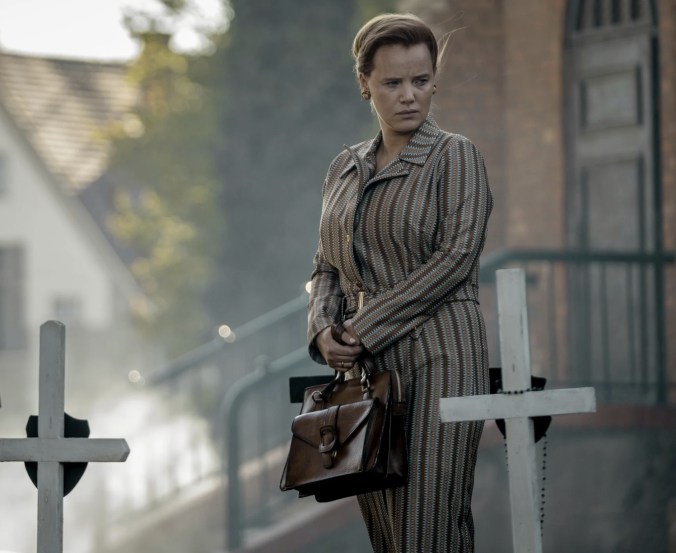
Jolanta stands at a Szopienice graveyard filled with children’s graves (“Lead Children”)

While the title gives away the subject matter of the series, episodes still unravel with insidious deliberation. In the first scene (after the flash forward) a young boy faints for no apparent reason, bringing our good doctor to his aid; in another scene Jolanta is wiping her filthy windows of black dust (from the nearby smelter) before visiting a pregnant mother with two anemic children who promptly gives birth to a stillborn child. We then move to a meeting of city officials who are deciding which factory Comrade General Secretary Brezhnev will visit and one official suggests the Szopienice Non-Ferrous Metal Works; the plant, he claims, has had “improvements and so forth,” that allowed it to exceed the plan for the past two months (the plan being Boleslaw Bierut’s Six-Year Plan started in 1950, for aggressively industrializing Poland through unrealistic production). All this sets the stage for a dark tale of treachery and brave but dangerous persistence to reveal the truth that will reach deep into your soul and squeeze until you are breathless.  

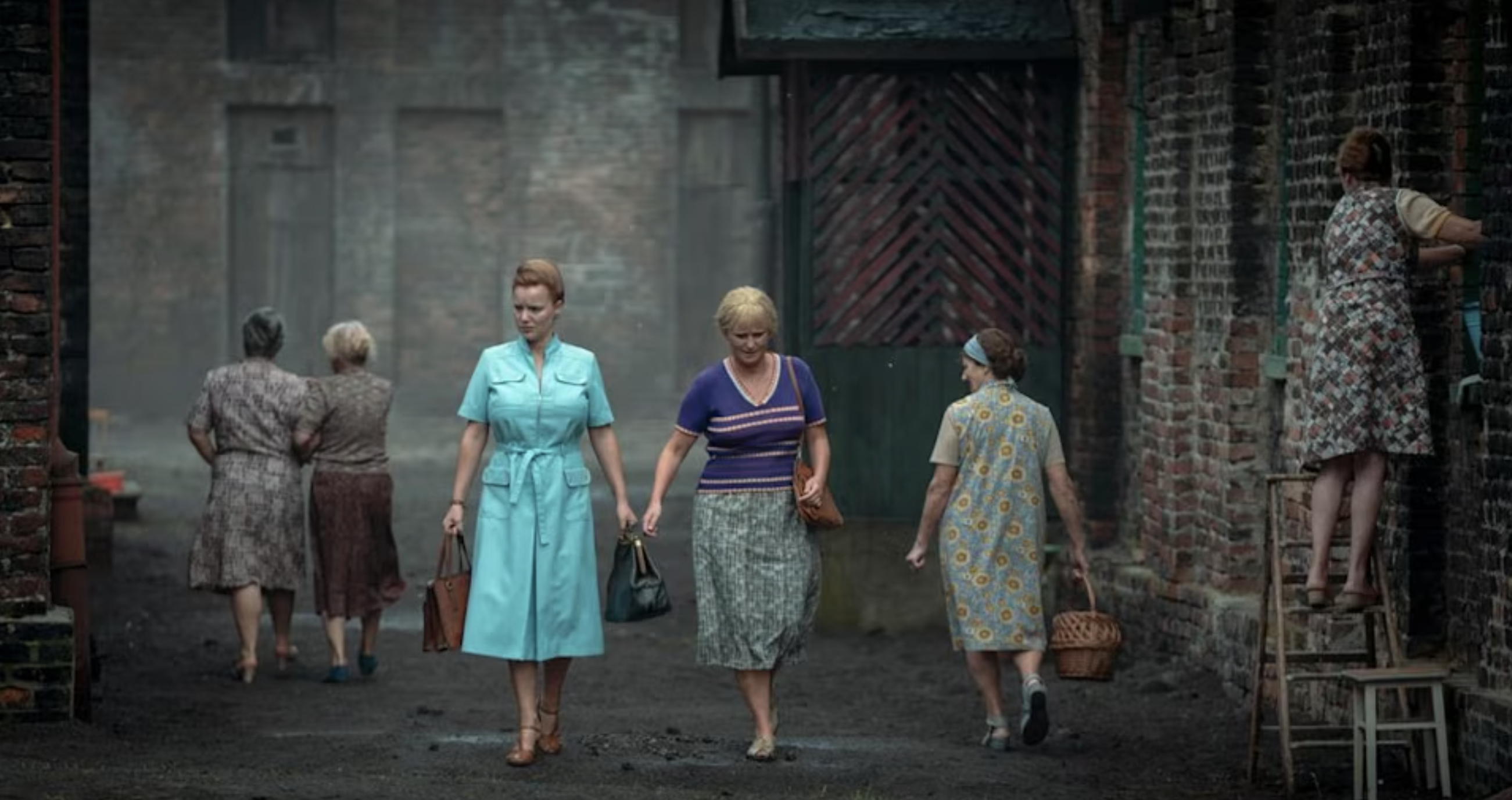
Doctor Jolanta Wadowska-Król and her assistant walk through the smelter district in “Lead Children”

When local children begin showing signs of serious illness and developmental problems—high anemia (e.g. haemoglobin less than half normal), headaches, stomach pain, sluggishness, joint pain and muscle weakness, learning problems, hearing loss, irritability, vomiting, internal bleeding and seizures, enamel hypoplasia, blue gums—Jolanta pushes against what looks like a cover-up to investigate the unusual pattern of sicknesses.

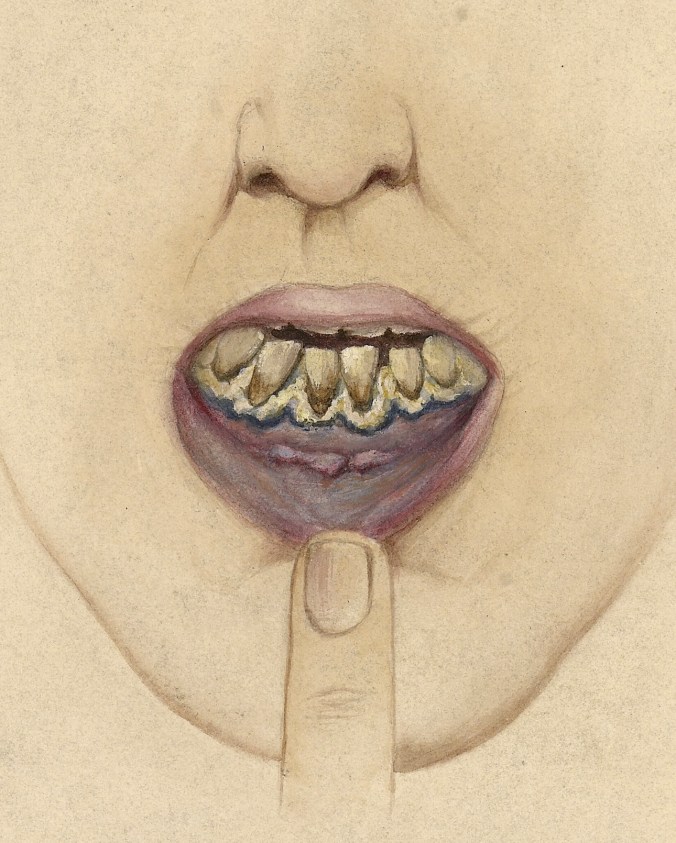
Jolanta recognizes the blue-black gum line in the children as a telltale sign of chronic lead toxicity. Known as “Burton’s line”, it is caused by a chemical reaction by a high level of lead in the child’s blood and sulfur-producing bacteria in the mouth. The interaction creates insoluble lead sulfide deposits in the gum tissue, typically near the gum margin. Jolanta links the poisoning to the lead emitted from the smelter in the Targowisko neighbourhood: in the dust, in the water and the ground where people keep their gardens and children play.

Watercolour drawing of the mouth and gums of a woman who worked in a lead-mill. There is saturnine impregnation with a well-marked Burton’s line and a blue stain on the buccal membrane opposite (source: Wikipedia)
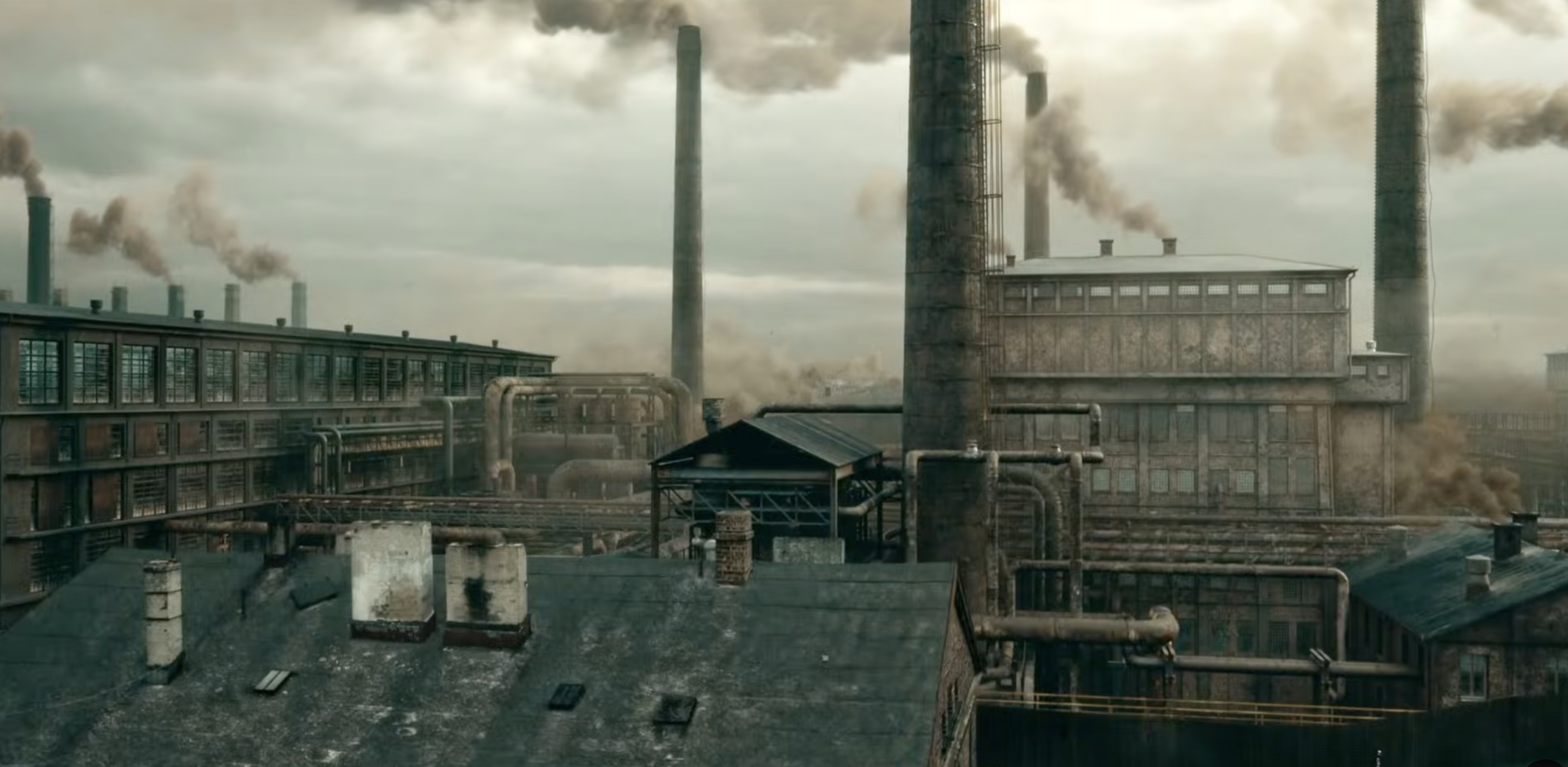
The Szopienice Non-Ferrous Metal Works (“Lead Children”)

Jolanta’s efforts to address the problem are met with a concerted resistance from company managers, local officials and authorities, pressured by politics and the need for production over health and welfare of the community. For instance, workers and their families, live in shabby familoks around the smelter; kids play in the dirt, beneath the billowing smoke stacks, exposed to heavy metal-contaminated ash and dust. It gets even more dangerous for Jolanta when the Polish Security Service starts to interfere. As with the Stasi situation in East Germany, citizens are regularly pressganged into denunciating targeted individuals and Jolanta is denunciated by a member of her own staff.

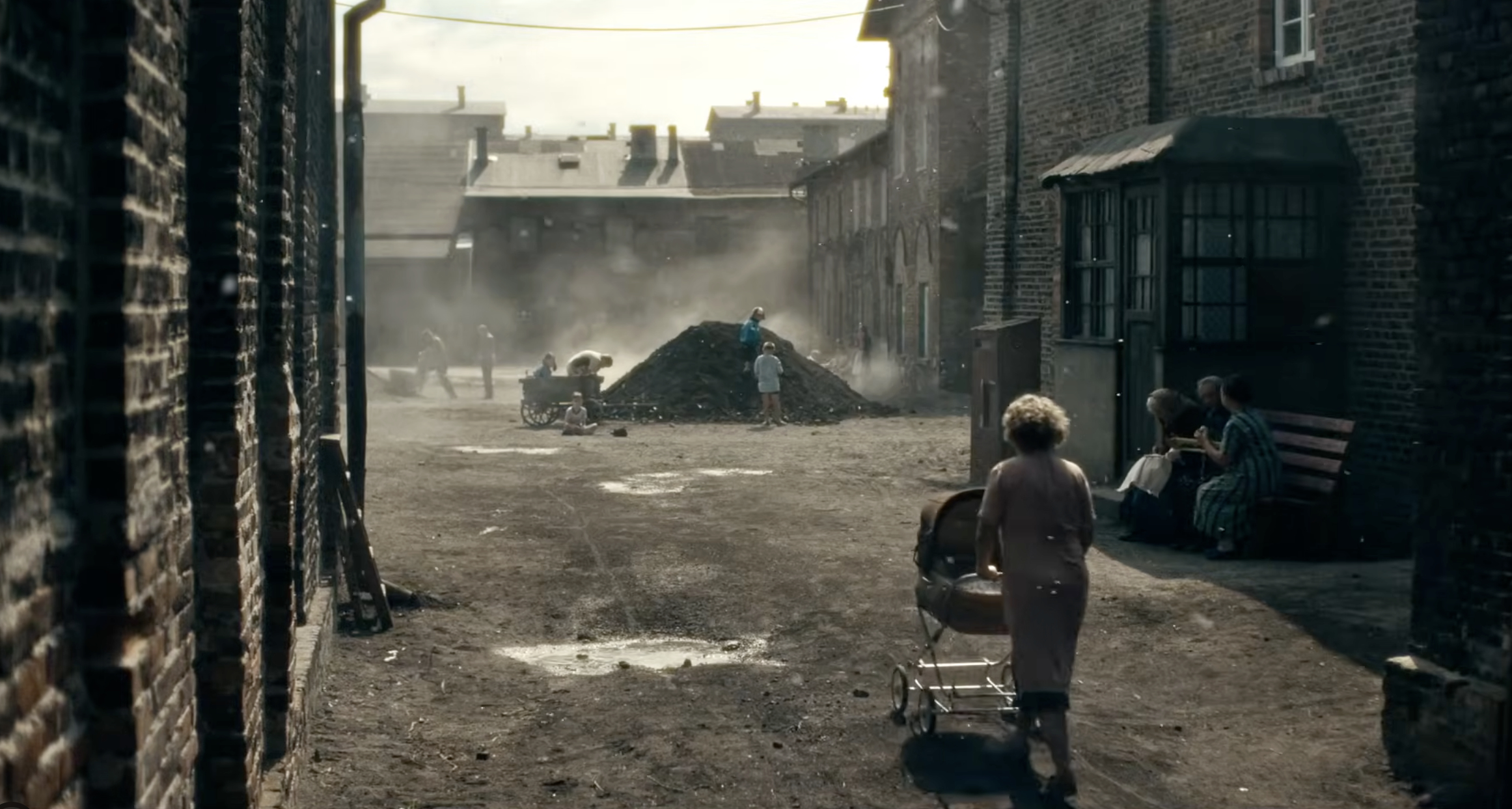
Woman and baby walks in the dust of the smelter as children play in the contaminated dirt (“Lead Children”)

By Episode four, the show becomes heart-breaking as the first of the children dies shortly after returning to Targowisko after a reprieve and recovery from the smelter contamination. Meantime, local Polish Communist Party leader and politburo member Zdzislaw Grudzień pressures the smelter managers to “be the best” by comparing them to a high-producing metal works in Dresden (at the time still in East Germany under the GDR); they respond by removing all the dust-catching filters to increase the draft in the chimneys. Here we also learn that the previous head engineer in charge of stack air quality had been for years using only half the filters of the sieve plates in the pneumatic dust extractor to meet productivity targets.

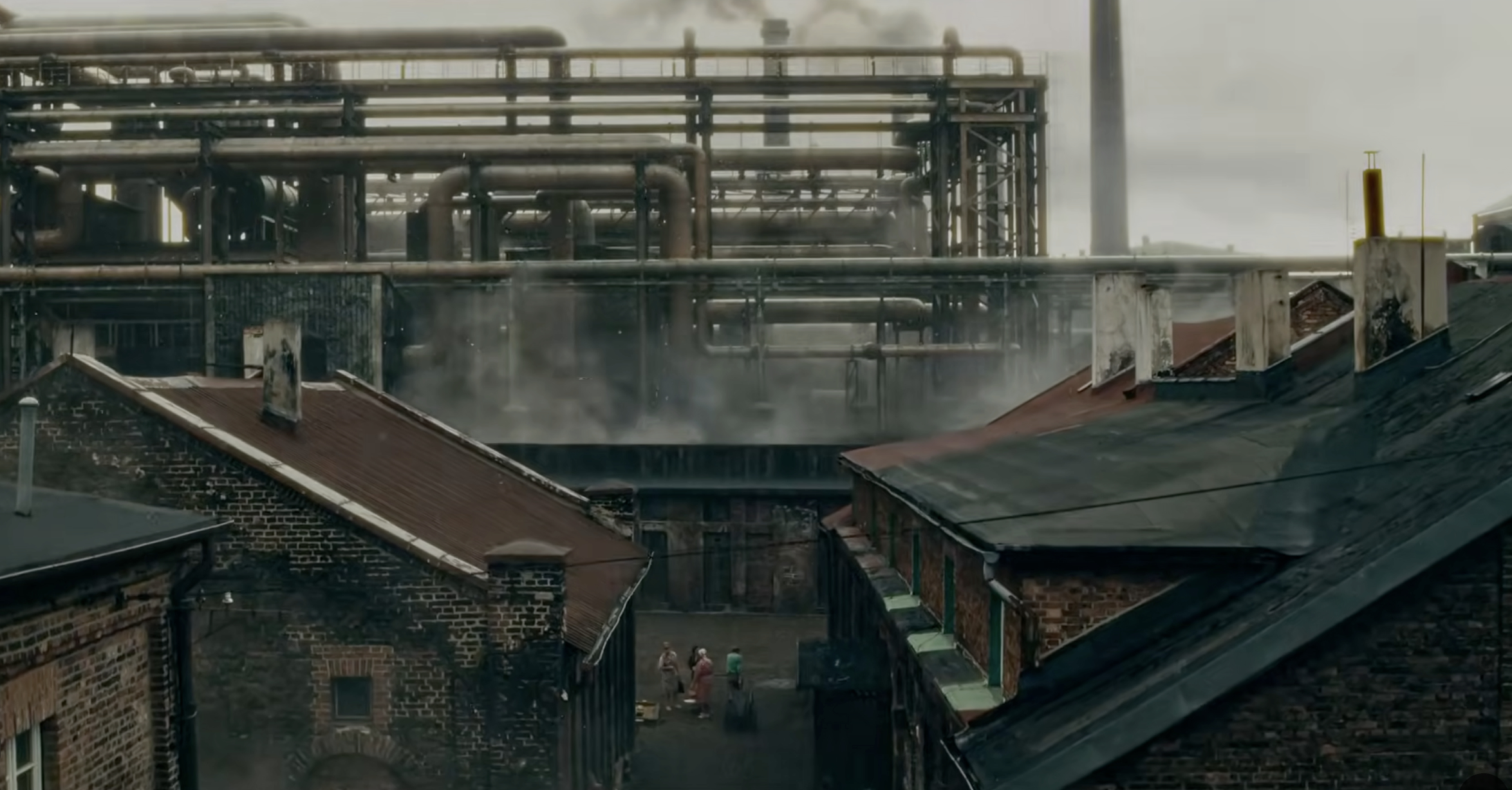
The smelter with village below (from “Lead Children”)

The film notes that in the 1970s lead levels around the plant exceeded safety limits a thousand fold. Recent research indicates that even though the smelter was shut down in 2008, lead levels around it still exceed the limits set by the WHO.

Lead Poisoning in Children and Adults: where it comes from, what it does, and where it goes
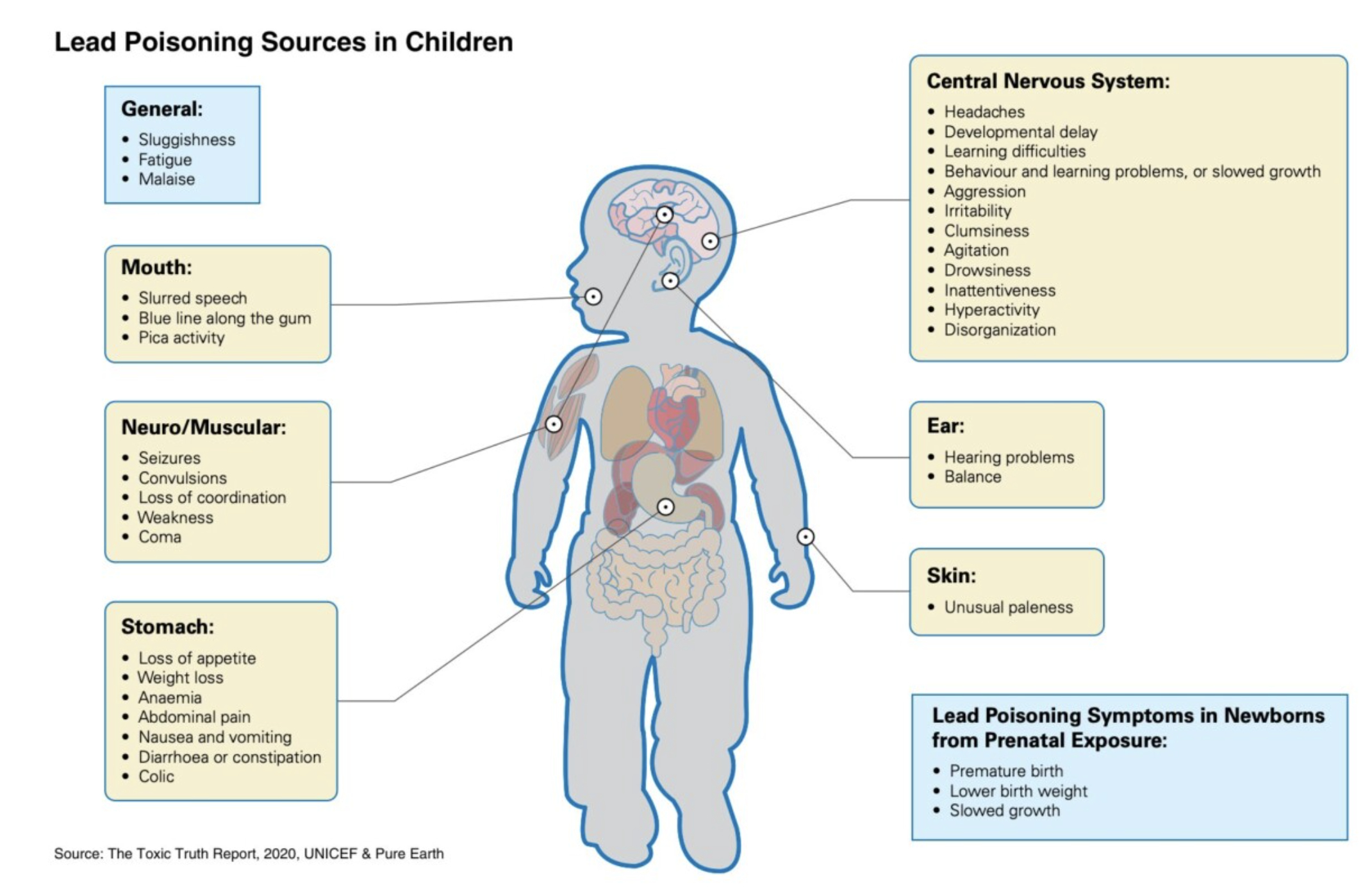
Lead Poisoning in Children (image from Pure Earth)

Lead is a cumulative toxicant that affects multiple body systems; this includes the neurological, hematological, gastrointestinal, cardiovascular and renal systems. According to the WHO, there is no known safe level of lead exposure. Relatively low levels of lead exposure previously considered ‘safe’ are now known to damage children’s health and impair their cognitive development. With even low-level exposure, lead is associated with brain damage, reduced IQ, decreased intelligence, learning difficulties, lower lifetime earnings, increased incidence of heart and kidney disease later in life, and increased tendency for violence.

Young children are particularly vulnerable to lead poisoning, given that they can absorb up to 5 times as much lead as adults from an ingested dose. Children under the age of 5 years are at the greatest risk of suffering lifelong neurological, cognitive and physical damage and even death from lead poisoning. Older children as well as adults suffer severe consequences from prolonged exposure to lead in food, water and the air they breathe; this includes increased risk of cardiovascular death and kidney damage in later life. Children are particularly vulnerable to lead poisoning due to their smaller size and higher rate of lead absorption.

According to the WHO, once lead enters the body, it distributes to organs, including the brain, kidneys, liver and bones. Lead stores in the teeth and bones, where it accumulates over time. Lead stored in bone may release into the blood during pregnancy and expose the fetus.

Lead poisoning is not a thing of the past or restricted to communist nations. According to Pure Earth, lead exposure is responsible for an estimated 3.5 million cardiovascular deaths each year; more than HIV, malaria and tuberculosis combined. A World Bank analysis in 2019 demonstrated that children under five years old worldwide lost 765 million IQ points from lead exposure; about 95% of IQ point loss due to lead exposure were in LMICs. Lead poisoning may also account for 20% of the education gap between high- and low-income countries. 

Major sources of lead contamination include mining & smelting, manufacturing and recycling activities, and lead use in a range of products. These include lead-acid batteries for motor vehicles. Products that may contain lead include pigments, paints, solder, stained glass, lead crystal glassware, ammunition, ceramic glazes, jewelry, toys, some traditional cosmetics, and some traditional medicines. Lead may contaminate drinking water through plumbing systems that contain lead pipes, solders and fittings.

1970s Communist Poland

Inspired by real events from 1970s Upper Silesia during Communist‑era Poland, the TV series Lead Children showcases the atrocities committed in the name of industrial growth and production during that time.

This was a time when the Polish Służba Bezpieczeństwa (SB) or the Security Service of the Ministry of Internal Affairs infiltrated all elements of Polish life—not unlike the Stasi in eastern Germany—to ensure that everyone followed party dogma and the mandate of the Polish United Workers’ Party for industrial productivity. The Security Service of the Communist Polish People’s Republic did their bidding from 1956 to 1990, often enlisting the citizens’ militia. Key aspects of the SB mandate involved political repression and surveillance, infiltration of civil society, persecution of the Catholic Church, suppressing strikes and protests, controlling information, and protecting the state-controlled economy.

Boleslaw Bierut’s Six-Year Plan started in 1950, aggressively industrializing Poland and causing widespread shortages, particularly for meat and dairy. In 1956, when Gomułka came into power, things became somewhat less dangerous, but the shortages continued and in some cases got worse. The period between 1976 and 1989 experienced a maximum in shortages of nearly all products. Under communist rule, Poland was driven by rapid industrial growth, often using low-skilled workers with no consideration for their health and welfare. Criticism or resistance was suicidal. Protests and ensuing riots were violently crushed and suspected leaders hunted down and executed.

(Re)Genesis and the Kurpiowska Forest
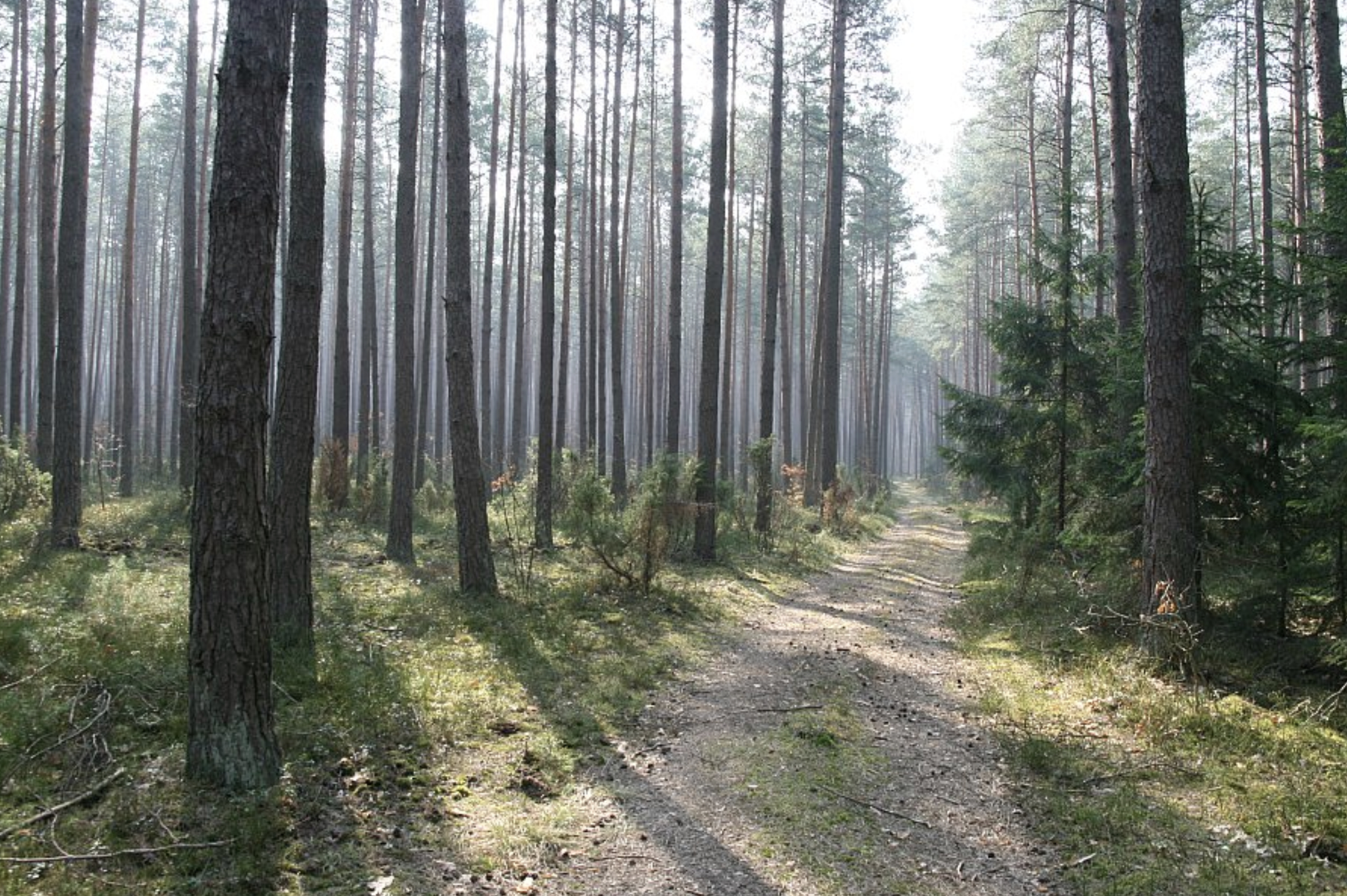
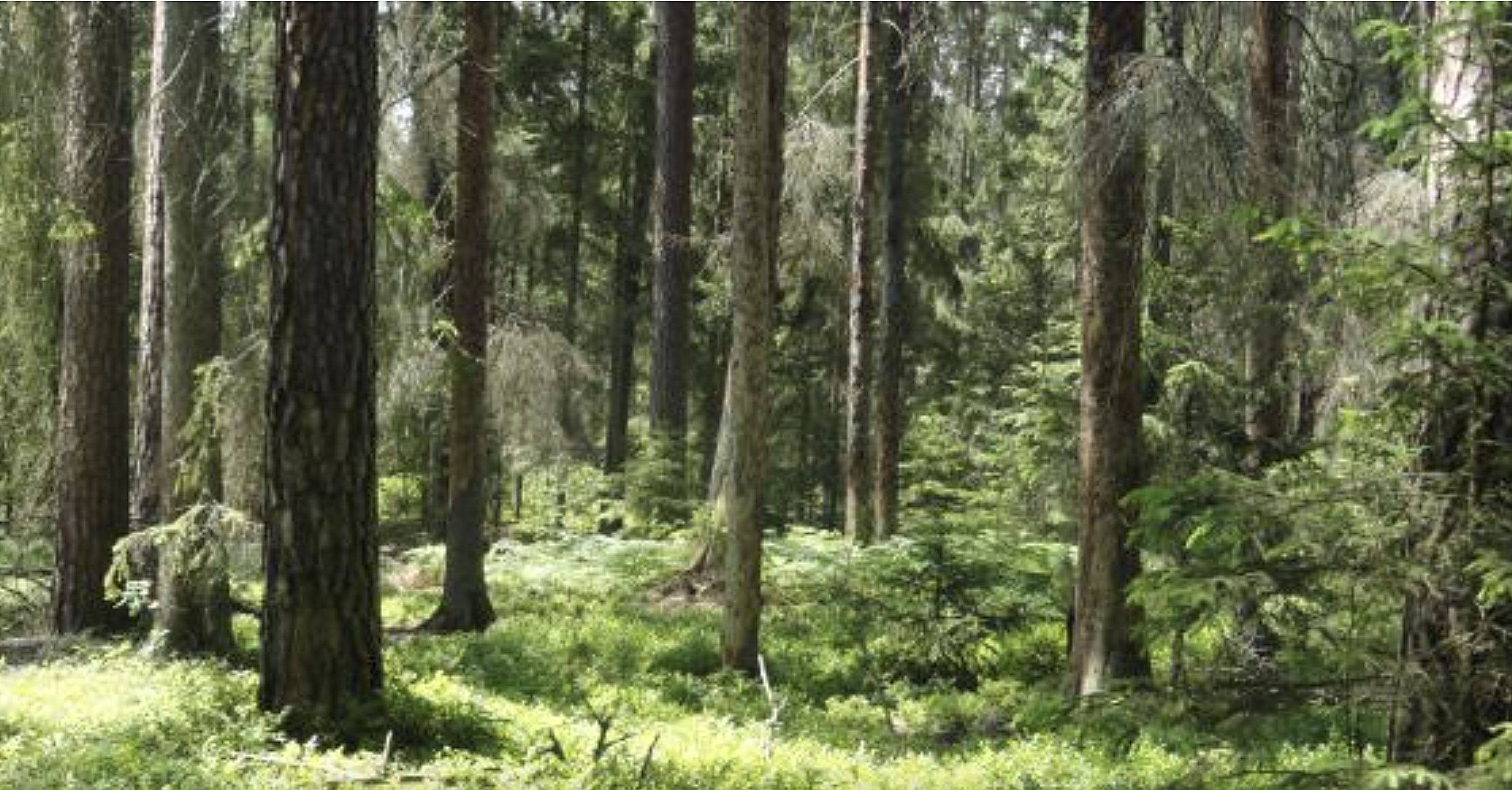
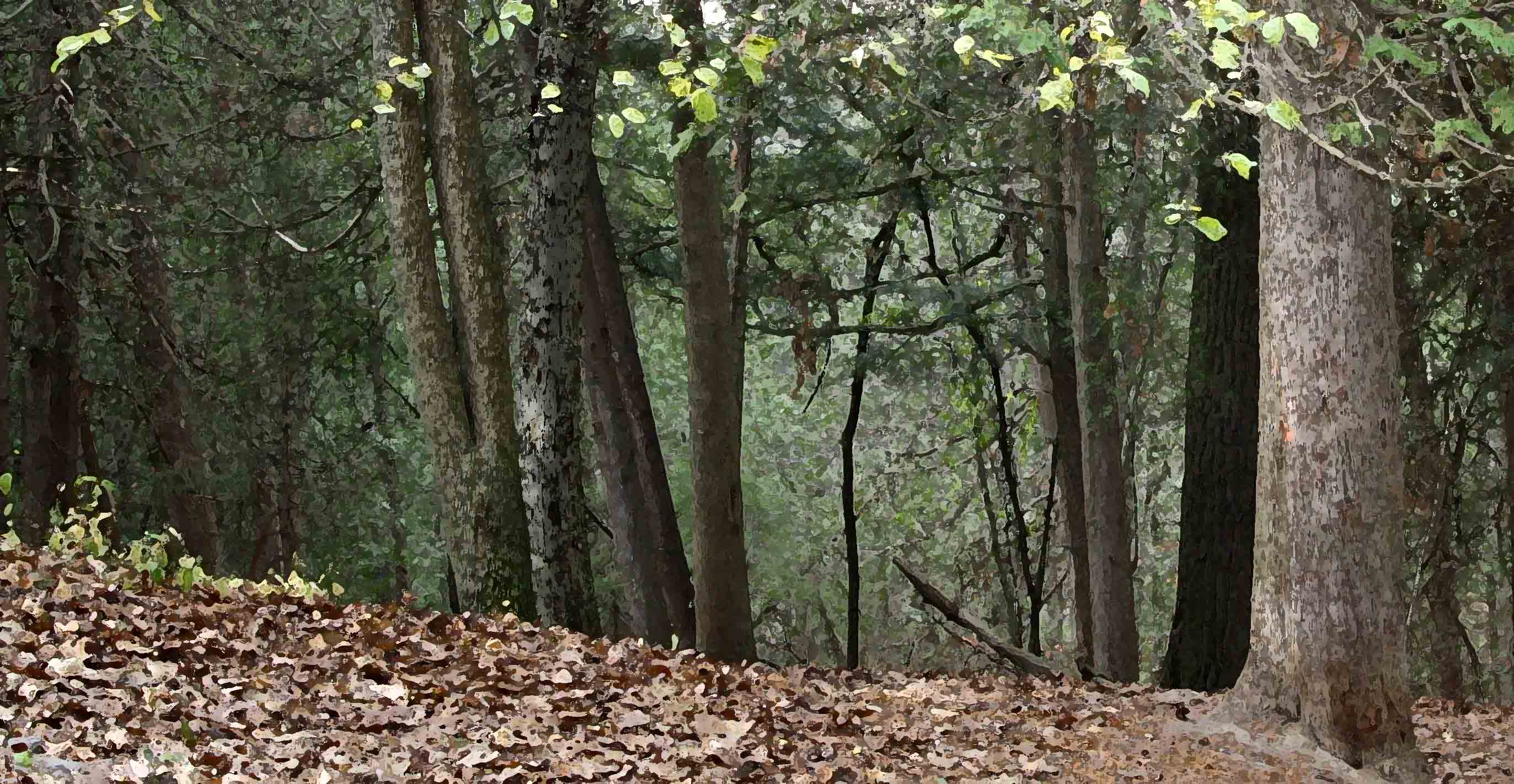
Puszcza Białowieska (The White Forest) of the Kurpiowska Forest (photo by OTOP)

Several key scenes of my upcoming eco-fiction thriller (Re)Genesis take place inside the Kurpiowska Forest in central Poland’s Mazovian Lowlands during the communist rule of Poland (specifically from the 1950s to the 1970s). Young Zofia and Piotr Wójcik and their little twins have come to the Puszcza Kurpiowska to work for Zima Performance Elastomers, a chemical plant that makes a mysterious miracle chemical called syprene that is highly volatile, flammable and toxic. Zima compromises the health and safety of its workers under the yoke of productivity. Workers fall ill and are usually replaced within a decade, either leaving due to ill health or dying of complications. In the following scene in 1959, Zofia has invited her older sister to take care of her twins so she can continue working at Zima Performance Elastomers deep inside the Kurpiowska Forest:
Zofia can’t help a smile. Her older sister is more of an intellectual; she isn’t the mothering type and has made it clear that she doesn’t like children. Yet the twins seem to have softened her heart a little, thinks Zofia, who is so grateful that her older sister is here, so she can return to work.

They eat supper quietly together; Piotr is on the evening shift and won’t be home until later at night when Zofia will reheat some bigos and bread for him.

“How’s Piotr? Still losing his hair?” Ewa asks casually, helping herself to more bigos from the pot.

“Not so much now,” says Zofia. She wipes the side of her bowl with some rye bread to catch the rest of her bigos. “He still gets headaches. I give him piołun for them.”  

Ewa frowns and shakes her head. “Does it work?”

Zofia shrugs.

Ewa makes a scoffing sound; she knows that it doesn’t. She leans forward suddenly. “Seriously, you need to do something, Zofia.”

“But what can I do?”

“Zima’s clearly breaking safety rules. The first is not having sufficient signage. Then hiring idiots straight from high school who don’t know what they’re doing and not educating them. You mentioned Janek smoking in the Polyanna Building? Didn’t you say that stuff is flammable?”

“I think so, based on other similar compounds I know about. No one knows what syprene really is.”

“Well, he’ll blow up the plant if he isn’t careful. Good god, sister, you need to report this to the government before it’s more than just some headaches or a bit of hair loss. Before there’s a serious accident. The constitution of ‘52—”

“The constitution! It’s just paper. The Polish United Worker’s Party has its own rules and ways of doing things.” She waves the bread in her hand at her older sister. “Who would I report this to, eh? Have you forgotten what happened when workers demanded better working conditions at the Poznań’s Cegielski Factories in ’56? Nothing can interfere with progress. The government doesn’t care. And let’s not forget the secret police. That Łukasz Zieliński, who’s so chummy with Wozniak, gives me the creeps. I’m sure he’s secret police. He hardly does anything except wander about poking his long nose in everything and making derogatory remarks.”

 “Now who’s the cynic.” Ewa leans back with a crooked smile. The smile turns into a scowl as she acknowledges Zofia’s point. “But you’re probably right about him.” She shakes her head, spoon playing with the stew. “And, you do have to be careful, sister. Something will happen. I can feel it in my bones.”

Unfortunately, so can Zofia. Her older sister is right, she concedes. The whole place is a tinder box and lately emotions have been high with arguments and even fights erupting in the polymer building. It doesn’t help that Piotr doesn’t seem to take the dangers seriously by not wearing protection, just to fit in—

There’s a noise outside.

The women turn, hearing shuffling at the door and men talking in low urgent voices. The door bursts open and two workmen—Vasili and Krzysztof—drag Piotr inside. He is barely conscious and his head lolls as he groans and murmurs through a frothing mouth.

The women rush forward.

“What happened?” Ewa demands.

“There’s been an accident,” Vasili says, glancing at Krzysztof, who normally works the shift with Piotr. “He got splashed when the drum broke, and may have even swallowed some of the stuff. Then he went into convulsions.”

“And you brought him here?” Ewa says, aghast.

“There’s no emergency shower or eye wash there—”

“Don’t come any further into the house!” Ewa orders gruffly. “Strip him naked and throw the clothes outside. Then take him to the shower. And for god’s sake take off your shoes!”

The men jump into action.

Zofia looks on, tongue-tied.

“Well, get in there!” Ewa shouts at Zofia. “Scrub him clean. With soap! Quickly!”

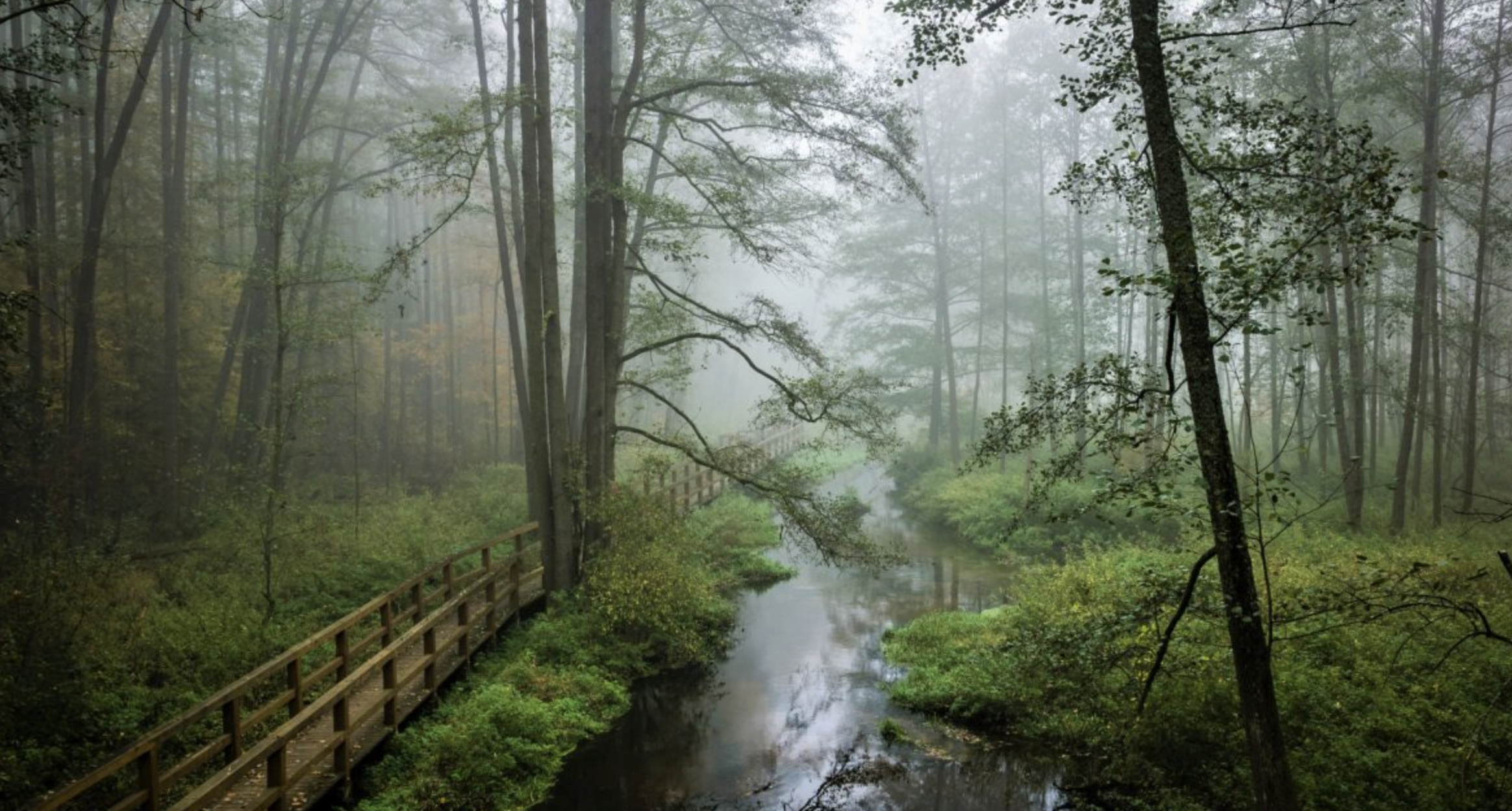
The Kurpiowska Forest near Czarnia, not far from the fictional Zima plant (photo by Polish Tourism)
Kozienice Landscape Park, Massovia, Poland (image by MasovianStyle.com)

Nina Munteanu is an award-winning novelist and short story writer of eco-fiction, science fiction and fantasy. She also has three writing guides out: The Fiction WriterThe Journal Writer; and The Ecology of Writing and teaches fiction writing and technical writing at university and online. Check the Publications page on this site for a summary of what she has out there. Nina teaches writing at the University of Toronto and has been coaching fiction and non-fiction authors for over 20 years. You can find Nina’s short podcasts on writing on YouTube. Check out this site for more author advice from how to write a synopsis to finding your muse and the art and science of writing. Her most recent novel “Gaia’s Revolution” was released in March 2026 by Dragon Moon Press (Calgary).

Interview with Author Simon Rose on The Stone of the Seer

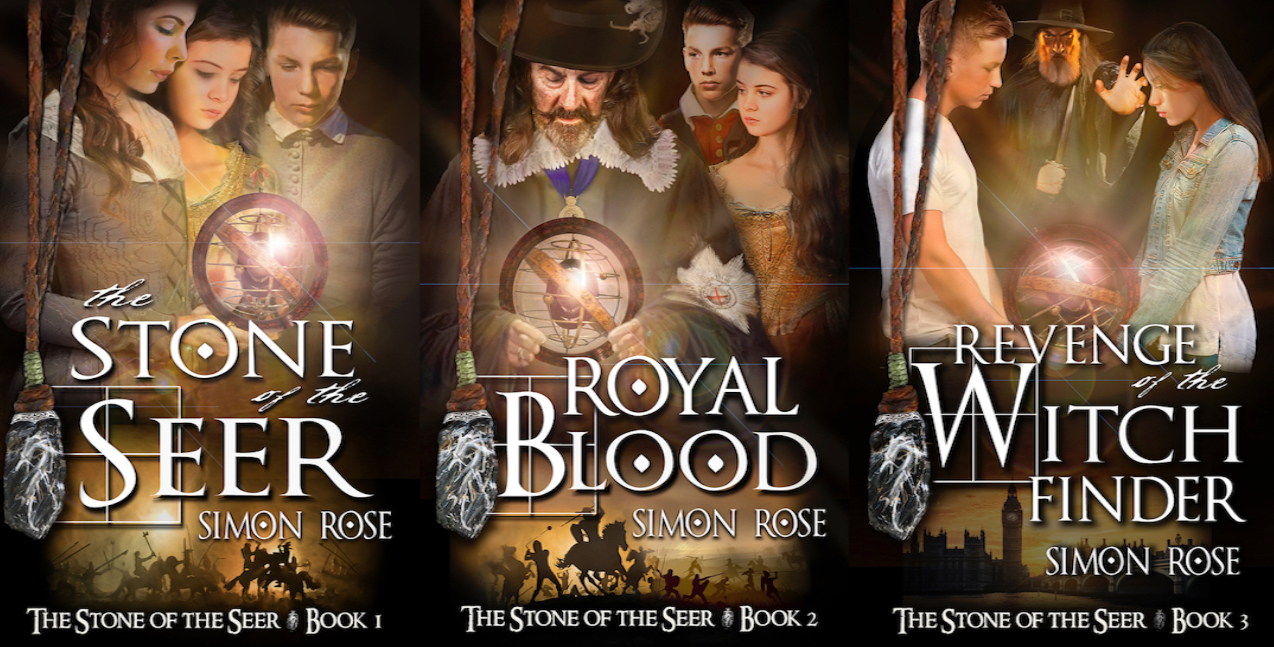
The Stone of the Seer Trilogy by Simon Rose

My guest today is author Simon Rose, who has published twenty-one novels for children and young adults, eight guides for writers, more than a hundred nonfiction books, and many articles on a wide variety of topics. Today, we’re looking at his historical fantasy series, The Stone of the Seer.

Nina: What’s the series all about?

Simon: The Stone of the Seer is an exciting historical fantasy series of adventure novels for young adults, primarily set in the turbulent period of the English Civil War.

The Stone of the Seer, book one in the series, features the Vikings, Leonardo da Vinci, and the political turmoil of the 1640s. At Habingdon House, Lady Elizabeth Usborne, Kate, and Tom encounter a magical black stone, mysterious ancient manuscripts, and the incredible time viewing device known as the tempus inpectoris, all while under constant threat from the murderous witchfinder, Daniel Tombes.

In Royal Blood, book two in the series, Lady Elizabeth, Kate, and Tom, along with the tempus inspectoris and the mysterious black Viking stone, are in the heart of London in early 1649, as King Charles prepares to face his accusers at his trial in Westminster Hall, while Elizabeth, Kate, and Tom desperately attempt to evade capture by Daniel Tombes, the witchfinder.

Much of the story in Revenge of the Witchfinder, book three in the series, takes place in the present day, featuring weird dreams, disturbing visions, parallel lives, and a bewildering identity crisis, as Thomas and Katie discover to their horror that not even the passage of centuries can prevent a bloodthirsty witchfinder from the 1640s from seeking his deadly revenge.

Nina: What’s the story behind the story?

Simon: The story, main characters, and some of the settings in the series are fictional but are based on true events and the story features real historical characters, such as King Charles I. The English Civil War was a series of conflicts in England, Scotland, and Ireland in the 1640s and early 1650s. The war originated in the struggle between Charles I and Parliament regarding how the country should be governed.

The king’s defeat in the civil war led to his trial and execution in January 1649. The monarchy was abolished and replaced first by the Commonwealth of England and then the Protectorate, before the monarchy was restored in 1660. However, the defeat of Charles I confirmed that an English monarch could not rule the country without the consent of Parliament, although this wasn’t legally established until the Glorious Revolution in 1688.

Nina: You must have done quite a lot of historical research for this series.

Simon: I did. These are links on my website at www.simon-rose.com to online sources where you can learn more about the historical events, settings, and leading characters from the English Civil War, some of the leading characters during the conflict, historical locations that are mentioned in the text, life in the seventeenth century, and details from other historical periods that are featured in the stories.

Nina: What are you currently working on?

Simon: I always have a few current projects and right now I’m working more books in the same genre as my previously published paranormal Flashback series, as well as a fantasy series, and a historical fiction novel. I also continue to work on the adaptations of my Shadowzone series into screenplays for movies and TV shows, some other scripts, as well as teaching writing courses at the University of Calgary.

Anyone interested in keeping up to date with the projects that I’m working on is always welcome to subscribe to my monthly newsletter, which you can do at www.simon-rose.com.

Nina: You work with other authors as well as on a variety of projects related to writing and publishing, don’t you?

Simon: Yes, I offer coaching, editing, consulting, and mentoring services for writers of novels, short stories, fiction, nonfiction, biographies, and in many other genres, plus do work with writers of scripts and screenplays. I’m also a writing instructor and mentor at the University of Calgary and served as the Writer-in-Residence with the Canadian Authors Association. You can find details of some of the projects I’ve worked on with other authors, along with some references and recommendations, at www.simon-rose.com.

Nina: Where can people buy The Stone of the Seer series?

Simon: The books can be purchased at most of the usual places and there are details on my website at  www.simon-rose.com

Thanks Simon, for being my guest here today and the very best of luck with The Stone of the Seer series.

You can learn more about Simon and his work on his website at www.simon-rose.com, where you can also link to him on social media and at other locations online.

Nina Munteanu is a Canadian ecologist / limnologist and novelist. She is co-editor of Europa SF and currently teaches writing courses at George Brown College and the University of Toronto. Visit  www.ninamunteanu.ca for the latest on her books. Nina’s bilingual “La natura dell’acqua / The Way of Water” was published by Mincione Edizioni in Rome. Her non-fiction book “Water Is…” by Pixl Press (Vancouver) was selected by Margaret Atwood in the New York Times ‘Year in Reading’ and was chosen as the 2017 Summer Read by Water Canada. Her novel “A Diary in the Age of Water” was released by Inanna Publications (Toronto) in June 2020.

“Gaia’s Revolution”, Life After Capitalism: The Promise & Spectre of Deep Ecology—Part 2

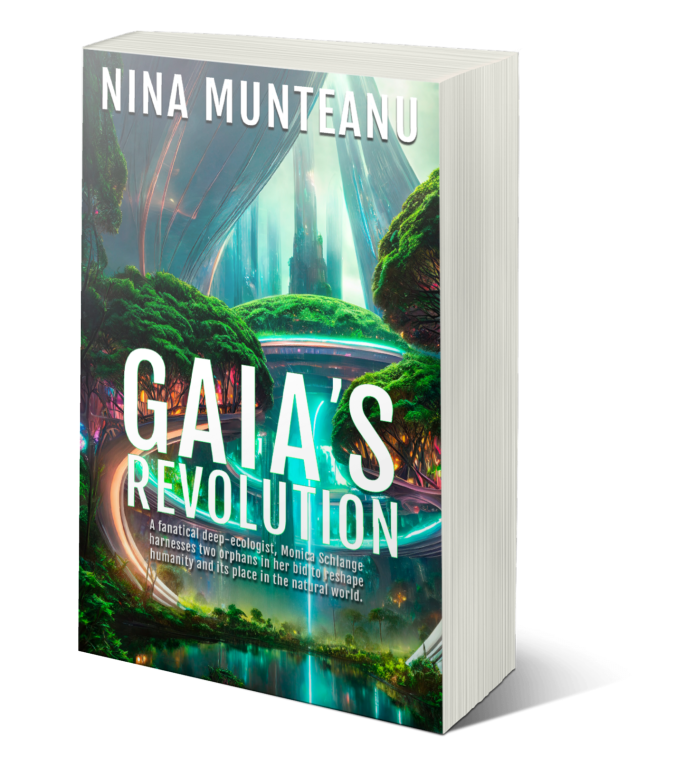
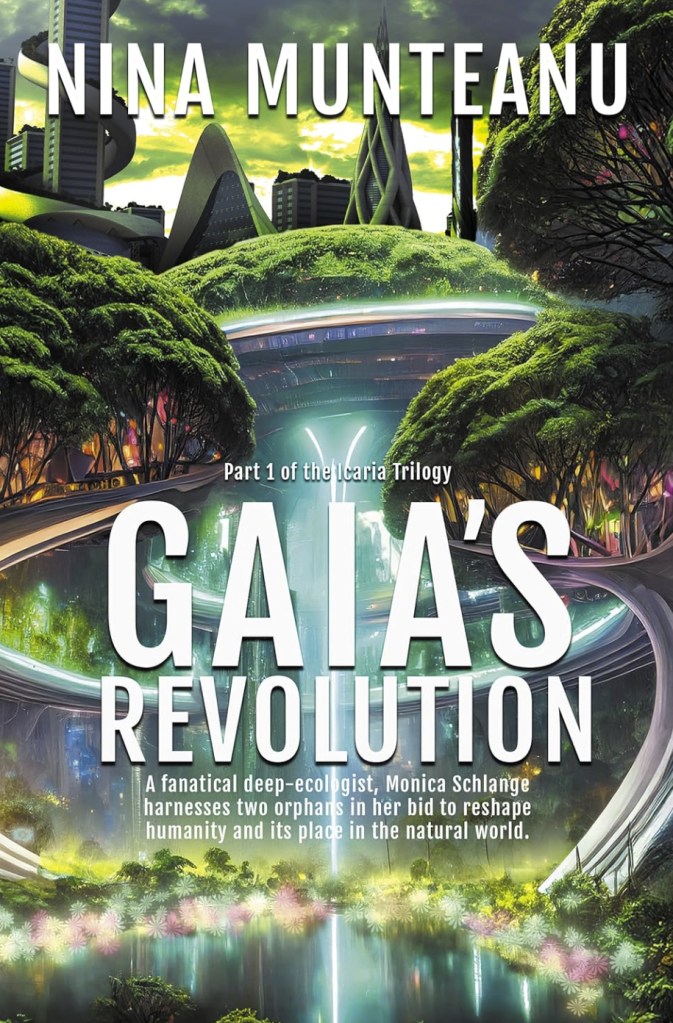
A fanatical deep-ecologist, Monica Schlange, harnesses two orphans in her bid to reshape humanity and its place in the natural world.

My novel Gaia’s Revolution, Book 1 of The Icaria Trilogy—which released March 10, 2026, by Dragon Moon Press—explores a collapsing capitalist society in Canada through ravages of climate change, water shortages, plague, and a failing technology.

The story begins in Berlin in 2022, with maverick scholar Damien Vogel, a deep ecologist and environmentalist who joined the climate activist group Letzte Generation* to do acts of civil disobedience to bring public awareness to climate offenders. The novel progresses from acts of civil disobedience to genuine eco-terrorism as Damien follows his revolutionary anarchist twin brother Eric to Canada and forms the Gaians, a radical eco-activist group, recruiting fanatic Monica Schlange—herself a sly eco-terrorist. Monica is an unscrupulous deep ecologist, proficient in using sabotage and internet tampering to disrupt and hurt climate offenders. The twin brothers end up on opposite sides of a violent revolution as Monica—guided by her own agenda as an extremist planetary guardian—plays them both.

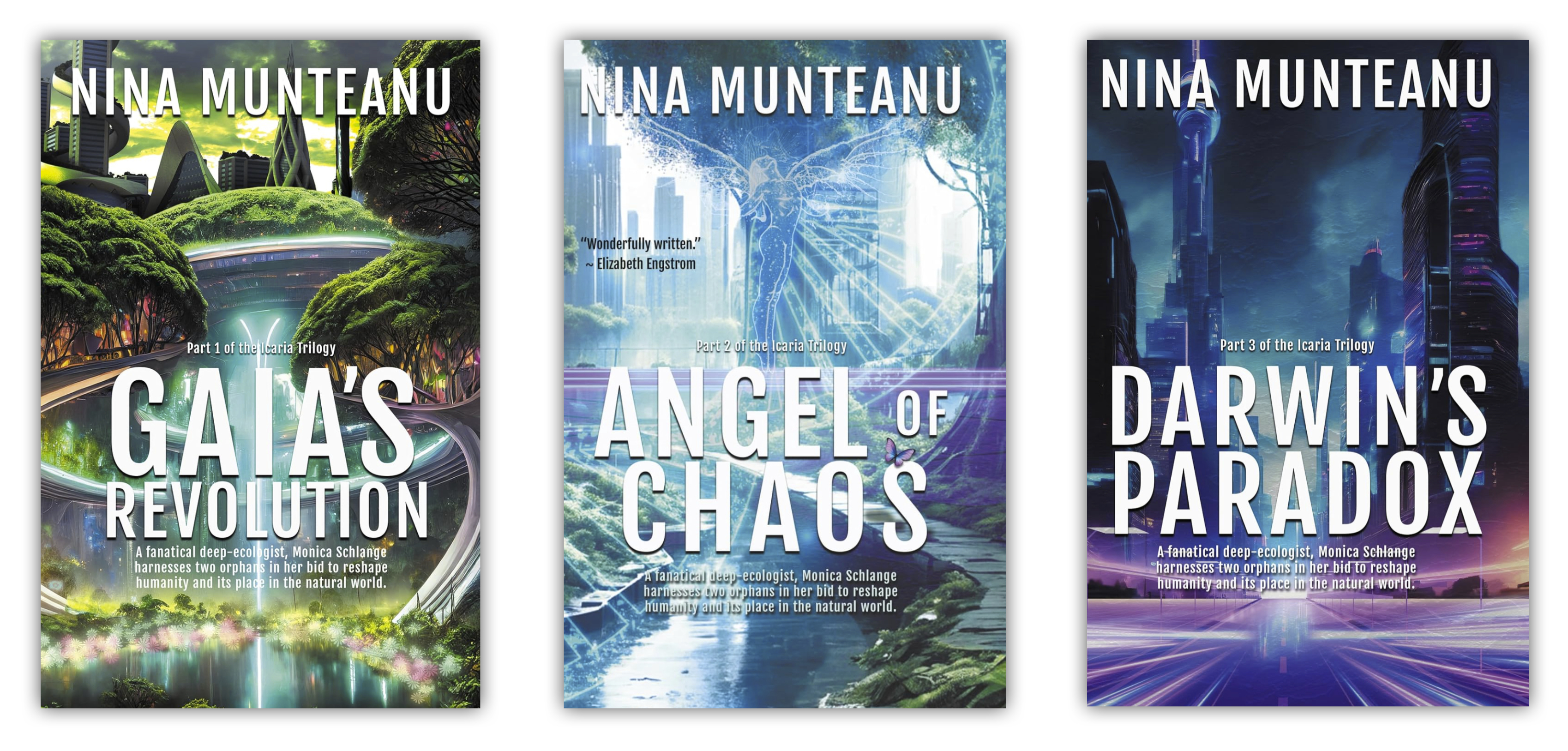
The Icaria Trilogy by Dragon Moon Press

By 2095 (Book 2 Angel of Chaos and Book 3 Darwin’s Paradox), humanity has fled inside environmental dome cities called Icarias*, chased inside by an unruly environment. Icarians struggle with Darwin’s Disease—a mysterious neurological environmental pandemic. Icaria 5 is one of many enclosed cities within the slowly recovering toxic wasteland of North America, and where the protagonist Julie Crane (daughter of one of the orphans in Gaia’s Revolution) lives and works. Icarias are run by The Circle, a governing body of deep ecologists who call themselves Gaians. The Gaians’ secret is that they are keeping humanity “inside” not to protect humanity from a toxic wasteland but to protect the environment from a toxic humanity.

Ecology vs. Deep Ecology vs. Eco-Terrorism

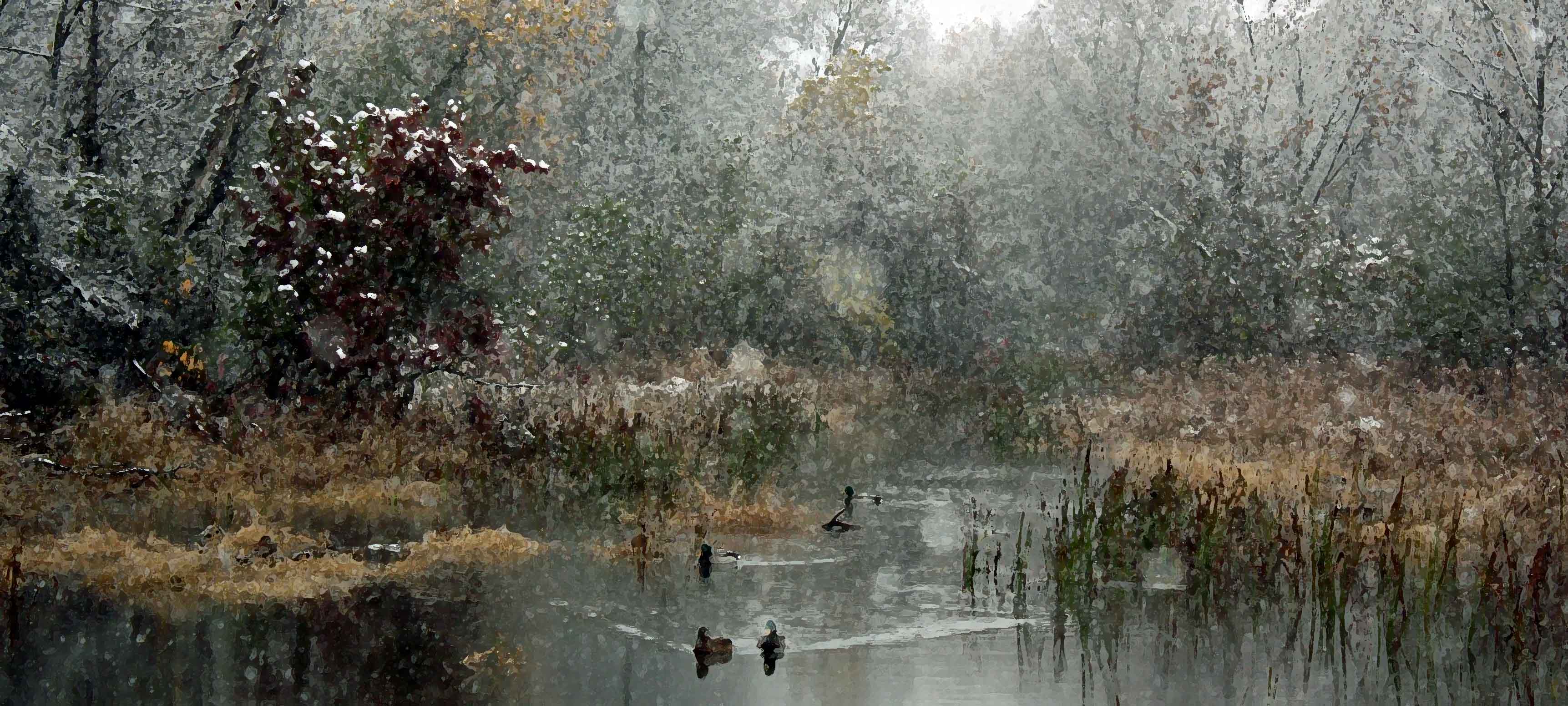
Snow falls on a Scots Pine forest, ON (photo and rendition by Nina Munteanu)

Ecology: Ecology is the science of relationships. Ecologists study ecosystems (aquatic and terrestrial), how they form, their structure and function, and how they relate to one another within the biosphere. Ecologists look at the relationship of all biota and non-biota, at individuals and communities, how all evolve (succession), at community richness, perturbations and recoveries, and natural enrichment. Ecologists model the flow of energy and cycling of matter over time and space.  

Deep Ecology: Deep ecologists are usually ecologists themselves, who have adopted 

An environmental philosophy and social movement advocating that all living beings have intrinsic value, independent of their utility to human needs. The philosophy promotes a holistic, ecocentric worldview—often termed “ecosophy”—that demands radical, structural changes to human society to prioritize nature’s flourishing. See the Eight Basic Principles of Deep Ecology.

Eco-Terrorism: Both ecologists and deep ecologists may grow cynical, seeing humanity as an existential threat, a virus that impacts the rest of life on Earth and exacerbates hyperobjects like climate change, loss of biodiversity and habitat destruction. This may lead to activism which some with a fanatical and destructive warrior spirit may move toward eco-terrorism such as criminal actions to halt development, and various acts of violence (e.g. arson, destruction of research facilities, threats against individuals).

Ecologists, Deep Ecologists & Eco-Terrorists in The Icaria Trilogy

In Gaia’s Revolution deep ecologist / scholar Damien Vogel and his nihilist revolutionary twin brother Eric Vogel trigger a violent revolution and eventual migration of humanity into the enclosed worlds of Icaria. While Damien follows deep ecology as an intellectual and scholar, believing in the eight basic principles of deep ecology, Eric uses the principles to enact merciless ‘solutions’ through brutal acts of eco-terrorism. Deep ecologist / eco-terrorist Monica Schlange insinuates herself into both brother’s plans to orchestrate her own unique vision of the world. Monica differs from Eric in her sense of humanity; a consummate and ruthless eco-terrorist and subversive, she is bent on entirely destroying the capitalist-technocratic machinery of which Eric is a part—to save the planet at the expense of human domination.

Damien and Christian Isabo meet to discuss recruiting her into their radical group:

Christian says, leaning forward, “She’s a bit of a wild card and possibly a genuine eco-terrorist. For instance, I discovered that she was behind the viral social media fiasco that embarrassed Prime Minister Robinson last year and almost cost him his seat. You know the one—those pictures of him fooling around with the German Chancellor, Magda Zimmermann, who’s married with two kids… Damien. I think that she’s extremely resourceful, stealthy, good at subterfuge and covers her tracks impeccably. Of course, there are definitely anger issues there. But, I also think we can count on her because her motives to help the environment lie on a deep visceral level, tied to her childhood experience and love of Nature.”

Damien studies her image on his phone with a thoughtful frown. He looks up at Christian. “What do we know about her?”

“Well, to begin with, she’s an only child and grew up on one of the last independent dairy farms in Ontario, near Guelph. Her father was strict and encouraged a strong work ethic and love for the natural world. He doted on her but died of a heart attack when she was only thirteen, the year their farm was seized by the Technocrats and converted into a Corporation Farm using scientific agriculture. In fact, their seizure may have precipitated the father’s heart attack. Her mother was assigned as a scullery maid in the farm kitchen; she took to drink then ran off with some truck driver travelling across Canada from Surrey, BC. He didn’t treat the girl well and she ran away before they reached Halifax. She ended up living with her aunt—her father’s sister—in the Beaches. The aunt worked as a librarian at York University and was a fervent member of Extinction Rebellion before it dissolved. She was a real bohemian, a deep ecologist herself, and encouraged the girl.”

While Monica shows the same level of dedication, she betrays a lack of integrity in her less than altruistic motivations and means, thinks Damien. The fact that she’s with Eric [his twin brother and nemesis] proves this. But even that—especially that—can work in their favour. It would seem that, without knowing it, she is already working as an undercover spy for their revolution. He can work with that, Damien thinks. Yes, he can certainly do that. And more. It’s my turn now, brother…

“OK. Set up a meeting,” Damien says. “Let’s get her into the fold.”

Mist over swelling spring stream, ON (photo and rendition by Nina Munteanu)

Leonard Crane—one of the three orphans impacted by the revolution and both rescued and tormented by Monica Schlange—studies ecology under new Gaian rule and is eventually inducted into the prestigious Department of Industrial Ecology (DIE) where he works on subversive ecological theories about Icaria’s inevitable demise and is eventually ostracised from the scientific community for his unpopular work. His legacy echoes throughout Books 2 and 3 of the trilogy.

Books 2 and 3 follow Julie Crane (Leonard’s daughter), a self-taught ecologist. In Angel of Chaos and Darwin’s Paradox, her skills as an amateur ecologist (in a world where ecology is not taught) are tested by the ruthless deep ecologist Gaia, head of The Circle. Gaia denigrates Julie’s ecological pursuits as shallow and ineffectual. When a subordinate of hers asks her if Julie would make a good candidate for The Circle (the governing body of Icaria), Gaia scoffs:

“You mistake a good scientific ecologist with someone who possesses a genuine empathy for deep ecology,” she said. Her eyes sparkled like sapphires. “No one enters our elite cadre without having impeccable qualifications and submitting to many more initiations than she is capable of passing. She may be an ecologist but she is not a deep ecologist. The science of ecology does not ask what kind of society would be the best suited to maintain a particular ecosystem. Our greater concern is with questions aimed at the level of organic wholeness and ‘Earth wisdom’. She knows nothing of these things.”—Gaia, Angel of Chaos

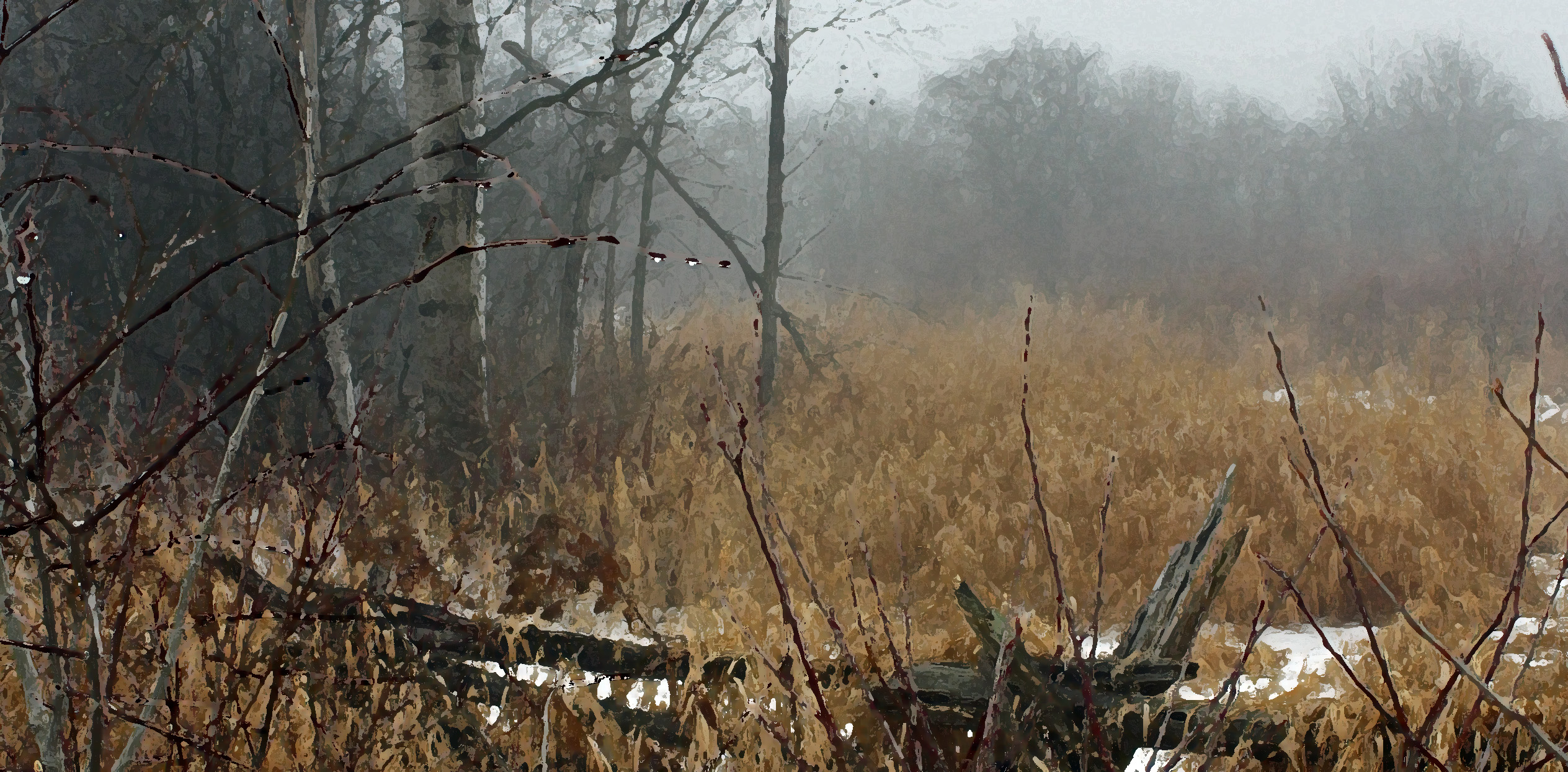
Fog enshrouded marsh in early winter, ON (photo and rendition by Nina Munteanu)

You can order “Gaia’s Revolution” on Amazon. Release date for both ebook and print book was March 10, 2026. Book 2 (Angel of Chaos) and Book 3 (Darwin’s Paradox) of theIcaria Trilogy are already available in both ebook and print form.

References:

Munteanu, Nina. 2026. “Gaia’s Revolution, Part 1 of Icaria Trilogy.” Dragon Moon Press, Calgary, AB. 369 pp.

Munteanu, Nina. 2010. “Angel of Chaos, Part 2 of Icaria Trilogy.” Dragon Moon Press, Calgary, AB. 518 pp.

Munteanu, Nina. 2007. “Darwin’s Paradox, Part 3 of Icaria Trilogy.” Dragon Moon Press, Calgary, AB. 294 pp.

Sessions, George, Bill Devall. 2000. “Deep Ecology: Living as if Nature Mattered.” Gibbs Smith. 267pp.

Skinner, B.F. 1948. “Walden Two” The Macmillan Company, New York. 301pp.

Terminology:

*Deep Ecology: An environmental philosophy and social movement advocating that all living beings have intrinsic value, independent of their utility to human needs. Coined by Arne Næss in 1972, it promotes a holistic, ecocentric worldview—often termed “ecosophy”—that demands radical, structural changes to human society to prioritize nature’s flourishing.

*Icaria: the name of Étienne Cabet’s utopia. Cabet was a French lawyer in Dijon, who published his novel Voyage en Icarie in 1839. The novel was a sort of manifesto-blueprint of utopian socialism, with elements of communism (abolished private property and individual enterprise), influenced by Fourierist and Owenite thinking. Key elements, such as the four-hour work day, are reflected in B.F. Skinner’s Walden Two. Cabet’s novel explores a society in which capitalist production is replaced by workers’ cooperatives with a focus on small communities.

*Letzte Generation: a prominent European climate activist group, founded in 2021, known for its acts of civil disobedience—such as roadblocks, defacing art, and vandalizing structures—to pressure governments on climate action. The term was chosen because they considered themselves to be the last generation before tipping points in the earth’s climate system would be reached. They are mostly active in Germany, Italy, Poland and Canada. In Germany, they have faced accusations of forming a criminal organization, leading to police raids.

Nina Munteanu is an award-winning novelist and short story writer of eco-fiction, science fiction and fantasy. She also has three writing guides out: The Fiction WriterThe Journal Writer; and The Ecology of Writing and teaches fiction writing and technical writing at university and online. Check the Publications page on this site for a summary of what she has out there. Nina teaches writing at the University of Toronto and has been coaching fiction and non-fiction authors for over 20 years. You can find Nina’s short podcasts on writing on YouTube. Check out this site for more author advice from how to write a synopsis to finding your muse and the art and science of writing.

The Icaria Trilogy: The Story Behind the Prequel to the Prequel…


Today my eco-fiction novel Gaia’s Revolution (Book 1 of The Icaria Trilogy) releases through Dragon Moon Press in paperback and ebook form on Amazon (and other book retailers).

Gaia’s Revolution explores a collapsing capitalist society in Canada through ravages of climate change and a failing technology. The story is told through the lives of ambitious twin brothers Eric and Damien Vogel, and the woman who plays them like chess pieces in her gambit to ‘rule the world.’ The novel starts out in Berlin—with a scuffle between police and climate activists of Letzte Generation-then moves to Toronto Canada, where an unlikely revolution is brewing… 

Book 2 (Angel of Chaos) and Book 3 (Darwin’s Paradox of The Icaria Trilogy are already available in bookstores worldwide in both ebook and print form.

The Icaria Trilogy by Dragon Moon Press

This day is special for me in a number of ways. Today is also my dad’s birthday. He passed away a while ago, but I know he is here with me as this is happening. You see, when I was just 15, I’d written my first book, an early version of Angel of Chaos. My dad, who had met and befriended an editor at Doubleday, and proud of my accomplishment, arranged a meeting with me and the editor to look at my book. I put on my highest pumps—I could barely walk in them!—and best outfit and met with the gentleman. He did not take my book for publication but praised my work and gave me some wonderful advice. “Keep writing!” he said. I have carried that meeting and advice to this day and thank my dad for his belief in me as a writer—particularly given that he had been pushing for me to become a teacher or nurse. Four decades later, a more polished version of that same book was published in 2010 by Dragon Moon Press (as Angel of Chaos, the prequel to Darwin’s Paradox, which was published in 2007). 

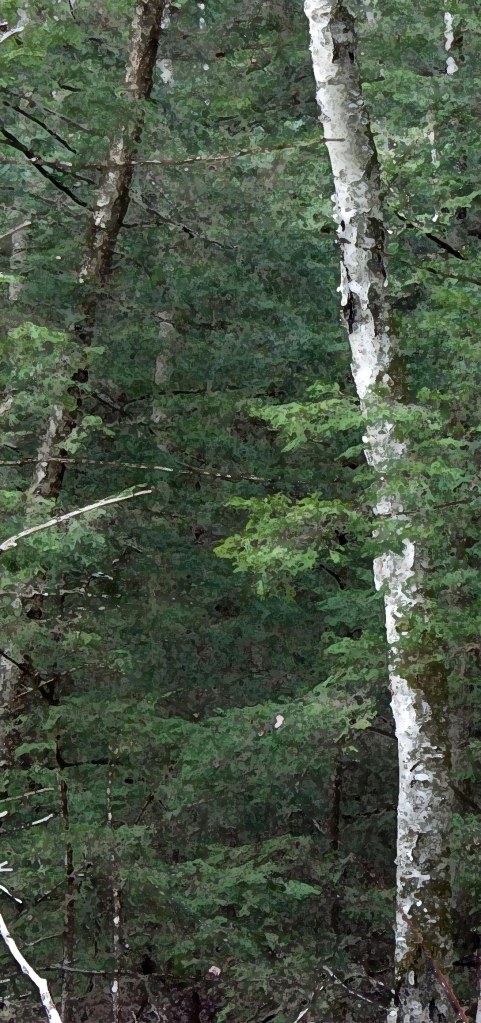
Birch forest in Ontario (photo and rendition by Nina Munteanu)

The Icaria Trilogy by Dragon Moon Press

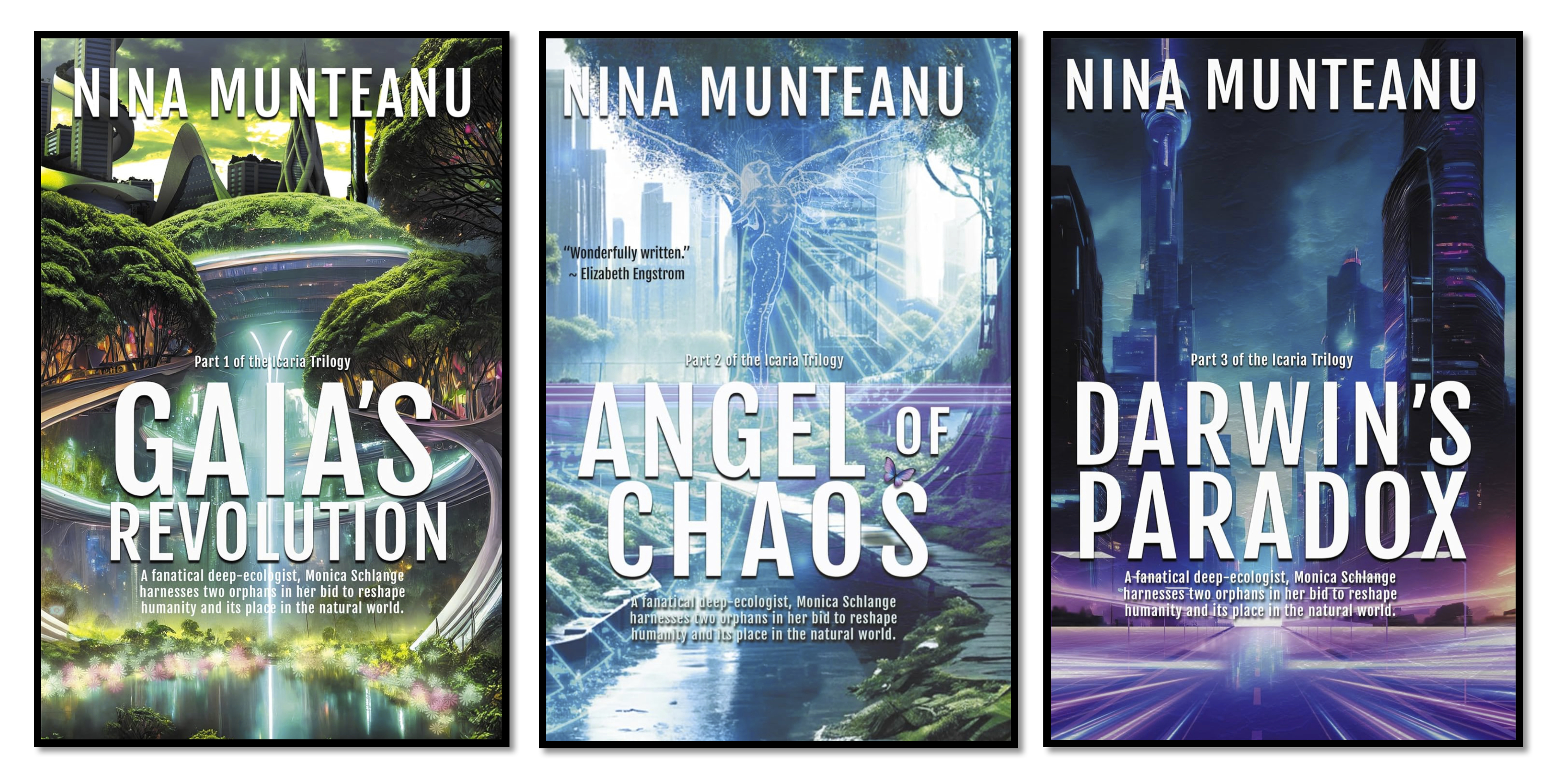
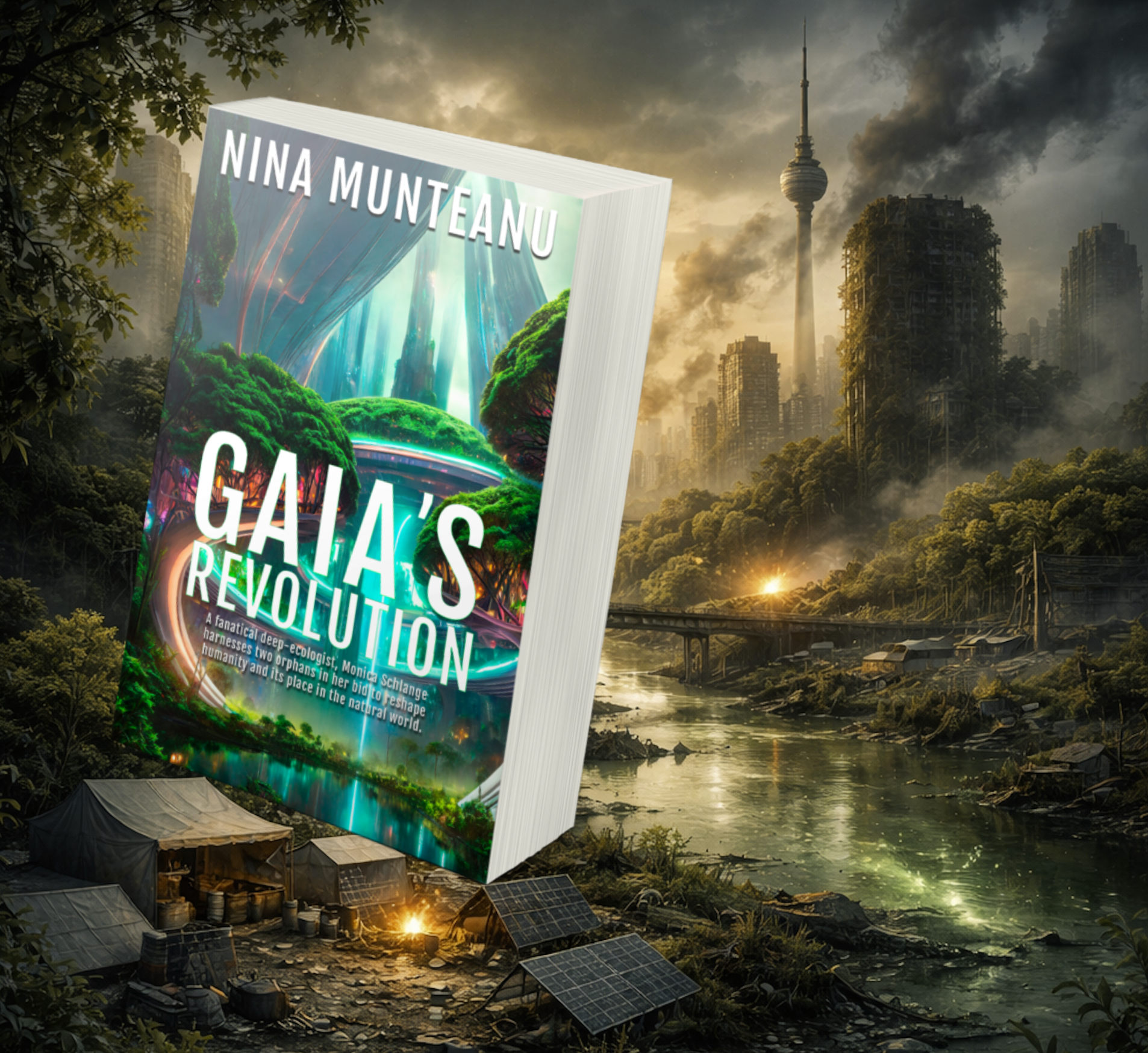
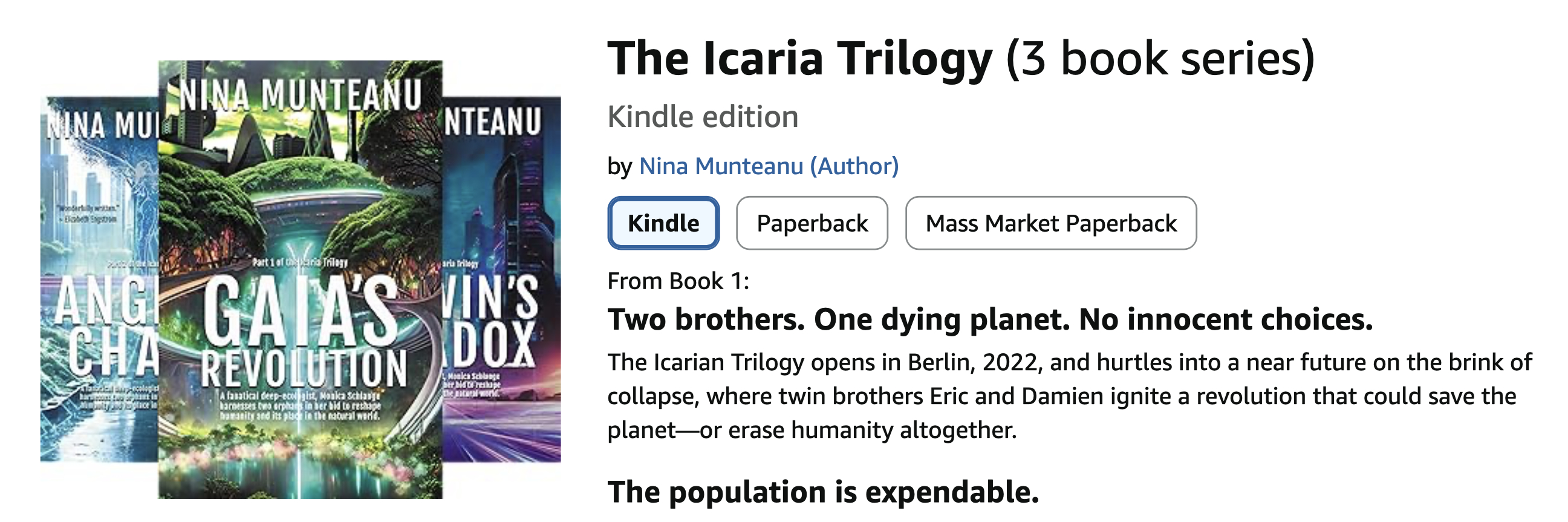
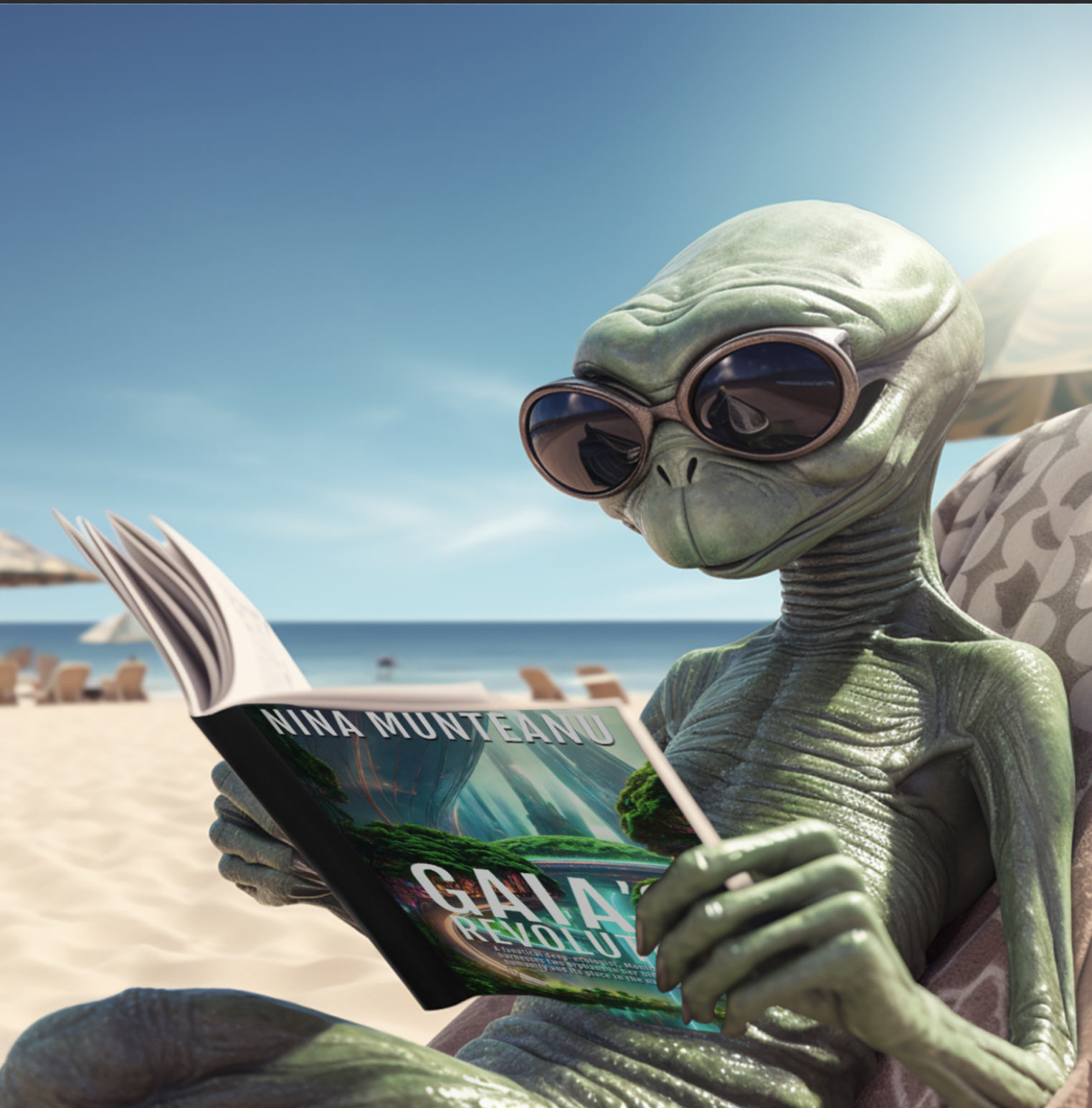
Now, with newly written Gaia’s Revolution (the prequel to the prequel) released, Dragon Moon has reissued new covers for the entire trilogy. Here they are! Oh! And look who’s already reading Gaia’s Revolution!

Aliens get to read everything before we do…

Nina Munteanu is an award-winning novelist and short story writer of eco-fiction, science fiction and fantasy. She also has three writing guides out: The Fiction WriterThe Journal Writer; and The Ecology of Writing and teaches fiction writing and technical writing at university and online. Check the Publications page on this site for a summary of what she has out there. Nina teaches writing at the University of Toronto and has been coaching fiction and non-fiction authors for over 20 years. You can find Nina’s short podcasts on writing on YouTube. Check out this site for more author advice from how to write a synopsis to finding your muse and the art and science of writing.

“Gaia’s Revolution”, Life After Capitalism: The Promise & Spectre of Deep Ecology—Part 1

Twin brothers—a brilliant scientist and a gifted engineer—escape the growing racial violence of Berlin, to ‘peaceful’ Canada in a rivalry to control the evolution of the human race.

My novel Gaia’s Revolution, the first of The Icaria Trilogy—releasing March 10, 2026, by Dragon Moon Press—explores a collapsing capitalist society in Canada through ravages of climate change, water shortages, plague, and a failing technology. The story is told through the lives of ambitious twin brothers Eric and Damien Vogel, and the woman who plays them like chess pieces in her gambit to rule the world.

The novel starts on December 13th, 2022, in Berlin, the day several members of the climate activist group Letzte Generation* to which Damien belongs, are raided by police who seize their computers and phones. Damien is a quiet scholar, an introvert and deep ecologist*, devoted to the teachings of Arne Næss and George Sessions, who promoted an environmental philosophy of eight basic principles of deep ecology.  Næss and Sessions advocated that all living beings have intrinsic value, independent of their utility to human needs. Their philosophy has become a movement that promotes a holistic, eco-centric worldview demanding radical, structural changes to human society to prioritize nature’s flourishing.  

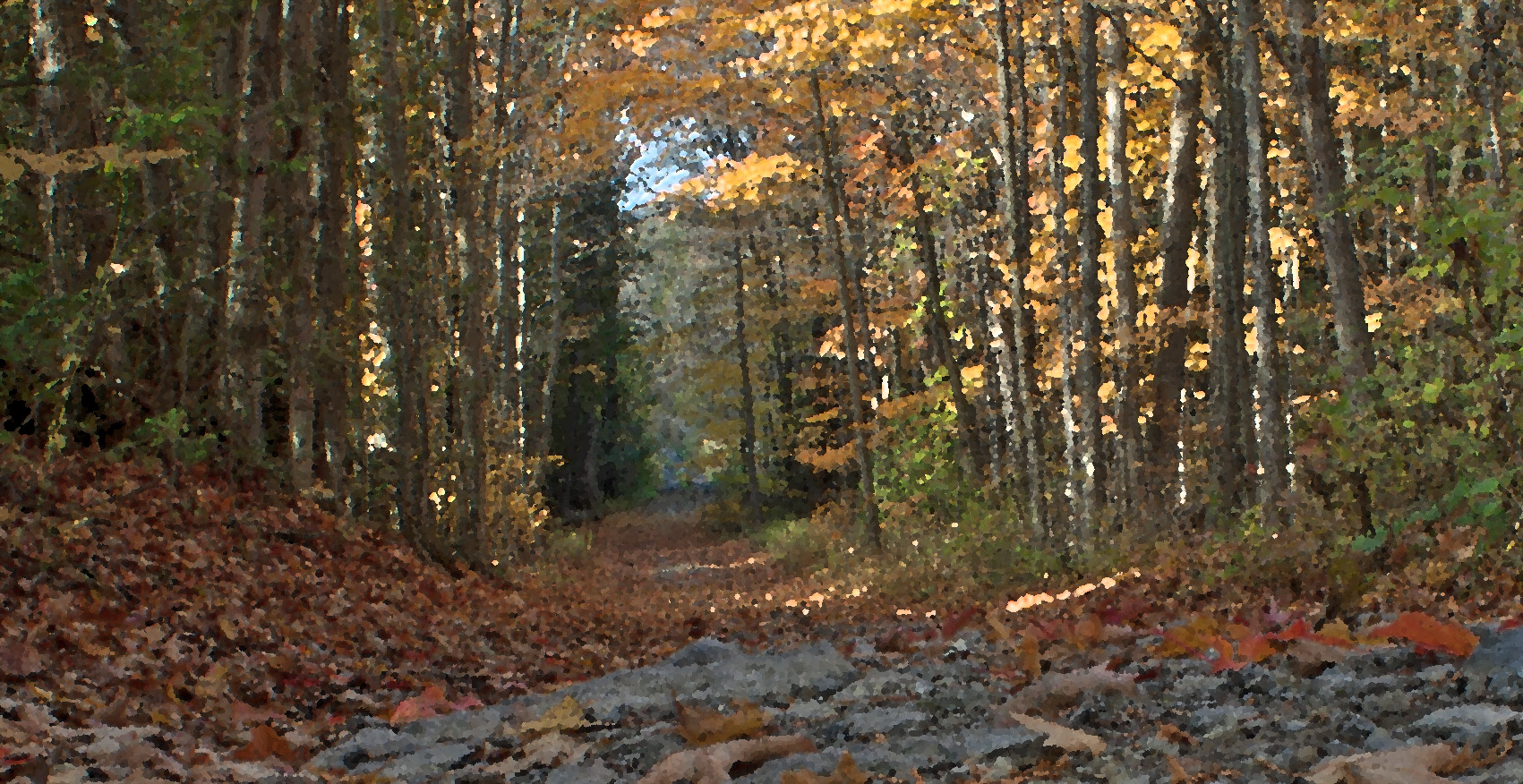
Road through a beech tree forest, ON (photo and rendition by Nina Munteanu)

Damien later meets with his extrovert anarchist brother in Treffpunkt, near the university campus, and they argue ideology and revolution. Eric contends that the only way humanity will survive is to adapt to climate change by somehow overthrowing the bourgeois plutocrats through violent revolution: preventing the small ruling class carving out a comfortable life for itself while the rest of the world suffers terrible deprivation. Eric pulls out the worn copy of B.F. Skinner’s Walden Two from his jacket pocket, slaps it on the table and pushes it toward Damien. “That’s the answer, Dame.”

Each brother plans to create a new humanity: Eric’s plan is to control humanity through gene manipulation and behaviour engineering (aka Walden Two); Damien’s plan is to draw on deep ecology and use environmental triggers with biotechnologies to empower humanity with physical/chemical abilities to adapt to climate and its changing environment via transhumanist AI.

Neither addresses the elephant in the room: population. Only a much-reduced population will ensure success for either plan.

To this point, Eric, who is far more cynical and ruthless, thinks Damien naïve and feckless in his deep ecological view:

Damien too easily prescribes to the old leftist shibboleth of Nature being the answer to everything and Market being evil. His deep ecology utopia would spring from an atavistic rejection of modern life, a return to ‘the ancient farm.’ But how that fantasy could be achieved without a drastic population reduction is beyond his brother’s imagination. Damien fetishizes the natural world. Just like he does their mother. The naïve fool is a blind romantic, refusing to see reality right in front of him: that Nature is ultimately cruel, cold, and preoccupied with its own survival. Just like their mother.–Eric Vogel, Gaia’s Revolution

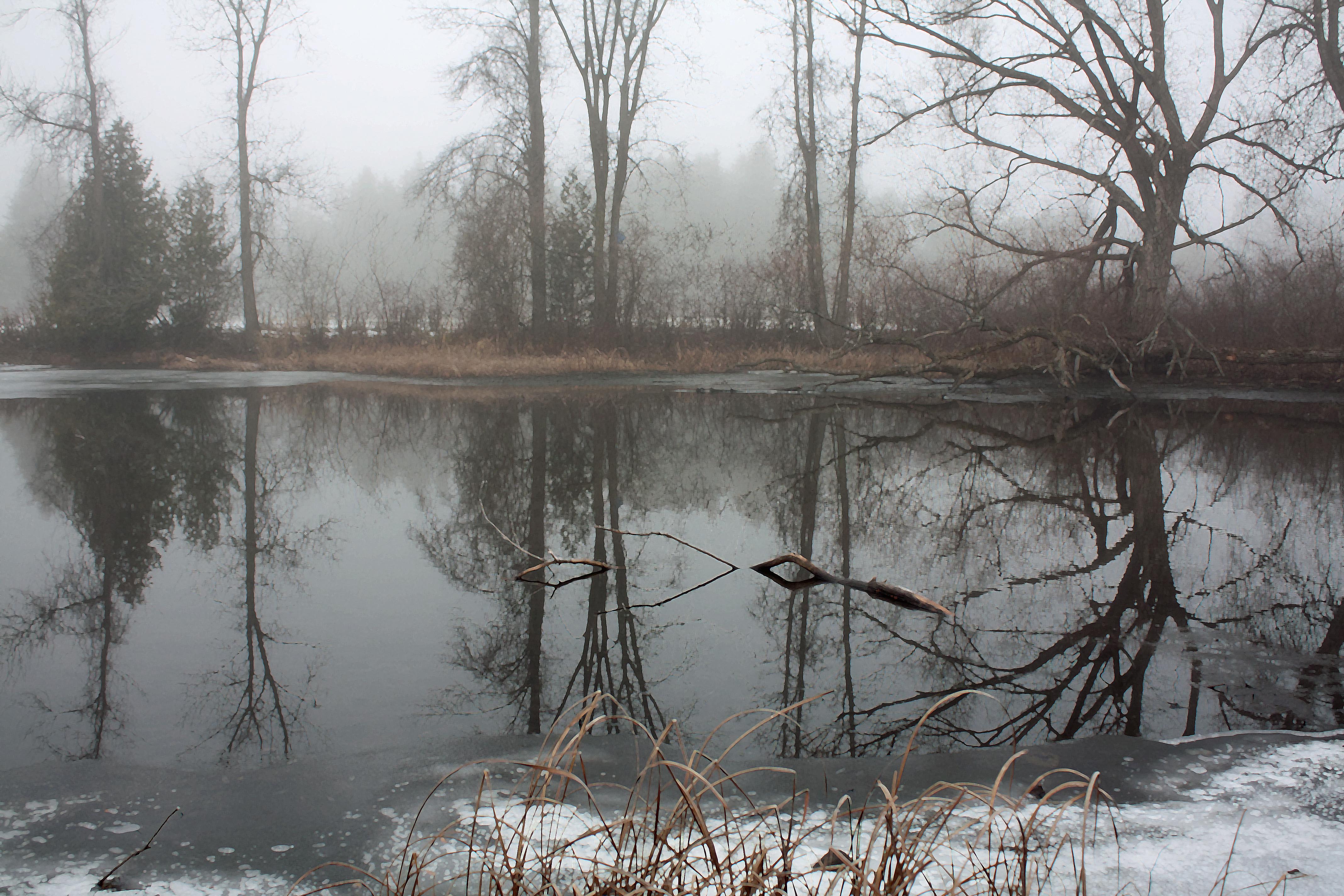
Foggy morning on an Ontario marsh in winter (photo and rendition by Nina Munteanu)

Eight Basic Principles of Deep Ecology*

In 1984, ecologists Arne Næss and George Sessions set out the following Basic Principles of Deep Ecology:

  • The well-being and flourishing of human and nonhuman Life on Earth have value in themselves (synonyms: intrinsic value, inherent value). These values are independent of the usefulness of the non-human world for human purposes.
  • Richness and diversity of life forms contribute to the realization of these values and are also values in themselves.
  • Humans have no right to reduce this richness and diversity except to satisfy vital needs.
  • The flourishing of human life and cultures is compatible with a substantial decrease of the human population. The flourishing of nonhuman life requires such a decrease.
  • Present human interference with the nonhuman world is excessive, and the situation is rapidly worsening.
  • Policies must therefore be changed. These policies affect basic economic, technological, and ideological structures. The resulting state of affairs will be deeply different from the present.
  • The ideological change is mainly that of appreciating life quality (dwelling in situations of inherent value) rather than adhering to an increasingly higher standard of living. There will be a profound awareness of the difference between big and great.
  • Those who subscribe to the foregoing points have an obligation directly or indirectly to try to implement the necessary changes.
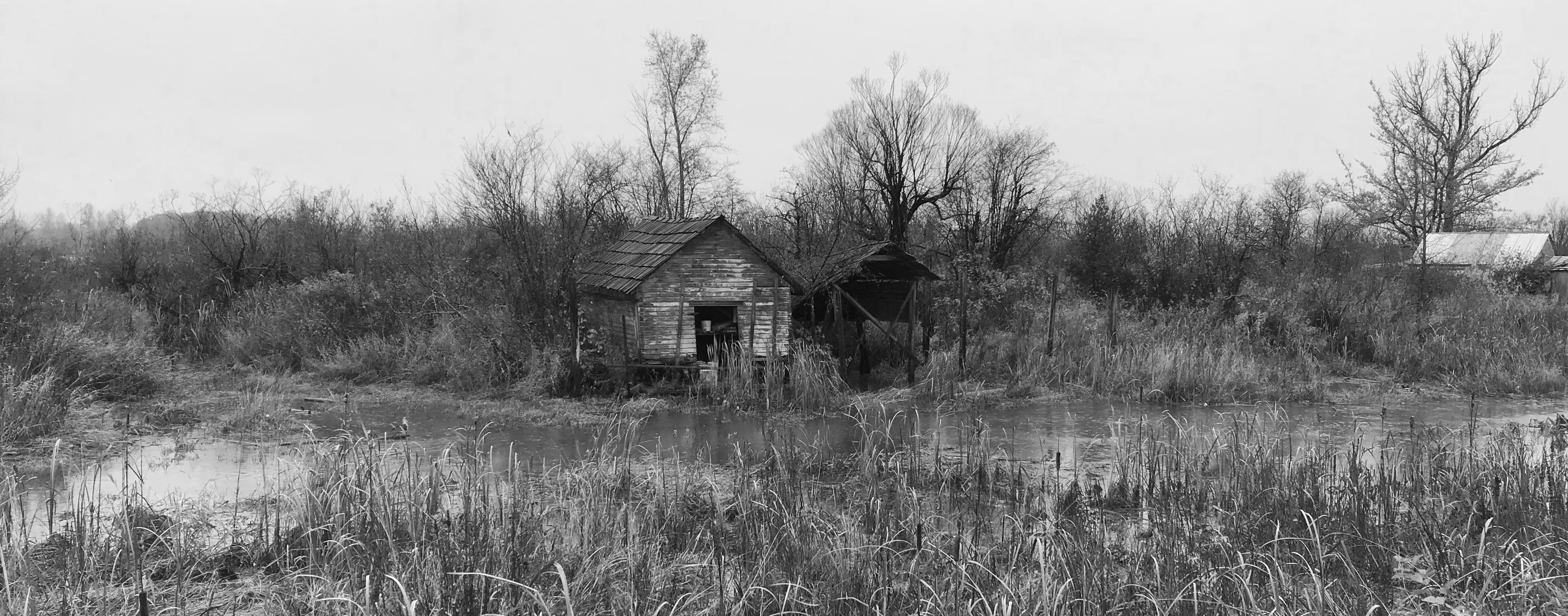
Finn Slough old shed, BC (photo by Nina Munteanu)

Eric plans to address the 5th Basic Principle of Deep Ecology—present human interference with the nonhuman world is excessive and the situation is rapidly worsening— by using nefarious means to meet the 4th Basic Principle of Deep Ecology: the flourishing of human life and cultures is compatible with a substantial decrease of the human population and the flourishing of nonhuman life requires such a decrease. With a reduced population, he plans to make the remaining principles (e.g. 6th and 7th) realizable through his behaviour engineering.

But Eric hasn’t accounted for fanatical deep ecologist / eco-terrorist Monica Schlange in his plan… (More on this shapeshifting character in Part 2).

The Icaria Trilogy by Dragon Moon Press

You can pre-order the ebook of Gaia’s Revolution by Dragon Moon Press on Amazon. Release date is March 10, 2026. The print version will release soon after. Book 2 (Angel of Chaos) and Book 3 (Darwin’s Paradox) of theThe Icaria Trilogy are already available in both ebook and print form.

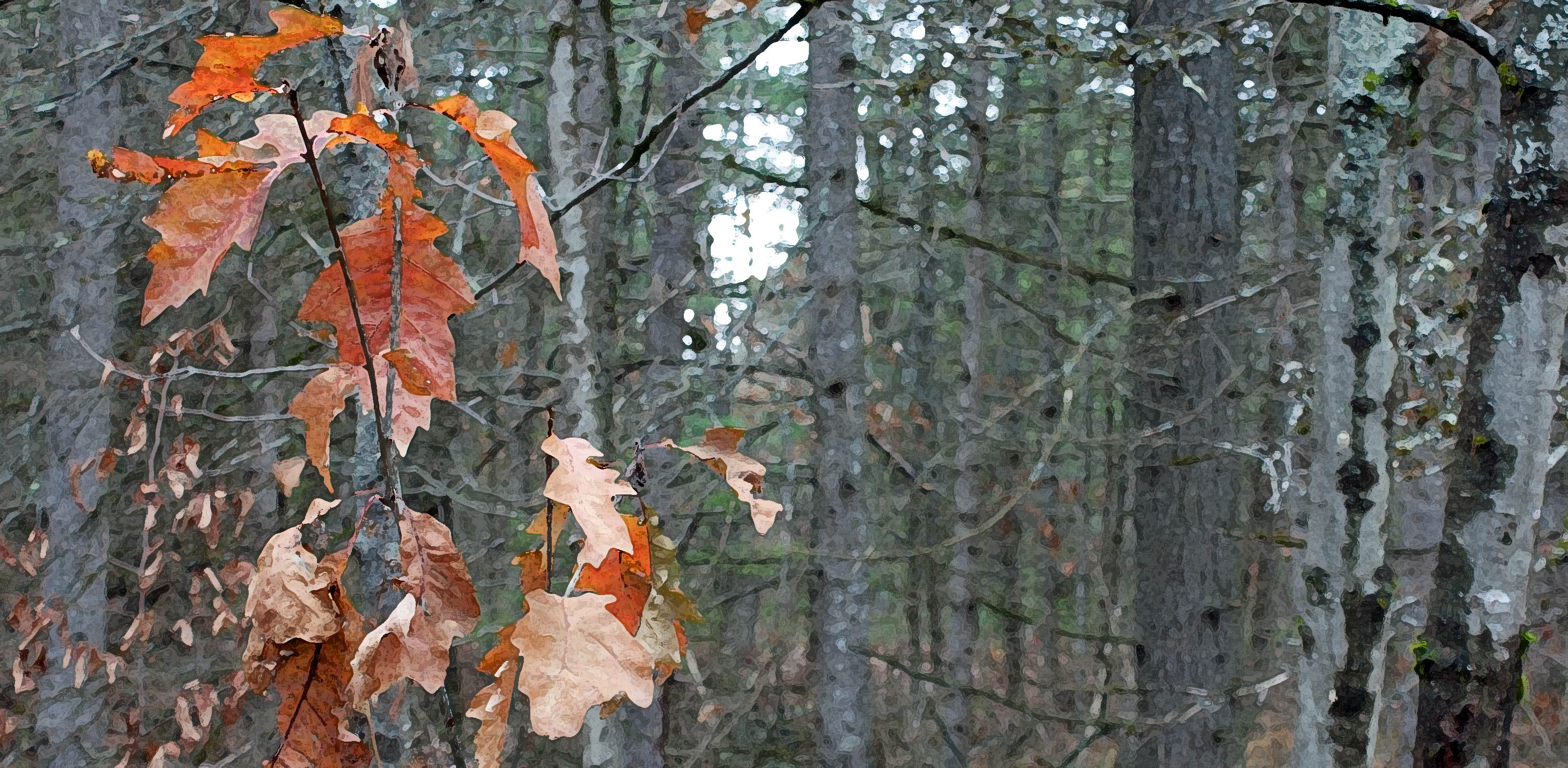
Oak leaves light up a dark pine forest in fall, ON (photo by Nina Munteanu)

References:

Munteanu, Nina. 2026. “Gaia’s Revolution, Part 1 of Icaria Trilogy.” Dragon Moon Press, Calgary, AB. 369 pp.

Munteanu, Nina. 2010. “Angel of Chaos, Part 2 of Icaria Trilogy.” Dragon Moon Press, Calgary, AB. 518 pp.

Munteanu, Nina. 2007. “Darwin’s Paradox, Part 3 of Icaria Trilogy.” Dragon Moon Press, Calgary, AB. 294 pp.

Sessions, George, Bill Devall. 2000. “Deep Ecology: Living as if Nature Mattered.” Gibbs Smith. 267pp.

Skinner, B.F. 1948. “Walden Two” The Macmillan Company, New York. 301pp.

Terminology:

*Deep Ecology: An environmental philosophy and social movement advocating that all living beings have intrinsic value, independent of their utility to human needs. Coined by Arne Næss in 1972, it promotes a holistic, ecocentric worldview—often termed “ecosophy”—that demands radical, structural changes to human society to prioritize nature’s flourishing.

*Letzte Generation: a prominent European climate activist group, founded in 2021, known for its acts of civil disobedience—such as roadblocks, defacing art, and vandalizing structures—to pressure governments on climate action. The term was chosen because they considered themselves to be the last generation before tipping points in the earth’s climate system would be reached. They are mostly active in Germany, Italy, Poland and Canada. In Germany, they have faced accusations of forming a criminal organization, leading to police raids.

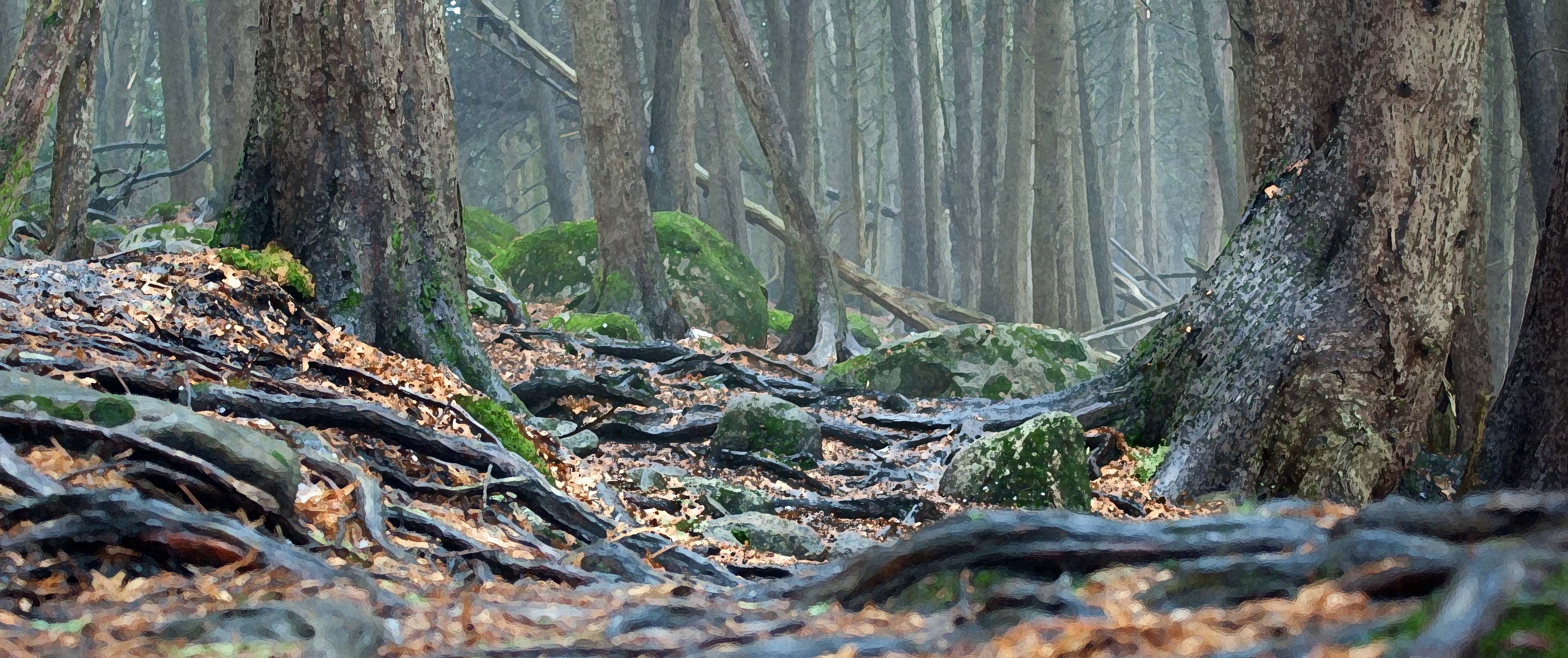
Root-covered cedar-pine forest in early winter, ON (photo and rendition by Nina Munteanu)

Nina Munteanu is a Canadian ecologist / limnologist and novelist. She is co-editor of Europa SF and currently teaches writing courses at George Brown College and the University of Toronto. For the latest on her books, visit www.ninamunteanu.ca. Nina’s bilingual “La natura dell’acqua / The Way of Water” was published by Mincione Edizioni in Rome. Her non-fiction book “Water Is…” by Pixl Press (Vancouver) was selected by Margaret Atwood in the New York Times ‘Year in Reading’ and was chosen as the 2017 Summer Read by Water Canada. Her novel “A Diary in the Age of Water” was released by Inanna Publications (Toronto) in June 2020.

‘The Way of Water’ Translated into German and Published in Nova Magazin für spekulative Literatur

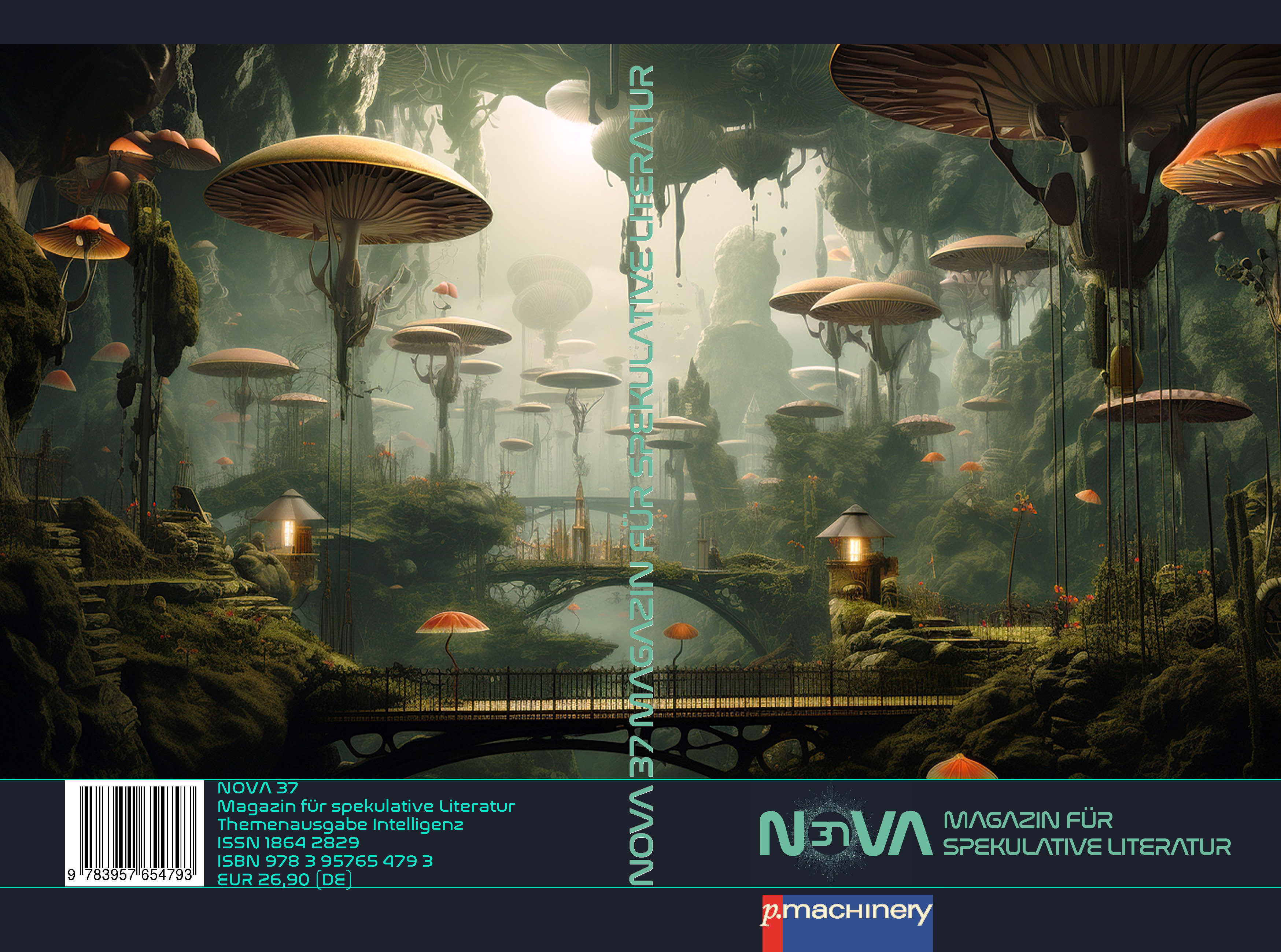
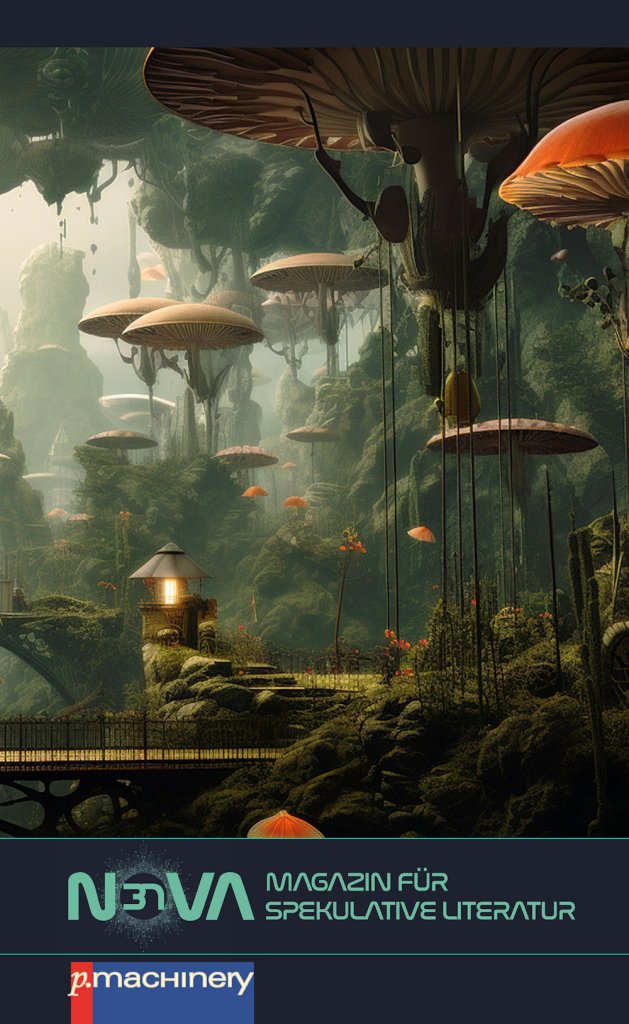
My short story “The Way of Water” was recently translated into German (“Der Weg des Wassers”) and published in Nova 37. The issue has illustrations for each story and a beautiful cover. When I got my author’s copy in the mail, I was blown away! It was as though they had tapped my love for mushrooms. Bright orange and floating in a sea of green vegetation, the aerial fungi that hovered over a jungle village resembled giant Micenas.

The Way of Water” follows a young woman (Hilda) in near-future Toronto who has run out of water credits for the public iTap; by this time houses no longer have potable water and their water taps have been cemented shut (as was done in Detroit in 2014); the only way to get water is through the public iTaps—at great cost. She’s standing two metres from water—in a line of people waiting to use the tap—and dying of thirst.

“The Way of Water” captures a vision that explores the nuances of corporate and government corruption and deceit together with global resource warfare. In this near-future, Canada is mined of all its water by thirsty Chinese and US multinationals—leaving nothing for the Canadians. Rain has not fallen on Canadian soil in years due to advances in geoengineering and weather manipulation that prevent rain clouds from going anywhere north of the Canada-US border. If you’re wondering if this is possible, it’s already happening in China and surrounding countries.

I’ve written several articles on how The Way of Water came about. Briefly, it all started with an invitation in 2015 by my publisher in Rome to write about water and politics in Canada. I had long been thinking of potential ironies in Canada’s water-rich heritage. The premise I wanted to explore was the irony of people in a water-rich nation experiencing water scarcity: living under a government-imposed daily water quota of 5 litres as water bottling and utility companies took it all.

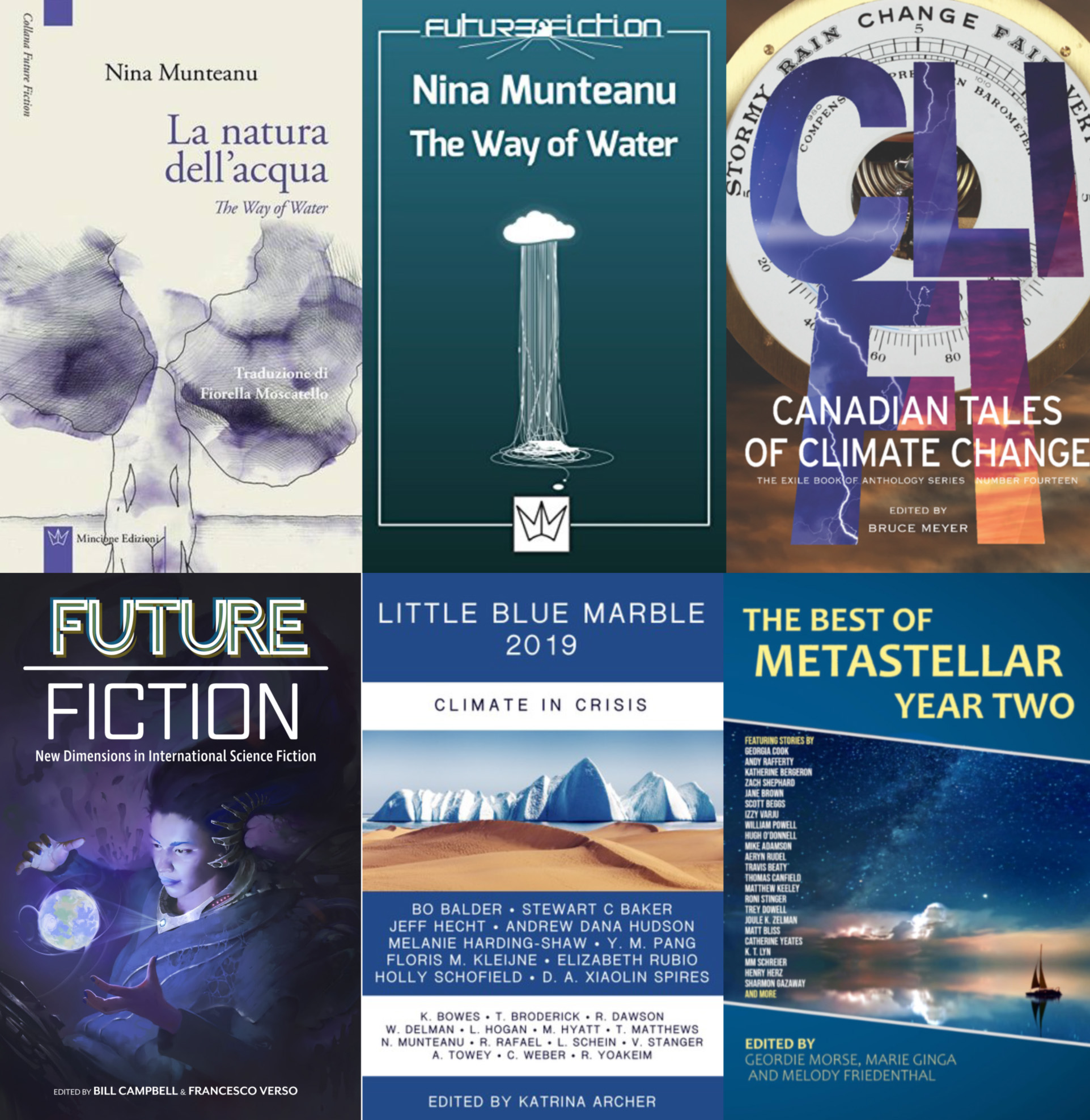
Various publications in which my short story “The Way of Water” has appeared

The Way of Water was first published in 2016 as a bilingual print book by Mincione Edizioni (Rome) in Italian (La natura dell’acqua, translated by Fiorella Moscatello), and English along with a recounting of what inspired it: The Story of Water (La storia dell’acqua). To date, The Way of Water has been published and republished eight times throughout the world and translated into Italian and German. Anthologies include, among others, Metastellar something, “Canadian Tales of Climate Change” (Exile Editions) edited by Bruce Meyer, “Future Fiction” Anthology (publisher), and “Climate in Crisis” (Little Blue Marble). I think this success is less a reflection of my writing than the immediacy and importance of the topic covered: growing water scarcity, its commodification, and its politicization.

This latest publication of The Way of Water (Der Weg des Wassers) in Nova 37 represents its eighth publication. Nova Magazin für spekulative Literatur is one of the most respected short story and essay magazines for science fiction in the German-speaking world. Most recently it was called “NOVA Science-Fiction,” and since issue 31 it has been “NOVA – Magazine for Speculative Literature”; the name change reflects the desire to broaden the readership and interest beyond the pure science fiction scene. The magazine’s website is now part of the larger pmachinery.de news feed.

“In a short story in which every word has its weight, Nina Munteanu manages to describe a dystopia with ecological, political, social and economic elements and Hilda’s reactions to her situation with a great intensity. To avoid thirst, Hilda ends up embracing an extreme idea, a last hope linked to water. The Way of Water is a story of the kind you hope is science fiction but you fear is not.”—Massimo Luciani

“In the Way to Water, Nina Munteanu pens her love letter to water, exulting it as a liquid that has semi-magical properties… The Way of Water evokes a sense of awareness about issues of access to water and about the dangers of imbalances in that access.”—Derek Newman-Stille, Speculating Canada

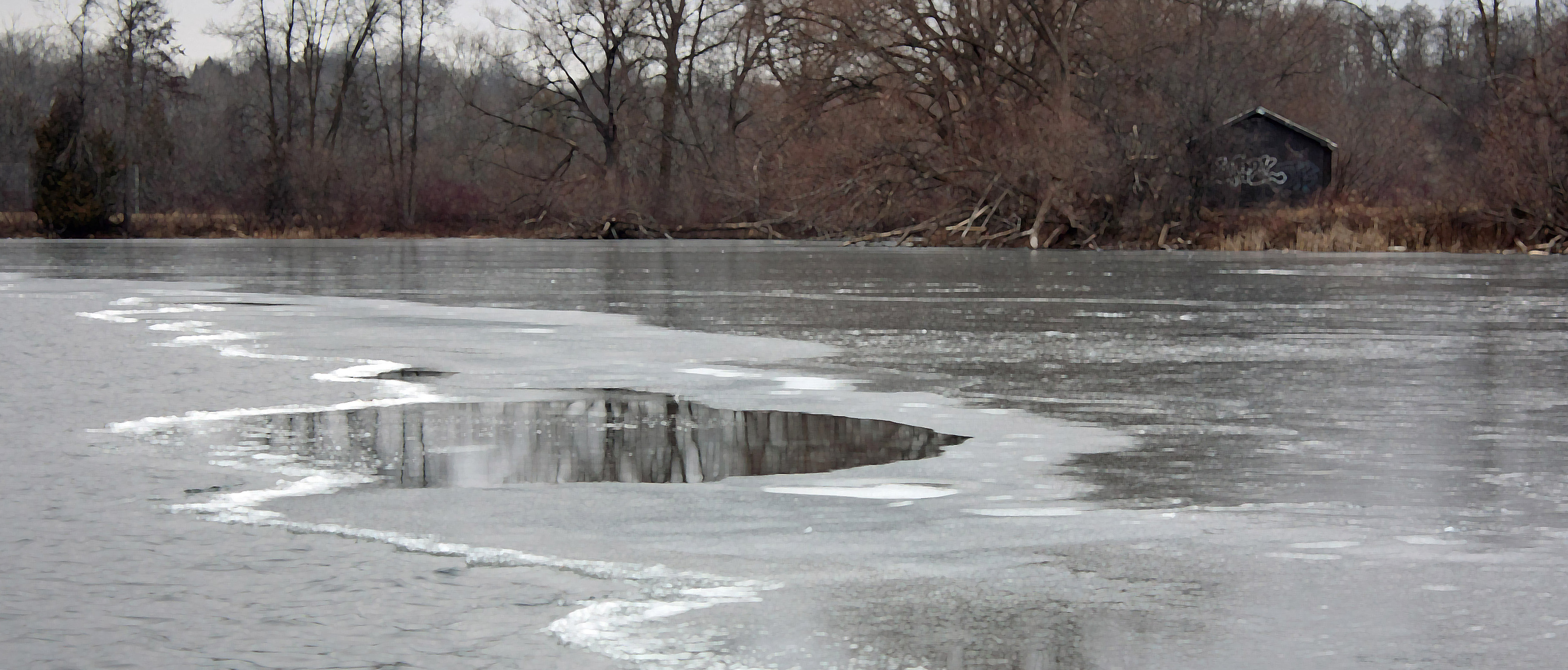
Ice edge on the Otonabee River, ON (photo and rendition by Nina Munteanu)

In her masters thesis published in November 2025 at the University of Graz, Austria, Seyma Yonar uses my short story The Way of Water, along with several others to explore and discuss the importance of eco-literature in establishing ecological awareness and ultimately ecological and sustainable action.

The Way of Water is a strong eco-story that possesses many layers and elements that strengthen its narrative while encouraging readers to engage with its world…The notion what water constitutes the essence of life is the central theme of the story … Munteanu’s knowledge as a scientist enables her to create a convincing scientist protagonist whom she embeds into a powerful fictional story. Water, particularly in this eco-story acts not only as a symbolic entity but also as a body of force…the agency of water is presented as a dynamic, living entity, central to the narrative’s ecological themes.”

“Munteanu’s impactful storytelling highlights her significant contribution to Canadian literature, particularly through her engagement with pressing environmental issues and her commitment to fostering ecological awareness through fiction.”

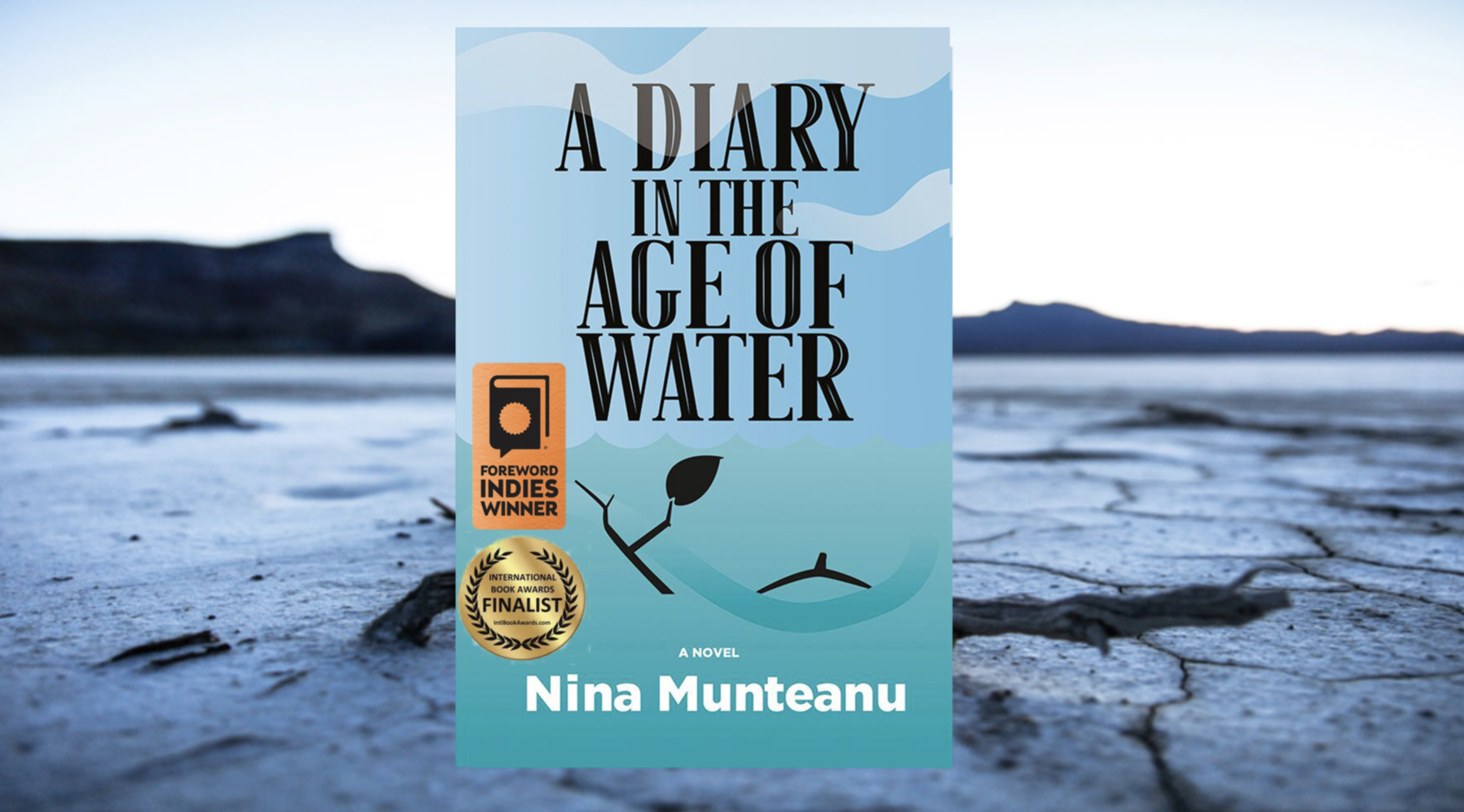
The Way of Water, in turn, inspired my dystopian novel A Diary in the Age of Water (Inanna Publications, 2020), which chronicles the lives of four generations of women and their relationship to water during a time of severe water restriction and calamitous climate change. The novel features the main character Hilda from The Way of Water and her limnologist mother; A Diary in the Age of Water is essentially the mother’s diary embedded in a larger story. Through a series of entries, the diarist reflects on the subtle though catastrophic occurrences that will eventually lead to humanity’s demise.

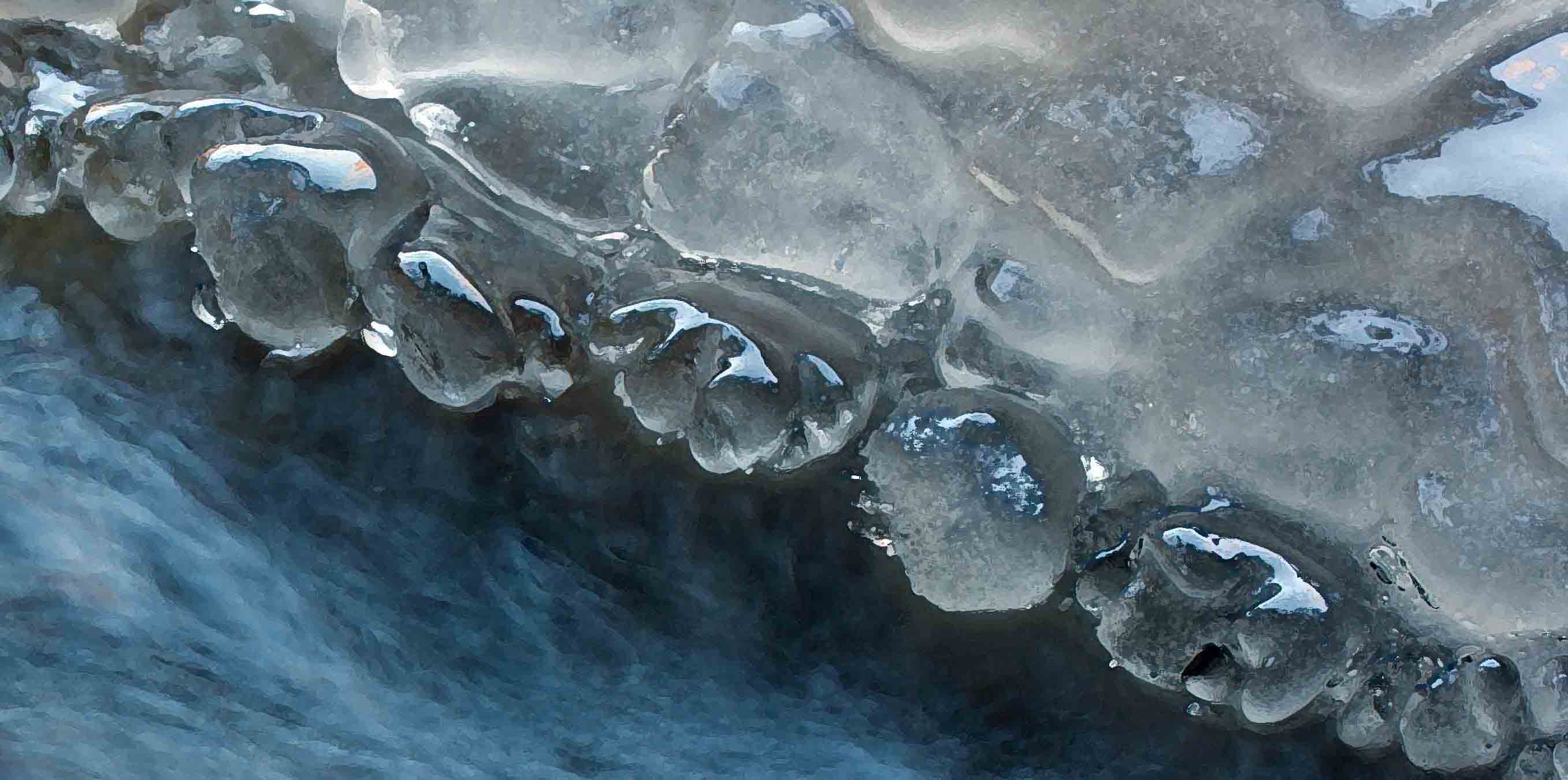
Ice pearls forming in Jackson Creek, ON (photo and rendition by Nina Munteanu)

References:

Munteanu, Nina. “The Way of Water” Mincione Edizioni, Rome. 113pp.

Munteanu, Nina. “A Diary in the Age of Water.” Inanna Publications, Toronto, ON. 328pp.

Meyer, Bruce. 2017. “Introduction to “Cli Fi: Canadian Tales of Climate Change

Fi: Anthology #14. Edited by Bruce Meyer. Exile Editions, Toronto.304pp.

Yonar, Seyma. 2025. “Short Texts—Long Term Effects: The Canadian Eco-Story.” Masters Thesis, University of Graz, Austria. 70pp.

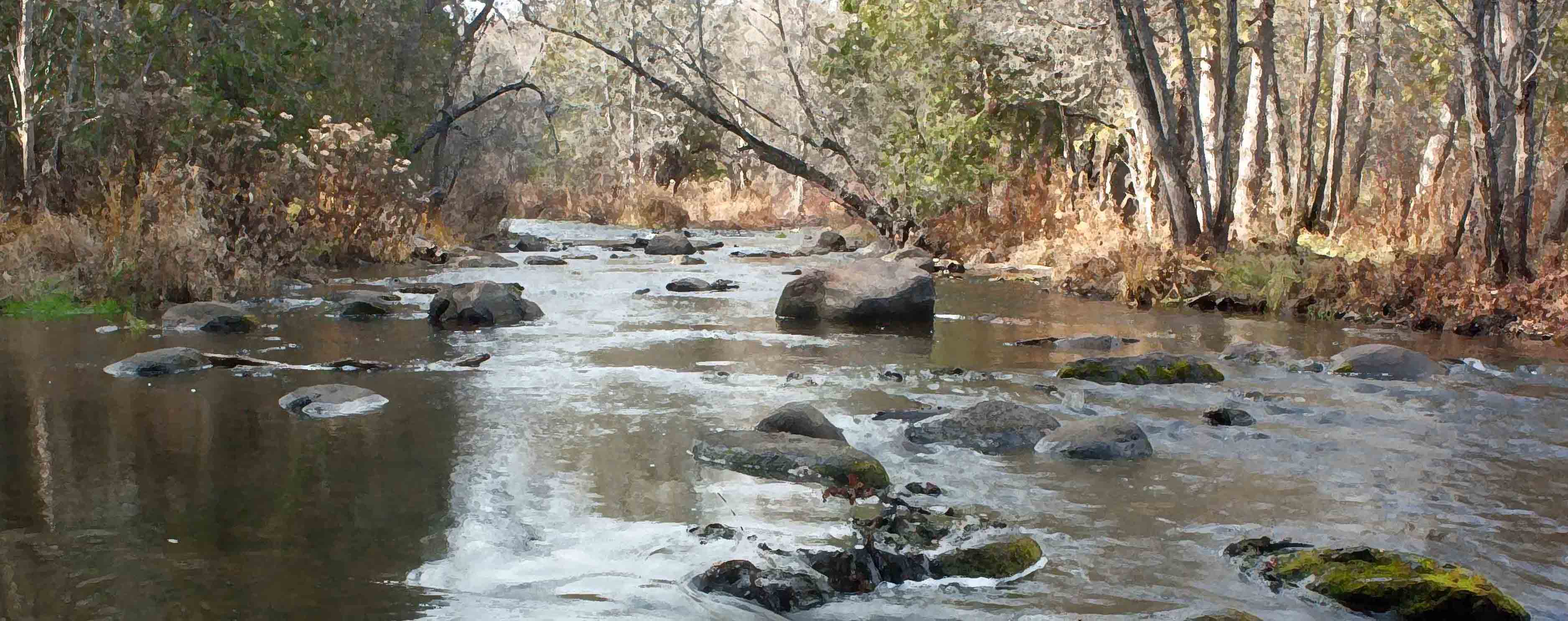
Jackson Creek in the fall, ON (photo and rendition by Nina Munteanu)

Nina Munteanu is an award-winning novelist and short story writer of eco-fiction, science fiction and fantasy. She also has three writing guides out: The Fiction WriterThe Journal Writer; and The Ecology of Writing and teaches fiction writing and technical writing at university and online. Check the Publications page on this site for a summary of what she has out there. Nina teaches writing at the University of Toronto and has been coaching fiction and non-fiction authors for over 20 years. You can find Nina’s short podcasts on writing on YouTube. Check out this site for more author advice from how to write a synopsis to finding your muse and the art and science of writing. For more on her work as a limnologist and ecologist, see The Meaning of Water.

“Gaia’s Revolution”, Life after Capitalism: A Canadian Story…

A fanatical deep-ecologist, Monica Schlange, harnesses two orphans in her bid to reshape humanity and its place in the natural world.

My upcoming book Gaia’s Revolution (Book 1 of The Icaria Trilogy by Dragon Moon Press) explores a collapsing capitalist society in Canada through ravages of climate change and a failing technology. The story is told through the lives of ambitious twin brothers Eric—a gifted engineer—and Damien Vogel—a brilliant scientist and deep ecologist*—and the woman who plays them like chess pieces in her gambit to ‘rule the world.’

The brothers meet at Treffpunkt, a café near Humboldt University in Berlin, nursing Kellerbiers over a late lunch of Einsbein mit Sauerkraut. They argue ideology and reform. Canada represents an ideal canvas for revolution, argues Eric. Damien is puzzled by this. To him Canada represents a quietly reposed nation of polite intellectuals who accept a healthy multicultural society and whose practical leaders are connected with their people. Not a restive rabble ripe for change.

As if reading his brother’s mind, Eric replies:

“Because it’s a huge nation with a lot of space and few people,” Eric argues. “Did you know that Canada holds on average only 4 people per square kilometer? Germany stuffs 240 people in the same area. And China, which is virtually the same size as Canada, holds 153 people per square kilometer.” He picks up Walden Two and waves it at Damien. “Canada is a perfect place to start these [Walden Two colonies called Icarias*]. And, with global warming, we could settle in the boreal.” He then slides the book back in his pocket and leans back, eyes sparkling with purpose. “But the real reason to start a revolution there is because, like you, Canadians are naïve. Even their leaders. And this is because, unlike the rest of the world, they are still asleep…

“Climate is not our enemy, Dame; it’s our friend. Climate is our fierce archangel of change. And let’s not forget that ‘crisis is opportunity…” … He grins, self-pleased, like a wolf in a hen house. Then he practically snarls out, “We must first destroy before we can create. We must be unruly like climate. We must be relentless like climate. We must ride that wave before we can become the wave, Bruder. And then by being that wave, we change the world.”  

Pine cedar forest in Ontario (photo and rendition by Nina Munteanu)

The brothers escape the growing racial violence of Berlin, to ‘peaceful’ Canada in a rivalry to control the evolution of the human race. Years later, Eric Vogel, who has created a niche for himself in the technocratic government*, sits in the Canadian prime minister’s office and imagines what a post-capitalist world will look like and how his twin brother Damien—left behind in Germany—would disagree with his vision:

Damien too easily prescribes to the old leftist shibboleth of Nature being the answer to everything and Market being evil. His deep ecology utopia would spring from an atavistic rejection of modern life, a return to ‘the ancient farm.’ But how that fantasy could be achieved without a drastic population reduction is beyond his brother’s imagination. Damien fetishizes the natural world. Just like he does their mother. The naïve fool is a blind romantic, refusing to see reality right in front of him: that Nature is ultimately cruel, cold, and preoccupied with its own survival. Just like their mother.

First snow in an Ontario marsh (photo and rendition by Nina Munteanu)

Each brother plans to create a new humanity: one to control through gene manipulation and behaviour engineering; the other to empower through biotechnology and transhumanist AI. The warring brothers end up in Canada and set off a violent revolution that destroys the Canadian technocratic government and whose weapons ultimately risk the survival of humanity. Deep ecologist Monica Schlange snares the brothers in her gambit to reshape humanity and its place in the natural world. Three orphaned children, caught in the web of intrigue and violence, will ultimately determine the direction of humanity by introducing the first veemelds (people who can communicate with machines), a new environmental disease (Darwin), and a new set of rules neither brother envisioned.

The Icaria Trilogy by Nina Munteanu

You can pre-order the ebook of Gaia’s Revolution on Amazon. Release date is March 10, 2026. The print version will release soon after. Book 2 (Angel of Chaos) and Book 3 (Darwin’s Paradox) of The Icaria Trilogy are already available in both ebook and print form.

Birch trees in a winter marsh, ON (photo and rendition by Nina Munteanu)

References:

Munteanu, Nina. 2026. “Gaia’s Revolution, Part 1 of Icaria Trilogy.” Dragon Moon Press, Calgary, AB. 369 pp.

Munteanu, Nina. 2010. “Angel of Chaos, Part 2 of Icaria Trilogy.” Dragon Moon Press, Calgary, AB. 518 pp.

Munteanu, Nina. 2007. “Darwin’s Paradox, Part 3 of Icaria Trilogy.” Dragon Moon Press, Calgary, AB. 294 pp.

Sessions, George, Bill Devall. 2000. “Deep Ecology: Living as if Nature Mattered.” Gibbs Smith. 267pp.

Skinner, B.F. 1948. “Walden Two” The Macmillan Company, New York. 301pp.

Jackson Creek in the fall, ON (photo and rendition by Nina Munteanu)

Terminology:

*Deep Ecology: An environmental philosophy and social movement advocating that all living beings have intrinsic value, independent of their utility to human needs. Coined by Arne Naess in 1972, it promotes a holistic, ecocentric worldview—often termed “ecosophy”—that demands radical, structural changes to human society to prioritize nature’s flourishing.

*Icaria: the name of Étienne Cabet’s utopia. Cabet was a French lawyer in Dijon, who published his novel Voyage en Icarie in 1839. The novel was a sort of manifesto-blueprint of utopian socialism, with elements of communism (abolished private property and individual enterprise), influenced by Fourierist and Owenite thinking. Key elements, such as the four-hour work day, are reflected in B.F. Skinner’s Walden Two. The novel explores a society in which capitalist production is replaced by workers’ cooperatives with a focus on small communities.

*Technocracy: A form of government in which the decision-maker(s) are selected based on their expertise in a given area; any portion of a bureaucracy run by technologists. Technocracies control society or industry through an elite of technical experts. The term was initially used to signify the application of the scientific method to solving social problems.

Nina Munteanu is an award-winning novelist and short story writer of eco-fiction, science fiction and fantasy. She also has three writing guides out: The Fiction WriterThe Journal Writer; and The Ecology of Writing and teaches fiction writing and technical writing at university and online. Check the Publications page on this site for a summary of what she has out there. Nina teaches writing at the University of Toronto and has been coaching fiction and non-fiction authors for over 20 years. You can find Nina’s short podcasts on writing on YouTube. Check out this site for more author advice from how to write a synopsis to finding your muse and the art and science of writing.

“Gaia’s Revolution”, Life After Capitalism: Will the Environment—And We Along With It—Survive?…

“Bourgeois society stands at the crossroads, either transition to socialism or regression into barbarism.”—Rosa Luxemburg, 1915

I wrote my first novel in 1969 when I was fifteen. Caged in World was a hundred-page speculative story about a world that had moved “inside” to escape the ravages of a post climate-change environment. It would later become Book 2 of The Icaria Trilogy. I was already disillusioned with my world. I saw how corporations and governments and society in general—individuals around me—‘othered’ the environment by either treating it with disrespect and apathy or outright ignoring it in a kind of torpor of obliviousness. As though it didn’t exist.

I remember being chastised by a school teacher for thinking globally about what was happening to the planet at our hands: worldwide deforestation (e.g., clearcutting the old-growth forests of Canada), infilling saltwater and freshwater marshes, massive use of pesticides and fertilizers, contamination of lakes, unregulated mining and toxic pollution, and ultimately climate change. Stick to local concerns, he advised me; recycling and such.

I remember wondering if I was just being weird. That my odd sensibility for the planet-entire was just a nina-thing. I prayed that I was not alone and it wasn’t just a nina-thing.

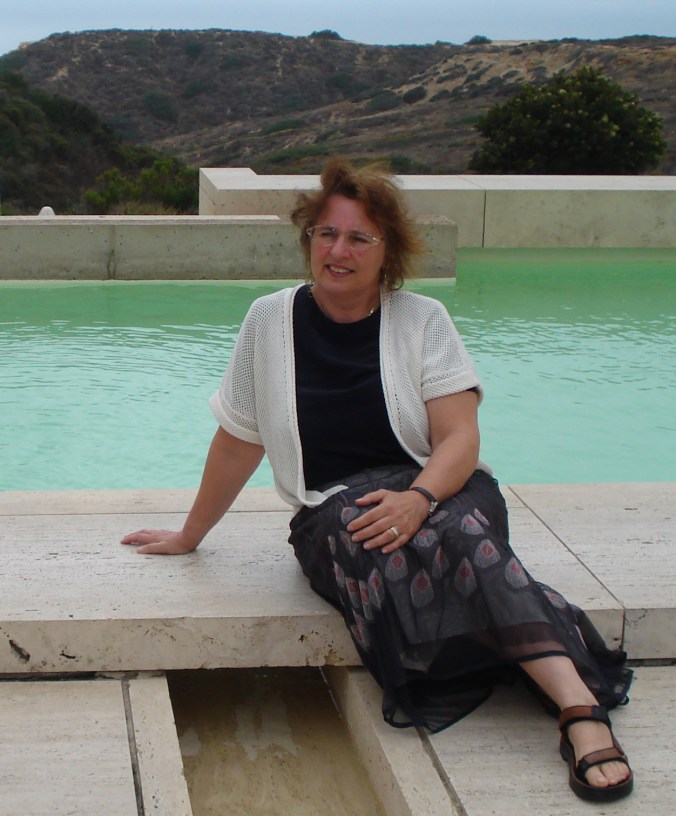
(Photo: Nina Munteanu, Salk Institute, California)

For a description of how the books of the trilogy came to be (for instance, they were published in backward order!) see my article entitled “Nina Munteanu Reflects on Her Eco-Fiction Journey at Orchard Park Secondary School”.

Throughout high school and university, I read scientific papers, news articles and books on revolution. I became a student of climate change long before the term entered the zeitgeist. I studied industrial capitalism and its roots in neoliberalism and colonialism. I noted how the post-war expansion of capitalism shifted from Fordist mass production to flexible automation, technology and AI. I saw the rise of multinational corporations, income inequality, and the commodification of everything—from water to human beings (Foucault’s homo economicus).

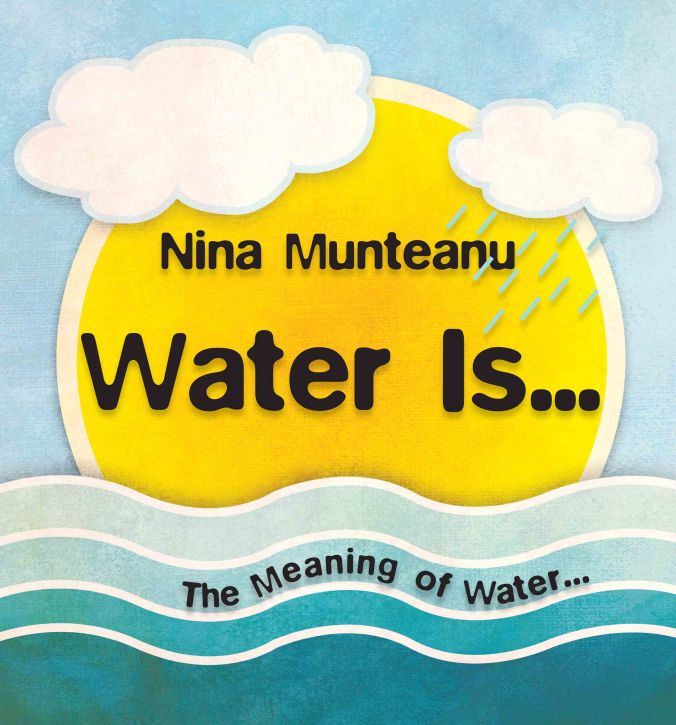
I pursued a university degree in ecology and limnology to study and help protect the environment and educate industry and their governments in the process. I became an expert on water. See my book Water Is…The Meaning of Water, which celebrates water from twelve perspectives (and got a shout out from Margaret Atwood!).

I soon concluded that a hegemony that follows the economic system of late capitalism inevitably commodifies and ‘others’ with ruthless purpose. Once something (or someone) is commodified, they are given a finite value and purpose outside their own existence. They become an object, a symbol to use and trade. They become a resource to manipulate, exchange, and dispose of with impunity. And through this surrender to utility, they become ‘othered.’ The consumer. The trees of the forest. Water. Homo sacer*. Each has a role to play in the late capitalist narrative of digital abundance and physical scarcity.

Capitalism hasn’t been kind to the environment. Economic pundits and sociologists insist that Capitalism is devolving. But what will replace it? Cloud capital? Technofeudalism? Something else?

Deep Ecology* & Gaia’s Revolution

The Icaria Trilogy (Dragon Moon Press)

My three Icaria novels—starting with Gaia’s Revolution, (the first of The Icaria Trilogy, releasing March 10, 2026, by Dragon Moon Press)—chronicle the collapse of a capitalist society in Canada as climate change, water shortages, habitat destruction, plague and a failing technology devastate the Canadian population.

Gaia’s Revolution (Book 1 of The Icaria Trilogy) explores a transition in Canada from semi-socialized capitalist system to a technocratic* meritocracy of technologists and scientists. Triggered by catastrophic environmental and sociological tipping points and following violent revolution, a dictatorship of deep ecologists* called Gaians seize power. By the end of the book, enclosed cities called Icarias* now populate North America. Separated from their environment, humans now live inside domes protecting them from a hostile and toxic environment.

In truth, the deep ecologists are keeping people “inside” not to protect humanity from a toxic wasteland but to protect the environment from a toxic humanity.

How realistic is this vision? Well, it is science fiction, after all, and though it takes liberties with its narrative, it is science-based and ultimately draws on precedent. As Margaret Atwood so astutely attested of her cautionary SF book The Handmaid’s Tale: “I didn’t put in anything that we haven’t already done, we’re not already doing, we’re seriously trying to do, coupled with trends that are already in progress.”

Science fiction is itself powerful metaphor; it is the fiction of political and social allegory or satire and makes astute social commentary about a world and civilization: how it has come to be, how it works—or doesn’t—and how it may evolve.

So, it is visionary and predictive? I prefer to think as Ray Bradbury:

“The function of science fiction is not only to predict the future, but to prevent it.”–Ray Bradbury

Jackson Creek in winter, ON (photo and rendition by Nina Munteanu)

References:

Angus, Ian. 1012. “The Spectre of 21st Century Barbarism.” Climate & Capitalism, August 20, 2012.

Atwood, Margaret. 2004. “The Handmaid’s Tale and Oryx and Crake ‘In Context'”. PMLA119 (3): 513–517.

Atwood, Margaret. 2018. “Margaret Atwood on How She Came to Write The Handmaid’s Tale”Literary Hub. April 25, 2018.

Bradbury, Ray. 1991. “Yestermorrow: Obvious Answers to Impossible Futures” and “Beyond 1984: The People Machines” by Ray Bradbury, dated 1982, Page 155, Joshua Odell Editions: Capra Press, Santa Barbara, California.

Foucault, Michel. 2010. “The Birth of Biopolitics (Naissance de la biopolitique): Lectures at the Collège de France, 1978-1979.” Picador. 368pp.

Luxemburg, Rosa. 1915. “The Junius Pamphlet: The Crisis in the German Democracy”, Marxist.org.

Munteanu, Nina. 2026. “Gaia’s Revolution, Part 1 of Icaria Trilogy.” Dragon Moon Press, Calgary, AB. 369 pp.

Munteanu, Nina. 2010. “Angel of Chaos, Part 2 of Icaria Trilogy.” Dragon Moon Press, Calgary, AB. 518 pp.

Munteanu, Nina. 2007. “Darwin’s Paradox, Part 3 of Icaria Trilogy.” Dragon Moon Press, Calgary, AB. 294 pp.

Neuman, Sally. 2006. “‘Just a Backlash’: Margaret Atwood, Feminism, and The Handmaid’s Tale“. University of Toronto Quarterly75 (3): 857–868.

Sessions, George, Bill Devall. 2000. “Deep Ecology: Living as if Nature Mattered.” Gibbs Smith. 267pp.

Skinner, B.F. 1948. “Walden Two” The Macmillan Company, New York. 301pp.

Streeck, Wolfgang. 2014. “How Will Capitalism End?” New Left Review 2 (87): 47p.

Terminology:

*Deep Ecology: An environmental philosophy and social movement advocating that all living beings have intrinsic value, independent of their utility to human needs. Coined by Arne Næss in 1972, it promotes a holistic, ecocentric worldview—often termed “ecosophy”—that demands radical, structural changes to human society to prioritize nature’s flourishing.

*Homo sacer: a figure from Roman law denoting a person excluded from society who is outside human law (can be killed) and divine law (cannot be sacrificed). The term represents “bare life”: stripped of political rights, legal protection, and social value. Philosopher Giorgo Agamben popularized the term to describe individuals excluded from the political community, such as refugees, stateless persons, or camp detainees. The term illustrates the power of a sovereign in deciding which lives are worthy of protection and which are not.

*Icaria: the name of Étienne Cabet’s utopia. Cabet was a French lawyer in Dijon, who published his novel Voyage en Icarie in 1839. The novel was a sort of manifesto-blueprint of utopian socialism, with elements of communism (abolished private property and individual enterprise), influenced by Fourierist and Owenite thinking. Key elements, such as the four-hour work day, are reflected in B.F. Skinner’s Walden Two. Cabet’s novel explores a society in which capitalist production is replaced by workers’ cooperatives with a focus on small communities.

*Letzte Generation: a prominent European climate activist group, founded in 2021, known for its acts of civil disobedience—such as roadblocks, defacing art, and vandalizing structures—to pressure governments on climate action. The term was chosen because they considered themselves to be the last generation before tipping points in the earth’s climate system would be reached. They are mostly active in Germany, Italy, Poland and Canada. In Germany, they have faced accusations of forming a criminal organization, leading to police raids.

*Technocracy: A form of government in which the decision-maker(s) are selected based on their expertise in a given area; any portion of a bureaucracy run by technologists. Technocracies control society or industry through an elite of technical experts. The term was initially used to signify the application of the scientific method to solving social problems.

Nina Munteanu is an award-winning novelist and short story writer of eco-fiction, science fiction and fantasy. She also has three writing guides out: The Fiction WriterThe Journal Writer; and The Ecology of Writing and teaches fiction writing and technical writing at university and online. Check the Publications page on this site for a summary of what she has out there. Nina teaches writing at the University of Toronto and has been coaching fiction and non-fiction authors for over 20 years. You can find Nina’s short podcasts on writing on YouTube. Check out this site for more author advice from how to write a synopsis to finding your muse and the art and science of writing.

My Three Favourite Reads in 2025

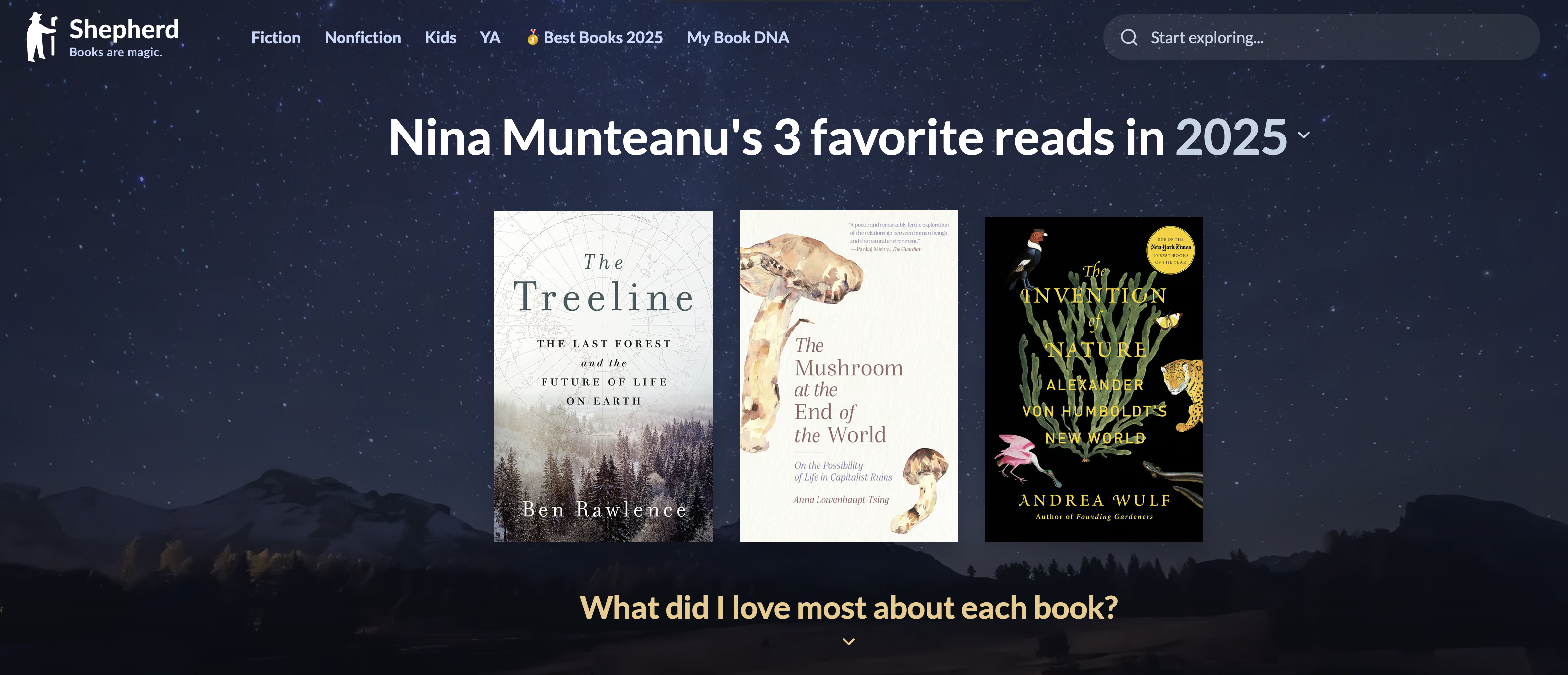
As with previous years, Shepherd invited me to post my three favourite reads of 2025. These aren’t necessarily books published in 2025; just books I read in that year. Each time I do this, I find that, without conscious intent, my favourites fall under a general theme that have touched me that year. Past favourite reads included Feminist Eco-Fiction in 2023 and Cautionary Eco-Fiction in 2024.

2025 yielded a non-fiction book theme; books that touch on humanity’s understanding—or lack of understanding—of our fragile environment and the importance of humility and collaboration to our survival on a changing planet. Here are my three favourites:

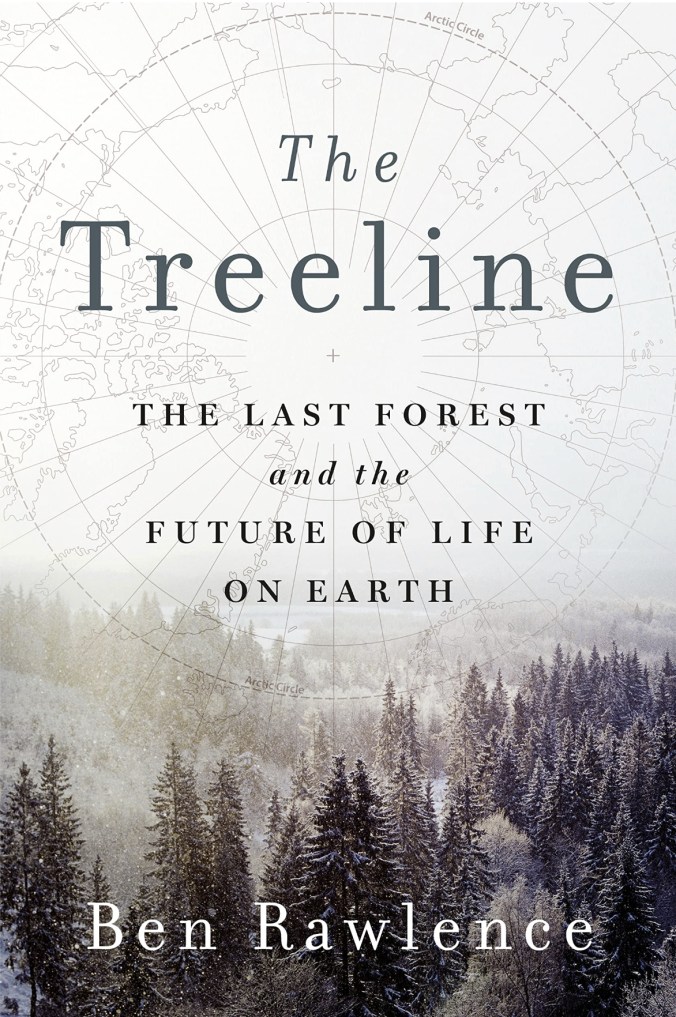
Treeline (St. Martin’s Press, 2022) by Ben Rawlence

This book made me think. It made me cry. It made me despair. It also gave me hope. I was gripped by Rawlence’s honest and unflinching exploration on the moving treeline with climate change and what it will mean for humanity. Rawlence describes the forests of the world as the ‘heartbeat of the planet,’ the cycles of breathing and the pulses of life from the spike of oxygen in the spring when trees put out their leaves to the peaks and troughs over day and night that regulate plant photosynthesis and respiration. Their breaths are getting shallower, he writes. With more carbon dioxide in the air the trees inhale less and exhale less oxygen.

Beautifully written and rigorously reported, Rawlence invited me on a journey of the major treelines over the globe from Scotland, Norway and Russia, to Alaska, Canada and Greenland. Throughout his description of a warming world and a vanishing way of life, Rawlence meditates on the many repercussions on how humans live. There is warning. And there is optimism. This is an important book.

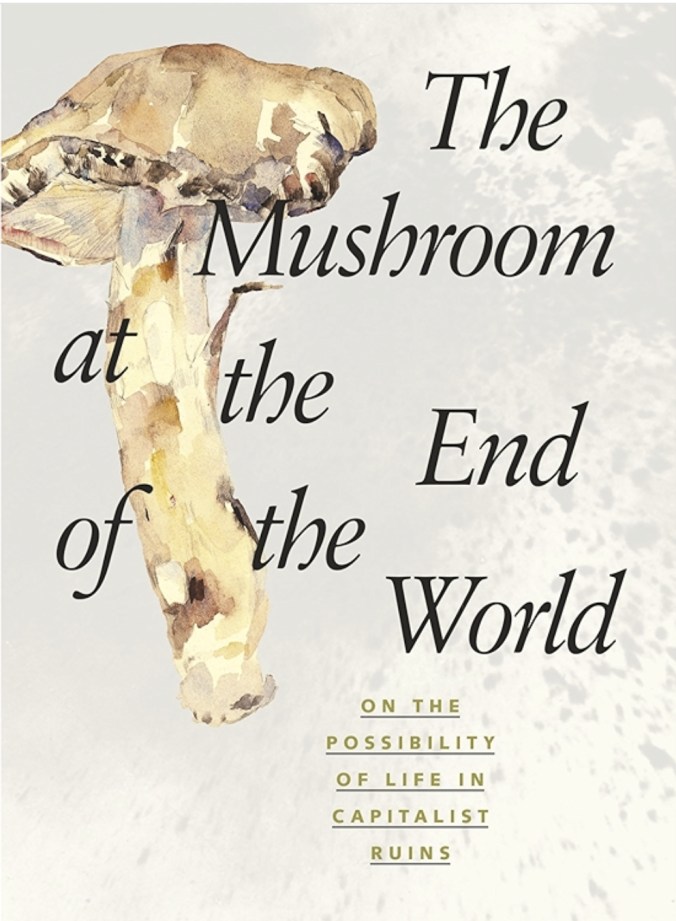
The Mushroom at the End of the World (Princeton University Press, 2021) by Anna Lowenhaupt Tsing

Tsing’s colourful narrative drew me into a metaphoric study of humanity’s journey through the ecology and commerce of the rare Matsutake mushroom. Both treatise on industrial capitalism and parable of survival and renewal under post-capitalist ruin, Tsing’s brilliant storytelling uses the matsutake mushroom and its industry to explore our ecological crisis: how it came about, what drives its continuation and what the consequences may look like.

The matsutake mushroom is considered a weed, growing in human-disturbed forests in the Northern Hemisphere; yet it is prized for its gourmet value. Tsing’s investigation of this rare sought-after mushroom, serves as an excellent metaphor for the study of a post-industrialist world and the promise of life after ruin. Tsing draws together a web of interconnected human and natural ecologies—from the foragers in Oregon and the Hmong jungle fighters to the capitalist traders and Japanese gourmets—to tell a fascinating tale of intrigue, greed, and violence. Laced throughout the story, are her personal reflections on the possibilities of collaborative survival of human and nonhuman.

The book is simply brilliant. The writing riveting. The story important. 

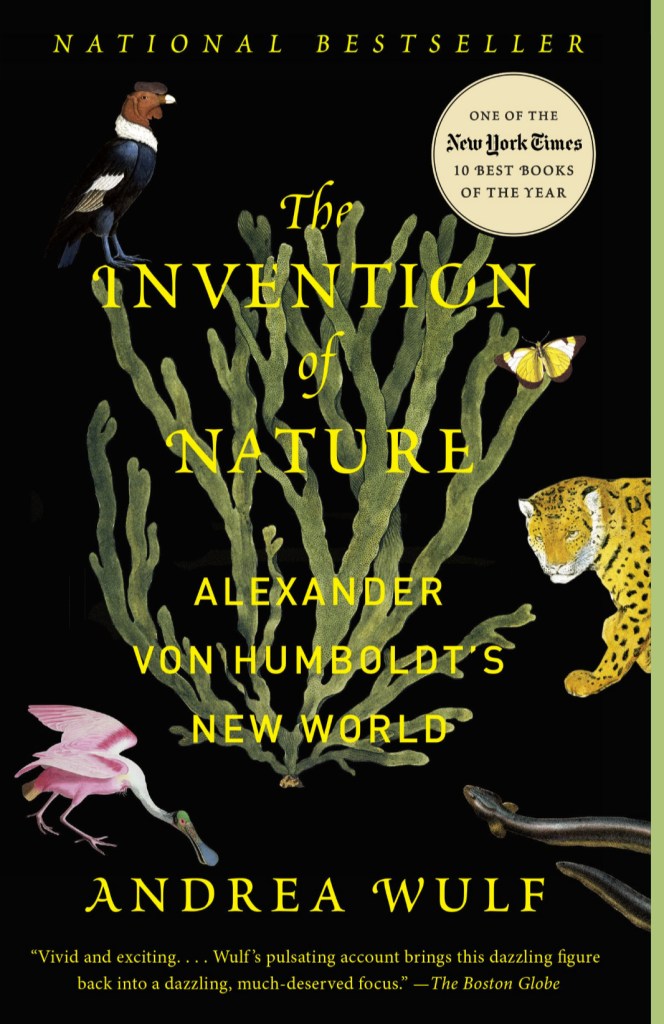
The Invention of Nature: Alexander von Humboldt’s New World (Vintage, 2016) by Andrea Wulf

I was riveted by this fascinating and illuminating biography of a visionary German naturalist and polymath—mostly forgotten—brought back to life through vivid narrative and seamless research to interesting detail. Wulf’s storytelling style drew me into this man’s incredible life, a planetologist way ahead of his time, who predicted human-induced climate change, and formulated a radical concept of nature as both a complex and intertwined global entity—long before Lovelock and Margulis came up with the Gaia Hypothesis in the 1960s.

Humboldt was the first ecologist, practicing the science of ecology for fifty years by the time German scientist Ernst Haeckel created a name for it (ökologie) in 1869. Humboldt embraced Schelling’s naturphilosophie, which espoused an organic and dynamic worldview as an alternative to the atomist and mechanist outlook that prevailed at the time. He saw nature as a living organism, animated by dynamic forces. True to his holistic vision, Humboldt invented global temperature isopleths—still used today. It is no surprise that the world’s first ecologist would also predict humanity’s devastating effect on global climate.

I found Wulf’s biography of von Humboldt fascinating, surprising, often sad, and poignant. What struck me the most was how von Humboldt’s discoveries and predictions were lost to the world with devastating effect. He made the connection and warned of human-induced climate change 200 years ago. If civilization had only heeded his warning!

Water Is… The Meaning of Water (Pixl Press, 2016) by Nina Munteanu

My own non-fiction book Water Is…The Meaning of Water—a celebration of water in all its facets—is offered here as fitting this theme of celebrating Nature and educating us on how to live more lightly and responsibly. Here’s what the publisher’s blurb says:

Internationally published author, teacher and limnologist Nina Munteanu explores one of the most important substances of Earth. Nina Munteanu’s Water Is… The Meaning of Water represents the culmination of over twenty-five years of dedication as limnologist and aquatic ecologist in the study of water. As a research scientist and environmental consultant, Nina studied water’s role in energizing and maintaining the biomes, ecosystems, and communities of our precious planet. During her consulting career for industry and government, Nina discovered a great disparity between humanity’s use, appreciation and understanding of water. This set in motion a quest to further explore our most incredible yet largely misunderstood and undervalued substance. Part history, part science and part philosophy and spirituality, Water Is… combines personal journey with scientific discovery that explores water’s many “identities” and ultimately our own.

Water Is… was chosen by Margaret Atwood that year as one of her favourites in The New York Times ‘Year in Reading.’

Nina Munteanu is an award-winning novelist and short story writer of eco-fiction, science fiction and fantasy. She also has three writing guides out: The Fiction WriterThe Journal Writer; and The Ecology of Writing and teaches fiction writing and technical writing at university and online. Check the Publications page on this site for a summary of what she has out there. Nina teaches writing at the University of Toronto and has been coaching fiction and non-fiction authors for over 20 years. You can find Nina’s short podcasts on writing on YouTube. Check out this site for more author advice from how to write a synopsis to finding your muse and the art and science of writing.

Author Interview: Terry Birdgenaw Talks About Insects, Climate Change and his Latest Book

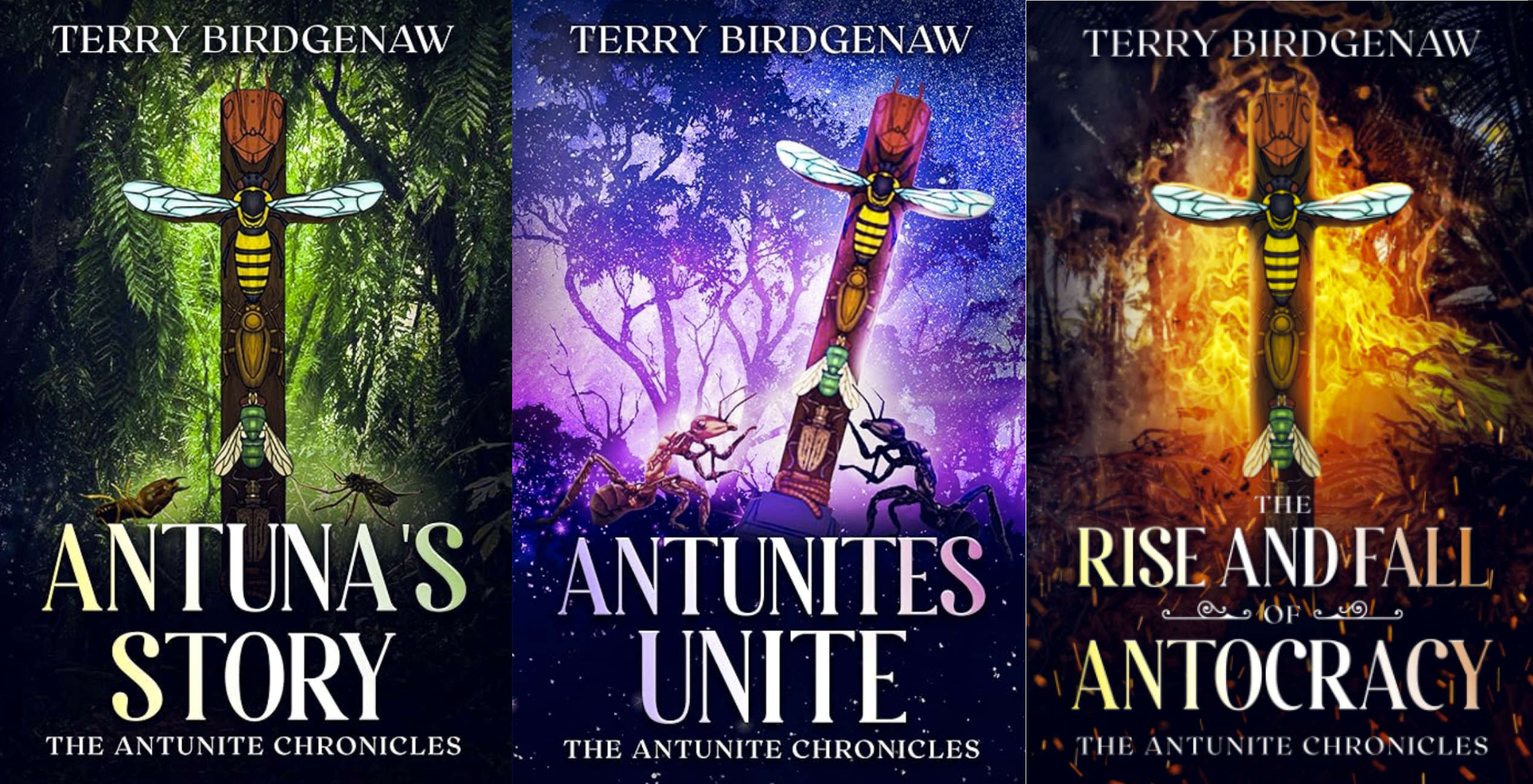
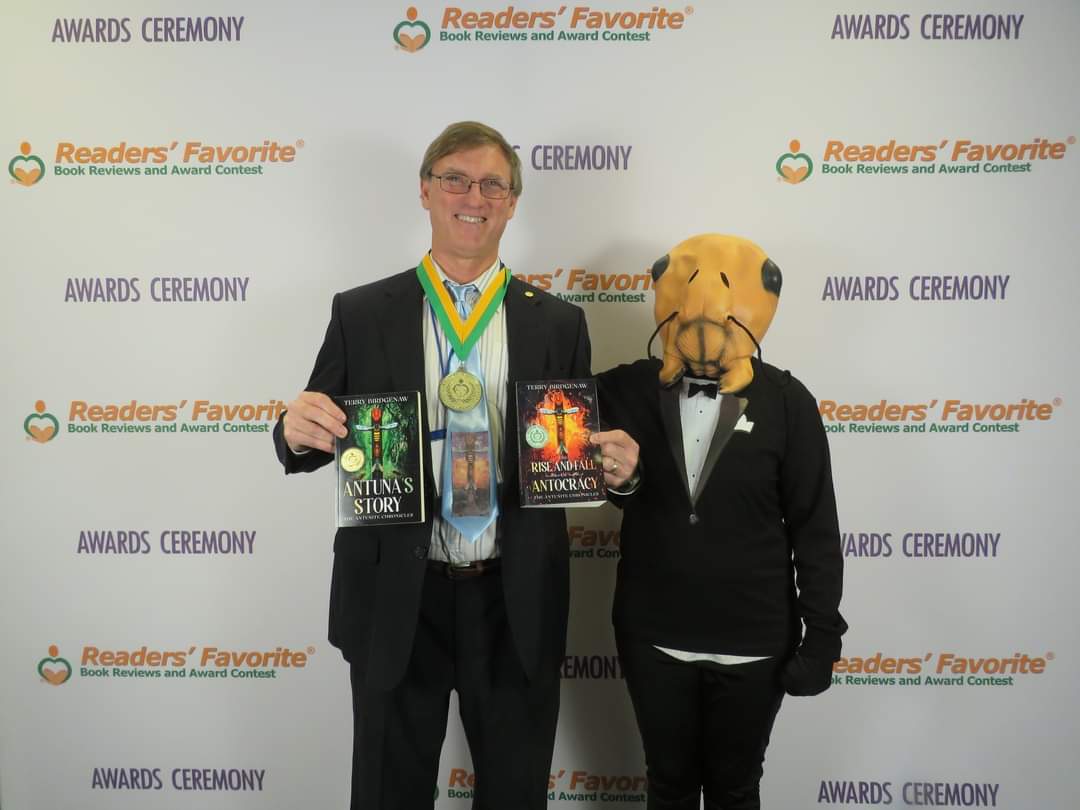
It was several years ago, in 2020, that Terry Birdgenaw approached me as a writing coach to look at his first novel. When he described its premise, I was hooked right away and agreed to give it an editorial review. It was the beginning of a wonderful and rich experience with Terry’s books, now a series entitled The Antunite Chronicles. From the start, I was impressed and fascinated with his imagination and accurate use of science to produce a diverting allegorical CliFi series about cyborg insects on a far-away planet that serves as metaphor to developing autocracies on Earth.

Terry has three books out, with a fourth upcoming. The three books in this YA series take place on a far-away planet and moon, serving as a political and environmental allegory of an evolving technological society and failed democracy. They include: Antuna’s Story; The Rise and Fall of Antocracy; and Antunites Unite. The theme of induced climate change and environmental destruction runs deeply through the first three books. The fourth book, soon to release, is Cyborg Contact, which returns us to Earth. I’ll let Terry describe the series in the following interview I conducted with him on November 26:

Nina: Your background and expertise is in neuroscience and psychology with over 150 scientific publications. You are Harold Griffith Professor of Anesthesia Research at McGill University in Montreal and your main research focus is on the mechanisms underlying neuroplasticity and its influence on the perception of pain. What got you started writing this incredible series, an adventure story that embraces ecology and entomology? What gave you the idea to create this imaginative modern allegory on the evolution of a technological society using insects as your main characters?

Terry: Oddly enough, I was not originally planning to write fiction. My inspiration came from my school librarian wife, Ann Birdgenaw, when she began writing the second book of her children’s chapter book series, Black Hole Radio. Her series features fifth-grade kids who travel through a wormhole to different planets, aiding the inhabitants they discover. She was considering what kind of planet and civilization her explorers would encounter, and I gave her some ideas about a giant cyborg-insect world that she ran with. Having some skin in the game, I participated beyond my welcome, offering plotlines that were far too advanced for her 7- to 11-year-old readers. Graciously, Ann suggested I take my ideas and write the backstory for her book, Black Hole Radio – Bilaluna, but target my book at young adults and adults. Thus began my fiction writing adventure. It was a rough start, but with the help of a tolerant book coach, my planned novella rapidly expanded to a trilogy. Perhaps a quick study because of years of scientific writing, I still credit Nina with opening in me an imaginative creativity I never knew I possessed.

Nina: The narrative of your stories is from the POV of various insects and in some way, the stories are dramatizations of real and accurate ecological relationships of insects with their environment and each other. How did you prepare for this—both in relaying accurate ecologies and in realizable dramatization and characterization of your main characters—all insects? How did you avoid what I would call the Disney-effect: anthropomorphising insect characters into human archetypes to achieve reader engagement? How did you create that balance between realistic representation and empathic portrayal?

Terry: Although my books are parodies with characters who face political and ecological problems and anthropomorphise human dilemmas, I did not want them to be simply furry or slimy stand-ins for the humans they satirize. Thus, I drew on my long-standing expertise as a scientific researcher to delve deeply into entomology, ecology and environmental science. Fascinated by the richness of insect activities and interactions and the similarity between insect and human behaviour, I endeavoured to exploit my newly acquired knowledge within the pages of my story. I was inspired both by Orwellian dystopias and works such as Bernard Werber’s Empire of the Ants and Laline Paull’s The Bees. But more than that, I learned to let myself be taken into the world my insects lived in, experiencing both their instinctive realities and the human predicaments I intended to lampoon in equal measure.

Nina: I noticed some fun metaphoric descriptions and expressions that incorporated insect terms to represent human counterparts. Did these come to you easily or were they a lot of work over time? Can you describe the process you used? For instance, did you spend a lot of time watching ants on the sidewalk?

Terry: Some phrases like ‘she shook her antenna to tune her attention’, ‘I took that as a back-clawed compliment’, or ‘he is such a hindgut hole’ came easily to me as differences in insect and human anatomy necessitated them. Others, like the expressions explained in my dictionary of pheromonal insect emotions, took much more reflection. This literary technique was inspired by your writing guide, The Fiction Writer, when you described how to add colour to one’s writing by using word pairings that mix up the senses, like the well-known one ‘biting cold’. This excellent advice led me to develop an extensive lexicon of insect emotions/non-verbal speech, including word combinations such as abrasive aroma, bitter bouquet, frosty fragrance, and vacillating vapour. They were not all alliterations, but some, like ‘she emitted an effervescent essence, were clearly intended to be. I didn’t watch ants walking, but I thought a lot about how they might communicate their emotions pheromonally.

Nina: One of the things I enjoyed throughout your series is how you seamlessly imparted interesting facts about insects on our planet in the storytelling. I learned a lot about various insects! Tell us a little about the process you used to achieve this so effectively.

Terry: As a long-time researcher, I have learned how to find and use facts from scientific literature and reliable web-based information on many subjects within and outside my scientific field. Insect behaviour is little known, but often fascinating, and I enjoyed both discovering many details and incorporating them into fiction scenes. Sometimes I was required to dig even deeper than I initially expected to make my stories scientifically accurate. One of these cases had a very significant impact on a critical component of my book’s key plot. In Antunites Unite, ants are separated into a hierarchy of castes based on exoskeleton colour. Although clearly an anti-racism story, I originally wrote it with black ants as oppressors of both brown and red ants. Perhaps influenced by previous literature and movies, where the bad guys are often dressed in black, I had a feeling that some readers might interpret my choice as having a racist underpinning. I convinced myself that readers would not take the colour choice as representative of human ethnicity. However, the last beta reader to comment on the book made such an interpretation and confirmed my fear that some readers might see it as the opposite of my intention. So, while I debated altering the colour schemes, I dug deeper into the entomological discovery of a phenomenon my story paralleled, involving what entomologists call slave-maker ants. When my extensive research confirmed that red ants are more often the ants using raids to steal the eggs of other ants to be raised as slave-like workers for the dominant reds, I knew I had to reverse the colours. And this was no easy task, because all the characters in each caste took names that reflected their colour, like Ruby and Obsidiant. There were also many humorous references to colour, such as black widow spiders and lava fields, that needed to be reworked. It was an editing nightmare: Rose became Raven, and Raven – Rose, while Cole gave way to Clay, and Jett morphed to Jasper, etc., etc., etc. But in the end, it was true to nature and avoided any unwanted racial interpretations.

Nina: In your first three books—a political modern satire on developing autocracies and human-induced climate change—you explore the technological and biological evolution of an insect exo-community in which certain species—ants for instance—acquire the ability to become cyborgs, ANTs, growing in size and abilities to navigate their world more effectively with related achievements—and consequences. As an ecologist, I was fascinated by how you portrayed the changing relationship of these beings to their environment as they evolved. Do you see a parallel with human society? Can you elaborate on this?

Terry: Yes, on a macro level. That is, technology can benefit society immensely, but it can also cause significant harm when coupled with greed, wilful ignorance of scientific warnings, and leaders misleading the public. I highlight one line of poetry written by my narrator in The Rise and Fall of Antocracy: “Like Peter and the crows, tis science, truth and reality denied ere climate is crucified.” Cyborg insects were created to enhance the production of honey, which was their currency. Cyborg ants, who most craved both power and honey, deceived the public to the detriment of the environment and ignored the science that provided evidence of environmental changes, which most insectoids on the planet denied. Perhaps an obvious cataclysmic message to those in our world, but many on this Earth apparently need to be hit over the head to see where this all may lead.

Nina: Tell us about your latest book, the fourth in the series, Cyborg Contact, in which one of the cyborg ANTs returns to Earth through a wormhole with an important mission. I found that, while the first three books served as satirical allegory to a developing technological society through the evolving insect communities, the fourth book—being a first contact—shifts into more of an exploration of ‘the other,’ its perception and treatment by humans and their civilizations. Can you expand on this? How does humanity’s perception and treatment of the ‘other’ factor into our treatment of our environment and the growing phenomenon of climate change?

Terry: I might disagree and point out that ‘exclusion of the other’ is a dominant theme in all four books. The difference is that in Cyborg Contact, the main character embodies ‘the other’, so it hits home more strongly. What could be more ‘otherly’ than an alien (from another planet) who is treated like an illegal alien and hunted by ICE agents? And, too, aside from being hunted, many other dangers the alien experiences on Earth, including hurricanes, droughts, mudslides, and forest fires, are all caused by climate change, which has accelerated in the near-future North America our hero traverses. It seems that for some world leaders, a lack of empathy for others is paired with a disregard for the environment.

Nina: Who is reading your books? And who should be who isn’t?

Terry: They are read by both young adults and adults; sometimes by parents reading to their pre-teens. They are not New York Times best sellers, but are highly celebrated by those who have read them. They should be read by all sci-fi and fantasy readers aged 13 and up who enjoy a thought-provoking read, except those who support fascism.

Nina: How have your books been generally received? I understand that your trilogy has won the Firebird Book Award. Congratulations! What are people saying about your books?

Terry: Editorial reviews have been stellar, and the books have received awards from most of the contests to which they have been entered. Awards for all three books include Gold Medal/Badge (Readers’ Favourite, Literary Titan), First Place Prize (Firebird, Entrada Incipere), Silver & Bronze Medal (Firebird, Bookfest), Honourable Mention (Readers’ Favourite), and Finalist (American Writing Awards, Chanticleer, The Wishing Shelf). Most notable review comments describe the books as: “soon-to-be a bestseller”, “takes speculative fiction to a new level”, “fantastical to a degree not seen elsewhere in any Sci-Fi dystopian fiction”, “as big in spirit as any literary giant in the genre” and “holds its ground next to Brave New WorldDuneAnimal Farm, and 1984”. These reviews have “blown me away”, like an enthusiastic reader’s comment on Antuna’s Story.

Nina: What’s next for Terry Birdgenaw?

Terry: Finish editing Book 4 and writing a dystopian novel featuring humans for a change.

Nina: That sounds very intriguing! Thanks for coming out for the interview, Terry.

Terry: My pleasure, Nina.

The first three books of the Antunite Chronicles series by Terry Birdgenaw

You can find Terry’s books all over the place, including Amazon. Find out more about Terry on his website and check out Terry’s interview on SF Canada in which he talks more about his heritage and interests.

Terry Birdgenaw and one of his fans

Terry Birdgenaw with Narrant at award ceremonies

Nina Munteanu is a Canadian ecologist / limnologist and novelist. She is co-editor of Europa SF and currently teaches writing courses at George Brown College and the University of Toronto. Visit  www.ninamunteanu.ca for the latest on her books. Nina’s bilingual “La natura dell’acqua / The Way of Water” was published by Mincione Edizioni in Rome. Her non-fiction book “Water Is…” by Pixl Press (Vancouver) was selected by Margaret Atwood in the New York Times ‘Year in Reading’ and was chosen as the 2017 Summer Read by Water Canada. Her novel “A Diary in the Age of Water” was released by Inanna Publications (Toronto) in June 2020.