“Gaia’s Revolution”, Life After Capitalism: The Promise & Spectre of Deep Ecology—Part 2

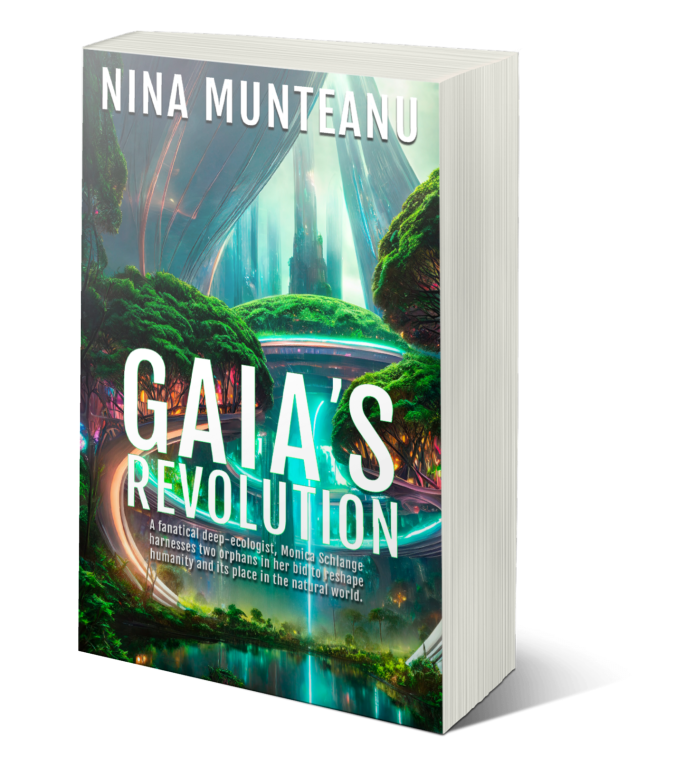
A fanatical deep-ecologist, Monica Schlange, harnesses two orphans in her bid to reshape humanity and its place in the natural world.

My novel Gaia’s Revolution, Book 1 of The Icaria Trilogy—which released March 10, 2026, by Dragon Moon Press—explores a collapsing capitalist society in Canada through ravages of climate change, water shortages, plague, and a failing technology.

The story begins in Berlin in 2022, with maverick scholar Damien Vogel, a deep ecologist and environmentalist who joined the climate activist group Letzte Generation* to do acts of civil disobedience to bring public awareness to climate offenders. The novel progresses from acts of civil disobedience to genuine eco-terrorism as Damien follows his revolutionary anarchist twin brother Eric to Canada and forms the Gaians, a radical eco-activist group, recruiting fanatic Monica Schlange—herself a sly eco-terrorist. Monica is an unscrupulous deep ecologist, proficient in using sabotage and internet tampering to disrupt and hurt climate offenders. The twin brothers end up on opposite sides of a violent revolution as Monica—guided by her own agenda as an extremist planetary guardian—plays them both.

The Icaria Trilogy by Dragon Moon Press

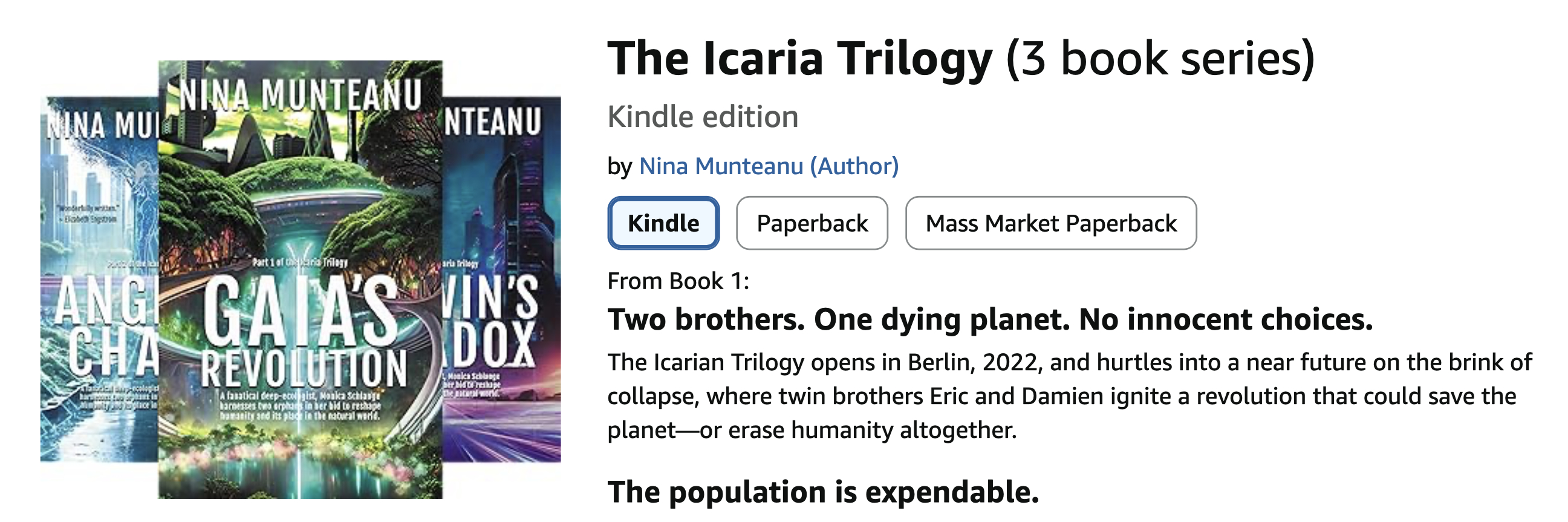
By 2095 (Book 2 Angel of Chaos and Book 3 Darwin’s Paradox), humanity has fled inside environmental dome cities called Icarias*, chased inside by an unruly environment. Icarians struggle with Darwin’s Disease—a mysterious neurological environmental pandemic. Icaria 5 is one of many enclosed cities within the slowly recovering toxic wasteland of North America, and where the protagonist Julie Crane (daughter of one of the orphans in Gaia’s Revolution) lives and works. Icarias are run by The Circle, a governing body of deep ecologists who call themselves Gaians. The Gaians’ secret is that they are keeping humanity “inside” not to protect humanity from a toxic wasteland but to protect the environment from a toxic humanity.

Ecology vs. Deep Ecology vs. Eco-Terrorism

Snow falls on a Scots Pine forest, ON (photo and rendition by Nina Munteanu)

Ecology: Ecology is the science of relationships. Ecologists study ecosystems (aquatic and terrestrial), how they form, their structure and function, and how they relate to one another within the biosphere. Ecologists look at the relationship of all biota and non-biota, at individuals and communities, how all evolve (succession), at community richness, perturbations and recoveries, and natural enrichment. Ecologists model the flow of energy and cycling of matter over time and space.  

Deep Ecology: Deep ecologists are usually ecologists themselves, who have adopted 

An environmental philosophy and social movement advocating that all living beings have intrinsic value, independent of their utility to human needs. The philosophy promotes a holistic, ecocentric worldview—often termed “ecosophy”—that demands radical, structural changes to human society to prioritize nature’s flourishing. See the Eight Basic Principles of Deep Ecology.

Eco-Terrorism: Both ecologists and deep ecologists may grow cynical, seeing humanity as an existential threat, a virus that impacts the rest of life on Earth and exacerbates hyperobjects like climate change, loss of biodiversity and habitat destruction. This may lead to activism which some with a fanatical and destructive warrior spirit may move toward eco-terrorism such as criminal actions to halt development, and various acts of violence (e.g. arson, destruction of research facilities, threats against individuals).

Ecologists, Deep Ecologists & Eco-Terrorists in The Icaria Trilogy

In Gaia’s Revolution deep ecologist / scholar Damien Vogel and his nihilist revolutionary twin brother Eric Vogel trigger a violent revolution and eventual migration of humanity into the enclosed worlds of Icaria. While Damien follows deep ecology as an intellectual and scholar, believing in the eight basic principles of deep ecology, Eric uses the principles to enact merciless ‘solutions’ through brutal acts of eco-terrorism. Deep ecologist / eco-terrorist Monica Schlange insinuates herself into both brother’s plans to orchestrate her own unique vision of the world. Monica differs from Eric in her sense of humanity; a consummate and ruthless eco-terrorist and subversive, she is bent on entirely destroying the capitalist-technocratic machinery of which Eric is a part—to save the planet at the expense of human domination.

Damien and Christian Isabo meet to discuss recruiting her into their radical group:

Christian says, leaning forward, “She’s a bit of a wild card and possibly a genuine eco-terrorist. For instance, I discovered that she was behind the viral social media fiasco that embarrassed Prime Minister Robinson last year and almost cost him his seat. You know the one—those pictures of him fooling around with the German Chancellor, Magda Zimmermann, who’s married with two kids… Damien. I think that she’s extremely resourceful, stealthy, good at subterfuge and covers her tracks impeccably. Of course, there are definitely anger issues there. But, I also think we can count on her because her motives to help the environment lie on a deep visceral level, tied to her childhood experience and love of Nature.”

Damien studies her image on his phone with a thoughtful frown. He looks up at Christian. “What do we know about her?”

“Well, to begin with, she’s an only child and grew up on one of the last independent dairy farms in Ontario, near Guelph. Her father was strict and encouraged a strong work ethic and love for the natural world. He doted on her but died of a heart attack when she was only thirteen, the year their farm was seized by the Technocrats and converted into a Corporation Farm using scientific agriculture. In fact, their seizure may have precipitated the father’s heart attack. Her mother was assigned as a scullery maid in the farm kitchen; she took to drink then ran off with some truck driver travelling across Canada from Surrey, BC. He didn’t treat the girl well and she ran away before they reached Halifax. She ended up living with her aunt—her father’s sister—in the Beaches. The aunt worked as a librarian at York University and was a fervent member of Extinction Rebellion before it dissolved. She was a real bohemian, a deep ecologist herself, and encouraged the girl.”

While Monica shows the same level of dedication, she betrays a lack of integrity in her less than altruistic motivations and means, thinks Damien. The fact that she’s with Eric [his twin brother and nemesis] proves this. But even that—especially that—can work in their favour. It would seem that, without knowing it, she is already working as an undercover spy for their revolution. He can work with that, Damien thinks. Yes, he can certainly do that. And more. It’s my turn now, brother…

“OK. Set up a meeting,” Damien says. “Let’s get her into the fold.”

Mist over swelling spring stream, ON (photo and rendition by Nina Munteanu)

Leonard Crane—one of the three orphans impacted by the revolution and both rescued and tormented by Monica Schlange—studies ecology under new Gaian rule and is eventually inducted into the prestigious Department of Industrial Ecology (DIE) where he works on subversive ecological theories about Icaria’s inevitable demise and is eventually ostracised from the scientific community for his unpopular work. His legacy echoes throughout Books 2 and 3 of the trilogy.

Books 2 and 3 follow Julie Crane (Leonard’s daughter), a self-taught ecologist. In Angel of Chaos and Darwin’s Paradox, her skills as an amateur ecologist (in a world where ecology is not taught) are tested by the ruthless deep ecologist Gaia, head of The Circle. Gaia denigrates Julie’s ecological pursuits as shallow and ineffectual. When a subordinate of hers asks her if Julie would make a good candidate for The Circle (the governing body of Icaria), Gaia scoffs:

“You mistake a good scientific ecologist with someone who possesses a genuine empathy for deep ecology,” she said. Her eyes sparkled like sapphires. “No one enters our elite cadre without having impeccable qualifications and submitting to many more initiations than she is capable of passing. She may be an ecologist but she is not a deep ecologist. The science of ecology does not ask what kind of society would be the best suited to maintain a particular ecosystem. Our greater concern is with questions aimed at the level of organic wholeness and ‘Earth wisdom’. She knows nothing of these things.”—Gaia, Angel of Chaos

Fog enshrouded marsh in early winter, ON (photo and rendition by Nina Munteanu)

You can order “Gaia’s Revolution” on Amazon. Release date for both ebook and print book was March 10, 2026. Book 2 (Angel of Chaos) and Book 3 (Darwin’s Paradox) of theIcaria Trilogy are already available in both ebook and print form.

References:

Munteanu, Nina. 2026. “Gaia’s Revolution, Part 1 of Icaria Trilogy.” Dragon Moon Press, Calgary, AB. 369 pp.

Munteanu, Nina. 2010. “Angel of Chaos, Part 2 of Icaria Trilogy.” Dragon Moon Press, Calgary, AB. 518 pp.

Munteanu, Nina. 2007. “Darwin’s Paradox, Part 3 of Icaria Trilogy.” Dragon Moon Press, Calgary, AB. 294 pp.

Sessions, George, Bill Devall. 2000. “Deep Ecology: Living as if Nature Mattered.” Gibbs Smith. 267pp.

Skinner, B.F. 1948. “Walden Two” The Macmillan Company, New York. 301pp.

Terminology:

*Deep Ecology: An environmental philosophy and social movement advocating that all living beings have intrinsic value, independent of their utility to human needs. Coined by Arne Næss in 1972, it promotes a holistic, ecocentric worldview—often termed “ecosophy”—that demands radical, structural changes to human society to prioritize nature’s flourishing.

*Icaria: the name of Étienne Cabet’s utopia. Cabet was a French lawyer in Dijon, who published his novel Voyage en Icarie in 1839. The novel was a sort of manifesto-blueprint of utopian socialism, with elements of communism (abolished private property and individual enterprise), influenced by Fourierist and Owenite thinking. Key elements, such as the four-hour work day, are reflected in B.F. Skinner’s Walden Two. Cabet’s novel explores a society in which capitalist production is replaced by workers’ cooperatives with a focus on small communities.

*Letzte Generation: a prominent European climate activist group, founded in 2021, known for its acts of civil disobedience—such as roadblocks, defacing art, and vandalizing structures—to pressure governments on climate action. The term was chosen because they considered themselves to be the last generation before tipping points in the earth’s climate system would be reached. They are mostly active in Germany, Italy, Poland and Canada. In Germany, they have faced accusations of forming a criminal organization, leading to police raids.

Nina Munteanu is an award-winning novelist and short story writer of eco-fiction, science fiction and fantasy. She also has three writing guides out: The Fiction WriterThe Journal Writer; and The Ecology of Writing and teaches fiction writing and technical writing at university and online. Check the Publications page on this site for a summary of what she has out there. Nina teaches writing at the University of Toronto and has been coaching fiction and non-fiction authors for over 20 years. You can find Nina’s short podcasts on writing on YouTube. Check out this site for more author advice from how to write a synopsis to finding your muse and the art and science of writing.

The Icaria Trilogy: The Story Behind the Prequel to the Prequel…


Today my eco-fiction novel Gaia’s Revolution (Book 1 of The Icaria Trilogy) releases through Dragon Moon Press in paperback and ebook form on Amazon (and other book retailers).

Gaia’s Revolution explores a collapsing capitalist society in Canada through ravages of climate change and a failing technology. The story is told through the lives of ambitious twin brothers Eric and Damien Vogel, and the woman who plays them like chess pieces in her gambit to ‘rule the world.’ The novel starts out in Berlin—with a scuffle between police and climate activists of Letzte Generation-then moves to Toronto Canada, where an unlikely revolution is brewing… 

Book 2 (Angel of Chaos) and Book 3 (Darwin’s Paradox of The Icaria Trilogy are already available in bookstores worldwide in both ebook and print form.

The Icaria Trilogy by Dragon Moon Press

This day is special for me in a number of ways. Today is also my dad’s birthday. He passed away a while ago, but I know he is here with me as this is happening. You see, when I was just 15, I’d written my first book, an early version of Angel of Chaos. My dad, who had met and befriended an editor at Doubleday, and proud of my accomplishment, arranged a meeting with me and the editor to look at my book. I put on my highest pumps—I could barely walk in them!—and best outfit and met with the gentleman. He did not take my book for publication but praised my work and gave me some wonderful advice. “Keep writing!” he said. I have carried that meeting and advice to this day and thank my dad for his belief in me as a writer—particularly given that he had been pushing for me to become a teacher or nurse. Four decades later, a more polished version of that same book was published in 2010 by Dragon Moon Press (as Angel of Chaos, the prequel to Darwin’s Paradox, which was published in 2007). 

Birch forest in Ontario (photo and rendition by Nina Munteanu)

The Icaria Trilogy by Dragon Moon Press

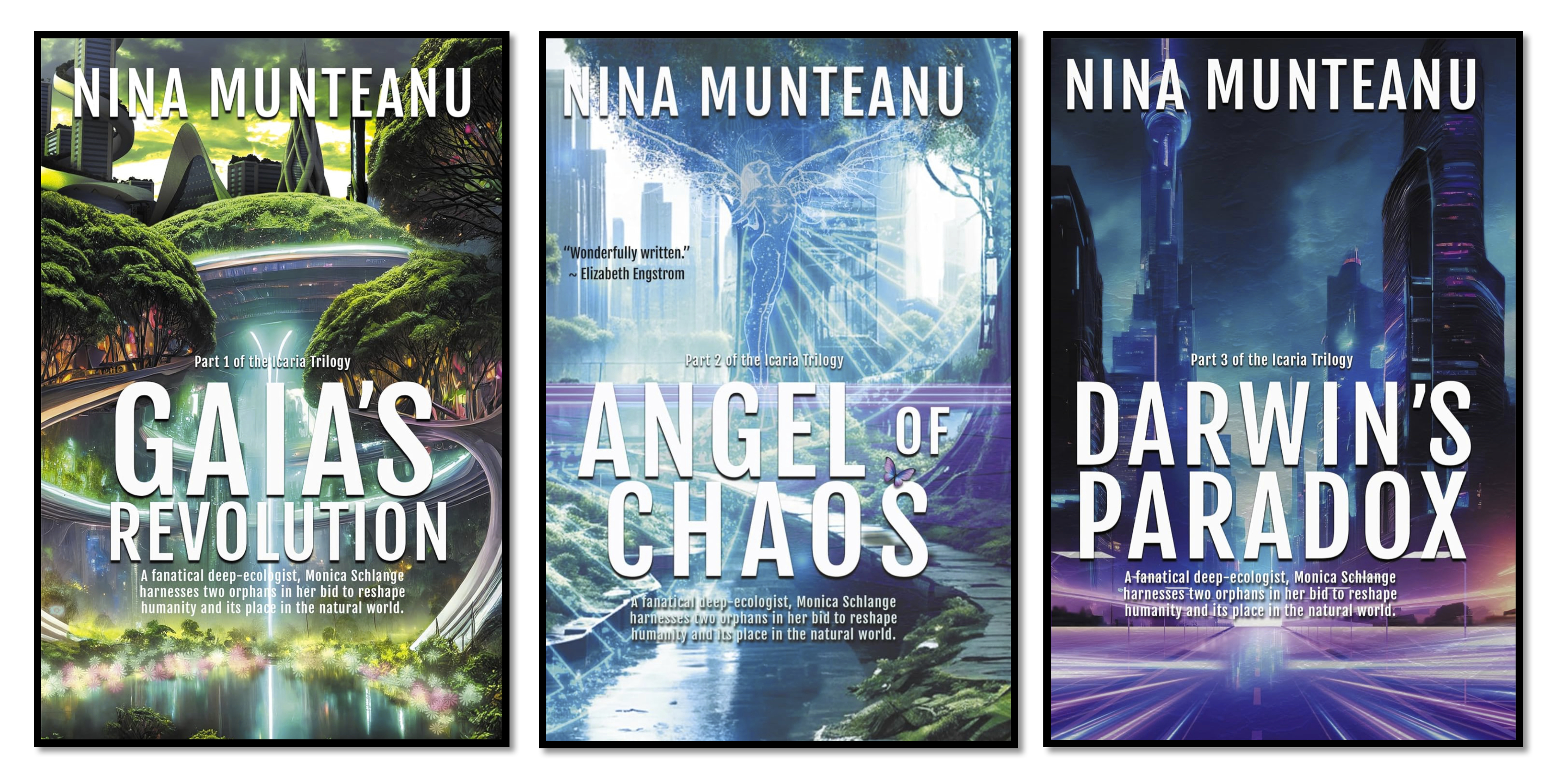
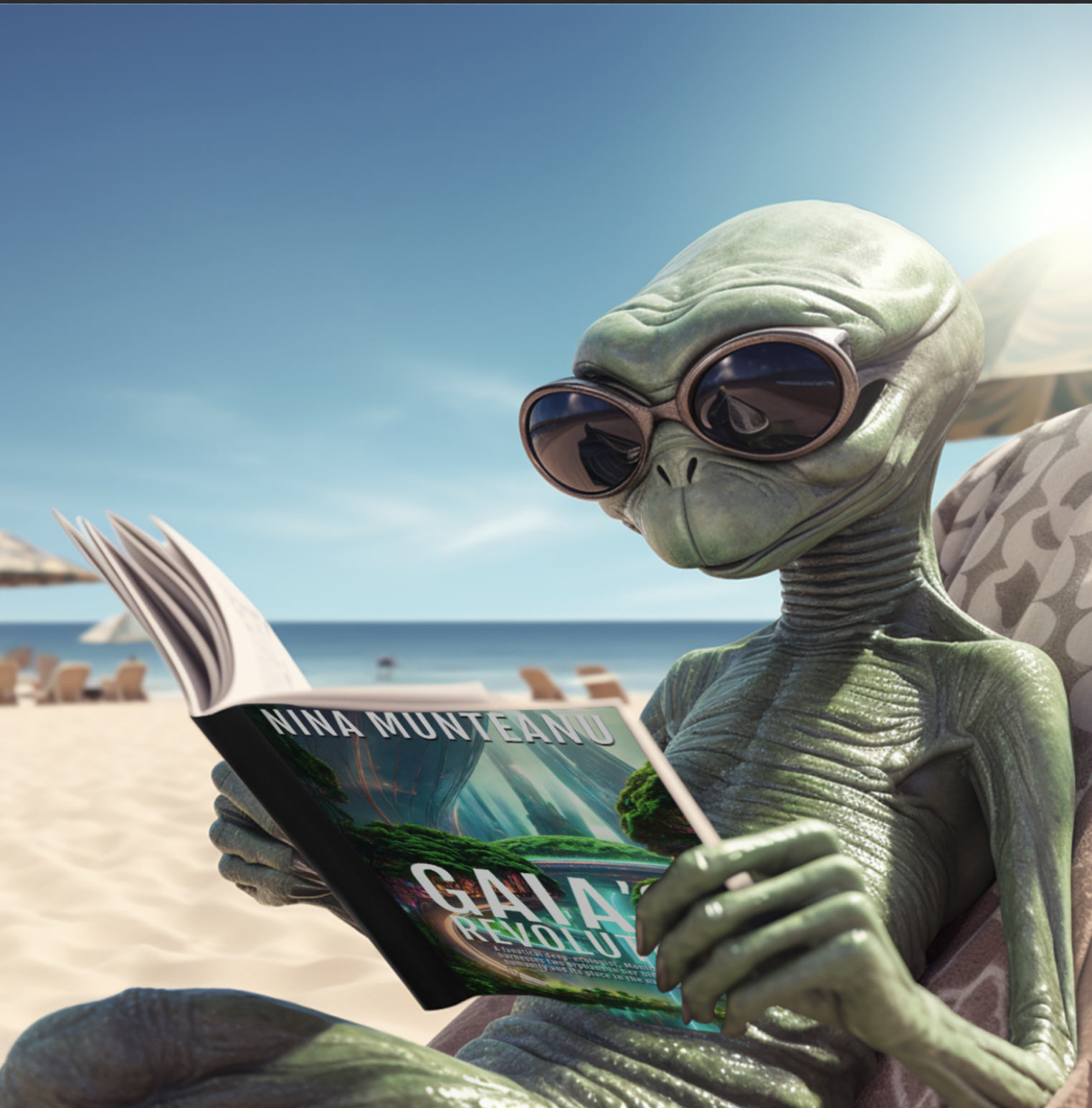
Now, with newly written Gaia’s Revolution (the prequel to the prequel) released, Dragon Moon has reissued new covers for the entire trilogy. Here they are! Oh! And look who’s already reading Gaia’s Revolution!

Aliens get to read everything before we do…

Nina Munteanu is an award-winning novelist and short story writer of eco-fiction, science fiction and fantasy. She also has three writing guides out: The Fiction WriterThe Journal Writer; and The Ecology of Writing and teaches fiction writing and technical writing at university and online. Check the Publications page on this site for a summary of what she has out there. Nina teaches writing at the University of Toronto and has been coaching fiction and non-fiction authors for over 20 years. You can find Nina’s short podcasts on writing on YouTube. Check out this site for more author advice from how to write a synopsis to finding your muse and the art and science of writing.

“Gaia’s Revolution”, Life After Capitalism: The Promise & Spectre of Deep Ecology—Part 1

Twin brothers—a brilliant scientist and a gifted engineer—escape the growing racial violence of Berlin, to ‘peaceful’ Canada in a rivalry to control the evolution of the human race.

My novel Gaia’s Revolution, the first of The Icaria Trilogy—releasing March 10, 2026, by Dragon Moon Press—explores a collapsing capitalist society in Canada through ravages of climate change, water shortages, plague, and a failing technology. The story is told through the lives of ambitious twin brothers Eric and Damien Vogel, and the woman who plays them like chess pieces in her gambit to rule the world.

The novel starts on December 13th, 2022, in Berlin, the day several members of the climate activist group Letzte Generation* to which Damien belongs, are raided by police who seize their computers and phones. Damien is a quiet scholar, an introvert and deep ecologist*, devoted to the teachings of Arne Næss and George Sessions, who promoted an environmental philosophy of eight basic principles of deep ecology.  Næss and Sessions advocated that all living beings have intrinsic value, independent of their utility to human needs. Their philosophy has become a movement that promotes a holistic, eco-centric worldview demanding radical, structural changes to human society to prioritize nature’s flourishing.  

Road through a beech tree forest, ON (photo and rendition by Nina Munteanu)

Damien later meets with his extrovert anarchist brother in Treffpunkt, near the university campus, and they argue ideology and revolution. Eric contends that the only way humanity will survive is to adapt to climate change by somehow overthrowing the bourgeois plutocrats through violent revolution: preventing the small ruling class carving out a comfortable life for itself while the rest of the world suffers terrible deprivation. Eric pulls out the worn copy of B.F. Skinner’s Walden Two from his jacket pocket, slaps it on the table and pushes it toward Damien. “That’s the answer, Dame.”

Each brother plans to create a new humanity: Eric’s plan is to control humanity through gene manipulation and behaviour engineering (aka Walden Two); Damien’s plan is to draw on deep ecology and use environmental triggers with biotechnologies to empower humanity with physical/chemical abilities to adapt to climate and its changing environment via transhumanist AI.

Neither addresses the elephant in the room: population. Only a much-reduced population will ensure success for either plan.

To this point, Eric, who is far more cynical and ruthless, thinks Damien naïve and feckless in his deep ecological view:

Damien too easily prescribes to the old leftist shibboleth of Nature being the answer to everything and Market being evil. His deep ecology utopia would spring from an atavistic rejection of modern life, a return to ‘the ancient farm.’ But how that fantasy could be achieved without a drastic population reduction is beyond his brother’s imagination. Damien fetishizes the natural world. Just like he does their mother. The naïve fool is a blind romantic, refusing to see reality right in front of him: that Nature is ultimately cruel, cold, and preoccupied with its own survival. Just like their mother.–Eric Vogel, Gaia’s Revolution

Foggy morning on an Ontario marsh in winter (photo and rendition by Nina Munteanu)

Eight Basic Principles of Deep Ecology*

In 1984, ecologists Arne Næss and George Sessions set out the following Basic Principles of Deep Ecology:

  • The well-being and flourishing of human and nonhuman Life on Earth have value in themselves (synonyms: intrinsic value, inherent value). These values are independent of the usefulness of the non-human world for human purposes.
  • Richness and diversity of life forms contribute to the realization of these values and are also values in themselves.
  • Humans have no right to reduce this richness and diversity except to satisfy vital needs.
  • The flourishing of human life and cultures is compatible with a substantial decrease of the human population. The flourishing of nonhuman life requires such a decrease.
  • Present human interference with the nonhuman world is excessive, and the situation is rapidly worsening.
  • Policies must therefore be changed. These policies affect basic economic, technological, and ideological structures. The resulting state of affairs will be deeply different from the present.
  • The ideological change is mainly that of appreciating life quality (dwelling in situations of inherent value) rather than adhering to an increasingly higher standard of living. There will be a profound awareness of the difference between big and great.
  • Those who subscribe to the foregoing points have an obligation directly or indirectly to try to implement the necessary changes.
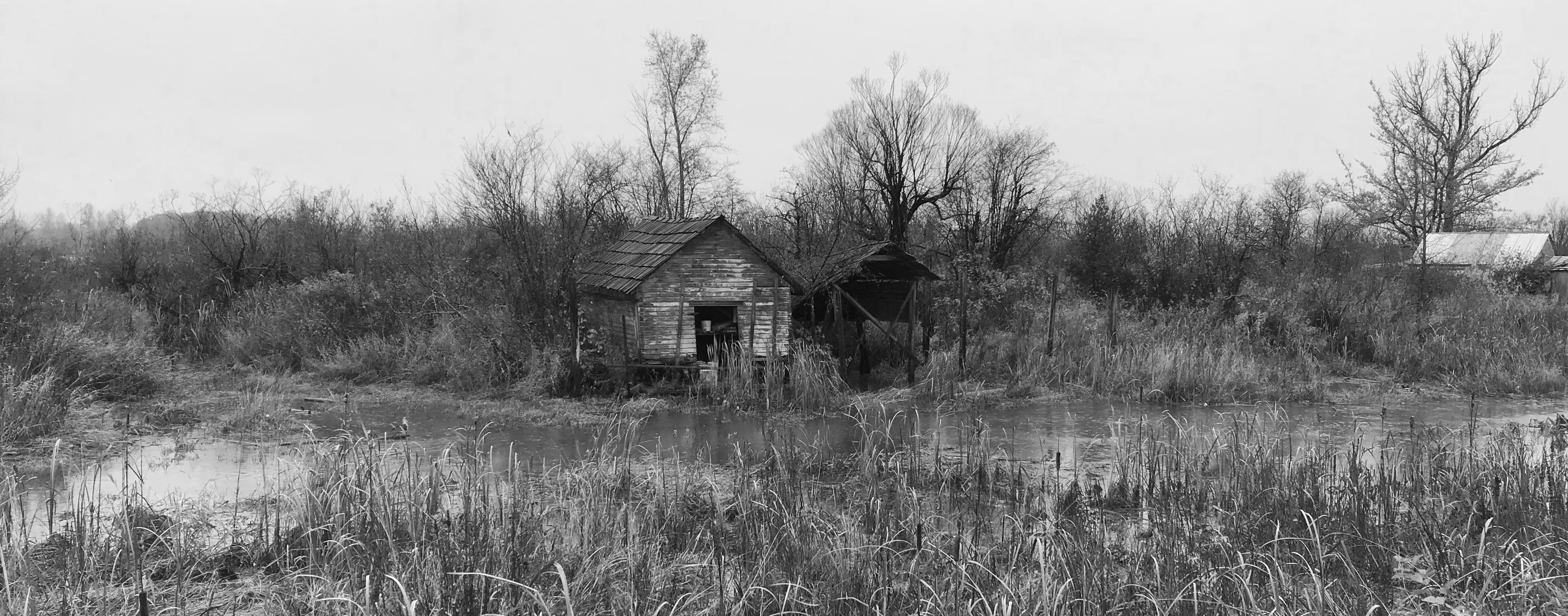
Finn Slough old shed, BC (photo by Nina Munteanu)

Eric plans to address the 5th Basic Principle of Deep Ecology—present human interference with the nonhuman world is excessive and the situation is rapidly worsening— by using nefarious means to meet the 4th Basic Principle of Deep Ecology: the flourishing of human life and cultures is compatible with a substantial decrease of the human population and the flourishing of nonhuman life requires such a decrease. With a reduced population, he plans to make the remaining principles (e.g. 6th and 7th) realizable through his behaviour engineering.

But Eric hasn’t accounted for fanatical deep ecologist / eco-terrorist Monica Schlange in his plan… (More on this shapeshifting character in Part 2).

The Icaria Trilogy by Dragon Moon Press

You can pre-order the ebook of Gaia’s Revolution by Dragon Moon Press on Amazon. Release date is March 10, 2026. The print version will release soon after. Book 2 (Angel of Chaos) and Book 3 (Darwin’s Paradox) of theThe Icaria Trilogy are already available in both ebook and print form.

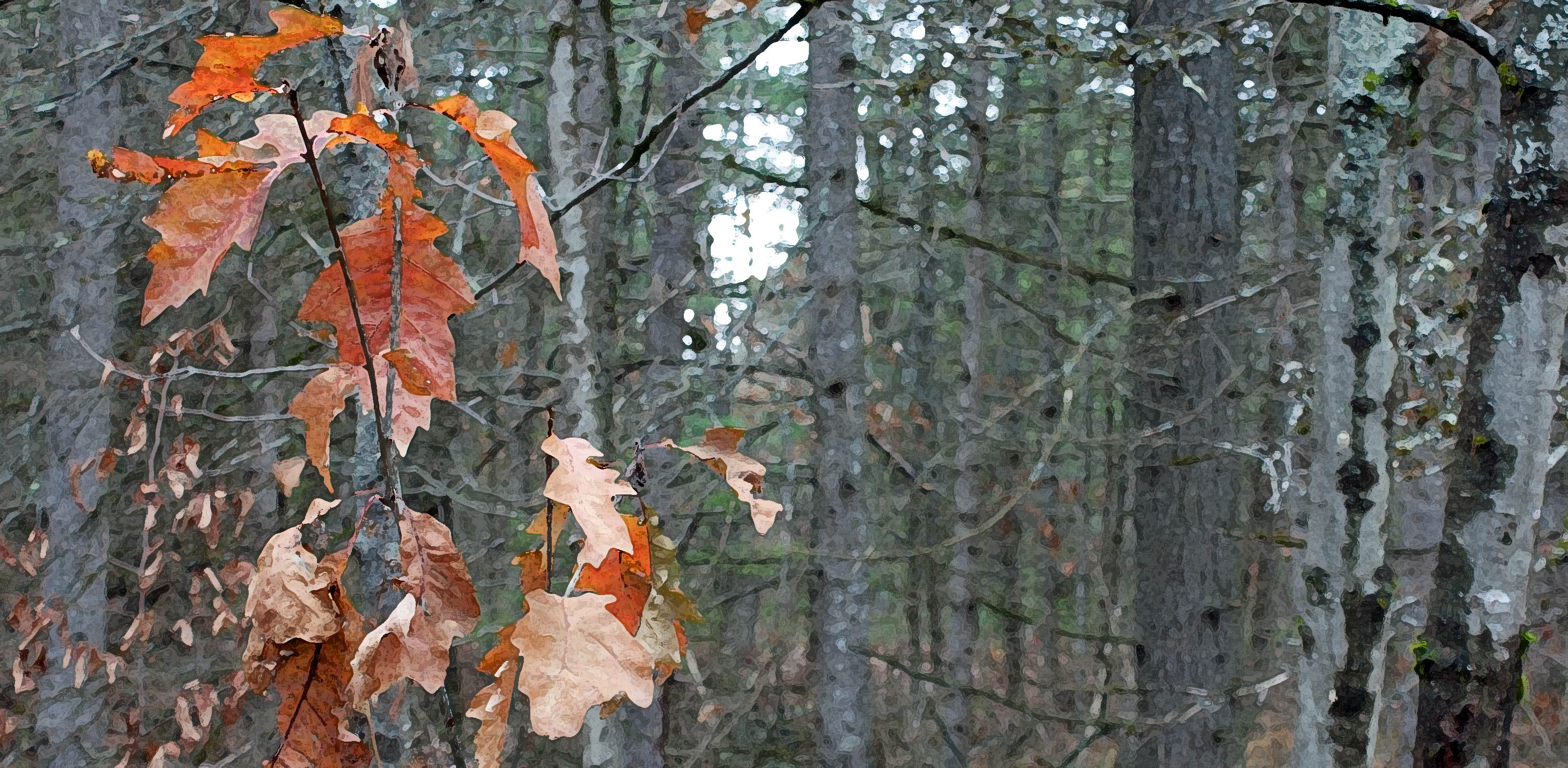
Oak leaves light up a dark pine forest in fall, ON (photo by Nina Munteanu)

References:

Munteanu, Nina. 2026. “Gaia’s Revolution, Part 1 of Icaria Trilogy.” Dragon Moon Press, Calgary, AB. 369 pp.

Munteanu, Nina. 2010. “Angel of Chaos, Part 2 of Icaria Trilogy.” Dragon Moon Press, Calgary, AB. 518 pp.

Munteanu, Nina. 2007. “Darwin’s Paradox, Part 3 of Icaria Trilogy.” Dragon Moon Press, Calgary, AB. 294 pp.

Sessions, George, Bill Devall. 2000. “Deep Ecology: Living as if Nature Mattered.” Gibbs Smith. 267pp.

Skinner, B.F. 1948. “Walden Two” The Macmillan Company, New York. 301pp.

Terminology:

*Deep Ecology: An environmental philosophy and social movement advocating that all living beings have intrinsic value, independent of their utility to human needs. Coined by Arne Næss in 1972, it promotes a holistic, ecocentric worldview—often termed “ecosophy”—that demands radical, structural changes to human society to prioritize nature’s flourishing.

*Letzte Generation: a prominent European climate activist group, founded in 2021, known for its acts of civil disobedience—such as roadblocks, defacing art, and vandalizing structures—to pressure governments on climate action. The term was chosen because they considered themselves to be the last generation before tipping points in the earth’s climate system would be reached. They are mostly active in Germany, Italy, Poland and Canada. In Germany, they have faced accusations of forming a criminal organization, leading to police raids.

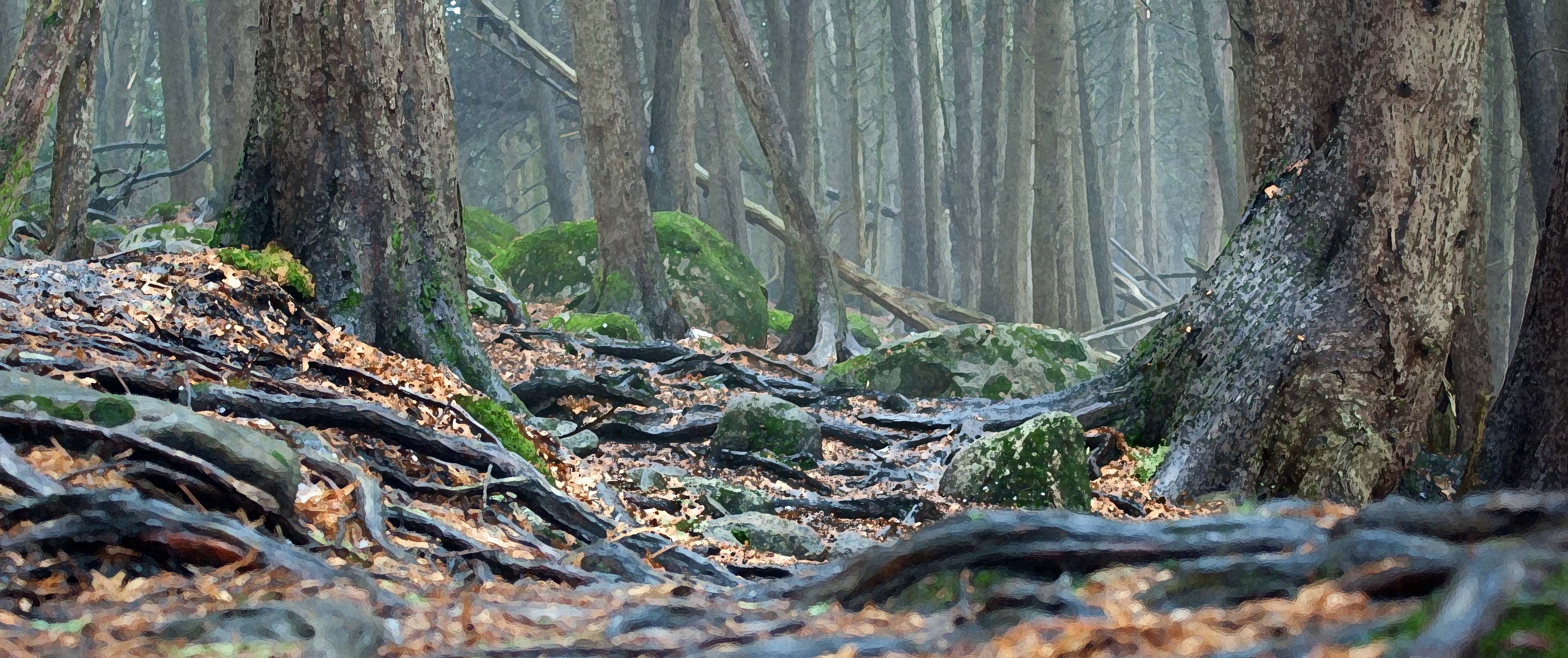
Root-covered cedar-pine forest in early winter, ON (photo and rendition by Nina Munteanu)

Nina Munteanu is a Canadian ecologist / limnologist and novelist. She is co-editor of Europa SF and currently teaches writing courses at George Brown College and the University of Toronto. For the latest on her books, visit www.ninamunteanu.ca. Nina’s bilingual “La natura dell’acqua / The Way of Water” was published by Mincione Edizioni in Rome. Her non-fiction book “Water Is…” by Pixl Press (Vancouver) was selected by Margaret Atwood in the New York Times ‘Year in Reading’ and was chosen as the 2017 Summer Read by Water Canada. Her novel “A Diary in the Age of Water” was released by Inanna Publications (Toronto) in June 2020.

Defining Moments and The Last Summoner

A few years ago I attended a panel at Toronto’s Ad Astra convention called “Stealth Science Fiction in Person of Interest.” The panel was the brainchild of fellow science fiction writer Ira Nayman, an avid watcher of the TV show. Unbeknownst to me, the panel I’d been assigned to participate with Ira and another panelist was about a TV show (which I’d never seen)—not just an expression.

I bumbled in the beginning as realization dawned on me that this was what the panel was about and quietly berated myself for not rereading the short description (which had been sufficiently vague—at least to me). I finally let the panelists and audience know my limitation when Ira astutely noted that I was being extra reticent (not one of my usual traits in panels). We muddled along, despite my infirmity, and the panel went along admirably—mainly because Ira moderated with great astuteness and audience members participated enthusiastically.

One of the plot points of the show led Ira to share a personality-defining hypothetical dilemma that he’d encountered. Here’s how he described it: if you knew you could save five people by instigating the death of another person, would you do it? Or would you, by your inaction, allow the five to die by not instigating that person’s death? The premise, of course, is that you could tell the future of two divergent actions.

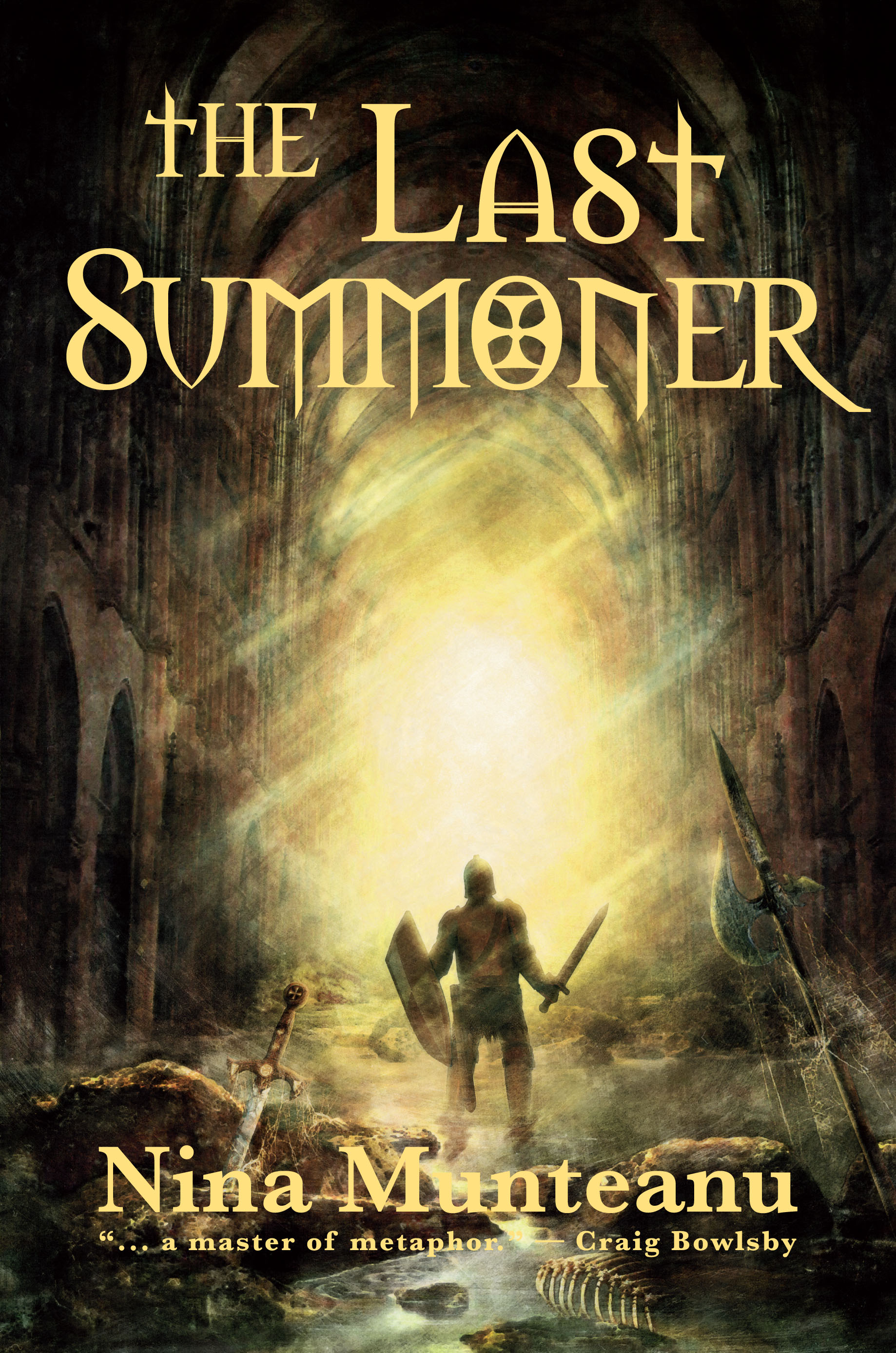
LastSummoner-coverI realized soon after that this is exactly the situation that my main character Vivianne Schoen, the Baroness Von Grunwald, faced in her journey to change the history she’d inadvertently authored (in The Last Summoner). As a medieval time traveler, she was presented with several courses of history and needed to choose her actions carefully in accordance with both short-term and long-term consequences. Faced with the possibility of saving utterly millions of people who were fated to perish in World War I by instigating the death of one man—Kaiser Wilhelm II—Vivianne sets out to do the deed.
Besides her ability to time travel, Vivianne is able to manipulate metal through mind-wave energy. Because of this power, she decides to participate in a momentous event in which her power will have a potentially deadly effect. The year is 1889, just a year after Kaiser Wilhelm II was crowned Emperor, and the place is Charlottenburg Race Course in Berlin in this excerpt from The Last Summoner:

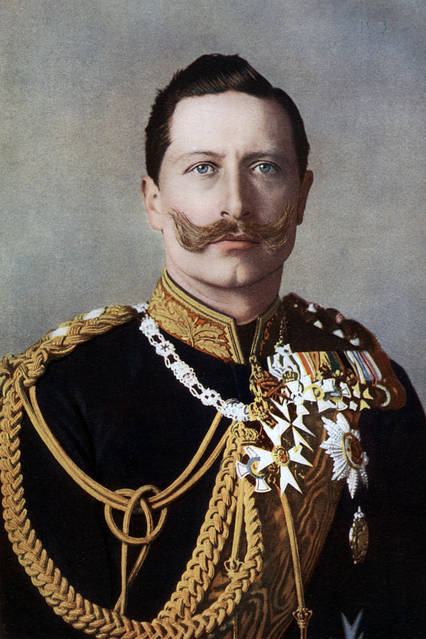
VIVIANNE pulled up the collar and hood of her fur coat to ward off the November chill as she walked next to Jurgen von Eisenreich in Berlin’s Charlottenburg Race Course. The coat barely kept the winter wind from cutting through her cream- colored evening gown. Fastened at the back, it had no bustle and signaled the upcoming style. They were here to watch Europe’s latest touring attraction from America: Buffalo Bill’s Wild West Show. Steering her by the elbow, von Eisenreich guided her up the rafter stairs toward the Royal Box, where the new Emperor was already seated with his retinue of several statesmen, including his aides-de-camp, and two imperial guards. Vivianne recognized the odious and obsequious Count Alfred von Waldersee, seated beside the Emperor. Twenty-seven years the Kaiser’s senior, the Count was a power-mongering anti-Semite, who would prove to mold the weak-minded Crown Prince into the bigoted warlord Kaiser Wilhelm II was becoming.

Wilhelm II

Kaiser Wilhelm II

Vivianne stole a long glance to the Reich’s young ruler. It had been just a year since the Crown Prince had ascended to the imperial thrown and he had already stirred up trouble with his insulting behavior of his mother, the dowager Empress, and his uncompassionate handling of his father’s funeral; then his shabby treatment of England’s Queen and her son, the Prince of Wales.

Vivianne furtively studied the dashing thirty-year old ruler with deep interest. Dressed impeccably in uniform, he was rakishly handsome, she decided, with sharp intelligent eyes, a long aristocratic nose and well-waxed handle-bar mustache. She found herself staring at his withered left arm, which he rested on his lap. Though she could not make it out, it was a good six inches shorter than the other arm and partially lifeless. He’d been a breech birth and both he and his mother were lucky to be alive.

Vivianne reflected on that eventful day when she’d botched her attempt to save the last Emperor of Germany from an unnatural birth. While Oskar had been instantly killed, the doctor had survived the carriage accident with only a severe concussion; he’d still only managed to get to Unter den Linden by early afternoon, having lain unconscious and unattended for most of the morning then having awoken at Humboldt Hospital where he’d ironically been scheduled to speak that day and had then foolishly insisted on tending to Vivianne first, who’d suffered a nasty head wound that she hadn’t even been aware of receiving.

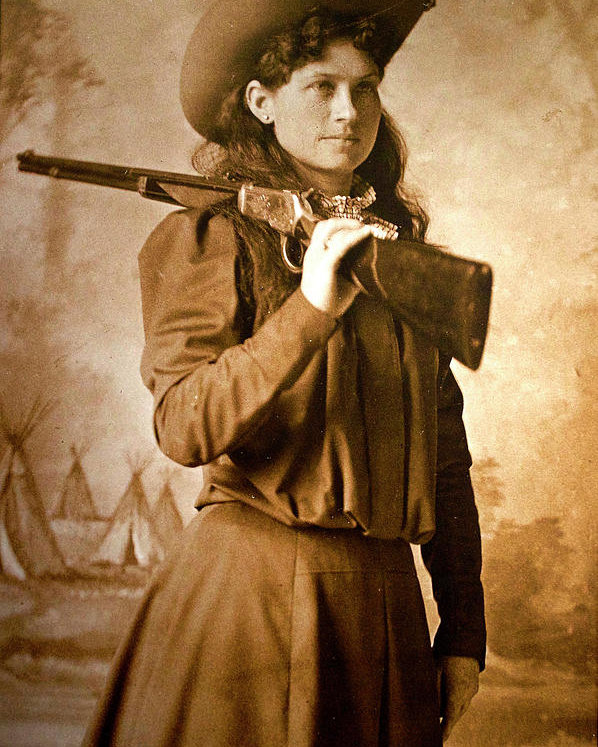
The Emperor—like Vivianne—was here, in the District of Charlottenburg in West Berlin, to see the show’s star attraction, Annie Oakley, who acquired world fame for her skills with a Colt .45. The young sharpshooter had been invited by the Kaiser for a private performance for the Union-Club. Vivianne found her breaths escalate at the thought of what the impetuous Kaiser was about to do; and what she intended to do, as a result. Was it an ironic twist of history that only months ago Adolf Hitler was born this year? Vivianne glanced down at the program in her gloved hand:

Programme of Miss Annie Oakley’s Private Performance Before the Members and Their Friends of the Union-Club, Berlin, on November 13, 1889, at Charlottenburg Race Course.

There followed a list of up to seventeen feats she would perform, beginning with her exhibition of rifle shooting, followed by clay-pigeon sharp-shooting then various feats involving trapping and agility in weapon handling. She was not fated to get very far in her program before calamity of sorts would strike, Vivianne thought cynically.

“He’s alone…without his family?” she asked von Eisenreich. That would make it much easier, she concluded with an inward sigh.

“Dona prefers the comfort and warmth of the royal palace in Potsdam, and the company of her children,” he responded. “She’s not interested in this sort of thing. She has few interests other than church service, I’m afraid.” Then he leaned his head close to hers to confide. “Ten years ago, Wilhelm was smitten by his beautiful cousin, Victoria Elizabeth, the second eldest daughter of the Grand Duke and Duchess of Hesse and the Rhine. But Ella wouldn’t have him.” Then von Eisenreich surveyed Vivianne with an appraising look and smiled enigmatically. “In fact, she looked a lot like you.”

Vivianne swallowed down a sudden discomfort, not sure of its source. Von Eisenreich went on, “Poor Wilhelm became very self-conscious about his arm and thought himself unattractive. That might be why he chose a plain and simple, but pious woman.”

More like narrow-minded, anti-Semitic and bigoted thought Vivianne. Unfortunately the Empress fit in too well with the Kaiser’s own bigoted views and apparently her nature only served to exacerbate the Kaiser’s arrogance and insufferable nature.

Von Eisenreich chuckled to himself. “I heard that the Empress Dona was called unimaginative and prejudiced by the Emperor’s own mother. Dona hates the English. But don’t we all!” He laughed.

Vivianne thought of the cutting words of the gossiping socialite, Daisy, Princess of Pless: for a woman in that position I have never met anyone so devoid of any individual thought or agility of brain and understanding. She is just like a good, quiet, soft cow that has calves and eats grass slowly then lies down and ruminates.

“Apart from that homosexual, Count Philipp von Eulenburg, I’m the Emperor’s only real friend,” von Eisenreich confided rather smugly to Vivianne as they approached the Royal Box.

As if he felt her stealthy glance, the Kaiser turned to look directly at her. After an unabashedly long appraisal, he let his eyes drift away and leaned out, looking past his aide to focus on von Eisenreich. “Ah, Jurgen! So that’s why you dallied and missed my retinue!” The Kaiser yelled in a coarse Potsdam accent, eyes flitting back critically to Vivianne like she was merchandize. He stood up and clapped von Eisenreich hard on the back, clearly happy to see him. Vivianne got a clear view of his short left arm with dark brown mole on his shriveled hand. She noted that he was rather short in stature for a man, about her height or less, with a squat and slightly lopsided neck—owing to his left arm being shorter than the other. Eisenreich drew Vivianne forward.

“This is the Comptesse d’Anjou,” von Eisenreich said.

She pulled down her hood and curtsied slightly, eyes downcast. “I’m honored and humbled, your Imperial Majesty,” she said.

“No doubt you are!” he responded, swiftly tucking his left hand in his pocket. When she raised her eyes to meet his, Vivianne caught the brief instant as his eyes grew wide and deep with hidden intensity.
 Jurgen caught it too. “I thought so, also,” he said with amusement to the Emperor. He was, no doubt referring to her likeness to the Princess Ella.

The Kaiser sucked in a breath and straightened with an imperceptible tremble, as if to shake off an old memory. Then he gave Vivianne a cold smile and extended his good hand to her in greeting. She accepted and instantly winced with excruciating pain. He barked out a cruel laugh and said, “The French are, I’m afraid, just like the English when it comes to my German mailed fist!”

Vivianne had heard of his sadistic handshake: he was in the habit of turning his many rings inward prior to clasping one’s hand with a vice-like grip. Somehow, she hadn’t expected him to inflict her with it. Perhaps it was his way of punishing his cousin for not accepting his marriage proposal, she concluded, regretful of her resemblance. The Kaiser hung on to her hand much longer than he needed to, Vivianne decided, squirming and attempting to retract it from his painful grasp. His grip was too strong.

Their eyes locked. And to her frustrated anger, her eyes teared up with the stinging pain through her glove.

In that moment she saw the hurt little boy in that bigoted, arrogant and angry face. She instantly knew that she’d misjudged one of his critical nexuses. Her mission this day might have been prevented. If she’d intersected with his life earlier, and somehow convinced his beloved Ella to accept his proposal, the single-minded but compassionate princess might have softened him, completed him, inspired him to be the great man he could have become instead of the bitter and insecure bully he now was.

Something passed between them and he abruptly let go of her hand with a sudden intake of air. “I beg pardon,” he said, voice softening from that harsh Potsdam accent. “You reminded me of someone I once knew…” In a flush of solicitous emotion, he pulled off her glove to inspect the damage he’d inflicted on her hand. Several red welts had surfaced on the inside of her lower palm where his rings had gouged into her flesh. “Ahh…such dear soft and warm hands…” he cooed in near reverence. “How remarkable…the soft insides of your hands…”

Vivianne slowly pulled her hand away.

They both looked awkward for a moment. Then the Kaiser broke out into a blustery laugh and turned to von Eisenreich.

“So, where’s your good wife, von Eisenreich?”

“Like you, I left her at home with my dear children, where she should be, your Majesty,” von Eisenreich responded cheerfully. “They’re no fun at these sorts of things.”

“Ah, but I wager the Comptesse is,” said the Emperor brashly and took the opportunity to rake her over with appreciative eyes.

Von Eisenreich let loose a conspiratorial laugh, as if to ratify the Kaiser’s innuendo. He then leaned into Vivianne beside him with a chuckle until his shoulder collided into hers. “I brought my lovely companion, the charming Comptesse d’Anjou, to improve my demeanour and make me interesting.”

The Kaiser threw his head back and shouted an open- mouthed laugh of abandon then stomped his foot. “Indeed, she has managed that!” He surveyed Vivianne with critical eyes that flashed with approval. When she’d first been introduced to him, she’d felt the Kaiser’s burning gaze roam over her like the eager hands of a lover. “Good choice,” Wilhelm said.

He’d clearly deduced that she was von Eisenreich’s mistress and Jurgen had as much as confirmed it. The Kaiser had several mistresses of his own and Vivianne had the impression he wouldn’t have minded another.

As Uta had predicted, Vivianne had indeed filled out into what most men commonly considered a woman of striking beauty. And she’d had many years to cultivate it into an irresistible package. She was now over four hundred years old, yet she looked no more than in her early twenties. That arcane quality alone, she knew, was enough to drive men to distraction.

Vivianne had only met von Eisenreich last week at a masked ball and, knowing his weakness for beautiful women, she’d shamelessly flirted with him; within short order she’d seduced his keen interest in her and ensured for herself an invitation to this event.

The Kaiser let his gaze stray to Vivianne as he spoke to von Eisenreich. Then he finally let his eyes rest openly on her with a cool smile. “You speak German very well for a French woman, Comptesse,” he said to her. “I detected no accent when we were first introduced.”

She smiled demurely and didn’t bother to correct him on her German lineage.

Annie Oakley

Annie Oakley

Then the show began and their attention was diverted to the ring below. Vivianne’s heart raced when Annie Oakley finally emerged. The diminutive woman stood facing the royal box in a smartly collared buckskin dress, bedecked with glittering metals from contests she’d won, cowboy hat, and holding her Colt .45.

Von Eisenreich leaned his head close to hers. “Chief Sitting Bull gave her the nickname of ‘Little Sure Shot’ because of her dead shot with a pistol, rifle and shotgun. Did you know that she began handling firearms at the tender age of nine to supply her widowed mother with game and eventually paid off the mortgage on her mother’s house?”

Vivianne let her brows rise in impressed surprise. In truth she knew. She knew everything about the American sharp-shooter. At 90 feet Annie could shoot a dime tossed in the air. With the thin edge of a playing card facing her at 90 feet, she could hit the card and puncture it with five or six more shots as it settled to the ground.

Vivianne felt her mouth go dry; she knew what came next.

With a flourishing turn, Annie faced the royal box and announced, “For my final act, I will attempt to shoot the ashes from the cigar of a lady or gentleman in the audience. “Who will volunteer to hold the cigar?” she asked the audience. Vivianne’s heart pounded. She knew that the little sharpshooter from Cincinnati expected no one to volunteer; Annie had simply asked for laughs. Her attentive manager-husband, Frank Butler, always stepped forward and offered himself. Not this time—

Just as laughter bubbled up in the crowd, Kaiser Wilhelm leapt out of the royal box and strutted into the arena to a stunned audience. Laughter turned to gasps as the Kaiser approached the sharpshooter. Annie Oakley visibly stiffened. In horror, Vivianne thought. The two guards scrambled forward from the rafters but the Kaiser gruffly waved them off. Vivianne marveled at Annie’s cool resolve; after handing the cigar to Wilhelm, the performer paced off her usual distance and the Kaiser lit the cigar with flourish.

Several German policemen rushed into the arena in a panicked attempt to preempt the stunt, but the Kaiser brusquely waved them off too. Then he lifted his head and placed the cigar to his mouth in a pose of a statue.

“No,” Annie said. “In your hand, please, Your Majesty,” she instructed. He looked disappointed but did as she’d asked.

Annie raised her Colt and took aim.

Royal_Irish_Rifles first day at Somme_July_1916

Royal Irish Rifles in the Somme, 1916

Vivianne swallowed the gorge in her throat. This was the moment she’d waited for; the moment for which she’d come. If this volatile and ambitious ruler were removed from the scene, one of the key reasons for World War I would also vanish. An entire world war would likely be averted. She only had to redirect the bullet; it was made of metal, after all. Kill a bully and incriminate and ruin the life of an innocent young woman … in exchange for over two million lives and the prevention of an age of non-stop violence—

Annie fired.

First World War wounded

Carrying the wounded and dead out of the battle field

“For those in love with science fiction at its best, The Last Summoner is a complex story of ignored responsibilities and their dire consequences, of love and betrayal that span centures and multiple worlds. Time travel, multiverse travel, immortality, alternate history in which the Nazies have won, not in the twentieth century but way earlier, in the Teutonic age. Angels and mutants, utopias and dystopias, even a Tesla occurrence—everything a science fiction reader could ever desire in a book. A masterfully told story with great characters. Nina Munteanu moves flawlessly from a medieval story to a modern one and everything in between.”—Costi Gurgu, author of RecipeArium

Grapevine-dogwood 2 willow water TC

At the mouth of Thompson Creek, ON (photo by Nina Munteanu)

nina-2014aaa

Nina Munteanu is a Canadian ecologist / limnologist and novelist. She is co-editor of Europa SF and currently teaches writing courses at George Brown College and the University of Toronto. Visit www.ninamunteanu.ca for the latest on her books. Nina’s bilingual “La natura dell’acqua / The Way of Water” was published by Mincione Edizioni in Rome. Her non-fiction book “Water Is…” by Pixl Press (Vancouver) was selected by Margaret Atwood in the New York Times ‘Year in Reading’ and was chosen as the 2017 Summer Read by Water Canada. Her novel “A Diary in the Age of Waterwas released by Inanna Publications (Toronto) in June 2020.