What I Love About Teaching How To Write

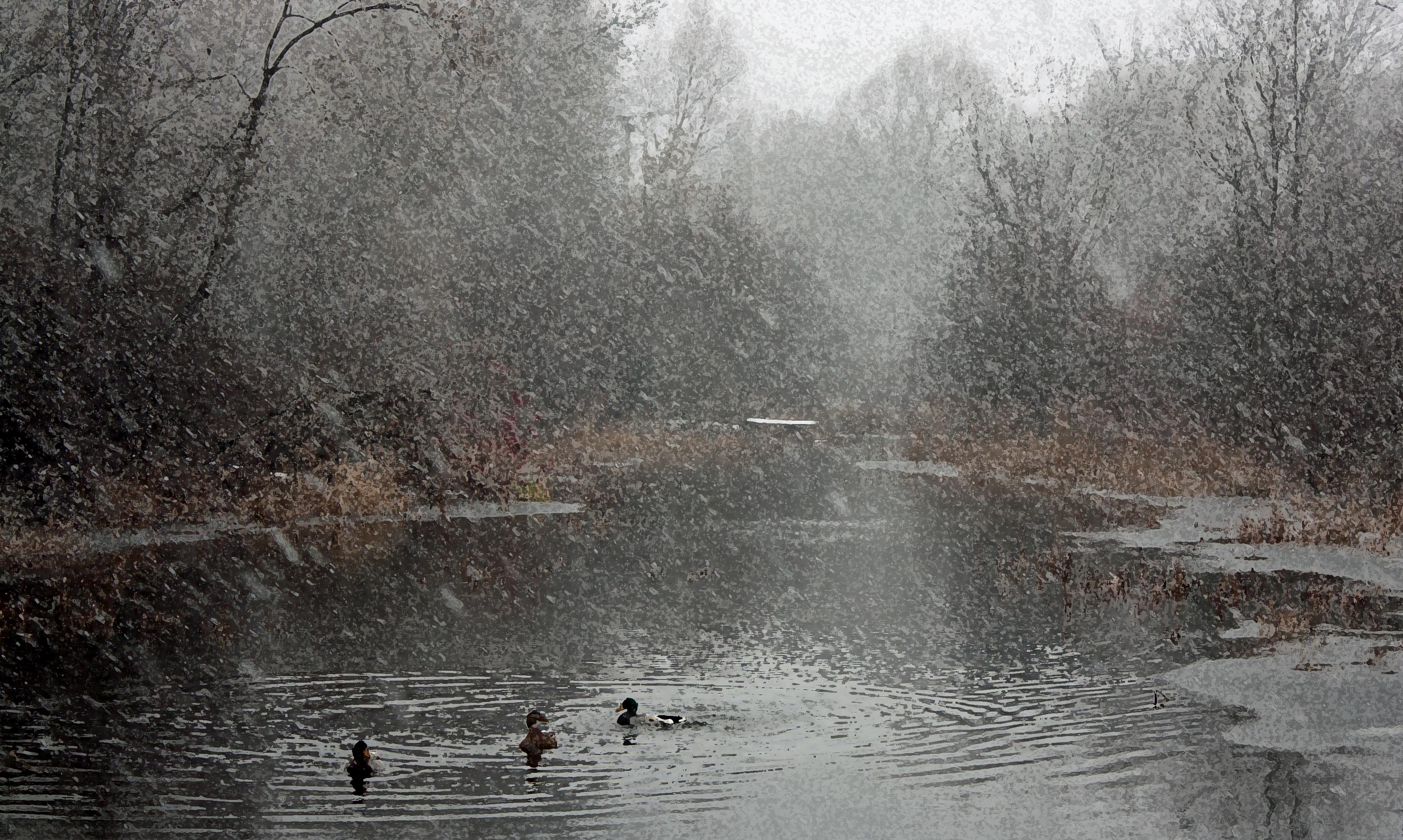
Path leading into a mixed gnarly forest in a December fog, ON (photo and rendition by Nina Munteanu)

During a recent professional development session for writing instructors at UofT, I got a prompt to share what I loved about teaching how to write. We had eight minutes to write what first came to us. I found myself writing easily and quickly. Here’s what I shared:

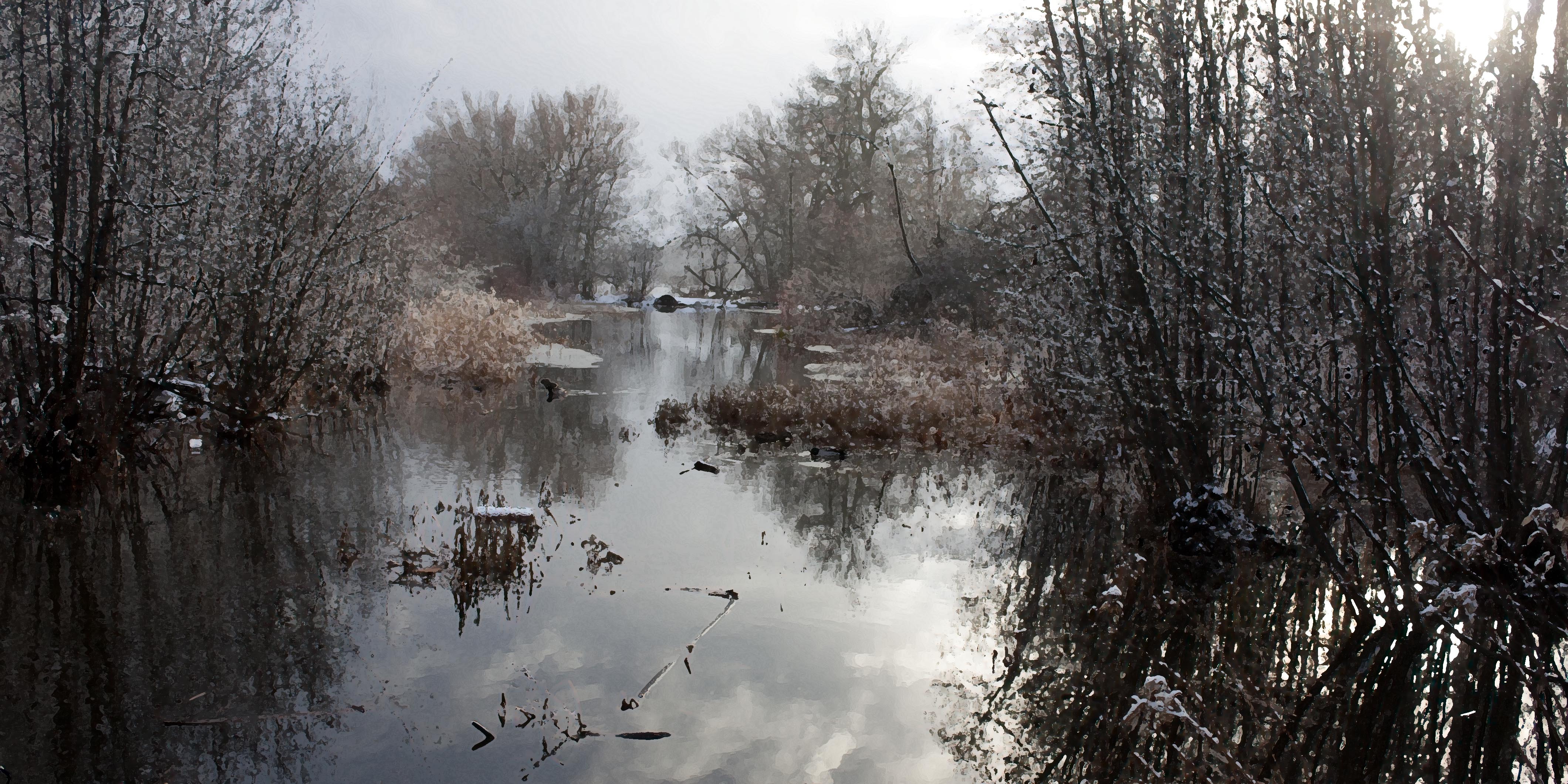
Path through a gnarly forest in a December fog, ON (photo and rendition by Nina Munteanu)

I love how fluid it is. I used to work as an environmental consultant (as a limnologist) and what I loved about that job was the lack of structure and the diversity of projects. No day was the same. And—like a box of chocolates—I never knew what lay in store for me. I flourish in that kind of chaotic problem-solving.

Teaching how to write is like that.

Teaching how to write is about process. It’s about the journey and the relationships, not just about things. It’s more about how they fit together, why they work, and where they go. The act of teaching is always changing. It’s fluid, like water. And how apt, considering that our bodies are over two-thirds water. Just like water, we like to flow.

Teaching how to write is more than teaching how to use a tool, how to string a good sentence together or choosing the best word; it includes “voice”, expression, identity, freedom, and autonomy. Writing is power and I am empowering when I teach writing.

What a cool thing to do!

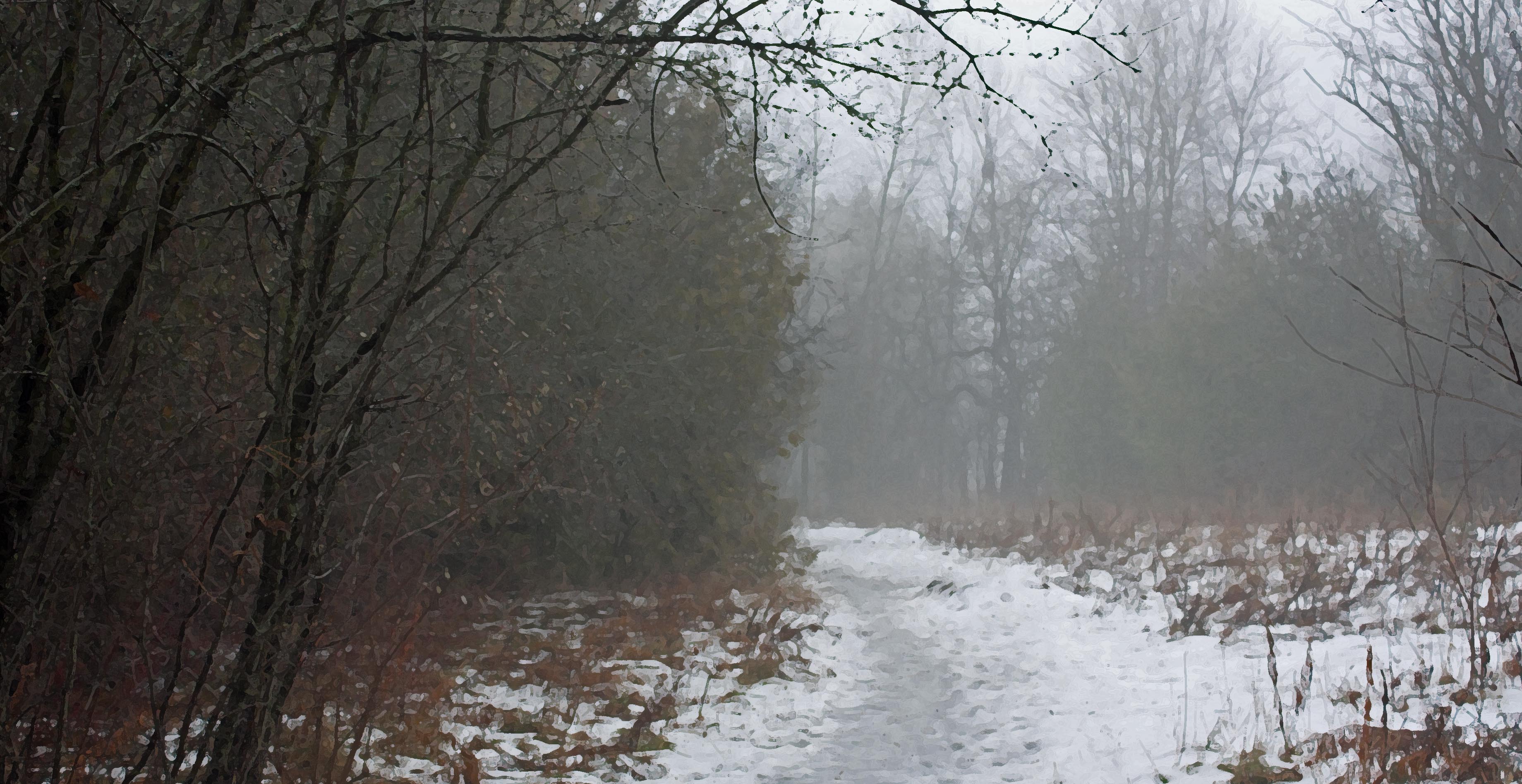
Path along the edge of a small woodland in the December fog, ON (photo and rendition by Nina Munteanu)

Nina Munteanu is a Canadian ecologist / limnologist and novelist. She is co-editor of Europa SF and currently teaches writing courses at George Brown College and the University of Toronto. Visit www.ninamunteanu.ca for the latest on her books. Nina’s bilingual “La natura dell’acqua / The Way of Water” was published by Mincione Edizioni in Rome. Her non-fiction book “Water Is…” by Pixl Press(Vancouver) was selected by Margaret Atwood in the New York Times ‘Year in Reading’ and was chosen as the 2017 Summer Read by Water Canada. Her novel “A Diary in the Age of Water” was released by Inanna Publications (Toronto) in June 2020.

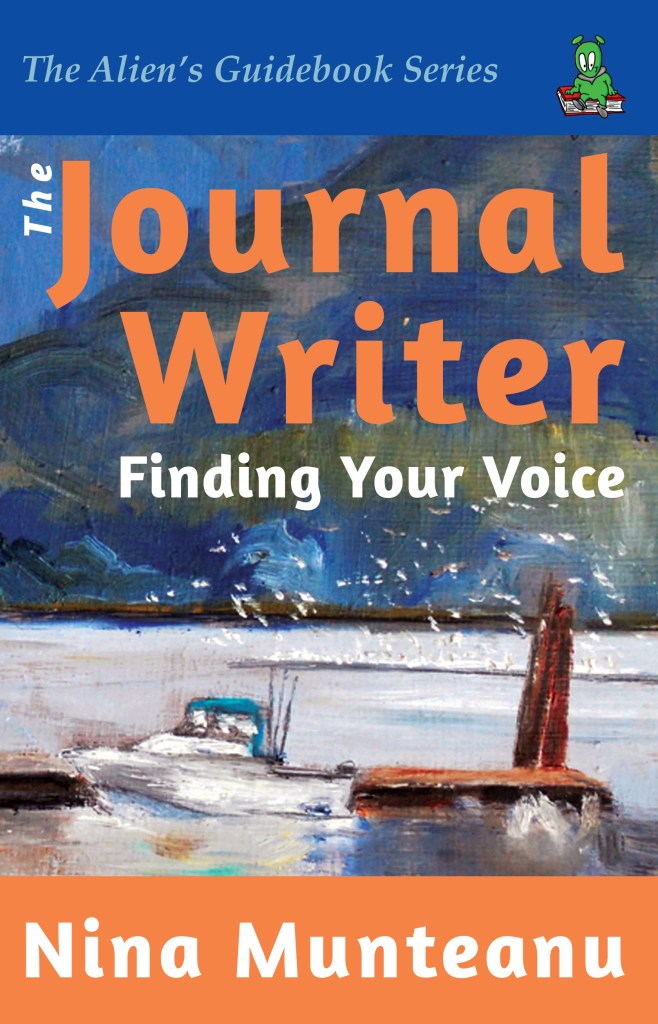
The Journal Writer: Why Keep a Journal?

Old maple tree under snow dusting in a mixed cedar-pine forest in early winter, ON (photo and rendition by Nina Munteanu)

There are as many reasons for writing a journal as there are people in the world: to express, to heal and clarify, to create, learn and influence, to record, to celebrate, to share with friends or the world even…and everything in-between. The journal is a way to connect—to yourself and to others—with gentleness, compassion and deeper understanding. It’s a “safe home” where your deepest thoughts can reside without fear of judgment, blame or need for justification. A place where you can be just you.

Late afternoon sun glimmers through cedar-pine forest in winter, ON (photo and rendition by Nina Munteanu)

What is a Journal?

Most people think of a journal as a bound notebook with text, sketches and pasted-in mementos. But it can also be a binder full of memorabilia and notes, a collection of digital information on a computer, CD or flash drive, or an audio tape. According to Ron Klug (2002), a journal is essentially a “day book” where you record daily happenings. But it is much more than that. The journal is a tool for self-discovery, an aid to concentration and finding clarity, a “mirror for the soul”, a training ground for a writer and a good friend and confidant. It is at its heart a place of learning and being.

Mary Louise Holly (1989) describes a journal as “a reconstruction of experience and, like the diary, has both objective and subjective dimensions, but unlike diaries, the writer is (or becomes) aware of the difference. The journal…is a book that someone returns to. It serves purposes beyond recording events and pouring out thoughts and feelings. Like the diary, the journal is a place to ‘let it all out’. But the journal is also a place for making sense of what is out.” The journal helps you assess the next step and help you find direction. I talk more about this in Chapter 5 of my guide The Journal Writer: Finding Your Voice.

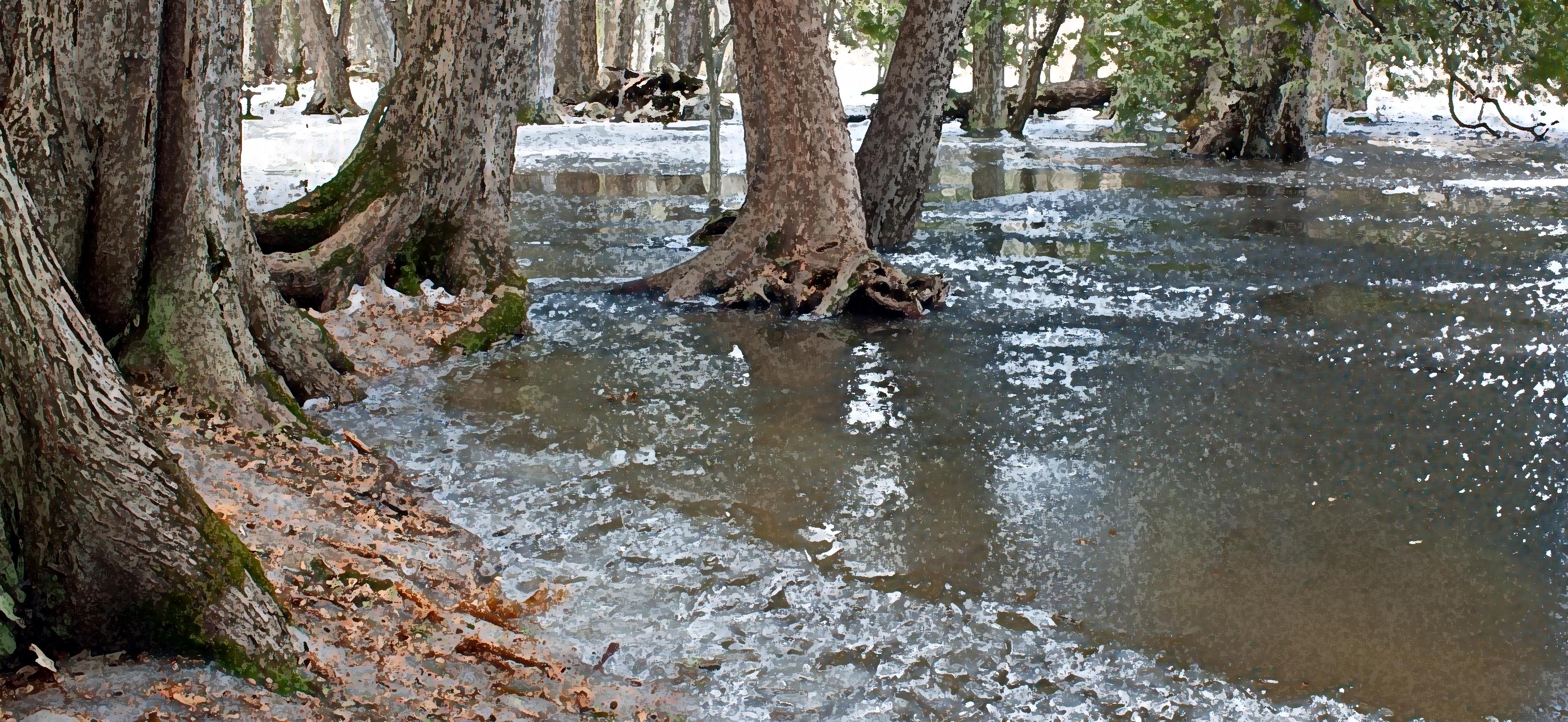
Swamp forest reflected in icing pond, ON (photo and rendition by Nina Munteanu)

Some reject journaling as too self-absorbing; the truth is that most of us during some part of our lives are too little connected to ourselves. We keep so busy, filling our lives with activities, filling our senses with stimuli, running at full tilt. We may be constantly communicating with others through cell phones, computers, notebooks, at school and at work. But we aren’t communicating with ourselves. For that to happen we need to quiet our minds and our environment to have a meaningful self-dialogue. This is the gift that journaling brings to us.  It helps us find the depth of ourselves and lead richer more truthful lives. The key is to use it to learn.

A journal need not be the dark brooding place many people envision when they think of diaries and journals. A journal can be a happy place, a place to celebrate one’s explorations and achievements and self-education. Here’s what journal writer Jennifer Moon (1999) says about her journal:

A journal is a friend that is always there and is always a comfort. In bad moments I write, and usually end up feeling better. It reflects back at me things that I can learn about my world and myself. It represents a private space in my life, a beautiful solitude, the moments before I go to sleep just to stop and note what there is about the day or about my life at the time. I think that it has enabled me to feel deeper and more established as a person, more in control and more trusting of life. On a less introverted note, I think that it contributes to my ability to write in general, and it underlies an interest in poetry and creative writing which awaits a quieter time in my life for fulfillment. 

–Jennifer Moon

Remember, it is just as important to record your happy, wonderful, scintillating and inspirational experiences as those dark moments.

Moss-covered base of a cedar tree under a light dust of snow in early winter, ON (photo and rendition by Nina Munteanu)

Why Keep a Journal?

Writer Louise DeSalvo shared an interesting story about what expressive writing means to her. Here’s what she said:

“Many people I know who want to write but don’t (my husband, Ernie, for example) or who want to write more than they have but say they can’t find the time (my friend Marla) have told me that taking the time to write seems so, well, self-indulgent, self-involved, frivolous even. And that finding the time to write—even a diary, much less fiction or memoir or poetry—in their busy schedules is impossible. I’ll write when I have the time, they say.”

–Louise DeSalvo

DeSalvo adds, “what if writing weren’t such a luxury? What if writing were a simple, significant, yet necessary way to achieve spiritual, emotional, and psychic wholeness? To synthesize thought and feeling, to understand how feeling relates to events in our lives and vice versa? What if writing were as important as a basic human function and as significant to maintaining and promoting our psychic and physical wellness as, say, exercise, healthful food, pure water, clean air, rest and repose, and some soul-satisfying practice?”

Journal writing encourages engagement and reflection. It helps you deepen your self-understanding and make added sense of your life and what you believe. It can provide you with added perspective on you and the world, by giving you a greater awareness of what is happening to and around you in your daily world. Writing a journal can help you write better and help improve your skills in observing, recording and interpretation. It can also help you set goals and manage your time and priorities.

Give yourself the permission to write. Give yourself the gift of expression.

Beech tree with marcescent leaves in early winter, ON (photo and rendition by Nina Munteanu)

This article is an excerpt from The Journal Writer: Finding Your Voice (Pixl Press, 2013) by Nina Munteanu.

The Journal Writer is the second writing guide in the Alien Guidebook Series. This comprehensive guidebook will help you choose the best medium, style and platform for your expressive writing. The guide provides instruction on issues of safety, using the computer and electronic devices, social media and the internet.

Engaging, accessible, and easily applicable…Brava, Nina, brava.”—David Merchant, Instructor, Louisianna Tech University

Straight up, fact-filled, enriching, joyful and thorough…Nina is honest, she is human and she wants you to succeed.”—Cathi Urbonas, Halifax writer

References:

Baikie, Karen & Kay Wilhelm. 2005. “Emotional and physical health benefits of expressive writing.” Advances in Psychiatric Treatment. 11: 338-346.

DeSalvo, Louise. 1999. “Writing as a Way of Healing: How Telling Our Stories Transforms Our Lives.” Beacon Press, Boston. 226pp.

Holly, Mary Louise. 1989. “Writing to Grow. Keeping a personal-professional journal”. Heinemann. Portsmouth, New Hampshire.

Klug, Ron. 2002. “How to Keep a Spiritual Journal: a guide to journal keeping for inner growth and personal discovery.”Augsburg, Minneapolis, 4th ed.

Moon, Jennifer. 1999. “Learning Journals: A handbook for academics, students and professional development.” Kogan Page. London.

Munteanu, Nina. 2013. “The Journal Writer: Finding Your Voice.” Pixl Press, Vancouver. 170pp.

Nina Munteanu is a Canadian ecologist / limnologist and novelist. She is co-editor of Europa SF and currently teaches writing courses at George Brown College and the University of Toronto. Visit www.ninamunteanu.ca for the latest on her books. Nina’s bilingual “La natura dell’acqua / The Way of Water” was published by Mincione Edizioni in Rome. Her non-fiction book “Water Is…” by Pixl Press(Vancouver) was selected by Margaret Atwood in the New York Times ‘Year in Reading’ and was chosen as the 2017 Summer Read by Water Canada. Her novel “A Diary in the Age of Water” was released by Inanna Publications (Toronto) in June 2020.

Solaris: Planet as Alien Character in Science Fiction

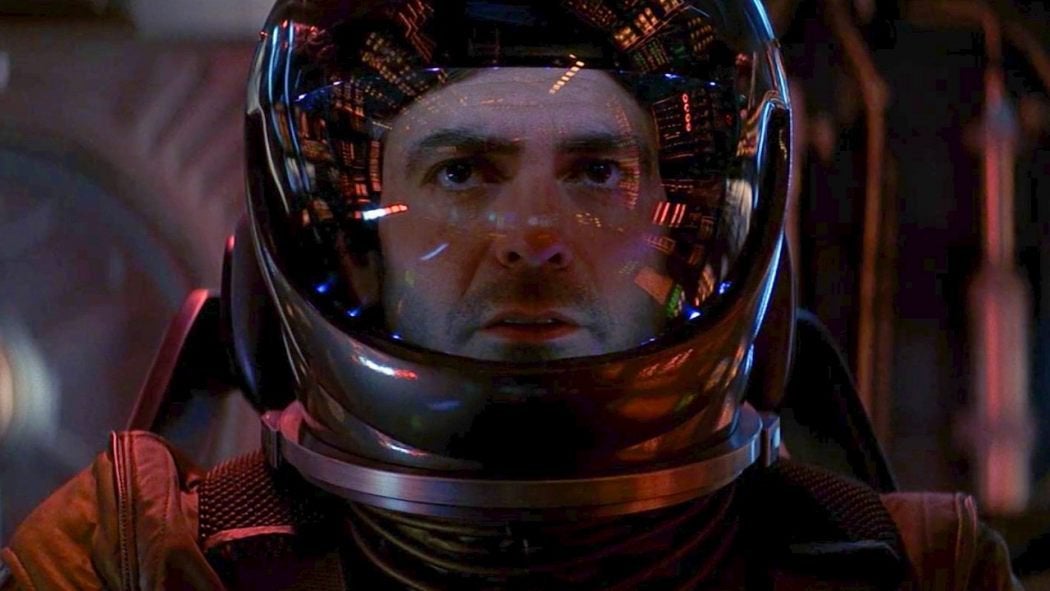
Kelvin (played by George Clooney) arrives on Solaris in Steven Soderberg’s 2002 film

Some time ago, I participated in an inquiry to name my choice of “Best Alien in Science Fiction,” posed by John DeNardo at SF Signal. “Aliens are a classic trope dating back to the earliest days of science fiction,” John said. They are the quintessential “other” archetype in science fiction.

From conquering warlords (War of the Worlds) to instructing sages (The Day the Earth Stood Still) to victimized pacifists (Martian Chronicles), how the “other” is portrayed and how humanity interacts with it, has been explored throughout science fiction since it began with Mary Shelley’s Frankenstein.

Of course, in science fiction—a metaphoric literature of grand scope—these ‘others’ / aliens make representation through archetype. So, the aliens of War of the Worlds represent a conquering nation; Klaatu of The Day the Earth Stood Still may represent a benevolent dictator; the Martians of Martian Chronicles represent our indigenous peoples under the yoke of settler colonialism and an exploitive resource-extraction mindset; and the monster of Frankenstein exemplifies the disabled/deformed unsavory departure from our ‘perfect’ self-image. Author Brian Ott tells us that “it is a profound mistake to interpret the genre [of science fiction] literally.” He reminds us that it is not what the aliens are but what they represent that matters (except when, in some cases, they are one in the same). Science fiction is both “the great modern literature of metaphor” and “pre-eminently the modern literature not of physics but of metaphysics,” adds Peter Nicholls, Australian scholar and critic.

Steven Spielberg’s 2005 film of H.G. Wells’s book “War of the Worlds”

In a previous article entitled “Dreams and Perceptions And ‘the Other” I described an experience with the unfamiliar. Have you ever done the same? Looked backward while driving through a familiar scene to gain a different perspective? And just felt different for a moment? Like you’d entered a different dimension and briefly glimpsed ‘the other.’

What is it like to meet ‘the other’?

In story, characters are defined through their experience and their approach to the unfamiliar. A new relationship. A stranger in town. A different culture. An alien encounter… How does the character react? Is it with fear? Wonder? Curiosity? A mixture of these? By describing “the other” science fiction writers describe “us”, given that it is through our own eyes that the other is viewed and described.

In his book Orientalism: Western Conceptions of the Orient Edward W. Said contended that for there to be an ‘us’, there has to be a ‘not-us.’ According to Patricia Kerslake of Central Queensland University, this arises from a postcolonial notion of ‘the Other’, through a mutual process of exclusion. This exclusion inspires the very idea of ‘alien’ by imposing expectation on perception. Kerslake argues that: “When one culture imposes its perceptions on another, in that it begins to see the Other not as they are but as, in Said’s words, ‘they ought to be’, then the process of representation becomes inevitable: a choice is made to see a ‘preferred’ real.”

Klaatu greets humanity in “The Day the Earth Stood Still”

In her 1975 article “American SF and the Other,” Ursula K. LeGuin unequivocally scolded the Western SF genre for representing and promoting colonialism and androcratic motives by “othering” or making inconsequential the poor, the uneducated, the marginalized and women.

…The question involved here is the question of The Other—the being who is different from yourself. This being can be different from you in its sex; or in its annual income; or in its way of speaking and dressing and doing things; or in the color of its skin; or the number of its legs and heads. In other words, there is the sexual Alien, and the social Alien, and the cultural Alien, and finally the racial Alien…

The people in SF are not people. They are masses, existing for one purpose to be led by their superiors…

If you deny any affinity with another person or kind of person, if you declare it to be wholly different from yourself–as men have done wo women, and class has done to class, and nation has done to nation–you may hate it, or deify it; but in either case you have denied its spiritual equality, and its human reality. You have made it into a thing, to which the only possible relationship is a power relationship. And thus you have fatally impoverished your own reality.

You have, in fact, alienated yourself.

Ursula K. LeGuin

Written 45 years ago, Le Guin’s scathing article may have accurately represented the North American science fiction community of writers of that time. Today, despite the remnants of a strong old guard that still promotes a patriarchal colonialist hegemony, the science fiction genre has matured and grown beyond this self-limiting view. This is partly because current authors—many who are women and many who are representatives of minority or marginalized groups—have given SF a new face and voice that promises to include equality, inclusion, and a fresh look at exploration and ‘the other.’ In most cases it is ‘the other’ whose voice—for so long missing—is now being expressed.

The genre of science fiction has diversified and matured to embrace “mundane science fiction,” literary fiction, speculative fiction, climate fiction, cli-fi, eco-fiction, indigenous futurisms and more. Each of these genres provide new opportunities that give voice to ‘the other’ from women (Octavia Butler’s Parable of the Sower and N.K. Jemison’s The Broken Earth series) to disabled people (Mishell Baker’s Borderline) to the indigenous human (Cherie Dimaline’s The Marrow Thieves) to the non-human (Costi Gurgu’s RecipeArium) and the environment such as water (Emmi Itäranta’s The Memory of Water and my own A Diary in the Age of Water).

My Choice for ‘Best’ Alien Character: Solaris

The most memorable aliens for me have been those that helped illuminate our history and our very humanity, whether they played the archetype of simple antagonist or misunderstood as “commentator” on human prejudice, insecurities, greed, heroism, compassion and honor. I can think of several aliens who have provided excellent examples of this: the victimized ” prawns” of Peter Jackson’s District 9 come to mind. Each provided a platform for the exploration and exposition of human’s strengths and weaknesses. How we handle or even recognize “the other” is very compelling and illuminating.

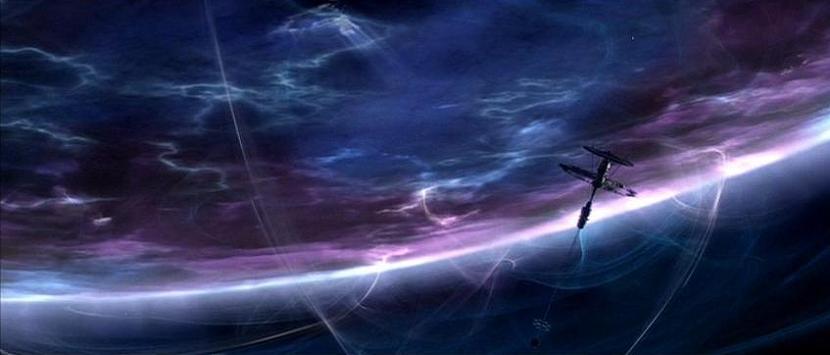
The planet Solaris

My choice for alien character is the ‘self-aware’ planet in Stanislaw Lem’s Solaris: see my film review of Steven Soderbergh’s film interpretation of Stanislaw Lem’s book Solaris in a previous article on this site. What follows is a brief summary:

In response to his friend’s plea, a depressed psychologist with the ironic name of Kris Kelvin (George Clooney), sets out on a mission to bring home the dysfunctional crew of a research space station orbiting the distant planet, Solaris. Kelvin arrives at the space station, Prometheus, to find his friend, Gibarian, dead by suicide and a paranoid and disturbed crew obviously withholding a terrible secret from him. It is not long before he learns the secret first-hand: some unknown power (apparently the planet itself) taps into his mind and produces a solid corporeal version of his tortured longing: his beloved wife, Rheya (Natascha McElhone) who years ago had committed suicide herself. Faced with a solid reminder, Kelvin yearns to reconcile with his guilt in his wife’s death and struggles to understand the alien force manifested in the form of his wife. He learns that the other crew are equally influenced by Solaris and have been grappling, each in their own way, with their “demons,” psychologically trapping them there.

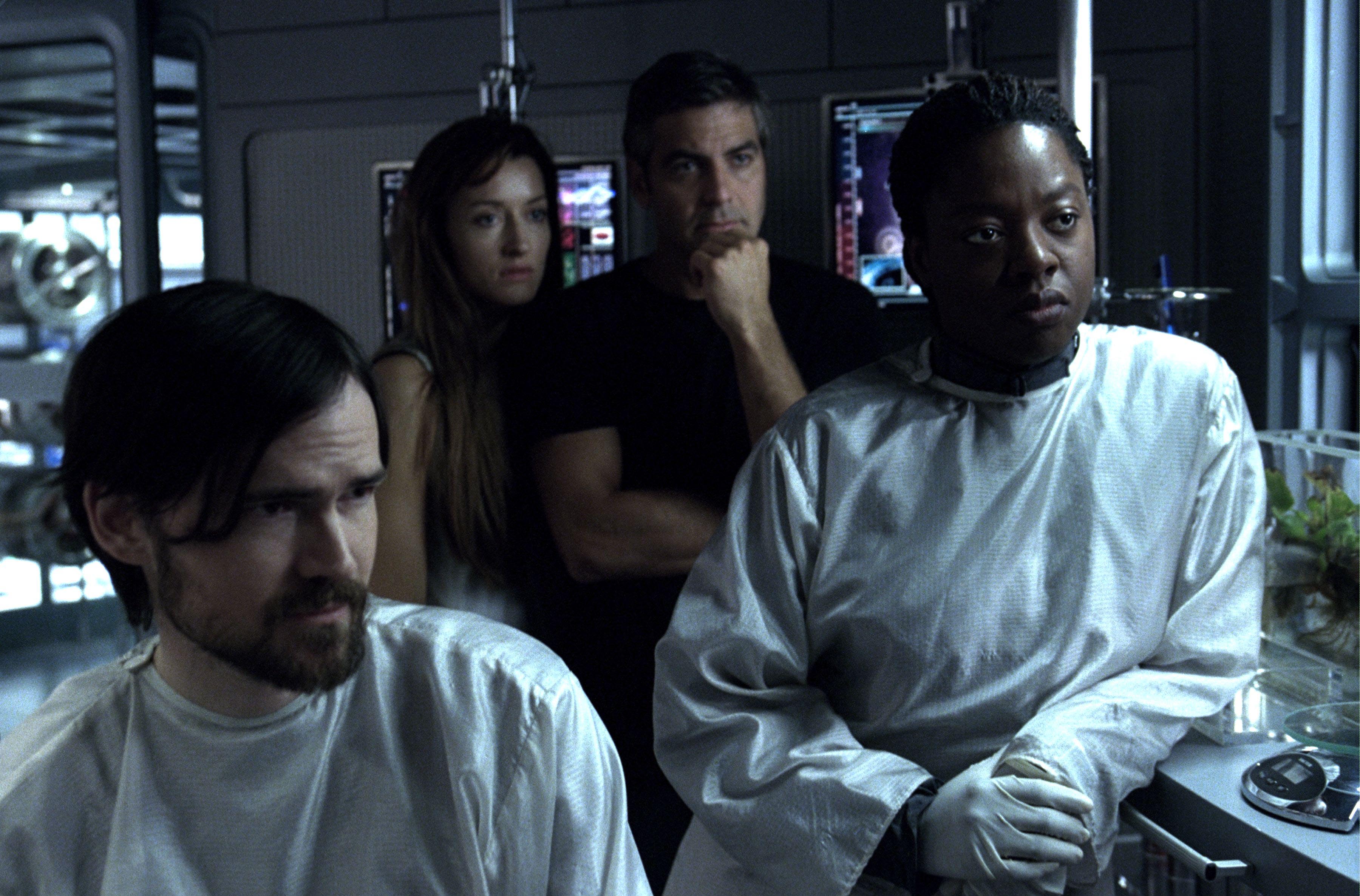
Crew onboard the Prometheus orbiting Solaris: Snow (Jeremy Davies), Rheya (Natascha McElhone), Kelvin (George Clooney) and Gordon (Viola Davis)

Ironically, our hero’s epic journey of great distance has only led him back to himself. The alien force defies Kelvin’s efforts to understand its motives; whether it is benign, hostile, or even sentient. Kelvin has no common frame of reference to judge and therefore to react. This leaves him with what he thinks he does understand: that Rheya is a product of his own mind, his memories of her, and therefore a mirror of his deepest guilt—but perhaps also an opportunity to redeem himself.

Kelvin and his ‘dead’ wife Rheya onboard the Prometheus orbiting Solaris

Solaris is the epitome of the “other”, a force and entity unrecognizable and unfathomable. Lem’s existentialist portrayal of “the other”—and by extension of humanity—serves as excellent commentary on what is important to us and our identity. Unlike the familiar human-like figures of a Spock, Zhaan or the fremen, Solaris accomplishes its ‘other’ role through arcane manipulation of the human characters’ dreams and yearnings. We never understand its motivations or intelligence, yet we are drawn to its force and reflective mirror of our souls. It is its very incomprehensibility that attracts us, as to an abstract artwork, and challenges our very identities. Solaris shows neither judgment nor morality. It exists through the lens of paradox. Both there and not there. Fluid but enduring. Fractured yet whole. Like water. 

All lead to the ultimate question asked of science fiction: who are we and why are we here?

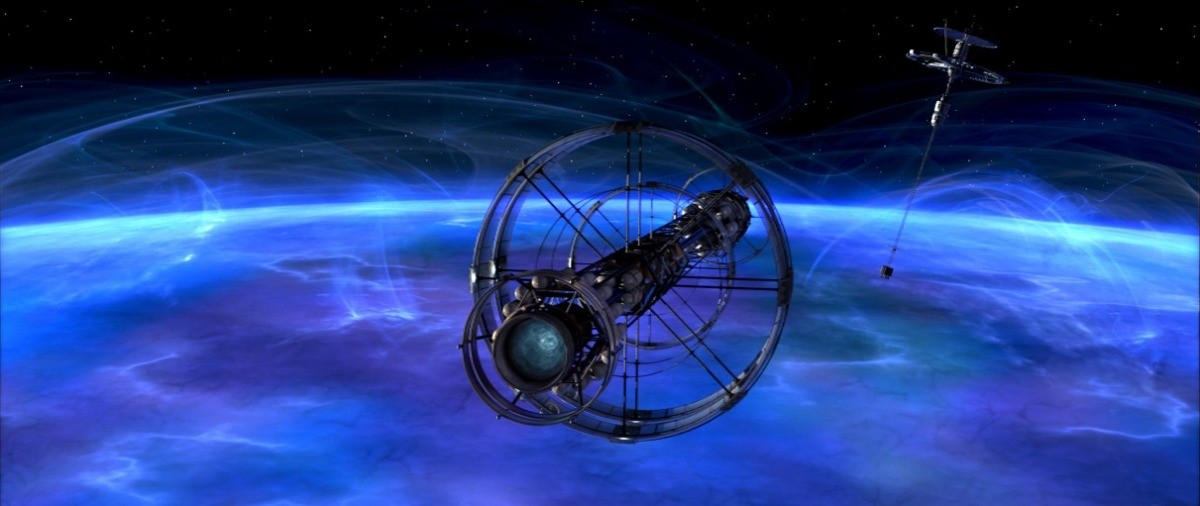
Kelvin arrives at the space station orbiting Solaris

Nina Munteanu is a Canadian ecologist / limnologist and novelist. She is co-editor of Europa SF and currently teaches writing courses at George Brown College and the University of Toronto. Visit www.ninamunteanu.ca for the latest on her books. Nina’s bilingual “La natura dell’acqua / The Way of Water” was published by Mincione Edizioni in Rome. Her non-fiction book “Water Is…” by Pixl Press(Vancouver) was selected by Margaret Atwood in the New York Times ‘Year in Reading’ and was chosen as the 2017 Summer Read by Water Canada. Her novel “A Diary in the Age of Water” was released by Inanna Publications (Toronto) in June 2020.
On Writing: The Gestalt Nature of Passion & Success

Marsh and swamp forest in a blushing sunset, ON (photo and rendition by Nina Munteanu)

What is to give light must endure burning —Victor Frankl

Says Keyes: “Any writing lays the writer open to judgment about the quality of his work and thought,” writes Ralph Keyes, author of The Courage to Write. “The closer [the writer] gets to painful personal truths, the more fear mounts—not just about what he might reveal, but about what he might discover should he venture too deeply inside. But to write well, that’s exactly where we must venture.”

So, why do it, then? Why bother? Is it worth it to make yourself totally vulnerable to the possible censure and ridicule of your peers, friends, and relatives? To serve up your heart on a platter to just have them drag it around as Stevie Nicks would say?…

Welcome to the threshold of your career as a writer. This is where many aspiring writers stop: in abject fear, not just of failure but of success. The only difference between those that don’t and those that do, is that the former come to terms with their fears, in fact learn to use them as a barometer to what is important.

“Everyone is afraid to write,” says Keyes. “They should be. Writing is dangerous…To love writing, fear writing and pray for the courage to write is no contradiction. It’s the essence of what we do.”

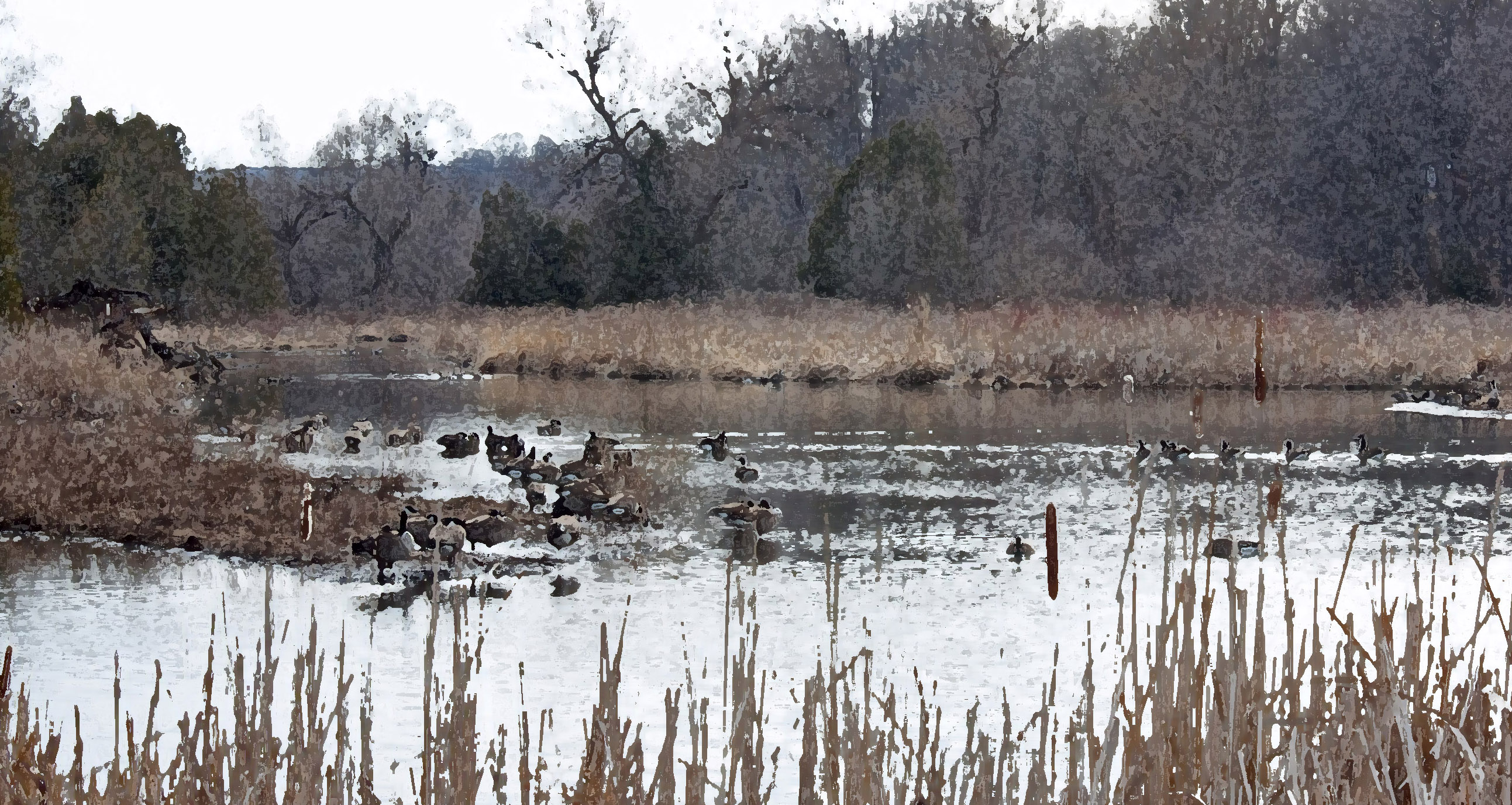
Marsh in the Kawarthas, ON (photo and rendition by Nina Munteanu)

Unravelling the Secret…

How do you get past the fear of being exposed, past the anticipated disappointment of peers, past the terror of success?

The answer is passion. If you are writing about something you are passionate about, you will find the courage to see it through. “The more I read, and write,” says Keyes:

The more convinced I am that the best writing flows less from acquired skill than conviction expressed with courage. By this I don’t mean moral convictions, but the sense that what one has to say is something others need to know.

This is ultimately what drives a writer to not just write but to publish: the need to share one’s story, over and over again. To prevail, persist, and ultimately succeed, a writer must have conviction and believe in his or her writing. You must believe that you have something to say that others want to read. Ask yourself why you are a writer. Your answer might surprise you.

Every writer is an artist. And every artist is a cultural reporter. One who sometimes holds the world accountable. “Real art,” says Susan Sontag, “makes us nervous.”

The first step, then, is to acknowledge your passion and own it. Flaunt it, even. Find your conviction, define what matters and explore it to the fullest. You will find that such an acknowledgement will give you the strength and fortitude to persist and persevere, particularly in the face of those fears. Use the fears to guide you into that journey of personal truths. Frederick Busch described it this way: “You go to dark places so that you can get there, steal the trophy and get out.”

John Steinbeck, author of Grapes of Wrath, said:

If there is a magic in story writing, and I am convinced that there is, no one has ever been able to reduce it to a recipe that can be passed from one person to another. The formula seems to lie solely in the aching urge of the writer to convey something he feels important to the reader.  

Marsh of cattails, ON (photo and rendition by Nina Munteanu)

Finding Success Through Meaning

Victor Frankl survived Auschwitz to become an important neurologist and psychiatrist of our time and to write Man’s Search for Meaning.

Blogger Gavin Ortlund wrote: “What gripped me most about [Frankl’s] book, and has stayed with me to this day, is not the horror and barbarity of his experiences in concentration camps—when you pick up a book about the holocaust, you expect that. What really struck me was Frankl’s repeated insistence that even there, in the most inhumane and horrific conditions imaginable, the greatest struggle is not mere survival. The greatest struggle is finding meaning. As I was reading, I was struck with this thought: going to a concentration camp is not the worst thing that can happen to a person. The worst that can happen to a person is not having a transcendent reason to live. Life is about more than finding comfort and avoiding suffering: it’s about finding what is ultimate, whatever the cost.”

Victor Frankl wisely said:

The more you aim at success and make it a target, the more you are going to miss it. Success, like happiness, cannot be pursued; it must ensue, and it only does so as the unintended side effect of one’s personal dedication to a cause greater than oneself or as the by-product of one’s surrender to a person other than oneself. Happiness must happen, and the same holds for success: you have to let it happen by not caring about it. I want you to listen to what your conscience commands you to do and go on to carry it out to the best of your knowledge. Then you will live to see that in the long-run—in the long-run, I say!—success will follow you precisely because you had forgotten to think about it.

Frankl is talking about passion. “If you long to excel as a writer,” says Margot Finke, author of How to Keep Your Passion and Survive as a Writer, “treasure the passion that is unique within yourself. Take the irreplaceable elements of your life and craft them into your own personal contribution to the world.” It’s what has you up to 2 am, pounding the keys. It follows you down the street and to work with thoughts of another world. It puts a notebook and pen in your hand as you drive to the store, ready to record thoughts about a character, scene or place. “For the passionate, writing is not a choice; it’s a force that cannot be denied.”

Finke says it astutely: You need to be passionate about everything to do with your book—the writing and rewriting, your critique group, your research, your search for the best agent/editor, plus your query letter. Not to mention the passion that goes into promoting your book. Nothing less will assure your survival—and success—as a writer.

“Follow your inner moonlight, don’t hide the madness”

Allen Ginsberg

This article is an excerpt from The Fiction Writer: Get Published, Write Now! by Nina Munteanu

References:

Finke, Margot. 2008. “How to Keep Your Passion and Survive as a Writer.” In: The Purple Crayonhttp://www.underdown.org/mf_ writing_passion

Frankl, Victor. (1946) 1997. Man’s Search for Meaning. Pocket Books. 224 pp.

Keyes, Ralph. 1999. The Writer’s Guide to Creativity. Writer’s Digest, 1999.

Munteanu, Nina. 2009. The Fiction Writer: Get Published, Write Now. Starfire World Syndicate. 294pp

Ortlund, Gavin. 2008. “Frankl, the holocaust and meaning.” In: Let Us Hold Fast. http://gro1983.blogspot.com/2008/02/frankl-holocaust-and-meaning.html

Slonim Aronie, Nancy. 1998. Writing from the Heart: Tapping the Power of Your Inner Voice. Hyperion. 256pp.

Marsh near Millbrook, ON (photo and rendition by Nina Munteanu)

Nina Munteanu is a Canadian ecologist / limnologist and novelist. She is co-editor of Europa SF and currently teaches writing courses at George Brown College and the University of Toronto. Visit www.ninamunteanu.ca for the latest on her books. Nina’s bilingual “La natura dell’acqua / The Way of Water” was published by Mincione Edizioni in Rome. Her non-fiction book “Water Is…” by Pixl Press(Vancouver) was selected by Margaret Atwood in the New York Times‘Year in Reading’ and was chosen as the 2017 Summer Read by Water Canada. Her novel “A Diary in the Age of Water” was released by Inanna Publications (Toronto) in June 2020.

The Aroma of Story

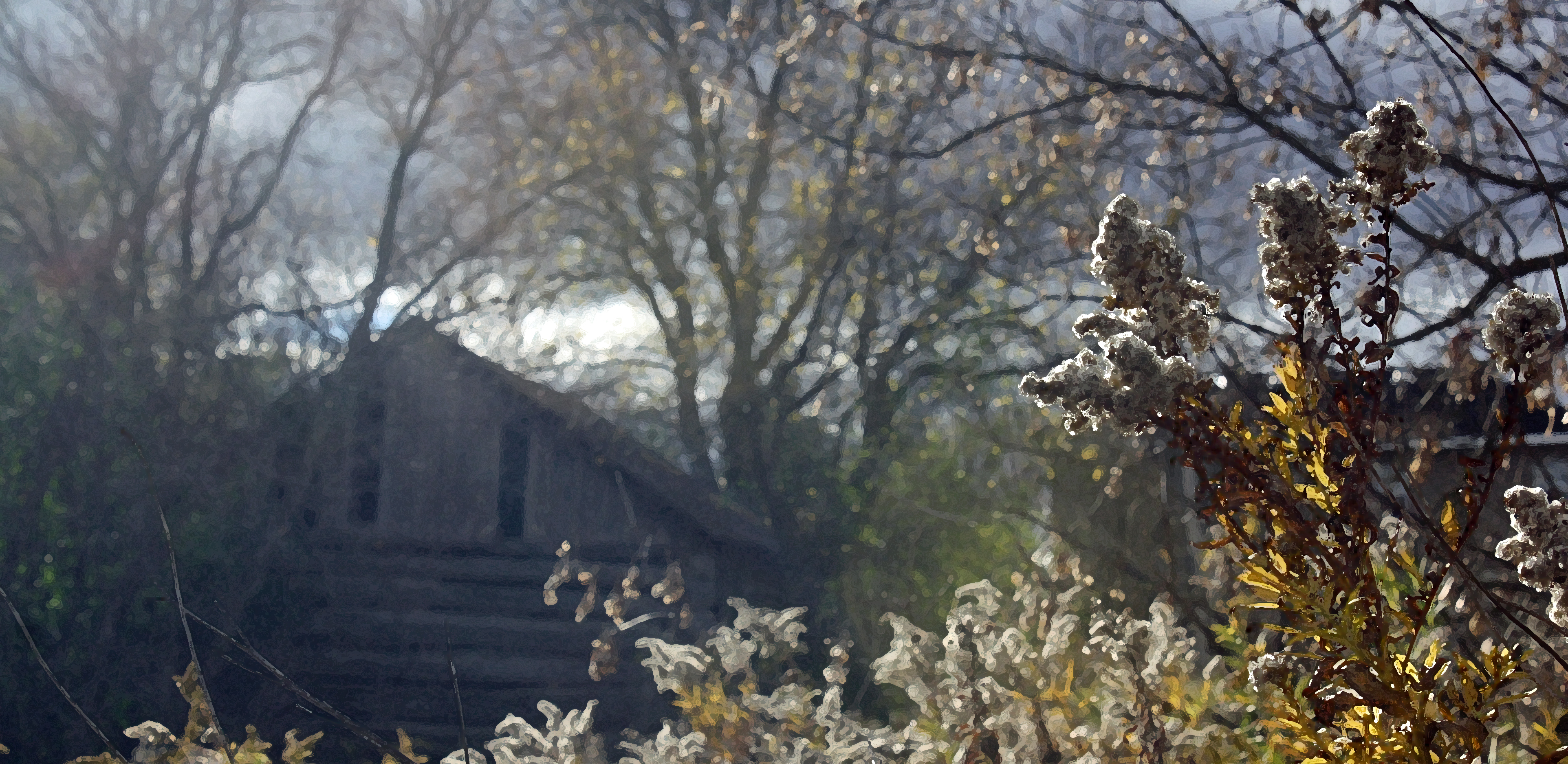
Old cabin behind seeding goldenrods, ON (photo and rendition by Nina Munteanu)

One of my favourite smells is of pipe tobacco smoke. 

But here’s the thing:  I’m really not a fan of smoking. Both my parents were chain smokers (who wasn’t back then?) and I quickly discovered that cigarette butts carried thousands of ugly toxins and lasted years on the ground. In the one rebellious occasion that I skipped school with two school mates to spend the day in the forest, I accidentally lit my hair on fire trying to light the cigarette. Taking the karmic connection seriously, I decided that was the end of both skipping school and smoking for me.   

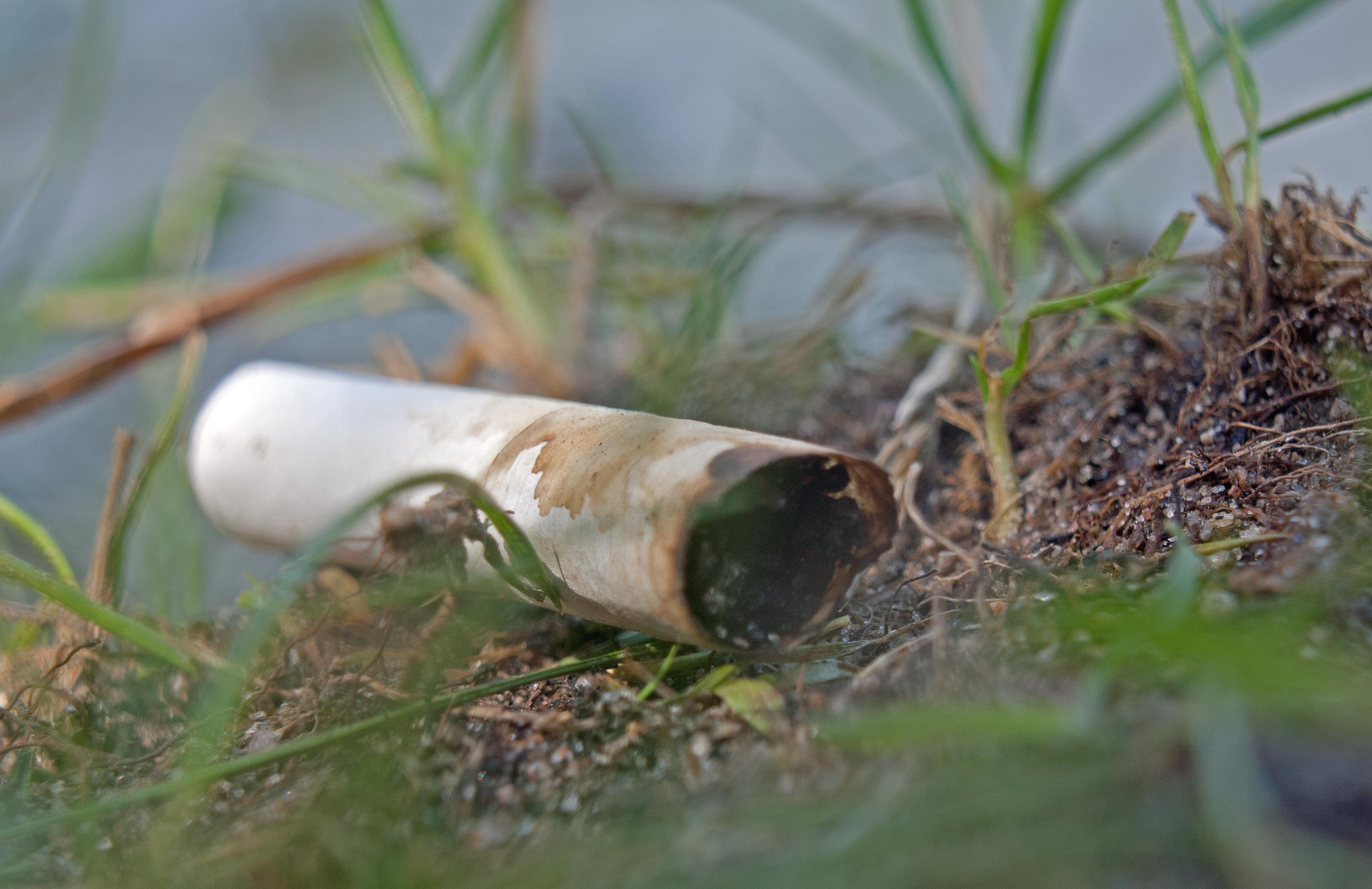
Cigarette butt found near a river in a park, ON (photo by Nina Munteanu)

So, why the allure with pipe smoke?

Well, to begin my rationalization, pipe smoke is nothing like cigarette smoke. Cigarette smoke squeals up my nose and mouth, choking my breath with an acrid burning that lodges like a smothering cancer in my throat; pipe smoke coils heavy and loose into my nostrils with lazy notes of fermenting cherry or plum.

There’s more to it, obviously . . . 

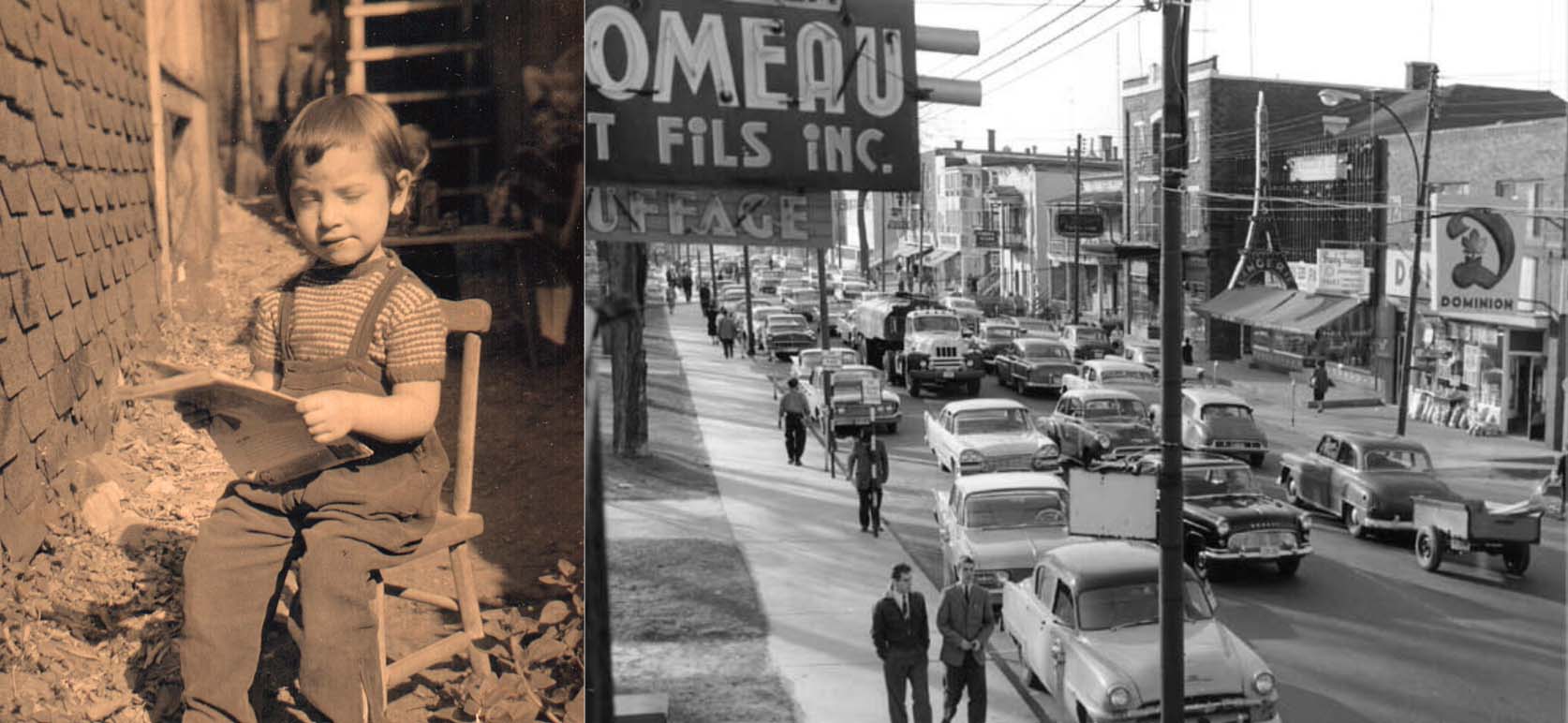
Left: Four-year old Nina Munteanu pretending to read; Right: Rue Principal in Granby, Quebec in the early 1960s

When I was little, one of my favourite things to do was hide behind the comic stand in the back corner of William’s General Store and read comic books. Superman, Supergirl, Green Lantern, Magnus Robot Fighter. So many more . . .

Mr. Williams knew I was there. I was, after all, hiding in plain sight, as kids generally do. But he was a kind man and let me stay and read for free. He recognized someone who loved story. 

The store was a typical general store of that era. Long and narrow, dark wood walls covered in paraphernalia. Shelves and stands cramped full with stuff. Anything from toys and penny candy to games, puzzles, watches, newspapers, pocket books and magazines, household necessities, shoeshine kits, canned goods and preserves, pocket knives, to cigars, pipes and the tobacco and lighters to go with them. A smoky mist settled on everything in the store and the place gave off the complex scent of old polished wood with a tobacco undercurrent. Williams might have smoked a pipe himself; I don’t recall. However, my sense-mind has wonderfully coupled that evocative aroma with a sense of freedom to immerse myself in fantastical worlds of imagination. And, in turn, to imagine my own worlds. 

That place and my experience in it not only gave me an abiding love for pipe smoke; it made me the storyteller I am today.  

Taste and smell appear to linger most in memory and yet are often neglected by writers. According to the California Institute of Technology, smell is generally considered the sense tied most closely to human memory. Smell profoundly influences people’s ability to recall past events and experiences. “A smell from your distant past can unleash a flood of memories that are so intense and striking that they seem real,” says Dr. Karl (Kruszelnicki), author of Great Moments in Science. “This kind of memory, where an unexpected re-encounter with a scent from the distant past brings back a rush of memories, is called a ‘Proustian Memory’.”

In Remembrance of Things Past, Marcel Proust writes: 

When from a long-distant past nothing subsists, after the people are dead, after the things are broken and scattered, taste and smell alone, more fragile but more enduring, more immaterial, more persistent, more faithful, remain poised a long time, like souls.

In this excerpt of The Florist’s Daughter by Patricia Hampl, fragrance permeates with meaning: 

The flower shop was here and it was my father’s domain, but it was also marvelously other, this place heavy with the drowsy scent of velvet-petaled roses and Provencal freesias in the middle of winter, the damp-earth spring fragrance of just-watered azaleas and cyclamen all mixed up with the headachey smell of bitter chocolate. 

In John Steinbeck’s East of Eden, his main character recalls the following memories, through several evocative smells: 

I remember my childhood names for grasses and secret flowers. I remember where a toad may live and what time the birds awaken in the summer— and what trees and seasons smelled like—how people looked and walked and smelled even. The memory of odors is very rich. 

Barrels of aging bourbon in Kentucky (photo by Nina Munteanu)

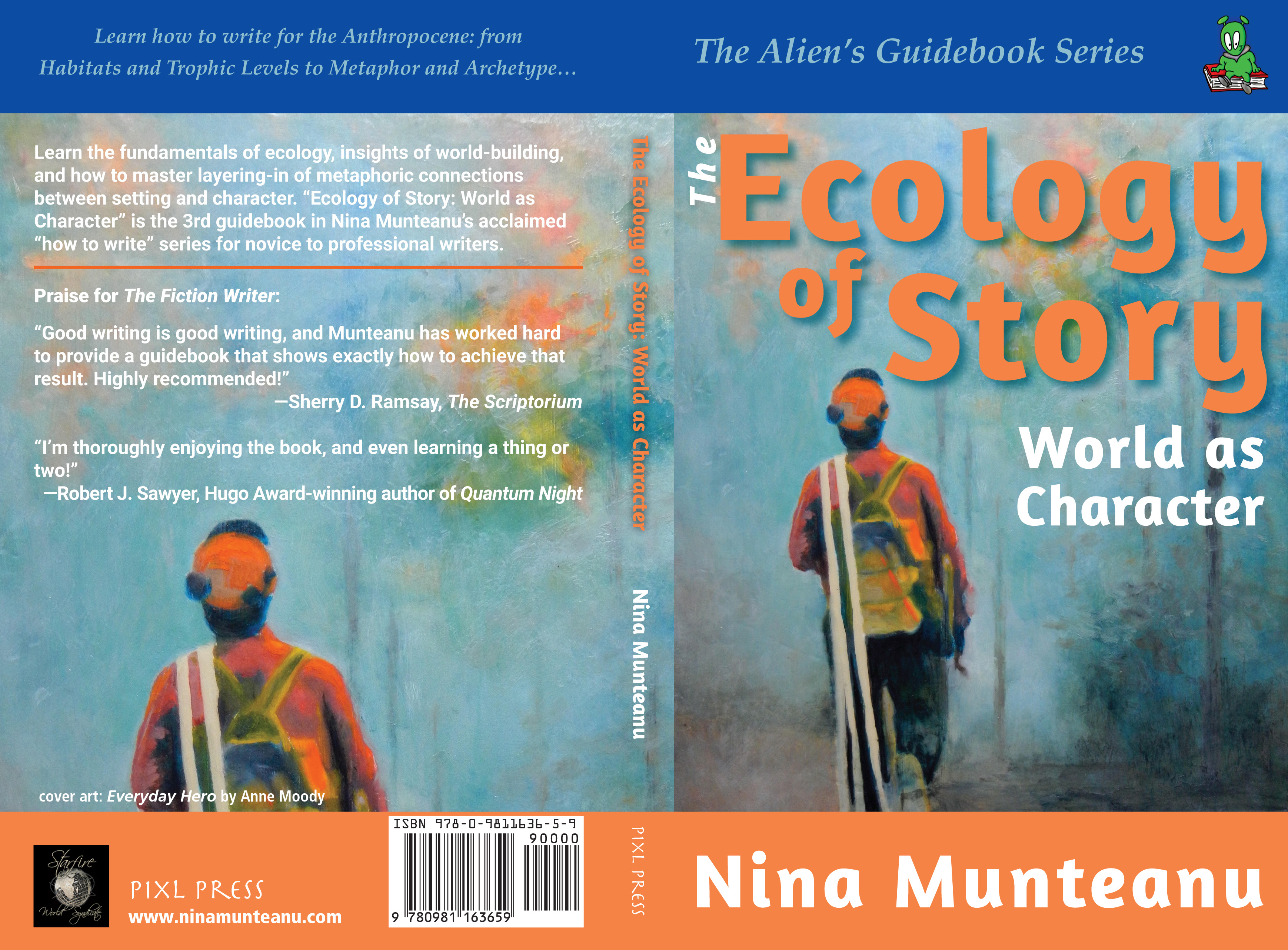
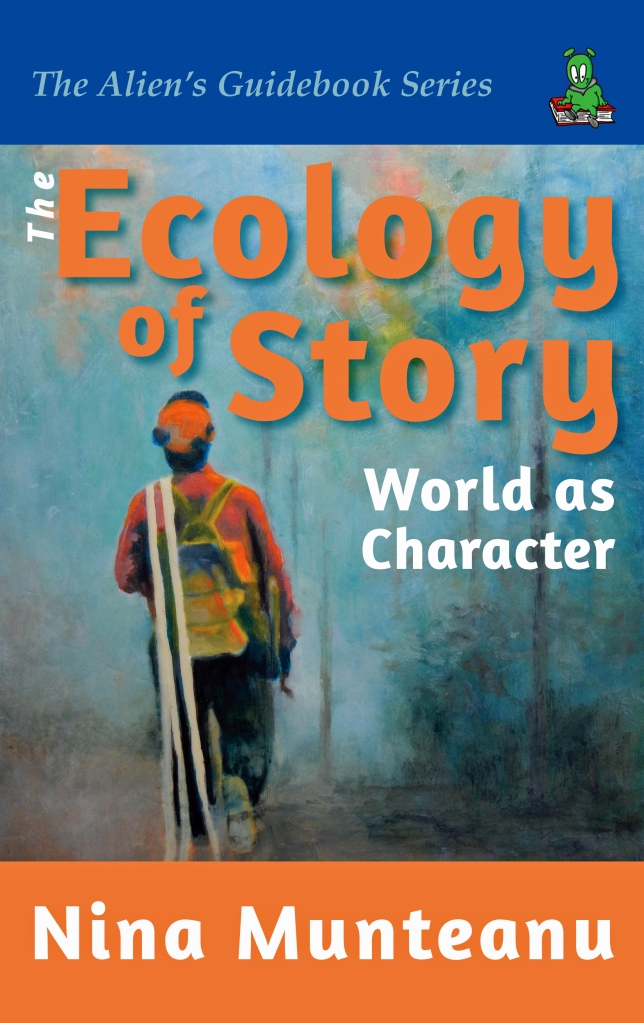
In Part 2 of my writing guidebook The Ecology of Story: World as Character, I discuss how the various senses—not just smell—are strong tools in storytelling and provide examples and working exercises.

Psychologist Michael McCollough argues that environment plays a key role in human behaviors, such as forgiveness and revenge. He theorizes that various social environments can cause either forgiveness or revenge to prevail. McCollough relates his theory to game theory. In a tit-for-tat strategy, cooperation and retaliation are comparable to forgiveness and revenge. The choice between the two can be beneficial or detrimental, depending on what the game partner (or organism) chooses. The brain’s limbic system processes external stimuli related to emotions, social activity, and motivation; these then propagate an instinctual behavioural response. Examples include maternal care, aggression, defense, and social hierarchy; these behaviours are influenced by sensory input, such as sight, sound, touch, and—of course—smell.

Parts of this article are excerpted from the third book of The Alien Guidebook Series:The Ecology of Story: World as Character.

Nina Munteanu is a Canadian ecologist / limnologist and novelist. She is co-editor of Europa SF and currently teaches writing courses at George Brown College and the University of Toronto. Visit www.ninamunteanu.ca for the latest on her books. Nina’s bilingual “La natura dell’acqua / The Way of Water” was published by Mincione Edizioni in Rome. Her non-fiction book “Water Is…” by Pixl Press(Vancouver) was selected by Margaret Atwood in the New York Times‘Year in Reading’ and was chosen as the 2017 Summer Read by Water Canada. Her novel “A Diary in the Age of Water” was released by Inanna Publications (Toronto) in June 2020.

Paradox in the Details: The Role of Place in Story

Nina Munteanu at When Words Collide 2021

A few weeks ago, I (virtually) participated in When Words Collide, one of Canada’s prime writing festivals in Calgary, Alberta. I was a featured writer, sitting on several panels and conducting presentations and lectures.
One of the two presentations I did was on the role of place in story

The role of place in story is a topic close to my heart and one I recently wrote an entire writing guidebook on: The Ecology of Story: World as Character. In my coaching sessions with writers and in my writing courses at George Brown College and the University of Toronto, I’ve observed in the novice writer a need for more effective integration of setting and place in story. All too often, the lack of meaningful integration translated into a lost opportunity to explore the POV character and the story’s theme. The lack of meaningful use of place in story can result in a lacklustre story, overly vague characterizations and a story that lacks metaphoric depth and relevance.

The presentation and following discussion drew from my guidebook Ecology of Story and I used many examples from a wide range of literature to overview topics covered in the book, such as:

  • Place as character & archetype
  • Place as metaphor (personification, symbols, allegory)
  • Place and first impressions (openings)
  • Place and emotion (over time and by POV)
  • Place through the senses
  • Place as environmental force (including climate change)

We also discussed how characters connect with their environment and I introduced the metaphoric connection between the Mi’kmaq and the white pine forests in Annie Proulx’s Barkskins, among others.

I concluded the presentation with a discussion on the “paradox in the details”: the more specific description is, the more universal its appeal. This is because the details can establish relevance and realism to the scene and the POV character experiencing them. Vagueness and lack of tangibility are avoided through specificity. The key, however, is to use details that resonate with the theme and tone of the book: as metaphor. Details as metaphor is what you want to achieve. 

Because, as Ray Bradbury once told me, “everything in story is metaphor.” 

The Ecology of Story: World as Character is presented in two parts.

Part 1 provides a comprehensive summary of the science of ecology, the study of relationships, and links to useful metaphor.

Part 2 discusses world and place in story. Here I discuss how the great writers have successfully integrated place with theme, character and plot to create a multi-layered story with depth and meaning. Part 2 also contains several writing exercises and detailed case studies.

Nina Munteanu is a Canadian ecologist / limnologist and novelist. She is co-editor of Europa SF and currently teaches writing courses at George Brown College and the University of Toronto. Visit www.ninamunteanu.ca for the latest on her books. Nina’s bilingual “La natura dell’acqua / The Way of Water” was published by Mincione Edizioni in Rome. Her non-fiction book “Water Is…” by Pixl Press(Vancouver) was selected by Margaret Atwood in the New York Times ‘Year in Reading’ and was chosen as the 2017 Summer Read by Water Canada. Her novel “A Diary in the Age of Water” was released by Inanna Publications (Toronto) in June 2020.

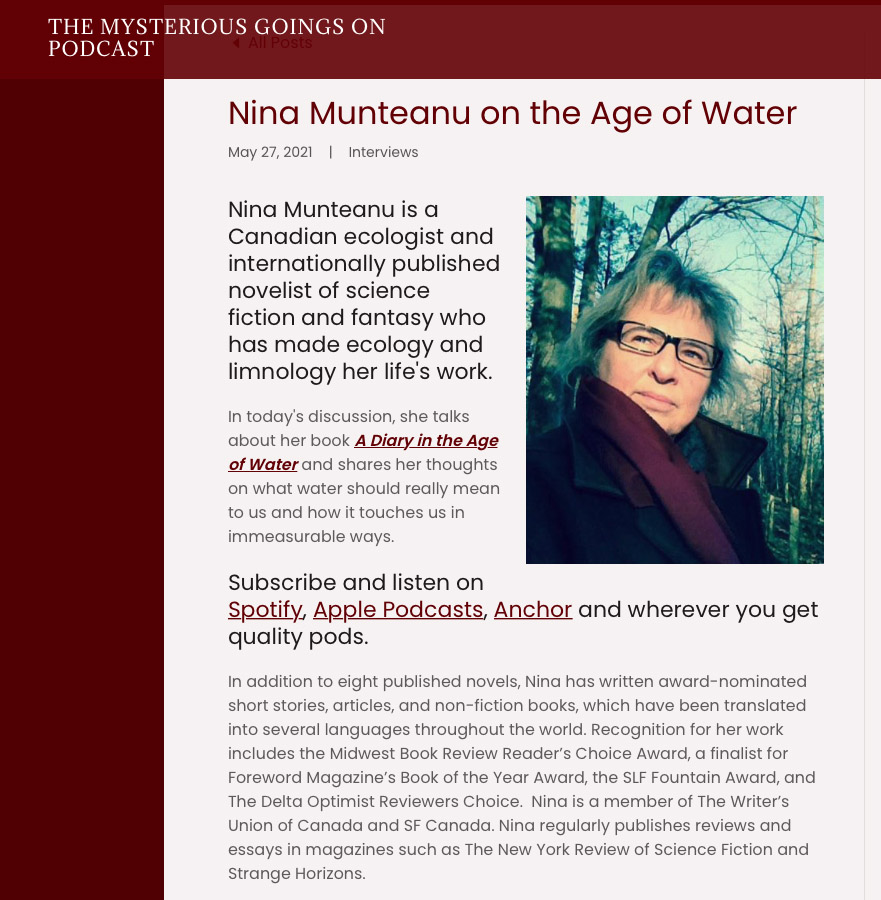
Nina Munteanu On The Age of Water: Interview on “Mysterious Goings On Podcast”

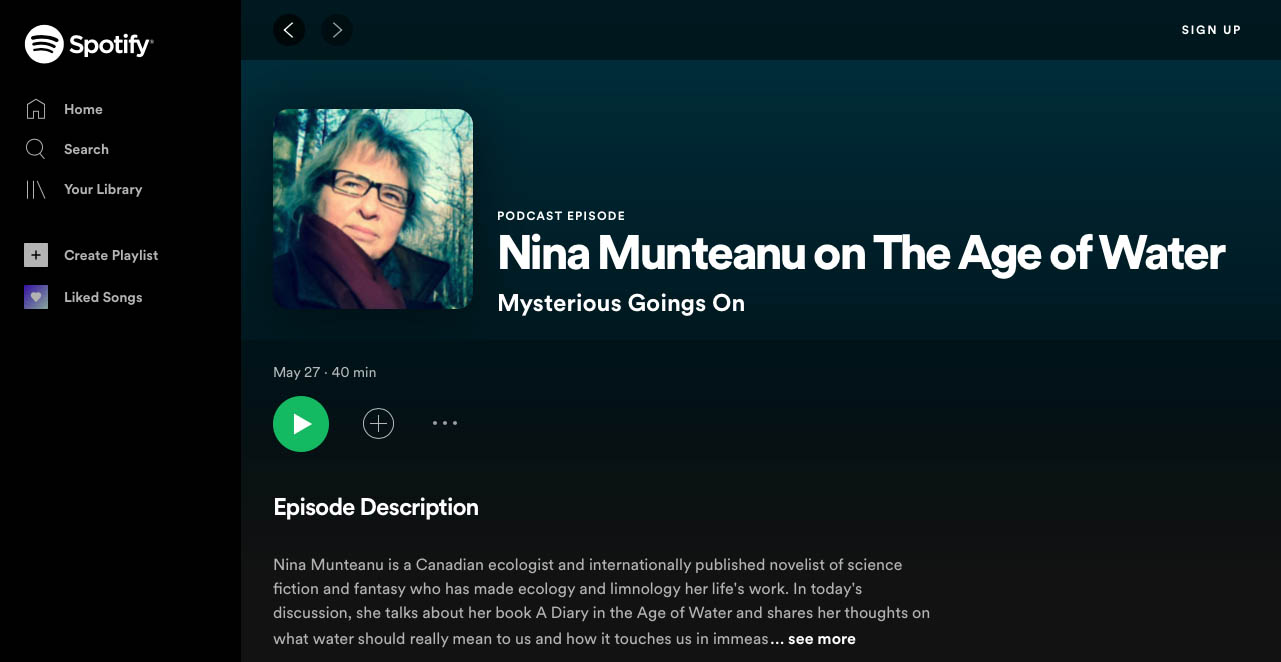
Alex Greenwood, host of The Mysterious Goings On Podcast recently interviewed me about my latest novel and work of climate fiction, the dystopia “A Diary in the Age of Water.”

Alex and I discussed water scarcity and climate change as a water phenomenon. I also shared my thoughts on water as a character in the novel, water’s many anomalous properties–all of which promote life and wellness, and why writing a dystopian cautionary tale is an act of optimism.

Listen to the podcast on: Anchor; Spotify; Stitcher; Apple Podcasts; iHeartRadio; YouTube; Podchaser; Listennotes; Audible

Boys exploring by the Otonabee River, ON (photo and dry brush rendition by Nina Munteanu)

Nina Munteanu is a Canadian ecologist / limnologist and novelist. She is co-editor of Europa SF and currently teaches writing courses at George Brown College and the University of Toronto. Visit www.ninamunteanu.ca for the latest on her books. Nina’s bilingual “La natura dell’acqua / The Way of Water” was published by Mincione Edizioni in Rome. Her non-fiction book “Water Is…” by Pixl Press(Vancouver) was selected by Margaret Atwood in the New York Times ‘Year in Reading’ and was chosen as the 2017 Summer Read by Water Canada. Her novel “A Diary in the Age of Water” was released by Inanna Publications (Toronto) in June 2020.

Nina Talks About Being a Scientist and a Storytelling Artist on “The Authors Book Club”

Cedar beside swift water of Jackson Creek, ON (photo and rendition by Nina Munteanu)

Fiona Ross with The Authors Book Club talked with limnologist and eco-fiction author Nina Munteanu about her journey as both author and scientist and her latest book A Diary in the Age of Water (Inanna Publications). 

Advice on writing:

“Write with passion. A lot of people say ‘write what you know.’ Those two in some ways are the same thing. You can do a lot of research on things that you don’t know and bring that in [to your writing.] But to know in your soul, in your heart, the thing that’s important that you need to write about is more what I mean by ‘write what you know.’ If you’re passionate about something—a global catastrophe or a personal journey with abuse—if it comes from the heart, it will keep you on track through those rejections and to finish and complete your work. Otherwise you won’t persist and you’ll let someone tell you that it isn’t important, it’s just a hobby.”

On water:

Nina and Fiona discuss the perils of commodifying water and Canada’s role in protecting the freshwater of the world and the boreal zone of Canada.

Nina talks about how she turned her fear of water as a child into a fascination for water and a passion for its protection. “I’m a limnologist, an ecologist. I’ve have been studying it since I was a little kid who was scared of water. I triumphed over that into fascination and made that into a career.” Nina’s non-fiction book Water Is… was published in 2016 as a biography of water and was endorsed by Margaret Atwood in the New York Times ‘Year in Reading.’

Nina talks about some of water’s over 70 anomalous properties and how virtually each is life-giving. She shares how water can teach us to be stewards and protectors of water within an emerging paradigm of gratitude and humbleness.  

On being both scientist and artist:

Nina suggests that: “All great scientists are informed by art. They are creative in some way. [Scientists] bring that creativity, that original thinking and that curiosity, with them into their science. That’s what makes their science great because they are willing to look outward…We try to compartmentalize so we can better understand [art and science] but the irony is that we better understand them by bringing them together and integrating them…”

Nina Munteanu is a Canadian ecologist / limnologist and novelist. She is co-editor of Europa SF and currently teaches writing courses at George Brown College and the University of Toronto. Visit www.ninamunteanu.ca for the latest on her books. Nina’s bilingual “La natura dell’acqua / The Way of Water” was published by Mincione Edizioni in Rome. Her non-fiction book “Water Is…” by Pixl Press(Vancouver) was selected by Margaret Atwood in the New York Times‘Year in Reading’ and was chosen as the 2017 Summer Read by Water Canada. Her novel “A Diary in the Age of Water” was released by Inanna Publications (Toronto) in June 2020.

How To Write Great Dialogue

Cedar trees in ice shallows of Jackson Creek, ON (photograph and dry brush rendition by Nina Munteanu)

Dialogue spices narrative and increases pace because it is read more quickly. Dialogue is pleasing to the reader’s eye and gets readers involved. Dialogue is action.

Five tools for achieving relevant and exciting dialogue include: showing not telling; simplification; voice; interactive devices, and use of narrative.

Defining Dialogue and its Purpose in Story

Good dialogue neither mimics actual speech (e.g., it’s not usually mundane, repetitive or broken with words like “uh”) nor does it educate the reader through long discourse (unless the character is that kind of person). Good dialogue in a story should be somewhere in the middle. While it should read as fluid conversation, dialogue remains a device to propel the plot or enlighten the reader to the character of the speaker). No conversation follows a perfect linear progression. People interrupt one another, talk over one another, often don’t answer questions posed to them or avoid them by not answering them directly. These can all be used by the writer to establish character, tension, and relationship.

The writer uses dialogue to move the story along, increase tension and speed up pace. Dialogue helps define setting, characters and objects. It allows characters to confront each other and crystallizes relationships and situations. Dialogue can effectively deliver a punch or blow in a conflict. It can cue into a transition to a new scene

Show, Don’t Tell

Beginning writers commonly use dialogue to explain something that both participants should already know but the reader doesn’t. It is both awkward and unrealistic and immediately exposes the writer as a novice. Writers should avoid the use of “As you know…” It’s better to keep the reader in the dark for a while than to use dialogue to explain something. On the same note, characters should talk to one another, not indirectly to the reader through polemic or long dissertation and exposition.

Use Relevant Tag Lines and Reduce Them

When using tag lines for dialogue, take care to avoid the use of redundant tag lines. For instance: “I’m sorry,” he apologized; “Do you have a dog?” she asked. The primary purpose of a tag is to establish whois speaking, not necessarily how; the howis usually achieved through the actual speech. Novice writers tend to avoid “said” and replace with creative but distracting verbs (e.g., snarled, hissed, purred) or add excessive speech modifiers (e.g., he said pleadingly or he said dramatically). Instead, look for ways to express the way they said it in actual dialogue. Let the dialogue speak for itself. In the example—“He can’t be there!” she said in disbeliefdisbeliefis unnecessary because the dialogue already shows it. In truth, most professional writers use said and let the dialogue do the talking.

Develop Character “Voice” & Speech Signatures

Each of us develops our own idiosyncratic way of speaking, based on our ethnic background, the community or region we grew up in, our education and the circles we frequent. Writers can create a character’s distinctive “voice” by introducing a unique vernacular to each character. This can take on the form of a certain repeated phrase, a body movement (itself a “language”), a stutter or speech intonation or accent. For instance, I know a person who adds “don’t you think?” to almost everything he says. This says something about how that person thinks. Another person I know uses “do you see?” at the end of his phrase. Again, rather revealing. The writer can add additional depth to these specific traits by linking them to metaphor.

Use Oblique Conversation & Overlapping Speech

People often don’t respond directly to questions posed them. This may be due to them avoiding the question or excitement or rudeness. The writer can make use of these as devices to enlighten the reader on theme, plot and character, while making the conversation more interesting and realistic. People cut each other off or talk over one another all the time. You can incorporate this into your dialogue to achieve a note of hastiness, abruptness, nervousness or panic.

Intersperse Dialogue with Descriptive Narrative

Many beginning writers forget to “ground” the reader with sufficient cues as to where the characters are and what they’re doing while they are talking. This phenomenon is so common, it even has a name. It’s called “talking heads.” As writers we must achieve a balance between a lack of setting, which disorients the reader, and info-dump, which halts conversation and slows pace considerably. Narrative can also be used to contradict what’s actually said through body language or by simply telling the reader. My previous article “title” discusses ways you can use body language to reveal subtle undercurrent of communications between characters, the comic or tragic elements behind dialogue, and a character’s true feelings.  Here are some examples:

“How did it go?”

“Great,” he lied.

“Yes, I feel so much better now,” she said, eyes wandering from his.

Well, you get the picture. And I just revealed myself as a visual thinker…

Cedar trees inundated by ice sheet in shallows of Jackson Creek, ON (photo and dry brush rendition by Nina Munteanu)

Nina Munteanu is a Canadian ecologist / limnologist and novelist. She is co-editor of Europa SF and currently teaches writing courses at George Brown College and the University of Toronto. Visit www.ninamunteanu.ca for the latest on her books. Nina’s bilingual “La natura dell’acqua / The Way of Water” was published by Mincione Edizioni in Rome. Her non-fiction book “Water Is…” by Pixl Press(Vancouver) was selected by Margaret Atwood in the New York Times‘Year in Reading’ and was chosen as the 2017 Summer Read by Water Canada. Her novel “A Diary in the Age of Water” was released by Inanna Publications (Toronto) in June 2020.
The Semi-Colon is Dead; Long Live the Semicolon

Ice forms on the shores of Jackson Creek in early winter, ON (photo by Nina Munteanu)

I’ve been a coaching writers for over two decades. I help fiction and non-fiction writers get published. I teach courses on novel writing and tutor technical and scientific writers at the University of Toronto writing centres. I’ve helped with plot, theme, characterization, and setting. I’ve worked with writers on establishing directed narratives and clarifying content. When it comes to grammar and punctuation, there is one punctuation that students of writing all too often misuse, abuse, or outright ignore: the semi-colon. They really don’t get it…And I’m trying to change that.
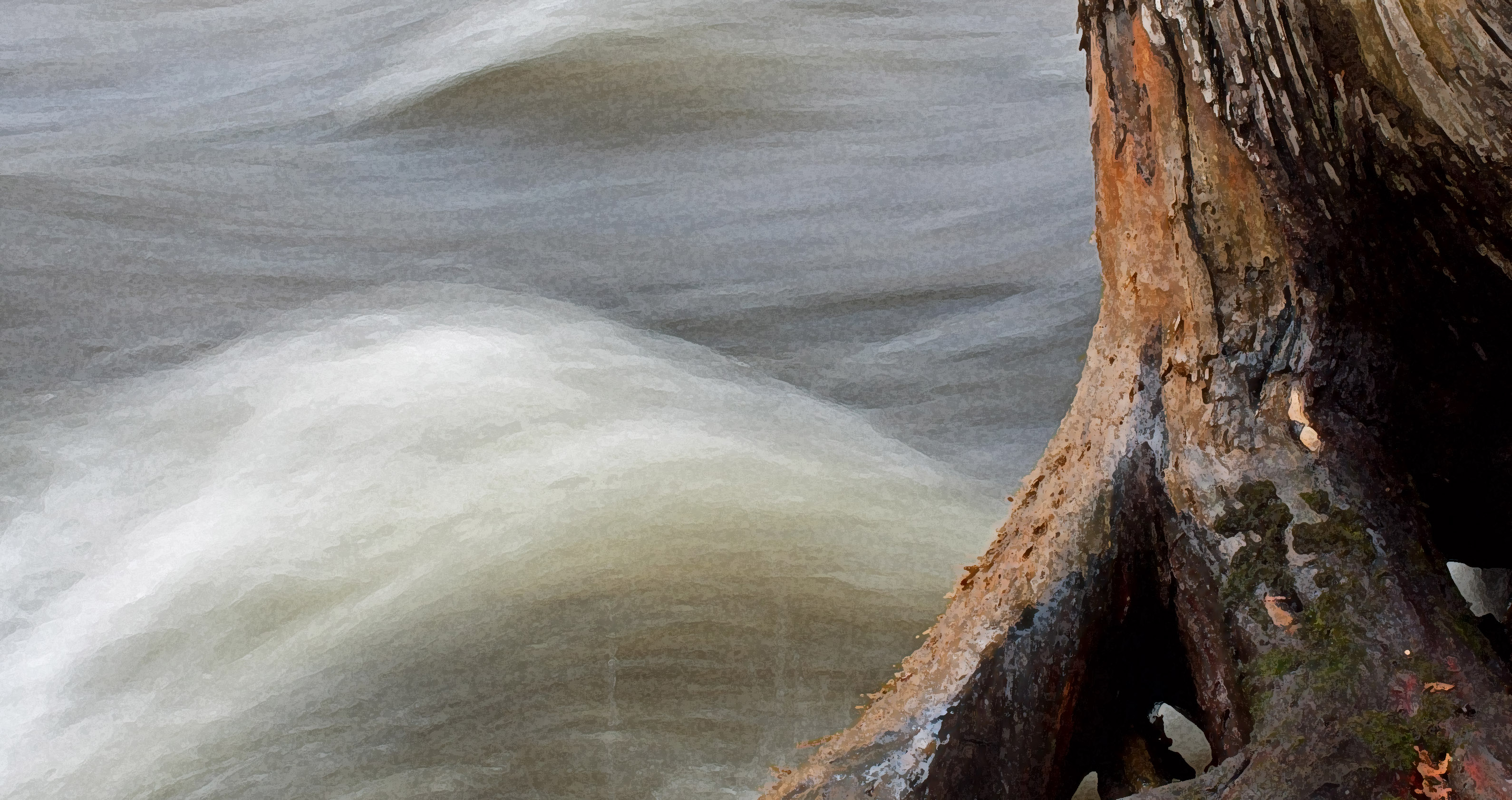
Recently, Dena Bain Taylor (my former supervisor in the University of Toronto Health Sciences Writing Centre), wrote a rousing post about this dear but often neglected and misused punctuation. It resonated with my experience and I just had to share it here:

The Sad Death of the Semi-Colon

As you drown your lockdown sorrows in that last bottle of wine, spare a thought for the semi-colon. Its demise, slow and terrible, long predates the pandemic.

The semi-colon is a particularly elegant piece of punctuation and doesn’t deserve its fate. I can think of a number of emojis I’d happily consign to the dustbin if it meant saving the semi-colon.The elegance of the semi-colon lies in its ability to both join and separate. It is, after all, a combination of a period and a comma.

In its glory days, the semi-colon filled two main functions.

One was to join two independent clauses; in other words, you have two elements that could stand as separate sentences but their ideas come together to make a single point. These days, people often replace the semi-colon with a period, splitting the thought into two sentences. I can live with that. What I can’t live with is replacing the semi-colon with a comma. 

Its other function is to separate elements in a list that themselves contain internal commas. See how much easier this is to read because of the semi-colons:

The breakfast menu included toast, eggs and bacon; refried rice, beans and tortillas; and coffee or juice.


Some might say that “a semi-colon was used when a sentence could have been ended; but it wasn’t.” This isn’t necessarily a bad thing. Some of you may recall Kurt Vonnegut’s scathing edict in his 2005 book A Man Without a Country to all would-be creative writers: “First Rule: Do not use semicolons. They are transvestite hermaphrodites representing absolutely nothing. All they do is show you’ve been to college.” This was followed by novelist John Irving’s pithy observation: “No one knows what they are anymore. If you’re not in the habit of reading nineteenth-century novels, you think that the author has killed a fruit fly directly above a comma—semicolons have become nothing but a distraction.” And yet, author Gordon Gravley tells us that “John Irving (once a student of Vonnegut) is quite liberal with semicolons; they cover the pages of his novels like acne on the face of a fast-food restaurant employee. He loves them.” Irving was, after all, the anti-Hemingway; he often used long sentences with subordinate clauses punctuated by semi-colons. Author John Pistelli gives Irving credit for his own love of the semicolon: “Insofar as I aspired to write fiction that felt as densely fated as [Irving’s], both complex and unified, it seemed useful to adopt the mark of punctuation that stood for complexity and unity.” Who’d have thought this innocuous hybrid of comma and colon would stir such vehement condemnation, confusion, and self-denial?

Of the semi-colon, Abraham Lincoln once wrote: I must say I have a great respect for the semicolon; it’s a very useful little chap. While Cormac McCarthy noted simply: No semicolons. Even George Orwell proclaimed: I had decided about this time that the semicolon is an unnecessary stop and that I would write my next book without one.

I submit that it is the semi-colon’s very quality of eluding an exact definition that gives it so much versatility. That is its power over both period and comma; like Schrödinger’s cat, it is neither, yet both. The true power of the semi-colon—aside from its quantum properties—lies in how it brings two otherwise independent thoughts together (that may share something of significance even if elusive) to elegantly compare or contrast. And to create wonderful irony. Wonderful and subtle irony! 

“Semi-colons signal, rather than shout, a relationship … A semi-colon is a compliment from the writer to the reader. It says: ‘I don’t have to draw you a picture; a hint will do.’”

George Will, Washington Post columnist

In the thread that followed Dena Bain Taylor’s article, one writer shared that his fiction editor had admonished him for using the semi-colon, proclaming that: “It’s generally not the practice in fiction.” Nabokov, Chekhov, and Woolf certainly ignored that prognosis. I have noted its use in many other excellent works of fiction; I use it in my own fiction. 

Responding to Bain Taylor’s Linked In post, John Collins, strategic and creative marketer, wrote: “A comma gives you pause; a semi-colon leaves you room to breathe. The world is full of LOLs and BRBs, but there is still room for the intentioned difference that timely breathing engenders. And because its use is becoming rarer, it becomes even more meaningful and impactful if wielded properly.”

Returning to John Irving, here is what he wrote in an essay on Dickens:

It was relatively late in his life that he began to give public readings, yet his language was consistently written to be read aloud—the use of repetition, of refrains; the rich, descriptive lists that accompany a newly introduced character or place; the abundance of punctuation. Dickens overpunctuates; he makes long and potentially difficult sentences slower but easier to read—as if his punctuation is a form of stage direction, when reading aloud; or as if he is aware that many of his readers were reading his novels in serial form and needed nearly constant reminding. He is a master of that device for making short sentences seem long, and long sentences readable—the semicolon!

–John Irving, The King of the Novel

Author John Pistelli attempts an explanation for the evolution of the growing controversy of the semi-colon, which was certainly used more in classic literature: “Dickens used commas and semicolons to give direction to breath, a script for performance. Over the course of the last century, however, we have split text from speech, literature from orature. Poetry and fiction may trace their roots to song and stage, but modern technology and reading habits have removed the voice from literature. We read silently, whether in public or private.” Despite this, Pistelli draws on the work of Christian Thorne, to extol how the semi-colon’s “push-pull suggests the tense relationship of the clauses it both marries and divorces”:

It is through punctuation marks that even ordinary writing overcomes its own ingrained positivism, its tendency to reduce the world to rubble, static things and discrete events. Commas introduce relation to the simplest sentences, as periods do disjunction. Dashes and semicolons establish relation and disjunction at once; they sunder even as they join, which makes them the typographical face of dialectical thought.

Christian Thorne

I have often used not so much typography but topography to metaphorically describe the three dimensional face of narrative: how verbs, nouns and prepositions conspire with idea to create relief; how sentences–passive / active, short or long–flow into larger relief. If words and sentences are the bones of our thoughts, then punctuation is the connective tissue of their meaning in a three-dimensional world.

With that last remark, I urge you to rethink this under-used tool. Include it in your Writer’s Toolkit and join the great writers and thinkers—from unknown to famous—who have masterfully embraced the semi-colon:

“Celebrate failure; it means you took a risk.”—Anonymous 

“I think; therefore I am.”—Rene Descartes

“Happy families are all alike; every unhappy family is unhappy in its own way.”—Leo Tolstoy, Anna Karenina

“The decline of literature indictes the decline of a nation. Knowing is not enough; we must apply. Willing is not enough; we must do.”—Johann Wolfgang von Goethe

“Love does not dominate; it cultivates.”—Johann Wolfgang von Goethe  


Nina Munteanu is a Canadian ecologist / limnologist and novelist. She is co-editor of Europa SF and currently teaches writing courses at George Brown College and the University of Toronto. Visit www.ninamunteanu.ca for the latest on her books. Nina’s bilingual “La natura dell’acqua / The Way of Water” was published by Mincione Edizioni in Rome. Her non-fiction book “Water Is…” by Pixl Press(Vancouver) was selected by Margaret Atwood in the New York Times‘Year in Reading’ and was chosen as the 2017 Summer Read by Water Canada. Her novel “A Diary in the Age of Water” was released by Inanna Publications (Toronto) in June 2020.