Write and Publish, Part 1: Nina’s 5-Ps to Success

Author and university instructor Nina Munteanu gives her “formula” for publishing success that she calls ‘the 5-Ps.’
 

Nina-5Ps of Publishing


The Write and Publish Series

You want to write but don’t know how to get started? The Write and Publish Series focus on:

  • How to find time to write around your busy schedule
  • How to make the most of your present resources
  • How to get inspired and motivate yourself to write
  • How to write, finish and submit your work

This 7-part series of lectures consists of: 1) Nina’s 5-Ps to Success; 2) Redefine Yourself as an Author; 3) Time and Space to Write; 4) Adopt a Winning Attitude; 5) Write What Excites You; 6) How to Beat Writer’s Block; and 7) How to Keep Motivated.

The Writer’s Toolkit

This series of lectures and workshops is part of Nina Munteanu’s “The Writer’s Toolkit”, available as three workshops and DVDs for writers wishing to get published. This 6-hour set of three discs contains lectures, examples and exercises on how to get started and finish, writing craft, marketing and promotion. Available through the author (nina.sfgirl@gmail.com).

the writers toolkit-front-WEBI was fascinated by Nina’s clear and extremely interesting lecture on the hero’s journey.  Maybe all writer’s have a novel in their heads they want to write one day, and the techniques Nina  shared with us will help me when I get to that point.  In fact, because of her, I may get there a lot sooner than I had planned.”— Zoe M. Hicks, Saint Simon’s Island, GA

Nina Munteanu’s command of the subject matter and her ability to explain in a way that the audience understood was excellent. As a hopeful author, I found her words inspiring.”—Amanda Lott, Scribblers Writers’ Retreat, GA

Rarely have I encountered someone of Nina’s considerable talent and intellect tied to such an extraordinary work ethic…A gifted and inventive writer, Nina is also an excellent speaker who is able to communicate complicated ideas in simple terms and generate creative thought in others. Her accessible, positive approach and delightful sense of humor set people at ease almost immediately.”–Heather Dugan, Ohio writer and voice artist

What you’ve done for me, Nina, is you’ve just opened up a whole new world. You’ve shown me how to put soul into my books.”–Hectorine Roy, Nova Scotia writer

FictionWriter-front cover-2nd ed-webThe Writer’s Toolkit workshops were based on my award-nominated fiction writing guide: The Fiction Writer: Get Published, Write Now!

“…Like the good Doctor’s Tardis, The Fiction Writer is larger than it appears… Get Get Published, Write Now! right now.”—David Merchant, Creative Writing Instructor

The Fiction Writer: Get Published, Write Now! (Starfire World Syndicate) is a digest of how-to’s in writing fiction and creative non-fiction by masters of the craft from over the last century. Packaged into 26 chapters of well-researched and easy to read instruction, novelist and teacher Nina Munteanu brings in entertaining real-life examples and practical exercises. The Fiction Writer will help you learn the basic, tried and true lessons of a professional writer: 1) how to craft a compelling story; 2) how to give editors and agents what they want’ and 3) how to maintain a winning attitude.

The Fiction Writer is at the top of the required reading list for my Writer’s Workshop students. With its engagingly direct, conversational style and easily accessible format, it is a veritable cornucopia of hands-on help for aspiring writers of any age…the quintessential guidebook for the soon-to-be-published.”—Susan McLemore, Writing Instructor

As important a tool as your laptop or your pen.”—Cathi Urbonas, Halifax writer

Has become my writing bible.”—Carina Burns, author of The Syrian Jewelry Box

I highly recommend this book for any writer wishing to get published.”—Marie Bilodeau, acclaimed author of Destiny’s Blood

I’m thoroughly enjoying the book and even learning a thing or two!”—Robert J. Sawyer, Hugo and Nebula Award-winning author of Wake
Nina Munteanu

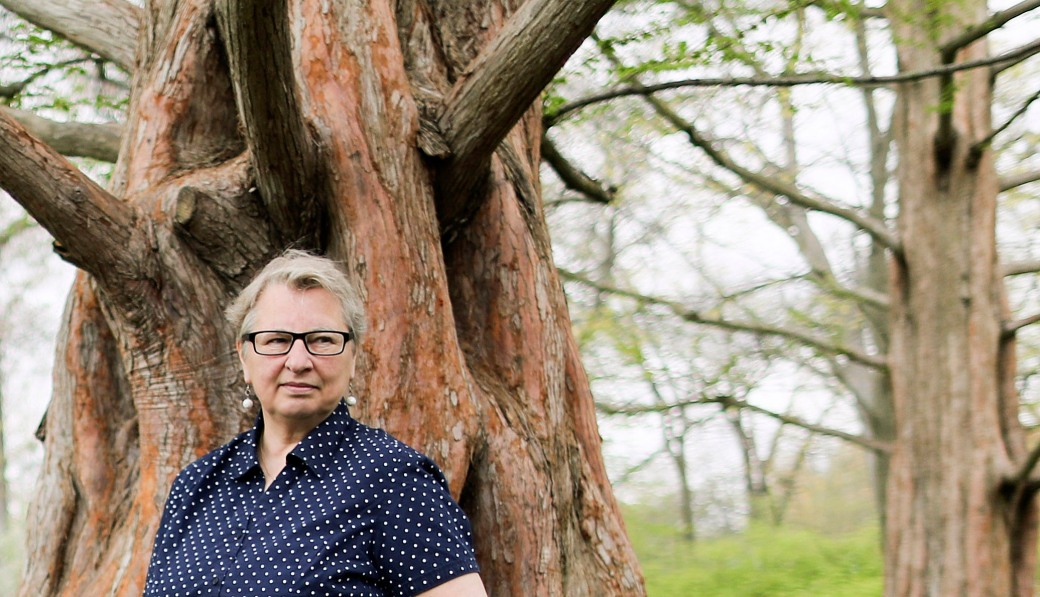
Nina next to a metasequoia tree in The Beach, ON (photo by Richard Lautens)


The Fiction Writer is the first of a series of writing guides, which consist so far of: The Journal Writer: Finding Your Voice; and The Ecology of Story: World as Character.


Microsoft Word - Three Writing Guides.docx

nina-2014aaaNina Munteanu is an ecologist and internationally published author of award-nominated speculative novels, short stories and non-fiction. She is co-editor of Europa SF and currently teaches writing courses at George Brown College and the University of Toronto. Visit www.ninamunteanu.ca for the latest on her books. Nina’s recent book is the bilingual “La natura dell’acqua / The Way of Water” (Mincione Edizioni, Rome). Her latest “Water Is…” is currently an Amazon Bestseller and NY Times ‘year in reading’ choice of Margaret Atwood.

Morphology 2019–Celebrating A New Marsh in Mississauga with Quotes from “Water Is…”

Water Is Life copy

March 22 was World Water Day. As with last year at this same time and place, a brisk wind followed me into the industrial brick building that used to be the Small Arms Inspection Building—now converted into a community arts and culture centre.

JimTovey-Dowd-Morphology-JStewart

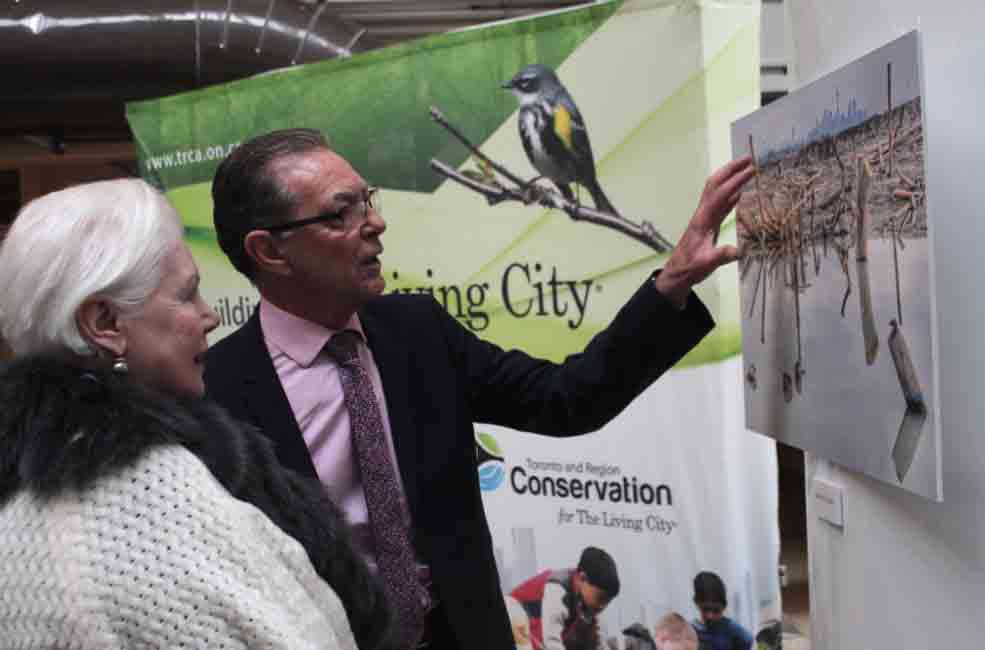
Councillor Jim Tovey and Lieutenant Governor Elizabeth Dowdeswell (photo by John Stewart)

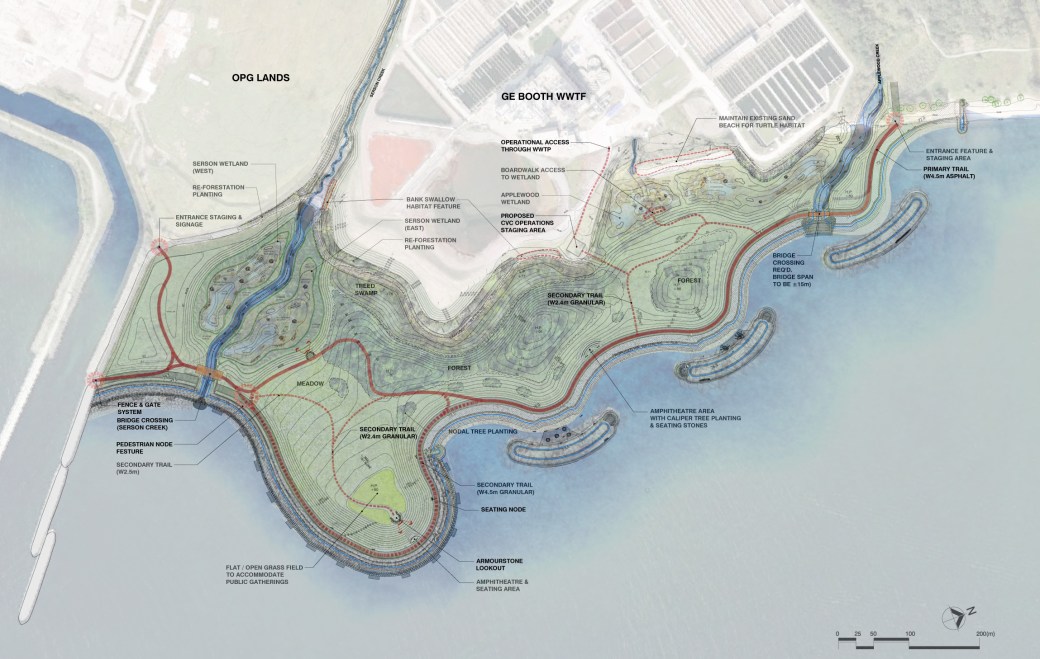
Lakeview Plan copy

Plan of the conservation site

I was here to celebrate the late Jim Tovey’s dream of creating a 26-hectare park and marsh on Mississauga’s Lake Ontario shore that will connect the Waterfront Trail with Lake Ontario’s shorefront for the public.

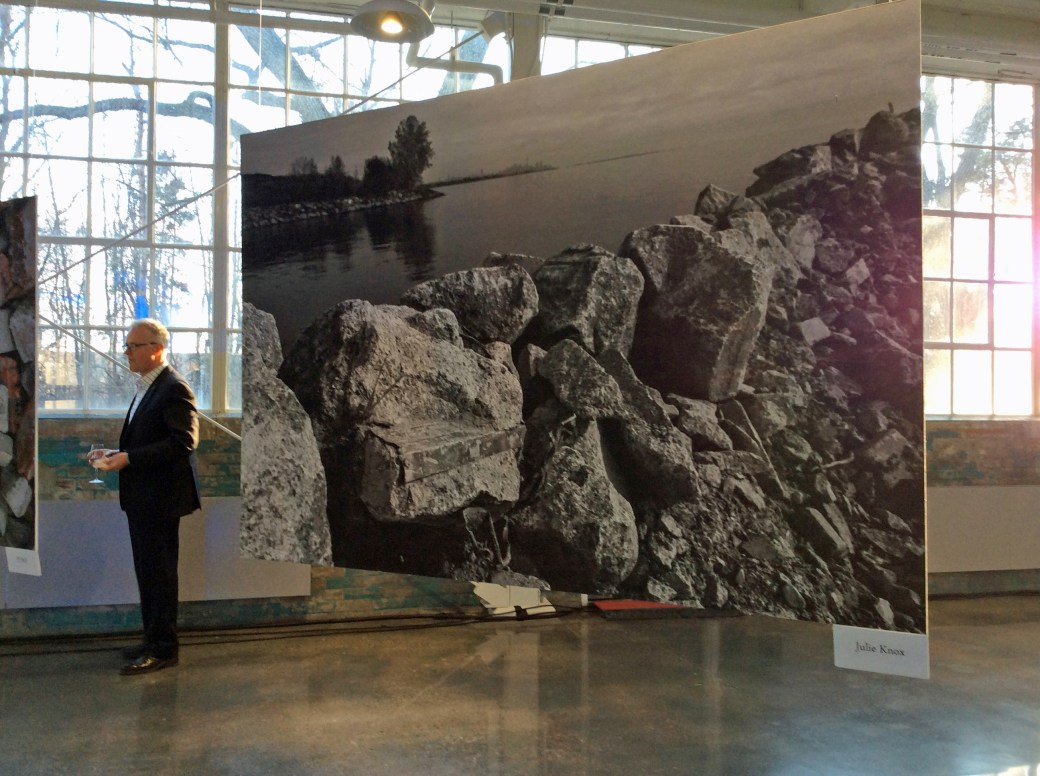
Several dozen photographs that documented the annual and seasonal changes of the developing marsh occupied the spacious hall. The glow of evening sunlight streamed through, touching large photographs that hung from the high ceilings or were mounted on walls. Some photographs spanned over 2 by 3 metres.

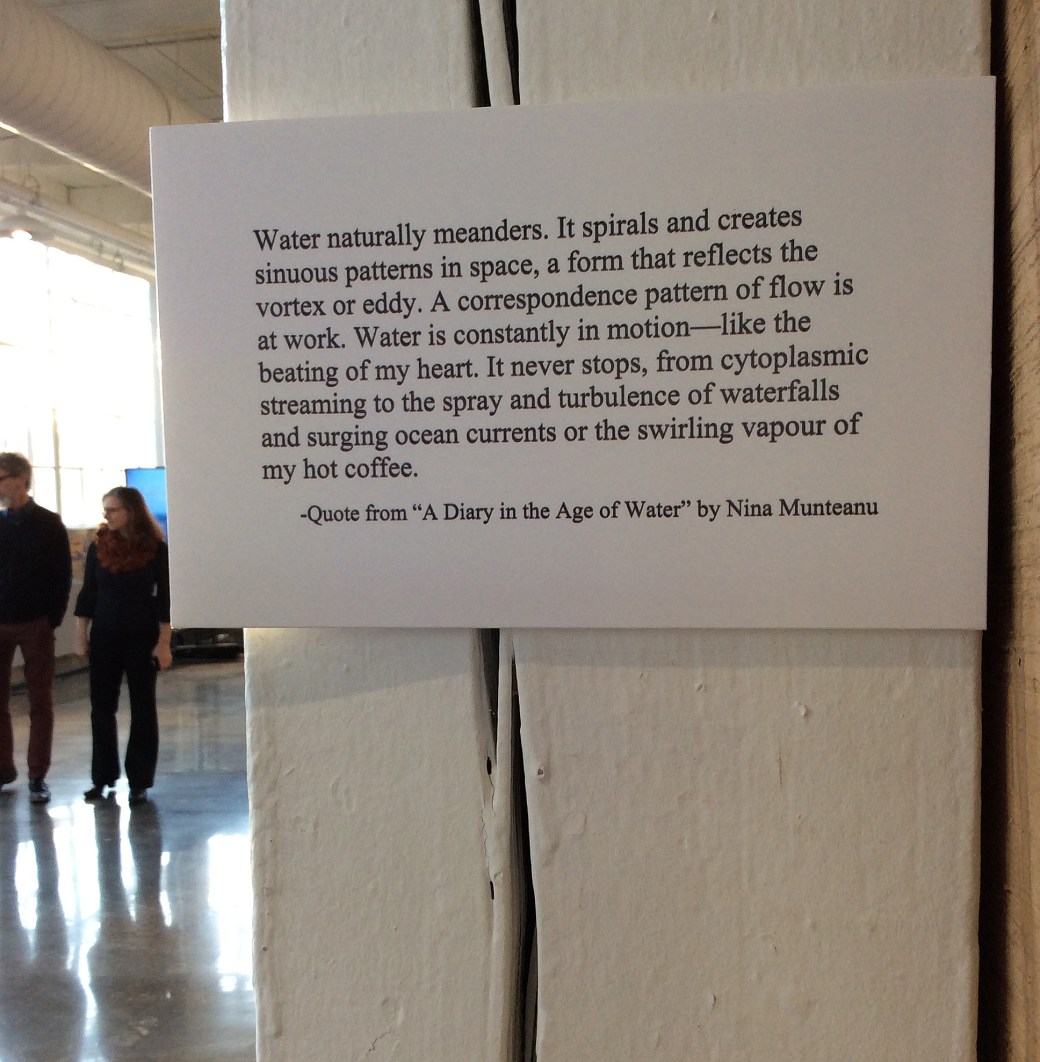
Quotes from my books “Water Is…” (Pixl Press, 2016) and upcoming “A Diary in the Age of Water” (Inanna Publications, 2020) were displayed among the photographs.

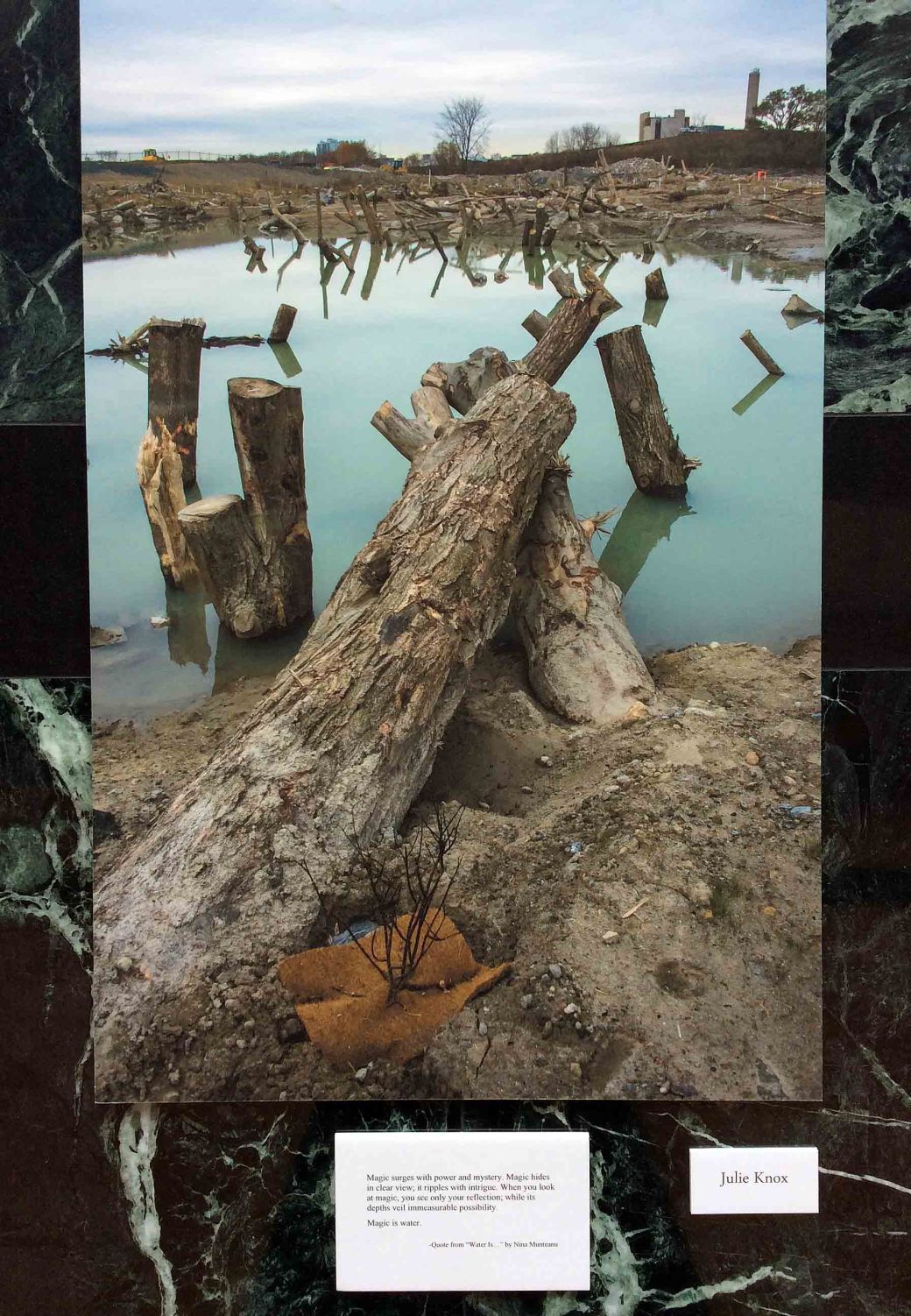
Photo Julie Knox

Photograph by Julie Knox

I was mesmerized by the spectacular photographic display.

Larger than life photographs caught my attention through light, form and unique perspective. Once caught, I was drawn into their complex narrative. A narrative of morphing shapeshifters, flowing humours and tricksters in the night. Panoramas that stretched over giant muddy holes depicting an evolution of landscape from wet

Photo Gabriella Bank2 copy

Photo by Gabriella Bank

to dry to wet again.

Tree bole, rock and rebar formed bizarre companions in murky pools that harbour life finding itself. Piles of giant boulders shouted their presence to a stormy lake. A frontend loader sat peacefully beneath a glowing sunset. Slopes of wild herbs reached into ponds as if looking for hidden treasure.  Mangled rebar contorted in a frozen ice-dance. A man’s boot tracks cut recursive patterns in the silky mud.

The photographs provided a range of perspectives over the seasons on the early phase of the marsh construction that featured aquatic habitat structures built four metres below the level of Lake Ontario. Councillor Tovey had earlier said of the construction project: “It sort of looks like a Salvador Dali surrealistic sculpture garden…and what an interesting way to really celebrate all of this.”

WaterMeanders2

The Morphology 2019 Photography Exhibit marks the third year of celebrating this morphing natural landscape through the photography of eleven creative photo artists. The opening day of Morphology 2019 was celebrated with a blessing by Cathie Jamieson, Councillor Mississaugas of the Credit First Nation. Lee Tovey spoke as did members of the contributing partners and Mayor Bonnie Crombie of the City of Mississauga.

Water Is Wisdom copy

Construction of the site and marsh began in November 2016 and is ongoing and expected to continue until 2024-2026, when the site will be opened to the public. Starting in 2017, the eleven photographers toured the site to capture the seasonal and annual changes of the developing wetland. I was also invited to tour the site to glimpse a moonscape of dirt and clean rubble as dozers pushed material out to form cells and reclaim marsh habitat from open lake.

Nina-Lee-marsh2Z

the author and Lee Tovey overlooking one of the marsh cells

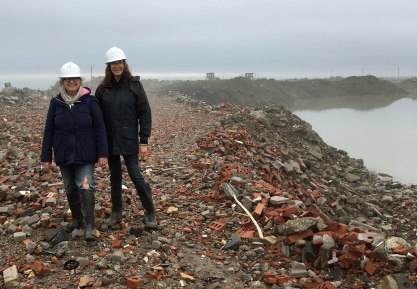
In November of 2017, I walked the undulating “moonscape” with Lee Tovey and Zoe Danahy. Rolling berms snaked around pooled and dry depressions that disappeared in the fog. The smell of rain and mud pervaded as we set out in ankle-deep mud toward the snaking berms. I scrambled over rip rap chunks larger than me to glimpse Lake Ontario—its new shoreline re-imagined. Beyond, the lake vanished in a veil of fog. I was told that on a clear day you could see the Toronto Waterfront and the CN Tower. All I could make out was a few ghost trees that marked the nearby eastern shoreline.

Lee took me along a dyke embankment of clean fill made of red brick and cement riprap from various construction sites. “Clean fill” refers to anything like brick, top soil, gravel, and cement that has been tested for possible contaminants, as opposed to plastic, glass, or metals.

Nina-Lee-marsh bermZ

The author with Lee Tovey on riprap berm

Lee pointed left and right of us to depressions (containment cells) where Lake Ontario was being reclaimed for marsh-building. The depression on my left was still full of water; but the one on my right was fairly dry and already populated with anchored logs and shrub plantings to consolidate the wetland and provide refuge for marsh life. I could hear the large pump actively removing lake water at the south end of the evolving wetland. Beyond the high berm of human-sized riprap was the lake, its shoreline now redefined.

Water-travel

As I gazed over the brown monochromatic landscape, I imagined a tapestry of greens in Councillor Jim Tovey’s vision: 26 hectares of future wetlands, forest and meadow and beach spanning the Lake Ontario shoreline from the old Lakeview generating station to the Toronto line at Marie Curtis Park. Part of the Inspiration Lakeview development, the marsh and wetland park have now been named The Jim Tovey Lakeview Conservation Area.

WaterIs magic-photo

Morphology

Morphology was conceived by the late visionary councillor Jim Tovey who envisioned an evolving photography and writing exhibit to follow the progress of the marsh creation project of what is now The Jim Tovey Lakeview Conservation Area. Spearheaded and nurtured by Councillor Tovey, the marsh construction was part of 26 hectares of future wetlands, forest, meadow and beach. The Lakeview Waterfront Connection will span the Lake Ontario shoreline from the old Lakeview generating station to the Toronto line at Marie Curtis Park. Part of the Inspiration Lakeview development, it will restore pedestrian and cyclist access to a previously forbidden section of the waterfront to “connect 9.5 kilometers of shoreline for water’s edge experience for the public,” said Councillor Tovey.

P01

To celebrate the residential / park development, eleven professional photographers were invited to photograph the marsh construction during its early phases. These images, along with water-inspired narrative provided by limnologist-author Nina Munteanu, were first displayed in an exhibit during a gala event January 14 2018, hosted at the Lakeview water treatment plant. Following Councillor Tovey’s untimely passing, his wife Lee Tovey and others (e.g., TRCA, CVC, Region of Peel) are continuing the project. Morphology was displayed for the public on World Water Day, March of 2018, at the Great Hall in the Mississauga Civic Centre. Its third appearance was at the In Situ Multi Arts Festival in November 2018.

Morphology-Exhibit hall

Morphology Exhibit at the Great Hall, Mississauga Civic Centre

The artist showcase is expected to become an annual event, highlighting the progress of constructed ecosystem. Morphology features works from: Gabriella Bank, Sandor Bank, PJ Bell, Darren Clarke, Julie Knox, Nina Munteanu, Lachlan McVie, Marcelo Leonardo Pazán, Martin Pinker, Annette Seip, Stephen Uhraney and Bob Warren.
https://www.dropbox.com/s/orsich16lbqgamf/MORPHOLOGY_2019.mp4?dl=0

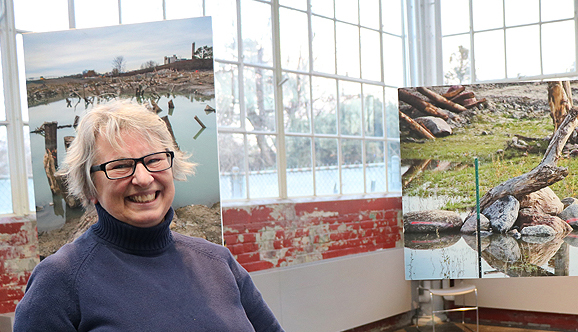
Nina at Morphology

Nina joyfully standing in front of a Sandor Bank photo of the marsh (photo by Gabriella Bank)

nina-2014aaaNina Munteanu is an ecologist and internationally published author of award-nominated speculative novels, short stories and non-fiction. She is co-editor of Europa SF and currently teaches writing courses at George Brown College and the University of Toronto. Visit www.ninamunteanu.ca for the latest on her books. Nina’s recent book is the bilingual “La natura dell’acqua / The Way of Water” (Mincione Edizioni, Rome). Her latest “Water Is…” is currently an Amazon Bestseller and NY Times ‘year in reading’ choice of Margaret Atwood.


On This Day … Water Is…

Today is World Water Day. All around the world, people are celebrating water–without which we would simply not exist. We celebrate this day (and all days) that water has blessed us with its life-giving properties so freely given.

I gladly offer my poem to water…


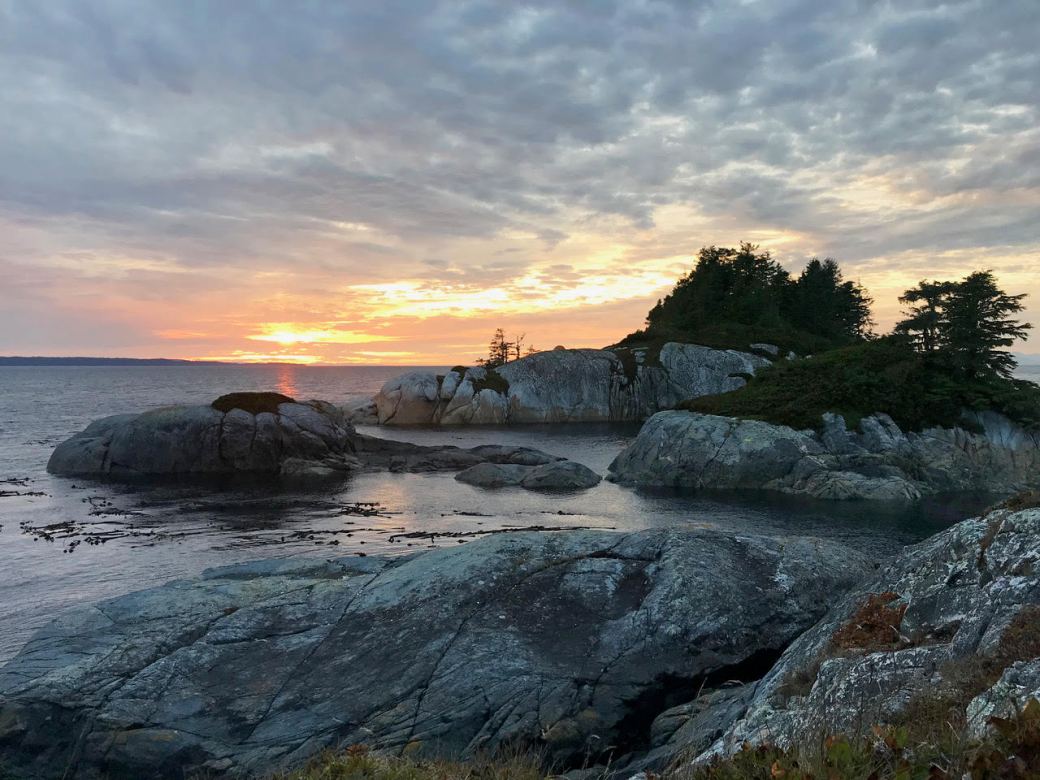
Broughton-sunset-kev

Sunset off Broughton coast, British Columbia (photo by Kevin Klassen)

Magic surges with power and mystery. Magic hides in clear view; it ripples with intrigue. When you look at magic, you see only your reflection; while its depths veil immeasurable possibility. Magic is water.

Life is sacred and flows with holy expression. Energetic, invigorating, and bracing, life fertilizes all Being to become more than Itself. Life is water.

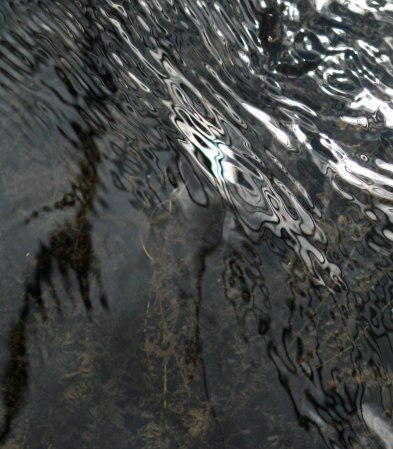
water pattern01-credit

Water patterns (photo by Nina Munteanu)

Motion is the demon and angel of change. Motion flows endlessly on a tangent with time, destroying and creating. Motion carves sinuous patterns of stable chaos. In its turbulent wake or gliding caress, motion heralds transcendence. Motion is water.

Communication is the dance of singularity in a sea of Unity. It is the river of connection, uniting and expressing the fractal whole. Communication collides in a waterfall of notion and surprise. Informing. Transforming. Evolving. Communication floods the iconic dam, surging through conformity toward its own imaginings. Communication is water.

Memory streams in a braided and recursive path, meandering Ouroboros-like toward itself. Memory stirs up sediments that have lain for eons; re-suspending, re-examining, as if new. Then cascading toward the abyss of truth and paradox. The collective. The great ocean of thought. Memory is water.

FinCreek3-RockyM

Fin Creek, Rocky Mountains (photo by Nina Munteanu)

Rhythm undulates—at once turbulent and calm—signaling its fractal presence. Rhythm scours and builds its music with infinite patience and precision. Spiralling. Oscillating in successive rushes, glides, surges and trickles. Self-organizing. Coherent. Viscous. Rhythm is water.

Vibration hides and reveals its entangled energy. Vibration drifts on the tidal tapestry of the soul. Resonating in synchronous tones as it courses down gravity waves, vibration writes its unique sound and story. Vibration is water.

Beauty reflects Nature’s flowing embrace. Deep and quiet, beauty captures divine radiance—refracting, magnifying, rejoicing—and bursts into a sparkling sea of serenity. Light personified. Beauty is water.

Story meanders through varied landscape; cutting jagged rock and stirring fertile soils to release their messages; then joining in the great sea of the plenum. Story springs from the depths, bubbling forth with fresh bracing news of a new land. Story is water.

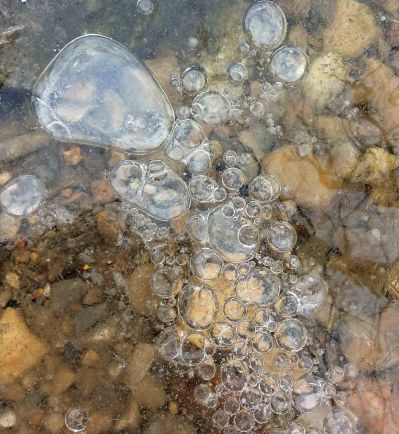
Bubbles under ice-LR

Bubbles under ice in Little Rouge River (photo by Nina Munteanu)

Prayer ripples out in circular waves of coherence from its source and back. Gestalt self-actualization. Prayer is a rainbow, revealing the reflected soul. Prayer scours, cleanses, refreshes and renews in a cycle of creation and connection. Prayer is water.

Wisdom does not stand still. Wisdom flows. It doesn’t flow in a straight line. Wisdom winds. Wisdom is wily. It transforms and transcends matter and energy with a subtle and patient hand. It erodes and deposits, from idea to emotion to philosophy. Wisdom tolerates. It forgives. It embraces and encompasses and—in changing—stays the same. Wisdom is water.


Ultimately, water will travel through the Universe and transform worlds; it will transcend time and space to share and teach; water will do its job to energize you and give you life, then quietly take its leave; it will move mountains particle by particle with a subtle hand; it will paint the world with beauty, then return to its fold and rejoice.

I am water. I am joy.

snow-scene-road-to-Wolfville-stream2a

Creek in Nova Scotia (photo by Nina Munteanu)


This poem was created using excerpts from “Water Is…The Meaning of Water” (Pixl Press, 2016) by Nina Munteanu.


nina-2014aaaNina Munteanu is an ecologist and internationally published author of award-nominated speculative novels, short stories and non-fiction. She is co-editor of Europa SF and currently teaches writing courses at George Brown College and the University of Toronto. Visit www.ninamunteanu.ca for the latest on her books. Nina’s recent book is the bilingual “La natura dell’acqua / The Way of Water” (Mincione Edizioni, Rome). Her latest “Water Is…” is currently an Amazon Bestseller and NY Times ‘year in reading’ choice of Margaret Atwood.
Surfing Schumann’s Wave and Catching the Ion Spray: Everything in Life is Vibration

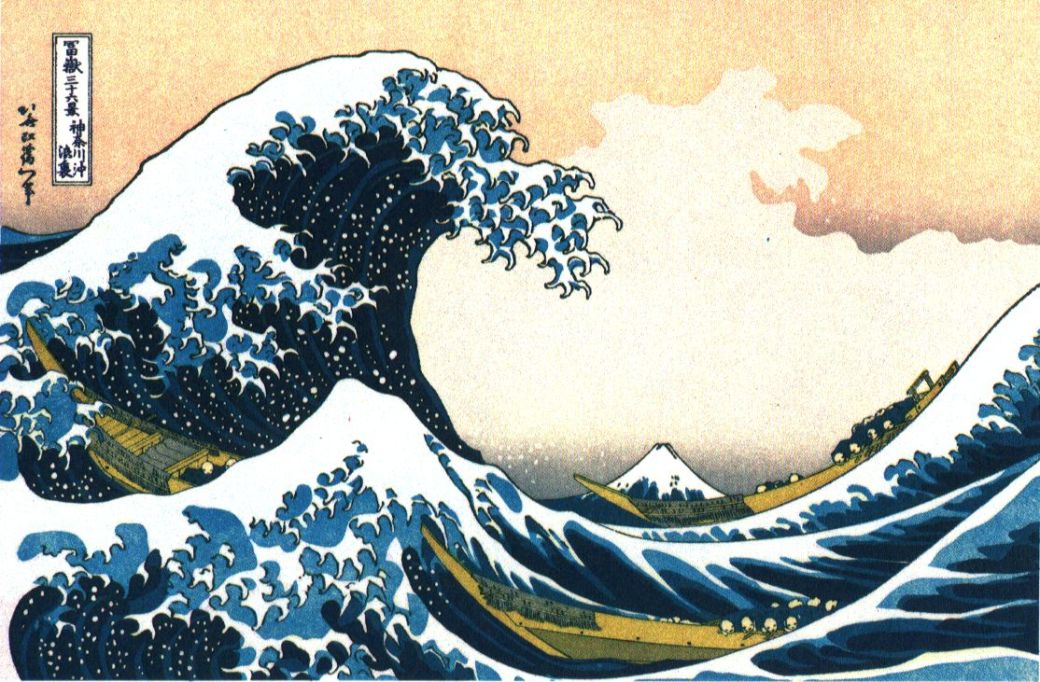
hokusai-wave

The Wave by Hokusai

Sometime ago, on another writing site that I used to post for, a reader/writer made an interesting comment to my article ” Stoking the Scintillation of Inspiration.” She said, “I feel energized and challenged to see where my mind takes me in the midst of my mommy days.  Often it’s when my four young children are home the ideas long to push through the clutter of multiple voices and feverish activity.

It made me think about what it is in those “repetitive tasks” that stoke our muse and how we as writers can benefit from them. Is it simply God’s ironic sense of humor (e.g., “You’re too busy to do anything about it now, so I will give you a genius moment to ponder….Good luck remembering it!”). Or have we inadvertently caught the universal wave? Einstein once said, “everything in life is vibration.”

We are creatures of rhythm: circadian, diurnal, and seasonal. Let’s face it; our environment—light especially—affects our behavior, psychologically, physiologically and even socially. For instance, mood-altering chemicals generated in the pineal gland in our brain, are partially affected by the light received from our retina. Our world is composed of energy, light, sound and matter, all expressed at different frequencies. Music—which is all frequency—can heal the body, strengthen the mind and unlock the creative spirit. For instance, music with a pulse of about sixty beats per minute can shift consciousness from the beta wave (ordinary consciousness at 14-20 Hz) toward enhanced alertness and general well-being at the alpha range (heightened awareness at 8-13 Hz, and essentially the standing wave in Schumann’s Cavity).

water pattern01-credit

wave patterns (photo by Nina Munteanu)

The study of cymatics, coined in 1967 by Swiss doctor Hans Jenny from the Greek word kyma (wave), explores how sound affects gases, liquids, plasmas and solids and how vibrations, in the broad sense, generate and influence patterns, shapes and moving processes. When sound travels through non-solids it moves in longitudinal waves called compression waves. In matter, the medium is displaced by sound waves, causing it to oscillate at a frequency relative to the sound, and visible patterns emerge.

Using crystal oscillators and a “tonoscope” to set plates and membranes vibrating, Jenny controlled frequency and amplitude/volume to demonstrate that simple frequencies and songs could rearrange the essential molecular structure of water and other materials.

water-pattern03-credit

Wave patterns (photo by Nina Munteanu)

Jenny was convinced that biological evolution resulted from vibrations in a kind of fractal progression, and that their nature determined the ultimate outcome. He speculated that every cell has its own frequency and that a number of cells with the same frequency create a new frequency, which is harmonious with the original, which in its turn possibly forms an organ that also creates a new frequency in harmony with the two preceding ones. Jenny was saying that the key to understanding how we can heal the body with the help of tones lies in our understanding of how different frequencies influence genes, cells and various structures in the body (think of how you feel when you listen to Mozart’s Divertimento No. 15 vs. when you’re listening to Mick Jagger belt out Ruby Tuesday).

Boldly extending his tonoscope research into voice and language, Jenny discovered that when the vowels of ancient Hebrew and Sanskrit were pronounced, the sand took the shape of the written symbols for these vowels, while modern languages didn’t generate the same result. This has led spiritual philosophers to ponder if “sacred languages” (including Tibetan and Egyptian) have the power to influence and transform physical reality, to create things through their inherent power, or through the recitation or singing of sacred texts, to heal a person who has gone “out of tune”?…

This is an exceptional concept…

In a controversial movie called “Water”, Rustum Roy, professor at the State University of Pennsylvania and member of the International Academy of Sciences, posited that water has “memory”, based on the structure it takes on as a result of electromagnetic fields and various frequencies to which it is exposed.

water-pattern-06-credit

Wave patterns (photo by Nina Munteanu)

I’m a practicing aquatic scientist and I’m compelled to note that the human brain is 75% water; it is not surprising that we can be affected by the shape and form of water itself—and, in turn, may shape water with our minds. This is in itself a startling admission and opens up a myriad of controversial topics, which many scientists find hard to reconcile and refuse to investigate, let alone entertain. And, yes, I am edging into the area of metaphysics, “science fiction”, and “fanciful thinking”. A place populated by heretics who do “questionable science”, those rogue mavericks who dare step outside the realm of traditional science to imagine, to dare pursue a truth using unconventional means.

Here’s my point: water is important to us in ways science can’t even begin to explain. Because science can’t yet explain it, should we abandon the potential and its investigation? All good science was once perceived as magic before it was understood.

Let me take it one step further:

water-pattern-07-credit

Water patterns (photo by Nina Munteanu)

I posit that our entire bodies are sending and receiving vibrations at different frequencies with our environment, other people and other animals around us, inanimate objects, even the seemingly ‘empty’ space. It has permeated our culture more than you may realize, including the metaphors we have seamlessly adopted in our common language: terms like “bad vibes”, “you can feel the tension”, and “you could cut the air in here with a knife”.

If you think this is all too weird, consider the weirdness of quantum mechanics, which shows us that not only is “solid” matter made up mostly of energy and “empty” space but what makes a solid a chair vs. you sitting on it is the vibration of its energy. Quantum science has demonstrated that light and matter are made of both particles and waves (New Scientist, May 6, 2010) and can exist in two simultaneous states (heard of Schrodinger’s Cat?). Let’s consider, for instance, “entanglement” (quantum non-local connection), the notion that particles can be linked in such a way that changing the quantum state of one instantaneously affects the other, even if they are light years apart. And what does it mean when solid flows, ghost-like, through itself under certain conditions? Or parallel universes are created by splitting realities? (You’ll have to check out my historical fantasy “The Last Summoner” for a unique take on this popular notion).

Nobel prize-winning physicist Richard Feyman says of the paradoxes presented by quantum mechanics, “the ‘paradox’ is only a conflict between reality and your feeling of what reality ought to be.”

So, what does all of this have to do with “writing”, scintillating or otherwise, some of you may be asking… Well, nothing … Everything …


Reference:
Munteanu, Nina. 2016. “Water Is…The Meaning of Water” Pixl Press, Vancouver, BC. 585pp.


nina-2014aaaNina Munteanu is an ecologist and internationally published author of award-nominated speculative novels, short stories and non-fiction. She is co-editor of Europa SF and currently teaches writing courses at George Brown College and the University of Toronto. Visit www.ninamunteanu.ca for the latest on her books. Nina’s recent book is the bilingual “La natura dell’acqua / The Way of Water” (Mincione Edizioni, Rome). Her latest “Water Is…” is currently an Amazon Bestseller and NY Times ‘year in reading’ choice of Margaret Atwood.

Stoking the Scintillation of Inspiration

Forest conifers Metchosin

Forest in Metchosin, BC (photo by Nina Munteanu)

“Many of us wish we were more creative,” Julia Cameron, author of The Artist’s Way, shares. “Many of us sense we are more creative, but unable to effectively tap that creativity. Our dreams elude us. Our lives feel somehow flat. Often, we have great ideas, wonderful dreams, but are unable to actualize them for ourselves. Sometimes we have specific creative longings we would love to be able to fulfill … we hunger for what might be called creative living.”

Many of us are, in fact, creatively blocked. How would you know if you were? Jealousy is an excellent clue. Are there creative people you resent? Do you tell yourself, ‘I could do that, if only…’ An old friend of mine used to constantly share that he would “start living and settle down” once he had enough money. It never happened; and he never did—twenty years later. That was sad; because he was waiting for life to begin, when it was already happening—and he was missing it.

YellowCreek-3

Stairway to Yellow River, Ontario (photo by Nina Munteanu)

Creative recovery (or discovery) is something you can learn. It is something you can enhance and direct. “As you learn to recognize, nurture, and protect your inner artist,” says Cameron, “you will be able to move beyond pain and creative constriction. You will learn ways to recognize and resolve fear, remove emotional scar tissue, and strengthen your confidence.”

Stoking the creative artist inside you may be as simple as giving your mind the chance to wander—and taking the time to pay attention. Rhythm and regular, repetitive actions play a role in priming the artistic well. Cameron lightheartedly describes how the “s” activities work so well for this: showering, swimming, scrubbing, shaving, steering a car. I can testify to the latter—how many great plot ideas have I cooked up while driving to work! Filmmaker Steven Spielberg claimed that his best ideas came to him while he was driving the freeway. Negotiating through the flow of traffic triggered the artist-brain with images that translated into ideas. “Why do I get my best ideas in the shower?” Einstein was known to have remarked. Scientists tell us that this is because showering is an artist-brain activity.

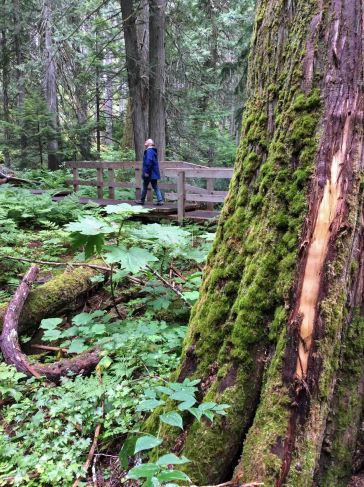
Anne-walking-Cedars

Giant Cedar forest, Revelstoke Park, BC (photo by Nina Munteanu)

The magical part in this is to pay attention. Pay attention to your life experiences; don’t ignore them. Sit up in the bus and watch people, play with the images, sounds and smells. Get sensual and let your eyes, ears, nose and limbs delight in the world. It’s amazing how interesting the world becomes once you start paying attention.

Henry Miller tells us to develop interest in your daily life; in people, things, literature, and music: “the world is … simply throbbing with rich treasures, beautiful souls and interesting people. Forget yourself,” he says.

Looking outward as well as inward allows us to explore different angles and facets of the same thing. When we see the same thing through different perspectives we rediscover something new in ourselves. We create interest and connect the world to ourselves.

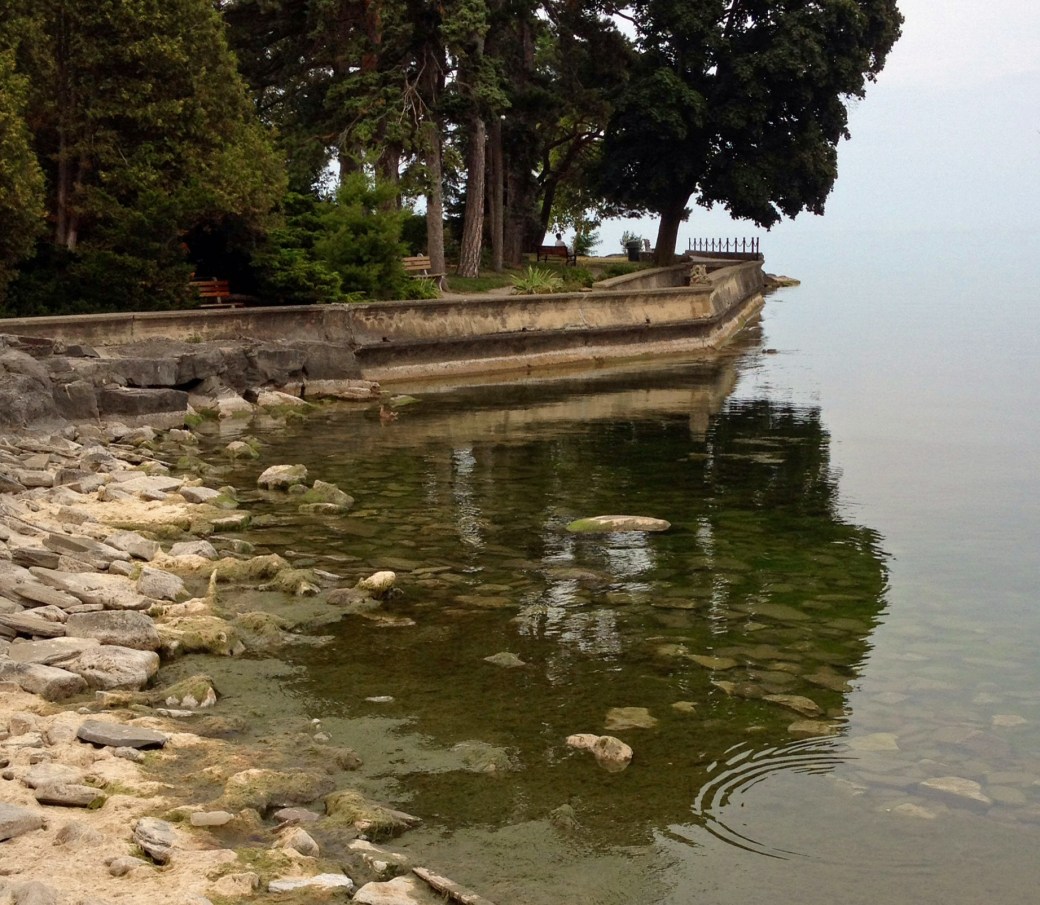
GairlochGardens-LakeOntario

Lake Ontario at Gairloch Gardens, Ontario (photo by Nina Munteanu)

Julia Cameron shares that “art may seem to spring from pain, but perhaps that is because pain serves to focus our attention onto details (for instance, the excruciatingly beautiful curve of a lost lover’s neck). Art may seem to involve broad strokes, grand schemes, great plans. But it is the attention to detail that stays with us; the singular image is what haunts us and becomes art. Even in the midst of pain, this singular image brings delight. The artist who tells you different is lying.”


Brenda Ueland tells us why we should all use our creative power: “Because there is nothing that makes people so generous, joyful, lively, bold and compassionate, so indifferent to fighting and the accumulation of objects and money.”

References:

Julia Cameron. 2002. “The Artist’s Way”. Tarcher. 272pp.
Nina Munteanu. In Press. “The Journal Writer:  Finding Your Voice”. Pixl Press. 132pp.


nina-2014aaaNina Munteanu is an ecologist and internationally published author of award-nominated speculative novels, short stories and non-fiction. She is co-editor of Europa SF and currently teaches writing courses at George Brown College and the University of Toronto. Visit www.ninamunteanu.ca for the latest on her books. Nina’s recent book is the bilingual “La natura dell’acqua / The Way of Water” (Mincione Edizioni, Rome). Her latest “Water Is…” is currently an Amazon Bestseller and NY Times ‘year in reading’ choice of Margaret Atwood.
Eco-Artist Roundtable with Frank Horvat on Green Majority Radio

On December 8th on Green Majority Radio, artist and composer Frank Horvat hosted the second Eco-Artist Roundtable featuring visual artist Mark Adair, theatre artist Kevin Matthew Wong, and author Nina Munteanu.

In this hour-long thoughtful and insightful discussion, artists covered a range of topics pertinent to the environment from the role of the artist in raising eco-awareness to activism in art and human rights. Nina also read from her book “Water Is…”

Go have a listen.

CIUT-eco-art panel show

Kevin, Nina, Mark and Frank at the studio

nina-2014aaaNina Munteanu is an ecologist and internationally published author of award-nominated speculative novels, short stories and non-fiction. She is co-editor of Europa SF and currently teaches writing courses at George Brown College and the University of Toronto. Visit www.ninamunteanu.ca for the latest on her books. Nina’s recent book is the bilingual “La natura dell’acqua / The Way of Water” (Mincione Edizioni, Rome). Her latest “Water Is…” is currently an Amazon Bestseller and NY Times ‘year in reading’ choice of Margaret Atwood.

Wake up Your Muse–How my Cat Taught Me the Art of Being…

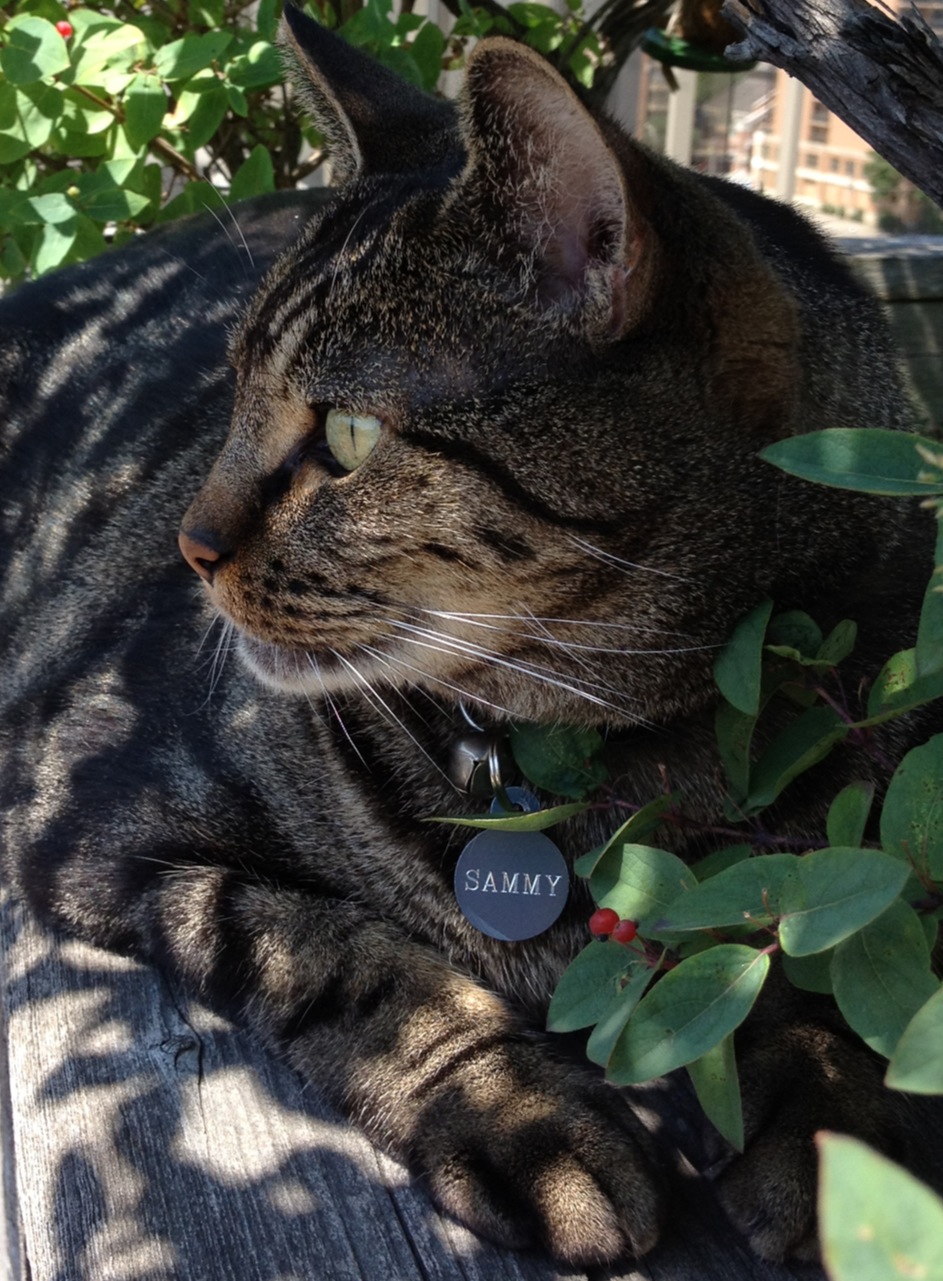
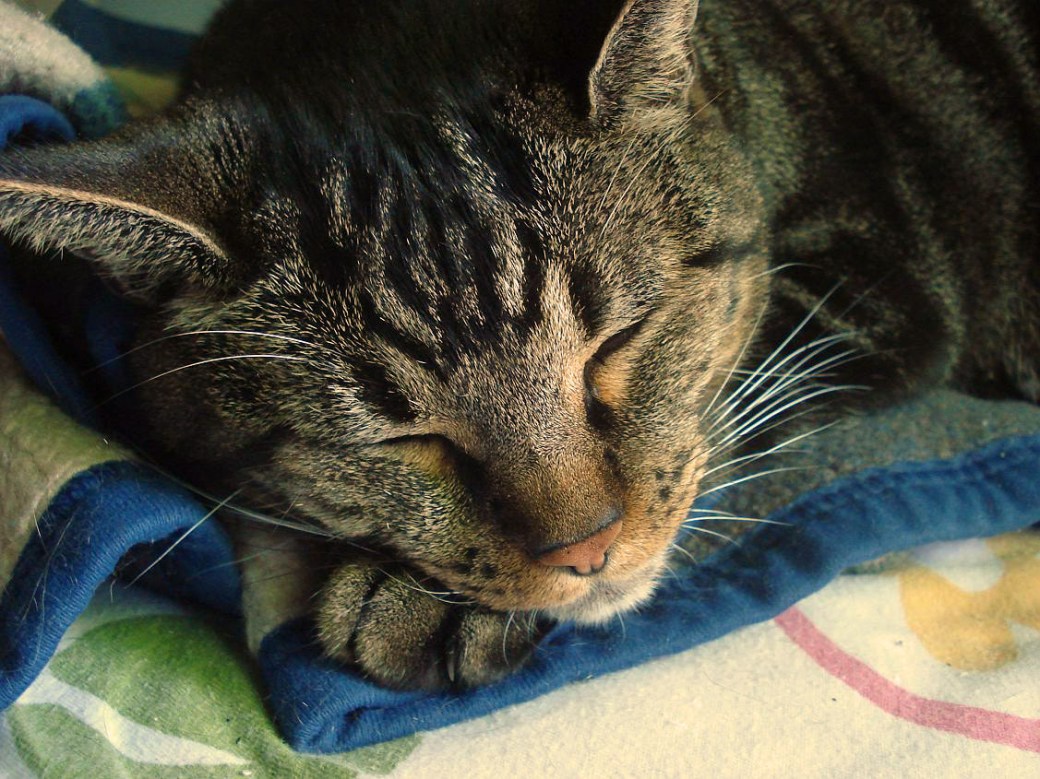
Sammy

I’m not a very patient person. I make no time for writer’s block or lingering in useless limbo over some plot issue or misbehaving minor character. I write pretty much to a tight schedule: this short story to that market by this date; edits to this book to the editor by that date; blog posts created by such and such a time; an article to another market by another date. It goes on and on. When I go to my computer to write, I write.

Then there’s Sammy. My cat.

Who likes to jump on my lap, make himself all comfortable and then lie over my arm — trapping it along with five of my typing digits. Now what??? Some of you would advise me to simply pull out my pinned arm and/or shove him off. But how can I disturb such a blissful creature? He is so content furled on me, so satisfied that he has captured that wandering appendage of business that is all his now. Content in the bliss of now. In the bliss of cat-purr-meditation…

sammy-2010-01_edited-1Pinned in the moment, my mind first struggles with the need to pound out the next line. My mind then rephrases and teases out nuances of that line. Finally, it wanders out with my gaze and I find myself daydreaming in a kind of trance. Giving in to the cat-purr-meditation.

And it is here that magic happens. In the being; not in the doing.

This is the irony of writing and the muse. To write we need to live; we need to have something to write about and we need to be in that state of mind that allows us to set it to print. I am at my best as a writer when I am focused on the essence of the story, its heart and soul beating through me with a life of its own.

My cat Sammy isn’t the only vehicle to my magical muses.


Waking up the Muse

Here are a few things that help me entice those capricious muses into action:

snow-christmas2008-sammy

Sammy hunting

Music: music moves me in inexplicable ways. I use music to inspire my “muse”. Every book I write has its thematic music, which I play while I write and when I drive to and from work (where I do my best plot/theme thinking). I even go so far as to have a musical theme for each character.

Walks: going for a walk, particularly in a natural environment, uncluttered with human-made distractions, also unclutters the mind and soul. It grounds you back to the simplicity of life, a good place to start.

Cycling: one of my favorite ways to clear my mind is to cycle (I think any form of exercise would suffice); just getting your heart rate up and pumping those endorphins through you soothes the soul and unleashes the brain to freely run the field.

Attend writer’s functions: go to the library and listen to a writer read from her work. You never know how it might inspire you. Browse the bookshelves of the library or bookstore. Attend a writer’s convention or conference.

Visit an art gallery, go to a movie: art of any kind can inspire creativity. Fine art is open to interpretation and can provoke your mind in ways you hadn’t thought before. If you go with an appreciative friend and discuss what you’ve seen you add another element to the experience.

Go on a trip with a friend: tour the city or, better yet, take a road trip with a good friend or alone (if you are comfortable with it). I find that travelling is a great way to help me focus outward, forget myself, and open my mind and soul to adventure and learning something new. Road trips are metaphoric journeys of the soul.

Form a writer’s group: sharing ideas with people of like mind (or not, but of respectful mind) can both inspire you and provide the seeds of ideas.

Practice Cat-Purr-Meditation: you need a willing cat for this; I find that I need tostudy my cat’s meditative practices; where does he most like to relax? Mine loves to look outside the window onto the back yard and garden. That’s where I take him and there, together, we breathe deep and “purr” in the moment…You can read more about purring cat meditation in my Alien Next Door post, “Perfecting the Cat Purr Meditation


Nina Munteanu is an ecologist and internationally published author of award-nominated speculative novels, short stories and non-fiction. She is co-editor of Europa SF and currently teaches writing courses at George Brown College and the University of Toronto. Visit www.ninamunteanu.ca for the latest on her books.

Find Your Focus This Christmas–Reprise

Snowy Path scarborough

Forest path in Scarborough, Ontario (photo by Nina Munteanu)

How many of you are still running around preparing for the Christmas celebration or secular family festivity? Buying that last minute gift you’d forgotten or were chasing down since a bazillion days ago? Or making last minute changes to your travel plans, house-cleaning for guests, mailing of cards or parcels or meal preparations?

Well, you’re reading this blog post … That means you’re sitting down and taking a minute to relax and regroup. That’s good. Remember to breathe… while I tell you a story…

I’d just finished a three-day drive through snow and rain storms from Mahone Bay, Nova Scotia, to Toronto, Ontario, where I was staying for a few days before catching a flight to Vancouver to spend Christmas with my son and good friends on the west coast. Talk about fast living.

I move around a lot these days. It helps me to appreciate some of the most simple things in life and reminds me of what I love most about Christmas: how it focuses my heart and reconnects me. I don’t mean just with relatives and friends either, although the season certainly does that. I’m talking about my soul and the universe itself. Before I became an itinerant, Christmas bustled with my responsibilities as primary caregiver, social coordinator and hostess of major parties. After I’d said goodbye to our visiting friends and done the dishes and tidied the house; after my husband and son had gone to bed, I sat in the dark living room lit only with the Christmas Tree lights and the flickering candle, and listened to soft Christmas music, primed to write.

snow-christmas2008-sammy

Sammy

My male cat, smelling fresh from outside, found his rightful place on my lap and settled there, pinning me down with love. And there, as I breathed in the scent of wax and fir and cat I found myself again.

Most of us think of Christmas as a busy time, of getting together (often dutifully) with family and friends, exchanging presents and feasting. Christmas is certainly this, but that is only a shallow view of a far deeper event; and I don’t mean only for Christians.

Whether celebrating the holy light of Hannukah or the birth of Jesus, or the winter solstice, this season provides us with the opportunity to meditate on far more than the surficial nature of the symbols we have come to associate with the season: the Christmas tree, presents, turkey dinner, Santa Claus or Saint Nicholas—most of which originate from pagan tradition, by the way.

Says Lama Christie McNally (author of The Tibetan Book of Meditation), “once you dive below the surface, you will discover a beautiful clear place—like a diamond hidden beneath the rubble. It is your own mind, uncovered … Tibetans say we have only just begun the process of awakening—that we still have quite a way to go in our evolutionary process. And it has nothing to do with building spaceships or computers. The next step in our evolution takes place within.”

Christmas is, more than anything, a time of embracing paradox. It is an opportunity to still oneself amid the bustle; to find joy in duty; to give of one’s precious time when others have none, to embrace selflessness when surrounded by promoted selfishness, and to be genuine in a commercial and dishonest world. If one were to look beyond the rhetoric and imposed tradition, the Christmas season represents a time of focus, a time to reflect on one’s genuine nature and altruistic destiny. A time to reconnect with the harmony and balance in our lives.

A time to sit with our cat, pinned with love, and write our next novel.


Merry Christmas and Happy Winter!


nina-2014aaaNina Munteanu is an ecologist and internationally published author of award-nominated speculative novels, short stories and non-fiction. She is co-editor of Europa SF and currently teaches writing courses at George Brown College and the University of Toronto. Visit www.ninamunteanu.ca for the latest on her books. Nina’s recent book is the bilingual “La natura dell’acqua / The Way of Water” (Mincione Edizioni, Rome). Her latest “Water Is…” is currently an Amazon Bestseller and NY Times ‘year in reading’ choice of Margaret Atwood.

“Water Is… at Banyen Books & Sound, Vancouver

BanyenBooks copy

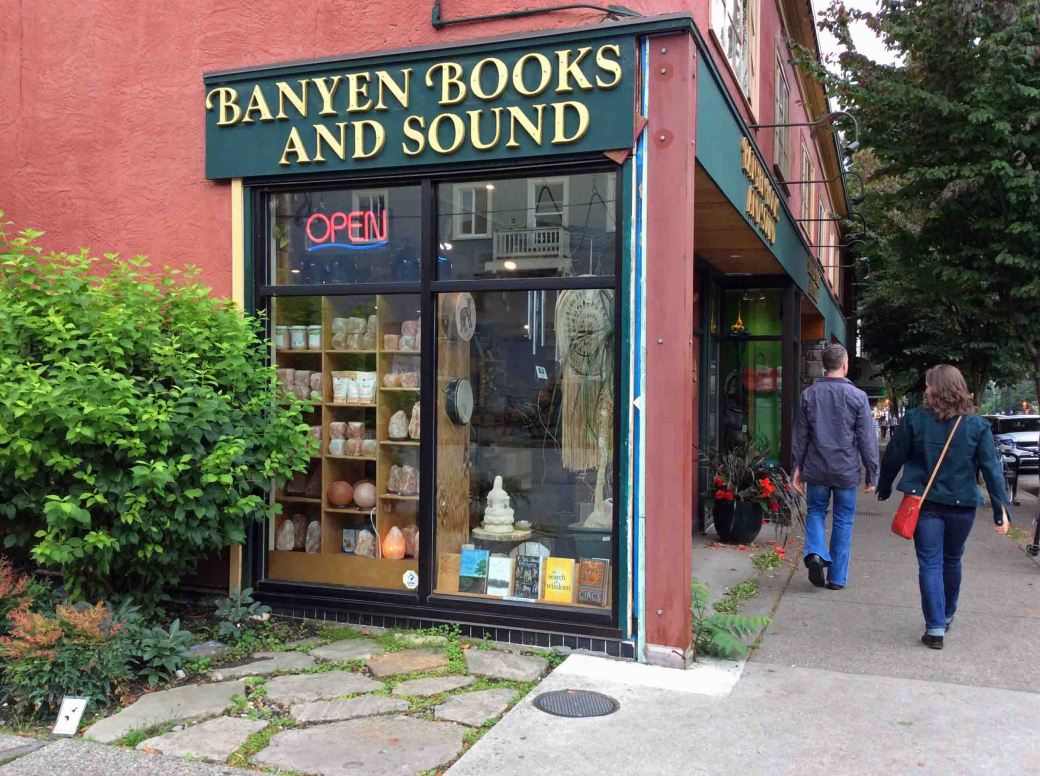
Banyen Books and Sound, Vancouver, BC (photo by Nina Munteanu)

When I lived in Vancouver—raising my family, consulting for the environment and teaching limnology—I often visited my favourite bookstore in town: Banyen Books & Sound on 4th Avenue in Kitsilano. It was a bookstore like no other, I thought. Spacious with comfortable chairs to read, the bookstore became a destination and an experience in discovery for me.

BanyenBooks-Anne-WaterIs2 copy

A customer browses “Water Is…” in Banyen Books

In fact, since opening in 1970 Banyen Books has become Canada’s most comprehensive metaphysical bookstore, offering a broad spectrum of resources from humanity’s spiritual, healing, and earth wisdom traditions. Here is how they put it:

Banyen is an oasis, a crossroads, a meeting place… for East and West, the “old ways” and current discoveries and syntheses. Our beat is the “Perennial Philosophy” as well as our evolving learning edges and best practices in a wide variety of fields, from acupuncture to Zen, from childbirth and business to the Hermetic Mysteries, from the compost pile to the celestial spheres. We’re “in the philosophy business,” on “a street in the philosophy district” (as an old cartoon wagged). We welcome and celebrate the love of wisdom, be it in art, science, lifecraft, healing, visioning, religion, psychology, eco-design, gardening… Our service is to offer life-giving nourishment for the body (resilient, vital), the mind (trained, open), and the soul (resonant, connected, in-formed). Think of us as your open source bookstore for the “University of Life”.

I had long harboured romantic notions of one day seeing my own book on one of their shelves. I must have sent a compelling message to the universe, because in Autumn of 2018, this incredible bookstore agreed to carry “Water Is…

Water Is...” now sits joyfully beside William Mark’s “Holy Order of Water” and Masaru Emoto’s books on water and crystals and Wallace J. Nichol’s bestseller “Blue Mind” on water’s healing powers.

WaterIs-BanyenBookshelf copy

When I mentioned about my book being at Banyens Books, my son Kevin visited the bookstore and soon found “Water Is…” among a variety of other “savoury books”; he admitted a need for strength not to walk out of the bookstore with an armload of books. This has been my experience too.

WaterIs-Banyen-Kevin reading copy

Kevin finds “Water Is…” on Banyen’s shelf and makes himself comfortable…

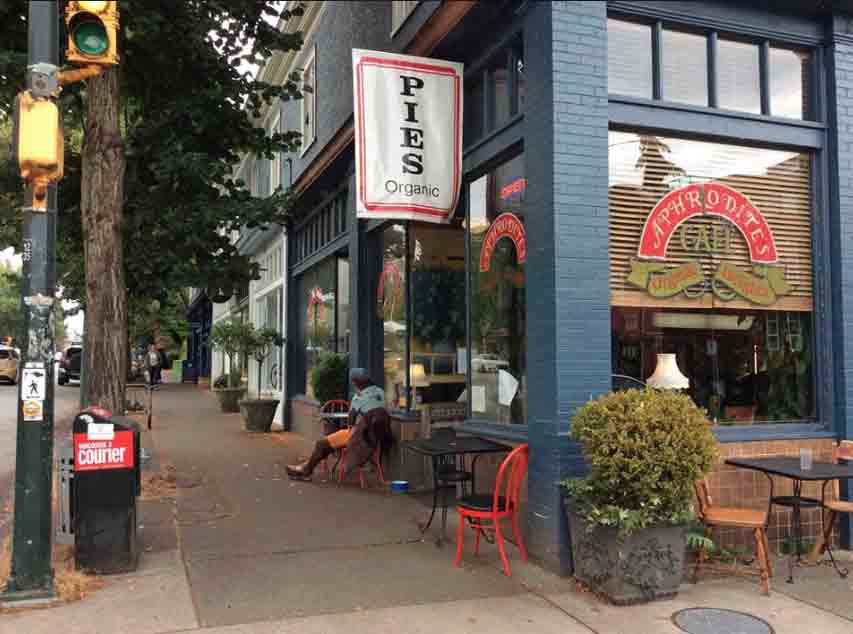
Anne, one of the directors of Pixl Press, visited the bookstore with her friend Jackie from out of town. After browsing the bookstore, they walked across the street to Aphrodites Pies and enjoyed their signature organic peach pie.

Aphrodites Pies

Aphrodites Pies on 4th Avenue (photo by Nina Munteanu)

Banyen Books & Sound:
PeachPie at Aphrodites3608 West 4th Avenue
Vancouver, BC
604-732-7912

HOURS:
Mon-Fri: 10am-9pm
Sat: 10am-8pm
Sun: 11am-7pm


nina-munteanuNina Munteanu is an ecologist, limnologist and internationally published author of award-nominated speculative novels, short stories and non-fiction. She is co-editor of Europa SF and currently teaches writing courses at George Brown College and the University of Toronto. Visit www.ninamunteanu.ca for the latest on her books.
Write What You Know–Write “From the Inside Out”

Snowtreeghosts2

Trees in snow and fog, Ontario

When I first heard the writer’s edict “write what you know” I rejoined: but I write science fiction—I write about the unknown. What I still had to learn was that by describing “the other” SF really describes “us”. We explore ourselves through our relationship with the unknown. We do this by ensuring that all our plotlines reflect theme.

Write About What You Know

How many times have you been told to write about what you know? And how many times have you trusted that advice? Well, how interesting is that?!? We think our lives are dull, boring, and mundane. We write – and read – to get away from it, don’t we?


SONY DSC

Nina Munteanu hikes along Highland Creek, Ontario (photo by Merridy Cox)

Well, yes…and no…

In the final analysis, even good “escapist” writing, like some science fiction, despite its alien settings and creatures of imagination, is grounded in the realities of our every-day lives, which form the basis of human nature. Love, ambition, trust, hate, envy, honor, courage. All these are universal human traits which the writer taps into and ultimately writes about.

“In the 19th century, John Keats wrote to a nightingale, an urn, a season. Simple, everyday things that he knew,” say Kim Addonizio and Dorianne Laux in The Writer’s Guide to Creativity. “Walt Whitman described the stars, a live oak, a field. They began with what they knew, what was at hand, what shimmered around them in the ordinary world.”

Writing about what you know isn’t about literal truths; it’s about what you know inside your heart. Write from the inside out. Write about what excites you; what frightens you; what angers you, makes you sad, happy. As SF author Marg Gilks says, “You know more than you think.”

Twisted Truths & Inner Knowledge

Writers can use our own knowledge and experiences in everyday life and translate them into something far from ordinary. You start with universal experiences.

Get Emotional

What excites you; what frightens you; what angers you, makes you sad, happy. These are emotions we all feel. When we give our characters experiences similar to our own, we breathe life into both character and experience and provide the reader an anchor for her heart.

Get Sensational

You know how it feels to have your knees shake with fatigue after a long climb or the hair-raising trepidation of walking into a dark place. Use these sensations to make your writing more sensual with added dimensions of reality.

Get People Around You

My neighbor has a funny way of focusing his gaze slightly off me when he talks, like he can’t look me directly in the eyes. When he approaches my house to deliver the paper, Dennis strides with a lilting gait as he listens to hip-hop on his ipod.

Drawing from what you observe and know of the people around you is one of a writer’s most treasured resources for character description. I always carry a notebook with me no matter where I go, even if it’s only to the grocery store.

The Magic of Storytelling

tree water deer lake

Deer Lake, Burnaby, BC (photo by Nina Munteanu)

A writer is like a magician. You play upon what readers all “know” then surprise them with the unexpected.

Unleashing your imagination and letting it soar while grounding yourself in the realities of universal truths is the stuff of which stories are made. This is what most of us mean when we say “write what you know.”

“Unless you are writing about a personal tragedy,” says Tina Morgan of Fiction Factor, “you will have to use your imagination. Use the creativity that drives you to write in the first place. Take those feelings you have every day and amplify them. Make them more intense, more vivid. Before you know it, you will be ‘writing what you know’.”

“Next time you hear ‘write what you know,’ ” says Gilks, “you’ll realize that you know an awful lot about what matters most in a story’s success. It’s waiting only to be shaped by your imagination.”

Write Real

Literary Agent, Rachelle Gardner, provided a great definition of “write what you know” on her blog. Here’s an excerpt:

Most people think “write what you know” means you have to put characters in situations you’re personally familiar with. If you’re a mom with five kids, you should write a mom story. If you’ve fought cancer and won, you should write about that. But in my opinion, that’s not what it means.

Write what you know means write with authenticity about thoughts, feelings, experiences of life. Be honest. Write from a deep place. Don’t write from the surface. Whether you’re writing about parenthood or cancer or anything else… be real.
Rachell Gardner

Don’t reflect what you know from other people or the media… write what you know from your own inner life.

An excerpt of this article appeared in CBC’s Canada Writes.

Nina-CanadaWrites2012