In Costi Gurgu’s near-future political thriller Servitude (Kult Books, 2022), what is real and what is fiction blurs with terrible prescience and possibility. Gurgu has created a scenario based on a premise that stirs dangerously in the reality of today’s capitalist western world: what if corporations were allowed to take back with impunity what their debtors owed them—in whatever way they pleased?
In Gurgu’s near-future America, the fourth Republican president in a row will be elected with virtually 100% Republican representation in Congress and the Senate—ensuring a monopoly government and creating a potential dictatorship (something a certain Republican president was trying to achieve not too long ago—and came dangerously close).
The story begins in the UK, which has recently made corporate slavery law. Under the Freedom Act, corporations under the British Servitude Exchange (BSX) can lawfully capture and detain persons with significant debt to sell them and their services in exchange for what is owed.
Wishing to do the same, the American corpocracy pushes the Freedom Act bill through Congress, potentially making corporate slavery a lawful pursuit using the concept of servitude. The concept of unconditional restitution in a country of people living largely on credit becomes popular among wealthy corporations; (consider that over two thirds of Americans are currently in debt with an average of $96,000 owed by each American, which includes mortgage, student loans, auto and credit card, personal loans and home equity1).
Neoliberal idealogues and proponents of the Freedom Act suggest that citizens should learn to be responsible for their lifestyles and should not expect the government to bail them out of bankruptcy every time they overspend (ignoring the fact that the U.S. government’s current national debt is some 30 trillion dollars—to corporate investors, China, Japan, and intra-government agencies.2 However, given that corporate investors currently hold over a third of the national debt2, dominant corporate influence on government to create a slavery act as demonstrated in Servitude is not outlandish).
A fifth of the way into the book, a Texas governor proclaims: “Servitude is merely a form of adult education. If you have graduated from the American education system and proceeded to live your life as though there is no tomorrow and spent more money than you have earned, well beyond your fair share, then you must be re-educated with America’s modernized value system. Servitude is an educational tool for the people.”
Gurgu hints at key events that brought us to this point: from the shenanigans of Donald Trump to starving children in New York City and Chinese troops taking down the American flag at the Hawaii State Legislature. The European Union has been dismantled and the Eastern Block reborn. Climate change related resource wars were waged by the Second Ottoman Empire and others, leading to the collapse of the global market. All have led to the reintroduction of slavery and homo sacer, the disposable human. Foucault would attest that the biopolitical hegemony of Capitalism already enslaves human beings as disposable ‘human capital.’
In my upcoming eco-thriller Thalweg, character Daniel considers his 2050s world in which humanity is largely commodified, a world similar to Gurgu’s Servitude world:
It’s the end of the world…The beginning of the end of the world really came with the steam engine back in 1784 and the enslavement of water, when James Watt’s ‘universal machine’ coerced water to help usher in the industrial age of carbon extraction and the disposable human, homo sacer. By 1920, 97% of electricity in Canada came from hydropower. We were sure eager beavers. Enslaved water germinated a culture obsessed with defining itself through a ‘precession of simulacra’—the truth which conceals that there is none. Social media. Facebook. Twitter. Echo-chambers of denatured reality, signs reflecting other signs, saturated with ‘likes’ and emojis, where meaning becomes infinitely mutable to the point of being meaningless.
What’s left is a ‘desert of the real,’ a Kafkaesque menagerie of interminable, unresponsive fragments of experience in a fiction that no longer knows it’s fiction. One in which Huxley’s Soma rules in a kind of warped Foucauldian governmentality, where corporations like CanadaCorp use facial recognition and Pegasis spyware to manage plebian behaviour through quiet authoritarianism. Like bioelectricity subverting the neural pathway, it infects our fragile brains with subliminal notions of freedom when we’ve already surrendered our sovereignty to the omnioptic gaze of capitalism …
Why is it easier to imagine the end of the world than the end of capitalism? Half a century ago, Mark Fisher took up that concept first introduced by Fredric Jameson and Slavoj Žižek in his book Capitalist Realism3… Several things Fisher pointed out resonate, such as, “Capitalism is what is left when beliefs have collapsed at the level of ritual or symbolic elaboration, and all that is left is the consumer-spectator, trudging through the ruins and the relics.”3 This sad construct leaves us with a kind of ‘post-literate’ world in which the ruling ideology is cynicism or what Fisher calls ‘reflexive impotence.’4
Daniel Schindler in “Thalweg” by Nina Munteanu
.
.
How realizable is Gurgu’s Servitude?…
Since 1989, neoliberal ideologues have fed us the narrative that capitalism is the only realistic political-economic system. We cheerfully engage in this confabulation to feed our rapacious desires; and like an insatiable amoeba, capitalist realism consumes and digests our dreams and desires then feeds it back to us at a price. At what cost? Fisher astutely tells us that in our current world, “ultra-authoritarianism and Capital are by no means incompatible: internment camps and franchise coffee bars co-exist.”3 Gilles Deleuze tells us that “Control societies are based on debt rather than enclosure.”5
In Gurgu’s story, Detective Blake Frye—himself burdened with heavy debt—becomes ensnared in an inter-agency investigation into the for-now-still illegal slave trade in America that has already created secret slave camps and is actively kidnapping ‘nobodies’ off the streets. Connected somehow to UK’s BSX and several billionaire tycoons, the slave trade has become highly lucrative. Earlier, Frye’s wife, Isa—who is an investigative journalist and TV producer—embarks on an exposé of the illegal slave trade. Just before her show “Debt Hunters” is about to air, the material is confiscated by the NSA who consider it a breach of national security; her entire crew is detained and the NSA investigate her on suspicion of treason. Later, when slavers kidnap Isa and put her on the market, Frye must navigate through corrupt government officials and rogue agency operatives to find her before she’s sold and disappears forever.
Near the end of the book, Gurgu’s not-so-hidden message resonates loudly through Detective Frye’s lamentations:
“Hard-hitting investigative journalism appealed to an increasingly smaller pool of customers. People were always working, always checking their phones and other electronic devices, and they wanted their news to be just as easy to digest. Well documented and researched reportages took too many minutes to watch, and didn’t often line up with their social or political viewpoints. Truth had become debatable. Everyone had their own, personalized version of the facts, easy to access on targeted media outlets. They no longer questioned the facts they consumed. Doubt took too much effort. Everyone was entitled to their own opinions, and considered them the definition of a political truth. That philosophy had been in effect since 2017, the year that practically everything that mattered in the world deteriorated.”
Detective Frye’s analysis is relevant to today’s sybaritic North American society. Gurgu’s fiction is not about the future; it is about today. And his message is clear: we have become lazy and apathetic, seduced by a craving for comfort and pleasure at the expense of integrity and freedom. Freedom is not given; it is earned. Only through active responsible vigilance will we keep it.
Path meanders through a black walnut forest in an early winter fog, ON (photo and rendition by Nina Munteanu)
References:
First Republic. 2022 “Average American Dept.” September 13, 2022. FirstRepublic.com
Porter, TJ. 2022. “Who Owns the US National Debt?” September 3, 2022. Finmasters
Fisher, Mark. 2009. “Capitalist Realism: Is There No Alternative?” Zero Books. 92pp.
Issue #128 of Apex Magazine featured an interview that Rebecca E. Treasure did with me, posted on December 10, 2021. We discussed the power of story, the use of dystopian narrative, and the blur between fiction and non-fiction to create meaningful eco-fiction. Here’s part two of the interview. For the complete interview go here:
INTERVIEW
Nina Munteanu, author of “Robin’s Last Song,” is a prolific creator with multiple books, podcasts, short stories, and nonfiction essays in publication. Her work spans genre, from eco-fiction to historical fantasy to thrillers, and of course, science fiction. Her work as an ecologist informs all of her writing, which circles around an essential exploration; the relationship between humanity and our environment.
At the top of Nina Munteanu’s website, there is a quote: “I live to write, I write to live.” This sentiment is reflected in her fiction, which is not just about characters in compelling situations solving their problems with compassion, but is about all of us, our planet, our environment, and our future.
Nina Munteanu sat down with Apex for a conversation about story, ecology, and the future.
∞
APEX MAGAZINE:Your novels and short stories examine the role and evolution of humanity in the context of nature and technology. As an ecologist, what do you believe needs to happen—internationally, nationally, locally, and personally—to restore our planet and move forward in a sustainable way?
NINA MUNTEANU: All things animate and inanimate naturally oscillate toward equilibrium or balance in a kind of stable chaos of polarities. Goethe and Hegel told us this long ago. Our actions have exacerbated this oscillation through massive extraction, habitat destruction, and pollution with associated conflicts, take-over and subjugation. Everything is connected and all have contributed to climate change and habitat change. Our mission—given that we’re responsible for much of that imbalance—is to help the planet return itself to balance. That means ensuring that Nature’s natural checks can do their job to ensure functional forests and phytoplankton, a healthy ocean, a resilient biodiversity—all systems that we rely on for our own healthy existence. Restoring our denuded global forests, and the oceans will need the concerted and united efforts of all nations and individuals. We have the knowledge, the science, and technology; all that is needed is the will. And that can only change as our own narrative changes. That’s where storytelling plays a key part. Surveys have proven that fiction can be deeply persuasive through character journey that convinces at a deeper more emotional level (as opposed to a litany of facts that appeals only at an intellectual level).
AM:Do you believe industry and sustainability are compatible? What about colonialism and sustainability? Capitalism? In other words, is sustainability something we can achieve with our current systems, or is global systemic change required?
NM: Some people—mostly economists—would say definitely yes to the first question; we just need to be conservationist in our approach to doing business. But the very basis of capitalism is exploitation, not conservation. The driving force behind capitalism is fear and uncertainty and its main process is exploitation. From an ecologist’s perspective, this makes sense for a community during its early succession and growth stage … when it first colonizes a new area. Ecologists call this approach r-selected (for rate), based on the need to be profligate and fast-growing to successfully establish. But as we reach a climax community and our carrying capacity—where we are now—this r-selected approach no longer works. We need an economic model that better matches this new paradigm. NOT based on continued growth! A climax global economy, one based on cooperation not competition. Elisabet Sahtouris calls this ecological economy “ecosophy.” In his book Designing Regenerative Cultures, Daniel Christian Wahl talks about changing our evolutionary narrative from one based on fear defined by a perception of scarcity, competition, and separation to one based on love defined by a perception of abundance, a sense of belonging, collaboration, and inclusion. He promotes a regenerative economy based on true reciprocation.
And moving forward we can take a lesson from Robin Wall Kimmerer who promotes a gift economy—an economy of abundance—whose basis lies in recognizing the value of kindness, sharing, and gratitude in an impermanent world. This is what she says: “Climate change is a product of [our] extractive economy and is forcing us to confront the inevitable outcome of our consumptive lifestyle, genuine scarcity for which the market has no remedy. Indigenous story traditions are full of these cautionary teachings. When the gift is dishonored, the outcome is always material as well as spiritual. Disrespect the water and the springs dry up. Waste the corn and the garden grows barren. Regenerative economies which cherish and reciprocate the gift are the only path forward. To replenish the possibility of mutual flourishing, for birds and berries and people, we need an economy that shares the gifts of the Earth, following the lead of our oldest teachers, the plants.”
AM: The language in your stories is richly thematic, using strong description to weave the subtext into the piece. For example, “killing two squirrels with one stone.” Is that something that comes about organically as you compose a piece, or a more intentional part of editing?
NM: I use both processes to achieve a final narrative that is multi-layered with metaphor, symbols, and deep meaning. The first process is through intuition derived through intimacy; the second process is more deliberate and generated through objectivity. Insights from intimacy come about organically, during moments of true inspiration, when my muse connects me to the deeper truth of a character’s voice and actions. Given that the inner story runs many layers (some of which I, as writer, may not even be overtly aware) and links in a fractal relationship with the outer story, those moments of inner inspiration happen as if of their own accord. That’s what writers mean when they admit that their characters “talk” to them and instruct them on what to write. When a writer achieves that level of intimacy and understanding, they can let the muse guide them.
Much of the description that is woven into story is generated through the editing process when I read the manuscript as a reader. The process involves letting the story sit for a while so when I return to it, I am reading more objectively. During this process, I apply my knowledge in storytelling craft to showcase combustible moments in plot, and work in foreshadowing, subtext, and compelling metaphor. A writer can’t add metaphor without context related to story theme (otherwise this may result in what the industry calls “purple prose”). Metaphor—given its roots in the deeper psyche of a culture—must arise organically from a deep, sometimes intuitive, understanding—where the personal meets the universal.
AM:Your work takes complex topics that are nonetheless critical to humanity’s future and pulls stories with compelling characters out of them, making the science accessible, the warnings personal to the reader. This has always been one of the callings of science fiction. What is the role of stories in the climate action movement?
NM: Our capacity and need to tell stories is as old as our ancient beginnings. From the Paleolithic cave paintings of Lascaux to our blogs on the internet, humanity has always shared story. Story is powerful in how it helps us define who we are, what’s important to us, and where we are going. Stories compel with intrigue, stir our emotions, connect with our souls through symbols, archetypes and metaphor. Stories inspire action. We live by the stories we tell.
For too long, our stories have promoted a dominant worldview of exploitation and capitalism. We’ve been telling the patriarchal story of “othering” for too long; we need a new voice and a new worldview to replace our old stories of conquering and taming a “savage land” and “savage people.” When Copernicus proclaimed in 1543 that the sun did not revolve around the Earth, it took a long time for the world to accept and let go of its Ptolemaic Earth-centered view. But the world did come around eventually to the point now that this is common knowledge and lies embedded in our daily lives and language.
Storytelling about how the Earth takes care of us and how we can take care of Earth is urgently needed. This means shifting our stories from an exploitive capitalist narrative of separation toward an inclusive partnership narrative. This means embracing a more eco-centric worldview; a worldview in which humanity is not central, but lies embedded within greater planetary forces and phenomena. A worldview that sees humanity only as part of a greater entity, as participant in a greater existential celebration of life and the elements. A humanity that must learn to play along, not bully and take over. A humanity that must embrace compassion, respect and kindness; a humanity directed by humility—not hubris. It is my firm belief that until our worldview embraces humility in partnership with the natural world—until we cast off our self-serving, neo-liberal, capitalist ideologies—we will remain hampered in our journey forward. When we change our stories, we change our lives and we change the world along with it.
This is already happening with the emergence of a strong eco-voice by writers through the feminine voice, the gylanic voice, the voice of the marginalized, of ecology and the environment itself. Authors such as Barbara Kingsolver, Annie Proulx, Margaret Atwood, Richard Powers, Emmi Itäranta Cherie Demaline, Grace Dillon, and Cormac McCarthy give Nature a face and voice to care about. And caring is the first step.
AM:Your stories also bridge fiction with nonfiction, using speculative fiction as a lens to bring your subject into focus for the reader. How does that work? Why do you approach story in this way?
NM: Marcie McCauley with Temz Review observed that, “[Munteanu] does not appear to view fiction and non-fiction as separate territories; or, if she does, then this book [A Diary in the Age of Water] is a bridge between them.” In Herizons, Ursula Pflug called the book “a bit of a hybrid, and Munteanu a risk-taker.” Buried in Print wrote of the same book, “ultimately it exists in an in-between place, some mystical elements of the generational tale possibly alienating the dedicated science-y readers and the instructional elements possibly alienating fiction devotees. And, yet, I read on: strangely compelling.”
I find that I enjoy this in-between place that blurs fiction with nonfiction. It’s more edgy, gripping, and believable, albeit fantastical, even playfully challenging at times. For instance, I may subvert facts, creating semi-facts to tease the discerning reader (e.g. when the diarist in “A Diary in the Age of Water” observed that President Trump had gone blind from staring at the sun during an eclipse; while Trump did stare directly at the sun without eye protection during an eclipse in 2017, he did not go blind—yet). Readers have told me that the story was more impactful; they honestly didn’t know what was taken from fact and what was fictionalized. Such narrative reads like a true story and there is little more tantalizing than eavesdropping on another’s real experience and intrigue. The risk—that the blur will either confuse the reader or invalidate its truths and message—is hopefully addressed through compelling narrative that engages the reader. But this is also why I tend to include an extensive bibliography at the end of a novel or short story.
Readers have told me that my fiction/nonfiction storytelling trope, like “mundane science fiction,” grips my stories with a more keen sense of relevance. Given that I am writing mostly climate fiction and eco-fiction these days, that sense of relevance is exactly what I wish to achieve.
AM: A last question. Both “The Way of Water” and “Robin’s Last Song” showcase the relationships women have with each other, the importance of human connection, the damage that disconnecting from each other can do and, inversely, the power of connection. In your view, what is the role of individuals and local communities in the climate crisis?
NM: There are many things we can do as individuals and as part of a community. I was recently asked this question by the Toronto Star and I responded with three things:
● First, plant a tree; make an actual difference through action. By doing that, we get out from hiding under the bed and face the monster of climate change and show that we care and that we are not alone.
● Second, vote for green politicians. Politicians need to hear directly from their communities. They need you to push them to act on climate change.
● Third, find your tribe and create a movement. Everyone says that people have the power, but that power comes best through numbers and solidarity. Find your tribe and you’ll find yourself more motivated. So, start with you and your home: plant trees; put in a rain garden; put in permeable driveways and solar panels; lower meat intake, especially beef; don’t buy bottled water. Then connect with your physical community and social media community. Let them know what you’re doing and why. Work with your community. All members of a community can help change how your street looks and behaves by communicating with your local government, attending meetings, and having a voice. Initiate a tree-planting program in your parks and street greens. Do stream or lake cleanups. Let the leaders of your community know you care and are willing to do something about it. The wave of change starts local and ripples out into a global phenomenon. Change comes from the heart and heart is where the home is.
Birch trees and marsh on a foggy morning in winter, ON (photo and rendition by Nina Munteanu)
Rebecca E. Treasure grew up reading science fiction and fantasy in the foothills of the Rocky Mountains. After grad school, she began writing fiction. Rebecca has lived many places, including the Gulf Coast of Mississippi and Tokyo, Japan. She currently resides in Texas Hill Country with her husband, where she juggles two children, two corgis, a violin studio, and writing. She only drops the children occasionally. To read more visit www.rebeccaetreasure.com.
NINA MUNTEANU is a Canadian ecologist / limnologist and novelist. She is co-editor of Europa SF and currently teaches writing courses at George Brown College and the University of Toronto. Visit www.ninamunteanu.ca for the latest on her books. Nina’s bilingual “La natura dell’acqua / The Way of Water” was published by Mincione Edizioni in Rome. Her non-fiction book “Water Is…” by Pixl Press(Vancouver) was selected by Margaret Atwood in the New York Times ‘Year in Reading’ and was chosen as the 2017 Summer Read by Water Canada. Her novel “A Diary in the Age of Water” was released by Inanna Publications (Toronto) in June 2020.
Issue #128 of Apex Magazine featured an interview that Rebecca E. Treasure did with me, posted on December 10, 2021. We discussed the power of story, the use of dystopian narrative, and the blur between fiction and non-fiction to create meaningful eco-fiction. Here’s part of the interview. For the complete interview go here:
INTERVIEW
Nina Munteanu, author of “Robin’s Last Song,” is a prolific creator with multiple books, podcasts, short stories, and nonfiction essays in publication. Her work spans genre, from eco-fiction to historical fantasy to thrillers, and of course, science fiction. Her work as an ecologist informs all of her writing, which circles around an essential exploration; the relationship between humanity and our environment.
At the top of Nina Munteanu’s website, there is a quote: “I live to write, I write to live.” This sentiment is reflected in her fiction, which is not just about characters in compelling situations solving their problems with compassion, but is about all of us, our planet, our environment, and our future.
Rebecca E. Treasure
Nina Munteanu sat down with Apex for a conversation about story, ecology, and the future.
∞
APEX MAGAZINE:“The Way of Water” in Little Blue Marble is such a powerful piece touching on water scarcity and friendship, a dry future and the potential for technology to overtake natural ecology. “Robin’s Last Song” explores extinction, human fallibility, friendship, and again, that conflict between technology and nature. Do you think we’re heading toward the kind of dystopia shown in these stories?
NINA MUNTEANU: The scenarios portrayed in these eco-fiction narratives are deeply grounded in current realities that involve a kind of dissonance between technology and natural processes—more specifically our myopic use of technological “fixes” to make nature more efficient for our use, whether it’s to mine water from the air (disrupting the water cycle) or gene-hack monocrops to increase yield (compromising the crop’s resilience and long-term productivity). It isn’t so much the technology, but the thought process driving its use that is undermining the environment we live in. Our unwillingness to think of ourselves as part of the very environment we’re manipulating for shortsighted purposes could certainly bring about some version of these dystopias.
While these narratives are based on the realistic premise of current and projected water use and food production, their trajectories are fluid and multi-faceted. We still have many directions we can go. Concrete precedents set by a changing climate and our several-century interference will ensure continued extinction of species, reduction of bio-diversity, the proliferation of unstable simple ecosystems prone to crashing, and an unruly water cycle. Despite these, planetary responses remain fluid and unpredictable; there is so much about the natural world we still don’t know. And that is what my story “Robin’s Last Song” touches on: even when it looks utterly bleak and nothing seems left, Nature surprises us with hidden gifts. If nothing else, we are humbled by it. And a little wiser, hopefully.
AM:Your stories show readers the kind of world we could be facing if nothing changes. Do you believe such disaster is preventable?
NM: Humanity can destroy habitats and ecosystems; but we can’t destroy the planet—well, not yet anyway. We can only change it. Earth will endure. The question is: as Nature changes will we endure? We are currently destroying and simplifying the ecosystems that best support our species, and heralding in those that may not. Ecologists use a term “natural succession” to describe when one species or group of species create better conditions for another group that will succeed them. We are in danger of doing this. And we’re taking down a lot with us. This planet has experienced four major extinction events in the past (wiping out up to 90% of its species) and each time life came back in full force; but each time, that life looked different from what had preceded it.
To ensure our own survival, we need to ensure the survival of our supporting network: forests that balance a climate best suited to us; a biodiversity that brings resilience; a clean healthy ocean that nurtures all life. But I am hopeful. We need creativity and joy and connection to do this right. We are creators at heart and are more joyful when creating. We are capable of creating so much beauty in our music, art, and science. When faced with insurmountable odds and terrible circumstance, our earnest hearts fill with kindness and compassion. Some countries have embraced the Happy Index—over the GDP—to measure their success. Bhutan has achieved carbon negativity and others are following its lead. We know what the solutions are. We have the technologies. We understand the science. We just need the will.
As Yuval Harari noted, we remain an insecure species; despite our curiosity and capacity for wonder, we are prone to fear, suspicion, and defensive action in the face of the unknown. Our preoccupation with “self” in all its iterations limits our ability to gain a more healthy perspective and to see ourselves as part of our environment, not apart from it. Our hubris and separation comes from that same insecurity. Like the hero in the hero’s journey, we’ve strayed from our “home” to find ourselves. The changes in the world that we’re largely responsible for creating (e.g., climate change, habitat destruction, and oversimplification) are also part of our journey to find ourselves. When we find our humility and our unique gifts to the world, we can prevent disaster. It won’t be the tool—technology—that does it. It will be the wisdom that comes with loss of ego, allowing us to forge a partnership with the rest of the world, human and non-human.
With the wisdom of feminine energy emerging from the shadows and lighting its voice with kindness, humility, compassion, unity, and wholeness, I’m ever hopeful. It’s time to grow up, forgive ourselves and each other, and become whole.
Birch trees and marsh on a foggy winter morning, ON (photo and rendition by Nina Munteanu)
Rebecca E. Treasure grew up reading science fiction and fantasy in the foothills of the Rocky Mountains. After grad school, she began writing fiction. Rebecca has lived many places, including the Gulf Coast of Mississippi and Tokyo, Japan. She currently resides in Texas Hill Country with her husband, where she juggles two children, two corgis, a violin studio, and writing. She only drops the children occasionally. To read more visit www.rebeccaetreasure.com.
NINA MUNTEANU is a Canadian ecologist / limnologist and novelist. She is co-editor of Europa SF and currently teaches writing courses at George Brown College and the University of Toronto. Visit www.ninamunteanu.ca for the latest on her books. Nina’s bilingual “La natura dell’acqua / The Way of Water” was published by Mincione Edizioni in Rome. Her non-fiction book “Water Is…” by Pixl Press(Vancouver) was selected by Margaret Atwood in the New York Times ‘Year in Reading’ and was chosen as the 2017 Summer Read by Water Canada. Her novel “A Diary in the Age of Water” was released by Inanna Publications (Toronto) in June 2020.
Atlantic Meridional Overturning Circulation (AMOC) (drawing by Nina Munteanu, from “A Diary in the Age of Water” Inanna Publications, 2020)
March 6, 2055
Before leaving for the university this morning, I watched a news report on the storm that devastated the northwest coast of Britain last week. Over a thousand people were affected by the sudden deluge, severe winds, and flooding. Scientists are blaming another major AR (Atmospheric River). That’s the tenth so far this year for both Britain and Western Europe. Not surprising either. Due to the global temperature increase, the air holds more moisture, so these atmospheric rivers are growing in frequency and intensity. They are consequently wreaking havoc on the Atlantic west coast and the European coasts. I can hear Daniel’s ghost hissing in my ear: Between the relentless sea level rise and these storms, we’re fracked. The ARs that roar about like angry banshees have picked up the slack left by the stagnating great ocean conveyor. The conveyor or Atlantic Meridional Overturning Circulation (AMOC)— circulates ocean water very much like in a lake, with dense cold water sinking beneath warmer, less salty water. Sunken water flows south along the ocean floor toward the equator; then warm surface water from the tropics flows north to replace the water that sank, keeping AMOC moving and preventing stagnation. As the Arctic turns into the Atlantic, dumping in more and more freshwater, the sinking is beginning to stop and the machine is slowing down. Freshwater is taking over the world. Like a giant wrench in an anarchist’s hand, it’s jamming the conveyor. Scientists underestimated how climate forcing would accelerate Arctic sea ice melt and increase precipitation. The Atlantic Meridional Overturning Circulation—the great ocean conveyor—is in the process of stalling. It accounts for at least a quarter of the planet’s heat flux. We in the Northern Hemisphere are already seeing its effects: the rivers in Europe are drying up, forcing farmers to try to grow crops in the snow; the angriest storms in history are battering our maritime coast. In the meantime, the entire Southern Hemisphere is growing steadily hotter as the Indian and Asian monsoons dry up. Imagine the dynamic sea turning into a stagnant pond. No one really knows what this all means. It is likely that the oceanic plankton—our last food source—will crash or go toxic. It will probably be both.
“Global ocean circulation will not change abruptly, but it will change significantly, in this century,” writes Cecilie Mauritzen, scientist with the Climate Department of the Norwegian Meteorogical Institute in Chapter 2 of “Arctic Climate Feedbacks: Global Implications”. Yet other researchers who study ancient climate change point to evidence that the AMOC can turn off abruptly. I suppose this depends on one’s definition of “abruptly.”
Mauritzen adds that “the potential for a significant change in global ocean circulation is considered one of the greatest threats to Earth’s climate: it presents a possibility of large and rapid change, even more rapid than the warming resulting directly from the build-up of human-induced greenhouse gases in the atmosphere.” An AMOC collapse would promote major cooling in most of the northern hemisphere, but also strengthen storm tracks in the North Atlantic and lead to further warming in regions of the southern hemisphere.
Climate models of an AMOC shutdown suggest a severe cooling in the whole northern hemisphere, particularly the regions closest to the zone of North Atlantic heat loss (the “radiator” of the North Atlantic central heating system). A shut down of the AMOC circulation would bring extreme cold to Europe and parts of North America, raise sea levels on these coastlines and disrupt seasonal monsoons that provide water to much of the world. It would also further endanger the Amazon rainforest and Antarctic ice sheets.
What climatologists like Mauritzen don’t discuss is the profound effects on the Earth’s biological community supported by this global circulation. The result of an AMOC stall may result in a massive ecological collapse and our existential end due to creatures so small only a microscope can see them.
In the above quote from my eco-fiction novel A Diary in the Age of Water the scientist Lynna Dresden highlights one of the most discernable effects of an AMOC shutdown: extreme weather, a cold snap with more angry and wetter storms in the north, particularly Europe, that could last hundreds of years. Scientists report that when AMOC stopped near the end of the last Ice Age, the cold spell lasted a thousand years.
Illustration of oceanic plankton (by Nina Munteanu, in “A Diary in the Age of Water” Inanna Publications, 2020)
But Lynna also talks about our primary producers, the phytoplankton (and their cousins the zooplankton). The phytoplankton—which is made up mostly of single-celled diatoms—drift on the ocean currents and sustain all life from producing the first source of a massive food chain to sequestering carbon, creating clouds and rain, and helping to create fifty percent of the oxygen we breathe.
According to Velasco et al. in Nature, “An AMOC shutdown could lead to the collapse of North Atlantic plankton stocks.”
When plankton populations crash, recovery is slow. Plankton ecosystems in Earth’s oceans took 3 million years to fully recover after the mass extinction event 65 million years ago, according to scientists at the University of California—Santa Cruz. In their 2006 paper in the journal Geology, the researchers concluded “that the time required to repair food chains and reestablish an integrated ecosystem is extremely long.”
Perhaps even more likely is that the plankton will only partially crash; more likely is a shift in its distribution and characteristics with many going extinct and some even exploding in numbers. This is called a regime shift—a widespread and prolonged change of a biological system due to climate change—something that is occurring throughout the world right now.
Coccolithophores under electron microscope (image by NASA)
For instance, a study in NRDC reported a massive surge in plankton in the Arctic Barents Sea in 2020. Researcher Brian Palmer shared that “phytoplankton blooms are growing faster and thicker than ever seen before.” Summer blooms of Coccolithophores (unicellular Protista with calcium carbonate plates) generally occur from July through September in the Barents Sea when this shallow northern sea is ice free. The 2020 study showed that these blooms are thicker and more extensive as nutrients influx from other oceans. A recent Stanford study indicated that the growth rate of phytoplankton in the Arctic Ocean has increased 57 percent in the last twenty years.
While higher productivity may naively seem a good thing, these blooms are problematic: to begin, their growth is often not synchronous with what might feed on them, creating waste and detrimental trophic cascades (see below); although the algal blooms absorb more carbon, this higher carbon also contributes to the acidification of the ocean, which, in turn, impacts the phytoplankton: their growth, behaviour, and succession. The dying blooms may also liberate the excess carbon under certain circumstances. This becomes a positive feedback cycle with ever more impact.
Algal bloom in the Barents Sea (image by NASA)
Stephanie Dutkiewicz, principal research scientist in MIT’s Center for Global Change Science, says that while scientists have suspected ocean acidification might affect marine populations, the group’s results suggest a much larger upheaval of phytoplankton—and the species that feed on them. “The fact that there are so many different possible changes, that different phytoplankton respond differently, means there might be some quite traumatic changes in the communities over the course of the 21st century. A whole rearrangement of the communities means something to both the food web further up, but also for things like cycling of carbon.” Dutkeiwicz’s team also found that the interactive behaviour, including competition, among phytoplankton species might change.
The guillemot seabird is an example of one casualty. The guillemot, which typically nests on the Isle of Shetland off the coast of Scotland, is starving and few are nesting. This is because the guillemot feed on sandeel fish that have all but disappeared because the cold-water plankton the fish eat have moved north. The historically icy waters between England and Scandinavia have become too warm for the plankton to survive. Of course, if the AMOC stalls, these warming waters may cool substantially.
References:
Dybas, Cheryl Lyn. 2006. “On a Collision Course: Ocean Plankton and Climate Change.” BioScience 56(8): 642-646.
Mauritzen, Celilie. 2009. “Ocean Circulation Feedbacks”, Chapter 2 of “Arctic Climate Feedbacks: Global Implications,” Martin Sommerkorn and Susan Joy Hassol, editors. World Wildlife International Arctic Programme. 97pp.
Munteanu, Nina. 2020. “A Diary in the Age of Water.” Inanna Publications, Toronto. 300pp.
Palmer, Brian. 2020. “A Massive Surge in Plankton Has Researchers Pondering the Future of the Arctic.” NRDC September 09, 2020.
Schmittner, Andreas. 2005. “Decline of the marine ecosystem caused by a reduction in the Atlantic overturning circulation.” Nature 434: 628-633.
Velasco, Julian A. et. al. 2021. “Synergistic impacts of global warming and thermocline circulation collapse on amphibians” Nature, Communications Biology 4(141)
.
Freshwater from melting ice along the edge of Antarctica is changing the density of ocean layers, weakening the world’s strongest ocean current (ACC)
.
Post Script, March 8, 2025: A study by international scientists published today in the journal Environmental Research Letters projects that the fresh water from melting Antarctic ice will weaken the Antarctic Circumpolar Currrent by 20 percent in the next 30 years. The Atlantic Meridional Overturning Circulation (AMOC) is primarily responsible for poleward heat transport in the North Atlantic and the Antarctic Circumpolar Current (ACC) has the largest volume transport of any ocean current. Together, both currents are crucial components of global ocean circulation. The ACC is the only ocean current to flow around the entire planet unimpeded, carrying more than 100 times more water than all the world’s rivers combined. A paper in the journal Nature Climate Change recently documented how freshwater from melting ice has already weakened the overturning, or vertical circulation, of Antarctic shelf waters, which reduces oxygen in the deep ocean. Effects of the ACC slow down are projected to include more climate variability, with greater extremes in certain regions, and accelerated global warming.
.
NINA MUNTEANU is a Canadian ecologist / limnologist and novelist. She is co-editor of Europa SF and currently teaches writing courses at George Brown College and the University of Toronto. Visit www.ninamunteanu.ca for the latest on her books. Nina’s bilingual “La natura dell’acqua / The Way of Water” was published by Mincione Edizioni in Rome. Her non-fiction book “Water Is…” by Pixl Press(Vancouver) was selected by Margaret Atwood in the New York Times ‘Year in Reading’ and was chosen as the 2017 Summer Read by Water Canada. Her novel “A Diary in the Age of Water” was released by Inanna Publications (Toronto) in June 2020.
“Over increasingly large areas of the United States, spring now comes unheralded by the return of the birds. The early mornings are strangely silent where once they were filled with the beauty of bird song.”
—Rachel Carson, Silent Spring
Apex Magazine will release its 2021 Anthology this fall with my short story, Robin’s Last Song in it.
Robin’s Last Song first appeared in the #128 Issue of Apex Magazine in 2021. It tells the story of Robin, a blind elder whose digital app failed to warn the world of the sudden global loss of birds with disastrous ecological consequences. After years of living in self-exile and getting around poorly on sight-enhancing technology, a discovery gives her new hope in rekindling her talents in the field of Soundscape Ecology.
Apex Issue #128 and upcoming 2021 Year Issue with Nina Munteanu’s “Robin’s Last Song”
May, 2071
I rock on the cedar swing on my veranda and hear the wind rustling through the gaunt forest. An abandoned nest, the forest sighs in low ponderous notes. It sighs of a gentler time. A time when birds filled it with song. A time when large and small creatures — unconcerned with the distant thrum and roar of diggers and logging trucks — roamed the thick second-growth forest. The discord was still too far away to bother the wildlife. But their killer lurked far closer in deadly silence. And it caught the birds in the bliss of ignorance. The human-made scourge came like a thief in the night and quietly strangled all the birds in the name of progress.
“Robin’s Last Song” by Nina Munteanu
Bird Population Decline
The number of birds in North America has declined by three billion, some 30 percent, over the last half-century. The October 2019 issue of Science magazine reported a staggering decline in North American birds. Kenneth V. Rosenberg and his team of researchers estimated that three billion birds of various species have disappeared in Canada and the US since 1970.
Bird population change since 1970 (image The New York Times)
That’s a third of the entire bird population lost in five decades.
In North America, warbler populations dropped by 600 million. Blackbirds by 400 million. The common robins, cardinals, and blue jays had noticeably declined. Even starlings—once considered a kind of fast-breeding pest—have dwindled by 50%. The Intergovernmental Science-Policy Platform on Biodiversity and Ecosystem Services have determined that three-quarters of Earth’s terrestrial and two-thirds of the its marine environments have been severely altered by human actions.
Robin’s egg in the forest, discarded from the nest to divert predators (photo by Nina Munteanu)
Plowing of fields, deforestation, wetland draining, climate change and other land use clearing and treatments have caused great habitat loss. In addition, neonicotinoid pesticides make it harder for birds to put on weight needed for migration, delaying their travel.
A robin fledgling rests on a patio chair (photo by Merridy Cox)
Common bird species are vital to ecosystems. They control pests, pollinate flowers, spread seeds and help regenerate forests. When these birds disappear, their former habitats lose their functionality. “Declines in your common sparrow or other little brown bird may not receive the same attention as historic losses of bald eagles or sandhill cranes, but they are going to have much more of an impact,” said Hillary Young, a conservation biologist at the University of California. Kevin Gaston, a conservation biologist at the University of Exeter, lamented that: “This is the loss of nature.”
The Trump administration heinously and foolishly demolished or maimed several key bird protection acts, which hopefully the new administration has or will reinstate in full force: Migratory Bird Treaty Act; Clean Air Act; Clean Water Act; National Fish and Wildlife Act; and the Endangered Species Act.
Useful Tool: Soundscape Ecology
The new science of soundscape ecology can analyze the health of an ecosystem. Bernie Krause, a soundscape ecologist who has been conducting long-term recordings for many decades recently noted that in Sugarloaf Ridge State Park, not far from his home in Northern California, “the effect of global warming and resulting drought has created the first completely silent spring I’ve ever experienced.” Stuart Winter at Express reports that “many of the iconic birds whose mating calls ring out across woodlands and open fields during early May are vanishing at an alarming rate.”
Bernie Kraus creating one of his soundscapes
Silent Spring: Rachel Carson’s Ominous Prediction and Warning
Rachel Carson was nothing short of prophetic when she published Silent Spring in 1962 (in reference to the dawn chorus most noticeable in spring during breeding). Silent Spring cautioned burgeoning ag-biotech companies (like Monsanto—now Bayer—Sygenta, Dow, and DuPont) who were carelessly and flagrantly spraying fields with pesticides and herbicides—at the time DDT was the main culprit. This would soon become a GMO world where gene-hacked plants of monocultures can withstand the onslaught of killer pesticides like neonicotinoids (currently killing bees everywhere) and Roundup. Roundup is a carcinogenic glyphosate-based weed killer that has recently been shown to kill beneficial insects like bees) and has been linked to Alzheimer’s disease, ADHD, birth defects, autism, and several kinds of cancerin humans.
Rachel Carson and her iconic book “Silent Spring”
Despite Carson’s warnings in 1962 and despite some action eventually taken (e.g. the ban on use of DDT in 1972—the precursor to Roundup and other neonicotinoids currently in use), the use of chemicals in big ag-industry has increased over five-fold since the 1960s. And this is destroying our bee populations, other beneficial insects, beneficial weeds, small animal populations and—of course—our bird life.
And it’s making us sick too.
NINA MUNTEANU is a Canadian ecologist / limnologist and novelist. She is co-editor of Europa SF and currently teaches writing courses at George Brown College and the University of Toronto. Visit www.ninamunteanu.ca for the latest on her books. Nina’s bilingual “La natura dell’acqua / The Way of Water” was published by Mincione Edizioni in Rome. Her non-fiction book “Water Is…” by Pixl Press(Vancouver) was selected by Margaret Atwood in the New York Times ‘Year in Reading’ and was chosen as the 2017 Summer Read by Water Canada. Her novel “A Diary in the Age of Water” was released by Inanna Publications (Toronto) in June 2020.
Age of Nature is a series of three films made by PBS and narrated by Uma Thurman about humanity’s relationship with nature and wildlife and how scientists and conservationists study ways to restore the planet. The series, beautifully narrated and filmed, shows how restoring nature might be our best tool to slow global warming. From Borneo to Antarctica, the resilience of the planet is helping us find solutions to cope and even mitigate climate change, providing hope for a more positive future. The series consists of three episodes: Awakening, Understanding, and Changing:
In AWAKENING you will discover how a new awareness of nature is helping to restore mostly collapsed ecosystems; this included: restoring the cod fishery in Norway’s Lofoten Islands; the restoring the Chagres watershed in Panama; rehabilitating the collapsed ecosystem of Mozambique’s Gorongosa Park; and restoring the denuded Loess Plateau in China by planting a forest (and reducing the sediment in the Yellow River by 80%). This episode shows how innovative actions are being taken to repair human-made damage and restore reefs, rivers, animal populations and more.
“We are at a turning point in history,” says narrator Uma Thurman. “and moving in a new direction. How we live with nature now will determine our future. A new age is upon us, the age of nature.” This new awakening comes with a change in philosophy.
“Materialism has suggested that wealth is coming from things. But, in fact, wealth is coming from ecological function.”
—John D. Liu, Ecosystem Ambassador, Commonland Foundation
Orangutan in Borneo forest (image from “Age of Nature”)
In UNDERSTANDING you will explore how a new understanding of nature is helping us find surprising ways to fix it. From the salmon runs and connection to forest health of the Pacific Northwest to restoring fireflies in China, and the reintroduction of wolves in Yellowstone—scientists, citizens and activists are restoring the environment, benefiting humans and animals alike.
“If humans get our acts together and start thinking about the whole ecosystem, we’re going to be recovering the whales and ultimately we’re going to be saving ourselves.”
—Dr. Deborah Giles, Killer whale researcher, University of Washington
Jungle in Borneo (image from “Age of Nature”)
In CHANGING you will discover why restoring nature might be our best tool to slow global warming. From Borneo to Antarctica, the resilience of the planet is helping us find solutions to cope and even mitigate climate change, providing hope for a more positive future. Bhutan’s negative carbon system is based on “decades of enlightened but courageous policies,” says Tshering Tobgay, former prime minister of Bhutan. By law they maintain over 60% forest cover to maintain a rich biodiversity and help balance climate as a carbon sink. Over 70% of Bhutanese live along river banks where they cultivate rice and other crops. “We’ve always had a strong association with water,” Tobgay adds.
“Ultimately, if we’re going to understand how to stop climate change, we need to understand our planet,” says Professor Tom Crowther, who leads a team of ecologists in categorizing forests and soils around the world from “on the ground information” to understand the carbon they contain and absorb. Crowther stresses that “the key is to restore these ecosystems in the right ecologically-minded way. That means we don’t plant trees in ecosystems that would naturally be grasslands. We also restore trees in a very biodiverse mixture; we don’t just want plantations, monoculture of the same species. We need all the different interacting species which help one another to grow and capture huge amounts of carbon…We absolutely need nature to survive on this planet. If humanity is going to have a chance, we’re going to have to restore ecosystems all across the globe…Biodiversity is the life support for our planet.”
Rainforest (image from “Age of Water”)
The movie showcases three major ecosystems of significant carbon sequestration that need to be (and are in some cases) encouraged, nurtured and grown:
1. Old growth forests of the world: Bialowieza in Poland is the oldest forest in Europe:
Malgorzata Blicharska at Uppsala University reminds us of an ecological tenet: the higher the biodiversity of an ecosystem, the more stable and resilient it is. “The more complex the forest is, the more resilient it will be to different environmental pressures, which is really important now in relation to climate change.” A more complex ecosystem has a larger toolkit to draw from when confronted with change. “Even if one species with a particular function disappears because of climate change, there will be other species that take over this function.” This provides a natural buffer to change, helping it cope with disruption. “A natural forest is not a stable forest; it is changing all the time.” Adapting. The simpler the ecosystem, the less likely it will be equipped to adapt to imposed change; the more likely it will collapse with change.
Bison in Poland ‘wilderness’ (image from “Age of Water”
2, Ocean phytoplankton, tidal marshes and seagrass meadows: Peter MacReadie, at Deakin University, studies seagrass meadows that store enormous amounts of carbon. They, along with tidal marshes and mangrove forests lock massive amounts of carbon; this is known as blue carbon. Mangroves are incredibly efficient blue carbon sinks. “Blue carbon is definitely one of the new heros in the climate change mitigation scene.” They not only effectively sequester carbon, they protect coastlines, and they support half of the world’s fisheries.
MacReadie acknowledges the role apex predators in achieving balance in the ecosystem that might otherwise be destroyed by an over-abundance of herbivores. The apex predator keeps a balance not so much by eating prey but through what is called “fear ecology” and achieiving a healthy trophic cascade: the shark changes the behaviour of the next trophic level down, the turtle, that would otherwise over-graze the seagrass. “Through fear, they affect how much turtles breed, where they forage, where they move around,” ultimately creating a healthy balance of apex predators at the top, turtles in healthy balance and seagrass meadows thriving.”
Peatlands in Indonesia (image from “Age of Nature”)
3. Peatlands: Taryono Darusman, director of research and development of the Katingan Project in Indonesia, tells us that, “globally, peatlands store around five hundred and fifty gigatons of carbon.” Covering only 3% of the land on Earth, peatlands absorb twice the amount of carbon in all the world’s forests—which are ten times the size. Peatland ecosystems also provide for a unique and highly biodiverse community. Peatlands form in wetlands and rainforests; many of these areas have been drained to create canals or for agriculture. The drying peatlands become susceptible to fire. The Borneo fires of 2015 released more carbon than all of North America’s industry of that same year.
The last ten minutes of the film are truly heartwarming and encouraging as the film documents how awareness is growing and inspiring a grass roots movement, particularly with the brave efforts of youth around the world. People like young Dayak activist, Emmanuela Shinta (who worked with youth groups to replant a destroyed ecosystem in Kalimantan, Borneo), and eleven-year old Madison Edwards (who started a social media campaign to stop oil drilling off the shores of Belize).
Planting in Borneo (image from “Age of Nature”)
Eco-heroism is sprouting all over the planet in response to her need for balance. Showing us that every single individual can make a difference…
NINA MUNTEANU is a Canadian ecologist / limnologist and novelist. She is co-editor of Europa SF and currently teaches writing courses at George Brown College and the University of Toronto. Visit www.ninamunteanu.ca for the latest on her books. Nina’s bilingual “La natura dell’acqua / The Way of Water” was published by Mincione Edizioni in Rome. Her non-fiction book “Water Is…” by Pixl Press(Vancouver) was selected by Margaret Atwood in the New York Times ‘Year in Reading’ and was chosen as the 2017 Summer Read by Water Canada. Her novel “A Diary in the Age of Water” was released by Inanna Publications (Toronto) in June 2020.
Cars trapped when a sugar maple snaps and falls on them in Saturday’s Derecho, Peterborough, ON (photo by Nina Munteanu)
It’s Wednesday and parts of the city still have no power since Saturday’s storm swept through like a ferocious lion. We got our power yesterday. We’d relied on our kind neighbours, who had a barbecue, to cook up some suppers. The power has come back in stages depending on where lines were brought down by trees or the violent wind microbursts.
A string of power poles and lines downed by the violent winds of the derecho along Highway 29 near Lakefield, ON (photos by Nina Munteanu)
Environment Canada calls Saturday’s storm a derecho: a long line of very active and violent thunderstorms or microbursts that include winds of at least 93 km/h with focused gusts of 121 km/h or greater. According to Environment Canada Senior Climatologist David Phillips, the storm spanned about 1,000 kilometers from Michigan to Maine as it went across Ontario and Quebec. Derechos typically contain numerous downburst clusters (families of downburst clusters) that, in turn, have smaller downbursts, and smaller microbursts. These tight, often cyclic tornado-like bursts within larger linear downbursts are what likely created the random devastation seen in Peterborough, where one tree was entirely uprooted and the tree beside it left untouched.
Birch uprooted on Auburn Street, Peterborough (photo by Nina Munteanu)
A true ‘herald archetype’, environmental disasters incite change, often through disorder. In doing so, they can bring out the best in us. The true mettle of a person is often revealed during such times, through the emergence of compassion and kindness.
I live just off the Rotary Trail in Peterborough, facing a mixed riparian forest of mostly black walnut and locust trees, with some silver maple, willow, Manitoba maple, oak and ash. The trail is well used every day by cyclists and walkers. The tornado-force winds and deluge rains singled out a few trees on the forest edge and flung them across the trail. A quick inspection shortly after the storm revealed that several trees formed obstacles to those using the trail: a silver maple just in front of my good friend Merridy’s place; an old half-dead elm; and a large Manitoba maple whose upper canopy had gotten tangled in the telephone wires.
Various damaged and uprooted trees in Peterborough, ON (photos by Nina Munteanu)
When Merridy and I decided to attempt clearing the Rotary Trail of strewn maple limbs and branches, we weren’t there more than five minutes when a cyclist stopped and without a word helped us; he grabbed large tree limbs and hoisted them aside like Superman then got on his bike and took off without a word—like Spiderman. After more dragging of tree limbs and my deft hand at the tree clippers and the broom, we cleared the trail for walkers and cyclists.
Before (left) and after (right) we cleared the Rotary Trail of downed silver maple from the derecho (photos by Nina Munteanu)
And then there was Charlie … a fashion-savvy quasi hipster-hippy who came cycling in with his chainsaw and hand saw on his back; he’d been all over the trail clearing tree debris just because he could. Charlie set to work on the huge Manitoba maple that had fallen across the trail and was leaning heavily on the telephone wire. Charlie proceeded to climb the tree and saw branches here and there to lighten the limb on the wire before cutting it. Two of us ladies became his cleanup crew, hauling big tree sections off the path as he downed them. By the time he got to the main tree limb on the wire, a group of cheerleaders had formed to watch. We all clapped when the big branch came off the line. One elder lady on two walking canes hobbled out from her home and handed Charlie a Bobcaygeon Petes Lager as thanks.
Charlie sawing off branches from Manitoba maple tangled on telephone wire (photo by Nina Munteanu)
Charlie saws the remaining tree trunk to clear the trail (photo by Nina Munteanu)
At first it was just me and Charlie. Watching him set up, I’d asked him if he was from the city and in the same breath knew he wasn’t—we both knew they were very busy getting the city’s power back on and freeing streets and getting trees off the roofs of houses; it would be a long time before they came to the Rotary Trail and other parks to clear. He responded, “well, that depends… are you a lawyer?” I laughed. We both recognized that Charlie was a rogue Good Samaritan, using less than regular protocol (no safety harness or equipment [except for goggles] and climbing shoes). When I said no, he relaxed and we introduced ourselves and exchanged stories about the storm, then got to work. I was soon joined by Susan, and together we became Charlie’s support team, hauling limbs and branches out of the tangle then rolling large tree bole sections to the side. Eventually several more walkers and nearby residents came to support the work and watch. Within an hour, the entire tree was off the path and off the wire. I felt a wonderful sense of community as people gathered exchanged names and stories about the storm. And it all started with one person’s kindness. Thanks, Charlie!
Before (left) and after (right) Charlie and his gang cleared the way (photo by Nina Munteanu)
I find that we really find our humanity and sense of kindness when a disaster strikes… one of the ‘good’ things about them.
Derecho damage to trees in the forest in Peterborough area, ON (photos by Nina Munteanu)
Nina Munteanu is a Canadian ecologist / limnologist and novelist. She is co-editor of Europa SF and currently teaches writing courses at George Brown College and the University of Toronto. Visit www.ninamunteanu.ca for the latest on her books. Nina’s bilingual “La natura dell’acqua / The Way of Water” was published by Mincione Edizioni in Rome. Her non-fiction book “Water Is…” by Pixl Press(Vancouver) was selected by Margaret Atwood in the New York Times ‘Year in Reading’ and was chosen as the 2017 Summer Read by Water Canada. Her novel “A Diary in the Age of Water” was released by Inanna Publications (Toronto) in June 2020.
Global Newswire announced yesterday that Ryan Reynolds and Blake Lively donated half a million dollars to the Canadian charity Water First Education & Training Inc. to support the locally-based hands-on skills training and education programs with indigenous communities. The program focuses on young indigenous adults in learning water science and becoming certified water operators and environmental technicians.
“One of the most fundamental challenges in Canada today is the lack of sustainable access to safe, clean water in many Indigenous communities,” writes Global Newswire. “Successive federal governments have failed to address the issue, with the likelihood of having no access to safe, clean water still far more prevalent in the lives of Indigenous Peoples, compared to non-Indigenous populations in Canada.”
At least 15%, or approximately one in six First Nations communities in Canada, are still under a drinking water advisory. Everyone has a right to safe, clean water. The water crisis in Indigenous communities is unacceptable.”
Water First
Two Indigenous students test water
“Access to clean drinking water is a basic human right. Canada is home to over 20% of the planet’s freshwater — an abundance that’s envied around the world. There’s absolutely no reason Indigenous communities should not have access to safe, clean water. All the individuals involved, whether they are operating water systems or monitoring their local water bodies, are critical. We appreciate Water First’s focus on supporting young, Indigenous adults to become certified water operators and environmental technicians. These folks are helping to ensure sustainable access to safe, clean water locally, now and for the future. Blake and I are thrilled to support this important work.”
Ryan Reynolds
Using a Van Dorn sampler to collect water at depth
“Nobody understands the evolving challenges and needs more than the people who live there,” says Water First. “Drinking water challenges are complex: in some communities, local concerns may be around infrastructure, for others, source water contamination. And numerous communities have challenges recruiting and training young Indigenous adults to join the drinking water field.”
“Safe water needs skilled people”
Water First
Water First shares that Indigenous communities have identified the need for more young, qualified and local personnel to support solving water challenges. In partnership with indigenous community leaders, Water First customizes local water-focused education and training programs to align with community goals and needs. These partnerships are built on trust, meaningful collaboration and reciprocal learning.
In-situ water testing
Spencer Welling, Water First intern from Wasauksing First Nation shares, “I am doing this for myself, my family and community. It’s important to know how things are done and gives you a better appreciation for it. It’s a good career to have, which I’m sure would ease my parents’ minds knowing that. It also feels good knowing that my community will have a local water treatment operator at the plant for at least a couple decades.”
Water technician learns her skills
In 2018, CBC ran a story on a pilot training project that Water First ran with Indigenous youth to help tackle water challenges in their communities. The program ran as a 15-month paid internship toward ensuring communities have quality drinking water. Ten youth were involved. The training, which included week-long workshops (including mapping, traditional knowledge, and environmental science) and hands-on training at their local water treatment plants, focused towards a provincially recognized certification as a Water Quality Analyst. Certification through an exam at the Ministry of the Environment, Conservation and Parks permits them to do drinking water testing. They can receive further certification as operators through another exam.
Water technician learning his skills
Anyone interested in learning about Water First and its education and training programs can find out more at www.waterfirst.ngo.
Water First Education & Training Inc. (Water First) is a registered Canadian charity that works in partnership with Indigenous communities to address water challenges through education, training and meaningful collaboration. Since 2009, Water First has collaborated with 56 Indigenous communities located in the lands now known as Canada while supporting Indigenous youth and young adults to pursue careers in water science.
For more information, you can contact:
Ami Gopal Director of Development and Communications Water First 1-905-805-0854 ami.gopal@waterfirst.ngo
Collecting sediment samples for testing
Nina Munteanu is a Canadian ecologist / limnologist and novelist. She is co-editor of Europa SF and currently teaches writing courses at George Brown College and the University of Toronto. Visit www.ninamunteanu.ca for the latest on her books. Nina’s bilingual “La natura dell’acqua / The Way of Water” was published by Mincione Edizioni in Rome. Her non-fiction book “Water Is…” by Pixl Press(Vancouver) was selected by Margaret Atwood in the New York Times ‘Year in Reading’ and was chosen as the 2017 Summer Read by Water Canada. Her novel “A Diary in the Age of Water” was released by Inanna Publications (Toronto) in June 2020.
The Ohio River at Parkersburg, West Virginia, contaminated for decades with C8 used by DuPont to make Teflon
.
I write science fiction and fantasy. On occasion magic or something that stands for magic enters in.
But that’s my fiction. In my ordinary very real life, I tend to be suspicious of claims of ‘magical’ properties, particularly those that claim to provide great convenience and utility with no expenditure (except money). Perhaps it’s my half-German ethic of good old-fashioned honest work; these claims seem like a big cheat: mops that clean the floor spotless without you ever having to bend over or scrub; carpets that resist spills or clean themselves; non-stick pans where cooked food just slides cheerfully from pan to plate without sticking.
In my experience, I have often found that if something seems too good to be true—like magic—there’s a catch. And just like magic in a good fiction story, it comes with great hidden cost.
Enter DuPont and its dark magic…
DuPont Washington Works facility at Parkersburg, West Virginia
.
DuPont is one of the richest families in the United States since French aristocrat Irénée du Pont de Nemours fled the French Revolution in 1802 and built a gunpowder mill in northeast Delaware. DuPont soon expanded to bombs and poison gas and over its more than a hundred years of operation DuPont has been linked to dangerous products that have caused health problems, particularly to its own workers. By the 1930s DuPont had created leaded gasoline, which ended up causing madness and violent deaths and life-long institutionalization of workers. Certain rubber and industrial chemicals turned the skin of exposed workers blue. Bladder cancers developed in many dye workers.
Spruce trees damaged by Imprelis
.
Then there was DuPont’s Imprelis, an aminocyclopyrachlor herbicide to control weeds that caused widespread death of mature trees and created ‘killer compost.’ DuPont failed to submit reports to the EPA about potential adverse effects of Imprelis and sold the product with misleading labelling. When damage reports began to surface weeks after Imprelis was introduced, DuPont simply continued to sell the product until the EPA finally banned its sale and DuPont was charged for negligence and violation of FIFRA.A year after the ban, impact from Imprelis use continued to be reported throughout the northern United States for a range of trees including maples, oaks, honey locust, Norway spruce and white pine (stunted, twisted or curled new growth, bud-kill, delayed leaf-out, stem die-back). Trees that initially experienced minor affects from Imprelis later developed more severe damage (e.g. bud formation and cold hardiness).
Concerned over DuPont’s “tendency to believe [chemicals] are harmless until proven otherwise,” staff doctor George Gehrmann convinced DuPont to create Haskell Laboratories in 1935. The lab became the first in-house toxicology facility; but, due to its position within DuPont, Haskell Lab also inherited limitations on its ability to conduct and report objective science. Just as self-regulation is a ridiculous concept, self-analysis is feckless and fraught with the potential for omission and false reporting. When pathologist Wilhelm Hueper tried to share his results with the scientific community on how dye chemicals led to bladder cancer, he was gagged and fired, and DuPont went on to use the chemicals for decades after in what appeared to become a common pattern for this company.
Early ad for DuPont’s “Happy Pan”
.
DuPont developed many astonishing products, mostly for warfare, including nylon, Lycra, Saran wrap and, of course, Teflon—their magic non-stick compound. By the late 1940s, they were producing worldwide a wide variety of industrial chemicals, synthetic fibers, petroleum-based fuels and lubricants, pharmaceuticals, building materials, sterile and specialty packaging materials, cosmetics ingredients, and agricultural chemicals. By the early 1950s, a group of Columbia University scientists published several papers describing high rates of cancer in rats exposed to plastics such as vinyl, Saran wrap and Teflon. This did not deter DuPont from continuing its production line for these products.
Representation of 1950s DuPont “Happy Pan”
.
By 1954, during the ramp up for the Teflon rollout, DuPont’s toxicologist R.A. Dickison noted possible toxicity of the surfactant C8 (PFOA or Perfluorooctanoic Acid) used to make Teflon. By 1961, the same year they rolled out their Teflon-coated “Happy Pan”, DuPont knew C8 was a toxic endocrine disruptor and caused cancer. DuPont’s chief toxicologist Dorothy Hood cautioned executives in a memo that the substance was toxic and should be “handled with extreme care.” It didn’t stop the roll out. By 1982, DuPont had confirmed the high toxicity of C8 in humans.
Effects of PFOA (birth defect in Bucky Bailey whose mother was on the Teflon line without protection during her first trimester; blackening teeth from the excessive fluoride, from scene in “Dark Waters”)
DuPont’s Washington Works plant in Parkersburg, West Virginia
.
Finally, in 2019—sixty-seven years after DuPont knew PFOA was toxic and did nothing—this forever chemical was banned globally under the Stockholm Convention. Unfortunately, by 2019, PFOA was already literally everywhere on the planet in concentrations considered unsafe. Given its high water-solubility, long-range transport potential, and lack of degradation in the environment, PFOA persists in groundwater and is ubiquitously present in oceans and other surface water around the globe. It is found in remote areas of the Arctic and Antarctic (where it was not used or manufactured), no doubt transported there through ocean currents and in the air, bound on particles.
Average surface water levels of PFOA and PFOS by country in 2012 (from Kunacheva et al. 2012)
.
In 2020, NBC News revealed that DuPont was still avoiding its responsibility to clean up its C8 mess and compensate those harmed by DuPont’s negligence. In 2015, DuPont began a series of complex transactions that sheltered it from responsibility for environmental obligations and liabilities associated with PFAS (C8); this included creating other entities such as Chemours, Corteva, and NewDupont. If Chemours becomes insolvent, Corteva will be responsible. Corteva does not have the funds to cover tens of billions in estimated PFAS (C8) costs to their victims.
Timeline for DuPont’s use of PFOA (C8) to 2006 (image from The Intercept)
.
Their Story…My Story…
In his 2006 book The Seven Basic Plots: Why We Write Stories, Christopher Booker told us that there are seven types of plots in story. One is entitled “Overcoming the Monster,” an underdog story where the hero sets out to destroy an evil to restore safety or order to the land. The evil force is typically much larger than the hero, who must find a way, often through great courage, strength, and inventive cunning, to defeat the evil force. This is the story of David and Goliath, of Beowulf and Grendel, of Luke Skywalker and Darth Vader in Star Wars, of Jake Sully and Miles Quaritch in Avatar, of Rita Vrataski and the Mimics in Edge of Tomorrow. The list goes on…
Miles Quaritch and Jake Sully face off in the film “Avatar”
The “Overcoming the Monster” plot, whether told literally or through metaphor, reflects an imbalance in the world—usually of power—that the hero must right. The true story of DuPont’s evil maleficence reflects the great power imbalance of many large corporations and the evil they enact through willful deception and mischief to increase profit, their god.
We’ve now come full circle to me and my relationship with magic. For in some terrible way, the story of DuPont is also my story. One of power imbalance, of deception and ignorance. Their deception; my ignorance:
In 1954, the year I was born, DuPont discovered the toxicity of C8 in its Teflon products at its Washington Works plant in Parkersburg—and proceeded to roll it out for mass use.
In 1964, I was ten years old and struggling with my Grade 5 teacher who was trying to curb my unique self-expression. I was already aware of environmental imbalance and destruction in the world. My pet peeve was littering because it demonstrated great disrespect for others and the environment; I told environmental stories. That year DuPont had already begun its great deception; having confirmed the toxicity of C8, they simply watched (and recorded) as this cancer-causing endocrine disruptor injured, maimed and killed their own workers. The company did nothing to prevent it and they told no one.
In 1969, I wrote my first dystopia, Caged in World. The eco-novel was about a subway train driver and a data analyst caught in the trap of a huge lie. The story later morphed into Escape from Utopia. Several drafts and years later the novel became the eco-medical thriller Angel of Chaos, set in 2095 as humanity struggles with Darwin’s Disease—a mysterious neurological environmental pandemic assaulting Icaria 5, an enclosed city within the slowly recovering toxic wasteland of North America. The city is run by deep ecologists who call themselves Gaians, and consider themselves guardians of the planet. The Gaians’ secret is that they are keeping humanity “inside” not to protect humanity from a toxic wasteland but to protect the environment from a toxic humanity.
In the early 1970s, I entered college and contemplated becoming an environmental lawyer; I wrote short stories, mostly eco-fiction, and joined marches protesting environmental destruction by large corporations. DuPont confirmed that C8 not only persisted in the environment; it bioaccumulated in animals. A 1979 internal memo in which humans exposed to C8 were referred to as “receptors,” DuPont scientists found “significantly higher incidence of allergic, endocrine and metabolic disorders” as well as “excess risk of developing liver disease.” DuPont withheld this information from EPA.
In 1981, when I got my first job as a limnologist and environmental consultant in Vancouver, DuPont confirmed that C8 caused birth defects in its own workers—and did not warn its workers; in fact they created false data for EPA and continued exposing women of childbearing age to C8. In 1984, a year after I formed my own consulting company Limnology Services in Vancouver, DuPont staffers secretly tested their community’s drinking water and found it to contain alarming levels of C8. Deciding that any cleanup was likely to cost too much and tarnish their reputation, DuPont chose to do nothing. In fact, they scaled up their use of C8 in Teflon products and bought land to dump their toxic sludge in unlined landfills. Deaths in DuPont workers from leukemia and kidney cancer climbed.
Throughout the 90s, I started teaching college ecology courses in Vancouver; Shared Vision Magazine published my first article “Environmental Citizenship” in 1995. Meantime, DuPont’s Washington Works plant pumped hundreds of thousands of pounds of PFOA sludge, powder and vapor through stacks and outfall pipes into the Ohio River and surrounding air. By 1996, C8 was in the drinking water of Parkersburg and other communities. Despite what they knew of C8’s toxicity, DuPont kept it a secret (no one else was testing for PFOA because it was unregulated).
In 2007, Darwin’s Paradox, my eco-fiction novel about an environmental pandemic, was published by Dragon Moon Press in Calgary, Alberta. Four years earlier, the law had finally caught up to DuPont, but not before they had dispersed 2.5 million pounds of harmful C8 from their Washington Works plant into the air and water of the mid-Ohio River Valley area. It would be another twelve years before DuPont would stop making C8 (in 2015) and another four years after that when C8 would be banned from use globally (2019). PFOA is still unregulated by EPA; the best they can do is issue a non-enforceable health advisory set at 70 parts per trillion.
Darth Vader and Luke Skywalker face off as Palpatine looks on in the film “Star Wars”
.
It isn’t the Darth Vaders or Miles Quaritchs we must overcome. Yes, they are monsters, but they serve a greater monster. For Vader it is Emperor Palpatine and for Quaritch it is the RDA Corporation. While Vader and Quaritch may be the face of evil, true evil lurks behind them, orchestrating. It is an evil we must fight internally, because each of us carries that evil inside us—in the urge to cheat on our taxes; in looking for the free ride (there are no free rides); in coveting what others have when what we have is enough; in embracing self-deception through unsubstantiated narratives and choosing to remain ignorant to suit a self-serving agenda.
I only heard of the decades-long environmental dispersal of PFOA (C8) by DuPont in 2022. I’d lived in total ignorance through DuPont’s entire five decades of deception with C8. This past year, I chanced upon “Dark Waters,” the 2019 film starring Mark Ruffalo as lawyer Robert Bilott, who took DuPont to court in 2002. I found out seven years after DuPont agreed to stop using PFOA (DuPont currently uses other PFAS compounds that are unregulated and whose toxicity is unknown).
Lawyer Robert Bilott (Mark Ruffalo) investigates leachate-infected cows from nearby DuPont landfill (photo from film “Dark Waters”)
Ignorance breeds complacency and hubris. Both will lead to downfall.
If you think you’re getting away with something … if you think you’re getting a free ride … think again. You’re being taken for one. Short cuts are dangerous. Nature is complex for good reason. Complexity builds in a diverse spider web of safeguards that interact to sustain the greater existential collaborative.
That is the real magic. And we’re not even close to understanding it.
“Angel of Chaos” and “Darwin’s Paradox” explore human-induced environmental catastrophe
.
DuPont’s Forever Weapon of Death: Teflon and C8 (PFOA)
Teflon was created in 1938, quite by accident, by Dr. Roy J. Plunkett, who was working on alternative refrigerant gases. Plunkett had stored the gas (tetrafluroethylene) in small cylinders where they were frozen and compressed. The gas had solidified into a waxy white material, which came to be called Polyetrafluoroethylene (PTFE), a slippery substance that was non-corrosive, chemically stable and with an extremely high melting point. Through polymer research, PTFE was combined with PFOA to make Teflon, a type of fluoropolymer and telomere-based consumer product. For every two carbon atoms, there are four fluorine atoms attached throughout the entire molecular structure. The fluorine atoms surround the carbon atoms, creating a protective armor, preventing the carbon atoms from reacting when anything comes into contact with them—such as food in a non-stick frying pan. The fluorine atoms also decrease friction, making it slippery.
Chemical formula for Perfluorooctanoic Acid (PFOA) also called C8
DuPont registered the Teflon trademark in 1944, and the coating was used in the Manhattan Project’s A-bomb effort. Like DuPont’s other wartime innovations, such as nylon and pesticides, Teflon found its way into the home. In 1951, DuPont started using PFOA (perfluorooctanoic acid) known as C8 in its Teflon production at the Parkersburg factory. By the 1960s, DuPont was producing Teflon for cookware and advertising it as “a housewife’s best friend.” C8 was eventually used in hundreds of DuPont products, including Gore-Tex and other waterproof clothing; coatings for eye glasses and tennis rackets; stain-proof coatings for carpets and furniture; fire-fighting foam; fast food wrappers; microwave popcorn bags; bicycle lubricants; satellite components; ski wax; communications cables; and pizza boxes.
Farmer Tennant and lawyer Rob Billot encounter a leachate-infected mad cow in the 2019 film “Dark Waters”
.
PFOA is a member of a family of over 4,500 synthetic chemicals called PFAS (polyfluorinated alkyl substances), also known as the Forever Chemicals. Due to their strong carbon-fluorine bond, PFAS chemicals don’t break down easily and persist in the environment for decades. PFAS also bioaccumulate, which means these chemicals are absorbed and not excreted and therefore buildup in the body. The higher up the food chain, the greater the PFAS concentrations. Before their manufacture started in the 1940s, no PFAS compounds were present in the environment. Now, thanks to their persistence and bioaccumulation, they exist everywhere in the environment, occupying virtually 99% of all life on the globe.
.
Currently, PFOA is one of only two PFAS chemicals regulated globally (the other being PFOS, which was banned in 2009, that DuPont replaced with another toxic unregulated chemical, GenX). Over 4,000 other PFAS chemicals remain in use that have not been studied and are not regulated. CHEMtrust, points out that when one PFAS chemical is regulated, “it is replaced in products and manufacturing processes by a similar, unregulated PFAS chemical. Unfortunately, the chemicals’ similarities often extend to their hazardous properties, and the replacement chemical is found to have similar harmful impacts on human health and the environment.”
DuPont’s Washington Works facility in Parkersburg, West Virginia
.
References:
Ahrens L. 2011. “Polyfluoroalkyl compounds in the aquatic environment: a review of their occurrence and fate.” J Environ Monit 13: 20–31. 10.1039/c0em00373e
Barton CA, Butler LE, Zarzecki CJ, Laherty JM. 2006. “Characterizing perfluorooctanoate in ambient air near the fence line of a manufacturing facility: comparing modeled and monitored values.” J Air Waste Manage Assoc 56: 48–55. 10.1080/10473289.2006.10464429
Barton CA, Kaiser MA, Russell MH. 2007. “Partitioning and removal of perfluorooctanoate during rain events: the importance of physical-chemical properties.” J Environ Monit 9: 839–846. 10.1039/b703510a
Busch J, Ahrens L, Xie Z, Sturm R, Ebinghaus R. 2010. “Polyfluoroalkyl compounds in the East Greenland Arctic Ocean.” J Environ Monit 12: 1242–1246. 10.1039/c002242j
Kunacheva, Chinagarn, Shigeo Fujii, Shuhei Tanaka, et al. 2012. “Worldwide surveys of perfluorooctane sulfonate (PFOS) and perflurorooctanoic acid (PFOA) in water environment in recent years.” Water Science & Technology 66(12): 2764-71.
McMurdo CJ, Ellis DA, Webster E, Butler J, Christensen RD, Reid LK. 2008. “Aerosol enrichment of the surfactant PFO and mediation of the water-air transport of gaseous PFOA.” Environ Sci Technol 42: 3969–3974. 10.1021/es7032026
Paustenbach, Dennis, Julie Panko, Paul K. Scott, and Kenneth M. Unice. 2007. “A Methodology for Estimating Human Exposure to Perfluorooctanoic Acid (PFOA): A Retrospective Exposure Assessment of a Community (1951-2003)” Journal of Toxicology and Environmental Health
Prevedouros K, Cousins IT, Buck RC, Korzeniowski SH. 2006. “Sources, fate and transport of perfluorocarboxylates” Environ Sci Technol 40: 32–44. 10.1021/es0512475
Rauert, Cassandra, Mahiba Shoieb, Jasmin K. Schuster, Anita Eng, Tom Harner. 2018. “Atmospheric concentrations and trends of poly- and perfluoroalkyl substances (PFAS) and volatile methyl siloxanes (VMS) over 7 years of sampling in the Global Atmospheric Passive Sampling (GAPS) network.” Environmental Pollution 238: 94-102.
Velez, M.P., T.E. Arbuckle, W.D. Fraser. 2015. “Maternal exposure to perfluorinated chemicals and reduced fecundity: the MIREC study.” Human Reproduction 30(3): 701-9.
Vierke, Lena, Claudia Staude, Annegret Biegel-Engler, Wiebke Drost, and Christoph Schulte. 2012. “Perflurorooctanoic acid (PFOA)–main concerns and regulatory developments in Europe from an environmental point of view.” Environmental Sciences Europe 24: 16
Yamashita N, Kannan K, Taniyasu S, Horii Y, Petrick G, Gamo T. 2005. “A global survey of perfluorinated acids in oceans.” Mar Pollut Bull 51: 658–668. 10.1016/j.marpolbul.2005.04.026
.
Nina Munteanu is a Canadian ecologist / limnologist and novelist. She is co-editor of Europa SF and currently teaches writing courses at George Brown College and the University of Toronto. Visit www.ninamunteanu.ca for the latest on her books. Nina’s bilingual “La natura dell’acqua / The Way of Water” was published by Mincione Edizioni in Rome. Her non-fiction book “Water Is…” by Pixl Press(Vancouver) was selected by Margaret Atwood in the New York Times ‘Year in Reading’ and was chosen as the 2017 Summer Read by Water Canada. Her novel “A Diary in the Age of Water” was released by Inanna Publications (Toronto) in June 2020.
“Over increasingly large areas of the United States, spring now comes unheralded by the return of the birds. The early mornings are strangely silent where once they were filled with the beauty of bird song.”—Rachel Carson, Silent Spring
Apex Magazine will release its 2021 Anthology this fall with my short story, Robin’s Last Song in it. They are running an Apex Kickstarter Campaign until April 30 to fund the anthology.
Apex Issue 128 and upcoming Anthology for 2021
Robin’s Last Song first appeared in the #128 Issue of Apex Magazine in 2021. It tells the story of Robin, a blind elder whose digital app failed to warn the world of the sudden global loss of birds with disastrous ecological consequences. After years of living in self-exile and getting around poorly on sight-enhancing technology, a discovery gives her new hope in rekindling her talents in the field of Soundscape Ecology. Here is how it begins:
May, 2071
I rock on the cedar swing on my veranda and hear the wind rustling through the gaunt forest. An abandoned nest, the forest sighs in low ponderous notes. It sighs of a gentler time. A time when birds filled it with song. A time when large and small creatures — unconcerned with the distant thrum and roar of diggers and logging trucks — roamed the thick second-growth forest. The discord was still too far away to bother the wildlife. But their killer lurked far closer in deadly silence. And it caught the birds in the bliss of ignorance. The human-made scourge came like a thief in the night and quietly strangled all the birds in the name of progress.
Robin’s egg, discarded in the forest to distract predators, ON (photo by Nina Munteanu)
Bird Population Decline
The number of birds in North America has declined by three billion, some 30 percent, over the last half-century. The October 2019 issue of Science magazine reported a staggering decline in North American birds. Kenneth V. Rosenberg and his team of researchers estimated that three billion birds of various species have disappeared in Canada and the US since 1970.
That’s a third of the entire bird population lost in five decades.
Bird population decline since 1970
In North America, warbler populations dropped by 600 million. Blackbirds by 400 million. The common robins, cardinals, and blue jays had noticeably declined. Even starlings—once considered a kind of fast-breeding pest—have dwindled by 50%. The Intergovernmental Science-Policy Platform on Biodiversity and Ecosystem Services have determined that three-quarters of Earth’s terrestrial and two-thirds of the its marine environments have been severely altered by human actions.
Plowing of fields, deforestation, wetland draining, climate change and other land use clearing and treatments have caused great habitat loss. In addition, neonicotinoid pesticides make it harder for birds to put on weight needed for migration, delaying their travel.
Robin fledgling rests on a patio chair, ON (photo by Merridy Cox)
Common bird species are vital to ecosystems. They control pests, pollinate flowers, spread seeds and help regenerate forests. When these birds disappear, their former habitats lose their functionality. “Declines in your common sparrow or other little brown bird may not receive the same attention as historic losses of bald eagles or sandhill cranes, but they are going to have much more of an impact,” said Hillary Young, a conservation biologist at the University of California. Kevin Gaston, a conservation biologist at the University of Exeter, lamented that: “This is the loss of nature.”
The Trump administration heinously and foolishly demolished or maimed several key bird protection acts, which hopefully the new administration has or will reinstate in full force: Migratory Bird Treaty Act; Clean Air Act; Clean Water Act; National Fish and Wildlife Act; and the Endangered Species Act.
Bernie Krause uses soundscape to measure ecosystem function
Useful Tool: Soundscape Ecology
The new science of soundscape ecology can analyze the health of an ecosystem. Bernie Krause, a soundscape ecologist who has been conducting long-term recordings for many decades recently noted that in Sugarloaf Ridge State Park, not far from his home in Northern California, “the effect of global warming and resulting drought has created the first completely silent spring I’ve ever experienced.” Stuart Winter at Express reports that “many of the iconic birds whose mating calls ring out across woodlands and open fields during early May are vanishing at an alarming rate.”
Rachel Carson and her iconic book, “Silent Spring”
Silent Spring: Rachel Carson’s Ominous Prediction
Rachel Carson was nothing short of prophetic when she published Silent Spring in 1962 (in reference to the dawn chorus most noticeable in spring during breeding). Silent Spring cautioned burgeoning ag-biotech companies (like Monsanto—now Bayer—Sygenta, Dow, and DuPont) who were carelessly and flagrantly spraying fields with pesticides and herbicides—at the time DDT was the main culprit. This would soon become a GMO world where gene-hacked plants of monocultures can withstand the onslaught of killer pesticides like neonicotinoids (currently killing bees everywhere) and Roundup. Roundup is a carcinogenic glyphosate-based weed killer that has recently been shown to kill beneficial insects like bees) and has been linked to Alzheimer’s disease, ADHD, birth defects, autism, and several kinds of cancerin humans.
Despite Carson’s warnings in 1962 and despite some action eventually taken (e.g. the ban on use of DDT in 1972—the precursor to Roundup and other neonicotinoids currently in use), the use of chemicals in big ag-industry has increased over five-fold since the 1960s. And this is destroying our bee populations, other beneficial insects, beneficial weeds, small animal populations and—of course—our bird life.
And it’s making us sick too.
Three baby goldfinches in a nest in a staghorn sumac shrub, ON (photo by Nina Munteanu)
NINA MUNTEANU is a Canadian ecologist / limnologist and novelist. She is co-editor of Europa SF and currently teaches writing courses at George Brown College and the University of Toronto. Visit www.ninamunteanu.ca for the latest on her books. Nina’s bilingual “La natura dell’acqua / The Way of Water” was published by Mincione Edizioni in Rome. Her non-fiction book “Water Is…” by Pixl Press(Vancouver) was selected by Margaret Atwood in the New York Times ‘Year in Reading’ and was chosen as the 2017 Summer Read by Water Canada. Her novel “A Diary in the Age of Water” was released by Inanna Publications (Toronto) in June 2020.

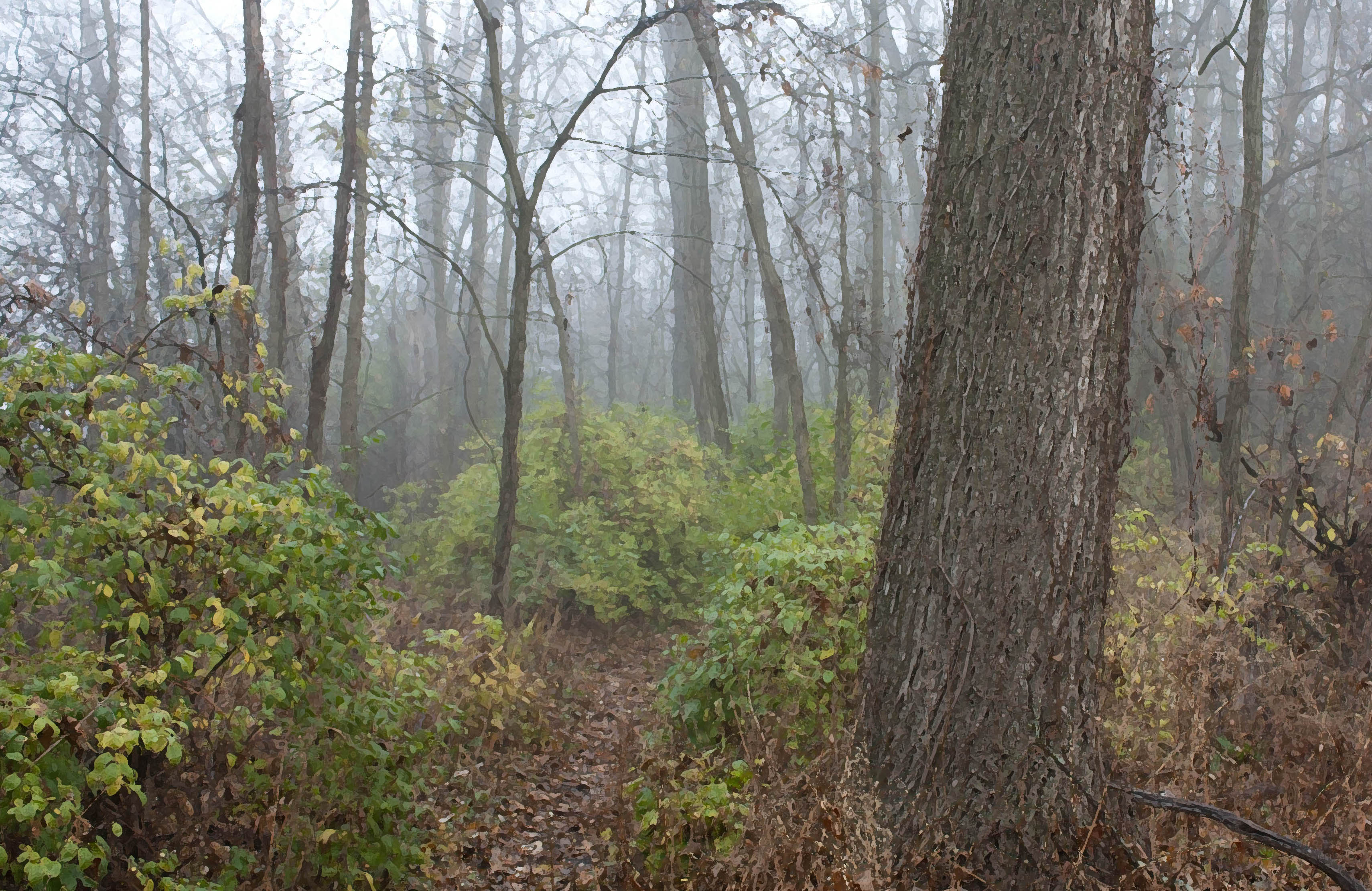



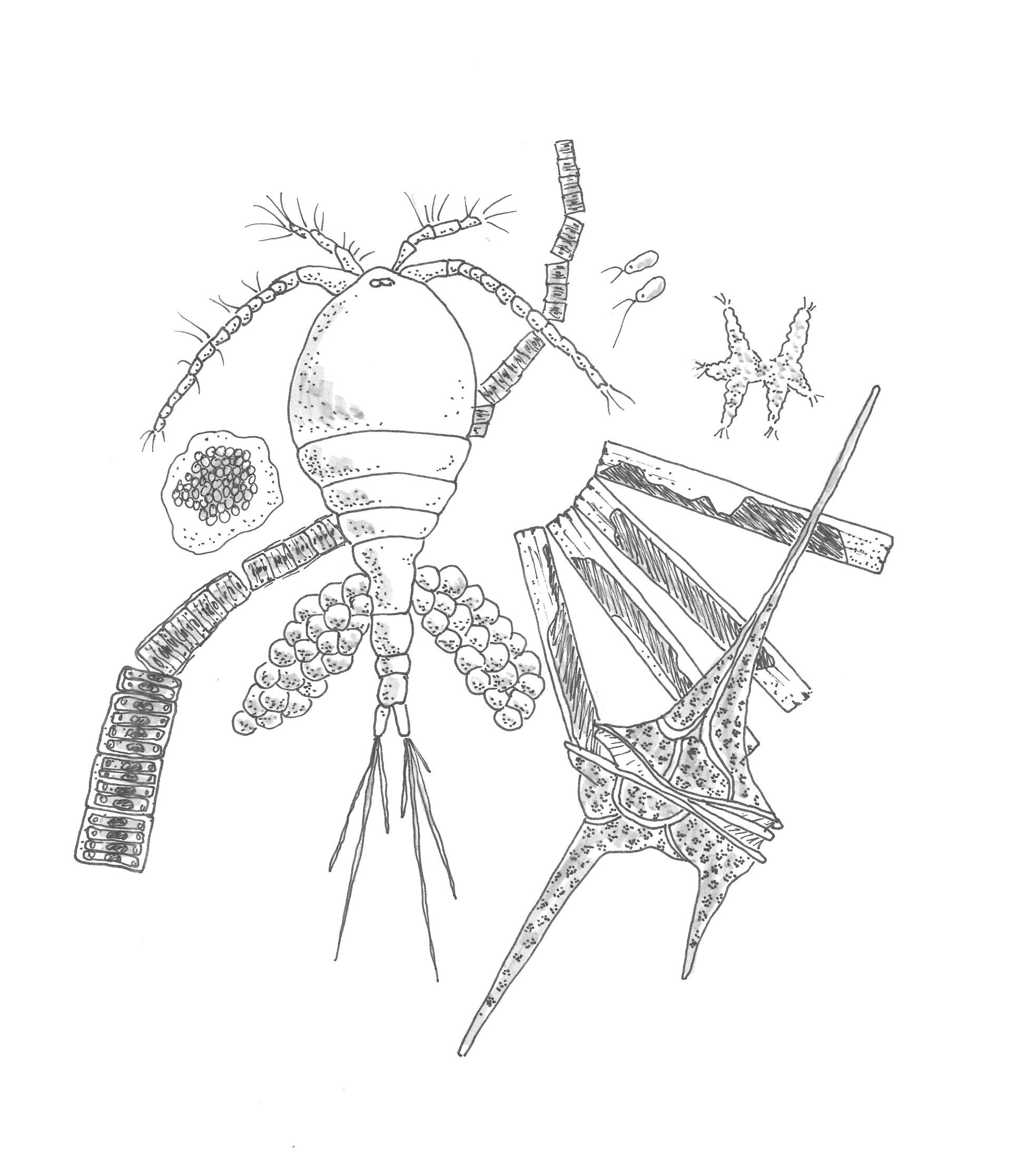


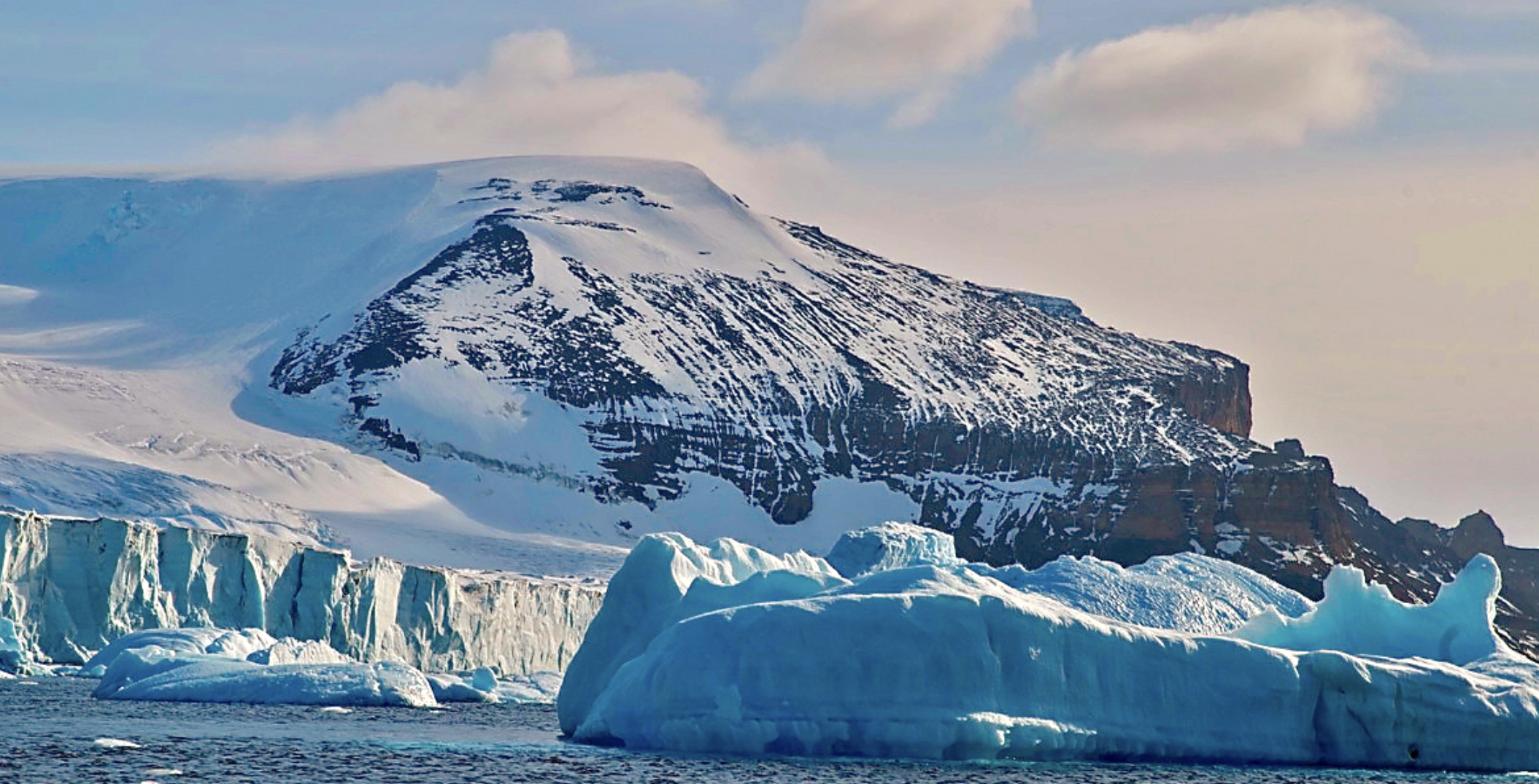


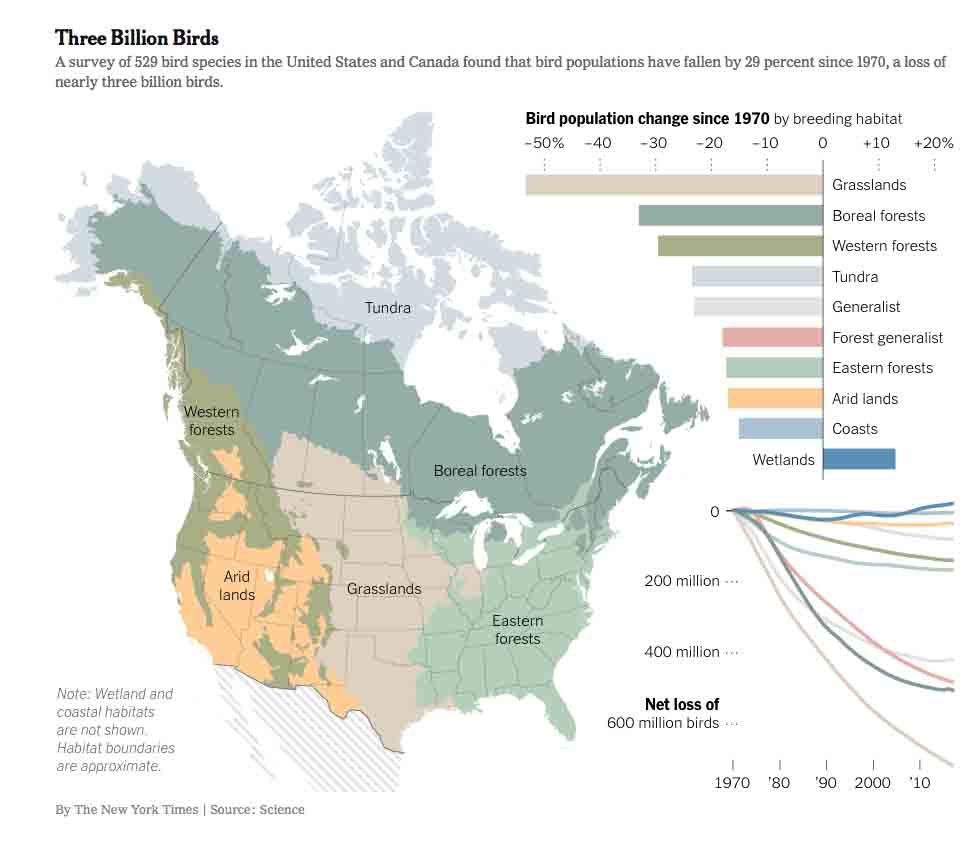


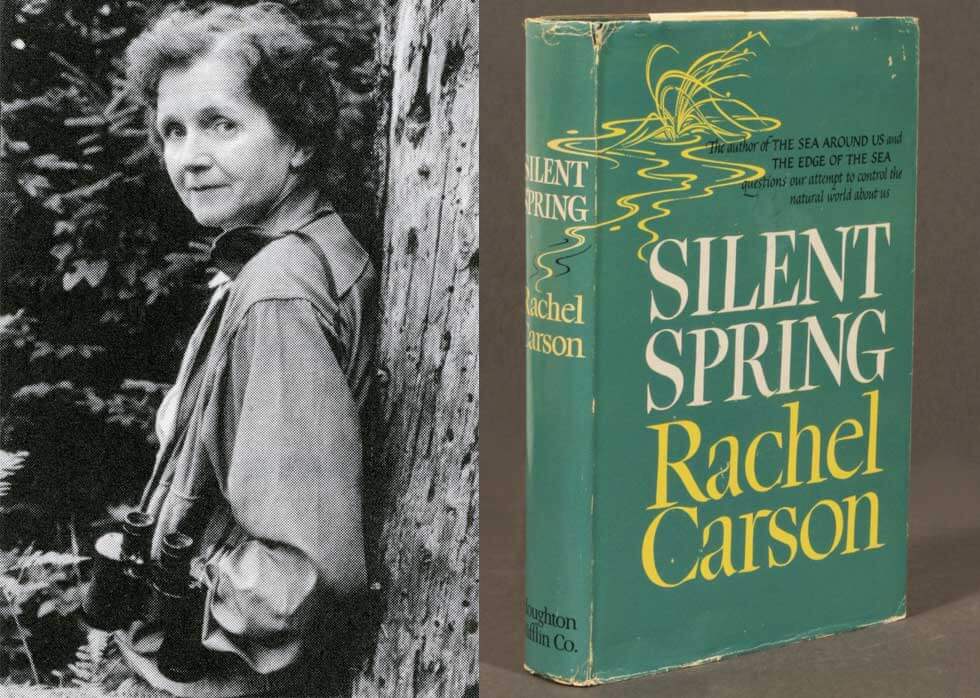

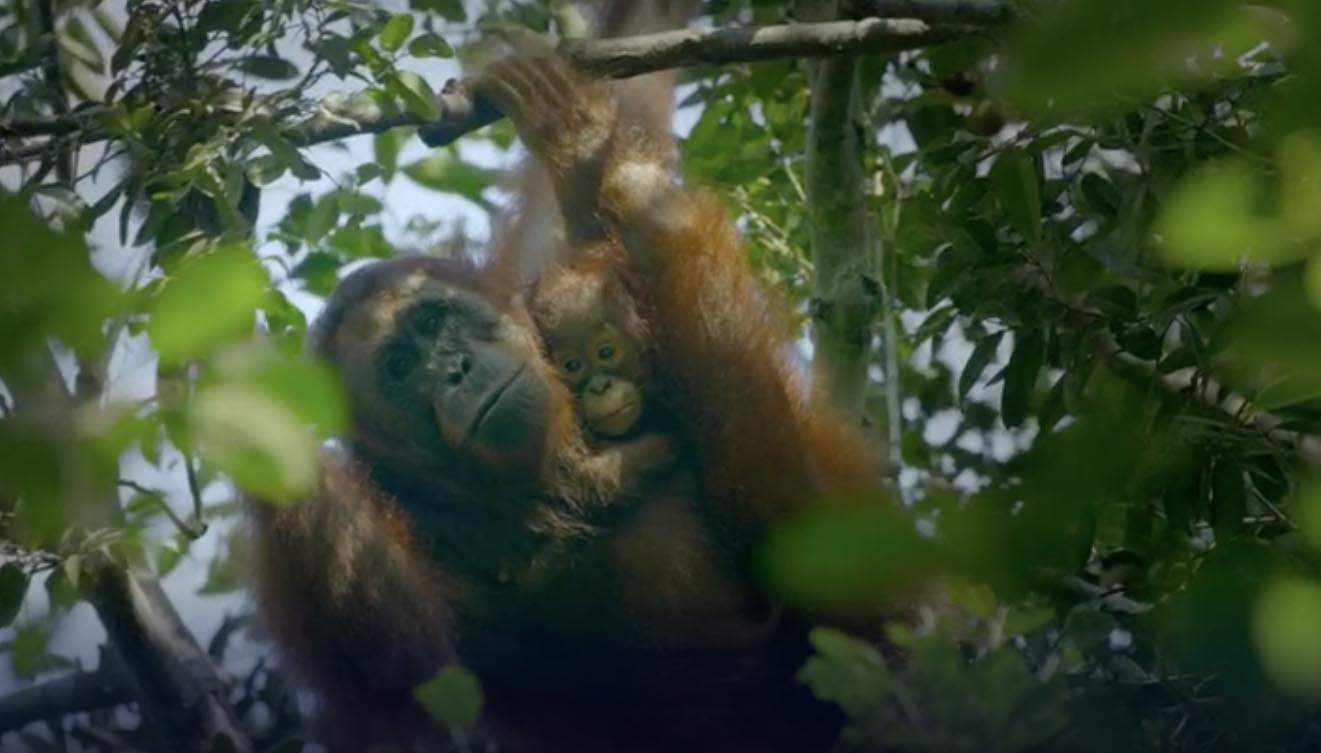
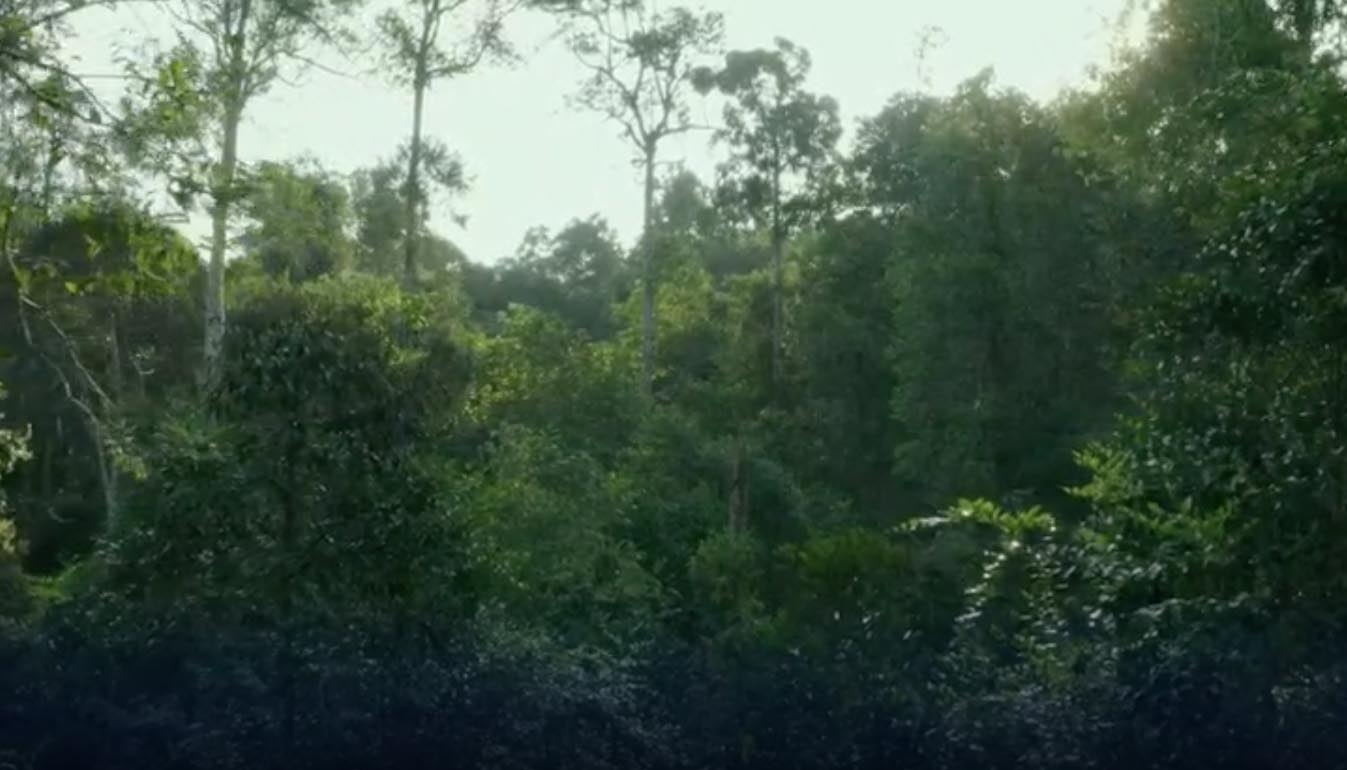


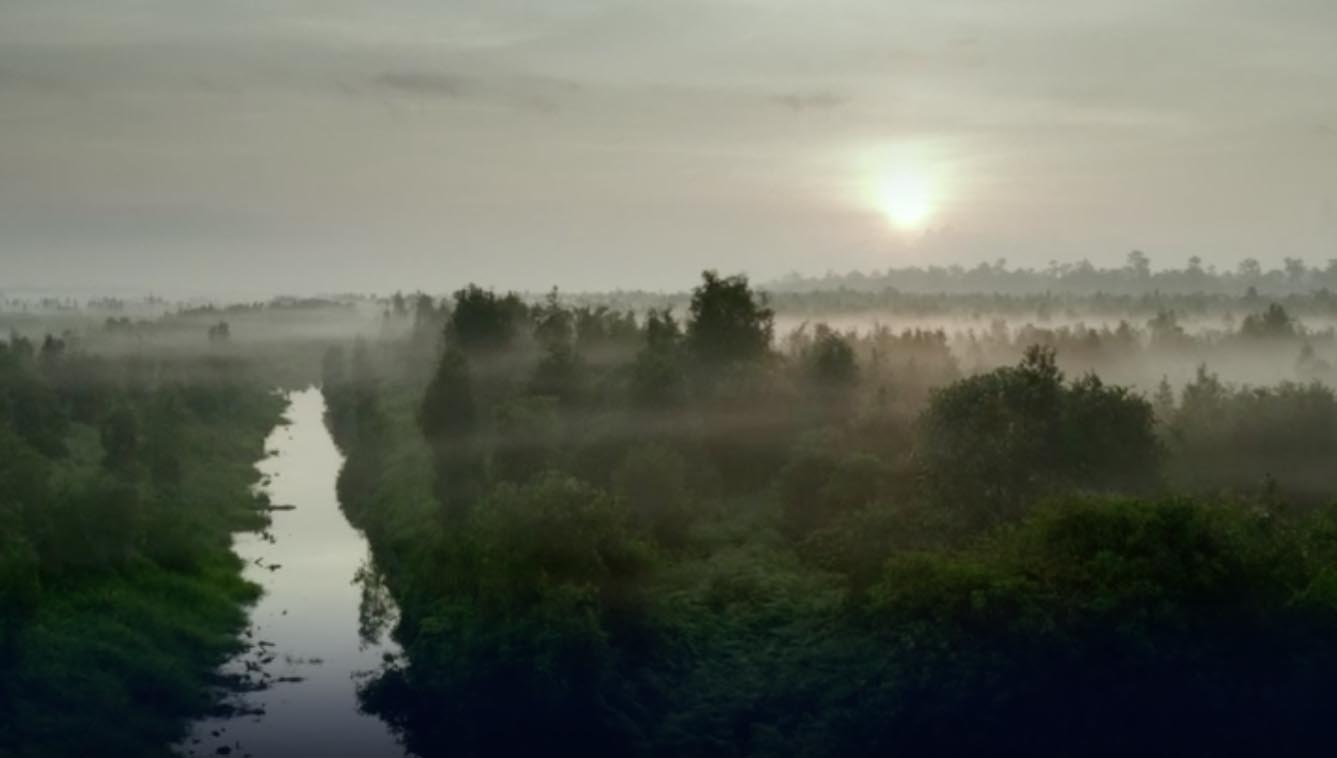

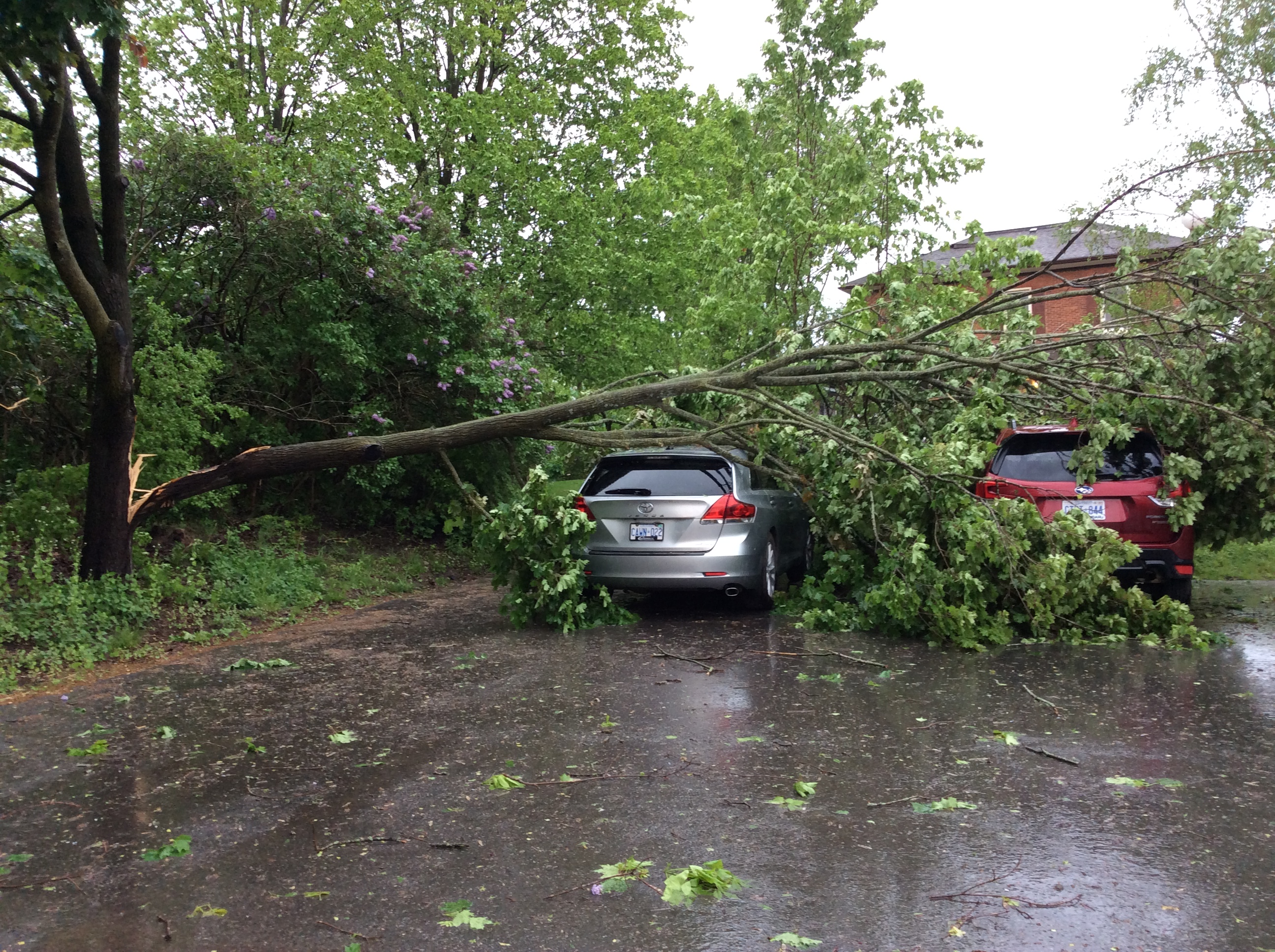


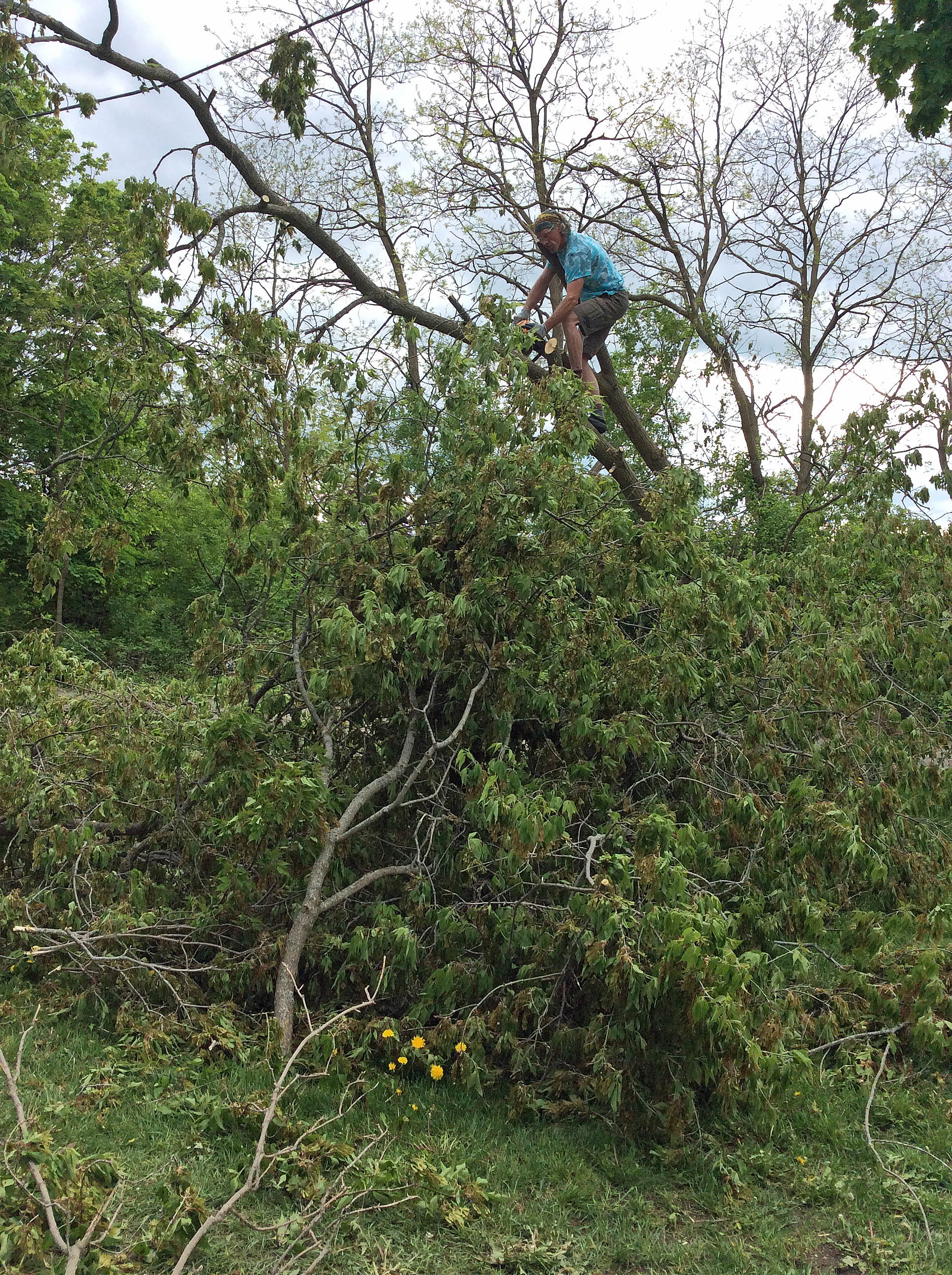


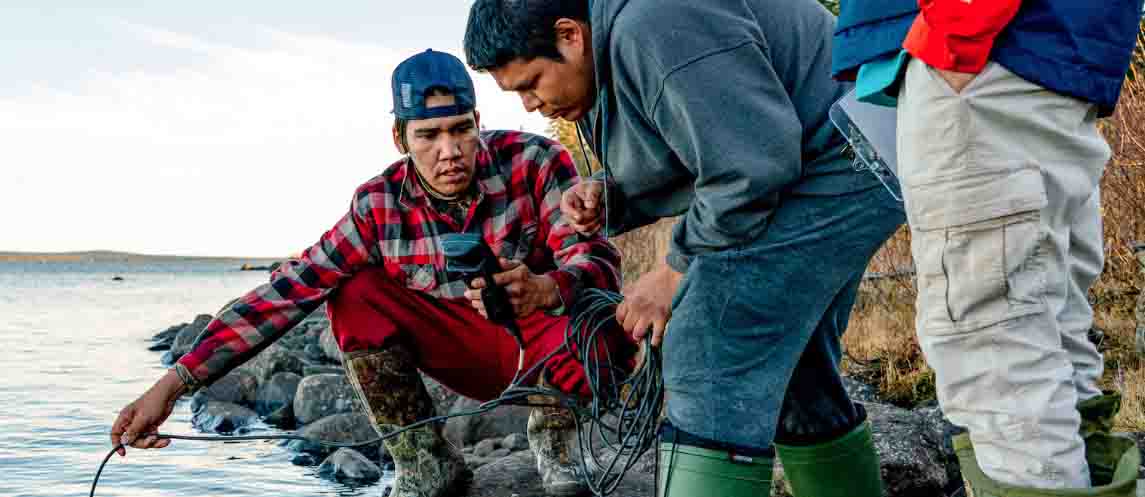

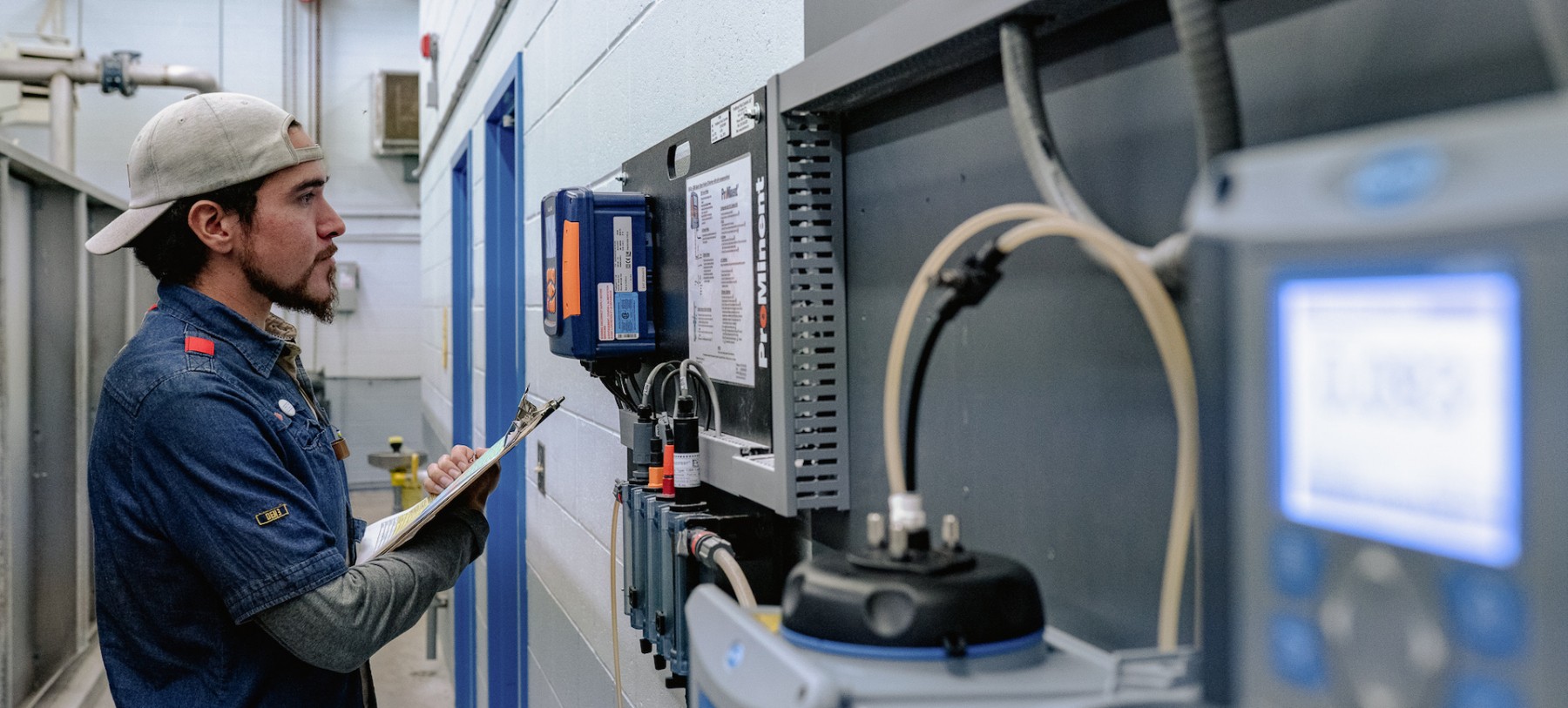





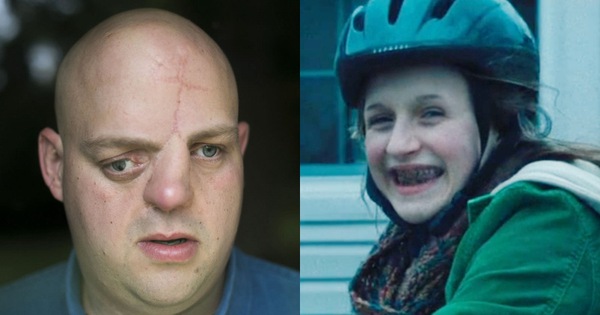
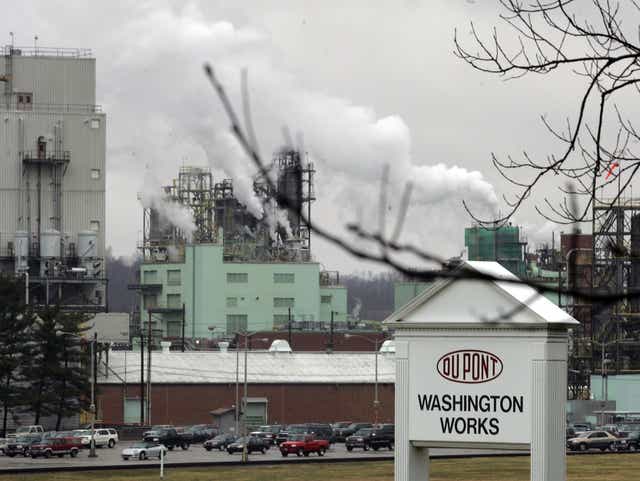




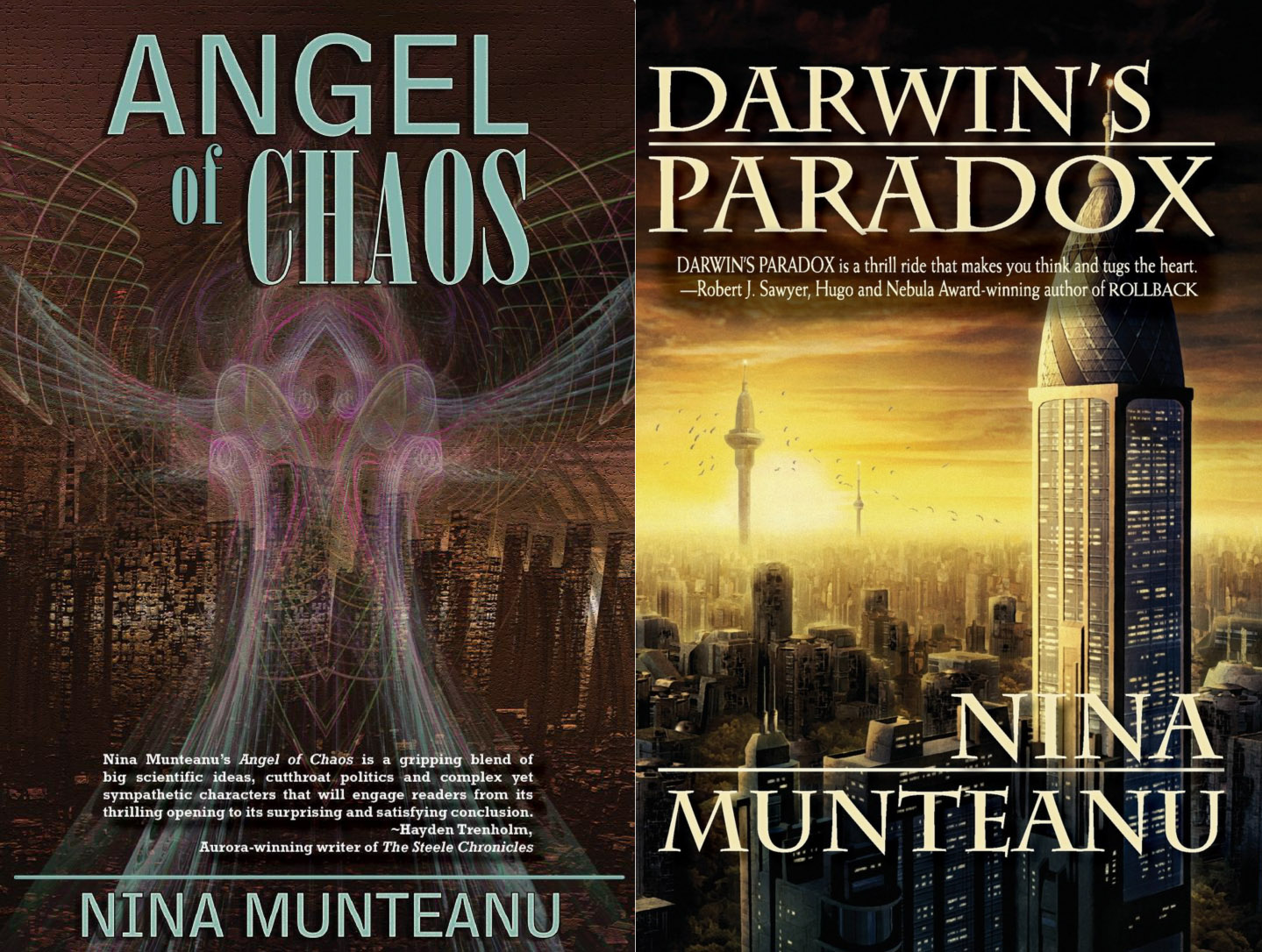


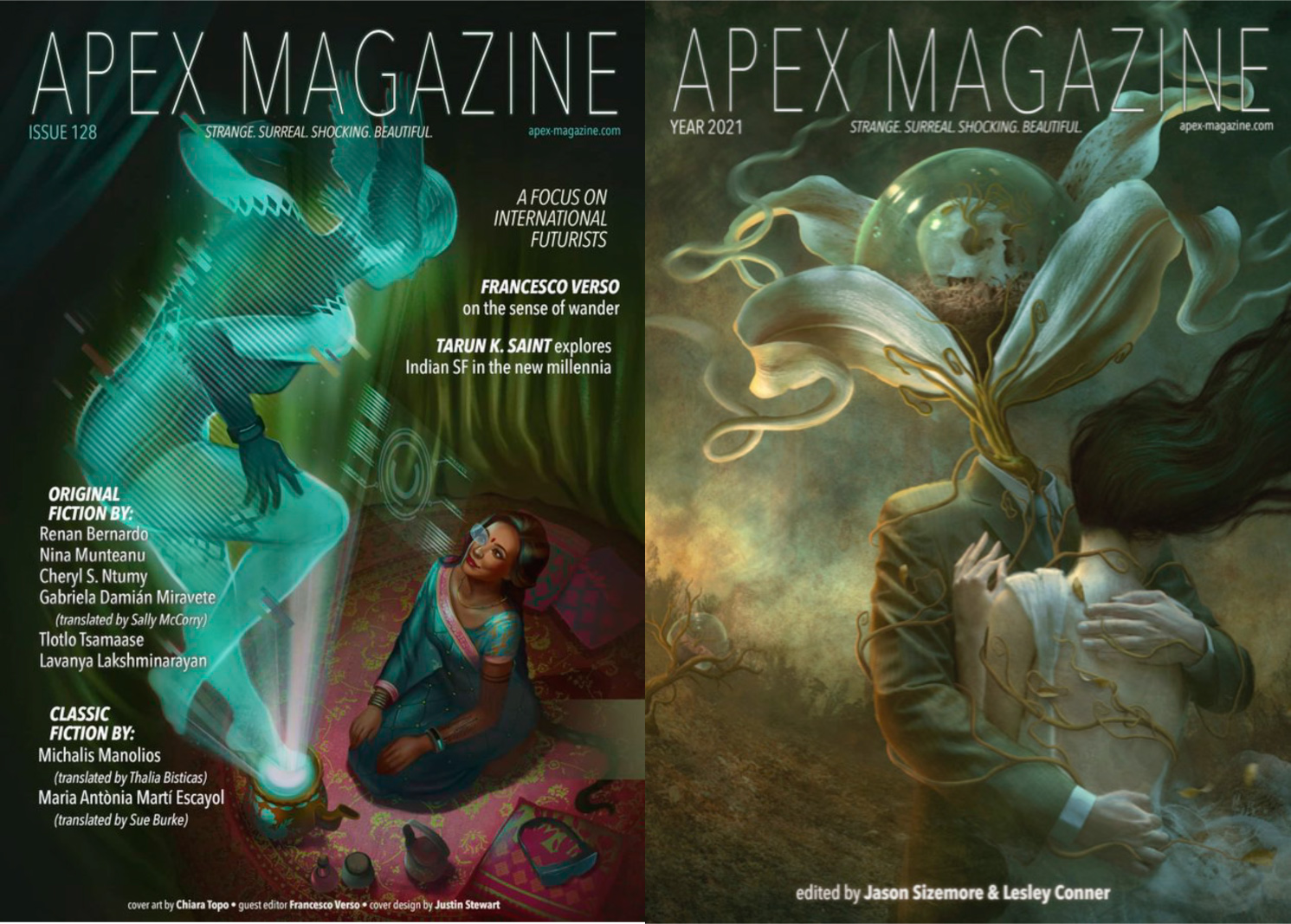

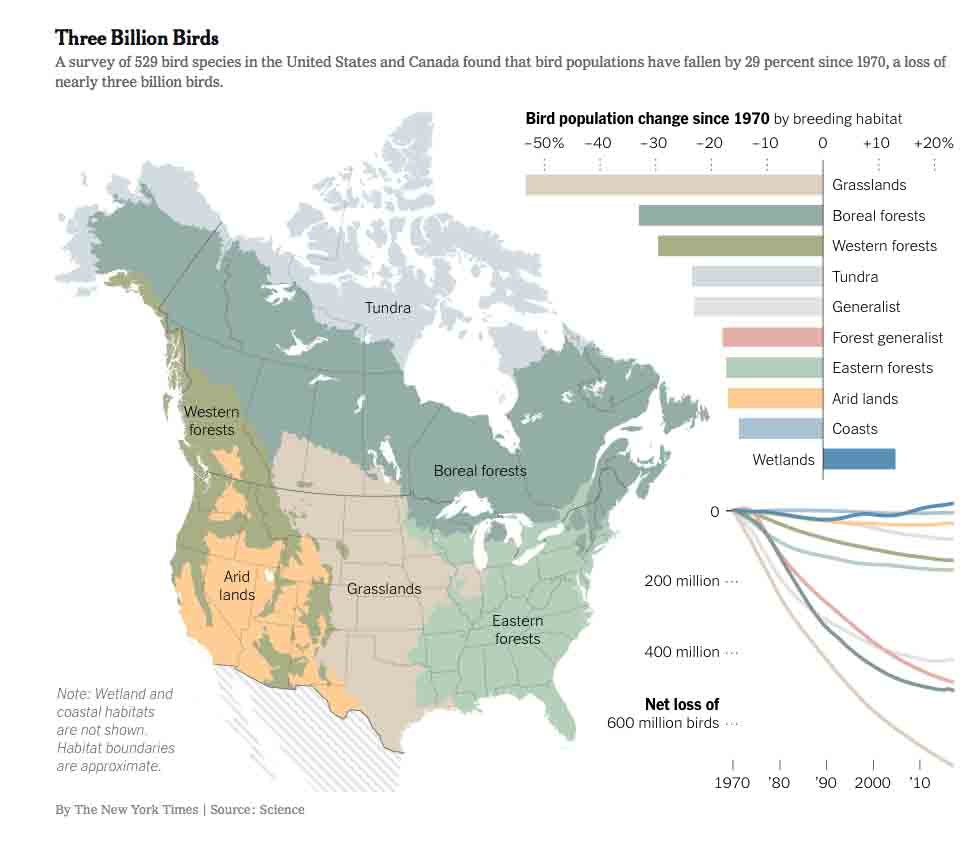
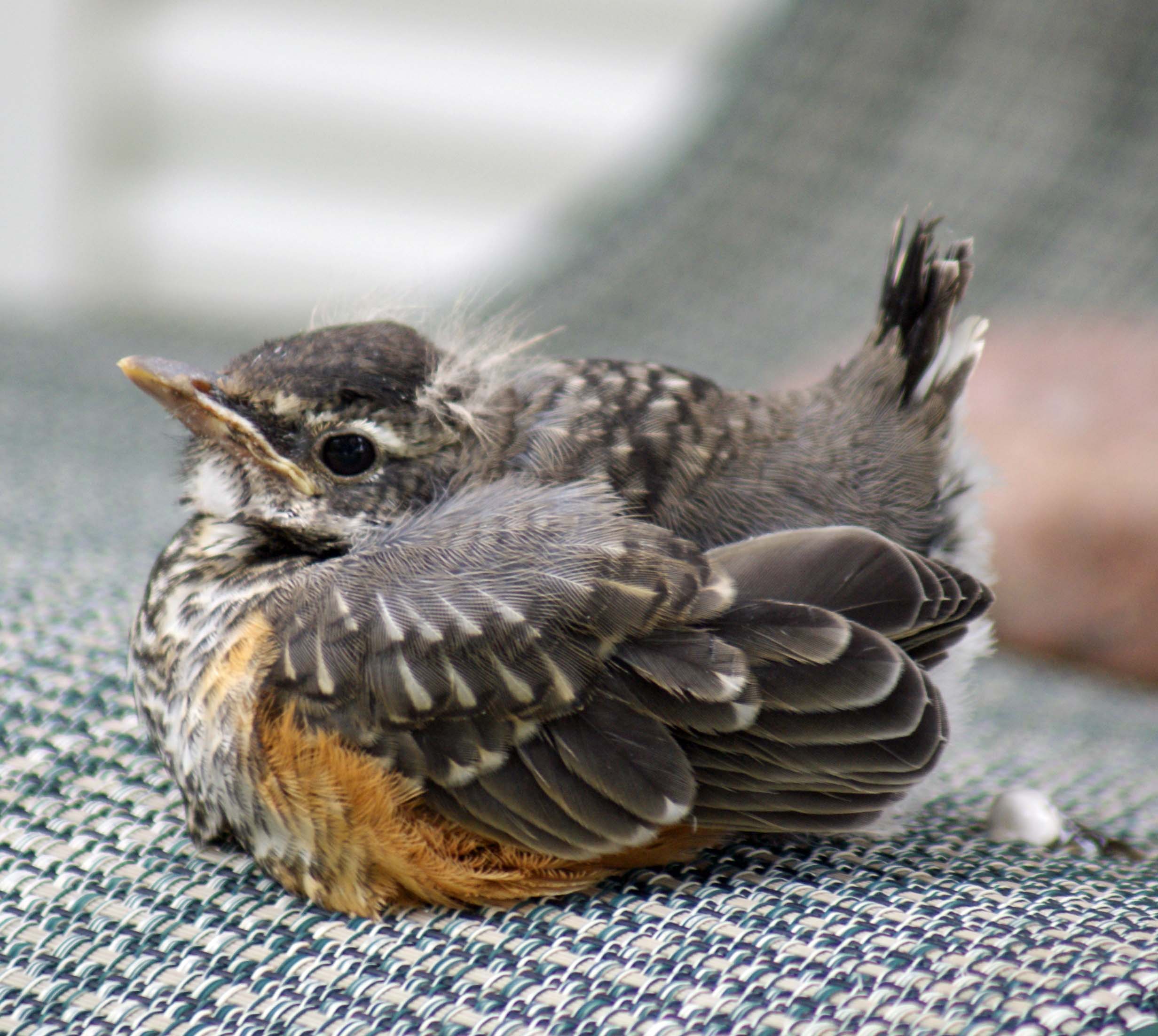


 Nina Munteanu Writing Coach