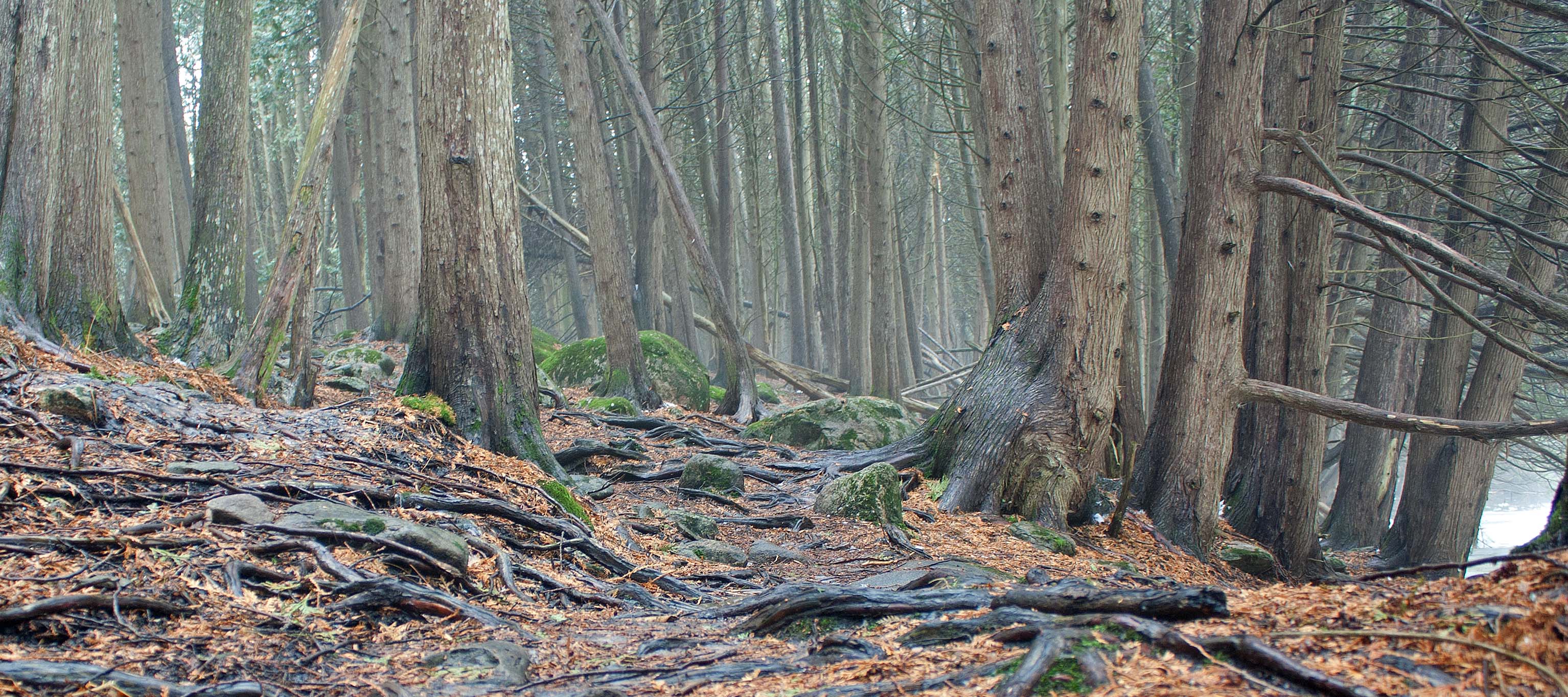
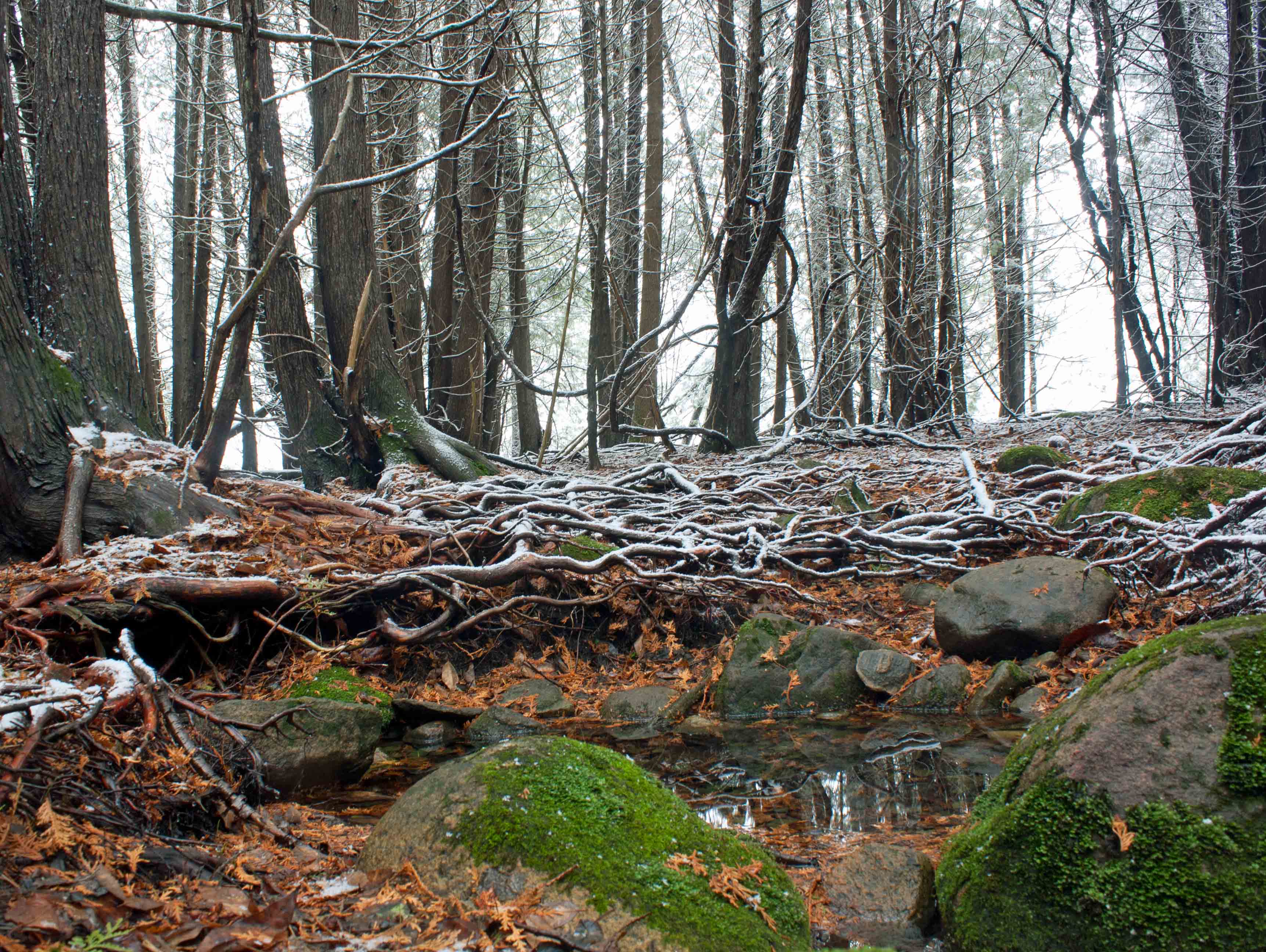
Cedar forest and extensive roots amid glacial erratics flank Jackson Creek on the right, ON (photo by Nina Munteanu)
.
It was a cold November day, after a light snow, as I wandered the Jackson Creek old-growth forest. Centuries-old cedar, pine and hemlock towered above me, giving off the fresh scent of forest. The trees creaked and cracked, swaying in a mischievous wind. I left the main path and descended the leaf-strewn slope toward the river. My boots pressed through a frosty crust into the spongy ground of dead leaves and organic soil. I stopped and breathed in the fresh coolness of the air. A damp mist huddled among the trees, adding wisps of mystery to the ancient forest. It was as though I’d entered an enchanted forest in some fanciful fairy tale.
Cedar forest on slope of Jackson Creek Park in early winter, ON (photo by Nina Munteanu)
.
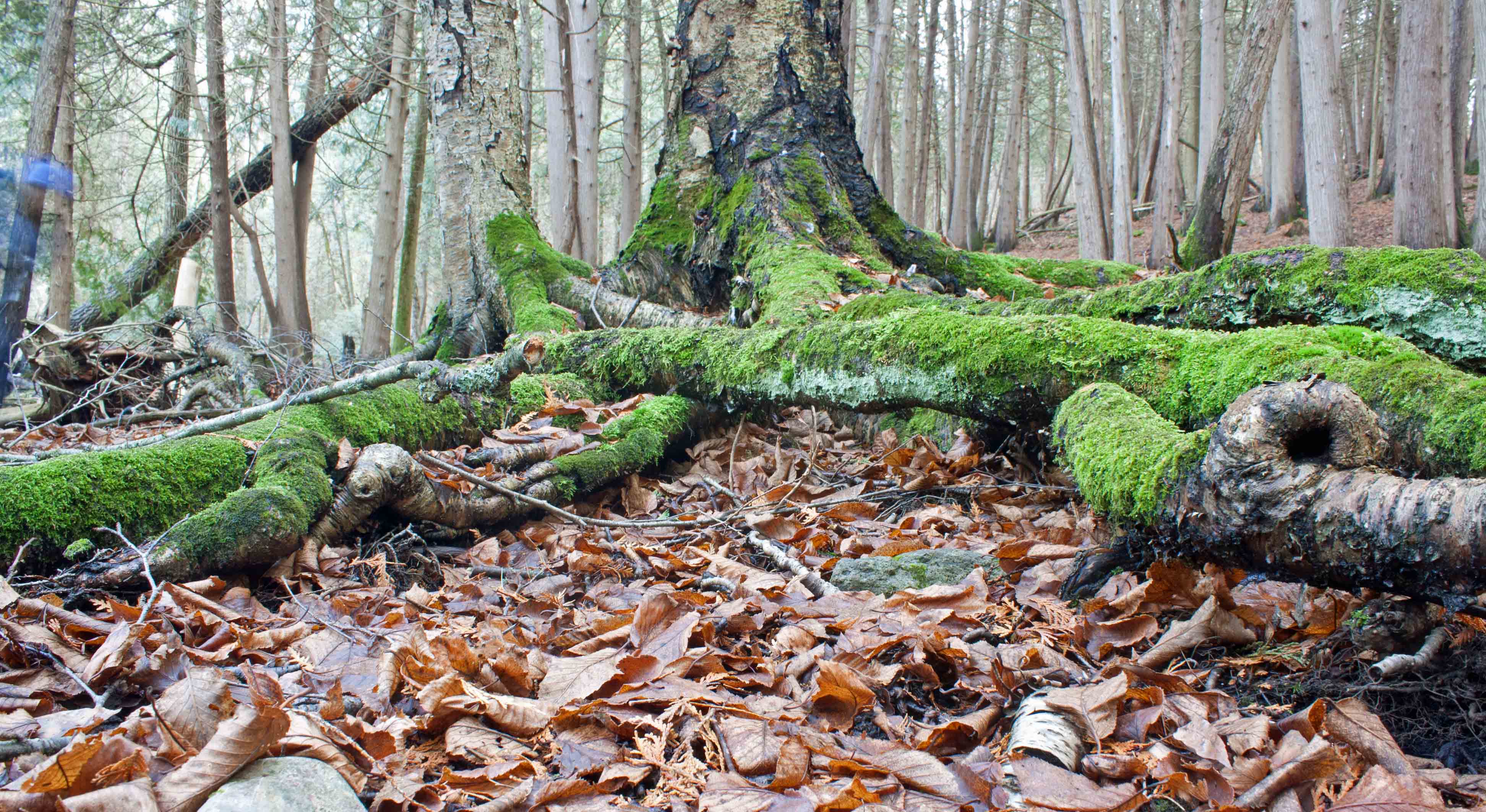
Not far from the river, I approached an old yellow birch tree, large trunk rising as tall as some of the cedars and pines around it. Golden flakes of bark curled and formed craggy patterns around the girth of the old tree. Radiating out from the tree, moss-covered roots snaked out like tangled ropes in a profusion of brilliant green. This was fairy country, I suddenly thought.
I dropped to my knees, crouching down, and set up my tripod and camera to capture this magical tree from the perspective of the forest floor. Head almost touching the ground, I inhaled the scent of loam and decaying leaves. The fresh pungency of cedar, pine, and humid moss hung in the air. Nearby, the river chortled and bubbled in a content symphony of motion. A curious red squirrel parked itself on a log nearby to watch me. It didn’t scold me like they normally did when I entered the forest; like it understood… It then occurred to me, as I set up my equipment under the squirrel’s careful stare, that I was in the presence of an enchantment. Like I was peering into a secret dance of feral celebration. But being there and appreciating it, I had now become part of it; I was Alice going down the rabbit hole into a true wonderland…
It was then that I glimpsed it as I carefully took my timed pictures. A blur of blue. What had I witnessed? A motion? A colour? Then it was gone. But in that moment, I’d felt the spark of an elation that comes with a glimpse into a secret world.
Old yellow birch tree and moss-covered roots with approaching blue sprite from left (photo by Nina Munteanu)
.
When I returned home to look at the images I saw that my camera had captured a wispy blue entity that flowed into its view and peered around the old birch at me with a kind of curious though mischievous grin.
Had I just captured a blue sprite? Something was unmistakably there!
Forest sprite peers around a yellow birch tree, Jackson Creek Park, ON (photo by Nina Munteanu)
.
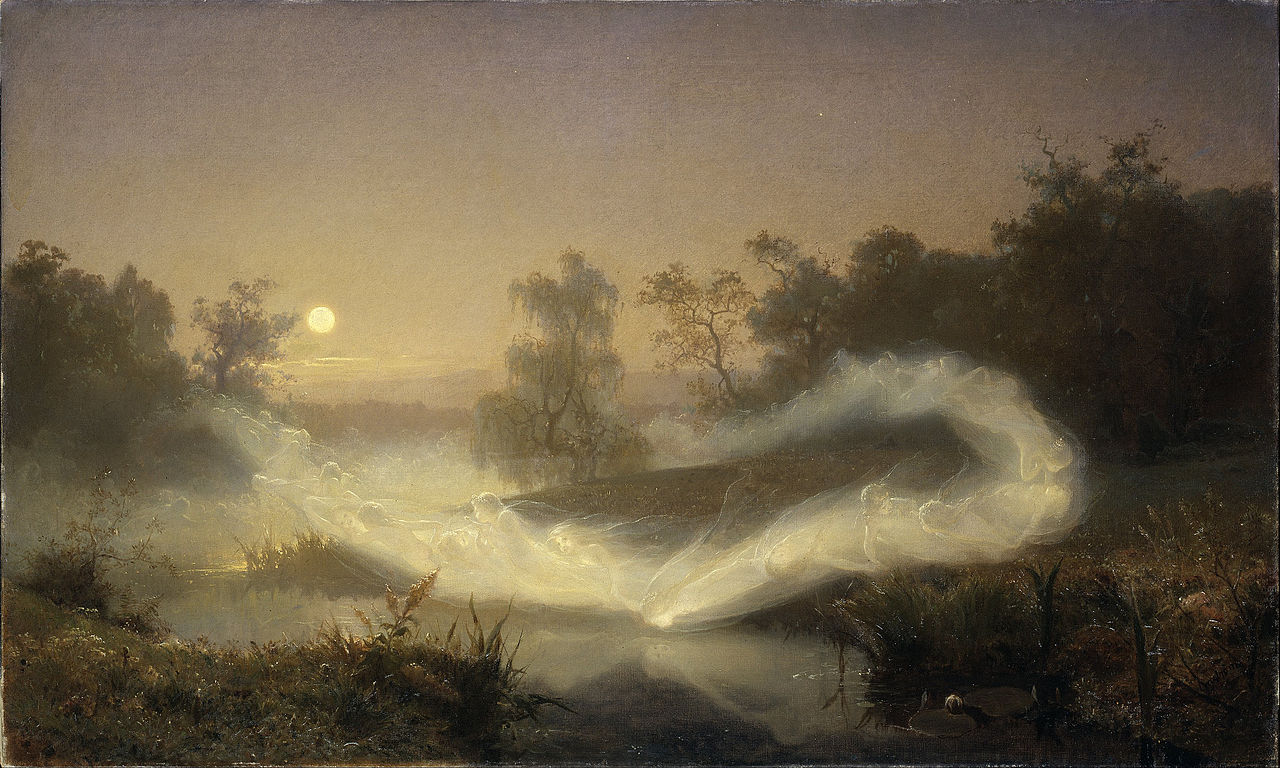
I read up on sprites. According to European lore, a sprite is a supernatural entity. They are often depicted as fairy-like creatures or as an ethereal entity. The word sprite comes from the Latin spiritus (“spirit”), via the French esprit.
Given that the sprite I’d observed was blue and we were close to the river, I wondered if it was not a forest or wood sprite, but a water sprite. According to alchemist Paracelsus, the term ‘water sprite’ is used for any elemental spirit associated with water. They can breathe water or air and sometimes can fly. They also possess the power of hydrokinesis, which is the ability to create and manipulate water at will. Also known as ‘water nymphs’ and naiads (or nyads), these divine entities tend to be fixed in one place. Slavic mythology calls them vilas. Sprites are not corporeal beings (like selkies, mermaids and sirens) given that they are not purely physical; they are more like local deities than animals. This explained the wispy nature of the being I’d seen peering at me from the tree.
“Dancing Fairies” by August Malmström
.
After consulting with several friends—some who purported to know much more about sprites than I did—I concluded that this sprite was, in fact, a forest sprite and it was blue because it was near the water. Friend Merridy suggested that “forest sprites, normally green, may turn blue if a nearby brook calls to them.” She added that “water sprites can be distinguished by their chatty nature. They rarely go beyond the banks of a river or brook. Forest sprites are mostly silent.” Which this one certainly was. Friend Craig then pondered, “Are digital sprites in our world or in an electro-magnetic world? Or something else?” He was referring to them showing up on my camera without me even noticing they were there. When I told him I would return in search of them he observed, “if you’re looking for them that might be when they hide. Or maybe not. Any type of sprite is probably good, mischievous or friendly.” Thanks, Craig! That was helpful…
Glacial erratic boulders in Jackson Creek, ON (photo by Nina Munteanu)
Century-old beech tree, decaying and moss-covered in early winter, Jackson Creek Park, ON (photo by Nina Munteanu)
Ancient cedar tree stands next to an ice sheet on the path beside Jackson Creek, ON (photo by Nina Munteanu)
.
I visited the forest many times after but saw no sign of any sprites. Perhaps Craig was right; they were hiding from me.
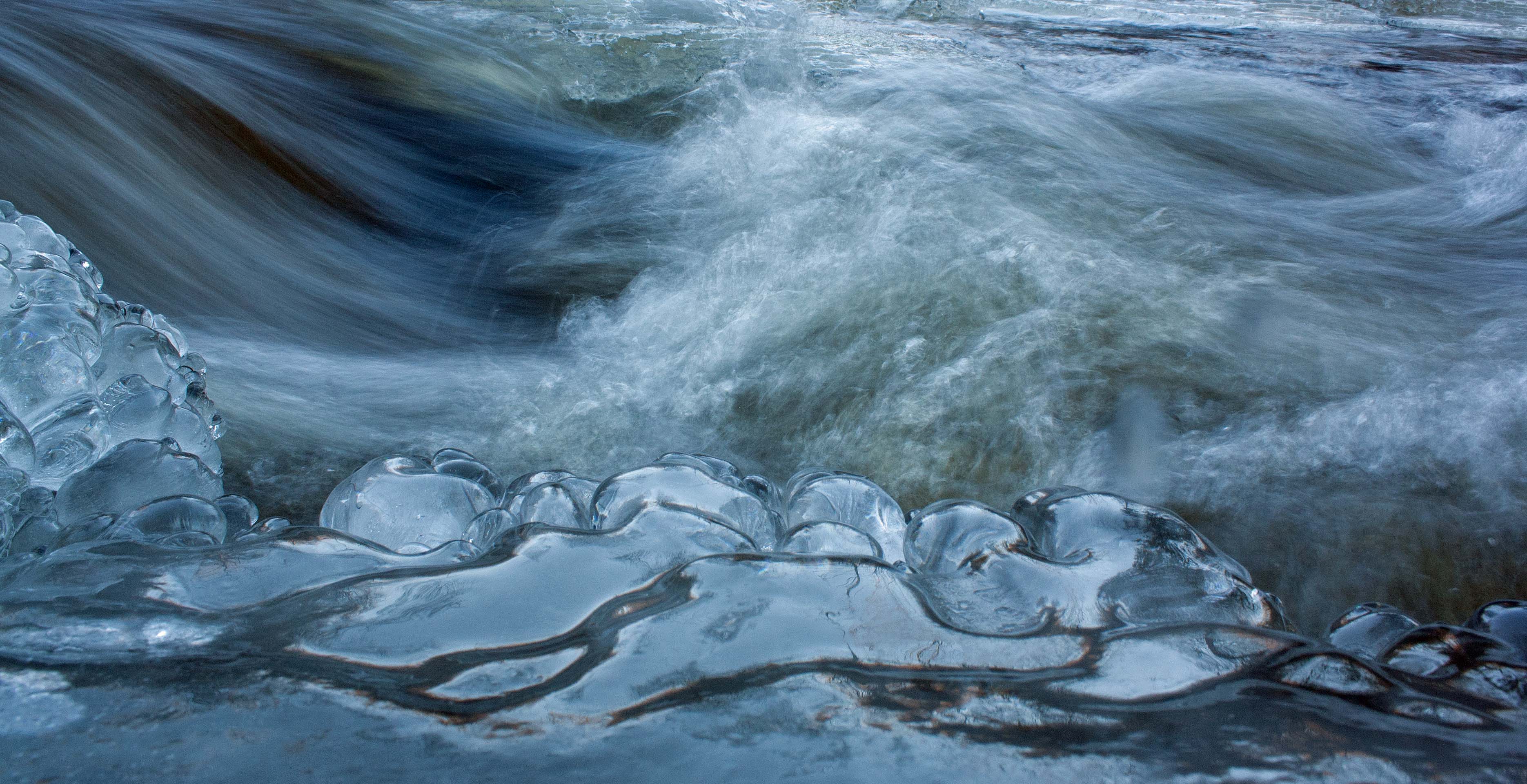
Then, on a foggy late December day, after a light dusting of snow, I returned to document the ice forming in the river. Islands and columns of ice had created a new topography for the flowing waters of Jackson Creek. Ice sheets also covered the forest path in places—making the walk somewhat treacherous. At times, I had to scramble and seize hold of branches to haul my way up precipitous banks from where I’d captured sculptures of ice ‘pearls,’ ‘platforms,’ and ‘columns’ on the river.
Ice forming on Jackson Creek in early winter, ON (photo by Nina Munteanu)
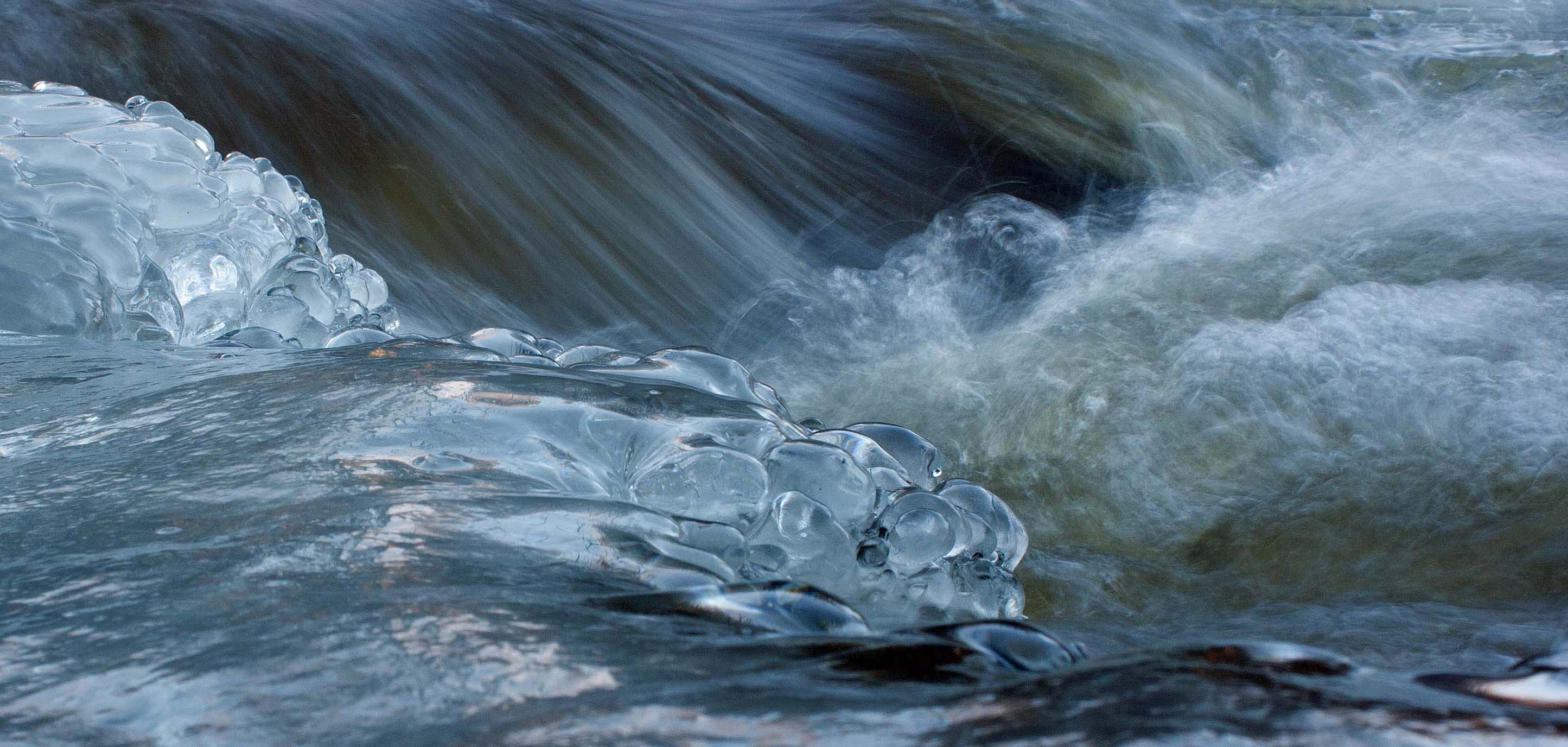
Ice ‘pearls’ forming on shore by rushing river, Jackson Creek, ON (photo by Nina Munteanu)
.
The fog grew thick as my walk eventually led me into an area of eccentric lopsided cedars in a ‘drunken’ stand by the river bank. The cedars sent out a tangled tapestry of gnarly roots I had to negotiate. I could feel the earth-magic. I dropped to my knees again and set my camera and tripod to the level of the roots. That is when I saw the blue sprite again! This time the sprite wasn’t playful; it appeared startled and disoriented. But, I managed to capture it as it fled the scene in wisps of blue smoke. As I left the forest, my thoughts returned to this serendipitous moment. Had I interrupted the wood /earth sprite in its work in the forest? These sprites are known to have the power of chlorokinesis, the ability to grow and control plants at will. When I checked my images at home, the sprite appeared to float near one of the cedars.
Blue forest sprite floats by cedar tree, Jackson Creek Park, ON (photo by Nina Munteanu)
.
When she saw the image, friend Merridy asked, “was the sprite entering the tree?” Thinking of incantations, friend Dyana asked if I’d had my recording feature on, which I’d never thought to do. On second thought, she decided that it might be dangerous. Not a good idea to anger a sprite. Friend Gabriela then challenged me: “did you ask what message they have for you, Nina? They keep showing up in your way, they might have a message for you or to be delivered through you to…” whoever… I hadn’t thought of that either. How would I hear their message when they were silent and so fleeting, I challenged back. She wisely responded, “Just ask yourself the question; you might be surprised when your next thought brings the answer. Since everything is energy, and you saw them at least twice, you’re probably connected with them.”
Sprite vaporizes behind tree, Jackson Creek Park, ON (photo by Nina Munteanu)
.
I didn’t tell her that the question that came to mind after seeing the sprite was: I wonder what’s for dinner!
I must ponder this more, however.
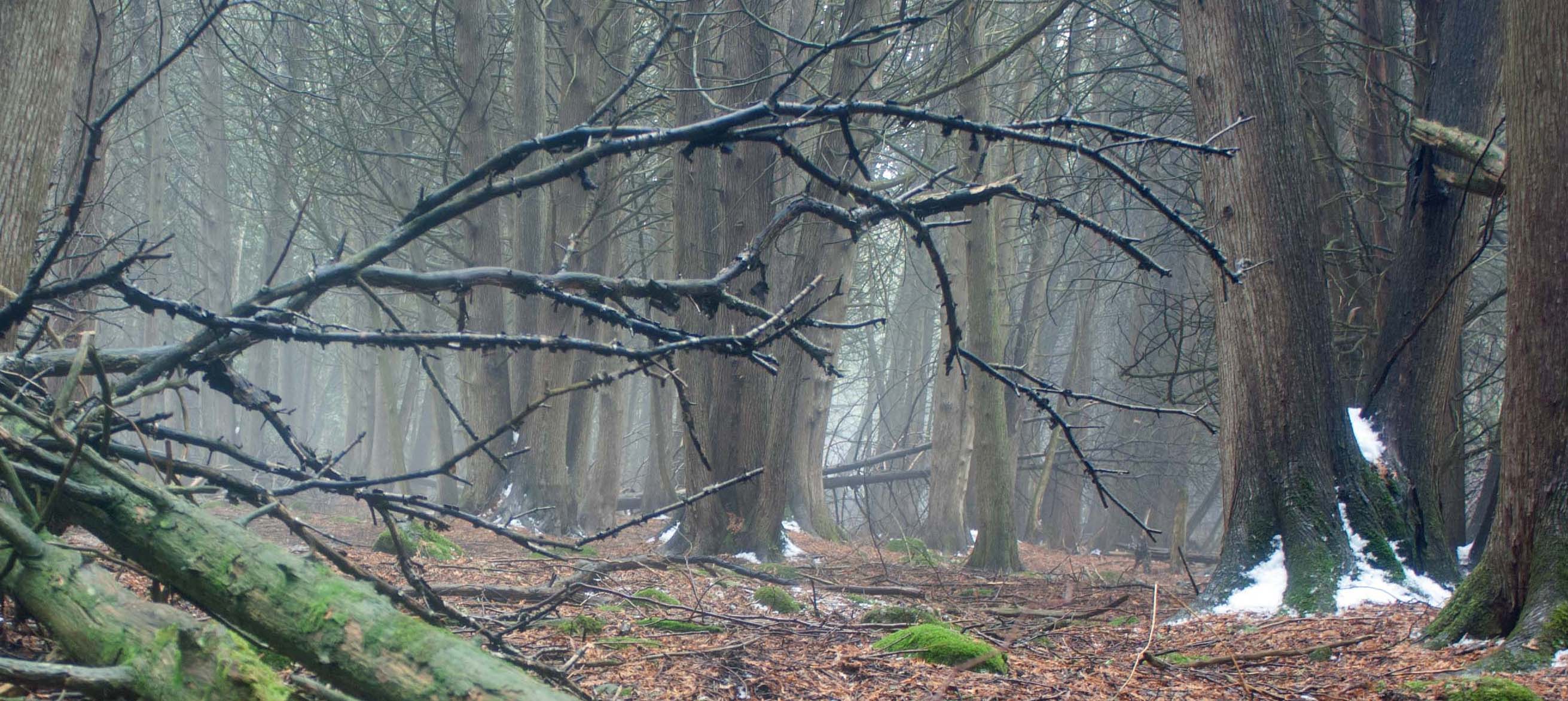
Cedar forest on a misty winter day, Jackson Creek Park, ON (photo by Nina Munteanu)
Thinking of Gabriela’s interesting remark, I am reminded of a rather sad but evocative tale by Vladimir Nabokov entitled “The Wood Sprite.” Told in the first person, it recounts the narrator’s experience when he was visited at his desk by an old wood sprite, “powdered with the pollen of the frosty, starry night.” The creature tells of his exile from a country wood in Russia, all cut down and burned amid the treachery of war.
Now that I think of it, I know the blue sprite’s message. And now you know it too.
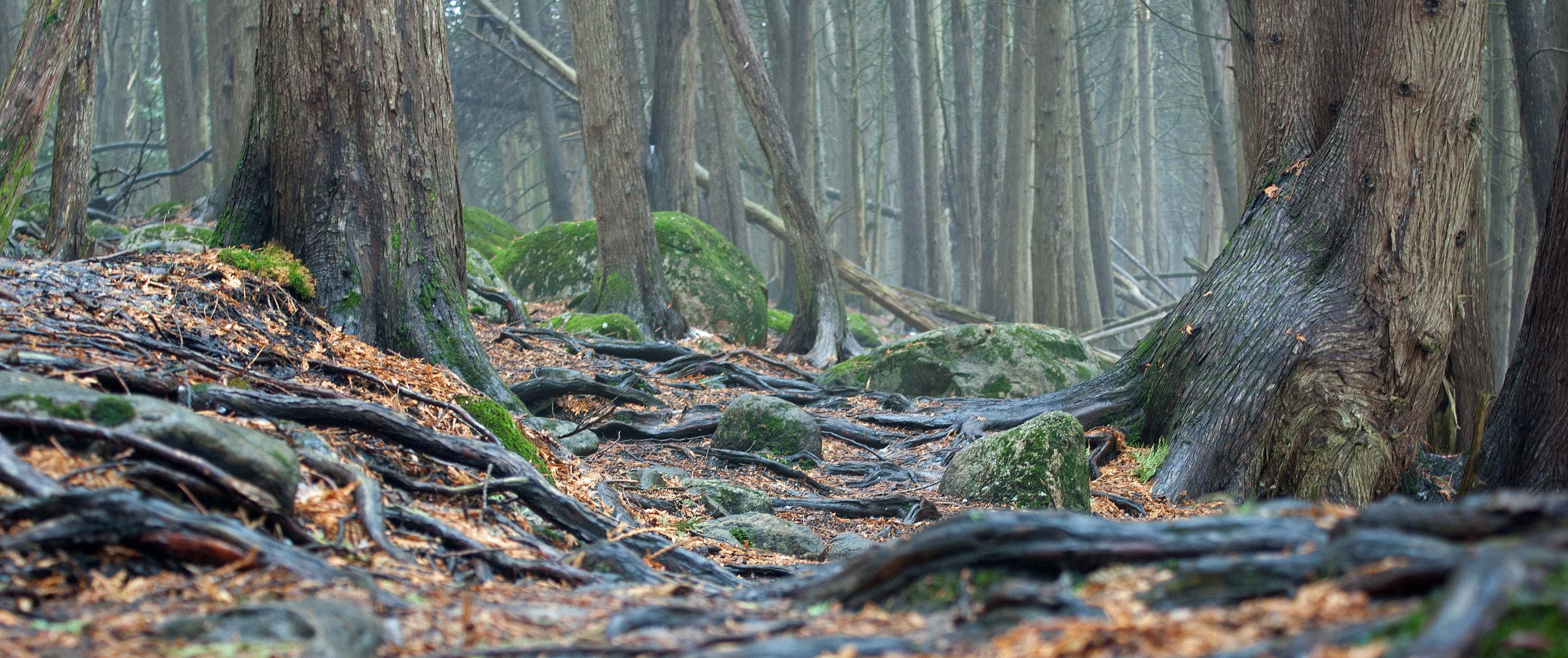
Cedar forest and roots amid glacial erratics in Jackson Creek Park, ON (photo by Nina Munteanu)
Nina Munteanu is a Canadian ecologist / limnologist and novelist. She is co-editor of Europa SF and currently teaches writing courses at George Brown College and the University of Toronto. Visit www.ninamunteanu.ca for the latest on her books. Nina’s bilingual “La natura dell’acqua / The Way of Water” was published by Mincione Edizioni in Rome. Her non-fiction book “Water Is…” by Pixl Press(Vancouver) was selected by Margaret Atwood in the New York Times‘Year in Reading’ and was chosen as the 2017 Summer Read by Water Canada. Her novel “A Diary in the Age of Water” was released by Inanna Publications (Toronto) in June 2020.
Undulating hills of a farmer’s field in Kawartha countryside, ON (photo and dry brush rendition by Nina Munteanu)
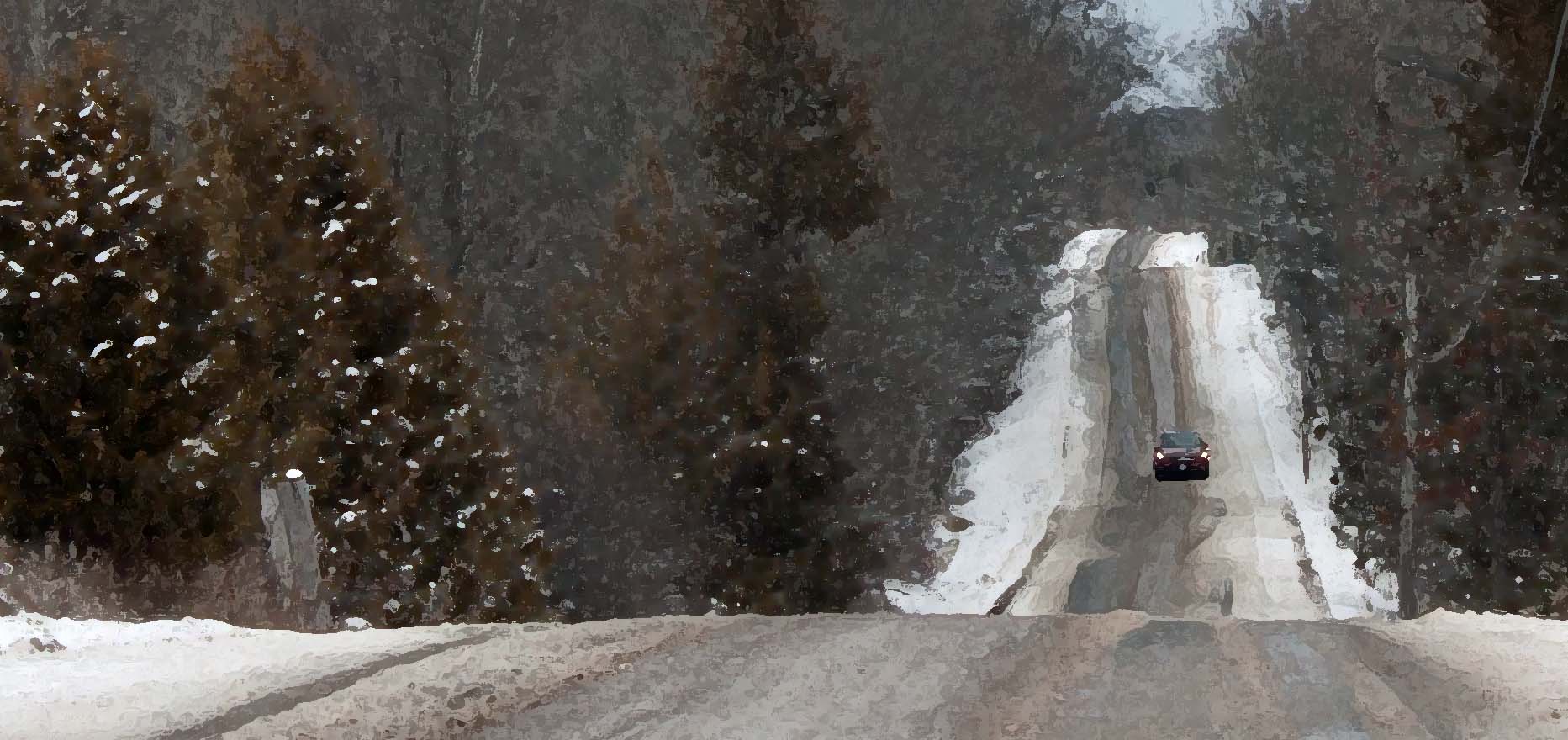
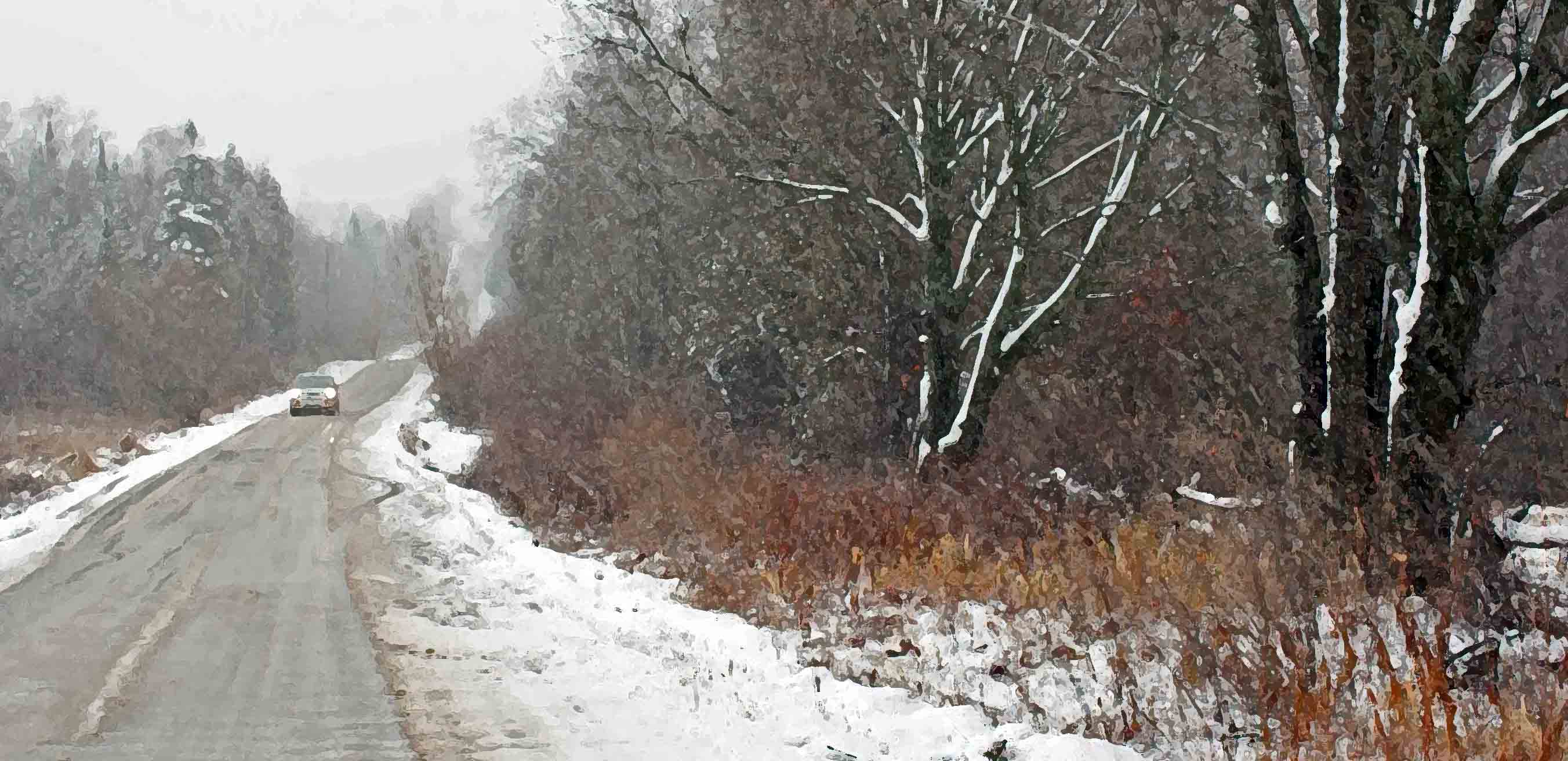
Country road in Kawarthas during snowfall early winter, ON (photo and dry brush rendition by Nina Munteanu)
Farmer’s field by country road in early winter, ON (photo and dry brush rendition by Nina Munteanu)
Country road viewed from Kawartha drumlin during snowfall, ON (photo and dry brush rendition by Nina Munteanu)
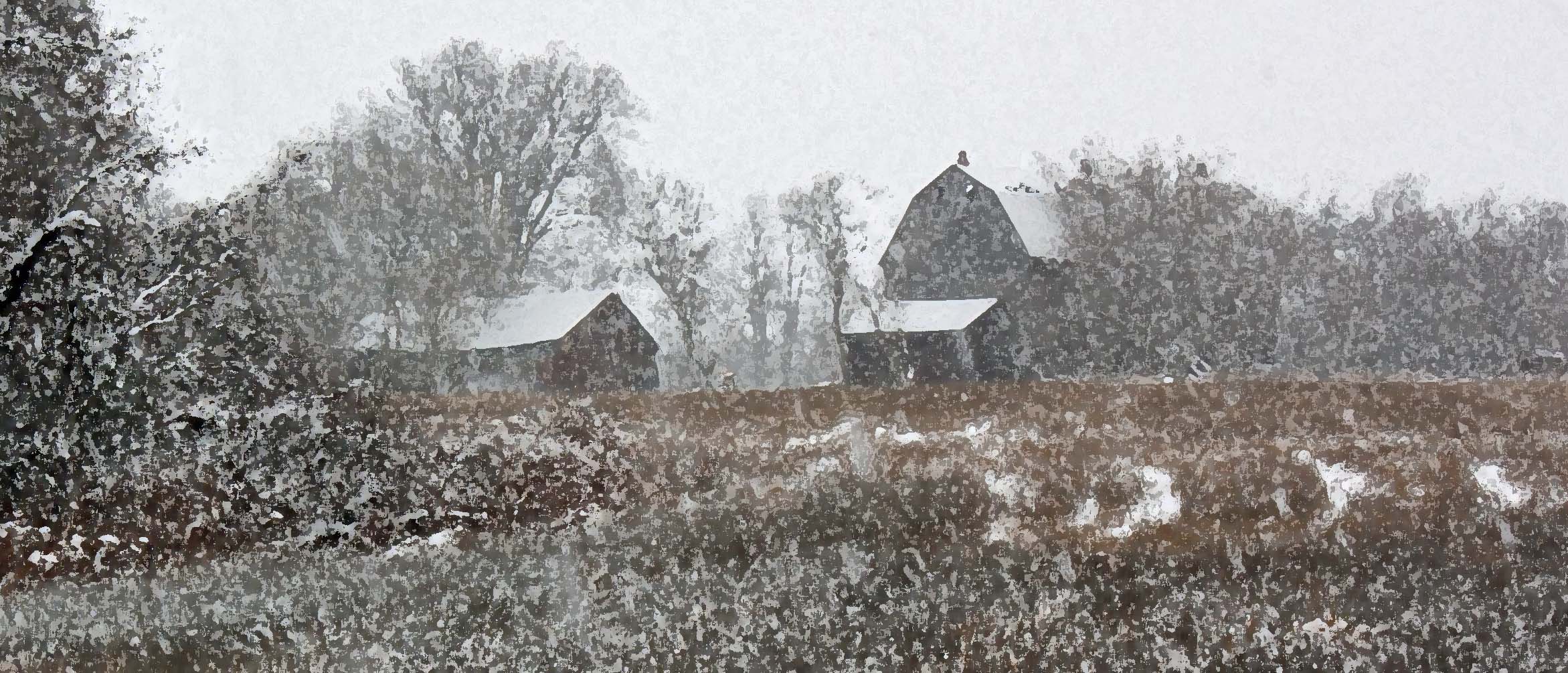
Small farm in Kawartha countryside in winter, ON (photo and dry brush rendition by Nina Munteanu)
Country road in winter on a sunny day, ON (photo and dry brush rendition by Nina Munteanu)
Farmer’s field during snow fog of winter, ON (photo and dry brush rendition by Nina Munteanu)
Country road during snowfall, ON (photo and dry brush rendition by Nina Munteanu)
Farm and field during heavy snowfall, ON (photo and dry brush rendition by Nina Munteanu)
Country road in Kawarthas in winter, ON (photo and dry brush rendition by Nina Munteanu)
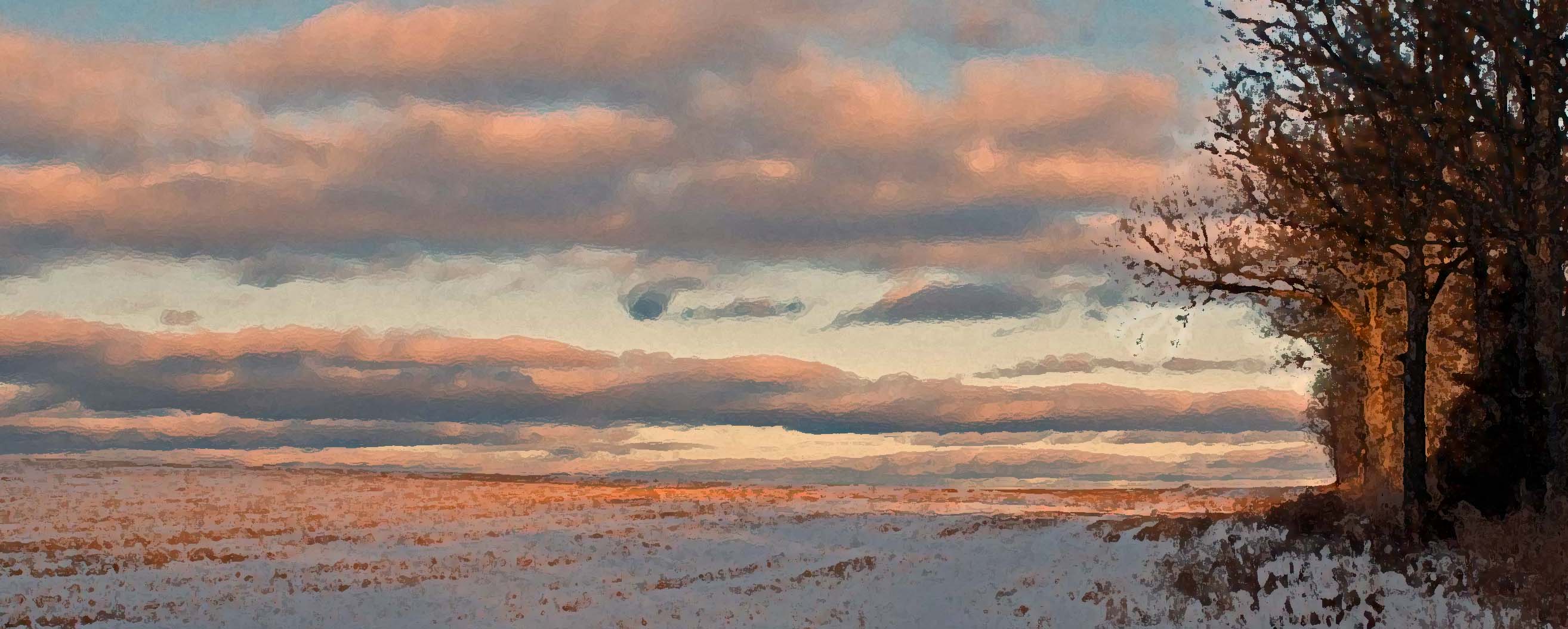
Farmer’s field aglow at sunset in winter, ON (photo and dry brush rendition by Nina Munteanu)
Nina Munteanu is a Canadian ecologist / limnologist and novelist. She is co-editor of Europa SF and currently teaches writing courses at George Brown College and the University of Toronto. Visit www.ninamunteanu.ca for the latest on her books. Nina’s bilingual “La natura dell’acqua / The Way of Water” was published by Mincione Edizioni in Rome. Her non-fiction book “Water Is…” by Pixl Press(Vancouver) was selected by Margaret Atwood in the New York Times‘Year in Reading’ and was chosen as the 2017 Summer Read by Water Canada. Her novel “A Diary in the Age of Water” was released by Inanna Publications (Toronto) in June 2020.
I was recently interviewed by Matt Nappo on Minddog TV in New York, where we talked about the science and magic of water, climate change and how to not become cynical, the process of writing, what scares us and what takes us through it into great storytelling.
Here’s the interview:
Matt Nappo interviews limnologist and clifi author Nina Munteanu on minddog TV
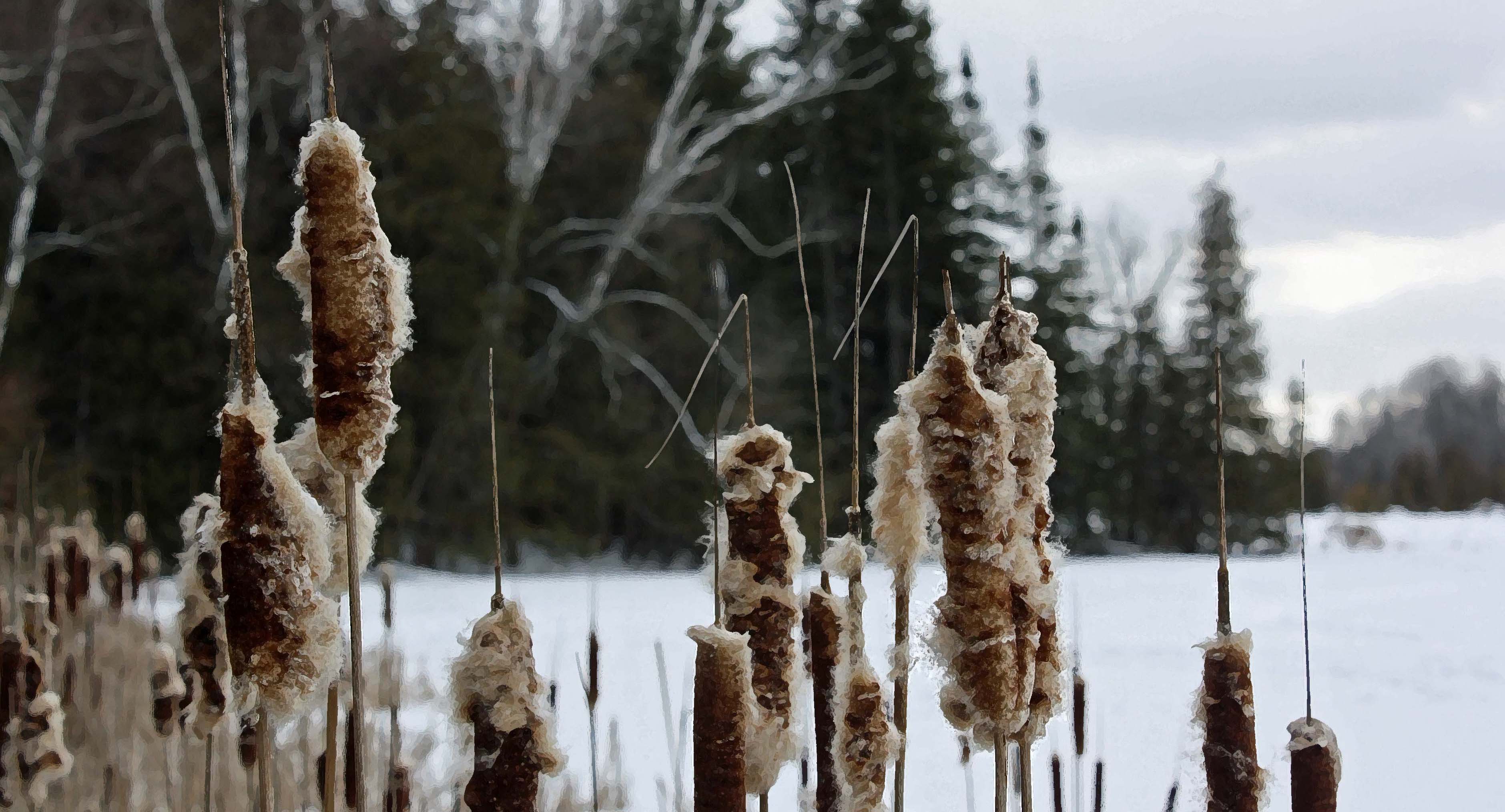
Cattails oversee the snowy plain of the iced-over Trent Canal, ON (photo and dry brush rendition by Nina Munteanu)
Nina Munteanu is a Canadian ecologist / limnologist and novelist. She is co-editor of Europa SF and currently teaches writing courses at George Brown College and the University of Toronto. Visit www.ninamunteanu.ca for the latest on her books. Nina’s bilingual “La natura dell’acqua / The Way of Water” was published by Mincione Edizioni in Rome. Her non-fiction book “Water Is…” by Pixl Press(Vancouver) was selected by Margaret Atwood in the New York Times‘Year in Reading’ and was chosen as the 2017 Summer Read by Water Canada. Her novel “A Diary in the Age of Water” was released by Inanna Publications (Toronto) in June 2020.
“In this bonus episode, we continue our conversation with limnologist and cli-fi author Nina Munteanu. We discuss her book A Diary in the Age of Water and what led her to write this dystopian tale of a future that revolves around water scarcity. Nina’s background as a limnologist gives her a unique perspective on the challenges that await us if we do not address climate change.”
Click below to listen:
Nina Munteanu is a Canadian ecologist / limnologist and novelist. She is co-editor of Europa SF and currently teaches writing courses at George Brown College and the University of Toronto. Visit www.ninamunteanu.ca for the latest on her books. Nina’s bilingual “La natura dell’acqua / The Way of Water” was published by Mincione Edizioni in Rome. Her non-fiction book “Water Is…” by Pixl Press(Vancouver) was selected by Margaret Atwood in the New York Times‘Year in Reading’ and was chosen as the 2017 Summer Read by Water Canada. Her novel “A Diary in the Age of Water” was released by Inanna Publications (Toronto) in June 2020.
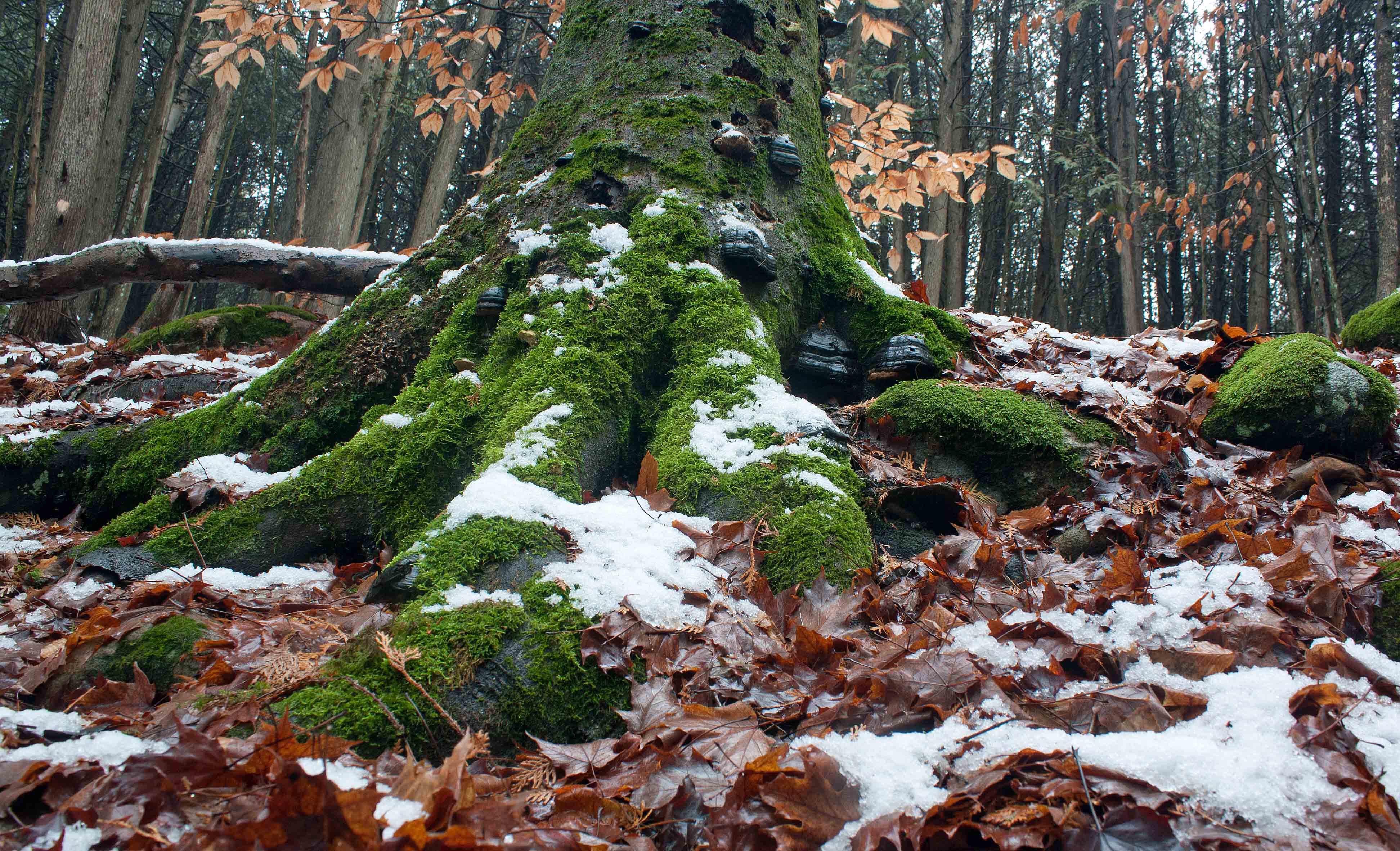
Cedar roots dusted in winter snow, Jackson Creek Park, ON (photo by Nina Munteanu)
.
It’s late December in the old-growth riparian forest of Jackson Creek, Peterborough. A light snow is falling on the cedars. When I walk by the creek through this deep forest, my senses reach out like tendrils, touching the mysteries of Nature’s complexity. To my right, the river’s multi-timbral chorus gurgles and chortles in chaotic symphony. Occasionally, I hear the percussion of ice cracking and booming like a designer rearranging furniture. The cedar pine forest sloping up to my left hisses and giggles as the snow falls and melts. My footfalls crunch over a frozen sponge of litter and loam. Nature’s sounds and aromas coarse through me like sweet nectar and my soul rejoices. I quiet my mind and become one with all of it. Serene in discovery. In sensing. Feeling. Embedding. I’m awestruck with the simple beauty of complex form, pattern and purpose: from the tiniest moss covering a boulder erratic to the largest cedar trees creaking and swaying above me in the whisper of a brisk winter wind.
Today is different.
I see something unexpected. A skull.
.
Red fox skull embedded in frozen shore of Jackson Creek, ON (photo by Nina Munteanu)
.
I’ve been following the icing of Jackson Creek. Huge ice “islands” have formed over boulders, creating new channels for the freezing water to coarse around. I stop near a small tributary of the river to study the formation of ice “pearls” on either side of an ice-formed channel. I venture out onto an ice shelf and set up my small tripod to take slow shots of water magic. The sun paints the water a brilliant turquoise hue.
.
Jackson Creek with ice formation on shore, ON (photo by Nina Munteanu)
.
Breathing hard from my efforts and satisfied with the shots I’ve taken, I stand up and step back from the shore. It’s then, as I look down to where I’ve placed my feet, that I see it. A small white “rock”—No! A skull! Embedded in the frozen leaf litter and ground, not more than several centimetres from the frozen shore of the river, lies an animal skull the size of my hand with a long snout. How have I managed not to step on it and crush it with all my tramping there? I must have stepped past it several times to get to my photo op. I bend low to get a better look. What is it doing there? Who—or what—had brought it there, depositing it on the creek shore?
I returned the next day, eager to show my discovery to a friend and naturalist; she suggested it was a red fox. Excited, I returned the following day with a ruler to measure it and a trowel and some hot water to help me extricate it for better examination. A light snow had fallen the night before but the top of the skull was still visible. I removed the snow and the skull came out of the ground rather easily, revealing several back teeth still embedded in it. While the skull was mostly intact, the lower jaw was missing and a loose tooth lay on the ground below it. I removed my prize and brought it home. After cleaning it with some bleach, I examined it further.
.
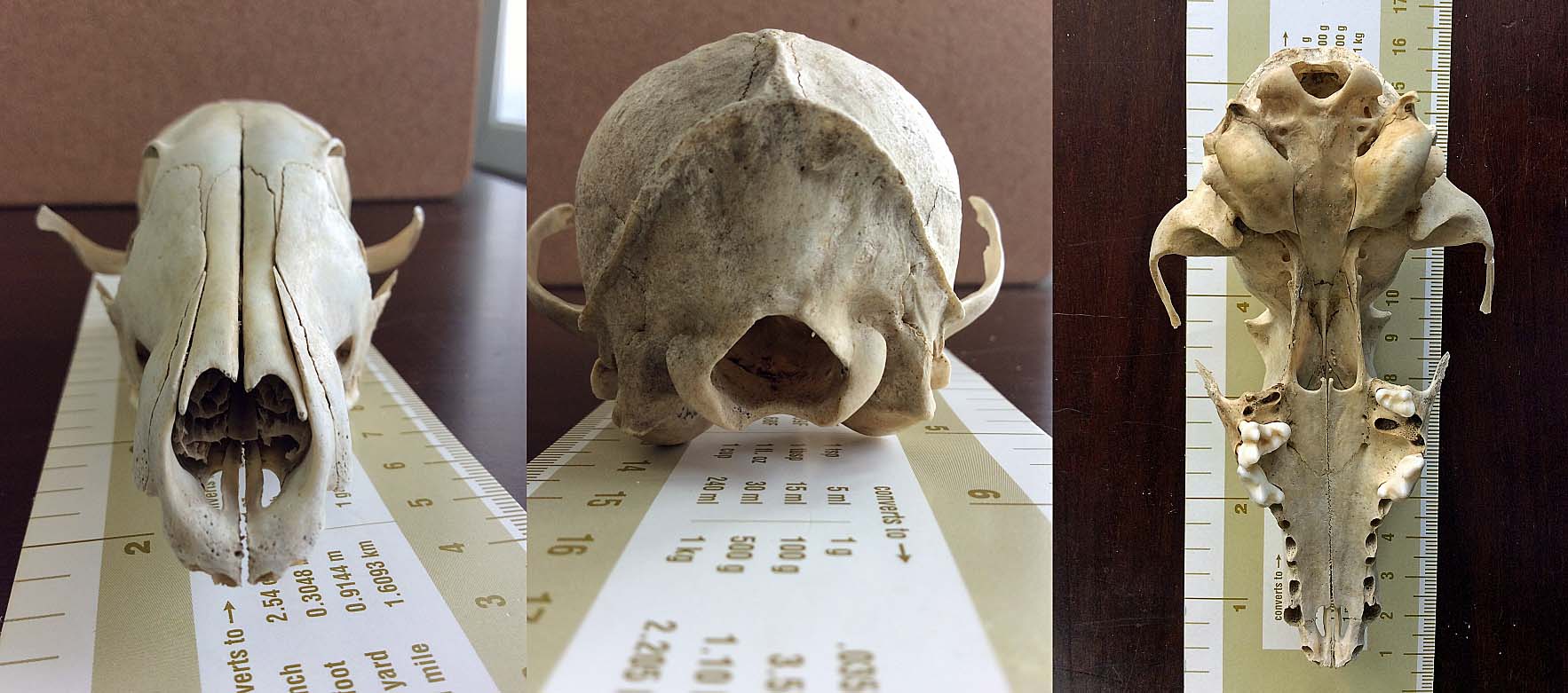
Red fox skull, left to right: front, back, ventral aspects (photos by Nina Munteanu)
.
The skull showed no signs of trauma or injuries to the head. I guessed that while this fox was an adult, it was young; the teeth that were there were in excellent condition. The skull measured 133 mm from end of snout to external occipital protuberance (inion). The average skull length of an adult male measures 129 to 167 mm and vixens 128-159 mm. Steve Harris in BBC’s Discover Wildlife tells us that dog foxes also tend to have broader and more domed skulls than vixens; my skull was rather sleek, I thought. From this I guessed that the skull belonged to a young adult female, a vixen. Statistics for fox deaths also favoured a young fox (see below).
Measurement
Value
Skull Length
Inion to prosthion
133 mm
Skull width
Widest interzygomatic distance
70 mm
Facial length
Nasion to prosthion
63 mm
Facial width
Widest interzygomatic distance
45 mm
Cranial length
Inion to nasion
79 mm
Cranial width
Widest interparietal distance
47 mm
Cranial height
Middle of external acoustic meatus to bregma
43 mm
Red fox skull, lateral aspect (photo by Nina Munteanu)
.
I couldn’t help wondering about this fox which had appeared as if by magic at my feet. What was Vera Vixen’s story? (Somewhere between bringing her home and cleaning her, I decided to name her). How did Vera meet her demise and where was the rest of her? Had the skull recently washed onshore or was it recently brought to the shore by a scavenging racoon, badger (they’re more common in this area than most people think) or another fox? Or had the skull been there longer and the winter ice and water just washed away the litter to reveal the embedded skull? Was it a death of misadventure? Had Vixen drowned when Jackson Creek flooded? Or was she hit by a car at the edge of the park, torn up by scavengers and her skull brought here to eat? Jake McGown-Lowe of BBC’s The One Show shares that “Fox bones are hard to find.” He had found his specimens at the edge of a wood. “In the countryside the main predator of foxes are farmers and gamekeepers, especially around lambing time, and the gamekeepers usually take the bodies away to dispose of.” Jackson Creek is an urban park. Thirty percent of its perimeter is surrounded by urban and suburban streets of Peterborough; sixty percent of the park is surrounded by farmland and some marsh at its upstream end. A Bristol University study on cub survival determined that major sources of mortality included hypothermia, attack by domestic dogs, attack by badgers, and death of the mother.
.
Red fox skull, dorsal side (photo by Nina Munteanu)
.
Various hunters have indicated that in a temperate climate it takes several weeks to several years for decomposers (insects, fungi and bacteria) to clean a skull left in the elements of nature. Temperature, humidity, presence of insects and water play key roles in the process of skeletonization. The skull at my feet could have died as recently as the fall of 2020 and as long ago as spring of 2019 during lambing season. Had Vera been shot or poisoned (including indirectly through scavenging) as she hunted for her kits?
Bristol University estimated that two thirds of the fox population die each year by predators (including humans), disease and vehicles with the single largest cause of fox mortality being through road collisions. An Oxford study corroborated this with observations that 60% of the fox population were run-over by vehicles. Apparently most of the fox deaths are the young. In their 2004 review of the red fox, David Macdonald and Jonathan Reynolds at Oxford noted that “roughly 75% of the fox population die in their first year.” Studies in Europe have also shown that three to seven-month old foxes are most susceptible to traffic collisions—associated with the cub’s increase in ranging behaviour around the den and their lack of experience—and larger propensity for misadventure.
BBC Wildlife Magazine tells us that “spring is a good time to look for mammal skulls. The end of winter is a peak period of mortality for many species, and skulls can be found virtually anywhere.”
.
Red fox pups in refuge park in Delaware (photo by Jennifer Cross, USFWS)
.
The red fox (Vulpes vulpes) is one of Canada’s most widespread mammals, living in a wide range of habitats including forests, grasslands, meadows and farmland. Known for their ability to adapt quickly to new environments, foxes have adapted well to urban settings and ecotones between city and wilderness; in fact, they prefer mixed vegetation communities such as edge habitats and mixed scrub and woodland. They are highly athletic, agile and incredibly fast (they can run up to 30 mph); foxes are known for pouncing on mice and other small rodents, burrowing in the snow using the earth’s magnetic field to help them hunt. Foxes have good visual acuity, capable of seeing small movements from far away and for navigating dense forests as they sprint after prey; but their most useful sense is their ultrasonic hearing. Treehugger reported on a 2014 study by the University of Duisburg-Essen and Czech University of Life Sciences who discovered that “red foxes have the best known maximal absolute hearing sensitivity of any mammal. They can hear a mouse squeak from 100 feet away.” This along with their ability to move swiftly and quietly through most terrain makes them effective crepuscular (dawn and dusk) predators in open country and nocturnal hunters in areas of concentrated human habitation. Foxes generally live an average of 3-7 years in the wild.
Foxes are monogamous. They live in family units in which both parents take equal part in raising their young. Older siblings also care for the young pups. The young kits remain with their parents at least until the fall of the year they were born in and sometimes longer, especially females. Pups are typically born from February-April. They are born blind, deaf and toothless, with dark brown fluffy fur. Mom fox stays close to guard the kits and nurse them for several weeks and the father or barren vixens feed the mothers. The kits leave the den a month after and are fully weaned by 8-10 weeks. The mother and her pups remain together until the autumn after the birth. After the pups are weaned and begin to play about the den’s entrance, Dad fox helps watch them while Mom fox gets in some hunting. If the mother dies, the father takes over caring for the pups. Kits reach adult form by seven months and some vixens reach sexual maturity by ten months—enabling them to bear their first litter at one year of age.
Red foxes help balance ecosystems by controlling population of prey animals such as rodents and rabbits. They also disperse seeds by eating fruit. Steve Hall of Adirondack Almanack reminds us that red foxes play an important ecological role:
“Now and then, vulnerable farm animals such as chickens, ducks and lamb will be taken. While farmers used to routinely trap foxes, many now realize that the fox brings far more benefit in its constant predation on crop-destroying rodents and insects, than the harm they cause in taking the occasional barnyard animal; secure enclosures for hens and [use of] guard dogs to keep the fox in the field but out of the barnyard, are the key to discouraging unwanted fox predation.”
James Fair of BBC Discover Wildlife noted that a single fox during its lifetime may be worth £150-190 to a farmer through rabbit predation. Most farmers in Wiltshire consider the fox a helpmate in reducing the pest of rabbits. Hall adds that while, “Deer are significant carriers of the tick, Lyme disease starts with rodents… [the red fox] eats huge quantities of rodents. If for no other reason, fox hunting and trapping should be banned.”
.
Cedar-pine-hemlock forest after first snow, Jackson Creek Park, ON (photo by Nina Munteanu)
.
Foxes take shelter in thickets and heavy bushes in the autumn until March of the next year. They are omnivores with a varied diet of small mammals such as voles, mice, squirrels and rabbits, and a variety of plants, berries, other fruit and nuts. Foxes have good eyesight but very keen hearing and sense of smell; this along with their ability to move swiftly and quietly through most terrain makes them effective crepuscular (dawn and dusk) predators in open country and nocturnal hunters in areas of concentrated human habitation. Foxes generally live an average of 3-7 years in the wild.
The red fox communicates through a wide range of body language and vocalizations. Foxes use scent glands and urination to communicate their individuality through their skunk-like smell. They use scent to mark territory and show status. The smell increases during mating season. The fox vocal range spans across five octaves with at least 28 different sounds that include those for “contact” and those for “interaction.” Individual voices can be distinguished. One contact sound between two foxes approaching one another resembles the territorial call of a tawny owl. When foxes draw close together, they use a greeting warble similar to the clucking of chickens. Adults greet their kits with gruff huffing sounds.
Red foxes feature prominently in the folklore and mythology of human cultures with which they are sympatric. In Greek mythology, the Teumessian fox or Cadmean vixen, was a gigantic fox that was destined never to be caught. The fox was one of the children of Echidna. In Japanese mythology,the kitsune are fox-like spirits that possess magical abilities which increase with age and wisdom. This includes the ability to assume human form. Some folktales suggest that kitsune use this ability to trick others; others portray them as faithful guardians, friends and love. In the Cotswolds, witches were thought to take the shape of foxes to steal butter from their neighbours. In later European folklore, Reynard the Fox symbolizes trickery and deceit. In the actual world, this translates to resourcefulness, a quick study, and swift and decisive action. And perhaps that is the true meaning of Vixen.
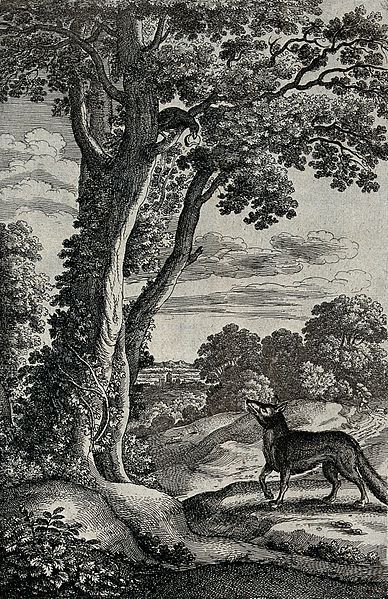
Image of fox and crow from Aesop’s Fables
.
Fox teaches us that gender equality helps to create a strong family, says Chris Lüttichau, author of Animal Spirit Guides. Fox’s medicine is family, survival and voice. Fox embodies resourcefulness and daring in her quest to feed herself and her young. “Fox survives and flourishes because she is clever and adaptable; she is now found living in cities. Fox teaches us to be flexible rather than to resist change.” According to Lüttichau, Fox’s medicine is “swiftness, surefootedness and a quick mind that always knows what to do.” Foxes have a wide vocal capacity and range, from screams and calls to low barks—something for each case as the fox calls and listens and calls back. We can learn from Fox’s varied voice to transcend traditions and prejudices through healing council and stories.
With thoughts returning to my Vera Vixen, I think that perhaps she is not a young unlucky fox who met with misadventure after all; rather, she’s a smart old vixen who’s birthed and nurtured several litters of four to six kits each spring. Her natural death after four to seven years of a rich life in the old growth forest and marsh of Jackson Creek would have led her to a quiet place to lay herself to rest; there her corpse was ultimately found by a badger, racoon or other fox and parts of her scattered throughout the forest to decompose and feed the ecosystem. Ever the mother, Vera now feeds the forest that nurtured her and her family’s existence.
Jackson Creek during first heavy snow, ON (photo by Nina Munteanu)
.
The Story of Fleet, the Fox of Surrey: In January 2014 it was reported that “Fleet”, a relatively tame urban red fox tracked as part of a wider study by the University of Brighton in partnership with the BBC’s TV series Winterwatch, had unexpectedly traveled 195 miles in 21 days from his neighbourhood in Hove, at the western edge of East Sussex, across rural countryside as far as Rye, at the eastern edge of the county. He was still continuing his journey when the GPS collar stopped transmitting due to suspected water damage. Along with setting a record for the longest journey undertaken by a tracked red fox in the United Kingdom, his travels have highlighted the fluidity of movement between rural and urban red fox populations.
Fox Prayer for 2021:
I call on Fox. Shapeshifter and trickster. Edge-walker and messenger. Help me blend with my surroundings and adapt to the changing landscapes. Show me the hidden paths between the worlds. Teach me the ways of invisibility and camouflage. Gift me your keen senses that i might see more of what is around me and use it to accomplish my goals. I call on you, Fox, to bring magic and discernment into my life. Lead me at your steady gait to those places where I might do the greatest good. Let us walk the borders between day and night and follow the scent of divine mischief. Fox, I call on you.
TRAVIS BOWMAN
Jackson Creek ices up in December, ON (photo by Nina Munteanu)
Map of Jackson Creek Park and surrounding area, ON
Jackson Creek Old-Growth Forest:
Jackson Creek Old-Growth Forest (OGF) is a 4.5 hectare urban forest located on a glacial spillway slope littered with granite erratic boulders. The OGF lies within the Jackson Creek Riparian Forest, a 92-ha valley land forest which extends into a major wetland of importance. Dominant conifers in the OGF include white cedar (Thuja occidentalis), white pine (Pinus strobus), and eastern hemlock (Tsuga Canadensis). Sugar maple, American beech, yellow birch, white ash and white oak contribute to the mixed riparian forest. Trees are commonly over 150 years old with some reaching over 250 years. Largest trees—which tend to be the pines and cedars—reach diameters of 97 cm dbh and heights of 35 metres.
Cedar-pine-hemlock forest in Jackson Creek Park, ON (photo by Nina Munteanu)
The Jackson Creek valley was formed by the torrent of glacial meltwater that flowed from the ancient Lakes Algonquin and Jackson through the overlying till to create a glacial spillway some 12,000 years ago (Adams and Taylor 2009); the outflow of glacial Lake Algonquin was channeled to the former glacial Lake Iroquois—a body of water larger than the current Lake Ontario but in the same general area (Ecclestone and Cogley 2009).
The Jackson Creek OGF is a good example of a mature White Cedar—White Pine—Eastern Hemlock stand on a glacial spillway slope in Ecodistrict 6E-8. This eco-district extends in a band from south of Lake Simcoe eastward to the Bay of Quinte, north of the Oak Ridges Moraine, and is characterized by rolling till plains with drumlins, eskers, and intervening wide river valleys (Hanna 1984).
Red fox skull found embedded on iced shore of Jackson Creek, ON (photo by Nina Munteanu)
References:
Adams, P. and C. Taylor. 2009. Peterborough and the Kawarthas (Third Edition). Geography Department, Trent University, Peterborough, Ontario. 252 pp.
Ecclestone, M. and G. Cogley. 2009. “The Physical Landscape of Peterborough and the Kawarthas.” In: Peterborough and the Kawarthas, Third Edition, ed. by P. Adams and C. Taylor, pp. 19-40. Geography Department, Trent University, Peterborough, Ontario.
Hanna, R. 1984. “Life Science Areas of Natural and Scientific Interest in Site District 6-8.” Parks and Recreational Areas Section, Central Region, Ontario Ministry of Natural Resources, Richmond Hill, Ontario. 71 pp. & map.
MacDonald, D. and J. Reynolds. 2005. “Red fox (Vulpes vulpes)” IUCN Canid Specialist Group. Online
Malkemper, E. Pascal, Vaclav Topinka, and Hynek Burda. 2015. “A behavioral audiogram of the red fox (Vulpes vulpes). Hearing Research Vol. 320: 30-37: Online
Monaghan, Patricia. 2004. “The Encyclopedia of Celtic Mythology and Folklore”. Infobase Publishing. pp. 199–200. ISBN978-0-8160-4524-2.
The Nature Conservancy: Nature.org. “Wetlands Mammals: Red Fox.” PDF Online
“Relatives are the worst friends, said the fox as the dogs took after him.” – Danish
Nina Munteanu is a Canadian ecologist / limnologist and novelist. She is co-editor of Europa SF and currently teaches writing courses at George Brown College and the University of Toronto. Visit www.ninamunteanu.ca for the latest on her books. Nina’s bilingual “La natura dell’acqua / The Way of Water” was published by Mincione Edizioni in Rome. Her non-fiction book “Water Is…” by Pixl Press(Vancouver) was selected by Margaret Atwood in the New York Times ‘Year in Reading’ and was chosen as the 2017 Summer Read by Water Canada. Her novel “A Diary in the Age of Water” was released by Inanna Publications (Toronto) in June 2020.
Those who are inspired by a model other than Nature, a mistress above all masters, are laboring in vain—Leonardo daVinci
You pause at the front door of the eco-house that you and your partner designed in Vancouver’s Point Grey and pull up the collar of your jacket. The air is fresh with the promise of snow and you smile with thoughts of spring skiing at Whistler.
You glance at the time display on your Smart Glasses. You’ve decided to forego the WaveGate and walk to the café; you have plenty of time to walk through the hilly forested streets, with a view of English Bay. You want to check out the refurbished solar-house on Locarno Cresent that your company helped design. Based on a living model of Biomimicry, the house is the latest iteration of your company’s “symbiosis” model of 100% sustainability, in which people live in a cooperative and synergistic partnership with their environment. The house is an intelligent organic facility with self-cleaning floors and walls; heated, fueled and lit by organisms in a commensal relationship. Everything works on a natural cycle of harmonious renewal and natural evolution. You smile, rather self-pleased. It has taken you a few years to convince the city council to accept this new model in community design. Now, it’s happening everywhere.
It’s April 12, 2074. A special day. And a special year. The year of the wooden horse in the Chinese calendar. Also called the green horse, it’s associated with spring, growth and vitality. The horse symbolizes nobility, class speed and perseverance. Horse energy is pure unbridled spirit. Playful, wild and independent, the horse has a refined instinct that flows through action and movement. Together, these symbols promise both chaos and great opportunity. And transformation.
The year of the wooden horse only occurs every sixty years. And sixty years ago today your mom turned sixty. You release a boyish grin at what you intend to do in celebration. On that day, sixty years ago, she celebrated her sixtieth birthday with the release of Natural Selection, her collection of speculative short stories about human evolution, AI, genetic manipulation, transhumanism, and the human-‘machine’ interface. She also celebrated the local printing of Metaverse, the third book of her space detective trilogy, The Splintered Universe. It was the second book to be printed by Toronto Public Library’s newly acquired Espresso Book Machine; one of only two EBMs in Toronto at the time.
A smile slants across your face as you remember what libraries and bookstores used to look like then. Both were struggling with a changing paradigm of reading, writing and publishing. Many of the older folk feared that books—print books, particularly—were going extinct as more exciting channels of communication like videos, interactive games and instant social networking took over. Of course, that didn’t happen. “Story” and “storytelling” were simply evolving and the paradigm shift simply embraced a new model that incorporated more diverse expression. You remember conversations with your mom about Chapters-Indigo, whose face changed from a bookstore to a gift store and tchotchke filled more and more of the storefront. As large bookstores struggled to dominate, the EBM—like its lithe mammal cousins in the Cenozoic Era—created a new niche for itself: the book ATM.
The size of a Smart Car, the EBM could fit nicely in a stylish café, housing and dispensing—Tardis-style—many more books than its diminutive size. In 2014, the EBM carried over eight million titles, including commercial books and out-of print gems. That number has tripled as virtually every publisher embraced the Book ATM model to sell books.
You inhale the tantalizing aroma of freshly ground and brewed coffee before you reach Zardoz Café. The retro-style café is a converted Edwardian-style house with high arched windows and a living roof overlooked by tall sycamore trees. You climb the stairs and enter the café. Its 2020’s style interior that your company helped design is decorated in earthy tones, avant-garde art, a forest of dracaenas and ferns and a stepped creek, complete with goldfish and crayfish. A shiny brass Elektra Belle Epoque espresso maker sits at the bar, bestowing the finest fair trade coffee.
Your sweeping gaze notes several people at the small round tables, enjoying good coffee and conversation; your special guest hasn’t arrived yet. You spot the WaveGate at the back, resembling an old English pay phone. Next to it sits the EBM. Eager to do your deed before your guest arrives, you sidle to the coffee bar and catch Grace’s eye. She smiles; you’re a regular. You touch her wrist with your watch and the data passes onto her embedded interface. She taps her hand to process the book order—she insists that you not pay—then she makes your double-shot espresso—the old-fashioned way. As she grinds and taps and runs the machine, you and she chat about skiing this spring. Just as Grace hands you a perfect crema-topped espresso, the WaveGate shimmers briefly and then its door opens like an accordian.
Your mom emerges from the “tardis”, smartly dressed in an early-century blazer and skirt, and grinning like an urchin. She resembles the seventeenth Doctor a bit, you decide—the first female Doctor Who, finally! Somehow—you don’t know how she does it—her old-fashioned style manages to embrace “retro-cool”. She’s arrived from Switzerland, where she is house and cat-sitting for good friends in Gruyeres. From there she still commutes—Tardis-style—as sessional lecturer at the University of Toronto, where she maintains a tiny book-festooned office.
“Kevy!” she squeals like a girl, obviously happy to see you. You don’t cringe; you’ve grown accustomed to the ripples of interest your mom’s unalloyed enthusiasm usually creates.
“Happy birthday, Mom!” You seize her in a hug. “I’m glad you made it for your 120th birthday.” Traveling the WaveGate suits her, you consider.
“I like the tardis better than you, I think,” she says, smiling sideways at you with knowing. She’s right; you prefer the old-fashioned way of traveling, without having to reconfigure your molecules from one place to another. In fact, you prefer the old-fashioned way of doing a lot of things, you decide with an inner smile.
“I have a surprise for you, Mom,” you say with a knowing grin. Your mom likes surprises. Her eyes light up and she beams at you. You glance at Grace with a conspiratorial look. She takes the cue and starts the EBM.
“Over here,” you say, steering your mom toward the EBM, already humming like an old tomcat getting its chin scratched. Your mom bends down to watch the pages spew out of the paper holder and stack neatly in a tray, then get snatched by robotic fingers as a colour cover is created then laid below, ready to envelope the book interior. After the gluing and binding, the robots trim the book on three sides then summarily send it sliding out a chute on the side.
Your mom has guessed what the book is; but she still squeals with glee when she sees it. It’s Metaverse, of course; the book she first had printed on the EBM in Toronto’s Public Library sixty years ago on her birthday.
“I just thought you’d like another book,” you say with a laugh. Like she needs another book. But this one’s special; it’s sixty years old today. Just like she was, sixty years ago—today. You pull out your PAL and point at your mom, as she seizes the perfectly bound book. “Let me take your picture!”
She poses with the book, looking like a kid with candy. You check the image and laugh. “There it is. You don’t look a year over sixty!” You grin at your 120-year old mother.
“And you don’t look a day over twenty-three!” she teases back. You give her a slanted smile. You’re eighty-three. Beaming, she goes on, “I remember doing this exact thing sixty years ago in Toronto! Those same feelings of overwhelming gratitude and wonder are still there,” she confides. “I remember telling the CBC reporter who covered the EBM launch that it felt like a birthing.” She throws me a crooked grin. “Only the labour was on the computer instead of in the hospital!”
Visibly pleased and touched, she snatches me in a bear hug.
“This is the best present a mom could get from her son. Thanks for remembering. It’s been an incredible ride and it’s all been worth it.”
“Join me in a coffee; then I have a house to show you…” you say, smiling with pride.
The Espresso Book Machine
Many bookstores, libraries, and universities around the world are hosting the Espresso Book Machine® (EBM) by On Demand Books LLC (and associated with Lightning-Ingram). The EBM makes millions of titles available via the EspressNet® software and produces quality paperbacks in minutes at point of sale. The EBM is not a print-on-demand solution, but a powerful new digital-to-print channel that eliminates lost sales due to out-of-stock inventory or the hassle of returns.
Advantages:
Readers: millions of books, multiple languages, made on demand for you.
Bookstores, Libraries and other Retailers: sell (or lend) more titles without the extra inventory; capture the growing self-publishing market.
Publishers: the EBM offers an additional sales channel and greater visibility to a publisher’s titles. It also avoids out-of-stocks and eliminates returns.
Authors: earn additional income otherwise lost through the used-book market.
Old maple tree in Jackson Creek Park in December snow, ON (photo and dry brush rendition by Nina Munteanu)
Nina Munteanu is a Canadian ecologist / limnologist and novelist. She is co-editor of Europa SF and currently teaches writing courses at George Brown College and the University of Toronto. Visit www.ninamunteanu.ca for the latest on her books. Nina’s bilingual “La natura dell’acqua / The Way of Water” was published by Mincione Edizioni in Rome. Her non-fiction book “Water Is…” by Pixl Press(Vancouver) was selected by Margaret Atwood in the New York Times ‘Year in Reading’ and was chosen as the 2017 Summer Read by Water Canada. Her novel “A Diary in the Age of Water” was released by Inanna Publications (Toronto) in June 2020.
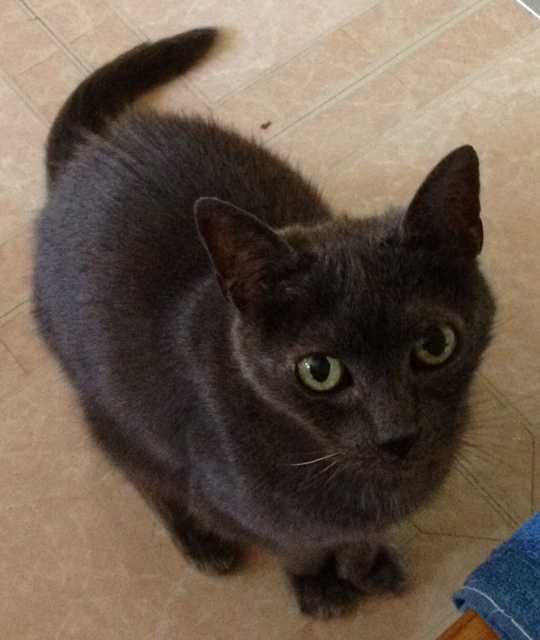
Willow, goddess of Purring Cat Meditation… (photo by Nina Munteanu)
Her name is Willow, and she helps me centre my being…
Willow is a diminutive 18-year old Russian blue cat, who I looked after for some friends in Mississauga. When I first met Willow, she responded with reticence–like all smart discerning cats. She appeared so delicate, I was scared to pick her up. I soon realized that this was a fallacy. That not only could I pick her up but that she loved to be held. I just needed to learn how.
As soon as I did, we became best friends. And it all came together with the Purring Cat Meditation.
“Time to feed me, Nina!” says Willow (photo by Nina Munteanu)
It starts out with her finding me “doing nothing terribly important” like typing on the computer, or something. A soft but decisive tap of the paw on my leg and I have to smile at her intense look up at me with those guileless emerald eyes. I abandon my work–how can I ignore such a plea?– and pick her up. After all, I know what she wants…And so starts our journey toward “nirvana”… the meditative state that will centre our beings and ultimately save the world.
I wander the house with her. We check out each room and make our silent observations. We end up in the bedroom upstairs, where she normally sleeps (except when she’s decided to join me on my bed to sit on me and purr in my face in the middle of the night).
Willow playfully teasing (photo by Nina Munteanu)
In her sanctuary, we drift to the window that faces the back yard, now cloaked in the fresh drifts of winter snow. The window is slightly open and a crisp breeze braces us with the deep scent of winter. I breathe in the fragrance of fallen leaves, mist and bark…
Willow settles into a feather-light pose in the crook of my arms and I hardly feel her. More like she and I have joined to become one. We are both purring …
We remain in Cat-Purr-Meditation for …
I have no idea. It feels like moments. Infinity. It encompasses and defines an entire world. We’ve just created something. Just by being.
“Time to pick me up, Nina!” says Willow (photo by Nina Munteanu)
Cats–well, most animal companions–are incredibly centring and can teach us a lot about the art of simply being.
And meditating…
I write about this more in my article entitled “Wake Up Your Muse: How my Cat Taught Me the Art of Being“. Whenever I run across a bout of writer’s block or need to stoke my muse, instead of trying harder, I stop and reach out for my cat-friend.
And practice Purring-Cat Meditation…
On the road to Wolfville, NS (photo by Nina Munteanu)
Nina Munteanu is a Canadian ecologist / limnologist and novelist. She is co-editor of Europa SF and currently teaches writing courses at George Brown College and the University of Toronto. Visit www.ninamunteanu.ca for the latest on her books. Nina’s bilingual “La natura dell’acqua / The Way of Water” was published by Mincione Edizioni in Rome. Her non-fiction book “Water Is…” by Pixl Press(Vancouver) was selected by Margaret Atwood in the New York Times ‘Year in Reading’ and was chosen as the 2017 Summer Read by Water Canada. Her novel “A Diary in the Age of Water” was released by Inanna Publications (Toronto) in June 2020.
First snow in Peterborough, ON (photo by Nina Munteanu)
I move around a lot these days. It helps me to appreciate some of the most simple things in life and reminds me of what I love most about Christmas: how it focuses my heart and reconnects me. I don’t mean just with relatives and friends either, although the season certainly does that. I’m talking about my soul and the universe itself. Before I became an itinerant, Christmas bustled with my responsibilities as primary caregiver, social coordinator and hostess of major parties. After I’d said goodbye to our visiting friends and done the dishes and tidied the house; after my husband and son had gone to bed, I sat in the dark living room lit only with the Christmas Tree lights and the flickering candle, and listened to soft Christmas music, primed to write.
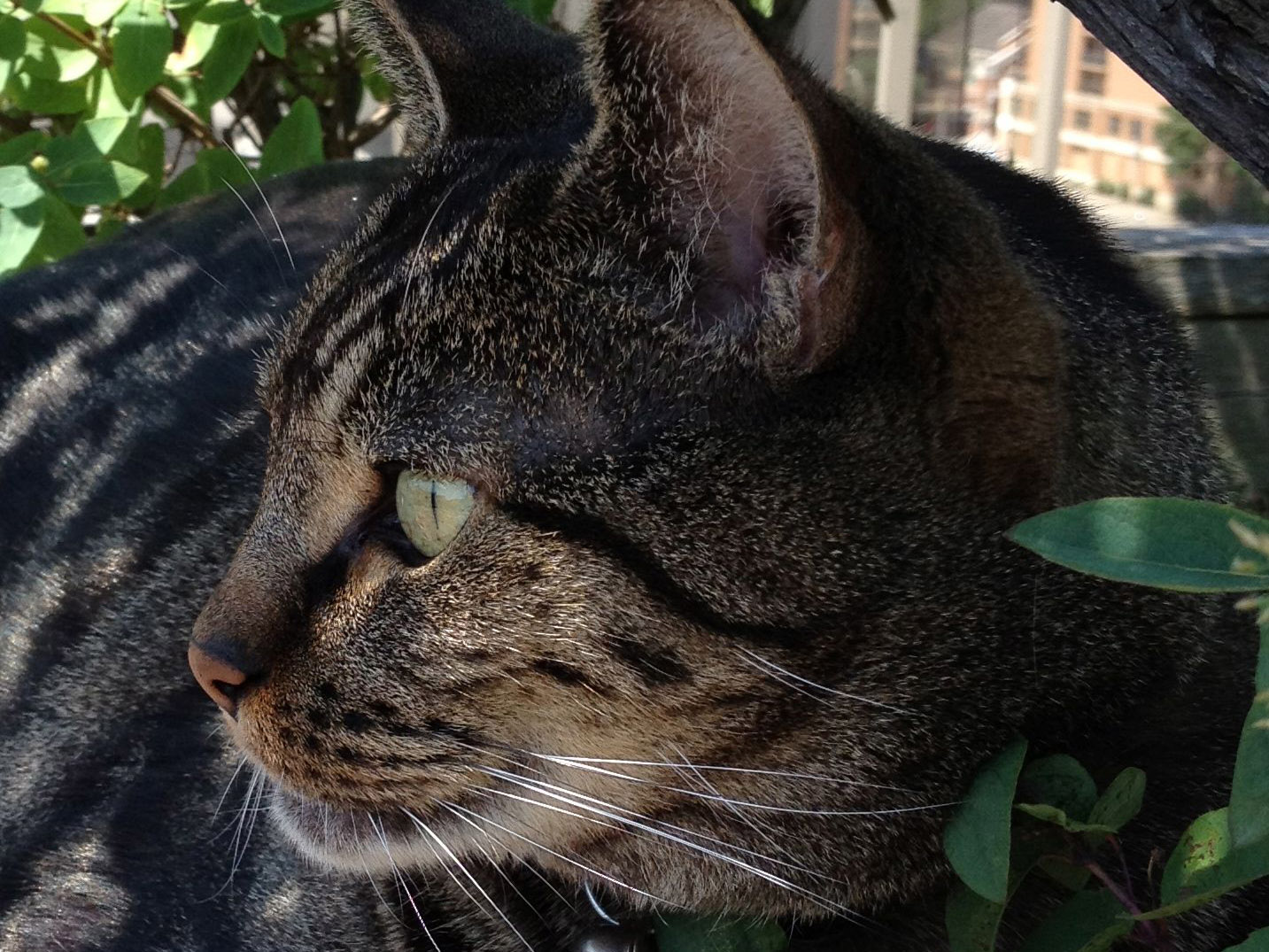
Sammy, the cat (photo by Nina Munteanu)
My male cat, smelling fresh from outside, found his rightful place on my lap and settled there, pinning me down with love. And there, as I breathed in the scent of wax and fir and cat I found myself again.
Christmas is, more than anything, a time of embracing paradox. It is an opportunity to still oneself amid the bustle; to find joy in duty; to give of one’s precious time when others have none, to embrace selflessness when surrounded by promoted selfishness, and to be genuine in a commercial and dishonest world. If one were to look beyond the rhetoric and imposed tradition, the Christmas season represents a time of focus, a time to reflect on one’s genuine nature and altruistic destiny. A time to reconnect with the harmony and balance in our lives.
A time to sit with our cat, pinned with love, and write our next novel.
Merry Christmas!
First snow in Ontario field (photo by Nina Munteanu)
Nina Munteanu is a Canadian ecologist / limnologist and novelist. She is co-editor of Europa SF and currently teaches writing courses at George Brown College and the University of Toronto. Visit www.ninamunteanu.ca for the latest on her books. Nina’s bilingual “La natura dell’acqua / The Way of Water” was published by Mincione Edizioni in Rome. Her non-fiction book “Water Is…” by Pixl Press(Vancouver) was selected by Margaret Atwood in the New York Times ‘Year in Reading’ and was chosen as the 2017 Summer Read by Water Canada. Her novel “A Diary in the Age of Water” was released by Inanna Publications (Toronto) in June 2020.
We talked about the story, its main characters–including water as a character–and why I write about water. We also covered why the book is written partly as a diary. Margaret Atwood’s name came up a few times…
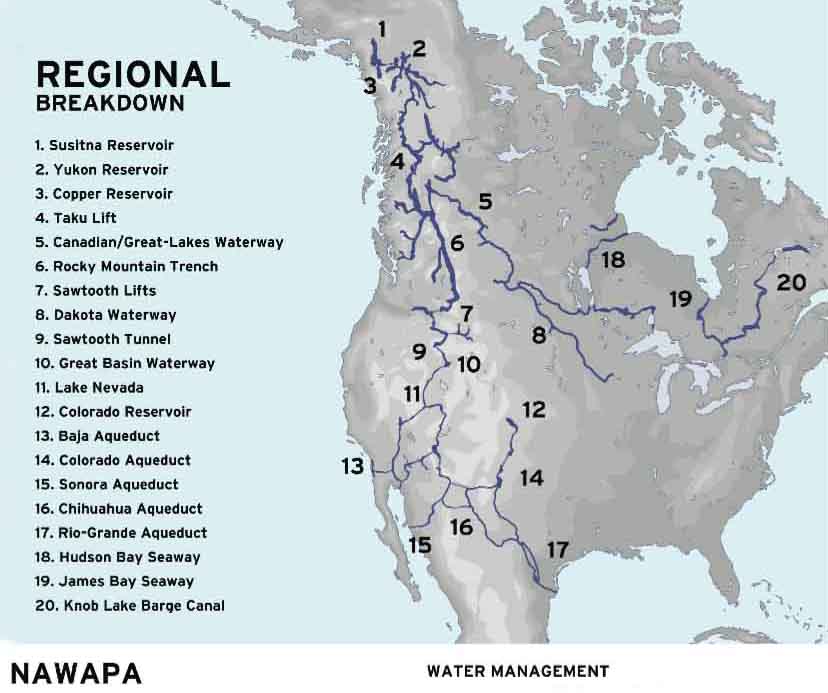
Nina Munteanu chats with Darshaun McAway of W.O.W. Podcast about her new clifi novel “A Diary in the Age of Water”: a novel about the journeys of four generations of women and their unique relationship with water during a time of great environmental change. Darshaun and Nina talk about her use of water as a character, her choice of heroines and her use of a diary format to tell the story. Nina shares that the book–set in the near future as a limnologist’s diary and the far future with an evolved human–explores the premise of a water-scarce Canada whose water now belongs to the USA, who, in turn, is owned by China. The events about which the diarist writes are based on real historic events and people. Nina brings her considerable scientific, limnological and research skills to bear in describing a future Canada both dystopic and harrowing–yet very familiar. One real event taken as premise in the book that Nina shared with Darshaun is the American NAWAPA plan of the 1960s that went to congress and was (and still is) seriously discussed for years following: the plan was to divert massive amounts of fresh water from Canada and store by inundating the Rocky Mountain Trench and piped south to hydrate dwindling aquifers in the USA.
W.O.W Interview with Nina Munteanu and Darshaun McAway
Nina Munteanu is a Canadian ecologist / limnologist and novelist. She is co-editor of Europa SF and currently teaches writing courses at George Brown College and the University of Toronto. Visit www.ninamunteanu.ca for the latest on her books. Nina’s bilingual “La natura dell’acqua / The Way of Water” was published by Mincione Edizioni in Rome. Her non-fiction book “Water Is…” by Pixl Press(Vancouver) was selected by Margaret Atwood in the New York Times ‘Year in Reading’ and was chosen as the 2017 Summer Read by Water Canada. Her novel “A Diary in the Age of Water” was released by Inanna Publications (Toronto) in June 2020.
I was recently interviewed by Canadian writer Simon Rose on my recent novel release “A Diary in the Age of Water” by Inanna Publications. Set mostly in near-future and far-future Toronto area, the book has already received some praise:
“Evoking Ursula LeGuin’s unflinching humane and moral authority, Nina Munteanu takes us into the lives of four generations of women and their battles against a global giant that controls and manipulates Earth’s water…In language both gritty and hauntingly poetic, Munteanu delivers an uncompromising warning of our future.”—Lynn Hutchinson Lee, Toronto playwright
Dragonfly.eco calls the book “an insightful novel…a cautionary tale rummaging through the forgotten drawers of time in the lives of four generations…This whirling, holistic, and evolving novel comes alive, like we imagine water does.”
The novel received a five-star review in Foreword Clarion Review and Kirkus Reviews writes: “Munteanu transmutes a harrowing dystopia into a transcendentalist origin myth. A sobering and original cautionary tale that combines a family drama with an environmental treatise.”
Part of the story is told through the diary of a limnologist (someone who studies freshwater) who witnesses and suffers through severe water taxes and imposed restrictions, dark intrigue through neighbourhood water betrayals, corporate spying and espionage, and repression of her scientific freedoms. Some people die. Others disappear… Here’s an excerpt from the interview:
What is “A Diary in the Age of Water” about?
The book is essentially a journey of four generations of women who have a unique relationship with water, through a time of extreme change through climate change and water shortage. The book spans over forty years (from the 2020s to the 2060s) and into the far future, mostly through the diary of a limnologist, which is found by a future water-being. During the diarist’s lifetime, all things to do with water are overseen and controlled by the international giant water utility CanadaCorp—with powers to arrest and detain anyone. This is a world in which China owns America and America, in turn, owns Canada.
You mention the” Age of Water” in your book. Are there other ages/epochs?
Yes. The story begins in the far future with young Kyo during the Age of Trees, after the end of the Age of Water. It is, in fact, the end of that age as well and that is why she prepares for the Exodus to “humanity’s” new home.
What inspired you to write this book?
My publisher in Rome (Mincione Edizioni) had asked me for a short story on water and politics. I wanted to write about Canada and I wanted something ironic… so I chose water scarcity in Canada, a nation rich in water. The bilingual story “The Way of Water” (“La natura dell’acqua”) resulted, which has been reprinted in several magazines and anthologies, including Cli-Fi: Canadian Tales of Climate Change (Exile Editions), Future Fiction: New Dimensions in International Science Fiction (Future Fiction/Rosarium Publishing), Little Blue Marble Magazine, and Climate Crisis Anthology (Little Blue Marble). The story was about young Hilde—the daughter of the diarist (of the novel). Hilde was dying of thirst in Toronto and the story begged for more … so the novel came from it…
Why did you choose to write your novel as a diary?
I was writing about both the far and the near future and much of it was based—like Margaret Atwood and her books—on real events and even real people. I wanted personal relevance to what was going on, particularly with climate change. I also wanted to achieve a gritty realism of “the mundane” and a diary felt right. Lynna—the diarist—is also a reclusive inexpressive character, so I thought a personal diary would help bring out her thoughts and feelings more. There’s nothing like eves-dropping to make the mundane exciting. The diary-aspect of the book characterizes it as “mundane science fiction” by presenting an “ordinary” setting for characters to play out. The tension arises more from insidious cumulative events and circumstances that slowly grow into something incendiary.
Your book has been described by various reviewers and literary types as being anything from literary fiction and FemLit to science fiction, Cli-Fi and eco-fiction How would you describe it?
Otonabee shoreline, ON (photo by Nina Munteanu)
It’s really all these things. The story carries the personal journeys of four strong and complex women characters. It gives them much agency in dealing with the climate and water crisis—socially, politically, and environmentally. One is a political activist, another a wary scientist, and another an anarchist. However, while A Diary in the Age of Water showcases strong women characters, its main climate and environmental theme carries the story through the four generations to its climax. In the end, the book’s classification will depend on the reader, who will decide which aspect of the novel resonates the most with them. The main protagonist in “A Diary in the Age of Water” is a limnologist (someone who studies freshwater); so are you. Is there any resemblance? Both Lynna and I chose to study water through the discipline of limnology; Lynna did most of her work on Canadian glaciers, while my focus was on small streams in southern Quebec. We also share similar views on the environment and humanity’s place in it. I might even have some of her character foibles … hopefully not ALL of them. However, how she chose to live that worldview—cloistered, repressed, and fearful—is not me at all. I tend to bluster, confront, and generally get into trouble. In that way, I might more resemble Lynna’s daughter. Having said that, I’d say that all good characters have a piece of the writer in them. Some dark and some light. How can they not? In this case, the resemblance with the diarist is heightened because she is depicted through her diary, which adds a gritty realism and a highly personal aspect to the first person fiction. There’s a piece of me in each of the four women depicted in the story.
You mentioned that each of the four generations of women have a singular relationship with water. What role does water play in the book?
Well, in some important way, water is the fifth character. You could say even the main character. Water is the theme that carries each woman on her personal journey with climate change and the devastation that occurs—through water, I might add. Climate change is a water phenomenon, after all… So, water—like place and setting—plays a subtle yet powerful role in the story, influencing each character in her own way and bringing them together in the overall journey of humanity during a time of great and catastrophic change.
Pond lily, ON (photo by Nina Munteanu)
The diary spans a twenty-year period in the mid-twenty-first century and describes a Canada in the grips of severe water scarcity. Tell us about that—how does a water-rich country like Canada suffer severe water scarcity?
Trent Canal, ON (photo by Nina Munteanu)
Ecologists and economists alike (who truly understand water and its global distribution and movement) will tell you that there is, in fact enough water on the planet; scarcity results from its unequal distribution, pollution and toxic input, squandering, diversion, and manipulation (one example being making rain and instructing it to fall here rather than there). Maude Barlow (Chairperson of the Council of Canadians) will tell you that Canada is currently at risk of giving away much of its water. Foreign companies are now mining Canada’s watersheds with impunity and at minimal cost. Under my premise, United States (and China) aggressively mines Canada’s groundwater, glaciers, rain and surface water through massive diversion projects to rehydrate the dwindling aquifers of the United States.
My premise is based on real events currently ongoing throughout the world. China leads the world in rainmaking and manipulation. Egypt plans to pump water from Lake Nassar into the Sahara as tensions between Egypt, and nine upstream countries for control of water in the Nile watershed increase from dams the Sudanese and Ethiopians build and as Tanzania pumps water from Lake Victoria, and Kenya diverts lakes feeding Lake Victoria to its arid eastern regions. India, Pakistan, Bangladesh, and China are in conflict over control of rivers such as the Indus, Ganges, and particularly the Brahmaputra. India’s River Link Plan impacts Bangladesh. As Pakistan, Kashmir and India fight over more and more water, the Indus dries up and no longer flows into the ocean. Meantime, Russian scientists are reviving a 1930s Soviet plan to reverse some of Siberia’s largest rivers to the parched former Soviet republics of central Asia with plans to replenish the Aral Sea. This is something very similar to the USA’s 1960 plan to divert Canada’s northward waterways south to rehydrate America’s drying midwest. Massive water diversion is also being debated within a single country; Spain’s water-rich northern region has fallen under pressure by Spain’s water-poor southern region, provoking the controversial Ebro diversion project. Norwegian university professor Terje Tvedt aptly concludes: “At the heart of these gigantic enterprises lies one of history’s great paradoxes: the more humans try to tame and regulate water by means of large-scale elaborate projects, the more water will, in turn, control society.”
Back to Canada and my not so outlandish premise: by the 2040s, Canadians are indentured to US needs through massive diversions and resulting water-use restrictions. One example, taken from precedent set in states like Colorado, is an imposed ruling by CanadaCorp that Canadians cannot collect rainwater. Something several states have already implemented.
The novel mentions a huge water diversion plan called NAWAPA. Can you tell us about that?
The original NAWAPA (North America Water Power Alliance) Plan was drawn up by the Pasadena-based firm of Ralph M. Parsons Co. in 1964, and had a favorable review by Congress for completion in the 1990s. The plan—thankfully never completed—was drafted by the US Army Corps of Engineers and entailed the southward diversion of a portion (if not all) of the Mackenzie and Yukon rivers in northern Canada and Alaska, now flowing into the Arctic Ocean as well as the Peace, Liard and other rivers flowing into the Pacific by creating massive dams in the north. This would cause the rivers to flow backwards into the mountains to form vast reservoirs that would flood one-tenth of British Columbia. The water would be channeled south through the 800-km Rocky Mountain Trench Reservoir into the Northern USA, and from there along various routes into the dry regions of the South, to California and reaching as far as Mexico.
NAWAPA was envisioned as the largest construction effort of all times, comprising some 369 separate projects of dams, canals, and tunnels, for water diversion. The water diversion would be accomplished through a series of connecting tunnels, canals, lakes, dams, and pump-lifts, as the trench itself is located at an elevation of 914 m (3,000 feet). To the east, a 9 m (thirty-foot) deep canal would be cut from the Peace River to Lake Superior. NAWAPA’s largest proposed dam would be 518 m (1,700 feet) tall, more than twice the height of Hoover Dam (at 221 m) and taller than any dam in the world today, including the Jinping-I Dam in China (at 305 m).
In the novel, NAWAPA-2 gets completed by 2045, which includes creating a giant inland sea in the Rocky Mountain Trench in British Columbia and a huge diversion in central Canada as well.
Very intriguing. Where can readers purchase the book?
Nina Munteanu is a Canadian ecologist / limnologist and novelist. She is co-editor of Europa SF and currently teaches writing courses at George Brown College and the University of Toronto. Visit www.ninamunteanu.ca for the latest on her books. Nina’s bilingual “La natura dell’acqua / The Way of Water” was published by Mincione Edizioni in Rome. Her non-fiction book “Water Is…” by Pixl Press(Vancouver) was selected by Margaret Atwood in the New York Times ‘Year in Reading’ and was chosen as the 2017 Summer Read by Water Canada. Her novel “A Diary in the Age of Water” was released by Inanna Publications (Toronto) in June 2020.




























 I was recently interviewed by
  My publisher in Rome (Mincione Edizioni) had asked me for a short story on water and politics. I wanted to write about Canada and I wanted something ironic… so I chose water scarcity in Canada, a nation rich in water. The bilingual story “The Way of Water” (“La natura dell’acqua”) resulted, which has been reprinted in several magazines and anthologies, including Cli-Fi: Canadian Tales of Climate Change (Exile Editions), Future Fiction: New Dimensions in International Science Fiction (Future Fiction/Rosarium Publishing), Little Blue Marble Magazine, and Climate Crisis Anthology (Little Blue Marble). The story was about young Hilde—the daughter of the diarist (of the novel). Hilde was dying of thirst in Toronto and the story begged for more … so the novel came from it…


 Nina Munteanu Writing Coach