Interview with Author Simon Rose About His Latest Book “Royal Blood”

My guest today is Calgary author Simon Rose, who has published eighteen novels for children and young adults, eight guides for writers, more than a hundred nonfiction books, and many articles on a wide variety of topics. Today, we’re looking at his latest release, Royal Blood, the second novel in the Stone of the Seer series.

Remind us about the Stone of the Seer series. What’s it all about?

The Stone of the Seer is an exciting historical fantasy series for young adults, primarily set during the English Civil War in the mid-seventeenth century. The Stone of the Seer, is the first book in the series. At Habingdon House, Lady Elizabeth Usborne, Kate, and Tom discover a magical black stone, mysterious ancient manuscripts, and the tempus inpectoris, an incredible time viewing device. They are also in grave danger from Daniel Tombes, who has a fearsome reputation as a witchfinder.

And without giving too much away, what can readers look forward to in the second novel?

In Royal Blood, Lady Elizabeth, Kate, and Tom move to London in the middle of the Civil War, experiencing the great political changes taking place at the time, including the

trial and execution of Charles I. They are also still under threat from Tombes, who is also in the city. The story has many twists and turns, and I doubt if any of the readers will expect the novel’s cliffhanger ending.

And then they’ll have to wait for the third book?

Yes, they certainly will. I’m hoping that Revenge of the Witchfinder, the final novel and the conclusion of the story,will be published later this year. After that, people will be able to buy all three books in the series.

And what’s the story behind the story?

The story, main characters, and some of the settings in Royal Blood are fictional, but like in The Stone of the Seer, they’re based on real events and historical characters, such as King Charles I, appear in the story. The English Civil War broke out as a result of the struggle between Charles I and Parliament, regarding how the country should be governed. The king’s defeat in the war was followed by his trial and execution in January 1649. The monarchy was abolished and replaced first by the Commonwealth of England and then the Protectorate. However, although the monarchy was restored in 1660, in the person of Charles II, his father’s defeat confirmed that an English monarch couldn’t rule the country without the consent of Parliament. This was eventually legally established in 1688 after the Glorious Revolution.

Did you conduct extensive historical research for this book, as you did with the first one?

Although the English Civil War is a time period I’ve always been interested in, I still engaged in lots of research. I needed to study what life was like in seventeenth century London, the political and religious beliefs that were around at the time, the influence of real witchfinders such as Matthew Hopkins and others like him, and of course the trial and execution of Charles I. The trial itself was very well recorded and I was able to ensure that the words spoken by both the king and his accusers were accurate. There were also many witnesses to the execution, so I was able to include established facts about that aspect as well.

As I did in The Stone of the Seer, I’ve included a glossary at the end of Royal Blood, where readers can learn more about the events, settings, and leading characters from the era, locations that are mentioned in the text, life in the seventeenth century, and about other historical periods that are featured in the story. On my website, there’s also a page with details about the historical background behind the books, with links to online sources about the time period.

Do you have any current projects?

Right now I’m working on another historical fantasy novel series, this time set in the early years of World War II. I’m also working on another series of paranormal novels, in the same genre as my previously published series that includes Flashback, Twisted Fate, and Parallel Destiny. You can learn more about those books at www.simon-rose.com. In addition, I’m in the early stages of another couple of historical projects, and am also working on some screenplays, including adaptations of my Shadowzone series, and on several other topics.

Do you still work with other authors as well?

Yes, I offer coaching, editing, consulting, and mentoring services for writers of novels, short stories, fiction, nonfiction, biographies, inspirational books, and in many other genres, plus work with writers of scripts and screenplays. I’m also a writing instructor at the University of Calgary and served as the Writer-in-Residence with the Canadian Authors Association. You can find details of some of the projects I’ve worked on with other authors, along with references and recommendations, at www.simon-rose.com.

Where can people buy Royal Blood and The Stone of the Seer?

The novel can be purchased at most of the usual places, as follows:

Royal Blood

Ebook: Amazon Canada, Amazon USA, Kobo, iBooks, Barnes and Noble, Smashwords

Paperback: Amazon Canada, Amazon USA

The Stone of the Seer

Ebook: Amazon Canada, Amazon USA, Kobo, iBooks, Barnes and Noble, Smashwords 

Paperback: Amazon Canada, Amazon USA

Thanks Simon, for being my guest here today and the very best of luck with Royal Blood and the Stone of the Seer series. I hope the books sell thousands and thousands of copies in the coming weeks and months.

You can learn more about Simon and his work on his website at www.simon-rose.com, where you can also link to his social media sites and other locations online.

Tangle of roots of an old yellow birch tree, ON (photo and rendition by Nina Munteanu)

“And Brief Time Will Quickly Pass” a Poem by Bev Gorbet

Brief time will quickly pass us by:
Melodies and darknesses.
Brief reflections, sunlight and shadow…

The existential promise:
Eternity, passing lights, days in memorial
Majesty, fields swept along in the sighing winds
Mad soaring free wildernesses, harmonies,
The inconceivable order, the wonder, the mystery:
All the beauty in an unknowable universe

Bright awe and the majesty of bright moment,
Tenebrisms, most sacred days:
A sanctified contemplation;
The flame centered monologue…

Humanity will forget,
Humanity will ignore, humanity will lie,
Humanity will forget, humanity will deny,
And brief time will so very quickly pass us by.

Payne Line Road to Lost Lake, ON (photo by Nina Munteanu)

Bev Gorbet is a Toronto poet and retired school teacher. She has published several poems with the Retired Teachers Organization and most recently in “Literary Connection IV: Then and Now” (In Our Words Inc., 2019), edited by Cheryl Antao Xavier.

Mistakes Authors Make (When We Don’t Pay Attention to Place and Things

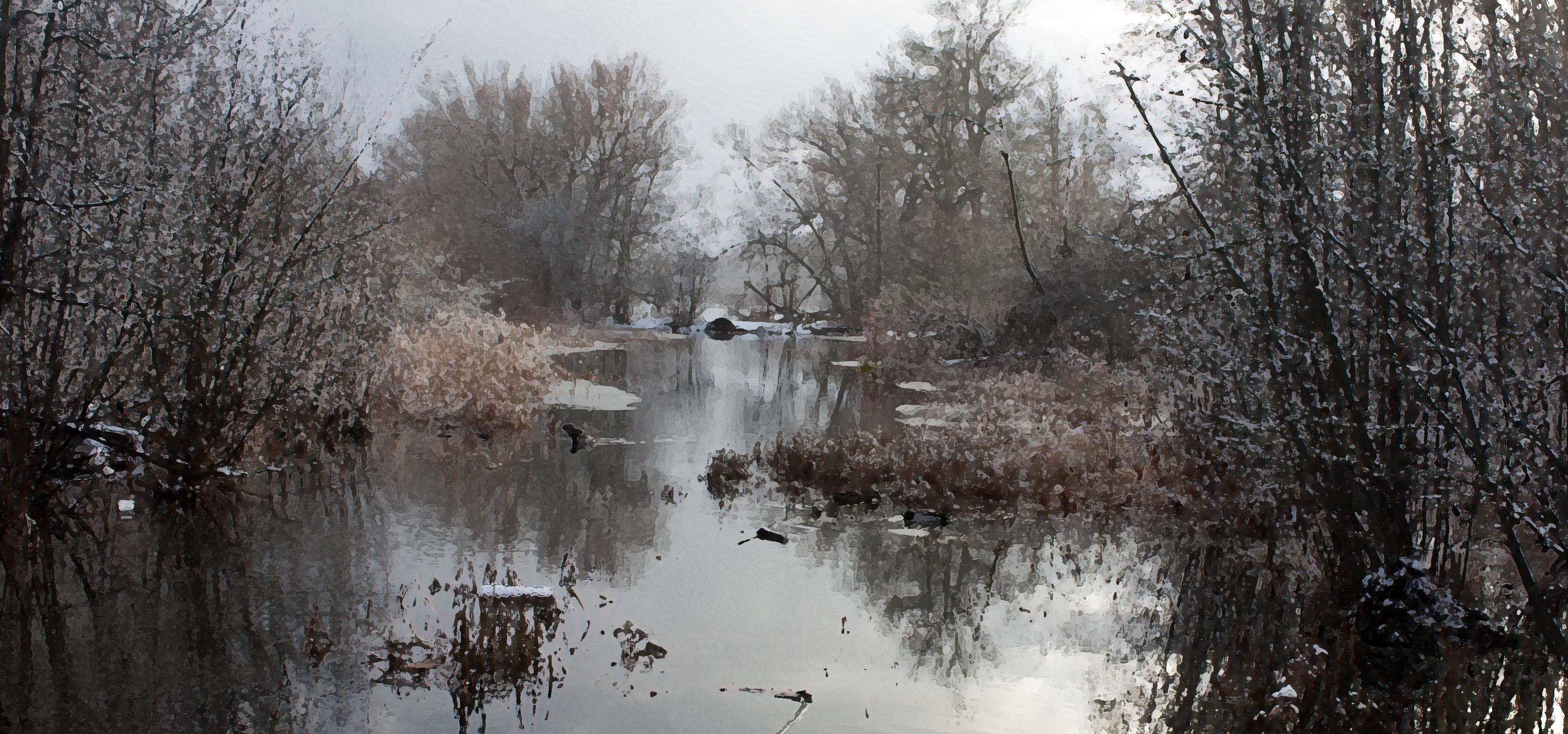
Marsh outlet of Thompson Creek, ON (photo and rendition by Nina Munteanu)

In “A Dance of Cranes” (Dundurn, 2019) author Steve Burrows erroneously describes the actions and motions associated with canoeing. In the following scene, the protagonist Jejeune is canoeing on a river in the boreal wilderness of northern Canada:

The low sun seemed to light the stand of birches from within, flickering through the trunks like a strobe light as Jejeune rowed past. 

One does not row a canoe; one paddles—with a paddle.

You might think that this is a small error, hardly worth mentioning; however, the friend who pointed out this mistake to me, was thrown out of the novel by it. She is a naturalist and has often gone canoeing in the lakes and rivers of Ontario. This mistake suggested a lack of professional attentiveness from both author and editor of the publication. By compromising the authenticity of the fictional setting the error stopped the reader from participating. We were no longer paddling with Jejeune; we were looking at the book.*

Some of you may rail at me for being overly harsh. You would remind me that this is a work of fiction, after all, not fact. You’d remind me that fiction is a work of the imagination, of characters and journeys; not a dry documentary.

I would agree with you—up to a point. Certainly, in fiction we can and do take liberties with “facts” so long as the narrative keeps the reader moving in the “fictive dream.” Authors have managed to successfully bend reality considerably in the past to great effect because the reader was fully engaged in the narrative and the characters.

But ultimately, beginning-to-end factual accuracy remains important in a made-up story for various reasons. While some “fake facts” or mistakes (such as the example above) may slip by many readers unnoticed, someone will notice. Guaranteed. And, as with my naturalist friend, it can make the difference between a seamless read and a jarring one. Writer Dorian Box shares that, “Some readers may even post reviews criticizing your book on that basis.” Dorian adds that when they spot large factual inaccuracies in a novel, “it detracts from the reading experience. I start to question other things. Credibility is damaged.”

All good fiction is anchored by consistent and believable world-building, whether the story is set in contemporary New York City or a made up planet in some made up solar system. The key to this believability is the use of grounding ‘facts’ or world-consistencies that immerse the reader in the story world. The reader relies on the author to realistically represent the world they are reading about. This allows the reader to experience the story as though it was real. Representing the facts accurately enables the writer to take liberties with other aspects of the story. Because the reader is nicely embedded in the world through accurate depiction, they will follow your characters through it eagerly.

Forest and marsh on Ontario (photo and rendition by Nina Munteanu)

The Importance and Ease of Research in Fiction Writing   

To prevent what happened in the example I gave above, authors must exercise due diligence in world building, in representation of setting and place, and in other elements of the story. Writers have easy access to so much knowledge about so many topics through local libraries, local experts, the internet, social media, and more. In other words, no excuse.

In the novel I’m currently working on I needed to understand what it felt like to handle, load and shoot a particular make of shotgun. I had handled one in the past but not actually used it. The internet provided exceptional instructional videos and sites that I could use to come close to the actual experience. I paid particular attention to nuances and sensual aspects such as texture, smell, weight, as well as mechanical aspects, like recoil; anything that would more viscerally help me experience it. When I had written the scenes, I showed them to someone who had handled a shotgun for their verdict on accurate depiction.

For more examples and discussion on place and doing research, check out Chapter H and R of my first book in The Alien Guidebook Series “The Fiction Writer: Get Published, Write Now!” and Part 2 of my third book in the series “The Ecology of Story: World as Character.”

*There is such a thing as a rowing canoe; canoes can be set up for rowing with oarlocks and sockets, oars, rowing seats and even forward rowing contraptions such as foot brace for efficient rowing. However, this was not the case in the book I gave as an example.

Fence post covered in vines on water’s edge, ON (photo and rendition by Nina Munteanu)

NINA MUNTEANU is a Canadian ecologist / limnologist and novelist. She is co-editor of Europa SF and currently teaches writing courses at George Brown College and the University of Toronto. Visit  www.ninamunteanu.ca for the latest on her books. Nina’s bilingual “La natura dell’acqua / The Way of Water” was published by Mincione Edizioni in Rome. Her non-fiction book “Water Is…” by Pixl Press(Vancouver) was selected by Margaret Atwood in the New York Times ‘Year in Reading’ and was chosen as the 2017 Summer Read by Water Canada. Her novel “A Diary in the Age of Water” was released by Inanna Publications (Toronto) in June 2020.

‘The Moment’ by Margaret Atwood

Great blue heron in Thompson Creek outlet marsh, ON (photo and rendition by Nina Munteanu)
Old cedars and roots by Jackson Creek, ON (photo and rendition by Nina Munteanu)

NINA MUNTEANU is a Canadian ecologist / limnologist and novelist. She is co-editor of Europa SF and currently teaches writing courses at George Brown College and the University of Toronto. Visit  www.ninamunteanu.ca for the latest on her books. Nina’s bilingual “La natura dell’acqua / The Way of Water” was published by Mincione Edizioni in Rome. Her non-fiction book “Water Is…” by Pixl Press(Vancouver) was selected by Margaret Atwood in the New York Times ‘Year in Reading’ and was chosen as the 2017 Summer Read by Water Canada. Her novel “A Diary in the Age of Water” was released by Inanna Publications (Toronto) in June 2020.

Apex Magazine To Release 2021 Anthology Fall 2022 with Nina Munteanu’s “Robin’s Last Song”

“Over increasingly large areas of the United States, spring now comes unheralded by the return of the birds. The early mornings are strangely silent where once they were filled with the beauty of bird song.”

—Rachel Carson, Silent Spring

Apex Magazine will release its 2021 Anthology this fall with my short story, Robin’s Last Song in it.

Robin’s Last Song first appeared in the #128 Issue of Apex Magazine in 2021. It tells the story of Robin, a blind elder whose digital app failed to warn the world of the sudden global loss of birds with disastrous ecological consequences. After years of living in self-exile and getting around poorly on sight-enhancing technology, a discovery gives her new hope in rekindling her talents in the field of Soundscape Ecology.

Apex Issue #128 and upcoming 2021 Year Issue with Nina Munteanu’s “Robin’s Last Song”

May, 2071

I rock on the cedar swing on my veranda and hear the wind rustling through the gaunt forest. An abandoned nest, the forest sighs in low ponderous notes. It sighs of a gentler time. A time when birds filled it with song. A time when large and small creatures — unconcerned with the distant thrum and roar of diggers and logging trucks — roamed the thick second-growth forest. The discord was still too far away to bother the wildlife. But their killer lurked far closer in deadly silence. And it caught the birds in the bliss of ignorance. The human-made scourge came like a thief in the night and quietly strangled all the birds in the name of progress.

“Robin’s Last Song” by Nina Munteanu

Bird Population Decline

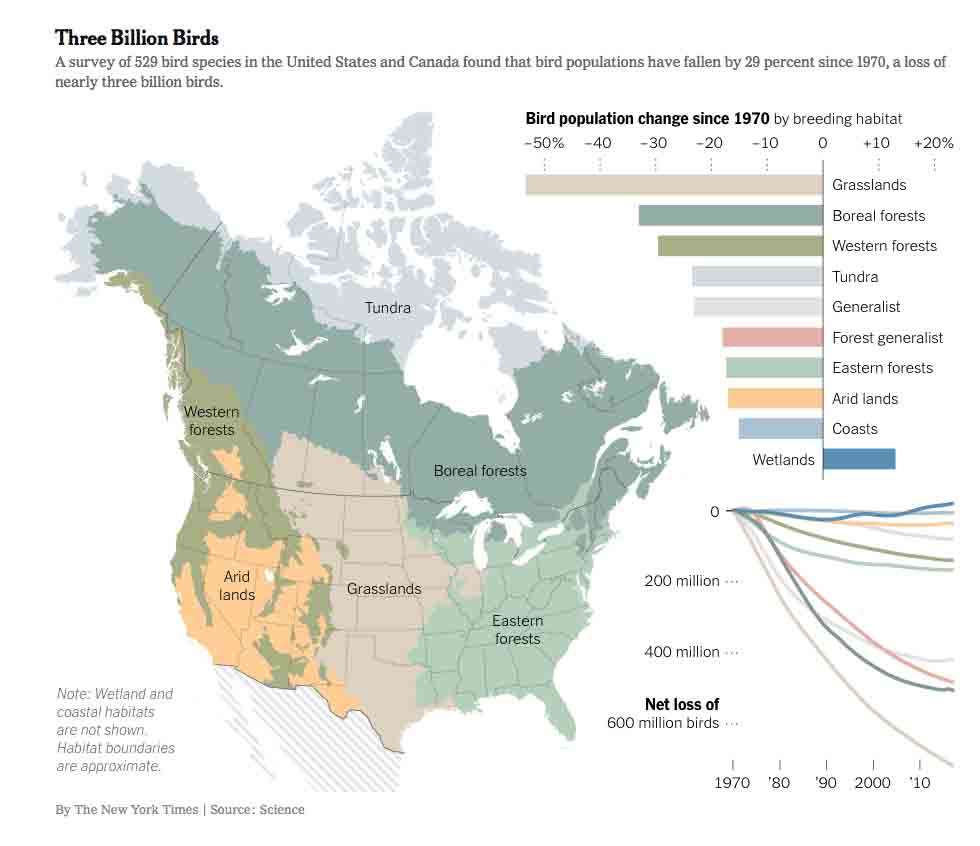
The number of birds in North America has declined by three billion, some 30 percent, over the last half-century. The October 2019 issue of Science magazine reported a staggering decline in North American birds. Kenneth V. Rosenberg and his team of researchers estimated that three billion birds of various species have disappeared in Canada and the US since 1970.

Bird population change since 1970 (image The New York Times)

That’s a third of the entire bird population lost in five decades.

In North America, warbler populations dropped by 600 million. Blackbirds by 400 million. The common robins, cardinals, and blue jays had noticeably declined. Even starlings—once considered a kind of fast-breeding pest—have dwindled by 50%. The Intergovernmental Science-Policy Platform on Biodiversity and Ecosystem Services have determined that three-quarters of Earth’s terrestrial and two-thirds of the its marine environments have been severely altered by human actions.

Robin’s egg in the forest, discarded from the nest to divert predators (photo by Nina Munteanu)

Plowing of fields, deforestation, wetland draining, climate change and other land use clearing and treatments have caused great habitat loss. In addition, neonicotinoid pesticides make it harder for birds to put on weight needed for migration, delaying their travel.

A robin fledgling rests on a patio chair (photo by Merridy Cox)

Common bird species are vital to ecosystems. They control pests, pollinate flowers, spread seeds and help regenerate forests. When these birds disappear, their former habitats lose their functionality. “Declines in your common sparrow or other little brown bird may not receive the same attention as historic losses of bald eagles or sandhill cranes, but they are going to have much more of an impact,” said Hillary Young, a conservation biologist at the University of California. Kevin Gaston, a conservation biologist at the University of Exeter, lamented that: “This is the loss of nature.”

The Trump administration heinously and foolishly demolished or maimed several key bird protection acts, which hopefully the new administration has or will reinstate in full force: Migratory Bird Treaty Act; Clean Air Act; Clean Water Act; National Fish and Wildlife Act; and the Endangered Species Act.

Useful Tool: Soundscape Ecology

The new science of soundscape ecology can analyze the health of an ecosystem. Bernie Krause, a soundscape ecologist who has been conducting long-term recordings for many decades recently noted that in Sugarloaf Ridge State Park, not far from his home in Northern California, “the effect of global warming and resulting drought has created the first completely silent spring I’ve ever experienced.” Stuart Winter at Express reports that “many of the iconic birds whose mating calls ring out across woodlands and open fields during early May are vanishing at an alarming rate.”

Bernie Kraus creating one of his soundscapes

Silent Spring: Rachel Carson’s Ominous Prediction and Warning

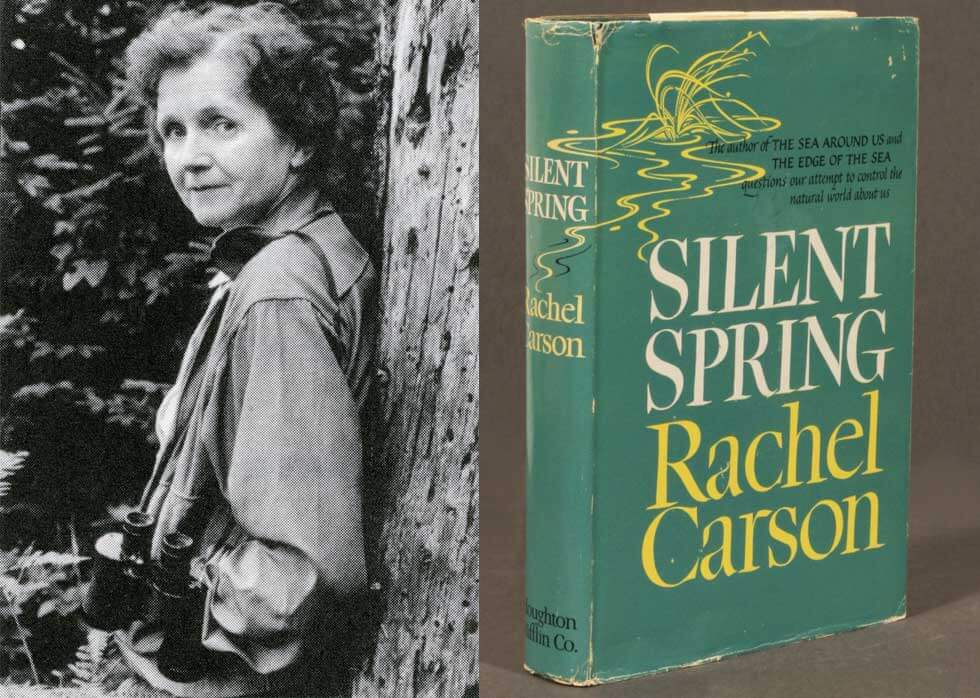
Rachel Carson was nothing short of prophetic when she published Silent Spring in 1962 (in reference to the dawn chorus most noticeable in spring during breeding). Silent Spring cautioned burgeoning ag-biotech companies (like Monsanto—now Bayer—Sygenta, Dow, and DuPont) who were carelessly and flagrantly spraying fields with pesticides and herbicides—at the time DDT was the main culprit. This would soon become a GMO world where gene-hacked plants of monocultures can withstand the onslaught of killer pesticides like neonicotinoids (currently killing bees everywhere) and Roundup.  Roundup is a carcinogenic glyphosate-based weed killer that has recently been shown to kill beneficial insects like bees) and has been linked to Alzheimer’s disease, ADHD, birth defects, autism, and several kinds of cancer in humans.

Rachel Carson and her iconic book “Silent Spring”

Despite Carson’s warnings in 1962 and despite some action eventually taken (e.g. the ban on use of DDT in 1972—the precursor to Roundup and other neonicotinoids currently in use), the use of chemicals in big ag-industry has increased over five-fold since the 1960s. And this is destroying our bee populations, other beneficial insects, beneficial weeds, small animal populations and—of course—our bird life.

And it’s making us sick too.

NINA MUNTEANU is a Canadian ecologist / limnologist and novelist. She is co-editor of Europa SF and currently teaches writing courses at George Brown College and the University of Toronto. Visit  www.ninamunteanu.ca for the latest on her books. Nina’s bilingual “La natura dell’acqua / The Way of Water” was published by Mincione Edizioni in Rome. Her non-fiction book “Water Is…” by Pixl Press(Vancouver) was selected by Margaret Atwood in the New York Times ‘Year in Reading’ and was chosen as the 2017 Summer Read by Water Canada. Her novel “A Diary in the Age of Water” was released by Inanna Publications (Toronto) in June 2020.

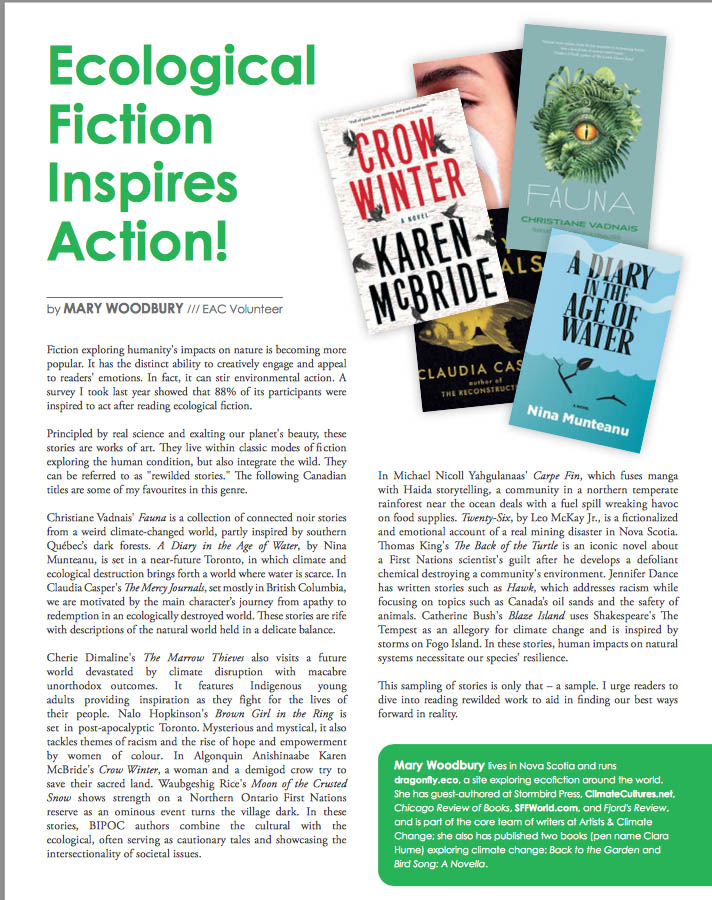
‘A Diary in the Age of Water’ Listed as Ecological Fiction That Inspires Action

In the Spring 2021 Issue of Ecology & Action, author and Dragonfly.eco publisher Mary Woodbury lists some of her favourite eco-fiction that inspires action. Nina Munteanu’s clifi eco-novel “A Diary in the Age of Water” is among them:

“Fiction exploring humanity’s impacts on nature is becoming more popular. It has the distinct ability to creatively engage and appeal to readers’ emotions. In fact, it can stir environmental action. A survey I took last year showed that 88% of its participants were inspired to act after reading ecological fiction.
Principled by real science and exalting our planet’s beauty, these stories are works of art. They live within classic modes of fiction exploring the human condition, but also integrate the wild. They can be referred to as “rewilded stories.” The following Canadian titles are some of my favourites in this genre.”

Mary Woodbury, Dragonfly.eco
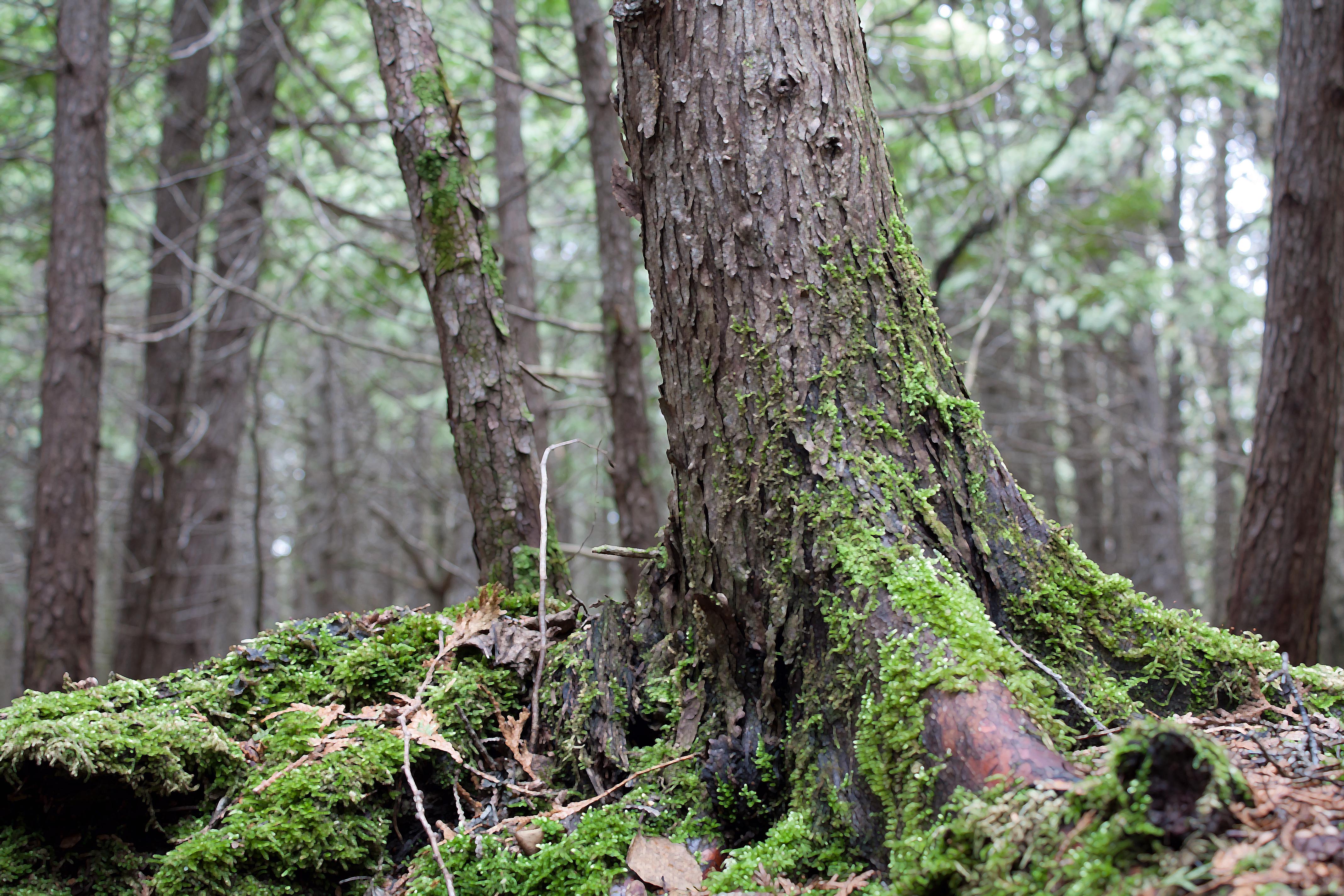
Mossy cedar tree in Trent Nature Sanctuary, ON (image and rendition by Nina Munteanu)

NINA MUNTEANU is a Canadian ecologist / limnologist and novelist. She is co-editor of Europa SF and currently teaches writing courses at George Brown College and the University of Toronto. Visit  www.ninamunteanu.ca for the latest on her books. Nina’s bilingual “La natura dell’acqua / The Way of Water” was published by Mincione Edizioni in Rome. Her non-fiction book “Water Is…” by Pixl Press(Vancouver) was selected by Margaret Atwood in the New York Times ‘Year in Reading’ and was chosen as the 2017 Summer Read by Water Canada. Her novel “A Diary in the Age of Water” was released by Inanna Publications (Toronto) in June 2020.

Nina Munteanu Interviewed by Joseph Planta on ‘The Commentary’

Joseph Planta had interviewed me before, when my non-fiction book Water Is…The Meaning of Water was published in 2016. He interviewed me again when my latest novel a cli-fi dystopian speculative fiction A Diary in the Age of Water was released by Inanna Publications.

Here’s how Joseph began the interview:

“I am Planta: On the Line, in Vancouver, British Columbia, at TheCommentary.ca. 

Nina Munteanu joins me again. She has just published a new novel, A Diary in the Age of Water. The noted writer and limnologist, a freshwater scientist, has written a book that could be considered science fiction. I suppose ‘cli-fi’ is the better term, climate-based science fiction. In the book, far away in a post-climate change world, Kyo finds a diary that gives her insight into the world before water scarcity. I’ll get Nina to tell us about Kyo, about the themes in this book, especially the world ahead if we continue as we do. Nina Munteanu is an author and ecologist. She has published many books of science fiction and fantasy, and was first on the program in 2016 when her book Water Is… The Meaning of Water was published. The website for more is at www.ninamunteanu.ca. This new book is from Inanna Publications. Please welcome back to the Planta: On the Line program, Nina Munteanu; Ms. Munteanu, good morning…”

Here’s the Interview.

NINA MUNTEANU is a Canadian ecologist / limnologist and novelist. She is co-editor of Europa SF and currently teaches writing courses at George Brown College and the University of Toronto. Visit  www.ninamunteanu.ca for the latest on her books. Nina’s bilingual “La natura dell’acqua / The Way of Water” was published by Mincione Edizioni in Rome. Her non-fiction book “Water Is…” by Pixl Press(Vancouver) was selected by Margaret Atwood in the New York Times ‘Year in Reading’ and was chosen as the 2017 Summer Read by Water Canada. Her novel “A Diary in the Age of Water” was released by Inanna Publications (Toronto) in June 2020.

Walking in the Rain: Reprised

Flooding creek in Trent Nature Sanctuary during a rain, ON (photo and rendition by Nina Munteanu)

One morning, in late spring, I went walking in the rain through the Trent Nature Sanctuary forest. Looking for magic…
Moisture covered everything. It coaxed out vivid colours and textures in a tangle of stable chaos. I felt like I’d entered a Tom Thomson painting…

Moss-covered cedar trees after a soft rain in Trent Nature Sanctuary, ON (photo by Nina Munteanu)

The rain intensified the forest’s mosaic of unique scents from pungent, heavy and sharp to floral, fresh and sweet. The gossamer morning light favoured photography with a gentleness that softened and deepened everything, and invited intimacy. Mist hung low and rose like steam from the damp earth, slowing time. It felt as though I was walking through a cloud. The forest emerged ghost-like in glimpses of tree, shrub and grass. The brilliant red of the osier dogwood. The vivid greens of mosses and leaves. A tangle of blue-green lichens and bright red cedar roots. I was witness to a chaotic tapestry of Nature’s art. Infinite shades of green, brown, grey and yellow created a fluid landscape that water painted into a vibrant watercolour scene.

I moved through it, boots squelching along the spongy loam path, as though wrapped in a moving artwork.

Dew drops on hawksweed, lichen fruiting bodies in background, ON (photo by Nina Munteanu)
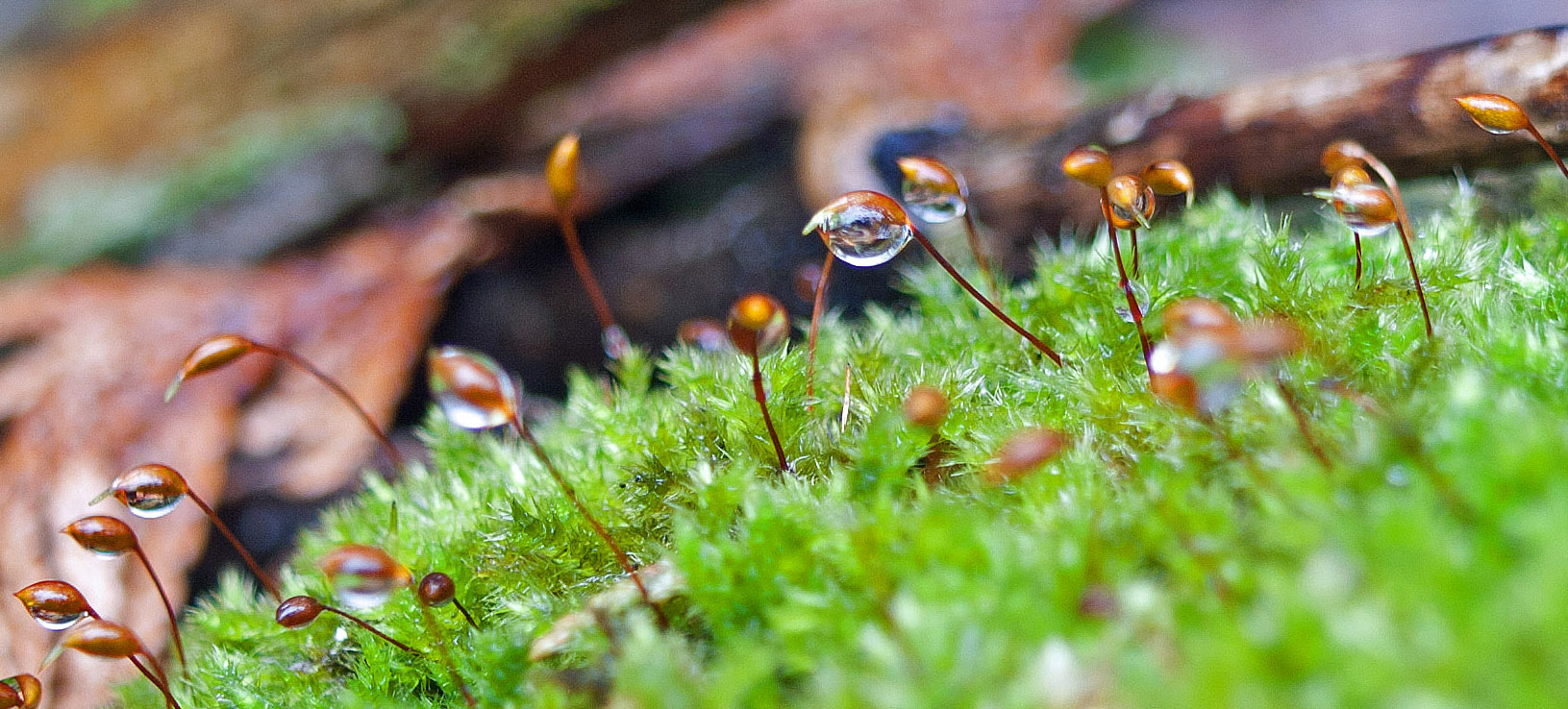
Moss with spore capsules in the rain, Trent Nature Sanctuary, ON (photo by Nina Munteanu)
Cedar roots and ferns in the heavy mist of a morning rain, Trent Nature Sanctuary, ON (photo by Nina Munteanu)
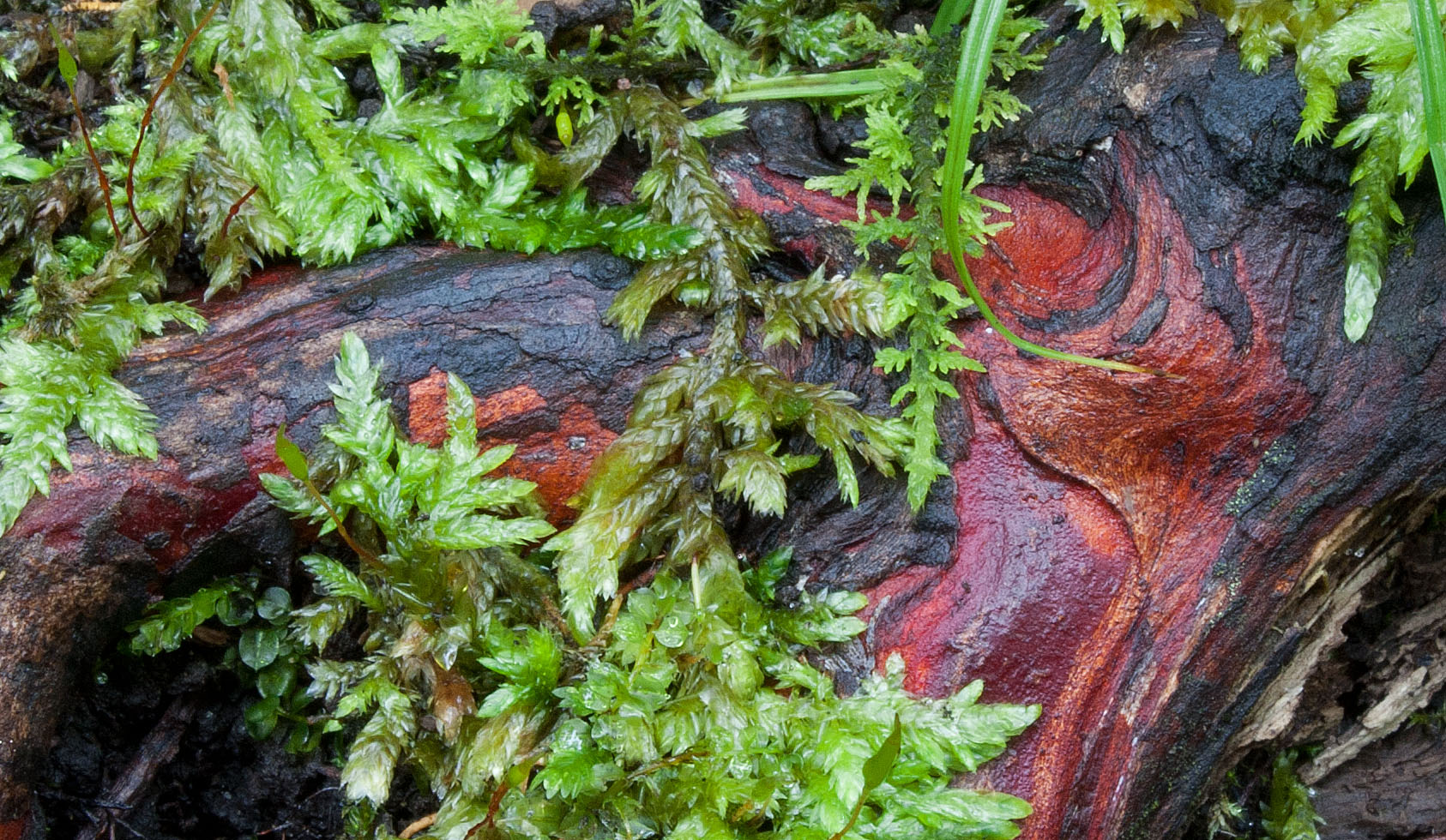
Cedar root and moss during a mild rain, Trent Nature Sanctuary, ON (photo by Nina Munteanu)
Cedar root and moss shortly after a rain, Trent Nature Sanctuary, ON (photo by Nina Munteanu)

The moisture carried the warbles and fluting chirps of lively bird song amid the hush of raindrops on vegetation. Each surface had a unique voice. And the rainfall—from light drizzle to hard pour—carried its own tune, rhythm and percussion. A symphony of diverse frequency from rich infrasound to beyond. 

Nina’s Canon EOS Rebel camera on its tripod, ready to take photos, Trent Nature Sanctuary, ON (photo by Nina Munteanu)
Rain falling on the marsh to the Otonabee River, ON (photo by Nina Munteanu)
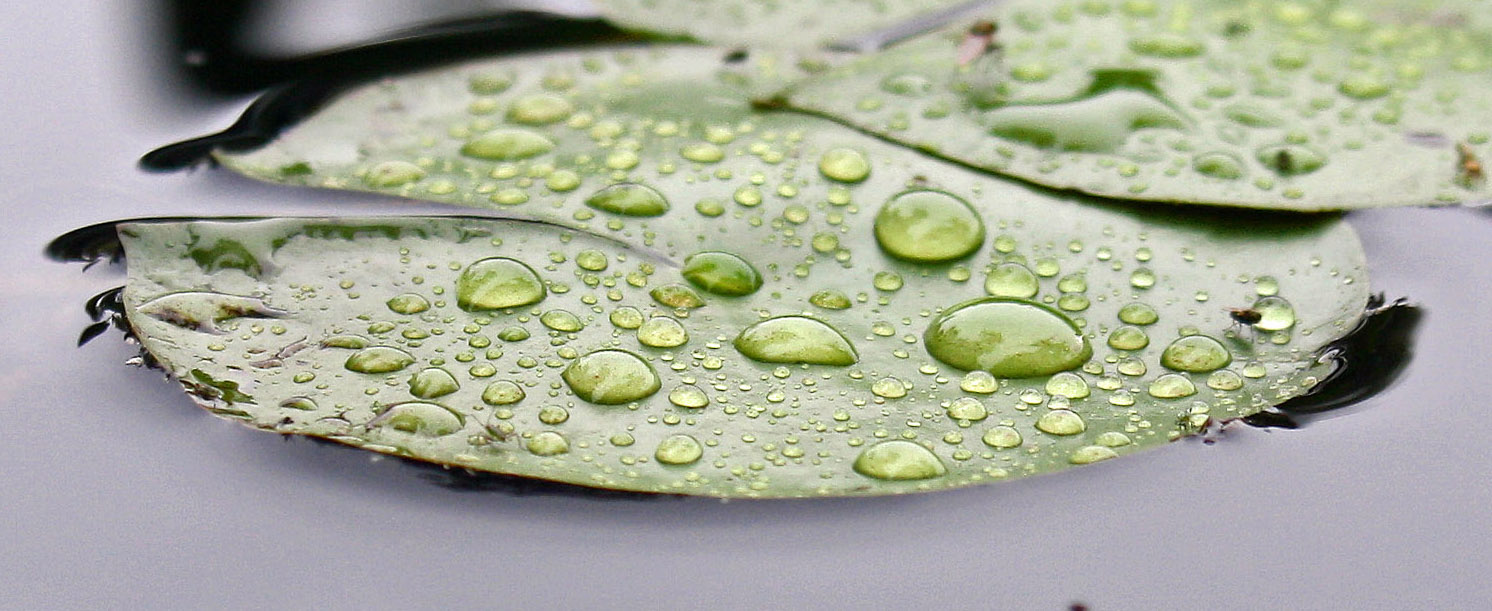
Pond lilies in the rain, ON (photo by Nina Munteanu)
Rain falls on the Otonabee River, ON (photo by Nina Munteanu)

I felt elation in Nature’s celebration of life.
I was the only person in the park and thoroughly basked in that feeling of humbleness that comes with a kind of knowing: of being part of something far greater than oneself and yet in some way being that greater ‘self.’ Like I belonged there. Hard to explain. But it felt truly awesome and eternal.

Nina Munteanu
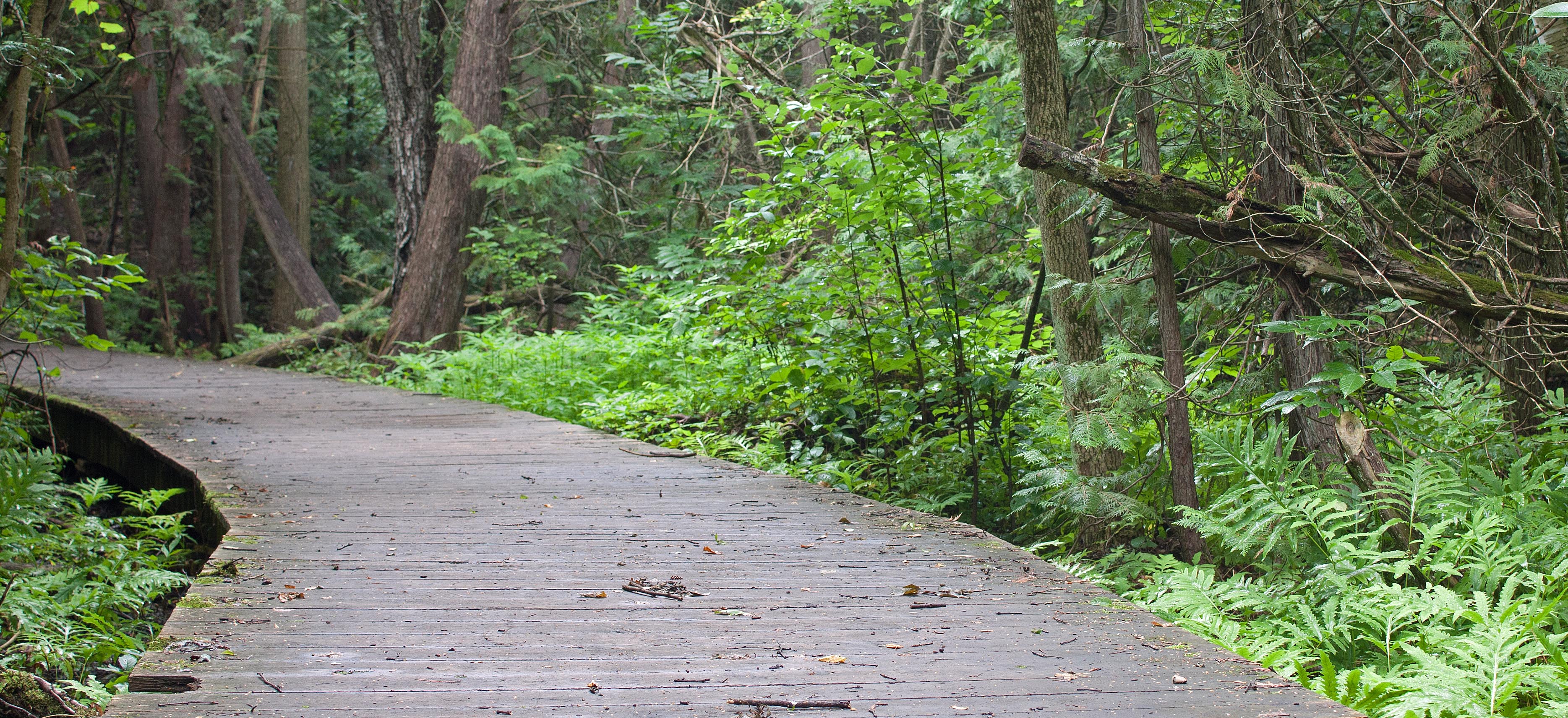
Boardwalk over the forest swamp, Trent Nature Sanctuary, ON (photo by Nina Munteanu)
Fence post with marsh in the background during a steady rainfall, ON (photo by Nina Munteanu)
Country road in the rain, ON (photo and rendition by Nina Munteanu)

I could have stayed there, wet in the rain, for hours. But I felt sorry for my camera and headed home, thinking of a warm cup of tea… 

NINA MUNTEANU is a Canadian ecologist / limnologist and novelist. She is co-editor of Europa SF and currently teaches writing courses at George Brown College and the University of Toronto. Visit  www.ninamunteanu.ca for the latest on her books. Nina’s bilingual “La natura dell’acqua / The Way of Water” was published by Mincione Edizioni in Rome. Her non-fiction book “Water Is…” by Pixl Press(Vancouver) was selected by Margaret Atwood in the New York Times ‘Year in Reading’ and was chosen as the 2017 Summer Read by Water Canada. Her novel “A Diary in the Age of Water” was released by Inanna Publications (Toronto) in June 2020.

Nina Munteanu Reflects on Her Eco-Fiction Journey at Orchard Park Secondary School

I recently gave a talk at Orchard Park Secondary School during their “Eco Crawl” week. “Eco crawl is a cross curricular initiative promoting environmental awareness, natural conservation, and well-being,” says Teresa Grainger, Library Learning Commons Technician at the school. The “week long initiative will include animal visitors, presentations, displays, and outdoor activities. We like to involve as many departments as possible.”

The school invited me to participate with a presentation. I spoke about my work as a writer and as a scientist, how I was inspired to write eco-fiction and a little about the process of how I started. I shared the challenges I faced and my victories. I also spoke about the importance of eco-fiction as narrative and the importance of storytelling generally to incite interest, bring awareness and ultimately action.

The word is a powerful tool. And the stories that carry them are vehicles of change.

Here is some of that talk:

My story begins with the magic of water, Quebec water … I was born in a small town in the Eastern Townships of Quebec, a gently rolling and verdant farming community, where water bubbles and gurgles in at least two languages.

Pastoral Eastern Townships and Granby, Quebec; Nina Munteanu as a child

I spent a lot of my childhood days close to the ground, observing, poking, catching, destroying and creating. Perhaps it was this early induction to the organic fragrances of soil, rotting leaves and moss that set my path in later life as a limnologist, environmental consultant and writer of eco-fiction.

My mother kept a garden in our back yard that she watered mostly with rain she collected in a large barrel out back. I remember rows of bright dahlias with their button-faces and elegant gladiolas of all colours, tall like sentinels. And, her gorgeous irises.

In the winter, my mother flooded the garden to create an ice rink for the neighbourhood to use for hockey. Somehow, I always ended up being the goalie, dodging my brother’s swift pucks to the net. I got good at dodging—probably a useful life skill in later life…

Our dad frequently took us to the local spring just outside town. We walked a few miles up Mountain Road to an unassuming seepage from a rock outcrop with a pipe attached to it by the local farmer. I remember that the water was very cold. Even the air around the spring was cooler than the surrounding air. I remember that the spring water tasted fresh and that the ice it formed popped and fizzed more than tap water.

I followed my older brother and sister to the nearby forest and local river. We stirred soil, flower petals and other interesting things with water to fuel “magic potions” then told wild stories of mayhem and adventure. I became a storyteller. My passion for storytelling eventually morphed into writing; but, the underlying spark came through environmental activism.

In early high school, during the mid-60s, I became an environmental activist, putting up posters and writing in the school paper. I wrote letters to industry and politicians, trying to incite interest in being good corporate citizens and promoting global environmental action. I remember a well-meaning teacher chiding me for my extravagant worldview. “Stick to little things and your community—like recycling,” he suggested patronizingly. I remember the shock of realizing that not everyone felt the planet like I did. Perhaps it was a teenage-thing, or a girl-thing, or a nina-thing. I prayed it wasn’t just a nina-thing…

I started writing stories in high school. Mostly eco-fiction, though I didn’t know that’s what it was at the time. There was no genre called eco-fiction back then. It all went under the umbrella of scifi.

I completed my first novel, Caged in World when I was fifteen—in Grade 9—in 1969.  Caged in World was a hundred-page speculative story about a world that had moved “inside” to escape the ravages of a post climate-change environment. The eco-novel was about a subway train driver and a data analyst caught in the trap of a huge lie. The story later morphed into Escape from Utopia. Several drafts—and years later—the novel became the eco-medical thriller Angel of Chaos, set in 2095 as humanity struggles with Darwin’s Disease—a mysterious neurological environmental pandemic. Icaria 5 is one of many enclosed cities within the slowly recovering toxic wasteland of North America, and where the protagonist Julie Crane works and lives. The city is run by technocrats, deep ecologists who call themselves Gaians, and consider themselves guardians of the planet. The Gaians’ secret is that they are keeping humanity “inside” not to protect humanity from a toxic wasteland but to protect the environment from a toxic humanity.

Some of the scientific papers, reports and articles I wrote or participated in

When I enrolled in college and university, I thought of going into environmental law then decided that I didn’t have the temperament for it and switched to biology. Without realizing it, I put fiction writing on hold while I pursued ecology at university. One professor got me very interested in limnology and it became my focus when I realized that I’d always been fascinated by water. I started out being scared of water—not being a strong swimmer—and the best thing you can do to get over a fear is to study it and understand it. That’s exactly what I did. I did some cool research on stream ecology and published scientific papers, articles and reports. Then I moved to the westcoast to teach limnology at the University of Victoria and do consulting work in aquatic ecology.

So, in a way, I’d gone back to what I loved best as a child—mucking about in nature, spending my days close to the ground, observing, poking, catching, destroying and creating.

Kevin as a toddler

In 1991, my son Kevin was born. I felt a miracle pass through me. Kevin became my doorway into wonder. His curiosity was boundless and lured me into a special world of transformation. I took time off work to spend with Kevin when he was young. We went on great trips, from the local mall, where we had a hot chocolate and played with Lego, to the local beach on the Fraser River, where we explored the rocks. When he was no more than three, I took him on endless adventures in the city and its surroundings. We didn’t have to go far. The mud puddles of a new subdivision after a rain were enough to keep our attention for dozens of minutes. We became connoisseurs of mud. The best kind was “chocolate mud,” with a consistency and viscosity that created the best crater when a rock was thrown into it.

Kevin and I often explored the little woodland near our house. We made “magic potions” out of nightshade flowers, fir needles, loam and moss; we fueled our concoctions with the elixir of water from a stagnant pool then told wild stories of mayhem and adventure.

Storytelling kept calling to me. It was the 1990s—twenty years after I finished Angel of Chaos—and I’d published lots of short stories and articles. But no novels.

Some of Nina’s short story publications

I spent several years shopping Angel of Chaos to agents and publishing houses. Although I received many bites, all finally let go. I kept writing short stories, some of which were cannibalized from the book, and several were published; I also wrote Angel’s prequel, The Great Revolution and Angel’s sequel Darwin’s Paradox and shopped them.

Then In 2007, Dragon Moon Press in Calgary made an offer to publish Darwins Paradox; the sequel became my debut novel. Dragon Moon Press later picked up Angel of Choas and published it in 2010 as a prequel. I haven’t stopped publishing books since (with a book pretty much every year), both fiction and non-fiction…including writing guidebooks in my Alien Guidebook Series.

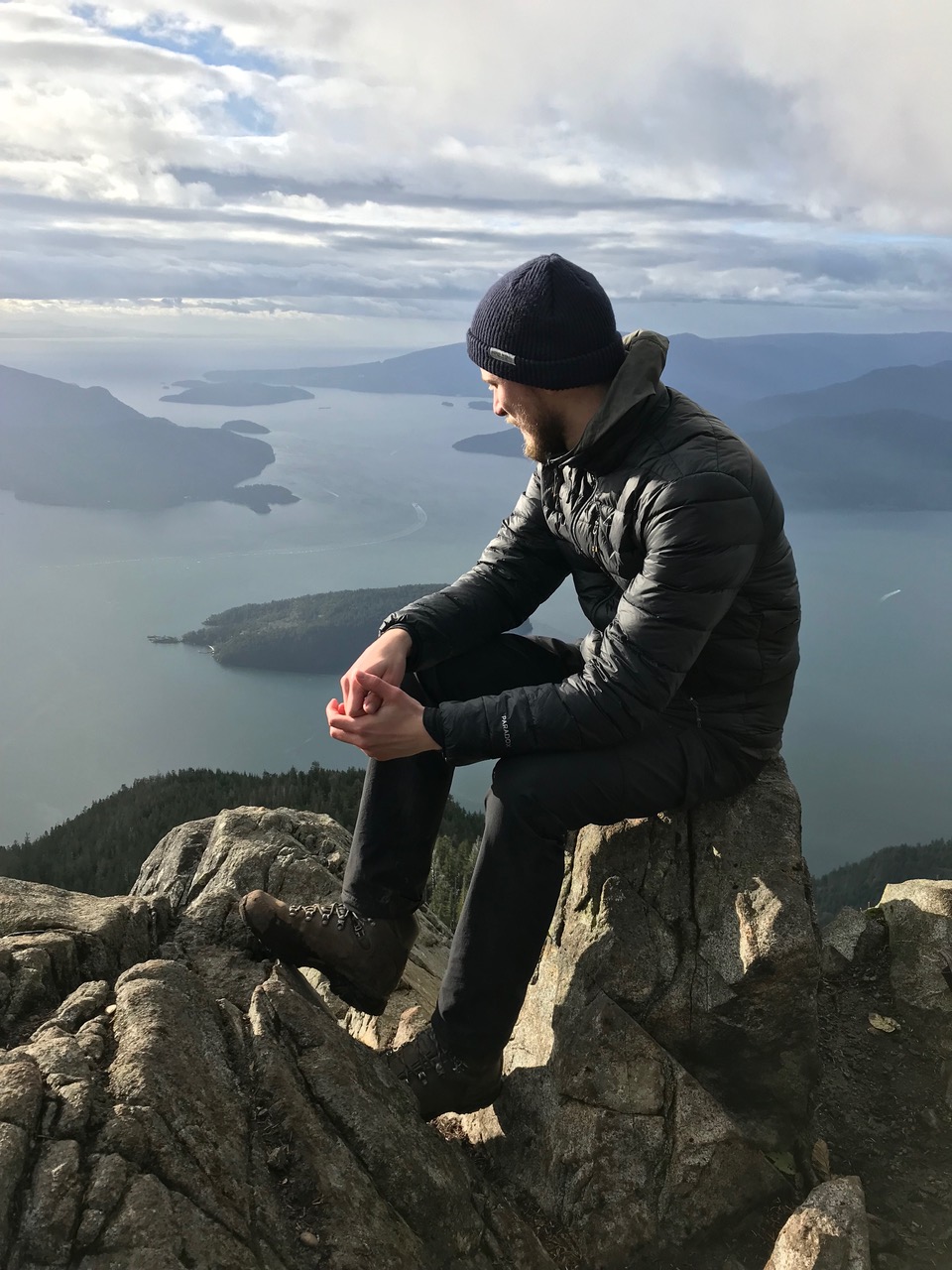
Kevin hiking the mountains of the west coast, BC

My son left the nest to go to university and work and I went on walkabout and eventually left the westcoast, returning to my old home in the east. I did lots of house-sitting in the Maritimes, then ended up teaching at UofT in Toronto.

UofT, west gate to quadrangle of University College, ON (photo by Nina Munteanu)

In 2016, I published Water Is… with Pixl Press in Vancouver.  It’s a biography and celebration of water—my attempt to write a lay book on my water science, something that all could appreciate. Turns out that Margaret Atwood really liked it too!

On its heels, I got a book deal with Inanna Publications in Toronto for my eco-novel A Diary in the Age of Water. This eco-fiction novel follows the journeys of four generations of women during a time of catastrophic environmental change. The novel explores each woman’s relationship with water, itself an agent of change…

Eco-fiction (short for ecological fiction) is a kind of fiction in which the environment—or one aspect of the environment—plays a major role in story, either as premise or as character. For instance, several of my eco-fiction stories give Water a voice as character. In my latest novel, A Diary in the Age of Water, each of the four women characters reflects her relationship with water and, in turn, her view of and journey in a changing world.

In eco-fiction, strong relationships are forged between the major character on a journey and an aspect of their environment and place. Such strong relationship can linger in the minds and hearts of readers, shaping deep and meaningful connections that will often move a reader into action. Our capacity—and need—to share stories is as old as our ancient beginnings. From the Paleolithic cave paintings of Lascaux to our blogs on the Internet, humanity has left a grand legacy of ‘story’ sharing. By providing context to knowledge, story moves us to care, to cherish, and, in turn, to act. What we cherish, we protect.  It’s really that simple.

Eco-fiction—whether told as dystopia, post-apocalypse, cautionary tale or hopeful solarpunk—can help us co-create a new narrative, one about how the Earth gifts us with life and how we can give in return. It’s time to start giving.

That starts with story.

NINA MUNTEANU is a Canadian ecologist / limnologist and novelist. She is co-editor of Europa SF and currently teaches writing courses at George Brown College and the University of Toronto. Visit  www.ninamunteanu.ca for the latest on her books. Nina’s bilingual “La natura dell’acqua / The Way of Water” was published by Mincione Edizioni in Rome. Her non-fiction book “Water Is…” by Pixl Press(Vancouver) was selected by Margaret Atwood in the New York Times ‘Year in Reading’ and was chosen as the 2017 Summer Read by Water Canada. Her novel “A Diary in the Age of Water” was released by Inanna Publications (Toronto) in June 2020.