Snow Is…


MontclairSt-winterFeb2018

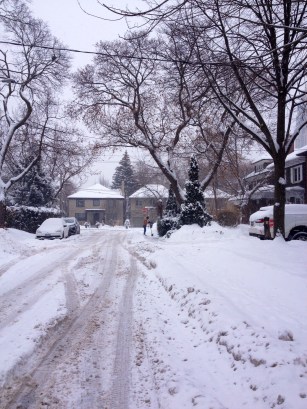
Montclair Street, Toronto (photo by Nina Munteanu)

I grew up in southern Quebec, where the first snow of the season often came from the sky in a thick passion. Huge flakes of unique beauty settled on my coat sleeves and within minutes I was covered in snow. I would stand enraptured and study each one as I could.

Snow wraps everything in a blanket of soft acceptance. It creates a dazzling face on a dark Earth. It refuses to distinguish between artificial and natural. It covers everything—decorated house, shabby old car, willowy trees, manicured lawn—beneath its white mantle. It quiets the Earth.

Have you ever gone for an evening walk in the fresh crisp snow, boots crunching, snow glistening in the moonlight? Each step is its own symphony of textured sound. A kind of collaboration with the deep of the night and Nature’s own whisperings.

Beaches-snow06

Street car on Queen St (photo by Nina Munteanu)

Snow is a shape shifter, charging down in a fierce blizzard and as hoarfrost that forms as water vapour migrates up through the snow base on cold, clear nights. Snow is a gypsy, conspiring with the clever wind to form mini-tornadoes and swirling on the cold pavement like misbehaving fairies. It drifts like a vagabond and piles up, cresting over the most impressive structure, creating phantoms out of icons. Some people, fearful of the chaos and confusion that snow brings, hide indoors out of the cold. Others embrace its many forms, punching holes through the snow crust to find the treasure of powder beneath or ploughing through its softness, leaving behind an ivory trail of adventure.

snow-christmas2008-3

Red barn, Ladner, BC

Snow is magic. It reveals as it cloaks. Animals leave their telltale tracks behind their silent sleuthing. No two snowflakes are alike. Yet every non-aggregated snowflake forms a six-fold radial symmetry, based on the hexagonal alignment of water molecules when they form ice. Tiny perfectly shaped ice-flowers drift down like world peace and settle in a gentle carpet of white. Oddly, a snowflake is really clear and colourless. It only looks white because the whole spectrum of light bounces off the crystal facets in diffuse reflection (i.e., at many angles). My son, who skies, extols “champagne powder”—very smooth and dry snow ideal for gliding on. On powder days, after a fresh snowfall, mountain trees form glabrous Henry Moore-like sculptures. Skiers wind their way between the “snow ghosts,” leaving meandering double-helix tracks behind them.


Chr-2-2008

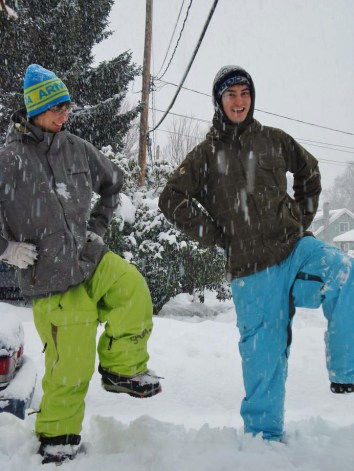
Author’s son and friend do a snow dance, Ladner, BC (photo by Nina Munteanu)

Snow is playful. It beckons you to stick out your tongue and taste the clouds. Snow is like an unruly child. Snow is the trickster. It stirs things up. Makes a mess. It is the herald of change, invigorating, fresh and wondrous. Cars skid in it and squeal with objection. Grumpy drivers honk their horns, impatient to get home; while others sigh in their angry wake. Brown slush flies in a chaotic fit behind a bus and splatters your new coat. Boys and girls (of all ages) venture outside, mischief glinting in their eyes, and throw snowballs. Great battles are fought in backyards where children build awesome forts and defend them with fierce determination.


nina-2014aaaNina Munteanu is an ecologist, limnologist and internationally published author of award-nominated speculative novels, short stories and non-fiction. She is co-editor of Europa SF and currently teaches writing courses at George Brown College and the University of Toronto. Visit www.ninamunteanu.ca for the latest on her books.

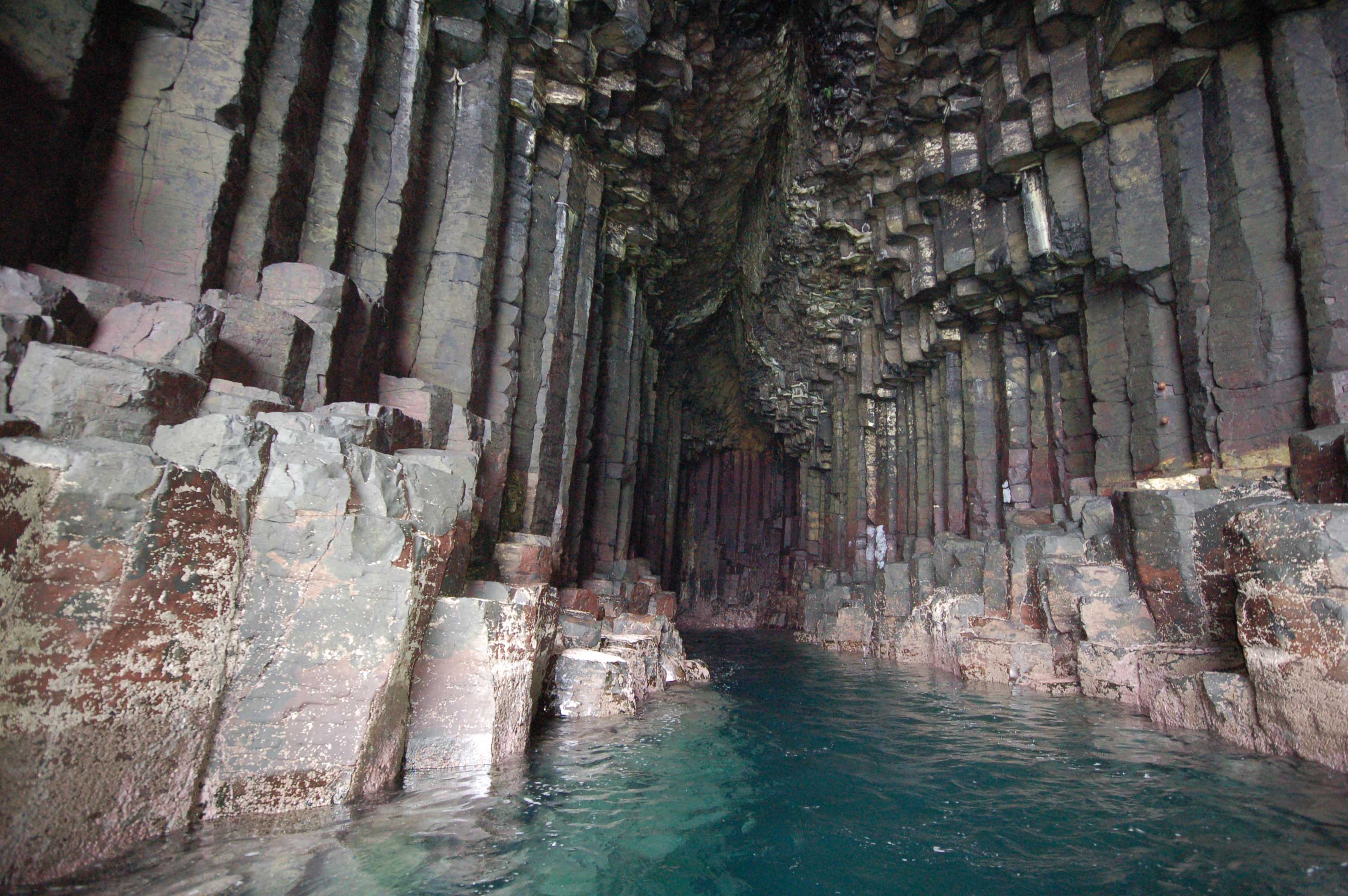
Fingal’s Cave by Nina Munteanu

FingalsCave-MeganSurvivalAfter she and fellow colonists crash land on the hostile jungle planet of Mega, rebel-scientist Izumi, widower and hermit, boldly sets out against orders on a hunch that may ultimately save her fellow survivors—but may also risk all. As the other colonists take stock, Izumi—obsessed with discovery and the need to save lives—plunges into the dangerous forest, which harbors answers, not only to their freshwater problem, but ultimately to the nature of the universe itself. Mega was a goldilocks planet—it had saltwater and supported life—but the planet also possessed magnetic-electro-gravitational anomalies and a gravitational field that didn’t match its size and mass. The synchronous dance of its global electromagnetic field suggested self-organization to Izumi, who slowly pieced together Mega’s secrets: from its “honeycomb” pools to the six-legged uber-predators and jungle infrasounds—somehow all connected to the water. Still haunted by the meaningless death of her family back on Mars, Izumi’s intrepid search for life becomes a metaphoric and existential journey of the heart that explores how we connect and communicate—with one another and the universe—a journey intimately connected with water.

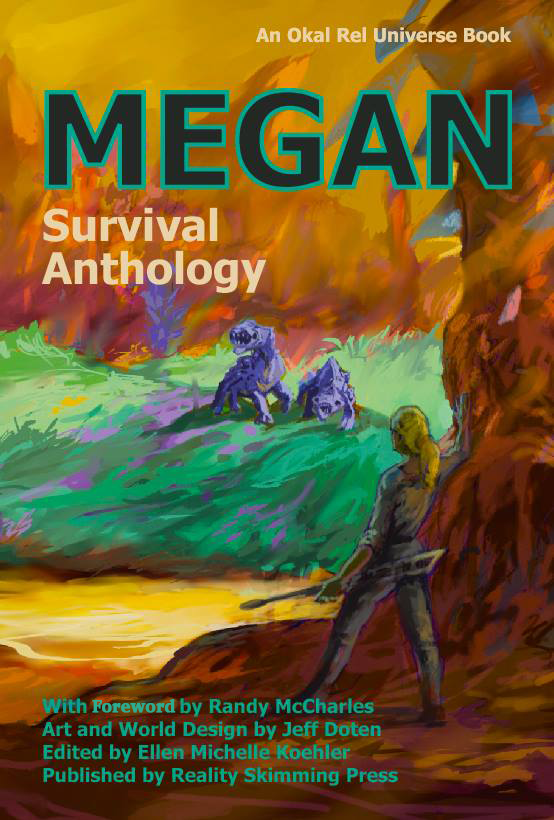
Megan coverFingal’s Cave by Nina Munteanu is the first story in the Megan Survival Anthology by Reality Skimming Press. The story is available as an ebook here. The print anthology is available here.

Nina was interviewed by Ellen Mitchell of Reality Skimming Press on writing Fingal’s Cave.

On the connection between ecology and science fiction, Nina says:

The science of ecology studies relationships. It looks at how things relate to one another. Ecology is the study of communities and ecosystems and how these interact—often in a global setting. Science fiction writing explores the interaction of humanity with some larger phenomenon involving science. Robert J. Sawyer calls it the fiction of the large. Large ideas, large circumstance, large impact. Both ecology and science fiction explore consequence in a big way. Ecology—like “setting” and “world”—manifests and integrates in story theme more than some of the hard sciences, which may contribute more to a story’s premise or plot. This is because, while most sciences study the nature and behaviour of “phenomena”, ecology examines the consequences of the relationship of these phenomena and the impact of their behaviours on each other and the rest of the world. It is in this arena that science fiction becomes great: when it explores relationship and consequence.

On the significance and importance of optimism in science fiction, Nina says:

Optimistic SF is the antithesis of pointless SF. The reason I define it that way is because I believe many would box the term too tightly, equating it to “happy ending” or the equivalent of “and they all lived happily ever after.” Others may even include a certain requisite language and tone, and subject matter that must be excluded to make it optimistic.

For me, it is enough that the story resolves and has a point to it; that the reader is able—even if the hero isn’t—to see a way out into the light. The story itself need not be “optimistic”; but the reader is fulfilled somehow. I suppose one could elucidate Optimistic SF through the “Hero’s Journey Myth”, a plot approach that describes the metaphoric journey of a character or set of characters toward some destiny that involves change and learning. Ultimately, for a story to be worthwhile, it must have a point to it. Otherwise, it’s just “reality TV”.

You can read the entire interview with Nina Munteanu by Ellen Mitchell of Reality Skimming Press here.

fingalsCaveFingal’s Cave is a sea cave on the uninhabited island of Staffa in the Inner Hebrides of Scotland. The cave is formed entirely from hexagonally jointed basalt columns in a Paleocene lava flow (similar to the Giant’s Causeway in Northern Ireland). Its entrance is a large archway filled by the sea. The eerie sounds made by the echoes of waves in the cave, give it the atmosphere of a natural cathedral. Known for its natural acoustics, the cave is named after the hero of an epic poem by 18th century Scots poet-historian James Macpherson. Fingal means “white stranger”.

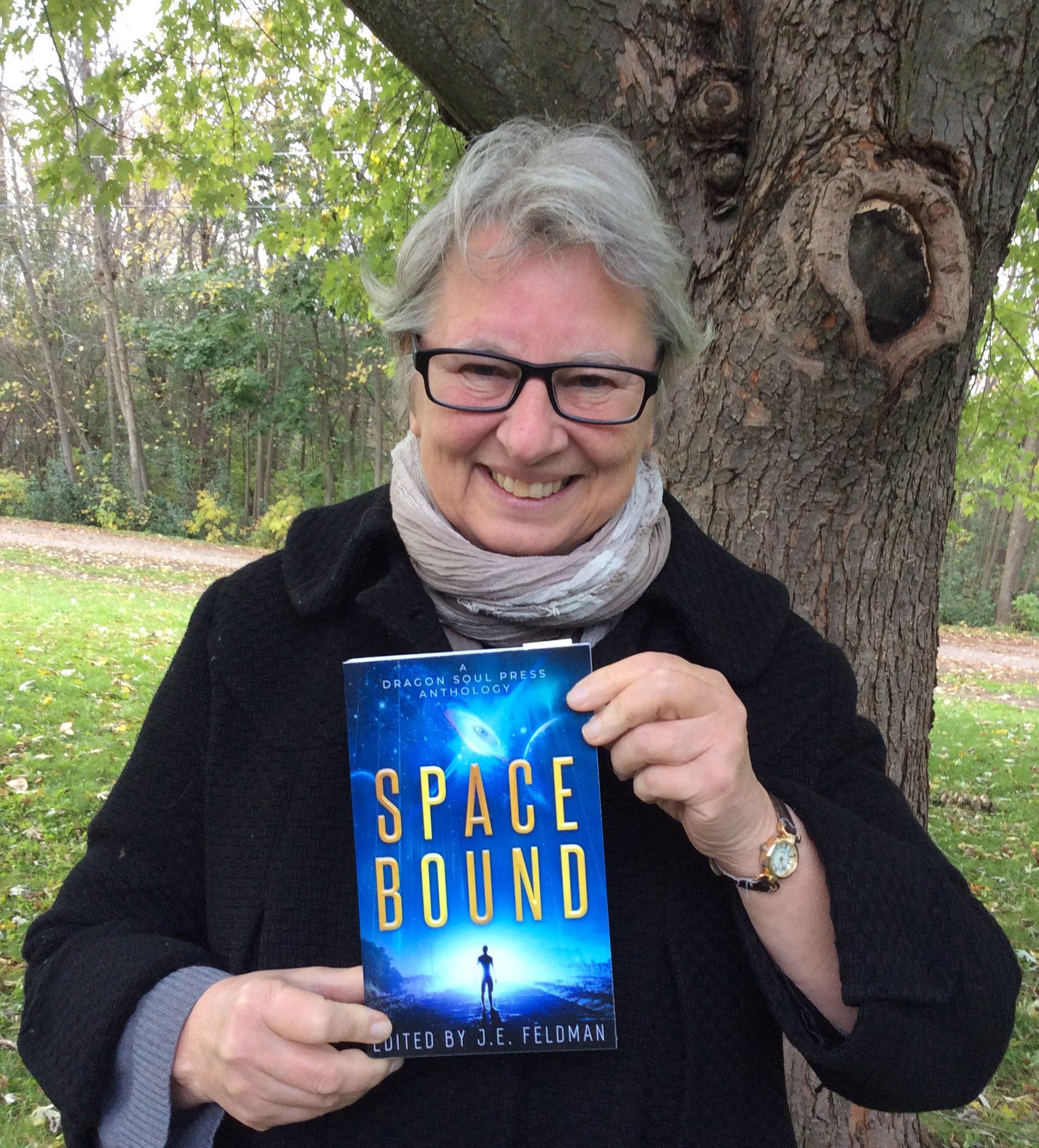
p.s. Dragon Soul Press has recently included “Fingal’s Cave” in their 2021 anthology “Space Bound.”

Nina Munteanu holds her copy of “Space Bound” anthology with her story “Fingal’s Cave”

Fingal’s Cave was reprinted in 2023 on the online magazine Metastellar Speculative Fiction and Beyond.

Nina Munteanu is an ecologist, limnologist and internationally published author of award-nominated speculative novels, short stories and non-fiction. She is co-editor of Europa SF and currently teaches writing courses at George Brown College and the University of Toronto. Visit www.ninamunteanu.ca for the latest on her books.

A Tardigrade Christmas…

…A Different Christmas Story…

water bear03 copyBlika lived in Mossland with her clone sestras, gathering and sucking the delicious juices of detritus and algae. Never in a hurry, she lumbered from frond to frond on eight stubby legs in a gestalt of feasting and being. Blika led a microscopic life of bloated bliss—unaware of forests, human beings, quantum physics or the coming singularity…water bear010 copy

A sudden fierce wind wicked her water away. In a burst of alien urgency, she wriggled madly for purchase on the frond as it shivered violently in the roaring wind. Blika lost hold and the wind swept her into a dark dryness. Her liquid life-force bleeding away from her, Blika crawled into herself. The moss piglet felt herself shrivel into oblivion.

water bear08 copy

No, not oblivion… more like a vast expanse…

She had entered a wonderland of twinkling lights in a vast fabric of dark matter. Where am I?

It occurred to her that she had never thought such a thing before. Am I dead? She’d never thought about existence before either. What has happened to me? And where are my sestras? She felt an overwhelming sadness. Something else she’d never felt before and wondered why she hadn’t. Did it have to do with that liquid that had always embraced her with its life-force? Here, in the darkness of space, she felt alone for the first time, separated from the plenum.tardigrades_in_space copy

“Welcome, sestra!” boomed a large voice.

Blika beheld a being like her with eight arms and hands, seated on a throne and wearing a jeweled crown. “Why do you call me sestra?” Blika asked.

tardigrade-queen-by-thomas a gieseke copy“Because we are ALL sestras! You are a Tardigrade, aren’t you?” She waved all eight arms at Blika. “Well, I am your queen!” She looked self-pleased. “You are in Tunland now! The land of awareness. And now that you are self-aware, you can do anything! We’re special,” the queen ended in smug delight. The folds of her body jiggled and shimmered.

“Why are we special?” Blika asked.

“Because we are!” the queen said sharply, already losing patience with her new subject. “Don’t you know that you can survive anything? Ionizing radiation. Huge pressure. Boiling heat. Freezing cold. Absolutely no air. And no water…”

Blika gasped. Water was the elixor that connected her to her sestras and her world… her…home…

“How do you think you got here, eh?” the queen mocked her with a sinister laugh. Blika cringed. The queen went on blithely, “So, where do you come from, piglet?”

“I’m trying to find my way home…”

tardigrades holiday copy

“Your way? All ways here are my ways!”

“But I was just thinking—”

“I warn you, child…” The queen glowered at her. “If I lose my temper, you lose your head. Understand?”

Blika nodded, now missing her home even more.

“Why think when you can do!” the queen added, suddenly cheerful again. “First there is BE, then THINK, then DO. Why not skip the think part and go straight to the do part? In Tunland we do that all the time,” she went on cheerfully. “And, as I was saying, here we can do anything!”

The queen grabbed Blika by an arm and steered them through the swirling darkness of space toward a box-like floating object. “This is my doctor’s Tardis…”

“Doctor who?” Blika naively asked.

The queen shivered off her annoyance and led them eagerly through the door and into her kingdom.

tardigradetardis copyThey entered a strange place of giant blocks and whining sounds beneath a dark swirling sky.

The first thing Blika noticed was the huge tardigrades floating above them like dirigibles! Others were dressed in suits holding little suitcases and walking into and out of the huge blocks through doorways.

“We’ve crossed into another dimension—my universe,” the queen announced cheerfully. “Here you can do anything you want. So, why be tiny and feckless when you can be huge and powerful!” She studied Blika. “This is your moment to do what you could never do before. Think of the possibilities! You too could be huge!”

Blika stared at the strange world of smoke and metal and yearned for her simple mossy home.

tardigrade-helmet-1 copyAs if she knew what Blika wanted, the queen quickly added, “But you can never go back home!”

“Why not?” Blika asked, disappointed.

Because, that’s why!” the queen shouted.  Squinting, she added, “It’s too late. It’s just not done! Once you’ve learned what the colour green means you can’t erase its significance!”

“But I still don’t know what the colour green means,” Blika complained. “And, besides, I think you’re wrong. Becoming self-aware doesn’t stop you from going home. It just changes its meaning. And if I can really do what I want, then you can’t stop me. I’m going home to my family.”

attack_of_the_tardigrades_by_ramul copy 2

The little hairs on the queen bristled. Then she grew terribly calm. “I won’t stop you, but…” The queen pointed to the floating tardigrades above them. “My water bear army will. I sentence you to remain in Tunland forever for your crime!”

“I haven’t done anything…yet.”

“You’ve broken the law of thinking before doing. In Tunland you have to skip that part—”

“You just made that up—”

“Doesn’t matter!” shouted the queen. “Sentence first, verdict afterwards!”

“That’s nonsense,” said Blika loudly. “The idea of having the sentence first.”

“Hold your tongue!” said the queen, turning a shade of chartreuse.

“I won’t,” said Blika.

“Off with your head!” the queen shouted at the top of her voice, pointing to Blika with all eight of her appendages. The water bear army hovered over Blika, taking aim. They were going to get more than her head with those lasers, Blika thought, and scurried for cover faster than her stubby eight legs had ever moved before. She was doomed—

Then, just beyond her sight, she saw—no felt—something far more significant than the colour green…or a huge bloated water bear army about to shoot her…

Water! She could taste it, smell it, hear it. Blika rejoiced with thoughts of her green home.

i believeThe water came in a giant wet wave of blue and silver and frothy green. Tunland sloshed then totally dissolved. Blika surfed the churning water. That green! She knew what it was! Blika reached out with her deft claws and snagged a tumbling moss frond. It finally settled and there were her sestras! So many of them clinging to the same green moss! She’d found her family! She was home! Yes, it was a different home and different sestras, but it was also the same. Love made it so…

Merry Christmas!


water bear02 copyTardigrades, also known as water bears or moss piglets, are plump, microscopic organisms with eight clawed legs. Fossils of tardigrades date to the Cambrian period over 500 million years ago. Over 900 species are known. Tardigrades were first described by the German pastor Johann August Ephraim Goeze in 1773 and given the name Tardigrada, meaning “slow stepper,” by the Italian biologist Lazzaro Spallanzani. Tardigrades reproduce asexually (parthenogenesis) or sexually. They mostly suck on the fluids of plant cells, animal cells, and bacteria.

Tardigrades survive adverse environmental stresses including:

  • High and low temperatures (e.g., -273°C to +151°C)
  • freezing and thawing
  • changes in salinity
  • lack of oxygen
  • lack of water
  • levels of X-ray radiation 1000x the lethal human dose
  • some toxic chemicals
  • boiling alcohol
  • low pressure of a vacuum
  • high pressure (up to 6x the pressure of the deepest ocean).

Water Bear or TardigradeTardigrades respond to adverse environmental stresses through “cryptobiosis”, a process that greatly slows their metabolism. Tardigrades survive dry periods by shriveling up into a little ball or tun and waiting it out. They make a protective sugar called trehalose, which moves into the cells to replace the lost water. You could say that the water bear turns into a gummy bear.

Tardigrades have revived after a 100 years of desiccation. The antioxidants they make soak up dangerous chemicals and tardigrades can also repair damaged DNA from long term dry-out. In low oxygen, the tardigrade stretches out, relaxed muscles letting more water and oxygen enter its cells. The tardigrade’s cold-resistant tun also prevents ice crystals that could damage cell membranes.

Tardigrades survive temperatures, pressures and ionizing radiation not normally found on Earth. All this raises questions of origin and evolutionary adaptation. How—and why—have tardigrades developed the ability to survive the vacuum and ionizing radiation of space? Some suggest that it’s because they originated there. Scientists argue that they developed extreme tolerances from Earth’s volatile environments (e.g., water bodies that freeze or dry up, and undergo anoxia). But, if they can make it there, they can make it anywhere. So, where is “home” really?…

Water Is-COVER-web copyMy Book “Water Is…” by Pixl Press explores this creature and many other interesting things about water. Look for it on Amazon, Chapters, Kobo and in bookstores & libraries near you. If it’s not in your local library, ask for it.


nina-2014aaaNina Munteanu is an ecologist, limnologist and internationally published author of award-nominated speculative novels, short stories and non-fiction. She is co-editor of Europa SF and currently teaches writing courses at George Brown College and the University of Toronto. Visit www.ninamunteanu.ca for the latest on her books.

The Art and Magic of Storytelling: Part 1, Sparking the Premise

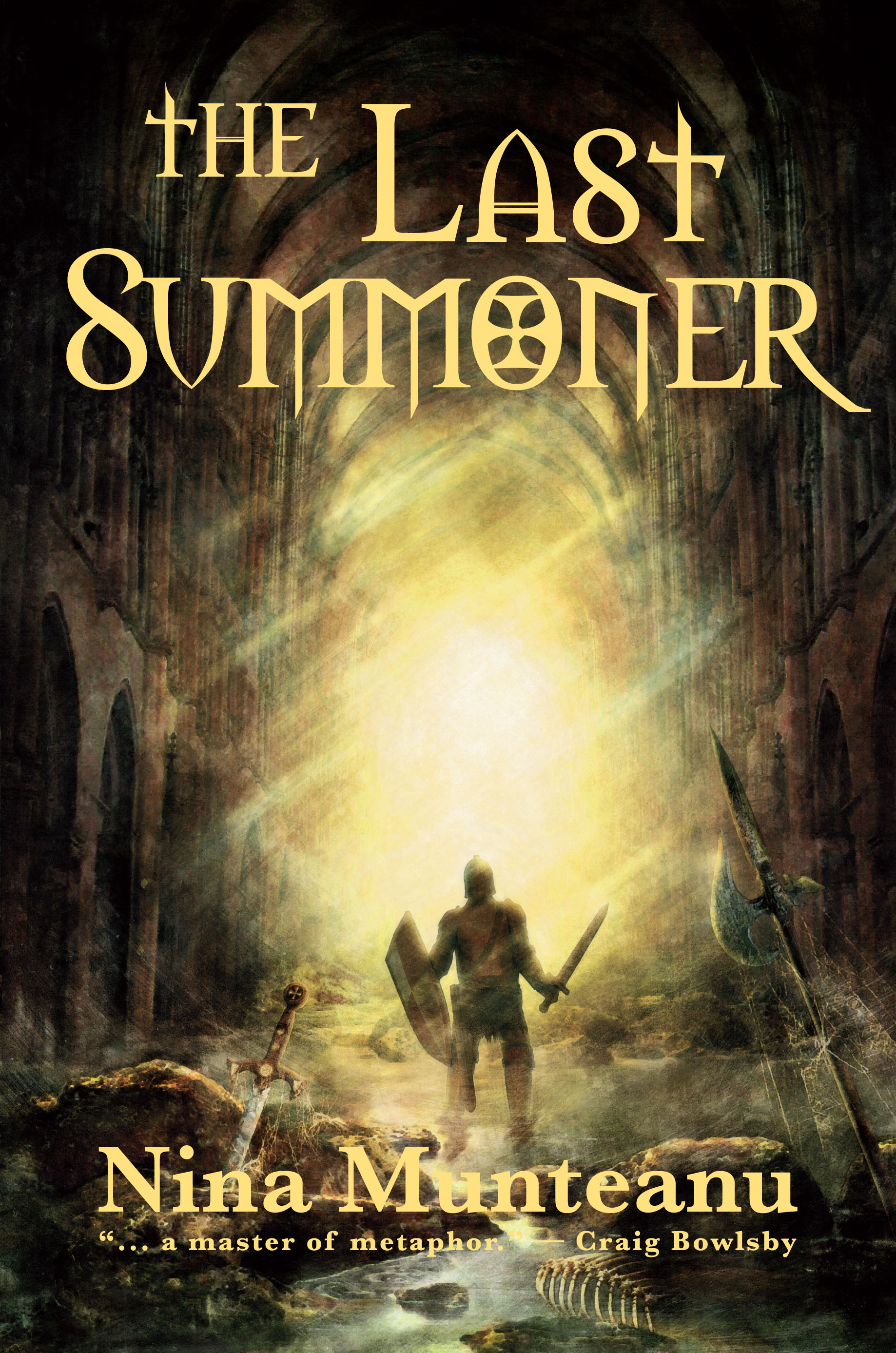
Cover1_LastSummoner-frontcover copyFrom where do we get our stories?

This is a question I am asked time and again. My readers, friends and colleagues alike marvel at my imagination, and ask me how I create these fantastical worlds and situations. Cornered in a moment of inarticulate bliss (this often happens to me), I shrug and blather off some ridiculously obscure tale of luciferous logolepsy.

The simple of it is that it always comes as a spark. Followed by inspiration. And from there, a story emerges. Premise to dramatization. So, let me tell you a story about how my 2012 historical fantasy The Last Summoner —about a medieval time traveler who must save the past from the future—came to be.

It all began with the Battle of Grunwald and the Fate of the Teutonic Knights—that is, when I stumbled upon it during an Internet ramble. But, in fact, it started before that—the spark, that is.

My part in this piece of history really began sometime in 2008 with the vision of an incredible image by Croatian artist Tomislav Tikulin (who had done the cover art for a previous novel Darwin’s Paradox). On Tikulin’s website I glimpsed the image of a magnificent knight, standing in a war-littered mire and gazing up, questioning, at the vaulted ceiling of a drowned cathedral. A great light shone upon the knight in streams of white gold. It sent my imagination soaring with thoughts of chivalry, adventure and intrigue.

Who was this knight standing in the mire?…

teutons3-close1

With that image imprinted inside me, the next nexus moment came when I stumbled across a significant but little-known battle in the medieval Baltic, the Battle of Grunwald. It would turn out to be the defining battle for what are now the countries of Poland and Lithuania. On June 14th 1410, they were still part of Prussia and tyrannized by the Teutonic Order, who were Christianizing the pagan Baltic on behalf of the Pope. In truth, the Order had been for centuries gathering wealth and land for colonizing Germans in their drang nach osten; they built sturdy castles (many of which still stand today) and a force of monk warriors, feared for their cunning strategy and treacherous combat abilities.

The Battle of Grunwald was, in fact, an upset in history. The Teutonic Order was powerful, intimidating and extremely capable. They should have won; but the peasant armies of Prussia slaughtered the Order, killing most of its knights. Historians debate that the hochmeister’s arrogance—indeed, the arrogance of the entire Order—precipitated their downfall. They underestimated their adversaries and got sloppy. After the Polish and Lithuanian armies outsmarted the Order and slayed their hochmeister, along with many of their knights, the Order’s own peasant slaves finished the job using clubs, pitchforks and stones.

Intrigued by this little known order of religious crusaders and their bizarre fate in an upset battle with a peasant army, I pursued the premise of an alternative consequence: what if the Teutonic Knights had NOT underestimated their enemy and won the Battle of Grunwald? Would they have continued their catastrophic sweep of North-east Europe into Russia and beyond? Would they have continued their catastrophic sweep of north- east Europe into Russia and beyond? Would they have claimed the whole for Germany’s expansionist lebensraum movement, fueled by its sonderweg, a dialectic that would ultimately lead to the killing fields of the Holocaust? What if the success of the Teutonic Order helped consolidate a united fascist elite, ambitious to conquer the world? And what if, as a result, Nazism sprang up 100 years earlier?

The Last Summoner, arose from this premise. Enter our heroine, young 14-year old Vivianne Schoen, Baroness von Grunwald, a self-centered romantic who dreams that her ritter (her knight) will rescue her from an arranged marriage to some foreign  warrior. As a result of an impetuous choice, she makes the startling discovery that she can alter history—but not before she’s branded a witch and must flee through a time-space tear into an alternate present-day France ruled by fascists. There, she learns that every choice has its price.

Warrior Woman Silhouette

Spanning from medieval Poland to present day Paris, France, The Last Summoner explores the sweeping consequences of our “subtle” choices. From the smallest grab to the most sweeping gesture, we are accountable for the world we’ve made. During her 600-year journey to save the world and undo the history she authored, Vivianne learns wisdom and humility. Through the paradox of history, she learns that what might have seemed the right choice for an immediate future, turns out to be disastrous for a distant future. To win is also to lose; to save oneself one must surrender oneself; and to save the world one need only save a single soul.

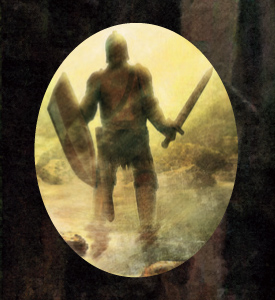
knight-cameoThe knight standing in the mire is Vivianne.

The Last Summoner, published by Starfire World Syndicate, was released in 2012 and remained a Canadian bestseller on Amazon for several months. It represents my first historical fantasy in an otherwise repertoire of hard science fiction. The Polish and Lithuanians celebrate June 14th with pride, erecting mock-ups of the battle annually. Some day I hope to participate.

The cover art for The Last Summoner is that very image that inspired my story. The Universe gifted me with the chance to acquire the image from Mr. Tikulin and a publisher willing to purchase it. I’d entered my own dream.

p.s. definition for luciferous logolepsy: “an illuminating obsession with words”

p.p.s. A novelette version, Summoning the Future’s Past, was released April 2021 in Italian by Delos Digital entitled l’Ultima Evocatrice.

This article first appeared on Warpworld on Nov. 30, 2013.

nina-2014aaNina Munteanu is an ecologist and internationally published author of award-nominated speculative novels, short stories and non-fiction. She is co-editor of Europa SF and currently teaches writing courses at George Brown College and the University of Toronto. Visit www.ninamunteanu.ca for the latest on her books.
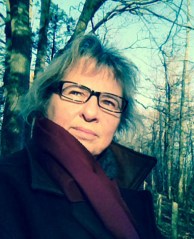
.

The Writer’s Way

Any time you identify a wasteland element in your life—illness, boredom, lethargy, alienation, emptiness, loss, addiction, failure, anger, or outrage—it is time to take a journey—Carol S. Pearson


Turkey Tail bracket fungus on tree

Turkey Tail mushroom on tree in Ontario (photo by Nina Munteanu)

Compelling stories resonate with the universal truths of metaphor within the consciousness of humanity. Good fiction—and non-fiction—reveals both personal and universal truths through metaphor. It is revealing, given that it reflects you.

All stories consist of common structural elements found universally in myths, fairy tales, dreams, and movies and known collectively as “The Hero’s Journey”. According to Joseph Campbell, good storytelling involves an open mind and a certain amount of humility; and giving oneself to the story. “Anyone writing a creative work knows that you yield yourself, and the book talks to you and builds itself….you become the carrier of something that is given to you from … the Muses or God…Since the inspiration comes from the unconscious, and since the unconscious minds of the people of any single small society have much in common, what the shaman or seer [or artist] brings forth is something that is waiting to be brought forth in everyone.” I call this tapping into the universal truth where metaphor lives. A story comes alive when these two resonate.

Carol Pearson tells us that, “if we do not risk, if we play prescribed social roles instead of taking our journeys, we may feel numb and experience a sense of alienation, a void, an emptiness inside. People who are discouraged from slaying dragons internalize the urge and ‘slay themselves’… they suppress their feelings in order to become successful performance machines… become chameleons, killing off their uniqueness to serve an image they think buys success or just will keep them safe. When we declare war on our true selves, we can end up feeling as though we have lost our souls…in shying away from the quest, we experience nonlife and… experience the wasteland.”

Writing is power. Writing is motion. Writing is story. From the moment you start scrawling words on paper, sketch, move paintbrush over canvas, or touch the computer keyboard, you are telling a story. Writing expressively such as a journal, memoir, letter or fiction is telling your story.

When we share our stories, when we write testimony, we are no longer allowing ourselves to be silenced or allowing others to speak for our experience. Writing to heal and making it public “is the most important emotional, psychological, artistic, and political project of our time,” says Louise DeSalvo, author of Writing As a Way of Healing and The Art of Slow Writing.

Happy New Year!

JournalWritert FrontCover copy 2This article contains excerpted material from The Journal Writer: Finding Your Voice (Pixl Press, 2013) by Nina Munteanu


References:

  • Louise DeSalvo: “Writing As a Way of Healing”, Beacon Press, Boston. 226pp; “The Art of Slow Writing”, St. Martin’s Griffin, 2014, 336pp
  • Nina Munteanu: “The Journal Writer: Finding Your Voice“, Pixl Press, 2013, 129pp
  • Carol Pearson: 1998. “The Hero Within: Six Archetypes We Live By”. Harper. San Francisco. 338pp.


nina-2014aaNina Munteanu is an ecologist and internationally published author of award-nominated speculative novels, short stories and non-fiction. She is co-editor of Europa SF and currently teaches writing courses at George Brown College and the University of Toronto. Visit www.ninamunteanu.ca for the latest on her books.

How We Will Tell Stories in the Future

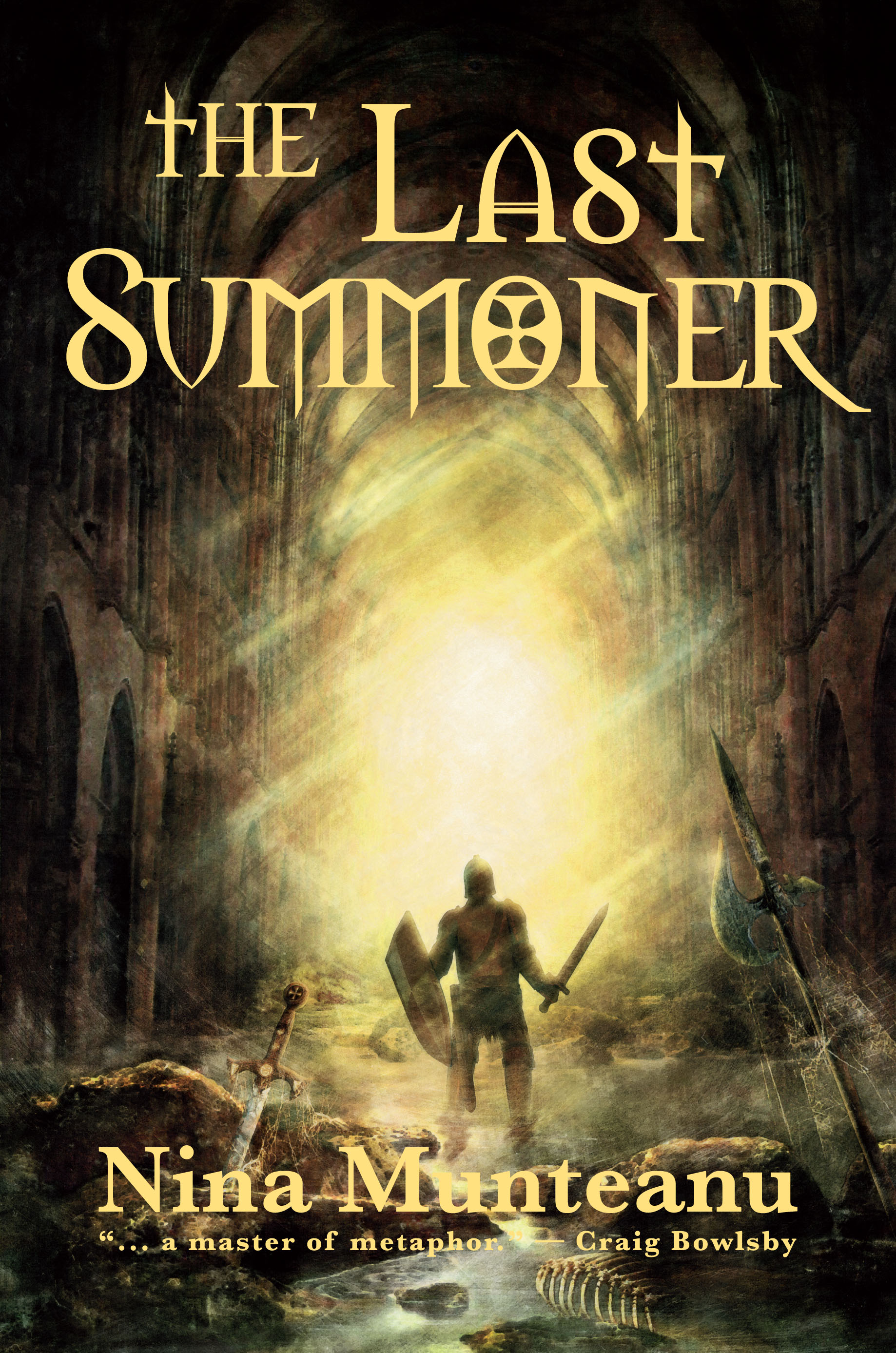
Cover1_LastSummoner-frontcoverIn the early 1400s, when Lady Vivianne Schoen (the hero of my book  The Last Summoner) lived, one of the largest libraries in Europe was at the University of Cambridge; it held an impressive list of 122 books. That library currently houses over 7 million books.

Books were a work of art in the 1400s. And part of an elite. Delicate, large and beautiful, they were created in the language of the church—Latin—and in turn copied entirely by hand by the monks. With the dimensions of a current newspaper, but much thicker, these large illuminated manuscripts sometimes weighed more than 50 pounds.

There is a scene early on in The Last Summoner where, under the tutelage of Pere Daniel at her father’s castle in Grunwald, Vivianne learns this arcain craft of manuscript copying.

An illuminated manuscript, the exemplar, and its parchment copy, still in progress, lay on the desk top; both were held down from curling by several hanging weights. Ink pots, gold leaf, a pen knife and a quill lay beside the sloped desk-top—the scribe’s tools.

Père Daniel had studied the art of manuscript illumination, scribing, binding and even parchment-making at the Sorbonne. Last year he’d begun to teach Vivianne the art of creating illuminated manuscripts and she had eagerly begun her own, finding that she had a steady hand at illumination. Père Daniel had shown her how to make parchment from the skins of deer that the Baron brought back from his hunts in the Grunwald forest. Despite the availability of paper, parchment was preferred “because it is velvety, folds easily and gives an agreeable flexibility to pen strokes compared with the unyielding flatness of writing on paper,” the chaplain reasoned. He always gave a reason for the painstaking preparation that involved flaying, soaking, stretching and scraping: “Parchment wants to curl onto its darker, grain side; and hastily prepared parchment wants to do it more.” Nothing was better than parchment made from game “because the vein marks left from blood in the skin when the animal died is the animal’s contribution to the art of illumination,” he attested with the fervency of a man with a passion.

Père demonstrated with exacting care and infinite patience how to use the illuminator’s tools and create a professional-looking manuscript. He provided Vivianne with parchment, a quill for a left-handed scribe, a penknife to sharpen her quills, a pot of ink and a sloping desktop. He taught her how to make iron-gall ink by mixing a solution of tannic acids and copperas with added gum arabic from the dried-up sap of the acacia tree as thickener. It was important, said the Père, to pick a mature oak-gall, one that bore a hole from the matured wasp that had developed inside and left a juicy concoction of gallic acids. The galls were then crushed up and boiled for a long as it took to recite the Pater Noster three times, he’d said. The blackness, he told her, resulted from the chemical reaction of the oak-gall potion when copperas was stirred in. He’d shown her how to create the vermillion color, commonly used in headings, which he made from brazilwood chips infused in urine and stirred with gum arabic. Vivianne never asked Père Daniel where he got his urine. She and Père also raided Theobald’s kitchen to hunt down the outer right wing pinions of a goose for making a quill pen that naturally curved to the left, because she was left-handed.

knight-cameoPère showed Vivianne how the height of the written area should equal the width of the whole page in a well-proportioned manuscript. Père also showed her how to rule the guidelines for the script and make the initial under-drawing of her illumination in plummet then in ink after which the gold leaf was applied. Vivianne had become adept at applying the gold leaf over the raised gesso, that she made of slaked lime and white lead mixed with pink clay, sugar, a dash of gum and egg glair glue. After painstakingly painting the gesso where she wanted the gold leaf to remain and letting it dry, Vivianne then carefully lowered the fragile tissue-thin leaf over the gesso and pressed down through a piece of silk then buffed the gold to a brilliant finish with a dog’s tooth by vigorously rubbing back and forth until it was smooth and the edges where there was no gessocrumbled away.
Making books was called “black art” from the black ink that stained the worker’s hands after a long day of creating type. Readers were mostly scholars and the religious elite. In fact, reading was an elite occupation. The majority of people at the time were illiterate and had no interest in books. Moreover, books were written in the language of the church, not in the commonly spoken language of the countryside such as English, French, German or Spanish.

So, when Johannes Gutenberg invented the revolutionary printing press in 1452 to publish the Gutenberg Bible, neither monk nor Joe peasant took much notice. The monks considered the product inferior to their works of art and dismissed the new technology—until it had largely replaced their trade.

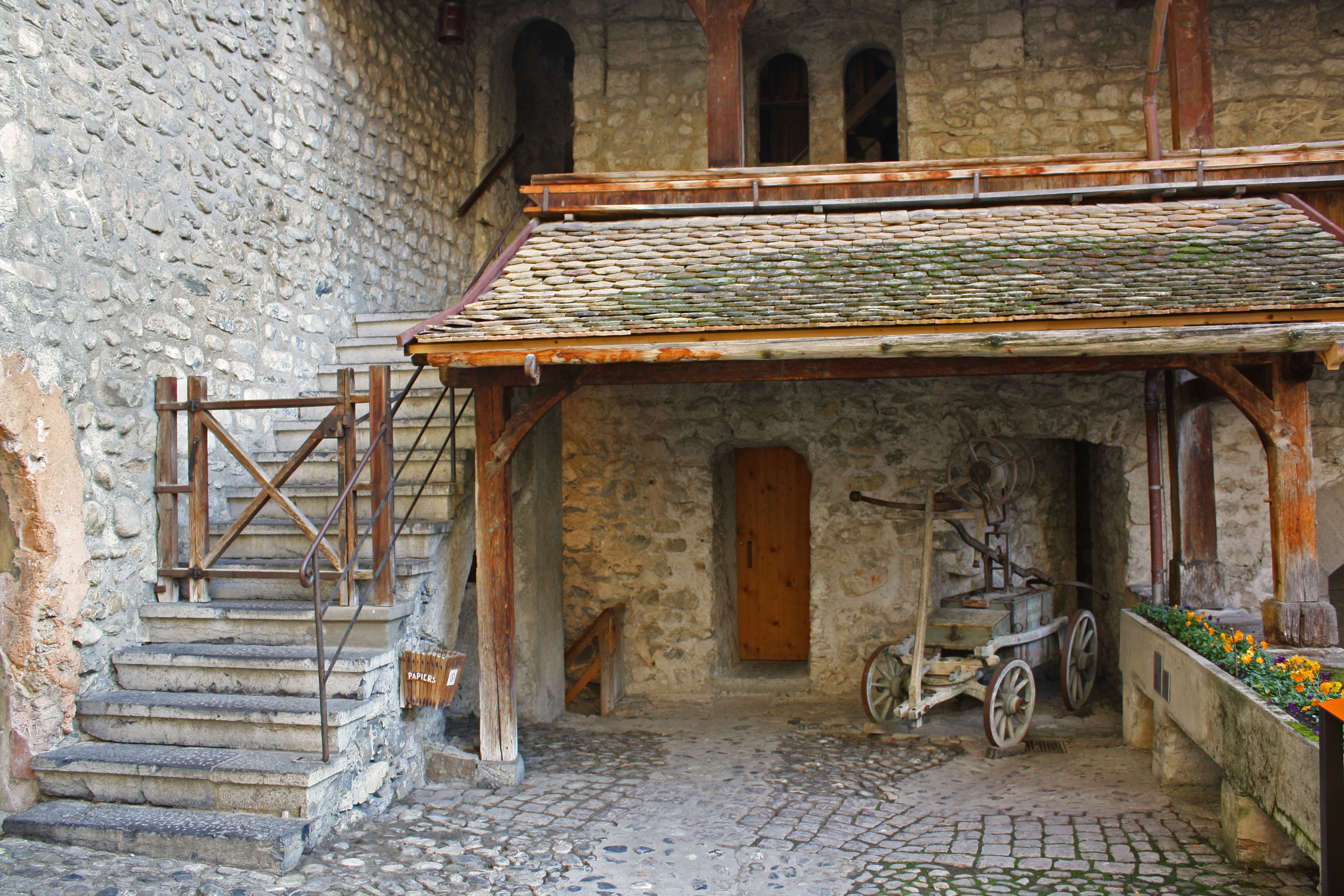
chillon-inner courtyard

Inner courtyard of Chilean Castle, Switzerland (photo by Nina Munteanu)

In fact, the presses formed the very basis of the artistic Renaissance, the religious reformations and the scientific revolution, wrote Elizabeth Eisenstein in The Printing Press as an Agent of Change. “The printing press allowed the spread of information that couldn’t be controlled by the clergy, kings, politicians, or the religious elite,” adds New York Times technology reporter Nick Bilton in I Live in the Future and Here’s How It Works. Storytelling was no longer confined to an elite clergy; books could be created by anyone and shared in the spoken languages of the people.

Bilton shares another interesting fact: Gutenberg’s printed books were as heavy and unwieldy as the original handmade books of the monks. It was much later, in 1502, that Aldus Manutius of Venice invented a more portable book that could fit in a large jacket pocket; essentially inventing “the mobile phone of his day” wrote Bilton.

Historian Alistair McCleery wrote that the political and religious leaders initially panicked over the potential for the uncensored sharing of new and varied ideas among the lay public (which brings to mind similar fears of what the internet was providing to and enabling in the lay public: uncensored self-expression by the masses for the masses). Up until then, sharing stories among the common folk was limited to oral storytelling, which suffered from inconsistency and other limitations of the oral tradition. Within a short period of time, the ability to record and share “stories” had moved from a closeted elite to the world citizen. That is what the printing press—and the Internet today—did. Both have shifted the zeitgeist of an entire world.

Storytelling today is changing again. While many people still read books and go to the cinema, watch pre-programmed TV or rent DVDs, many more enjoy their stories through other devices like computers, downloads, mobile phones and e-readers that provide material through other media and venues such as Indie and self-publishing, amateur YouTube videos, interactive games and social networks. We stand poised on the edge of a wonderful cliff that celebrates the expression — and consumer choice — of the individual. The music industry shows this the best, where people dismissed the prepackaged albums and CDs and opted to create their own unique playlists through individual song downloads. The publishing industry is currently struggling with its own painful yet thrilling metamorphosis as is the visual arts industry. In fact, they are all blurring into one large integrated amalgam of artistic expression.

NYC-times-square-lawn-chairs

Times Square in New York City (photo by Nina Munteanu)

The information you get today is coming “more and more through your friends and through your social network. It’s being distributed through channels of trust and the trust isn’t necessarily the BBCor The New York Times. It’s people,” says B.J. Fogg founder of the Persuasive Technology Lab at Stanford University.

new-york-toulouse-officer-montalvo

New York policeman sports my friend Toulouse on his gun (photo by Nina Munteanu)

During the days of packaged content, leading storytellers were published authors, journalists and writers of newspapers and magazines. “Now distribution channels matter less and anyone with an appropriate device can be a storyteller,” says Bilton, who shares that on the internet we tend to follow individuals we trust (e.g., Clive Thompson or David Carr) as much if not more than established organizations (like Wired Magazine or The New York Times). Accessible technology, platforms, free applications and software has truly enabled the individual.  No longer confined to the written word via paper books or visual expression through movies or TV shows, storytelling has embraced many forms. Amateur and professional have equally blurred.

It comes down to content. Technology and format aside, nothing compares to a good solid story. We all listen to or watch stories. We all tell or show stories, some of us more than others and some better than others.

With the advent of new and accessible technologies and applications available to individuals, the art of storytelling has entered a new renaissance. Good stories, like good content, will always prevail and surface into prominence, like cream in milk. They have just been released into a sea of possibilities like a stream previously confined in a gorge, spilling joyfully into the ocean.

Front Cover ONLY-webHarnessing the opening range of technologies available to us will only give us more choices to tell our stories. For instance, my latest book Outer Diverse (the first book of The Splintered Universe Trilogy) was published by Starfire World Syndicate in print form and e-format and will soon be available in audiobook format through Audible. I have also created associated YouTube promotional videos and am working with colleagues to produce a short story musical video on the book. Another colleague has embraced the image of the strong female hero with a jewelry line called the Rhea Hawke Collection and is looking at other “storytelling” merchandise. I am discussing with other colleagues possibilities for a graphic novel and an interactive video game version of the trilogy that will offer reader participation in storytelling.

The future embraces story in all its possible facets. Our role as storytellers is to embrace the future in all its facets.


Nina Munteanu is an ecologist and internationally published author of award-nominated speculative novels, short stories and non-fiction. She is co-editor of Europa SF and currently teaches writing courses at George Brown College and the University of Toronto. Visit www.ninamunteanu.ca for the latest on her books.