On Ecology, Women and Science Fiction: Part 2, Praxis

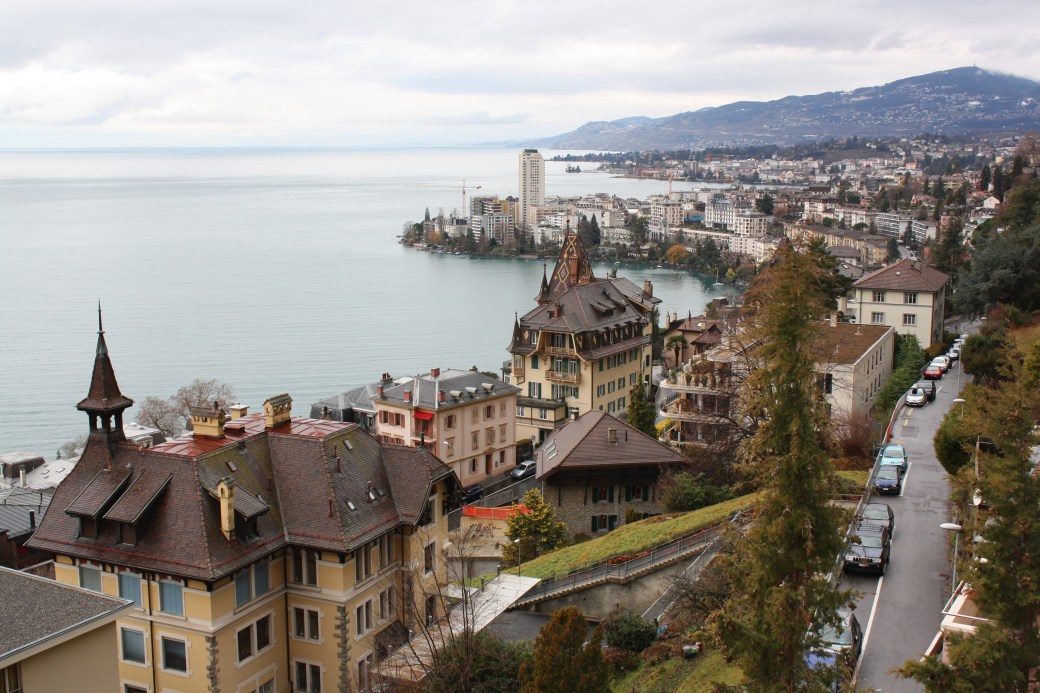
montreux-road from b&b

Montreux, Switzerland (photo by Nina Munteanu)

In Part 1, Gnosis, I explored the nature of our current worldview, its shifting face and how literature and women writers have both contributed and enlightened this shift.

I talked with four women, all in the science fiction or eco-fiction genres; two are writers, and two are publishers. We discussed this shift, what it looks like, what the “feminine archetype” means and the nature of “Optimistic SF.”

When asked to describe SF today, Lynda Williams, author of the Okal Rel series, argued that, “SF is mainstream now … It has grown up, emotionally, from being about wish-fulfilling technologies … to embracing the social implications of change.” Stephanie Johanson, editor and co-publisher of Neo-opsis Science Fiction Magazine, notes that, “Science fiction often reflects the views of the day, following and expanding on newer technologies.” Williams adds that SF fiction has gained a literary presence, but at some expense: “now there’s a sordid fascination, in a lot of self-consciously dark SF, with self-interested cynicism and extended analogies to drug addiction as a means of coping with reality.” Johanson provided a different perspective. “Stories that predict doom have been around since the beginning of SF,” she argued. “But lately perhaps there might be more stories with a glimmer of hope … perhaps it won’t be science that destroys us … the right sciences might actually save us.” Editor and Publisher of On Spec Magazine, Diane Walton shares that she is seeing a lot of Post-Apocalyptic submissions, “mainly because it’s interesting to put your characters in a setting where the rules don’t apply any more. They have to try to rebuild the life and security and order they used to have, or else revert to savagery, or else adapt to a whole new set of circumstances—the choices are endless. Except zombies. I don’t want to see any more zombies.”

When asked if SF had a role in literature, Johanson suggested that, “SF has fewer limitations and more frontiers to explore than other genres.” Both Johanson and Walton suggest that its main role is to challenge our preconceived notions of the world and “open up the mind to new possibilities.” Walton and Williams agree that SF is recognized more today as “real” literature rather than being dismissed as “escapism.” Williams shares that SF’s roots are as old as myth. “Like myths and bible stories, SF is an instructive literature, pointing out how things can go wrong (or right) and why. The growing up SF has done since the 1950s lies in an increasing recognition that [humanity is its] own worst enemy and a better understanding of human nature is crucial to the problems we face, not just the hard sciences.”

I shared that I had witnessed (at least in my classrooms and writing workshops) a rising ecological awareness, reflected in a higher percentage of new writers bringing in works-in-progress (WIPs) that were decidedly “eco-fiction” or “climate fiction.”

“I have always gravitated towards, and often found, literature with ecological components,” Sarah Kades, author of Claiming Love confides. She then adds, “But I do agree with you that ecological awareness is not only gaining momentum, it is front and centre for many, and as such, we are naturally finding it more and more in literature.”

“I never thought of my own work as ecological,” shares Williams. “But it’s true: the underlying issue in it is how does, or can, the collective will prevent groups or individuals from destroying what is irreplaceably precious…Yes, I think SF has graduated from a fascination with building bigger death rays to tackling questions of how we avoid committing the unthinkable while still indulging in lots of entertaining conflict. Because conflict must exist in any story. We wouldn’t be human without it. There’s plenty of conflict in an ecosystem, too, but it stays balanced. SF used to be optimistic about scientific discoveries shifting the system out of balance in the direction of net gain for humankind. And this has happened. Even today’s poor are richer than yesterday’s. What worries us, increasingly, is whether some sudden imbalance could tip us into irreversible catastrophe because unlike 1950s readers we don’t trust smart and powerful people to act sanely in their quest for power.”

“I think that authors have come to a realization that the setting of a book can be just as strong a character (and character-builder) as the people in it,” says Walton. “Humans are so vulnerable, and must depend on their brains and skills at manipulating the environment to be able to adapt to harsh and potentially life-threatening situations…We don’t have fur, for example, or the ability to burrow under the sand to find shelter from a hot sun. So the books that embrace the environment, and that use it to present character-building challenges to the protagonists, can be more interesting than just a ‘good guys against bad guys’ story in any genre.”

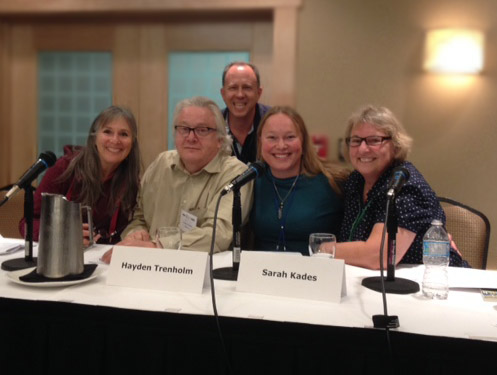
Johanson provokes with the concept of awareness-guided perception—itself a valid cultural metric: “Perhaps there is an increase of ecological awareness in literature, or perhaps we are just noticing stories that have always been there.” This notion was discussed in a recent panel on Eco-Fiction in which I participated with Susan Forrest, Michael J. Martineck, Hayden Trenholm, and Sarah Kades at the writer’s festival When Words Collide in Calgary. One author pointed out that environmental fiction has been written for years and it is only now—partly with the genesis of the term eco-fiction—that the “character” and significance of environment is being acknowledged beyond its metaphor; for its actual value. It may also be that the metaphoric symbols of environment in certain classics are being “retooled” through our current awareness much in the same way that Aldous Huxley’s Brave New World or George Orwell’s Nineteen Eighty Four are being re-interpreted—and newly appreciated— in today’s world of pervasive surveillance and bio-engineering. Johanson cites Brian Aldiss’ Helliconia trilogy, John Varley’s Titan trilogy, Joan D. Vinge’s The Snow Queen, and the works of Jules Verne. Classic titles Walton remembers from her younger days include John Brunner’s Stand on Zanzibar and Ursula K. LeGuin’s The Word for World is Forest; and more recently, The Windup Girl by Paolo Bacigalupi. Walton includes the 1965 Dune series by Frank Herbert, given that the environment of the desert and how humanity has adapted to it plays a major role in the series.

I proposed that an awakening to the feminine archetype (cooperation, compassion, relationship, altruism) is occurring and currently reflected in literature. Johanson suggested that, “If [cooperation, compassion, relationship, and altruism] are used in balance with science and logic, there can be an optimistic future.” Had she seen this increasing in literature? “I don’t think so, but perhaps I have been reading the wrong stories,” Johanson admits. Kades shares a different perception. “I would definitely agree there is an awakening to the feminine archetype in our culture as a whole, and literature is reflecting this,” she argues. “The books that resonate most strongly for me are the ones that honour and celebrate both the feminine and masculine, stories that demonstrate mutual respect and successful collaboration between men and women. Throw humour and romance in there, too, and it’s irresistible.”

Walton observes that, “It’s definitely something that drives a story in a different direction from the more “male” pursuits of taking everything by force, or the lone-wolf hero solving problems without any collaboration with others.” She confides, “I loved the new Mad Max film, where compassion and collaboration made the story come alive. And yet, it has been accused, by some, of being a feminist propaganda film.”

Williams answers with a tale of two characters. “Amel, my prince-raised-as-pauper, is a hero of the pol virtues. Loosely speaking, we could call the pol virtues feminine. Horth Nersal, on the other hand, is an alpha male—a hero of the rel variety in Okal Rel theology. There are important female characters in my saga, but I have to confess my teenage self was simply more fascinated with heroic males for reasons inaccessible to my older, sager self. So, in my own work I could make the case that Amel’s problem-solving and character development is absolutely an example of an awakening to the feminine archetype. And he does wind up in power. But even as Amel gets his act together, after book six, and learns to use his more subtle kind of influence to make the world behave, Horth Nersal starts stealing the spotlight. I don’t quite know how this happened. And maybe Amel’s central, anchoring role throughout the series argues in favor of the feminine principle dominating. But I think the Amel/Horth dilemma isn’t unique to my own work. I see it crop up in other SF where, on the face of things, one might say the feminine archetype is in ascendance.”

Can we (as writers and editors and otherwise) foster such a change in worldview and gain a sense of place, purpose and meaning in our lives through it?

“If writers are writing stories to change the world, and I hope some are, then they should write stories that first entertain,” Johanson advises writers. “It doesn’t matter how great a theory, or how good an idea, if it doesn’t entertain, fewer people will read it. This also applies to editors. Karl and I decided early on that we wanted to teach people with the stories we published in Neo-opsis Science Fiction Magazine. We wanted our readers so entertained that they wouldn’t necessarily realize that their views had just been broadened.”

“As a writer I feel a rather persuasive responsibility to help foster positive social change,” says Kades. “For me it is considerable motivation of the stories that take turns between calming, weaving, and banging around in my head, eager to get out. And stories don’t have to tackle epic social issues to be a conduit of positive social change. Stories that create new ‘normals’ of compassion, respect and tolerance are just as important and interesting as stories that address specific social issues. To create change, first we must imagine it. Writers can help with that.”

“I’ve been reading and thinking a lot about meaning and purpose these days,” Williams confides. “First, we need to foster creativity in others and respect it in ourselves. But in both cases we must challenge our creative cravings to do work. I personally believe the richest entertainment comes not just from simple wish-fulfillment narratives – although these are fun and perfectly at home in epic literature – but from touching a raw nerve here and there, and making sure the ‘bad guys’ are at least as realistic as the heroes, not just straw men defeated by a better ray guy. Best of all, can a resolution be found in which the bad guys co-exist with their conquerors? At least think about it, and how your society might avoid problems cropping up again, and make that part of the fabric of your tale.”

“I’m not sure I agree with this being part of my role as an editor,” Walton shared. “It may be that I am drawn more to the kinds of books and stories that espouse this concept, and thus more likely to buy them to publish. We are all gatekeepers of some kind or another. One thing that is interesting is the recent brouhaha over the Hugo awards, where, I think, the various ‘puppy’ slates would look on any sort of eco-fiction that embraced the feminine archetype as being something only a Social Justice Warrior would like. Some people just don’t want their worldview changed, I guess.”

…Which brings me to “Optimistic SF” and what it represents. In a recent discussion with Lynda Williams over several Schofferhofers at Sharkey’s Pub in Vancouver, we shared our thoughts on how the evolution of the science fiction genre and the place that optimism holds in literature and art, generally. Is “saving the world” and “The Hero’s Journey” still viable in literature today? And how many Schofferhofers does it take to get there?

“I’ve asked people to help me define ‘Optimistic SF’ on my blog,” Lynda shares. “Check out what we’ve got so far at http://realityskimming.com/2015/09/10/fall2015optimisticsf/ and leave your own suggestions if something springs to mind. My own definition has to do with how a story makes me feel. If I’m entertained and emerge feeling there’s some point to living another day rather than convinced human beings are a bad idea best eliminated quickly before they do more harm, it’s optimistic SF. I want to encourage the notion that it’s not dumb or simple minded to strive for improving the world or defending moral behavior when feasible.”

Johanson adds that, “I became a fan of SF, because of stories that I might now classify as ‘Optimistic SF’, stories that made me look forward to the future, characters that I would love to have as friends, and places I wanted to explore. Optimistic literature to me isn’t free from problems. It wouldn’t be a story if everything was splendid. It is conflict that makes a story, but optimistic SF solves problems, and by the end of the story things are looking that much brighter. Anne McCaffrey wrote a lot of ‘Optimistic SF’. I was very fond of her Dragons of Pern series, though the later books by her son Todd McCaffrey seem far less optimistic in nature. I found many of Larry Niven’s novels to be optimistic, like the Ringworld books. Lynda Williams’ Okal Rel novels have a lot of suffering in them, but her series has always seemed like ‘Optimistic SF’.” For Johanson, optimistic SF has at least one optimistic character, one positive goal achieved and a positive [resolved as opposed to ‘happy’] ending, not “leaving evil posed to strike.” She suggests that this includes “overcoming adversity, exploring, discovering, and/or self-growth.”

Walton submits that optimistic SF is, in fact, a challenge to write, “because you still need to have some kind of antagonist (be it human, alien or environment) to make the protagonist want or need something enough to take risks and go on that literary journey. Maybe the optimism comes from stories that are ‘less dark’ than others?”

Lynda Williams openly shared her ambitions for her recent publishing venture, Reality Skimming Press: “Reality Skimming Press is my answer to how to continue being creative now I’m post-published. Not just to keep the Okal Rel Saga in print, although that’s my core motivation for even considering becoming a publisher. But to be brazen enough to talk about ideas and art and what it means to be optimistic, for example, instead of bowing to the demands of commercial success and elusive, fickle fame. Arguably, Reality Skimming Press is the ultimate feminine solution where the meaningfulness of the work and quality of the relationships, on and off the page, trump the call to do battle for the big prizes. Success is lovely, of course. And showers of gold and fame wouldn’t be scornfully rejected. It’s more a case of asking the question: ‘Would I do this even if I never got rich or famous?’ And if the answer is ‘yes’ to have the courage to keep enjoying the journey.”martian_chronicles
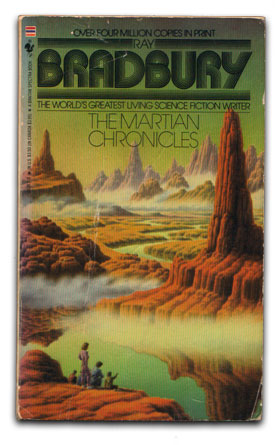
Sarah Kades echoed my initial discovery in “responsibility and connection,” noted in my first article, with her admission: “It was rather startling [to] first realize [that] the responsibility I feel [in writing] socially relevant stories is not universally held among writers. It is not, which is of course just fine; it just surprised me because of how [strong] it is in me. The knowledge brought my writing and my voice into sharper focus for me.”


nina-LL-interviewe-closerNina Munteanu is an award-winning Canadian ecologist and novelist. In addition to eight published novels, she has authored short stories, articles and non-fiction books, which have been translated into several languages throughout the world. She is currently an editor of European zine Europa SF and writes for Amazing Stories. Nina teaches writing at George Brown College and the University of Toronto. Her latest book “Water Is…” (release May 10 2016 by Pixl Press; available for pre-order April 12) is a non-fiction examination of the meaning of water.

Lynda WilliamsLynda Williams is the author of the ten-novel Okal Rel Saga and editor of the growing collection of works by Hal Friesen, Craig Bowlsby, Krysia Anderson, Elizabeth Woods, Nina Munteanu, Randy McCharles and others writing works set in the ORU. As a publisher, she is working with Kyle Davidson, Jeff Doten, Sarah Trick, Jennifer Lott, Paula Johanson, Lynn Perkins and Yukari Yamamoto in re-inventing publishing through Reality Skimming Press. Lynda holds three degrees and works as Learning Technology Analyst and manager of the Learn Tech support team at Simon Fraser University. She teaches part-time at BCIT.
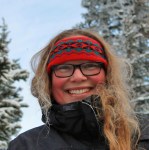
Sarah KadesSarah Kades hung up her archaeology trowel and bid adieu to Traditional Knowledge facilitation to share her love of the natural world and happily-ever-afters. She writes literary romantic eco-fiction where nature, humour and love meet. She lives in Calgary, Canada with her family. Connect with Sarah on Facebook, Twitter and www.sarahkades.com.


Stephanie and IsaacStephanie Johanson is the art director, assistant editor, and co-owner of Neo-opsis Science Fiction Magazine, publishing since 2003. She is an artist who has worked in a variety of media, though painting and soapstone carving are her passions. Stephanie paints realism with a hint of fantasy, often preferring landscapes as her subjects. Examples of her work can be viewed on the Neo-opsis Science Fiction Magazine website at www.neo-opsis.ca/art.

.
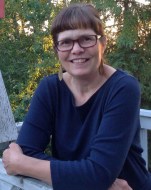
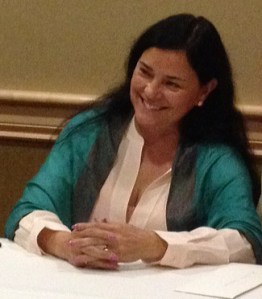
Diane-Walton02Diane Walton is currently serving a life sentence as Managing Editor of On Spec Magazine, and loving every minute of it. She and her lovely and talented husband, Rick LeBlanc, share their rural Alberta home with three very entitled cats. 


On Ecology, Women and Science Fiction: Part 1, Gnosis

montreux-panorama

Montreux, Switzerland (photo by Nina Munteanu)

I’m an ecologist. We look at why things happen and work, and—perhaps most importantly—how they affect one another. Ecology is the science of relationships and consequence. I taught at the University of Victoria for several years then conducted environmental assessments as a limnologist (aquatic ecologist) for environmental consulting firms in British Columbia.

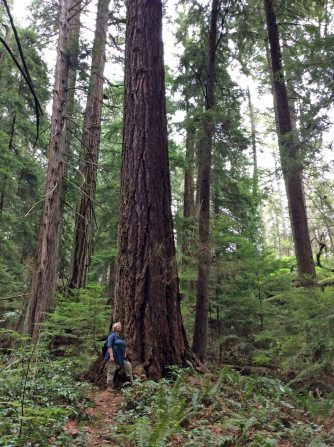
Nina looking up dougfir-LHP

Nina next to giant Douglas fir, Vancouver (photo by Margaret Ross)

My short stories and novels are—no big surprise—mostly eco-fiction. It’s been that way since I started high school in Quebec, in fact. That first year, when I fervently expressed exhortations for global environmental action, a well-meaning, but myopic teacher chided me for my extravagant worldview. “Stick to little things and your community—like recycling,” he’d suggested patronizingly.

I remember the shock of realizing that not everyone felt the planet like I did. Perhaps it was a teenage-thing, or a girl-thing, or a nina-thing. I prayed it wasn’t just a nina-thing…

For the past few years I’ve been teaching writing at the University of Toronto and George Brown College in Ontario. I teach a workshop-style class that involves students bringing in and working on their current Work-In-Progress (WIP). And I’ve been noticing an interesting trend. Something cool is happening in my classes. More and more students are bringing in WIPs on ecological and global environmental issues. Many of the stories involve a premise of environmental calamity, but not in the same vain as previous environmental disasters that depict “man” against Nature. These works give the Earth, Nature or Water an actual voice (as a character). And a protagonist who learns to interact with it cooperatively.

EcologyOfStoryFor me this represents a palpable and gestalt cultural awakening in the realm of the “feminine archetype”.

The history of storytelling and of humanity’s evolution—how we relate to each other and our environment—are inextricably tied. The stories we tell—whether fiction or non-fiction—reflect who we are, what we value, and what we will become. Good stories are about relationships and their consequences.

Our capacity—and need—to share stories is as old as our ancient beginnings. From the Paleolithic cave paintings of Lascaux to our blogs on the Internet, humanity has left a grand legacy of ‘story’ sharing. Evolutionary biologist and futurist Elisabet Sahtouris tells us that, “whether we create our stories from the revelations of religions or the researches of science, or the inspirations of great artists and writers or the experiences of our own lives, we live by the stories we believe and tell to ourselves and others.”

Front Cover ONLY-webI mentioned that the majority of my stories are science fiction (SF). SF is a literature of allegory and metaphor and deeply embedded in culture. It draws me because it is the literature of consequence exploring large issues faced by humankind. In a February 2013 interview in The Globe and Mail I described how by its very nature SF is a symbolic meditation on history itself and ultimately a literature of great vision: “Speaking for myself, and for the other women I know who read science fiction, the need is for good stories featuring intelligent women who are directed in some way to make a difference in the world…The heroism [of women] may manifest itself through co-operation and leadership in community, which is [often] different from their die-hard male counterparts who want to tackle the world on their own. Science fiction provides a new paradigm for heroism and a new definition of hero as it balances technology and science with human issues and needs.”
Author Marie Bilodeau in the same interview added that, “the best part about writing science fiction is showing different ways of being without having your characters struggle to gain rights. Invented worlds can host a social landscape where debated rights in this world – such as gay marriage, abortion and euthanasia – are just a fact of life.”

Once the almost exclusive domain of male writers and readers, SF has been steadily changing, attracting more women writers and women readers. It is no coincidence that mainstream literary fiction writer Margaret Atwood began to write science fiction (which she still calls speculative fiction) in the 1980s with Handmaid’s Tale, and that her last five books are pure science fiction, mostly dystopias that explore the evolution of humanity.

Science fiction is maturing.

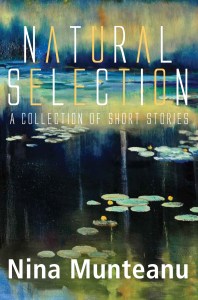
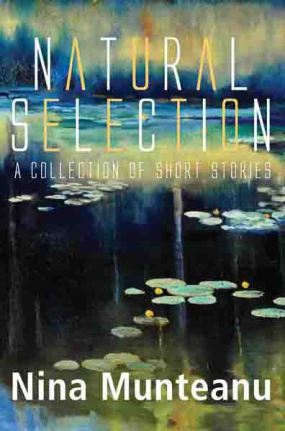
NaturalSelection-front-webWe’ve progressed from the biological to the mechanical to the purely mental, from the natural world to a manufactured world to a virtual world, writes philosopher and writer Charles Eisenstein. According to Carolyn Merchant, professor at UC Berkley, early scientists of the 1600s used metaphor, rhetoric, and myth to develop a new method of interrogating nature as “part of a larger project to create a new method that would allow humanity to control and dominate the natural world.”

“The modern self,” writes Eisenstein, has become, “a discrete and separate subject in a universe that is other [something SF writers know and write about]. It is the economic man of Adam Smith; it is the skin-encapsulated ego of Alan Watts; it is the embodied soul of religion; it is the selfish gene [of Richard Dawkins].”

Darwins Paradox-2nd coverCompetition is a natural reaction based on distrust—of both the environment and of the “other”—both aspects of “self” (as part) separated from “self” (as whole). The greed for more than is sustainable reflects an urgent fear of failure and a sense of being separate. It ultimately perpetuates actions dominated by self-interest and is the harbinger of “the Tragedy of the Commons”.

According to Elisabet Sahtoutis, humanity is currently poised on a tipping point. Thousands of years of national and corporate empire-building have reached a tipping point in planetary exploitation, says Sahtouris, “where enmities are more expensive in all respects than friendly collaboration.”

Competition naturally gives way to creative cooperation as trust in both “self” and the “other” develops and is encouraged. “Communities with many cooperators and altruists do better than groups dominated by narrow and selfish thinking,” writes Alain Ruche, strategist for the Secretary General of the EU External Service. Ruche adds that a biological predisposition to cooperate appears to be independent of culture.

Water Is-COVERExamples of creative cooperatives exist throughout the world, offering an alternative to the traditional model of competition. Cultural creatives are changing the world, Ruche tells us. These creatives, while being community-oriented with an awareness of planet-wide issues, honor and embody feminine values, such as empathy, solidarity, spiritual and personal development, and relationships. Mechanisms include reciprocity, trust, communication, fairness, and a group-sense of belonging. I give examples in my upcoming book “Water Is…” by Pixl Press, due in Spring 2016.

In the September 2009 Peace Summit in Vancouver B.C., the Dalai Lama shared that “the world will be saved by the western woman.” This “call to adventure” by His Holiness reflects the hero’s journey steps suggested by Richard Tarnas in the epilogue of his book The Passion of the Western Mind: “the driving impulse of the West’s masculine consciousness has been its dialectical quest not only to realize itself, to forge its own autonomy, but also, finally, to recover its connection with the whole, to come to terms with the great feminine principle in life…to reunite with the mystery of life, of nature, of soul.”

Log over water forest-DeasPark

Deas park, BC (photo by Nina Munteanu)

Poised and ready, rising from its previous dualistic perception, the soul finds Home in Wholeness, and returns to the intrinsic truth of the world. The world realizes itself within and through the human mind, projecting a fractal vision of a holonomic universe.

To return to science fiction, my point is that the stories I’m seeing more and more—whether by established writers or by my own students—are reflecting this emerging worldview. It is the worldview of Jung and synchronicity; of David Bohm and “implicate order”; of Rudolf Steiner and “cosmic intelligence”, of biochemist Mae-Wan Ho and “quantum entanglement”, of Frans de Waal and “empathy”, and of Matt Ridley and “altruism”.

In Part 2 (Praxis), I provide examples and interviews with other writers.


nina-2014aaNina Munteanu is an ecologist and internationally published author of award-nominated speculative novels, short stories and non-fiction. She is co-editor of Europa SF and currently teaches writing courses at George Brown College and the University of Toronto. Visit www.ninamunteanu.ca for the latest on her books.
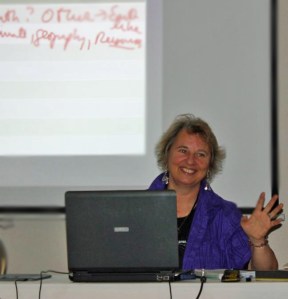
 

How to Write Science Fiction at George Brown College April 2016

nina-workshop 2This April, I will teach my 12-week long writing course on how to write science fiction.  The 12-week course “Creating Science Fiction” runs TUESDAY nights from 6:15 to 9:15 starting April 5th through to June 21st at George Brown College on King Street in Toronto and costs $285.
“Creating Science Fiction” is now part of George Brown’s Creative Writing Certificate.

See the description below:

Microsoft Word - GBC-SF course-APRIL2016 AD.docx

Meant for both beginning writers and those already published, the 12-week course is run like a workshop with student input and feedback on student’s WIPs.
.spaceship02
I explore with students the essential tools used in the SF genre (including world building, research and plot approaches). Students will work toward a publishable original piece by learning to generate and follow through with premise, idea and theme.
George Brown College is located on 200 King Street, Toronto, Canada.
.
nina-2014aaNina Munteanu is an ecologist and internationally published author of award-nominated speculative novels, short stories and non-fiction. She is co-editor of Europa SF and currently teaches writing courses at George Brown College and the University of Toronto. Visit www.ninamunteanu.ca for the latest on her books.

Dreams and Perceptions…The Stuff of Science Fiction

farm in fog-Liverpool NS

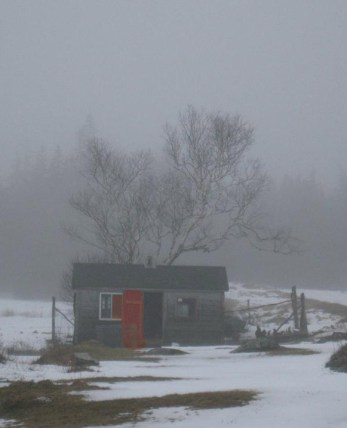
Shed on road to Wolfville, NS (photo by Nina Munteanu)

It was several days ago, as I was driving home from a friend’s place in the sultry dark of night that I noticed the change…

Perhaps it was the rain and the winding road that nudged my psyche to wander into that other realm. Or was it the motion picture The Fountain that I’d seen the evening before—a surrealistic journey of the mind and the soul through crisis and toward enlightenment, true love and “ever-lasting life”?

Or had it more to do with the fact that I’d been, for various reasons, without sleep for over forty hours, that I glimpsed the ordinary in an extra-ordinary light?

Light had everything to do with it, too…Amber traffic lights at a construction site pulsed like living things…smoky clouds billowed over an inky sky…a garish screen of trees, caught in the beams of my car as I turned a corner, screamed quietly…a half-built apartment building loomed up like the dark tower in Lord of the Rings… I was reminded of a scene early on in The Fountain where the viewer is disoriented initially by a busy street at night because it was shot upside down—ironically, in my hometown of Montreal and I didn’t even recognize it.

Have you ever done that? Looked backward or craned while driving through a familiar scene to gain a different perspective? And felt different for just a moment? Like you’d briefly entered a different dimension and glimpsed “the other”?

What is it like to meet “the other”?

I firmly believe that we ultimately define ourselves through our experience and our approach of the unfamiliar. A new relationship. A stranger in town. A different culture. An alien encounter…

How do we react? Is it with fear? Wonder? Curiosity?

This is why the genre of science fiction so vividly and deeply and satisfyingly explores our humanity. By describing “the other” science fiction writers describe “us”. Who we are and where we might go. It is, after all, through our own eyes that the other is described and viewed.

The very best science fiction does this impeccably. Think of your favorite SF authors and books… Here are some that stand out for me:

  • Robert J. Sawyer’s Calculating God or his Neanderthal Parallax trilogy
  • Stanislaw Lem’s Solaris
  • Isaac Asimov’s I, Robot
  • John Wyndham’s The Chrysalids
  • Ursula LeGuin’s The Dispossessed or The Left Hand of Darkness
  • Ray Bradbury’s Martian Chronicles

I know I’ve left out so many…What are some of your favorites?


nina-2014aa

Nina Munteanu is an ecologist and internationally published author of award-nominated speculative novels, short stories and non-fiction. She is co-editor of Europa SF and currently teaches writing courses at George Brown College and the University of Toronto. Visit www.ninamunteanu.ca for the latest on her books.


Discovering the Ecotones of “When Words Collide”

“If you have an apple and I have an apple and we exchange apples then you and I will still each have one apple. But if you have an idea and I have an idea and we exchange these ideas, then each of us will have two ideas.” —George Bernard Shaw


WWC-venue

The venue

In August 2015, as part of my sojourn in my homeland of British Columbia, I participated in When Words Collide, one of Canada’s premiere writing and reading festivals in Calgary, Alberta. This is one writing conference I make a point of attending every year.

Held at the Delta Calgary South Hotel, and run by the super team of Randy McCharles, Susan Forest, Sarah Kades, and Mahrie G. Reid—among other awesome volunteers—this multi-genre writing festival initially modeled itself after the International Surrey Writer’s Conference—flavoured and spiced with the joie de vivre energy of a science fiction writer’s convention. The integration of multi-genres, professional interactions (e.g., editors, publishers, writers and readers) and the festivity of costuming, song and dance, is a truly winning combination.

diana gabaldon01

Diana Gabaldon

Guest presenters included best-selling authors Diana Gabaldon, Brandon Mull, Faith Hunter, Daniel Abraham, C.J. Carmichael and agent Sally Harding. The festival included a diversity of panels and workshops, author readings, book launches and parties (including an absinthe-tasting party), an autograph session and a merchant’s corner.

I gave three workshops: one on writing fiction called “Five Things to Consider”; one on narrative voice and POV called “Mastering ‘Voice’ and Narration”; and one on setting called “Mastering Setting.”

Highlights were many: trading stories with my colleagues and writing friends over a drink or signing or loitering in the hallway is always a highlight. Meeting interesting people in a crowd of interesting people is another. Briefly visiting with Diana Gabaldon—an incredibly gracious and entertaining artist—is certainly another.

eco-fiction panel-WWC

Eco Panelists

An important highlight for me was moderating a panel on Eco-Fiction. Joining me on the panel were publisher/writer Hayden Trenholm, and writers Michael J. Martineck, Sarah Kades, and Susan Forest. The panel was well attended; panelists and audience discussed and argued what eco-fiction was, its role in literature and storytelling generally, and even some of the risks of identifying a work as eco-fiction.

Someone in the audience brought up the notion that “awareness-guided perception” may suggest an increase of ecological awareness in literature when it is more that readers are just noticing what was always there. Authors agreed and pointed out that environmental fiction has been written for years and it is only now—partly with the genesis of the term eco-fiction—that the “character” and significance of environment is being acknowledged beyond its metaphor; for its actual value. It may also be that the metaphoric symbols of environment in certain classics are being “retooled” through our current awareness much in the same way that Aldous Huxley’s Brave New World or George Orwell’s Nineteen Eighty Four are being re-interpreted—and newly appreciated— in today’s world of pervasive surveillance and bio-engineering. I would submit that if we are noticing it more, we are also writing it more. Artists are cultural leaders and reporters, after all. I shared my own experience in the science fiction classes I teach at UofT and George Brown College, in which I have noted a trend of increasing “eco-fiction” in the works in progress that students are bringing in to workshop in class. Students were not aware that they were writing eco-fiction, but they were indeed writing it.

NaturalSelection-frontHRI started branding my writing as eco-fiction a few years ago. Prior to that—even though my stories were strongly driven by an ecological premise and strong environmental setting—I described them as science fiction and many as technological thrillers. Environment’s role remained subtle and—at times—insidious. Climate change. Water shortage. Environmental disease. A city’s collapse. War. I’ve used these as backdrops to explore relationships, values (such as honour and loyalty), philosophies, moralities, ethics, and agencies of action. The stuff of storytelling.
Environment, and ecological characteristics were less “theme” than “character,” with which the protagonist and major characters related in important ways.Snowpiercer-french

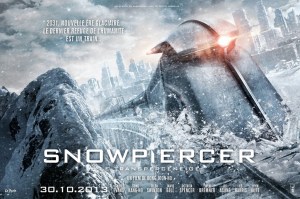
Just as Bong Joon-Ho’s 2014 science fiction movie Snowpiercer wasn’t so much about climate change as it was about exploring class struggle, the capitalist decadence of entitlement, disrespect and prejudice through the premise of climate catastrophe. Though, one could argue that these form a closed loop of cause and effect (and responsibility).

The self-contained closed ecosystem of the Snowpiercer train is maintained by an ordered social system, imposed by a stony militia. Those at the front of the train enjoy privileges and luxurious living conditions, though most drown in a debauched drug stupor; those at the back live on next to nothing and must resort to savage means to survive. Revolution brews from the back, lead by Curtis Everett (Chris Evans), a man whose two intact arms suggest he hasn’t done his part to serve the community yet.

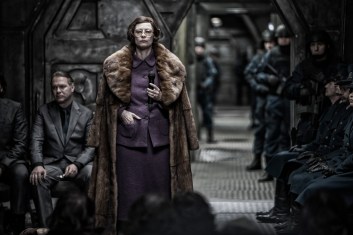
Minister Mason (Tilda Swinton), an imperious yet simpering figure who serves the ruling class without quite being part of it, reminds the lower class that: snowpiercer-mason

“We must all of us on this train of life remain in our allotted station. We must each of us occupy our preordained particular position. Would you wear a shoe on your head? Of course you wouldn’t wear a shoe on your head. A shoe doesn’t belong on your head. A shoe belongs on your foot. A hat belongs on your head. I am a hat. You are a shoe. I belong on the head. You belong on the foot. Yes? So it is. 

In the beginning, order was prescribed by your ticket: First Class, Economy, and freeloaders like you…Now, as in the beginning, I belong to the front. You belong to the tail. When the foot seeks the place of the head, the sacred line is crossed. Know your place. Keep your place. Be a shoe.”

Ecotones are places where “lines are crossed,” where barriers are breached, where “words collide” and new opportunities arise. Sometimes from calamity. Sometimes from tragedy. Sometimes from serendipity.

When environment shapes a story as archetype—hero, victim, trickster, shadow or shape shifter—we get strong eco-fiction. Good eco-fiction, like any good story, explores the choices we make and the consequences of those choices. Good eco-fiction ventures into the ecotone of overlap, collision, exchange and ultimate change.

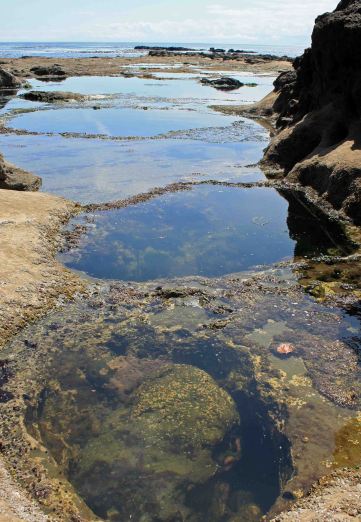
Water Is-cover01In my latest book Water Is… I define an ecotone as the transition zone between two overlapping systems. It is essentially where two communities exchange information and integrate. Ecotones typically support varied and rich communities, representing a boiling pot of two colliding worlds. An estuary—where fresh water meets salt water. The edge of a forest with a meadow. The shoreline of a lake or pond.

For me, this is a fitting metaphor for life, given that the big choices we must face usually involve a collision of ideas, beliefs, lifestyles or worldviews: these often prove to enrich our lives the most for having gone through them. Evolution (any significant change) doesn’t happen within a stable system; adaptation and growth occurs only when stable systems come together, disturb the equilibrium, and create opportunity. Good social examples include a close friendship or a marriage in which the process of “I” and “you” becomes a dynamic “we” (the ecotone) through exchange and reciprocation. Another version of Bernard Shaw’s quote, above, by the Missouri Pacific Agriculture Development Bulletin reads: “You have an idea. I have an idea. We swap. Now, you have two ideas and so do I. Both are richer. What you gave you have. What you got I did not lose. This is cooperation.” This is ecotone.

botanical beach tidal pools copy

Tidal pools in Botanical Beach, BC (photo by Nina Munteanu)

I think we are seeing more eco-fiction out there because ecosystems, ecology and environment are becoming more integral to story: as characters in their own right. I think we are seeing more eco-fiction out there because we are ready to see it. Just as quantum physics emerged when it did and not sooner, an idea—a thought—crystalizes when we are ready for it.

Don’t stay a shoe … go find an ecotone. Then write about it.

Hope to see you at When Words Collide next year.


For my complete critique of Snowpiercer in The Alien Next Door, go here.


nina-2014aaNina Munteanu is an ecologist and internationally published author of award-nominated speculative novels, short stories and non-fiction. She is co-editor of Europa SF and currently teaches writing courses at George Brown College and the University of Toronto. Visit www.ninamunteanu.ca for the latest on her books.

The Ecology of Print Books: Niche Partitioning by Young Readers

Anne-walking-Cedars

Friend Anne walks boardwalk in giant cedar forest, BC (photo by Nina Munteanu)

A while ago, I wrote about the S-curve in publishing, an ecological phenomenon applied to the book industry. Today I’d like to talk about another ecological phenomenon: niche partitioning.

Earlier this year, SF author and fellow Canadian Cory Doctorow cited several reports on his blog BoingBoing suggesting that “young readers generally prefer to read books from paper, not screens.” More than that, he adds, “they find ebooks and printed books complementary.”

I’m an ecologist and this makes sense to me. It comes down to niche-partitioning. Every organism occupies a niche, which can be defined as that organism’s “job” in its ecosystem; so niche-partitioning is a way for organisms to co-exist cooperatively—rather than competitively and exclusively—by apportioning or segregating various jobs or roles in an ecosystem. It’s a bit like syndicalism vs. capitalism, in which functional, rather than territorial precepts are used.

“The future composts the past,” says Doctorow. “The advent of films made it possible for performances that couldn’t work onstage to be born and it moved all the plays that were uncomfortable fits onstage to the screen. What it left behind were plays that were more like plays—and a theater industry that’s still going strong, even if it’s dwarfed by the screen.” He’s talking about niche-partitioning here.

I generally find that ebooks are convenient for my mobile lifestyle. I’ve recently adopted an itinerant, gypsy life from my former “nesting” days. My family has grown up and left the nest and I’ve gone “walkabout”. My giant library of print books had to find good homes, rather than travel with me to all parts of the world. I keep a collection of virtual books on my device for reference (like a dictionary). I also find ebooks a good option for a one-off read—something I can get cheap and read without needing to “befriend” and keep.

I treasure my few printed books, both reference and story. My reference print books are underlined and marked and worn from being used over and over again. Printed books are best for protracted reading and comprehension. You want a print book when you wish to delve deep into “story” and relax.

As with the theatre becoming more theatre-like, Doctorow adds that, “books are becoming more book-like. Books that work best as e-books—for example, big reference books; but also short works that are too slight to rest comfortably on their own between covers—are moving to e-book-land. Things that are produced as printed books have passed a test in which someone has asked, Is there an important reason for this to exist in print, instead of exclusively onscreen? ”

I talked about this in my previous article The Future of Books on this blog: “print books will become the epitome of publishing value and worth. Already coveted by collectors whose libraries will represent the best of the best in the literary world, print books will come to represent the highest status in literature. Only the best stories will endure as print books; perhaps only the ‘best book’ will even be published in print form. Its existence in print form will define its literary value.” Niche-partitioning, like I said…

In an article called Why Digital Natives Prefer Reading in Print. Yes, You Read That Right, Washington Post reporter Michael S. Rosenwald reported that, “Textbook makers, bookstore owners and college student surveys all say millennials still strongly prefer print for pleasure and learning, a bias that surprises reading experts given the same group’s proclivity to consume most other content digitally.”

students-print-online2014Rosenwald adds, “The preference for print over digital can be found at independent bookstores such as the Curious Iguana in downtown Frederick, Md., where owner Marlene England said millennials regularly tell her they prefer print because it’s “easier to follow stories.” Pew studies show the highest print readership rates are among those ages 18 to 29, and the same age group is still using public libraries in large numbers.” Rosenwald adds, “And it can be seen most prominently on college campuses, where students still lug backpacks stuffed with books, even as they increasingly take notes (or check Facebook) on laptops during class. At American, Cooper Nordquist, a junior studying political science, is even willing to schlep around Alexis de Tocqueville’s 900-plus-page “Democracy in America.”

I’ve noticed the same phenomenon at the University of Toronto campus where I teach. Rosenwald writes about Frank Schembary, a young student who loves books—printed books. He loves how they smell. He loves scribbling in the margins, underlining interesting sentences, folding a page corner to mark his place. “I like the feeling of it,” says Schembary, reading under natural light in a campus atrium, his smartphone next to him. “I like holding it. It’s not going off. It’s not making sounds.”

Cedar trunk base-LR

Cedar tree, Little Rouge woodland (photo by Nina Munteanu)

Naomi S. Baron, an American University linguist who studies digital communication, wrote a book Words Onscreen that reported her studies of students’ reading patterns. She found, along with other studies, that readers tend to skim on screens. Her favourite response to her question of what students disliked the most about reading in print was: “It takes me longer because I read more carefully.”

Students prefer digital for science and math subjects, where they also have access to online portals and resources linked to their subject matter and assignments.

Niche partitioning makes the world go round. Now, if we can only use its logic in economic systems.

nina-2014aaNina Munteanu is an ecologist and internationally published author of award-nominated speculative novels, short stories and non-fiction. She is co-editor of Europa SF and currently teaches writing courses at George Brown College and the University of Toronto. Visit www.ninamunteanu.ca for the latest on her books.

When We Burn Books & Ray Bradbury’s Fireman

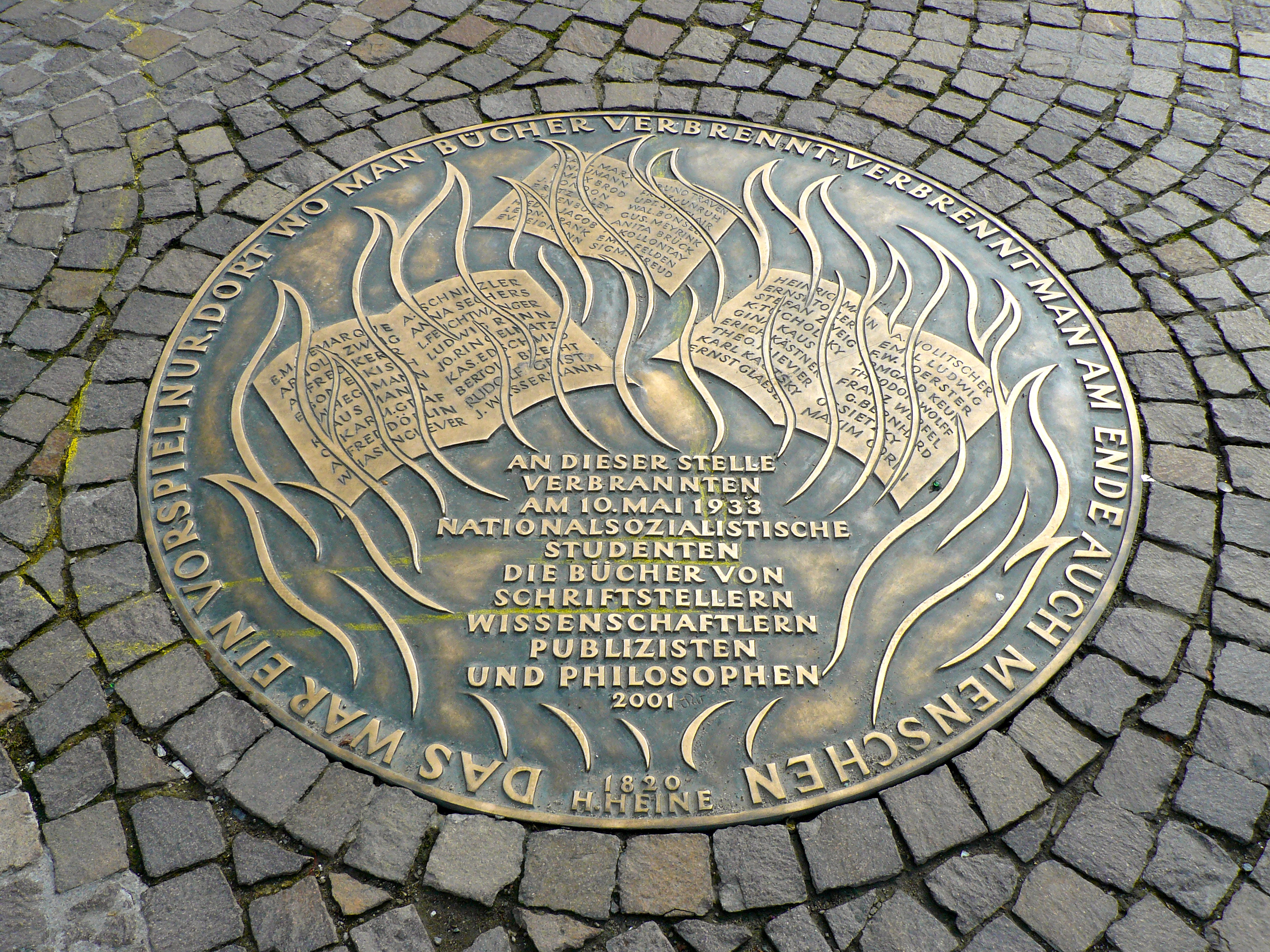
Book burning Opernplatz

Book burning Opernplatz

The burning of an author’s books…has always been the tribute that an ignorant age pays to the genius of its time — Joseph Lewis

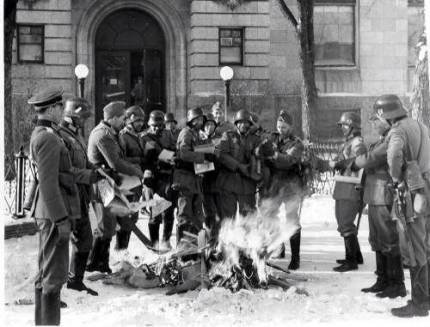
In his 1821 play Almansor the German writer Heinrich Heine wrote (referring to the burning of the Muslim holy book, the Koran, during the Spanish Inquisition): “Dort, wo man Bucher verbrennt, verbrennt man am Ende auch Menschen” –“Where they burn books, they will end in burning human beings.” A century later, on May 10th, 1933, Heine’s books were among the thousands of volumes publicly hauled out and burned in the streets by the Nazis in Berlin’s Opernplatz (Bebelplatz). A violent outburst that did, in fact, foreshadow the blazing ovens of the Holocaust.Commemorative_Plaque_book_burning_Frankfurt_Hesse_Germany

Wikipedia defines ‘book burning’ as the “practice of ceremoniously destroying by fire one or more copies of a book or other written material.” The practice, usually carried out in public (like public hangings in Medieval times) is generally motivated by moral, religious or political objections to the material. Some notable and particularly destructive book burnings have included:

  • the destruction of the Library of Alexandria;
  • burning books and burying scholars (they mean ‘live burying’, folks!) under China’s Qin Dynasty (3rd Century);
  • Cathar texts in the Lanquedoc region of France in the 13th Century;
  • the Talmud in Paris by the French crown in 1242;
  • Arabic and Hebrew books at Andalucia, Spain, in 1499;
  • Servetus’s “heretical” writings along with the writer in Geneva in 1553;
  • Maya sacred books in Yucatan (1562);
  • Tyndale’s New Testament by the English authorities in 1525 and 1526;
  • Luthar’s Bible in Germany (1624) as ordered by the Pope;
  • Robespierre’s destruction of religious libraries in 1793;
  • anti-communist books by the Bolsheviks in 1917;
  • Jewish, anti-Nazi and “degenerate” books by the Nazis in the 1930s and 1940s;
  • Communist and “fellow traveller” books by Senator McCarthy in 1953;
  • The Satanic Verses by Muslims in the UK in 1988; and,
  • Harry Potter books in various American cities, 2001-2005.
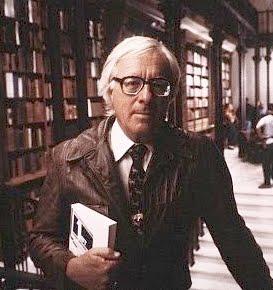
Ray Bradbury copy

Ray Bradbury

In the 1967 introduction of his novel, Fahrenheit 451 (based on his novella, The Fireman), Ray Bradbury implied that the Nazi book burnings inspired his story. I found his statement both eloquent and powerful: “It follows then that when Hitler burned a book I felt it as keenly, please forgive me, as his killing a human, for in the long sum of history they are one in the same flesh.” For those of you who haven’t yet read his novel (one of my favourite books, ever), this cautionary tale explores a fictional future society that has institutionalized book burning in an effort by authorities to maintain order and ‘happiness’. In Bradbury’s fictional world, firemen don’t put out fires; they start them. The story begins with Montag, an ordinary fireman:

“It was a pleasure to burn. It was a special pleasure to see things eaten, to see things blackened and changed. With the brass nozzle in his fists, with this great python spitting its venomous kerosene upon the world, the blood pounded in his head, and his hands were the hands of some amazing conductor playing all the symphonies of blazing and burning to bring down the tatters and charcoal ruins of history…Montag grinned the fierce grin of all men singed and driven back by the flame. He knew that when he returned to the firehouse, he might wink at himself, a minstrel man, burnt-corked, in the mirror.”

bookburning-Opernplatz

book burning in Opernplatz

Bradbury wove a multi-layered political and social tale that followed one man’s journey to find his soul. Fahrenheit 451 explores the theme of intellectual freedom using censorship as his plot device. Montag is “everyman” who must make a choice for personal freedom at the expense of the “good censored life”. It is the choice all artists must make. In choosing freedom, we make an obligation to respect and tolerate those with whom we disagree; otherwise we are just tyrants and not really free.

fahrenheit-451-book-coverIn 1795 Thomas Paine wrote, “He that would make his own liberty secure, must guard even his enemy from opposition: for if he violates this duty he establishes a precedent that will reach to himself.”

The American Library Association defines intellectual freedom as the right of every individual to both seek and receive information from all points of view without restriction. It also encompasses the freedom to hold, and disseminate ideas. Intellectual freedom is the basis for our democratic system. We expect our people to be self-governors. But to do so responsibly, our citizenry must be well-informed. Libraries — and the free internet — provide the ideas and information to allow people to inform themselves.

John F. Kennedy once said that “a nation that is afraid to let its people judge the truth and falsehood in an open market is a nation that is afraid of its people.”

nazi book burning2Censorship suppresses ideas and information that certain people — individuals, groups or government officials — find objectionable or dangerous. Censors pressure public institutions, like libraries, to suppress and remove from public access information they judge inappropriate or dangerous, so that no one else has the chance to read or view the material and make up their own minds about it. “Censorship … creates, in the end, the kind of society that is incapable of exercising real discretion,” said Henry Steel Commager.
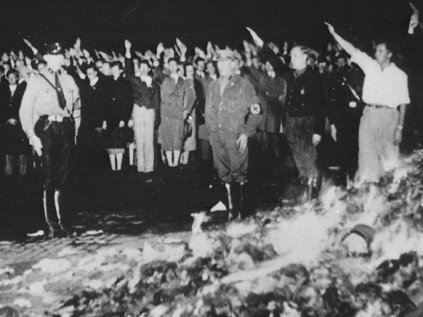

When does simple disapproval turn into active disallowing; when does banning of books turn into burning of books?

I believe that censorship occurs when one submits to fear and insecurity: the bully being bullied and ruled by his own fear. Okay, we all fear; that’s only natural. We’re animals and fear is a survival instinct we all need and use. But, we don’t live in caves and hunt sloth anymore; that fear can be tempered by a civilized educated culture. Without the benefit of a nurturing faith and belief in the goodness of humankind, fear will lead to prejudice, racism and a general isolationist paranoia.

Winston Churchill said: “You see these dictators on their pedestals, surrounded by the bayonets of their soldiers and the truncheons of their police. Yet in their hearts there is unspoken–unspeakable–fear. They are afraid of words and thoughts! Words spoken abroad, thoughts stirring at home, all the more powerful because they are forbidden. These terrify them. A little mouse–a little tiny mouse! -of thought appears in the room, and even the mightiest potentates are thrown into panic.”

nazi book burning3

Book burning in Opernplatz

The danger comes when an organized group subscribes to a common fear. It is often driven by a charismatic leader, who has somehow captured that fear, harnessed its raging force then propelled it like a projectile. One’s anonymity and shared (and supposedly diluted) responsibility within the “mob” may compel the individual to commit irrational acts of atrocity he/she would never otherwise contemplate on his/her own. How many of us have been caught up in the mass enthusiasm of a sports match? We’ve all felt it; the power of the mob, its energy crackling in the air around our pounding hearts and cries. To yield to a mob-mentality is to subscribe to a condoned insanity, within which the ‘mob’ takes on its own irrational personality that is more than the sum of its parts…to become a kind of autopoietic entity that swiftly and ruthlessly dispenses its own perverse form of justice.

Perhaps for this reason more than any other, I see the artist’s path as a singular one, part of, yet apart from, the crowd. Neither leader, nor follower; rather, a wizard and a “trickster”, a shining beacon, both reviled and honored simultaneously. We are our books.

It was Victor Frankl, survivor of Auschwitz, who said, “what is to give light must endure burning.”

In her acceptance speech for a lifetime award by the NBA, author Ursula K. LeGuin said:

le-guin copy

Ursula K. LeGuin

“I think hard times are coming, when we will be wanting the voices of writers who can see alternatives to how we live now, and can see through our fear-stricken society and its obsessive technologies, to other ways of being. And even imagine some real grounds for hope. We will need writers who can remember freedom: poets, visionaries–the realists of a larger reality. Right now, I think we need writers who know the difference between production of a market commodity and the practice of an art…The profit motive is often in conflict with the aims of art…We live in capitalism. Its power seems inescapable; so did the divine right of kings… Power can be resisted and changed by human beings; resistance and change often begin in art, and very often in our art–the art of words. I’ve had a long career and a good one, in good company, and here, at the end of it, I really don’t want to watch American literature get sold down the river… The name of our beautiful reward is not profit. Its name is freedom.”

nina-2014aaNina Munteanu is an ecologist and internationally published author of award-nominated speculative novels, short stories and non-fiction. She is co-editor of Europa SF and currently teaches writing courses at George Brown College and the University of Toronto. Visit www.ninamunteanu.ca for the latest on her books.

Why You Want to Go To A Writer’s Convention

IMG_0304A while ago I attended (and participated as panelist and guest author) at the World Fantasy Convention in Toronto. And I was all jazzed about it! Why?… Well, let me tell you why…

If you haven’t yet attended a writer’s conference or convention, it’s high time you did. Because, not only are you missing out on an education, you are missing out on a sub-culture that may change your life as a writer, help feed the hungry and align the universe. Seriously.

The last World Fantasy Convention I attended was several years ago in 2008. It was held in Calgary, Alberta, when I still lived in Vancouver, British Columbia. The ten-hour drive through some of the most glorious Canadian wilderness and mountains was bracing and we were lucky that the weather played fair. It was an auspicious start to a wonderful journey of self-discovery.

Hosted by toastmaster Tad Williams, this world-class convention featured guests of honor, David Morrell, Barbara Hambly, Tom Doherty and Todd Lockwood. The World Fantasy Convention promised great things and delivered them. And I’m not just talking about that white chocolate cranberry-date-nut dip that had me loitering at the hospitality suite. Or all those midnight parties that served savory wine with salted almonds, sharp cheese and colorful conversation with the likes of David Hartwell, Tor editor and impeccable dresser (gotta love those ties!). I’m not even talking about the hot tub that sprung a leak on the 18th floor at 1 am or the entertaining panels and readings, which rocked for both writer and reader.

What made the con great for me was seeing my writing community (both writing colleagues and readers who followed my writing) and meeting new people, all lovers of books and “story”.

I was rudely eyeballing someone’s nametag on his chest, when I collided with the Prince George crowd that included authors, Lynda Williams (herself responsible for some pretty nasty intergalactic wars), Nathalie Mallet (who cages princes) and publisher Virginia O’Dine of Bundoran Press (rumored to have been somehow responsible for the hot tub fiasco). I also chummed with Jennifer Rahn, author of The Longevity Thesis, who was charmed by my sly cat (she’s a softy at heart). My cat-colleague Toulouse just kept charming his way through the crowd right to the book fair. We wandered to the back where Anita Hades of Edge Books gave Toulouse her usual greeting (a feline move that was a cross between Sophie Marceau and Brigitte Helm; both she and Toulouse have French blood coursing through their veins, after all—c’est vrai!).

I’d come a long way from the first writer’s conference I went to as a budding writer of a few short stories and non-fiction articles…

Here’s what author Susan Denney says about her first writer’s conference: “Going to my first writers’ conference was an act of faith. I was just starting to make some freelance sales when the members of my writers’ group encouraged me to join them at a conference a few hundred miles away. The expense didn’t seem justified to me. The cost was far more than I had earned through writing that year. But they convinced me at last and it proved to be a great investment. The benefits of a writers’ conference are there for anyone who has a desire to be a better writer.”

Here are some reasons why you can’t afford NOT to go to a conference or convention:

Contacts: you will make contacts with people working in the industry, an extremely valuable asset; this industry is a social one, based on trust, respect and joyfulness. While there’s no guarantee that you will meet anyone famous or influential, you will definitely meet people who know more about writing than you do. Just hanging out with professional writers, editors and agents is educational. If nothing else, you will gain some confidence and ease with industry people, who are real people too. Some may become friends; some may become colleagues; some will become both.

Appointments: through agent/editor/author appointments, you will have a chance to have a quality private conversation with a professional on all aspects of writing and publishing. This is your chance to pitch your novel or ask that one burning question. You know you’ll get a candid and professional answer. That in itself is invaluable and may be enough reason to attend the con. Appointments are also your best chance of getting your manuscript read. This is because it bypasses the slush-pile and months of waiting for a response. More and more editors and agents look to conferences to meet potential authors. For them, meeting an author in person is a bonus to their gauging potential success in a relationship with them.

Education on Craft & Marketing: you will learn something about craft and marketing, no matter what stage you are in your writing career. Depending on the conference or convention, aside from good information from panels, you may also get personal mentoring, 1-page critiques, or attend small themed workshops. Feedback from an experienced writer can save you months of frustration and grief. Just hearing about what is currently going on in the industry is also valuable and conferences are a good way to get the skinny on what the current issues in the writing and publishing industry are. Getting it from those who are working inside avoids the idle and potentially harmful gossip.

Community: you will be exposed to a community of writers, hundreds of creative people in various stages of their careers. By interacting with both those you can help and those who can help you, you will gain a measure of both humility and confidence and satisfaction. We learn so much by helping others. Simply being with other writers can help hone your people-skills, the same ones you will need when approaching agents, editors, publishers and research sources during your career as a professional. Remember, if you aren’t having fun, you are missing one of the most important aspects of attending a writer’s conference, and you will lose your own effectiveness.

Energy: there is nothing more energizing than a common sharing among those of like-minded thought and vision. Writing is primarily an individual pursuit, often thought to belong to the introvert; but, to succeed in the writing/publishing industry a writer must display staying power, persistence, confidence and enduring energy. There is nothing quite as inspirational as hearing an accomplished writer provide their story of victory against odds. I will never forget the moving words of Ray Bradbury at a conference in Palm Springs years ago. I have repeated those words many times since. If you come to a conference with the right mind-set, I guarantee that you will leave with more energy than you came and with a burning need to write.

Exposure: depending on the kind of conference or convention you attend, you will have the opportunity to expose yourself to something different (e.g., different fiction genres and associated communities; fiction vs. non-fiction; different media; etc.). I attended a romance writers conference a few years back (I write mostly science fiction and fantasy—but often with romance elements in them) and found it bracingly educational.

New Markets & Ideas: conferences attract writers of all kinds. Conferences provide fertile ground for cross-pollination of ideas, markets and marketing ploys. Writers, like you, are generally a nice crowd; most are willing and eager to share their successes and failures. And contacts. Sharing is one of the great things that happens at conferences. There may be a common pin board set up for people to share. Most conferences are Twitter and Facebook enabled for quick and easy viral sharing. If you don’t come away from a conference with at least one new idea, contact or market, you haven’t done your job: talk to people.

Here are a few do’s and don’ts for when you go conferencing:

  1. Wear comfortable but not sloppy clothing and shoes (it’s likely that you will be doing a fair bit of standing and walking); you want to make a good impression. Be yourself and dress accordingly.
  2. Bring promotional material with you (e.g., business cards, flyers on your book, stories, etc.). Have something to share and exchange with other writers and professionals. Most conferences also have tables devoted to shareware. This is your chance to introduce you and your writing to others.
  3. Take something to write with (e.g., notebook and pen or iPad, etc.).
  4. Talk to people. Chances are that everyone there is interesting.
  5. Respect the time, particularly other people’s time, and keep your appointments and meetings.
  6. Don’t bring your heavy manuscript with you to the conference. Agents and editors don’t have the time or inclination or space in their suitcase for it. Use the conference to make an impression and get an invitation for something later in writing.
  7. Keep all of your interactions verbal and face-to-face. Don’t rely on memorized speeches or a folded up written pitch in your pocket. Keep it casually professional. Make eye contact and speak from the heart. Show your passion.
  8. Have fun. And don’t be afraid to show it; there’s nothing more infectious and attractive than someone having fun.


Some upcoming writing-artistic conferences/ conventions / festivals in the Toronto area include:IMG_0306


nina-2014aaNina Munteanu is an ecologist and internationally published author of award-nominated speculative novels, short stories and non-fiction. She is co-editor of Europa SF and currently teaches writing courses at George Brown College and the University of Toronto. Visit www.ninamunteanu.ca for the latest on her books.


Learn How to Write Science Fiction at George Brown College

For those in the Toronto area, I’m teaching a 12-week course on how to write science fiction at George Brown College this spring.

Called “Creating Science Fiction”, the course runs Wednesday nights from 6:15 to 9:15 starting April 8th through to June 24th and costs $278. The course is also part of George Brown’s Creative Writing Certificate.
.
Meant for both beginning writers and those already published, the 12-week course is run like a workshop with student input and feedback on student’s WIPs. I explore with students the essential tools used in the SF genre (including world building, research and plot approaches). Students will work toward a publishable original piece by learning to generate and follow through with premise, idea and theme.
Microsoft Word - GBC-SF course-APRIL2015 AD.docx
George Brown College is located on 200 King Street, Toronto, Canada.
.
.
.
.
nina-2014aaNina Munteanu is an ecologist and internationally published author of award-nominated speculative novels, short stories and non-fiction. She is co-editor of Europa SF and currently teaches writing courses at George Brown College and the University of Toronto. Visit www.ninamunteanu.ca for the latest on her books.

Simplify Your Writing

Log patterns 6

Spalted log (photo by Nina Munteanu)

One of the best ways to have less clutter in your writing is to simplify it. This doesn’t necessarily mean that you have to be a Spartan and write sparingly like Hemingway. You can use rich language like Jacqueline Carey but apply that language with purpose. While Jacqueline Carey’s Kushiel’s Dart contains rich narrative description, the language is appropriate for the time period and always portrays motion. But you wouldn’t use that “voice” and narrative style in a contemporary thriller, say.

Fluid writing lies at the basis of uncluttered prose. The seven suggestions below will help.

  1. Reduce Extraneous Words 

When constructing a scene, it is wise to pay attention to cadence, rhythm, number of phrases or clauses and general length of sentences. Sentences in early works tend to be full of extra words (e.g., using “ing” verbs, add-ons like “he started to think” instead of simply “he thought”) that slow down narrative. Try reading your sentences out loud; this practice often helps you to find the “clutter”.

2. Use Active & Powerful Verbs

Active verbs are the key to vivid writing; and, ironically, to uncluttered prose. The very choice of active verbs helps you minimize the use of clutter-words. Consider, these two example paragraphs, which describe the same scene.

Example A: Joe walked slowly into the room. His lip curled in disgust as he looked around the room. There were empty beer bottles all over the filthy floor that was covered with stains and garbage and there was a naked couple in the bed. They were almost buried under the rumpled covers. They now struggled to get up and Joe saw the big man staring up at him angrily.

Example B: Joe sidled into the room, lip curling at the stench of empty beer bottles and garbage strewn on the stained floor. A naked couple struggled out from the rumple of clothes and blankets. The man reared up and glared at Joe.

Example A contained 68 words while Example B contained only 41 words. It is obvious which paragraph is more vivid.

3. Cut Down the Words in Your Paragraphs

Cut down your words by at least 20%. Be merciless; you won’t miss them, and you will add others later in your second round of edits. Find the most efficient way to say what you mean.

4. Reduce Redundancy

The introductory sentence of a narrative paragraph is often paraphrased unnecessarily in the very next sentence, as though the writer didn’t trust the reader to get it the first time. Say it once and say it right the first time.

5. Embrace Anglo Saxon over Latin Words

For every three syllable word of Latin origin there is a simple Anglo Saxon word. Consider these examples:

Latinate                                   Anglo Saxon

assassinate                            kill

emotion                                  feeling

diminutive                              small

consternation                        fear

juvenile                                   young

originate                                 begin

masticate                                chew

prevaricate                             lie

abbreviate                              shorten

perspire                                  sweat

assuage                                  soothe

emancipate                           free

diffident                                 shy

Latinate words slow down narrative and often arise from supercilious luciferous logolepsy; if overused, such effulgent emanations may render your promulgations cumbersome and will likely exacerbate acataleptic obfuscation and promote embulalia.

The simpler Anglo Saxon term is often more visceral in both meaning and sound. Consider the first example: “kill” evokes a much more powerful and immediate response than “assassinate”. And how about those “f” words for sexual intercourse? Fornication has a whole other nuance than its Anglo Saxon four-letter cousin. I’m not advising that you avoid Latinisms altogether. Latinate words, when used judiciously—and sparingly—provide cadence, lyricism and points of interest in narrative. If you use them sparingly and purposefully, they provide color and texture to your narrative landscape. The key—as always—is achieving a balance.

I once suffered from luciferous logolepsy… and profusely overused Latinate syllogisms, particularly in my line of work as a scientist. When I saw the light, not only did my fiction benefit; but my consulting reports and technical papers were more joyfully read by my clients.

6. Balancing Show and Tell

Let the characters and scenes speak for themselves through action and dialogue, rather than using narration to explain what happens. Embracing this way of writing may be the single most effective way to reduce clutter and enhance the vividness of your writing at the same time. While “showing” may in fact add more words than simple “telling”, the way it is read (mostly in the form of action) makes up for the added words. Telling also has its place in narrative; for instance, when you wish to let the reader know about an event or action that you do not want to describe in vivid detail. Simple and succinct telling works effectively as transitional narrative, serving as a bridge for critical showing scenes.

7. Don’t Overload Your Metaphors

Some novice writers fall into the trap of using metaphor overload (some call it “purple prose”). Overuse of metaphor diverts the reader from the story with “clever” turn-of-phrase and distract them from the most important words in the writer’s toolkit—verbs. Here’s an example from one of my favourite shows, Farscape:

Example 1: John strode into the aft deck and caught Aeryn and Crais embracing. He stopped, heart slamming like the staccato percussion of a demon frag cannon on his wounded soul.

If you eliminate the simile here’s what you get:

Example 2: John strode into the aft deck and caught Aeryn and Crais embracing. He stopped, heart slamming.

Removal of the simile activates the verb and focuses the reader’s attention on John’s visceral reaction. Which version is more powerful? If the verb is powerful enough, you don’t need to pad it with metaphor. The verb “slamming” already provides what the metaphor suggests, making it redundant. If the writer has set everything up properly then the reader will provide the context. In the Farscape example, if the writer hasn’t already established a precedent for John’s reaction, she is missing more than appropriate metaphor.

For more writing tips on writing fiction (and non-fiction or memoir) check out “The Alien Guidebook Series” on writing.

Nina Munteanu is an ecologist and internationally published author of award-nominated speculative novels, short stories and non-fiction. She is co-editor of Europa SF and currently teaches writing courses at George Brown College and the University of Toronto. Visit www.ninamunteanu.ca for the latest on her books.