My Books Are Feeding Meta’s AI Brat

On March 20, 2025, in an article in The Atlantic entitled “The Unbelievable Scale of AI’s Pirated-Books Problem”, Alex Reisner disclosed how META pirated millions of books and research papers to train their flagship AI model Llama 3 to be competitive with products like ChatGPT. Reasons for this illegal action is simply time; asking permission and licensing takes too much time and is too expensive.

On the same day, The Atlantic provided a link to LibGen (the pirated-books database that Meta used to train its AI) so authors could search its collection of millions of illegally captured books and scientific papers. I went there and searched my name for my novels, non-fiction books and scientific papers and discovered several of my works in their AI training collection.

Two of my many scientific papers appeared in LibGen under my scientific author name Norina Munteanu. The first scholarly article came from my post grad work at the University of Victoria on the effects of mine tailing effluent on an oligotrophic lake, published in 1984 in Environmental Pollution Series A, Ecological and Biological Volume 33, Issue 1. The second article on the effect of current on settling periphyton came from my M.Sc. ecology research published in 1981 in Hydrobiologia, Volume #78.

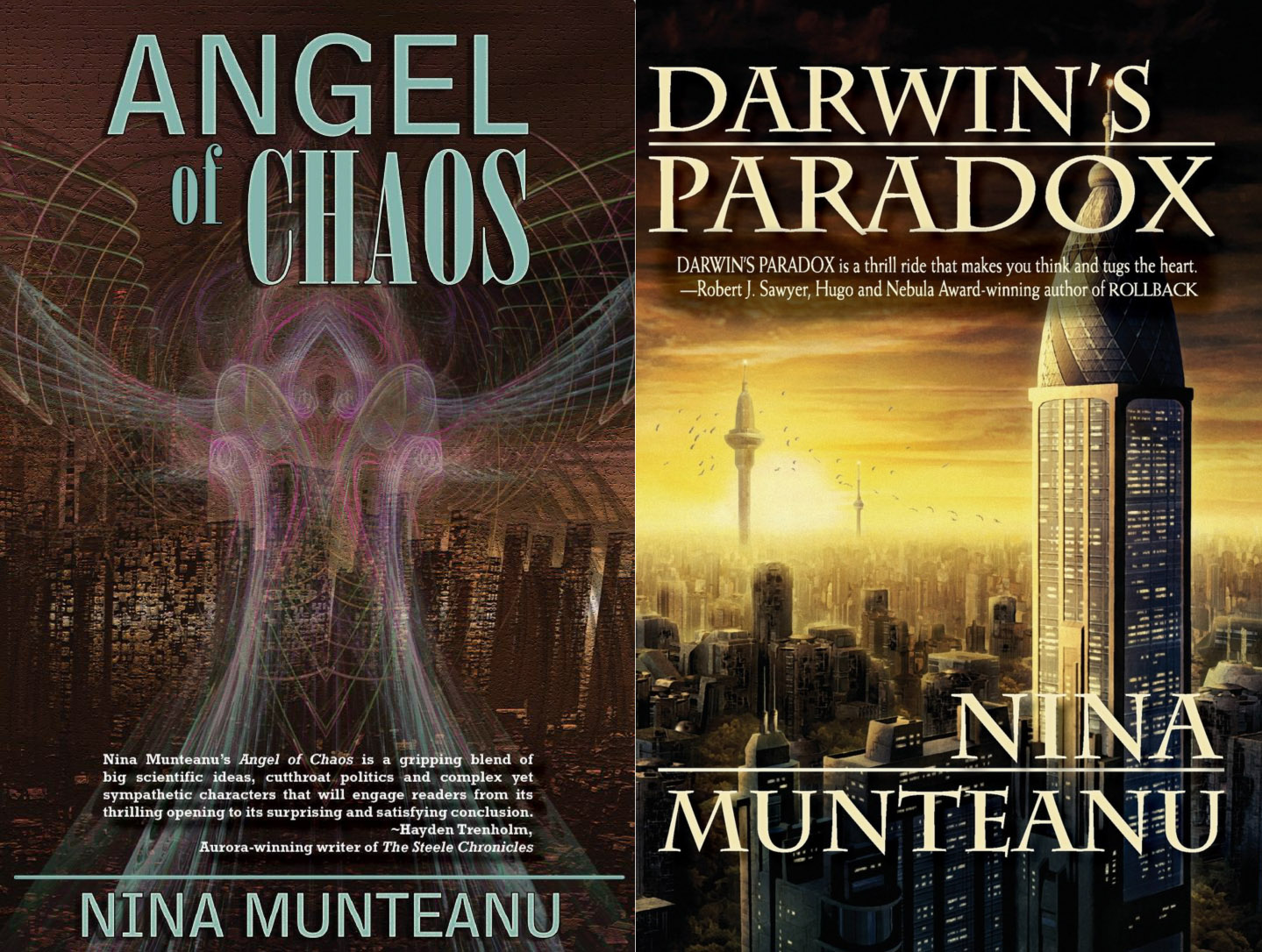
Three of my thirteen novels appeared in LibGen under my fiction author name Nina Munteanu. I found it interesting how their bots captured a good range of my works. These included two of my earliest works. Collision with Paradise (2005) is an ecological science fiction adventure and work of erotica; Darwin’s Paradox (2007) is a science fiction medical-eco thriller that features the domination of society by an intelligent AI community. The bots also found my latest novel, A Diary in the Age of Water (2020), a climate thriller and work of eco-fiction that follows four generations of women and their relationship to water.

Each of these works has been highly successful in sales and has received a fair bit of attention and recognition.

When Genevieve Dubois, Zeta Corp’s hot shot starship pilot, accepts a research mission aboard AI ship ZAC to the mysterious planet Eos, she not only collides with her guilty past but with her own ultimate fantasy. On a yearning quest for paradise, Genevieve thinks she’s found it in Eos and its people; only to discover that she has brought the seed of destruction that will destroy this verdant planet.

Recognition: Gaylactic Spectrum Award (nominee)

Collision with Paradise is ideal for readers who enjoy dark, introspective science fiction that explores complex moral dilemmas and psychological depth within a lush mythologically-rich setting.”The Storygraph

A devastating disease. A world on the brink of violent change. And one woman who can save it or destroy it all. Julie Crane must confront the will of the ambitious virus lurking inside her to fulfill her final destiny as Darwin’s Paradox, the key to the evolution of an entire civilization. Darwin’s Paradox is a novel about a woman s fierce love and her courageous journey toward forgiveness, trust, and letting go to the tide of her heart.

Recognition: Readers Choice Award (Midwest Book Review); Readers Choice (Delta Optimist); Aurora Award (nominee)

Darwin’s Paradox is a thrill ride that makes you think and tugs the heart.”Robert J. Sawyer, Hugo and Nebula Award winning author of Rollback

This gritty memoir describes a near-future Toronto in the grips of severe water scarcity during a time when China owns the USA and the USA owns Canada. A Diary in the Age of Water follows the climate-induced journey of Earth and humanity through four generations of women, each with a unique relationship to water. The diary spans a twenty-year period in the mid-twenty-first century of 33-year-old Lynna, a single mother and limnologist of international water utility CanadaCorp, and who witnesses disturbing events that she doesn’t realize will soon lead to humanity’s demise. 

Recognition: 2020 Foreword Indies Book of the Year Award (Bronze); 2020 Titan Literary Book Award (Silver); 2021 International Book Award (Finalist).

“If you believe Canada’s water will remain free forever (or that it’s truly free now) Munteanu asks you to think again. Readers have called ‘A Diary in the Age of Water’ “terrifying,” “engrossing,” and “literary.” We call it wisdom.”—LIISBETH

The April 3, 2025 article by Ella Creamer of The Guardian noted that a US court filing alleged that Meta CEO Mark Zuckerberg approved the company’s use of the notorious “shadow library”, LibGen, which contains more than 7.5 million books and 81 million research papers. According to Toby Walsh, leading AI researcher at the University of New South Wales: “As far as we know, there was an explicit instruction from Mark Zuckerberg to ignore copyright.”

This begs the question of the role and power of copyright law.

“Copyright law is not complicated at all,” said Richard Osman, author of The Thursday Murder Club series. “If you want to use an author’s work you need to ask for permission. If you use it without permission you’re breaking the law. It’s so simple.”

If it’s so simple then why is Meta and others getting away with it? For its defence, the tech giant is claiming “fair use”, relying on this term permitting the limited use of copyrighted material without the owner’s permission (my italics).

It would seem that just as Trump trumped the presidency, Zuckerberg and his AI minion bots have trumped the copyright law—by flagrantly violating it and getting away with it—so far (on both counts).

The actions of Meta were characterized by Society of Authors chair Vanessa Fox O’Louglin as “illegal, shocking, and utterly devastating for writers.” O’Louglin added that “a book can take a year or longer to write. Meta has stolen books so that their AI can reproduce creative content, potentially putting these same authors out of business.”

Three of my novels pirated for AI training

Reflecting many authors’ outrage throughout the world, Novelist AJ West remarked, “To have my beautiful books ripped off like this without my permission and without a penny of compensation then fed to the AI monster feels like I’ve been mugged.” Australian Author Sophie Cunningham said, “The average writer earns about $18,000 a year on their writing. It’s one thing to be underpaid. It’s another thing to find that [their] work is being used by a company that you don’t trust.” Bestselling author Hannah Kent said, “If feels a little like my body of work has been plundered.” She adds that this, “opens the door to others also feeling like this is an acceptable way to treat intellectual copyright and creatives who already…are expected to [contribute] so much for free or without due recompense.” Both Kent and Cunningham exhort governments to weigh in with more powerful regulation. And this is precisely what may occur. Nicola Heath of ABC.net.au writes, “the outcomes of the various AI copyright infringement cases currently underway in the US will shape how AI is trained in the future.”

According to The March 20, 2025 Authors Guild article “Meta’s Massive AI Training Book Heist: What Authors Need to Know,” legal action is underway against Meta, OpenAI, Microsoft, Anthopic, and other AI companies for using pirated books. The Authors Guild is a plaintiff in the class action lawsuit against OpenAI, along with John Grisham, Jodi Picoult, David Baldacci, George R.R. Martin, and 13 other authors, but the claims are made on behalf of all US authors whose works have been ingested into GPT. 

The Authors Guild suggests five things authors can do to defend their rights:

  1. Send a formal notice: If your books are in the LibGen dataset, send a letter to Meta and other AI companies stating they do not have the right to use your books.
  2. Join the Authors Guild: You should join the Guild and support our joint advocacy to ensure that the writing profession remains alive and vibrant in the age of AI. We give authors a voice, and there is power in numbers. We can also help you ensure that your contracts protect you against unwanted AI use of your work. 
  3. Protect your works: Add a “NO AI TRAINING” notice on the copyright page of your works. For online work, you can update your website’s robots.txt file to block AI bots.
  4. Get Human Authored certification: Distinguish your work in an increasingly AI-saturated market with the Authors Guild’s certification program. This visible mark verifies your book was created by a human, not generated by AI.
  5. Stay informed. The Authors Guild suggest signing up for the free Guild biweekly newsletter to keep updated on lawsuits and legislation that could impact you and your rights. The legal landscape is changing rapidly, and they are keeping close watch. 

How do I feel about all this? As a female Canadian author of climate fiction? As a thinking, feeling human being living in The Age of Water? Well, to tell the truth, it kinda makes me want a donut*…

 *as delivered by James Holden in Season 3, Episode 7 of “The Expanse”

Aspens in fall, ON (photo and rendition by Nina Munteanu)

Nina Munteanu is a Canadian ecologist / limnologist and novelist. She is co-editor of Europa SF and currently teaches writing courses at George Brown College and the University of Toronto. Visit  www.ninamunteanu.ca for the latest on her books. Nina’s bilingual “La natura dell’acqua / The Way of Water” was published by Mincione Edizioni in Rome. Her non-fiction book “Water Is…” by Pixl Press (Vancouver) was selected by Margaret Atwood in the New York Times ‘Year in Reading’ and was chosen as the 2017 Summer Read by Water Canada. Her novel “A Diary in the Age of Water” was released by Inanna Publications (Toronto) in June 2020.

Writing in the Age of Artificial Intelligence: AI and Post-Plagiarism

AI entity performing a myriad of duties (image from Bernard Marr & Co.)

I teach academic writing to students at the University of Toronto Writing Centre. It’s wonderful and fulfilling work and I enjoy helping students in several disciplines (engineering, health sciences, social sciences) learn to write better. As with the rest of the academic world of writing, we are all making sense of the use of AI-generated tools by students, instructors and researchers: large language models (LLMs) such as ChatGPT, Claude, Copilot, and even Grammarly. Students have told me that they found AI helpful in brainstorming and outlining as well as organizing literature reviews and editing for grammar and such. A recent survey of universities and corporations around the world by the Digital Education Council revealed that a majority of students used AI tools. Of those surveyed, close to two thirds used AI as a search engine; a third used it to summarize documents; and a fifth used it to create first drafts. 

In her 2024 article “The Future Is Hybrid”, Beth McMurtrie suggested that genAI “may eventually take its place in the pantheon of game-changing technologies used every day in education—alongside calculators, search engines, and Excel.”

In my other pursuit as a professional fiction author, I see the artistic and communication industries embracing AI, particularly in the visual arts. I’m now told that several publishing houses and magazines have dedicated efforts to publish AI-generated work. Some magazines are entirely AI generated, Copy Magazine, for instance. Author futurist Bernard Marr writes that “Generative AI is already being adopted in journalism to automate the creation of content, brainstorm ideas for features, create personalized news stories, and produce accompanying video content.” Marr then goes on to provide 13 ways that all writers should embrace Generative AI that includes anything from drafting plot lines to world building. Sports Illustrated was recently found to publish AI generated stories. Even newspapers, such as the LA Times, the Miami Herald, and Us Weekly acknowledge AI-written content. And I recently learned that one of the top five online science fiction magazines, Metastellar, accepts AI-assisted stories with the proviso that “they better be good.” And Metastellar provides some convincing reasons. This has become a hot topic among my fellow professional writers at SF Canada.  One colleague informed me that a “new publisher Spines plans to disrupt industry by publishing 8000 AI books in 2025 alone.” On checking the news release, I discovered that Spines is, in fact, a tech firm trying to make its mark on publishing, primarily through the use of AI. The company offers the use of AI to proofread, produce, publish, and distribute books. They are, in fact, a vanity publishing platform (essentially a service for self-publishing), charging up to $5000 a book and often taking just three weeks to go from manuscript to a published title.

The emerging field of AI-assisted writing and communicating is a burgeoning field that promises to touch every person in some way—writers and readers alike. Tech companies are scrambling to use it to save time and effort. Others are involved in improving current and developing new models. Many are training LLMs for improved use. Even I was headhunted as a creative writer by one tech firm to help create more safe, accurate and reliable LLMs.

Generative AI applications (Image from Neebal Technologies)

Universities and Other Educational Institutions Use of AI

How universities and other educational institutions are dealing with the challenge and promise of these emerging tools in communication varies from out right forbidding AI use in the classroom to full on acceptance and obligatory use in some classroom projects. McMurtrie described how two instructors at Rollins College, Dan Myers and Anne Murdaugh, had students collaborating with AI on semester-long research projects. They were instructed to use Claude and Copilot to brainstorm paper topics, conduct literature reviews, develop a thesis, and outline, draft, and revise their papers. Myers and Murdaugh asserted that “the skills that students use to engage thoughtfully with AI are the same ones that colleges are good at teaching. Namely: knowing how to obtain and use information, thinking critically and analytically, and understanding what and how you’re trying to communicate.”

In fall of 2024, Stephanie Wheeler and others at the department of writing and rhetoric in the University of Central Florida, along with their philosophy department, set up an interdisciplinary certificate in AI. Their purpose was to develop conceptual knowledge about AI. Wheeler asserted that writing and rhetoric have long been concerned with how technology shapes these disciplines. Sharon L.R. Kardia, senior associate dean of education at the University of Michigan argued that AI could greatly benefit public health in its ability to aid in data analysis, research review, and the development of public-health campaigns. However, she cautioned that LLMs also absorb and reflect the social biases that lead to public-health inequities.

One of my Writing Centre colleagues at UofT recently shared some thoughts about a conference session he’d participated in, in which a student panel listed tasks that they thought genAI cannot do (yet). These included: generate music, offer interpersonal advice, and verify facts; I think AI can already help with two of these. Chad Hershock, executive director of the Eberly Centre for Teaching Excellence and Educational Innovation at Carnegie Mellon University shared that they are researching key questions about whether AI enables or impedes: does using AI while brainstorming generate more or fewer ideas? Can generative AI give less-experienced students a better chance to be successful in technical courses? To what extent does using AI help or hinder writing skills? Does having generative AI as a thought partner enhance students’ ability to make a claim and support it with evidence?

My own experience with a less-experienced student’s use of genAI was often abysmal. The student had used the tool as a crutch and had failed to learn from their use of the tool. This suggests that the most important limitations of the tool lie with the user’s own limitations and it points to the need for guidance by educators.

In her 2024 Axios article “Why AI is not substitute for human teachers” Megan Morrone described findings of the Wharton School on access to genAI: while genAI tutors improved student performance on practice math problems, students who used these tools performed significantly worse on exams (where they couldn’t use AI). The school concluded that the students used genAI to copy and paste answers, which led them to engage less with the material. Wharton School associate professor Hamsa Bastani argued that, “if you just give unrestricted access to generative AI, students end up using it as a crutch…[and] end up performing a lot worse.” This is partly because students—often stressed-out by heavy work loads—find that LLMs save time and can produce content close to what the user might produce themselves. Researchers have even come up with a term for this: Cognitive Miserliness of the User, which, according to writer Stephen Marche, “basically refers to people who just don’t want to take the time to think.”

Melanie M. Cooper, chemistry professor at Michigan State University cautioned that while “there’s a lot of ebullience in the AI field, it’s important to be wary.” She argued that it is easy  to misuse AI and override the system to get a quick answer or use it as a crutch.  McMurtrie shares that, while “AI evangelists promise that these tools will make learning easier, faster and more fun,” academics are quick to reject that rhetoric. McMurtrie ends her article with a cautionary statement by Jennifer Frederick of Yale: “Universities really need to be a counterpoint to the big tech companies and their development of AI. We need to be the ones who slow down and really think through all the implications for society and humanity and ethics.”

Considering the impact of artificial intelligence on writing, Dr. Sarah Elaine Eaton, professor at the University of Calgary, introduced the idea of life in a postplagiarism world. She expanded on her ideas to come up with six tenets that characterize the post-plagiarism age. These include:

  1. Hybrid human-AI writing will become normal
  2. Human creativity is enhanced
  3. Language Barriers disappear
  4. Humans can relinquish control, but not responsibility
  5. Attribution remains important
  6. Historical definitions of plagiarism no longer apply
6 tenets of Postplagiarism (image from Sarah Elaine Eaton)

Eaton’s fifth point (attribution remains important), I think becomes all that more important in the presence of AI use. Transparency in presentation, particularly in an academic setting, takes on a new level of importance when communicating with tools such as generative AI. Where things come from, which tool was used and how it was used are key to understanding and interpreting the nature of the writing itself. The path taken to the destination becomes all important when interpretation and comprehension (and replication) is required. To fully understand “where you are”; we need to know “how you got there.” It’s like solving math problem; if you don’t show your work and just provide the answer, I have no way of knowing that you actually understood the problem and really solved it.

I am certain that generative AI will continue to take on various forms that will continue to astonish. Its proper use and development will serve humanity and the planet well; but there will always be abusers and misusers and those who simply don’t care. We must be mindful of them all. We must remain vigilant and responsible. Because, just as with freedom, if we grow lazy and careless, we run the risk of losing so much more.    

Generative AI (image from techvify-software.com)

References:

Eaton, Sarah Elaine. 2021. “Plagiarism in Higher Education: Tackling tough Topics in Academic Integrity.” Bloomsbury Publishing, 252pp.

Marr, Bernard. 2024. “13 Ways Writers Should Embrace Generative AI.” Bernard Marr & Co. February 5, 2024.

Marche, Stephen. 2024. “AI Is a Language Microwave.” The Atlantic. September 27, 2024.

McMurtrie, Beth. 2024. “The Future Is Hybrid.” The Chronicle of Higher Education. October 3, 2024.

Morrone, Megan. 2024. “Why AI is no substitute for human teachers.” Axios, August 15, 2024.

Niloy, Ahnaf Chowdhury, et al. 2024. “Why do students use ChatGPT? Answering through a triangulation approach.” Computers and Education: Artificial Intelligence 6.

Nina Munteanu is a Canadian ecologist / limnologist and novelist. She is co-editor of Europa SF and currently teaches writing courses at George Brown College and the University of Toronto. Visit www.ninamunteanu.ca for the latest on her books. Nina’s bilingual “La natura dell’acqua / The Way of Water” was published by Mincione Edizioni in Rome. Her non-fiction book “Water Is…” by Pixl Press (Vancouver) was selected by Margaret Atwood in the New York Times ‘Year in Reading’ and was chosen as the 2017 Summer Read by Water Canada. Her novel “A Diary in the Age of Water” was released by Inanna Publications (Toronto) in June 2020.

Author Interview: Craig H. Bowlsby and “The Girl Who Was Only Three Quarters Dead”

Craig H. Bowlsby is a writer from Vancouver whose story “The Girl Who Was Only Three Quarters Dead,” published in the April 2022 Issue of Mystery Magazine was just recently declared the Winner of the Crime Writers of Canada Award of Excellence for Best Crime Short Story for 2023.

This noir/ dystopian story, set in Vancouver B.C., finds Suki prematurely awoken from an induced suspension between being alive and dead. With her retinas deactivated and her Government persona suspended, it’s up to her long-time friend and private investigator, Gabe, to uncover why she was brought back early and the way forward to recover her identity. Through the gritty and flooded streets of East End Vancouver and the mega corporations who control their entire existence, Gabe and Suki scheme to claim what is rightfully Suki’s.

Crime Writers of Canada

The story is set in the near-future in a post climate change Vancouver when sea level rise has water lapping decrepit buildings north of The Oak Street Bridge on Oak and 77th, Amazon owns entire roadways, and people pay corporate credits as currency.

One of the aspects of this mystery story that I found particularly attractive and interesting was Bowlsby’s use of cross-genre (mystery with science fiction), which he indicated in his interview with Erik D’Souza with Crime Writers of Canada he has an affinity for. I was reminded of the eco-techno thriller style of Hayden Trenholm’s detective series The Steele Chronicles, also set in the near future in Alberta Canada where biotechnology strays into the hands of corporate moguls and fundamentalist cults.

Bowlsby manages to cram both rich and seamless world building in his story (a feat in any short story), addressing mundane aspects of life, including the nuances of language (e.g. swear words suited to the time and place). Deadland, for instance, is a slang word that describes a government program that allows people to temporarily commit suicide, allowing them to place their lives on hold to supposedly help them escape their problems and supposedly better cope later (Bowlsby tells us rather pithily that it doesn’t really work).

Characters were fully fleshed out and interesting and I found that I would very much like to see more stories set in this universe with Gabe and Suki.

Interview

NM: One of the first things I noticed and loved about the story is its title. How did you arrive at it? Is there a story behind the choice?

CHB:  There’s usually more than one story behind my titles. It started with a very different title for a couple of years. Then I began to revise the story very seriously and that meant I had to reconsider the title too. I postulated hundreds of titles over three more years and ended up with a new one. But a friend pointed out a slight logic problem with that new title, related to the story. So, I had another reason to work on it. Normally if it doesn’t feel right, I always look for something that resonates better. Finally, this one resonated well, and wouldn’t be shaken off.  

NM: What was the spark or inspiration for this story? Why did you set it where and when you did (post-climate-change Vancouver)?

CHB: Well, when Erik De Souza asked me about the social commentary of the story in his interview, I forgot that the germ of the first inkling of this story came from a discussion I had with a friend, twenty years ago, who felt that everything in our society should be available for sale. For him that represented a pure state that would fix all our problems. (Sorry Erik—I’ll explain this when I see you next.) I disagreed, but I wondered what it would be like if we started on that path. So as a social background, the characters are acting within a stage created for such a system—a system just starting to find its own steady legs. I don’t say it’s bad or good—I just give it free rein. The story itself came from other elements, but the characters’ difficulties are complicated by the hyper-capitalism. As for the climate change problem, and the flooding, that came naturally with the near-future time period; I’m afraid it’s going to happen no matter what we do. As for Suki, her main problem stems from an idea I had about how we might alleviate suicides. Even if it might not work very well.    

NM: In your interview with Erik, you both discussed the use of language as a way to describe the world and create the gritty noir tone of the story. Can you describe some of the ways you derived them and other techniques you used?

CHB: That was hard. Or at least, it forced me to work my synapses hard for years. I don’t really know how I came up with the language changes except I set myself that task and used my brain like a sifter. I needed words for certain kinds of things, put myself into the future, and rattled hundreds of words through the filter. I kept lists of possibilities and used the best ones. I suppose that helps create the tone, but a lot of things do that: attitudes, social background, plot, etc.

NM: You mentioned in your interview with Erik that this story was “essentially a failure” and you’d been tirelessly working on it for five years, polishing, changing, revising—until finally someone liked it. Can you describe the process you went through in writing, preparing and getting out this story? Was this an exception for you or part of a typical process?

CHB: A typical process. Only a few of my stories have been published without being rejected by other publications. This story was first a short story, then a screenplay for a long time, then back to a short story, which meant at that point I had to cut out many scenes. Then it failed many more times in other publications. I just felt though that it generated so many sparks in my mind that it should catch fire somewhere, sometime. It was a surprise when it did. So, for some reason my stories need a lot of work. I’m guilty, therefore, I suppose, of not giving a story time enough time to mature, so in the future I should probably take more time to revise things before they see an editor. Generally, that’s a good approach, though, because you can come up with things that work better if you give them time to appear, which is what happened with this story.  

NM: Your writing has covered non-fiction and many genres of fiction: science fiction, fantasy, space adventure, mystery, thrillers.  How would you describe yourself as a writer?

CHB: An activationist. But I just made that up because of your question. I get an idea and I have to activate it, no matter the theme or genre. I don’t see myself restricted in any way to theme or subject. But I definitely feel an affinity for a plodding detective, no matter the time period or plot. (Or plod).

NM: What’s next for Craig H. Bowlsby?

CHB: I have several projects ready or pounding on my skull to get out. I have a series of three novels in the works about a Shanghai detective in 1917. Two in this series are complete. One takes place mostly in Shanghai; the next mostly in Vancouver; and the third will take place in Shanghai again.

NM: Now that you’re rich and famous, will you still talk to me? I’ll be in Vancouver soon and would gladly celebrate, starting with you buying me a beer!

CHB: I guess that sounds fair. Although I think I already owe you a six-pack. I enjoy our discussions, Nina. See you then!

You can read Craig’s story in the April 2022 Issue of Mystery Magazine. You can listen to Craig’s interview with Erik D’Souza here.

Glade in Jackson Creek, ON (photo and rendition by Nina Munteanu)

Nina Munteanu is a Canadian ecologist / limnologist and novelist. She is co-editor of Europa SF and currently teaches writing courses at George Brown College and the University of Toronto. Visit www.ninamunteanu.ca for the latest on her books. Nina’s bilingual “La natura dell’acqua / The Way of Water” was published by Mincione Edizioni in Rome. Her non-fiction book “Water Is…” by Pixl Press (Vancouver) was selected by Margaret Atwood in the New York Times ‘Year in Reading’ and was chosen as the 2017 Summer Read by Water Canada. Her novel “A Diary in the Age of Water” was released by Inanna Publications (Toronto) in June 2020.

The Writer-Editor Relationship, Part 2: Editors Preparing Writers

Alvar in spring, ON (photo and rendition by Nina Munteanu)

In my previous article, “Five Things Writers Wish Editors Knew—and Followed,” I focused on clarifying expectations between editors and writers from the writer’s point of view.

Part 2, this article, focuses on this same relationship from the editor’s point of view. If you are a writer, this article serves as a workable checklist of what you should expect from a good editor.

Realizing Expectations

Indie authors often come to editors with unclear and, at times, unreasonable or unrealistic expectations on services. Many writers know very little about the kind of editing we do and the different levels of effort (time and associated fee) required. They do not understand the difference between “copy-editing” and “structural editing”, particularly as it pertains to their own work. In fact, many indie writers don’t even know what their MS requires. This is because of two things: 1) they can’t objectively assess their own work, particularly in relation to market needs; and 2) many authors have not sufficiently considered their “voice” or brand and matched it to a relevant target market. Both of these will influence how the writer comes into the relationship and the nature of their expectations.

It is best to be “up front” with everything, from understanding a writer’s work and market expectations to establishing your fees, your time, and the nature of your services. This is why a savvy editor will ask for a one to several page example of the author’s writing prior to offering their services and finalizing the nature of a potential relationship. Such an exchange may, in turn, include a sample of the editor’s work for the writer to assess. This exchange helps clarify the process for both parties.

A savvy editor will want to establish with the author the following things prior to taking him/her on as a client and embarking on the actual editing task:

  1. The nature of the writer’s work: a writer’s work should harmonize with the editor and achieve a good fit; e.g., I edit fiction and non-fiction; however, I do not edit horror, because I simply can’t relate to it and don’t care for it.  More on this below.
  2. The author’s expectations and target market: this is key to establishing the kind of editing required for the author’s piece. Is it good enough to just copy-edit or will the piece require substantive edits to succeed in the identified market? This often requires open and frank communication between editor and author.
  3. Nature and time of submission: on which the schedule is based.
  4. Schedule and deadlines for deliverables: based on the editor’s realistic timing (including other work) and the nature of the editing job (to be established by some reliable means).
  5. Nature of communication: form and frequency; partly to ensure that the writer does not abuse the communication stream with a barrage of emails, e-chats, phone calls, etc.)
  6. Nature and cost of deliverables: e.g., use of track changes; inclusion of summary letter; follow up meetings, etc.
  7. Mutual agreement on fees, fee structure and payment details: what, how and when.
  8. Inclusion and nature of contract: this may include an NDS, if desired.

By clarifying these, you and the author create a new set of realistic agreed-upon expectations.

Fitting Writer with Editor

The right fit for editor and writer includes more than harmonizing genre, writing style, and content. The fit includes personality. A professional editor and writing colleague of mine recently shared on our list-serve about his experience as both a freelance and publishing house editor. The editor shared that a majority of writers responded to his edits with comments like, “finally, someone who just comes out and plainly tells me what’s wrong!” However, others complained: “why are you so mean?” The editor admitted to using humor liberally in his assessments and was described by one of his clients as “playfully harsh.” While the work of this editor is no doubt impeccable, the added humor may not be a good fit for some writers, particularly those who are not highly confident in their work.

Knowing your own brand of editing and being up front with it is part of achieving a good fit with a writer and can avoid huge headaches down the line for both of you.

Toward Honesty & Moral Integrity

I and some of my editing colleagues have run across several cases of indie writers who have come to us with “already edited works” that they believed only needed proofing or minor edits, but in fact called for substantive editing and story coaching to fulfill market requirements. The previous editor had either done a poor job of editing or the author had done a poor job of incorporating the edits. Either way, I was now in the position to inform this author, who had already spent several thousand dollars on edits, that his work required more than a “trim job off the top” to meet the standards demanded by the market.

My colleague suggested that it is unethical to copy-edit a manuscript that obviously requires structural editing or has serious “story” problems. I’m inclined to agree. The key lies in the expectations of the author and his/her intended market. This is where the editor’s knowledge of “matching work to market” becomes a critical part of the relationship with the author, whether you take him/her on as a client or not. I talked more about this in an article on Boldface: “The Moving Target of Indie Publishing: What Every Editor (and Writer) Needs to Know.” Honesty is best. Following the path of moral integrity may not put food on the table; but it will maintain your reputation as an editor of quality, which will keep the roof over your head.

Below is a mock email of a general response to a writer’s inquiry for help on their MS:

Dear Alice,  

Thank you for your interest in my editing services. I am still taking on clients and would be happy to help you.  

In your initial letter, you included a brief description of your story. It sounds intriguing and interesting. Science fiction is my passion (I’ve published nine SF books so far).  

Before we proceed, I need a few things from you to ensure we are a good fit and to help me do the best I can for your project. First, can you please send me a short sample of your work (2-3 pages) and a very short summary. From this I’ll be able to confirm the kind of editing that best suits your project. For the kinds of editing/coaching services and associated fees please refer to this page on my website: xxxx.  

Can you also answer the following questions?

1. (If they haven’t included the genre or a short premise, I ask them for one).
2. How do you intend to publish this book (traditional, indie, self-publish)?
3. Who would you say is your intended audience and market?
4. Is his book a sand alone or par of a trilogy or series?
5. Is the book complete (firs draft or higher? If not, how much is written?  

Based on this, I will suggest the kind of editing (and coaching) required to best fit your needs. This may be one or a combination of the following: 1) an evaluation/assessment at $xx/page; 2) copy-editing (with some substantive editing) at $xx/page; or 3) story coaching at $xx/hour. As outlined on my webpage (xxxx), I provide digital commentary (line by line) in your manuscript (in Word through track changes) accompanied by a summary letter with recommendations. You can find examples of what I do on this page of my website: xxxx.   Once I’ve determined what services best suit your work and you are in agreement with the service and fees, I will draw up a contract for you and I to sign. The contract will stipulate a reasonable schedule that you and I can agree on for the process and deliverables.  

Once the contract is signed by both of us, I would ask that you send me your material along with Paypal payment for the first half of the agreed total fee by the date marked in the contract.  

I look forward to hearing from you.  

Best Wishes,
Nina  

Nina Munteanu is a Canadian ecologist / limnologist and novelist. She is co-editor of Europa SF and currently teaches writing courses at George Brown College and the University of Toronto. Visit www.ninamunteanu.ca for the latest on her books. Nina’s bilingual “La natura dell’acqua / The Way of Water” was published by Mincione Edizioni in Rome. Her non-fiction book “Water Is…” by Pixl Press (Vancouver) was selected by Margaret Atwood in the New York Times ‘Year in Reading’ and was chosen as the 2017 Summer Read by Water Canada. Her novel “A Diary in the Age of Water” was released by Inanna Publications (Toronto) in June 2020.

The Writer-Editor Relationship, Part 1: Five Things Writers Should Look for in an Editor

Alvar at spring, ON (photo and rendition by Nina Munteanu)

As indie publishing soars into new heights and successes, writers are looking more and more to freelance editors to help them create works of merit that will stand out in the market. Whether this process is seamless and productive or fraught with difficulties relies on the relationship established between editor and writer—at the outset and throughout.

The writer-editor relationship—like any relationship—works best when communication between parties is transparent and clear. What ultimately drives misunderstanding—or its corollary, harmony—is “expectation” and how it is met. Clarifying expectations on both sides is paramount to creating a professional and productive relationship with few hitches.

Clarity of expectation, honesty, and mutual respect are key features in a productive and successful writer-editor relationship. Writers expect editors to inform them if their expectations are out of line, and writers rely on editors’ honesty and transparency to let them know if they are comfortable with the task being asked of them. This, of course, is predicated on the editor’s full understanding of what that task is; again, it is the responsibility of the editor to determine the scope of work from the author—just as a doctor will ask key questions to diagnose a patient. If an editor has reservations, caveats, or limitations with the project, these should be shared upfront. Honesty is always best, and it should start right from the beginning so that mutual respect is cemented.

Below, I list five things that writers should look for and expect from a good editor. Each of these five items can be determined at the outset, when you and your potential editor first meet. Consider that first meeting as an interview for both of you, to determine if you are a good match.

1. The editor will preserve the writer’s voice through open and respectful dialogue: Losing your voice to the “hackings of an editor” is perhaps a beginner writer’s greatest fear. This makes sense, given that a novice writer’s voice is still in its infancy; it is tentative, evolving, and striving for an identity. While a professional editor is not likely to “hack,” the fear may remain well-founded.

A novice’s voice is often tangled and enmeshed in a chaos of poor narrative style, grammatical errors, and a general misunderstanding of the English language. Editors trying to improve a novice writer’s narrative flow without interfering with voice are faced with a challenge. Teasing out the nuances of creative intent amid the turbulent flow of awkward and obscure expression requires finesse—and consideration. Good editors recognize that every writer has a voice, no matter how weak or ill-formed, and that voice is the culmination of a writer’s culture, beliefs, and experiences. Editing to preserve a writer’s voice—particularly when it is weak and not fully formed—needs a “soft touch” that invites more back-and-forth than usual, uses more coaching-style language, and relies on good feedback.

An editor colleague of mine consistently accompanies her edits with the question, “Does this change preserve your meaning?” This prompt both focuses on “voice” and reminds the writer that the editor is considering it, which fosters a nurturing environment of mutual respect. Editors who are not familiar with working with writers in the early stage of their careers may wish to defer to one who is more experienced. This is something you should ask when you first find an editor.

Editors also need to consider how the author’s narrative voice harmonizes with the standard in the author’s targeted genre and niche market. Pursuing respectful and open dialogue about how the author’s voice fits or doesn’t fit that standard is another responsibility of a good editor and one an author will come to rely on—particularly early on in their career.

2. The editor understands—and embraces—the market and genre of your writer: Writers are often told to write what they know. This edict applies equally to editors: edit what you “know” and understand. Each form of writing—from literary and genre fiction to journalism, the memoir, and technical writing—encompasses an overall style, culture and vision, associated language, and even “jargon” that is important to understand to succeed with readers. Even writers who subvert the trope need to first understand what they are subverting, and so does the editor.

I write and edit science fiction and fantasy. I do it very well, because I have a passion for the genre and I intimately understand its world and language, including where the boundaries lie and where the risks—and sublime nuances of originality—also lie. I worked as a scientist for over 20 years and have published papers in peer-reviewed journals, so I am comfortable editing technical and scientific papers. I live that world. On the other hand, I do not read, nor do I understand or care for, the horror fiction genre. Not only would I do a lousy job editing a work of horror, but I wouldn’t provide the discerning editorial advice to best place that work in the horror market. It is in the area of market niche that one editor will shine over another based on their familiarity with, and current activity in, that industry sector. This is ultimately what writers are paying for: the multi-layered understanding of the editor that comes with a full embrace of that world.

Your potential editor should ensure a good fit and the best chance for success by not taking on work in a genre with which they are neither familiar nor comfortable. Which leads me to the next point:

3. The editor is honest and practices moral integrity: they don’t take on a writer’s work unless they like and believe in it: When I was starting out as a writer with my first novel, I shopped it around to many agents, hoping for representation. While the book was eventually published with great success, many agents had rejected it. Literary agents take on clients and shop their books to publishing houses. They usually charge a percentage of the take and are not paid (if they are good agents) until the book is sold to a publishing house. Payment, therefore, is predicated on success. In many cases, an agent would respond with good things to say about my first manuscript but would not take it on, citing this common phrase: “It just didn’t excite me enough.” I was initially puzzled by this response. If they liked it, why didn’t they take it on? But “I like” isn’t the same as “I’m excited.” I soon realized the importance that excitement played in the agent’s business. They were my advocate, after all. If they weren’t eager about the book, how could they sell it to someone else? And if they couldn’t sell it to someone else, how could they get paid?

While the editor is usually paid up front and/or upon deliverable, they fulfill a similar role: that of advocate. If an editor takes on a writer’s work without enjoying it or believing in it, they are much less likely to do a good job. And both lose when that happens.

When we just do a job for the money and not for the passion of doing something well, we run the risk of losing on all fronts. We run the risk of being dishonest in our assessments and then doing a shabby job. And then losing our reputation. Editors need to be an advocate and be honest; sometimes, that means saying “no” to a project and explaining why. As a writer, you are entitled to working with an editor who enjoys your work.

4. Editor edits professionally and appropriately to promised deliverable: In my capacity as writing coach, I have met with several writers who have complained that their work had been insufficiently or inappropriately edited. This can occur for several reasons: (a) lack of time; (b) incompetence; or (c) inappropriate match-up.

  • Lack of time

As a writer, I once experienced an insufficient copy edit by a freelance professional editor. In fact, this particular editor was a good editor and had impeccably edited a previous work of mine. When I submitted my “edited” work to a beta reader, he pointed out many places that my copy editor had missed. A few is OK, but she’d missed many. From subsequent correspondence, I deduced that my editor had been overrun with other projects and had skimmed mine a little too fast. Unfortunately, this was unacceptable, given that I’d agreed to pay her a professional rate for a specific deliverable: a copy-edited, proofed, and publication-ready manuscript.

The ultimate message here for editors is, don’t take on a writer’s work and make promises of delivering until you know what you’re getting into and know that you can do it in the time you suggested. Honesty is best here. If an editor is too busy to meet the specified deadline, they need to say so and refer the writer to another respected editor if they can’t wait. A smart editor knows they aren’t “losing” the client. But that editor I mentioned in the previous paragraph did. It’s best to create a contract with the editor that is mutually beneficial, transparent, and detailed with reasonably scheduled updates, etc.

  • Incompetence

Unfortunately, most editors who are incompetent are unaware of it. One of my professional writer-editor colleagues at SF Canada invoked the Dunning-Kruger Effect (“at a certain point, people who really don’t know something don’t know that they don’t know it”) to share her story of what passes for editorial input in “an age of homonym errors.” She suggested that some self-appointed editors are convinced they have significant skills but allow a large error rate.

This is where organizations like Editors Canada become invaluable. Editors Canada certifies editors for skills in various editing fields and forms (that is, structural-, stylistic-, and copy editing and proofreading). Professional editors can be variously certified, and should ensure that they make this known to the writer; many writers not only don’t understand the various editing forms (for example, copy editing vs. structural editing), they also don’t necessarily recognize competence until after the job is done—when it’s too late. You, the writer, are entitled to ask your editor for references, testimonials, certifications and other forms of proven experience before signing on with them.

  • Inappropriate match-up

This is similar to point 2, which talks about matching writer and editor through genre and market. A good fit also includes temperament, schedules, communication style, and other considerations that will affect the editor-writer relationship and the natural progress of the project. As editor, I have encountered a few clients whose communications with me created tension and misunderstanding. We mutually agreed to terminate our arrangement early on, which saved much tension and grief. The transparency of the relationship allowed us to recognize the mismatch early on and attend to it before it became problematic and wasted both our time and efforts. You can prevent this to some degree by researching the editor’s style and experience with other writers. Many editors—like me—put their testimonials, experience, and even editing examples on their website. Another way to achieve match-up success is to get a referral from a trusted writer friend.

5. The editor keeps the relationship—and language—professional and respectful: Without necessarily expressing this, the majority of writers—particularly beginning writers and, by default, indie/self-published writers—seek a professional editor who will treat them with respect. What this translates into is the use of professional language, tone, and behaviour. You aren’t looking for an editor to be your “friend.” You are also not looking for a professional editor to validate your work or you as a person. As a writer, you seek a professional editor to give you honest and helpful advice that will help you create the very best work you can for eventual publication.

Simple. Not so simple.

As an editor who is also a writer (who gets edited a lot), I provide rationale as much as I can for the suggestions I make to writers and I do it through professional language, tone and behaviour. I am friendly but I keep it professional. This helps establish and maintain a respectful and collaborative relationship between author and editor. Think of it as a doctor-patient relationship; I’ve dropped doctors like hot potatoes who are not willing to sit with me as an equal and discuss their prognoses. I want to know why, and ultimately, it’s my decision. The editor is an expert, but so is the writer.

In the final analysis, the writer-editor relationship is foremost a professional one. As an editor, I feel it is my duty to promote integrity and respect with the writer, and this hopefully within a safe and nurturing environment for the achievement of mutual excellence. As a writer, I expect my editor to be respectful and act as advocate to my work. I offer my respect on their expertise with communication.

I’ve been edited by many editors, including freelance editors with Editors Canada to publishing house editors throughout North America and beyond. A good editor is like gold in your pocket. They can help you improve your work beyond your own imaginings. In the end, every decision remains yours. While I normally take most of my editor’s advice (usually 95% of the time), I often find the odd place where their suggestion does not fit the heart of my writing. Then I simply say “no.”

Alvar in spring, ON (photo and rendition by Nina Munteanu)

Nina Munteanu is a Canadian ecologist / limnologist and novelist. She is co-editor of Europa SF and currently teaches writing courses at George Brown College and the University of Toronto. Visit www.ninamunteanu.ca for the latest on her books. Nina’s bilingual “La natura dell’acqua / The Way of Water” was published by Mincione Edizioni in Rome. Her non-fiction book “Water Is…” by Pixl Press (Vancouver) was selected by Margaret Atwood in the New York Times ‘Year in Reading’ and was chosen as the 2017 Summer Read by Water Canada. Her novel “A Diary in the Age of Water” was released by Inanna Publications (Toronto) in June 2020.

Nina Munteanu Interviewed by Joseph Planta on ‘The Commentary’

Joseph Planta had interviewed me before, when my non-fiction book Water Is…The Meaning of Water was published in 2016. He interviewed me again when my latest novel a cli-fi dystopian speculative fiction A Diary in the Age of Water was released by Inanna Publications.

Here’s how Joseph began the interview:

“I am Planta: On the Line, in Vancouver, British Columbia, at TheCommentary.ca

Nina Munteanu joins me again. She has just published a new novel, A Diary in the Age of Water. The noted writer and limnologist, a freshwater scientist, has written a book that could be considered science fiction. I suppose ‘cli-fi’ is the better term, climate-based science fiction. In the book, far away in a post-climate change world, Kyo finds a diary that gives her insight into the world before water scarcity. I’ll get Nina to tell us about Kyo, about the themes in this book, especially the world ahead if we continue as we do. Nina Munteanu is an author and ecologist. She has published many books of science fiction and fantasy, and was first on the program in 2016 when her book Water Is… The Meaning of Water was published. The website for more is at www.ninamunteanu.ca. This new book is from Inanna Publications. Please welcome back to the Planta: On the Line program, Nina Munteanu; Ms. Munteanu, good morning…”

Here’s the Interview.

NINA MUNTEANU is a Canadian ecologist / limnologist and novelist. She is co-editor of Europa SF and currently teaches writing courses at George Brown College and the University of Toronto. Visit  www.ninamunteanu.ca for the latest on her books. Nina’s bilingual “La natura dell’acqua / The Way of Water” was published by Mincione Edizioni in Rome. Her non-fiction book “Water Is…” by Pixl Press(Vancouver) was selected by Margaret Atwood in the New York Times ‘Year in Reading’ and was chosen as the 2017 Summer Read by Water Canada. Her novel “A Diary in the Age of Water” was released by Inanna Publications (Toronto) in June 2020.

Nina Munteanu Reflects on Her Eco-Fiction Journey at Orchard Park Secondary School

I recently gave a talk at Orchard Park Secondary School during their “Eco Crawl” week. “Eco crawl is a cross curricular initiative promoting environmental awareness, natural conservation, and well-being,” says Teresa Grainger, Library Learning Commons Technician at the school. The “week long initiative will include animal visitors, presentations, displays, and outdoor activities. We like to involve as many departments as possible.”

The school invited me to participate with a presentation. I spoke about my work as a writer and as a scientist, how I was inspired to write eco-fiction and a little about the process of how I started. I shared the challenges I faced and my victories. I also spoke about the importance of eco-fiction as narrative and the importance of storytelling generally to incite interest, bring awareness and ultimately action.

The word is a powerful tool. And the stories that carry them are vehicles of change.

Here is some of that talk:

My story begins with the magic of water, Quebec water … I was born in a small town in the Eastern Townships of Quebec, a gently rolling and verdant farming community, where water bubbles and gurgles in at least two languages.

Pastoral Eastern Townships and Granby, Quebec; Nina Munteanu as a child

I spent a lot of my childhood days close to the ground, observing, poking, catching, destroying and creating. Perhaps it was this early induction to the organic fragrances of soil, rotting leaves and moss that set my path in later life as a limnologist, environmental consultant and writer of eco-fiction.

My mother kept a garden in our back yard that she watered mostly with rain she collected in a large barrel out back. I remember rows of bright dahlias with their button-faces and elegant gladiolas of all colours, tall like sentinels. And, her gorgeous irises.

In the winter, my mother flooded the garden to create an ice rink for the neighbourhood to use for hockey. Somehow, I always ended up being the goalie, dodging my brother’s swift pucks to the net. I got good at dodging—probably a useful life skill in later life…

Our dad frequently took us to the local spring just outside town. We walked a few miles up Mountain Road to an unassuming seepage from a rock outcrop with a pipe attached to it by the local farmer. I remember that the water was very cold. Even the air around the spring was cooler than the surrounding air. I remember that the spring water tasted fresh and that the ice it formed popped and fizzed more than tap water.

I followed my older brother and sister to the nearby forest and local river. We stirred soil, flower petals and other interesting things with water to fuel “magic potions” then told wild stories of mayhem and adventure. I became a storyteller. My passion for storytelling eventually morphed into writing; but, the underlying spark came through environmental activism.

In early high school, during the mid-60s, I became an environmental activist, putting up posters and writing in the school paper. I wrote letters to industry and politicians, trying to incite interest in being good corporate citizens and promoting global environmental action. I remember a well-meaning teacher chiding me for my extravagant worldview. “Stick to little things and your community—like recycling,” he suggested patronizingly. I remember the shock of realizing that not everyone felt the planet like I did. Perhaps it was a teenage-thing, or a girl-thing, or a nina-thing. I prayed it wasn’t just a nina-thing

I started writing stories in high school. Mostly eco-fiction, though I didn’t know that’s what it was at the time. There was no genre called eco-fiction back then. It all went under the umbrella of scifi.

I completed my first novel, Caged in World when I was fifteen—in Grade 9—in 1969.  Caged in World was a hundred-page speculative story about a world that had moved “inside” to escape the ravages of a post climate-change environment. The eco-novel was about a subway train driver and a data analyst caught in the trap of a huge lie. The story later morphed into Escape from Utopia. Several drafts—and years later—the novel became the eco-medical thriller Angel of Chaos, set in 2095 as humanity struggles with Darwin’s Disease—a mysterious neurological environmental pandemic. Icaria 5 is one of many enclosed cities within the slowly recovering toxic wasteland of North America, and where the protagonist Julie Crane works and lives. The city is run by technocrats, deep ecologists who call themselves Gaians, and consider themselves guardians of the planet. The Gaians’ secret is that they are keeping humanity “inside” not to protect humanity from a toxic wasteland but to protect the environment from a toxic humanity.

Some of the scientific papers, reports and articles I wrote or participated in

When I enrolled in college and university, I thought of going into environmental law then decided that I didn’t have the temperament for it and switched to biology. Without realizing it, I put fiction writing on hold while I pursued ecology at university. One professor got me very interested in limnology and it became my focus when I realized that I’d always been fascinated by water. I started out being scared of water—not being a strong swimmer—and the best thing you can do to get over a fear is to study it and understand it. That’s exactly what I did. I did some cool research on stream ecology and published scientific papers, articles and reports. Then I moved to the westcoast to teach limnology at the University of Victoria and do consulting work in aquatic ecology.

So, in a way, I’d gone back to what I loved best as a child—mucking about in nature, spending my days close to the ground, observing, poking, catching, destroying and creating.

Kevin as a toddler

In 1991, my son Kevin was born. I felt a miracle pass through me. Kevin became my doorway into wonder. His curiosity was boundless and lured me into a special world of transformation. I took time off work to spend with Kevin when he was young. We went on great trips, from the local mall, where we had a hot chocolate and played with Lego, to the local beach on the Fraser River, where we explored the rocks. When he was no more than three, I took him on endless adventures in the city and its surroundings. We didn’t have to go far. The mud puddles of a new subdivision after a rain were enough to keep our attention for dozens of minutes. We became connoisseurs of mud. The best kind was “chocolate mud,” with a consistency and viscosity that created the best crater when a rock was thrown into it.

Kevin and I often explored the little woodland near our house. We made “magic potions” out of nightshade flowers, fir needles, loam and moss; we fueled our concoctions with the elixir of water from a stagnant pool then told wild stories of mayhem and adventure.

Storytelling kept calling to me. It was the 1990s—twenty years after I finished Angel of Chaos—and I’d published lots of short stories and articles. But no novels.

Some of Nina’s short story publications

I spent several years shopping Angel of Chaos to agents and publishing houses. Although I received many bites, all finally let go. I kept writing short stories, some of which were cannibalized from the book, and several were published; I also wrote Angel’s prequel, The Great Revolution and Angel’s sequel Darwin’s Paradox and shopped them.

Then In 2007, Dragon Moon Press in Calgary made an offer to publish Darwins Paradox; the sequel became my debut novel. Dragon Moon Press later picked up Angel of Choas and published it in 2010 as a prequel. I haven’t stopped publishing books since (with a book pretty much every year), both fiction and non-fiction…including writing guidebooks in my Alien Guidebook Series.

Kevin hiking the mountains of the west coast, BC

My son left the nest to go to university and work and I went on walkabout and eventually left the westcoast, returning to my old home in the east. I did lots of house-sitting in the Maritimes, then ended up teaching at UofT in Toronto.

UofT, west gate to quadrangle of University College, ON (photo by Nina Munteanu)

In 2016, I published Water Is… with Pixl Press in Vancouver.  It’s a biography and celebration of water—my attempt to write a lay book on my water science, something that all could appreciate. Turns out that Margaret Atwood really liked it too!

On its heels, I got a book deal with Inanna Publications in Toronto for my eco-novel A Diary in the Age of Water. This eco-fiction novel follows the journeys of four generations of women during a time of catastrophic environmental change. The novel explores each woman’s relationship with water, itself an agent of change…

Eco-fiction (short for ecological fiction) is a kind of fiction in which the environment—or one aspect of the environment—plays a major role in story, either as premise or as character. For instance, several of my eco-fiction stories give Water a voice as character. In my latest novel, A Diary in the Age of Water, each of the four women characters reflects her relationship with water and, in turn, her view of and journey in a changing world.

In eco-fiction, strong relationships are forged between the major character on a journey and an aspect of their environment and place. Such strong relationship can linger in the minds and hearts of readers, shaping deep and meaningful connections that will often move a reader into action. Our capacity—and need—to share stories is as old as our ancient beginnings. From the Paleolithic cave paintings of Lascaux to our blogs on the Internet, humanity has left a grand legacy of ‘story’ sharing. By providing context to knowledge, story moves us to care, to cherish, and, in turn, to act. What we cherish, we protect.  It’s really that simple.

Eco-fiction—whether told as dystopia, post-apocalypse, cautionary tale or hopeful solarpunk—can help us co-create a new narrative, one about how the Earth gifts us with life and how we can give in return. It’s time to start giving.

That starts with story.

NINA MUNTEANU is a Canadian ecologist / limnologist and novelist. She is co-editor of Europa SF and currently teaches writing courses at George Brown College and the University of Toronto. Visit  www.ninamunteanu.ca for the latest on her books. Nina’s bilingual “La natura dell’acqua / The Way of Water” was published by Mincione Edizioni in Rome. Her non-fiction book “Water Is…” by Pixl Press(Vancouver) was selected by Margaret Atwood in the New York Times ‘Year in Reading’ and was chosen as the 2017 Summer Read by Water Canada. Her novel “A Diary in the Age of Water” was released by Inanna Publications (Toronto) in June 2020.

My Story … And My Dream

Nina, age four, pretending to read, Granby, Quebec (photo by Maria Munteanu)

I started writing and drawing as soon as I could hold a pencil. Even before I could read, I wanted to become a “paperback writer” like in the old Beatles song.

It was an incredible moment of clarity for me and despite being challenged by my stern and unimaginative primary school teacher, who kept trying to corral me into being “normal”, I wasn’t going to let anyone stem my creativity and eccentric — if not wayward — approach to literature, language and writing. I was a little brat and I knew it. She and I didn’t exactly get along. But I did okay and, despite her acidic commentary, Miss House awarded me some A’s and B’s…

Country road in late fall, ON (photo and rendition by Nina Munteanu)

I wrote some fan fiction but quickly found my own creations far more interesting and less limiting.

As a teenager, I wrote, directed and recorded “radio plays” with my sister. When we weren’t bursting into riotous laughter, it was actually pretty good. She and I shared a bedroom in the back of the house and at bedtime we opened our doors of imagination to a cast of thousands. We fed each other wild stories of space travel, adventure and intrigue, whispering and giggling well into the dark night, long after our parents were snoring in their beds.

Those days scintillated with liberating originality, excitement and joy.

(Photo: Nina Munteanu and sister Doina Maria Munteanu at Grouse Mountain, BC)

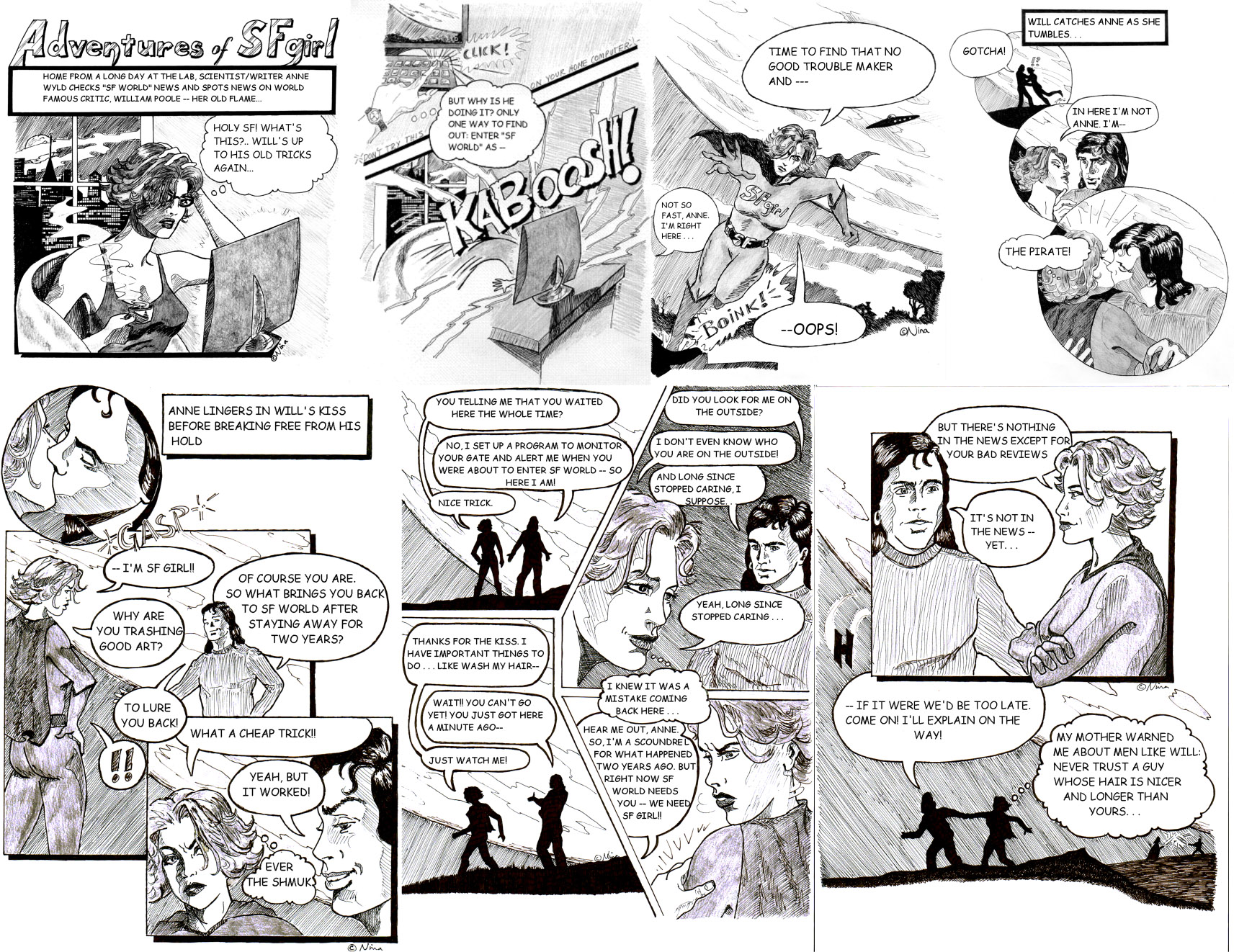
My first attempt at a graphic novel (pencil and ink drawings by a very young Nina)

I also enjoyed animation and drew several cartoon strips, peopled with crazy characters. I dreamt of writing graphic novels like Green Lantern and Spiderman. My hero was science fiction author and futurist, Ray Bradbury; I vowed to write profoundly stirring tales like he did.

I had found what excites me — my passion for telling stories—and I’d inadvertently stumbled upon an important piece of the secret formula for success: 1) having discovered my passion, I decided on a goal; 2) I found and wished to emulate a “hero” who’d achieved that goal and therefore had a “case study”; 3) I applied myself to the pursuit of my goal. Oops … the third one, well … it went downhill from there … Life got in the way.

The Beeches area of Toronto after a heavy snowstorm, ON (photo and rendition by Nina Munteanu)

I grew up.

Well, that, and the environment intervened. In several ways. It started with my parents. Recognizing my talent and interest in the fine arts (I was good in visual arts), they pushed me to get a fine arts degree in university and go into teaching or advertizing. They didn’t see fiction writing as a viable career or a strength of mine (I was lousy at spelling and, despite my ability to tell stories and my love for graphic novels, I didn’t read books much). I can still remember my father’s lecture to me about how perfect the teaching or nursing profession was for me. I wasn’t enamored by either. The second blow to my author-ego came in the form of a school “interest-ability” test, meant to prepare us for our career decisions. I remember the test consisting of an IQ portion (spatial, English and math), and a psychology portion (including problem-solving and scenarios meant to tease out our affinity for a particular career). Secretly harboring my paperback novelist dream, I filled out my forms with great excitement. I still remember the deflating results, which suggested that I was best suited to be a sergeant in the army. “Writing” as a career barely made it on the graph, and scored well below “computer programmer” and “mechanic”; none of which interested me.   

Country road in a heavy snow, ON (photo and rendition by Nina Munteanu)

I got involved in the environmental movement, while quietly holding my dream of being a paperback novelist close to my heart. I got several degrees in ecology and consulted for various companies to help protect the environment. I wrote a lot in those days, although it was more about the ecology of creeks and about industrial pollution. But my passion for writing fiction continued to simmer. Magazines started publishing my articles—my first sale was to Shared Vision Magazine in 1995 on environmental citizenship—and my published articles became my entrance into the world of fiction. Once I began publishing fiction stories—my first short fiction sale was “Arc of Time” to Armchair Aesthete in 2002—I never looked back.

Eventually, I was publishing a novel and several short stories every year. My fiction most often focused on environmental issues, humanity’s relationship with the natural world, and how we reconcile our reliance on technology with our respect for the natural world.

Publications of long or short eco-fiction that include my writing or editing

Throughout my writer’s journey, and particularly early in my journey, I weathered the threshold guardians, tricksters and shadows: friends and family who called what I did a hobby, something I did just to pass the time; people who didn’t believe in me, envied my drive or simply thought I was wasting my time; even industry scammers who preyed on my dreams and wanted my money for nothing in return; and ultimately my own fears and frustrations on query after query and rejection after rejection. Throughout it all, I never stopped dreaming.

Nina’s family hiking and boating in British Columbia over the years

I’ve travelled through Europe, Africa, parts of Asia, and Australia. I raised a family and lived all over Canada from the Pacific to the Atlantic coast. I worked as a barista, shopkeeper and science lab instructor, then as environmental consultant, writing instructor and writing coach.  During these wonderful life-adventures, I never stopped writing. 

Nina Munteanu in the castle at Gruyères, Switzerland (photo by Jane Raptor)

To date, I have written and sold over three dozen eco-fiction, science fiction and fantasy novels, non-fiction books, short stories and articles. I have sold short stories to magazines in Canada and the U.S. with translations and reprints in Israel, Poland, Greece, and Romania. My short fiction has appeared in Neo-Opsis Science Fiction Magazine, Chiaroscuro, subTerrain, Apex Magazine, Metastellar, and several anthologies. I’ve seen my short stories nominated for the Aurora Prix Award (Canada’s premier award for writing science fiction and fantasy) and the Foundation of Speculative Fiction Fountain Award. Recognition for my work includes the Midwest Book Review Reader’s Choice Award, finalist for Foreword Magazine’s Book of the Year Award, the SLF Fountain Award, and The Delta Optimist Reviewers Choice Award.  

Nina celebrates her adventures in Toronto (left) and Paris (right)

I’ve published nine novels so far with nominations for the Aurora Prix, Foreword Magazine Book of the Year (several times), and various Reader’s Choice awards.  My non-fiction book “Water Is…” (Pixl Press)—a scientific study and personal journey as limnologist, mother, and teacher—was Margaret Atwood’s pick in 2016 in the New York Times ‘The Year in Reading.’ My recent eco-novel released in 2020 by Inanna PublicationsA Diary in the Age of Water“—about four generations of women and their relationship to water in a rapidly changing world—was a silver medalist for the Literary Titan Award, the Bronze winner of Foreword Magazine’s Book of the Year in 2020, longlisted for the Miramichi Review’s ‘Very Best Book of the Year Award,’ and a finalist for the 2021 International Book Award. Reviewers have described it as “lyrical…thought-provoking…unique and captivating…insightful…profound and brilliant…unsettling and yet deliciously readable…” One reviewer described it as a “a bit of a hybrid” and the writer “a risk taker”—which I quite liked. Another reviewer acknowledged that this was not a book for everyone and yet she found it “strangely compelling.”—which I found delicious.

It’s been twenty years since I seriously started my writing career with my first publication in 1995; my work is now recognized and translated throughout the world and I frequently get writing commissions from reputable magazines and publications. I am also frequently invited for speaking engagements and radio/podcast/TV interviews about my science and my writing. In short, I’ve come home; I’d taken a rather long detour but I’ve acquired some tools along the way. It’s been and continues to be a wonderful and exciting journey; and part of what made it so was that I never stopped dreaming and writing.

“…If you have nothing at all to create, then perhaps you create yourself…”

Carl Jung
A sampling of literary publications up to 2021-end that have included something of mine (short fiction, long fiction, non-fiction)

Two people walk through snowy path after a fresh heavy snowfall, ON (photo and rendition by Nina Munteanu)

Nina Munteanu is a Canadian ecologist / limnologist and novelist. She is co-editor of Europa SF and currently teaches writing courses at George Brown College and the University of Toronto. Visit www.ninamunteanu.ca for the latest on her books. Nina’s bilingual “La natura dell’acqua / The Way of Water” was published by Mincione Edizioni in Rome. Her non-fiction book “Water Is…” by Pixl Press(Vancouver) was selected by Margaret Atwood in the New York Times ‘Year in Reading’ and was chosen as the 2017 Summer Read by Water Canada. Her novel “A Diary in the Age of Water” was released by Inanna Publications (Toronto) in June 2020.

The Future of Books…

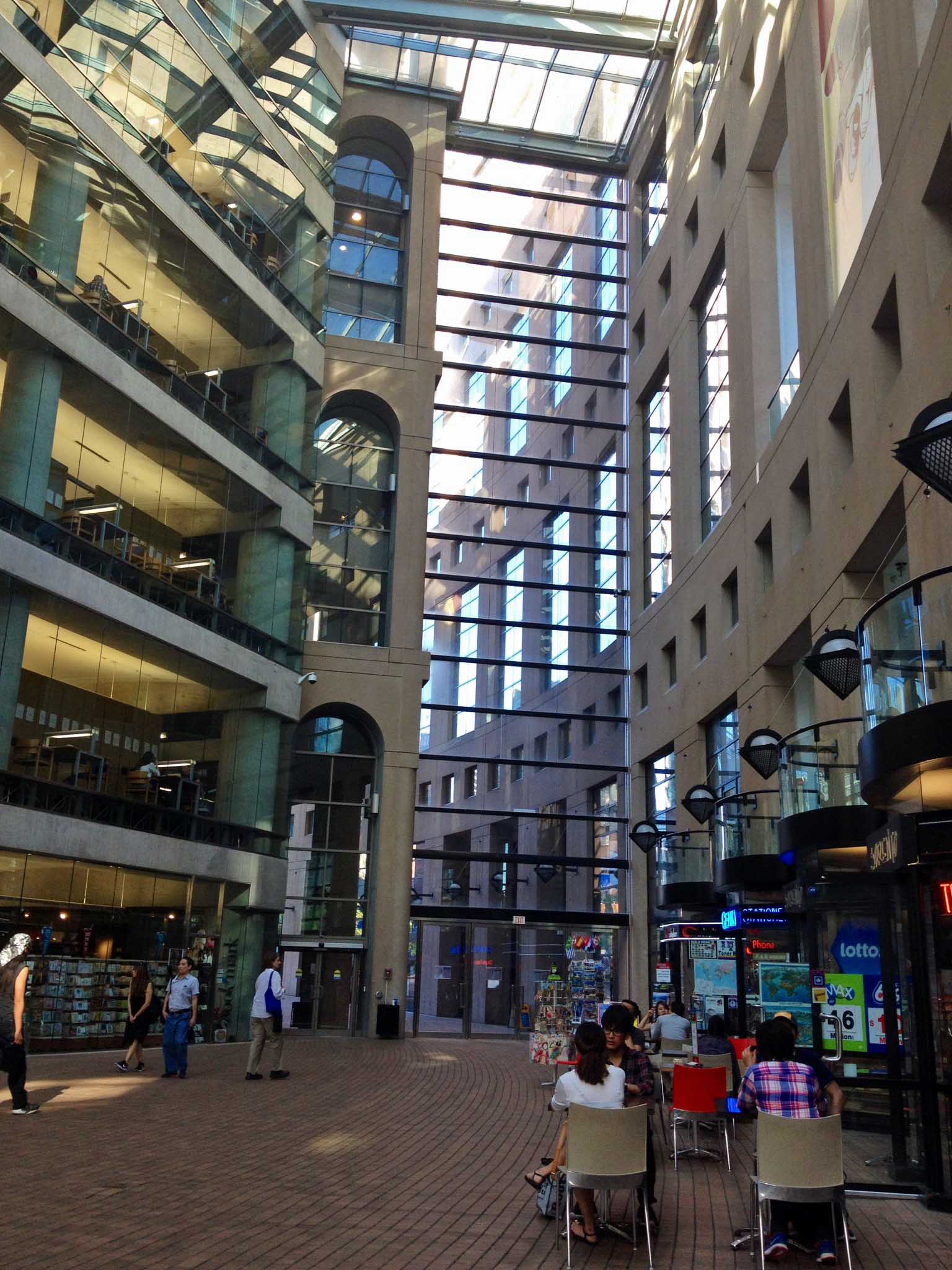
Vancouver Central Library, BC (photo by Nina Munteanu)

Just over five years ago I read a survey by bestselling author Marie Force who revealed some interesting trends about what American readers like, what format they prefer and where they find their writers. While the survey was fairly small and restricted to Americans (just under 3,000 people responded to 44 questions), I think it provided a good microcosm of what the trend is out there in North America generally. Here are the main points I took away, of which I think remain relevant today:

  1. Increased sales of Digital Books: the increasing sales of digital books (ebooks) and the rising sales of audiobooks is a wonderful and uplifting icon of rising literacy. More people are reading—and listening—to books now than ever. And we have the digital book, Kindles, Kobos and iPads to thank for it. The “book” has become more accessible and readable. People swarm the public transit, clutching their iPhones and reading devices. 
  2. Readers still choose Print Books: Obviously, print books are cherished by readers for their intrinsic value. Books—their tangible tactile presence—will always remain with us; in collector’s showcase libraries, in trendy artistic venues, and funky local neighbourhood venues.
  3. My Crazy Prediction: print books will become the epitome of publishing value and worth. Already coveted by collectors whose libraries will represent the best of the best in the literary world, print books will come to represent the highest status in literature. Only the best stories will endure as print books; perhaps only the “best book” will even be published in print form. Its existence in print form will define its literary value.
  4. Take Home Message to Authors: ensure that your book appears in print form and get it into the hands of classy libraries and classy people. So, even if you don’t survive the apocalypse, your book will…
Vancouver Central Library, BC (photo by Nina Munteanu)

Nina Munteanu is a Canadian ecologist / limnologist and novelist. She is co-editor of Europa SF and currently teaches writing courses at George Brown College and the University of Toronto. Visit www.ninamunteanu.ca for the latest on her books. Nina’s bilingual “La natura dell’acqua / The Way of Water” was published by Mincione Edizioni in Rome. Her non-fiction book “Water Is…” by Pixl Press(Vancouver) was selected by Margaret Atwood in the New York Times‘Year in Reading’ and was chosen as the 2017 Summer Read by Water Canada. Her novel “A Diary in the Age of Water” was released by Inanna Publications (Toronto) in June 2020.

I Became a Climate Activist in the 1960s

Two cedar trees entangle their roots in a cedar forest in Warsaw Caves Park, ON (photo and rendition by Nina Munteanu)

In 1969, I completed my first novel at the tender age of fifteen. Caged in World was a hundred-page speculative story about a world that had moved “inside” to escape the ravages of a harsh post climate-change environment. 

1969 was the year that humans first stepped on the moon and the first Concorde test flight was conducted in France. But I was concerned by the environment and what was happening on our planet. It was seven years since Rachel Carson had published Silent Spring, which warned of our declining bird and bee populations and impacts to human health from unregulated pesticide/herbicide use (such as carcinogens and hormone disruptors). It was just a year after Paul Erlich’s Population Bomb warned that attempts to stretch the Earth’s resources to support the ever-growing population would result in mass starvation, epidemics, and, ultimately, the breakdown of social order. 

In the 1960s it was already apparent to me that environmental imbalance and destruction were global concerns and we were on the brink of an environmental crisis.  Unchecked deforestation was destroying forests around the world, including the boreal and old-growth forests of my own country Canada. Brazil had already begun cutting down trees and burning forest at an alarming rate. Unregulated use of pesticides, herbicides and growth hormones created toxic contamination of our natural world and our food and water supply—despite Carson’s dire warning with Silent Spring. Our waterways were being contaminated by mining wastes and industrial effluents. Killer smog. Noxious algal blooms. Oil spills. Dead zones. The list was growing.

Rachel Carson and her iconic book, Silent Spring

I joined S.T.O.P. (Society To Overcome Pollution) and marched in protests to call for responsible behaviour by governments and large corporations. I tried to raise awareness at my school about our deteriorating environment and likely consequences to human survival; my own teachers tried to silence me! I wrote my first dystopia, Caged in World.  The eco-novel was about a subway train driver and a data analyst caught in the trap of a huge lie. The story later morphed into Escape from Utopia. Several drafts—and years later—the novel became the eco-medical thriller Angel of Chaos, set in 2095 as humanity struggles with Darwin’s Disease—a mysterious neurological environmental pandemic. Icaria 5 is one of many enclosed cities within the slowly recovering toxic wasteland of North America, and where the protagonist Julie Crane works and lives. The city is run by technocrats, deep ecologists who call themselves Gaians, and consider themselves guardians of the planet. The Gaians’ secret is that they are keeping humanity “inside” not to protect humanity from a toxic wasteland but to protect the environment from a toxic humanity.

I spent several years shopping Angel of Chaos to agents and publishing houses. Although I received many bites, all finally let go. In the meantime, I did several things: 1) I started writing short stories, some of which were cannibalized from the book, and several of these were published; 2) I wrote Angel’s prequel, The Great Revolution (never published, The Great Revolution sits in a drawer hibernating) and Angel’s sequel Darwin’s Paradox, (which was published).


Angel of Chaos and Darwin’s Paradox Duology by Nina Munteanu

I thought of going into environmental law at university then decided that I didn’t have the temperament for it and instead pursued ecology and limnology. I taught limnology at the University of Victoria then found work as an environmental consultant. In 2007, Dragon Moon Press in Calgary made an offer to publish Darwin’s Paradox; the sequel became my debut novel. Dragon Moon Press later picked up Angel of Chaos and published it in 2010 as a prequel. I haven’t stopped publishing since (with a book pretty much every year).

A selection of eco-Fiction stories / novels Nina Munteanu wrote or edited

My whole career-life has been dedicated to helping the environment, doing field studies as a limnologist and ecologist, publishing papers and reports, giving talks about water and the environment. I feel strongly that stories can go much farther in bringing not only awareness but direction for people to act on behalf of the environment and the planet. The narrative we give one another is the key. 

What story do we tell of ourselves and each other?

Nina Munteanu is a Canadian ecologist / limnologist and novelist. She is co-editor of Europa SF and currently teaches writing courses at George Brown College and the University of Toronto. Visit www.ninamunteanu.ca for the latest on her books. Nina’s bilingual “La natura dell’acqua / The Way of Water” was published by Mincione Edizioni in Rome. Her non-fiction book “Water Is…” by Pixl Press(Vancouver) was selected by Margaret Atwood in the New York Times‘Year in Reading’ and was chosen as the 2017 Summer Read by Water Canada. Her novel “A Diary in the Age of Water” was released by Inanna Publications (Toronto) in June 2020.