 On Friday, June 9th, I drove with friend, songwriter and poet Honey Novick, to the 15th International Writers’ and Artists’ Festival in Val-David, Quebec (June 10th and 11th, 2017). Celebrated artists, poets, writers and singers with an international heritage that included France, Chile, Argentina, Romania, Canada and the USA would congregate at the festival, set in a large house nestled deep in the Maple Laurentian forest.
The mixed Laurentian forest is called the “eastern forest-boreal transition” and includes a varied tapestry of broadleaf (aspen, oak, paper birch, mountain ash and maple) and conifer (pine, spruce and fir) trees.

Nina Munteanu
When we reached our destination—a large three-story house surrounded by forest—I took in the aroma of fresh pine and “sweet fern” and spotted Bunchberry (soon to be designated Canada’s national flower), forget-me-nots and lupine carpeting the ground near the house. A young deer, foraging on a shrub’s new leaves beside the house, glanced at us without fear then slipped back into the forest.
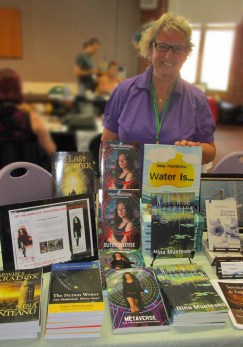
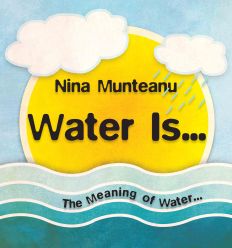
I thought the setting ideal for an international festival celebrating the expression of the arts. I was scheduled to talk about my latest book “Water Is…”, a personal and scientific journey with water, and to give a lecture on eco-fiction.

View outside my bedroom
Flavia Cosma, the originator and organizer of the festival for over a decade, greeted us at the door and in true Romanian-fashion immediately sat us down to eat and drink. After a seven-hour drive (we somehow ended up in Charlamagne, Celine Dion’s birthplace), I was hungry and enjoyed some of Flavia’s signature dishes, varză a la Cluj (cabbage a la Cluj) and salată boeuf (beef salad), made with carrots, parsley roots, eggs, potatoes, beef, pickles and peas mixed with mayonnaise. The view outside my bedroom on the third floor peered through tall firs to a mountain valley and the small village of Val-David. I looked forward to meeting poets, writers, musicians and artists the next day…
Day 1: Saturday
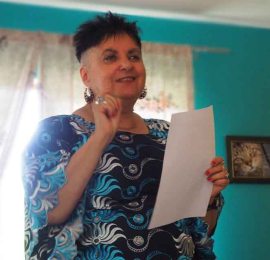
Honey Novick
Honey Novick (Toronto, Ontario), poet laureate of the Summer of Love Project 2007 Luminato Festival and winner of the Bobbi Nahwegahbow Memorial Award, opened the festival with an inspirational song.
Composers and singers Brian Campbell (Montréal, Quebec) and Ivan-Denis Dupuis (Sainte Adele, QC) provided additional and stirring song performance.
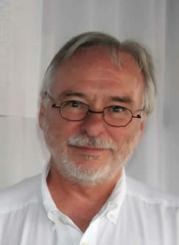
Louis-Philippe Hebert
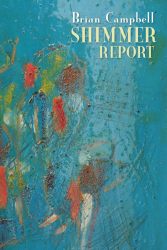
Quebec author Louis-Philippe Hébert (Saint Sauveur, QC), winner of the Grand Prix Québecor du Festival de Poésie de Trois-Rivières and the Prix du Festival de Poésie de Montréal, read from his novel Un homme discret (Lévesque, 2017). Poet Julie de Belle read several poems, including When the sea subsides, finalist in the Malahat Review. Brian Campbell, finalist in the 2006 CBC Literary Award for Poetry, read from his book Shimmer Report (Ekstasis Editions, 2015).

Flavia Cosma
Poet and award-winning TV documentarist Flavia Cosma, who received the gold medal as an honorary member by the Casa del Poeta Peruano, Lima, Peru in 2010, nominated for the Pushcart Prize, and whose work has been used in University of Toronto literature courses, read from her collection of poems, The Latin Quarter (MadHat Press, 2015) and Plumas de Angeles (Editorial Dunken, 2008).

Felicia Mihali
Romanian writer Felicia Mihali read from her novel La bien-aimée de Kandahar, nominated for Canada Reads 2013. Romanian author Melania Rusi Caragioiu, member of the Canadian Association of Romanian Writers, read from her book of poems Basm în versuri și poeme pentru copii in Romanian.
Nicole Davidson, the mayor of Val-David, read some of her poetry. Jeanine Pioger, French author of Permanence de l’instant, read a selection of her poetry. Jocelyne Dubois showed her artwork and Romanian artists Carmen Doreal and Eva Halus discussed their artwork and poetry.
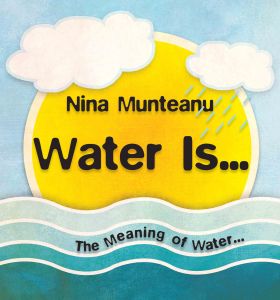 “Water Is…”: I shared the inspiration and making of my latest book, “Water Is…”, a scientific study and personal journey as limnologist, mother, teacher and environmentalist, which was recently picked by Margaret Atwood in the NY Times as 2016 ‘Year in Reading’ and recommended by Water Canada as ‘Summer Reading’. I discussed how I first conceived the book as a textbook early in my career as a freshwater biologist and how it morphed from one idea into something completely different and why it is my most cherished work to date.
Day 2: Sunday
French poet David Brême gave a workshop on poetry and the cultural hybridization of franco-québécoise (atelier sur la poésie et l’hybridation culturelle franco québécoise), which he had given earlier in Toronto.

Nane Couzier
Montreal poet from France and Senegal, Nane Couzier, read from her collection Commencements, honorable mention in le Prix de poésie 2016 des Écrivains francophones d’Amerique.
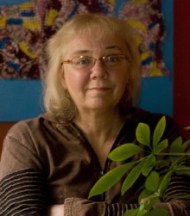
Jocelyne Dubois
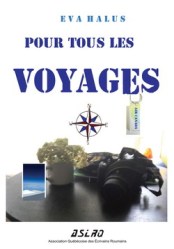
Novelist and short story writer Jocelyne Dubois read from her novel World of Glass, finalist for the 2013 QWF Paragraphe Hugh MaLennan Prize for fiction. Laurentian poet John Monette, author of the collection Occupons Montréal (Editions Louise Courteau, 2012) read several poems and Eva Halus, Romanian poet, read from her book Pour tous les Voyages. Chilean poet Tito Alvarado also read his poetry.

Claudiu Scrieciu of Nasul.TV Canada
Claudiu Scrieciu and Felicia Popa of Nasul.TV Canada—Televiziunea Libera—the Canadian chapter of Romanian TV in St. Laurent, Quebec, televised aspects of the festival and the closing ceremony. Felicia, who interviewed me for their show, talked with me about “Water Is…”.
 Eco-Fiction: I discussed how eco-fiction evolved as a genre and its importance, both metaphorically and literally, in the literature of the Anthropocene (with a nod to Margaret Atwood’s 2016 challenge to a college audience in Barrie, Ontario, to write the stories that focus on our current global environmental crisis). I provided examples of ecological metaphor such as Barbara Kingsolver’s Flight Behavior, Michael Ondaadje’s The English Patient, Frank Hebert’s Dune, and Thomas Hardy’s The Return of the Native. Astute questions, initiated by Flavia, led to an animated discussion on our ultimate participation in Nature, co-evolution, cooperation vs competition, soft-inheritance, DNA repair and the role and place of water in virtually all things.
The festival concluded at the Centre d’Exposition (art centre) of Val David with “Les Mots du Monde”, where poets, songwriters and writers performed readings and song to the community. The cultural setting and perfect acoustics provided a true inspiration for Honey Novick’s stirring opening songs—angelic in nature and in voice. I asked colleague Jeanine Pioger to read my essay “Why I Write,” which I had translated into French with help from colleague Betty Ing. The French version appears below.
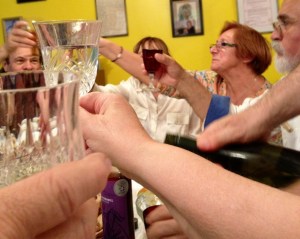
Toasting the international festival
After the closing ceremony, Flavia invited participants to a grand dinner party at the festival house featuring authentic Romanian dishes, good wine and stimulating conversation.
The festival was a great success on many levels. Honey Novick astutely thanked Flavia in a Facebook post, “thanks for the wonderful memories, great inspiration, generous hearts and a tremendous weekend.” I felt a great resonance and synchronicity throughout the weekend. It was as though we all embarked on a dimensional ride together, orchestrated by Flavia, that challenged, fulfilled and enlightened…I spoke English, French and puțin limba română. Foarte puțin… …And the food… OOHLALA!
Mulțumesc, Flavia! A fost minunat!


La raison pour laquelle j’écris
L’écriture est le souffle et la lumière de mon âme et la source de mon essence. Quand j’écris, je vis le moment présent. Je suis dans le moment de la création, connecté au Soi Divin, embrassant la nature et l’ensemble de l’univers fractal.
Je fais quelque chose d’important.
Je me connecte avec vous.
Isaac Asimov a dit : « j’écris pour la même raison que je respire — parce que si je ne le faisais pas, je mourrirais ». C’était aussi vrai quand il était auteur inconnu qu’après qu’il est devenu grand écrivain. Il parlait métaphoriquement, spirituellement et littéralement. Je sais que si je n’écrivais pas, je me priverais mon âme de sa respiration de vie. Il représente plus que la vérité métaphorique ; il est scientifiquement prouvé. L’écriture expressive — que ce soit sous la forme de l’écriture d’un journal, de blogging, de l’écriture de lettres, de mémoires ou de fiction — améliore la santé.
Que vous publiiez ou non, votre écriture est importante et utile. Prenez possession de celle-ci, nourrissez-la et considérez-la comme sacrée. Inspirez le respect des autres et respectez tous les écrivains à leur tour ; ne laissez pas l’ignorance vous intimider et vous faire taire.
L’écriture, comme toute forme de créativité, exige un acte de foi ; tant en nous-mêmes qu’en les autres. Et c’est effrayant. C’est effrayant, parce qu’il faut que nous renoncions au contrôle. Il est d’autant plus préférable d’écrire. La résistance est une forme d’autodestruction, dit Julia Cameron, auteur de The Artist’s Way.
Nous résistons afin de maintenir une vague idée de contrôle, mais au contraire, nous augmentons nos chances de développer la dépression, l’anxiété et la confusion. Booth et al. (1997) ont conclu que la divulgation écrite réduit sensiblement le stress physiologique du corps causé par une inhibition. Nous sommes nés pour créer. Pourquoi hésitons-nous et résistons-nous? Parce que, dit Cameron, « nous avons accepté le message de notre culture… [que] nous sommes censés faire notre devoir et puis mourir. La vérité est que nous sommes censés être prospères et vivre ».
Joseph Campbell a écrit : « suivez votre bonheur et les portes s’ouvriront là où il n’y avait pas de portes avant. » Cameron ajoute : « c’est l’engagement interne pour être fidèle à nous-mêmes et de suivre nos rêves qui déclenche le soutien de l’univers. Alors que nous sommes ambivalents, l’univers nous semblera également être ambivalent et erratique. » Quand j’écris, je vis le moment présent, en harmonie avec le moment divin de la création.
En pleine joie.
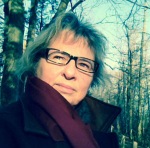 Nina Munteanu is an ecologist and internationally published author of award-nominated speculative novels, short stories and non-fiction. She is co-editor of Europa SF and currently teaches writing courses at George Brown College and the University of Toronto. Visit www.ninamunteanu.ca for the latest on her books.

 Nina Munteanu is an ecologist and internationally published author of award-nominated speculative novels, short stories and non-fiction. She is co-editor of Europa SF and currently teaches writing courses at George Brown College and the University of Toronto. Visit www.ninamunteanu.ca for the latest on her books.
 Some years ago, I was interviewed by Michael Stackpole (New York Times bestselling author of over 40 novels, including “I, Jedi” and “Rogue Squadron”) and Michael Mennenga (CEO of “Slice of Sci-Fi”) on
  We talked about my book “
 Here is an excerpt from
  “In his introduction to this all-original set of (at times barely) futuristic tales, Meyer warns readers, “[The] imaginings of today could well become the cold, hard facts of tomorrow.” Meyer (Testing the Elements) has gathered an eclectic variety of eco-fictions from some of Canada’s top genre writers, each of which, he writes, reminds readers that “the world is speaking to us and that it is our duty, if not a covenant, to listen to what it has to say.” In these pages, scientists work desperately against human ignorance, pockets of civilization fight to balance morality and survival, and corporations cruelly control access to basic needs such as water. The most affecting tale, Wendy Bone’s “Abdul,” is also the least futuristic, an emotional story that touchingly contrasts Western guilt against the life of a captive orangutan. The anthology may be inescapably dark, but it is a necessary read, a clarion call to take action rather than, as a character in Seán Virgo’s “My Atlantis” describes it, “waiting unknowingly for the plague, the hive collapse, the entropic thunderbolt.” Luckily, it’s also vastly entertaining. It appears there’s nothing like catastrophe to bring the best out in authors in describing the worst of humankind.”
 She imagines its coolness gliding down her throat. Wet with a lingering aftertaste of fish and mud. She imagines its deep voice resonating through her in primal notes; echoes from when the dinosaurs quenched their throats in the Triassic swamps.
 A limnologist (lake ecosystem biologist) by trade, Munteanu recognizes the incredible way that water shapes life and brings attention to the fact that water connects us to each other just as water connects with other water, forming bonds. She evokes in the reader a sense of reverence for water and an awareness that the same water that flows through our bodies have flowed through the bodies of our ancestors, cycling through life since the first life forms coalesced.
 “Water covers every aspect of this science fiction story that pits the vulnerable citizen against the evil multinational corporation in a dystopian Canada sometime in our future. Water is presented in its multiplicity of facets: in the science behind its composition, in its history, in it’s symbolic nature and different physical states; water is a giver and taker of life, and is the form in which the friendship of protagonists Hilda and Hanna functions. Water is also magic and the ultimate righter of wrongs committed to it and to a humanity it gives life to. Within this framework, Munteanu spins a thought-provoking tale that projects where our headlong pursuit of profit may one day lead us to, and how nature will ultimately, with a little human coaxing, be the only one to correct the balance.”—Shane Joseph, Canadian author of Fringe Dwellers
 love; a story to read, not only to deal with the possible but, above all, to understand that the time still available for “love” might be less than what you believe.”—Simone Casavecchia,


 I brought up the notion of history’s quantum properties, a braided flow of multi-dimensional and entangled realities. This served as premise for my alternative historical time-travel fantasy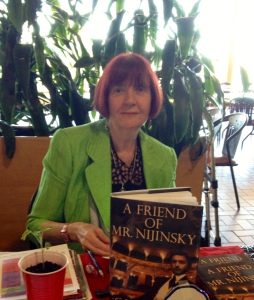

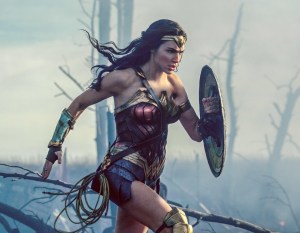

 Wonder Woman uses a unique weapon, the Golden Lasso, known as the Lasso of Truth—because it compels anyone wrapped by it to reveal the truth.
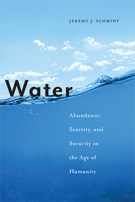 “Water, Abundance, Scarcity, and Security in the Age of Humanity” (NYU Press) by Jeremy Schmidt is an intellectual history of America’s water management philosophy. Debates over how human impacts on the planet, writes
 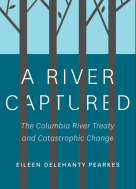 “A River Captured: The Columbia River Treaty and Catastrophic Change” (RMB Books) By Eileen Delehanty Pearkes reviews key historical events that preceded the Treaty, including the Depression-era construction of Grand Coulee Dam in central Washington, a project that resulted in the extirpation of prolific runs of chinook, coho and sockeye into B.C. Prompted by concerns over the 1948 flood, American and Canadian political leaders began to focus their policy energy on governing the flow of the snow-charged Columbia to suit agricultural and industrial interests.
 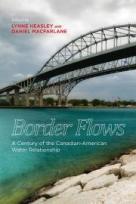 “Border Flows: A Century of the Canadian-American Water Relationship” (University of Calgary Press), Lynne Heasley and Daniel Macfarlane, editors, explore and discuss Canada-U.S. governance.
  “New York 2140” (Orbit) by Kim Stanley Robinson is a novel set in New York City following major sea level rises due to climate change.
  “The Death and Life of the Great Lakes” (WW Norton & Company Inc. Press) by Dan Egan is a frank discussion of the threat under which the five Great Lakes currently suffer. This book, writes
 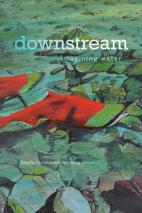 “Downstream: reimagining water” (Wilfred Laurier University Press) by Dorothy Christian & Rita Wong “brings together artists, writers, scientists, scholars, environmentalists, and activists who understand that our shared human need for clean water is crucial to building peace and good relationships with one another and the planet. This book explores the key roles that culture, arts, and the humanities play in supporting healthy water-based ecology and provides local, global, and Indigenous perspectives on water that help to guide our societies in a time of global warming. The contributions range from practical to visionary, and each of the four sections closes with a poem to encourage personal freedom along with collective care,” writes
  “
“
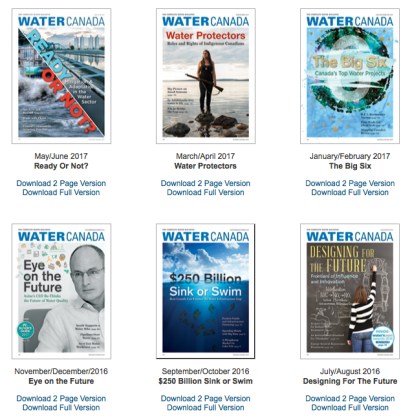 Water Canada

 Every year, near Christmas,
 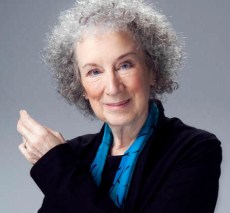 Margaret Atwood is a winner of the Arthur C. Clarke Award and the Prince of Asturias Award for Literature as well as the Booker Prize (several times) and the Governor General’s Award. Animals and the environment feature in many of her books, particularly her speculative fiction, which reflects a strong view on environmental issues.
 “
“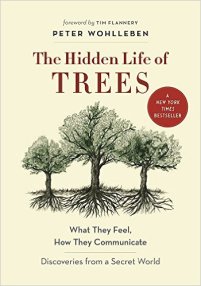 “The Hidden Life of Trees: What They Feel, How They Communicate—Discoveries From a Secret World” (Greystone Books) by Peter Wohlleben. In The Hidden Life of Trees, Peter Wohlleben shares his deep love of woods and forests and explains the amazing processes of life, death, and regeneration he has observed in the woodland and the amazing scientific processes behind the wonders of which we are blissfully unaware. Much like human families, tree parents live together with their children, communicate with them, and support them as they grow, sharing nutrients with those who are sick or struggling and creating an ecosystem that mitigates the impact of extremes of heat and cold for the whole group. As a result of such interactions, trees in a family or community are protected and can live to be very old. In contrast, solitary trees, like street kids, have a tough time of it and in most cases die much earlier than those in a group. Drawing on groundbreaking new discoveries, Wohlleben presents the science behind the secret and previously unknown life of trees and their communication abilities; he describes how these discoveries have informed his own practices in the forest around him. As he says, a happy forest is a healthy forest, and he believes that eco-friendly practices not only are economically sustainable but also benefit the health of our planet and the mental and physical health of all who live on Earth.
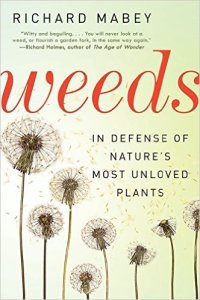 “Weeds: In Defense of Nature’s Most Unloved Plants” (Ecco) by Richard Mabey. “They’re better for you than you think,” says Atwood. “They hold the waste spaces of the world in place, and you can eat some of them.” Ever since the first human settlements 10,000 years ago, weeds have dogged our footsteps. They are there as the punishment of ‘thorns and thistles’ in Genesis and , two millennia later, as a symbol of Flanders Field. They are civilisations’ familiars, invading farmland and building-sites, war-zones and flower-beds across the globe. Yet living so intimately with us, they have been a blessing too. Weeds were the first crops, the first medicines. Burdock was the inspiration for Velcro. Cow parsley has become the fashionable adornment of Spring weddings. Weaving together the insights of botanists, gardeners, artists and poets with his own life-long fascination, Richard Mabey examines how we have tried to define them, explain their persistence, and draw moral lessons from them. One persons weed is another’s wild beauty.
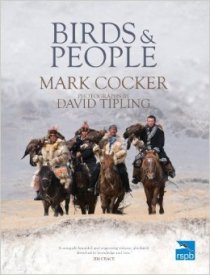 “Birds and People” (Jonathan Cape) by Mark Cocker. “Vast, historical, contemporary, many-levelled,” says Atwood. “We’ve been inseparable from birds for millenniums. They’re crucial to our imaginative life and our human heritage, and part of our economic realities.” Vast in both scope and scale, the book draws upon Mark Cocker’s forty years of observing and thinking about birds. Part natural history and part cultural study, it describes and maps the entire spectrum of our engagements with birds, drawing in themes of history, literature, art, cuisine, language, lore, politics and the environment. In the end, this is a book as much about us as it is about birds.
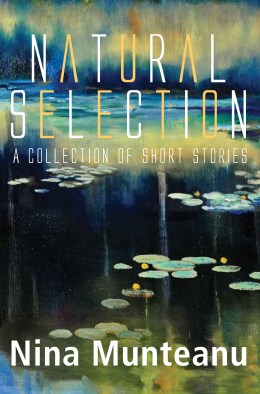 At Calgary’s When Words Collide this past August, I moderated a panel on Eco-Fiction with publisher/writer Hayden Trenholm, and writers Michael J. Martineck, Sarah Kades, and Susan Forest. The panel was well attended; panelists and audience discussed and argued what eco-fiction was, its role in literature and storytelling generally, and even some of the risks of identifying a work as eco-fiction.
 I submit that if we are noticing it more, we are also writing it more. Artists are cultural leaders and reporters, after all. My own experience in the science fiction classes I teach at UofT and George Brown College, is that I have noted a trend of increasing “eco-fiction” in the works in progress that students are bringing in to workshop in class. Students were not aware that they were writing eco-fiction, but they were indeed writing it.
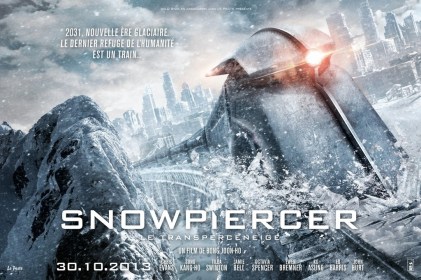 Just as Bong Joon-Ho’s 2014 science fiction movie Snowpiercer wasn’t so much about climate change as it was about exploring class struggle, the capitalist decadence of entitlement, disrespect and prejudice through the premise of climate catastrophe. Though, one could argue that these form a closed loop of cause and effect (and responsibility).
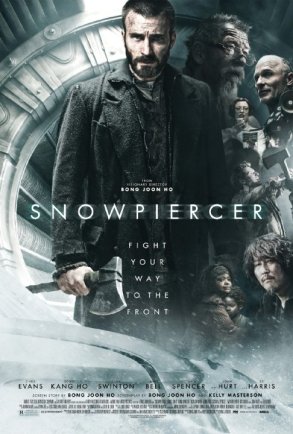 The self-contained closed ecosystem of the Snowpiercer train is maintained by an ordered social system, imposed by a stony militia. Those at the front of the train enjoy privileges and luxurious living conditions, though most drown in a debauched drug stupor; those at the back live on next to nothing and must resort to savage means to survive. Revolution brews from the back, lead by Curtis Everett (Chris Evans), a man whose two intact arms suggest he hasn’t done his part to serve the community yet.
 In my latest book Water Is… I define an ecotone as the transition zone between two overlapping systems. It is essentially where two communities exchange information and integrate. Ecotones typically support varied and rich communities, representing a boiling pot of two colliding worlds. An estuary—where fresh water meets salt water. The edge of a forest with a meadow. The shoreline of a lake or pond.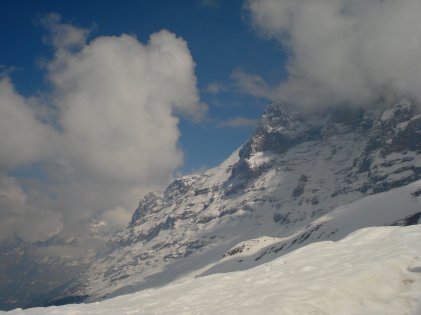
 A while ago I wrote about the importance of an effective—and accurately portrayed—

 She imagines its coolness gliding down her throat. Wet with a lingering aftertaste of fish and mud. She imagines its deep voice resonating through her in primal notes; echoes from when the dinosaurs quenched their throats in the Triassic swamps.
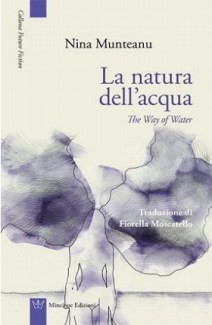
 After the release of the print book, Future Fiction released “The Way of Water” (“La natura dell’acqua”) in ebook format. The ebook contains the “Way of Water” story and another story, “Virtually Yours” (“Virtualmente tua”) alongside “The Story of Water” (non-fiction), which can be purchased in either Italian or Engish versions.
 Ebook (Italian OR English) with additional short story “Virtually Yours” through Future Fiction (Mincione Edizioni) for €1,99 at:
 Nina Munteanu Writing Coach