
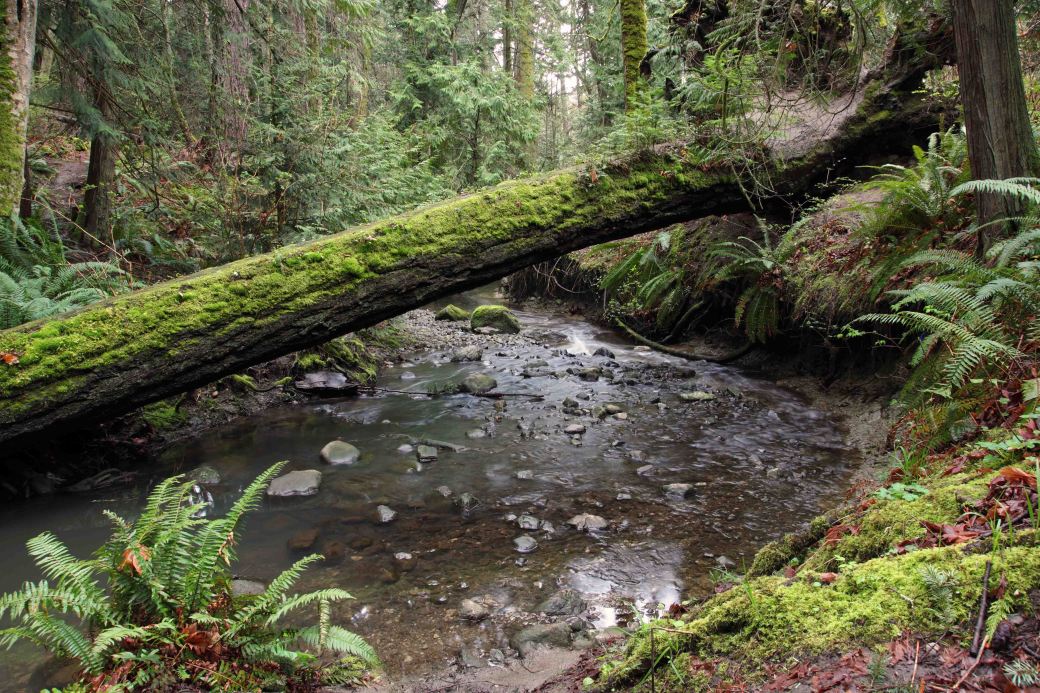
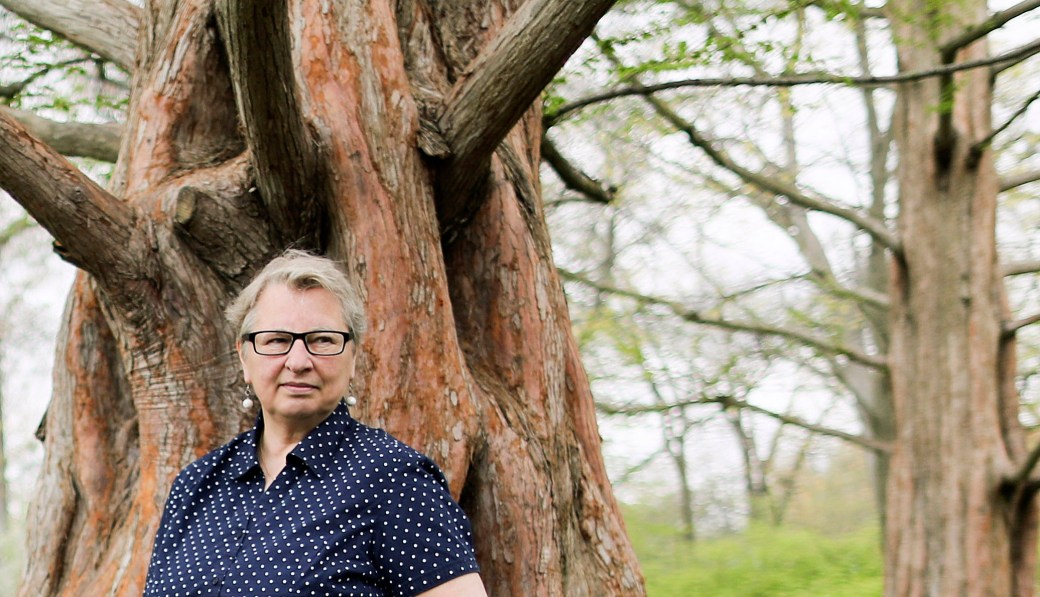
Nina Munteanu with Louis DuPont and Merridy Cox with Lewis Creek behind
A short time ago, I was invited to give a talk on water to the Lewis Creek Association during their annual meeting for 2019 to help celebrate their recent accomplishments. Here is their write up:
Join our special guest, Canadian ecologist and author Nina Munteanu, who will discuss the many dimensions of water. She describes personally the curiosity and emotional connection with nature that compels us to caretake our environment with love versus a sense of duty. Her book “Water Is…The Meaning of Water” is an ode to and discourse about water, the indispensable and mysterious element that is the foundation of life here on our blue planet. The book is a fascinating catalogue of the many amazing and anomalous qualities of water, and has become a favorite of several Board members. She trained in limnology, the study of lakes, and has consulted in the aquatic sciences for many years. The author of over a dozen fiction and non-fiction books, she currently teaches writing at the University of Toronto and George Brown College in Toronto, Canada. We are delighted to have Nina join us and share her insights and concerns about this substance we have been concerned with over the last 30 or so years.

At Cafe Barrio in Burlington, Vermont, Nina checks the map for directions…and finds her way…
I chose to drive to Vermont from Toronto with good friend and editor Merridy Cox. We crossed into USA near Cornwall and drove through New York state to Rousse’s Point, then into Vermont over the Vermont Bridge over Lake Champlain. We took the scenic route along the islands to the village of Charlotte, where we met with some of the Lewis Creek Board members and enjoyed a wonderful home-cooked supper at executive director Marty Illick’s country home along with Board president Andrea Morgante, board member Louis DuPont, and several other guests.

Merridy Cox photographing Lake Champlain just east of the Vermont Bridge
The event took place in the large converted barn of Philo Ridge Farm, a 400-acre historic dairy farm now also running as an educational institution of sustainable practices and store and restaurant. The barn is now a state-of-the-art sustainably built facility with a combination of rustic and sophisticated in its design of rich wood walls, large windows and beams with high vaulted ceiling; ideal for a presentation.
I spoke about my roots in the Eastern Townships of Quebec…and where they led me:
I was born in a small town in the Eastern Townships of Quebec, a gently rolling and verdant farming community, where water—l’eau—bubbles and gurgles in at least two languages.
I spent a lot of my childhood days close to the ground, observing, poking, catching, prodding, destroying and creating. Perhaps it was this early induction to the organic fragrances of soil, rotting leaves and moss that set my path in later life as a limnologist, environmental consultant and writer of eco-fiction.
I followed my older brother and sister to the nearby forest and local stream. We stirred soil, flower petals and other interesting things with water to fuel “magic potions” that we inflicted on some poor insect. Yes, I was a bit destructive as a child—and I took a lot for granted. Like water. There was so much of it, after all. It was clean and easily accessed, fresh from the tap.
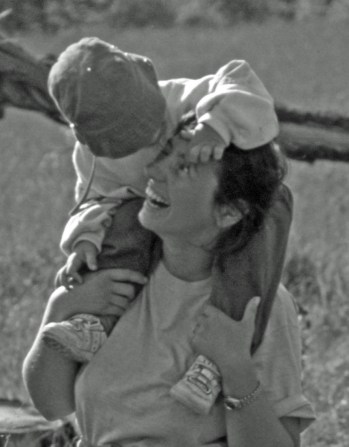
When I gave birth to my son, Kevin, I felt a miracle pass through me. Kevin became my doorway back to wonder. His curiosity was boundless and lured me into a special world of transformation.
Nina Munteanu and her son hiking in B.C.
I took time off work to spend with Kevin when he was young. We went on great trips, from the local mall, where we had a hot chocolate and played with Lego, to the local beach on the Fraser River, where we explored the rocks. When he was no more than three, I took him on endless adventures in the city and its surroundings. We didn’t have to go far. The mud puddles of a new subdivision after a rain were enough to keep our attention for dozens of minutes. We became connoisseurs of mud. The best kind was “chocolate mud,” with a consistency and viscosity that created the best crater when a rock was thrown into it.
Kevin and I often explored the little woodland near our house. We made “magic potions” out of nightshade flowers, fir needles, loam and moss; we fueled our concoctions with the elixir of water from a stagnant pool. This time the little insects weren’t molested.
Travelling the world has helped me realize that I was blessed with an abundance of water. I lived my entire life in a country of plentiful and healthy water. And for most of that time I didn’t even realize it. Canada holds one fifth of the world’s fresh water in lakes, rivers, and wetlands, as well as in our underground aquifers and glaciers. Canada’s wetlands, which cover more than 1.2 million square kilometres, makes Canada the largest wetland area in the world.*

The folks who attended my presentation were wonderfully receptive, gracious and kind. They bought all my books too! I felt so welcomed by this community concerned about the land and their water. I was also impressed with the dedication, organization and knowledge of this non-profit conservation initiative.
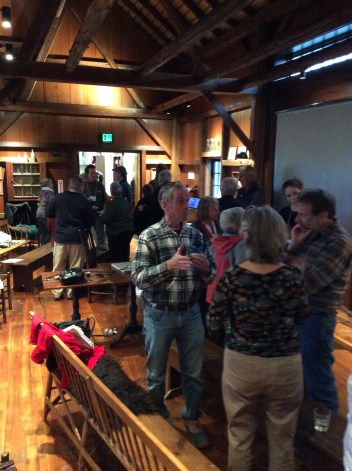
Venue
The Lewis Creek Association (LCA) started in 1990, when a group of concerned citizens and the Hinesburg Land Trust came together to conserve a critical stretch of wetland habitat bordering Lewis Creek in Hinesburg, Vermont. Lewis Creek is one of Vermont’s most ecologically diverse streams and suffers from increasing habitat degradation due to river encroachment by development and roads, land use change, and more extreme weather events.
LCA’s mission is to protect, maintain and restore ecological health while promoting social values that support sustainable community development in the Lewis Creek and LaPlatte watershed regions and Vermont generally. Through education and action, LCA works to:
- Restore water quality, stream stability, and native wildlife habitat
- Protect and restore important and diverse natural areas
- Conserve productive and scenic lands that contribute to rural character and economy
- Support growth compatible with important natural systems and working landscapes
- Strengthen and support local conservation initiatives and opportunities
- Model active participation and respect for differences
With a hard-working volunteer board and a part-time paid consultant, LCA facilitates educational, planning, and field work programs involving dozens of volunteers. This work assists town planning and facilitates the restoration and conservation of important Champlain Valley natural areas of high public value.
Their track record has been impressive. Since forming their organization, the LCA has spearheaded and conducted numerous initiatives. Highlights include: annual water quality sampling in six streams and rivers; biodiversity studies of stream corridors, conservation and restoration work in watershed towns; invasive aquatic plant control in local areas; helped educate citizens on ecological improvements; actively participated in implementing VT’s Water Quality Law, Act 64; generated Water Quality Scorecard Maps to track pollution problems; and designed the “Ahead of the Storm” education program used throughout the watershed region.

 *A version of this talk is available in an article I wrote called “Coming Home to Water,” which first appeared in the 2016 anthology In the Moment (A Hopeful Sign) edited by Gary Doi. It was reprinted in 2018 The Earth We Love (Mississauga Writers) edited by Elizabeth Banfalvi; and again in 2019 in The Literary Connection IV: Then and Now (IOWI) edited by Cheryl Antao Xavier.

Lake Champlain, looking west from Vermont to New York at Vermont Bridge (right) (photo by Nina Munteanu)

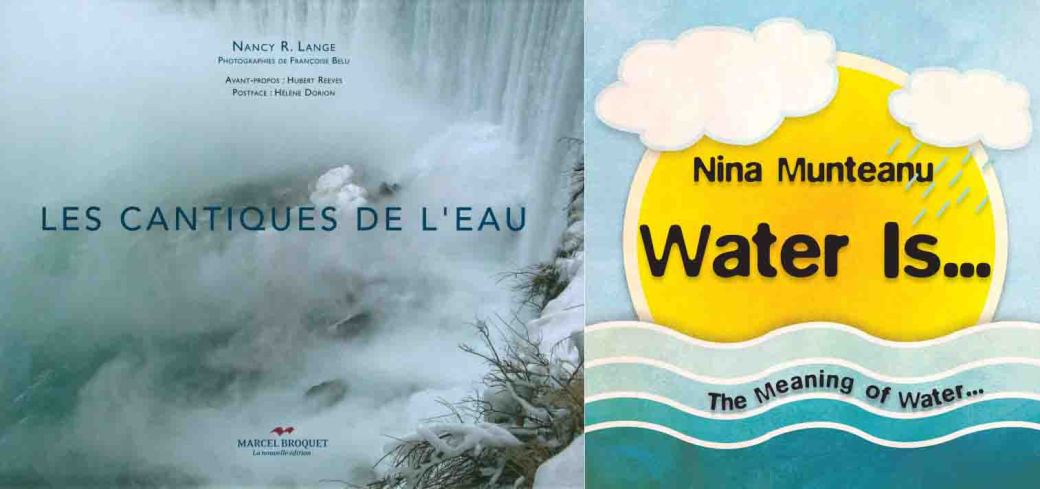
Nina Munteanu is a Canadian ecologist / limnologist and novelist. She is co-editor of Europa SF and currently teaches writing courses at George Brown College and the University of Toronto. Visit www.ninamunteanu.ca for the latest on her books. Nina’s bilingual “La natura dell’acqua / The Way of Water” was published by Mincione Edizioni in Rome. Her non-fiction book “Water Is…” by Pixl Press (Vancouver) was selected by Margaret Atwood in the New York Times ‘Year in Reading’ and was chosen as the 2017 Summer Read by Water Canada. Her novel “A Diary in the Age of Water” will be released by Inanna Publications (Toronto) in 2020.

 I was recently invited by organizer and poet Kathy Figueroa to participate in The Word Is Wild Literary Festival III in Cardiff in Ontario’s northern community. I joined poet and author Sharon Berg from Sarnia, poet and vocalist Honey Novick and poet naturalist Merridy Cox from Toronto, singer / songwriter Albert Saxby from Essenville and other locals for a day of readings, musings, and singing.


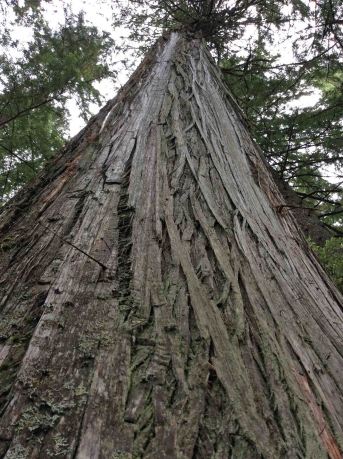


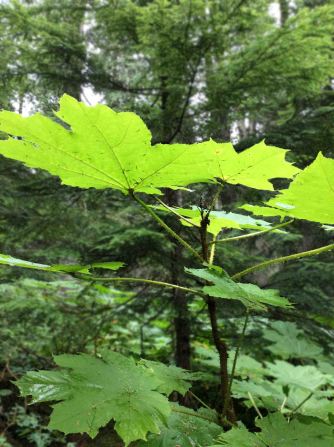

 Una stopped the car and we stared out across the longest reservoir in North America. What had once been a breathtaking view of the valley floor of the Rocky Mountain Trench was now a spectacular inland sea. It ran north-south over eight hundred kilometres and stretched several kilometres across to the foothills of the Cariboo Mountain Range. Una pointed to Mount Mica, Mount Pierre Elliot Trudeau and several other snow-covered peaks. They stood above the inland sea like sentinels of another time. Una then pointed down to what used to be Jackman Flats—mostly inundated along with McLellan River and the town of Valemont to the south. Hugging the shore of what was left of Jackman Flats was a tiny village. “That’s the new Tête Jaune Cache,” my mother told me.


 There were stories in sweat. The sweat of a woman bent double in an onion field, working fourteen hours under the hot sun, was different from the sweat of a man as he approached a checkpoint in Mexico, praying to La Santa Muerte that the federales weren’t on the payroll of the enemies he was fleeing…Sweat was a body’s history, compressed into jewels, beaded on the brow, staining shirts with salt. It told you everything about how a person had ended up in the right place at the wrong time, and whether they would survive another day.
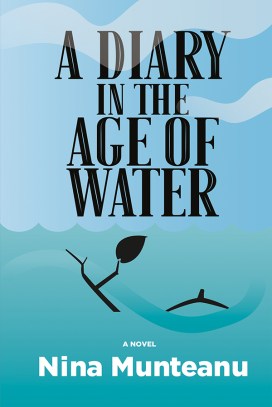
 My upcoming novel by Inanna Publications—A Diary in the Age of Water coming out in 2020—explores the socio-political consequences of corruption in Canada, now owned by China and America as an indentured resource ‘reservoir’; it is a story told through four generations of women and their unique relationship with water during a time of great unheralded change. On February 17, 2046, limnologist Lynna writes in her diary about her mother Una:
 Science fiction explores our water crisis through premises of extreme water shortage and devastating violence (floods, droughts and storms), water diversion, and hoarding. Premises explore weather manipulation, the consequences of extensive deforestation and the massive extinction of species. As with my own book A Diary in the Age of Water, Claudiu Murgan’s Water Entanglement explores water as a character, as though water has gone rogue, unruly. Perhaps even vengeful…
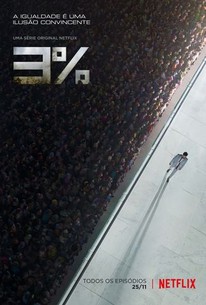 A tidal wave of TV shows and movies currently explore—or at least acknowledge—the devastation we are forcing on the planet. Every week Netflix puts out a new science fiction show that follows this premise of Earth’s devastation: 3%; The 100; The Titan; Orbiter 9; even Lost in Space.
 Ellen Szabo, author of Saving the World One Word at a Time: Writing Cli-Fi suggests that the ability to make environmental issues less political and more personal (through story) permits more engagement by readers and a higher likelihood of action toward justice: we are more likely to take action on the things we love and know. It’s all about connection.



 Jeremiah Wall, Nina Munteanu, Nancy R. Lange, Nicole Davidson, Carmen Doreal, MarieAnnie Soleil, Luis Raúl Calvo, Louis-Philippe Hébert, Melania Rusu Caragioiu, Anna-Louise Fontaine.

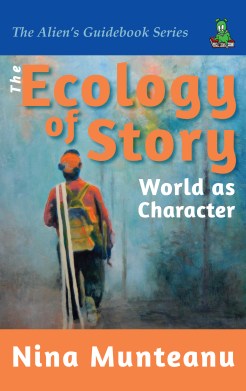
 I recently gave a 2-hour workshop on “ecology of story” at Calgary’s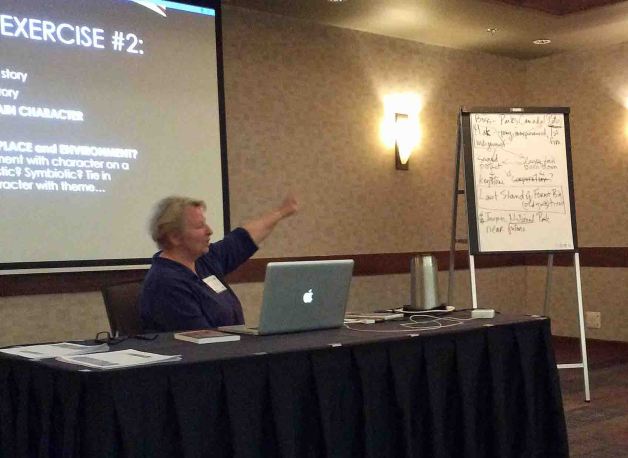



 Nina is a Canadian scientist and novelist. She worked for 25 years as an environmental consultant in the field of aquatic ecology and limnology, publishing papers and technical reports on water quality and impacts to aquatic systems. Nina has written over a dozen eco-fiction, science fiction and fantasy novels. An award-winning short story writer, and essayist, Nina currently lives in Toronto where she teaches writing at the University of Toronto and George Brown College. Her non-fiction book “Water Is…”—a scientific study and personal journey as limnologist, mother, teacher and environmentalist—was picked by Margaret Atwood in the New York Times as 2016 ‘The Year in Reading’. Nina’s most recent novel “A Diary in the Age of Water”— about four generations of women and their relationship to water in a rapidly changing world—will be released in 2020 by Inanna Publications.
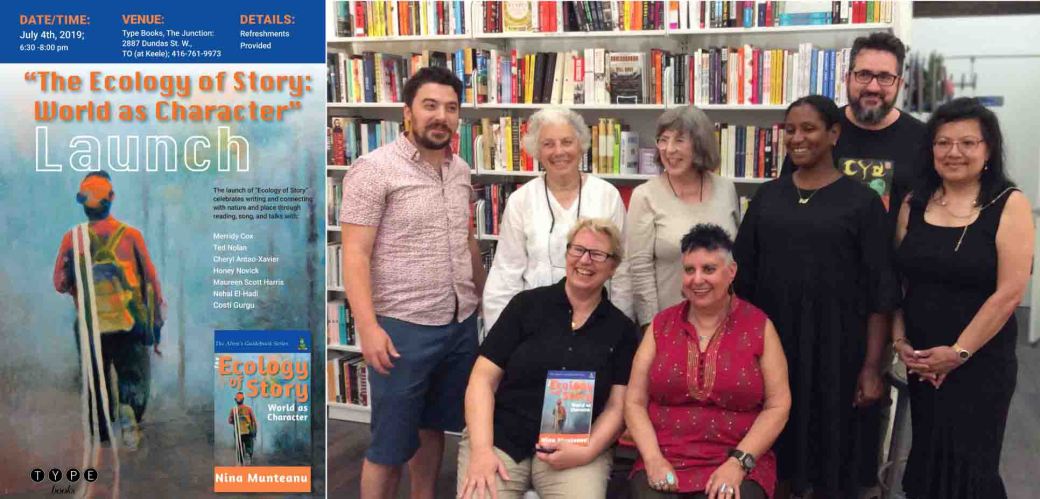
 UofT instructor and writer Nina Munteanu launched the third book in her acclaimed “how to write” series at Type Books, Toronto, on July 4th, 2019. The launch of

 Honey Novick is a poet, voice teacher, singer and songwriter. Honey is the winner of the Empowered Poet Award, CAPAC, Yamaha Classical Music Competition in Japan, among others. Honey wrote music for CBC’s Morningside and sang for Prime Minister Pierre Elliot Trudeau.
 Ted Nolan—E. Martin Nolan—is a poet, essayist, editor and voice of the trees. He teaches in the Engineering Communication Program at the University of Toronto and is a PhD Candidate in Applied Linguistics at York University. His latest work is a chapbook written in collaboration with some trees entitled: “Trees Hate Us.”
 Maureen Scott Harris is a poet, essayist, and rare books cataloguer. A UofT grad in Library Science, she received the Trillium Book Award for poetry for Drowning Lessons and was the first non-Australian to be awarded the 2009 WildCare Tasmania Nature Writing Prize for her essay, “Broken Mouth: Offerings for the Don River, Toronto.”
 Nehal El-Hadi is a writer, researcher, editor and journalist, who explores the intersections of body, technology, and space. Her writing has appeared in academic journals, literary magazines, and forthcoming in anthologies and edited collections. She is currently a visiting scholar at York University and sessional faculty at the University of Toronto.
 Merridy Cox is a naturalist, photographer, editor, indexer and poet. She is also managing editor of Lyrical Leaf Publishing. Merridy has a degree in biology and museum studies; her poetry focuses mostly on the natural world around her; her poems and photographs are published in several literary anthologies. She has edited several books, including this one!
 Costi Gurgu is a graphic designer and illustrator as well as an award-winning science fiction and fantasy novelist and short story writer who is published in anthologies and magazines throughout the world. He is a former lawyer and was art director for lifestyle and fashion magazines in Europe before moving to Canada. His latest novel—RecipeArium—was called the new new weird by Robert J. Sawyer and was nominated for an Aurora Award.
 Cheryl Antao-Xavier is an editor, interior book designer and publisher with IOWI. She has been publishing emergent writers since 2008 and continues to offer self-publishing solutions to writers and companies and organizations. She recently released her book: “Self-Publishing the Professional Way: 5 Steps from Raw Manuscript to Publishing.”

 “Natural Selection”
 As for passing on one’s experience and acquisitions to others laterally, education in all its facets surely provides a mechanism. This may run the gamut from wise mentors, spiritual leaders, storytellers, courageous heroes to our kindergarten teacher. Who’s to say that these too are not irrevocable? This relies, after all, on how we learn, and how we “remember”.
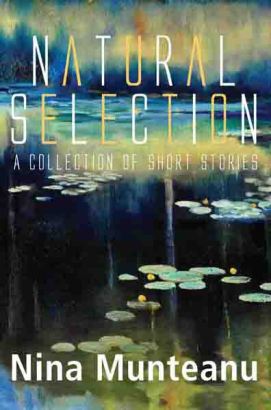 Each story in the
  “Natural Selection” also features the sprawling semi-underground AI-run city of Icaria (a post-industrial plague Toronto) that was first introduced in my novel
  In Summer of 2016, I attended a talk given by Maude Barlow on water justice. The radical talk was based on her recent book “Boiling Point”, a comprehensive exploration of Canada’s water crisis—a crisis that most Canadians weren’t—and still aren’t—aware. Canada is steward to a fifth of the world’s fresh water, after all. It is a water-rich country. Of the dozen largest inland lakes in the world, Canada holds eight of them. So, why water crisis? Well, Maude explains. And you should read “Boiling Point.” It will open your eyes to the politics of water and how multinational corporations—like Nestlé—are already grabbing and funneling water away from Canadians and into the global profit machine.
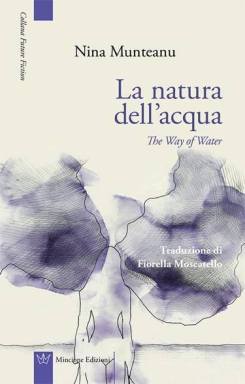 I named the story “
 The story first appeared in 2015 in
  After the success of this short story, I realized that I needed to tell the larger story—how did the world—Canada—get to where Hilda was? Her mysterious mother, the limnologist Lynna who was taken away by the RCMP in 2063, clamored for more attention. I remembered that four-year old girl and her mother in the gallery at Maude Barlow’s talk on water politics. And I thought of my characters: young Lynna and her mother Una. How does a daughter of an activist mother behave and think? How best to express her voice?
 I had earlier written a short story that was a mix of correspondence (emails) and third person narrative (“The Arc of Time” in
 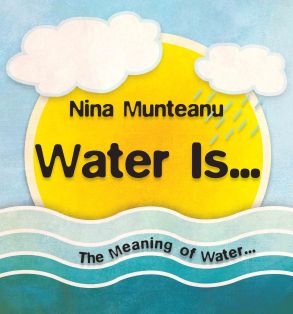 I had a lot of material; I had already been researching water issues and climate change in my activism as a science reporter. I had recently published
  Like water itself, A Diary in the Age of Water expresses through many vessels and in many perspectives, spanning hundreds of years—and four generations of women—with a context wider than human life. Through its characters, A Diary in the Age of Water explores the big question of humanity’s deadlock with planetary wellness and whether one is worth saving at the expense of the other. One of the characters asks Lynna the hard question: “If you had the chance to save the planet [stop the mass extinctions, deforestation and pollution ravaging the planet], but it was at the expense of humanity, would you do it?”
 Nina Munteanu Writing Coach