Will Earth Turn into Mars? … Can Mars Turn into Earth?

In my recent eco-novel A Diary in the Age of Water the limnologist Lynna makes the following entry in her diary in 2057:

Last night after supper, Hilde and I went for a walk along Shaw to Christie Pits, where I used to play as a kid. She wanted to show me the magnificent aurora borealis that had been streaming dramatically for the past several weeks. When I was a kid, auroras this far south were unheard of. Now they are common. The night sky was clear, and we enjoyed the fresh spring air as we ambled down Shaw Street. We parked ourselves on the damp grass among other spectators of the colourful night sky and watched the dancing light show.

It was mesmerizing: ribbons of mostly green and pink light rippled as if tugged by a mischievous wind. They danced with a kind of life that brought me back to my childhood. Northern lights happen when the magnetic field of our planet is disturbed by the solar wind. As the particles slide along the contours of the Earth’s magnetosphere, they glow as they lose their energy. The particles energize the air molecules enough to make them glow in various colours, depending on the composition of the gases.

Earth’s magnetic field is generated and maintained by an ocean of superheated, swirling metal around a solid iron core. These act like a dynamo to create electrical currents, which, in turn, create our magnetic field. But our magnetic field is weakening, and a flip is imminent. In the past two hundred years, the field has weakened by fifteen percent. That’s why we’re seeing these auroras in Toronto. A weaker field creates more auroras. They’ve become common here, particularly during the winter and spring months. Nasa predicts that the field could be gone in five hundred years or less and then take another two hundred years to rebuild. 

The field will first become more complex and might show more than two magnetic poles—playing havoc with our navigation systems and God knows what else—until it is entirely gone. Then it will presumably build and align in the opposite direction. When the magnetic field goes, so will our shield against radiation. First, the ozone layer—our shield against ultraviolet rays—will be stripped away, and then the atmosphere may lose other key elements and grow thinner. Will we end up like Mars 4.2 billion years ago, when severe solar storms stole its very atmosphere and evaporated all its water? 

Mars once had a strong magnetic field like Earth. But then Mars cooled and its conducting geodynamo stopped rotating. In the absence of the protective field, the solar wind surged in and excited the ions in the upper Martian atmosphere to an escape velocity. The solar wind just swept the air away. The surface pressure of the Martian atmosphere dwindled from one thousand millibars to six millibars. Mars lost about the same atmosphere that Earth has today. 

Mars is our destiny; it’s just a question of when. We’re all batteries, running dry. I considered this probable fate for Earth as we watched the exquisite example of our changing magnetic field. But I didn’t share it with Hilde, who watched with her mouth open in rapt wonder. If she’s lucky, she will experience no more of this progression than these amazing auroras. The weakening magnetic field and the associated loss of protection and atmosphere won’t happen for a while. I hope.
—A Diary in the Age of Water
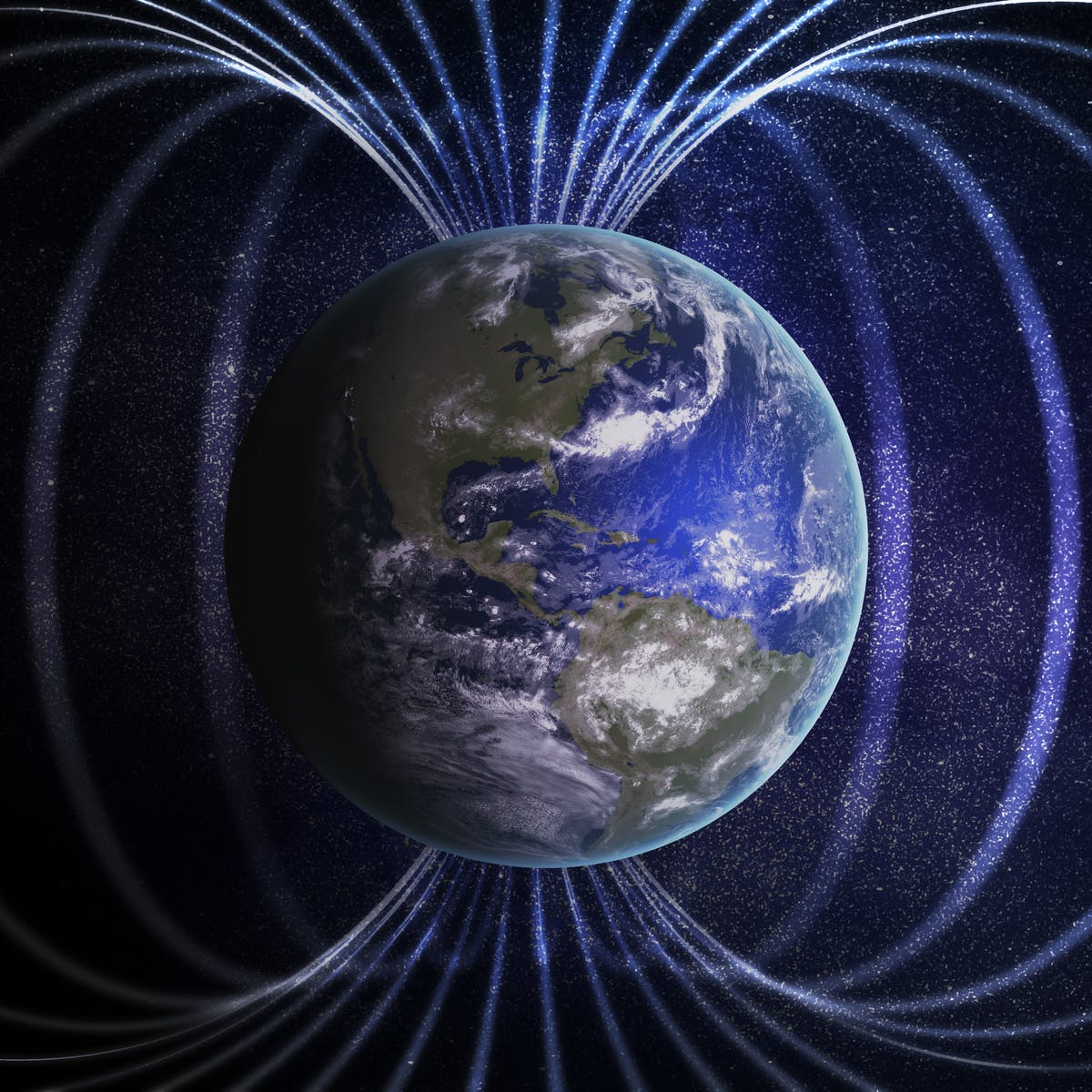
Earth’s magnetic field

In a 2019 article in New Atlas, David Szondy tells us that “North isn’t quite where it was after the Earth’s north geomagnetic pole made an unexpected sprint across arctic Canada.” Apparently the magnetic pole is moving faster than predicted. The shift is caused by a push/pull between two patches of magnetic field—one under Canada and another under Siberia. The Canadian one appears to be weakening…

Every few hundred thousand years our magnetic field reverses—with the magnetic north switching places with the magnetic south. The last major geomagnetic reversal occurred 780,000 years ago. Between the full geomagnetic reversals—which can last up to 10,000 years—shorter disruptions occur. These are called geomagnetic excursions and are short-lived, involving temporary changes to the magnetic field that last from a few hundred to a few thousand years. The most recent recorded geomagnetic excursion is called the Laschamps Excursion some 42,000 years ago.

“The Laschamps Excursion was the last time the magnetic poles flipped,” explains Chris Turney, one of the lead scientists of a study reported in Science. “They swapped places for about 800 years before changing their minds and swapping back again.”

Although scientists have known about these magnetic pole events, they have not clearly understood their impacts on life and the environment. A study published in the journal Science reported on a recent discovery in New Zealand of an ancient kauri tree, that not only confirmed the time of the magnetic collapse, but shed some light on the dramatic period of environmental change, particularly in the time leading up to the few hundred years the Earth’s magnetic field was reversed. These included a depleted ozone layer, higher levels of ultraviolet radiation, and increased atmospheric ionization, all coalescing about 42,000 years ago in the Laschamps Excursion. “Early humans around the world would have seen amazing auroras, shimmering veils and sheets across the sky,” says Alan Cooper, one of the lead scientists. “It must have seemed like the end of days.”
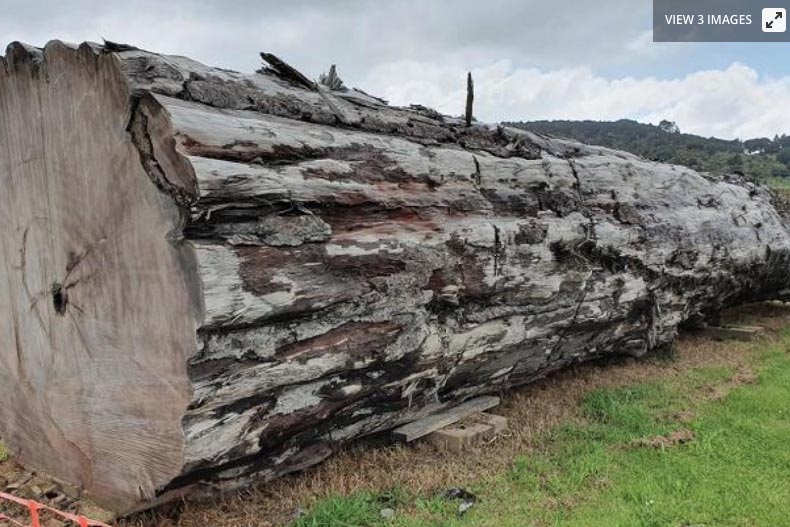
Ancient Kauri tree unearthed in New Zealand (image by New Atlas)

The researchers also speculated that the magnetic field disruption led to an influx of cave art, driven by the need to seek shelter from the increase in ultraviolet rays—particularly during solar flares. The researchers also suggested that the event prompted the extinction of several megafauna in Australia and the end for Neanderthals—whose extinction occurred around 42,000 years ago.

Cooper points to the current movements of the north magnetic pole across the Northern Hemisphere as a potential warning sign of an impending event.

“This speed – alongside the weakening of Earth’s magnetic field by around nine per cent in the past 170 years – could indicate an upcoming reversal,” says Cooper. “If a similar event happened today, the consequences would be huge for modern society. Incoming cosmic radiation would destroy our electric power grids and satellite networks.”

Alan Cooper

Terraforming Mars (images by NASA)

Making Mars Inhabitable By Re-establishing its Magnetic Field

“Our quest on Mars has been to ‘follow the water’ in our search for life in the universe, and now we have convincing science that validates what we’ve long suspected,” said NASA’s John Grunsfeld.”This is a significant development, as it appears to confirm that water – albeit briny – is flowing today on the surface of Mars.”

That was step one. Mars was once just like Earth, with a thick atmosphere and lots of water.

In a 2017 article in Science Alert, Peter Dockrill reported that “NASA wants to launch a giant magnetic field to make Mars habitable.” This bold plan was to give Mars its atmosphere back and make it habitable for future generations of human colonists consists of launching a giant magnetic shield into space to protect Mars from solar winds. With the shield in place, scientists argued that we could restore the atmosphere and terraform the Martian environment so that liquid water flows on the surface again. Mars once had a thick atmosphere like Earth currently has. 

In 2018 NASA concluded: “Our results suggest that there is not enough CO2 (carbon dioxide) remaining on Mars to provide significant greenhouse warming were the gas to be put into the atmosphere; in addition, most of the CO2 gas is not accessible and could not be readily mobilized. As a result, terraforming Mars is not possible using present-day technology.”

Then in 2019, Harvard scientists proposed a way around the problem of insufficient CO2 for greenhouse warming. They proposed that by “covering certain areas of the Martian surface with a thin layer of silica aerogel, namely areas with large amounts of water ice, enough sunlight will come through for warming and combine with natural heating processes beneath the surface to create a potentially habitable environment.”

The study demonstrated through experiments and modelling that under Martian environmental conditions, a 2–3 cm-thick layer of silica aerogel would simultaneously transmit sufficient visible light for photosynthesis, block hazardous ultraviolet radiation and raise temperatures underneath it permanently to above the melting point of water, without the need for any internal heat source. 

“Once temperatures were adequate, the gases released from the ice in the lakes and regolith (soil) would build up to form a pressurized atmosphere under the aerogel layer. If successful up to that point, microbes and plant life could theoretically survive. “Placing silica aerogel shields over sufficiently ice-rich regions of the Martian surface could therefore allow photosynthetic life to survive there with minimal subsequent intervention,” the scientists suggested. This photosynthetic life would go on to produce oxygen for pickier Earth dwellers to utilize,” reports Dacia J. Ferris of Teslarati.

p.s. I’m sure I’m not the only one who sees the irony of this situation: Mars has insufficient CO2to warm its atmosphere, when Earth suffers from an excess of this greenhouse-warming gas. While going to Mars is one of my dreams (quite unrealizable for me; but I’m allowed to dream, no?), I still harbor an unsettling feeling that comes with the uncertainty about our prowess and respect in this endeavor. We haven’t exactly been successful in controlling our own runaway global warming or other degradation of our living ecosystems. Read Ray Bradbury’s Martian Chronicles to get my meaning.

“Watch those disposable coffee cups!”


Nina Munteanu is a Canadian ecologist / limnologist and novelist. She is co-editor of Europa SF and currently teaches writing courses at George Brown College and the University of Toronto. Visit www.ninamunteanu.ca for the latest on her books. Nina’s bilingual “La natura dell’acqua / The Way of Water” was published by Mincione Edizioni in Rome. Her non-fiction book “Water Is…” by Pixl Press(Vancouver) was selected by Margaret Atwood in the New York Times‘Year in Reading’ and was chosen as the 2017 Summer Read by Water Canada. Her novel “A Diary in the Age of Water” was released by Inanna Publications (Toronto) in June 2020.

Nature as Poet … Country Roads in Winter

Undulating hills of a farmer’s field in Kawartha countryside, ON (photo and dry brush rendition by Nina Munteanu)
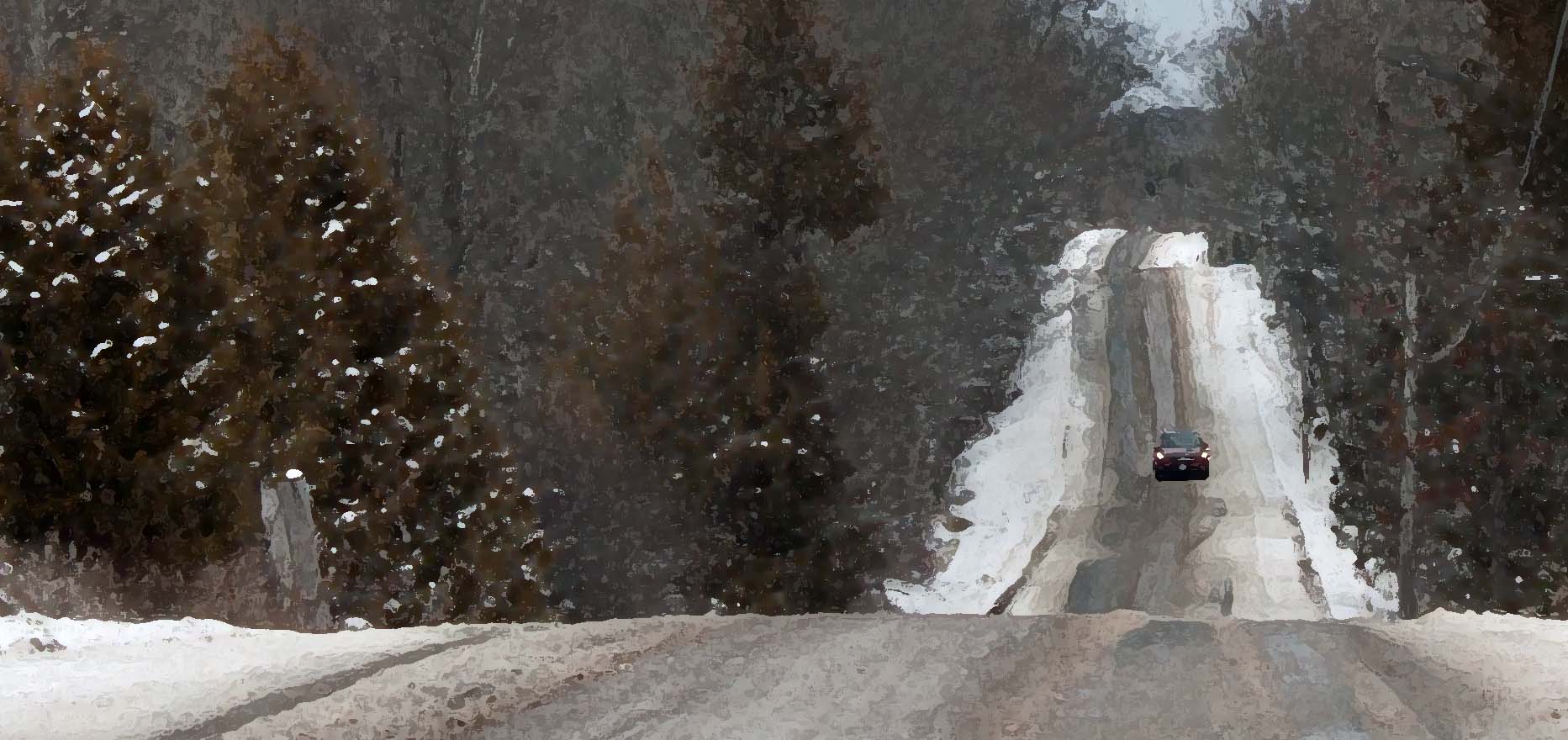
Country road in Kawarthas during snowfall early winter, ON (photo and dry brush rendition by Nina Munteanu)
Farmer’s field by country road in early winter, ON (photo and dry brush rendition by Nina Munteanu)
Country road viewed from Kawartha drumlin during snowfall, ON (photo and dry brush rendition by Nina Munteanu)
Small farm in Kawartha countryside in winter, ON (photo and dry brush rendition by Nina Munteanu)
Country road in winter on a sunny day, ON (photo and dry brush rendition by Nina Munteanu)
Farmer’s field during snow fog of winter, ON (photo and dry brush rendition by Nina Munteanu)
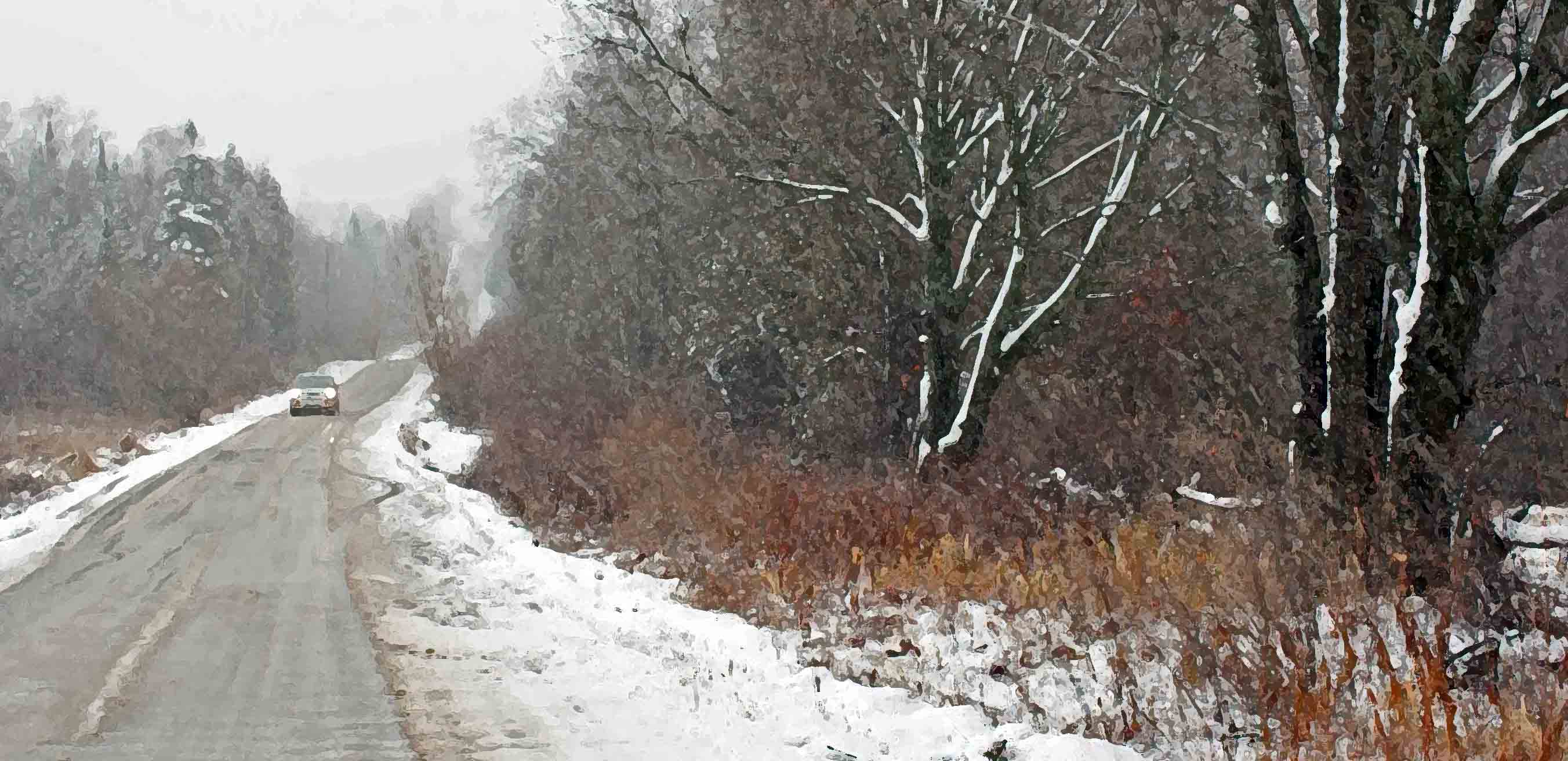
Country road during snowfall, ON (photo and dry brush rendition by Nina Munteanu)
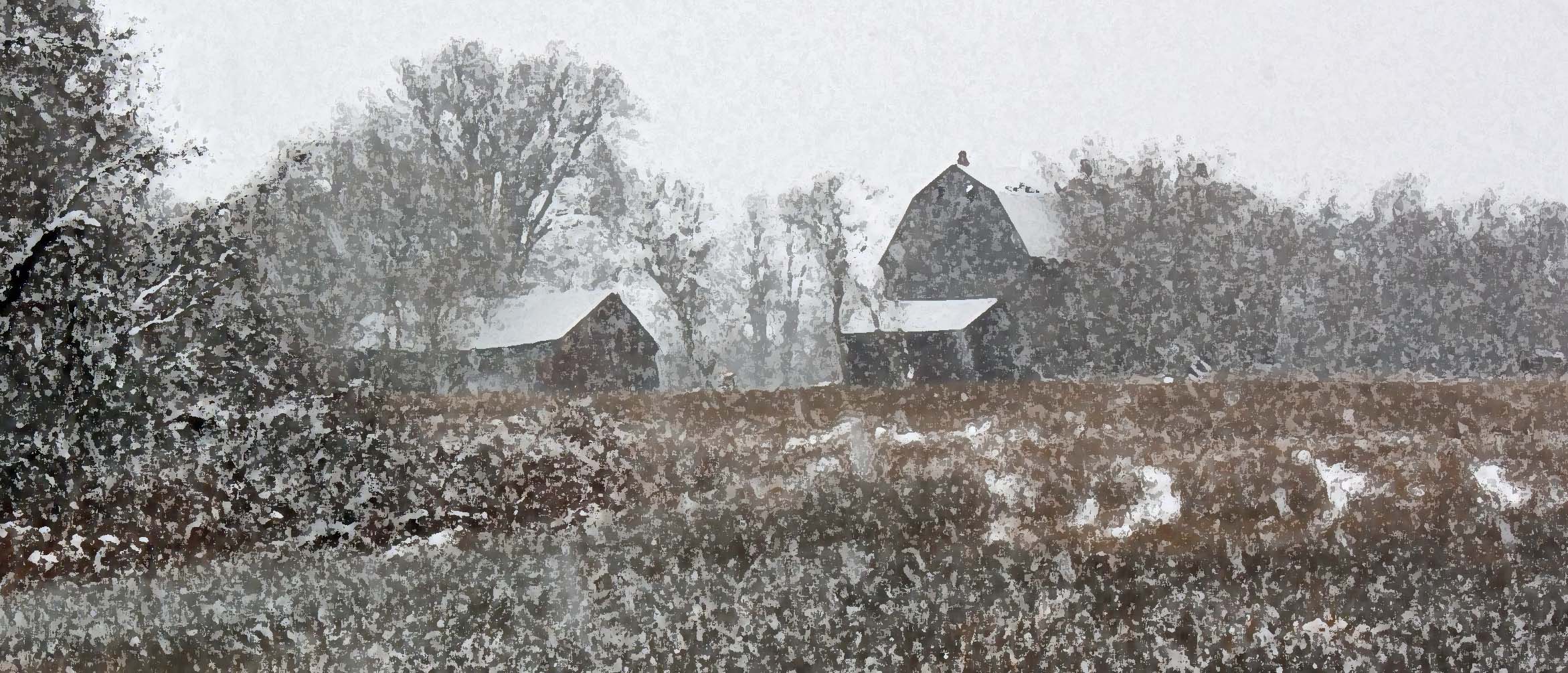
Farm and field during heavy snowfall, ON (photo and dry brush rendition by Nina Munteanu)
Country road in Kawarthas in winter, ON (photo and dry brush rendition by Nina Munteanu)
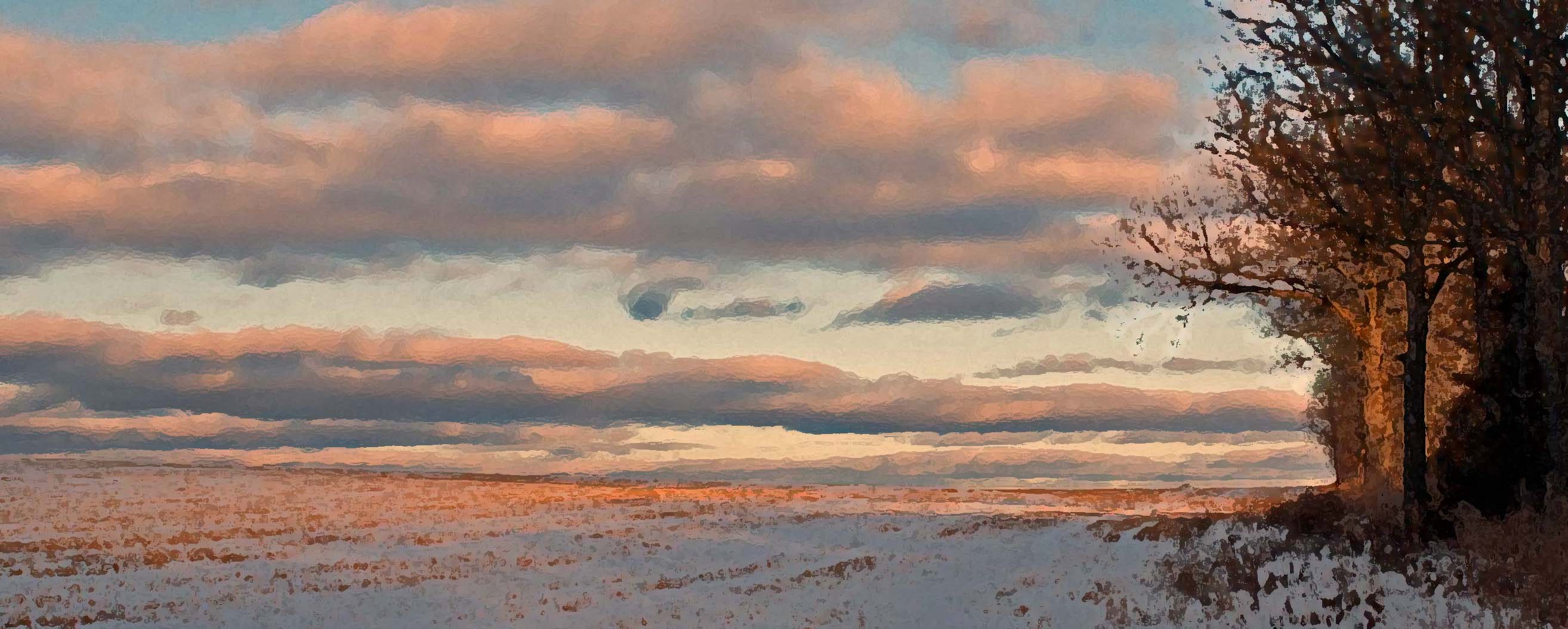
Farmer’s field aglow at sunset in winter, ON (photo and dry brush rendition by Nina Munteanu)

Nina Munteanu is a Canadian ecologist / limnologist and novelist. She is co-editor of Europa SF and currently teaches writing courses at George Brown College and the University of Toronto. Visit www.ninamunteanu.ca for the latest on her books. Nina’s bilingual “La natura dell’acqua / The Way of Water” was published by Mincione Edizioni in Rome. Her non-fiction book “Water Is…” by Pixl Press(Vancouver) was selected by Margaret Atwood in the New York Times‘Year in Reading’ and was chosen as the 2017 Summer Read by Water Canada. Her novel “A Diary in the Age of Water” was released by Inanna Publications (Toronto) in June 2020.
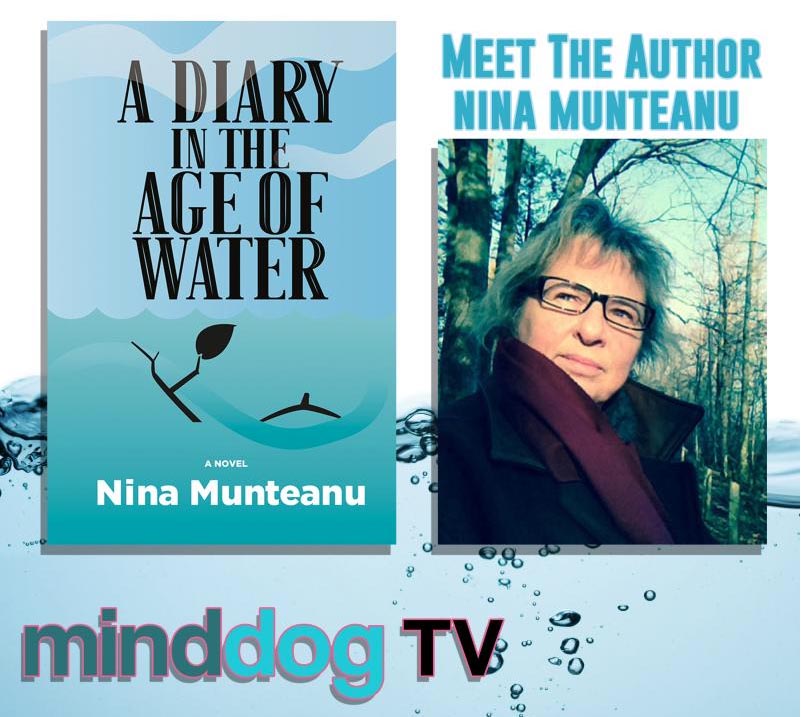
Nina Munteanu Talks Water and Writing on Minddog TV, New York

I was recently interviewed by Matt Nappo on Minddog TV in New York, where we talked about the science and magic of water, climate change and how to not become cynical, the process of writing, what scares us and what takes us through it into great storytelling.

Here’s the interview:

Matt Nappo interviews limnologist and clifi author Nina Munteanu on minddog TV
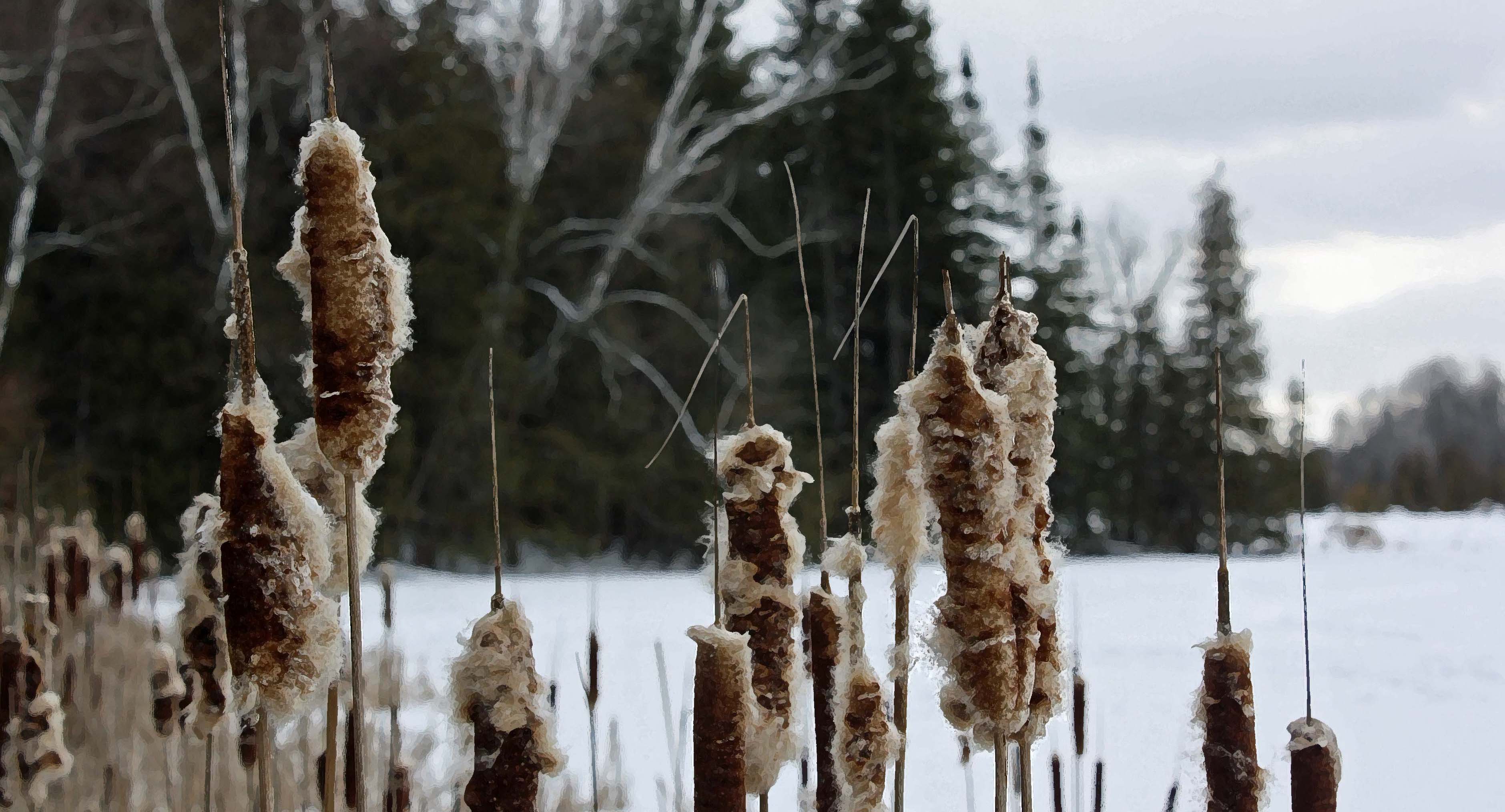
Cattails oversee the snowy plain of the iced-over Trent Canal, ON (photo and dry brush rendition by Nina Munteanu)

Nina Munteanu is a Canadian ecologist / limnologist and novelist. She is co-editor of Europa SF and currently teaches writing courses at George Brown College and the University of Toronto. Visit www.ninamunteanu.ca for the latest on her books. Nina’s bilingual “La natura dell’acqua / The Way of Water” was published by Mincione Edizioni in Rome. Her non-fiction book “Water Is…” by Pixl Press(Vancouver) was selected by Margaret Atwood in the New York Times‘Year in Reading’ and was chosen as the 2017 Summer Read by Water Canada. Her novel “A Diary in the Age of Water” was released by Inanna Publications (Toronto) in June 2020.

Nature as Poet … The Forest in Winter

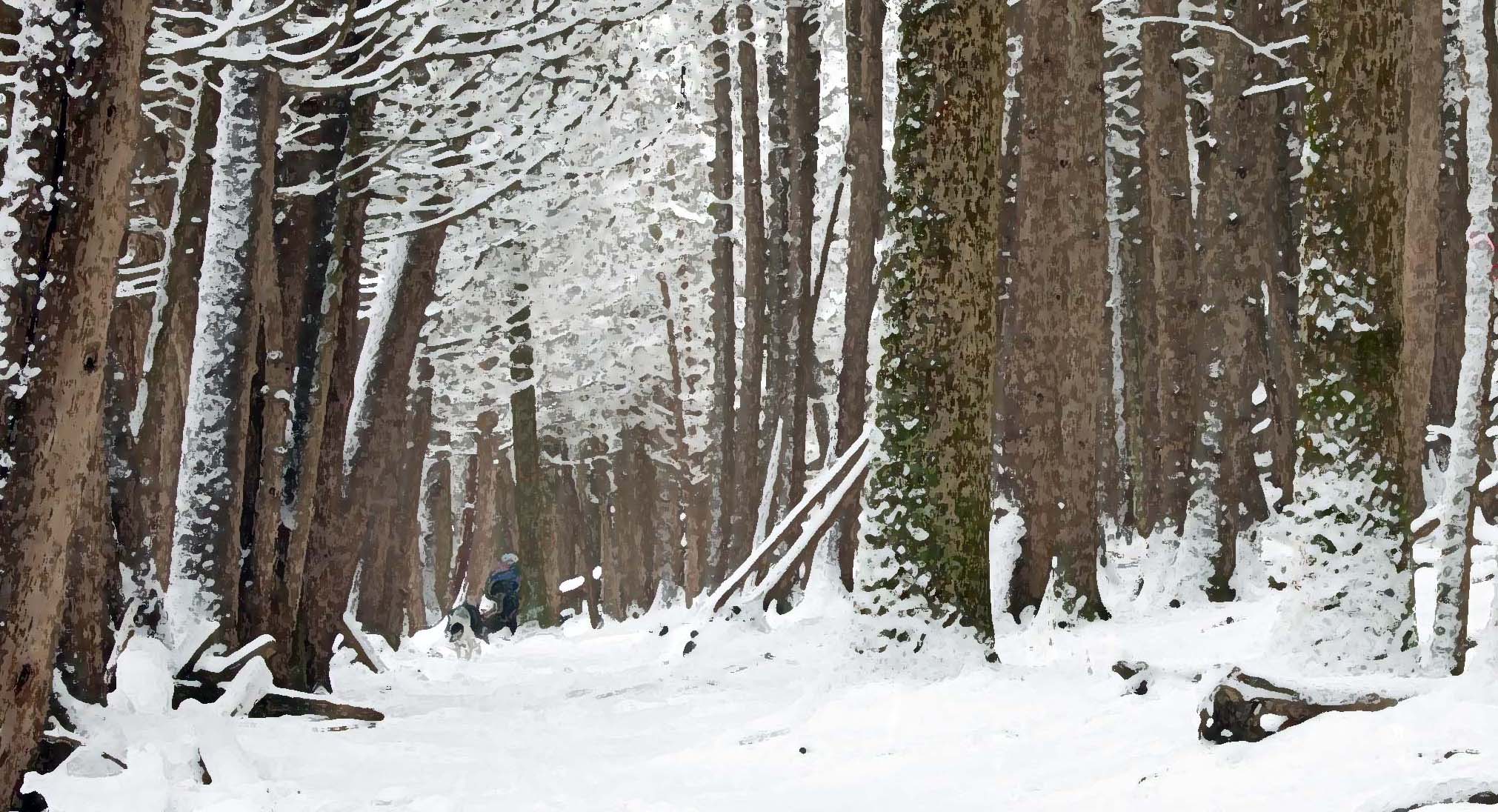
Woman and her dog walk the cedar swamp forest, Trent Nature Sanctuary, ON (photo and dry brush rendition by Nina Munteanu
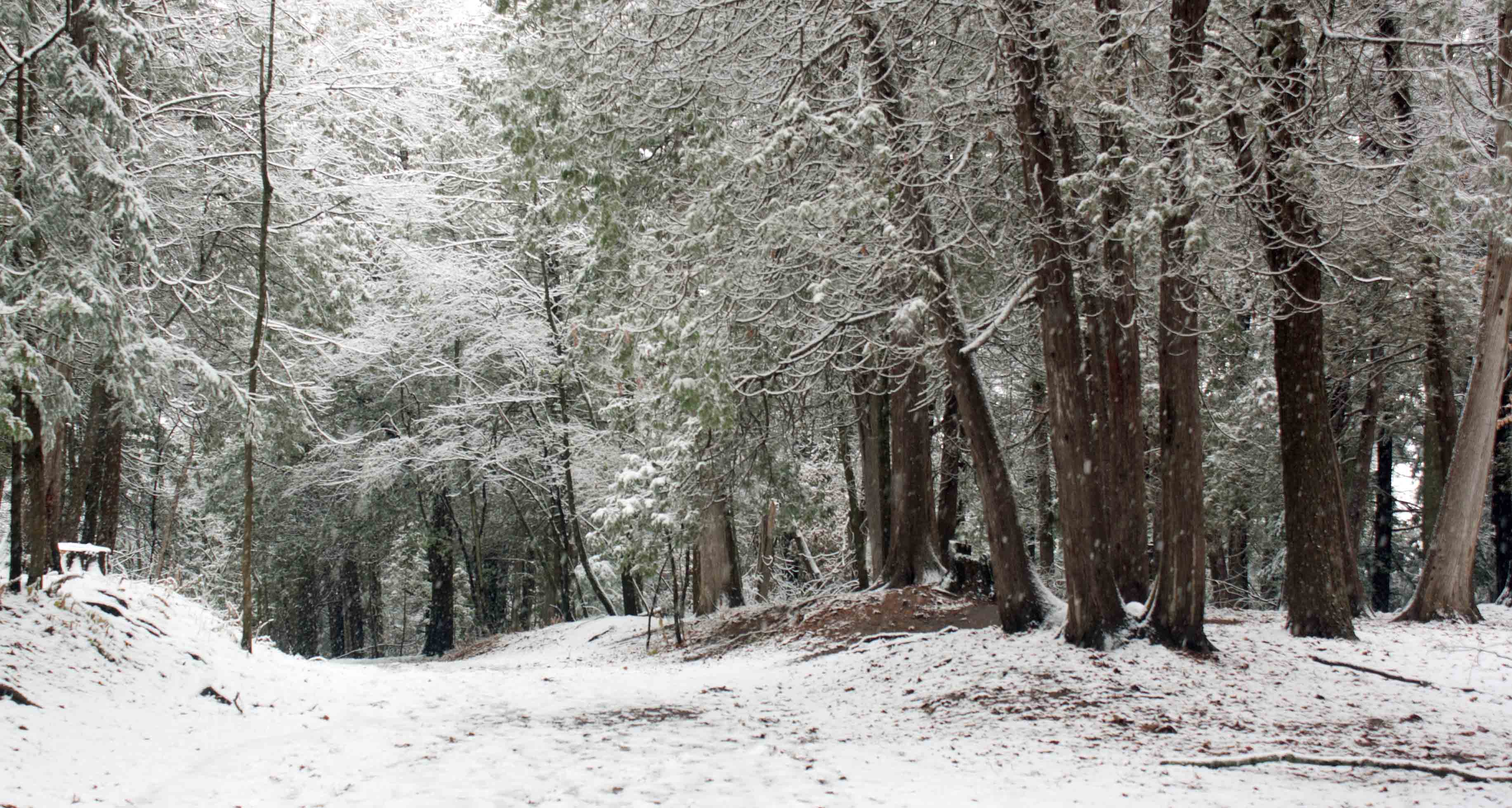
Trail through cedar forest in first snow, Trent Nature Sanctuary, ON (photo and dry brush rendition by Nina Munteanu)
Moss covered roots and trunk of yellow birch after snowfall, Jackson Creek Park, ON (photo and dry brush rendition by Nina Munteanu)
Young marcescent beech tree among moss covered glacial erratics in Jackson Creek Park, ON (photo and dry brush rendition by Nina Munteanu)
Snow-covered marcescent beech leaves in Jackson Creek Park, ON (photo and dry brush rendition by Nina Munteanu)
Heavy snowfall at bridge in Trent Nature Sanctuary, ON (photo and rendition by Nina Munteanu)
Cedar pine forest after first snow, Jackson Creek Park, ON (photo and dry brush rendition by Nina Munteanu)

Nina Munteanu is a Canadian ecologist / limnologist and novelist. She is co-editor of Europa SF and currently teaches writing courses at George Brown College and the University of Toronto. Visit www.ninamunteanu.ca for the latest on her books. Nina’s bilingual “La natura dell’acqua / The Way of Water” was published by Mincione Edizioni in Rome. Her non-fiction book “Water Is…” by Pixl Press(Vancouver) was selected by Margaret Atwood in the New York Times ‘Year in Reading’ and was chosen as the 2017 Summer Read by Water Canada. Her novel “A Diary in the Age of Water” was released by Inanna Publications (Toronto) in June 2020.

“Sacred River” an Ekphrastic Poem by Bev Gorbet

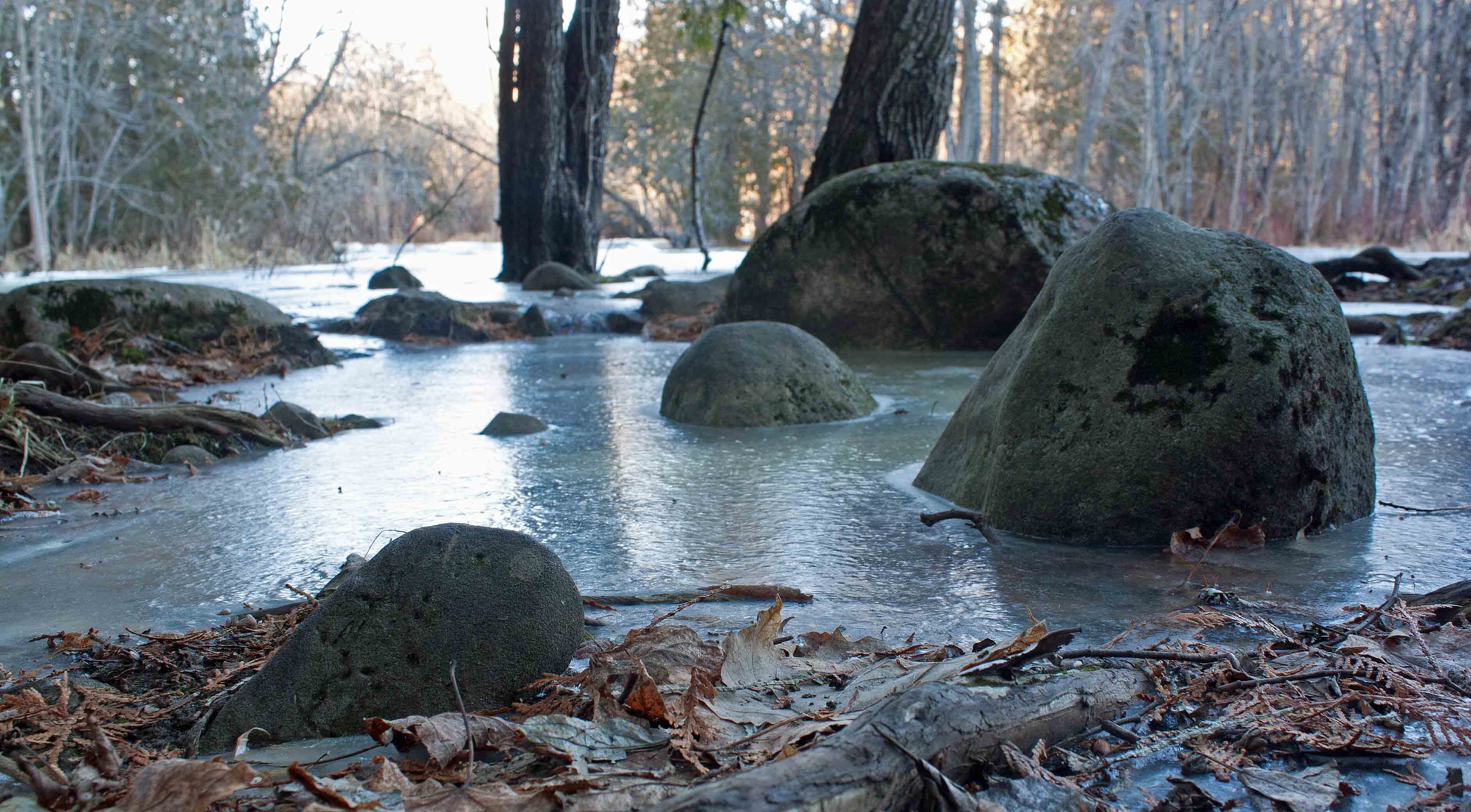
Jackson Creek ices up in December (photo by Nina Munteanu)

Like the purest of sounds,
Like the rhapsodic tinkling, windblown days,
Of glass wind chime and bell,
The call, the pure rhythm, the lyrical song
River of crystal waters pouring down under ice

Jackson Creek flows like liquid sunshine around terraced ice islands in morning light, ON (photo by Nina Munteanu)

Holy nature’s melody, all the grace, the sacred beauty
Of the wild outdoors…
The magical distortions of light under ice,
Luminescence and glow, bright sunlight
On a cold winter’s day…

Ice shoals of Jackson Creek, ON (photo by Nina Munteanu)

The lightening glitter in moving prisms of light…
Majesty, deep within water and ice,
Carousels of prismatic light moving elegantly across
The stony river bed below…
And above, a magnificent solemnity:
Backlit snow drift, detritus of crystal flake:
Azure and lavender lights

Ice shelves forming on quiet shore of Jackson Creek, ON (photo by Nina Munteanu)

Everywhere a reverential light reflected upwards
To catch the delighted eye…
Radiant reflections of warmth and comfort:
The sound of the dancing winds high above,

Jackson Creek and forest after first snow (photo by Nina Munteanu)
Snow-covered cedars in Trent Sanctuary forest, ON (photo by Nina Munteanu)


And icey patches, snowdrift on treetop and cold bough,
Gently melting drops, rainbow lights
Softly falling down to touch a lyric memory:
The pure song, wind chime echo and dream,
Sacred memory: sacred river, deepest reflection…

–Bev Gorbet, December, 2020

Clouds of ice pearls in Jackson Creek, ON (photo by Nina Munteanu)
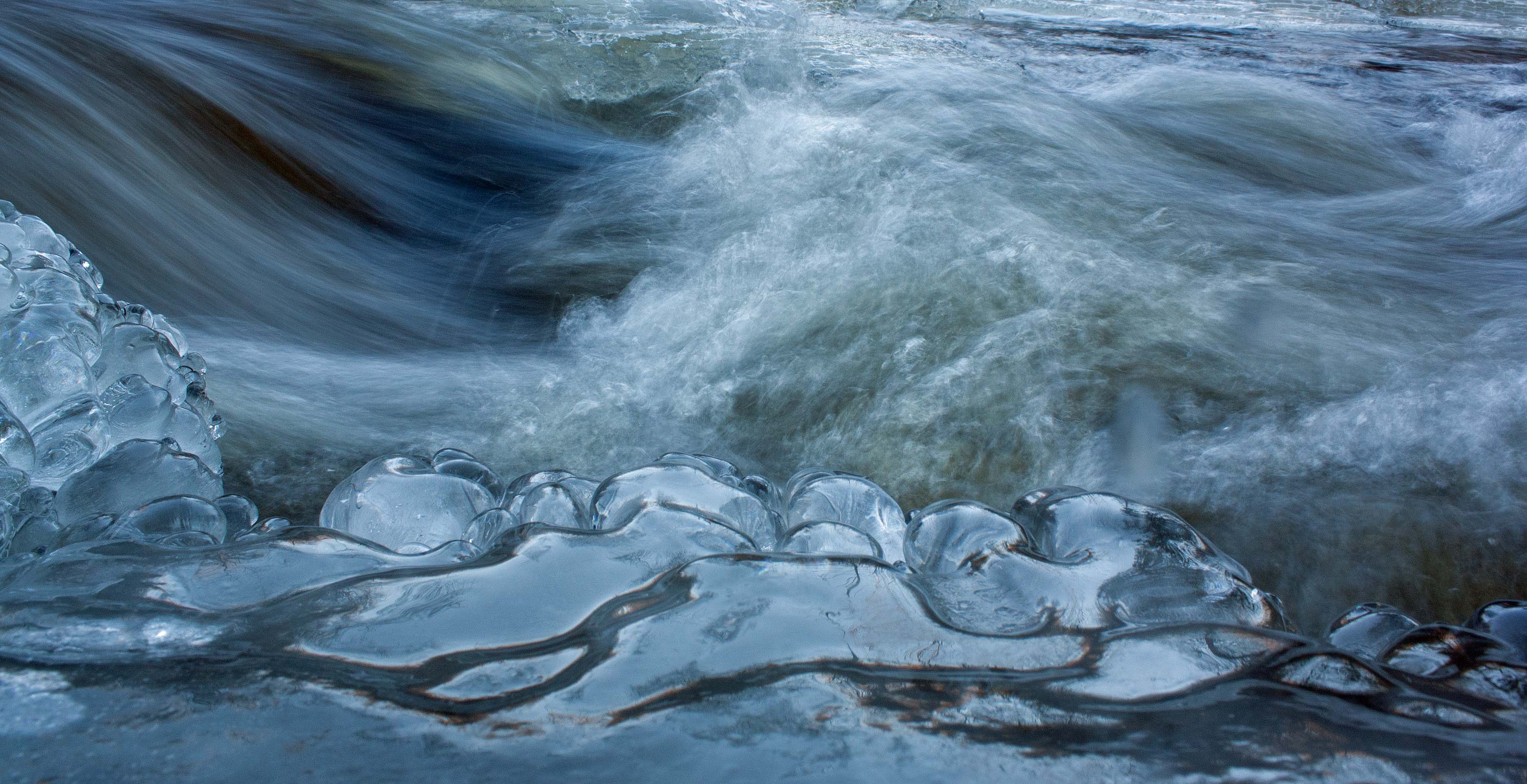
Ice pearls form over rocks in Jackson Creek, ON (photo by Nina Munteanu)
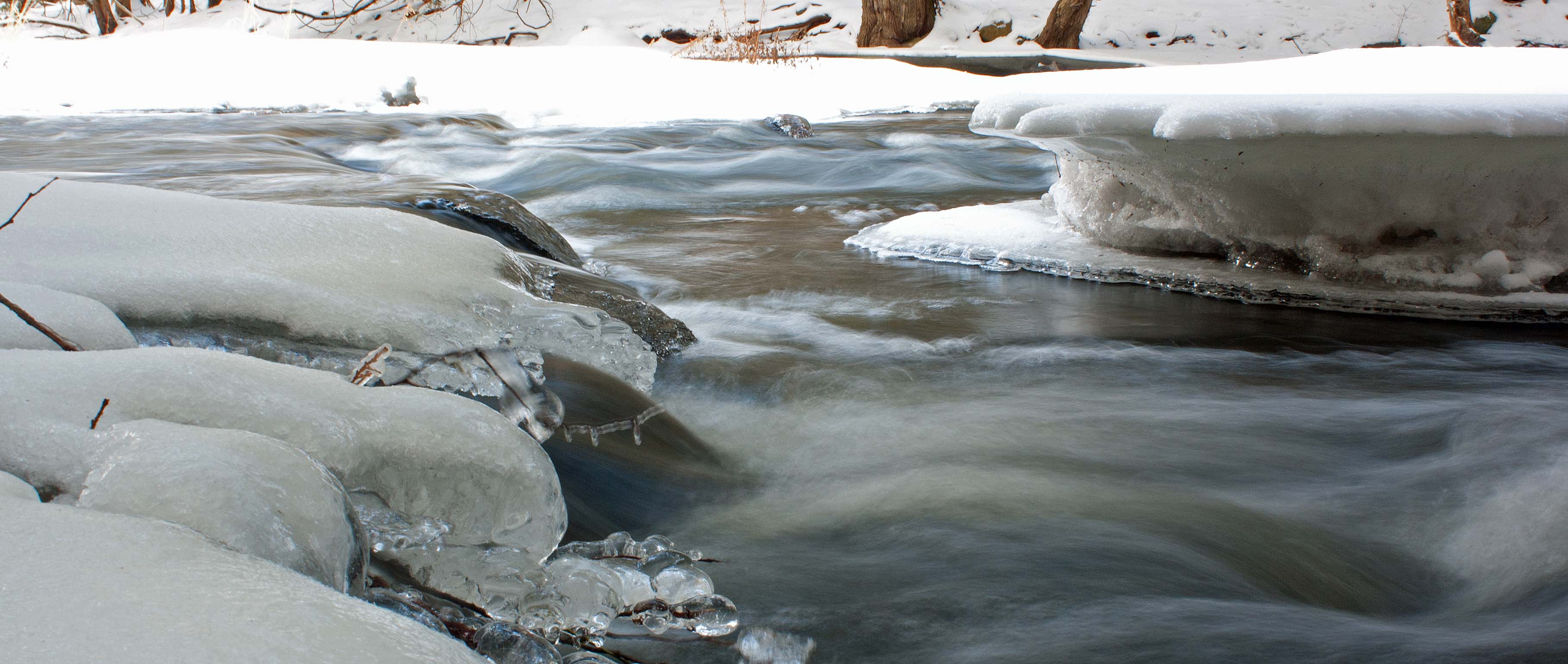
Ice shore beside flowing Jackson Creek, ON (photo by Nina Munteanu)
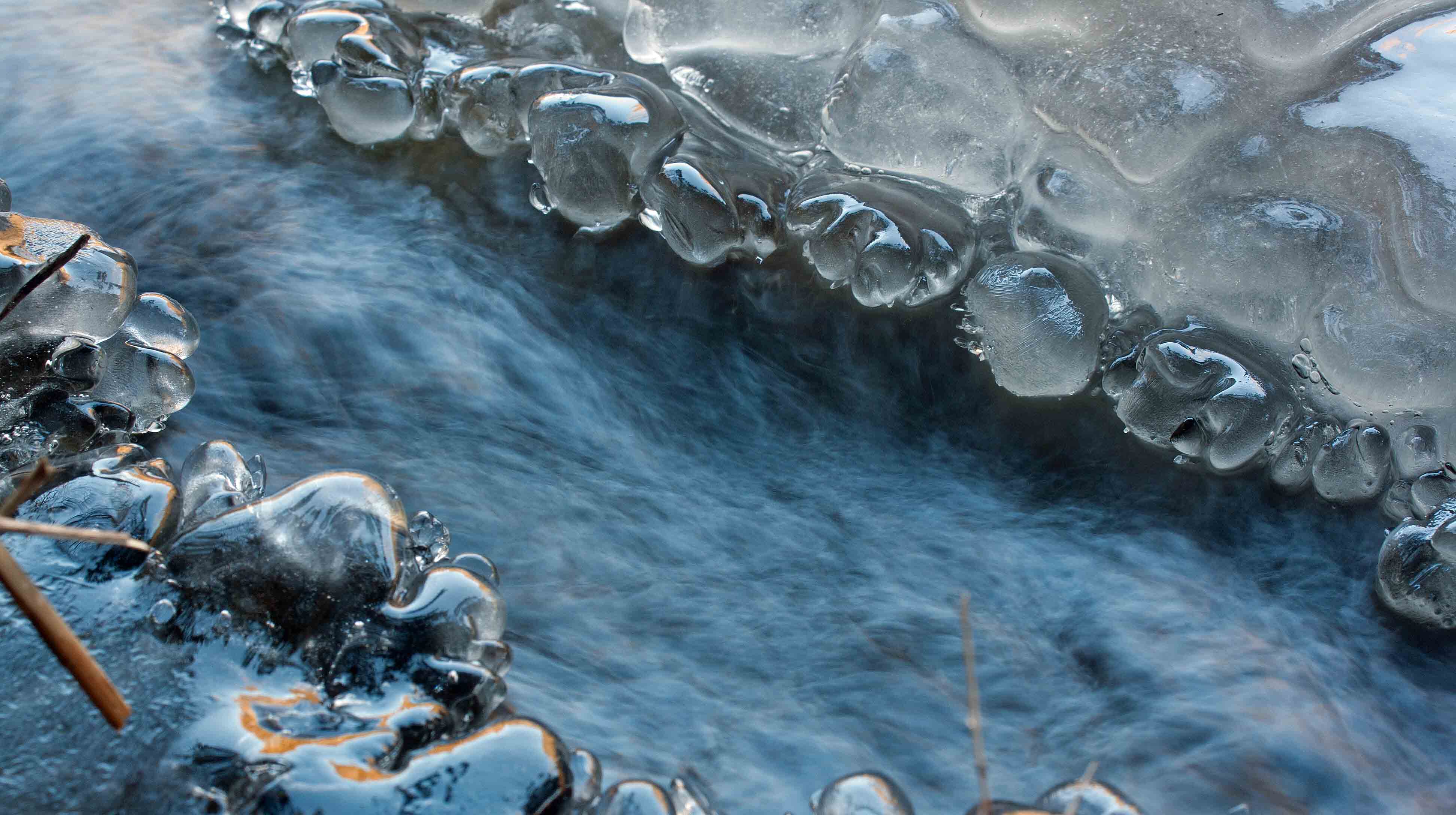
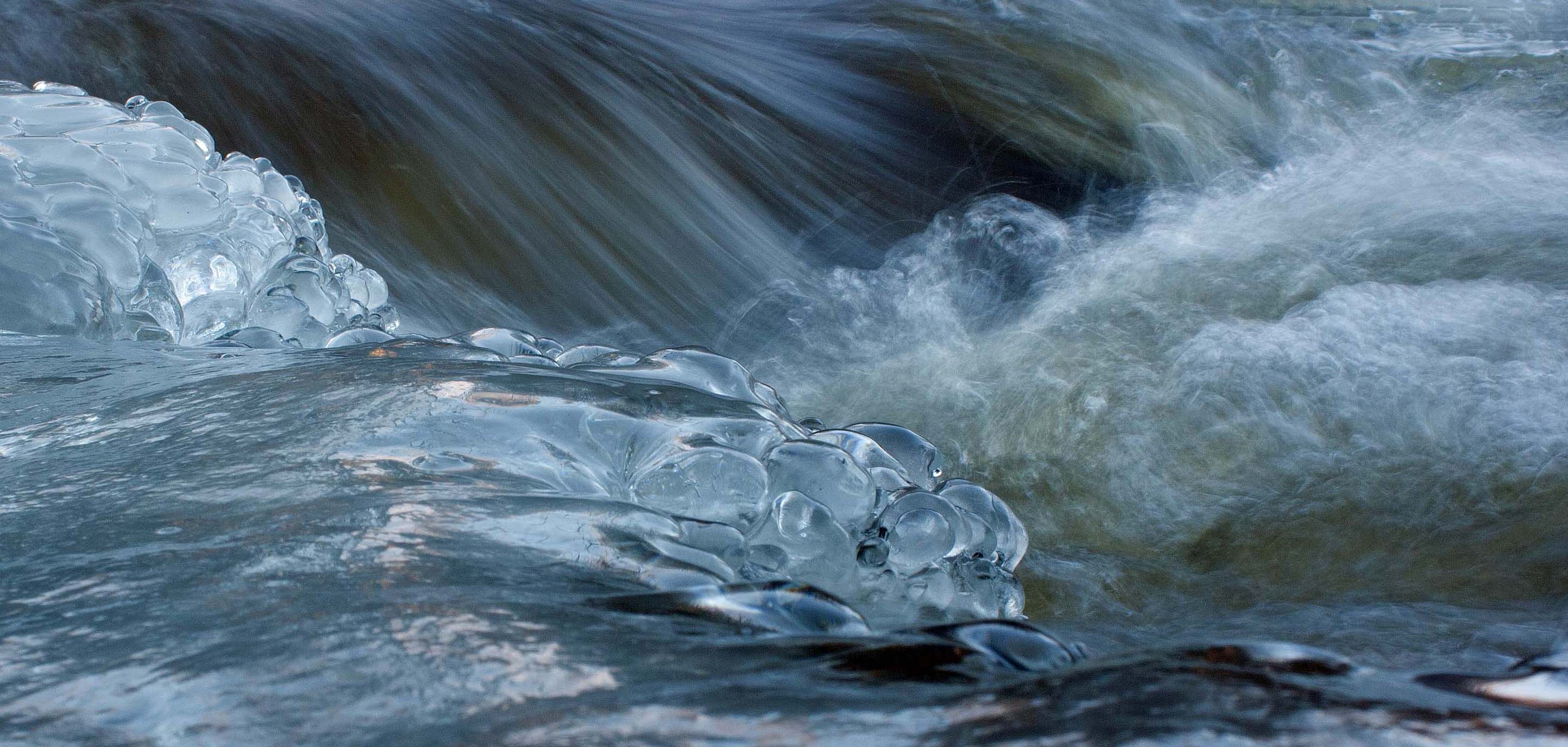
Ice beads form islands in froth of Jackson Creek water, ON (photo by Nina Munteanu)
Ice beads form off ice columns over Jackson Creek, ON (photo by Nina Munteanu)
Ice platforms and ice-covered twigs peer over flowing Jackson Creek, ON (photo by Nina Munteanu)

Nina Munteanu is a Canadian ecologist / limnologist and novelist. She is co-editor of Europa SF and currently teaches writing courses at George Brown College and the University of Toronto. Visit www.ninamunteanu.ca for the latest on her books. Nina’s bilingual “La natura dell’acqua / The Way of Water” was published by Mincione Edizioni in Rome. Her non-fiction book “Water Is…” by Pixl Press(Vancouver) was selected by Margaret Atwood in the New York Times‘Year in Reading’ and was chosen as the 2017 Summer Read by Water Canada. Her novel “A Diary in the Age of Water” was released by Inanna Publications (Toronto) in June 2020.

When Nature Destroys … and Creates

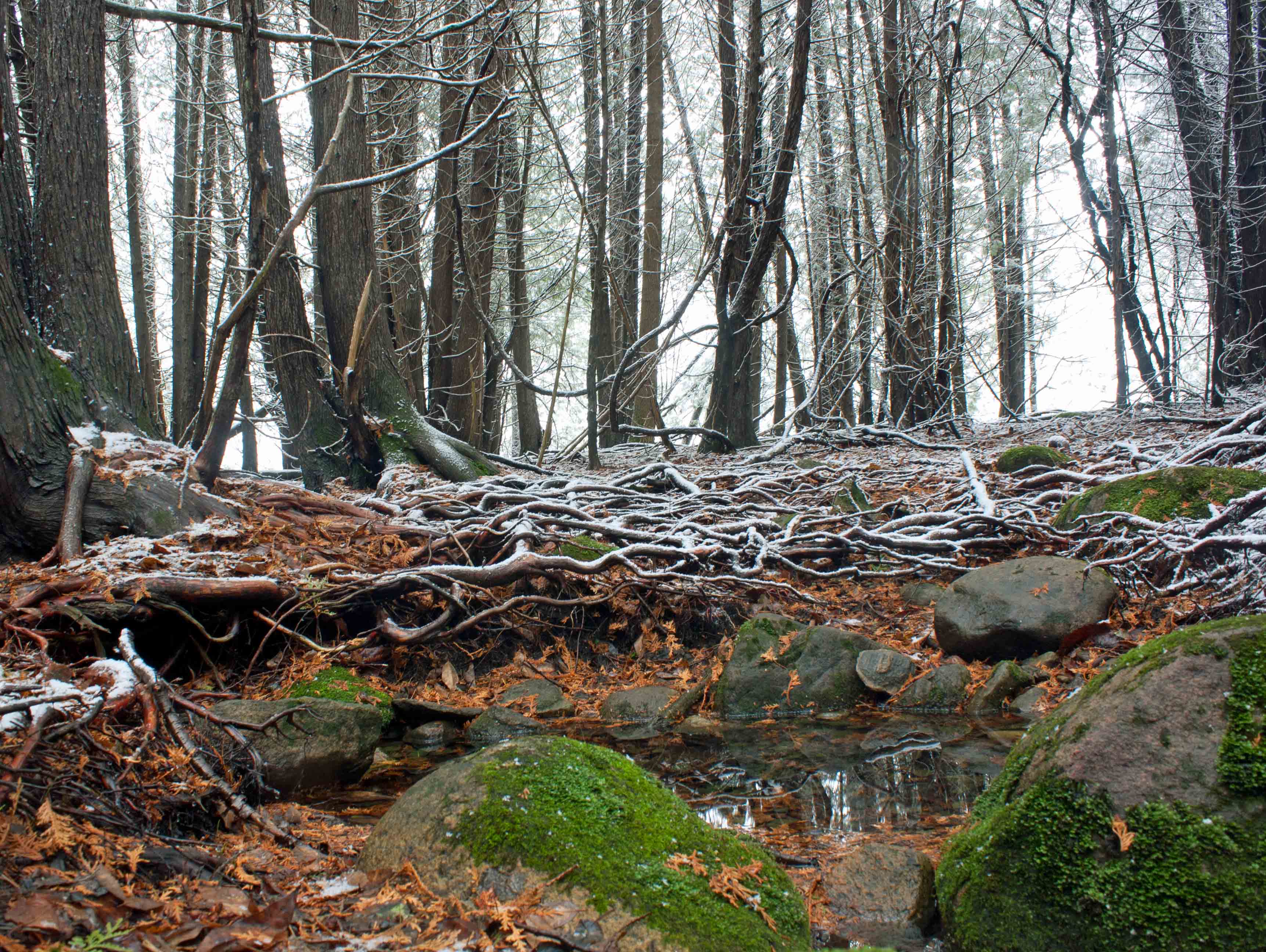
Cedar roots dusted in winter snow, Jackson Creek Park, ON (photo by Nina Munteanu)

It’s late December in the old-growth riparian forest of Jackson Creek, Peterborough. A light snow is falling on the cedars. When I walk by the creek through this deep forest, my senses reach out like tendrils, touching the mysteries of Nature’s complexity. To my right, the river’s multi-timbral chorus gurgles and chortles in chaotic symphony. Occasionally, I hear the percussion of ice cracking and booming like a designer rearranging furniture. The cedar pine forest sloping up to my left hisses and giggles as the snow falls and melts. My footfalls crunch over a frozen sponge of litter and loam. Nature’s sounds and aromas coarse through me like sweet nectar and my soul rejoices. I quiet my mind and become one with all of it. Serene in discovery. In sensing. Feeling. Embedding. I’m awestruck with the simple beauty of complex form, pattern and purpose: from the tiniest moss covering a boulder erratic to the largest cedar trees creaking and swaying above me in the whisper of a brisk winter wind. 

Today is different. 

I see something unexpected. A skull.

Red fox skull embedded in frozen shore of Jackson Creek, ON (photo by Nina Munteanu)

I’ve been following the icing of Jackson Creek. Huge ice “islands” have formed over boulders, creating new channels for the freezing water to coarse around. I stop near a small tributary of the river to study the formation of ice “pearls” on either side of an ice-formed channel. I venture out onto an ice shelf and set up my small tripod to take slow shots of water magic. The sun paints the water a brilliant turquoise hue.

Jackson Creek with ice formation on shore, ON (photo by Nina Munteanu)

Breathing hard from my efforts and satisfied with the shots I’ve taken, I stand up and step back from the shore. It’s then, as I look down to where I’ve placed my feet, that I see it. A small white “rock”—No! A skull! Embedded in the frozen leaf litter and ground, not more than several centimetres from the frozen shore of the river, lies an animal skull the size of my hand with a long snout. How have I managed not to step on it and crush it with all my tramping there? I must have stepped past it several times to get to my photo op. I bend low to get a better look. What is it doing there? Who—or what—had brought it there, depositing it on the creek shore?

I returned the next day, eager to show my discovery to a friend and naturalist; she suggested it was a red fox. Excited, I returned the following day with a ruler to measure it and a trowel and some hot water to help me extricate it for better examination. A light snow had fallen the night before but the top of the skull was still visible. I removed the snow and the skull came out of the ground rather easily, revealing several back teeth still embedded in it. While the skull was mostly intact, the lower jaw was missing and a loose tooth lay on the ground below it. I removed my prize and brought it home. After cleaning it with some bleach, I examined it further.

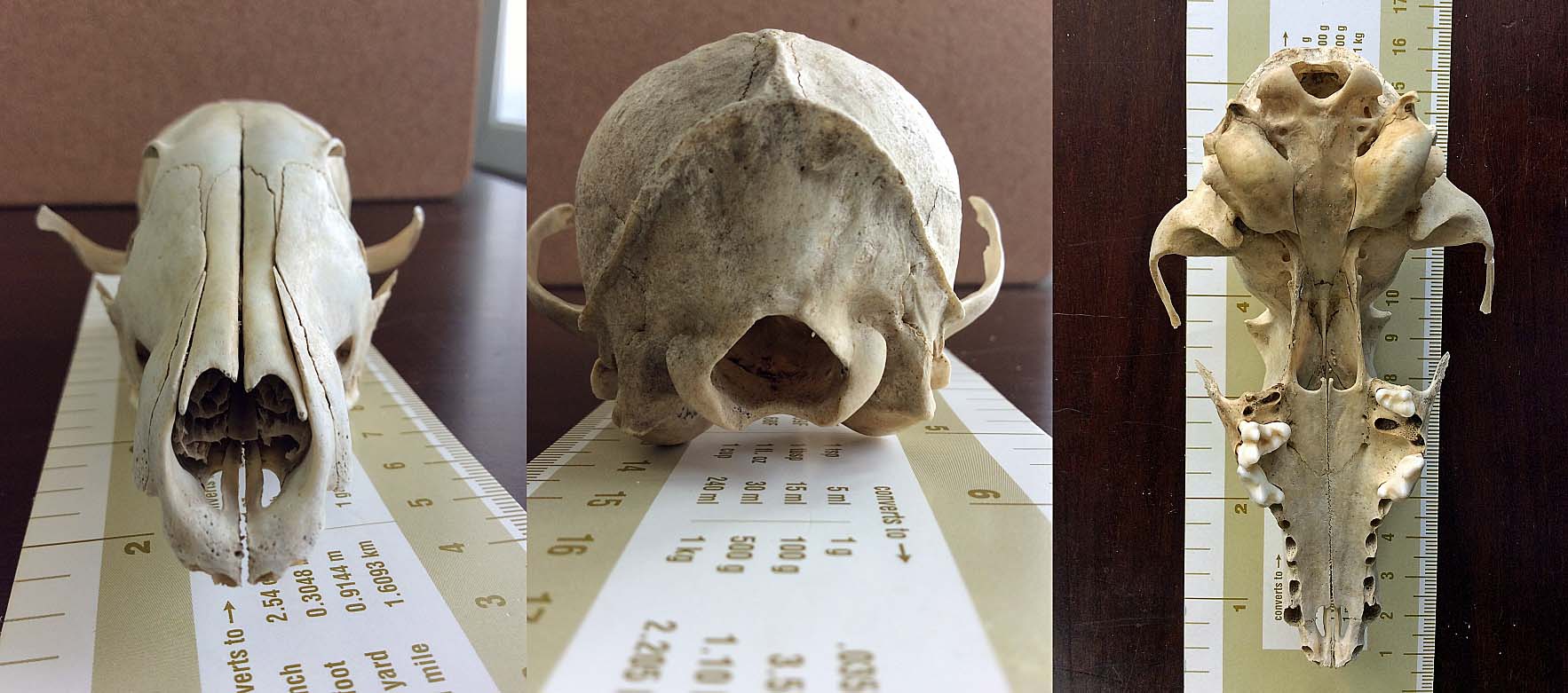
Red fox skull, left to right: front, back, ventral aspects (photos by Nina Munteanu)

The skull showed no signs of trauma or injuries to the head. I guessed that while this fox was an adult, it was young; the teeth that were there were in excellent condition. The skull measured 133 mm from end of snout to external occipital protuberance (inion). The average skull length of an adult male measures 129 to 167 mm and vixens 128-159 mm. Steve Harris in BBC’s Discover Wildlife tells us that dog foxes also tend to have broader and more domed skulls than vixens; my skull was rather sleek, I thought. From this I guessed that the skull belonged to a young adult female, a vixen. Statistics for fox deaths also favoured a young fox (see below). 

MeasurementValue
Skull LengthInion to prosthion133 mm
Skull widthWidest interzygomatic distance70 mm
Facial lengthNasion to prosthion63 mm
Facial widthWidest interzygomatic distance45 mm
Cranial lengthInion to nasion79 mm
Cranial widthWidest interparietal distance47 mm
Cranial heightMiddle of external acoustic meatus to bregma43 mm
Red fox skull, lateral aspect (photo by Nina Munteanu)

I couldn’t help wondering about this fox which had appeared as if by magic at my feet. What was Vera Vixen’s story? (Somewhere between bringing her home and cleaning her, I decided to name her). How did Vera meet her demise and where was the rest of her? Had the skull recently washed onshore or was it recently brought to the shore by a scavenging racoon, badger (they’re more common in this area than most people think) or another fox? Or had the skull been there longer and the winter ice and water just washed away the litter to reveal the embedded skull? Was it a death of misadventure? Had Vixen drowned when Jackson Creek flooded? Or was she hit by a car at the edge of the park, torn up by scavengers and her skull brought here to eat? Jake McGown-Lowe of BBC’s The One Show shares that “Fox bones are hard to find.” He had found his specimens at the edge of a wood. “In the countryside the main predator of foxes are farmers and gamekeepers, especially around lambing time, and the gamekeepers usually take the bodies away to dispose of.” Jackson Creek is an urban park. Thirty percent of its perimeter is surrounded by urban and suburban streets of Peterborough; sixty percent of the park is surrounded by farmland and some marsh at its upstream end. A Bristol University study on cub survival determined that major sources of mortality included hypothermia, attack by domestic dogs, attack by badgers, and death of the mother. 

Red fox skull, dorsal side (photo by Nina Munteanu)

Various hunters have indicated that in a temperate climate it takes several weeks to several years for decomposers (insects, fungi and bacteria) to clean a skull left in the elements of nature. Temperature, humidity, presence of insects and water play key roles in the process of skeletonization. The skull at my feet could have died as recently as the fall of 2020 and as long ago as spring of 2019 during lambing season. Had Vera been shot or poisoned (including indirectly through scavenging) as she hunted for her kits? 

Bristol University estimated that two thirds of the fox population die each year by predators (including humans), disease and vehicles with the single largest cause of fox mortality being through road collisions. An Oxford study corroborated this with observations that 60% of the fox population were run-over by vehicles. Apparently most of the fox deaths are the young. In their 2004 review of the red fox, David Macdonald and Jonathan Reynolds at Oxford noted that “roughly 75% of the fox population die in their first year.” Studies in Europe have also shown that three to seven-month old foxes are most susceptible to traffic collisions—associated with the cub’s increase in ranging behaviour around the den and their lack of experience—and larger propensity for misadventure.

BBC Wildlife Magazine tells us that “spring is a good time to look for mammal skulls. The end of winter is a peak period of mortality for many species, and skulls can be found virtually anywhere.”

Red fox pups in refuge park in Delaware (photo by Jennifer Cross, USFWS)

The red fox (Vulpes vulpes) is one of Canada’s most widespread mammals, living in a wide range of habitats including forests, grasslands, meadows and farmland. Known for their ability to adapt quickly to new environments, foxes have adapted well to urban settings and ecotones between city and wilderness; in fact, they prefer mixed vegetation communities such as edge habitats and mixed scrub and woodland. They are highly athletic, agile and incredibly fast (they can run up to 30 mph); foxes are known for pouncing on mice and other small rodents, burrowing in the snow using the earth’s magnetic field to help them hunt. Foxes have good visual acuity, capable of seeing small movements from far away and for navigating dense forests as they sprint after prey; but their most useful sense is their ultrasonic hearing. Treehugger reported on a 2014 study by the University of Duisburg-Essen and Czech University of Life Sciences who discovered that “red foxes have the best known maximal absolute hearing sensitivity of any mammal. They can hear a mouse squeak from 100 feet away.” This along with their ability to move swiftly and quietly through most terrain makes them effective crepuscular (dawn and dusk) predators in open country and nocturnal hunters in areas of concentrated human habitation. Foxes generally live an average of 3-7 years in the wild.

Foxes are monogamous. They live in family units in which both parents take equal part in raising their young. Older siblings also care for the young pups. The young kits remain with their parents at least until the fall of the year they were born in and sometimes longer, especially females. Pups are typically born from February-April. They are born blind, deaf and toothless, with dark brown fluffy fur. Mom fox stays close to guard the kits and nurse them for several weeks and the father or barren vixens feed the mothers. The kits leave the den a month after and are fully weaned by 8-10 weeks. The mother and her pups remain together until the autumn after the birth. After the pups are weaned and begin to play about the den’s entrance, Dad fox helps watch them while Mom fox gets in some hunting. If the mother dies, the father takes over caring for the pups. Kits reach adult form by seven months and some vixens reach sexual maturity by ten months—enabling them to bear their first litter at one year of age. 

Red foxes help balance ecosystems by controlling population of prey animals such as rodents and rabbits. They also disperse seeds by eating fruit. Steve Hall of Adirondack Almanack reminds us that red foxes play an important ecological role: 

“Now and then, vulnerable farm animals such as chickens, ducks and lamb will be taken. While farmers used to routinely trap foxes, many now realize that the fox brings far more benefit in its constant predation on crop-destroying rodents and insects, than the harm they cause in taking the occasional barnyard animal; secure enclosures for hens and [use of] guard dogs to keep the fox in the field but out of the barnyard, are the key to discouraging unwanted fox predation.”

James Fair of BBC Discover Wildlife noted that a single fox during its lifetime may be worth £150-190 to a farmer through rabbit predation. Most farmers in Wiltshire consider the fox a helpmate in reducing the pest of rabbits. Hall adds that while, “Deer are significant carriers of the tick, Lyme disease starts with rodents… [the red fox] eats huge quantities of rodents. If for no other reason, fox hunting and trapping should be banned.”

Cedar-pine-hemlock forest after first snow, Jackson Creek Park, ON (photo by Nina Munteanu)

Foxes take shelter in thickets and heavy bushes in the autumn until March of the next year. They are omnivores with a varied diet of small mammals such as voles, mice, squirrels and rabbits, and a variety of plants, berries, other fruit and nuts. Foxes have good eyesight but very keen hearing and sense of smell; this along with their ability to move swiftly and quietly through most terrain makes them effective crepuscular (dawn and dusk) predators in open country and nocturnal hunters in areas of concentrated human habitation. Foxes generally live an average of 3-7 years in the wild. 

The red fox communicates through a wide range of body language and vocalizations. Foxes use scent glands and urination to communicate their individuality through their skunk-like smell. They use scent to mark territory and show status. The smell increases during mating season. The fox vocal range spans across five octaves with at least 28 different sounds that include those for “contact” and those for “interaction.” Individual voices can be distinguished. One contact sound between two foxes approaching one another resembles the territorial call of a tawny owl. When foxes draw close together, they use a greeting warble similar to the clucking of chickens. Adults greet their kits with gruff huffing sounds.

Red foxes feature prominently in the folklore and mythology of human cultures with which they are sympatric. In Greek mythology, the Teumessian fox or Cadmean vixen, was a gigantic fox that was destined never to be caught. The fox was one of the children of Echidna. In Japanese mythology,the kitsune are fox-like spirits that possess magical abilities which increase with age and wisdom. This includes the ability to assume human form. Some folktales suggest that kitsune use this ability to trick others; others portray them as faithful guardians, friends and love. In the Cotswolds, witches were thought to take the shape of foxes to steal butter from their neighbours. In later European folklore, Reynard the Fox symbolizes trickery and deceit. In the actual world, this translates to resourcefulness, a quick study, and swift and decisive action. And perhaps that is the true meaning of Vixen.

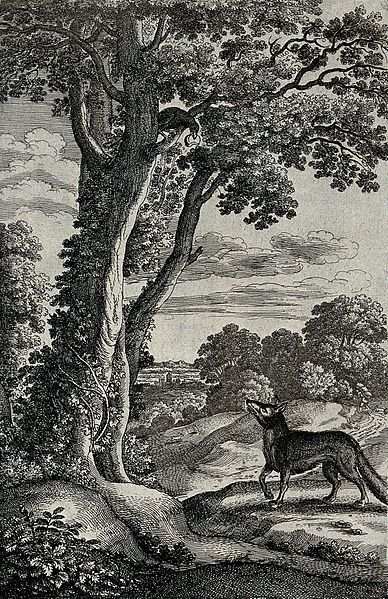
Image of fox and crow from Aesop’s Fables 

Fox teaches us that gender equality helps to create a strong family, says Chris Lüttichau, author of Animal Spirit Guides. Fox’s medicine is family, survival and voice. Fox embodies resourcefulness and daring in her quest to feed herself and her young. “Fox survives and flourishes because she is clever and adaptable; she is now found living in cities. Fox teaches us to be flexible rather than to resist change.” According to Lüttichau, Fox’s medicine is “swiftness, surefootedness and a quick mind that always knows what to do.” Foxes have a wide vocal capacity and range, from screams and calls to low barks—something for each case as the fox calls and listens and calls back. We can learn from Fox’s varied voice to transcend traditions and prejudices through healing council and stories.

With thoughts returning to my Vera Vixen, I think that perhaps she is not a young unlucky fox who met with misadventure after all; rather, she’s a smart old vixen who’s birthed and nurtured several litters of four to six kits each spring. Her natural death after four to seven years of a rich life in the old growth forest and marsh of Jackson Creek would have led her to a quiet place to lay herself to rest; there her corpse was ultimately found by a badger, racoon or other fox and parts of her scattered throughout the forest to decompose and feed the ecosystem. Ever the mother, Vera now feeds the forest that nurtured her and her family’s existence. 

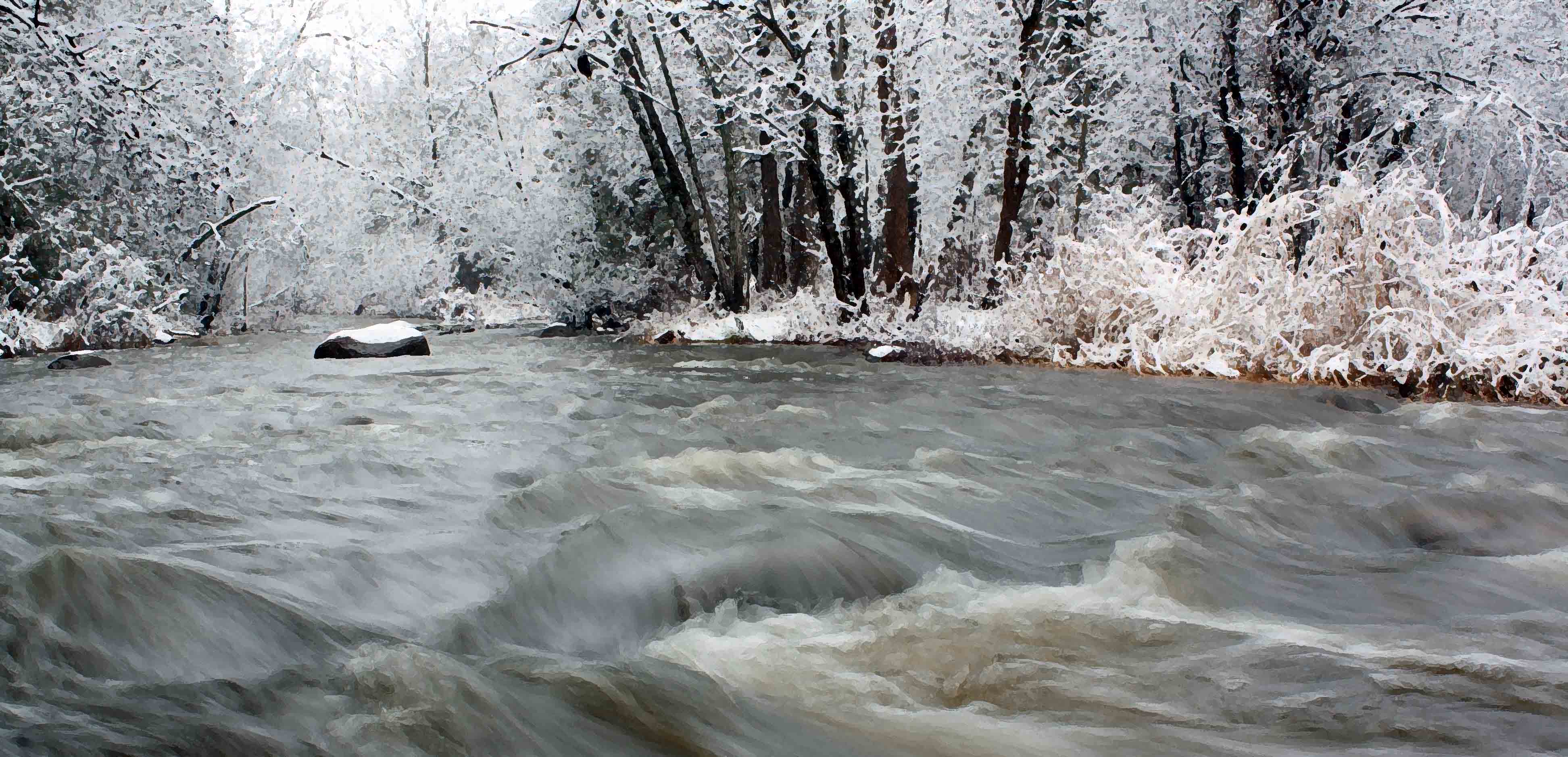
Jackson Creek during first heavy snow, ON (photo by Nina Munteanu)

The Story of Fleet, the Fox of Surrey: In January 2014 it was reported that “Fleet”, a relatively tame urban red fox tracked as part of a wider study by the University of Brighton in partnership with the BBC’s TV series Winterwatch, had unexpectedly traveled 195 miles in 21 days from his neighbourhood in Hove, at the western edge of East Sussex, across rural countryside as far as Rye, at the eastern edge of the county. He was still continuing his journey when the GPS collar stopped transmitting due to suspected water damage. Along with setting a record for the longest journey undertaken by a tracked red fox in the United Kingdom, his travels have highlighted the fluidity of movement between rural and urban red fox populations.

Fox Prayer for 2021:

I call on Fox.
Shapeshifter and trickster.
Edge-walker and messenger.
Help me blend with my surroundings and adapt to the changing landscapes.
Show me the hidden paths between the worlds.
Teach me the ways of invisibility and camouflage.
Gift me your keen senses that i might see more of what is around me and use it to accomplish my goals.
I call on you, Fox, to bring magic and discernment into my life.
Lead me at your steady gait to those places where I might do the greatest good.
Let us walk the borders between day and night and follow the scent of divine mischief.
Fox, I call on you.

TRAVIS BOWMAN
Jackson Creek ices up in December, ON (photo by Nina Munteanu)

The Tale of the Prayer and the Little Fox

Map of Jackson Creek Park and surrounding area, ON

Jackson Creek Old-Growth Forest:

Jackson Creek Old-Growth Forest (OGF) is a 4.5 hectare urban forest located on a glacial spillway slope littered with granite erratic boulders. The OGF lies within the Jackson Creek Riparian Forest, a 92-ha valley land forest which extends into a major wetland of importance. Dominant conifers in the OGF include white cedar (Thuja occidentalis), white pine (Pinus strobus), and eastern hemlock (Tsuga Canadensis). Sugar maple, American beech, yellow birch, white ash and white oak contribute to the mixed riparian forest. Trees are commonly over 150 years old with some reaching over 250 years. Largest trees—which tend to be the pines and cedars—reach diameters of 97 cm dbh and heights of 35 metres. 

Cedar-pine-hemlock forest in Jackson Creek Park, ON (photo by Nina Munteanu)

The Jackson Creek valley was formed by the torrent of glacial meltwater that flowed from the ancient Lakes Algonquin and Jackson through the overlying till to create a glacial spillway some 12,000 years ago (Adams and Taylor 2009); the outflow of glacial Lake Algonquin was channeled to the former glacial Lake Iroquois—a body of water larger than the current Lake Ontario but in the same general area (Ecclestone and Cogley 2009).

The Jackson Creek OGF is a good example of a mature White Cedar—White Pine—Eastern Hemlock stand on a glacial spillway slope in Ecodistrict 6E-8. This eco-district extends in a band from south of Lake Simcoe eastward to the Bay of Quinte, north of the Oak Ridges Moraine, and is characterized by rolling till plains with drumlins, eskers, and intervening wide river valleys (Hanna 1984). 

Red fox skull found embedded on iced shore of Jackson Creek, ON (photo by Nina Munteanu)

References:

Adams, P. and C. Taylor. 2009. Peterborough and the Kawarthas (Third Edition). Geography Department, Trent University, Peterborough, Ontario. 252 pp. 

BBC. 2014. “BBC Two – Winterwatch, Urban Fox Diary: Part 2”. 23 January 2014. 

BBC. 2014. “Fleet the Sussex fox breaks British walking record”. 22 January 2014. 

Ecclestone, M. and G. Cogley. 2009. “The Physical Landscape of Peterborough and the Kawarthas.” In: Peterborough and the Kawarthas, Third Edition, ed. by P. Adams and C. Taylor, pp. 19-40. Geography Department, Trent University, Peterborough, Ontario. 

Hanna, R. 1984. “Life Science Areas of Natural and Scientific Interest in Site District 6-8.” Parks and Recreational Areas Section, Central Region, Ontario Ministry of Natural Resources, Richmond Hill, Ontario. 71 pp. & map. 

Henry, Michael, Peter Quinby and Michael McMurtry. 2016. “The Jackson Creek Old-Growth Forest” Research Report No. 33. Ancient Forest Exploration & Research. Online: http://www.ancientforest.org/wp-content/uploads/RR33-Jackson-Creek-OGF.pdf

Lüttichau, Chris. 2013. “Animal Spirit Guides.” Cico Books, London, UK. 160pp.

MacDonald, D. and J. Reynolds. 2005. “Red fox (Vulpes vulpes)” IUCN Canid Specialist Group. Online

Malkemper, E. Pascal, Vaclav Topinka, and Hynek Burda. 2015. “A behavioral audiogram of the red fox (Vulpes vulpes). Hearing Research Vol. 320: 30-37: Online

Monaghan, Patricia. 2004. “The Encyclopedia of Celtic Mythology and Folklore”. Infobase Publishing. pp. 199–200. ISBN 978-0-8160-4524-2.

The Nature Conservancy: Nature.org. “Wetlands Mammals: Red Fox.” PDF Online

“Relatives are the worst friends, said the fox as the dogs took after him.” – Danish

Nina Munteanu is a Canadian ecologist / limnologist and novelist. She is co-editor of Europa SF and currently teaches writing courses at George Brown College and the University of Toronto. Visit www.ninamunteanu.ca for the latest on her books. Nina’s bilingual “La natura dell’acqua / The Way of Water” was published by Mincione Edizioni in Rome. Her non-fiction book “Water Is…” by Pixl Press(Vancouver) was selected by Margaret Atwood in the New York Times ‘Year in Reading’ and was chosen as the 2017 Summer Read by Water Canada. Her novel “A Diary in the Age of Water” was released by Inanna Publications (Toronto) in June 2020.

Nina Munteanu Talks about more than Water on the Douglas Coleman Show

Nina Munteanu was recently on The Douglas Coleman Show where she and Douglas talked about writing, being scared of water, the sub-genre of eco-fiction and what Canada might have been like if the white settlers hadn’t come.

Here’s the show:

Nina Munteanu is a Canadian ecologist / limnologist and novelist. She is co-editor of Europa SF and currently teaches writing courses at George Brown College and the University of Toronto. Visit www.ninamunteanu.ca for the latest on her books. Nina’s bilingual “La natura dell’acqua / The Way of Water” was published by Mincione Edizioni in Rome. Her non-fiction book “Water Is…” by Pixl Press(Vancouver) was selected by Margaret Atwood in the New York Times‘Year in Reading’ and was chosen as the 2017 Summer Read by Water Canada. Her novel “A Diary in the Age of Water” was released by Inanna Publications (Toronto) in June 2020.

Embracing the Paradox of Creative Destruction

Beech tree in snow-covered cedar forest, ON (photo and rendition by Nina Munteanu)

I understand something of paradox. As an ecologist, I deal with it all the time. Destruction in creation and creation in destruction lies ingrained in the life-cycles of everything on this planet. A forest fire can destroy life but in so doing creates a more vibrant, healthier forest. Nature reveals many such examples from its circular patterns and fractal self-organization to its infinite spirals.

The Ouroboros is an ancient symbol depicting a serpent or dragon swallowing its own tail to form a circle. It represents self-reflexivity or cyclicality, especially of something constantly re-creating itself. As the serpent devouring its own tail, the Ouroboros symbolizes the cyclic Nature of the Universe: creation out of destruction, Life out of Death. The ouroboros eats its own tail to sustain its life, in an eternal cycle of renewal. In Gnosticism, the ouroboros symbolizes eternity and the soul of the world.

Ecologist C.S. Holling recognized ecosystems as non-linear, self-organizing and continually adapting through cycles of change from expansion and prosperity to creative destruction and reorganization. In his classic paper, entitled: “Simplifying the complex: the paradigms of ecological function and structure” (1987), Holling suggested that the experience of instability maintains the structure and general patterns of ecosystem behaviour; that Nature ‘learns’ and accommodates with time. 

In the final analysis, it is a matter of scale.

We can’t expect the natural world around us to run smoothly and safely for our benefit. New diseases, pollution, species extinction, and climate change are all results of unexpected impacts, whether human-caused or not. Though incredibly elegant, Nature is not simple. Scale is something you can’t see or easily measure and assess if you are in it. Scale is like hindsight.

The systems of Gaia are complex from the tiniest cell to the complex planet itself. Weather, for instance, is a “chaotic system” that displays a fractal structure and a range of chaotic behaviour on many scales. Temperature, air pressure, wind speed and humidity are all sensitive to initial conditions and interrelated in multi-scales.

Says Brian Arthur, professor at Stanford University: 

The complex approach is total Taoist. In Taoism there is no inherent order. “The world starts with one, and the one become two and the two become many, and the many lead to myriad things.” The universe in Taoism is perceived as vast, amorphous, and ever changing. You can never nail it down. The elements always stay the same, yet they are always arranging themselves. So, it’s like a kaleidoscope: the world is a matter of patterns that change, that partly repeat, but never quite repeat, that are always new and different.

BRIAN ARTHUR

Western scientists are just beginning to appreciate this through the application of complexity theory and chaos theory. This is something the eastern world has “known” since ancient times: humility before nature; respect for richness and diversity of life; generation of complexity from simplicity; the need to understand the whole to understand the part.

I wish you a safe and wealthy 2021: a year’s wealth of unexpected wonder, of genuine love, of unguarded honor, and dazzling bravery. There is no wonder without tolerance; no love without humility; no honor without sacrifice; and no bravery without fear. I wish you the gift of unbridled compassion. 

As Dante Sarpé (in my story, Arc of Time) said: Without compassion to fill it, knowledge is an empty house, casting its shadow on our courage to embrace the paradoxes in our lives: to feel love in the face of adversity; grace when confronted with betrayal.

Happy New Year!

Recommended Reading:

Holling, C.S. 1987. Simplifying the complex: the paradigms of ecological function and structure. Eur. J. Oper. Rel. 30: 139-146.

Holling, C.S. 1973. Resilience and stability of ecological systems. Annual Rev. Ecol. Syst. 4: 1-23.

Holling, C.S. 1977. Myths of ecology and energy. In: Proceedings Symposium on Future Strategies for Energy Development, Oak Ridge, Tenn., 20-21 October, 1976. Oxford University Press, New York, N.Y.

Beech tree in leaf amid cedars and moss-covered boulders in Jackson Creek Park, ON (photo by Nina Munteanu)

Nina Munteanu is a Canadian ecologist / limnologist and novelist. She is co-editor of Europa SF and currently teaches writing courses at George Brown College and the University of Toronto. Visit www.ninamunteanu.ca for the latest on her books. Nina’s bilingual “La natura dell’acqua / The Way of Water” was published by Mincione Edizioni in Rome. Her non-fiction book “Water Is…” by Pixl Press(Vancouver) was selected by Margaret Atwood in the New York Times ‘Year in Reading’ and was chosen as the 2017 Summer Read by Water Canada. Her novel “A Diary in the Age of Water” was released by Inanna Publications (Toronto) in June 2020.
The Gift of Purring Cat Meditation…

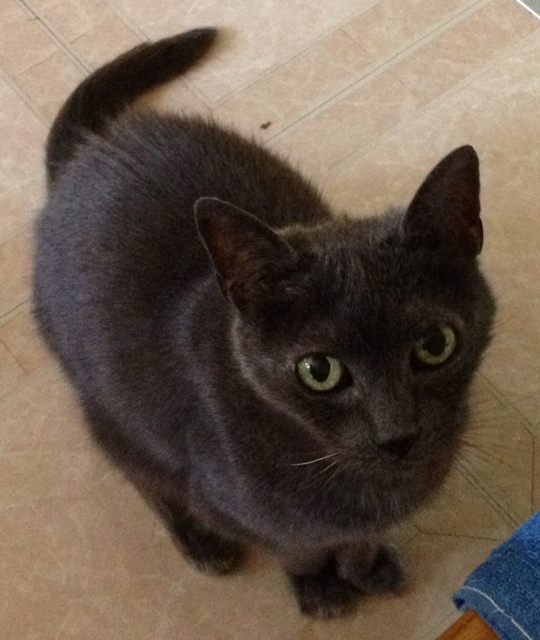
Willow, goddess of Purring Cat Meditation… (photo by Nina Munteanu)

Her name is Willow, and she helps me centre my being…

Willow is a diminutive 18-year old Russian blue cat, who I looked after for some friends in Mississauga. When I first met Willow, she responded with reticence–like all smart discerning cats. She appeared so delicate, I was scared to pick her up. I soon realized that this was a fallacy. That not only could I pick her up but that she loved to be held. I just needed to learn how.

As soon as I did, we became best friends. And it all came together with the Purring Cat Meditation.

“Time to feed me, Nina!” says Willow (photo by Nina Munteanu)

It starts out with her finding me “doing nothing terribly important” like typing on the computer, or something. A soft but decisive tap of the paw on my leg and I have to smile at her intense look up at me with those guileless emerald eyes. I abandon my work–how can I ignore such a plea?– and pick her up. After all, I know what she wants…And so starts our journey toward “nirvana”… the meditative state that will centre our beings and ultimately save the world.

I wander the house with her. We check out each room and make our silent observations. We end up in the bedroom upstairs, where she normally sleeps (except when she’s decided to join me on my bed to sit on me and purr in my face in the middle of the night).

Willow playfully teasing (photo by Nina Munteanu)

In her sanctuary, we drift to the window that faces the back yard, now cloaked in the fresh drifts of winter snow. The window is slightly open and a crisp breeze braces us with the deep scent of winter. I breathe in the fragrance of fallen leaves, mist and bark…

Willow settles into a feather-light pose in the crook of my arms and I hardly feel her. More like she and I have joined to become one. We are both purring …

We remain in Cat-Purr-Meditation for …

I have no idea. It feels like moments. Infinity. It encompasses and defines an entire world. We’ve just created something. Just by being.

“Time to pick me up, Nina!” says Willow (photo by Nina Munteanu)

Cats–well, most animal companions–are incredibly centring and can teach us a lot about the art of simply being.

And meditating…

I write about this more in my article entitled “Wake Up Your Muse: How my Cat Taught Me the Art of Being“. Whenever I run across a bout of writer’s block or need to stoke my muse, instead of trying harder, I stop and reach out for my cat-friend.

And practice Purring-Cat Meditation…

On the road to Wolfville, NS (photo by Nina Munteanu)

Nina Munteanu is a Canadian ecologist / limnologist and novelist. She is co-editor of Europa SF and currently teaches writing courses at George Brown College and the University of Toronto. Visit www.ninamunteanu.ca for the latest on her books. Nina’s bilingual “La natura dell’acqua / The Way of Water” was published by Mincione Edizioni in Rome. Her non-fiction book “Water Is…” by Pixl Press(Vancouver) was selected by Margaret Atwood in the New York Times ‘Year in Reading’ and was chosen as the 2017 Summer Read by Water Canada. Her novel “A Diary in the Age of Water” was released by Inanna Publications (Toronto) in June 2020.
Twelve Books on Climate and Environment for the Holidays

Gift guide: 12 books on climate can environment for the holidays

“For this year’s holiday gift guide,” writes Dr. Michael Svoboda, “Yale Climate Connections has gathered celebrated anthologies, deep-dives into climate-related science and solutions, inspiring books from or about spiritual leaders, and visionary works of climate fiction.”
All were recently published, some within the month, writes Svoboda. These twelve books address decades of writing on climate change, reassess the challenges, offer hope and guidance for action, and envision very different climate-changed futures.

There is, for instance, the anthology The Fragile Earth: Writing from the New Yorker on Climate Change (Harper Collins),which includes Bill McKibben’s seminal essay “The End of Nature.” The anthology All We Can Save(Penguin Random House) edited by Ayana Elizabeth Johnson and Katharine K. Wilkinson is a collection of works dedicated to leadership “more characteristically feminine and more faithfully feminist, rooted in compassion, connection, creativity, and collaboration.”

Hope, guide to action and challenges are provided by Future Sea (University of Chicago Press) by Deborah Rowan Wright, The New Map (Penguin Random House) by Daniel Yergin, Solved:How the World’s Great Cities are Fixing the Climate Crisis (University of Toronto Press) by David Miller, Let Us Dream (Simon & Schuster) by Pope Francis. Tales of Two Planets (Penguin Random House) edited by John Freeman explores inequality and the impact of climate change.

Stand Up! Speak Up! (Penguin Random House) by Andrew Joyner celebrates the inspiration of youth in taking up action through hope, activism and community. Our Only Home: A Climate Appeal to the World (Hanover Square) by the Dalai Lama and Franz Alt is a manifesto that will empower us to take action and save the environment. 

The novel The 2084 Report (Simon & Schuster) by James Lawrence Powell provides an “oral history” through interviews of the devastating effects of the Great Warming, which are both fascinating and frightening. My own novel A Diary in the Age of Water (Inanna Publications) chronicles the journeys of four generations of women, each carrying a unique relationship with water over a time of catastrophic change. Told in the form of a diary by a limnologist, the story explores a Canada mined for its water by United States, which, in turn, is owned by China. The Ministry for the Future (Hachette Book Group—Orbit) a novel by Kim Stanley Robinson uses fictional eyewitness accounts to tell the story of how climate change will affect us all.

Yale Climate Connections:

Edited by veteran journalist and journalism educator Bud Ward, Yale Climate Connections provides content developed by a network of experienced independent freelance science journalists, researchers, and educators across the country.Yale Climate Connections is an initiative of the Yale Center for Environmental Communication (YCEC), directed by Dr. Anthony Leiserowitz of the Yale School of the Environment, Yale University.

Dr. Michael Svoboda, an expert on climate change, is a professor at George Washington University and frequent contributor to Yale Climate Connections.

Jackson Creek in early winter, ON (photo and rendition by Nina Munteanu)

Nina Munteanu is a Canadian ecologist / limnologist and novelist. She is co-editor of Europa SF and currently teaches writing courses at George Brown College and the University of Toronto. Visit www.ninamunteanu.ca for the latest on her books. Nina’s bilingual “La natura dell’acqua / The Way of Water” was published by Mincione Edizioni in Rome. Her non-fiction book “Water Is…” by Pixl Press(Vancouver) was selected by Margaret Atwood in the New York Times ‘Year in Reading’ and was chosen as the 2017 Summer Read by Water Canada. Her novel “A Diary in the Age of Water” was released by Inanna Publications (Toronto) in June 2020.