Snow glitter rains down from cedar tree on a sunny day after a major snowfall, ON (photo by Nina Munteanu)
Bright lit: the great cedar forest, Cathedral dome skies bright sunlit above… All of a fulgent blue, all of an azure glow… Everywhere, the peace of a radiant sunlight
Pine tree with snow glitter behind in Jackson Creek Park, ON (photo and rendition by Nina Munteanu)
Worlds of magic and a most sacred light Bright sunlit day, bright shafts Through a portico of treetops high above The trees reaching so very high, Deep into the sheltering skies
Snow-covered Buckthorn with path through a snowy meadow, ON (photo and rendition by Nina Munteanu)
Snow decked branch and bough: gently swaying memory; Movement into the swaying winter winds The gentle whispers, the gentle sighs The treetops, Their song, their gentle touch, their toss, their glide
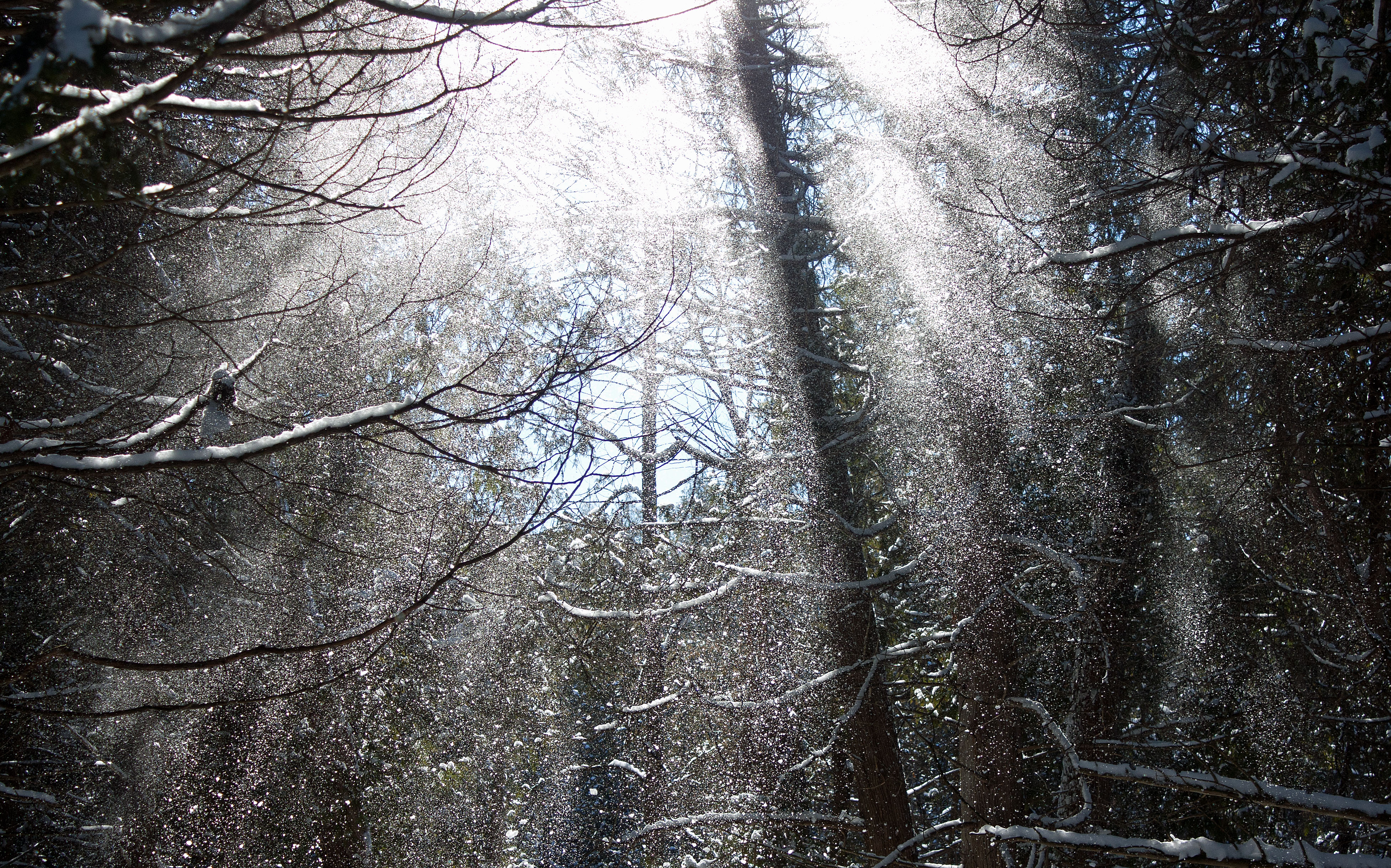
Snow dust falls in a cedar forest, ON (photo by Nina Munteanu)
A deepest silence, a most profound contemplation Midst snowdrift and snowlit mists as they shift Between icy branch and snow covered green bough
Dust of snow and cedar lights: All the ethereal wonders of a snowy day, The snow blessed, lost ephemeral lands In a full clothed beauty, snowy wonders: of sunlight, of shadow
Snow-covered shrub on a snowy day, ON (photo and rendition by Nina Munteanu)
Oh! sacred forest, this great beauty of place To overwhelm, to protect, to shelter… Here, a deepest meditation, a deepest circumspection… Snow and ice and all the wonder of a glorious sunlit day All the ephemeral beauty in a winter’s sunlight world.
Snow dust rains down from snow-laden cedar trees in Jackson Creek Park, ON (photo by Nina Munteanu)
Bev Gorbet is a Toronto poet and retired school teacher. She has published several poems with the Retired Teachers Organization and most recently in “Literary Connection IV: Then and Now” (In Our Words Inc., 2019), edited by Cheryl Antao Xavier.
Otonabee River glints in the sun as it snows, ON (photo and rendition by Nina Munteanu)
An autumn’s last days, fierce snowfalls, fall lights and storm The autumn landscape now full of wild moods, Hints of a magic wilderness and an encircling cold, The bitter winds, the fast falling hail: Landscape echo and retreat
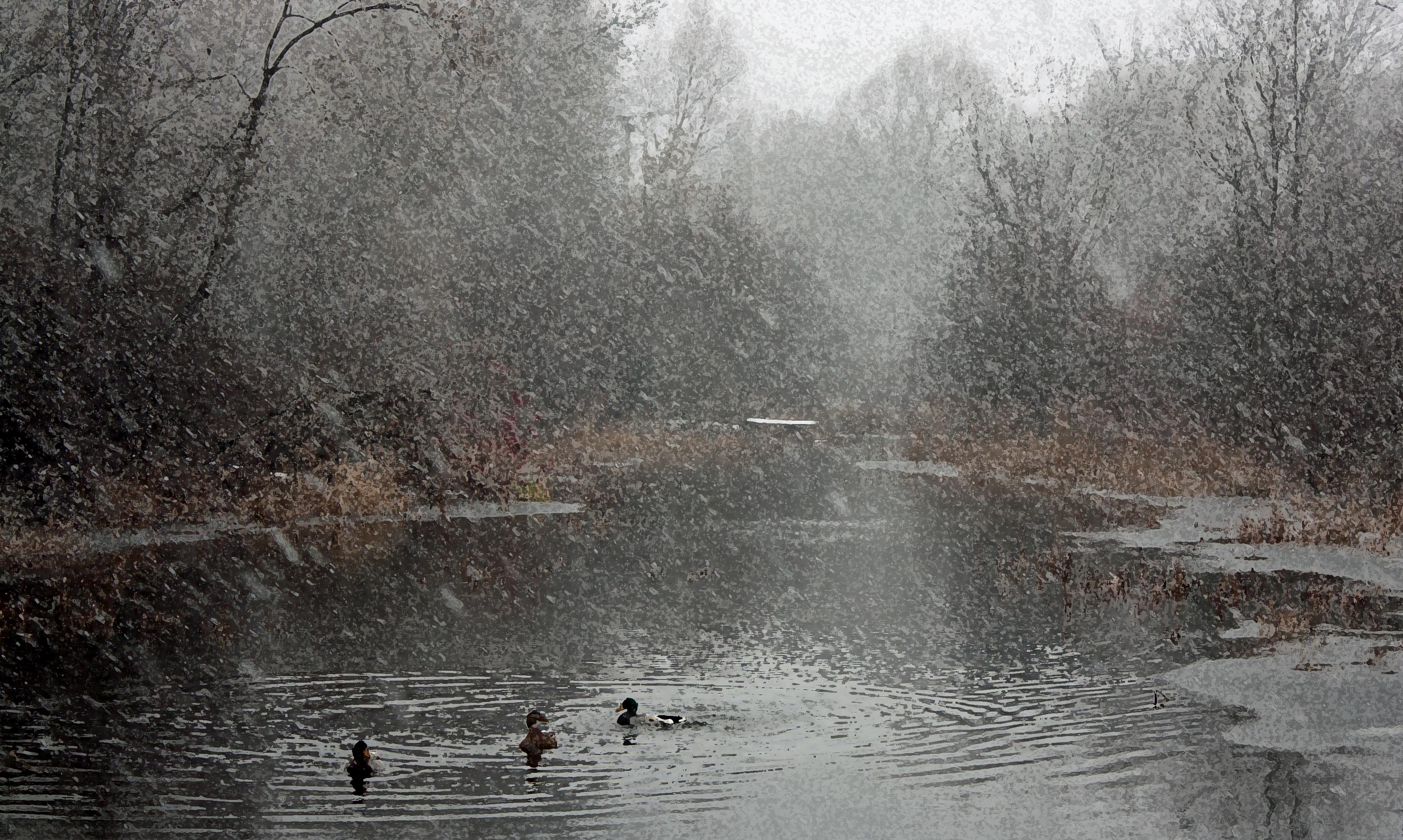
Mallards contently swim the marsh under a heavy snow, ON (photo and rendition by Nina Munteanu)
Snow veil mists over the receiving marsh lands: Somber cloud grays, shades of amber glow… Mallard ducks unconcernedly paddling On the smooth black marsh waters The snows above falling in majestic blizzards: Powerful bursts of snow over treetop And bended bough, Moody haze lit skies high falling away In blasts of snow and wind
Heavy snow falls in the riparian forest, ON (photo and rendition by Nina Munteanu)
Snowy reflections over high treetop above… Snowy days and last messages of a fading autumn’s glory: Detritus of bronze leaf, the withered beauty of a fading goldenrod A final sadness, autumn’s last messages, Haunted promises of a brilliant winter sunshine On snowy fields, velvet days and gold
Snow flies horizontally in a fierce wind, ON (photo and rendition by Nina Munteanu)
Now the forests bend, overwhelmed by the flying snow Thick tumbling down, shards of ice and rain Clouds of snow falling everywhere Forest pathways now covered in a lucent white glow, The shaded greens of cedar and fir picked out in a forest landscape; The continuing deluge, wild nature’s primordial powers: Mad windstorm and snow drift
Sun emerges over Thompson Creek marsh after the snowstorm, ON (photo and rendition by Nina Munteanu)
The still marsh waters now reflect the gray cloud, the sky high above All the windstorm madness, the bog detritus on the still marsh Now snow covered and silent, the snowfall ended The marsh now a sacred retreat: worlds of a glorious and gentle reflection, A tender, and radiant peace overall.
Bev Gorbet is a Toronto poet and retired school teacher. She has published several poems with the Retired Teachers Organization and most recently in “Literary Connection IV: Then and Now” (In Our Words Inc., 2019), edited by Cheryl Antao Xavier.
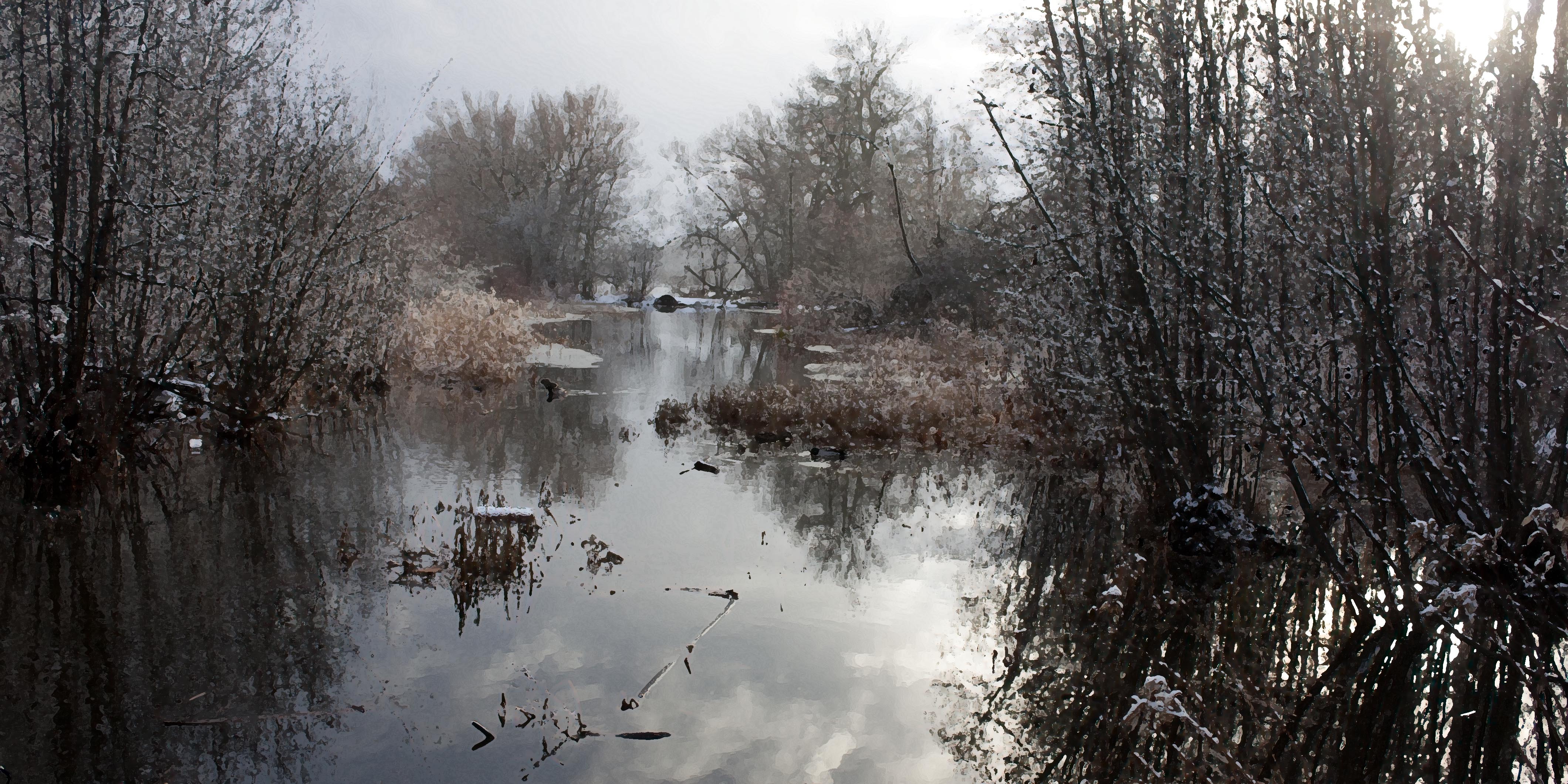
Thompson Creek marsh after a first snow in late autumn, ON (photo and rendition by Nina Munteanu)
Nina Munteanu revels in a snowstorm in Ontario (photo by Merridy Cox)
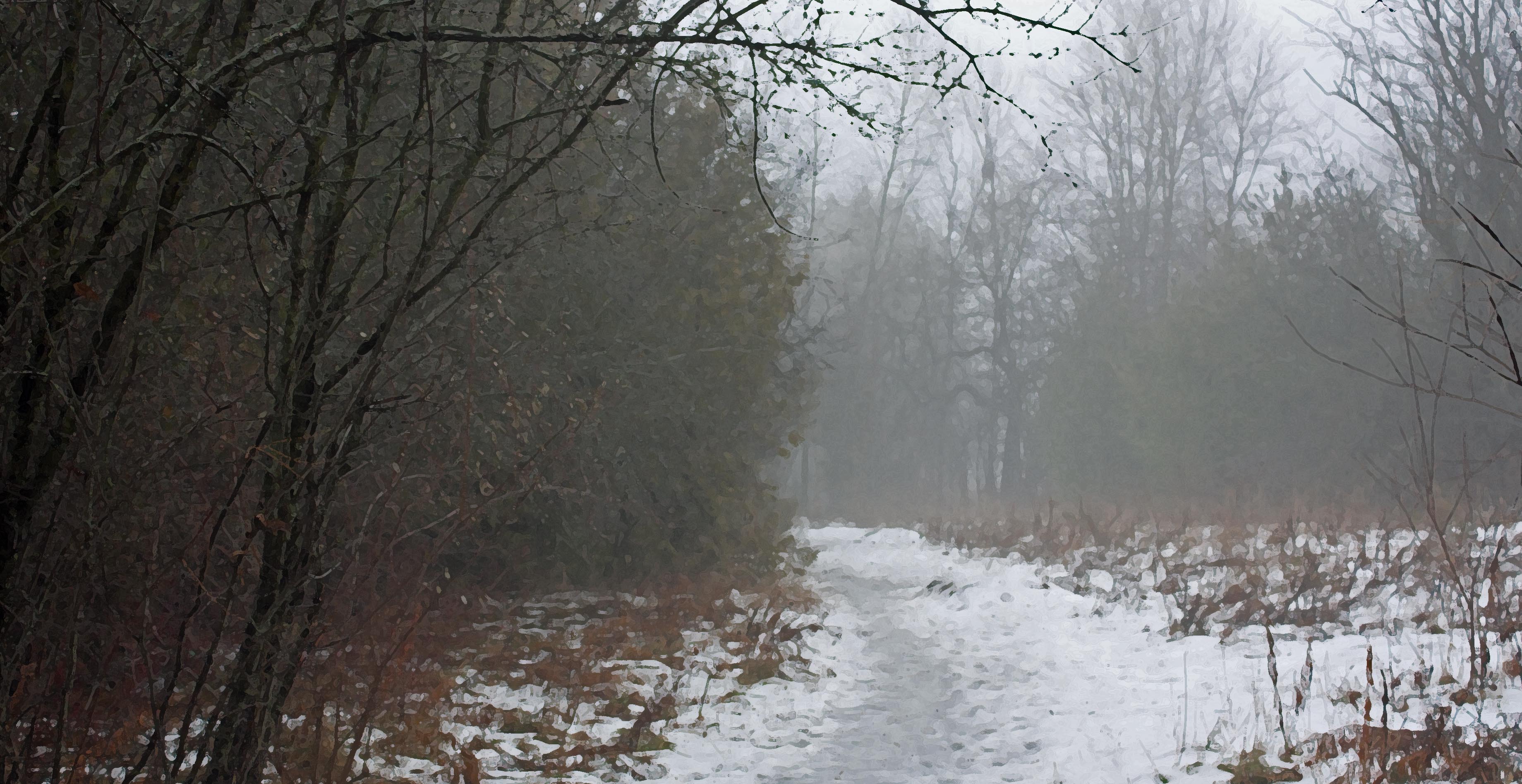
Path leading into a mixed gnarly forest in a December fog, ON (photo and rendition by Nina Munteanu)
During a recent professional development session for writing instructors at UofT, I got a prompt to share what I loved about teaching how to write. We had eight minutes to write what first came to us. I found myself writing easily and quickly. Here’s what I shared:
Path through a gnarly forest in a December fog, ON (photo and rendition by Nina Munteanu)
I love how fluid it is. I used to work as an environmental consultant (as a limnologist) and what I loved about that job was the lack of structure and the diversity of projects. No day was the same. And—like a box of chocolates—I never knew what lay in store for me. I flourish in that kind of chaotic problem-solving.
Teaching how to write is like that.
Teaching how to write is about process. It’s about the journey and the relationships, not just about things. It’s more about how they fit together, why they work, and where they go. The act of teaching is always changing. It’s fluid, like water. And how apt, considering that our bodies are over two-thirds water. Just like water, we like to flow.
Teaching how to write is more than teaching how to use a tool, how to string a good sentence together or choosing the best word; it includes “voice”, expression, identity, freedom, and autonomy. Writing is power and I am empowering when I teach writing.
What a cool thing to do!
Path along the edge of a small woodland in the December fog, ON (photo and rendition by Nina Munteanu)
Nina Munteanu is a Canadian ecologist / limnologist and novelist. She is co-editor of Europa SF and currently teaches writing courses at George Brown College and the University of Toronto. Visit www.ninamunteanu.ca for the latest on her books. Nina’s bilingual “La natura dell’acqua / The Way of Water” was published by Mincione Edizioni in Rome. Her non-fiction book “Water Is…” by Pixl Press(Vancouver) was selected by Margaret Atwood in the New York Times ‘Year in Reading’ and was chosen as the 2017 Summer Read by Water Canada. Her novel “A Diary in the Age of Water” was released by Inanna Publications (Toronto) in June 2020.
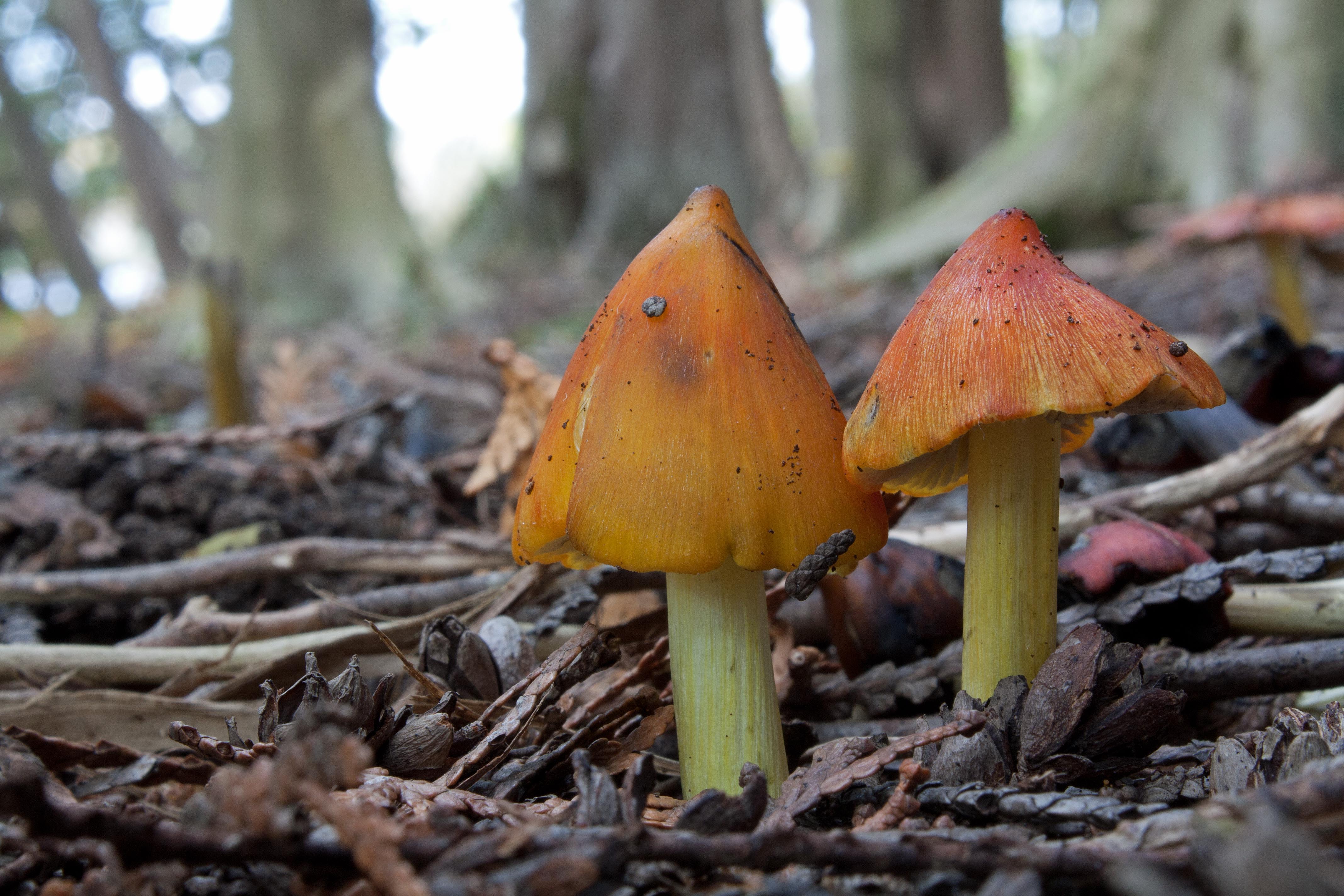
Witch’s Hat (Hygrocybe conica) by cedar tree, ON (photo by Nina Munteanu)
In my recent wanderings in the small cedar forest by the river near my house, I chanced upon a community of emerging reddish-orange fungi. They sat among the cedars in a crowded aggregation. Some pushed their way up through the duff like little buds, barely visible; others rose up with pointed steep caps; and others had opened further into tiny ‘witch’s hats’ and blackened.
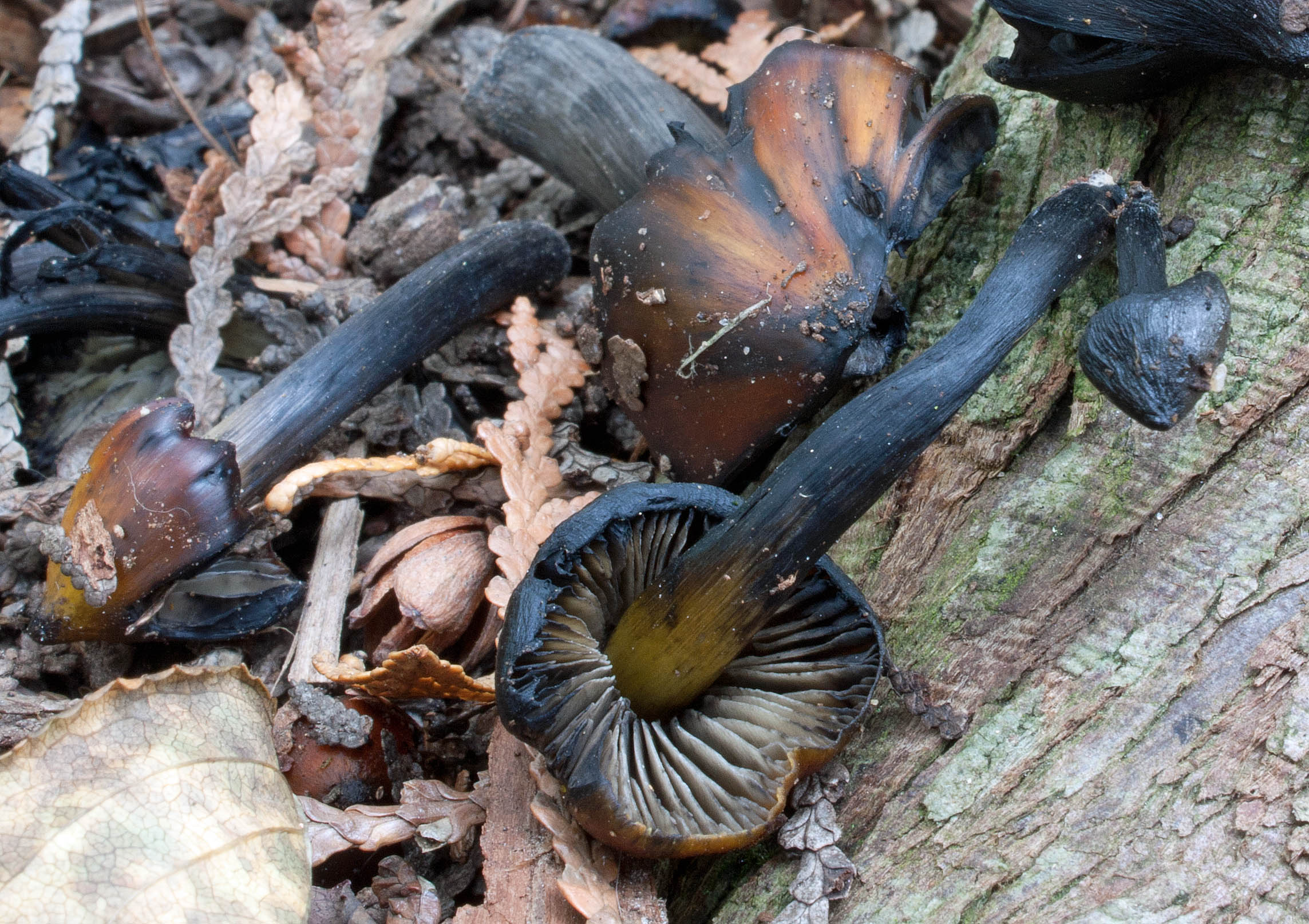
Several stages of Witch’s Hat, including blackening stage, cedar forest, ON (photo by Nina Munteanu)
According to Frank Dugan, fungus plays a key role in many folktales and fairy tales. “They appear as foods, poisons, diseases, decorations, dyes or tinder, and even in insults, compliments, graffiti and video games,” says the author of Fungi, Folkways and Fairy Tales: Mushrooms & Mildews in Stories, Remedies & Rituals, from Oberon to the Internet.
Fungi figure in wonderfully with stories of and about witches. “Witches have long used fungi in their potions in Europe,” Fungal Folklore tells us. Even ferry rings are called “Hexen Rings” in Germany; Hexe means witch and this refers to “the dancing of witches on Walpurgis night (the eve of May Day) when the old pagan witches were thought to hold high revelry,” writes Dugan.
Baba Yaga (Wikipedia Commons)
Baba Yaga
In the Slavic folktale, Baba Yaga is an ancient swamp witch; she’s a cruel ogress who steals, cooks and eats her victims, usually children; OR offers them help. It’s complicated; she’s either a maternal helper or a cannibalistic villain; or both. Certainly a trickster. Baba Yaga is guardian of the fountains of the water of life and lives in a forest hut perched on bird’s legs, surrounded by pine trees and glowing skulls. She can manipulate earth and wood, and can mesmerise. Baba Yaga has lately become something of an icon for feminism and the power of the feminine.
Says Marissa Clifford in Vice: “Like other witches, deistic Baba is agent of transformation, who, according to Kitaiskaia, exists ‘kind of outside of the things which constrain human society, like time and morality.’ She may well be so compelling for women today because of her rejection of social standards, and the power that comes from that. She’s an outlier with power that isn’t derived from her beauty, or her relationships with others. Instead, it comes from within her—earth, hut, and firey stove.”
Baba Yaga (illustration by Tatyana Chepkasova)
Witches, Fungi & Potions
“Witches have long used fungi in their potions in Europe,” The Fungus Among Us tells us. According to Dugan, the dung-loving Panaeolus papilionaceus (Petticoat Mottlegill) was used in witch’s concoctions in Portugal. The entheogen Amanita muscaria (Fly Agaric)—the elixir of ancient alchemists—is known as Hexenpils (‘Witches’ mushroom’) in Austria. Among German tribes, it is associated with Woton/Odin, god of ecstasy, war and shamanic knowledge. Puffballs were reportedly used in potions by witches in the Basque country. Witch’s butter (Exidia spp.) also figures in folklore. “Stabbing, burning or otherwise destroying these fungi were believed to harm the witch herself,” writes Owen. The Witch’s Hat (Hygrocybe conica) is aptly named for its blackening witch-style ‘hat’ that starts bright red-orange and turns coal black.
Many country folk through the sixteenth and nineteenth centuries performed rituals to protect their crops from the devastation wrought by witches and spirits. Thiselton-Dyer discusses the malignant Roggenwolf (‘rye wolf’ of Germanic folklore) who stole children and fed on them and the various rituals peasants used to appease these Feldgeister (field spirits), such as leaving a sheaf of rye in the fields over the winter. The Roggenwolf is, of course, the personification of ergot, the fungus Claviceps purpurea, which caused convulsions, burning, “massive-appetite”, and “the sense of becoming an animal.” People who contracted ergot poisoning from the contaminated rye were accused of being witches and brutally killed.
Young Witch’s Hats push up through the cedar forest floor, ON (photo by Nina Munteanu)
Ergot and The Last Summoner
In my historical fantasy “The Last Summoner,” young Vivianne Schoen, Baroness of Grunwald—accused of being a witch—is chased by her father’s guard to be burnt at the stake. Blamed for the sudden stupor of her father and the chaplain who both love their rye bread, it didn’t help that Vivianne possesses unnatural powers in metal manipulation, has weird markings or blemishes on her back or that suspicions of her preternatural mother being a witch precede her. Then odd things start to happen; cattle stop producing milk and other farm animals behave strangely. At a feast to celebrate her own coming nuptial to a foreign stranger and just after she is falsely accused of adultery, people suddenly succumb to fits of convulsions, facial distortions, hallucinations and paralysis. Targeted as the obvious candidate to blame, she must flee her home or be burnt alive at the stake:
…With a final unintelligible gasp that wet her cheek with flying spittle, he convulsed violently and pitched to the floor, shaking and vomiting his dinner.
Vivianne stared at her father, rolling and twitching in a seizure on the floor and crying out gibberish. She turned to the castle community, who were now pointing and shouting at her. Their faces had twisted from transfixed revulsion into fear and anger. Somehow they blamed her for both the stranger’s accident and her father’s sudden paroxysm. Perhaps for losing them a battle in the bargain too. Even Père Daniel’s face looked stricken with confused accusation. Until now Vivianne hadn’t realized how much his opinion of her meant to her. She felt his faltering faith drive like a blade into her heart and would have burst into tears had the crowd not suddenly grown very surly, which demanded her sudden attention.
Gertrude, the new dairymaid she’d assisted earlier, flung the first accusation: “She’s a witch!”
“Witch!” another echoed. “You heard her father call her one!”
Another servant swiftly followed with, “Just like her mother! She’s bewitched the baron! Put a spell on him with her wicked look!”
The crowd ignited to a raucous mob and a spate of accusations gushed out like a dam breaking: “My butter failed to churn because of her!”
“Look at the witchling’s eyes! They blaze with the devil’s own fire!”
“She appeared in Weikhard’s dream and now he’s ill!”
“She touched my cow and afterwards it couldn’t stand!”
“I saw the nursemaid bringing her a daily potion of nettle, mustard and mint with wine to make her lustful!”
Oh, no! They were implicating Uta along with her!
“I smelled basil and cloves in her bed chamber!”
Vivianne had used both to mask the rank odor of Uta’s anti-plague potions, completely innocent of their aphrodisiac properties. Vivianne stared in anguished despair as Père Daniel stood by, mutely sanctioning their actions. She’d thought him her champion once. But obviously this was too much for him to bear. He’d lost his trust in her. As their eyes met briefly, he suddenly gasped out strange words of gibberish. A violent shudder convulsed through him. It threw him forward, as if the devil itself were animating him, then felled him to the ground where he vomited alongside her retching father.
“She’s taken the priest!” someone shouted. “He’s doing the Viper’s dance!” Another screamed in a panic, “Watch out for her eyes!”
Vivianne turned back to the crowd. Whomever her gaze alighted upon shrank back and averted their face in terrified alarm. They were convinced that she could strike them down with a glance. To her horror a few of the castle servants jerked out of their seats with startled cries of gibberish then fell writhing to the ground; some began to vomit. Vivianne recognized the true onslaught of an epidemic. The same illness that had inflicted her father and the chaplain was attacking the staff. And again, the timing was impeccable, thought Vivianne with wry cynicism. As though God was plotting against her.
Gertrude pointed to her. “Seize her! Burn the witch! Before she kills us all!”
“Someone find her demon cat too!” Vivianne heard the doctor shout.
Several of the baron’s knights surged forward, swords drawn. As if suddenly awoken from a stupor, the Teutonic Knights at the high table leapt into action and drew their swords.
NO! Vivianne backed away in alarm. She envisioned their swords suddenly pointing back toward themselves. To her amazement, their swords flung back and the knights dropped them in shocked fright.
In that surreal moment, as the world staggered into slow motion, Vivianne saw the entire castle household draw in a long breath. Still on the floor, Père Daniel’s shakes abated long enough for him to fix lucid eyes upon her and silently mouth, “Cours, ma petite! Cours! Sauves toi!”
After a last glance at her convulsing father, Vivianne took the Père’s advice and ducked through one of the curtained archways behind the table to the kitchen stairwell, and pelted down the stairs.
“After her!” she heard the booming voice of Doctor Grien. “The witch is getting away!”
*****
Vivianne later discovers what caused the sudden ‘bewitchment’ of members of her community: all the people who became ill had eaten the rye bread. She learns about ergot poisoning of rye by the fungus Claviceps purpurea. Conditions had been ideal for ergot to thrive: damp and rainy cool weather.
Young Witch’s Hat with peaked cone-shaped pileus, amid cedar duff, ON (photo by Nina Munteanu)
The Witch’s Hat
Witch’s Hats are a small agaric (cap from 1-4 cm across) that start out bright red to orange, sometimes almost yellow as they thrust up through the cedar duff, looking like buds.
The conical pileus is often curved steeply with a fairly sharp top and sometimes with edges that curve slightly inward. The stem (stipe) is often white at the base blending to yellow and will stain black with age.
Witch’s Hat mushroom showing inward curve of cap, with key to show size, cedar tree, ON (photo by Nina Munteanu)
As the waxcap mushroom develops, the cap spreads out with a discernable brim while maintaining the hat peak of a witch’s hat. As it ages, it turns a deeper red-orange that blackens, often from the edges inward.
Three stages of Witch’s Hat, from early conical to spreading and blackening hat, cedar tree, ON (photo by Nina Munteanu)
This tendency to blacken from bruising or with age is a good diagnostic for this mushroom. Very few others show this trait. Its gills “have the consistency of soft wax when rubbed between the fingers,” Fungus Fact Friday tells us. The gills start white to yellowish and gradually yellow and stain black.
Stages of Witch’s Hat from budding to opening cap to blackening cap and gills, cedar forest, ON (photo by Nina Munteanu)
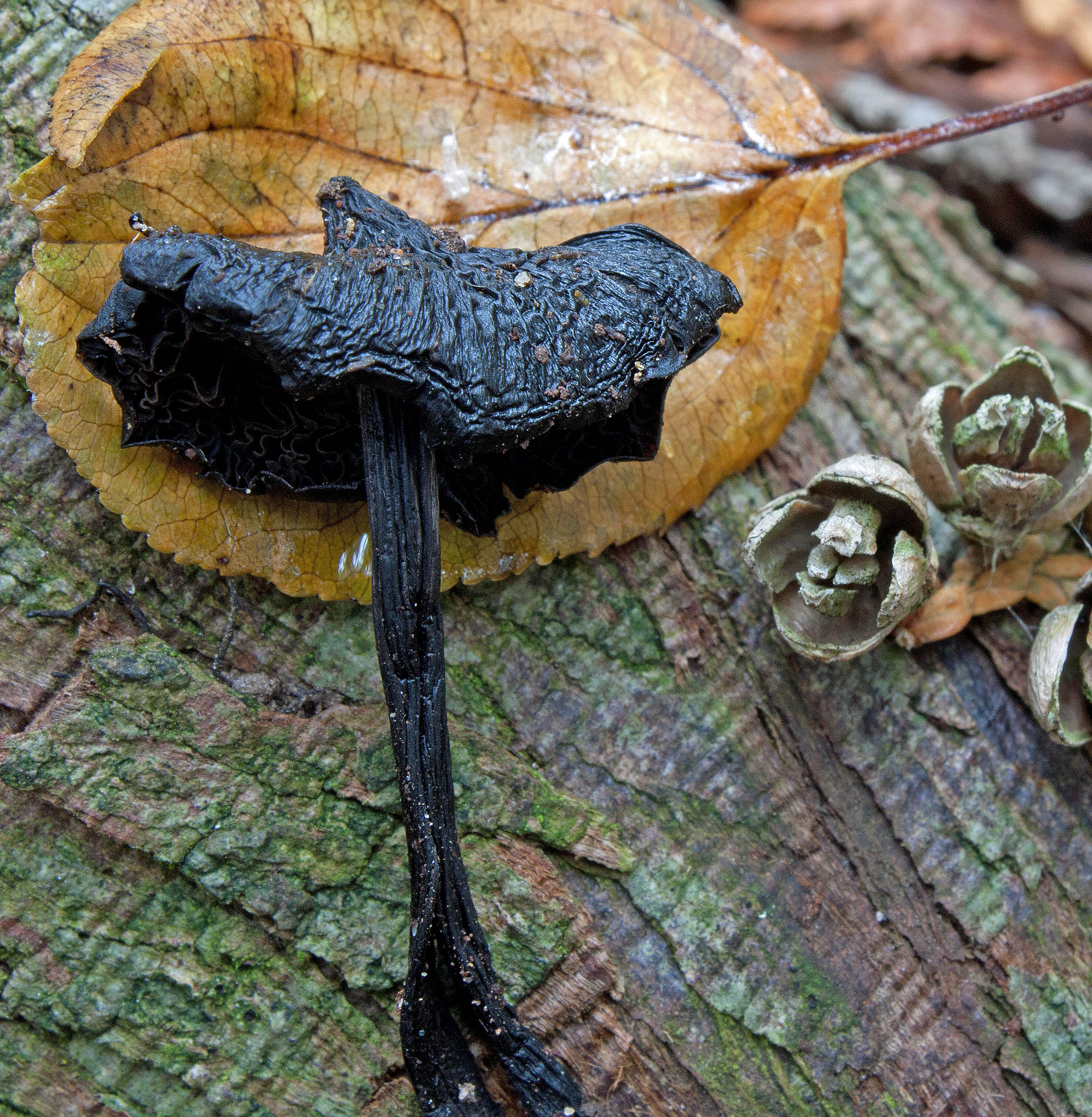
Blackened and blackening Witches Hat caps and stems, ON (photo by Nina Munteanu)
Hygrocybe conica well-represents its common name Witch’s Hat as it keeps its peak and turns totally black, cedar in Ontario forest (photo by Nina Munteanu)
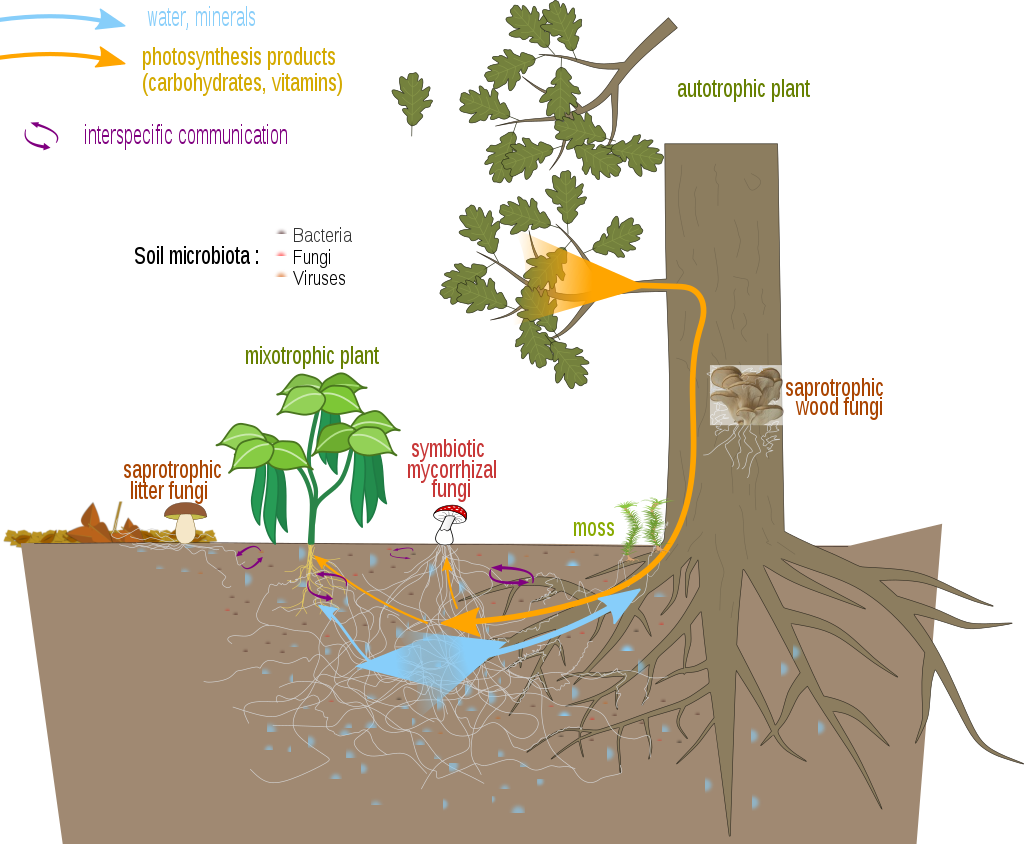
The Witch’s Hat (Hygrocybe conica), also known as Blackening Waxcap (for the obvious reason), shows a diversity of habitat preference and high variability. It tends to grow on the ground under hardwood and conifer trees. The community I stumbled upon fanned out from a few cedar trees in a small mixed cedar forest. The Witch’s Hat also likes mossy areas, where I found several near the river. The saprobic Hygrocybe conica is also a mycorrhizal fungus, sending tendrils from tree to tree.
Mycorrhizae are symbiotic relationships that form between fungi and plants. The fungi colonize the root system of a host plant—in this case some cedar trees—providing increased water and nutrient absorption capabilities while the plant provides the fungus with carbohydrates through photosynthesis.
Mycorrhizal network (illustration by Charlotte Roy, Wikipedia)
References:
Dugan. 2008. “Fungi, folkways & fairy tales.” North American Fungi 3(7): 23-72.
Morgan, A. 1995. “Toads and Toadstools: The Natural History, Folklore, and Cultural Oddities of a Strange Association.” Celestial Arts. Berkeley, California.
Munteanu, Nina. 2012. “The Last Summoner.” Starfire World Syndicate. Louisville, KY.
Owen, E. 2003. “Welsh Folk-Lore: A Collection of the Folk-Tales and Legends of North Wales. Kessinger Publishing. Whitefish, Montana.
Thiselton-Dyer, T.F. 1898. “Folk-Lore of Plants.” D. Appleton and Co., New York.
Young emerging Witch’s Hats through cedar duff, ON (photo by Nina Munteanu)
Witch’s Hat in cedar forest, ON (photo by Nina Munteanu)
Nina Munteanu is a Canadian ecologist / limnologist and novelist. She is co-editor of Europa SF and currently teaches writing courses at George Brown College and the University of Toronto. Visit www.ninamunteanu.ca for the latest on her books. Nina’s bilingual “La natura dell’acqua / The Way of Water” was published by Mincione Edizioni in Rome. Her non-fiction book “Water Is…” by Pixl Press(Vancouver) was selected by Margaret Atwood in the New York Times ‘Year in Reading’ and was chosen as the 2017 Summer Read by Water Canada. Her novel “A Diary in the Age of Water” was released by Inanna Publications (Toronto) in June 2020.
Poplar trees in the late autumn, ON (photo and rendition by Nina Munteanu)
My heart will rise to follow in the fierce rhapsody: Wind’s cry and rapture; Mystical beauty in the primal call, wildernesses, Mad windstorm moving from treetop to treetop, From branch to bending branch, from singing leaf to leaf Moving, high sheltering in the high tumult, skies above Midst songs of midnight, darkest shadow, deepest shades
Path through maple-beech forest, ON (photo and rendition by Nina Munteanu)
The great beauty in the wind’s mystic path Darknesses far beyond into the cathedrals of the night: Airs, echo and sighs, dreams, Thoughts of all our tomorrows: Sacred windstorms at the beginning of time: A glorious sun and the rising dawn lights
Pine cedar forest in Ontario (photo and rendition by Nina Munteanu)
All promise was once ours, Echoes of dreams once ours, All beauty once ours and days never to be forgotten Dawn lights and dusty twilights: The songs of the wind’s rapture, Fierce windstorm sighs, cries through branch and bough…
Old maple tree in a mixed forest, ON (photo and rendition by Nina Munteanu)
A pastoral field blazes with autumn colours of sumac and maple, ON (photo and rendition by Nina Munteanu)
Oh! memory hold strong Windsong: mystic soul of creation: the mystic fire, the holy flame; Worlds ablaze The long sacred journey into mystery Beauty transfigured, wind’s message and haunting Windstorm and mystical worlds, sanctuary far away All passion spent.
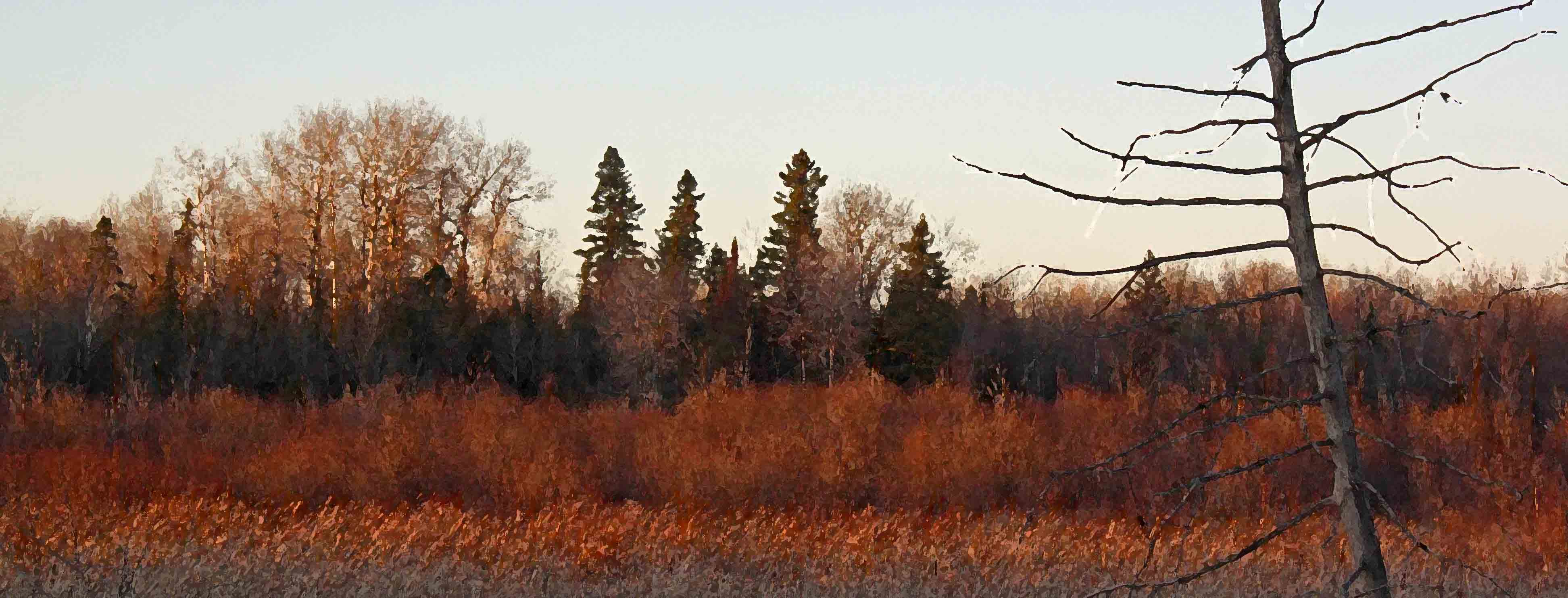
Marsh at sunset, ON (photo and rendition by Nina Munteanu)
Nina Munteanu is a Canadian ecologist / limnologist and novelist. She is co-editor of Europa SF and currently teaches writing courses at George Brown College and the University of Toronto. Visit www.ninamunteanu.ca for the latest on her books. Nina’s bilingual “La natura dell’acqua / The Way of Water” was published by Mincione Edizioni in Rome. Her non-fiction book “Water Is…” by Pixl Press(Vancouver) was selected by Margaret Atwood in the New York Times‘Year in Reading’ and was chosen as the 2017 Summer Read by Water Canada. Her novel “A Diary in the Age of Water” was released by Inanna Publications (Toronto) in June 2020.
Marsh in the Kawarthas of Ontario in the fall (photo and dry brush rendition by Nina Munteanu)
“Those who contemplate the beauty of the earth find reserves of strength that will endure as long as life lasts.”—Rachel Carson
In a recent seminar called “Cultivating a Sense of Place” (Programs in Earth Literacies) Douglas Christie introduced me to the works of Philip Levine. In particular, he discussed a work entitled “Dust” which appeared In Levine’s 2004 collection Breath:
Dust
My wife tells me that when she was six she came home from school to an empty house, put down her lunch box, sat on a hassock by her father’s chair, and simply waited. Someone known would return home soon, she was sure. The house was still, silent, holding its breath, the late afternoon sunlight streamed in the unshaded windows and turned the dust into in golden planets floating before her. Sixty-four years later she declares, “It was beautiful,” and goes on to describe the sense of awe and peace before this vision of the universe that descended from nowhere or perhaps rose from within. North-central Iowa, 1933, her grandmother’s house. Nothing else remains of the day. She gazes into space seeing again those whirling worlds more perfectly than the room she’s in, her smile open, her glazed eyes radiant.
–Philip Levine
Philip Levine
Such utter stillness in the moment described! As though it still existed. Which it did, which it does. Intact and unaffected by time’s erosion.
What we see as beautiful, touches us in our heart-minds and we cherish it.
Because that moment was beautiful, Levine’s wife cherished it; because she cherished it, it was beautiful. This was so only because her child-self gave herself over to the moment and allowed herself to experience the awe and wonder of that moment. It helped that she was a child, alone in an empty house that was usually filled.
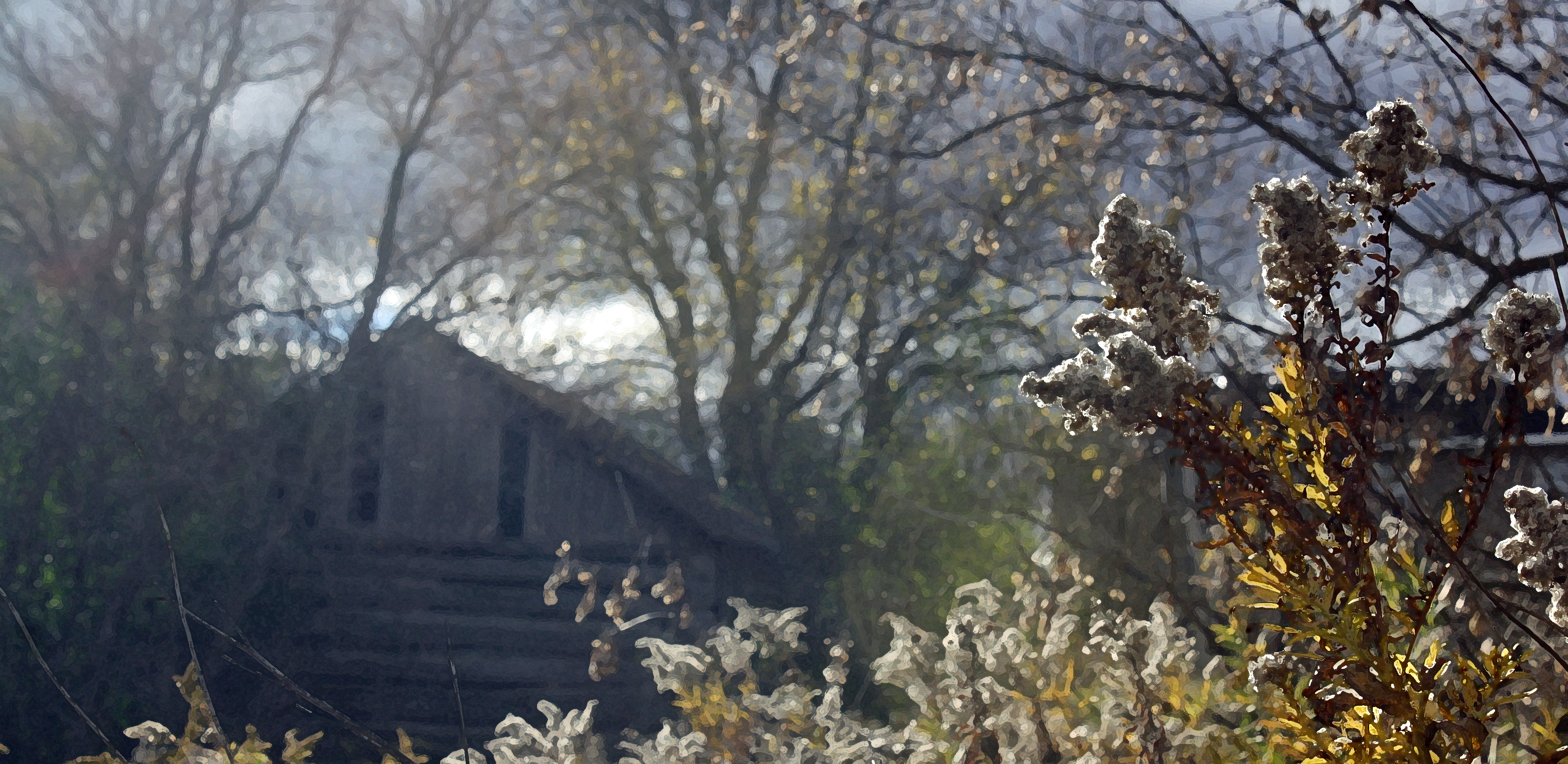
Old shed of farmstead with goldenrods in foreground, fall in Ontario (photo and rendition by Nina Munteanu)
When we grow up, why is it that we lose the tendency, even the ability, to simply be in the moment, in the silence of ourselves, to discover beauty? I suppose we make excuses; it isn’t efficient or productive to “do nothing.” Compelled to feed into the ever-burgeoning capitalist machine, we must keep “doing.” Do we learn to ignore those moments to be efficient machines ourselves? Surely, in refusing to live these moments, we are also silencing the many voices of beauty that could touch our hearts.
To appreciate beauty is to open your heart to wonder and silently witness. Beauty is found through beholding. Beauty is slow. To notice beauty, we must slow our mind and sense with our soul. We may “see” beauty all around us, but we do not “feel” it until we open to it, let it touch us and let it stroke our inner soul.
Pine cedar forest in Jackson Creek Park, ON (photo and rendition by Nina Munteanu)
Researchers have confirmed what the poets have long known: that we need to experience beauty in our lives. According to biologist Richard Prum, all creatures possess an aesthetic instinct—an instinct and a need for beauty. “The taste for the beautiful is as distinctive [and meaningful] as the need to survive,” writes Brenner. “One of the attributes of the beauty instinct is an inbuilt sense of respect for others.”
Encouraging yourself to recognize and appreciate beauty in Nature may be one of the most important aspects of your well-being.
Reflections on the Otonabee River, ON (photo and dry brush rendition by Nina Munteanu)
But what is beauty and how does one experience it? I devote an entire chapter to this topic in my book “Water Is…”.
There is beauty, writes 18th century aesthetic realist Francis Hutcheson, “in the knowledge of some great principles, or universal forces, from which innumerable effects do flow, such as gravitation, in Sir Isaac Newton’s scheme.” Neither beauty of form nor beauty of idea sufficiently applies to its definition, because beauty is, as we all know, “in the eyes of the beholder.”
Beauty—like love—is not so much a quality as a relationship
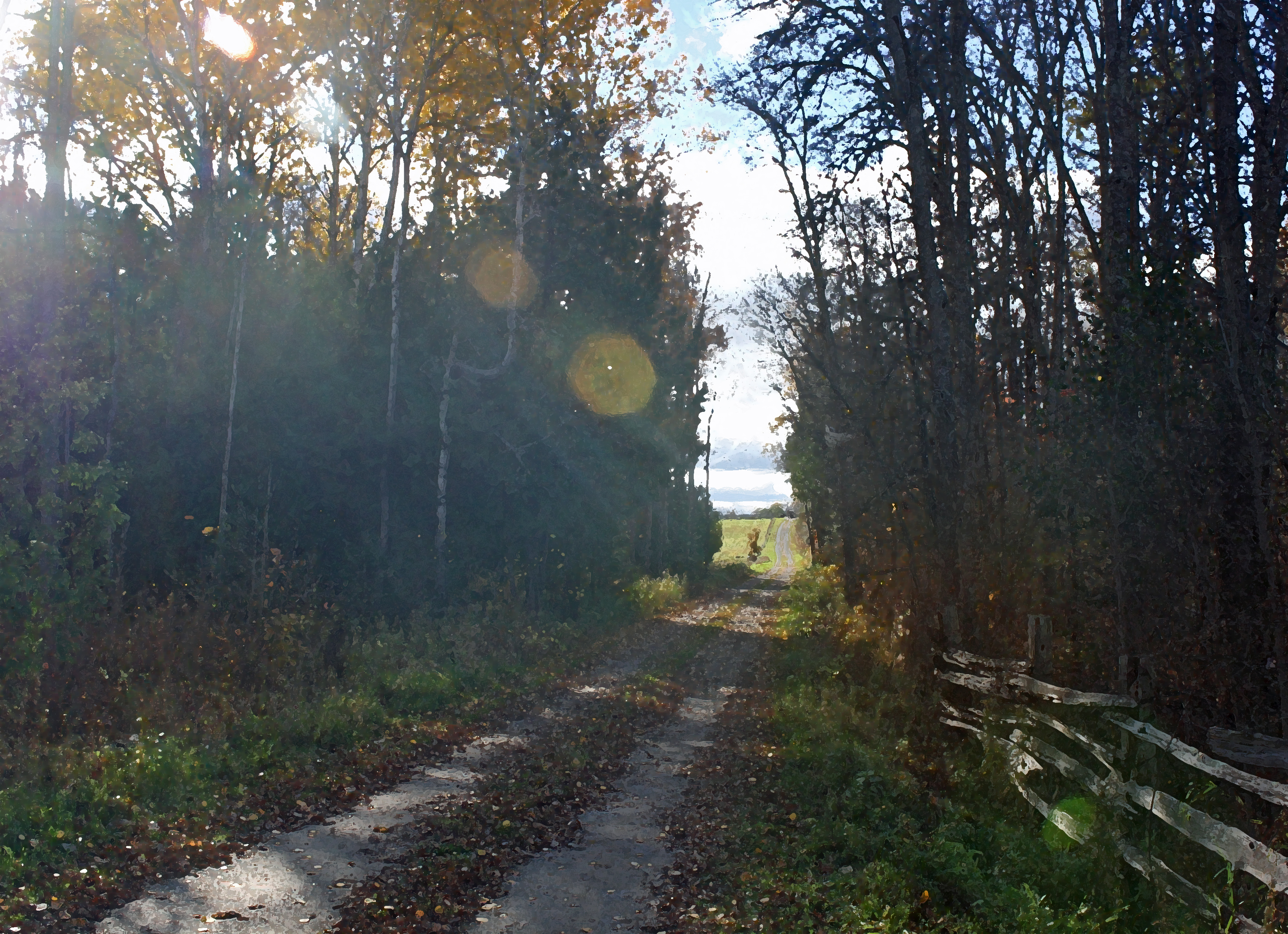
Lane to farm off country road in Ontario (photo and dry brush rendition by Nina Munteanu)
In 1942, philosopher of aesthetics Jared Moore described complete beauty as three varieties of harmony combined: (1) objective harmony (i.e., harmony among the elements that make up the “beautiful object” through form, idea and its expression); (2) objective–subjective (i.e., harmony between the beautiful object and the contemplative mind through spiritual and psychophysical [empathetic] means); and (3) psychological (i.e., its meaning). Moore writes that complete aesthetic harmony—expressed by psychological or purely subjective harmony—is achieved only when the first two harmonies are attained. He describes this complete sense of harmony as “a sense of pleasure” which not merely adds itself to the sense of beauty, but “enters into and becomes a part of it.” This “inner harmony” brings the personality into a state of “unity and self-completeness.” A unity of the subjective, not only with the object, but with itself.
We recognize beauty, and, in feeling it, are beautiful.
Stand of poplar trees in the fall, ON (photo and dry brush rendition by Nina Munteanu)
British artist and educator John Lane, author of Timeless Beauty, describes beauty this way:
“Although the complexities of both nature and beauty have a subtle mathematical basis, reason by itself cannot tell us why beauty exists nor what is beautiful … There is often something spontaneous, even ‘illogical’ about these emotions; like love, they can never be predetermined, let alone dictated. But neither can the otherwise and splendid things which are most significant in human life, to which the greatest of the human race have contributed most, and in which our real refreshment consists—the love of truth, the sources of inspiration and the production of great works of art.”
“These, like beauty,” says Lane, “ultimately pertain to the unconscious, the heart and the soul. They pertain to the heart because it is love which discerns the mystery inherent in those things we see as beautiful; love which abandons arrogance and stands in awe before the mystery of life. It is love that sees beauty which, in turn, is always loved.”
Jackson Creek in the fall, ON (photo and dry brush rendition by Nina Munteanu)
The Beauty of Place
I grew up in the Eastern Townships, a gently rolling agricultural region in Quebec, Canada. I followed my older brother and sister to the nearby maple-beech forest and local stream. The forest was our playground and gateway to our imaginative play. We stirred soil, flower petals and other interesting things with water to fuel “magic potions” that we inflicted on some poor insect. Yes, I was a bit destructive as a child—and I took a lot for granted.
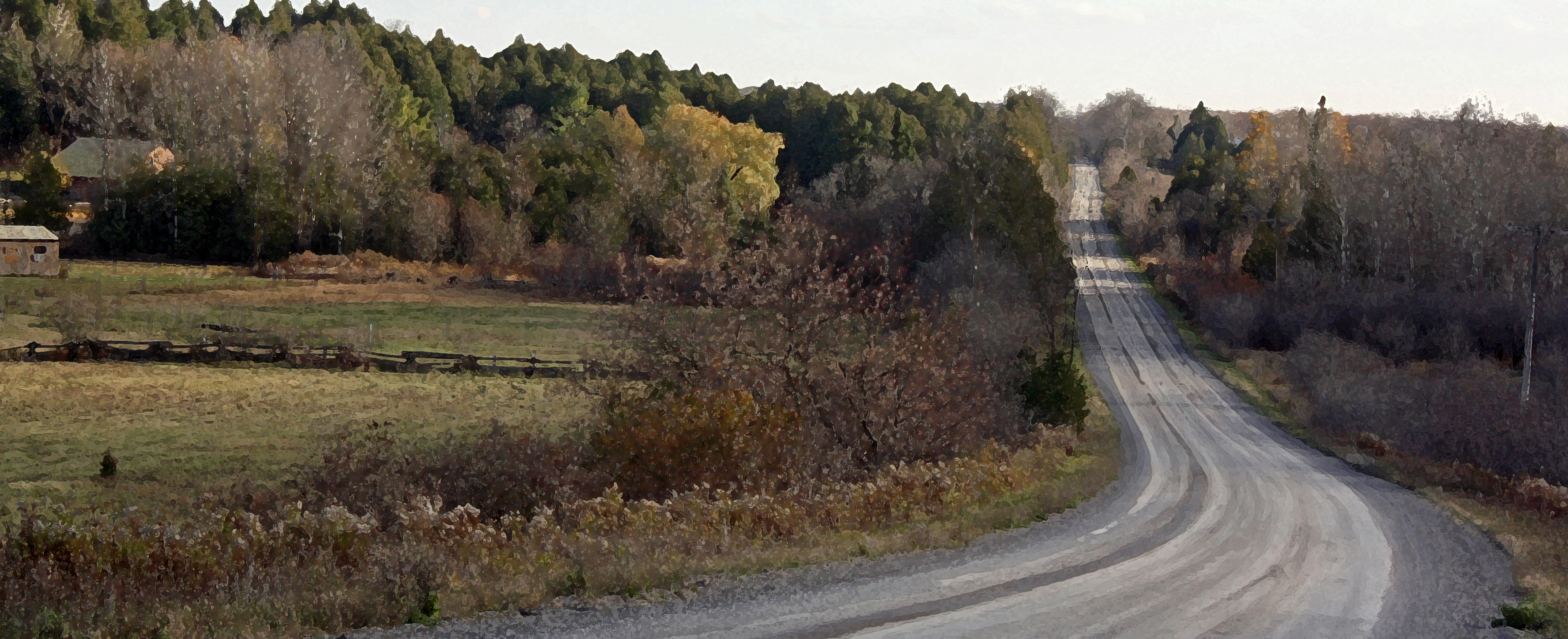
Country road in Kawarthas in fall, ON (photo and dry brush rendition by Nina Munteanu)
Much later in life, when I gave birth to my son, Kevin, in Vancouver, BC, I felt a miracle pass through me. Kevin became my doorway back to wonder. His curiosity was boundless and lured me into a special world of transformation. Kevin and I often explored the little woodland near our house. We made “magic potions” out of nightshade flowers, fir needles, loam and moss; we fueled our concoctions with the elixir of water from a stagnant pool. This time the little insects weren’t molested.
Red oak acorns line up against a tree root, Jackson Creek, ON (photo and rendition by Nina Munteanu)
Being with my young son slowed my world and returned to me a great sense of wonder. A walk to the little store with young Kevin was an expedition. He’d amble, explore, poke, then suddenly squat and study something on the pavement that I’d missed.
He brought me back to the ground, to the extra-ordinary mundane—to the quiet details and the fragrant light. Acting like a macro lens, he pointed me to the little things, Nature’s nuanced designs that I’d forgotten in the larger paradigms of my hurried life.
Poplar leaf amid the litter of a cedar forest floor (photo and rendition by Nina Munteanu)
He brought me back to the immediate, to Nature’s elegant silence and beauty. He showed me the fractal wonders of tree branches, exploding seeds, glorious reflections in puddles, strange mud waves and odd moss-covered rocks. We crouched in halted silence to watch a bee feast from a flower’s nectar then launch itself—a dirigible laden with pollen—into the sky. We followed the brilliant Fibonacci spiral of a sunflower or the circular gossamer web of a spider, both mimicking the greater spiral of our own Milky Way Galaxy. We stuck our tongues out to taste the snow as it cascaded down in heaps or caught hexagonal snowflakes on our sleeves and sadly watched them melt. We stomped in road puddles or threw rocks and watched the circles of waves feed outward, changing the colour and texture of everything. We collected flotsam in nebulous forest pools and made magical potions. We wrote stories in the ocean sand, then leapt from dry rock to dry rock until the sea trapped us in its rushing embrace.
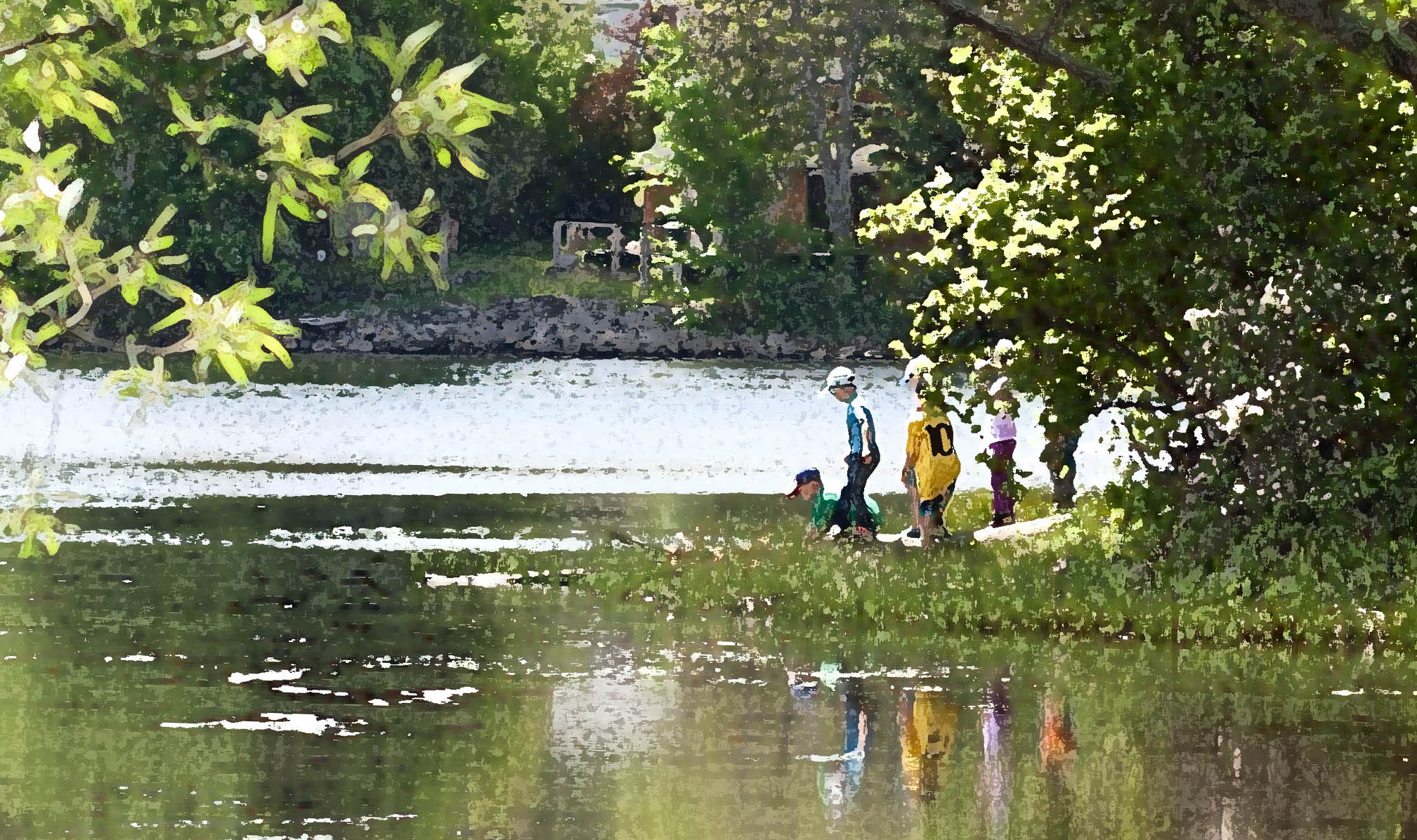
Group of young boys explore the river bank, ON (photo and rendition by Nina Munteanu)
My adult son still carries that sense of wonder for the natural world. He lives in British Columbia where he skis the mountains and frequently hikes the mountain foothills and old-growth forests of that beautiful province.
He’s soul-bathing.
My son Kevin skiing in British Columbia (photo by Lindsay; rendition by Nina Munteanu)
In her 2003 foreword to John Lane’s book Timeless Beauty, Kathleen Raine writes, “Of Plato’s three verities, the Good, the True and the Beautiful, none can be understood in terms of the materialist values of modern Western civilization, and beauty least of all.” She adds, “Keats saw [beauty] as the highest value—because its reality can be known only to the soul … If beauty is the highest of Plato’s verities this is because it is in accordance with our nature: Plato did not invent that need. And did not Dostoevsky in The Idiot affirm his believe that the world can be saved only by beauty? We disregard and undervalue the beautiful at our peril.”
“That the universe is alive, a living entity, there can, it seems, be less and less doubt, and that it is beautiful there can be none at all.”
—John Lane, Timeless Beauty
Mossy rocks in Jackson Creek, ON (photo and rendition by Nina Munteanu)
Aristotle. 350 BCE (1984). “The Poetics” and “Metaphysics.” In: “The Complete Works: The Revised Oxford Translation, Vol. 1. Bollingen/ Princeton University Press, N.J. 2512 pp.
Birkhoff, George David. 1933. “Aesthetic Measure.” Harvard University Press. 225 pp.
Hutcheson, Francis. 1725 (2004). “An Inquiry into the Original of Our Ideas of Beauty and Virtue.” In: Wolfgang Leidhold (ed) Indianapois: Liberty Fund.
Lane, John. 2003 “Timeless Beauty: In the Arts and Everyday Life.” UIT Cambridge Ltd, , UK. 192 pp.
Livio, Mario. 2005. “The Equation that Couldn’t Be Solved.” Simon & Schuster. 368 pp.
Moore, Jared S. 1942. “Beauty as Harmony.” The Journal of Aesthetics and Art Criticism 2(7): 40–50.
Newton, Eric. 1950. “The Meaning of Beauty.” Whittlesey House. 207 pp.
Puffer, Ethel. 1905. “Psychology of Beauty.” Houghton, Mifflin & Co., NY. 156 pp.
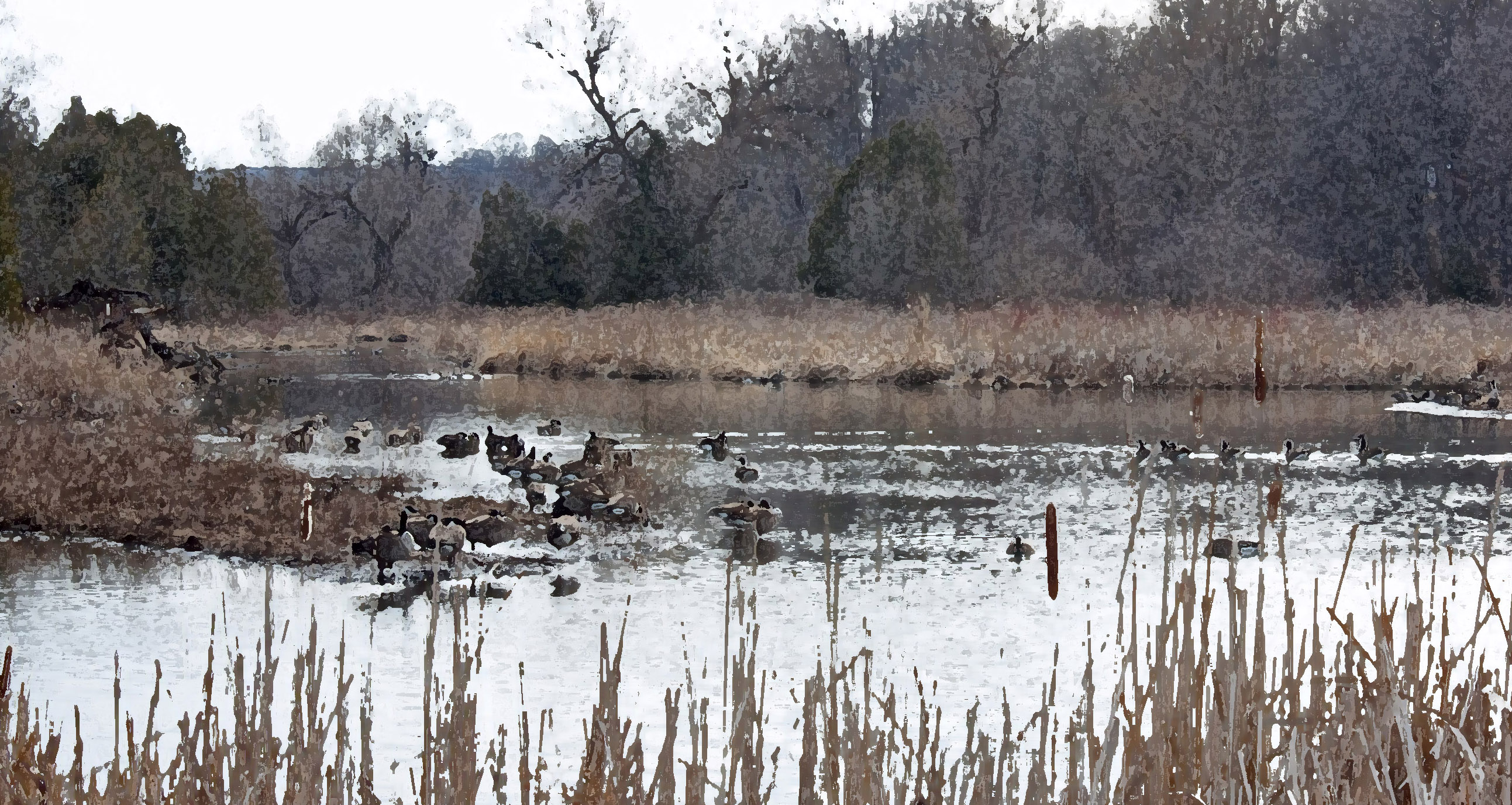
Marsh with cattails and flock of geese, near Millbrook, ON (photo and rendition by Nina Munteanu)
Nina Munteanu is a Canadian ecologist / limnologist and novelist. She is co-editor of Europa SF and currently teaches writing courses at George Brown College and the University of Toronto. Visit www.ninamunteanu.ca for the latest on her books. Nina’s bilingual “La natura dell’acqua / The Way of Water” was published by Mincione Edizioni in Rome. Her non-fiction book “Water Is…” by Pixl Press(Vancouver) was selected by Margaret Atwood in the New York Times ‘Year in Reading’ and was chosen as the 2017 Summer Read by Water Canada. Her novel “A Diary in the Age of Water” was released by Inanna Publications (Toronto) in June 2020.
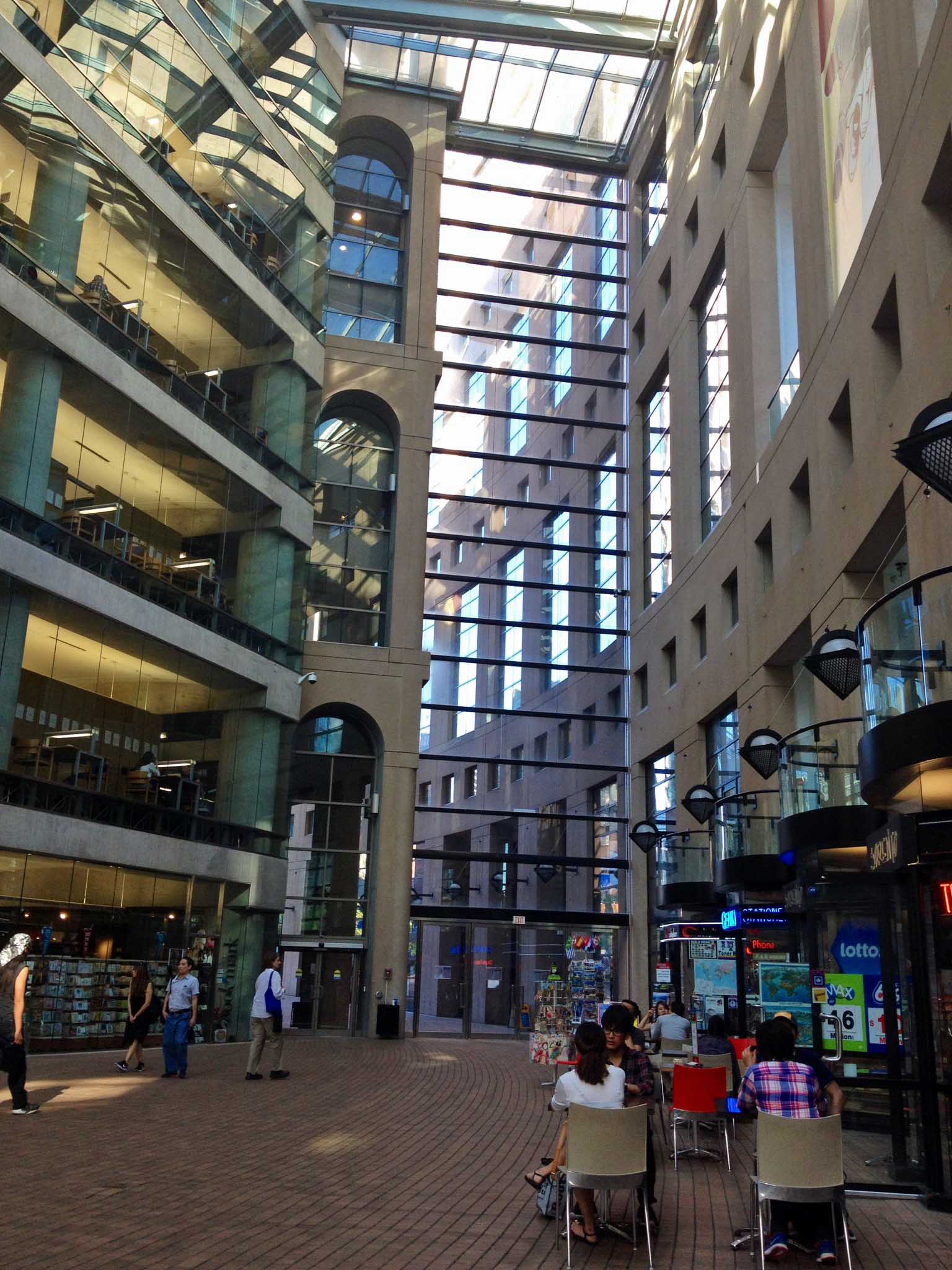
Vancouver Central Library, BC (photo by Nina Munteanu)
Just over five years ago I read a survey by bestselling author Marie Force who revealed some interesting trends about what American readers like, what format they prefer and where they find their writers. While the survey was fairly small and restricted to Americans (just under 3,000 people responded to 44 questions), I think it provided a good microcosm of what the trend is out there in North America generally. Here are the main points I took away, of which I think remain relevant today:
Increased sales of Digital Books: the increasing sales of digital books (ebooks) and the rising sales of audiobooks is a wonderful and uplifting icon of rising literacy. More people are reading—and listening—to books now than ever. And we have the digital book, Kindles, Kobos and iPads to thank for it. The “book” has become more accessible and readable. People swarm the public transit, clutching their iPhones and reading devices.
Readers still choose Print Books: Obviously, print books are cherished by readers for their intrinsic value. Books—their tangible tactile presence—will always remain with us; in collector’s showcase libraries, in trendy artistic venues, and funky local neighbourhood venues.
My Crazy Prediction: print books will become the epitome of publishing value and worth. Already coveted by collectors whose libraries will represent the best of the best in the literary world, print books will come to represent the highest status in literature. Only the best stories will endure as print books; perhaps only the “best book” will even be published in print form. Its existence in print form will define its literary value.
Take Home Message to Authors: ensure that your book appears in print form and get it into the hands of classy libraries and classy people. So, even if you don’t survive the apocalypse, your book will…
Vancouver Central Library, BC (photo by Nina Munteanu)
Nina Munteanu is a Canadian ecologist / limnologist and novelist. She is co-editor of Europa SF and currently teaches writing courses at George Brown College and the University of Toronto. Visit www.ninamunteanu.ca for the latest on her books. Nina’s bilingual “La natura dell’acqua / The Way of Water” was published by Mincione Edizioni in Rome. Her non-fiction book “Water Is…” by Pixl Press(Vancouver) was selected by Margaret Atwood in the New York Times‘Year in Reading’ and was chosen as the 2017 Summer Read by Water Canada. Her novel “A Diary in the Age of Water” was released by Inanna Publications (Toronto) in June 2020.
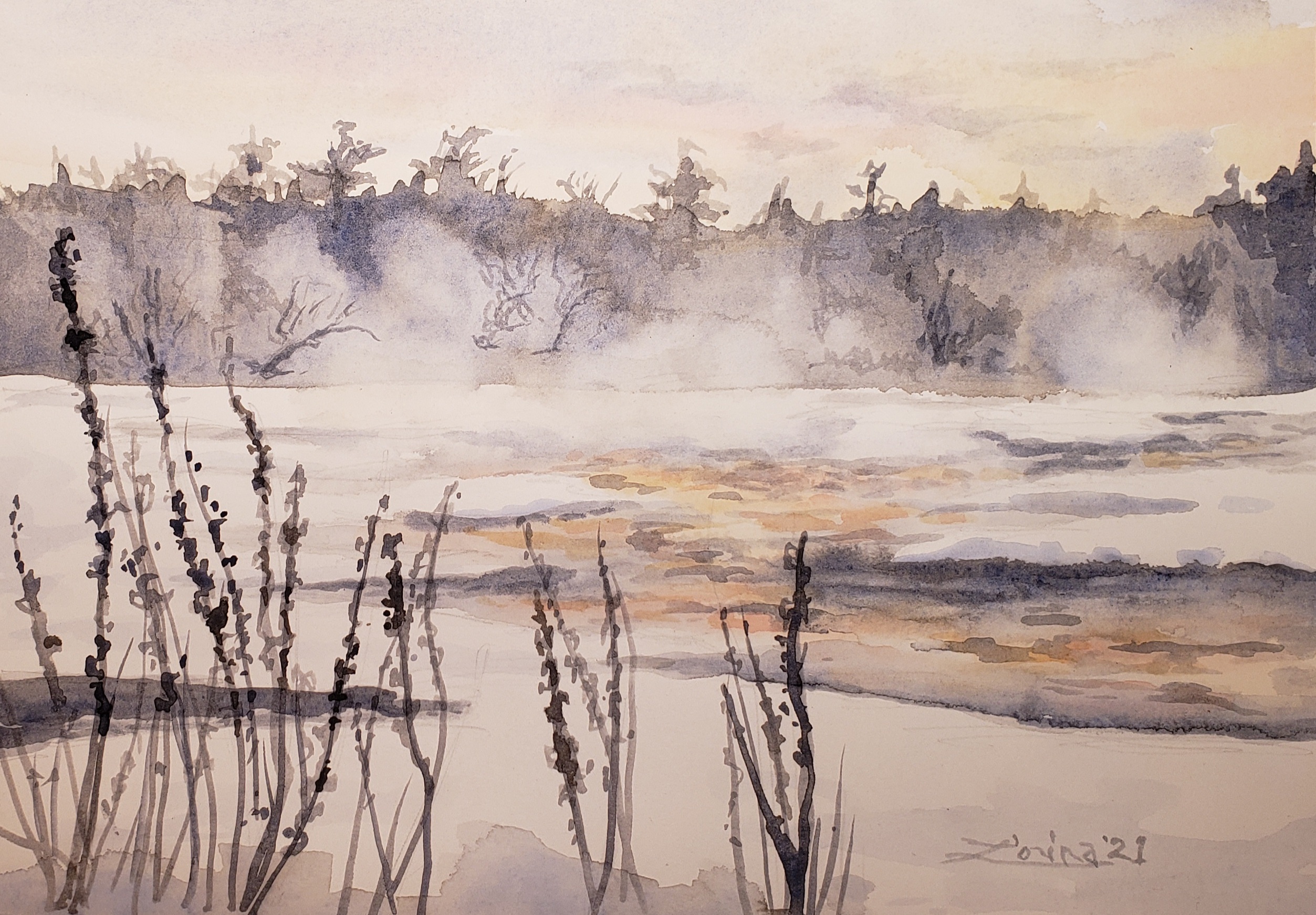
“Petawawa River” by Lorina Stephens (7″ x 10″ watercolour on Arches 140 lb hot pressed)
I first met Lorina Stephens some years back when I joined SF Canada, the organization of Canadian professional science fiction, fantasy and horror writers and publishers. Lorina was already the publisher of Five Rivers Publishing, a highly successful small book publishing house out of Neustadt, Ontario. What I didn’t know at the time was that she is also a consummate landscape artist, using watercolour to create evocative art. And, of course, a consummate storyteller.
She’s here today to talk about her latest book Dreams of the Moon, a new collection of ten fantastica short stories, described by writer/reviewer R. Graeme Cameron as “Darkness and light. Wonder and sorrow. The ambiguity, sometimes, of reflected illumination … In this new collection of both previously published and new short fiction, Lorina presents a progression from darker, sometimes horrific stories which explore religious mythology, mental health, and the beloved dead, to the more light-hearted explorations of spirit guides and illustrations made manifest.”
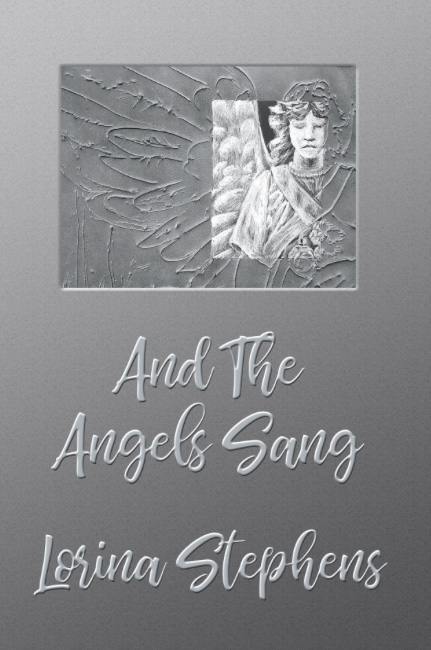
Lorina’s previous short story collection And the Angels Sang published in 2008 was described as “a provocative [collection] of speculative short fiction, from dystopia to utopia, written over the past 25 years.”
“the Angels Sangis a cornucopia of fractal glimpses into the mysterious, the fantastic, and surprises that lurk beneath the surface.”—Midwest Book Review
“It is often the case with contemporary Canadian authors that they have a tendency to punctuate their novels with long, psychological dissertations on mundane subjects. It’s as if they feel that each everyday occurrence is fraught with deep sociological undertones. Lorina Stephens, fortunately, is free of such meanderings. She has a good economy of words and each paragraph contains vital information.”—Dan Pelton, Orangeville Citizen
Here’s Lorina’s post:
The last collection of short stories I published was in 2008. It’s an eclectic mix which I entitled And the Angels Sang, named for the lead story. To my delight, it’s met with quite a bit of positive reaction from both readers and reviewers.
In the ensuing years, I’ve crafted a number of other short stories in between operating a publishing house and all the demands of being an administrator in our other business, one which pays the bills. A lot has happened during that time: our son married his life-buddy, three major surgeries, a failed attempt at elder care, renovating this old stone house which was built c1847, and as I write this, into the second year of a global pandemic.
And somewhere in all that still writing, still exploring ideas and what-ifs. I do have to admit a reluctance to writing short fiction. The literary form seems so restrictive to me, perhaps more having to do with the fact I have too much to say and want to make an epic out of everything. But short story writing is good discipline.
Having said that, I’m giving you 10 short works of fiction in this collection [Dreams of the Moon], spanning the boundaries of science fiction, speculative fiction, fantasy, magic realism and absurd fantastica. Apparently, I don’t much like writing in just one genre, either. Creative fences drive me batshit crazy, although I do very much appreciate fences around this sanctuary we are privileged to call home. But there is a theme to this collection, a common thread I think you will find through all the stories. What it is, I will leave up to you to decipher, and thus we will have a silent communication.
I’ve arranged the stories in some loose graduation of dark to light, and again have chosen to use the lead story as the title for the collection. But the title Dreams of the Moon is more, because as a child, and then an adolescent, I firmly believed if I arranged myself just so in the bed, so that when the moon shone in my window, something wonderful would happen. It never did. But I still felt compelled to answer the call of that pale, eerie light.
And then there were all the moonlight walks in the deep of the night which took place well into adulthood. Wonderful moments. Moments I remember with clarity and wonder, whether moonlight so bright on a winter’s night that the trees by the river cast indigo shadows across the snow, or a brace of geese rising up and across that silver face. And as with all things, there is the dark side of the moon: a sleepless night fraught with sorrow and a desperate attempt to rescue someone I dearly loved.
All of these moments influence and underscore what I write. It’s there in these 10 stories. Darkness and light. Wonder and sorrow. The ambiguity, sometimes, of reflected light. Dreams of the Moon.
The third story in the collection, Gravity, slides from the horrific to a quieter, perhaps oppressive literary piece of speculative fiction. As in At Union, the second story in the collection, Gravity deals with the loss of a child, in this case a daughter who dies while on a scientific mission at the edge of a singularity.
I do like playing with anachronisms, because somehow they are a metaphor for many of the ironies in our lives. So it is in this story the main character is a woman of age who is a maker of old world automatons, and in this case she’s working on a silver niello owl.
I chose an owl because of both the dark mythology which often surrounds owls, and because of their sheer beauty. They are amazing raptors. Silent. Deadly. Reticent creatures. Amazing fliers through dense forest.
There is also an eerie spring in the story, which is inspired by a sulphur hot spring not far from our home. It flows at a constant temperature 12 months of the year, which is remarkable given our geographic location. It’s also a very eerie spring to view. The water is a pellucid turquoise, flowing with force out of a deep funnel, and in which nothing grows. There is just this volume of warm, clear water fountaining up out of the bowels of the earth and spilling out into the Saugeen River complex.
Of course, you’re likely scratching your head at this point wondering how the hell did I weave together the death of a daughter, a singularity, a mourning mother, a hot spring, and a clockwork owl? Well, at the risk of being coy, you’ll have to read the story in order to find out.
Dreams of the Moonis available in trade paperback and ebook, either directly through my website or through your favourite online bookseller wherever you live in the world. It’s also available through elibrary services globally.
“Big Sky” by Lorina Stephens (7″ x 1o” watercolour on Arches 140 lb hot pressed)
The Art of Lorina Stephens
Lorina tells us that the two watercolours featured here “are both part of a series I’ve been exploring the past three years since my mum died,” says Lorina. “Painting was one of the few things we shared throughout a difficult and often shattered relationship. So, in this series in particular, I have been trying to capture the sense of peace, of belonging to the planet, of harmony.”
Lorina primarily paints in watercolour: “I prefer to use transparent pigments, carefully glazing from warm, light pigments to cool, dark, which allows light to travel through those microscopic films of colour. I think that creates a clarity of colour, which then adds to the sense of luminescence I want to imbue into most of my art. I do also work in oils, acrylics, and pen and ink, as well as pencil and pastels. But my heart lies in watercolour because it’s such a precise, unforgiving, technical medium. It makes me slow down, consider. And I like that meditative process. It’s also something I do in my writing: think a lot. That’s essential to being creative, at least for me.”
Lorina mostly works in landscapes, often with lakes and rivers, icons of a water-rich nation. “We are such a remarkable land of water,” she says. “Our geography is breathtaking.” Atmospherics—weather—fascinates Lorina. “I love the challenge of bringing that sense of fog, or mist, or rain, or even crisp, clear air to a painting, of making the viewer feel they are there, without resorting to magic realism. I like to tuck my work somewhere comfortably between realism and impressionism.”
Biography on Lorina Stephens
Lorina Stephens has worked all sides of the publishing desk: writer, editor, publisher. From freelance journalist for regional and national periodicals, to editor of a regional lifestyle magazine and then her own publishing house, she’s been at this professionally since 1980 and has witnessed publishing evolve into the dynamic form of self-expression which exists today. For 12 years Lorina operated Five Rivers Publishing as a house which gave voice to Canadian authors. Due to life circumstances, Lorina had to change direction, and so now the house exists as a bit of a vanity press for her work.
Lorina’s short fiction has appeared in literary and genre publications, novels under her own house, Five Rivers Publishing, non-fiction under Boston Mills Press and an anthology co-edited with Susan MacGregor, Tesseracts 22: Alchemy and Artifacts.
Mostly Lorina is an introvert. You won’t find her at conventions. On social media she mostly lurks. If you really want to know what Lorina is about, read her work. It’s that simple. If you’re curious, email her at: lorina@fiveriverspublishing.com
Nina Munteanu is a Canadian ecologist / limnologist and novelist. She is co-editor of Europa SF and currently teaches writing courses at George Brown College and the University of Toronto. Visit www.ninamunteanu.ca for the latest on her books. Nina’s bilingual “La natura dell’acqua / The Way of Water” was published by Mincione Edizioni in Rome. Her non-fiction book “Water Is…” by Pixl Press(Vancouver) was selected by Margaret Atwood in the New York Times‘Year in Reading’ and was chosen as the 2017 Summer Read by Water Canada. Her novel “A Diary in the Age of Water” was released by Inanna Publications (Toronto) in June 2020.
A while ago I was approached by Robert Gooding-Townsend, Science in Society editor for Science Borealis for my opinion on a persistent idea that post-Star Trek sci-fi is more pessimistic and less technologically imaginative.
Whether this perception is true I can’t definitively say but there is a reason behind it, which I believe reflects a subtle shift in our cultural paradigm and worldview in the past decades since Star Trek. A shift involving a growing awareness of ecology and the emergence of the “feminine archetype” in storytelling.
I think two things are happening in concert: science fiction is maturing as a genre: 1) in its actual breadth; but also 2) in our perception of it.
I think this is partly: 1) a reflection of a more diverse, sophisticated and mature audience (what The Economist terms “mass intelligent”); and 2) the result of a wider acceptance of SF as literature by “non-genre” writers embracing what literary critic Ted Gioia calls “conceptual fiction” (e.g., Walker Percy’s Love in the Ruins; Thomas Pinchon’s Gravity’s Rainbow; Vladimir Nabokov’s Ada; John Barth’s Giles Goat-Boy; Margaret Atwood’s The Handmaid’s Tale, Emmi Itaranta’s The Memory of Water; David Mitchell’s Cloud Atlas, etc.).
Our shifting worldview, along with science fiction’s gradual blending with strong literary elements is reflected in a perception of higher pessimism with less focus on technological “wonders”. When asked to describe SF today, colleague Lynda Williams, author of the Okal Rel series, argued that, “SF is mainstream now … It has grown up, emotionally, from being about wish-fulfilling technologies … to embracing the social implications of change.”
Today, SF is recognized more as “real” literature rather than being dismissed as “escapism.” Williams shares that SF’s roots are as old as myth. “Like myths and bible stories, SF is an instructive literature, pointing out how things can go wrong (or right) and why. The growing up SF has done since the 1950s lies in an increasing recognition that [humanity is its] own worst enemy and a better understanding of human nature is crucial to the problems we face, not just the hard sciences.”
For the past few years I’ve been following a trend in the science fiction writing courses I teach at university: more and more students (male and female) are bringing in WIPs on ecological and global environmental issues. Many of the stories involve a premise of environmental calamity, but not in the same vain as previous environmental disasters that depict “man” against Nature. These works give the Earth, Nature or Water an actual voice (as a character). And a protagonist who learns to interact with it cooperatively. For me this represents a palpable and gestalt cultural awakening in the realm of the “feminine archetype”. One that is focused more on the sociological and ecological consequences of humanity’s evolution.
I believe that ecology—the science of relationships and consequence—best parallels the literature of science fiction, which studies the world and the consequences of our actions (advances in and impacts of science and technology) through metaphor. The literature of science fiction explores large issues faced by humankind and is foremost a literature of allegory and metaphor; one deeply embedded in culture.
Stories of doom and gloom have populated the science fiction genre since its inception. What appears to be changing is the increased sophistication of this assessment and humanity’s place—and technology’s place—in it. Editor and Publisher of On Spec Magazine, Diane Walton shares that she is seeing a lot of Post-Apocalyptic submissions, “mainly because it’s interesting to put your characters in a setting where the rules don’t apply any more. They have to try to rebuild the life and security and order they used to have, or else revert to savagery, or else adapt to a whole new set of circumstances.”
Environmental fiction has been written for years. But I believe that now—partly with new awareness of climate change and with the genesis of the term eco-fiction—the “character” and significance of environment is being acknowledged beyond its metaphor, for its actual value. It may also be that the metaphoric symbols of environment in certain classics are being “retooled” through our current awareness, much in the same way that Aldous Huxley’s Brave New World or George Orwell’s Nineteen Eighty Four are being re-interpreted—and newly appreciated—in today’s world of pervasive surveillance and bio-engineering.
The stories I’m seeing more and more—whether by established writers or by my own students—reflect an emerging worldview of participation, responsibility and accountability. It is the worldview of Jung and synchronicity; of David Bohm and “implicate order”; of Rudolf Steiner and “cosmic intelligence”, of biochemist Mae-Wan Ho and “quantum entanglement”, of Frans de Waal and “empathy”, and of Matt Ridley and “altruism”.
Whether told through cautionary tale / political dystopia (e.g., Margaret Atwood’s MaddAddam trilogy; Bong Jung-Ho’s Snowpiercer), mundane science fiction (e.g. Paolo Bacigalupi’s The Windup Girl, my own A Diary in the Age of Water), or a retooled version of “alien invasion” (e.g., Cixin Liu’s 2015 Hugo Award-winningThe Three Body Problem), these stories all reflect a shift in focus from a technological-centred & human-centred story to a more eco- or world-centred story that explores wider and deeper existential questions.
So, yes, science fiction today may appear less technologically imaginative; but it is certainly more sociologically astute, courageous, sophisticated, and relevant. As for the question of pessimism, I’d suggest that rather than being more pessimistic, current SF literature is more realistic and meaningful.
Swamp forest in Kawartha region, ON (photo and rendition by Nina Munteanu)
Nina Munteanu is a Canadian ecologist / limnologist and novelist. She is co-editor of Europa SF and currently teaches writing courses at George Brown College and the University of Toronto. Visit www.ninamunteanu.ca for the latest on her books. Nina’s bilingual “La natura dell’acqua / The Way of Water” was published by Mincione Edizioni in Rome. Her non-fiction book “Water Is…” by Pixl Press(Vancouver) was selected by Margaret Atwood in the New York Times ‘Year in Reading’ and was chosen as the 2017 Summer Read by Water Canada. Her novel “A Diary in the Age of Water” was released by Inanna Publications (Toronto) in June 2020.
Lady with parasol, reading, walks among lilac bushes, ON (photo and dry brush rendition by Nina Munteanu)
This is the time
When spring turns
All glory…
All golden tulip and lilac flower…
Early birdcall each hedgerow…
The perky robin bouncing along
Midst grassy expanse,
Head cocked, listening, listening…
Young robin rests on patio chair, ON (photo by Merridy Cox)
This is the time,
Nearer summer’s radiant entrance
Onto wild nature’s open stage…
Trillium will soon be here one supposes…
The green mosses resplendent
In the spring rains…
Soon all will be the beauty of roses, of lily
Of fully leaved branch and tree…
Aging White Trillium, ON (photo and dry brush rendition by Nina Munteanu)
This is the time
The world is in full bloom
Everywhere a glorious sunlit sky
Azure recall and dream…
And oh! so soon!
All the great beauty each full summer’s day…
Time of a greatest awe,
Time of a magnificent reflection,
All of joy, all of wonder…
Lilac bush at Joshua Creek, ON (photo and dry brush rendition by Nina Munteanu)
Lilac bushes line the Rotary Trail in Peterborough, ON (photo and dry brush rendition by Nina Munteanu)
Lilacs in a field in Ontario (photo and dry brush rendition by Nina Munteanu)
Bev Gorbet is a Toronto poet. She has published several poems with the Retired Teachers Organization and most recently in “Literary Connection IV: Then and Now” (In Our Words Inc., 2019), edited by Cheryl Antao Xavier.
Nina Munteanu is a Canadian ecologist / limnologist and novelist. She is co-editor of Europa SF and currently teaches writing courses at George Brown College and the University of Toronto. Visit www.ninamunteanu.ca for the latest on her books. Nina’s bilingual “La natura dell’acqua / The Way of Water” was published by Mincione Edizioni in Rome. Her non-fiction book “Water Is…” by Pixl Press(Vancouver) was selected by Margaret Atwood in the New York Times ‘Year in Reading’ and was chosen as the 2017 Summer Read by Water Canada. Her novel “A Diary in the Age of Water” was released by Inanna Publications (Toronto) in June 2020.