How Art Reveals Truth in Science

swiss-cabin02

Mountain cabin, Switzerland (photo by Nina Munteanu)

It is quite possible … that we will always learn more about human life and personality from novels than from scientific psychology —Naom Chomsky

In the 1920s, physicist Niels Bohr struggled to re-imagine the structure of matter. He rejected the current hegemony of a fractal “solar system” model and sought a new metaphor. “When it comes to atoms,” said Bohr, “language can only be used as poetry.”

Bohr compared the invisible world of atoms and electrons to cubist art because, according to Jonah Lehrer in an article in SeedMagazine.com, it “revealed the fissures in everything, turning the solidity of matter into a surreal blur.” In 1923 deBroglie had determined that electrons could exist as particles or waves. Bohr maintained that the form they took depended on how you looked at them: by simply observing, you determined their nature.

Many of us believe that while art can be profound, it does not solve practical challenges of reality; only scientific knowledge, which progresses on a linear ascent toward greater understanding, resolve the serious challenges of our world and will one day solve everything.

This is, of course a matter of belief. Novelist Vladimir Nabokov once wrote, “the greater one’s science, the deeper the sense of mystery.” The traditional elements of science have used a reductionist approach to understand the whole, looking at the parts and reconstructing the causal pathways. Take the synapse, for instance. Neuroscientists now know that 100 billion electrical cells occupy a human brain, that every cubic millimeter of the cerebral cortex contains a billion synapses involved in the neurotransmission of electrical impulses in perception and thought. Yet, as Novelist Richard Powers challenged, ‘If we knew the world only through synapses, how could we know the synapse?”

“The paradox of neuroscience,” said Lehrer, “is that its astonishing progress has exposed the limitations of its paradigm … Neuroscience has yet to capture [the] first-person perspective. Artists … distill the details of real life into prose and plot … They capture a layer of reality that reductionism cannot … and provide science with a glimpse into its blind spots … Sometimes the whole is better understood in terms of the whole … No scientific model of the mind will be complete unless it includes what can’t be reduced.”

Logical minds will reject art as too incoherent and imprecise to contribute to the knowledge base provided by scientific process. They will maintain that Beauty isn’t Truth, that the novel is just a work of fiction, and abstract art the arcane expression of a micro-culture.

But what of paradox? Critic Randall Jarrell contended that, “it is the contradictions of works of art which make them able to represent us — as logical and methodical generalizations cannot — our world and our selves, which are also full of contradictions.” The cultural hypotheses of artists can inspire the questions that stimulate important new scientific answers, adds Lehrer.

The irony of modern physics is that it seeks reality in its most fundamental form, and yet we are incapable of comprehending these fundamentals beyond the math we use to represent them. The only way to know the universe is through analogy.

DougFir-LighthousePark

Douglas fir, Vancouver (photo by Nina Munteanu)

Richard Feynman said, “Our imagination is stretched to the utmost, not, as in fiction, to imagine things which are not really there, but just to comprehend those things which are there.”

While artists rely on imagination, much of modern physics exceeds the imagination: dark matter, quarks and neutrinos, black holes, multiple dimensions and folded space. To venture beyond the regular confines of our “ordinary world” where matter is certain, time flows forward and there are only three dimensions, we must resort to metaphor. “Metaphor in science serves not just as a pedagogical device,” wrote physicist and novelist Alan Lightman, “but also as an aid to scientific discovery.” Einstein came up with relativity while thinking about moving trains; Arthur Eddington compared the expansion of the universe to an inflated balloon; James Clerk Maxwell visualized magnetic fields as little whirlpools in space. String theory is often imagined as garden hoses.

The greatest physicists of the 20th century thought metaphorically. String theorist Brian Greene wrote that the arts have the ability to “give a vigorous shake to our sense of what’s real.” Picasso never understood the equations, says Lehrer: “he picked up the non-Euclidian geometry via the zeitgeist.” A century later some scientists still use his fragmented images to symbolize their ideas. “Novelists can stimulate the latest theories of consciousness through their fiction … Painters can explore new theories about the visual cortex … Dancers can help untangle the mysterious connection between the body and emotion.”

Both science and art benefit from exchange. By inviting art to participate in its conversation, science provides art with the opportunity to add science to its repertoire. And through its interpretation of scientific ideas and theories, art offers science a new lens through which to see itself.

Karl Popper exhorts us to “give up the idea of ultimate sources of knowledge, and admit that all knowledge is human; that it is mixed with our errors, our prejudices, our dreams, and our hopes.”

college-window-UoT

Window in University College, UofT (photo by Nina Munteanu)

Both science and art benefit from exchange. By inviting art to participate in its conversation, science provides art with the opportunity to add science to its repertoire. And through its interpretation of scientific ideas and theories, art offers science a new lens through which to see itself.

Karl Popper exhorts us to “give up the idea of ultimate sources of knowledge, and admit that all knowledge is human; that it is mixed with our errors, our prejudices, our dreams, and our hopes.”

nina-2014aaNina Munteanu is an ecologist and internationally published author of award-nominated speculative novels, short stories and non-fiction. She is co-editor of Europa SF and currently teaches writing courses at George Brown College and the University of Toronto. Visit www.ninamunteanu.ca for the latest on her books.
The Careful Writer: Some Notes on Composition

Log patterns 6

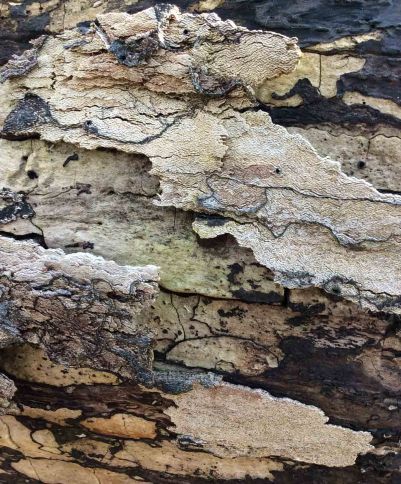
Spalted log (photo by Nina Munteanu)

During my recent reread of Strunk and White’s “The Elements of Style”, this little book yielded more good advice that I wish to share with you.

“The shape of our language is not rigid,” they tell us. “We have no lawgiver whose word is final.” This is because language is fluid and ever-evolving as the artist’s tool of communication. The artist interprets the world; the writer interprets the language to reflect it.

And yet, a basic structural design underlies every kind of writing. To be effective, Strunk and White assert, “writing must follow closely the thoughts of the writer, but not necessarily in the order in which those thoughts occur.”

In some cases the best design is no design at all (as in a love letter or a casual essay, which is an acceptable stream of conscious flow). But, in most cases—particularly in “storytelling”—planning helps. The first principle of composition is “to determine the shape of what is to come and pursue that shape.”

Jack Bickham, author of Elements of Writing Fiction: Scene and Structure reminds us that, “a thorough understanding and use of fiction’s classic structural patterns frees the writer from having to worry about the wrong things and allows her to concentrate her imagination on characters and events.” Structure, explains Bickham, is the internal part of the story, like the braces of your house; while form is external, what you do with the structure. Structure and form link to construct “story” in a series of scenes that “interconnect in a very clear way to form a long narrative with linear development form posing the story question at the outset to the answering of that question at the climax.”

Strunk and White discuss twenty-two elementary principles of basic composition. Here are a few choice ones.

The 14th Elementary Principle: Use the Active Voice

The active voice is often more direct and vigorous than the passive. Strunk and White note that activating a sentence not only makes it stronger but shorter. “Thus, brevity is a by-product of vigor,” they say. Here’s one of their examples:

Passive: My first visit to Boston will always be remembered by me.

Passive, indefinite: My first visit to Boston will always be remembered.

Active: I shall always remember my first visit to Boston.

Activating the verb breathes life into the sentence, gives it motion and direction, and empowers both subject and object.

The 15th Elementary Principle: Put Statements in Positive Form

Make definite assertions. Avoid tame, colorless, hesitating and noncommittal language. “Use the word ‘not’ as a means of denial or in antithesis, never as a means of evasion.” Here are a few examples:

Negative Positive
He was not very often on time. He usually came late.
She did not think that studying Latin was a sensible way to use one’s time. She thought the study of Latin a waste of time.

The 16th Elementary Principle: Use Definite, Specific, Concrete Language

Prefer “the specific to the general, the definite to the vague, the concrete to the abstract,” they say. The surest way to arouse and hold the reader’s attention is by being specific, definite and concrete. The greatest writers use words that call up pictures. The key is to know what details matter.

Author Jordan Rosenfeld describes your novel as a world in which your reader enters and wants to stay in for a while. You make it easy for the reader by adding concrete details for her to envision and relate to. Ground your readers in vivid setting, rich but unobtrusive detail. Don’t abandon your characters to a generic, vague and prosaic setting, drinking “beverages” and driving “vehicles” on “roads”; instead, brighten up their lives by having them speed along Highway 66 in a 1959 red Corvette, sipping a Pinot Noir.

The 17th Elementary Principle: Omit Needless Words

“Vigorous writing is concise,” Strunk and White tell us. Ray Bradbury once told me that “every word counts” in a story, from the name of your character to the verb you use to activate and give direction to your sentence. “A sentence should contain no unnecessary words for the same reason that a drawing should have no unnecessary lines and a machine no unnecessary parts,” say Strunk and White. Activating your verbs is one excellent way to invigorate your sentences. Strunk and White provide several common expressions that violate concise writing.

Original                                Just use…
The question as to whether Whether
There is no doubt but that No doubt
Used for fuel purposes Used for fuel
In a hasty manner Hastily
The reason why is that Because
Her story is a strange one Her story is strange

How about the term the fact that? Strunk and White go into some detail with this rather pesky term. Here are a few examples:

·       I was unaware of the fact that ·       I was unaware that
·       Call your attention to the fact that ·       Notify you
·       In spite of the fact that ·       Although
·       The fact that he had not succeeded ·       His failure

For more writing tips on writing fiction (and non-fiction or memoir) check out “The Alien Guidebook Series” on writing.

References:

Bickham, Jack. 1993. Elements of Fiction Writing: Scene and Structure. Writer’s Digest Books. Cincinnati, Ohio.

Strunk, William Jr. and E.B. White. 2000. The Elements of Style. Fourth ed. Longman. New York, NY. 105pp.

Munteanu, Nina. 2009. The Fiction Writer: Get Published, Write Now! Starfire World Syndicate. Louisville, KY. 166pp.

Rosenfeld, Jordan E. 2008. “Novel Revision for the Faint of Heart”. In: Writer’s Digest. February, 2008.

nina-2014aaNina Munteanu is an ecologist and internationally published author of award-nominated speculative novels, short stories and non-fiction. She is co-editor of Europa SF and currently teaches writing courses at George Brown College and the University of Toronto. Visit www.ninamunteanu.ca for the latest on her books.

Swimming Against the Tide and Rising Up & Rising Above

cheryl-xavier

Cheryl Antao Xavier

“Her passion for giving voice to non-mainstream writers has inspired her to swim against the tide in these harsh economic times,” says Desi News (Issue 31; December 2014) of Cheryl Antao-Xavier, publisher of In Our Words, Inc. (IOWI) in Mississauga, Ontario.

I met Cheryl a few years ago at a writer’s event when she introduced herself during a break as I was helping myself to my third samosa. We’ve since collaborated on several projects. The most recent is a literary anthology on what it means to live in Canada and be a Canadian. The call for submissions has just recently been made, so if you’re interested in submitting, check out Cheryl’s website here: http://inourwords.ca/the-literary-connection-volume-ii.html

Born of Goan parents, Cheryl grew up in Bahrain and then Karachi, where books were a rare treat. Cheryl shares the story of her aunt who taught knitting to women in a banking family from whom she borrowed books—Enid Blyton, Grimm’s Fairy Tales, Nancy Drew and comics—for her book-thirsty nieces, who “would devour the books in no time!” says Antao-Xavier.

Quality books were a luxury, even at the university she attended. Cheryl recalls how the Karachi University library had a “chained book” on display. John Stuart Mill’s book was required reading for students of economics but there was only one copy in the KU library. It sat on a wooden stand with a chain running through its spine under a librarian’s guard and you had to book time with the book and wait long hours for a few minutes to make hasty notes.

Cheryl Antao Xavier

Cheryl Antao Xavier

When Cheryl immigrated to Canada in 1988, she found “book heaven” in the second-hand bookstores and libraries. Reading and owning books became an obsession that has endured to this day.

Cheryl worked for several publishing houses before creating her own publishing house In Our Words Inc. (IOWI). IOWI publishes a good variety of works, including literary fiction, creative non-fiction, poetry and children’s stories from both emerging and established writers.

About the work IOWI publishes, Cheryl told Desi News, “I delight in new and fresh voices; language with imagery; twists on the conventional; historical backgrounds with the angst of displaced or marginalized people. For writers with emotional ties to a heritage radically different from the Canadian experience, writing is a cathartic process. There are writers who have lived through cataclysmic events, whose stories are fascinating chips in the mosaic of Canadian literature.”

I recently whisked Cheryl off in Benny, my sentient ship, and settled her to a million dollar view in the aft deck as we circled the planet. I asked her about how she is managing with the industry doing virtual summersaults (as opposed to somersaults–well, it IS summer, eh?) these days. Here’s what went back and forth:

Nina: I was so intrigued by your story, I just have to start by asking you this: what’s your favourite book of all time and why?

Cheryl: Jane Austen’s Pride and Prejudice. Read it umpteen times, saw both movie versions, have the Colin Firth series in my video collection. I looooove period fiction drama. Dickens, the Brontes, Hardy, to the more recent Forsythe Saga, Downton Abbey, etc. etc. My Dad had the full collection of Perry Mason and Zane Grey books. So of course I read them all. I love murder-mysteries from Agatha Christie to the present day forensic science stuff.

Nina: You have excellent taste! … What is your assessment of what is happening with print books vs ebooks vs audio books and such? Do you see one format winning over the other and how will that affect your own publishing model?

Cheryl: Print books should be around for as long as our generation who love holding a paper book survive. But ebooks are increasingly popular and have undeniable environmental merits. Publishing companies like mine have to do what you aptly call ‘virtual somersaults’ to stay current and cut costs to stay viable. Rather than publishing formats, what worries me more is poor quality books being published and the potential for declining readership in general. The tragedy of do-it-yourself print-on-demand software, freely available, is that anybody with passable tech skills can become a ‘published author.’ Books with flashy covers but no creative merit vie for reader attention and diminishing discretionary incomes. Also, media entertainment continues to steal leisure time.

Nina: Can you share some candid thoughts on the advantages and disadvantages for writers starting out in choosing the traditional publishing model vs alternative models such as indie or self-publishing.

Cheryl: The lines between traditional and indie/self-pub have blurred even more with the proliferation of print-on-demand options. Production costs have consequently plummeted. So the financial investment in an author/book has less of a risk. I would say, do your research. Make your manuscript super-strong, that means get it professionally edited, and then try the traditional route. Read publishers’ responses to your queries very carefully. It’s an opportunity to learn. If there are no takers, then research indie publishers and call, discuss contracts and options and make an informed decision. Make doubly sure that the traditional pre-production steps of editing, proofreading and professional design are not bypassed. Sometimes good content is smothered by verbosity and needs a good professional edit. Basic POD ‘template’ designs SCREAM amateur-DIY when they are set with no real imagination in big blocks of text, riddled with typos.

Nina: Do you see any specific roles for indie and/or self-publishing in helping to define artistic expression in Canada?

Cheryl: Definitely. The traditional big publishing houses can accept just so many manuscripts. So obviously they’ll go for the ones that are a sure bet. That’s where the diamonds in the rough can be missed out. Indie publishers who have the resources to work with authors to polish the content to its best possible advantage are ideally placed to bring new or even established voices to the mainstream.

Nina: What in your opinion is the major impact (both negative and positive) of the growing self-publishing model adopted by many writers over both traditional and indie publishing?

Cheryl: Occasionally I read and recommend self-published books for membership in a major professional writer’s organization. I also attend book launches and local literary events looking at books, particularly by self-published authors. The good thing is that these authors went that extra step to raise their voices in the literate world. They feel the satisfaction of being ‘published authors.’ The down side is that once something is in print, and particularly if it has not been professionally edited and designed, that book can end up being an embarrassment and a waste of time and money. Typos jump out at the reader and lower the credibility of the work and its creator. Ultimately, it comes down to what the writer wants to achieve by publishing. 

Nina: What major change do you foresee in the book industry and the readership that will affect us? How and why will that affect IOWI?

Cheryl: Everybody loves a good story, and finds it worth their while to read well-articulated text. So the successful writers will be the ones who manage to engage their readers no matter what the genre. The challenge is also for a good book to stand out from the proliferation of new titles vying for attention in virtual and brick-and-mortar stores. I see social media, forums like Goodreads, and book tours/festivals being key arbiters in what bookworms find and opt to read. IOWI will continue to offer an indie publishing option that stresses putting out a good book. Something that both author and publisher can be proud of.

Nina: Tell us about your current projects and why they excite you. 

Cheryl: IOWI is working on two anthologies currently, with a couple more in the planning stage. A Mississauga youth group is publishing their third anthology through IOWI. It is so exciting to see the writing and photography talent this group has attracted. We are so proud to be their publisher. IOWI has its own anthology The Literary Connection Volume II, with a theme of ‘My Canada’ due to be published by November this year. The call for submissions is already out and closes end-July. I am also working on pulling together a collection of plays by Canadian playwrights. It’s going to be awesome. My aim is to have writers meet with a professional writing coach, yourself Nina, to workshop their submissions into amazing work. I want these anthologies to be a credible contribution to CanLit.

Then another pet project is The Red Bench Project, which seeks to promote reading and literacy at the family and community levels. We must encourage the habit of reading for enjoyment. Bringing authors and public together is part of this project.

Nina: What three pieces of advice do you have for a new writer wishing to get published?

Cheryl: Write every day. Then spend some time editing and rewriting past work. Learn to write well through courses, mentorship or self-study.

Read voraciously and discerningly. Keep clippings or books of your favourite writers handy. Before writing, read a selection from these writers. It influences your own voice and jumpstarts your creativity.

Botanical Beach tidal pools

Botanical Beach, BC (photo by Nina Munteanu)

Be guided by your need to publish your super-amazing manuscript. Not by your need to see your name on a book. If the content is not up to par, that novelty morphs into the proverbial albatross that haunts a fledgling writing career. If you are a serious writer: DON’T PUBLISH TILL YOU ARE READY!


Nina: Great advice, Cheryl! Thanks so much for joining me here and I do promise to get you back on the ground… Don’t the Great Lakes look beautiful from 36,000 km?

Cheryl: Thank YOU for the ride, Nina. Be well.

.

.

nina-2014aaNina Munteanu is an ecologist and internationally published author of award-nominated speculative novels, short stories and non-fiction. She is co-editor of Europa SF and currently teaches writing courses at George Brown College and the University of Toronto. Visit www.ninamunteanu.ca for the latest on her books.
Do Your Research

CreditRiverWalk-oct2018

Walking along the Credit River (photo by Nina Munteanu)

Research is something many writers dislike and find daunting or even intimidating. Research for your book or short story will take on many forms from subtle to obvious and from non-directed (opportunistic) to directed (e.g., library). Its form and rigorousness will vary according to your purpose and circumstance. And where you go to do your research will vary accordingly.

In truth, as a writer, you are doing research all the time: when you’re riding the bus or train to work, when you’re traveling on vacation, when you’re having a lively discussion—or better yet an argument—with a friend or colleague. Everything you experience and observe is research. This is what’s called non-directed research. Writers, like all artists, are reporters of life, actively participating and observing. A writer is an opportunist, gathering her data through her daily life experiences.

Why is Research Important?

notebook-vineyard-NOTL

Niagara on the Lake, ON (photo by Nina Munteanu)

You might be saying: well, that’s all well and good for a historical-mystery set in Budapest or a science fiction thriller set in the Vega system. But you don’t need to do research because you’re writing a fantasy or a memoir. Neither of these, on the face of it, appears to require research: the fantasy is based on a totally made up world, after all, and the memoir is all about you. So, why bother? As a matter of fact, they both need research. Most books do, particularly nowadays for our multiplex, intelligent and discerning readership. Readers of any fiction enjoy learning something when they read, particularly when it’s seamless and made easy through a compelling story. It’s a real bonus.

To return to the fantasy, you will find very quickly that in order to build a consistent world (even if it’s mostly from your own imagination), you will need to draw upon something real to anchor your imaginary world upon. Whether this reflects a powerful myth or forms an alternative version of a real society, you will still need to apply some “rules” to follow, so you don’t lose your reader.

With respect to the memoir, the need for research lies in placing your story in context with either some event, idea, theme or place of interest to attract readership. Unless you’re a world unto yourself (e.g., you’re a celebrity of some kind with an established following), your story will require this larger element within which to place your personal story. That’s where research comes in.

Internet as Resource and Risk

The Internet provides an excellent database that is rich with information, if you know how to get it and qualify it.

Chances are that your favorite newspaper or magazine has a strong online presence. The Internet provides an excellent platform for finding resources in a myriad of subjects. It is the largest single place where you can find current information relevant to almost anything.

With information so readily accessible and easy to find through Google and other search engines as well as giant amoeba-like encyclopedia wiki sites like Wikipedia, you needn’t suffer the frustrations of library and book searches. However, there is risk.

The risk is related ironically to the very accessibility of online information. You need to be even more vigilant of the veracity and reliability of your sources when conducting online research.

Optimizing Your World Wide Web Search

The Teaching Library Internet Workshop at Berkley University provides excellent tutorials on how to search the internet for topics. They recommend a search strategy that analyzes your topic and searches with “peripheral vision”. For instance, they suggest that you:

  • define for your topic any distinctive words or phrases, an overview of the broader topic to which your topic belongs, any synonyms equivalent terms or variants of spelling to include
  • not assume you know what you want to find. Look at search results and see what you might use in addition to what you’ve thought of
  • switch between search engines and directories and back

Verifying Your Research

Path deas park

Deas Park, BC (photo by Nina Munteanu)

When doing research, particularly on the Internet (but anywhere), you should do several things:

  • Use more than one source, particularly for important things; this will give you a wider range of material from which to discern accuracy and reliability
  • Verify your sources and preferably cross-reference to measure out objective “truth” vs bias
  • Try to use primary sources (original) vs. secondary or tertiary sources (original cited and open to interpretation); the closer you are to the original source, the closer you are to getting the original “story”
  • When going to more than one source, try to get a range of different source-types (e.g., conservative newspaper vs. blog vs. special interest site, etc.) to gain a full range of insight into the issue you’re researching

nina-2014aaNina Munteanu is an ecologist and internationally published author of award-nominated speculative novels, short stories and non-fiction. She is co-editor of Europa SF and currently teaches writing courses at George Brown College and the University of Toronto. Visit www.ninamunteanu.ca for the latest on her books.

When We Burn Books & Ray Bradbury’s Fireman

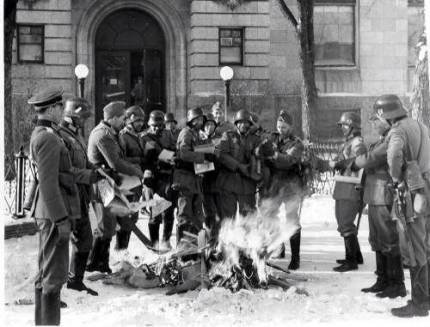
Book burning Opernplatz

Book burning Opernplatz

The burning of an author’s books…has always been the tribute that an ignorant age pays to the genius of its time — Joseph Lewis

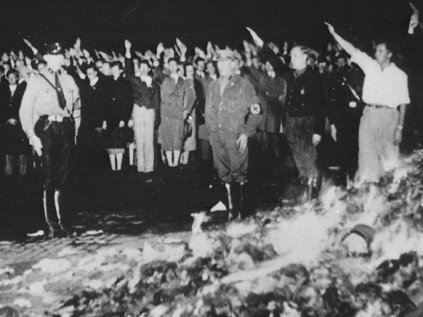
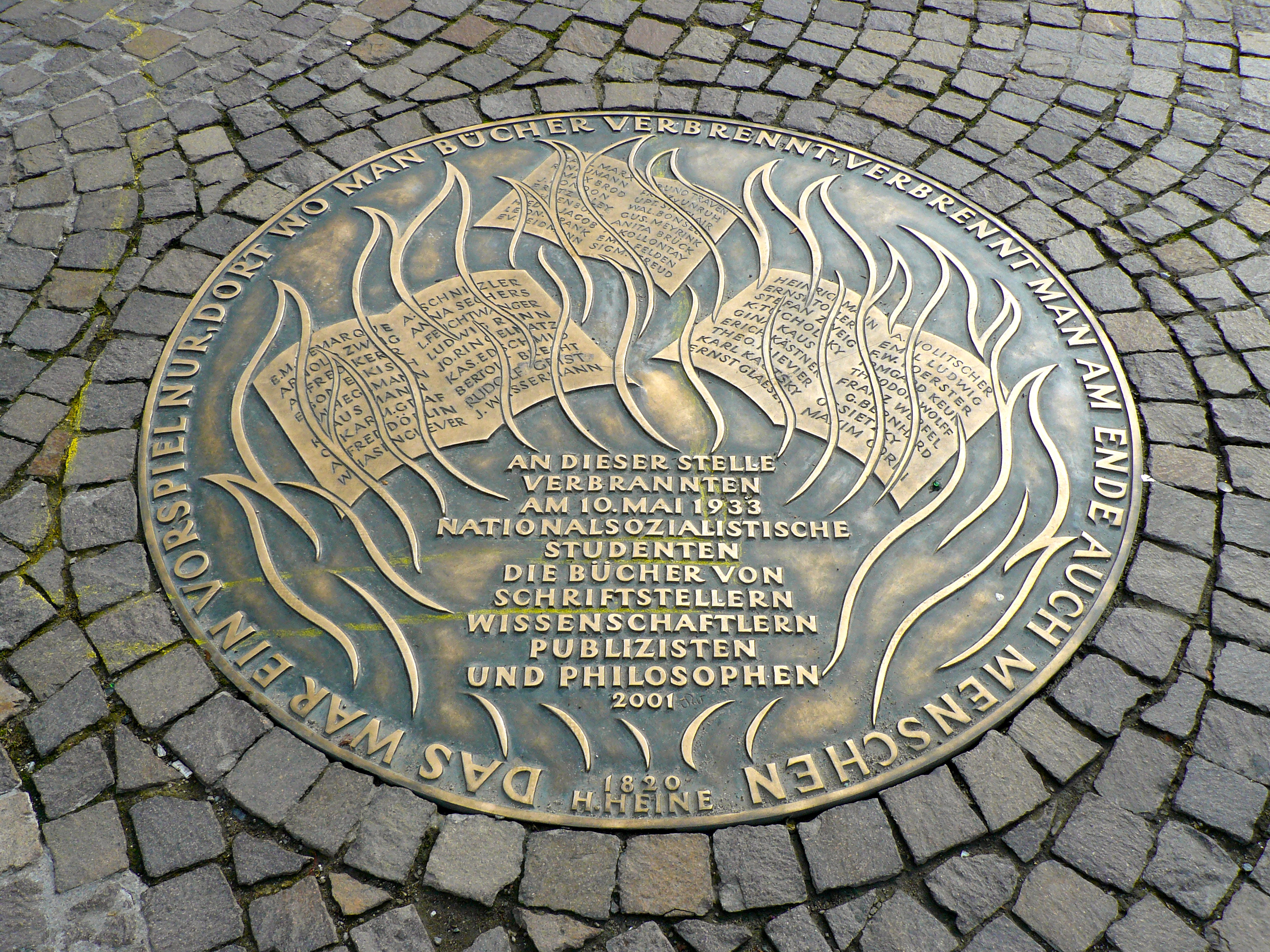
In his 1821 play Almansor the German writer Heinrich Heine wrote (referring to the burning of the Muslim holy book, the Koran, during the Spanish Inquisition): “Dort, wo man Bucher verbrennt, verbrennt man am Ende auch Menschen” –“Where they burn books, they will end in burning human beings.” A century later, on May 10th, 1933, Heine’s books were among the thousands of volumes publicly hauled out and burned in the streets by the Nazis in Berlin’s Opernplatz (Bebelplatz). A violent outburst that did, in fact, foreshadow the blazing ovens of the Holocaust.Commemorative_Plaque_book_burning_Frankfurt_Hesse_Germany

Wikipedia defines ‘book burning’ as the “practice of ceremoniously destroying by fire one or more copies of a book or other written material.” The practice, usually carried out in public (like public hangings in Medieval times) is generally motivated by moral, religious or political objections to the material. Some notable and particularly destructive book burnings have included:

  • the destruction of the Library of Alexandria;
  • burning books and burying scholars (they mean ‘live burying’, folks!) under China’s Qin Dynasty (3rd Century);
  • Cathar texts in the Lanquedoc region of France in the 13th Century;
  • the Talmud in Paris by the French crown in 1242;
  • Arabic and Hebrew books at Andalucia, Spain, in 1499;
  • Servetus’s “heretical” writings along with the writer in Geneva in 1553;
  • Maya sacred books in Yucatan (1562);
  • Tyndale’s New Testament by the English authorities in 1525 and 1526;
  • Luthar’s Bible in Germany (1624) as ordered by the Pope;
  • Robespierre’s destruction of religious libraries in 1793;
  • anti-communist books by the Bolsheviks in 1917;
  • Jewish, anti-Nazi and “degenerate” books by the Nazis in the 1930s and 1940s;
  • Communist and “fellow traveller” books by Senator McCarthy in 1953;
  • The Satanic Verses by Muslims in the UK in 1988; and,
  • Harry Potter books in various American cities, 2001-2005.
Ray Bradbury copy

Ray Bradbury

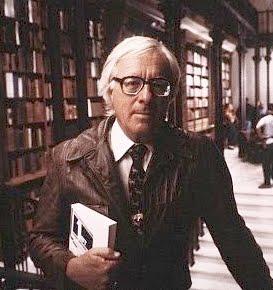
In the 1967 introduction of his novel, Fahrenheit 451 (based on his novella, The Fireman), Ray Bradbury implied that the Nazi book burnings inspired his story. I found his statement both eloquent and powerful: “It follows then that when Hitler burned a book I felt it as keenly, please forgive me, as his killing a human, for in the long sum of history they are one in the same flesh.” For those of you who haven’t yet read his novel (one of my favourite books, ever), this cautionary tale explores a fictional future society that has institutionalized book burning in an effort by authorities to maintain order and ‘happiness’. In Bradbury’s fictional world, firemen don’t put out fires; they start them. The story begins with Montag, an ordinary fireman:

It was a pleasure to burn. It was a special pleasure to see things eaten, to see things blackened and changed. With the brass nozzle in his fists, with this great python spitting its venomous kerosene upon the world, the blood pounded in his head, and his hands were the hands of some amazing conductor playing all the symphonies of blazing and burning to bring down the tatters and charcoal ruins of historyMontag grinned the fierce grin of all men singed and driven back by the flame. He knew that when he returned to the firehouse, he might wink at himself, a minstrel man, burnt-corked, in the mirror.”

bookburning-Opernplatz

book burning in Opernplatz

Bradbury wove a multi-layered political and social tale that followed one man’s journey to find his soul. Fahrenheit 451 explores the theme of intellectual freedom using censorship as his plot device. Montag is “everyman” who must make a choice for personal freedom at the expense of the “good censored life”. It is the choice all artists must make. In choosing freedom, we make an obligation to respect and tolerate those with whom we disagree; otherwise we are just tyrants and not really free.

fahrenheit-451-book-coverIn 1795 Thomas Paine wrote, “He that would make his own liberty secure, must guard even his enemy from opposition: for if he violates this duty he establishes a precedent that will reach to himself.”

The American Library Association defines intellectual freedom as the right of every individual to both seek and receive information from all points of view without restriction. It also encompasses the freedom to hold, and disseminate ideas. Intellectual freedom is the basis for our democratic system. We expect our people to be self-governors. But to do so responsibly, our citizenry must be well-informed. Libraries — and the free internet — provide the ideas and information to allow people to inform themselves.

John F. Kennedy once said that “a nation that is afraid to let its people judge the truth and falsehood in an open market is a nation that is afraid of its people.”

nazi book burning2Censorship suppresses ideas and information that certain people — individuals, groups or government officials — find objectionable or dangerous. Censors pressure public institutions, like libraries, to suppress and remove from public access information they judge inappropriate or dangerous, so that no one else has the chance to read or view the material and make up their own minds about it. “Censorship … creates, in the end, the kind of society that is incapable of exercising real discretion,” said Henry Steel Commager.

When does simple disapproval turn into active disallowing; when does banning of books turn into burning of books?

I believe that censorship occurs when one submits to fear and insecurity: the bully being bullied and ruled by his own fear. Okay, we all fear; that’s only natural. We’re animals and fear is a survival instinct we all need and use. But, we don’t live in caves and hunt sloth anymore; that fear can be tempered by a civilized educated culture. Without the benefit of a nurturing faith and belief in the goodness of humankind, fear will lead to prejudice, racism and a general isolationist paranoia.

Winston Churchill said: “You see these dictators on their pedestals, surrounded by the bayonets of their soldiers and the truncheons of their police. Yet in their hearts there is unspoken–unspeakable–fear. They are afraid of words and thoughts! Words spoken abroad, thoughts stirring at home, all the more powerful because they are forbidden. These terrify them. A little mouse–a little tiny mouse! -of thought appears in the room, and even the mightiest potentates are thrown into panic.”

nazi book burning3

Book burning in Opernplatz

The danger comes when an organized group subscribes to a common fear. It is often driven by a charismatic leader, who has somehow captured that fear, harnessed its raging force then propelled it like a projectile. One’s anonymity and shared (and supposedly diluted) responsibility within the “mob” may compel the individual to commit irrational acts of atrocity he/she would never otherwise contemplate on his/her own. How many of us have been caught up in the mass enthusiasm of a sports match? We’ve all felt it; the power of the mob, its energy crackling in the air around our pounding hearts and cries. To yield to a mob-mentality is to subscribe to a condoned insanity, within which the ‘mob’ takes on its own irrational personality that is more than the sum of its parts…to become a kind of autopoietic entity that swiftly and ruthlessly dispenses its own perverse form of justice.

Perhaps for this reason more than any other, I see the artist’s path as a singular one, part of, yet apart from, the crowd. Neither leader, nor follower; rather, a wizard and a “trickster”, a shining beacon, both reviled and honored simultaneously. We are our books.

It was Victor Frankl, survivor of Auschwitz, who said, “what is to give light must endure burning.”

In her acceptance speech for a lifetime award by the NBA, author Ursula K. LeGuin said:

le-guin copy

Ursula K. LeGuin

“I think hard times are coming, when we will be wanting the voices of writers who can see alternatives to how we live now, and can see through our fear-stricken society and its obsessive technologies, to other ways of being. And even imagine some real grounds for hope. We will need writers who can remember freedom: poets, visionaries–the realists of a larger reality. Right now, I think we need writers who know the difference between production of a market commodity and the practice of an art…The profit motive is often in conflict with the aims of art…We live in capitalism. Its power seems inescapable; so did the divine right of kings… Power can be resisted and changed by human beings; resistance and change often begin in art, and very often in our art–the art of words. I’ve had a long career and a good one, in good company, and here, at the end of it, I really don’t want to watch American literature get sold down the river… The name of our beautiful reward is not profit. Its name is freedom.”

nina-2014aaNina Munteanu is an ecologist and internationally published author of award-nominated speculative novels, short stories and non-fiction. She is co-editor of Europa SF and currently teaches writing courses at George Brown College and the University of Toronto. Visit www.ninamunteanu.ca for the latest on her books.

Feeding the Muse: Going on a “Writer’s Date”

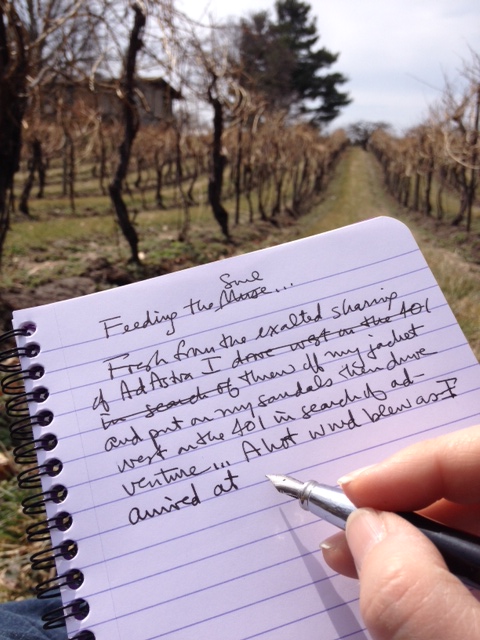
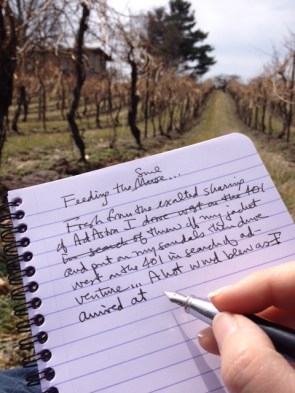
SONY DSCLate Sunday afternoon, minutes after my last panel and still exalted from stimulating sharing at Ad Astra 2015, I threw off my jacket and put on my sandals then drove west on the 401 in search of adventure. A playful wind blew as I reached my destination: Niagara on the Lake.

This was my first writer’s date this year. And, in truth, I’d almost forgotten to attend the SF con because I was so excited about my date. No, it wasn’t that kind of date; more like a mini-writer’s retreat. Julia Cameron coined the term “artist’s date” to define any kind of muse-feeding activity. The key is to do it ALONE. Basically an artist/writer date is a block of time you set aside to nurture your creative muse. In its primary form, says Cameron, “the artist date is an excursion, a play date that you preplan and defend against all interlopers…That means no lovers, friends, spouses, children—no taggers-on of any stripe.”

It’s just you and your inner-artist: your inner creative child.

My Writer’s Date started with Niagara on the Lake and La Toscana di Carlotta, possibly NOTL’s primo Bed and Breakfast (go check the rave reviews on Trip Advisor). Located close to King Street in the historic village, the B&B is a lovely heritage house with beautifully designed rooms. Carlotta passionately prepares an authentic Italian breakfast that includes freshly squeezed orange juice, yogurt and fresh fruit, bread, crostini, eggs created like a work of art and even dessert! But that’s not even the best part; both Carlotta and partner Kash are such beautiful people and wonderful hosts. You start out thinking they’re so interesting and end up embracing them as friends.

I stayed 2 days and my activities included a evening walks through the charming historic town (where Il Gelato di Carlotta is a must—considered a gem by actress Moya O’Connel), several ice-wine tastings, walks along the Niagara River and even a blitz look at Niagara Falls and Tesla’s statue.notebook01

It was a dizzying sensory intake, tempered with wonderful reflection to Nature’s awakening. Spring in southern Ontario lies just on the cusp of bursting into its full glory. I could smell its intent on the warm breeze and in the joyful excitement of birds and butterflies in the still-Spartan forest. At the edge of the wooded bluff I found a moss-covered log to sit on and listened to the water lapping below. I pulled out my new fountain pen and notepad and started to write. I’d left my computer behind and revelled in the pen flowing across the paper, forming words like a magician.

I had set no solid itinerary (except that I had to be back in Toronto to teach the next day). And, because of it, I experienced everything with the open wonder that comes with no expectation. I relaxed and explored. I poked around and smelled the dirt. I napped. I dawdled. I went in circles and changed my mind. I chased after butterflies and listened to the wind. I got a hazelnut gelato and licked it slowly. I wandered off the forest path and got lost. I discovered an obscure winery and tasted Cabernet Franc ice wine. I wept to Bocelli and Brightman’s “Time to Say Goodbye” … Mama Mia! I took my socks and shoes off and took pictures of my feet (No, I didn’t then put them on Facebook). I sat on a forest path bench and read a book. I drove down roads I’d never been on and let them take me somewhere… I found myself somehow back at Il Gelato di Carlotta and decided that fate had brought me there to try another ice cream flavour.

notebook02Think of doing a writer’s date from time to time. If not consciously to re-awaken your Muse, then to let it know you care. Every muse needs a bit of tender loving care. Spend time in solitude. A long country walk. A stroll along the beach. An exploration of your own area at night or at the break of dawn.

You don’t even need to leave the house. In a panel I sat on with Kelly Armstrong at Ad Astra, she shared what a colleague of hers did. From time to time the colleague disappeared into the bathroom of her house with a snorkel. The snorkel was the critical element. With it, she could completely immerse herself in a dark calm and block out the whole outside world, leaving her with her own infinite universe.

NoteTaking-NiagaraThe writer’s date is a gift you give yourself. It’s a gift of receiving, of opening yourself to discovery, wonder, and inspiration. It is ultimately a self-nurturing activity in which you let your child-self out to play. “The imagination-at-play is at the heart of all good work,” Cameron tells us. Cameron also warns that you may find yourself avoiding artist dates. “Recognize this resistance as a fear of intimacy—self-intimacy.”

It may be one of the hardest things to do. You (never mind others) will insist that it’s a selfish thing and you are shirking some duty you must be leaving behind with it. And you’ll find some reason to back out or include someone. Learn to guard against these invasions!

Keep it sacred. Let your imagination play and discover—or rediscover—what it loves.

As Carl Jung astutely observed, “The creation of something new is not accomplished by the intellect but by the play instinct acting from inner necessity. The creative mind plays with the objects it loves.”

Horseshoe falls-mist

Horseshoe Falls, Niagara Falls, ON (photo by Nina Munteanu)


nina-2014aaNina Munteanu is an ecologist and internationally published author of award-nominated speculative novels, short stories and non-fiction. She is co-editor of Europa SF and currently teaches writing courses at George Brown College and the University of Toronto. Visit www.ninamunteanu.ca for the latest on her books.
Women Heroes, Part 2: How Brienne of Tarth Saved “Game of Thrones”

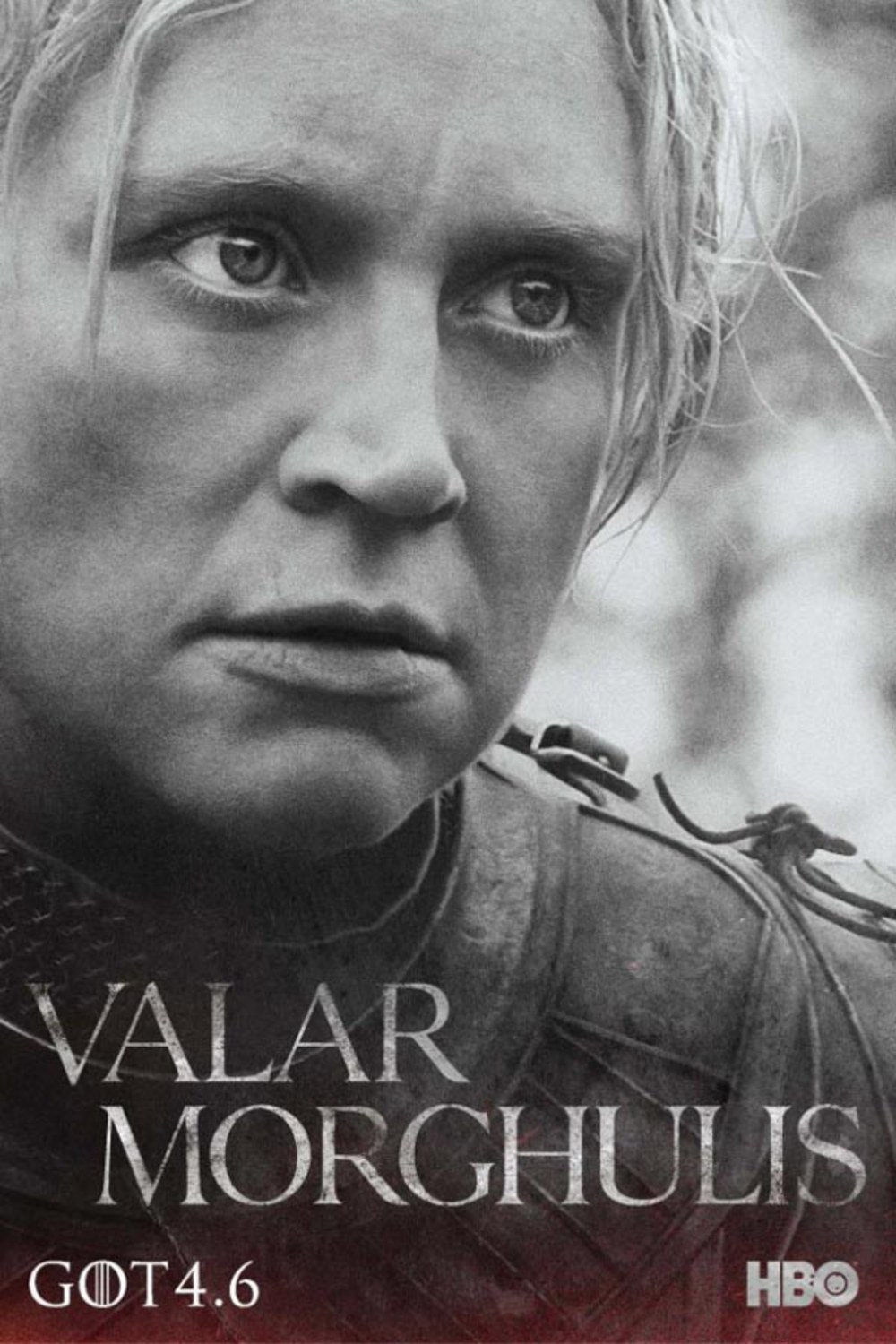
brienne of tarth-valar morghulisI’ve been following the insanely popular—yet excruciatingly brutal—Game of Thrones for several seasons now. I must confess, partly because I don’t own or watch TV, that I am a little behind. I’m currently watching Season Four, while still metaphorically shaking in the violent wake of the shocking and brutal Red Wedding episode of Season Three. As the Internet buzz revealed, this was an extremely difficult show to watch for everyone. What was the purpose of its graphical brutality? Who needs to see that level of violence? I am reminded of an introductory scene in the show in which character John Snow counsels his little brother Bran to not avert his eyes when his father executes a deserter, by chopping off his head—an act that foreshadows his own decapitation later in the series. It is as though the producers of the show are counselling us in the same way as they subject us to grisly scene after grisly scene. Many cheap and gratuitous, as far as I am concerned.

The Red Wedding scene, in which several beloved characters are brutally slaughtered set into play a new set of rules for audience engagement: that of total distrust. Distrust in the storytellers (primarily in the producers of the show, whose scripts, I’m told, have deviated from the novels in some important ways). Distrust that creates an uneasy tension. Distrust that precipitates a panicked wish for clairvoyance. This is because we have no concept of fairness in the story; yet we’ve so invested in the characters. That is the storyteller’s worst act of cruelty: to hold us hostage to the characters. The rules of fair play in story have been broken. We’re stuck in a kind of free fall, desperately hoping that our beloved characters will make it through the night intact, if not unscathed. And when they don’t, its like watching our children die, as we stand powerless by.

Good fiction—as opposed to reality—tells a purposeful story. A story with fictional characters, who play a purposeful role. All good stories make a promise in the beginning; a promise they keep in the end. They create a covenant with their audience to participate in a fulfilling journey. This doesn’t have to mean a happy ending, but it does include meaning and fulfillment—even if only for its audience. And that must involve victory of sorts—and hope—whether it is through redemption, acceptance, enlightenment, or some change that gives us “more”—not less; something that allows us to prevail alongside.

If I feel that I am simply witnessing a cesspool of meaningless chaos and brutality, dominated by ruthless and insane people, in which heroes are equally powerless victims as they are true agents of change—with no rhyme or reason to tell the difference—then I must ask myself the question: why am I watching this? What does this story mean to me? I start to feel like a misanthropic voyeur, as perverse as Joffrey or Littlefinger as I watch people get tortured, flayed alive, dismembered, and worse… with no recourse. This is NOT entertainment and it certainly isn’t of any value to me. For such an offence to the senses to have value, there must be an element of—or at least a grain of hope of—prevailing and movement.

By Season Three end, both the series and I are feeling a little tired. And for good reason; most of the characters—the women particularly—are trapped in an incessant pattern of simple endurance. That seems to be all they are able to do: endure. Certainly they manage to act and create within their limited sphere of influence; but mostly to colour their position, not change it. So, we endure alongside; and we can endure only so much.

Then enter Brienne of Tarth. Also known as Maid of Truth.

And with her, a breath of much needed fresh air.brienne of tarth-close

When Brienne was first introduced in “What is Dead May Never Die” in Season Two, she brought with her the anachronistic romanticism of a true knight. We first see her besting favored champion Ser Loras Tyrell (Knight of Flowers) in a tournament. When she presents herself to King Renly Baratheon and removes her helm, the crowd hushes in surprise. To his offer of prize, Brienne requests a place in his Kingsguard, which he gladly grants, despite her gender and lack of formal stature as a knight.

Brienne is the iconic knight of the chivalric sagas: noble, virtuous, compassionate and brave. Singularly honest and loyal. So much so that her contemporaries deride her as simple, naïve and stupid. As though embracing such virtues is outmoded, foolish and weak. That she is a woman—albeit tall, ungainly and considered unfeminine—makes her virtues all the more powerful and refreshing.

BrienneoftarthWhen King Renly is assassinated, Brienne swears fealty to Catelyn Stark and becomes her sworn sword. Catelyn charges Brienne to return her captive Jaime Lannister to King’s Landing to exchange him for her two daughters held hostage there. Their journey provides some of the best scenes of the TV series and some of the most fulfilling interactions. Throughout Jaime’s insufferable taunts about her appearance and likely dismal history with the opposite sex, Brienne remains stoically silent. Except when she speaks:

“All my life men like you’ve sneered at me, and all my life I’ve been knocking men like you into the dust.”—Brienne to Jaime Lannister, Game of Thrones

Essayist Brent Hartinger suggests that Brienne’s character is a well-written departure from fantasy novels where the main characters are commonly “the slender… average-heighted, the conventionally abled and traditionally gendered.”

Essayist Caroline Spector describes Brienne as a “study in heartbreaking contradictions. She embraces the romantic ideals of her culture, both emotionally and through her actions, but is continually betrayed by the real world simply because she cannot turn herself into the woman the Westerosi legends tell her she should be.”

By upholding her ideals of integrity, Brienne refuses to conform to the established cultural expectations. Her very nature—from physique to comportment to idealism—defies the notion in Westeros that women are to be taken or coerced, and meant to endure their lot; not be agents of their own change. Spector describes Brienne as a woman who has “taken for herself most of the attributes of male power.” She embodies “how women who dare to take male power for their own are judged and treated not only in Westeros but in all conventionally patriarchal societies.”brienne-jaime-GoT

The journey of Brienne and Jaime is a fine tale of initial antagonism, discovery, surprising tenderness and ultimate friendship, based on honour and mutual respect. Throughout, Brienne defends and encourages a flagging Jaime and he, in turn, saves her on several occasions, culminating in his return to rescue her from a brutal death in the bearpit.

What makes “The Bear and the Maiden Fair”—or any other scene in which Brienne and Jaime appear—so pleasing? We witness in the interactions between them an evolution in character, great opportunities for learning and redemption, and finally the development of an iconic friendship based on respect and equality—something normally reserved for individuals of the same sex—that neither had previously enjoyed. Like two souls missing something, each is a gift to the other. And though delivered differently, it is the same for both: honour, self-respect and faith in humanity. And neither is the same for their interaction.

brienne-jaime-swords“The bathhouse had been thick with the steam rising off the water, and Jaime had come walking through that mist naked as his name day, looking half a corpse and half a god.”—George R.R. Martin, A Feast for Crows

Brienne is the catalyst hero. She gives us hope. She gives us hope to save the world. She does this through her influence on others. By shear strength of her genuine goodness, Brienne transforms, challenges, and supports. She is über-strong, yet vulnerable; which Jaime recognizes and appreciates as something truly beautiful. The reason he returns to save her in the bear pit.

“I am grateful, but… you were well away. Why come back?”

A dozen quips came to mind, each crueler than the one before, but Jaime only shrugged. “I dreamed of you,” he said.—George R.R. Martin, A Storm of Swords

Jaime slides back to his scoundrel-self once returned safely to King’s Landing and out of Brienne’s sphere of influence—and beneath the shadow of his overbearing father. He is a chameleon, a shape shifter, who struggles to lift himself out from the shadow of his soulless father. Despite some continued reprehensible behavior (particularly to do with his sister, with whom he had formed a perverse relationship), Brienne’s light of honour appears to burn inside him in some form. His actions—tasking her to find and secure Sansa’s safety and giving her his own sword—maintains their honour-bond. When he gives her his longsword, forged of Valyrian steel, he asks her to name it; showing the cooperative respect between the two. She chooses the name Oathkeeper, fulfilling again her role in their story.

In fact, Brienne’s story follows a more traditionally male narrative. Her quest is to save the beautiful maiden (Sansa), but not to marry her or benefit from the quest; it is simply to secure her safety. Feminist writer Rihannon tells us that this is a storyline that “the mother, the young girl and the shieldmaiden are all given equal weight and worth…She uses her strength and her skill to respect and help other women in ways that most men in Westeros would never even think to attempt, because she understands, more than any other knight, that women are truly worth something as individuals.”

Are other women of Westeros poised to rise as true agents of change and takebrienne-of-tarth command not only of their lives but to save the world? Daenerys Targaryen, the dragon mother, liberates slaves; courage and a sense of justice animates the independent Arya. And we’ll see what becomes of Brienne…and Jaime.

I will continue to watch this series with uneasy anticipation.


nina-2014aaNina Munteanu is an ecologist and internationally published author of award-nominated speculative novels, short stories and non-fiction. She is co-editor of Europa SF and currently teaches writing courses at George Brown College and the University of Toronto. Visit www.ninamunteanu.ca for the latest on her books.

Who’s Your Audience and Why Should You Care?


Beaches-snow06

Winter in The Beach (photo by Nina Munteanu)

The artistic process, whether painting or prose, is admittedly the child of self-expression. The long-standing image of the cloistered artist in her studio — hunched over her writing desk or standing before her canvas to create from the depths of her soul — is surely a truism. Artists create from the heart; we dive deep inside our often tortured souls and closeted past to draw out the universal metaphors that speak to humanity and share—

Ay, there’s the rub. For to share is to have a dialogue and to have a meaningful dialogue is to demonstrate consideration of the other. Somewhere in that journey that began with self, others entered. It is, in fact, something of a paradox and a conundrum for many artists. One that has challenged the artistic community for centuries. It is also why many artists have relied on agents, benefactors, and advocates to effectively communicate, target — and even interpret — their often abstruse “message” to their appropriate audiences.

Purists will tell you that a true artist need not consider her audience; because her self-expression naturally finds relevance with the culture and zeitgeist from which she writes through universally understood metaphor: her story is their story.

But is that enough?

I suppose it finally comes back to whether you are interested in sharing. I don’t know any published authors who don’t wish their books to sell. Every storyteller needs an audience to connect with and engage. That is ultimately what good storytelling does: engage, connect, rouse emotions and evoke empathic feelings. Make an impact.

Beaches-snow03

Photo N. Munteanu

Does identifying and targeting a specific audience result in more satisfied readers and ultimately better sales? Of course it does. The more you—and whoever is helping you market your work—know about your audience, the more likely you are going to attract them to your book, convince them to buy it and ultimately connect with them. That’s the irony of art: it is a treasure that is created out of the depths of solitude but ultimately brought into the light and shared with the world. For your art to have impact, you must know and understand your world.

Knowing your audience will affect every aspect of your book project. It will help determine:

  • What your story is about and how you write it (from language, voice or personality, narrative style, tone or mood/attitude, characters, setting and theme)
  • What genre it lies under
  • the look and tone of the cover and blurb
  • all aspects of promotion

For instance, who are your intended readers? To what age group to they belong? What culture and sub-culture? What gender(s)? What education and intellectual capacity? Economic status? What regions? What political leanings? Prejudices and beliefs? What knowledge-base?

To know your audience is to know your story better.


nina-2014aaNina Munteanu is an ecologist and internationally published author of award-nominated speculative novels, short stories and non-fiction. She is co-editor of Europa SF and currently teaches writing courses at George Brown College and the University of Toronto. Visit www.ninamunteanu.ca for the latest on her books.


Nina Talks to EAC About the Changing Face of Publishing

In January 2014, I gave a talk to the Editor’s Association of Canada (EAC) on the changing face of publishing and what it means for editors and writers. Editors learned about self-publishing and indie publishing, publishing myths, and where to find new editing opportunities.


nina-2014aaNina Munteanu is an ecologist and internationally published author of award-nominated speculative novels, short stories and non-fiction. She is co-editor of Europa SF and currently teaches writing courses at George Brown College and the University of Toronto. Visit www.ninamunteanu.ca for the latest on her books.
The Art and Magic of Storytelling: Part 1, Sparking the Premise

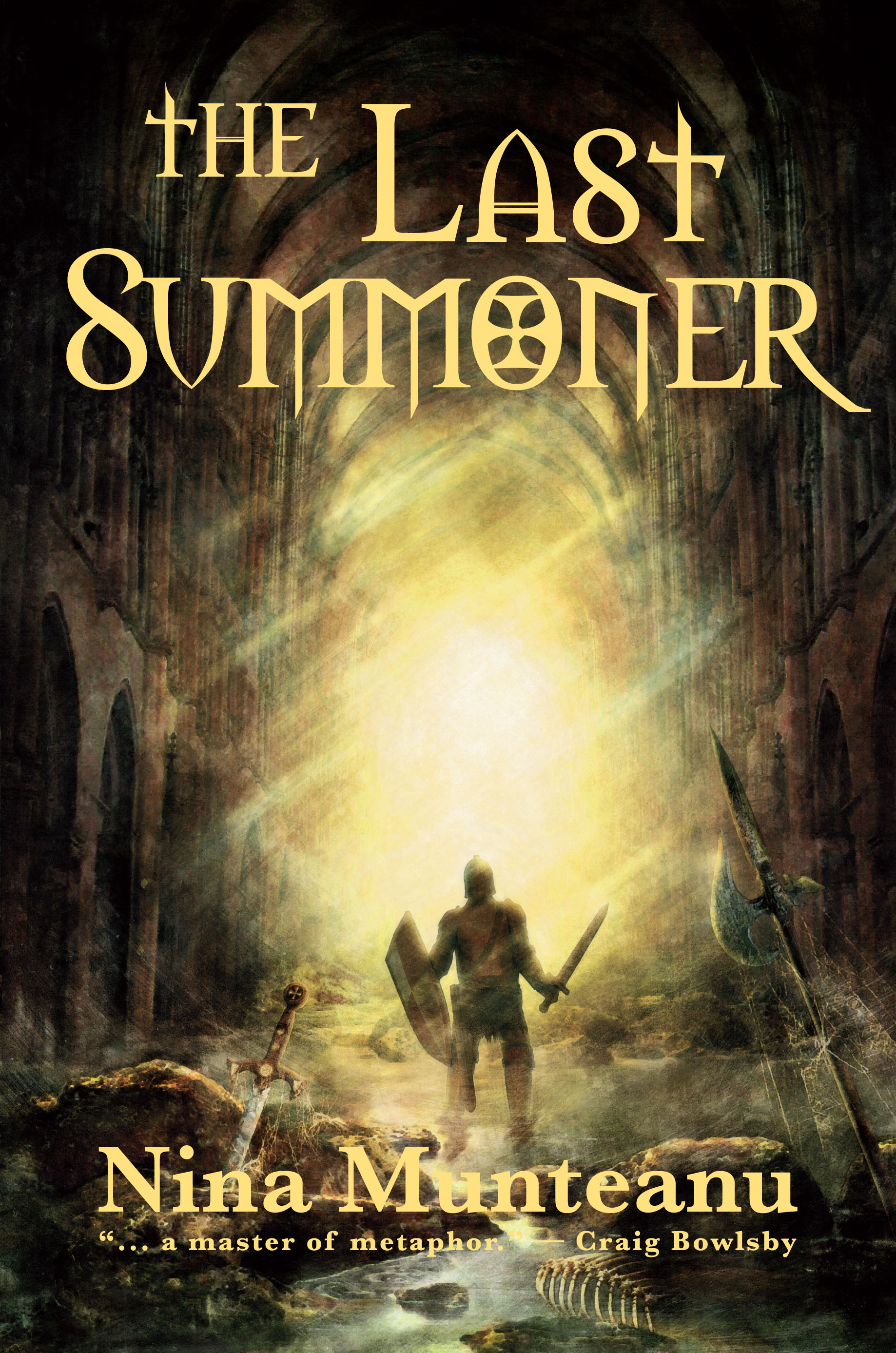
Cover1_LastSummoner-frontcover copyFrom where do we get our stories?

This is a question I am asked time and again. My readers, friends and colleagues alike marvel at my imagination, and ask me how I create these fantastical worlds and situations. Cornered in a moment of inarticulate bliss (this often happens to me), I shrug and blather off some ridiculously obscure tale of luciferous logolepsy.

The simple of it is that it always comes as a spark. Followed by inspiration. And from there, a story emerges. Premise to dramatization. So, let me tell you a story about how my 2012 historical fantasy The Last Summoner —about a medieval time traveler who must save the past from the future—came to be.

It all began with the Battle of Grunwald and the Fate of the Teutonic Knights—that is, when I stumbled upon it during an Internet ramble. But, in fact, it started before that—the spark, that is.

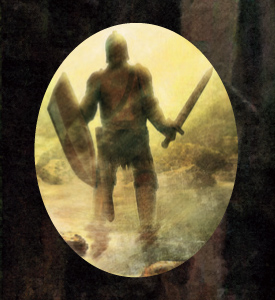
My part in this piece of history really began sometime in 2008 with the vision of an incredible image by Croatian artist Tomislav Tikulin (who had done the cover art for a previous novel Darwin’s Paradox). On Tikulin’s website I glimpsed the image of a magnificent knight, standing in a war-littered mire and gazing up, questioning, at the vaulted ceiling of a drowned cathedral. A great light shone upon the knight in streams of white gold. It sent my imagination soaring with thoughts of chivalry, adventure and intrigue.

Who was this knight standing in the mire?…

teutons3-close1

With that image imprinted inside me, the next nexus moment came when I stumbled across a significant but little-known battle in the medieval Baltic, the Battle of Grunwald. It would turn out to be the defining battle for what are now the countries of Poland and Lithuania. On June 14th 1410, they were still part of Prussia and tyrannized by the Teutonic Order, who were Christianizing the pagan Baltic on behalf of the Pope. In truth, the Order had been for centuries gathering wealth and land for colonizing Germans in their drang nach osten; they built sturdy castles (many of which still stand today) and a force of monk warriors, feared for their cunning strategy and treacherous combat abilities.

The Battle of Grunwald was, in fact, an upset in history. The Teutonic Order was powerful, intimidating and extremely capable. They should have won; but the peasant armies of Prussia slaughtered the Order, killing most of its knights. Historians debate that the hochmeister’s arrogance—indeed, the arrogance of the entire Order—precipitated their downfall. They underestimated their adversaries and got sloppy. After the Polish and Lithuanian armies outsmarted the Order and slayed their hochmeister, along with many of their knights, the Order’s own peasant slaves finished the job using clubs, pitchforks and stones.

Intrigued by this little known order of religious crusaders and their bizarre fate in an upset battle with a peasant army, I pursued the premise of an alternative consequence: what if the Teutonic Knights had NOT underestimated their enemy and won the Battle of Grunwald? Would they have continued their catastrophic sweep of North-east Europe into Russia and beyond? Would they have continued their catastrophic sweep of north- east Europe into Russia and beyond? Would they have claimed the whole for Germany’s expansionist lebensraum movement, fueled by its sonderweg, a dialectic that would ultimately lead to the killing fields of the Holocaust? What if the success of the Teutonic Order helped consolidate a united fascist elite, ambitious to conquer the world? And what if, as a result, Nazism sprang up 100 years earlier?

The Last Summoner, arose from this premise. Enter our heroine, young 14-year old Vivianne Schoen, Baroness von Grunwald, a self-centered romantic who dreams that her ritter (her knight) will rescue her from an arranged marriage to some foreign  warrior. As a result of an impetuous choice, she makes the startling discovery that she can alter history—but not before she’s branded a witch and must flee through a time-space tear into an alternate present-day France ruled by fascists. There, she learns that every choice has its price.

Warrior Woman Silhouette

Spanning from medieval Poland to present day Paris, France, The Last Summoner explores the sweeping consequences of our “subtle” choices. From the smallest grab to the most sweeping gesture, we are accountable for the world we’ve made. During her 600-year journey to save the world and undo the history she authored, Vivianne learns wisdom and humility. Through the paradox of history, she learns that what might have seemed the right choice for an immediate future, turns out to be disastrous for a distant future. To win is also to lose; to save oneself one must surrender oneself; and to save the world one need only save a single soul.

knight-cameoThe knight standing in the mire is Vivianne.

The Last Summoner, published by Starfire World Syndicate, was released in 2012 and remained a Canadian bestseller on Amazon for several months. It represents my first historical fantasy in an otherwise repertoire of hard science fiction. The Polish and Lithuanians celebrate June 14th with pride, erecting mock-ups of the battle annually. Some day I hope to participate.

The cover art for The Last Summoner is that very image that inspired my story. The Universe gifted me with the chance to acquire the image from Mr. Tikulin and a publisher willing to purchase it. I’d entered my own dream.

p.s. definition for luciferous logolepsy: “an illuminating obsession with words”

p.p.s. A novelette version, Summoning the Future’s Past, was released April 2021 in Italian by Delos Digital entitled l’Ultima Evocatrice.

This article first appeared on Warpworld on Nov. 30, 2013.

nina-2014aaNina Munteanu is an ecologist and internationally published author of award-nominated speculative novels, short stories and non-fiction. She is co-editor of Europa SF and currently teaches writing courses at George Brown College and the University of Toronto. Visit www.ninamunteanu.ca for the latest on her books.
.