EXCERPT from Outer Diverse, Book 1 of The Splintered Universe Trilogy:
My mother had fantasized that one day she would see Eos. Her hero was Genevieve Dubois, the space explorer who’d flown the last of a series of ill-fated ZetaCorp flights to Eos some two hundred years ago when it took years to travel anywhere in the galaxy. Dubois was the first―and only―human to have set foot on the mythical planet of Eos, secluded in the giant blue nebula of the Pleiades. After apparently experiencing an epiphany of universal proportions, when she encountered one of the god-like Epoptes, Dubois returned, pregnant, to Florida with her Eosian lover, Azaes. They mysteriously disappeared after being taken into captivity by the American government and ZetaCorp for questioning. Rumors abounded that Azaes had unleashed a tremendous and fearful weapon out of his head on a human―the melting look, I figured―which condemned him as a dangerous monstrosity. Humans rallied to have him imprisoned or banished. Even killed.
The historical records suggested that Dubois and Azaes were murdered soon after. My mother, however, agreed with popular lore that they’d escaped to live a simple secluded life, and that Dubois’s baby by Azaes was born and its descendants were living to this day. The most popular story ― and therefore the least likely―was that only Dubois got away, travelled north to Canada and returned to her native Quebec where she stoically gave birth alone to her child in some abandoned barn in the country. The whole thing smelled of mythos.
Despite the rampant anti-alienism, many humans strongly believed that Dubois bore this child, making her the first human to give birth to a human-alien. A fanatical cult, L’Ordre de l’Arbre Sacré—Order of the Sacred Tree, sprang up in Quebec, and its mostly human members devoted themselves to the notion that Dubois’s child was a kind of messiah who walked secretly among humans and was linked to the tree of life and knowledge, the vishna. They regarded the vishna an ancient soul that carried infinite wisdom and the answer to achieving the ‘balance of all things’.
The Order of the Sacred Tree claimed that all the ills plaguing life in the galaxy were due to a misalignment of forces, an imbalance that the now-extinct Hopi Native Indians called koyaanisquatsi. They claimed that this messiah—Dubois’s child— would provide the balance needed to begin a new age of enlightenment and peace. They spread wild stories of how the child was consummated not through Dubois’s lover Azaes but somehow through Dubois’s interaction with an Eosian vishna tree, which had godly powers and came to be known as one of the sacred trees, along with the migratory trees of Horus, which were also thought to be ancient souls.
According to the Order, Genevieve Dubois had, in fact, perished in a giant igapo that flooded Eos’s great forest as she saved the natives from the evils of her mad crew. The legend claims that Dubois was swept up by the igapo, battered and dying, to the top of the highest vishna tree and there joined with an Epoptes. When she died, the Epoptes took her form, and it was she who returned to Earth with Azaes. Their child was the first Epoptes to live among humans … as a human, bringing the message of the ancient souls for achieving sacred balance and eternal existence.
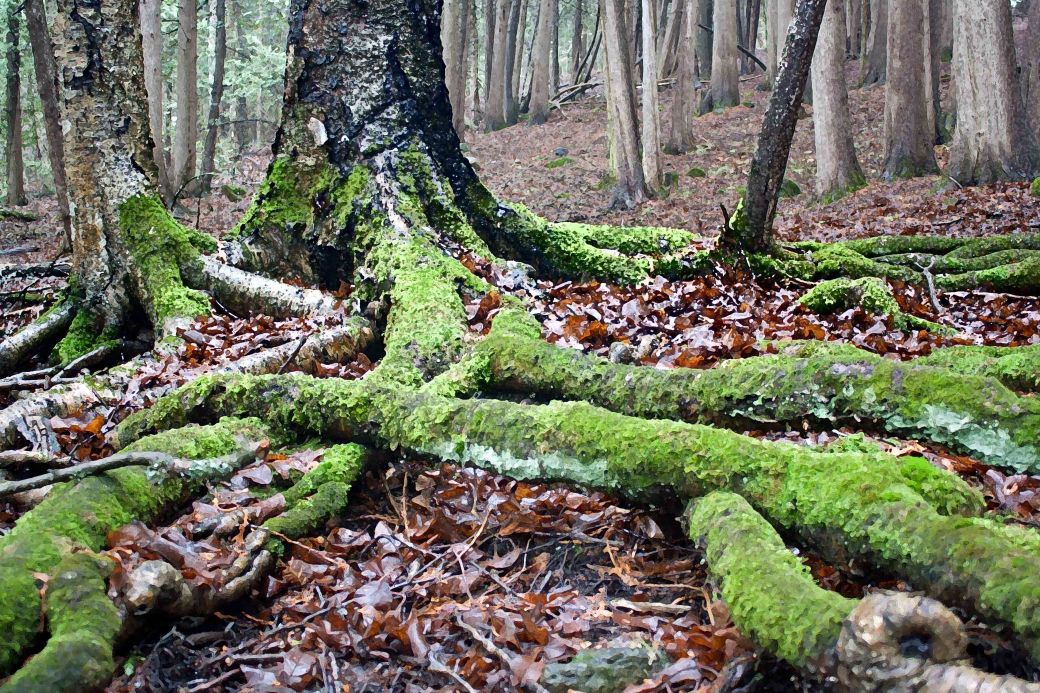
Members of the Tree Cult swelled to the thousands, spreading the word of enlightenment through sacred trees, such as the native oak, the extraterrestrial vishna, and the mythical migratory trees of Horus. Yet their membership and much of their practices remained veiled in mystery. I couldn’t understand their popularity in a world of rampant anti-alien sentiment. Perhaps this was why the Tree Cult remained a secret society. The Tree Cult continued to petition for Earth to acquire the sacred vishna tree of enlightenment. Well, Earth had them now aplenty, I thought with a sour smile. Only there were hardly any humans left there to enjoy them… the Vancouver of my youth no longer existed; the Eosians had altered my world.
Rhea is referring to the fact Earth was now the home of Eosians, who claimed that Earth was their initial home, eons ago. In the bargain for their part in saving humanity from the Vos attacks of 186-191 SGT, Eosians claimed Earth as their ancient homeland and humanity was pushed into exodus.
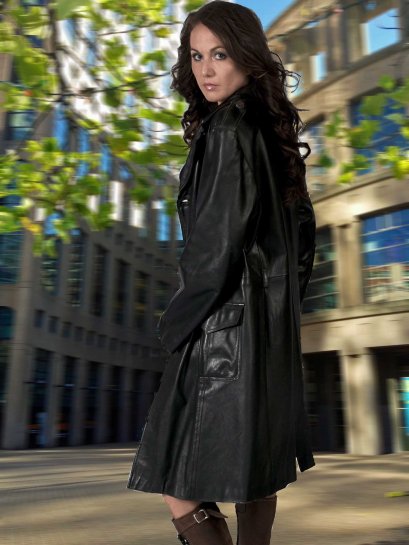
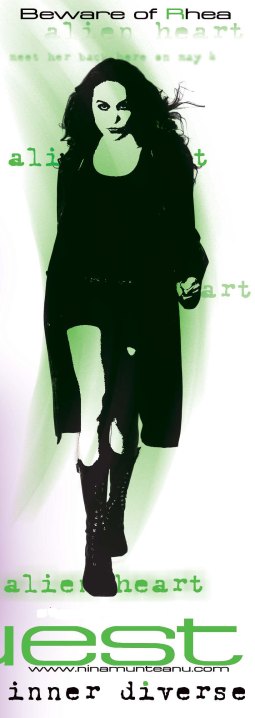
Rhea Hawke (Vali Gurgu)
“…the baldies had transformed my home planet into a lush jungle. I’d heard that they’d introduced their own trees, the vishna that supposedly made them immortal, and had coaxed Earth to revert to what it had been prior to the agricultural revolution thousands of Sol years ago. The Eosians had made Earth their home, living a symbiotic-organic life through their superior bio-technology.”
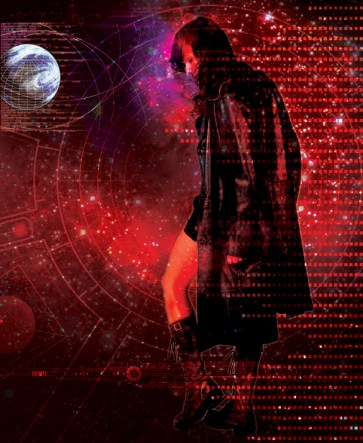
While some humans remained to live with the Eosians and adapt to their way, most took the offered package to leave: Eosians provided several bio-geo-engineered planets suitable for humans to colonize, one of which was Iota Hor-2, where Rhea lives and works.
The World—and its Myths—According to Rhea:
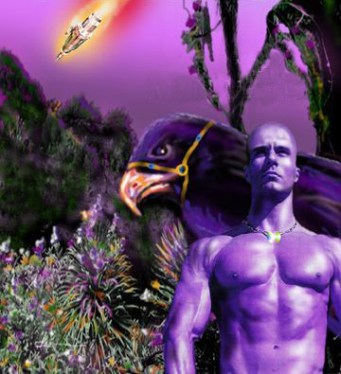
Azaes and his scree on Eos
Eosians: The whole Eosian race was supposedly the result of a foolish transgression by the overseeing ‘gods’ of ancient Earth, the Epoptes. The ‘watchers.’ Although they’d sworn not to, some Epoptes came down and fornicated with the primitive stone-age humans. My mother had quoted the lines in the Bible often enough: the sons of God saw the daughters of men that they were fair; and they took them wives of all which they chose. It was always males who did the ‘taking,’ I thought. Of course, the logic was obvious: only women gave birth. There was no point in female ‘gods’ coming down to frolic with the primitive human males. Not if the point of fornication was to produce a new species in the original community.
[The Epoptes] had created a hybrid giant race, the Eosians, who became the original inhabitants of Atlantis: the Nephilim (giants) were on the earth in those days … when the sons of God came in to the daughters of men, and they bore children to them. Those were the mighty men. So went the new myth, anyway … and when the Atlanteans plummeted into debauchery themselves, the matter-energy manipulating Epoptes unleashed their wrath in the form of a global disaster that was known throughout countless civilizations as the ‘great flood.’ Choosing a few still good Atlanteans to take on their ‘ark,’ the Epoptes found them a new home: Eos, an Earth-like jungle planet nested deep in the Pleiades. They left any original humans who’d managed to survive the wrath of the gods to their own devices. And now the Eosians were back on Earth, where they’d originated. And no sign of any Epoptes, I thought cynically. Of course, the logical cover-up story was that the Epoptes had learned their lesson and never made themselves known to others again. It was all pretty convenient.
Epoptes: Phantom ‘gods’ the Eosians supposedly consulted through their dreams to police the galaxy. According to the baldies, the Epoptes had commanded them a hundred years ago to end their reclusive existence to form the Galactic Guardians and to fight the Vos seventy years later. Luckily they did or Earth would have been destroyed and humanity rendered extinct… “It’s all myth. Gods are a myth. Vos. Epoptes. I don’t believe any of it.”
Vos: Rumors of what the Vos looked like and the treacherous things they did to their victims were just that: rumors. No one had ever lived to tell. I was familiar with most of the rumors: depending on who you talked to, the Vos were anything from giant god-like humanoids to massive reptilian-like creatures with glowing red eyes or huge fluorescent blobs of amoebic protoplasm. They also ate their victims. Of course, the obvious question  was: if no one had ever survived a Vos encounter, how could anyone possibly know this? Galaxy News spread as much fantasy as it did real news, I thought with a cynical and humorless smile.
In Metaverse, the third and last book of The Splintered Universe Trilogy, Detective Rhea Hawke travels back to Earth—now all Vishna jungle—hoping to convince an eccentric mystic to help her defend humanity from an impending Vos attack. Instead, Rhea finds herself trapped in a deception that promises to change her and her two worlds forever.
You can listen to a sample recording of Outer Diverse, Inner Diverse, and Metaverse through Audible. Find The Splintered Universe reviews on Goodreads.


Nina Munteanu is a Canadian ecologist / limnologist and novelist. She is co-editor of Europa SF and currently teaches writing courses at George Brown College and the University of Toronto. Visit www.ninamunteanu.ca for the latest on her books. Nina’s bilingual “La natura dell’acqua / The Way of Water” was published by Mincione Edizioni in Rome. Her non-fiction book “Water Is…” by Pixl Press (Vancouver) was selected by Margaret Atwood in the New York Times ‘Year in Reading’ and was chosen as the 2017 Summer Read by Water Canada. Her novel “A Diary in the Age of Water” will be released by Inanna Publications (Toronto) in 2020.

 When I first met Costi and Vali Gurgu at the
 Nina: Yes, I love the metaphoric elements you’ve woven into the design. The image speaks to us on many levels. Do you use music or other devices in your work to evoke your creativity? What other tools did you use to create the stunning covers of Splintered Universe (e.g., animation software, etc.)?


 Inner Diverse
 Inner Diverse
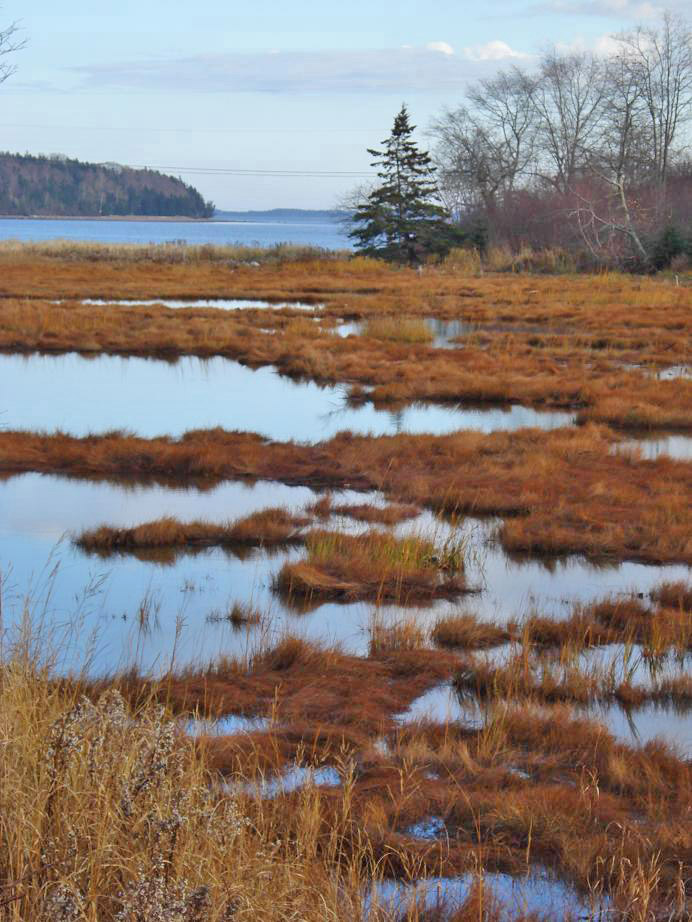
 Sekmet is the penal planet from which no one ever escapes. The planet is a giant bog-marsh and the prison itself is a massive 2-kilometre barge that travels the wetland planet and mines the peat. The very word evokes fear. Sekmet is the bogeyman. Early on, in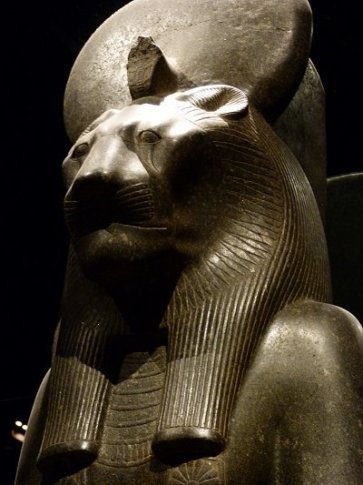

 Inner Diverse
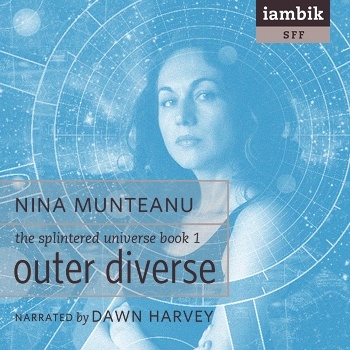
 Outer Diverse


 If I’m in a slump, it’s usually because I can’t figure something out—usually some plot point or character quirk or backstory. What helps me is to put the book I’m working on away and do something else. I know that what I need will come; I just have to let it come on its own terms. The break could even be writing something else, so long as it isn’t my book. Or I could do something else on the book such as edit a certain section or research some element. Other ways I coax my muse back are walks in Nature, reading a good book, visiting the library or a bookstore and cycling. These work really well to take me out of the book and into the muse. When I take my mind out of the direct involvement with the book, I’m letting things outside of me impact me with insight. Invariably that is what happens. I’ll see something or experience something that provides me with a clue or even an epiphany.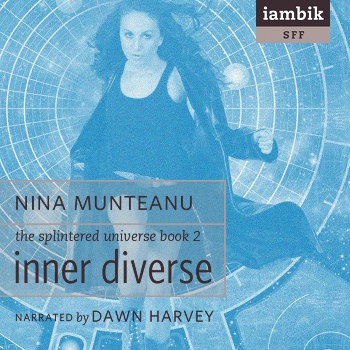





 Una stopped the car and we stared out across the longest reservoir in North America. What had once been a breathtaking view of the valley floor of the Rocky Mountain Trench was now a spectacular inland sea. It ran north-south over eight hundred kilometres and stretched several kilometres across to the foothills of the Cariboo Mountain Range. Una pointed to Mount Mica, Mount Pierre Elliot Trudeau and several other snow-covered peaks. They stood above the inland sea like sentinels of another time. Una then pointed down to what used to be Jackman Flats—mostly inundated along with McLellan River and the town of Valemont to the south. Hugging the shore of what was left of Jackman Flats was a tiny village. “That’s the new Tête Jaune Cache,” my mother told me.


 There were stories in sweat. The sweat of a woman bent double in an onion field, working fourteen hours under the hot sun, was different from the sweat of a man as he approached a checkpoint in Mexico, praying to La Santa Muerte that the federales weren’t on the payroll of the enemies he was fleeing…Sweat was a body’s history, compressed into jewels, beaded on the brow, staining shirts with salt. It told you everything about how a person had ended up in the right place at the wrong time, and whether they would survive another day.
 My upcoming novel by Inanna Publications—A Diary in the Age of Water coming out in 2020—explores the socio-political consequences of corruption in Canada, now owned by China and America as an indentured resource ‘reservoir’; it is a story told through four generations of women and their unique relationship with water during a time of great unheralded change. On February 17, 2046, limnologist Lynna writes in her diary about her mother Una:
 Science fiction explores our water crisis through premises of extreme water shortage and devastating violence (floods, droughts and storms), water diversion, and hoarding. Premises explore weather manipulation, the consequences of extensive deforestation and the massive extinction of species. As with my own book A Diary in the Age of Water, Claudiu Murgan’s Water Entanglement explores water as a character, as though water has gone rogue, unruly. Perhaps even vengeful…
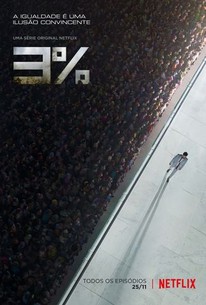 A tidal wave of TV shows and movies currently explore—or at least acknowledge—the devastation we are forcing on the planet. Every week Netflix puts out a new science fiction show that follows this premise of Earth’s devastation: 3%; The 100; The Titan; Orbiter 9; even Lost in Space.
 Ellen Szabo, author of Saving the World One Word at a Time: Writing Cli-Fi suggests that the ability to make environmental issues less political and more personal (through story) permits more engagement by readers and a higher likelihood of action toward justice: we are more likely to take action on the things we love and know. It’s all about connection.

 Nina Munteanu Writing Coach