Nina Munteanu’s Writing Featured in “Morphology” Art Exhibit

“We are water, what we do to water, we do to ourselves”—Nina Munteanu
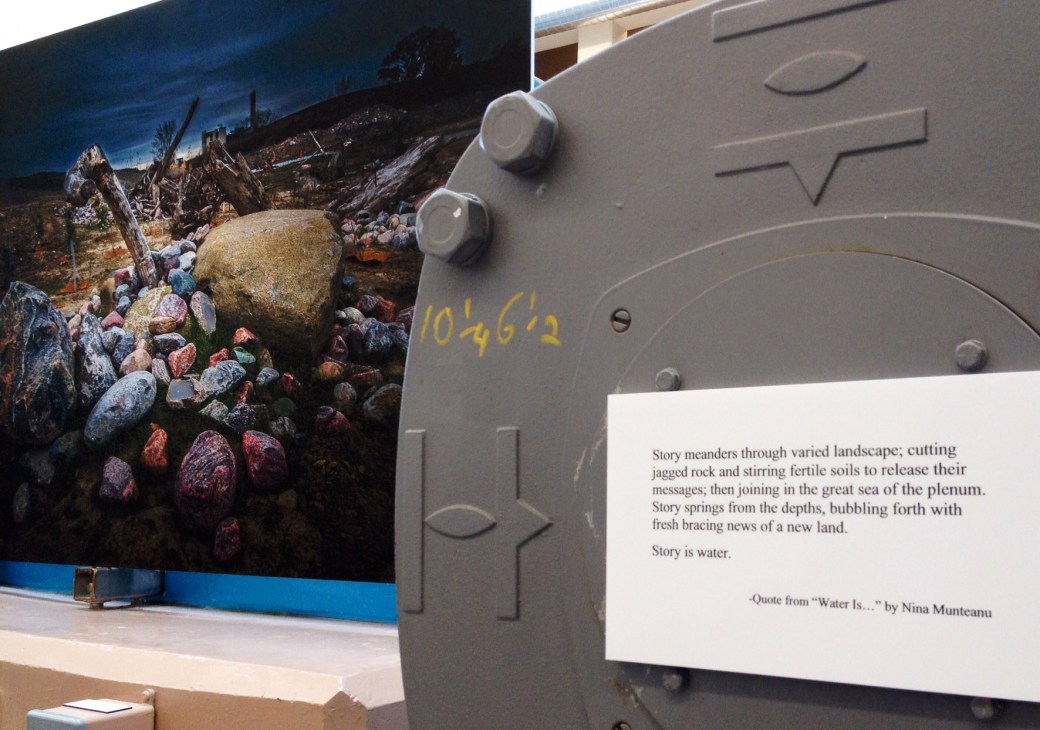
WaterIs-story-quote2

“Story” quote by Nina Munteanu from “Water Is…”

On Sunday January 14, “Morphology”, an art/writing exhibit and gala located in the world-class Lakeview Water Treatment Plant celebrated the new Waterfront Connection through the eyes of eleven photographers and writer/limnologist Nina Munteanu.

The show documented the initial stages of the newly created wetlands in Lakeview, Mississauga, on the shores of Lake Ontario. This revitalization project was the realized dream of visionary Ward 1 Councillor Jim Tovey, and was spearheaded by various organizations, including Credit Valley Conservation Foundation, The Region of Peel and the TRCA.

WaterIs-beauty-JulieKnox

Photo Art by Julie Knox, “Beauty” quote by Nina Munteanu from “Water Is…”

The Lakeview Waterfront Connection reclamation project will extend from the old Lakeview generating station to Marie Curtis Park in Toronto When completed, the 64-acre site will provide 1.5 km of beach, meadow, forest, wetland and islands—providing excellent habitat for migratory birds, fish and other aquatic life. Clean rubble from demolition projects are being used to build new land.

“It is the first ecosystem that’s ever been built in Lake Ontario in the GTA—ever,” said Councillor Tovey.
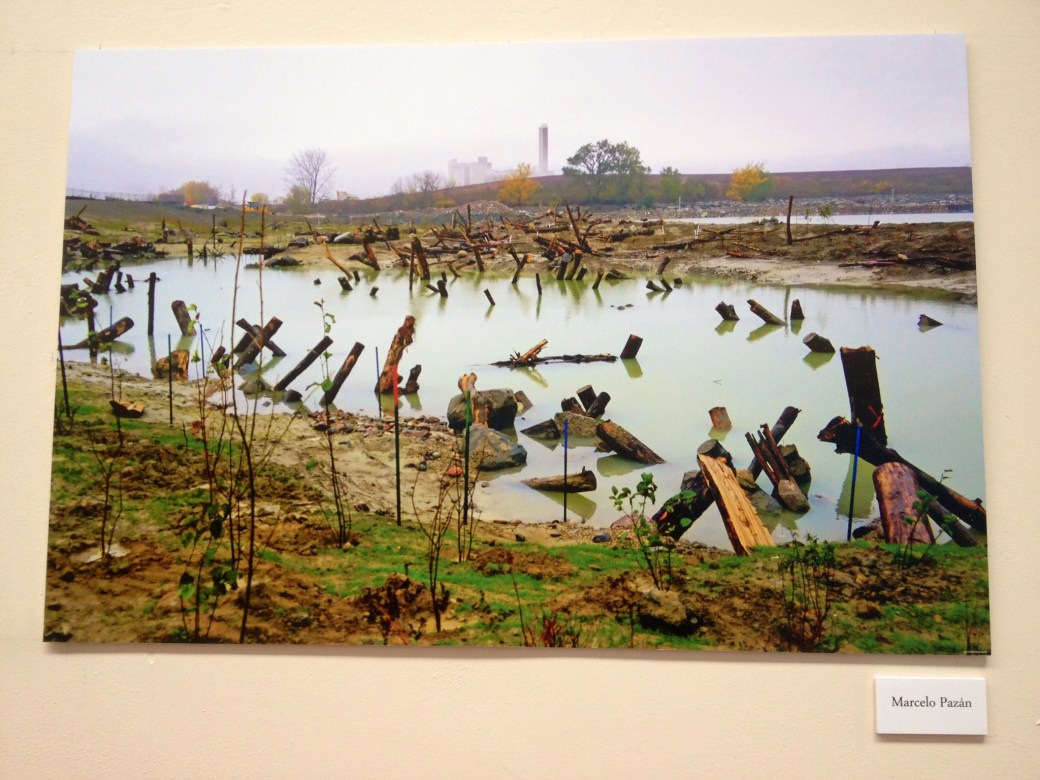
 

MarceloPazan-photo

Photo Art by Marcelo Pazan

The art of eleven photographers documented the early stages of the wetland construction. “It sort of looks like a Salvador Dali surrealistic sculpture garden…and what an interesting way to really celebrate all of this,” said Councillor Tovey to the Mississauga News. Nina Munteanu was invited to provide water-related literature to augment the photography; quotes from Munteanu’s “Water Is…” and her upcoming novel “A Diary in the Age of Water” appeared in key locations with the photo art.
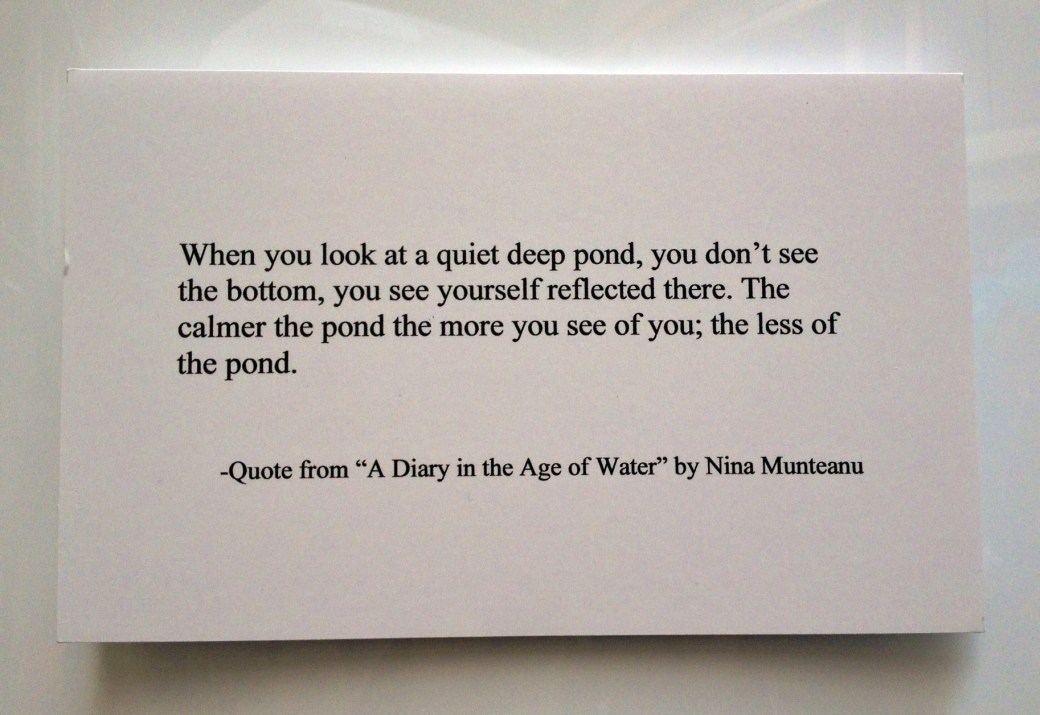
DiaryAgeOfWater-quoteReiterating Jim Tovey’s earlier comment on the water treatment plant as its own sculpture-art, Munteanu celebrated the location and the nature of the exhibit: “When technology, art and ecology are celebrated together, you get magic.”

JimTovey-ElizabethDowdeswell

Councillor Jim Tovey and The Honourable Elisabeth Dowdeswell tour the exhibit

The Honourable Elisabeth Dowdeswell (Lieutenant Governor of Ontario) was present for the exhibit: “The Great Lakes … face certain challenges,” said The Honourable Dowdeswell. “Threats such as increased pollution, habitat destruction and climate change are all having negative effects on much of our natural world.” We need strong stewardship, she added.
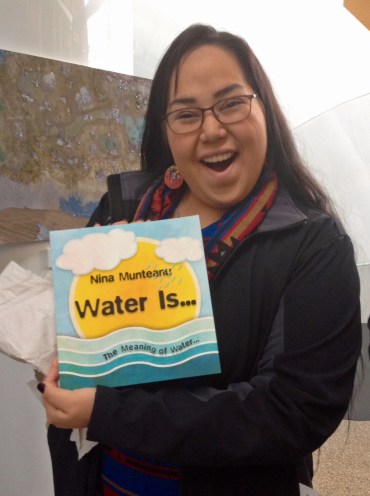
CathieJamieson-WaterIs-happy

Councillor Cathie Jamieson with her copy of “Water Is…”

Cathie Jamieson, Councillor of the New Credit First Nation gave a stirring speech. “We are the water carriers and it’s in our best interest to respect and take care of our natural surroundings for the next seven generations,” she said.

Councillor Jamieson was presented with a copy of “Water Is…” during the exhibit.

The exhibit will be moved and on public display at Mississauga’s Great Hall in March 2018. It is a must see!


Featured this year is the photo art by: Gabriella Bank, Sandor Bank, PJ Bell, Darren Clarke, Julie Knox, Lachlan McVie, Marcelo Leonardo Pazán, Martin Pinker, Annette Seip, Stephen Uhraney and Bob Warren; and written quotes by Nina Munteanu from “Water Is…” and upcoming “A Diary in the Age of Water”.


LWTP-blue-green-red pipes

Lakeview Water Treatment Plant

nina-2014aaaNina Munteanu is an ecologist, limnologist and internationally published author of award-nominated speculative novels, short stories and non-fiction. She is co-editor of Europa SF and currently teaches writing courses at George Brown College and the University of Toronto. Visit www.ninamunteanu.ca for the latest on her books.


LWTP-catwalk-close

“Water” a Speculative Fiction Anthology by Reality Skimming Press

WaterAnthology-RealitySkimmingPressIn December 2017, “Water”, the first of Reality Skimming Press’s Optimistic Sci-Fi Series was released in Vancouver, BC. I was invited to be one of the editors for the anthology, given my passion for and experience with water.

This is how Reality Skimming Press introduces the series:

Reality Skimming Press strives to see the light in the dark world we live in, so we bring to you the optimistic science fiction anthology series. Water is the first book in the series, and is edited by author and scientist Nina Munteanu. Six authors thought optimistically about what Earth will be like in terms of water in the near future and provide us with stories on that theme. Step into the light and muse with us about the world of water.

Editing “Water” was a remarkable experience, best described in my Foreword to the anthology:

LyndaWilliams

Lynda Williams

This anthology started for me in Summer of 2015, when Lynda Williams (publisher of RSP) and I were sitting on the patio of Sharky’s Restaurant in Ladner, BC, overlooking the mouth of the Fraser River. As we drank Schofferhoffers over salmon burgers, Lynda lamented that while the speculative / science fiction genre has gained a literary presence, this has been at some expense. Much of the current zeitgeist of this genre in Canada tends toward depressing, “self-interested cynicism and extended analogies to drug addiction as a means of coping with reality,” Lynda remarked.

Nina-Sharkys

lunch at Sharky’s

Where was the optimism and associated hope for a future? I brought up the “hero’s journey” and its role in meaningful story. One of the reasons this ancient plot approach, based on the hero journey myth, is so popular is that its proper use ensures meaning in story. This is not to say that tragedy is not a powerful and useful story trope; so long as hope for someone—even if just the reader—is generated. Lynda and I concluded that the science fiction genre could use more optimism. Reality Skimming Press is the result of that need and I am glad of it.

Megan coverIn the years that followed, Reality Skimming Press published several works, including the “Megan Survival” Anthology for which I wrote a short story, “Fingal’s Cave”. It would be one of several works that I produced on the topic of water.

As a limnologist (freshwater scientist), I am fascinated by water’s anomalous and life-giving properties and how this still little understood substance underlies our lives in so many ways. We—like the planet—are over 70% water. Water dominates the chemical composition of all organisms and is considered by many to be the most important substance in the world. The water cycle drives every process on Earth from the movement of cells to climate change. Water is a curious gestalt of magic and paradox, cutting recursive patterns of creative destruction through the landscape. It changes, yet stays the same, shifting its face with the climate. It wanders the earth like a gypsy, stealing from where it is needed and giving whimsically where it isn’t wanted; aggressive yet yielding. Life-giving yet dangerous. Water is a force of global change, ultimately testing our compassion and wisdom as participants on a grand journey.

When Reality Skimming invited me to be editor of their first anthology in their hard science optimistic series, and that it would be about water, I was delighted and excited.

WATER Anthology-interior-image

Illustration by Digbejoy Gosh for Bruce Meyer’s “The River Tax”

The six short stories captured here flow through exotic landscapes, at once eerie and beautiful. Each story uniquely explores water and our relationship with its profound and magical properties:  melting glaciers in Canada’s north; water’s computing properties and weather control; water as fury and the metaphoric deluge of flood; mining space ice from a nearby comet; water as shapeshifter and echoes of “polywater”. From climate fiction to literary speculative fiction; from the fantastic to the purest of science fiction and a hint of horror—these stories explore individual choices and the triumph of human imagination in the presence of adversity.

I invite you to wade in and experience the surging spirit of humanity toward hopeful shores.

Nina Munteanu, M. Sc., R.P.Bio.
Author of Water Is…
October, 2017
Toronto, Canada

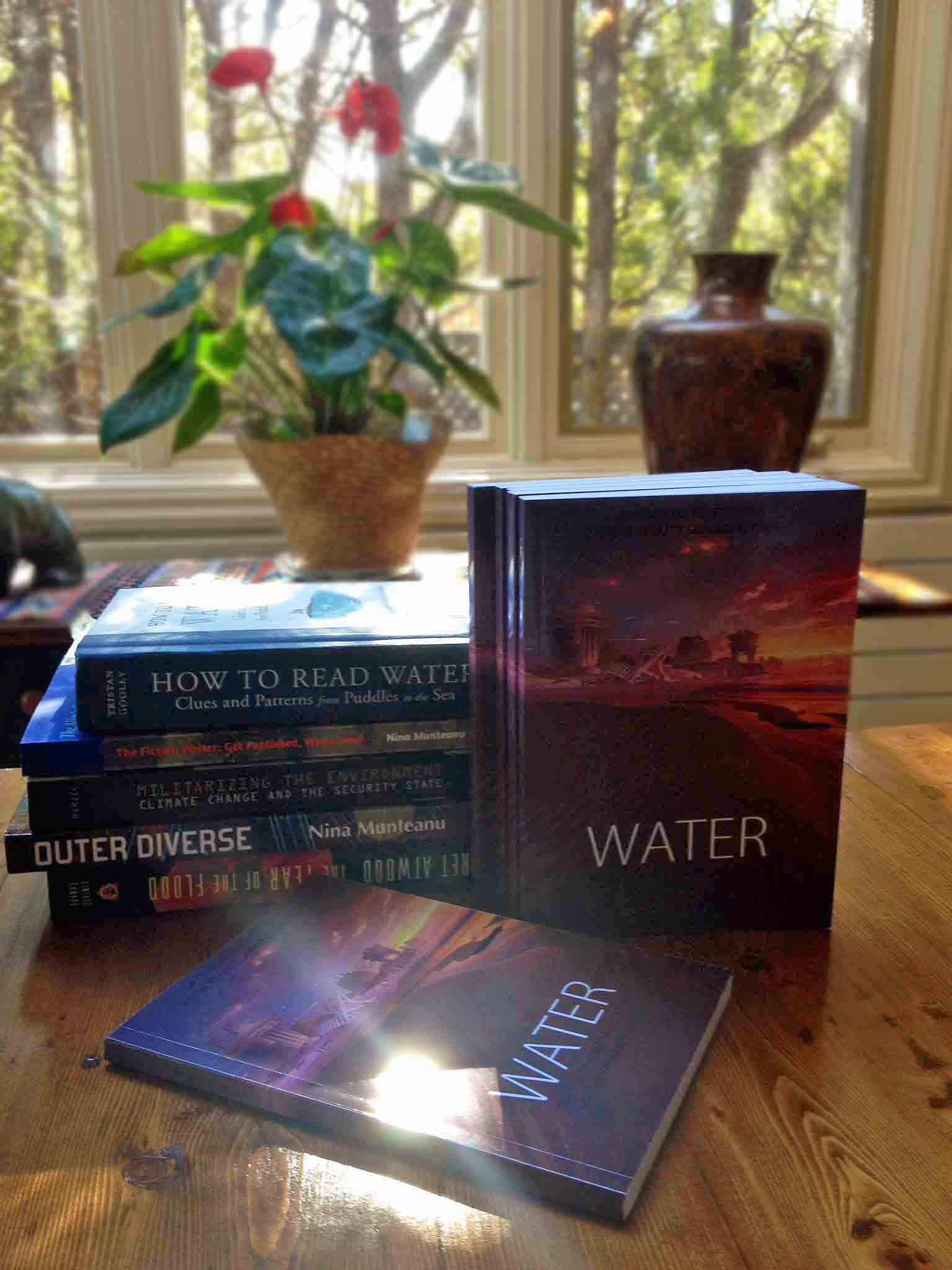
waterbooks2L

My desk with copies of “Water” among my current books to read…

The anthology features the art work of Digbejoy Ghosh (both cover and interior for each story) and stories by:

Holly Schofield
Michelle Goddard
Bruce Meyer
Robert Dawson
A.A. Jankiewicz
Costi Gurgu

You can buy a copy on Amazon.ca or through the publisher.

nina-2014aaaNina Munteanu is an ecologist, limnologist and internationally published author of award-nominated speculative novels, short stories and non-fiction. She is co-editor of Europa SF and currently teaches writing courses at George Brown College and the University of Toronto. Visit www.ninamunteanu.ca for the latest on her books.

Find Your Focus This Christmas–Reprise

snow-scene-road-to-Wolfville-barn_edited-1

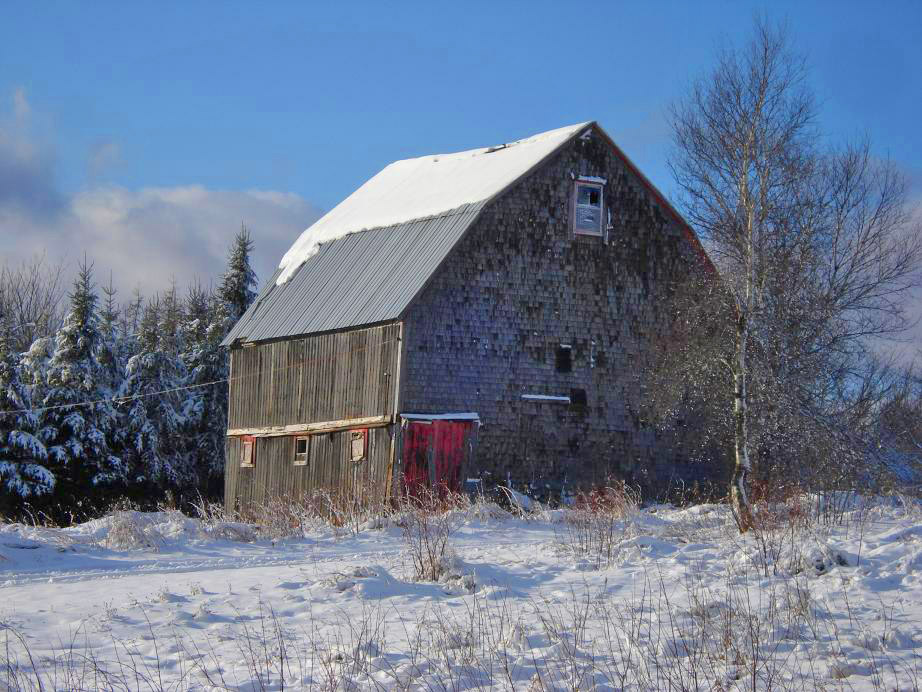
Barn on road to Wolfville, NS (photo by Nina Munteanu)

How many of you are still running around preparing for the Christmas celebration or secular family festivity? Buying that last minute gift you’d forgotten or were chasing down since a bazillion days ago? Or making last minute changes to your travel plans, house-cleaning for guests, mailing of cards or parcels or meal preparations?

Well, you’re reading this blog post … That means you’re sitting down and taking a minute to relax and regroup. That’s good. Remember to breathe… while I tell you a story…

I’d just finished a three-day drive through snow and rain storms from Mahone Bay, Nova Scotia, to Toronto, Ontario, where I was staying for a few days before catching a flight to Vancouver to spend Christmas with my son and good friends on the west coast. Talk about fast living.

I move around a lot these days. It helps me to appreciate some of the most simple things in life and reminds me of what I love most about Christmas: how it focuses my heart and reconnects me. I don’t mean just with relatives and friends either, although the season certainly does that. I’m talking about my soul and the universe itself. Before I became an itinerant, Christmas bustled with my responsibilities as primary caregiver, social coordinator and hostess of major parties. After I’d said goodbye to our visiting friends and done the dishes and tidied the house; after my husband and son had gone to bed, I sat in the dark living room lit only with the Christmas Tree lights and the flickering candle, and listened to soft Christmas music, primed to write.

snow-christmas2008-sammy

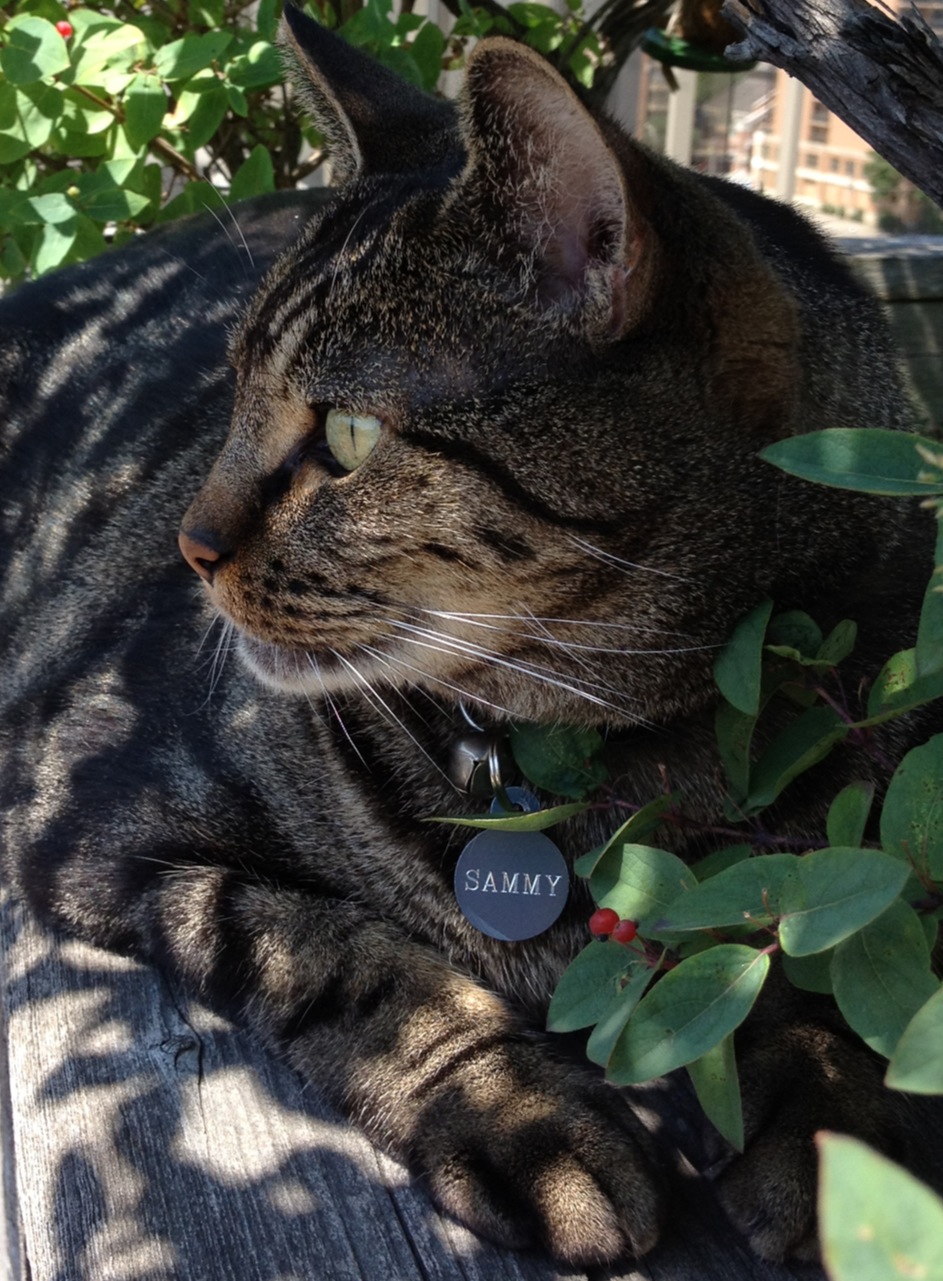
Sammy

My male cat, smelling fresh from outside, found his rightful place on my lap and settled there, pinning me down with love. And there, as I breathed in the scent of wax and fir and cat I found myself again.

Most of us think of Christmas as a busy time, of getting together (often dutifully) with family and friends, exchanging presents and feasting. Christmas is certainly this, but that is only a shallow view of a far deeper event; and I don’t mean only for Christians.

Whether celebrating the holy light of Hannukah or the birth of Jesus, or the winter solstice, this season provides us with the opportunity to meditate on far more than the surficial nature of the symbols we have come to associate with the season: the Christmas tree, presents, turkey dinner, Santa Claus or Saint Nicholas—most of which originate from pagan tradition, by the way.

Says Lama Christie McNally (author of The Tibetan Book of Meditation), “once you dive below the surface, you will discover a beautiful clear place—like a diamond hidden beneath the rubble. It is your own mind, uncovered … Tibetans say we have only just begun the process of awakening—that we still have quite a way to go in our evolutionary process. And it has nothing to do with building spaceships or computers. The next step in our evolution takes place within.”

Christmas is, more than anything, a time of embracing paradox. It is an opportunity to still oneself amid the bustle; to find joy in duty; to give of one’s precious time when others have none, to embrace selflessness when surrounded by promoted selfishness, and to be genuine in a commercial and dishonest world. If one were to look beyond the rhetoric and imposed tradition, the Christmas season represents a time of focus, a time to reflect on one’s genuine nature and altruistic destiny. A time to reconnect with the harmony and balance in our lives.

A time to sit with our cat, pinned with love, and write our next novel.

Merry Christmas!


Nina Munteanu is an ecologist and internationally published author of award-nominated speculative novels, short stories and non-fiction. She is co-editor of Europa SF and currently teaches writing courses at George Brown College and the University of Toronto. Visit www.ninamunteanu.ca for the latest on her books.

Wake up Your Muse–How my Cat Taught Me the Art of Being…

SammyI’m not a very patient person. I make no time for writer’s block or lingering in useless limbo over some plot issue or misbehaving minor character. I write pretty much to a tight schedule: this short story to that market by this date; edits to this book to the editor by that date; blog posts created by such and such a time; an article to another market by another date. It goes on and on. When I go to my computer to write, I write.
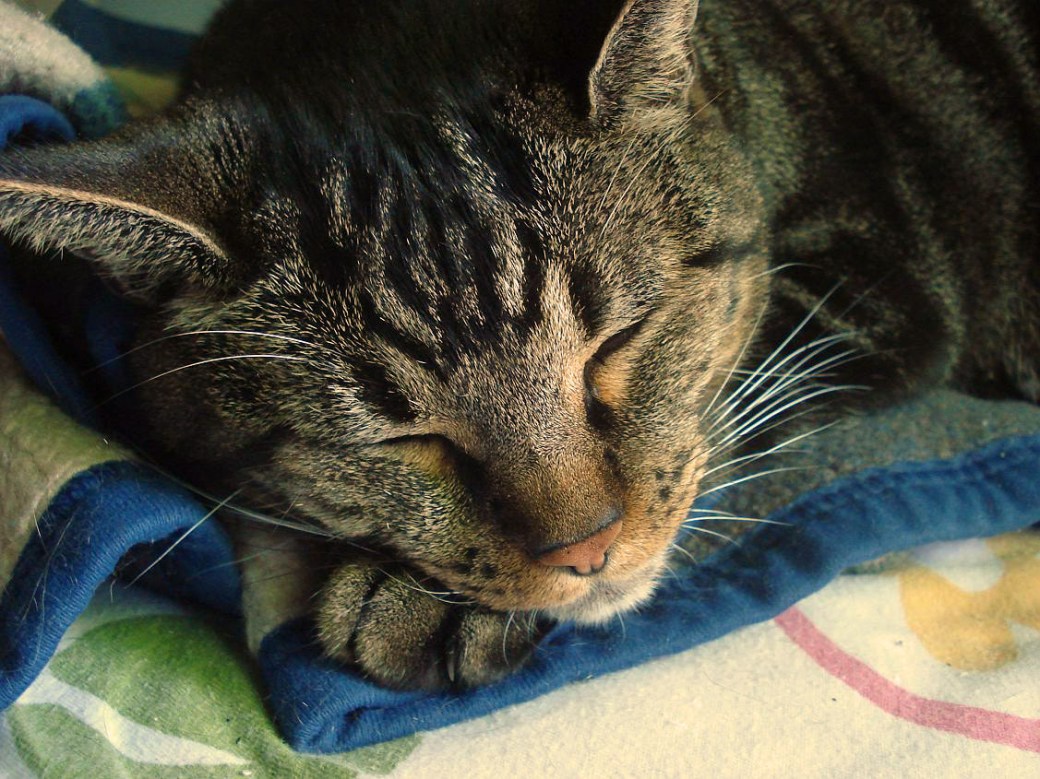
Then there’s Sammy. My cat.

Who likes to jump on my lap, make himself all comfortable and then lie over my arm — trapping it along with five of my typing digits. Now what??? Some of you would advise me to simply pull out my pinned arm and/or shove him off. But how can I disturb such a blissful creature? He is so content furled on me, so satisfied that he has captured that wandering appendage of business that is all his now. Content in the bliss of now. In the bliss of cat-purr-meditation…

sammy-2010-01_edited-1Pinned in the moment, my mind first struggles with the need to pound out the next line. My mind then rephrases and teases out nuances of that line. Finally, it wanders out with my gaze and I find myself daydreaming in a kind of trance. Giving in to the cat-purr-meditation.

And it is here that magic happens. In the being; not in the doing.

This is the irony of writing and the muse. To write we need to live; we need to have something to write about and we need to be in that state of mind that allows us to set it to print. I am at my best as a writer when I am focused on the essence of the story, its heart and soul beating through me with a life of its own.

My cat Sammy isn’t the only vehicle to my magical muses.


Waking up the Muse

Here are a few things that help me entice those capricious muses into action:

snow-christmas2008-sammy

Sammy hunting

Music: music moves me in inexplicable ways. I use music to inspire my “muse”. Every book I write has its thematic music, which I play while I write and when I drive to and from work (where I do my best plot/theme thinking). I even go so far as to have a musical theme for each character.

Walks: going for a walk, particularly in a natural environment, uncluttered with human-made distractions, also unclutters the mind and soul. It grounds you back to the simplicity of life, a good place to start.

Cycling: one of my favorite ways to clear my mind is to cycle (I think any form of exercise would suffice); just getting your heart rate up and pumping those endorphins through you soothes the soul and unleashes the brain to freely run the field.

Attend writer’s functions: go to the library and listen to a writer read from her work. You never know how it might inspire you. Browse the bookshelves of the library or bookstore. Attend a writer’s convention or conference.

Visit an art gallery, go to a movie: art of any kind can inspire creativity. Fine art is open to interpretation and can provoke your mind in ways you hadn’t thought before. If you go with an appreciative friend and discuss what you’ve seen you add another element to the experience.

snow-scene-road-to-Wolfville-stream3

Road to Wolfville, NS (photo by Nina Munteanu)

Go on a trip with a friend: tour the city or, better yet, take a road trip with a good friend or alone (if you are comfortable with it). I find that travelling is a great way to help me focus outward, forget myself, and open my mind and soul to adventure and learning something new. Road trips are metaphoric journeys of the soul.

Form a writer’s group: sharing ideas with people of like mind (or not, but of respectful mind) can both inspire you and provide the seeds of ideas.

Practice Cat-Purr-Meditation: you need a willing cat for this; I find that I need tostudy my cat’s meditative practices; where does he most like to relax? Mine loves to look outside the window onto the back yard and garden. That’s where I take him and there, together, we breathe deep and “purr” in the moment…You can read more about purring cat meditation in my Alien Next Door post, “Perfecting the Cat Purr Meditation


Nina Munteanu is an ecologist and internationally published author of award-nominated speculative novels, short stories and non-fiction. She is co-editor of Europa SF and currently teaches writing courses at George Brown College and the University of Toronto. Visit www.ninamunteanu.ca for the latest on her books.

Everything Change Climate Fiction Contest–2018

climate fiction contestArizona State University’s Imagination and Climate Futures Initiative is again hosting a Climate Fiction Short Story Contest. In years past they invited writers from around the world to submit speculative fiction stories that explore climate change to narrate a world in flux. Previous contests received submissions from 67 different countries and 12 finalists were published in a digital anthology “Everything Change”.
everything change

The 2018 Climate Fiction Short Story Contest invites submissions in all genres, including speculative, realistic, literary, experimental, hybrid forms, and more.

The context will again be judged by science fiction writer Kim Stanley Robinson, award-winning author of many foundational works in climate fiction, including New York 2140.

The winning story will receive a $1,000 prize. Nine finalists will receive $50 each. The winner and finalists will be published in an online anthology, which will be free to download, read, and share.

The deadline for submission is February 28, 2018, with the finalists announced in summer 2018. All submissions must be received through their online submissions manager at https://everythingchange.submittable.com.

For more details on submission guidelines and eligibility go to the climate imagination site.

PolarBear-facepalm

Don’t be shy.  Write your best and submit.


Why & When Should You Write a Synopsis?

cat typewriterWhen I was just beginning as a novelist, the publisher guideline request “submit a synopsis and sample chapters” was intimidating to say the least. There was something terrifyingly daunting about writing a succinct compelling summary of my 300-page novel packaged into just a few pages. As author Katherine Eliska Kimbriel said, “The instinctive response [of the author] is to clap on a helmet and start digging a trench.” I had a right to be terrified. In some ways the synopsis is the hardest thing for a novelist to write. Yet it is the first thing most publishers and agents want (and have time) to see of your cherished project (aside from those sample chapters, of course). Every fiction writer who wants to sell in the current market must know how to write a synopsis because that’s what an editor wants to see first. Most editors (if they’re good) are overworked with scarce enough time to answer their phones, much less their emails.

I’m not going to describe how to write a synopsis in this post. If you want to see an excellent summary of what a good synopsis should look like, there are many excellent descriptions by professional editors, agents and other writers who describe what a synopsis is and even give examples—including my own book “The Fiction Writer: Get Published, Write Now!”, Chapter “O.” Elizabeth Lyon also describes the synopsis (as opposed to an outline) in several of her how-to books.cat-on-typewriter

Instead, I present here why you should write that dreaded synopsis, and way before you finish your book, too.

Synopsis vs. Outline

A synopsis is not an outline. Both are useful to the writer, yet each serves a very different purpose. An outline is a tool (usually just for the writer) that sketches plot items of a book. It provides a skeleton or framework of people, places and their relationships to the storyline that permits the writer to ultimately gauge scene, setting, and character depth or even determine whether a character is required (every character must have a reason to be in the book, usually to move the plot). For writers just beginning, this is an excellent tool to keep the narrative spare and compelling and to remove superfluous characters and other things (a common beginning writer inclination). A synopsis, on the other hand, is an in-depth summary of the entire book that weaves in thematic elements with plot to portray a compelling often multi-level story arc. This is usually what an editor wants to see, although I have seen them request an outline as well. To put it basically, the outline describes what happens when and to whom, while the synopsis includes the “why” part.

What a synopsis does (along with the sample chapters and extremely important query letter) is get your manuscript read by an editor. That’s the real purpose of a synopsis. An editor makes his/her decision to look at your manuscript based on these three items: query letter (intro to you); sample chapters; and your synopsis. Ultimately, their decision resides with whether your project fits their own imprint at the time.

If that isn’t reason enough to write a synopsis of your novel, below are two others:

Synopsis as Storytelling Prompt

cat typewriter2A synopsis of your novel goes beyond the outline to help polish elements of story arc, characterization with plot and setting with story. The synopsis can answer questions perplexing the author, stuck on a scene or plot item. It helps you weave your novel’s elements into a well-integrated story that is compelling at many levels. Because the synopsis is based on emotional turning points (related to theme), character dramatization of the premise is a key foundation. It makes sense to write drafts of your synopsis as you go along in the novel; that way it’s useful to both you and to the editor and then it’s more or less written when you need to submit it along with sample chapters…and not quite as daunting a task either.

Synopsis as Marketing Summary

Your well-written synopsis is often used internally by the publishing house staff (e.g., by artist, copywriter, and sales department) once your novel has been accepted.

I advise you to write it now. Don’t wait. Make the synopsis work for you throughout your novel’s journey.


nina-2014aaNina Munteanu is an ecologist and internationally published author of award-nominated speculative novels, short stories and non-fiction. She is co-editor of Europa SF and currently teaches writing courses at George Brown College and the University of Toronto. Visit www.ninamunteanu.ca for the latest on her books.

The Careful Writer: Common Pitfalls of the Beginning Novelist: Part 2–Language

patterns2-log-beetl holes-LR

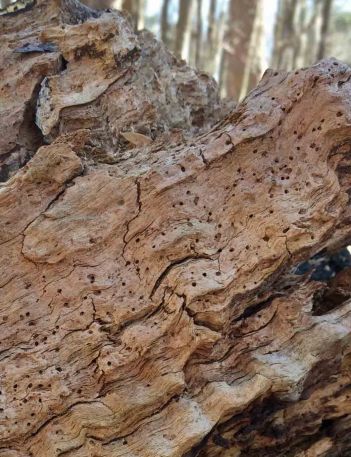
Log with insect bores (photo by Nina Munteanu)

Here are five things that I guarantee will improve your story:

  1. Voice: This is the feel and tone that applies to the overall book (narrative voice) and to each character. The overall voice is dictated by your audience, who you’re writing for: youth, adults, etc. It’s important to give each character a distinctive “voice” (including use of distinct vernacular, use of specific expressions or phrases, etc.). This is one way a reader can identify a character and find them likeable—or not. In a manuscript I recently reviewed, I noticed that the characters spoke in a mixture of formal and casual speech. This confuses the reader and bumps them out of the “fictive dream”. Consistency is very important for readers. They will abandon a story whose writing is not consistent. So, my advice to this writer was to pick one style for each character and stick to it. Voice includes what a character says. It incorporates language (both speech and body movements), philosophy, humor. How a character looks, walks, talks, laughs, is all part of this. Let’s take laughter for instance: does your character tend to giggle, titter, chortle, gafaw, belly-laugh? Do any of your characters have conflicts with one another? Either through differences in opinions, agendas, fears, ambitions… etc. One learns so much from the kind of interaction a character has with his/her surroundings (whether it’s another character or a scene).
  2. Point of View (POV): Many beginner’s novels are often told through no particular POV. Many first manuscripts often start in the omniscient POV (that of the narrator) and ever so often may lapse into one of the character’s POV briefly. This makes for very “telling vs showing” type of writing (not to mention being inconsistent again). 90% of writers do not write this way because it tends to be off-putting, it distances the reader from the characters, and is very difficult to achieve and be consistent with. Most writers prefer to use limited third person POV (told from one or a few key characters; that is, you get into the head and thoughts of only a few people: all the observations are told through their observations, what they see, feel and think). This bonds the reader to your characters and makes for much more compelling reading. I would highly suggest you adopt this style. That’s not to say that you can’t use several POVs… just not at the same time; it is the norm to use chapter or section breaks to change a POV.
  3. Passive vs. Active Verbs: beginners often use a lot of passive verbs (e.g., were, was, being, etc.). Some use too may modifiers. Try to find more active verbs. Many writers fall into the pattern of using verbs that are weak and passive (and then adding a modifier to strengthen it…it doesn’t). Actively look for strong, vivid verbs. This is a key to good writing. I can’t emphasize this enough. For instance, which version is more compelling: ‘she walked quickly into the room’ or ‘she stormed into the room’?
  4. Show, don’t tell: this is partly a function of POV and use of active verbs. Once you change to 3rd person, much of this will naturally resolve itself. An example of telling vs. showing is this: [He was in a rage and felt betrayed. “You lied, Clara,” he said angrily, grabbing her hand.] instead, you could show it: [His face smoldered. “You lied, Clara,” he roared, lunging for her.] Telling also includes large sections of exposition, either in dialogue or in narrative. This happens a lot in beginning writer’s stories. It takes courage and confidence to say less and let the reader figure it out. Exposition needs to be broken up and appear in the right place as part of the story. Story is paramount. “Telling” is one of the things beginning writers do most and editors will know you for one right away. Think of the story as a journey for both writer and reader. The writer makes a promise to the reader that s/he will provide a rip-roaring story and the reader comes on side, all excited. This is done through a confident tease in the beginning and slow revelation throughout the story to keep it compelling. Exposition needs to be very sparingly used, dealt out in small portions.
  5. TheFictionWriter-NMUnclutter your writing: There is a Mennonite adage that applies to writing: “less is more”. Sentences in early works tend to be full of extra words (e.g., using “ing” verbs, add-ons like “he started to think” instead of simply “he thought”). Cut down the words in your paragraphs (often in the intro chapters) by at least 20%. Be merciless; you won’t miss them, believe me, and you will add others later in your second round of edits.


This is an excerpt from The Fiction Writer: Get Published, Write Now! (Starfire)


nina-2014aaNina Munteanu is an ecologist and internationally published author of award-nominated speculative novels, short stories and non-fiction. She is co-editor of Europa SF and currently teaches writing courses at George Brown College and the University of Toronto. Visit www.ninamunteanu.ca for the latest on her books.

Nina Munteanu Talks to Hi-Sci-Fi Radio…

darwins-paradoxHi-Sci-Fi Radio (a podcast radio show out of CJSF 90.1FM in Burnaby, British Columbia) interviewed Nina Munteanu about the paradoxes of her eco-thriller “Darwin’s Paradox” by Dragon Moon Press (Edge Publishing).
A devastating disease. A world on the brink of violent change. And one woman who can save it or destroy it all. Julie Crane must confront the will of the ambitious virus lurking inside her to fulfill her final destiny as Darwin s Paradox, the key to the evolution of an entire civilization.

Nina and Irma Arkus talked synchronicity, autopoiesis, Nature’s intelligence and whether algae can sing in this entertaining interview on science fiction and all things wonderful and strange.

Darwin’s Paradox is a thrill ride that makes you think and tugs the heart.”–Robert J. Sawyer, Hugo and Nebula Award-winning author of Quantum Night

The Careful Writer: Common Pitfalls of the Beginning Novelist: Part 1–Characters

patterns2-log-beetl holes-LR

Decaying log with insect bores (photo by Nina Munteanu)

Have you ever wondered how an editor decides not to read your cherished tome past the second paragraph of the first page and has pegged you as a beginning writer? This used to really bug me… Now, as a published author, mentor, and writing coach I read a lot of unpublished manuscripts. I now recognize what these editors do.

So, I’d like to share what I’ve learned over the years (some of the very same comments that have been made of my work, I am now sharing with you). I’ll be providing you my advice in three parts: 1) characters; 2) language; and 3) structure.

Let’s start with characters, since they are in my opinion, the most important part of a novel:

Characters carry the theme of the book. Each character needs to have a role in advancing the plot and/or theme; each character needs a reason to be there. A character therefore needs to be distinctive and usually shows some character development (as story arc) from beginning to end of story. Your characters are the most important part of your book (more so than the plot or premise). Through them your book lives and breathes. Through them your premise, your plot (which is essentially just a way to create problems for your characters to live out their development) and story come alive. Through them you achieve empathy and commitment from the reader and his/her willingness to keep reading to find out what’s going to happen next: if the reader doesn’t invest in the characters, they won’t really care what happens next.

Characters need to be real. They come to life by giving them individual traits and real weaknesses and heroic qualities that are consistent and have qualities readers can recognize and empathize with. You play these against each other to achieve drama. For instance, a man who is afraid of heights but who must climb a mountain to save his love is far more compelling than one who is not; a military man who fears responsibility but must lead his team into battle; a scientist who is afraid of failure; etc.

Characters of beginning writers often suffer from lack of distinction, or purpose, and often simply clutter up a story. For a character to “come alive” their “voice” must be distinct. Give them distinctive body movements, dress, facial features and expressions that reveal character, inner feelings, emotions, fears, motivations, etc. Then keep them consistent. There are several techniques writers use to increase empathy for a character. This includes use of third person POV, keeping the story with focus on fewer rather than many characters, creating character dossiers and keeping them consistent, providing each character a distinctive “voice” (figuratively), as in how they behave, say, react, etc. Another way to make your characters distinct (and works to also tie into plot and theme) is to make your characters not get along. Make them argue, disagree (at least!), have suspicions, betray one another, laugh and ridicule, etc. By doing this you increase tension, conflict (two things every book requires) and you enlighten the reader into each of the characters involved. Make them fight or argue over what they believe in – or not. You need to describe your characters in effective brief but vivid language as the reader encounters them.

Here are some questions you need to ask about your characters:

  1. if I can remove the character, will the book fall apart? (if not, you don’t need that character; they aren’t fulfilling a role in the book);
  2. how does the character portray the major or minor theme of the book? (that’s what characters are there for)
  3. what is the role of the character? (e.g., protagonist, antagonist, mentor, catalyst, etc.)
  4. what is the story arc of the character? Does he or she develop, change, do they learn something by the end? If not, they will be two-dimensional and less interesting
  5. what major obstacle(s) must the character overcome?
  6. who are your major protagonist(s) (the main character who changes the most)?
  7. who are your major antagonist(s) (those who provide trouble for your protagonists, the source of conflict, tension, the obstacle: one of their own?
  8. what’s at stake: for the world (plot); for each individual (Theme) and how do these tie together? Every character has a role to fulfill in the plot and to other characters. Don’t be afraid to totally remove characters if they do not fulfill a role.

To summarize, each character is there for a purpose and this needs to be made apparent to the reader (intuitively through characterization, their failings, weaknesses, etc.). Make them bleed, hurt, cry, feel. This needs to be clear to the reader, who wants to empathize with some of them and hate others. How characters interact with their surroundings and each other creates tension, a key element to good storytelling. Tension, of course builds further with the additional conflict of protagonist with antagonists. But, in truth, it’s more fun to read about the tension from WITHIN a group that’s supposed to be together. Think of Harry Potter and what was juicy there… It wasn’t really Voldemort … it was what went on at Hogwarts between Harry and his friends and not-so-friends. That is what makes a story memorable; that is what makes a story something you can’t put down until you’ve finished it.

TheFictionWriter-NMPart 2 of the Beginning Novelist will focus on language.

This is an excerpt from The Fiction Writer: Get Published, Write Now! (Starfire)


nina-2014aaNina Munteanu is an ecologist and internationally published author of award-nominated speculative novels, short stories and non-fiction. She is co-editor of Europa SF and currently teaches writing courses at George Brown College and the University of Toronto. Visit www.ninamunteanu.ca for the latest on her books.


He said, She said: Using Dialogue

Steveston-boats

Boats in Steveston, BC (photo by Nina Munteanu)

One of the most important devices to spice up narrative and increase pace is the use of dialogue. There’s a reason for this: we read dialogue more quickly; it’s written in more fluid, conversational English; it tends to create more white space on a page with less dense text, more pleasing to the reader’s eye.  Dialogue is action. It gets readers involved.

Good dialogue neither exactly mimics actual speech (e.g., it’s not usually mundane, repetitive or broken with words like “uh”) nor on the other extreme does it proselytize or educate the reader through long discourse (unless the character is that kind of person). Good dialogue in a story should be somewhere in the middle. While it should read as fluid conversation, dialogue remains a device to propel the plot or enlighten us to the character of the speaker). No conversation follows a perfect linear progression. People interrupt one another, talk over one another, often don’t answer questions posed to them or avoid them by not answering them directly. These can all be used by the writer to establish character, tension, and relationship.

Below, I provide a few tips when using dialogue in your story.

  • Show, don’t tell: a common error of beginning writers is to use dialogue to explain something that both participants should already know but the reader doesn’t. It is both awkward and unrealistic and immediately exposes you as a novice. For instance, avoid the use of “As you know…” It’s better to keep the reader in the dark for a while than to use dialogue to explain something. Which brings us to the next point.
  • Have your characters talk to each other, not to the reader: for instance, “Hello, John, you loser drunk and wayward son of the most feared gangster in town!” could be improved to, “You stink like a distillery, John! Wait ‘til papa’s thugs find you!”
  • Avoid adverbs: e.g., he said dramatically, she said pleadingly; instead look for better ways to express the way they said it with actual dialogue. That’s not to say you can’t use adverbs (I believe J.K. Rowling is notorious for this), just use them sparingly and judiciously.
  • Avoid tag lines that repeat what the dialogue already tells the reader: e.g., “I’m sorry,” he apologized. “Do you have a dog?” she asked.
  • He said, she said: reduce tag lines where possible and keep them simple by using “said”; another sign of a novice is the overuse of words other than said (e.g., snarled, hissed, purred, etc.). While these can add spice, keep them for special places as they are noticed by the reader and will distract otherwise.
  • Pay consistent attention to a character’s “voice”: each character has a way of speaking that identifies them as a certain type of person. This can be used to identify class, education, culture, ethnicity, proclivities, etc. For instance one character might use Oxford English and another might swear every third word.
  • Use speech signatures: pick out particular word phrases for characters that can be their own and can be identified with them. If they have additional metaphoric meaning to the story, even better. For instance, I know a person who always adds “Don’t you think?” to almost everything they say. This says something about how that person… well, thinks… I knew another person who always added “Do you see?” at the end of their phrase. Again rather revealing.
  • Intersperse dialogue with good descriptive narrative: don’t forget to keep the reader plugged into the setting. Many beginning writers forget to “ground” the reader with sufficient cues as to where the characters are and what they’re doing while they are having this great conversation. This phenomenon is so common, it even has a name. It’s called “talking heads.”
  • Contradict dialogue with narrative: when dialogue contradicts body language or other narrative cues about the speaker, this adds an element of compelling tension and heightens reader excitement while telling them something important. Here are a few examples:

“How’d it go?”

“Great,” he lied.

“I feel so much better now,” she said, eyes darting away from him.

Well, you get the picture, anyway.

This is an excerpt from The Fiction Writer: Get Published, Write Now! (Starfire)


nina-2014aaNina Munteanu is an ecologist and internationally published author of award-nominated speculative novels, short stories and non-fiction. She is co-editor of Europa SF and currently teaches writing courses at George Brown College and the University of Toronto. Visit www.ninamunteanu.ca for the latest on her books.