Nina Munteanu’s ‘The Way of Water’ Is Focus of Thesis on Canadian Eco-Stories

In her masters thesis published in November 2025 at the University of Graz, Austria, Şeyma Yonar uses my short story The Way of Water, along with several others to explore and discuss the importance of eco-literature in establishing ecological awareness and ultimately ecological and sustainable action.

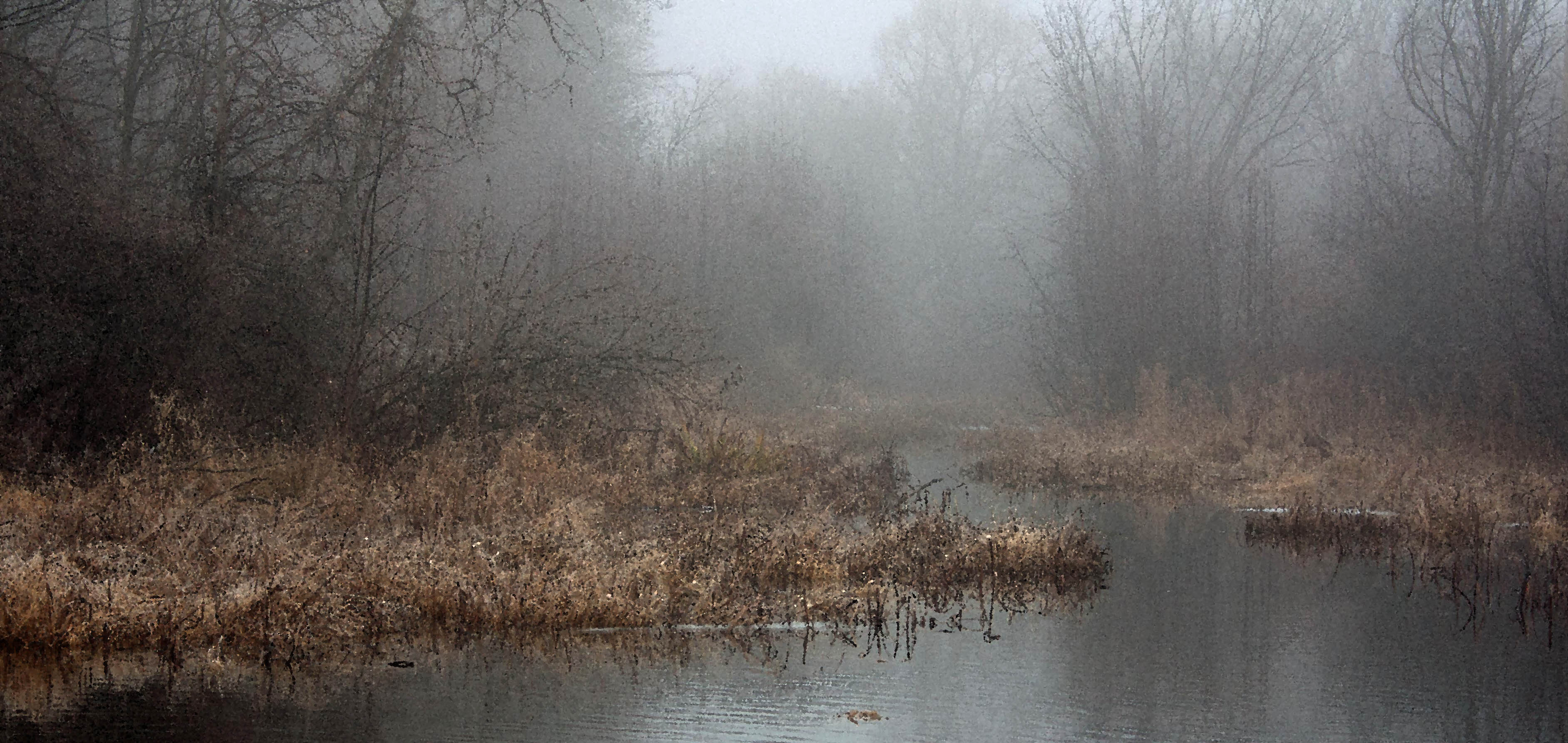
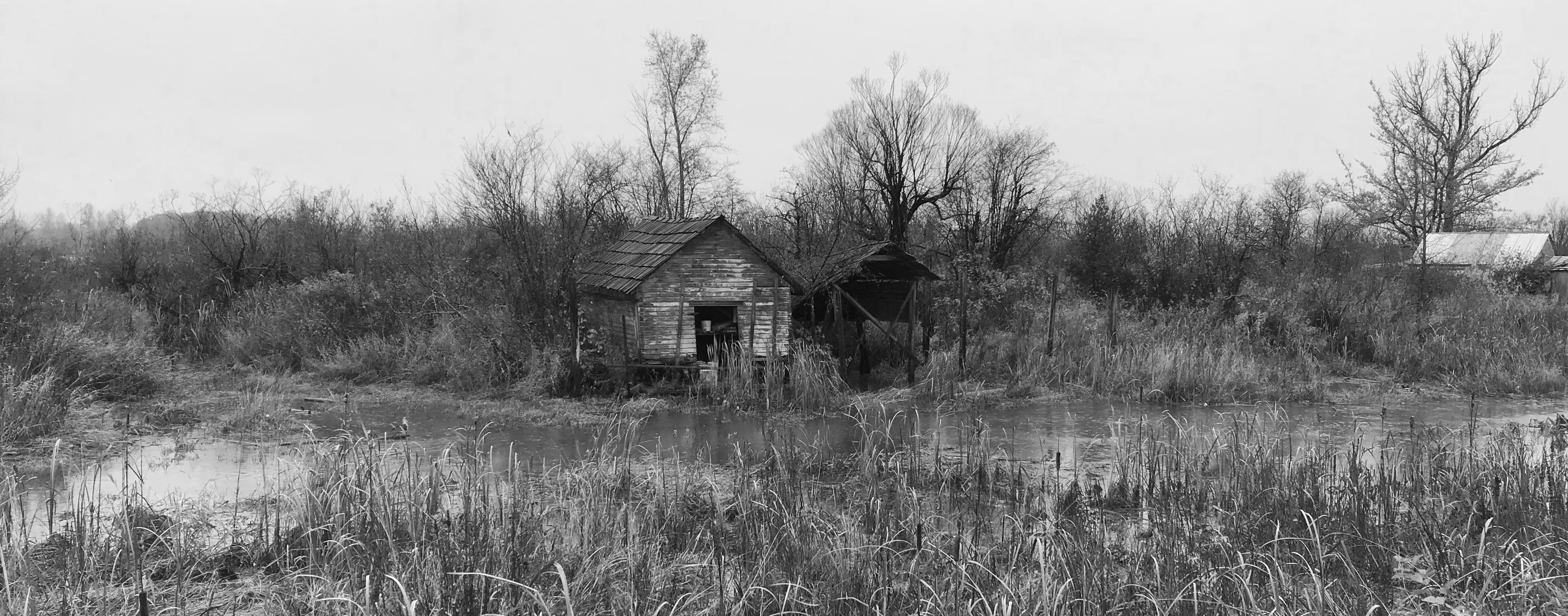
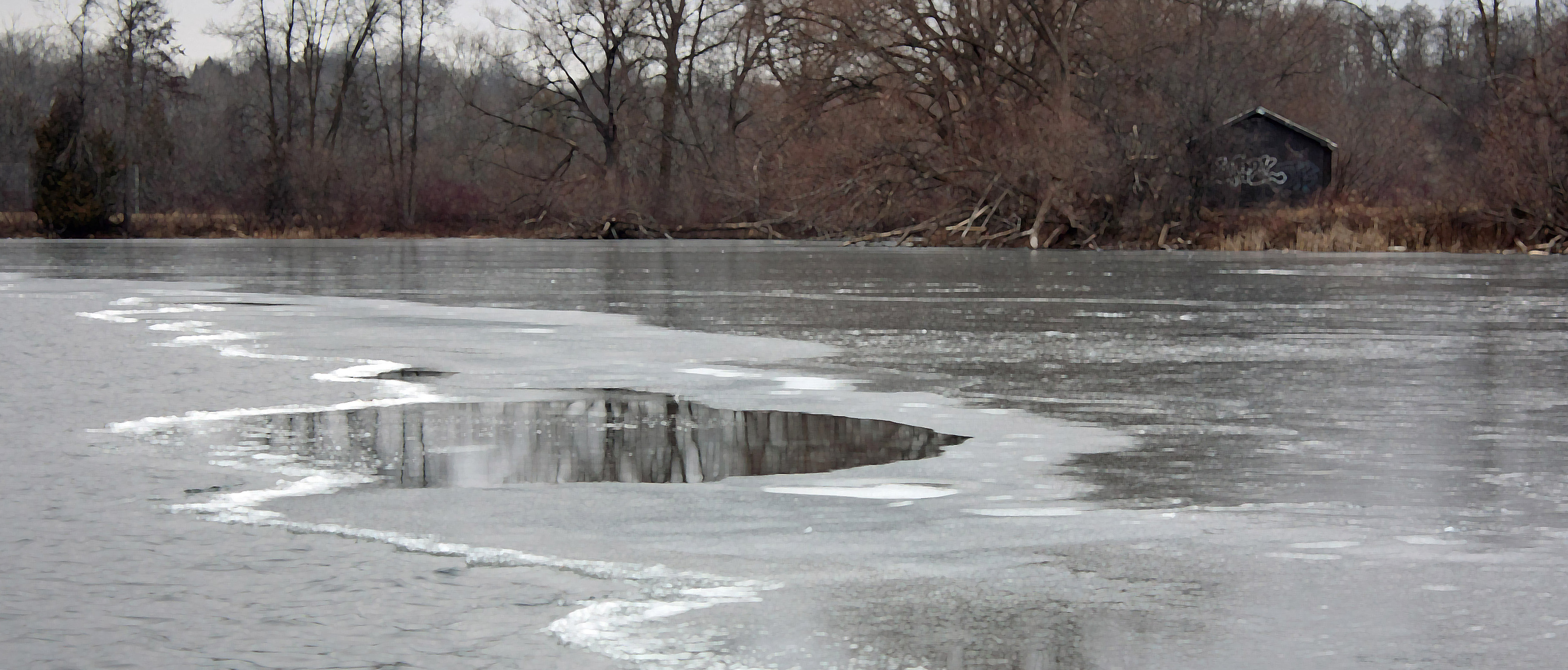
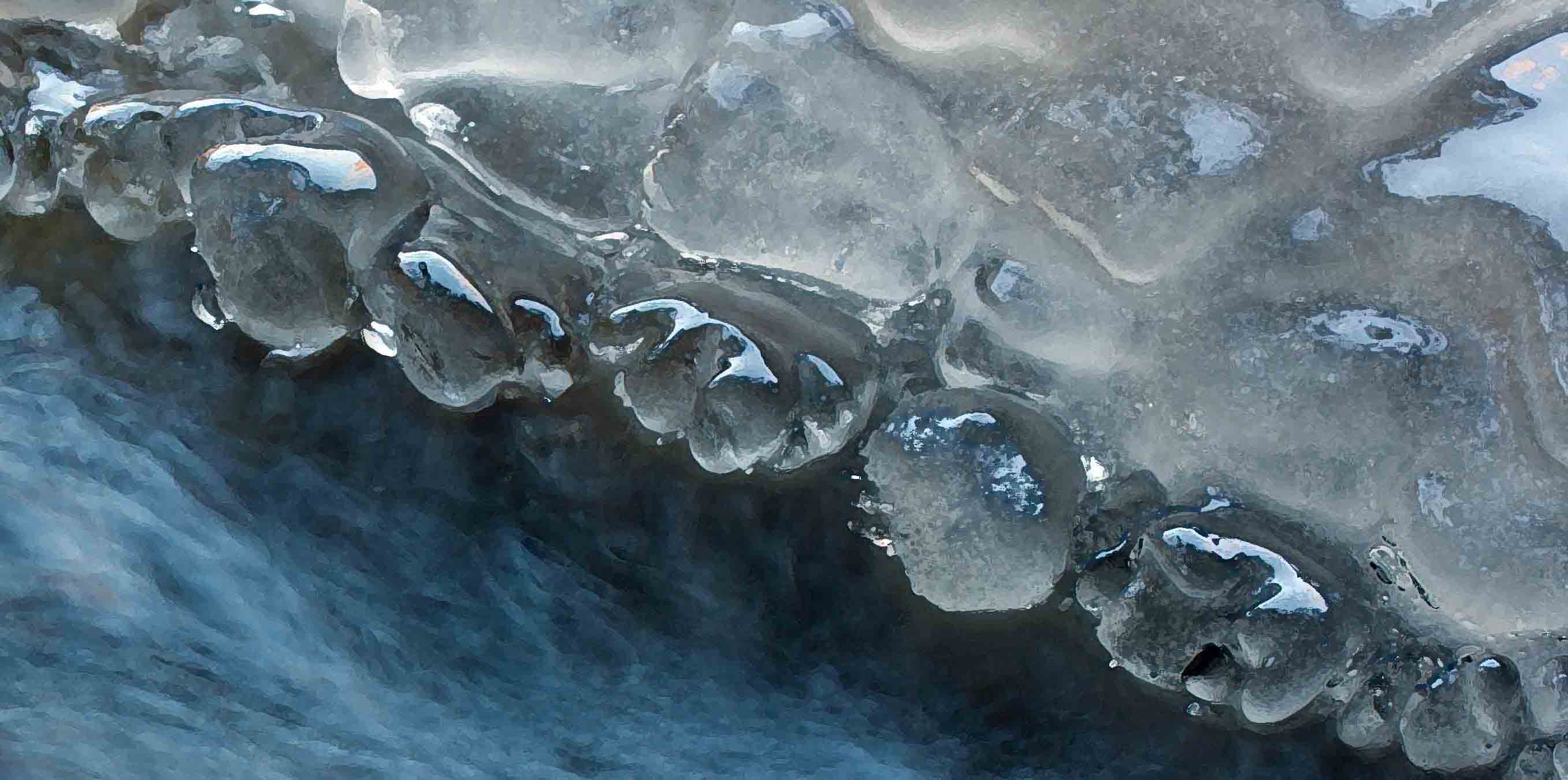
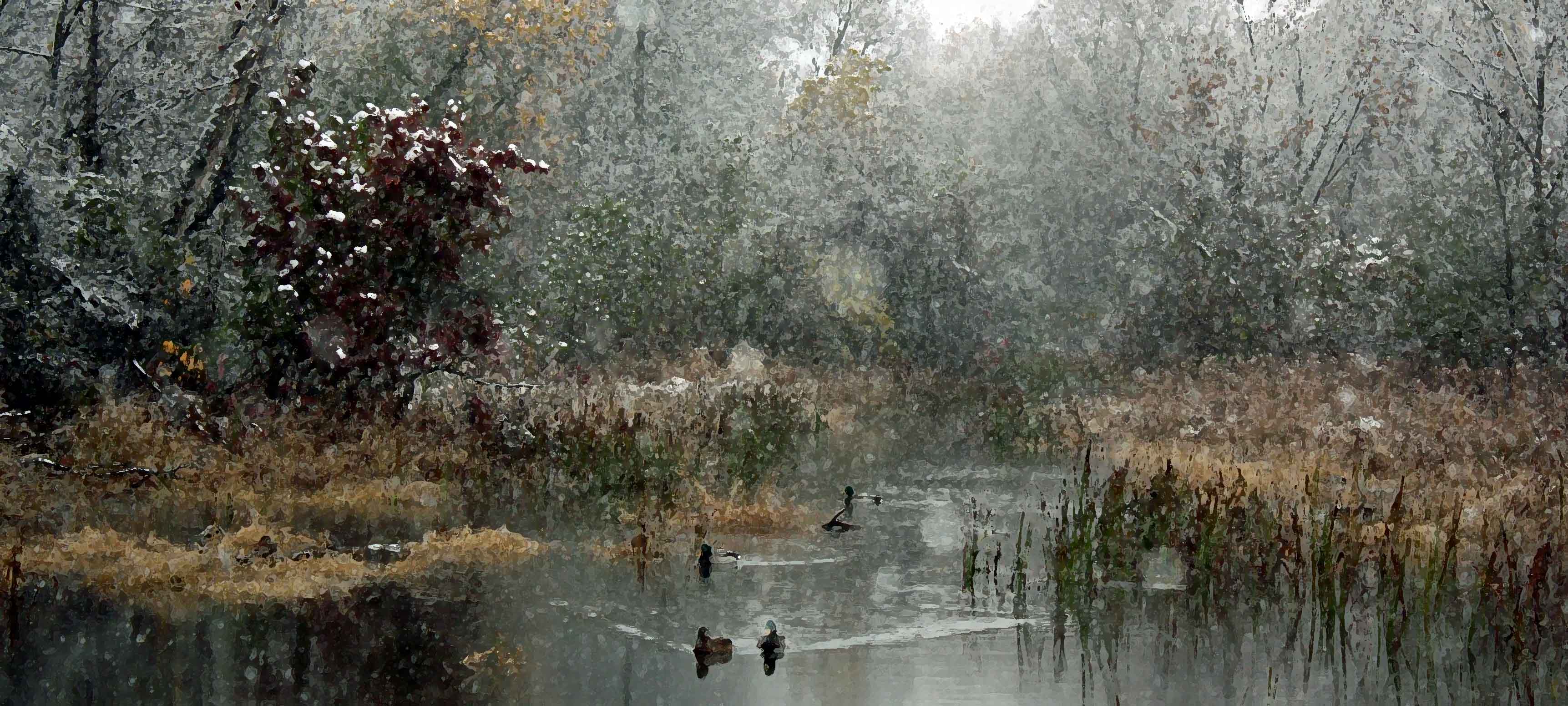
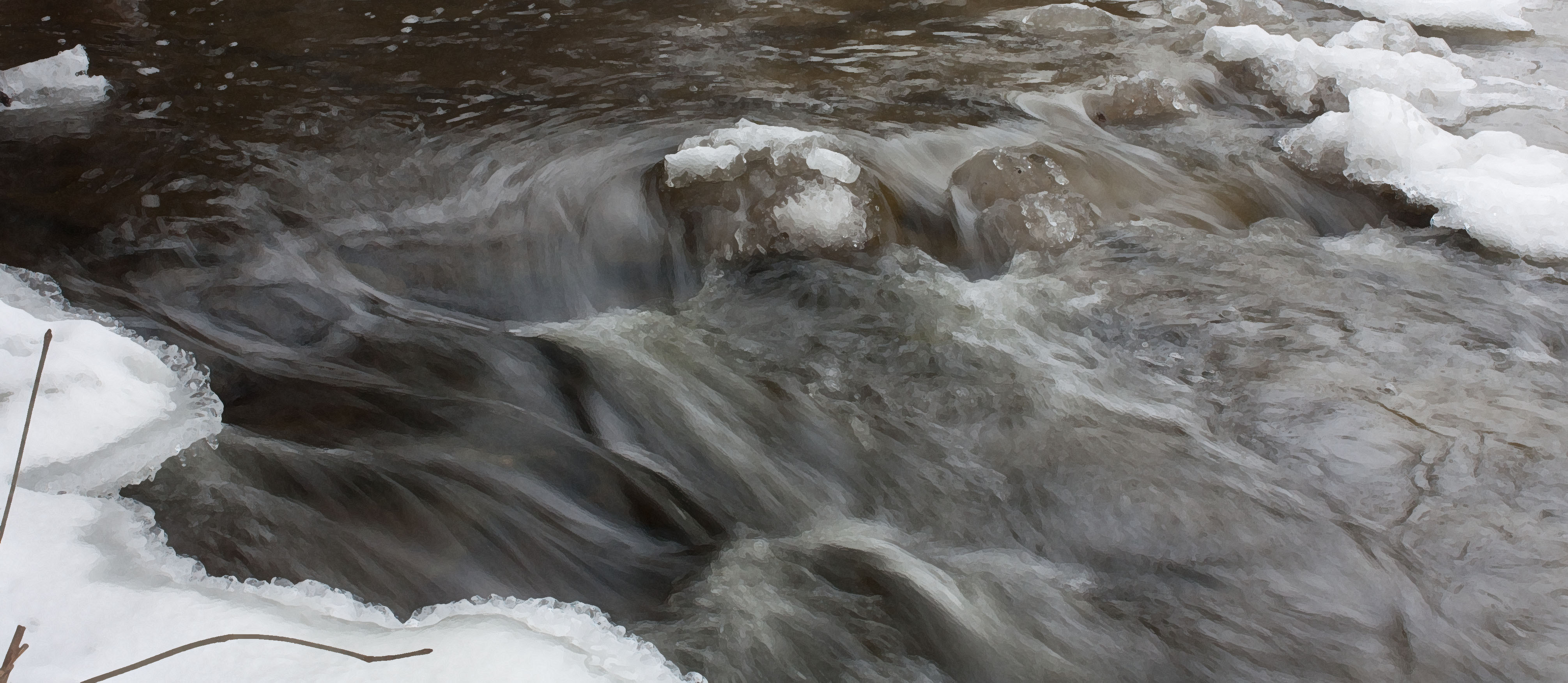
Ice-covered bay, Otonabee River, ON (photo and rendition by Nina Munteanu)

Yonar draws on the work of Maria Löschnigg to argue that “as the environmental crisis encompasses not just physical challenges but also a crisis of imagination, posing questions about life in severely degraded environments, it becomes crucial to examine how literature can inspire interest in ecological issues and foster a deeper environmental awareness.” Yonar further draws on the works of Serpil Oppermann and Susan O’Brian to note that ecocriticism tends to neglect less conventional but equally meaningful speculative or experimental fiction in its critical gaze of relevant eco-literature and to question whether realism should be the dominant mode for ecological discourse.

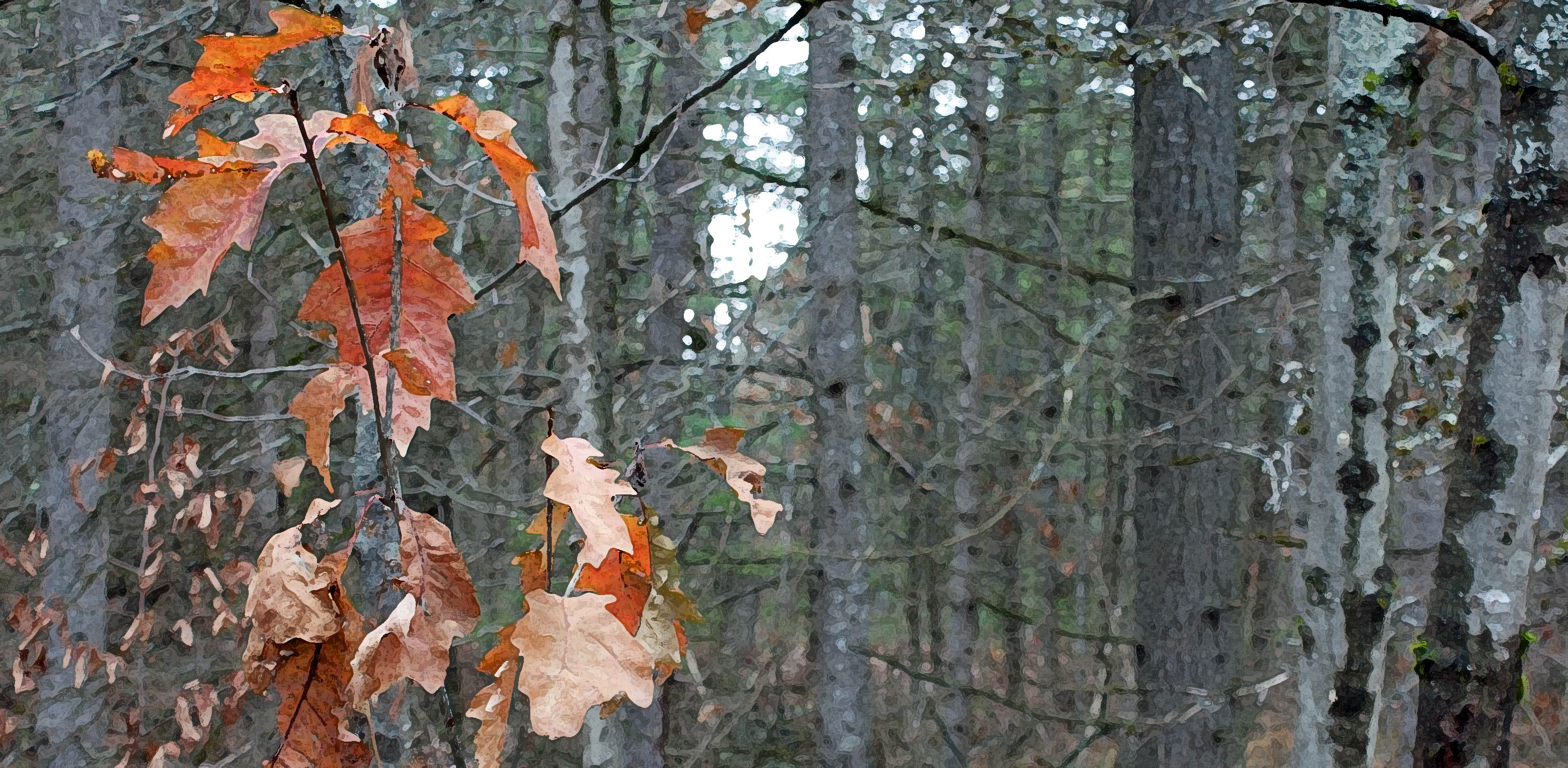
Ice-bubbles in a stream, Jackson Creek, ON (photo by Nina Munteanu)

The Way of Water is a strong eco-story that possesses many layers and elements that strengthen its narrative while encouraging readers to engage with its world…The notion what water constitutes the essence of life is the central theme of the story … Munteanu’s knowledge as a scientist enables her to create a convincing scientist protagonist whom she embeds into a powerful fictional story. Water, particularly in this eco-story acts not only as a symbolic entity but also as a body of force…the agency of water is presented as a dynamic, living entity, central to the narrative’s ecological themes.”

“Munteanu’s impactful storytelling highlights her significant contribution to Canadian literature, particularly through her engagement with pressing environmental issues and her commitment to fostering ecological awareness through fiction.”

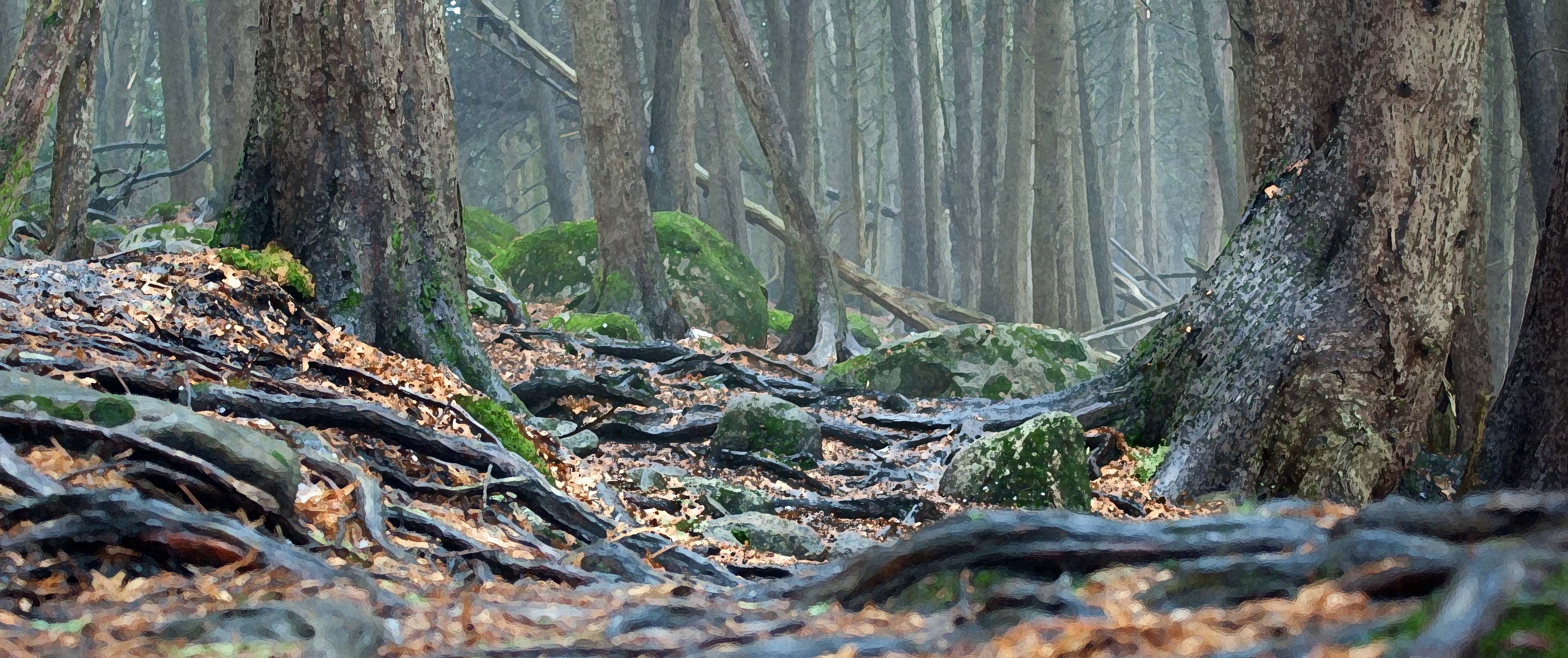
Ice ‘pearls’ in Jackson Creek in winter, ON (photo and rendition by Nina Munteanu)

Yonar draws on the work of Serpil Oppermann, who points out in her book Blue Humanities, that water is deeply connected to social and cultural realities, and stories that highlight its narrative role are both essential and impactful. “Non-human-centred narratives reveal the dynamic and active nature of water, making its agency understandable and natural to the reader.”

Yonar quotes beginning lines of the short story to demonstrate how a powerful metaphor can become surprisingly literal: In this passage the main character Hilda thinks: water is a shape-shifter. It changes yet stays the same, shifting its face with the climate. It wanders the earth like a gypsy, stealing from where it is needed and giving whimsically where it isn’t wanted: “A statement,” Yonar writes, “that initially appears to be metaphorical rather than literal description of water. However, as the story expands, it becomes evident that this ‘shape-shifting’ feature is not an unrealistic trait, but rather a reflection of water’s dynamic and transformative nature.” She adds that, “this characterization of water points out its agency, suggesting its ability to adapt and influence the narrative in ways that transcend traditional understandings.”

Icy bay, Jackson Creek, ON (photo and rendition by Nina Munteanu)

Yonar notes that intertextuality used in The Way of Water—such as wCard, iTap and Schrödinger’s Water is a useful way to “foreground notions of relationality, interconnectedness and interdependence in modern cultural life” (Graham Allen). Intertextuality in The Way of Water reflects capitalist industrialism: the monetization, commodification and control of water by national utilities represented by CanadaCorp: the “corporate dominance, digital dependence, and pervasive nature of technology.” Yonar adds pithily, “In a manner analogous to how Apple products have become indispensable instruments in contemporary existence, the iTap within Munteanu’s narrative operates as an emblem of hyper-connectivity and authority, thereby amplifying the novel’s critique of technological dependency in modern society.” Yonar ponders that the thought experiment of Schrödinger’s Cat, reimagined through the element of water as Schrödinger’s Water, “reframes the original paradox within an ecological and environmental context, emphasizing the fluidity and uncertainty of water’s role in shaping human and non-human existence.”

Yonar shares with Meyer and Oppermann “a unified perspective on the collaborative role of writers and scientists in addressing the shared challenge of climate change.” Yonar concludes that The Way of Water introduces a powerful human-made cooperation that is at the same time political, suppresses people, and takes advantage of the scarcity of water. Even “the rain belonged to CanadaCorp,” she quotes from The Way of Water.

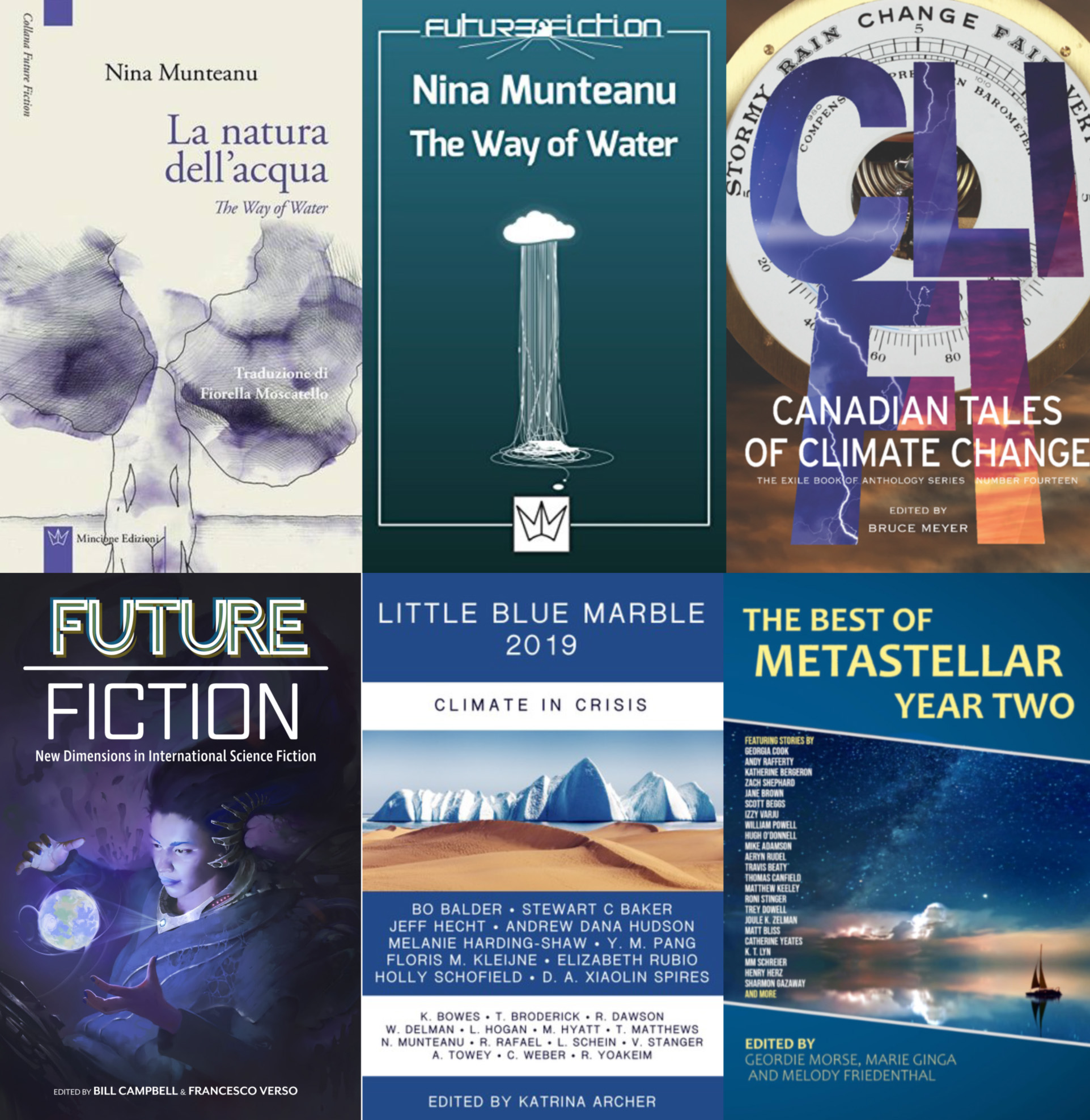
Various publications in which The Way of Water appeared

The Way of Water was first published as a bilingual print book by Mincione Edizioni (Rome) in Italian (La natura dell’acqua, translated by Fiorella Moscatello), and English along with a recounting of what inspired it: The Story of Water (La storia dell’acqua) in 2016. To date, The Way of Water has been published and republished eight times throughout the world and translated into Italian and German. I think this success is less a reflection of my writing than the immediacy and importance of the topic covered: growing water scarcity, its commodification, and its politicization.

I’ve written several articles on how The Way of Water came about. Briefly, it all started with an invitation in 2015 by my publisher in Rome to write about water and politics in Canada. I had long been thinking of potential ironies in Canada’s water-rich heritage. The premise I wanted to explore was the irony of people in a water-rich nation experiencing water scarcity: living under a government-imposed daily water quota of 5 litres as water bottling and utility companies took it all.

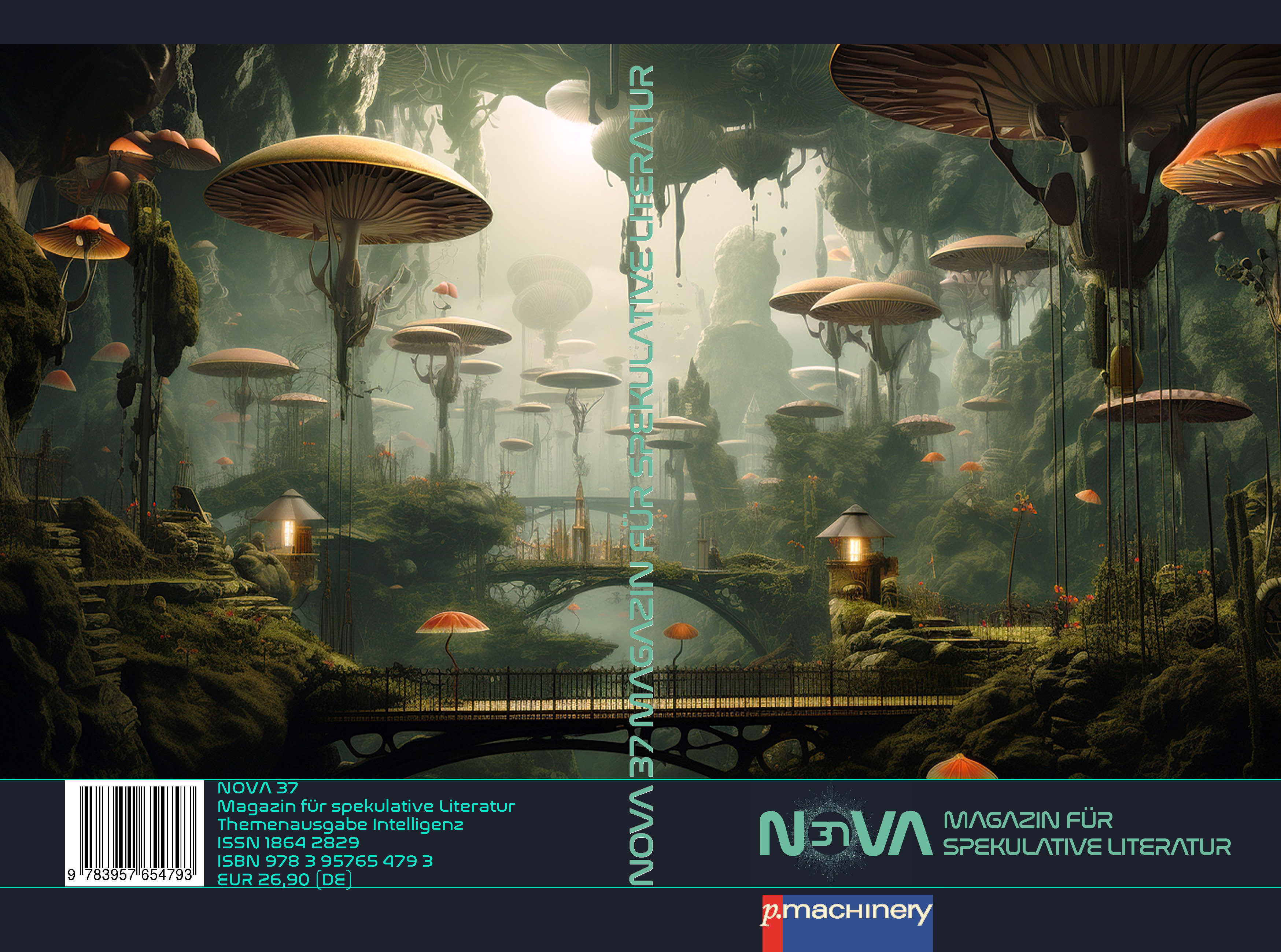
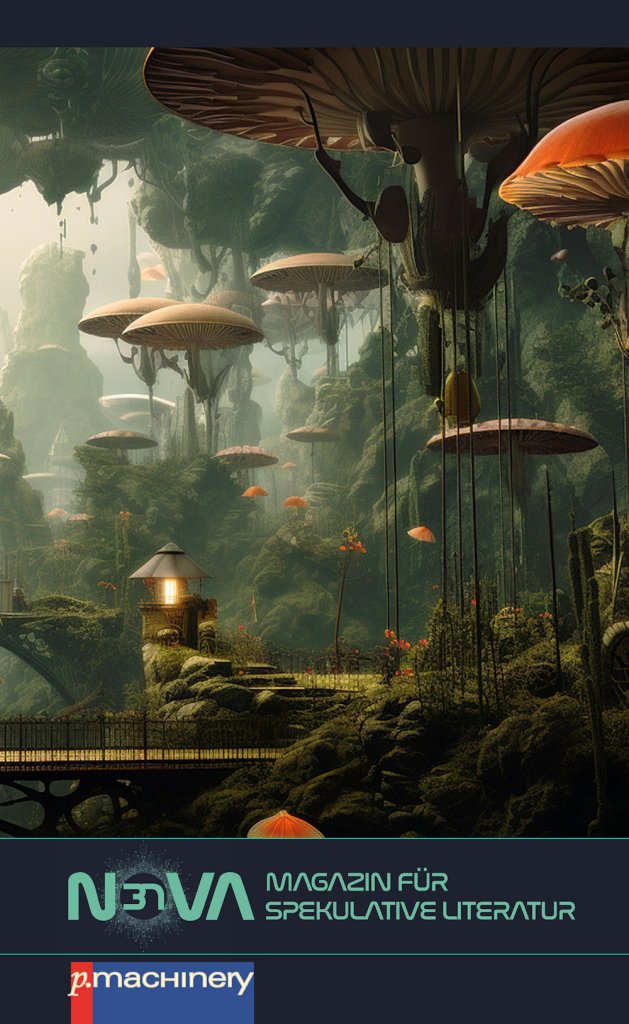
Latest publication of The Way of Water in Nova 37, translated into German as Der Weg des Wassers

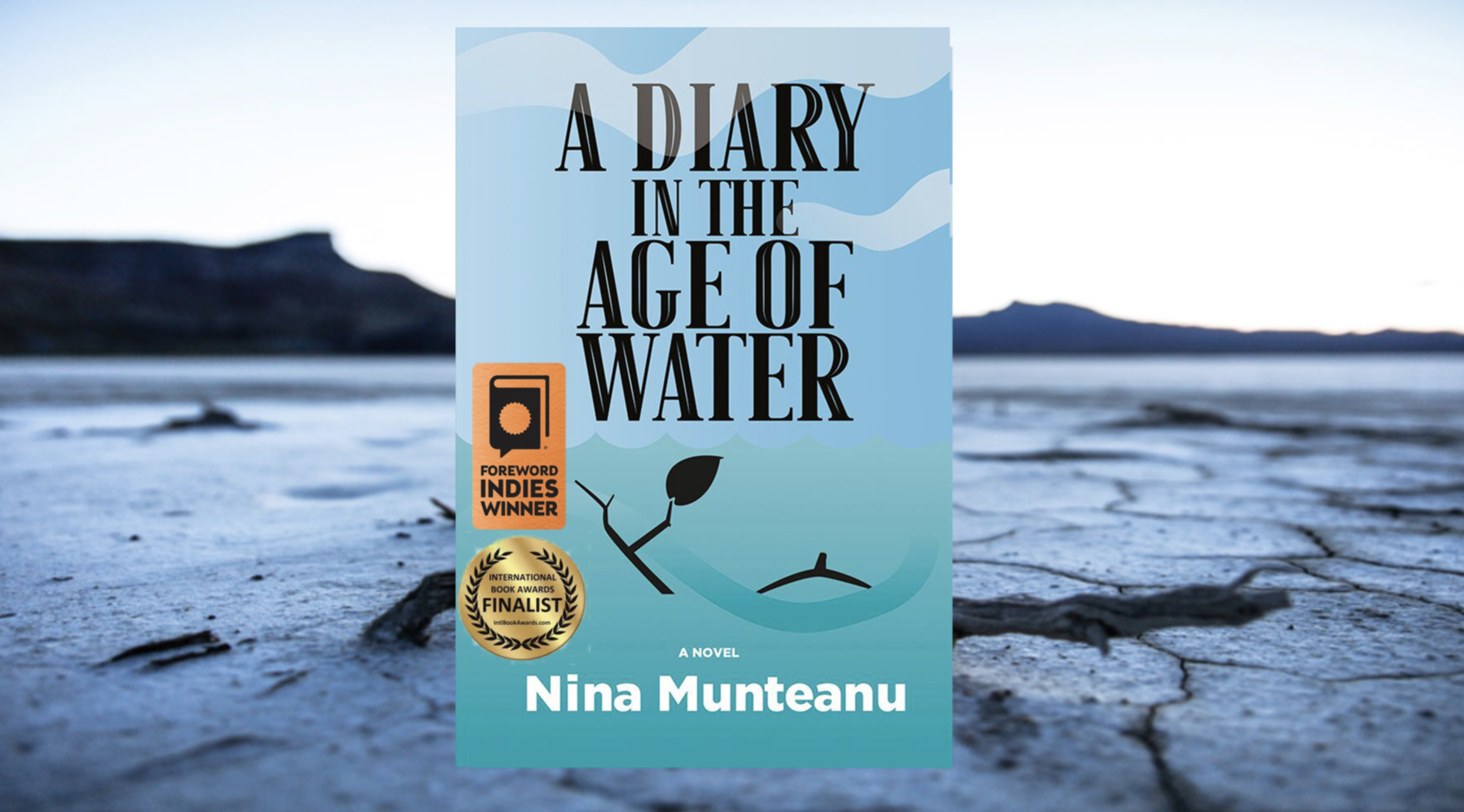
The Way of Water, in turn, inspired my dystopian novel A Diary in the Age of Water (Inanna Publications, 2020), which chronicles the lives of four generations of women and their relationship to water during a time of severe water restriction and calamitous climate change. The novel features the main character Hilda from The Way of Water and her limnologist mother; A Diary in the Age of Water is essentially the mother’s diary embedded in a larger story. Through a series of entries, the diarist reflects on the subtle though catastrophic occurrences that will eventually lead to humanity’s demise.

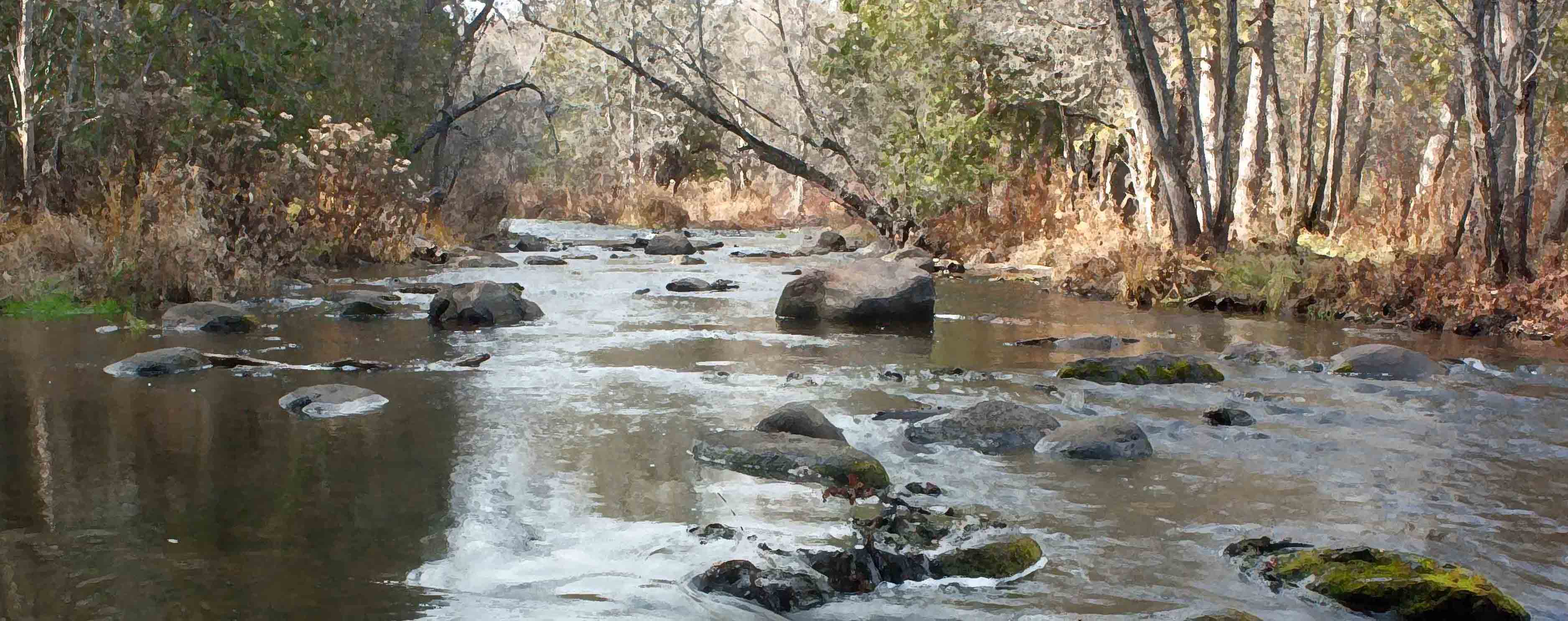
Jackson Creek in the fall, ON (photo and rendition by Nina Munteanu)

References:

Löschnigg, Maria. 2014. “The Contemporary Canadian Short Story in English: Continuity and Change.” Cultures in America in Transition, vol. 7, WVT.

Munteanu, Nina. “The Way of Water” Mincione Edizioni, Rome. 113pp.

Munteanu, Nina. “A Diary in the Age of Water.” Inanna Publications, Toronto, ON. 328pp.

Meyer, Bruce. 2017. “Introduction to “Cli Fi: Canadian Tales of Climate Change

Fi: Anthology #14. Edited by Bruce Meyer. Exile Editions, Toronto.304pp.

O’Brian, Susan. 2001. “Articulating a World of Difference: Ecocriticism, Post colonialism and Globalization.” Canadian Literature vol. 170-171: 140-158.

Oppermann, Serpil. 2023. “Blue Humanities.” Cambridge University Press.

Yonar, Şeyma. 2025. “Short Texts—Long Term Effects: The Canadian Eco-Story.” Masters Thesis, University of Graz, Austria. 70pp.

Jackson Creek partially iced in winter, ON (photo and rendition by Nina Munteanu)

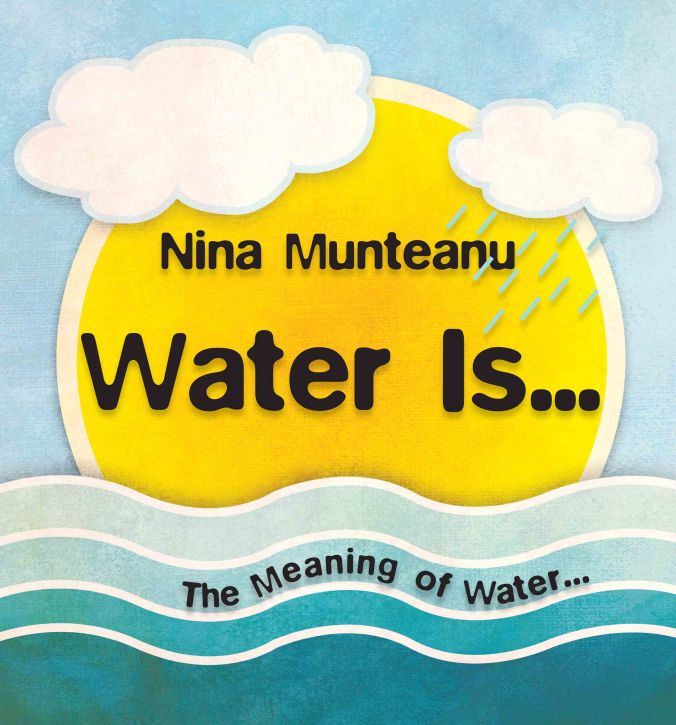
Nina Munteanu is an award-winning novelist and short story writer of eco-fiction, science fiction and fantasy. She also has three writing guides out: The Fiction WriterThe Journal Writer; and The Ecology of Writing and teaches fiction writing and technical writing at university and online. Check the Publications page on this site for a summary of what she has out there. Nina teaches writing at the University of Toronto and has been coaching fiction and non-fiction authors for over 20 years. You can find Nina’s short podcasts on writing on YouTube. Check out this site for more author advice from how to write a synopsis to finding your muse and the art and science of writing. For more on her work as a limnologist and ecologist, see The Meaning of Water.

Author Interview: Terry Birdgenaw Talks About Insects, Climate Change and his Latest Book

It was several years ago, in 2020, that Terry Birdgenaw approached me as a writing coach to look at his first novel. When he described its premise, I was hooked right away and agreed to give it an editorial review. It was the beginning of a wonderful and rich experience with Terry’s books, now a series entitled The Antunite Chronicles. From the start, I was impressed and fascinated with his imagination and accurate use of science to produce a diverting allegorical CliFi series about cyborg insects on a far-away planet that serves as metaphor to developing autocracies on Earth.

Terry has three books out, with a fourth upcoming. The three books in this YA series take place on a far-away planet and moon, serving as a political and environmental allegory of an evolving technological society and failed democracy. They include: Antuna’s Story; The Rise and Fall of Antocracy; and Antunites Unite. The theme of induced climate change and environmental destruction runs deeply through the first three books. The fourth book, soon to release, is Cyborg Contact, which returns us to Earth. I’ll let Terry describe the series in the following interview I conducted with him on November 26:

Nina: Your background and expertise is in neuroscience and psychology with over 150 scientific publications. You are Harold Griffith Professor of Anesthesia Research at McGill University in Montreal and your main research focus is on the mechanisms underlying neuroplasticity and its influence on the perception of pain. What got you started writing this incredible series, an adventure story that embraces ecology and entomology? What gave you the idea to create this imaginative modern allegory on the evolution of a technological society using insects as your main characters?

Terry: Oddly enough, I was not originally planning to write fiction. My inspiration came from my school librarian wife, Ann Birdgenaw, when she began writing the second book of her children’s chapter book series, Black Hole Radio. Her series features fifth-grade kids who travel through a wormhole to different planets, aiding the inhabitants they discover. She was considering what kind of planet and civilization her explorers would encounter, and I gave her some ideas about a giant cyborg-insect world that she ran with. Having some skin in the game, I participated beyond my welcome, offering plotlines that were far too advanced for her 7- to 11-year-old readers. Graciously, Ann suggested I take my ideas and write the backstory for her book, Black Hole Radio – Bilaluna, but target my book at young adults and adults. Thus began my fiction writing adventure. It was a rough start, but with the help of a tolerant book coach, my planned novella rapidly expanded to a trilogy. Perhaps a quick study because of years of scientific writing, I still credit Nina with opening in me an imaginative creativity I never knew I possessed.

Nina: The narrative of your stories is from the POV of various insects and in some way, the stories are dramatizations of real and accurate ecological relationships of insects with their environment and each other. How did you prepare for this—both in relaying accurate ecologies and in realizable dramatization and characterization of your main characters—all insects? How did you avoid what I would call the Disney-effect: anthropomorphising insect characters into human archetypes to achieve reader engagement? How did you create that balance between realistic representation and empathic portrayal?

Terry: Although my books are parodies with characters who face political and ecological problems and anthropomorphise human dilemmas, I did not want them to be simply furry or slimy stand-ins for the humans they satirize. Thus, I drew on my long-standing expertise as a scientific researcher to delve deeply into entomology, ecology and environmental science. Fascinated by the richness of insect activities and interactions and the similarity between insect and human behaviour, I endeavoured to exploit my newly acquired knowledge within the pages of my story. I was inspired both by Orwellian dystopias and works such as Bernard Werber’s Empire of the Ants and Laline Paull’s The Bees. But more than that, I learned to let myself be taken into the world my insects lived in, experiencing both their instinctive realities and the human predicaments I intended to lampoon in equal measure.

Nina: I noticed some fun metaphoric descriptions and expressions that incorporated insect terms to represent human counterparts. Did these come to you easily or were they a lot of work over time? Can you describe the process you used? For instance, did you spend a lot of time watching ants on the sidewalk?

Terry: Some phrases like ‘she shook her antenna to tune her attention’, ‘I took that as a back-clawed compliment’, or ‘he is such a hindgut hole’ came easily to me as differences in insect and human anatomy necessitated them. Others, like the expressions explained in my dictionary of pheromonal insect emotions, took much more reflection. This literary technique was inspired by your writing guide, The Fiction Writer, when you described how to add colour to one’s writing by using word pairings that mix up the senses, like the well-known one ‘biting cold’. This excellent advice led me to develop an extensive lexicon of insect emotions/non-verbal speech, including word combinations such as abrasive aroma, bitter bouquet, frosty fragrance, and vacillating vapour. They were not all alliterations, but some, like ‘she emitted an effervescent essence, were clearly intended to be. I didn’t watch ants walking, but I thought a lot about how they might communicate their emotions pheromonally.

Nina: One of the things I enjoyed throughout your series is how you seamlessly imparted interesting facts about insects on our planet in the storytelling. I learned a lot about various insects! Tell us a little about the process you used to achieve this so effectively.

Terry: As a long-time researcher, I have learned how to find and use facts from scientific literature and reliable web-based information on many subjects within and outside my scientific field. Insect behaviour is little known, but often fascinating, and I enjoyed both discovering many details and incorporating them into fiction scenes. Sometimes I was required to dig even deeper than I initially expected to make my stories scientifically accurate. One of these cases had a very significant impact on a critical component of my book’s key plot. In Antunites Unite, ants are separated into a hierarchy of castes based on exoskeleton colour. Although clearly an anti-racism story, I originally wrote it with black ants as oppressors of both brown and red ants. Perhaps influenced by previous literature and movies, where the bad guys are often dressed in black, I had a feeling that some readers might interpret my choice as having a racist underpinning. I convinced myself that readers would not take the colour choice as representative of human ethnicity. However, the last beta reader to comment on the book made such an interpretation and confirmed my fear that some readers might see it as the opposite of my intention. So, while I debated altering the colour schemes, I dug deeper into the entomological discovery of a phenomenon my story paralleled, involving what entomologists call slave-maker ants. When my extensive research confirmed that red ants are more often the ants using raids to steal the eggs of other ants to be raised as slave-like workers for the dominant reds, I knew I had to reverse the colours. And this was no easy task, because all the characters in each caste took names that reflected their colour, like Ruby and Obsidiant. There were also many humorous references to colour, such as black widow spiders and lava fields, that needed to be reworked. It was an editing nightmare: Rose became Raven, and Raven – Rose, while Cole gave way to Clay, and Jett morphed to Jasper, etc., etc., etc. But in the end, it was true to nature and avoided any unwanted racial interpretations.

Nina: In your first three books—a political modern satire on developing autocracies and human-induced climate change—you explore the technological and biological evolution of an insect exo-community in which certain species—ants for instance—acquire the ability to become cyborgs, ANTs, growing in size and abilities to navigate their world more effectively with related achievements—and consequences. As an ecologist, I was fascinated by how you portrayed the changing relationship of these beings to their environment as they evolved. Do you see a parallel with human society? Can you elaborate on this?

Terry: Yes, on a macro level. That is, technology can benefit society immensely, but it can also cause significant harm when coupled with greed, wilful ignorance of scientific warnings, and leaders misleading the public. I highlight one line of poetry written by my narrator in The Rise and Fall of Antocracy: “Like Peter and the crows, tis science, truth and reality denied ere climate is crucified.” Cyborg insects were created to enhance the production of honey, which was their currency. Cyborg ants, who most craved both power and honey, deceived the public to the detriment of the environment and ignored the science that provided evidence of environmental changes, which most insectoids on the planet denied. Perhaps an obvious cataclysmic message to those in our world, but many on this Earth apparently need to be hit over the head to see where this all may lead.

Nina: Tell us about your latest book, the fourth in the series, Cyborg Contact, in which one of the cyborg ANTs returns to Earth through a wormhole with an important mission. I found that, while the first three books served as satirical allegory to a developing technological society through the evolving insect communities, the fourth book—being a first contact—shifts into more of an exploration of ‘the other,’ its perception and treatment by humans and their civilizations. Can you expand on this? How does humanity’s perception and treatment of the ‘other’ factor into our treatment of our environment and the growing phenomenon of climate change?

Terry: I might disagree and point out that ‘exclusion of the other’ is a dominant theme in all four books. The difference is that in Cyborg Contact, the main character embodies ‘the other’, so it hits home more strongly. What could be more ‘otherly’ than an alien (from another planet) who is treated like an illegal alien and hunted by ICE agents? And, too, aside from being hunted, many other dangers the alien experiences on Earth, including hurricanes, droughts, mudslides, and forest fires, are all caused by climate change, which has accelerated in the near-future North America our hero traverses. It seems that for some world leaders, a lack of empathy for others is paired with a disregard for the environment.

Nina: Who is reading your books? And who should be who isn’t?

Terry: They are read by both young adults and adults; sometimes by parents reading to their pre-teens. They are not New York Times best sellers, but are highly celebrated by those who have read them. They should be read by all sci-fi and fantasy readers aged 13 and up who enjoy a thought-provoking read, except those who support fascism.

Nina: How have your books been generally received? I understand that your trilogy has won the Firebird Book Award. Congratulations! What are people saying about your books?

Terry: Editorial reviews have been stellar, and the books have received awards from most of the contests to which they have been entered. Awards for all three books include Gold Medal/Badge (Readers’ Favourite, Literary Titan), First Place Prize (Firebird, Entrada Incipere), Silver & Bronze Medal (Firebird, Bookfest), Honourable Mention (Readers’ Favourite), and Finalist (American Writing Awards, Chanticleer, The Wishing Shelf). Most notable review comments describe the books as: “soon-to-be a bestseller”, “takes speculative fiction to a new level”, “fantastical to a degree not seen elsewhere in any Sci-Fi dystopian fiction”, “as big in spirit as any literary giant in the genre” and “holds its ground next to Brave New WorldDuneAnimal Farm, and 1984”. These reviews have “blown me away”, like an enthusiastic reader’s comment on Antuna’s Story.

Nina: What’s next for Terry Birdgenaw?

Terry: Finish editing Book 4 and writing a dystopian novel featuring humans for a change.

Nina: That sounds very intriguing! Thanks for coming out for the interview, Terry.

Terry: My pleasure, Nina.

The first three books of the Antunite Chronicles series by Terry Birdgenaw

You can find Terry’s books all over the place, including Amazon. Find out more about Terry on his website and check out Terry’s interview on SF Canada in which he talks more about his heritage and interests.

Terry Birdgenaw and one of his fans

Terry Birdgenaw with Narrant at award ceremonies

Nina Munteanu is a Canadian ecologist / limnologist and novelist. She is co-editor of Europa SF and currently teaches writing courses at George Brown College and the University of Toronto. Visit  www.ninamunteanu.ca for the latest on her books. Nina’s bilingual “La natura dell’acqua / The Way of Water” was published by Mincione Edizioni in Rome. Her non-fiction book “Water Is…” by Pixl Press (Vancouver) was selected by Margaret Atwood in the New York Times ‘Year in Reading’ and was chosen as the 2017 Summer Read by Water Canada. Her novel “A Diary in the Age of Water” was released by Inanna Publications (Toronto) in June 2020.

Exploring “The Law of Attraction for Writers” Podcast with Suzanne Lieurance & Simon Rose

Today, I’m sitting down with authors and writing coaches Suzanne Lieurance and Simon Rose to talk about their brand-new YouTube series, The Law of Attraction for Writers Podcast, which you can find at: https://www.youtube.com/@LawofAttractionforWritersPodca.

The show blends mindset, creativity, and practical writing advice — a combination that’s resonating with writers who want to manifest success and write with more ease.

Nina: Welcome, both of you!

Suzanne: Thank you! We’re so excited to finally share this project.

Simon: Yes, it’s been in the works for a while, and we’re thrilled to see writers already responding so positively.

Simon Rose and Suzanne Lieurance

Nina: Let’s start with the big question. Why create a Law of Attraction for Writers podcast?

Suzanne: Well, over the years, I’ve coached so many writers who say things like, “I’ll feel successful when I get an agent,” or “I’ll write when I have more time.” But the Law of Attraction teaches us it works the other way around — you become the person who already feels successful, and the opportunities follow. I wanted to create a podcast that helps writers understand how their thoughts, emotions, and energy shape their writing lives.

Simon: Exactly. So much of writing is mental. You can have the best outline and still feel blocked if your energy is off. We wanted to show that aligning your mindset with your goals isn’t mystical — it’s practical. You’re essentially training your brain to focus on what you want instead of what you fear.

Nina: How would you describe the podcast to someone who hasn’t tuned in yet?

Simon: Each episode focuses on one key aspect of the Law of Attraction and how it connects to the writing process. We might explore a concept like visualization, vibration, or inspired action — and then show writers how to apply that directly to their writing routines.

Suzanne: We wanted to make it accessible. It’s not just theory or motivation. We give writers clear steps they can take right away — ways to shift their thinking, attract new ideas, or rekindle their excitement for a project.

Simon: We also share personal stories. Between the two of us, we’ve seen these principles in action — in publishing, in teaching, and even in everyday creative decisions.

Nina: I love that you connect mindset with the craft of writing. Can you say more about how that works?

Suzanne: Sure. A lot of writers separate the two — mindset on one side, writing craft on the other. But they’re intertwined. You might know every writing technique out there, but if you’re doubting yourself or constantly telling yourself you’re behind, you’ll block the creative flow.


Simon: That’s why the Law of Attraction is so powerful for writers. It’s not just about “thinking positive.” It’s about intentionally setting the tone for your writing sessions, deciding what kind of writer you believe yourself to be, and letting that belief guide your actions.

Suzanne: In one episode, we talk about “energetic alignment” — how your emotional state affects the words you put on the page. When you write from frustration, the writing feels heavy. But when you write from joy or curiosity, the story expands.

Nina: You’ve both been writing coaches for years. How has it been working together on this project?

Simon: It’s been wonderful. Suzanne brings a very intuitive approach to writing and mindset, while I tend to look at things through a more analytical lens. Together, we strike a balance between the spiritual and the practical.

Suzanne: Yes! We complement each other well. Simon often grounds the big ideas in real-world examples, and I love exploring how energy and focus shape results. It’s a true partnership — and we both learn from each other in every episode.

Nina: Without giving too much away, what are some of the themes or takeaways that keep coming up in your discussions?

Suzanne: One theme that runs through everything is trust — trusting yourself, your ideas, and the timing of your success. The Law of Attraction reminds us that everything unfolds when you’re ready to receive it.

Simon: Another recurring idea is momentum. Writers often stop when things get tough, but energy builds through consistent action. You don’t have to write for hours every day — just focus on showing up with intention. That small shift can open the door to much bigger results.

Suzanne: We also talk about how to handle resistance. Every writer faces doubt or creative slumps. The podcast offers ways to turn those moments into opportunities instead of roadblocks.

Nina: You’ve chosen YouTube as your main platform. Why that format?

Simon: We wanted to make it easy and engaging. YouTube allows us to connect visually and energetically with our audience. Writers can listen while they work, which adds a more personal connection.

Suzanne: And YouTube’s format fits how writers consume content today. Many of them already use it to learn about craft and publishing. This podcast adds another layer — the inner work behind writing success.

Nina: What’s ahead for the Law of Attraction for Writers Podcast?

Suzanne: We’ll keep releasing new episodes every Tuesday. Each one will build on the idea that your energy, focus, and beliefs create your writing experience.

Simon: We’re also exploring live Q&A sessions, where writers can ask questions and share how they’ve applied the principles we discuss. It’s exciting to see a community forming around these ideas.

Suzanne: Ultimately, we want every writer to realize they’re not powerless. They can create not only their stories but also their success.

Nina: That’s such an inspiring message. Any final thoughts for writers who might be hesitant to explore this side of writing?

Suzanne: Just start listening with an open mind. You don’t have to “believe” in anything right away — just try applying one idea and see what shifts.

Simon: Yes. Writing is already an act of creation — you’re manifesting something that didn’t exist before. This podcast helps you see that same creative power working in every area of your writing life.

Nina: Beautifully said. Thank you both.


Watch: New episodes of The Law of Attraction for Writers Podcast drop every Tuesday on YouTube at https://www.youtube.com/@LawofAttractionforWritersPodca

Follow Suzanne Lieurance and Simon Rose for practical, inspiring ways to align your mindset, energy, and creativity — and manifest the writing life you’ve always imagined.

Nina Munteanu is an award-winning novelist and short story writer of eco-fiction, science fiction and fantasy. She also has three writing guides out: The Fiction Writer; The Journal Writer; and The Ecology of Writing and teaches fiction writing and technical writing at university and online. Check the Publications page on this site for a summary of what she has out there. Nina teaches writing at the University of Toronto and has been coaching fiction and non-fiction authors for over 20 years. You can find Nina’s short podcasts on writing on YouTube. Check out this site for more author advice from how to write a synopsis to finding your muse and the art and science of writing.

Book Review: “Coincidences and Other Spooky Connections” by Susan M. Osborn

Susan M. Osborn explores the nature, influence—and importance—of coincidence, synchronicity and serendipitous discovery in our lives.

The book is laid out in ten chapters, each featuring some aspect of coincidence, synchronicity, and events of pure serendipity. Within each chapter, the narrative flows from biography to historic exposition or topical study, unraveling delicious facts, suppositions, dreams and fantasies coiled up in patterns and signs of potential significance.

Locked between the many entertaining and enlightening examples of synchronicity experienced by famous and not-so-famous people, are gems of interesting and notable facts and astute observations—from the origins and history of the term synchronicity with Jung’s early work in archetypes to the origins of “serendipity” with Horace Walpole to the foundations and influences of the ‘I Ching’.

The latter part of Osborn’s title, “and Other Spooky Connections”, riffs off Albert Einstein’s famous quote about “spooky actions at a distance”, a reference to quantum entanglement, which describes how two particles may remain connected regardless of the distance between them. Einstein asserted that quantum entanglement violated the principles of a realistic, deterministic universe. And, yet, experiments have repeatedly verified the reality of quantum entanglement. This speaks to the power of connection. All the “spooky connections” described in Osborn’s book ultimately address a common theme of all life: to make meaning of our world. I believe that this is essentially the purpose of all life. It even has a term: biosemiosis, which describes how all life is involved in meaning-making.

I agree with Osborn when she writes, “we can solve many of our problems if we have more than one way to look at them.” And this is how she has laid out her book, offering “a way to look at the world from a wider perspective” to gain insight from an otherwise chaotic and seemingly random pattern. When we learn from chaos, we are making meaning and fulfilling what all life is doing. This too is biosemiosis: the notion that all life embraces a process of signification and meaning-generation—from mammals to bacteria—that recognizes its Umwelt (species-specific environmental reality) through the production, action, and interpretation of non-linguistic signs and codes.

Ultimately, Osborn’s stories, disclosures and explorations challenge the reader to become more mindful and ‘present’ in our world, to exercise curiosity, integrate more aspects of our reality to arrive at meaning so we can forge connections—even spooky ones—that open doors of possibility and fulfill us with purpose and joy.

References:

Barbieri, Marcelo. 2008 (ed). “Introduction to Biosemiotics: The New Biological Synthesis” Springer, Netherlands. 525pp.

Hoffmeyer, Jesper. 2001. “Seeing virtuality in nature.” Semiotica 134.

Kull, K. 2016. “The biosemiotics concept of the species.” Biosemiotics 9:61-71.

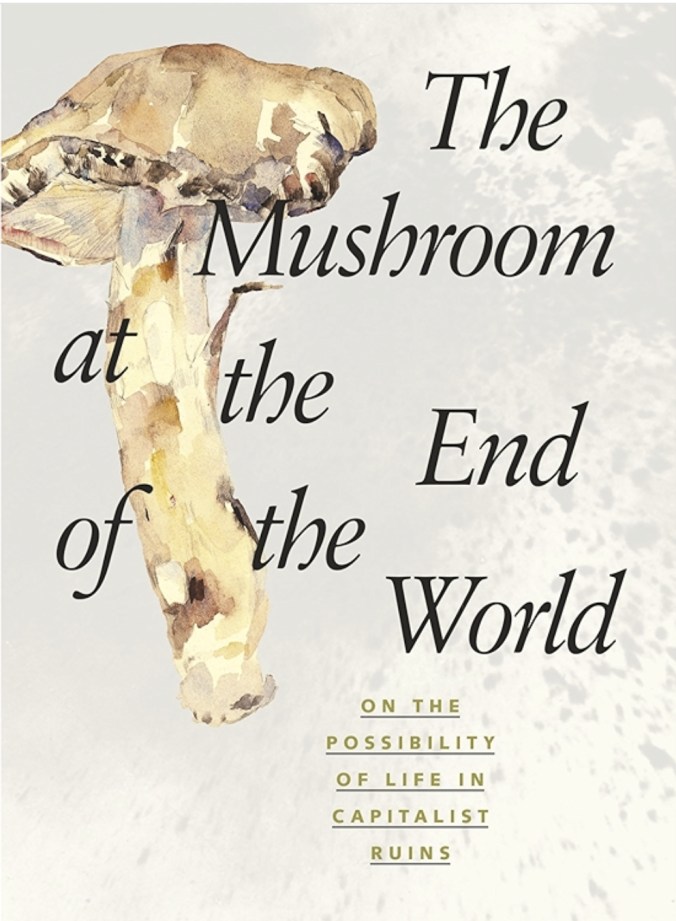
Lowenhaupt Tsing, Anna. 2015. “The Mushroom at the End of the World: On the Possibility of Life in Capitalist Ruins” Princeton University Press, New Jersey. 331pp.

Trewavas, Anthony. 2003. “Aspects of Plant Intelligence.” Annals of Botany 92(1): 1-20.

Uexküll, Jakob von. 1931. “Die Rolle des Subjekts in der Biologie.” Die Naturwissenschaften 19: 385-391.

Uexküll, Jakob von. 1940 (1982). “The theory of meaning.” Semiotica 42(1): 25-82.

Nina Munteanu is a Canadian ecologist / limnologist and novelist. She is co-editor of Europa SF and currently teaches writing courses at George Brown College and the University of Toronto. Visit  www.ninamunteanu.ca for the latest on her books. Nina’s bilingual “La natura dell’acqua / The Way of Water” was published by Mincione Edizioni in Rome. Her non-fiction book “Water Is…” by Pixl Press (Vancouver) was selected by Margaret Atwood in the New York Times ‘Year in Reading’ and was chosen as the 2017 Summer Read by Water Canada. Her novel “A Diary in the Age of Water” was released by Inanna Publications (Toronto) in June 2020.

Book Review: “The Greenling”—When Nature Uses Biosemiosis To Change the World

The Greenling by David Booram is an exploration of an intriguing ‘Nature evolving’ premise, told through a coming-of-age narrative.

Responding to continued human tampering, a growing sentient Nature calls a young environmental activist to action in a planetary reset. The main character is Noah, ostracized by her peers due to her unique perspective on the world and her activism for Nature. This makes her a candidate for Nature’s planetary reset.

While I felt that the story used over-simplified fantasm and eco-terrorism in a way not to my liking, I found most intriguing Booram’s use of biosemiosis, the notion that all life finds meaning.

Coincidently, I had agreed to read Booram’s eco-fiction novel (without knowing much about it) after a social media conversation we’d had during a time when I was working on my most recent novel, tentatively called (Re)Genesis. My novel relied heavily on the concept of biosemiosis. Its premise of dark karma—when Nature learns to reflect back what we send out—made use of real examples of learning, pattern recognition, anticipation and adaptation in non-human life. (Another coincidence at this same time occurred when another author approached me to read their work on coincidence, which I am currently reading).  

In the 1930s, Jakob von Uexküll coined the term Umwelt (species-specific reality or subjective environment) to define a life process that involved semiotic interactions. He argued that an organism’s behaviour results from activity that attributes meaning to the world around it, rather than merely mechanically reacting to stimuli. Building on this notion, Friedrich S. Rothschild coined the term “biosemiosis” in 1962 to postulate that life has its subjective interpretation of the world around it (its Umwelt), a segment of the world that has significance and meaning based on that life’s biology and needs. Developing biosemiosis further, Thomas Sebeok later contended that all organisms are enveloped in a cloud of messages about themselves and their situation, which they constantly transmit, receive, and interpret. Life itself is a process of signification and meaning-making, from bacteria and plants to mammals and birds. Biosemiosis involves pattern recognition, anticipation, flexibility, goal-directed movement, memory, and learning.

Perhaps most intriguing is how The Greenling touches on humanity’s growing zeitgeist of not just planetary awareness but of sensibility, a sense that we are interlinked with all other life and nonlife, that we are all more than the sum of our parts. And only then—when we make meaning of our Umwelt—can we transcend from our toxic insecurities and bullying ways.

The Greenling is worth reading for how it weaves climate facts into compelling personal story. I also find refreshing that Booram gives full agency to the environment, Nature, and its nonhuman representatives.

I have been writing, reading, and studying eco-fiction for several decades and what I found noteworthy is how agency of the environment, as character, has changed over the years and how Nature’s portrayal has evolved from ‘other’ with little agency to ‘not other’ with much agency. For more on this concept and change, I urge you to read my two essays on this evolution:

The Use of Character-Coupling in Eco-Literature to Give Voice to the Other, Part 1: Introduction

The Use of Character-Coupling in Eco-Literature to Give Voice to the Other, Part 2: Types of Character-Coupling in Seven Examples of Eco-Literature

David Booram is the cofounder and director of Fall Creek Abbey, an urban retreat center in Indianapolis, where he and his wife Beth lead The School of Spiritual Direction and offer individual and group spiritual direction. He is the founder of Direction 4 Life Work, through which he is a career counselor.

Nina Munteanu is a Canadian ecologist / limnologist and novelist. She is co-editor of Europa SF and currently teaches writing courses at George Brown College and the University of Toronto. Visit  www.ninamunteanu.ca for the latest on her books. Nina’s bilingual “La natura dell’acqua / The Way of Water” was published by Mincione Edizioni in Rome. Her non-fiction book “Water Is…” by Pixl Press (Vancouver) was selected by Margaret Atwood in the New York Times ‘Year in Reading’ and was chosen as the 2017 Summer Read by Water Canada. Her novel “A Diary in the Age of Water” was released by Inanna Publications (Toronto) in June 2020.

.

Things You Should Know About Editing an Anthology

Two anthologies edited by Nina Munteanu

A short while ago I was contacted by fellow SF Canada member Lisa Timpf to provide information on an article she was writing about editing anthologies. Lisa’s article, entitled “Anthology Editing: Advice and Insights from Those Who’ve Been There” recently appeared on the Jane Friedman site.

Lisa interviewed two publishers and several editors, including me, on what’s involved in putting out an anthology. The article was thorough and well written and provided useful insight and advice to would be anthology editors. Aspects included: what the job entails, what skills are needed (e.g. storytelling, organization, communication and negotiation, flexibility, the ability to deal with difficult situations, and the willingness to go outside your comfort zone), and the payoffs, of course.

The article covered all stages of producing the anthology, from pitching to a publisher to the process of acquisition and production. She ends her article with “Final Words” of her own reflection and great advice. Lisa draws on Christine Lowther’s advice to be patient and to be “honest about your priorities.” Given how long and involved the process can be (it took three years from call for submissions to final release for the latest anthology I edited), she rightly suggests strongly considering whether you “can dedicate the time and effort to editing without resenting the impact on [your] own writing.”

Lisa then ends with:

“If you, too, are on the fence, consider Nina Munteanu’s reflection on the anthology editing process. As she explains it, ‘Watching the anthology emerge through the slow collection of many outside sources of individual creativity, style and message is akin to watching the birth of a galaxy full of stars—gathered and orchestrated by you but so much more than the sum of its parts—comprising many singular notes of a symphony that together create something wondrous and beautiful.’

How can you say no to that?”

To read the article go to the Jane Friedman site.

Lisa Timpf served as guest editor for Eye to the Telescope 32: Sports and Games. Her book reviews, poems, and short stories have appeared in a variety of venues, and her speculative poetry collection, Cats and Dogs in Space, is available from Hiraeth Publishing. You can find out more about Lisa’s writing and artwork at lisatimpf.blogspot.com, and also find her on Bluesky.

Go to this link to read my review of Lisa’s speculative poetry collection, Cats and Dogs in Space.

Nina Munteanu is a Canadian ecologist / limnologist and novelist. She is co-editor of Europa SF and currently teaches writing courses at George Brown College and the University of Toronto. For the latest on her books, visit www.ninamunteanu.ca. Nina’s bilingual “La natura dell’acqua / The Way of Water” was published by Mincione Edizioni in Rome. Her non-fiction book “Water Is…” by Pixl Press (Vancouver) was selected by Margaret Atwood in the New York Times ‘Year in Reading’ and was chosen as the 2017 Summer Read by Water Canada. Her novel “A Diary in the Age of Water” was released by Inanna Publications (Toronto) in June 2020.

Interview with Author Simon Rose on the Order of Excalibur

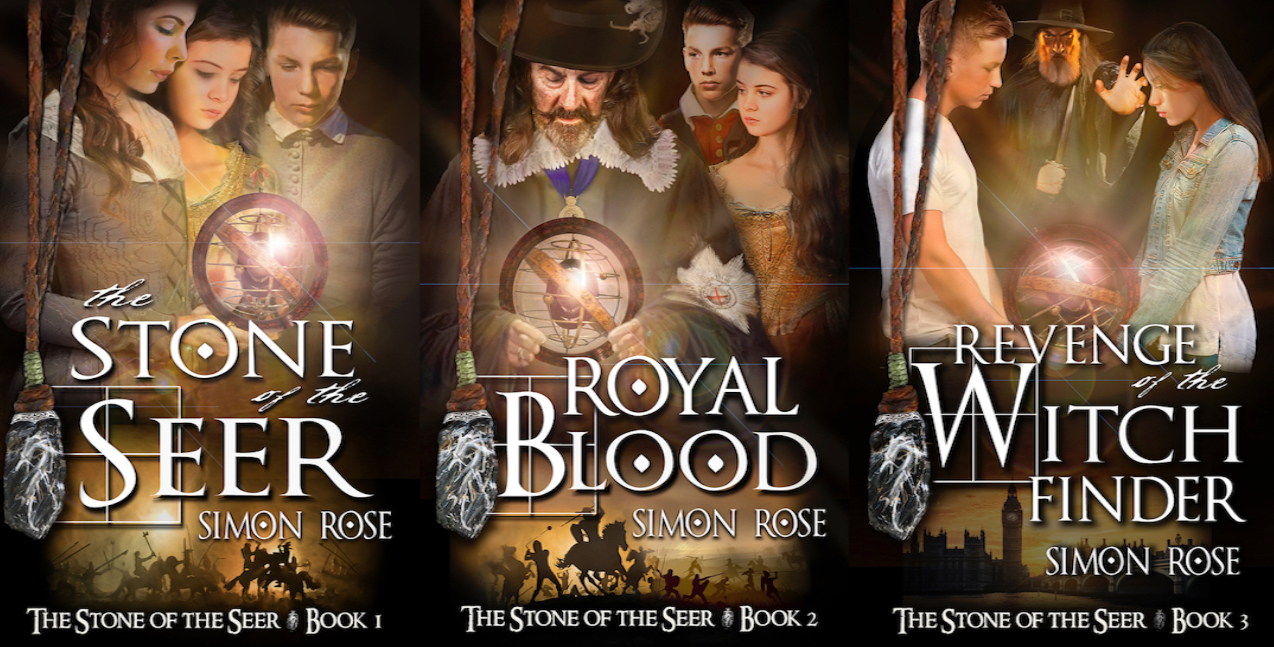
My guest today is Calgary author Simon Rose who has published twenty-one novels for children and young adults, eight guides for writers, more than a hundred nonfiction books, and many articles on a wide variety of topics. Today, we’re looking at his latest novels for young adults, The Order of Excalibur – The Ring of Fate, and The Order of Excalibur – Reich Britannia.

Nina: What are the books all about?

Simon: The Order of Excalibur – The Ring of Fate is a fantasy novel for young adults set in England early in World War II. At the height of the Blitz and the Battle of Britain, young Canadian wizards Nick and Ginny are recruited by the mysterious Order of Excalibur as the country faces the threat of invasion.

The Order of Excalibur – Reich Britannia is a fantasy novel for young adults set in a parallel universe in the early 1940s, where Germany has invaded and occupied Great Britain. In a deadly nightmare world, Canadian teen wizards Nick and Ginny must risk their lives to alter the course of events and put history back on track.

Nina: And what’s the story behind the story?

Simon: The Order of Excalibur – The Ring of Fate is a fantasy novel for young adults set in Britain early in World War II. At the height of the Blitz and the Battle of Britain, young Canadian wizards Nick and Ginny are recruited by the mysterious Order of Excalibur as the country faces the threat of invasion.

Nick and Ginny’s father, Robert Jennings, is the world’s leading scholar on the magic and folklore of the Arthurian period, based at Cambridge University, while The Order of Excalibur has kept the secrets of Merlin since the early Middle Ages. The Order also has possession of a ring that Merlin supposedly used to materialize a stone circle similar to Stonehenge known as the Ring of Fate in the centre of his workshop. The spaces between the stones in the circle would reveal how events might occur if certain decisions were made. However, Merlin’s ring hasn’t been used since he died, and the stone circle hasn’t been seen since that time. The Order made attempts to materialize the Ring of Fate when Britain was under threat from the Spanish Armada in 1588 and from Napoleon in 1805 without success and when the situation in 1940 is even more desperate the British government is willing to try anything.

Robert and the children begin working in an underground facility in the heart of London during the Blitz and the Battle of Britain. Using their magical powers, Nick and Ginny are able to get the Ring of Fate to appear. While they view potential scenarios showing that all will be well and that there won’t be a German invasion, they also see other possible outcomes revealing a successful German invasion and subsequent occupation of Britain.

When a massive explosion almost destroys the underground facility, Robert, Nick, and Ginny are shocked when reaching the surface that London is now under German occupation. Robert, Nick, and Ginny attempt to escape from the German soldiers but soon begin to forget the other timeline and their own identities, as they go on the run in a nightmare world.

The Order of Excalibur – Reich Britannia is a fantasy novel for young adults set in a parallel universe in the early 1940s, where Germany has invaded and occupied Great Britain. This was one of the possible futures shown between the standing stones of Merlin’s Ring of Fate that has now become reality, once the stones were materialized by Canadian teen wizards Nick and Ginny.

Nick and Ginny are initially separated in a deadly nightmare world before being recruited by the British Resistance and learning of the previous reality, risking their lives to alter the course of events. They are also opposed by powerful German wizards in the Paranormal Division.

Following an assassination attempt on the life of the German governor, security is tightened, and many Resistance members are killed. With time running out before the reality of German victory becomes permanent, Nick and Ginny must find a way to bring back the Ring of Fate and put history back on track, before it’s too late.

Nina: You must have done quite a lot of historical research for the novels.

Simon: Yes, the story, main characters, and some of the settings in this novel are fictional but are based on true events that took place in World War II. I did lots of research into the early stages of the conflict. Following the story, the glossary has links to online sources where readers can learn more about the historical events, military campaigns, settings, and leading characters from World War II that are featured in the story. On my website, there’s a page dedicated to the book, along with links to separate pages featuring information regarding the book’s historical background and links to many online sources.

Nina: What are you currently working on?

Simon: I always have a few current projects and right now I’m working on more books in the same genre as my previously published paranormal Flashback series, a fantasy series, a historical fiction novel, and some picture books. I also continue to work on the adaptations of my Shadowzone series into screenplays for movies and TV shows, some other scripts, as well as teaching writing courses at the University of Calgary.

Anyone interested in keeping up to date with the projects that I’m working on is always welcome to subscribe to my monthly newsletter, which you can do at www.simon-rose.com.

Nina: You work with other authors, as well as on a variety of projects related to writing and publishing, don’t you?

Simon: Yes, I offer coaching, editing, consulting, and mentoring services for writers of novels, short stories, fiction, nonfiction, biographies, and in many other genres, plus do work with writers of scripts and screenplays. You can find details of some of the projects I’ve worked on with other authors, along with some references and recommendations, at www.simon-rose.com.

Nina: Where can people buy The Order of ExcaliburThe Ring of Fate and The Order of Excalibur – Reich Britannia?

Simon: The books can be purchased at most of the usual places as follows:

The Order of Excalibur – The Ring of Fate:

Ebook: Amazon Canada, Amazon USA, Kobo, iBooks, Barnes and Noble, Scribd, Amazon UK, Amazon France, Amazon Germany, Amazon Japan, Smashwords

Paperback: Amazon Canada, Amazon USA, Amazon UK, Amazon France, Amazon Germany, Amazon Japan

The Order of Excalibur – Reich Brittania:

Ebook: Amazon Canada, Amazon USA, Kobo, iBooks, Barnes and Noble, Scribd, Amazon UK, Amazon France, Amazon Germany, Amazon Japan, Smashwords

Paperback: Amazon Canada, Amazon USA, Amazon UK, Amazon France, Amazon Germany, Amazon Japan

Nina: Thanks Simon, for being my guest here today and the very best of luck with the The Order of Excalibur novels. I hope that the books sell thousands and thousands of copies in the coming months.

You can learn more about Simon and his work on his website at www.simon-rose.com, where you can also link to him at other locations online.

My Books Are Feeding Meta’s AI Brat

On March 20, 2025, in an article in The Atlantic entitled “The Unbelievable Scale of AI’s Pirated-Books Problem”, Alex Reisner disclosed how META pirated millions of books and research papers to train their flagship AI model Llama 3 to be competitive with products like ChatGPT. Reasons for this illegal action is simply time; asking permission and licensing takes too much time and is too expensive.

On the same day, The Atlantic provided a link to LibGen (the pirated-books database that Meta used to train its AI) so authors could search its collection of millions of illegally captured books and scientific papers. I went there and searched my name for my novels, non-fiction books and scientific papers and discovered several of my works in their AI training collection.

Two of my many scientific papers appeared in LibGen under my scientific author name Norina Munteanu. The first scholarly article came from my post grad work at the University of Victoria on the effects of mine tailing effluent on an oligotrophic lake, published in 1984 in Environmental Pollution Series A, Ecological and Biological Volume 33, Issue 1. The second article on the effect of current on settling periphyton came from my M.Sc. ecology research published in 1981 in Hydrobiologia, Volume #78.

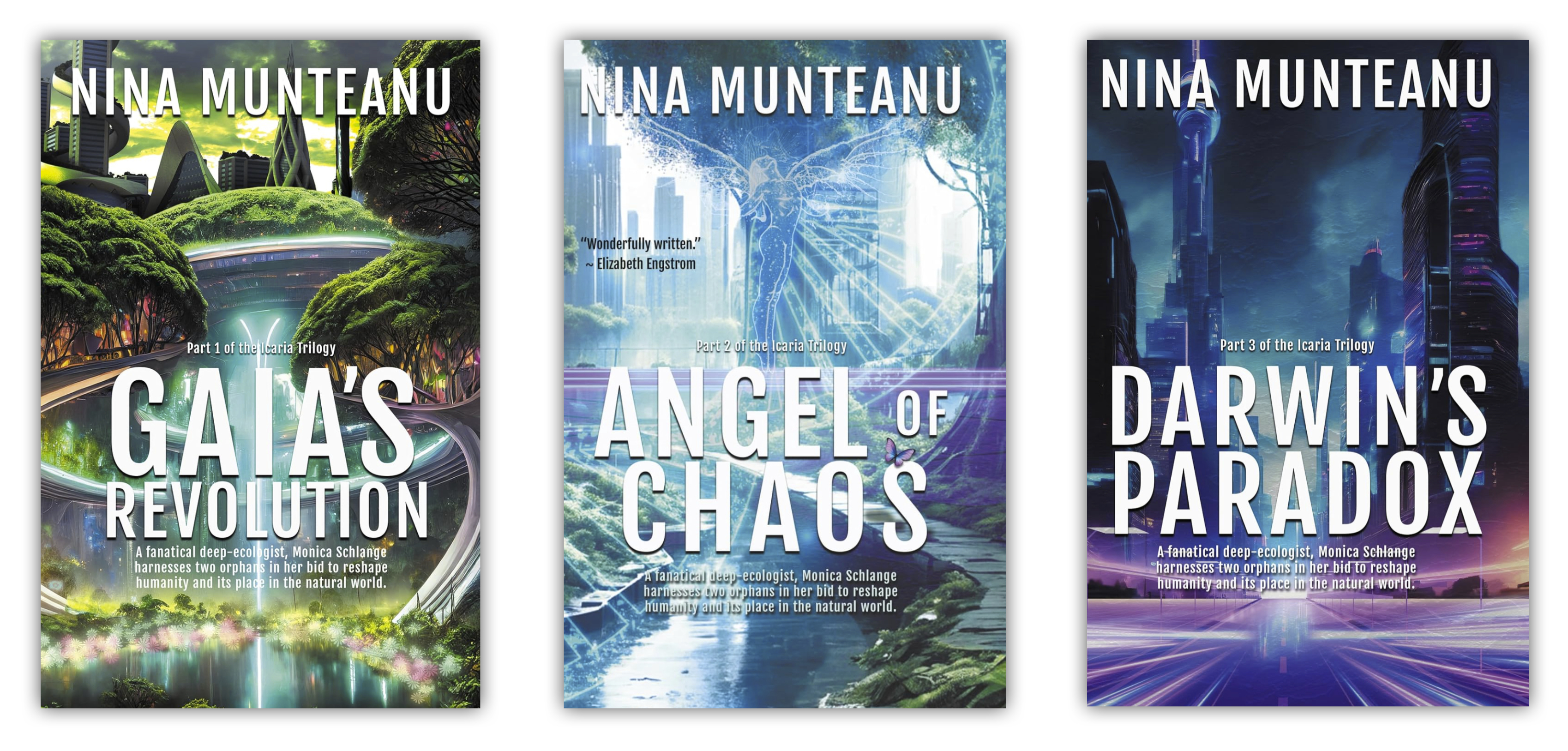
Three of my thirteen novels appeared in LibGen under my fiction author name Nina Munteanu. I found it interesting how their bots captured a good range of my works. These included two of my earliest works. Collision with Paradise (2005) is an ecological science fiction adventure and work of erotica; Darwin’s Paradox (2007) is a science fiction medical-eco thriller that features the domination of society by an intelligent AI community. The bots also found my latest novel, A Diary in the Age of Water (2020), a climate thriller and work of eco-fiction that follows four generations of women and their relationship to water.

Each of these works has been highly successful in sales and has received a fair bit of attention and recognition.

When Genevieve Dubois, Zeta Corp’s hot shot starship pilot, accepts a research mission aboard AI ship ZAC to the mysterious planet Eos, she not only collides with her guilty past but with her own ultimate fantasy. On a yearning quest for paradise, Genevieve thinks she’s found it in Eos and its people; only to discover that she has brought the seed of destruction that will destroy this verdant planet.

Recognition: Gaylactic Spectrum Award (nominee)

Collision with Paradise is ideal for readers who enjoy dark, introspective science fiction that explores complex moral dilemmas and psychological depth within a lush mythologically-rich setting.”The Storygraph

A devastating disease. A world on the brink of violent change. And one woman who can save it or destroy it all. Julie Crane must confront the will of the ambitious virus lurking inside her to fulfill her final destiny as Darwin’s Paradox, the key to the evolution of an entire civilization. Darwin’s Paradox is a novel about a woman s fierce love and her courageous journey toward forgiveness, trust, and letting go to the tide of her heart.

Recognition: Readers Choice Award (Midwest Book Review); Readers Choice (Delta Optimist); Aurora Award (nominee)

Darwin’s Paradox is a thrill ride that makes you think and tugs the heart.”Robert J. Sawyer, Hugo and Nebula Award winning author of Rollback

This gritty memoir describes a near-future Toronto in the grips of severe water scarcity during a time when China owns the USA and the USA owns Canada. A Diary in the Age of Water follows the climate-induced journey of Earth and humanity through four generations of women, each with a unique relationship to water. The diary spans a twenty-year period in the mid-twenty-first century of 33-year-old Lynna, a single mother and limnologist of international water utility CanadaCorp, and who witnesses disturbing events that she doesn’t realize will soon lead to humanity’s demise. 

Recognition: 2020 Foreword Indies Book of the Year Award (Bronze); 2020 Titan Literary Book Award (Silver); 2021 International Book Award (Finalist).

“If you believe Canada’s water will remain free forever (or that it’s truly free now) Munteanu asks you to think again. Readers have called ‘A Diary in the Age of Water’ “terrifying,” “engrossing,” and “literary.” We call it wisdom.”—LIISBETH

The April 3, 2025 article by Ella Creamer of The Guardian noted that a US court filing alleged that Meta CEO Mark Zuckerberg approved the company’s use of the notorious “shadow library”, LibGen, which contains more than 7.5 million books and 81 million research papers. According to Toby Walsh, leading AI researcher at the University of New South Wales: “As far as we know, there was an explicit instruction from Mark Zuckerberg to ignore copyright.”

This begs the question of the role and power of copyright law.

“Copyright law is not complicated at all,” said Richard Osman, author of The Thursday Murder Club series. “If you want to use an author’s work you need to ask for permission. If you use it without permission you’re breaking the law. It’s so simple.”

If it’s so simple then why is Meta and others getting away with it? For its defence, the tech giant is claiming “fair use”, relying on this term permitting the limited use of copyrighted material without the owner’s permission (my italics).

It would seem that just as Trump trumped the presidency, Zuckerberg and his AI minion bots have trumped the copyright law—by flagrantly violating it and getting away with it—so far (on both counts).

The actions of Meta were characterized by Society of Authors chair Vanessa Fox O’Louglin as “illegal, shocking, and utterly devastating for writers.” O’Louglin added that “a book can take a year or longer to write. Meta has stolen books so that their AI can reproduce creative content, potentially putting these same authors out of business.”

Three of my novels pirated for AI training

Reflecting many authors’ outrage throughout the world, Novelist AJ West remarked, “To have my beautiful books ripped off like this without my permission and without a penny of compensation then fed to the AI monster feels like I’ve been mugged.” Australian Author Sophie Cunningham said, “The average writer earns about $18,000 a year on their writing. It’s one thing to be underpaid. It’s another thing to find that [their] work is being used by a company that you don’t trust.” Bestselling author Hannah Kent said, “If feels a little like my body of work has been plundered.” She adds that this, “opens the door to others also feeling like this is an acceptable way to treat intellectual copyright and creatives who already…are expected to [contribute] so much for free or without due recompense.” Both Kent and Cunningham exhort governments to weigh in with more powerful regulation. And this is precisely what may occur. Nicola Heath of ABC.net.au writes, “the outcomes of the various AI copyright infringement cases currently underway in the US will shape how AI is trained in the future.”

According to The March 20, 2025 Authors Guild article “Meta’s Massive AI Training Book Heist: What Authors Need to Know,” legal action is underway against Meta, OpenAI, Microsoft, Anthopic, and other AI companies for using pirated books. The Authors Guild is a plaintiff in the class action lawsuit against OpenAI, along with John Grisham, Jodi Picoult, David Baldacci, George R.R. Martin, and 13 other authors, but the claims are made on behalf of all US authors whose works have been ingested into GPT. 

The Authors Guild suggests five things authors can do to defend their rights:

  1. Send a formal notice: If your books are in the LibGen dataset, send a letter to Meta and other AI companies stating they do not have the right to use your books.
  2. Join the Authors Guild: You should join the Guild and support our joint advocacy to ensure that the writing profession remains alive and vibrant in the age of AI. We give authors a voice, and there is power in numbers. We can also help you ensure that your contracts protect you against unwanted AI use of your work. 
  3. Protect your works: Add a “NO AI TRAINING” notice on the copyright page of your works. For online work, you can update your website’s robots.txt file to block AI bots.
  4. Get Human Authored certification: Distinguish your work in an increasingly AI-saturated market with the Authors Guild’s certification program. This visible mark verifies your book was created by a human, not generated by AI.
  5. Stay informed. The Authors Guild suggest signing up for the free Guild biweekly newsletter to keep updated on lawsuits and legislation that could impact you and your rights. The legal landscape is changing rapidly, and they are keeping close watch. 

How do I feel about all this? As a female Canadian author of climate fiction? As a thinking, feeling human being living in The Age of Water? Well, to tell the truth, it kinda makes me want a donut*…

 *as delivered by James Holden in Season 3, Episode 7 of “The Expanse”

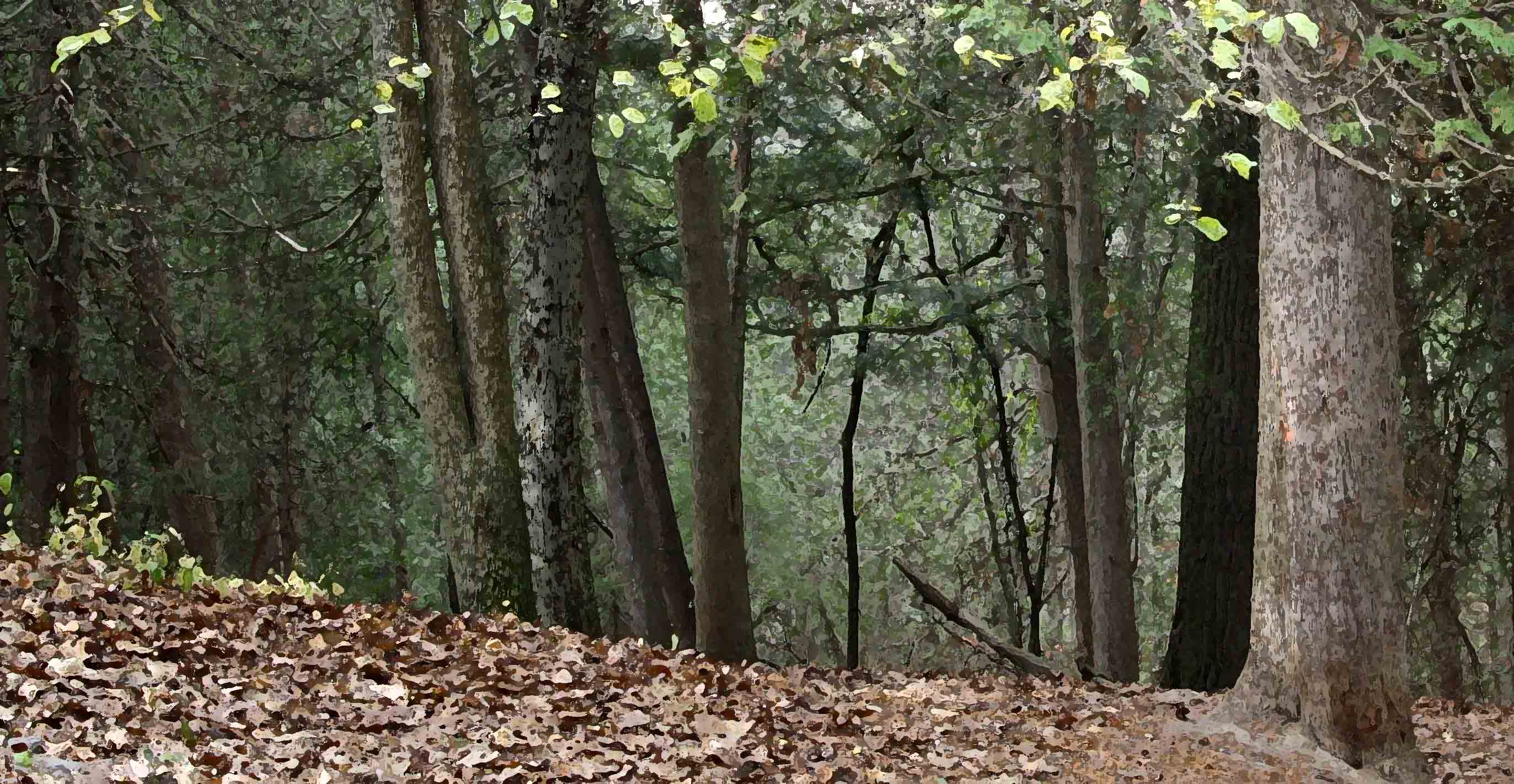
Aspens in fall, ON (photo and rendition by Nina Munteanu)

Nina Munteanu is a Canadian ecologist / limnologist and novelist. She is co-editor of Europa SF and currently teaches writing courses at George Brown College and the University of Toronto. Visit  www.ninamunteanu.ca for the latest on her books. Nina’s bilingual “La natura dell’acqua / The Way of Water” was published by Mincione Edizioni in Rome. Her non-fiction book “Water Is…” by Pixl Press (Vancouver) was selected by Margaret Atwood in the New York Times ‘Year in Reading’ and was chosen as the 2017 Summer Read by Water Canada. Her novel “A Diary in the Age of Water” was released by Inanna Publications (Toronto) in June 2020.

Nina Munteanu Identified as a Leading Voice in Eco-SciFi Fiction

Inventor/author Kyo Hwang Cho recently identified Nina Munteanu, Kim Stanley Robinson, Jeff VanderMeer, and Richard Powers as Leading Voices in Eco-Science Fiction in an article on the LinkedIn Skyhome Newsletter.

Cho wrote:

Kim Stanley Robinson: Robinson is renowned for integrating ecological themes into his narratives. His works like The Ministry for the Future and the Mars Trilogy explore climate change, sustainability, and alternative socio-economic systems. His stories often centre around scientists striving for environmental reform.

Jeff VanderMeer: Best known for the Southern Reach Trilogy, beginning with Annihilation, VanderMeer delves into a nature-reclaimed mystery zone called Area X. His work blends ecological concerns with surreal and speculative storytelling, offering a unique lens on environmental collapse.

Richard Powers: While not strictly a science fiction author, Powers’s novels such as The Overstory and Playground revolve around nature’s impact on human lives and vice versa. His writing emphasizes the deep interconnectedness of species and ecosystems.

Nina Munteanu: A Canadian ecologist and writer, Munteanu’s stories explore how humans interact with the environment. Her narratives often examine the intersection of science, climate crisis, and spiritual transformation.

Cho included the following Noteworthy Eco-Science Fiction Works:

  • “The Ministry for the Future”: A speculative exploration of global climate crisis responses through policy, activism, and emergent technology.
  • “Annihilation”: A surreal expedition into a wilderness zone that defies scientific explanation, echoing the unpredictability of nature itself.
  • “The Overstory”: A web of interconnected lives bound by trees, showing how the natural world can act as both witness and protagonist. [Inclusion of this book in the eco-SciFi subgenre is a stretch: however, like my own book, there are elements of speculation, and some subtle fantastical elements that one can argue place it in a scifi setting]
  • “A Diary in the Age of Water”: A dystopian look at a future shaped by water scarcity, societal collapse, and ecological memory.

Cho defines Eco-SciFi this way: “Eco-SciFi is a subgenre of SciFi that foregrounds ecological consciousness, blending speculative fiction with climate science, ethics, and planetary survival.” He includes a table that distinguishes Eco-SciFi from traditional Sci-Fi in several core areas from core theme, tone and motivation to protagonists and ‘message.’

Nina Munteanu is a Canadian ecologist / limnologist and novelist. She is co-editor of Europa SF and currently teaches writing courses at George Brown College and the University of Toronto. Visit  www.ninamunteanu.ca for the latest on her books. Nina’s bilingual “La natura dell’acqua / The Way of Water” was published by Mincione Edizioni in Rome. Her non-fiction book “Water Is…” by Pixl Press (Vancouver) was selected by Margaret Atwood in the New York Times ‘Year in Reading’ and was chosen as the 2017 Summer Read by Water Canada. Her novel “A Diary in the Age of Water” was released by Inanna Publications (Toronto) in June 2020.

Through the Portal Anthology Wins BC Writers Award

On August 23, 2025, Through the Portal: Tales for a Hopeful Dystopia, edited by Lynn Hutchinson Lee and Nina Munteanu for Exile Editions, won the BC Sunshine Coast Award for 2025.

The fiction prize was award to Exile Edition’s 20th anthology along with three other fiction works that include Blackheart Man by Nalo Hopkinson, The Cipher by Genni Gunn, and Inside Outside by Faye Arcand.

Here is what the judges said about Through the Portal:

“Every story in here is a delicious short gem.”

“An ambitious project with an unusual slant of positivity in the face of a dystopian future has turned into a solid piece of work, incorporating a good range of stories, some very literary and abstract, others simple tales of destruction and regrowth or the hope of regrowth.”

“Characters and situations in the selected stories show optimism and the power of the human spirit across a wide array of possible near- and far-term futures.”

“Most of the situations are inherently believable based on what we know about climate, industry, and the powerful politics of denialism.”

Nina Munteanu is a Canadian ecologist / limnologist and novelist. She is co-editor of Europa SF and currently teaches writing courses at George Brown College and the University of Toronto. Visit www.ninamunteanu.ca for the latest on her books. Nina’s bilingual “La natura dell’acqua / The Way of Water” was published by Mincione Edizioni in Rome. Her non-fiction book “Water Is…” by Pixl Press (Vancouver) was selected by Margaret Atwood in the New York Times ‘Year in Reading’ and was chosen as the 2017 Summer Read by Water Canada. Her novel “A Diary in the Age of Water” was released by Inanna Publications (Toronto) in June 2020.