Overcoming Climate Change, One Story at a Time: “Stories for Earth” Interviews Nina Munteanu

I was recently interviewed by Forrest Brown on his podcast Stories for Earth, a site in Georgia devoted to entertaining and informing its audience on matters to do with climate change and environment and how literature represents and influences our understanding and behaviour in the current and future issues of planet Earth. The site’s mission statement reads: “Stories for Earth seeks to foster hope and emotional resilience by discussing cultural narratives that contain parallels and takeaways to our current predicament. Cultural narratives provide stories for our past, present, and future, and Stories for Earthcritically engages with these narratives through all mediums.”

This is what Forrest says about how and why he started his podcast:

I founded Stories for Earth in the summer of 2019. As a writer and lifelong lover of stories, I never suspected my two biggest interests might have something to do with fighting climate change. That is, until one day when I came across an article about an interesting class at the University of Washington Bothell.

This class, taught by senior lecturer Dr. Jennifer W. Atkinson, sought to help students struggling with the emotional effects of climate change, specifically with the feelings of hopelessness and despair associated with climate grief. Atkinson is a professor of environmental humanities and American literature, so naturally she chose to do this by examining climate change through what she knows best: literature.

After I read this, something clicked. Of course literature can help us face climate change, I thought. Literature and stories in general have helped humanity overcome countless struggles throughout the course of our history—why can’t they help us overcome climate change too?

Stories for Earth is my personal realization of that idea. I want to read books, watch movies, and engage with stories through any other medium out there that can better prepare me to fight climate change in my own way without losing my mind. This podcast is my way of sharing what I learn with you, the listener, and I hope you’ll follow along. If anything you hear sticks or helps you in some way, consider sharing it with a friend who might also benefit from it. We must take care of each other.

Here’s the blurb on the site for our interview

Nina Munteanu is a prolific and insightful Canadian science fiction writer who has published nine novels, including her most recent novel A Diary in the Age of Water. This novel imagines a Canada in the not-so-distant-future where water is becoming increasingly scarce, partially because water sources are drying up and partially because the US and China are buying up water from all the recently privatized Canadian utilities. As a limnologist–literally a fresh water scientist–it makes sense for Nina to be the one telling this story, and our conversation ranges from water shortages in the present day to Ray Bradbury to the need for a new paradigm for living.

We also discuss the connection between exploitive capitalism/colonialism and climate change, then move onto the new paradigm for living by looking at regenerative cultures, the gift economy used by many indigenous peoples, and the creation of an ecological civilization. 

Here’s the interview:

Here’s part of our interview:

  1. Tell me about yourself. How did you become a writer? Why do you think stories are important in the climate action movement?

I wasn’t much of a reader as a kid. While my older brother and sister devoured The Hardy Boys and Nancy Drew series, I hid myself in the back corner of Williams General store and read comics: Superman, Supergirl, Magnus Robot Fighter. I was obviously enamoured with the fantastic. When I earnestly started to read things other than comics, I came across the SF classics: Huxley, Orwell, LeGuin and Asimov to name a few. Ray Bradbury moved me and his “Martian Chronicles” made me cry. I wanted to write science fiction like him and move readers like he’d done with me. But I’d also discovered the sensual classics like Thomas Hardy. So, like most beginner writers, I started by imitating my favourites. Imagine the genre-confused chimeric stuff I was writing: Thomas Hardy crossed with Ray Bradbury? It wasn’t until I found my unique voice, which blended these with my passion for the environment, that my own voice emerged. The environment and how we treat it (and ourselves by extension) has always been something important to me since I was a kid when littering was a pet peeve—it still is… I think that the stories we tell help us define ourselves and our role on this planet. Climate fiction and eco-literature and solarpunk provide us with important narratives that both entertain and educate: from cautionary tales to constructive visualizations of a potential future.  

  • Your new novel A Diary in the Age of Water is the story of a young girl in the future who discovers a diary from a Canadian woman who wrote about her experiences living in an increasingly water-scarce Canada in the 2040s. What inspired you to write this story?

It started with a short story I was invited to write in 2015 about water and politics in Canada.  I had long been thinking of potential ironies in Canada’s water-rich heritage. The premise I wanted to explore was the irony of people in a water-rich nation experiencing water scarcity: living under a government-imposed daily water quota of 5 litres as water bottling and utility companies took it all. I named the story “The Way of Water.” It was about a young woman (Hilda) in near-future Toronto who has run out of water credits for the public wTap; by this time houses no longer have potable water and their water taps have been cemented shut; the only way to get water is through the public wTaps—at great cost. She’s standing two metres from water—in a line of people waiting to use the tap—and dying of thirst. The short story begged for more and that inspiration came when I attended a talk by Maude Barlow on her book Boiling Pointabout the water crisis in Canada. We were in a church and I noticed a young mother and her little six-year old daughter in the balcony; I wondered what kind of mother would bring her little girl to a political talk about water in Canada? The diarist character, Lynna, and her mother, Una, were born. It went from there with Lynna—the diarist—writing about not just water shortage but water related phenomena such as climate change, habitat destruction, hormone disruption and the alarming increased infertility in humans.

  • Coincidentally, I just interviewed another author, C.C. Berke, about his novel Man, Kind, in which people also become infertile in the future. I’ll be honest, this isn’t a problem I was really aware of until recently, but humans are indeed becoming less fertile with every new generation. Is this something you hoped to raise awareness about with your novel?

The short answer is yes! I hope it helps spark the much needed discussion. Rising infertility is an issue that seems to embarrass us … something we feel we must hide under the rug, so to speak. Like our misbehaving Uncle Zeek. But if we don’t talk about it, we can’t understand the underlying reasons for it, many of which are environmentally induced—things we should be addressing. 

  • Politics and big business play huge roles in your novel, as they do in real life as well. Canada has privatized its water utilities after the Conservative Party comes into power, and a giant company called CanadaCorp removes municipal water connections from people’s homes and imposes strict water rations, all while selling off Canada’s precious water to US states like California that would otherwise be uninhabitable. Given that Canada is home to a huge portion of the world’s freshwater, what role do you see Canada playing in the coming years when many prominent people—including the Vice President of the United States—have predicted that wars will one day be fought over water?

She’s right. But this isn’t just in the future; water wars are occurring right now and have for some time. Perhaps not between our two countries. Certainly in the middle east and Asia. There are tensions between Egypt, and nine upstream countries for control of water in the Nile watershed; the Sudanese and Ethiopians are building dams and Egypt plans to pump water from Lake Nassar into the Sahara. India, Pakistan, Bangladesh, and China are in conflict over control of rivers such as the Indus, Ganges, and particularly the Brahmaputra. India’s River Link Plan impacts Bangladesh. Meantime Pakistan, Kashmir and India fight over more and more water, as the Indus dries up and no longer flows into the ocean.

But let’s move closer to home, to North America and the premise of water conflicts here… Considering what you mentioned about Canada’s huge water storage of freshwater, water conflicts are inevitable. Canada and America border some significant water bodies such as the Great Lakes and various rivers like the Columbia River in the west. We’ve formed joint commissions along with treaties to manage these trans-boundary water bodies. They’ve often been highly electrified politically. The book by Eileen Delhanty Pearkes—“A River Captured”—explores the controversial history of the Columbia River Treaty and the huge dams built on that system that impacted ecosystems, indigenous peoples and local cultures in the Pacific Northwest. That didn’t go very well for Canada and particularly not for some of its indigenous peoples.  Another example that my book features is from the 1960s: the NAWAPA project, a plan by Ralph Parsons Company and the Army Corps of Engineers to make the entire Rocky Mountain Trench into a giant 800-km long reservoir to hydrate the US by inundating a fifth of British Columbia’s prime habitat, several towns and indigenous communities and literally destroy a fishery. But guess what? Congress was seriously looking at it and the plan keeps resurfacing among corporate entrepreneurs, engineers and politicians.

  • Going back to big business, do you think industry and sustainability are compatible? I know some cultural movements like solarpunk emphasize DIY and more small businesses over mass production and giant corporations. Do you have any thoughts on this? This is one of the defining questions of our time, but can we have both capitalism and a livable planet?

Some people—mostly economists—would say definitely yes; we just need to be conservationist in our approach to doing business. But the very basis of capitalism is exploitation, not conservation. The driving force behind capitalism is fear and uncertainty and its main process is exploitation. From an ecologist’s perspective, this makes sense for a community during its early succession and growth stage… when it first colonizes a new area. Ecologists call this approach r-selected (for rate), based on profligate and fast growth. But as we reach a climax community and our carrying capacity—where we are now—this r-selected approach no longer works. We need an economic model that better matches this new paradigm. NOT based on continued growth! A climax global economy, one based on cooperation not competition. Elisabet Sahtouris calls this ecological economy ecosophy. In his book “Designing Regenerative Cultures” Daniel Christian Wahl talks about changing our evolutionary narrative from one based on fear defined by a perception of scarcity, competition, and separation to one based on love defined by a perception of abundance, a sense of belonging, collaboration and inclusion. 

And moving forward we can take a lesson from Robin Wall Kimmerer who talks about a gift economy—an economy of abundance—whose basis lies in recognizing the value of kindness, sharing, and gratitude in an impermanent world. This is what she says: “Climate change is a product of this extractive economy and is forcing us to confront the inevitable outcome of our consumptive lifestyle, genuine scarcity for which the market has no remedy. Indigenous story traditions are full of these cautionary teachings. When the gift is dishonored, the outcome is always material as well as spiritual. Disrespect the water and the springs dry up. Waste the corn and the garden grows barren. Regenerative economies which cherish and reciprocate the gift are the only path forward. To replenish the possibility of mutual flourishing, for birds and berries and people, we need an economy that shares the gifts of the Earth, following the lead of our oldest teachers, the plants.”

  • The diary entries in your novel make frequent reference to the post-truth era we seem to be living in. I feel like we’ve been heading in this direction for a while (it seems as though books like Manufacturing Consentby Noam Chomsky and Edward S. Herman and 1984by George Orwell have documented this), but I think many people feel as though we officially entered the post-truth era when Kellyanne Conway used the term “alternative facts” in a Meet The Pressinterview in 2017. Again, this is another huge question of our time, but how do those of us pushing for climate action make progress when entire political parties like the Republican Party in the US and the Conservative Party of Canada are in blatant denial of reality? (Actually, it seems worse than denial of reality—they use the fascist tactic of disregarding reality and replacing it with their own reality, even though they know what they’re doing.)

I have absolutely no answer for that! LAUGH! ARGH! But seriously, how do you convince someone about an evidence-based truth when they are living by a faith-based or agenda-based truth? As a scientist who has lived most of her life doing research and learning to accept the truth of evidence, I find this belief or stance incomprehensible. So you weren’t asking me a question, were you? Well, I’ve heard some great advice on this actually and that is to appeal to a person’s compassion, their kindness, their links to family and friends and find some common ground through their humanity in the phenomenon—say a local manifestation of climate change—then work from there. Keep it local and practical and nonthreatening. In other words, take the science out of it and the belief out of it and appeal on humane grounds. You can’t convince someone to change their belief, but you might be able to persuade them to accept an aspect of something if it doesn’t threaten their belief. 

  • I’d like to talk about the persistence of colonialism and how it’s tied to the climate crisis. In your novel, enormous swaths of British Columbia have been turned into reservoirs to store water to sell to Americans. Doing this displaces lots of people, especially indigenous and First Nations people. But things like this are happening even now. In Minnesota, the Canadian energy company Enbridge has spent hundreds of thousands of dollars paying local police departments to stop Water Protectors from blocking construction of Line 3, which would desecrate indigenous land and transport tar sands oil to US refineries. Could you talk a little about the importance of protecting indigenous and First Nations people’s rights, especially in the climate action movement?

You cite a great example of capitalist exploitation in the fossil fuel industry, which is occurring everywhere on the globe. As I mentioned already, Local and Traditional Ecological Knowledge lies at the heart of preserving this planet’s health and balanced climate. And Indigenous people around the world are regaining control of their territorial environments to reinvigorate food security, governance, social relations and economies. To quote Steven Nitah of the Dene First Nation, “because of their attachment to, and dependence on the land, Indigenous Peoples have been establishing their own protected areas for millennia.”

Luckily, we’re getting on board with this on a grass roots level and even government level—where it needs to be. An example of this are the Indigenous-led conservation movements like the Indigenous Guardians and the IPCAs (the Indigenous Protected and Conserved Areas) where indigenous governments have the primary role in protecting and conserving ecosystems through indigenous laws, governance and knowledge systems. This is linked to the United Nations Declaration of the Rights of Indigenous Peoples (UNDRIP)—specifically Articles 29 and 32—to govern themselves and their territories and to conserve and protect them. British Columbia in Canada sees many examples of Indigenous-led conservation leadership such with the Tla-o-qui-aht and Haida. 

An example I’m following is the Heiltsuk Nation on the Great Bear Sea who have enacted an Oceans Act to protect their ocean relatives and particularly the Pacific herring—a keystone species. The Heiltsuk-herring relationship have thrived over millennia through a system of traditional ecological knowledge, gwee-ee-las, and sustainable harvesting practices. Under current legislation overseen by DFO, commercial fisheries have pretty much destroyed the herring fishery through unsustainable practices. While the Heiltsuk’s stewardship and governance of this area was recently recognized by Canada’s provincial and federal governments, DFO continued to operate separately through settler law, opening herring seine fishery in violation of Heiltsuk constitutional rights. Then they finally collaborated. We’re working it out. It’s an ongoing conversation. 

  • We live in a time where it is so hard to decipher what is true, what is propaganda, and what is conspiracy theory. Your novel deals with this theme a lot through the character Daniel and his obsession with a social media-like platform called Oracle. Could you talk about writing this character and what inspired his creation?

Daniel is a kind of twisted hipster version of an oracle. Young. Wise. Naïve all at the same time.  I brought him in as a trickster archetype, and a kind of foil to Lynna, the main character in the diary part of the book. He’s her technician and work mate and ends up being her link to the world of gossip and dark truths repressed by the corporations via the traditional internet. He finds these gems in the quagmire of the net to share with her over coffee. He’s really a very bright and astute technologist, but he also seems naïve in some ways. For instance, he’s a researcher who dabbles in conspiracy theory. He’s all about health but he smokes. So, a man of contradictions. So, even though he is Lynna’s coffee companion and amuses her, he also unsettles her. In true trickster fashion, he finds out her secret and pays for it. His character allows me to explore the best and worst of the diarist character Lynna. 

  • I hope I’m not giving too much away with this question (we can skip it if you don’t want spoilers), but I want to talk about one of the central themes of the book: is it possible to save the Earth while saving humanity? The author of the diary, Lynna, writes about her water activist daughter, Hilde, a little over halfway through the book: “Does Hilde realize that she’s an oxymoron? To fight for water and the environment is to fight against humanity. Because at the root of Daniel’s question—would you save the planet at the expense of humanity?—lies the deeper question: can humanity exist without destroying the environment? And has Hilde made her prognosis? I know Una still believed in her heart that we could. I always thought her optimism was naïve.” For a long time, it seems like a narrative of the environmental movement was that humans are a virus. But now, there’s a big pushback against this narrative, with activists pointing to the systemic players who bear the most responsibility for the climate crisis. What do you think? Are humans the root problem?

On the surface, I’d say yes. Of course we are. But that is a far too simple and easy answer. It’s the easy way out. It isn’t so much that we’re human that created the climate crisis. It is that we— most of us—live and subscribe to a worldview and belief system that came from a place of great uncertainty with a perception of scarcity and an existential model based on fear and separation. Ancient peoples and most indigenous people today do not hold themselves as separate from the land; they already live in ecological civilizations. An ecological civilization is both a new and ancient idea. Buddhist, Taoist, and other traditions base their spiritual wisdom on the deep interconnectedness of all things. According to Robin Wall Kimmerer “In indigenous ways of knowing, it is understood that each living being has a particular role to play. Every being is endowed with certain gifts, its own intelligence, its own spirit, its own story…The foundation of education is to discover that gift within us and learn to use it well.” I think we’re starting to do this. Partly through listening to the Traditional Ecological Knowledge of our indigenous peoples.

I do believe that human nature is basically empathic and cooperative over selfish and competitive; I think we are born the former and taught to be the latter. That is what needs to change. How we are taught. 

  1. On a related note, the issue of overpopulation is a highly controversial topic in the environmental movement. This has led to some fear-mongering from Conservative politicians who tell their constituents that climate activists want to make a “one child” law like the draconian one-child policy in China that began in the late 70s as part of a government program to curb population growth. Yet, overpopulation is an enormous problem, with Project Drawdown saying, “Education lays a foundation for vibrant lives for girls and women, their families, and their communities. It also is one of the most powerful levers available for avoiding emissions by curbing population growth. Women with more years of education have fewer and healthier children, and actively manage their reproductive health.” Do you think overpopulation needs to be part of the conversation in the environmental movement? Do you think there are times when pointing to this issue as it relates to climate change is problematic?

It certainly can polarize and spark conflict. Reproduction and the right to reproduce is an innate impulse of all life: to make more of itself. So, we’re in conflict with ourselves already. I agree with Project Drawdown. But how to enter into a rationale and productive discussion on this issue relies on the players, their rationale, perspective, and their personal feelings on the matter. We kind of know there should be fewer of us but how to achieve that is another matter. It comes down to ecological footprints and living lightly on the earth and other philosophical considerations. You and I talked earlier about infertility. It seems a macabre kind of irony going on with habitat degradation caused partially by over-population sparking infertility in humans through endocrine disrupting chemicals in our drinking water…

  1. Change is another big theme in your novel, reminding me of Octavia E. Butler’s masterpiece Parable of the Sower, in which she writes, “God is change.” In your novel, Lynna writes, “Trapped by our preordained notion of change, we no longer see what we’re not prepared to see. And that’s the change that kills us.” The problem with climate change is that everything is happening too fast for biological evolution to keep pace. There’s a lot of buzz about transhumanism right now—do you think we’re approaching a point where humans will have to take evolution into our own hands, so to speak, if we want to survive?

It isn’t our intelligence—our cleverness—that will save us; it is our kindness and compassion that will do that. We don’t need to invent some techy thing or reinvent ourselves or implant some intelligent virus into us. What we simply need to do is accept ourselves with humility, find and express joy. Give in to the beauty of our world and our own part in it. Become a participant. Embrace the feminine. Respect Nature and all that lies in it. Find something there to love, cherish it and protect it. The rest will follow. 

Nina Munteanu and Forrest Brown on “Stories for Earth” Podcast

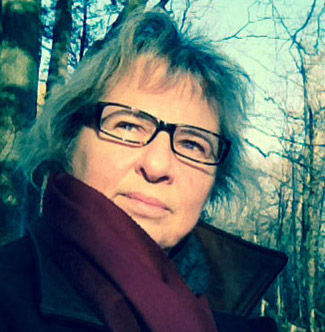
Nina Munteanu is a Canadian ecologist / limnologist and novelist. She is co-editor of Europa SF and currently teaches writing courses at George Brown College and the University of Toronto. Visit www.ninamunteanu.ca for the latest on her books. Nina’s bilingual “La natura dell’acqua / The Way of Water” was published by Mincione Edizioni in Rome. Her non-fiction book “Water Is…” by Pixl Press(Vancouver) was selected by Margaret Atwood in the New York Times‘Year in Reading’ and was chosen as the 2017 Summer Read by Water Canada. Her novel “A Diary in the Age of Water” was released by Inanna Publications (Toronto) in June 2020.

The Future of Books…

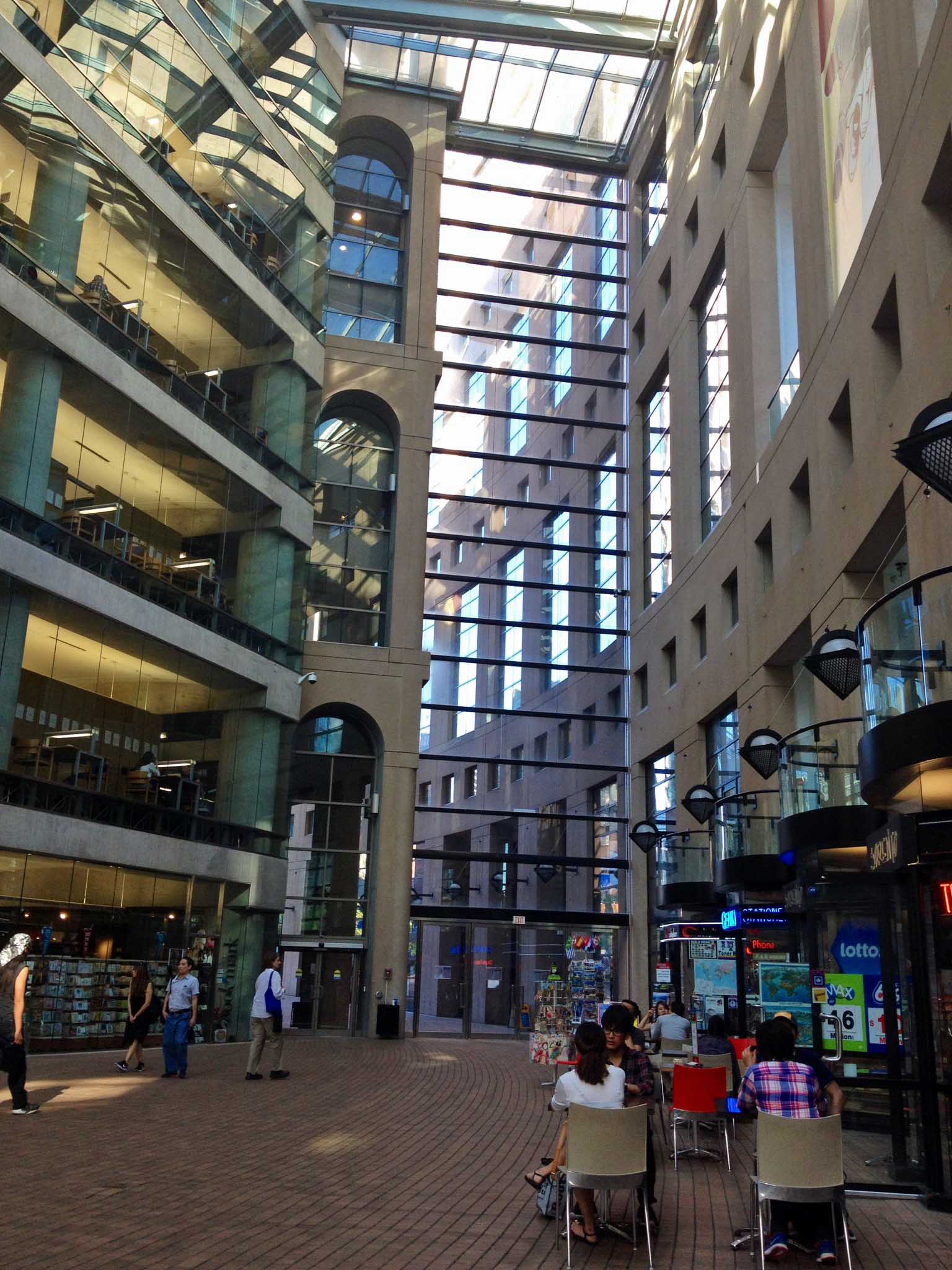
Vancouver Central Library, BC (photo by Nina Munteanu)

Just over five years ago I read a survey by bestselling author Marie Force who revealed some interesting trends about what American readers like, what format they prefer and where they find their writers. While the survey was fairly small and restricted to Americans (just under 3,000 people responded to 44 questions), I think it provided a good microcosm of what the trend is out there in North America generally. Here are the main points I took away, of which I think remain relevant today:

  1. Increased sales of Digital Books: the increasing sales of digital books (ebooks) and the rising sales of audiobooks is a wonderful and uplifting icon of rising literacy. More people are reading—and listening—to books now than ever. And we have the digital book, Kindles, Kobos and iPads to thank for it. The “book” has become more accessible and readable. People swarm the public transit, clutching their iPhones and reading devices. 
  2. Readers still choose Print Books: Obviously, print books are cherished by readers for their intrinsic value. Books—their tangible tactile presence—will always remain with us; in collector’s showcase libraries, in trendy artistic venues, and funky local neighbourhood venues.
  3. My Crazy Prediction: print books will become the epitome of publishing value and worth. Already coveted by collectors whose libraries will represent the best of the best in the literary world, print books will come to represent the highest status in literature. Only the best stories will endure as print books; perhaps only the “best book” will even be published in print form. Its existence in print form will define its literary value.
  4. Take Home Message to Authors: ensure that your book appears in print form and get it into the hands of classy libraries and classy people. So, even if you don’t survive the apocalypse, your book will…
Vancouver Central Library, BC (photo by Nina Munteanu)

Nina Munteanu is a Canadian ecologist / limnologist and novelist. She is co-editor of Europa SF and currently teaches writing courses at George Brown College and the University of Toronto. Visit www.ninamunteanu.ca for the latest on her books. Nina’s bilingual “La natura dell’acqua / The Way of Water” was published by Mincione Edizioni in Rome. Her non-fiction book “Water Is…” by Pixl Press(Vancouver) was selected by Margaret Atwood in the New York Times‘Year in Reading’ and was chosen as the 2017 Summer Read by Water Canada. Her novel “A Diary in the Age of Water” was released by Inanna Publications (Toronto) in June 2020.
On Writing: The Gestalt Nature of Passion & Success

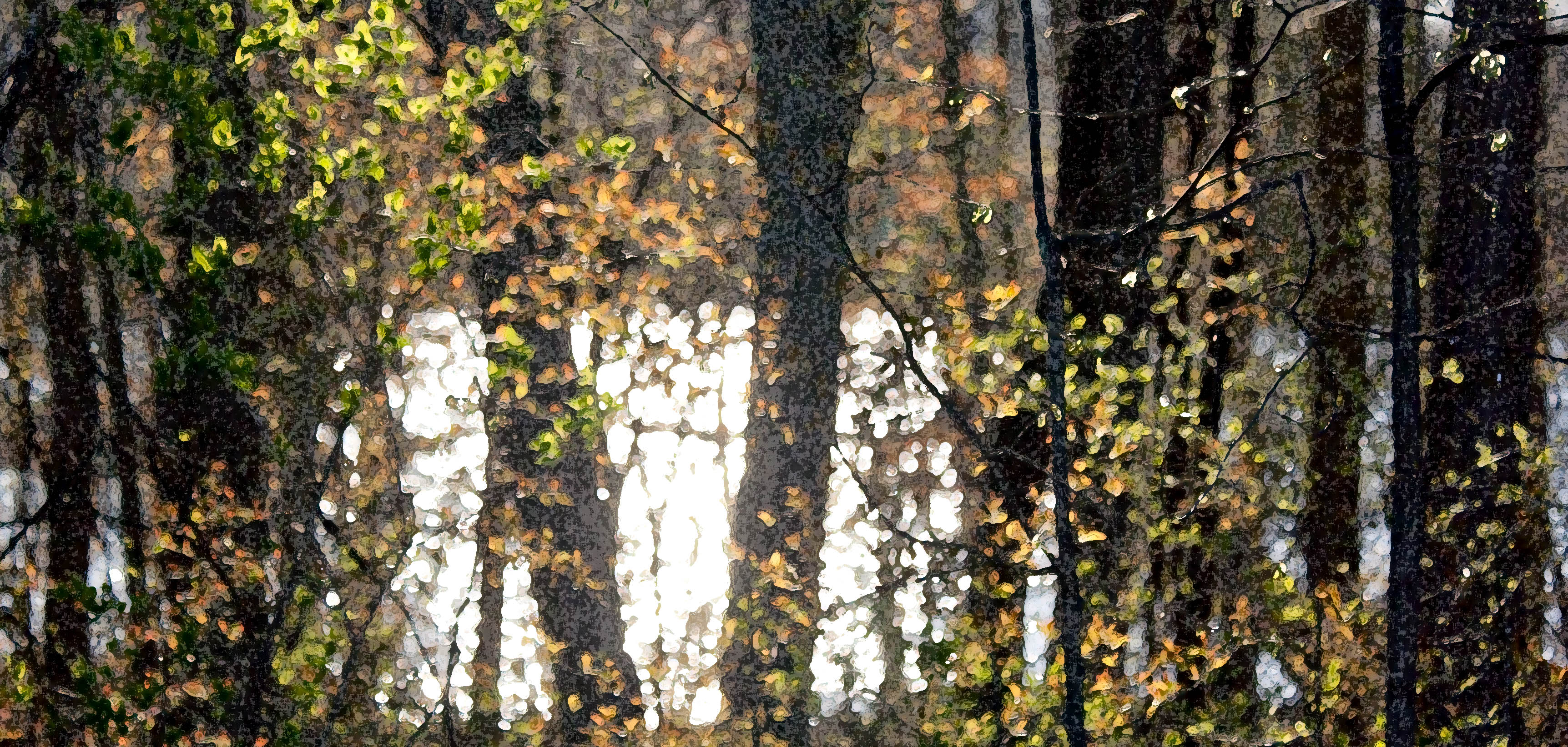
Marsh and swamp forest in a blushing sunset, ON (photo and rendition by Nina Munteanu)

What is to give light must endure burning —Victor Frankl

Says Keyes: “Any writing lays the writer open to judgment about the quality of his work and thought,” writes Ralph Keyes, author of The Courage to Write. “The closer [the writer] gets to painful personal truths, the more fear mounts—not just about what he might reveal, but about what he might discover should he venture too deeply inside. But to write well, that’s exactly where we must venture.”

So, why do it, then? Why bother? Is it worth it to make yourself totally vulnerable to the possible censure and ridicule of your peers, friends, and relatives? To serve up your heart on a platter to just have them drag it around as Stevie Nicks would say?…

Welcome to the threshold of your career as a writer. This is where many aspiring writers stop: in abject fear, not just of failure but of success. The only difference between those that don’t and those that do, is that the former come to terms with their fears, in fact learn to use them as a barometer to what is important.

“Everyone is afraid to write,” says Keyes. “They should be. Writing is dangerous…To love writing, fear writing and pray for the courage to write is no contradiction. It’s the essence of what we do.”

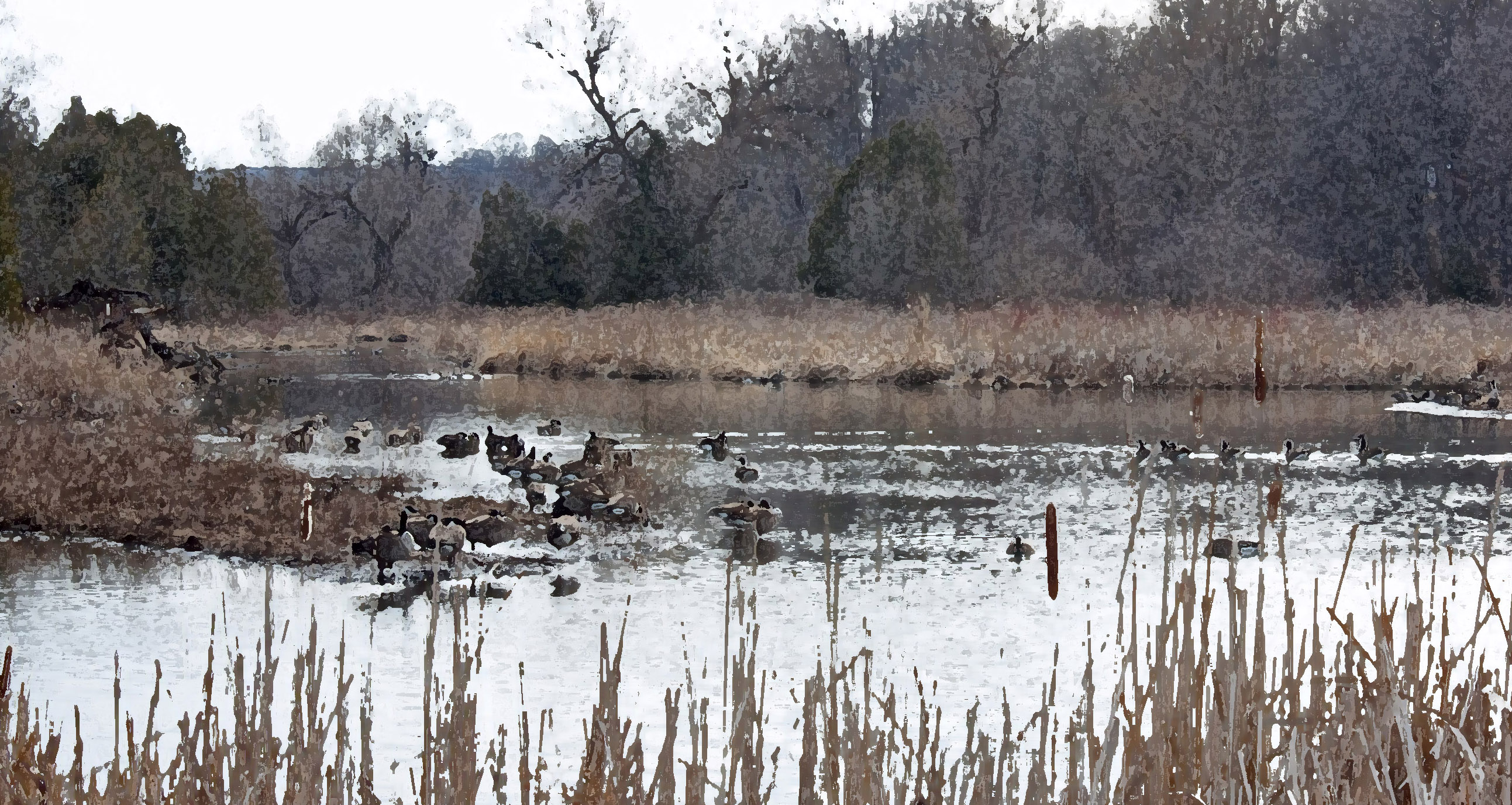
Marsh in the Kawarthas, ON (photo and rendition by Nina Munteanu)

Unravelling the Secret…

How do you get past the fear of being exposed, past the anticipated disappointment of peers, past the terror of success?

The answer is passion. If you are writing about something you are passionate about, you will find the courage to see it through. “The more I read, and write,” says Keyes:

The more convinced I am that the best writing flows less from acquired skill than conviction expressed with courage. By this I don’t mean moral convictions, but the sense that what one has to say is something others need to know.

This is ultimately what drives a writer to not just write but to publish: the need to share one’s story, over and over again. To prevail, persist, and ultimately succeed, a writer must have conviction and believe in his or her writing. You must believe that you have something to say that others want to read. Ask yourself why you are a writer. Your answer might surprise you.

Every writer is an artist. And every artist is a cultural reporter. One who sometimes holds the world accountable. “Real art,” says Susan Sontag, “makes us nervous.”

The first step, then, is to acknowledge your passion and own it. Flaunt it, even. Find your conviction, define what matters and explore it to the fullest. You will find that such an acknowledgement will give you the strength and fortitude to persist and persevere, particularly in the face of those fears. Use the fears to guide you into that journey of personal truths. Frederick Busch described it this way: “You go to dark places so that you can get there, steal the trophy and get out.”

John Steinbeck, author of Grapes of Wrath, said:

If there is a magic in story writing, and I am convinced that there is, no one has ever been able to reduce it to a recipe that can be passed from one person to another. The formula seems to lie solely in the aching urge of the writer to convey something he feels important to the reader.  

Marsh of cattails, ON (photo and rendition by Nina Munteanu)

Finding Success Through Meaning

Victor Frankl survived Auschwitz to become an important neurologist and psychiatrist of our time and to write Man’s Search for Meaning.

Blogger Gavin Ortlund wrote: “What gripped me most about [Frankl’s] book, and has stayed with me to this day, is not the horror and barbarity of his experiences in concentration camps—when you pick up a book about the holocaust, you expect that. What really struck me was Frankl’s repeated insistence that even there, in the most inhumane and horrific conditions imaginable, the greatest struggle is not mere survival. The greatest struggle is finding meaning. As I was reading, I was struck with this thought: going to a concentration camp is not the worst thing that can happen to a person. The worst that can happen to a person is not having a transcendent reason to live. Life is about more than finding comfort and avoiding suffering: it’s about finding what is ultimate, whatever the cost.”

Victor Frankl wisely said:

The more you aim at success and make it a target, the more you are going to miss it. Success, like happiness, cannot be pursued; it must ensue, and it only does so as the unintended side effect of one’s personal dedication to a cause greater than oneself or as the by-product of one’s surrender to a person other than oneself. Happiness must happen, and the same holds for success: you have to let it happen by not caring about it. I want you to listen to what your conscience commands you to do and go on to carry it out to the best of your knowledge. Then you will live to see that in the long-run—in the long-run, I say!—success will follow you precisely because you had forgotten to think about it.

Frankl is talking about passion. “If you long to excel as a writer,” says Margot Finke, author of How to Keep Your Passion and Survive as a Writer, “treasure the passion that is unique within yourself. Take the irreplaceable elements of your life and craft them into your own personal contribution to the world.” It’s what has you up to 2 am, pounding the keys. It follows you down the street and to work with thoughts of another world. It puts a notebook and pen in your hand as you drive to the store, ready to record thoughts about a character, scene or place. “For the passionate, writing is not a choice; it’s a force that cannot be denied.”

Finke says it astutely: You need to be passionate about everything to do with your book—the writing and rewriting, your critique group, your research, your search for the best agent/editor, plus your query letter. Not to mention the passion that goes into promoting your book. Nothing less will assure your survival—and success—as a writer.

“Follow your inner moonlight, don’t hide the madness”

Allen Ginsberg

This article is an excerpt from The Fiction Writer: Get Published, Write Now! by Nina Munteanu

References:

Finke, Margot. 2008. “How to Keep Your Passion and Survive as a Writer.” In: The Purple Crayonhttp://www.underdown.org/mf_ writing_passion

Frankl, Victor. (1946) 1997. Man’s Search for Meaning. Pocket Books. 224 pp.

Keyes, Ralph. 1999. The Writer’s Guide to Creativity. Writer’s Digest, 1999.

Munteanu, Nina. 2009. The Fiction Writer: Get Published, Write Now. Starfire World Syndicate. 294pp

Ortlund, Gavin. 2008. “Frankl, the holocaust and meaning.” In: Let Us Hold Fast. http://gro1983.blogspot.com/2008/02/frankl-holocaust-and-meaning.html

Slonim Aronie, Nancy. 1998. Writing from the Heart: Tapping the Power of Your Inner Voice. Hyperion. 256pp.

Marsh near Millbrook, ON (photo and rendition by Nina Munteanu)

Nina Munteanu is a Canadian ecologist / limnologist and novelist. She is co-editor of Europa SF and currently teaches writing courses at George Brown College and the University of Toronto. Visit www.ninamunteanu.ca for the latest on her books. Nina’s bilingual “La natura dell’acqua / The Way of Water” was published by Mincione Edizioni in Rome. Her non-fiction book “Water Is…” by Pixl Press(Vancouver) was selected by Margaret Atwood in the New York Times‘Year in Reading’ and was chosen as the 2017 Summer Read by Water Canada. Her novel “A Diary in the Age of Water” was released by Inanna Publications (Toronto) in June 2020.

Paradox in the Details: The Role of Place in Story

Nina Munteanu at When Words Collide 2021

A few weeks ago, I (virtually) participated in When Words Collide, one of Canada’s prime writing festivals in Calgary, Alberta. I was a featured writer, sitting on several panels and conducting presentations and lectures.
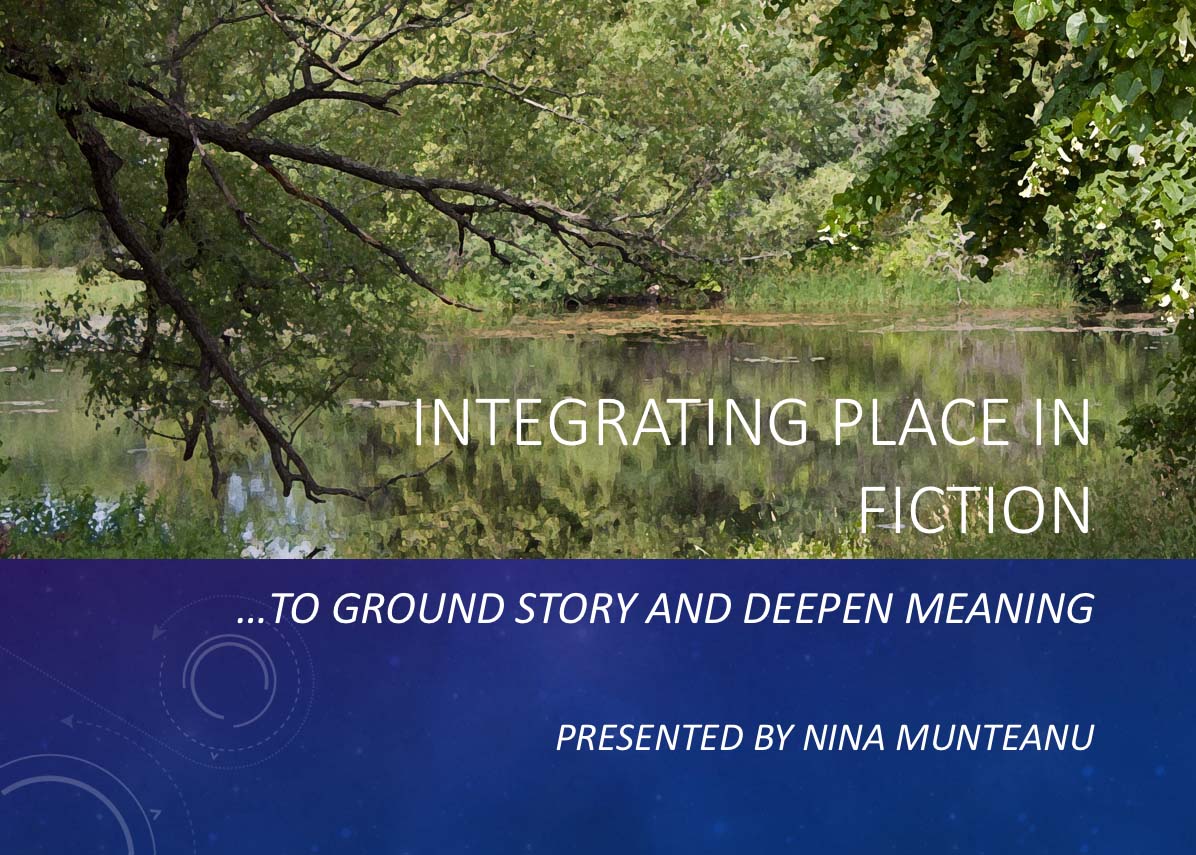
One of the two presentations I did was on the role of place in story

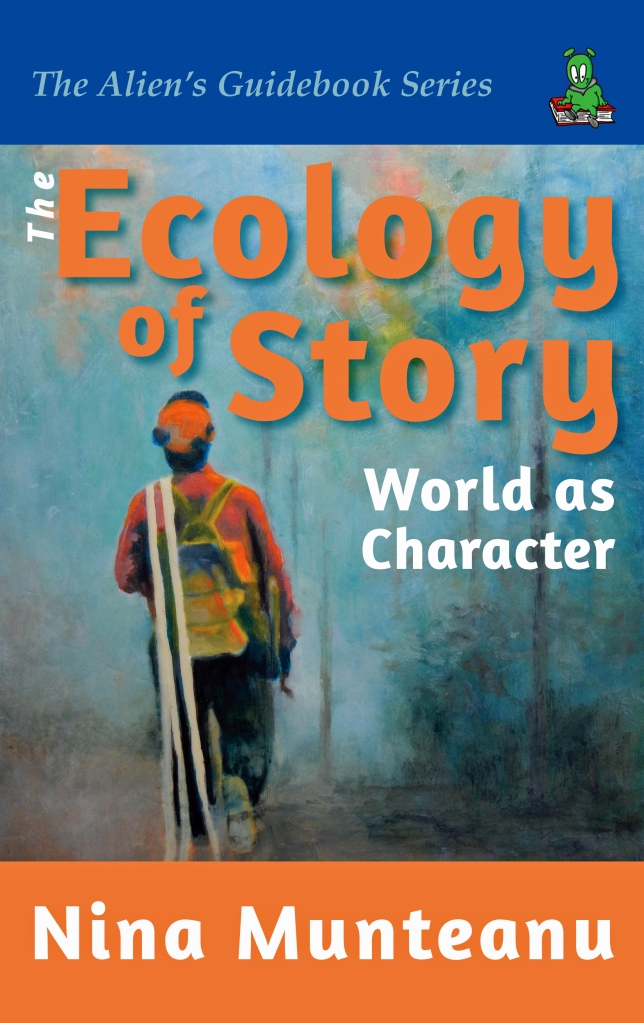
The role of place in story is a topic close to my heart and one I recently wrote an entire writing guidebook on: The Ecology of Story: World as Character. In my coaching sessions with writers and in my writing courses at George Brown College and the University of Toronto, I’ve observed in the novice writer a need for more effective integration of setting and place in story. All too often, the lack of meaningful integration translated into a lost opportunity to explore the POV character and the story’s theme. The lack of meaningful use of place in story can result in a lacklustre story, overly vague characterizations and a story that lacks metaphoric depth and relevance.

The presentation and following discussion drew from my guidebook Ecology of Story and I used many examples from a wide range of literature to overview topics covered in the book, such as:

  • Place as character & archetype
  • Place as metaphor (personification, symbols, allegory)
  • Place and first impressions (openings)
  • Place and emotion (over time and by POV)
  • Place through the senses
  • Place as environmental force (including climate change)

We also discussed how characters connect with their environment and I introduced the metaphoric connection between the Mi’kmaq and the white pine forests in Annie Proulx’s Barkskins, among others.

I concluded the presentation with a discussion on the “paradox in the details”: the more specific description is, the more universal its appeal. This is because the details can establish relevance and realism to the scene and the POV character experiencing them. Vagueness and lack of tangibility are avoided through specificity. The key, however, is to use details that resonate with the theme and tone of the book: as metaphor. Details as metaphor is what you want to achieve. 

Because, as Ray Bradbury once told me, “everything in story is metaphor.” 

The Ecology of Story: World as Character is presented in two parts.

Part 1 provides a comprehensive summary of the science of ecology, the study of relationships, and links to useful metaphor.

Part 2 discusses world and place in story. Here I discuss how the great writers have successfully integrated place with theme, character and plot to create a multi-layered story with depth and meaning. Part 2 also contains several writing exercises and detailed case studies.

Nina Munteanu is a Canadian ecologist / limnologist and novelist. She is co-editor of Europa SF and currently teaches writing courses at George Brown College and the University of Toronto. Visit www.ninamunteanu.ca for the latest on her books. Nina’s bilingual “La natura dell’acqua / The Way of Water” was published by Mincione Edizioni in Rome. Her non-fiction book “Water Is…” by Pixl Press(Vancouver) was selected by Margaret Atwood in the New York Times ‘Year in Reading’ and was chosen as the 2017 Summer Read by Water Canada. Her novel “A Diary in the Age of Water” was released by Inanna Publications (Toronto) in June 2020.

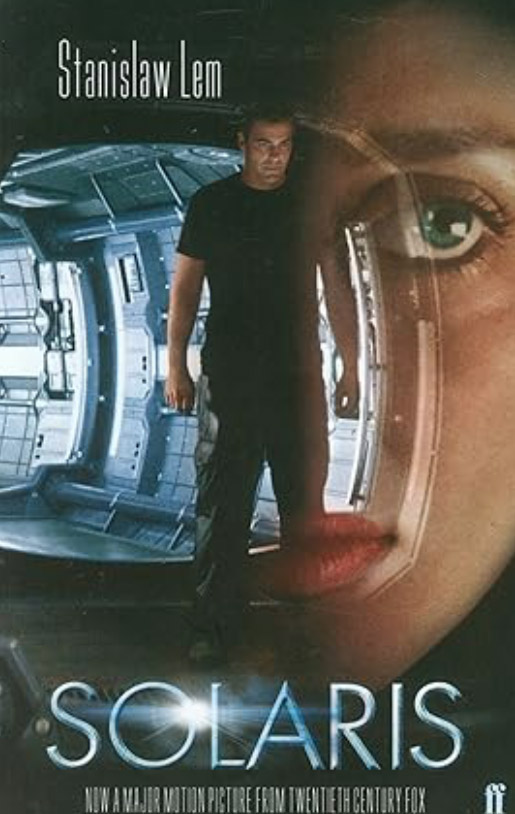
Book and Movie Review: Solaris by Stanislaw Lem and Steven Soderbergh

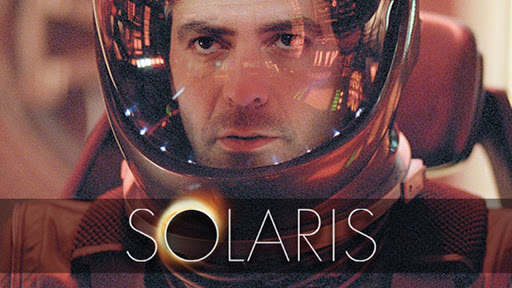
Steven Soderbergh’s stylish psychological thriller, released November 2002 in the United States by 20th Century Fox, eloquently captures the theme of Stanislaw Lem’s 1961 book. Written almost fifty years ago, Solaris is an intelligent, introspective drama of great depth and imagination that meditates on humanity’s place in the universe and the mystery of God. Soderbergh’s Solaris is a poem to Lem’s prose. Both explore the universe around us and the universe within. Not particularly palatable to North America’s multiplex crowd, eager for easily accessed answers, Solaris will appeal more to those with a more esoteric appreciation for art.

When I recently saw the 2002 20th Century Fox remake of Solaris, I was blissfully unaware of its legendary history. I say blissfully because I harbored no pre-conceived notions or expectations and therefore I was struck like a child viewing the Northern Lights for the first time. The stylish, evocative and dream-like imagery flowed to a surrealistic soundtrack by Cliff Martinez like the colors of a Salvador Dali painting. It was only later that I discovered that Russian experimental director, Andrei Tarkovsky, had previously filmed Solaris in 1972 based on Lem’s masterful 1961 book of the same name. Reprinted by Harcourt, Inc. with a new cover featuring a sensual image from the 2002 film, the original book was translated in 1970 from the French version by Joanna Kilmartin and Steve Cox for Faber and Faber Ltd.

Written almost fifty years ago, Solaris is a dark psychological drama. Soderbergh faithfully captures the intellectual yet sensual essence of Lem’s book by tempering the language and movements. Featuring a fluid and haunting soundtrack, his film flows like a choreographed ballet. There is a dream-like quality to it that is enhanced by creative use of camera angles, unusual lighting, tones and contrast, and sparse language. Solarisis not an action film (no one gets shot, at least not on stage), yet the tension surges and builds to its irrevocable conclusion from frame to frame like a slow motion Tai Chi form.

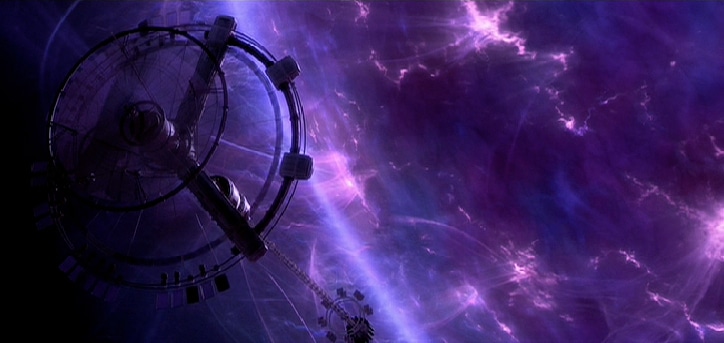
In response to his friend’s plea, a depressed psychologist with the ironic name of Kris Kelvin (played with quiet depth by George Clooney), sets out on a mission to bring home the dysfunctional crew of a research space station orbiting the distant planet, Solaris. Kelvin arrives at the space station, Prometheus, to find his friend, Gibarian, dead by suicide and a paranoid and disturbed crew obviously withholding a terrible secret from him. It is not long before he learns the secret first-hand: some unknown power (apparently the planet itself) taps into his mind and produces a solid corporeal version of his tortured longing: his beloved wife, Rheya (played sensitively by Natascha McElhone) who years ago had committed suicide herself. Faced with a solid reminder, Kelvin yearns to reconcile with his guilt in his wife’s death and struggles to understand the alien force manifested in the form of his wife. He learns that the other crew are equally influenced by Solaris and have been grappling, each in their own way, with their “demons,” psychologically trapping them there.

Ironically, our hero’s epic journey of great distance has only led him back to himself. The alien force defies Kelvin’s efforts to understand its motives; whether it is benign, hostile, or even sentient. Kelvin has no common frame of reference to judge and therefore to react. This leaves him with what he thinks he does understand: that Rheya is a product of his own mind, his memories of her, and therefore a mirror of his deepest guilt—but perhaps also an opportunity to redeem himself.

Lem packs each page of his slim 204 page book with a wealth of intellectual introspection. Through first person narrative, he intimately unveils the complicated influence of this arcane force on Kelvin. Lem explains it this way: “I wanted to create a vision of a human encounter with something that certainly exists, in a mighty manner perhaps, but cannot be reduced to human concepts, ideas or images.” (Author’s Website.) Such an incomprehensible entity would serve as a giant mirror for our own motives, yearnings and versions of reality. For me the contrast presented by such an arcane alien force emphatically—but also ironically—defines what it is to be human. It is only when faced with what we are not that we discover what we are. Later in the book, Kelvin cynically observes: “Man has gone out to explore other worlds and other civilizations without having explored his own labyrinth of dark passages and secret chambers, and without finding what lies behind doorways that he himself has sealed.” In the film Gibarian sadly proclaims of the Solaris mission: “We don’t want other worlds—we want mirrors.” In the book, Lem has Snow deliver a similar message, but neither Gibarian or Snow realize that these two desires may be one and the same.

Lem’s existentialist leaning is provided throughout the book and even alluded to in the name he chose for the space station: Prometheus. In Greek mythology, Prometheus stole fire from the gods and gave it to humankind for which Zeus chained him to a rock and sent an eagle to eat his liver (which grew back daily). It is interesting that Soderbergh chose to send Prometheus to a fiery crash and named Kelvin’s dead wife, Rheya, after the Greek goddess, mother of Zeus and all Olympian gods. In a late passage of Lem’s book, a devastated and sorrowful Kelvin formulates a personal theory of an imperfect god, “a god who has created clocks, but not the time they measure … a god whose passion is not a redemption, who saves nothing, fulfills no purpose—a god who simply is.”

Soderbergh addresses Lem’s existential vision with several brief but pivotal scenes. One occurs when Kelvin’s dead friend, Gibarian, returns to him in a dream on Prometheus and responds to Kelvin’s question, “What does Solaris want?” with: “Why do you think it has to want something?” Another scene occurs as a flashback to a dinner on Earth, when the real Rheya, prior to her suicide, argues with both Gibarian and her own husband about the existence of an all-knowing purposeful God, which both men argue is a myth made up by humankind: to Kelvin’s suggestion that “the whole idea of God was dreamed up by man,” Rheya insists that she’s “talking about a higher form of intelligence,” to which Gibarian cuts in with: “No, you’re talking about a man in a white beard again. You are ascribing human characteristics to something that isn’t.” Kelvin fuels it with: “We’re a mathematical probability,” which prompts Rheya’s challenge: “How do you explain that out of the billions of creatures on this planet we’re the only ones conscious of our immortality?” Neither man has an answer. Gibarian later commits suicide on Solaris rather than deal with the manifestation of his conscience. And I can’t help but wonder if the underlying reason for his inability to reconcile with his “demon” is because he was unequipped to, given his nihilistic beliefs.

Gibarian also tells Kelvin (and we must remember that all this is Kelvin really saying this to himself through his memory of the character): “There are no answers, only choices.” It is interesting then that the first pivotal choice in the story is made by the Doppelganger Rheya (also a manifestation of Solaris but a mirror of Kelvin’s own mind) and it is a choice made out of love: to be annihilated, rather then serve as an instrument of this unknown alien power to study the man she loves.

Some critics have called Soderbergh’s Solaris pretentious, boring and devoid of action and intimacy. I strongly disagree. It is simply that, as with Lem’s original story, Soderbergh’s Solaris does not surrender its messages easily. The viewer, as with the reader, must intuitively feel his or her way through the fluid poetry, free to interpret and ponder the questions. This is what I think good art should do. And I feel both the original book and Soderbergh’s movie do this with enthralling brilliance.

Where Soderbergh and Lem depart lies more in each artist’s personal vision and belief. Soderbergh seems to view the forces that drive our universe as the manifestation of an arcane motive more readily known through spirituality, perceived by the heart, and existing as a matter of belief. Lem, however, suggests that these forces are random and without purpose, defined by science, and perceived by the mind. Still, Lem is not proclaiming a nihilism of his own: he believes we are defined by the questions we ask and Lem asks a great deal of questions—leaving the reader to do the answering.

Reviewer Rick Kisonak asserted that Lem’s “novel is an icy meditation on man’s place in the universe and the mystery of God. It poses countless metaphysical questions and makes a point of answering none of them. In Soderbergh’s hands, however, Solaris becomes a celebration of romantic love, which culminates in the revelation of a caring, forgiving creator. At the end of his book, Lem writes [Kelvin ponders]: ‘the age-old faith of lovers and poets in the power of love, stronger than death, that finis vitae sed non amoris [life ends but not love] is a lie, useless and not even funny.’ The director ignores the author in favor of just such a poet” (Film Threat, [Online]). Kisonak is referring here to Rheya’s interest in Dylan Thomas and its reference throughout the movie. Another reviewer, Dennis Morton, goes so far as to suggest that the screenplay of Solaris is the first stanza of the poem, which ends with: “…though lovers be lost love shall not; And death shall have no dominion” (Santa Cruise Sentinel, [Archived online])

While I agree with some of Kisonak’s reasoning, I think he has missed the point of Lem’s book. If one continues to read from the passage Kisonak quoted above—as Kris Kelvin transcends from what he “thinks” in his intellect to what he feels and “knows” in his heart, to accept his (and humanity’s) destiny with humble fatalism—we learn that Lem ends his book in much the same way as Soderbergh’s movie: life ends but not love. The endings are physically different, in keeping with some radical alterations from the book in the movie’s setting (e.g., the original Solaris station is located on the planet and Lem assiduously describes Kelvin’s observations and interactions with the alien ocean; whereas Soderbergh’s crew virtually never leave orbit and the planet remains aloof in the background, reflecting Soderbergh’s focus). Yet, Kris makes the same choice in faith and love in both book and movie (although the choices play out differently). In matters of faith and love, here is what Kris has to say in the book: “Must I go on living here then, among the objects we both had touched, in the air she had breathed? … In the hope of her return? I hoped for nothing. And yet I lived in expectation … I did not know what achievements, what mockery, even what tortures still awaited me. I knew nothing, and I persisted in the faith that the time of cruel miracles was not past.” In the end of both movie and book, Kris Kelvin lets go of his fears and lets his spirit rise in wonder at what astonishing things Solaris (and the universe) will offer next.

In the final analysis, both book and movie are incredibly valuable but for different reasons. Soderbergh paints an impressionistic poem, using Kafkaesque brushstrokes on a simpler canvas, to Lem’s complex tapestry of multi-level prose. Lem challenges us far more by refusing to impose his personal views, where Soderbergh lets us glimpse his hopeful vision. I think that both, though, come to the same conclusion about the ethereal, mysterious and eternal nature of love. On the one hand, love may connect us within a fractal autopoietic network to the infinity of the inner and outer universe, uniting us with God and His purpose in a collaboration of faith. On the other hand, love may empower us to accept our place in a vast unknowable and amoral universe to form an island of hope in a purposeless sea of indifference. Whether love mends our souls to the fabric of our destiny; enslaves us on an impossible journey of desperate yearning; or seizes us in a strangling embrace of unspeakable terror at what lurks within—surely, then, love is God, in all its possible manifestations. This is unquestionably the message that unifies book and movie. And it is one worth proclaiming.

Indian River, ON (photo and dry brush rendition by Nina Munteanu)

Nina Munteanu is a Canadian ecologist / limnologist and novelist. She is co-editor of Europa SF and currently teaches writing courses at George Brown College and the University of Toronto. Visit www.ninamunteanu.ca for the latest on her books. Nina’s bilingual “La natura dell’acqua / The Way of Water” was published by Mincione Edizioni in Rome. Her non-fiction book “Water Is…” by Pixl Press(Vancouver) was selected by Margaret Atwood in the New York Times‘Year in Reading’ and was chosen as the 2017 Summer Read by Water Canada. Her novel “A Diary in the Age of Water” was released by Inanna Publications (Toronto) in June 2020.

To Boldly Go Where No Human Has Gone Before…

A while ago I was approached by Robert Gooding-Townsend, Science in Society editor for Science Borealis for my opinion on a persistent idea that post-Star Trek sci-fi is more pessimistic and less technologically imaginative. 

Whether this perception is true I can’t definitively say but there is a reason behind it, which I believe reflects a subtle shift in our cultural paradigm and worldview in the past decades since Star Trek. A shift involving a growing awareness of ecology and the emergence of the “feminine archetype” in storytelling.

I think two things are happening in concert: science fiction is maturing as a genre: 1) in its actual breadth; but also 2) in our perception of it.

I think this is partly: 1) a reflection of a more diverse, sophisticated and mature audience (what The Economist terms “mass intelligent”); and 2) the result of a wider acceptance of SF as literature by “non-genre” writers embracing what literary critic Ted Gioia calls “conceptual fiction” (e.g., Walker Percy’s Love in the Ruins; Thomas Pinchon’s Gravity’s Rainbow; Vladimir Nabokov’s Ada; John Barth’s Giles Goat-Boy; Margaret Atwood’s The Handmaid’s Tale, Emmi Itaranta’s The Memory of Water; David Mitchell’s Cloud Atlas, etc.).

Our shifting worldview, along with science fiction’s gradual blending with strong literary elements is reflected in a perception of higher pessimism with less focus on technological “wonders”. When asked to describe SF today, colleague Lynda Williams, author of the Okal Rel series, argued that, “SF is mainstream now … It has grown up, emotionally, from being about wish-fulfilling technologies … to embracing the social implications of change.”

Today, SF is recognized more as “real” literature rather than being dismissed as “escapism.” Williams shares that SF’s roots are as old as myth. “Like myths and bible stories, SF is an instructive literature, pointing out how things can go wrong (or right) and why. The growing up SF has done since the 1950s lies in an increasing recognition that [humanity is its] own worst enemy and a better understanding of human nature is crucial to the problems we face, not just the hard sciences.”

For the past few years I’ve been following a trend in the science fiction writing courses I teach at university: more and more students (male and female) are bringing in WIPs on ecological and global environmental issues. Many of the stories involve a premise of environmental calamity, but not in the same vain as previous environmental disasters that depict “man” against Nature. These works give the Earth, Nature or Water an actual voice (as a character). And a protagonist who learns to interact with it cooperatively. For me this represents a palpable and gestalt cultural awakening in the realm of the “feminine archetype”. One that is focused more on the sociological and ecological consequences of humanity’s evolution.

I believe that ecology—the science of relationships and consequence—best parallels the literature of science fiction, which studies the world and the consequences of our actions (advances in and impacts of science and technology) through metaphor. The literature of science fiction explores large issues faced by humankind and is foremost a literature of allegory and metaphor; one deeply embedded in culture.

Stories of doom and gloom have populated the science fiction genre since its inception. What appears to be changing is the increased sophistication of this assessment and humanity’s place—and technology’s place—in it. Editor and Publisher of On Spec MagazineDiane Walton shares that she is seeing a lot of Post-Apocalyptic submissions, “mainly because it’s interesting to put your characters in a setting where the rules don’t apply any more. They have to try to rebuild the life and security and order they used to have, or else revert to savagery, or else adapt to a whole new set of circumstances.”

Environmental fiction has been written for years. But I believe that now—partly with new awareness of climate change and with the genesis of the term eco-fiction—the “character” and significance of environment is being acknowledged beyond its metaphor, for its actual value. It may also be that the metaphoric symbols of environment in certain classics are being “retooled” through our current awareness, much in the same way that Aldous Huxley’s Brave New World or George Orwell’s Nineteen Eighty Four are being re-interpreted—and newly appreciated—in today’s world of pervasive surveillance and bio-engineering.

The stories I’m seeing more and more—whether by established writers or by my own students—reflect an emerging worldview of participation, responsibility and accountability. It is the worldview of Jung and synchronicity; of David Bohm and “implicate order”; of Rudolf Steiner and “cosmic intelligence”, of biochemist Mae-Wan Ho and “quantum entanglement”, of Frans de Waal and “empathy”, and of Matt Ridley and “altruism”.

Whether told through cautionary tale / political dystopia (e.g., Margaret Atwood’s MaddAddam trilogy; Bong Jung-Ho’s Snowpiercer), mundane science fiction (e.g. Paolo Bacigalupi’s The Windup Girl, my own A Diary in the Age of Water), or a retooled version of “alien invasion” (e.g., Cixin Liu’s 2015 Hugo Award-winningThe Three Body Problem), these stories all reflect a shift in focus from a technological-centred & human-centred story to a more eco- or world-centred story that explores wider and deeper existential questions. 

So, yes, science fiction today may appear less technologically imaginative; but it is certainly more sociologically astute, courageous, sophisticated, and relevant. As for the question of pessimism, I’d suggest that rather than being more pessimistic, current SF literature is more realistic and meaningful.

Swamp forest in Kawartha region, ON (photo and rendition by Nina Munteanu)

Nina Munteanu is a Canadian ecologist / limnologist and novelist. She is co-editor of Europa SF and currently teaches writing courses at George Brown College and the University of Toronto. Visit www.ninamunteanu.ca for the latest on her books. Nina’s bilingual “La natura dell’acqua / The Way of Water” was published by Mincione Edizioni in Rome. Her non-fiction book “Water Is…” by Pixl Press(Vancouver) was selected by Margaret Atwood in the New York Times ‘Year in Reading’ and was chosen as the 2017 Summer Read by Water Canada. Her novel “A Diary in the Age of Water” was released by Inanna Publications (Toronto) in June 2020.
Movie Review: “Contact”, a Journey to the Heart of the Universe

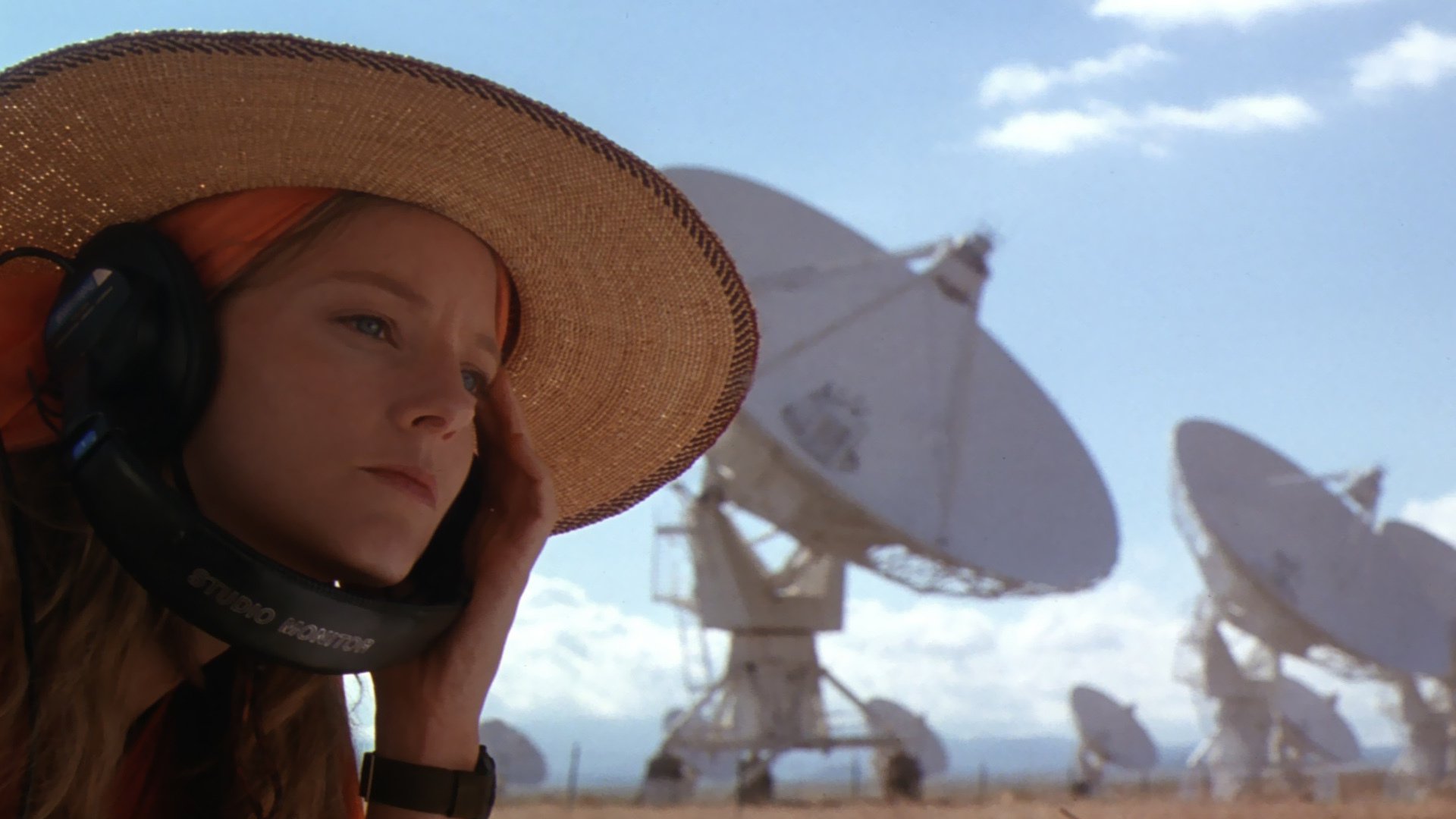
Ellie (Jodie Foster) listens for aliens at the array in “Contact”

The opening sequence tells the entire story… It is both spectacular and humbling at the same time as we begin with a view of Earth gleaming in a sunrise. An almost frantic jumble of broadcasts— news, TV shows, music—assail our ears. As we pull back from Earth and pass the outer planets, we hear older broadcasts… disco…Kennedy… the Beatles… Hitler…then ultimately the unintelligible static of all the radio stations on Earth. Then, as we leave the solar system, passing breathtaking nebulae, the sounds give way to silence. A dead silence, as we continue to pull back out of the galaxy and out of the local group of galaxies into the quiet depth of our vast universe. “It’s enough to make you feel tiny and insignificant and alone,” says Maryann Johanson of FlickFilosopher.com. “Which is precisely the feeling it’s meant to evoke.”  From that arcane vastness, we are brought back to our own “intimate” existence within it as the universe transforms into a dark reflection in a young girl’s eye.

With a powerful entrance like that, it is hard to imagine that this 1997 movie directed by Robert Zemeckis (Forrest Gump) and based on the novel by Carl Sagan, received very mixed reviews by critics.

Cindy Fuchs of the Philadelphia City Paper called it “far more mundane than its aspirations to cosmic insights might have produced.”  Kevin N. Laforest with the Montreal Film Journal said, “Contact is not a bad film, but I can’t say it’s all that good either.” Even TVGuide.com rated it a two out of four: “It’s really about [Jodie] Foster, and with her lips pressed tightly together and her hair carelessly shoved behind her ears, she’s utterly convincing as a researcher who’s subverted everything to a life of the mind. Unfortunately that adds up to a rather remote protagonist and Ellie is surrounded by a supporting cast of one-dimensional types…far too cold-blooded for summer audiences.” This is ironic, considering that the advertizing pitch calls Contact “a journey to the heart of the universe.” Finally, Christopher Null (Filmcritic.com) recommended it for its looks but not highly. Said Null: “Carl Sagan’s ode to the superior intelligence of aliens (and how us darned humans mess everything up) is consistently beautiful and interesting, but it never makes a point (except for that bit about the darned humans).

I think these critics have missed the point. Contact—and its somewhat tortured protagonist—demonstrates much in the way of “heart” and in doing so, makes a compelling story. Hearts beat deeply inside us, and this movie is no different; its “heart” runs deep, deep beneath the surface rhetoric that seems to have distracted several critics who likely prefer to take a shallow sip of their coffee steaming hot than wait and savor the rich flavor of a dark blend in a deep swallow.

Contact examines the moral, social and religious implications of our first contact with extraterrestrial intelligence through the personal journey of astronomer, Eleanor (Ellie) Arroway (played impeccably and sensitively by Jodie Foster). Never knowing her mother (who died at child birth) and having lost her father when she was ten, Ellie grows into a strong-willed scientist who dedicates her life to finding alien life in the universe by foregoing a career at Harvard to join a SETI Observatory in the Puerto Rico jungle. In an earlier scene with her father, she asks the question we have all pondered at least once: “Do you think there are people on other planets?” to which her father blithely answers, “if it’s just us, seems like an awful lot of wasted space,” a simple argument that appeals to the young logically-minded Ellie and one that will dominate the perseverance of her adult life in her resolute search for life in the universe.

And persevere Ellie must, because nothing comes easy for her. Shortly after she settles at the SETI Observatory her teacher (and nemesis) David Drumlin (Tom Skerritt) pays her a visit with implied threats of shutting the place down. Ellie also meets Palmer Joss (Mathew McConaughey), a man of faith, who is writing a book about the effects of science and technology on the third world. Although she is attracted to him, alarm bells go off in Ellie, who feels threatened by his faith (something she does not outwardly understand yet clings to in another form). Wanting to see him again, she introduces him to the man he wants to interview: Drumlin. And one of the most poignant conversations follows:

When Ellie challenges Drumlin’s apparent wish to do away with all pure research, he responds with, “What’s wrong with science being practical, even profitable? Nothing—”

Palmer cuts in, “—As long as your motive is the search for truth, which is exactly what the pursuit of science is.”

Drumlin counters peevishly, “Well, that’s an interesting position coming from a man who crusades against the evils of technology.”

To which Palmer responds, “I’m not against technology; I’m against the men who deify it at the expense of human truth.”

Palmer and Ellie collide from two different worlds and despite their differences, they are profoundly attracted to one another. But as quickly as she falls for Palmer, she recoils from him.

Nothing comes easy for Ellie: “small moves, Ellie,” her father is accustomed to telling her, “small moves…” Shortly after she and her colleagues have been shut down by Drumlin and have set up anew (thanks to eccentric billionaire entrepreneur, S.R. Hadden, played by John Hurt), Drumlin and others shut them down yet again. But, as though a greater force intervenes, this is when Ellie makes her momentous discovery and intercepts an alien message from Vega, a young star still surrounded by a proto-planetary cloud of debris about 27 light years away from us. The scene is scientifically plausible and elegantly powerful—as we witness the drama of this phenomenal discovery unfold in a frisson of action.

Zemeckis wisely shows us exactly how such an event would really play out. And Sagan didn’t pick Vega out of whimsy: a sphere sixty light years thick of radio communication radiates from Earth from our radio and TV broadcasts. These signals may be captured by alien technology and sent back as a “message”. In theory, such a signal could be received on Earth anytime after 1990, the round trip time for a light or radio signal to travel to Vega and back from the first global signal, which in itself is momentous and telling. In another spine-tingling scene, the scientists who have descended upon Ellie decipher the arcane harmonics of the “message” as the broadcast of the opening ceremony of the Berlin Olympics in 1936 (the first truly global TV broadcast made) over which Hitler presided. In fact, in another stroke of irony, the now infamous swastika is the first icon they decipher. Later still, they discover embedded instructions to build a machine that appears made to take a human on an extra-galactic trip.

Ellie (Jodie Foster) listens for aliens at the giant array in “Contact”

At the same time that Ellie intercepts this message, Palmer Joss experiences a meteoric rise to stardom with his bestselling book, Losing Faith: the Search for Meaning in the Age of Reason (which could well have been the alternate title for the film; it certainly describes the subtext of the story and the major thematic element: Faith & Meaning). In an interview with a prominent news show host, Palmer asks the question that most of us have avoided:  “The question that I’m asking is this: are we happier? Is the world fundamentally a better place because of science and technology?…We shop at home, we search the web—at the same time we feel emptier, lonelier, and more cut off from each other than any other time in human history…We have meaningless jobs, we take frantic vacations [and] trips to the mall to buy more things to fill these holes in our lives.” Ironically, Palmer touches a similar nerve in Ellie when he brings up her dead parents: “It must have been hard… being alone…” insinuating that her fanatical search for intelligent alien life may simply be filling a hole in her heart. She flees Palmer shortly after, fearing his revealing intimacy. When they next meet, years later, they fall naturally into their familiar banter and she turns the table to challenge his faith in the same way: “What if science simply revealed that [God] never existed in the first place?” She then evokes Occam’s Razor, which says that “…all things being equal, the simplest explanation tends to be the right one…what’s more likely? An all powerful mysterious God [who] created the universe then decided not to give us proof of his existence or that he simply doesn’t exist at all and we created him so we wouldn’t have to feel so small and alone?” Both of them are saved from an answer by the intrusive rings of their cell phones.

Space-time vehicle in the film Contact

Ironically again, it is Ellie’s lack of belief in God that causes her to be overlooked for the momentous journey in the alien craft, in favor of the crafty Drumlin with the oily smile. Unfortunately, a religious zealot sabotages the mission and Drumlin, along with the whole alien craft and construct, are blown up in a spectacular explosion at NASA’s Cape Canaveral. Ellie gets her chance after all when they build a second one. Her journey in the alien space craft, which we are later told takes up eighteen hours of her time but passes instantaneously on Earth (to the point where they all think nothing actually happened), is truly epic and elegantly portrayed. Her encounter with the aliens is also in keeping with the plot and imagery of the story. One of the most poignant scenes in the movie is the one where Ellie is introduced to the incredible and indescribable beauty of the vast Universe. It is at this point that she experiences her epiphany: science is not the sole purveyor of truth in the Universe. As she gazes at the splendor revealed before her, she acknowledges that the language of science is unable to express the sheer magnitude of the breathtaking scene. Grasping at something to say, she blubbers with a scientific term then finally gasps, “No words…to describe it…they should have sent a poet…”

Upon her return, Ellie is challenged by skeptics who think she suffered a giant delusion (remember that on Earth, no time had passed during her supposed eighteen-hour voyage). Ellie offers up a strained scientific explanation (e.g., wormhole travel through space-time also called Einstein-Rosen bridges) which is challenged by National Security Advisor, Michael Kitz (James Woods) as only theory, and must finally resort to her faith; one she selflessly offers to the world: “I… had an experience. I can’t prove it, I can’t even explain it, but everything that I know as a human being, everything that I am tells me that it was real. I was given something wonderful, something that changed me forever. A vision of the universe, that tells us undeniably, how tiny, and insignificant and how… rare, and precious we all are. A vision that tells us that we belong to something that is greater than ourselves, that none of us are alone.”

Frederic and Mary Ann Brussat of Spirituality Practice said it best: “Robert Zemeckis has fashioned a truly awesome movie that celebrates the spiritual practices of listening, wonder, love, and zeal. It affirms that there are times and places where reason must yield to mystery.”

The SETI Institute, who currently conduct the search for alien life, have a website dedicated to the movie.

Very large array in New Mexico (photo Wikipedia)

Nina Munteanu is a Canadian ecologist / limnologist and novelist. She is co-editor of Europa SF and currently teaches writing courses at George Brown College and the University of Toronto. Visit www.ninamunteanu.ca for the latest on her books. Nina’s bilingual “La natura dell’acqua / The Way of Water” was published by Mincione Edizioni in Rome. Her non-fiction book “Water Is…” by Pixl Press(Vancouver) was selected by Margaret Atwood in the New York Times‘Year in Reading’ and was chosen as the 2017 Summer Read by Water Canada. Her novel “A Diary in the Age of Water” was released by Inanna Publications (Toronto) in June 2020.

Nina Munteanu Talks Water, Writing, and Weather on ‘All About Canadian Books’

I recently had the pleasure of chatting with Crystal Fletcher on “All About Canadian Books” about my recent clifi dystopian novel “A Diary in the Age of Water.” We covered a number of topics from water’s over 70 anomalous properties–virtually all of them life-giving–to how water seems to inform all aspects of my life, particularly my writing life. Crystal was particularly fascinated with the four generations of women in the book and we talked at length about how these characters were developed and the roles they played in the greater saga.

After bringing up the Toronto Star’s question of me (“What keeps you up at night about climate change”) in which I admitted that I lose sleep over the thought of how my son and his children will fair in this changing world, Crystal admitted that “Your book, Nina, is an eye opener…it freaked me out when I was reading it…and now I’m losing sleep!”

Hardwood forest back lit by glittering Otonabee River, ON (photo and rendition by Nina Munteanu)

Nina Munteanu Talks Water and Writing on Kentucky’s WMST-am Radio

Dan Manley interviews Nina Munteanu on Mid Morning on Main WMST-AM Radio

I was recently interviewed (on June 21) by Dan Manley on Kentucky’s Mid-Morning on Main show on WMST-AM Radio. I’ve visited Kentucky several times before, including the famous Bardstown Road in Louisville, but this time it was a virtual visit.

Dan and I talked about how I became a limnologist and ecologist, about my growing up in a small town and playing in the local forest with my older brother and sister and how we made ‘potions’ out of moss, soil, evening nightshade and water.

We talked about my recent eco-novel “A Diary in the Age of Water” and why I wrote it and its effect on people. We covered the difference between stereotypes and archetypes and how science informs me and my writing. We also explored how life changes us and our writing and how writing, in turn, changes us.

We covered a vast range of water-related topics from the movie “Water World” to the TV show “Bonanza.” We talked about water scarcity and water politics and what Canada was doing and what’s happening in America.

I really enjoyed this interview because Dan asked me some surprising and challenging questions that led us into interesting territory. My interview with him starts about 43 minutes into the show. Go have a listen!

Otonabee River sparkles behind a hardwood forest in spring, ON (photo and dry brush rendition by Nina Munteanu)

Nina Munteanu is a Canadian ecologist / limnologist and novelist. She is co-editor of Europa SF and currently teaches writing courses at George Brown College and the University of Toronto. Visit www.ninamunteanu.ca for the latest on her books. Nina’s bilingual “La natura dell’acqua / The Way of Water” was published by Mincione Edizioni in Rome. Her non-fiction book “Water Is…” by Pixl Press(Vancouver) was selected by Margaret Atwood in the New York Times‘Year in Reading’ and was chosen as the 2017 Summer Read by Water Canada. Her novel “A Diary in the Age of Water” was released by Inanna Publications (Toronto) in June 2020.
Delos Digital Publishes Nina Munteanu’s “l’Ultima Evocatrice”

I was recently commissioned by Andrea Franco at Delos Digitalin Milan to write a novelette for their Fantasy Tales Series. The resulting story was Summoning the Future’s Past a short adaptation of my alternative history novel The Last Summoner published by Starfire in 2012.

The novelette was translated by Chiara Beltrami then released by Delos Digital as the ebook l’Ultima Evocatrice, (Fantasy Tales 66), on April 13, 2021. 

Here is what Andrea Franco said about l’Ultima Evocatrice:

“Recentemente in Fantasy Tales-Delos Digital abbiamo pubblicato il primo testo ‘internatiozionale’, della bravissima scrittrice Canadese Nina Munteanu, tradotta per noi in modo eccellente da Chiara Beltrami. Un bellissimo racconto lungo che gli appassionati di fantasy non dovrebbero farsi scappare. Lo avete letto?”

As with The Last Summonerl’Ultima Evocatrice(Summoning the Future’s Past) is a fresh twist on chaos theory and observer-induced collapse of quantum entanglement. It’s June 14th, 1410, on the eve of the Battle of Grunwald, when history records that a ragtag peasant army will slaughter the arrogant monk knights of the imperialistic Teutonic Order … or will they? Because of an impetuous choice, 14-year old Vivianne Schoen, Baroness von Grunwald, makes the startling discovery that her mother is from the future and Vivianne herself can alter history—but not before she’s branded a witch and must make the most difficult choice of her life …

 “l’Ultima Evocatrice”was recently featured in Fantasy Magazine

Nina Munteanu is a Canadian ecologist / limnologist and novelist. She is co-editor of Europa SF and currently teaches writing courses at George Brown College and the University of Toronto.  Visit www.ninamunteanu.ca for the latest on her books. Nina’s bilingual “La natura dell’acqua / The Way of Water” was published by Mincione Edizioni in Rome. Her non-fiction book “Water Is…” by Pixl Press(Vancouver) was selected by Margaret Atwood in the New York Times‘Year in Reading’ and was chosen as the 2017 Summer Read by Water Canada. Her novel “A Diary in the Age of Water” was released by Inanna Publications (Toronto) in June 2020.