My Story … And My Dream

Nina, age four, pretending to read, Granby, Quebec (photo by Maria Munteanu)

I started writing and drawing as soon as I could hold a pencil. Even before I could read, I wanted to become a “paperback writer” like in the old Beatles song.

It was an incredible moment of clarity for me and despite being challenged by my stern and unimaginative primary school teacher, who kept trying to corral me into being “normal”, I wasn’t going to let anyone stem my creativity and eccentric — if not wayward — approach to literature, language and writing. I was a little brat and I knew it. She and I didn’t exactly get along. But I did okay and, despite her acidic commentary, Miss House awarded me some A’s and B’s…

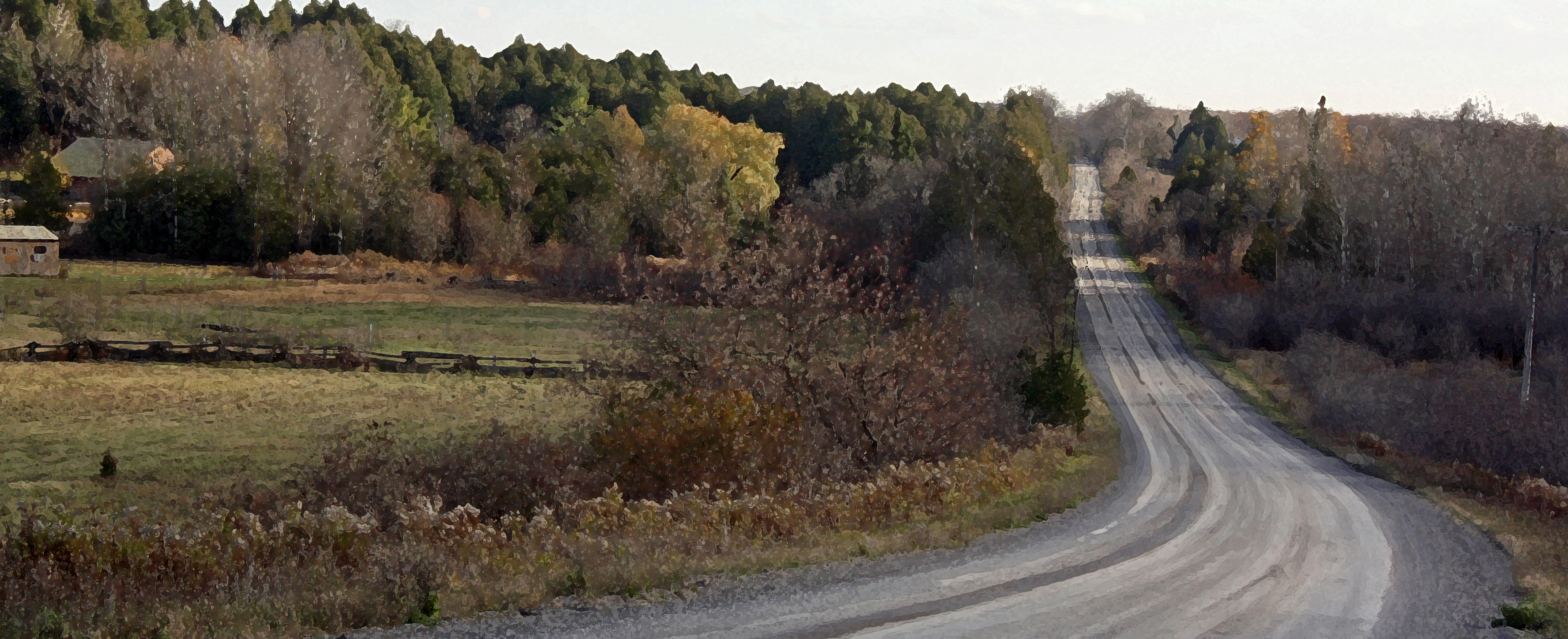
Country road in late fall, ON (photo and rendition by Nina Munteanu)

I wrote some fan fiction but quickly found my own creations far more interesting and less limiting.

As a teenager, I wrote, directed and recorded “radio plays” with my sister. When we weren’t bursting into riotous laughter, it was actually pretty good. She and I shared a bedroom in the back of the house and at bedtime we opened our doors of imagination to a cast of thousands. We fed each other wild stories of space travel, adventure and intrigue, whispering and giggling well into the dark night, long after our parents were snoring in their beds.

Those days scintillated with liberating originality, excitement and joy.

(Photo: Nina Munteanu and sister Doina Maria Munteanu at Grouse Mountain, BC)

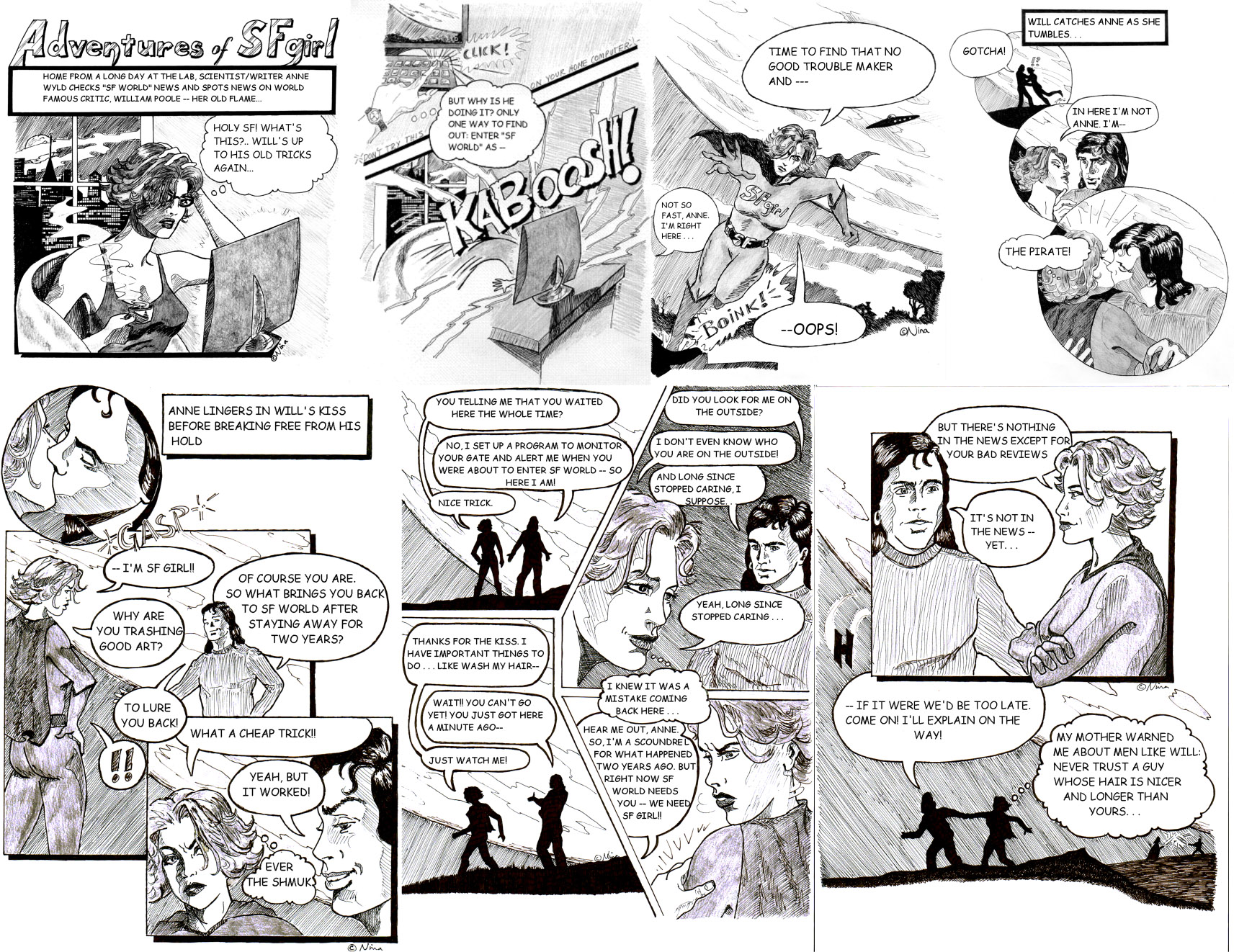
My first attempt at a graphic novel (pencil and ink drawings by a very young Nina)

I also enjoyed animation and drew several cartoon strips, peopled with crazy characters. I dreamt of writing graphic novels like Green Lantern and Spiderman. My hero was science fiction author and futurist, Ray Bradbury; I vowed to write profoundly stirring tales like he did.

I had found what excites me — my passion for telling stories—and I’d inadvertently stumbled upon an important piece of the secret formula for success: 1) having discovered my passion, I decided on a goal; 2) I found and wished to emulate a “hero” who’d achieved that goal and therefore had a “case study”; 3) I applied myself to the pursuit of my goal. Oops … the third one, well … it went downhill from there … Life got in the way.

The Beeches area of Toronto after a heavy snowstorm, ON (photo and rendition by Nina Munteanu)

I grew up.

Well, that, and the environment intervened. In several ways. It started with my parents. Recognizing my talent and interest in the fine arts (I was good in visual arts), they pushed me to get a fine arts degree in university and go into teaching or advertizing. They didn’t see fiction writing as a viable career or a strength of mine (I was lousy at spelling and, despite my ability to tell stories and my love for graphic novels, I didn’t read books much). I can still remember my father’s lecture to me about how perfect the teaching or nursing profession was for me. I wasn’t enamored by either. The second blow to my author-ego came in the form of a school “interest-ability” test, meant to prepare us for our career decisions. I remember the test consisting of an IQ portion (spatial, English and math), and a psychology portion (including problem-solving and scenarios meant to tease out our affinity for a particular career). Secretly harboring my paperback novelist dream, I filled out my forms with great excitement. I still remember the deflating results, which suggested that I was best suited to be a sergeant in the army. “Writing” as a career barely made it on the graph, and scored well below “computer programmer” and “mechanic”; none of which interested me. 

Country road in a heavy snow, ON (photo and rendition by Nina Munteanu)

I got involved in the environmental movement, while quietly holding my dream of being a paperback novelist close to my heart. I got several degrees in ecology and consulted for various companies to help protect the environment. I wrote a lot in those days, although it was more about the ecology of creeks and about industrial pollution. But my passion for writing fiction continued to simmer. Magazines started publishing my articles—my first sale was to Shared Vision Magazine in 1995 on environmental citizenship—and my published articles became my entrance into the world of fiction. Once I began publishing fiction stories—my first short fiction sale was “Arc of Time” to Armchair Aesthete in 2002—I never looked back.

Eventually, I was publishing a novel and several short stories every year. My fiction most often focused on environmental issues, humanity’s relationship with the natural world, and how we reconcile our reliance on technology with our respect for the natural world.

Publications of long or short eco-fiction that include my writing or editing

Throughout my writer’s journey, and particularly early in my journey, I weathered the threshold guardians, tricksters and shadows: friends and family who called what I did a hobby, something I did just to pass the time; people who didn’t believe in me, envied my drive or simply thought I was wasting my time; even industry scammers who preyed on my dreams and wanted my money for nothing in return; and ultimately my own fears and frustrations on query after query and rejection after rejection. Throughout it all, I never stopped dreaming.

Nina’s family hiking and boating in British Columbia over the years

I’ve travelled through Europe, Africa, parts of Asia, and Australia. I raised a family and lived all over Canada from the Pacific to the Atlantic coast. I worked as a barista, shopkeeper and science lab instructor, then as environmental consultant, writing instructor and writing coach.  During these wonderful life-adventures, I never stopped writing. 

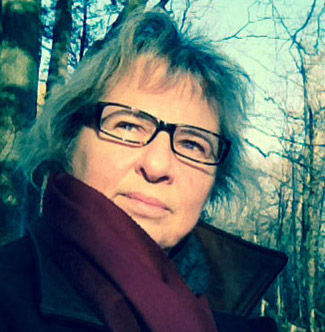
Nina Munteanu in the castle at Gruyères, Switzerland (photo by Jane Raptor)

To date, I have written and sold over three dozen eco-fiction, science fiction and fantasy novels, non-fiction books, short stories and articles. I have sold short stories to magazines in Canada and the U.S. with translations and reprints in Israel, Poland, Greece, and Romania. My short fiction has appeared in Neo-Opsis Science Fiction Magazine, Chiaroscuro, subTerrain, Apex Magazine, Metastellar, and several anthologies. I’ve seen my short stories nominated for the Aurora Prix Award (Canada’s premier award for writing science fiction and fantasy) and the Foundation of Speculative Fiction Fountain Award. Recognition for my work includes the Midwest Book Review Reader’s Choice Award, finalist for Foreword Magazine’s Book of the Year Award, the SLF Fountain Award, and The Delta Optimist Reviewers Choice Award.  

Nina celebrates her adventures in Toronto (left) and Paris (right)

I’ve published nine novels so far with nominations for the Aurora Prix, Foreword Magazine Book of the Year (several times), and various Reader’s Choice awards.  My non-fiction book “Water Is…” (Pixl Press)—a scientific study and personal journey as limnologist, mother, and teacher—was Margaret Atwood’s pick in 2016 in the New York Times ‘The Year in Reading.’ My recent eco-novel released in 2020 by Inanna PublicationsA Diary in the Age of Water“—about four generations of women and their relationship to water in a rapidly changing world—was a silver medalist for the Literary Titan Award, the Bronze winner of Foreword Magazine’s Book of the Year in 2020, longlisted for the Miramichi Review’s ‘Very Best Book of the Year Award,’ and a finalist for the 2021 International Book Award. Reviewers have described it as “lyrical…thought-provoking…unique and captivating…insightful…profound and brilliant…unsettling and yet deliciously readable…” One reviewer described it as a “a bit of a hybrid” and the writer “a risk taker”—which I quite liked. Another reviewer acknowledged that this was not a book for everyone and yet she found it “strangely compelling.”—which I found delicious.

It’s been twenty-seven years since I seriously started my writing career with my first publication in 1995; my work is now recognized and translated throughout the world and I frequently get writing commissions from reputable magazines and publications. I am also frequently invited for speaking engagements and radio/podcast/TV interviews about my science and my writing. In short, I’ve come home; I’d taken a rather long detour but I’ve acquired some tools along the way. It’s been and continues to be a wonderful and exciting journey; and part of what made it so was that I never stopped dreaming and writing.

“…If you have nothing at all to create, then perhaps you create yourself…”

Carl Jung
A sampling of literary publications up to 2021-end that have included something of mine (short fiction, long fiction, non-fiction)
Two people walk through snowy path after a fresh heavy snowfall, ON (photo and rendition by Nina Munteanu)

Nina Munteanu is a Canadian ecologist / limnologist and novelist. She is co-editor of Europa SF and currently teaches writing courses at George Brown College and the University of Toronto. Visit www.ninamunteanu.ca for the latest on her books. Nina’s bilingual “La natura dell’acqua / The Way of Water” was published by Mincione Edizioni in Rome. Her non-fiction book “Water Is…” by Pixl Press(Vancouver) was selected by Margaret Atwood in the New York Times ‘Year in Reading’ and was chosen as the 2017 Summer Read by Water Canada. Her novel “A Diary in the Age of Water” was released by Inanna Publications (Toronto) in June 2020.
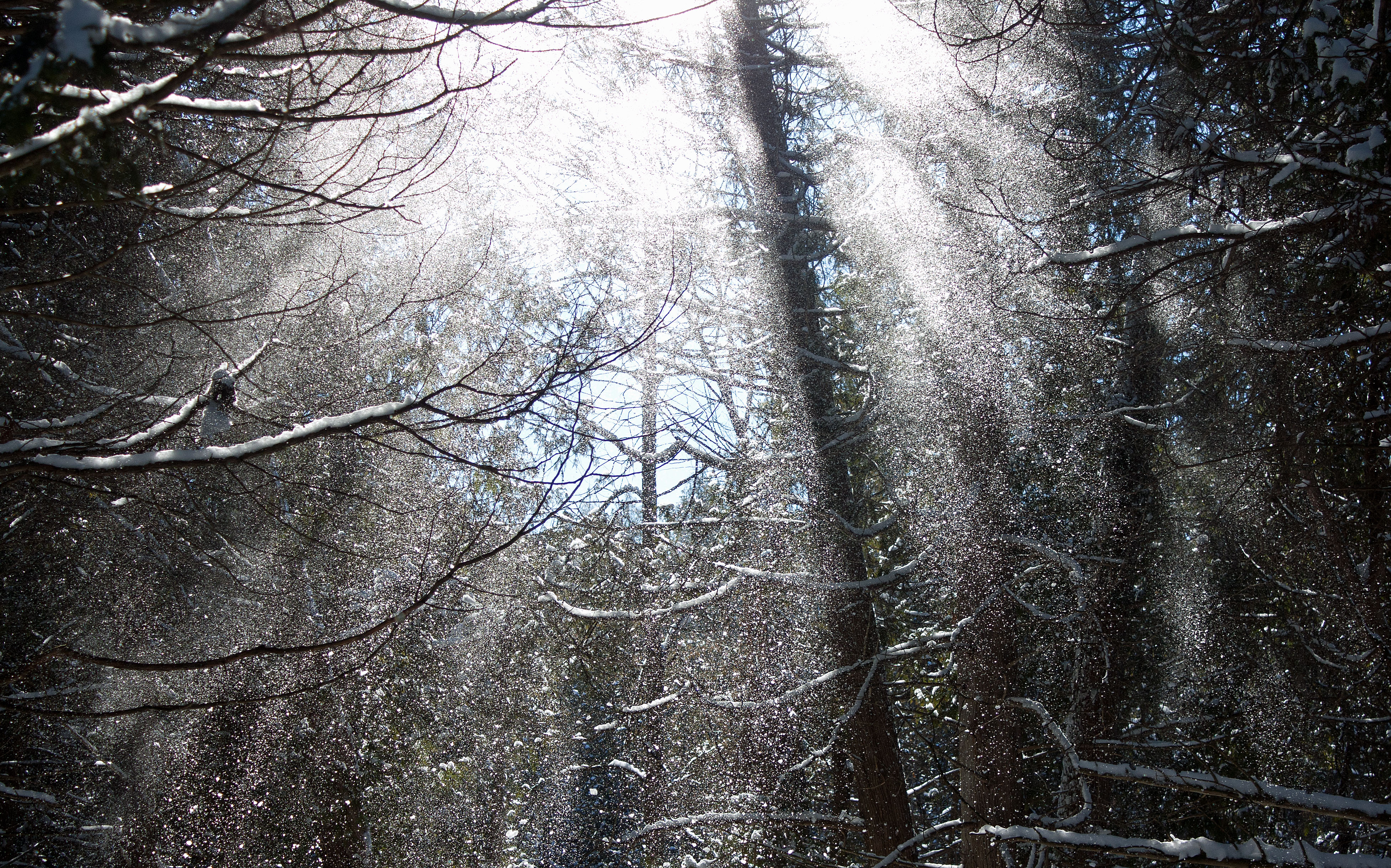
“Sunlight on Snow” an ekphrastic poem by Bev Gorbet

Snow glitter rains down from cedar tree on a sunny day after a major snowfall, ON (photo by Nina Munteanu)

Bright lit: the great cedar forest,
Cathedral dome skies bright sunlit above…
All of a fulgent blue, all of an azure glow…
Everywhere, the peace of a radiant sunlight

Pine tree with snow glitter behind in Jackson Creek Park, ON (photo and rendition by Nina Munteanu)

Worlds of magic and a most sacred light
Bright sunlit day, bright shafts 
Through a portico of treetops high above
The trees reaching so very high,
Deep into the sheltering skies

Snow-covered Buckthorn with path through a snowy meadow, ON (photo and rendition by Nina Munteanu)

Snow decked branch and bough: gently swaying memory;
Movement into the swaying winter winds
The gentle whispers, the gentle sighs 
The treetops,
Their  song, their gentle touch, their toss, their glide

Snow dust falls in a cedar forest, ON (photo by Nina Munteanu)

A deepest silence, a most profound contemplation
Midst snowdrift and snowlit mists as they shift
Between icy branch and snow covered green bough

Dust of snow and cedar lights:
All the ethereal wonders of a snowy day, 
The snow blessed, lost ephemeral lands
In a full clothed beauty, snowy wonders: of sunlight, of shadow

Snow-covered shrub on a snowy day, ON (photo and rendition by Nina Munteanu)

Oh! sacred forest, this great beauty of place
To overwhelm, to protect, to shelter…
Here, a deepest meditation, a deepest circumspection…
Snow and ice and all the wonder of a  glorious sunlit day
All the ephemeral beauty in a winter’s sunlight world.

Snow dust rains down from snow-laden cedar trees in Jackson Creek Park, ON (photo by Nina Munteanu)

Bev Gorbet is a Toronto poet and retired school teacher. She has published several poems with the Retired Teachers Organization and most recently in “Literary Connection IV: Then and Now” (In Our Words Inc., 2019), edited by Cheryl Antao Xavier.

“Virtually Yours” Reprinted in Speculative North Issue #6

Nina Munteanu with her copy of Speculative North, Issue #6

My speculative short story “Virtually Yours” was published for the eighth time, most recently in December 2021 in Speculative North, Issue #6. Originally published in Issue #15 of Hadrosaur Tales in 2002, the story explores concepts of cyber-spying, virtual workspace, anonymity, and identity.

A short excerpt follows below.

You can find the short story’s publication history in the Publications page on this site. You can see some of the main publications below. The story was translated into Polish and published by Nowa Fantastyka in 2006.

A selection of publications in which “Virtually Yours” appears from 2002 to 2021
Illustration by Duncan Long for the Amazing Stories publication of “Virtually Yours”
Snow-covered shrub after new snow in mid-winter, ON (photo and rendition by Nina Munteanu)

Nina Munteanu is a Canadian ecologist / limnologist and novelist. She is co-editor of Europa SF and currently teaches writing courses at George Brown College and the University of Toronto. Visit www.ninamunteanu.ca for the latest on her books. Nina’s bilingual “La natura dell’acqua / The Way of Water” was published by Mincione Edizioni in Rome. Her non-fiction book “Water Is…” by Pixl Press(Vancouver) was selected by Margaret Atwood in the New York Times ‘Year in Reading’ and was chosen as the 2017 Summer Read by Water Canada. Her novel “A Diary in the Age of Water” was released by Inanna Publications (Toronto) in June 2020.

A Late Autumn Snowfall–An Ekphrastic Poem by Bev Gorbet

Otonabee River glints in the sun as it snows, ON (photo and rendition by Nina Munteanu)

An autumn’s last days, fierce snowfalls, fall lights and storm
The autumn landscape now full of wild moods,
Hints of a magic wilderness and an encircling cold,
The bitter winds, the fast falling hail:
Landscape echo and retreat

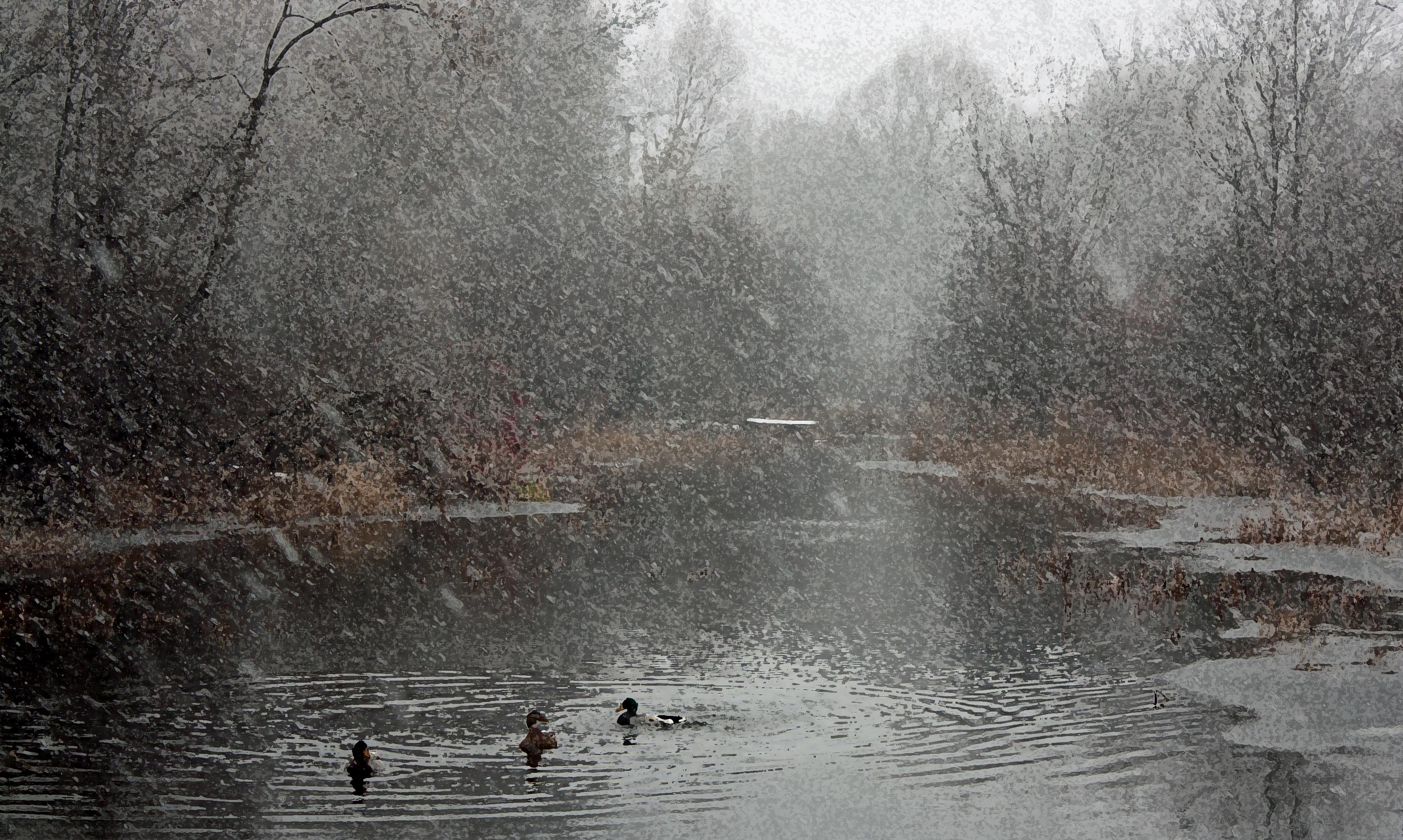
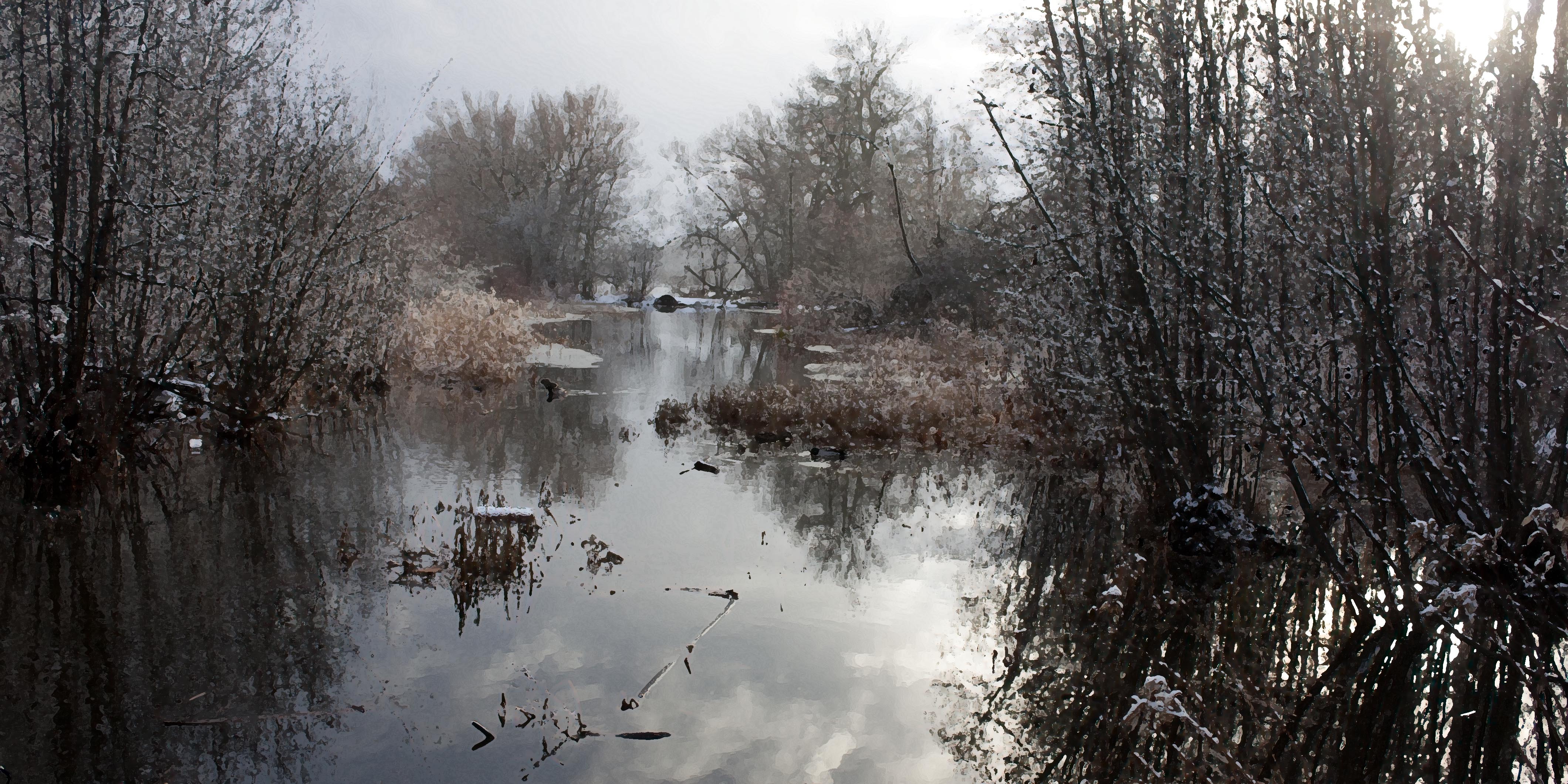
Mallards contently swim the marsh under a heavy snow, ON (photo and rendition by Nina Munteanu)

Snow veil mists over the receiving marsh lands:
Somber cloud grays, shades of amber glow…
Mallard ducks unconcernedly paddling 
On the smooth black marsh waters
The snows above falling in majestic blizzards:
Powerful bursts of snow over treetop
And bended bough,
Moody haze lit skies high falling away
In blasts of snow and wind

Heavy snow falls in the riparian forest, ON (photo and rendition by Nina Munteanu)

Snowy reflections over high treetop above…
Snowy days and last messages of a fading autumn’s glory:
Detritus of bronze leaf, the withered beauty of a fading goldenrod
A final sadness, autumn’s last messages, 
Haunted promises of a brilliant winter sunshine
On snowy fields, velvet days and gold

Snow flies horizontally in a fierce wind, ON (photo and rendition by Nina Munteanu)

Now the forests bend, overwhelmed by the flying snow
Thick tumbling down, shards of ice and rain
Clouds of snow falling everywhere
Forest pathways now covered in a lucent white glow,
The shaded greens of cedar and fir picked out in a forest landscape;
The continuing deluge, wild nature’s primordial powers: 
Mad windstorm and snow drift

Sun emerges over Thompson Creek marsh after the snowstorm, ON (photo and rendition by Nina Munteanu)

The still marsh waters now reflect the gray cloud, the  sky high above
All the windstorm madness, the bog detritus on the still marsh 
Now snow covered and silent, the snowfall ended
The marsh now a sacred retreat: worlds of a glorious and gentle reflection,
A tender, and radiant peace overall.

Bev Gorbet is a Toronto poet and retired school teacher. She has published several poems with the Retired Teachers Organization and most recently in “Literary Connection IV: Then and Now” (In Our Words Inc., 2019), edited by Cheryl Antao Xavier.

Thompson Creek marsh after a first snow in late autumn, ON (photo and rendition by Nina Munteanu)
Nina Munteanu revels in a snowstorm in Ontario (photo by Merridy Cox)

The Day We’re Not Allowed to Drink Water…

Dew drops on Hawkweed hairs, ON (photo by Nina Munteanu)

That day may seem like science fiction or the far future, but as William Gibson famously proclaimed, “The future is already here—it’s just not very evenly distributed.”

This is partly why I’ve been recently writing speculative (mundane) science fiction in which components of fiction blur with non-fiction. In a recent interview on the SolarPunk Magazine Podcast, I discussed with hosts Justine and Bria how my recent novel A Diary in the Age of Water blurred fiction with non-fiction. The novel achieved this through the use of a diary to create a gritty realism in a mundane narrative hard to put down. The intention was to achieve personal relevance for the reader to what was going on, particularly with climate change—a water-driven phenomenon. In The Temz Review, Marcie McCauley postulated that “[Munteanu] does not appear to view fiction and non-fiction as separate territories; or, if she does, then this book is a bridge between them.” I had to laugh when I read this; “she gets me,” I concluded.

In the near-future of A Diary in the Age of Water, Canada has privatized its water utilities after the Conservative Party comes into power, and a giant company called CanadaCorp removes municipal water connections from people’s homes and imposes strict water rations, all while selling off Canada’s precious water to US states like California that would otherwise be uninhabitable.

In her entry for July 13, 2049, Lynna the diarist writes:

“Today CanadaCorp announced that the collection of rainwater was illegal. As of today, I could be arrested for using my rain catcher and cistern. I’ve decided to continue using the cistern, and I’ve warned Hildegard not to breathe a word to anyone at school about what we’re doing with the water. Thankfully, I have time to train her in the art of subterfuge before she starts Grade Two in the fall.”

Nina Munteanu, A Diary in the Age of Water
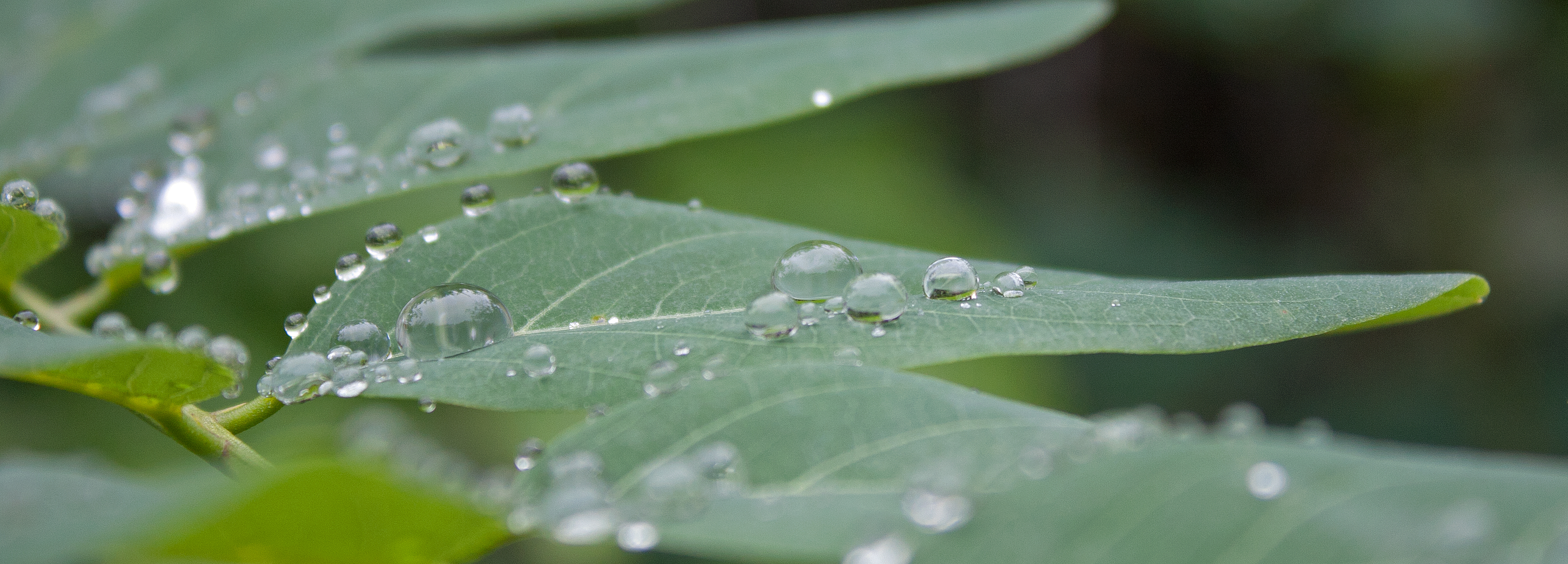
Raindrops on a black locust leaf, ON (photo by Nina Munteanu)

What follows in the novel is complete commodification of water and further restrictions for citizens in the form of house tap closures and daily water quantity quotas from paying public water taps. No form of water is free or available without payment. And if you can’t pay, well…

Dizzy and shivering in the blistering heat, Hilda shuffles forward with the snaking line of people in the dusty square in front of University College where her mother used to teach. The sun beats down, crawling on her skin like an insect. She’s been standing for an hour in the queue for the public water tap… The man behind Hilda pushes her forward. She stumbles toward the tap and glances at the wCard in her blue-grey hand. Her skin resembles a dry riverbed.

Heart throbbing in her throat, Hilda fumbles with the card and finally gets it into the reader. The reader takes it. The light screams red. Her knees almost give out. She dreaded this day…

A tiny water drop hangs, trembling, from the wTap faucet mouth, as if considering which way to go: give in gravity and drop onto the dusty ground or defy it and cling to the inside of the tap. Hilda lunges forward and touches the faucet mouth with her card to capture the drop. Then she laps up the single drop with her tongue. She thinks of Hanna and her throat tightens.

The man behind her grunts. He barrels forward and violently shoves her aside. Hilda stumbles away from the long queue in a daze. The brute gruffly pulls out her useless card and tosses it to her. She misses it and the card flutters like a dead leaf to the ground at her feet. The man shoves his own card into the pay slot. Hilda watches the water gurgle into his plastic container. He is sloppy and some of the water splashes out of his container, raining on the ground. Hilda stares as the water bounces off the parched pavement before finally pooling. The ache in her throat burns like sandpaper and she wavers on her feet. The lineup tightens, as if the people fear she might cut back in. She stares at the water pooling on the ground, glistening into a million stars in the sunlight…and knows she is dying of thirst…

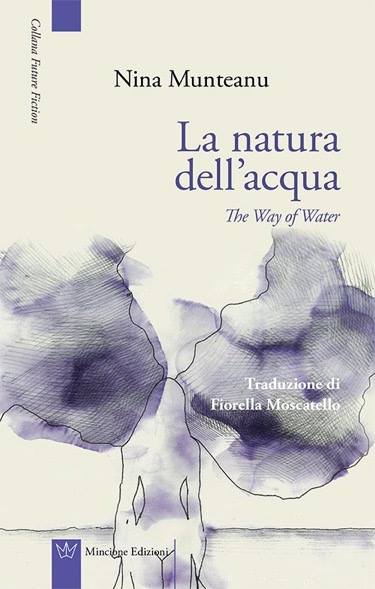
Nina Munteanu, The Way of Water / la natura dell’acqua

This excerpt from my bilingual short story “The Way of Water / la natura dell’acqua” (Mincione Edizioni, 2016) follows the life of Hilda Dresden, daughter of Lynna, the diarist in “A Diary in the Age of Water.”

Science fiction, you think…

Far future, you think…

Think again…

In 2010, Mike Adams of Natural News reported that collecting rainwater was now illegal in several states of the USA. Utah, Washington and Colorado had outlawed individuals from collecting rainwater on their own properties because, according to officials, that rain belonged to someone else.

In 2015, thousands of citizens in two of America’s poorest cities, Detroit and Baltimore, had their water shut off for being behind on their water bills (which had been sharply increased).

Both are inhumane examples of government-imposed oppression over what should be a public and free resource: water.

Dew drops on hawkweed hairs and Mealy Pixie Cup lichens, ON (photo by Nina Munteanu)

Maude Barlow, the Chairperson of the Council of Canadians, writes in Boiling Point of the water crisis in Canada—perhaps our best kept secret, considering that Canada is supposedly so water-rich. Are we giving it all away? And what of our indigenous communities, some of whom have not had potable water for decades?

So, I agree with Gibson about the future not being evenly distributed. This is because the present isn’t evenly distributed. Much of this disparity arises from an extractive and exploitive mentality and practice. One that commodifies what needs to remain free and available for all users. Capitalism ensures an uneven future by focusing on fear and stressing competition, separation, and exclusion.

In his book Designing Regenerative Cultures Daniel Christian Wahl talks about changing our evolutionary narrative from one based on fear defined by a perception of scarcity, competition, and separation to one based on love defined by a perception of abundance, a sense of belonging, collaboration and inclusion.

And moving forward we can take a lesson from Robin Wall Kimmerer, author of Braiding Sweetgrass, who talks about a gift economy—an economy of abundance—whose basis lies in recognizing the value of kindness, sharing, and gratitude in an impermanent world.

This is what she says: “Climate change is a product of this extractive economy and is forcing us to confront the inevitable outcome of our consumptive lifestyle, genuine scarcity for which the market has no remedy. Indigenous story traditions are full of these cautionary teachings. When the gift is dishonored, the outcome is always material as well as spiritual. Disrespect the water and the springs dry up. Waste the corn and the garden grows barren. Regenerative economies which cherish and reciprocate the gift are the only path forward. To replenish the possibility of mutual flourishing, for birds and berries and people, we need an economy that shares the gifts of the Earth, following the lead of our oldest teachers, the plants.”

So, “The Day We’re Not Allowed to Drink Water…”

…Let that day never come.

Make it so…

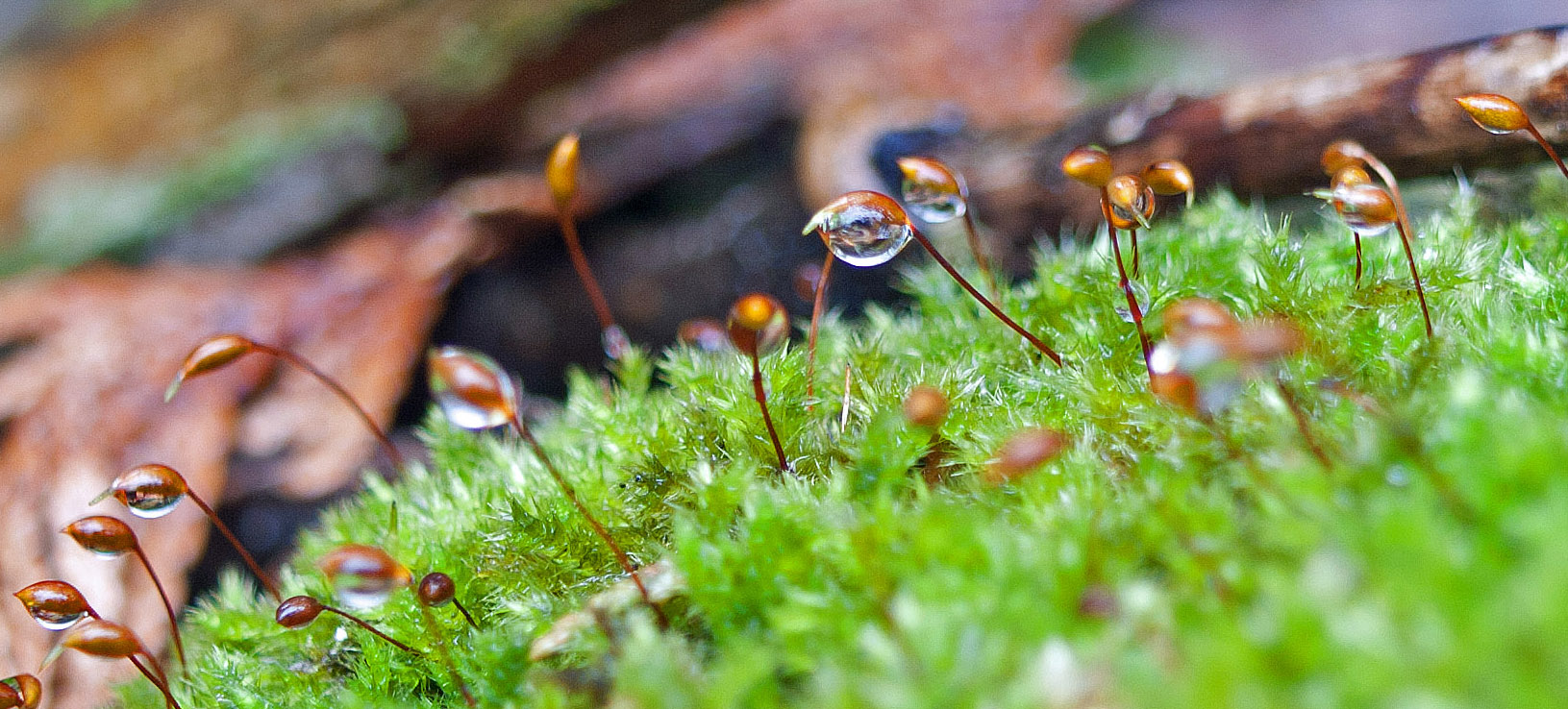
Moss with raindrops on capsules, ON (photo by Nina Munteanu)

References:

Barlow, Maude. 2016. “Boiling Point: Government Neglect, Corporate Abuse, and Canada’s Water Crisis.” ECW Press, Toronto. 312pp.

Kimmerer, Robin Wall. 2020. “The Serviceberry, An Economy of Abundance.” Emergence Magazine, December 10, 2020.

Munteanu, Nina. 2016. “La natura dell’acqua / The Way of Water.” Mincione Edizioni, Roma. 114pp.

Munteanu, Nina. 2020. “A Diary in the Age of Water.” Inanna Publications, Toronto. 300pp.

Wahl, Daniel Christian. 2016. “Designing Regenerative Cultures.” Triarchy Press Ltd. 288pp.

Raindrops ‘float’ on a black locust leaf in a light rain, ON (photo by Nina Munteanu)


Nina Munteanu is a Canadian ecologist / limnologist and novelist. She is co-editor of Europa SF and currently teaches writing courses at George Brown College and the University of Toronto. Visit www.ninamunteanu.ca for the latest on her books. Nina’s bilingual “La natura dell’acqua / The Way of Water” was published by Mincione Edizioni in Rome. Her non-fiction book “Water Is…” by Pixl Press(Vancouver) was selected by Margaret Atwood in the New York Times ‘Year in Reading’ and was chosen as the 2017 Summer Read by Water Canada. Her novel “A Diary in the Age of Water” was released by Inanna Publications (Toronto) in June 2020.

On Writing: Nina Munteanu Interviewed by Lisa Haselton

The Otonabee River glints in the sunlight in the midst of a snow flurry, ON (photo and rendition by Nina Munteanu)

This time last year reviewer Lisa Haselton posted an interview with me on New Year’s Day of 2021 on my latest release “A Diary in the Age of Water.” 2021 saw incredible sales for my clifi eco-novel, along with several appearances on radio shows, podcasts and TV stations. It would seem that water is on everyone’s mind and what better way than a limnologist’s diary to learn more about it.

Lisa and I talked about what inspired me to write this novel and about my writing process. What follows is part of that interview. Check out this link for the complete interview with Lisa Haselton.

*****

Lisa: Please tell us about your current release.

Nina: The book tells the journey of four generations of women who have a unique relationship with water, through a time of extreme climate change and water shortage. The book spans over forty years (from the 2020s to the 2060s) and into the far future, mostly through the diary of a limnologist, which is found by a future water-being. During the diarist’s lifetime, all things to do with water are overseen and controlled by the international giant water utility CanadaCorp—with powers to arrest and detain anyone. This is a world in which China owns America and America, in turn, owns Canada. The limnologist witnesses and suffers through severe water taxes and imposed restrictions, dark intrigue through neighbourhood water betrayals, corporate spying and espionage, and repression of her scientific freedoms. Some people die. Others disappear…

Ultimately, the book carries themes of hope and forgiveness—of ourselves and each other—and compassion for all things, starting with water. Each character carries an aspect of that theme, from the diarist’s activist mother, to the diarist’s own cynical protectionism, her spiritual anarchist daughter, and lastly the innocent storm of the last generation.

Lisa: What inspired you to write ‘A Diary in the Age of Water’?

Nina: It started with a short story I was invited to write in 2015 about water and politics in Canada.  I had long been thinking of potential ironies in Canada’s water-rich heritage. The premise I wanted to explore was the irony of people in a water-rich nation experiencing water scarcity: living under a government-imposed daily water quota of 5 litres as water bottling and utility companies took it all. I named the story “The Way of Water.” It was about a young woman (Hilda) in near-future Toronto who has run out of water credits for the public wTap; by this time houses no longer have potable water and their water taps have been cemented shut; the only way to get water is through the public wTaps—at great cost. She’s standing two metres from water—in a line of people waiting to use the tap—and dying of thirst.

The short story and the novel that came from it explore the nuances of corporate and government corruption and deceit together with global resource warfare. In this near-future, Canada is mined of all its water by thirsty Chinese and US multinationals—leaving nothing for the Canadians. Rain has not fallen on Canadian soil in years due to advances in geoengineering and weather manipulation that prevent rain clouds from going anywhere north of the Canada-US border. If you’re wondering if this is possible, it’s already happening in China and surrounding countries.

Lisa: As a child, what did you want to be when you grew up?

Nina: After astronaut, actress and a drummer in a rock and roll band—seriously—it was paperback writer. That’s been my dream since I was ten. I told stories long before I wrote them and long before any of them was published. I told stories in the form of cartoons. Since I was a small child, I wanted to be a cartoonist and write graphic novels (back then I knew them as comics). I created several strips with crazy characters that I drew, blending my love for drawing with my love for storytelling. My sister and I used to make up amazing adventure stories in the universe, peopled with aliens and crazy worlds. I wrote my first complete novel when I was fifteen (“Caged-In World”—which later served as a very rough draft for my first published novel, “Darwin’s Paradox” in 2007). My first published work was a non-fiction article “Environmental Citizenship” which appeared in Shared Vision Magazine in 1995. My first fiction work was a short story entitled “Arc of Time”, which was published in Armchair Aesthete in 2002.

Heavy snowfall in the forest in early winter, ON (photo and rendition by Nina Munteanu)

Lisa: When did you first consider yourself a writer?

Nina: I’ve considered myself a storyteller since I was a child when I wrote and directed plays that my older brother and sister played in and drew cartoon adventure stories. My dream was to be a paperback writer (like the Beatles tune). But I didn’t think of myself seriously as an author until my first short story was published in 2002. It was called “Arc of Time” and appeared in a small magazine with a circulation of about 200. That story went on to be reprinted several times in larger magazines and led to a career of award-winning short stories—the latest appearing in the literary magazine subTerrain in 2020.

Lisa: Do you write full-time? If so, what’s your work day like? If not, what do you do other than write and how do you find time to write?

Nina: While I don’t write full-time, my career is all about writing. Every day I write and research my next novel; I also write commissioned articles and short stories for magazines and for my several writing and science blogs. When I’m not writing, I teach writing at the University of Toronto and George Brown College. I also coach writers online to publication. Finding time to write has not generally been a challenge. I’ve embraced an opportunistic process in my writing and research that allows me to write considerably. The process recognizes that there are many ways to “write” from observations and note-taking, to reading and research, to writing short vs long and fiction vs non-fiction. For instance, I can fill a short break time with meaningful research, editing, or the start of a short article; this saves longer break times for my current novel, which requires a greater stretch of uninterrupted time.

Heavy snowfall in the marsh in early winter, ON (photo and rendition by Nina Munteanu)

Lisa: What would you say is your interesting writing quirk?

Nina: That I am both a pantser and an outliner—with the same book. My writing process has always been a tandem kind of ‘fish and cut bait’ scene / sequel scenario with research following a premise followed by vigorous writing, which in turn engenders more research, which often reveals another plot or sub-theme that needs inclusion. It may seem a haphazard way to write, but I find it very fulfilling, fun and revealing—especially when the Universe provides with serendipitous discoveries (just when I need them). 

Lisa: What exciting story are you working on next?

Nina: I’m currently researching and working on the sequel to “A Diary in the Age of Water”—a thriller about how a phenomenon brings together four lost and homeless people through a common goal to free the Earth from the manacles of human greed. The story takes place throughout Canada—from Halifax to Vancouver and the Arctic. It takes place mostly during the 2050s, and features a few ghosts, the Halifax 1917 Explosion, experimentation on humans, espionage, murder, and—of course—a plague. I’m calling it my COVID19 novel…

Use this link to read my entire interview with Lisa Haselton.

Sun emerges after a heavy snowfall at the marsh, ON (photo and rendition by Nina Munteanu)

Nina Munteanu is a Canadian ecologist / limnologist and novelist. She is co-editor of Europa SF and currently teaches writing courses at George Brown College and the University of Toronto. Visit www.ninamunteanu.ca for the latest on her books. Nina’s bilingual “La natura dell’acqua / The Way of Water” was published by Mincione Edizioni in Rome. Her non-fiction book “Water Is…” by Pixl Press(Vancouver) was selected by Margaret Atwood in the New York Times ‘Year in Reading’ and was chosen as the 2017 Summer Read by Water Canada. Her novel “A Diary in the Age of Water” was released by Inanna Publications (Toronto) in June 2020.

Solaris: Planet as Alien Character in Science Fiction

Kelvin (played by George Clooney) arrives on Solaris in Steven Soderberg’s 2002 film

Some time ago, I participated in an inquiry to name my choice of “Best Alien in Science Fiction,” posed by John DeNardo at SF Signal. “Aliens are a classic trope dating back to the earliest days of science fiction,” John said. They are the quintessential “other” archetype in science fiction.

From conquering warlords (War of the Worlds) to instructing sages (The Day the Earth Stood Still) to victimized pacifists (Martian Chronicles), how the “other” is portrayed and how humanity interacts with it, has been explored throughout science fiction since it began with Mary Shelley’s Frankenstein.

Of course, in science fiction—a metaphoric literature of grand scope—these ‘others’ / aliens make representation through archetype. So, the aliens of War of the Worlds represent a conquering nation; Klaatu of The Day the Earth Stood Still may represent a benevolent dictator; the Martians of Martian Chronicles represent our indigenous peoples under the yoke of settler colonialism and an exploitive resource-extraction mindset; and the monster of Frankenstein exemplifies the disabled/deformed unsavory departure from our ‘perfect’ self-image. Author Brian Ott tells us that “it is a profound mistake to interpret the genre [of science fiction] literally.” He reminds us that it is not what the aliens are but what they represent that matters (except when, in some cases, they are one in the same). Science fiction is both “the great modern literature of metaphor” and “pre-eminently the modern literature not of physics but of metaphysics,” adds Peter Nicholls, Australian scholar and critic.

Steven Spielberg’s 2005 film of H.G. Wells’s book “War of the Worlds”

In a previous article entitled “Dreams and Perceptions And ‘the Other” I described an experience with the unfamiliar. Have you ever done the same? Looked backward while driving through a familiar scene to gain a different perspective? And just felt different for a moment? Like you’d entered a different dimension and briefly glimpsed ‘the other.’

What is it like to meet ‘the other’?

In story, characters are defined through their experience and their approach to the unfamiliar. A new relationship. A stranger in town. A different culture. An alien encounter… How does the character react? Is it with fear? Wonder? Curiosity? A mixture of these? By describing “the other” science fiction writers describe “us”, given that it is through our own eyes that the other is viewed and described.

In his book Orientalism: Western Conceptions of the Orient Edward W. Said contended that for there to be an ‘us’, there has to be a ‘not-us.’ According to Patricia Kerslake of Central Queensland University, this arises from a postcolonial notion of ‘the Other’, through a mutual process of exclusion. This exclusion inspires the very idea of ‘alien’ by imposing expectation on perception. Kerslake argues that: “When one culture imposes its perceptions on another, in that it begins to see the Other not as they are but as, in Said’s words, ‘they ought to be’, then the process of representation becomes inevitable: a choice is made to see a ‘preferred’ real.”

Klaatu greets humanity in “The Day the Earth Stood Still”

In her 1975 article “American SF and the Other,” Ursula K. LeGuin unequivocally scolded the Western SF genre for representing and promoting colonialism and androcratic motives by “othering” or making inconsequential the poor, the uneducated, the marginalized and women.

…The question involved here is the question of The Other—the being who is different from yourself. This being can be different from you in its sex; or in its annual income; or in its way of speaking and dressing and doing things; or in the color of its skin; or the number of its legs and heads. In other words, there is the sexual Alien, and the social Alien, and the cultural Alien, and finally the racial Alien…

The people in SF are not people. They are masses, existing for one purpose to be led by their superiors…

If you deny any affinity with another person or kind of person, if you declare it to be wholly different from yourself–as men have done wo women, and class has done to class, and nation has done to nation–you may hate it, or deify it; but in either case you have denied its spiritual equality, and its human reality. You have made it into a thing, to which the only possible relationship is a power relationship. And thus you have fatally impoverished your own reality.

You have, in fact, alienated yourself.

Ursula K. LeGuin

Written 45 years ago, Le Guin’s scathing article may have accurately represented the North American science fiction community of writers of that time. Today, despite the remnants of a strong old guard that still promotes a patriarchal colonialist hegemony, the science fiction genre has matured and grown beyond this self-limiting view. This is partly because current authors—many who are women and many who are representatives of minority or marginalized groups—have given SF a new face and voice that promises to include equality, inclusion, and a fresh look at exploration and ‘the other.’ In most cases it is ‘the other’ whose voice—for so long missing—is now being expressed.

The genre of science fiction has diversified and matured to embrace “mundane science fiction,” literary fiction, speculative fiction, climate fiction, cli-fi, eco-fiction, indigenous futurisms and more. Each of these genres provide new opportunities that give voice to ‘the other’ from women (Octavia Butler’s Parable of the Sower and N.K. Jemison’s The Broken Earth series) to disabled people (Mishell Baker’s Borderline) to the indigenous human (Cherie Dimaline’s The Marrow Thieves) to the non-human (Costi Gurgu’s RecipeArium) and the environment such as water (Emmi Itäranta’s The Memory of Water and my own A Diary in the Age of Water).

My Choice for ‘Best’ Alien Character: Solaris

The most memorable aliens for me have been those that helped illuminate our history and our very humanity, whether they played the archetype of simple antagonist or misunderstood as “commentator” on human prejudice, insecurities, greed, heroism, compassion and honor. I can think of several aliens who have provided excellent examples of this: the victimized ” prawns” of Peter Jackson’s District 9 come to mind. Each provided a platform for the exploration and exposition of human’s strengths and weaknesses. How we handle or even recognize “the other” is very compelling and illuminating.

The planet Solaris

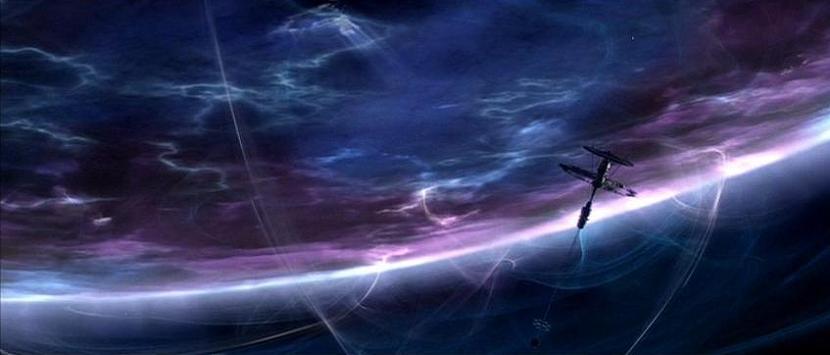
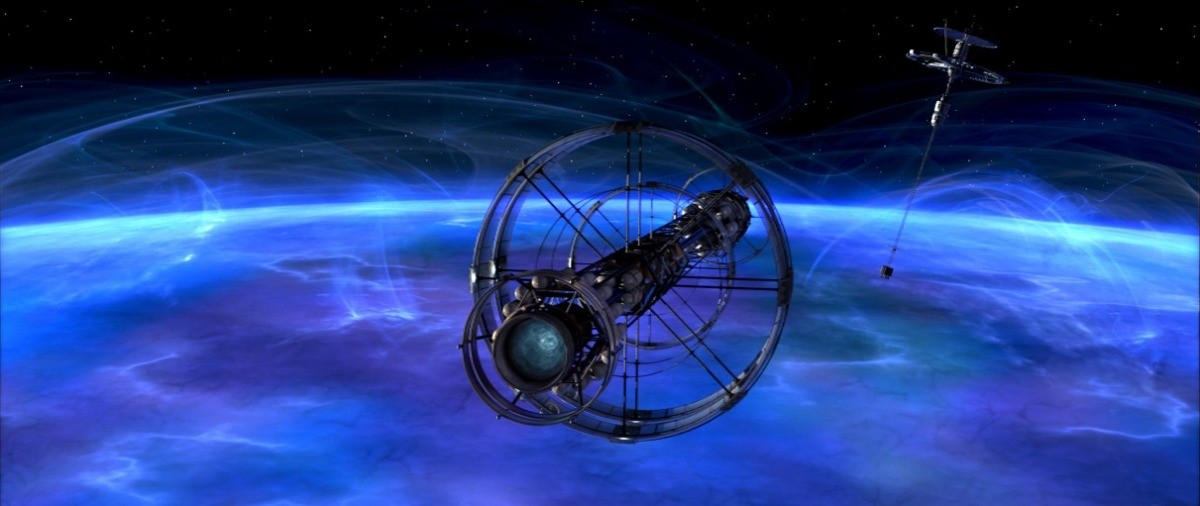
My choice for alien character is the ‘self-aware’ planet in Stanislaw Lem’s Solaris: see my film review of Steven Soderbergh’s film interpretation of Stanislaw Lem’s book Solaris in a previous article on this site. What follows is a brief summary:

In response to his friend’s plea, a depressed psychologist with the ironic name of Kris Kelvin (George Clooney), sets out on a mission to bring home the dysfunctional crew of a research space station orbiting the distant planet, Solaris. Kelvin arrives at the space station, Prometheus, to find his friend, Gibarian, dead by suicide and a paranoid and disturbed crew obviously withholding a terrible secret from him. It is not long before he learns the secret first-hand: some unknown power (apparently the planet itself) taps into his mind and produces a solid corporeal version of his tortured longing: his beloved wife, Rheya (Natascha McElhone) who years ago had committed suicide herself. Faced with a solid reminder, Kelvin yearns to reconcile with his guilt in his wife’s death and struggles to understand the alien force manifested in the form of his wife. He learns that the other crew are equally influenced by Solaris and have been grappling, each in their own way, with their “demons,” psychologically trapping them there.

Crew onboard the Prometheus orbiting Solaris: Snow (Jeremy Davies), Rheya (Natascha McElhone), Kelvin (George Clooney) and Gordon (Viola Davis)

Ironically, our hero’s epic journey of great distance has only led him back to himself. The alien force defies Kelvin’s efforts to understand its motives; whether it is benign, hostile, or even sentient. Kelvin has no common frame of reference to judge and therefore to react. This leaves him with what he thinks he does understand: that Rheya is a product of his own mind, his memories of her, and therefore a mirror of his deepest guilt—but perhaps also an opportunity to redeem himself.

Kelvin and his ‘dead’ wife Rheya onboard the Prometheus orbiting Solaris

Solaris is the epitome of the “other”, a force and entity unrecognizable and unfathomable. Lem’s existentialist portrayal of “the other”—and by extension of humanity—serves as excellent commentary on what is important to us and our identity. Unlike the familiar human-like figures of a Spock, Zhaan or the fremen, Solaris accomplishes its ‘other’ role through arcane manipulation of the human characters’ dreams and yearnings. We never understand its motivations or intelligence, yet we are drawn to its force and reflective mirror of our souls. It is its very incomprehensibility that attracts us, as to an abstract artwork, and challenges our very identities. Solaris shows neither judgment nor morality. It exists through the lens of paradox. Both there and not there. Fluid but enduring. Fractured yet whole. Like water. 

All lead to the ultimate question asked of science fiction: who are we and why are we here?

Kelvin arrives at the space station orbiting Solaris

Nina Munteanu is a Canadian ecologist / limnologist and novelist. She is co-editor of Europa SF and currently teaches writing courses at George Brown College and the University of Toronto. Visit www.ninamunteanu.ca for the latest on her books. Nina’s bilingual “La natura dell’acqua / The Way of Water” was published by Mincione Edizioni in Rome. Her non-fiction book “Water Is…” by Pixl Press(Vancouver) was selected by Margaret Atwood in the New York Times ‘Year in Reading’ and was chosen as the 2017 Summer Read by Water Canada. Her novel “A Diary in the Age of Water” was released by Inanna Publications (Toronto) in June 2020.

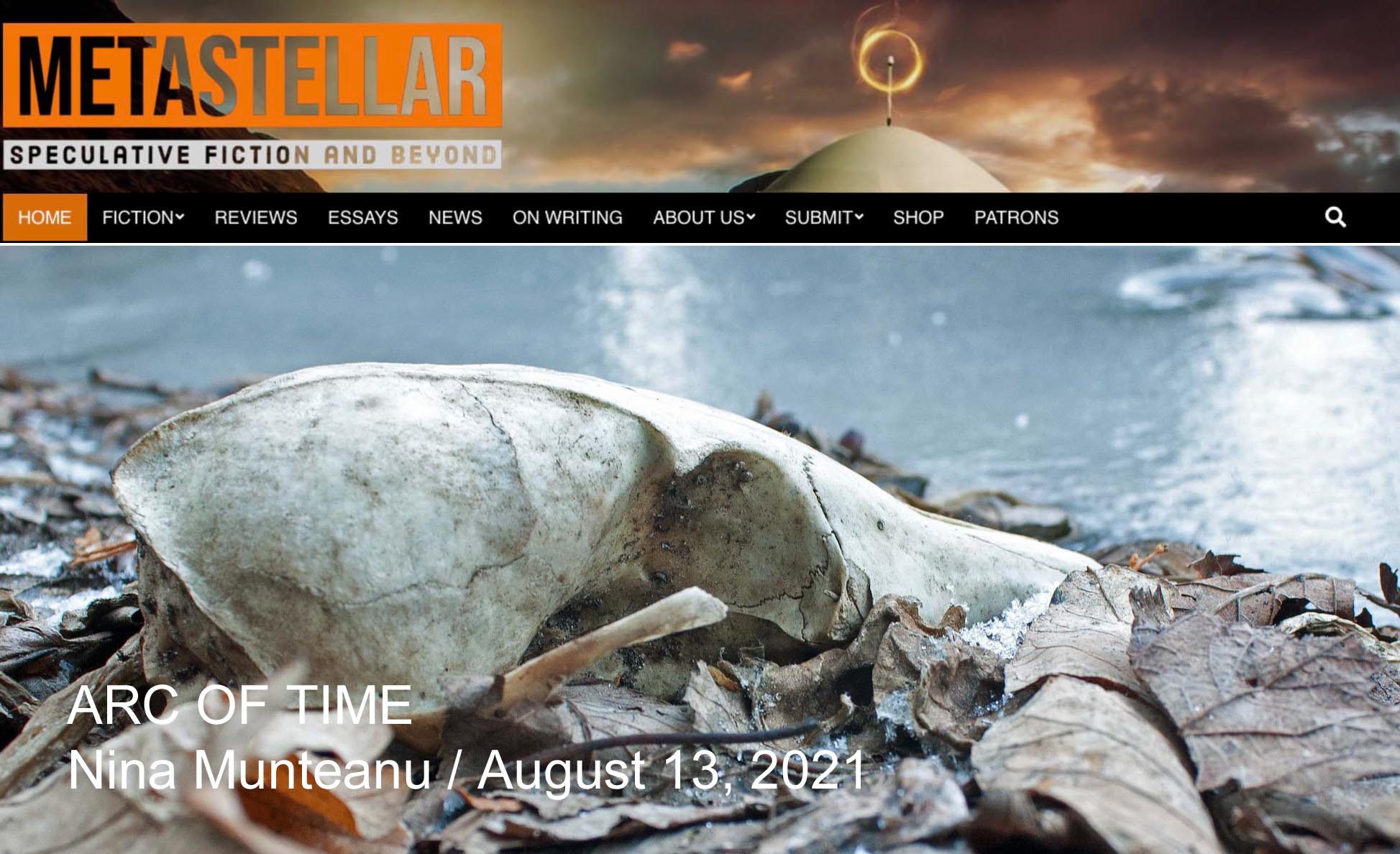
Nina Munteanu’s Short Story “Arc of Time” in Metastellar: Speculative Fiction & Beyond

My short story “Arc of Time” recently appeared in Metastellar: Speculative Fiction & Beyond. Described by them as an “epistolary account of alien discovery on Earth over time,” the story follows the fate of a mysterious and charismatic character Dante Sarpé and his associates over several centuries.

Here’s how it begins (click on the link above to read the complete story):

—I-net correspondence

from:     F. Y. Benoit, Ph.D.,Paris, France

to:     Dr. F. Wolke, Bonn, Germany

September 6, 2096

Dearest Friedrich,

I missed you at the World Sustainable Environment Congress in London last week. Where were you? I thought you were going to come? You should have heard Dante Sarpé. He captivated the congress right from the start with an introductory quote from the 20th Century social ecologist, Aldo Leopold: “Ecosystems are not only more complex than we think, they are more complex than we can think.” Describing the grave environmental calamity facing us as a symptom, Dante challenged our present paradigms and values to achieve peace and harmony. He submitted that our insatiable thirst for knowledge reflected unease with ourselves and a lack of partnership with our world.

He moved me with his parting words, Friedrich: “The branch of the tree cannot bear fruit of itself. Without compassion to fill it, knowledge is an empty house, casting its shadow on our courage to embrace the paradoxes in our lives: to feel love in the face of adversity; grace when confronted with betrayal.”

The conference was very well attended. Over 3,000 scientists and socio-economists came from all over the world. I wished you’d come, Friedrich. I drank my coffee alone, longing for your stimulating company.

Love,

Françoise Yvette

✸✸✸

A breeze braced the boy as he scrambled up the mountain. When he reached the old woman’s hut at the summit, he shielded his eyes against the sun and saw her, stepping with fluid movements in some meditative exercise. He crept closer and watched from a distance as Da’at performed her graceful dance, limbs coiling and slithering to an inner rhythm.

After completing a full turn, she pulled her rags about her and faced the boy with a nod.

He stepped forward. “What were you doing, Mama?” he asked. Da’at was not his mother, but she had looked after him since before he could remember. She always called him her blue-eyed chosen one.

“They will call it Tai Chi Chuan,” she said in a deep voice, easing herself to the ground and crossing her legs. “It is an exercise of the will, mind, and body toward the Way of Nature. Something you must learn, boy.”

“It was beautiful.” The boy squatted beside her and looked into her green eyes. Her motions had reminded him of the elegance of the cormorant and the spring of the furry Purgatorius.

“The purpose of the movements is to transfer the Chi, or the intrinsic energy, to the Shen, or spirit, by using inner rather than outer force.” She trained her gaze to the bright sun and her eyes sparkled like emeralds. “It brings me closer to my eternal love who dwells now only on the shafts of light and the whisper of the wind.”

The boy tilted his head and squinted, trying to grasp the meaning of her strange words. She often spoke cryptically, expecting him to understand.

Da’at turned to the boy. “If you practice Tai Chilong enough and execute it properly, you will become reconnected with the unity of everything, including the fourth dimension.”

“What is the fourth dimension?”

Da’at smiled wearily. “Time, my chosen one.”

The worn lines of her masculine face resembled weathered rock. She had always looked old yet she never seemed to age. “Is that why you can see into the future?” the boy asked, rocking on the balls of his feet.

She folded her arms on her knees and her thick brows knit together. “Future? What is that?” Before he could respond, she added, “You have much to learn about time and space, boy. Do you think we inhabit one place and one time? Our universe is not only more complex than you think; it is more complex than you can think.”

A dove flew overhead. Da’at gazed up at the bird and raised her hands in supplication. “My Shekhinah, I sense your presence here. How will my chosen one acquire wisdom when you elude us like the shifting wind?”

Reminded of why he’d come, the boy moved onto his knees and leaned forward. He focused on the dark hairs on Da’at’s chin and, taking a deep breath, he said, “While I was napping in the forest, I had a strange dream. About a faraway place unlike any I’ve seen. Full of huts taller than the Gingko trees and so many people like me, crowded inside them like ants.”

Da’at nodded to herself. “The dove has spoken to you.”

✸✸✸

To read the full story go to Arc of Time on the Metastellar site.

Fox skull found on shore of Jackson Creek in winter, ON (photo by Nina Munteanu)

Nina Munteanu is a Canadian ecologist / limnologist and novelist. She is co-editor of Europa SF and currently teaches writing courses at George Brown College and the University of Toronto. Visit www.ninamunteanu.ca for the latest on her books. Nina’s bilingual “La natura dell’acqua / The Way of Water” was published by Mincione Edizioni in Rome. Her non-fiction book “Water Is…” by Pixl Press(Vancouver) was selected by Margaret Atwood in the New York Times ‘Year in Reading’ and was chosen as the 2017 Summer Read by Water Canada. Her novel “A Diary in the Age of Water” was released by Inanna Publications (Toronto) in June 2020.

“Rhapsody in the Rising Windstorms”–an ekphrastic poem by Bev Gorbet

Poplar trees in the late autumn, ON (photo and rendition by Nina Munteanu)

My heart will rise to follow in the fierce rhapsody:
Wind’s cry and rapture;
Mystical beauty in the primal call, wildernesses,
Mad windstorm  moving from treetop to treetop,
From branch to bending branch, from singing leaf to leaf
Moving, high sheltering in the high tumult, skies above
Midst songs of midnight, darkest shadow, deepest shades

Path through maple-beech forest, ON (photo and rendition by Nina Munteanu)

The great beauty in the wind’s mystic path
Darknesses far beyond into the cathedrals of the night:
Airs, echo and sighs, dreams,
Thoughts of all our  tomorrows:
Sacred windstorms at the beginning of time:
A glorious sun and the rising dawn lights

Pine cedar forest in Ontario (photo and rendition by Nina Munteanu)

All promise was once ours,
Echoes of dreams once ours,
All beauty once ours and days never to be forgotten
Dawn lights and dusty twilights:
The songs of the wind’s rapture,
Fierce windstorm sighs, cries through branch and bough…

Old maple tree in a mixed forest, ON (photo and rendition by Nina Munteanu)
A pastoral field blazes with autumn colours of sumac and maple, ON (photo and rendition by Nina Munteanu)

Oh! memory hold strong
Windsong: mystic soul of creation: the mystic fire, the holy flame;
Worlds ablaze
The long sacred journey into mystery
Beauty transfigured, wind’s message and haunting
Windstorm and mystical  worlds, sanctuary far away
All passion spent.

Marsh at sunset, ON (photo and rendition by Nina Munteanu)

Nina Munteanu is a Canadian ecologist / limnologist and novelist. She is co-editor of Europa SF and currently teaches writing courses at George Brown College and the University of Toronto. Visit www.ninamunteanu.ca for the latest on her books. Nina’s bilingual “La natura dell’acqua / The Way of Water” was published by Mincione Edizioni in Rome. Her non-fiction book “Water Is…” by Pixl Press(Vancouver) was selected by Margaret Atwood in the New York Times‘Year in Reading’ and was chosen as the 2017 Summer Read by Water Canada. Her novel “A Diary in the Age of Water” was released by Inanna Publications (Toronto) in June 2020.

Giving In to the Beauty of the Moment…

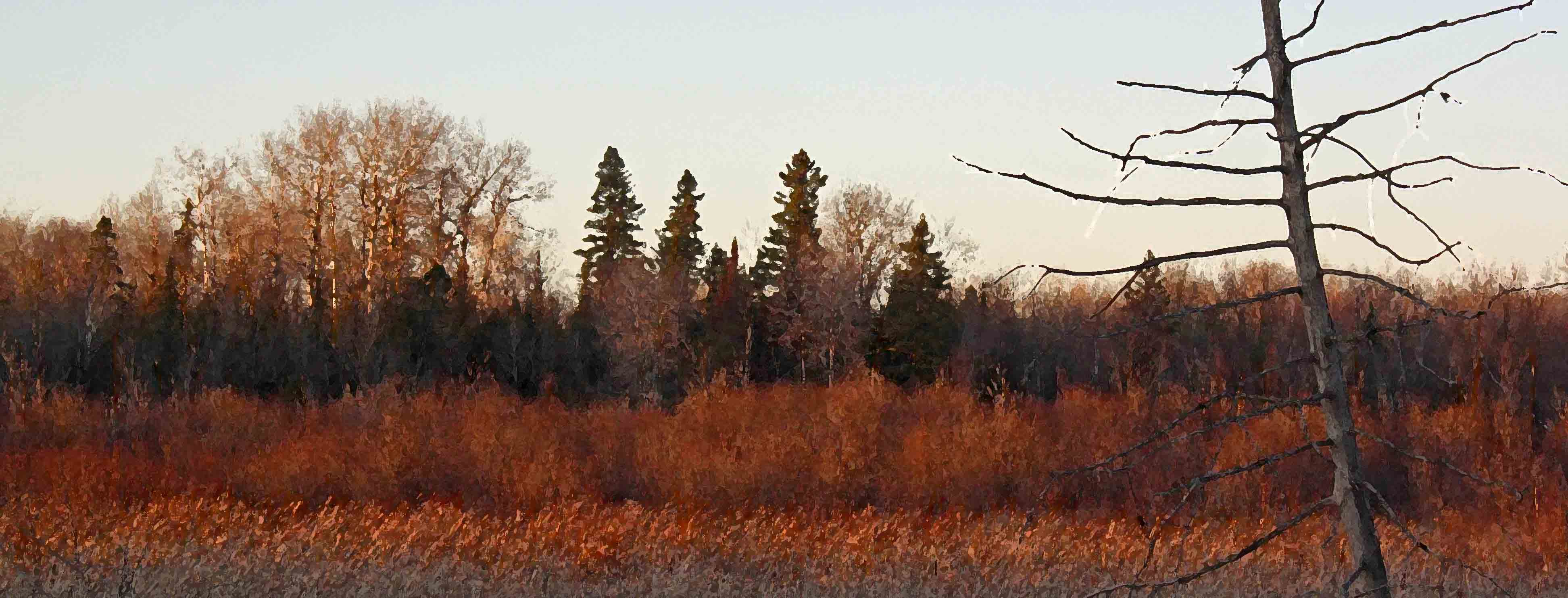
Marsh in the Kawarthas of Ontario in the fall (photo and dry brush rendition by Nina Munteanu)

“Those who contemplate the beauty of the earth find reserves of strength that will endure as long as life lasts.”—Rachel Carson

In a recent seminar called “Cultivating a Sense of Place” (Programs in Earth Literacies) Douglas Christie introduced me to the works of Philip Levine. In particular, he discussed a work entitled “Dust” which appeared In Levine’s 2004 collection Breath:

Dust

My wife tells me that when she was six
she came home from school to an empty house,
put down her lunch box, sat on a hassock
by her father’s chair, and simply waited.
Someone known would return home soon, she was sure.
The house was still, silent, holding its breath,
the late afternoon sunlight streamed in
the unshaded windows and turned the dust
into in golden planets floating
before her. Sixty-four years later
she declares, “It was beautiful,” and goes
on to describe the sense of awe and peace
before this vision of the universe
that descended from nowhere or perhaps
rose from within. North-central Iowa,
1933, her grandmother’s house.
Nothing else remains of the day. She gazes
into space seeing again those whirling
worlds more perfectly than the room she’s in,
her smile open, her glazed eyes radiant.

–Philip Levine

Philip Levine

Such utter stillness in the moment described! As though it still existed. Which it did, which it does. Intact and unaffected by time’s erosion.

What we see as beautiful, touches us in our heart-minds and we cherish it.

Because that moment was beautiful, Levine’s wife cherished it; because she cherished it, it was beautiful. This was so only because her child-self gave herself over to the moment and allowed herself to experience the awe and wonder of that moment. It helped that she was a child, alone in an empty house that was usually filled.

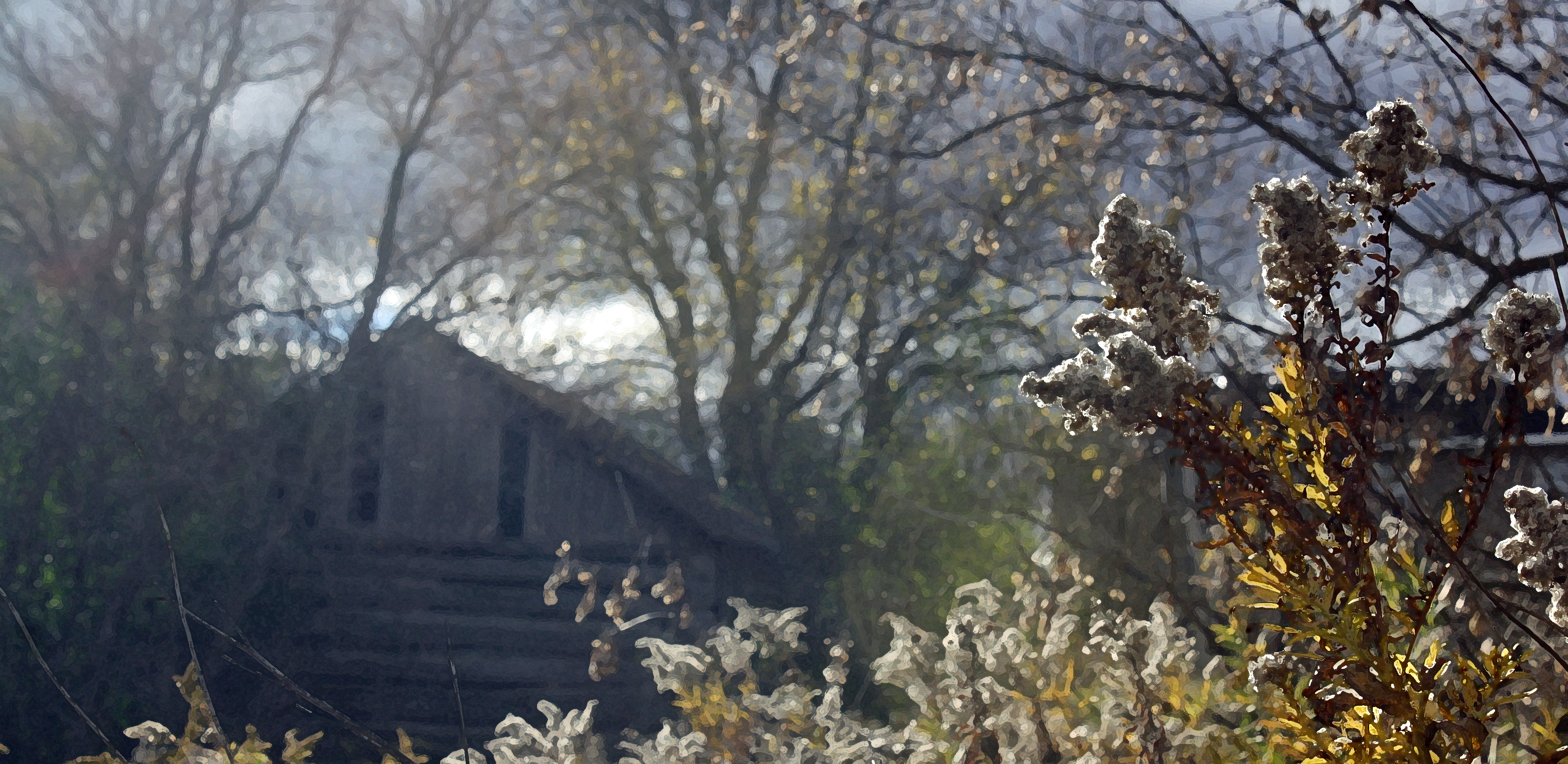
Old shed of farmstead with goldenrods in foreground, fall in Ontario (photo and rendition by Nina Munteanu)

When we grow up, why is it that we lose the tendency, even the ability, to simply be in the moment, in the silence of ourselves, to discover beauty? I suppose we make excuses; it isn’t efficient or productive to “do nothing.” Compelled to feed into the ever-burgeoning capitalist machine, we must keep “doing.” Do we learn to ignore those moments to be efficient machines ourselves? Surely, in refusing to live these moments, we are also silencing the many voices of beauty that could touch our hearts.

To appreciate beauty is to open your heart to wonder and silently witness. Beauty is found through beholding. Beauty is slow. To notice beauty, we must slow our mind and sense with our soul. We may “see” beauty all around us, but we do not “feel” it until we open to it, let it touch us and let it stroke our inner soul.

Pine cedar forest in Jackson Creek Park, ON (photo and rendition by Nina Munteanu)

The Beauty Instinct

Researchers have confirmed what the poets have long known: that we need to experience beauty in our lives. According to biologist Richard Prum, all creatures possess an aesthetic instinct—an instinct and a need for beauty. “The taste for the beautiful is as distinctive [and meaningful] as the need to survive,” writes Brenner. “One of the attributes of the beauty instinct is an inbuilt sense of respect for others.”

Encouraging yourself to recognize and appreciate beauty in Nature may be one of the most important aspects of your well-being.

Reflections on the Otonabee River, ON (photo and dry brush rendition by Nina Munteanu)

But what is beauty and how does one experience it? I devote an entire chapter to this topic in my book “Water Is…”.

There is beauty, writes 18th century aesthetic realist Francis Hutcheson, “in the knowledge of some great principles, or universal forces, from which innumerable effects do flow, such as gravitation, in Sir Isaac Newton’s scheme.” Neither beauty of form nor beauty of idea sufficiently applies to its definition, because beauty is, as we all know, “in the eyes of the beholder.” 

Beauty—like love—is not so much a quality as a relationship

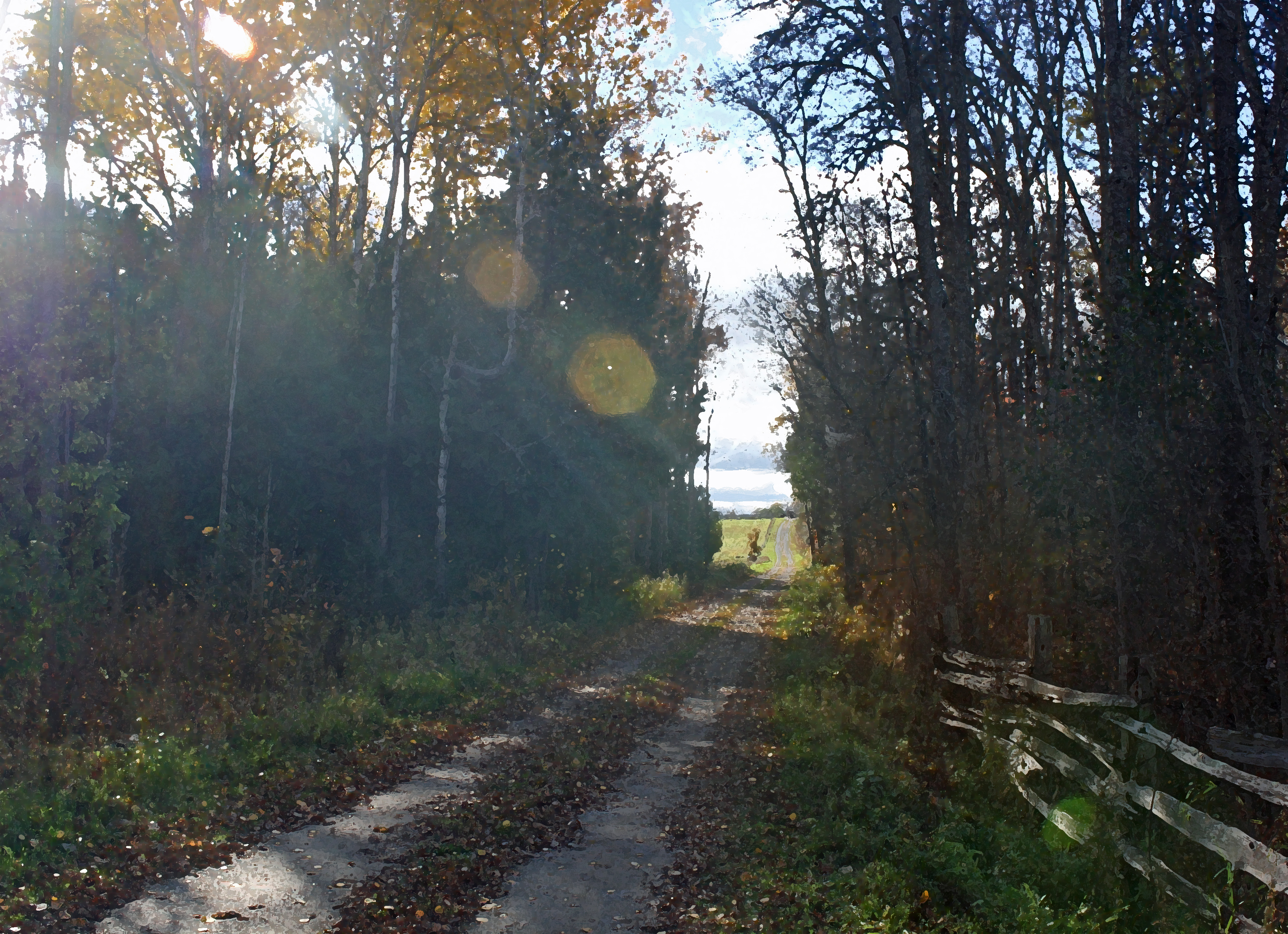
Lane to farm off country road in Ontario (photo and dry brush rendition by Nina Munteanu)

In 1942, philosopher of aesthetics Jared Moore described complete beauty as three varieties of harmony combined: (1) objective harmony (i.e., harmony among the elements that make up the “beautiful object” through form, idea and its expression); (2) objective–subjective (i.e., harmony between the beautiful object and the contemplative mind through spiritual and psychophysical [empathetic] means); and (3) psychological (i.e., its meaning). Moore writes that complete aesthetic harmony—expressed by psychological or purely subjective harmony—is achieved only when the first two harmonies are attained. He describes this complete sense of harmony as “a sense of pleasure” which not merely adds itself to the sense of beauty, but “enters into and becomes a part of it.” This “inner harmony” brings the personality into a state of “unity and self-completeness.” A unity of the subjective, not only with the object, but with itself. 

We recognize beauty, and, in feeling it, are beautiful.

Stand of poplar trees in the fall, ON (photo and dry brush rendition by Nina Munteanu)

British artist and educator John Lane, author of Timeless Beauty, describes beauty this way: 

“Although the complexities of both nature and beauty have a subtle mathematical basis, reason by itself cannot tell us why beauty exists nor what is beautiful … There is often something spontaneous, even ‘illogical’ about these emotions; like love, they can never be predetermined, let alone dictated. But neither can the otherwise and splendid things which are most significant in human life, to which the greatest of the human race have contributed most, and in which our real refreshment consists—the love of truth, the sources of inspiration and the production of great works of art.”

“These, like beauty,” says Lane, “ultimately pertain to the unconscious, the heart and the soul. They pertain to the heart because it is love which discerns the mystery inherent in those things we see as beautiful; love which abandons arrogance and stands in awe before the mystery of life. It is love that sees beauty which, in turn, is always loved.”

Jackson Creek in the fall, ON (photo and dry brush rendition by Nina Munteanu)

The Beauty of Place

I grew up in the Eastern Townships, a gently rolling agricultural region in Quebec, Canada. I followed my older brother and sister to the nearby maple-beech forest and local stream. The forest was our playground and gateway to our imaginative play. We stirred soil, flower petals and other interesting things with water to fuel “magic potions” that we inflicted on some poor insect. Yes, I was a bit destructive as a child—and I took a lot for granted.

Country road in Kawarthas in fall, ON (photo and dry brush rendition by Nina Munteanu)

Much later in life, when I gave birth to my son, Kevin, in Vancouver, BC, I felt a miracle pass through me. Kevin became my doorway back to wonder. His curiosity was boundless and lured me into a special world of transformation. Kevin and I often explored the little woodland near our house. We made “magic potions” out of nightshade flowers, fir needles, loam and moss; we fueled our concoctions with the elixir of water from a stagnant pool. This time the little insects weren’t molested.

Red oak acorns line up against a tree root, Jackson Creek, ON (photo and rendition by Nina Munteanu)

Being with my young son slowed my world and returned to me a great sense of wonder. A walk to the little store with young Kevin was an expedition. He’d amble, explore, poke, then suddenly squat and study something on the pavement that I’d missed. 

He brought me back to the ground, to the extra-ordinary mundane—to the quiet details and the fragrant light. Acting like a macro lens, he pointed me to the little things, Nature’s nuanced designs that I’d forgotten in the larger paradigms of my hurried life. 

Poplar leaf amid the litter of a cedar forest floor (photo and rendition by Nina Munteanu)

He brought me back to the immediate, to Nature’s elegant silence and beauty. He showed me the fractal wonders of tree branches, exploding seeds, glorious reflections in puddles, strange mud waves and odd moss-covered rocks. We crouched in halted silence to watch a bee feast from a flower’s nectar then launch itself—a dirigible laden with pollen—into the sky. We followed the brilliant Fibonacci spiral of a sunflower or the circular gossamer web of a spider, both mimicking the greater spiral of our own Milky Way Galaxy. We stuck our tongues out to taste the snow as it cascaded down in heaps or caught hexagonal snowflakes on our sleeves and sadly watched them melt. We stomped in road puddles or threw rocks and watched the circles of waves feed outward, changing the colour and texture of everything. We collected flotsam in nebulous forest pools and made magical potions. We wrote stories in the ocean sand, then leapt from dry rock to dry rock until the sea trapped us in its rushing embrace.

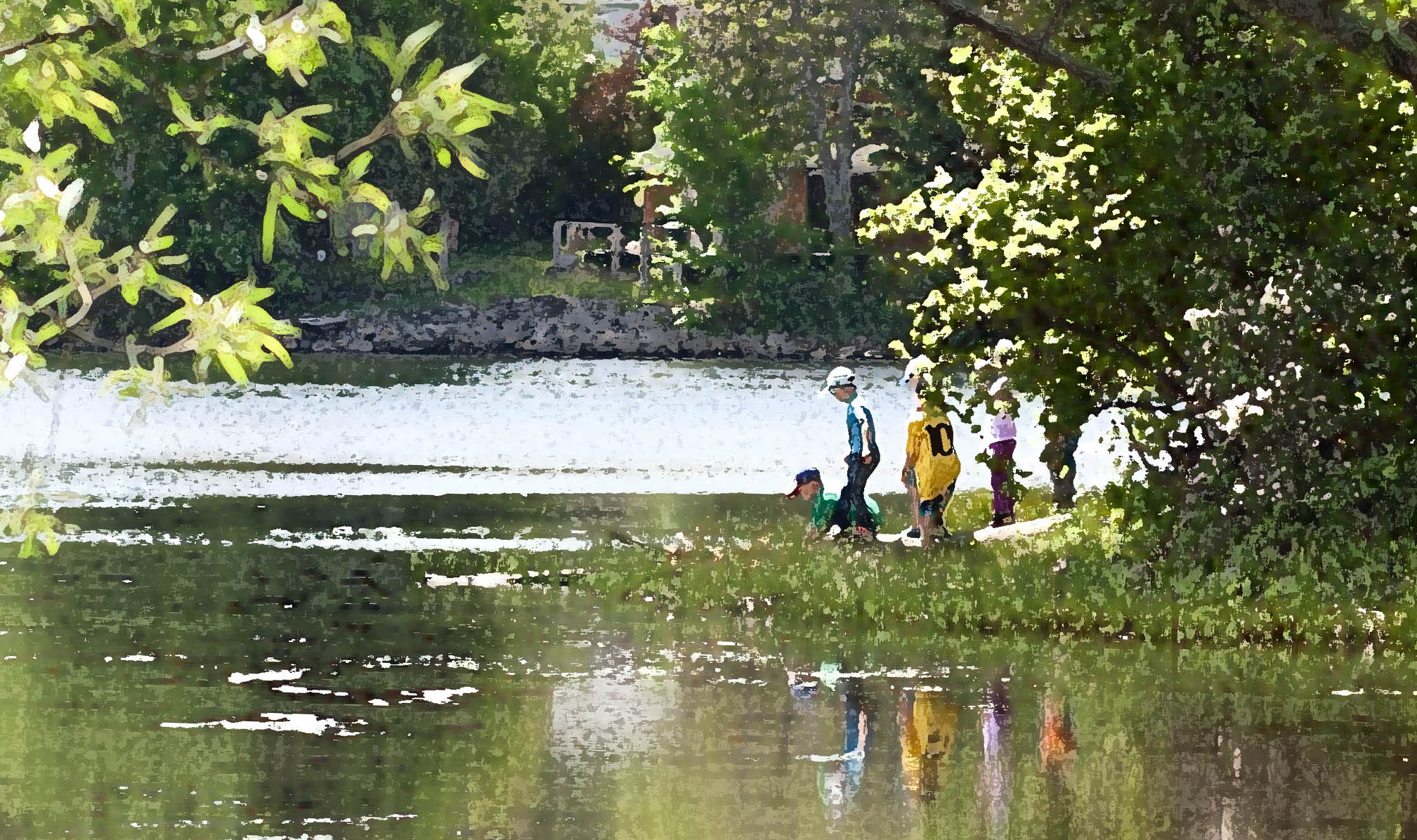
Group of young boys explore the river bank, ON (photo and rendition by Nina Munteanu)

My adult son still carries that sense of wonder for the natural world. He lives in British Columbia where he skis the mountains and frequently hikes the mountain foothills and old-growth forests of that beautiful province.

He’s soul-bathing. 

My son Kevin skiing in British Columbia (photo by Lindsay; rendition by Nina Munteanu)

In her 2003 foreword to John Lane’s book Timeless Beauty, Kathleen Raine writes, “Of Plato’s three verities, the Good, the True and the Beautiful, none can be understood in terms of the materialist values of modern Western civilization, and beauty least of all.” She adds, “Keats saw [beauty] as the highest value—because its reality can be known only to the soul … If beauty is the highest of Plato’s verities this is because it is in accordance with our nature: Plato did not invent that need. And did not Dostoevsky in The Idiot affirm his believe that the world can be saved only by beauty? We disregard and undervalue the beautiful at our peril.” 

“That the universe is alive, a living entity, there can, it seems, be less and less doubt, and that it is beautiful there can be none at all.”

—John Lane, Timeless Beauty
Mossy rocks in Jackson Creek, ON (photo and rendition by Nina Munteanu)

Parts of this article are excerpted from “Water Is…The Meaning of Water.”

References:

Aristotle. 350 BCE (1984). “The Poetics” and “Metaphysics.” In: “The Complete Works: The Revised Oxford Translation, Vol. 1. Bollingen/ Princeton University Press, N.J. 2512 pp.

Birkhoff, George David. 1933. “Aesthetic Measure.” Harvard University Press. 225 pp. 

Hutcheson, Francis. 1725 (2004). “An Inquiry into the Original of Our Ideas of Beauty and Virtue.” In: Wolfgang Leidhold (ed) Indianapois: Liberty Fund. 

Lane, John. 2003 “Timeless Beauty: In the Arts and Everyday Life.” UIT Cambridge Ltd, , UK. 192 pp. 

Livio, Mario. 2005. “The Equation that Couldn’t Be Solved.” Simon & Schuster. 368 pp. 

Moore, Jared S. 1942. “Beauty as Harmony.” The Journal of Aesthetics and Art Criticism 2(7): 40–50. 

Munteanu, Nina. 2016. “Water Is…The Meaning of Water.” Pixl Press, Vancouver. 586pp.

Newton, Eric. 1950. “The Meaning of Beauty.” Whittlesey House. 207 pp. 

Puffer, Ethel. 1905. “Psychology of Beauty.” Houghton, Mifflin & Co., NY. 156 pp. 

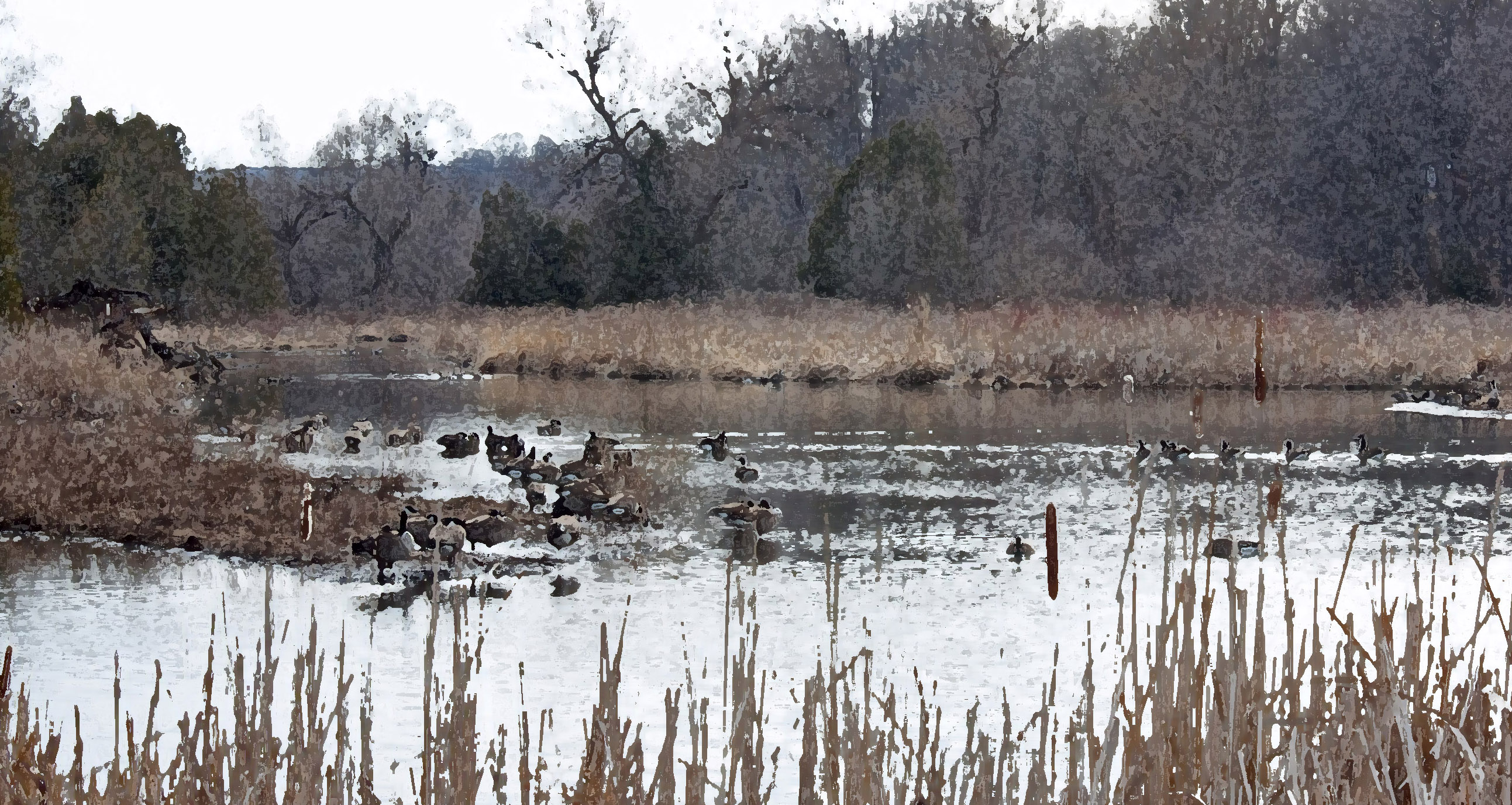
Marsh with cattails and flock of geese, near Millbrook, ON (photo and rendition by Nina Munteanu)

Nina Munteanu is a Canadian ecologist / limnologist and novelist. She is co-editor of Europa SF and currently teaches writing courses at George Brown College and the University of Toronto. Visit www.ninamunteanu.ca for the latest on her books. Nina’s bilingual “La natura dell’acqua / The Way of Water” was published by Mincione Edizioni in Rome. Her non-fiction book “Water Is…” by Pixl Press(Vancouver) was selected by Margaret Atwood in the New York Times ‘Year in Reading’ and was chosen as the 2017 Summer Read by Water Canada. Her novel “A Diary in the Age of Water” was released by Inanna Publications (Toronto) in June 2020.