There are no boring moments; only bored people who lack the wherewithal to explore and discover—Nina Munteanu

Cedar trees on shore of Jackson Creek, ON (photo by Nina Munteanu)
So many of us have responded intelligently to the pandemic by respecting “lock down” measures to self-isolate and socially distance. From simply staying at home to going out less often and avoiding crowds (well, there shouldn’t be any of them right now; but there will always be an irresponsible sector who must reflex their sense of entitlement and lack of compassion).
What the pandemic and our necessary reaction to it has done more than anything is to slow us down. Many people are slowly going crazy with it: we are, after all, a gregarious species. And not all of us feel comfortable with virtual meetings. Our senses are deprived; you can’t touch and smell and feel.
But, there are wonderful ways to feed the muse and get sensual…

Cedar tree on Jackson Creek, ON (photo by Nina Munteanu)
My good friend and poet Merridy Cox recently told me about a Facebook friend who was feeling so bored: “GETTING SO BORED BEING AT HOME” amid the social distancing and self-isolation during the ongoing COVID-19 pandemic.
Merridy counselled her friend to go outside and watch spring unfold then find a nice place to sit and write about it. A poem, she suggested: “Little white clouds are scudding across a blue sky. Trees are budding. Birds are migrating. Don’t be bored! Get outside, find a tree and see if there is a bird in it—now, you have enough to write a poem.”
What Merridy was essentially suggesting to her friend was to look outside herself. Reach out in curiosity and discover something. Boredom will fly away with curiosity and can lead to expression through poetry (or photography, sketching, journaling, memoir, or letter writing). When you open your soul to the spirit of exploration, you will find much to discover. When you share with others, you close the gap of isolation from gregariousness and find connection through meaning. The key is in sharing.
In Gifts from the Trail, Stella Body writes that, “Being Creative is a form of self-care and caring for others. The Gift by Lewis Hyde has been cited by Margaret Atwood and many others as what inspired them to share their creative work. Sharing is part of many religions, as part of becoming ‘holy, from the word ‘whole’. When what you share comes from your inner creative impulse, you develop a sense of your own value as an individual. In addition, you transcend your separateness by touching the spirit of another. In this way, all forms of art are therapeutic.”
The key to success in this is to start with 1) motivation, move through to 2) curiosity and discovery, then on to 3) creativity and expression. Sending an old-fashioned letter and handwriting provides a rich opportunity to create and express fully. And it gives us reasons to pursue. Following these three pursuits will enrich your life and provide enrichment to others through sharing.

Woodpecker hole in white pine tree, ON (photo by Nina Munteanu)
Step 1, MOTIVATION: Find several people you wish to communicate with on a deeper level and wish to entertain and inform. Think beyond your Facebook or Twitter audience (though, I do draw inspiration from wishing to share my photography with them). They could even be your next door neighbour! Of course, you need something to share; that’s where Step 2 comes in.
Step 2, CURIOSITY and DISCOVERY: Find a place that you can observe; the natural world is incredibly suited to discovery. Look high and low, slow your pace and use all your senses. Listen. Smell. Feel. Remember to look up. And look down on the ground. Nature hides some of her most precious gems there. Find something familiar and find something new. Invest in a guidebook.
 Research what you’ve found on the Internet; find out more about something you’ve observed. For instance, why does the willow have such a shaggy bark? Why do alders grow so well near the edges of streams? What role do sowbugs play in the ecosystem? What do squirrels eat? What is that bird doing on my lawn? Start a phenology study (how something changes over the seasons). Keep tabs on the birds you see and what they’re doing. You can find several examples of mine in the links below.
Step 3, CREATIVITY and EXPRESSION: Depending on your relationship with people you are writing to and their own interests, you may tailor your letters with printed pictures, sketches and drawings, maps, quotes, and news clippings. This part can be really fun and can draw on all your creative talents. Let what you see and discover inspire you. Find a “story” in it and share it with someone. You can find more examples on ways to express yourself in my guidebook on writing journals: The Journal Writer.

Bench next to cedar trees on Jackson Creek, ON (photo by Nina Munteanu)
Exploring and creativity don’t just cure boredom; they are good for your health:
 Expressive writing — whether in the form of journaling, blogging, writing letters, memoir or fiction — improves health. Over the past twenty years, a growing body of literature has shown beneficial effects of writing about traumatic, emotional and stressful events on physical and emotional health. In control experiments with college students, Pennebaker and Beall (1986) demonstrated that college students who wrote about their deepest thoughts and feelings for only 15 minutes over four consecutive days, experienced significant health benefits four months later. Long term benefits of expressive writing include improved lung and liver function, reduced blood pressure, reduced depression, improved functioning memory, sporting performance and greater psychological well-being. The kind of writing that heals, however, must link the trauma or deep event with the emotions and feelings they generated. Simply writing as catharsis won’t do.
In Gifts from the Trail, Stella Body writes: “Far more than a quick Selfie, a written response explores the range of the experience. It both saves an instant from being lost in time, and holds on to the live matter of the writer’s feeling. If shared, both writer and audience can return to that moment and draw healing from it. What’s more, as many studies on volunteer work have shown, the process of sharing is a healing act.”
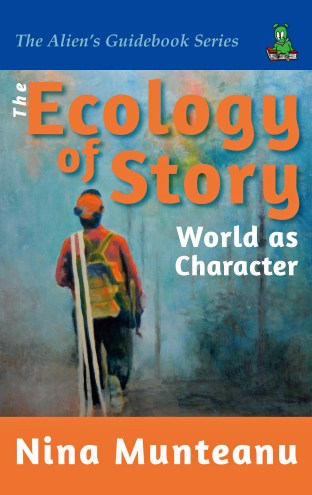
In Part 1 of my writing guidebook The Ecology of Story: World as Character, I talk about many of the interesting things in the natural world around us. In Part 2, I give many of these things meaning in story. The guidebook also has several writing exercises to capture the muse.
 In Chapter K of my writing guidebook The Fiction Writer: Get Published, Write Now!, I talk about writing what you know and what you discover. It’s more than you think. “In the 19th-century, John Keats wrote to a nightingale, an urn, a season. Simple, everyday things that he knew,” say Kim Addonizio and Dorianne Laux in The Writer’s Guide to Creativity. “Walt Whitman described the stars, a live oak, a field…They began with what they knew, what was at hand, what shimmered around them in the ordinary world.”
My journal writing guidebook The Journal Writer: Finding Your Voice provides advice and exercises on how to create a positive experience in observing, creating, journaling and letter or memoir writing.
Restoring the Lost Art of Handwriting
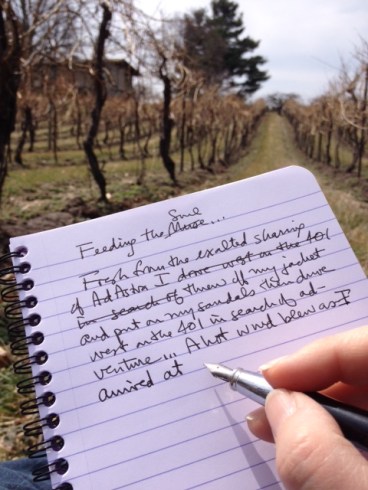
Nina writing in Niagara on the Lake (photo by Nina Munteanu)
Handwriting is a wonderful thing. It slows us down. It is a sensual and intimate way for us to express ourselves. I love my handwriting, especially when I am using my favorite pen (my handwriting changes depending on the pen), my Cross fountain pen — usually black. When you use a pen or pencil to express yourself you have more ways to express your creativity. Think of the subtleties of handwriting alone: changing the quality and intensity of strokes; designing your script, using colors, symbols, arrows or lines, using spaces creatively, combining with drawing and sketches. In combination with the paper (which could be lined, textured, colored graphed, etc.), your handwritten expression varies as your many thoughts and moods.
The very act of handwriting focuses you. Writing your words by hand connects you more tangibly to what you’re writing through the physical connection of pen to paper. Researchers have proven that just picking up a pencil and paper to write out your ideas improves your ability to think, process information and solve problems. The actual act of writing out the letters takes a little more work in your brain than just typing them on a keyboard, and that extra effort keeps your mind sharp. Researchers have also shown that writing something out by hand improves your ability to remember it. Handwriting improves memory, increases focus, and the ability to see relationships.
Handwriting fuses physical and intellectual processes. American novelist Nelson Algren wrote, “I always think of writing as a physical thing.” Hemmingway felt that his fingers did much of his thinking for him.
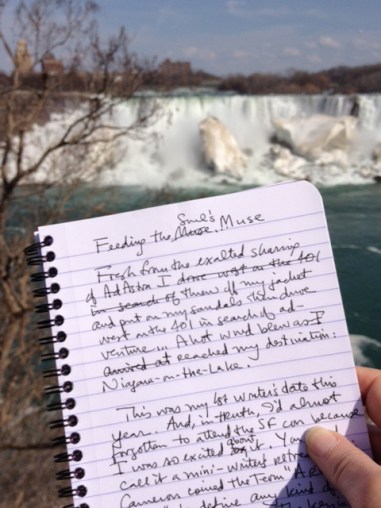 According to Dr. Daniel Chandler, semiotician at Aberystwith University, when you write by hand you are more likely to discover what you want to say. When you write on a computer, you write “cleanly” by editing as you go along and deleting words (along with your first thoughts). In handwriting, everything remains, including the words you crossed out. “Handwriting, both product and process,” says Chandler, “is important … in relation to [your] sense of self.” He describes how the resistance of materials in handwriting increases the sense of self in the act of creating something. There is a stamp of ownership in the handwritten words that enhances a sense of “personal experience.”
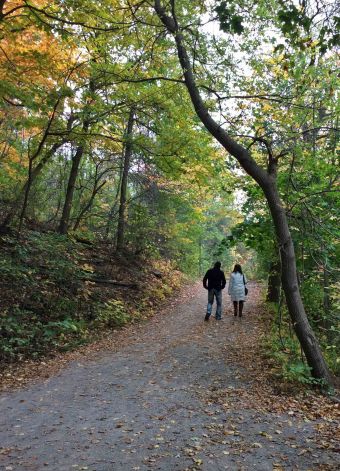
Path along Credit River, ON (photo by Nina Munteanu)
I know this is true in my own writing experience. This is why, although I do much of my drafting on the computer, I find that some of my greatest creative moments come to me through the notebook, which I always keep with me. Writing in my own hand is private and resonates with informality and spontaneity (in contrast to the fixed, formal look and public nature of print). Handwriting in a notebook is, therefore, a very supportive medium of discovery and the initial expression of ideas.
Develop interest in life as you see it; in people, things, literature, music—the world is so rich, simply throbbing with treasures, beautiful souls and interesting people. Forget yourself—Henry Miller
References:
Munteanu, Nina. 2009. The Fiction Writer: Get Published, Write Now. Starfire World Syndicate. 294pp
Munteanu, Nina. 2013. The Journal Writer: Finding Your Voice. Pixl Press. 172pp.
Munteanu, Nina. 2019. The Ecology of Story: World as Character. Pixl Press. 200pp.
Links:
The Ecology of Story: Revealing Hidden Characters of the Forest
Ecology, Story & Stranger Things
The Little Rouge in Winter: Up Close and Personal
The Phenology of the Little Rouge River and Woodland
White Willow–A Study
The Yellow Birch–A Study

Nina Munteanu is a Canadian ecologist / limnologist and novelist. She is co-editor of Europa SF and currently teaches writing courses at George Brown College and the University of Toronto. Visit www.ninamunteanu.ca for the latest on her books. Nina’s bilingual “La natura dell’acqua / The Way of Water” was published by Mincione Edizioni in Rome. Her non-fiction book “Water Is…” by Pixl Press (Vancouver) was selected by Margaret Atwood in the New York Times ‘Year in Reading’ and was chosen as the 2017 Summer Read by Water Canada. Her novel “A Diary in the Age of Water” will be released by Inanna Publications (Toronto) in June 2020.
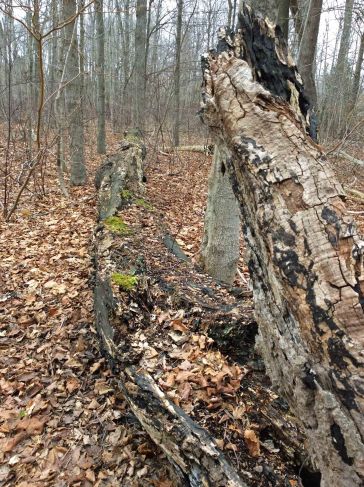
 I remember a wonderful conversation I had several years ago at a conference with another science fiction writer on weird and wonderful protagonists and antagonists. Derek knew me as an ecologist—in fact I’d been invited to do a lecture at that conference entitled
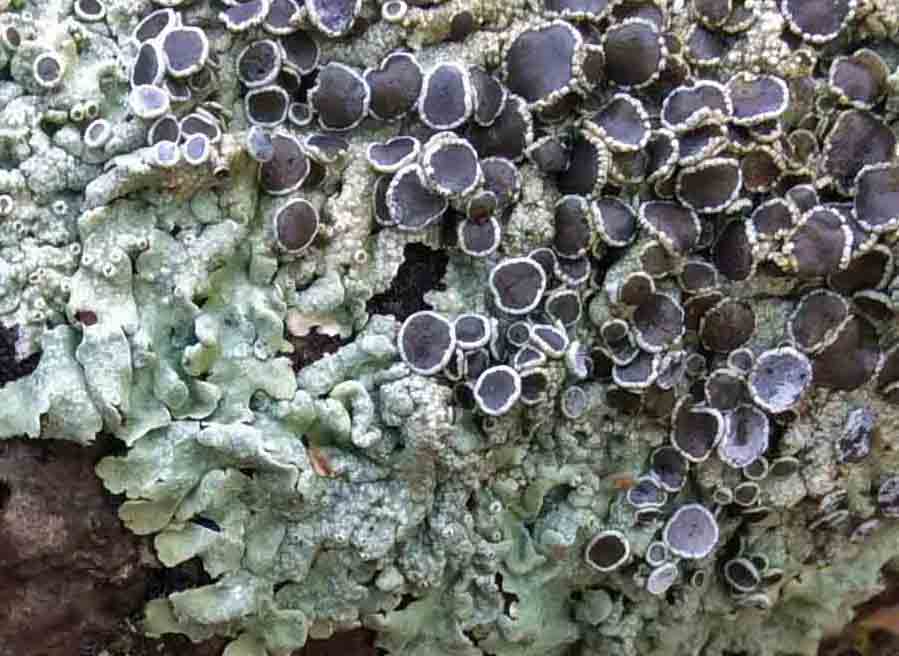
  I recall Derek’s eagerness to create a story that involved characters who demonstrate saprotrophic traits or even were genuine saprotrophs (in science fiction you can do that—it’s not hard. Check out

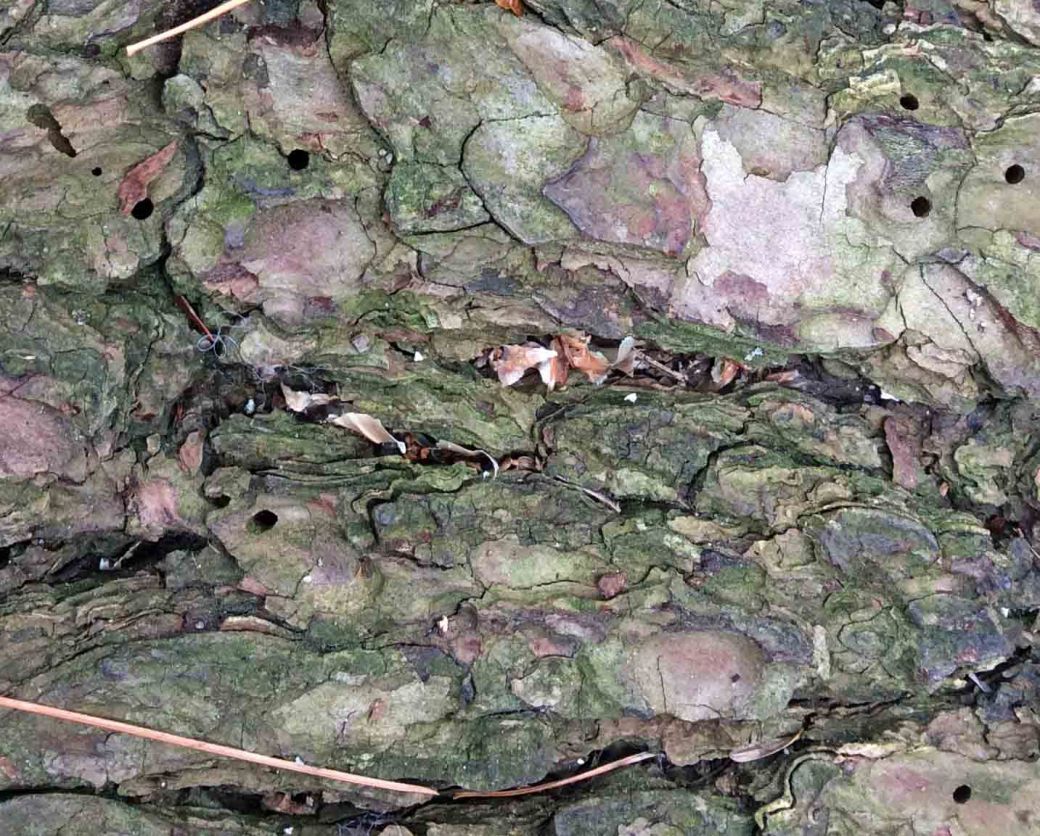
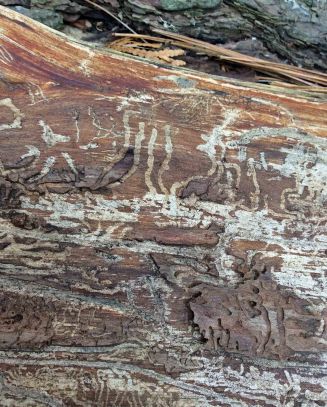

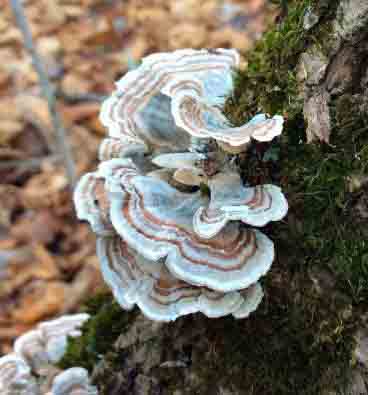




 In a scene of my near-future eco-thriller
 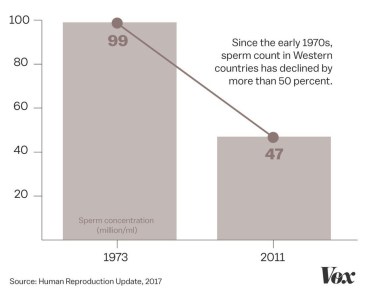 Both Daniels are talking about the alarming rate at which
  Research shows that consumption and/or exposure to many common constituents of urban living can decrease fertility, increase miscarriage, spontaneous abortion, and lower auto-immune systems. Examples include car exhaust, pesticides, common detergents, hair dyes, cleaning solvents, oil based paints, adhesives, gasoline; and consumption of MSG, coffee, alcohol.
 Leaning on his microscope, Daniel went on, “Wherever there’s a sewage treatment plant, pulp and paper mill, or herbicides and pesticides in a stream, you get endocrine disruption, which causes more female or intersex fish populations…[Degradation products of surfactants used in commercial and household detergents] inhibit breeding in male fish. And herbicides like atrazine—”
 Dr. Marilyn F. Vine at the University of North Carolina demonstrated that smoking men had lower sperm counts by 13-17%. Smokers also had more abnormal sperm. Likewise, women who smoked experienced more spontaneous abortions, early menopause and abnormal oocytes. Follicular fluid also contained high levels of cadmium, a heavy metal present in cigarettes, and cotininie, a metabolite of nicotine.


 In his book



 For more on “ecology” and a good summary and description of environmental factors like aggressive symbiosis and other ecological relationships, read my book
 Science fiction is our conversation with the future. That’s the philosophy of Bundoran Press Publishing House. But how can you have a conversation without friends? Even though in the days of COVID-19, most of those conversations take place on-line or by phone, there’s never been a better time to think and talk about the future.
 Last but certainly not least,
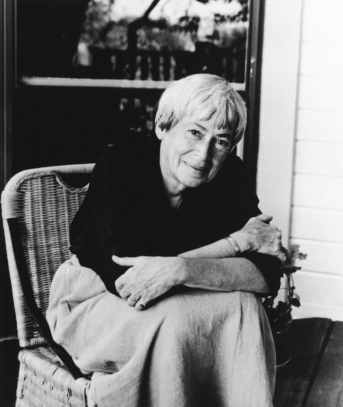
 Written 45 years ago, Le Guin’s scathing article may have accurately represented the North American science fiction community of writers of that time. Today, despite the remnants of a strong old guard that still promotes a patriarchal colonialist hegemony, the science fiction genre has matured and grown beyond this self-limiting view. This is partly because current authors—many who are women and many who are representatives of minority or marginalized groups—have given SF a new face and voice that promises to include equality, inclusion, and a fresh look at exploration and ‘the other.’
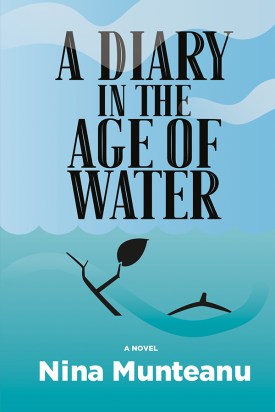
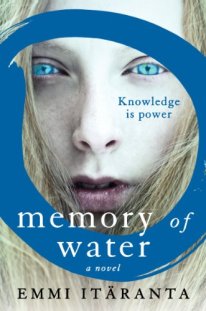 Science fiction that leans toward “mundane”(everyday life) and literary fiction include the works of Paulo Bacigalupi (Windup Girl), Margaret Atwood (Year of the Flood), and Kim Stanley Robinson (New York 2140). Literary fiction overlaps with science fiction through eco-fiction and climate fiction which address oppression, jingoism and neoliberalism often through dystopian themes—and often through the voice of women writers—such as Octavia Butler’s Parable of the Sower, N.K. Jemisin’s The Broken Earth series, Emmi Itäranta’s The Memory of Water, Nina Munteanu’s A Diary in the Age of Water, Barbara Kingsolver’s Flight Behavior, Annie Proulx’s Barkskins, and Richard Power’s Overstory.
 In 2017, several publications addressed different aspects of society through speculative fiction. Laksa Media published Strangers Among Us: Tales of the Underdogs and Outcasts, which explores issues of mental health. Exile Editions published Cli-Fi: Tales of Climate Change with stories on personal experience with climate change. Reality Skimming Press published Water, for which I was editor, which explored optimism in the face of climate change.
 Novels and anthologies of short stories that feature disabled characters are also growing. Examples include Borderline by Mishell Baker, We Who Are About To… by Joanna Russ, Murderbot series by Martha Wells, and Uncanny: Disabled People Destroy Science Fiction (edited by Elsa Sjunneson-Henry, Dominik Parisien et al.) among many others.
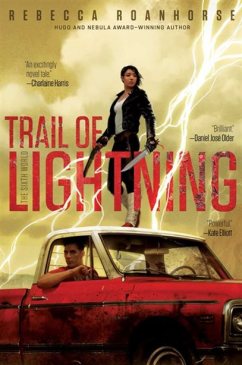 In an introduction to seven Indigenous Futurism books, Barnes and Noble writes:









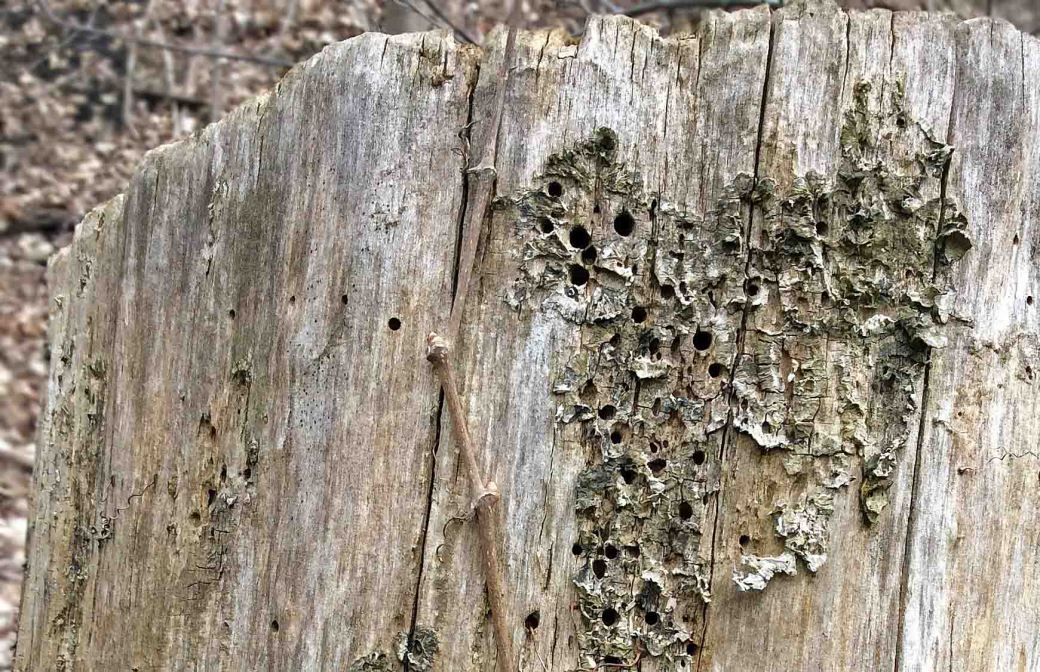

 The Emerald Ash Borer hasn’t a real predator here. Don’t blame it for doing what it does, for being in the crates humans ship across oceans. Killed 30 million in Michigan, where it was first found. It’ll kill clear to the ocean.
 E Martin Nolan
 We are now living in the Age of Water. Water is the new “gold”, with individuals, corporations and countries positioning themselves around this precious resource. Water is changing everything. The Age of Water Podcast covers anything of interest from breaking environmental news to evergreen material. This also includes human interest stories, readings of eco-literature, discussion of film and other media productions of interest.
 Nina Munteanu’s
 Nina Munteanu Writing Coach