The texture of the world, its filigree and scrollwork, means that there is a possibility for beauty here
Annie Dillard, Pilgrim at Tinker Creek

Something parents often say to get their kids to behave and not run wild and create chaos is: curiosity killed the cat. It’s a clear warning of the dangers of unnecessary investigation or experimenting without reason. It implies that being curious could sometimes lead to misfortune or danger. Better safe than sorry, eh?…
I think it’s the opposite: curiosity saves lives. Curiosity keeps us alive.
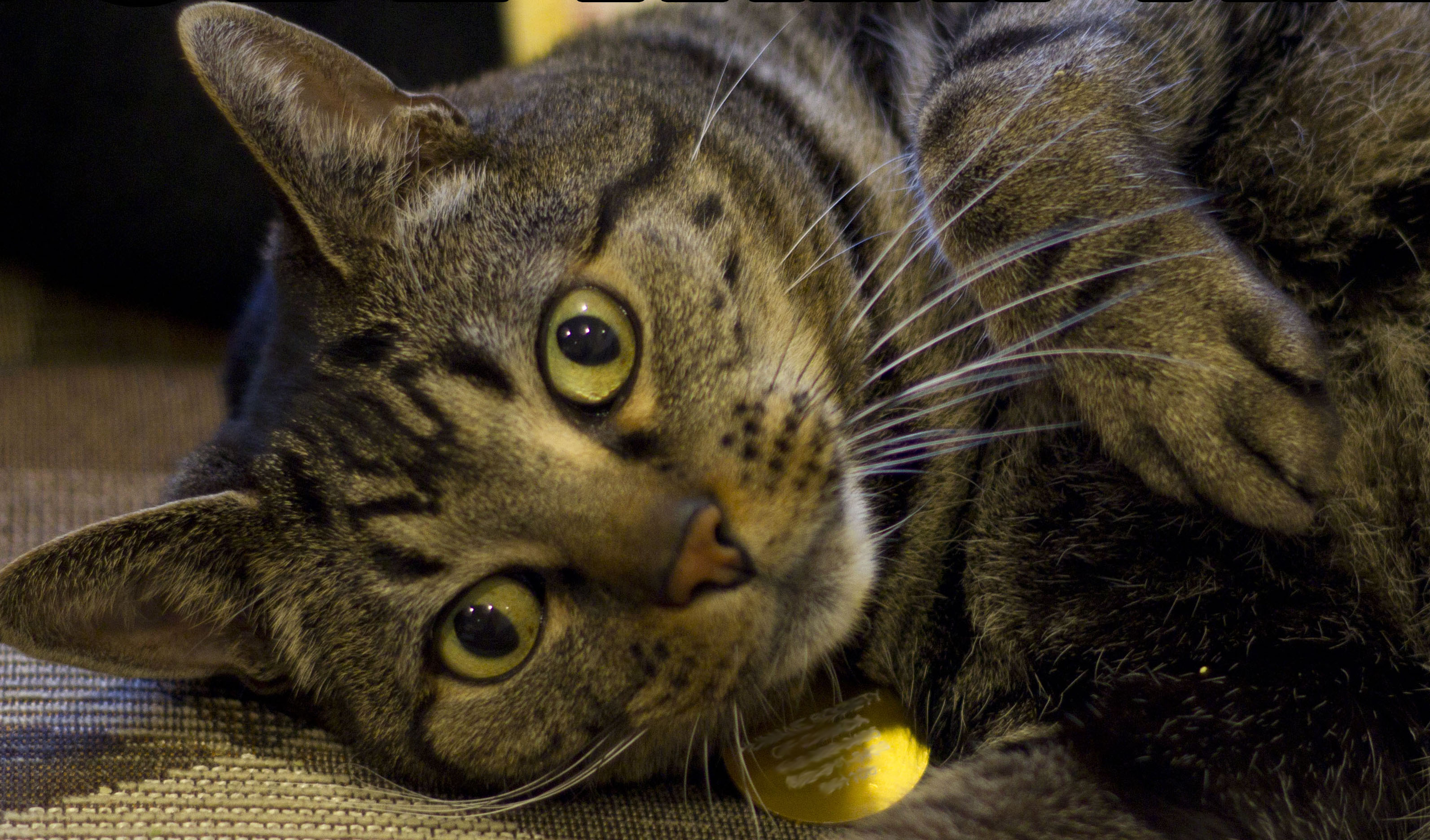
Sammy, author’s cat takes a stroll (photo by Nina Munteanu)
.
Let me tell you a story about my mother first:
One of seven siblings of a cattle farmer in Germany, my mom was not formally educated past Grade 7. This did not mean that she wasn’t educated. Curiosity led her to learn an entire language (English) by first reading comic books. She mastered elements of several sciences including botany, genetics, horticulture, and geology. Whatever caught her interest, my mother dove into finding out more with research. We weren’t rich and this was well before the internet and personal laptop computers, so this meant applying herself by visiting the library and borrowing books from friends to acquire information. Her research was impeccable.
Doing research is both an art and a science that opens up a world of both answers and more questions. It always starts with curiosity and leads to more curiosity by not only answering specific questions but by creating new ones. And so the process goes. My mom’s inquisitive mind led her to amazing discoveries of how the world worked, what grew where and why and all the strange and wonderful things on planet Earth. She was a naturalist with a keen mind for finding out more.

.
When I was the only kid left at home and began to travel in my late teens, it became a kind of running joke that whenever I left for an adventure, say to Europe, she didn’t get lonely or bored; she dove right into a new world in some scientific quest. When I returned from my adventure, we both had discoveries to share. While I’d experienced a new country and its culture and food, she’d explored a whole new scientific discipline.
My mother’s indefatigable curiosity for the natural world was inspiring. It kept her motivated and interested in life in general. She was never satisfied with answering just “what”, or even “how;” what caught her interest was “why”: the question of context and meaning. She kept herself young, connected, motivated well into her nineties through her curiosity.
.
Nurturing Mental Health with Curiosity
Curiosity helps motivate learning, encourages creative problem-solving and plays a crucial role in healthy human development. In a nutshell, curiosity is a sign of mental health.
Researchers have shown that curiosity improves memory, creativity, and higher life satisfaction, and—contrary to the poor curious cat—aging well. Others have shown that curiosity can even protect against anxiety and depression. In fact, contrary to what scientists thought decades ago, the older human brain continues to have a great capacity for learning and developing. The study of neuroplasticity shows that pathways in your brain can develop and strengthen, even when you’re older—like my mom, and me now… The brain functions like a muscle: the more you use it, the stronger it gets. If you don’t exercise it, it will get weaker.
So, having a curious mind and being naturally inquisitive seems like a pretty good thing.
Anand Tamboli at Medium.com notes that “one of the benefits of being curious is that you will end up making fewer errors … When we are curious, it is easier to avoid confirmation bias. With a curious mind, we tend to look at more alternatives, and the chances of stereotyping someone [or something] are quite low.” Tamboli adds that “we don’t get defensive when we stay curious. That is because instead of making any assumptions, we ask more questions, which in turn makes us more empathetic. When we’re curious, we listen better.” All together, this makes us more creative and innovative—and, ultimately successful.

.
What You See Is What You Get
In a four minute read in the Daily Good, Annie Dillard writes in an excerpt from Pilgrim at Tinker Creek about how when she was six or seven years old, growing up in Pittsburgh, she used to take a precious penny of hers and hide it for someone else to find. I’ll let you read the excerpt because she writes it best, but the upshot is to cultivate a natural curiosity borne of humility and simplicity: what you see is what you get. And the best gifts are surprises. You just need to see… “The secret of seeing is to sail on solar wind. Hone and spread your spirit till you yourself are a sail, whetted, translucent, broadside to the merest puff.”
When I go for my daily walks in Nature, I am an explorer aiming for discovery. I tell myself that I must come back with three gifts. They could be anything: things I found, new observations or surprising experiences. I don’t actively look for them; I let them present themselves to me through simple exploration. Ultimately, these gifts always come when and where I least expect. A profusion of mushrooms presenting themselves where I’d sat on a log to eat my lunch; a sudden flurry of winter diving ducks I’d aroused from their quietude by the river; a lone fox loping carefree along the icy shore of the river before suddenly noticing me and scampering away. I seem to have no problem acquiring these gifts. The idea makes me smile and I think of Annie Dillard and her copper pennies.

.
Navigating a Changing World with Curiosity
So much of humanity operates on a purpose-driven model of “progress” delivered to us by a stable Holocene world. But that world was never ‘delivered’ to us; and it’s changing. A lot.
With the onset of climate change, environmental degradation, and associated political strife and confusion in the world, everything is becoming more precarious. For some, it seems like the world is falling apart. “A precarious world is a world without teleology,” writes Anna Lowenhaupt Tsing in her book The Mushroom at the End of the World. She adds that precarity is the condition of being vulnerable. “Unpredictable encounters transform us; we are not in control, even of ourselves. Unable to rely on a stable structure of community, we are thrown into shifting assemblages, which remake us as well as others…Everything is in flux, including our ability to survive.”
“What do you do when your world starts to fall apart?” Tsing asks. “I go for a walk,” she says, “and if I’m lucky, I find mushrooms. Mushrooms pull me back into my senses, not just—like flowers—through their riotous colours and smells, but because they pop up unexpectedly, reminding me of the good fortune of just happening to be there. Then I know that there are still pleasures amidst the terrors of indeterminacy … indeterminacy also makes life possible.”
Changing with circumstances is the stuff of survival. Tsing describes something she calls collaborative survival, which requires working across differences, crossing into ecotones of change and flux and opening to ‘contaminating’ encounters that lead to collaboration. Messy? Darn right; but also exciting and full of wonderful promise.
Using the matsutake mushroom as her example, Tsing declares that, “If we open ourselves to their … attractions, matsutake [or any natural phenomenon] can catapult us into the curiosity that seems to me the first requirement of collaborative survival in precarious times.”
Remaining curious is tantamount to our survival.

.
Staying Curious…
Tamboli gives five tips on keeping your mind alive with curiosity.
1. Explore, observe, and listen: Look at things like mysteries and explore possibilities. “They say that instead of looking at things like puzzles, look at them as mysteries. Because puzzles have definitive answers. Once you find the missing information, it’s done. But mysteries are more nuanced. They pose questions that cannot be answered definitively. The answers are complex, interrelated, and can involve both known and unknown factors.”
2. Diversify your interests: Activate your mind. “When you diversify your interests, you get new experiences. These new experiences can help in activating your mind in many ways other things cannot.”
3. Teach others: It’s one of the best ways to learn new things. “The next time you’re feeling bored, talk to someone. Think about your skills or facts that you know. Offer to teach them. Teaching, as they say, is one of the best ways to learn new things. Plus, it can be a highly rewarding activity.” This is similar to “going into service” to help a community or group in need. Thinking beyond myself but to the needs of others, often directs me to something wonderfully new.
4. Mingle with non-likeminded people: “This practice will help you see the world with more empathy. It will also help you make a better case for your own beliefs. And that is because you will understand various arguments and counter-arguments much better than you would otherwise.” What this means to me is: seek out discussion with people who have a different view of things, where you can argue your points; this often leads to new, more full-bodied understandings of issues. This keeps your mind sharp and active, and so alive!
5. Stop relying on Google or the internet: stay curious and become more creative by learning the facts for yourself. “If you stop committing information to your memory, you are essentially damaging your neuroplasticity. When we learn new things, our brain goes through many long-lasting functional changes. It is what we call neuroplasticity. Over-reliance on the internet and the thinking that ‘I can always Google it’ means you are not learning. You are not curious.”
This is akin to learning to do your own research, to seek the truth through cross referencing (and not relying on one simple answer), poring over books, asking questions. It comes down to figuring out context and why things are, not just what they are.

.
The Proverb
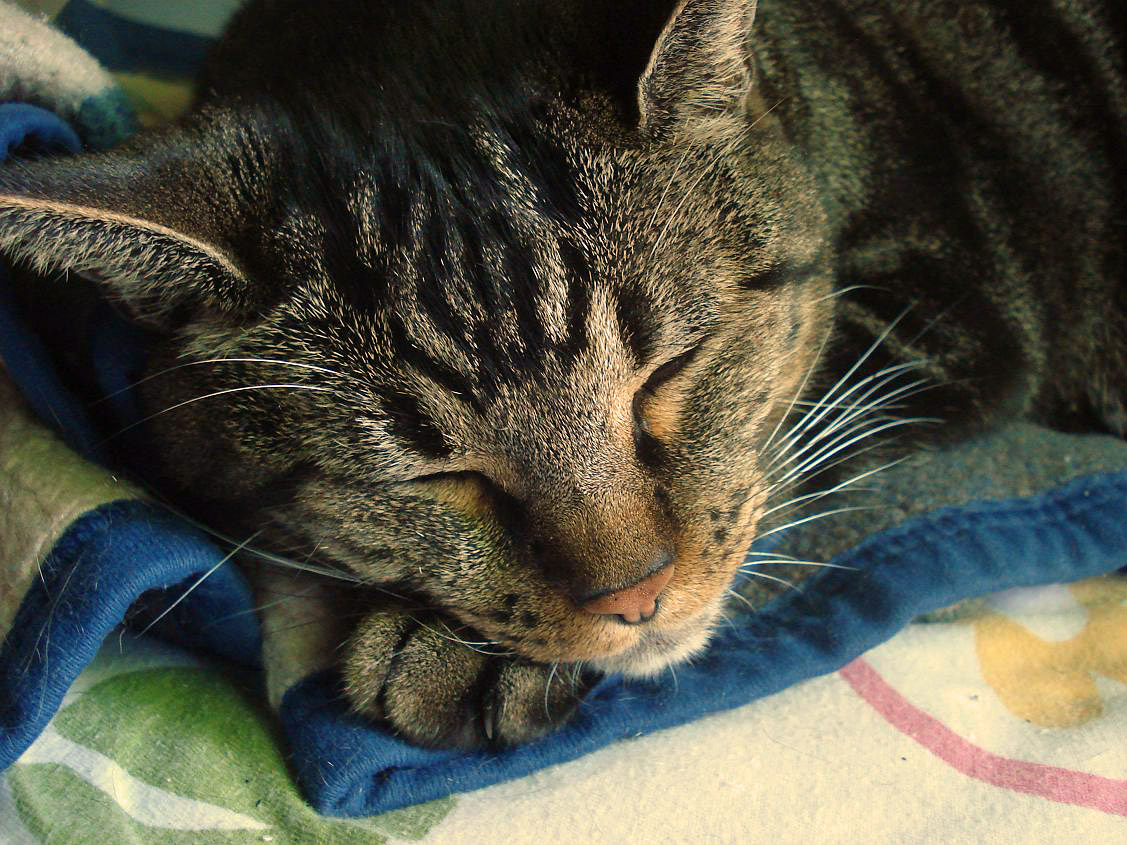
The expression “Curiosity killed the cat” is actually a recent version of an older saying from the as early as 1598: “Care killed the Cat. It is said that a cat has nine lives, but care would wear them all out.” Either saying is appropriate for cats, in that they are by nature curious creatures (one of the reasons I so adore them!) and this can indeed lead them into odd circumstances.
The trait of curiosity, it seems, has not fared well in the eyes of some philosophers.
Phrases.org shares that in AD 397, Saint Augustine wrote that God “fashioned hell for the inquisitive.” In 1639, John Clarke suggested that “He that pryeth into every cloud may be struck with a thunderbolt.” Clearly these men didn’t care for scientists! And let’s not forget that the phrase “curiosity killed the cat” has a rejoinder: “but the truth brought it back.”
.
p.s. Anthony K. on Bluesky made this insightful comment: “What a profound take on the proverb! Curiosity can lead us into uncharted territory, but it’s the pursuit of truth that brings us back stronger and wiser. Sometimes, seeking answers is the only way forward.”
References:
Dillard, Annie. 1974. “Pilgrim at Tinker Creek.” Harper’s Magazine Press. 271pp.
Gruber, M. J., & Ranganath, C. (2019). How curiosity enhances hippocampus-dependent memory: The prediction, appraisal, curiosity, and exploration (PACE) framework. Trends in cognitive sciences, 23(12), 1014-1025.
Proctor, C., Maltby, J., & Linley, P. A. (2011). Strengths use as a predictor of well-being and health-related quality of life. Journal of Happiness Studies, 12, 153-169.
Sakaki, M., Yagi, A., & Murayama, K. (2018). Curiosity in old age: A possible key to achieving adaptive aging. Neuroscience & Biobehavioral Reviews, 88, 106-116.
Tsing, Anna Lowenhaupt. 2015. “The Mushroom at the End of the World.” Princeton University Press, Princeton. 331pp.

Nina Munteanu is a Canadian ecologist / limnologist and novelist. She is co-editor of Europa SF and currently teaches writing courses at George Brown College and the University of Toronto. Visit www.ninamunteanu.ca for the latest on her books. Nina’s bilingual “La natura dell’acqua / The Way of Water” was published by Mincione Edizioni in Rome. Her non-fiction book “Water Is…” by Pixl Press (Vancouver) was selected by Margaret Atwood in the New York Times ‘Year in Reading’ and was chosen as the 2017 Summer Read by Water Canada. Her novel “A Diary in the Age of Water” was released by Inanna Publications (Toronto) in June 2020.
 Nina Munteanu Writing Coach