Fiction Writer on Recommended Reads

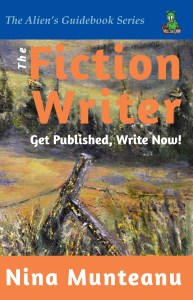
FictionWriter-front cover-2nd edWriter Timea Noemi selected The Fiction Writer by Nina Munteanu along with the works of Angela Ackerman and Katie Weiland as her Top books on How to Write.

“[The Fiction Writer]is the most practical book on publishing that I’ve ever read, and I’ve read them all! Not only is each chapter packed with advice for writers at every level of the publishing process, but the text is highly readable and even entertaining. The clear format, the direct style and the playful layout keep the large volume of information from ever becoming dry or boring.”–Lucia Gorea, English Instructor, University of Vancouver

FictionWriter-No1-tweet

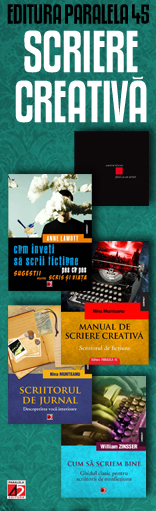
scriitorul_de_fictiune_Munteanu_coperta1Timea Noemi also recommended the Romanian translated version of “The Fiction Writer: Get Published, Write Now!” (“Manual de Scriere Creativa. Scriitorul de fictiune”) by Nina Munteanu along with “The Emotion Thesaurus” by Angela Ackerman and the Hungarian “How to Write a Book” by Krisz Nadasi.

Of “the Fiction Writer” Timea said:

“Eu mutumesc enorm! Cartea aceasta ma invatat atat de multe lucruri este bibia mea de scriitor. Din pacate nu prea se gasesc carti despre scriere creative in tara si m-am bucurat tare mult sa gasesc aceasta carte.” (Thank you so much! This book taught me so many things; it is my writer’s Bible. Unfortunately, there are no books on creative writing in the country, and I enjoyed finding this book.)

FictionWriter Tesimonial-Romanian

editura-paralela-45-scriere creativa.Cu plecere, Timi!

In fact, I knew this (that writing guides were lacking in Romania, a country full of writers!) and so did my Romanian publisher Calin Vlasie of Editura Paralela 45. This is why Editura Paralela 45 translated and published a Romanian version of The Fiction Writer. It so gladdens me to hear that this book on writing is making its way around the country.

Gaudeamus-LaunchMy father is originally from Romania and grew up in Bucharest.  So, I was delighted to attend the launch of Manual de Scriere Creativa. Scriitorul de fictiune (The Fiction Writer) in Bucharest in 2011, hosted by Editura Paralela 45 in the Gaudeamus Book Fair. It was a wonderful experience, which included drinking copious amounts of Romania’s national drink Tuica (plum liquor that packs a punch!) with my publisher. You can find out more about my adventure in Bucharest on my good friend’s site, Toulouse On the Loose.

Canadians can purchase “The Fiction Writer” at a very decent price right now from Chapters / Indigo. The Fiction Writer is the first book of The Alien Guidebook Series, which includes The Journal Writer: Finding Your Voice (for journalling and memoir writing) and upcoming The Ecology of Story: World as Character (on setting, place and world building–scheduled release Summer 2019).

 

Nina MunteanuNina Munteanu is an ecologist, limnologist and internationally published author of award-nominated speculative novels, short stories and non-fiction. She is co-editor of Europa SF and currently teaches writing courses at George Brown College and the University of Toronto. Visit www.ninamunteanu.ca for the latest on her books.


Nina Talks Writing on Dragon Page

michael-stackpoleSome years ago, I was interviewed by Michael Stackpole (New York Times bestselling author of over 40 novels, including “I, Jedi” and “Rogue Squadron”) and Michael Mennenga (CEO of “Slice of Sci-Fi”) on Dragon Page Cover to Cover.

michael mennengaWe talked about my book “The Fiction Writer: Get Published, Write Now!” and what new writers fret over. A lot of the discussion focused on how to handle rejection and I shared my “bus terminal” model (also in my book), which worked very well. For details on our discussion about the industry and craft of writing, listen below:


DragonPage-FictionWriter

The Bus Terminal Model:

FictionWriter-front cover-2nd ed-webHere is an excerpt from The Fiction Writer, Chapter R:

One way to see your way through rejection is to find ways to distance yourself from your story once you’ve sent it off and to see the whole process of submission-rejection-acceptance as a business. The very best way to do this is to submit lots of stories and to keep submitting them. With novels, this is a little harder to do but you can certainly be working on the next one once you’ve submitted the first.

When I was writing short stories, I kept a list of what and where I submitted, along with the most important item: where to submit NEXT. At any given time, I made sure that I had at least x-number of submissions out there and each story had a designated place to go if it returned. As soon as a story came back from magazine A, I simply re-packaged it and sent it to magazine B. The critical part of the list was to have a contingency for each story: the next place where I would send the story once it returned. I was planning on the story being rejected with the hope that it would be accepted; that way, a rejection became part of a story’s journey rather than a final comment.

I ran my submissions like a bus terminal. A story was in and out so fast it never had a chance to cool off. And, since I had five other pieces out there, I could do this with little emotion. I was running a fast-paced “story depot”, after all. All my stories had to be out there as soon as possible; if they were sitting in the terminal, they were doing nothing for me.


nina-2014aaNina Munteanu is an ecologist and internationally published author of award-nominated speculative novels, short stories and non-fiction. She is co-editor of Europa SF and currently teaches writing courses at George Brown College and the University of Toronto. Visit www.ninamunteanu.ca for the latest on her books.

Eight Ways to Move From Prosaic to Spectacular

Nina-reading-Ward Is

Reading on Algonquin Island, Lake Ontario (photo by Nina Munteanu)

What makes some writing stunning and other writing lackluster? Mostly, it’s the language—the words—you use. And, it isn’t just what words you use; it’s how you use them. Here are a few things you need to consider when translating your work into something that “sings”.

  1. Use Active Verbs and Reduce Modifiers

Many writers, not just beginners, slide into the pattern of using passive and weak verbs (e.g., were, was, being, etc.). Then they add a modifier to strengthen it. It doesn’t. Actively look for strong, vivid verbs. This is the key to good writing. Active and powerful verbs move a story forward. For instance, which version is more compelling?

Jill was walking quickly into the room.

or…

Jill stomped into the room.

The second example not only more quickly and efficiently demonstrates how Jill entered the room, but demonstrates with what attitude. There is no substitute for the use of powerful, appropriate verbs in sentences.   

2. Avoid Excessive & Meaningless Prose

Novice writers often use too many words to describe an event, action or scene. An overabundance of words slows down the story and obscures plot and action. Excessive prose includes:

Repetition: many beginning writers will often first tell then show in a scene. You don’t need to do both; trust the reader to get the “show”.

Extraneous words: e.g. “he started to think” instead of “he thought”; use of the obvious such as “she saw the big man lying on the bed” instead of “a big man lay on the bed” (“she saw” is implied through her POV). This second example also demonstrates how you can shift the readers’ attention from “her seeing” (in the first phrase) to “the man lying” on the bed (in the revised phrase). This simple change can create a much more powerful sentence through the seamless shift in reader attention.

Dull description not related to plot: I recently edited a writer’s over 400-page urban fantasy that contained far too much ordinary detail. Detail that, in small doses, may have enlightened the reader on the qualities of the protagonist; but in larger doses ground the narrative to a boring halt.

When you look for a more efficient and purposeful way to say something, you cut out unnecessary detail. Remember that virtually all description should be related to the plot and theme of the story.

3. Use Alliteration, Metaphor, Simile, Personification

These devices bring lyricism and cadence and powerful imagery to your prose. However, as with anything powerful, you need to use these judiciously. Use them where you wish to convey a strong image and to punctuate your prose.

4. Be Mindful of Word Accuracy

More often than you might think, a writer inadvertently misuses a word to convey an idea or emotion. For instance, let’s consider the following sentence, which describes a character’s reaction to a dog being cruelly mishandled:

“What are they doing?” Jack said crossly.

The modifier crossly suggests that Jack lacks compassion; it infers petulant annoyance.

“What are they doing?” Jack scowled.

Scowled still suggests the same icy disdain, though it may have been delivered with false bravado or through genuine discomfort from a hidden compassion. If the writer wished to convey shock, disgust or compassion, the following would better represent that sentiment:

“What are they doing?” Jack said, eyes wide.

Or:

“What are they doing?” Jack stammered.

5. Avoid Using Words like “Felt” or “Seem”

These “telly” words prevent the reader from directly experiencing the story by imposing a level of interpretation. For example, “he felt himself falling” can be improved to “he fell”. If you want to spice up the phrase, use another verb: “he toppled” “he stumbled” or “he crashed”.

6. Read your Writing Aloud & Punctuate Your Pauses

It isn’t just a clever metaphor when they say your writing style is called your “voice”; because your readers “listen” to what you write. Reading out loud helps define cadence, tone and pace of your prose and streamlines your writing. When you read aloud, pay attention to where you naturally pause. You may wish to put in a comma, semi-colon or period there.

7. Size and Vary Your Paragraphs  

Paragraphs are visual elements that help people read; they break up text on a page in logical places to provide white space for reader ease. I’ve heard people quote the “two-inch” rule for maximum paragraph length and I concur. This is one of the reasons some passages are harder to read than others; long paragraphs are more tiring to the eye. Find those logical breaks and put them in. Varying paragraph length creates a more interesting story “landscape” for the reader. Don’t be afraid to go to some extremes like using the one sentence – or even one word – paragraph.

Looking at Ward Island from Algonquin Is.

View of Ward Island from Algonquin Island (photo by Nina Munteanu

8. Size and Vary Your Sentences  

As with paragraphs, overly long sentences can try a reader’s patience and you may lose them entirely. Too many short choppy sentences can also reduce your prose to a mundane level. Varying your sentence length in a paragraph creates the lyricism and cadence that makes prose enjoyable to read.

For more tips on how to improve your writing for publication, go check my writing guide series The Alien Guidebook Series.

nina-2014aaNina Munteanu is an ecologist and internationally published author of award-nominated speculative novels, short stories and non-fiction. She is co-editor of Europa SF and currently teaches writing courses at George Brown College and the University of Toronto. Visit www.ninamunteanu.ca for the latest on her books. Read Nina’s climate/eco-fiction Darwin’s ParadoxAngel of Chaos and Natural Selection.