Walking the Tightrope Between Innocent and Cynical

jungfrau05

Jungfrau, Switzerland (photo by Nina Munteanu)

The writer’s journey from the passion and vulnerability of innocence to the wisdom of experience can be a dark and twisted road. In fact, if you are a writer of any merit, I guarantee you that yours will be too. Think Dante in the forest…

YellowCreek1

Yellow Creek, Ontario (photo by Nina Munteanu)

Let me tell you a story … It starts in the early 1990s. I was an eager young sprite entering the novel publishing world with my newly finished science fiction novel: “Escape from Utopia”. I’d published a few short stories and many articles by then. In addition, I’d published many scientific papers and reports. Confident and cocky, I was proud of my novel and eager to share it with the world. And I thought I knew my way through that dark forest…

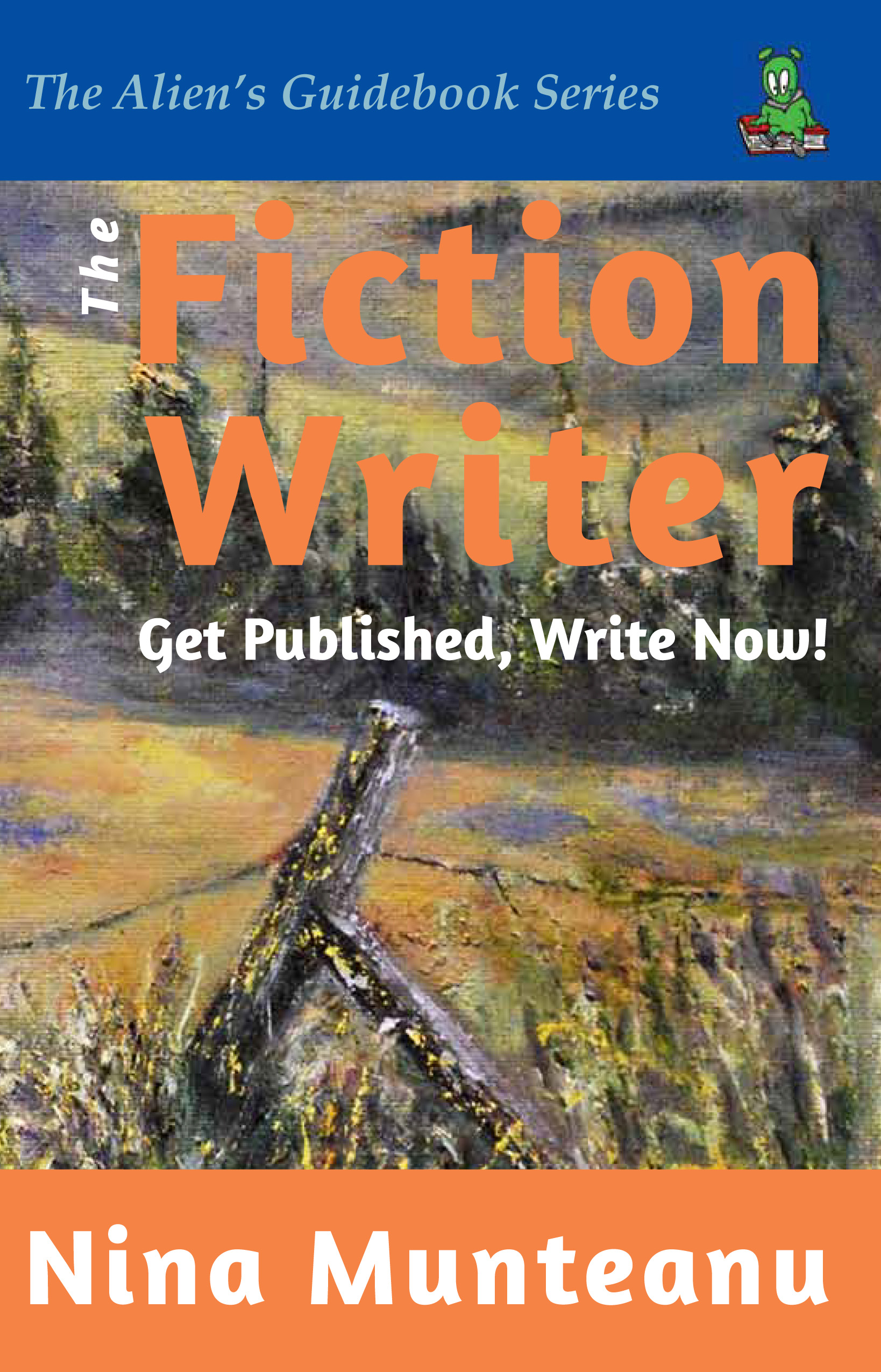
I zealously sent the manuscript to a bazillion agents and editors. I was rewarded for my zealous efforts with a tidal wave of rejection letters. Mostly form letters (see my amusing account of the evolution of rejection letters in my fiction writing guidebook, The Fiction Writer) and an excerpt in a previous post here: “Rejection, Part 2: the Evolution of Rejection

Then it came: an enthusiastic letter from an agent (I can’t remember the name: Literary Bridge or something); they said my work had great promise and that with some help from an editing firm they would consider representing me if I had it edited and resubmitted.

They recommended Edit Ink.

Those of you in the know and with some history in the industry may recall the Edit Ink scandal of the 90s. In short, it was a bait-and-switch scam that Bill Appel and Denise Sterrs (of Edit Ink) and their associated literary agents ran for close to a decade. Edit Ink was a “book doctor” firm near Buffalo, New York. The State of New York eventually convicted Appel and Sterrs and associates for defrauding prospective writers of several million dollars.

I remember my heart swelling with gratitude and optimism. Finally, someone liked my book! I naively considered their recommendation. Soon after—within days—I got an invitational letter from the pro-active Edit Ink. I can’t remember the exact content, except that they assured me that only the most promising writers were recommended to them by this particular agent. I remember seriously considering their offer. Then I got two more letters, one from another agent who recommended Edit Ink and another invitational letter from Edit Ink. Alarm bells went off. I went from naively hopeful to cynically suspicious. I did some investigating (something I should have done initially); by then the buzz was already on the Internet on their questionable practices. The lawsuit by New York State had yet to happen.

The Science Fiction Writers Association (SFWA) runs a “writer Beware” page, where memorable cases are reviewed. It’s worthwhile perusing just for your general knowledge and edification.

Here’s what they said about Edit Ink:

Founded by the husband and wife team of Bill Appel and Denise Sterrs, Edit Ink was a New York State-based editing service that engaged in a kickback referral scheme with a wide network of literary agents. Here’s how the scheme worked.

  • Participating agents sent letters to writers who’d submitted manuscripts the agents didn’t want to represent, saying that the writer’s work showed “promise” but “wasn’t quite ready for publication.” A useful service was recommended: Edit Ink, which for a fee would polish the ms. to make it more salable. Once the ms. had been edited, the agent would then be glad to reconsider it.
  • The agent forwarded the writer’s name to Edit Ink, which sent off a solicitation letter claiming, among other things, that Edit Ink received referrals for only a “select few” manuscripts (false), and that most publishing houses insisted on receiving “professionally edited” work (falser).
  • If the writer took the bait and paid for an edit, the referring agent received a kickback of 15%.
  • Writers who resubmitted their edited manuscripts to referring agents, per the referring agents’ suggestions, were given the brushoff. Either the market had “changed in the interim”, or the agency was “no longer representing that genre.”

Edit Ink charged $5 per page–exorbitant at the time even for a qualified editorial service, which Edit Ink very definitely was not. Its staff mostly consisted of recent college graduates with no publishing experience, working long hours for minimum wage. The typical Edit Ink edit was slipshod and superficial, consisting mainly of basic copy editing suggestions, and omitting the kind of in-depth analysis of plot, theme, character, and structure that might make a professional edit worthwhile.

At its height, dozens of literary agencies participated in the scheme. Edit Ink even set up its own bogus agencies and publishers to funnel more manuscripts its way. It’s estimated that the company made in excess of $5 million.

Mounting complaints from writers, and efforts by writers’ advocacy groups, at last spurred New York State to take action. In January 1998 the NYS Attorney General announced a lawsuit against Edit Ink for deceptive business practices, false advertising, and fraud.

Throughout the appeals process, Edit Ink continued to operate. Many questionable agents continued to refer manuscripts, and Aardvark Literary Agents (one of Edit Ink’s original bogus agencies) was taken over by co-defendant Kelley Culmer so it could go on functioning as a conduit for Edit Ink referrals. Business was dwindling, however–in part as a result of media attention, but largely because of spreading word in the then relatively new environment of the Internet. Once the appeal was denied, the thrill was gone. In August 1999, Appel and Sterrs closed Edit Ink’s doors for good.

Shades of Edit Ink

Edit Ink is by no means unique in the publishing industry. “Book doctors”, associated kick-back agents and subsidy publishers are, in fact, on the rise. This is not surprising, in view of the current rise in self-publishing and associated models. The industry is currently inundated with a range of publishing models from straight printing-only firms to full service publishing houses and anything in-between.

Author Victoria Strauss on her blog “Writer Beware” shares this story:

Over the past couple of days, I’ve heard from several writers who queried agents at Objective Entertainment, a relatively new literary agency with a strong track record and experienced staff, and received the following response:

Dear [name retracted], 

Thank you so much for contacting us at Objective Entertainment. We have reviewed your material and we would like to refer you to one of our Publishers who we trust and believe will be able to serve you best. In order to do this I need your permission and the following information so they can either contact you via Phone or Email. The following information we need is if you would like to receive their newsletter and special offers. I think this is an amazing opportunity for you. 

Please reply with the information we asked so that we can get you that one step closer to getting your work published! 

Best 

Tracey Ravenelle
Objective Entertainment

When the writers, eager to know the name of the publisher, requested more information, they received this response from Ms. Ravenelle:

We work with Iuniverse and AuthorHouse. Iuniverse has the number 5 book this week on the NY Times Best Seller List!

The writers then asked why Objective was recommending a self-publishing service. As of this writing, only one has received a response, which Ms. Strauss reproduced below exactly as it was sent to her:

Because we believe they would be the most beneficial for you at this point in time. Then you would come back to us after the sales starting racking up and we go major! This is the best way for an author to get their work out their. One of their books is number 5 on this weeks upcoming NY Times Best Seller list. So we believe they can help our potential future clients immensely.

EEK… aside from their atrocious grammar, Objective made some questionable recommendations. The major one being that of referring rejected clients to a self-publishing service (of course, they got a fee for referring clients to the house).

Vanity and Subsidy Publishers

SFWA shares another story:

Thousands of writers worldwide entered into contracts with Commonwealth Publications of Canada, a vanity publisher founded in 1995 by fee-charging literary agent Donald Phelan. Phelan worked with a number of other fee-charging agents who, in exchange for a kickback, recommended Commonwealth’s vanity contracts to their clients. Phelan also advertised for manuscripts in magazines such as Writer’s Digest and Writer’s Journal. (Writers take note: this is just one example of why you shouldn’t trust the classified ads in writers’ magazines.)

Commonwealth, which identified itself as a “subsidy” publisher (the implication being that the writer was contributing only a portion of the cost) typically charged $4,500 for publication, with a promised print run of 10,000. Its glossy promotional material promised all kinds of support to its authors: editing, proofreading, marketing, international distribution. But few of these services were actually delivered–and there were many other problems. Publication dates were delayed. Authors didn’t receive the number of books they were promised. The quality of finished books was poor. Books never showed up in bookstores. Royalties from books supposedly sold were never paid.

Fee-Charging Agents

SWFA shares this recent story:

On January 7, 2010, UK literary agent/film producer Robin Price appeared in court, accused of stealing more than half a million pounds from clients.

Price is alleged to have encouraged authors to pay exaggerated literary fees and invest in non-existent film deals, and has been charged with six counts of theft, most committed over the course of several years.

Even successful established writers were taken in by this one.

Writer Brian Knight, who suffered a book doctor agent scam, shares this advice: “New writers need to know that these people are still out there, spewing false promises … patting us on the back with one hand and picking our pockets with the other.” He advises new writers to research every individual and business with which they intend to do business.

Reign in your excitement and enthusiasm. Breathe. Then do the research. “Google.com is your friend,” says Knight. “There are other online resources available to writers. In this era of the information super-highway, it has never been easier to arm yourself against the scumbags and swindlers who make their living off the trusting and naive.” Knight also suggests, www.duotrope.com.

A great site to check out anyone in the writing and publishing industry is “Preditors and Editors” (intentionally misspelled). A site I have come to rely on for excellent market advice is www.ralan.com.

The writer’s journey is a hero’s journey, fraught with obstacles, dangerous distractions, and great disappointments (see Christopher Vogel’s excellent book The Writers Journey: Mythic Structure for Writers for more). But it is a path illuminated by a beacon of passionate expression, great sharing and exquisite victory. Choose your hero archetype carefully: choose magician.

We are the shamans, the myth-makers of our community and society. The artist / writer carries her archetypal message through story to her tribe, her community, her society and her world. It is both fulfilling and a great responsibility.

After the Edit Ink debacle, I picked myself up—a little wiser and a little more careful—and went on to find a traditional publishing house who published my first and second novels. Escape from Utopia became Angel of Chaos published by Dragon Moon Press (Part 1 of the Darwin’s Paradox duology), and I went on to publish seven more novels through traditional, indie, and self-publishing models: a historical fantasy, an SF adventure trilogy, two romantic SF novels, a short story collection (Natural Selection) and two text books on writing.

I haven’t looked back since… except to write this article, that is.


nina-2014aaNina Munteanu is an ecologist and internationally published author of award-nominated speculative novels, short stories and non-fiction. She is co-editor of Europa SF and currently teaches writing courses at George Brown College and the University of Toronto. Visit www.ninamunteanu.ca for the latest on her books.

Rejection, Part 1: How to Accept Rejection

hirtle beachNS

Pebbles on Hirtle Beach, NS (photo by Nina Munteanu)

We’ve all suffered rejection and disappointment. Perhaps that job you coveted or someone you loved who might have even led you on before dropping you. It hurts. But you move on. And it does get better. Eventually. It does, trust me. It helps by starting with knowing that we don’t always get what we want, but we always get what we need…

Being a published writer involves accepting rejection. It’s part of the job description. Think of rejection as an integral part of your road to success. If you have never been rejected then you haven’t really tried, have you? There are several ways that you can gain a good perspective on your rejection letters and even make them work to your advantage.

Adopt a Healthy Perspective

One way is to adopt a realistic, objective and healthy viewpoint on your story’s rejection:

  • View selling manuscripts as a “cold call” business: When you view it this way, you will treat it that way. Until you establish a relationship with your market, selling becomes a numbers game. The more you send, the more likely you are to get a hit. It’s all in the statistics.
  • View rejections as an opportunity. Rejections can provide you with the opportunity to learn and re-evaluate, usually of appropriate market and publisher subjectivity rather than writing quality.
  • View rejections as the beginning of a relationship. Not all rejections are final; in fact most aren’t. Most rejections by a publisher or magazine editor stem from story redundancy, lack of space or editorial requirements. Many rejection letters will reflect this (e.g., “Thanks, but this isn’t a match for us…do try us again.” They mean it. It just means that the story wasn’t right—they may have run something too similar to it already or it didn’t fit with the other pieces or theme or whatever.)
  • View rejections as part of your success journey. Rejection is a given in the writing business and a necessary aspect of your journey as a soon-to-be and published writer (you don’t stop getting rejections once you’re published!). Often a story may be considered “before its time”; too different, a risk and is therefore harder to place. This is often why a book that was rejected so many times becomes a great hit once it is published. The very quality that made it hard for a publisher to accept made it a success with the readership: its refreshing yet topical originality.
  • View rejections as your first step to success. Take heart in the fact that you reached this stage in your writing career. Getting that first rejection in the mail is a great affirmation that you have taken that first significant step to becoming a serious writer. It means that you’ve completed a work and had the courage to enter it into the world.

Acceptance begins with rejection.

Make Rejection Work for You

You can maintain a more objective view on your rejections by keeping an objective view on your submissions. This can be accomplished by submitting a lot and submitting often. Treat your submissions—and rejections—like a business. The best way to do this is to submit lots of stories and to keep submitting them. The critical part of this process is to always have a contingency ready for each story submitted: once a story is returned, you have a place to send it already. Most professional writers will recommend that you do not revise the story before resending it out. This is because many rejections occur not on account of poor writing, but because of poor or unlucky marketing.

Remember that You’re in Great Company

Virtually every writer of merit who has published has had their work rejected several times. Beatrix Potter’s The Tale of Peter Rabbit was turned down so many times that she initially self-published. Irving Stone’s Lust for Life was rejected sixteen times before a publisher finally picked it up and sold about twenty-five million copies. Not bad for a story that was passed off as “a long, dull novel about an artist.” Jonathan Livingston Seagull was turned down twenty-three times and Dune twenty-one times. There are a bazillion examples; I’ve just picked a few. Go check J.K. Rowling’s track record for rejections before getting her Harry Potter published…

FictionWriter-front cover-2nd ed-webI’ll be talking more about how to read a rejection letter, how to recognize their sub-text messages, and how to make the most out of them in Part 2, the evolution of rejection letters.


This article is an excerpt from my fiction writing guidebook The Fiction Writer: Get Published, Write Now! (Starfire, 2009).


nina-2014aaNina Munteanu is an ecologist and internationally published author of award-nominated speculative novels, short stories and non-fiction. She is co-editor of Europa SF and currently teaches writing courses at George Brown College and the University of Toronto. Visit www.ninamunteanu.ca for the latest on her books.

Lessons from a Linguist, Part 1: Steven Pinker on Reverse Engineering

college-window-UoT

Window of University College, UofT (photo by Nina Munteanu)

When I’m not teaching students how to write science fiction, or giving workshops on writing craft or marketing, I am teaching design engineers how to write clearly and convincingly. As Communications Instructor at the University of Toronto in the Faculty of Applied Science and Engineering, I help young engineers navigate the dark and churning waters of fluent and meaningful English.

So, when fellow Montrealer, Steven Pinker starts Chapter 1 of his book The Sense of Style, talking about “reverse engineering”—one of the key features in the design engineering toolkit—I perk up.

Good writing, says Pinker, begins with “reverse-engineering good prose as the key to developing a writerly ear.”

I’d recently picked up Steven Pinker’s new book The Sense of Style: the thinking person’s guide to writing in the 21st century after I watched several of his videos on language, and communicating science and technology.

Pinker starts Chapter 1 of the book with this quote from Oscar Wilde: “Education is an admirable thing, but it is well to remember from time to time that nothing that is worth knowing can be taught.” When Pinker asked several accomplished writers about which style manuals they had consulted early in their careers, the most common answer he got was “none”. Writing, they said, just came naturally to them.

“I’d be the last to doubt that good writers are blessed with an innate dose of fluency with syntax and memory for words,” says Pinker. “But no one is born with skills in English composition per se. Those skills may not have come from stylebooks, but they must have come from somewhere. That somewhere is the writing of other writers.”

Which is why successful authors like Neil Gaimen tell aspiring writers to “read a lot.” Read the best authors. The classics. Authors in your genre; authors of other genres. Authors of other cultures and time periods. Read. Read. Read. My previous article on reading fiction is particularly germane here.

The first thing you need to do is develop a writer’s ear. “Writers acquire their technique by spotting, savoring, and reverse-engineering examples of good prose,” says Pinker. He goes on to demonstrate this in his book Sense of Style by deconstructing several examples of good prose and providing great lessons on what great prose looks like and why.

So, why do we need style guides at all, then? Particularly given that, in Pinker’s own admission, “much advice on style is stern and censorious,” and a writer needn’t approach learning the craft like a treacherous obstacle course to be suffered and endured. Mastering the craft of writing is a lifelong pursuit and ultimately best approached with the passion that hopefully drives the writer to express. “Though the quest for improvement may be informed by lessons and honed by practice,” says Pinker, “it must first be kindled by a delight in the best work of the masters and a desire to approach their excellence.”

Pinker adds, rather pithily, that, “The classic manuals written by starchy Englishmen and rock-ribbed Yankees, try to take all the fun out of writing, grimly adjuring the writer to avoid offbeat words, figures of speech, and playful alliteration. A famous piece of advice from this school crosses the line from the grim to the infanticidal: ‘Whenever you feel an impulse to perpetrate a piece of exceptionally fine writing, obey it—wholeheartedly—and delete it before sending your manuscript to press. Murder your darlings.’”

Many style manuals, Pinker admits, “treat traditional rules of usage the way fundamentalists treat the Ten Commandments: as unerring laws chiseled in sapphire for mortals to obey or risk eternal damnation.” Language, he says, evolves and is meant to evolve over time. He adds that, “the graybeard sensibilities of the style mavens come not just from an under-appreciation of the fact of language change but from a lack of reflection on their own psychology. As people age, they confuse changes in themselves with changes in the world, and changes in the world with moral decline—the illusion of the good old days. And so every generation believes that the kids today are degrading the language and taking civilization down with it.”

So, why use a style guide if you’re reading a lot and taking in the best from the best? While Pinker no doubt sprinkles many reasons throughout his style manual (I haven’t finished reading it), here are two of mine:

  1. Once you are on that path toward writing the very best you can, a style guide can help you improve your writing faster by helping you understand why you like a particular “style” used by a favorite master writer and how it is applied. Simply liking isn’t enough; it’s the first step. Mastering it and using it in your own voice only comes with understanding it. I, for one, learn and retain better when I understand why something works for me. My ability to apply that “style” correctly increases markedly when I understand the rules associated with it (whether that particular “style” was in fact following or breaking a particular rule).
  2. The style guide also helps the novice writer ultimately find their own voice, and move out from the shadow of their beloved master and their techniques. It does this by providing a toolkit that applies can then apply objectively to any voice, making it easier for a writer to discover her own unique voice.


Of course, there are—as Pinker already pointed out—style guides and STYLE GUIDES. I’ve included a list below of a few I like to use and why.


The Chicago Manual of Style. 2010. 16th Ed. University of Chicago Press.1026pp: a comprehensive, easily navigated style guide that is relevant, current and clearly presented, with examples and discussions on a wide range of writing from essays, to fiction. A go-to “bible” for writers and editors.

Strunk, William Jr. and E.B. White. 1918. Elements of Style. Harcourt. 52pp:Even though it’s really OLD, and contains some outmoded notions and prescriptions, this manual is entertaining, smart and still very relevant in many cases. Compared with the Chicago Manual of Style, it’s pint-sized and therefore highly mobile.

Pinker, Steven. 2014. The Sense of Style. Viking. 359pp: called “the thinking person’s guide to writing in the 21st Century, it is full of excellent advice, written with a engaging flare and with relevant examples, that speak to process. Read it more for narrative rather than reference.

Munteanu, Nina. 2009. The Fiction Writer: Get Published, Write Now! Starfire. 264pp: FictionWriter-front cover-2nd ed-webnot just because it’s MY book, but because it’s FUN and contains the advice of over thirty experts in the craft of writing, including style and grammar. It’s easy to read and easy to learn with relevant examples and exercises. This book is more of a writing-storytelling guide than strictly a style guide.


nina-2014aaNina Munteanu is an ecologist and internationally published author of award-nominated speculative novels, short stories and non-fiction. She is co-editor of Europa SF and currently teaches writing courses at George Brown College and the University of Toronto. Visit www.ninamunteanu.ca for the latest on her books.


The Art and Magic of Storytelling: Part 1, Sparking the Premise

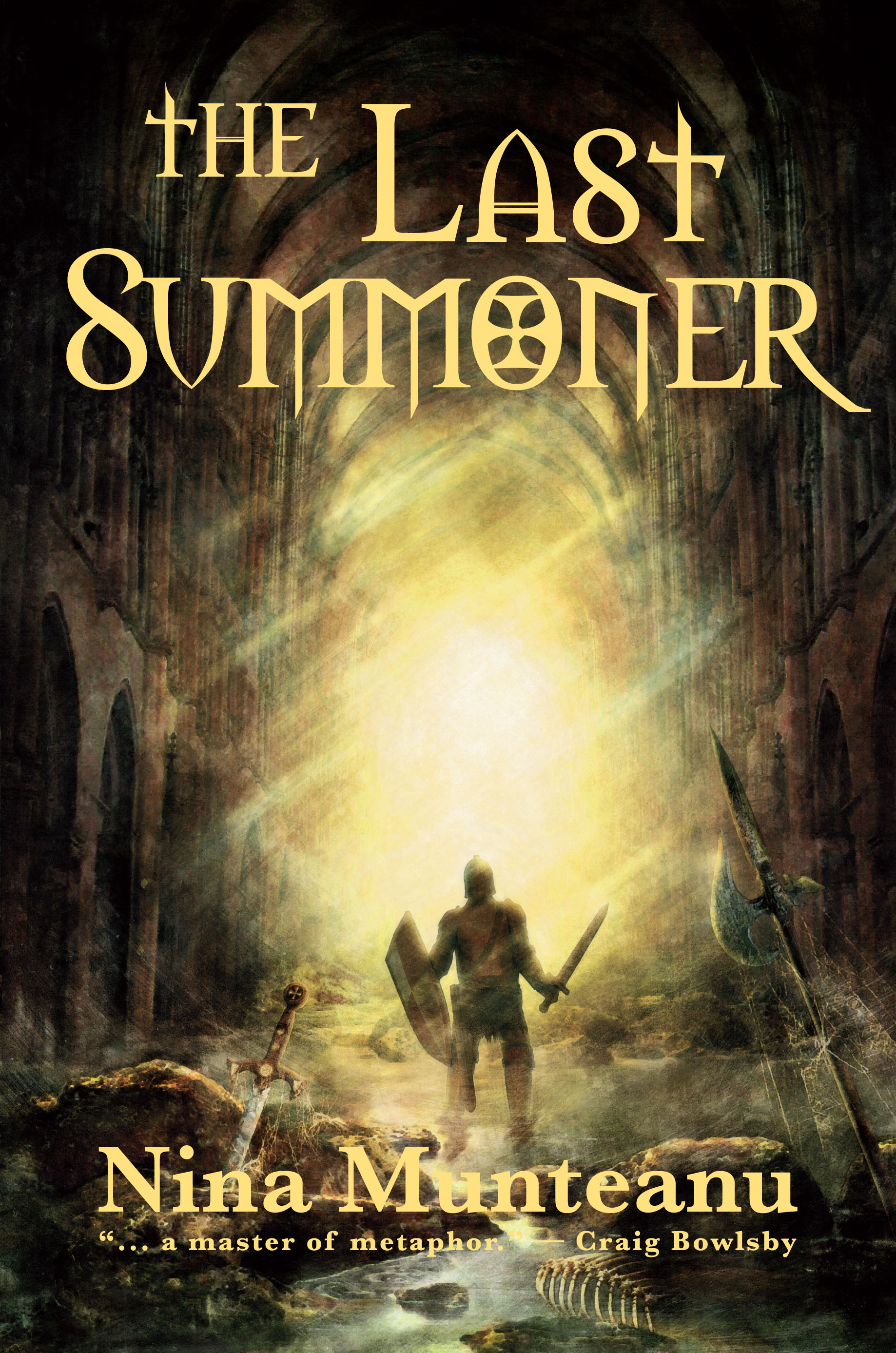
Cover1_LastSummoner-frontcover copyFrom where do we get our stories?

This is a question I am asked time and again. My readers, friends and colleagues alike marvel at my imagination, and ask me how I create these fantastical worlds and situations. Cornered in a moment of inarticulate bliss (this often happens to me), I shrug and blather off some ridiculously obscure tale of luciferous logolepsy.

The simple of it is that it always comes as a spark. Followed by inspiration. And from there, a story emerges. Premise to dramatization. So, let me tell you a story about how my 2012 historical fantasy The Last Summoner —about a medieval time traveler who must save the past from the future—came to be.

It all began with the Battle of Grunwald and the Fate of the Teutonic Knights—that is, when I stumbled upon it during an Internet ramble. But, in fact, it started before that—the spark, that is.

My part in this piece of history really began sometime in 2008 with the vision of an incredible image by Croatian artist Tomislav Tikulin (who had done the cover art for a previous novel Darwin’s Paradox). On Tikulin’s website I glimpsed the image of a magnificent knight, standing in a war-littered mire and gazing up, questioning, at the vaulted ceiling of a drowned cathedral. A great light shone upon the knight in streams of white gold. It sent my imagination soaring with thoughts of chivalry, adventure and intrigue.

Who was this knight standing in the mire?…

teutons3-close1

With that image imprinted inside me, the next nexus moment came when I stumbled across a significant but little-known battle in the medieval Baltic, the Battle of Grunwald. It would turn out to be the defining battle for what are now the countries of Poland and Lithuania. On June 14th 1410, they were still part of Prussia and tyrannized by the Teutonic Order, who were Christianizing the pagan Baltic on behalf of the Pope. In truth, the Order had been for centuries gathering wealth and land for colonizing Germans in their drang nach osten; they built sturdy castles (many of which still stand today) and a force of monk warriors, feared for their cunning strategy and treacherous combat abilities.

The Battle of Grunwald was, in fact, an upset in history. The Teutonic Order was powerful, intimidating and extremely capable. They should have won; but the peasant armies of Prussia slaughtered the Order, killing most of its knights. Historians debate that the hochmeister’s arrogance—indeed, the arrogance of the entire Order—precipitated their downfall. They underestimated their adversaries and got sloppy. After the Polish and Lithuanian armies outsmarted the Order and slayed their hochmeister, along with many of their knights, the Order’s own peasant slaves finished the job using clubs, pitchforks and stones.

Intrigued by this little known order of religious crusaders and their bizarre fate in an upset battle with a peasant army, I pursued the premise of an alternative consequence: what if the Teutonic Knights had NOT underestimated their enemy and won the Battle of Grunwald? Would they have continued their catastrophic sweep of North-east Europe into Russia and beyond? Would they have continued their catastrophic sweep of north- east Europe into Russia and beyond? Would they have claimed the whole for Germany’s expansionist lebensraum movement, fueled by its sonderweg, a dialectic that would ultimately lead to the killing fields of the Holocaust? What if the success of the Teutonic Order helped consolidate a united fascist elite, ambitious to conquer the world? And what if, as a result, Nazism sprang up 100 years earlier?

The Last Summoner, arose from this premise. Enter our heroine, young 14-year old Vivianne Schoen, Baroness von Grunwald, a self-centered romantic who dreams that her ritter (her knight) will rescue her from an arranged marriage to some foreign  warrior. As a result of an impetuous choice, she makes the startling discovery that she can alter history—but not before she’s branded a witch and must flee through a time-space tear into an alternate present-day France ruled by fascists. There, she learns that every choice has its price.

Warrior Woman Silhouette

Spanning from medieval Poland to present day Paris, France, The Last Summoner explores the sweeping consequences of our “subtle” choices. From the smallest grab to the most sweeping gesture, we are accountable for the world we’ve made. During her 600-year journey to save the world and undo the history she authored, Vivianne learns wisdom and humility. Through the paradox of history, she learns that what might have seemed the right choice for an immediate future, turns out to be disastrous for a distant future. To win is also to lose; to save oneself one must surrender oneself; and to save the world one need only save a single soul.

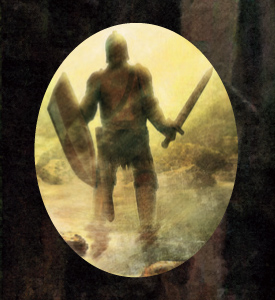
knight-cameoThe knight standing in the mire is Vivianne.
The Last Summoner, published by Starfire World Syndicate, was released in 2012 and remained a Canadian bestseller on Amazon for several months. It represents my first historical fantasy in an otherwise repertoire of hard science fiction. The Polish and Lithuanians celebrate June 14th with pride, erecting mock-ups of the battle annually. Some day I hope to participate.

The cover art for The Last Summoner is that very image that inspired my story. The Universe gifted me with the chance to acquire the image from Mr. Tikulin and a publisher willing to purchase it. I’d entered my own dream.

p.s. definition for luciferous logolepsy: “an illuminating obsession with words”

p.p.s. A novelette version, Summoning the Future’s Past, was released April 2021 in Italian by Delos Digital entitled l’Ultima Evocatrice.

This article first appeared on Warpworld on Nov. 30, 2013.

nina-2014aaNina Munteanu is an ecologist and internationally published author of award-nominated speculative novels, short stories and non-fiction. She is co-editor of Europa SF and currently teaches writing courses at George Brown College and the University of Toronto. Visit www.ninamunteanu.ca for the latest on her books.

.

Why Reading Fiction is Smart — Especially if You Write

chillon-inner courtyard

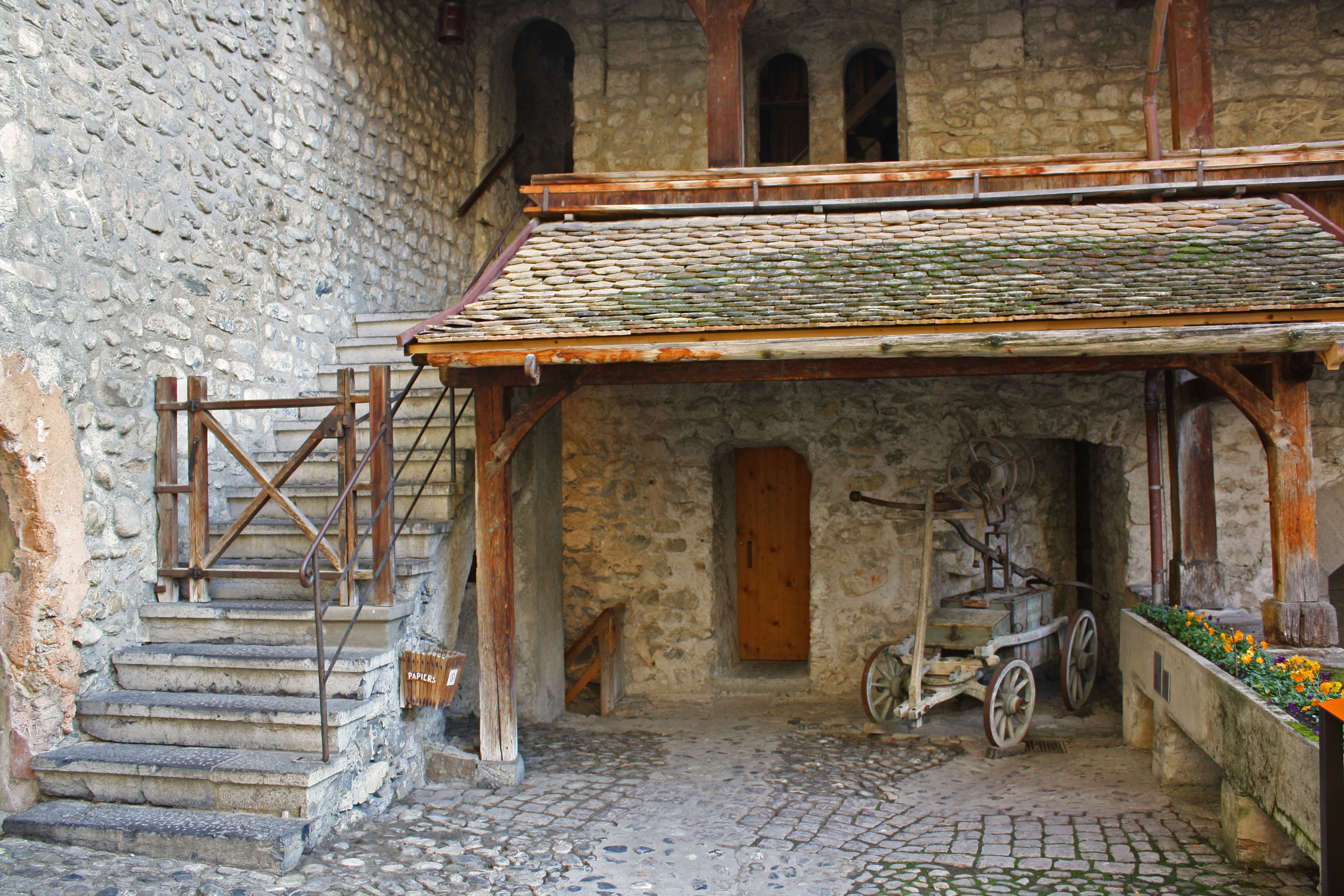
Courtyard of Chateau Chillon, Switzerland (photo by Nina Munteanu)

When a friend of mine asked me recently what book changed my life, I didn’t have to think too far. Two books came to mind instantly, both novels: Martian Chronicles by Ray Bradbury and Far from the Madding Crowd by Thomas Hardy. Two very different books, genres, time periods and subject matter. Yet they held in common superlative storytelling, incredible sensuality, and stirring use of metaphor. Bradbury’s simple yet powerful prose held humanity’s most vulnerable traits at close scrutiny, stirring me with the stories of ordinary people journeying into extraordinary places. Hardy’s lyrical and evocative prose entranced me with stories of extraordinary people journeying in ordinary places.

Of course there were many other books and authors who’d influenced me greatly, but these two particularly made me want to be a writer and move people as they had moved me.

A recent discussion with one of my writing students got me thinking about the merits of reading—fiction, particularly—in the writing process and creative writing, especially.

Janice confided to me in an email that her husband prefers non-fiction and reads slowly, while her daughter reads both fiction and non-fiction voraciously and quickly.

chateau-chillon-lake-geneva

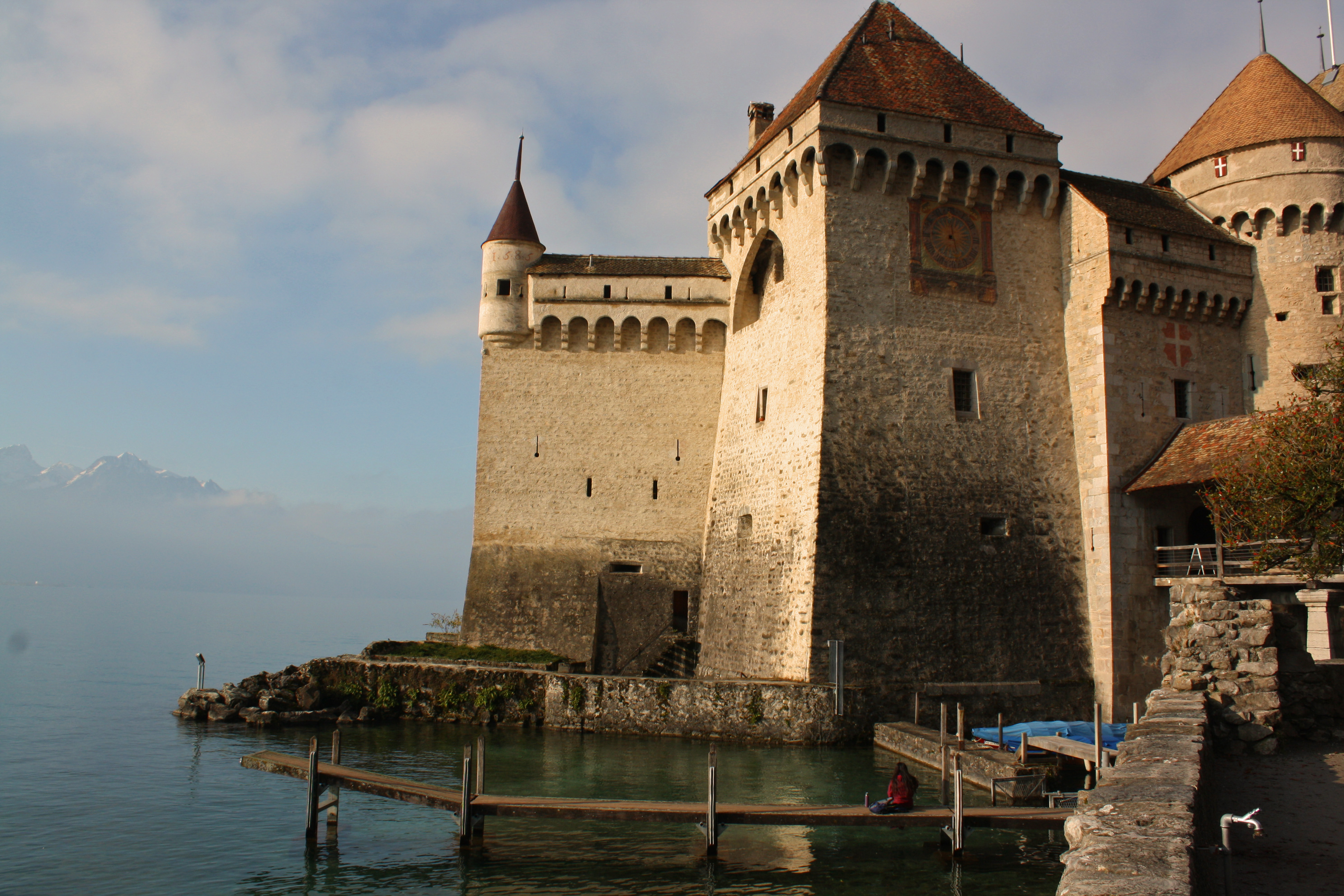
Chillon Castle, Switzerland (photo by Nina Munteanu)

“I think (and I could be wrong),” said Janice, “but the more fiction someone reads, the better they are able to communicate in a written form.” She suggested that, “Non-fiction does not have the breadth of style that fiction has, and thus the opportunities to find a style which adequately reflects the writer is somewhat curtailed if all they read is non-fiction. Style is a very personal thing and to have to write large swaths of material, the writer has to be comfortable in writing, thus if they find their ‘voice’ the information can be communicated in a manner which the writer does not find drudgery to write and best of all the reader will not find dry and difficult to read.”

It turns out that Janice’s keen observations and conclusions are corroborated by a fair amount of recent research. In their study a study entitled “Reading Literary Fiction Improves Theory of Mind” in the October 2013 issue of Science, researchers Kidd and Castano reported that reading literary fiction led to better performance on tests of affective and cognitive Theory of Mind compared with reading nonfiction, popular fiction or nothing at all. Theory of Mind (ToM) describes the ability to understand others’ mental states, a crucial skill in complex social relationships that characterize human societies.

Reading Fiction Improves Empathy

Neuroscientists at Emory University, led by Professor Gregory S. Berns, published findings in the December 2013 issue of the journal Brain Connectivity that suggested that reading a novel can improve brain function on a variety of levels. Reading fiction, reported Berns et al., improved the reader’s ability to empathize with others and “flex their imagination in a way that is similar to the visualization of a muscle memory in sports,” says Christopher Bergland in a recent article in Psychology Today.

“Changes caused by reading a novel are registered in the left temporal cortex,” says Bergland. That’s an area of the brain associated with receptivity for language. It’s also the primary sensorimotor region of the brain. “Neurons of this region have been associated with tricking the mind into thinking it is doing something it is not, a phenomenon known as embodies cognition.” Bergland suggests that just thinking about playing basketball can activate the neurons associated with the physical act of playing.

The neural changes suggested that “reading a novel can transport you into the body of the protagonist,” says Berns, who is director of Emory University’s Center for Neuropolicy in Atlanta. “Stories shape our lives and in some cases help define a person,” adds Berns. “We want to understand how stories get into your brain and what they do to it.”

nina-workshop 2

Nina Munteanu lectures in class

Storytelling in novels is a multi-faceted communication that engages a broad range of brain regions. I spend an entire 12-week course at George Brown College and the Universtiy of Toronto workshopping the story tools of an effective writer with my students; tools ranging from the use of metaphor to multi-layered plotting and character archetypes. Story—unlike anecdote, which many mistake for story—resonates with readers in a variety of conscious and sub-conscious ways. Neurobiological research has just begun to identify the brain networks that are activated when processing stories.

The Emory study used a 2003 thriller by Robert Harris (Pompeii), which follows a protagonist rushing against time to save the love of his life. Researchers chose the book for its page-turning plot. “It depicts true events in a fictional and dramatic way,” Bern says. “It was important to us that the book had a strong narrative line.”

Using functional magnetic resonance imaging (fMRI) scans on a group of students before and after reading a portion of the Harris novel, the Emory researchers demonstrated heightened connectivity in student’s brains. Areas of enhanced connectivity included students’ left temporal cortex, associated with language comprehension, and the central sulcus, associated with sensations and movement.

“The anterior (front) bank of the sulcus contains neurons that control movement of parts of the body,” Berns tells us. “The posterior (rear) bank contains neurons that receive sensory input from the parts of the body. Enhanced connectivity here was a surprise finding, but it implies that, perhaps, the act of reading puts the reader in the body of the protagonist.”

“The ability to put yourself in someone else’s shoes through embodied cognition is key to improving theory of mind and also the ability to be compassionate,” says Bergland in his article in Psychology Today. He adds, “Although this study does not directly draw these conclusions, it seems like common sense that if we encourage our children to read—as opposed to tuning out through television—theory of mind and the ability to be compassionate to another person’s suffering will improve.”

“We already knew that good stories can put you in someone else’s shoes in a figurative sense,” says Berns. “Now we’re seeing that something may also be happening biologically.”

The Berns study concluded, “At a minimum, we can say that reading stories—especially those with strong narrative arcs—reconfigures brain networks for at least a few days. It shows how stories can stay with us. This may have profound implications for children and the role of reading in shaping their brains.”

Reading Sharpens Your Brain

In her paper What Reading Does for the Mind, Berkley professor Anne E. Cunningham tells us that those that read generally have higher GPA’s, higher intelligence, and general knowledge than those that don’t. Her study also suggested that reading improves vocabulary and helps compensate for the normally deleterious effects of aging.

Cunningham’s studies demonstrated that reading boosted analytical thinking. This includes the ability to detect patterns more quickly. When I started to read more, my vocabulary increased tremendously. It also improved my spelling. Both of these are important to writers. As psycholinguist Steven Pinker pointed out in The Sense of Style, reading the works of writers you admire is an important way to becoming a better writer. Reading improves your memory. It also helps prioritize goals, by helping us to see another perspective and think “outside” our comfortable box.

Wilson et al. reported in the July 3 2013 issue of the journal Neurology that those who engaged in mentally stimulating activities (such as reading) earlier and later on in life experienced slower memory decline compared to those who didn’t. In particular, people who exercised their minds later in life had a 32 percent lower rate of mental decline compared to their peers with average mental activity.

Reading May Help Against Alzheimer’s Disease

According to research published in the journal Proceedings of the National Academy of Sciences in 2001, adults who engage in hobbies that involve the brain, like reading or puzzles, are less likely to have Alzheimer’s disease, while leisure limited to TV watching may increase the risk.

“The brain is an organ just like every other organ in the body. It ages in regard to how it is used,” lead author Dr. Robert P. Friedland told USA Today. “Just as physical activity strengthens the heart, muscles and bones, intellectual activity strengthens the brain against disease.”

Reading Reduces Stress and Helps You Sleep Better

That reading reduces stress and helps you sleep better is an intuitive notion recently corroborated by research at the University of Sussex. Findings by neuropsychologists, led by Dr. David Lewis show that reading a newspaper or book works better and faster than listening to music, going for a walk or sitting down with a cup of tea to calm stressed out nerves. Reading reduced stress levels by 68 per cent. Psychologists say this is because the human mind has to concentrate on reading and the distraction eases the tensions in muscles and the heart. Lewis and his team found that subjects only needed to read, silently, for six minutes to slow down the heart rate and ease tension in the muscles.

Dr Lewis said: “Losing yourself in a book is the ultimate relaxation. “This is more than merely a distraction but an active engaging of the imagination as the words on the printed page stimulate your creativity and cause you to enter what is essentially an altered state of consciousness.”

So, here’s my question to you: what book changed your life and why?


References:

Berns Gregory S., Blaine Kristina, Prietula Michael J., and Pye Brandon E. 2013. “Short-and Long-Term Effects of a Novel on Connectivity in the Brain.” Brain Connectivity 3(6): 590-600. doi:10.1089/brain.2013.0166.

Cunningham, Anne. E. 1998. “What Reading Does for the Mind.” In: American Educator/American Federation of Teachers. Spring/Summer,1998.

Kidd, David Comer and Emmanuele Castano. 2013. “Reading Literary Fiction Improves Theory of Mind.” Science 342 (6156): 377-380. October 2013.


Nina Munteanu is an ecologist and internationally published author of award-nominated speculative novels, short stories and non-fiction. She is co-editor of Europa SF and currently teaches writing courses at George Brown College and the University of Toronto. Visit www.ninamunteanu.ca for the latest on her books.


How Are You Telling Your Story?…Part 2: Voice and Narration

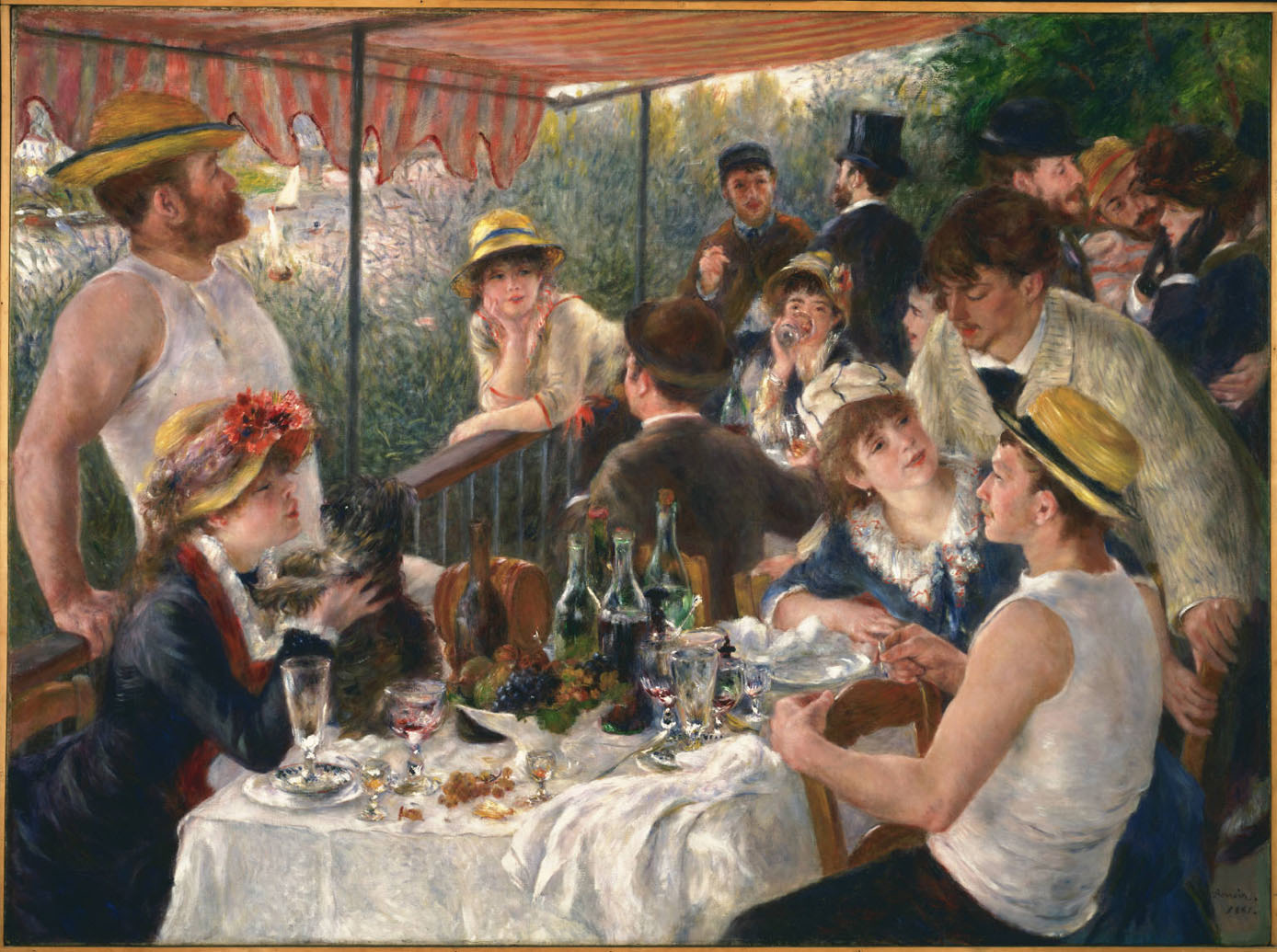
renoir-tableThe term “Voice” describes various aspects of a writer’s expression in story; it includes your unique writing style and the style you’ve chosen to adopt for the particular story you’re telling. The voice of your story is influenced by your audience—youth, adults, crazy people, etc.—as well as the subject matter and general overall theme of the story.

Voice is the feel and tone that applies to: 1) the story or book (narrative voice); 2) to each character in that story; and 3) the author’s own voice (authorial voice; in business it’s called the brand), which you carry with you in every work. It is the combination of all these “voices” that make each of your works unique. Think of a fine artist, a painter like Vincent Van Gogh, whose unique painter’s “voice” was apparent in all his Impressionistic works. The wild swirls of light and texture characterized all his paintings; yet, each individual work expressed its own unique message in Van Gogh’s artistic journey.


Authorial Voice

You express your authorial voice and the voice of your story through tone, perspective, style, language and pace. All of these reflect your intent and are ultimately expressed in the story’s overarching theme. The overarching theme is ultimately the author’s theme, the “world view” — the “so what part” — of the story. The principal character and minor characters will carry variations of the main theme, each with his or her unique voice. Invariably, the voice of the story reflects the author’s philosophy, biases and message.

Writers generally struggle in the beginning to obtain their unique “voice”, often adopting the voice of a writer they admire. Although this can help a writer define their own voice (by illuminating what they like and strive for), it can also retard an author’s unique self-expression. It is so much easier to use another’s proven formula; the danger is that you may never escape from beneath the shadow of your hero. In the area of science fiction, which I write, the internet is rich with “fan fic” (an endearing term for works based on already established stories, worlds, characters, and styles.) Many fan fic writers will not emerge from the shadow of unoriginality to find their own voice. So, take heed and be mindful of your own voice. Determine what is important to you and you will find your voice.


Narrative Voice

Narrative voice belongs to the persona telling the story. Which persona you adopt in narration depends on what kind of story you are telling, and the kind of emotional atmosphere you wish to achieve, says Crawford Kilian, Canadian author of over a dozen novels. The persona develops from the personality and attitude of the narrator, expressed through the narrator’s choice of words and depictions. Depending on your choice of POV (see my previous article on Viewpoint), the narrator of your story can be one or several main characters or you, the writer. More on this below.


Character Voice

It’s important to give each character a distinctive “voice” (including use of distinct vernacular, use of specific expressions or phrases, etc.). This is one way a reader can identify a character and find them likeable—or not.

In a manuscript I recently reviewed, I noticed that the characters spoke in a chaotic mixture of formal and casual speech. This confuses the reader and bumps them out of the story. Each person’s speech is typically consistent, reflecting their ethnic and regional background, who they hang around with, their education, history and biases. Consistency is critical; it helps readers identify with a character. They will abandon a story whose writing—and voice—is not consistent. So, my advice to this beginning writer was to pick one style for each character and stick to it.

Voice incorporates language (both speech and body movements), philosophy, and humor. How a character looks, walks, talks, laughs, is all part of this. Let’s take laughter for instance: does your character tend to giggle, titter, chortle, guffaw, belly-laugh? Does she usually put her hand over her mouth when she does? Does she do or say certain things when she’s nervous? See my upcoming article on body language for more detail.


Who Should Tell the Story?

When telling a story through the eyes of a single viewpoint character, it makes most sense to tell it through the main character, the protagonist, around whom the story usually revolves. She is the one who’s going to be chiefly affected by the events of the story. Ansen Dibell, author of The Elements of Fiction: Plot, asks the question: “Who is really at the story’s heart?” If you’re having trouble with the story of Sally and Norman from Sally’s point of view, perhaps you should try telling it through Norman’s point of view. Or perhaps your main POV character is a third person, looking on and, in turn, changed.

Narrating a story from an outsider’s viewpoint (the hidden protagonist as observer-narrator) —sometimes called displaced narrative — can also add an element of complexity and depth to a story. The Illusionist is a good example of this. This story, about Eisenheim (the Illusionist) and his beloved, is told through the cynical eyes of the city’s chief inspector, who learns to believe again through his “experience” of their story. Other examples include J.P. Hartley’s The Go-Between, Scott Fitzgerald’s The Great Gatsby, Saving Private Ryan, My Beloved, Charlotte Bronte’s Wuthering Heights, and Joanne Harris’s Chocolat.

Using a displaced viewpoint character to narrate a story works particularly well if you want to keep your main character strange and mysterious. Having an “outside” character tell the story of one or two other characters, also gives the writer a chance to add another thematic element to a story (the one belonging to the narrator). A story told through the eyes of a dreamer will be very different than one told by a ponderous thinker.

Other kinds of narration include:

  • detached autobiography (narrator looks back on long-past events; e.g., To Kill a Mockingbird by Harper Lee)
  • letters or diary (narrative told through letters, also known as the epistolary novel; e.g. my short story, Arc of Time)
  • interior monologue (narrator recounts the story as a memory; stream of consciousness is an extreme form of this narrative, e.g., Ulysses by James Joyce)


How Many Should Tell the Story?

The use of multiple viewpoints is common among writers and adds an element of richness and breadth to a story. With each added character’s POV, readers are more enlightened to the thoughts and motivations of characters in a story. When you have several characters telling the story, this is called a rotating viewpoint. A few points to follow include:

  • Alternate or rotate your differing viewpoints clearly (scene by scene, chapter by chapter, or part by part)
  • Don’t change viewpoints within a scene
  • Separate different POV scenes within chapters with extra white space or some kind of graphic (e.g., ****)

Boat-DesolationSound

Desolation Sound, BC coast (photo by Nina Munteanu)


References

Dibell, Ansen. 1999. Elements of Fiction Writing: Plot. Writer’s Digest Books. Cincinnati, Ohio. 170pp.

Killian, Crawford. 2003. “Narrative Voice”. In: Writing Fiction: http://crofsblogs.typepad.com/fiction/2003/07/narrative_ voice.html

Morrell, David. 2000. “First Blood, Third Person”. In: Fiction Writer. April, 2000.

Munteanu, Nina. 2009. The Fiction Writer: Get Published, Write Now! Starfire World Syndicate. Louisville, KY. 266pp.

Nina Munteanu is an ecologist and internationally published author of award-nominated speculative novels, short stories and non-fiction. She is co-editor of Europa SF and currently teaches writing courses at George Brown College and the University of Toronto. Visit www.ninamunteanu.ca for the latest on her books.

How Are You Telling Your Story?…Part 1: Viewpoint

renoir-girls-drawingThe story’s viewpoint can be told from several perspectives and which one you choose can be critical to how your story comes across.

Different stories lend themselves to different narrative styles and point of views (POVs). In his April 2000 article in Fiction Writer entitled “First Blood, Third Person” David Morrell warns that some writers may “select a viewpoint merely because it feels natural, but if you…don’t consider the implications of your choice…your story might fight you until you abandon it, blaming the plot when actually the problem is how you’re telling it.”

The viewpoint choices include:

  • Omniscient
  • Third person limited
  • Second person
  • First person

Omniscient View

The omniscient view is the broadest view. Through this viewpoint the narrator describes everything and everyone and may drop into any character at any time, and — in the case of a beginning writer — all too confusingly in the same paragraph.

While this POV is the easiest one to use it is really the hardest to master. In the wrong hands, this viewpoint can be as intrusive as it is distancing. And it is prone to polemic. In the hands of a masterful writer, this viewpoint can make for the most powerful and rich storytelling. Epics of any kind, especially epic fantasies or historical epics, lend themselves to this style. The omniscient viewpoint is particularly suited to a story that is “large”, where ultimately the main character is not any particular protagonist but “the story” itself, or a society or world or time period. The writer must still somehow achieve connection and intimacy with the reader to succeed with this viewpoint. You can do this through lyrical and compelling narrative, poetic language and powerful imagery.

Limited Third Person Viewpoint

A story told through limited third person POV is narrated from one or a few key characters (though not at the same time) by revealing not only their movements but their thoughts and feelings (e.g., he struggled up to his feet, giddy with pain). When starting out, it is often best to adopt this style, which is generally more personal, appealing and least confusing. So long as you respect the readers’ need for clarity by keeping to one POV per scene, you can choose to enter into the heads of as many characters as you wish. It is the norm to use chapter, section or scene breaks when changing from one POV to another.

This style of narrative is the most common one used in contemporary books, particularly genre books, thrillers and action/adventure books. Through conflicting perspectives of your characters, you can swiftly paint a rich tapestry of tension for both characters and reader.

Second Person Viewpoint

This second person viewpoint (“you”) is not often used, mostly because it is both distancing and less easy to read. Although it is a narrative often used in conversation (e.g., “you never know what you’re gonna get with a box of chocolates, do you?”) this style of narrative is harder for readers to embrace and get close to the story’s characters. This viewpoint works effectively in certain artistic situations when you wish to purposefully impart a distance to the narrator, due to their own limitations, infirmity or situation.

First Person Viewpoint

The first person point of view is both the most limiting perspective (told only through one viewpoint) and most personal and revealing (of that viewpoint character). This viewpoint works well in literary fiction where the main character’s thoughts and issues are the key focus in the story. When the character who changes the most is the one telling the story, this makes for very compelling reading.

Many detective stories are told in first person to great effect. The reader is right there with the detective, solving the mystery. The first person viewpoint is also the preferred POV for memoirs, for obvious reasons.

One thing to keep in mind, particularly when narrating through the first person POV, is the reliability of your character. You need to decide how reliable your first person POV character is in telling the story and how you will impart this to the reader. Writing through a character’s faulty perception of the world (and of themselves) provides a writer with an incredible opportunity but also an incredible challenge. You can only go so far with an unreliable character before losing your own credibility as a writer — and losing the reader in the long run. Obviously, you need a balance.

If you are struggling with your story and can’t quite pinpoint what is bogging it down, try changing how you are telling it. Change the viewpoint and see what happens.

Boat-DesolationSound

Prideaux Haven in Desolation Sound, BC coast (photo by Nina Munteanu


Nina Munteanu is an ecologist and internationally published author of award-nominated speculative novels, short stories and non-fiction. She is co-editor of Europa SF and currently teaches writing courses at George Brown College and the University of Toronto. Visit www.ninamunteanu.ca for the latest on her books.


The Hero’s Journey: Part 3, Defining Your Hero


GiantCedars boardwalk2

Boardwalk in Giant Cedar park, Revelstoke Park, BC (photo by Nina Munteanu)

To write a truly compelling story is to resonate with the universal truths of metaphor within the consciousness of humanity. According to scholar and mythologist Joseph Campbell this involves an open mind and a certain amount of humility; and giving oneself to the story…not unlike the hero who gives her life to something larger than herself: “Anyone writing a creative work knows that you open, you yield yourself, and the book talks to you and builds itself….you become the carrier of something that is given to you from … the Muses—or God.”

This is no fancy, it is a fact. Since, as Campbell says “the inspiration comes from the unconscious, and since the unconscious minds of the people of any single small society have much in common, what the shaman or seer [or artist] brings forth is something that is waiting to be brought forth in everyone.” I call this tapping into the universal truth where metaphor lives. A story comes alive when these two resonate.

All stories contain common structural elements found universally in myths, fairy tales, dreams, and movies. As writers we are the creators of our culture’s current myths. These are best summarized under “the Hero’s Journey”, which is essentially the 3-act ancient Greek play, handed down to us thousands of years ago. The hero’s journey draws from the depth psychology of Swiss psychologist Carl Jung and Joseph Campbell. In his now classic book The Hero with a Thousand Faces, Campbell describes the hero’s journey as steps of the “rite of passage” of self-discovery and self-integration. To be a hero is to be on a journey home. The hero’s journey is the soul’s search for home, a journey of transformation we all take in some form.

Describing the Hero & Her Journey

Anne-walking-Cedars

Friend Anne walks among the giant cedars, Revelstoke Park, BC (photo by N. Munteanu)

The hero is the ultimate altruist, sacrificing her life for the greater good. She is warrior and lover who slays the dragon of the status quo, so to speak. She enacts the ultimate in sacrifice in her quest to change the world (and/or herself) for the better.

Christopher Vogler, author of The Writer’s Journey tells us that writers are storytellers who utilize the principles of myth to create masterful stories that entertain and resonate with our psyche: “The Hero’s Journey is not an invention, but an observation. It is a recognition of a beautiful design, a set of principles that govern the conduct of life and the world of storytelling the way physics and chemistry govern the physical world… The Hero’s Journey is a pattern that seems to extend in many dimensions, describing more than one reality. It accurately describes, among other things, the process of making a journey, the necessary working parts of a story, the joys and despairs of being a writer, and the passage of a soul through life.”

In my opinion, the best stories follow the hero’s journey plot structure. This is because “hero’s journey” stories are transformative for not only the protagonist (our hero) but for readers following along and identifying with her. Stories that pull a reader through the three steps of a human being’s evolution (separation, transformation, and return) promise great depth and fulfillment. This is what great storytelling does: they take us on a transformative journey of learning, through challenges of change to realize a prevailing victory. Writers are the shamans of today and the heroes we write about are our agents of change. Through our artistic drama of metaphor, we make commentary on the world and what it means to be human.

The hero archetype is particularly interesting, given that he or she is essentially us as we journey to prevail over the obstacles of our fears, weaknesses, and disappointments. Every hero is on a quest or mission (whether she realizes it or not). The true mark of a hero is in her willingness to sacrifice something of value, perhaps even her life, on behalf of an ideal or a group and ultimately for the greater good. A hero is the ultimate altruist.

In some versions of The Holy Grail the hero reaches a huge chasm with no apparent way to get across the Grail castle. The space is too great for him to jump. Then he remembers how Grail teaching instructs him to step out in faith. As he puts one foot out into the abyss, a bridge magically appears and he is saved.  Of course, this is all metaphor. Anyone who has left a job, school or a relationship, or fallen in love, has stepped out into that abyss, separating them from the familiar world they’ve know.  The journey and the abyss is often not a physical but a spiritual adventure, as our hero transforms from ignorance and innocence toward experience and enlightenment.  In the end, our hero returns with a gift to the world.

Kinds of Heroes

DevilsClub Hemlock-CedarGrove

Devil’s club, Revelstoke Park (photo by Nina Munteanu)

Heroes may be willing or unwilling. Some can be downright unheroic to begin with. We call them anti-heroes. Anti-heroes are notably flawed characters who must grow significantly to achieve the status of true hero. Often the anti-hero starts off more like a villain, like the character Crais in Farscape or Tom Cruise’s character in Rain Man. The wounded anti-hero may be a heroic knight in tarnished armor, “a loner who has rejected society or been rejected by it,” according to Vogler. Examples include Jim Stark in Rebel Without a Cause and Aragorn in Lord of the Rings. The catalyst hero provides an exception to the rule of hero undergoing the most change. This type of hero shows less of a character arc but precipitates significant change or transformation in another protagonist (often the principal narrator). Examples include David Adams in Ben Bova’s Colony or The Illusionist of the same name. In both cases, the main protagonist (the one who changed the most) was another character, affected by the hero’s actions.

In Awakening the Heroes Within, Carol S. Pearson provides further categories for hero-archetypes, including: innocent, orphan, martyr, wanderer, warrior, caregiver, seeker, lover, destroyer, creator, ruler, magician, sage, and fool. As with Vogler’s archetypes, these aren’t necessarily fixed for an individual hero, who may embrace several of these archetypes during her transformation in response to events and ordeals set before her.

Pearson grouped these hero-archetypes according to stages of a hero’s journey and elements of his responding psyche. For instance, the Ego relates to the preparation for the journey and includes: Innocent; Orphan; Warrior; and Caregiver. The Soul (the unconsciousness) relates to the journey itself and includes: Seeker; Destroyer; and Lover. The Self (individuation) relates to the return from the journey and includes: Ruler; Magician; Sage; and Fool. A hero may use any of these archetypes at various times in her life, but she can also use all of them within a day or an hour.

The table below shows how Pearson breaks these down into six main archetypes with associated task, plot structure and hero’s “gift”.

A Hero’s Role & Gift

Archetype Task Plot Stucture Gift
Orphan Survive difficulty How she suffered & survived Resilience
Wanderer Find herself How she escaped & found her way Independence
Warrior Prove her worth How she achieved her goals Courage
Altruist Show generosity How she gave to others Compassion
Innocent Achieve happiness How she found the promised land Faith
Magician Transform herself How she changed the world power

References:

Campbell, Joseph. 1970. The Hero with a Thousand Faces. World Publishing Co. New York.
Henderson, Mary. 1997. Star Wars: The Magic of Myth. Bantam Spectra. New York. 214pp.
Pearson, Carol S. 1991. Awakening the Heroes Within. Harper. San Francisco.
Pearson, Carol S. 1998. The Hero Within: Six Archetypes We Live By. Harper. San Francisco. 3rd Edition.
Pearson, Ridley. 2007. “Getting Your Act(s) Together”. In: Writer’s Digest. April, 2007.
Vogler, Christopher. 1998. The Writer’s Journey: Mythic Structure for Writers. 2nd Edition. Michael Wiese Productions, Studio City, California. 326pp.

Previous Articles on The Hero’s Journey:

Part 1, The Hero & the Journey

Part 2, Heroes and other Archetypes

Edge-of-Tomorrow-emily blunt


Nina Munteanu is an ecologist and internationally published author of award-nominated speculative novels, short stories and non-fiction. She is co-editor of Europa SF and currently teaches writing courses at George Brown College and the University of Toronto. Visit www.ninamunteanu.ca for the latest on her books.

The Hero’s Journey: Part 2, Heroes and Other Archetypes

420px-Edmund_blair_leighton_accolade

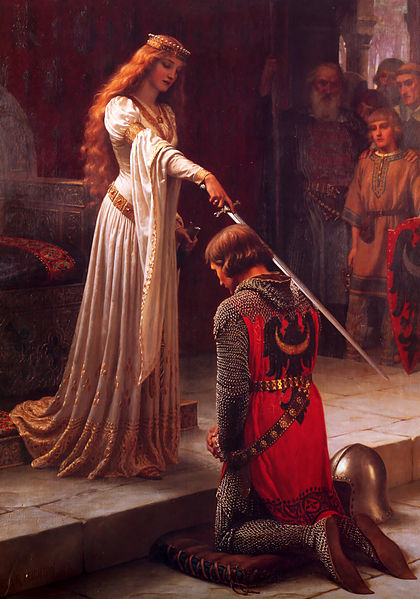
Accolade by Blair-Leighton

The world of fairy tales and myth is peopled with recurring character types and relationships. Heroes on a quest, heralds and wise old men or women who provide them with “gifts” or motive, shady fellow-travelers—threshold guardians—who “block” the quest, tricksters who confuse things and evil villains who simply want to destroy our hero and her quest.

Jung adopted the term archetypes, which means ancient patterns of personality shared by humanity, to describe these as a collective unconscious. An archetype models a personality or behavior; a mother-figure is an archetype. This is what makes archetypes, or symbols, so important to the storyteller. Archetypes are found in nearly all forms of literature, with their motifs mostly rooted in folklore.

Assigning an archetype to a character lets the writer clarify that character’s role in the story. Archetypes are an important tool in the universal language of storytelling, just as myth serves the overall purpose of supplying “the symbols that carry the human spirit forward.” (Joseph Campbell). Joseph Campbell went so far as to describe the archetype as something that is expressed biologically and is wired into every human being.

Christopher Vogler, author of The Writer’s Journey, lists the seven most useful archetypes for the writer.

The Hero

Anne-walking-Cedars

Friend Anne walks among giant cedars, Revelstoke, BC (photo by Nina Munteanu)

The hero sacrifices his own needs on behalf of others. He provides a character for us to identify with and is usually the principal POV character in a story, with qualities most readers can (or want to) identify with. The hero “transforms” through her journey as she encounters other archetypes on her journey, whether it is a physical journey or a psychological journey toward “home” (salvation or redemption) through sacrifice. The true mark of the hero, says Vogler, is in the act of sacrifice: “the hero’s willingness to give up something of value, perhaps even her own life, on behalf of an ideal or a group,” and ultimately for the greater good.

Heroes may be willing or unwilling. Anti-heroes are notably flawed characters that must grow significantly to achieve the status of true hero. Often the anti-hero starts off more like a villain, like Tom Cruise’s character in Rainman. The wounded anti-hero may be a “heroic knight in tarnished armor, a loner who has rejected society or been rejected by it,” says Vogler: Aragorn in Lord of the Rings. The catalyst hero shows less of a character arc, but precipitates significant change or transformation in other protagonists. A good example is David Adams, in Ben Bova’s Colony.

The Mentor

The mentor often possesses divine wisdom and has faith in the hero. He often gives the hero a “gift”, which is usually something important for the quest; either a weapon to destroy a “monster” or a “talisman” to enlighten the hero. A good example is in Star Wars, when Luke’s mentor, Obi Wan, provides him with his father’s lightsaber (Luke’s magic talisman).

The Herald

Heralds announce the coming of significant change, whether the hero likes it or not (and usually they don’t). They deliver the call to adventure. The herald is a catalyst that enters the story and makes it impossible for the hero to remain in status quo. Existing in the form of a person, an event, or just information, they shift the hero’s balance and change her world.

In Star Wars, Ben Kenobi issues the call when he invites Luke to join him on his mission to Alderaan. The herald also provides the hero with motivation. In Romancing the Stone, the herald for Joan Wilder comes to her as a treasure map in the mail, and a distressed phone call from her sister.

The Threshold Guardian

This archetype guards the threshold of “Separation from the Ordinary World” on the hero’s quest to achieve his destiny. Threshold guardians spice up the story by providing obstacles the hero must overcome. Threshold guardians are usually not the main antagonist. In the Harry Potter series, this role is fulfilled by Malfoy, Snape or Filch, even. They help round-out the hero’s journey and develop his character arc. The threshold guardian can be a “friend” who doesn’t believe in the hero or her quest. Ultimately, this is the role of the threshold guardian: to test the hero’s resolve in her quest.

The Shape shifter

The shape shifter adds dramatic tension to the story and provides the hero with a puzzle to solve. They can seem one thing and in fact be another. They bring doubt and suspense to the story and test the hero’s abilities to discern her path. Yoda in Star Wars is a bit of a shape shifter, initially masking his ancient wisdom with a foolish childlike appearance when Luke first encounters him.

The Shadow

The monster under the bed, repressed feelings, deep trauma, a festering guilt: these all possess the dark energy of the shadow. This is the dark force of the unexpressed, unrealized, rejected, feared aspects of the hero and represented by the main antagonist or villain.

Voldermort in the Harry Potter series; Darth Vader in Star Wars. These are shadows and worthy opponents for the hero, bringing out the best in her and usually demanding the ultimate in self-sacrifice (the hero’s destiny).The shadow force, if internalized by the hero, may serve as a threshold guardian, to overcome; ultimately challenging the hero to overcome her greatest weakness and prevail.

The Trickster

Nina-giant cedar03

Nina Munteanu leans against giant cedar, Revelstoke Park, BC (photo by Anne Voute)

Practically every Shakespearian play contains a jester or fool, who not only serves as comic relief but as commentator. This is because tricksters are usually witty and clever, even when ridiculous. The comedy of most successful comedians touches upon the pulse of a culture by offering commentary that is truism (often in the form of entertaining sarcasm). As commentator, the trickster is often you, the artist, with one foot in and one foot out for perspective

Recommended Reading:

Cameron, Julia. 1992. The Artist’s Way: a Spiritual Path to Higher Creativity. Penguin Putnam. 222pp.
Campbell, Joseph. 1970. The Hero with a Thousand Faces. World Publishing Co. New York.
Henderson, Mary. 1997. Star Wars: The Magic of Myth. Bantam Spectra. New York. 214pp.
Vogler, Christopher. 1998. The Writer’s Journey: Mythic Structure for Writers. 2nd Edition. Michael Wiese Productions, Studio City, California. 326pp.

The Hero’s Journey: Part 1, The Hero & the Journey

All stories consist of … common structural elements found universally in myths, fairy tales, dreams, and movies. They are known collectively as The Hero’s Journey — Christopher Vogler, “The Writer’s Journey: Mythic Structure for Writers”

GiantCedars boardwalk2

Boardwalk among giant cedars, Revelstoke Park, BC (photo by Nina Munteanu)

“The Hero’s Journey” myth follows the three-act structure of the ancient Greek play, handed down to us thousands of years ago. Drawn from the depth psychology of Swiss psychologist Carl Jung and the scholar and mythologist Joseph Campbell, author of The Hero with a Thousand Faces, it duplicates the steps of the “Rite of Passage” and is a process of self-discovery and self-integration.

The Power of Myth & Archetype

Old Cedar-MtRevelstokePark2019

Cedar tree, Revelstoke Park, BC (photo by Nina Munteanu)

Campbell recognized that myths weren’t just abstract theories or quaint ancient beliefs but practical models for understanding how to live. Ultimately, the Hero’s Journey is the soul’s search for “home”. It is a journey of transformation we all take, in some form.This is why the Hero’s Journey model for writing is so relevant and why it appeals to all readers.

Jung proposed that symbols appear to us when there is a need to express what thought cannot think or what is only divined or felt. Jung discovered reoccurring symbols among differing peoples and cultures, unaffected by time and space. He described these shared symbols as archetypes: irrepressible, unconscious, pre-existing forms of the psyche. Joseph Campbell suggested that these mythic images lay at the depth of the unconscious where humans are no longer distinct individuals, where our minds widen and merge into the mind of humankind. Where we are all the same.

The Hero’s Journey in Storytelling

Compelling stories resonate with the universal truths of metaphor within the consciousness of humanity. According to Joseph Campbell this involves an open mind and a certain amount of humility; and giving oneself to the story…not unlike the hero who gives her life to something larger than herself:

moss-covered everything

Creek in Revelstoke Park, BC (photo by Nina Munteanu)

“Anyone writing a creative work knows that you yield yourself, and the book talks to you and builds itself….you become the carrier of something that is given to you from … the Muses or God. This is no fancy, it is a fact. Since the inspiration comes from the unconscious, and since the unconscious minds of the people of any single small society have much in common, what the shaman or seer [or artist] brings forth is something that is waiting to be brought forth in everyone.”

I call this tapping into the universal truth where metaphor lives. A story comes alive when these two resonate.

Vogler suggested that using the principles of myth,helps “create a masterful story that is dramatic, entertaining, and psychologically true.”

The Hero and the Journey

Heroes are agents of change on a quest. The hero is the ultimate altruist, sacrificing her life for the greater good. She is warrior and lover who slays the dragon of the status quo, so to speak. She enacts the ultimate in sacrifice in her quest to change the world (and/or herself). The hero’s task has always been to bring new life to an ailing culture, says Carol S. Pearson, author of The Hero Within. Julia Cameron reiterates this in her book, The Artist’s Way, when she describes the concept of art as a healing journey (not just for the individual but for a culture). This is because the writer/artist changes society by changing themselves.

tall cedar-moss

Moss-covered cedar, Revelstoke Park, BC (photo by Nina Munteanu)

Campbell describes a 12-step journey of the hero within 3-acts and influenced by five major archetypes (herald, mentor, threshold guardian, trickster, shadow and shapeshifter). Our hero starts her journey in Act 1 — in the Ordinary World — and will eventually separate from the Ordinary World in Act 2— entering the Special World, where she will transform through her many challenges. In Act 3, she re-enters the Ordinary World, changed, with her gift to the world. I’ll go into more detail about how you integrate other archetypes and the steps of the journey in “storytelling” in Parts 2 and 3 of this series.

For now, let’s concentrate on our hero and what her journey means to her. She begins her quest with one giant step. How does she do it? How does she muster up the courage and resolution to proceed (often against all odds) on a journey that promises only challenge and hardship. She does so because our hero, whether she realizes it or not, has faith in her quest (even if she may not have faith in herself).

In some versions of the Holy Grail quest, relates Pearson, the hero reaches a huge chasm with no apparent way to get across to the Grail castle. The space is too great for him to jump across. Then he remembers the Grail teaching that instructs him to step out in faith. As he puts one foot out into the abyss, a bridge magically appears and he is saved. Anyone who has left a job, school, one’s home town, or a relationship has stepped out into that abyss, separating them from the familiar world they’ve known.

Just as “the knights of King Arthur’s Round Table set off to seek the Holy Grail,” says Mary Henderson, author of Star Wars: The Magic of Myth, “the great figures of every major religion have each gone on a ‘vision quest’, from Moses’ journey to the mountain, to Jesus’ time in the desert, Muhammad’s mediations in the mountain cave, and Buddha’s search for enlightenment that ended under the Bodhi tree.” The journey, and the abyss, is often not a physical adventure, adds Henderson, but a spiritual one, “as the hero moves from ignorance and innocence to experience and enlightenment.”

WesternRedCedar-moss2

Cedar tree, Revelstoke Park, BC (photo by Nina Munteanu)

Here are the 12 steps of the Hero’s Journey:

ACT ONE: Separation

  • Ordinary World
  • Call to Adventure
  • Refusal of the Call
  • Meeting with the Mentor
  • Crossing the Threshold

ACT TWO: Initiation & Transformation

  • Tests, Allies, Enemies
  • Approach to the Innermost Cave
  • Ordeal (Abyss)
  • Reward/Seizing the Sword (Transformation and Revelation)

ACT THREE: the Return

  • The Road Block
  • Resurrection / Atonement
  • Return with the Elixor

DevilsClub Hemlock-CedarGrove

Devil’s club (photo by Nina Munteanu)

I’ll talk about these in more detail and show you some examples in Part 3 of my Hero’s Journey series. Next in the series is “The Hero’s Journey—Part 2, Archetypes”.


Recommended Reading:

  • Cameron, Julia. 1992. The Artist’s Way: a Spiritual Path to Higher Creativity. Penguin Putnam. 222pp.
  • Campbell, Joseph. 1970. The Hero with a Thousand Faces. World Publishing Co. New York.
  • Campbell, Joseph. 1988. The Power of Myth.
  • Henderson, Mary. 1997. Star Wars: The Magic of Myth. Bantam Spectra. New York. 214pp.
  • Munteanu, Nina. 2009. The Fiction Writer: Get Published, Write Now! Starfire World Syndicate, Louisville, KY. 266pp.
  • Pearson, Carol S. 1998. The Hero Within: Six Archetypes We Live By. Harper. San Francisco. 3rd Edition.
  • Vogler, Christopher. 1998. The Writer’s Journey: Mythic Structure for Writers. 2nd Edition. Michael Wiese Productions, Studio City, California. 326pp.

Edge-of-Tomorrow-emily blunt

Nina Munteanu is an ecologist and internationally published author of award-nominated speculative novels, short stories and non-fiction. She is co-editor of Europa SF and currently teaches writing courses at George Brown College and the University of Toronto. Visit www.ninamunteanu.ca for the latest on her books.