On Writing: Defending the Em-Dash

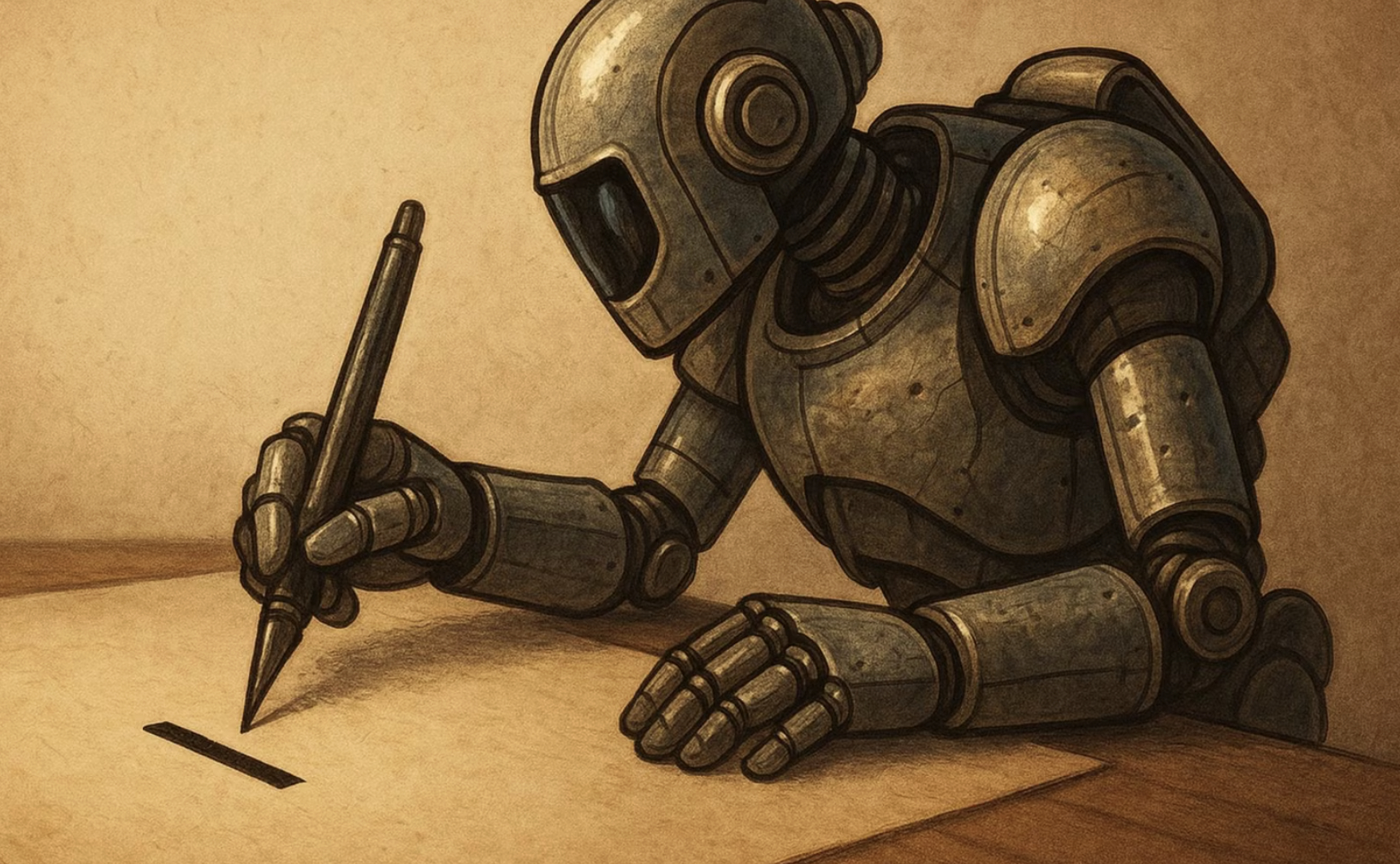
Robot reading (image by Stock Cake)

Lately, I’ve discovered that use of the em dash has come under criticism by writers and discerning readers, given its apparently overwhelming use by AI. The appearance of em dashes in script is now considered a “tell” that a written work was AI-generated.

I’m told that em dashes were deeply embedded in the AI learning algorithms—they were everywhere in human-generated training data such as books, articles, essays because we used them so often. Because they weren’t flagged as risky during training, they became a default. AI learns through pattern mimicry by sifting through massive text datasets (that have included my own works of fiction and non-fiction;by the way, I use the em dash a lot because I love what it does for a sentence). One theory suggests that em dashes are preferred by autoregressive models for waving tokens or providing structural breaks. Its use has its own name: the “ChatGPT hyphen.” The discussion alone has brought more attention to the em dash, mostly negative attention.

As a result of em dash’s association with LLM-generated text, some writers have started avoiding the use of em dashes altogether to prevent their work from being labelled fake—despite its legitimate appearance in human writing for centuries.

This is a real shame.

Because, the em dash is a visual and versatile tool to achieve an emphasized pause, the equivalent to a raised eyebrow, a dramatic mid-sentence shift in thought, or a noteworthy point to consider. Used correctly and with intention, the em dash provides depth, contextual complexity and three dimensionality within an otherwise unidirectional sentence. The em dash singles out a thought, raises it above the script to show its merit amid the greater sentence concept. What is often achieved is more complex and layered with additional meaning and clarity. The visual nature of the em dash—how it looks in a sentence—is also important. Because, as writer Bill Zinsser says, “Writing is visual—it catches the eye before it has a chance to catch the brain.” There’s a kind of aesthetic nature to how writing sits on a page; this is also why paragraphing—breaking up long text into shorter paragraphs on a page—is so important. The white space created by these breaks subliminally signals the reader, giving them a chance to breathe as they read. The presence of an em dash similarly signals the reader to read the enclosed phrase apart—yet remaining an important part—of the sentence.

Here’s how The Chicago Manual of Style explains it:

“The em dash has several uses. It allows, in a manner similar to parentheses, an additional thought to be added within a sentence by sort of breaking away from that sentence—as I’ve done here. Its use or misuse for this purpose is a matter of taste, and subject to the effect on the writer’s or reader’s “ear.” Em dashes also substitute for something missing. For example, in a bibliographic list, rather than repeating the same author over and over again, three consecutive em dashes (also known as a 3-em dash) stand in for the author’s name. In interrupted speech, one or two em dashes may be used: “I wasn’t trying to imply—” “Then just what were you trying to do?””

After announcing that the em dash is their favourite punctuation, Bavesh Rajaraman listed the several ways you can use this punctuation:

1. use it like how I regularly do, with bridging sentences, kind of like a longer comma, or a semicolon.

2. use it like a colon: “Some examples of transition metal atoms are — Co, Ni, Fe”

3. use it like a parenthesis, to add extra detail, or clarify. “The Wheel of Time has been an incredibly strong fantasy series — till book 6 where I’m currently at — with size and scope incomparable to its contemporaries”

4. use it to interrupt a speaker: “Melissa, I’m gonna be leaving for work, make sure to keep the door — “ as Klein heard the door thud, “I guess she understood the assignment,” he lampooned as he headed for work.

5. use it as something more important than demarcated in parenthesis. Here’s a snippet from Brandon Sanderson’s Essay “Outside”: “When you’re very young, it’s proximity — not shared interests — that makes friends. This often changes as you age. By fourteen, John had found his way to basketball, parties, and popularity. I had not.”— Brandon Sanderson, 2023

Celebrated poets and writers—including Emily Dickinson, Henry James, Virginia Woolf, and Stephen King—have used the em dash for emphasis, as bridge or interruption, or to set off parenthetical thoughts, create unique rhythms and cadence in their writing. The poet Emily Dickinson was known to use dashes instead of commas or periods to create pauses, express emotion and link ideas in her poetry. These celebrated authors used the em dash for emphasis and interruption, drawing attention to a phrase or to intentionally break a sentence’s flow. They used the em dash as appositives, to set off additional information with more impact. They used the em dash to create rhythm and pacing. They used the em dash to create a unique voice and style. The em dash is an uber-punctuation! And it’s been around since the early 1800s, adding style, pizazz, rhythm and depth to all types of writing.

I wish I had this quote from Rajaraman when I was submitting my fiction to editors, who seemed to like to remove most of my em dashes and replace them with boring commas:

“The em dash is a fiction writer’s spell-casting focus, it’s their ultimate pacing tool; used to fix the flow of a sentence. There’s no such thing as too many em dashes in literature.”

Canadian journalist Clive Thompson wrote, “Writers worry they overuse it. They shouldn’t—it’s awesome.”

All to say forget the internet conspiracy theories that em dashes are a telltale sign of AI writing; forget that ChatGPT can’t stop using them even when users tell it to stop. The em dash is not a sign of AI, but that AI was trained on good writing—good human writing. FVR at WellVersed.com adds that it’s “not a robot glitch—it’s a writer’s signature.”

So, I for one, will continue using the em dash liberally, as I have for the past forty years—long before ChatGPT hiccupped into our writing lives and long after.

Robot copying the em dash

References:

Csutoras, Brent. 2025. “The Em Dash Dilemma: How a Punctuation Mark Became AI’s Stubborn Signature.” Medium, April 29, 2025.

Rajaraman, Bavesh. 2025. “An Era to its Knee: An Em-dash Retrospective.” The Jabber Junction, July 29, 2025.

Robot reading a book (image by Science Friday)

Nina Munteanu is an award-winning novelist and short story writer of eco-fiction, science fiction and fantasy. She also has three writing guides out: The Fiction WriterThe Journal Writer; and The Ecology of Writing and teaches fiction writing and technical writing at university and online. Check the Publications page on this site for a summary of what she has out there. Nina teaches writing at the University of Toronto and has been coaching fiction and non-fiction authors for over 20 years. You can find Nina’s short podcasts on writing on YouTube. Check out this site for more author advice from how to write a synopsis to finding your muse and the art and science of writing.

Why You Want to Go To A Writer’s Convention

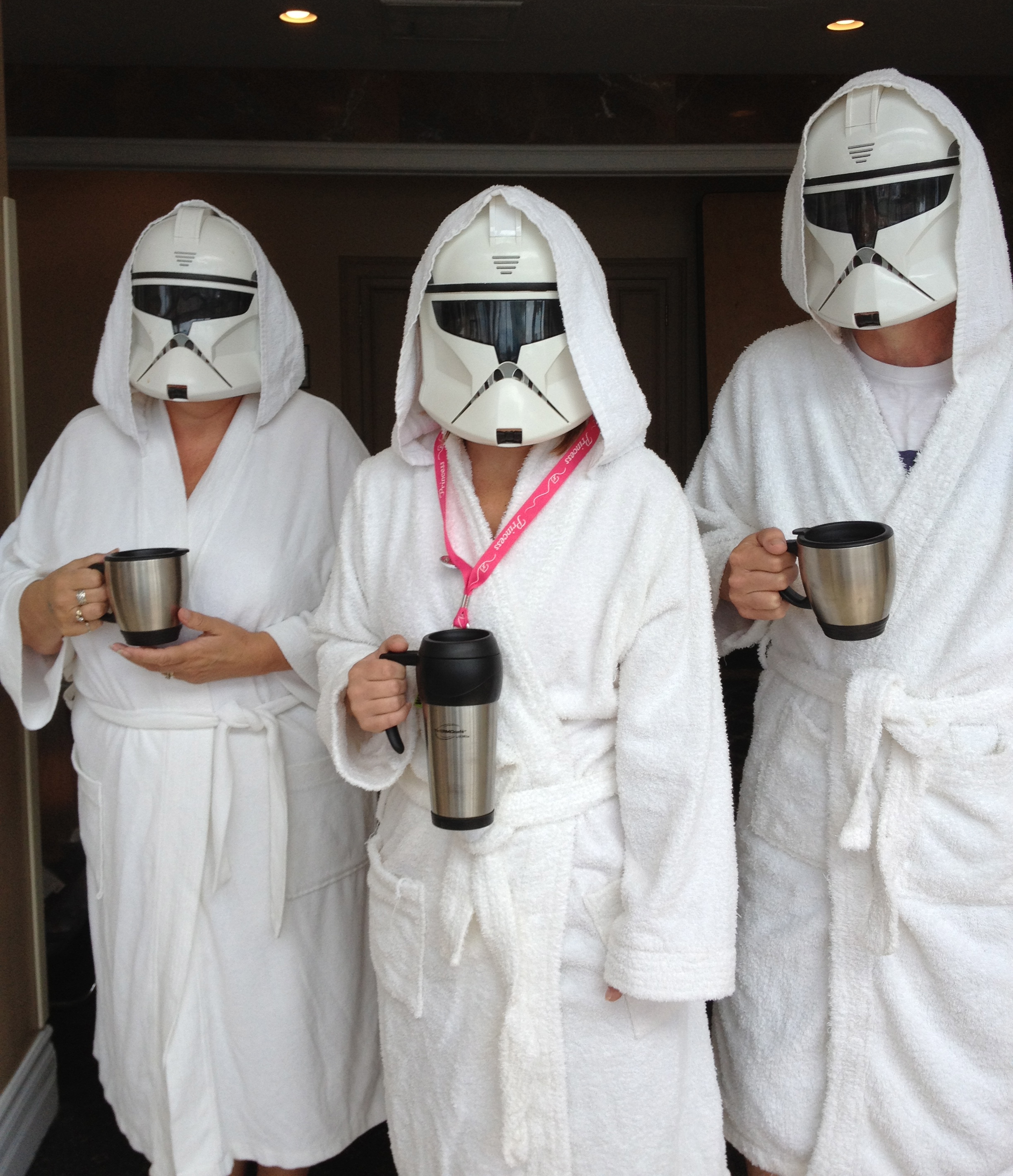
IMG_0304A while ago I attended (and participated as panelist and guest author) at the World Fantasy Convention in Toronto. And I was all jazzed about it! Why?… Well, let me tell you why…

If you haven’t yet attended a writer’s conference or convention, it’s high time you did. Because, not only are you missing out on an education, you are missing out on a sub-culture that may change your life as a writer, help feed the hungry and align the universe. Seriously.

The last World Fantasy Convention I attended was several years ago in 2008. It was held in Calgary, Alberta, when I still lived in Vancouver, British Columbia. The ten-hour drive through some of the most glorious Canadian wilderness and mountains was bracing and we were lucky that the weather played fair. It was an auspicious start to a wonderful journey of self-discovery.

Hosted by toastmaster Tad Williams, this world-class convention featured guests of honor, David Morrell, Barbara Hambly, Tom Doherty and Todd Lockwood. The World Fantasy Convention promised great things and delivered them. And I’m not just talking about that white chocolate cranberry-date-nut dip that had me loitering at the hospitality suite. Or all those midnight parties that served savory wine with salted almonds, sharp cheese and colorful conversation with the likes of David Hartwell, Tor editor and impeccable dresser (gotta love those ties!). I’m not even talking about the hot tub that sprung a leak on the 18th floor at 1 am or the entertaining panels and readings, which rocked for both writer and reader.

What made the con great for me was seeing my writing community (both writing colleagues and readers who followed my writing) and meeting new people, all lovers of books and “story”.

I was rudely eyeballing someone’s nametag on his chest, when I collided with the Prince George crowd that included authors, Lynda Williams (herself responsible for some pretty nasty intergalactic wars), Nathalie Mallet (who cages princes) and publisher Virginia O’Dine of Bundoran Press (rumored to have been somehow responsible for the hot tub fiasco). I also chummed with Jennifer Rahn, author of The Longevity Thesis, who was charmed by my sly cat (she’s a softy at heart). My cat-colleague Toulouse just kept charming his way through the crowd right to the book fair. We wandered to the back where Anita Hades of Edge Books gave Toulouse her usual greeting (a feline move that was a cross between Sophie Marceau and Brigitte Helm; both she and Toulouse have French blood coursing through their veins, after all—c’est vrai!).

I’d come a long way from the first writer’s conference I went to as a budding writer of a few short stories and non-fiction articles…

Here’s what author Susan Denney says about her first writer’s conference: “Going to my first writers’ conference was an act of faith. I was just starting to make some freelance sales when the members of my writers’ group encouraged me to join them at a conference a few hundred miles away. The expense didn’t seem justified to me. The cost was far more than I had earned through writing that year. But they convinced me at last and it proved to be a great investment. The benefits of a writers’ conference are there for anyone who has a desire to be a better writer.”

Here are some reasons why you can’t afford NOT to go to a conference or convention:

Contacts: you will make contacts with people working in the industry, an extremely valuable asset; this industry is a social one, based on trust, respect and joyfulness. While there’s no guarantee that you will meet anyone famous or influential, you will definitely meet people who know more about writing than you do. Just hanging out with professional writers, editors and agents is educational. If nothing else, you will gain some confidence and ease with industry people, who are real people too. Some may become friends; some may become colleagues; some will become both.

Appointments: through agent/editor/author appointments, you will have a chance to have a quality private conversation with a professional on all aspects of writing and publishing. This is your chance to pitch your novel or ask that one burning question. You know you’ll get a candid and professional answer. That in itself is invaluable and may be enough reason to attend the con. Appointments are also your best chance of getting your manuscript read. This is because it bypasses the slush-pile and months of waiting for a response. More and more editors and agents look to conferences to meet potential authors. For them, meeting an author in person is a bonus to their gauging potential success in a relationship with them.

Education on Craft & Marketing: you will learn something about craft and marketing, no matter what stage you are in your writing career. Depending on the conference or convention, aside from good information from panels, you may also get personal mentoring, 1-page critiques, or attend small themed workshops. Feedback from an experienced writer can save you months of frustration and grief. Just hearing about what is currently going on in the industry is also valuable and conferences are a good way to get the skinny on what the current issues in the writing and publishing industry are. Getting it from those who are working inside avoids the idle and potentially harmful gossip.

Community: you will be exposed to a community of writers, hundreds of creative people in various stages of their careers. By interacting with both those you can help and those who can help you, you will gain a measure of both humility and confidence and satisfaction. We learn so much by helping others. Simply being with other writers can help hone your people-skills, the same ones you will need when approaching agents, editors, publishers and research sources during your career as a professional. Remember, if you aren’t having fun, you are missing one of the most important aspects of attending a writer’s conference, and you will lose your own effectiveness.

Energy: there is nothing more energizing than a common sharing among those of like-minded thought and vision. Writing is primarily an individual pursuit, often thought to belong to the introvert; but, to succeed in the writing/publishing industry a writer must display staying power, persistence, confidence and enduring energy. There is nothing quite as inspirational as hearing an accomplished writer provide their story of victory against odds. I will never forget the moving words of Ray Bradbury at a conference in Palm Springs years ago. I have repeated those words many times since. If you come to a conference with the right mind-set, I guarantee that you will leave with more energy than you came and with a burning need to write.

Exposure: depending on the kind of conference or convention you attend, you will have the opportunity to expose yourself to something different (e.g., different fiction genres and associated communities; fiction vs. non-fiction; different media; etc.). I attended a romance writers conference a few years back (I write mostly science fiction and fantasy—but often with romance elements in them) and found it bracingly educational.

New Markets & Ideas: conferences attract writers of all kinds. Conferences provide fertile ground for cross-pollination of ideas, markets and marketing ploys. Writers, like you, are generally a nice crowd; most are willing and eager to share their successes and failures. And contacts. Sharing is one of the great things that happens at conferences. There may be a common pin board set up for people to share. Most conferences are Twitter and Facebook enabled for quick and easy viral sharing. If you don’t come away from a conference with at least one new idea, contact or market, you haven’t done your job: talk to people.

Here are a few do’s and don’ts for when you go conferencing:

  1. Wear comfortable but not sloppy clothing and shoes (it’s likely that you will be doing a fair bit of standing and walking); you want to make a good impression. Be yourself and dress accordingly.
  2. Bring promotional material with you (e.g., business cards, flyers on your book, stories, etc.). Have something to share and exchange with other writers and professionals. Most conferences also have tables devoted to shareware. This is your chance to introduce you and your writing to others.
  3. Take something to write with (e.g., notebook and pen or iPad, etc.).
  4. Talk to people. Chances are that everyone there is interesting.
  5. Respect the time, particularly other people’s time, and keep your appointments and meetings.
  6. Don’t bring your heavy manuscript with you to the conference. Agents and editors don’t have the time or inclination or space in their suitcase for it. Use the conference to make an impression and get an invitation for something later in writing.
  7. Keep all of your interactions verbal and face-to-face. Don’t rely on memorized speeches or a folded up written pitch in your pocket. Keep it casually professional. Make eye contact and speak from the heart. Show your passion.
  8. Have fun. And don’t be afraid to show it; there’s nothing more infectious and attractive than someone having fun.


Some upcoming writing-artistic conferences/ conventions / festivals in the Toronto area include:IMG_0306


nina-2014aaNina Munteanu is an ecologist and internationally published author of award-nominated speculative novels, short stories and non-fiction. She is co-editor of Europa SF and currently teaches writing courses at George Brown College and the University of Toronto. Visit www.ninamunteanu.ca for the latest on her books.