Nina Talks to EAC About the Changing Face of Publishing

In January 2014, I gave a talk to the Editor’s Association of Canada (EAC) on the changing face of publishing and what it means for editors and writers. Editors learned about self-publishing and indie publishing, publishing myths, and where to find new editing opportunities.


nina-2014aaNina Munteanu is an ecologist and internationally published author of award-nominated speculative novels, short stories and non-fiction. She is co-editor of Europa SF and currently teaches writing courses at George Brown College and the University of Toronto. Visit www.ninamunteanu.ca for the latest on her books.

Rejection, Part 2: The Evolution of Rejection

hirtle beachNS

Pebbles on Hirtle Beach, NS (photo by Nina Munteanu)

Enduring and surviving rejection is part of every writer’s successful career. Rejection letters can be part of a writer’s toolkit to success. This comes from objectively perceiving them as opportunities in a long process of relationship-building and the business of writing and publishing.

Writers often witness an evolution in rejection letters as they learn more about their craft and about their markets. The ability to recognize the evolutionary steps can be useful in determining your next move in that particular market.

Below I describe one sequence of a manuscript’s evolutionary path. These don’t necessarily follow a chronological path for any particular manuscript; nor am I suggesting that your personal writer’s path will follow this particular pattern. Take these for what they may represent to you for any particular manuscript’s journey to success.

  • Lowest form: the form-letter, with no name or signature—you get no information from this except that they’re probably swamped with submissions. File the letter and try them again with another story; you can even play a game of it to see how many submissions it takes to get “recognized”. Meantime send the rejected story elsewhere.
  • Next lowest form: Personalized form letter with your name on it and a name and signature on it. Congratulations! You are now a person. And you will likely be remembered when you submit another story here.
  • Higher on the Evolutionary Path: a form letter that includes a personalized note about your work and why it was rejected (often with an added comment about the story or your writing). You have made a mark. Try them again!
  • Even Higher on the Evolutionary Path: a personalized letter that explains why your story was rejected—this says as much about the editor as it does about how they felt about your story; that they are taking the time to write to you and give you suggests means you are worth their valuable time. You have an opportunity to begin a relationship with this editor. Play fair.
  • Highest on the Path: a personalized, perhaps even handwritten, note that specifies why they rejected your piece with suggestions for revision (and resubmission) or invitation to submit another piece. Congratulations! This is the beginning of a relationship. Revise and resubmit.

What Rejection Letters Look Like 

As I’ve already mentioned, I’ve received a lot of rejection letters in the many years of my writing career. They’ve ranged from the short card form letter with no signature to the handwritten, per-sonalized letter with inviting comments.

Zeotrope-rejectionRejection letters will vary as much as the magazine and book market varies. The larger, busier companies that receive many more submissions over a given time period are more likely to go with the form letter. I’ve heard some agents and edit-ors go this route simply because it is safer for them. One magazine editor lamented to me not long ago that after she had provided a writer whose work she’d rejected with sev-eral paragraphs of explanation, the said writer had responded with an irascible diatribe of her skills as an editor.

Take heart: receiving a form letter like the one above from Zoetrope is very common, particularly from a large publisher. And take it for what it is, a letter that gives you very little infor-mation other than they rejected your story. File the letter and send the story elsewhere. challening destiny-rejection

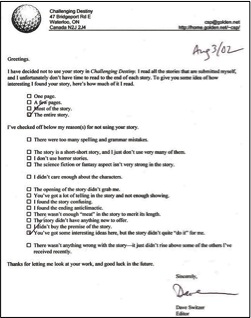
Some publishers and agents use a checklist, which can provide you with very good feedback (see example below from Challenging Destiny for my short story, Arc of Time which found a home in several places after this rejection).

The next letter that rejected my short story Angel of Chaos (which later turned into Butterfly in Peking) provided enough insight to why they didn’t choose it that I could have gone one of two ways: 1) I could have left the story as it was and submitted elsewhere; or 2) I could have emailed them with a suggestion that I’d be willing to revise if they would reconsider a revision according to their specifications. I’ve done this in the past and published. This time I decided not to because I liked the story the way it was. space & time rejection

One magazine I submitted to gives your story to two independent readers whose comments they include along with their rejection or acceptance. This is great feedback for you! What I found frus-tratingly amusing was that the accolades of the reviewers didn’t guarantee the acceptance of my story. While my story Arc of Time generated very positive comments from both reviewers, the magazine still decided against publishing and the rejection letter gave no reason (see reviewer’s comments below):

Reviewer #1:I love the way this story is set up, switching back and forth from the different points of view. The “trippiness” is very appealing and works well with the modern/fantastical contrast.”

Reviewer #2:This was an intriguing and extraordinary clever story. I didn’t have a clue about the jape at the end until I got to the last page. And then it unfolded beautifully. The theological tie-ins were smart and fun and showed either some Mormon extrapolative thought or extreme knowledge of Biblical lore.” talebones rejection

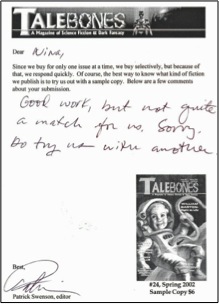
You’d have thought, eh? But they rejected anyway. Below is an example of a form letter with a handwritten comment added along with signature and an invite to try them again. When this happens, by all means, try them again!

Make Rejection Work for You

One way to see your way through rejection is to find ways to distance yourself from your story once you’ve sent it off and to see the whole process of submission-rejection-acceptance as a business. The very best way to do this is to submit lots of stories and to keep submitting them. With novels, this is a little harder to do but you can certainly be working on the next one once you’ve submitted the first.

When I was writing short stories, I kept a list of what and where I sub-mitted, along with the most important item: where to submit NEXT. At any given time, I made sure that I had at least x-number of submissions out there and each story had a designated place to go if it returned. As soon as a story came back from magazine A, I simply re-packaged it and sent it to magazine B. The critical part of the list was to have a contingency for each story: the next place where I would send the story once it returned. I was planning on the story being rejected with the hope that it would be accepted; that way, a rejection became part of a story’s journey rather than a final comment.

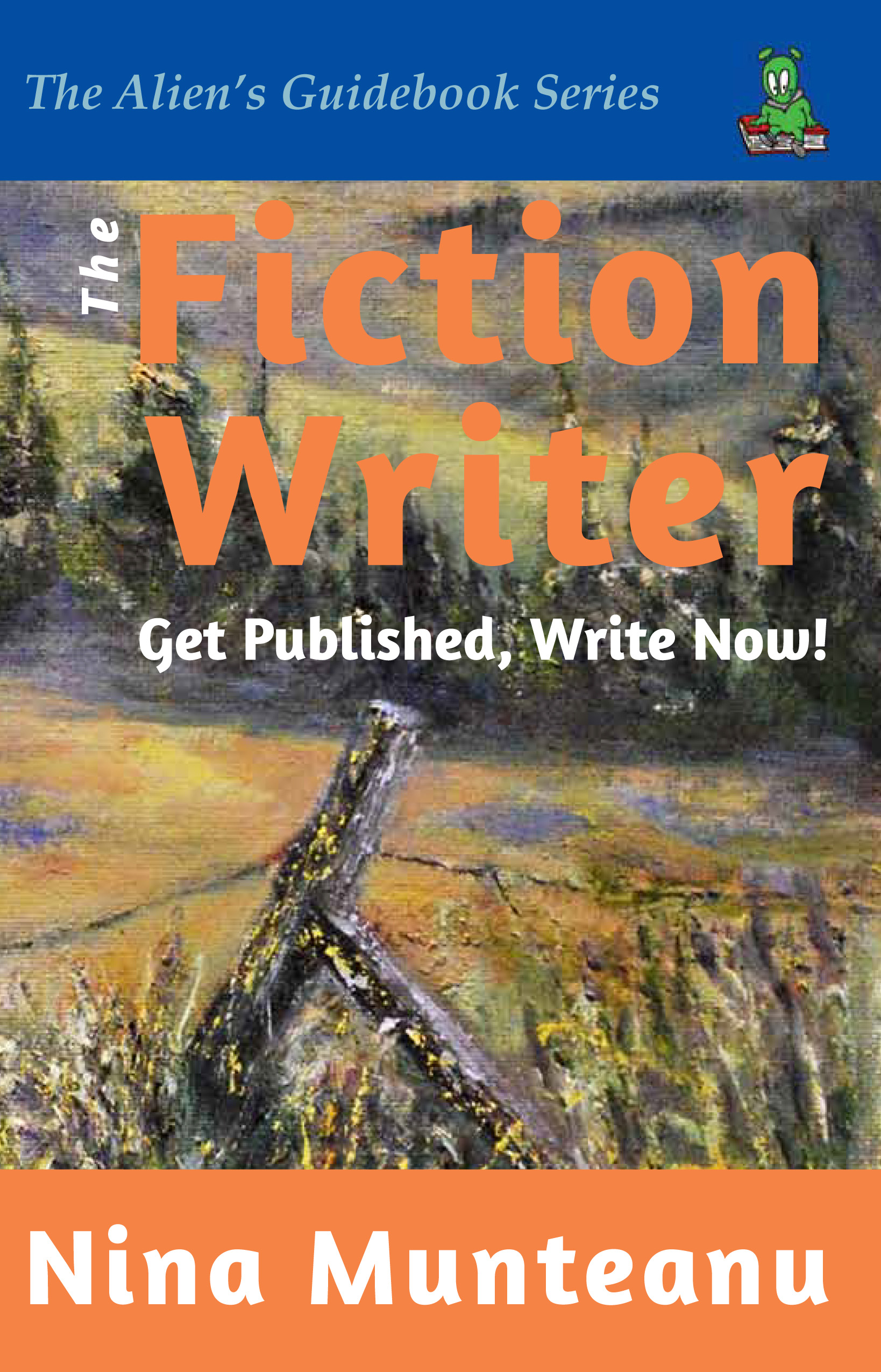
FictionWriter-front cover-2nd ed-webI ran my submissions like a bus terminal. A story was in and out so fast it never had a chance to cool off. And, since I had five other pieces out there, I could do this with little emotion. I was running a fast-paced “story depot”, after all. All my stories had to be out there as soon as possible; if they were sitting in the terminal, they were doing nothing for me. Now, ask me if this worked. D*** right! Soon after adopting this process, I started selling. I think several things were happening and galvanizing into sales: publishers were getting to know me; I got more and more familiar with the market and my professionalism paid off.


This article is an excerpt from Chapter R of The Fiction Writer: Get Published, Write Now! (Starfire, 2009).


nina-2014aaNina Munteanu is an ecologist and internationally published author of award-nominated speculative novels, short stories and non-fiction. She is co-editor of Europa SF and currently teaches writing courses at George Brown College and the University of Toronto. Visit www.ninamunteanu.ca for the latest on her books.


Lessons from a Linguist, Part 1: Steven Pinker on Reverse Engineering

college-window-UoT

Window of University College, UofT (photo by Nina Munteanu)

When I’m not teaching students how to write science fiction, or giving workshops on writing craft or marketing, I am teaching design engineers how to write clearly and convincingly. As Communications Instructor at the University of Toronto in the Faculty of Applied Science and Engineering, I help young engineers navigate the dark and churning waters of fluent and meaningful English.

So, when fellow Montrealer, Steven Pinker starts Chapter 1 of his book The Sense of Style, talking about “reverse engineering”—one of the key features in the design engineering toolkit—I perk up.

Good writing, says Pinker, begins with “reverse-engineering good prose as the key to developing a writerly ear.”

I’d recently picked up Steven Pinker’s new book The Sense of Style: the thinking person’s guide to writing in the 21st century after I watched several of his videos on language, and communicating science and technology.

Pinker starts Chapter 1 of the book with this quote from Oscar Wilde: “Education is an admirable thing, but it is well to remember from time to time that nothing that is worth knowing can be taught.” When Pinker asked several accomplished writers about which style manuals they had consulted early in their careers, the most common answer he got was “none”. Writing, they said, just came naturally to them.

“I’d be the last to doubt that good writers are blessed with an innate dose of fluency with syntax and memory for words,” says Pinker. “But no one is born with skills in English composition per se. Those skills may not have come from stylebooks, but they must have come from somewhere. That somewhere is the writing of other writers.”

Which is why successful authors like Neil Gaimen tell aspiring writers to “read a lot.” Read the best authors. The classics. Authors in your genre; authors of other genres. Authors of other cultures and time periods. Read. Read. Read. My previous article on reading fiction is particularly germane here.

The first thing you need to do is develop a writer’s ear. “Writers acquire their technique by spotting, savoring, and reverse-engineering examples of good prose,” says Pinker. He goes on to demonstrate this in his book Sense of Style by deconstructing several examples of good prose and providing great lessons on what great prose looks like and why.

So, why do we need style guides at all, then? Particularly given that, in Pinker’s own admission, “much advice on style is stern and censorious,” and a writer needn’t approach learning the craft like a treacherous obstacle course to be suffered and endured. Mastering the craft of writing is a lifelong pursuit and ultimately best approached with the passion that hopefully drives the writer to express. “Though the quest for improvement may be informed by lessons and honed by practice,” says Pinker, “it must first be kindled by a delight in the best work of the masters and a desire to approach their excellence.”

Pinker adds, rather pithily, that, “The classic manuals written by starchy Englishmen and rock-ribbed Yankees, try to take all the fun out of writing, grimly adjuring the writer to avoid offbeat words, figures of speech, and playful alliteration. A famous piece of advice from this school crosses the line from the grim to the infanticidal: ‘Whenever you feel an impulse to perpetrate a piece of exceptionally fine writing, obey it—wholeheartedly—and delete it before sending your manuscript to press. Murder your darlings.’”

Many style manuals, Pinker admits, “treat traditional rules of usage the way fundamentalists treat the Ten Commandments: as unerring laws chiseled in sapphire for mortals to obey or risk eternal damnation.” Language, he says, evolves and is meant to evolve over time. He adds that, “the graybeard sensibilities of the style mavens come not just from an under-appreciation of the fact of language change but from a lack of reflection on their own psychology. As people age, they confuse changes in themselves with changes in the world, and changes in the world with moral decline—the illusion of the good old days. And so every generation believes that the kids today are degrading the language and taking civilization down with it.”

So, why use a style guide if you’re reading a lot and taking in the best from the best? While Pinker no doubt sprinkles many reasons throughout his style manual (I haven’t finished reading it), here are two of mine:

  1. Once you are on that path toward writing the very best you can, a style guide can help you improve your writing faster by helping you understand why you like a particular “style” used by a favorite master writer and how it is applied. Simply liking isn’t enough; it’s the first step. Mastering it and using it in your own voice only comes with understanding it. I, for one, learn and retain better when I understand why something works for me. My ability to apply that “style” correctly increases markedly when I understand the rules associated with it (whether that particular “style” was in fact following or breaking a particular rule).
  2. The style guide also helps the novice writer ultimately find their own voice, and move out from the shadow of their beloved master and their techniques. It does this by providing a toolkit that applies can then apply objectively to any voice, making it easier for a writer to discover her own unique voice.


Of course, there are—as Pinker already pointed out—style guides and STYLE GUIDES. I’ve included a list below of a few I like to use and why.


The Chicago Manual of Style. 2010. 16th Ed. University of Chicago Press.1026pp: a comprehensive, easily navigated style guide that is relevant, current and clearly presented, with examples and discussions on a wide range of writing from essays, to fiction. A go-to “bible” for writers and editors.

Strunk, William Jr. and E.B. White. 1918. Elements of Style. Harcourt. 52pp:Even though it’s really OLD, and contains some outmoded notions and prescriptions, this manual is entertaining, smart and still very relevant in many cases. Compared with the Chicago Manual of Style, it’s pint-sized and therefore highly mobile.

Pinker, Steven. 2014. The Sense of Style. Viking. 359pp: called “the thinking person’s guide to writing in the 21st Century, it is full of excellent advice, written with a engaging flare and with relevant examples, that speak to process. Read it more for narrative rather than reference.

Munteanu, Nina. 2009. The Fiction Writer: Get Published, Write Now! Starfire. 264pp: FictionWriter-front cover-2nd ed-webnot just because it’s MY book, but because it’s FUN and contains the advice of over thirty experts in the craft of writing, including style and grammar. It’s easy to read and easy to learn with relevant examples and exercises. This book is more of a writing-storytelling guide than strictly a style guide.



nina-2014aaNina Munteanu is an ecologist and internationally published author of award-nominated speculative novels, short stories and non-fiction. She is co-editor of Europa SF and currently teaches writing courses at George Brown College and the University of Toronto. Visit www.ninamunteanu.ca for the latest on her books.


Should You Judge a Book by its Cover?

NaturalSelection-frontHRMost readers—me included—will pick a book off the bookstore shelf because its cover interests us: the title intrigues; the cover illustration attracts; the author’s name is one we trust.

If you don’t know the author of the book, the nature—and implied promise—of the cover becomes even more important.

If the book does not deliver on the promise of the cover, it will fail with many readers despite its intrinsic value. A broken promise is still a broken promise. I say cover, not necessarily the back jacket blurb, because the front cover is our first and most potent introduction to the quality of the story inside. How many of us have picked up a book, intrigued by its alluring front cover, read the blurb that seemed to resonate with the title and image, then upon reading our cherished purchase been disillusioned with the story and decided we disliked it and its author?

This is because, as readers, from the moment we pick up a book, we engage in a covenant with the story’s author (but in actual fact with the entire publishing company) for a story whose promise we have interpreted from its cover image, title and blurb. It begins with the cover. A book’s cover is its sales pitch: “This is what I’m about!” the cover proclaims in shades of color and texture. The cover sets the tone and attitude with which a reader will interpret the book’s title and back jacket blurb and its interior.

It had better be true.

Front Cover ONLY-webLet me tell you a story…

Some time ago, a writer colleague of mine secured a New York agent—based on her excellent query and synopsis—for her imaginative dragon fantasy. The agent pitched the book to a large publishing company, who made my friend an offer, and the agent secured a three book deal on her behalf. My writing friend’s career as a published author was launched.

Because the publishing company was one of the large firms, my friend’s ability to participate—never mind influence—the cover design and blurb was restricted. Decisions lay in the hands of the people in the marketing department, who may or may not have read the book (most likely not). This is why it is so important to write a blurb/query/pitch that both scintillates AND accurately portrays the story. All too often, the marketing department misrepresents the story (to sell more books) and you end up with an unsatisfied reader. This is what happened to my friend. Through no fault of hers, the marketing people developed a cover that did not reflect the true nature of her story. The trilogy my friend had developed was a dark tale of deceit, betrayal and suffering. The cover portrayed a lively and sultry seductress, draped with flowing robes and bared thighs against her dragon; hardly the ponderous story shrouded within. The blurb at the back was sufficiently vague to aid and abet the deception.

What followed the book’s launch and accompanying ad campaign was a barrage of bad reviews and censure, unfortunately aimed mostly at the author. It was unfortunate that my friend suffered the brunt of the accusations for breaking her promise to the readers, when she had done no such thing; her publisher and marketers had created false expectations. And now she was paying for it.

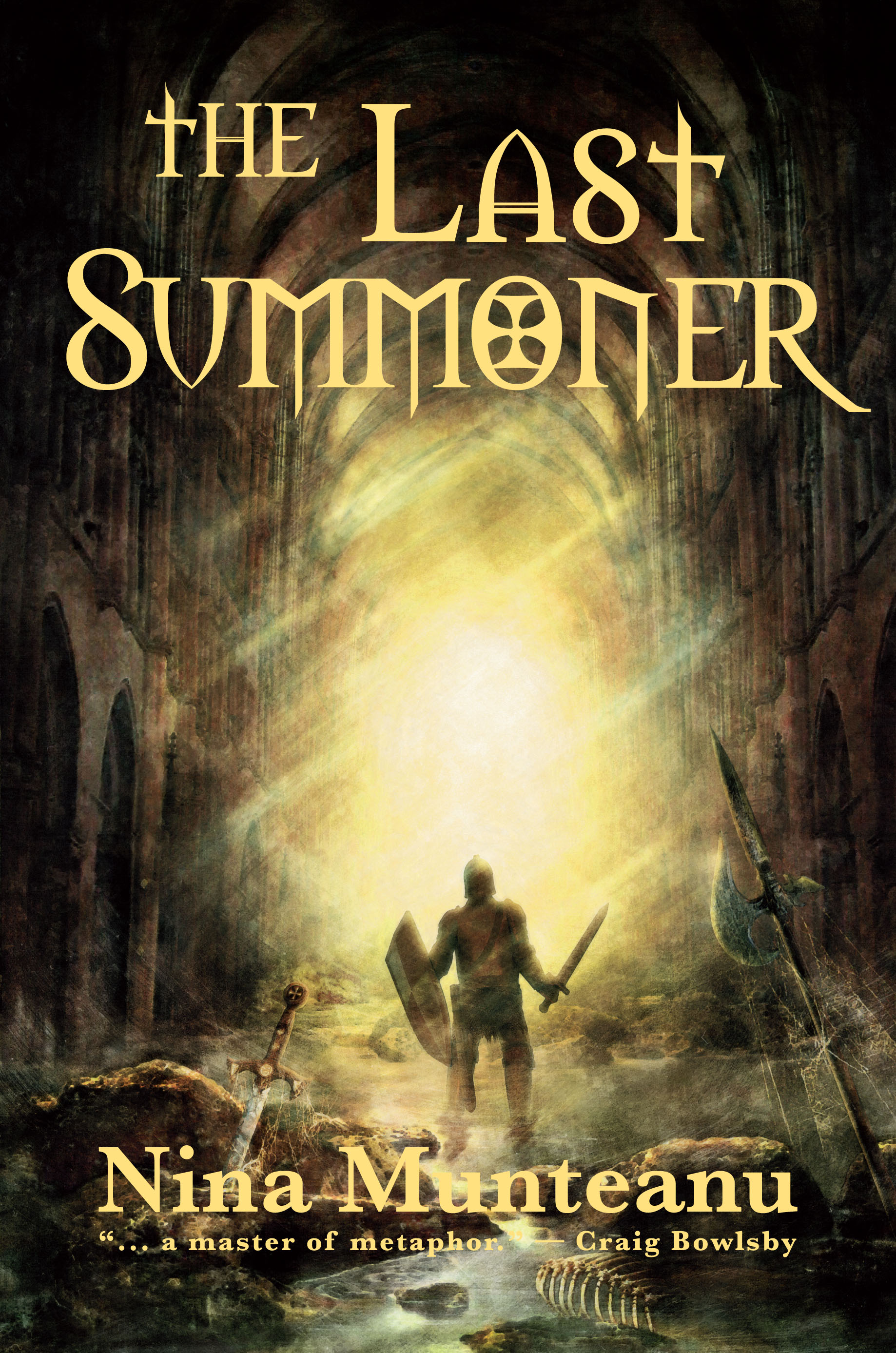
Cover1_LastSummoner-frontcoverI, too, experienced the effects of mis-marketing. I’d written a dark science fiction romance that ended with resolution but was far from the traditional happy ending, typical of a romance. The publisher marketed it as a romance with science fiction elements instead of a science fiction with romance elements. Reviewers applauded it but it bombed with romance readers, who expected a different kind of resolution. Science fiction readers, however, enjoyed it; they didn’t have the same expectations.


The take home lesson for writers is this: write a scintillating but accurate synopsis, blurb, pitch and query that clearly establishes your genre and audience. Chances are your publishers will use it in their marketing department. If you don’t get in with the “Big Boys”, and decide to go with the small presses, chances are very good that you will have more control over marketing and cover design; that is a big bonus. If you are like me, creative control of your intellectual property is more important than the big bucks you get at the expense of your art. Don’t give in to the temptations of wolf-marketing.

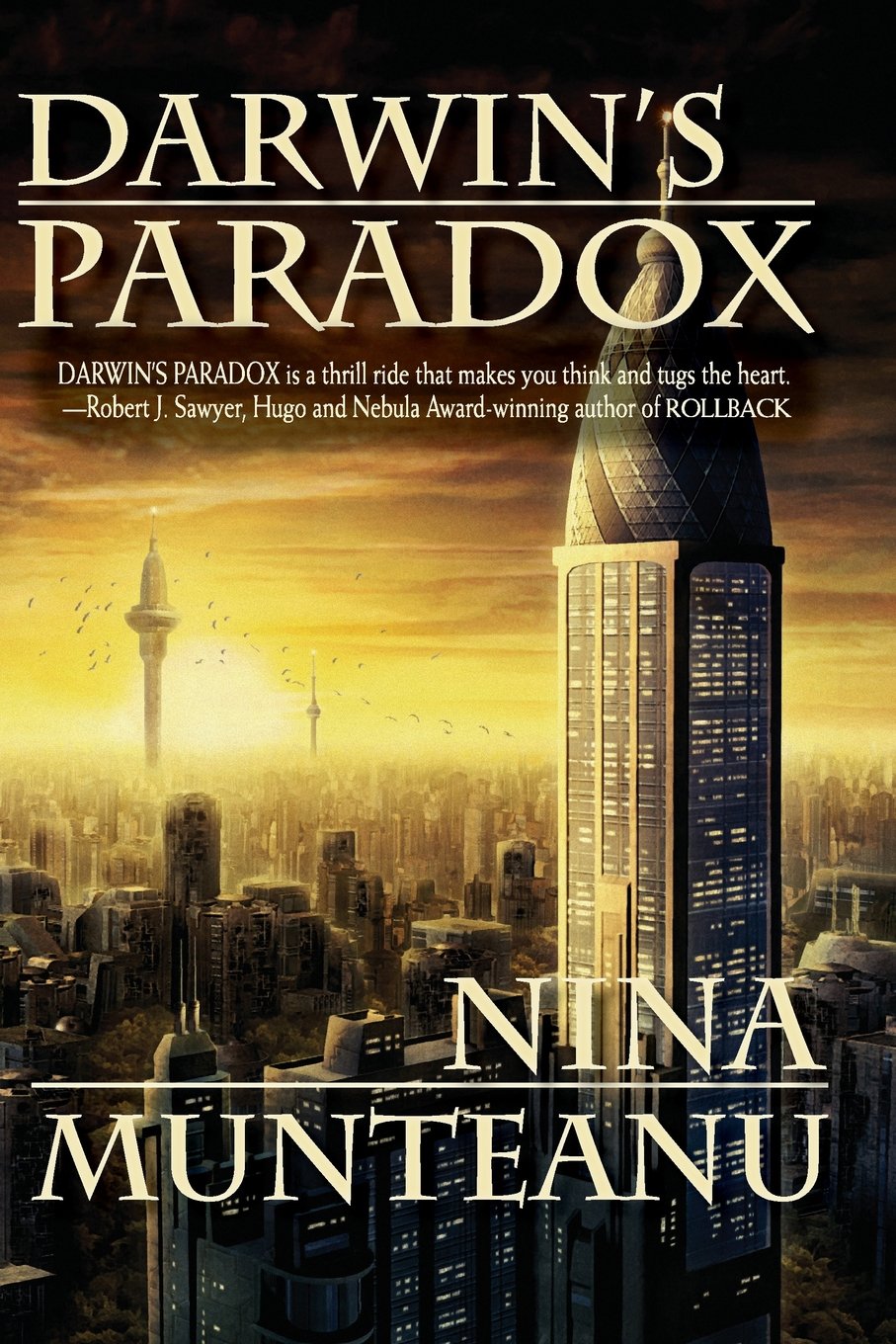
I’m still learning that lesson.Darwins Paradox-2nd cover

The take home lesson for readers is this: don’t judge a book by its cover; certainly pick up the book if it looks interesting, then read with an open mind and let the story take you to where it needs to, despite what you may have expected from the false advertising. Chances are, the unexpected journey visited upon you may be a welcome surprise. And don’t blame the writer for something he didn’t have control over.

I’m still learning that lesson too.


Nina Munteanu is an ecologist and internationally published author of award-nominated speculative novels, short stories and non-fiction. She is co-editor of Europa SF and currently teaches writing courses at George Brown College and the University of Toronto. Visit www.ninamunteanu.ca for the latest on her books.



Why Writers Can’t Spell

scribeWhen I participated in those humiliating spelling bees in primary school, I was usually among the last chosen because I was a lousy speller. I grew up in an immigrant family where Romanian was the official language; I heard my parents speaking German in the house and lived in a French-Canadian neighbourhood. English was actually the fourth language I learned and only once I started going to school. It seemed that my facility with language came at some expense. My spelling sucked. It didn’t help that I was probably borderline ADD, dyslexic and allergic to reading.

Are you a lousy speller too? Well, take heart. You’re in excellent company. Samuel R. Delany is dyslexic. Thomas Jefferson, F. Scott Fitzgerald, Herman Melville, Woodrow Wilson and John Irving were all rotten spellers.

Grenadian SF/F writer, Tobias Buckell, author of Sly Mongoose, admitted that “homophones practically kill me, even the ones I know are wrong, b, d, g, and p are often swapped, as is, of course, 6 and 9.” He confesses that rewriting “is a painful, deliberate struggle” as he must pore over his work word by word.

So, why is it that some of us can just look at the word “preposterous” and spell it, while others can see it a thousand times and never get it right? Neuroscience has shown us that it’s in the brain. Recent studies using functional MRI analysis have not only begun to map the areas of the brain we use in reading and writing, they’ve shown how a neurological glitch in about 20 percent of people may make them chronically poor spellers. That’s me!

My particular weakness is the homonym. These are words that sound the same but are spelled differently (e.g., right and write). I’ve seen writers mix homonyms a lot in my workshops and manuscript critiques. Common ones include:


There, their, they’re Bare, bear
To, too, two Grate, great
Who’s, whose Here, hear
Reel, real Meet, meat
Deer, dear Heel, heal
Brake, break Council, counsel
Mantle, mantel Principle, principal
Which, witch Where, wear

Keep a dictionary by your side and consult it often. For those of you, like me, who spend most of your writing time in front of the computer with internet access, you may wish to bookmark the online Merriam-Webster dictionary, www.m-w.com.

If you are, like Tobias Buckell, particularly susceptible to self-correcting when you revise your work, then have someone you trust proofread for you.

And hope that they, unlike Tobias or me, are NOT susceptible to self-correcting!

References:

Munteanu, Nina. 2009. The Fiction Writer: Get Published, Write Now! Starfire World Syndicate. Louisville, KY. 266pp


Nina Munteanu is an ecologist and internationally published author of award-nominated speculative novels, short stories and non-fiction. She is co-editor of Europa SF and currently teaches writing courses at George Brown College and the University of Toronto. Visit www.ninamunteanu.ca for the latest on her books.
 

How to Hook Your Reader and Deliver

Beaches-snow03

Winter in The Beach (photo by Nina Munteanu)

A great story opening arouses, delays and rewards. Constructing a compelling beginning—often called a hook—is a common challenge for even established writers, and one of the most important parts of a story.

The opening should sweep the reader into the story like a tidal wave. It doesn’t need to be wild action. It just needs to compel the reader to want to know more. This is accomplished by engaging the reader with “intrigue”. In his article “Three Ways to Keep Your Readers Hooked” in the April 2001 issue of Writer’s Digest, Joe Cardillo suggested that the three elements of hooking a reader resemble the steps he uses to train his Samoyed puppy: 1) arouse interest; 2) delay, then 3) reward.

The writer arouses interest in the reader by providing enough detail to get the reader to ask questions. Now they want something. You tease them with the delay; that keeps them reading and turning the pages. It also gives them the chance to try to come up with the answers themselves. The reward comes in stages. Don’t answer all their questions at once. That’s what the book—the story—is for. The reward, parceled out in stages, lets the reader know that you can deliver and will ultimately provide them with a fulfilling story at the end. The beginning of your book sets up a covenant between you and the reader, a covenant for a journey you will take together toward resolution.

There is no beginning without an end. In her book The Sell Your Novel Tool Kit (Revised Edition, Perigee Trade, 2002) Elizabeth Lyon suggested that the beginning of a novel should “reflect the entire book. There should be a tie-in [between] the beginning and the end”. This is sometimes called “framing” a story, where the principal thematic problem is given in the beginning and then resolved in the end. In his book, A Story is a Promise (Blue Heron Publishing, 2000) Bill Johnson describes it as a promise to the reader.

Beaches-snow02

Toronto streetcar (photo by Nina Munteanu)

“Dramatic story-issues revolve around issues of human need,” says Johnson. “The need to be loved. To have control of one’s fate. To feel a sense of purpose. To be able to overcome obstacles. To be able to grow and heal from life’s wounds. To understand and make sense of the events of life.” He warns that “if you can’t name the issue at the heart of your story [the theme], it risks being unclear to your audience.” And this needs to be identified, at least intuitively for the reader, at the beginning of the story. You do this through intrigue in the beginning and pointing out through scene what is at stake or at issue in your story.

Additional things to consider in openings include:

  • Avoid starting your story at “the beginning”: instead, start mid-way, when something is already happening—preferably to someone important in your story and at the pivotal point when you provide the “story promise” pertinent to the theme.
  • Quell the urge to put in a lot of information about setting, character and situation: get things in motion first, then reveal here and there. Let the details unfold with the story like a flowing piece of artwork.
  • Trust your reader: novice writers have not yet gained the confidence to trust that they won’t lose the reader in the beginning if they don’t tell them everything right away. The key is to choose just enough to whet their appetite for more. And, yes, it is critical what you choose. What you choose should relate to your story’s theme and its story promise: the problem.

A great opening is a seductive tease, deliciously delivered; it promises an exotic ride that only you can fulfill.

This article is an excerpt from The Fiction Writer: Get Published, Write Now!

Recommended Reading:Beaches-snow01

  • Cardillo, Joe. 2001. “Three Ways to Keep Your Readers Hooked”. Writer’s Digest, April, 2001, volume 81, no. 4.
  • Johnson, Bill. 2000. A Story Is a Promise. Blue Heron Publishing. Portland, Oregon. 187pp.
  • Lyon, Elizabeth. 2002. The Sell Your Novel Took Kit. Revised Edition. Perigee Trade. 320pp.
  • Munteanu, Nina. 2009. The Fiction Writer: Get Published, Write Now! Starfire World Syndicate, Louisville, KY. 264pp.


Nina Munteanu is an ecologist and internationally published author of award-nominated speculative novels, short stories and non-fiction. She is co-editor of Europa SF and currently teaches writing courses at George Brown College and the University of Toronto. Visit www.ninamunteanu.ca for the latest on her books.

What Indie Authors Should Know…

zermatt-alps01-close

Zermatt, Switzerland (photo by Nina Munteanu)

As we enter a new year in writing and publishing, I thought I’d review some interesting statistics and observed trends over 2014 made by those poised well in the industry.

In July 2014, Publishers Weekly revealed some interesting statistics from various surveys and studies worth considering.

The article was based on two recent surveys: one by best selling indie author Hugh Howey; and the other by Mark Coker, founder of e-book distributor Smashwords.

Publishers Weekly cited Hugh Howey’s Author Earnings Report, in which he claimed that “the report comes to the conclusion that the indie movement in literature is not a blip and not a gold rush.” It is definitely here to stay, said Publishers Weekly. Here’s what they summarized:

  • The Big Five traditional publishers now account for only 16% of the e-books on Amazon’s bestseller lists.
  • Self-published books now represent 31% of e-book sales on Amazon’s Kindle Store.
  • Indie authors are earning nearly 40% of the e-book dollars going to authors.
  • Self-published authors are “dominating traditionally published authors” in sci-fi/fantasy, mystery/thriller, and romance genres but — and here is the surprise — they are also taking “significant market share in all genres.

Publishers Weekly contended that “what is clear is that strong indie sales will continue and indie books are now a significant and permanent part of the book publishing landscape.”

Coker’s survey revealed that the 99¢ ebook was no longer “the sweet spot” for e-book pricing. In his 2014 survey, Coker determined from aggregated retail and library sales data of Smashwords books, that:

  • $2.99 and $3.99 are currently the pricing sweet spots for most e-book bestsellers. In general, authors who price their books modestly earn more than those whose average price is higher, but 99¢ is “no longer the path to riches.”
  • Readers prefer longer e-books. In fact, bestselling books tend to be over 100,000 words.
  • Series books outsell stand alone books — but series books under 50,000 words are at a sales disadvantage.
  • “Free” still works as a marketing tool, especially when an author offers the first book in a series for free, but it is much less effective than before — primarily because so many authors are taking advantage of it.
  • Pre-orders give authors a sales advantage. “I think pre-orders today are where free was five years ago,” says Coker. “The first authors to effectively utilize pre-orders will gain the most advantage, just as the first authors to enter new distribution channels gain the most advantage,” he says.
  • Non-fiction earns more at higher prices. “Non-fiction buyers are less price sensitive,” says Coker. “It appears as if most non-fiction authors are underpricing their works, and they should experiment with higher prices,” he says.

Coker is quick to point out that this analysis is based on his own interpretation of the findings, and should only be used to provide authors with possible clues to help them make informed decisions about how to market their own unique books.

In an excellent article, summarizing 2014, award-winning author Kristine Kathryn Rusch summarizes what indie writers learned in 2014. She prefers to use the terms indie-writer and indie-publishing over self-publishing, “because so many writers who are not with traditional publishers have started their own presses. It’s not accurate to lump all writers who are not following the traditional route into the self-publishing basket any longer, if it ever was.” This is an interesting acknowledgement and considers a movement by established authors toward a different publishing model, including hybrid publishing.

Rusch’s rather pithy article suggests that writing and publishing “is hard”, no matter what model you use. She adds that if you don’t learn to love the business side of the industry, “self-publishing can be a soul-sucking experience.” Rusch is quick to add that business destroys the dreams of many writers. “If you don’t learn to love business, you’ll get destroyed in traditional publishing. It’ll just take ten years, where in self-publishing, it’ll take less time.”

Read her section entitled “Achieving Real Success is Hard” for an insightful and candid study of “success” in writing and publishing.

“We all measure success differently, and we should know what it is before we start publishing. But most writers don’t. Success is finishing a novel (check). Success is getting that novel published (check). Success is getting good reviews (check). Success is getting paid for that novel. (check) Success is making a living. (um, what?)”

Read Rusch’s section entitled “The Gold Rush is Over” for an excellent reality-check of the indie publishing industry.

“The days of slapping something up and making a lot of sales were gone by the end of 2010. But the rumors persisted and a lot of people got into indie publishing expecting to get rich…You are not entitled to fame and riches just because you published a book.”

In his blog post of November 2014, Mark Coker said:

“The gravy train of exponential sales growth is over. Indies have hit a brick wall and are scrambling to make sense of it. … Some authors are considering quitting. It’s heartbreaking to hear this, but I’m not surprised either. When authors hit hard times, sometimes the reasons to quit seem to outnumber the reasons to power on. Often these voices come from friends and family who admire our authorship but question the financial sensibility of it all.”

To Coker’s comment Rusch adds, “I’m pretty sure more writers quit than survived publishing in 2014, but that’s because more writers always quit than survive. As I said above, the entire profession is hard, and for those people who want to get by without working hard, this profession is not for them.”

Rusch sums up, again rather pithily, eight things indie writers learned (or should have learned) in 2014:

  1. Gaming the system is impossible: e.g., “every time we figure out how Amazon’s algorithm works, Amazon changes it”; “free doesn’t help me sell my books any more”; 99cents doesn’t help me sell my books any more”; “the tags are gone”; I can’t seem to get enough reviews”; “now when I post on social media, no one responds”—trying to milk the system doesn’t work for the writer because the system is geared for the customer, not the writer—and it’s always a step ahead of you…
  2. Amazon doesn’t love you: Kindle Unlimited? It isn’t about helping its writers; it is about helping its customers.
  3. No one loves you: writers are not entitled to have their books on a shelf, virtual or real.
  4. Your readers don’t even love you (all the time): “you don’t collect and hoard readers; readers can collect and hoard books. It doesn’t work the other way around,” says Rusch.
  5. Sales based on price no longer work: “even the most denial-filled indie writers are starting to figure out that just because their books are cheap, it doesn’t mean readers will pick up that book,” says Rusch.
  6. Running with the big dogs is hard: “Now that the last thing that differentiated traditional publishing from indie—price— has leveled out, indies discovered in 2014 that they’re no longer competing with each other. They’re competing with traditionally published books, including long-term bestsellers,” says Rusch. As Blake says, “Pro basketball players don’t tell themselves that they don’t have to be all that great because there are plenty of mediocre players.”
  7. There is no status quo: “Working in the arts means accepting constant change. Constant change… One of the stupidest gambits I’ve heard from writers in recent years comes from the indie world. Apparently, writers are now searching key words on Amazon bestseller lists—and writing books based on those key words. Oh, heavens, folks. The Amazon bestseller lists are a fraction of the market in the first place, and in the second, they only reflect what sells well now. What will sell well next Christmas is anyone’s guess—and generally speaking, anyone will be wrong… All these gamings and gambits and strategies are based on status-quo thinking,” says Rusch.
  8. There is such a thing as an Indie Midlist Career: many indie writers are finding that they can earn a living writing, essentially earning out what they earned working for someone else. Indie authors are indeed quitting their day jobs, understanding the financial value of the artistic freedom that indie writing gives us. This, Rusch shares, “is what the self-publishing revolution has brought us.” Not some get rich-quick thing; but the means to do what we love.

So, what’s the take home message here for established and particularly new budding indie authors and publishers?

Writing and publishing is a collaborative effort. Take pride in your work. Embrace your passion for writing. Treat everyone in the industry with professionalism and respect, and above all else, enjoy the journey. It’s worth it.

Oh, and last but not least: ensure you get your work edited by a professional!

Nina Munteanu is an ecologist and internationally published author of award-nominated speculative novels, short stories and non-fiction. She is co-editor of Europa SF and currently teaches writing courses at George Brown College and the University of Toronto. Visit www.ninamunteanu.ca for the latest on her books.
Ten Questions You Need to Ask Your Characters Before They Can Stay In Your Story

zermatt-matterhorn02

The Matterhorn, Zermatt, Switzerland (photo by Nina Munteanu)

Your story lives and breathes through your characters. Through them your premise, idea and your plot come alive. Characters give your story meaning; they draw in the reader who lives the journey through them. Without them you wouldn’t have a story—you’d have a treatise.

Here are some questions you need to ask each of your characters:

  1. Will the story fall apart or be significantly diminished if you disappear? If not, you don’t need to be there; you aren’t fulfilling a role in the book. Hugo award winning author Robert J. Sawyer reminds us that “story-people are made-to-order to do a specific job”: they tell a story. In real life, people may act through no apparent motivation, be confusing, incoherent and make pointless statements or actions. Story characters show more clear motivations, coherence, and consistency. They don’t clutter your story with muddle and confusion like real people do. They fit into your story like a major puzzle piece.
  2. What is your role? (e.g., protagonist, antagonist, mentor, catalyst, etc.). Each character fulfills a dramatic function in your story. You can’t just be there because you’re cute. Well, ok, maybe. But even being cute can and should provide a dramatic function in the story by exploring how that quality is viewed and treated by others. As with setting, which serves a similar purpose as character in story, every aspect of both minor and major characters interact with and illuminate story theme, premise and plot.
  3. What archetype do you fulfill? In the “hero’s journey” plot approach, each character fulfills one to several archetypes, which help define how they service the plot and theme of the story. The mentor archetype, for instance, generally believes in and enables the hero on his journey. The threshold guardian, on the other hand does not have faith in the hero and obstructs him on his journey. The hero archetype, usually on a quest (for truth, forgiveness, home, victory, faith, etc.), must negotiate her world of archetypes to reach her destination.
  4. How do you contribute to the major or minor theme of the book? This is particularly relevant for all major characters and their associated sub-plots. Sawyer stresses that “your main character should illuminate the fundamental conflict suggested by your premise.” All other characters, in turn, either help reflect the main character’s journey or the overall story premise and theme. If your book is about forgiveness, each character helps illuminate your exploration of this theme.
  5. Are you unique? If the reader can’t distinguish you from other characters, chances are you need to be eliminated because of point number 1 anyway. In order to contribute to story, characters must provide a sufficiently distinguishable feature, complete with sub-plot, on the story landscape. The more varied and rich the landscape is, the more interesting it will be. Fictional characters achieve distinction through individual traits that readers recognize and empathize with. Authors use vernacular and body language to achieve colorful fictional characters.
  6. Are you interesting? If you aren’t interesting to the reader, you won’t do your job. Readers need to notice you, distinguish you and find something about you that will keep their interest—even if it’s something annoying. Just remember to be consistent—unless inconsistency is part of your character.
  7. What is your story arc? Do you develop, change, and learn something by the end? If not, you will be two-dimensional and less interesting. This is just as true for minor characters as for main characters. The more characters the author imbues with the depth to develop, the more multi-layered the story will become. This is because each character and her associated arc provides her own perspective to the theme. This is what is truly meant by “richness” — not the richness of infinite detail, like a baroque painting, but of infinite meaning like an impressionist work. Choose your minor characters as you choose your major characters.
  8. What major obstacle(s) must you overcome? You need these to struggle and “grow” and change; otherwise there is no tension in the story, no development and movement and no story arc. Your character will be like a still-life with no movement, no direction and no interest. The more your character changes over a story, the more she will be noticed and remembered.
  9. What’s at stake for you (theme), and for the world (plot), and how do these tie together? If a writer is unable to tie these together in story, the story will fail to evoke emotional involvement and empathy. It will lack cohesiveness and will not give the reader a fulfilling conclusion with ultimate satisfaction through the character’s journey related to theme (the hero’s journey, essentially).
  10. Do you change from beginning to end? If you don’t develop throughout the story, then you aren’t growing as a result of the thematic elements and plot issues presented in the story. In other words, you haven’t learned your lesson. While it’s ok for some characters not to develop (e.g., to be one note or flat or plain old stubbornly the same) this is disastrous for any of your main characters. Just ensure that the changes you make your character go through are warranted and relevant to the theme.

JournalWritert FrontCover copy 2Characters help the writer achieve empathy and commitment from the reader. Characters are really why readers keep reading. If the reader doesn’t invest in the characters, she won’t really care what happens next. It is important to be mindful of the emotional and narrative weight of a character and achieve balance between characters. For instance, the foil of the protagonist should carry equal weight; otherwise the reader won’t believe the match-up. Equally, a large cast—often used in epic fantasies or historical pieces—can be used successfully, but only if each character is given a clearly distinguishable personality and role.

References:


Nina Munteanu is an ecologist and internationally published author of award-nominated speculative novels, short stories and non-fiction. She is co-editor of Europa SF and currently teaches writing courses at George Brown College and the University of Toronto. Visit www.ninamunteanu.ca for the latest on her books.


The Writer’s Way

Any time you identify a wasteland element in your life—illness, boredom, lethargy, alienation, emptiness, loss, addiction, failure, anger, or outrage—it is time to take a journey—Carol S. Pearson


Turkey Tail bracket fungus on tree

Turkey Tail mushroom on tree in Ontario (photo by Nina Munteanu)

Compelling stories resonate with the universal truths of metaphor within the consciousness of humanity. Good fiction—and non-fiction—reveals both personal and universal truths through metaphor. It is revealing, given that it reflects you.

All stories consist of common structural elements found universally in myths, fairy tales, dreams, and movies and known collectively as “The Hero’s Journey”. According to Joseph Campbell, good storytelling involves an open mind and a certain amount of humility; and giving oneself to the story. “Anyone writing a creative work knows that you yield yourself, and the book talks to you and builds itself….you become the carrier of something that is given to you from … the Muses or God…Since the inspiration comes from the unconscious, and since the unconscious minds of the people of any single small society have much in common, what the shaman or seer [or artist] brings forth is something that is waiting to be brought forth in everyone.” I call this tapping into the universal truth where metaphor lives. A story comes alive when these two resonate.

Carol Pearson tells us that, “if we do not risk, if we play prescribed social roles instead of taking our journeys, we may feel numb and experience a sense of alienation, a void, an emptiness inside. People who are discouraged from slaying dragons internalize the urge and ‘slay themselves’… they suppress their feelings in order to become successful performance machines… become chameleons, killing off their uniqueness to serve an image they think buys success or just will keep them safe. When we declare war on our true selves, we can end up feeling as though we have lost our souls…in shying away from the quest, we experience nonlife and… experience the wasteland.”

Writing is power. Writing is motion. Writing is story. From the moment you start scrawling words on paper, sketch, move paintbrush over canvas, or touch the computer keyboard, you are telling a story. Writing expressively such as a journal, memoir, letter or fiction is telling your story.

When we share our stories, when we write testimony, we are no longer allowing ourselves to be silenced or allowing others to speak for our experience. Writing to heal and making it public “is the most important emotional, psychological, artistic, and political project of our time,” says Louise DeSalvo, author of Writing As a Way of Healing and The Art of Slow Writing.

Happy New Year!

JournalWritert FrontCover copy 2This article contains excerpted material from The Journal Writer: Finding Your Voice (Pixl Press, 2013) by Nina Munteanu


References:

  • Louise DeSalvo: “Writing As a Way of Healing”, Beacon Press, Boston. 226pp; “The Art of Slow Writing”, St. Martin’s Griffin, 2014, 336pp
  • Nina Munteanu: “The Journal Writer: Finding Your Voice“, Pixl Press, 2013, 129pp
  • Carol Pearson: 1998. “The Hero Within: Six Archetypes We Live By”. Harper. San Francisco. 338pp.


nina-2014aaNina Munteanu is an ecologist and internationally published author of award-nominated speculative novels, short stories and non-fiction. She is co-editor of Europa SF and currently teaches writing courses at George Brown College and the University of Toronto. Visit www.ninamunteanu.ca for the latest on her books.

Beat the Christmas Frenzy and Find Your Focus

Beaches-snow01

Snow in The Beach (photo by Nina Munteanu)

How many of you are still running around preparing for the Christmas celebration or secular family festivity? Buying that last minute gift you’d forgotten or were chasing down since a bazillion days ago? Or making last minute changes to your travel plans, house-cleaning for guests, mailing of cards or parcels or meal preparations?

Well, you’re reading this blog post … That means you’re sitting down and taking a minute to relax and regroup. That’s good. Remember to breathe… while I tell you a story…

I’d just finished a three-day drive through snow and rain storms from Mahone Bay, Nova Scotia, to Toronto, Ontario, where I was staying for a few days before catching a flight to Vancouver to spend Christmas with my son and good friends on the west coast. Talk about fast living.

I move around a lot these days. It helps me to appreciate some of the most simple things in life and reminds me of what I love most about Christmas: how it focuses my heart and reconnects me. I don’t mean just with relatives and friends either, although the season certainly does that. I’m talking about my soul and the universe itself. Before I became an itinerant, Christmas bustled with my responsibilities as primary caregiver, social coordinator and hostess of major parties. After I’d said goodbye to our visiting friends and done the dishes and tidied the house; after my husband and son had gone to bed, I sat in the dark living room lit only with the Christmas Tree lights and the flickering candle, and listened to soft Christmas music, primed to write.

sammy-close02 copyMy male cat, smelling fresh from outside, found his rightful place on my lap and settled there, pinning me down with love. And there, as I breathed in the scent of wax and fir and cat I found myself again.

Most of us think of Christmas as a busy time, of getting together (often dutifully) with family and friends, exchanging presents and feasting. Christmas is certainly this, but that is only a shallow view of a far deeper event; and I don’t mean only for Christians.

Whether celebrating the holy light of Hannukah or the birth of Jesus, or the winter solstice, this season provides us with the opportunity to meditate on far more than the surficial nature of the symbols we have come to associate with the season: the Christmas tree, presents, turkey dinner, Santa Claus or Saint Nicholas—most of which originate from pagan tradition, by the way.

Says Lama Christie McNally (author of The Tibetan Book of Meditation), “once you dive below the surface, you will discover a beautiful clear place—like a diamond hidden beneath the rubble. It is your own mind, uncovered … Tibetans say we have only just begun the process of awakening—that we still have quite a way to go in our evolutionary process. And it has nothing to do with building spaceships or computers. The next step in our evolution takes place within.”

Christmas is, more than anything, a time of embracing paradox. It is an opportunity to still oneself amid the bustle; to find joy in duty; to give of one’s precious time when others have none, to embrace selflessness when surrounded by promoted selfishness, and to be genuine in a commercial and dishonest world. If one were to look beyond the rhetoric and imposed tradition, the Christmas season represents a time of focus, a time to reflect on one’s genuine nature and altruistic destiny. A time to reconnect with the harmony and balance in our lives.

A time to sit with our cat, pinned with love, and write our next novel.

Merry Christmas!


Nina Munteanu is an ecologist and internationally published author of award-nominated speculative novels, short stories and non-fiction. She is co-editor of Europa SF and currently teaches writing courses at George Brown College and the University of Toronto. Visit www.ninamunteanu.ca for the latest on her books.