
.
I teach scholarly writing at the University of Toronto through several writing centres; I’m helping students with their assignments in engineering, the health sciences and humanities. All are generating scholarly papers on various topics with various purposes; anything from a critical assessment, literature review, position paper, or reflection essay to a lessons learned document, research proposal, or thesis chapter. Everyone is using some kind of AI when generating, writing and editing their works. And there are plenty of AI tools to choose from. Some of the most common AI tools used by my students include: Grammarly for grammar; Perplexity as a research tool, text summarizer and conversational AI search engine; Paperpal for editing, Google Scholar as a search engine, ChatGPT to summarize works, brainstorm ideas, provide quiz questions, or even generate human-like text in a first draft.
All these assignments are purpose-built and students must successfully address their assignment requirements to succeed. In some ways, the idea, topic and handling of the topic are assigned; the student need only carefully and clearly address it.
But, when creating something new, like a piece of fiction or even a non-fiction article, professional writers are essentially walking into a new world, not restricted by “assignment guidelines or requirements”; they truly must face the blank page.
.
.
There’s no precedence for creating a piece of fiction. Yes, certainly inspiration is involved, but the work of something unique must start with a blank page. Professional writers often dread facing the blank page. It even has a name: blank page syndrome, or writer’s block, the feeling of being overwhelmed or even paralyzed by the prospect of starting. Alex Elkjær Vasegaard tells us that “it may come from the fear of not being good enough, of not knowing enough, or of the vastness of the potential ahead.”
I recently read a post on LinkedIn by writing colleague Erik Buchanan, which resonated with me. I asked his permission to quote it here and he gladly gave it:
Just got a recommended post from a marketing person claiming that using AI allows you to get past the hardest part of writing: “the blank page.”
I blocked them, and I’m putting what I was going to reply to them here instead, because they are not a person who will be open to this rant:
If you cannot get past the blank page, you are not a writer.
If you use AI to get past the blank page, you’re still not a writer, and now you’re a thief.
You’re using other writers’ words, fed into an information aggregator and splatted out like a drunk’s meal vomited onto the sidewalk. And you’re scooping it up and claiming it’s fresh food.
You want to write? Write something.
Speaking as one who has written 18 novels (more than half ghostwritten for money), 150 articles, short stories, instruction manuals, sales copy, website copy, commercial scripts, short films and now a feature film (currently being re-written) it’s not that hard.
Using AI means you’re too lazy to learn the craft.
Don’t do it.
.
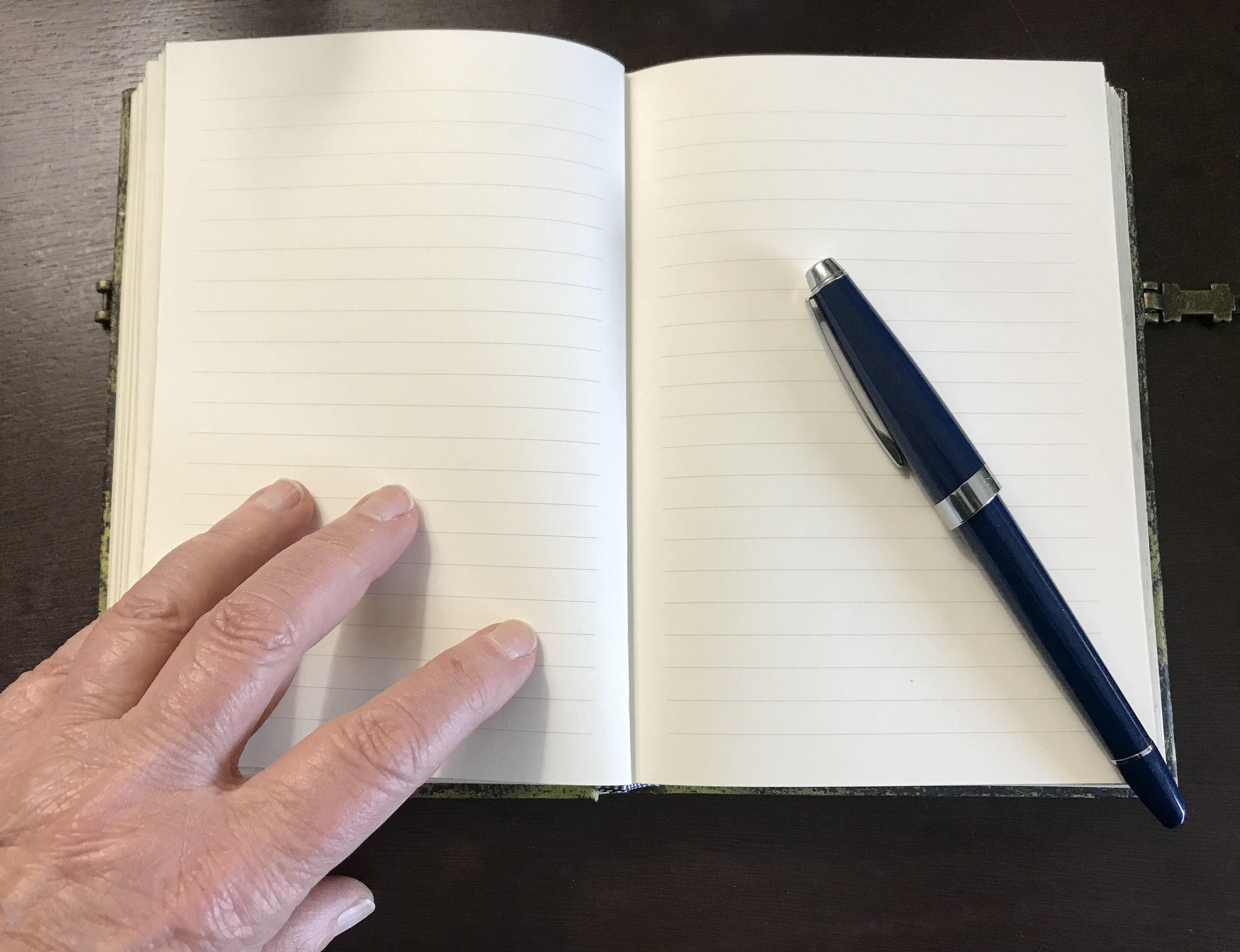
A blank page is more than a simple page that is empty. It offers something new, without precedence to write, draw or create. Whether it’s a physical sheet of paper in a notebook or a white space in a digital document, the blank page represents a fresh beginning and wonderful potential for unique creation.
.

Erik’s point is so Germaine to the creative writing process. The blank page is an open door to possibility; it is a writer’s first step in creating something uniquely their own. Plot, character, setting and language—such as technique, style, words and phrases—certainly make a novel wonderful to read; but it is the unique idea, the spark, the premise and theme that carry that novel into greatness and keep it memorable.
Coming up with first words on a blank page (photo by Nina Munteanu)
.
Poet Alberto Blanco challenges our notion of the blank page being blank: From the tree it was made from, the rain and sun that allowed the tree to grow, and the people that created it, it soon becomes clear that a blank page contains the whole cosmos.
In “The Blank Page: A Meditation on the Creative Process and Life’s Journey” Alex ElkjærVasegaard describes the blank page as “an expanse of white, unsullied by ink or pixels. It’s the void that calls for creation. It’s the challenge that every artist, writer, and thinker faces. But isn’t that just a beautiful metaphor for life itself?”
Erik, I too would have blocked that marketer. I doubt they are a writer…
.
“Who then … tells a finer tale than any of us? Silence does. And where does one read a deeper tale than upon the most perfectly printed page of the most precious book? Upon the blank page. When a royal and gallant pen, in the moment of its highest inspiration, has written down its tale with the rarest ink of all — where, then, may one read a still deeper, sweeter, merrier and more cruel tale than that? Upon the blank page.”—Karen Blixen, Last Tales
.
.
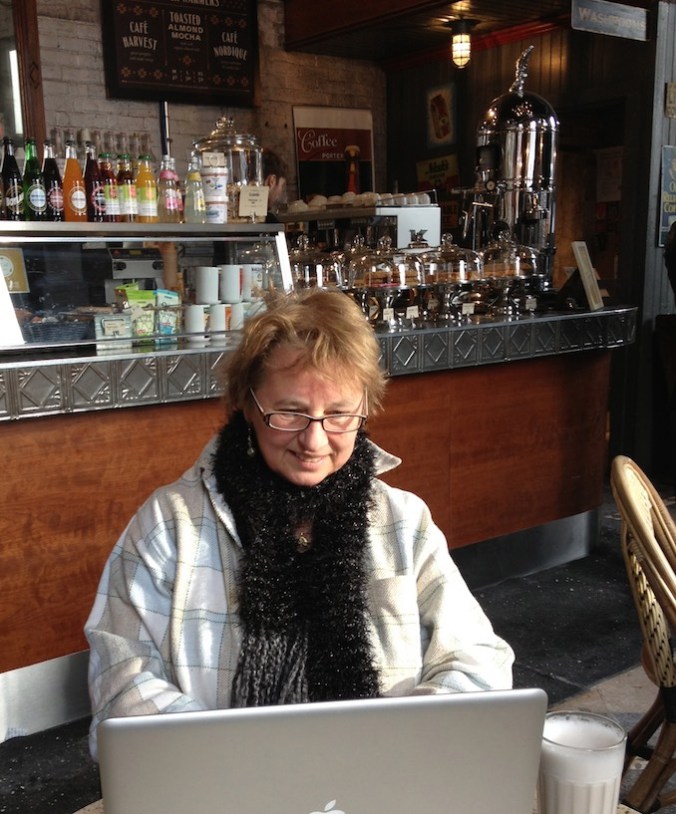
Nina Munteanu is a Canadian ecologist / limnologist and novelist. She is co-editor of Europa SF and currently teaches writing courses at George Brown College and the University of Toronto.
Visit www.ninamunteanu.ca for the latest on her books. Nina’s bilingual “La natura dell’acqua / The Way of Water” was published by Mincione Edizioni in Rome. Her non-fiction book “Water Is…” by Pixl Press (Vancouver) was selected by Margaret Atwood in the New York Times ‘Year in Reading’ and was chosen as the 2017 Summer Read by Water Canada. Her novel “A Diary in the Age of Water” was released by Inanna Publications (Toronto) in June 2020.
.

 Unclutter your writing: There is a Mennonite adage that applies to writing: “less is more”. Sentences in early works tend to be full of extra words (e.g., using “ing” verbs, add-ons like “he started to think” instead of simply “he thought”). Cut down the words in your paragraphs (often in the intro chapters) by at least 20%. Be merciless; you won’t miss them, believe me, and you will add others later in your second round of edits.
 Nina Munteanu is an ecologist and internationally published author of award-nominated speculative novels, short stories and non-fiction. She is co-editor of Europa SF and currently teaches writing courses at George Brown College and the University of Toronto. Visit
  Nina Munteanu Writing Coach