My Books Are Feeding Meta’s AI Brat

On March 20, 2025, in an article in The Atlantic entitled “The Unbelievable Scale of AI’s Pirated-Books Problem”, Alex Reisner disclosed how META pirated millions of books and research papers to train their flagship AI model Llama 3 to be competitive with products like ChatGPT. Reasons for this illegal action is simply time; asking permission and licensing takes too much time and is too expensive.

On the same day, The Atlantic provided a link to LibGen (the pirated-books database that Meta used to train its AI) so authors could search its collection of millions of illegally captured books and scientific papers. I went there and searched my name for my novels, non-fiction books and scientific papers and discovered several of my works in their AI training collection.

Two of my many scientific papers appeared in LibGen under my scientific author name Norina Munteanu. The first scholarly article came from my post grad work at the University of Victoria on the effects of mine tailing effluent on an oligotrophic lake, published in 1984 in Environmental Pollution Series A, Ecological and Biological Volume 33, Issue 1. The second article on the effect of current on settling periphyton came from my M.Sc. ecology research published in 1981 in Hydrobiologia, Volume #78.

Three of my thirteen novels appeared in LibGen under my fiction author name Nina Munteanu. I found it interesting how their bots captured a good range of my works. These included two of my earliest works. Collision with Paradise (2005) is an ecological science fiction adventure and work of erotica; Darwin’s Paradox (2007) is a science fiction medical-eco thriller that features the domination of society by an intelligent AI community. The bots also found my latest novel, A Diary in the Age of Water (2020), a climate thriller and work of eco-fiction that follows four generations of women and their relationship to water.

Each of these works has been highly successful in sales and has received a fair bit of attention and recognition.

When Genevieve Dubois, Zeta Corp’s hot shot starship pilot, accepts a research mission aboard AI ship ZAC to the mysterious planet Eos, she not only collides with her guilty past but with her own ultimate fantasy. On a yearning quest for paradise, Genevieve thinks she’s found it in Eos and its people; only to discover that she has brought the seed of destruction that will destroy this verdant planet.

Recognition: Gaylactic Spectrum Award (nominee)

Collision with Paradise is ideal for readers who enjoy dark, introspective science fiction that explores complex moral dilemmas and psychological depth within a lush mythologically-rich setting.”The Storygraph

A devastating disease. A world on the brink of violent change. And one woman who can save it or destroy it all. Julie Crane must confront the will of the ambitious virus lurking inside her to fulfill her final destiny as Darwin’s Paradox, the key to the evolution of an entire civilization. Darwin’s Paradox is a novel about a woman s fierce love and her courageous journey toward forgiveness, trust, and letting go to the tide of her heart.

Recognition: Readers Choice Award (Midwest Book Review); Readers Choice (Delta Optimist); Aurora Award (nominee)

Darwin’s Paradox is a thrill ride that makes you think and tugs the heart.”Robert J. Sawyer, Hugo and Nebula Award winning author of Rollback

This gritty memoir describes a near-future Toronto in the grips of severe water scarcity during a time when China owns the USA and the USA owns Canada. A Diary in the Age of Water follows the climate-induced journey of Earth and humanity through four generations of women, each with a unique relationship to water. The diary spans a twenty-year period in the mid-twenty-first century of 33-year-old Lynna, a single mother and limnologist of international water utility CanadaCorp, and who witnesses disturbing events that she doesn’t realize will soon lead to humanity’s demise. 

Recognition: 2020 Foreword Indies Book of the Year Award (Bronze); 2020 Titan Literary Book Award (Silver); 2021 International Book Award (Finalist).

“If you believe Canada’s water will remain free forever (or that it’s truly free now) Munteanu asks you to think again. Readers have called ‘A Diary in the Age of Water’ “terrifying,” “engrossing,” and “literary.” We call it wisdom.”—LIISBETH

The April 3, 2025 article by Ella Creamer of The Guardian noted that a US court filing alleged that Meta CEO Mark Zuckerberg approved the company’s use of the notorious “shadow library”, LibGen, which contains more than 7.5 million books and 81 million research papers. According to Toby Walsh, leading AI researcher at the University of New South Wales: “As far as we know, there was an explicit instruction from Mark Zuckerberg to ignore copyright.”

This begs the question of the role and power of copyright law.

“Copyright law is not complicated at all,” said Richard Osman, author of The Thursday Murder Club series. “If you want to use an author’s work you need to ask for permission. If you use it without permission you’re breaking the law. It’s so simple.”

If it’s so simple then why is Meta and others getting away with it? For its defence, the tech giant is claiming “fair use”, relying on this term permitting the limited use of copyrighted material without the owner’s permission (my italics).

It would seem that just as Trump trumped the presidency, Zuckerberg and his AI minion bots have trumped the copyright law—by flagrantly violating it and getting away with it—so far (on both counts).

The actions of Meta were characterized by Society of Authors chair Vanessa Fox O’Louglin as “illegal, shocking, and utterly devastating for writers.” O’Louglin added that “a book can take a year or longer to write. Meta has stolen books so that their AI can reproduce creative content, potentially putting these same authors out of business.”

Three of my novels pirated for AI training

Reflecting many authors’ outrage throughout the world, Novelist AJ West remarked, “To have my beautiful books ripped off like this without my permission and without a penny of compensation then fed to the AI monster feels like I’ve been mugged.” Australian Author Sophie Cunningham said, “The average writer earns about $18,000 a year on their writing. It’s one thing to be underpaid. It’s another thing to find that [their] work is being used by a company that you don’t trust.” Bestselling author Hannah Kent said, “If feels a little like my body of work has been plundered.” She adds that this, “opens the door to others also feeling like this is an acceptable way to treat intellectual copyright and creatives who already…are expected to [contribute] so much for free or without due recompense.” Both Kent and Cunningham exhort governments to weigh in with more powerful regulation. And this is precisely what may occur. Nicola Heath of ABC.net.au writes, “the outcomes of the various AI copyright infringement cases currently underway in the US will shape how AI is trained in the future.”

According to The March 20, 2025 Authors Guild article “Meta’s Massive AI Training Book Heist: What Authors Need to Know,” legal action is underway against Meta, OpenAI, Microsoft, Anthopic, and other AI companies for using pirated books. The Authors Guild is a plaintiff in the class action lawsuit against OpenAI, along with John Grisham, Jodi Picoult, David Baldacci, George R.R. Martin, and 13 other authors, but the claims are made on behalf of all US authors whose works have been ingested into GPT. 

The Authors Guild suggests five things authors can do to defend their rights:

  1. Send a formal notice: If your books are in the LibGen dataset, send a letter to Meta and other AI companies stating they do not have the right to use your books.
  2. Join the Authors Guild: You should join the Guild and support our joint advocacy to ensure that the writing profession remains alive and vibrant in the age of AI. We give authors a voice, and there is power in numbers. We can also help you ensure that your contracts protect you against unwanted AI use of your work. 
  3. Protect your works: Add a “NO AI TRAINING” notice on the copyright page of your works. For online work, you can update your website’s robots.txt file to block AI bots.
  4. Get Human Authored certification: Distinguish your work in an increasingly AI-saturated market with the Authors Guild’s certification program. This visible mark verifies your book was created by a human, not generated by AI.
  5. Stay informed. The Authors Guild suggest signing up for the free Guild biweekly newsletter to keep updated on lawsuits and legislation that could impact you and your rights. The legal landscape is changing rapidly, and they are keeping close watch. 

How do I feel about all this? As a female Canadian author of climate fiction? As a thinking, feeling human being living in The Age of Water? Well, to tell the truth, it kinda makes me want a donut*…

 *as delivered by James Holden in Season 3, Episode 7 of “The Expanse”

Aspens in fall, ON (photo and rendition by Nina Munteanu)

Nina Munteanu is a Canadian ecologist / limnologist and novelist. She is co-editor of Europa SF and currently teaches writing courses at George Brown College and the University of Toronto. Visit  www.ninamunteanu.ca for the latest on her books. Nina’s bilingual “La natura dell’acqua / The Way of Water” was published by Mincione Edizioni in Rome. Her non-fiction book “Water Is…” by Pixl Press (Vancouver) was selected by Margaret Atwood in the New York Times ‘Year in Reading’ and was chosen as the 2017 Summer Read by Water Canada. Her novel “A Diary in the Age of Water” was released by Inanna Publications (Toronto) in June 2020.

On Writing: The Blank Page

AI concept art by genaiTechvifySoftware.com

I teach scholarly writing at the University of Toronto through several writing centres; I’m helping students with their assignments in engineering, the health sciences and humanities. All are generating scholarly papers on various topics with various purposes; anything from a critical assessment, literature review, position paper, or reflection essay to a lessons learned document, research proposal, or thesis chapter. Everyone is using some kind of AI when generating, writing and editing their works. And there are plenty of AI tools to choose from. Some of the most common AI tools used by my students include: Grammarly for grammar; Perplexity as a research tool, text summarizer and conversational AI search engine; Paperpal for editing, Google Scholar as a search engine, ChatGPT to summarize works, brainstorm ideas, provide quiz questions, or even generate human-like text in a first draft.

All these assignments are purpose-built and students must successfully address their assignment requirements to succeed. In some ways, the idea, topic and handling of the topic are assigned; the student need only carefully and clearly address it.

But, when creating something new, like a piece of fiction or even a non-fiction article, professional writers are essentially walking into a new world, not restricted by “assignment guidelines or requirements”; they truly must face the blank page.

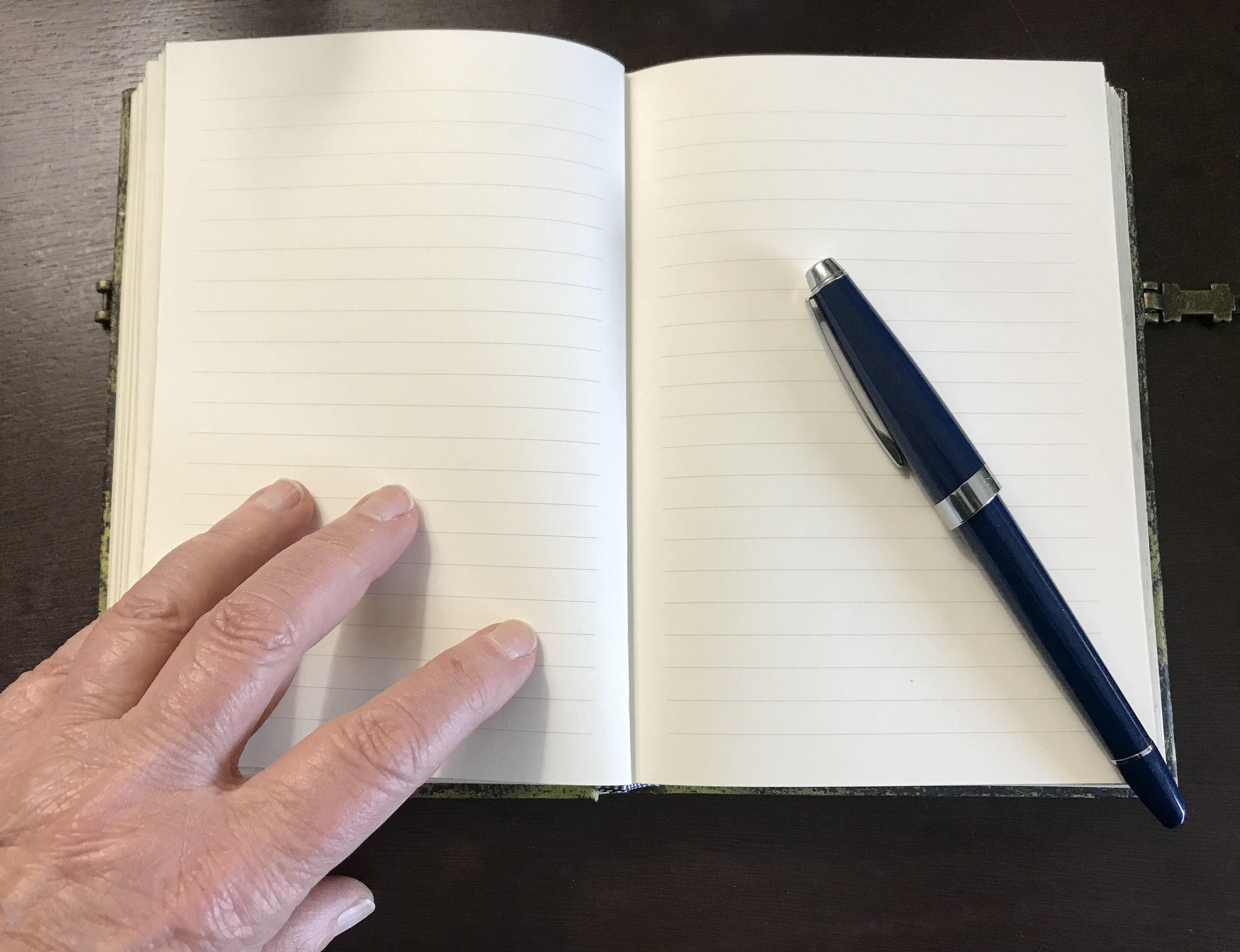
The blank pages of a notebook (photo by Nina Munteanu)

There’s no precedence for creating a piece of fiction. Yes, certainly inspiration is involved, but the work of something unique must start with a blank page. Professional writers often dread facing the blank page. It even has a name: blank page syndrome, or writer’s block, the feeling of being overwhelmed or even paralyzed by the prospect of starting. Alex Elkjær Vasegaard tells us that “it may come from the fear of not being good enough, of not knowing enough, or of the vastness of the potential ahead.”

I recently read a post on LinkedIn by writing colleague Erik Buchanan, which resonated with me. I asked his permission to quote it here and he gladly gave it:

Just got a recommended post from a marketing person claiming that using AI allows you to get past the hardest part of writing: “the blank page.”

I blocked them, and I’m putting what I was going to reply to them here instead, because they are not a person who will be open to this rant:

If you cannot get past the blank page, you are not a writer.

If you use AI to get past the blank page, you’re still not a writer, and now you’re a thief.

You’re using other writers’ words, fed into an information aggregator and splatted out like a drunk’s meal vomited onto the sidewalk. And you’re scooping it up and claiming it’s fresh food.

You want to write? Write something.

Speaking as one who has written 18 novels (more than half ghostwritten for money), 150 articles, short stories, instruction manuals, sales copy, website copy, commercial scripts, short films and now a feature film (currently being re-written) it’s not that hard.

Using AI means you’re too lazy to learn the craft.

Don’t do it.

A blank page is more than a simple page that is empty. It offers something new, without precedence to write, draw or create. Whether it’s a physical sheet of paper in a notebook or a white space in a digital document, the blank page represents a fresh beginning and wonderful potential for unique creation.

Erik’s point is so Germaine to the creative writing process. The blank page is an open door to possibility; it is a writer’s first step in creating something uniquely their own. Plot, character, setting and language—such as technique, style, words and phrases—certainly make a novel wonderful to read; but it is the unique idea, the spark, the premise and theme that carry that novel into greatness and keep it memorable.

Coming up with first words on a blank page (photo by Nina Munteanu)

Poet Alberto Blanco challenges our notion of the blank page being blank: From the tree it was made from, the rain and sun that allowed the tree to grow, and the people that created it, it soon becomes clear that a blank page contains the whole cosmos.

In “The Blank Page: A Meditation on the Creative Process and Life’s Journey” Alex ElkjærVasegaard describes the blank page as “an expanse of white, unsullied by ink or pixels. It’s the void that calls for creation. It’s the challenge that every artist, writer, and thinker faces. But isn’t that just a beautiful metaphor for life itself?”

Erik, I too would have blocked that marketer. I doubt they are a writer…

“Who then … tells a finer tale than any of us? Silence does. And where does one read a deeper tale than upon the most perfectly printed page of the most precious book? Upon the blank page. When a royal and gallant pen, in the moment of its highest inspiration, has written down its tale with the rarest ink of all — where, then, may one read a still deeper, sweeter, merrier and more cruel tale than that? Upon the blank page.”—Karen Blixen, Last Tales

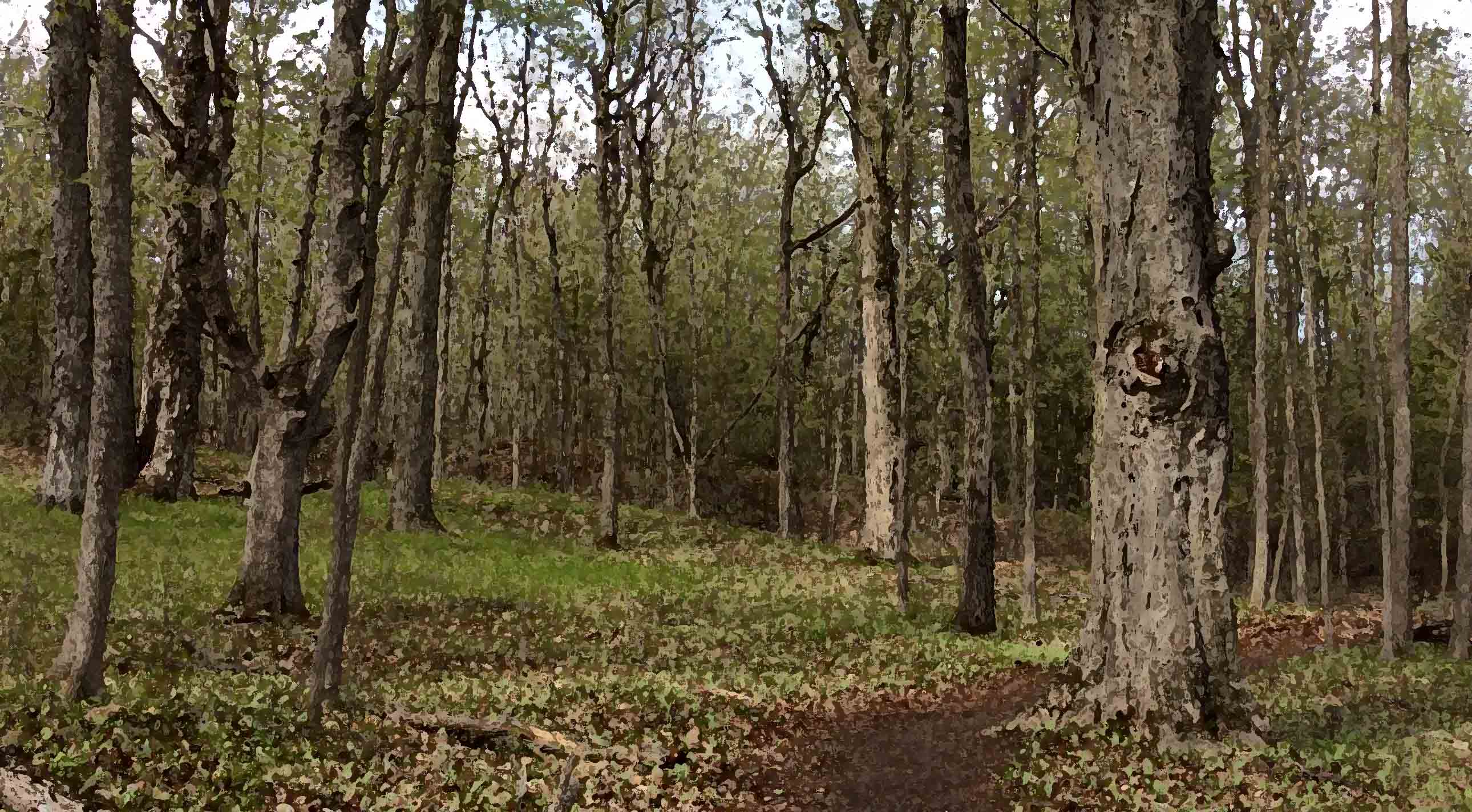
Maple beech forest in early spring, ON (photo and rendition by Nina Munteanu)

Nina Munteanu is a Canadian ecologist / limnologist and novelist. She is co-editor of Europa SF and currently teaches writing courses at George Brown College and the University of Toronto. 

Visit  www.ninamunteanu.ca for the latest on her books. Nina’s bilingual “La natura dell’acqua / The Way of Water” was published by Mincione Edizioni in Rome. Her non-fiction book “Water Is…” by Pixl Press (Vancouver) was selected by Margaret Atwood in the New York Times ‘Year in Reading’ and was chosen as the 2017 Summer Read by Water Canada. Her novel “A Diary in the Age of Water” was released by Inanna Publications (Toronto) in June 2020.

The Writer-Editor Relationship, Part 2: Editors Preparing Writers

Alvar in spring, ON (photo and rendition by Nina Munteanu)

In my previous article, “Five Things Writers Wish Editors Knew—and Followed,” I focused on clarifying expectations between editors and writers from the writer’s point of view.

Part 2, this article, focuses on this same relationship from the editor’s point of view. If you are a writer, this article serves as a workable checklist of what you should expect from a good editor.

Realizing Expectations

Indie authors often come to editors with unclear and, at times, unreasonable or unrealistic expectations on services. Many writers know very little about the kind of editing we do and the different levels of effort (time and associated fee) required. They do not understand the difference between “copy-editing” and “structural editing”, particularly as it pertains to their own work. In fact, many indie writers don’t even know what their MS requires. This is because of two things: 1) they can’t objectively assess their own work, particularly in relation to market needs; and 2) many authors have not sufficiently considered their “voice” or brand and matched it to a relevant target market. Both of these will influence how the writer comes into the relationship and the nature of their expectations.

It is best to be “up front” with everything, from understanding a writer’s work and market expectations to establishing your fees, your time, and the nature of your services. This is why a savvy editor will ask for a one to several page example of the author’s writing prior to offering their services and finalizing the nature of a potential relationship. Such an exchange may, in turn, include a sample of the editor’s work for the writer to assess. This exchange helps clarify the process for both parties.

A savvy editor will want to establish with the author the following things prior to taking him/her on as a client and embarking on the actual editing task:

  1. The nature of the writer’s work: a writer’s work should harmonize with the editor and achieve a good fit; e.g., I edit fiction and non-fiction; however, I do not edit horror, because I simply can’t relate to it and don’t care for it.  More on this below.
  2. The author’s expectations and target market: this is key to establishing the kind of editing required for the author’s piece. Is it good enough to just copy-edit or will the piece require substantive edits to succeed in the identified market? This often requires open and frank communication between editor and author.
  3. Nature and time of submission: on which the schedule is based.
  4. Schedule and deadlines for deliverables: based on the editor’s realistic timing (including other work) and the nature of the editing job (to be established by some reliable means).
  5. Nature of communication: form and frequency; partly to ensure that the writer does not abuse the communication stream with a barrage of emails, e-chats, phone calls, etc.)
  6. Nature and cost of deliverables: e.g., use of track changes; inclusion of summary letter; follow up meetings, etc.
  7. Mutual agreement on fees, fee structure and payment details: what, how and when.
  8. Inclusion and nature of contract: this may include an NDS, if desired.

By clarifying these, you and the author create a new set of realistic agreed-upon expectations.

Fitting Writer with Editor

The right fit for editor and writer includes more than harmonizing genre, writing style, and content. The fit includes personality. A professional editor and writing colleague of mine recently shared on our list-serve about his experience as both a freelance and publishing house editor. The editor shared that a majority of writers responded to his edits with comments like, “finally, someone who just comes out and plainly tells me what’s wrong!” However, others complained: “why are you so mean?” The editor admitted to using humor liberally in his assessments and was described by one of his clients as “playfully harsh.” While the work of this editor is no doubt impeccable, the added humor may not be a good fit for some writers, particularly those who are not highly confident in their work.

Knowing your own brand of editing and being up front with it is part of achieving a good fit with a writer and can avoid huge headaches down the line for both of you.

Toward Honesty & Moral Integrity

I and some of my editing colleagues have run across several cases of indie writers who have come to us with “already edited works” that they believed only needed proofing or minor edits, but in fact called for substantive editing and story coaching to fulfill market requirements. The previous editor had either done a poor job of editing or the author had done a poor job of incorporating the edits. Either way, I was now in the position to inform this author, who had already spent several thousand dollars on edits, that his work required more than a “trim job off the top” to meet the standards demanded by the market.

My colleague suggested that it is unethical to copy-edit a manuscript that obviously requires structural editing or has serious “story” problems. I’m inclined to agree. The key lies in the expectations of the author and his/her intended market. This is where the editor’s knowledge of “matching work to market” becomes a critical part of the relationship with the author, whether you take him/her on as a client or not. I talked more about this in an article on Boldface: “The Moving Target of Indie Publishing: What Every Editor (and Writer) Needs to Know.” Honesty is best. Following the path of moral integrity may not put food on the table; but it will maintain your reputation as an editor of quality, which will keep the roof over your head.

Below is a mock email of a general response to a writer’s inquiry for help on their MS:

Dear Alice,  

Thank you for your interest in my editing services. I am still taking on clients and would be happy to help you.  

In your initial letter, you included a brief description of your story. It sounds intriguing and interesting. Science fiction is my passion (I’ve published nine SF books so far).  

Before we proceed, I need a few things from you to ensure we are a good fit and to help me do the best I can for your project. First, can you please send me a short sample of your work (2-3 pages) and a very short summary. From this I’ll be able to confirm the kind of editing that best suits your project. For the kinds of editing/coaching services and associated fees please refer to this page on my website: xxxx.  

Can you also answer the following questions?

1. (If they haven’t included the genre or a short premise, I ask them for one).
2. How do you intend to publish this book (traditional, indie, self-publish)?
3. Who would you say is your intended audience and market?
4. Is his book a sand alone or par of a trilogy or series?
5. Is the book complete (firs draft or higher? If not, how much is written?  

Based on this, I will suggest the kind of editing (and coaching) required to best fit your needs. This may be one or a combination of the following: 1) an evaluation/assessment at $xx/page; 2) copy-editing (with some substantive editing) at $xx/page; or 3) story coaching at $xx/hour. As outlined on my webpage (xxxx), I provide digital commentary (line by line) in your manuscript (in Word through track changes) accompanied by a summary letter with recommendations. You can find examples of what I do on this page of my website: xxxx.   Once I’ve determined what services best suit your work and you are in agreement with the service and fees, I will draw up a contract for you and I to sign. The contract will stipulate a reasonable schedule that you and I can agree on for the process and deliverables.  

Once the contract is signed by both of us, I would ask that you send me your material along with Paypal payment for the first half of the agreed total fee by the date marked in the contract.  

I look forward to hearing from you.  

Best Wishes,
Nina  

Nina Munteanu is a Canadian ecologist / limnologist and novelist. She is co-editor of Europa SF and currently teaches writing courses at George Brown College and the University of Toronto. Visit www.ninamunteanu.ca for the latest on her books. Nina’s bilingual “La natura dell’acqua / The Way of Water” was published by Mincione Edizioni in Rome. Her non-fiction book “Water Is…” by Pixl Press (Vancouver) was selected by Margaret Atwood in the New York Times ‘Year in Reading’ and was chosen as the 2017 Summer Read by Water Canada. Her novel “A Diary in the Age of Water” was released by Inanna Publications (Toronto) in June 2020.

Nina Munteanu on The Bridge Between Fiction and NonFiction

.

Issue  #128 of Apex Magazine featured an interview that Rebecca E. Treasure did with me. We discussed the power of story, the use of dystopian narrative, and the blur between fiction and non-fiction to create meaningful eco-fiction. Below we talk about the role of stories in the climate action movement. For the complete interview go here:

AM: Your also stories bridge fiction with nonfiction, using speculative fiction as a lens to bring your subject into focus for the reader. How does that work? Why do you approach story in this way?

NM: Marcie McCauley with Temz Review observed that, “[Munteanu] does not appear to view fiction and non-fiction as separate territories; or, if she does, then this book [A Diary in the Age of Water] is a bridge between them.” In Herizons, Ursula Pflug called the book “a bit of a hybrid, and Munteanu a risk-taker.” Buried in Print wrote of the same book, “ultimately it exists in an in-between place, some mystical elements of the generational tale possibly alienating the dedicated science-y readers and the instructional elements possibly alienating fiction devotees. And, yet, I read on: strangely compelling.”

I find that I enjoy this in-between place that blurs fiction with nonfiction. It’s more edgy, gripping, and believable, albeit fantastical, even playfully challenging at times. For instance, I may subvert facts, creating semi-facts to tease the discerning reader (e.g. when the diarist in “A Diary in the Age of Water” observed that President Trump had gone blind from staring at the sun during an eclipse; while Trump did stare directly at the sun without eye protection during an eclipse in 2017, he did not go blind—yet). Readers have told me that the story was more impactful; they honestly didn’t know what was taken from fact and what was fictionalized. Such narrative reads like a true story and there is little more tantalizing than eavesdropping on another’s real experience and intrigue. The risk—that the blur will either confuse the reader or invalidate its truths and message—is hopefully addressed through compelling narrative that engages the reader. But this is also why I tend to include an extensive bibliography at the end of a novel or short story.

Readers have told me that my fiction/nonfiction storytelling trope, like “mundane science fiction,” grips my stories with a more keen sense of relevance. Given that I am writing mostly climate fiction and eco-fiction these days, that sense of relevance is exactly what I wish to achieve. 

For the entire interview, go to Apex Magazine, December 10, 2021.

Nina Munteanu is a Canadian ecologist / limnologist and novelist. She is co-editor of Europa SF and currently teaches writing courses at George Brown College and the University of Toronto. Visit www.ninamunteanu.ca for the latest on her books. Nina’s bilingual “La natura dell’acqua / The Way of Water” was published by Mincione Edizioni in Rome. Her non-fiction book “Water Is…” by Pixl Press(Vancouver) was selected by Margaret Atwood in the New York Times‘Year in Reading’ and was chosen as the 2017 Summer Read by Water Canada. Her novel “A Diary in the Age of Water” was released by Inanna Publications (Toronto) in June 2020.

Integrate Place in Fiction To Deepen Meaning

This past August, I participated in the When Words Collide Online 2022 Writing Festival.  one of Canada’s prime writing festivals in Calgary, Alberta. I was a featured writer, sitting on several panels and conducting presentations and lectures.
My presentation on the role of place in story kicked off the festival.

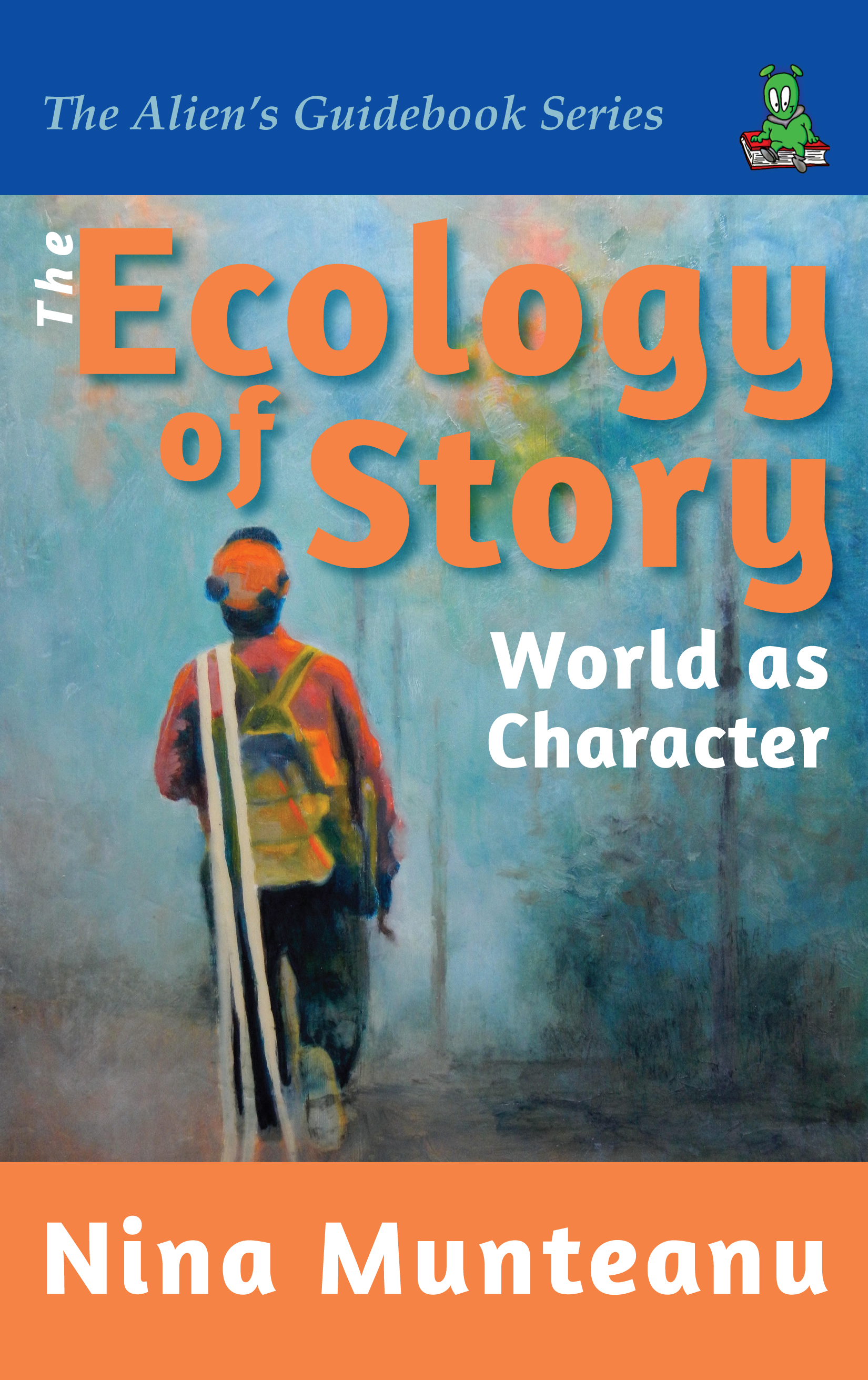
The role of place in story is a topic close to my heart and one I wrote an entire writing guidebook on: The Ecology of Story: World as Character. In my coaching sessions with writers and in my writing courses at George Brown College and the University of Toronto, I’d observed in the novice writer a need for more effective integration of setting and place in story. All too often, the lack of meaningful integration translated into a lost opportunity to explore the POV character and the story’s theme.

The lack of meaningful use of place in story can result in a lacklustre story, overly vague characterizations and a story that lacks metaphoric depth and relevance.

Nina Munteanu

The presentation and following discussion drew from my guidebook Ecology of Story and was also featured in the WWC recorded panel called “What is Eco-Fiction and Why Should We Care?” The presentation overviewed topics covered in the book, such as:

  • Place as character & archetype
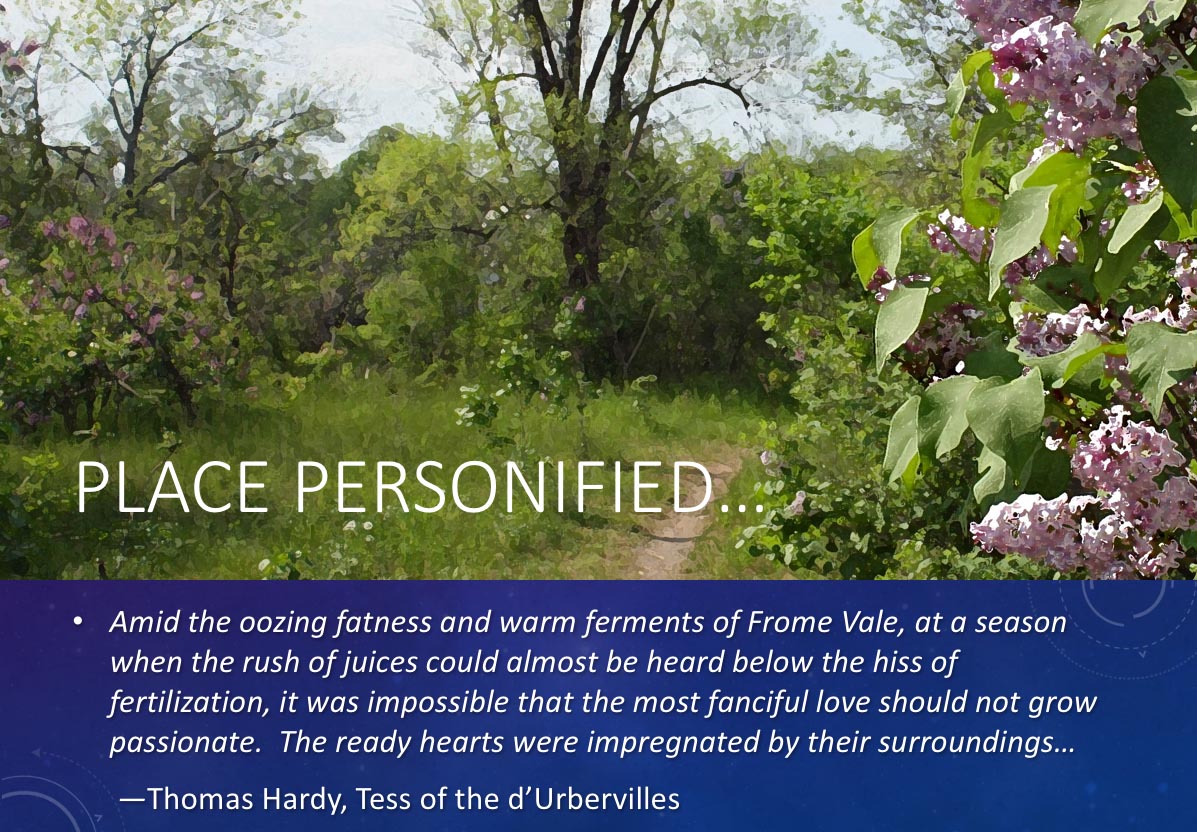
  • Place as metaphor (personification, symbols, allegory)
  • Place and first impressions (openings)
  • Place and emotion (over time and by POV)
  • Place through the senses
  • Place as environmental force (including climate change)

We also discussed how characters connect with their environment and I introduced the metaphoric connection between the white pine forests and the Mi’kmaq in Annie Proulx’s Barkskins. Both are exploited by the white settlers, with intentions to subdue and controll:

The Gatineau forest was noisy, echoing with ax blows and the rushing crackle of falling timber, with shouted warnings and orders. The axmen cut the great pines, but only a few in each plot were suitable for squaring. The rest were left to rot on the ground … unwanted trees lay prostrate, severed branches everywhere, heaps of bark and mountains of chips … There were so many trees, what did it matter? Maine men were used to waste—it was usual—but this was beyond anything even they had seen. 

In the Penobscot settlement, the trees fell, tracks inched through the forests, only one or two then seven, then webs of trails that over the decades widened into roads. The roads were muddy, sometimes like batter, sometimes thick and clutching until late summer; when they metamorphosed into choking dust so fine it hung in the air long after a horse and carriage passed, settling on the grass as the English people settled on the land … Fields of wheat and hay took the land, these fields enclosed by linked stumps, the root wads of the forest that had once stood there turned on their edges to bar the white man’s cows and sheep. 

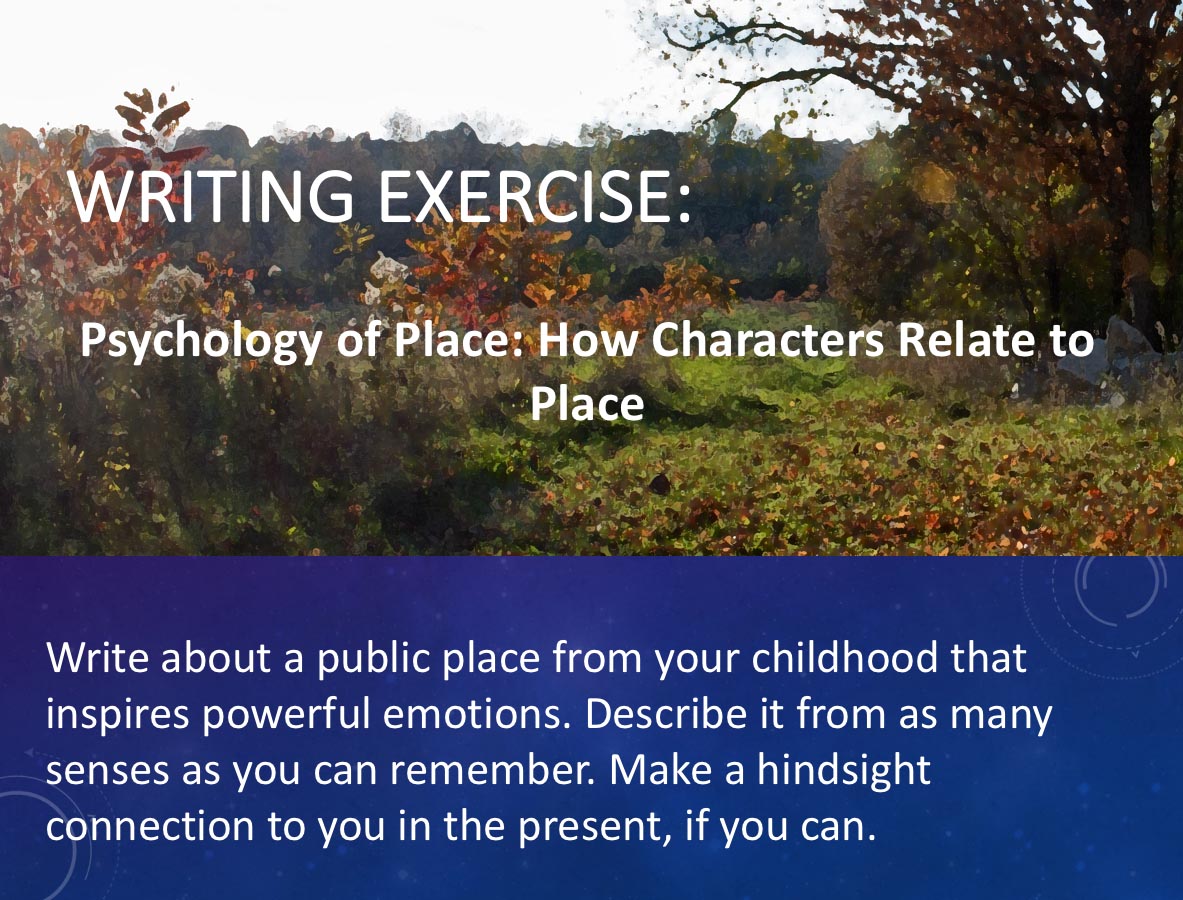
I concluded the presentation with a writing exercise asking participants to write about the psychology of a place and how they related to it.

Writers attending the presentation / workshop eagerly participated and produced some evocative narrative that contained good metaphor and sensual writing. Here are a few:

Freyja on their high school gym: “I remember rallies and lectures and sweating, running in circles for an hour and a half. The gym stayed the same but the population of people got smaller and smaller over the years. One year a kid hit his head on the wall and went into a coma. Longest seven seconds in my life.”

Roma: “As soon as I get a whiff of old pages in a book, I am reminded of Uncle Leo. The coffee coloured leather jacket he always wore had seen better days and like him, still retained most of its luster. He was the youngest of my dad’s nine siblings, born during a storm and considered a tempestuous child. Our family just didn’t understand his passion.”

Angela: “I stood on the bridge in Moscow. My mother was talking with a friend. She couldn’t believe how lucky we were to be posted here. I looked down at the river. And at the bridge. It would be so easy to just jump over the fence and land in the water. It was a sunny day. The heat was oppressive. I wanted to do it. But I stood still.”

Kylie: “The stuffy air was full of the smell of bodies and heat. The din of laughing and talking, and yelling surrounded me.”

To find out more on how place can add depth and meaning to your writing, see my third writing guide, The Ecology of Story: Place as Character.

The Ecology of Story: World as Character is presented in two parts: Part 1 provides a comprehensive summary of the science of ecology, the study of relationships, and links to useful metaphor; Part 2 discusses world and place in story. Here I discuss how the great writers have successfully integrated place with theme, character and plot to create a multi-layered story with depth and meaning. Part 2 also contains several exercises and detailed case studies.

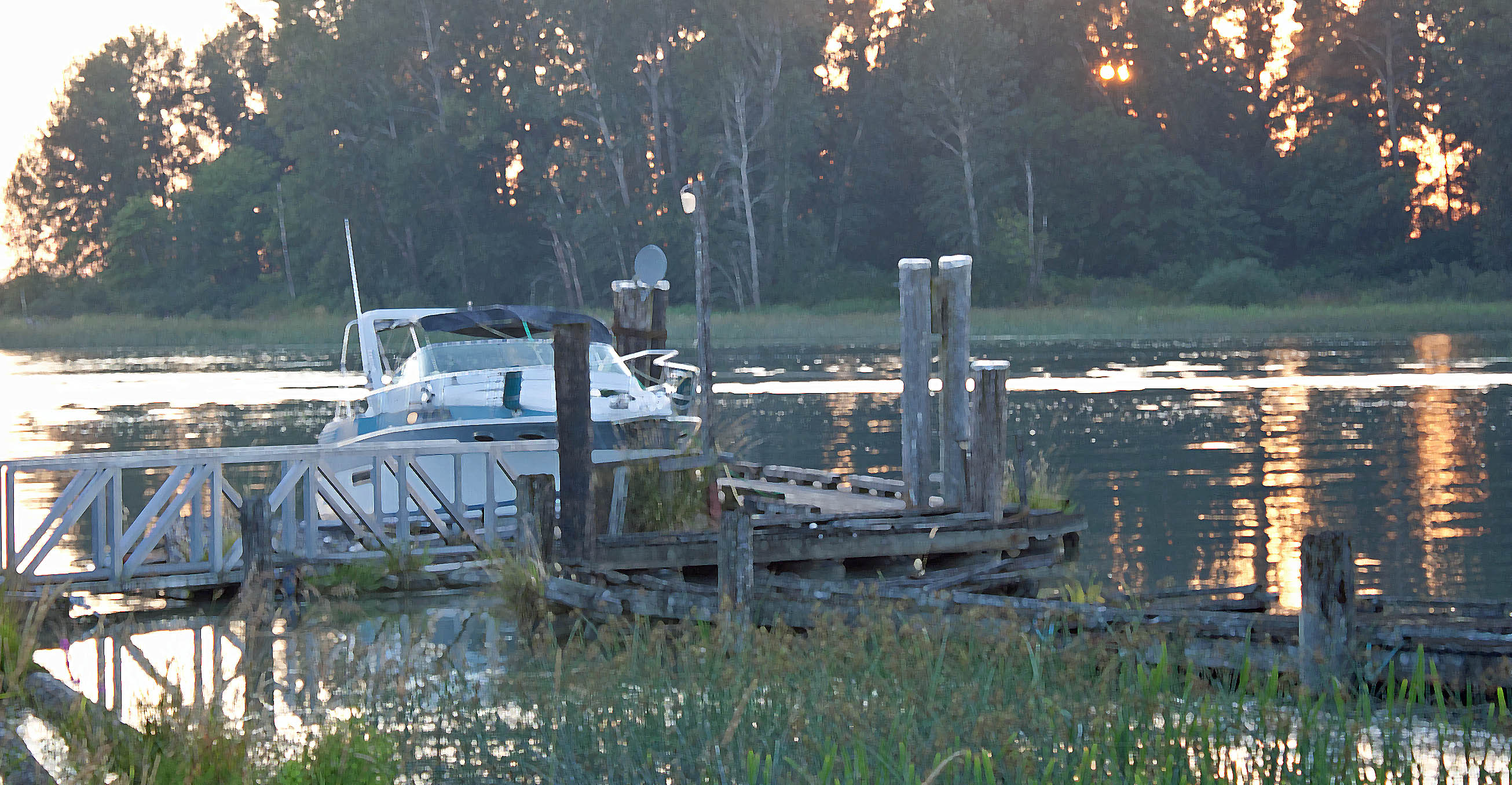
Boat dock at sunset, Ladner Slough of Fraser River, BC (photo and rendition by Nina Munteanu)

NINA MUNTEANU is a Canadian ecologist / limnologist and novelist. She is co-editor of Europa SF and currently teaches writing courses at George Brown College and the University of Toronto. Visit  www.ninamunteanu.ca for the latest on her books. Nina’s bilingual “La natura dell’acqua / The Way of Water” was published by Mincione Edizioni in Rome. Her non-fiction book “Water Is…” by Pixl Press(Vancouver) was selected by Margaret Atwood in the New York Times ‘Year in Reading’ and was chosen as the 2017 Summer Read by Water Canada. Her novel “A Diary in the Age of Water” was released by Inanna Publications (Toronto) in June 2020.

Writing a Cat Christmas…

First snow in Peterborough, ON (photo by Nina Munteanu)

I move around a lot these days. It helps me to appreciate some of the most simple things in life and reminds me of what I love most about Christmas: how it focuses my heart and reconnects me. I don’t mean just with relatives and friends either, although the season certainly does that. I’m talking about my soul and the universe itself. Before I became an itinerant, Christmas bustled with my responsibilities as primary caregiver, social coordinator and hostess of major parties. After I’d said goodbye to our visiting friends and done the dishes and tidied the house; after my husband and son had gone to bed, I sat in the dark living room lit only with the Christmas Tree lights and the flickering candle, and listened to soft Christmas music, primed to write.

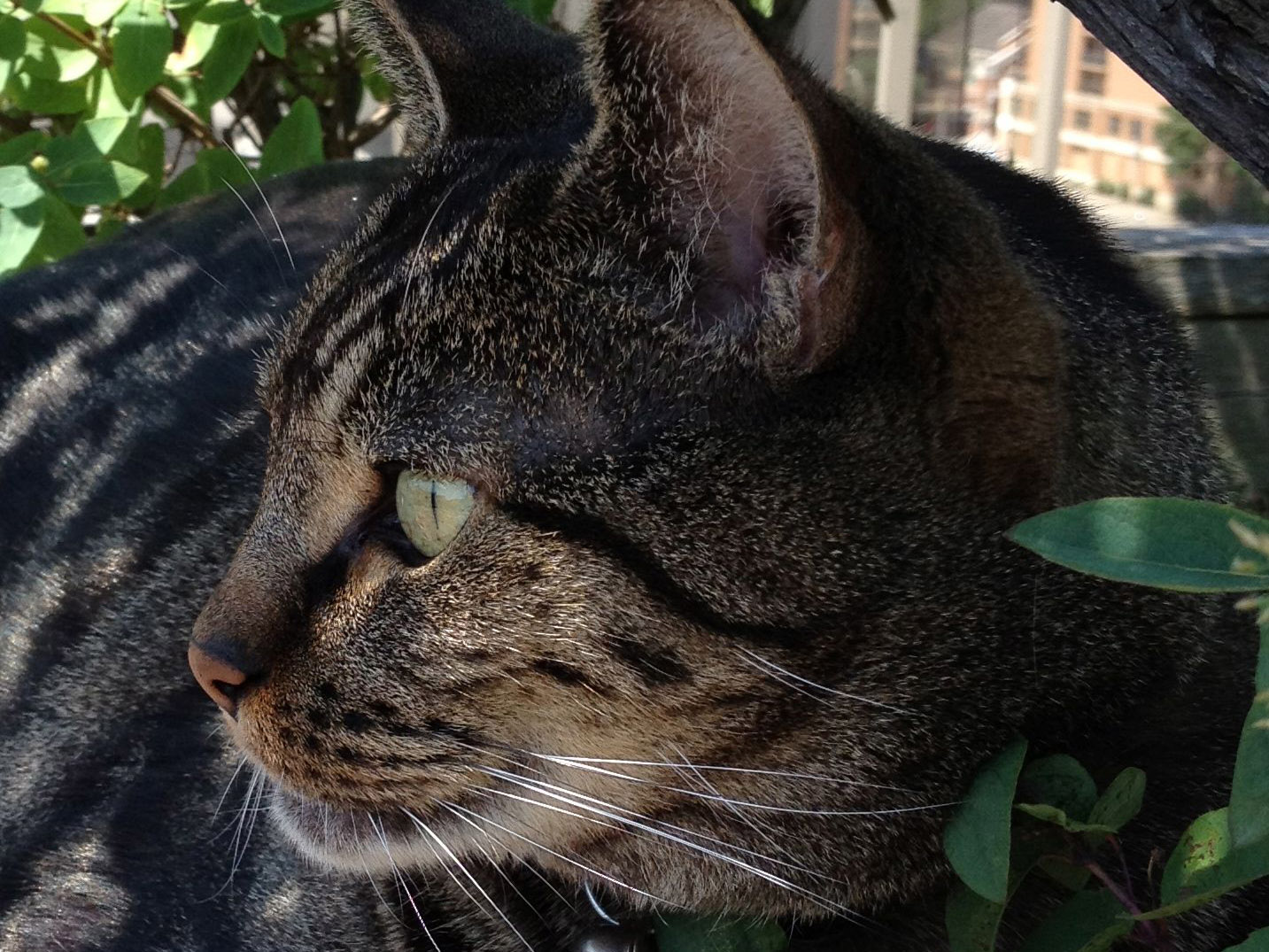
Sammy, the cat (photo by Nina Munteanu)

My male cat, smelling fresh from outside, found his rightful place on my lap and settled there, pinning me down with love. And there, as I breathed in the scent of wax and fir and cat I found myself again.

Christmas is, more than anything, a time of embracing paradox. It is an opportunity to still oneself amid the bustle; to find joy in duty; to give of one’s precious time when others have none, to embrace selflessness when surrounded by promoted selfishness, and to be genuine in a commercial and dishonest world. If one were to look beyond the rhetoric and imposed tradition, the Christmas season represents a time of focus, a time to reflect on one’s genuine nature and altruistic destiny. A time to reconnect with the harmony and balance in our lives.

A time to sit with our cat, pinned with love, and write our next novel.

Merry Christmas!

First snow in Ontario field (photo by Nina Munteanu)

Nina Munteanu is a Canadian ecologist / limnologist and novelist. She is co-editor of Europa SF and currently teaches writing courses at George Brown College and the University of Toronto. Visit www.ninamunteanu.ca for the latest on her books. Nina’s bilingual “La natura dell’acqua / The Way of Water” was published by Mincione Edizioni in Rome. Her non-fiction book “Water Is…” by Pixl Press(Vancouver) was selected by Margaret Atwood in the New York Times ‘Year in Reading’ and was chosen as the 2017 Summer Read by Water Canada. Her novel “A Diary in the Age of Water” was released by Inanna Publications (Toronto) in June 2020.

Nina Munteanu Talks About Writing and Audiobooks

AudiobookPromotions

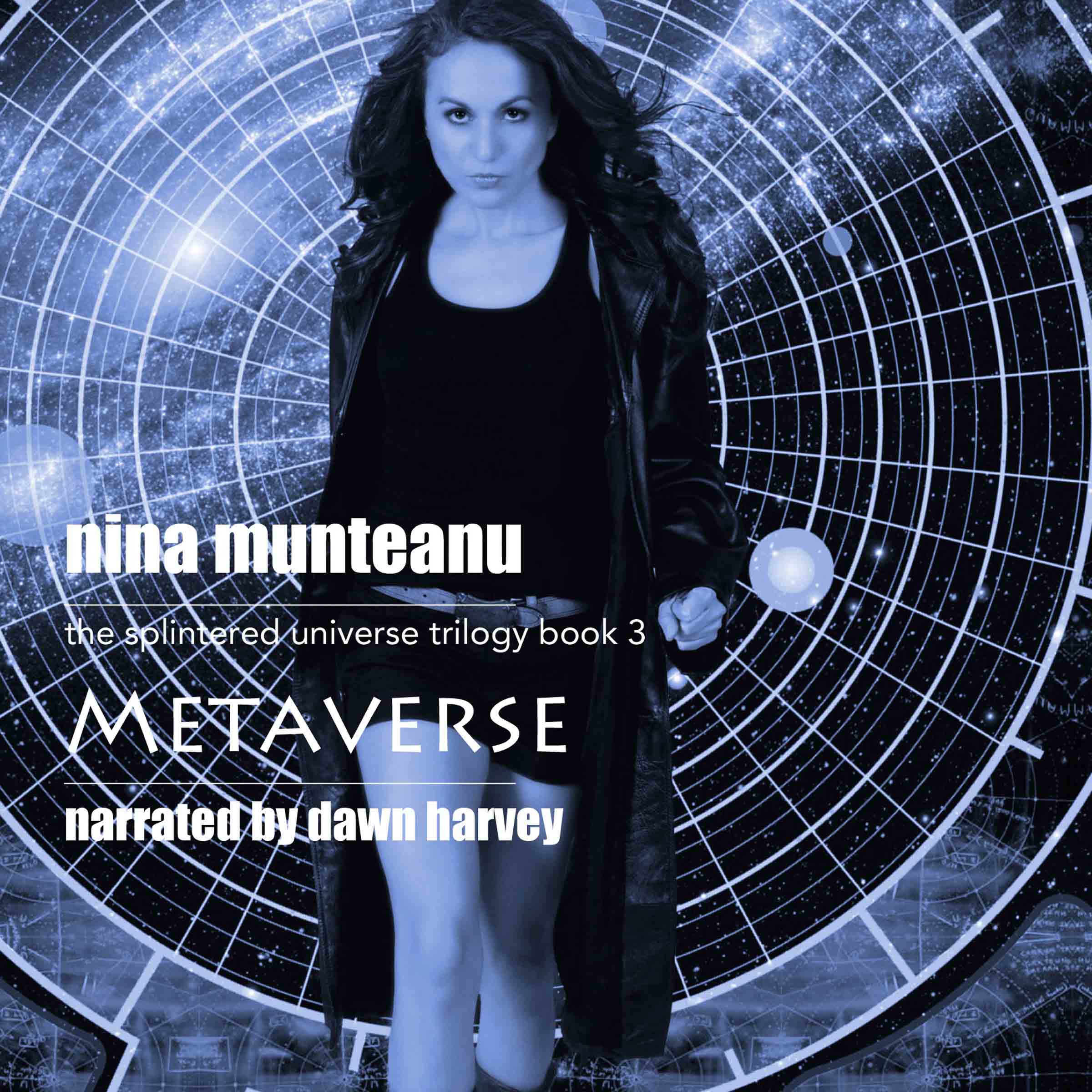
In a recent interview with Jess at Audiobookworm Promotions, I talked about the process of turning The Splintered Universe Trilogy into three audiobooks and the process of writing in general:

Nina-tree

Nina Munteanu

Tell us about the process of turning your book into an audiobook.

The process was magical for me. It was professional and proceeded at a pace that felt productive. All of this was mainly because of the professional relationship I had with the narrator. From audition to each step of quality assurance in ensuring character voice, pronunciations, mood, tempo, etc. the narrator and I were in good communication. The final product shows. I can’t recall how long it took for each audiobook to be created, but it didn’t feel long.

How did you select your narrator?

Dawn Harvey2

Dawn Harvey

Dawn Harvey auditioned for my first book along with two other narrators through the audiobook publisher, Iambik. I picked Dawn because her voice resonated with my idea of my main character, Rhea Hawke, a cynical badass detective on a mission to save the world–a world she doesn’t understand. Dawn’s voice carried attitude and sarcasm as well as compassion and kindness. It was exactly what I was looking for in my paradoxical character. Given that the book is told in the first person, the main character voice was critical. Dawn just nailed it. When the second and third books came out, I just HAD to have Dawn do them too—not just for consistency, but because in my mind, Dawn WAS Rhea.

How closely did you work with your narrator before and during the recording process? Did you give them any pronunciation tips or special insight into the characters?

We worked closely and well. Dawn took the driver’s seat in it. She was very professional. She sent me sections of audio to check for tone, voice, etc. She created a list of voices (I had at least twenty different alien species she needed to create unique voices for—one with multiple mouths! And another was a kind of “amoeba”—her voices were splendid!) and a list of terms with her pronunciations for me to vet. She had also asked for more information on the characters, which I was able to provide, given I keep a character dossier on all characters I create.

You can listen to samples of her narration of the three audiobooks below:

audible listen

Are you an audiobook listener? What about the audiobook format appeals to you?

OuterDiverse-web-1 copyI like to listen to audiobooks in the car, especially when I’m on a long trip. I find it a wonderful way to enjoy a book. It’s very relaxing. When my best friend and I used to do road trips down to California from Vancouver, we took turns reading a novel or nonfiction book out loud as the other drove. It was lots of fun. With audiobooks I can do the same even when I’m the only one in the car!

What gets you out of a writing slump? What about a reading slump?

EcologyOfStoryIf I’m in a slump, it’s usually because I can’t figure something out—usually some plot point or character quirk or backstory. What helps me is to put the book I’m working on away and do something else. I know that what I need will come; I just have to let it come on its own terms. The break could even be writing something else, so long as it isn’t my book. Or I could do something else on the book such as edit a certain section or research some element. Other ways I coax my muse back are walks in Nature, reading a good book, visiting the library or a bookstore and cycling. These work really well to take me out of the book and into the muse. When I take my mind out of the direct involvement with the book, I’m letting things outside of me impact me with insight. Invariably that is what happens. I’ll see something or experience something that provides me with a clue or even an epiphany.
What advice would you give to aspiring authors?

InnerDiverse-web copyLearn your “voice” and how it’s unique from anyone else. Write from the heart, write something that means something to you, and keep writing. Success in writing results from a passion to share. If you infuse your writing with passion, everything else comes with it: the patience and determination to learn craft, marketing, and the persistence in your pursuit.

Do you have any tips for authors going through the process of turning their books into audiobooks?

Know what you’re looking for to represent the “voice” of your book. Know the narrative voice you want for your book and don’t compromise on it. Work respectfully with your narrator: if they are good, they will turn your cherished book into something more than it was. Let it surprise you and delight you. Together, you and your narrator will become more than the sum of the parts. Enjoy the process and don’t rush it.

What’s next for you?

MetaverseAUDIO-FINAL2-webI recently finished my latest novel, A Diary in the Age of Water, which was picked up by Inanna Publications in Toronto and will be out in 2020. I recently launched the third book in my “Alien Guidebook” series of writing guides. This one is called The Ecology of Story: World as Character and I’ve had lots of fun with it!

I’m currently at the idea-premise phase of a feature short story commissioned by a magazine in Vancouver. The story, which may involve a branch of ecology called soundscape ecology, explores a world we hope to live in and how we might get there.

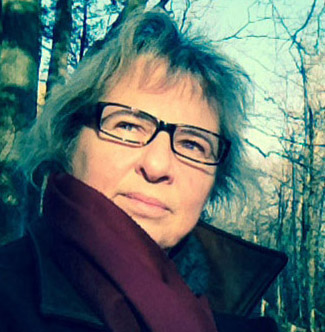
nina-2014aaa

Nina Munteanu is a Canadian ecologist / limnologist and novelist. She is co-editor of Europa SF and currently teaches writing courses at George Brown College and the University of Toronto. Visit www.ninamunteanu.ca for the latest on her books. Nina’s bilingual “La natura dell’acqua / The Way of Water” was published by Mincione Edizioni in Rome. Her non-fiction book “Water Is…” by Pixl Press (Vancouver) was selected by Margaret Atwood in the New York Times ‘Year in Reading’ and was chosen as the 2017 Summer Read by Water Canada. Her novel “A Diary in the Age of Water” will be released by Inanna Publications (Toronto) in 2020.

Stoking the Scintillation of Inspiration

Forest conifers Metchosin

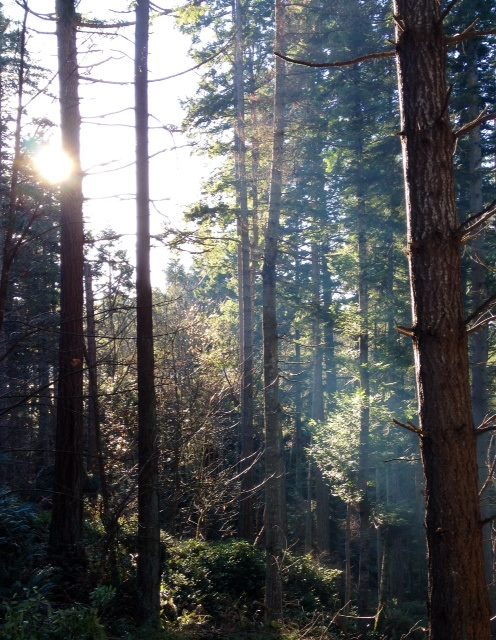
Forest in Metchosin, BC (photo by Nina Munteanu)

“Many of us wish we were more creative,” Julia Cameron, author of The Artist’s Way, shares. “Many of us sense we are more creative, but unable to effectively tap that creativity. Our dreams elude us. Our lives feel somehow flat. Often, we have great ideas, wonderful dreams, but are unable to actualize them for ourselves. Sometimes we have specific creative longings we would love to be able to fulfill … we hunger for what might be called creative living.”

Many of us are, in fact, creatively blocked. How would you know if you were? Jealousy is an excellent clue. Are there creative people you resent? Do you tell yourself, ‘I could do that, if only…’ An old friend of mine used to constantly share that he would “start living and settle down” once he had enough money. It never happened; and he never did—twenty years later. That was sad; because he was waiting for life to begin, when it was already happening—and he was missing it.

YellowCreek-3

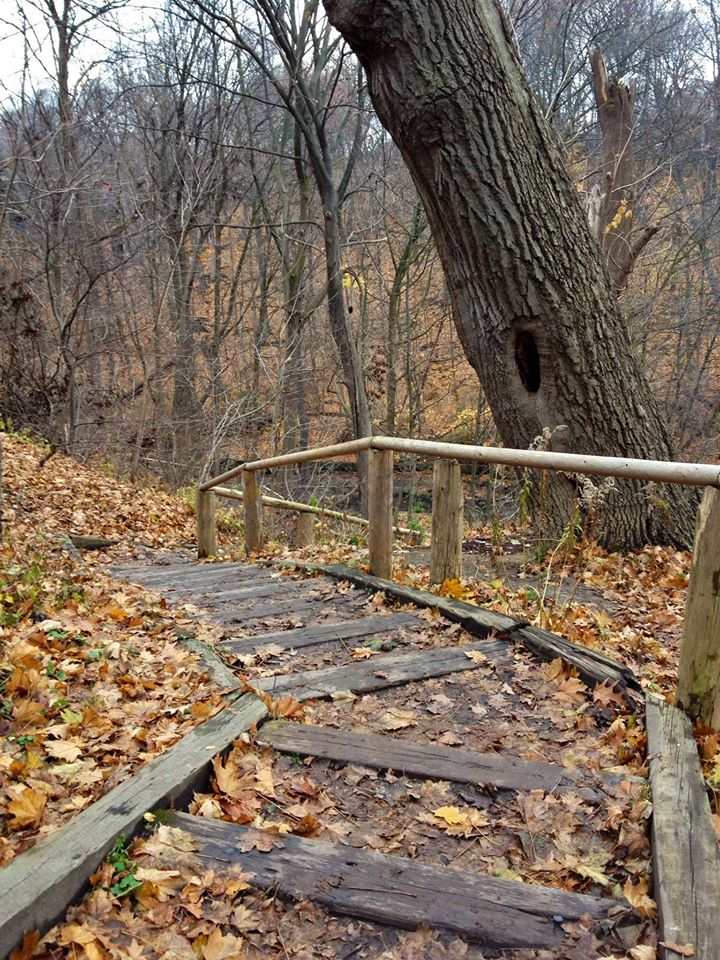
Stairway to Yellow River, Ontario (photo by Nina Munteanu)

Creative recovery (or discovery) is something you can learn. It is something you can enhance and direct. “As you learn to recognize, nurture, and protect your inner artist,” says Cameron, “you will be able to move beyond pain and creative constriction. You will learn ways to recognize and resolve fear, remove emotional scar tissue, and strengthen your confidence.”

Stoking the creative artist inside you may be as simple as giving your mind the chance to wander—and taking the time to pay attention. Rhythm and regular, repetitive actions play a role in priming the artistic well. Cameron lightheartedly describes how the “s” activities work so well for this: showering, swimming, scrubbing, shaving, steering a car. I can testify to the latter—how many great plot ideas have I cooked up while driving to work! Filmmaker Steven Spielberg claimed that his best ideas came to him while he was driving the freeway. Negotiating through the flow of traffic triggered the artist-brain with images that translated into ideas. “Why do I get my best ideas in the shower?” Einstein was known to have remarked. Scientists tell us that this is because showering is an artist-brain activity.

Anne-walking-Cedars

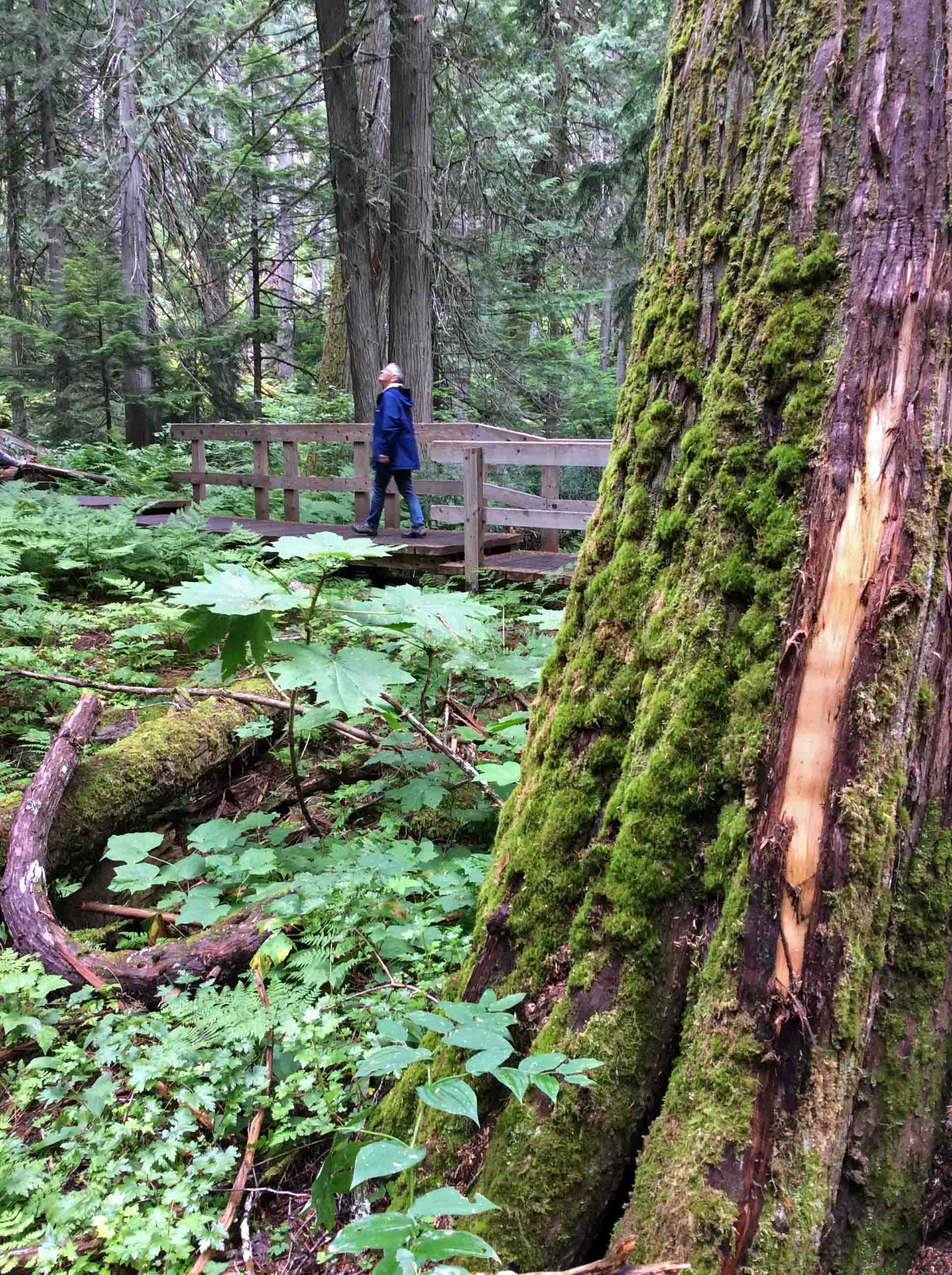
Giant Cedar forest, Revelstoke Park, BC (photo by Nina Munteanu)

The magical part in this is to pay attention. Pay attention to your life experiences; don’t ignore them. Sit up in the bus and watch people, play with the images, sounds and smells. Get sensual and let your eyes, ears, nose and limbs delight in the world. It’s amazing how interesting the world becomes once you start paying attention.

Henry Miller tells us to develop interest in your daily life; in people, things, literature, and music: “the world is … simply throbbing with rich treasures, beautiful souls and interesting people. Forget yourself,” he says.

Looking outward as well as inward allows us to explore different angles and facets of the same thing. When we see the same thing through different perspectives we rediscover something new in ourselves. We create interest and connect the world to ourselves.

GairlochGardens-LakeOntario

Lake Ontario at Gairloch Gardens, Ontario (photo by Nina Munteanu)

Julia Cameron shares that “art may seem to spring from pain, but perhaps that is because pain serves to focus our attention onto details (for instance, the excruciatingly beautiful curve of a lost lover’s neck). Art may seem to involve broad strokes, grand schemes, great plans. But it is the attention to detail that stays with us; the singular image is what haunts us and becomes art. Even in the midst of pain, this singular image brings delight. The artist who tells you different is lying.”


Brenda Ueland tells us why we should all use our creative power: “Because there is nothing that makes people so generous, joyful, lively, bold and compassionate, so indifferent to fighting and the accumulation of objects and money.”

References:

Julia Cameron. 2002. “The Artist’s Way”. Tarcher. 272pp.
Nina Munteanu. In Press. “The Journal Writer:  Finding Your Voice”. Pixl Press. 132pp.


nina-2014aaaNina Munteanu is an ecologist and internationally published author of award-nominated speculative novels, short stories and non-fiction. She is co-editor of Europa SF and currently teaches writing courses at George Brown College and the University of Toronto. Visit www.ninamunteanu.ca for the latest on her books. Nina’s recent book is the bilingual “La natura dell’acqua / The Way of Water” (Mincione Edizioni, Rome). Her latest “Water Is…” is currently an Amazon Bestseller and NY Times ‘year in reading’ choice of Margaret Atwood.

New Directions in Self-Publishing: A Discussion by Writers and Editors

Panel-Nina-water

I was recently invited by Editors Toronto and the Toronto chapter of PWAC to participate in a panel (co-sponsored and hosted by UofT’s Creative Writing Program) exploring the current state of self-publishing and the publishing industry in general. I was one of four professionals whose work has involved all facets of the industry from POD, hybrid models, and ebooks to crowdfunding and writing communities.

The four speakers included:

MeghanBehse_closeMeghan Behse, the president of PubLaunch Inc., a new online marketplace and crowdfunding platform where writers, readers, and publishing professionals join forces to get books published. In her role as publisher, she steered Iguana through a new world of digital and print-on-demand publishing while experimenting with unique royalty arrangements and funding models, including crowdfunding. Behse talked about how PubLaunch is using emerging technologies to help overcome the obstacles writers continue to face in the self-publishing industry.

nina-munteanuNina Munteanu, an experienced editor of traditionally published and self-published books, and an award-winning author of eight novels, including Darwin’s Paradox and The Splintered Universe Trilogy. A frequent contributor to Amazing Stories and the current editor of Europa SF, Munteanu teaches writing at George Brown College and the University of Toronto and has also published short stories, essays, and non-fiction books. Her latest book is Water Is…The Meaning of Water, a scientific study and personal journey as limnologist, mother, teacher, and environmentalist. Munteanu provided an overview of the industry—including use and misuse of terms—then spoke about evolving professional standards in self-publishing, and what these changes mean for writers and editors.

sfyshStephanie Fysh, a Toronto-based freelance editor of independent authors in a variety of genres, including fantasy, science fiction, YA, romance, and erotica, and the former chair of Ryerson University’s Publishing program. She works with hybrid publishers on projects that range from harrowing memoirs to comedy, and still enjoys a textbook project that she can learn something from. Using her own experience as example, she talked about what self-publishing authors look for in an editor, and how that differs from the roles built into traditional or hybrid publishing.

MarkLeslieLefebvre_LaurenLangMark Leslie Lefebvre, the author of more than a dozen traditionally published and self-published books, a professional speaker, a digital publishing advocate, and a bookseller with more than a quarter century of experience.  Lefebvre explained what prompted him to self-publish “ten years before any self-respecting writer would admit to such a foul thing.” And he’ll tackle the big-picture questions: “What is currently wrong with self-publishing, and how can we work together to fix that?”

JessShulmanTweet

I started the panel discussion with an overview of the publishing industry from traditional to indie to self-publishing. I overviewed five main publishing models and discussed advantages and disadvantages depending on needs and perspectives of the writer. A few advantages of self-publishing include: 1) getting a book to market more quickly than through the traditional publishing path; and 2) having more control over the end product.

PublishingModels

The downsides in self-publishing arise from the same: 1) getting a book to market more quickly may seduce writers to compromise the lengthy process of perfecting their work (provided by editors, layout and cover artists) to put something out before it is ready; and 2) having more control also means more responsibility borne by the writer (the need to understand more in book production and marketing than a writer in the traditional process needs to). Another important disadvantage to self-publishing lies in more restricted distributing, marketing and exposure.

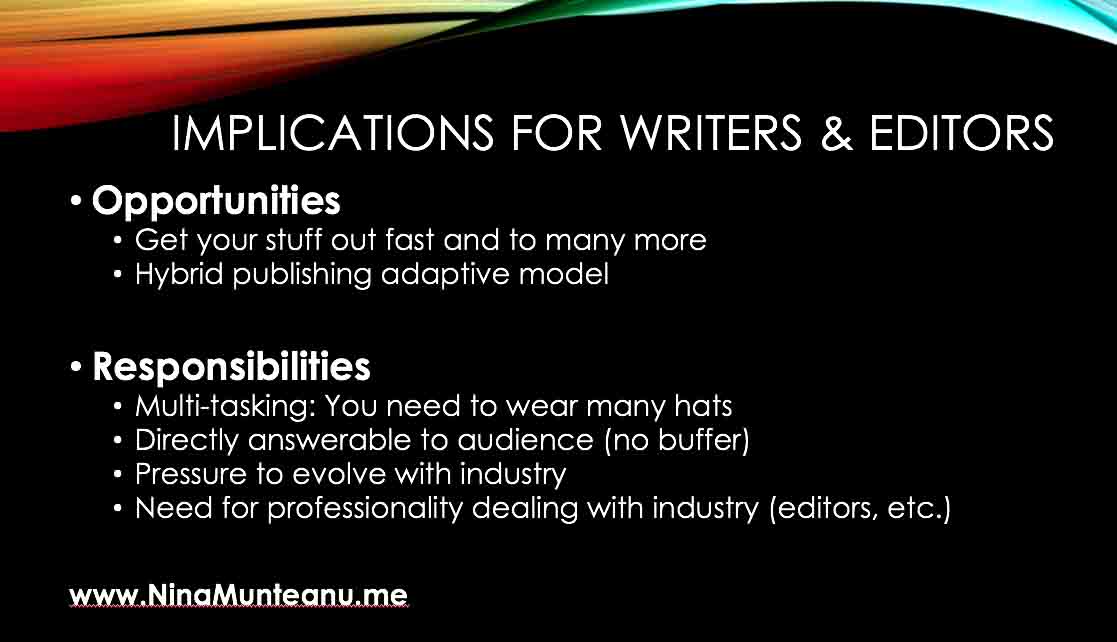
In my talk, I emphasized that while the current industry is providing great opportunities, with these come great responsibilities.

PPTslide-opportunies-responsibilities

Authors and editors are currently facing a sea of possibilities. New directions, models, collaborations and structures face us as the publishing industry morphs into something new. Self-publishing and hybrid-players are at the forefront of that evolving tide of new publishing. And it’s very exciting!

Suzanne Bowness of PWAC Toronto provided a good summary of the panel discussion on PWAC’s blog Networds, and shared by the Editors Toronto blog Boldface. Editor and publishing consultant Michelle MacAleese who attended the event made these observations:

  • Many in the biz draw a distinction between self-published authors and hybrid-published authors; both are “independent,” but the self-published authors are a special breed, who *are starting to understand art and business and (usually) gladly develop proficiency in all the technical and administrative details of the process.
  • Not surprisingly, options for authors continue to change rapidly. What worked best in 2011 is irrelevant today. Many quality companies offer publishing services and hybrid publishing deals. (Many companies will pretty much just steal your money. One must read up before signing up. *Research is paramount)
  • The best publishing option for e-only genre fiction won’t be the same as for a debut hardcover business book. It’s a wide world of independent publishing.
  • Authors: If you don’t love technical things (formatting ebooks, working Amazon’s categories, tweaking descriptive copy), you probably won’t enjoy starting a publishing house of one.
  • Editors: Working with self-published authors is a specialty and those editors who are good at taking on that relationship and guiding the process are worth their weight in gold. (Isn’t it about time we begin to mentor each other in why this kind of author-editor relationship is unique, and how it borders on the agent role at times? *This is a great opportunity for editors willing to evolve and grow.)
  • Editors who already specialize in working with self-published authors: Let’s talk about how to partner with reputable publishing services companies as well as with other independent designers and book marketing professionals to launch great self-published books that sell! This point was just touched upon in the panel and is still evolving; again, editors are uniquely positioned as author-consultants to play key roles in new networks of independent professionals in the publishing industry. *italics throughout are mine

MichelleMacAleese-Tweet

JenDinsmoreTweet

A few years ago, I gave a talk at Editors Toronto on the industry from the self-publishing author and freelance editor’s perspective. It remains highly relevant today, given that it spoke to the changing face of publishing and what it means for editors and writers. Editors learned about self-publishing and indie publishing, publishing myths, and imaginative ways to find new editing opportunities:

Self-publishing used to be a scar; now it’s a tattoo.”–Greg Cope White

Other relevant articles include:

Nina Munteanu on the Author-Editor Relationship

Beating Today’s “S” Curve (or Why an Editor is Every Writer’s Best Friend)

Walking the Tightrope Between Innocent and Cynical

The Moving Target of Indie Publishing: What Every Editor (and Writer) Needs to Know

The Writer-Editor Relationship, Part 1: Editors Preparing Writers

The Writer-Editor Relationship, Part 2: Five Things Writers Wish Editors Knew—and Followed

The Hidden Costs of Self-Publishing, Part 1: The Solution to “Author Solutions”

What Indie Authors Should Know for 2015

Surfing the Hybrid Wave of Publishing

The Indie Book Tidal Wave…What Does it Mean for Bookstores, Publishers & Writers?


nina-munteanuNina Munteanu is an ecologist and internationally published author of award-nominated speculative novels, short stories and non-fiction. She is co-editor of Europa SF and currently teaches writing courses at George Brown College and the University of