Eco-Fiction As Hyperobject: Defining the Undefinable…

In two excellent articles in Climate Cultures entitled “A History of Eco-fiction, Part 1 and 2”, eco-fiction author and critic Mary Woodbury starts out with several rather long definitions of eco-fiction—one provided by Jim Dwyer in his 2010 book Where the Wild Books Are: A Field Guide to Eco-Fiction.

She also includes simpler descriptions. For instance, Ashland Creek Press calls it “fiction with a conscience,” and co-founder John Yunker insightfully labelled it a super-genre.

Woodbury then muses: “I think of eco-fiction as not so much a genre than as a way to intersect natural landscape, environmental issues, and wilderness—and human connection to these things—into any genre and make it come alive.” Not a fan of labels, she argues that eco-fiction is broad and has a rich history (of existence long before its label was coined in 1971 in the preface to an anthology by Washington Square Press) and brings up examples such as The Stolen Child by Victorian author and poet WB Yeats. “Eco-fiction has no boundaries in time or space,” argues Woodbury. “It can be set in the past, present, or future. It can be set in other worlds…I think of eco-fiction as a way to bring alive the wild in any genre, whether romance, adventure, mystery, you name it.”

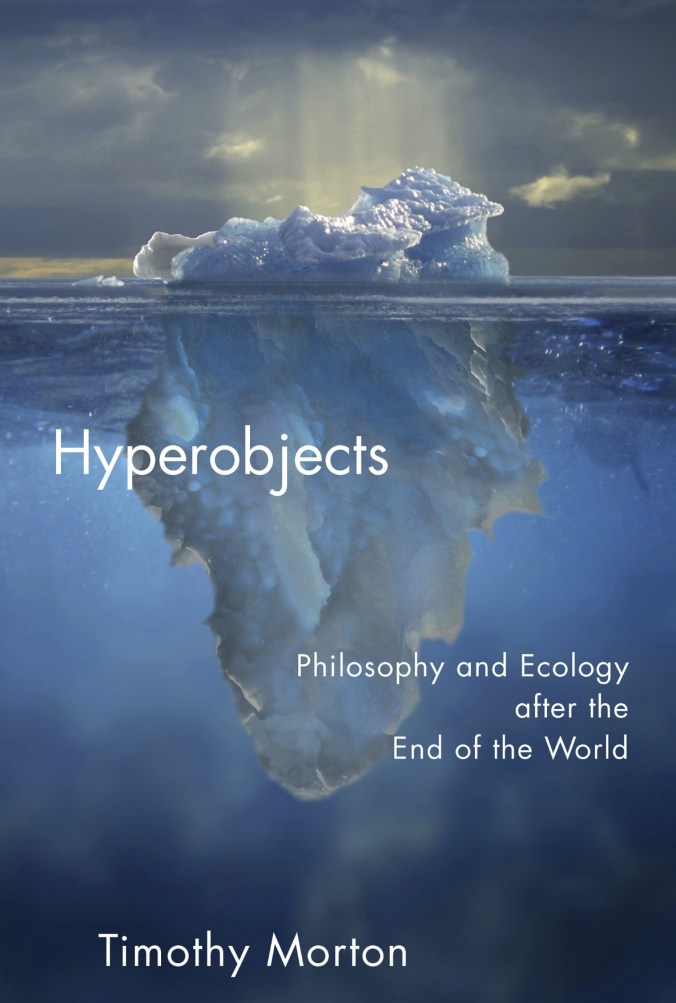
Eco-fiction—like climate change—is a hyperobject. In his 2014 book Hyperobjects, Timothy Morton explains that hyperobjects are immense, non-local entities that challenge our traditional understanding of objects; things so massively distributed in time and space that they defy human perception, given they exist beyond our immediate sensory grasp yet affecting us profoundly. Examples include anthropogenic global warming / climate change, but also pervasive phenomena, like plastic and oil, that have far reaching impacts beyond their simple physical presence.

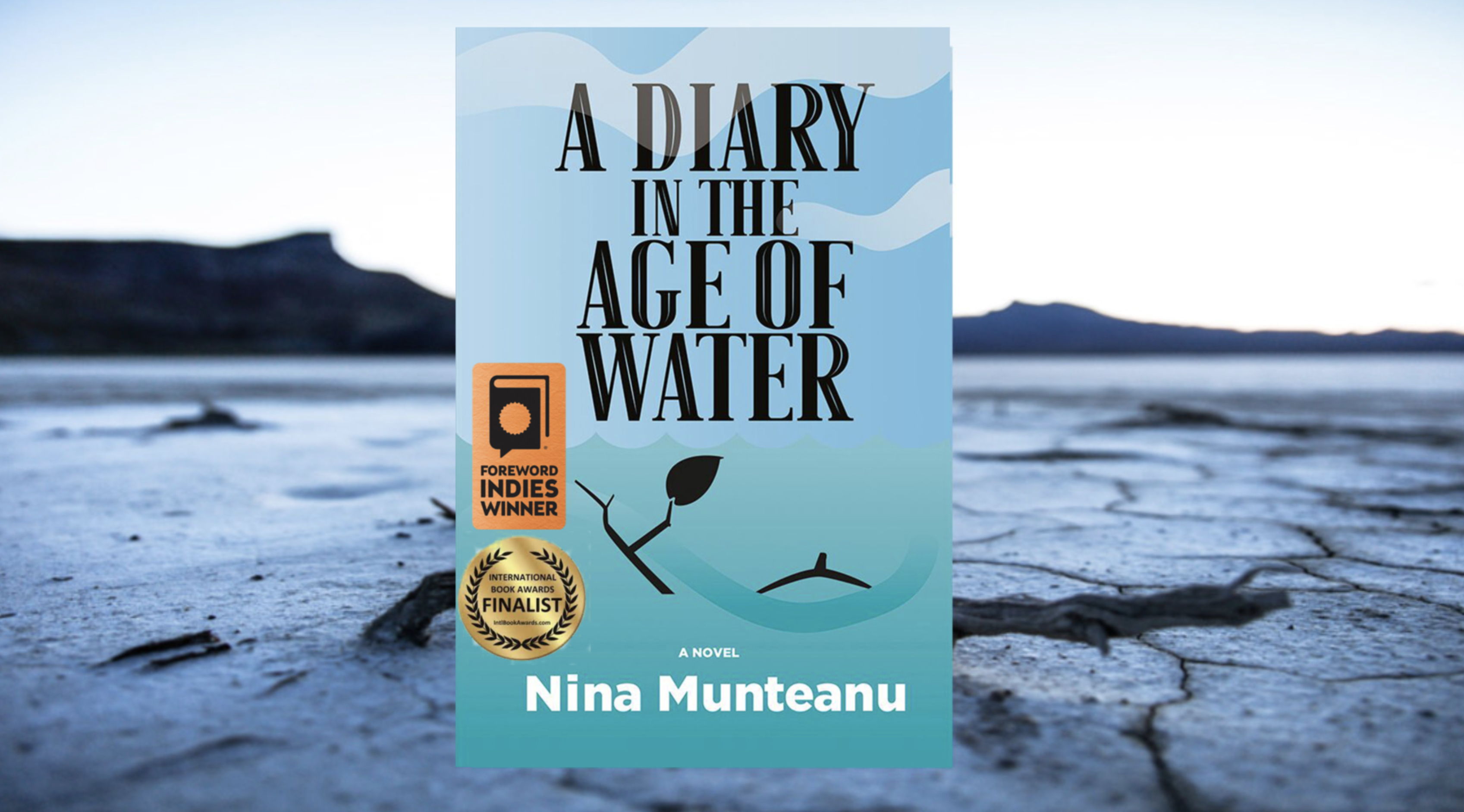
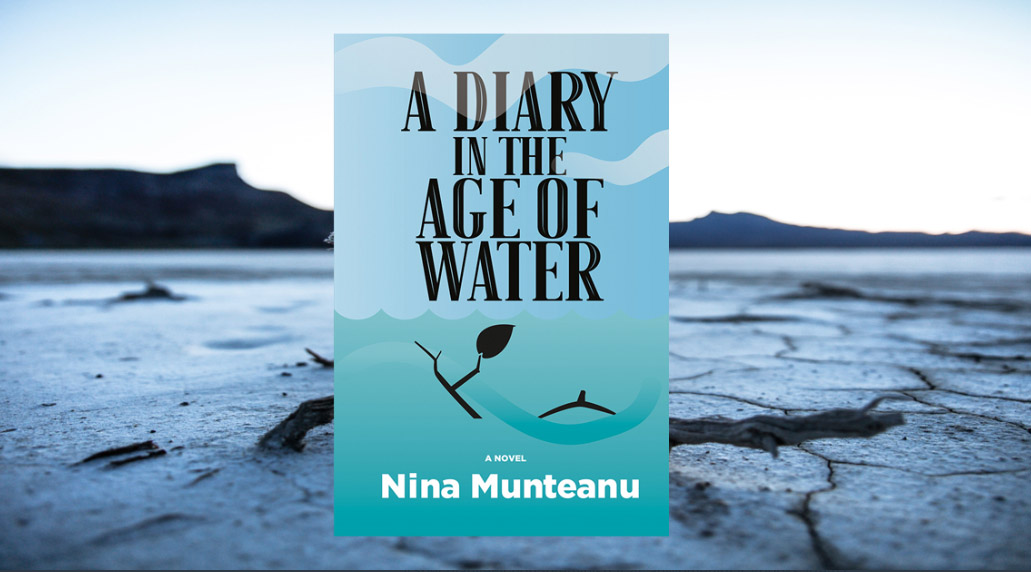
My own definition (from a previous article in Solarpunk Magazine) embraces the hyperobject nature of eco-fiction: eco-fiction (short for ecological fiction) is a kind of fiction in which the environment—or one aspect of the environment—plays a major role in story, either as premise or as character. For instance, several of my eco-fiction stories give Water a voice as character. In my latest novel, A Diary in the Age of Water, each of the four women characters reflects on her relationship with water and, in turn, her view of and journey in a changing world.

Through its vision of our future, eco-fiction encourages conversations and an outward perspective. Eco-fiction can trigger a sense of wonder about the natural world; it may connect with our sense of loss or mourning—our solastalgia—for our changing home. Cautionary tales may nudge people to action and encourage alternative futures. By encouraging empathy and imagination, eco-fiction reaches deep into our souls, where we care. It is only when we care that we act.

A recent survey conducted by Woodbury revealed that, “Fiction exploring humanity’s impacts on nature is becoming more popular [and] has the distinct ability to creatively engage and appeal to readers’ emotions.” Woodbury’s 2020 survey showed that “88% of its participants were inspired to act after reading ecological fiction.”
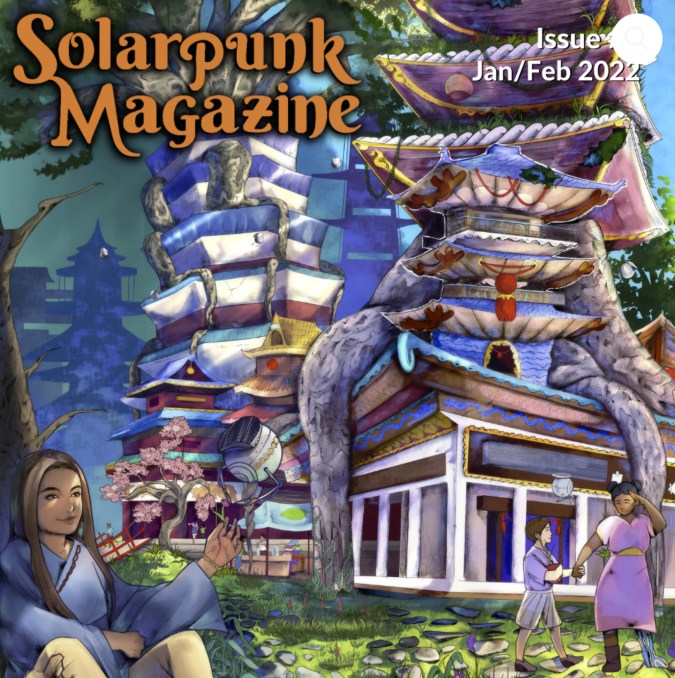
A few years ago, I wrote an article entitled “Why Ecofiction Will Save the World” which appeared in Issue #1 of Solarpunk Magazine. In it, I mentioned how I’d noticed in my university science fiction course that more and more students were bringing in WIPs on ecological and global environmental issues. Many of the stories involved a premise of environmental calamity, but not in the same vein as previous environmental disasters that depict “man” against Nature. Instead, these works gave the Earth or Nature (or an aspect of Nature) an actual voice—as a character—and had a protagonist who learns to interact with the Earth/Nature character, often cooperatively. This represents a palpable and gestalt cultural awakening of what eco-feminists have called the “feminine archetype” by providing a voice for “the other” in story.

This shift reflects what lies at the heart of eco-fiction.

Eco-fiction explores the world and the consequences of humanity’s actions on the environment and ourselves (by inference) through dramatization. The stories that stir our hearts come from deep inside, through symbols, archetypes and metaphor, where the personal meets the universal. In my short story “The Way of Water” (“La natura dell’acqua”), water’s connection with love flows throughout the story:

They met in the lobby of a shabby downtown Toronto hotel. Hilda barely knew what she looked like but when Hanna entered the lobby through the front doors Hilda knew every bit of her. Hanna swept in like a stray summer rainstorm, beaming with the self-conscious optimism of someone who recognized a twin sister. She reminded Hilda of her first boyfriend, clutching flowers in one hand and chocolate in the other. When their eyes met, Hilda knew. For an instant, she knew all of Hanna. For an instant, she’d glimpsed eternity. What she didn’t know then was that it was love.

In a world of severe water scarcity through climate catastrophe and geopolitical oppression, the bond of these two girls—to each other through water and with water—is like the shifting covalent bond of a complex molecule, a bond that fuses a relationship of paradox linked to the paradoxical properties of water. Just as two water drops join, the two women find each other in the wasteland of environmental intrigue. Hilda’s relationship with Hanna—as with water—is both complex and shifting according to the bonds they make and break. Hilda navigates her dystopia by learning meaningful lessons—lessons that pertain directly to our reader in their current world. This is because the premise of a dystopia lies squarely in the present world. Good dystopias enlighten and suggest possibilities; they can warn and herald. At the very least, they incite the necessary conversation.

Our capacity—and need—to share stories is as old as our ancient beginnings. From the Paleolithic cave paintings of Lascaux to our blogs on the Internet, humanity has left a grand legacy of ‘story’ sharing. By providing context to knowledge, story moves us to care, to cherish, and, in turn, to act. What we cherish, we protect. It’s really that simple.

“Morton’s book is a queasily vertiginous quest to synthesize the still divergent fields of quantum theory (the weirdness of small objects) and relativity (the weirdness of big objects) and insert them into philosophy and art, which he notes are far behind ontologically speaking (page 150). Morton’s wager is that for the first time, we in the Anthropocene are able to see snapshots of hyperobjects, and that these intimations more or less will force us to undergo a radical reboot of our ontological toolkit and (finally) incorporate the weirdness of physics”—Cara Daggett
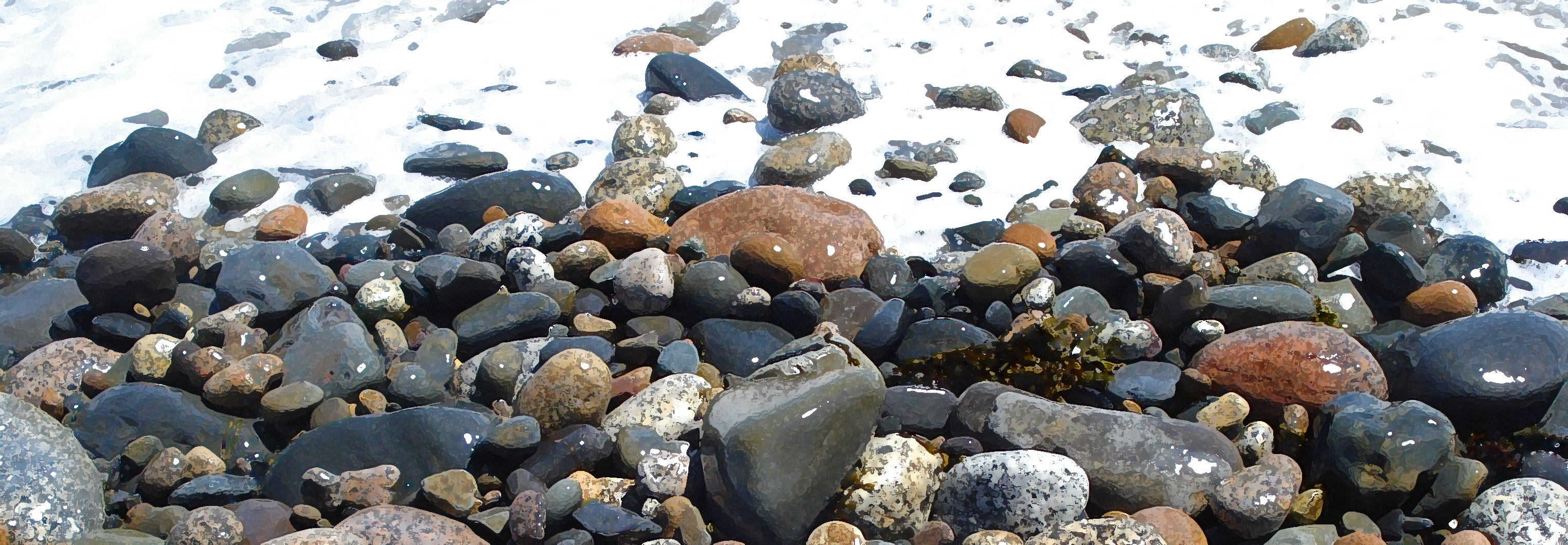
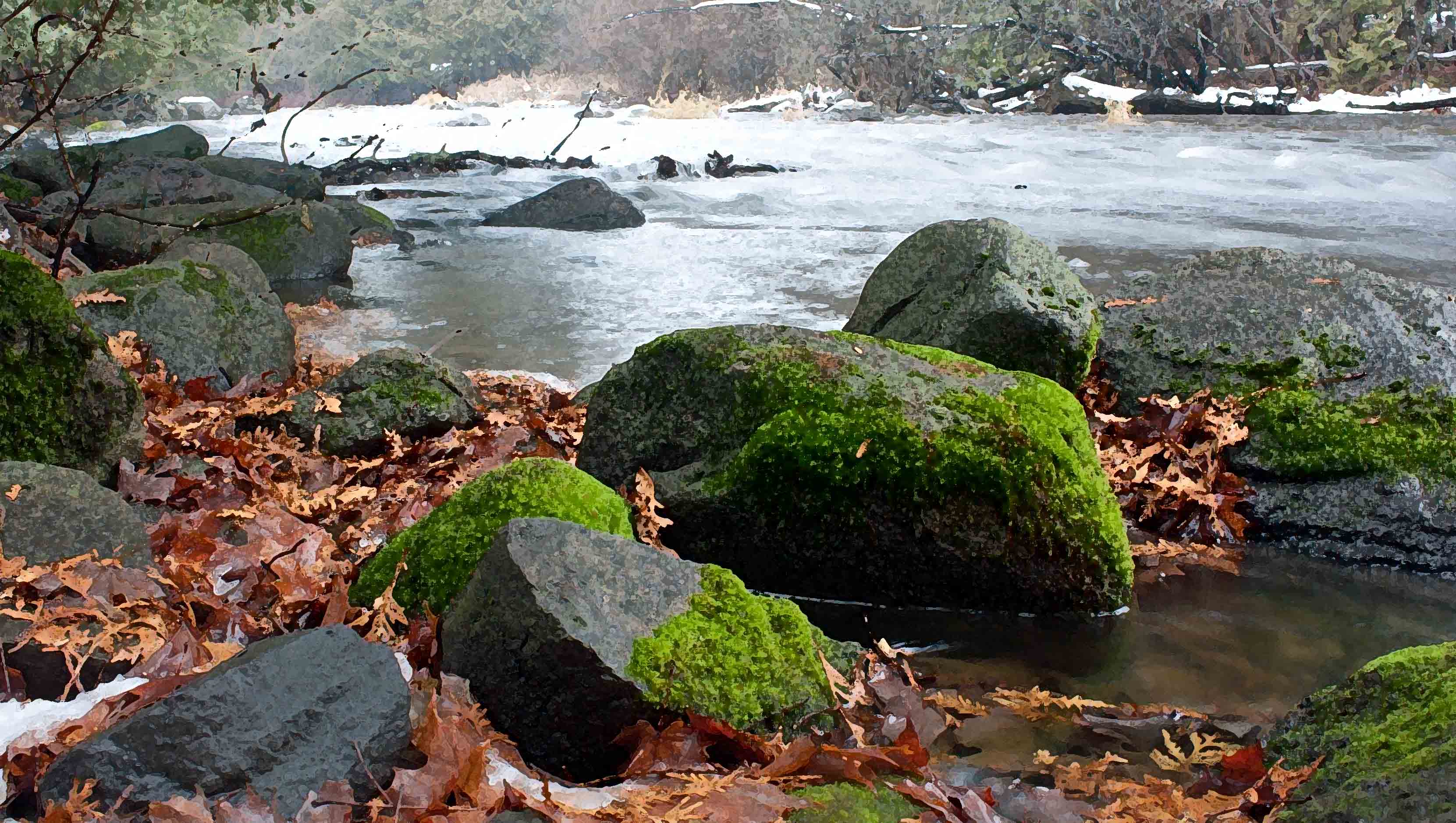
Hirtle Beach, Nova Scotia (photo and rendition by Nina Munteanu)

Nina Munteanu is an award-winning novelist and short story writer of eco-fiction, science fiction and fantasy. She also has three writing guides out: The Fiction WriterThe Journal Writer; and The Ecology of Writing and teaches fiction writing and technical writing at university and online. Check the Publications page on this site for a summary of what she has out there. Nina teaches writing at the University of Toronto and has been coaching fiction and non-fiction authors for over 20 years. You can find Nina’s short podcasts on writing on YouTube. Check out this site for more author advice from how to write a synopsis to finding your muse and the art and science of writing.

Nina Munteanu’s ‘The Way of Water’ Is Focus of Thesis on Canadian Eco-Stories

In her masters thesis published in November 2025 at the University of Graz, Austria, Şeyma Yonar uses my short story The Way of Water, along with several others to explore and discuss the importance of eco-literature in establishing ecological awareness and ultimately ecological and sustainable action.

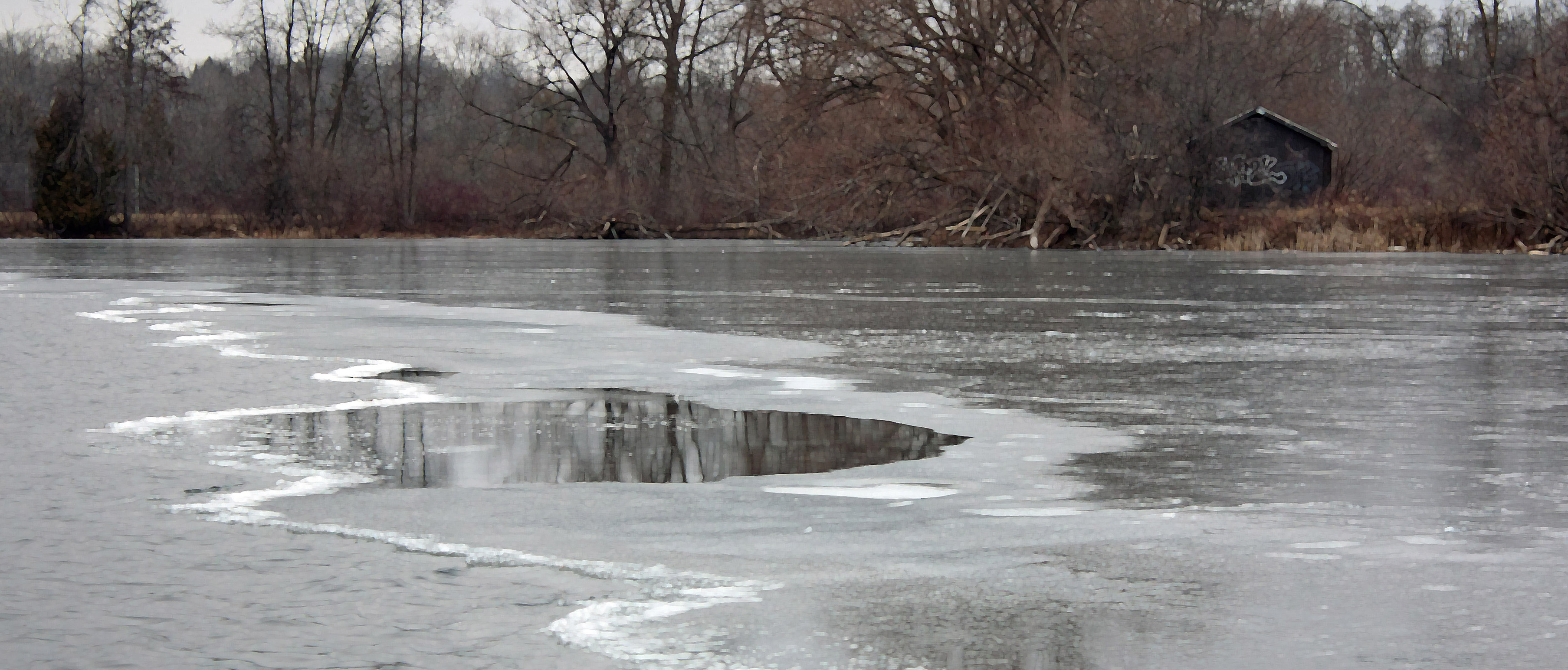
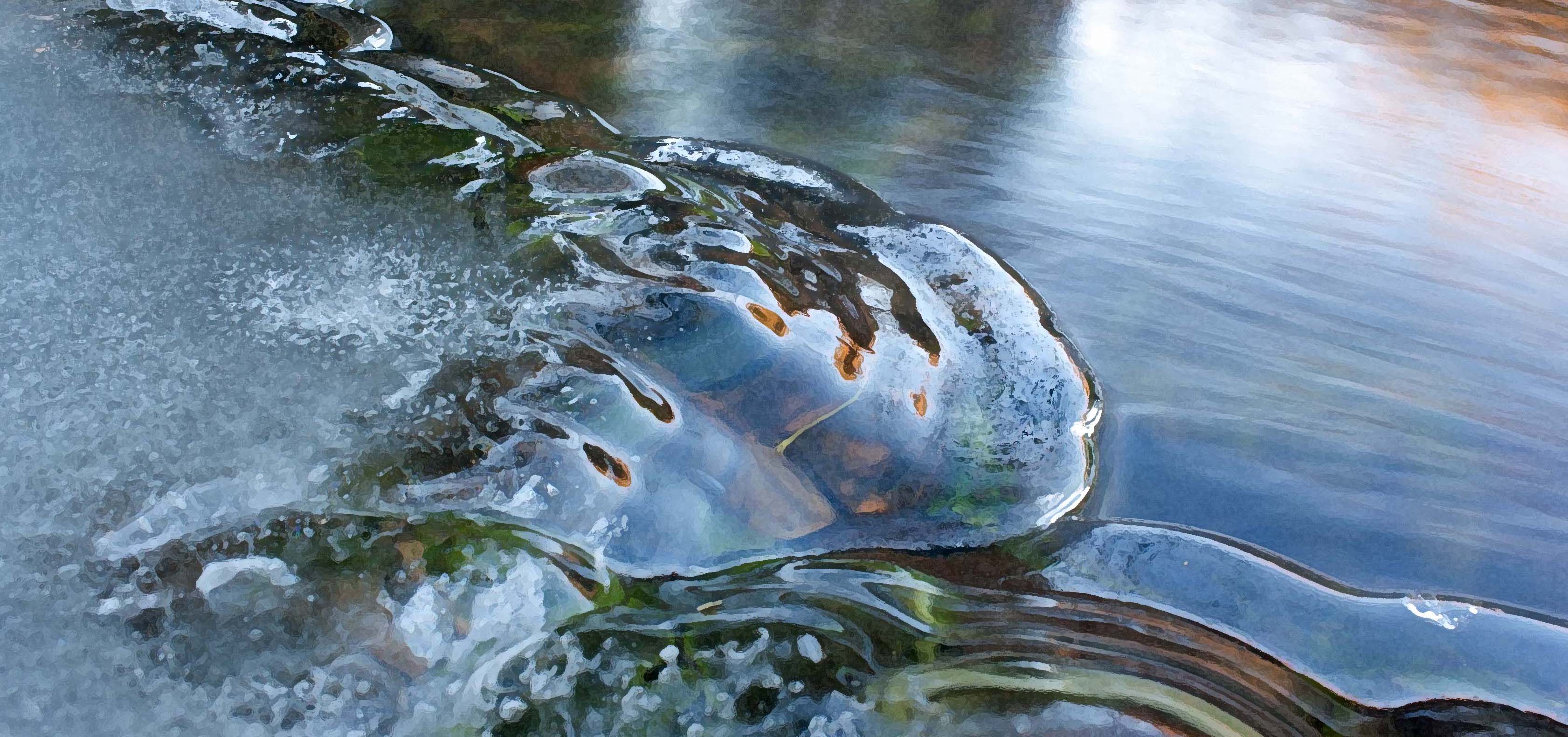
Ice-covered bay, Otonabee River, ON (photo and rendition by Nina Munteanu)

Yonar draws on the work of Maria Löschnigg to argue that “as the environmental crisis encompasses not just physical challenges but also a crisis of imagination, posing questions about life in severely degraded environments, it becomes crucial to examine how literature can inspire interest in ecological issues and foster a deeper environmental awareness.” Yonar further draws on the works of Serpil Oppermann and Susan O’Brian to note that ecocriticism tends to neglect less conventional but equally meaningful speculative or experimental fiction in its critical gaze of relevant eco-literature and to question whether realism should be the dominant mode for ecological discourse.

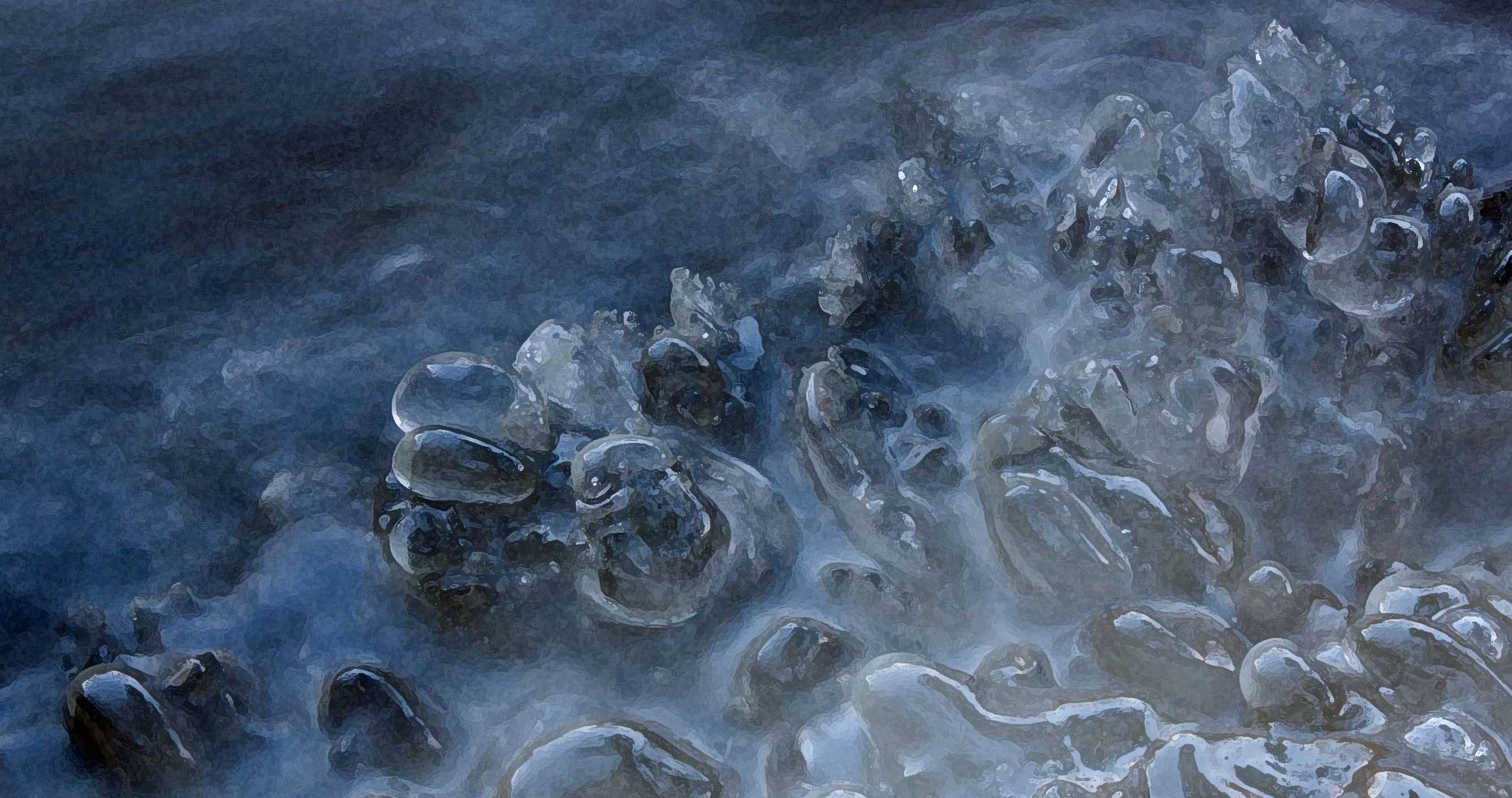
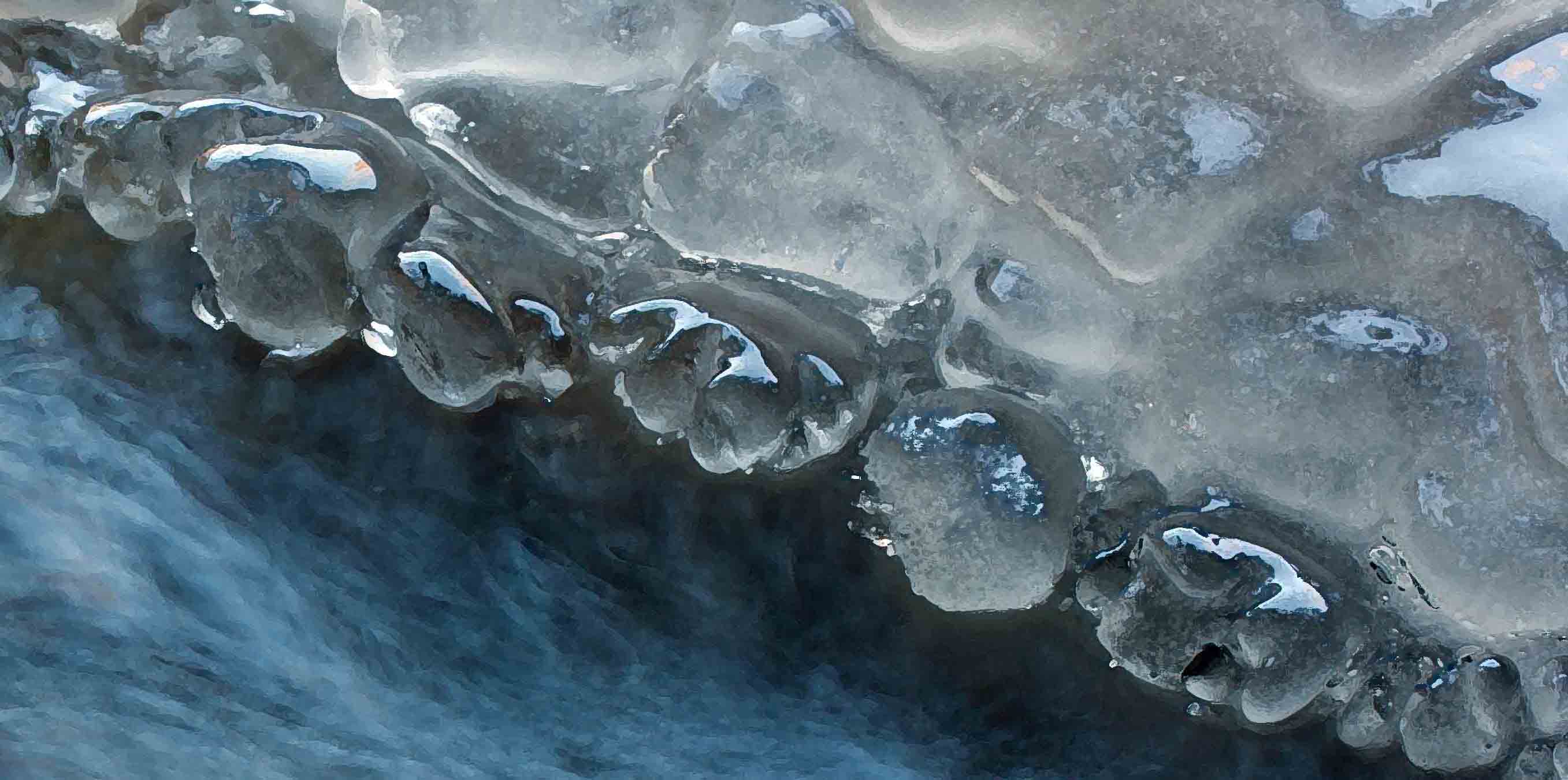
Ice-bubbles in a stream, Jackson Creek, ON (photo by Nina Munteanu)

The Way of Water is a strong eco-story that possesses many layers and elements that strengthen its narrative while encouraging readers to engage with its world…The notion what water constitutes the essence of life is the central theme of the story … Munteanu’s knowledge as a scientist enables her to create a convincing scientist protagonist whom she embeds into a powerful fictional story. Water, particularly in this eco-story acts not only as a symbolic entity but also as a body of force…the agency of water is presented as a dynamic, living entity, central to the narrative’s ecological themes.”

“Munteanu’s impactful storytelling highlights her significant contribution to Canadian literature, particularly through her engagement with pressing environmental issues and her commitment to fostering ecological awareness through fiction.”

Ice ‘pearls’ in Jackson Creek in winter, ON (photo and rendition by Nina Munteanu)

Yonar draws on the work of Serpil Oppermann, who points out in her book Blue Humanities, that water is deeply connected to social and cultural realities, and stories that highlight its narrative role are both essential and impactful. “Non-human-centred narratives reveal the dynamic and active nature of water, making its agency understandable and natural to the reader.”

Yonar quotes beginning lines of the short story to demonstrate how a powerful metaphor can become surprisingly literal: In this passage the main character Hilda thinks: water is a shape-shifter. It changes yet stays the same, shifting its face with the climate. It wanders the earth like a gypsy, stealing from where it is needed and giving whimsically where it isn’t wanted: “A statement,” Yonar writes, “that initially appears to be metaphorical rather than literal description of water. However, as the story expands, it becomes evident that this ‘shape-shifting’ feature is not an unrealistic trait, but rather a reflection of water’s dynamic and transformative nature.” She adds that, “this characterization of water points out its agency, suggesting its ability to adapt and influence the narrative in ways that transcend traditional understandings.”

Icy bay, Jackson Creek, ON (photo and rendition by Nina Munteanu)

Yonar notes that intertextuality used in The Way of Water—such as wCard, iTap and Schrödinger’s Water is a useful way to “foreground notions of relationality, interconnectedness and interdependence in modern cultural life” (Graham Allen). Intertextuality in The Way of Water reflects capitalist industrialism: the monetization, commodification and control of water by national utilities represented by CanadaCorp: the “corporate dominance, digital dependence, and pervasive nature of technology.” Yonar adds pithily, “In a manner analogous to how Apple products have become indispensable instruments in contemporary existence, the iTap within Munteanu’s narrative operates as an emblem of hyper-connectivity and authority, thereby amplifying the novel’s critique of technological dependency in modern society.” Yonar ponders that the thought experiment of Schrödinger’s Cat, reimagined through the element of water as Schrödinger’s Water, “reframes the original paradox within an ecological and environmental context, emphasizing the fluidity and uncertainty of water’s role in shaping human and non-human existence.”

Yonar shares with Meyer and Oppermann “a unified perspective on the collaborative role of writers and scientists in addressing the shared challenge of climate change.” Yonar concludes that The Way of Water introduces a powerful human-made cooperation that is at the same time political, suppresses people, and takes advantage of the scarcity of water. Even “the rain belonged to CanadaCorp,” she quotes from The Way of Water.

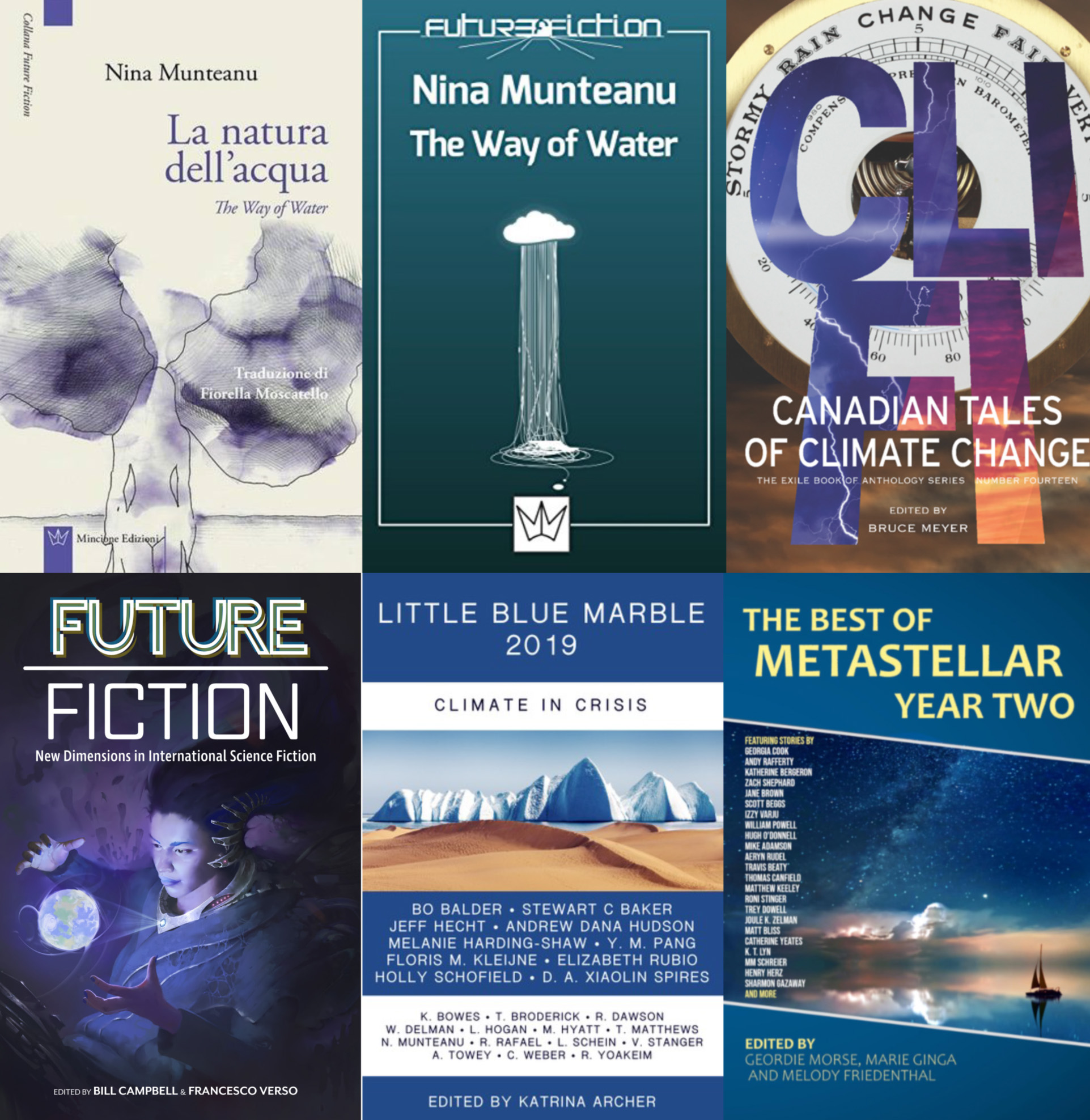
Various publications in which The Way of Water appeared

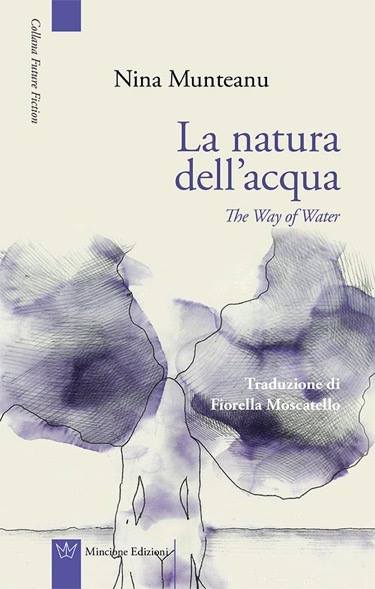
The Way of Water was first published as a bilingual print book by Mincione Edizioni (Rome) in Italian (La natura dell’acqua, translated by Fiorella Moscatello), and English along with a recounting of what inspired it: The Story of Water (La storia dell’acqua) in 2016. To date, The Way of Water has been published and republished eight times throughout the world and translated into Italian and German. I think this success is less a reflection of my writing than the immediacy and importance of the topic covered: growing water scarcity, its commodification, and its politicization.

I’ve written several articles on how The Way of Water came about. Briefly, it all started with an invitation in 2015 by my publisher in Rome to write about water and politics in Canada. I had long been thinking of potential ironies in Canada’s water-rich heritage. The premise I wanted to explore was the irony of people in a water-rich nation experiencing water scarcity: living under a government-imposed daily water quota of 5 litres as water bottling and utility companies took it all.

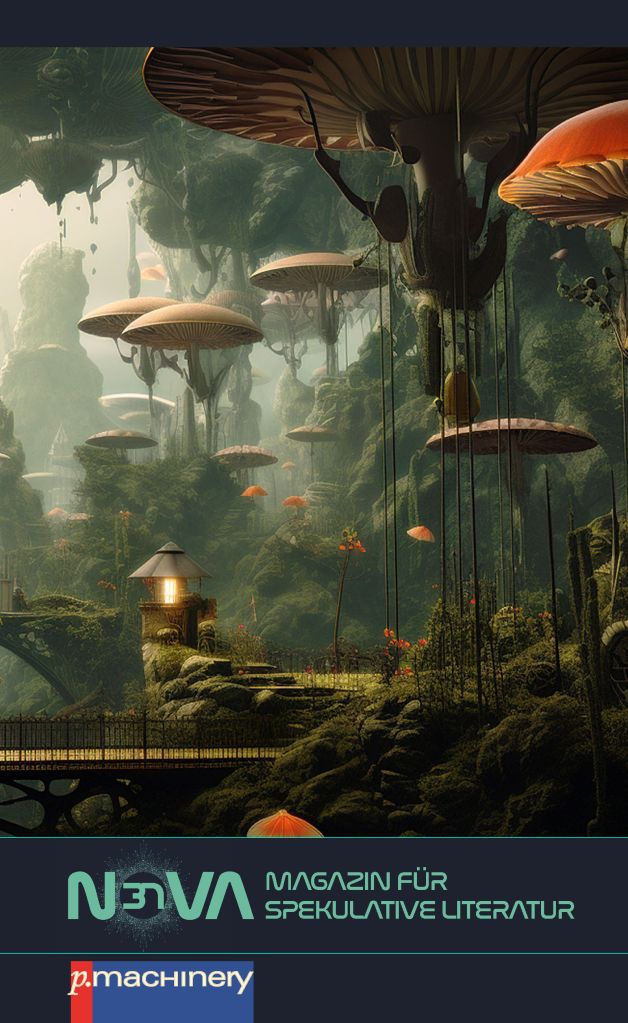
Latest publication of The Way of Water in Nova 37, translated into German as Der Weg des Wassers

The Way of Water, in turn, inspired my dystopian novel A Diary in the Age of Water (Inanna Publications, 2020), which chronicles the lives of four generations of women and their relationship to water during a time of severe water restriction and calamitous climate change. The novel features the main character Hilda from The Way of Water and her limnologist mother; A Diary in the Age of Water is essentially the mother’s diary embedded in a larger story. Through a series of entries, the diarist reflects on the subtle though catastrophic occurrences that will eventually lead to humanity’s demise.

Jackson Creek in the fall, ON (photo and rendition by Nina Munteanu)

References:

Löschnigg, Maria. 2014. “The Contemporary Canadian Short Story in English: Continuity and Change.” Cultures in America in Transition, vol. 7, WVT.

Munteanu, Nina. “The Way of Water” Mincione Edizioni, Rome. 113pp.

Munteanu, Nina. “A Diary in the Age of Water.” Inanna Publications, Toronto, ON. 328pp.

Meyer, Bruce. 2017. “Introduction to “Cli Fi: Canadian Tales of Climate Change

Fi: Anthology #14. Edited by Bruce Meyer. Exile Editions, Toronto.304pp.

O’Brian, Susan. 2001. “Articulating a World of Difference: Ecocriticism, Post colonialism and Globalization.” Canadian Literature vol. 170-171: 140-158.

Oppermann, Serpil. 2023. “Blue Humanities.” Cambridge University Press.

Yonar, Şeyma. 2025. “Short Texts—Long Term Effects: The Canadian Eco-Story.” Masters Thesis, University of Graz, Austria. 70pp.

Jackson Creek partially iced in winter, ON (photo and rendition by Nina Munteanu)

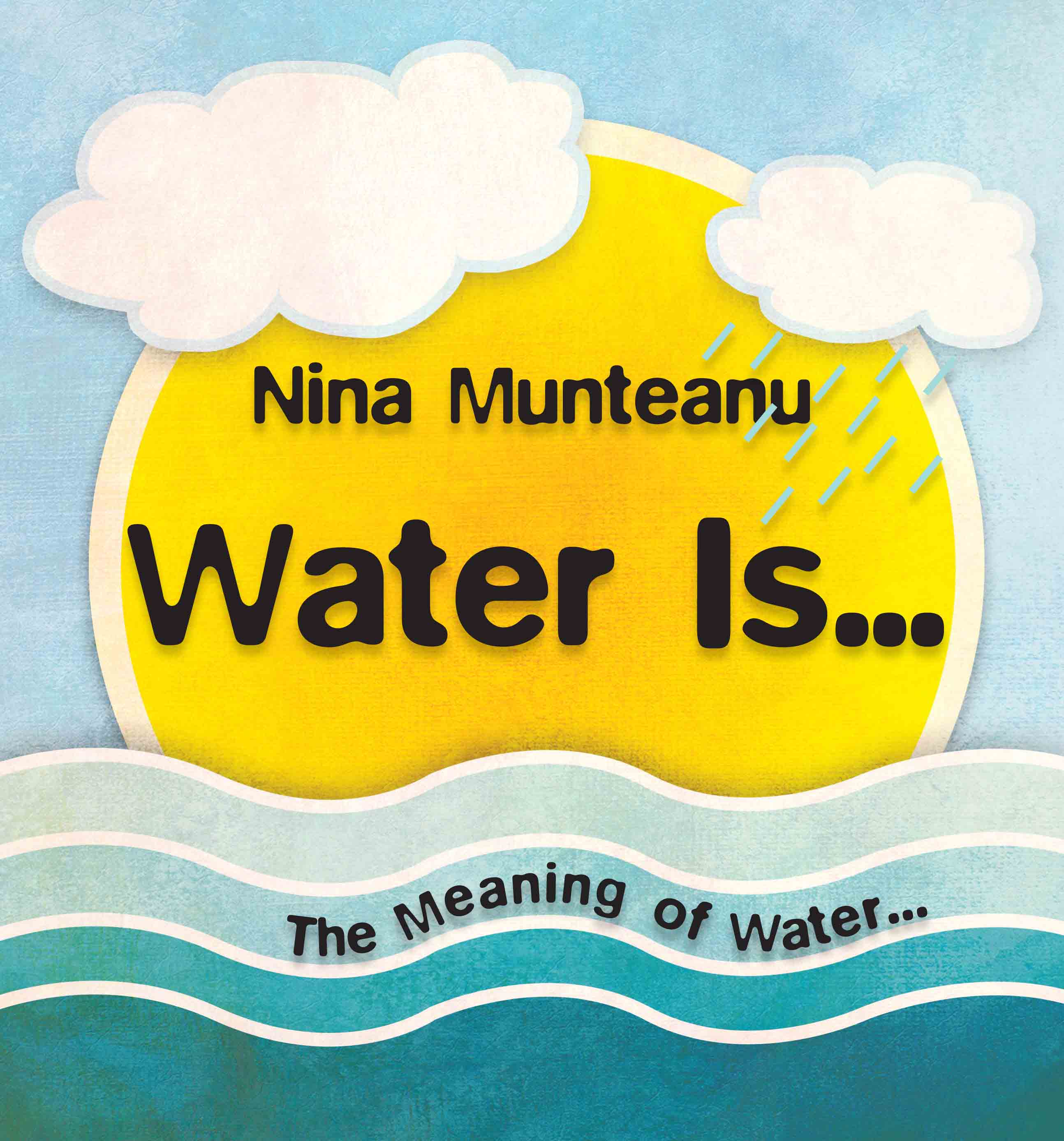
Nina Munteanu is an award-winning novelist and short story writer of eco-fiction, science fiction and fantasy. She also has three writing guides out: The Fiction WriterThe Journal Writer; and The Ecology of Writing and teaches fiction writing and technical writing at university and online. Check the Publications page on this site for a summary of what she has out there. Nina teaches writing at the University of Toronto and has been coaching fiction and non-fiction authors for over 20 years. You can find Nina’s short podcasts on writing on YouTube. Check out this site for more author advice from how to write a synopsis to finding your muse and the art and science of writing. For more on her work as a limnologist and ecologist, see The Meaning of Water.

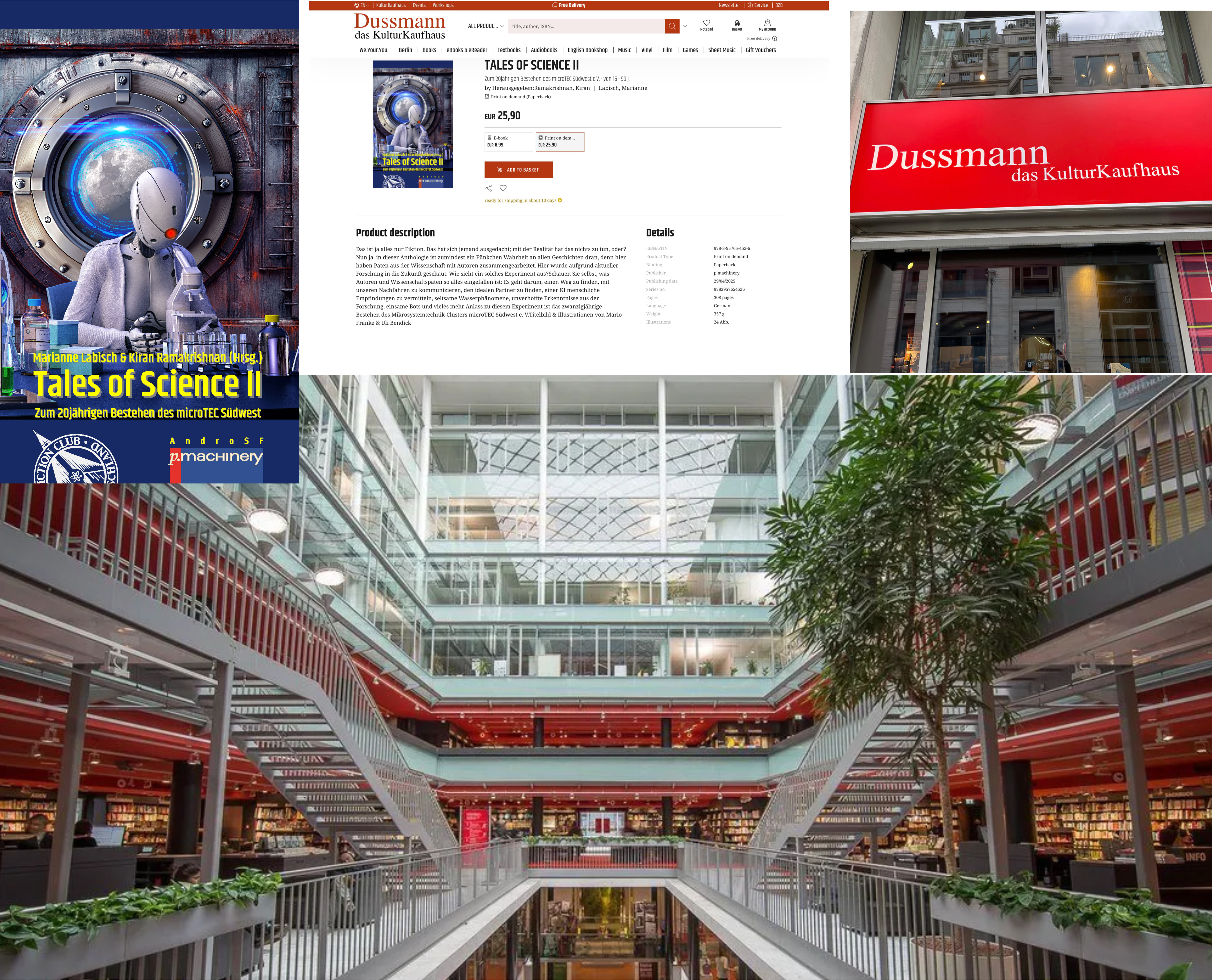
My Short Story “The Polywater Equation” (Die Polywasser-Gleichung) in “Tales of Science II” Anthology

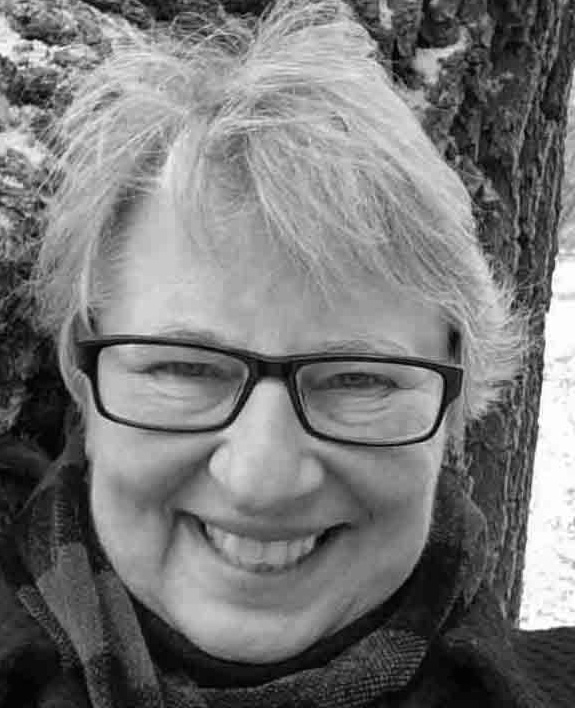
Author Nina Munteanu holding copy of Tales of Science II (photo by Jane Raptor)

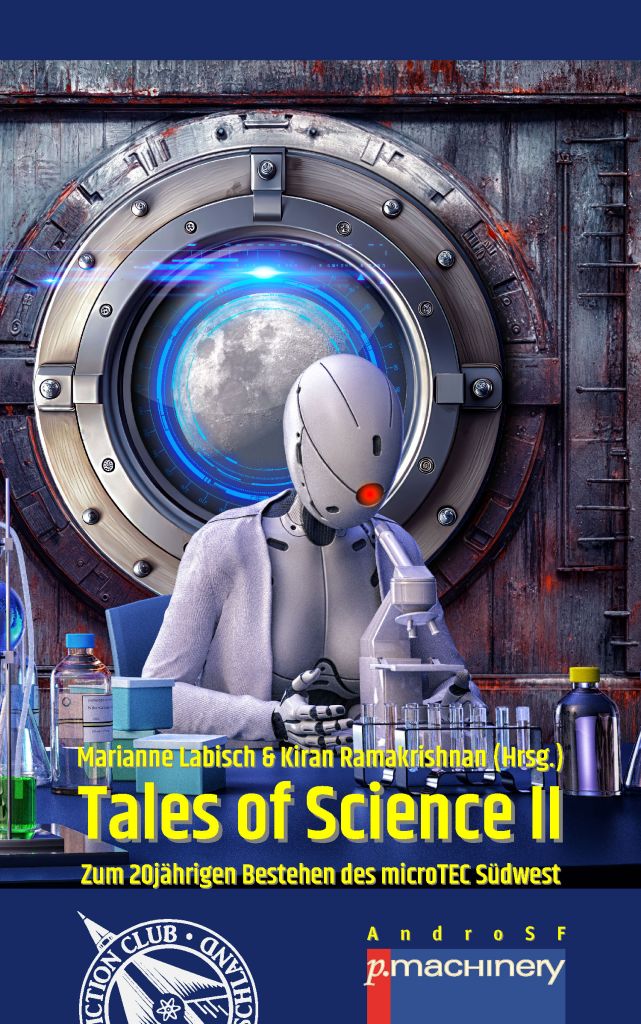
A few weeks ago, I looked into my mail box and found my contributor’s copy of “Tales of Science II” Anthology (edited by Marianne Labisch & Kiran Ramakrishnan) with my short story Die Polywasser-Gleichung (“The Polywater Equation”) inside. Beaming, I did a little dance because the anthology was marvelous looking! And it was all in German! (My mother is German, so I could actually read it; bonus!).

This science-fiction anthology, for which I was invited to contribute, collected seventeen short stories, all based on sound science. Here’s how the book jacket blurb (translated from German) describes the anthology:

It’s all just fiction. Someone made it up; it has nothing to do with reality, right? Well, in this anthology, there’s at least a grain of truth in all the stories, because scientific sponsors collaborated with authors. Here, they looked into the future based on current research What does such an experiment look like? See for yourself what the authors and scientific sponsors have come up with: about finding a way to communicate with out descendants, finding the ideal partner, conveying human emotions to an AI, strange water phenomena [that’s my story], unexpected research findings, lonely bots, and much more. The occasion for this experiment is the 20th anniversary of the microsystems technology cluster microTEC Südwest e. V.

(cover image and illustrations by Mario Franke and Uli Benkick)

In our initial correspondence, editor Marianne Labisch mentioned that they were “looking for short stories by scientists based on their research but ‘spun on’ to create a science fiction story;” she knew I was a limnologist and was hoping I would contribute something about water. I was glad to oblige her, having some ideas whirling in my head already. That is how “The Polywater Equation” (Die Polywasser-Gleichung) was born.

I’d been thinking of writing something that drew on my earlier research on patterns of colonization by periphyton (attached algae, mostly diatoms) in streams using concepts of fluid mechanics. Elements that worked themselves into the story and the main character, herself a limnologist, reflected some aspects of my own conflicts as a scientist interpreting algal and water data (you have to read the story to figure that out).

My Work with Periphyton

As I mentioned, the short story drew on my scientific work, which you can read about in the scientific journal Hydrobiologia. I was studying the community structure of periphyton (attached algae) that settled on surfaces in freshwater streams. My study involved placing glass slides in various locations in my control and experimental streams and in various orientations (parallel or facing the current), exposing them to colonizing algae. What I didn’t expect to see was that the community colonized the slides in a non-random way. What resulted was a scientific paper entitled “the effect of current on the distribution of diatoms settling on submerged glass slides.”

A. Distribution of diatoms on a submerged glass slide parallel to the current; treated diatom frustules are white on a dark background. B. diagram of water movement around a submerged glass slide showing laminar flow on the inner face and turbulent flow on the edges (micrograph photo and illustration by Nina Munteanu)

For more details of my work with periphyton, you can go to my article called Championing Change. How all this connects to the concept of polywater is something you need to read in the story itself.

The Phenomenon of Polywater

The phenomenon started well before the 1960s, with a 19th century theory by Lord Kelvin (for a detailed account see The Rise and Fall of Polywater in Distillations Magazine). Kelvin had found that individual water droplets evaporated faster than water in a bowl. He also noticed that water in a glass tube evaporated even more slowly. This suggested to Kelvin that the curvature of the water’s surface affected how quickly it evaporated.

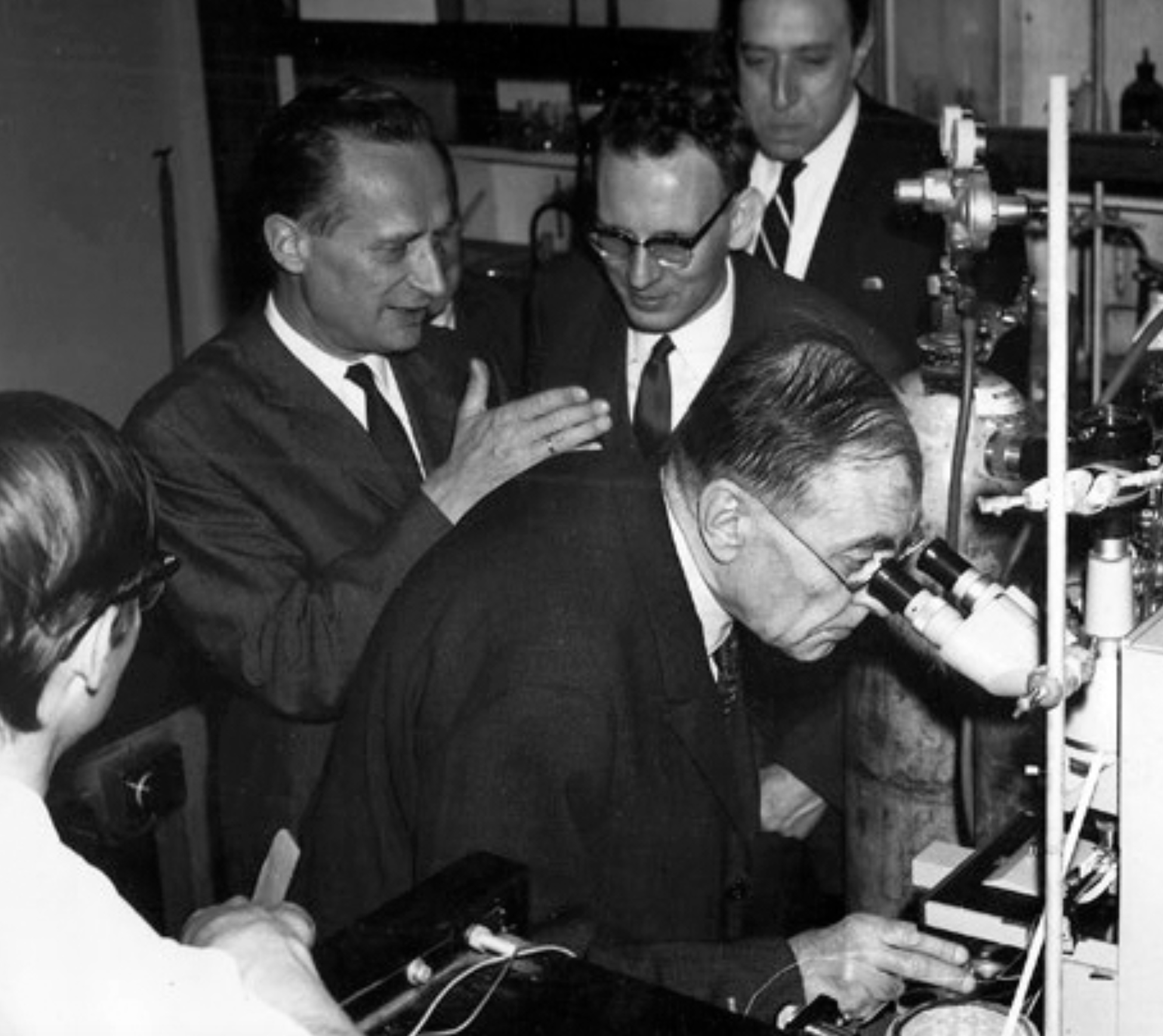
Soviet chemist Boris Deryagin peers through a microscope in his lab

In the 1960s, Nikolai Fedyakin picked up on Lord Kelvin’s work at the Kostroma Technological Institute and through careful experimentation, concluded that the liquid at the bottom of the glass tube was denser than ordinary water and published his findings. Boris Deryagin, director of the Institute of Physical Chemistry in Moscow, was intrigued and his team confirmed that the substance at the bottom of the glass tube was denser and thicker than ordinary water and had additional anomalous properties. This phase of water had a thick, gel-like consistency; it also had a higher stability, like a polymer, over bulk water. It demonstrated a lower freezing point, a higher boiling point, and much higher density and viscosity than ordinary water. It expanded more than ordinary water when heated and bent light differently. Deryagin became convinced that this “modified water” was the most thermodynamically stable form of water and that any water that came into contact with it would become modified as well. In 1966, Deryagin shared his work in a paper entitled “Effects of Lyophile Surfaces on the Properties of Boundary Liquid Films.” British scientist Brian Pethica confirmed Deryagin’s findings with his own experiments—calling the odd liquid “anomalous water”—and published in Nature. In 1969, Ellis Lippincott and colleagues published their work using spectroscopic evidence of this anomalous water, showing that it was arranged in a honeycomb-shaped network, making a polymer of water—and dubbed it “polywater.” Scientists proposed that instead of the weak Van der Waals forces that normally draw water molecules together, the molecules of ‘polywater’ were locked in place by stronger bonds, catalyzed somehow by the nature of the surface they were adjacent to.

Molecular structure of polywater

This sparked both excitement and fear in the scientific community, press and the public. Industrialists soon came up with ways to exploit this strange state of water such as an industrial lubricant or a way to desalinate seawater. Scientists further argued for the natural existence of ‘polywater’ in small quantities by suggesting that this form of water was responsible for the ability of winter wheat seeds to survive in frozen ground and how animals can lower their body temperature below zero degrees Celsius without freezing.

When one scientist discounted the phenomenon and blamed it on contamination by the experimenters’ own sweat, the significance of the results was abandoned in the Kuddelmuddel of scientific embarrassment. By 1973 ‘polywater’ was considered a joke and an example of ‘pathological science.’ This, despite earlier work by Henniker and Szent-Györgyi, which showed that water organized itself close to surfaces such as cell membranes. Forty years later Gerald Pollack at the University of Washington identified a fourth phase of water, an interfacial water zone that was more stable, more viscous and more ordered, and, according to biochemist Martin Chaplin of South Bank University, also hydrophobic, stiffer, more slippery and thermally more stable. How was this not polywater?

The Polywater Equation

In my story, which takes place in Berlin, 2045, retired limnologist Professor Engel grapples with a new catastrophic water phenomenon that looks suspiciously like the original 1960s polywater incident:

The first known case of polywater occurred on June 19, 2044 in Newark, United States. Housewife Doris Buchanan charged into the local Water Department office on Broad Street with a complaint that her faucet had clogged up with some kind of pollutant. She claimed that the faucet just coughed up a blob of gel that dangled like clear snot out of the spout and refused to drop. Where was her water? she demanded. She’d paid her bill. But when she showed them her small gel sample, there was only plain liquid water in her sample jar. They sent her home and logged the incident as a prank. But then over fifty turbines of the combined Niagara power plants in New York and Ontario ground to a halt as everything went to gel; a third of the state and province went dark. That was soon followed by a near disaster at the Pickering Nuclear Generating Station in Ajax, Ontario when the cooling water inside a reactor vessel gummed up, and the fuel rods—immersed in gel instead of cooling water—came dangerously close to overheating, with potentially catastrophic results. Luckily, the gel state didn’t last and all went back to normal again.

If you read German, you can pick up a copy of the anthology in Dussmann das KulturKaufhaus or Thalia, both located in Berlin but also available through their online outlets. You’ll have to wait to read the English version; like polywater, it’s not out yet.

References:

Chaplin, Martin. 2015. “Interfacial water and water-gas interfaces.” Online: “Water Structure and Science”: http://www1.lsbu.ac.uk/water/interfacial_water.html  

Chaplin, Martin. 2015. “Anomalous properties of water.” Online: “Water Structure and Science: http://www1.lsbu.ac.uk/water/water_anomalies.html  

Henniker, J.C. 1949. “The depth of the surface zone of a liquid”. Rev. Mod. Phys. 21(2): 322–341.

Kelderman, Keene, et. al. 2022. “The Clean Water Act at 50: Promises Half Kept at the Half-Century Mark.” Environmental Integrity Project (EIP). March 17. 75pp.

Munteanu, N. & E. J. Maly, 1981. The effect of current on the distribution of diatoms settling on submerged glass slides. Hydrobiologia 78: 273–282.

Munteanu, Nina. 2016. “Water Is…The Meaning of Water.” Pixl Press, Delta, BC. 584 pp.

Pollack, Gerald. 2013. “The Fourth Phase of Water: Beyond Solid, Liquid and Vapor.” Ebner & Sons Publishers, Seattle WA. 357 pp. 

Ramirez, Ainissa. 2020. “The Rise and Fall of Polywater.” Distillations Magazine, February 25, 2020.

Szent-Györgyi, A. 1960. “Introduction to a Supramolecular Biology.” Academic Press, New York. 135 pp. 

Roemer, Stephen C., Kyle D. Hoagland, and James R. Rosowski. 1984. “Development of a freshwater periphyton community as influenced by diatom mucilages.” Can. J. Bot. 62: 1799-1813.

Schwenk, Theodor. 1996. “Sensitive Chaos.” Rudolf Steiner Press, London. 232 pp.

Szent-Györgyi, A. 1960. “Introduction to a Supramolecular Biology.” Academic Press, New York. 135 pp. 

Wilkens, Andreas, Michael Jacobi, Wolfram Schwenk. 2005. “Understanding Water”. Floris Books, Edinburgh. 107 pp.

Nina Munteanu is a Canadian ecologist / limnologist and novelist. She is co-editor of Europa SF and currently teaches writing courses at George Brown College and the University of Toronto. Visit www.ninamunteanu.ca for the latest on her books. Nina’s bilingual “La natura dell’acqua / The Way of Water” was published by Mincione Edizioni in Rome. Her non-fiction book “Water Is…” by Pixl Press (Vancouver) was selected by Margaret Atwood in the New York Times ‘Year in Reading’ and was chosen as the 2017 Summer Read by Water Canada. Her novel “A Diary in the Age of Water” was released by Inanna Publications (Toronto) in June 2020.

Review of “A Diary in the Age of Water”: Women, Water, Numinosity, and the Transformation of the World

“It is a novel to learn from, and it is a novel to take forward into life as inspirational guide. Each of us is called upon to examine, not only our relationship with water, but with all Earth gifts.”

Jane Buchan, author & educator

Vermont author Jane Buchan recently wrote a review of my 2020 eco-fiction novel A Diary in the Age of Water. Here is an excerpt:

As climate, social, and political crises escalate, one source of guidance becomes essential to our continued optimism and activism: a Numinous Story… A Diary in the Age of Water by Nina Munteanu, is, for many of us alive in these terrifying times, a numinous story. It meanders through our consciousness with the enlightening science of fresh-water lakes and rivers and streams, sometimes heavy with sediment and toxicity, sometimes fast flowing and cleansing, sometimes terrifying with truths smacking us down with the force of a tidal bore. Its characters are story tellers and story receivers, and despite their diverse natures, all the stories they tell reveal the many threats to our source of life on Earth – our water.

Nina Munteanu’s novel structure is perfect for the weaving of human scientific and mystical relationships with water.  It’s initial and final sections create a frame for the inner story of bitterness, despair, self-serving behaviours, and corporate rapaciousness described by a professional scientist, a limnologist named Lynna. In the outer story we meet Kyo and Nam, Kyo’s mentor, as well as Ho, a librarian and keeper of a remnant of rare books. These characters exist on the other side of a mysterious cataclysm, the causes of which are the novel’s key themes.

Kyo, a small, four-armed blue being whose story begins and ends the novel, introduces us to the characters who form the larger diary section framed by the opening Library section and final Seed Ship section. Kyo makes glancing references to Una, mother of Lynna, and Lynna, mother of Hilde. Only Lynna is fully realized through her own perceptions and thoughts, these expressed in diary entries beginning in the spring of 2045 and ending in the late fall of 2066. Her diary, taking up 250 pages of this 303-page novel, provides the chronological spine connecting our past and present to a possible future that is not the one most humans want to think about, let alone welcome.

A Diary in the Age of Water is best sipped and savoured rather than gulped. Gulping will lead to choking for most non-scientist readers, and this book deserves to be experienced as it is written, in slow, undulating, revelatory waves… Like all complex stories, A Diary in the Age of Water requires patience, something our video-oriented age does not foster. The richest stories ask that we learn to hold many apparently divergent story threads at once. One of my fears as I read the diary was that the darkness of greed and short-sighted thinking and feeling would win out over that wondrous mystical relationship with the world that Una carried. While Una does her best to pass the experience of the sacred on to Lynna, Una’s spiritual influence is eclipsed by Lynna’s oppressive dependence on scientific knowledge to the exclusion of all else.

Through these characters, Nina Munteanu offers a warning for our times. Science is vitally important to our understanding of natural systems but science best serves us when it is balanced with an experience of the responsiveness of the natural world, a responsiveness that evokes our reverence and respect. Every culture honours the spiritual nature of the greater-than-human world, encoding its reverence in mythology, folktales, and wisdom traditions. – all keepers of numinous stories that transform our relationships with one another and the world. When we live honouring the sacred nature of all life, we become partners and co-creators. When we do not, we are highly dangerous parasites…

Lynna is called to hold the science of water firmly in her mind as her heart slowly opens to water’s responsiveness, water’s intelligence, water’s generosity, water’s love. It is a huge transformation for her, because science has been her safe place, her refuge. But knowing how something works is only the first part of the journey for those of us alive on this watery planet; we must all experience the why – the joy of unbreakable interconnections that make our lives meaningful… It is not Una’s daughter, Lynna, who carries this numinosity forward. It is Hilde, Una’s granddaughter, whose name means, significantly, Warrior Woman. How Kyo fits in to this lineage is one of the novel’s most unique speculations, one best discovered by reading the entire novel.

This novel is rich with information about water’s evolutionary journeys; it also describes the horrors of human greed that directly impact our relationships with water. It is not an easy book, but it is an important one, especially for people ready to engage, to advocate, to stand against the corporate insanity currently destroying Earth’s delicate balances. It is a novel to learn from, and it is a novel to take forward into life as inspirational guide. Each of us is called upon to examine, not only our relationship with water, but with all Earth gifts.

Go to Jane’s site Winterblooms to read the full review, worth reading in its entirety for its rich and poetic narrative.

Jane Buchan is a writer currently living in Vermont and originally from southwest Ontario. Her books include Under the Moon, Kinder Sadist and her latest, The Buttes. She is also an emotional Freedom Techniques (EFT) coach, Master Trainer and educator.

Jackson Creek flowing through ice formations (photo and rendition by Nina Munteanu)

Nina Munteanu is a Canadian ecologist / limnologist and novelist. She is co-editor of Europa SF and currently teaches writing courses at George Brown College and the University of Toronto. Visit www.ninamunteanu.ca for the latest on her books. Nina’s bilingual “La natura dell’acqua / The Way of Water” was published by Mincione Edizioni in Rome. Her non-fiction book “Water Is…” by Pixl Press (Vancouver) was selected by Margaret Atwood in the New York Times ‘Year in Reading’ and was chosen as the 2017 Summer Read by Water Canada. Her novel “A Diary in the Age of Water” was released by Inanna Publications (Toronto) in June 2020.

Water Scarcity and ‘A Diary in the Age of Water’

My eco-fiction book A Diary in the Age of Water was recently cited along with Paolo Bacigalupi’s book The Water Knife, in an article on conflict risk in international transboundary water bodies.

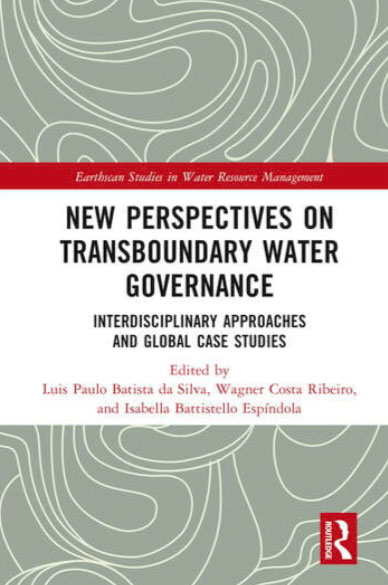
The citation was made in Ken Conca’s article (Chapter 1: “Climate change, adaptation, and the risk of conflict in international river basins: Beyond the conventional wisdom”) of the 2024 Routledge book New Perspectives on Transboundary Water Governance: Interdisciplinary Approaches and Global Case Studies” (edited by Luis Paulo Batista da Silva, Wagner Costa Ribeiro, and Isabela Battistello Espíndola).

Conca begins his chapter with a statistic—an estimated 310 rivers in the world cross national borders, form borders, or both—and goes on to discuss the risk of conflict that naturally arises in such situations. Conca traces a rich history of disputes, with one of the oldest occurring between Lagash and Umma (present-day southern Iraq) in 2500 BCE. Conca explores the early warning indicators explored by the World Resources Institute that imply “a future in which our bordered politics, combined with hydrologic interdependencies, could yield a combustible mix of tension and grievances” and adds that several rivers flagged in the WRI study lie in regions of crhonic tension and political instability. He then includes a 2013 quote by former UN Secretary-General Ban Ki-moon:

“Our experiences tell us that environmental stress, due to lack of water, may lead to conflict, and would be greater in poor nations … population growth will make the problem worse. So will climate change. As the global economy grows, so will its thirst. Many more conflicts lie just over the horizon.” Ban also stated that climate change promised “an unholy brew that can create dangerous security vacuums” in which “mega-crises may well become the new normal.”

Conca makes his point by quoting the U.S. Center for Strategic and International Studies: “the real wild card for political and social unrest in the Middle East over the next 20 years is not war, terrorism, or revolution—it is water.”

Conca makes the connection with narratives of fiction:

“This framing of scarcity-induced conflict risk has even crept into the world of fiction. Paulo Bacigalupi’s dystopian novel The Water Knife (2016) portrays a parched southwestern United States of the near future. He foresees American states militarizing both their water relations (with corporate militias destroying infrastructure meant to divert water) and their borders (with the water-rich states seeking to keep thirsty migrant out, and the water poor states seeking to keep them in). Nina Munteanu’s A Diary in the Age of Water (2020) envisions Canada as a wholly-owned colony of the United States (itself owned by China). She describes a world in which Niagara Falls has been turned off and pet ownership is outlawed as an unacceptable water burden.”

Conca unpacks various misconceptions on sources of conflict and conflict resolution to do with transboundary water bodies. The chapter is very enlightening, as is the entire book!

The 2024 Routledge book New Perspectives on Transboundary Water Governance: Interdisciplinary Approaches and Global Case Studies” (edited by Luis Paulo Batista da Silva, Wagner Costa Ribeiro, and Isabela Battistello Espíndola) is described by the publisher below:

This book presents a novel examination of transboundary water governance, drawing on global case studies and applying new theoretical approaches.

Excessive consumption and degradation of natural resources can either heighten the risks of conflicts or encourage cooperation within and among countries, and this is particularly pertinent to the governance of water. This book fills a lacuna by providing an interdisciplinary examination of transboundary water governance, presenting a range of novel and emerging theoretical approaches. Acknowledging that issues vary across different regions, the book provides a global view from South and Central America, Africa, Asia, and the Middle East, with the case studies offering civil society and public managers concrete situations that indicate difficulties and successes in water sharing between bordering countries. The volume highlights the links between natural resources, political geography, international politics, and development, with chapters delving into the role of paradiplomacy, the challenges of climate change adaptation, and the interconnections between aquifers and international development. With rising demand for water in the face of climate change, this book aims to stimulate further theoretical, conceptual, and methodological debate in the field of transboundary water governance to ensure peaceful and fair access to shared water resources.

This book will be of interest to students and scholars of water resource governance from a wide variety of disciplines, including geography, international relations, global development, and law. It will also be of interest to professionals and policymakers working on natural resource governance and international cooperation.

Nina Munteanu is a Canadian ecologist / limnologist and novelist. She is co-editor of Europa SF and currently teaches writing courses at George Brown College and the University of Toronto. Visit  www.ninamunteanu.ca for the latest on her books. Nina’s bilingual “La natura dell’acqua / The Way of Water” was published by Mincione Edizioni in Rome. Her non-fiction book “Water Is…” by Pixl Press (Vancouver) was selected by Margaret Atwood in the New York Times ‘Year in Reading’ and was chosen as the 2017 Summer Read by Water Canada. Her novel “A Diary in the Age of Water” was released by Inanna Publications (Toronto) in June 2020.

My Journey with Water: Nina Munteanu Talks to the Toronto Probus Group

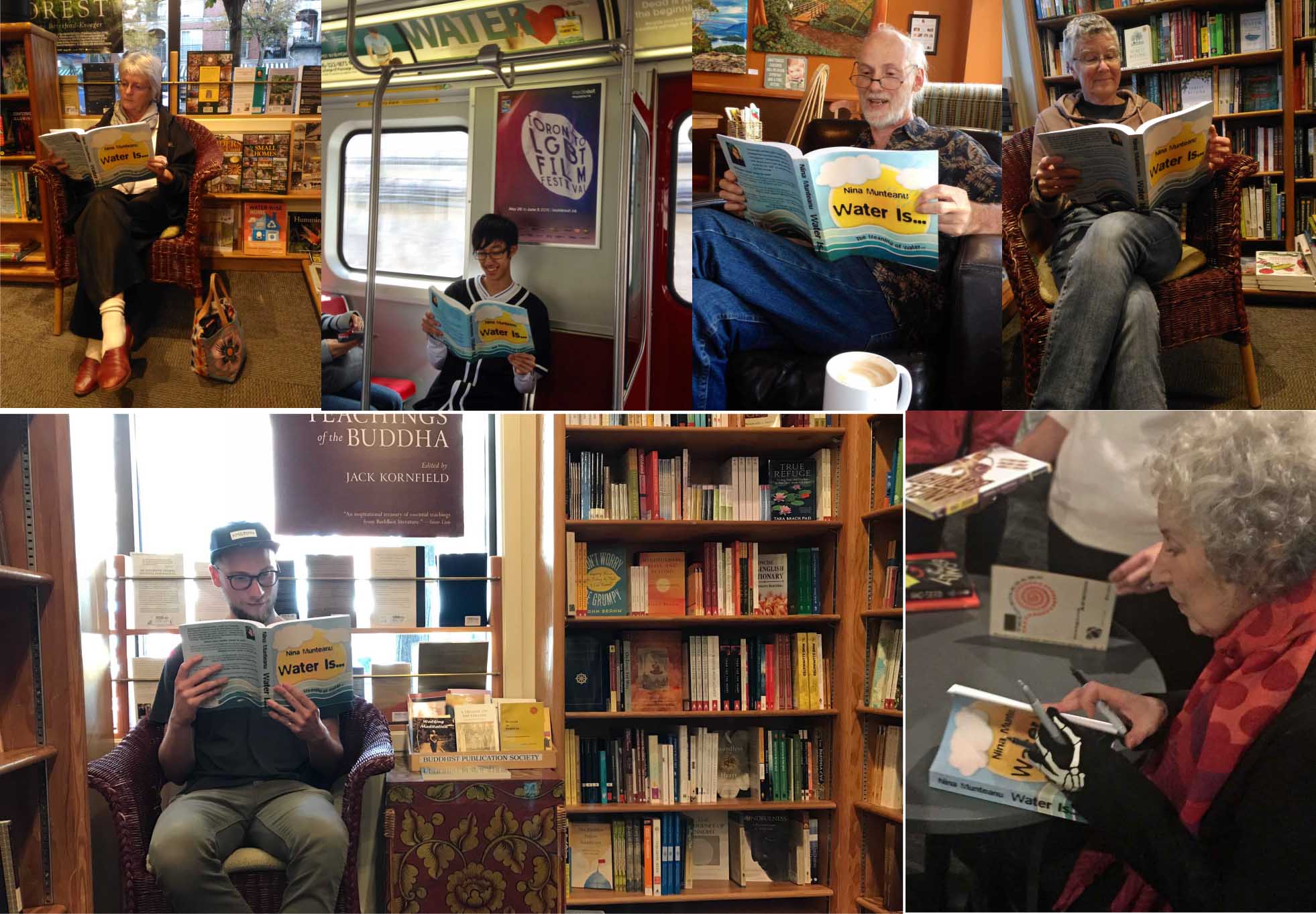
People reading “Water Is…” in Vancouver and Toronto

Margaret McCaffery, chair of the PROBUS Toronto Speakers Committee invited me some time ago to speak to their club in June of 2024 on my experience with water: as scientist, mother, and environmentalist. The audience was mostly retired professional and business people with enquiring minds. I gave my Powerpoint talk in the Holy Rosary Parish Hall on St. Clair West and then enjoyed a vigorous session of challenging and interesting questions to which I responded with equal vigour.

Here is the blurb for the presentation:

Canadian limnologist Nina Munteanu explores the many dimensions of water through her journey with water as mother, educator, and scientist. She describes an emotional connection with nature that compels us to take care of our environment with love versus a sense of duty. 

Nina’s talk draws on her book Water Is… The Meaning of Water, part history, part science and part philosophy and spirituality. The book examines water’s many anomalous properties and what these meant to us. In sharing her personal journey with this mysterious elixir, Nina explores water’s many ‘identities’ and, ultimately, our own. Water Is… was Margaret Atwood’s first choice in the 2016 New York Times ‘Year in Reading.’ Water is… will be available for sale at the talk.

I started with my story as a child, growing up in the Eastern Townships of Canada
I defined “limnology” and talked about my career as a limnologist and environmental consultant
I discussed some of water’s anomalous properties, all life-giving
I brought in some interesting things about water…
I tied my journey with water to family and friends and my watershed
I ended my talk with a discussion of the Watermark Project to catalogue significant stories to water bodies all over the world

I also brought my latest eco-clifi novel A Diary in the Age of Water for sale. It interested quite a few people and generated several wonderful discussions.

Nina Munteanu and her latest eco-novel

Nina Munteanu is a Canadian ecologist / limnologist and novelist. She is co-editor of Europa SF and currently teaches writing courses at George Brown College and the University of Toronto. Visit www.ninamunteanu.ca for the latest on her books. Nina’s bilingual “La natura dell’acqua / The Way of Water” was published by Mincione Edizioni in Rome. Her non-fiction book “Water Is…” by Pixl Press (Vancouver) was selected by Margaret Atwood in the New York Times ‘Year in Reading’ and was chosen as the 2017 Summer Read by Water Canada. Her novel “A Diary in the Age of Water” was released by Inanna Publications (Toronto) in June 2020.

When Water Speaks: quotes from A Diary in the Age of Water

“There is no depression more debilitating than knowing that you cannot go back home, even though you’re already there.”

Lynna Dresden

“This is a significant book for our times … creative, inventive, and possibly prescient.”

DAVID CAMERON, Amazon Review

“Profound and brilliant.  Scary and comforting at the same time. Life will go on. Water will go on.”

NINA DARRELL Amazon Review
Bridge over creek in Trent Nature Sanctuary during heavy snowfall, ON (photo and rendition by Nina Munteanu)

When Water Speaks: quotes from A Diary in the Age of Water

“What if water doesn’t like being owned or ransomed? What if it doesn’t like being channelled into a harsh pipe system or into a smart cloud to go where it normally doesn’t want to go? What if those hurricanes and tornadoes and floods are water’s way of saying that it’s had enough?”

Hilde Dresden

“Thoroughly researched and cleverly executed, A Diary in the Age of Water is a must-read, especially for those who are longing for nature, and touch, while fearing both.”

CARA MOYNES, Amazon Review

“This novel made my heart clench…An extremely detailed and downright terrifying look into the future of our planet. A Diary in the Age of Water will appeal to lovers of eco-fiction and hard speculative fiction.”

GOODREADS REVIEW
Maple tree branches hover over shallows of Otonabee River, ON (photo and rendition by Nina Munteanu)

How Maude Barlow Sparked My Novel “A Diary in the Age of Water”

Maude Barlow, author of Boiling Point, Chairman of the Council of Canadians

Like a car, every novel has its point of ignition: a spark that sets it in motion. This occurs when a premise or idea comes together with an incendiary moment of clarity or a thematic question. Mine—though I didn’t know it at the time—happened in a church on the Summer of 2016.

I was in a United Church on Bloor Street, in Toronto’s Annex, watching a talk given by Maude Barlow on water justice. The radical talk was based on her recent book Boiling Point, a comprehensive exploration of Canada’s water crisis—a crisis that most Canadians weren’t—and still aren’t—aware. Canada is steward to a fifth of the world’s fresh water, after all. It is a water-rich country. Of the dozen largest inland lakes in the world, Canada holds eight of them. So, why water crisis? Barlow explains. And you should read Boiling Point, particularly if you’re Canadian. It will open your eyes to the politics of water and how multinational corporations—like Nestlé—are already grabbing and funneling water away from Canadians and into the global profit machine.

I sat close to the front of the Church sanctuary to best see her. But I soon noticed that many people had elected to sit in the gallery above. I found myself focusing on a young mother and her little girl. The girl had some paper and crayons and was busy with that as the enthusiastic mother listened to Maude deliver dire facts about corporate water high-jacking and government complicity.

I saw a story there.

What mother would take her pre-school child to a socio-political talk on water? I would later reflect that memory of the mother and her little girl through my characters Una and her little daughter Lynna, the diarist in my novel A Diary in the Age of Water (eventually published in 2020 with Inanna Publications).

Fresh water flows down the barrel of a hand-operated water pump.

My novel really began with a short story I was invited to write in 2015 by editors of Future Fiction and Mincione Edizioni about water and politics in Canada; the premise of this story would later find it’s way into the larger novel. I had long been thinking of potential ironies in Canada’s water-rich heritage. The premise I wanted to explore was the irony of people in a water-rich nation experiencing water scarcity: living under a government-imposed daily water quota of 5 litres as water bottling and utility companies took it all. I named the story “The Way of Water.” It was about a young woman (Hilda) in near-future Toronto who has run out of water credits for the public wTap; by this time houses no longer have potable water and their water taps have been cemented shut; the only way to get water is through the public wTaps—at great cost. She is in a line of people; she’s two metres from water—and dying of thirst.

The Way of Water” captures a vision that explores the nuances of corporate and government corruption and deceit together with global resource warfare. In this near-future, Canada is mined of all its water by thirsty Chinese and US multinationals—leaving nothing for the Canadians. Rain has not fallen on Canadian soil in years due to advances in geoengineering and weather manipulation that prevent rain clouds from going anywhere north of the Canada-US border. If you’re wondering if this is possible, it’s already happening in China and surrounding countries.

The story first appeared in 2015 in Future Fiction, edited by Francesco Verso, and in 2016 as a bilingual (English and Italian) book and essay published by Mincione Edizioni in Rome. The story has so far been reprinted seven times in magazines and anthologies, including “Cli-Fi: Canadian Tales of Climate Change Anthology” (Exile Editions, Bruce Meyer, ed), in 2017, “Future Fiction: New Dimensions in International Science Fiction” (Francesco Verso & Bill Campbell, eds; Future Fiction / Rosarium Publishing, Rome and Greenbelt, MD) in 2018; and in Little Blue Marble Magazine (Katrina Archer, ed) in January, 2019 and in their ‘Best of’ anthology. It was then published in 2022 in Metastellar Magazine and later in their ‘Best of’ anthology. “The Way of Water” received generous praise from review sites and the press worldwide.

After the success of this short story, I realized that I needed to tell the larger story—how did the world—Canada—get to where Hilda was? Her mysterious mother, the limnologist Lynna who was taken away by the RCMP in 2063, clamored for more attention. I remembered that four-year old girl and her mother in the gallery at Maude Barlow’s talk on water politics. And I thought of my characters: young Lynna and her mother Una. How does a daughter of an activist mother behave and think? How best to express her voice? I had earlier written a short story that was a mix of correspondence (emails) and third person narrative (“The Arc of Time” in Natural Selection, later reprinted in Metastellar Magazine), which I felt captured the voices of the characters well. I realized that a diary by Lynna would be an ideal way for her to express her unique worldview and cynicism—yet allow her vulnerable humanity to reveal itself through this unique relationship with her diary. The remaining characters and their narratives emerged easily from there: Una, her activist mother; Daniel, her conspiracy theorist colleague (and her conscience); Orvil, the water baron (and lover she betrayed); and Hilda, her “wayward” supposedly mind-challenged daughter—who appears in the short story that takes place later.

I had a lot of material; I had already been researching water issues and climate change in my activism as a science writer and reporter. In 2016, Pixl Press had published “Water Is… The Meaning of Water”, essentially a biography of water, written from the perspective of mother, environmentalist and scientist. I had practiced as a limnologist for over twenty-five years and could mine my various personal experiences in the field, lab and office with genuine realism. I chose Wetzel’s Limnology (the classic text book I used in my introductory limnology course) for quotes to each of Lynna’s entries; this added an opportunity to provide additional metaphor and irony through Lynna’s scientific voice. I placed the child Lynna (who was born in 2012) into actual events in Toronto, where I currently live. This pushed the story further into the area of documentary and blurred the lines between fiction and non-fiction to achieve a gritty and textured reality. Lynna also taught limnology at the University of Toronto, where I currently teach.

Just as Water Is… served as a watershed for all my relevant experiences as mother, environmentalist and scientist, A Diary in the Age of Water would galvanize many of my personal experiences, doubts, challenges and victories into compelling story. Although parts of the story wrote themselves, the entire book was not easy to write. There were times when I had to walk away from the book to gain some perspective—and optimism—before continuing. When I found myself drowning in Lynna’s voice, I invoked Hilda to guide me to shore. I found a balance that worked and compelled. Ultimately this opened to some of the best internal conflict and tension I have experienced in my writing.

Like water itself, A Diary in the Age of Water expresses through many vessels and in many perspectives, spanning hundreds of years—and four generations of women—with a context wider than human life. Through its characters, A Diary in the Age of Water explores the big question of humanity’s deadlock with planetary wellness and whether one is worth saving at the expense of the other. One of the characters asks Lynna the hard question: “If you had the chance to save the planet [stop the mass extinctions, deforestation and pollution ravaging the planet], but it was at the expense of humanity, would you do it?”

Water is, in fact, a character in the book—sometimes subtle and revealed in subtext, other times horrific and roaring with a clamorous voice. Water plays both metaphoric and literal roles in this allegorical tale of humanity’s final journey from home. The story explores identity and our concept of what is “normal”—as a nation and an individual—in a world that is rapidly and incomprehensibly changing—and in which each of us plays a vital role simply by doing or not doing.

A Diary in the Age of Water promises to leave you adjusting your frame of reference to see the world, yourself—and water—in a different way.

Illustration on Liisbeth article (photo collage by PK Mutch and Dreamstime

This is what PK Mutch of Liisbeth and Ariel Kroon (PhD graduate of English Literature at the University of Alberta and co-editor at Solarpunk Magazine) say about A Diary in the Age of Water, published by Inanna Publications in 2020:

The novel has received wonderful praise and prizes, including the Literary Titan Award, the Foreword Indies Award and finalist in the International Book Awards. I wonder if Maude Barlow has read it?… Maybe I (or someone) should get her a copy, huh?…

Maude Barlow with ‘Save our River’ sign

Maude Barlow is a Canadian activist and author of Blue Gold, Boiling Point and several other books on water justice. She chairs the board of Washington-based Food and Water Watch and Ottawa-based Blue Planet Project. Maude co-founded the Council of Canadians and chaired its board for over three decades.

Maude Barlow arrested in 2011 for environmental activism

Nina Munteanu is a Canadian ecologist / limnologist and novelist. She is co-editor of Europa SF and currently teaches writing courses at George Brown College and the University of Toronto. Visit www.ninamunteanu.ca for the latest on her books. Nina’s bilingual “La natura dell’acqua / The Way of Water” was published by Mincione Edizioni in Rome. Her non-fiction book “Water Is…” by Pixl Press (Vancouver) was selected by Margaret Atwood in the New York Times ‘Year in Reading’ and was chosen as the 2017 Summer Read by Water Canada. Her novel “A Diary in the Age of Water” was released by Inanna Publications (Toronto) in June 2020.