Movie Review: The Pandemic of “World War Z”

I don’t watch zombie movies.

I steer away from them. I find them generally tasteless, unimaginative and lacking anything remotely connected to “story”. Most appear, at least from their trailers, to focus on violence and gore with little interest in anything else (what could be more gruesome than a person stalking then eating another?).
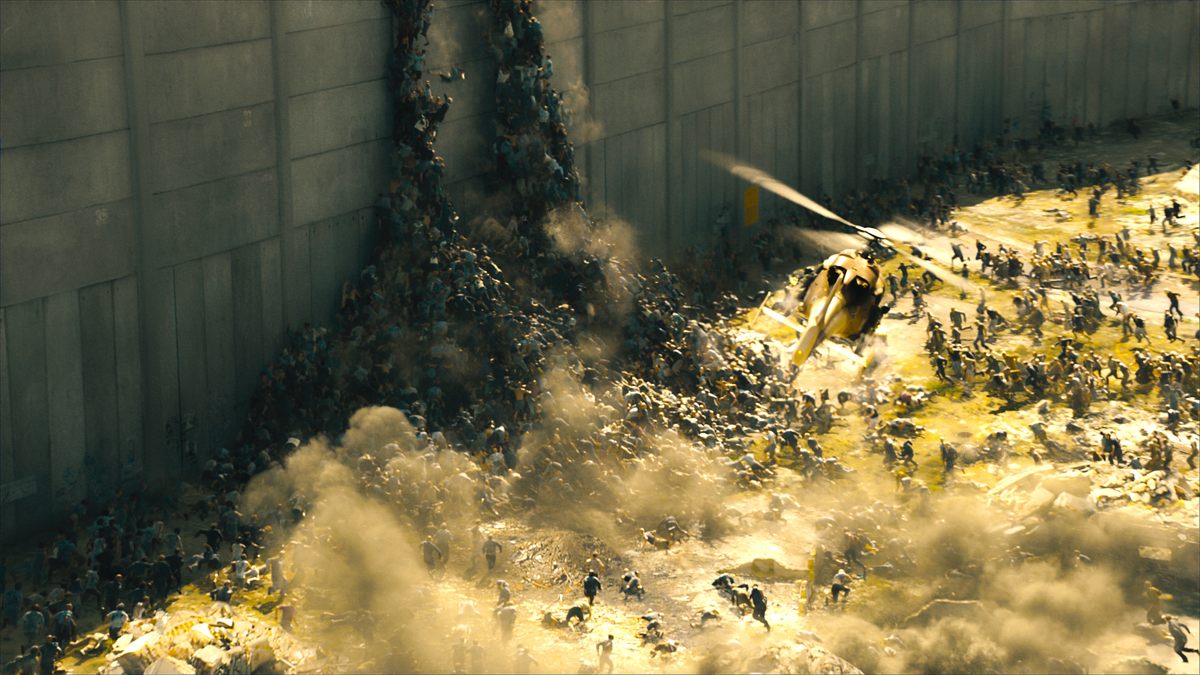
Zombies form an ‘ant hill’ as they climb the wall into a captive city

As a writer of science fiction and fantasy and avid fan of this genre in motion pictures, I lamented that zombies had become the “in thing” in stories and film these days. We’d just gotten over werewolves and vampires. Now I felt doomed by an infestation of the “undead”. I mean, how many ways can you portray such listless deadbeats?

then there’s the action thriller “World War Z”. Despite my intrigue with the trailer, it took my trusted friend’s insistence for me to go see it.

Escaping the first zombie onslaught

I was vindicated in my trust of her good taste.

“World War Z” is not your typical zombie movie. In fact, to call it a zombie movie is to fail to acknowledge the deeper thematic reflections portrayed. What struck most was that this action thriller focused less on what zombies did (all that missing blood and gore that some reviewers lamented over gave me relief and gratitude) than on the effect of a plague that turned most of humanity into them. It actually had a story! While the motion picture apparently honoured the iconic lore and criteria established in the zombie mythos, director Marc Forster and screen writers J. Michael Straczynski and Matthew Michael Carnahan (based on the book by Max Brooks) cleverly did not let themselves be limited by it. In fact, zombies per se serve more as plot tools in a far more interesting and deeper story arc and theme.  

I’m referring to the subtle notes of ecology, biology and co-evolution interlaced throughout this visually stunning and rather disturbing film. What happens when you disturb Nature? The opening titles and scenes show a montage of curious and subtly dark reflections on the consequences of our general indifference to Nature and her growing unbalanced ecosystems. “Mother Nature is a serial killer,” virologist Andrew Fassbach tells our hero during his first—and last—ten  minutes on screen. During that short time they spend together, Fassbach shares some key insights into how Gaia plays. And she doesn’t always play “fair”. Fassbach also tells us that this zombie plague started with a virus. Which brings up some interesting questions. Was it an “intelligent virus”, manufactured and introduced? Did the virus co-evolve with some organism as an aggressive symbiont and was spontaneously triggered by a disturbance? What was that disturbance and was it an accident or a mistake? How did it come to be?

Brad Pitt’s character faces a zombie

In a 2020 interview with Yahoo Entertainment, Max Brooks (the author of the bestselling book of the same name) shared how uncannily similar the WWZ was to the Corona Virus (COVID-19) outbreak:

“Similarities between Brooks’s imagined outbreak, a virus called solanum (first introduced in 2003’s Zombie Survival Guide) and the coronavirus are uncanny. Never mind that Brooks has said he was using the novel to generally comment on government ineptitude and U.S. isolationism.

Patient Zero was in China. The virus is eventually nicknamed “African Rabies,” which sounds an awfully lot like “The Chinese Virus.” The U.S. greatly downplayed the severity of its threat and reacted too slowly, likely in part because it was an election year. Check. There was a much hyped-treatment that was ultimately ineffective (hello, hydroxychloroquine).”

“I was just being historically accurate,” says Brooks. “I wasn’t looking forward, I was looking back. Everything that’s happening today has already happened throughout history. Pandemics tend to come in very predictable cycles. And everything that is happening today happened with SARS, happened with AIDS, even happened with Ebola.”
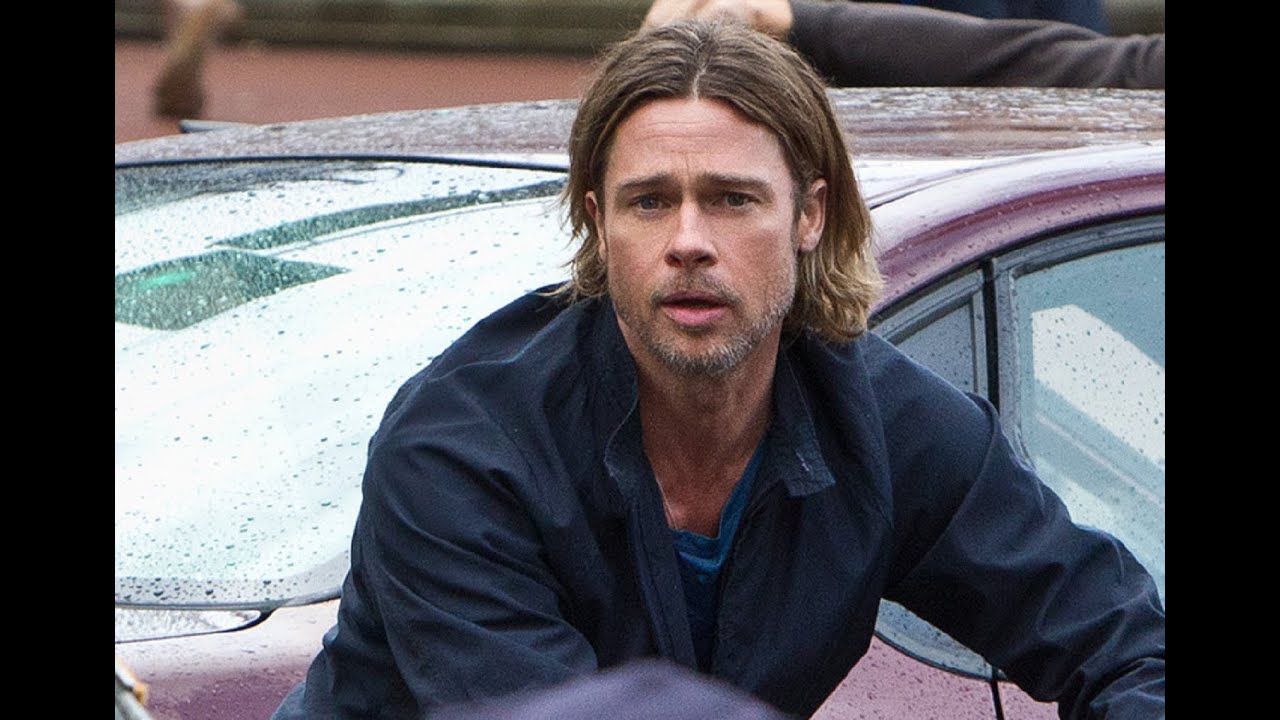
Brad Pitt’s character on the run

I also didn’t fail to notice the reference to swarming ant colonies in the title montage that foreshadowed a later scene of zombies piling onto each other on the walls of Jerusalem in a frenzied search for warm bodies to eat. This is clearly a film about Nature’s powers and mysteries. You can be sure that questions about what triggered and defined the zombie plague will be addressed in the sequel, already scheduled. Because, like any serial killer, Mother Nature wants to be caught, says Fassbach.

Swarming zombies form ‘ant hill’ as they climb a walled city

Co-Evolution & Symbiogenesis

Which brings me to what this film really touches on: how Mother Nature takes care of herself and her own… whether we like it or not. The key is evolution and something called co-evolution: this is when two normal aggressors cooperate in an evolutionary partnership to benefit each other. Ehrlich and Raven coined co-evolution to explain how butterflies and their host plants developed in parallel. I wrote about it in an earlier post called “Co-evolution: Cooperation & Aggressive Symbiosis

Virologist Frank Ryan calls co-evolution “a wonderful marriage in nature—a partnership in which the definition of predator and prey blurs, until it seems to metamorphose to something altogether different.” Co-evolution is now an established theme in the biology of virus-host relationships. The ecological “home” of the virus is the genome of any potential host and scientists have remained baffled by the overwhelming evidence for ‘accommodation’.

Brad Pitt’s character running with soldiers from zombie onslaught

“Today…every monkey, baboon, chimpanzee and gorilla is carrying at least ten different species of symbiotic viruses,” says Ryan.

“Why,” asks Ryan, “is co-evolution [and its partner, symbiosis] such a common pattern in nature?” Ryan coined the term “genomic intelligence” to explain the form of intelligence exerted by viruses and the capacity of the genome to be both receptive and responsive to nature. It involves an incredible interaction between the genetic template and nature that governs even viruses. Symbiosis and natural selection need not be viewed as mutually contradictory. Russian biologists, Andrei Famintsyn and Konstantine Merezhkovskii invented the term “symbiogenesis” to explain the fantastic synthesis of new living organisms from symbiotic unions. Citing the evolution of mitochondria and the chloroplast within a primitive host cell to form the more complex eukaryotic cell (as originally theorized by Lynn Margulis), Ryan noted that “it would be hard to imagine how the step by step gradualism of natural selection could have resulted in this brazenly passionate intercourse of life!”

Brad Pitt’s character fighting for his life

Aggressive Symbiosis

In his book, “Virus X” Dr. Frank Ryan coined the term “aggressive symbiont” to explain a common form of symbiosis where one or both symbiotic partners demonstrates an aggressive and potentially harmful effect on the other’s competitor or potential predator. Examples abound, but a few are worth mentioning here. In the South American forests, a species of acacia tree produces a waxy berry of protein at the ends of its leaves that provides nourishment for the growing infants of the ant colony residing in the tree. The ants, in turn not only keep the foliage clear of herbivores and preying insects through a stinging assault, but they make hunting forays into the wilderness of the tree, destroying the growing shoots of potential rivals to the acacia. Viruses commonly form “aggressive symbiotic” relationships with their hosts, one example of which is the herpes-B virus, Herpesvirus saimiri, and the squirrel monkey (the virus induces cancer in the competing marmoset monkey). Ryan suggests that the Ebola and hantavirus outbreaks follow a similar pattern of “aggressive symbiosis”. All you need is a perceived hostile trigger. A disturbance in an otherwise balanced ecosystem, for instance.
Aggressive Symbiosis & Human History

The historian, William H. McNeill, suggested that a form of “aggressive symbiosis” played a key role in the history of human civilization. “At every level of organization—molecular, cellular, organismic, and social—one confronts equilibrium [symbiotic] patterns. Within such equilibria, any alteration from ‘outside’ tends to provoke compensatory changes [aggressive symbiosis] throughout the system to minimize overall upheaval.”

So…what triggered the zombie plague of “World War Z”? And how will humanity prevail in this new paradigm of nature? The sequel (which I haven’t watched) may provide some answers. Check out author Max Brooks’s interview with Yahoo (link above) for some ideas.
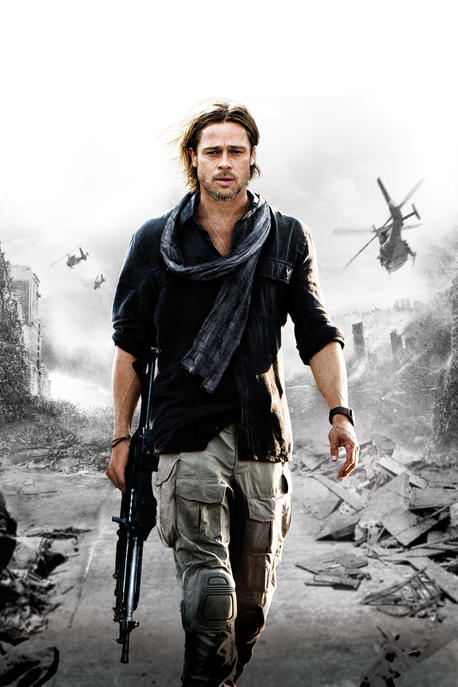
Poster for WWZ with Brad Pitt

Nina Munteanu is a Canadian ecologist / limnologist and novelist. She is co-editor of Europa SF and currently teaches writing courses at George Brown College and the University of Toronto. Visit www.ninamunteanu.ca for the latest on her books. Nina’s bilingual “La natura dell’acqua / The Way of Water” was published by Mincione Edizioni in Rome. Her non-fiction book “Water Is…” by Pixl Press (Vancouver) was selected by Margaret Atwood in the New York Times ‘Year in Reading’ and was chosen as the 2017 Summer Read by Water Canada. Her novel “A Diary in the Age of Water” was released by Inanna Publications (Toronto) in June 2020.

Corona Virus Testing in a World of False Negatives

Atlantic salmon farm escape copy

broken enclosure of Mowi fish farm off British Columbia coast

Some time ago, I wrote an article to express my dismay about some poor science reporting by CTV on the escape of Atlantic farm fish into native fish waters of the Pacific. My dismay arose for two reasons: 1) the ecological impacts of this accident; and 2) the failure of CTV in appropriately reporting the seriousness of it. Their biased and incomplete reporting failed to include accurate and relevant scientific expertise (they did, however, include the biased accounts of irrelevant “experts” who were associated with the fish farm company).

Need for Better Risk Management (Type 1 and Type 2 Errors in Risk Assessment) 

The scientific method relies on accurately measuring certainty and therefore reliably predicting risk. This means accounting for all biases and errors within an experiment or exploration. In my work as a field scientist and environmental consultant representing a client, we often based our formal hypotheses in statistics, which considered two types of error: Type 1 and Type 2 errors.

Type 1 errors are false positives: a researcher states that a specific relationship exists when in fact it does not. This is akin to an alarm sounding when there’s no fire.

Type 2 errors are false negatives: the researcher states that no relationship occurs when in fact it does. This is akin to no alarm sounding during a fire.

Put simply, environmental risk management assesses two types of cost through statistical probability: one to environment and one to investment. Risk analyses are often used in cost-benefit analyses in which the risk posed by errors as a cost to the environment vs a cost to revenue are assessed and balanced. Type 1 errors create false positives (that a cost to environment exists when there is little or none). Type 2 errors create false negatives (that there is no cost to environment when there is). Industry and their consultants predominantly focus on avoiding Type 1 errors (while often ignoring Type 2 errors) to protect their investments.

The reason why the down-playing remarks made by vet Mitchell and the fish farm company in British Columbia are so dangerous is because they make assumptions that are akin to not sounding an alarm when there is a fire; they are committing a Type 2 error and increasing the risk of a false negative. In risk assessment, this is irresponsible. And ultimately dangerous. Instead of targeting “environmentalists” “activists” and certain groups for opinions on issues, CTV should have sought out evidence-based science through scientists with relevant knowledge (e.g. an ecologist—not an economist or a vet (particularly one associated with the culprit)—for an environmental issue). Does this sound familiar on the topic of COVID-19 and the behaviour of the Trump administration?

The Difference Between Perceived Cases and Actual Cases

In his comprehensive March 10 article Coronavirus: Why You Must Act Now in The Medium, Tomas Pueyo argued that Washington State is America’s “Wuhun”:

“The number of cases there [in Washington State] are growing exponentially. It’s currently at 140. But something interesting happened early on. The death rate was through the roof. At some point, the state had 3 cases and one death. We know from other places that the death rate of the coronavirus is anything between 0.5% and 5% (more on that later). How could the death rate be 33%?

It turned out that the virus had been spreading undetected for weeks. It’s not like there were only 3 cases. It’s that authorities only knew about 3, and one of them was dead because the more serious the condition, the more likely somebody is to be tested…they only knew about the official cases and they looked good: just 3. But in reality, there were hundreds, maybe thousands of true cases.”


The False Negatives in Corona Virus Testing

In a March 11 The Atlantic article entitled “What Will You Do If You Start Coughing?”, Dr. James Hamblin mentioned the 1.5 million diagnostic tests for the Corona virus to be made available by the end of last week in the United States (according to Vice President Mike Pence). They never materialized. “But even when these tests eventually are available, some limitations will have to be realized,” Hamblin wrote.

For instance, these tests are diagnostic tests—not screening tests.

“The difference comes down to a metric known as sensitivity of the test: how many people who have the virus will indeed test positive. No medical test is perfect. Some are too sensitive, meaning that the result may say you’re infected when you’re actually not. Others aren’t sensitive enough, meaning they don’t detect something that is actually there. The latter is the model for a diagnostic test. These tests can help to confirm that a sick person has the virus; but they can’t always tell you that a person does not. When people come into a clinic or hospital with severe flu-like symptoms, a positive test for the new coronavirus can seal the diagnosis. Screening mildly ill people for the presence of the virus is, however, a different challenge.”

‘The problem in a scenario like this is false negatives,’ says Albert Ko, the chair of epidemiology of microbial diseases at the Yale School of Public Health. If you wanted to use a test to, for example, help you decide whether an elementary-school teacher can go back to work without infecting his whole class, you really need a test that will almost never miss the virus.”

“An inaccurate test—one prone to false positive or false negative results, can be worse than no test at all,” argues Ian Lipkin, an epidemiology professor at Columbia University. The CDC has not shared the exact sensitivity of the testing process it has been using. When Anthony Fauci, the director of the National Institute of Allergy and Infectious Diseases, was asked about it on Monday, he hedged: “If it’s positive, you absolutely can make a decision,” he said. If it’s not, that’s a judgment call, he said.

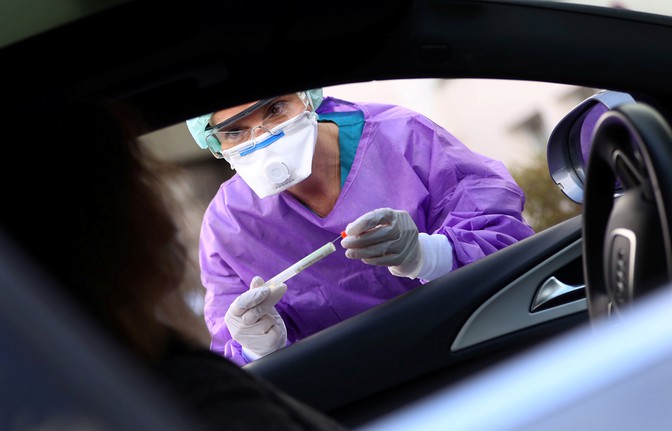
Corona virus testing drive through Germany

Doctor in Germany testing for COVID 19

Diagnostic testing is a classic case of a Type 2 error scenario: increasing the risk of concluding that there is no fire when there is one. It is a highly combustable (pardon the pun) scenario. False negatives can breed over-confidence. In the case of a disease, this can lead to people who are actually sick spreading the disease further when they should be self-isolating.

The absence of a quick, sensitive, ubiquitous screening test that can decisively rule out coronavirus infection—and send healthy people back out into the world to work and to live—presents unique and grave challenges.

Back to the environment (of which diseases are of course a part):

The Need for The Precautionary Principle in Environmental Science and Reporting 

Environmental scientists generally pride themselves on the use of the Precautionary Principle when dealing with issues of sustainability and environmental management. According to the Precautionary Principle, “one shall take action to avoid potentially damaging impacts on nature even when there is no scientific evidence to prove a causal link between activities and effects.” The environment should be protected against substances (such as an exotic species) which can be assumed potentially harmful to the current ecosystem, even when full scientific certainty is lacking.

Botanical Beach tidal pools

Botanical Beach, BC

Unfortunately, politicians, engineers and the scientists who work for them tend to focus on avoiding Type 1 rather than Type 2 statistical errors. To avoid the risk of cost; they risk the environment. There is an irony to this, though. In fact, by traditionally avoiding Type 1 errors, scientists increase the risk of committing Type 2 errors, which increases the risk that an effect will not be observed, in turn increasing risk to environment. Environmental effects in turn incur added costs, which are often far greater in the end.

In describing the case of the eutrophication of a Skagerrak (a marine inlet), Lene Buhl-Mortensen asks which is worse: risk a Type 2 error and destroy the soft bottom habitat of Skagerrak and perhaps some benthic species, or risk a Type 1 error and spend money on cleaning the outfalls to Skagerrak when in fact there is no eutrophication? “Scientists have argued that cleaning up is too expensive and should not be done in vain,” writes Buhl-Mortensen. “But more often the opposite is the case. The increased eutrophication of Skagerrak could end up more costly than reducing the outfalls of nutrients [to the inlet].”

“Because threats to the environment are threats to human welfare, ecologists have a prima facie ethical obligation to minimize Type 2 errors,” argues Buhl-Mortensen in the journal Marine Pollution Bulletin.

We can draw lessons from these environmental science examples in addressing disease—such as the current Corona virus pandemic. Differing strategies of countries to the COVID-19 pandemic have resulted in Type 2 (economy-driven; no fire when there is one) or Type 1 (health-driven; fire when there may not be one…yet) scenarios—with revealing results. Countries like Taiwan, Singapore, Hong Kong, and Japan have acted pro-actively and decisively with excellent results in containment and mitigation. Others such as the USA, France, Spain, Germany, and Switzerland have lagged behind, with disastrous results.

DailyGrowthRate of COVID Cases

The strategy taken by the Trump Administration on major issues from climate change (by denying it) to the recent COVID-19 pandemic (by downplaying it) exemplifies the promotion of false negatives, with disastrous results.

The incredibly irresponsible behaviour of the Trump administration will more than likely cause more deaths than otherwise. This behaviour is borderline criminal.

Peter Wehner of The Atlantic reported that, “The president reportedly ignored early warnings of the severity of the virus and grew angry at a CDC official who in February warned that an outbreak was inevitable. The Trump administration dismantled the National Security Council’s global-health office, whose purpose was to address global pandemics; we’re now paying the price for that…We may face a shortage of ventilators and medical supplies, and hospitals may soon be overwhelmed, certainly if the number of coronavirus cases increases at a rate anything like that in countries such as Italy. (This would cause not only needless coronavirus-related deaths, but deaths from those suffering from other ailments who won’t have ready access to hospital care.)”

Trump is not the only politician who has purposely downplayed the disease or obstructed science and its disclosures to the public. This has been happening from the beginning. Writes Laurie Garrett in the March 11, 2020 issue of the Lancet:

“Had China allowed physician Li Wenliang and his brave Wuhan colleagues to convey their suspicions regarding a new form of infection pneumonia to colleagues, social media, and journalists without risking sanction, and had local officials not for weeks released false epidemic information to the world, we might not now be facing a pandemic. Had Japanese officials allowed full disclosure of their quarantine and testing procedures aboard the marooned Princess Diamond cruise ship, crucial attention might have helped prevent spread aboard the ship and concern in other countries regarding home return of potentially infectious passengers. Had Shincheonji Church and its supporters within the South Korean Government not refused to provide the names and contact information on its members and blocked journalists’ efforts to decipher spread of the virus in its ranks, lives in that country might have been spared infection, illness, and death. Had Iran’s deputy health minister, Iraj Harirchi, and members of the country’s ruling council not tried to convince the nation that the COVID-19 situation was “almost stabilized”, even as Harirchi visibly suffered from the disease while on camera, the Middle East might not now find itself in grave danger from the spread of the disease, with Saudi Arabia suspending visas for pilgrims seeking to visit Mecca and Medina. Neither Iran nor Saudi Arabia has are and open journalism, and both nations seek to control narratives through social media censorship, imprisonment, or even execution.”

COVID 19 testing in Calgary

Drive through COVID 19 testing in Calgary

According to Pueyo, countries that are prepared (e.g. containment and mitigation through en masse social distancing) will see a fatality rate closer to 0.5% (South Korea) to 0.9% (rest of China); while countries that are overwhelmed will experience a fatality rate closer to 3% and 5% if not higher. “Put in another way,” writes Pueyo, “Countries that act fast reduce the number of deaths at least by 10x.”

COVID-19-Epidemiology

Given that 26% of contagions happen before there are symptoms, use of the precautionary principle will save lives—and ultimately all costs—in the end.


nina-2014aaa

Nina Munteanu is a Canadian ecologist / limnologist and novelist. She is co-editor of Europa SF and currently teaches writing courses at George Brown College and the University of Toronto. Visit www.ninamunteanu.ca for the latest on her books. Nina’s bilingual “La natura dell’acqua / The Way of Water” was published by Mincione Edizioni in Rome. Her non-fiction book “Water Is…” by Pixl Press (Vancouver) was selected by Margaret Atwood in the New York Times ‘Year in Reading’ and was chosen as the 2017 Summer Read by Water Canada. Her novel “A Diary in the Age of Waterwill be released by Inanna Publications (Toronto) in June 2020.