The Gestalt Nature of Passion & Success

What is to give light must endure burning —Victor Frankl


Tree Deer Lake

Deer Lake Park, BC (photo by Nina Munteanu)

“Any writing lays the writer open to judgment about the quality of his work and thought,” writes Ralph Keyes, author of The Courage to Write. “The closer [the writer] gets to painful personal truths, the more fear mounts—not just about what he might reveal, but about what he might discover should he venture too deeply inside. But to write well, that’s exactly where we must venture.”

So, why do it, then? Why bother? Is it worth it to make yourself totally vulnerable to the possible censure and ridicule of your peers, friends, and relatives? To serve up your heart on a platter to just have them drag it around as Stevie Nicks would say?…

Welcome to the threshold of your career as a writer. This is where many aspiring writers stop: in abject fear, not just of failure but of success. The only difference between those that don’t and those that do, is that the former come to terms with their fears, in fact learn to use them as a barometer to what is important.

“Everyone is afraid to write,” says Keyes. “They should be. Writing is dangerous…To love writing, fear writing and pray for the courage to write is no contradiction. It’s the essence of what we do.”

Unravelling the Secret…

How do you get past the fear of being exposed, past the anticipated disappointment of peers, past the terror of success?

The answer is passion. If you are writing about something you are passionate about, you will find the courage to see it through. “The more I read, and write,” says Keyes:

The more convinced I am that the best writing flows less from acquired skill than conviction expressed with courage. By this I don’t mean moral convictions, but the sense that what one has to say is something others need to know.—Ralph Keyes

This is ultimately what drives a writer to not just write but to publish: the need to share one’s story, over and over again. To prevail, persist, and ultimately succeed, a writer must have conviction and believe in his or her writing. You must believe that you have something to say that others want to read. Ask yourself why you are a writer. Your answer might surprise you.

Every writer is an artist. And every artist is a cultural reporter. One who sometimes holds the world accountable. “Real art,” says Susan Sontag, “makes us nervous.”

The first step, then, is to acknowledge your passion and own it. Flaunt it, even. Find your conviction, define what matters and explore it to the fullest. You will find that such an acknowledgement will give you the strength and fortitude to persist and persevere, particularly in the face of those fears. Use the fears to guide you into that journey of personal truths. Frederick Busch described it this way: “You go to dark places so that you can get there, steal the trophy and get out.”

John Steinbeck, author of Grapes of Wrath, said:

If there is a magic in story writing, and I am convinced that there is, no one has ever been able to reduce it to a recipe that can be passed from one person to another. The formula seems to lie solely in the aching urge of the writer to convey something he feels important to the reader.—John Steinbeck

Finding Success Through Meaning

Victor Frankl survived Auschwitz to become an important neurologist and psychiatrist of our time and to write Man’s Search for Meaning.

Blogger Gavin Ortlund wrote: “What gripped me most about [Frankl’s] book, and has stayed with me to this day, is not the horror and barbarity of his experiences in concentration camps—when you pick up a book about the holocaust, you expect that. What really struck me was Frankl’s repeated insistence that even there, in the most inhumane and horrific conditions imaginable, the greatest struggle is not mere survival. The greatest struggle is finding meaning. As I was reading, I was struck with this thought: going to a concentration camp is not the worst thing that can happen to a person. The worst that can happen to a person is not having a transcendent reason to live. Life is about more than finding comfort and avoiding suffering: it’s about finding what is ultimate, whatever the cost.”

Victor Frankl wisely said:

The more you aim at success and make it a target, the more you are going to miss it. Success, like happiness, cannot be pursued; it must ensue, and it only does so as the unintended side effect of one’s personal dedication to a cause greater than oneself or as the by-product of one’s surrender to a person other than oneself. Happiness must happen, and the same holds for success: you have to let it happen by not caring about it. I want you to listen to what your conscience commands you to do and go on to carry it out to the best of your knowledge. Then you will live to see that in the long-run—in the long-run, I say!—success will follow you precisely because you had forgotten to think about it.—Victor Frankl

Frankl is talking about passion. “If you long to excel as a writer,” says Margot Finke, author of How to Keep Your Passion and Survive as a Writer, “treasure the passion that is unique within yourself. Take the irreplaceable elements of your life and craft them into your own personal contribution to the world.” It’s what has you up to 2 am, pounding the keys. It follows you down the street and to work with thoughts of another world. It puts a notebook and pen in your hand as you drive to the store, ready to record thoughts about a character, scene or place. “For the passionate, writing is not a choice; it’s a force that cannot be denied.”

tree water deer lake

Deer Lake, BC (photo by Nina Munteanu)

Finke says it astutely: You need to be passionate about everything to do with your book—the writing and rewriting, your critique group, your research, your search for the best agent/editor, plus your query letter. Not to mention the passion that goes into promoting your book. Nothing less will assure your survival—and success—as a writer.

Follow your inner moonlight, don’t hide the madness—Allen Ginsberg, American poet

This article is an excerpt from The Fiction Writer: Get Published, Write Now! by Nina Munteanu

References:

Finke, Margot. 2008. “How to Keep Your Passion and Survive as a Writer.” In: The Purple Crayonhttp://www.underdown.org/mf_ writing_passion

Frankl, Victor. (1946) 1997. Man’s Search for Meaning. Pocket Books. 224 pp.

Keyes, Ralph. 1999. The Writer’s Guide to Creativity. Writer’s Digest, 1999.

Munteanu, Nina. 2009. The Fiction Writer: Get Published, Write Now. Starfire World Syndicate. 294pp

Ortlund, Gavin. 2008. “Frankl, the holocaust and meaning.” In: Let Us Hold Fast. http://gro1983.blogspot.com/2008/02/frankl-holocaust-and-meaning.html

Slonim Aronie, Nancy. 1998. Writing from the Heart: Tapping the Power of Your Inner Voice. Hyperion. 256pp.


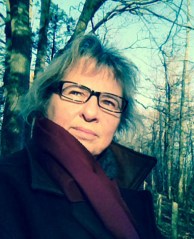
nina-2014aaaNina Munteanu is an ecologist, limnologist and internationally published author of award-nominated speculative novels, short stories and non-fiction. She is co-editor of Europa SF and currently teaches writing courses at George Brown College and the University of Toronto. Visit www.ninamunteanu.ca for the latest on her books.


Fiction Writer on Recommended Reads

FictionWriter-front cover-2nd edWriter Timea Noemi selected The Fiction Writer by Nina Munteanu along with the works of Angela Ackerman and Katie Weiland as her Top books on How to Write.

“[The Fiction Writer]is the most practical book on publishing that I’ve ever read, and I’ve read them all! Not only is each chapter packed with advice for writers at every level of the publishing process, but the text is highly readable and even entertaining. The clear format, the direct style and the playful layout keep the large volume of information from ever becoming dry or boring.”–Lucia Gorea, English Instructor, University of Vancouver

FictionWriter-No1-tweet

scriitorul_de_fictiune_Munteanu_coperta1Timea Noemi also recommended the Romanian translated version of “The Fiction Writer: Get Published, Write Now!” (“Manual de Scriere Creativa. Scriitorul de fictiune”) by Nina Munteanu along with “The Emotion Thesaurus” by Angela Ackerman and the Hungarian “How to Write a Book” by Krisz Nadasi.

Of “the Fiction Writer” Timea said:

“Eu mutumesc enorm! Cartea aceasta ma invatat atat de multe lucruri este bibia mea de scriitor. Din pacate nu prea se gasesc carti despre scriere creative in tara si m-am bucurat tare mult sa gasesc aceasta carte.” (Thank you so much! This book taught me so many things; it is my writer’s Bible. Unfortunately, there are no books on creative writing in the country, and I enjoyed finding this book.)

FictionWriter Tesimonial-Romanian

editura-paralela-45-scriere creativa.Cu plecere, Timi!

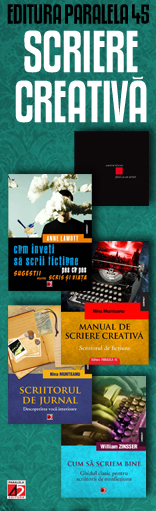
In fact, I knew this (that writing guides were lacking in Romania, a country full of writers!) and so did my Romanian publisher Calin Vlasie of Editura Paralela 45. This is why Editura Paralela 45 translated and published a Romanian version of The Fiction Writer. It so gladdens me to hear that this book on writing is making its way around the country.

Gaudeamus-LaunchMy father is originally from Romania and grew up in Bucharest.  So, I was delighted to attend the launch of Manual de Scriere Creativa. Scriitorul de fictiune (The Fiction Writer) in Bucharest in 2011, hosted by Editura Paralela 45 in the Gaudeamus Book Fair. It was a wonderful experience, which included drinking copious amounts of Romania’s national drink Tuica (plum liquor that packs a punch!) with my publisher. You can find out more about my adventure in Bucharest on my good friend’s site, Toulouse On the Loose.
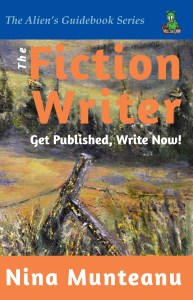
Canadians can purchase “The Fiction Writer” at a very decent price right now from Chapters / Indigo. The Fiction Writer is the first book of The Alien Guidebook Series, which includes The Journal Writer: Finding Your Voice (for journalling and memoir writing) and upcoming The Ecology of Story: World as Character (on setting, place and world building–scheduled release Summer 2019).


Nina MunteanuNina Munteanu is an ecologist, limnologist and internationally published author of award-nominated speculative novels, short stories and non-fiction. She is co-editor of Europa SF and currently teaches writing courses at George Brown College and the University of Toronto. Visit www.ninamunteanu.ca for the latest on her books.



The Careful Writer: Common Pitfalls of the Beginning Novelist: Part 1–Characters

patterns2-log-beetl holes-LR

Decaying log with insect bores (photo by Nina Munteanu)

Have you ever wondered how an editor decides not to read your cherished tome past the second paragraph of the first page and has pegged you as a beginning writer? This used to really bug me… Now, as a published author, mentor, and writing coach I read a lot of unpublished manuscripts. I now recognize what these editors do.

So, I’d like to share what I’ve learned over the years (some of the very same comments that have been made of my work, I am now sharing with you). I’ll be providing you my advice in three parts: 1) characters; 2) language; and 3) structure.

Let’s start with characters, since they are in my opinion, the most important part of a novel:

Characters carry the theme of the book. Each character needs to have a role in advancing the plot and/or theme; each character needs a reason to be there. A character therefore needs to be distinctive and usually shows some character development (as story arc) from beginning to end of story. Your characters are the most important part of your book (more so than the plot or premise). Through them your book lives and breathes. Through them your premise, your plot (which is essentially just a way to create problems for your characters to live out their development) and story come alive. Through them you achieve empathy and commitment from the reader and his/her willingness to keep reading to find out what’s going to happen next: if the reader doesn’t invest in the characters, they won’t really care what happens next.

Characters need to be real. They come to life by giving them individual traits and real weaknesses and heroic qualities that are consistent and have qualities readers can recognize and empathize with. You play these against each other to achieve drama. For instance, a man who is afraid of heights but who must climb a mountain to save his love is far more compelling than one who is not; a military man who fears responsibility but must lead his team into battle; a scientist who is afraid of failure; etc.

Characters of beginning writers often suffer from lack of distinction, or purpose, and often simply clutter up a story. For a character to “come alive” their “voice” must be distinct. Give them distinctive body movements, dress, facial features and expressions that reveal character, inner feelings, emotions, fears, motivations, etc. Then keep them consistent. There are several techniques writers use to increase empathy for a character. This includes use of third person POV, keeping the story with focus on fewer rather than many characters, creating character dossiers and keeping them consistent, providing each character a distinctive “voice” (figuratively), as in how they behave, say, react, etc. Another way to make your characters distinct (and works to also tie into plot and theme) is to make your characters not get along. Make them argue, disagree (at least!), have suspicions, betray one another, laugh and ridicule, etc. By doing this you increase tension, conflict (two things every book requires) and you enlighten the reader into each of the characters involved. Make them fight or argue over what they believe in – or not. You need to describe your characters in effective brief but vivid language as the reader encounters them.

Here are some questions you need to ask about your characters:

  1. if I can remove the character, will the book fall apart? (if not, you don’t need that character; they aren’t fulfilling a role in the book);
  2. how does the character portray the major or minor theme of the book? (that’s what characters are there for)
  3. what is the role of the character? (e.g., protagonist, antagonist, mentor, catalyst, etc.)
  4. what is the story arc of the character? Does he or she develop, change, do they learn something by the end? If not, they will be two-dimensional and less interesting
  5. what major obstacle(s) must the character overcome?
  6. who are your major protagonist(s) (the main character who changes the most)?
  7. who are your major antagonist(s) (those who provide trouble for your protagonists, the source of conflict, tension, the obstacle: one of their own?
  8. what’s at stake: for the world (plot); for each individual (Theme) and how do these tie together? Every character has a role to fulfill in the plot and to other characters. Don’t be afraid to totally remove characters if they do not fulfill a role.

To summarize, each character is there for a purpose and this needs to be made apparent to the reader (intuitively through characterization, their failings, weaknesses, etc.). Make them bleed, hurt, cry, feel. This needs to be clear to the reader, who wants to empathize with some of them and hate others. How characters interact with their surroundings and each other creates tension, a key element to good storytelling. Tension, of course builds further with the additional conflict of protagonist with antagonists. But, in truth, it’s more fun to read about the tension from WITHIN a group that’s supposed to be together. Think of Harry Potter and what was juicy there… It wasn’t really Voldemort … it was what went on at Hogwarts between Harry and his friends and not-so-friends. That is what makes a story memorable; that is what makes a story something you can’t put down until you’ve finished it.

TheFictionWriter-NMPart 2 of the Beginning Novelist will focus on language.

This is an excerpt from The Fiction Writer: Get Published, Write Now! (Starfire)


nina-2014aaNina Munteanu is an ecologist and internationally published author of award-nominated speculative novels, short stories and non-fiction. She is co-editor of Europa SF and currently teaches writing courses at George Brown College and the University of Toronto. Visit www.ninamunteanu.ca for the latest on her books.


He said, She said: Using Dialogue

Steveston-boats

Boats in Steveston, BC (photo by Nina Munteanu)

One of the most important devices to spice up narrative and increase pace is the use of dialogue. There’s a reason for this: we read dialogue more quickly; it’s written in more fluid, conversational English; it tends to create more white space on a page with less dense text, more pleasing to the reader’s eye.  Dialogue is action. It gets readers involved.

Good dialogue neither exactly mimics actual speech (e.g., it’s not usually mundane, repetitive or broken with words like “uh”) nor on the other extreme does it proselytize or educate the reader through long discourse (unless the character is that kind of person). Good dialogue in a story should be somewhere in the middle. While it should read as fluid conversation, dialogue remains a device to propel the plot or enlighten us to the character of the speaker). No conversation follows a perfect linear progression. People interrupt one another, talk over one another, often don’t answer questions posed to them or avoid them by not answering them directly. These can all be used by the writer to establish character, tension, and relationship.

Below, I provide a few tips when using dialogue in your story.

  • Show, don’t tell: a common error of beginning writers is to use dialogue to explain something that both participants should already know but the reader doesn’t. It is both awkward and unrealistic and immediately exposes you as a novice. For instance, avoid the use of “As you know…” It’s better to keep the reader in the dark for a while than to use dialogue to explain something. Which brings us to the next point.
  • Have your characters talk to each other, not to the reader: for instance, “Hello, John, you loser drunk and wayward son of the most feared gangster in town!” could be improved to, “You stink like a distillery, John! Wait ‘til papa’s thugs find you!”
  • Avoid adverbs: e.g., he said dramatically, she said pleadingly; instead look for better ways to express the way they said it with actual dialogue. That’s not to say you can’t use adverbs (I believe J.K. Rowling is notorious for this), just use them sparingly and judiciously.
  • Avoid tag lines that repeat what the dialogue already tells the reader: e.g., “I’m sorry,” he apologized. “Do you have a dog?” she asked.
  • He said, she said: reduce tag lines where possible and keep them simple by using “said”; another sign of a novice is the overuse of words other than said (e.g., snarled, hissed, purred, etc.). While these can add spice, keep them for special places as they are noticed by the reader and will distract otherwise.
  • Pay consistent attention to a character’s “voice”: each character has a way of speaking that identifies them as a certain type of person. This can be used to identify class, education, culture, ethnicity, proclivities, etc. For instance one character might use Oxford English and another might swear every third word.
  • Use speech signatures: pick out particular word phrases for characters that can be their own and can be identified with them. If they have additional metaphoric meaning to the story, even better. For instance, I know a person who always adds “Don’t you think?” to almost everything they say. This says something about how that person… well, thinks… I knew another person who always added “Do you see?” at the end of their phrase. Again rather revealing.
  • Intersperse dialogue with good descriptive narrative: don’t forget to keep the reader plugged into the setting. Many beginning writers forget to “ground” the reader with sufficient cues as to where the characters are and what they’re doing while they are having this great conversation. This phenomenon is so common, it even has a name. It’s called “talking heads.”
  • Contradict dialogue with narrative: when dialogue contradicts body language or other narrative cues about the speaker, this adds an element of compelling tension and heightens reader excitement while telling them something important. Here are a few examples:

“How’d it go?”

“Great,” he lied.

“I feel so much better now,” she said, eyes darting away from him.

Well, you get the picture, anyway.

This is an excerpt from The Fiction Writer: Get Published, Write Now! (Starfire)


nina-2014aaNina Munteanu is an ecologist and internationally published author of award-nominated speculative novels, short stories and non-fiction. She is co-editor of Europa SF and currently teaches writing courses at George Brown College and the University of Toronto. Visit www.ninamunteanu.ca for the latest on her books.

Nina Talks Writing on Dragon Page

michael-stackpoleSome years ago, I was interviewed by Michael Stackpole (New York Times bestselling author of over 40 novels, including “I, Jedi” and “Rogue Squadron”) and Michael Mennenga (CEO of “Slice of Sci-Fi”) on Dragon Page Cover to Cover.

michael mennengaWe talked about my book “The Fiction Writer: Get Published, Write Now!” and what new writers fret over. A lot of the discussion focused on how to handle rejection and I shared my “bus terminal” model (also in my book), which worked very well. For details on our discussion about the industry and craft of writing, listen below:


DragonPage-FictionWriter

The Bus Terminal Model:

FictionWriter-front cover-2nd ed-webHere is an excerpt from The Fiction Writer, Chapter R:

One way to see your way through rejection is to find ways to distance yourself from your story once you’ve sent it off and to see the whole process of submission-rejection-acceptance as a business. The very best way to do this is to submit lots of stories and to keep submitting them. With novels, this is a little harder to do but you can certainly be working on the next one once you’ve submitted the first.

When I was writing short stories, I kept a list of what and where I submitted, along with the most important item: where to submit NEXT. At any given time, I made sure that I had at least x-number of submissions out there and each story had a designated place to go if it returned. As soon as a story came back from magazine A, I simply re-packaged it and sent it to magazine B. The critical part of the list was to have a contingency for each story: the next place where I would send the story once it returned. I was planning on the story being rejected with the hope that it would be accepted; that way, a rejection became part of a story’s journey rather than a final comment.

I ran my submissions like a bus terminal. A story was in and out so fast it never had a chance to cool off. And, since I had five other pieces out there, I could do this with little emotion. I was running a fast-paced “story depot”, after all. All my stories had to be out there as soon as possible; if they were sitting in the terminal, they were doing nothing for me.


nina-2014aaNina Munteanu is an ecologist and internationally published author of award-nominated speculative novels, short stories and non-fiction. She is co-editor of Europa SF and currently teaches writing courses at George Brown College and the University of Toronto. Visit www.ninamunteanu.ca for the latest on her books.

Creating the Right Time and Place to Write

Look and you will find it—what is unsought will go undetected —Sophocles

Snowy Path scarborough

Snowy path, Scarborough (photo by Nina Munteanu)

During a time when I had a demanding job as an scientist, wife and mother and community volunteer, I wrote and successfully marketed five books, over a dozen short stories and many articles and reviews. Some people, including my publishers, thought I never slept (true) or cloned myself (possibly). They couldn’t believe my productivity when I was so busy with life.

But I did what I did, because I’d worked out a system. One that I could live by. One that fit my lifestyle. One created out of respect for my art as part of my “busy” life of commitments.

The truth of it is that we all lead busy lives. If you are going to finish that novel you’ve been working on over the years or book of poems sitting in the bottom dresser drawer, you need to make a commitment. Aside from giving your art the respect it deserves, it comes down to creating a time and place to write.

It starts with being realistic about your daily schedules and routines and inclinations and picking a time and place accordingly. Try to be consistent. It’s actually best to create a routine related to both time and place; the key is to be realistic about it. Don’t fight your inclinations or habits; instead, build your writing into your lifestyle. This will ensure success.

Choose a Sacred Time

Finding the time to write is critical to succeeding. If you don’t dedicate time to write you won’t. Believe me, you won’t. Make it sacred.

Writer Louise DeSalvo shared a common story about her experience: “Many people I know who want to write but don’t (my husband, Ernie, for example) or who want to write more than they have but say they can’t find the time (my friend Marla) have told me that taking the time to write seems so, well, self-indulgent, self-involved, frivolous even. And that finding the time to write—even a diary, much less fiction or memoir or poetry—in their busy schedules is impossible. I’ll write when I have the time, they say.”

It doesn’t work that way. You don’t find time; you must create it.

Writing of any kind is a commitment you make to yourself. So, choose a time that’s right for you. If you’re a morning person, don’t pick the end of the day when you don’t function as well. Instead, pick the early morning to write, a time before everyone else gets up and the day’s distractions pile up.

It’s actually best to create a routine related to time of the day (e.g., fixed time such as every morning or right after supper) or based on some other constant in your life, say the school calendar or your daily activities. The key is to be realistic about the time(s) you’ve chosen. In other words, your goals should be realistic and realizable.

The second part of the commitment is sharing it with your family and friends so that they will respect your sacred writing time. By sharing how important it is to you, you also give them the gift of sharing the experience with you and they are more likely to respect your time alone to write. This is also why choosing a routine makes more sense; it is something your family and friends will better remember and abide by. Making it easy for others is part of making it easy for you.

Find Your Own Rhythm

There’s no rule for when and how often you write. Because frequency and schedule of writing depends on the kind of writing you do (e.g., novel, short stories, articles, research) and on your own rhythms, you must decide what works best.

Most writers recommend that you commit to a regular writing schedule that is realistic to your overall routine and biorhythms. Some recommend you write in the morning, after a refreshing sleep; others suggest you write at night, at the end of the day when your memories are more fresh with the day’s activities and stimulations. Yet others suggest you take time out during the day to jot down relevant experiences as close to the time as the muse hits you, then spend some time at the end of the day compiling it into your work.

In the end, it’s up to you to choose what works for you and your own rhythms. When is the best time for you to write? And for how long or how many pages? Once you decide, stick to that schedule.

Choose a Sacred Place

Writing is a reflective activity that requires the right environment. The best environment is a quiet one with no interruptions and where you are alone. A reflective environment will let you find a connection with your muse. You need a place where you can relax and not worry about someone barging in or other things distracting you from your reflections. You should also feel physically comfortable and the place should meet your time requirements.

Because the suitability of a place can change with the time of day, learn the rhythms that affect the place you wish to write in. For example, the kitchen may be the centre of activity during the day but an oasis of quietude during the evening. Similarly, learn what kind of environment stimulates and nurtures your writing. Does music help or do you need complete quiet? Do you respond to nature’s soft breezes and sounds or do you prefer to surround yourself with the anonymous murmur of a crowded café for company?

Places that work for me include the local coffee shop, a park near my house, a library or other quiet place where I can enjoy uninterrupted anonymity. Where you write may reflect what you’re writing and vice versa. To some extent, you are environment and environment is you. You might try a few places first and see what happens to your muse. What you write while sitting under an apple tree in the breeze hearing the birds singing may differ from what you write while sitting in your living room by the crackling fireplace with music playing or sitting at your desk in your bedroom in total silence or in a crowded café surrounded by cheerful bustle.

Again, as with your choice of time, tell your family and friends about your sacred place. Provide rules, if you have to. Let’s say it’s a desk in the study. You may, for instance, let others know that your “mess” is part of a work in progress, perhaps even explain a little about it so they understand the nature of what you’re doing and why it should not be touched or moved or used, even while you are away from it. This will ensure that they respect your things and what you’re doing.

Credit Riv path in snow

Path along Credit River (photo by Nina Munteanu)

In the end it comes to finding the right integration and balance of time and place. Letting others know of your choices is equally important; this will ensure that they can help you, not hinder you in your writing. While writing is to a large extent an activity done in solitude, the journey is far from secluded. Ensure that you have a good support network.

This article is an excerpt from my fiction writing guidebooks The Fiction Writer: Get Published, Write Now! (Starfire, 2009) and The Journal Writer: Finding Your Voice (Pixl Press, 2013), part of the Alien Guidebook Series.


Nina Munteanu is an ecologist and internationally published author of award-nominated speculative novels, short stories and non-fiction. She is co-editor of Europa SF and currently teaches writing courses at George Brown College and the University of Toronto. Visit www.ninamunteanu.ca for the latest on her books.