“Gaia’s Revolution is a chlorophyll-stained argument about power, survival, and the peril of holy certainty.”
Literary Titan
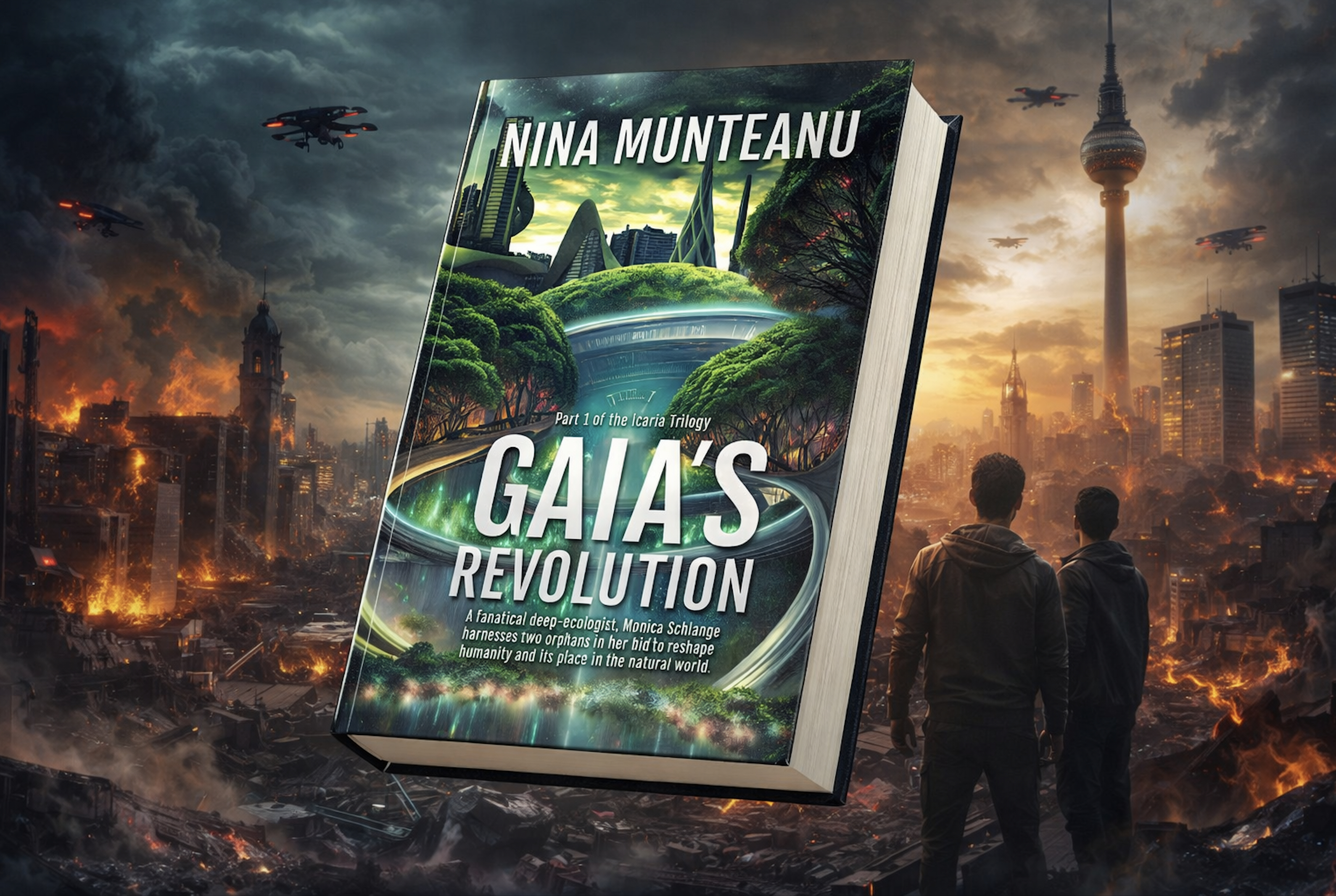
“Munteanu seamlessly blends real-life history and technology with tantalizing glimpses of the future’s drugs, diseases, and evolving concepts…Frighteningly plausible…”
Kirkus Reviews
.
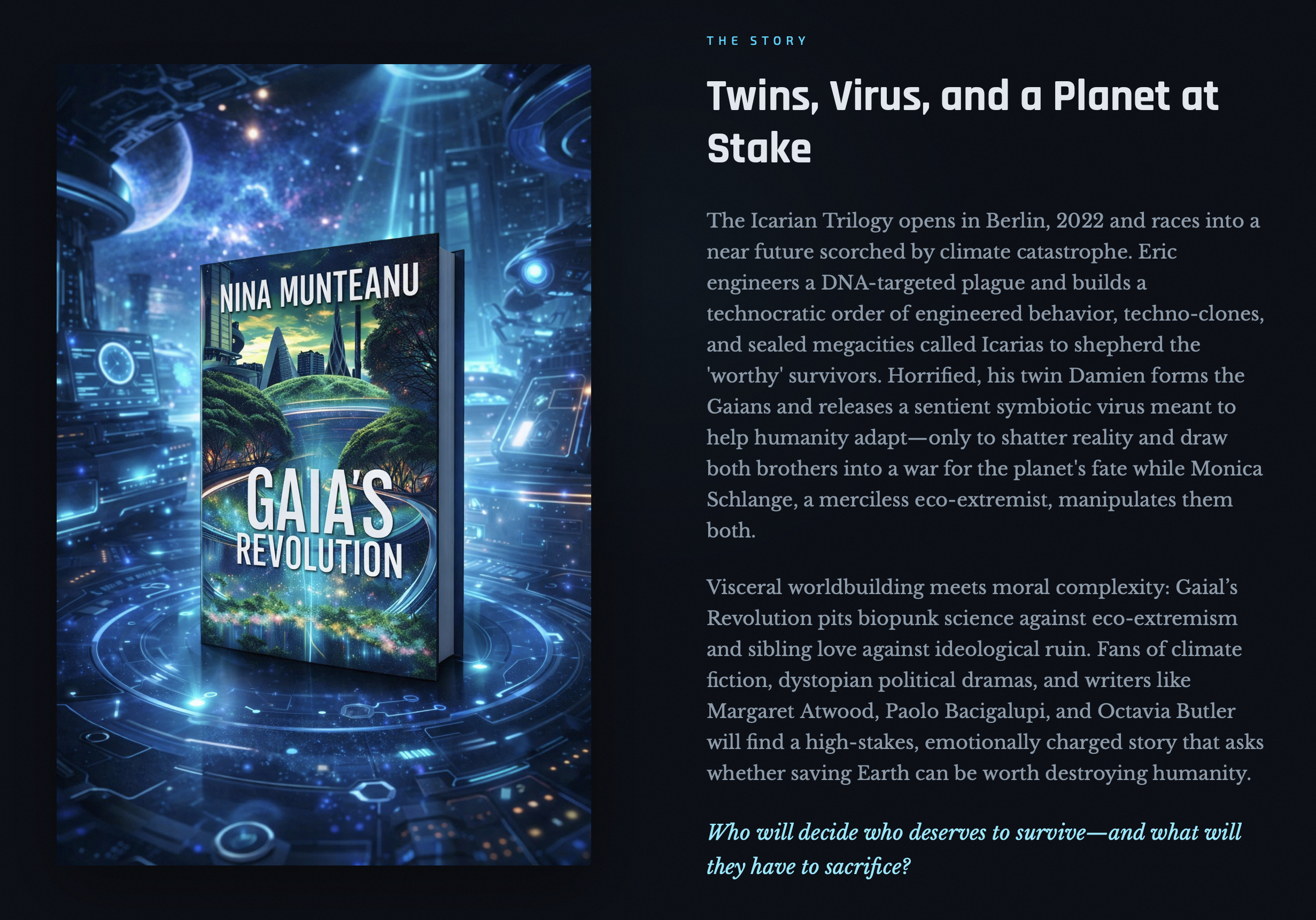
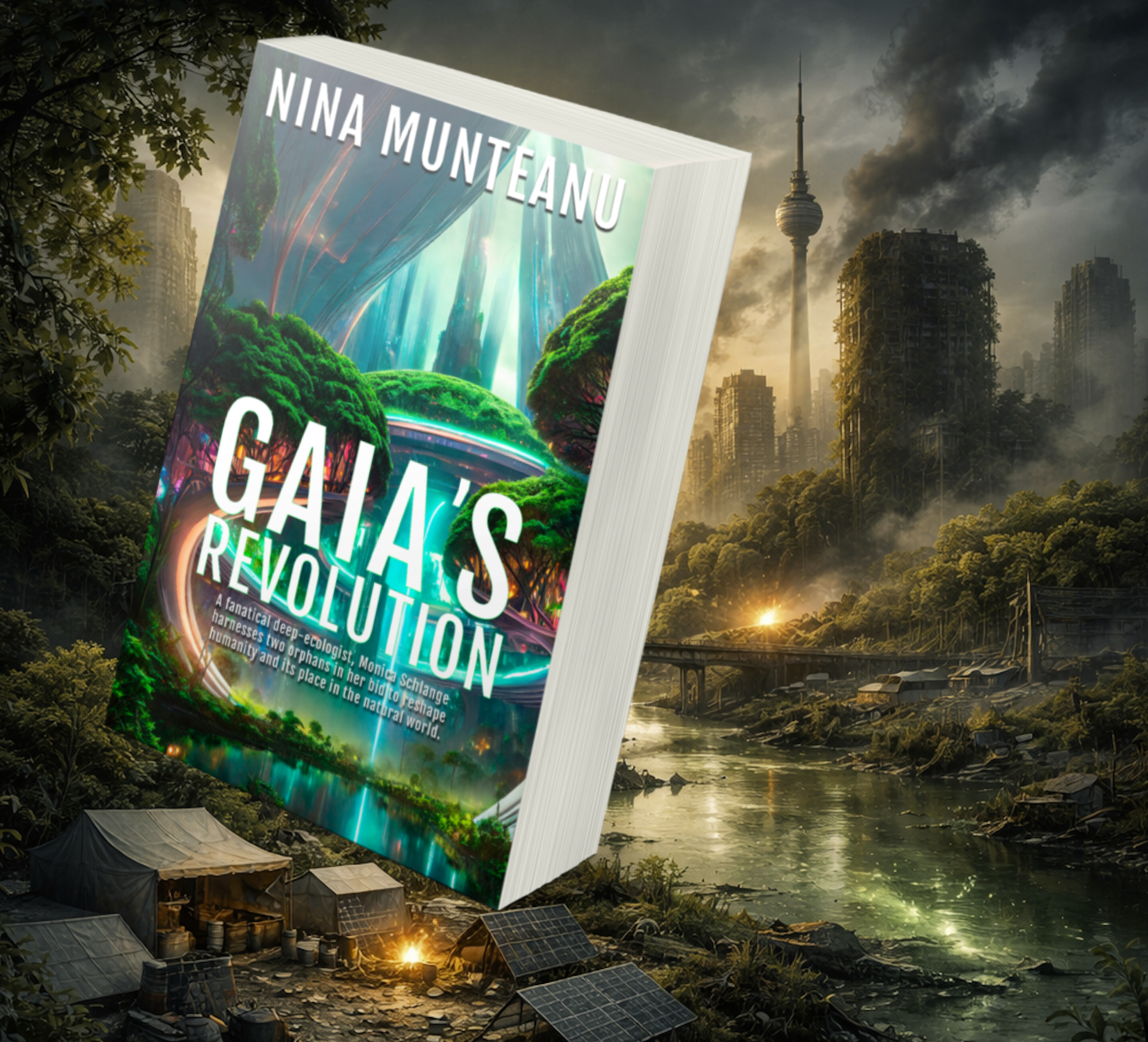
My eco-fiction political thriller Gaia’s Revolution—released March 10 of this year—has already made quite an impact on readers and reviewers: from amazing accolades to outright pans.
I love the controversy!
The book that follows ambitious twin brothers and the woman who plays them has rightly caused a ruckus from its questionable and controversial main characters to a thrilling though notorious plot. Understandably, some readers hated the book, even as others thoroughly enjoyed it. Either way, the book can’t be accused of being mediocre or mundane (something I would detest in my writing).
The Prairies Book Review accurately describes the novel:
Gaia’s Revolution “is a politically incendiary portrait of a civilization unraveling under climate collapse, historical trauma, and ideological extremism. Berlin, 2022. In a country destabilized by climate catastrophe and political extremism, activist Damien Vogel becomes the target of a violent state crackdown after protesting with Letzte Generation. As he uncovers long-buried truths about his family, he is drawn into conflict with his estranged twin Eric, whose ruthless plan for humanity’s survival threatens to sacrifice freedom itself.”
.
Literary Titan adds that the story “widens into a future history of revolution, ideology, biotech, enclosed cities, and ecological control…The novel is Part 1 of The Icaria Trilogy, and it reads like both an origin story and a warning flare.”
The Prairies Book Review calls Gaia’s Revolution: “Dense, unsettling, and intellectually ambitious.” They describe the novel as “bleak, intelligent, and emotionally explosive.” They add that, “Munteanu crafts the novel as both climate thriller and philosophical inquiry, weaving ecological science, German history, and political paranoia into a narrative charged with dread and moral instability…Munteanu refuses simplistic moral binaries, presenting climate collapse as a force that destabilizes not only ecosystems, but democracy, ethics, and identity itself.”
Reader Neha Shukla writes on Goodreads that Gaia’s Revolution has a “strong message with emotional depth.” Shukla noted that “the emotional side of the story is very well handled.” Lily Thomass wrote on Goodreads that “what stood out to me was the emotional honesty of the story.”
Costi Gurgu, author of Recipearium and The Cursed writes: “Gaia’s Revolution may be the most extensively researched SF novel I’ve ever read…[the book is] so close to reality that it’s frightening.” Claudiu Murgan, author of Water Entanglement, enjoyed the “dynamic plot and interesting, well-defined characters.”
Steve Stanton, Canadian speculative fiction author of Freenet writes: “I love it when novelists tackle the big issues and take on big opponents, and in these perilous times there is no bigger issue than global climate change, and no bigger opponent than patriarchal capitalism. Gaia’s Revolution by Nina Munteanu begins in present-day Germany, where ecological activists are setting the stage even now. In Munteanu’s inspired vision, radical racism, anti-immigration activism, and ultra right-wing security forces will be a crucible fomenting world catastrophe.”
.
.
Stanton adds, “The author uses some subtle stylistic variations for those readers who pay attention to details. The pace is varied, and the plot twists drive the narrative forward. I felt the beginning was a bit wordy with backstory and political philosophy, but Munteanu masterfully dovetails current political unrest and eco-activism into the worldwide dystopia of The Icaria Trilogy. As a prequel, this novel is an embellishment of sci-fi concepts developed very early in Munteanu’s career, but it is also the culmination of a body of work. For me, Gaia’s Revolution has been a delightful rediscovery of a talented Canadian voice.”
Reviews weren’t all positive; some oozed acid in their negative wrath. Why is Gaia’s Revolution eliciting this diversity of polarized reactions?
.
Sophia Wasylinko of The British Columbia Review in part suggests why in her negative review: “The book hooked me at first with its look at a world hostile to environmentalists and deep ecological concepts. Unfortunately, once the brothers cross paths with deep ecologist Monica Schlange, things get messy. Both for them and for the book.”
Wasylinko particularly took exception to Monica’s character.
.
Literary Titan describes Monica’s mercurial shapeshifting character as “a zealous deep ecologist, [who] becomes one of the book’s most dangerous engines: part savior, part tyrant, using damaged people…as instruments in her plan to remake humanity’s relationship with the natural world.” Wasylinko emphatically disliked Monica, which impeded her enjoyment of the book. The reviewer found that, “…as the story progressed, the more irritated I became with [Monica’s] sexual antics and ‘Tears for Fears’ references. While I probably wasn’t supposed to like her, I didn’t care for her at all.” Wasylinko ended with: “I won’t be continuing with the trilogy…I cannot cope with any more of Monica’s crooning Tears for Fears’ big hit of 1985, ‘Everybody Wants to Rule the World.’”
Literary Titan provides another possible reason for the polarized reactions: “the book refuses to make climate politics tidy. It doesn’t give us a simple contest between virtuous activists and corrupt institutions; instead, it shows how righteousness can calcify into doctrine, how grief can become governance, and how ecological thinking can be twisted into a new authoritarian grammar.” The reviewer found that what unsettled them the most, “was the book’s interest in compromised people [who are not] arranged into neat moral bins. They are products of abuse, ideology, scientific ambition, terror, tenderness, cowardice, and survival.”
Kirkus Reviews adds that: “Political ideals clash as the world falls into chaos … the ongoing political war is frighteningly plausible, and some readers may struggle with deciding who the villains are. The author serves up lively discourse in which the characters offer no easy answers; Munteanu seamlessly blends real-life history and technology with tantalizing glimpses of the future’s drugs, diseases, and evolving concepts.”
In describing the diametrically opposed trajectories of twin brothers Eric and Damien, Prairies Book Review adds that, “Eric’s eco-authoritarian worldview is chilling precisely because it emerges logically from the same environmental realities driving Damien’s activism.”
.
.
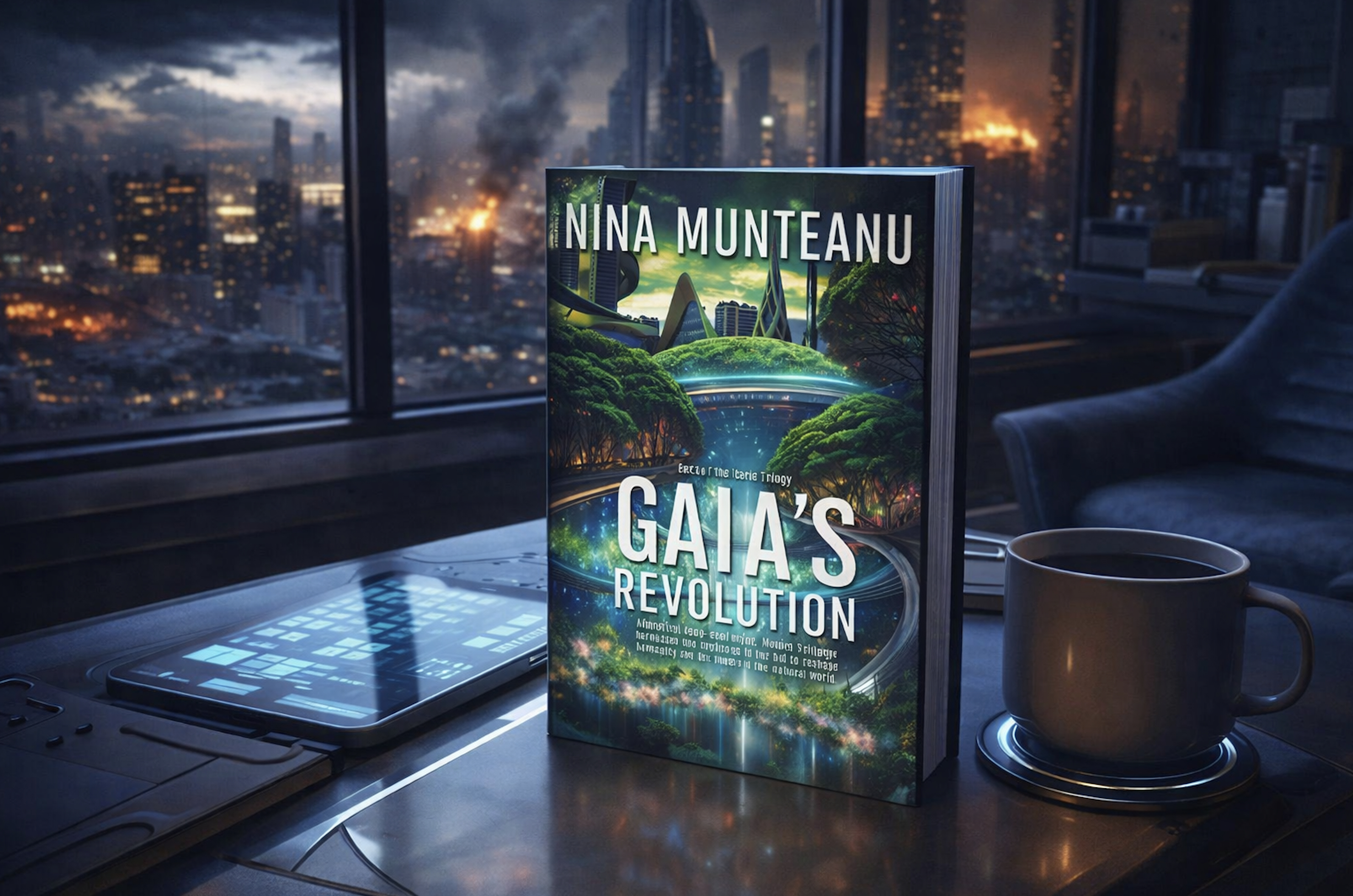
The book follows six key characters and a handful of minor characters—all with associated archetypes—and their journeys during this catastrophic time are complex and messy; a function of the chaotic time itself. I make no apology to Wasylinko for the messiness. Revolution is messy. In a time of hard choices, innocence is the main casualty. This becomes evident for all the characters in the novel—particularly the children—as fiction reflects non-fiction. In the end, no one is innocent and all are changed.
Gaia’s Revolution is best described as an exploration of violent change and its associated impact and paradoxes. This is something we will face or already are facing with the growing unruliness of global warming, environmental destruction, and planetary change. Gaia’s Revolution ultimately explores the diverse impact of revolution in an unsustainable world; perhaps it is only apt that its reception by readers is equally diverse.
Paradox and irony drive Gaia’s Revolution. Says Wasylinko: “Gaia’s Revolution shows how quickly utopia becomes a dystopia. Nowhere is this more evident than the [revolutionary] Gaian Army adopting the Technocratic government’s weapons, including terrifying clones, and … book burning.”
According to Literary Titan, Gaia’s Revolution “has the grain of a manifesto smuggled inside a thriller, a story with roots sunk deep into Rachel Carson, chaos theory, surveillance states, and the bad old habit of deciding that humanity must be saved from itself.”
Kirkus Reviews described Gaia’s Revolution as: “a bleak but fascinating portrayal of a near-future dystopia.”
Literary Titan recommends Gaia’s Revolution “to readers of climate fiction, eco-dystopian fiction, biopunk, political fiction, and science fiction readers who like their futures thorny rather than sleek. Readers who enjoy Margaret Atwood’s MaddAddam books or Kim Stanley Robinson’s climate-minded fiction may find familiar pleasures here, though Munteanu’s novel is darker, more doctrinal, and more intimate in its wounds.”
.
Gaia’s Revolution is Book 1 of The Icaria Trilogy, available in quality bookstores near you and, of course, on Amazon. Check out readers’ reaction to Gaia’s Revolution on Goodreads.
.
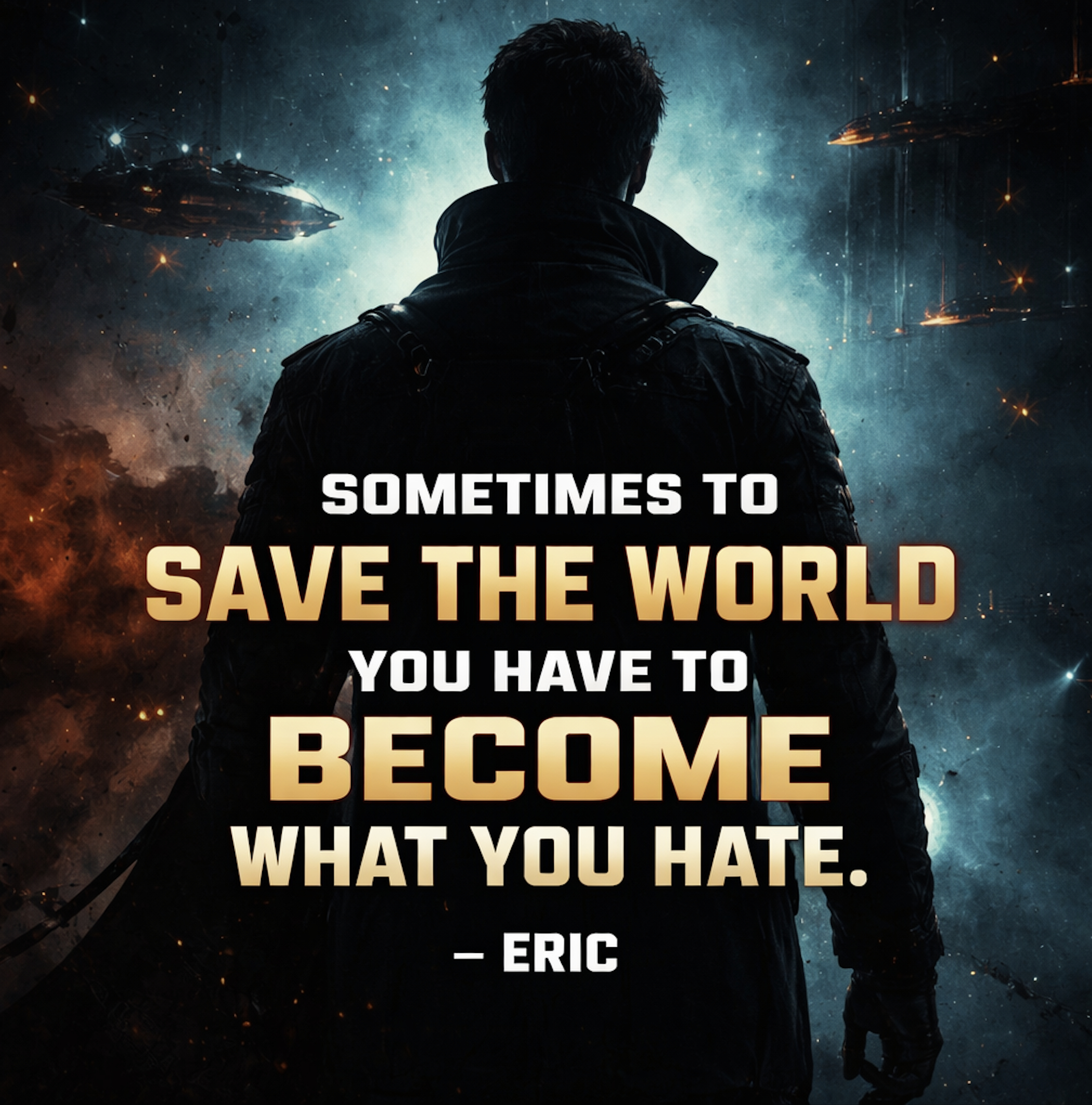
“We must first destroy before we can create. We must be unruly like climate. We must be relentless like climate. We must ride that wave before we can become the wave.”—Eric Vogel, Gaia’s Revolution
.
.
.
.

Nina Munteanu is a Canadian ecologist / limnologist and novelist. She is co-editor of Europa SF and currently teaches writing courses at George Brown College and the University of Toronto. For the lates on her books, visit www.ninamunteanu.ca. Nina’s bilingual “La natura dell’acqua / The Way of Water” was published by Mincione Edizioni in Rome. Her non-fiction book “Water Is…” by Pixl Press (Vancouver) was selected by Margaret Atwood in the New York Times ‘Year in Reading’ and was chosen as the 2017 Summer Read by Water Canada. Her novel “A Diary in the Age of Water” was released by Inanna Publications (Toronto) in June 2020. Her latest eco-fiction novel Gaia’s Revolution was released March 2026 by Dragon Moon Press.
.


