Movie Review & TV Series Review: The Paradoxes of Aeon Flux

When I was first tantalized by the high-speed head-smashing trailor for the Paramount motion picture, Aeon Flux, directed by Karyn Kusama (Girlfight) and released in late 2005 (now on DVD), I was blissfully unaware of its history: that it was based on the darkly irreverant and raunchy 1995 MTV Liquid Television animated SF series created by Korean American animator, Peter Chung. The series achieved cult status among a select audience of imsoniacs (it played at midnight on MTV, if that tells you anything). This may have worked in my favour. I had no expectations or preconceptions, except for a hair-flying ride. As a result, when the content (written by Matt Manfredi and Phil Hay) had merit as social commentary, I counted it as a bonus. But, then there was the matter of the reviews that emerged between the trailors airing and my seeing the film.
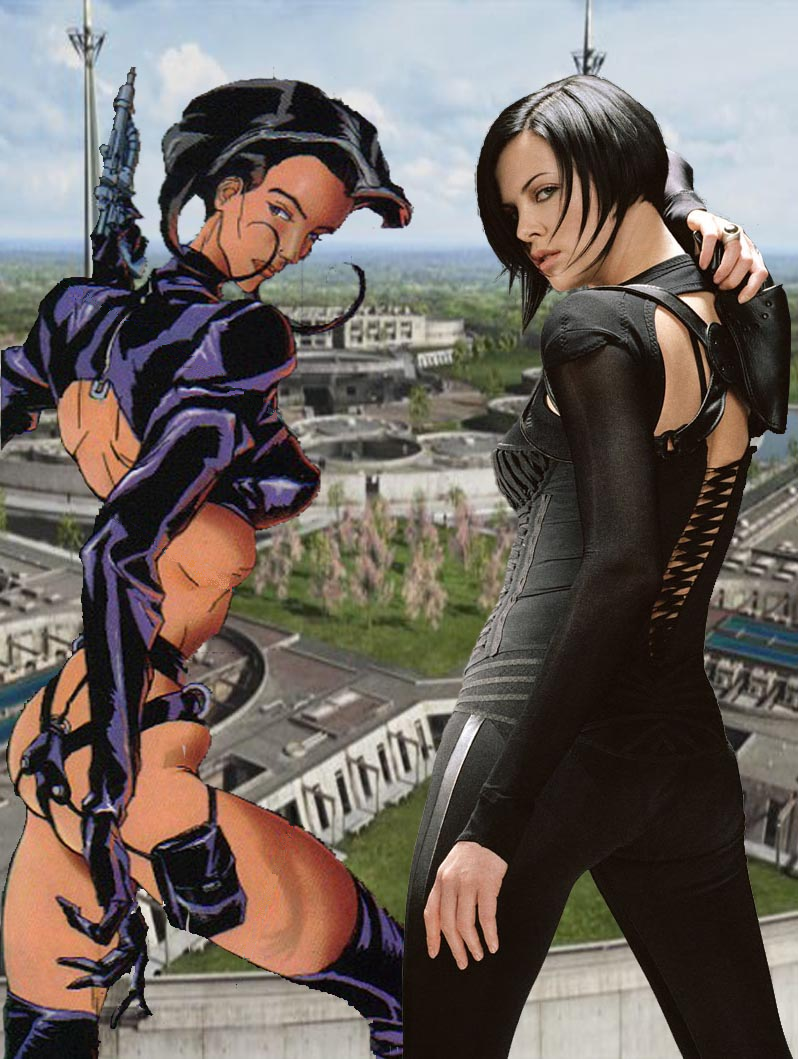
Aeon Flux, animated and movie character

Unfortunately for the motion picture, Paramount’s lack of press-screenings (and subsequent press reaction because of those lack of screenings) may have predisposed critics to dislike it. And many provided negative, though conflicting, reviews; as if they couldn’t all agree on why they didn’t like the film. Kieth Breese (Filmcritic.com) found the film “gorgeously surreal and vacuously arty.” According to Jami Bernard (New York Daily News), “in the dystopian future [of Aeon Flux], apparently, women will be bendable Barbies in leather scanties, and everyone will speak like brain-dead robots…a silly live-action movie.” Justin Chung (Variety.com) decided that Aeon Flux portrayed “the future [as] alternatively grim and hysterical…a spectacularly silly sci-fier.” A.O. Scott of the New York Times said that Aeon Flux was “flooded with colors and chilly effects [but was] drained of emotional interest, to say nothing of narrative coherence.” And, finally, William Arnold of the Seattle Post-Intelligencer called it “too somber and cerebral for the young action crowd.” Silly or too cerebral? In truth, this disappointment is because the Aeon Flux movie was wrongly perceived (and wrongly marketed) as an action thriller; it is more aptly described as a dystopian political thriller—not the brazen cry of V for Vendetta—but a subtle cautionary tale of the consequences of complacency, greed and living in absence of—and trying to cheat—nature.

Trevor Goodchild played by Marton Csokas)

In typical dystopian fashion, we join the Aeon Flux story roughly four hundred years after an industrial-related virus has killed 99% of the world’s population. Scientist, Trevor Goodchild (Marton Csokas) has developed a cure and the Goodchild dynasty secures a home for the five million survivors in the last city on Earth, Bregna, a paradise walled off from the unrestrained wilderness that ever-threatens them. Dystopias, like Bregna, often appear utopian on the surface, exhibiting a world free of poverty, hardship and conflict, but with some fatal flaw at their core. A dystopia (“dys”=bad; “topos”=place) is a fictional society that is the antithesis of utopia. It is usually characterized by an authoritarian or totalitarian form of government or some kind of oppressive, often insiduous, social control. Other examples that depict a range of distopian societies in literature and film include: 1984, Brave New World, Fahrenheit 451, The Handmaid’s Tale, Metropolis, THX-1138, Blade Runner, and V for Vendetta. Built from scientific premise and intended only as a temporary measure, the technocratic society of Bregna continues long after its intended span as the Goodchilds attempt to deal with an internal and enduring glitch (infertility) of the “cure”. Like most imposed provisional governments, this solution to a problem (cloning) has created yet another problem (fugitive memories from the previous clone’s life).

It is now 2415 and the walled society of Bregna appears utopian—clean and organized, beautiful, rich and spacious; but beneath the laughter and contentment, stirs an uneasy disquiet. Bregnans are losing sleep, having bad dreams, and are plagued by memories that don’t belong to them. Rebels who call themselves the Monicans challenge the Goodchild regime, run by Trevor and his brother Oren, and among the rebels is a highly competent and ruthless assassin, Aeon Flux (Charlize Theron), whose tools include whistle-controlled ball-bearing bombs, drugs that allow her to meet people on higher planes of existence, and interchangeable eyeballs. She is aptly named, as she serves a true agent of discord to Goodchild, the guardian of order and all that he naïvely believes is good.

“Some call Bregna the perfect society,” Aeon tells us in the opening scenes of the motion picture, “Some call it the height of human civilization…but others know better…We are haunted by sorrows we cannot name. People disappear and our government denies these crimes…But there are rebels who…fight for the disappeared. They call themselves the Monicans. I am one of them.” Several critics disliked the narrative introduction. I found that it particularly worked, by adding a reflective literary quality to the motion picture. It is noteworthy that in the original animated series, Trevor Goodchild often frames each episode with his reflections; only fitting that Aeon gets her chance in the film version. The reflective narrative of the motion picture is meant to enlighten its audience that this is not your ordinary action thriller. What follows is a fast-paced yet thoughtful story, with elements of romance, that explores notions of longevity, social structure and connection, faith and greed.

Aeon fights an opponent inside Goodchild’s fortress

Twitchfilm.net aptly called the motion picture “biological science fiction”. Trevor’s treacherous brother Oren says: “We’ve beaten death. We’ve beaten nature.” The film’s clean organic high-tech look faithfully captures the “sense of biotech gone wild” of the TV series by exploring several paradigms inherent in a society that lives deliberately in the absence of nature’s chaos. Indeed, the lack of connectivity resonates throughout the motion picture in its exploration of friendship, family, loyalty, and purpose. When her sister is murdered in the beginning of the film supposedly by Trevor’s men (but in actuality by his scheming brother, Oren), Aeon’s mission becomes personal: “I had a family once. I had a life; now all I have is a mission.” We never learn what the animated Aeon’s motives are.
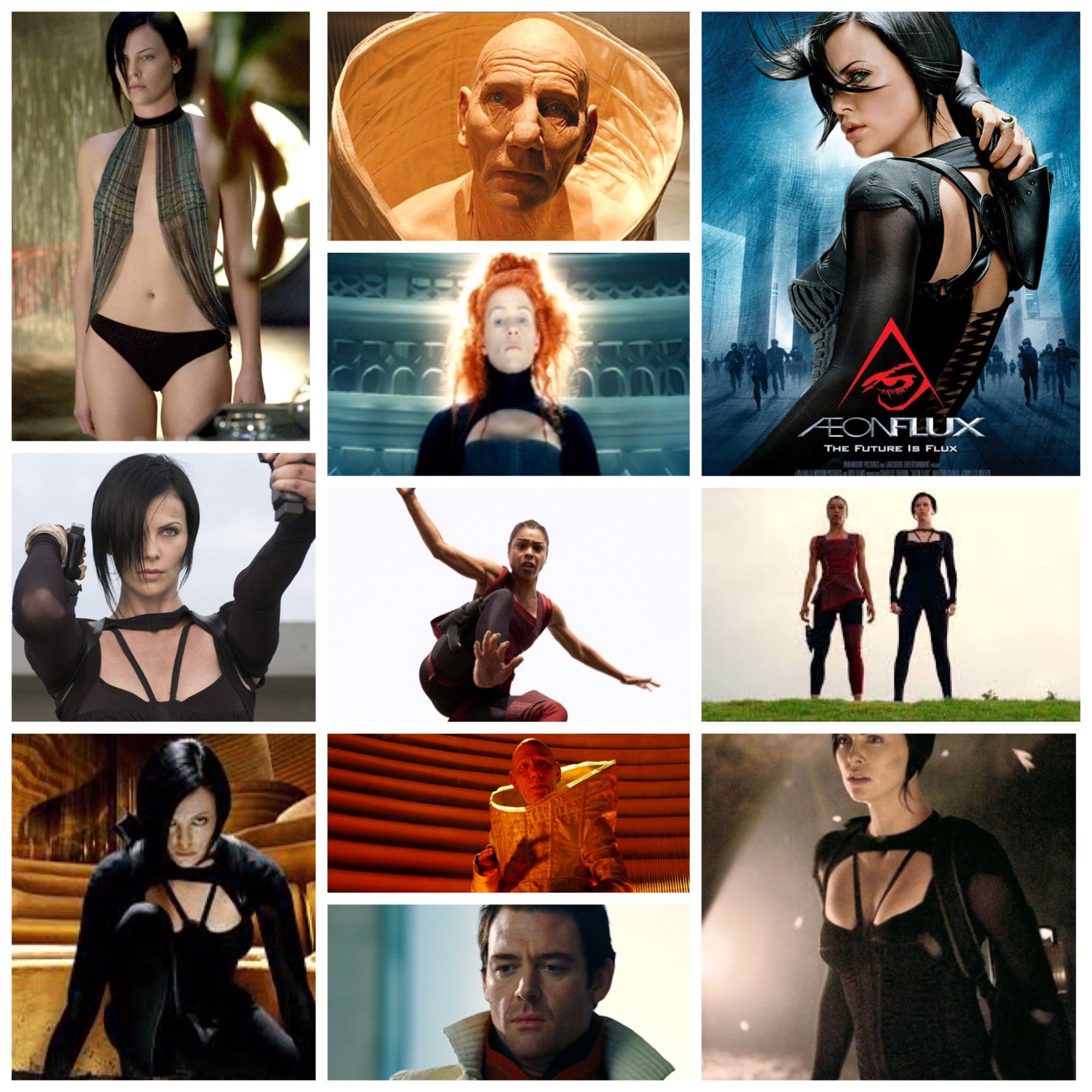
Various scenes of Aeon Flux motion picture

The film truly launches into stylish action and intrigue when Aeon gladly accepts a mission to assassinate Trevor, thinking that this violent act will make it all better. Instead, it unravels her, beginning with when she confronts him; finding him uncomfortably familiar and alluring, she hesitates and decides not to kill him. “What do you want?” Trevor asks her. “I want my sister back. I want to remember what it’s like to be a person.” It is indeed he—or rather what he knows—that holds the key to who she is. The key is that she, like he and all those in Bregna, is a 400 year-old copy of someone before the virus. Four hundred years ago she was the original Trevor’s wife.
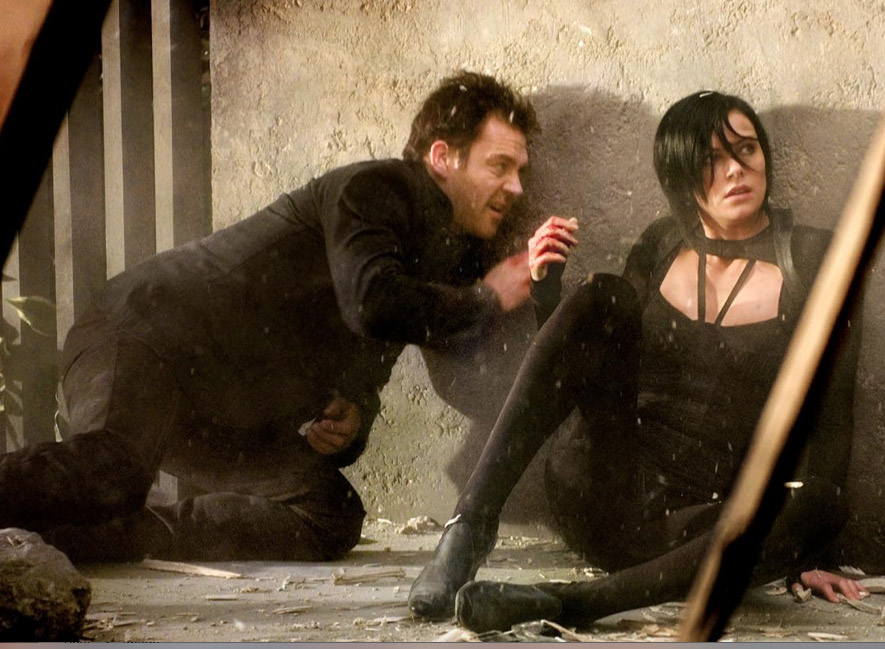
Trevor and Aeon on the run

Filmed in Berlin, the movie is visually stunning, from the opening shot on the steps of Sans Souci to the labrinthine wind canal used by the Nazis. Displaying an eclectic mixture of spareness and mid-century design the film is acted out in a fluid dance to Graeme Revell’s (Sin City) haunting score. The action is rivetting and seamless with both plot and underlying theme of bio-tech gone awry. Early on we are treated to a thrilling sequence of Aeon and her biotech-altered rebel colleague negotiating the security of Goodchild’s sanctuary that consists of a beautiful but deadly garden, guarded by patches of knife-sharp blades of grass and poison dart-spitting fruit trees.
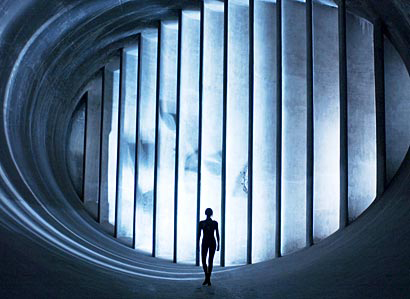
Wind canal in Berlin serves as entrance to Goodchild’s fortress

Aeon champions moral ethics and single-handedly destroys the relicor, the supposetory of the clone DNA, pursuing honour at the expense of loyalty (to Goodchild) and heralding in a new age of “mortality”. The movie ends as it begins, with Aeon’s narrative: “Now we can move forward. To live once for real and then give way to people who might do it better…to live only once but with hope.” This is truly what Aeon Flux represents and what her very name embodies.
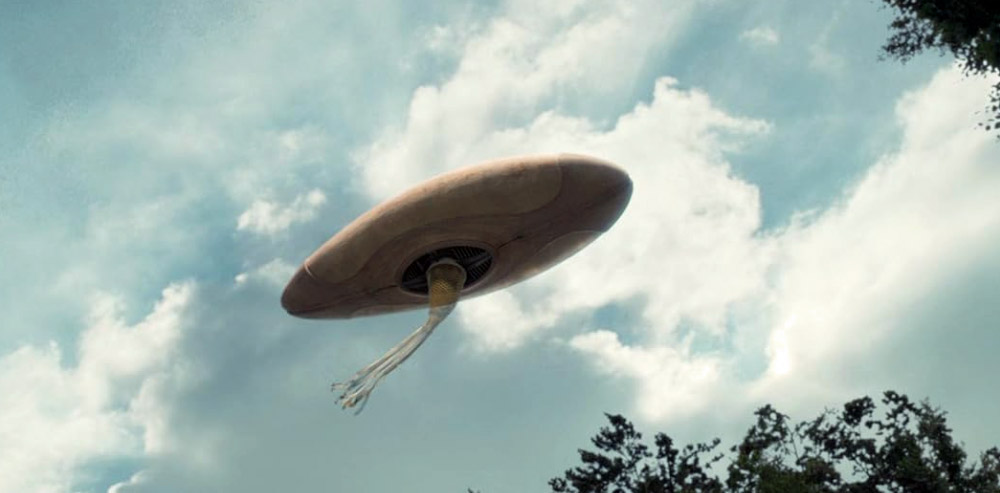
The relicor, repository of Bregna’s clone DNA flies overhead
Keeper of the precious DNA storage in the relicor

The term Aeon comes from the Gnostic notion of “Aeons” as emanations of God. Aeon also means an immeasurably long period of time; the Suntelia Aeon in Greek mythos symbolizes the catastrophic end of one age and the beginning of a new one. This is apt for our heroine, who, at least in the movie version, pretty well single-handedly destroys an old corrupt world, and heralds in a new age. Aeon was “emanated” after four hundred years by the gentle oracular Keeper of the relicor, whose original version saved her DNA and kept it hidden and safe until the right moment.

Aeon Flux captures a fly in her eyelashes

Fans of Peter Chung’s baroquely violent animated Aeon Flux will recognize some similarities between Kusama’s 2005 film adaptation and the original MTV cartoon. While admitting that the motion picture version was only based on Peter Chung’s characters (check the credits), Karyn Kusama intended to “honor [the cartoon version’s] wierdness in spirit and…pay homage to its esoteric boldness and…strange energy.” Homages to the animated series include: Aeon’s signature fly-catching with her eyelashes, demonstrating a woman extremely in tune with her body; Monican anarchists (though in the film they are subversives within Bregna rather than from an adjacent society); a virus that kills off most of the population and assassination attempt on Goodchild (Pilot); the harness worn on the torso that transports the wearer to another dimension (Utopia or Deuteranopia?); passing secret messages through a french kiss (Gravity); issues of cloning and two colleagues crossing a weaponized no-man’s land together (A Last Time for Everything). Original and movie adaptation also share at their core the exploration of the consequences and ambiguities of choices in life and the role that nature plays, subversive or otherwise.
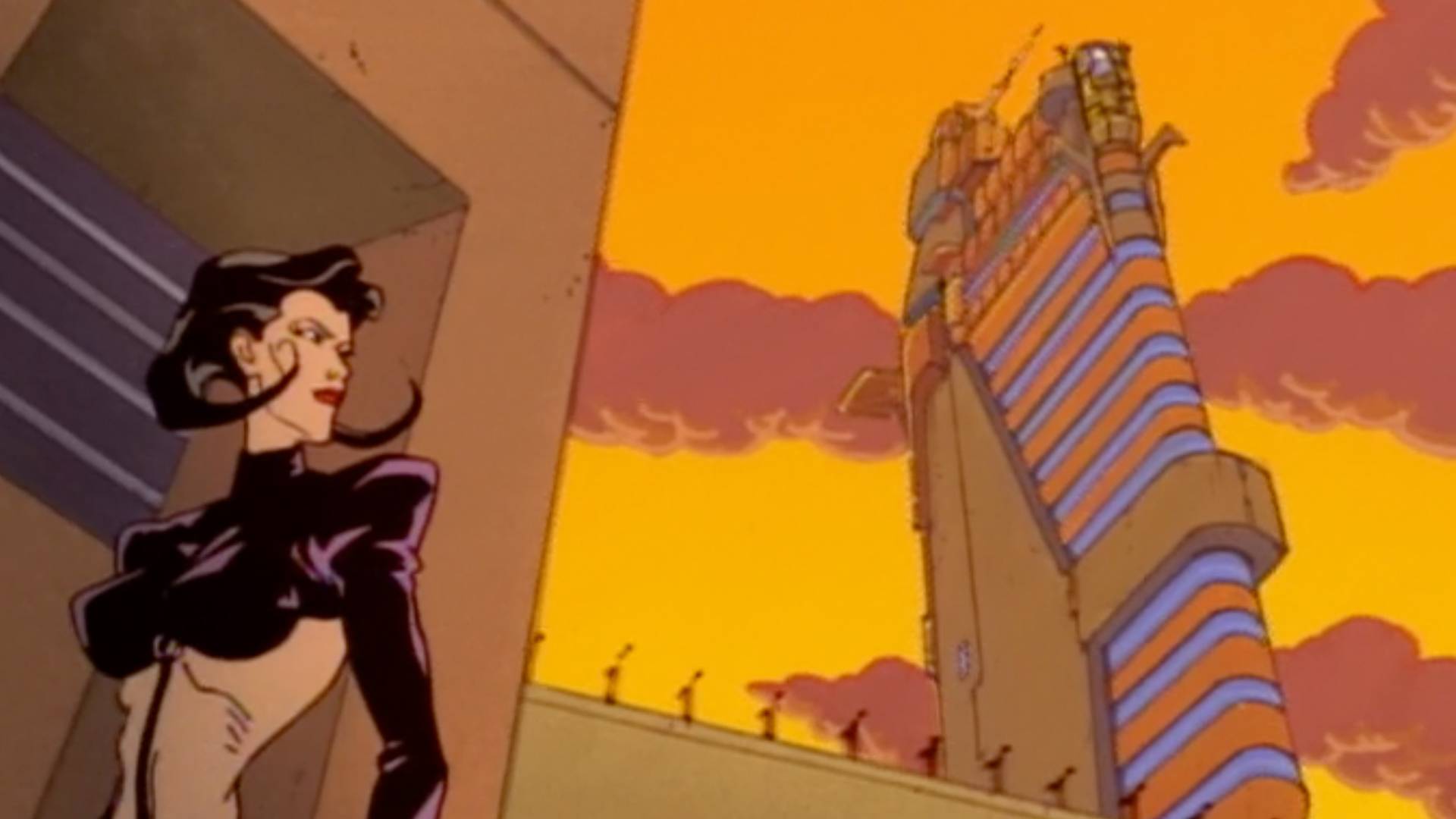
Aeon Flux stands at the wall into Bregna, ready to scale it

Although they share recognizable motifs and characters, the 2005 movie adaptation contrasts in some important ways from the six 5-minute shorts of 1991 and 10 half-hour episode TV series that aired in 1995. Chung’s avante garde series is set mostly in a surrealistic dark future Earth (presumably) where two communities, Bregna and Monica, are juxtaposed but separated by a wall (not unlike East and West Berlin). Bregna is a centralized scientific-planned society and Monica is Bregna’s ‘evil twin’, an anarchistic society. Chung’s innovative use of “camera angles” reminiscient of cinematography, together with a spare, graphic choreography, portrays a sprawling Orwellian industrial world. Peopled with mutant creatures, clones, and robots, it features disturbing images of dismemberment, mutilation, violent deaths and human experimentation as Chung explores post-modern notions of cloning, mind and body manipulation, and evolution through a series of subversive aggressively non-narrative pieces. On the subject of his cloning experiments (A Last Time for Everything) Goodchild says to Aeon: “My work offends you. Why? Human beings aren’t so unique, just a random arrangement of amino acids.” To which Aeon retorts, “These people you’re copying are already superfluous. You’re trafficking in excess.”

The title character in the animated version is a tall, scantily-clad anarchist (featuring the sultry voice of Denise Poirier) skilled in assassination and acrobatics, who infiltrates technocratic Bregna from the neighbouring revolutionary society of Monica. As with the movie character (elegantly portrayed by Theron), the animated Aeon is a stylish dance; completely in tune with her body. Says Chung of his creation: “The way she’s dressed, the way she looks, the way she moves was tailored to seduce the viewer to watch more, even though they may not understand at every moment what was happening.”

Despite their similar intelligence, physicality and drive, the two Aeons depart as characters. For instance, one of the major differences between original animation and adapted film is the ongoing relationship between Aeon and her nemesis/lover, Trevor Goodchild (John Rafter Lee). The sexual and intellectual tension between Flux and Goodchild is far more palpable in the TV series and does not explain itself or resolve itself like it does in the movie. The opening of the animated series describes their odd relationship, which suggests that their destinies are bound together: Aeon: “You’re out of control.” Trevor: “I take control. Who’s side are you on?” Aeon: “I take no side.” Trevor: “You’re skating the edge.” Aeon: “I am the edge.” Trevor: “What you truly want only I can give.” Aeon: “You can’t give it, you can’t even buy it and you just don’t get it.”

Goodchild and Aeon interacting

The Gnostic “Aeons”, emanations of God, come in male/female pairs (aptly represented by Flux and Goodchild). As with the Gnostic “Aeon pairs”, Flux and Goodchild make up inseperable parts, the yin/yang (complementary opposites) of a whole, and represent the paraxical oxymoron of chaos in order. Long-limbed and continually in fluid motion, Flux dances through Goodchild’s rigid scientific world of order with an ease that stirs both his fascination and his fury. He, in turn, enthralls her and ensnares her with his intellectual hubris. The Gnostic “Aeon” male/female pair (called syzygies) of Caen (Power) and Akhana (e.g., Love) closely parallel Goodchild and Flux as they flirt with each other in a complex dance of power and love. Their attraction/antagonism mimics the characterizations of Eris (Greek goddess of discord) and Greyface (a man who taught that life is serious and play is a sin) in the Discordian mythos. Like Eris and her golden apple, Aeon Flux stirs up trouble for Goodchild’s complacent technocratic regime, constantly challenging his hubristic notions of human evolution, perfection and even love.
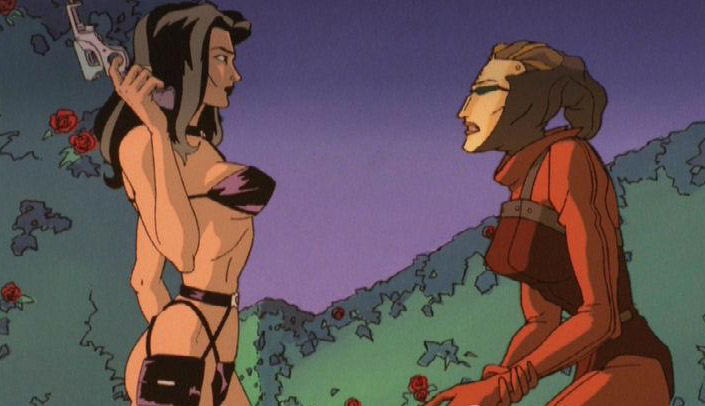
Aeon and fellow Monican discuss tactics

The cartoon Aeon Flux—and Trevor Goodchild, for that matter—are also far more compelling than those depicted in the movie. Headstrong, foolish and selfish but also dedicated and deeply compassionate and honourable, Chung’s Aeon Flux is a paradox. She scintilates with passionate self-defined notions against an industrial tyranny, while nurturing a naïve desire for personal love; the target of both being found in one man, Trevor Goodchild. Often cruel at times, she shows moments of selfless consideration, compassion and humour. Despite her violence, perverted fetishes and lustful obsessions, she is as appealing as she is strange; a discordant rock tune, which often enough hits a resonating note that draws out one’s interest and captures one’s empathy.

Chung’s Aeon Flux on a mission
Kusama’s Aeon Flux being targeted by another Monican

In contrast to the super-hero competence and aloofness of the movie Aeon, the animated Aeon is wonderfully flawed; she is a complex paradoxical character, who makes mistakes, blundering often due to over-confidence and poor decisions (usually connected with her feelings for Trevor). Chung’s Goodchild is equally complex, and is, unlike the naïve and rather feckless scientist of the movie, a true equal to Flux’s energetic and often misplaced heroics. Kusama’s Goodchild is neither menacing nor diabolical; rather, he is a well-intentioned and watered-down version of the Machiavelian scientist that Chung created. And, though quite appealing, he is also less compelling as a result. Chung’s Goodchild is a visionary pedant, who often spouts twisted Orwellian diatribe: “That which does not kill us makes us stranger.” “The unobserved state is a fog of probabilities…” “There can be no justice without truth. But what is truth? Tell me, if you know, and I will not believe you.” Flux cuts through Goodchild’s dogma with her own one-liners—“Trevor, don’t trouble me with your thin smile”—and usually shuts him up with either a smack or a kiss.

Aeon dispatches masked baddies

The animated series is far more gritty and edgy than the movie version, featuring twisted eroticism and dark humor amid scenes of graphic violence. It oozes with a delicious perversity that the movie version abandoned in favour of cohesive narrative (and a PG-13 rating). Showing a healthy and irreverent disregard for that very narrative continuity, Chung’s animated series successfully makes commentary on various societal notions and behaviours through his uniquely disjointed and liberating form. Chung asserts that this plot ambiguity and disregard for continuity were meant to satirize mainstream film narratives. I think it does far more than this as art form, by providing a journalistic style of reporting the nuances and filigrees of life that gives it an immediacy hard to overlook. Chung’s apparent intention was to emphasize the futility of violence and the ambiguity of personal morality. This is best shown in his six 5-minute shorts and pilot, created in 1991. The shorts commonly featured a violent death for the title character, sometimes caused by fate, but more often due to her own incompetence.

Chung’s Aeon Flux

The TV Aeon Flux flows like a subversive movement; punctuated by a series of abstract, often garish, statements on various themes of soulless biotechnology. Each episode is a vignette that explores singular questions of integrity, honour, loyalty, belief and love using the clever platform of the kiss/kill dynamic of Aeon and Trevor.

Their interactions scintillate with clever wordplay, often amid physical-play that usually involves a pointed weapon: Aeon: “You’re psychotic. You no longer have a common conscience with your fellow man.” Trevor: “I understand the will of evil…[it] is like an iron in a forge…conscience is the fire.” Aeon: “you’ve lost the substance by grasping at the shadow.” The underlying question of connectivity and what it is to be human filter through his discordant series primarily through the twining of his two main characters, both loners with little connection to anything except to one another (which they both seek and abhor). The motion picture version pursues through a more structured and lengthy narrative, the same theme of connectivity (with nature, with others of our society, with family, and our beliefs) and the consequence of living a life with out meaning, though on a far more simple level. At the end of Kusama’s movie, Aeon challenges Trevor’s assertion that cloning is their only answer for survival: “We’re meant to die. That’s what makes anything about us matter…[otherwise] we’re ghosts.” In contrast, at the end of Chung’s episode, Reraizure, Trevor closes with these words of reflection: “We are not what we remember of ourselves. We can undo only what others have already forgotten. Learn from your mistakes so that one day you can repeat them precisely.”
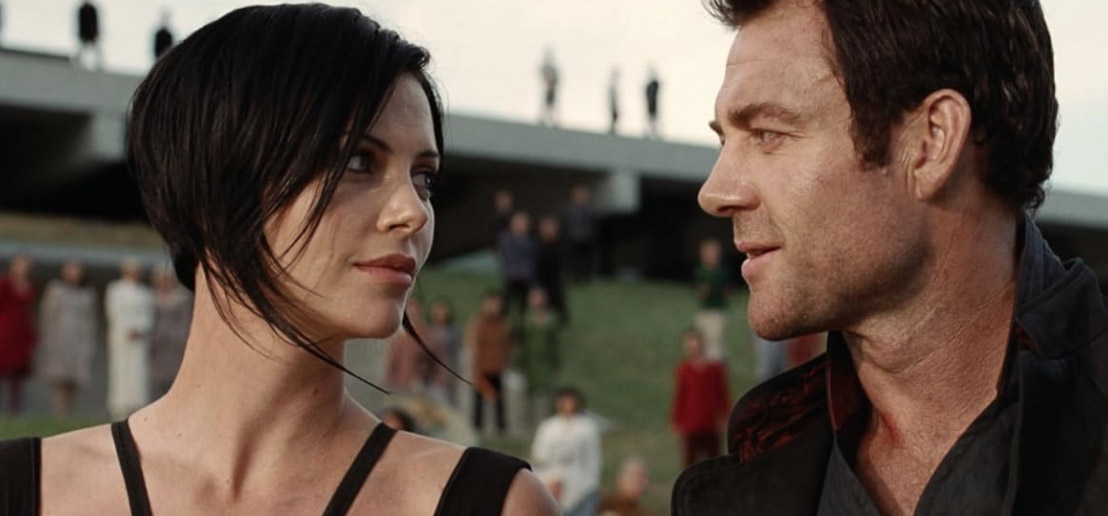
Aeon and Trevor come to terms

Kusama’s film version chose narrative coherence to make its statements by sacrificing character for story and challenging its audience cerebrally. Chung’s cartoon version challenges us more deeply, at a visceral level, through the interplay of his characters where cohesive narrative doesn’t matter. In the final analysis, the motion picture version pursues the same questions posed by Chung’s original animated version. Only, Chung isn’t so eager to provide answers, leaving both interpretation and conclusions to the individual. Both versions are mind-provoking and a celebration of excellent art. While the film’s moralistic tale resonated and lingered like a muse’s long forgotten poem, the subversive kick of the comic series (which I thankfully saw later) struck deep chords and left me breathless with questions.
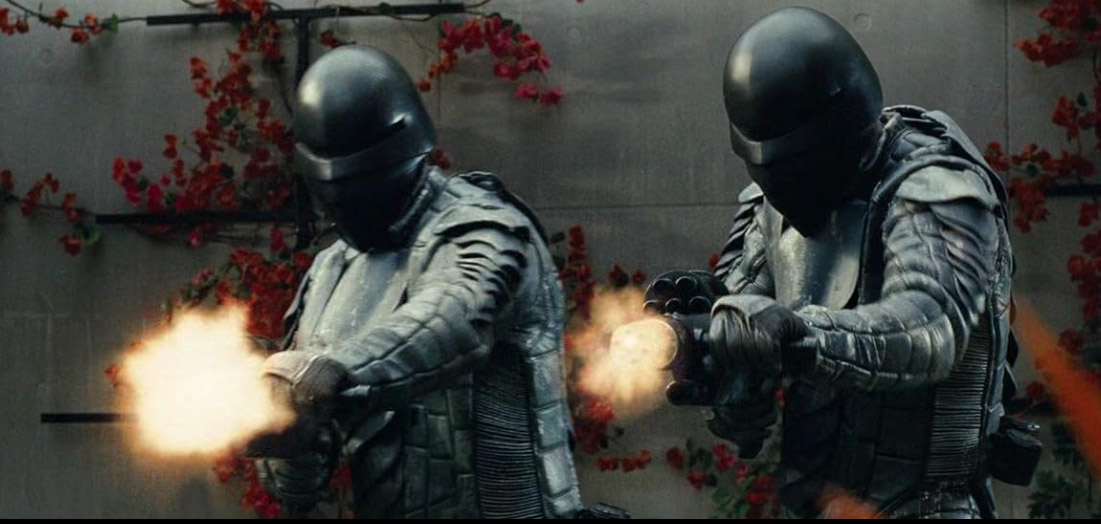
Enforcers attack Monicans

Nina Munteanu is a Canadian ecologist / limnologist and novelist. She is co-editor of Europa SF and currently teaches writing courses at George Brown College and the University of Toronto. Visit www.ninamunteanu.ca for the latest on her books. Nina’s bilingual “La natura dell’acqua / The Way of Water” was published by Mincione Edizioni in Rome. Her non-fiction book “Water Is…” by Pixl Press (Vancouver) was selected by Margaret Atwood in the New York Times ‘Year in Reading’ and was chosen as the 2017 Summer Read by Water Canada. Her novel “A Diary in the Age of Water” was released by Inanna Publications (Toronto) in June 2020.

Movie Review: Advantageous

There are women with voices and brains and power and intelligence that have been waiting for this moment.”—Director Jennifer Phang

Advantageous is a low budget indie film by Jennifer Phang that explores a near-future world—a kind of “pre-dystopia”, according to Katharine Trendacosta of io9—where jobs have become heavily automated and opportunities for education are cutthroat. Women have been generally forced out of the workplace and onto the streets: the logic being that they will be less violent while living on the street than men.

While the world vaguely resembles a vibrant City with flying ships and some bizarrely futuristic architecture (including a high rise that functions as a giant water feature), a sense of unease permeates most scenes, punctuated by occasional terrorist explosions and snippets of disturbing news reports.  Artificial intelligence has supplanted most people in middle management, “The people you do see are either impoverished and disenfranchised or are hidden in the upper floors, the protected places,” says director Jennifer Phang. Unemployment is close to 50% and there are no public schools. The only options for a young girl—if she is not to end up on the streets, either as a beggar or prostitute—is to attend a highly selective free magnet school or a very expensive private school.

Gwen Koh (Jacgueline Kim) is the spokeswoman of the Center for Advanced Health and Living, a wellness corporation that offers health and beauty treatments to an elite who can afford it. When the Center informs her that she looks too old, Gwen—desperate to secure her bright daughter’s expensive education—submits to the experimental treatment she was initially hired to promote. Jules hadn’t made it into the free magnet school, leaving Gwen to come up with extensive funds to get her into a private school. The corporation has subtly backed Gwen into a corner by reminding her that her generation doesn’t have the skills to compete—all of education currently being STEM-based—and they fully understand that she is too old and too unconnected to do anything other than offer herself up to their new procedure to secure her position and a future for her daughter Jules. Constantly walking the edge of privilege, Gwen struggles to make the elite-connections necessary to place Jules. “Gwen is too old, too female, and too unconnected to do anything other than offer herself up as a sacrifice,” writes Trendacosta.

Gwen and here daughter Jules share a moment

The true nature of her sacrifice is not understood at first; it unravels slowly, like an internal wound, until we learn that the procedure—putting her memories into a younger person’s body—means that Gwen’s “mother-connection” awareness with her daughter will be lost when her original body dies in the procedure. This is particularly significant, given their close and loving relationship, which is evocatively conveyed throughout the film.

Advantageous “is riveting, emotionally gripping, and offers up a vision of the future that is disturbingly easy to picture, even as some of the technologies it imagines seem out of reach,” says Ariel Schwartz of Business Insider Magazine. While the trope of mind-upload into a younger, prettier body has been around for while in standard SF, how Phang presents it, in the muted notes and pace of “everyday” and “mundane” events, brings a kind of realism to it that both invigorates and chills. Like watching a building explode in person rather than on TV. The immediacy and reality of it is visceral. Phang does this through sparing use of sound, language and colour. And all presented in a pace that does not rush, but lingers and reflects. Long moments of quiet punctuate scenes of significance, giving us the chance to examine, resonate and reflect in “real-time” with the character. These, in themselves, provide some of the most poignant footage of the film as we are given the time to descend into deeper reflection. Each plays out, short vignettes of life that string together like pearls on a necklace. Life moments. Unflinchingly and confidently performed at the pace of life.  

In one of many quietly powerful scenes, Gwen stumbles upon a street woman, huddled in a small grassy alcove under an old blanket. When Gwen asks her if she is okay, the woman instead responds, “Are you okay?” This is a natural response for a woman; we think of others, of their welfare. We carry the “mother” archetype within us, everywhere we go, no matter what befalls us. This natural sense of compassion and altruism runs through our blood.

And, yes, it makes us a different kind of hero.

Gwen’s heroics are not accompanied by percussive violence or gut-wrenching action; they are silent choices that percolate from deep within. They are choices that ultimately bleed into great consequence.

Gwen and Jules read something together

“The plot suggests a standard ‘body swap’ sci-fi storyline,” says Danielle Riendeau of Polygon. “But Advantageous is much more about motherhood, the sacrifices women make for their children, and to a large extent, the difficulties of being a non-white woman in an increasingly intolerant society. The writing, directing and performances are so strong that they elevate the film far beyond a simple twist on a classic trope. Advantageous is a potent, heartbreaking meditation on parental love and the sacrifices women make for their families. It has a lot to say, and it does so with clear-eyed, fearless intensity.”

Trendacosta writes, “People are going to judge Advantageous by the things it lacks. There are no battles, no mustache-twirling villains, and not even any giant science fiction spectacle sets. People are also going to judge it for what it has. There are some intense discussions of classism, racism, ageism, sexism, and elitism. But don’t judge this movie for either of those things—instead, it’s worth appreciating for all the things it does so incredibly well.”

What Advantageous does so incredibly well is portray a near-future vision worth pondering and discussing.

Nina Munteanu is a Canadian ecologist / limnologist and novelist. She is co-editor of Europa SF and currently teaches writing courses at George Brown College and the University of Toronto. Visit www.ninamunteanu.ca for the latest on her books. Nina’s bilingual “La natura dell’acqua / The Way of Water” was published by Mincione Edizioni in Rome. Her non-fiction book “Water Is…” by Pixl Press (Vancouver) was selected by Margaret Atwood in the New York Times ‘Year in Reading’ and was chosen as the 2017 Summer Read by Water Canada. Her novel “A Diary in the Age of Water” was released by Inanna Publications (Toronto) in June 2020.

Why Women Will Save the Planet

I was recently told I was fear-mongering and missing the facts by a person on Facebook when I revealed the environmental dangers of using (and abusing) single-use plastics (specifically Styrofoam); earlier that day a gentleman called me an anarchist after I promoted individual responsibility over government and corporate responsibility on the issue of bottled water in Canada.

At the time, these accusations upset me—I’m a scientist, after all, and truth is #1. Then I realised that they were part of my journey toward activism to save this planet and humanity along with it. It was, in fact, a good day for me. I did have the facts; and they were scary. And, in revealing them and expressing my opinions, I had succeeded in breaking people’s inertia and had challenged them to think outside their comfort zone.  I had created fear in them and I had created anarchy in their ordered world. This promted a strong defensive response. The more intense their defence, the more I’d upset their comfortable inertia. That is what happens when you break through a hegemony or dogma and challenge people to re-evaluate and change their actions or habits—essentially forcing them out of their complacency and bringing it back to personal responsibility.

In both cases, I’d brought it back to personal responsibility and personal action. Too many of us settle for a narrative in which others—often not clearly identified—are responsible–not us.

So, perhaps I am inciting fear. Fear in those who have become or choose to remain too complacent. Good; we are in a planetary and existential crisis. And perhaps I am rather an anarchist; disrupting a system and self-belief that is entrenched and not sustainable.

But that comes at a price.

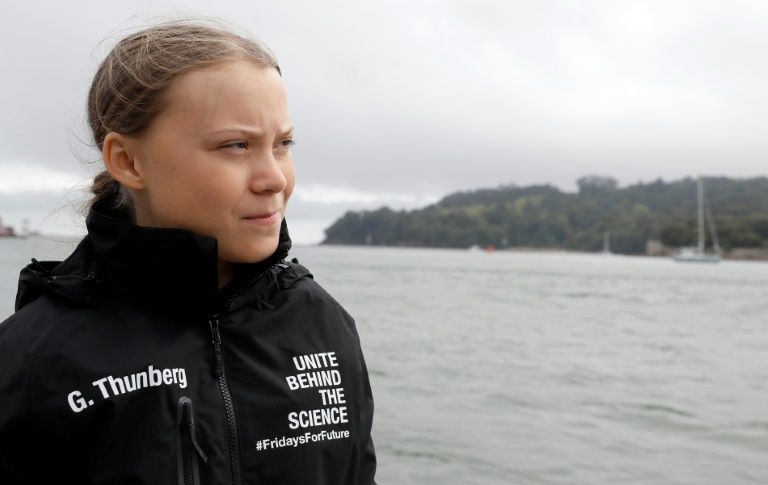
Greta Thunberg raincoat

Greta Thunberg begins a wave of climate activism

I’m thinking of young climate activist Greta Thunberg, who recently captured the attention of the world in her brave sail across the Atlantic to attend the UN’s Climate Summit and other meetings in the US in addition to her climate strike and rally march in Montreal, Canada, which drew close to half a million people (old and young).

Greta Thunberg Sails Carbon-neutral  Yacht To New York

Greta Thunberg

Earlier, at the World Economic Forum Annual Meeting in Davos, Switzerland, Greta delivered her now iconic speech:

“Adults keep saying we owe it to the young people, to give them hope,” Thunberg said, “But I don’t want your hope. I don’t want you to be hopeful. I want you to panic. I want you to feel the fear I feel every day. I want you to act. I want you to act as you would in a crisis. I want you to act as if the house is on fire, because it is.”

In a recent poll, one out of three Germans said that Thunberg has changed their views on climate change. But that, too, has come at a price.

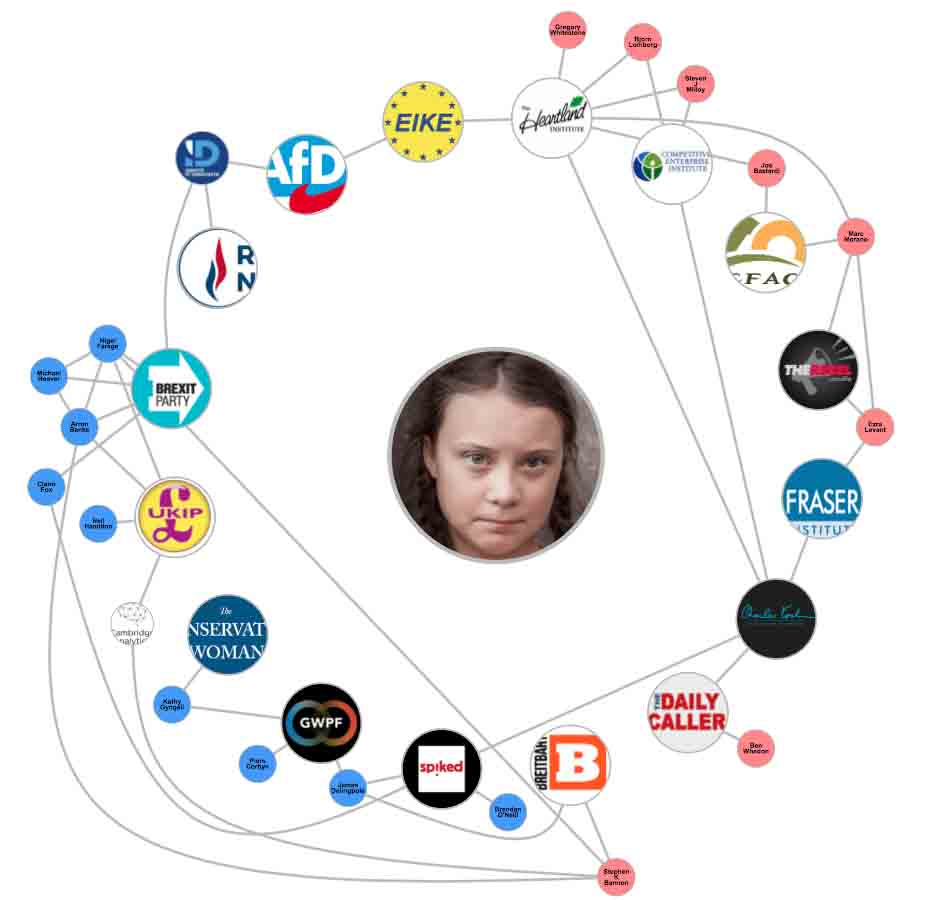
A tsunami of rage and shameless vitriol was unleashed by conservative men (many with close ties to the fossil fuel profit machine) at this young and brave girl during her 15-day trip across the Atlantic. Their attacks have grown increasingly more personal and vulgar as she has gained world attention. For example, political scientist, economist and climate “skeptic” Bjorn Lomborg (associated with the Heartland Institute and Competitive Enterprise Institute) repeatedly mocked and criticized the 16-year old activist. Using highly inappropriate and unprofessional language (the worst I won’t repeat here), he and others have accused her of being a “puppet”, “naïve”, “unrealistic”, and a “fanatic.” Others like Australian columnist Andrew Bolt have personally attacked Thunberg with reprehensible and boorish remarks about her age and mental health.

Lobbyists Against Greta

oil-profit lobbyists behind shameless vitriol against Greta Thunberg (from Desmog UK)

Andrew Mitrovica’s Opinion piece entitled “Who Is Afraid of Greta Thunberg?” provides eloquent summary: “Of course, the marauding swarm of vitriolic right-wing climate-change deniers see Thunberg—not how the prophetic Zinn envisioned her—but as a tiny, pretentious zealot who threatens the existing order. Their order. Their comforts. Their traditional ‘way of life’.”

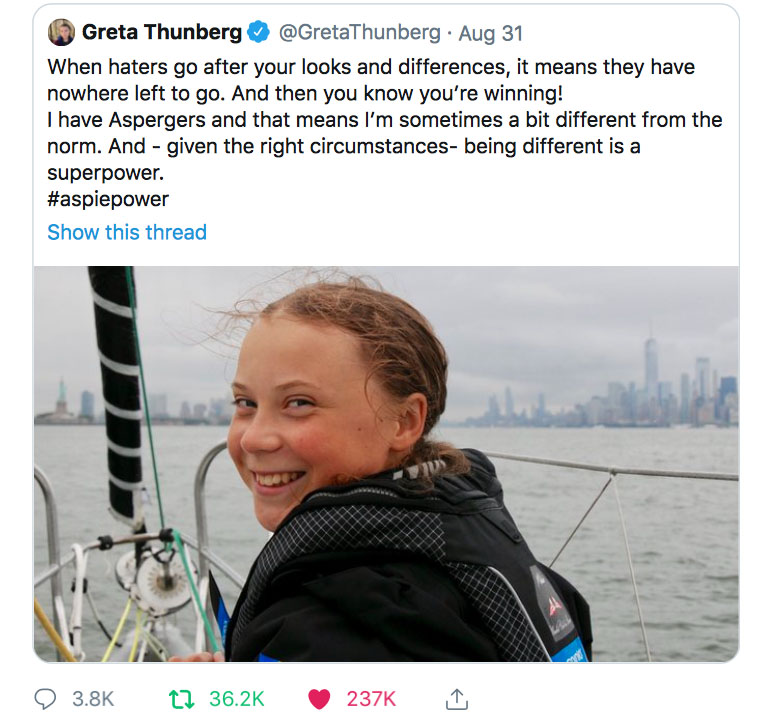
Greta—who wears a windbreaker that reads “Unite Behind the Science”— responded in a brave and wonderful tweet:

GretaThunberg-Tweet

Her tweet was followed immediately by one by Alexandria Ocasio-Cortez:


AlexandriaOcasio-Cortez Tweet

This follows a recent finding by researchers that 99% of Republicans are science illiterate and 44% believe that the scientific method can be used to produce any conclusion the researcher wants. Of course the whole point of the scientific method is to prevent this.

Soon after, Martin Gelin wrote an article entitled, “The Misogyny of Climate Deniers” in the August 2019 issue of The New Republic. The subtitle reads: “Why do right-wing men hate Greta Thunberg and Alexandria Ocasio-Cortez so much? Researchers have some troubling answers to that question.”

Greta on boat2

Greta Thunberg sailing to New York

Gelin writes, “On [Thunberg’s] first day of sailing, a multi-millionaire Brexit activist (Arron Banks) tweeted that he wished a freak accident would destroy her boat. A conservative Australian columnist (Andrew Bolt) called her a ‘deeply disturbed messiah of the global warming movement,’ while the British far-right activist David Vance attacked the ‘sheer petulance of this arrogant child.’ … Former Trump staffer Steve Milloy recently called Thunberg a ‘teenage puppet,’ and claimed that ‘the world laughs at this Greta charade,’ while a widely shared far-right meme showed Trump tipping The Statue of Liberty to crush her boat.”

Fierce and undeterred by cohorts of grown human males unable to deal with her, Greta Thunberg gave a scorching speech at the United Nations during her visit to America: “We are in the beginning of a mass extinction, and all you can talk about is money and fairy tales of eternal economic growth,” she admonished a crowd of world leaders. “How dare you.” Her equally scorching look of Donald Trump who rudely ignored her to mumble some nonsense to the press, has become a popular meme. The mashup by Fatboy Slim of Greta Thunberg’s UN speech “Right here, right now” went viral on YouTube.

Greta-trump 2

Greta Thunberg and Donald Trump at the UN climate summit

Of course, this was followed by utterly shameless and cruel vulgarisms by adult bullies that included suggestions to punish her and give her a spanking.

Disinterested in whether she’s liked and undeterred by childish name calling, the activist teenager remained resolute with her weapon: shame.  At every opportunity, Greta Thunberg steadfastly called out adults over twenty years her senior on what they have failed to do; she did it in words that are simple, precise and direct.

After Senator Tom Carper tried to placate her by telling her that young people would soon have the chance to run for office themselves, she returned: “We don’t want to become politicians; we don’t want to run for office. We want you to unite behind the science.”

Carrying herself with admirable focus and buoyed by her dedication to her cause, Greta Thunberg delivered a scintillating speech to close to half a million climate marchers in Montreal:

“Some would say we are wasting lesson time; we say we are changing the world… The people have spoken. And we will continue to speak until our leaders listen and act. We are the change and change is coming.”

greta thunberg speech in montreal

Greta Thunberg speaking in Montreal

In a recent article in the Washington Post, entitled “Greta Thunberg Weaponized Shame in an Era of Shamelessness”, Monica Hesse writes: “We live in an era that has become impervious to shame. An era defined by a president who views it as a weakness. Shame has become an antiquated emotion and a useless one. It’s advantageous, we’ve learned, to respond to charges of indecency with more indecency: attacks, misdirection, faux-victimhood.”

But real shaming—the kind that mothers do with their errant boy-bullies—is precisely what Greta is doing. This kind of shaming cuts deep, because it is the deep and recognizable truth. And it is done through the “mother archetype”—the most powerful energy on this planet.

Gelin tells us that the prominently older white men who are leading these attacks on Greta Thunberg (and by association, other prominent female climate activists such as Alexandria Ocasio-Cortez) “is consistent with a growing body of research linking gender reactionaries to climate-denialism.”

Alexandria Ocasio-Cortez

Alexandria Ocasio-Cortez

Scientists Jonas Anshelm and Martin Hultman in the journal NORMA  analyzed the language of a focus group of climate skeptics, to discover a major theme:

“for climate skeptics … it was not the environment that was threatened, it was a certain kind of modern industrial society built and dominated by their form of masculinity.”

On the heels of the #MeToo movement, climate activism—largely led by strong females—appears to threaten gender identity of conservative males. Right-wing nationalism, anti-feminism, and climate denialism appear inextricably linked. I would add that their lack of respect for and acknowledgement of indigenous peoples is by default part of the package, given that indigenous peoples are so tied to the land and the ecosystem (being destroyed). One need only look to what is currently happening in Brazil for an atrocious example of this kind of male-bully behaviour.

Climate science for skeptics becomes feminized and viewed as “oppositional to assumed entitlements of masculine primacy,” write Hultman and Paul Pule in the 2019 book “Climate Hazards, Disasters, and Gender Ramifications.” Hultman identifies a set of values and behaviours connected to a form of masculinity identified with industrial patriarchy. These males “see the world as separated between humans and nature. They believe humans are obliged to use nature and its resources to make products out of them. And they have a risk perception that nature will tolerate all types of waste. It’s a risk perception that doesn’t think of nature as vulnerable and as something that is possible to be destroyed. For them, economic growth is more important than the environment,” which they choose not to understand—just like women.

The gender gap in the United States is characterized by men who perceive climate activism as inherently feminine. This was demonstrated in a 2017 article in Scientific American entitled, “Men Resist Green Behavior as Unmanly.”  Researchers Aaron R. Brough and James E.B. Wilkie argue that “women have long surpassed men in the arena of environmental action; across age groups and countries, females tend to live a more eco-friendly lifestyle. Compared to men, women litter less, recycle more, and leave a smaller carbon footprint.” While some researchers have demonstrated that women’s prioritization of altruism may help explain this gender gap in green behaviour, the research done by Brough and Wilkie’s—involving more than 2,000 American and Chinese participants— showed that men linked eco-friendliness with femininity and a risk to their masculinity. These findings, coupled with a natural inclination for anti-feminism by older white conservative males, places them at the centre of a major reactionary backlash against climate action.

Gelin ends on a sober note: “As conservative parties become increasingly tied to nationalism, and misogynist rhetoric dominates the far-right, Hultman and his fellow researchers at Chalmers University worry that the ties between climate skeptics and misogyny will strengthen. What was once a practical problem, with general agreement on the facts, has become a matter of identity. And fear of change is powerful motivation.”

Nina-Kevin playing

Nina Munteanu hiking with her son

When fear powers motivation, we must counter with something stronger: hope through action, compassion, and community. And, again, women are in great abundance of these.

“Keep inspiring and organizing,” says Alexandria Ocasio-Cortez to young Greta. “We’re going to save the planet. All of us, together.”

We are all, after all, “the mother.” So, while the old guard of conservative immature men obsess in saving their egos and identities in this crisis, and put up walls of vitriol, name-calling, “flaming”, and “trolling,” it’s up to us, mature women, to really save the planet, the mother of us all.

So, why will women save the planet? Because “Mother Knows Best,” after all…

Time for a paradigm shift. We’re not in the fifties anymore…


nina-2014aaa

Nina Munteanu is a Canadian ecologist / limnologist and novelist. She is co-editor of Europa SF and currently teaches writing courses at George Brown College and the University of Toronto. Visit www.ninamunteanu.ca for the latest on her books. Nina’s bilingual “La natura dell’acqua / The Way of Water” was published by Mincione Edizioni in Rome. Her non-fiction book “Water Is…” by Pixl Press (Vancouver) was selected by Margaret Atwood in the New York Times ‘Year in Reading’ and was chosen as the 2017 Summer Read by Water Canada. Her novel “A Diary in the Age of Water” will be released by Inanna Publications (Toronto) in 2020.


Nina Munteanu Interviewed on Splintered Universe Trilogy

I was recently interviewed by writer Simon Rose on my space detective thriller trilogy Splintered Universe, now available in all three formats: print, ebook, and audiobook. 


Below is the interview:

My guest today is Nina Munteanu, author of science fiction and fantasy novels, non-fiction books and essays on writing and science. Her latest in a series of prolific works is the recent completion of the audiobook of her science fiction space-thriller trilogy, Splintered Universe.

Can you tell us a little about the Splintered Universe Trilogy?

OuterDiverse-cover-web copy

Book 1 of Splintered Universe

The Splintered Universe Trilogy is a detective mystery-thriller that explores metaphysical and existential questions through a high-test space adventure. The three books include Outer Diverse, Inner Diverse and Metaverse.

The main character Rhea Hawke is a Galactic Guardian and the only human in an otherwise alien race of 7-foot tall purple-skinned Eosians—who she actually despises (for reasons you find out later). She’s a loner and a misfit in an elite police force tasked with keeping order in the galaxy; Rhea’s unruly tactics grate on them—particularly her boss. In Outer Diverse, Rhea investigates the genocide of an entire spiritual sect; but instead she kills her only lead.

Following the scent of Glitter Dust, Rhea connects the massacre to the murders of several prominent galactic citizens and finally to the deadly Vos, who invaded our galaxy, then disappeared. She realizes that the Vos have quietly returned, infiltrating every aspect of the civilized world—with dark menace in mind. But no one believes her—particularly her boss, who fires her instead for incompetence: badge, Great Coat and MEC weapon confiscated and her sentient ship Benny put in storage. Compelled by an urgency she herself doesn’t understand, she goes rogue and enlists the aid of surprising allies to save the galaxy.

You mention that Splintered Universe explores issues of existentialism and metaphysics. Can you speak to them?


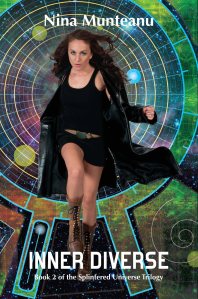
Inner-diverse-front-cover-WEB copy

Book 2 of Splintered Universe

The Splintered Universe Trilogy explores the fractal fabric of paradox, where the flow of particle, energy, wave and intention embrace: black holes, quasars, neutrinos, intuition, déjà vu, clairvoyance, altruism, faith…

The prediction by Gnostic priest Raphael Martinez (The coming of the Suntelia Aeon will be signified by the joining of twin souls) weaves many disparate threads of existence to Atlantis and the Eosian alien race (who resemble the Bible’s Nephilim), the sacred vishna tree (part of L’Ordre de l’Arbre Sacré in Quebec) and the precious mythical metal Orichalcum used by the Eosians. The prediction ties to an ancient knowledge that describes our very existence through déjà vu, synchronicity, sacred geometry, phi and the golden mean and the notion that “diverses” are mirror universes linked through dreams. The key is Rhea herself—who discovers that she is not who or what she thinks.

You’re a bit known for your world building. Tell us a little about that in this trilogy.

Metaverse-FRONT-web copy

Book 3 of Splintered Universe

I’m an ecologist, so world building with realistic ecosystems is more than fun for me. I enjoy doing the research to create realistic and meaningful worlds. I consulted authorities in the areas of space exploration and habitable zones, AI, biotechnology, sleep biology, neuroscience, and ecology to design alien worlds and systems, populated with extremophiles.

In her pursuit of justice, Rhea travels to all parts of the galaxy and encounters some very strange worlds. In Book 1, Rhea pursues dust trafficker V’mer to the sulphurous AI-run water planet (Mar Delena), located inside the hole of the gaseous “donut” of Fomalhaut; it’s always raining acid. That’s where Book 1 starts: acid rain painfully spattering Rhea’s face as she lies injured and waiting to be dusted (with a lethal dose) by V’mer, surrounded by the oily fur-covered rodent-like Delenians—all dust addicts.

Rhea almost drowns in a high-speed skipboat chase of the murderer of a spiritual sect on the icy moon, Uma 1, (orbiting 47 Uma b of 47 Ursae Majoris b). The moon is mostly ocean beneath a thick layer of ice with thermal vents that provide the inhabitants—a spiritual sect called the Schiss—a home.

NinaMunteanuHalfPage-AD-Astra47 Uma a (also called Horus) was colonized in ancient times by the Khonsus, a raptor-like biped race with mind-probing capability. It is also the home of the ancient migrating trees, ammuts (giant flying insects), and the weeping mountains with their narcotic boiling seas used by the giant apophus to attack and set its millions of babies to devour Rhea in Book 1.

Virgil 9 is a tidally locked moon that orbits the gas giant 70 Virginis b; day and night last for weeks while water swings the extreme from deluge flood to desert conditions. In Virgil City, Rhea does commerce with information broker Shlsh Shle She, a moody amoeba-like photosynthetic Ngu who is just a pseudopod of a larger hive-entity.

Sekmet is a bog planet, where the raw materials of dust are harvested by the Rill, bulbous short smelly bog creatures with tube eyes, webbed limbs and large sexual organs; and who Rhea pretty much wipes out with her MEC weapon. Sekmet is also the location of a galactic penal colony (Hades) where Rhea is sent in Book 2. When she tries to escape, she must contend with other native creatures of Sekmet such as the giant crocodile-like sobeks and the terrifying kepry—giant flying crustaceans.

In Book 3, Rhea returns to Earth, transformed by Eosian settlers from its former polluted state dominated by urban concrete cities to an entirely natural world, now unpolluted and featuring the ancient purple vishna tree and a crystal symbiotic organic technology.


Rhea on Iota Hor

Rhea on Iota Hor-2

Worlds always have cool bling associated with them. What technologies or devices are featured in Splintered Universe?

I created an entire fleet of ships, all run on various technologies, from crystals, to wave-energy to dreams. That was fun to create. Two main ship builders include: Zeta Corp from Earth and Tangent Shipping run by the Fauche from Sigma Draconis. Rhea’s own ship, Benny, is an old ray class Fauche-built corvette, a two-man hybrid organic/nano-tech vehicle with folding wings and fuel scoops (so it can mine energy fuel from gas giants). Benny is a sentient ship that jacks the particle-stream and with whom Rhea has an interesting relationship. The ship serves essentially as butler, administrator, companion, and rescuer.

I also created a wide range of weapons, based on which alien race created them and for what purpose. Rhea gained some notoriety with her own created weapon, the MEC (short for Magnetic-Electro Concussion) pistol, a versatile wave-weapon that can target DNA signatures and do almost anything you want with a single sweep. Her proprietary MEC design is coveted by many groups—from shady crime syndicates such as Eclipse to her own Guardians.

I hear that the last audiobook (the third book) in the trilogy is finally out this January. That means that all three books of the Splintered Universe are now available in print, ebook and audiobook format. How does it feel to have a trilogy available in three complete formats?

It feels great! I’m so excited that readers can now obtain my trilogy in those different ways. It speaks to our different ways of consuming story. Some prefer to settle back by the fire or our favourite place to read with a “real” book; others like a mobile ebook so we can read while we travel and play; and then some like to lean back in the car and listen to a great story.

What was your experience with the narrator of the three books?

Dawn-Harvey

Dawn Harvey of “Dawn of Voice”

The experience was truly cosmic. When Iambik took on the books as audiobooks, they provided me with three voice artists to audition. I chose Dawn Harvey because I could visualize my main character through her voice, and given that the entire trilogy is told in the first person, the narrator’s voice had to be just right. Dawn’s voice is dark and sultry like coffee. It is sexy and irreverent with a hidden vulnerability and sensitivity that perfectly captured the main character Rhea Hawke. What I didn’t realize then was how well Harvey would represent the 30-odd other characters, mostly aliens—one who spoke through several mouths.

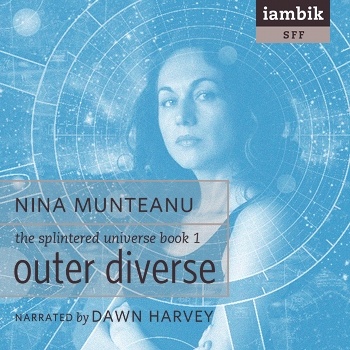
OuterDiverse-audiobook-Iambik

Audiobook of Outer Diverse

Working with Dawn was a pleasure. Dawn is a dedicated professional; she created unique and consistent voices for the book’s thirty-odd mostly alien characters. She ensured that each character had the appropriate vernacular, tone, accent and cadence. Then she did proofs and confirmed them with me. She also tackled the “alien” vocabulary; Rhea’s universe is full of strange and foreign terms (I have a comprehensive glossary at the back of each book). Dawn sent me a list to make sure she was pronouncing everything correctly—mostly made-up words. Dawn is a professional dedicated to her craft and her art. She literally breathed life into Rhea Hawke and all the other characters. The result is three audiobooks that will blow your socks off. I mean it. If you like audiobooks, get the first one and tell me different. When I first listened to Outer Diverse in the car on my way to Nova Scotia, I lost myself in her storytelling and forgot that I’d written it.

Where can people find the Splintered Universe Trilogy?

The best place, of course is Amazon (Amazon.ca or Amazon.com). All three formats are available through Amazon. The Audiobooks are currently available for free through Audible on Amazon. The books are also available through Barnes & Noble, Chapters/Indigo, Kobo, and many other book selling sites and brick and mortar stores.

When you’re not writing what do you do?

These days I’m mostly on the University of Toronto campus, teaching health science and engineering students how to write. When the students find out that I write science fiction, they get all excited. It’s a lot of fun. I also teach a science fiction writing coarse at George Brown College. When I’m not teaching or writing, I’m doing something in Nature, usually by the water. I’ve always had an interest in water. I studied and researched freshwater ecology as a limnologist for three decades. I’m a bit of an environmentalist these days, hoping to raise awareness and action for water. My latest novel—hopefully coming out next year—arose from my nature walks and my research in water. The story chronicles the lives of four generations of women and their relationship with water.

TALKING-AUDIOBOOKS2 copyYou can also listen to the Podcast interview of Dawn Harvey and Nina Munteanu by Casey Trowbridge of Talking Audiobooks on the process of their collaboration. Learn more about the process between writer and voice artist narrator:

The trilogy has received a fair bit of acclaim from reviewers and readers:

Martha’s Bookshelf
Speculating Canada
Dab of Darkness
Goodreads
Amazon
Amazon Canada

“Rhea Hawke is a Galactic Guardian, and I love to say her name. Her name alone let’s you know that there is a bad ass super hero of a woman on site. I can picture her boots, her great coat, and her side arms. I want to be her when I grow up. Obviously, you can tell I developed some hero worship for her by the end of this book. I really got wrapped up in this novel.”–Goodreads Review of Outer Diverse


“Ms. Harvey manages to enthuse the personality of the characters into each voice. The wise, gentle Ka has a soft, strong sound that reminds you of a wise old bird. Shlsh She She, a slippery, slimy creature has a slurry, garbled voice like a mouthful of mushy, wet food. Dawn’s reading conveys the loneliness in Rhea, the sexiness of Serge, the frustrated friendliness of Bas, and the faithful coziness of Benny. She is able to bring emphasis to the action or romance, weariness or fear elements of the story. The narration never takes over the story; but rather enhances it.”–Martha’s Bookshelf on Outer Diverse Audiobook

The excellent cover art for all three books is done by Toronto graphic artist and SF author Costi Gurgu (author of RecipeArium). People keep asking me who the model for the covers is; you’ll have to corner Costi at the next spec fiction con and ask him yourself.

nina-2014aaaNina Munteanu is an ecologist, limnologist and internationally published author of award-nominated speculative novels, short stories and non-fiction. She is co-editor of Europa SF and currently teaches writing courses at George Brown College and the University of Toronto. Visit www.ninamunteanu.ca for the latest on her books.