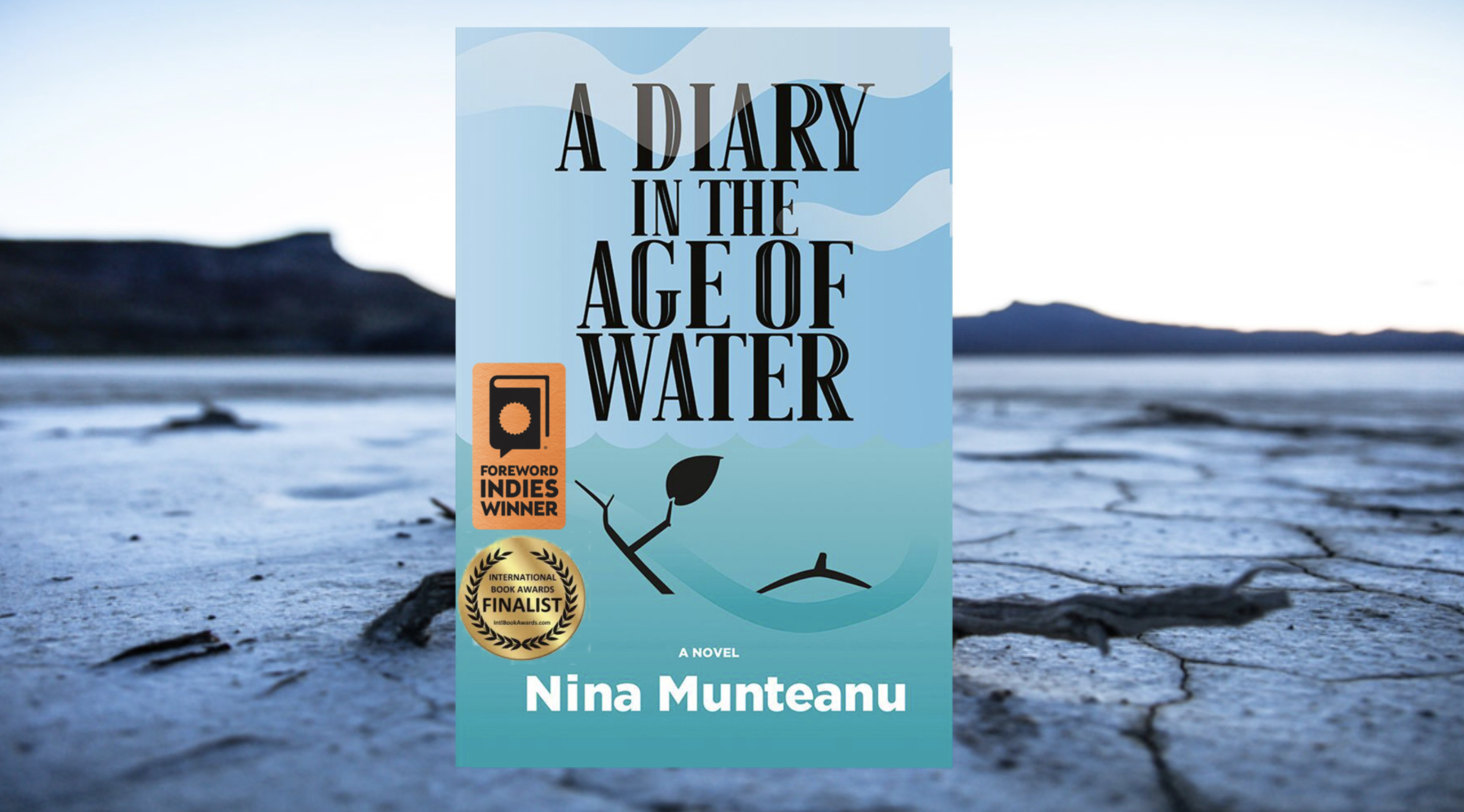
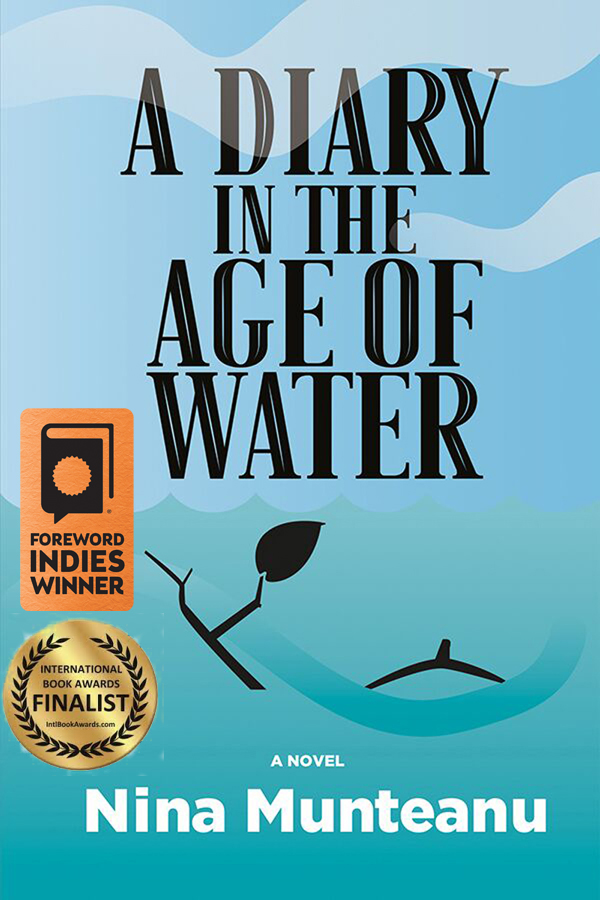
A Diary in the Age of Water (Inanna Publications, 2020)
.
With the imminent release by Inanna Publications of my climate fiction novel Thalweg, I thought it might be fun to review the recognition its predecessor A Diary in the Age of Water has received since it was published in 2020. Both books are set in the same universe (near-future Canada impacted by climate change) and share some of the same characters. Thalweg is expected to release early 2027.
Over the years since it was published, A Diary in the Age of Water has received much attention by literary organisations and scholars.
A Diary in the Age of Water was honoured by the book review site Literary Titan, receiving a silver book award for excellence in literature that year. It also received Foreword’s bronze award for Book of the Year and was short listed for several other awards, including the International Book of the Year and the Miramichi Reader.
.
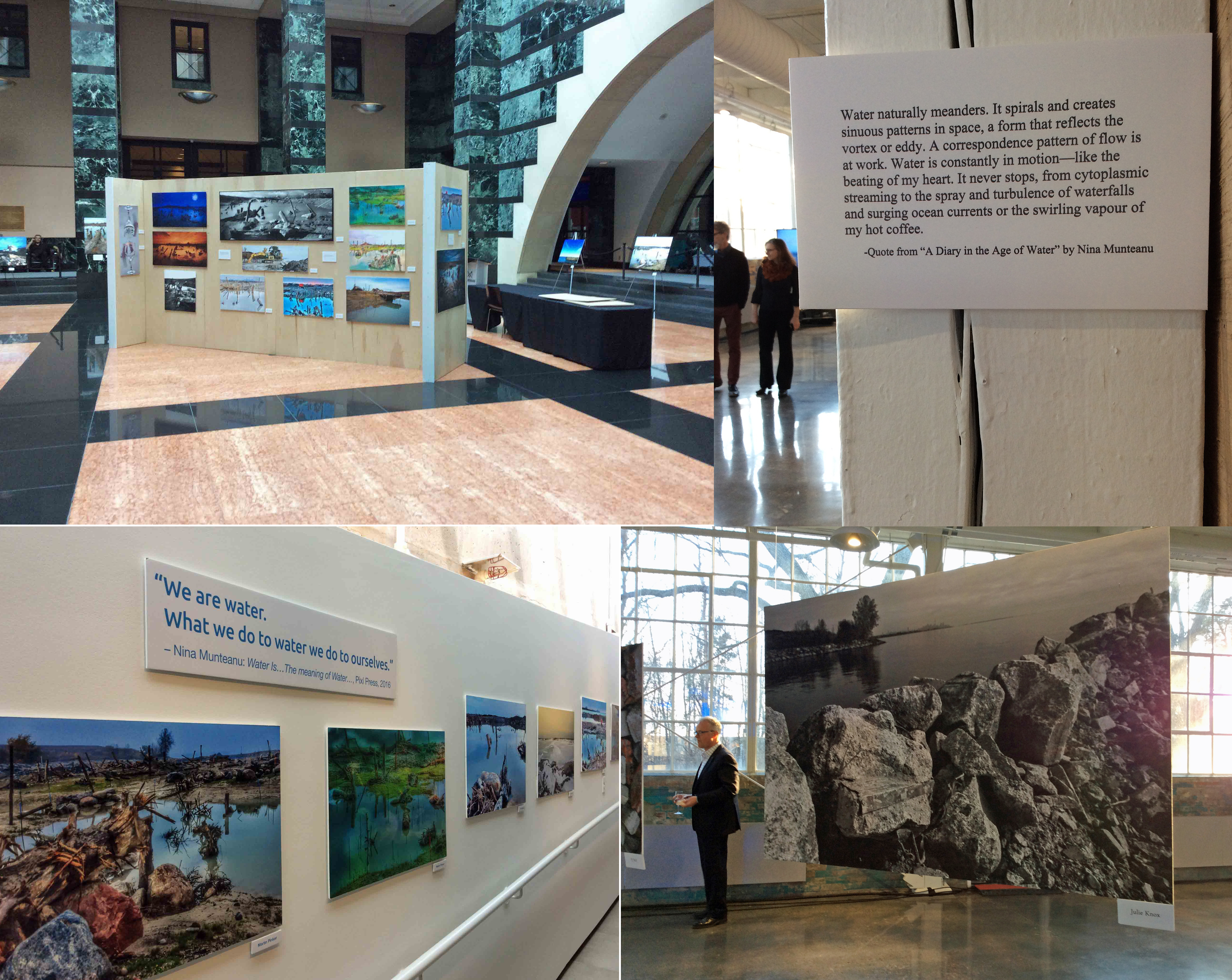
Various photographic exhibitions of Morphology featuring quotes from Nina Munteanu’s “A Diary in the Age of Water” and “Water Is…”(photos by Nina Munteanu)
.
Shortly after its publication, A Diary in the Age of Water was showcased in several art exhibits that followed the evolution of a created marsh. The City of Mississauga hosted Morphology, drawing on key quotes from A Diary in the Age of Water, mostly by the limnologist Lynna Dresden.
.
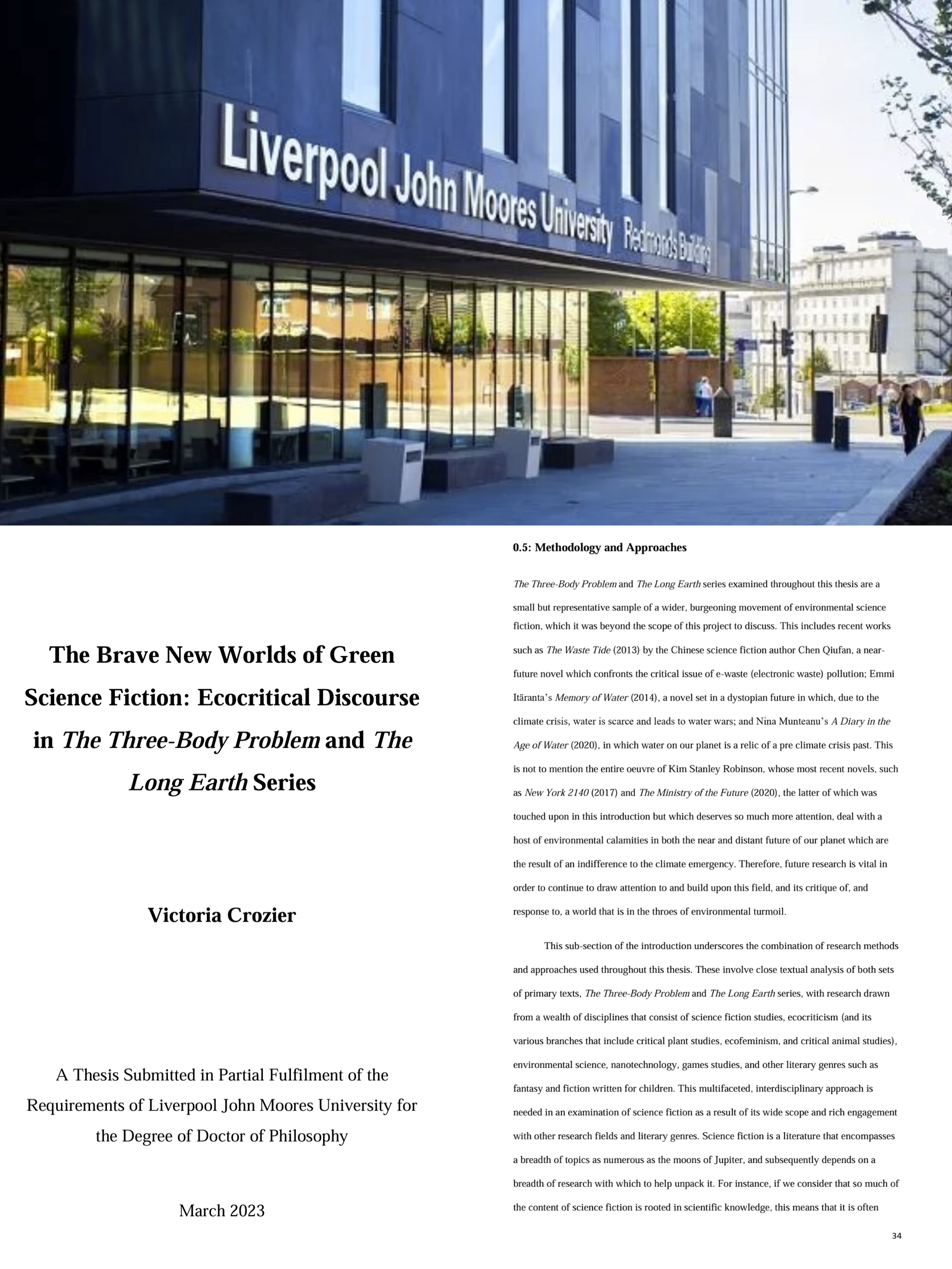
Victoria Crozier acknowledged A Diary in the Age of Water as important ‘green science fiction’ work in her 2023 PhD thesis at the Liverpool John Moores University. Entitled: “The Brave New Worlds of Green Science Fiction: Ecocritical Discourse…” Crozier’s thesis explored the rise and impact of environmental science fiction with a focus on Liu Cixin’s The Three Body Problem while recognizing within that New Wave movement that she calls Green SF works other works such as The Waste Tide by Chen Quifan, Memory of Water by Emmi Itäranta, and New York 2140 by Kim Stanley Robinson and my own A Diary in the Age of Water.
.
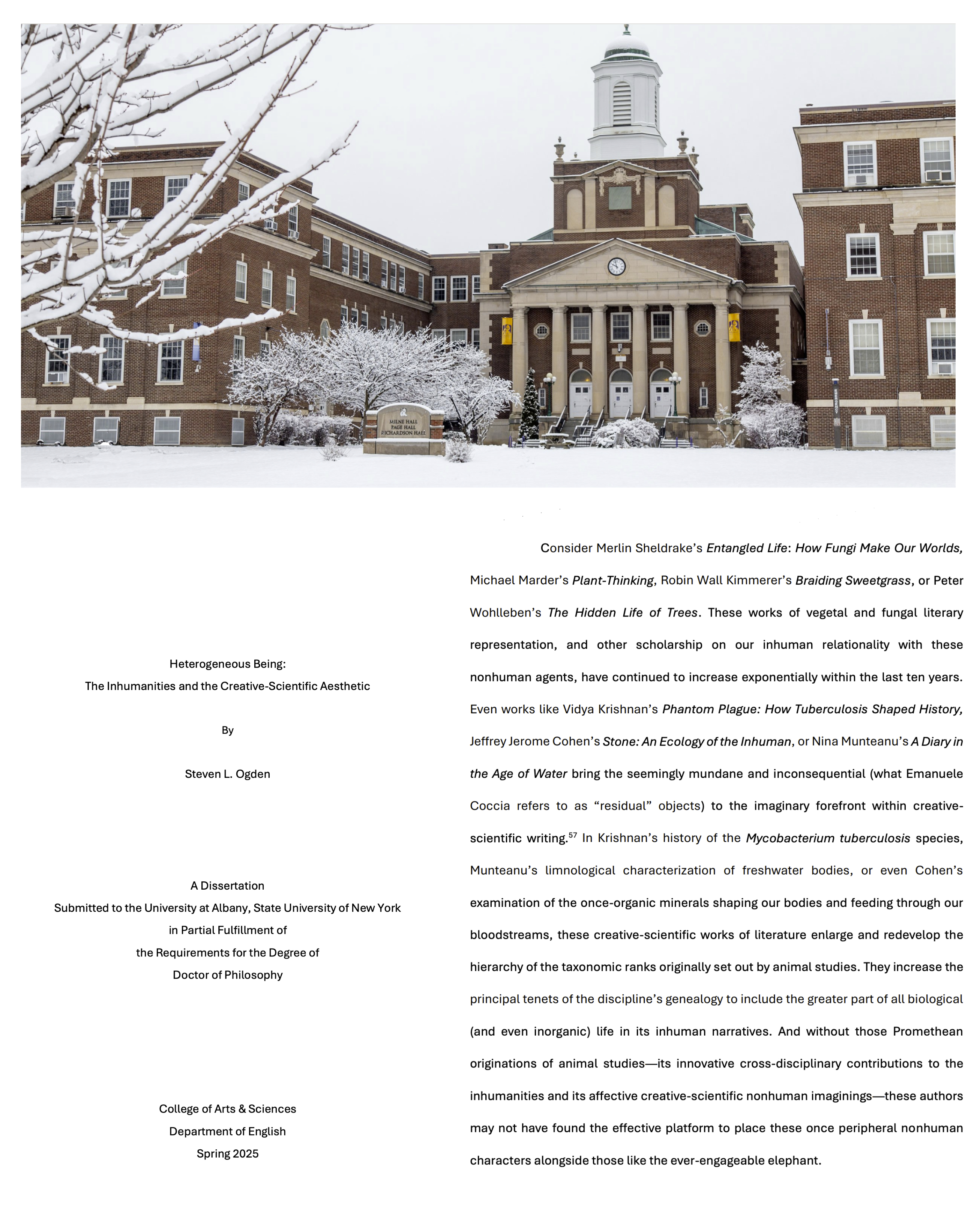
In his 2025 PhD dissertation on “Heterogenous Being” out of the University at Albany, State University of New York, Steven L. Ogden explored the dichotomous narrative separating human with nonhuman, drawing on A Diary in the Age of Water, along with other works of fiction (e.g., Richard Powers’ The Overstory) and nonfiction (e.g., Merlin Sheldrake’s Entangled Life, Robin Wall Kimmerer’s Gathering Moss, and Peter Wohlleben’s The Hidden Life of Trees). Ogden’s thesis was entitled, “Heterogenous Being: The Inhuman and the Creative Scientific Aesthetic.”
.
Odgen noted that “Nina Munteanu’s A Diary in the Age of Water brings the seemingly mundane and inconsequential (what Emanuele Coccia refers to as “residual” objects) to the imaginary forefront within creative-scientific writing.”
.
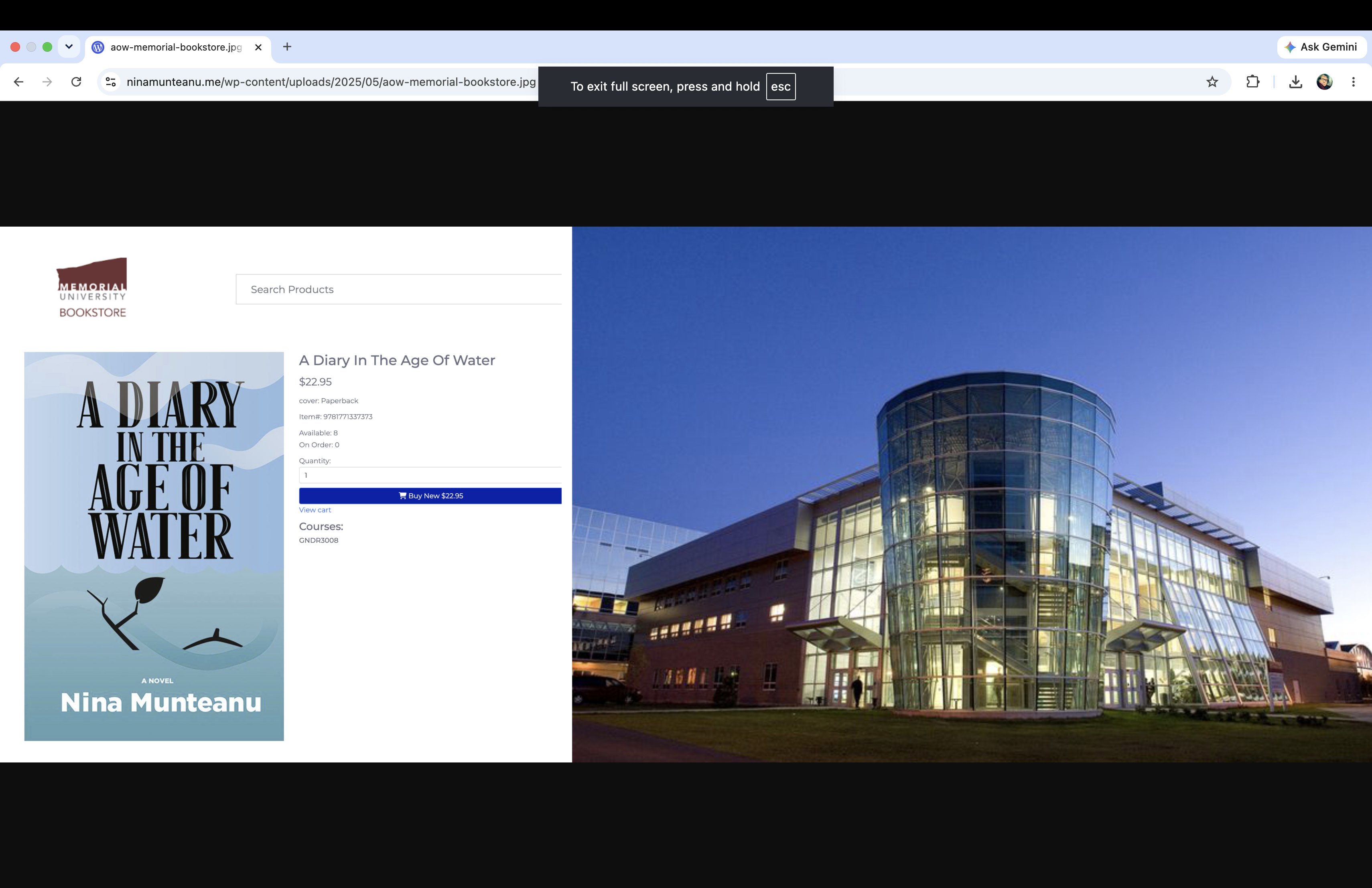
A Diary in the Age of Water selling at the Memorial University bookstore
.
By 2025, A Diary in the Age of Water had also become required reading at Memorial University for the course Feminist Practices and Global Change taught by Keif Godbout-Kinney. The course examines the connection between feminist theories and activism for social and political change on a global scale.
Praise by book reviewers has been generous. And copious reviews by readers on Amazon and Goodreads celebrate the book:
“If you believe Canada’s water will remain free forever (or that it’s truly free now) Munteanu asks you to think again. Readers have called ‘A Diary in the Age of Water’ “terrifying,” “engrossing,” and “literary.” We call it wisdom.”—LIISBETH
“An exceptional and thought-provoking dystopian fiction.”—LITERARY TITAN
“The prose here is beautiful and purposeful in the tradition of environmentally and socially minded novelists such as Ursula K. LeGuin and Margaret Atwood.”—WINNIPEG FREE PRESS
“A chilling but believable portrayal of what might happen as fresh water becomes scarcer.”—MIRAMICHI READER
“One of the most important books of a generation.”—REEDSY REVIEWS
“Unsettling and yet deliciously readable.”—THE PRAIRIE BOOK REVIEW
“Munteanu excels at extrapolating today’s science into a stark vision of what we face in the next decades.”—PUBLISHERS WEEKLY BOOKLIFE REVIEWS
“A book of genuine power.”—BROKEN PENCIL
“Munteanu has a rare gift of combining precise scientific terminology with rich, sensory descriptions… The prose moves with the fluid rhythm of a river, shifting from tense corporate intrigue to quiet philosophical reflection…A literary triumph that satisfies both the mind and the heart.”—GOODREADS Review
.
The novel, told mostly through the diary of a limnologist, describes a world in the grips of severe water scarcity during a time when China owns the USA and the USA owns Canada. The diary spans a twenty-year period in the mid-twenty-first century of 33-year-old Lynna, a single mother who works in Toronto for CanadaCorp, an international utility that controls everything about water, and who witnesses disturbing events that she doesn’t realize will soon lead to humanity’s demise. A Diary in the Age of Water follows the climate-induced journey of Earth and humanity through four generations of women, each with a unique relationship to water. The novel explores identity and our concept of what is “normal”—as a nation and. an individual—in a world that is rapidly and incomprehensibly changing.
.
Thalweg is a climate thriller that follows some of the characters from A Diary in the Age of Water (e.g. Daniel and Bobby-Jo). Here is the blurb:
Four homeless people on the run and haunted by loss. One haunted by her brother’s ghost. One by the memory of her murdered daughter. One by the treachery of his colleague. And another by her own treachery. Four haunted souls—lost and chased by a ruthless enemy—all destined to find Water’s thalweg. Each holds a disparate piece to the existential climate-water puzzle. Brought together by arcane forces, they will enact the next stage of humanity’s flowing evolution with water.
With the release of Thalweg, Inanna Publications intends to reissue A Diary in the Age of Water with a new cover, complimenting its partner novel.
.
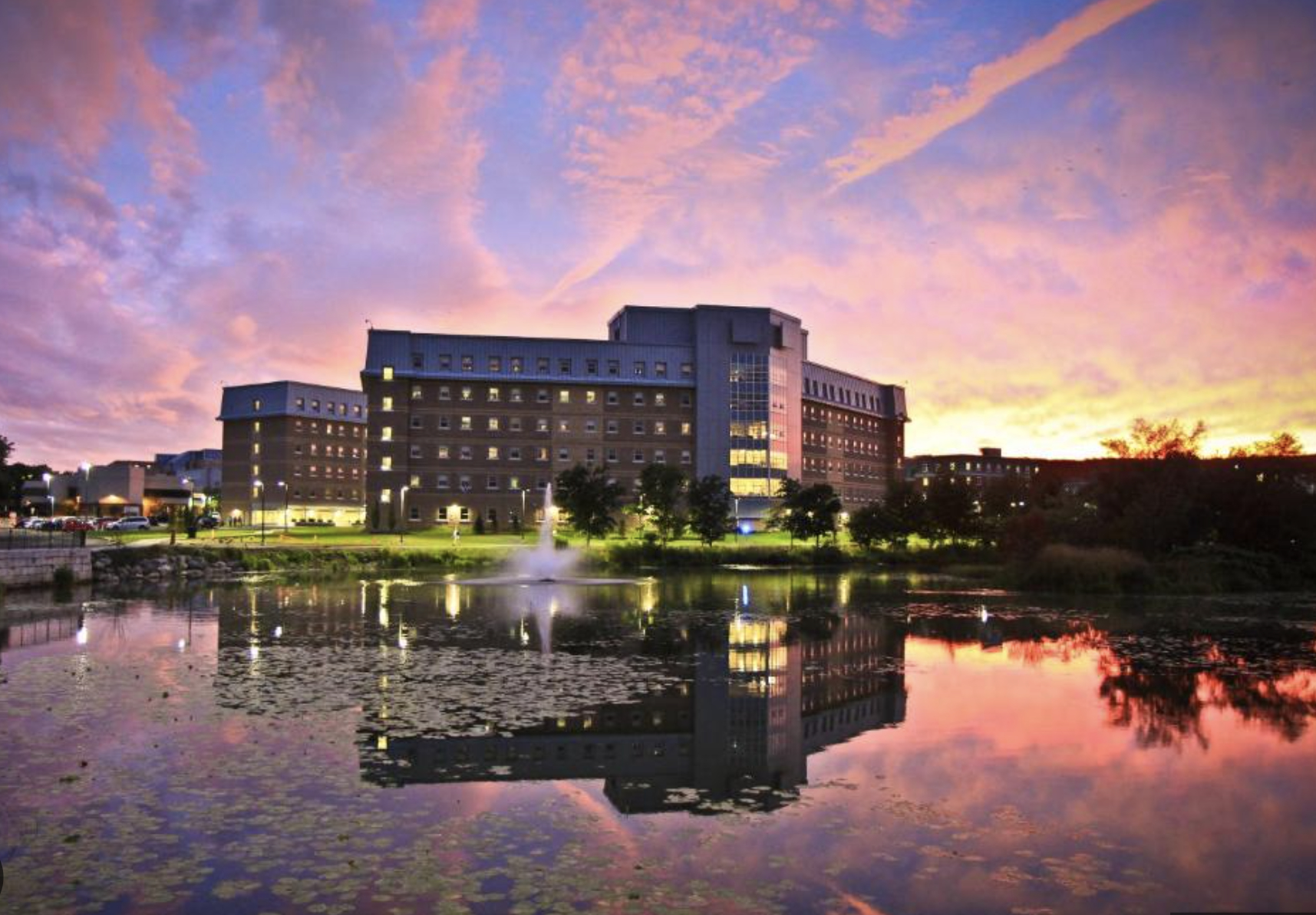
Memorial University, where “A Diary in the Age of Water” is used in courses
.
References:
Crozier, Victoria. 2023. “The Brave New Worlds of Green Science Fiction: Ecocritical Discourse in The Three-Body Problem and The Long Earth Series.” Doctoral Thesis, Liverpool John Moores University, UK. April, 2023. 265pp.
Munteanu, Nina. 2020. “A Diary in the Age of Water.” Inanna Publications, Toronto, ON. 328pp.
Ogden, Steven L. 2025. “Heterogenous Being: The Inhumanities and the Creative-Scientific Aesthetic.” A Dissertation submitted to the University at Albany, State University of New York in partial fulfillment of the requirements for the Degree of Doctor of Philosophy. 207pp.
.
Nina Munteanu is a Canadian ecologist / limnologist and novelist. She is co-editor of Europa SF and currently teaches writing courses at George Brown College and the University of Toronto. For the latest on her books, visit www.ninamunteanu.ca. Nina’s bilingual “La natura dell’acqua / The Way of Water” was published by Mincione Edizioni in Rome. Her non-fiction book “Water Is…” by Pixl Press (Vancouver) was selected by Margaret Atwood in the New York Times ‘Year in Reading’ and was chosen as the 2017 Summer Read by Water Canada. Her novel “A Diary in the Age of Water” was released by Inanna Publications (Toronto) in June 2020.You can read her just released eco-fiction thriller Gaia’s Revolution by Dragon Moon Press.
My eco-fiction novel A Diary in the Age of Water was recently discussed in a 2025 PhD thesis by Steven L. Ogden out of the University of Albany, State University of New York entitled: “Heterogenous Being: The Inhumanities and the Creative-Scientific Aesthetic.” I was fascinated by his stirring, well-researched dissertation that explored the dichotomous narrative separating human with non-human. A narrative that is changing—though very slowly.
Ogden’s PhD thesis advances a hybrid form of inquiry on “Heterogenous Being”1 that links the sciences with humanities to address the precarious realities of Earth’s ecological and environmental conditions; he does this by acknowledging the influences and agented potentialities of nonhuman subjects in narrative, both in fiction and nonfiction. “… these inhuman2 examinations not only provide the nonhuman with a comparable or more profound existence alongside our own; they also illustrate the immense and consequential scope of our collective realities,” writes Ogden.
The rhetoric of ‘Otherness’ in most fiction is typically portrayed through the singular point of view (POV) and discourse of a protagonist on a journey.3 In most forms of literature the POV ‘voice’ represents the Self, the inclusive ‘us’ (worldview) in its encounter with the Other, which in turn is the ‘not us.’ In his book Orientalism: Western Conceptions of the Orient Edward W. Said contended that for there to even be an ‘us’, there has to be a ‘not-us’. The resulting power dynamic of “them and us,” of Other and Self, is created and controlled by perceptions of the singular POV voice.
In most genres of literature, the Other is often relegated to this dichotomous portrayal. In post-apocalyptic and metaphoric journey stories the Other may be the harsh environment or a calamity through which the protagonist must find their own strength to survive; in military stories it is clearly the enemy, seldom portrayed with compassion or understanding but there to test our hero; in coming-of-age stories it may be the oppressive rule or established world the hero must overcome; in science fiction it may be the hostile or unknowable aliens who must be defeated.
The irony of this way of thinking is made clear in Ogden’s introduction. Ogden writes that “like René Descartes, many today still consider the mind or “rational soul” of humanity to be entirely exceptional to and independent of animality, and believe no part of Man (as master and possessor of nature) could derive from the “potentiality of [nonhuman] matter.” He quotes Donna Haraway (author of When Species Meet) who said that “to exist as an individual is always to become with many.” She is talking about the thousands of species living symbiotically inside us and around us that keep us alive. This is what philosopher Levi Bryant refers to as a democracy of objects in which “humans are no longer monarchs of being, but are instead among beings … and implicated in other beings.” We are entangled in beings. We are implicated in other beings.
Through this new paradigm and approach, Ogden contends that “no longer can anthropogenic issues of climate change, trash vortices, deforestation, synthetic pollution, effluence, nuclear waste isolation, or species extinction be concealed from the majority of literary imaginings. Because as the trajectory of once passive, ancillary things and forces find an arena of greater articulation, the Anthropocene becomes an epoch whose hazards affect more than its namesake. Readers are afforded a larger moral and literary connectedness to a greater variety of relatable nonhuman subjects in the throes of this crisis, with that inhuman accordance likewise enlarging the terrains of their own ontological and epistemological perspectives as an ecomimetic strategy furthers the understanding of the nonhuman with each varied literary elaboration.” He adds that the “massive temporal and spatial persistence/distribution of anthropogenic nonhuman ‘hyperobjects’ like plastics, polychlorinated biphenyls (PCBs), per- and polyfluoroalkyl substances (PFAS), or nuclear waste expands the probable aesthetic and political/ethical dimensions of the creative arts.”
Ogden concludes that in such a space of consideration (an allied creative-scientific aesthetic), an intermediacy is established between the literary arts and sciences in which “principal methods, qualities, and philosophies are openly exchanged, and a multimodal expression links the realms of simplified rationalism with pure allegory into a compounded composition of metaphor and description, myth and science, characterization and cause-and-effect, and poetic reveries and empirical rationalism.” This greater perspective expand dynamic probabilities for the inhuman world to experience agency and greater and more meaningful presence, what Ogden calls “a necessary heterogenous representation of both humans and nonhumans within the collective scientific and literary imagination…towards a more meaningful and affective realization.”
.
How Eco-Fiction Empowers & Animates Nonhuman Subjects
While eco-literature overlaps with many genres, it appears to differ from SF and other genres portrayal of Other through its unique intention to give voice to otherwise voiceless characters, and it often does this through masterful use of character-coupling. Mary Woodbury defines eco-literature or eco-fiction as literature “made up of fictional tales that reflect important connections, dependencies, and interactions between people and their natural environments.” The environment—or an aspect of the environment—plays a major role in eco-literature, either as premise or as itself a character on a journey.
Eco-literature may go beyond raising awareness to link environmental abuse with concepts of jingoistic hubris; it may raise issues of human intersectionality, misogyny, marginalization, oppression of class, privilege, sexuality and race, and misuse of power. Violent acts perpetrated on environment—when environment is personified as ‘character’ and/or coupled directly to a character—elicit powerful emotion and clearly demonstrate how social/human injustice reflects environmental injustice.
Eco-literature is particularly poised to make meaningful character-couplings between mostly human protagonist and environmental characters or representatives. This is because the protagonist provides relatable qualities for easy reader empathy, while the Othered character is often less relatable—often an arcane aspect of the environment, such as water (Memory of Water) or a forest (The Overstory). The protagonist’s link to the Other—often as avatar—provides a readable map for the reader to follow and make their own connection.4 In Character Coupling Part 2, I provide examples from several works of eco-fiction, such as The Overstory, Barkskins, The Breathing Hole, The Wiindup Girl, The Bear, Memory of Water, and Dune.
.
A Changing Narrative
Acknowledging the early influences of animal studies rooted in biocentricity (e.g. Carl Safina, Ogden notes that non-fiction representation of nonhuman life has increased exponentially in the last ten years. Ogden includes the following notable examples: Merlin Sheldrake’s Entangled Life: How Fungi Make Our Worlds; Robin Wall Kimmerer’s Gathering Moss, and Peter Wohlleben’s The Hidden Life of Trees.
In fiction, Ogden focuses primarily on the narrative of Overstory by Richard Powers but touches on other works such as Jeff VanderMeer’s writing. Says Ogden: “What moves The Overstory’s utilization of personification (of trees) … beyond some simple allegorical misconception of dendrological and botanical being is that the provided anecdote of a tree’s agency in the development of soil, weather, and atmosphere is entirely factual.”
Ogden notes that “Nina Munteanu’s A Diary in the Age of Water brings the seemingly mundane and inconsequential (what Emanuele Coccia refers to as “residual” objects) to the imaginary forefront within creative-scientific writing…In Munteanu’s limnological characterization of freshwater bodies…[this] creative-scientific work of literature enlarges and redevelops the hierarchy of the taxaonomic ranks originally set out by animal studies. [It] increases the principal tenet of the discipline’s genealogy to include the greater part of all biological (and even inorganic) life in its inhuman narrative.”
.
Giving Voice to Plants ‘Othered’ to Silence
On looking more closely to the multiform agencies of plants, Ogden returns to Powers’ reference of a “gospel of new forestry”, and asserts that “whether it’s the writings of Suzanne Simard, Robin Wall Kimmerer, Emanuele Coccia, Michael Pollan, or Peter Wohlleben, the assumed contemporary bibliographic references in Powers’ novel alone illustrate the author’s appropriation of this gospel of new forestry. Ogden then adds: “These are creative-scientific hybrid forms and metamorphic figurations that have allowed the agency, narrative, and story of the plant world to become more meaningfully articulated, recognized, and appreciated in the modern moment. They are the informed meldings/hybridities (the issuances of comparative figurations, temporalities, and subjectivities of nonhuman agency) that stand as the antecedents of new and emergent metamorphic texts like The Overstory, and which “shift the terms of representation away from human subjectivity” by embedding new species into the storytelling process.”
Ogden argues that “Like Richard Powers and other creative-scientific writers, Westerford (Powers’s own character in The Overstory) understands climate and biodiversity are ‘failing precisely because no [story] can make the contest for the world seem as compelling as the struggles between a few lost people.’” She realizes that her peers believe plants live an inanimate existence, whose rooted immobility points to a kind of “unfreedom” that represents an “archetype of inert matter.” According to poet David Hinton, this devaluation of plant life relates to the human-nonhuman duality, “a Western dichotomy that relegates the vegetal world to a space of ‘linguistic silence.’”
I further explore this specific narrative (of non-human agency, particularly of birds, plants, bryophytes and algae) in my upcoming novel (Re)Genesis. You’ll hear more about that book in later posts.
.
Footnotes:
Ogden describes “Heterogenous Being” as a way of being that recognizes and incorporates humanity’s pluralized configurations with the nonhuman world by uniting the studies of science and humanities into an interdisciplinary hybrid creative-scientific aesthetic.
Ogden explains the use of “inhuman” here by referring to Jeffrey Jerome Cohen’s notes in Stone: An Ecology of the Inhuman, which uses inhuman to “emphasize both difference (‘in-‘ as negative prefix) and intimacy (‘in-‘ as indicator of estranged interiority).” This is akin to the practice of “othering”.
The Other has often been metaphorically portrayed in SF by aliens that lack a distinct voice or viewpoint; some portrayal has reflected a fearful imperialistic colonialism by representing Other as adversary such as an invading monster with no regard for humans (e.g. Robert Heinlein’s The Number of the Beast; H.G. Wells’s War of the Worlds). Kerslake argues that the traits of the Other “fall characteristically—and conveniently—into those spaces we choose not to recognize in ourselves, the ‘half-imagined, half-known: monsters, devils, heroes, terrors, pleasures, desires’ of Said’s ‘Orient’”. The Martians of Ray Bradbury’s Martian Chronicles—who also have no voice—reflect our indigenous peoples under the yoke of settler colonialism and an exploitive resource-extraction mindset. The monster of Mary Shelley’s Frankenstein —also with no voice—exemplifies the disabled/deformed unsavory departure from our ‘perfect’ self-image; to be chased, destroyed and nullified.
In some stories the protagonist is Othered in some way, providing a more direct link to the experience of being the Other or being Othered. For instance, in Mishell Baker’s Borderline, disabled protagonist Millie provides the connection to the greater theme of Othering “lesser beings.” In Costi Gurgu’s Recipearium, the protagonists are not human; they are alien creatures that dwell inside the dead carcass of a monster, representing Other as main character.
.
References:
Descartes, Rene, et. al. 1998. “Discourse on the Method; and Meditations on First Philosophy.” Hacket Pub.
Haraway, Donna Jeanne. 2008. “When Species Meet.” University of Minnesota Press.
Ogden, Steven L. 2025. “Heterogenous Being: The Inhumanities and the Creative-Scientific Aesthetic.” A Dissertation submitted to the University at Albany, State University of New York in partial fulfillment of the requirements for the Degree of Doctor of Philosophy. 207pp.
Powers, Richard. “The Overstory.” W.W. Norton & Company, New York. 2018. 502pp.
Said, Edward W. “Orientalism: Western Conceptions of the Orient.” Vintage, London, 1978. 432pp.
Mist over swelling spring stream, ON (photo and rendition by Nina Munteanu)
.
Nina Munteanu is a Canadian ecologist / limnologist and novelist. She is co-editor of Europa SF and currently teaches writing courses at George Brown College and the University of Toronto. For the lates on her books, visit www.ninamunteanu.ca. Nina’s bilingual “La natura dell’acqua / The Way of Water” was published by Mincione Edizioni in Rome. Her non-fiction book “Water Is…” by Pixl Press (Vancouver) was selected by Margaret Atwood in the New York Times ‘Year in Reading’ and was chosen as the 2017 Summer Read by Water Canada. Her novel “A Diary in the Age of Water” was released by Inanna Publications (Toronto) in June 2020.You can read her just released eco-fiction thriller Gaia’s Revolution by Dragon Moon Press.