Book Review: “The Martian Chronicles”

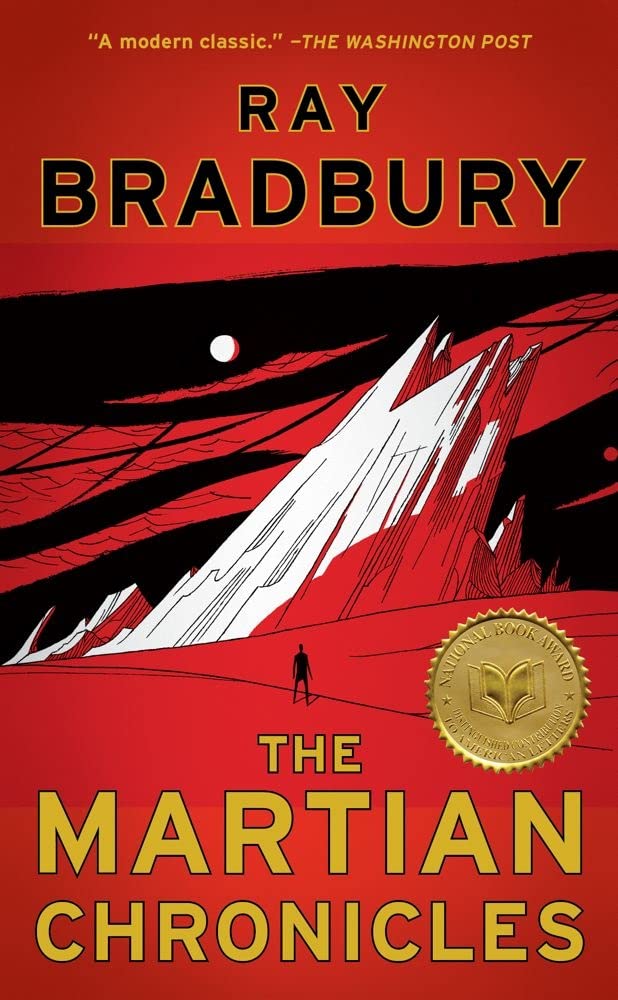
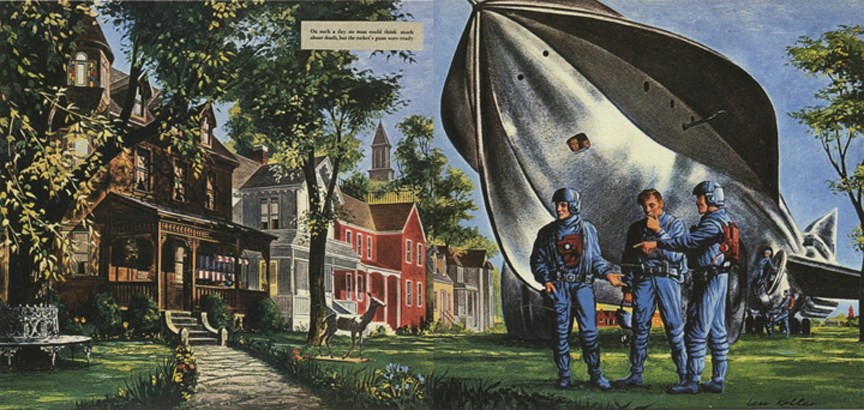
Illustration depicting ‘Rocket Summer’ (image from The Black Cat Moan)

They came because they were afraid or unafraid, happy or unhappy. There was a reason for each man. They were coming to find something or get something, or to dig up something or bury something. They were coming with small dreams or big dreams or none at all

Ray Bradbury, The Martian Chronicles

When I was but a sprite, and before I became an avid reader of books (I preferred comic books), I read Ray Bradbury’s The Martian Chronicles. It changed me, what I thought of books and what I felt about the power of stories. It made me cry. And perhaps that was when I decided to become a writer. I wanted to move people as Bradbury had moved me.

The 1970 Bantam book jacket aptly describes The Martian Chronicles as, “a poetic fantasy about the colonization of Mars. The story of familiar people and familiar passions set against incredible beauties of a new world…A skillful blending of fancy and satire, terror and tenderness, wonder and contempt.”

Rockets land on Mars overlooking Bradbury Lane (illustration from Sutori)

The Martian Chronicles isn’t really about Mars. True to Bradbury’s master metaphoric storytelling, The Martian Chronicles is about humanity. Who we are, what we are and what we may become. What we inadvertently do—to others, and finally to ourselves—and how the irony of chance can change everything. Despite the knowledge of no detectable amounts of oxygen, Bradbury gave Mars a breathable atmosphere: “Mars is a mirror, not a crystal,” he said, using the planet for social commentary rather than to predict the future.

From “Rocket Summer” to “The Million-Year Picnic,” Ray Bradbury’s stories of the colonization of Mars form an eerie tapestry of past and future. Written in the 1940s, the chronicles long with the nostalgia of shady porches with pitchers of lemonade, ponderously ticking grandfather clocks, and comfortable sofas. Expedition after expedition leave Earth to investigate and colonize Mars. Though the Martians guard their mysteries well, they succumb to the diseases that come with the rocketeers and grow extinct—not unlike the quiet disappearance of the golden toad, the Pinta giant tortoise, or the Bramble Cay melomys. Humans, with ideas often no more lofty than starting a tourist hot-dog stand, bear no regret for the native alien culture they exploit and eventually displace.

It is a common theme of human colonialism and expansionism, armed with the entitlement of privilege. Mars is India to the imperialistic British Empire. It is Rwanda or Zaire to the colonial empire of the cruel jingoistic King Leopold II of Belgium. Mars is Europe to Nazi Germany’s sonderweg. We need look no further than our own Canadian soil for a reflection of this slow violence of disrespect and apathy by our settler ancestors on the indigenous peoples of Canada.


Mars was a distant shore, and the men spread upon it in waves… Each wave different, and each wave stronger. 

The Martian Chronicles

Tyler Miller of The Black Cat Moan makes excellent commentary in their 2016 article entitled “How Ray Bradbury’s ‘The Martian Chronicles’ changed Science Fiction (and Literature).” The article begins with a quote from Argentinean author Jorge Luis Borges (in the introduction to the Spanish-language translation of The Martian Chronicles: “What has this man from Illinois done, I ask myself when closing the pages of this book, that episodes from the conquest of another planet fill me with horror and loneliness?”

Remember, this was the 1950s … halfway through a century dominated by scientific discovery, and expansion. The 1950s saw developments in technology, such as nuclear energy and space exploration. On the heels of the end of World War II, the 1950s was ignited by public imagination on conquering space, creating technological futures and robotics. The 1950s was considered by some as the real golden age for science fiction, still a kind of backwater genre read mostly by boys and young men, that told glimmering tales of adventure, exploration, and militarism, of promising technologies, and often-androcratic societies who used them in the distant future to conquer other worlds full of strange and disposable alien beings in the name of democracy and capitalism. (In some ways, this is still very much the same. Though, it is thankfully changing…)

(Bantam 1951 1st edition cover)

Many scientists deeply involved in the exploration of the solar system (myself among them) were first turned in that direction by science fiction. And the fact that some of that science fiction was not of the highest quality is irrelevant. Ten year‐olds do not read the scientific literature.

Carl Sagan, 1978
First edition book covers of Martian Chronicles (Doubleday, 1950); I, Robot (Grayson & Grayson, 1952); Childhood’s End (Ballantine Books, 1953); and Starship Troopers (G.P. Putnam’s Sons, 1959)

Large idea-driven SF works that typified this time period included Robert A. Heinlein’s Starship Troopers, Arthur C. Clarke’s Childhood’s End, Isaac Asimov’s I, Robot and his Foundation series.

It was at this time that Ray Bradbury published The Martian Chronicles. Though filled with the requisite rocket ships, gleaming Martian cities, ray guns, and interplanetary conquest, from the very start—as Borges noted—The Martian Chronicles departed radically from its SF counterparts of the time.

(Illustration on album cover of “Rocket Summer”, music by Chris Byman)

Instead of starting with inspiring technology or a stunning action sequence, or a challenging idea or discovery, Bradbury’s The Martian Chronicles opens with a domestic scene.

One minute it was Ohio winter, with doors closed, windows locked, the panes blind with frost, icicles fringing every roof, children skiing on the slopes, housewives lumbering like great black bears in their furs along the icy streets.

And then a long wave of warmth crossed the small town. A flooding sea of hot air; it seemed as if someone had left a bakery door open. The heat pulsed among the cottages and bushes and children. The icicles dropped, shattering, to melt. The doors flew open. The windows flew up. The children worked off their wool clothes. The housewives shed their bear disguises. The snow dissolved and showed last summer’s ancient green lawns.

Rocket summer. The words passed among the people in the open air, airing houses. Rocket summer. The warm desert air changing the frost patterns on the windows, erasing the art work. The skis and sleds suddenly useless. The snow, falling from the cold sky upon the town, turned to a hot rain before it touched the ground.

Rocket summer. People leaned from their dripping porches and watched the reddening sky.

The rocket lay on the launching field, lowing out pink clouds of fire and oven heat. The rocket stood in the cold winter morning, making summer with every breath of its mighty exhausts. The rocket made climates, and summer lay for brief moment upon the land…

Ray Bradbury, The Martian Chronicles, Rocket Summer

Bradbury’s focus was on the domestic. Housewives fighting off the ice and snow of Ohio. A Martian woman “cleaning the house with handfuls of magnetic dust which, taking all dirt with it, blew away on the hot wind.”

They had a house of crystal pillars on the planet Mars by the edge of the empty sea, and every morning you could see Mrs. K eating the golden fruits that grew from the crystal walls, or cleaning the house with handfuls of magnet dust which, taking all dirt with it, blew away on the hot wind. Afternoons, when the fossil sea was warm and motionless, and the wine trees stood stiff in the yard…you could see Mr. K in his room, reading from a metal book with raised hieroglyphs over which he brushed his hand, as one might play a harp. And from the book, as his fingers stroked, a voice sang, a soft ancient voice, which told tales of when the sea was red steam on the shore and ancient men had carried clouds of metal insects and electric spiders into battle…

This morning Mrs. K stood between the pillars, listening to the desert sands heat, melt into yellow wax, and seemingly run on the horizon.

Something was going to happen.

She waited.

Ray Bradbury, The Martian Chronicles, Ylla

Bradbury’s gift to literature—and to his SF genre—was his use of metaphor. Unlike the science fiction of his colleagues, Bradbury’s stories are a lens to study the past and the present. According to Miller, “The Earthmen’s exploration and desolation of Mars allowed Bradbury to look not forward but backward at exploration and desolation on Earth, namely the European arrival in the New World. Just as Europeans landed in North and Central America wholly unprepared for what they found there, Bradbury’s Earthmen are unprepared time and again for the wonder and the horror of Mars. And just as European diseases decimated native people in the Americas, it is chicken-pox which wipes out the Martians.”

The back cover of the 2012 mass market paperback Simon & Schuster Reprint edition of The Martian Chronicles reads:

Bradbury’s Mars is a place of hope, dreams and metaphor—of crystal pillars and fossil seas—where a fine dust settles on the great, empty cities of a silently destroyed civilization. It is here the invaders have come to despoil and commercialize, to grow and to learn—first a trickle, then a torrent, rushing from a world with no future toward a promise of tomorrow. The Earthman conquers Mars … and then is conquered by it, lulled by dangerous lies of comfort and familiarity, and enchanted by the lingering glamour of an ancient, mysterious native race.

 “Ask me then, if I believe in the spirit of the things as they were used, and I’ll say yes. They’re all here. All the things which had uses. All the mountains which had names. And we’ll never be able to use them without feeling uncomfortable. And somehow the mountains will never sound right to us; we’ll give them new names, but the old names are there, somewhere in time, and the mountains were shaped and seen under those names. The names we’ll give to the canals and the mountains and the cities will fall like so much water on the back of a mallard. No matter how we touch Mars, we’ll never touch it. And then we’ll get mad at it, and you know what we’ll do? We’ll rip it up, rip the skin off, and change it to fit ourselves.”

“We won’t ruin Mars,” said the captain. “It’s too big and too good.”

“You think not? We Earth Men have a talent for ruining big, beautiful things.”

Ray Bradbury, The Martian Chronicles, And the Moon be Still as Bright

Ray Bradbury’s The Martian Chronicles is a profound and tender analysis of the quiet power humanity can wield unawares and how we define and treat ‘the other.’ It is a tragic tale that reflects only too well current world events where the best intended interventions can go awry. From the meddling friend who gossips to “help” another (only to make things worse) to the righteous “edifications” of a religious group imposing its “order” on the “chaos” of a “savage” peoples … to the inadvertent tragedy of simply and ignorantly being in the wrong place at the wrong time (e.g., the introduction of weeds, disease, etc. by colonizing “aliens” to the detriment of the native population; e.g., smallpox, AIDs, etc.). Bradbury is my favourite author for this reason (yes, and because he makes me cry…)

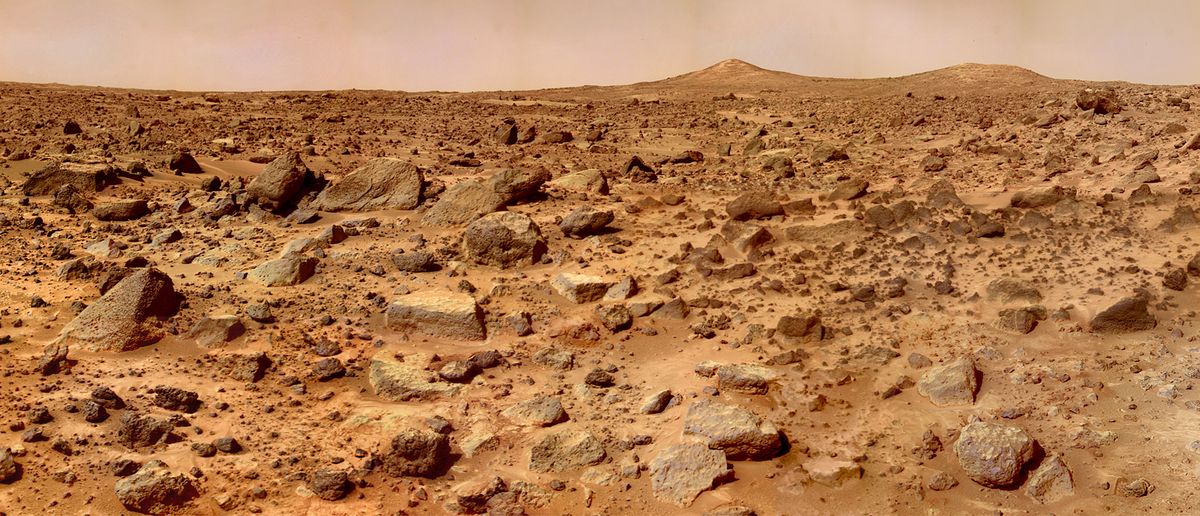
Mars terrain (photo by NASA)

Nina Munteanu is a Canadian ecologist / limnologist and novelist. She is co-editor of Europa SF and currently teaches writing courses at George Brown College and the University of Toronto. Visit www.ninamunteanu.ca for the latest on her books. Nina’s bilingual “La natura dell’acqua / The Way of Water” was published by Mincione Edizioni in Rome. Her non-fiction book “Water Is…” by Pixl Press (Vancouver) was selected by Margaret Atwood in the New York Times ‘Year in Reading’ and was chosen as the 2017 Summer Read by Water Canada. Her novel “A Diary in the Age of Water” was released by Inanna Publications (Toronto) in June 2020.

TV Series Review: With “Missions”— Mars Delivers!

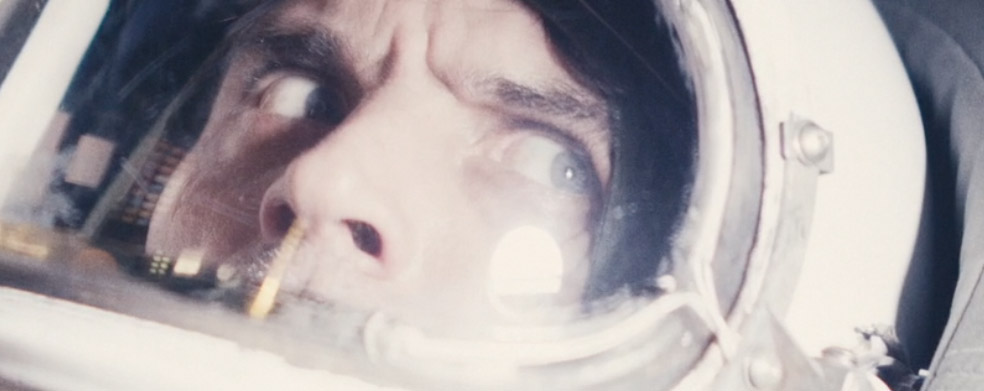
Vladimir Komarov during re-entry in the Soyuz 1

Since “Expanse”, I’ve been on the lookout for an equally sophisticated treatment of space exploration—something that doesn’t slide into horrific mind-numbing and gut-wrenching insult to the senses, unrealistic character twists and visceral shock devices. Something that delivers…

Season One of French TV series “Missions” has delivered in so many ways. Created by Henri Debeurme, Julien LaCombe and Ami Cohen, Season 1 (2017) of this series on the exploration of Mars has explored human evolution, ancient history, trans-humanism, artificial intelligence, and environmental issues in a thrilling package of intrigue, adventure and discovery. From the vivid realism of the Mars topography to the intricate, realistic and well-played characters and evocative music by Étienne Forget, “Missions” builds a multi-layered mystery with depth that thrills with adventure and complex questions and makes you think long after the show is finished. 

Gale Crater on Mars, showing inverted channels (image by NASA)

The first episode of the 10-episode Season One starts with a real tragedy: the first human to die in space flight; the 1967 fatal crash landing of the Russian Soyus 1 piloted by Cosmonaut Vladimir Komorov. In a stirring article on National Public Radio, Robert Krulwich provides incredible insight into this historic tragedy:

Starman by Jamie Doran and Piers Bizony, tells the story of a friendship between two cosmonauts, Vladimir Komarov and Soviet hero Yuri Gagarin, the first human to reach outer space. The two men were close; they socialized, hunted and drank together. In 1967, both men were assigned to the same Earth-orbiting mission, and both knew the space capsule was not safe to fly. Komarov told friends he knew he would probably die. But he wouldn’t back out because he didn’t want Gagarin to die. Gagarin would have been his replacement.

Gagarin and Komarov

The story begins … when Leonid Brezhnev, leader of the Soviet Union, decided to stage a spectacular mid-space rendezvous between two Soviet spaceships. The plan was to launch a capsule, the Soyuz 1, with Komarov inside. The next day, a second vehicle would take off, with two additional cosmonauts; the two vehicles would meet, dock, Komarov would crawl from one vehicle to the other, exchanging places with a colleague, and come home in the second ship. It would be, Brezhnev hoped, a Soviet triumph on the 50th anniversary of the Communist revolution. Brezhnev made it very clear he wanted this to happen.

The problem was Gagarin. Already a Soviet hero, the first man ever in space, he and some senior technicians had inspected the Soyuz 1 and had found 203 structural problems — serious problems that would make this machine dangerous to navigate in space. The mission, Gagarin suggested, should be postponed. The question was: Who would tell Brezhnev? Gagarin wrote a 10-page memo and gave it to his best friend in the KGB, Venyamin Russayev, but nobody dared send it up the chain of command. Everyone who saw that memo, including Russayev, was demoted, fired or sent to diplomatic Siberia.

Commemorative stamp for Komarov

With less than a month to go before the launch, Komarov realized postponement was not an option. He met with Russayev, the now-demoted KGB agent, and said, “I’m not going to make it back from this flight.” Russayev asked, Why not refuse? According to the authors, Komarov answered: “If I don’t make this flight, they’ll send the backup pilot instead.” That was Yuri Gagarin. Vladimir Komarov couldn’t do that to his friend. “That’s Yura,” the book quotes him saying, “and he’ll die instead of me. We’ve got to take care of him.” (italics mine).

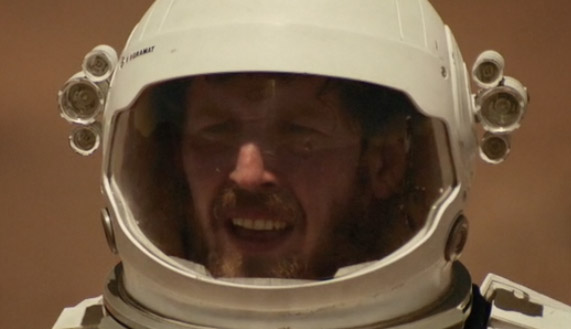
In the opening scene of “Missions”, we never see the actual crash landing; instead, as Komarov hurtles to the ground, he suddenly sees a strange white light and then we cut to the present day. Now in an alternate present day, the international crew of the space ship Ulysses is readying for its journey to Mars. Days before the Ulysses mission takes off from Earth, psychologist Jeanne Renoir is asked to replace the previous psychologist who died suddenly in a freak accident.

We are introduced to Jeanne as she conducts a test at l’Université Paris with children on self-restraint using marshmallows. It’s a simple test: she leaves each child with one marshmallow and instructs that if they don’t eat it, she’ll give them a second one when she returns. Of course, the little girl can’t resist when left alone with the marshmallow and gobbles it down, giving up a second for her impatience. And we see that Jeanne correctly anticipates each child’s reaction.

Jeanne gives her psychology report of the crew to William Meyer onboard the Ulysses

Jeanne joins the international team of the Ulysses but maintains a detached relationship with them, refusing to get emotionally close to anyone; she cites her need as psychologist to remain impartial and objective and successfully hides a gentleness beneath an impenetrable layer of cold severity. The team consists of Captain Martin Najac and his estranged and depressed wife Alessandra (ship’s doctor), moody and laconic Simon Gramat (second in command), twitchy and paranoid Yann Bellocq (ship’s engineer), Basile (Baz), the sociopathic computer scientist who is more at ease with the ship’s AI Irène than the rest of the crew, and geologist Eva Müller, the target of Baz’s awkward advances.

Simon Gramat, second in command on Ulysses

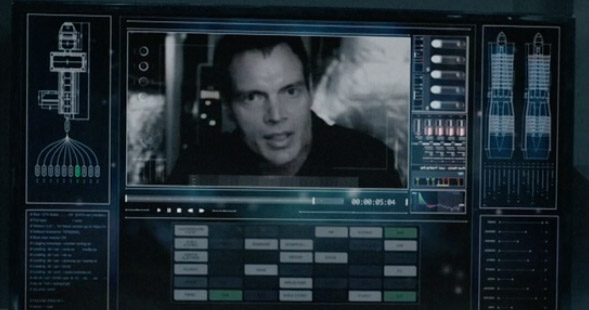
The eccentric Swedish corporate billionaire and David Bowie fan, William Meyer is also on board the Ulysses. His goal is to lead the first mission to land on Mars. However, shortly before they are scheduled to land, the crew discover that Z1—a ship sent by charismatic but highly unlikable Ivan Goldstein of rival corporation Zillion (partnered with NASA)—has overtaken them and has already landed on Mars. But the Z1 crew have not been heard from since sending a cryptic warning: “Don’t come here. Don’t try and save us… It’s too dangerous,” an intense Z1 astronaut warns.

Z1 astronaut warns help away
Martian terrain (image by Perseverance NASA)

After a rough landing through a major dust storm on Mars, the Ulysses crew struggle to fix an inoperable computer system (Irène) and life support system aboard their shuttle, which was presumably damaged by the landing. While not expecting to find any survivors of the Z1 crew, part of the Ulysses crew head to the Z1 landing site in a rover, looking for parts they can scavenge to power their shuttle. They find only remnants of the Z1 ship, but close by they discover someone alive in the Martian desert along with the ship’s black box. They presume he is from the American team but he insists that he is Russian and that his name is Vladimir Komarov…

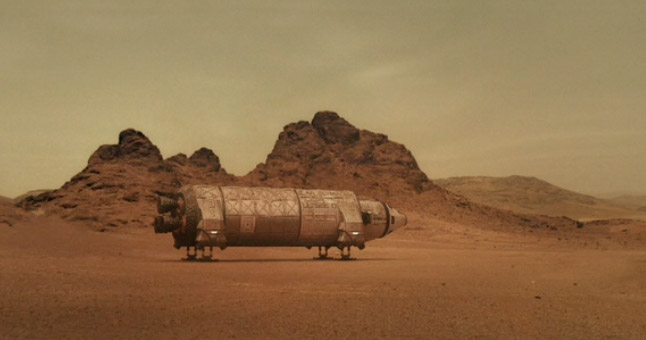
The Ulysses shuttle on Mars

So begins this surrealistic mystery that transcends history, identity and our concepts of reality with tantalizing notions of Atlantis, the mythical metal Orichalcum, programmable DNA-metal and much more. The first season of “Missions” focuses on cynical Jeanne Renoir as she unravels the mystery of Mars; a mystery that ties her inextricably to Komarov. When she first interviews Komarov, he surprises her by using her late father’s call to their favourite pastime of stargazing: “Mars delivers!” We then find that Komarov is her father’s hero for his selfless action to save his friend, and her father considered him “the bravest man of his time.” Jeanne is intrigued. Who—what—is this man they’ve rescued? Surely not the dead cosmonaut resurrected from 1967?

Martian terrain (image by NASA)

Throughout the series, choices and actions by each crew member weave narrative threads that lead to its overarching theme of self-discovery and the greater question of humanity’s existence. Yann Bellocq refuses to let the party who discovered Komarov back into the ship, citing oxygen depletion as his reason (“If you use oxygen to pressurize the airlock, you know what will happen. Better four survivors than eight corpses,” he says matter-of-factly as he dooms the four astronauts waiting to board). Eva later laments to Alex that “I thought I knew him.” Alex (who’s earlier terror had instigated the accidental death of her husband Captain Najac) tells Eva: “You’re young; there are situations which change people, for better or,” with a sideways glance at Bellocq, “worse.”

Martian surface (image by ESA)

Intrigue builds quickly. By the third episode (Survivor), the crew make a startling discovery about Mars and humanity. After Komarov mysteriously leaves the ship and leads the small search party to a mysterious sentiently-created stone object, a stele, the ship’s computer Irène describes the hieroglyphs as ancient Earth-like. The main block, supported by four Doric columns is similar to the Segesta Temple in Sicily; its central designs are similar to Mayan Calakmul bas-reliefs; and its height-width ratio is equal to Phi, known as the golden ratio in ancient Greece.

Komarov leads the crew to the stele

Irène concludes that “either someone was inspired by our civilizations to build it…” “…Or our civilizations were inspired by it,” finishes Jeanne.

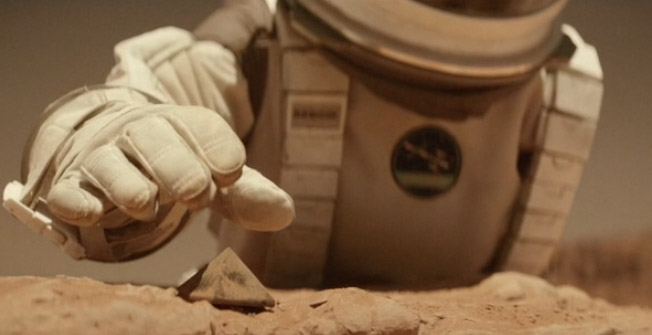
Jeanne picks up a pyramid made of Orichalcum

Alex, the ship’s doctor, informs the crew that the DNA of Mars-Komarov is identical to that of original-Komarov, except for an additional single strand; his DNA has three strands instead of two. She concludes, “He isn’t human.” Jeanne adds, “or he’s something more than human.” They also discover that the stone stele is actually an artificial alloy not known in any geology database but described in ancient script as the mythical substance ancient Greek and Roman texts called Orichalcum—the metal of Atlantis. Irène also identifies similar triple helix DNA in the rock, similar to Komarov’s, that is data-processing—which makes Komarov a living computer program, capable of controlling the ship.

Jeanne later confronts Komarov about the stone object; stating the need for expediency, she asks him what he meant to show them by leading them there. After telling her that humans need to discover truths for themselves before accepting them, Komarov slides into metaphor that reflects her previous psychology experiments on restraint and patience: “Imagine that your right hand holds all the answers about me and your left hand holds all the answers about you, Mars, and the universe. If you open your right hand, the left disappears.” Jeanne quips back, “I’d open the left first.” Komarov rejoins, ”That would be too easy. Some rules can’t be broken. Making a choice means giving something up.” She must wait before she can open her left hand. Like the child and the second marshmallow…   

From the beginning, we glimpse a surreal connection between Jeanne and Komarov and ultimately between Earth and Mars: from her childhood admiration for the Russian’s heroism on Earth to the “visions” they currently share that link key elements of her past to Mars and Komarov’s strange energy-giving powers, to Jeanne’s own final act of heroism on Mars. “You’re the reason I’m here,” he confesses to her in one of their encounters. “You have an important decision to make; one you’ve made in the past…”

As the storyline develops, linking Earth and Mars in startling ways, and as various agendas—personal missions—are revealed, we finally clue in on the main question that “Missions”—through the actions of each crew member and the exchanges between Komarov and Jeanne—is asking: are we worth saving?

In a flashback scene of her interaction with Komarov, Jeanne recalls Komarov telling her that, “people dream of other places, while they can’t even look after their own planet… You must remember your past in order to think about your future. Do you think Earth has a future?” When she responds that she doesn’t know, he challenges with “Yes, you do. They eat their marshmallow right away, when they could have two…Or a thousand. Do you think humanity can continue like that? You know the answer and it terrifies you.”

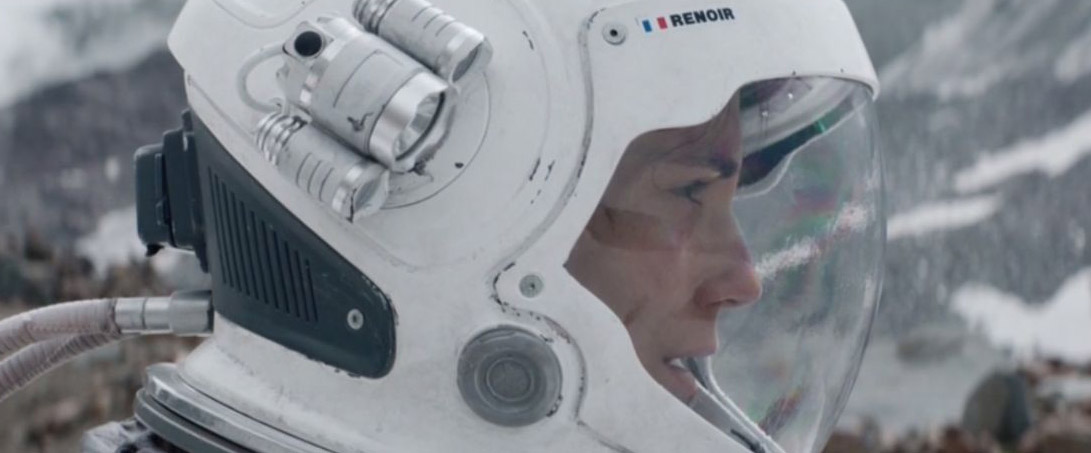
Jeanne embarks on the Martian surface, seeking answers

In the sixth episode (Irène), Jeanne pieces together a complex scenario from her encounters with Komarov, compelling her to leave the ship to discover more.

Gramat pursues Jeanne on the surface of Mars

Fearing for her safety and spurred on by a frank discussion with Komarov who recognizes how much Gramat cares for Jeanne (“You’re an impulsive man, especially when you talk about her…She’s counting on you, even if she’s too proud to say so”), Gramat pursues her on the surface of Mars. It is the first of two times that he will save her life, the second by using mouth-to-mouth resuscitation. After they appear to cross a time-space portal, Komarov is waiting for them and the two astronauts learn Mars’s greatest secret: it was green and inhabited once, a very long time ago, by Martians who destroyed it then colonized Earth. Jeanne learns that she is an “evolutionary accident”: “You alone can save them … from themselves…or not,” says Komarov. She must return to Earth, he tells her, despite their ship not having enough fuel to get them off Mars.

Gemma Williams of the Z2 brings both hope and despair to the Ulysses crew

Even after Zillion’s second ship, Z2, lands on Mars, giving the Ulysses crew a possible way off the planet, by season-end (Episode 10, Storm), it doesn’t look like Jeanne will leave Mars as the Ulysses crew meet with resistance from the other crew and a sudden storm surges toward them. Even if she does, will she return to save humanity or deliver them to their end? We’re not sure as we watch the ship take off with her still standing on Mars after dispatching their last impediment–one of the Z2 crew wishing to stop them. But she is not the same Jeanne we first met in episode one as she assures Gramat that she has no regrets—except for one (him, obviously). She follows with, “Let’s say you gave me the kiss of life…”

On to Season Two for more answers, and probably more questions…

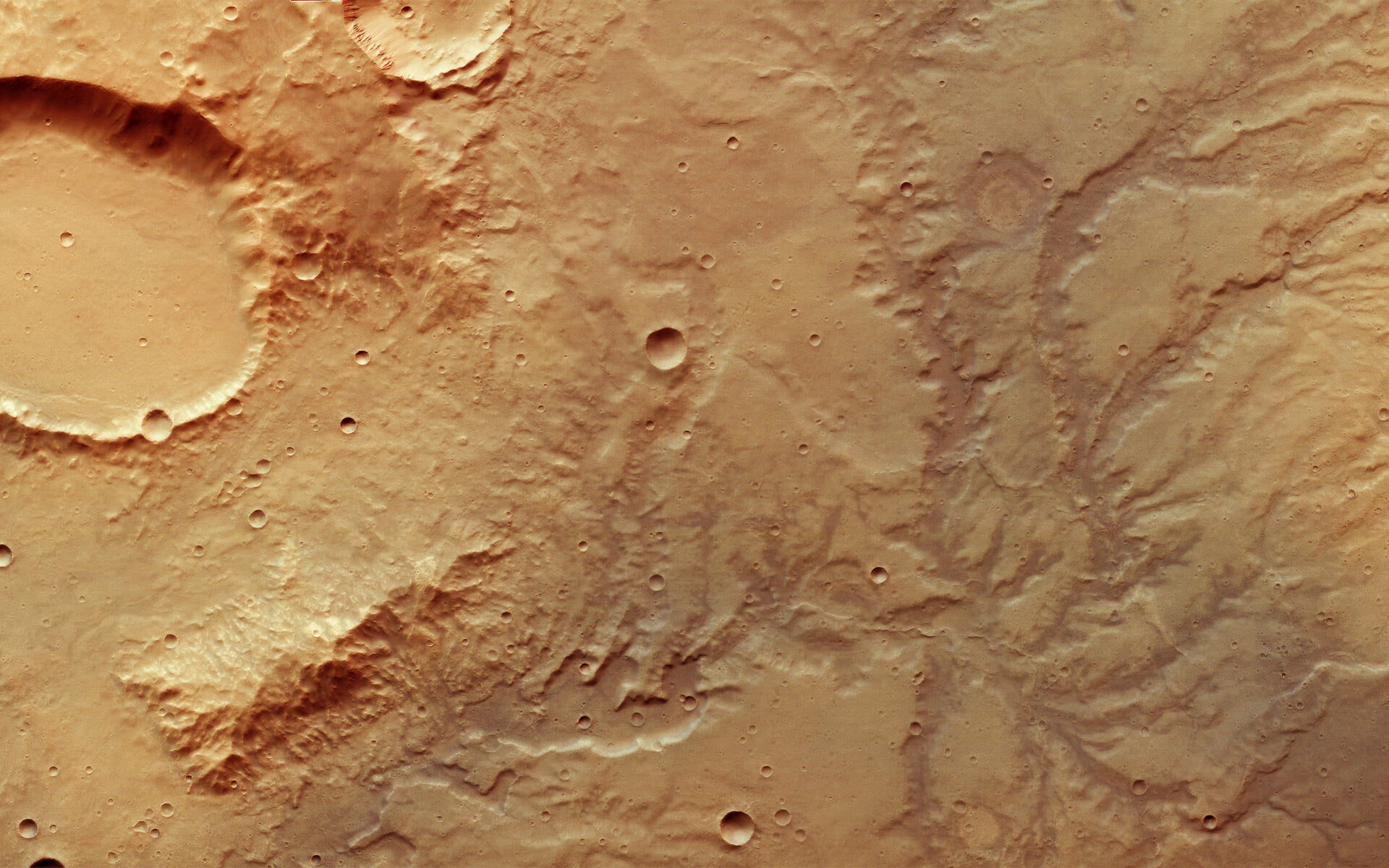
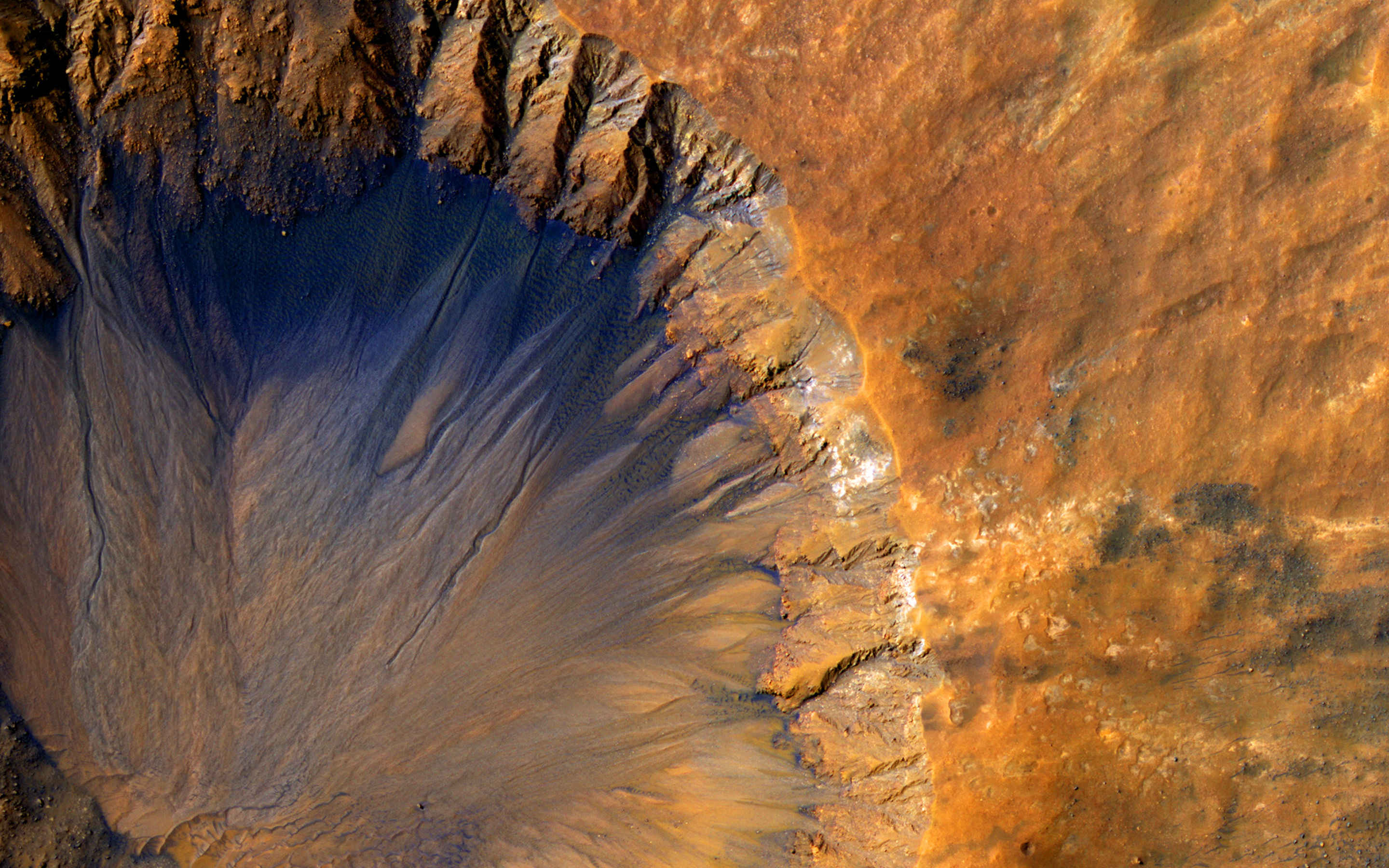
Sirenum fossae crater on Mars (photo by NASA)
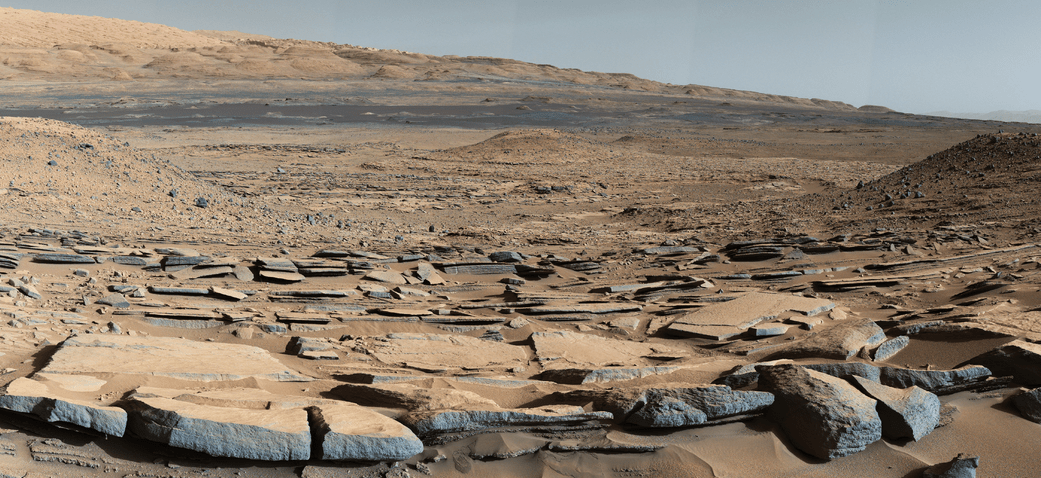
Gale Crater on Mars (photo by Curiosity, NASA)

The Lore—and the Lure—of Mars

When I was a child, my older brother told me that my parents found me in the huge garden behind our house and they brought me home out of pity. I scoffed back: ‘no, I wasn’t,’ I said with great confidence. I’d come down from Mars to study humans, I pronounced. I was born in April, after all; I’m an Aries and Mars is my planet.

Mars terrain (photo by ESA)

Ancient Observations of Mars

In ancient times of Mars observation (before 1500) little was known about it except that it appeared as a fiery red star and followed a strange loop in the sky, unlike other stars. In Roman myth, Mars was a fierce warrior god, protector of Rome, with the wolf his symbol. To the Greeks, Mars was Ares and that’s what they named the star (planet). The Babylonians, who studied astronomy as early as 400 BC, called Mars Nergal, the great hero, the king of conflicts. The Egyptians noticed that five bright objects in the sky (Mercury, Mars, Venus, Jupiter, and Saturn) moved differently from the other stars. They called Mars Har Decher, the Red One.

Mars in the 1600s and 1700s

In 1609 Johannes Kepler, a student of Tycho Brahe, published Astonomia Nova, which contained his first two laws of planetary motion. His first law assumed that Mars had an ellipitical orbit, which was revolutionary at the time. Then Galileo Galilei made the first telescopic observation of Mars in 1610 and within a century astronomers discovered distinct albedo features on the planet, including the dark patch Syrtis Major Planum and polar ice caps. They also determined the planet’s rotation period and axial tilt.

In 1659 Dutch astronomer Christian Huygens made the first useful sketch of Mars using an advanced telescope of his own design. He recorded a large dark spot or maria (probably Syrtis Major) and noticed that the spot returned to the same position at the same time the next day, which made him conclude that Mars had a 24 hour period. He later observed a white spot, likely the southern polar cap and likely assumed it was made of snow, ice or both. Huygens believed that Mars might be inhabited, perhaps even by intelligent creatures, and shared his belief with many other scientists. Giovanni Cassini later confirmed the polar caps and his nephew Giacomo Filippo Maraldi speculated that their changes showed evidence of seasons. In 1783, William Herschel confirmed that Mars experienced seasons; he is thought to be the first person to use the term “sea” for maria, though he was not the first to assume that maria actually contained liquid water. In 1860, Emmanuel Liais suggested that the variations in surface features were due to changes in vegetation (not flooding or clouds). Indeed, Father Pierre Angelo Secchi noticed in 1863 that maria changed colour, showing green, brown, yellow and blue.

Map of Mars by Giovanni Schiaparelli with ‘canali’

The (In)Famous Canals of Mars

In the 1880s Giovanni Schiaparelli made a map of Mars that showed maria, but also connected by thin lines. He assumed the lines were natural landscape features and called them “canali,” which is Italian for “groove.” Translated into English it became “canal,” meaning something entirely different and opening speculation about an intelligent civilization on Mars. French astronomer Camille Flammarion wrote a book on Mars, suggesting that these canals might be signs of intelligent life.

Martian surface (image by NASA)

Although Edward Emerson Barnard observed craters on Mars in 1892 (which suggested a lack of protective atmosphere and unlikely vibrant civilization there), public attention remained on the Martian canals, primarily through Percival Lowell’s efforts. His 1907 book “Mars and its Canals,” which suggested that the canals were built by Martians to transport water from the poles to the dry Martian plains, was widely read and embraced by a humanity eager for romantic adventure. That same year Alfred Russel Wallace (yes, the same scientist who came up with the theory of evolution based on natural selection before Darwin published On the Origin of Species, receiving full credit for its development) made a sound rebuttal with his own book that argued that Mars was completely uninhabitable; Wallace used measurements of light coming from Mars and argued that its surface temperature of minus 35 degrees Fahrenheit precluded the existence of liquid water. He also concluded correctly that the polar caps were frozen carbon dioxide, not water ice. But it didn’t matter; Wallace seemed doomed to be ignored, again… The idea of intelligent Martian life endured. The canal controversy was finally resolved in the 1960s with incontrovertible proof delivered by photographs taken by spacecraft on flybys or orbits around Mars. Mariner 4. Viking series. Pathfinder, the Mars Global Surveyor and Odyssey.

Illustration depicting Ray Bradbury’s “Martian Chronicles” (image from Tyler Miller Writes)

Mars in Literature and Film

Edgar Rice Burrough’s Barsoom series continued the romantic portrayal of Mars with its canals.And, of course a long tradition of portraying Martians as evil warmongering types is typified in the 1938 radio production by Orson Wells of the H.G. Wells 1897 work of fiction War of the Worlds, a story of Martians invading the Earth. The production was so convincing, that it set off a panic. In the 1940s Ray Bradbury wrote The Martian Chronicles, a poetic satire about humanity’s colonization of Mars and our inevitable destruction of its indigenous inhabitants–but not before the Martians attacked the settlers with their only weapon: telepathy. In the 1950 film Rocketship X-M, Martians are disfigured cave people who inhabit a barren wasteland, descendants of a nuclear holocaust. Martians have been depicted in various ways: enlightened and superior by Kurd Lasswitz in the 1897 novel Auf zwei Planeten, where the Martians visit Earth to share their more advanced knowledge with humans and gradually end up acting as an occupying colonial power. The 1934 short story “A Martian Odyssey” by Stanley G. Weinbaum describes the first ‘alien aliens’ in science fiction. The story broke new ground in portraying an entire Martian ecosystem unlike that of Earth—inhabited by species that are alien in anatomy and inscrutable in behaviour—and in depicting extraterrestrial life that is non-human and intelligent without being hostile. Several stories after the various Mariner and Viking probes had visited Mars, focused on its lifeless habitat and attempts to colonize it. The disappointment of finding Mars to be hostile to life is reflected in the 1970 novel Die Erde ist nah (The Earth is Near) by Ludek Pesek, which depicts members of an astrobiological expedition on Mars driven to despair by the realization that their search for life there is futile.

The theme of terraforming Mars later became prominent in the latter part of the 20th century, exemplified by Kim Stanley Robinson’s 1990s Mars Trilogy. The Expanse books and TV series portrays humans who have colonized Mars and in the process of terraforming it.

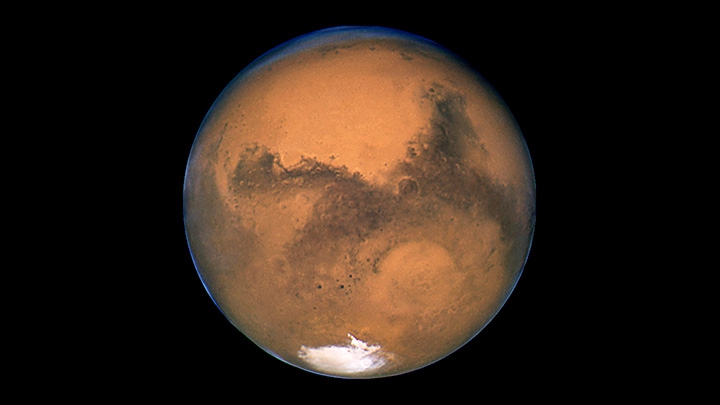
Mars (photo by Hubble)

What Scientists Now Know About Mars

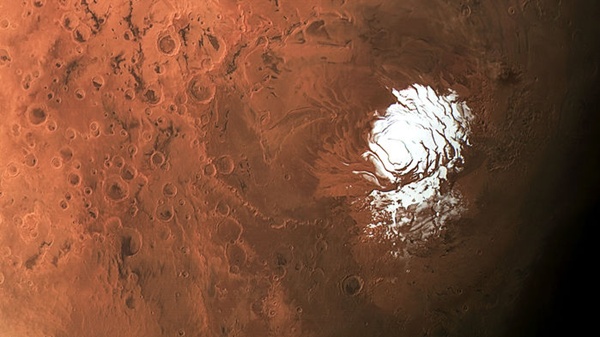
Thanks to NASA, ESA, and other science agencies with various countries, we now have a very different picture of Mars.  Some parts of Mars have numerous craters like Mercury and the Moon, but other parts of Mars have plains, volcanoes, canyons and river channels.  The volcanoes and canyons are bigger than any other known examples. Data prove Mars was warmer and had abundant liquid water in its early history.  Today there is still water, but almost all is in the form of ice in the polar caps and below the surface (some locations on Mars may experience temperatures above the melting point of water, hence transient pools of liquid water are possible).  There is also the possibility that Mars may have had tectonic plates like the Earth does now. The atmosphere of Mars is mostly carbon dioxide (95%) with nitrogen, argon and traces of oxygen, carbon monoxide, water, methane and other gases, along with dust. The polar caps are partly water ice and partly frozen carbon dioxide, with differences between the northern and southern polar caps.

Mars surface showing south pole cap (image NASA)
Martian surface (image by NASA)
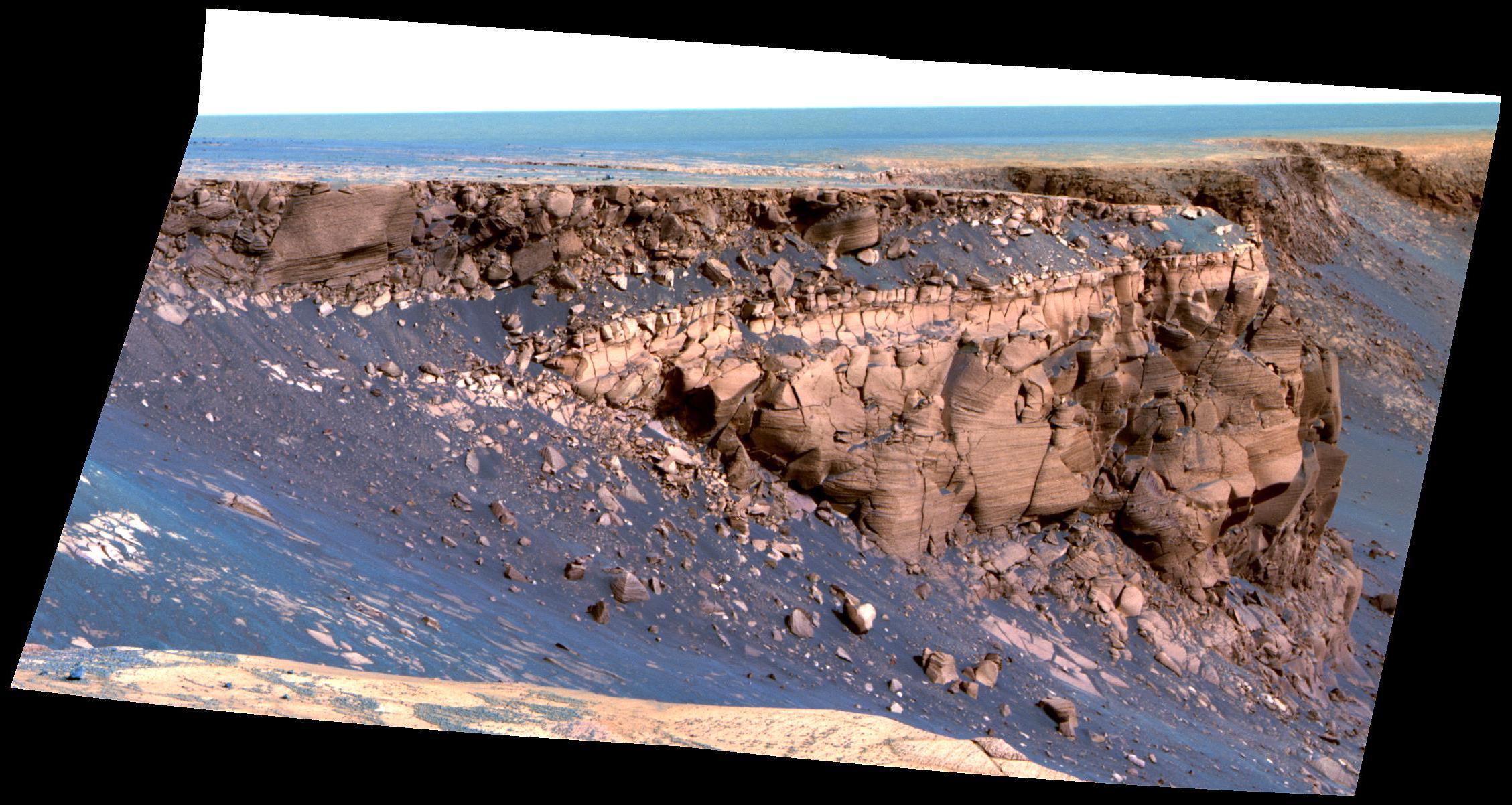
Victoria Crater on Mars (image by NASA)
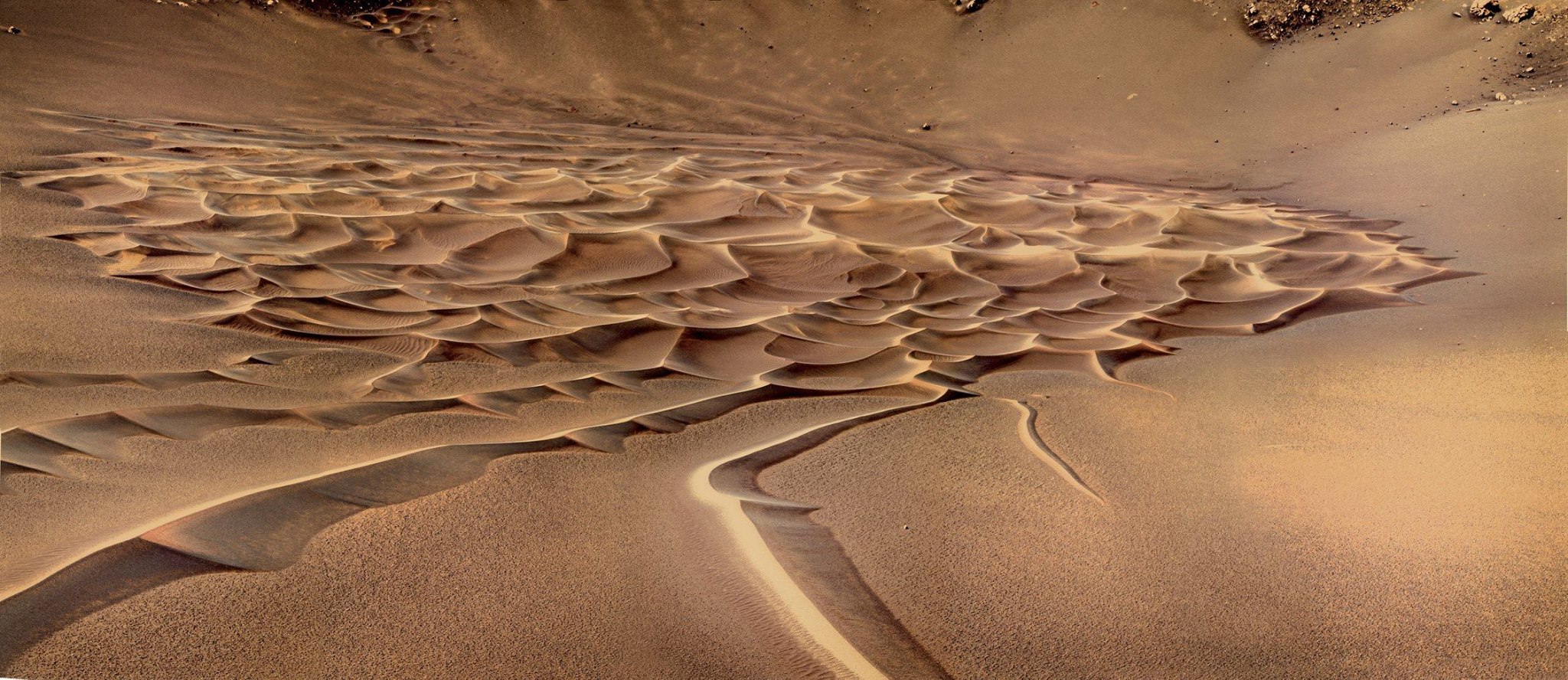
Dune field in Endurance Crater on Mars (image by NASA)

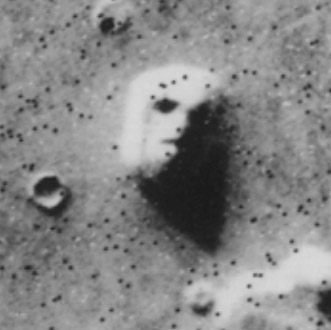
Apparently, Viking 1 photographs taken in 1976 in the region known as Cydonia look like a human face, but later higher resolution MGS photographs of the same region look like a pile of rocks and it is likely a pareidolia (the tendency to perceive meaning in a natural pattern without significance, like the Man in the Moon). 

Cape St. Vincent, Mars (image by NASA)
Cape Verde, Mars (image by NASA)

The Curiosity, Opportunity and Perseverance missions of the Mars Exploration Program have helped determine whether Mars could ever have supported life, and the role of water. The Curiosity rover found that ancient Mars had the right chemistry to support living microbes. Curiosity found sulfur, nitrogen, oxygen, phosphorus and carbon—key ingredients necessary for life—in a sample drilled from the “Sheepbed” mudstone in Yellowknife Bay. Curiosity also found evidence of persistent liquid water on Mars in the past. Organic carbon, found in Mars rocks in samples drilled from Mount Sharp and surrounding plains, are the building blocks of life. The seasonally varying atmosphere of methane suggests links to life and water. Instrumentation also showed that the Martian atmosphere had more water in Mars’ past.

Remnants of an old stream bed on Mars (image by NASA)
Possible methane sources and sinks (image by NASA)

When I was a child—and to this day—I would look up at the deep night, dressed in sparkling stars, often find that red planet blazing in the darkness, and let my mind and heart wander. If given the choice to explore the deep sea or the deep of space, I’d instantly reply: space, of course. I used to wonder why I chose to look up and away, beyond my home, to the far reaches of the unknown blackness of space, and find some thrilling element that provided an abiding fulfillment. Why did I abandon my home? Maybe I didn’t…

Dune field in Endurance Crater, Mars (image by Curiosity, NASA)

Nina Munteanu is a Canadian ecologist / limnologist and novelist. She is co-editor of Europa SF and currently teaches writing courses at George Brown College and the University of Toronto. Visit www.ninamunteanu.ca for the latest on her books. Nina’s bilingual “La natura dell’acqua / The Way of Water” was published by Mincione Edizioni in Rome. Her non-fiction book “Water Is…” by Pixl Press (Vancouver) was selected by Margaret Atwood in the New York Times ‘Year in Reading’ and was chosen as the 2017 Summer Read by Water Canada. Her novel “A Diary in the Age of Water” was released by Inanna Publications (Toronto) in June 2020.

Book Review: Evolution, Digital Immortality, and “Freenet”

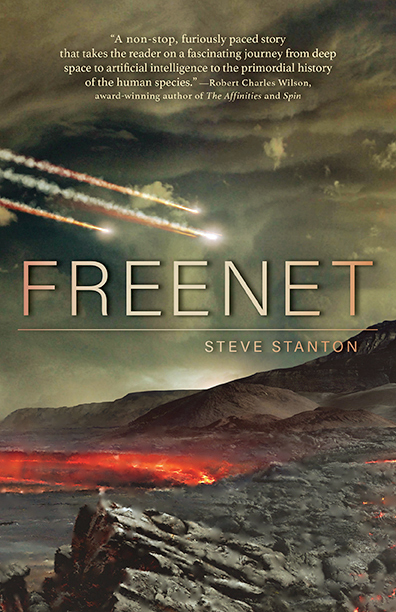
American book cover of Freenet

Steve Stanton’s 2016 science fiction book Freenet explores humanity in the far future after we have created the “Macpherson Doorway” through folded space-time, and vaulted ourselves with the blink of an eye into a galaxy far far away and 12 million years into the future. No traffic back through the doorway is permitted since a quarantine was placed some dozen years ago to prevent any unwanted DNA from sneaking through from Earth to “New Jerusalem”.  

As the Canadian back book jacket reveals, Freenet is a novel about the “power of [free] information…in a post-digital age.” The book explores what digital immortality means, when “consciousness has been digitized and cybersouls uploaded to a near-omniscient data-matrix.” This is a world where information “is currency and the truth belongs to whoever has the greatest bandwidth.”

Stanton shared with me that he was inspired to write the novel “from the simple observation of watching a woman lose her cellphone. Young people today are so tied to technology that they freak out when the strings are cut. In the future when life experience is delivered directly to the brain by wi-fi, the personal loss will be catastrophic.”

Nina Munteanu reading her advanced copy of Freenet

Told in three parts, the book begins with Simara Ying—a plugged-in V-net jockey and spacer—about to crash-land on the desert planet Bali. Her rescuer, a naïve—almost too nice to be true—native, Zen Valda, introduces her to his cave-dwelling culture with no social network support. The persistent electromagnetic storms of Bali interfere with digital communication and wipe all data. Like a baby removed from her comfortable womb, Simara survives panic attacks and heavy withdrawal chiefly because she is bombarded so heavily with Bali experiences that demand her attention. Lost without the support of her V-net—a comforting web of infinite communication and information—Simara struggles with Bali’s foreign ways. At every turn, she stumbles across some custom or taboo, forced to rely on her own wits; making the kind of mistakes she’s not used to making. More than a simple communication/information tool, the V-net embraces Simara with confidence. Without it, she fears she may go insane.

Intrigue arrives on Bali and chases Simara with a bounty on her head for murder. Zen demonstrates a simple faith in her innocence and helps her escape. Zen accepts a cochlear installation to connect him to the V-net, thinking it will help him better communicate with Simara, who—already somewhat distant—is even more so now that she has reunited with the V-net.  The V-net instead overwhelms him with a surging sea of irrelevant chatter and information, which threatens to drive him insane. Struggling with chaotic information overload, he remains with Simara, even after she estranges herself from him and is captured for murder. They escape and survive an arranged “accident” by literally jumping into space from an abandoned troopship about to crash.

Canadian book cover for Freenet

The story deepens into nuanced commentary in the last third of the book when Roni Hendrik, an energetic V-net anchorman of the Daily Buzz, pokes into the intrigue surrounding Simara Ying. He discovers that she is biogenic, an omnidroid—bioengineered from human DNA—and likely smuggled from Earth.

Omnidroids share a major cerebral augmentation that includes unlimited access to the V-net, higher intelligence and an unknown possibility of enhancements, including pre-cognition and telepathy across vast distances. Created as effective firewalls and filters, omnidroids streamline all V-net data for users across the galaxy. “Omnidroids [are] born into zero-day digital space and live in a fantasyland far beyond the mortal sphere of intelligence,” Henrik reflects, sensing a deeper story than a simple murder conspiracy. “Physical experience and bodily sensation [are] only tiny fragments of their transcendent existence, mundane accessories to digital infinity. In time,” Henrik concludes, “life itself might become a vestigial appendage.”

Hendrik, a humanist and closet idealist, pieces together connections with Neurozonics a New Jerusalem private corporation, responsible for the creation of biogenic humans. With holdings in a vast range of areas and an streaming amoeba of interests, Neurozonics is “a grinning spider on a translucent web of intrigue.” One discovery leads Henrik to more. He learns that the omnidroid community, to which Simara belongs, acts and communicates like a hive-mind, guided by a collective voice called “Mothership”. Other omnidroids have been targeted for elimination—and killed. Hell-bent on getting answers, Henrik confronts the owner of Neurozonics, Colin Macpherson—the same Macpherson who created the wormhole. Macpherson was uploaded earlier and runs his empire from digital space, part of the consortium of eternal intellect. Henrik’s meeting with Colin8 (the seventh clone of the original Colin Macpherson) runs like a “Neo-Architect” lecture in which the truth behind the omnidroids deaths is revealed. It’s not what you might think. Macpherson divulges his vision, which includes the reason for omnidroids’ communication abilities and the role of the Neurozonic brain. The ultimate meaning and use of the omnidroid freenet ties to a greater destiny that redefines what it is to be human and subverts the history of our primordial origins.

The story flows seamlessly from one perspective to another with crisp page-turning narrative, action and intrigue. Stanton trades some richness of character for a page-turning plot and clever dialogue. If there is a weakness in the narrative for me, it lies with Simara, the arcane omnidroid, who remains mysterious—from her introduction aboard her ship about to crash land, to the limited revelations of her character during her interactions with Zen, both in her POV and in his. Considering her unique characteristics and experiences as an omnidroid, I would have enjoyed more insight to her unique outlook and perspective, especially when faced with no social network—perhaps the most frightening experience for an omnidroid: to be disconnected from the hive. On the other hand, Zen Valda as the simple Bali boy on an insane rollercoaster ride is painted with a sensitive and graceful hand. Stanton also skillfully portrays his news team, Roni and Gladyz, with finesse and subtly clever notes. The dialogue and overall interactions between them is some of the most enjoyable of the novel.

Ultimately, Stanton’s Freenet flows like a fresh turbulent river, scouring and building up sediment then meandering like an oxbow into areas that surprise. He lulls you into expectation, based on your own vision of the digital world, then—like a bubble bursting—releases a quantum paradox of wormhole possibility.

“Ma, can you read the part where the cat omnidroid takes over the world?”

Nina Munteanu is a Canadian ecologist / limnologist and novelist. She is co-editor of Europa SF and currently teaches writing courses at George Brown College and the University of Toronto. Visit www.ninamunteanu.ca for the latest on her books. Nina’s bilingual “La natura dell’acqua / The Way of Water” was published by Mincione Edizioni in Rome. Her non-fiction book “Water Is…” by Pixl Press (Vancouver) was selected by Margaret Atwood in the New York Times ‘Year in Reading’ and was chosen as the 2017 Summer Read by Water Canada. Her novel “A Diary in the Age of Water” was released by Inanna Publications (Toronto) in June 2020.

TV Series Review: “The Expanse”—No Game (of Thrones), just a Damned Good Story  

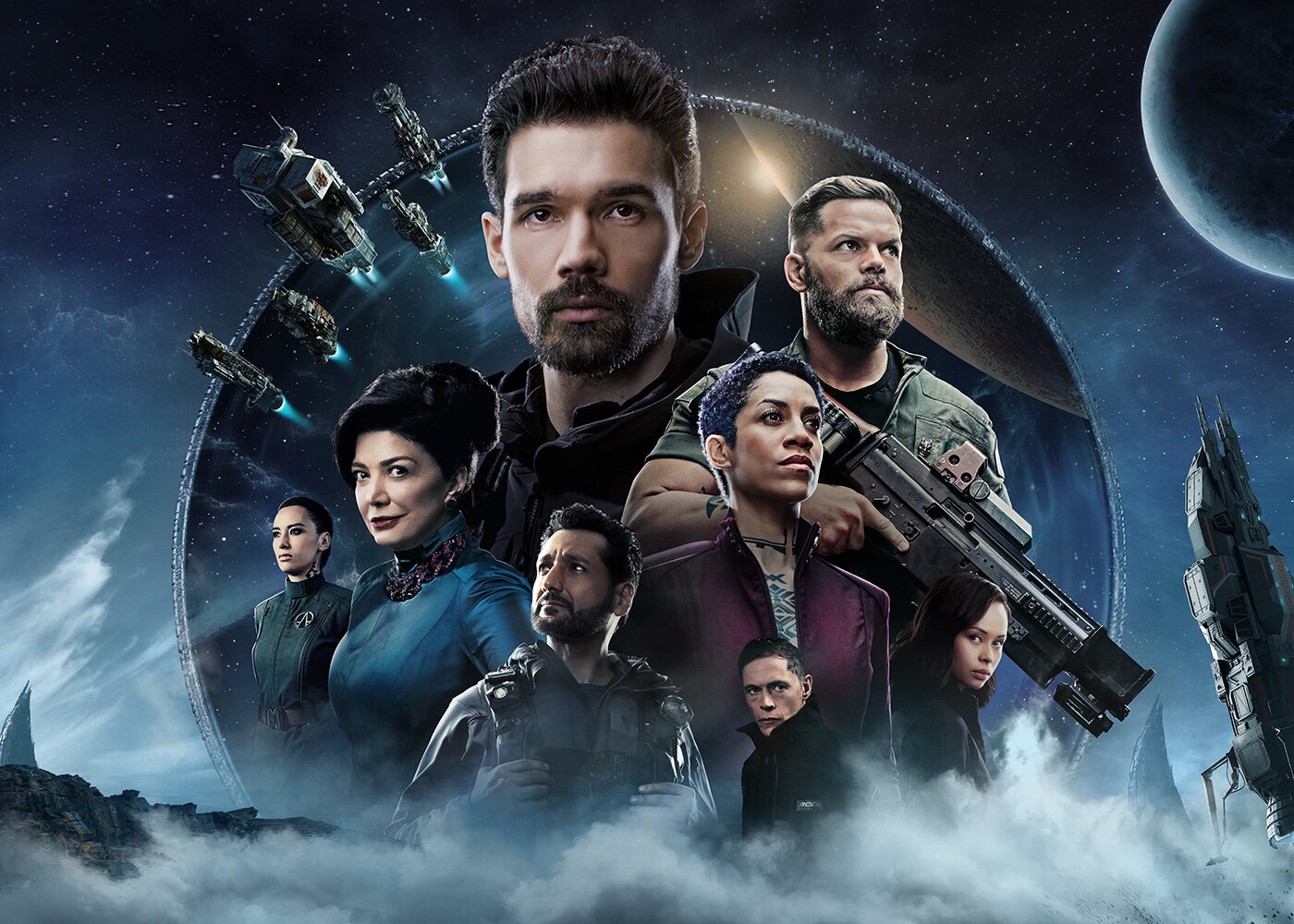
In 2015, Syfy released Season 1 of The Expanse, a stylish and intelligent science fiction (SF) TV series set 200 years in the future when humanity has colonized the moon, Mars and the Asteroid Belt to mine minerals and water. The six-season series is based on the novel series by James S.A. Corey with first novel “Leviathan Wakes”

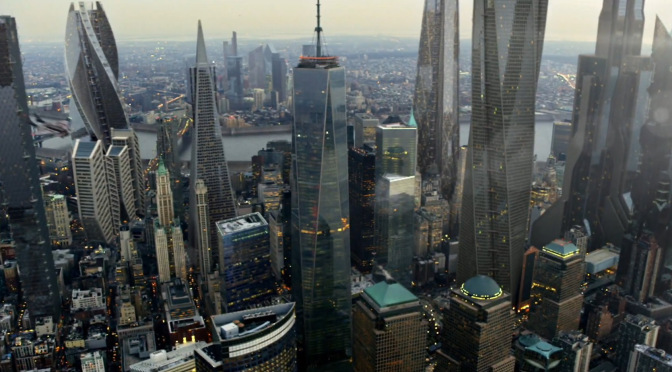
New York City of the Expanse

Humanity has split three ways culturally, ethnically and even biologically: Earth is currently run by the United Nations; Mars is an independent state, devoted to terraforming with high technology; and the Belt contains a diverse mix of mining colonies, settlers, workers and entrepreneurs. Belters’ physiology differ from their Earth or Mars cousins, given their existence in low gravity.

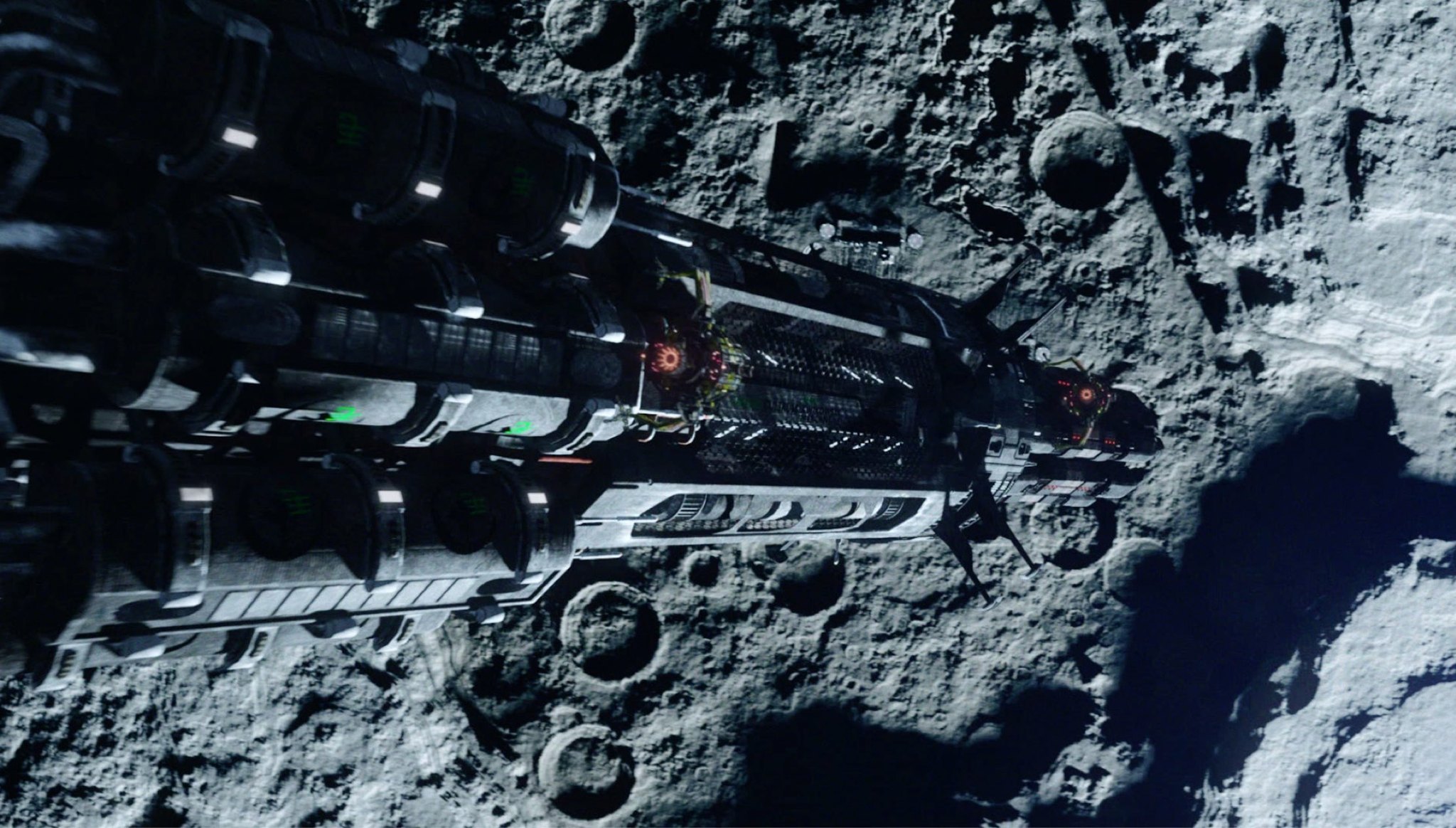
Ship heading to Ceres

One of the creators Mark Fergus explains the setting and premise of The Expanse: “We always felt that the great struggle of a lot of sci-fi we grew up on takes us into a story world where we’ve already jumped over the interesting part, which is the first fumbling steps of us pushing off this planet, getting out into the solar system, sorting ourselves out as a race. All the struggle and the pain and the glory of that, usually sci-fi … hops over it.” Fergus and his colleagues were attracted by what he called “the scaffolding,” how it all got built. “Here is who built it. Here is how humanity started looking at itself differently and getting rid of old forms of racism and creating new forms of racism.” This is the story of The Expanse.

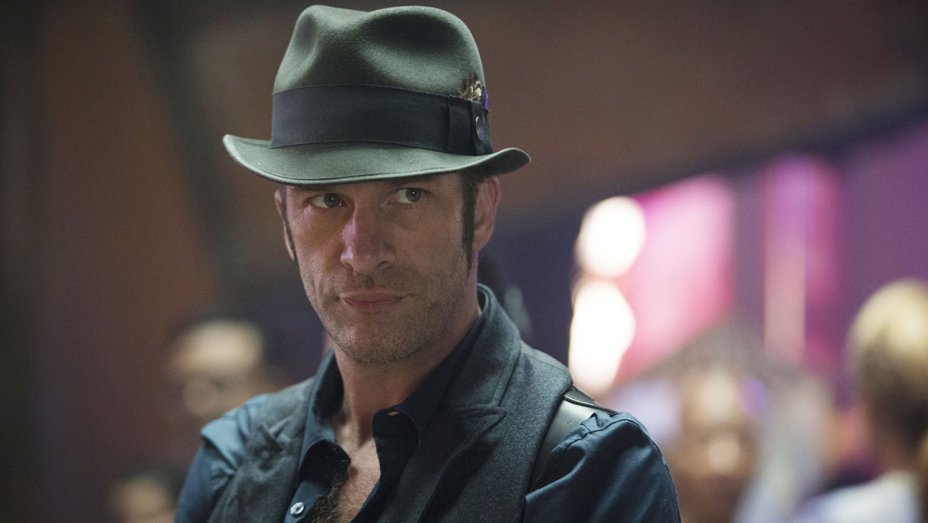
Josephus Miller, cynical detective on Ceres

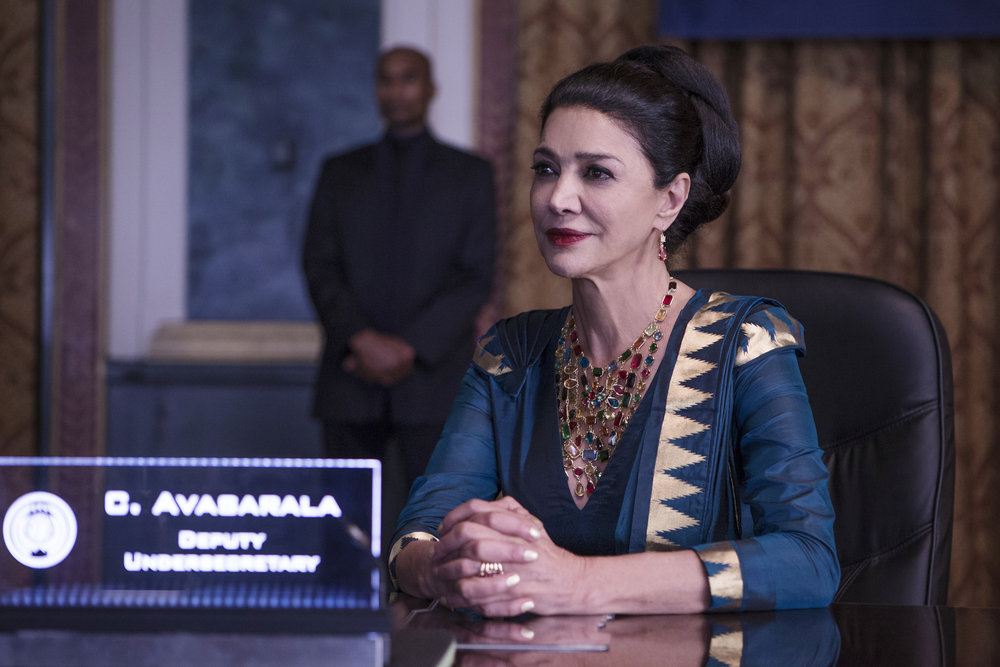
The series starts by following three main characters: U.N. Deputy Undersecretary Chrisjen Avasaraia (Shohreh Aghdashloo) on Earth; cynical police detective Josephus Miller (Thomas Jane), a native of Ceres (in the Belt); and ship’s officer Jim Holden (Steven Strait) and his crew as each unravels a piece of a conspiracy (related to an unknown extra-solar material discovered on a Saturn moon) that threatens a fragile peace in the solar system and the survival of humanity.

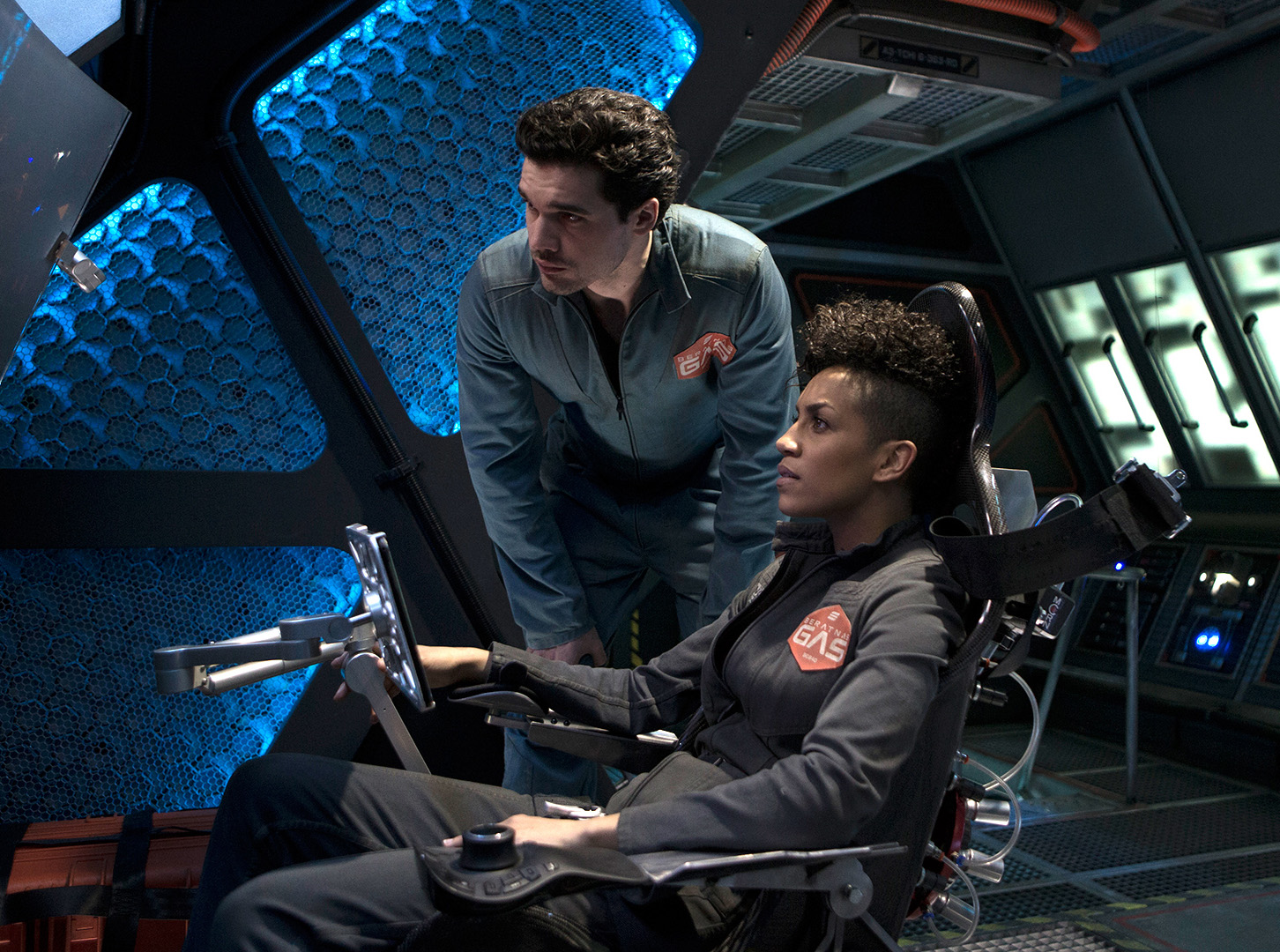
Holden and Naomi in their ship

First, Miller’s boss, Shaddid (Lola Glaudini) tosses him a missing person case: find Julie Mao (Florence Faivre), wayward daughter of a Luna-based shipping magnate (Mao-Kwikowski Mercantile); then Holden and four other crew members of the ice trawler Canterbury barely survive an attack that could spark a war between Earth and Mars. Miller and Holden eventually learn that the missing girl and the ice trawler’s fate are connected to a larger threat.

The only person who may stand a chance of figuring out the big picture is Chrisjen Avasarala, a brilliant 23rd-century Machiavelli, hoping to prevent simmering tensions between the United Nations, Mars and the Belt from erupting into all-out war. She will stop at nothing in her search for the truth, including gravity torturing a Belter or playing her friends and contacts like chess pieces to find answers.

Chrisjen speaking to Belter under gravity torture

What makes Chrisjen incredibly more interesting than, say a Circe or Claire Underwood, is that her scheming—as reprehensible as it may be at times—comes from a higher calling, not from lust for power or self-serving greed. She seeks the truth. And, like Miller, she struggles with a conscience. When her grandson asks if people are fighting again, Chrisjen says, “not yet; that’s why we [her contacts] need to talk and tell the truth; when people don’t tell the truth it always ends badly.” She may have been thinking of herself.

Chrisjen is a complex and paradoxical character. Her passionate search for the truth together with unscrupulous methods, makes her one of the most interesting characters in the growing intrigue of The Expanse. The Expanse further dignifies itself with subtle nuances of multi-layered social commentary—sewn into virtually every interaction. 

After Chrisjen’s friend Franklin Degraaf (Kenneth Welsh), Earth ambassador to Mars, suffers as a casualty in one of her intel games, he quietly shares: “You know what I love about Mars?… They still dream; we gave up. They are an entire culture dedicated to a common goal: working together as one to turn a lifeless rock into a garden. We had a garden and we paved it.” Chrisjen offers consolation to the loss of his position (because of her): “we may have prevented a war.”

Chrisjen consoles Degraaf with a bottle of wine after causing his forced resignation as ambassador to Mars

The subtle details and rich set-pieces of The Expanse universe rival the best world building of Ridley Scott. In fact, I was reminded of the grit and immediacy of Bladerunner. The Expanse is SF without feeling like it’s SF; it just feels real. Powerful storytelling—from judicious use of slow motion, odd shot angles, haunting music and background sounds, to superlative acting—draws you into a complete and realizable world.

Ceres Station

Annalee Newitz of ARS Technica wrote, “the little details of this universe are so finely rendered that they become stories unto themselves, like the way interracial tensions developed on Ceres between humans who grew up gravity-deprived and spindly, versus those whose gravity-rich childhoods allow them to pass as Earthers.” Newitz adds that no clumsy Star Trek-style representation of exo-planetary civilizations occurs in The Expanse. It’s all humans.  “Instead, there are political factions whose members stretch across worlds. And planets (or planetoids) whose populations are fragmented by class, race, and ideology. The politics here are nuanced, and we are always being asked to rethink who is right and who is wrong, because there are no easy answers.”

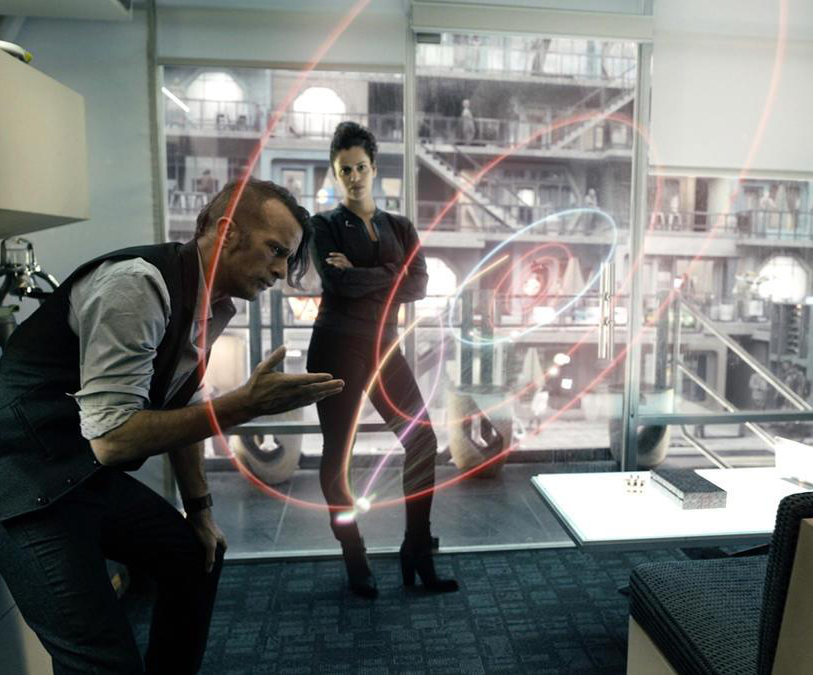
Miller and Tavi Muss, his former partner at Star Helix, discuss the recent strange events in the solar system while at his apartment in Ceres

Subtle but powerful differences between the Belter culture, Earthers and Martians (all human) includes language. Belters use a creole that’s a mix of several Earth languages that were spoken by the original human settlers in the Belt colonies. Resembling a Caribbean twang and cadence, words contain a mix of slang English, Chinese, French, Zulu, Arabic, Dutch, Russian, German, Spanish, Polish and others.  For instance, “Inyalowda” means inner or non-belter. “Sa-sa” means to know. “Copin” means friend. An Expanse Wikia provides an in-depth list of Belter Creole used in the TV show.

Liz Shannon Miller of Indiewire.com shares: “In the 23rd century, the smart phones look fancier but their screens still crack. There are people in straight relationships and gay relationships and group marriages. There are still Mormons, who are preparing for a whole new level of mission. The rich live well. The poor struggle. It’s not “Star Trek” — there’s no grand glorious yet vague cause to which our heroes have devoted themselves. Survival is what matters.” 

The Expanse is a sophisticated SF film noir thriller that elevates the space opera sub-genre with a meaningful metaphoric exploration of issues relevant in today’s world—issues of resource allocation, domination & power struggle, values, prejudice, and racism.  These issues are explored particularly well through its diverse female protagonists with subtle nuances of multi-layered social commentary sewn into virtually every interaction.

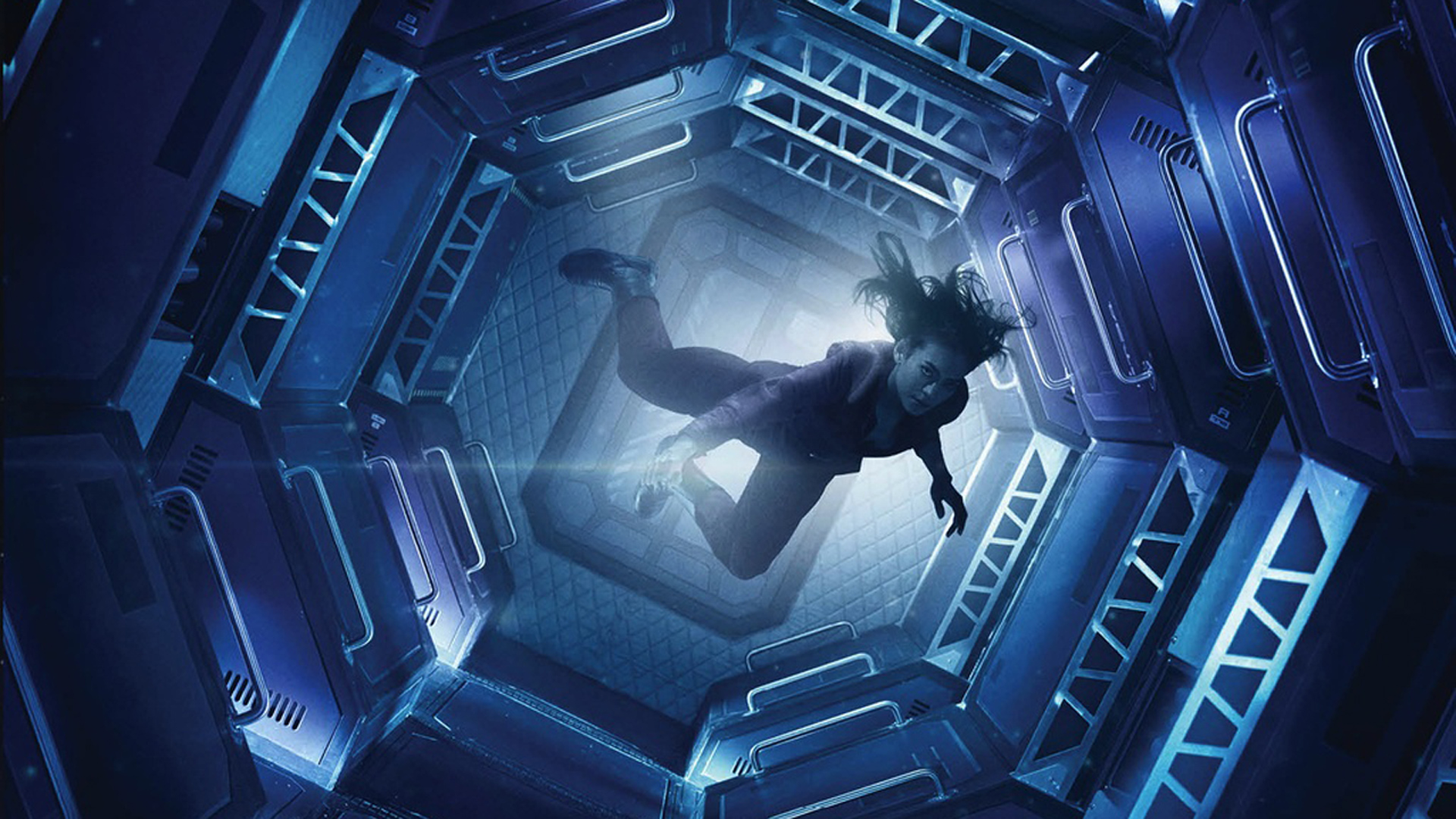
Julie Mao trapped onboard a stealth ship

In Season 1 alone we are presented with Julie Mao (Florence Faivre), who is according to Detective Miller (tasked to find her) the “richest bachelorette in the system”, and an OPA collaborator; Naomi Nagata (Dominique Tipper), a highly-skilled Belter technologist and former OPA agent; Camina Drummer (Cara Gee), a no-nonsense calculating Belter who used to work with OPA leader Anderson Dawes but now helps run Tycho Station that is building a giant interstellar ship for the Mormons; and Chrisjen Avasarala (Shohreh Aghdashloo) a sharp-minded ruthless political strategist in search of the truth.

(Left: Naomi Nagata)

Drummer in a sticky situation during a coup on Tycho Station

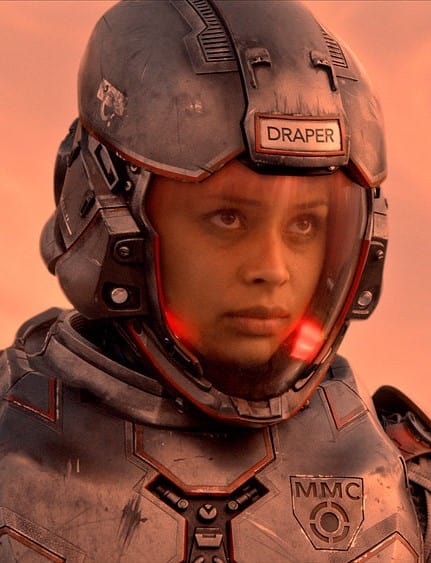
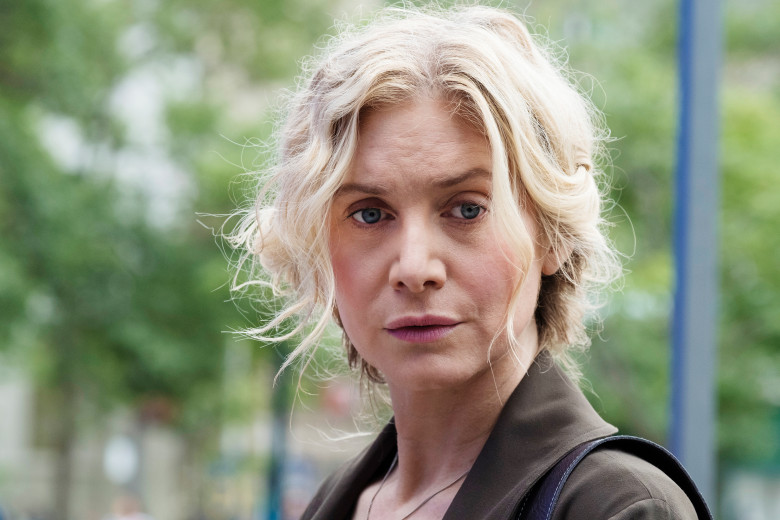
Season 2 and 3 introduce yet more powerful female characters with agency, such as Bobbie Draper, a staunch hard-fighting Martian marine who dreams of a terraformed Mars; and the Reverend Anna Volovodov (Elizabeth Mitchell), a gay Methodist doctor, who brings faith, hope, and inclusion to her acts of heroism.

(Left: Bobbie Draper)

Anna Volovodov dealing with a protest on Earth

I found the music by Clinton Shorter particularly appropriate: subtle, edgy, haunting, and deeply engaging: like its characters, the story, and world. The haunting title song, sung by Lisbeth Scott, lingers in each episode throughout the six seasons.

Amidst the unfolding intrigue of war, corruption and secrecy, a rich tapestry of characters take shape —with the added spice of an extra-solar alien entity (and a nod to panspermia). The alien entity is called the protomolecule based on its evolving nature (it eventually evolves into a ring-gate to other worlds). We eventually learn that the alien blue goo was sent by an alien civilization (directed panspermia) inside an interstellar asteroid (lithopanspermia) millennia ago; although it was captured by Saturn’s gravity to become one of its many moons (Phoebe), its target was Earth’s rich biology to bioengineer. Considered a bio-weapon, it is coveted by the politicians of Earth, Mars, and the Belt.

Miller, who was born on Ceres but received some cheap bone density implants—so he looks like an Earther—is a cynical detective (not above being bribed by merchants cutting corners) and trying hard to hide the fact that he has a big heart and is looking for meaning in his empty existence as a Star Helix cop (Miller: “No laws on Ceres; just cops.”) Belters call him a “well wala”, traitor to his own kind.

Miller and Dawes discuss the disappearance of Julie Mao

Ceres-born Anderson Dawes (Jared Harris), suave and ruthless leader of the separatist OPA (Outer Planet Alliance) challenges Miller: “I think that under that ridiculous hat there’s a Belter yearning to find his way home.” Except what is “home”? When asked by his new Star Helix partner, Dmitri Havelock (Jay Hernandez) about ‘why the hat?’, Miller quips, “to keep out the rain.” There is no rain on Ceres. Never was. Never will be.

The militant OPA is an activist organization that sells itself as a liberator for Belters but is really a terrorist revolutionary group, looking to shift the balance of power. Led by Dawes, the OPA’s ambitious agenda ranges from staging protests in the gritty Medina district of Ceres to stealing stealth technology and bio-weapons from Mars and Earth. Some of the best scenes occur between the intense Dawes and crusty Miller, as they banter over what it means to be a Belter in a solar system where they are clearly not players but sandwiched in a power struggle between Earth and Mars.

Dawes confides to Miller: “All we’ve ever known is low G and an atmosphere we can’t breathe. Earthers,” he continues, “get to walk outside into the light, breathe pure air, look up at a blue sky and see something that gives them hope. And what do they do? They look past that light, past that blue sky. They see the stars and they think ‘mine’… Earthers have a home; it’s time Belters had one too.”

Subtle. Not so subtle. The show takes a few opportunities to point out what we are doing to our planet. Cherish what you have. Cherish your home and take care of it. We’re reminded time and again, that we aren’t doing a good job of that.

Onboard the MCRN Donnager, Martian Lopez asks his prisoner Holden if he misses Earth and Holden grumbles, “If I did, I’d go back.” Lopez then dreamily relates stories his uncle told him about the “endless blue sky and free air everywhere. Open water all the way to the horizon.” Then he turns a cynical eye back on Holden. “I could never understand your people. Why, when the universe has bestowed so much upon you, you seem to care so little for it.” Holden admits, “Wrecking things is what Earthers do best…” Then he churlishly adds, “Martians too, by the look of your ship.” Lopez retorts, “We are nothing like you. The only thing Earthers care about is government handouts. Free food, free water. Free drugs to forget the aimless lives you lead. You’re shortsighted. Selfish. It will destroy you. Earth is over, Mr. Holden. My only hope is that we can bring Mars to life before you destroy that too.”

The underlying message in Expanse becomes clear in the last show of Season One. Near the end, Miller asks Holden what rain tastes like and Holden admits he never thought about it. Miller then asks, “How could you leave a place like Earth?…” Holden responds, “Everything I loved was dying.”

Critic Maureen Ryan of Variety says, “It’s to the show’s credit that it is openly political, and takes on issues of class, representation and exploitation.”

Bobbie and her Martian crew patrolling Ganymede

As the seasons progress (ending in Season 6), the plot doesn’t so much thicken as branch like a fractal tree or the braiding delta of a river into the sea, expanding as the galaxy itself into infinite space. Season 2 witnesses biological and political developments with the protomolecule, from the use of an entire station as a human laboratory to the testing of protomolecule-human hybrid weapons on Ganymede Station. Stationed there, Martian marine Bobbie Draper barely survives an encounter with a hybrid as it easily dispatches her entire crew and UNN soldiers alike. Events related to the secret war among powers to hold and control this alien weapon precipitate war between Earth and Mars.

Chrisjen Avasarala questions Bobbie at an Earth-Mars summit inquiry into the incident on Ganymede

The plot train goes into high gear in Season 3 with high stakes scenes of war, intrigue, and violent change. Through the various set-pieces of place, new characters are introduced and embed themselves in the larger story with amazing potency. One example of the various plot threads surrounding Ganymede Station introduces botanist Prax Meng (Terry Chen) and his 12-year old daughter Mei (Leah Jung), secretly taken from him by a Pierre Mao scientist to become a protomolecule hybrid. Introduced in Episode 8 (Pyre) of Season 2, Prax and kidnapped Mei immediately stir our hearts with their story. I was struck by how powerful a brief appearance by one character could be: Prax, who thinks he has lost Mei when the mirrors fell on Ganymede Station, finds himself on a refugee ship with Doris Bourne (Grace Lynn Kung), a botanist colleague from Mars. We are introduced to Doris and lose her within a single episode; yet we feel incredible pathos on her demise (thanks to their performances, and the circumstances that drive their short-lived story together).

Doris and Prax onboard the refuge ship after the Ganymede incident

The Expanse is filled with these potent vignettes, focused on one or two characters, that tug our heartstrings with personal drama. Several come immediately to mind: ‘Big Guy’s’ (Gugun Deep Singh) heartfelt sacrifice in Episode 12 (The Monster and the Rocket) of Season 2; the slaughter of all miners of Anderson Station, with particular focus on Marama Brown (Billy MacLellan) and his daughter Kiri (Raven Stewart), in Episode 5 (Back to the Butcher) of Season 1.  

Throughout its expansive six seasons, The Expanse never loses sight of its strongest feature: its characters who each tell a heart-felt story and whose threads weave a greater story tapestry. This is a TV show that writes large through its many intimate stories; all smaller wholes entangled with the larger whole.

Variety’s Whitney Friedlander writes that The Expanse is Syfy’s most expensive series to date. It shows. And it shows well because it does not trade story for effects. Story comes first. The Expanse is a welcome breath of fresh air for high quality “space opera” science fiction on TV. It fills a gaping hole left by the conclusion of Battlestar Galactica in 2009.

Poster for Season Five of The Expanse

p.s. Since my title includes a comparison of The Expanse with Game of Thrones, I feel compelled to state another important difference between these two highly successful TV shows, and ultimately why I disliked one as I loved the other: while both shows created fully-fleshed compelling characters that viewers quickly embraced and loved (or hated), GOT chose to wily-nily give them brutal (and often grotesque) deaths for no other apparent reason than to shock the viewer—creating a tension of suspicion and fear. Viewers became nervous for their favourite character. It was like a crap shoot and the viewer was the real victim. The death of virtually every character in the Expanse however—though also often a heart-wrenching surprise—could be explained and understood. This was because their demise filled the greater purpose of the overall story. That simple. I give ultimate credit to the writers of The Expanse. And shame on the Game of Thrones screenwriters and producers.     

“Story must come first!”

Julie Mao escaping imprisonment in the stealth ship

Nina Munteanu is a Canadian ecologist / limnologist and novelist. She is co-editor of Europa SF and currently teaches writing courses at George Brown College and the University of Toronto. Visit www.ninamunteanu.ca for the latest on her books. Nina’s bilingual “La natura dell’acqua / The Way of Water” was published by Mincione Edizioni in Rome. Her non-fiction book “Water Is…” by Pixl Press (Vancouver) was selected by Margaret Atwood in the New York Times ‘Year in Reading’ and was chosen as the 2017 Summer Read by Water Canada. Her novel “A Diary in the Age of Water” was released by Inanna Publications (Toronto) in June 2020.

Lexicon of  “The Splintered Universe”

Aeon \ Æ-ôn \ n : in Gnosticism, a divine power or nature emanating from the Supreme Being and playing various roles in the operation of the universe

Ae•on Sun•tel•ia \ Æ-ôn-sün-tel-ia \ n : 1 : the End of the Age according to the ancient Greeks, described by Plato as a cycle of catastrophe 2 : a prediction made recently by Raphael Martinez, leader of the Hermetic Order of a violent end of an age; the destruction of the old world  according to self-proclaimed prophet “will be signified by the joining of twin soul-mates who will herald the coming of a New Age.” 

al•tru•ism \ ôl-trü-ism \ n : the principle or practice of unselfish concern for or devotion to the welfare of others; a motivation to provide something of value to a part other than oneself; pure altruism consists of sacrificing something (e.g., time, energy, possessions) for someone other than the self with no expectation of compensation or benefits, direct or indirect

al•tru•is•tic \ ôl-trü-is-tik \ adj : describes the action of altruism

ammut \ am-mut \ n : a large invertebrate that makes its eggshells of swamp detritus. During their larval stage, they are extremely carnivorous and will devastate the swamp wildlife. They hatch and swarm during the season of the dead on Horus. The ammut eat the young apophus. As adults they become vegetarian and serve as food for the apophus

anti-Nihilist \ an-tē-nī-a-list \ n : someone who opposes either philosophically or through action the activities and philosophy of the Nihilists.

apophus \ A-pô-fəs \ n : a gigantic snake-like creature known through local myth that inhabits the Boiling Sea in the Weeping Mountains are of the planet Horus (47 Uma a) in the 47 Ursae Majoris system

Azorian \ A-zór-ēən \ n : a tall, heat-loving lean-limbed biped species with tough sand-paper hide, long snout and ferret face from Azor in the Beta Hydri system 

Bado•win \ badō-in \ n  1: a small, very strong, gnarled and hairy biped species of often ill-repute, originating on the planet Nexus in the M103 star cluster

Sand dunes Oregon3

Dunes on Upsilon 3

barkhan (also barchan) \ bär-kən \ n : cresent-shaped migrating sand dunes that are wider than long. These dunes form under winds that blow consistently from one direction and may move over desert surfaces with remarkable speed, particular to Upsilon 3.

bastet \ bas-tet \ n : a genetically produced mammal that displayed aggressive co-evolution and wiped out the domestic cat population and Earth’s large feral cats.

Biomimetic \ bīó-mi-met-ic \ adj : the application of biological methods and systems in nature, particularly in living organisms, in the design by sentient beings of items they use such as houses, engineering structures, vehicles, etc. 

marsh-bog Rhea

Marsh-bog on Sekmet

blanket bog \ blanket bôg \ n  1: an extensive peatland (wet spongy perched water ecosystem) formed in a climate of high rainfall and low level of evapo-transpiration, allowing peat development not only in wet hollows but over large expanses of undulating ground; an ecosystem usually consisting of hummocks and pools with specifically adapted plant and animal life; an extensive bog-fen landscape   

blenoid \ blen-óid \ n  1: a ferocious and dull-witted four-legged dog-like animal with three sets of razor sharp teeth, massive head with three eyes and tough red hide; indigenous to Upsilon 2 in the Epsilon Endari system 2 : term used for a person with these traits : CRAZY; MAD 

Bo•bo Bar \ bō-bō bär \ n : a snack bar comprising of chewy bobouris fruit jerky and artificial chocolate.
seelisberg-view06

Boiling Sea, Horus

Boiling Sea \ boēl-ēng sē \ n : term used for the great convoluted inland sea surrounded by the Weeping Mountains, on the planet Horus

Borr \ bōr \ n 1 : four-legged gentle species, indigenous to the planet Borrias and extirpated by the Vos Nihilists 2 : a shape-shifting species thought to be from Borrias

buma \ bü-mä \ n : the inside muscle of the buiuma’s digestive tract that sloughs off as the buiuma inverts itself. This event occurs twice a year, during kelm, the wet season of the Eosian jungle. It is considered an Eosian delicacy.

Cerberus / Cər-bər-əs / n : the term Rhea coined for the tall cylinders that dispensed the drugged nourishment on the penal colony of Sekmet : “Each cylinder with its swollen bulbous reservoirs, resembled a three-headed cyber-beast, with flexible teets suckling its deformed young.”

chaos \ kā-ôs \ n 1 : the confused unorganized state existing before the creation of distinct forms 2 : complete disorder syn confusion 3 : common expletive to denote less than optimal to utterly calamitous or disastrous conditions syn “hell”

co•bal \ cō-bôl \ n :  a small vole-like burrowing rodent native to the deserts of Upsilon 3 and the mainstay prey of the blenoid

cozu shrub \ co-zü shrub \ n :  a silver-green small shrub with thorns, and “popping” seed pods, indigenous to the desert of Upsilon 3

creel \ crēəl \ n : a fungus from Omega 6 that grows naturally into a metallic burnished hard surface and used by biomimetic architects on Horus to build their floors.

creon \ crē-ôn \ n 1 : an individual of the main species from the planet Creos in the 55 Cancri system; known for their laziness, lack of good judgement and imagination 2 : term used to indicate an individual with these traits : FOOL; IDIOT; DULLARD

Delenean \ Də-le-nē-en \ n : furry simple creatures with six appendages, native to Mar Delena in the Fomalhaut system. This species is subservient to the AI community that runs Mar Delena

Diverse \ dī-vərs \ n : a term that describes the existence of two parallel and divergent universes that comprise a metaverse

Dreccaline \ drec-ca-lēn \ n : a non-specific highly potent nerve poison that kills all life

Du•en•de \ Du-en-de \ n : an old Spanish word that describes a heightened state of emotion, expression and authenticity, loosely meaning “having soul”; promoted and discussed by Spanish poet Frederico Garcia Lorca  as an inner transcendent emotional response and spirit of evocation with roots from Spanish mythology.

dust \ dəst \ n : a psychoactive drug that produces mild euphoria and drowsiness in most sentient species

endo•rheic \ en-dō-rē-ik \ adj : pertaining to a closed drainage basin (a lake) that retains water and allows no outflow to other external bodies of water such as rivers or oceans; a self-enclosed system equilibrated through evaporation

Eos \ Ē-ôs \ n : ringed jungle Planet in the Pleiades Nebula; original home of the vishna tree
collision with paradise-no title

Eosian with Scree on Eos

Eosian \ Ē-ōs-ē-ən \ n : principal sentient being from Eos in the Pleiades Nebula; originally from Earth (Atlantis) and responsible for establishing the Galactic Guardian force in the Milky Way Galaxy

Epoptes \ Ē-pôp-tes \ n : shape-shifting god worshipped by the Eosian species, and from whom the Eosians presumably take their instruction through dreams

Fauche \ Fōsh\ n : an ungulate-like biped species with very long ears, wide frequency hearing and large lustrous eyes, originating from Bedar 9 in the Sigma Draconis system

fok \ fôk \ n : excrement from a blenoid

gadpie \ gad-pī \ n  1: a tree indigenous to Iota Hor-2, the moon of Horologii b  2: the wood of the gadpie tree

ghost \ gōst \ n : a person acting as a portal, capable of recalling aspects of the other diverse through their other soul-half in a déjà vu experience. If they are capable of soul-drifting—locking into someone else’s dream or trance—a ghost can manipulate both the dreams and real aspects of that other person’s life in the other diverse, usually in the form of a lengthy déjà vu

ghou•roud \ gü-rüd \ n : 1 : Original French term for moving dunes;  2 :  fields of moving dunes (barkhans) resulting from shifting sands, particularly found in Upsilon 3

glit•ter \ glit-tər \ n : 1 : a psycho-active drug used by Gnostics to see God; 2 : a refined form of dust, glitter is obtained through the major drug cartel of Dark Sun, run by Barbaricca on Sekmet; also known as glitter dust; also see dust

Gness \ ness \ n : a gentle wolf-like species with translucent skin from the 61 Ursae Majoris system

Gnosis \ nōs-sis \ n : knowledge of God

Gnostic \ nôs-tic \ n : a follower of Gnosticism

Gnosticism \ nôs-ti-sizm \ n : a belief system based on early Christianity, Helenistic Judaism, Greco-roman mystery religions, Zoroastrianism and neoplatonism, which teaches that some esoteric knowledge (gnosis) is necessary for salvation from the material world, created by an intermediary (demiurge; considered evil or merely imperfect) to God

Gnostic Hermetic Order of Québec \ nôs-tic hər-met-ic or-dər of qā-bec \ n : an order devoted to Gnosticism. Founded by Rafael Martinez, the Hermetic Order is based on Earth but has several outposts throughout the universe

Gnostic Schiss Order \ nôs-tic shiss ōr-dər \ n : a very small Hermetic order devoted to Gnosticism with mostly non-human members. Targeted by an Eclipse assassin, the Schiss Order was nearly extirpated. Its remnants is currently based on Uma 1

Rhea library02

Rhea in her Great Coat

Great Coat \ grāt cōt \ n : part of the uniform and weapons arsenal of the Galactic Guardian; millions of thixtropic nano-sensors incorporated into its durable yet flexible fabric let it respond to any number of internal and external stresses, providing its wearer with a shield from the cold or from a weapon’s discharge

hedon \ he-dən \ n 1 : a mildly euphoric recreational drug that is smoked and produces a pungent yellow smoke 2 : used colloquially to indicate incredulity (as in “you must be blowing hedon”)

Her•metic Or•der  (see Gnostic Hermetic Order)

hes•i•um fuel \ hēs- ē-um feü-əl \ n : a highly inflammable and incendiary rocket fuel used by most Zeas Corporation ships

inner diverse \ innər dīvers \ n : the world or existence comprised within the inner twin universe of the metaverse and linked to its twin existence, the outer diverse, through transitional phenomena such as black holes and intuition

jag \ jag \ vb  1 : the act of straying off the space-time stream of faster-than-light travel and often accompanied by dangerous ship stress  2 : used colloquially to indicate a serious misjudgement (as in “he jags up all the time”)

jagging \ jag-gēng \ vb  1 : describing a ship that is straying off the space-time stream 2 : vb; adv : used as an expletive to  describe a person, concept or action that lacks sense or causes harm, embarrassment or discomfort (as in, “he’s jagging with your mind” or “she’s so jagging stupid”)

jagged \ jagd \ vb1 : past tense verb of straying off the space-time stream of faster-than-light travel  2. adj : colloquial expletive term for a serious error or bad circumstance; SCREWED, MESSED UP (as in, “we’re jagged”)

kappa particles \kap-pa pär-ti-cəlz\ n : energy particles that concentrate in the upper atmosphere of several gas giants; retrieved by Fauche ray class sentient ships for fuel using specialized fuel scoops

kelm \ kelm \ n : the wet season on the planet Eos

kepry \ kep-rē \ n : a flying crustacean-like creature on Sekmet that lives in the dung piles left by the sobek

Khonsus \ kón-səs \ n : tall, feathered biped creature with raptor head, wings, and liquid amber eyes able to mind-probe, origin unknown but currently in 47 Ursae Majoris system; these hawk-like people achieve their powers through a symbiotic interaction with the planet’s energy and forces

Legess \ lə-gess \ n : tall, slim praying mantis-like invertebrate creatures who colonized Chara and enslaved native Rills

L’Ordre de l’Arbre Sac•ré  n : see Order of the Sacred Tree

mandala \ man-da-lä \ n : an ornate, highly detailed geometric design made of colored sand and symbolic of the universe. Used in a sacred ceremony by Tibetan Buddist monks, it is painstakingly created over many days and represents their sacred world of balance held together by spirit. Once work of art is finished and revered in a short ceremony, it is destroyed

MEC \ mek \  n : acronym for Magnetic-Electro Concussion pistol, created by Rhea Hawke, which uses electro-magnetic wave energy to focus sub-atomic quintle particles into resonance with specific DNA

Metaverse \ met-a-vərs \ n :  a theoretical term that describes the composition of all matter and energy encompassed by divergent diverses; a whole quantum cosmos that includes all that was and will be

mev•lan•i \ mev-lan-ē \ n : term used on Sekmet to describe the leader of the penal colony

Swamp03 TNS

Migratory trees of Horus

Migra•tor•y Trees \ mī-grə-to-rē trēz \ n : a tree known in myth to migrate from one location to another in the Weeping Mountains area of the planet Horus; according to myth the Khonsus inhabited the trees in ancient times

nexus portal \ nex-əs por-təl \ n : a person who enters the state of acting as a portal with ease through meditation or a self-induced trance. See portal

Ngu \ nü \ n : a photosynthetic amoeboid-like creature with protuberances as sense organs that lives symbiotically with AI-machinery; from Virgil 9 in the 70 Virginis system

Nuyu \ noo-ēü \ n : a nano-chemical mixture, imbibed as a liquid, that acts at the genetic level to temporarily change small aspects of outer appearance such as skin, eyes, hair; used as make-up

Nihilist \ Nī-ə-list \ n  1 : a member of a militant splinter group of the Vos  2 : a specially trained death squad of shapeshifter assassins on the Vos payroll

Order of the Sacred Tree  n : a closed membership in Quebec on Earth, devoted to the divine nature of the vishna tree, considered the tree of life and knowledge and the answer to achieving the balance of all things. The Order believes in the notion that a messiah, connected to the tree, will bring balance and begin a new age of enlightenment and peace

Orichalkon \ o-rich-al-kon \ n : 1 : the durable alloy that the mythical Epoptes bestowed to the Eosians in Atlantis; 2 : an elite guard of five squadrons of highly skilled sleuth Eosian warriors (squadrons include Cadmus, Odysseus, Peometheus, Perseus and Daedalus) dedicated to guard Mon Seigneur Martinez and his Hermetic Gnostic Order

Ouroboros

Ouroboros

Ouroboros \ u-rō-bōr-ōs \ n : a mythical serpent eating its own tail; connected with the Suntelia Aeon that refers to the serpent of light residing in the heavens (the Milky Way); the ouroboros symbolizes an Aeon

outer diverse \ outər dīvers \ n : the world or existence comprised within the outer twin universe of the metaverse and linked to its twin existence, the inner diverse, through transitional phenomena such as black holes and intuition

Peeka \ pēka \ n : a small monotreme creature that produces eggs and lives in the marshes of Omicron 12

play•a \ plī-ä \ n : a dry desert lake that contains water for a short while after a sudden downpour, causing a flood; an endorheic lake that is smooth hardpan most of the time

plock nectar \ plôk nectər \ n : 1 : a tasty nectar that is normally a mixture of juices from various planets with 50% of the juice made from the plock root of Scandia; 2 :  100% nectar from the plock root, known for its medicinal properties

polysynth fiber \ pôlē-sinth fīber \ n  : nano-strings that resonate with matter

pocket \ pôk-et \ n : acronym for  PulsOniC Kinetic Energy Tracker created by Rhea Hawke , which tracks a target once the gun has identified their signature

pockta \ pôkta \ n : a highly nutritional leguminous plant from whose giant seeds a rich thick soup is made

poi mash \ pói mash \ n : a substance like tobacco that is either smoked or chewed.

Portal \ pór-təl \ n : 1 : a person capable of entering into the other diverse and through their experience capable of seeing into the future of their current diverse; 2 : a person in the act of said action; 3 : a person, when acting as a portal, during dreamtime or meditation, may open a gate to the other diverse.

pro•max•in \ pró-max-in \ n : a sleep drug activated by metabolism

pul•son wave \ pəl-sôn wāv \ n : 1 : an electromagnetic green energy wave emitted by a long range stun cannon to disable a ship; 2 : a wave discharged by a weapon used in ships of Tangent Shipping design

quintle \ quin-təl \ n  1 : dark energy particle found in everything  2 : destructive energy discharged from a weapon (Q-gun created by shape-shifters) that resonates with matter to dematerialize an object  3 : used colloquially to express something of importance (as in: “who gives a quintle about spice?”)

Rill n : a short, stout and smelly bog being with tube-eyes, webbed limbs, large genitals and sloughing outer skin from Omicron 12 in the Chara system

sabkha \ sab-kä \ n : a desert feature of Upsilon 3, in which the sand worm hides while waiting for prey

Scandi \ skan-dē \ n : a lizard-like lean-limbed biped with remarkable healing abilities; indigenous to the Upsilon Andromedae system

Schiss \ shiss \ n : a hermetic order of peaceful Gnostic priests, devoted to the use of dream-meditation, particularly lucid dreaming, to achieve transcendence and evolve closer to God and the universal consciousness; several of its older founders experienced the Gate Hallucination; targeted by Eclipse and massacred into near extirpation during a meeting in Paradise City on Uma 1

shallik oil \ shal-lik oil \ n : an oil that possesses natural narcotic properties that numb the nervous system of those in contact with it and make them docile; the oil is produced by microbes indigenous to the Weeping Mountains area of the planet Horus; when ingested, the oil ill make one very ill

shapeshifter \ shāp shiftər \ n : a being able to change his or her physical appearance and associated physiology into several other forms; considered an ability possessed by the Borr species from Borrias

SGT n : Standard Galactic Time; based on a decimal system from the basis of the Earth 24 hour diurnal cycle, with ten days equal to one month and ten months equal to one year; zero SGT is set at the moment of first alien contact with Earth

skipboat \ skip-bōt \ n : a two-man vehicle with skates/skis that is able to move rapidly over water, ice and snow; used by settlers of Uma-1

slave \ slāv \ n : 1 : a derogatory term indicating one of lesser standing, often in actual indentured status : 2 : a term used by crime lords to their own hirelings or any considered lesser being

sling rif•le \ sling rīf-əl \ n : harpoon-like weapon used by hunters, primarily blenoid hunters on Upsilon 3. The sling’s sharp harpooned projectile seldom kills. “Killing wasn’t its objective; maiming, injuring and demobilizing was the intent. The sling was popular with hunters and gamers looking to satisfy their brutal sport of tormenting lesser beings.” – Rhea Hawke
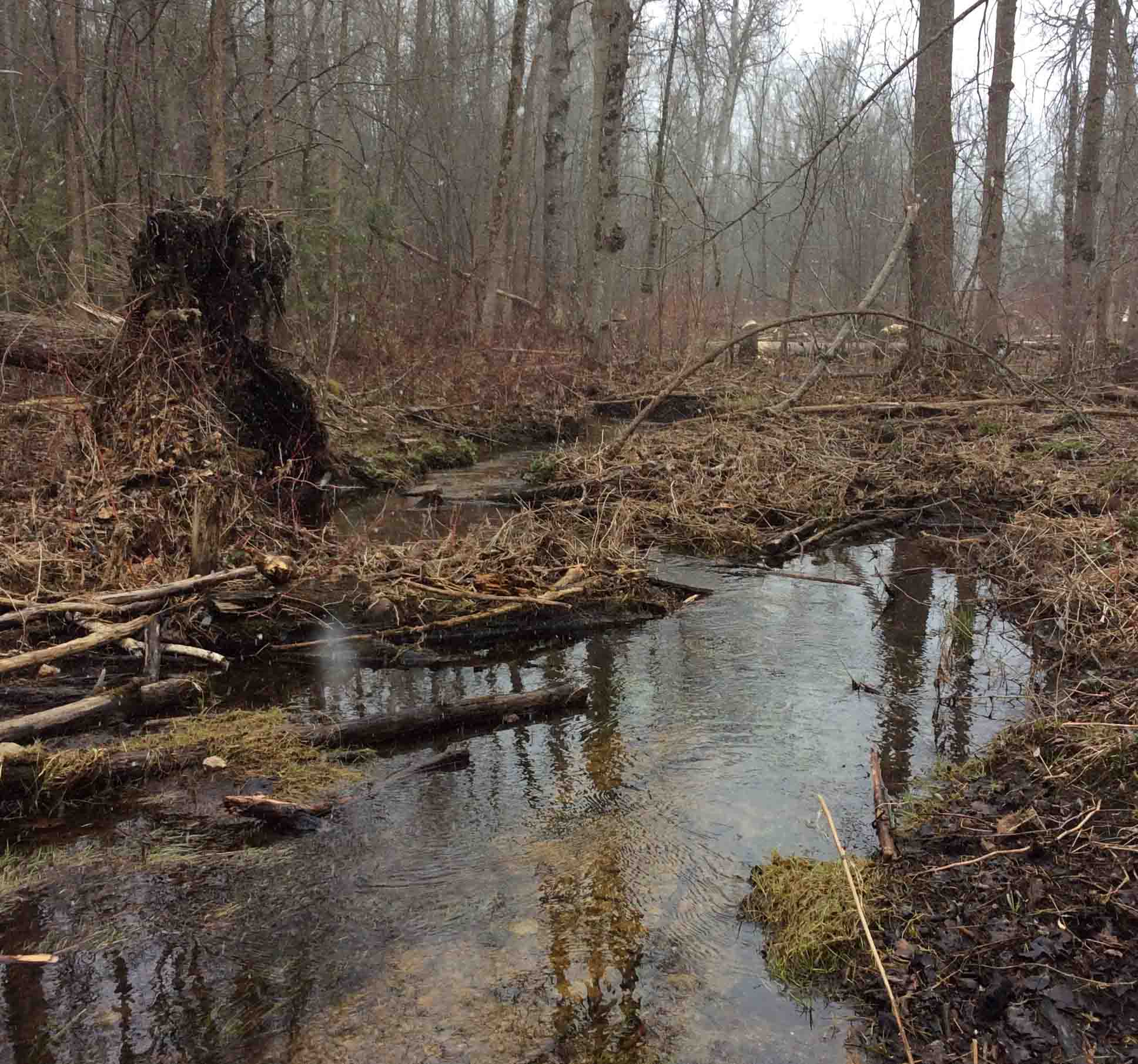
Wetland-Trent3

Habitat of the sober

sobek \ sōbek \ n : a fierce crocodile-like native of Sekmet that digs underwater tunnels in the peat and drowns its victims

soul-drift \ sōl drift \ vb : the practice of entering another’s dreams, even one’s own, and change“reality” through them

soyka \ sói-kä \ n : a soy-based warm drink like coffee; stimulant

Spice \ spīs \ n : a mild psychoactive drug in common usage

Sporian \ spó-rē-ən \ n : a very tall, pear-shaped lanky greenish species with elongated head and leather-like skin, long limbs and large bulbous eyes from Spor in the 18 Scorpii system

stun stick \ stun stik \ n :  a high-energy weapon that resembles a staff. It is used by the Orichalkon, an Eosian elite guard of Mon Seigneur Martinez assigned to guard his gnostic order in their various outposts in the universe. The weapon is wielded like a staff in Tai Chi movements and discharges an energy wave that stuns all in it contacts

Sun•tel•ia Ae•on \ sün-tel-ia Æ-ôn \ n : 1 : the End of the Age according to the ancient Greeks; see Aeon suntelia

synthflesh \ sinth-flesh \ n : real skin molecules and synthetic materials combined by nano-technology, used in synthplast

synthplast \ sinth-plast \ n : prosthetic made of a combination of real skin molecules and synthetic flesh combined by nano-technology

Tangent Shipping \ Tan-gent Ship-pēng \ n : the name of a Fauche ship building company

tappin \ tap-pin \ n : a small domesticated cat-like mammal with fangs and three tails, indigenous to Iota Hor-2

tatsuk \ tat-sək \ n : 1 : original Turkish Earth term meaning prisoner  2 : used by the galactic crime sub-culture, particularly Black Sun, to designate someone under indentured servitude; 3 : slave

1teck \ tek \ n : a permanent genetic change induced through nano-technology developed by Eosians by acting at the DNA level

2teck \ tek \ vb : the act of applying a teck, usually done by a qualified nano-genetics doctor

thix•tro•pic \ thiks-trô-pic \ adj : describes the intelligent nano-sensors incorporated into the durable yet flexible material of a Great Coat, which respond to ongoing environmental stresses that protect its wearer from a range of assaults including disease, weapon discharge, extreme temperature, etc.; see Great Coat

Tocan \ tō-can \ n : a rare insect-like creature indigenous to the Upsion Andromedae system from whose larvae a natural protein fibre is spun to create the shimmering tocanai fabric used in the creation of expensive suits

Tocanai \ tō-can-aē \ n :  the name give to the fabric produced from the fibre spun from the tocan larva

Tree Cult of Earth \ trē cəlt of ərth \ n : see Order of the Sacred Tree

U•ly•sses \ eu-lis-sēz \ n : a space station built by Zeta Corp Aeronotics of Earth; a self-sufficient long term agrarian colony in the vein of an O’Neill Colony with a set of large rotating cylinders many kilometres long and thousands of meters across with large gimballed mirrors; the station maintains a circular motion of 1 rpm to create artificial gravity

Ve•nik \ Ve-nik \ n : a large reptilian-like scaled creature from the HD177830 system with indolent eyes with several sets of arms with poisonous claws and “mouths” or orifices; Veniks are known for their violent and unprincipled nature; they are one of the few species that still actively trade in slaves

vish•na \ vish-nä \ n : a species of tree with thorns and violet flowers, thought to be sentient and linked to an ancient soul, of unknown origin but currently found as the major component of Eosian and Earth forest ecosystems

vizion \ viz-ēôn \ n  1 : a small very strong and tenacious mammalian creature of unknown origin  adj  2 : a term used to describe a powerful grip based on the vizion  

Vos \ Vôs \ n : presumed extragalactic war-like species of which very little is known

wakesh root \ wä-kesh root \ n : edible root, indigenous to the planet Sekmet, with strong psychoactive properties 

Weep•ing Moun•tains \ wēpēng Mountənz \ n : extremely steep and jagged mountains that define and surround the Boiling Seas of the planet Horus (47 Uma a). Microbes, created in the mountains and coat the surface of the Boiling Sea, excrete a narcotic oil (shallik oil) that numbs and hypnotizes prey 

Xhix \ ziks \ n : a chameleon-like species with multiple eyes capable of wide wave-length vision and changeable skin according to mood, indigenous to the 37 Geminorum system

Zar•zo•za \ zar-zō-za \ n : the name for the Gnostic Sanctuary of the Hermetic Order of Québec on Upsilon 3

Zeas Corporation \ zēss cōr-pōr-ā-shän \ n : a galactic trading company specializing in exotic foods and merchandize

ZetaCorp Aeronautics \ ze-ta-cōrp ā-rōnô-tics \ n : a major galactic ship builder originating on Earth

Zi•bar \ zi-bär \ n : an ephemeral desert town on Upsilon 3, where blenoid traders congregate to hunt and process blenoid meat for export

Phonetic symbols based on Merriam Webster’s Collegiate Dictionary and the Dictionary of Pronunciation by Abraham Lass and Betty Lass.

You can listen to a sample recording of Outer Diverse, Inner Diverse, and Metaverse through Audible. The entire Splintered Universe Trilogy in Audiobook formhttps://www.audible.ca/series/The-Splintered-Universe-Audiobooks/B072BTX7ZD is available through Audible.

audible listen

Get the complete Splintered Universe Trilogy on Amazon and other quality bookstores in the format you prefer. Read the Splintered Universe reviews on Goodreads.
Microsoft Word - Trilogy-Vcon-AD-2.docx

nina-2014aaa

Nina Munteanu is a Canadian ecologist / limnologist and novelist. She is co-editor of Europa SF and currently teaches writing courses at George Brown College and the University of Toronto. Visit www.ninamunteanu.ca for the latest on her books. Nina’s bilingual “La natura dell’acqua / The Way of Water” was published by Mincione Edizioni in Rome. Her non-fiction book “Water Is…” by Pixl Press (Vancouver) was selected by Margaret Atwood in the New York Times ‘Year in Reading’ and was chosen as the 2017 Summer Read by Water Canada. Her novel “A Diary in the Age of Water” will be released by Inanna Publications (Toronto) in 2020.
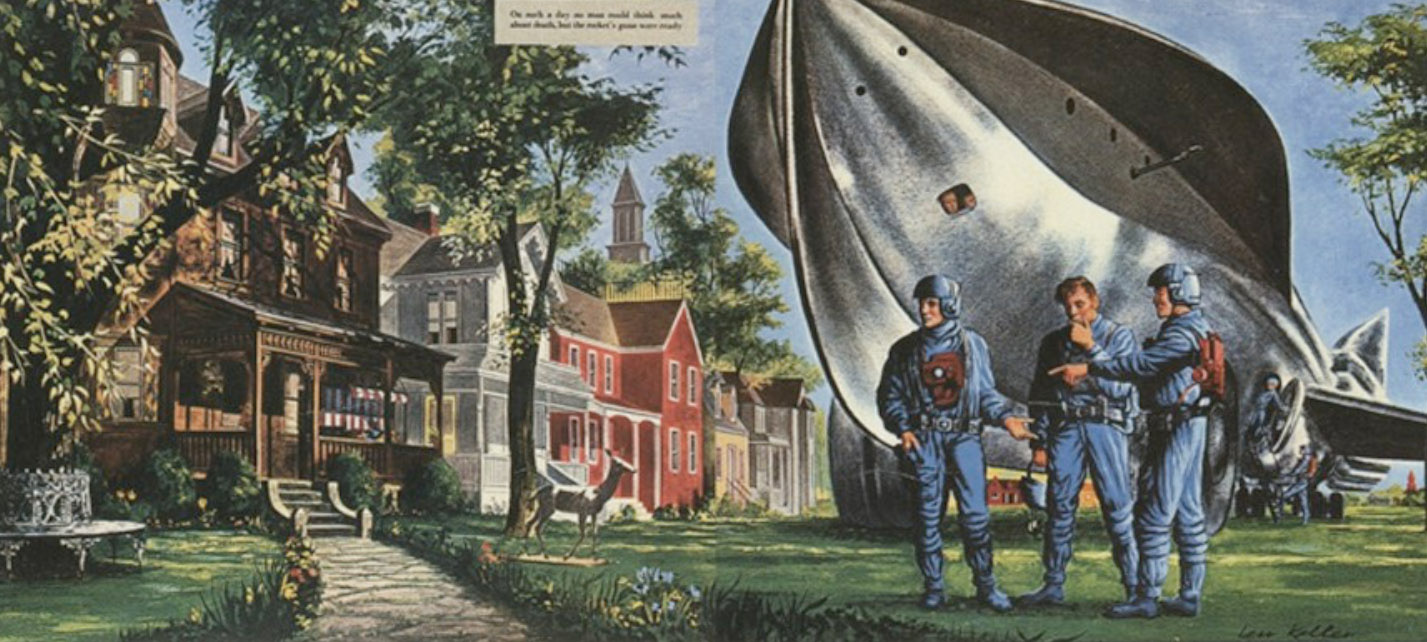
The Exotic Worlds of Rhea Hawke’s Universe

To catch her criminals, Galactic Guardian Detective Rhea Hawke travels far and wide through the Galaxy and beyond in her Ray Class sentient ship Benny. From the oozing Weeping Mountains of Horus to the debauched crime-ridden glassy Splendid City of Ogium 9, here are just some of the worlds Rhea must navigate in The Splintered Universe Trilogy

raindrops creek 05-Pb

Acid rain of Mar Delena (photo by Nina Munteanu)

The Acid Rains of Mar Delena (Book 1)

The trilogy begins on Mar Delena, a water planet in the Fomalhaut system, where Rhea has chased the Dust smuggler V’mer to the AI-run Del City. Unfortunately, she encounters more than the smuggler there, experiencing first-hand what Dust can do…

I found myself absently curling a lock of my hair around one finger and resting my leg on the console as Benny eased into a large circle of Del City. I peered down into the darkness and barely made out the AI city sprawled on a large island surrounded by a rough sea. The dark sea occupied 98 percent of this bleak water planet.

“Mar Delena’s ocean is toxic with a pH of less than two,” Benny informed me. My ship’s voice was a calm tenor. I dropped my leg to lean forward and gazed down at the lights of the city. I made adjustments to the primary controls as Benny descended. Sheets of rain veiled the sentient city in shifting curtains of a shimmering skyscape. “That’s because the sulphurous rain has a pH of three,” Benny went on. “The caustic rain is a maintenance chore for the AIs that run the city’s infrastructure. They’re always repairing. That’s why all the streets are just left as dirt. The dirt lets the acid rain percolate into the ground. Of course it makes for a muddy place, but the Delenians don’t seem to mind.”

“Wonderful,” I muttered, gazing at the towering buildings, whose rounded roofs encouraged the corrosive rain to sheer off harmlessly to the ground. “Remind me to come here for my summer vacation …”

“There it is, Rhea,” Benny said.

“I see it.” I peered out my portside window through the rain and recognized V’mer’s small scythe-wing below. The ship resembled a bird of prey with a head-like cockpit flanked by crescent-shaped wings that flared out to the bow in a point. By analyzing its heat signature, Benny confirmed that the scythe-wing had only set down moments ago.

We’d just jacked the particle-wave stream thousands of light-years to this ancient dusty solar system. I chased V’mer here from a mining colony on Nexus, where the Badowin ran the largest illicit manufacture of Dust in the galaxy for Dark Sun—all cleverly under cover of a mining operation for Spice, a less dangerous narcotic. A little Dust showed you ‘God’; but in larger quantities it threw you convulsing over the precipice straight to chaos.

The Volcanoes of Gliese-876b (Book 1)

Rhea swiftly goes from detective on the hunt to hunted fugitive, wanted by her own Galactic Guardians and local PD for theft and other misdeeds. Disguised, Rhea sneaks into Phoenix City on the moon Gleise-12—home of a major Guardian precinct—in search of her truant and estranged mother to ensure she hasn’t been hurt by Vos terrorists. It doesn’t turn out well…

Gliese-12’s ecosystem wasn’t as friendly to its inhabitants as Iota Hor-2, I thought, gazing with a yawn down at the rich yellow-ochre tones that veiled the hazy moon of Gliese 876-b. Bathed in warm shades of a constant sunset, Phoenix City had been built under a giant energy-shield dome to protect its inhabitants from the incessant incoming stellar debris. As a result, we required special clearance to make port. Playing it safe, Benny had provided us both with an alias, in case the Iota Hor-2 Guardian precinct’s APB on my theft had already reached the Gliese precinct through the Galactic Net…

I strode with forced casual steps out of the Phoenix Sky Port and pulled out a stick of gum. I glanced at the security men and women as I passed the RADs unnoticed, chewing slowly to the rhythm of my steps, then emerged with a smug smile under a permanently blushing sky into the heat and sweet mesquite smell of Phoenix City.

Generally hotter, redder and louder than Neon City, the town was densely populated with towering buildings that rippled in the heat and glowed like burning embers under the fire of Gliese 876.  Many of the tallest buildings were capped with glass-domed promenades, gardens, restaurants, and landing platforms. Their orange reflections glinted like exotic lanky mushrooms.

The city bustled with the thrum of commerce; air vehicles of all sizes zinged overhead in a constant rush. Phoenix City was a major banking centre. Even the Galactic Bank, my bank, had their head office here. All of the tallest towers were banking facilities. Save one, the Guardian precinct.

VancCenLibJPG

Inside a building in Splendid City (photo by Nina Munteanu)

Dangerous Glitter of Ogium 9’s Splendid City (Book 1)

I’d set a course for Ogium 9, a small terrestrial planet orbiting HD70642, a bright star ninety light-years from Earth. I hoped to get information on the whereabouts of the itinerant Ulysses space station from Zec in Splendid City. The very thought of returning to that nest of crime made me uneasy. I’d spent a significant portion of my youth there, surviving by using my brain and keeping my emotions in check. The last time I’d seen Zec, he’d sworn to kill me for jagging him—he nearly did.

Splendid City was, on the surface, quite splendid. I strode along one of the pedestrian air tubes that swayed over a thousand meters above the ground and gazed past my gravity boots through the transparent floor to the city, glowing in the warm blaze of the setting sun. Splendid City sprawled beneath me in a complex thrum and filigree of multi-shaped, rounded, and peaked rooftops. Translucent walkways snaked in and out of them. Catching the sun’s fire, they formed golden streaks across the sky. Air vehicles buzzed around the towers and walkways in swarms of synchronous order.

For some reason, Splendid City had become a Mecca for architects, and each building was a celebration of unique design. Several were modeled on biological creatures: tentacled jellyfish, or arachnids, spiked echinoids, or giant pollen shapes.  The poet Goethe had described architecture as frozen art. I thought it no more apt than here, in Splendid City, where practical design and imagination conspired in the myriad shapes, textures and colors that rose up boldly towards the heavens.

The buildings sparkled like jewels. But the glitter of the throbbing city lay just on the surface, I thought solemnly. Beneath those resplendent spires and glass towers lay a filthy dark underworld devoted to crime. Splendid City was built by crime lords from all across the galaxy. It had been a good place for me when I sold my weapons designs; the place was ripe with young scoundrels, eager to build their little empires by trading one illicit merchandise for another. I’d had no problem finding customers. My challenge had been to keep from getting swallowed up by them…

When the door slid open, I saw Zec right away, feet up on his giant gadpie desk, eyeing me critically with scorn. He was handsome as always with dark, slick hair drawn back in a loose ponytail, with beautiful large heavy-lidded eyes the color of Earth’s ocean, and the lashes of a girl. He wore an expensive silk jacket imported from Earth over a charcoal gray T-shirt and tacky lumi-trousers. Behind him the large windows provided a spectacular view of the city lights in the deepening lavender of dusk. A lecherous smile slid over his face as he looked me up and down approvingly. He’d fancied me as his girlfriend when we’d slummed together in the lower levels. Even tried to kiss me once. He had the scar to prove it.

I met his gaze head on, then glanced down with a smirk to where his tight pants bulged and decided to make the first move. Tongue brushing my upper lip in mock seductiveness, I sneered: “Is that a Q-gun in your pocket or are you just happy to see me?”

jungfrau04 copy

Uma 1 (photo by Nina Munteanu)

The Treacherous Cold of Uma 1 (Book 2)

Rhea travels to the frigid moon Uma 1, to warn the Schiss leader Rashomon of a plan to assassinate him—only to inadvertently cause his gruesome murder and receive her own injuries. She then spots Serge. He bolts and she chases his fleeing figure into the frigid snow and ice sheet of Uma 1…

I pounded after him, ignoring my burning lungs and the pain that flamed up my leg. “Stop!”

He didn’t. An insane rage boiled inside me. It balled my fists and fired my legs into a galloping run. I was gaining on him.

He darted to the skipboats that lined the dock and untied one. He tripped the canopy open and slid into the boat with a sharp glance backward at me.

Just as I reached the skipboat, chest heaving with exertion, Serge started up the engine, and the boat leapt out into the water, accelerating with a high-pitched whine. It threw a pair of five-meter rooster tails behind, splashing the dock and soaking me with a slam of cold water. It almost knocked me off the wharf.

I recovered and scrambled, slipping off balance for a careless moment on the wet wharf, to the next skipboat and found the button to open the canopy. I untied the boat, dropped into the seat with a grunt of pain, closed the canopy, and started up the engine. It sputtered into a vibrating whine. Pressing my lips into a snarl of determination, I slammed on the foot pedal and was thrown back with sudden acceleration. Within seconds I’d reached his wake, skipboat screaming at top speed.

I could make out the end of the thermal shield, where the water abruptly ended in a vast sheet of crusted ice. Serge plunged into the cold, skipboat hitting the lip of ice at full speed and bouncing high. Hot on his heels, I kept my vehicle in full tilt and flinched when it crashed through the icy lip, soaring then landing with a painful jolt on the ice sheet. The vehicle’s thin pontoons allowed the skipboat to skate effortlessly at breakneck speed along the creaking ice sheet that covered the giant underwater city. My lip curled in a wicked smile as I noticed that I was catching up to him.

“Rhea!” the com spattered on with Serge’s voice. “Is that you?”

After a long pause I stabbed the com button and responded savagely, “Yes it’s me. Stand down, Serge.”

He didn’t respond.

“I repeat, STAND DOWN!”

“Listen, Rhea, I didn’t kill Rashomon,” he said in an almost pleading voice.

“No,” I retorted with scornful mockery. “I did.”

“I mean, I wasn’t involved in setting you up.”

“No, your sister did that,” I bit out. You were the bait. “You were probably just back up, in case I jagged up.”

“It wasn’t like that,” Serge protested, betraying some frustration. Why was he even trying to convince me of his innocence? Why did he jagging care what I thought?

“If it wasn’t like that, then what are you doing here, Serge?” I scoffed, forcing out words through shallow painful breaths. The windswept icy surface grew rippled and pitted with blocks of frozen ridges and pockets of water.

“The same as you. Trying to prevent his assassination. You have to believe me, Rhea.”

Serge skirted around several large ice buttresses and domes in quick succession, his vehicle pounding over frozen waves and curtained layers of debris and ice. I kept up, turning each time with grunts of painful effort and feeling each jar like a hard kick in my chest.

“Now, why is it that I don’t?” I snarled. “Maybe it’s because you’ve lied to me ever since we met … V’ser.” I realized that I was panting. “Everything you’ve ever said to me was a lie.”

The com went silent. The scene began to feel painfully surreal. A few times, I saw spots in front of my eyes and realized I was fighting from blacking out.

Serge continued to maneuver through what resembled a giant storm that had been flash-frozen. Where the chaos was he taking us? The turbulent wind blew the snow into eddies of swirling sleet, and it became harder to keep on Serge’s tail. I pounded in and out of dips and waves, painfully chasing the shadow of Serge’s yellow skipboat. Serge led us through a series of looming ice columns toward a rise in the topography. It looked like a giant frozen wave twenty meters tall. Maybe it was …

In a rush of new determination, I pushed out my jaw and felt my teeth gnash.

“Stand down, Serge!” I snorted out the words through panting breaths. “Give yourself up. It’ll end up better for you with the Guardians if you do.” God! Even I didn’t believe that.

He obviously didn’t either. I winced at his sharp laugh of derision.

“My dear Rhea. Always the Enforcer, even when you aren’t. And always in control—even when you obviously aren’t.”

“Jag you, Serge. And I’m not your dear!”

“Well, in that case you’ll have to catch me and stop me first!”

“If you insist.”

I slammed on the accelerator. We reached the rise and were climbing. It was steeper than I had initially thought, and I had to fight the wheel to keep from tipping over on my side as Serge led me on a diagonal vector up the ice and snow slope. Face puckered in a tight snarl, I forced my skipboat to skirt around Serge’s, flanking him on the high side. I caught sight of his tense face through the canopy as he threw alarmed glances at me.

“Rhea, you don’t have any weapons and you’re hurt. I hear it in your voice. How are you going to stop me? With your bare hands?”

“If I have to.”

I came up beside him, nosing toward him to force him down.

We crested the hill at the same time with my vehicle on the outside and—Oh, God! My pulse raced. I knew what lay on the other side before I saw it.

A sheer cliff! More than that, it turned into an inverted cliff at the bottom. I realized that this was just another dome and we’d climbed the windward side where snow and ice had piled to form an incline. I felt myself slide uncontrollably into that awful dreamstate and watched in horror as it played out like I knew it would:

In a panic, Serge overcompensated. I was too close! His tail skidded in counterpoint and collided hard against mine, forcing me over the cliff. Heart surging in a spike of alarm, I fought the wheel as my skipboat slid straight down the dome then hurtled into freefall …

“Rhea! NO!—”

I saw the icy ground rushing toward me then smashed into darkness.

seelisberg-view06 copy

Boiling Sea of Horus (photo by Nina Munteanu)

The Boiling Sea of Horus (Book 2)

In search of answers to her past from her elusive grandmother—who has transformed into a giant snake-like Apophus—Rhea returns to the misty narcotic Boiling Sea within the Oily Range (Weeping Mountains) whose oily residue settles over everything like a clammy soporific slime:

I pulled out a second wad of soyka gum and chewed nervously then resumed paddling, eyes sharp for any boiling masses of water snakes. With each stroke of the paddle I disturbed the surface scum and left a wake of swirling colour. It released a foul stench of rotting compost. The brown mist hovered like a cobweb over the oily film. I searched for any sign of agitation and listened over the gentle chortling of the water between each paddle stroke…

I swept the hair back from my face and squinted, trying to see beyond the ten meters of visibility the dank mist allowed. Following my internal compass, I negotiated the towering islands with unease. The only warning that I was approaching one of their vertical cliffs came in the sudden slap, slosh and gurgle of the waves against the sheer rock face. Then within a heartbeat the slimy dark rock would thrust up like an apparition through the oily mist and I’d steer clear with a sharp intake of air. I must have passed at least a dozen islands as I continued toward my destination, a place in my mind, perhaps planted there by those beasts that had taken brief residence inside me. Ever watchful for the apophus, the giant snake that had previously batted my ship out of the sky then set its babies to consume me, I was acutely aware of my vulnerability in this small canoe. If the apophus was hungry it could easily overturn my boat and spill me into the churning water to either consume me directly or feed me in slow agonizing ecstasy to those nasty babies of hers.

My head began to spin and I felt slightly nauseous…the cloying smell was overpowering. Was I going the right way? Some compass in my head had compelled me to bear toward a northern point on the convoluted shoreline. I’d been paddling for hours, but I could make out nothing in the thick fog. I shook my head to clear my mind and pulled out another soyka gum wad then joined it to the mass already in my mouth. My gaze settled on the iridescent swirling patterns of the whirlpools left in the wake of the draw of my paddle…

…Why did all the women in my family do atrocious things? If Shlsh was telling the truth, my grandmother had been the worst. She’d betrayed all of humanity by letting the Vos into my world. It was inconceivable. How could someone, a single person, have that kind of power? 

>I didn’t…It wasn’t just me…I had help, Vos help…

“What—” I inhaled my gum and my hand slipped on the paddle. It fell into the oily water and drifted away from the canoe. I flung out my arms to retrieve it, throwing the boat into a violent rock. Warm water flooded into the boat with a burst of rank fumes and I jerked back, pitching the boat into a counter rock and nearly fell out. I threw myself onto my stomach and groped for the slippery handle floating in the iridescent scum. Hands scrabbling, I found purchase, bringing more water in. As I pulled the oil-covered paddle into the boat and kneeled to wipe the slime off my arms with shaky hands, the voice returned: 

>I was in love and I fell. Love tricks you. Love blinds you. I think you know about that, Rhea…

“Shut up!” I shouted, clamping slime-covered hands over my ears. But the voice was inside my head. I raked back the hair off my face in a brisk sweep and in a more subdued tone I asked, “Who are you?” 

>Come this way. You will have your answers soon enough. Are you brave enough to handle them? You are almost there…

Swamp03 TNS

Migratory trees of Horus swamp (photo by Nina Munteanu)

The Migratory Trees of Horus (Book 2)

Once the apophus captures Rhea, it takes her across the Boiling Sea to a swamp where Rhea encounters the legendary migrating trees and—when she escapes the apophus—she collides with something worse—carnivorous ammuts:

The pungent smell of anaerobic mud and crushed vegetation stirred my nostrils and I looked up. I saw that the serpent was lumbering into a narrow canyon toward a ghostly grove of lanky trees. They resembled mangroves in the swirling mist. Within moments the snake began to make those same lyrical sounds that had intoxicated me the first time I’d come here. At the time I didn’t know who or what had made the eerie but beautiful sounds. Within moments an equally beautiful and more eerie multi-timbral chorus of feral ‘voices’ echoed off the canyon walls as if riding on the moving mist. I concluded against my own logic that this was some sort of communication between the apophus and…what? Surely not the trees? I narrowed my eyes with sudden amazement. Was I seeing clearly? Were the trees moving?…

I pulled myself out of the brown-stained pond and waded in a hobble through the warm swamp, Great Coat trailing like floating sails on the water. The canyon eventually opened to a wide valley, surrounded by towering oil-covered cliffs.

A loud pop and crackle ahead made me skid to a halt. I watched with amazement as a ten-foot oval structure made of earth and debris emerged from the muck, creating a small wake in the black water just meters in front of me. I flinched as it snapped open at the top, releasing a sharp odour of clove and burning matches. I considered backing away slowly and took a step back then stopped dead in my tracks and held my breath as two long deep crimson ‘tails’ slowly whipped out. They looked suspiciously like motion-sensing antennae.

When a vicious insect-like head emerged, attached to the ‘tails’ and dripping slime from a long proboscis, I abandoned stealth and bolted through the knee-deep swamp, not waiting to see the rest of the creature. Oh, God! These were the carnivorous larval stage of the ammut that Ka had told me about. I’d picked a great time to return to Horus: the beginning of the ‘season of the dead’ when the ferocious ammut hatched and swarmed.

Within moments, I heard an ominous loud clap and buzz behind me. I forced myself to turn and dared a glance. I clamped terrified eyes on a creature rising in the air, then lost my balance and fell backward into the swamp. A twelve-foot long insect-like creature had unfurled four narrow dragon-fly wings that flapped furiously. Twelve jointed legs dangled below its thick body. Huge multi-faceted amber eyes roamed below its crimson antennae and its long proboscis twitched, hungry for its first meal. Catching my breath, I scrambled under a drowned shrub and the ammut flew past me, the machine-gun flutter of its huge wings reverberating in my gut. I swallowed down my terror and wondered what an adult looked like if this thing was its larval stage.

I backed further into the bush and heard the sounds that I dreaded—more popping and crackling. I stared at the emerging swarm of eggs in the wide valley. Like popcorn, they started with a few snaps here and there. Within moments a cacophony of eruptions and the heady odour of clove and burning matches pervaded. According to Ka these carnivorous larvae left a swath of destruction in the wake of their swarm. No wonder the migrating trees were heading out of the valley!

…Ankle throbbing, I sat in murky marsh water to my waist, Great Coat billowing up around me, and back pressed against a bush. I listened to the chaotic clamber of ammuts emerging and flying. It grew dark overhead as their swarming bodies veiled the orange sky with black. The deafening machine-gun stutter of their wings filled my head and throbbed in my gut. Any moment a stray would find me, sniff me out with its long blood-red antennae, and I’d have to run…and die. In a sudden flash of regret, I wished I’d kissed Serge one final time….

Heart pumping, I dashed out from my temporary cover and fell with a loud splash as my leg gave out painfully under me. Alerted, several ammuts veered down straight for me. Heart slamming, I scrambled into a painful run as the first ammut’s antennae whipped out. It lashed my face and leg with a crackling snap and drew blood. I cried out with the agonizing sting and smelled burning flesh and cloves. I immediately felt a weak numbness spread through my body. Suddenly losing all strength, I stumbled and fell backward into the knee-deep swamp with a gasp. My face plunged into the stained water. I managed to right myself, coughing out black water, and thrashed to keep from sinking in the soft mud. By then more ammuts had buzzed in. Seizing in sobbing breaths, I backed away by scrabbling on my rump, too weak to rise to my feet. The soft bottom kept giving way underneath my hands. They sunk into soft mud and debris.

I watched in terrified revulsion as the nearest ammut descended upon me then I gasped as its chitinous legs poked my breast, as if testing its texture. To my horror, the giant invertebrate then settled partly on top of me and slowly pumped its body up and down, as if excited, effectively pushing me further down into the murky swamp until my head was barely out of the water… I gazed up at the creature’s head, chittering directly above mine, and fought down a moan of terror. Slobber from the creature’s proboscis dripped over my head then plopped, reeking of cloves and sulfur, on my face. I jerked my hand to wipe off the slime, then seized my MEC from its holster in blind panic. I aimed it at the ammut’s head and, pressing the trigger, dialed through every setting I could think of with my other fingers. Nothing worked.

Dear God, I prayed, releasing an involuntary moan, make it quick

Wetland-Trent3

Swamp and marshland of Sekmet (photo by Nina Munteanu)

The Blanket Bogs of Sekmet (Book 2)

When Rhea is captured for several murders she didn’t commit, she is sent to the penal planet Sekmet to serve her life-sentence in Hades, a 2-kilometre mining barge floating on the peat bog.

I gazed out my porthole at the barren patchwork of the small wetland-dominated planet, whose surface resembled an early impressionist’s painting. Dominated by sombre russet and indigo tones, the raised bog was dotted by a hasty spray of cobalt lakes and pools.

Although it was mid-morning on the planet, the mostly grey sky was saturated in low cloud and it was drizzling outside. Spates of wind drove sheets of rain hailing sporadically against my porthole. It was a wet desolate place. But then again, “A drowning man is not troubled by rain—Persian Proverb, Rhea,” I said quietly to myself. The weather was the least of my concerns.

As the ship descended, I could make out the individual pool system of the blanket bog with its inhospitable tapestry of dark and wet shapes. I dispassionately reviewed what I knew of the planet. Its cool wet climate and rich iron deposits promoted the development of muskeg, string bogs, darkly forested swamps and wildflower-filled fens. This was Sekmet, an Earth-sized planet that orbited the KO star, HD177830 in the constellation Vulpecula. My new home. Where I was going to die.

Within moments the ship landed with a sharp jolt in the open landing bay of the floating colony. Then the exit hatch door opened and the AI droned, “This is your destination, Rhea Hawke. Please disembark.”

My chest clenched. I swallowed down my fear and stepped out onto the platform of Sekmet’s landing bay, catching the faint sulphurous smell of the bog. The doors of the ship abruptly closed behind me, making me involuntarily flinch. Annoyed at my reaction, I gathered my composure and swiftly assessed the empty platform, hearing only the hum of the ship’s engine. My gaze rested on the endless hummocks and large meandering ponds of tea-stained water outside.

As the ship made ready to leave, I felt my heart pounding with the sudden urge to bolt. I had a panicked notion to leap off the platform into the murky bog. Swim, wade, scrabble to eventual safety in the wilderness of Sekmet in those distant hills. The ship lifted off the ground in a turmoil of dust and thunder. My face twisted with indecision as I tensed, poised to flee—

A male Azorian burst in from the adjoining chamber and I braced for an attack. He pelted right past me then leapt into the murky water. I watched him thrash through the undulating bog, stumbling, submerging and trying to swim—his left arm was amputated at the elbow. I was about to follow when laser shots peppered the water around him for several heartbeats. As suddenly as the shots began, they ended and the Azorian slowly sank until only his head remained above the water. I stood stiff, trembling hands over my mouth, and breathing hard. I stared at the head bobbing slowly in the water.

Sand dunes Oregon3

Dunes of Upsilon-3 (photo by Nina Munteanu)

The Barkhan Deserts of Upsilon-3 (Book 2)

In a desperate attempt to find the Ancient One—the key to the mystery killings—Rhea steals a Vos ship and the Vos Commander. She forces the terrorist A’ler at gunpoint to take them to Upsilon-3, the inhospitable desert planet where the Ancient One has settled in an enclave created by an ancient civilization. It is also where Rhea was almost killed once in a rabid blenoid attack. She will meet these vicious predators again…

Bleary-eyed and very cross, A’ler took us down to the arid planet, piercing the cerulean atmosphere with a view of mostly ruddy sand dotted with grey-green scrub below. We then crossed a vast expanse of open desert. I gazed down at the waved pattern of cresent-shaped dunes, obviously formed by a constant wind. It was a harsh and miserable environment, I thought.

“Barkhans,” A’ler offered, pointing to the dunes and breaking her taciturn silence. “That’s the West Ghouroud. No one’s ever crossed it and lived.” She eyed me with a dismissive look of disgust as much as to imply, especially a puny like you.

I didn’t respond and let my gaze stray back to the dune sea. The dunes looked like the capped waves of a red ocean, the deep ochre of their shaded slipfaces contrasting with the harsh bright windward sides, still baking in the sun. The dunes looked small, but I guessed that some were at least three hundred meters high.

I’d been there before. I’d tracked and dispatched an Azorian assassin to the small ephemeral town there once—but at the cost of a blenoid attack. In his desperation, the Azorian had fled the ghost town into the arid wilderness, and if I hadn’t shot him, the blenoids would have torn him apart. If they hadn’t, he would have died a horrible death of severe hypothermia. As it turned out, my shot infuriated a pack of sleeping blenoids and I became the subject of their fury instead.

botanical beach tidal pools2

Clear toxic water of the Beleus Sea (photo by Nina Munteanu)

The Toxic sea of Beleus (Book 3)

Rhea makes a daring rescue of the bookseller Serge Bastion (Serge’s outer diverse twin), injured in a med-centre in Beleus City on Beleus. When Bastion refused to jump out the window to safety, Rhea belts him then gets him own by unconventional means to a nearby park.

I spotted it; a small peewee, parked a block away on the side of the road. The small two-seater resembled an ancient Earth motorcycle, except that it could fly. I pelted toward it and, after a brisk glance over my shoulder, straddled the vehicle and jimmied the starter lock then kick-started the engine. The vehicle stuttered on and I drove it to the bush where I’d stowed Bastion. I leapt off and pulled Bastion out from under the bush.  After struggling with his dead weight, I finally got him, still in his pajamas, in the back-supported passenger seat and seat-belted his slumped form in. I jumped in the pilot’s seat, grabbed his limp arms so he was leaning against me and secured his arms around my waist by lashing them together with chord from my pocket. Then we were soaring up just as several Eosian guards ran up to us, waving nokerig pistols and shooting. 

Nihilists had perched themselves on the roof and caught my peewee in a salvo of torpedoes. I veered us out to sea but not before one grazed the vehicle. I felt the hard jerk to the right and craned to look over my shoulder. I noticed to my dismay that a green cloud of hesium fuel was spraying out of the fuselage. But we’d at least cleared the distance they could shoot. I had no idea where I was going, except that it was far from the Med-Facility and the city.

For now I spotted no pursuit. That would change quickly, I thought, glancing down at my options. We were heading out to sea toward a long string of islands. The Beleus Sea shimmered in the sunlight with mercurial hues of lavender, deep purple, aqua green and blue. So different from the oily seas of Horus, the Beleus Ocean was extremely clear, reflecting the shifting light of the planet’s atmosphere in an exotic glitter.

Bastion stirred, head still lolling against my shoulder, and I reached behind me to jab him awake.

“Where are we?” I said gruffly. “We’re low on fuel.” I didn’t tell him we were losing fuel. “And we need to land somewhere fast…and safe!”

I had to give him credit; he sobered fast and unfastened his hands then leaned forward to point to our left, toward a cluster of extremely tall islands. “There. Go there, to the Broken Islands. They won’t find us there.”

That was what I needed to hear. I veered hard to port and heard Bastion grab my waist again and moan out some expletive at me. I glanced over my shoulder and found him glaring at me and rubbing one hand over his sore jaw.

“Sorry,” I muttered. “You weren’t going to jump.”

“What’d you do? Throw me over?” he asked in a sarcastic voice and felt himself gingerly.

“No, I just changed into a bird and flew you down to this vehicle that was waiting for us,” I said, meeting his sarcastic tone.

He remained silent. The truth is always more bizarre than any made up story, I thought dismally.

We were fast approaching the tall island spires. Hundreds of them dotted the iridescent sea. It was obvious to me that we’d reached the Broken Islands. And good thing too, because the engine began to stutter. It spluttered and whined as if in objection as I gunned it. Then I hiked in my breath as we went into a silent glide.

“Are we—” Bastion stopped himself.

He decided that he didn’t want to know; unfortunately I didn’t have that luxury. It’s not enough to know to ride; you must also know how to fall—Mexican proverb. Ok…here we go…

Mont Sacre-Coeur Granby, QC

Original seminary in Granby, Quebec on Earth

The Re-Imagined Earth (Book 3)

Rhea returns to Earth—now transformed by the Eosians who have settled there—She goes there with her inner diverse twin and Serge to warn the eccentric Gnostic Rafael Martinez of plans to assassinate him and also to borrow some of his elite guard to find the hidden Vos weapons facilities and destroy them. But Martinez turns out to be far more than an eccentric priest, challenging Rhea existentially a key to her past and her future…

Martinez had taken up residence in an old Catholic seminary just outside a derelict town in what used to be the rural Eastern Townships of Québec. I thought it apt that he chose a theological school for his Gnostic teachings.

As Benny entered atmosphere and circled down, I gazed through my starboard porthole at the familiar landforms and water masses of Earth. It was a lot greener than the last time I’d seen Earth through my view port aboard the shuttle that had taken me away from my home. Since the Eosians had colonized the planet thirty years ago, Earth had reverted mostly back to wilderness. Eosians were master ecologists who had honed their healthy symbiotic skills with nature into an art.

The planet, Gaia, was certainly healthier and happier now that her ancient prodigal civilization had returned. These former Atlanteans had brought back the wisdom of millennia about living in concert with and through nature’s arcane powers. They’d torn down humanity’s great cities and replaced concrete and glass with natural organic, living materials. They’d uprooted the roads and bridges and introduced their native scree, an intelligent giant raptor, as transportation. They’d let nature absorb the massive agricultural fields and clear-cuts, to harvest and recycle her bounty in beneficial ways. They planted their native tree, the vishna, everywhere. They’d restored the natural environment from the ravages of strip mines, oil fields and gas plants and replaced them with their non-intrusive crystal technology.

I gazed at the endless rolling hills covered in a lush purple and green carpet of young vishna and native trees. It was a monument to a simple and gentle life, a respectful pantheistic life. I could have wept; it was so beautiful. But it wasn’t Earth anymore….

V’rae wept for me. She and Serge had come beside me to watch once we’d entered atmosphere over North America. She said in a wavering voice, “It’s so beautiful…but it isn’t Earth anymore.” Then she burst into tears.

Martinez’s estate, the Solstice, was an island of lavish order in a green frothy sea of mixed wild forest. The derelict farming town of Granby had been demolished and absorbed back into nature since the Eosians had taken over as Earth’s new custodians. I could barely make out a criss-cross pattern of lighter greens in the forest mosaic that betrayed where old foundations and roads had previously lain not far from the current estate. Martinez’s estate was one of the few human-built structures that the Eosians hadn’t torn down and replaced with their symbiotic organic structures or left to natural and enhanced regeneration.

Martinez’s estate, the Solstice, was an island of lavish order in a green frothy sea of mixed wild forest. The derelict farming town of Granby had been demolished and absorbed back into nature since the Eosians had taken over as Earth’s new custodians. I could barely make out a criss-cross pattern of lighter greens in the forest mosaic that betrayed where old foundations and roads had previously lain not far from the current estate. Martinez’s estate was one of the few human-built structures that the Eosians hadn’t torn down and replaced with their symbiotic organic structures or left to natural and enhanced regeneration.

I frowned at him and saw V’rae look puzzled and clutch his arm. “Well, be that as it may,” I returned coolly, “he’s on the hit list and we still have to warn him. Plus he does have the largest and most capable independent Eosian guard in the galaxy.”

His brows came together. Then he bolted forward, bumping past my shoulder with his face so close to mine I could feel the heat coming off him. His arm brushed mine to touch the navigation screen. “I really think we should reconsider and—”

V’rae seized his other hand and pulled him back. “Let her land the ship, V’ser,” she commanded quietly. “We’re here now.” She was right and Serge knew it. He straightened with a sigh and I started to breathe again.

Metaverse-FRONT-web copyThen we were being hailed and I got on with the task at hand. “Strap yourselves in,” I instructed once I’d been given the go ahead to take port in Hanger B, below the seminary. After a long intake of air, I took us down.

In Metaverse, the third and last book of The Splintered Universe Trilogy, Detective Rhea Hawke travels back to Earth, hoping to convince an eccentric mystic to help her defend humanity from an impending Vos attack—only to find herself trapped in a deception that promises to change her and her two worlds forever.

You can listen to a sample recording of Outer Diverse, Inner Diverse, and Metaverse through Audible. Get the complete Splintered Universe Trilogy Audiobooks on Audible or any other format you prefer from quality bookstores. Find Splintered Universe Trilogy reviews on Goodreads.

audible listen

Microsoft Word - trilogy-poster03.docx

nina-2014aaa

Nina Munteanu is a Canadian ecologist / limnologist and novelist. She is co-editor of Europa SF and currently teaches writing courses at George Brown College and the University of Toronto. Visit www.ninamunteanu.ca for the latest on her books. Nina’s bilingual “La natura dell’acqua / The Way of Water” was published by Mincione Edizioni in Rome. Her non-fiction book “Water Is…” by Pixl Press (Vancouver) was selected by Margaret Atwood in the New York Times ‘Year in Reading’ and was chosen as the 2017 Summer Read by Water Canada. Her novel “A Diary in the Age of Water” will be released by Inanna Publications (Toronto) in 2020.

Rhea Hawke’s Ultimate Weapon: the MEC

Rhea gun03

Rhea and her MEC

Rhea Hawke and weapons seem inexorably linked. As a Galactic Guardian Enforcer in a large galaxy of alien technology, Rhea Hawke knows her weapons. She’s used and been shot at by many. During her pre-Enforcer days, when she slummed with gangster Zec Zebalion on Ogium 9, Rhea made a dubious living as an arms dealer. She even designed some (like the Pocket and the MEC). Now, as ex-Enforcer, she finds her designs in high demand…

The Q-gun

The Q-gun is a shapeshifter’s preferred weapon; the handgun discharges dark energy quintle particles that resonate with matter to dematerialize it. In the first scene of Outer Diverse, Rhea is held at Q-gunpoint by the dust smuggler, V’mer on the rainy planet of Mar Delena. Later in Book 1, Rhea visits her old gangster “friend” Zec in Splendid City on Ogium 9, hoping for some information:

I met his gaze head on, then glanced down with a smirk to where his tight pants bulged and decided to make the first move. Tongue brushing my upper lip in mock seductiveness, I sneered: “Is that a Q-gun in your pocket or are you just happy to see me?”

Rhea library02

Rhea Hawke (Vali Gurgu)

The Q-bomb

Q-bombs are genetic-specific explosives with nano-bots that can be programmed for a specific frequency wave or genetic signature such as DNA. The Q-bomb (or its cousin Q-gel) is used often by various people, including Rhea, throughout the trilogy. In Inner Diverse, Rhea’s bookseller friend Serge Bastion (outer diverse twin to inner diverse V’ser) is supposedly killed by a Q-bomb, rigged into a book by a Vos terrorist, who had booby-trapped it with a DNA-sensing device linked to an inverse Q-bomb.  Later in Inner Diverse, Rhea embarks on an ambitious mission to blow up a Nihilist weapons facility using a set of Q-bombs. But to do that, she must visit her slimy “friend” Zec:

He glared at me with new respect and some fear. “What do you want, Hawke? I know you didn’t bring me my payment.”

“For what?” I challenged him, sauntering closer to him with my MEC still levelled at his crotch. “You’re half right, though. I do have payment. But for a Q-bomb, fifth quintle level with a five hundred charge. And I need it now.”

He threw his head back and laughed. “Whose ship are you blowing up this time?”

I smiled wryly. “Do you want the credits or not?”

I’d never known Zec to say no to a potential deal to make money. “Five thousand,” he said with a sneer.

“Up front.”

“That’s…” I began in a flustered tone, feigning affront.

“Particle-stream robbery?” He grinned. “That’s the deal.”

I looked directly at him with a hard gaze. “I pay only on delivery. And only if it’s within the hour. That’s the deal.”

Rhea marsh02

Rhea Hawke (Vali Gurgu)

Q-gel

Q-gel was used by the Nihilists in Metaverse to kill Rhea Hawke and Serge Bastion at the Beleus City Med Facility. Like the bomb, the intelligent blue-green slime is driven by nano-bots, and can be programmed to detonate with a specified distance from a specific object.

Then I saw it: a blue-green slime, seeping under the door…

We had seconds. I leapt onto Bastion, seizing him as he yelped, and rolled us off the bed toward the window. We thudded to the floor and I winced at his cry of pain. Calling forth an invisible burst of Badowin strength, I heaved the bed onto its side in front of us and pushed Bastion gruffly down just as the gel ignited with a loud ear-splitting bang.

The blast threw the bed against us and together we collided into the far wall as the windows shattered. Shards of tiny glass rained on us. Bastion squeaked then whimpered.

“You okay?” I asked once I’d gotten my breath back. My voice sounded like I was underwater and my ears were ringing.

He nodded, grimacing tightly with wide eyes. I saw blood trickle out of both his ears and felt a warm flow down my left one. The blast had probably burst our eardrums. We were lucky, I thought, that it hadn’t done more.

“Come on,” I said, pushing the bed off us and scrambling to my feet. “This is our exit call.” I lowered my hand to help him up. He just stared. All around us, embedded in the walls and the far side of the bed were thousands of knife-like spicules. Dozens would have impaled us had we not been shielded behind the bed.

Bastion shivered.

The Kappa rifle

The Kappa rifle with its metre-long barrel acts like a chemical weapon discharging kappa particles that slowly eat away flesh. Kappa particles are also used by Fauche shipbuilders as a fuel system for their ships. In Outer Diverse, Rhea first runs across a kappa rifle pointed at her by the bounty hunter Pentas in the Tangent Shipping hanger in Pyramid City on Horus:

Pulse racing, I turned and beheld two large purple Eosians standing at the entranceway. The larger one was in a Great Coat, snarling, and pointing a pocket pistol at me. The other wore a faded ranger and pointed his Kappa rifle with its meter-long barrel at me. I stared at the Kappa rifle. It was a cruel weapon, killing slowly. Mistakenly classified as a Class C weapon, [the Kappa rifle] was released as regulation issue to civilians like this bounty hunter. Guardians and bounty hunters often worked in pairs to find their quarry, usually splitting the reward. I’d done the same on a few occasions.

In Inner Diverse, on the planet Kraal, the terrorist A’ler shoots her brother Serge with a Kappa rifle:

Serge gave his sister a confident smile. “You wouldn’t shoot your own brother—”

The loud report of the kappa rifle made me flinch. Serge’s eyes widened in shocked disbelief then he looked down at the small wound in his chest.

Feeling a sympathetic stab of pain in my tight chest, I stifled a shriek and helplessly watched Serge fall to his knees then lose consciousness and flop over into a heap on the ground.

“NO!” I rushed to Serge’s limp body and knelt over him. I opened his shirt and gaped at the very small but deep wound. It leaked a small bit of blood mixed with kappa-induced fluid. The wound didn’t look like much now but already the flesh surrounding the small hole was reacting. It raged like an angry red boil. Serge’s face was grey with shock. Kappa particles didn’t usually kill right away but they were relentlessly deadly as they ate away the flesh of any creature they entered. It was a painful, long, but usually inevitable death.

“Enough blenoid crap!” A’ler shrilled. “He’ll die for sure if you don’t tell me where you put the bomb. Right now!”

zermatt-alps01-close copy

Kraal

The Concussion rifle

The Concussion rifle, used mostly by Guardians, first makes its appearance in Outer Diverse in the ship hanger in Pyramid City on Horus when two Eosian Guardians emerge from a falcon ship to neutralize Rhea as she attempts to steal a viper. The concussion rifle operates mostly like an old 20th century ballistic firearm.

Flicking my gaze in rapid fire between the console I was trying to un-encrypt and the falcon ship, I eventually caught sight of two Eosians emerging from the falcon, bearing concussion rifles. They were heading in my general direction.

I continued to fiddle with the ID key pad, feeling panic edge in as the Eosians approached. For the love of Creos! I’d opened hundreds of these before. They’d been the easiest ships to steal during my dubious career as arms dealer. And I’d practically taught the vehicle BNE lessons in Stealth 101 at the Guardian academy—

They’d spotted me and were running toward me!

The engine sputtered into a reluctant idling whine. I seized the controls and the viper lurched into the air just as they opened fire.

Chaos! My heart slammed as a few shots pinged across the vehicle’s hull. I carved a tight turn and whipped over my two pursuers, forcing them to instinctively duck, and soared out of the hangar into the sunset.

The Sling rifle

The Sling rifle is a harpoon-like weapon used by hunters, primarily blenoid hunters and meat traders on Upsilon 3—many of whom are smugglers and thieves. The rifle is essentially a harpoon with narcotic discharged with a sling line. in Inner Diverse, Rhea meets up with a gang of nasty meat-traders, who capture her and A’ler:

Lars laughed loudly and spit again, brown spittle landing on A’ler this time. “I do smell myself a barbeque.” Without a second thought, he aimed his sling rifle and shot. The rifle cracked, followed by the whiz of the harpooned sling line. The blenoid yelped then slumped, instantly knocked out by the strong narcotic. I flinched. He’d shot the leader of the pack and I knew what would happen next as the foreman released his sling. The blenoids fell upon their unconscious leader, flaying her alive to shreds…The men shouted with excitement, waving their sling rifles in the air.

The sling rifles discharged, cracking the air like whips, followed by their singing lines. As each blenoid tumbled under the deep penetrating harpoon hook, the men reeled them up as the remaining blenoids charged and dragged down their unconscious mates. It was a cruel game of cat and mouse and the sling rifle was luridly suited to it. A primitive weapon, the sling’s sharp harpooned projectile seldom killed. Killing wasn’t its objective; maiming, injuring and demobilizing was the intent. The sling was popular with hunters and gamers looking to satisfy their brutal sport of tormenting lesser beings. And torment they did. I watched in sick disgust as the men screamed with malicious amusement and reeled in the harpooned blenoids like fish in a writhing sea.

Sand dunes Oregon3

the dunes of Upsilon-3

The Stun stick

The Stun stick is a high-energy weapon that resembles a staff. It is used by the Orichalkon, an Eosian elite guard of Mon Seigneur Martinez assigned to guard his Gnostic order in their various outposts in the universe. The weapon is wielded like a staff in Tai Chi movements and discharges an energy wave that stuns all in it contacts. In Inner Diverse, Rhea is rescued by them when she is thrown by the traders into the blenoid pit to die:

The blenoids never reached me. They yelped and wailed and flew in all directions. Two large Eosians, garbed in jet black had dropped from the crane arm to the pit. They wielded stun sticks in swift fluid motion like acrobats, flinging stunned blenoids away from the platform. The Eosians’ choreographed dance reminded me of my Tai Chi form as they knocked every blenoid unconscious.

The Nokerig Pistol 

In Metaverse, Nokerig pistols were deployed by Nihilists in an attempt to immobilize Rhea during her rescue of Serge Bastion from the Beleus Med Facility.

The guard at the exit was expecting me but not my MEC. I burst out shooting and caught him as he raised his weapon. He fell with a thud. I raced down the hall to the exit on the far end and bolted down the stairs to the third floor, hearing my pursuers clattering behind me. More shots zinged past me from the stairwell and I felt a sharp sting on my left arm.

I hissed out a curse and threw open a door into a narrow corridor with my good arm. I looked down at my bleeding arm. They were using Class D nokerig pistols, ancient ballistic weapons with projectiles that festered in your body wherever they embedded. Although it hurt like chaos and bled copiously, the bullet had only grazed my arm, I noticed with relief.

The Pocket

Rhea designed her own weapons with great success. One currently used exclusively by the Guardians is the Pocket (PulsOniC Kinetic Energy Tracker)—a small lightweight pulse pistol that can track a target once the gun has identified their signature.

Rhea mountain02

Rhea Hawke (Vali Gurgu)

Rhea’s MEC (Magnetic-Electro Concussion) Pistol

Before she joined the Guardians, Rhea had hung out with the gangster Zec on Ogium 9, dealing illegal drugs and weapons.  But Rhea’s claim to fame in the galaxy of criminals and enforcers is her MEC, a coveted weapon of her own design and, in some ways, the ultimate weapon.

“I’ve got you, creon,” I whispered smugly, slowing to a walk and raising my MEC pistol.

Unfortunately, everyone and their tappin wants her MEC and its design. In the opening scene to Outer Diverse, Rhea is ambushed by the dust smuggler and shapeshifter V’mer:

He dropped the Q-gun and scooped up my MEC then squatted gleefully down beside me, keeping my arms pinned.

“Ah, the MEC.” He ran the thick gun barrel through my wet hair and leaned closer. “Operates like a sophisticated Q-gun.”

He couldn’t have been more wrong. The Magnetic-Electro Concussion pistol was the best—and worst—thing I’d ever made. The image of Officer Asphalios’s face melting in front of me came back to haunt me. Out of hubristic genius, I’d tailored the MEC to behave uniquely by species, based on their DNA structure. I could sweep my MEC in a crowded room and melt all the shapeshifters, only knock out Eosians and leave humans totally unscathed. But Asphalios hadn’t been what I’d thought he was. He wasn’t what anyone thought he was. And I was still paying for that.

After Rhea is fired from the Precinct for her last blunder (killing the only lead to a spiritual sect massacre), she meets the attractive stranger Serge, who asks her rather unusual questions:

He broke the silence with a question: “So, this MEC of yours … did you design it all by yourself?”

I raised my head and eyed him warily. “Why do you ask?”

“I just thought it was an interesting sideline for a Guardian Enforcer, that’s all. So, are they complicated and do you do it in your head or on some holo design program?”

My eyes narrowed with distrust. “Everything’s up here.” I tapped my head with my finger. “I make it a point not to keep records.”

Later in Outer Diverse, Rhea makes a daring gambit to flush out where the fugitive Serge has gone from his terrorist sister A’ler by disguising herself as an arms dealer for the MEC design and travelling to the Ulysses, an Eclipse space station:

I held up my MEC. “You were after this, weren’t you?” Among other things. I let my smile turn into a smirk. “Well, here it is. But you’re going to have to pay for it, fair and square, like anyone else.” I had the satisfaction of seeing A’ler’s eyes light up with self-absorbed interest. “It’s called a MEC, which stands for Magnetic-Electro Concussion pistol,” I continued, making my pitch. “It uses electro-magnetic wave energy to focus subatomic quintle particles to resonate with specific DNA, rather than randomly concentrating energy on tissue like your Q-gun does.”

“Ah, very clever,” A’ler said, eying the weapon. She held out her hand to inspect it. I hesitated, then reluctantly handed it over and watched, tight-lipped and fidgeting, as A’ler casually played with the controls.

“It’s lighter than I’d thought,” she shared.

“The MEC has three possible settings, based on three unique DNA signatures,” I explained, nervously watching A’ler play with it as though it was a toy. “The first is to kill by essentially melting the tissue that its electromagnetic wave resonates with. The second setting acts as a concussion wave and knocks out the target with matching DNA. The third setting does nothing except scan. One can, of course, choose any combination of the three settings. For instance you could choose to scan three different species or kill three different species.”

“So, it can have these three settings on three different DNA types at the same time?”

I nodded. “With one single sweep of the MEC in a crowd, you could kill all of one genetic type, knock out another, and leave the third intact but scanned and targeted. I’ve catalogued over 200 DNA types.”

“Impressive,” A’ler said, nodding. “Does it have a universal setting?”

“Of course,” I said, a little impatient. “You can choose to scan every DNA type on the MEC’s database—”

“Or kill every DNA type?”

I frowned and curled up my lip in a snarl of confused disgust. “That defeats the purpose of the MEC. You could just as soon use a Q-gun for that,” I said. “The MEC’s advantage lies in its ability to discriminate.”

A’ler stunned me with her next question: “Can you set the MEC to recognize and alert you of a specific DNA type?”

It was a question no one had ever thought to ask and a feature I tended to keep to myself. “Yes,” I admitted with some discomfort at revealing this ultimate property of the MEC. “But only from a limited proximity.”

“How close?” A’ler seemed hardly able to contain a glowing smile of glee.

“The subject has to be within five meters of the MEC.”

“Really!” Her eyes flashed. “And?” she prompted.

“It alerts you by vibrating against your body with a silent Beta frequency.”

A’ler nodded, forcing on a pensive frown. “A Beta frequency, eh?” She looked like she was pretending to know what I was talking about but didn’t. “So, how do you do that?” She turned the MEC over in her hand several times.

“You have to set it on permanent scan.”

“Show me,” she said…

Rhea discovers too late why A’ler asked her to demonstrate these MEC qualities. When she meets the remaining Schiss priest, a Gness named Rashomon, to warn him of his planned assassination by terrorists, it is her own weapon that kills him. When A’ler had briefly handled her MEC, she had surreptitiously set it to recognize the presence of a Gness. Rashomon—known for his obsession with weaponry—had expectedly wanted to handle her unique weapon. A’ler had set the bomb and Rhea had delivered it right into his hands.

I recognized the effects of a Q-bomb. What a fool I’d been. Tricked into playing the role of a weapon again. I’d set out to save this alien and ended up killing him instead. A’ler had obviously planted a Beta-frequency detonator on the MEC. She’d planted the tiny but lethal Q-bomb after she’d tricked me into setting the MEC to scan and alert me with a Beta-frequency in the presence of a Gness.  Then all A’ler needed to do was lead me to Rashomon, by cleverly providing me with the one thing I so obviously desired: Serge.

Throughout the trilogy, Rhea must finally come to terms with one of the largest blunders of her ill-fated career as an Enforcer: her slaughter of seventy-seven Rills on Omicron-12.

The Rill possessed two very different arms. His right arm was particularly large and clawed and resembled a weapon. It was tailored no doubt for digging in the bogs of Omicron 12. It had been my undoing, that weapon-like arm.

rhea-contemplative01

Rhea Hawke (Vali Gurgu)

Just before she’s fired by her boss, Ennos in Outer Diverse, he lets her know what he thinks of her mass-execution:

“I say monitor a native uprising on Omicron 12 and you exterminate a whole insurgent army singlehandedly with that genocidal weapon of yours.”

Not even Ennos believed me about mistakenly setting my MEC to kill instead of stun those Rills; my reputation for anti-alienism had preceded me. Despite repeatedly telling myself that they were just vulgar Rills and murdering terrorists, I suffered guilty nightmares of the incident and had secretly wondered why the Guardians hadn’t thrown me into Sekmet for it. Finally, I’d rightfully come to the conclusion that the insane cruelty of the incident had not bothered Ennos, so long as I hadn’t embarrassed him in front of the Legess with whom the Guardians had a relationship; Ennos didn’t care about the Rills anymore than the rest of the Galaxy did.

Wetland-Trent3

Swamp-bog of Sekmet

In Inner Diverse, Ka challenges Rhea to the core of her prejudiced mind:

Isn’t that really why you made the MEC? To rid the galaxy of those unsavoury races? Isn’t that what you were doing on Omicron 12?”

I swallowed convulsively and tightened my hold on the MEC. It was slipping in my clammy hands. “I’m not a fascist.”

“Aren’t you?” Ka challenged. “Admit it, Rhea, you mercilessly killed all those Rills without the slightest remorse—”

“It was a mistake. My MEC was—I wasn’t used to its settings and—”

“There are no mistakes, Rhea,” Ka cut in. “There is only duende. And for every action a reason, and a consequence, even if unclear to the doer.” Then he leaned forward. “You’ve long harboured anti-alien sentiments. And you particularly despise baldies.”

Even in Hades on Sekmet, the prison planet, the mevlani (prisoner in charge) Barbariccia berates Rhea for her treachery:

“When you were an Enforcer you self-righteously and viciously dispensed your version of law and order,” he said in a voice of open contempt. “Death was your calling card and your answer for everything. Over a standard galactic year ago, on Omicron 12, you went way beyond your mandate with the Legess and intruded on a revolutionary meeting of key insurgents. You crushed a whole race with ruthless precision, killing seventy-seven unarmed Rills with that menacing weapon of yours.”

Swamp-Log-DeasPark

Swamp-bog of Omicron 12

I bit back a retort and felt saliva collect in my mouth. I’d convinced myself that they were armed, but they weren’t. It was a lot easier to justify why I kept shooting even after I realized that my MEC was spitting out fatal waves rather than debilitating ones. My tormented mind had repeatedly gone over that lurid scene, trying to sort out what had triggered my tragic blunder of insanity. I couldn’t help my panicked reflex of misguided self-defence; it was the rationale that I’d fed myself later that shamed me now. They were only Rills, I’d thought. Only Rills…. I had wondered briefly at the time why Ennos hadn’t sent me to Sekmet for my overly ambitious deed. The non-native Legess were clearly the aggressors, enslaving the obsequious Rill, and for decades had exploited their labour for keen profit…with the full support of the Guardians—perhaps the real reason I hadn’t been sent to Sekmet for my act of treachery. Although it looked bad, I’d done exactly what both the Legess and the Guardians quietly wanted: I’d crushed their revolution.

As the trilogy progresses, Rhea’s MEC design plays a pivotal role in the war brewing in the galaxy. Her MEC technology is coveted by Guardians, Eclipse criminals and Vos Nihilist terrorists alike as a weapon of genocide. Rhea finally realizes that she cannot distinguish ally from foe in the chess game to seize her weapon of destruction. Once she trades the MEC design to a Nihilist for the life of a colleague—setting in motion a treacherous escalation toward galactic war—Rhea must fight to save the galaxy and ultimately reconcile what she started with the Rill uprising on Omicron-12.

In Metaverse, the third and last book of The Splintered Universe Trilogy, Detective Rhea Hawke travels back to Earth, hoping to convince an eccentric mystic to help her defend humanity from an impending Vos attack—only to find herself trapped in a deception that promises to change her and her two worlds forever.

You can listen to a sample recording of Outer Diverse, Inner Diverse, and Metaverse through Audible. Read The Splintered Universe reviews on Goodreads.

audible listen

Microsoft Word - trilogy-poster03.docx

nina-2014aaa

Nina Munteanu is a Canadian ecologist / limnologist and novelist. She is co-editor of Europa SF and currently teaches writing courses at George Brown College and the University of Toronto. Visit www.ninamunteanu.ca for the latest on her books. Nina’s bilingual “La natura dell’acqua / The Way of Water” was published by Mincione Edizioni in Rome. Her non-fiction book “Water Is…” by Pixl Press (Vancouver) was selected by Margaret Atwood in the New York Times ‘Year in Reading’ and was chosen as the 2017 Summer Read by Water Canada. Her novel “A Diary in the Age of Water” will be released by Inanna Publications (Toronto) in 2020.

Rhea Hawke and The Legend of the Sacred Trees…

Tree yellow birch moss covered roots Apr DRYBR JC

EXCERPT from Outer Diverse, Book 1 of The Splintered Universe Trilogy:

My mother had fantasized that one day she would see Eos. Her hero was Genevieve Dubois, the space explorer who’d flown the last of a series of ill-fated ZetaCorp flights to Eos some two hundred years ago when it took years to travel anywhere in the galaxy. Dubois was the first―and only―human to have set foot on the mythical planet of Eos, secluded in the giant blue nebula of the Pleiades. After apparently experiencing an epiphany of universal proportions, when she encountered one of the god-like Epoptes, Dubois returned, pregnant, to Florida with her Eosian lover, Azaes. They mysteriously disappeared after being taken into captivity by the American government and ZetaCorp for questioning. Rumors abounded that Azaes had unleashed a tremendous and fearful weapon out of his head on a human―the melting look, I figured―which condemned him as a dangerous monstrosity. Humans rallied to have him imprisoned or banished. Even killed.

The historical records suggested that Dubois and Azaes were murdered soon after. My mother, however, agreed with popular lore that they’d escaped to live a simple secluded life, and that Dubois’s baby by Azaes was born and its descendants were living to this day. The most popular story ― and therefore the least likely―was that only Dubois got away, travelled north to Canada and returned to her native Quebec where she stoically gave birth alone to her child in some abandoned barn in the country. The whole thing smelled of mythos.

Despite the rampant anti-alienism, many humans strongly believed that Dubois bore this child, making her the first human to give birth to a human-alien. A fanatical cult, L’Ordre de l’Arbre Sacré—Order of the Sacred Tree, sprang up in Quebec, and its mostly human members devoted themselves to the notion that Dubois’s child was a kind of messiah who walked secretly among humans and was linked to the tree of life and knowledge, the vishna. They regarded the vishna an ancient soul that carried infinite wisdom and the answer to achieving the ‘balance of all things’.

The Order of the Sacred Tree claimed that all the ills plaguing life in the galaxy were due to a misalignment of forces, an imbalance that the now-extinct Hopi Native Indians called koyaanisquatsi. They claimed that this messiah—Dubois’s child— would provide the balance needed to begin a new age of enlightenment and peace. They spread wild stories of how the child was consummated not through Dubois’s lover Azaes but somehow through Dubois’s interaction with an Eosian vishna tree, which had godly powers and came to be known as one of the sacred trees, along with the migratory trees of Horus, which were also thought to be ancient souls.

According to the Order, Genevieve Dubois had, in fact, perished in a giant igapo that flooded Eos’s great forest as she saved the natives from the evils of her mad crew. The legend claims that Dubois was swept up by the igapo, battered and dying, to the top of the highest vishna tree and there joined with an Epoptes. When she died, the Epoptes took her form, and it was she who returned to Earth with Azaes. Their child was the first Epoptes to live among humans … as a human, bringing the message of the ancient souls for achieving sacred balance and eternal existence.

Members of the Tree Cult swelled to the thousands, spreading the word of enlightenment through sacred trees, such as the native oak, the extraterrestrial vishna, and the mythical migratory trees of Horus. Yet their membership and much of their practices remained veiled in mystery. I couldn’t understand their popularity in a world of rampant anti-alien sentiment. Perhaps this was why the Tree Cult remained a secret society. The Tree Cult continued to petition for Earth to acquire the sacred vishna tree of enlightenment. Well, Earth had them now aplenty, I thought with a sour smile. Only there were hardly any humans left there to enjoy them… the Vancouver of my youth no longer existed; the Eosians had altered my world.

Rhea is referring to the fact Earth was now the home of Eosians, who claimed that Earth was their initial home, eons ago. In the bargain for their part in saving humanity from the Vos attacks of 186-191 SGT, Eosians claimed Earth as their ancient homeland and humanity was pushed into exodus.

rhea-contemplative01

Rhea Hawke (Vali Gurgu)

“…the baldies had transformed my home planet into a lush jungle. I’d heard that they’d introduced their own trees, the vishna that supposedly made them immortal, and had coaxed Earth to revert to what it had been prior to the agricultural revolution thousands of Sol years ago. The Eosians had made Earth their home, living a symbiotic-organic life through their superior bio-technology.”

While some humans remained to live with the Eosians and adapt to their way, most took the offered package to leave: Eosians provided several bio-geo-engineered planets suitable for humans to colonize, one of which was Iota Hor-2, where Rhea lives and works.

The World—and its Myths—According to Rhea:

collision with paradise-no title

Azaes and his scree on Eos

Eosians: The whole Eosian race was supposedly the result of a foolish transgression by the overseeing ‘gods’ of ancient Earth, the Epoptes. The ‘watchers.’ Although they’d sworn not to, some Epoptes came down and fornicated with the primitive stone-age humans. My mother had quoted the lines in the Bible often enough: the sons of God saw the daughters of men that they were fair; and they took them wives of all which they chose. It was always males who did the ‘taking,’ I thought. Of course, the logic was obvious: only women gave birth. There was no point in female ‘gods’ coming down to frolic with the primitive human males. Not if the point of fornication was to produce a new species in the original community.

[The Epoptes] had created a hybrid giant race, the Eosians, who became the original inhabitants of Atlantis: the Nephilim (giants) were on the earth in those dayswhen the sons of God came in to the daughters of men, and they bore children to them. Those were the mighty men. So went the new myth, anyway … and when the Atlanteans plummeted into debauchery themselves, the matter-energy manipulating Epoptes unleashed their wrath in the form of a global disaster that was known throughout countless civilizations as the ‘great flood.’ Choosing a few still good Atlanteans to take on their ‘ark,’ the Epoptes found them a new home: Eos, an Earth-like jungle planet nested deep in the Pleiades. They left any original humans who’d managed to survive the wrath of the gods to their own devices. And now the Eosians were back on Earth, where they’d originated. And no sign of any Epoptes, I thought cynically. Of course, the logical cover-up story was that the Epoptes had learned their lesson and never made themselves known to others again. It was all pretty convenient. 

Epoptes: Phantom ‘gods’ the Eosians supposedly consulted through their dreams to police the galaxy. According to the baldies, the Epoptes had commanded them a hundred years ago to end their reclusive existence to form the Galactic Guardians and to fight the Vos seventy years later. Luckily they did or Earth would have been destroyed and humanity rendered extinct… “It’s all myth. Gods are a myth. Vos. Epoptes. I don’t believe any of it.”

Vos: Rumors of what the Vos looked like and the treacherous things they did to their victims were just that: rumors. No one had ever lived to tell. I was familiar with most of the rumors: depending on who you talked to, the Vos were anything from giant god-like humanoids to massive reptilian-like creatures with glowing red eyes or huge fluorescent blobs of amoebic protoplasm. They also ate their victims. Of course, the obvious question Metaverse-FRONT-web copywas: if no one had ever survived a Vos encounter, how could anyone possibly know this? Galaxy News spread as much fantasy as it did real news, I thought with a cynical and humorless smile.

In Metaverse, the third and last book of The Splintered Universe Trilogy, Detective Rhea Hawke travels back to Earth—now all Vishna jungle—hoping to convince an eccentric mystic to help her defend humanity from an impending Vos attack. Instead, Rhea finds herself trapped in a deception that promises to change her and her two worlds forever.

You can listen to a sample recording of Outer Diverse, Inner Diverse, and Metaverse through Audible. Find The Splintered Universe reviews on Goodreads.

audible listen

Microsoft Word - trilogy-poster03.docx

nina-2014aaa

Nina Munteanu is a Canadian ecologist / limnologist and novelist. She is co-editor of Europa SF and currently teaches writing courses at George Brown College and the University of Toronto. Visit www.ninamunteanu.ca for the latest on her books. Nina’s bilingual “La natura dell’acqua / The Way of Water” was published by Mincione Edizioni in Rome. Her non-fiction book “Water Is…” by Pixl Press (Vancouver) was selected by Margaret Atwood in the New York Times ‘Year in Reading’ and was chosen as the 2017 Summer Read by Water Canada. Her novel “A Diary in the Age of Water” will be released by Inanna Publications (Toronto) in 2020.
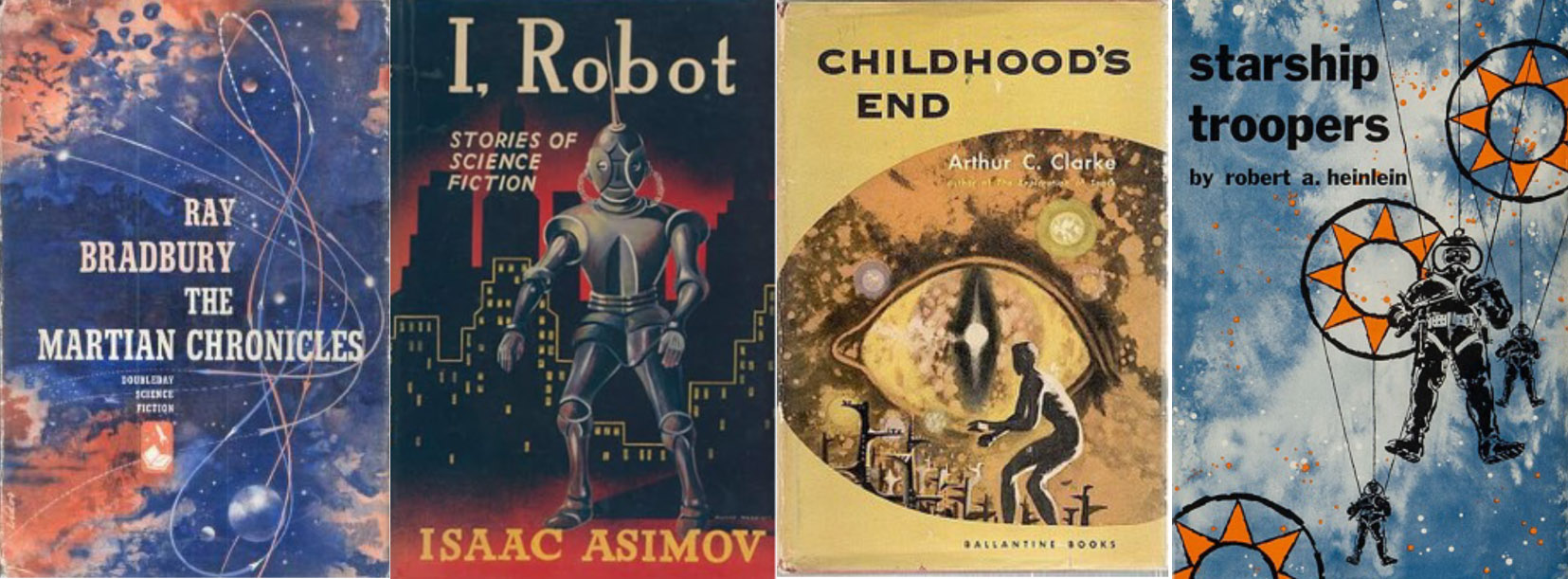
Rhea and Her Sentient Ship Benny

Rhea library02

Rhea Hawke (Vali Gurgu)

People who have read the trilogy often tell me that Rhea’s sentient spaceship Benny is one of their favourite characters. He certainly was for Dawn Harvey, the voice actor who narrated the three audiobooks of The Splintered Universe Trilogy. She gave Benny a cultured and intelligent but unassuming voice that resonated with a gentle kindness. Just what Rhea needs. And she often needs Benny’s unique abilities to get her out of trouble.

Peering through the door’s window, my gaze swept the hangar, and I spotted what I was looking for. Benny stood at the far end, unscathed but decidedly lonely. My beautiful ship, my brown-green camouflage two-man interstellar craft with his elegant and practical design took my breath away. His long snub-ended snout was flanked on either side by narrow concave triangular fuel-scoops. Foil wings at his stern folded up over his fuel scoops. They’d left the pilot’s canopy shield up to give the inside of the AI-ship some air.

Benny was a rare retro/state-of-the-art Fauche design, which used old-fashioned Earth sleep technology along with a sophisticated Fauche kappa particle fuel system. Two hundred years ago, harvesting dream-time theta waves was considered an innovative use of required hibernation during long space voyages. Now, with new particle-stream travel, hibernation was no longer necessary. But the innovative Fauche had improved the archaic bio-technology for short-time use. The ray was the smallest ship capable of long distance star travel along the ‘stream,’ thanks to the Fauches’ inventive fuel technology. Benny was the first—and almost last—of his kind. There were only four others that I knew of in existence. But Tangent Shipping could find no interested buyers, which was why I got Benny.

In Outer Diverse, Rhea meets a stranger who becomes very curious about her and manages to find a little bit about how she came to name her sentient ship:

“So, why did you become a Guardian? I mean, you’re pretty unconventional for one. Galaxy News described you as a loner who drives a non-regulation ship.”

I looked up sharply. “I didn’t choose the Fauche ship,” I said defensively, glad of the chance to respond to his added comment and avoid the difficult question. “No one else wanted Benny, so I took him.”

“Benny?” He smiled with amused curiosity.

I returned him a wry smile. “After the brother I never had.”

We find early on—particularly in their conversations and actions—that Benny and Rhea resonate with good understanding. Part of it, we realize, is from Rhea’s programming; but given that Benny is sentient and capable of learning, it goes far beyond Rhea’s input. Benny is far more than just a smart spaceship; Benny serves as caretaker, butler, organizer, medic, secretary, and companion for Rhea.

In the first pages of Outer Diverse, Benny must save Rhea’s life after a chase goes south and she gets dusted with a fatal dose of Glitter Dust. Not liked at the Precinct (she’s the only human in an all-Eosian force), Rhea must endure snide ridicule about her and Benny. The day of her return to the Precinct from her near-death encounter with Dust, Rhea walks past several of the old guard loitering by the entrance to the Precinct, as if waiting for her:

“Lucky for the kid, her creon of a ship rescued her—again!”

My lips tightened, hearing the barrage of laughter. I didn’t bother to acknowledge Euaimon by turning my head, but I blew out a casual bubble with my gum then brought it back lazily into my mouth.

“You two belong together, Hawke!” Euaimon jeered. “You jag up and that hunk of junk saves your sorry blenoid ass!”

I passed the mob and tried to hasten my steps without making it obvious.

When Rhea is fired as a Guardian Enforcer—weapons, coat and badge taken and Benny impounded—she wanders the streets of Neon City on Iota Hor-2, ruminating on her short career:

rhea-contemplative01

Rhea Hawke (Vali Gurgu)

Night shadows crept in and kept me company as I wandered aimlessly. Iota Hor b glowed orange in the night sky, bathing Neon City with its warm light like a harvest moon. I stopped for a moment and let my gaze drift away from the luminescent planet toward the night sky…

My hands dove deep into the pockets of my flight jacket as I recalled the first time I’d seen the Milky Way on Earth. I remembered the night my mother had sat with me on Ambleside Beach and first pointed it out. She’d explained that it was a huge spiral galaxy of billions of stars about fourteen billion years old. Fascinated, I dreamed of travelling to the farthest arms of the Milky Way.

When I’d joined up as an Enforcer, the Guardians gave me my own starship, a rare ray-class retro Earth/alien design that no one else wanted. It didn’t matter to me. Benny was mine. Thanks to Benny’s plasma shields, we’d weathered treacherous ionic storms, gamma-ray bursts, and the high-velocity clouds of the breathing galaxy. We jacked the Magellanic Stream and travelled to the farthest arms of the spiral galaxy, surfing scalar fields into thrilling particle stream shortcuts. We’d even slingshot our way around the black hole in the galactic core using its immense gravitational field and high-energy emissions. I’d witnessed many galactic wonders like the terrifying beauty of nebulas: tangled filaments of dust and ionized gas that poured out in jets and waves from the stellar corpse of a neutron star. Pulsing electromagnetic energy, the shock wave of material flung from the supernova created a spectacular lightshow that shredded anything in its path, drawing me into breathless wonder.

And now the adventure was over, I concluded and dropped my gaze from the stars to the dimly lit street. I was grounded. Benny wasn’t mine anymore. I was only twenty-three and I was already a has-been.

When Rhea finds out that Benny is headed for the scrap yard (no one wants it: it’s too small, old and weird), she steals Benny in a daring rescue with the help of her colleague Bas. Rhea breaks into the hanger where Benny is being held, leaps inside and fires up the engines.

Rhea-marsh02

Rhea Hawke (Vali Gurgu)

“Rhea? Is that you?” Benny piped up.

“It’s me, Benny,” I said, chewing madly and seizing the controls. “I’ve come to rescue you from the scrap yard.”

“I’m so glad to see you!”

“I missed you too, Benny. But there’s no time to chat now. You have to let me get us out of here.”

“Done.”

I swung Benny around and shot out of the hangar bay as the guard fired on us.

“Yeah, I owe you for that one, Bas,” I murmured with a grateful but sad smile as Benny sailed into the upper atmosphere of Iota Hor-2. “Big time, buddy.”

“I guess we’re both fugitives now,” Benny said as we shot past the Athena, Iota Hor-2’s orbiting defense/research station, without incident.

I blinked. “Yeah,” I agreed solemnly, gazing at the long solar panels that surrounded the station. I didn’t have the heart to tell Benny that no one was likely to be chasing us on his account. Even the scrappers had better metalloid to chase.

In Metaverse, the third and last book of The Splintered Universe Trilogy, Detective Rhea Hawke travels back to Earth, hoping to convince an eccentric mystic to help her defend humanity from an impending Vos attack—only to find herself trapped in a deception that promises to change her and her two worlds forever.

You can listen to a sample recording of Outer Diverse, Inner Diverse, and Metaverse through Audible. Read The Splintered Universe reviews on Goodreads.

audible listen

Microsoft Word - trilogy-poster03.docx

nina-2014aaa

Nina Munteanu is a Canadian ecologist / limnologist and novelist. She is co-editor of Europa SF and currently teaches writing courses at George Brown College and the University of Toronto. Visit www.ninamunteanu.ca for the latest on her books. Nina’s bilingual “La natura dell’acqua / The Way of Water” was published by Mincione Edizioni in Rome. Her non-fiction book “Water Is…” by Pixl Press (Vancouver) was selected by Margaret Atwood in the New York Times ‘Year in Reading’ and was chosen as the 2017 Summer Read by Water Canada. Her novel “A Diary in the Age of Water” will be released by Inanna Publications (Toronto) in 2020.

Artist Costi Gurgu Explains his Cover Art for The Splintered Universe Trilogy

Get Rhea-HawkeGOODWhen I first met Costi and Vali Gurgu at the World Fantasy Convention in Montreal several years ago, I had no idea that Costi would end up creating the stunning book covers for The Splintered Universe Trilogy or that his wife, Vali, would serve as the model for the hero of my story, the relentless and steely detective, Rhea Hawke. You can find his cover art and other artworks on Costi’s illustration site.

Nina: Hi, Costi. Thanks so much for agreeing to do this interview. 

Costi: Hi, Nina. The pleasure is mine.

Nina: You came up with a “Triptych” design for the Splintered Universe Trilogy. What inspired you to come up with it and what do you like about it?

Costi: There is the danger of spoilers in this answer. The fact is that your main character, Rhea, undergoes a certain evolution from a regular human being to… let’s just say something else. And that evolution has three parts, one for each book of the trilogy and it also has a touch of divine. So, the triptych design, so often used for religious paintings, fits like a glove on the entire concept.

Microsoft Word - trilogy-poster03.docx

Nina: Your design for Outer Diverse (and designs for the other two covers) carries a powerful image that conjures a portal or gateway into another world (which is what the trilogy is about). The reader is drawn into an infinite landscape, looking in, and Rhea is looking out. Can you tell us a little about how you conceived this compelling design. Is there a meaning behind the symbols and colours you used? 

Costi: To be honest, the initial idea was for the red ring to be a sort of mapping device and a radar combined into one, since Rhea travels great distances in her quest. Then I realized it might as well be a portal device on top of everything else and serve all her travelling needs.

There were two options —either we would look with her outside, to whatever target she had, or look towards her. I thought that it would be more powerful if we could look towards her and see her determined face, see the unflinching resolution in her eyes, while she’s pondering her next move and readying herself to use the device once again. But to look towards her and see her in a confining room of a space ship, or such, would have defeated the purpose. So I needed to have her against the infinite landscape as the backdrop. She is in a continuous journey to discover herself and this journey takes her literally through the infinite spaces of not just one universe.

BewareRhea-GOOD copyNina: Yes, I love the metaphoric elements you’ve woven into the design. The image speaks to us on many levels. Do you use music or other devices in your work to evoke your creativity? What other tools did you use to create the stunning covers of Splintered Universe (e.g., animation software, etc.)?

Costi: I’m always listening to music while working. The kind of music varies depending on what I’m working on. If I’m writing for instance, I need instrumental music, without words to influence my own ones. Also, it depends on the kind of feeling and mood I try to generate through my writing or my illustration. Music helps me channel those feelings into the right words or imagery.

Technically speaking, I always start with sketches on paper, which I later scan. I mainly use Adobe Photoshop, but for this illustration I had to use Adobe Illustrator as well. Obviously, the layout and the typography were done in Adobe InDesign.

Nina: Your wife, Vali, was the model for Rhea Hawke. I understand you had a great time doing the photo-shoot (p.s., some of the additional shoots can be seen in the Youtube book trailer). I’ve attended several launches and events and both the cover and the model have been extolled. One reader compared Vali to actress Catherine Zeta Jones. How does Vali feel about being somewhat of a celebrity?

Costi: I’m so happy to hear that. You know, I had to decide how to treat her image. I could have gone towards a more glamorous, shiny look, like in a fashion image, or I could just simply keep it more realistic. Despite Vali’s protests, I chose to keep it that way, because I wanted to offer a realistic image of an ex-police officer: a woman who was used to fighting and chasing criminals, rather than taking care of her appearances. Now, to hear that her rougher and tougher image created that kind of reaction gives me a sort of peace and satisfaction.

Nina: You and Vali have had rich and varied careers in commercial art, law and writing. You’ve served, for instance, as art director for several high-end magazines including Playboy, and you taught graphic design at the college level. You journeyed from Romania to England and finally to Toronto, Canada. No doubt your law degree helped you in your entrepreneurial pursuits. Did you pursue illustration and design in England?

Costi: Well, three years [after England] saw us going back to Romania; our families expected us to go back to the Bar Association and behave responsibly. But after showing my portfolio around I got a designer job at Playboy Magazine! The Art Director and I launched its first Romanian edition issue a few months later. Three years later I became the Creative Director of MediaPro Group, the largest publishing company in Romania and Vali took on the position of Art Director of Playboy Magazine.

Two years later we came to Canada to pursue a dream. So, yes, I could say that my law degree created the perfect opportunity for me to discover my passion for visual arts. It took me to England and eventually to Canada. Life is funny that way.

Nina: Does Vali help you with your work and do you help her with hers?

Costi: We help each other a lot in our work. Because we worked together in our first legal job and after that in our first design job, we have become a team. We have different approaches to the art process and we have different styles. I went deeper into illustration to complement my design skills, while she chose photography to do that.

Even now, for the most important projects we have for our different employers we involve each other not only for need of feedback, but also for need of different ideas and fresh approaches. We basically complement each other.

Not to mention that she’s always my first reader for any piece of fiction I write. She’s the toughest reader I have but in the same time I know she’s also the most sincere one.

Nina: Thanks so much, Costi, for joining us. I wish you the best of luck in all your writing and illustration projects. It’s been an honor to work with you.

Costi: Again, my pleasure, Nina.

Microsoft Word - Rhea Triptych.docx

In Metaverse, the third and last book of The Splintered Universe Trilogy, Detective Rhea Hawke travels back to Earth, hoping to convince an eccentric mystic to help her defend humanity from an impending Vos attack—only to find herself trapped in a deception that promises to change her and her two worlds forever.

You can listen to a sample recording of Outer Diverse, Inner Diverse, and Metaverse through Audible. You can access the complete Splintered Universe Audiobook Trilogy on Audible. Read the Splintered Universe reviews on Goodreads.

audible listen

Microsoft Word - trilogy-poster03.docx

nina-2014aaa

Nina Munteanu is a Canadian ecologist / limnologist and novelist. She is co-editor of Europa SF and currently teaches writing courses at George Brown College and the University of Toronto. Visit www.ninamunteanu.ca for the latest on her books. Nina’s bilingual “La natura dell’acqua / The Way of Water” was published by Mincione Edizioni in Rome. Her non-fiction book “Water Is…” by Pixl Press (Vancouver) was selected by Margaret Atwood in the New York Times ‘Year in Reading’ and was chosen as the 2017 Summer Read by Water Canada. Her novel “A Diary in the Age of Water” will be released by Inanna Publications (Toronto) in 2020.