Through the Portal Anthology Receives Remarkable Review

A recent favourable review of Through the Portal: Tales from a Hopeful Dystopia (edited by Lynn Hutchinson Lee and Nina Munteanu, released by Exile Editions) appeared in On Spec Magazine. The review by Lorina Stephens applauded the anthology for its genuine Canadian perspective, excellent writing, and “remarkable voice of many.”

Excerpts of the review follow below:

“What unfolds in these 35 stories is a quintessentially Canadian perspective on climate change, the probable dystopia of our own making, and how we as not only humans, but Canadians, may deal with the breakdown of environment and society, of how we construct mythology to interpret our experience.”

The stories, writes Stephens, “are filled with that remarkable pragmatism and resilience, little say a reverence for the land, which seems to be hardwired into a people who deal with constant change, and sometimes extremes, dictated by climate and geography.”

“…the quality of the writing from this enclave of writers is quite remarkable…I am steadfast in my praise of the skill of these writers, and the stories they’ve crafted, collected into this remarkable voice of many.”

“The stories manage that most adroit of transformations from genre fiction meant as escapism and consumable, to that other dimension which is provoking, illuminating, and exactly what good literary fiction should engender.”

For the entire review follow the link to On Spec Magazine.

Through the Portal has received other favourable reviews:

Through the Portal offers intriguing and imaginative glimpses into the future.” – The Seaboard Review

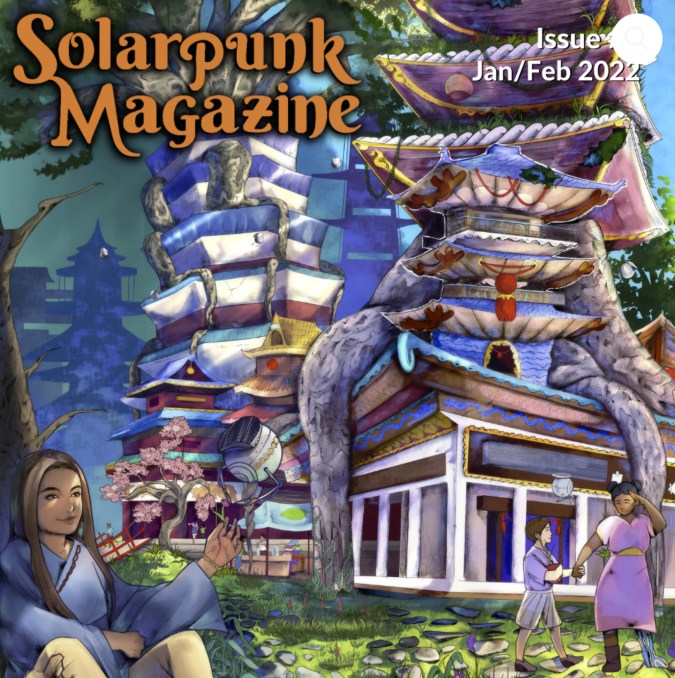
“A stunning collection of short stories and poetry that address our most existential concerns through metaphysical, epic, solarpunk, mythological, and contemporary perspectives.” – dragonfly.eco.

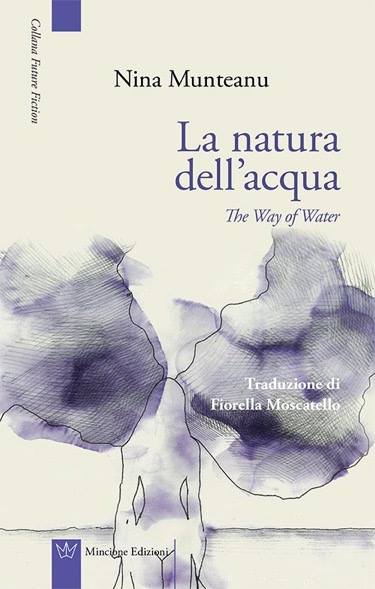
Nina Munteanu is a Canadian ecologist / limnologist and novelist. She is co-editor of Europa SF and currently teaches writing courses at George Brown College and the University of Toronto. Visit www.ninamunteanu.ca for the latest on her books. Nina’s bilingual “La natura dell’acqua / The Way of Water” was published by Mincione Edizioni in Rome. Her non-fiction book “Water Is…” by Pixl Press (Vancouver) was selected by Margaret Atwood in the New York Times ‘Year in Reading’ and was chosen as the 2017 Summer Read by Water Canada. Her novel “A Diary in the Age of Water” was released by Inanna Publications (Toronto) in June 2020.

Why Writing and Reading Eco-Fiction Will Save the World—From CliFi to Solarpunk

Fence and post at marsh during a rain, ON (photo by Nina Munteanu)

The Universe is made of stories, not atoms—Muriel Rukeyser

Canadian writer Mary Woodbury tells us that: “Fiction exploring humanity’s impacts on nature is becoming more popular [and] has the distinct ability to creatively engage and appeal to readers’ emotions. In fact, it can stir environmental action.” A survey she took in 2020 showed that “88% of its participants were inspired to act after reading ecological fiction.”
Eco-Fiction (short for ecological fiction) is a kind of fiction in which the environment—or one aspect of the environment—plays a major role, either as premise or as character. “Principled by real science and exalting our planet’s beauty, these stories are works of art. They live within classic modes of fiction exploring the human condition, but also integrate the wild,” writes Woodbury. At the heart of eco-fiction are strong relationships forged between the major character on a journey and an aspect of their environment and place. Environment and place can illuminate through the sub-text of metaphor a core aspect of the main character and their journey. 

Green architecture design by Vincent Callebaut

All great literature distills its art form through the exploration of relationship: our relationship with technology, with science, Nature, God, our children, each other, our history. Science fiction illuminates our history and our very humanity by examining our interaction with “the other”—the unfamiliar, the feared, the often downtrodden, the invisible, the ignored. This is the hero’s journey. And it is through this journey relating to the “other” (whether it’s Earth or an alien planet, its water, environment and issues, and its varied peoples and cultures) that our hero discovers herself and her gift to the world. When will we stop portraying Nature as “other”?…

Green neighbourhood design by Vincent Callebaut

We currently live in a world in which climate change and associated water crisis pose a very real existential threat to most life currently on the planet. The new normal is change. And it is within this changing climate that eco-fiction is realizing itself as a literary pursuit worth engaging in. The emergence of the term eco-fiction as a brand of literature suggests that we are all awakening—novelists and readers of novels—to our changing environment. We are finally ready to see and portray environment as an interesting character with agency and to read this important and impactful literature.

Lavender farm and house design by Vincent Callebaut

Many readers are currently seeking fiction that describes environmental issues but also explores a successful paradigm shift: fiction that accurately addresses our current issues with intelligence and hope. This is reflected in the growing popularity of several emerging sub-genres of fiction such as solar punk, optimistic climate fiction, clifi, eco-lit, hope punk, and others. The power of envisioning a certain future is that the vision enables one to see it as possible. Eco-fiction—and all good science fiction—uses metaphor to study the world and the consequences of humanity’s actions through microcosmic dramatization. What makes this literature particularly exciting is: 1) its relevance to our current existential situation; and 2) that it often provides a way forward. 

Solarpunk world imagined (image by Imperial Boy)

The Way Forward with Solarpunk

In his 2014 article “Solarpunk: Notes toward a manifesto” in Hieroglyph Adam Flynn writes of under-30 futurists: “Many of us feel it’s unethical to bring children into a world like ours. We have grown up under a shadow, and if we sometimes resemble fungus it should be taken as a credit to our adaptability.”

“We’re solarpunks because the only other options are denial or despair.”

ADAM FLYNN

Solarpunk, says Flynn, “is about finding ways to make life more wonderful for us now, and more importantly for the generations that follow us—i.e., extending human life at the species level, rather than individually.” Our future, asserts Flynn, “must involve repurposing and creating new things from what we already have (instead of 20thcentury “destroy it all and build something completely different” modernism).” Solarpunk futurism “is not nihilistic like cyberpunk and it avoids steampunk’s potentially quasi-reactionary tendencies: it is about ingenuitygenerativityindependence, and community.”

“Hydrogenase” algae-powered airships by Vincent Callebaut

The ‘punk’ suffix comes from the oppositional quality of solarpunk; opposition that begins with infrastructure as a form of resistance. Flynn tells us that solarpunk draws on the ideal of Jefferson’s yeoman farmer, Ghandi’s ideal of swadeshi, and countless other traditions of innovative dissent

“Hyperion” eco-neighbourhood design by Vincent Callebaut

“Solarpunk is a future with a human face and dirt behind its ears.”

ADAM FLYNN

In response to Flynn’s article, Bob Vanderbob writes, “going solar is a deep mental shift: it will be the central metaphor of our future civilization.” 

Green Paris design by Vincent Callebaut

Musician photographer Jay Springett calls solarpunk, “a movement in speculative fiction, art, fashion, and activism that seeks to answer and embody the question ‘what does a sustainable civilization look like, and how can we get there?’… At once a vision of the future, a thoughtful provocation, and an achievable lifestyle.” Jennifer Hamilton observes in The Conversation that “as a category of fiction, solarpunk remains a fringe dweller…Nevertheless, the aesthetic sensibilities of the subculture are starting to emerge.” Hamilton asserts that “the focus on the cultural change that will necessarily accompany the full transition to renewable energy is the defining feature of solarpunk.” She adds, “we usually ask ‘can renewables replace fossil fuels?’ … solarpunks ask ‘what kind of world will emerge when we finally transition to renewables?’ and their [works] are generating an intriguing answer.”

Beach house design by Vincent Callebaut

How Eco-Fiction Inspires and Galvanizes

Readers responded to Mary Woodbury’s survey question “Do you think that environmental themes in fiction can impact society and if so, how?” with these observations:

  • Environmental fiction encourages empathy and imagination. Stories can affect us more than dry facts. Fiction reaches us more deeply than academic understanding, moving us to action.
  • Environmental fiction triggers a sense of wonder about the natural world, and even a sense of loss and mourning. Stories can immerse readers into imagined worlds with environmental issues similar to ours.
  • Environmental fiction raises awareness, encourages conversations and idea-sharing. Fiction is one way that helps to create a vision of our future. Cautionary tales can nudge people to action and encourage alternative futures. Novels can shift viewpoints without direct confrontation, avoid cognitive dissonance, and invite reframed human-nature relationships through enjoyment and voluntary participation.
  • Environmental themes can reorient our perspective from egocentrism to the greater-than-human world.
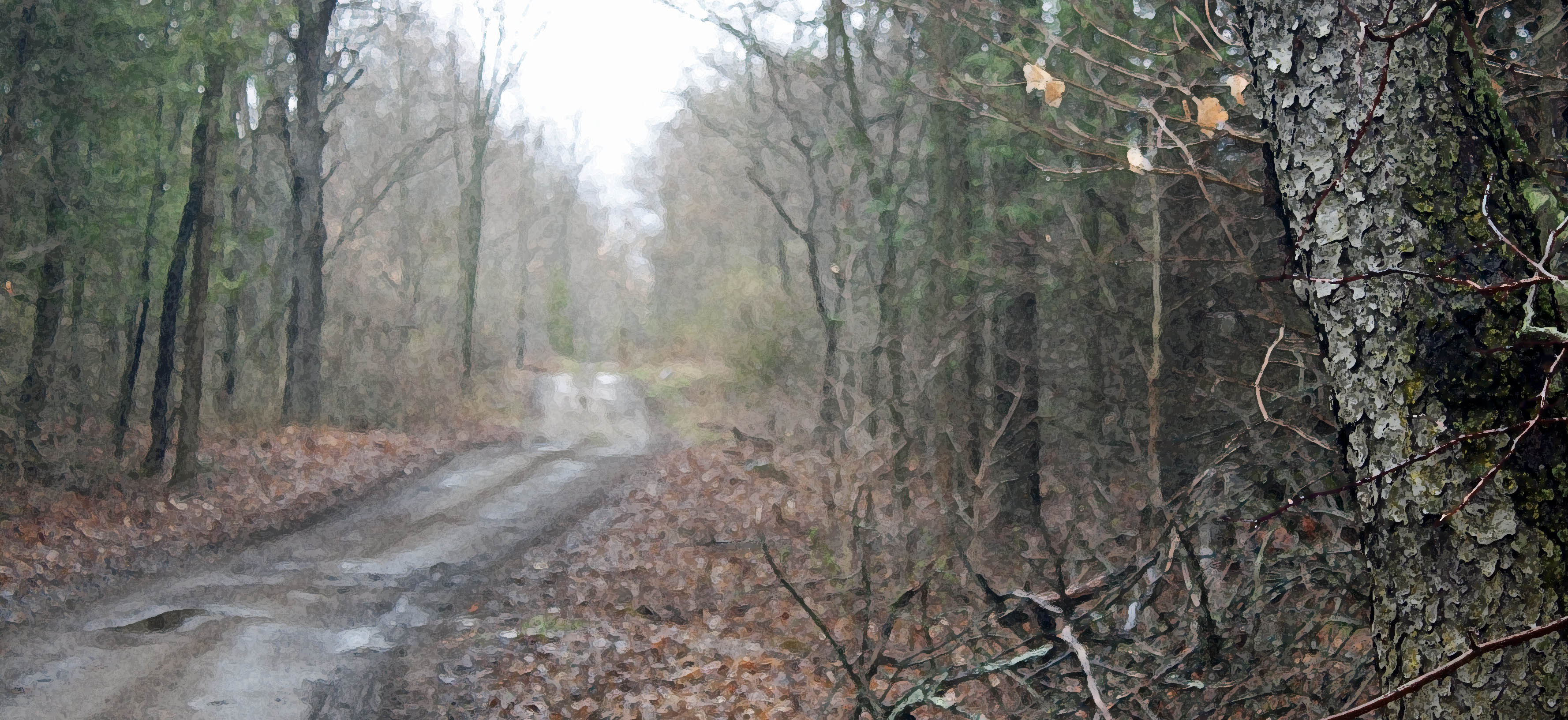
Dirt road in Kawarthas during a misting rain, ON (photo and rendition by Nina Munteanu)

Why Our Stories Are Important

We are all storytellers. We share our curiosity with great expression; our capacity and need to tell stories is as old as our ancient beginnings. From the Palaeolithic cave paintings of Lascaux to our blogs on the Internet, humanity has left a grand legacy of “story” sharing. Evolutionary biologist and futurist Elisabet Sahtouris tells us that, “whether we create our stories from the revelations of religions or the researches of science, or the inspirations of great artists and writers or the experiences of our own lives, we live by the stories we believe and tell to ourselves and others.”

Compelling stories resonate with the universal truths of metaphor that reside within the consciousness of humanity. According to Joseph Campbell, this involves an open mind and a certain amount of humility; and giving oneself to the story … not unlike the hero who gives her life to something larger than herself. Fiction becomes memorable by providing a depth of meaning. Stories move with direction, compel with intrigue and fulfil with awareness and, sometimes, with understanding. The stories that stir our hearts come from deep inside, where the personal meets the universal, through symbols or archetypes and metaphor.

Ultimately, we live by the narratives we share. “What you think, you become,” said Buddha.

In my writing guidebook The Ecology of Story: World as Character, I write: “When a writer is mindful of place in story and not only accurately portrays environment but treats it as a character, then her story will resonate with multilayers of meaning.”

Poplar stand in the Kawarthas, ON (photo and rendition by Nina Munteanu)

Changing the Narrative…

I was recently interviewed by Forrest Brown on Stories for Earth Podcast in which we discussed the need to change our narrative (particularly our colonial neoliberal capitalist narrative) and various ways to do this, taking into account the challenges posed by belief and language. Lessons from our indigenous wise elders will play a key role in our change toward genuine partnership with the Earth.

“We need to have a whole cultural shift, where it becomes our culture to take care of the Earth, and in order to make this shift, we need storytelling about how the Earth takes care of us and how we can take care of her.” ― Ayana Elizabeth Johnson, All We Can Save: Truth, Courage, and Solutions for the Climate Crisis

“This world, in which we are born and taken our being, is alive. It is not our supply house and sewer; it is our larger body. The intelligence that evolved us from stardust and interconnects us with all beings is sufficient for the healing of our Earth community, if we but align with that purpose. Our true nature is far more ancient and encompassing than the separate self defined by habit and society. We are as intrinsic to our living world as the rivers and trees, woven of the same intricate flows of matter/energy and mind. Having evolved us into self-reflexive consciousness, the world can now know itself through us, behold its own majesty, tell its own stories–and also respond to its own suffering.” 

JOANNA MACY and CHRIS JOHNSTONE, “Active Hope”
Swamp forest in Kawartha region, ON (photo and rendition by Nina Munteanu)

References:

Campbell, Joseph, Bill Moyers. 1991. “The Power of Myth.” Anchor. 293pp.

Munteanu, Nina. 2016. “Water Is… The Meaning of Water.” Pixl Press, Delta, B.C. 584pp.

Munteanu, Nina. 2019. “The Ecology of Story: World as Character.” Pixl Press, Delta, B.C. 200pp.

Sahtouris, Elisabet. 2014. “Ecosophy: Nature’s Guide to a Better World.” Kosmos, Spring/Summer 2014: 4-9pp. 

Nina Munteanu is a Canadian ecologist / limnologist and novelist. She is co-editor of Europa SF and currently teaches writing courses at George Brown College and the University of Toronto. Visit www.ninamunteanu.ca for the latest on her books. Nina’s bilingual “La natura dell’acqua / The Way of Water” was published by Mincione Edizioni in Rome. Her non-fiction book “Water Is…” by Pixl Press (Vancouver) was selected by Margaret Atwood in the New York Times ‘Year in Reading’ and was chosen as the 2017 Summer Read by Water Canada. Her novel “A Diary in the Age of Water” was released by Inanna Publications (Toronto) in June 2020.

The Day We’re Not Allowed to Drink Water…

Dew drops on Hawkweed hairs, ON (photo by Nina Munteanu)

That day may seem like science fiction or the far future, but as William Gibson famously proclaimed, “The future is already here—it’s just not very evenly distributed.”

This is partly why I’ve been recently writing speculative (mundane) science fiction in which components of fiction blur with non-fiction. In a recent interview on the SolarPunk Magazine Podcast, I discussed with hosts Justine and Bria how my recent novel A Diary in the Age of Water blurred fiction with non-fiction. The novel achieved this through the use of a diary to create a gritty realism in a mundane narrative hard to put down. The intention was to achieve personal relevance for the reader to what was going on, particularly with climate change—a water-driven phenomenon. In The Temz Review, Marcie McCauley postulated that “[Munteanu] does not appear to view fiction and non-fiction as separate territories; or, if she does, then this book is a bridge between them.” I had to laugh when I read this; “she gets me,” I concluded.

In the near-future of A Diary in the Age of Water, Canada has privatized its water utilities after the Conservative Party comes into power, and a giant company called CanadaCorp removes municipal water connections from people’s homes and imposes strict water rations, all while selling off Canada’s precious water to US states like California that would otherwise be uninhabitable.

In her entry for July 13, 2049, Lynna the diarist writes:

“Today CanadaCorp announced that the collection of rainwater was illegal. As of today, I could be arrested for using my rain catcher and cistern. I’ve decided to continue using the cistern, and I’ve warned Hildegard not to breathe a word to anyone at school about what we’re doing with the water. Thankfully, I have time to train her in the art of subterfuge before she starts Grade Two in the fall.”

Nina Munteanu, A Diary in the Age of Water
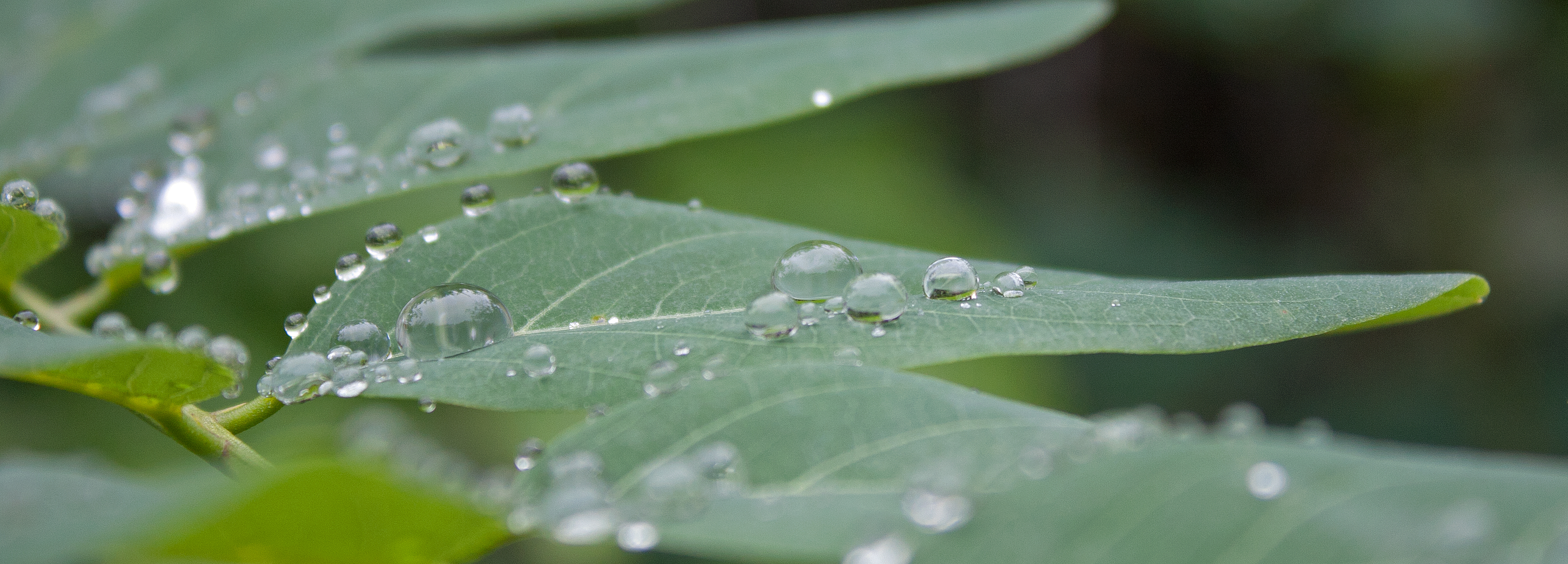
Raindrops on a black locust leaf, ON (photo by Nina Munteanu)

What follows in the novel is complete commodification of water and further restrictions for citizens in the form of house tap closures and daily water quantity quotas from paying public water taps. No form of water is free or available without payment. And if you can’t pay, well…

Dizzy and shivering in the blistering heat, Hilda shuffles forward with the snaking line of people in the dusty square in front of University College where her mother used to teach. The sun beats down, crawling on her skin like an insect. She’s been standing for an hour in the queue for the public water tap… The man behind Hilda pushes her forward. She stumbles toward the tap and glances at the wCard in her blue-grey hand. Her skin resembles a dry riverbed.

Heart throbbing in her throat, Hilda fumbles with the card and finally gets it into the reader. The reader takes it. The light screams red. Her knees almost give out. She dreaded this day…

A tiny water drop hangs, trembling, from the wTap faucet mouth, as if considering which way to go: give in gravity and drop onto the dusty ground or defy it and cling to the inside of the tap. Hilda lunges forward and touches the faucet mouth with her card to capture the drop. Then she laps up the single drop with her tongue. She thinks of Hanna and her throat tightens.

The man behind her grunts. He barrels forward and violently shoves her aside. Hilda stumbles away from the long queue in a daze. The brute gruffly pulls out her useless card and tosses it to her. She misses it and the card flutters like a dead leaf to the ground at her feet. The man shoves his own card into the pay slot. Hilda watches the water gurgle into his plastic container. He is sloppy and some of the water splashes out of his container, raining on the ground. Hilda stares as the water bounces off the parched pavement before finally pooling. The ache in her throat burns like sandpaper and she wavers on her feet. The lineup tightens, as if the people fear she might cut back in. She stares at the water pooling on the ground, glistening into a million stars in the sunlight…and knows she is dying of thirst…

Nina Munteanu, The Way of Water / la natura dell’acqua

This excerpt from my bilingual short story “The Way of Water / la natura dell’acqua” (Mincione Edizioni, 2016) follows the life of Hilda Dresden, daughter of Lynna, the diarist in “A Diary in the Age of Water.”

Science fiction, you think…

Far future, you think…

Think again…

In 2010, Mike Adams of Natural News reported that collecting rainwater was now illegal in several states of the USA. Utah, Washington and Colorado had outlawed individuals from collecting rainwater on their own properties because, according to officials, that rain belonged to someone else.

In 2015, thousands of citizens in two of America’s poorest cities, Detroit and Baltimore, had their water shut off for being behind on their water bills (which had been sharply increased).

Both are inhumane examples of government-imposed oppression over what should be a public and free resource: water.

Dew drops on hawkweed hairs and Mealy Pixie Cup lichens, ON (photo by Nina Munteanu)

Maude Barlow, the Chairperson of the Council of Canadians, writes in Boiling Point of the water crisis in Canada—perhaps our best kept secret, considering that Canada is supposedly so water-rich. Are we giving it all away? And what of our indigenous communities, some of whom have not had potable water for decades?

So, I agree with Gibson about the future not being evenly distributed. This is because the present isn’t evenly distributed. Much of this disparity arises from an extractive and exploitive mentality and practice. One that commodifies what needs to remain free and available for all users. Capitalism ensures an uneven future by focusing on fear and stressing competition, separation, and exclusion.

In his book Designing Regenerative Cultures Daniel Christian Wahl talks about changing our evolutionary narrative from one based on fear defined by a perception of scarcity, competition, and separation to one based on love defined by a perception of abundance, a sense of belonging, collaboration and inclusion.

And moving forward we can take a lesson from Robin Wall Kimmerer, author of Braiding Sweetgrass, who talks about a gift economy—an economy of abundance—whose basis lies in recognizing the value of kindness, sharing, and gratitude in an impermanent world.

This is what she says: “Climate change is a product of this extractive economy and is forcing us to confront the inevitable outcome of our consumptive lifestyle, genuine scarcity for which the market has no remedy. Indigenous story traditions are full of these cautionary teachings. When the gift is dishonored, the outcome is always material as well as spiritual. Disrespect the water and the springs dry up. Waste the corn and the garden grows barren. Regenerative economies which cherish and reciprocate the gift are the only path forward. To replenish the possibility of mutual flourishing, for birds and berries and people, we need an economy that shares the gifts of the Earth, following the lead of our oldest teachers, the plants.”

So, “The Day We’re Not Allowed to Drink Water…”

…Let that day never come.

Make it so…

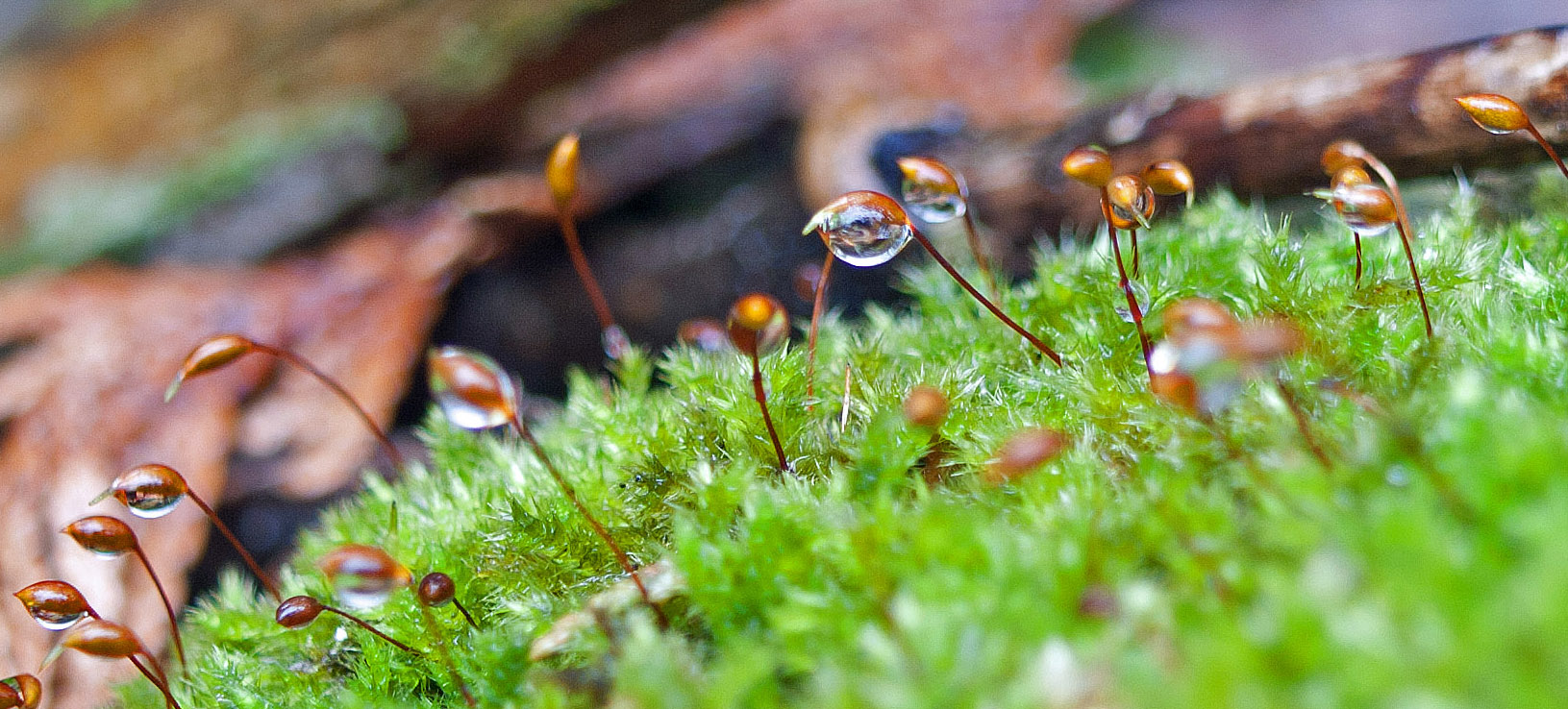
Moss with raindrops on capsules, ON (photo by Nina Munteanu)

References:

Barlow, Maude. 2016. “Boiling Point: Government Neglect, Corporate Abuse, and Canada’s Water Crisis.” ECW Press, Toronto. 312pp.

Kimmerer, Robin Wall. 2020. “The Serviceberry, An Economy of Abundance.” Emergence Magazine, December 10, 2020.

Munteanu, Nina. 2016. “La natura dell’acqua / The Way of Water.” Mincione Edizioni, Roma. 114pp.

Munteanu, Nina. 2020. “A Diary in the Age of Water.” Inanna Publications, Toronto. 300pp.

Wahl, Daniel Christian. 2016. “Designing Regenerative Cultures.” Triarchy Press Ltd. 288pp.

Raindrops ‘float’ on a black locust leaf in a light rain, ON (photo by Nina Munteanu)


Nina Munteanu is a Canadian ecologist / limnologist and novelist. She is co-editor of Europa SF and currently teaches writing courses at George Brown College and the University of Toronto. Visit www.ninamunteanu.ca for the latest on her books. Nina’s bilingual “La natura dell’acqua / The Way of Water” was published by Mincione Edizioni in Rome. Her non-fiction book “Water Is…” by Pixl Press(Vancouver) was selected by Margaret Atwood in the New York Times ‘Year in Reading’ and was chosen as the 2017 Summer Read by Water Canada. Her novel “A Diary in the Age of Water” was released by Inanna Publications (Toronto) in June 2020.

On Writing Hopeful Dystopias and the Blur of Fiction with Non-Fiction

‘Hopeful dystopias’ are much more than an apparent oxymoron; they are in some fundamental way, the spearhead of the future—and ironically often a celebration of human spirit by shining a light through the darkness of disaster. I discussed this in a recent interview on Solarpunk Futures Podcast.

In a recent interview on the CBC Radio show Ideas “Beyond Dystopia”, Canadian author Margaret Atwood (who penned the dystopic The Handmaid’s Tale and Maddaddam trilogy) said much the same thing. Atwood argued that dystopias and cautionary tales ultimately embrace an element of hope, through a character’s experience. Dystopias can serve as a road map for individual endurance, resilience, and triumph through disaster.

I talked with Solarpunk Futures about how the purposeful blur of fiction with non-fiction in my latest eco-novel A Diary in the Age of Water produced a heightened relevance to the dystopic journey for the reader.

Solarpunk: Your latest book is an eco-novel, or rather something of a fiction-nonfiction hybrid perhaps, called A Diary in the Age of Water. Tell us a bit about that novel and the role that water plays in the story.

Nina: A Diary in the Age of Water follows the climate-induced journey of Earth and humanity through four generations of women and their battles against a global giant that controls and manipulates Earth’s water. The book spans over forty years (from the 2020s to the 2060s) and into the far future, mostly through the diary of a limnologist, which is found by a future water-being. While A Diary in the Age of Water is a work of fiction, its premise and much of its story are firmly based on real events, people and phenomena. The dramatization of these through four main characters carry the reader into consequence and accountability. Water’s relationship with each character provides four different perspectives on the value of water to humanity—from the personal and practical to the spiritual and existential. For readers with an evidence-based approach to learning about water’s importance, the diarist provides interesting facts on water in each of her entries in the form of epigraphs (mostly from Robert Wetzel’s Limnology). Things like: watershed, hypolimnion, aquifer, thalweg, clapotis gaufre, and petrichor, to name a few…

I chose a diary format to purposely blur the fiction with non-fiction. I was writing about both the far and the near future and much of it was based—like Margaret Atwood and her books—on real events and real people. I wanted personal relevance to what was going on, particularly with climate change. I also wanted to achieve a gritty realism of “the mundane” and a diary felt right. Lynna—the diarist—is a reclusive inexpressive character, so I thought a personal diary would help bring out her thoughts and feelings. There’s nothing like eves-dropping to make the mundane exciting. The diary-aspect of the book characterizes it as “mundane science fiction” by presenting an “ordinary” setting for characters to play out. The tension arises from insidious cumulative events and circumstances that slowly grow into something incendiary. The real events are the fuel that incite a slow-burn fictional drama that blurs the reader’s perception of reality and heightens its relevance.

Solarpunk: Can you give us an example of an event in your book where the lines between fiction and nonfiction get blurred?

Nina: In the diary entry entitled “Watershed,”, for July 14, 2049, Lynna writes:

Today, CanadaCorp announced that the collection of rainwater was illegal. As of today, I could be arrested for using my rain catcher and cistern. I’ve decided to continue using the cistern, and I’ve warned Hildegard not to breathe a word to anyone at school about what we’re doing with the water. Thankfully, I have time to train her in the art of subterfuge before she starts Grade Two in the fall.

What follows in the story is a series of greater water restrictions that mimic some of the currenet ongoing scenarios in other parts of the world (e.g. illegal rainwater collection in parts of the USA; shutting down of home water taps in Detroit; required and restricted water collection at public water taps in parts of the world).

Lynna’s August 13, 2051 diary entry in my 2020 novel seemed to predict the atmospheric river disaster that befell British Columbia in November 2021:

In the mid- to late-twenties the west coast succumbed to massive atmospheric river storms. San Francisco. Los Angeles. Seattle. Even earthquakes seemed to follow climate change’s lead. The earthquake / tsunami that hit Vancouver Island in 2029 shifted the Earth’s axis by three inches, Daniel informed me. The American military stormed over the border with swift aid. “Did you know that they never left?” Daniel asked me. I hadn’t known that. But I wasn’t surprised either.

Of course, these “predictions” were really just good research into the current scientific knowledge and what current circumstances may naturally generate in the future. I was just doing a good job at reading water.

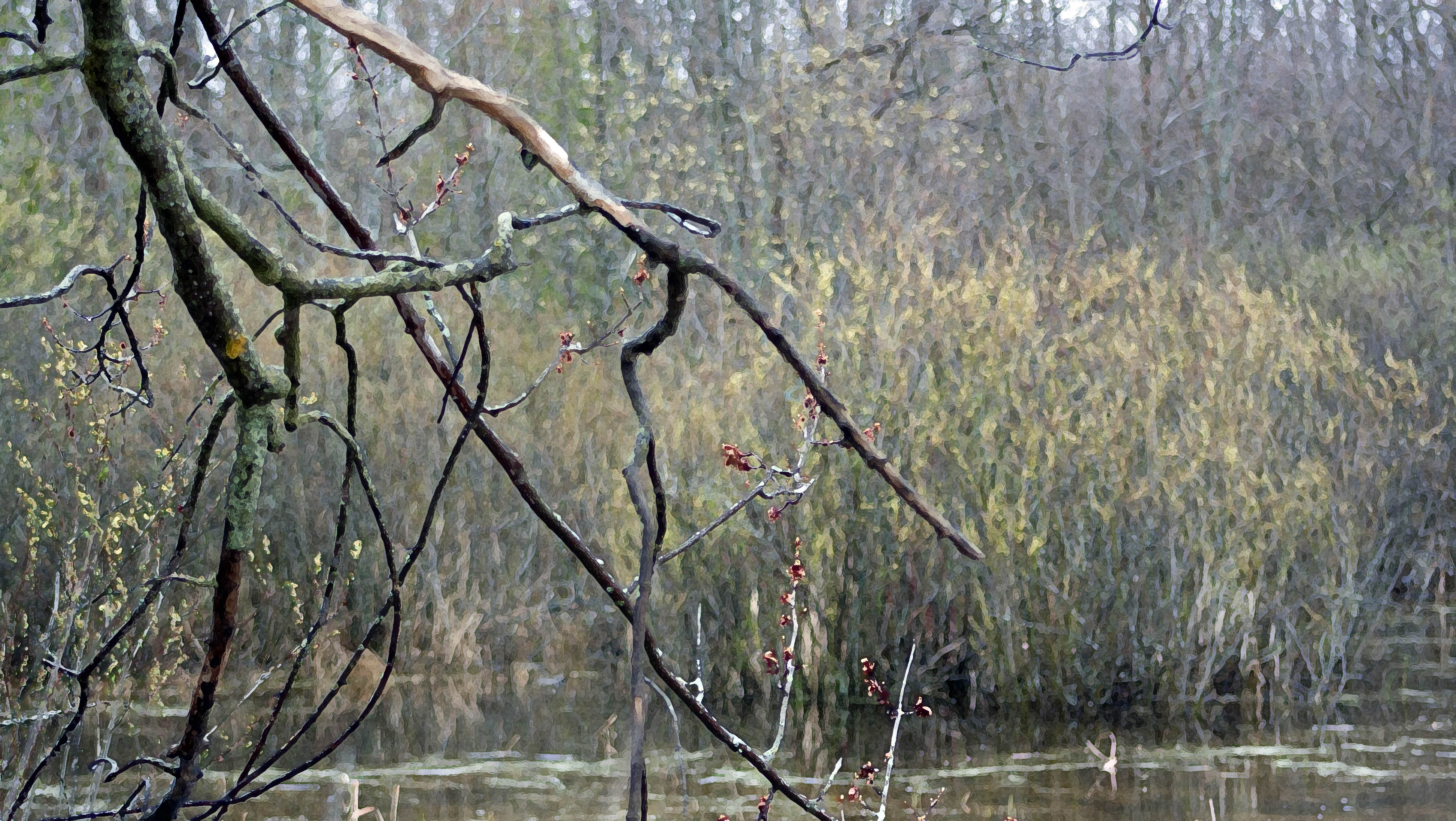
Thompson Creek marsh in early winter, ON (photo and rendition by Nina Munteanu)

Given that cli-fi features climate change, environmental destruction, and species extinction, you must think ‘how can it not be all doom and gloom?’ But dystopias often do reflect—in their depiction of terrible circumstance—an element of triumph, of overcoming adversity, and ultimately of hope. In fact, dystopias generally draw on a writer’s optimism; else, why would we write these cautionary tales? A strong belief in humanity underlies much of eco-fiction. Solarpunk is a rising light of eco-fiction that has emerged recently in response to the denial-despair dilemma many of us face when we think of climate change. This kind of eco-fiction features ingenuity, generativity, independence, and community. And it ultimately leads us through it all toward the light. A Diary in the Age of Water is in fact a dystopia with elements of solarpunk.

You can listen to the entire podcast interview on Solarpunk Futures: Imagining a New World here.

Thompson Creek Marsh in early winter, ON (photo and rendition by Nina Munteanu)

Nina Munteanu is a Canadian ecologist / limnologist and novelist. She is co-editor of Europa SF and currently teaches writing courses at George Brown College and the University of Toronto. Visit www.ninamunteanu.ca for the latest on her books. Nina’s bilingual “La natura dell’acqua / The Way of Water” was published by Mincione Edizioni in Rome. Her non-fiction book “Water Is…” by Pixl Press(Vancouver) was selected by Margaret Atwood in the New York Times ‘Year in Reading’ and was chosen as the 2017 Summer Read by Water Canada. Her novel “A Diary in the Age of Water” was released by Inanna Publications (Toronto) in June 2020.