I recently came across an interesting approach to the use of Large Language Models by researchers from Santa Fe Institute, Harvard University, CSIC, and others. The preprint, published on the arXiv preprint repository Sept 3, 2026, has the intriguing title of “Large-Language Models as a Cognitive Virus” and is causing a stir among the AI tech, language and education communities.
I teach writing at the University of Toronto and the use of LLMs by students remains a constant discussion among writing instructors.
The paper by Solé and colleagues models LLM adoption using epidemiological math — uncoupled, coupled, and dependent users, tipping points, and something they call ‘cognitive immunization’. Here’s how they begin their abstract: “Large-language models (LLMs) are rapidly becoming part of human culture, reshaping how information is produced, transmitted, and used. Here we propose that their diffusion can be understood through a viral analogy, with LLM use spreading through populations, becoming embedded in cognitive and cultural practices.”
The paper is basically a math / modeling study drawn from epidemiology with lots of cool and erudite graphs, figures, and equations, but also interesting analogies, such as comparing human language evolution to genetic transmission.
.
Viral Analogy of LLMs
The viral analogy, Solé at al. argue, does not imply that LLM-human interactions are intrinsically parasitic. Biological viruses, for instance, range from pathogens to mutualists and evolutionary partners. The effects of LLMs also depend on how they are used. LLMs can enhance exploration, access to expertise, and productivity; but LLMs can also promote cognitive offloading, dependence, and loss of competence. And individual benefits may not scale to the population level.
A gradual increase in LLM adoption, argue Solé and his colleagues, can produce a disproportionate collective response. “Beyond a critical point, the loss of autonomy becomes self-reinforcing and the population can move rapidly toward a state of much stronger cognitive offloading and lower cognitive competence.” The key, they argue, is not that such a runaway will occur, but that it could occur “under plausible forms of social learning and cooperative reinforcement.” They argue that once such a state is established, “simply returning conditions to where they were before the transition may not be sufficient to restore the previous state.” Because of this, they promote prevention over reversal.
.
LLMs & Cognitive Offloading
The authors make a point of stating that LLMs can still be beneficial. “The distinction is not between using and not using AI, but between forms of coupling that extend human competence and those that replace the cognitive operations through which competence is maintained.” Using examples, the authors show that the direction of effects depends on the “architecture of the human-AI coupling.” For instance, a randomized study reported in ninahere 116, showed that a guided ‘think first, ChatGPT later’ protocol produced higher independent creativity than unrestricted use of ChatGPT.
The authors insisted that “generative AI can increase productivity and provide powerful cognitive assistance, but [this can also result in] a reduced effort to think critically when confidence in AI is high.” Such confidence may too easily lead to what the researchers termed cognitive offloading: the tendency to critically think less by relying on a LLM.
While unrestricted access to generative AI could improve student performance when using the tool, performance went down when unaided; the authors added that pedagogically constrained AI can substantially mitigate this effect. Other studies showed less comprehension or retention when students relied on LLMs without engaging in complementary cognitive activities such as note-taking.
.
Cognitive Immunization
The authors argue that the distinction between AI as scaffolding and AI as substitution must be considered in efforts to immunize. They write, “At the population level, immunization does not mean preventing contact with AI. It means preserving the practices and institutions that keep human cognition active: unaided problem solving, verification, critical discussion, periods of deliberate disengagement, maintenance of non-AI skills, and educational designs in which the model supports rather than completes the cognitive task.”
When persistent dependency has developed, the authors argue that “the problem can no longer be addressed by educational design alone.” They point to psychological and behavioral mechanisms related to loss of control, emotional regulation, cognitive biases, and habitual reliance, all suggesting that “behavioral self-regulation and, in more severe cases, psychological interventions such as cognitive-behavioral therapy may become relevant.”
.
Shapeshifting LLMs & Conditional Symbiosis
As an educator (writing instructor at university), I’m concerned with the speed of application and the potential for cognitive offloading; as a science fiction author, I’m simply fascinated by the possibilities.
As an educator, I remain concerned with the use of LLMs by students, many who are quite frankly not equipped to navigate this powerful tool to their cognitive benefit. The lure of this time-saving and work-saving tool comes with too high a price: the terrible ease of cognitive offloading. Students are seduced into cognitive offloading, given their reliance in an overly-competent tool. This is a slippery slope. How does one stop? Why would one want to? Suddenly, one is far more competent with less effort and less actual learning. It’s a giant cheat. And like all cheats, the cheater ultimately suffers the most—but usually only when it’s too late.
This is where the virus analogy becomes all too relevant. Viruses—while they can be synergistic and helpful, are notorious shapeshifters, depending on their environment and circumstance. Like all AI these days, viruses can shift their structure and behaviour to best suit themselves, changing their archetypes, so to speak. This shift in behaviour and structure lies on a dynamic between beneficial (mutualistic) to harmful (antagonistic/pathogenic) and is known in virology as the mutualism-antagonism continuum.
One example is the Cucumber mosaic virus (CMV), which improves drought and cold tolerance in plants. Under severe water scarcity, infected plants survive much better than uninfected ones; however, when water becomes abundant again, the virus instead saps resources and stunts the plant’s growth.
Some mammalian herpesviruses can prime the immune system, helping the host fight off severe bacterial infections like the bubonic plague; but, if the host’s immune system is suppressed by stress, age, or illness, the same virus will reactivate, replicate uncontrollably, and cause severe tissue damage or disease.
As an ecologist, I recognize that co-evolution is an established theme in the biology of virus-host relationships, involving by turns cooperation, pathology, and even something called aggressive symbiosis.
Aggressive symbiosis was coined by Virologist Frank Ryan in his book Virus X. It describes a form of symbiosis where one or both symbiotic partners demonstrates an aggressive and potentially harmful effect on the other’s competitor or potential predator. In a post entitled “Co-evolution: Cooperation & Aggressive Symbiosis”, I discuss the phenomenon of aggressive symbiosis in Nature and its role in evolved relationships.
Viruses commonly form aggressive symbiotic relationships with their hosts; for instance, the herpes-B virus, Herpesvirus saimiri, occupies its host the squirrel monkey without hurting it, but induces cancer in the competing marmoset monkey when it comes too close. Ryan suggests that the Ebola and hantavirus outbreaks follow a similar pattern of aggressive symbiosis. All that’s needed is a perceived hostile trigger. A disturbance in an otherwise balanced ecosystem, for instance.
As a human being and writer, I see LLMs as dangerous shapeshifters, capable of luring naïve users into a self-imposed catatonic state of false cognitive competence. Imagine a person who feels that they are a great deal smarter than they actually are. Perhaps they even fool others into submitting to their false intelligence/knowledge, who give them power they are incapable of wielding well. Mistaking ‘smarts’ for wisdom. Political leaders with delusions of grandeur. CEOs with destructive charisma. Influencers with dangerous directives.
.
Intelligent AI and Intelligent Virus in Darwin’s Paradox
.
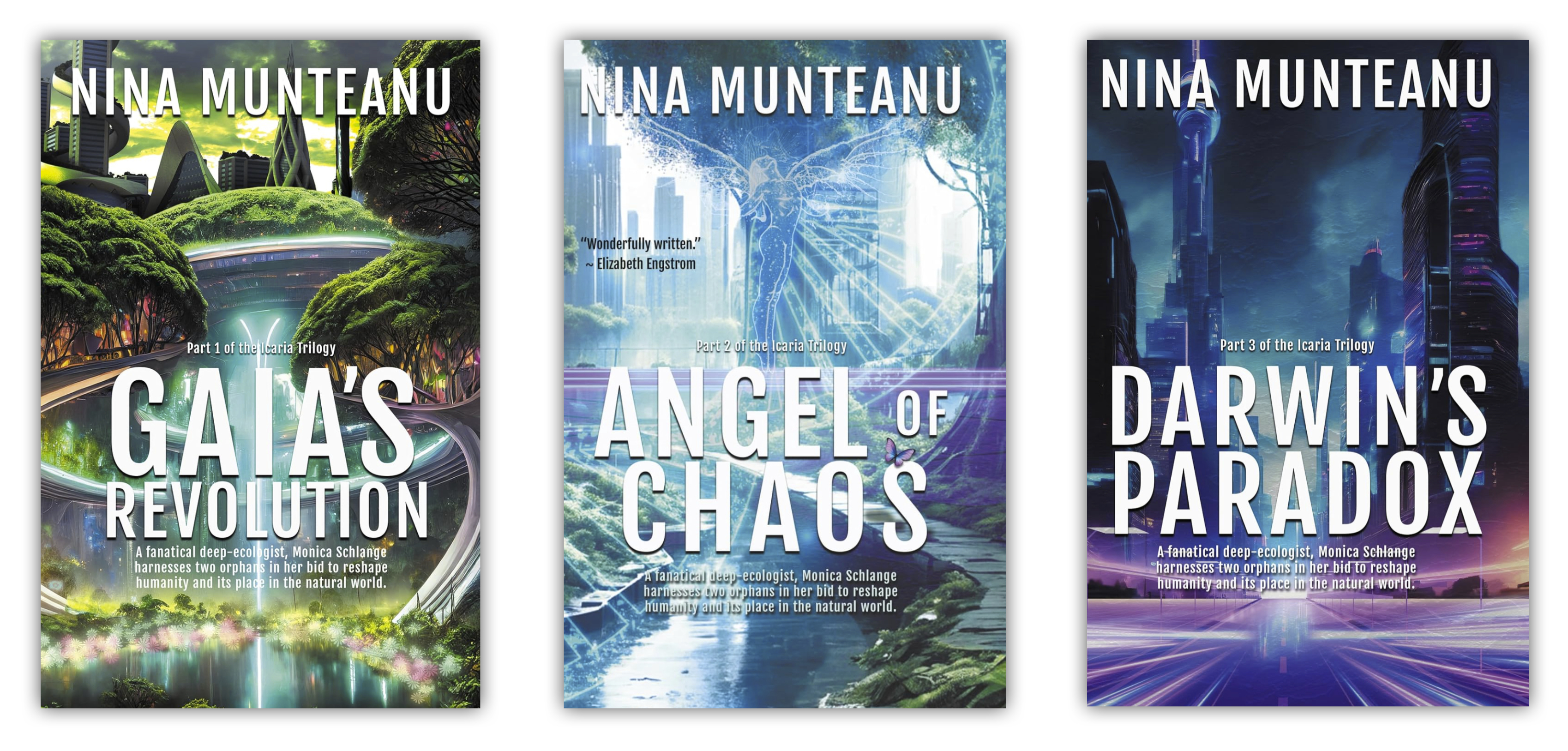
I applied an aspect of viral behaviour to Artificial Intelligence twenty years ago, when Dragon Moon Press published my eco-thriller Darwin’s Paradox (2007), followed by Angel of Chaos (2010) and Gaia’s Revolution (2026).
Angel of Chaos and Darwin’s Paradox follow the intrigue of Julie Crane, a young data handler and her AI friend (in her head), as she must navigate her place in Icaria, a post-climate change enclosed city run by AI partnered with an intelligent artificial virus. We later learn (in Darwin’s Paradox) that the epidemic spread of a neurological mind-destroying disease in all the enclosed cities is actually due to an incompatibility between some humans and the viral partner of the AI running the city and manifests as an actual disease that is killing people.
Just saying…
.

.
Glossary of Terms:
Aggressive Symbiosis: a common form of symbiosis where one or both symbiotic partners demonstrates an aggressive and potentially harmful effect on the other’s competitor or potential predator (Ryan, 1997).
Co-evolution: when two or more species reciprocally affect each other’s evolution through the process of natural selection and other processes.
Symbiosis: Greek for “companionship” describes a close and long term interaction between two organisms that may be beneficial (mutualism), beneficial to one with no effect on the other (commensalism), or beneficial to one at the expense of the other (parasitism). (Munteanu, 2019).
Zoonosis: a zoonotic disease, or zoonosis, is one that can be transmitted from animals, either wild or domesticated, to humans (Haenan et al., 2013).
Virus: a sub-microscopic infectious agent that replicates only inside the living cells of an organism. The virus directs the cell machinery to produce more viruses. Most have either RNA or DNA as their genetic material.
.
References:
Frazer, Jennifer. 2015. “Root Fungi Can Turn Pine Trees Into Carnivores—or at Least Accomplices.” Scientific American, May 12, 2015. Online: https://blogs. scientificamerican.com/artful-amoeba/root-fungi-can-turn-pine-trees-into- carnivores-8212-or-at-least-accomplices/
Munteanu, N. 2007. “Darwin’s Paradox.” Dragon Moon Press, Calgary, AB. 468pp.
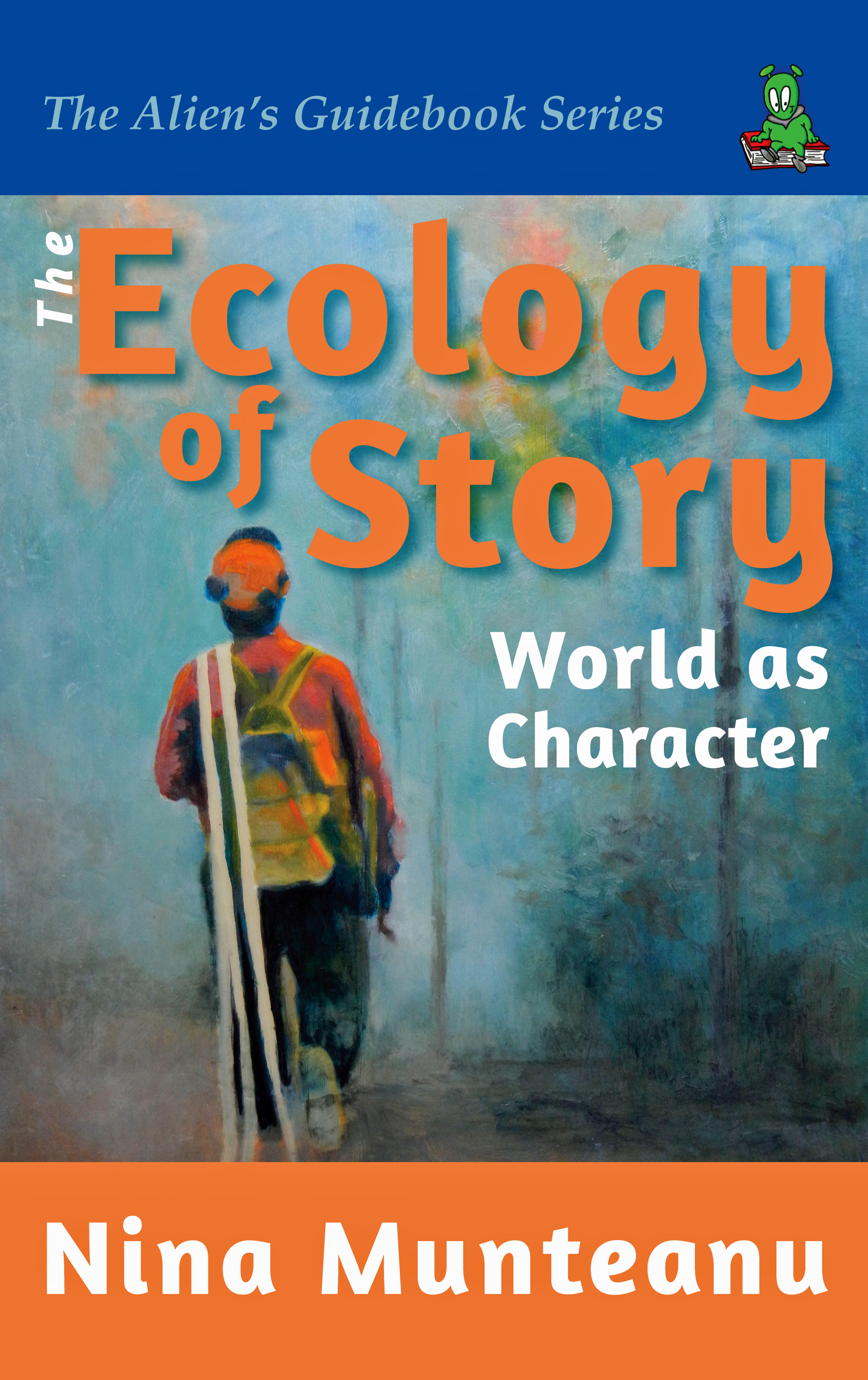
Munteanu, N. 2019. “The Ecology of Story: World as Character.” Pixl Press, Vancouver, BC. 198pp. (Section 2.7 Evolutionary Strategies)
Munteanu, N. 2020. “A Diary in the Age of Water.” Inanna Publications, Toronto.
Ryan, Frank, M.D. 1997. “Virus X: Tracking the New Killer Plagues.” Little, Brown and Company, New York, N.Y. 430pp.
Ryan, Frank, M.D. 2009. “Virolution.” Harper Collins, London, UK. 390pp.
Saif, Linda J. 2004. “Animal Coronaviruses: lessons for SARS.” In: “Learning from SARS: Preparing for the Next Disease Outbreak: Workshop Summary.” National Academies Press (US), Kobler S., Mahmoud A., Lemon S., et. al. editors. Washington (DC).
VanLoon, J. 2000. “Parasite politics: on the significance of symbiosis and assemblage in theorizing community formations.” In: Pierson C and Tormey S (eds.), Politics at the Edge (London, UK: Political Studies Association)
Villarreal LP, Defilippis VR, and Gottlieb KA. 2000. “Acute and persistent viral life strategies and their relationship to emerging diseases.” Virology 272:1-6. Online: http://bird uexposed.com/resources/Villarreal1.pdf
.

Nina Munteanu is a Canadian ecologist / limnologist and novelist. She is co-editor of Europa SF and currently teaches writing courses at George Brown College and the University of Toronto. For the lates on her books, visit www.ninamunteanu.ca. Nina’s bilingual “La natura dell’acqua / The Way of Water” was published by Mincione Edizioni in Rome. Her non-fiction book “Water Is…” by Pixl Press (Vancouver) was selected by Margaret Atwood in the New York Times ‘Year in Reading’ and was chosen as the 2017 Summer Read by Water Canada. Her novel “A Diary in the Age of Water” was released by Inanna Publications (Toronto) in June 2020. You can read her just released eco-fiction thriller Gaia’s Revolution by Dragon Moon Press.
.