LLMs: When AI Behaves Like a Virus

I recently came across an interesting approach to the use of Large Language Models by researchers from Santa Fe Institute, Harvard University, CSIC, and others. The preprint, published on the arXiv preprint repository Sept 3, 2026, has the intriguing title of “Large-Language Models as a Cognitive Virus” and is causing a stir among the AI tech, language and education communities.

I teach writing at the University of Toronto and the use of LLMs by students remains a constant discussion among writing instructors.

The paper by Solé and colleagues models LLM adoption using epidemiological math — uncoupled, coupled, and dependent users, tipping points, and something they call ‘cognitive immunization’. Here’s how they begin their abstract: “Large-language models (LLMs) are rapidly becoming part of human culture, reshaping how information is produced, transmitted, and used. Here we propose that their diffusion can be understood through a viral analogy, with LLM use spreading through populations, becoming embedded in cognitive and cultural practices.”

The paper is basically a math / modeling study drawn from epidemiology with lots of cool and erudite graphs, figures, and equations, but also interesting analogies, such as comparing human language evolution to genetic transmission.

Viral Analogy of LLMs

The viral analogy, Solé at al. argue, does not imply that LLM-human interactions are intrinsically parasitic. Biological viruses, for instance, range from pathogens to mutualists and evolutionary partners. The effects of LLMs also depend on how they are used. LLMs can enhance exploration, access to expertise, and productivity; but LLMs can also promote cognitive offloading, dependence, and loss of competence. And individual benefits may not scale to the population level.

A gradual increase in LLM adoption, argue Solé and his colleagues, can produce a disproportionate collective response. “Beyond a critical point, the loss of autonomy becomes self-reinforcing and the population can move rapidly toward a state of much stronger cognitive offloading and lower cognitive competence.” The key, they argue, is not that such a runaway will occur, but that it could occur “under plausible forms of social learning and cooperative reinforcement.” They argue that once such a state is established, “simply returning conditions to where they were before the transition may not be sufficient to restore the previous state.” Because of this, they promote prevention over reversal.

LLMs & Cognitive Offloading

The authors make a point of stating that LLMs can still be beneficial. “The distinction is not between using and not using AI, but between forms of coupling that extend human competence and those that replace the cognitive operations through which competence is maintained.” Using examples, the authors show that the direction of effects depends on the “architecture of the human-AI coupling.” For instance, a randomized study reported in ninahere 116, showed that a guided ‘think first, ChatGPT later’ protocol produced higher independent creativity than unrestricted use of ChatGPT.

The authors insisted that “generative AI can increase productivity and provide powerful cognitive assistance, but [this can also result in] a reduced effort to think critically when confidence in AI is high.” Such confidence may too easily lead to what the researchers termed cognitive offloading: the tendency to critically think less by relying on a LLM.

While unrestricted access to generative AI could improve student performance when using the tool, performance went down when unaided; the authors added that pedagogically constrained AI can substantially mitigate this effect. Other studies showed less comprehension or retention when students relied on LLMs without engaging in complementary cognitive activities such as note-taking.

Cognitive Immunization

The authors argue that the distinction between AI as scaffolding and AI as substitution must be considered in efforts to immunize. They write, “At the population level, immunization does not mean preventing contact with AI. It means preserving the practices and institutions that keep human cognition active: unaided problem solving, verification, critical discussion, periods of deliberate disengagement, maintenance of non-AI skills, and educational designs in which the model supports rather than completes the cognitive task.”

When persistent dependency has developed, the authors argue that “the problem can no longer be addressed by educational design alone.” They point to psychological and behavioral mechanisms related to loss of control, emotional regulation, cognitive biases, and habitual reliance, all suggesting that “behavioral self-regulation and, in more severe cases, psychological interventions such as cognitive-behavioral therapy may become relevant.”

Shapeshifting LLMs & Conditional Symbiosis

As an educator (writing instructor at university), I’m concerned with the speed of application and the potential for cognitive offloading; as a science fiction author, I’m simply fascinated by the possibilities.

As an educator, I remain concerned with the use of LLMs by students, many who are quite frankly not equipped to navigate this powerful tool to their cognitive benefit. The lure of this time-saving and work-saving tool comes with too high a price: the terrible ease of cognitive offloading. Students are seduced into cognitive offloading, given their reliance in an overly-competent tool. This is a slippery slope. How does one stop? Why would one want to? Suddenly, one is far more competent with less effort and less actual learning. It’s a giant cheat. And like all cheats, the cheater ultimately suffers the most—but usually only when it’s too late.

This is where the virus analogy becomes all too relevant. Viruses—while they can be synergistic and helpful, are notorious shapeshifters, depending on their environment and circumstance. Like all AI these days, viruses can shift their structure and behaviour to best suit themselves, changing their archetypes, so to speak. This shift in behaviour and structure lies on a dynamic between beneficial (mutualistic) to harmful (antagonistic/pathogenic) and is known in virology as the mutualism-antagonism continuum.

One example is the Cucumber mosaic virus (CMV), which improves drought and cold tolerance in plants. Under severe water scarcity, infected plants survive much better than uninfected ones; however, when water becomes abundant again, the virus instead saps resources and stunts the plant’s growth.

Some mammalian herpesviruses can prime the immune system, helping the host fight off severe bacterial infections like the bubonic plague; but, if the host’s immune system is suppressed by stress, age, or illness, the same virus will reactivate, replicate uncontrollably, and cause severe tissue damage or disease.

As an ecologist, I recognize that co-evolution is an established theme in the biology of virus-host relationships, involving by turns cooperation, pathology, and even something called aggressive symbiosis.

Aggressive symbiosis was coined by Virologist Frank Ryan in his book Virus X. It describes a form of symbiosis where one or both symbiotic partners demonstrates an aggressive and potentially harmful effect on the other’s competitor or potential predator. In a post entitled “Co-evolution: Cooperation & Aggressive Symbiosis”, I discuss the phenomenon of aggressive symbiosis in Nature and its role in evolved relationships.  

Viruses commonly form aggressive symbiotic relationships with their hosts; for instance, the herpes-B virus, Herpesvirus saimiri, occupies its host the squirrel monkey without hurting it, but induces cancer in the competing marmoset monkey when it comes too close. Ryan suggests that the Ebola and hantavirus outbreaks follow a similar pattern of aggressive symbiosis. All that’s needed is a perceived hostile trigger. A disturbance in an otherwise balanced ecosystem, for instance.

As a human being and writer, I see LLMs as dangerous shapeshifters, capable of luring naïve users into a self-imposed catatonic state of false cognitive competence. Imagine a person who feels that they are a great deal smarter than they actually are. Perhaps they even fool others into submitting to their false intelligence/knowledge, who give them power they are incapable of wielding well. Mistaking ‘smarts’ for wisdom. Political leaders with delusions of grandeur. CEOs with destructive charisma. Influencers with dangerous directives.

Intelligent AI and Intelligent Virus in Darwin’s Paradox
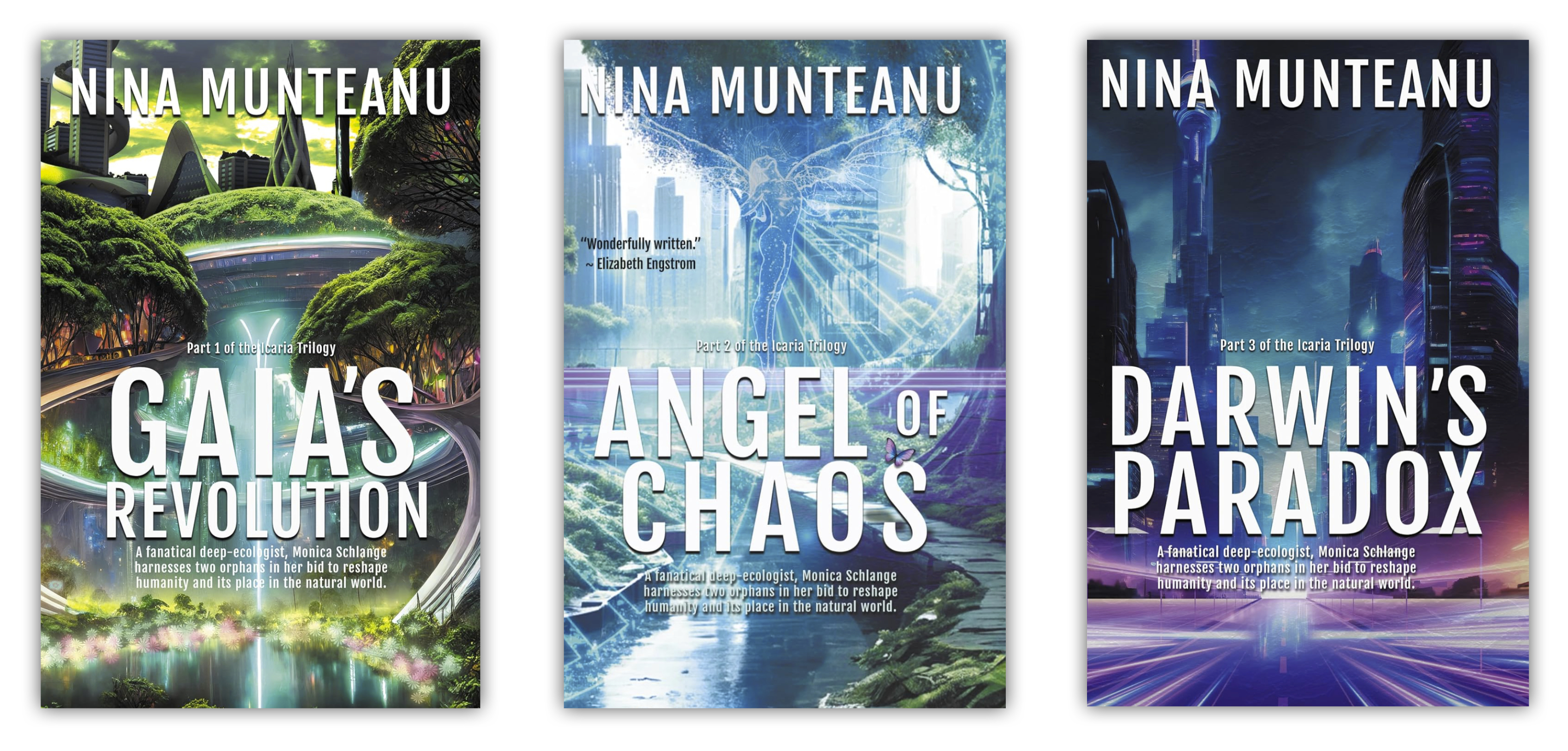
The Icaria Trilogy by Dragon Moon Press

I applied an aspect of viral behaviour to Artificial Intelligence twenty years ago, when Dragon Moon Press published my eco-thriller Darwin’s Paradox (2007), followed by Angel of Chaos (2010) and Gaia’s Revolution (2026).

Angel of Chaos and Darwin’s Paradox follow the intrigue of Julie Crane, a young data handler and her AI friend (in her head), as she must navigate her place in Icaria, a post-climate change enclosed city run by AI partnered with an intelligent artificial virus. We later learn (in Darwin’s Paradox) that the epidemic spread of a neurological mind-destroying disease in all the enclosed cities is actually due to an incompatibility between some humans and the viral partner of the AI running the city and manifests as an actual disease that is killing people.

Just saying…

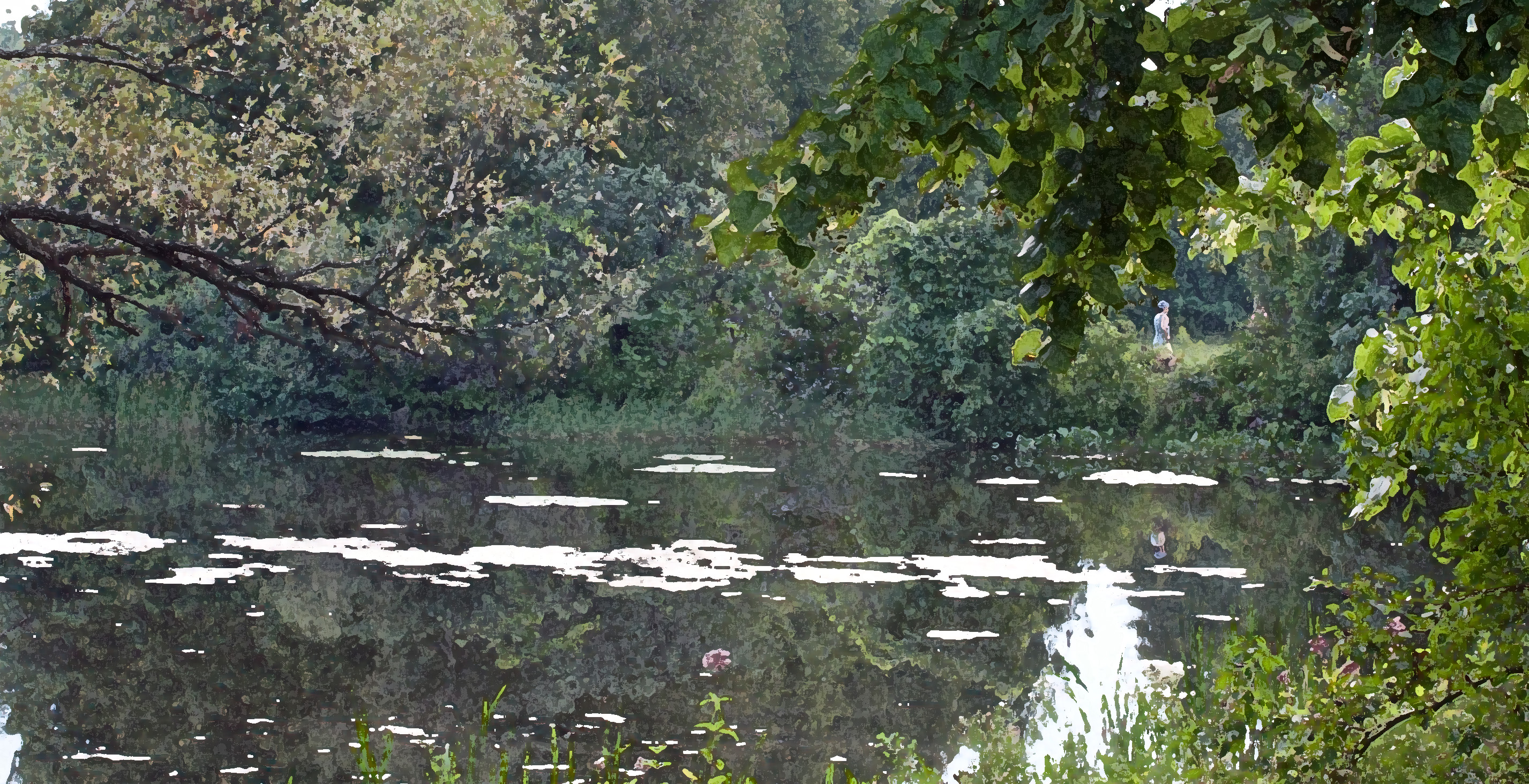
Marsh in late summer, ON (photo and rendition by Nina Munteanu)

Glossary of Terms: 

Aggressive Symbiosis: a common form of symbiosis where one or both symbiotic partners demonstrates an aggressive and potentially harmful effect on the other’s competitor or potential predator (Ryan, 1997).

Co-evolution: when two or more species reciprocally affect each other’s evolution through the process of natural selection and other processes. 

Symbiosis: Greek for “companionship” describes a close and long term interaction between two organisms that may be beneficial (mutualism), beneficial to one with no effect on the other (commensalism), or beneficial to one at the expense of the other (parasitism). (Munteanu, 2019).

Zoonosis: a zoonotic disease, or zoonosis, is one that can be transmitted from animals, either wild or domesticated, to humans (Haenan et al., 2013).

Virus: a sub-microscopic infectious agent that replicates only inside the living cells of an organism. The virus directs the cell machinery to produce more viruses. Most have either RNA or DNA as their genetic material.

References:

Frazer, Jennifer. 2015. “Root Fungi Can Turn Pine Trees Into Carnivores—or at Least Accomplices.” Scientific American, May 12, 2015. Online: https://blogs. scientificamerican.com/artful-amoeba/root-fungi-can-turn-pine-trees-into- carnivores-8212-or-at-least-accomplices/

Munteanu, N. 2007. “Darwin’s Paradox.” Dragon Moon Press, Calgary, AB. 468pp.

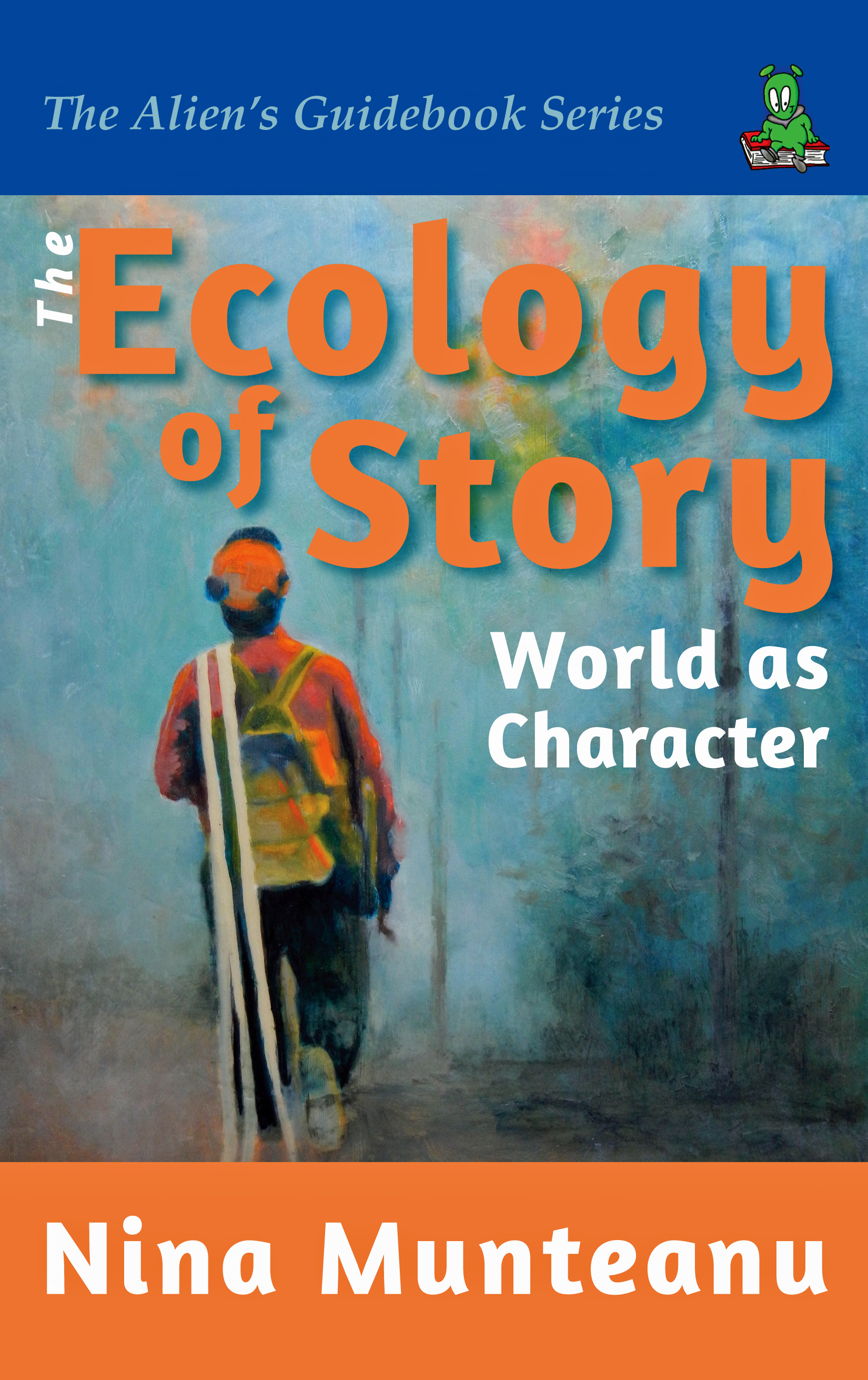
Munteanu, N. 2019. “The Ecology of Story: World as Character.” Pixl Press, Vancouver, BC. 198pp. (Section 2.7 Evolutionary Strategies)

Munteanu, N. 2020. “A Diary in the Age of Water.” Inanna Publications, Toronto.

Ryan, Frank, M.D. 1997. “Virus X: Tracking the New Killer Plagues.” Little, Brown and Company, New York, N.Y. 430pp.

Ryan, Frank, M.D. 2009. “Virolution.” Harper Collins, London, UK. 390pp.

Saif, Linda J. 2004. “Animal Coronaviruses: lessons for SARS.” In: “Learning from SARS: Preparing for the Next Disease Outbreak: Workshop Summary.” National Academies Press (US), Kobler S., Mahmoud A., Lemon S., et. al. editors. Washington (DC).

VanLoon, J. 2000. “Parasite politics: on the significance of symbiosis and assemblage in theorizing community formations.” In: Pierson C and Tormey S (eds.), Politics at the Edge (London, UK: Political Studies Association)

Villarreal LP, Defilippis VR, and Gottlieb KA. 2000. “Acute and persistent viral life strategies and their relationship to emerging diseases.” Virology 272:1-6. Online: http://bird uexposed.com/resources/Villarreal1.pdf

Nina Munteanu is a Canadian ecologist / limnologist and novelist. She is co-editor of Europa SF and currently teaches writing courses at George Brown College and the University of Toronto. For the lates on her books, visit www.ninamunteanu.ca. Nina’s bilingual “La natura dell’acqua / The Way of Water” was published by Mincione Edizioni in Rome. Her non-fiction book “Water Is…” by Pixl Press (Vancouver) was selected by Margaret Atwood in the New York Times ‘Year in Reading’ and was chosen as the 2017 Summer Read by Water Canada. Her novel “A Diary in the Age of Water” was released by Inanna Publications (Toronto) in June 2020. You can read her just released eco-fiction thriller Gaia’s Revolution by Dragon Moon Press.

When the Forest Reveals its Archetypes

It is early spring and I’m walking through one of my favourite woodlands in Ontario’s Carolinian forests. The river that had swollen with snow melt just a week before, now flows with more restraint. I can see the cobbles and clay of scoured banks under the water. Further on, part of the path along the river has collapsed from a major bank scour the previous week. The little river is rather big and capricious, I ponder; then I consider that the entire forest sways to similar vagaries of wind, season, precipitation and unforeseen events. Despite its steadfast appearance, the forest flows—like the river—in a constant state of flux and change, cycling irrevocably through life and death.

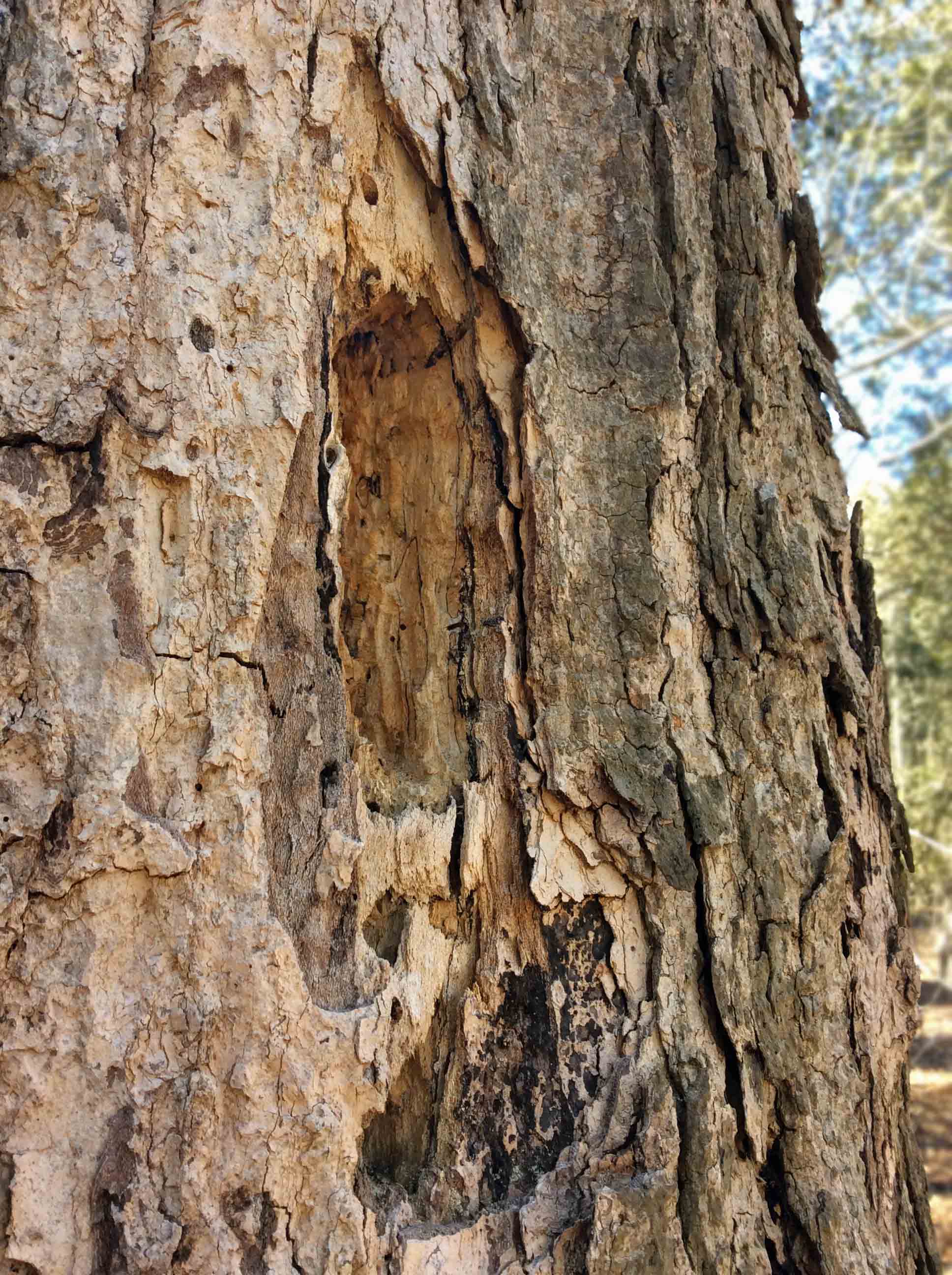
The forest is littered with snags and fallen trees in different stages of breakdown, decomposition and decay. I spot several large cedar, pine, oak and maple snags with woodpecker holes. The snags may remain for many decades before finally falling to the ground.

I walk slowly, eyes cast to the forest floor thick with dead leaves, and discover seeds and nuts—the promise of new life. I aim my gaze past trees and shrubs to the nearby snags and fallen logs. I’m looking for hidden gifts. One fallen cedar log reveals swirling impressionistic patterns of wood grain, dusted with moss and lichen. Nature’s death clothed in beauty.

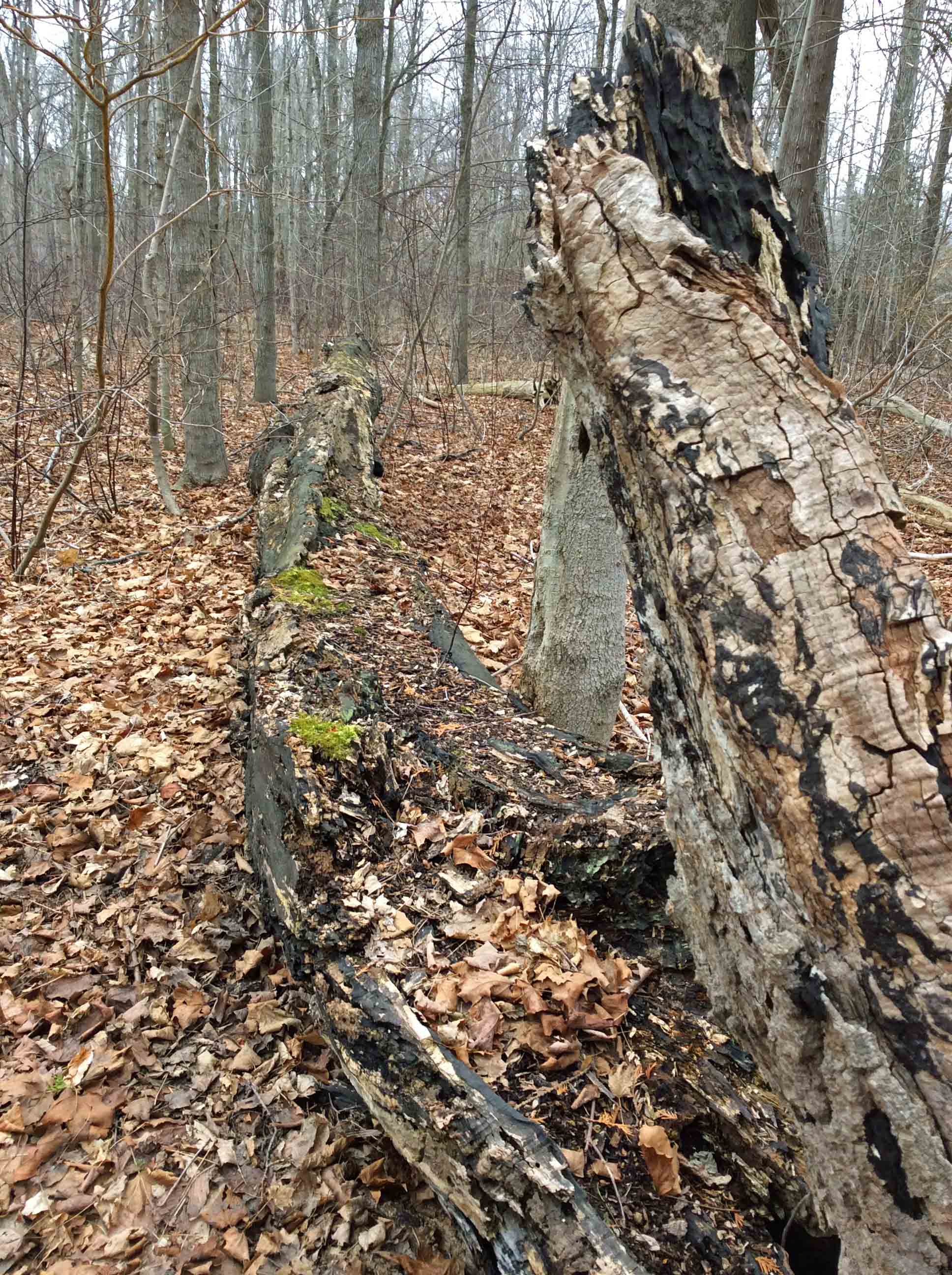
A fallen maple snag decomposes with the help of several organisms, Little Rouge Woodland, ON (photo by Nina Munteanu)

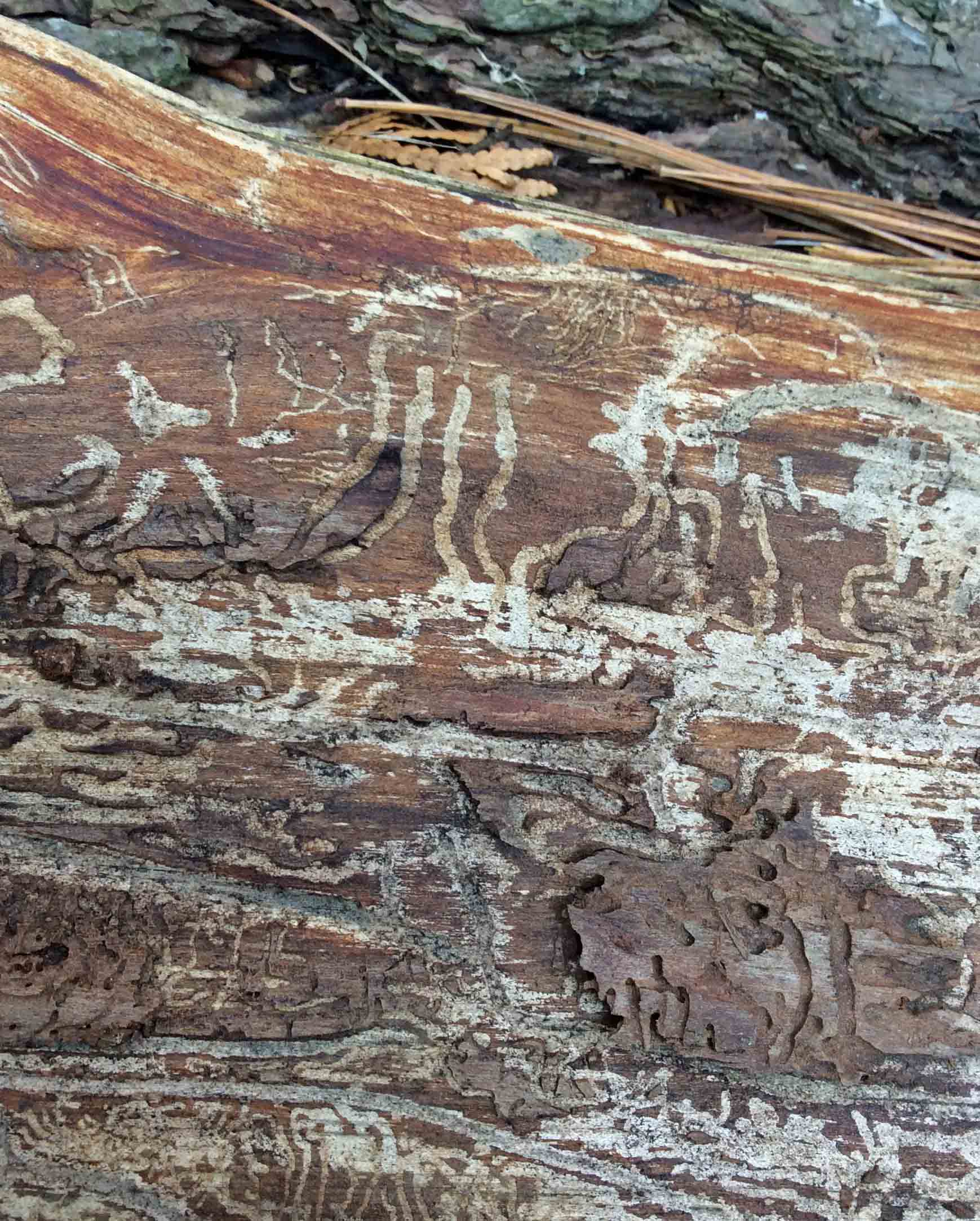
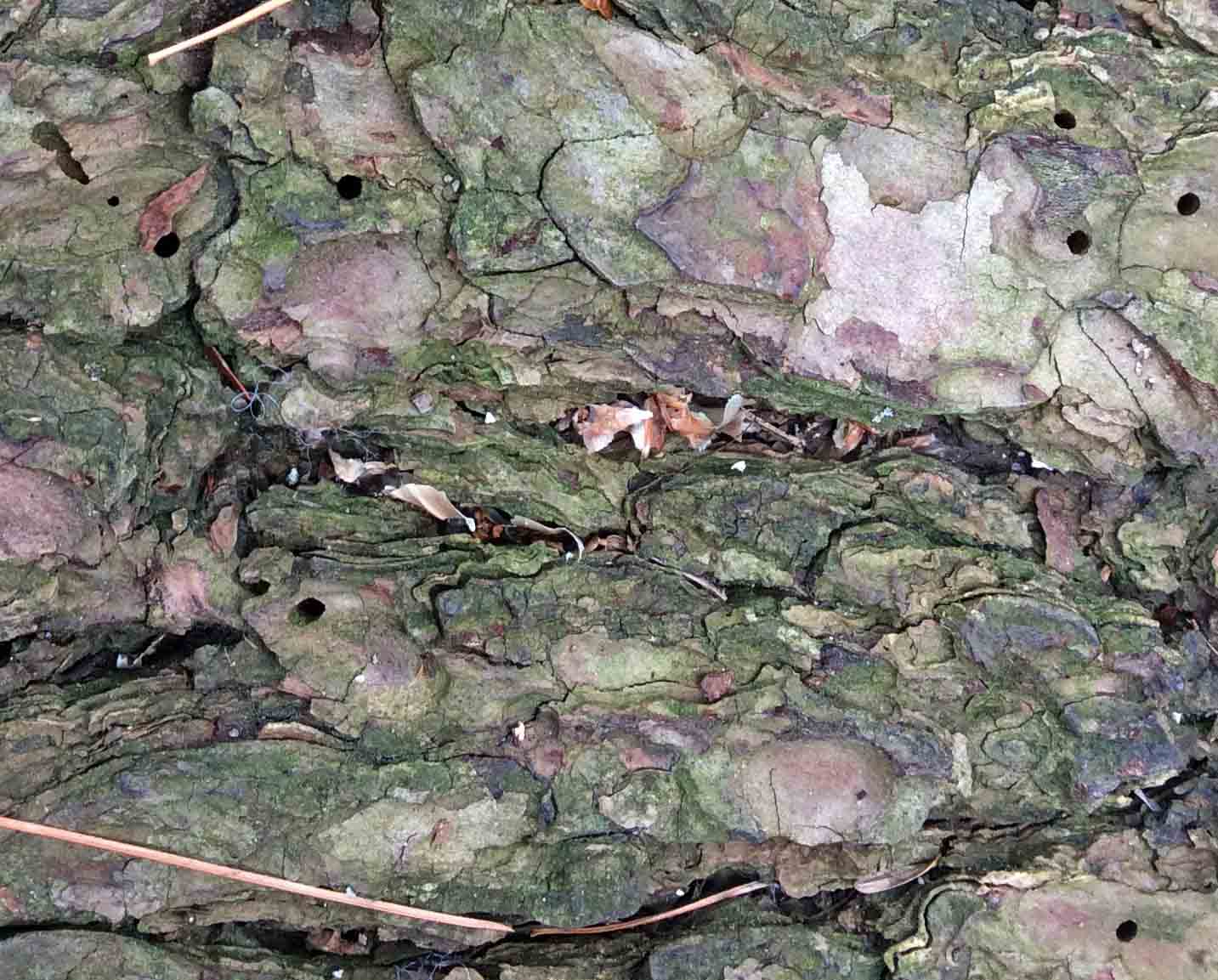
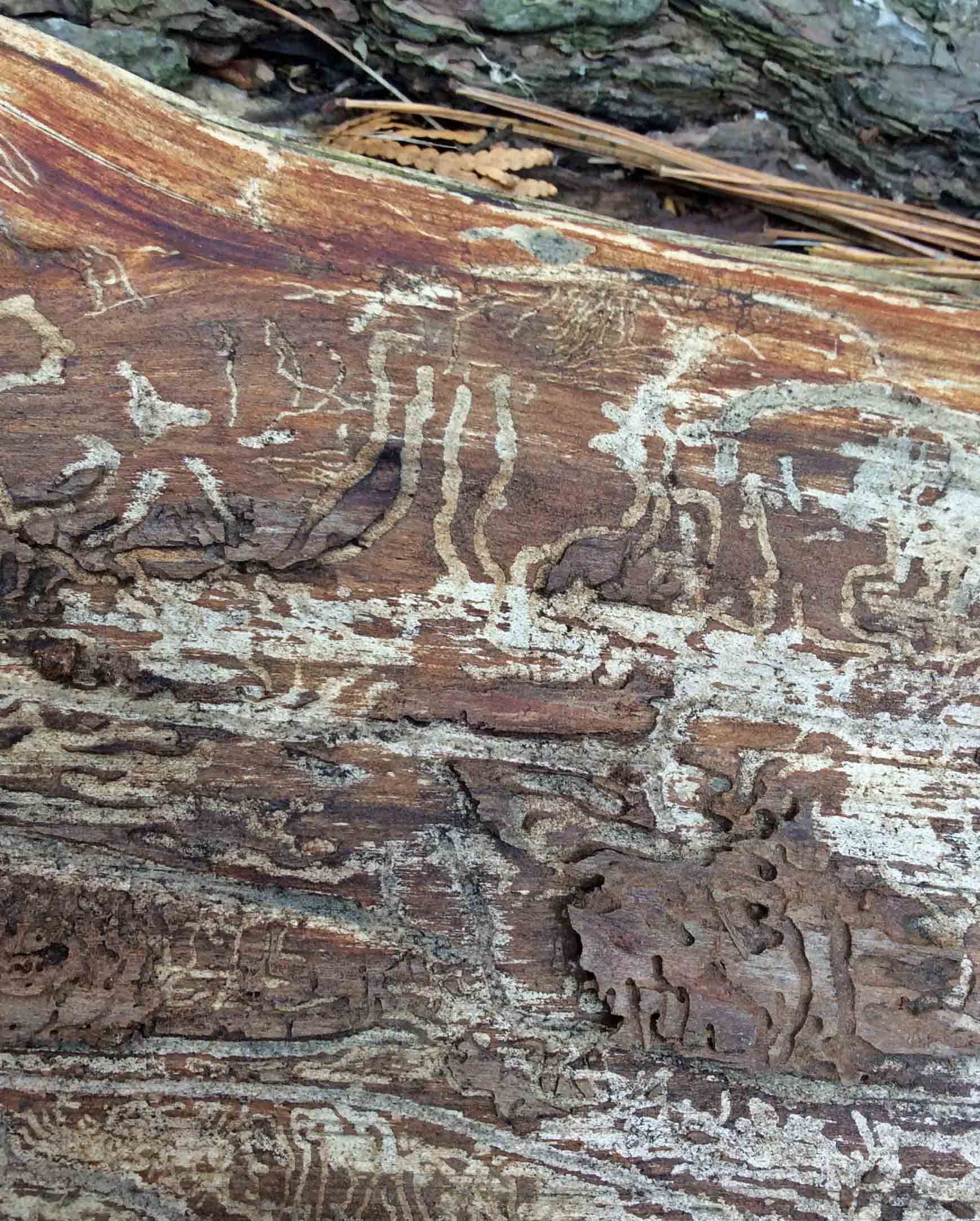
The bark of a large pine tree that has fallen is riddled with tiny beetle holes drilled into its bark. Where the bark has sloughed off, a gallery of larval tracks in the sapwood create a map of meandering texture and colour.

Decomposing pine log displays a gallery of larval tracks, Little Rouge Woodland, ON (photo by Nina Munteanu)

Fallen Heroes & Saprophyte Characters

Rotting maple log, Little Rouge Woodland, ON (photo by Nina Munteanu)

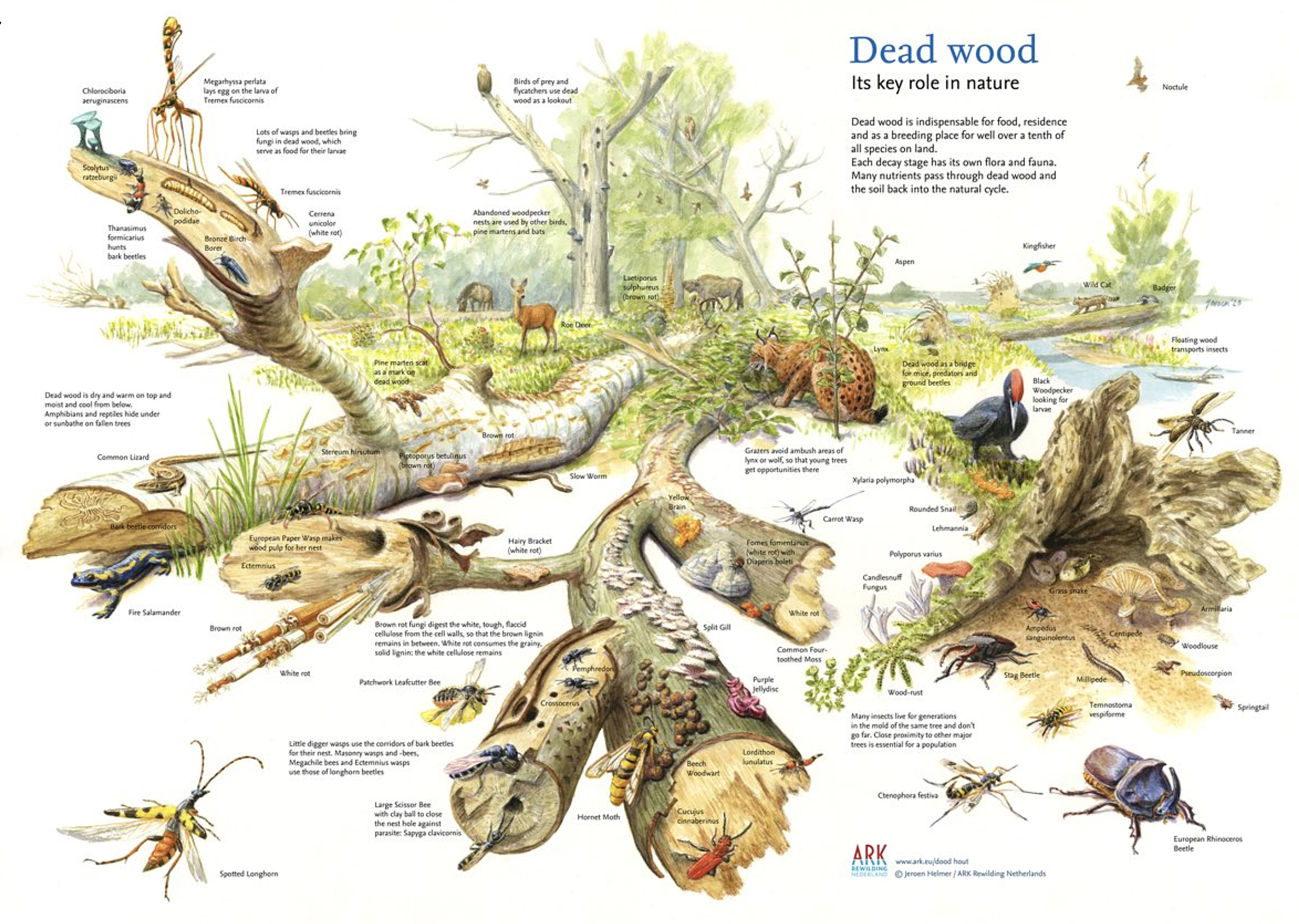
The forest ecosystem supports a diverse community of organisms in various stages of life and death and decay. Trees lie at the heart of this ecosystem, supporting a complex and dynamic cycle of evolving life. Even in death, the trees continue to support thriving detrivore and saprophytic communities that, in turn, provide nutrients and soil for the next generation of living trees. It’s a partnership.

Decomposition and decay are the yin to the yang of growth, writes Trees for Life; together, they form two halves of the whole that is the closed loop cycle of natural ecosystems.

A fallen tree decomposes with the help of a diversity of organisms

Snags and rotting logs on the forest floor provide damp shelter and food for many plants and animals. Most are decomposers, including earthworms, fungi, and bacteria. As the wood decays, nutrients in the log break down and recycle in the forest ecosystem. Insects, mosses, lichens, and ferns recycle the nutrients and put them back into the soil for other forest plants to use. Dead wood is an important reservoir of organic matter in forests and a source of soil formation. Decaying and dead wood host diverse communities of bacteria and fungi.

Mother Archetypes

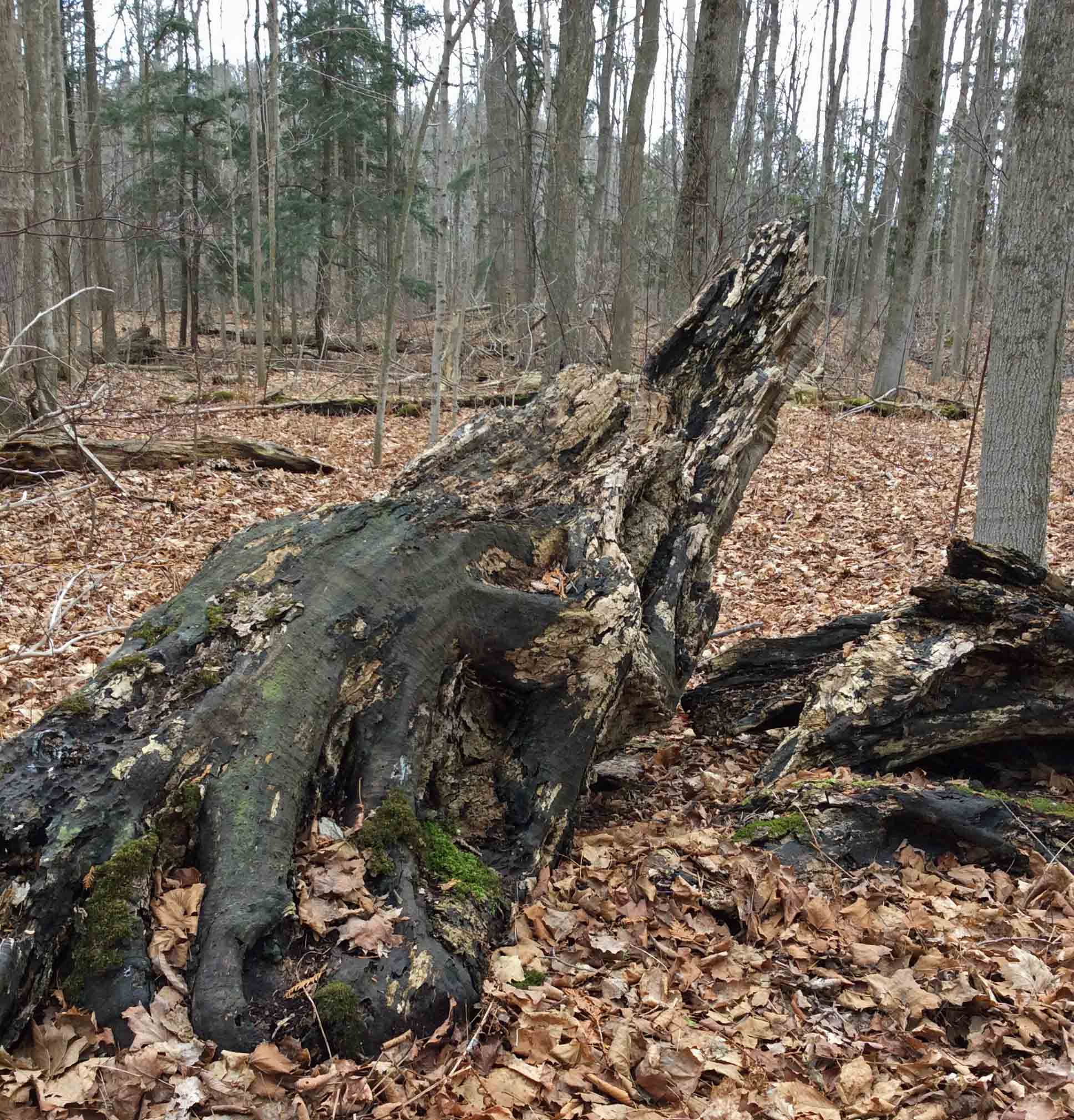
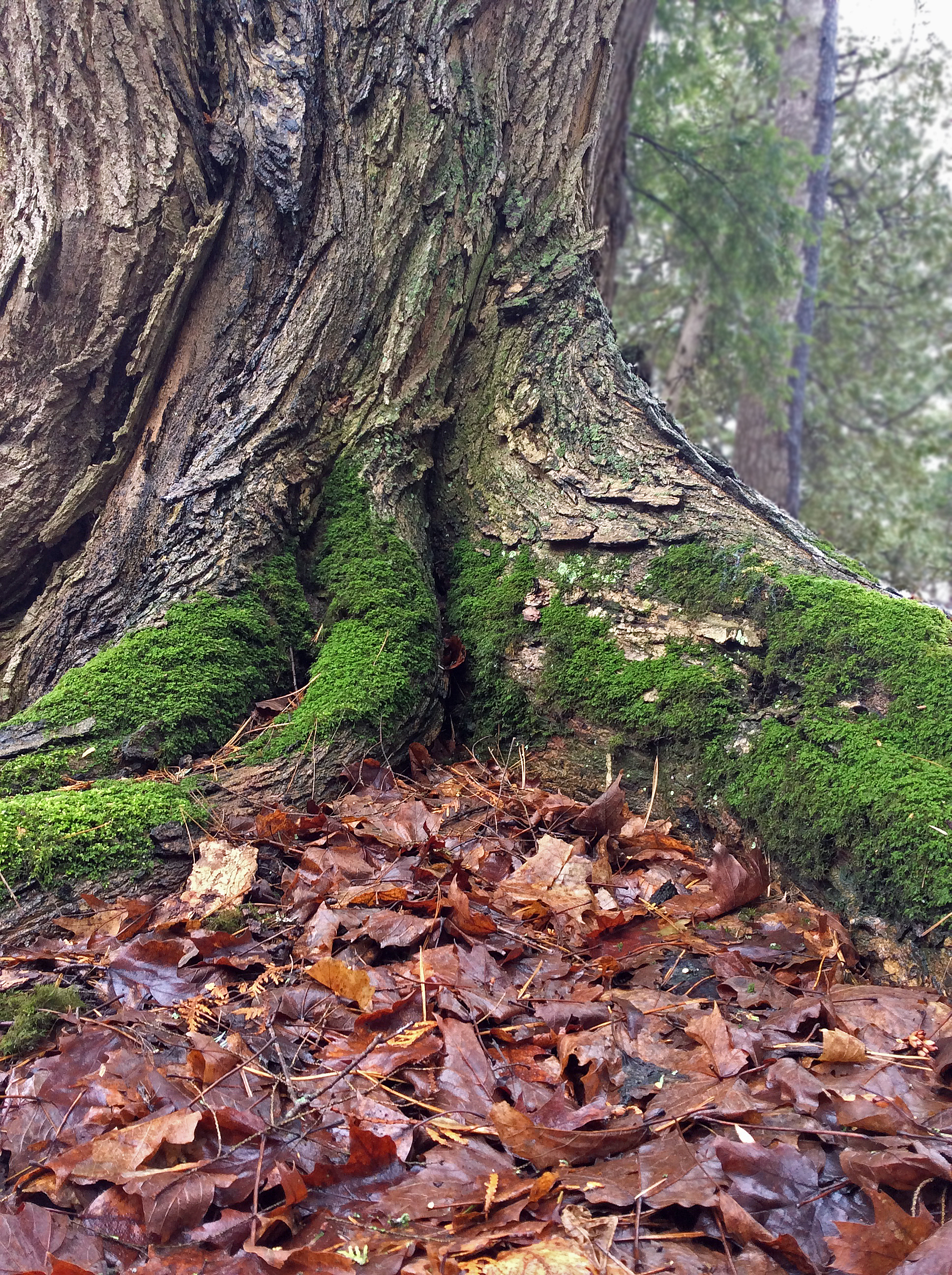
The feet of an old tree trunk reach out to embrace a collection of maple leaves, ON (photo by Nina Munteanu)

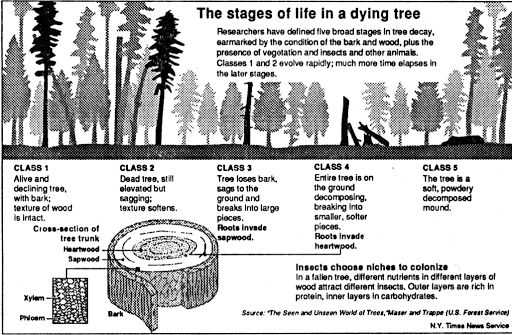
Wood tissues of tree stems include the outer bark, cork cambium, inner bark (phloem), vascular cambium, outer xylem (living sapwood), and the inner xylem (non-living heartwood). The outer bark provides a non-living barrier between the inner tree and harmful factors in the environment, such as fire, insects, and diseases. The cork cambium produces bark cells. The vascular cambium produces both the phloem cells (principal food-conducting tissue) and xylem cells of the sapwood (the main water storage and conducting tissue) and heartwood.

Forest ecologists defined five broad stages in tree decay, shown by the condition of the bark and wood and presence of insects and other animals. The first two stages evolve rapidly; much more time elapses in the later stages, when the tree sags to the ground. These latter stages can take decades for the tree to break down completely and surrender all of itself back to the forest. A fallen tree nurtures, much like a “mother” archetype; it provides food, shelter, and protection to a vast community—from bears and small mammals to salamanders, invertebrates, fungus, moss and lichens. This is why fallen trees are called “nursing logs.”

Heralds & Tricksters

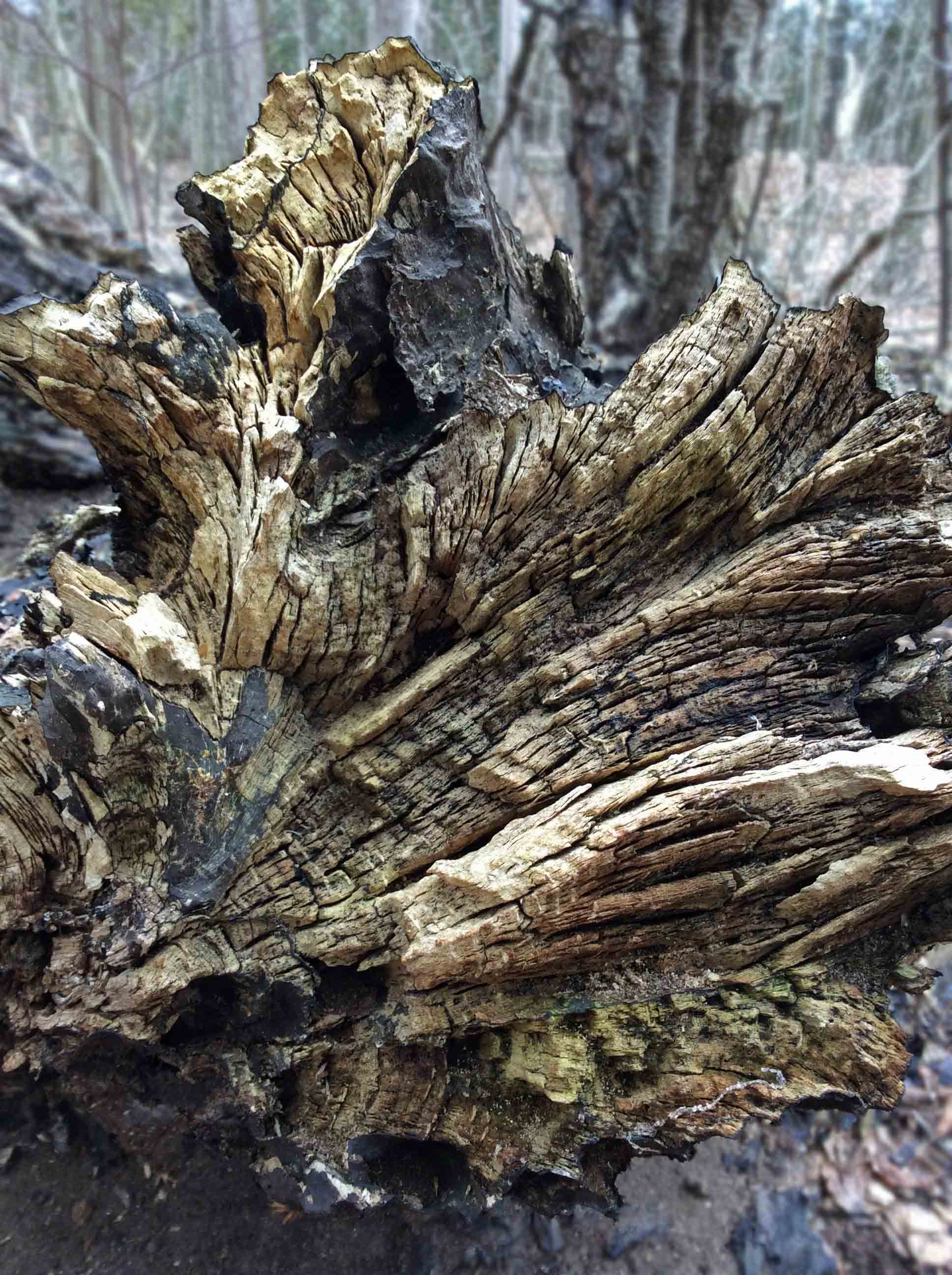
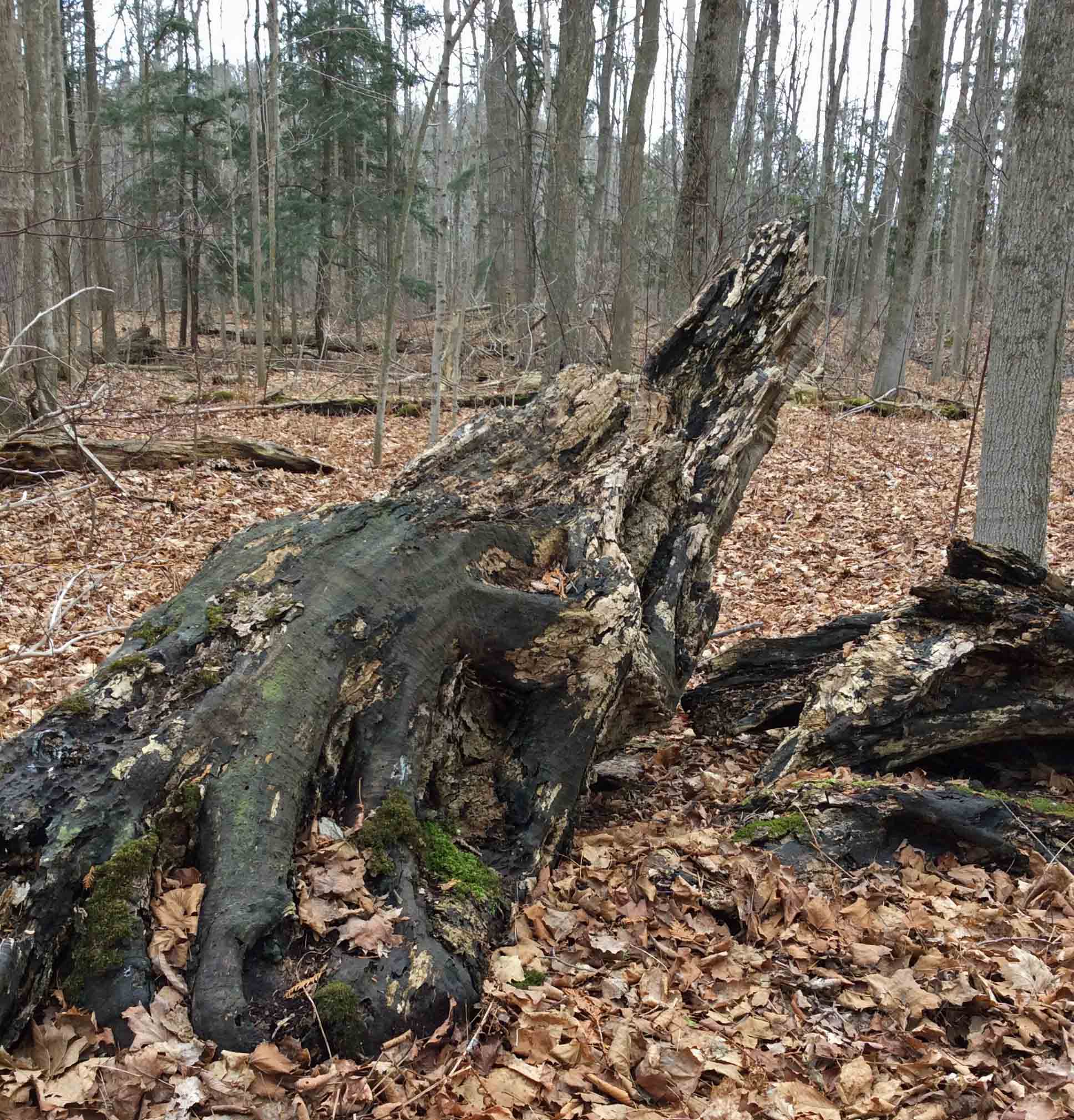
Uprooted stump colonized by carbon cushion fungi, Little Rouge Woodland, ON (photo by Nina Munteanu)

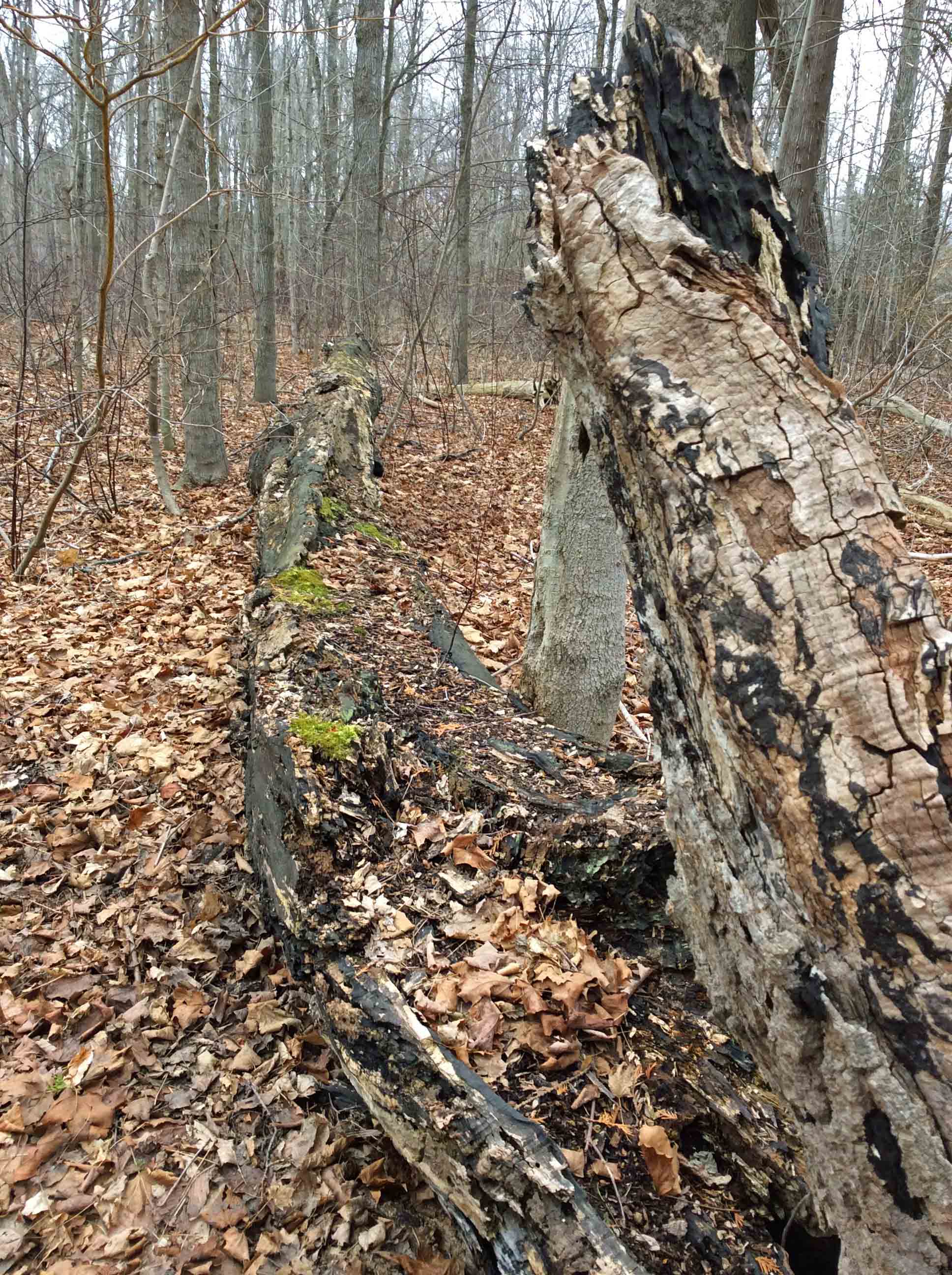
I stop to inspect another fallen tree lying on a bed of decaying maple, beech and oak leaves. When a fallen tree decomposes, unique new habitats are created within its body as the outer and inner bark, sapwood, and heartwood decompose at different rates, based in part on their characteristics for fine dining. For instance, the outer layers of the tree are rich in protein; inner layers are high in carbohydrates. This log—probably a sugar maple judging from what bark is left—has surrendered itself with the help of detrivores and saprophytes to decomposition and decay. The outer bark has mostly rotted and fallen away revealing an inner sapwood layer rich in varied colours, textures and incredible patterns—mostly from fungal infestations. In fact, this tree is a rich ecosystem for dozens of organisms. Wood-boring beetle larvae tunnel through the bark and wood, building their chambers and inoculating the tree with microbes. They open the tree to colonization by other microbes and small invertebrates. Slime molds, lichen, moss and fungi join in. The march of decay follows a succession of steps. Even fungi are followed by yet other fungi in the process as one form creates the right condition for another form.

Most hardwoods take several decades to decompose and surrender all of themselves back to the forest. In western Canada’s old growth forest, trees like Western redcedars can take over a hundred years to decay once they’re down. The maple log I’m studying in Ontario’s Carolinian forest looks like it’s been lying on the ground for a while, certainly several years. The bark has fragmented and mostly fallen away, revealing layers of sapwood in differing stages of infestation and decay. Some sapwood is fragmented and cracked into blocks and in places looks like stacked bones.

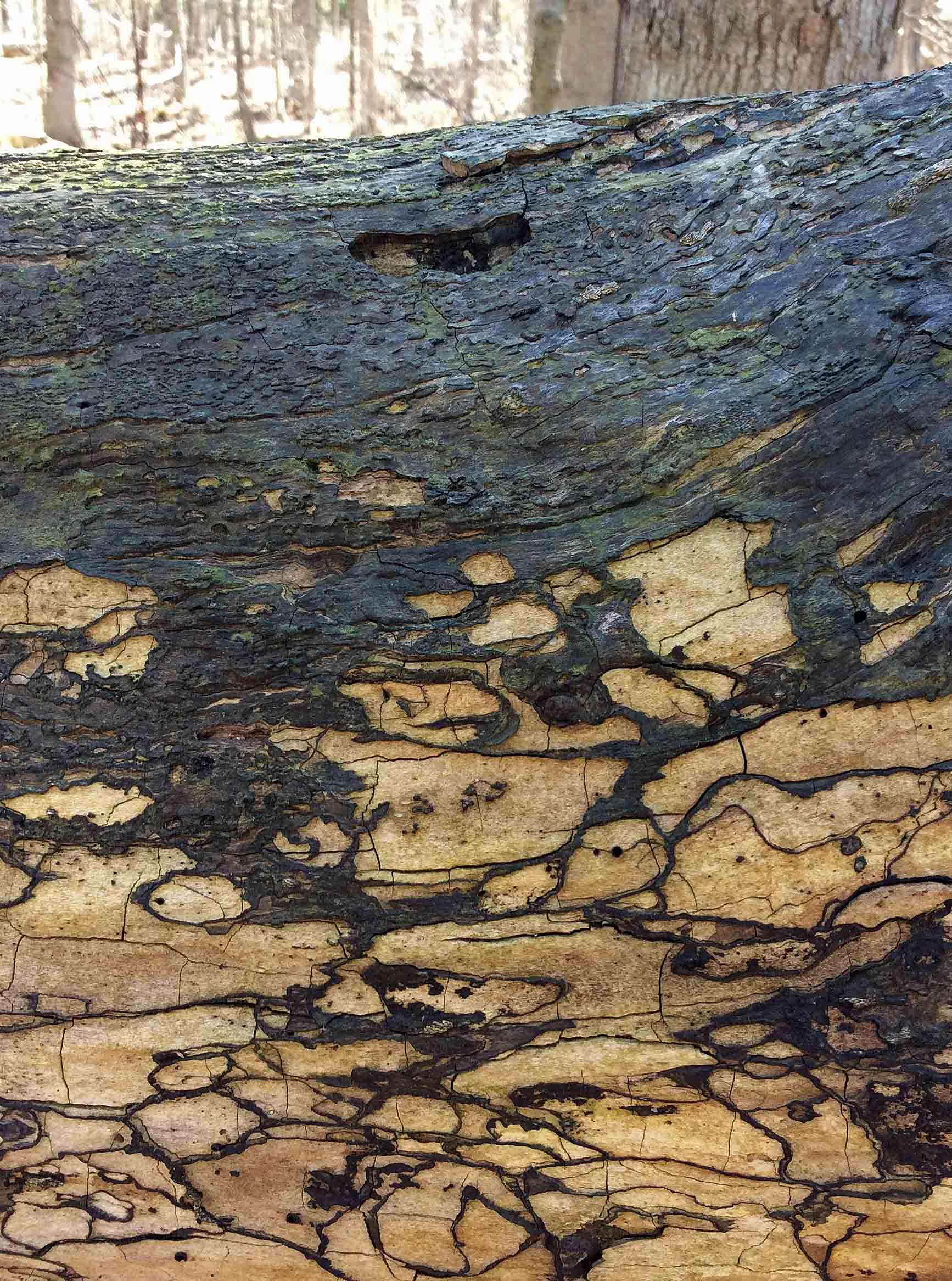
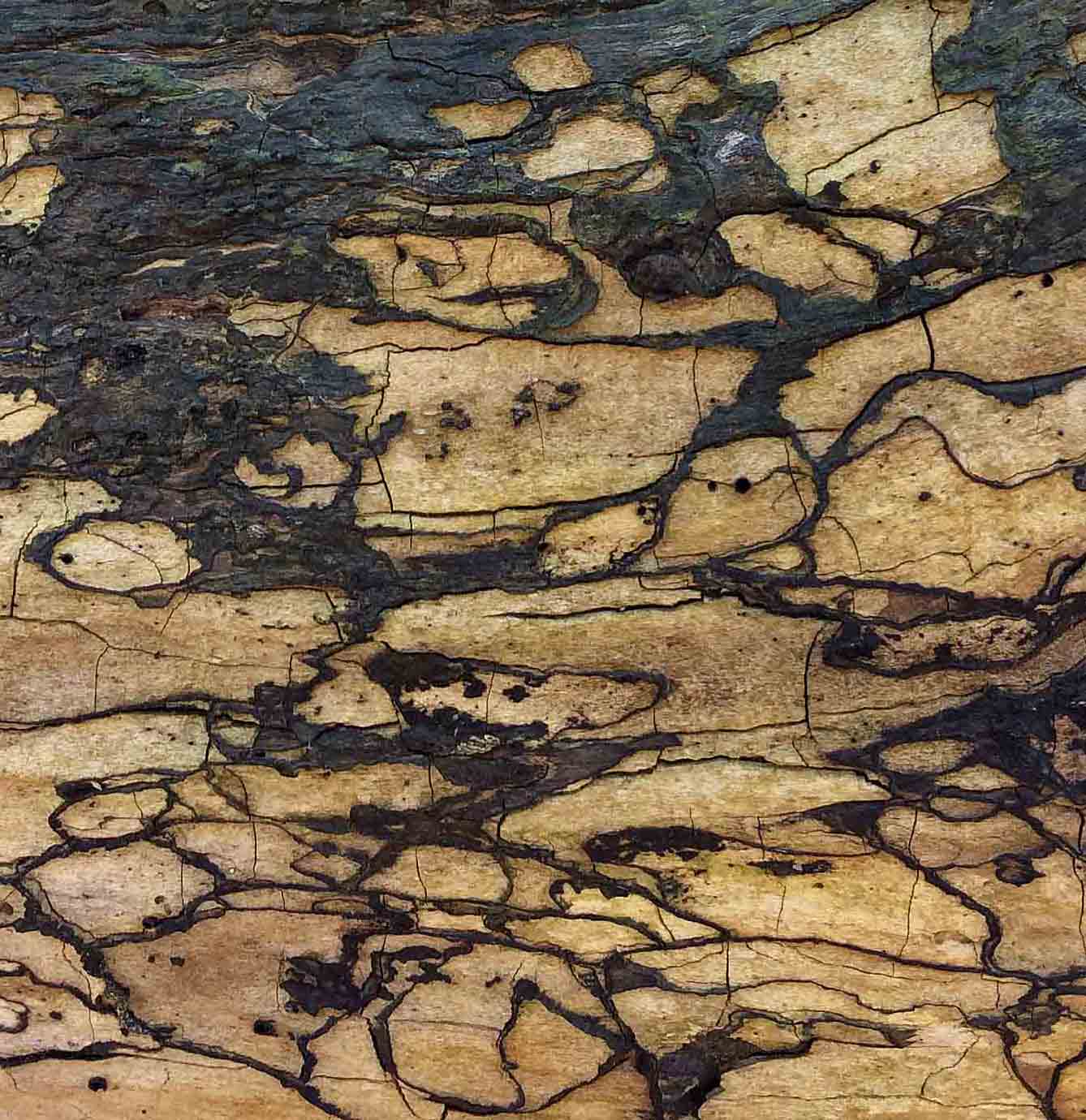
Black lines as though drawn by a child’s paintbrush flow through much of the sapwood; these winding thick streaks of black known as “zone lines” are in fact clumps of dark mycelia, which cause “spalting,” the colouration of wood by fungus. According to mycologist Jens Petersen, these zone lines prevent “a hostile takeover by mycelia” from any interloping fungi. Most common trees that experience spalting include birch, maple, and beech. Two common fungi that cause spalting have colonized my maple log. They’re both carbon cushion fungi.

Spalting on a decaying maple log, Little Rouge Woodland, ON (photo by Nina Munteanu)

Much of the exposed outer wood layer looks as though it has been spray painted with a green to blue-black layer. The “paint” is caused by the green-stain fungus (Chlorociboria) and blue-stain fungus (Ceratocystis). Spalting is common because of the way fungi colonize, in waves of primary and secondary colonizers. Primary colonizers initially capture and control the resource, change the pH and structure of the wood, then must defend against the secondary colonizers now able to colonize the changed wood.

Shapeshifting Characters

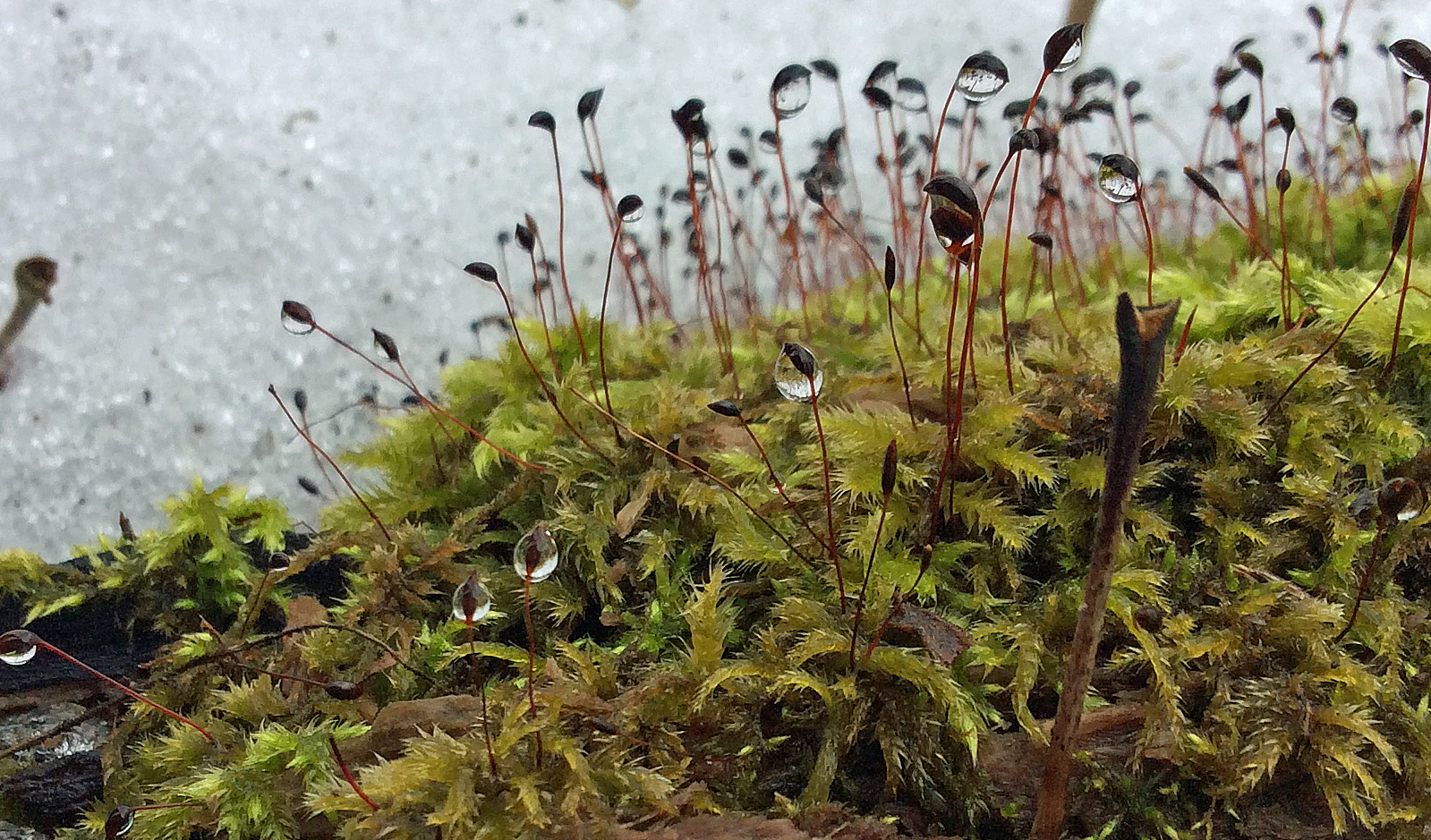
Moss with spores on a log, Little Rouge Woodland, ON (photo by Nina Munteanu)

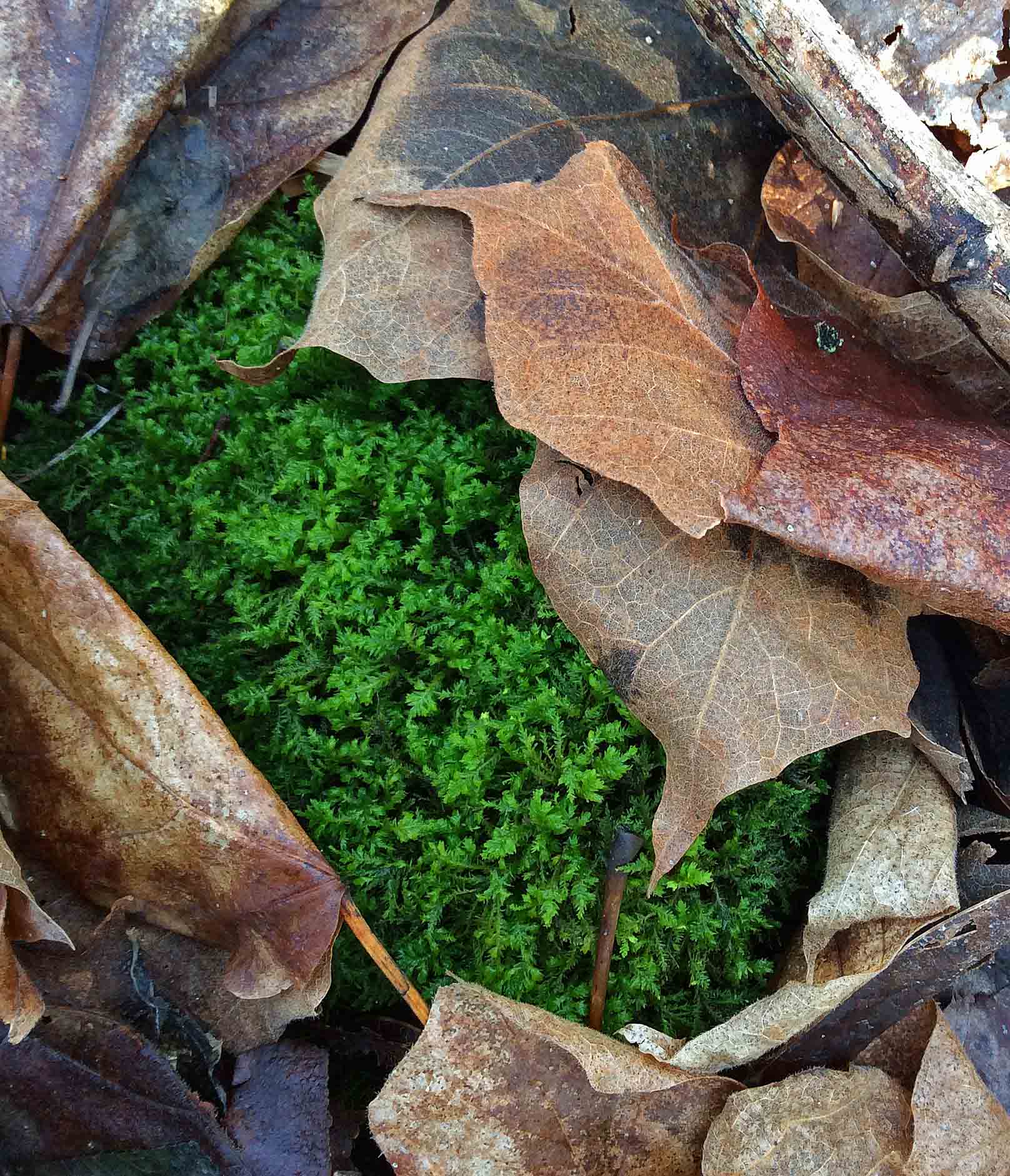
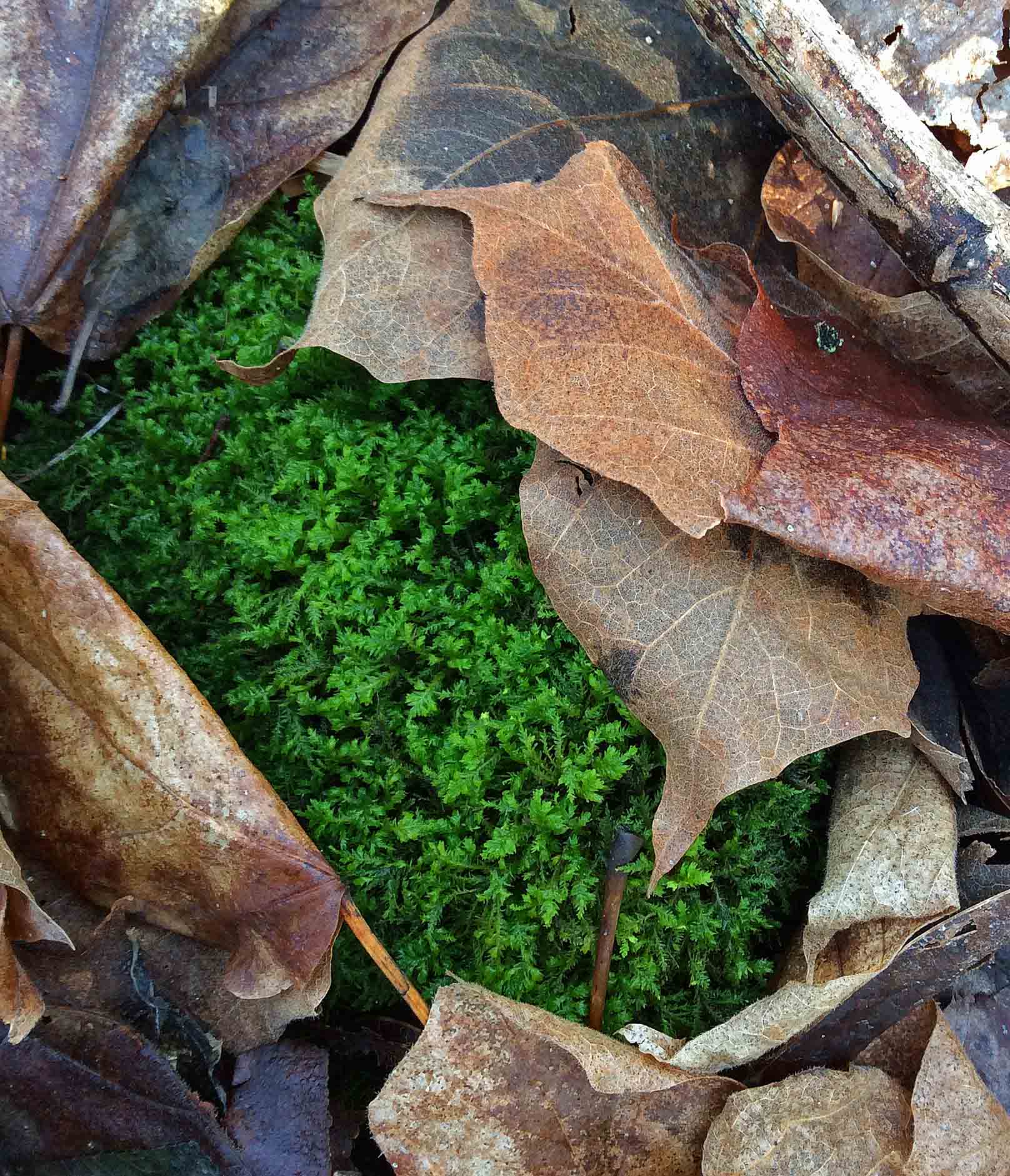
I find moss everywhere in the forest, including beneath the forest floor. Moss is a ubiquitous character, adapting itself to different situations and scenarios. Like a shapeshifter, moss is at once coy, hiding beneath rotting leaf litter, stealthy and curious as it creeps up the feet of huge cedars, and exuberant as it unabashedly drapes itself over every possible surface such as logs, twigs and rocks, and then proceeds to procreate for all to see.

Moss hides under dead leaf litter on the forest floor, Little Rouge Woodland, ON (photo by Nina Munteanu)

Mosses help with nutrient cycling because they can fix nitrogen from the air, making it available to other plants. Mosses thrive in the wet winter and spring, providing brilliant green to an otherwise brown-gray environment. Even when covered in snow (or a bed of leaves), moss continues its growth cycle, usually in the leafy gametophyte stage. In the spring the capsules release spores that can each create a new moss individual. Moss is quietly, gloriously profligate.

Team Players

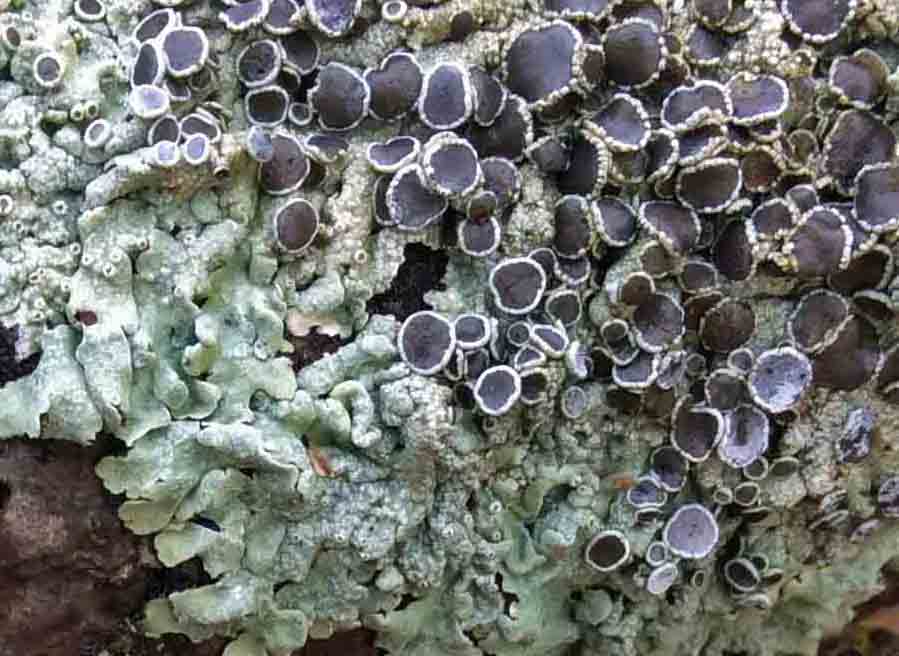
Fruiting lichen on a tree (photo by Nina Munteanu)

Lichens are a cooperative character; two characters in one, really. Lichens are a complex symbiotic association of two or more fungi and algae (some also partner up with a yeast). The algae in lichens (called phycobiont or photobiont) photosynthesize and the fungus (mycobiont) provides protection for the photobiont. Both the algae and fungus absorb water, minerals, and pollutants from the air, through rain and dust. In sexual reproduction, the mycobiont produces fruiting bodies, often cup-shaped, called apothecia that release ascospores. The spores must find a compatible photobiont to create a lichen. They depend on each other for resources—from food to shelter and protection.

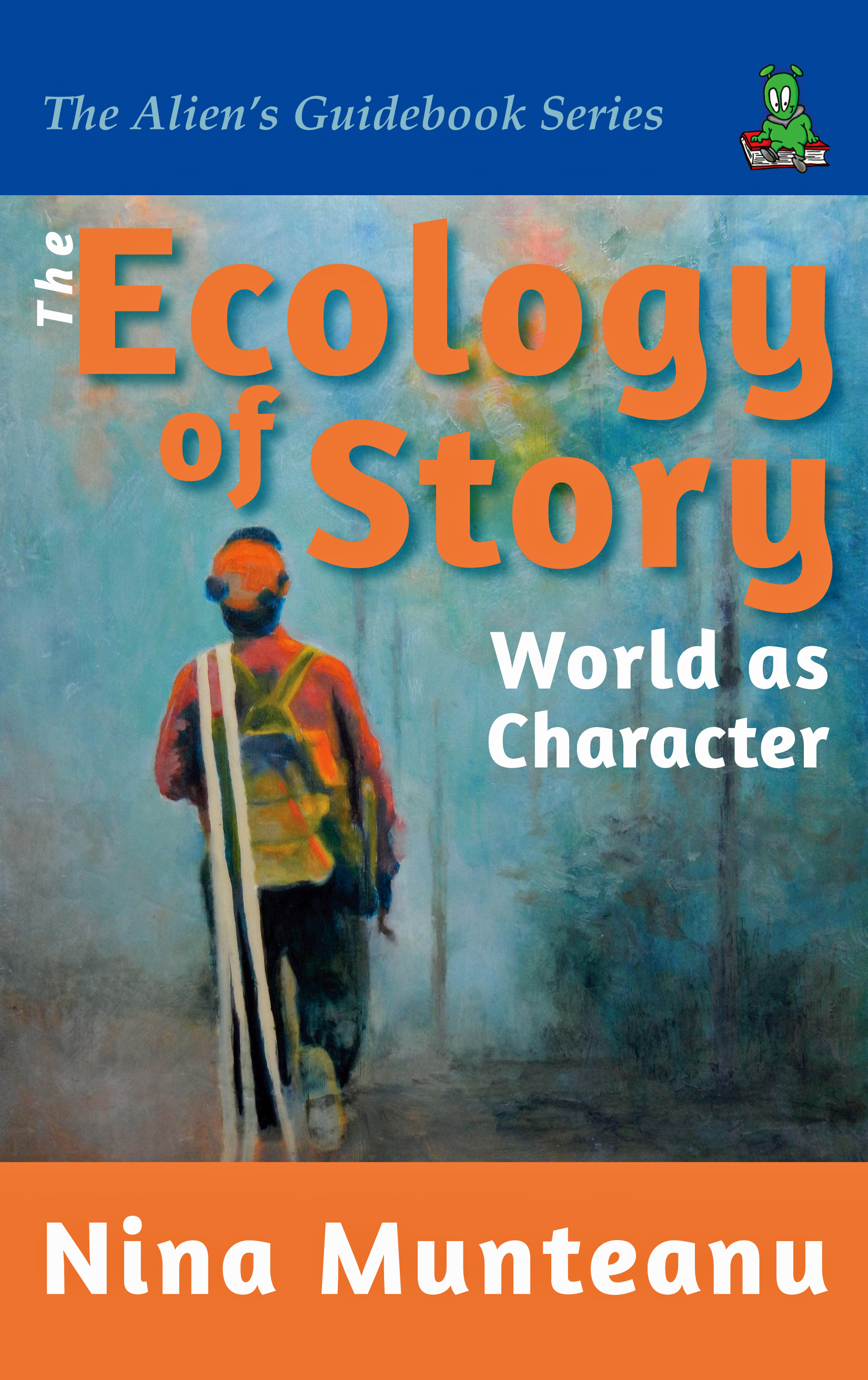
The Ecology of Story: World as Character

Place ultimately portrays what lies at the heart of the story. Place as character serves as an archetype that story characters connect with and navigate in ways that depend on the theme of the story, particularly in allegories that rely strongly on metaphor. A story’s theme is essentially the “so what part” of the story. What is at stake for the character on their journey. Theme is the backbone—the heart—of the story, driving characters to journey through time and place toward some kind of fulfillment. There is no story without theme. And there is no theme without place.

–Excerpted from The Ecology of Story: World as Character

Nina Munteanu is a Canadian ecologist / limnologist and novelist. She is co-editor of Europa SF and currently teaches writing courses at George Brown College and the University of Toronto. For the latest on her books, visit www.ninamunteanu.ca. Nina’s bilingual “La natura dell’acqua / The Way of Water” was published by Mincione Edizioni in Rome. Her non-fiction book “Water Is…” by Pixl Press (Vancouver) was selected by Margaret Atwood in the New York Times ‘Year in Reading’ and was chosen as the 2017 Summer Read by Water Canada. Her novel “A Diary in the Age of Water” was released by Inanna Publications (Toronto) in June 2020. You can read her just released eco-fiction thriller Gaia’s Revolution by Dragon Moon Press.

The Ecology of Story: Revealing Hidden Characters of the Forest

 Story is place, and place is character—Nina Munteanu

EcologyOfStory coverI remember a wonderful conversation I had several years ago at a conference with another science fiction writer on weird and wonderful protagonists and antagonists. Derek knew me as an ecologist—in fact I’d been invited to do a lecture at that conference entitled “The Ecology of Story” (also the name of my writing guidebook on treating setting and place as a character). We discussed the role that ecology plays in creating setting that resonates with theme and how to provide characters enlivened with metaphor.
Derek was fascinated by saprotrophs and their qualities. Saprotrophs take their nutrition from dead and decaying matter such as decaying pieces of plants or animals by dissolving them and absorbing the energy through their body surface. They accomplish this by secreting digestive enzymes into the dead/decaying matter to absorb the soluble organic nutrients. The process—called lysotrophic nutrition—occurs through microscopic lysis of detritus. Examples of saprotrophs include mushrooms, slime mold, and bacteria.

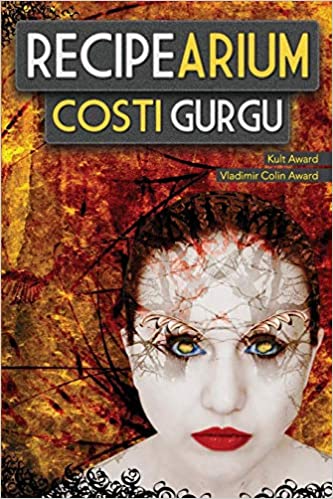
Recipearium CostiGurguI recall Derek’s eagerness to create a story that involved characters who demonstrate saprotrophic traits or even were genuine saprotrophs (in science fiction you can do that—it’s not hard. Check out Costi Gurgu’s astonishing novel Recipearium for a thrilling example). I wonder if Derek fulfilled his imagination.

I think of what Derek said, as I walk in my favourite woodland. It is early spring and the river that had swollen with snow melt just a week before, now flows with more restraint. I can see the cobbles and clay of scoured banks under the water. Further on, part of the path along the river has collapsed from a major bank scour the previous week. The little river is rather big and capricious, I ponder; then I consider that the entire forest sways to similar vagaries of wind, season, precipitation and unforeseen events. Despite its steadfast appearance the forest flows—like the river—in a constant state of flux and change, cycling irrevocably through life and death.

Cedar trunk base

Cedar tree (photo by Nina Munteanu)

As I’m writing this, the entire world struggles with life and death in the deep throws of a viral pandemic. COVID-19 has sent many cities into severe lock down to prevent viral spread in a life and death conflict. I’ve left the city and I’m walking in a quiet forest in southern Ontario in early spring. The forest is also experiencing life and death. But here, this intricate dance has seamlessly partnered death and decay with the living being of the forest. Without the firm embrace of death and decay, life cannot dance. In fact, life would be impossible. What strikes me here in the forest is how the two dance so well.

cedar log patterns2 copy

Cedar log, patterns in sapwood (photo by Nina Munteanu)

I walk slowly, eyes cast to the forest floor to the thick layer of dead leaves, and discover seeds and nuts—the promise of new life. I aim my gaze past trees and shrubs to the nearby snags and fallen logs. I’m looking for hidden gifts. One fallen cedar log reveals swirling impressionistic patterns of wood grain, dusted with moss and lichen. Nature’s death clothed in beauty.

The bark of a large pine tree that has fallen is riddled with tiny beetle holes drilled into its bark. Where the bark has sloughed off, a gallery of larval tracks in the sapwood create a map of meandering texture, form and colour.

Beetle bore holes pine log

White pine bark scales with tiny beetle bore holes, Little Rouge, ON (photo by Nina Munteanu)

larval tracks in pine wood

Beetle larval tracks in pine sapwood (photo by Nina Munteanu)

Nearby, another giant pine stands tall in the forest. Its roughly chiselled bark is dusted in lichens, moss and fungus. The broad thick ridges of the bark seem arranged like in a jigsaw puzzle with scales that resemble metal plates. They form a colourful layered mosaic of copper to gray and greenish-gray. At the base of the tree, I notice that some critter has burrowed a home in a notch between two of the pine’s feet. Then just around the corner, at the base of a cedar, I spot several half-eaten black walnuts strewn in a pile—no doubt brought and left there by some hungry and industrious squirrel who prefers to dine here.

The forest is littered with snags and fallen trees in different stages of breakdown, decomposition and decay. I spot several large cedar, pine, oak and maple snags with woodpecker holes. The snags may remain for many decades before finally falling to the ground.

Fallen Heroes, Mother Archetypes & Saprophyte Characters

WoodpeckerHole on cedar

Woodpecker hole in a snag (photo by Nina Munteanu)

The forest ecosystem supports a diverse community of organisms in various stages of life and death and decay. Trees lie at the heart of this ecosystem, supporting a complex and dynamic cycle of evolving life. Even in death, the trees continue to support thriving detrivore and saprophytic communities that, in turn, provide nutrients and soil for the next generation of living trees. It’s a partnership.

Decomposition and decay are the yin to the yang of growth, writes Trees for Life; and together they form two halves of the whole that is the closed-loop cycle of natural ecosystems.

Snags and rotting logs on the forest floor provide damp shelter and food for many plants and animals. Most are decomposers, including earthworms, fungi, and bacteria. As the wood decays, nutrients in the log break down and recycle in the forest ecosystem. Insects, mosses, lichens, and ferns recycle the nutrients and put them back into the soil for other forest plants to use. Dead wood is an important reservoir of organic matter in forests and a source of soil formation. Decaying and dead wood host diverse communities of bacteria and fungi.

TurkeyTail fungus on tree-LR

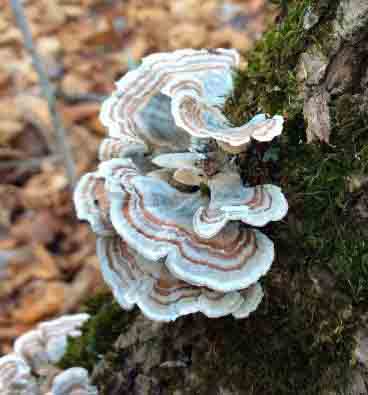
Turkey tail fungus, Little Rouge woodland (photo by Nina Munteanu)

Mother Archetypes

Wood tissues of tree stems include the outer bark, cork cambium, inner bark (phloem), vascular cambium, outer xylem (living sapwood), and the inner xylem (non-living heartwood). The outer bark provides a non-living barrier between the inner tree and harmful factors in the environment, such as fire, insects, and diseases. The cork cambium (phellogen) produces bark cells. The vascular cambium produces both the phloem cells (principal food-conducting tissue) and xylem cells of the sapwood (the main water storage and conducting tissue) and heartwood.

stages of tree life

Forest ecologists defined five broad stages in tree decay, shown by the condition of the bark and wood and presence of insects and other animals. The first two stages evolve rapidly; much more time elapses in the later stages, when the tree sags to the ground. These latter stages can take decades for the tree to break down completely and surrender all of itself back to the forest. A fallen tree nurtures, much like a “mother” archetype; it provides food, shelter, and protection to a vast community—from bears and small mammals to salamanders, invertebrates, fungus, moss and lichens. This is why fallen trees are called “nursing logs.”

uprooted stump carbon cushion fungus

Uprooted tree covered in fungi, lichen and moss, Little Rouge, ON (photo by Nina Munteanu)


Heralds, Tricksters and Enablers

rotting maple log2

Rotting maple log (photo by Nina Munteanu)

I stop to inspect another fallen tree lying on a bed of decaying maple, beech and oak leaves. When a fallen tree decomposes, unique new habitats are created within its body as the outer and inner bark, sapwood, and heartwood decompose at different rates, based in part on their characteristics for fine dining. For instance, the outer layers of the tree are rich in protein; inner layers are high in carbohydrates. This log—probably a sugar maple judging from what bark is left—has surrendered itself with the help of detrivores and saprophytes to decomposition and decay. The outer bark has mostly rotted and fallen away revealing an inner sapwood layer rich in varied colours, textures and incredible patterns—mostly from fungal infestations. In fact, this tree is a rich ecosystem for dozens of organisms. Wood-boring beetle larvae tunnel through the bark and wood, building their chambers and inoculating the tree with microbes. They open the tree to colonization by other microbes and small invertebrates. Slime molds, lichen, moss and fungi join in. The march of decay follows a succession of steps. Even fungi are followed by yet other fungi in the process as one form creates the right condition for another form.

rotting maple log

Rotting maple log, covered in carbon cushion fungus, Little Rouge, ON (photo by Nina Munteanu)

Most hardwoods take several decades to decompose and surrender all of themselves back to the forest. In western Canada in the westcoast old growth forest, trees like cedars can take over a hundred years to decay once they’re down. The maple log I’m studying in this Carolinian forest looks like it’s been lying on the ground for a while, certainly several years. The bark has fragmented and mostly fallen away, revealing layers of sapwood in differing stages of infestation and decay. Some sapwood is fragmented and cracked into blocks and in places looks like stacked bones.

Black lines as though drawn by a child’s paintbrush flow through much of the sapwood; these winding thick streaks of black known as “zone lines” are in fact clumps of dark mycelia, which cause “spalting,” the colouration of wood by fungus. According to mycologist Jens Petersen, these zone lines prevent “a hostile takeover by mycelia” from any interloping fungi. Most common trees that experience spalting include birch, maple, and beech. Two common fungi that cause spalting have colonized my maple log. They’re both carbon cushion fungi.

Spalting

Spalting through zone lines by carbon cushion fungus, Little Rouge, ON (photo by Nina Munteanu)

hypoxylon-close

Hypoxylon fungus (photo N. Munteanu)

Brittle cinder (Kretzschmaria deusta) resembles burnt wood at maturity. Deusta means “burned up” referring to the charred appearance of the fungus. Hypoxylon forms a “velvety” grey-greenish cushion or mat (stroma). As the Hypoxylon ages, it blackens and hardens and tiny, embedded fruitbodies (perithecia) show up like pimples over the surface of the crust.

Blue-green fungus on log

Green and Blue Stain fungus (photo N. Munteanu)

Much of the exposed outer wood layer looks as though it has been spray painted with a green to blue-black layer. The “paint” is caused by the green-stain fungus (Chlorociboria) and blue-stain fungus (Ceratocystis). The blue-green stain is a metabolite called xylindein. Chlorociboria and Ceratocystis are also spalter fungi, producing a pigment that changes the color of the wood where they grow. While zone lines that create spalting don’t damage wood, the fungus responsible most likely does.

Spalting is common because of the way fungi colonize, in waves of primary and secondary colonizers. Primary colonizers initially capture and control the resource, change the pH and structure of the wood, then must defend against the secondary colonizers now able to colonize the changed wood.

Intarsia using blue-green spalted wood

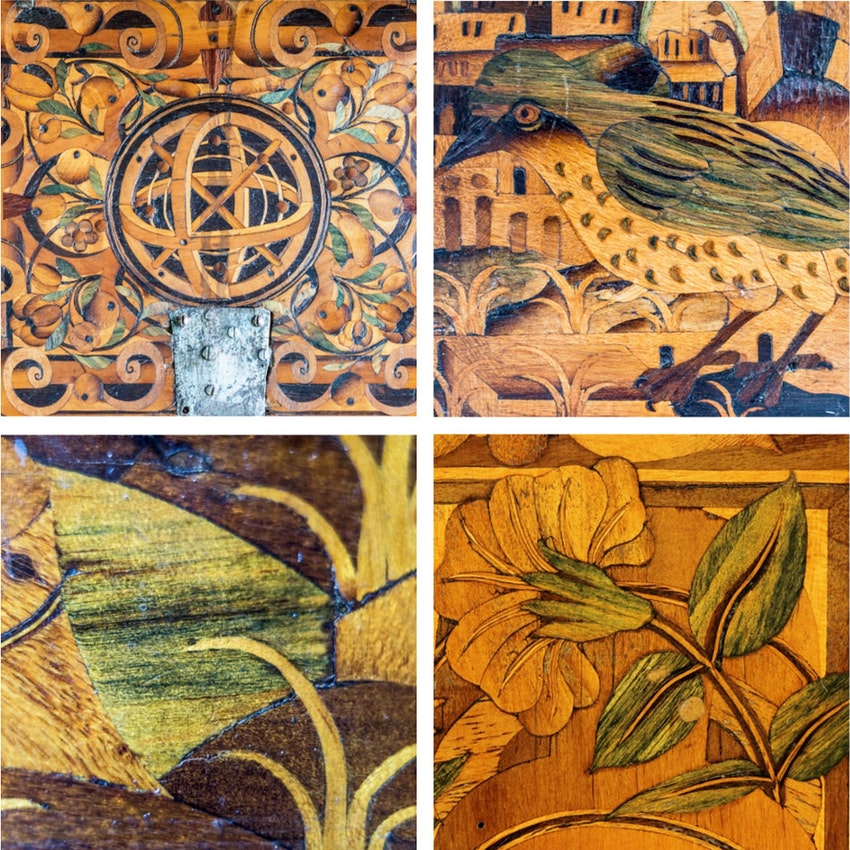
Details of 16th century German bureaus containing blue-green spalted wood by the elf-cup fungus Chlorociboria aeruginascens

Wood that is stained green, blue or blue-green by spalting fungi has been and continues to be valued for inlaid woodwork. In an article called “Exquisite Rot: Spalted Wood and the Lost Art of Intarsia” Daniel Elkind writes of how “the technique of intarsia–the fitting together of pieces of intricately cut wood to make often complex images–has produced some of the most awe-inspiring pieces of Renaissance craftsmanship.” The article explores “the history of this masterful art, and how an added dash of colour arose from the most unlikely source: lumber ridden with fungus.”

Shapeshifting Characters

moss hiding under leaves

Moss in forest litter (photo by Nina Munteanu)

I find moss everywhere in the forest, including beneath the forest floor. Moss is a ubiquitous character, adapting itself to different situations and scenarios. Like a shapeshifter, moss is at once coy, hiding beneath rotting leaf litter, stealthy and curious as it creeps up the feet of huge cedars, and exuberant as it unabashedly drapes itself over every possible surface such as logs, twigs and rocks, and then proceeds to procreate for all to see.

Moss is a non-vascular plant that helps create soil; moss also filters and retains water, stabilizes the ground and removes CO2 from the atmosphere. Science tells us that mosses are important regulators of soil hydroclimate and nutrient cycling in forests, particularly in boreal ecosystems, bolstering their resilience. Mosses help with nutrient cycling because they can fix nitrogen from the air, making it available to other plants.

Moss with spores water drops2

Green moss gametophyte with sporophytes growing out of it (photo by Nina Munteanu)

Mosses thrive in the wet winter and spring, providing brilliant green to an otherwise brown-gray environment. Even when covered in snow (or a bed of leaves), moss continues its growth cycle, usually in the leafy gametophyte stage. When the winter is moderate, like it is near Toronto, sporophyte structures can already appear on stalks that hold a capsule full of spores.  In the spring the capsules release spores that can each create a new moss individual. Moss is quietly, gloriously profligate.

Symbiotic Characters

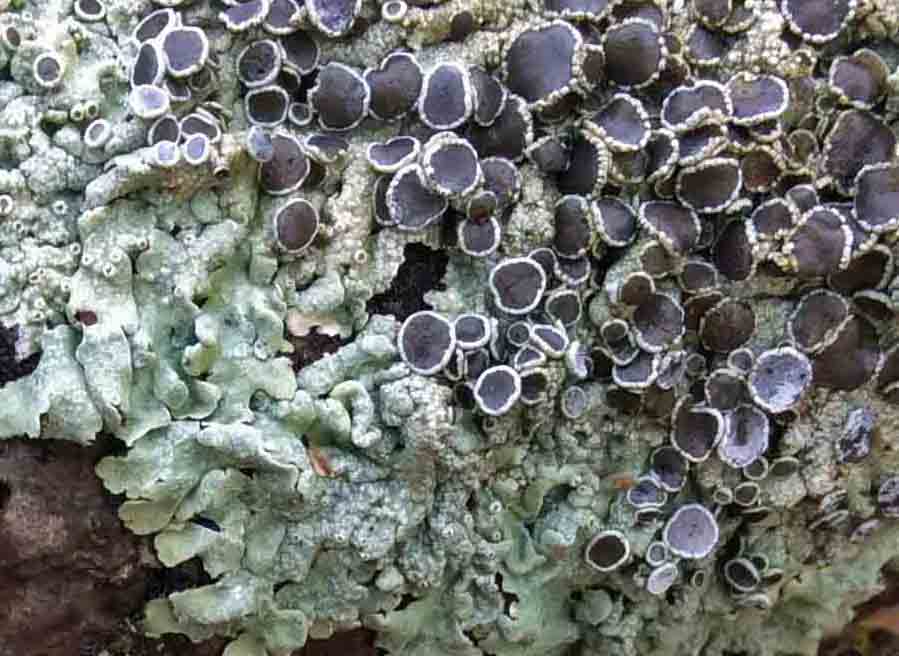
Many twigs strewn on the leaf-covered forest floor are covered in grey-green lichen with leaf-like, lobes. On close inspection, the lichen thallus contains abundant cup-shaped fruiting bodies. I identify the lichen as Physchia stellaris, common and widespread in Ontario and typically pioneering on the bark of twigs—especially of poplars, and alders.

Lichen fruiting-best-2 copy

Physchia stellaris lichen with fruiting bodies (apothecia), Little Rouge, ON (photo by Nina Munteanu)

Lichens are a cooperative character; two characters in one, really. Lichens are a complex symbiotic association of two or more fungi and algae (some also partner up with a yeast). The algae in lichens (called phycobiont or photobiont) photosynthesize and the fungus (mycobiont) provides protection for the photobiont. Both the algae and fungus absorb water, minerals, and pollutants from the air, through rain and dust. In sexual reproduction, the mycobiont produces fruiting bodies, often cup-shaped, called apothecia that release ascospores. The spores must find a compatible photobiont to create a lichen. They depend on each other for resources—from food to shelter and protection.

Forest as Character

Sunset 1 Niagara

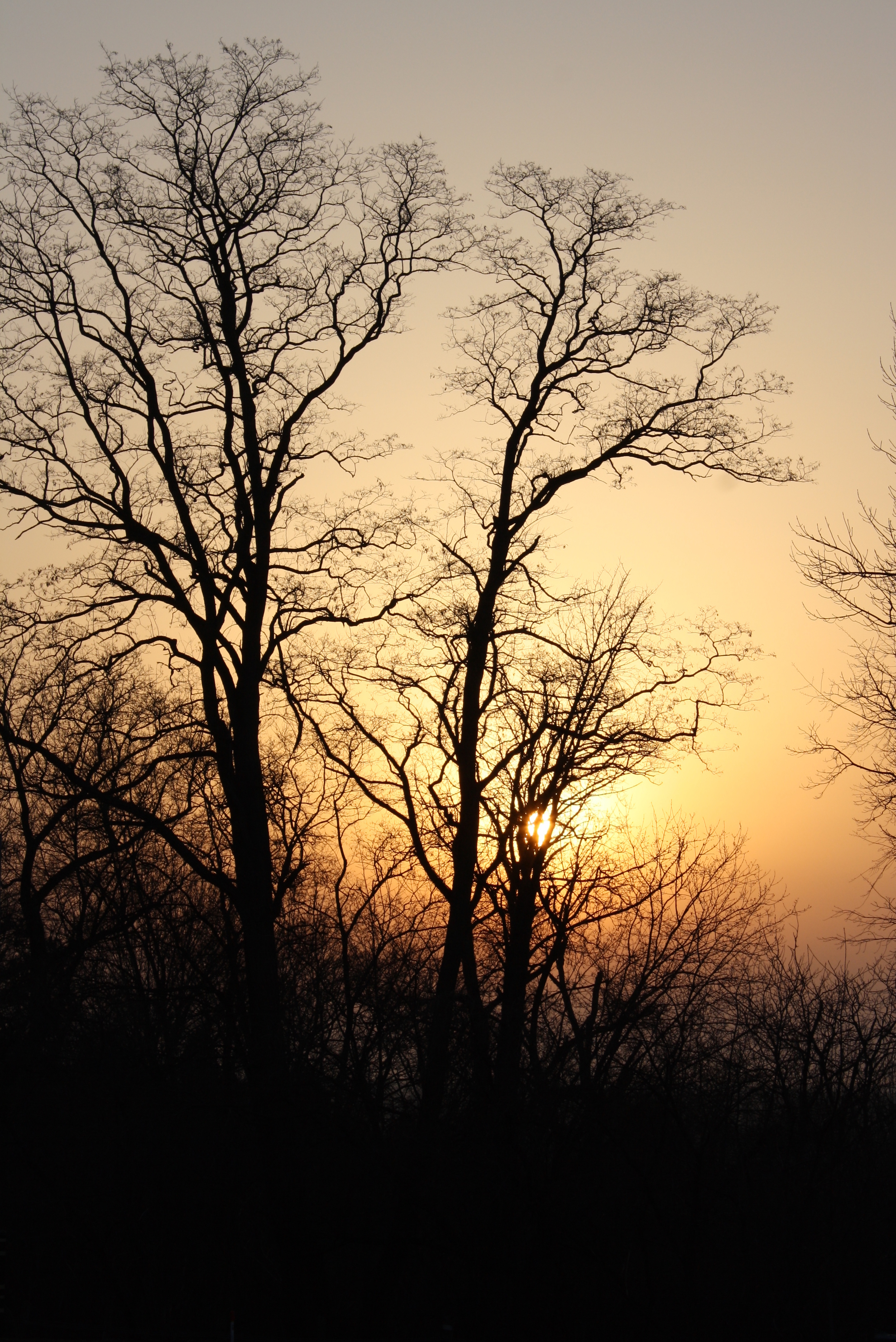
Sunset in Niagara on the Lake (photo by Nina Munteanu)

In Far from the Madding Crowd, Thomas Hardy personified trees as interpreters between Nature and humanity: from the “sobbing breaths” of a fir plantation to the stillness of trees in a quiet fog, standing “in an attitude of intentness, as if they waited longingly for a wind to come and rock them.” Trees, meadows, winding brooks and country roads were far more than back-drop for Hardy’s world and his stories. Elements of the natural world were characters in their own right that impacted the other characters in a world dominated by nature.

Place ultimately portrays what lies at the heart of the story. Place as character serves as an archetype that story characters connect with and navigate in ways that depend on the theme of the story, particularly in allegories that rely strongly on metaphor. A story’s theme is essentially the “so what part” of the story. What is at stake for the character on their journey. Theme is the backbone—the heart—of the story, driving characters to journey through time and place toward some kind of fulfillment. There is no story without theme. And there is no theme without place.
—excerpted from The Ecology of Story: World as Character


nina-2014aaa

Nina Munteanu is a Canadian ecologist / limnologist and novelist. She is co-editor of Europa SF and currently teaches writing courses at George Brown College and the University of Toronto. Visit www.ninamunteanu.ca for the latest on her books. Nina’s bilingual “La natura dell’acqua / The Way of Water” was published by Mincione Edizioni in Rome. Her non-fiction book “Water Is…” by Pixl Press (Vancouver) was selected by Margaret Atwood in the New York Times ‘Year in Reading’ and was chosen as the 2017 Summer Read by Water Canada. Her novel “A Diary in the Age of Water” will be released by Inanna Publications (Toronto) in June 2020.


The Hero’s Journey: Part 2, Heroes and Other Archetypes

420px-Edmund_blair_leighton_accolade

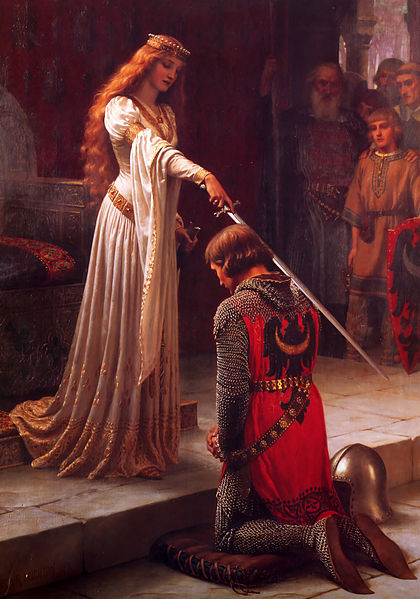
Accolade by Blair-Leighton

The world of fairy tales and myth is peopled with recurring character types and relationships. Heroes on a quest, heralds and wise old men or women who provide them with “gifts” or motive, shady fellow-travelers—threshold guardians—who “block” the quest, tricksters who confuse things and evil villains who simply want to destroy our hero and her quest.

Jung adopted the term archetypes, which means ancient patterns of personality shared by humanity, to describe these as a collective unconscious. An archetype models a personality or behavior; a mother-figure is an archetype. This is what makes archetypes, or symbols, so important to the storyteller. Archetypes are found in nearly all forms of literature, with their motifs mostly rooted in folklore.

Assigning an archetype to a character lets the writer clarify that character’s role in the story. Archetypes are an important tool in the universal language of storytelling, just as myth serves the overall purpose of supplying “the symbols that carry the human spirit forward.” (Joseph Campbell). Joseph Campbell went so far as to describe the archetype as something that is expressed biologically and is wired into every human being.

Christopher Vogler, author of The Writer’s Journey, lists the seven most useful archetypes for the writer.

The Hero

Anne-walking-Cedars

Friend Anne walks among giant cedars, Revelstoke, BC (photo by Nina Munteanu)

The hero sacrifices his own needs on behalf of others. He provides a character for us to identify with and is usually the principal POV character in a story, with qualities most readers can (or want to) identify with. The hero “transforms” through her journey as she encounters other archetypes on her journey, whether it is a physical journey or a psychological journey toward “home” (salvation or redemption) through sacrifice. The true mark of the hero, says Vogler, is in the act of sacrifice: “the hero’s willingness to give up something of value, perhaps even her own life, on behalf of an ideal or a group,” and ultimately for the greater good.

Heroes may be willing or unwilling. Anti-heroes are notably flawed characters that must grow significantly to achieve the status of true hero. Often the anti-hero starts off more like a villain, like Tom Cruise’s character in Rainman. The wounded anti-hero may be a “heroic knight in tarnished armor, a loner who has rejected society or been rejected by it,” says Vogler: Aragorn in Lord of the Rings. The catalyst hero shows less of a character arc, but precipitates significant change or transformation in other protagonists. A good example is David Adams, in Ben Bova’s Colony.

The Mentor

The mentor often possesses divine wisdom and has faith in the hero. He often gives the hero a “gift”, which is usually something important for the quest; either a weapon to destroy a “monster” or a “talisman” to enlighten the hero. A good example is in Star Wars, when Luke’s mentor, Obi Wan, provides him with his father’s lightsaber (Luke’s magic talisman).

The Herald

Heralds announce the coming of significant change, whether the hero likes it or not (and usually they don’t). They deliver the call to adventure. The herald is a catalyst that enters the story and makes it impossible for the hero to remain in status quo. Existing in the form of a person, an event, or just information, they shift the hero’s balance and change her world.

In Star Wars, Ben Kenobi issues the call when he invites Luke to join him on his mission to Alderaan. The herald also provides the hero with motivation. In Romancing the Stone, the herald for Joan Wilder comes to her as a treasure map in the mail, and a distressed phone call from her sister.

The Threshold Guardian

This archetype guards the threshold of “Separation from the Ordinary World” on the hero’s quest to achieve his destiny. Threshold guardians spice up the story by providing obstacles the hero must overcome. Threshold guardians are usually not the main antagonist. In the Harry Potter series, this role is fulfilled by Malfoy, Snape or Filch, even. They help round-out the hero’s journey and develop his character arc. The threshold guardian can be a “friend” who doesn’t believe in the hero or her quest. Ultimately, this is the role of the threshold guardian: to test the hero’s resolve in her quest.

The Shape shifter

The shape shifter adds dramatic tension to the story and provides the hero with a puzzle to solve. They can seem one thing and in fact be another. They bring doubt and suspense to the story and test the hero’s abilities to discern her path. Yoda in Star Wars is a bit of a shape shifter, initially masking his ancient wisdom with a foolish childlike appearance when Luke first encounters him.

The Shadow

The monster under the bed, repressed feelings, deep trauma, a festering guilt: these all possess the dark energy of the shadow. This is the dark force of the unexpressed, unrealized, rejected, feared aspects of the hero and represented by the main antagonist or villain.

Voldermort in the Harry Potter series; Darth Vader in Star Wars. These are shadows and worthy opponents for the hero, bringing out the best in her and usually demanding the ultimate in self-sacrifice (the hero’s destiny).The shadow force, if internalized by the hero, may serve as a threshold guardian, to overcome; ultimately challenging the hero to overcome her greatest weakness and prevail.

The Trickster

Nina-giant cedar03

Nina Munteanu leans against giant cedar, Revelstoke Park, BC (photo by Anne Voute)

Practically every Shakespearian play contains a jester or fool, who not only serves as comic relief but as commentator. This is because tricksters are usually witty and clever, even when ridiculous. The comedy of most successful comedians touches upon the pulse of a culture by offering commentary that is truism (often in the form of entertaining sarcasm). As commentator, the trickster is often you, the artist, with one foot in and one foot out for perspective

Recommended Reading:

Cameron, Julia. 1992. The Artist’s Way: a Spiritual Path to Higher Creativity. Penguin Putnam. 222pp.
Campbell, Joseph. 1970. The Hero with a Thousand Faces. World Publishing Co. New York.
Henderson, Mary. 1997. Star Wars: The Magic of Myth. Bantam Spectra. New York. 214pp.
Vogler, Christopher. 1998. The Writer’s Journey: Mythic Structure for Writers. 2nd Edition. Michael Wiese Productions, Studio City, California. 326pp.