.
I’ve selected ten TV series that have intrigued me, moved me, and stayed with me for various reasons that touch on: abuse of justice, including eco-justice and environmental abuse; technology use and abuse; and the effects and horrors of climate change.
Some are well known; others not so well known. All approach storytelling with a serious dedication to depth of character, important themes, realistic world building, and excellent portrayal by actors. The world-building is extremely well done—in some cases rivalling Ridley Scott’s best—with convincing portrayals of worlds that are at times uncanny in their realism. Worlds that reflect story from an expansive landscape to the mundane minutiae of daily life: like the cracked phone device of Detective Miller in The Expanse or the dirty fingernails of engineer Juliette Nichols in the Down Deep of Silo. Stories vary in their treatment of important themes from whimsical and often humorous ironies to dark and moody treatises on existential questions. In my opinion, these TV series rival the best movies out there, often reflecting large budgets (but not always) and a huge commitment by producers. The ten TV series I’ve selected here come from around the world: Brazil, Germany, France, Norway, Canada and the United States.
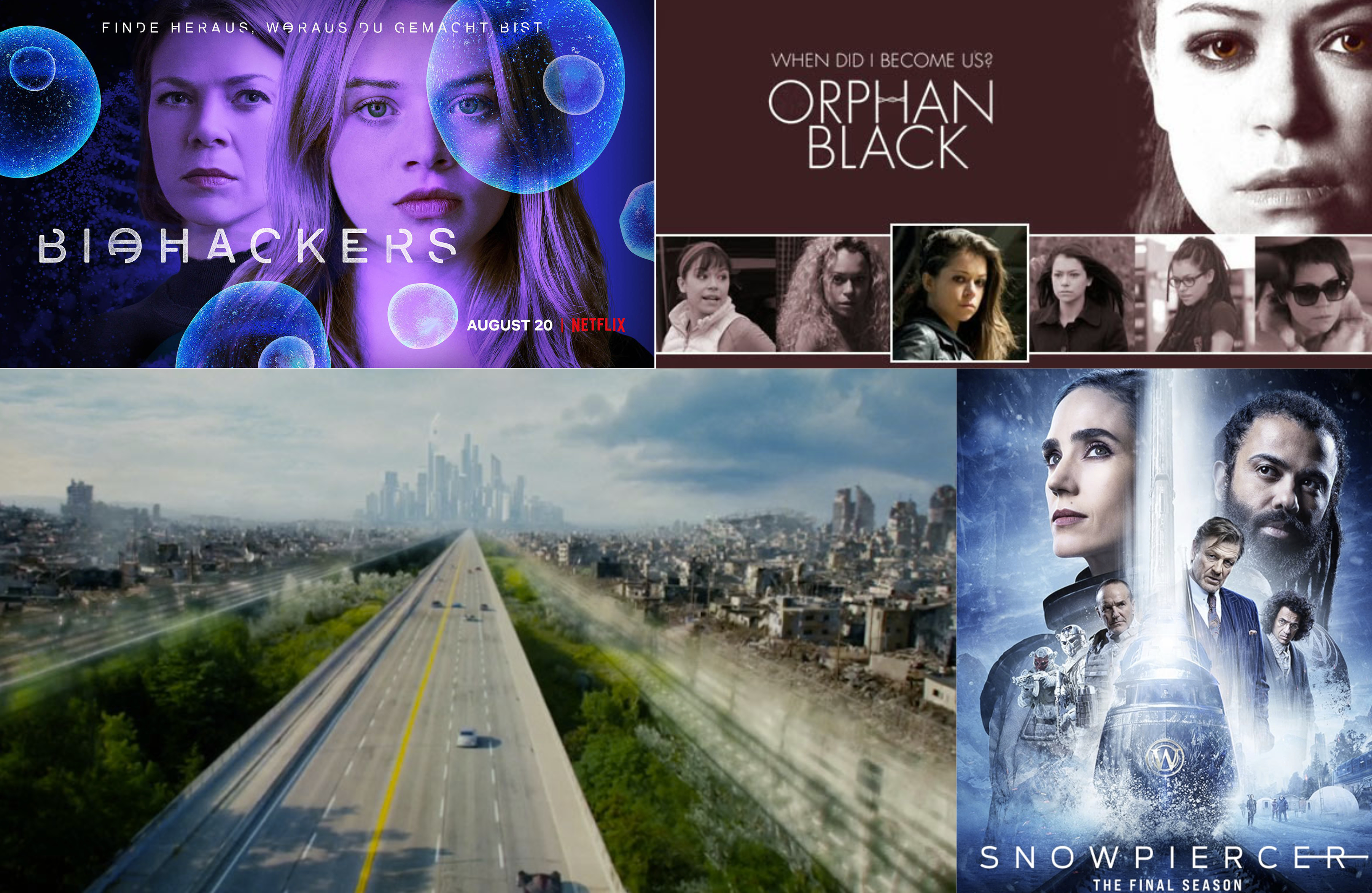
In Part 1, I look at five TV series that touch on ethical issues we are facing today; issues that reach far into existential questions of what it means to be human. These TV series explore synthetic biology, cloning and gene editing, and justice in space colonization and exploitation.
.

.
THE EXPANSE: Colonialism in Space
This stylish and intelligent science fiction TV series is set 200 years in the future when humanity has colonized the moon, Mars and the Asteroid Belt to mine minerals and water. Humanity has split three ways culturally, ethnically and even biologically: Earth is currently run by the United Nations; Mars is an independent state, devoted to terraforming with high technology; and the Belt contains a diverse mix of mining colonies, settlers, workers and entrepreneurs. Belters’ physiology differ from their Earth or Mars cousins, given their existence in low gravity.
.

.
The series, based on novels by James S.A Corey (aka Daniel Abraham and Ty Franck) follows three main characters: U.N. Deputy Undersecretary Chrisjen Avasaraia (Shohreh Aghdashloo) on Earth; police detective Josephus Miller (Thomas Jane) a native of Ceres (in the Belt); and ship’s officer Jim Holden (Steven Strait) and his crew as each unravels a piece of a conspiracy that threatens peace in the solar system and the survival of humanity. The only person who may stand a chance of figuring out the big picture is Chrisjen Avasarala, a brilliant 23rd-century Machiavelli. She will stop at nothing in her search for the truth, including gravity torturing a Belter or playing her friends and contacts like chess pieces to find answers. Chrisjen is a complex and paradoxical character. Her passionate search for the truth together with unscrupulous methods, make her one of the most interesting characters in the growing intrigue of The Expanse. The Expanse further dignifies itself with subtle nuances of multi-layered social commentary—sewn into virtually every interaction.
.

.
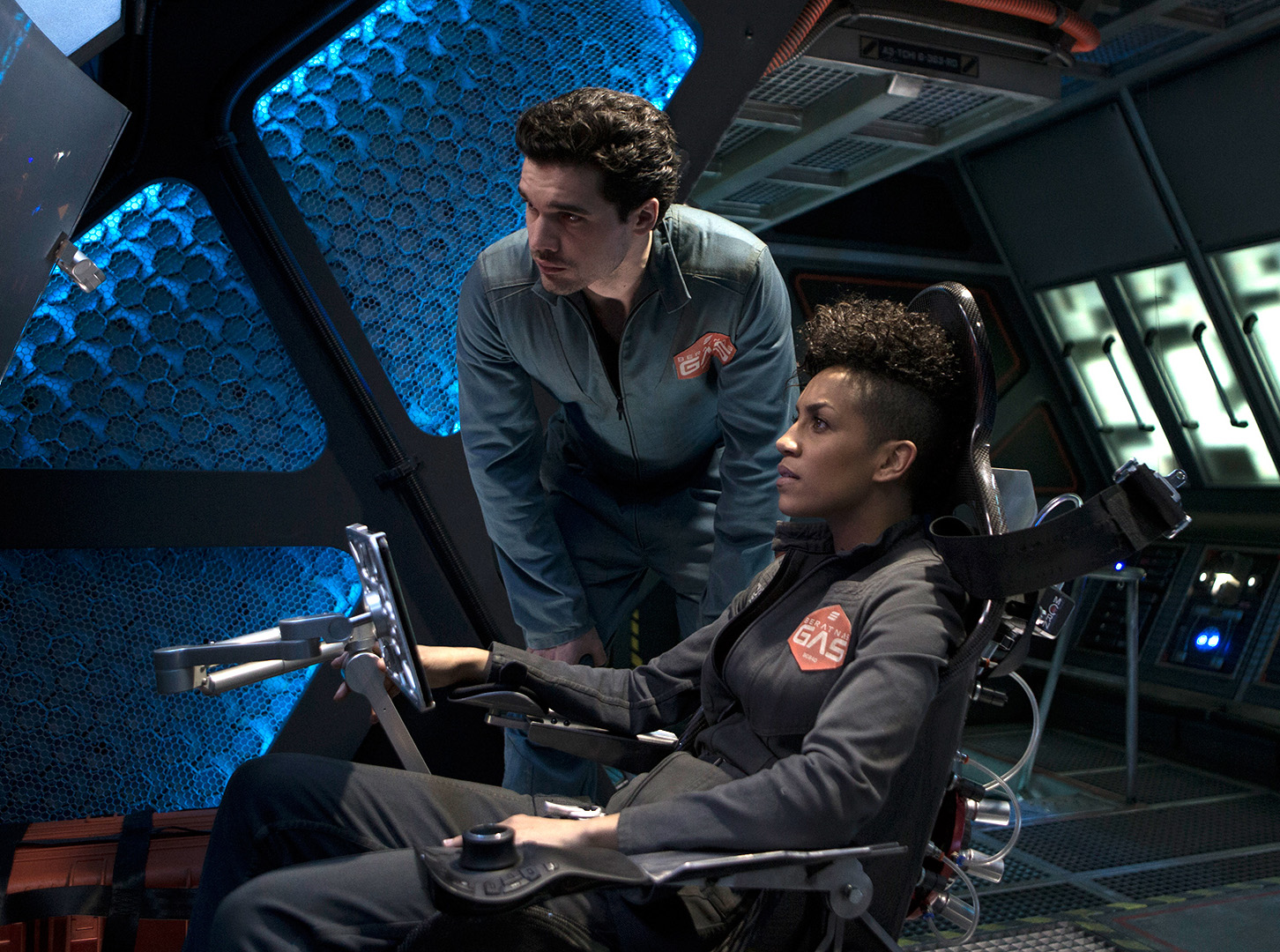
The subtle details and rich set-pieces of The Expanse universe rival the best world building of Ridley Scott. I was reminded of the grit and immediacy of Bladerunner. The Expanse is SF without feeling like SF; it just feels real. Powerful storytelling—from judicious use of slow motion, odd shot angles, haunting music and background sounds, to superlative acting—draws you into a complete and realizable world. This even translates into the speech used by the various groups; with belters having their own Creol speech.
.

.
The Expanse is a sophisticated SF film noir thriller that elevates the space opera sub-genre with a meaningful metaphoric exploration of issues relevant in today’s world—issues of resource allocation, domination & power struggle, values, prejudice, and racism. I found the music by Clinton Shorter particularly appropriate: subtle, edgy, haunting, and deeply engaging. Like the story, characters and world. Amidst the unfolding intrigue of war, corruption and secrecy, a rich tapestry of characters take shape: from an agoraphobic detective born on Ceres to an Earther ship’s captain looking only for an escape from his home.
.
.
Onboard the MCRN Donnager, Martian Lopez asks his prisoner Holden if he misses Earth and Holden grumbles, “If I did, I’d go back.” Lopez then dreamily relates stories his uncle told him about the “endless blue sky and free air everywhere. Open water all the way to the horizon.” Then he turns a cynical eye back on Holden. “I could never understand your people. Why, when the universe has bestowed so much upon you, you seem to care so little for it.” Holden admits, “Wrecking things is what Earthers do best…” Then he churlishly adds, “Martians too, by the look of your ship.” Lopez retorts, “We are nothing like you. The only thing Earthers care about is government handouts. Free food, free water. Free drugs to forget the aimless lives you lead. You’re shortsighted. Selfish. It will destroy you. Earth is over, Mr. Holden. My only hope is that we can bring Mars to life before you destroy that too.”
.

.
The message is clear. Cherish what you have. Cherish your home and take care of it. We’re reminded time and again that we aren’t doing a good job of it. As the seasons progress and the rift grows between those who hold power and those who don’t, issues of sovereignty arise that spark inevitable violence and war.
.
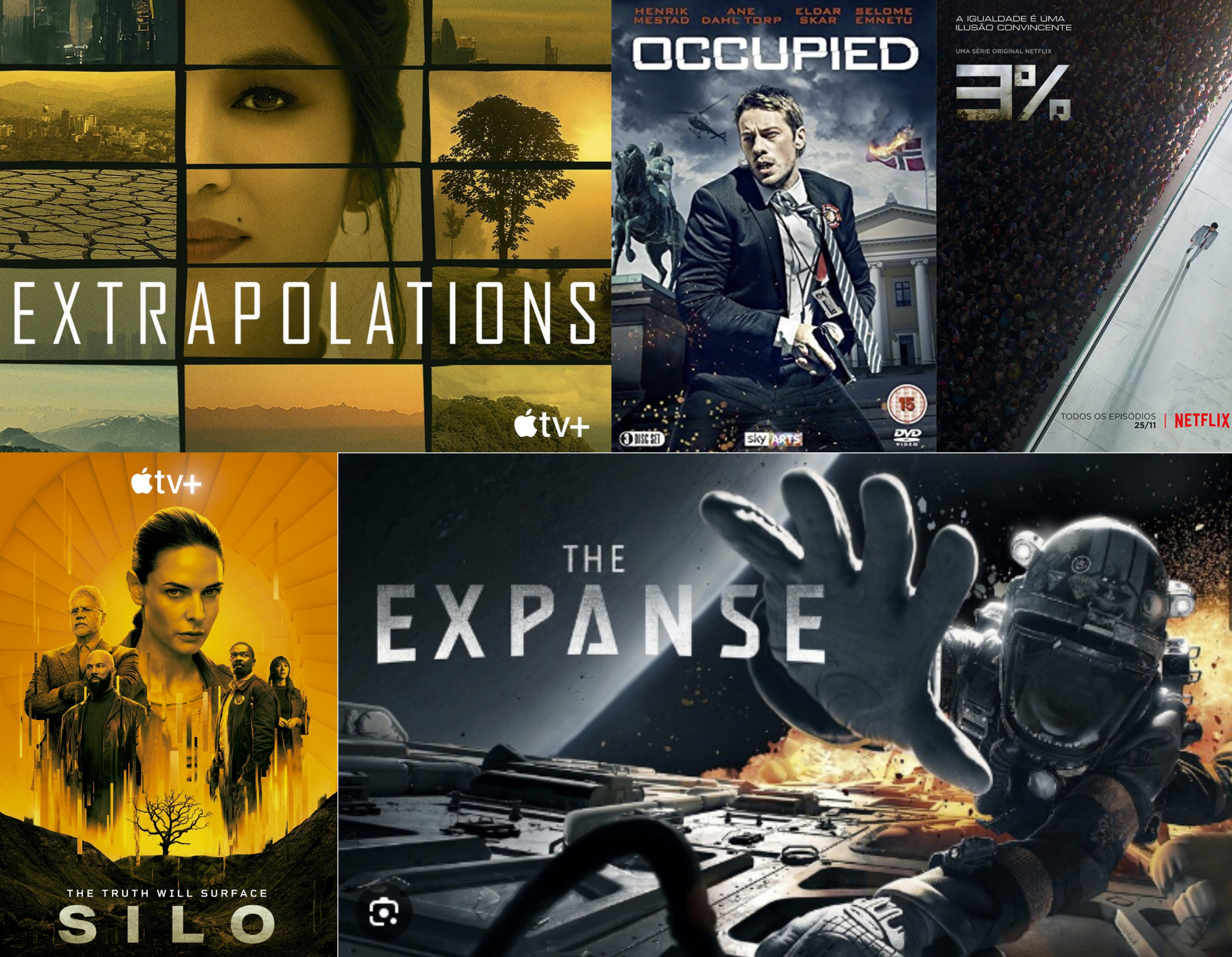
Ten Significant Science Fiction TV Series:
Biohackers (Germany)
Orphan Black (Canada)
Occupied (Norway)
Missions (France)
Expanse (USA)
Incorporated (USA)
3% (Brazil)
Snowpiercer (USA)
Silo (USA)
Extrapolations (USA)
.
.

Nina Munteanu is a Canadian ecologist / limnologist and novelist. She is co-editor of Europa SF and currently teaches writing courses at George Brown College and the University of Toronto. Visit www.ninamunteanu.ca for the latest on her books. Nina’s bilingual “La natura dell’acqua / The Way of Water” was published by Mincione Edizioni in Rome. Her non-fiction book “Water Is…” by Pixl Press (Vancouver) was selected by Margaret Atwood in the New York Times ‘Year in Reading’ and was chosen as the 2017 Summer Read by Water Canada. Her novel “A Diary in the Age of Water” was released by Inanna Publications (Toronto) in June 2020.
.
 Nina Munteanu Writing Coach