Why Writing and Reading Eco-Fiction Will Save the World—From CliFi to Solarpunk

Fence and post at marsh during a rain, ON (photo by Nina Munteanu)

The Universe is made of stories, not atoms—Muriel Rukeyser

Canadian writer Mary Woodbury tells us that: “Fiction exploring humanity’s impacts on nature is becoming more popular [and] has the distinct ability to creatively engage and appeal to readers’ emotions. In fact, it can stir environmental action.” A survey she took in 2020 showed that “88% of its participants were inspired to act after reading ecological fiction.”

Eco-Fiction (short for ecological fiction) is a kind of fiction in which the environment—or one aspect of the environment—plays a major role, either as premise or as character. “Principled by real science and exalting our planet’s beauty, these stories are works of art. They live within classic modes of fiction exploring the human condition, but also integrate the wild,” writes Woodbury. At the heart of eco-fiction are strong relationships forged between the major character on a journey and an aspect of their environment and place. Environment and place can illuminate through the sub-text of metaphor a core aspect of the main character and their journey. 

Green architecture design by Vincent Callebaut

All great literature distills its art form through the exploration of relationship: our relationship with technology, with science, Nature, God, our children, each other, our history. Science fiction illuminates our history and our very humanity by examining our interaction with “the other”—the unfamiliar, the feared, the often downtrodden, the invisible, the ignored. This is the hero’s journey. And it is through this journey relating to the “other” (whether it’s Earth or an alien planet, its water, environment and issues, and its varied peoples and cultures) that our hero discovers herself and her gift to the world. When will we stop portraying Nature as “other”?…

Green neighbourhood design by Vincent Callebaut

We currently live in a world in which climate change and associated water crisis pose a very real existential threat to most life currently on the planet. The new normal is change. And it is within this changing climate that eco-fiction is realizing itself as a literary pursuit worth engaging in. The emergence of the term eco-fiction as a brand of literature suggests that we are all awakening—novelists and readers of novels—to our changing environment. We are finally ready to see and portray environment as an interesting character with agency and to read this important and impactful literature.

Lavender farm and house design by Vincent Callebaut

Many readers are currently seeking fiction that describes environmental issues but also explores a successful paradigm shift: fiction that accurately addresses our current issues with intelligence and hope. This is reflected in the growing popularity of several emerging sub-genres of fiction such as solar punk, optimistic climate fiction, clifi, eco-lit, hope punk, and others. The power of envisioning a certain future is that the vision enables one to see it as possible. Eco-fiction—and all good science fiction—uses metaphor to study the world and the consequences of humanity’s actions through microcosmic dramatization. What makes this literature particularly exciting is: 1) its relevance to our current existential situation; and 2) that it often provides a way forward. 

Solarpunk world imagined (image by Imperial Boy)

The Way Forward with Solarpunk

In his 2014 article “Solarpunk: Notes toward a manifesto” in Hieroglyph Adam Flynn writes of under-30 futurists: “Many of us feel it’s unethical to bring children into a world like ours. We have grown up under a shadow, and if we sometimes resemble fungus it should be taken as a credit to our adaptability.”

“We’re solarpunks because the only other options are denial or despair.”

ADAM FLYNN

Solarpunk, says Flynn, “is about finding ways to make life more wonderful for us now, and more importantly for the generations that follow us—i.e., extending human life at the species level, rather than individually.” Our future, asserts Flynn, “must involve repurposing and creating new things from what we already have (instead of 20thcentury “destroy it all and build something completely different” modernism).” Solarpunk futurism “is not nihilistic like cyberpunk and it avoids steampunk’s potentially quasi-reactionary tendencies: it is about ingenuitygenerativityindependence, and community.”

“Hydrogenase” algae-powered airships by Vincent Callebaut

The ‘punk’ suffix comes from the oppositional quality of solarpunk; opposition that begins with infrastructure as a form of resistance. Flynn tells us that solarpunk draws on the ideal of Jefferson’s yeoman farmer, Ghandi’s ideal of swadeshi, and countless other traditions of innovative dissent

“Hyperion” eco-neighbourhood design by Vincent Callebaut

“Solarpunk is a future with a human face and dirt behind its ears.”

ADAM FLYNN

In response to Flynn’s article, Bob Vanderbob writes, “going solar is a deep mental shift: it will be the central metaphor of our future civilization.” 

Green Paris design by Vincent Callebaut

Musician photographer Jay Springett calls solarpunk, “a movement in speculative fiction, art, fashion, and activism that seeks to answer and embody the question ‘what does a sustainable civilization look like, and how can we get there?’… At once a vision of the future, a thoughtful provocation, and an achievable lifestyle.” Jennifer Hamilton observes in The Conversation that “as a category of fiction, solarpunk remains a fringe dweller…Nevertheless, the aesthetic sensibilities of the subculture are starting to emerge.” Hamilton asserts that “the focus on the cultural change that will necessarily accompany the full transition to renewable energy is the defining feature of solarpunk.” She adds, “we usually ask ‘can renewables replace fossil fuels?’ … solarpunks ask ‘what kind of world will emerge when we finally transition to renewables?’ and their [works] are generating an intriguing answer.”

Beach house design by Vincent Callebaut

How Eco-Fiction Inspires and Galvanizes

Readers responded to Mary Woodbury’s survey question “Do you think that environmental themes in fiction can impact society and if so, how?” with these observations:

  • Environmental fiction encourages empathy and imagination. Stories can affect us more than dry facts. Fiction reaches us more deeply than academic understanding, moving us to action.
  • Environmental fiction triggers a sense of wonder about the natural world, and even a sense of loss and mourning. Stories can immerse readers into imagined worlds with environmental issues similar to ours.
  • Environmental fiction raises awareness, encourages conversations and idea-sharing. Fiction is one way that helps to create a vision of our future. Cautionary tales can nudge people to action and encourage alternative futures. Novels can shift viewpoints without direct confrontation, avoid cognitive dissonance, and invite reframed human-nature relationships through enjoyment and voluntary participation.
  • Environmental themes can reorient our perspective from egocentrism to the greater-than-human world.
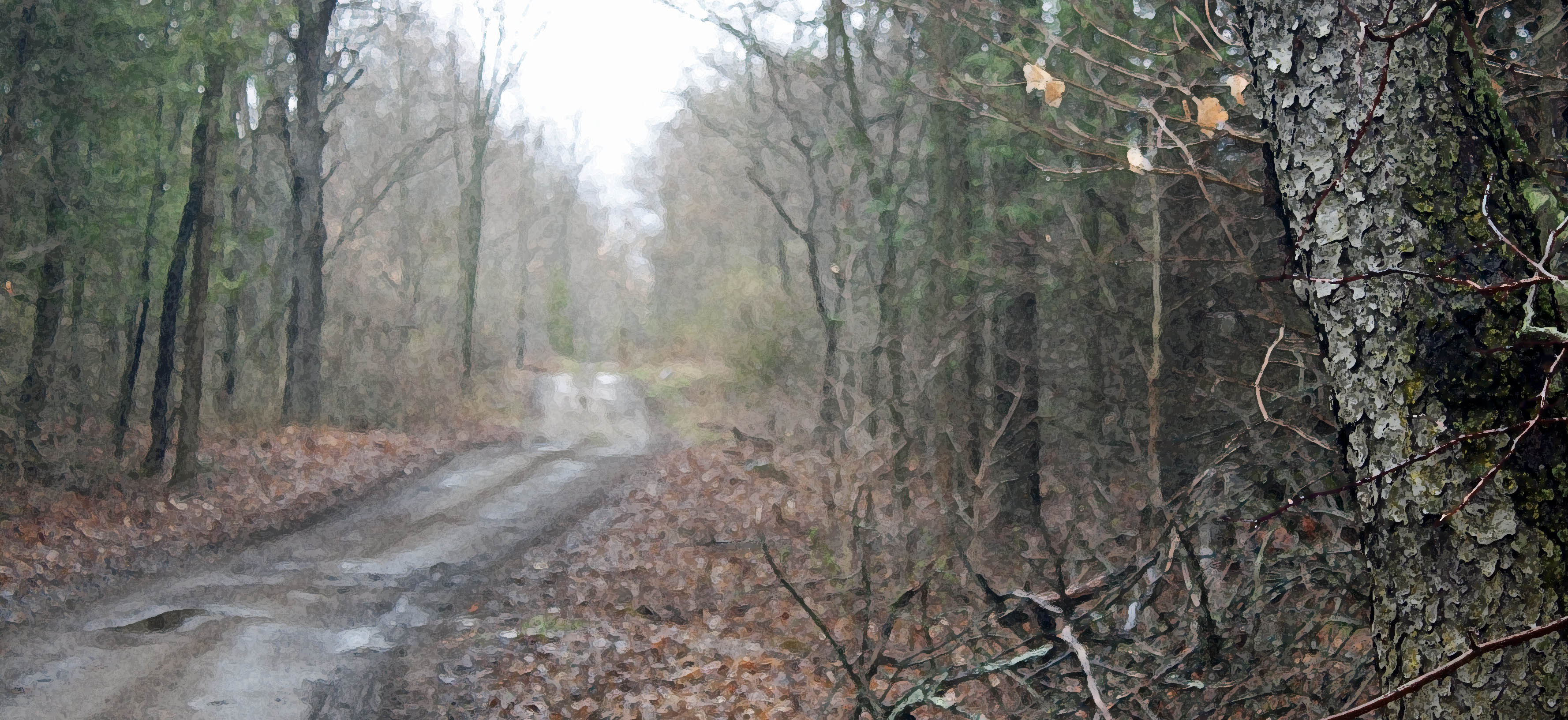
Dirt road in Kawarthas during a misting rain, ON (photo and rendition by Nina Munteanu)

Why Our Stories Are Important

We are all storytellers. We share our curiosity with great expression; our capacity and need to tell stories is as old as our ancient beginnings. From the Palaeolithic cave paintings of Lascaux to our blogs on the Internet, humanity has left a grand legacy of “story” sharing. Evolutionary biologist and futurist Elisabet Sahtouris tells us that, “whether we create our stories from the revelations of religions or the researches of science, or the inspirations of great artists and writers or the experiences of our own lives, we live by the stories we believe and tell to ourselves and others.”

Compelling stories resonate with the universal truths of metaphor that reside within the consciousness of humanity. According to Joseph Campbell, this involves an open mind and a certain amount of humility; and giving oneself to the story … not unlike the hero who gives her life to something larger than herself. Fiction becomes memorable by providing a depth of meaning. Stories move with direction, compel with intrigue and fulfil with awareness and, sometimes, with understanding. The stories that stir our hearts come from deep inside, where the personal meets the universal, through symbols or archetypes and metaphor.

Ultimately, we live by the narratives we share. “What you think, you become,” said Buddha.

In my writing guidebook The Ecology of Story: World as Character, I write: “When a writer is mindful of place in story and not only accurately portrays environment but treats it as a character, then her story will resonate with multilayers of meaning.”

Poplar stand in the Kawarthas, ON (photo and rendition by Nina Munteanu)

Changing the Narrative…

I was recently interviewed by Forrest Brown on Stories for Earth Podcast in which we discussed the need to change our narrative (particularly our colonial neoliberal capitalist narrative) and various ways to do this, taking into account the challenges posed by belief and language. Lessons from our indigenous wise elders will play a key role in our change toward genuine partnership with the Earth.

“We need to have a whole cultural shift, where it becomes our culture to take care of the Earth, and in order to make this shift, we need storytelling about how the Earth takes care of us and how we can take care of her.” ― Ayana Elizabeth Johnson, All We Can Save: Truth, Courage, and Solutions for the Climate Crisis

“This world, in which we are born and taken our being, is alive. It is not our supply house and sewer; it is our larger body. The intelligence that evolved us from stardust and interconnects us with all beings is sufficient for the healing of our Earth community, if we but align with that purpose. Our true nature is far more ancient and encompassing than the separate self defined by habit and society. We are as intrinsic to our living world as the rivers and trees, woven of the same intricate flows of matter/energy and mind. Having evolved us into self-reflexive consciousness, the world can now know itself through us, behold its own majesty, tell its own stories–and also respond to its own suffering.” 

JOANNA MACY and CHRIS JOHNSTONE, “Active Hope”
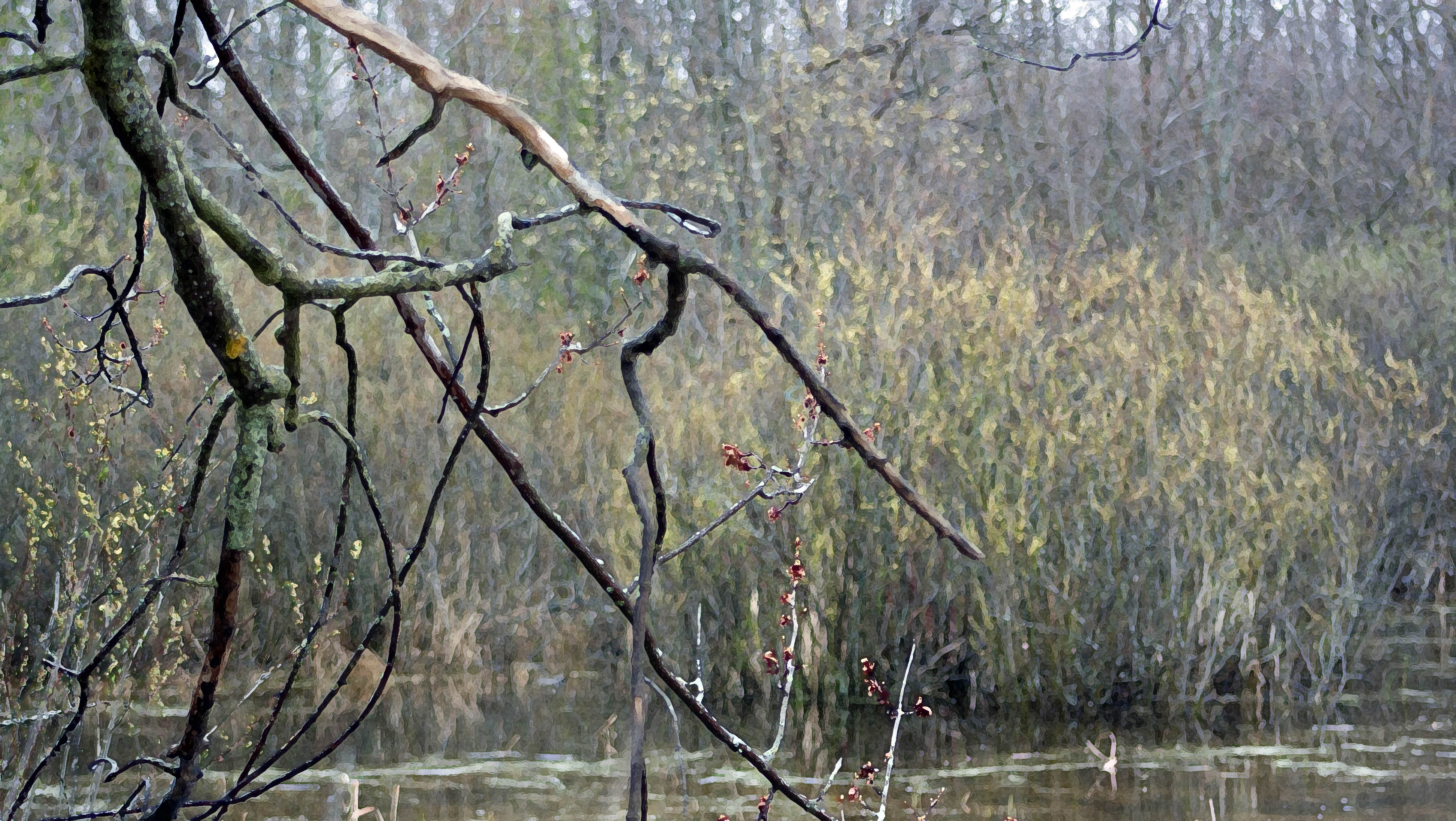
Swamp forest in Kawartha region, ON (photo and rendition by Nina Munteanu)

References:

Campbell, Joseph, Bill Moyers. 1991. “The Power of Myth.” Anchor. 293pp.

Munteanu, Nina. 2016. “Water Is… The Meaning of Water.” Pixl Press, Delta, B.C. 584pp.

Munteanu, Nina. 2019. “The Ecology of Story: World as Character.” Pixl Press, Delta, B.C. 200pp.

Sahtouris, Elisabet. 2014. “Ecosophy: Nature’s Guide to a Better World.” Kosmos, Spring/Summer 2014: 4-9pp. 

Nina Munteanu is a Canadian ecologist / limnologist and novelist. She is co-editor of Europa SF and currently teaches writing courses at George Brown College and the University of Toronto. Visit www.ninamunteanu.ca for the latest on her books. Nina’s bilingual “La natura dell’acqua / The Way of Water” was published by Mincione Edizioni in Rome. Her non-fiction book “Water Is…” by Pixl Press (Vancouver) was selected by Margaret Atwood in the New York Times ‘Year in Reading’ and was chosen as the 2017 Summer Read by Water Canada. Her novel “A Diary in the Age of Water” was released by Inanna Publications (Toronto) in June 2020.
Book Review: Evolution, Digital Immortality, and “Freenet”

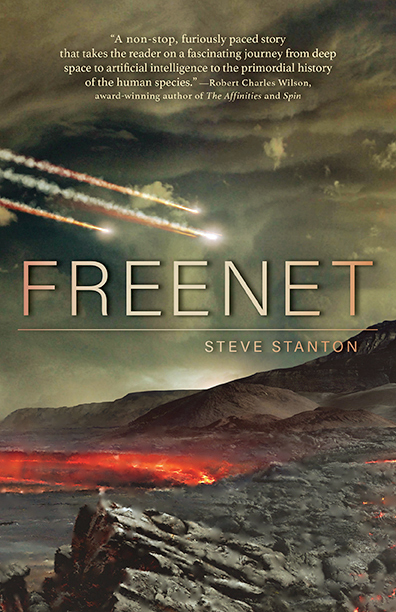
American book cover of Freenet

Steve Stanton’s 2016 science fiction book Freenet explores humanity in the far future after we have created the “Macpherson Doorway” through folded space-time, and vaulted ourselves with the blink of an eye into a galaxy far far away and 12 million years into the future. No traffic back through the doorway is permitted since a quarantine was placed some dozen years ago to prevent any unwanted DNA from sneaking through from Earth to “New Jerusalem”.  

As the Canadian back book jacket reveals, Freenet is a novel about the “power of [free] information…in a post-digital age.” The book explores what digital immortality means, when “consciousness has been digitized and cybersouls uploaded to a near-omniscient data-matrix.” This is a world where information “is currency and the truth belongs to whoever has the greatest bandwidth.”

Stanton shared with me that he was inspired to write the novel “from the simple observation of watching a woman lose her cellphone. Young people today are so tied to technology that they freak out when the strings are cut. In the future when life experience is delivered directly to the brain by wi-fi, the personal loss will be catastrophic.”

Nina Munteanu reading her advanced copy of Freenet

Told in three parts, the book begins with Simara Ying—a plugged-in V-net jockey and spacer—about to crash-land on the desert planet Bali. Her rescuer, a naïve—almost too nice to be true—native, Zen Valda, introduces her to his cave-dwelling culture with no social network support. The persistent electromagnetic storms of Bali interfere with digital communication and wipe all data. Like a baby removed from her comfortable womb, Simara survives panic attacks and heavy withdrawal chiefly because she is bombarded so heavily with Bali experiences that demand her attention. Lost without the support of her V-net—a comforting web of infinite communication and information—Simara struggles with Bali’s foreign ways. At every turn, she stumbles across some custom or taboo, forced to rely on her own wits; making the kind of mistakes she’s not used to making. More than a simple communication/information tool, the V-net embraces Simara with confidence. Without it, she fears she may go insane.

Intrigue arrives on Bali and chases Simara with a bounty on her head for murder. Zen demonstrates a simple faith in her innocence and helps her escape. Zen accepts a cochlear installation to connect him to the V-net, thinking it will help him better communicate with Simara, who—already somewhat distant—is even more so now that she has reunited with the V-net.  The V-net instead overwhelms him with a surging sea of irrelevant chatter and information, which threatens to drive him insane. Struggling with chaotic information overload, he remains with Simara, even after she estranges herself from him and is captured for murder. They escape and survive an arranged “accident” by literally jumping into space from an abandoned troopship about to crash.

Canadian book cover for Freenet

The story deepens into nuanced commentary in the last third of the book when Roni Hendrik, an energetic V-net anchorman of the Daily Buzz, pokes into the intrigue surrounding Simara Ying. He discovers that she is biogenic, an omnidroid—bioengineered from human DNA—and likely smuggled from Earth.

Omnidroids share a major cerebral augmentation that includes unlimited access to the V-net, higher intelligence and an unknown possibility of enhancements, including pre-cognition and telepathy across vast distances. Created as effective firewalls and filters, omnidroids streamline all V-net data for users across the galaxy. “Omnidroids [are] born into zero-day digital space and live in a fantasyland far beyond the mortal sphere of intelligence,” Henrik reflects, sensing a deeper story than a simple murder conspiracy. “Physical experience and bodily sensation [are] only tiny fragments of their transcendent existence, mundane accessories to digital infinity. In time,” Henrik concludes, “life itself might become a vestigial appendage.”

Hendrik, a humanist and closet idealist, pieces together connections with Neurozonics a New Jerusalem private corporation, responsible for the creation of biogenic humans. With holdings in a vast range of areas and an streaming amoeba of interests, Neurozonics is “a grinning spider on a translucent web of intrigue.” One discovery leads Henrik to more. He learns that the omnidroid community, to which Simara belongs, acts and communicates like a hive-mind, guided by a collective voice called “Mothership”. Other omnidroids have been targeted for elimination—and killed. Hell-bent on getting answers, Henrik confronts the owner of Neurozonics, Colin Macpherson—the same Macpherson who created the wormhole. Macpherson was uploaded earlier and runs his empire from digital space, part of the consortium of eternal intellect. Henrik’s meeting with Colin8 (the seventh clone of the original Colin Macpherson) runs like a “Neo-Architect” lecture in which the truth behind the omnidroids deaths is revealed. It’s not what you might think. Macpherson divulges his vision, which includes the reason for omnidroids’ communication abilities and the role of the Neurozonic brain. The ultimate meaning and use of the omnidroid freenet ties to a greater destiny that redefines what it is to be human and subverts the history of our primordial origins.

The story flows seamlessly from one perspective to another with crisp page-turning narrative, action and intrigue. Stanton trades some richness of character for a page-turning plot and clever dialogue. If there is a weakness in the narrative for me, it lies with Simara, the arcane omnidroid, who remains mysterious—from her introduction aboard her ship about to crash land, to the limited revelations of her character during her interactions with Zen, both in her POV and in his. Considering her unique characteristics and experiences as an omnidroid, I would have enjoyed more insight to her unique outlook and perspective, especially when faced with no social network—perhaps the most frightening experience for an omnidroid: to be disconnected from the hive. On the other hand, Zen Valda as the simple Bali boy on an insane rollercoaster ride is painted with a sensitive and graceful hand. Stanton also skillfully portrays his news team, Roni and Gladyz, with finesse and subtly clever notes. The dialogue and overall interactions between them is some of the most enjoyable of the novel.

Ultimately, Stanton’s Freenet flows like a fresh turbulent river, scouring and building up sediment then meandering like an oxbow into areas that surprise. He lulls you into expectation, based on your own vision of the digital world, then—like a bubble bursting—releases a quantum paradox of wormhole possibility.

“Ma, can you read the part where the cat omnidroid takes over the world?”

Nina Munteanu is a Canadian ecologist / limnologist and novelist. She is co-editor of Europa SF and currently teaches writing courses at George Brown College and the University of Toronto. Visit www.ninamunteanu.ca for the latest on her books. Nina’s bilingual “La natura dell’acqua / The Way of Water” was published by Mincione Edizioni in Rome. Her non-fiction book “Water Is…” by Pixl Press (Vancouver) was selected by Margaret Atwood in the New York Times ‘Year in Reading’ and was chosen as the 2017 Summer Read by Water Canada. Her novel “A Diary in the Age of Water” was released by Inanna Publications (Toronto) in June 2020.

When Water Speaks: quotes from A Diary in the Age of Water

“[My] paper on stream periphyton in Hydrobiologia could have been controversial and ultimately rejected by the scientific community; instead, it demurred to traditional science and was embraced as ground-breaking.”

Lynna Dresden

A Diary in the Age of Water is“A chilling but believable portrayal of what might happen as fresh water becomes more scarce.”

MIRAMICHI READER

“Evoking Ursula LeGuin’s unflinching humane and moral authority, Nina Munteanu takes us into the lives of four generations of women and their battles against a global giant that controls and manipulates Earth’s water. In a diary that entwines acute scientific observation with poignant personal reflection, Lynna’s story unfolds incrementally, like climate change itself. Particularly harrowing are the neighbourhood water betrayals, along with Lynna’s deliberately dehydrated appearance meant to deflect attention from her own clandestine water collection. Her estrangement from her beloved daughter, her “dark cascade” who embarks upon a deadly path of her own, is heart-wrenching. Munteanu elegantly transports us between Lynna’s exuberant youth and her tormented present, between microcosm and macrocosm, linking her story and struggles-and those of her mother, daughter, and granddaughter-to the life force manifest in water itself. In language both gritty and hauntingly poetic, Munteanu delivers an uncompromising warning of our future.”

LYNN HUTCHINSON LEE, multimedia artist, author, and playwright
Snow melt in marsh by country road, ON (photo and rendition by Nina Munteanu)

When Water Speaks: quotes from A Diary in the Age of Water

“During spring thaw or fall turnover, the thermocline erodes and the changing temperature forces a lake to mix, revealing her secrets.”

Lynna Dresden

“Munteanu’s experience in bridging the worlds of biology and writing makes A Diary in the Age of Water unique in being strong and focused from both the scientific and literary perspectives.”

STRANGE HORIZONS
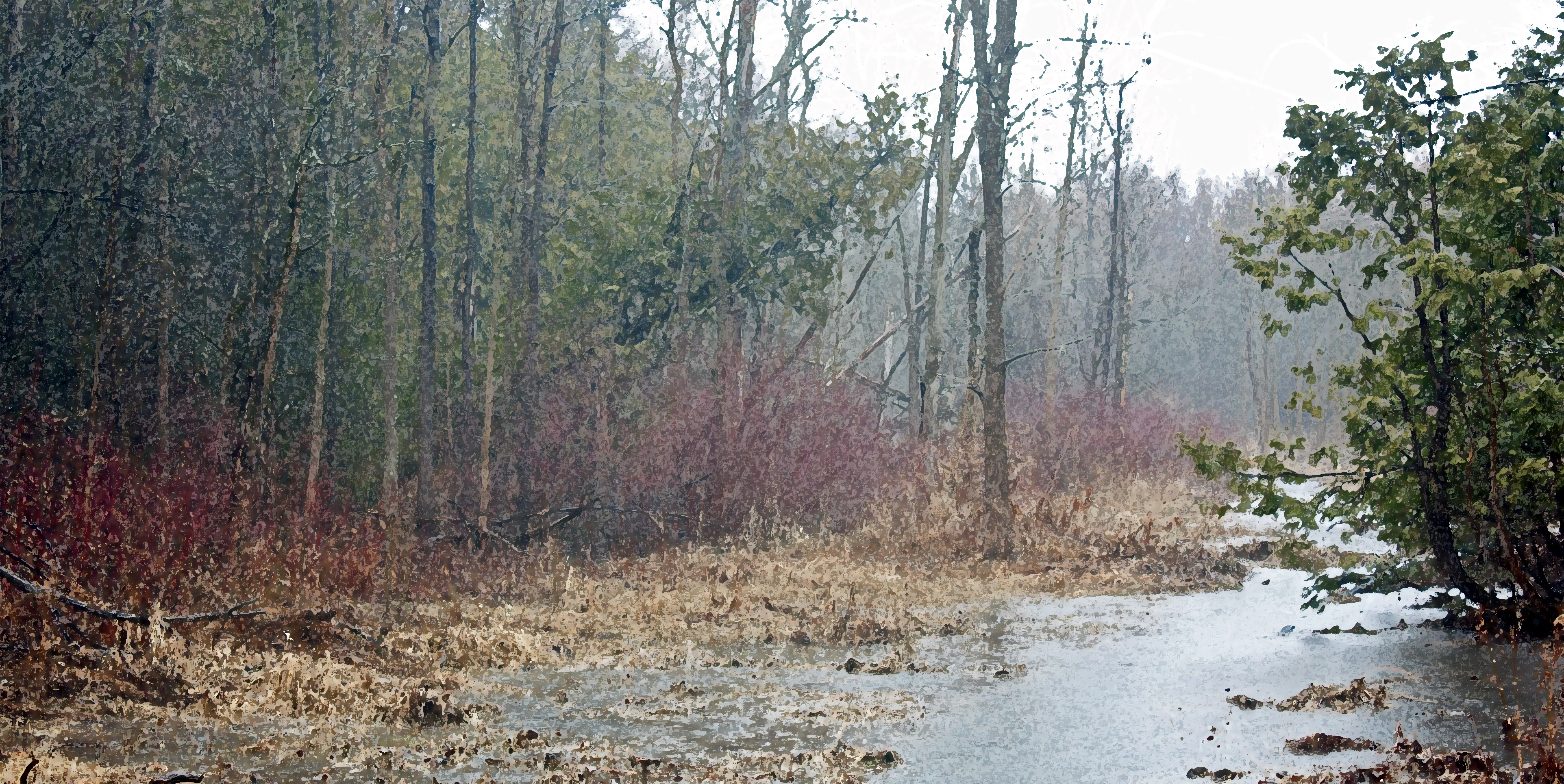
Overflowing marshy creek in Trent Nature Sanctuary in spring, ON (photo and rendition by Nina Munteanu)

When Water Speaks: quotes from A Diary in the Age of Water

“Water wants to flow. It doesn’t like to be restricted. If confined in a ravine, it speeds up and cuts a channel along the thalweg, eroding the hardest material and polishing a path that uniquely suits it. Water is selfish. It is always moving, even when it isn’t.”

Lynna Dresden

A Diary in the Age of Water is “An exceptional and thought-provoking dystopian fiction.”

LITERARY TITAN
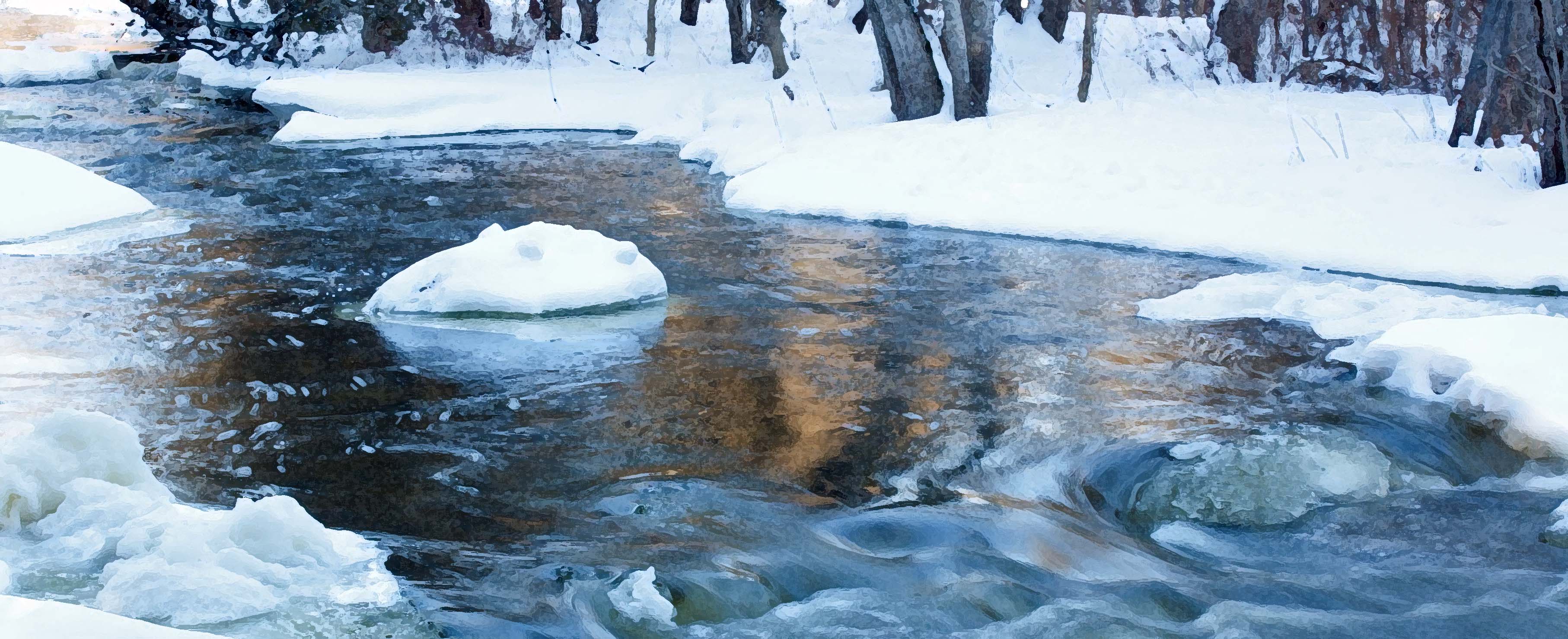
Jackson Creek in winter, ON (photo and rendition by Nina Munteanu)

When Water Speaks: quotes from A Diary in the Age of Water

“Mankind will continue to flounder when he underestimates Nature and sees himself separate from Her. Man is having his way with Her now. But eventually She will have her way with him. When they try to hang onto water, it will slip through their fingers. That’s what water does.”

Una Dresden

“In poetic prose with sober factual basis, Munteanu transmutes a harrowing dystopia into a transcendentalist origin myth. An original cautionary tale that combines a family drama with an environmental treatise.”

KIRKUS REVIEWS
Jackson Creek in early winter, ON (photo and rendition by Nina Munteanu)

When Water Speaks: quotes from A Diary in the Age of Water

“Don’t make the mistake of thinking the bully is your friend…You can play with the bully. But don’t make him your friend. Demand his respect. Or you will become the bully.”

Una Dresden

“Lyrical and dystopian, ‘A Diary in the Age of Water’ is as much an ode to water as it is a cautionary tale about the dire implications of climate change.”

FOREWORD CLARION 5-STAR REVIEW
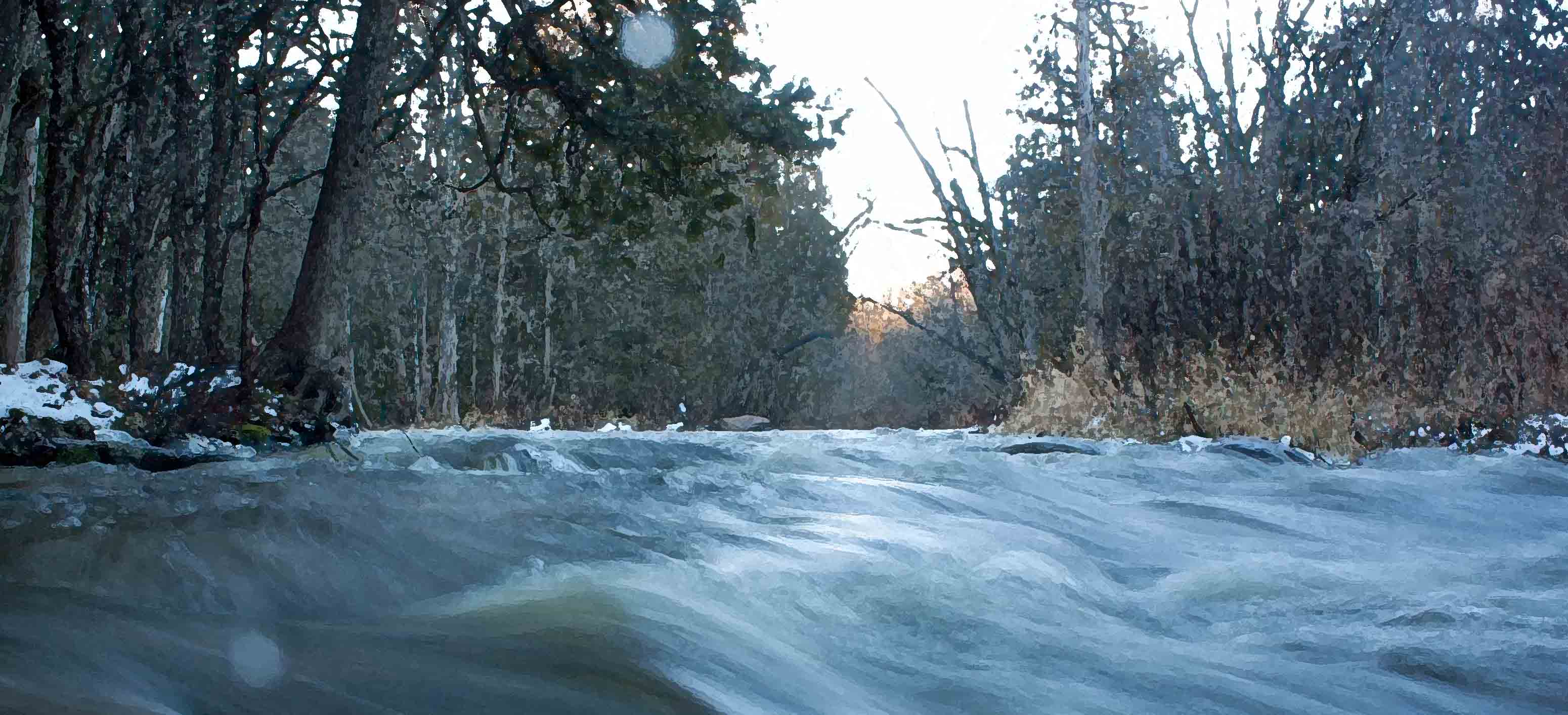
Jackson Creek after a heavy snow in early winter, ON (photo and rendition by Nina Munteanu)

Nina Munteanu’s “The Splintered Universe Trilogy” Audiobooks on Audible

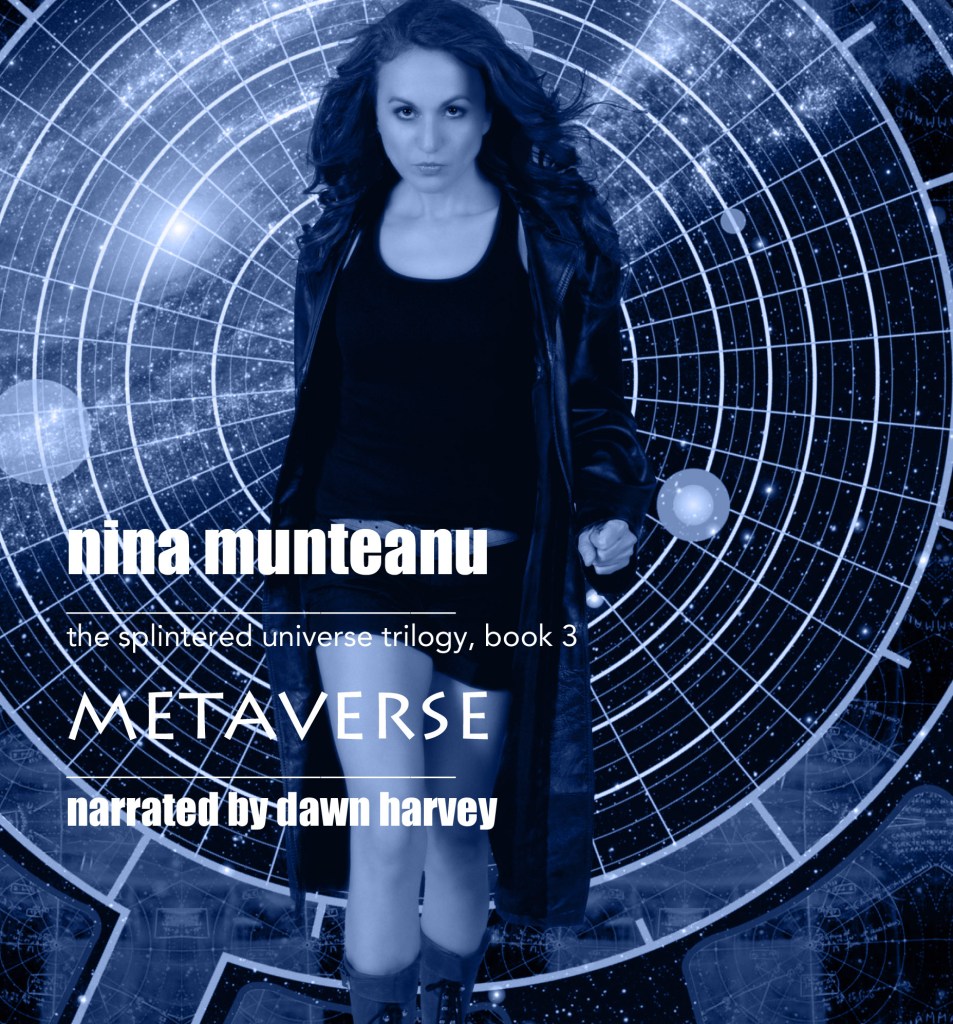
The Splintered Universe Trilogy audiobooks

My detective thriller trilogy “The Splintered Universe,” which came out in print and ebook format in 2012-2014 were made into audiobooks by Iambik in 2019 and narrated impeccably by voice artist Dawn Harvey. When Iambik closed its doors, Spoken Realms and Pixl Press picked up the trilogy and reissued them in 2022. They are now remastered and available for purchase. Canadian author Simon Rose recently interviewed me about the re-release of The Splintered Universe Audiobooks. Part of that interview appears below. For the entire interview find the link below.

 Interview with Nina Munteanu on New Audiobook Release of “The Splintered Universe” Trilogy

I had the pleasure recently of talking with Canadian author Nina Munteanu about the new release of her audiobook set The Splintered Universe Trilogy. Nina is a scientist (limnologist) who also writes science fiction and fantasy with a focus on eco-fiction and climate fiction. She has nine novels and five non-fiction books published, including “Water Is…” recommended by Margaret Atwood as her #1 choice in the New York Times ‘Year in Reading’ in 2016.

The Splintered Universe Trilogy follows the thrilling adventures of Galactic Guardian Rhea Hawke, human detective who must save a world she hardly understands. It’s full of exciting planets, space travel, tall secrets, intrigue and even some romance. I interviewed Nina in 2019 about the trilogy when the three formats first became available and we talked about her world building, Rhea Hawke’s cool arsenal of gadgets and weapons, and concepts of metaphysics, existentialism and identity. So, what’s happening with all that now?  

Simon: So, tell us about these new releases.

Nina: You’re right, Simon, the audiobooks of the trilogy did all come out in 2019, completing the three formats of print, ebook and audiobook. I was over the moon. What we’ve done recently is remaster the audiobooks and we’re now selling them as a package through the new publishers, Spoken Realms (first two audiobooks) and Pixl Press (third audiobook).

Briefly, the trilogy follows our intrepid (though slightly misguided) detective Rhea Hawke as she tries to solve the genocide of a spiritual sect on some backwater planet. She bungles her mission by killing her only lead and instead discovers a conspiracy to exterminate humanity by an alien race only she thinks exists. It goes downhill for her from there. She gets fired and her sentient ship—her only friend—is impounded. Her whole life comes apart. Her only chance to rebuild it is to prove that her discovery is true. That leads her down a rabbit hole into a dangerous world of intrigue, full of unsavory shape-shifting characters, dust smuggling, giant flying crustaceans, amorous toxic plants, and portals into mirror universes.  

Rhea’s inventiveness gets her into even more trouble. She gained some notoriety with her created weapon, the MEC (short for Magnetic-Electro-Concussion) pistol, a versatile wave-weapon that can target DNA signatures and do almost anything you want with a single sweep. Her proprietary MEC design—coveted by shady crime syndicates and her own Guardians alike—becomes the centre piece to a universal war.

“An addictive start to the trilogy”–BOOK ADDICT

Simon: What makes these new audiobooks so special?

Nina: What makes these audiobooks special lies ultimately in their narration. When the original audiobook publisher took on the books as audiobooks, they provided me with three voice artists to audition. I chose Dawn Harvey because I could visualize my main character through her voice. Given that the entire trilogy is told in the first person, the narrator’s voice had to be just right. Dawn’s voice is dark and sultry like coffee. It is sexy and irreverent with a hidden vulnerability and sensitivity that perfectly captured the main character, Detective Rhea Hawke. What I didn’t realize then was how well Harvey would represent the thirty-odd other characters, mostly aliens—one who spoke through several mouths.

“Rhea is a fascinating character from the start and she continues to grow throughout the tale.”–DAB OF DARKNESS 

Simon: Tell us about this narration process of the audiobooks.

Nina: Dawn is a dedicated professional. Working with her was an absolute pleasure. She created unique and consistent voices for the books many characters. She ensured that each character had the appropriate vernacular, tone, accent and cadence. She did proofs and confirmed them with me. She also tackled the “alien” vocabulary; many are made-up words. Dawn literally breathed life into Rhea Hawke and all the other characters. When I first listened to the Outer Diverse audiobook in the car on my way to Nova Scotia, I lost myself in her storytelling and forgot that I’d written it.

Here’s what one Amazon review said: “Dawn Harvey breathed incredible life into the lead character, Rhea Hawke—both sarcastic and vulnerable at the same time; a detective with a cynical edge, and sultry voice tinged with wiry sarcasm. The story unfolded through Rhea’s narrative like an old film noir as she unraveled mysteries that led to the greatest one: her own.”

Martha’s Bookshelf wrote: “Ms. Harvey manages to enthuse the personality of the characters into each voice. The wise, gentle Ka has a soft, strong sound that reminds you of a wise old bird. Shlsh She She, a slippery, slimy creature has a slurry, garbled voice like a mouthful of mushy, wet food. Dawn’s reading conveys the loneliness in Rhea, the sexiness of Serge, the frustrated friendliness of Bas, and the faithful coziness of Benny. She is able to bring emphasis to the action or romance, weariness or fear elements of the story. The narration never takes over the story; but rather enhances it.”

“An explosive ending … such a great series!”–LILLY’S BOOK WORLD

Simon: What has been the reception to the audiobooks so far?

Nina: the reception has been wonderful and overwhelming.

Dab of Darkness says: “There’s so much I have enjoyed about this series so far … There’s her AI ship, Benny, her sentient great coat, her special made gun, and her own hidden shapeshifting abilities. Then there’s a cast of interesting characters, good guys and bad guys. I love that I don’t know how things will turn out; the plot keeps me guessing.”

One Goodreads review wrote: “Rhea Hawke is a Galactic Guardian, and I love to say her name. Her name alone lets you know that there is a bad ass super hero of a woman on site. I can picture her boots, her great coat, and her side arms. I want to be her when I grow up.”

Simon: Where can people buy The Splintered Universe Trilogy?

Nina: The trilogy can be purchased at most of the usual places in print and ebook formats. These include Amazon all over the world, Kobo, iBooks, Barnes and Noble and other quality retailers.

The audiobooks of the trilogy are available through Audible. The links on Audible for the three audio books are as follows: Outer Diverse, Inner Diverse, Metaverse.

Nina Munteanu is a Canadian ecologist / limnologist and novelist. She is co-editor of Europa SF and currently teaches writing courses at George Brown College and the University of Toronto. Visit www.ninamunteanu.ca for the latest on her books. Nina’s bilingual “La natura dell’acqua / The Way of Water” was published by Mincione Edizioni in Rome. Her non-fiction book “Water Is…” by Pixl Press(Vancouver) was selected by Margaret Atwood in the New York Times ‘Year in Reading’ and was chosen as the 2017 Summer Read by Water Canada. Her novel “A Diary in the Age of Water” was released by Inanna Publications (Toronto) in June 2020.