Movie Review: Reaching for “Elysium”–Why the movie could have been great but wasn’t

In the “Hero’s Journey” myth, Elysium (or the Elysium Fields in Greek mythology) is the paradise that true heroes go to when they die (think of Frodo in Lord of the Rings and the hero in The Gladiator). To the ancient Greeks, Elysium was a place at the ends of the earth where heroes, favoured by the gods for their altruism, went. It is a state or place of perfect happiness; the equivalent of Heaven.

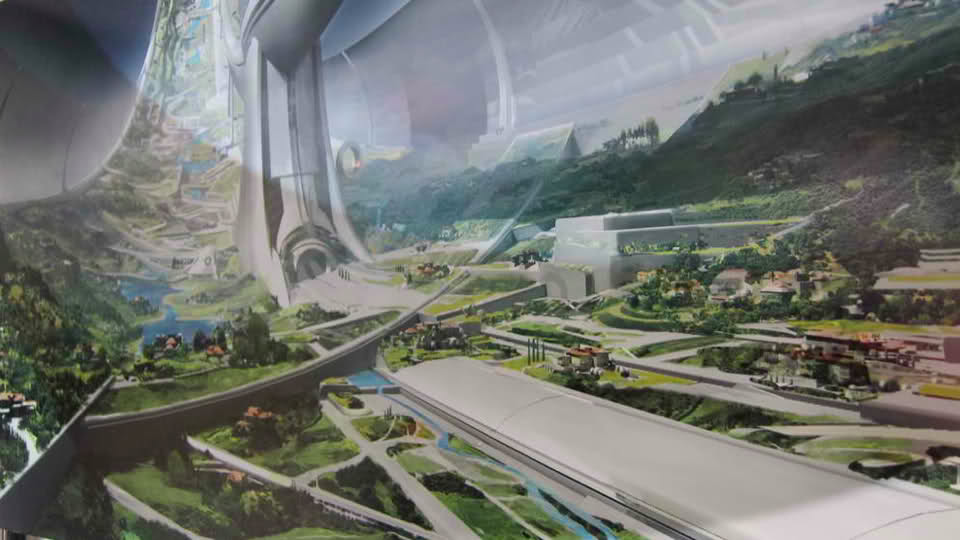
Elysium is also the name given to the Earth-orbiting space station of Neill Blomkamp’s (District 9) new science fiction political allegory of the same name. Elysium is where the privileged live in luxury and perfect health (thanks to health-pods) — after they abandoned Earth to the squalor they no doubt helped create. This is not made clear enough for me and is one of the film’s major weaknesses, in my opinion (more on that below).
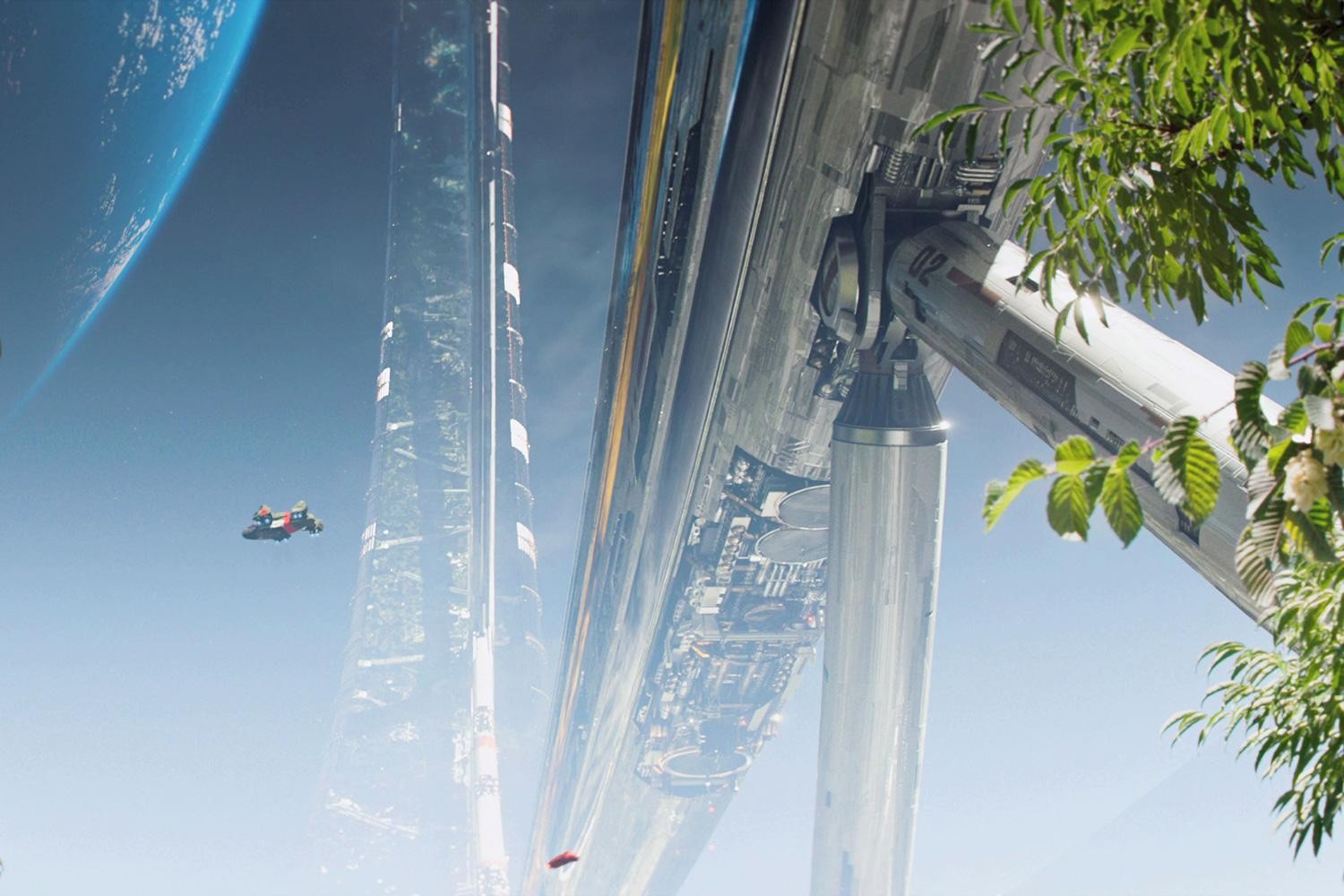
Earth seen from Elysium

The year is 2154 in a Los Angeles that strangely resembles the slum shanties of Johannesburg, South Africa (where Blomkamp filmed District 9).  We soon learn that Earth struggles in the mire of humanity’s waste in a state of general social strife. Abandoned by the wealthy elite (who have moved to Elysium), the rest of an overpopulated humanity lives in the squalor of abject poverty without food, healthcare, or the motivation to live. I, for one, would have liked to know a little of how humanity devolved so dramatically on a planetary scale.

A Different Hero’s Journey

From the time he was a young orphan, Max Da Costa (Matt Damon; Maxwell Perry Cotton) dreamed of going to Elysium, its impressive phantom form visible in the daytime sky. He promised his childhood love Frey (sympathetically played by Alice Braga and Valentina Giros) that he would take her there, to paradise. His mentor, a kind mother-figure nun at the orphanage, gives him the hero’s talisman (a locket with a picture of Earth inside), and prophesizes, “Es su destino hacer algo maravilla cuando tu es hombre” (“It is your destiny to do something great when you are a man”). She reminds him that when he gets to Elysium, he will see the most beautiful thing: planet Earth. “You see how beautiful it is,” she says to him as he gazes out at the ghost of Elysium in the sky. Then, as she hands him the locket with Earth inside, she adds, “look how beautiful we are from there. Never forget where you come from.”  Seen from this perspective, the planet Earth is a beautiful thing to behold.

Max and Spider share a heated conversation

Max is a reformed criminal who, like Blomkamp’s “workaday” anti-hero in District 9 (Sharlto Copley), is not very hero-like until the last five minutes of the film, when he has his personal epiphany and decides to act altruistically rather than self-servingly. This is a pattern that Blomkamp has used before; the reluctant-hero (Wikus Van De Merwe) of District 9 was an unimpressive man with many obvious blemishes. A rather unlikeable man until he makes his heroic decision in the end. This is where Blomkamp’s heroes differ from most action movie heroes, who generally start their journey from higher positions on the evolutionary scale. Blomkamp’s heroes must journey farther to gain their hero-status; they are perhaps more realistic portrayals of ordinary men who finally shine under extra-ordinary circumstances. Men who we start out disliking—hating, even—but find ourselves cheering for, perhaps even crying for. Max’s behaviour defines that true hero: rising from his need to save himself to his quest to save humanity—at the cost of his own life. But, as with the ordinary man, it is only when he connects a personal quest to save the daughter of his first love to his global quest to save Earth that Max transforms into the altruistic mythic hero he is destined to become. Everything came together at the film’s end, in a montage of scenes that depict the locket of the planet Earth in his dying hand (Earth is Home; save the planet), the demise of a police state, the saviour of his love’s daughter, and med-pods landing on Earth to dispense aid to the dying masses.

Elysium orbiting the Earth

A Story About the Planet Earth

Ironically, it is to do with our beloved planet Earth that I felt in Elysium the most discord in plot/thematic story treatment and lack of resonance. Blomkamp begins with the planet and he ends his film with the planet. The symbolism is clear: in the stylish shots of Earth seen from Elysium (and vice versa); in the strategic scenes of Max and the image in his precious locket of not his childhood love Frey but of planet Earth; and his mentor’s advice to Max, delivered in one of the most powerful scenes of the movie. Yet, Blomkamp fails to follow through to give us that visceral connection. Why is the planet so important? How is Max connected to it or anyone else, for that matter. What is Spider’s story (Wagner Moura), a latter-day Che-Guevara, who fervently leads the proletarian rebellion of Earth? Who, why and how did the planet come to be so destroyed? There is not one ounce of suggestion, backstory or context. This is an important consideration; because without it, instead of feeling total resolution and redemption in the end, I felt a disconnect to those masses being helped and even some distrust in their fate and direction. Instead of feeling true victory, I felt ambivalence.  

Called a “sci-fi socialist film” by P.J. Gladnick of Newsbusters.org, Elysium is clearly an attempt at examining and dramatizing the social segregation of humanity and economic fascism: a dystopia that promises commentary on social and economic issues in society today. However, I felt that its delivery was compromised by Blomkamp’s choice to focus more on action tech at the expense of good backstory, context and empathic character development. I’m not saying that it’s a bad story. It is a very good story; it’s just that it could have been a great story. The heart of the story—delivered through the main protagonist—lacks the global connection it could have had. This is not, as some reviewers suggest, due to any infirmity of the hero, his antagonists, or lack of symbolism (of which there is much), but the lack of context, backstory and richness of setting (I’m not talking about the visible setting, which was spectacular, elegant and stylish). It comes back to how each character relates to “home”, the planet, and to each other.

Matt Goldberg of Collider.com says that, “Elysium‘s message about economic inequality is couched in a finely-drawn sci-fi world, but the power of that message becomes diminished when we cease to care about the messenger.” Detroit News Tom Long added that, “Elysium is the sort of big, noisy sci-fi film that seems to want to say something but opts instead to concentrate on fight scenes involving gimmickry.” While I appreciated the depth and breadth of Blomkamp’s references to pop culture from an Armani-clad female Darth Vader to the Judeo-Christian references and symbolism, it just didn’t hold its promise.
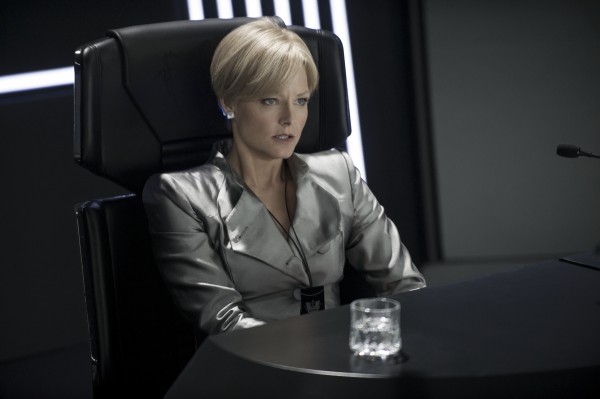
Jodi Foster plays Defence Secretary Delacourt, the threshold guardian of Elysium

What began as a promising exploration about an important social issue, devolved into a sequence of ever-escalating gratuitous gore and violence—clearly aimed for a different audience.
Elysium

Nina Munteanu is a Canadian ecologist / limnologist and novelist. She is co-editor of Europa SF and currently teaches writing courses at George Brown College and the University of Toronto. Visit www.ninamunteanu.ca for the latest on her books. Nina’s bilingual “La natura dell’acqua / The Way of Water” was published by Mincione Edizioni in Rome. Her non-fiction book “Water Is…” by Pixl Press (Vancouver) was selected by Margaret Atwood in the New York Times ‘Year in Reading’ and was chosen as the 2017 Summer Read by Water Canada. Her novel “A Diary in the Age of Water” was released by Inanna Publications (Toronto) in June 2020.

When the Permafrost Thaws…

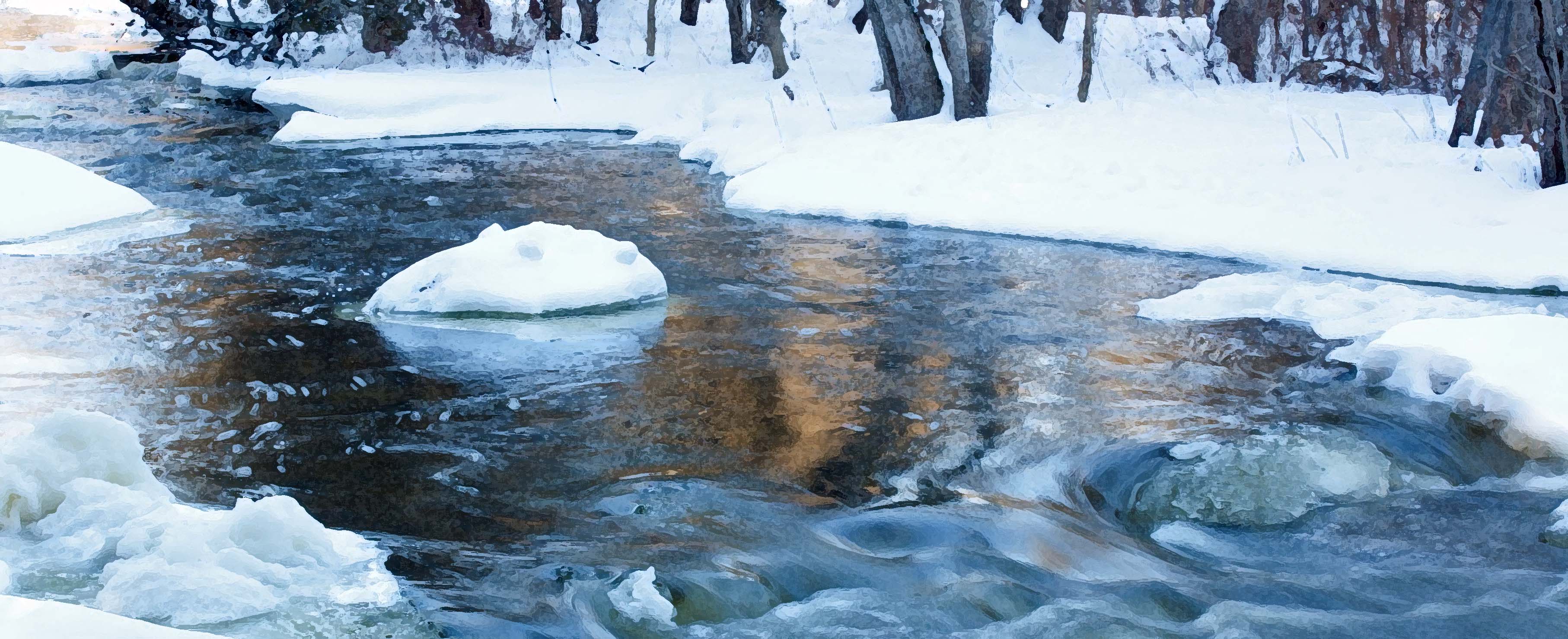
Ice and snow cover the Otonabee River in winter, ON (photo and rendition by Nina Munteanu)

In my upcoming novel “Gaia’s Revolution,” one of the protagonists, Damien Vogel, contemplates in 2022 a key event from 2020 that only a few seem to take seriously:

In Siberia in June 2020, record heat of thirty degrees Centigrade, over the average of 11 degrees, collapsed permafrost and caused oil tanks in Norilsk to rupture. Over twenty thousand tonnes of diesel spilled into the Pyasina lake and river system. Damien remembers looking at the veins of red on satellite images from space. That disaster is just the beginning of what the ‘sleeping bear’ of methane hydrates promise to unleash when the permafrost reaches a critical thaw and those hydrates awaken. Melting permafrost is a quiet sleeper in the climate change procession, he considers. At a microscopic level, in the chemistry of the water and in the change in the atmosphere, a time bomb is ticking.

A decade later, Damien’s twin brother, Eric, notes that:

“Back in the ‘20s scientists started noticing major permafrost melt on the Siberian Shelf,” Eric goes on. “The melting released hydrates, which set the oil and gas companies frothing at the mouth with joy and the climate scientists spinning in a panic because of what they knew it meant for the planet. It was the harbinger of the largest methane ‘burp’ ever.”

Eric then adds:

“Permafrost thaw kicked us into this devastating global warming, Dame, and everyone—even the climate modellers—ignored it, because they didn’t have enough data. Gott verdammt! They’re all still asleep, Dame!”

In his book The Treeline, Ben Rawlence writes about the ongoing extinction of indigenous peoples in the north as the treeline migrates northward into tundra and the permafrost and sea ice change and go extinct themselves.

Ice fragments on the Otonabee River, ON (photo by Nina Munteanu)

Methane & The Clathrate Gun Hypothesis 

Because methane is present in much smaller concentrations many scientists have mistakenly deemed it as important as carbon dioxide in the climate change equation; however, it is becoming obvious that methane poses a real and largely unacknowledged danger. Methane is twenty times more efficient in trapping heat than carbon dioxide. Permafrost—which is currently melting rapidly in the north—contains almost twice as much carbon as is currently in the atmosphere. In the rapidly warming Arctic (warming twice as fast as the globe as a whole), the upper layers of this frozen soil are thawing, allowing deposited organic material to decompose and release methane.

.

The clathrate gun hypothesis is the notion that sea temperature rises (and/or drops in sea levels) may trigger a catastrophic positive feedback on climate:  warming would cause a sudden release of methane from methane clathrate (hydrate) compounds buried in seabeds, in the permafrost, and under ice sheets.

Something of this nature has already occurred in Siberia in 2020. In his book The Treeline Ben Rawlence reports the following warning by Dutch scientist Dr. Ko van Huissteden, a leading authority on permafrost:

“It is hard to measure methane release … [but] some studies have suggested that an unstable seabed could release a methane ‘burp’ of 500-5000 gigatonnes, equivalent to decades of greenhouse gas emissions, contributing to an abrupt jump in temperature that humans will be powerless to arrest.” (Wadhams, 2015)

Creation of gas hydrates requires high pressure; water; gas—mainly methane—and low temperatures. Three environments considered suitable for this process to occur include: sub-seabed along the world’s continental margins; permafrost areas on land and off shore; and a process for storing methane hydrates: ice sheets. As long as the climate is cold and the ice sheet stable, the gas hydrate zone remains stable. As the ice sheets melt, the pressure on the ground decreases; hydrates destabilize and release methane into rising seawater and finally into the atmosphere.

A recent study in Science revealed that hundreds of massive, kilometer-wide craters on the ocean floor in the Arctic were formed by substantial methane expulsions. Because methane is a powerful greenhouse gas, temperatures would rise exponentially. Once started, this runaway process could be as irreversible as the firing of a gun—and on a time scale less than a human lifetime.

The sudden release of large amounts of natural warming gas from methane clathrate deposits in runaway climate change could be a cause of past, future, and present climate changes.

Latest research on the Greenland ice sheet and elsewhere throughout the Arctic has revealed major methane discharges in Arctic lakes in areas of permafrost thaw. Scientists are exploring areas where methane is bubbling to the surface and releasing to the atmosphere.

If human emissions continue at their current rate, rapidly changing ocean currents and retreating ice sheets may uncork methane from under ice caps, ocean sediments and Arctic permafrost, causing a jump in radiative forcing. Even if rapid ice sheet disintegration were to scatter large amounts of ice into the oceans, the net cooling effect would be strongly countered and likely overwhelmed. The areas that did cool would likely trigger severe weather outbreaks.

As I write, we are pumping out CO2 into the atmosphere at a rate 10 times faster than at any point in the past 66 m years, with the resulting sea level rises, extreme weather events, heat waves, droughts, unseasonal storms, and stress on biodiversity around the globe.  Research published in the journal Nature Geoscience demonstrates that “the world has entered ‘uncharted territory’ and that the consequences for life on land and in the oceans may be more severe than at any time since the extinction of the dinosaurs,” writes Damian Carrington of The Guardian.

In an interview with Guardian reporter John Abraham, Woods Hole expert Robert Max Holmes, exhorted:

It’s essential that policymakers begin to seriously consider the possibility of a substantial permafrost carbon feedback to global warming. If they don’t, I suspect that down the road we’ll all be looking at the 2°C threshold in our rear-view mirror.

Ice break up on the Otonabee River in early spring, ON (photo by Nina Munteanu)

References:

Hansen, James and Sato, Makiko; Update of Greenland ice sheet mass loss: Exponential?; (26 December 2012).

Adams, J., M.A. Maslin and E. Thomas Sudden climate transitions during the Quaternary; Progress in Physical Geography, 23, 1, 1-36 (1999)

Andreassen et al. 2017. “Massive blow-out craters formed by hydrate-controlled methane expulsion from the Arctic seafloor,” Sciencescience.sciencemag.org/cgi/doi … 1126/science.aal4500


Carrington, Damian. 2016. “Carbon emission release rate ‘unprecedented’ in past 66 m years.” The Guardian, March 21, 2016.

Hansen, James and Sato, Makiko. 2012. Update of Greenland ice sheet mass loss: Exponential?; (26 December 2012).

Portnov et al. 2016. Ice-sheet-driven methane storage and release in the ArcticNature Communications 7

Rawlence, Ben. 2022. “The Treeline.” Jonathan Cape, London. 342pp.

Sachs, Julian and Anderson, Robert. 2005. Increased productivity in the subantarctic ocean during Heinrich events; Nature 434, 1118-1121;(28 April 2005).

Sojtaric, Maja. 2016. Ice Sheets May be Hiding Vast Reservoirs of Powerful Greenhouse GasCAGE.

Wadhams, Peter. 2015. “A Farewell to Ice.” Penguin.

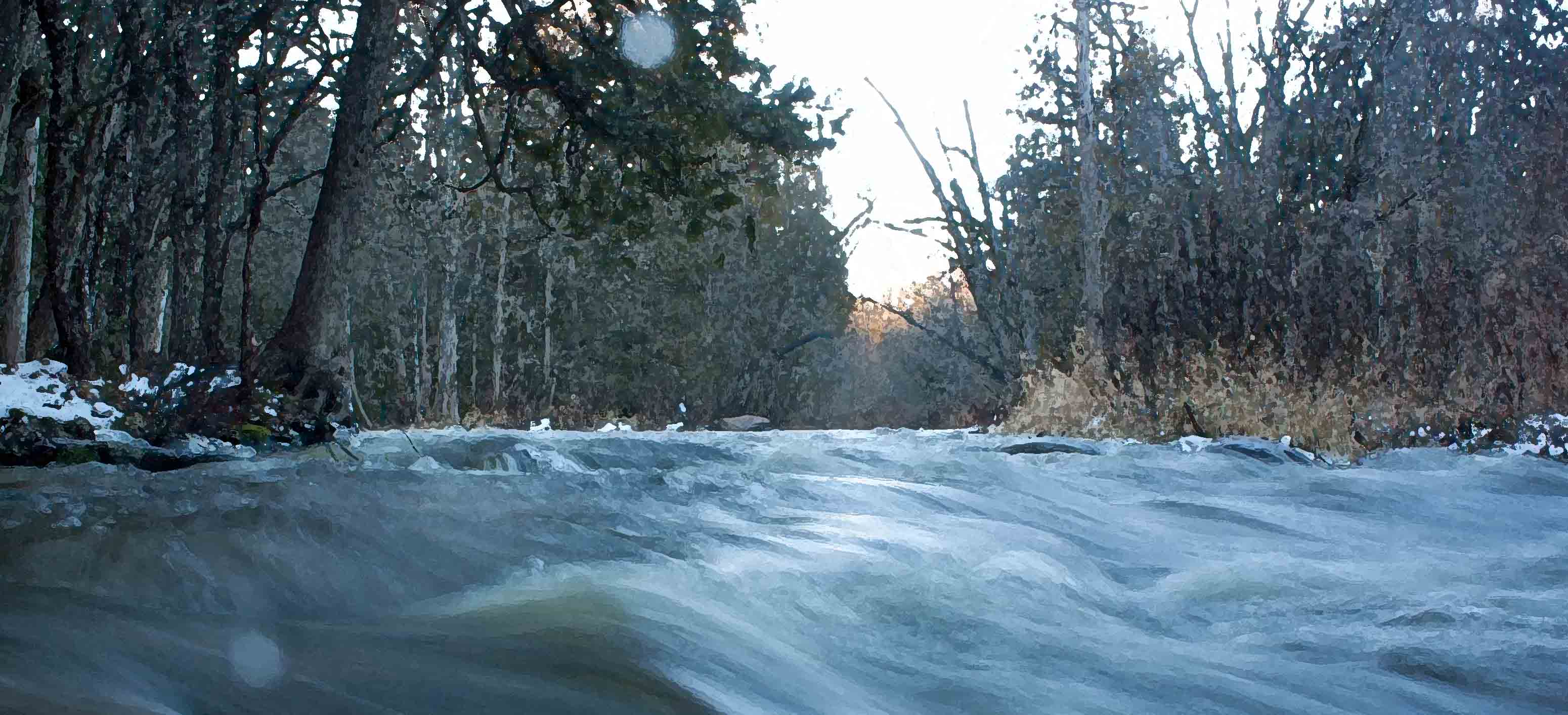
Flowing water in a river, ON (photo by Nina Munteanu)

Nina Munteanu is a Canadian ecologist / limnologist and novelist. She is co-editor of Europa SF and currently teaches writing courses at George Brown College and the University of Toronto. Visit www.ninamunteanu.ca for the latest on her books. Nina’s bilingual “La natura dell’acqua / The Way of Water” was published by Mincione Edizioni in Rome. Her non-fiction book “Water Is…” by Pixl Press (Vancouver) was selected by Margaret Atwood in the New York Times ‘Year in Reading’ and was chosen as the 2017 Summer Read by Water Canada. Her novel “A Diary in the Age of Water” was released by Inanna Publications (Toronto) in June 2020.

This entry was posted in booksCanadaChoices for WaterClimate Changeeco-fictionecologyenvironmentSciencesustainabilityThe FutureWater Is and tagged arctic ice meltArctic OceanBen Rawlenceclathrate gun hypothesisClimate Changeeco-fictionecologyenvironmentGaia’s Revolutionglobal warmingice sheetsmelting permafrostmethanemethane clathratesmethane hydratespermafrostpermafrost thawrunaway climate changeScienceThe Treelinewater. Bookmark the permalinkEdit

When Water Speaks: quotes from A Diary in the Age of Water

“[My] paper on stream periphyton in Hydrobiologia could have been controversial and ultimately rejected by the scientific community; instead, it demurred to traditional science and was embraced as ground-breaking.”

Lynna Dresden

A Diary in the Age of Water is“A chilling but believable portrayal of what might happen as fresh water becomes more scarce.”

MIRAMICHI READER

“Evoking Ursula LeGuin’s unflinching humane and moral authority, Nina Munteanu takes us into the lives of four generations of women and their battles against a global giant that controls and manipulates Earth’s water. In a diary that entwines acute scientific observation with poignant personal reflection, Lynna’s story unfolds incrementally, like climate change itself. Particularly harrowing are the neighbourhood water betrayals, along with Lynna’s deliberately dehydrated appearance meant to deflect attention from her own clandestine water collection. Her estrangement from her beloved daughter, her “dark cascade” who embarks upon a deadly path of her own, is heart-wrenching. Munteanu elegantly transports us between Lynna’s exuberant youth and her tormented present, between microcosm and macrocosm, linking her story and struggles-and those of her mother, daughter, and granddaughter-to the life force manifest in water itself. In language both gritty and hauntingly poetic, Munteanu delivers an uncompromising warning of our future.”

LYNN HUTCHINSON LEE, multimedia artist, author, and playwright
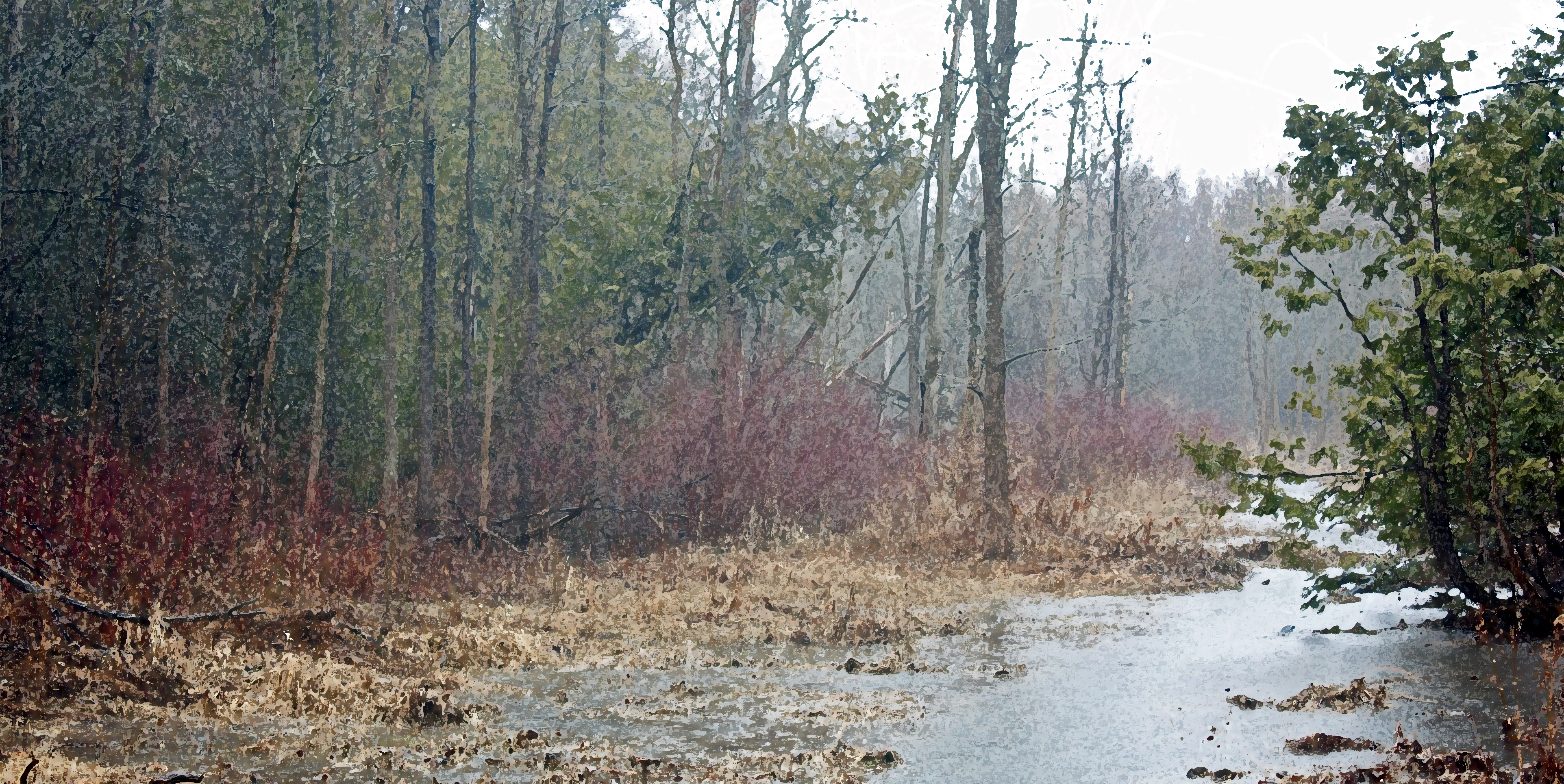
Snow melt in marsh by country road, ON (photo and rendition by Nina Munteanu)

When Water Speaks: quotes from A Diary in the Age of Water

“During spring thaw or fall turnover, the thermocline erodes and the changing temperature forces a lake to mix, revealing her secrets.”

Lynna Dresden

“Munteanu’s experience in bridging the worlds of biology and writing makes A Diary in the Age of Water unique in being strong and focused from both the scientific and literary perspectives.”

STRANGE HORIZONS
Overflowing marshy creek in Trent Nature Sanctuary in spring, ON (photo and rendition by Nina Munteanu)

The Sound of Snow…

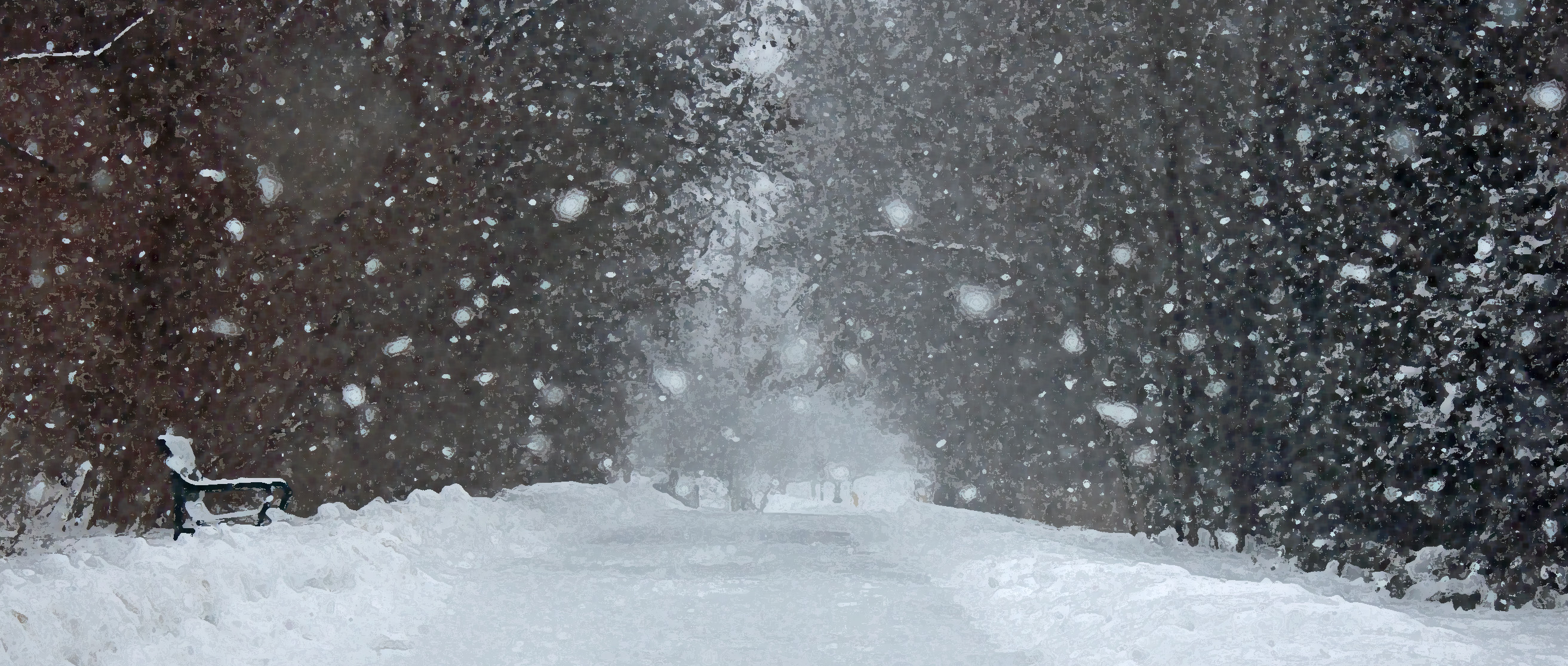
Heavy snowfall where I live in Ontario (photo by Nina Munteanu)

I currently live in Ontario, Canada, where the four seasons are still distinct and winter comes with signature cold temperature well below zero degrees Centigrade along with lots and lots of snow. I grew up in Quebec, where the snow often piled up higher than I stood tall. Temperatures often went into the minus zero teens and twenties with wind chills reaching minus thirty degrees. This called for the right equipment. Insulated coat or jacket, snow pants, wool toque and mittens and/or gloves that are also well insulated. And, of course, warm snow boots.

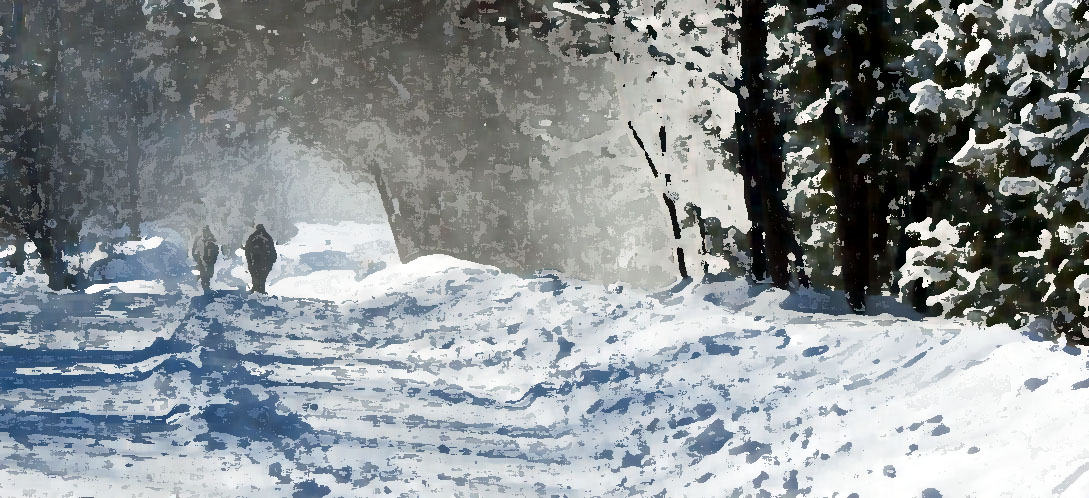
Nina on a walk during a snowstorm, ON (photo by Merridy Cox)
Country road in the Kawarthas, ON (photo and rendition by Nina Munteanu)
Nina’s car on ‘walkabout’ through Kawartha country after a fresh snowfall, ON (photo and rendition by Nina Munteanu)
Farm in the Kawarthas, ON (photo and rendition by Nina Munteanu)
Cows on a farm in the Kawarthas, ON (photo and rendition by Nina Munteanu)
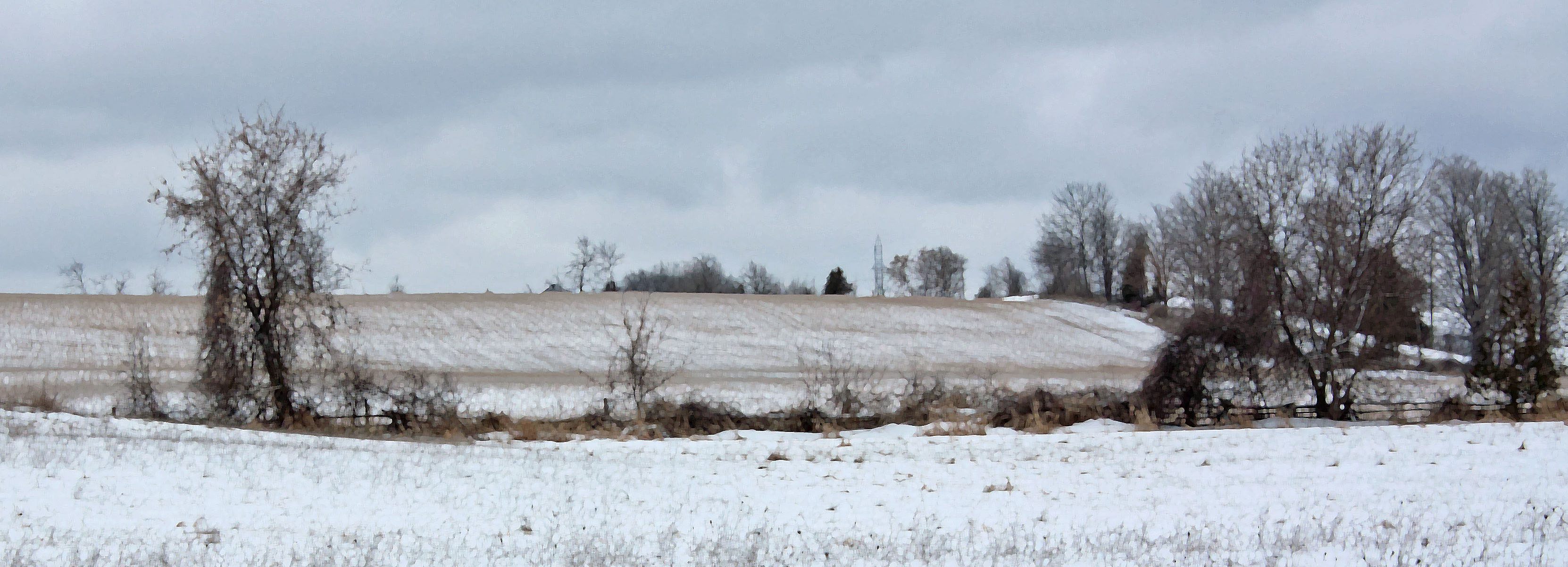
Country field in Kawarthas, ON (photo and rendition by Nina Munteanu)
School kids heading to class after a fresh snow, ON (photo by Nina Munteanu)
The Rotary Trail after a fresh snowfall, ON (photo and rendition by Nina Munteanu)
Heavy snow falls on a trail in the Kawarthas, ON (photo and rendition by Nina Munteanu)

Since moving to the West Coast then back east to Ontario, I’ve come to realize that I love winters. I love how snow covers everything, how it quiets the landscape and changes it in subtle ways. I love the frigid wind, how it bites the face with invigorating energy, reminding me that I am so alive. I love the sounds of winter, of walking on snow, crunching and squeaking, of the howl of the wind and the creaking and groaning of the trees, or the cracking and booming of the ice forming and reforming on the river.

Bridge over creek in Trent Nature Sanctuary during heavy snowfall, ON (photo and rendition by Nina Munteanu)
Jackson Creek after a fresh snowfall, ON (photo and rendition by Nina Munteanu)
Woman and her dog walk through cedar swamp forest after a fresh snowfall, ON (photo and rendition by Nina Munteanu)
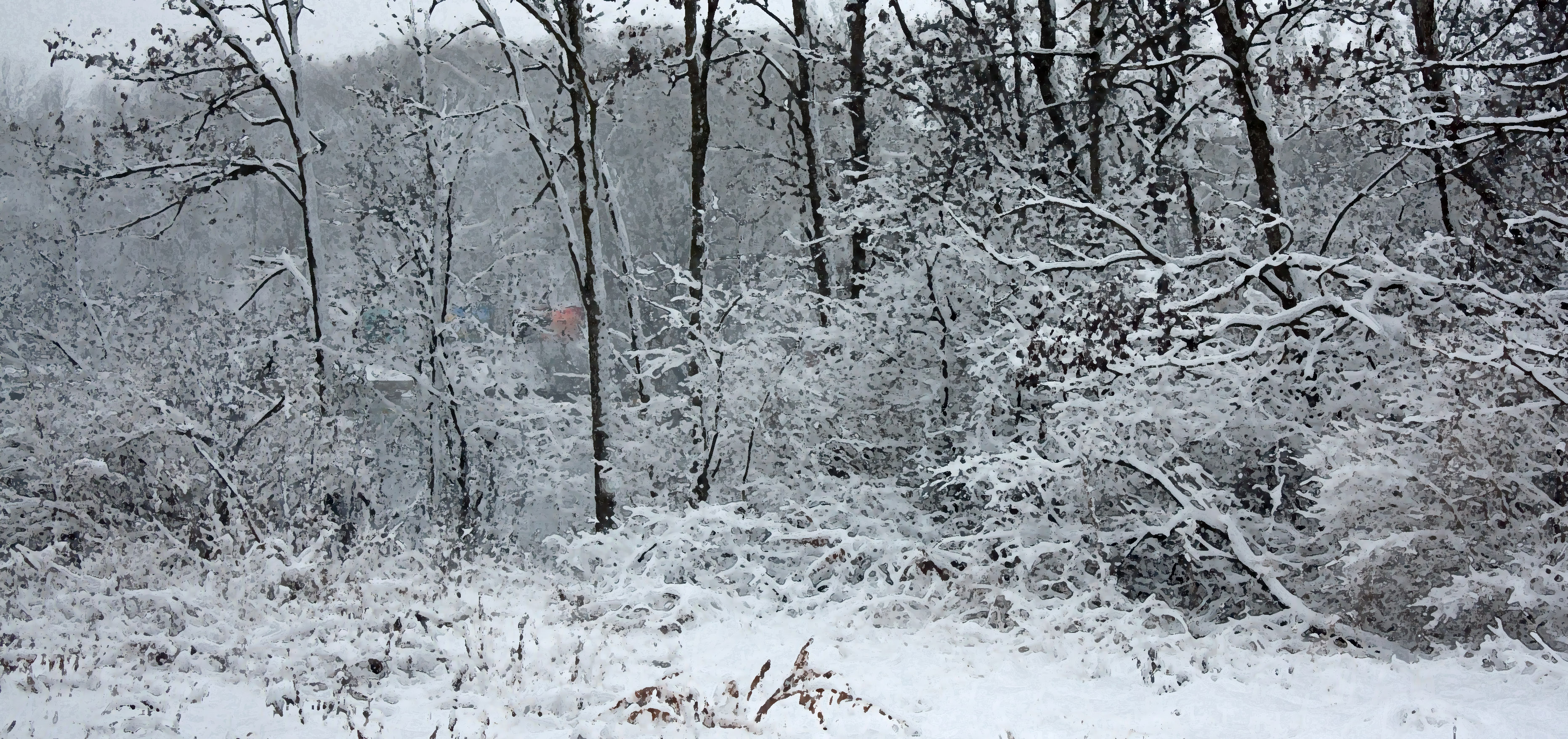
Riparian forest clothed in fresh snow, ON (photo and rendition by Nina Munteanu)
Riparian forest after a fresh snowfall, ON (photo and rendition by Nina Munteanu)

I am currently finishing my fiction book Thalweg, which takes place throughout Canada, but predominantly in northern British Columbia and the arctic of the Northwest Territories. My main character, a Gwich’in scientist, explores the land during a time of climate change, and much of it involves the expansive vast snowfields of northern Canada in which she describes the look, smell, feel, and sounds of snow. She thinks with great fondness of home in the Arctic where snow prominently features and, bringing in all her senses, of course, includes sound:

There are many different kinds of snow, and any native of the north can recognize them. We can not only tell something of the quality of weather from it, but also its history. Without having experienced the day or history of the place, we will know simply from walking through it. For instance, on a minus twenty-degree Centigrade day, when the cold bites your face and your breath coils out of your mouth like steam, old snow shines under a raking sun like an ice sheet. As though clear plastic was stretched over it. Sometimes, a hoar frost will form on the glassy thin layer, adding more glitter. Walking through it creates a symphony of crunch, pop and skittle sounds as each step breaks through the thin brittle layer into soft snow underneath. The scattering flat shards tingle like glass across the glistening ice-snow sheet.

Fresh snow that has fallen on a frigid night of minus fifteen degrees in a drier climate is fluffy, individual snowflakes glinting like jewels in the sun, and emits a high-pitched squeak and crunch as your boots press down on it. The colder the temperature, the higher the squeak. I just made that up. I’m not sure if it’s true. But considering the relationship of harmonics with temperature, it’s plausible.

Squeaky snow is the snow of my home up north, where it arrives in a thick passion in October with the winter darkness, and where a constant minus 16°C to minus 30°C pervades until spring, six months later. The snow resembles powdered sugar, glittering like millions of tiny mica flakes under the moonlight of an arctic winter night. It covers everything, the ground, the trees and tiniest vegetation with a white blanket of snow. And when the wind teases the trees, they rain glitter-dust. In places where the north wind freely drifts across open landscape, sastrugi form; frozen wavelets, mini-barchans and dune chains that resemble the wave ripples of a sandy white beach. In some vast open areas, the wind will sculpt a frozen sea of irregular ridges and grooves up to a metre high. Mary’s friend Jem from Igloolik calls these snowdrifts qimugruk, whose distinctive shapes become permanent features of the snowscape, with tips always pointing west-northwest. Igloolik hunters use these uqalurait to set their bearings when travelling across the expansive tundra, particularly during poor visibility from storms or darkness.

Tracks through a small path by the river, ON (photo and rendition by Nina Munteanu)
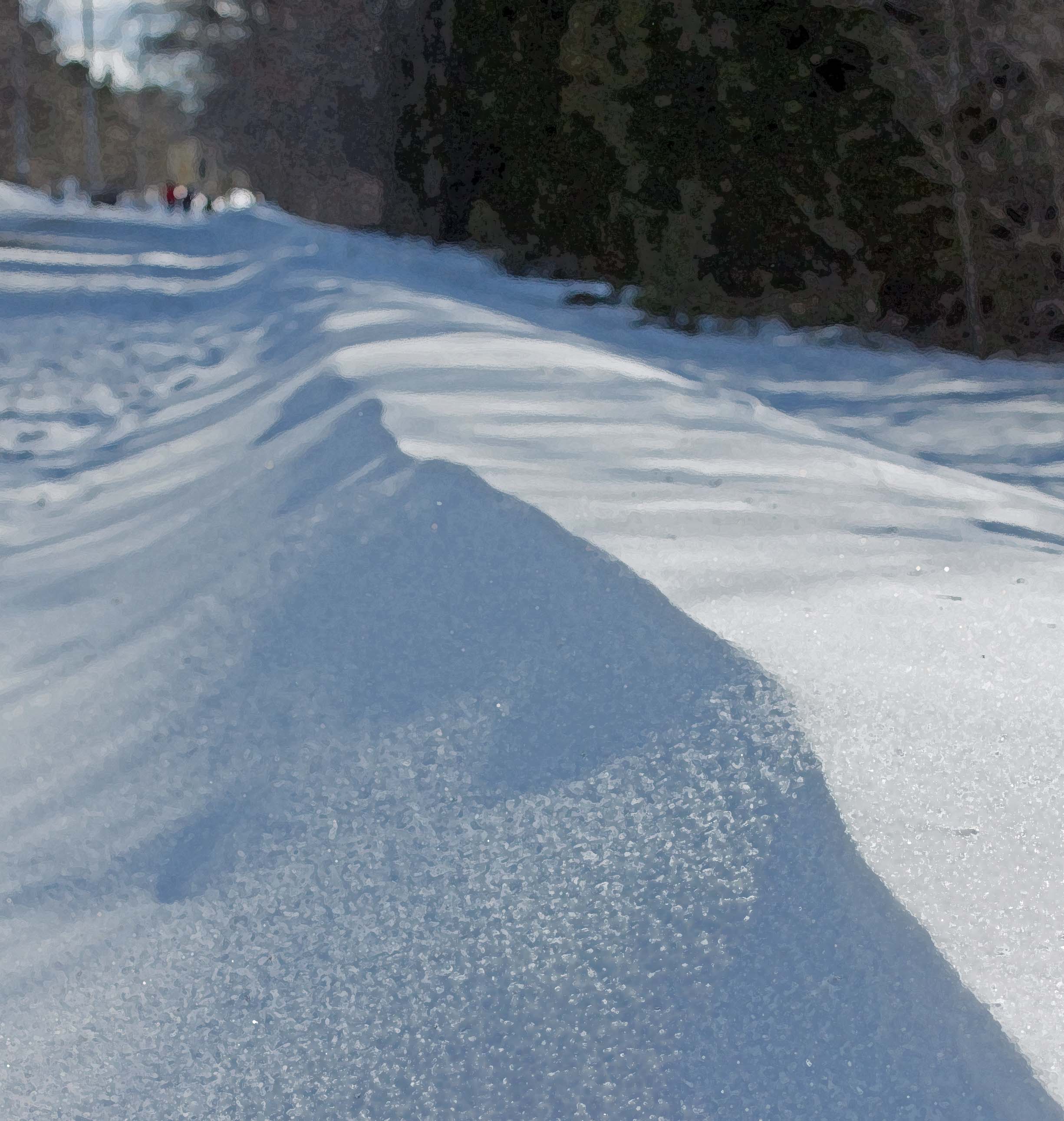
Snow drift on a trail by the river, ON (photo and rendition by Nina Munteanu)

One of the sensitivity readers for Thalweg, anthropologist and Gwich’in scholar Ingrid Kritsch, related to me an interesting account during attempts to open up to oil and gas development the Arctic National Wildlife Refuge–a critical area where the Porcupine Caribou herd calve. “To many Americans, it was just a big, white, barren expanse of unused lands,” said Ingrid. “She recalled a Senator speaking for development on these lands. The Senator held up a blank sheet of white paper and claimed ‘this is what the area looks like!’

The vast snowfields look nothing like that…

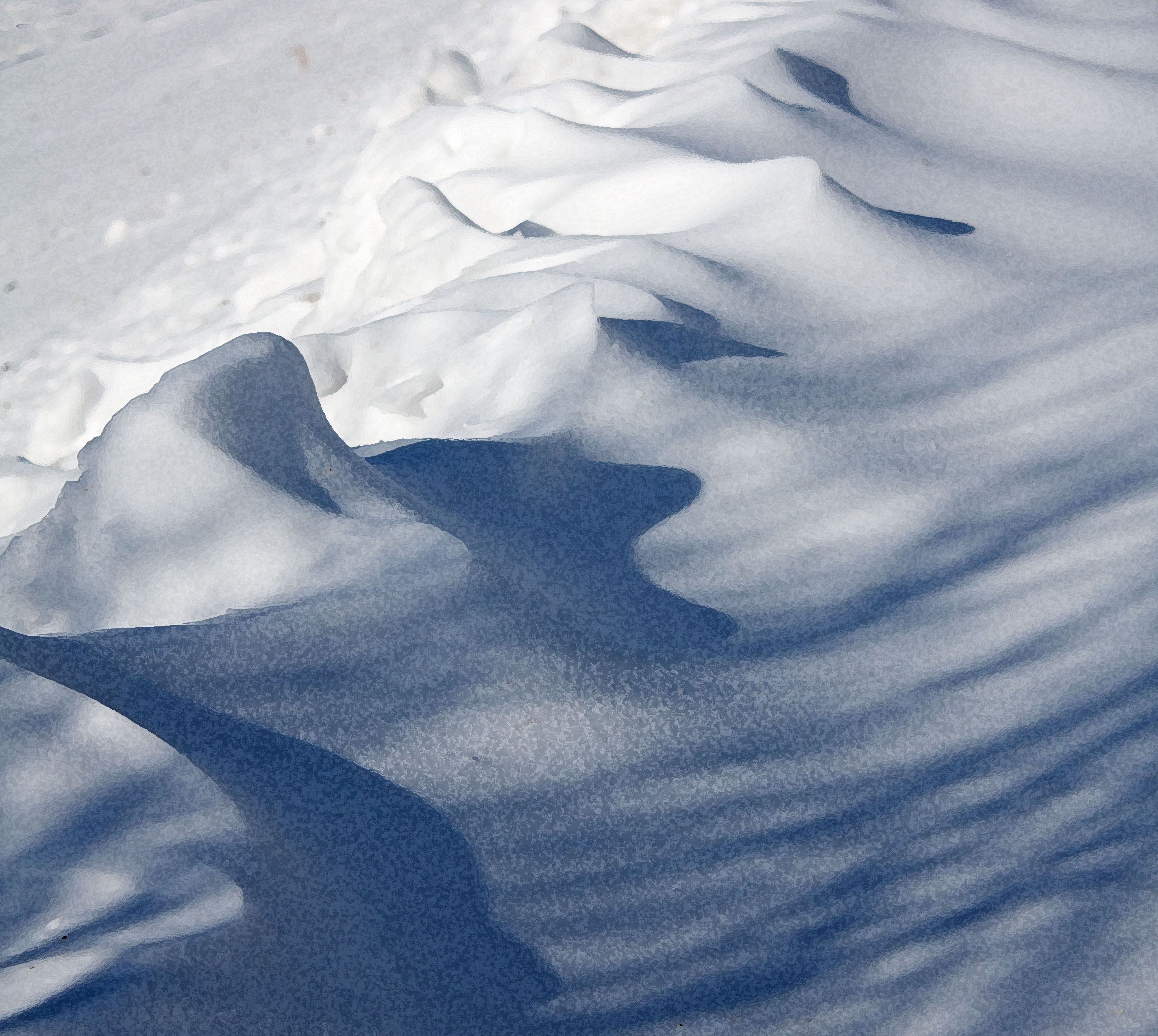
Snow drifts in Ontario (photo and rendition by Nina Munteanu)

…Now, don’t forget to play in the snow…

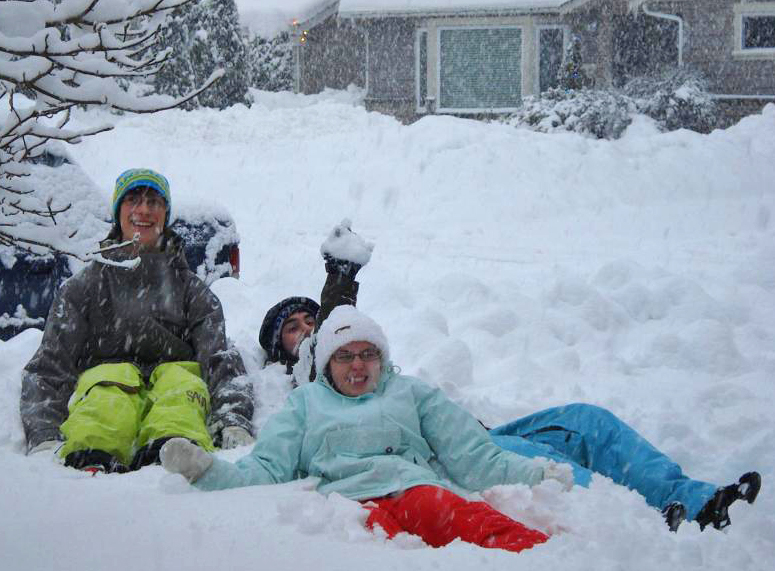
Author’s son and friends play in fresh snow on Christmas in BC (photo by Nina Munteanu)
Nina Munteanu reads a book with her cup of tea in +8 degree C, ON (photo by Merridy Cox)

Nina Munteanu is a Canadian ecologist / limnologist and novelist. She is co-editor of Europa SF and currently teaches writing courses at George Brown College and the University of Toronto. Visit www.ninamunteanu.ca for the latest on her books. Nina’s bilingual “La natura dell’acqua / The Way of Water” was published by Mincione Edizioni in Rome. Her non-fiction book “Water Is…” by Pixl Press(Vancouver) was selected by Margaret Atwood in the New York Times‘Year in Reading’ and was chosen as the 2017 Summer Read by Water Canada. Her novel “A Diary in the Age of Water” was released by Inanna Publications (Toronto) in June 2020.

When Water Speaks: quotes from A Diary in the Age of Water

“Water wants to flow. It doesn’t like to be restricted. If confined in a ravine, it speeds up and cuts a channel along the thalweg, eroding the hardest material and polishing a path that uniquely suits it. Water is selfish. It is always moving, even when it isn’t.”

Lynna Dresden

A Diary in the Age of Water is “An exceptional and thought-provoking dystopian fiction.”

LITERARY TITAN
Jackson Creek in winter, ON (photo and rendition by Nina Munteanu)

When Water Speaks: quotes from A Diary in the Age of Water

“Mankind will continue to flounder when he underestimates Nature and sees himself separate from Her. Man is having his way with Her now. But eventually She will have her way with him. When they try to hang onto water, it will slip through their fingers. That’s what water does.”

Una Dresden

“In poetic prose with sober factual basis, Munteanu transmutes a harrowing dystopia into a transcendentalist origin myth. An original cautionary tale that combines a family drama with an environmental treatise.”

KIRKUS REVIEWS
Jackson Creek in early winter, ON (photo and rendition by Nina Munteanu)

When Water Speaks: quotes from A Diary in the Age of Water

“Don’t make the mistake of thinking the bully is your friend…You can play with the bully. But don’t make him your friend. Demand his respect. Or you will become the bully.”

Una Dresden

“Lyrical and dystopian, ‘A Diary in the Age of Water’ is as much an ode to water as it is a cautionary tale about the dire implications of climate change.”

FOREWORD CLARION 5-STAR REVIEW
Jackson Creek after a heavy snow in early winter, ON (photo and rendition by Nina Munteanu)