I recently came across this beautiful Instagram post by TinasAlwaysReading, and was reminded of a wonderfully in-depth review of my eco-fiction novel A Diary in the Age of Water that Tina did on Sound & Fury Book Reviews.
You can watch the review below:
Sound & Fury reviews “A Diary in the Age of Water” by Nina Munteanu
Nina Munteanu is a Canadian ecologist / limnologist and novelist. She is co-editor of Europa SF and currently teaches writing courses at George Brown College and the University of Toronto. Visit www.ninamunteanu.ca for the latest on her books. Nina’s bilingual “La natura dell’acqua / The Way of Water” was published by Mincione Edizioni in Rome. Her non-fiction book “Water Is…” by Pixl Press (Vancouver) was selected by Margaret Atwood in the New York Times ‘Year in Reading’ and was chosen as the 2017 Summer Read by Water Canada. Her novel “A Diary in the Age of Water” was released by Inanna Publications (Toronto) in June 2020.
In 2015, Syfy released Season 1 of The Expanse, a stylish and intelligent science fiction (SF) TV series set 200 years in the future when humanity has colonized the moon, Mars and the Asteroid Belt to mine minerals and water. The six-season series is based on the novel series by James S.A. Corey with first novel “Leviathan Wakes”.
New York City of the Expanse
Humanity has split three ways culturally, ethnically and even biologically: Earth is currently run by the United Nations; Mars is an independent state, devoted to terraforming with high technology; and the Belt contains a diverse mix of mining colonies, settlers, workers and entrepreneurs. Belters’ physiology differ from their Earth or Mars cousins, given their existence in low gravity.
Ship heading to Ceres
One of the creators Mark Fergus explains the setting and premise of The Expanse: “We always felt that the great struggle of a lot of sci-fi we grew up on takes us into a story world where we’ve already jumped over the interesting part, which is the first fumbling steps of us pushing off this planet, getting out into the solar system, sorting ourselves out as a race. All the struggle and the pain and the glory of that, usually sci-fi … hops over it.” Fergus and his colleagues were attracted by what he called “the scaffolding,” how it all got built. “Here is who built it. Here is how humanity started looking at itself differently and getting rid of old forms of racism and creating new forms of racism.” This is the story of The Expanse.
Josephus Miller, cynical detective on Ceres
The series starts by following three main characters: U.N. Deputy Undersecretary Chrisjen Avasaraia (Shohreh Aghdashloo) on Earth; cynical police detective Josephus Miller (Thomas Jane), a native of Ceres (in the Belt); and ship’s officer Jim Holden (Steven Strait) and his crew as each unravels a piece of a conspiracy (related to an unknown extra-solar material discovered on a Saturn moon) that threatens a fragile peace in the solar system and the survival of humanity.
Holden and Naomi in their ship
First, Miller’s boss, Shaddid (Lola Glaudini) tosses him a missing person case: find Julie Mao (Florence Faivre), wayward daughter of a Luna-based shipping magnate (Mao-Kwikowski Mercantile); then Holden and four other crew members of the ice trawler Canterbury barely survive an attack that could spark a war between Earth and Mars. Miller and Holden eventually learn that the missing girl and the ice trawler’s fate are connected to a larger threat.
The only person who may stand a chance of figuring out the big picture is Chrisjen Avasarala, a brilliant 23rd-century Machiavelli, hoping to prevent simmering tensions between the United Nations, Mars and the Belt from erupting into all-out war. She will stop at nothing in her search for the truth, including gravity torturing a Belter or playing her friends and contacts like chess pieces to find answers.
Chrisjen speaking to Belter under gravity torture
What makes Chrisjen incredibly more interesting than, say a Circe or Claire Underwood, is that her scheming—as reprehensible as it may be at times—comes from a higher calling, not from lust for power or self-serving greed. She seeks the truth. And, like Miller, she struggles with a conscience. When her grandson asks if people are fighting again, Chrisjen says, “not yet; that’s why we [her contacts] need to talk and tell the truth; when people don’t tell the truth it always ends badly.” She may have been thinking of herself.
Chrisjen is a complex and paradoxical character. Her passionate search for the truth together with unscrupulous methods, makes her one of the most interesting characters in the growing intrigue of The Expanse. The Expanse further dignifies itself with subtle nuances of multi-layered social commentary—sewn into virtually every interaction.
After Chrisjen’s friend Franklin Degraaf (Kenneth Welsh), Earth ambassador to Mars, suffers as a casualty in one of her intel games, he quietly shares: “You know what I love about Mars?… They still dream; we gave up. They are an entire culture dedicated to a common goal: working together as one to turn a lifeless rock into a garden. We had a garden and we paved it.” Chrisjen offers consolation to the loss of his position (because of her): “we may have prevented a war.”
Chrisjen consoles Degraaf with a bottle of wine after causing his forced resignation as ambassador to Mars
The subtle details and rich set-pieces of The Expanse universe rival the best world building of Ridley Scott. In fact, I was reminded of the grit and immediacy of Bladerunner. The Expanse is SF without feeling like it’s SF; it just feels real. Powerful storytelling—from judicious use of slow motion, odd shot angles, haunting music and background sounds, to superlative acting—draws you into a complete and realizable world.
Ceres Station
Annalee Newitz of ARS Technica wrote, “the little details of this universe are so finely rendered that they become stories unto themselves, like the way interracial tensions developed on Ceres between humans who grew up gravity-deprived and spindly, versus those whose gravity-rich childhoods allow them to pass as Earthers.” Newitz adds that no clumsy Star Trek-style representation of exo-planetary civilizations occurs in The Expanse. It’s all humans. “Instead, there are political factions whose members stretch across worlds. And planets (or planetoids) whose populations are fragmented by class, race, and ideology. The politics here are nuanced, and we are always being asked to rethink who is right and who is wrong, because there are no easy answers.”
Miller and Tavi Muss, his former partner at Star Helix, discuss the recent strange events in the solar system while at his apartment in Ceres
Subtle but powerful differences between the Belter culture, Earthers and Martians (all human) includes language. Belters use a creole that’s a mix of several Earth languages that were spoken by the original human settlers in the Belt colonies. Resembling a Caribbean twang and cadence, words contain a mix of slang English, Chinese, French, Zulu, Arabic, Dutch, Russian, German, Spanish, Polish and others. For instance, “Inyalowda” means inner or non-belter. “Sa-sa” means to know. “Copin” means friend. An Expanse Wikia provides an in-depth list of Belter Creole used in the TV show.
Liz Shannon Miller of Indiewire.com shares: “In the 23rd century, the smart phones look fancier but their screens still crack. There are people in straight relationships and gay relationships and group marriages. There are still Mormons, who are preparing for a whole new level of mission. The rich live well. The poor struggle. It’s not “Star Trek” — there’s no grand glorious yet vague cause to which our heroes have devoted themselves. Survival is what matters.”
The Expanse is a sophisticated SF film noir thriller that elevates the space opera sub-genre with a meaningful metaphoric exploration of issues relevant in today’s world—issues of resource allocation, domination & power struggle, values, prejudice, and racism. These issues are explored particularly well through its diverse female protagonists with subtle nuances of multi-layered social commentary sewn into virtually every interaction.
Julie Mao trapped onboard a stealth ship
In Season 1 alone we are presented with Julie Mao (Florence Faivre), who is according to Detective Miller (tasked to find her) the “richest bachelorette in the system”, and an OPA collaborator; Naomi Nagata (Dominique Tipper), a highly-skilled Belter technologist and former OPA agent; Camina Drummer (Cara Gee), a no-nonsense calculating Belter who used to work with OPA leader Anderson Dawes but now helps run Tycho Station that is building a giant interstellar ship for the Mormons; and Chrisjen Avasarala (Shohreh Aghdashloo) a sharp-minded ruthless political strategist in search of the truth.
(Left: Naomi Nagata)
Drummer in a sticky situation during a coup on Tycho Station
Season 2 and 3 introduce yet more powerful female characters with agency, such as Bobbie Draper, a staunch hard-fighting Martian marine who dreams of a terraformed Mars; and the Reverend Anna Volovodov (Elizabeth Mitchell), a gay Methodist doctor, who brings faith, hope, and inclusion to her acts of heroism.
(Left: Bobbie Draper)
Anna Volovodov dealing with a protest on Earth
I found the music by Clinton Shorter particularly appropriate: subtle, edgy, haunting, and deeply engaging: like its characters, the story, and world. The haunting title song, sung by Lisbeth Scott, lingers in each episode throughout the six seasons.
Amidst the unfolding intrigue of war, corruption and secrecy, a rich tapestry of characters take shape —with the added spice of an extra-solar alien entity (and a nod to panspermia). The alien entity is called the protomolecule based on its evolving nature (it eventually evolves into a ring-gate to other worlds). We eventually learn that the alien blue goo was sent by an alien civilization (directed panspermia) inside an interstellar asteroid (lithopanspermia) millennia ago; although it was captured by Saturn’s gravity to become one of its many moons (Phoebe), its target was Earth’s rich biology to bioengineer. Considered a bio-weapon, it is coveted by the politicians of Earth, Mars, and the Belt.
Miller, who was born on Ceres but received some cheap bone density implants—so he looks like an Earther—is a cynical detective (not above being bribed by merchants cutting corners) and trying hard to hide the fact that he has a big heart and is looking for meaning in his empty existence as a Star Helix cop (Miller: “No laws on Ceres; just cops.”) Belters call him a “well wala”, traitor to his own kind.
Miller and Dawes discuss the disappearance of Julie Mao
Ceres-born Anderson Dawes (Jared Harris), suave and ruthless leader of the separatist OPA (Outer Planet Alliance) challenges Miller: “I think that under that ridiculous hat there’s a Belter yearning to find his way home.” Except what is “home”? When asked by his new Star Helix partner, Dmitri Havelock (Jay Hernandez) about ‘why the hat?’, Miller quips, “to keep out the rain.” There is no rain on Ceres. Never was. Never will be.
The militant OPA is an activist organization that sells itself as a liberator for Belters but is really a terrorist revolutionary group, looking to shift the balance of power. Led by Dawes, the OPA’s ambitious agenda ranges from staging protests in the gritty Medina district of Ceres to stealing stealth technology and bio-weapons from Mars and Earth. Some of the best scenes occur between the intense Dawes and crusty Miller, as they banter over what it means to be a Belter in a solar system where they are clearly not players but sandwiched in a power struggle between Earth and Mars.
Dawes confides to Miller: “All we’ve ever known is low G and an atmosphere we can’t breathe. Earthers,” he continues, “get to walk outside into the light, breathe pure air, look up at a blue sky and see something that gives them hope. And what do they do? They look past that light, past that blue sky. They see the stars and they think ‘mine’… Earthers have a home; it’s time Belters had one too.”
Subtle. Not so subtle. The show takes a few opportunities to point out what we are doing to our planet. Cherish what you have. Cherish your home and take care of it. We’re reminded time and again, that we aren’t doing a good job of that.
Onboard the MCRN Donnager, Martian Lopez asks his prisoner Holden if he misses Earth and Holden grumbles, “If I did, I’d go back.” Lopez then dreamily relates stories his uncle told him about the “endless blue sky and free air everywhere. Open water all the way to the horizon.” Then he turns a cynical eye back on Holden. “I could never understand your people. Why, when the universe has bestowed so much upon you, you seem to care so little for it.” Holden admits, “Wrecking things is what Earthers do best…” Then he churlishly adds, “Martians too, by the look of your ship.” Lopez retorts, “We are nothing like you. The only thing Earthers care about is government handouts. Free food, free water. Free drugs to forget the aimless lives you lead. You’re shortsighted. Selfish. It will destroy you. Earth is over, Mr. Holden. My only hope is that we can bring Mars to life before you destroy that too.”
The underlying message in Expanse becomes clear in the last show of Season One. Near the end, Miller asks Holden what rain tastes like and Holden admits he never thought about it. Miller then asks, “How could you leave a place like Earth?…” Holden responds, “Everything I loved was dying.”
Critic Maureen Ryan of Variety says, “It’s to the show’s credit that it is openly political, and takes on issues of class, representation and exploitation.”
Bobbie and her Martian crew patrolling Ganymede
As the seasons progress (ending in Season 6), the plot doesn’t so much thicken as branch like a fractal tree or the braiding delta of a river into the sea, expanding as the galaxy itself into infinite space. Season 2 witnesses biological and political developments with the protomolecule, from the use of an entire station as a human laboratory to the testing of protomolecule-human hybrid weapons on Ganymede Station. Stationed there, Martian marine Bobbie Draper barely survives an encounter with a hybrid as it easily dispatches her entire crew and UNN soldiers alike. Events related to the secret war among powers to hold and control this alien weapon precipitate war between Earth and Mars.
Chrisjen Avasarala questions Bobbie at an Earth-Mars summit inquiry into the incident on Ganymede
The plot train goes into high gear in Season 3 with high stakes scenes of war, intrigue, and violent change. Through the various set-pieces of place, new characters are introduced and embed themselves in the larger story with amazing potency. One example of the various plot threads surrounding Ganymede Station introduces botanist Prax Meng (Terry Chen) and his 12-year old daughter Mei (Leah Jung), secretly taken from him by a Pierre Mao scientist to become a protomolecule hybrid. Introduced in Episode 8 (Pyre) of Season 2, Prax and kidnapped Mei immediately stir our hearts with their story. I was struck by how powerful a brief appearance by one character could be: Prax, who thinks he has lost Mei when the mirrors fell on Ganymede Station, finds himself on a refugee ship with Doris Bourne (Grace Lynn Kung), a botanist colleague from Mars. We are introduced to Doris and lose her within a single episode; yet we feel incredible pathos on her demise (thanks to their performances, and the circumstances that drive their short-lived story together).
Doris and Prax onboard the refuge ship after the Ganymede incident
The Expanse is filled with these potent vignettes, focused on one or two characters, that tug our heartstrings with personal drama. Several come immediately to mind: ‘Big Guy’s’ (Gugun Deep Singh) heartfelt sacrifice in Episode 12 (The Monster and the Rocket) of Season 2; the slaughter of all miners of Anderson Station, with particular focus on Marama Brown (Billy MacLellan) and his daughter Kiri (Raven Stewart), in Episode 5 (Back to the Butcher) of Season 1.
Throughout its expansive six seasons, The Expanse never loses sight of its strongest feature: its characters who each tell a heart-felt story and whose threads weave a greater story tapestry. This is a TV show that writes large through its many intimate stories; all smaller wholes entangled with the larger whole.
Variety’s Whitney Friedlander writes that The Expanse is Syfy’s most expensive series to date. It shows. And it shows well because it does not trade story for effects. Story comes first. The Expanse is a welcome breath of fresh air for high quality “space opera” science fiction on TV. It fills a gaping hole left by the conclusion of Battlestar Galactica in 2009.
Poster for Season Five of The Expanse
p.s. Since my title includes a comparison of The Expanse with Game of Thrones, I feel compelled to state another important difference between these two highly successful TV shows, and ultimately why I disliked one as I loved the other: while both shows created fully-fleshed compelling characters that viewers quickly embraced and loved (or hated), GOT chose to wily-nily give them brutal (and often grotesque) deaths for no other apparent reason than to shock the viewer—creating a tension of suspicion and fear. Viewers became nervous for their favourite character. It was like a crap shoot and the viewer was the real victim. The death of virtually every character in the Expanse however—though also often a heart-wrenching surprise—could be explained and understood. This was because their demise filled the greater purpose of the overall story. That simple. I give ultimate credit to the writers of The Expanse. And shame on the Game of Thrones screenwriters and producers.
“Story must come first!”
Julie Mao escaping imprisonment in the stealth ship
Nina Munteanu is a Canadian ecologist / limnologist and novelist. She is co-editor of Europa SF and currently teaches writing courses at George Brown College and the University of Toronto. Visit www.ninamunteanu.ca for the latest on her books. Nina’s bilingual “La natura dell’acqua / The Way of Water” was published by Mincione Edizioni in Rome. Her non-fiction book “Water Is…” by Pixl Press (Vancouver) was selected by Margaret Atwood in the New York Times ‘Year in Reading’ and was chosen as the 2017 Summer Read by Water Canada. Her novel “A Diary in the Age of Water” was released by Inanna Publications (Toronto) in June 2020.
Spiga employees submit to security checks when they enter the facility
Incorporated is a science fiction thriller (on Netflix) that offers a chilling glimpse of a post-climate change dystopia. Created by David and Alex Pastor and produced by Ben Affleck, Matt Damon, Ted Humphrey and Jennifer Todd, the show (filmed in Toronto, Canada) opens in 82 °F Milwaukee in November 2074 after environmental degradation, widespread famine and mismanagement have bankrupted governments. We learn later that Milwaukee Airport served as a FEMA climate relocation centre that resembles an impoverished shantytown. In the wake of the governments demise, a tide of multinational corporations has swept in to control 90% of the globe and ratified the 29th amendment, granting them total sovereignty.
Corporate climber at Spiga, Ben Larson receives climate news updates as he gets ready for work
Corporations fight a brutal covert war for market share and dwindling natural resources. Like turkey vultures circling overhead, they position themselves for what’s left after short-sighted government regulations, lack of corporate check and FEMA mismanagement have ‘had their way’ with the planet. The world is now a very different place. There is no Spain or France. Everything south of the Loire is toxic desert; New York City reduced to a punch line in a joke. Reykjavik and Anchorage are sandy beach destinations and Norway is the new France—at least where champagne vineyards are concerned. Asia and Canada are coveted for their less harsh climates.
Red Zone with Green Zone backdrop
Those who work for the corporations live in privilege behind the sentried walls of the Green Zones. The rest fend for themselves with scarcity in the contaminated slums of the Red Zones. The numbers aren’t provided in the show’s intro but we can guess that they are similar to Pedro Aguilera’s TV thriller 3% and Blomkamp’s motion picture Elysium—both about living with scarcity, where the few elite enjoy the many privileges—so long as they follow the elite rules.
Spiga Biotechs screening employees
“Kleptocracy reigns, paranoia rules, and the marketplace determines human worth,” writes Jeff Jensen of Entertainment Weekly about Incorporated. “Only the most obedient, cunning, and technologically adept can flourish. Question authority? You’re fired! And maybe worse.”
Security at Spiga Biotechs catches Chad, Ben’s boss with illegal tech
The ‘Elysium’ of Incorporated is an ‘Alice in Wonderland’ mixture of realizable technological advances, gadgetry and thrilling–if not chilling–consequence: like self-driving cars, intelligent wristbands, surrogate pregnancies and remote deliveries, genetic testing of ‘inferiors’, DNA theft and malware sabotage.
Corporate stealth tech presentation
The first episode (Vertical Mobility) opens to a corporate ‘traitor’ being dragged into “the quiet room”, rumoured to be a torture chamber run by taciturn head of security Julian Morse (Dennis Haysbert). The scene shifts to the Green zone suburban house of corporate climber Ben Larson (Sean Teale). As he prepares to go to work, the news streams of hurricanes breaching levies; Canada building a wall to stem the tide of illegal American climate refugees–12 million already there; offshore oil rigs in the waters of the former Arctic ice cap; and finally to the “terrorist” bombing of the R&D lab of biochemical giant Spiga, where Ben works. Spiga, we later learn, plays the same games as Monsanto and Nestle to ensure profits at the expense of well-being.
Building of biochemical giant Spiga Biotechnics stands tall next to the corporation’s motto
Spiga CEO speaks to employees
“Over the past forty years,” says a giant image of CEO Elizabeth Krauss (Julia Ormond) to the suits passing security in the giant corporate lobby below, “Spiga Biotech has been at the forefront of the genetic engineering revolution. We design seeds capable of thriving in the increasing harsh environments of our planet. Our pest and drought resistant crops are now sold in over a hundred countries. And our advancements in in-vitro testing have transformed the synth food industry.” She ends with the mantra, “Spiga: committed to feeding our ever-growing world.”
Red Zone at night
Ben stands in his office at Spiga
Ben is, of course, not what he pretends he is. The upwardly mobile executive has wed Laura Larson (Allison Miller), a doctor with a courageous heart who also happens to be the daughter of the unscrupulous Kraus. Ben is really Aaron, a former Red Zone techno-hustler who covertly searches for his Red Zone sweetheart, now a sex slave to corporate executives at Arcadia, the ‘men’s club’ of Spiga. If he’s going to spring her, Ben will have to get promoted to the 40th floor.
Climate refugee camp in the Red Zone
“If our [current] political climate has you feeling apocalyptic, Incorporated may or may not be the show for you,” writes Jensen. “It’s a triggering dystopian thriller and wannabe allegory-for-now about… well, apocalyptic climate change.” This show, perhaps more than any other, stirs disquieting thoughts of now—and with it, guilt about what we’re doing or not doing. At the heart of Incorporated is climate change, which is also its main character.
Laura meets her new patient for facial reconstruction
“The most impressive performance and character in Incorporated is its deeply imagined world,” writes Jensen. “Throwaway ideas, like a grieving widow who hires Laura to remake a poor immigrant in the image of her dead husband, could seed whole episodes of Black Mirror. James Bond would kill for the arsenal of gadgets Aaron deploys in his soul-staining subversions.” Nuanced minutiae and brilliant minor characters weave a mad tapestry that enrich and intrigue.
Water price in the Red Zone
And like a Seurat painting, their subtle details change with perspective and build into a subliminal realism you can’t shake: from the food porn in the opening scene to eating rats in climate relocation camps or drinking dirty Red Zone water that costs $5. In Cost Containment we learn that Spiga competitor Inazagi is developing salt-tolerant crops that, like the mangroves, will thrive on irrigated seawater in the deserts left by an exploitive short-sighted America: Iowa, Missouri, Kansas—all the dust storm states. In a later episode, a murdered corporate executive is found by two dowsers on the dried lakebed of Missouri’s Lake Lotawana. We hear about the “oil wars” in Capetown.
Aaron (Ben) in the Red Zone
“This “makes it hard to not think of the current political and cultural state of things across the globe,” writes Aaron Pruner of Screener TV. The fourth episode (Cost Containment) “opened with a familiar feeling infomercial. Yet, instead of Sally Struthers pleading with the common American to donate money to help feed a starving child in a third-world country, [a Chinese narrator presented] the United States as that third world.” Liz Shannon Miller of IndieWire writes: “watching [that scene] at this exact moment in our history is science fiction that might be a little too real. You can forget about The Walking Dead or The Exorcist: Incorporated may be the scariest show on television. Says Pruner, “The thing that brought us here? Climate change.”
Julian Morse interrogates Ben about illegal use of Spiga tech
“It’s what gives us … the refugee camps and ration hacking, the high-class cut-throat world of corporations and the privileged, yet dangerous, culture that comes with it,” adds Pruner. The corporation’s tyrannical demand for allegiance through rumours of loss of privileges, “contract termination”—or worse—resonates through the ranks in what the hacker in the Red Zone calls ‘cattle prod.’
Red Zone hacker sets Caplan to catch a rat as payment for her creating an illegal hacking device for him
“You poor suits, always trying to catch up,” says the Red Zone hacker (Sara Botsford) to Roger Caplan (Douglas Nyback), ambitious executive looking to steal his way to the top. “A climber like you gets caught with something like this [a ‘keyhole’, which “allows you to snoop in any system without leaving any footprints”] he’s gonna get spanked. Or worse.” Word is out that Spiga security can be very inventive with cattle prod.
Spiga’s main competitor Inazagi (a take on Izanagi, the male Japanese Shinto god responsible for creation) starts its propaganda machine on the very young to keep its corporate family in line. The third episode (Human Resources) opens with an Izanagi propaganda video for children. TV Fanatic calls it “both cute and chilling. Teaching your children to rat out Mom and Dad is pretty cold, but hey, this is the future, right?” But is it just the future? I’m confident that TV Fanatic wasn’t born yet when the Nazis formed the Hitlerjugend. But I would suggest they look up what Santayana said about history…
In one of the best played and most gratifying narrative threads of the show, a Red Zone techno-hacker (played by Canadian actress Sara Botsford) provides some twisted humour as she easefully negotiates the Spiga machine to put corporate brat Roger Caplan in his place, enlighten us on some history and entertain us all at the same time. After Caplan disdainfully throws money at her to create a skeleton key to bypass the self-destruct protocol of his stolen keyhole, the hacker ops for entertainment instead as payment: she takes him outside her secured warehouse enclave and points to a small rat feeding on the debris in the adjoining alley.
Caplan chases after the rat as the Redhacker looks on, amused
“You see her?” To Caplan’s quizzing look, she points. “Beady eyes, pair of whiskers, long tail…” He finally gets it; the rat. “I want you to catch it,” the hacker bates him. “All ya gotta do is catch a little animal with the brains the size of a peanut. How hard can that be?”
After Caplan’s first attempt, in which he cuts his head, she croons, “Now that’s entertainment!” And chortles like a witch; but we find ourselves cackling with her. After successfully humiliating Caplan, the hacker forces him to do more. She starts with her own history: “I got here with the first wave of climate refugees, chased up north by the sandstorms. Government rations were never enough. You were probably sucking on your gestator’s tit,” she scoffs at Caplan, “while my brother and I had to scramble for enough protein. Sometimes there was only one source of it. Although it was everywhere, really…” Her gaze drifts down to the dead rat on the floor that Caplan had brought in at great expense to his clothes and pride. She adds, “I’d tell you it tastes like chicken but I don’t really remember what chicken tastes like. Why don’t you tell me whether it tastes like chicken…”
What follows is some deep gratification in witnessing Caplan—self-centered and greedy corporate archetype—get schooled by a “lowly” but sly plebe. A “little old lady” no less! And let’s not forget the wily rat who sent him on that hellish chase in the first place…
Disgruntled Caplan after his first attempt to catch the rat
Pruner asks, “Could climate change push us into a collapsed society, informed consistently by the ongoing threat of class warfare? Will we eventually be separated by electric fences and really big walls? Are fear and greed going to be the currencies of our reality? These burning questions should sound far-fetched and silly, but as we watch Incorporated’s tale unfold, it’s hard not to wonder what our own future will bring.” Far-fetched and silly? Is it any more far-fetched and silly than voting in a president who claims that the Chinese invented climate change to make American manufacturing non-competitive?
Ben studies a file
The best entertainment doesn’t put you to sleep; it wakes you up. The best entertainment doesn’t just offer visceral escape; it engages you on many levels to connect, think and feel. And like all good things—friendship, love, family and home—its core value lies in its subtle yet deep truths. The best entertainment shows you a mirror of yourself. Incorporated is less thriller than satire. It is less science fiction than cautionary tale.
The real and the unreal worlds of the post-climate change world of Incorporated
“You look to Incorporated for dystopian fiction that expresses our current anxieties,” says Jensen. “What you get is fitful resonance that makes you realize it might be too soon for any show to meet that challenge.”
Or is it more that we may be too late…
Nina Munteanu is a Canadian ecologist / limnologist and novelist. She is co-editor of Europa SF and currently teaches writing courses at George Brown College and the University of Toronto. Visit www.ninamunteanu.ca for the latest on her books. Nina’s bilingual “La natura dell’acqua / The Way of Water” was published by Mincione Edizioni in Rome. Her non-fiction book “Water Is…” by Pixl Press (Vancouver) was selected by Margaret Atwood in the New York Times ‘Year in Reading’ and was chosen as the 2017 Summer Read by Water Canada. Her novel “A Diary in the Age of Water” was released by Inanna Publications (Toronto) in June 2020.
Clones Jordan and Lincoln are chased as they seek their sponsors
From its metaphoric title to its powerful end, Director Michael Bay’s 2005 The Island had me fully engaged. Told in the genuine style of great science fiction commentary by screenwriters Caspian Tredwell-Owen, Alex Kurtzman and Roberto Orci (in 2005), The Island reflects the escape-from dystopia films of the 1960s and 70s such as Fahrenheit 451, THX 1138, and Logan’s Run. This elegant story examines a full range of human foibles—consumerist greed, racism, fascism and isolationism—through a premise that is as frightening as it is possible.
Announcer talks about ‘the Island’ lottery to the world of Lincoln and Jordan
In the near-future, Lincoln Six Echo (Ewan McGregor) and Jordan Two Delta (Scarlett Johansson) live in an isolated rather sterile community where behaviour is governed by a set of strict rules. This includes the avoidance of too close contact. Everything is the same; residents all wear the same white uniform and carry out simple duties. They’ve been told that the outside world is too contaminated for human life with the exception of one island. Everyone lives for the weekly lottery, where the winner gets to leave the compound to live on the island.
Jordan and Lincoln discuss theday over drinks in the facility’s lounge
It’s a simple and banal existence. We glimpse a scene of adults reading Dick and Jane out loud. When in the opening scene Lincoln Six Echo finds a shoe missing in his provided wardrobe, this becomes a major focus of his day (when greeted by a colleague with, “How are you doing?” he responds with, “I’m missing a shoe.”)
Lincoln can’t accept this mundane existence. In an interview with Dr. Merrick (Sean Bean), the scientist who runs the compound, Lincoln naively unleashes a tirade of items that frustrate him, like why everyone wears white, who determined tofu Tuesday, and then ends with: “I want to know answers and I wish there was more than just waiting to go to the island.” He also suffers from dreams about a life he doesn’t understand—they are, in fact, memories of his ‘sponsor’, the original man (Tom Lincoln) that he is a clone copy of. When he discovers a moth and follows it, he stumbles into the hidden part of the compound. There he witnesses what really happens to “lottery winners”: they are killed and used for organ harvesting, surrogate motherhood, etc. for each one’s sponsor.
Lincoln finds a moth that he releases and follows into forbidden territory
Lincoln is just an insurance policy. An ‘agnate’ according to Dr. Merrick, who describes them as in a “persistent vegetative state that never achieves consciousness” to clients, willing to pay millions of dollars for a second chance at life—and blithely unaware that ‘agnates’ are alive and fully formed with thoughts and feelings like them.
Doctor Merrick oversees the indoctrination of the clones in the giant lab facility
When Lincoln learns the truth, and knowing that Jordan just “won” the lottery, he convinces her to escape with him. During their escape through the bowels of the facility, they discover the atrocities of cloning in the giant labs and that the clones are living in a giant silo controlled by massive holograms to simulate the ‘contaminated’ outside.
Clone lab where newly created clones receive implanted memories and instructions to seek the island
Jordan and Lincoln watch the subliminally-fed imagery for clone indoctrination
Merrick hires Albert Laurent (Djimon Hounsou), a mercenary and former GIGN veteran, to find and dispatch Lincoln and Jordan. And so begins an incredible action-packed chase through the city of Los Angeles, where Lincoln and Jordan have traveled in search of his sponsor.
Mercenary Albert Laurent takes chase after the two clones escape the facility
After escaping the facility, Jordan sees an ad that features hersponsor, now in critical condition after an accident and in need of organ donation
In an awkward moment, Lincoln meets his sponsor who is not too happy to discover of his existence
The Island received mixed reviews from critics, with a 40% “Rotten” rating, based on 185 reviews. Variety’s Justin Chang called the film an “exercise in sensory overkill.” Salon’s Stephanie Zacharek lamented that when the film got really interesting, Bay seemed to think he needed “to throw in a car crash or round of gunfire to keep our attention.” If these critics found fault with this elegant action-thriller, I hate to see what they make of 90% of the so-called SF movies out there today. Unlike them, The Island provides a refreshing meaningful face to action-adventure that elegantly and skillfully balances incredible action scenes with characterization and evolution of the two naive characters.
Jordan dangles precipitously from a huge building sign as the two clones are chased by Laurent
Roger Ebert suggested that The Island missed the opportunity “to do what the best science fiction does, and use the future as a way to critique the present.” Again, I disagree. The Island does what the best science fiction does well: it examines the nature of our humanity through the choices we make in adversity within a future world and premise that provides great opportunity for abuse.
The theme of this parable is carried evocatively by Steve Jablonsky’s score. Like a swelling tide it sweeps us on a journey to some distant shore. From the melodic strings and yearning chorus, the music builds to a powerful conclusion at the film’s end, when it lifts us to victory, resonating with our divine evolution.
Laurent stands among the hundreds of freed clones, smiling in triumph
I was particularly struck by the timing of the strings and chorus with the appearance of Albert Laurent, walking among those he had just liberated. It is a pivotal and powerful moment that escalates into a resonating vibration of liberty and victory as his eyes meet briefly with Lincoln and Jordan, reunited, and he smiles—for the first time. A beautiful smile of inner joy. It is the smile of a man who has “come home” and is finally free.
Laurent’s subplot is particularly compelling and carries one of the principle elements of the film. In some ways, Laurent represents you and me, caught up in our societal ‘duties’, seduced by self-serving entrapments only to awaken to a path of courageous compassion for all of humanity. Laurent’s journey from jaded mercenary to liberating hero begins when he notices Jordan’s skin branding and, recognizing a connection with her plight, helps her free the mass of ‘defective’ lottery winners about to be incinerated. We learn that his father had been killed as a rebel and Laurent was ‘branded’ as less than human. So, there he walks, brilliantly black among the white-clad ‘agnates’ who slide down the hill after emerging from the underground bunker in which they were incarcerated.
This motion picture is ultimately about finding dignity in the face of adversity and ridicule. It is about confronting the bully and gaining victory over one’s own barriers of fear and doubt toward compassion. It is about the power of love and connection with humanity. It is about retribution and finding one’s true path through the knowledge that we are all one.
“I am you; you are me. You are the waves; I am the ocean. Know this and be free, be divine.” Sri Sathya Sai Baba
Nina Munteanu is a Canadian ecologist / limnologist and novelist. She is co-editor of Europa SF and currently teaches writing courses at George Brown College and the University of Toronto. Visit www.ninamunteanu.ca for the latest on her books. Nina’s bilingual “La natura dell’acqua / The Way of Water” was published by Mincione Edizioni in Rome. Her non-fiction book “Water Is…” by Pixl Press (Vancouver) was selected by Margaret Atwood in the New York Times ‘Year in Reading’ and was chosen as the 2017 Summer Read by Water Canada. Her novel “A Diary in the Age of Water” was released by Inanna Publications (Toronto) in June 2020.
A trickster wind stirs up clouds of drifting snow, ON (photo and rendition by Nina Munteanu)
Not long ago, I was driving through a short tunnel that I typically take to go to work and, glancing back through the rearview mirror, I didn’t see what I expected to see. For some reason—perhaps it was the light or my wandering mind—the familiar scene looked unfamiliar; it was as though I’d entered a new dimension.
It felt ‘Otherly’ and I briefly experienced a titillating excitement akin to a protagonist journeying into a new world in some novel.
Indeed, the rhetoric of ‘Otherness’ in most fiction is typically portrayed through the singular point of view (POV) and discourse of a protagonist on a journey. The very nature of the term ‘Other’ used in any narrative suggests exclusion. According to Patricia Kerslake of Central Queensland University, the postcolonial notion of the Other arises through a mutual process of exclusion that inspires the very idea of ‘alien’ by imposing expectation on perception. Kerslake argues that: “When one culture imposes its perceptions on another, in that it begins to see the Other not as they are but as, in [Edward W.] Said’s words, ‘they ought to be’, then the process of representation becomes inevitable: a choice is made to see a ‘preferred’ real”.
In most forms of literature The POV ‘voice’ represents the Self, the inclusive ‘us’ (worldview) in its encounter with the Other, which in turn is the ‘not us.’ In his book Orientalism: Western Conceptions of the Orient Edward W. Said contended that for there to even be an ‘us’, there has to be a ‘not-us’. The resulting power dynamic of “them and us,” of Other and Self, is created and controlled by perceptions of the singular POV voice that usually represents ‘us.
Tree branches overlook river during snowfall, ON(photo and rendition by Nina Munteanu)
‘The Other’ in Various Genres of Literature
In most genres of literature, the Other is often relegated to this dichotomous portrayal. In post-apocalyptic and metaphoric journey stories the Other may be the harsh environment or a calamity through which the protagonist must find their own strength to survive; in military stories it is clearly the enemy, seldom portrayed with compassion or understanding but there to test our hero; in coming-of-age stories it may be the oppressive rule or established world the hero must overcome; in science fiction it may be the hostile or unknowable aliens who must be defeated. According to Ursula K. Le Guin, science fiction displays a legacy of silencing the Other and rendering it impotent to establish and confirm humanity’s superior position in the world. Given that science fiction (SF) literature is rooted in culture, and often helps construct national identity, SF often confirms worldview, and in so doing creates internal Others (Brioni and Comberiati). According to Hermann, by failing to escape our boundary conflicts, SF simply constructs “new situations of restriction and otherness.” Kerslake argues that “silencing the Other provides SF with an indirect ability to define the potential of humankind”.1
Country road in the Kawarthas, ON (photo and rendition by Nina Munteanu)
‘The Other’ in Eco-Literature
While eco-literature overlaps with many genres, it appears to differ from SF and other genres portrayal of Other through its unique intention to give voice to otherwise voiceless characters, and it often does this through masterful use of character-coupling. Mary Woodbury defines eco-literature or eco-fiction as literature “made up of fictional tales that reflect important connections, dependencies, and interactions between people and their natural environments.” The environment—or an aspect of the environment—plays a major role in eco-literature, either as premise or as itself a character on a journey.
Eco-Literature is preeminently the literature of bringing awareness to the plight of the environment as both character and as Other and explores humanity’s role in that plight.
Eco-literature may go beyond raising awareness to link environmental abuse with concepts of jingoistic hubris; it may raise issues of human intersectionality, misogyny, marginalization, oppression of class, privilege, sexuality and race, and misuse of power. Violent acts perpetrated on environment—when environment is personified as ‘character’ and/or coupled directly to a character—elicit powerful emotion and clearly demonstrate how social/human injustice reflects environmental injustice.
At the heart of much eco-literature lie strong relationships forged between a major character (often main protagonist) and a minor character (as avatar for the environment such as place or ecosystem, a being, animal or plant) or an aspect of their environment—itself a character and archetype. The strong connection between protagonist and environment—whether antagonistic or sympathetic—fosters unique communication that provides ‘voice’ to the environment as Other and as Othered. The environment may serve as a symbolic connection to theme and can illuminate through the sub-text of metaphor a core aspect of a main or minor character and their journey: the over-exploited white pine forests for the lost Mi’kmaq in Annie Proulx’s Barkskins; the mystical life-giving sandworms for the beleaguered Fremen of Arrakis in Frank Herbert’s Dune.
Old shed overlooks the Otonabee river on a snowy-foggy day, ON (photo and rendition by Nina Munteanu)
Giving Voice to the Other Through Character-Coupling
The coupling of protagonist with avatar—character-coupling—creates powerful drama and visceral connection to environmental issues and needs. Character-coupling characterizes environment, the Other, and effectively provides it with a voice, often through relationship. It elicits reader engagement, sparking new understandings and motivations toward a better caring of this world. The Other’s voice may be understandable (e.g. in many fables such as The Bear), arcane, tumultuous or fearsome (Memory of Water), or enduring and silently profound (The Breathing Hole).
Eco-literature is particularly poised to make meaningful character-couplings between mostly human protagonist and environmental characters or representatives. This is because the protagonist provides relatable qualities for easy reader empathy, while the Othered character is often less relatable—often an arcane aspect of the environment, such as water (Memory of Water) or a forest (The Overstory). Character-couplings illuminate a core aspect of the main character’s journey and/or the reader’s journey. From direct and intimate (The Breathing Hole, The Bear) to associated and inferred (The Windup Girl, Barkskins), different forms of character couplings often provide a new understanding of the plight and viewpoint of the Other. The protagonist’s link to the Other provides a readable map for the reader to follow and make their own connection.2
Dogwood shrubs and trees line a marsh in Ontario (photo and rendition by Nina Munteanu)
Women Coupled with Nature as Other
Since before the industrial revolution, and very much to this day, the prevailing western worldview toward the wildness of nature has been to dominate it and constrain it. The conviction that humans are separate from and superior to nature was established by Judeo-Christian beliefs and the Cartesian hegemony that laid the foundations of modern anthropocentrism (White). Ecofeminist Ynestra King argues that “we live in a culture that is founded on the repudiation, [exploitation], and domination of nature … the Other that has no voice”. King further argues that, “Women, who are identified with nature, have been similarly objectified and subordinated in patriarchal society”.
The modern ecofeminist movement contends that a long historical precedent of associating women with nature has led to the oppression of both. Ecofeminists note that “women and nature were often depicted as chaotic, irrational, and in need of control, while men were frequently characterized as rational, ordered, and thus capable of directing the use and development of women and nature” (Miles).
French philosopher and writer Simone de Beauvoir elegantly explores this connection:
Man seeks in woman the Other as Nature and as his fellow being. But we know what ambivalent feelings Nature inspires in man. He exploits her, but she crushes him, he is born of her and dies in her; she is the source of his being and the realm that he subjugates to his will; Nature is a vein of gross material in which the soul is imprisoned, and she is the supreme reality…Woman sums up Nature as Mother. Wife, and Idea; these forms now mingle and now conflict, and each of them wears a double visage.
Simone de Beauvoir
Because of this association and history, some of the most powerful character-couplings in eco-literature are of women protagonists coupled with natural avatar: the Inuk widow with polar bear cub in the clifi allegory The Breathing Hole; the girl and bear in the allegory-fable The Bear; the windup girl Emiko and the Cheshire cats in the cautionary tale The Windup Girl; the tea master Noria and water in the post-ecosystem collapse novel Memory of Water; the ecologist, Patricia Westerford, with the giant trees in The Overstory.3
Heavy snow on the river, ON (photo and rendition by Nina Munteanu)
Footnotes:
The Other has often been metaphorically portrayed in SF by aliens that lack a distinct voice or viewpoint; some portrayal has reflected a fearful imperialistic colonialism by representing Other as adversary such as an invading monster with no regard for humans (e.g. Robert Heinlein’s The Number of the Beast; H.G. Wells’s War of the Worlds). Kerslake argues that the traits of the Other “fall characteristically—and conveniently—into those spaces we choose not to recognize in ourselves, the ‘half-imagined, half-known: monsters, devils, heroes, terrors, pleasures, desires’ of Said’s ‘Orient’”. The Martians of Ray Bradbury’s Martian Chronicles—who also have no voice—reflect our indigenous peoples under the yoke of settler colonialism and an exploitive resource-extraction mindset. The monster of Mary Shelley’s Frankenstein—also with no voice—exemplifies the disabled/deformed unsavory departure from our ‘perfect’ self-image; to be chased, destroyed and nullified.
In some stories the protagonist is Othered in some way, providing a more direct link to the experience of being the Other or being Othered. For instance, in Mishell Baker’s Borderline, disabled protagonist Millie provides the connection to the greater theme of Othering “lesser beings.” In Costi Gurgu’s Recipearium, the protagonists are not human; they are alien creatures that dwell inside the dead carcass of a monster, representing Other as main character.
Excellent examples that overtly deal with some of these injustices include The Fifth Season trilogy by N.K. Jemisin and The Marrow Thieves by Cherie Dimaline.
Snow-covered houses line the river during a snowstorm, ON (photos and rendition by Nina Munteanu)
References:
Agamben, Giorgo. Homo Sacer: Sovereign Power and Bare Life. Stanford University Press. 1998. 228pp.
Bacigalupi, Paolo. The Windup Girl. Night Shade Books, New York. 2015. 466pp.
de Beauvoir, Simone. “The Second Sex.” Modern Library, Random House, New York. 1968. p.144 In:
Dwyer, Jim. Where the Wild Books are: A Field Guide to Ecofiction. University of Nevada Press, Reno, Nevada. 2010. 264pp.
Ganz, Marshall and Emily S. Lin. “Learning to Lead: a Pedagogy of Practice.” The Handbook for Teaching Leadership: Knowing, Doing, and Being, edited byIn Scott A. Sook, Nitin Nohria, and Rakesh Khurana. Thousand Oaks: SAGE Publications, 2012. 354p.
Herbert, Frank. Dune. Ace, New York. 1965. 884pp.
Itäranta, Emmi. Memory of Water. Harper Voyager. New York. 2014. 266pp.
Kerslake, Patricia. “The Self and Representations of the Other in Science Fiction.” Chapter 1. Science Fiction and Empire, Liverpool University Press, 2007, pp. 8-24.
King, Ynestra. “The Ecology of Feminism and the Feminism of Ecology.” Chapter 2. Healing the Wounds: The Promise of Ecofeminism, edited by Judith Plant. New Society Pub, 1989, pp. 18-28.
Krivak, Andrew. The Bear. Bellevue Literary Press, New York, NY. 2020. 221pp.
Miles, Kathryn. “Ecofeminism: sociology and environmentalism.” Britannica, britannica.com/topic/ecofeminism.
The rotary trail on a heavy-snow day, ON (photo and rendition by Nina Munteanu)
Nina Munteanu is a Canadian ecologist / limnologist and novelist. She is co-editor of Europa SF and currently teaches writing courses at George Brown College and the University of Toronto. Visit www.ninamunteanu.ca for the latest on her books. Nina’s bilingual “La natura dell’acqua / The Way of Water” was published by Mincione Edizioni in Rome. Her non-fiction book “Water Is…” by Pixl Press (Vancouver) was selected by Margaret Atwood in the New York Times ‘Year in Reading’ and was chosen as the 2017 Summer Read by Water Canada. Her novel “A Diary in the Age of Water” was released by Inanna Publications (Toronto) in June 2020.
Maude Barlow, author of Boiling Point, Chairman of the Council of Canadians
Like a car, every novel has its point of ignition: a spark that sets it in motion. This occurs when a premise or idea comes together with an incendiary moment of clarity or a thematic question. Mine—though I didn’t know it at the time—happened in a church on the Summer of 2016.
I was in a United Church on Bloor Street, in Toronto’s Annex, watching a talk given by Maude Barlow on water justice. The radical talk was based on her recent book Boiling Point, a comprehensive exploration of Canada’s water crisis—a crisis that most Canadians weren’t—and still aren’t—aware. Canada is steward to a fifth of the world’s fresh water, after all. It is a water-rich country. Of the dozen largest inland lakes in the world, Canada holds eight of them. So, why water crisis? Barlow explains. And you should read Boiling Point, particularly if you’re Canadian. It will open your eyes to the politics of water and how multinational corporations—like Nestlé—are already grabbing and funneling water away from Canadians and into the global profit machine.
I sat close to the front of the Church sanctuary to best see her. But I soon noticed that many people had elected to sit in the gallery above. I found myself focusing on a young mother and her little girl. The girl had some paper and crayons and was busy with that as the enthusiastic mother listened to Maude deliver dire facts about corporate water high-jacking and government complicity.
I saw a story there.
What mother would take her pre-school child to a socio-political talk on water? I would later reflect that memory of the mother and her little girl through my characters Una and her little daughter Lynna, the diarist in my novel A Diary in the Age of Water (eventually published in 2020 with Inanna Publications).
Fresh water flows down the barrel of a hand-operated water pump.
My novel really began with a short story I was invited to write in 2015 by editors of Future Fiction and Mincione Edizioni about water and politics in Canada; the premise of this story would later find it’s way into the larger novel. I had long been thinking of potential ironies in Canada’s water-rich heritage. The premise I wanted to explore was the irony of people in a water-rich nation experiencing water scarcity: living under a government-imposed daily water quota of 5 litres as water bottling and utility companies took it all. I named the story “The Way of Water.” It was about a young woman (Hilda) in near-future Toronto who has run out of water credits for the public wTap; by this time houses no longer have potable water and their water taps have been cemented shut; the only way to get water is through the public wTaps—at great cost. She is in a line of people; she’s two metres from water—and dying of thirst.
“The Way of Water” captures a vision that explores the nuances of corporate and government corruption and deceit together with global resource warfare. In this near-future, Canada is mined of all its water by thirsty Chinese and US multinationals—leaving nothing for the Canadians. Rain has not fallen on Canadian soil in years due to advances in geoengineering and weather manipulation that prevent rain clouds from going anywhere north of the Canada-US border. If you’re wondering if this is possible, it’s already happening in China and surrounding countries.
The story first appeared in 2015 in Future Fiction, edited by Francesco Verso, and in 2016 as a bilingual (English and Italian) book and essay published by Mincione Edizioni in Rome. The story has so far been reprinted seven times in magazines and anthologies, including “Cli-Fi: Canadian Tales of Climate Change Anthology” (Exile Editions, Bruce Meyer, ed), in 2017, “Future Fiction: New Dimensions in International Science Fiction” (Francesco Verso & Bill Campbell, eds; Future Fiction / Rosarium Publishing, Rome and Greenbelt, MD) in 2018; and in Little Blue Marble Magazine (Katrina Archer, ed) in January, 2019 and in their ‘Best of’ anthology. It was then published in 2022 in Metastellar Magazine and later in their ‘Best of’ anthology. “The Way of Water” received generous praise from review sites and the press worldwide.
After the success of this short story, I realized that I needed to tell the larger story—how did the world—Canada—get to where Hilda was? Her mysterious mother, the limnologist Lynna who was taken away by the RCMP in 2063, clamored for more attention. I remembered that four-year old girl and her mother in the gallery at Maude Barlow’s talk on water politics. And I thought of my characters: young Lynna and her mother Una. How does a daughter of an activist mother behave and think? How best to express her voice? I had earlier written a short story that was a mix of correspondence (emails) and third person narrative (“The Arc of Time” in Natural Selection, later reprinted in Metastellar Magazine), which I felt captured the voices of the characters well. I realized that a diary by Lynna would be an ideal way for her to express her unique worldview and cynicism—yet allow her vulnerable humanity to reveal itself through this unique relationship with her diary. The remaining characters and their narratives emerged easily from there: Una, her activist mother; Daniel, her conspiracy theorist colleague (and her conscience); Orvil, the water baron (and lover she betrayed); and Hilda, her “wayward” supposedly mind-challenged daughter—who appears in the short story that takes place later.
I had a lot of material; I had already been researching water issues and climate change in my activism as a science writer and reporter. In 2016, Pixl Press had published “Water Is… The Meaning of Water”,essentially a biography of water, written from the perspective of mother, environmentalist and scientist. I had practiced as a limnologist for over twenty-five years and could mine my various personal experiences in the field, lab and office with genuine realism. I chose Wetzel’s Limnology (the classic text book I used in my introductory limnology course) for quotes to each of Lynna’s entries; this added an opportunity to provide additional metaphor and irony through Lynna’s scientific voice. I placed the child Lynna (who was born in 2012) into actual events in Toronto, where I currently live. This pushed the story further into the area of documentary and blurred the lines between fiction and non-fiction to achieve a gritty and textured reality. Lynna also taught limnology at the University of Toronto, where I currently teach.
Just as Water Is… served as a watershed for all my relevant experiences as mother, environmentalist and scientist, A Diary in the Age of Water would galvanize many of my personal experiences, doubts, challenges and victories into compelling story. Although parts of the story wrote themselves, the entire book was not easy to write. There were times when I had to walk away from the book to gain some perspective—and optimism—before continuing. When I found myself drowning in Lynna’s voice, I invoked Hilda to guide me to shore. I found a balance that worked and compelled. Ultimately this opened to some of the best internal conflict and tension I have experienced in my writing.
Like water itself, A Diary in the Age of Water expresses through many vessels and in many perspectives, spanning hundreds of years—and four generations of women—with a context wider than human life. Through its characters, A Diary in the Age of Waterexplores the big question of humanity’s deadlock with planetary wellness and whether one is worth saving at the expense of the other. One of the characters asks Lynna the hard question: “If you had the chance to save the planet [stop the mass extinctions, deforestation and pollution ravaging the planet], but it was at the expense of humanity, would you do it?”
Water is, in fact, a character in the book—sometimes subtle and revealed in subtext, other times horrific and roaring with a clamorous voice. Water plays both metaphoric and literal roles in this allegorical tale of humanity’s final journey from home. The story explores identity and our concept of what is “normal”—as a nation and an individual—in a world that is rapidly and incomprehensibly changing—and in which each of us plays a vital role simply by doing or not doing.
A Diary in the Age of Water promises to leave you adjusting your frame of reference to see the world, yourself—and water—in a different way.
Illustration on Liisbeth article (photo collage by PK Mutch and Dreamstime
This is what PK Mutch of Liisbeth and Ariel Kroon (PhD graduate of English Literature at the University of Alberta and co-editor at Solarpunk Magazine) say about A Diary in the Age of Water, published by Inanna Publications in 2020:
The novel has received wonderful praise and prizes, including the Literary Titan Award, the Foreword Indies Award and finalist in the International Book Awards. I wonder if Maude Barlow has read it?… Maybe I (or someone) should get her a copy, huh?…
Maude Barlow with ‘Save our River’ sign
Maude Barlow is a Canadian activist and author of Blue Gold, Boiling Point and several other books on water justice. She chairs the board of Washington-based Food and Water Watch and Ottawa-based Blue Planet Project. Maude co-founded the Council of Canadians and chaired its board for over three decades.
Nina Munteanu is a Canadian ecologist / limnologist and novelist. She is co-editor of Europa SF and currently teaches writing courses at George Brown College and the University of Toronto. Visit www.ninamunteanu.ca for the latest on her books. Nina’s bilingual “La natura dell’acqua / The Way of Water” was published by Mincione Edizioni in Rome. Her non-fiction book “Water Is…” by Pixl Press (Vancouver) was selected by Margaret Atwood in the New York Times ‘Year in Reading’ and was chosen as the 2017 Summer Read by Water Canada. Her novel “A Diary in the Age of Water” was released by Inanna Publications (Toronto) in June 2020.
Critical reception for Christopher Nolan’s science fiction blockbuster movie Interstellar was widely mixed. Reviews ranged from being dazzled and awestruck to thinking it utterly ridiculous and silly. Much of the range in opinion had in fact to do with the hard science: hard science that Nolan insisted he get right by hiring theoretical physicist Kip Thorne to best approximate what a black hole and a wormhole will look like and behave. Science so good that it generated a discovery worthy of reporting in a scientific journal (see below). The forums and chats that debated the last half-hour of the movie and its significance were entertaining, if not informative. Interstellar also generated a spate of vitriolic, accusing the film as propaganda for American colonialism (see a few examples below).
I first watched it in an IMAX theatre (the only way to see such an epic—it was filmed using 70mm Imax film, after all), which helped achieve its grandness. Since I was five, I’ve always wanted to be an astronaut. And I’ve always been a sucker for good space adventure—especially well-researched, realistic depictions defined by a good story. And that is exactly what Interstellar is. And so much more…
The ship enters the wormhole
I’ll admit openly that this film swept me up like a giant wave. I sat humbled yet exalted as I journeyed to some magnificent alien worlds: deep space; a powerful spherical wormhole; vast shallow waters between mile-high waves of a tidally locked planet; skimming beneath ice-clouds of a barren ice-planet; and falling—literally—into a black hole. All to the recursive echoes of a mesmerizing score by Hans Zimmer. While I was openly moved during the film, its aftertaste caught me unawares and impressed me the most about Nolan’s talent for subtle paradox. I realized that the journey—and deep space—felt inexplicably vast and intimate at the same time.
the Black Hole, Gargantua
The research by Thorne and Nolan’s visual team generated a scientific discovery. To accurately portray a black hole in the film, Thorne produced a new set of equations to guide the special effects team’s rendering software. Black holes apparently spin at nearly the speed of light, dragging bits of the universe along with it. Based on the notion that it was once a star that collapsed into a singularity, the hole forms a glowing ring that orbits around a spheroidal maelstrom of light, which curves over the top and under the bottom simultaneously. The team then discovered that “warping space around the black hole also warps the accretion disk,” explained Paul Franklin, senior supervisor of Double Negative (the visual experts). “So, rather than looking like Saturn’s rings around a black sphere, the light creates this extraordinary halo.” Thorne confirmed that they had correctly modeled a phenomenon inherent in the math he’d supplied and intends to publish several articles in scientific journals, based on these findings.
Canadian science fiction author Robert J. Sawyer defines good science fiction as: the literature of change; it’s about something “large” (world-important), arises from a scientific premise; and is generally pro-science. Interstellar achieves all of these criteria, particularly the latter.
Murph overseas the burning of blighted wheat
The movie begins in the near-future on a post-climate change Earth, plagued by dust storms and failing crops in a society reverted to parochial superstition. Cooper (Mathew McConaughey), once a NASA pilot and now a farmer, laments: “We used to look up at the sky and wonder at our place in the stars, now we just look down and worry about our place in the dirt.”
In a scene reminiscent of present day schools removing cursive writing from the curriculum or the controversy of teaching evolution (e.g., in favor of creationism), Cooper’s daughter’s teacher, Ms. Kelly, informs him at a parent-teacher meeting that the history textbooks have been rewritten to make known the “truth” about the moon landing: “I believe [the moon landing] was a brilliant piece of propaganda,” attests Ms. Kelly, “that the Soviets bankrupted themselves pouring resources into rockets and other useless machines…And if we don’t want to repeat the excess and wastefulness of the 20th Century, then we need to teach our kids about this planet, not tales of leaving it.”
The Cooper farmhouse after a dust storm
The danger of turning away from scientific exploration—particularly space exploration—in times of great social and economic insecurity is a theme that runs deep in the film. Not only are scientists and engineers portrayed as whole individuals, both smart and compassionate, but they are also marginalized in a future world looking more to blame than to fix. “We didn’t run out of planes and television sets,” the principal of the school tells Cooper. “We ran out of food.”
When a gravitational anomaly leads Cooper and his daughter Murph (Mackenzie Foy) to a secret NASA base in the middle of nowhere, an old colleague, Professor Brand (Michael Caine), recruits him to pilot the interstellar Endeavor, NASA’s “Noah’s Ark”, into the far reaches of outer space to repopulate the human race. NASA has turned covert due to public pressure against “irrelevant or politically unfeasible” spending. After showing Cooper how their last corn crops will eventually fail like the okra and wheat before them, Brand answers Cooper’s question of, “So, how do you plan on saving the world?” with: “We’re not meant to save the world…We’re meant to leave it.” Cooper rejoins: “I’ve got kids.” To which Brand answers: “Then go save them.”
The crew arrive on the first planet
Unbeknownst to us—and to Cooper, who leaves his precious children behind on Earth for what turns into a one-way mission—the intention is to literally leave the rest of humanity behind. You see, Cooper’s ship—headed toward one of three potentially habitable worlds beyond a wormhole near Saturn—contains the seeds of humanity and other life that the four astronauts aboard are meant to distribute and nurture. Cooper and Brand’s daughter, Amelia (Anne Hathaway), one of the other three astronauts onboard, both believe that the real ark sits back on Earth in the form of a huge spaceship—awaiting Brand’s solution to the gravity issue. Brand knows, but keeps to himself, that the solution is insolvable and sends his intrepid crew off, knowing that Cooper will never see his young son and daughter again.
While Nolan admits to some iconic comparisons with Kubrick’s 2001; A Space Odyssey, Interstellar actually shares much more with the film Contact (in which Kip Thorne and McConoughey also participated). Contact also centered on a ground-breaking scientist daughter who misses her lost father. Mark Kermode, in a Guardian review also saw the relationship:
Murph solves the problem of gravity
“In both movies, it is these daughters who detect the first stirrings of an “alien” encounter: Ellie Arroway (Jodie Foster) identifying recurrent sequences in the white noise of interstellar radiation in Contact; Murph (very affectingly played in her younger years by Mackenzie Foy) spying Morse code in poltergeist disturbances in Interstellar. From such discoveries are missions launched, voyaging across time and space at the apparent instruction of a superior intelligence offering cryptic hands across the universe. Intergalactic portals are breached, timescales bifurcated, science and faith reconciled. Crucially, for all their astro-maths exposition, the constant in both stories is neither time, space, nor gravity, but love. More than once I was reminded of Contact’s Ellie striking the outer limits of the universe and breathlessly declaring: ‘They should have sent a poet.’”
The crew investigate the first planet they reach after passing through the wormhole
Interstellar received widely mixed reviews, described as anything from sublime to ridiculous. Its American-centric presentation generated some criticism (e.g., NASA acting alone without any international help; all American actors; American flags erected on settled colonies). Some even vilified the film as “a dangerous fantasy of US colonialism”. Journalist Abraham Riesman raises valid issues to do with human-centric expansionism in Interstellar:
“Coop and his coterie make one assumption that the movie never questions: Humanity (which, for all we ever see, is white, English-speaking America with a couple of black friends and one British guy) deserves to go to the stars and will suffocate if it’s confined to its current environs. That logic was, of course, one of the main justifications for most imperial expansions since the dawn of the 1800s. No one stops to ask whether this civilization (which, in the movie, appears to have murdered its home planet through human-caused climate change, though, for some reason nobody talks about that) needs to make some fundamental changes in its approach to social construction and resource use. Indeed, when we see the bright new future on Cooper Station, it’s all baseball and manicured lawns. Perhaps more important, no one questions whether human expansion will kill off the new planets’ current residents. Sure, we’re told that the planets are uninhabited … but uninhabited by what? Carbon-based humanoid life forms? What if we immediately kill off whatever fragile ecosystems we find once we take off our helmets and exhale our Earthly germs? Of course, I’m reading too much into a movie that isn’t even implying any of the messages I’m inferring, but that’s the problem right there: No one’s even asking the questions, and for humans, that kind of attitude usually leads to bad answers.”
What saves Interstellar from skidding into 20th Century pseudo-jingoistic expansionism with undertones of patriarchal rationalism, is its subversive theme. And because of it, the movie transcends into artistic commentary.
I speak of love.
Love embodied by two of the main characters—both women: Cooper’s daughter, Murph, and his shipmate, Amelia Brand. Love that is irrational. Love that is unscientific. Love that is inexplicable. And love that is all powerful. Inviolate. Eternal. And, I believe, our salvation.
Murph Cooper
Aspects of “imperialist expansionism” and “patriarchal rationalism” interplay through Cooper, who embodies both in his “cowboy” science. It is love that propels his evolution to transcend them. In Cooper, we see the constant tension between rationality of science and the “irrational” faith of love. Related to this, Cooper must continually choose between the personal and the whole in defining his humanity and ultimately his hard choices. First with his daughter and her “ghost”, then with Amelia Brand in their mission to another galaxy.
Amelia Brand
After a botched mission, Amelia appears to abandon the very tenets of hard science to ask the defining question: “Maybe we’ve spent too long trying to figure all this out with theory. Love is the one thing that transcends time and space.” She describes love as a cosmic force, a kind of empathic drive that provides the very basis for humanity’s survival: a link to our wholeness as living beings within a breathing multi-dimensional universe. When Cooper challenges Amelia’s unscientific notions, she responds with, “Love isn’t something we invented. It’s observable, powerful … Maybe it’s evidence, some artifact of higher dimensions that we can’t consciously perceive.” Repeating, almost word for word, what Cooper said to his father about choosing his interstellar mission, Amelia admits, “yes, the tiniest possibility [of seeing Wolf again] excites me. But that doesn’t mean I’m wrong.” To which Cooper answers just as his father did: “Honestly…it might.”
Amelia nails it when she, in turn, challenges Cooper: if the second choice turns out bad, they will have enough fuel to do only one of two things: go on to the third planet in hopes of distributing the seeds of humanity OR go back home to his children and the end of the world. Which will he choose? It’s interesting what he does end up choosing: he chooses love. Love drives him to do impossible feats, like dock his shuttle with a damaged and recklessly spinning Endeavor:
CASE: That’s impossible
COOPER: No, it’s necessary
Love for Murph drives Cooper into the black hole … and out of it. Love directs him to that precise quantum moment where his love for Murph transcends into love for all humanity: to save the world. This is the secret. The secret Mann in his intellectualized definition of what it means to be human could not touch. The window for connection to the whole is through a single tiny grasp of it. The glimpse into Eternity is through the lens of Love. I am reminded of a quote in David Mitchell’s Cloud Atlas: “What is any ocean but a multitude of drops?” In Spielberg’s Schindler’s List, Itzhak Stern quotes the Talmud: “Whoever saves one life, saves the world entire.”
So what is love, then? Is it gravity? Does it communicate through the God particle in the fractal fabric of the Higgs field? What other phenomenon grows from nothing? What other phenomenon is not lessened but in fact grows by giving it away? What other phenomenon provides the very weight and structure—the meaning—of our existence? What other phenomenon is like a whisper in a crowded room, yet creates the most beautiful symphony? Is it that simple?
If gravity is a plane of existence, a fifth dimension that can exist across space-time, is a black hole simply a doorway? Like death? Is love the fuel of evolution, lifting us up into a higher state?
Catholic theologian Peter Kreeft shares: “…Gravity is love on a material level. In fact, [gravity] has two movements: one is towards union, back to the center, the big bang, the past by gravity. And the other is to give itself out to all other beings, out into the future, the expanding universe, by energy and by entropy, which is energy giving itself out to the empty places.”
What struck me the most about Interstellar was how it simultaneously evoked my breathless awe in the vast universe’s existentialist grandeur with a personal connection and incredible intimacy. Interstellar was soul-nourishing, dream-engaging; and its recursive themes called of “home”.
Definitions:
Wormhole: Officially known as an Einstein-Rosen Bridge, a wormhole is a hypothetical topological feature of spacetime that would fundamentally be a shortcut through spacetime.
God Particle: Also known as the Higgs boson or Higgs particle, the God particle is believed to be the subatomic particle that gives everything mass. Without it, nothing would have weight or even structure. The Higg boson is an elementary particle with no spin, electric charge or colour charge. It is considered the smallest possible quantum excitation of the Higgs field that unlike the more familiar electromagnetic field cannot be “turned off”; instead it takes a non-zero constant value almost everywhere.
Higgs Field: In two papers published in 1964, Peter Higgs posited that particles obtain mass by interacting with a mysterious invisible energy force field that permeates the universe: the Higgs field. It is the stuff of stars, planets, trees, buildings and animals. Without mass, electrons, protons and neutrons wouldn’t stick together to make atoms; atoms wouldn’t make molecules and molecules wouldn’t make us. The presence of the Higgs field explains why some fundamental particles have mass while the symmetries (laws of nature) controlling their interactions should require them to be massless, and why the weak force has a much shorter range than the electromagnetic force.
Nina Munteanu is a Canadian ecologist / limnologist and novelist. She is co-editor of Europa SF and currently teaches writing courses at George Brown College and the University of Toronto. Visit www.ninamunteanu.ca for the latest on her books. Nina’s bilingual “La natura dell’acqua / The Way of Water” was published by Mincione Edizioni in Rome. Her non-fiction book “Water Is…” by Pixl Press (Vancouver) was selected by Margaret Atwood in the New York Times ‘Year in Reading’ and was chosen as the 2017 Summer Read by Water Canada. Her novel “A Diary in the Age of Water” was released by Inanna Publications (Toronto) in June 2020.
The Beyond is a 2018 science fiction thriller, set in the near-future, that explores the evolution of our humanity through “first contact.”
Wormholesuddenly appears
The sudden appearance of a wormhole causes the disappearance of astronaut Jim Marcell during EVA on the space station, followed by associated calamitous phenomena on Earth. Giant dark spherical clouds then appear and settle all over the Earth, disrupting the world’s population, and setting in motion a series of fearful and aggressive reactions by various sectors of humanity; as expected, the military of each nation mobilize, ready to attack. Some do attack, with no consequence.
Alien spheres appear over several cities
With the help of the military’s groundbreaking transhumanism technology, the international space agency sends two transhuman (Human 2.0) astronauts into the wormhole (called the Void) on an information-seeking (and peace-seeking) mission. The astronauts have been modified by advanced robotics to withstand the pressures of the “throat” of the wormhole as they embark on humanity’s first interstellar—possibly inter-dimensional—journey in search of extra-terrestrial sentient life and its intent. One of the astronauts is a soldier, armed with additional weapons built into his physiology. The other is the Space Agency’s chief cosmologist, Jessica Johnson (played by Kosha Engler). When the mission returns unexpectedly, and without the soldier, the space agency races to discover what happened on the “other side.” Of particular interest is evidence indicating that the ship had been away much longer than the days it was actually gone. Johnson later reveals that the soldier had suddenly disappeared from the cockpit and reappeared outside. She saw him stare at his arm, which then detonated like a nuclear bomb—no doubt because his arm was indeed something of that nature.
Jessica transformed into Human 2.0 for space travel
The tag line of the movie says: “to find our place in the universe, we must venture beyond our boundaries.” This imaginative indie film by Hasraf Dulull is all about breaking boundaries and transcending beliefs: such as mission director Gilian’s first lie to her daughter (to contain a bigger lie by the space agency); and chief cosmologist Jessica conquering ethical barriers to embark on a journey that will irrevocably change her.
Canadian Gillian Laroux is mission commander
The story unfolds like a docu-drama, making use of interviews with key people and retrieved footage amidst dramatic narrative (similar to Blomkamp’s District 9). The mixed narrative creates an immediacy that grips us emotionally and deeply connects us to the characters in a real-life way. Characters are portrayed as ordinary people who find themselves in extra-ordinary circumstances and performed with genuine candor, particularly the mission commander Gillian Laroux (Jane Perry) who plays a Canadian.
The Beyond appeals to our senses and sensibilities, challenging our assumptions and definitions of what it is to be human through our values, hopes and fears. Told with an unassuming realism, The Beyond is really a simple, yet deeply meaningful story that asks the big questions—and leaves it for us to answer them.
The climax, discovery and resolution is really more of a question. I was somehow unprepared for the discovery and emotionally struck by its trajectory into the denouement. Some reviewers on the Internet were off-put by the shift following “the discovery” that preceded the denouement at the end. I found closure for the chief cosmologist, who had sacrificed her life to seek answers and find a solution for humanity; however, the question remained: what is that solution for humanity? What does that solution look like and how does it encompass more than us? The movie doesn’t have a tidy end; its solution is veiled with more questions.
The film ends with a cautious hope, implicitly asking that big question: are we (humanity) worth saving? When Jessica asks why humanity was offered a second chance by benevolent beings way beyond our comprehension, the returned Jim Marcell (currently a spokesman for the aliens) shows her the GAD (Golden Archive Drive with video images of Earth and humanity—basically our “hello” message to extra-solar life like the one placed onboard NASA’s Pioneer missions) that had accompanied the ship into the wormhole. The message displayed scenes of mothers and their children, people laughing in joy; it also showed scenes of other aspects of this beautiful planet worth saving: the ocean surf, the forests and wildlife. In our hubris, we have lost our perspective about this planet. Perhaps, it wasn’t so much humanity the alien beings intended to save but the Earth itself; we just come along with it. The Earth is, after all, a beautiful, vital and unique world, rich with life-giving water, trees, animals, creatures of all kinds in a diverse network of flowing and evolving beauty. A planet worth saving and that, frankly, functions better without us.
Jessica 2
So, the question remains: is humanity worth saving? For centuries we have hubristically and disrespectfully used, discarded and destroyed just about everything on this beautiful planet. According to the World Wildlife Federation, 10,000 species go extinct every year. That’s mostly on us. They are the casualty of our selfish actions. We’ve become estranged from our environment, lacking connection and compassion. That has translated into a lack of consideration—even for each other. In response to mass shootings of children in schools, the U.S. government does nothing to curb gun-related violence through gun-control measures; instead they suggest arming teachers. We light up our cigarettes in front of people who don’t smoke and blow deleterious second-hand smoke in each other’s faces. We litter our streets and we refuse to pick up after others even if it helps the environment. The garbage we thoughtlessly discard pollutes our oceans with plastic and junk, hurting sea creatures in unimaginable ways. We do not live lightly on this planet. We tread with incredibly heavy feet. We behave like bullies and, as The Beyond points out, our inclination to self-interest makes us far too prone to suspicion and distrust: when met with the unknown, we respond with fear and aggression rather than curiosity and hope. Something we need to work on if we are going to survive–and find our place in the universe.
The Beyond is a simple film made well; something not easy to accomplish. The film delved into existential questions with an emotional intelligence that was both sensitive and insightful. As Gillian Laroux says in the end: “I hope we won’t make the same mistakes of the past and prove that we are in fact worth saving.” Ultimately, I found The Beyond a refreshing change from the senseless soul-gutting violence, and sordid aimless or overly-complicated plots that currently populate most of our current science fiction TV and movies.
The Beyond marks the directorial debut of Dulull, a VFX wiz who spent a year shooting and working on this project (previously titled The Void). Changing the title from The Void to The Beyond is itself an interesting shift in what the film represents and suggests.
Let us tread more lightly on this planet, then…And perhaps we too will be worth saving. Perhaps our destiny won’t be a void but a transcendence beyond…
Nina Munteanu is a Canadian ecologist / limnologist and novelist. She is co-editor of Europa SF and currently teaches writing courses at George Brown College and the University of Toronto. Visit www.ninamunteanu.ca for the latest on her books. Nina’s bilingual “La natura dell’acqua / The Way of Water” was published by Mincione Edizioni in Rome. Her non-fiction book “Water Is…” by Pixl Press (Vancouver) was selected by Margaret Atwood in the New York Times ‘Year in Reading’ and was chosen as the 2017 Summer Read by Water Canada. Her novel “A Diary in the Age of Water” was released by Inanna Publications (Toronto) in June 2020.
“There are women with voices and brains and power and intelligence that have been waiting for this moment.”—Director Jennifer Phang
Advantageous is a low budget indie film by Jennifer Phang that explores a near-future world—a kind of “pre-dystopia”, according to Katharine Trendacosta of io9—where jobs have become heavily automated and opportunities for education are cutthroat. Women have been generally forced out of the workplace and onto the streets: the logic being that they will be less violent while living on the street than men.
While the world vaguely resembles a vibrant City with flying ships and some bizarrely futuristic architecture (including a high rise that functions as a giant water feature), a sense of unease permeates most scenes, punctuated by occasional terrorist explosions and snippets of disturbing news reports. Artificial intelligence has supplanted most people in middle management, “The people you do see are either impoverished and disenfranchised or are hidden in the upper floors, the protected places,” says director Jennifer Phang. Unemployment is close to 50% and there are no public schools. The only options for a young girl—if she is not to end up on the streets, either as a beggar or prostitute—is to attend a highly selective free magnet school or a very expensive private school.
Gwen Koh (Jacgueline Kim) is the spokeswoman of the Center for Advanced Health and Living, a wellness corporation that offers health and beauty treatments to an elite who can afford it. When the Center informs her that she looks too old, Gwen—desperate to secure her bright daughter’s expensive education—submits to the experimental treatment she was initially hired to promote. Jules hadn’t made it into the free magnet school, leaving Gwen to come up with extensive funds to get her into a private school. The corporation has subtly backed Gwen into a corner by reminding her that her generation doesn’t have the skills to compete—all of education currently being STEM-based—and they fully understand that she is too old and too unconnected to do anything other than offer herself up to their new procedure to secure her position and a future for her daughter Jules. Constantly walking the edge of privilege, Gwen struggles to make the elite-connections necessary to place Jules. “Gwen is too old, too female, and too unconnected to do anything other than offer herself up as a sacrifice,” writes Trendacosta.
Gwen and here daughter Jules share a moment
The true nature of her sacrifice is not understood at first; it unravels slowly, like an internal wound, until we learn that the procedure—putting her memories into a younger person’s body—means that Gwen’s “mother-connection” awareness with her daughter will be lost when her original body dies in the procedure. This is particularly significant, given their close and loving relationship, which is evocatively conveyed throughout the film.
Advantageous “is riveting, emotionally gripping, and offers up a vision of the future that is disturbingly easy to picture, even as some of the technologies it imagines seem out of reach,” says Ariel Schwartz of Business Insider Magazine. While the trope of mind-upload into a younger, prettier body has been around for while in standard SF, how Phang presents it, in the muted notes and pace of “everyday” and “mundane” events, brings a kind of realism to it that both invigorates and chills. Like watching a building explode in person rather than on TV. The immediacy and reality of it is visceral. Phang does this through sparing use of sound, language and colour. And all presented in a pace that does not rush, but lingers and reflects. Long moments of quiet punctuate scenes of significance, giving us the chance to examine, resonate and reflect in “real-time” with the character. These, in themselves, provide some of the most poignant footage of the film as we are given the time to descend into deeper reflection. Each plays out, short vignettes of life that string together like pearls on a necklace. Life moments. Unflinchingly and confidently performed at the pace of life.
In one of many quietly powerful scenes, Gwen stumbles upon a street woman, huddled in a small grassy alcove under an old blanket. When Gwen asks her if she is okay, the woman instead responds, “Are you okay?” This is a natural response for a woman; we think of others, of their welfare. We carry the “mother” archetype within us, everywhere we go, no matter what befalls us. This natural sense of compassion and altruism runs through our blood.
And, yes, it makes us a different kind of hero.
Gwen’s heroics are not accompanied by percussive violence or gut-wrenching action; they are silent choices that percolate from deep within. They are choices that ultimately bleed into great consequence.
Gwen and Jules read something together
“The plot suggests a standard ‘body swap’ sci-fi storyline,” says Danielle Riendeau of Polygon. “But Advantageous is much more about motherhood, the sacrifices women make for their children, and to a large extent, the difficulties of being a non-white woman in an increasingly intolerant society. The writing, directing and performances are so strong that they elevate the film far beyond a simple twist on a classic trope. Advantageous is a potent, heartbreaking meditation on parental love and the sacrifices women make for their families. It has a lot to say, and it does so with clear-eyed, fearless intensity.”
Trendacosta writes, “People are going to judge Advantageous by the things it lacks. There are no battles, no mustache-twirling villains, and not even any giant science fiction spectacle sets. People are also going to judge it for what it has. There are some intense discussions of classism, racism, ageism, sexism, and elitism. But don’t judge this movie for either of those things—instead, it’s worth appreciating for all the things it does so incredibly well.”
What Advantageous does so incredibly well is portray a near-future vision worth pondering and discussing.
Nina Munteanu is a Canadian ecologist / limnologist and novelist. She is co-editor of Europa SF and currently teaches writing courses at George Brown College and the University of Toronto. Visit www.ninamunteanu.ca for the latest on her books. Nina’s bilingual “La natura dell’acqua / The Way of Water” was published by Mincione Edizioni in Rome. Her non-fiction book “Water Is…” by Pixl Press (Vancouver) was selected by Margaret Atwood in the New York Times ‘Year in Reading’ and was chosen as the 2017 Summer Read by Water Canada. Her novel “A Diary in the Age of Water” was released by Inanna Publications (Toronto) in June 2020.
Candidates have three minutes to make nine cubes out of a pile of blocks in the centre. Those who complete the puzzle in time will move on to the next test; those who don’t are eliminated and must return to the slums—their one chance at a better life dashed. Among the nine candidates in the room are Rafael (Rodolfo Valente), who steals a cube from another candidate to get his nine. Michele (Bianca Comparato), who initially out of kindness helps Fernando (Michel Gomes), who’s reach to the pile is limited, is in turn helped by him when she is shy one cube: at time-end, he cleverly piles her eight cubes into one large cube—the ninth—and she passes the test.
So begins Netflix’s 3%, a Brazilian dystopian thriller series created by Pedro Aguilera and directed by Cesar Charlone. In a kind of Hunger Games contest, candidates cheat in self-service; others violently impose Darwinian entitlement and survival of the fittest; yet others rely on reciprocal altruism.
.
3% is set in the near future after the planet has fallen into a divided haves and have-nots through some calamity. Three percent of the population live well on an island in the Atlantic Ocean, called Offshore (Mar Alto). The remaining 97% struggle Inland with poverty and scarcity. A selection process lies between them.
Every year the 97% send their 20-year olds to undergo The Process, a grueling Hunger Games-style contest run by the Offshore elite to replenish their numbers. Only 3% of the candidates will be considered worthy. They must pass psychological, emotional and physical tests to earn a place in Mar Alto.
3% test
By the time Season 1 is over, candidates will have committed a full range of desperate and unsavory acts to make the cut—the stakes are high, after all: secure a position in the 3% elite or die in squalor and poverty. After being eliminated during the interview process, one youth throws himself off a balcony of the testing centre.
Major players in Season 1 of 3%
“It’s not so far from our own world, where the competition to get into a good school and land a good job drives many to self harm,” writes Matthew Gault on Motherboard. “In the 3%, as in our own world, society looks down on those who don’t achieve and there’s a certain kind of person who believes that life’s losers earned their place at the bottom.”
Ezekial, who runs “the Process” speaks to the new contestants
.
Inland is valued by the elite only for its reserve of youth to recruit Offshore’s strictly controlled population (you only find out how in the last show of Season 1). As for what personality and fitness The Process tests for is also uncertain. “You each create your own merit,” says Ezequiel, who runs The Process, to the candidates. “No matter what happens … you deserve this.” The corollary is that if they don’t have merit—value, as determined by Ezequiel’s Process—they don’t deserve to move Offshore. There is, of course, a resistance to The Process, called The Cause. They cause stirrings of unrest and may even be responsible for the first murder in Offshore in over 100 years—which puts Ezequiel’s Process under question. Ezequiel dismisses The Cause by suggesting that it operates “in the name of a false or hypocritical equality.”
There is no inherent equality or fair entitlement in a land of scarcity; there is only proof of merit to a limited resource. This meritocratic notion—and the need to prove one’s worth to be accepted—is so ingrained in society that not even the poor question it. It was American writer John Steinbeck who argued that socialism would never take off in America because the poor see themselves as “temporarily embarrassed capitalists.”
Michele and Joana in the poor section of town
.
We find out in the first show that the first murder in 100 years has occurred Offshore—which puts Ezequiel’s Process under question. And there are stirrings of unrest—some likely instigated by The Cause.
“3% is a brutal commentary on the world’s rising income inequality and the lengths we’re all willing to go to improve our lot,” writes Gault. “It’s a world of extreme income inequality where techno-fascists rule with an iron fist…Brazil has some of the highest income disparity on the planet,” writes Gault. “São Paulo is a megacity where the ultra-rich travel the skies in rented helicopters and cruise the streets in bulletproof cars. It’s a city where the poor live in makeshift favelas that resemble something from William Gibson’s nightmares. It’s a city where plastic surgeons do a brisk trade in reconstructive ear surgery because kidnapping is common and the easiest way to prove you’ve got a mark is to send their ear.”
Ezekial confronts Fernando in 3%
With each episode, 3% examines the motivations and paradoxes of heroism and villainy, sometimes turning them on their sides until they touch with such intimacy you can’t tell them apart. At its deepest, 3% explores the nature of humanity—from its most glorious to its most heinous—under the stress of scarcity and uncertainty. How we behave under these polarizing challenges ultimately determines who we are.
3% joins the ranks of several other films and shows about near-future scarcity-driven societies, with two examples below:
Snowpiercer—a stylish post-climate change apocalypse allegory. The train’s self-contained closed ecosystem of scarcity is maintained by an ordered social system, imposed by a stony militia. Those at the front enjoy privileges and luxurious living conditions, though most drown in a debauched drug stupor; those at the back live on next to nothing and must resort to savage means to survive. Minister Mason, an imperious yet simpering figure who serves the ruling class without quite being part of it, reminds the lower class that: “We must each of us occupy our preordained particular position. Would you wear a shoe on your head? Of course you wouldn’t wear a shoe on your head. A shoe doesn’t belong on your head. A shoe belongs on your foot. A hat belongs on your head. I am a hat. You are a shoe. I belong on the head. You belong on the foot. Yes? So it is. In the beginning, order was prescribed by your ticket: First Class, Economy, and freeloaders like you…Now, as in the beginning, I belong to the front. You belong to the tail. When the foot seeks the place of the head, the sacred line is crossed. Know your place. Keep your place. Be a shoe.”
Advantageous—Jennifer Phang’s “pre-dystopia”, where jobs have become heavily automated and opportunities for education are cutthroat. Women have been generally forced out of the workplace and onto the streets: the logic being that they will be less violent while living on the street than men. Artificial intelligence has supplanted most people in middle management. “The people you do see are either impoverished and disenfranchised or are hidden in the upper floors, the protected places,” says director Jennifer Phang. Unemployment is close to 50% and there are no public schools. The only options for a young girl—if she is not to end up on the streets, either as a beggar or prostitute—is to attend a highly selective free magnet school or a very expensive private school.
In his book Four Futures: Life After Capitalism, author Peter Frase considered effects of climate change and automation in possible outcomes of a post-Trump election America. Frase envisioned four scenarios based on abundance and scarcity and whether a society operated by equality (e.g., communism or socialism) or hierarchy (rentism, exterminism).
With scarce resources, socialism (aka Ecotopia) may arise within an egalitarian society if driven by altruistic notions of self-limitation. Ecologists describe such a self-limiting system as K-selected (see my discussion of K-selection and r-selection in “Water Is…”). A K-selected population is at or near the carrying capacity of the environment, which is usually stable and favors individuals that successfully compete for resources and produce few young. The K-selected strategy runs on a successive gradient of maturity, from initially competitive to ultimately cooperative. Competition is a natural adaptive remnant of uncertainty and insecurity and forms the basis of a capitalist economy that encourages monopolization and hostile takeovers. Competition results from an initial antagonistic reaction to a perception of limited resources. It is a natural reaction based on distrust—of both the environment and of the “other”—both aspects of “self ” separated from “self.” The greed for more than is sustainable reflects a fear of failure and a sense of being separate, which ultimately perpetuates actions dominated by self-interest in a phenomenon known as “the Tragedy of the Commons.” Competition naturally gives way to creative cooperation as trust in both “self ” and the “other” develops and is encouraged through continued interaction.
Exterminism (aka Mad Max) may arise under a hierarchical model, driven by greed and exacerbated by uncertainty in the environment—not unlike what we are currently experiencing with the planet’s system and cyclical changes. In this scenario, in which resources are both limited and uncertain, those with access to them would guard or hide them away with desperate fervor. Frase writes:
“When mass labor has been rendered superfluous [through automation], a final solution* lurks: the genocidal war of the rich against the poor.”
Gault says it best: “3% hits so hard because it seems bizarre and distant, but as the show unwinds and reveals its mysteries, audiences will come to realize that we’re already part of The Process.”
*the Final Solution was originally used by Nazi Germany as “the Final Solution to the Jewish Question”; the Nazi plan to exterminate the Jews during World War II, formulated in 1942 by Nazi leadership at the Wannsee Conference near Berlin, culminated in the Holocaust, which murdered 90 percent of Polish Jews.
References:
Fisher, Mark. 2009. “Capitalist Realism: Is There No Alternative?” Zero Books. 92pp.
Frase, Peter. 2016. Four Futures: Life After Capitalism.” Verso. 160pp.
Munteanu, Nina. 2016. “Water Is…The Meaning of Water.” Pixl Press. 584pp.
Nina Munteanu is a Canadian ecologist / limnologist and novelist. She is co-editor of Europa SF and currently teaches writing courses at George Brown College and the University of Toronto. Visit www.ninamunteanu.ca for the latest on her books. Nina’s bilingual “La natura dell’acqua / The Way of Water” was published by Mincione Edizioni in Rome. Her non-fiction book “Water Is…” by Pixl Press (Vancouver) was selected by Margaret Atwood in the New York Times ‘Year in Reading’ and was chosen as the 2017 Summer Read by Water Canada. Her novel “A Diary in the Age of Water” was released by Inanna Publications (Toronto) in June 2020.
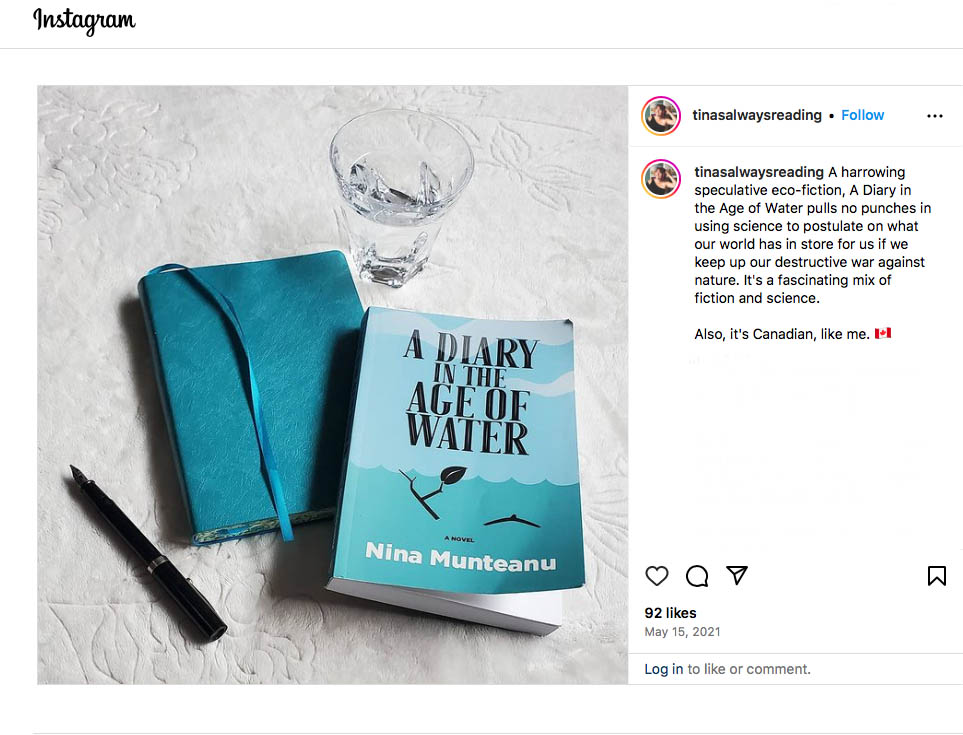


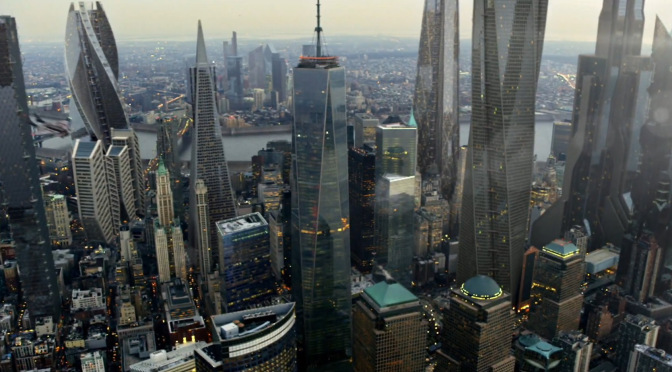
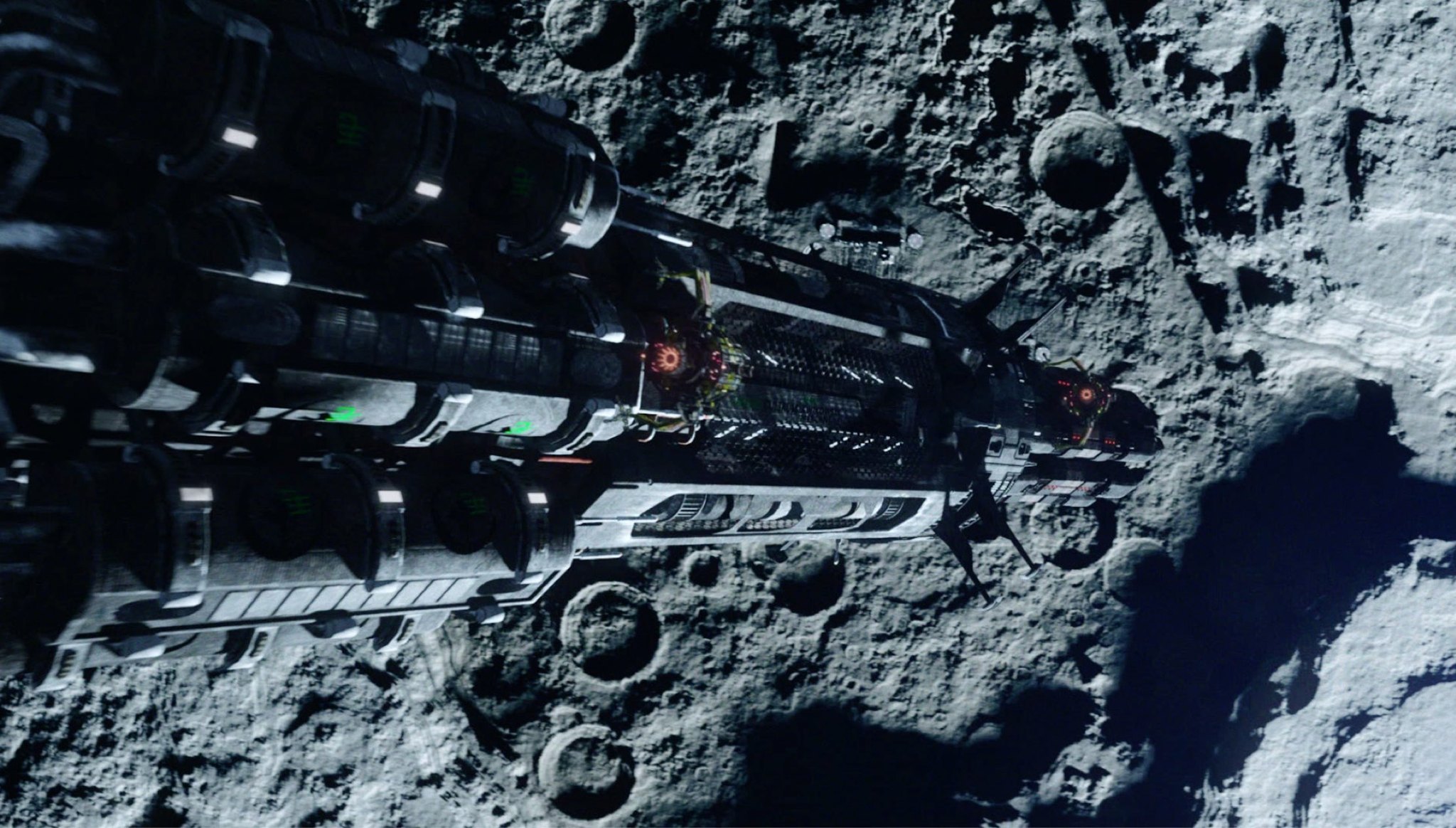
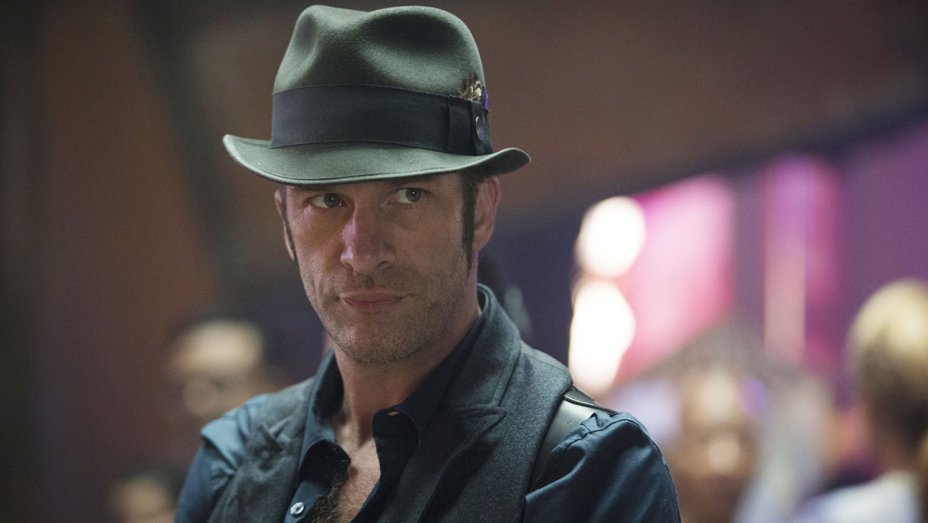
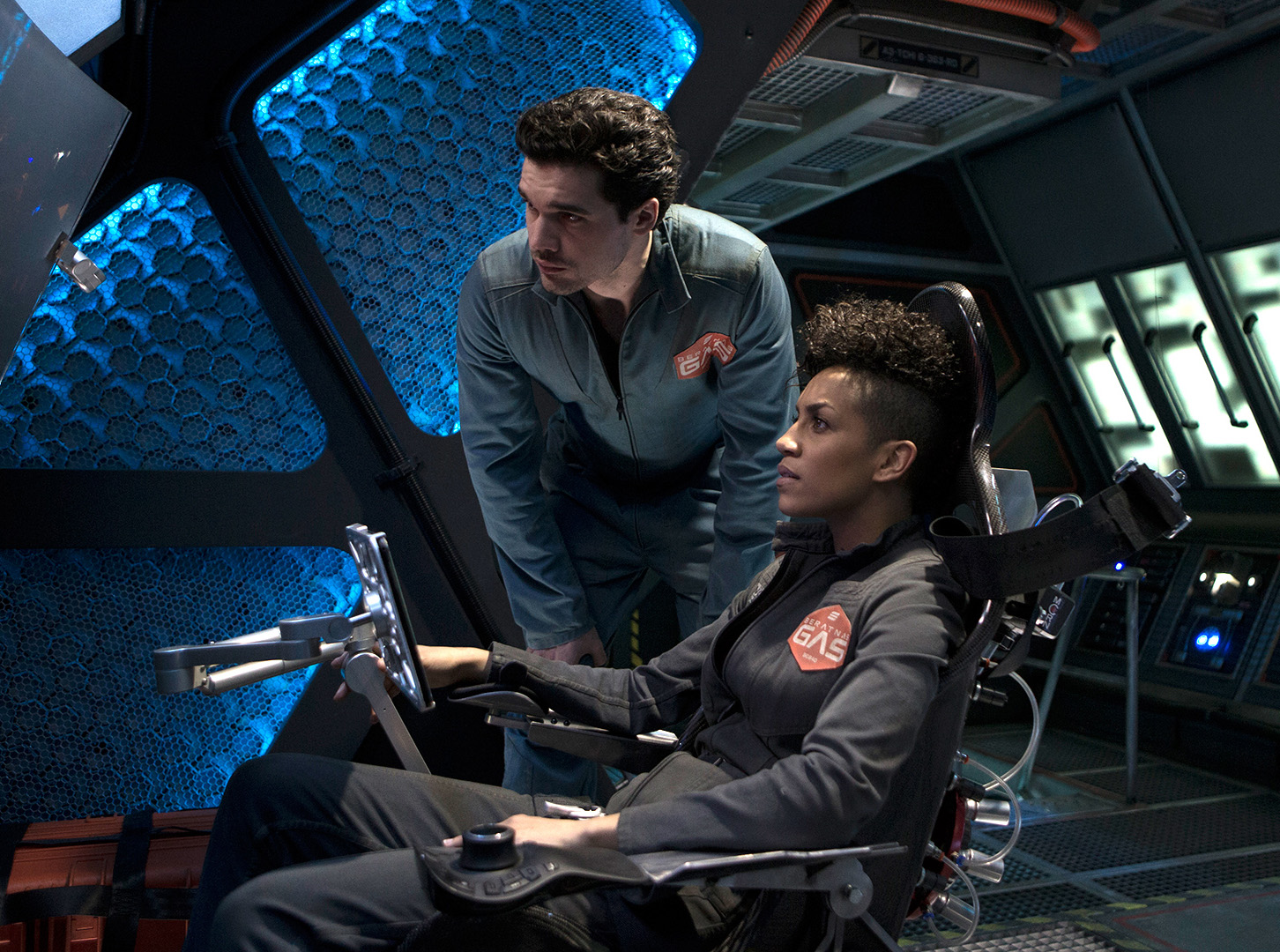


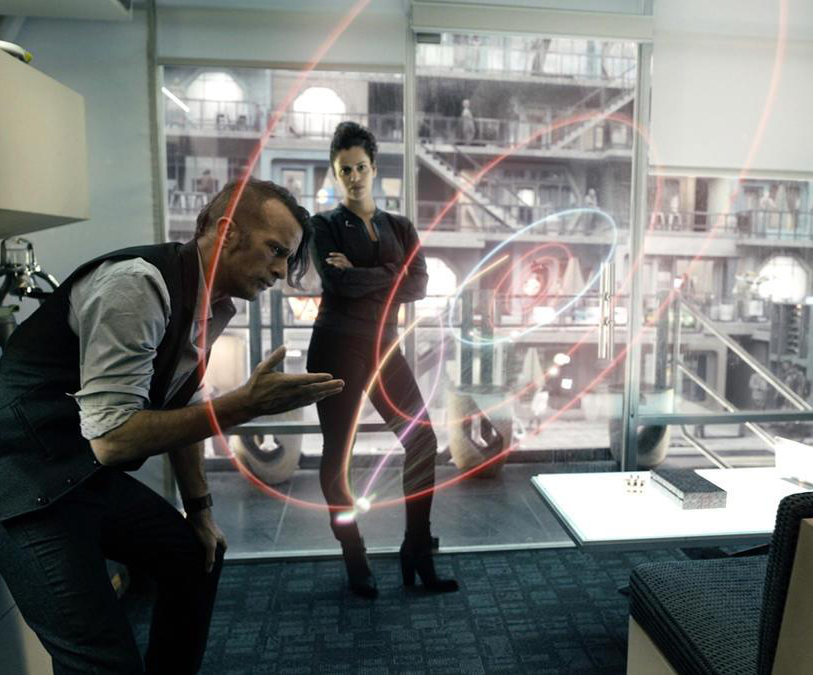


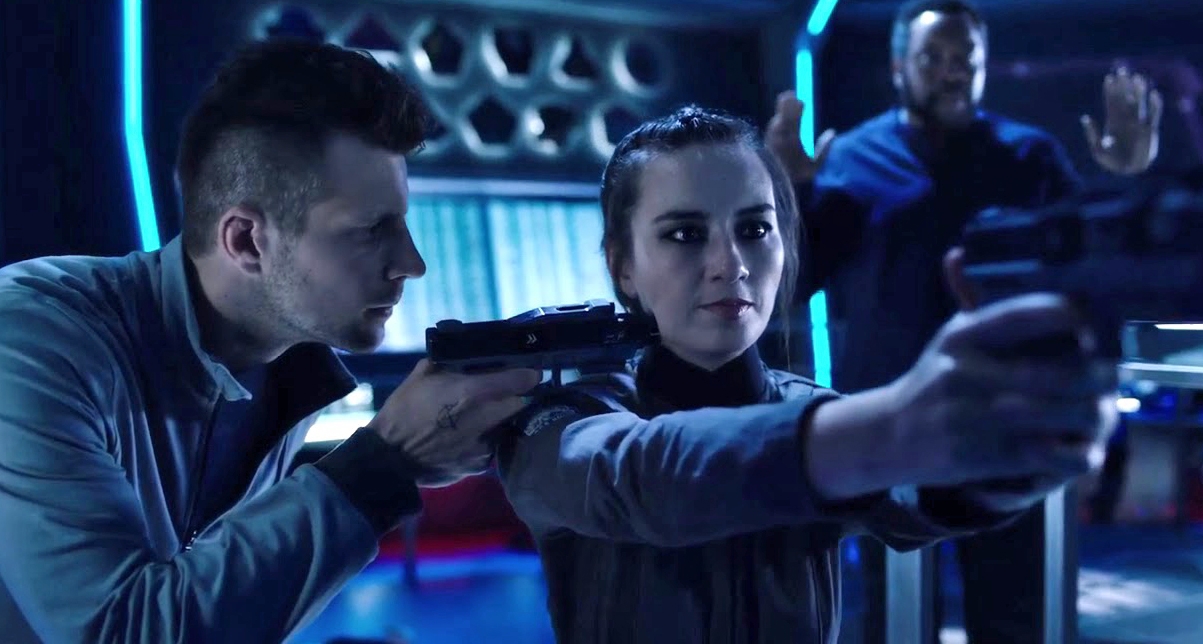
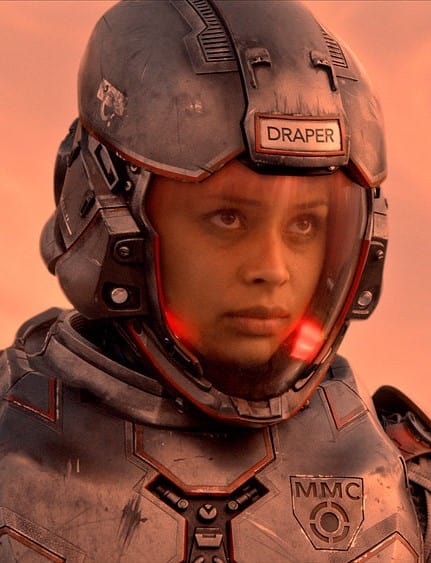
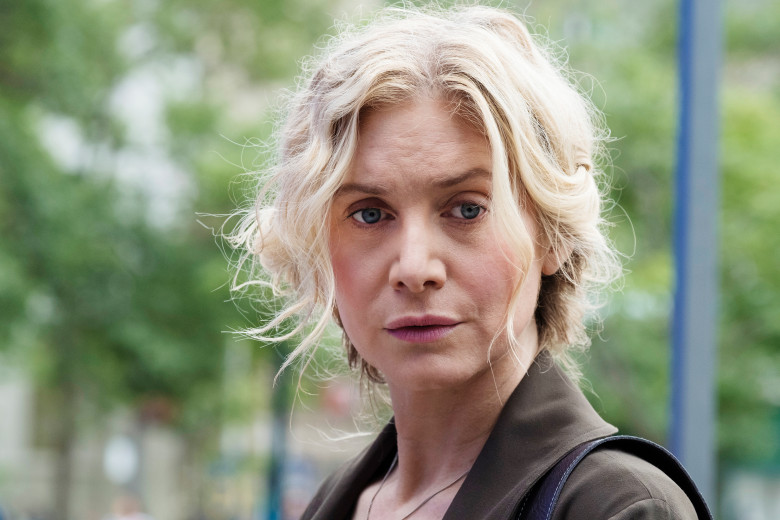

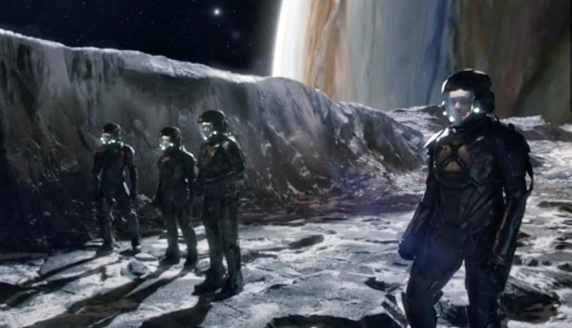
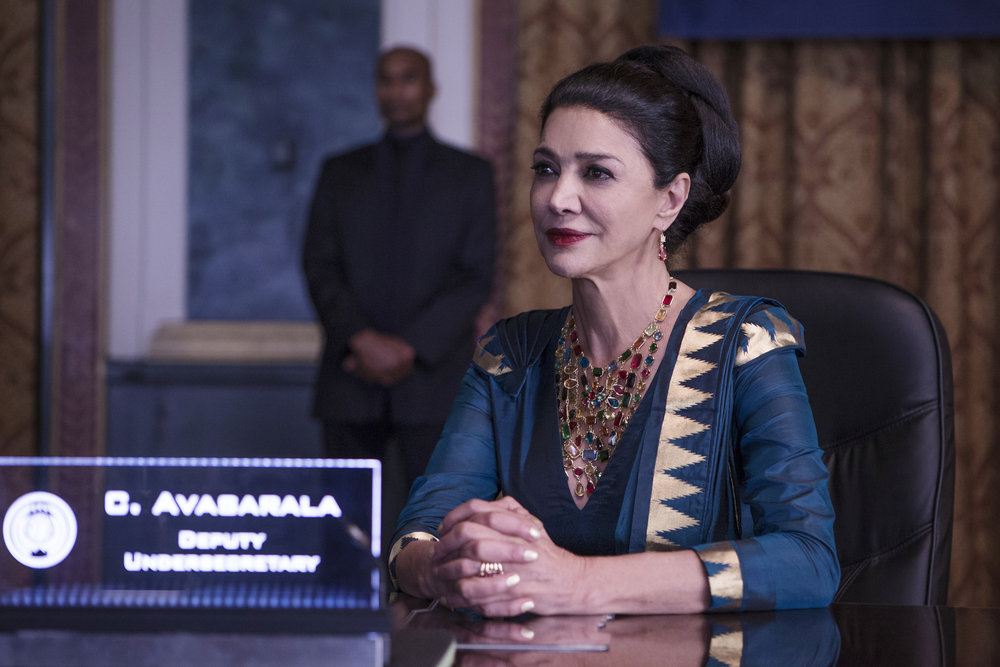

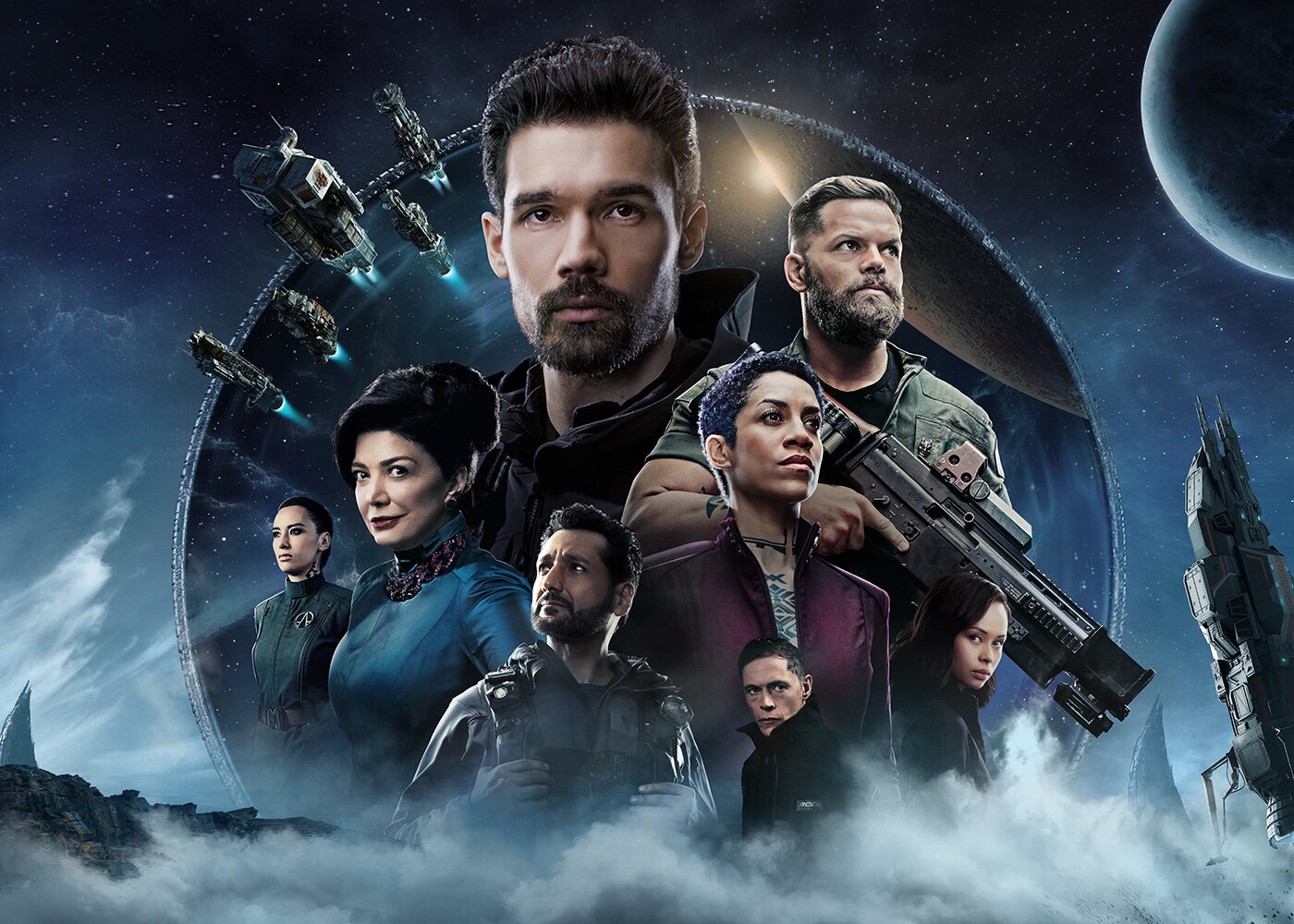

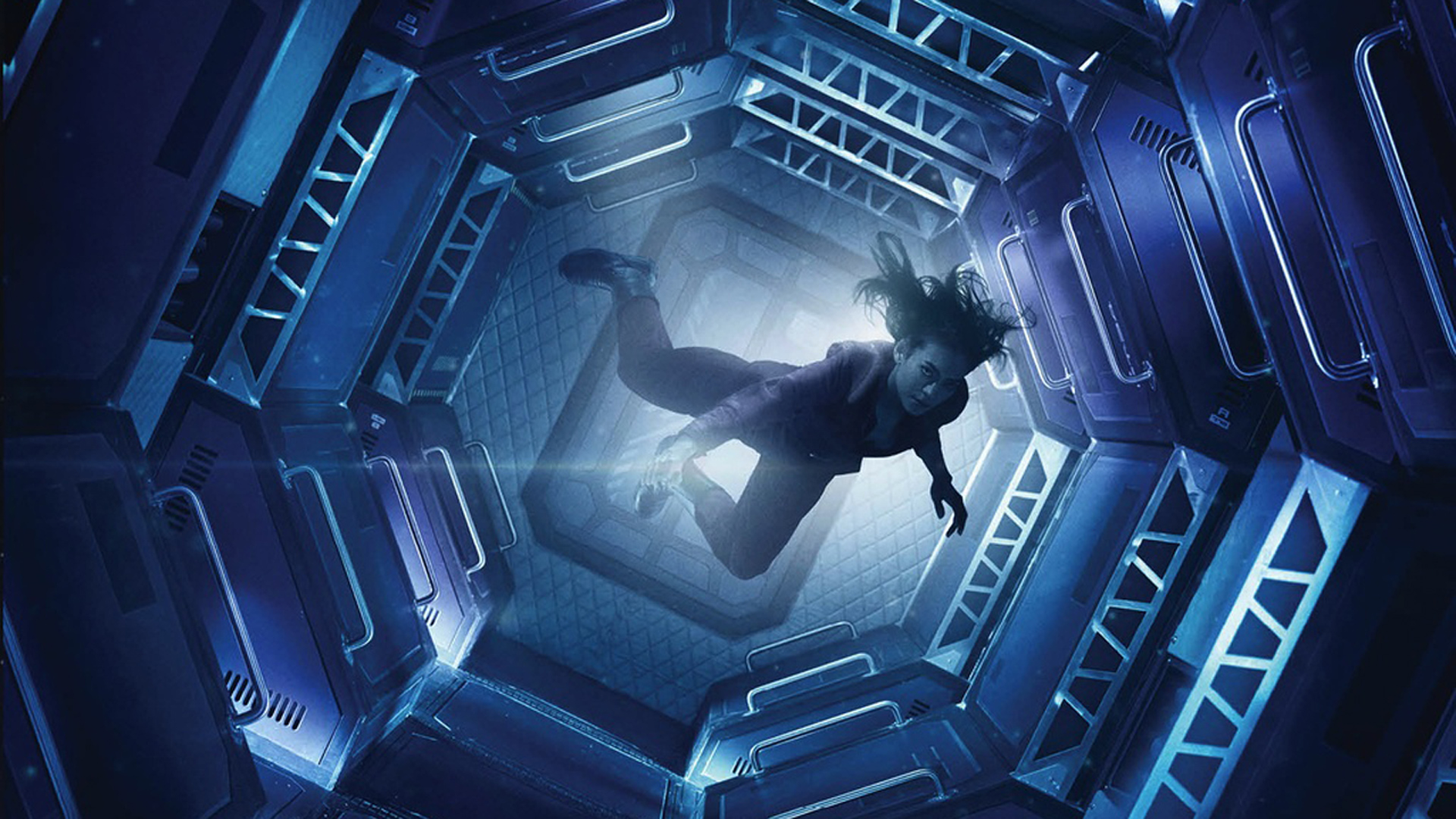
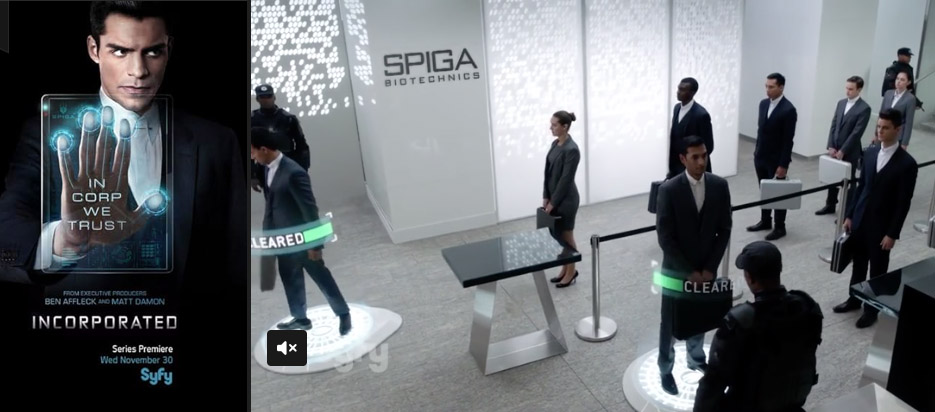
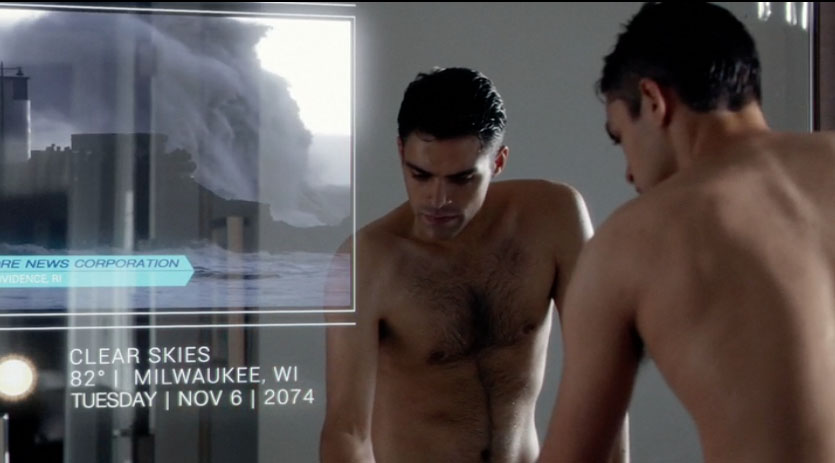
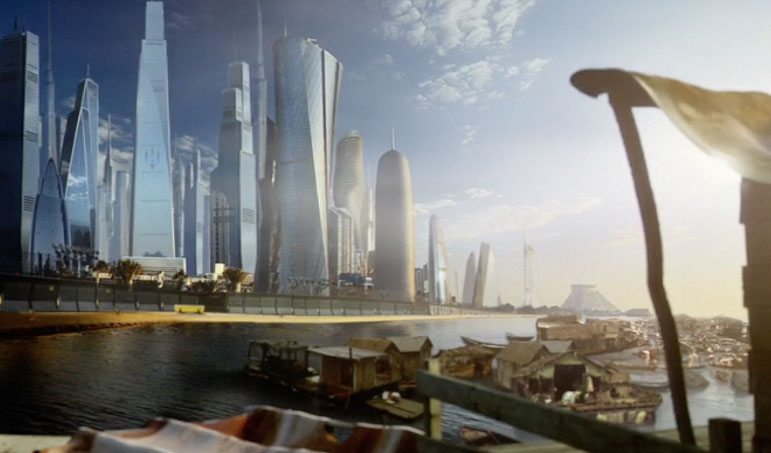
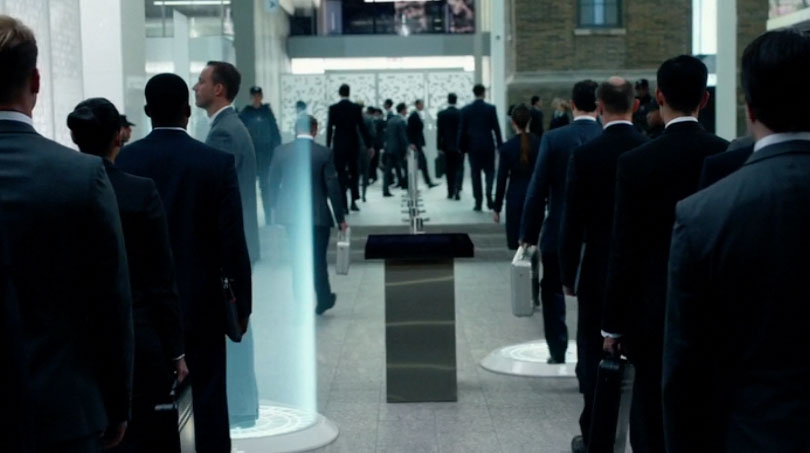
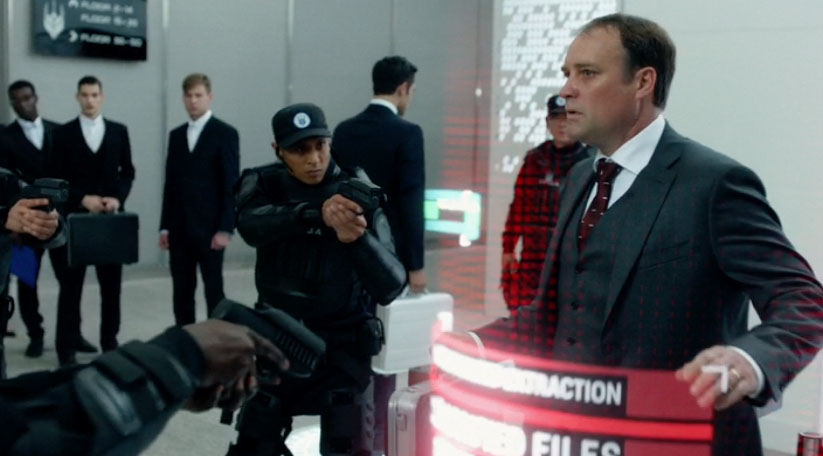
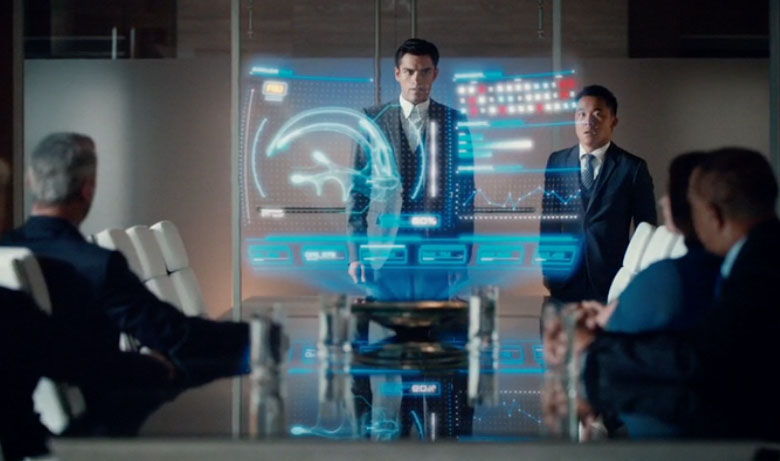
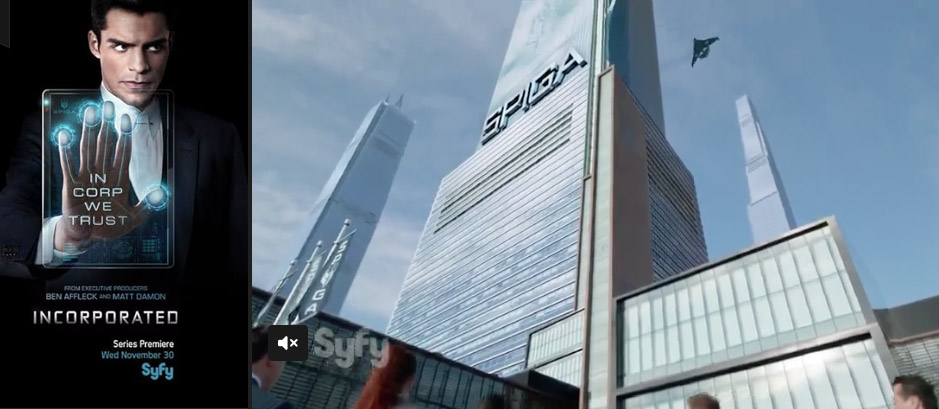
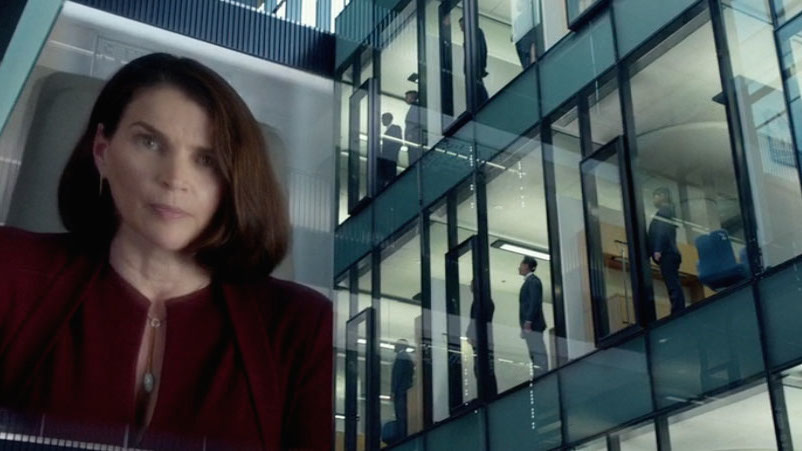
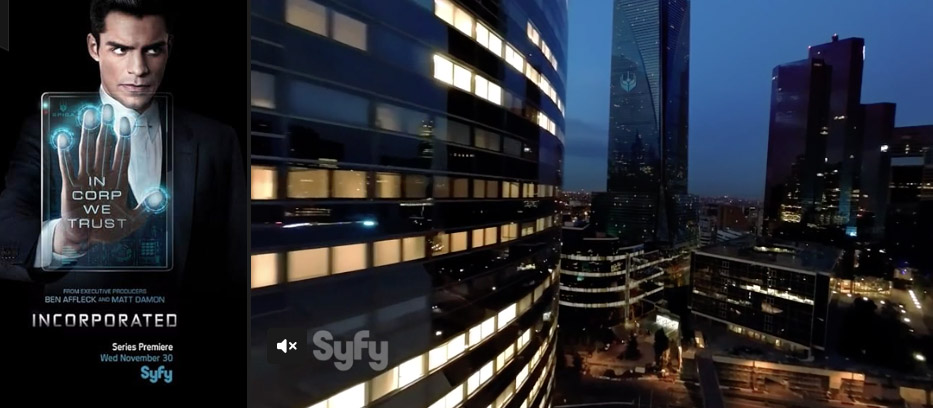
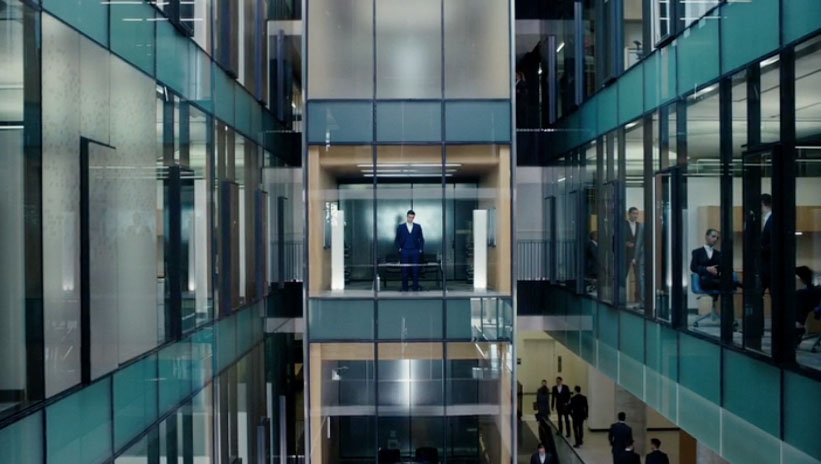
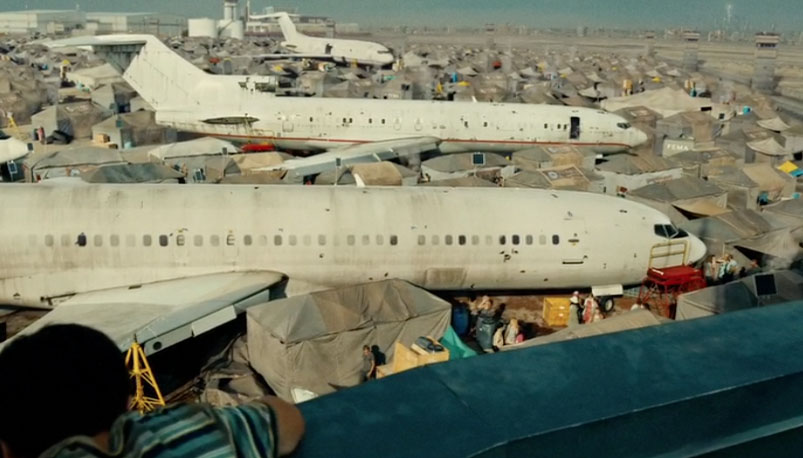
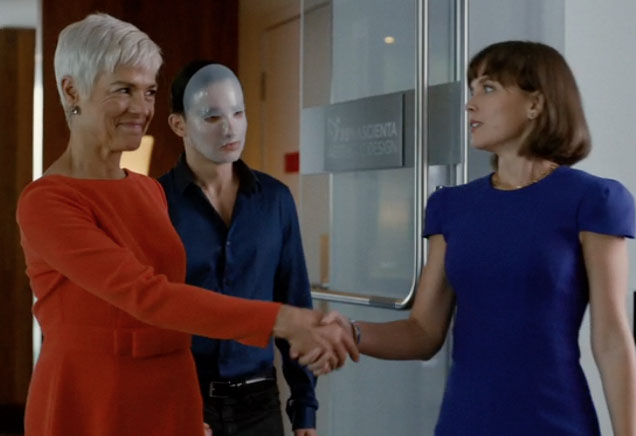

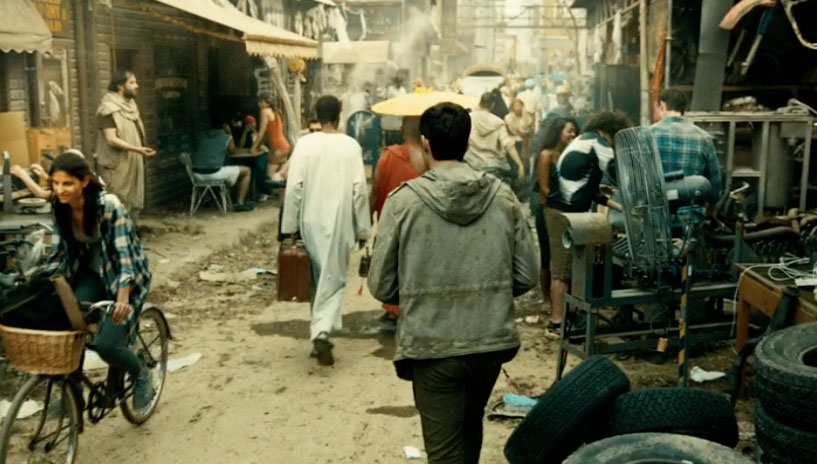
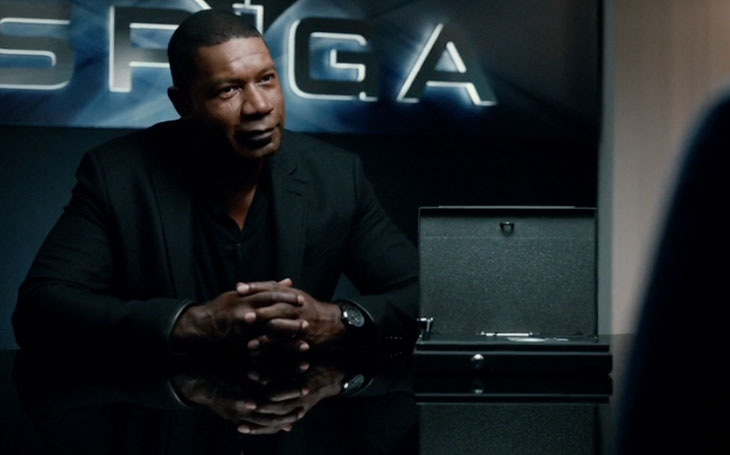
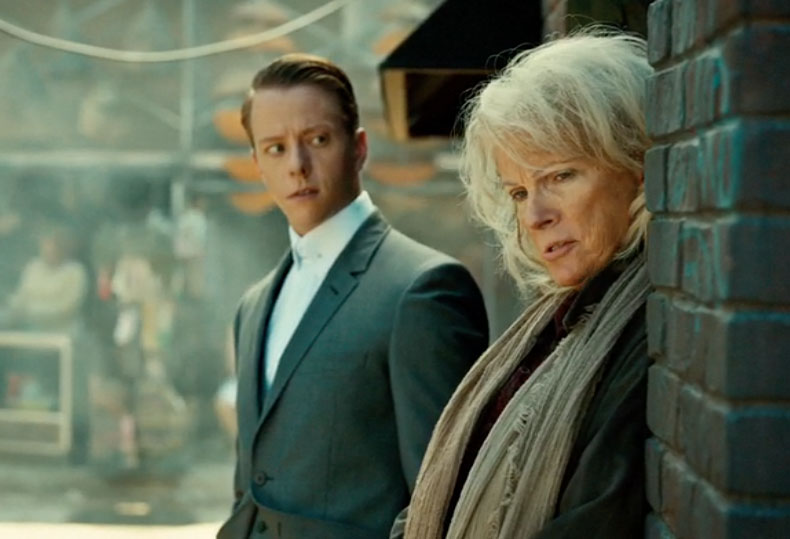
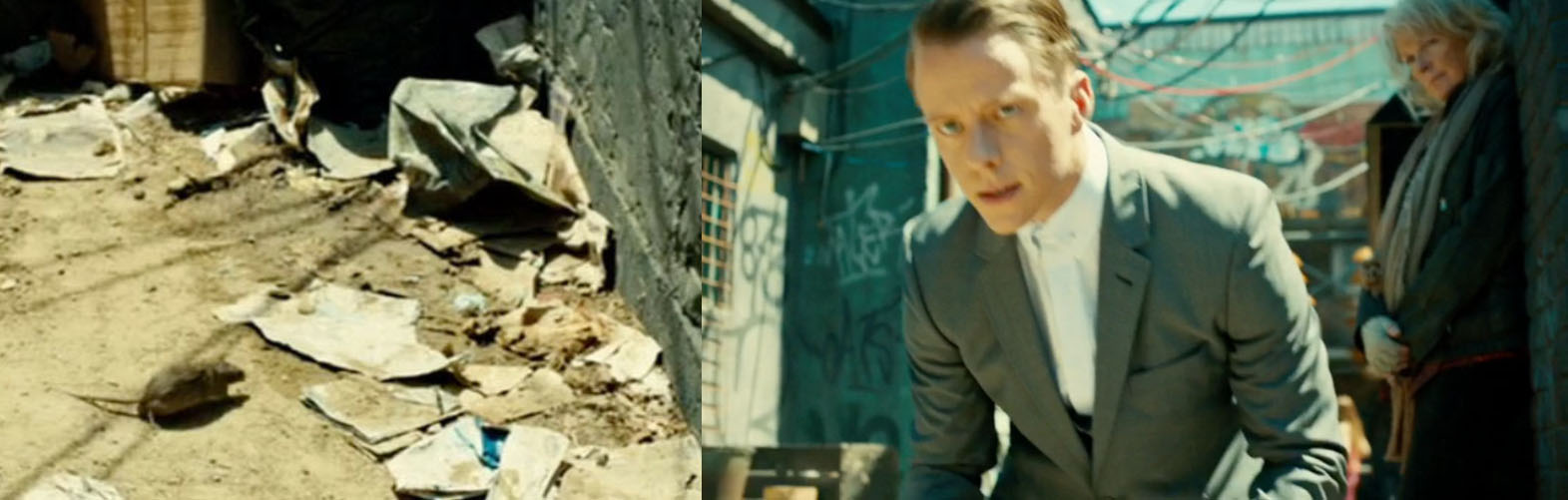
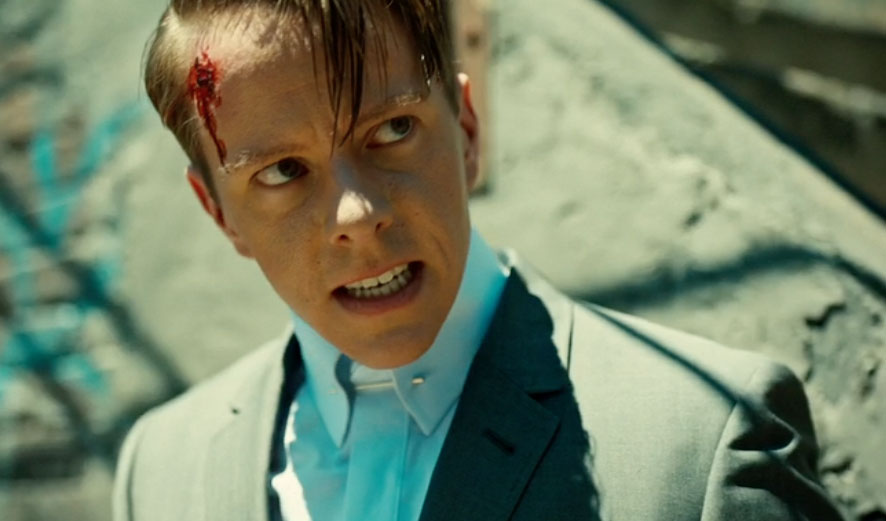
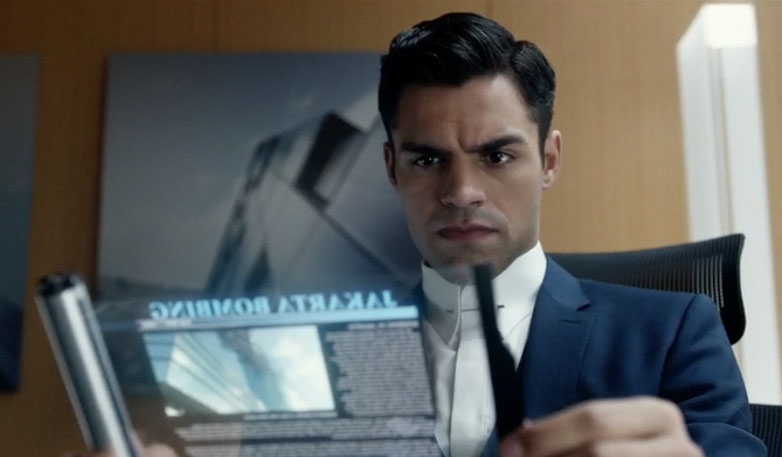
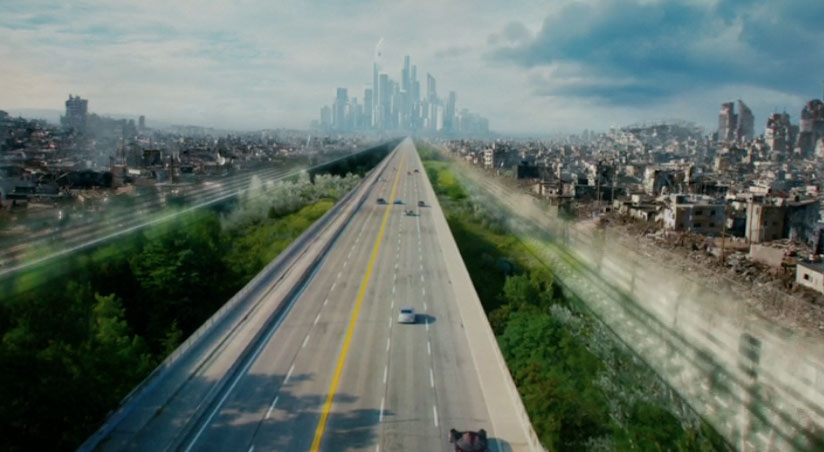
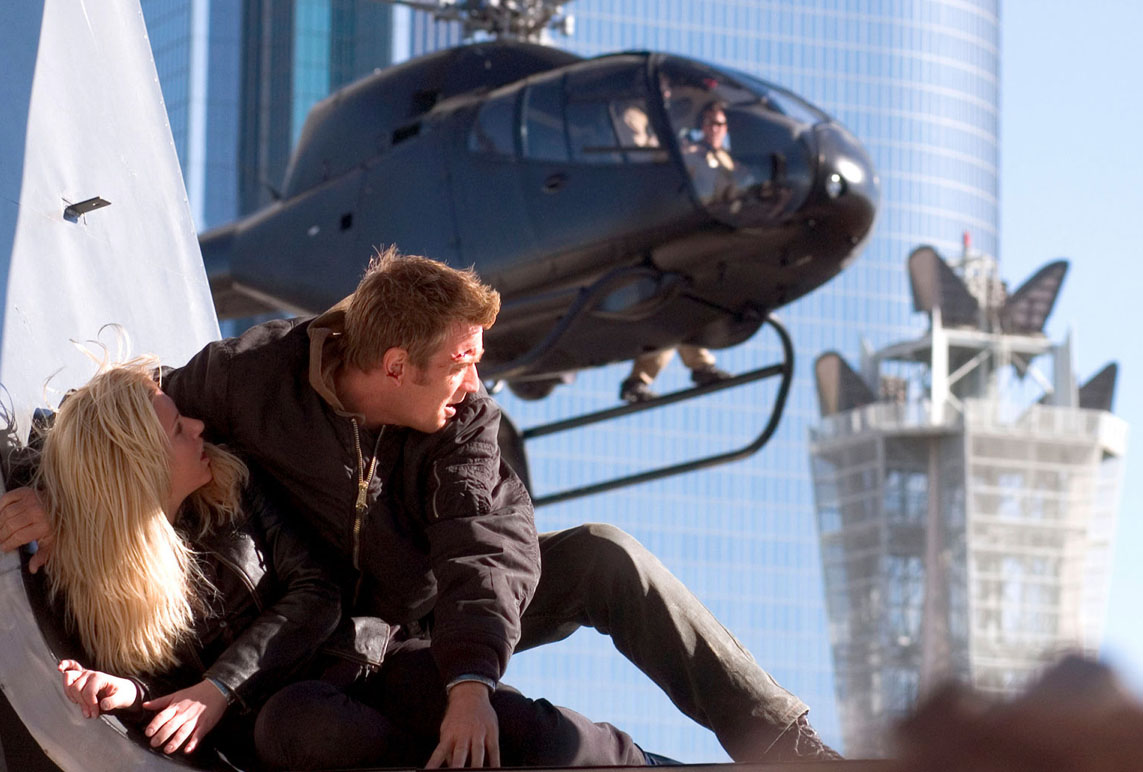
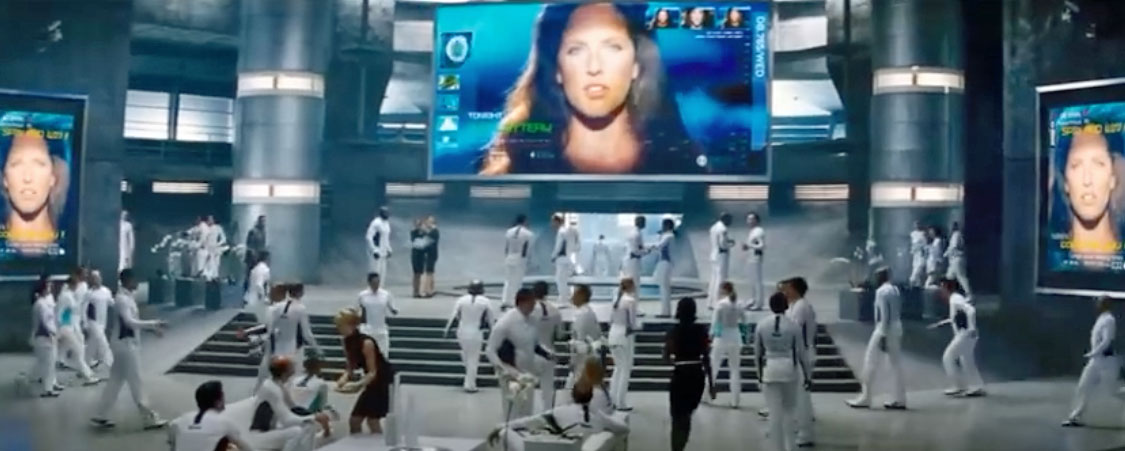


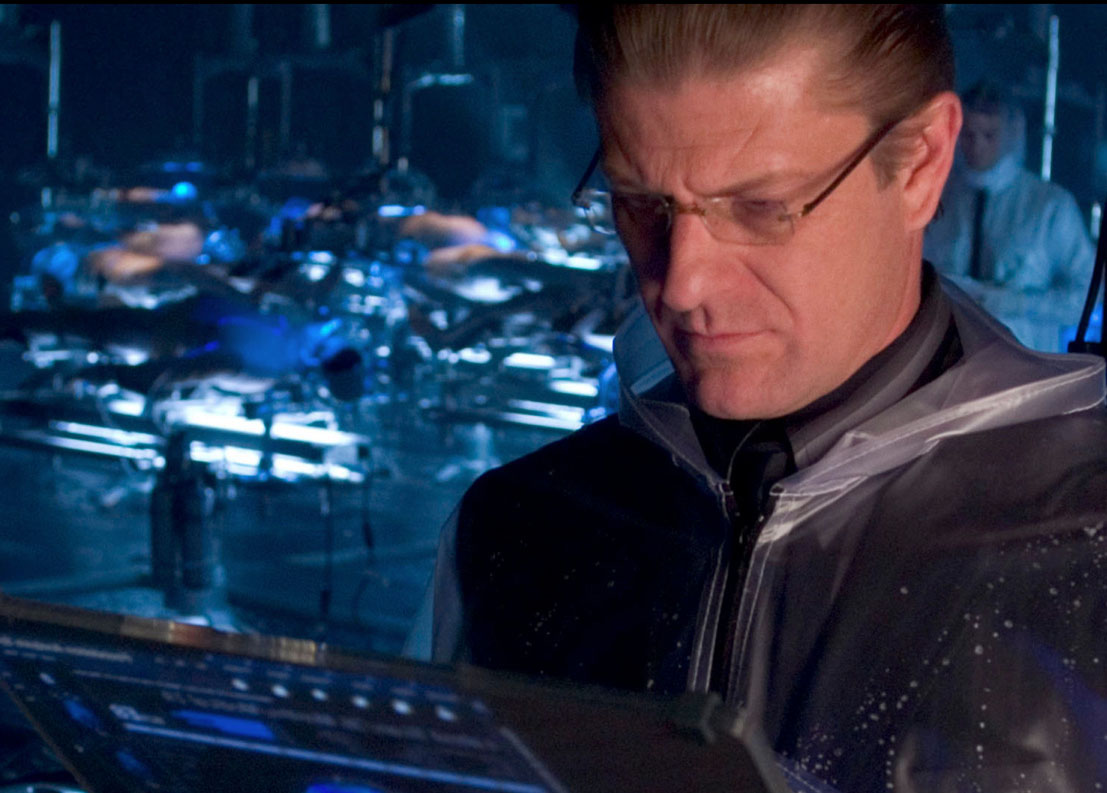
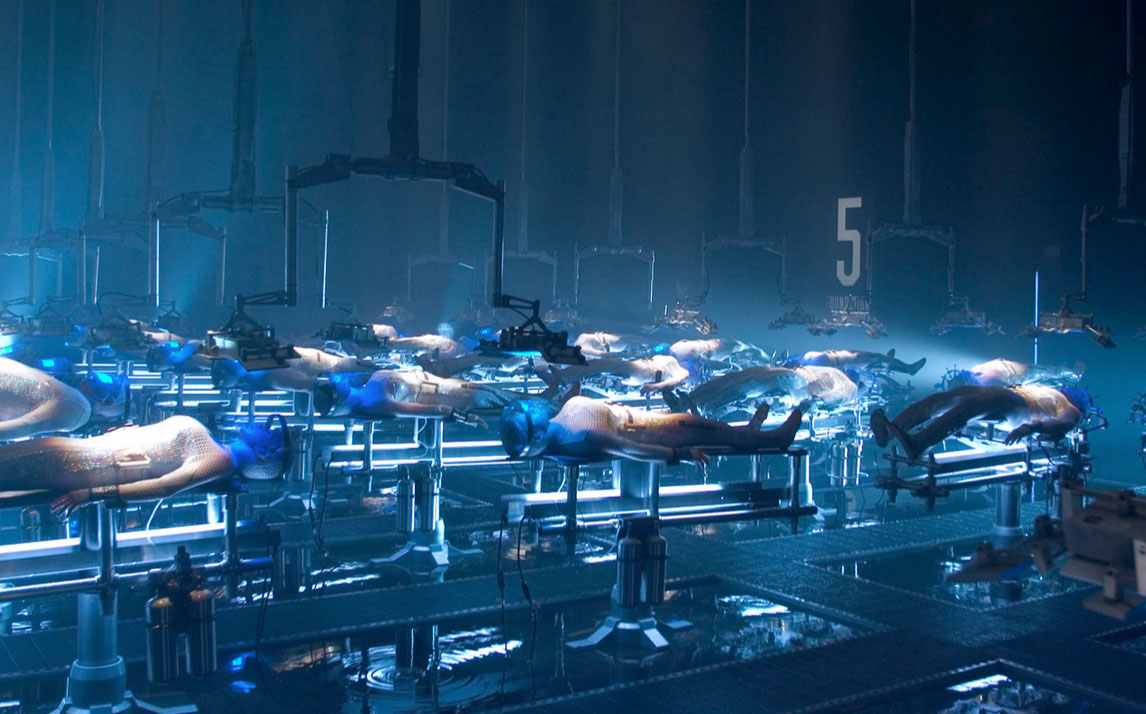


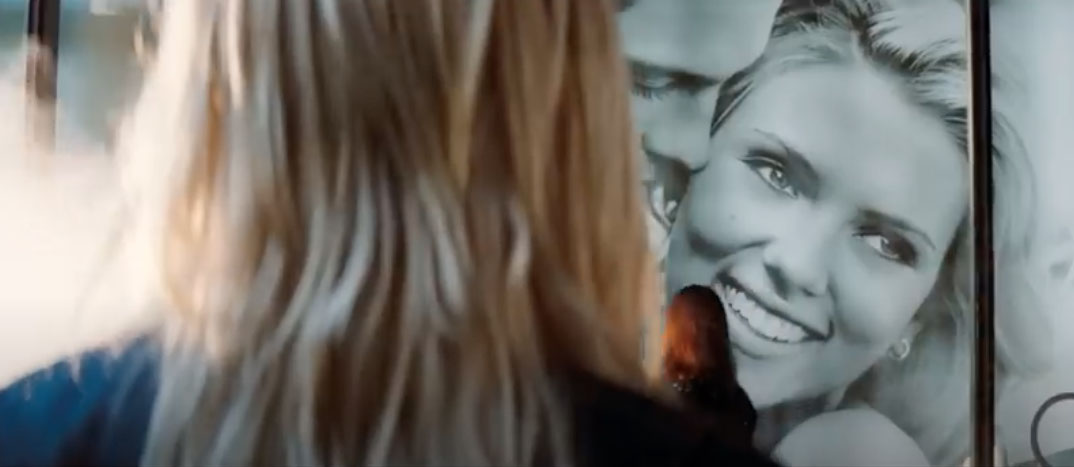

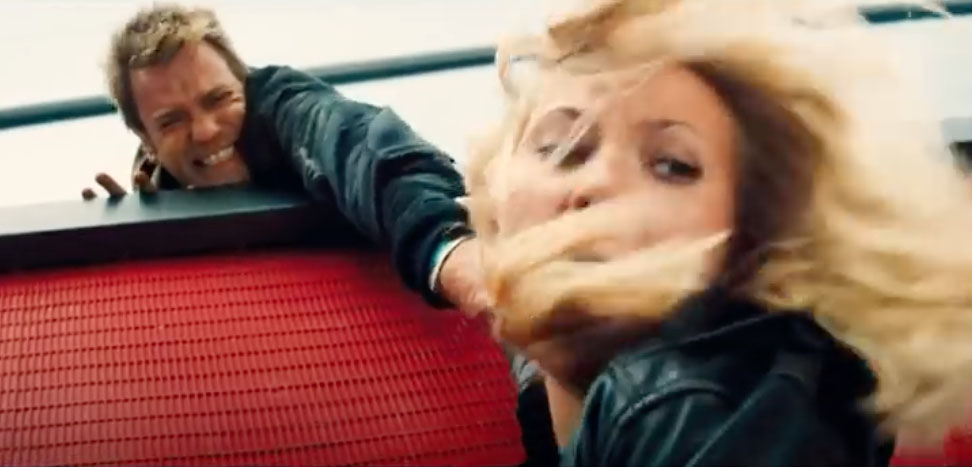



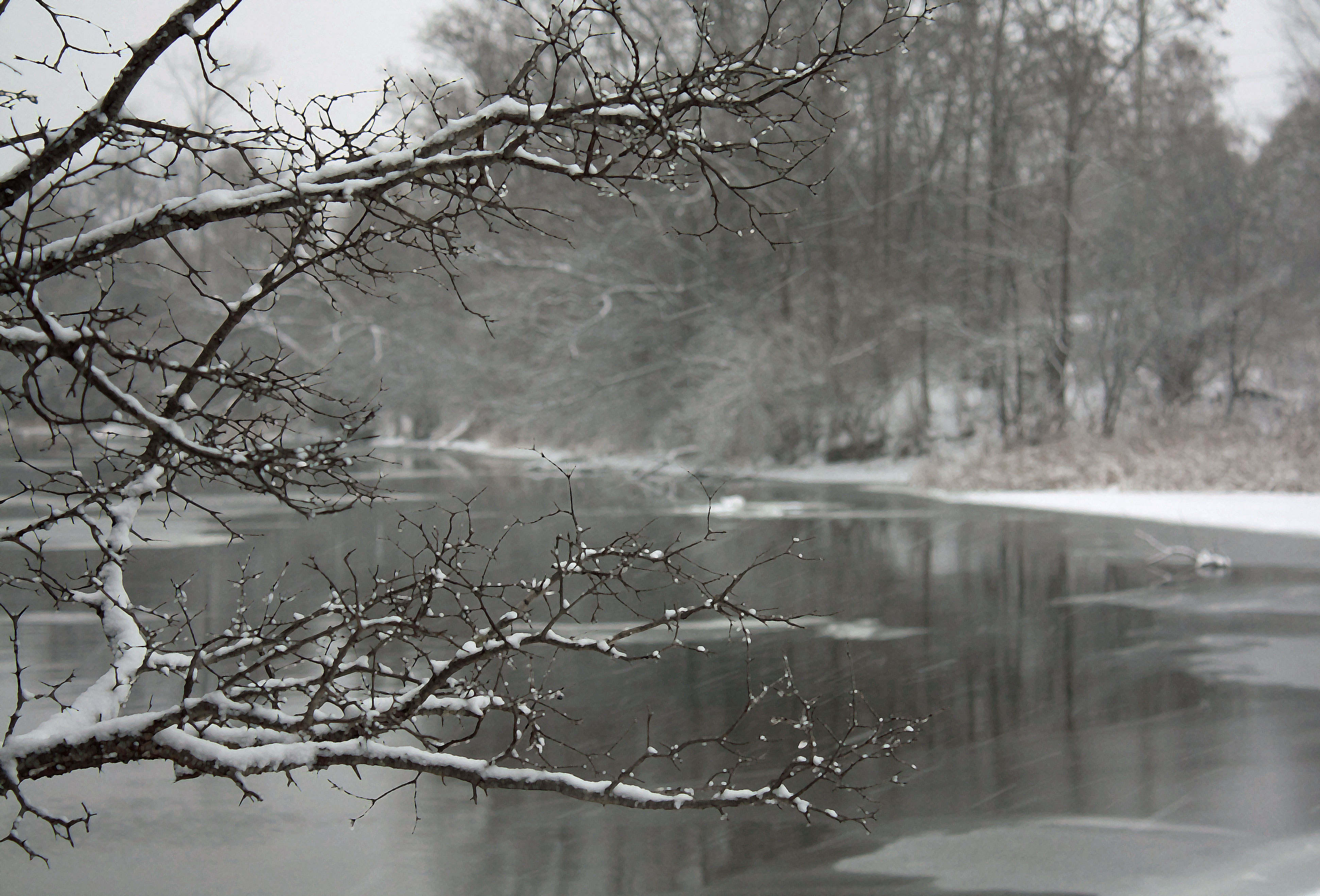
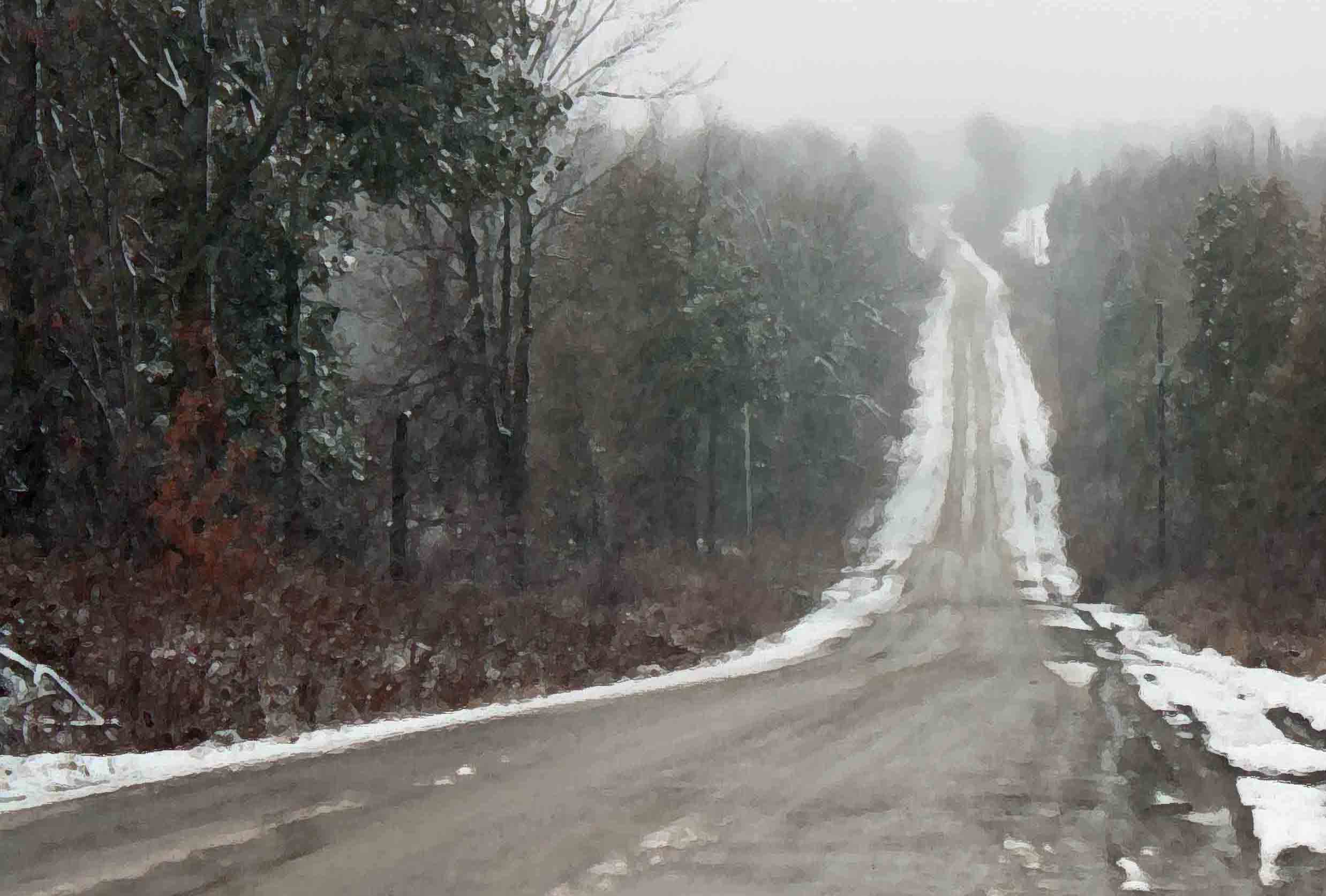
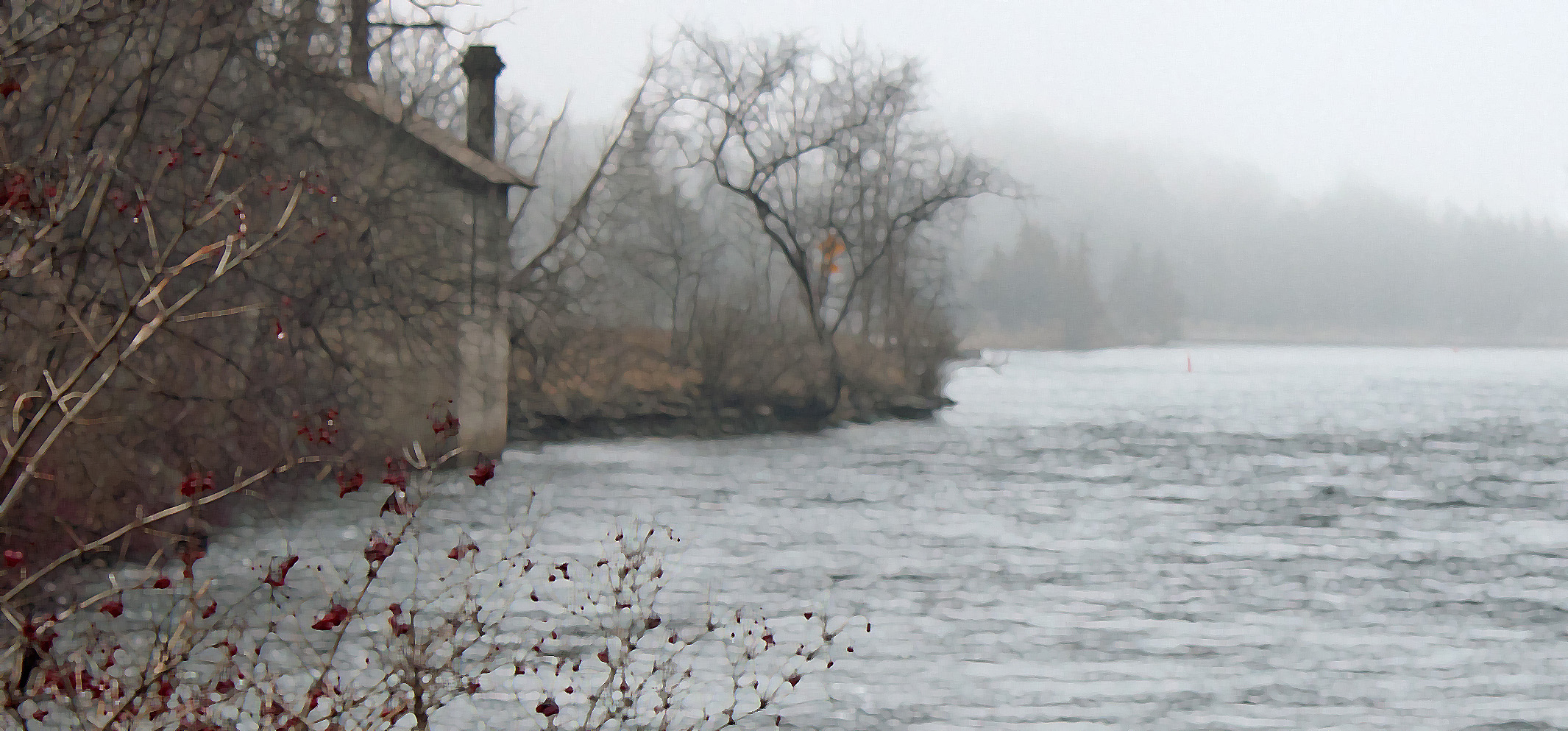





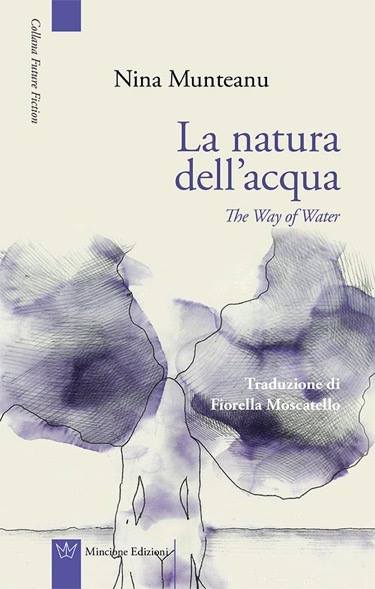
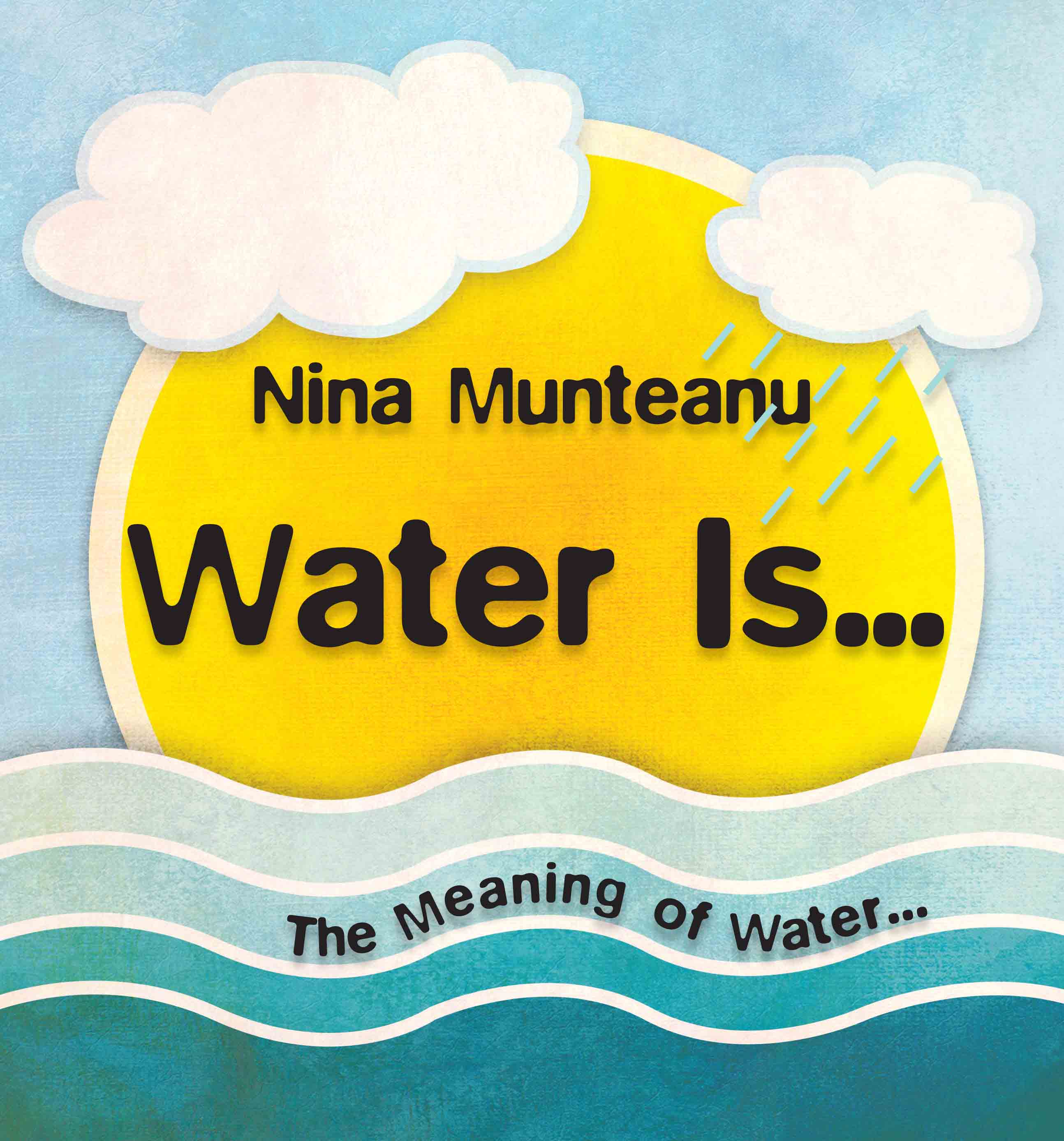
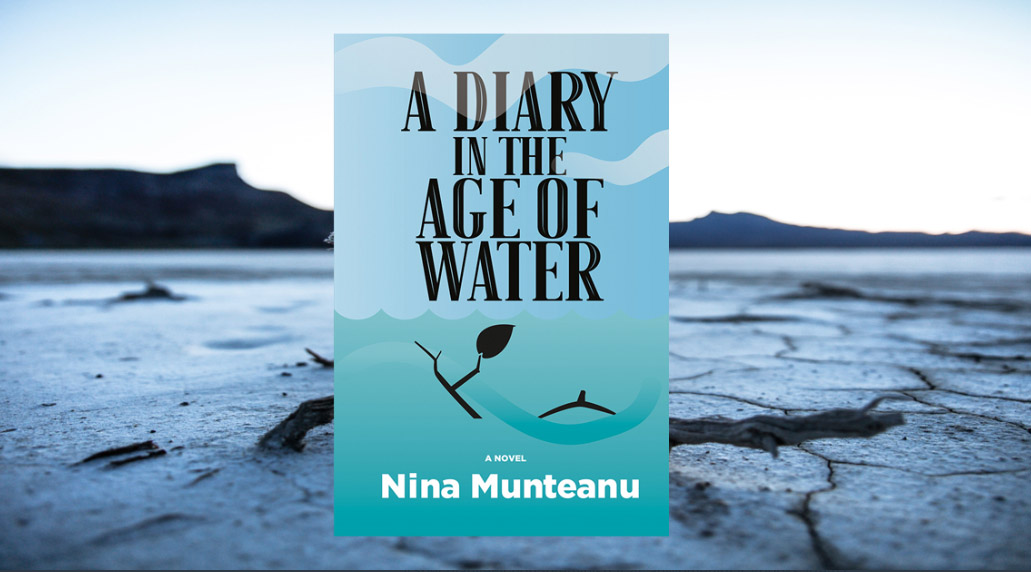

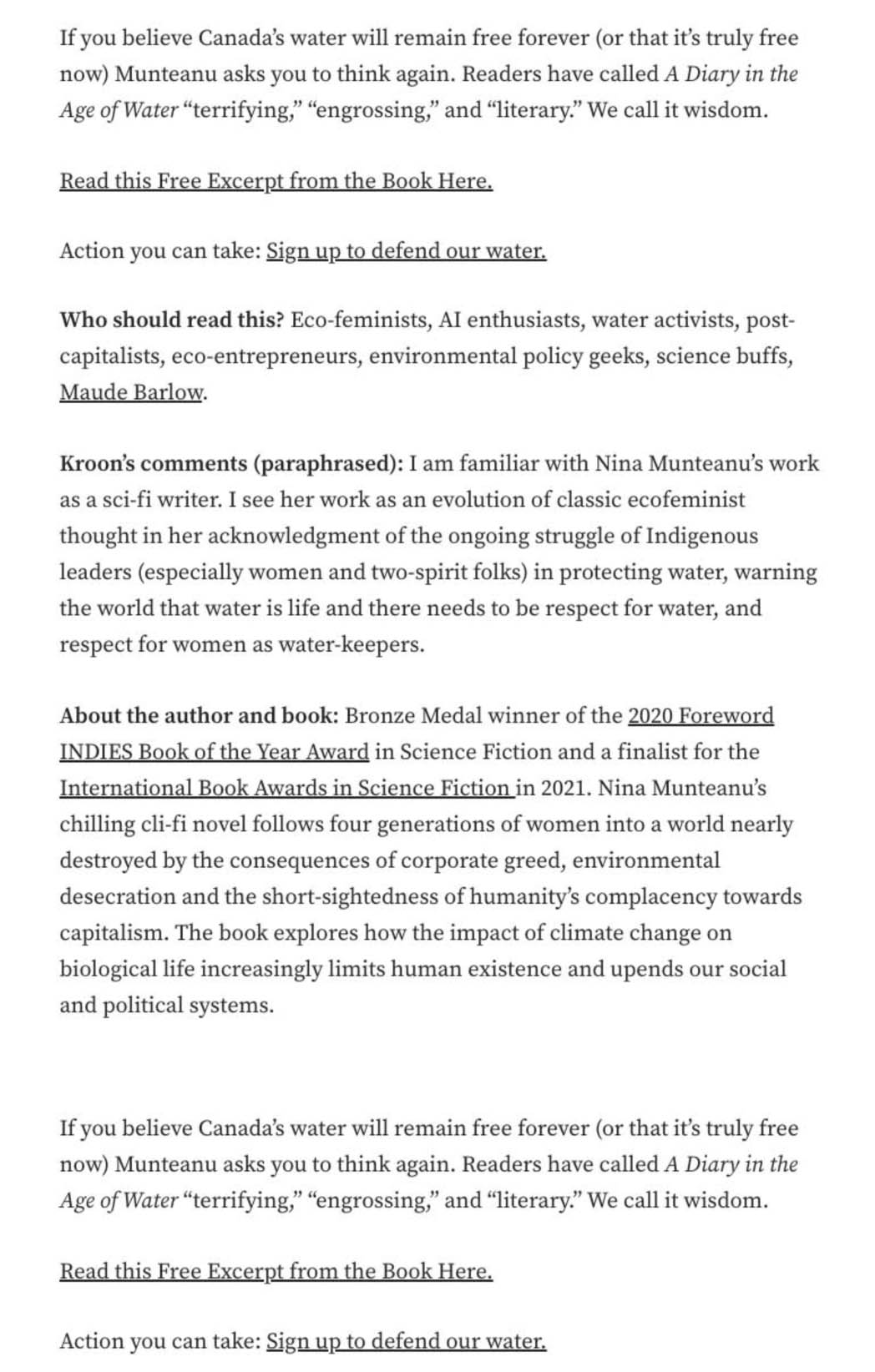


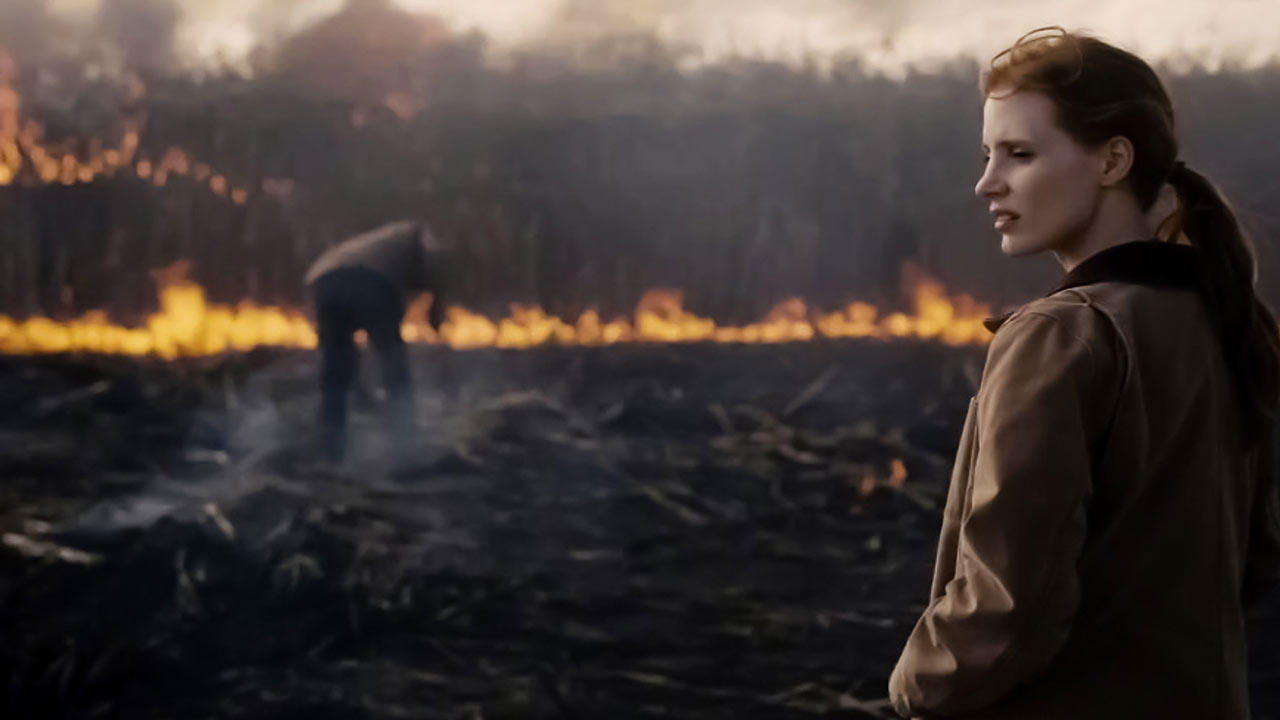
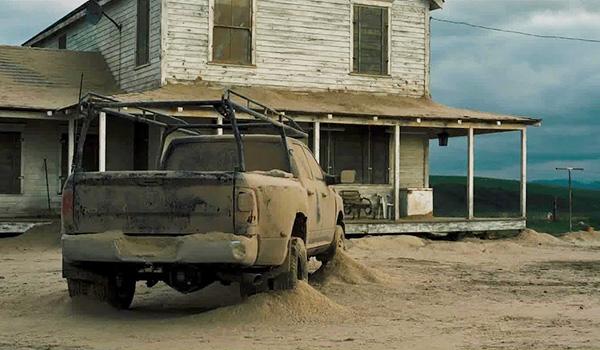

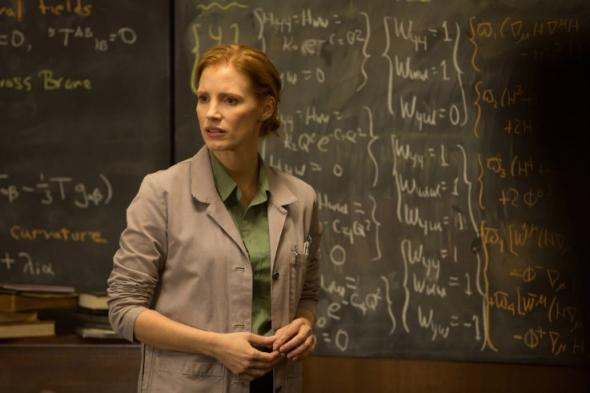
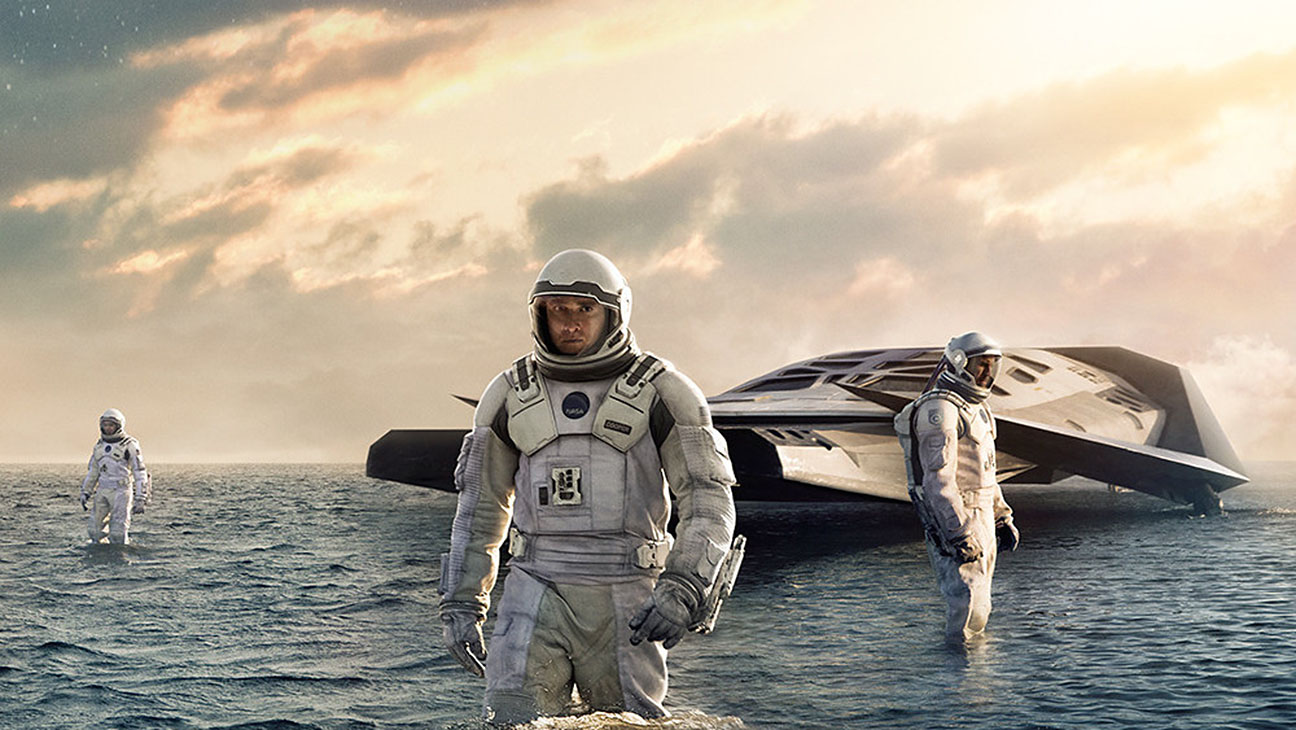
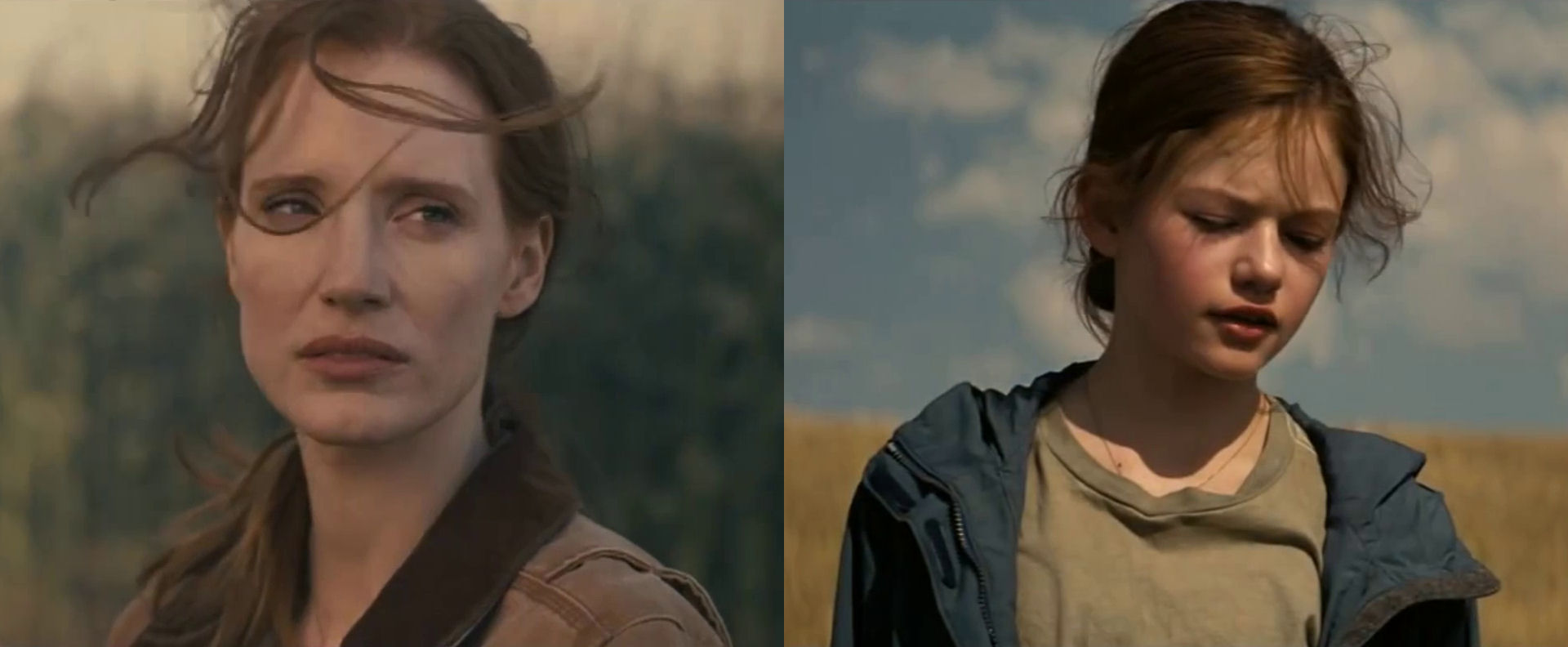

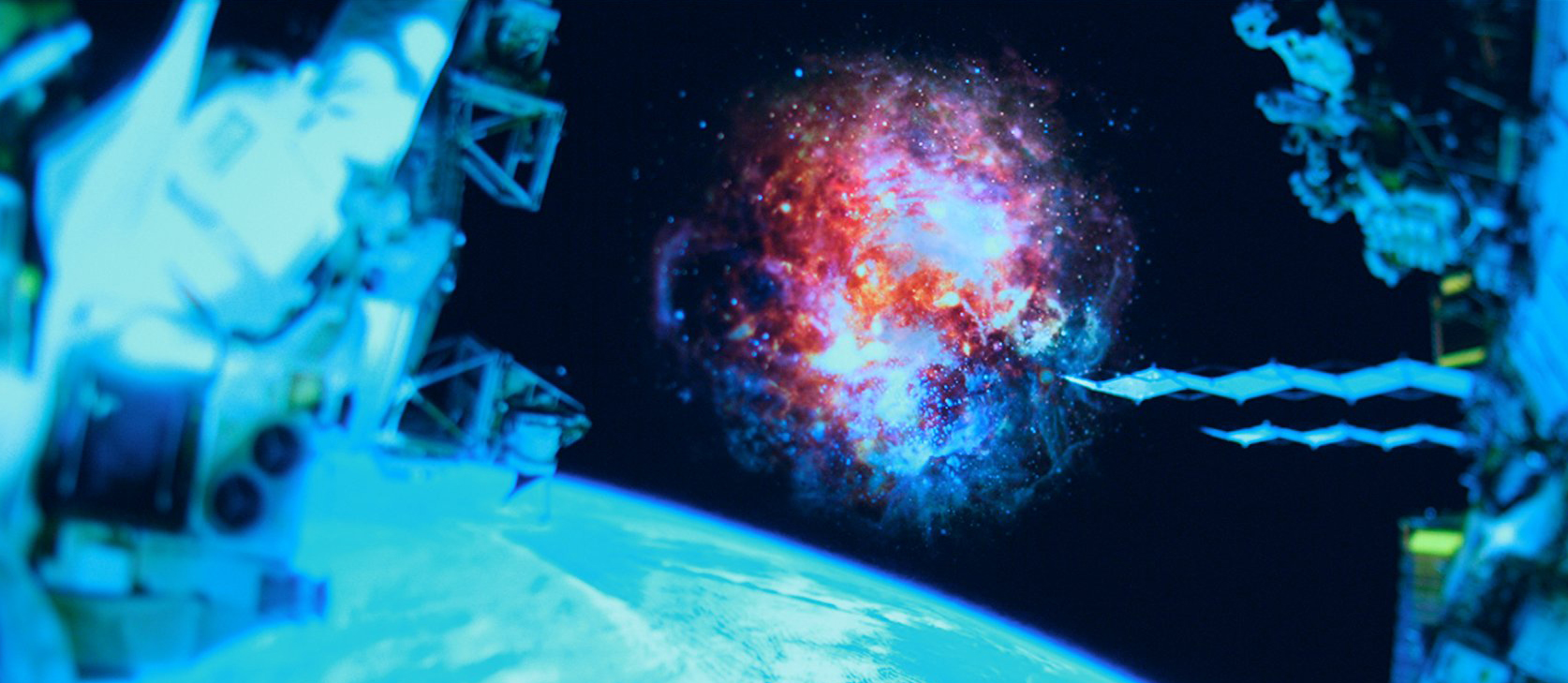









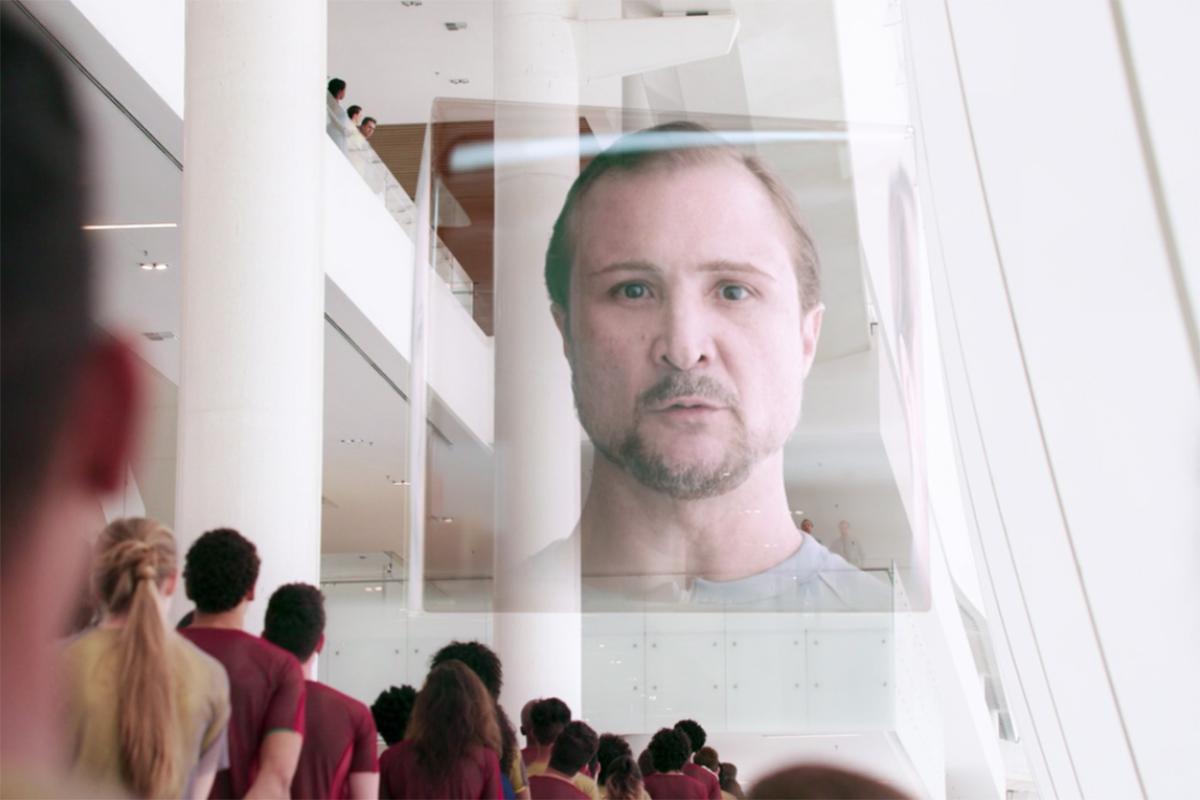

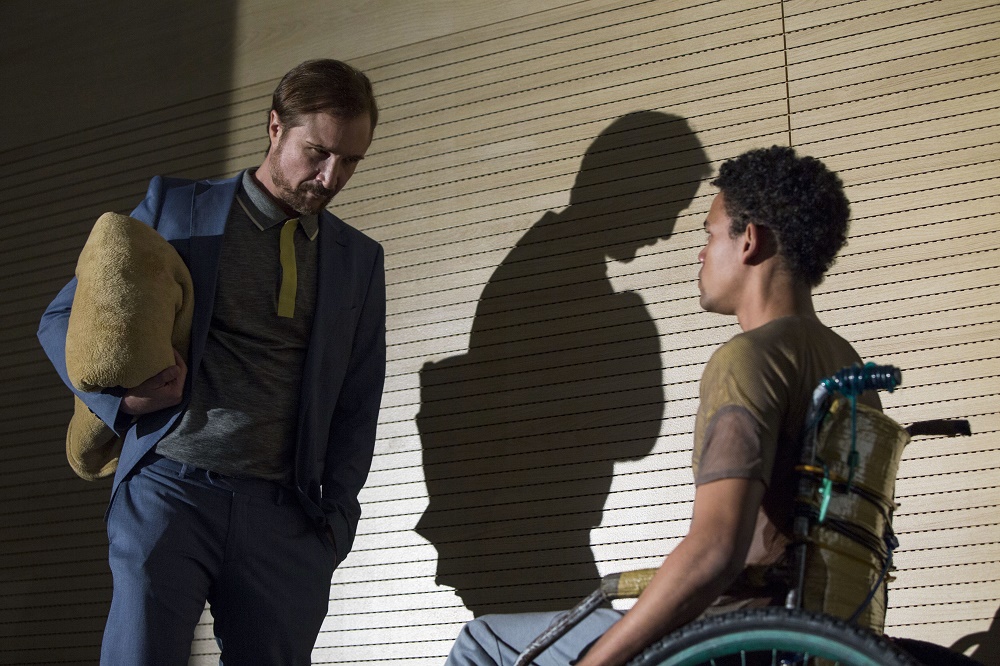


 Nina Munteanu Writing Coach