TV Series Review: “The Expanse”—No Game (of Thrones), just a Damned Good Story  

In 2015, Syfy released Season 1 of The Expanse, a stylish and intelligent science fiction (SF) TV series set 200 years in the future when humanity has colonized the moon, Mars and the Asteroid Belt to mine minerals and water. The six-season series is based on the novel series by James S.A. Corey with first novel “Leviathan Wakes”

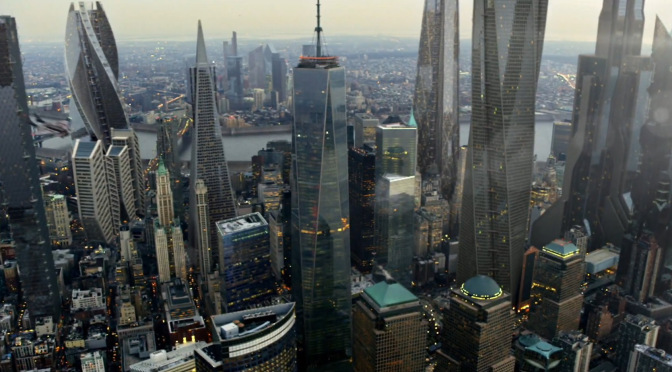
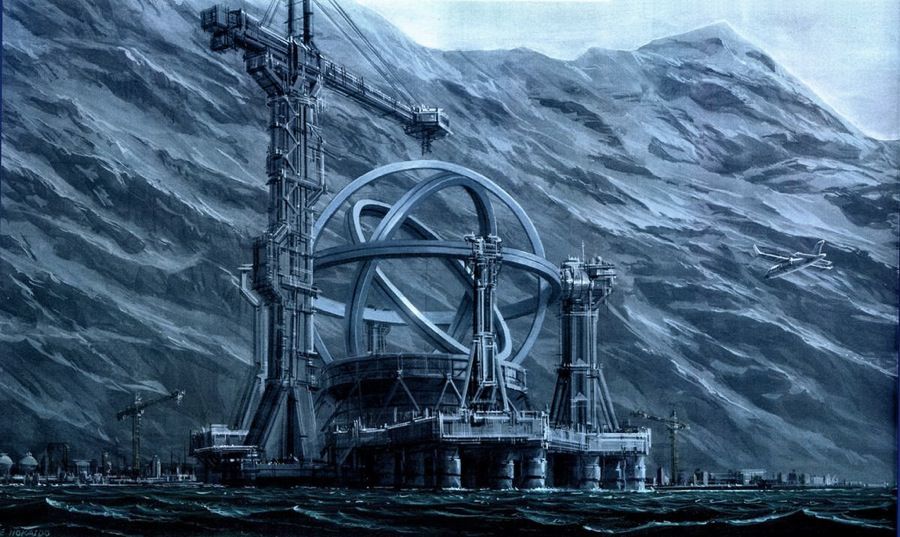
New York City of the Expanse

Humanity has split three ways culturally, ethnically and even biologically: Earth is currently run by the United Nations; Mars is an independent state, devoted to terraforming with high technology; and the Belt contains a diverse mix of mining colonies, settlers, workers and entrepreneurs. Belters’ physiology differ from their Earth or Mars cousins, given their existence in low gravity.
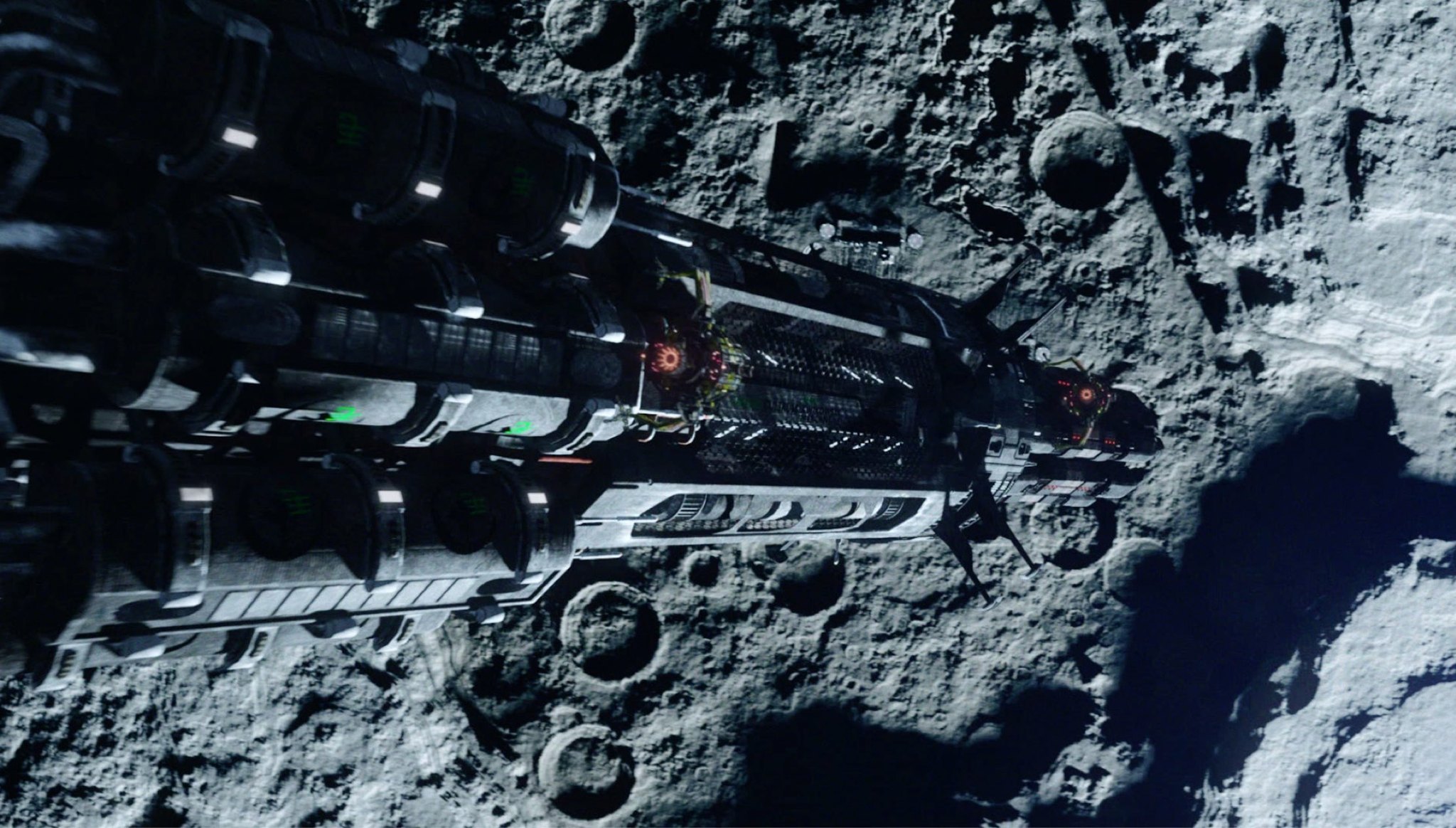
Ship heading to Ceres

One of the creators Mark Fergus explains the setting and premise of The Expanse: “We always felt that the great struggle of a lot of sci-fi we grew up on takes us into a story world where we’ve already jumped over the interesting part, which is the first fumbling steps of us pushing off this planet, getting out into the solar system, sorting ourselves out as a race. All the struggle and the pain and the glory of that, usually sci-fi … hops over it.” Fergus and his colleagues were attracted by what he called “the scaffolding,” how it all got built. “Here is who built it. Here is how humanity started looking at itself differently and getting rid of old forms of racism and creating new forms of racism.” This is the story of The Expanse.
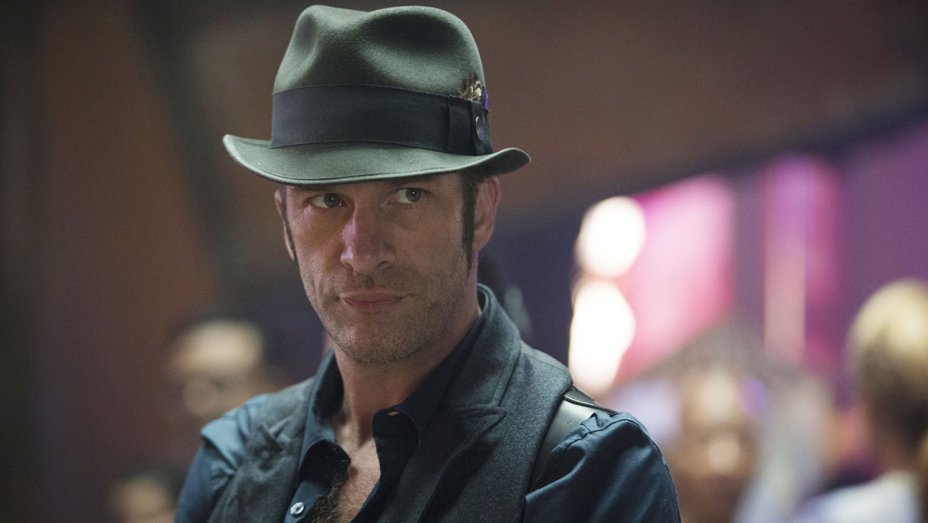
Josephus Miller, cynical detective on Ceres

The series starts by following three main characters: U.N. Deputy Undersecretary Chrisjen Avasaraia (Shohreh Aghdashloo) on Earth; cynical police detective Josephus Miller (Thomas Jane), a native of Ceres (in the Belt); and ship’s officer Jim Holden (Steven Strait) and his crew as each unravels a piece of a conspiracy (related to an unknown extra-solar material discovered on a Saturn moon) that threatens a fragile peace in the solar system and the survival of humanity.
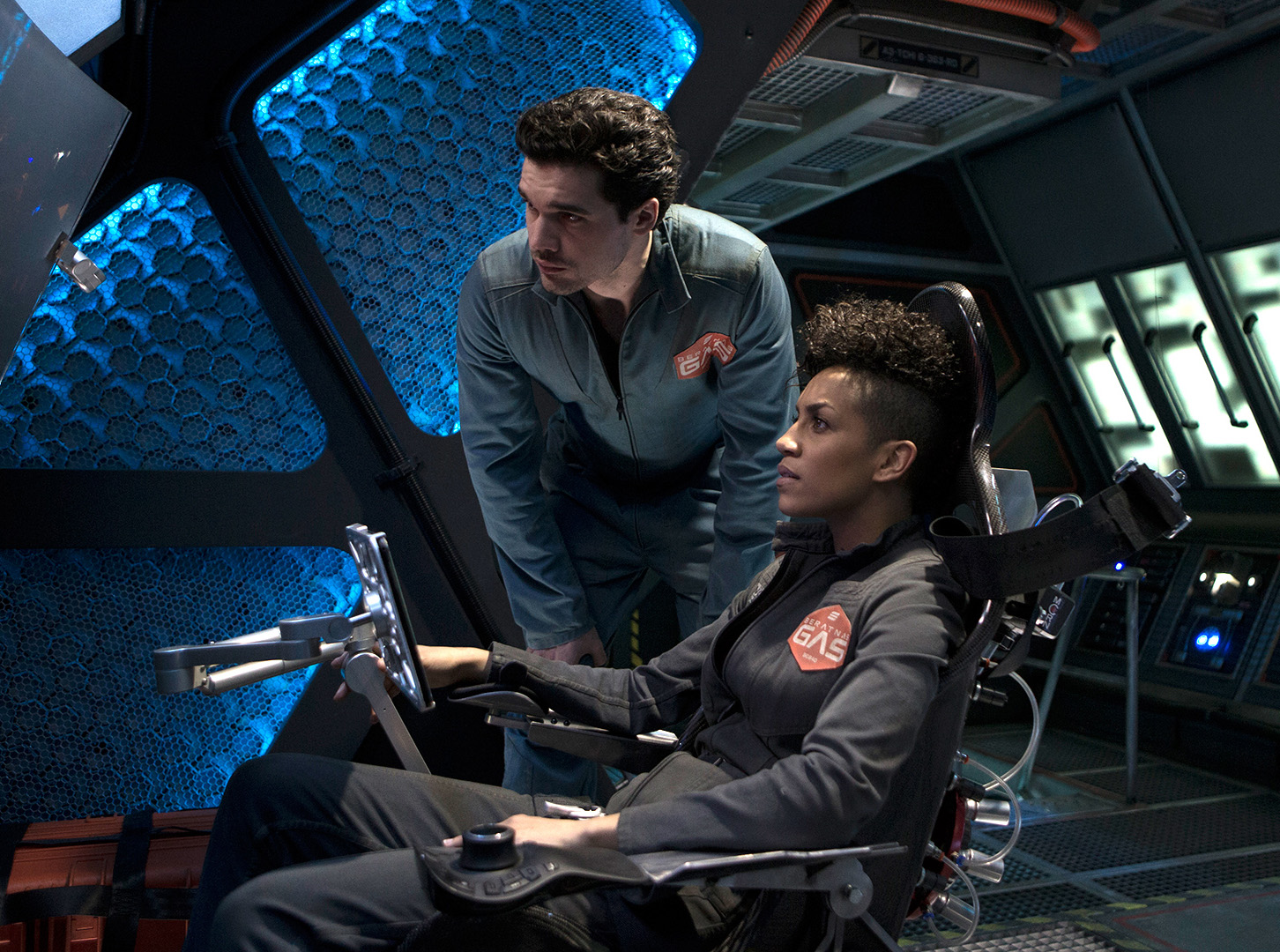
Holden and Naomi in their ship

First, Miller’s boss, Shaddid (Lola Glaudini) tosses him a missing person case: find Julie Mao (Florence Faivre), wayward daughter of a Luna-based shipping magnate (Mao-Kwikowski Mercantile); then Holden and four other crew members of the ice trawler Canterbury barely survive an attack that could spark a war between Earth and Mars. Miller and Holden eventually learn that the missing girl and the ice trawler’s fate are connected to a larger threat.

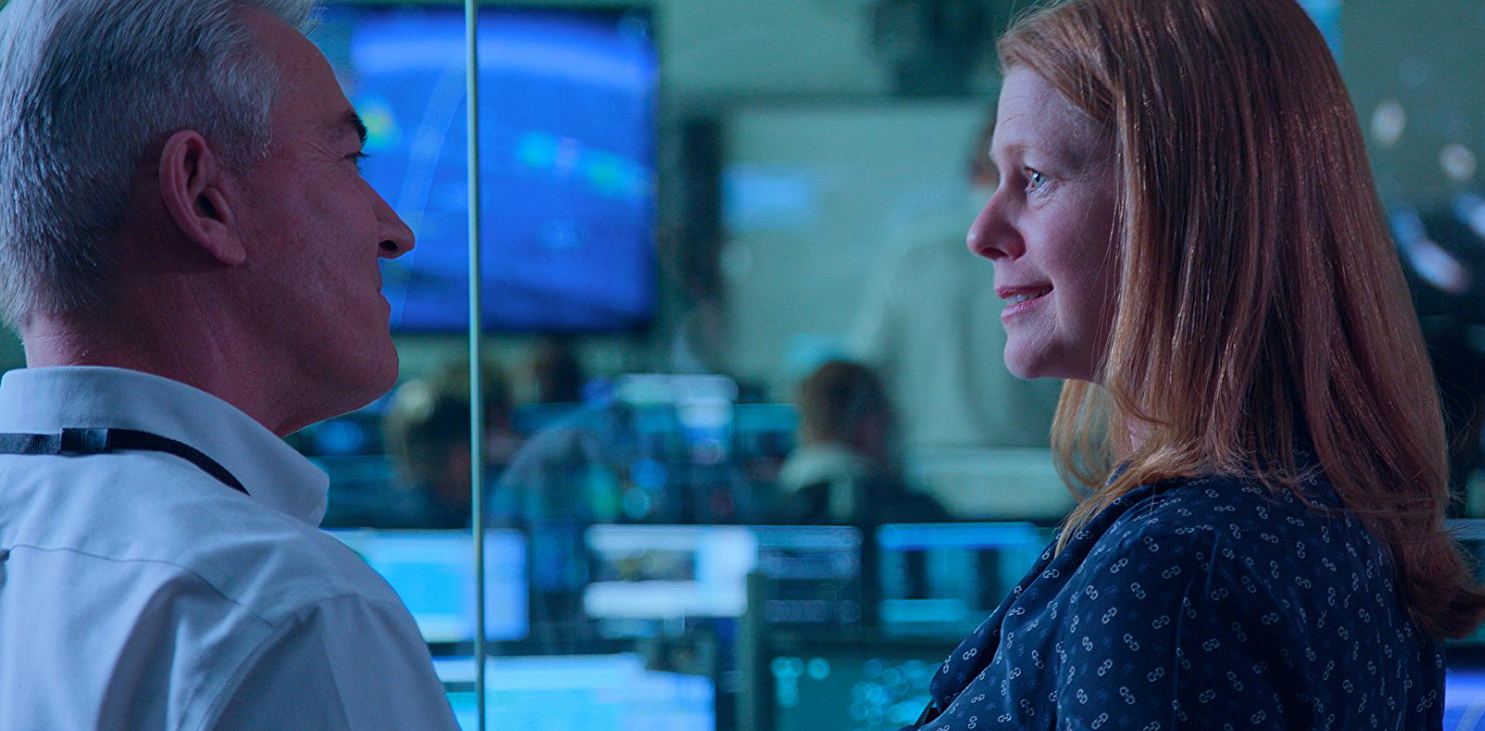
The only person who may stand a chance of figuring out the big picture is Chrisjen Avasarala, a brilliant 23rd-century Machiavelli, hoping to prevent simmering tensions between the United Nations, Mars and the Belt from erupting into all-out war. She will stop at nothing in her search for the truth, including gravity torturing a Belter or playing her friends and contacts like chess pieces to find answers.

Chrisjen speaking to Belter under gravity torture

What makes Chrisjen incredibly more interesting than, say a Circe or Claire Underwood, is that her scheming—as reprehensible as it may be at times—comes from a higher calling, not from lust for power or self-serving greed. She seeks the truth. And, like Miller, she struggles with a conscience. When her grandson asks if people are fighting again, Chrisjen says, “not yet; that’s why we [her contacts] need to talk and tell the truth; when people don’t tell the truth it always ends badly.” She may have been thinking of herself.

Chrisjen is a complex and paradoxical character. Her passionate search for the truth together with unscrupulous methods, makes her one of the most interesting characters in the growing intrigue of The Expanse. The Expanse further dignifies itself with subtle nuances of multi-layered social commentary—sewn into virtually every interaction. 

After Chrisjen’s friend Franklin Degraaf (Kenneth Welsh), Earth ambassador to Mars, suffers as a casualty in one of her intel games, he quietly shares: “You know what I love about Mars?… They still dream; we gave up. They are an entire culture dedicated to a common goal: working together as one to turn a lifeless rock into a garden. We had a garden and we paved it.” Chrisjen offers consolation to the loss of his position (because of her): “we may have prevented a war.”

Chrisjen consoles Degraaf with a bottle of wine after causing his forced resignation as ambassador to Mars

The subtle details and rich set-pieces of The Expanse universe rival the best world building of Ridley Scott. In fact, I was reminded of the grit and immediacy of Bladerunner. The Expanse is SF without feeling like it’s SF; it just feels real. Powerful storytelling—from judicious use of slow motion, odd shot angles, haunting music and background sounds, to superlative acting—draws you into a complete and realizable world.

Ceres Station

Annalee Newitz of ARS Technica wrote, “the little details of this universe are so finely rendered that they become stories unto themselves, like the way interracial tensions developed on Ceres between humans who grew up gravity-deprived and spindly, versus those whose gravity-rich childhoods allow them to pass as Earthers.” Newitz adds that no clumsy Star Trek-style representation of exo-planetary civilizations occurs in The Expanse. It’s all humans.  “Instead, there are political factions whose members stretch across worlds. And planets (or planetoids) whose populations are fragmented by class, race, and ideology. The politics here are nuanced, and we are always being asked to rethink who is right and who is wrong, because there are no easy answers.”
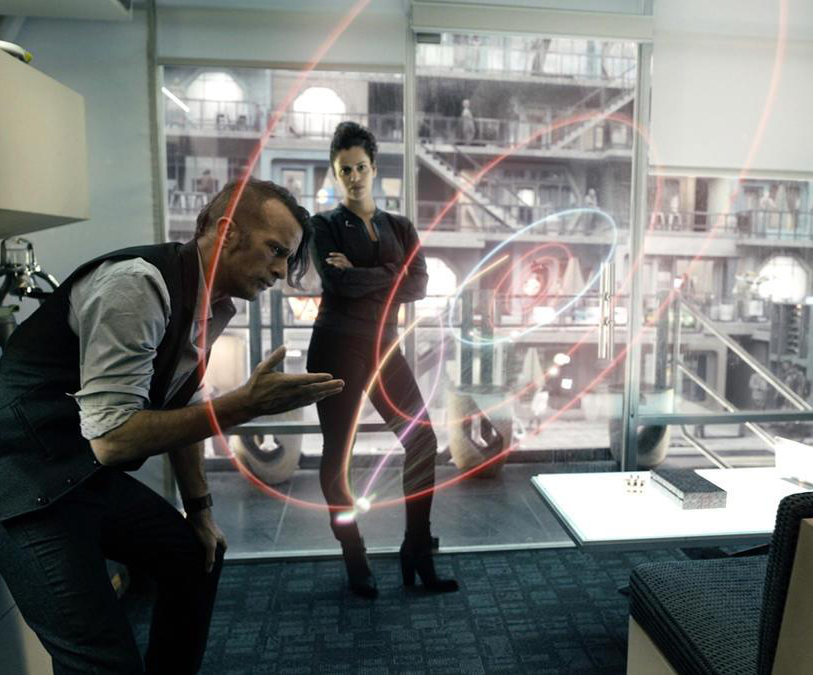
Miller and Tavi Muss, his former partner at Star Helix, discuss the recent strange events in the solar system while at his apartment in Ceres

Subtle but powerful differences between the Belter culture, Earthers and Martians (all human) includes language. Belters use a creole that’s a mix of several Earth languages that were spoken by the original human settlers in the Belt colonies. Resembling a Caribbean twang and cadence, words contain a mix of slang English, Chinese, French, Zulu, Arabic, Dutch, Russian, German, Spanish, Polish and others.  For instance, “Inyalowda” means inner or non-belter. “Sa-sa” means to know. “Copin” means friend. An Expanse Wikia provides an in-depth list of Belter Creole used in the TV show.

Liz Shannon Miller of Indiewire.com shares: “In the 23rd century, the smart phones look fancier but their screens still crack. There are people in straight relationships and gay relationships and group marriages. There are still Mormons, who are preparing for a whole new level of mission. The rich live well. The poor struggle. It’s not “Star Trek” — there’s no grand glorious yet vague cause to which our heroes have devoted themselves. Survival is what matters.” 

The Expanse is a sophisticated SF film noir thriller that elevates the space opera sub-genre with a meaningful metaphoric exploration of issues relevant in today’s world—issues of resource allocation, domination & power struggle, values, prejudice, and racism.  These issues are explored particularly well through its diverse female protagonists with subtle nuances of multi-layered social commentary sewn into virtually every interaction.

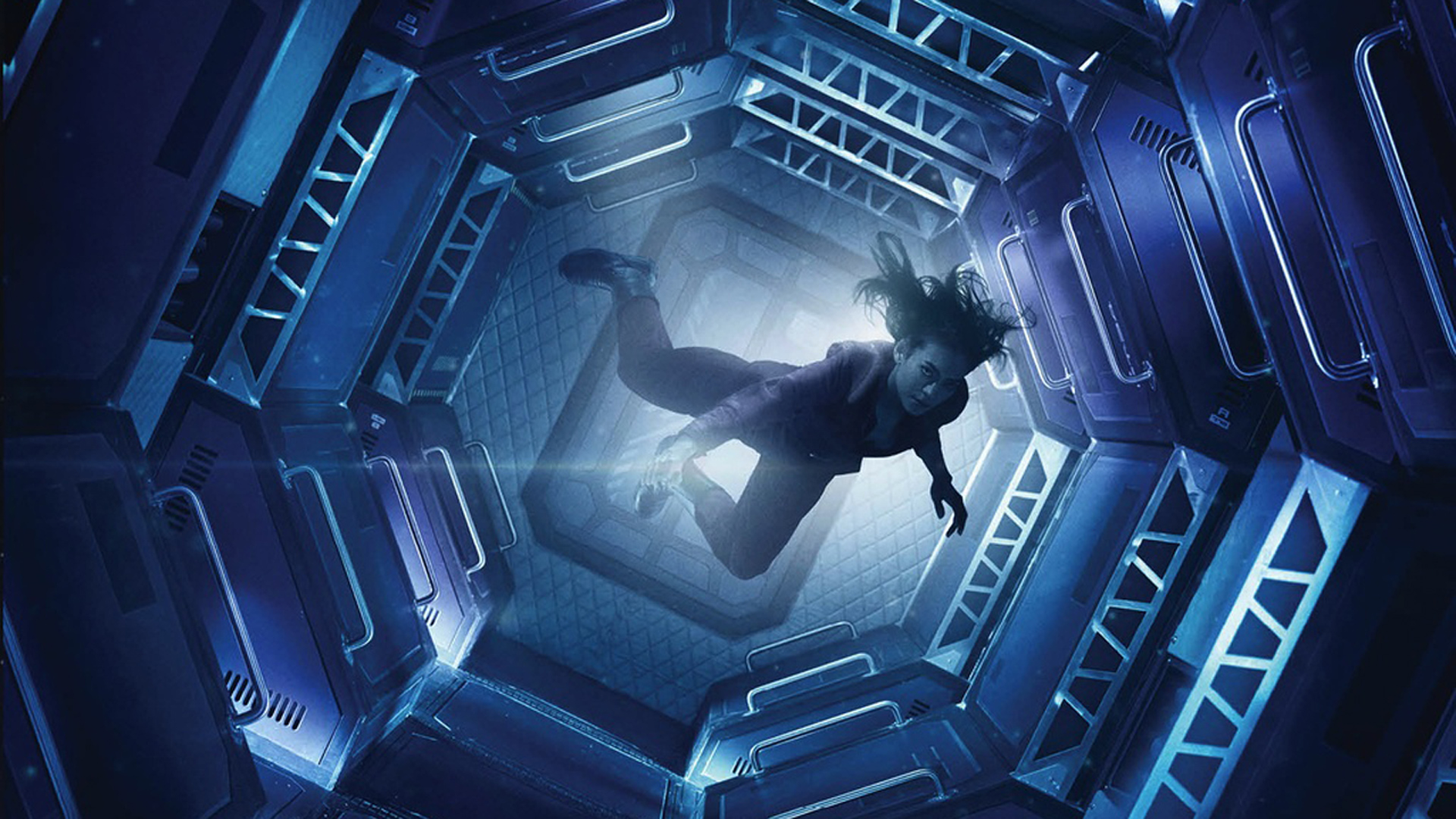
Julie Mao trapped onboard a stealth ship

In Season 1 alone we are presented with Julie Mao (Florence Faivre), who is according to Detective Miller (tasked to find her) the “richest bachelorette in the system”, and an OPA collaborator; Naomi Nagata (Dominique Tipper), a highly-skilled Belter technologist and former OPA agent; Camina Drummer (Cara Gee), a no-nonsense calculating Belter who used to work with OPA leader Anderson Dawes but now helps run Tycho Station that is building a giant interstellar ship for the Mormons; and Chrisjen Avasarala (Shohreh Aghdashloo) a sharp-minded ruthless political strategist in search of the truth.

(Left: Naomi Nagata)
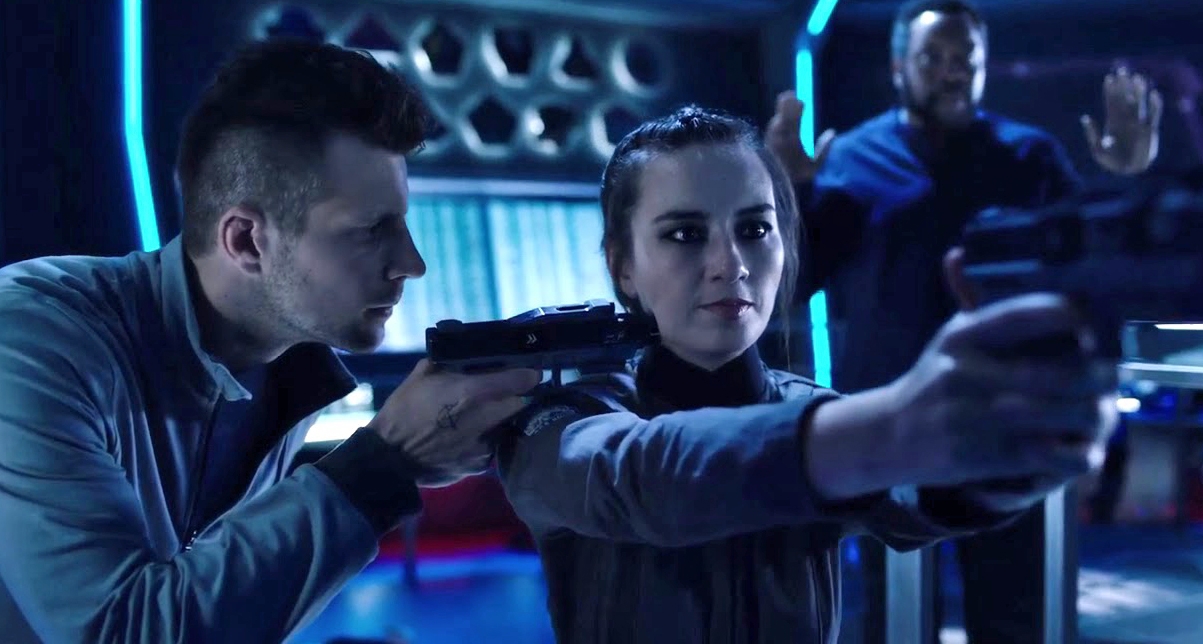
Drummer in a sticky situation during a coup on Tycho Station

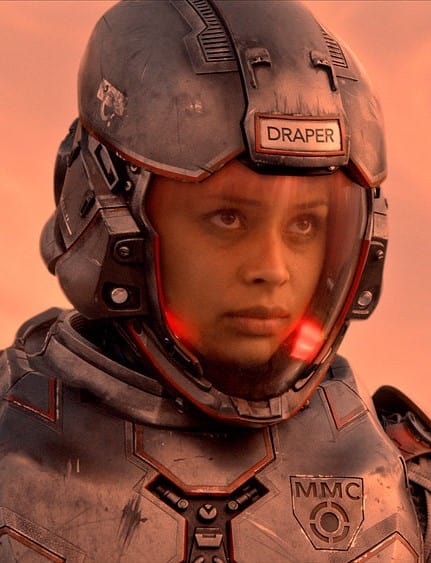
Season 2 and 3 introduce yet more powerful female characters with agency, such as Bobbie Draper, a staunch hard-fighting Martian marine who dreams of a terraformed Mars; and the Reverend Anna Volovodov (Elizabeth Mitchell), a gay Methodist doctor, who brings faith, hope, and inclusion to her acts of heroism.

(Left: Bobbie Draper)

Anna Volovodov dealing with a protest on Earth

I found the music by Clinton Shorter particularly appropriate: subtle, edgy, haunting, and deeply engaging: like its characters, the story, and world. The haunting title song, sung by Lisbeth Scott, lingers in each episode throughout the six seasons.

Amidst the unfolding intrigue of war, corruption and secrecy, a rich tapestry of characters take shape —with the added spice of an extra-solar alien entity (and a nod to panspermia). The alien entity is called the protomolecule based on its evolving nature (it eventually evolves into a ring-gate to other worlds). We eventually learn that the alien blue goo was sent by an alien civilization (directed panspermia) inside an interstellar asteroid (lithopanspermia) millennia ago; although it was captured by Saturn’s gravity to become one of its many moons (Phoebe), its target was Earth’s rich biology to bioengineer. Considered a bio-weapon, it is coveted by the politicians of Earth, Mars, and the Belt.

Miller, who was born on Ceres but received some cheap bone density implants—so he looks like an Earther—is a cynical detective (not above being bribed by merchants cutting corners) and trying hard to hide the fact that he has a big heart and is looking for meaning in his empty existence as a Star Helix cop (Miller: “No laws on Ceres; just cops.”) Belters call him a “well wala”, traitor to his own kind.

Miller and Dawes discuss the disappearance of Julie Mao

Ceres-born Anderson Dawes (Jared Harris), suave and ruthless leader of the separatist OPA (Outer Planet Alliance) challenges Miller: “I think that under that ridiculous hat there’s a Belter yearning to find his way home.” Except what is “home”? When asked by his new Star Helix partner, Dmitri Havelock (Jay Hernandez) about ‘why the hat?’, Miller quips, “to keep out the rain.” There is no rain on Ceres. Never was. Never will be.

The militant OPA is an activist organization that sells itself as a liberator for Belters but is really a terrorist revolutionary group, looking to shift the balance of power. Led by Dawes, the OPA’s ambitious agenda ranges from staging protests in the gritty Medina district of Ceres to stealing stealth technology and bio-weapons from Mars and Earth. Some of the best scenes occur between the intense Dawes and crusty Miller, as they banter over what it means to be a Belter in a solar system where they are clearly not players but sandwiched in a power struggle between Earth and Mars.

Dawes confides to Miller: “All we’ve ever known is low G and an atmosphere we can’t breathe. Earthers,” he continues, “get to walk outside into the light, breathe pure air, look up at a blue sky and see something that gives them hope. And what do they do? They look past that light, past that blue sky. They see the stars and they think ‘mine’… Earthers have a home; it’s time Belters had one too.”

Subtle. Not so subtle. The show takes a few opportunities to point out what we are doing to our planet. Cherish what you have. Cherish your home and take care of it. We’re reminded time and again, that we aren’t doing a good job of that.

Onboard the MCRN Donnager, Martian Lopez asks his prisoner Holden if he misses Earth and Holden grumbles, “If I did, I’d go back.” Lopez then dreamily relates stories his uncle told him about the “endless blue sky and free air everywhere. Open water all the way to the horizon.” Then he turns a cynical eye back on Holden. “I could never understand your people. Why, when the universe has bestowed so much upon you, you seem to care so little for it.” Holden admits, “Wrecking things is what Earthers do best…” Then he churlishly adds, “Martians too, by the look of your ship.” Lopez retorts, “We are nothing like you. The only thing Earthers care about is government handouts. Free food, free water. Free drugs to forget the aimless lives you lead. You’re shortsighted. Selfish. It will destroy you. Earth is over, Mr. Holden. My only hope is that we can bring Mars to life before you destroy that too.”

The underlying message in Expanse becomes clear in the last show of Season One. Near the end, Miller asks Holden what rain tastes like and Holden admits he never thought about it. Miller then asks, “How could you leave a place like Earth?…” Holden responds, “Everything I loved was dying.”

Critic Maureen Ryan of Variety says, “It’s to the show’s credit that it is openly political, and takes on issues of class, representation and exploitation.”
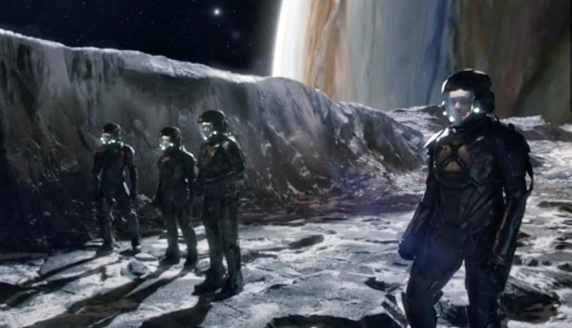
Bobbie and her Martian crew patrolling Ganymede

As the seasons progress (ending in Season 6), the plot doesn’t so much thicken as branch like a fractal tree or the braiding delta of a river into the sea, expanding as the galaxy itself into infinite space. Season 2 witnesses biological and political developments with the protomolecule, from the use of an entire station as a human laboratory to the testing of protomolecule-human hybrid weapons on Ganymede Station. Stationed there, Martian marine Bobbie Draper barely survives an encounter with a hybrid as it easily dispatches her entire crew and UNN soldiers alike. Events related to the secret war among powers to hold and control this alien weapon precipitate war between Earth and Mars.
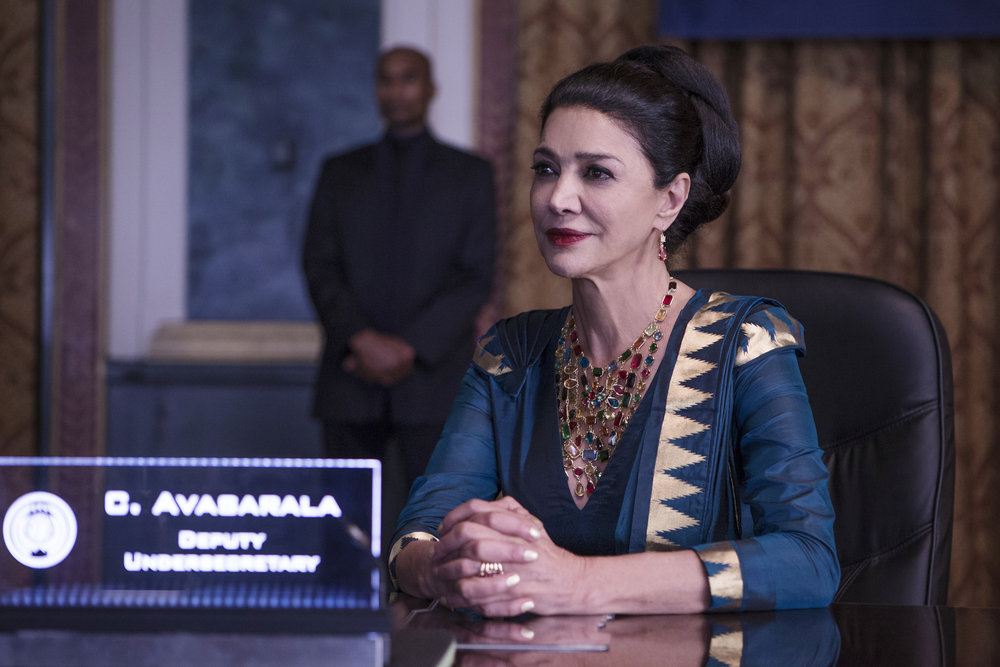
Chrisjen Avasarala questions Bobbie at an Earth-Mars summit inquiry into the incident on Ganymede

The plot train goes into high gear in Season 3 with high stakes scenes of war, intrigue, and violent change. Through the various set-pieces of place, new characters are introduced and embed themselves in the larger story with amazing potency. One example of the various plot threads surrounding Ganymede Station introduces botanist Prax Meng (Terry Chen) and his 12-year old daughter Mei (Leah Jung), secretly taken from him by a Pierre Mao scientist to become a protomolecule hybrid. Introduced in Episode 8 (Pyre) of Season 2, Prax and kidnapped Mei immediately stir our hearts with their story. I was struck by how powerful a brief appearance by one character could be: Prax, who thinks he has lost Mei when the mirrors fell on Ganymede Station, finds himself on a refugee ship with Doris Bourne (Grace Lynn Kung), a botanist colleague from Mars. We are introduced to Doris and lose her within a single episode; yet we feel incredible pathos on her demise (thanks to their performances, and the circumstances that drive their short-lived story together).

Doris and Prax onboard the refuge ship after the Ganymede incident

The Expanse is filled with these potent vignettes, focused on one or two characters, that tug our heartstrings with personal drama. Several come immediately to mind: ‘Big Guy’s’ (Gugun Deep Singh) heartfelt sacrifice in Episode 12 (The Monster and the Rocket) of Season 2; the slaughter of all miners of Anderson Station, with particular focus on Marama Brown (Billy MacLellan) and his daughter Kiri (Raven Stewart), in Episode 5 (Back to the Butcher) of Season 1.  

Throughout its expansive six seasons, The Expanse never loses sight of its strongest feature: its characters who each tell a heart-felt story and whose threads weave a greater story tapestry. This is a TV show that writes large through its many intimate stories; all smaller wholes entangled with the larger whole.

Variety’s Whitney Friedlander writes that The Expanse is Syfy’s most expensive series to date. It shows. And it shows well because it does not trade story for effects. Story comes first. The Expanse is a welcome breath of fresh air for high quality “space opera” science fiction on TV. It fills a gaping hole left by the conclusion of Battlestar Galactica in 2009.
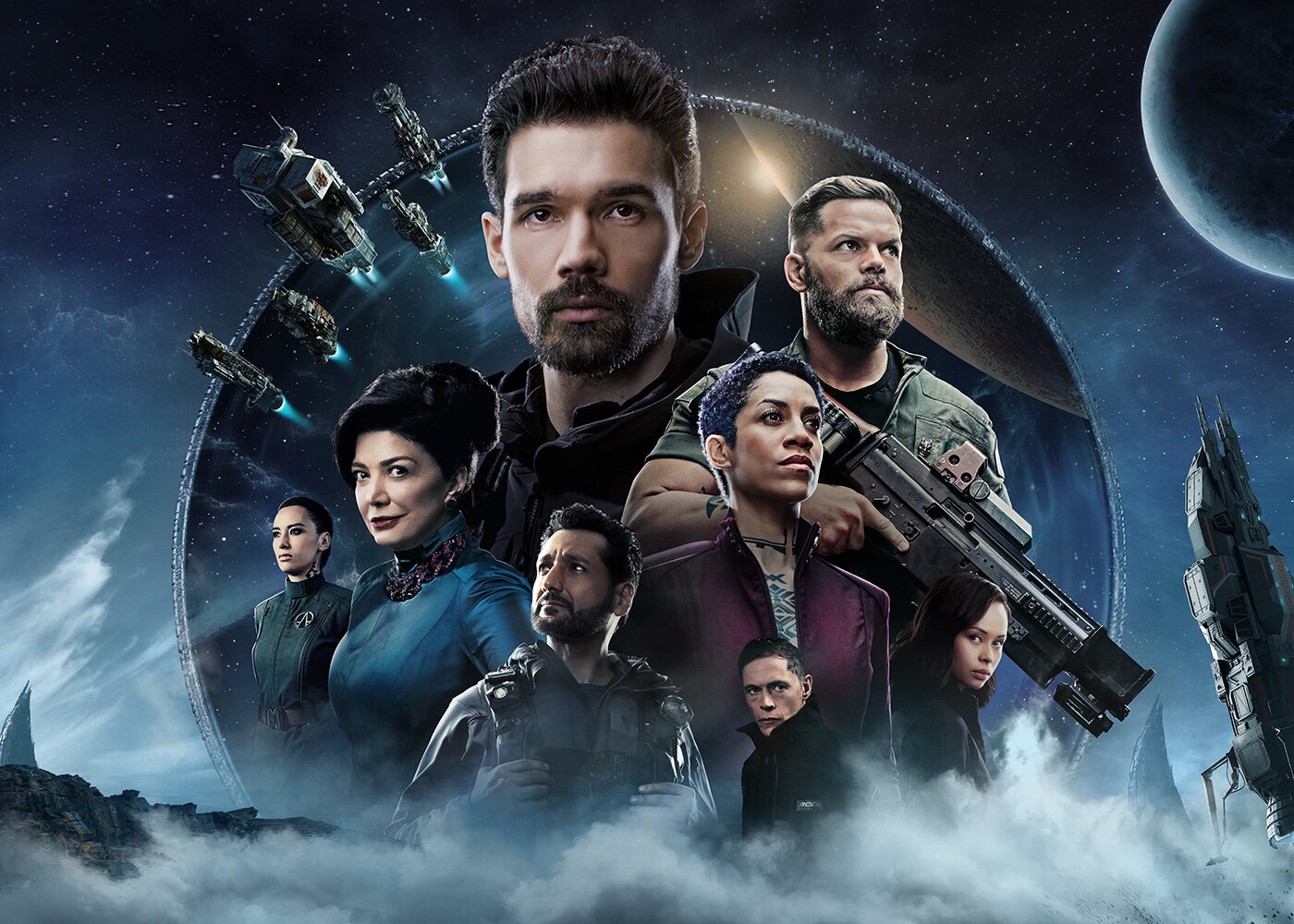
Poster for Season Five of The Expanse

p.s. Since my title includes a comparison of The Expanse with Game of Thrones, I feel compelled to state another important difference between these two highly successful TV shows, and ultimately why I disliked one as I loved the other: while both shows created fully-fleshed compelling characters that viewers quickly embraced and loved (or hated), GOT chose to wily-nily give them brutal (and often grotesque) deaths for no other apparent reason than to shock the viewer—creating a tension of suspicion and fear. Viewers became nervous for their favourite character. It was like a crap shoot and the viewer was the real victim. The death of virtually every character in the Expanse however—though also often a heart-wrenching surprise—could be explained and understood. This was because their demise filled the greater purpose of the overall story. That simple. I give ultimate credit to the writers of The Expanse. And shame on the Game of Thrones screenwriters and producers.     

“Story must come first!”

Julie Mao escaping imprisonment in the stealth ship

Nina Munteanu is a Canadian ecologist / limnologist and novelist. She is co-editor of Europa SF and currently teaches writing courses at George Brown College and the University of Toronto. Visit www.ninamunteanu.ca for the latest on her books. Nina’s bilingual “La natura dell’acqua / The Way of Water” was published by Mincione Edizioni in Rome. Her non-fiction book “Water Is…” by Pixl Press (Vancouver) was selected by Margaret Atwood in the New York Times ‘Year in Reading’ and was chosen as the 2017 Summer Read by Water Canada. Her novel “A Diary in the Age of Water” was released by Inanna Publications (Toronto) in June 2020.
Movie Review: Venture to “The Beyond”

The Beyond is a 2018 science fiction thriller, set in the near-future, that explores the evolution of our humanity through “first contact.”

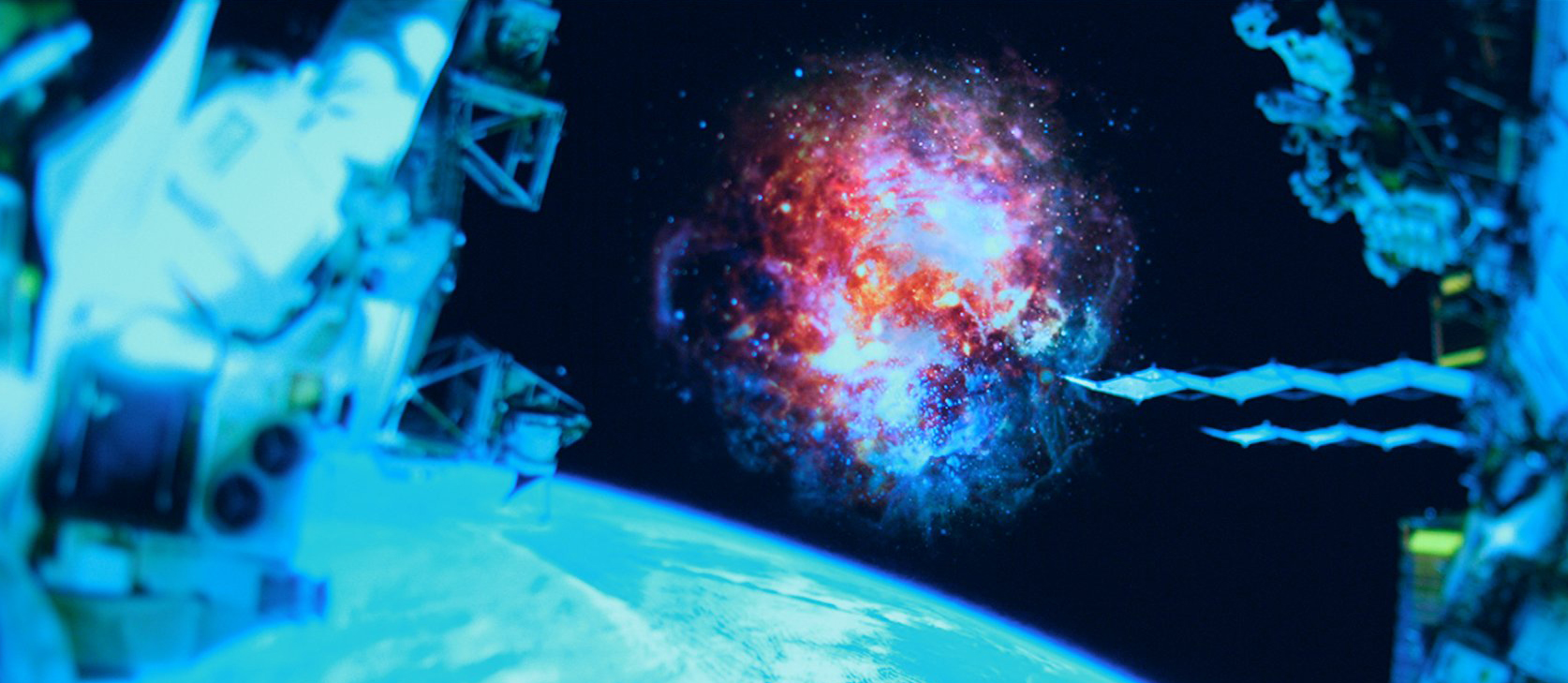
Wormhole suddenly appears

The sudden appearance of a wormhole causes the disappearance of astronaut Jim Marcell during EVA on the space station, followed by associated calamitous phenomena on Earth. Giant dark spherical clouds then appear and settle all over the Earth, disrupting the world’s population, and setting in motion a series of fearful and aggressive reactions by various sectors of humanity; as expected, the military of each nation mobilize, ready to attack. Some do attack, with no consequence.

Alien spheres appear over several cities

With the help of the military’s groundbreaking transhumanism technology, the international space agency sends two transhuman (Human 2.0) astronauts into the wormhole (called the Void) on an information-seeking (and peace-seeking) mission. The astronauts have been modified by advanced robotics to withstand the pressures of the “throat” of the wormhole as they embark on humanity’s first interstellar—possibly inter-dimensional—journey in search of extra-terrestrial sentient life and its intent. One of the astronauts is a soldier, armed with additional weapons built into his physiology. The other is the Space Agency’s chief cosmologist, Jessica Johnson (played by Kosha Engler). When the mission returns unexpectedly, and without the soldier, the space agency races to discover what happened on the “other side.” Of particular interest is evidence indicating that the ship had been away much longer than the days it was actually gone. Johnson later reveals that the soldier had suddenly disappeared from the cockpit and reappeared outside. She saw him stare at his arm, which then detonated like a nuclear bomb—no doubt because his arm was indeed something of that nature.

Jessica transformed into Human 2.0 for space travel

The tag line of the movie says: “to find our place in the universe, we must venture beyond our boundaries.” This imaginative indie film by Hasraf Dulull is all about breaking boundaries and transcending beliefs: such as mission director Gilian’s first lie to her daughter (to contain a bigger lie by the space agency); and chief cosmologist Jessica conquering ethical barriers to embark on a journey that will irrevocably change her.

Canadian Gillian Laroux is mission commander

The story unfolds like a docu-drama, making use of interviews with key people and retrieved footage amidst dramatic narrative (similar to Blomkamp’s District 9). The mixed narrative creates an immediacy that grips us emotionally and deeply connects us to the characters in a real-life way. Characters are portrayed as ordinary people who find themselves in extra-ordinary circumstances and performed with genuine candor, particularly the mission commander Gillian Laroux (Jane Perry) who plays a Canadian.

The Beyond appeals to our senses and sensibilities, challenging our assumptions and definitions of what it is to be human through our values, hopes and fears. Told with an unassuming realism, The Beyond is really a simple, yet deeply meaningful story that asks the big questions—and leaves it for us to answer them.

The climax, discovery and resolution is really more of a question. I was somehow unprepared for the discovery and emotionally struck by its trajectory into the denouement. Some reviewers on the Internet were off-put by the shift following “the discovery” that preceded the denouement at the end. I found closure for the chief cosmologist, who had sacrificed her life to seek answers and find a solution for humanity; however, the question remained: what is that solution for humanity? What does that solution look like and how does it encompass more than us? The movie doesn’t have a tidy end; its solution is veiled with more questions.

The film ends with a cautious hope, implicitly asking that big question: are we (humanity) worth saving? When Jessica asks why humanity was offered a second chance by benevolent beings way beyond our comprehension, the returned Jim Marcell (currently a spokesman for the aliens) shows her the GAD (Golden Archive Drive with video images of Earth and humanity—basically our “hello” message to extra-solar life like the one placed onboard NASA’s Pioneer missions) that had accompanied the ship into the wormhole. The message displayed scenes of mothers and their children, people laughing in joy; it also showed scenes of other aspects of this beautiful planet worth saving: the ocean surf, the forests and wildlife. In our hubris, we have lost our perspective about this planet. Perhaps, it wasn’t so much humanity the alien beings intended to save but the Earth itself; we just come along with it. The Earth is, after all, a beautiful, vital and unique world, rich with life-giving water, trees, animals, creatures of all kinds in a diverse network of flowing and evolving beauty. A planet worth saving and that, frankly, functions better without us.

Jessica 2

So, the question remains: is humanity worth saving? For centuries we have hubristically and disrespectfully used, discarded and destroyed just about everything on this beautiful planet. According to the World Wildlife Federation, 10,000 species go extinct every year. That’s mostly on us. They are the casualty of our selfish actions. We’ve become estranged from our environment, lacking connection and compassion. That has translated into a lack of consideration—even for each other. In response to mass shootings of children in schools, the U.S. government does nothing to curb gun-related violence through gun-control measures; instead they suggest arming teachers. We light up our cigarettes in front of people who don’t smoke and blow deleterious second-hand smoke in each other’s faces. We litter our streets and we refuse to pick up after others even if it helps the environment. The garbage we thoughtlessly discard pollutes our oceans with plastic and junk, hurting sea creatures in unimaginable ways. We do not live lightly on this planet. We tread with incredibly heavy feet. We behave like bullies and, as The Beyond points out, our inclination to self-interest makes us far too prone to suspicion and distrust: when met with the unknown, we respond with fear and aggression rather than curiosity and hope. Something we need to work on if we are going to survive–and find our place in the universe.

The Beyond is a simple film made well; something not easy to accomplish. The film delved into existential questions with an emotional intelligence that was both sensitive and insightful. As Gillian Laroux says in the end: “I hope we won’t make the same mistakes of the past and prove that we are in fact worth saving.” Ultimately, I found The Beyond a refreshing change from the senseless soul-gutting violence, and sordid aimless or overly-complicated plots that currently populate most of our current science fiction TV and movies.

The Beyond marks the directorial debut of Dulull, a VFX wiz who spent a year shooting and working on this project (previously titled The Void). Changing the title from The Void to The Beyond is itself an interesting shift in what the film represents and suggests.

Let us tread more lightly on this planet, then…And perhaps we too will be worth saving. Perhaps our destiny won’t be a void but a transcendence beyond…

Nina Munteanu is a Canadian ecologist / limnologist and novelist. She is co-editor of Europa SF and currently teaches writing courses at George Brown College and the University of Toronto. Visit www.ninamunteanu.ca for the latest on her books. Nina’s bilingual “La natura dell’acqua / The Way of Water” was published by Mincione Edizioni in Rome. Her non-fiction book “Water Is…” by Pixl Press (Vancouver) was selected by Margaret Atwood in the New York Times ‘Year in Reading’ and was chosen as the 2017 Summer Read by Water Canada. Her novel “A Diary in the Age of Water” was released by Inanna Publications (Toronto) in June 2020.

Movie Review: Advantageous

There are women with voices and brains and power and intelligence that have been waiting for this moment.”—Director Jennifer Phang

Advantageous is a low budget indie film by Jennifer Phang that explores a near-future world—a kind of “pre-dystopia”, according to Katharine Trendacosta of io9—where jobs have become heavily automated and opportunities for education are cutthroat. Women have been generally forced out of the workplace and onto the streets: the logic being that they will be less violent while living on the street than men.

While the world vaguely resembles a vibrant City with flying ships and some bizarrely futuristic architecture (including a high rise that functions as a giant water feature), a sense of unease permeates most scenes, punctuated by occasional terrorist explosions and snippets of disturbing news reports.  Artificial intelligence has supplanted most people in middle management, “The people you do see are either impoverished and disenfranchised or are hidden in the upper floors, the protected places,” says director Jennifer Phang. Unemployment is close to 50% and there are no public schools. The only options for a young girl—if she is not to end up on the streets, either as a beggar or prostitute—is to attend a highly selective free magnet school or a very expensive private school.

Gwen Koh (Jacgueline Kim) is the spokeswoman of the Center for Advanced Health and Living, a wellness corporation that offers health and beauty treatments to an elite who can afford it. When the Center informs her that she looks too old, Gwen—desperate to secure her bright daughter’s expensive education—submits to the experimental treatment she was initially hired to promote. Jules hadn’t made it into the free magnet school, leaving Gwen to come up with extensive funds to get her into a private school. The corporation has subtly backed Gwen into a corner by reminding her that her generation doesn’t have the skills to compete—all of education currently being STEM-based—and they fully understand that she is too old and too unconnected to do anything other than offer herself up to their new procedure to secure her position and a future for her daughter Jules. Constantly walking the edge of privilege, Gwen struggles to make the elite-connections necessary to place Jules. “Gwen is too old, too female, and too unconnected to do anything other than offer herself up as a sacrifice,” writes Trendacosta.

Gwen and here daughter Jules share a moment

The true nature of her sacrifice is not understood at first; it unravels slowly, like an internal wound, until we learn that the procedure—putting her memories into a younger person’s body—means that Gwen’s “mother-connection” awareness with her daughter will be lost when her original body dies in the procedure. This is particularly significant, given their close and loving relationship, which is evocatively conveyed throughout the film.

Advantageous “is riveting, emotionally gripping, and offers up a vision of the future that is disturbingly easy to picture, even as some of the technologies it imagines seem out of reach,” says Ariel Schwartz of Business Insider Magazine. While the trope of mind-upload into a younger, prettier body has been around for while in standard SF, how Phang presents it, in the muted notes and pace of “everyday” and “mundane” events, brings a kind of realism to it that both invigorates and chills. Like watching a building explode in person rather than on TV. The immediacy and reality of it is visceral. Phang does this through sparing use of sound, language and colour. And all presented in a pace that does not rush, but lingers and reflects. Long moments of quiet punctuate scenes of significance, giving us the chance to examine, resonate and reflect in “real-time” with the character. These, in themselves, provide some of the most poignant footage of the film as we are given the time to descend into deeper reflection. Each plays out, short vignettes of life that string together like pearls on a necklace. Life moments. Unflinchingly and confidently performed at the pace of life.  

In one of many quietly powerful scenes, Gwen stumbles upon a street woman, huddled in a small grassy alcove under an old blanket. When Gwen asks her if she is okay, the woman instead responds, “Are you okay?” This is a natural response for a woman; we think of others, of their welfare. We carry the “mother” archetype within us, everywhere we go, no matter what befalls us. This natural sense of compassion and altruism runs through our blood.

And, yes, it makes us a different kind of hero.

Gwen’s heroics are not accompanied by percussive violence or gut-wrenching action; they are silent choices that percolate from deep within. They are choices that ultimately bleed into great consequence.

Gwen and Jules read something together

“The plot suggests a standard ‘body swap’ sci-fi storyline,” says Danielle Riendeau of Polygon. “But Advantageous is much more about motherhood, the sacrifices women make for their children, and to a large extent, the difficulties of being a non-white woman in an increasingly intolerant society. The writing, directing and performances are so strong that they elevate the film far beyond a simple twist on a classic trope. Advantageous is a potent, heartbreaking meditation on parental love and the sacrifices women make for their families. It has a lot to say, and it does so with clear-eyed, fearless intensity.”

Trendacosta writes, “People are going to judge Advantageous by the things it lacks. There are no battles, no mustache-twirling villains, and not even any giant science fiction spectacle sets. People are also going to judge it for what it has. There are some intense discussions of classism, racism, ageism, sexism, and elitism. But don’t judge this movie for either of those things—instead, it’s worth appreciating for all the things it does so incredibly well.”

What Advantageous does so incredibly well is portray a near-future vision worth pondering and discussing.

Nina Munteanu is a Canadian ecologist / limnologist and novelist. She is co-editor of Europa SF and currently teaches writing courses at George Brown College and the University of Toronto. Visit www.ninamunteanu.ca for the latest on her books. Nina’s bilingual “La natura dell’acqua / The Way of Water” was published by Mincione Edizioni in Rome. Her non-fiction book “Water Is…” by Pixl Press (Vancouver) was selected by Margaret Atwood in the New York Times ‘Year in Reading’ and was chosen as the 2017 Summer Read by Water Canada. Her novel “A Diary in the Age of Water” was released by Inanna Publications (Toronto) in June 2020.

Movie Review: “Contact”, a Journey to the Heart of the Universe

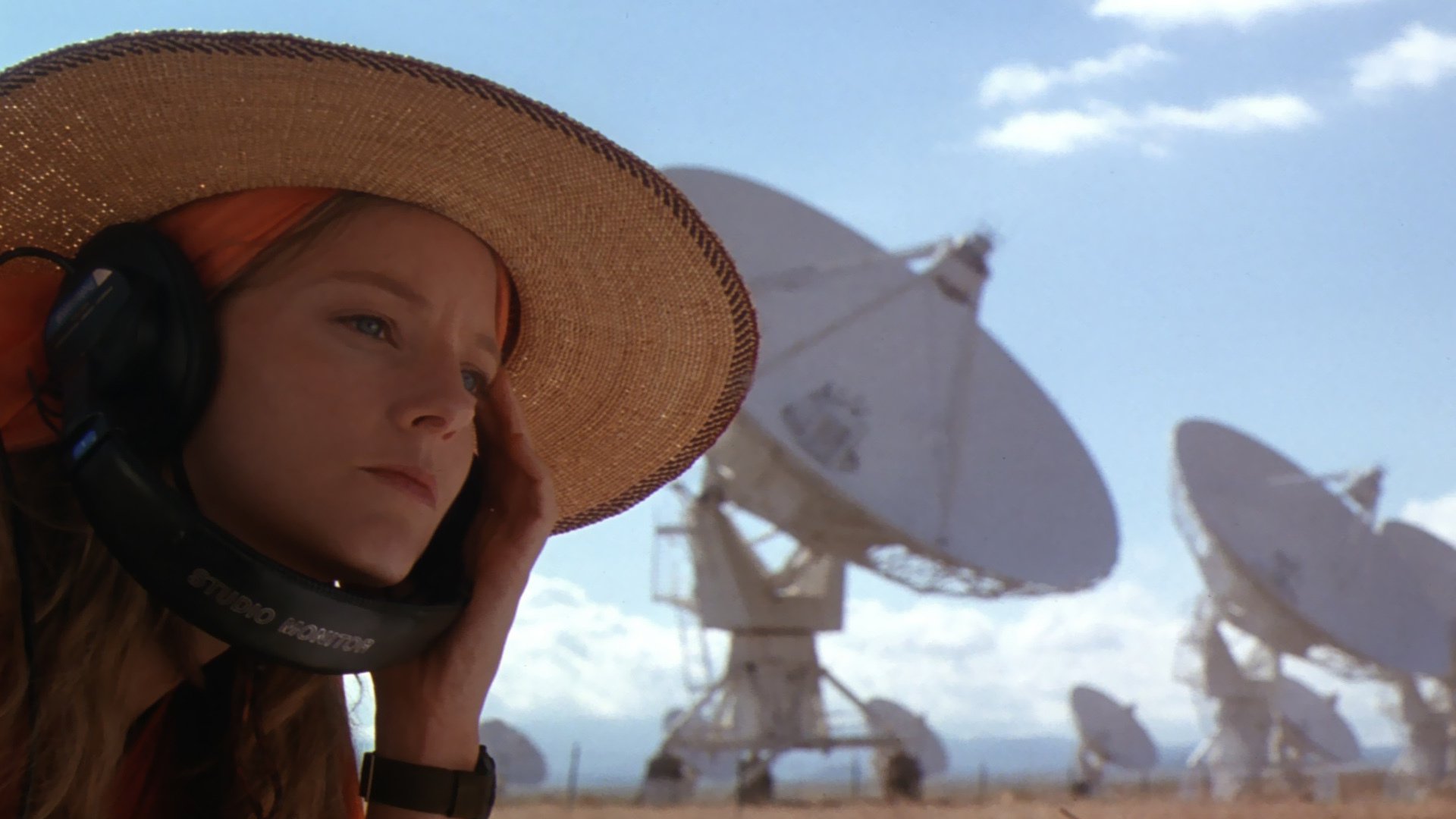
Ellie (Jodie Foster) listens for aliens at the array in “Contact”

The opening sequence tells the entire story… It is both spectacular and humbling at the same time as we begin with a view of Earth gleaming in a sunrise. An almost frantic jumble of broadcasts— news, TV shows, music—assail our ears. As we pull back from Earth and pass the outer planets, we hear older broadcasts… disco…Kennedy… the Beatles… Hitler…then ultimately the unintelligible static of all the radio stations on Earth. Then, as we leave the solar system, passing breathtaking nebulae, the sounds give way to silence. A dead silence, as we continue to pull back out of the galaxy and out of the local group of galaxies into the quiet depth of our vast universe. “It’s enough to make you feel tiny and insignificant and alone,” says Maryann Johanson of FlickFilosopher.com. “Which is precisely the feeling it’s meant to evoke.”  From that arcane vastness, we are brought back to our own “intimate” existence within it as the universe transforms into a dark reflection in a young girl’s eye.

With a powerful entrance like that, it is hard to imagine that this 1997 movie directed by Robert Zemeckis (Forrest Gump) and based on the novel by Carl Sagan, received very mixed reviews by critics.

Cindy Fuchs of the Philadelphia City Paper called it “far more mundane than its aspirations to cosmic insights might have produced.”  Kevin N. Laforest with the Montreal Film Journal said, “Contact is not a bad film, but I can’t say it’s all that good either.” Even TVGuide.com rated it a two out of four: “It’s really about [Jodie] Foster, and with her lips pressed tightly together and her hair carelessly shoved behind her ears, she’s utterly convincing as a researcher who’s subverted everything to a life of the mind. Unfortunately that adds up to a rather remote protagonist and Ellie is surrounded by a supporting cast of one-dimensional types…far too cold-blooded for summer audiences.” This is ironic, considering that the advertizing pitch calls Contact “a journey to the heart of the universe.” Finally, Christopher Null (Filmcritic.com) recommended it for its looks but not highly. Said Null: “Carl Sagan’s ode to the superior intelligence of aliens (and how us darned humans mess everything up) is consistently beautiful and interesting, but it never makes a point (except for that bit about the darned humans).

I think these critics have missed the point. Contact—and its somewhat tortured protagonist—demonstrates much in the way of “heart” and in doing so, makes a compelling story. Hearts beat deeply inside us, and this movie is no different; its “heart” runs deep, deep beneath the surface rhetoric that seems to have distracted several critics who likely prefer to take a shallow sip of their coffee steaming hot than wait and savor the rich flavor of a dark blend in a deep swallow.

Contact examines the moral, social and religious implications of our first contact with extraterrestrial intelligence through the personal journey of astronomer, Eleanor (Ellie) Arroway (played impeccably and sensitively by Jodie Foster). Never knowing her mother (who died at child birth) and having lost her father when she was ten, Ellie grows into a strong-willed scientist who dedicates her life to finding alien life in the universe by foregoing a career at Harvard to join a SETI Observatory in the Puerto Rico jungle. In an earlier scene with her father, she asks the question we have all pondered at least once: “Do you think there are people on other planets?” to which her father blithely answers, “if it’s just us, seems like an awful lot of wasted space,” a simple argument that appeals to the young logically-minded Ellie and one that will dominate the perseverance of her adult life in her resolute search for life in the universe.

And persevere Ellie must, because nothing comes easy for her. Shortly after she settles at the SETI Observatory her teacher (and nemesis) David Drumlin (Tom Skerritt) pays her a visit with implied threats of shutting the place down. Ellie also meets Palmer Joss (Mathew McConaughey), a man of faith, who is writing a book about the effects of science and technology on the third world. Although she is attracted to him, alarm bells go off in Ellie, who feels threatened by his faith (something she does not outwardly understand yet clings to in another form). Wanting to see him again, she introduces him to the man he wants to interview: Drumlin. And one of the most poignant conversations follows:

When Ellie challenges Drumlin’s apparent wish to do away with all pure research, he responds with, “What’s wrong with science being practical, even profitable? Nothing—”

Palmer cuts in, “—As long as your motive is the search for truth, which is exactly what the pursuit of science is.”

Drumlin counters peevishly, “Well, that’s an interesting position coming from a man who crusades against the evils of technology.”

To which Palmer responds, “I’m not against technology; I’m against the men who deify it at the expense of human truth.”

Palmer and Ellie collide from two different worlds and despite their differences, they are profoundly attracted to one another. But as quickly as she falls for Palmer, she recoils from him.

Nothing comes easy for Ellie: “small moves, Ellie,” her father is accustomed to telling her, “small moves…” Shortly after she and her colleagues have been shut down by Drumlin and have set up anew (thanks to eccentric billionaire entrepreneur, S.R. Hadden, played by John Hurt), Drumlin and others shut them down yet again. But, as though a greater force intervenes, this is when Ellie makes her momentous discovery and intercepts an alien message from Vega, a young star still surrounded by a proto-planetary cloud of debris about 27 light years away from us. The scene is scientifically plausible and elegantly powerful—as we witness the drama of this phenomenal discovery unfold in a frisson of action.

Zemeckis wisely shows us exactly how such an event would really play out. And Sagan didn’t pick Vega out of whimsy: a sphere sixty light years thick of radio communication radiates from Earth from our radio and TV broadcasts. These signals may be captured by alien technology and sent back as a “message”. In theory, such a signal could be received on Earth anytime after 1990, the round trip time for a light or radio signal to travel to Vega and back from the first global signal, which in itself is momentous and telling. In another spine-tingling scene, the scientists who have descended upon Ellie decipher the arcane harmonics of the “message” as the broadcast of the opening ceremony of the Berlin Olympics in 1936 (the first truly global TV broadcast made) over which Hitler presided. In fact, in another stroke of irony, the now infamous swastika is the first icon they decipher. Later still, they discover embedded instructions to build a machine that appears made to take a human on an extra-galactic trip.

Ellie (Jodie Foster) listens for aliens at the giant array in “Contact”

At the same time that Ellie intercepts this message, Palmer Joss experiences a meteoric rise to stardom with his bestselling book, Losing Faith: the Search for Meaning in the Age of Reason (which could well have been the alternate title for the film; it certainly describes the subtext of the story and the major thematic element: Faith & Meaning). In an interview with a prominent news show host, Palmer asks the question that most of us have avoided:  “The question that I’m asking is this: are we happier? Is the world fundamentally a better place because of science and technology?…We shop at home, we search the web—at the same time we feel emptier, lonelier, and more cut off from each other than any other time in human history…We have meaningless jobs, we take frantic vacations [and] trips to the mall to buy more things to fill these holes in our lives.” Ironically, Palmer touches a similar nerve in Ellie when he brings up her dead parents: “It must have been hard… being alone…” insinuating that her fanatical search for intelligent alien life may simply be filling a hole in her heart. She flees Palmer shortly after, fearing his revealing intimacy. When they next meet, years later, they fall naturally into their familiar banter and she turns the table to challenge his faith in the same way: “What if science simply revealed that [God] never existed in the first place?” She then evokes Occam’s Razor, which says that “…all things being equal, the simplest explanation tends to be the right one…what’s more likely? An all powerful mysterious God [who] created the universe then decided not to give us proof of his existence or that he simply doesn’t exist at all and we created him so we wouldn’t have to feel so small and alone?” Both of them are saved from an answer by the intrusive rings of their cell phones.

Space-time vehicle in the film Contact

Ironically again, it is Ellie’s lack of belief in God that causes her to be overlooked for the momentous journey in the alien craft, in favor of the crafty Drumlin with the oily smile. Unfortunately, a religious zealot sabotages the mission and Drumlin, along with the whole alien craft and construct, are blown up in a spectacular explosion at NASA’s Cape Canaveral. Ellie gets her chance after all when they build a second one. Her journey in the alien space craft, which we are later told takes up eighteen hours of her time but passes instantaneously on Earth (to the point where they all think nothing actually happened), is truly epic and elegantly portrayed. Her encounter with the aliens is also in keeping with the plot and imagery of the story. One of the most poignant scenes in the movie is the one where Ellie is introduced to the incredible and indescribable beauty of the vast Universe. It is at this point that she experiences her epiphany: science is not the sole purveyor of truth in the Universe. As she gazes at the splendor revealed before her, she acknowledges that the language of science is unable to express the sheer magnitude of the breathtaking scene. Grasping at something to say, she blubbers with a scientific term then finally gasps, “No words…to describe it…they should have sent a poet…”

Upon her return, Ellie is challenged by skeptics who think she suffered a giant delusion (remember that on Earth, no time had passed during her supposed eighteen-hour voyage). Ellie offers up a strained scientific explanation (e.g., wormhole travel through space-time also called Einstein-Rosen bridges) which is challenged by National Security Advisor, Michael Kitz (James Woods) as only theory, and must finally resort to her faith; one she selflessly offers to the world: “I… had an experience. I can’t prove it, I can’t even explain it, but everything that I know as a human being, everything that I am tells me that it was real. I was given something wonderful, something that changed me forever. A vision of the universe, that tells us undeniably, how tiny, and insignificant and how… rare, and precious we all are. A vision that tells us that we belong to something that is greater than ourselves, that none of us are alone.”

Frederic and Mary Ann Brussat of Spirituality Practice said it best: “Robert Zemeckis has fashioned a truly awesome movie that celebrates the spiritual practices of listening, wonder, love, and zeal. It affirms that there are times and places where reason must yield to mystery.”

The SETI Institute, who currently conduct the search for alien life, have a website dedicated to the movie.

Very large array in New Mexico (photo Wikipedia)

Nina Munteanu is a Canadian ecologist / limnologist and novelist. She is co-editor of Europa SF and currently teaches writing courses at George Brown College and the University of Toronto. Visit www.ninamunteanu.ca for the latest on her books. Nina’s bilingual “La natura dell’acqua / The Way of Water” was published by Mincione Edizioni in Rome. Her non-fiction book “Water Is…” by Pixl Press(Vancouver) was selected by Margaret Atwood in the New York Times‘Year in Reading’ and was chosen as the 2017 Summer Read by Water Canada. Her novel “A Diary in the Age of Water” was released by Inanna Publications (Toronto) in June 2020.